Stalin's calendars for 2026
December 11, 4:55 PM

Stalinist calendars for 2026.
The first is dedicated to the theme of building sovereignty and strengthening the state.


You can order it here:
https://ruszamir.ru/catalog/ezhednevnik ... irovannyj/
The second is dedicated to the Great Construction Projects of Communism.


You can order it here:
https://ruszamir.ru/catalog/staryj-kale ... -na-2026g/
(More images at link.)
https://colonelcassad.livejournal.com/10239951.html
Google Translator
******
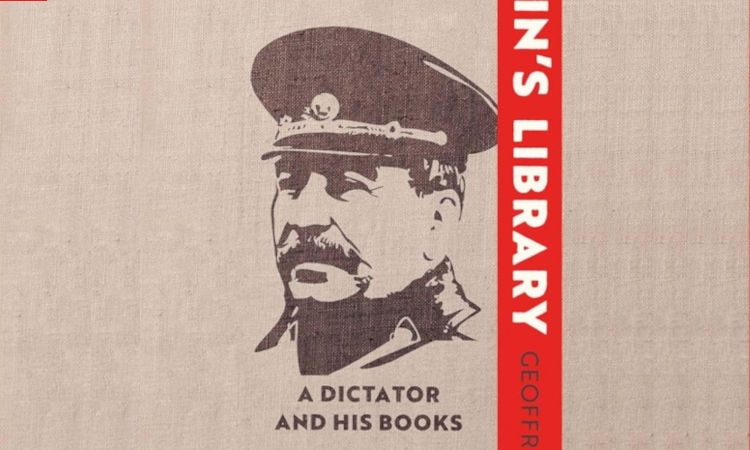
Stalin’s Library by Geoffrey Roberts – a resumé and review, pt 5
Stalin assiduously studied the writings of revolutionaries and counter-revolutionaries, but his one true role model and hero was VI Lenin.
Harpal Brar
Saturday 1 November 2025
Contrary to the myths peddled by Khrushchev and Trotsky and repeated endlessly by anticommunist historians, Josef Stalin was a selfless, modest and devoted revolutionary, and a lifelong student of Marxist-Leninist science.
Read part one, part two, part three and part four of this series.
Stalin’s pometki (annotations)
Josef Stalin was in the habit of writing in the margins of books he read, as well as underlining some sentences or paragraphs. Among his expressions of disapproval or disdain were expressions such as “haha”, “gibberish”, “nonsense”, “rubbish”, “fool”, “scumbag”, “scoundrel”, etc.
He could also be effusive in his praise, writing “yes, yes”, “agreed”, “good”, “spot on”, “that’s right”. At times his annotations were full of the choicest abuse, such as “swine”, “liar”, “fool”.
If he was sceptical about the text he simply marked it “m_da” (meaning more or less “really?”).
As is the case with VI Lenin, his most frequent annotation was NB, in Latin or its Russian equivalent.
Stalin’s pometki (markings, annotations) were “usually informational and highly structured and disciplined”. While he read principally to learn something new, “he also read many of his own writings. One example is his February 1946 election speech.
“In a pamphlet that reproduced the text of his speech, Stalin marked the opening paragraphs in which he had said the war was not an accident or a function of personalities, it had been the inevitable result of a fundamental crisis of the capitalist system. He also marked the paragraphs in which he stated that the war had demonstrated the superiority of the Soviet social system and the viability of its multinational character.
“He went on to highlight the role of the Communist party in securing victory, and how crucial it had been to industrialise the country before the war. The final paragraph that he marked was one at the very end of the speech in which he pointed out that the communists were contesting the elections to the Supreme Soviet as part of a bloc with non-party members.” (p99)
Stalin never used speechwriters, he composed his own speeches. He read and marked a pamphlet containing Andrei Zhdanov’s September 1947 speech ‘On the international situation’, delivered at the inaugural conference of the Cominform. It was, in effect, the Soviet response to the cold war initiated by Anglo-American imperialism. Zhdanov told the delegates from the European communist parties that the postwar world had split into two polarised camps – the camp of imperialism, reaction and war; and a camp of socialism, democracy and peace.
While knowing the speech very well, since Zhdanov had extensively consulted him about its contents, still he made quite a few marks in the pamphlet. One theme was the efforts of imperialism past and present to destroy the Soviet Union. Another was the growing power and influence of US imperialism following the war, and that the United States was heading in the direction of a policy of military adventurism.
Those markings of Stalin proved to be “dangerous genre for scholars searching the library for smoking gun marginalia that would substantiate their various theories of Stalin’s psychology and motivation. One example is the graphic annotation of a couple of pages of a Russian translation of Anatole France’s Under the Rose (1926), a series of humanist dialogues about the existence and meaning of God. But it turned out that these were made by Svetlana, not Stalin.” (p100)
Some of the annotations have been misinterpreted by some writers as evidence that Stalin regarded Ivan the Terrible as his teacher and exemplar, but Stalin had no time for Ivan the Terrible. “He looked down on all the tsars, even the greats such as Peter and Catherine. His one and only true hero and role model was Lenin.” (p101)
Stalin absolutely revered Lenin, whom he first met in December 1905 at a party conference in Tampere, Finland, then an autonomous province of tsarist Russia. At a memorial meeting for the recently deceased founder of the Soviet state, Stalin recalled that what had captivated him about Lenin was the “irresistible force of logic” in his speeches; “no whining over defeat”, “no boasting in victory”; “fidelity to principle”; “faith in the masses”; and “the insight of genius, the ability to rapidly grasp and divine the inner meaning of impending events”. (Lenin, speech delivered at a memorial meeting in the Kremlin Military school, 28 January 1924)
When Stalin devised his library classification plan in May 1925, although Leon Trotsky had emerged as his fiercest opponent, yet Stalin placed Trotsky sixth in the list of Marxist authors and his own writings were placed in the seventh place, after Marx, Engels, Lenin, Kautsky, Plekhanov and Trotsky. More than “forty of Trotsky’s books and pamphlets … may be found among the remnants of Stalin’s library, but he was particularly interested in [Trotsky’s] factional polemics – ‘The new cause’ (1923) and ‘The lessons of October’ (1924).
“Stalin combed through these and other writing seeking ammunition for his critique of Trotsky and Trotskyism. His withering attacks on Trotsky’s views made his name as a top polemicist and consolidated his authority as the party’s general secretary. At the 15th party conference in November 1926, he was scathing in his criticism of Trotsky’s statement in ‘The new course’ that ‘Leninism, as a system of revolutionary action, presumes a revolutionary instinct trained by reflection and experience which, in the social sphere, is equivalent to muscular sensation in physical labour.’
“Stalin commented ‘Leninism as “muscular sensation in physical labour”. New and original and very profound, is it not? Can you make head of tail of it?’ (Laughter)” (p103)
In all his much-touted brilliance as an intellectual, Trotsky was no match for Stalin. He had a history, going back to 1903, of attacking Lenin and the Bolsheviks, and only joined them in the summer of 1917. Stalin reminded the party of Trotsky’s past behaviour:
“He was particularly fond of quoting Trotsky’s 1915 attack on Lenin’s view that proletarian revolution and socialism were possible in a single country, even in culturally backward and economically underdeveloped peasant Russia.”
By the by, Roberts told us earlier that socialism in one country was a new doctrine fashioned by Stalin (p64). Now, however, 40 pages later, it has, quite correctly, become Lenin’s view. Trotsky’s view, which he never departed from, was that without a European proletarian revolution, revolutionary Russia could not survive, let alone build socialism. The overwhelming majority of the party agreed with the Leninist thesis and went on to construct socialism, with its world-historic achievements.
Reverting to Stalin’s annotations, “Lenin was Stalin’s most-read author. In Stalin’s own collected writings there are many more references to Lenin than any other person. Stalin was renowned as the master of the Lenin quote …
“In a book about reasons for Bolshevik victory in the civil war, Stalin simply highlighted all the quotes from Lenin: the Bolsheviks had won because of international working-class solidarity, because they were united whereas their opponents were divided, and because soldiers had refused to fight against Soviet government. Lenin’s reference to the failure of Winston Churchill’s prediction that the allies would take Petrograd in September 1919 and Moscow by December was double-lined in the margin.” (p102)
In his annotations there is no hint at all of a critical comment by Stalin on either Marx or Lenin, although there was the odd critical remark on Engels. All the same, he was very respectful towards Engels. “Only idiots can doubt.” he said, “that Engels was and remains our teacher. But it does not follow from this at all that we must cover up Engels’ shortcomings.” (Letter to the Politburo, 5 August 1934, see Roberts p102)
Stalin’s marked books in his library reveal that Stalin kept on reading Marx, Engels and Lenin until the very end of his life.
Stalin’s toast to scientists at a reception for higher education workers in May 1938 is one of several fulsome tributes to Lenin:
“In the course of its development, science has known not a few courageous men who were able to break down the old and create the new … such scientists as Galileo, Darwin … I should like to dwell on one of these eminent men of science, one who at the same time was the greatest man of modern times. I am referring to Lenin, our teacher, our tutor. (Applause)
“Remember 1917. A scientific analysis of the social development of Russia and of the international situation brought Lenin to the conclusion that the only way out of the situation lay in the victory of socialism in Russia. This conclusion came as a complete surprise to many men of science … Scientists of all kinds set up a howl that Lenin was destroying science. But Lenin was not afraid to go against the current, against the force of routine. And Lenin won. (Applause)” (pp102-3)
Stalin also demolished what he called the ‘legend’ of Trotsky’s special role in 1917:
“Let us now pass to the legend about Trotsky’s special role in the October uprising. The Trotskyites are vigorously spreading rumours that Trotsky inspired and was the sole leader of the October uprising. These rumours are being spread with exceptional zeal by the so-called editor of Trotsky’s works, Lentsner.
“Trotsky himself, by consistently avoiding mention of the party, the central committee and the Petrograd committee of the party, by saying nothing about the leading role of these organisations in the uprising and vigorously pushing himself forward as the central figure in the October uprising, voluntarily or involuntarily helps to spread the rumours about the special role he is supposed to have played in the uprising.
“I am far from denying Trotsky’s undoubtedly important role in the uprising. I must say, however, that Trotsky did not play any special role in the October uprising, nor could he do so; being chairman of the Petrograd Soviet, he merely carried out the will of the appropriate party bodies, which directed every step that Trotsky took.” (Trotskyism or Leninism?, November 1924)
The most important difference between Trotsky and the Bolshevik party led by Stalin was on the question of building socialism in the USSR. Given Trotsky’s persistence in his wrong stance, the differences on this question escalated into an existential struggle for the soul of the Bolshevik party.
Trotsky, unable to get much support within the party, went down the path of factional activity and was expelled from the party after organising an anti-party demonstration on the tenth anniversary of the October Revolution, and he was also sent into exile. He was the author of his own misfortune.
“It was Trotsky who launched the ‘history’ wars about who had done what during the revolution. In 1923, it was Trotsky who broke the unity of the Politburo leadership collective that had assumed control when Lenin was stricken by a series of strokes … he proposed acceleration of socialist industrialisation and modification of the New Economic Policy (NEP) strategy …
“Piling pressure on his leadership colleagues, Trotsky organised a campaign within the party that accused the Politburo majority, headed by the triumvirate of Stalin, Grigory Zinoviev and Lev Kamenev, of constituting a ‘factional dictatorship’. It was this campaign that led to the publication of the ‘New Course’. However, the matter was settled by a resounding victory for the triumvirate at the 13th party conference in January 1924.
“Trotsky’s next move was an opportunist and ill-advised alliance with Kamenev and Zinoviev who, now much more left-wing than they were in 1917, had fallen out with Stalin over NEP and socialism in one country. Like Trotsky’s left opposition of 1923, the united opposition of Kamenev, Trotsky and Zinoviev attempted to rally support within the party but was overwhelmed by the power and popularity of Stalin …
“In October 1926, Trotsky was removed from the Politburo, and a year later from the central committee, as were Kamenev and Zinoviev. In November 1927, Trotsky and Zinoviev were expelled from the party and the rout was completed by the 15th congress in December 1927, which excluded 75 oppositionists, including Kamenev, from its ranks.” (pp109-10)
Kamenev and Zinoviev, along with many of their supporters, soon recanted their opposition to the majority line and were readmitted into the party. Trotsky persisted with his opposition, declaring that the party, “like the French Revolution in 1794, had been captured by counter-revolutionary ‘Thermidorian forces’. In January 1928, he was exiled to Alma-Ata in Kazakhstan.” (Ibid)
The opposition to the party was correctly characterised as a deviation and reflection of the insidious influence of class enemies.
Initially, the dissenting oppositionists were regarded as a petty-bourgeois deviation that was objectively, though not knowingly, counter-revolutionary. Over time, the opposition became knowingly and actively counter-revolutionary and were condemned as such.
Though exiled to Alma-Ata for counter-revolutionary activities, Trotsky carried on with his factional activities by post. Following that, he was exiled to Turkey in 1929, and finally deprived of his Soviet citizenship in 1932.
Stalin’s alleged terror
Trotsky and his followers chattered about the “degeneration” of the Soviet regime, about “Thermidor”, about the “inevitable victory” of Trotskyism, Stalin told the delegates to the 16th party congress in June 1930. “But actually, what happened? What happened was the collapse, the end of Trotskyism.”
In a 1931 letter to Proletarskaya Gazeta, Stalin showed considerable concern, not about the strength of Trotskyism, but about its misidentification as a faction of communism, when in fact “Trotskyism is the advanced detachment of the counter-revolutionary bourgeoisie.”
He told Emile Ludwig in November 1931 that Trotsky had by and large been forgotten by Soviet workers, and that if they remembered him it was “with bitterness, with exasperation, with hatred”. At the 17th party congress in January 1934, the Congress of Victors (soon after the successful completion of the first five-year plan, with its spectacular results), Stalin said that the anti-Leninist group of Trotskyists had been smashed and scattered; that its “organisers are to be found in the backyards of bourgeois parties abroad”.
Stalin and his comrades were shocked by the murder in December 1936 of Sergei M Kirov, Leningrad party secretary. The murderer, Leonid Nikolaev, as was to turn out later, was not a lone assassin who gunned down Kirov outside his office because of some personal grudge, as is asserted by bourgeois historians (Roberts included), who even go to the length of spreading the calumny (not Roberts) that Stalin was behind this foul crime against a very dear friend and comrade of his. To his credit, Roberts says that not even Trotsky thought Stalin guilty of the crime.
On 16 December, Kamenev and Zinoviev were arrested for abetting the murder, while on 29 December, Nikolaev and his 13 associates were executed.
Further investigation revealed that Kamenev, Zinoviev and Trotsky were all actively involved in the organisation of Kirov’s murder, as well as in plotting on Stalin’s life. This evidence led to the public trial of Kamenev, Zinoviev and 14 others, accused of being the leaders of a “united Trotskyite-Zinovievite centre” that had been responsible for the murder of Kirov and had plotted to assassinate other Soviet leaders.
The trial took place in Moscow in August 1936, the first of three Moscow trials. All 16 confessed to the crimes that they were charged with and were executed. Trotsky and his son Lev Sedov were sentenced to death in absentia.
The investigations leading to the first Moscow trial uncovered the existence of an “Anti-Soviet parallel Trotskyist centre” – meant to be a reserve network in the event of the exposure of the Trotskyist-Zinovievite centre.
The main defendants in this second Moscow trial were the former deputy commissar for heavy industry Georgy Pyatakov, former Izvestia editor Karl Radek, and Grigory Sokolnikov, the former deputy commissar for foreign affairs. Along with 14 others they were accused of treason, espionage and wrecking, their ultimate aim being to capture power and restore capitalism in the Soviet Union after, as they hoped, the Soviet Union had been defeated in a military conflict by Germany and Japan. Mainly former Trotskyists, following their confessions, the great majority were sentenced to death.
The accused in the second trial implicated the leaders of the right opposition – Nikolai Bukharin and former prime minister Alexei Rykov. They were expelled from the party in March 1937, leading to their arrest and their being tried a year later in the third, and final, Moscow trial of the “Bloc of Rights and Trotskyists”.
Bukharin and Rykov confessed to conspiring with foreign powers to overthrow Soviet power and, together with most of the co-defendants, were given death sentences and executed. Some mindless bourgeois historians have made the assertion that Bukharin was falsely induced to confess to being an enemy of the Soviet state “to serve Stalin” – as absurd an assertion as ever there was – and that Bukharin was prepared to play his prescribed role in order to safeguard the Soviet system!
Many bourgeois scribblers, and following them the imperialist ‘left’, assert that the Moscow trials were “show trials”, part of the “great terror” unleashed by Stalin against his political opponents. Far from it. The Moscow trials showed that hitherto the Soviet Union had underestimated the dangers confronting it in the conditions of capitalist encirclement, especially the penetration of the Soviet Union by countless imperialist agents, wreckers, spies, diversionists and killers.
“Pretending to be loyal communists, the oppositionists had deceived the Soviet people, abused confidence, wrecked on the sly, and revealed our state secrets to the enemies of the Soviet Union.” (Defects in party work and measures for liquidating Trotskyite and other double-dealers, report to the central committee, 3 March 1937)
If the Soviet state had not dealt with the perpetrators of the crimes committed by the accused with the iron fist of Soviet law, its fate would have been the same as that of the Paris Commune, following which the counter-revolutionaries would have unleashed an orgy of murder and mass slaughter, compared with which the Moscow trials would have been an insignificant side show.
Anyone desiring to know more about the Moscow trials and their critics is requested to refer to Harpal Brar’s book Trotskyism or Leninism? Even better, he is advised to access the verbatim transcripts of these trials, which reveal the depth of the degeneration of the accused who, considering their high influential positions in the party, had become rotten to the extent shown by these trials.
There was also the trial in May 1937 of Marshal N Tukhachevsky and seven other generals accused of a fascist plot to overthrow the Soviet government. Following this trial, they were found guilty and executed.
Roberts asserts that, after several attempts, “the NKVD did finally manage to assassinate Trotksy, in Mexico in August 1940”. But the Soviet secret service had nothing to do with Trotsky’s assassination. He was murdered by a disgruntled follower of his who was incensed on discovering that the man he had worshipped as a deity was nothing but a charlatan. The Mexican authorities and the US intelligence service tried to get him to say that he had been sent by Stalin to kill Trotsky, in return for which he would be set free. He refused and served many years in a Mexican jail.
“Pravda announced the news of Trotsky’s demise in an article headlined ‘Death of an international spy’. The article ended with the words: “Trotsky was a victim of his own intrigues, treachery and treason. Thus ended ingloriously the life of this despicable person, who went to his grave with ‘international spy’ stamped on his forehead.” (24 August 1940)
To be continued …
https://thecommunists.org/2025/11/01/ne ... eview-pt5/