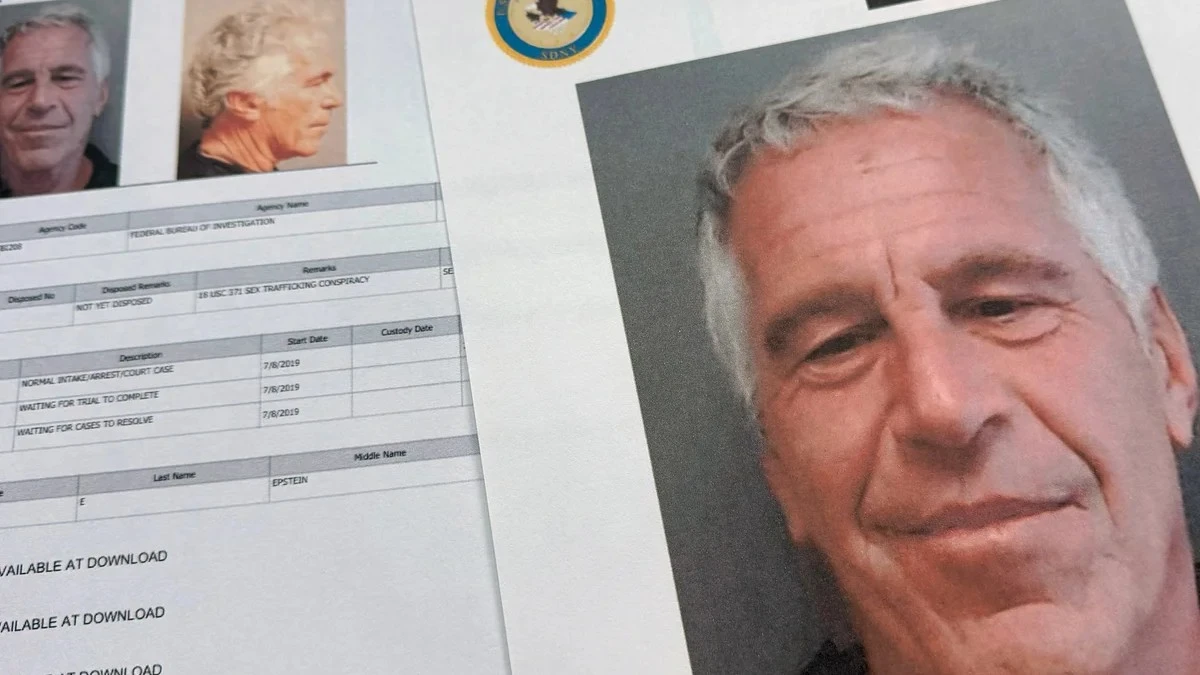
Epstein: The Never Ending Story

Post Reply
User avatar
blindpig
Posts: 15306
Joined: Fri Jul 14, 2017 5:44 pm
Location: Turtle Island
Contact:

Epstein: The Never Ending Story

Post by blindpig » Thu Feb 05, 2026 3:34 pm

Epstein and politics
Zelensky, Chomsky, Slovakia, Abramovich, Vilkul
Events in Ukraine
Feb 03, 2026

We all know that Epstein did bad things to little girls. But what exactly was he up to in the world? Why was he constantly discussing high (geo)politics with the world´s most powerful men?

Anyway, the western press is naturally running with the narrative that he was a spy for the all-powerful Putler. Naturally, the Polish PM concurs.

One often wonders why exactly the west hasn’t collapsed already, given such a level of deep infiltration of its political elite by the erstwhile enemy. But I’ll leave such paragraphs for the journalists at the Times to grapple with.

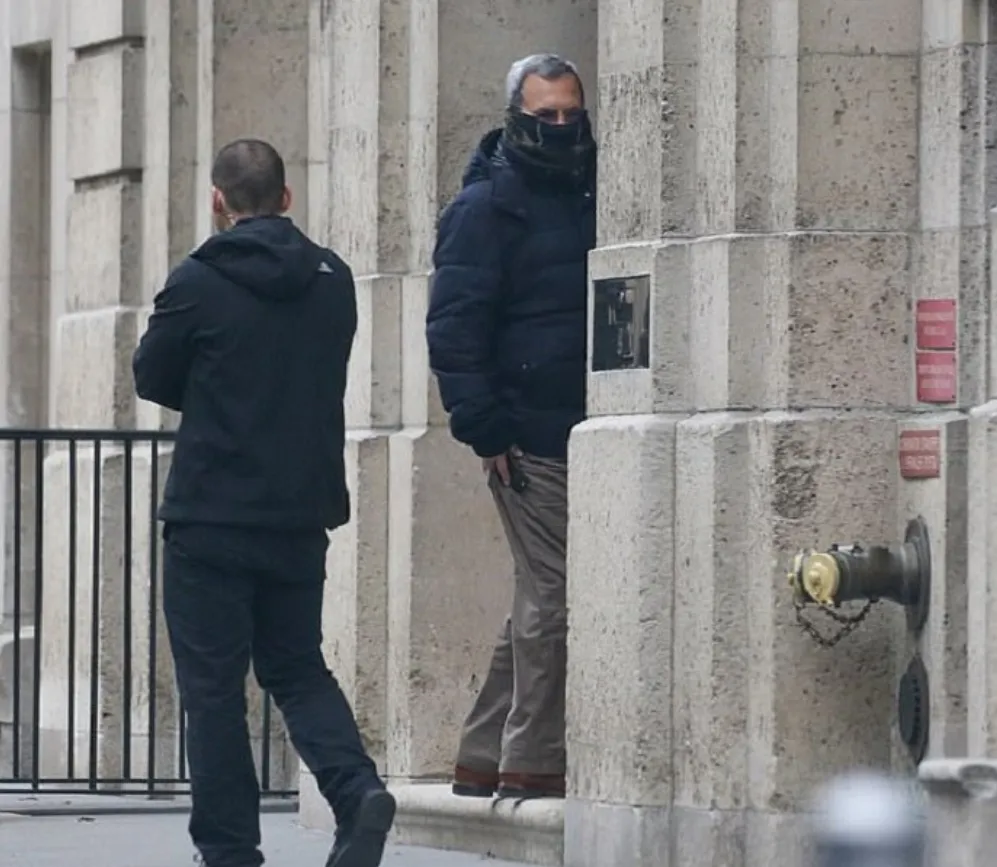
The reality, of course, is that almost all of the thousands of mentions of ‘Putin’ in the Epstein files are from the news articles he obsessively sent himself. When it comes to heads of state, the only person that Epstein was emailing personally on a (very!) regular basis was Ehud Barak — former prime minister of Israel, as well as ex-head of the Israeli military intelligence.
Image
Barak’s furtive visit to Epstein’s residence in 2016

So Epstein was an Israeli agent? It’s certainly more likely than the alternatives. But I would push back on one popular narrative. This is the idea that Epstein entrapped public figures, sexually blackmailing them into abandoning any stances against the state of Israel.

To begin with, if this were true, one would see sex scandals targeting prominent anti-zionists. But most of the elite sex scandals I hear about don’t involve particularly anti-Israeli figures. Peter Mandelson wasn’t exactly a partisan of the Palestinian people. But he just left his post in the house of Lords due to the latest Epstein revelations.

And besides, if we’re talking about the sexual abuse of children by members of the elite, this is something like nuclear weapons in geopolitical terms. Mutually assured destruction.

Assume Epstein was taking videos of politicians violently abusing children with the intent of releasing them under certain conditions. If such videos really were released to the public, this would entirely shatter any public trust in their governments as a whole. Sure, the Epstein affair has already had such effects. But so far, there is still no smoking gun evidence that, say, Hillary Clinton ate a toddler. These aren’t weapons that can be used in inter-elite disputes, since it would destroy the elite as whole.

Don’t get me wrong, I’m not doubting that the power elite does terrible things to vulnerable people. And I do think such actions have real functions.

My view is that such activities act to solidify the elite, even to initiate one into it, so to speak. Acts of absolute transgression in the presence of others act as a powerful bond for the perpetrators. A deadly secret becomes shared. Each person involved knows at a deep personal level that he is just as bad as his peers. Moral reflection becomes entirely impossible, if it ever was for such people.

Besides, top members of the business and political class often have to do rather illegal things. A speculative financial deal impoverishing much of their own populations. Illegal arms sales. Secret negotiations with terrorists. Organizing a bloody false flag operation.

Having shared dark secrets after Epstein’s dinner parties further consolidates those involved in managing this world’s savagery. In that sense, figures like Epstein and the activities they organize are certainly crucial to the political fabric of the world.

But there isn’t just symbolic significance here. The emails show that Epstein was also involved in giving financial advice to figures of power. His putative expertise in this field also extended beyond the world of finance.

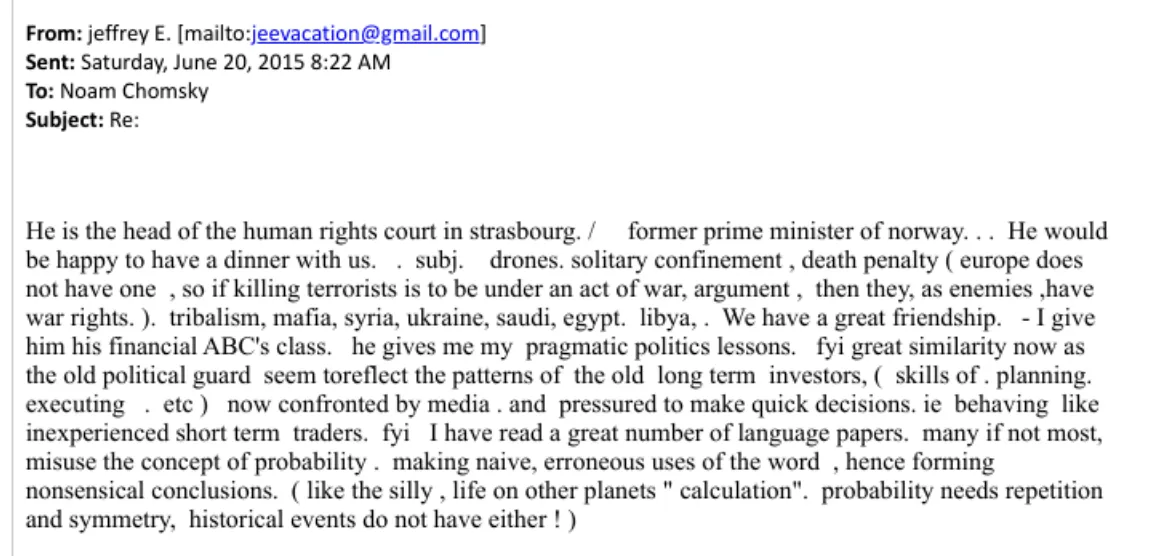
As Epstein said in a 2015 email with Noam Chomsky, modern politics is becoming increasingly similar to financial trading. As such, Epstein discussed events in Ukraine (and other global hotspots) with the former prime minister of Norway, head of the European Court of Human Rights, and general secretary of the council of Europe, Thjorborn Jagland:
Image

Politics as financial trading. When people rightfully point out Epstein’s obvious stupidity, the same is true of the polished politicians who respected him. Indeed, many of the actions of contemporary world leaders can be described little other than as the behavior of ‘inexperienced short term traders’.

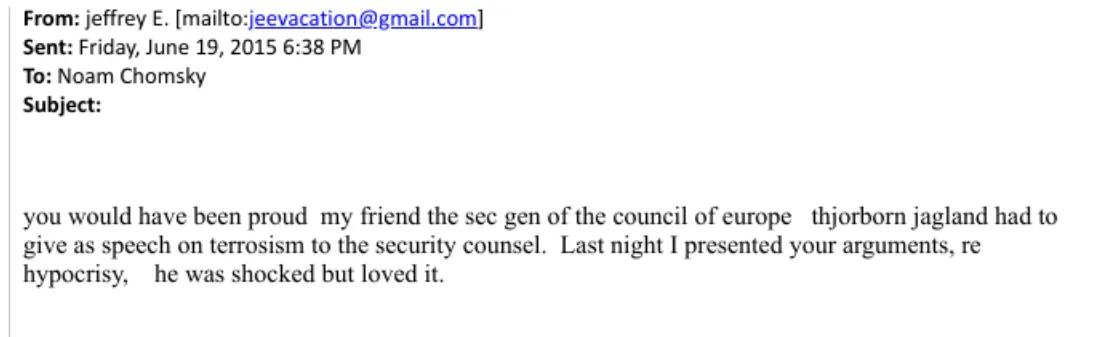
Epstein’s powerful interlocutors seemed ready to put up with all his crackpot ideas. In another email, Epstein even boasts that Jagland appreciated hearing about Chomsky’s heterodox ideas on western imperial hypocrisy.
Image
Epstein as operator

Epstein doesn’t exactly strike the tone of an ideologically puritan Atlanticism. I doubt he was much help in organizing broader NATO strategy towards eastern Europe. As his friend Alex De Rothshchild remarked to him in 2014, Ukraine’s pro-western revolution was merely beneficial to Epstein in terms of instability and poverty. As we saw yesterday, Epstein was more enthusiastic about snapping up untrustworthy Ukrainian real estate assets than even his friend, Jean-Luc Brunel (the pedophile that committed suicide in prison in 2022).

So what was his function? I think it’s fair to speak of at least two.

First and probably foremost, as an intermediary. Epstein’s provision of sexual services to the rich and powerful of the world offered him a wealth of contacts. If American diplomats wanted a back channel with the Russians or with pro-Russian politicians in Ukraine, Epstein was one of those to call. In this respect, one could rightfully draw parallels between Epstein and Chabad, the Jewish sect which keeps popping up as intermediaries for Trump’s shadow diplomacy in Ukraine and Russia.

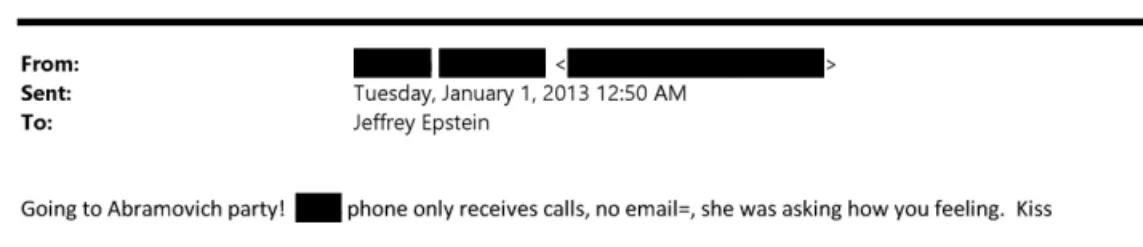
An example of the type of useful contacts Epstein could boast of comes, for instance, in an early 2013 email. Here, seemingly one of Epstein’s ‘girlfriends’ tells him about her current destination:
Image

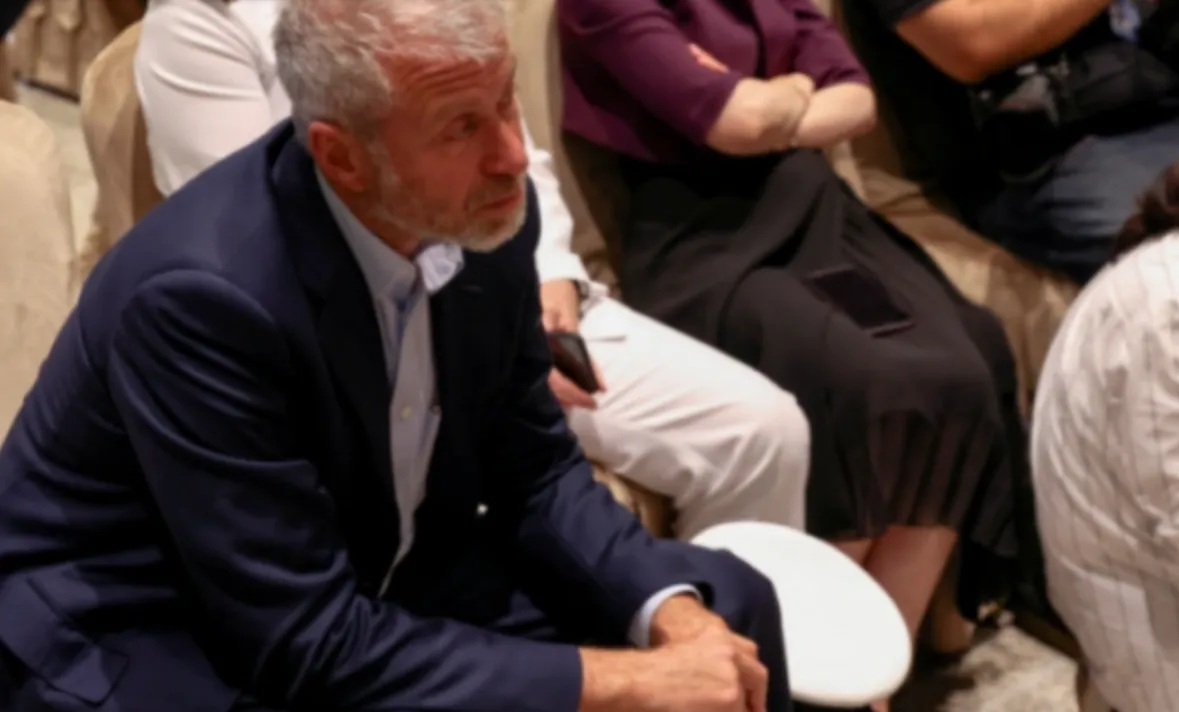
Roman Abramovich is one of Russia’s richest men. Though certainly a figure with a line to Putin, this is hardly a militarist opponent of the west. On the contrary, Abramovich was prominent in the March 2022 negotiations with Ukraine, as well as the grain deal that came a few months later. Abramovich was kind enough to fly Ukrainian POWs back from Russian captivity in his own private jet later in 2022 — he even gave them free iphones.
Image
Abramovich at the grain deal signing ceremony in Istanbul, July 2022

In other words, this is a typical member of the Russian economic elite that would much prefer close economic ties with the west to anything else. That’s where his bank accounts lie, after all. This is someone considered a traitor by Russian patriots. A very important figure for western intelligence to have a line on, a line through which to send confidential messages. A way to coordinate negotiations. No doubt Epstein wasn’t the only such possible way into figures like Abramovich, but I’m sure it doesn’t hurt to have numerous options.

Second, Epstein surely functioned as a source of information. Epstein knew many and heard many things. In his emails, he was clearly a great fan of telling other powerful individuals interesting intel. I find it hard to believe that he wasn’t communicating even more explosive things through more secure channels to, say, his good friend Mr Barak.

Now we’ll examine Epstein’s likely designs on Zelensky, Epstein’s ‘pro-Russian’ (but actually quite the opposite) contacts in Ukraine, the geopolitical nature of his Slovakian friend, and much more.

(Paywall with free option.)

https://eventsinukraine.substack.com/p/ ... d-politics

*****

The Epstein Saga: Chapter 7, Hello Mr. Burns

Lorenzo Maria Pacini

February 5, 2026

A key figure in American political power, a connecting link between Democrats, Middle Eastern diplomacy, and intelligence, began associating with Epstein in 2014 and later became Director of the CIA.

A Highly Successful Director

Imagine being the Director of the CIA, as well as a veteran of American diplomacy. Power, knowledge, political and military influence. Now imagine a long series of trips to meet Jeffrey Epstein.

William Joseph Burns is regarded as one of the most experienced figures in U.S. foreign policy, with more than three decades of service at the State Department. Over the course of his career, he served as ambassador to Jordan, Under Secretary of State for Political Affairs, and played a key role in the secret backchannels with Iran that paved the way for the nuclear deal, building a reputation as a discreet, effective negotiator deeply embedded in the “labyrinths” of Washington’s bureaucracy. An impressive career, to say the least—a true statesman.

In 2014, Burns was Deputy Secretary of State, effectively the number two official at the Department, with direct access to the most sensitive dossiers on Russia, the Middle East, Iran, and the Ukrainian crises. Since 2021, he has led the CIA, a position that places him at the apex of the U.S. intelligence apparatus, already shaken by unresolved questions surrounding the handling of the “Epstein case.” It is precisely in 2014 that his contacts with Epstein begin, and it is easy to understand why every detail concerning his prior interactions with the financier is not perceived as mere social curiosity, but rather as a potentially significant piece in the mosaic of relationships linking political elites, intelligence services, and a figure at the center of a transnational network of sexual abuse, blackmail, and opaque financial flows.

Epstein’s internal documents—particularly calendars and emails reconstructed through journalistic investigations—indicate that at least three meetings between him and William Burns were scheduled in 2014. Reconstructions converge on a sequence: an initial meeting in Washington, followed by at least one visit by Burns to Epstein’s Manhattan townhouse, with the possibility of another meeting in the same city. These appointments appear in Epstein’s records between 2013 and 2017, that is, during a period in which the former money manager had already served a sentence for sexual crimes in Florida and was formally registered as a sex offender.

A CIA spokesperson, questioned after the revelations, stated that Burns—then Deputy Secretary of State—had been introduced to Epstein as a financial expert capable of offering general advice on transitioning into the private sector. According to this account, Burns allegedly had no detailed awareness of Epstein’s criminal past and did not maintain an ongoing relationship beyond those few meetings, described as limited contacts with no further developments. The spokesperson also emphasized that “they did not have a relationship” and that the Director does not recall subsequent contacts, including any car rides allegedly provided by Epstein.

However, several counterintelligence specialists have described it as “stunning” that such an experienced official would agree to meet a high-profile sex offender, stressing that even a minimal reputational background check should have raised red flags. From this critical perspective, there are only two possibilities: either Burns knew who Epstein was and underestimated the gravity of the issue, or he failed to ask sufficient questions—demonstrating, according to these analysts, a degree of carelessness incompatible with the security standards expected of someone who leads an agency like the CIA.

Elites and Intelligence

It is important to clarify what the documents that brought Burns’s name back into the spotlight do—and do not—represent. Epstein’s private calendars, agendas, and staff emails are an incomplete source: they record planned appointments, meeting proposals, invitations to events, and travel arrangements, but they do not always confirm that every entry resulted in an actual meeting. In Burns’s case, however, multiple sources agree that at least one or two of these meetings did take place—something the CIA spokesperson did not deny, while attempting to downplay their significance.

These calendars differ from Epstein’s private jet flight logs or the so-called black book, which listed contacts, phone numbers, and addresses and over the years fueled more or less responsible lists of names associated with the financier. While the black book suggests potential lines of contact and flight logs imply physical presence on aircraft and routes, the calendars represent the dynamic map of the social and business network Epstein sought to build. In this framework, Burns’s presence—at a moment when he was exiting a top-tier government role—places him among the high-level interlocutors Epstein aimed to involve in consulting activities, projects, or simply relationships of influence and prestige.

The political and media issue is not limited to what happened—some meetings in 2014—but extends to how and why. On the one hand, the official narrative insists on the absence of any structured relationship: Burns is portrayed as one of many officials leaving government service who, at the end of a long career, explore potential opportunities in the private sector, turning even to individuals presented as experts in finance and networking. On the other hand, a high-profile sex offender like Epstein was hardly an obscure figure in 2014, and merely crossing the threshold of his townhouse should have triggered ethical and security alarms.

The Burns case illustrates a systemic problem of “willful blindness” among elites, who are more inclined to value access to capital and contacts than to consider the risks of associating with toxic figures. The White House chose a policy of silence, declining to comment directly on the revelations regarding the 2014 meetings—a decision that reinforces the perception of a politically sensitive dossier that has not yet erupted at the institutional level.

Yet there is a detail that many risk overlooking: Burns was one of the quiet pillars of Barack Obama’s foreign policy.

The trajectories of the two men intersect during the decade in which Obama, first as a senator and later as president, sought to reshape U.S. foreign policy after the years of George W. Bush. Burns arrived at that juncture with a résumé already marked by explosive dossiers: ambassador to Jordan, then to Moscow, and later Under Secretary of State for Political Affairs—the third-highest position at the State Department. Obama met him personally in 2005 during a visit to the U.S. Embassy in Moscow, where he encountered Ambassador Burns and, by his own admission, was struck by his combination of caution, analytical clarity, and deep knowledge of Russian affairs.

When Obama entered the White House in 2009, it was no coincidence that he surrounded himself with figures “inherited” from the bureaucracy, considered reliable by both political parties. Burns was one of these technocrats of power, having served under five administrations, from Reagan to Obama. In those early years, the president faced the reset with Moscow, the war in Afghanistan, the remnants of Iraq, and the early signs of the Iranian nuclear crisis. In this context, Burns progressively emerged as one of the few officials Obama trusted enough to assign highly sensitive missions conducted outside official channels.

Perhaps the clearest sign of their relationship appears in Obama’s statement in April 2014 commenting on Burns’s retirement from the State Department. In that text, the president recalls meeting him in Moscow, admiring him from the outset for his precision, and adds a revealing sentence: “Since taking office, I have relied on him for candid advice and sensitive diplomatic missions.” Obama emphasizes that on multiple occasions he asked Burns to delay retirement—evidence of genuine political reliance on his ability to manage highly complex dossiers—going so far as to say that the country is “stronger” thanks to Burns’s service.

More than mere ceremonial rhetoric, diplomatic reporting confirms this centrality: biographical profiles and think tank analyses describe Burns as a “consummate diplomat,” a professional enjoying bipartisan respect, capable of engaging Netanyahu, Lavrov, Iranian negotiators, or Gulf monarchs with equal composure. In this context, the “friendship” with Obama takes the form of solidarity between cautious reformers: a president seeking to distance himself from the logic of military intervention, and a diplomat who had long argued for privileging negotiation over force.

A career without setbacks

The chapter that more than any other cements the political bond between Burns and Obama is that of the Iranian nuclear negotiations. Beginning in 2013, a small group of officials—led precisely by Burns and Jake Sullivan—was tasked with managing a series of secret meetings in Muscat, Oman, with Iranian representatives. The goal, as ambitious as it was controversial, was to determine whether there was space to defuse the nuclear crisis without open conflict, by opening a parallel channel alongside the official multilateral P5+1 format.

Accounts from those months, reconstructed by the Associated Press and other media outlets, speak of at least five secret meetings conducted by Burns and Sullivan, often with small delegations, during which the foundations were laid for the subsequent interim agreement and ultimately the 2015 JCPOA. In this narrative, Obama is the political decision-maker willing to risk enormous domestic and international credibility to achieve a historic outcome; Burns is the man who translates that risk into diplomatic practice, meticulously managing language, concessions, and pressure on skeptical allies—first and foremost Israel and Saudi Arabia.

One particularly significant detail concerns the triangular relationship between Obama, Burns, and Netanyahu. Analytical sources recall that the Israeli prime minister learned of the secret channel only in 2013 directly from Obama, and that managing this delicate balance—reassuring Israel while keeping negotiations with Tehran alive—depended in part on Burns’s ability to withstand intense crossfire. In some commentaries on Burns’s memoirs, the former diplomat describes Obama in largely positive terms on the Iranian front, crediting him with the determination to avoid “military adventures” and to invest in diplomacy under difficult conditions.

The Iran file is not the only one linking Burns’s political fate to Obama’s. As Under Secretary for Political Affairs and later Deputy Secretary of State, Burns was involved in the administration’s attempts to manage the Arab Spring, the war in Syria, the Libyan dossier, and, more broadly, the effort to realign U.S. policy in the broader Mediterranean after Iraq. His memoirs and several critical analyses note that, while supporting Obama’s negotiating approach, Burns was not without doubts—for example, he later reconsidered whether the United States should have taken a firmer stance against the Assad regime after the use of chemical weapons, in order to avoid a credibility vacuum.

This did not undermine his relationship with Obama, but rather reveals its nature: not blind loyalty, but an ongoing dialogue between a cautious president and a diplomat who shared that orientation while still pointing out the costs of certain hesitations. In essence, Burns embodies the most refined version of the Obama doctrine in the Middle East: fewer direct interventions, more multilateral pressure, more sanctions, and more parallel channels of communication—from Russia to Iran, from Gulf monarchies to opposition movements.

Around them moved an “Obama network” of figures who would later return to key roles: Jake Sullivan would move from the Biden vice presidency to President Biden’s White House; Wendy Sherman, who worked alongside Burns in the Iran negotiations, would become Deputy Secretary of State; other diplomats and advisers would find positions on boards of directors, in think tanks, and in foundations that populate the world of the American liberal establishment. Burns himself, after leaving the State Department, would lead the Carnegie Endowment for International Peace, one of the most influential foreign policy think tanks, becoming a permanent fixture in that ecosystem of intellectual and political elites shaped in part by the Obama experience.

Although Burns’s appointment as CIA Director formally came from Joe Biden in 2021, many commentators view that choice as the continuation of an “Obama line” on national security: placing a diplomat—rather than a former military officer or partisan politician—at the head of intelligence, reinforcing the idea that U.S. strength derives more from the negotiating table than from the battlefield. In this sense, the relationship with Obama helped define not only Burns’s public profile but also his symbolic role within the American power structure.

So, to sum up: Burns, a key figure in American political power, a connecting link between Democrats, Middle Eastern diplomacy, and intelligence, begins associating with Epstein in 2014 and later becomes Director of the CIA. Who knows what Burns and Obama whispered to each other, and even more so, who knows what they did on Jeffrey’s magical island.

All perfectly normal. That’s America!

https://strategic-culture.su/news/2026/ ... -mr-burns/

*****

Image
Jeffrey Epstein, Jes Staley and Jamie Dimon © FT montage/Bloomberg

Epstein files shows how the elites move
Originally published: Black Agenda Report on February 4, 2026 (more by Black Agenda Report) | (Posted Feb 05, 2026)

The late Jeffrey Epstein was the subject of news for many years before his 2019 death and is still a newsmaker today owing to his years long relation with Donald Trump who is now in his second term in the presidency. The multi-millionaire financier had a tangled web of financial and political relationships with powerful people all over the world. Perhaps he was best known for the sex trafficking he used to compromise powerful people, but it seems that this activity, which is commonly known, was as it were, his side hustle.

Epstein moved in the highest circles of the world’s political and financial elite. He did far more than act as pimp for the powerful as he worked on behalf of Israel, UK politicians, and international corporate interests. His partner in crime, Ghislaine Maxwell, now languishes in a federal prison, but she began her life as a member of the upper echelon of the British elite. Her father was Robert Maxwell, a Jewish, Czech-born newspaper magnate who was an ardent and active zionist. After Maxwell died from a fall from his yacht in 1991, he was buried in Israel with the then-prime minister, Yitzhak Shamir, in attendance.

The Department of Justice’s release of more than 3 million pages of files, including photos and emails, is a treasure trove of information for Epstein watchers. The contents of these files confirm much of what was already known about him but add previously unknown details about his wealth and his political activities. Placing so much emphasis on sex scandals has covered up activities that are equally devastating in what they disclose about how the ruling classes rule.

Epstein evaded justice for years but finally died in a New York City jail in 2019. The cause of death was ruled a suicide but there were always doubts about that finding. Such questions are logical where people like him are concerned. Epstein was worth an estimated $578 million and was a friend of Donald Trump, Bill Clinton, and a former prince of Britain’s royal family who is no longer a prince, now just plain Andrew Mountbatten-Windsor, owing to the need to keep a family distance from scandal.

Epstein was Jewish, but as documents now tell us, he was also a believer in Jewish supremacy who worked with officials in allegedly democratic nations on behalf of the international ruling class and zionists. Epstein’s ties to Israel are well known to anyone who has been following this story, but his attitudes about people who aren’t Jews, “goyim,” as he often wrote in his emails, is a new revelation. “This is the way the jew make money… and made a fortune in the past ten years, selling short the shipping futures, let the goyim deal in the real world,” is just one of the missives found among Epstein’s emails. When a Hollywood publicist asked if an event would be “100% Jew night,” he replied,

No, goyim in abundance-JPMorgan execs, brilliant WASPs.

Any discussion of the topic of Jewish financial and political power is usually off limits, a sure means of being labeled anti-semitic. But the damning tranche of files and Epstein’s own words give a space for reporting what is documented.

What has been missing is a deeper dive into the web of relationships with prominent people such as corporate leaders, the Israeli government, and international financiers like Epstein himself. The emphasis on sex trafficking and sexual assaults of minors has quite rightly garnered great attention, but there are many more things we should know about Epstein and what his relationships tell us about how the world actually works.

In the UK, Peter Mandelson was forced to step down from the House of Lords and from the Labour Party because of revelations that he leaked official government information to Epstein about a plan to bailout that government during the 2008 market crash. Mandelson and his husband also received money directly from Epstein.

Mandelson is not just any prominent person. He was formerly the UK ambassador to the United States, a former member of parliament, and a leader among New Labour—that is to say, that wing of the party which purged the left and undermined Jeremy Corbyn’s leadership. Mandelson has been a mover and shaker for many years, and his relations with Epstein are just one indicator of how the world works, even in countries that claim to be democracies operating on behalf of their people. It was clear that Corbyn would never be allowed to become prime minister. Powerful people, even those ostensibly in the same party, engaged in behind-the-scenes machinations and collusion with the media to ensure that even a little bit of liberal reform would be off the table.

In 2010, Mandelson emailed Epstein that he had convinced the then-prime minister Gordon Brown to resign after failing to form a coalition government. “Finally got him to go today.” Brown resigned the very next day, and the conservative Tories were back in power. The supposedly left wing Labor party was actually and still is controlled by unprincipled people for whom the labels of left and right are meaningless.

Epstein also played a role in the 1993 Oslo process, which so devastated Palestine. A Norwegian married diplomatic couple, Mona Juul and Terje Roed Larsen, played a lead role in the Oslo Accords and were also on Epstein’s payroll. Larsen received a personal $130,000 loan from Epstein and had to step down from his post as president of the International Peace Institute after it was disclosed that the organization received $650,000 in donations from Epstein. Juul and Larsen’s children were reportedly left $10 million in Epstein’s will. As former UN official Craig Mokhiber says, “I can’t prove that Israel has corrupted UN political officials working on Palestine, but I know that Larsen and his successors as UN envoys (UNSCO) all consistently prioritized Israel regime sensibilities over international law and the human rights of the Palestinian people.” There was definitely great embarrassment in Oslo, Norway, where documents chronicling the process disappeared from official archives. Roed Larsen admitted to keeping a private stash but refused to return them to the state.

An Epstein associate advocated that he involve himself in the looting of Libya after the 2011 NATO regime change plot. The $80 billion in frozen assets were the target. “I have been speaking to the law firm Paul, Hastings, Janofsky & Walker . . . to go after the money on a contingency basis . . . But it would be to our advantage to pay them on an hourly basis and initially go after the low-hanging fruit, which would enable us to keep more of the money. I also have friends, formally with MI6 and Mossad, willing to help identify stolen assets and get them recovered.” Epstein did not demur his response, only stating that “Libyans now are legit… there will be many claims on that money.”

The list of misdeeds and insider wrongdoing is a long one, and there are still millions more files that have yet to be released, and the latest tranche was heavily redacted. The full extent of criminality is still unknown.

Epstein provides a useful window into the high echelons of wealth and power. It is useful that the public gets a glimpse of how little influence they actually have. While we are exhorted to vote at every opportunity, the Epsteins of the world are determining what does and does not happen. They work with intelligence assets, law firms, political parties, and the media to do their dirty work, and the people of the world be damned. If not for his sexual abuse and Donald Trump’s regretted pledge to release the files, we would not have such clear evidence of the corruption that runs the world.

https://mronline.org/2026/02/05/epstein ... ites-move/
"There is great chaos under heaven; the situation is excellent."

User avatar
blindpig
Posts: 15306
Joined: Fri Jul 14, 2017 5:44 pm
Location: Turtle Island
Contact:

Re: Epstein: The Never Ending Story

Post by blindpig » Fri Feb 06, 2026 3:59 pm

What the elites don't want you to know about the Epstein Files
February 4, 2026 , 12:05 pm .

Image
Documents from the Epstein case, recently released by the U.S. Department of Justice (Photo: AP Photo)

Recently, the U.S. Department of Justice (DOJ) released an unprecedented volume of material related to the Jeffrey Epstein case, in compliance with a law specifically designed to compel the disclosure of these documents.

The so-called Epstein Files Transparency Act , passed by the US Congress and signed by President Donald Trump in November 2025, requires the attorney general to release all unclassified records related to federal investigations into Epstein within 30 days.

As a result, the DOJ released more than 3 million pages of documents , along with at least 2,000 videos and around 180,000 images linked to the extensive investigation into Epstein, his circle of associates, and his network of child sex abuse and trafficking.

The scope of this release constitutes one of the largest releases of sensitive information in the history of US court records.

The materials include internal correspondence, investigation records, FBI agent reports, court briefs, photographs, and audiovisual recordings accumulated over decades of federal investigations, including inquiries in Florida, New York, and other districts where the case against Epstein, his associate Ghislaine Maxwell, and matters related to his death in prison were brought.

The release was not without controversy. Although the law set a deadline of December 19, 2025, for making all documents public, the DOJ missed that date, releasing the material in waves and facing bipartisan criticism for the lengthy redactions and for withholding crucial portions of the files from public scrutiny.

Furthermore, although the released documents represent a huge amount of information available for public analysis, it is estimated that there are more than 6 million potentially relevant pages, many of which remain under review, subject to redactions, or have not been fully disclosed.

This set of records raises questions about who was in contact with Epstein, what the authorities knew about his networks, and why much of this information remained hidden from the public and even from the prosecutors themselves for so long.

Trump, tycoons and Epstein's American circle
The massive release of Epstein's files exposes the density of the links between him and central figures of American political, financial, and technological power.

Donald Trump is by far one of the most cited names in the files , with more than 1,500 direct mentions in documents, emails, FBI interviews, photographs, and internal records.

The files include unverified allegations submitted to federal authorities over the years, some describing alleged sexual abuse committed when the complainants were minors. Several FBI reports mention testimony indicating that Trump "knew about the girls," that he allegedly participated in encounters at Epstein's properties, and that, in at least one case, a complainant claimed she was forced to perform sexual acts when she was between 13 and 14 years old.

The documents also reveal that Ghislaine Maxwell introduced young women to Trump in a similar context to the one she used with Epstein, according to statements collected in a 2021 federal interview. Although that testimony clarifies that "nothing happened" in that specific encounter, the pattern described reinforces the picture of a close and sustained social relationship between Epstein, Maxwell, and Trump over years.

Other materials show that Epstein sought strategic advice on how Trump should publicly respond to questions about his relationship with him during the 2016 campaign. In an email sent by Epstein , he acknowledged that a minor had claimed to have had sex with Trump at his residence and that he said he had a witness.

In addition, the files include previously unpublished photographs, private flight logs and personal correspondence, as well as references to a birthday book compiled by Maxwell, which contained a letter attributed to Trump with a sexualized drawing, the authorship of which Trump has repeatedly denied.

The documents also include allegations against Bill Gates , contained in draft emails that Epstein wrote to himself in 2013.

In those messages, Epstein claimed that Gates had had sexual encounters with Russian women, contracted a sexually transmitted disease, and subsequently sought antibiotics to secretly administer to his then-wife, Melinda Gates, in order to conceal the infection. The emails also contain accusations that Gates asked Epstein to delete previous communications and express Epstein's anger at the abrupt end of his relationship with the businessman.

Although none of these claims have been corroborated in court, the files include previously unpublished photographs that confirm multiple meetings between Epstein and Gates, even after Epstein had already been convicted of sex crimes. Gates categorically denied the allegations and called them smear campaigns following the end of their relationship.

Elon Musk appears in the documentation through email exchanges with Epstein between 2012 and 2014, in which they discuss possible visits, social events, and travel-related logistics.

One of the emails attributed to Epstein's assistants explicitly mentions sending passport copies of "three girls" in the context of a possible visit. Musk has consistently denied traveling to the island or participating in illegal activities, but the correspondence confirms an active communication channel between the two.

Other relevant names in the United States include:

Larry Summers , former Treasury Secretary, who corresponded with Epstein until the day of his arrest in 2019, discussing political issues, Trump's mental health, and geopolitical scenarios.

Howard Lutnick , the current Secretary of Commerce, was listed in plans to visit Epstein's island in 2012 with family and friends, although there are no confirmed records that the trip actually took place.

These disclosures paint a complex picture of high-level relationships between Epstein and the heart of American power. Emails, photographs, testimonies, and internal records show that his network didn't operate on the fringes of the system, but rather intertwined with presidents, billionaires, officials, and central figures of the establishment, many of whom remained active for years even after Epstein's crimes were known to authorities.

The global case: royals, European politicians and intelligence networks
The scope of the scandal extends beyond the American political and business circuit, into a web of international relations involving European royal houses, political leaders, and transnational influence networks.

Among the most recurring figures in the files is former Prince Andrew , whose relationship with Epstein had already generated an institutional crisis in the United Kingdom. Images of him on all fours, leaning over a woman or girl lying on the floor, are part of the released graphic material.

Following the release of new documents, British and American media outlets noted that the case reignited the debate about the lack of accountability of elites and the monarchy's internal handling of the scandal.

The files also include references to European political figures. In Norway, for example, the appearance of former Prime Minister Thorbjørn Jagland's name in correspondence linked to Epstein led to critical press coverage and calls for public explanations about the nature of those contacts.

The mentions reveal high-level interactions that reinforce Epstein's image as a regular intermediary in European political and diplomatic circles. Although these episodes do not always lead to legal consequences, they do generate reputational costs and sustained political pressure on parties, governments, and institutional structures.

Adding to this international network is a more sensitive element, revealed in a declassified FBI report . According to this document, President Donald Trump was "compromised by Israel" and Jeffrey Epstein acted as a Mossad agent. Furthermore, it claims that the Jewish religious movement Chabad Lubavitch had co-opted Trump's presidency. The document, written in 2020 during an investigation into undue influence in the US elections, is based on information from a confidential source.

In this context, Alan Dershowitz, Epstein's lawyer and a high-profile academic, emerges, described in the memo as a figure co-opted by Mossad to cultivate political and economic elites with strategic connections, especially through university and legal circles. The report argues that Epstein was used as an infrastructure for accessing global power circles, combining capital, social prestige, and personal relationships as mechanisms of influence.

State, cover-up and self-serving transparency
Beyond the scandalous details contained in the files, the way this release has been handled exposes the role of the state, the protection of elites, and the political uses of "transparency" in the United States. The publication is presented as a milestone in open information, but it is more selective and calculated than liberating inconvenient truths.

Critics point out that this release represents only a fraction of the potentially public documents. The DOJ itself acknowledged that several million records have been withheld under legal privileges or for security reasons, with extensive redactions (partial censorship) in many of the released materials.

Specialized lawyers and support groups have accused the DOJ of prioritizing the preservation of state privileges over real accountability , arguing that incomplete disclosure and mass redactions serve more to manage the public narrative than to reveal the whole truth.

The official position of the DOJ, expressed by Deputy Attorney General Todd Blanche, maintains that the review and disclosure complied with the law and that there is no basis for new charges without additional evidence, despite the presence of "troubling correspondence" and "disturbing photographs." This position has been met with skepticism due to the inconsistency between the vast amount of available documentation and the decision to release only excerpts with extensive redactions.

On the international stage, there are broader geopolitical implications. Iranian scholar Mohammad Marandi has said that in his country this disclosure is perceived as a prelude to an intensification of US foreign policy, especially in military terms.

There is an expectation of a possible US attack against Iran, partly fueled by narratives of foreign interference and power relations that emerge strongly after the partial exposure of the archives.

Taken together, these elements reflect that the publication of the Epstein files operates in a confluence of state interests, internal political pressures, and external geopolitical dynamics, where supposed transparency serves as a tool to direct public attention, manage legitimacy crises, or weaken political adversaries.

This is how the West manages the knowledge of its own elites, deciding which parts of the truth to reveal and which to keep hidden, and with what broader strategic objectives, both internal and external.

https://misionverdad.com/globalistan/lo ... os-epstein

Google Translator

******

Epstein: The Face of the Global Right Wing
February 5, 2026

Image
Donald Trump, Ingrid Seynhaeve, and Jeffrey Epstein in 1997 in New York, USA: One of the 80 images published on December 12, 2025, from the 95,000 photographs requested by subpoena by the US House Committee on Oversight and Reform. Credit: Epstein Estate/House Oversight/Zuma Press/ContactoPhoto.

By Diario Red – Feb 2, 2026

The ideological and media consensus in global geopolitics has been imposed through moralistic narratives used to justify invasions, abductions, and wars under the cover of a supposed political authority rooted in religious convictions. To that end, they have built an apparatus of thought and storytelling so that the rest of the planet submits through sheer subjugation, but also through fear, in an increasingly insecure and uncertain world.

This closely resembles what the Panama Papers and the Pandora Papers revealed at the time: a way of managing the global economy by political powers entrenched in tax havens—hideouts of the worst mafia networks—shielded by financial and oligarchic groups in nearly every country in Latin America. What happened after the media scandal regarding the Panama Papers? Nothing. In reality, we were left with a spectacle that was immediately blocked by the global media apparatus. No new regulations or controls were implemented to prevent this type of economic—and arguably moral—crime.

Hence, the revelations of the so-called “Epstein Files” expose the true face of these figures of the global right wing. They are not only men with enormous economic and political power but also “moral leaders” who have sought to impose a way of life through supposedly democratic regimes in order to establish models of coexistence based on the market, fame, and spectacle and above the institutions of the state.

Beginning with the man who now seeks to govern the planet, Donald Trump, all those mentioned in the emails released by the US Department of Justice have either denied or remained silent in the face of photographs and emails containing evidence of their participation in acts of pedophilia, business meetings, and parties in mansions and excessively luxurious yachts.

In the case of Latin America, the link between former Colombian president Andrés Pastrana and Jeffrey Epstein is based on flight records and recently declassified testimonies confirming that there was a personal and logistical relationship between the two. Pastrana has denied this. The former president appears on Epstein’s flight manifests on several occasions in the early 2000s. Pastrana admitted to having traveled to Havana, Cuba, in March 2003 at the invitation of Fidel Castro, using Epstein’s transport for the Nassau–Havana leg of the trip. But there is more: the 2025 and 2026 files include a photograph of Pastrana alongside Ghislaine Maxwell (Epstein’s accomplice), both wearing Colombian Air Force uniforms. Maxwell testified before the courts that they became friends due to their shared passion for piloting helicopters and that she even flew a Black Hawk helicopter in Colombia.

From Mexico, the files implicate powerful former presidents such as Carlos Salinas de Gortari; the country’s wealthiest man, Carlos Slim; and the owners of the television monopoly, Emilio Azcárraga and Ricardo Salinas Pliego. However, there is an even more revealing detail: the files link Trump to the legendary Sinaloa Cartel.

Regarding Trump, the new files contain thousands of references and emails from Epstein. They show that the US president spent hours in his house with victims, along with records placing him as a passenger on Epstein’s private plane on at least eight occasions during the 1990s. The videos are the most conclusive proof of his participation in acts that constitute crimes without a statute of limitations and they reveal his true moral condition. Trump now maintains that everything “is a hoax” and that it the files are a Democrat conspiracy intended to undermine the “successes” of his government.

Steve Bannon, Trump’s former strategist, is also named numerous times in the files. Bannon exchanged hundreds of friendly text messages with Epstein up until shortly before Epstein’s death in 2019. In one of the messages, they discussed a documentary film intended to help clean up the financier’s reputation and coordinated a political influence campaign in Europe. Is this not also the way the Latin American right has operated, with some of its leaders linked with businesses closely tied to drug trafficking?

Another character who represents this right wing is Howard Lutnick, Trump’s current secretary of commerce. The files contain evidence that Lutnick was invited by Epstein to his private island in 2012. Although Lutnick claims to have cut ties years ago, his wife accepted invitations to family lunches aboard Epstein’s yacht.

The list does not end there. José María Aznar, former prime minister of Spain and a leading figure in training Latin American right-wing movements, is mentioned at least three times in the newly declassified files. Will he now step forward to deny it publicly or claim that there is a supposed conspiracy against him by the left?

The question that arises at this moment is: what other military incursion, bombing, abduction, or invasion will they use to distract us from what the files reveal? If these files had been released in December, the Trump regime surely would have bombed Caracas earlier.

https://orinocotribune.com/epstein-the- ... ight-wing/

(Not the 'global right wing', rather the global bourgeoisie, who are not unified as they pursue their individual 'liberty' unless the existential terror of socialism looms, in their heads anyway)

*****

The Epstein Files as a Weapon in the Conflict Over Currency and the “Central Domain”
Posted on February 5, 2026 by Curro Jimenez

The Epstein files have shown, once again, that elites from the worlds of politics, finance, technology, and media form an interconnected network. At points, their interests and connections collide into a single vortex—in this case, most probably a deliberately created one. This begs the question: why was it exposed?

I don’t think there is much doubt that Jeffrey Epstein was an intelligence asset. He was most probably working for Mossad, but with ties to others—for example, MI6, as his extensive relationship with Lord Mandelson indicates. His life and “career” were a typical example of this. He was virtually unknown, with no significant traceable family connections; yet, after working in a finance firm, he launched his own financial company and did extremely well.

Epstein ran a financial advisory firm that charged “fees” to his clients. Fees are virtually unlimited, unlike the sale of goods, which is much more complicated to justify. If an agency wants to channel money to an individual, it’s a great cover. Some argue that those fees were, in effect, blackmail, but that is a flimsy argument.

When Epstein died in 2019, he was a wealthy man. He was worth $578 million, including two private Caribbean islands, several lavish homes, and about $380 million in cash and investments. But $578 million is a relatively small number for the world’s billionaires, sovereign funds, and politicians with state budgets—and a manageable investment to control them.

The Epstein files have exposed the debauchery of elites. They operate in a separate order, both physical and moral. Through their corporate offices, private villas, jets, and exclusive hotels, they inhabit a different world. In that world, the amorality of the current cultural form is expressed through perversions. However, many of those who so loudly criticize them might fall into the same pattern if only they were assured immunity.

Which is what Epstein seemed to provide: a safe environment in which to let loose all kinds of fantasies. Whether they were legal or illegal was of no consequence. The correspondence of many with him shows a tacit understanding that whatever happened when they were together was not to be spoken about too directly—only by reference, and never in public.

For about 30 years, since he bought Little St. James Island in the U.S. Virgin Islands, it worked. The man must have been smart, no doubt. He managed to infiltrate elite circles, gain their trust, and make them feel safe enough to engage in illegal activities, all while keeping records and probably reporting to his bosses.

Until it was no longer private. In 2008, when he was first tried and convicted, few in the public suspected the reach of his network and the scale of the operation. It might be more than mere coincidence that it was the year of the big financial crisis. In 2019, he was arrested, and less than a month later, he supposedly killed himself while in jail. But I don’t think many people really accept that.

The question, assuming one does not buy into the mainstream media narrative of Epstein being a perverted, self-made millionaire who happened to have many elite friends, is why he was exposed. Having the wealth, connections, and compromising evidence, why did he not use it? Perhaps he tried after he was arrested, and that’s why he “died.”

But the question remains: if we accept the hypothesis that he was not working alone but for someone, why did they allow him to be caught and exposed? I will attempt a circumstantial answer, not a particular one, as I don’t think many people are in a position to answer it definitively.

We are in the midst of a change in the “central domain”—to use the Carl Schmitt framework—of our current technological paradigm. For Schmitt, a central domain is the subject that gives an age its structure, language, and battles. A central domain is the core of an age in relation to which all other subjects and challenges are defined. Each era has one dominant domain that organizes how people understand reality.

Schmitt offers the example of European technical progress during the nineteenth century. Progress in this field was the central domain of that age’s paradigm. The massive upsurge of “technical progress” affected all “moral, political, social, and economic situations,” he writes in the essay “The Age of Neutralization.” Its overpowering effect gave it the status of a “religion of technical progress, which promised that all other problems would be solved by technological progress.”

After the age of “technical progress,” for Schmitt, came the age of economic technique, which lasted, I would say, until 2007–2008, coinciding with the release of the first iPhone and the financial crisis. In an economic age, “one needs only to solve adequately the problem of the production and distribution of goods in order to make superfluous all moral and social questions.”

“God, freedom, progress, anthropological conceptions of human nature, public domain, rationality and rationalization, and finally the concept of nature and culture itself derive their concrete historical content from the situation of the central domains and can only be grasped therefrom,” Schmitt writes.

Some might argue with the use of Carl Schmitt’s theoretical framework because of his political choices; however, Schmitt was right in foreseeing two big changes well ahead of time. First, that the relationship between power and the subject in the twentieth century could no longer be thought of through the classical concepts of national sovereignty and the nation-state—an idea that many others, from Foucault to Agamben, developed later.

Secondly, as Nathan Gardels writes for Noema: “It appears Schmitt’s second possibility of America as a balancer did in fact take place during the post–Cold War period. That brief era, which built the exoskeleton of a singular planet, is now splintering. Deglobalization, Russia’s invasion of Ukraine, and the mounting hostility between the West and China—which is seeking to become a maritime global power unshackled from its continental constraints—are morphing into the differentiated Grossraum that Schmitt predicted.”

Schmitt anchored these insights in his concept of paradigms with central domains dominated by his notion of the political. He argued that the central domain is where the definition of friend and enemy—his primary category for the birth of the political field—takes place, and that where this happens is where the political truly resides.

I would argue that we are living through a transitional period between central domains, which Schmitt also considered to be a distinctive phase. We are moving from a central domain defined by economic and analog technique to one dominated by the digital. The digital domain is the age of cloud infrastructure, data, and algorithms, where virtually all spheres of life are reflected and stored—and increasingly, what shapes our very subjectivity.

This new central domain is where the struggle for power happens, and nowhere is that more clearly visible than in the control and definition of money. We are in the midst of a struggle among elites for dominance over the central domain, the power nexus. The money that is coming, which will determine this central domain, is digital; the issue is who will control it.

At its core, digital money is not about currency in the traditional sense, because it is not currency as we are used to defining it; it is a control mechanism. Control mechanisms have “rails.” Whoever owns the rails controls visibility, access, enforcement, and ultimately sovereignty. A central bank digital currency (CBDC) places those rails formally in the hands of the state. A stablecoin, by contrast, places them in private hands—regulated and compliant, but governed through contracts, platforms, and market incentives rather than public law.

This distinction matters because it maps directly onto a deeper conflict inside American power. On one side stands what Simon Dixon and others call the Financial-Industrial Complex (FIC): large banks, asset managers, payment networks, exchanges, and financial infrastructure firms whose profits depend on scale, liquidity, and predictable flows. On the other side are the Military-Industrial Complexes (MIC): the security agencies, defense contractors, and intelligence services whose power rests on threat management, surveillance, and enforcement. Somewhere in between, with Trump closer to the MIC than to the FIC, is the Technological Industrial Complex (TIC).

This is where the tension lies. The FIC wants the rails because they monetize them. The MIC wants the rails because they police them. The TIC has understood that, while they may claim strength on their own to impose order in the previous two complexes, for now they are better off close to the MIC. Stablecoin regulation—who may issue, how reserves are held, and what programmability is allowed—becomes the battlefield where this conflict is negotiated.

Epstein was a tool, and that tool has been used—and is being used at this very precise moment—as a weapon in this conflict. If we continue the hypothesis that he was an Israeli intelligence asset, then trying to understand where Israel fits into this conflict could be clarifying.

For decades, the Middle East functioned as a U.S. security theater. Israel was a central node in that system: a military ally, intelligence partner, and testing ground for surveillance, targeting, and population-control technologies that would face legal or political resistance elsewhere. Continuous instability justified defense budgets, arms sales, and a permanent security posture. The Military-Industrial Complex thrived on this arrangement.

But finance has a different calculus. War is volatile. It disrupts energy markets, trade routes, and investment timelines. It creates risk. As the global system moves toward a multipolar order—driven in part by China’s rise and the erosion of sanctions effectiveness—the Financial-Industrial Complex increasingly favors managed stability over “forever wars” in the Middle East.

If Epstein was a Mossad intelligence asset, then it could be argued that he is being used in order for Israel to gain leverage and to favor those who favor it—and perhaps that he was allowed to be exposed because, in this elite conflict, he was losing leverage and had become too expensive an asset to let go to waste.

https://www.nakedcapitalism.com/2026/02 ... omain.html

(Regarding Mossad, I still adhere to the dictum that the tail does not wag the dog. Very hard to doubt that Epstein's operation was a honey trap, but whose? As I've said, US spooks would be unbelievably incompetent to allow anyone else get those kinds of goods on so many US movers and shakers. Fucked up as they are I can't believe they'd betray the Owners like that. So mebbe Mossad and/or MI6 as subcontractors but the big dog eats first.)

*****

The Epstein Case & American Elite Morality: A Chinese Perspective

From The Epstein case is the "killing line" of the morality of the American elite
Karl Sanchez
Feb 05, 2026

Image

The current context has shown the level of American morality or lack thereof with Trump’s extrajudicial murders of innocents in international waters, abetting the Zionist Genocide in Palestine, and a host of other examples that display his Outlaw mentality. But for many globally, that’s nothing new for the Outlaw US Empire as it’s been doing such things since WW2 ended—actually, before it was completely over with its unwarranted use of atomic weapons on Japanese civilians. And then there’s its history since its settlement by Europeans. Some will recognize this name, Donatien Alphonse François de Sade, known better as the Marquis de Sade for whom the term Sadism is named. But then he was preceded by a large number of institutional elites who were far worse than he, most being officials of the Vatican Catholic Church Institution noted for its ongoing religious wars of genocidal intent. But Protestants were just as horrific in their war against women—witches—and native peoples wherever they landed outside Europe, as well as the commonfolk of their own lands. I supply all this because the analysis and opinion that follows from an American educated Chinese professor is extremely strong. He incorporates the newest Chinese expression that defines how America is viewed—The Killing Line—which was explored in an earlier article. IMO, Zhou Deyu is the pen name of the author whose article is entitled “The Epstein case is the ‘killing line’ of the morality of the American elite” and was published by Guancha on 4 February 2026. The denials related to Epstein’s activities are gross and serve to obscure his role as Mossad agent and also as an agent of International Capital. A few investigators have devoted their lives to uncovering those webs, but this essay looks at what the case exposes beyond those webs and the sort of Anti-Humanity is displayed. An additional aim is to open the eyes of Chinese to the reality of the Outlaw US Empire and the West generally.
A few days ago, a friend asked me what I thought of “Prison A” [牢A] and asked me if many of the horrible things he said, such as cannibalism, were true. I wanted to find news and data to discuss this matter in more detail, but fortunately the US Department of Justice released a new batch of Epstein files in the past two days, which saved me trouble.

In fact, over the years, the Epstein archives have been published many times intermittently, and there is not much new. But for the Chinese, after experiencing a series of “disenchantments” of American society represented by “Prison A” last year, the Epstein case provides more fresh material.

The Chinese have finally begun to realize that the darkness reflected in the Epstein case is not an anomaly that can be ignored or only regarded as curiosity, but a systemic pathology that is the norm of the entire Western society.

To some extent, the Epstein case is a kind of “culture shock” for the Chinese. What really needs to be paid attention to in the Epstein case is not only the scale and low bottom line involved, but also how the entire system operated by Epstein is rooted in the entire Western society and has become an integral part of its development.

For contemporary people growing up in New China, this may be the most difficult part to understand. Why can such darkness as the Epstein case and cruelty as the “killing line” exist for a long time in Western society?

Before the founding of New China, there was certainly no shortage of “cannibalism” in Chinese history, both in a figurative and practical sense. But even in ancient times, dire situations like the “killing line” and extravagant desires like Epstein were often regarded as only things that should happen in troubled times, or as a sign of troubled times.

Shouldn’t “the red gate smells of wine and meat, and there are frozen bones on the road” happened during a period like the Anshi Rebellion? Shouldn’t Shi Chong’s extravagance herald the collapse of the dynasty and the arrival of troubled times? And should these things happen in the 21st century, a country that claims to be the most developed civilization?

However, this so-called most developed country in the world is based on inequality for all.

Just like Jefferson, who wrote the beautiful words “All Created Equal”, was a slave owner himself, the establishment and development of the United States, and the progress and expansion of the entire Western capitalist civilization, were based on such hypocrisy. As long as some people are expelled, then of course the “equality of all” for others can be achieved.

Why is the United States the most developed country? Because the United States is the culmination of this system that eats and wipes people dry. From the very beginning of the nation, the United States was built on the land taken by the massacre of indigenous peoples, on the economy built by enslaving blacks, and on the religion and culture that rationalized all this enslavement and massacre.

Even after the Civil War, slavery in the United States was ostensibly eliminated, but the substantive enslavement of minorities never stopped. Why did slavery take a civil war to end? Because slave plantations were so profitable. This economic system that does not treat people as human beings is not a symbol of backwardness as some people in later generations call it, but is closely integrated with the capitalist economic development of the United States and the entire West at that time.

So guess where did those slaves in the American South go after they were freed? Of course, most still returned to the plantations, although they were not nominally slaves, but they still did the same thing.

As the United States expanded globally since the twentieth century, the objects it could enslave and slaughter have been greatly expanded, whether it is “illegal” immigrants enslaved directly on American soil or countries around the world controlled by the United States.

Matching this set of practices is a religious worldview, which divides human beings into human and non-human beings and regards them as the norm. Whether it is the exploitation of the poor and the massacre of pagans in the name of religion, or the colonization and enslavement of other ethnic groups in the name of racism, or the rationalization of the rich with so-called liberal capitalism, or even a series of so-called singularity theories in AI and biomedicine developed by Silicon Valley upstarts in recent years...... These ideas serve a purpose, that is, to divide people in the world into human and non-human, and to divide some people into things that have been abandoned by God or the times, so that others can do whatever they want without burden, and let them accept all their destiny willingly.

This combination of capitalism and religion is unimaginable to many people living in secular New China.

Of course, it is said to be a religion, but in fact it is essentially a cult. Many religious concepts that we think are ignorant, cruel, and evil are very popular in Western society.

So you will see that the elites in the Epstein files discuss how to manipulate the political economy of each country like a game when they discuss how to take and abuse men and women from all over the world for their pleasure...... This is not just the darkness and depravity of a few, but the normal operation of Western society as a whole.

Although every time the Epstein file comes out, Westerners will be indignant as usual, as if this is something amazing, but in reality, you will find that everything is normal from top to bottom, no one really cares about helping the victims, and no one cares about punishing the perpetrators, because all this is too ordinary.

As I have repeatedly emphasized when discussing conspiracy theories before, the real conspiracy is the daily life in front of you, that is, you do all the bad things and lose your conscience without facing any consequences.

Do you see what secret codes and elite small groups are needed for the huge political and business network operated by Epstein? He didn’t need it at all. Because he can contact the powerful elites of the world, serve them, and exchange interests. And these powerful elites are those who are not responsible for public murder on Fifth Avenue, what do they have to hide?

Regardless of party, field, nationality, from Democrats like Clinton to Republicans like Trump, from tech elites like Gates to foreign dignitaries like Prince Andrew, and even scholars like Hawking and Chomsky, Epstein has taken care of it. Everyone is responsible, which means everyone is not responsible.

Do you think the U.S. Deputy Secretary of Justice is talking about human language when he releases the latest batch of Epstein files?

“There are a lot of horrible photos that seem to come from Epstein or people around him, but that doesn’t mean we can sue anyone.”

I don’t think the most Horrible thing is the photos, it’s this understatement.

Of course, considering that the ICE minions who killed on the streets of Minnesota were able to get away with it, it is not surprising that those powerful people are not being mentioned.

Some people may ask, didn’t Epstein himself die? Yes, because Epstein is just a broker after all, he is not a person in power. When he himself was no longer useful to the powerful, he was treated as a mustard, just like those he mutilated in the first place.

The only thing the powerful need to consider is how to cheekily pretend to be innocent.

Like the Clintons, who are already deeply bound to Epstein, suddenly decided to testify before Congress in the past two days, just to make a gesture to whitewash themselves, and it is impossible to really say anything.

And Musk has been proud in the past two days, because he said that he has never been to Epstein’s island, he can package himself as an honest and innocent person, even those who are familiar with Musk know how much he plays.

However, as you can see from the published emails, it is not that Musk himself does not want to go to the island, nor is Musk unfamiliar with Epstein. Musk and Epstein chatted several times about going to the island for a party, but for various reasons, the trip did not take place for the time being.

Of course, relatively speaking, immigrant upstarts like Musk may indeed not be so close compared with the “old money” in Western society. If you really want to say that you have a thick skin, it has to be the Trump sitting in the White House.

Over the years, it is unknown how many rounds of intimate photos and interactions between Trump and Epstein have been released, but Trump is still able to package every release of Epstein’s files as his own political achievements, build himself as a righteous person who exposes Epstein’s conspiracy, and once again attack his Democratic political opponents.

Publishing the Epstein files and exposing the truth about Epstein’s death was a core program that Trump attracted MAGA back then. For a long time, MAGA believes that Trump is different from other powerful people, and that Trump is one of the few saviors willing to help civilians fight the powerful.

But as more of Trump’s relationship with Epstein is revealed, what can MAGA do? A small number of MAGAs, such as prominent Congresswoman Marjorie Taylor Greene (MTG), fell out with Trump over Epstein, and as a result, she herself had to give up running for re-election. Most MAGAs still selectively pretend to be blind or really blind in the end, firmly standing with Trump and vowing to defend his innocence.

Of course, it’s not that I can’t understand this mentality. If you find that almost every elite in this society is in Epstein’s network, sharing those funds, connections, voices, and horses, from left to right, no one is clean from politics to business, then what’s the point of chasing Trump? Fifty steps is a little better than a hundred steps, right?

Many Chinese people can’t understand this powerless mentality, after all, rebellion runs through Chinese history, do princes and generals have a kind of thing? So they can’t understand why this society is still running as usual when the bottom is so dire and the powerful are so hasty? Because those who cannot endure and rationalize all this have been eliminated in the development of history. After all, what else can they do? The right to hold a gun is used to kill civilians at most, do you really expect to use these fire sticks against aircraft artillery and military and police Xianxian?

If you don’t understand this situation, you can think of the territories controlled by criminal groups or terrorist organizations around the world, such as wire fraud parks or drug plantations in Southeast Asia. Without external intervention, these societies maintained by deception and terror can have strong vitality and even competitiveness. The functioning of society never requires everyone to live a good life, as long as some of them live a very nourishing life, so that the other part of the people are powerless or unwilling to resist, it is enough.

The United States is the world’s largest wire fraud park, and the Epstein case is just a daily scene that exposes the nature of the wire fraud park. The United States promises you wealth from liberal capitalism, but the Epstein case tells you that this wealth comes from the exploitation and massacre of ordinary people. The United States promises you free elections to bring democracy, and the Epstein case tells you that these elites and powerful parties are one family. The United States promises you justice with judicial independence, and the Epstein case tells you that you will never let guilty dignitaries be punished without punishing doctors...... Of course, a few lucky people can also make money in the wire fraud park, but when you find the truth behind the glossy surface of the wire fraud park and don’t want to accept the status quo, the Epstein case will also tell you that resistance is fruitless, you will only die like a wild dog on the side of the road, and no one will look at you.

So why am I talking about the darkness of the United States here, what does it have to do with the Chinese? Because to this day, countless people have repeatedly read the press release of the wire fraud park in China, wanting to turn China into their park. This should not be China, nor should it be the direction of human development.

Everyone has a responsibility to fight fraud.
(More at link. I'd disregard.)

https://karlof1.substack.com/p/the-epst ... ican-elite

*****

Image

Please Understand That Nothing Will Be Done About The Epstein Files

The power structure which birthed the Epstein abuses is not going to do anything about the Epstein abuses. The only thing that might possibly change is that some people may become radicalized against that power structure.

Caitlin Johnstone
February 4, 2026

I need you to understand that nothing is going to be done about anything in the Epstein files.

Nothing.

The people in the documents will suffer no consequences. The institutions responsible for the abuses you’ve learned about will not change anything about how they operate. Your government will change absolutely nothing about its policies and behavior.

Nothing will be done if you vote in the other political party. Nothing will be done if you vote in new politicians. Nothing will be done if you write letters to your senators and representatives. Nothing will be done if you hold protests outside government buildings.

No meaningful laws will be passed. No prosecutions of any meaningful consequence will occur.

Don’t believe me? Just watch and pay attention.


The power structure which birthed the Epstein abuses is not going to do anything about the Epstein abuses. The only thing that might possibly change is that some people may become radicalized against that power structure.

That’s the only real benefit that might come out of these Epstein releases the public has been demanding for years. That a few more eyes might get opened to how creepy and evil the people in charge of their society actually are.

How creepy and evil capitalism and the western empire are. How creepy and evil Israel and Zionism are. That the collective might become a bit more aware that we live in a dystopia which elevates the very worst among us to positions of leadership and control.

That’s it. That’s the only positive change that might come out of all this. Our rulers won’t do anything to help right the wrongs, but the people might become a bit more ready and willing to overthrow our rulers.

That’s the only way health and humanity is going to win this one. By waking up to reality one pair of eyelids at a time and realizing that the reason everything is fucked is because we live under a fucked up system which elevates fucked up people, and we’re not going to have a healthy world until we abolish the fucked up system that put the fucked up people in power.

The Epstein releases won’t change the abusiveness of the system. But they might nudge people toward dismantling that system.

https://caitlinjohnstone.com.au/2026/02 ... ein-files/
"There is great chaos under heaven; the situation is excellent."

User avatar
blindpig
Posts: 15306
Joined: Fri Jul 14, 2017 5:44 pm
Location: Turtle Island
Contact:

Re: Epstein: The Never Ending Story

Post by blindpig » Sat Feb 07, 2026 3:53 pm

JEFFREY EPSTEIN’S PUTIN HUSTLE WAS A DECADE-LONG FAILURE BUT HIS STORY KEEPS PROVING AMERICAN EXCEPTIONALISM IS A FAILURE

Image

By John Helmer, Moscow @bears_with

In Jeffrey Epstein’s decade between 2009 and 2019 he tried ever so hard to meet the President of Russia, Vladimir Putin.

That’s to say, between Epstein’s release from prison on his Florida state conviction and sentence for procuring a minor for prostitution and for soliciting a prostitute, and then his re-arrest and imprisonment in New York on federal charges of sex trafficking of minors, he asked his staff, friends, business associates, US Government retirees, ex-government officials from Norway, Israel, UAE, and Japan, and Russia’s Ambassador to the United Nations, Vitaly Churkin (died in February 2017), to procure an invitation for him to meet Putin.

They succeeded in getting Epstein invitations to business promotions in Sochi, Vladivostok, and St. Petersburg, at which crowd meetings with Putin were promised. But Epstein refused. On May 13, 2013, he claimed in an email to former Israeli Prime Minister Ehud Barak that Putin “had asked that I meet him the same time as his economic conference. I told him no. If he wants to meet he will need to set aside real time and privacy. Let’s see what happens.”

Nothing ever did.

Epstein’s scheme was simple. He targeted one connection to make another connection he believed the first already had to the Kremlin in order to then trade the appearance of the Kremlin connection for Epstein to others willing to pay Epstein introducing, consulting or finder’s fees if the appearance of Putin’s agreement could be fabricated into money.

Epstein also needed to prove that his criminal conviction and jail time counted for nothing in international politics, investment banking, high society. Like washing money, this was reputation laundering.

“You can explain to Putin,” Epstein told Thorbjorn Jagland, a former Norwegian prime minister and Council of Europe politician, “that there should be a sopshiticated [sic] Russian version of bitcoin, It would be the most advanced financial instrument available on a global basis”.

This was amusingly familiar to a Russian, especially one who knew enough English to appreciate the double meaning of Epstein’s misspelling; more importantly, it exposes the naïve superiority complex he was demonstrating to Russians whose experience in laundering, transferring, and crypto-hiding amounted to multiple billions to trillions of dollars more than Epstein had ever handled. As a money launderer, Russians understood Epstein was never clever enough himself and employed no organization to work for him.

Jagland did nothing with the email. Jagland could do nothing for himself except exaggerate the group session he had at the Kremlin in December 2016 when the Kremlin published an 8-line speech Putin gave. Two years later, in December 2018, there were even more officials with Jagland at the table and Putin’s communiqué was three lines shorter. Jagland’s refusal to withdraw support for European sanctions of Russia on Crimea and for prejudicial judgements of the European Court of Justice against Russia left him in a tupik – that’s Russian for dead end. That’s where Jagland’s “connection” with Putin ended too.

Its remaining value to Jagland was to trade it to Epstein in return for an evening’s accommodation and entertainment at his Paris house. “Is it same prosedure [sic] as last time that I can stay with you,” Jagland asked Epstein. “I promise not make noice [sic] or ruin you.”

In both directions, Jagland’s and Epstein’s, this operation was a hustle. Jagland got what he didn’t pay for; Epstein got nothing.

Epstein’s trafficking of Russian women was more successful. The women proved their exceptional beauty and their relatively low cost compared to American women, and thus they proved to be the commodity that asset hustlers like Epstein always appreciate. He bought them cheap and sold dear. Also, the Russian women have kept silent.

In what the US Justice Department calls in public release its “Epstein Library”, updated through February 4, 2026, there are 1,021 entries for the name Putin.

Almost all of them turn out to be press clippings Epstein collected himself or had sent to him by his small staff or others. These sources were all from the mainstream US media; there is no evidence that Epstein sought the more confidential reports of the banks, due diligence firms, special consultancies, or think tanks with which he was connected through their individual executives.

Image
Source: https://www.justice.gov/epstein

Epstein believed the Israeli and Norwegian politicians whom he entertained at home, Ehud Barak and Thorbjorn Jagland, were his best opportunities for getting Putin’s agreement to a meeting. Barak had had telephone and face-to-face meetings with Putin in 2000 and 2001, when Barak was Israel’s Prime Minister; they also met again in 2006 at the St. Petersburg Economic Forum when Barak asked for a brief meeting to discuss “the Middle East situation”. Barak failed to deliver for Epstein.

Jagland is recorded in the Kremlin log as meeting Putin four times in delegation as the Secretary-General of the Council of Europe – 2011, 2013, 2016, and 2018. Jagland liked to show off, telling Putin after a visit to the Winter Olympics preparations in Sochi in 2013: “Being a sportsman myself, when I looked at the ski jump – I was a ski jumper when I was young – I wished I was 40 years younger. Actually, my grandfather was a judge when we had the Olympics in 1952 in Oslo, during the ski jump competition, so I’m coming from a sports family. So I’m very much looking forward to the Sochi Olympics.”

Barak also liked to show off his insider contacts with Epstein:

Image

Image

Image

Epstein also tried using an Emirati, Sultan Ahmed bin Sulayem, to use his Russian business contacts to reach Putin. Sulayem was the US-educated head of the Dubai ports authority and chief executive of DP World. His shipping and real estate businesses in Dubai led to his attendance at international business conferences in St Petersburg and Vladivostok. To Epstein, Sulayem exaggerated his closeness to Putin at these meetings.

There is no Kremlin record the two of them met. However, a Dubai newspaper reported that at the Vladivostok Economic Forum in September 2015, Sulayem discussed a DP World investment in Russia’s fareastern ports. This did not materialize. By the time it did in 2023, Epstein was dead.

Image

Epstein attempted to use his famously expensive home in New York and his American business contacts to draw Russian oligarchs in the city into contact, starting with invitations to parties at his home. The dossier of released emails reveals Epstein tried approaches to Oleg Deripaska, Roman Abramovich, Dmitry Rybolovlev, Victor Vekselberg, Andrei Kuzmichev, and Len Blavatnik.

Several attempts at crashing one of Abramovich’s parties failed:

Image

Epstein attracted hustlers. One of them, a New York city real estate salesman, proposed in December 2016 to broker the sale of Epstein’s Manhattan home to Abramovich and to the Alfa Bank partner, Alexei Kuzmichev.

Image

Epstein turned the proposal down, claiming he had been approached already by Abramovich with an offer of $250 million, and that Epstein had “turned [it] down.” This was false. Epstein could not admit in the market that he had no legal right to sell the property; it had been paid for by one of Epstein’s financiers, Leslie Wexner; Epstein occupied the house but ownership was shared between Wexner and Epstein trusts. When the house was sold in 2021, two years after Epstein’s death, the asking price was $88 million; the sale fetched $51 million.

The closest Epstein managed to get to a Russian oligarch was an exchange of emails with Len Blavatnik. These show the latter resisting the lure Epstein used of dinner party invitations as an opportunity to meet individuals more important than himself. Epstein tried this hustle twice — in 2010 and again in 2014. Blavatnik refused.

Image

Image

The only direct high-level Russian contact appearing in the Epstein Library occurred with Vitaly Churkin. This was an exchange of emails and SMS messages between Epstein and Churkin who was then Russia’s Ambassador to the United Nations in New York. In May 2016 he asked for Epstein’s help in getting his son Maxim a job in New York. “Any Maxim help is confidential”, Churkin said. Epstein confirmed, then in August 2016 he messaged Churkin to say: “first job confirmed to start day after Labor Day”. At the same time, Epstein was arranging for Churkin to meet Barak and Tom Barrack; then Barrack, financier of Donald Trump’s family businesses, was a leading figure in Trump’s 2016 presidential campaign.

The last meeting between Churkin and Epstein was in the afternoon of December 2, 2016. Churkin died on February 20, 2017.

An attempt by British propagandists to make Epstein appear to be in league with Russian intelligence was published in The Telegraph on February 2, 2026. It is a double fabrication, not only of the Russian evidence but of Epstein’s record of failure in every Russian approach he attempted.

Image
Source: https://www.telegraph.co.uk/world-news/ ... a-russian/

The propagandists among each and all of Russia’s enemies have missed the biggest of Epstein’s disclosures. This is because it’s invisible: it is missing from the Department of Justice files but this is not because it is being hidden by the Trump Administration to protect Trump and his Republican allies, nor by the Democrats in Congress covering up for their allies and moneymen.

This isn’t a secret of sex with Russian women.

The record shows that at no point in his career did Epstein spend any of his considerable cash on buying real intelligence on his targets – none whatever on Russia, on Israel, on the UAE. Instead, he was given excerpts from the New York Times or Washington Post. He never asked for more.

Those newspapers produce disinformation. Intelligence of the necessary quality is regularly contracted for and delivered to the credit and risk committees of the bankers and investors with whom Epstein worked and for whom he managed money. Since there is no evidence that Epstein took credits himself from the institutions these individuals represented, directed, or owned, he and his contact and influence networks weren’t subject to the standard due diligence which is required for institutional loans to be approved. Epstein made money by leveraging private credit – his creditors appear not to have investigated him, and he didn’t investigate the Israelis, Americans, Norwegians or Emiratis with whom he communicated. Certainly not the Russians he targeted.

Unlike his banker, broker and lawyer associates, Epstein did not pay retainers for regular or even occasional reports from ex-intelligence agency veterans from the CIA, FBI, MI6, or Mossad. For a professional money manager, or high-society influence peddler, or low-class hustler, the Epstein files reveal he had an exceptional lack of curiosity and an extraordinarily unprofessional ignorance.

This is evidence that Epstein was always an agent, asset, source of chickenfeed, or bagman but never a handler, controller, or spymaster. Who they were is another story. In this story there is conclusive evidence they weren’t Russian.

https://johnhelmer.net/jeffrey-epsteins ... more-93342

******

The Epstein case as a symptom of a broken system
February 6, 2026 , 10:31 am .

Image
Thomas Massie presents the bill designed to declassify secret files on Jeffrey Epstein in front of the Capitol on July 21, 2025 (Photo: AP Photo)

The release of the latest batch of documents in the Jeffrey Epstein case by the United States Department of Justice has brought back into circulation one of the most uncomfortable plots of contemporary power.

Nearly 3 million pages were released in late January, in a particularly sensitive political context. For Donald Trump, making the documents public was an explicit promise to his base, a gesture of breaking with a system perceived as opaque and protective of elites. But at the same time, the contents of the files touch—directly or indirectly—on central figures of the American political, economic, and media establishment, including the president himself. This tension explains the erratic and defensive way in which the process has been managed by the executive branch.

What began to stand out in the days following the publication was the uneven reaction of the media and political ecosystem. While some outlets opted for fragmented coverage, relegating it to secondary sections or focusing on peripheral angles, others maintained almost total silence. The contrast between the magnitude of what was revealed and the near omission of its public treatment exposed a logic of restraint that goes beyond conventional journalistic criteria.

The controlled narrative
The reaction of the major American and English-speaking media was characterized by caution. The topic's presence on front pages and in prominent sections was, in most cases, marginal or nonexistent.

The major newspapers and online news outlets didn't completely ignore the story, but they relegated it to secondary sections or fragmented approaches that avoided fully confronting the political implications of the released material. The most visible exception was CNN, which opted to maintain an active aggregator with constant updates and a markedly more aggressive tone, becoming one of the few mainstream media outlets that treated the case as a sustained news focus.

In the New York Times, the coverage focused on two main points: the mention of Donald Trump within the archives and the presence of nude images among the published documents. Both appeared in secondary sections of the front page without exploring in depth the network of power relations that emerges from the material as a whole. The approach was descriptive, focusing on the volume and explicit content rather than the structural implications.

This logic was repeated in other cases, albeit with revealing nuances. A story focused on Bill Gates functioned, in practice, as a kind of preemptive right of reply. After a correction published the following day, the outlet clarified that it was Gates himself, and not his foundation, who distanced himself from Epstein, emphasizing the personal break as a key point. The emphasis was on defining responsibilities and containing reputational damage.

Something similar happened with British billionaire Richard Branson . The "affectionate" emails exchanged with Epstein and the informal efforts on behalf of the financier were reported in an almost anecdotal tone, noting that his office had not issued any comment. Even when the documents suggest attempts to mediate with figures like Bill Gates to support Epstein during critical moments, the narrative remained neutral, avoiding any substantive questioning.

The contrast becomes even more striking when considering the treatment of Howard Lutnick, the current Secretary of Commerce and Epstein's neighbor in Palm Beach. Unlike other billionaires, Lutnick did not receive the same narrative protection . Although he publicly insisted he had severed all ties with Epstein, the released files contradict that version. The report detailing his denial includes an almost literary detail: a phone call in which he denies everything and then abruptly hangs up, revealing a defensive and politically fragile position. Here, the media protection seems less robust.

Other media outlets opted to downplay the impact. By the end of the first week after publication, neither the Los Angeles Times nor The Washington Post had dedicated significant coverage to the most explosive ramifications of the case. The former again prioritized international angles, such as the resignation of a Slovak presidential advisor or contacts with figures considered peripheral to the American public. The latter took refuge in safer territory : general analyses of "what's in" the files, the former Prince Andrew as a sacrificial figure, or the micro-saga surrounding the Clintons, a historically tolerated target within the media establishment.

Axios, similarly, relegated the topic to a brief mention in its newsletter , and Politico merely acknowledged the publication without giving it prominence on its front page. Taken together, the coverage suggests a tactical approach: reporting just enough to avoid appearing negligent, without amplifying material that starkly exposes the power structure in which Epstein operated.

From Epstein to the global elite
One of the unavoidable starting points of this case is that the release of the documents was, for years, a central promise to the MAGA base: a symbol of breaking with the elites, of the supposed insurgent character of Donald Trump against a system accused of covering up for the powerful.

However, long before this publication, Trump had displayed an ambiguous relationship with that commitment. On the one hand, he politically capitalized on the demand to "open the files"; on the other, he reacted defensively to his own exposure. The signing of the Epstein Transparency Act, pushed through Congress to force the full release of the documents, occurred within this context of cross-pressure, where a key promise had to be fulfilled without fully assuming the political costs involved. Deputy Attorney General Todd Blanche confirmed that this publication marked the end of the Justice Department's review process, emphasizing that even allegations, presumptions, and materials without clear "prosecutional potential" were released.

This legal framework opened a new layer of controversy. There is broad consensus among victims, lawyers, and analysts regarding the flawed handling of the process. This is due not only to the selective omission of relevant actors within the scheme, but also to the way in which numerous victims were once again exposed without any real path to justice. With Epstein dead, Ghislaine Maxwell convicted, and several key witnesses deceased, the possibility of making progress in substantive legal cases is limited.

But this legal impossibility does not neutralize the political and symbolic impact of the released material. The files cause profound reputational damage and reopen uncomfortable questions about transatlantic elites. Although many mentions are circumstantial or indirect, they gain weight when placed within a context of sustained relationships and documented encounters. The portrait that emerges is that of a deeply amoral power ecosystem, where proximity to Epstein is a point of contact between finance, politics, technology, and international influence, including actors linked to Israel.

From the exclusive management of Leslie Wexner's funds, his time at Bear Stearns before the 2008 financial collapse, to his close ties with figures like Bill Gates, Sergey Brin, Larry Page, Peter Thiel, Elon Musk, and former Israeli Prime Minister Ehud Barak, a network is formed where artificial intelligence, surveillance, extreme deregulation, and high-precision military applications converge, with a marked Israeli accent and direct projections into contemporary conflicts.

This evolution suggests more than just a covert sex scandal. It points to a mutation of the classic money laundering model, historically associated with drug or arms trafficking, toward structures fully integrated into the legal economy and legitimate power structures. It is significant that the initial investigations into these networks were overshadowed by the allegations of Epstein's predatory behavior, which resulted in lenient sentences.

The external earthquake following the revelations
While mainstream media and state institutions maintain a silence, the social and political impact of the Epstein files shifts into territory beyond the control of formal power. On social media, the debate unfolds with an intensity that starkly contrasts with the establishment's caution. There, the documents are interpreted and politicized without the usual filters, creating a climate of distrust that extends to the very functioning of the American political system.

This phenomenon is neither homogeneous nor ideologically coherent. It encompasses sectors of the radical right, progressive communities, libertarians, anti-establishment movements, and citizens without a clear political affiliation. Even within the MAGA universe, a fracture is perceptible; some leaders remain silent or downplay the revelations, and a portion of its base observes with unease how promises of transparency clash with the persistence of untouchable zones.

In this context, the demand for accountability takes on particular importance. Pressure for the full implementation of the Epstein Transparency Act has become one of the few points of convergence between opposing political factions. Representatives Ro Khanna (Democrat) and Thomas Massie (Republican), the bill's sponsors, have insisted that disclosure must be completed without exception, including the names and materials that remain suppressed. Both have even warned of the possibility of initiating impeachment proceedings against Attorney General Pam Bondi if the Justice Department does not strictly comply with the provisions of the law.

But this battle has had internal political costs, especially within the Republican Party. Donald Trump launched direct attacks against figures who, from within his own party, supported the demand for transparency. Former Congresswoman Marjorie Taylor Greene resigned her seat after being labeled a "traitor" and receiving threats; Congresswoman Nancy Mace announced she would not seek reelection; and Thomas Massie has become a recurring target of presidential harassment. These episodes illustrate the extent to which the Epstein case operates as a fault line that cuts across alliances and party hierarchies.

The social climate in which these revelations have emerged is intertwined with other sources of internal tension. The new mobilizations against ICE, heirs to the spirit of the 2020 protests, fuel the perception of a country under constant pressure, where state coercion and elite impunity seem to advance in tandem.

From a broader perspective, the Epstein case becomes a catalyst that reinforces the certainty of the existence of an elite that concentrates economic, political, and symbolic power, shielding itself from any attempt at effective accountability. The partial release of the files shows that knowledge about Western elites themselves is strategically managed, releasing information when convenient and concealing it when it threatens to destabilize the existing order.

https://misionverdad.com/globalistan/el ... stema-roto

Google Translator

******

DOJ records show Jeffrey Epstein donated thousands to Israeli army, Jewish National Fund

As more revelations point to the convicted pedophile having deep ties with the Israeli government, western news outlets are pushing the claim that Epstein worked on behalf of Russia

News Desk

FEB 6, 2026

Image
(Photo credit: Jon Elswick/AP)

Documents released by the US Department of Justice show that Jeffrey Epstein donated funds to the Israeli military and the Jewish National Fund (JNF), an organization that funds illegal Jewish settlements in occupied Palestine.

A 2005 IRS filings for one of Epstein’s charitable foundations, C.O.U.Q., show a $25,000 donation to the Friends of the Israel Defense Forces (FIDF).

The US-based charity raises funds in coordination with Israel’s military establishment to support Israeli soldiers and related military infrastructure.

In 2008, as Epstein was facing charges of sex trafficking minors, he traveled to Israel, taking a tour of military bases with the FIDF chairman, businessman Benny Shabtai.

The same IRS records also document a $15,000 donation to the JNF, which works to acquire Palestinian land for illegal settlements in occupied Palestine.

The JNF was founded at the 1901 Zionist Congress for the purpose of buying land in Ottoman Palestine. After Zionist militias violently expelled some 750,000 Palestinians to create Israel in 1948, the new state sold land stolen from Palestinians to the JNF.

Epstein represented the Rothschilds.
The same Rothschild mafia that founded Israel.

Every conspiracy theory was true. pic.twitter.com/4nOFW1p2aB

— ĐⱤØ₲Ø🇺🇸 (@KAGdrogo) February 3, 2026


Epstein’s C.O.U.Q. foundation also sent contributions to Harvard and Columbia Universities, as well as to Hillel International, which promotes Zionism and pro-Israel advocacy on university campuses across the US.


IN 2019, the New York Times (NYT) reported that C.O.U.Q. received about $21 million in stock and cash from the charities of Leslie H. Wexner, the billionaire retail magnate and owner of Victoria’s Secret.

Another of Epstein’s foundations, Gratitude America, received a $10 million donation in 2015 from a company tied to the private equity billionaire Leon D. Black.

Epstein used his foundations to improve his image as a philanthropist amid reports he was a pedophile and Mossad operative.

The NYT reported that a username apparently associated with Epstein edited the page for the J. Epstein Virgin Islands Foundation to claim it had made $200 million in donations to various causes.

“In reality, the foundation was worth a small fraction of that amount,” the NYT wrote, citing documents obtained from public records in the Virgin Islands.

No but the President of the United States raped children and is compromised by Israel, Epstein is a Mossad agent

It’s time to impeach and remove Trump. Lock him up. pic.twitter.com/lbMg1q2Ddi

— Did Donald Trump Die Today? (@DidDTrumpDie) January 30, 2026
The western press has sought to downplay Epstein's ties to Israel and the Mossad, claiming instead that he was working for Russian intelligence.
Image


Though Epstein has close ties to Russia, where the Jewish community has strong influence through the country's oligarchs, the mafia, and the Chabad Lubavitch religious movement, Epstein's own emails, released by the Department of Justice, have made his role in working for Israel clear.

https://thecradle.co/articles/doj-recor ... ional-fund

Yes, yes, but who are the Zionists working for?

Jeffy was every sort of scumbag, where does one find the time?
"There is great chaos under heaven; the situation is excellent."

Post Reply