Donald Trump, Avatar of his Class, Capitalism & the Decline and Fall of Bourgeois Democracy

User avatar
blindpig
Posts: 15306
Joined: Fri Jul 14, 2017 5:44 pm
Location: Turtle Island
Contact:

Re: Donald Trump, Avatar of his Class, Capitalism & the Decline and Fall of Bourgeois Democracy

Post by blindpig » Fri Jan 09, 2026 5:00 pm

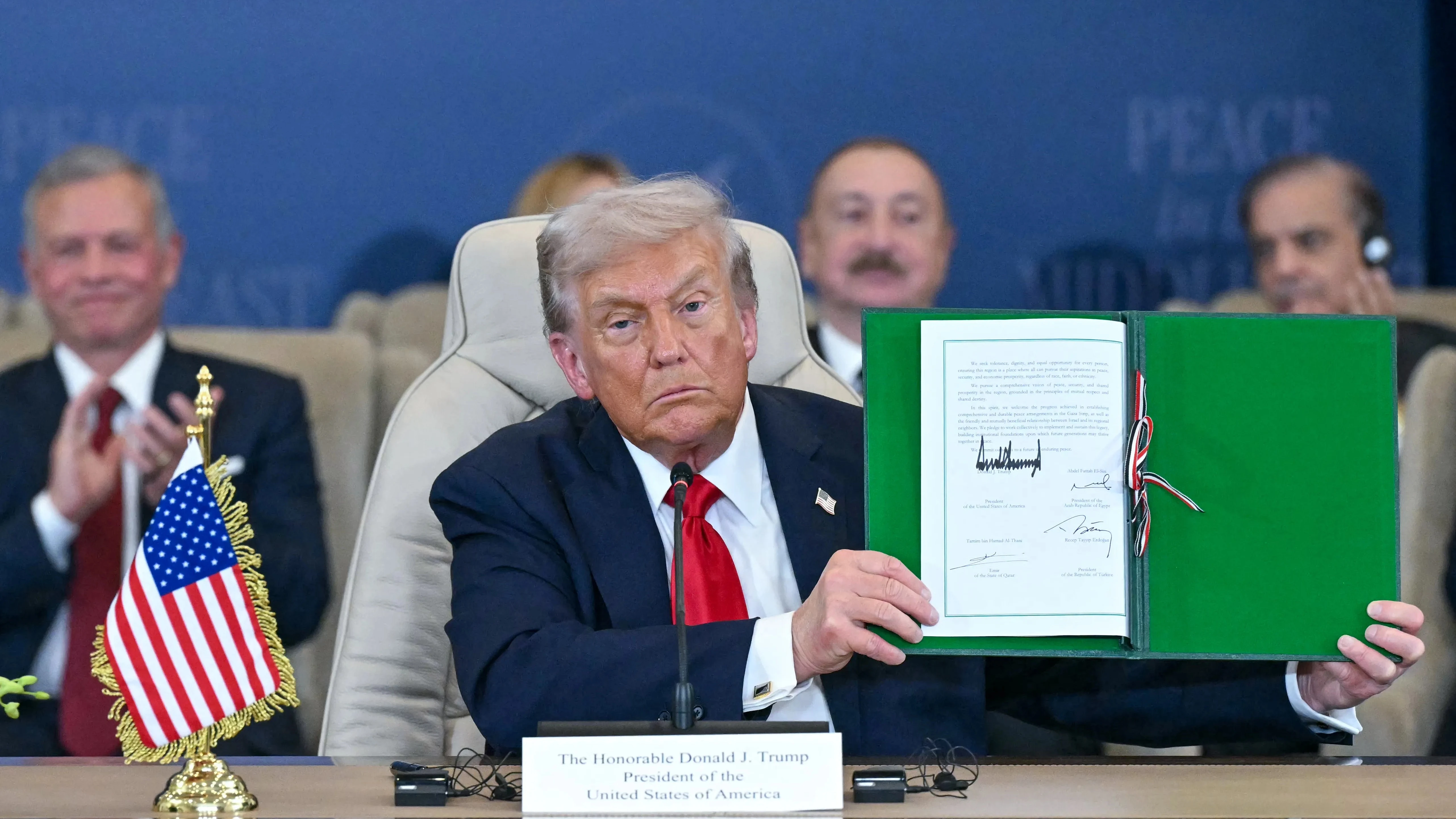
Trump doesn't care about the end of the New START Treaty
January 9, 9:03

Image

From the fresh Trump.

1. The US began unloading oil from the captured tanker Mariner.
2. Trump did not speak with Putin after the tanker was seized.
3. Trump doesn't care about the end of the New START Treaty. It will end and end.
4. The US will sign any new treaty on nuclear limitations only if China is a party to it.
5. The US will continue to put pressure on Venezuela to control its oil reserves.
6. The US will begin the fight against Mexican drug cartels.
7. The US has not set any deadlines for resolving the war in Ukraine.
8. If the war in Ukraine continues, it is not a fact that the US will even maintain its current level of support.
9. Trump supports the new anti-Russian sanctions bill, which makes it possible to put pressure on countries buying Russian oil, but "hopes that he will not have to use it."
10. The transfer of Ukrainian mineral resources to the US was the price for the US being engaged in "resolving the situation in Ukraine."

https://colonelcassad.livejournal.com/10295061.html

Google Translator

******

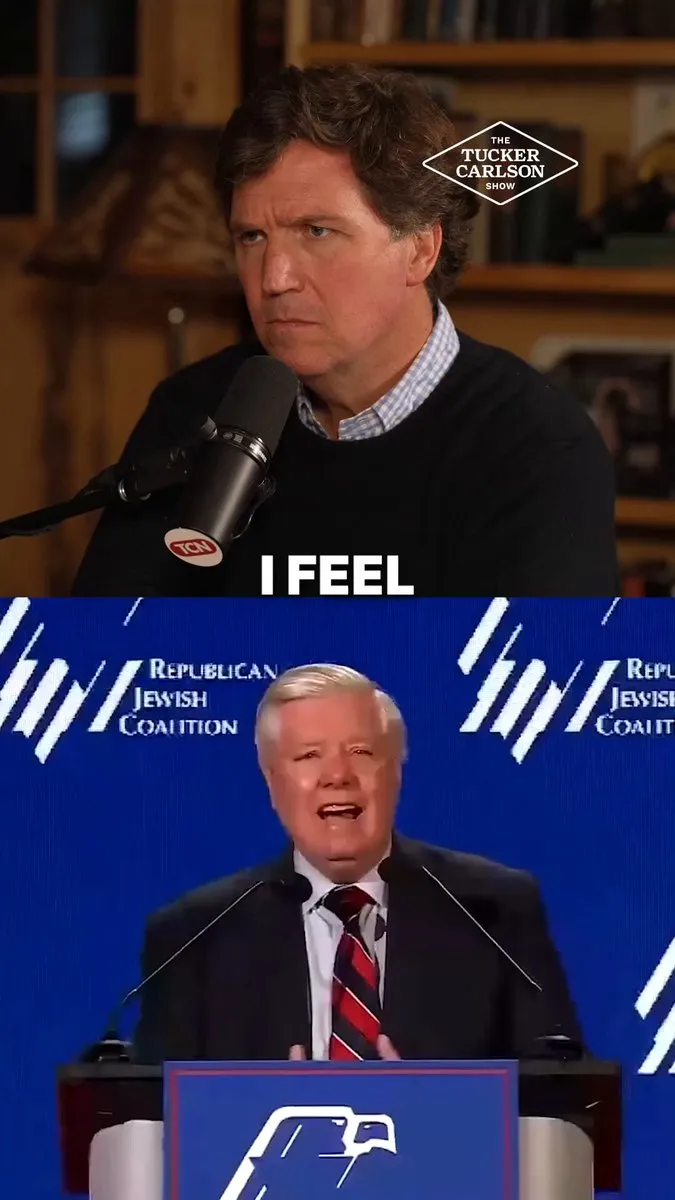
Lindsey Graham Puts Tucker Carlson and Candace Owens on Notice: ‘We Are Killing People Who Criticize Israel’

Sen. Lindsey Graham told donor audience that the government is “killing all the right people” who criticize Israel, dismissing concerns about dissenting voices including Tucker Carlson & Candace Owen

Dr Ignacy Nowopolski
Jan 08, 2026

Speaking at a closed-door meeting of the Republican Jewish Coalition, Graham brushed aside anxiety among donors about the rise of anti-interventionist figures like Tucker Carlson, Candace Owens and Nick Fuentes, assuring the room that the Republican Party remains firmly aligned with militarism, tax cuts for elites, and unconditional support for Israel.

“I feel good about the Republican Party. I feel good about where we’re going as a nation,” Graham said, according to recordings circulated online. “We’re killing all the right people and we’re cutting your taxes.”

The remark, delivered casually and to laughter, was interpreted by critics as a revealing glimpse into the mindset of Washington’s permanent war class — one that equates dissent with enemies and treats mass death abroad as a political talking point.

Graham went on to praise Donald Trump as his “favorite president,” bragging that the U.S. military has been so active in attacking foreign nations on behalf of Israel, it has finally begun to encounter limits to its global firepower.

“We’ve run out of bombs,” Graham boasted. “We didn’t run out of bombs in World War II.”

The senator also directly addressed concerns from the audience about media figures and politicians who have begun questioning Israel’s influence over U.S. policy and America’s role in foreign conflicts.

Lindsey Graham is obsessed with killing people.
Image


Tucker Carlson


@TuckerCarlson

If Lindsey Graham gets reelected to the US Senate, there’s no reason to have a Republican Party.

“So to those who worry about these stupid interviews,” Graham said dismissively, referring to viral conversations challenging interventionism, “don’t worry. The Republican Party has figured it out.”

For critics, that reassurance was precisely the problem.

Anti-war activists argue that Graham’s comments reflect a bipartisan consensus in Washington that treats war as normal, dissent as dangerous, and civilian deaths — whether in the Middle East, Eastern Europe, or elsewhere — as acceptable collateral in the service of empire.

https://drignacynowopolski.substack.com ... er-carlson

('Red' for quote of the day.)

******

A broken emperor in sight
The emperor has no clothes: crime as the essence of Washington
January 8, 2026 , 8:32 pm .

Image
Deception as a criminal "cause," contempt for democracy and multilateral bodies, and pure colonialism demonstrate the imperial decline and anxieties of US policy (Photo: USA Today)

Hans Christian Andersen's classic tale " The Emperor's New Clothes " is also known as "The Naked King." It is sometimes presented as a fable, as it contains a kind of moral, which suggests that truth is not always true simply because everyone says so

After being swindled by a couple of crooks, an emperor went out into the street "dressed" in a supposed suit that had been made for him, but which was nothing of the sort. No one dared tell him this because, according to the sellers, the garment was not suitable for fools to see. After a child loudly proclaimed that he was naked, the boastful emperor decided to continue pretending until the very end so as not to appear ignorant and strode off triumphantly, while the crowd roared with laughter.

The truth is often spoken by those who have nothing to lose and are not afraid of others' opinions, sometimes out of honesty, but in the case of the ruling elite of the United States, power exercised immorally gives them every right to walk around naked.

The king walks naked, but distressed
Such is the case of the recent kidnapping of President Nicolás Maduro and First Lady Cilia Flores, an event from which the statements of Donald Trump and his entourage have been marked by eloquence and clarity regarding the exercise of power and an evident disregard for all the codes that support the so-called "Western democracy".

The US president, a magnate representing his country's corporate network—and that of "his" hemisphere—launched the 41st military intervention in Latin America and the Caribbean after masking the siege under the guise of the "war on drugs." A month before the event, he revealed the true motive for the military deployment, as he had done during his election campaign: it was an arbitrary appropriation of oil and minerals in Venezuelan territory.

In case there were any remaining doubts about the deception, the Justice Department officially withdrew the narrative regarding the fictitious "Cartel of the Suns," which never existed. The indictment against the Venezuelan president makes no mention of oil theft or fentanyl, topics extensively discussed by Trump.

In statements following the military attack, which caused hundreds of deaths and infrastructure damage in Venezuelan territory, Trump explicitly stated that "we are going to extract a huge amount of wealth from the soil" and that this wealth "would go to the United States of America in the form of reimbursement for the damage that country has caused us."

The eloquence in figures translates into the fact that he mentioned the terms "oil", "oilman" or "oil companies" on about twenty occasions, while the word "democracy" was not uttered even once.

Other statements, such as those of Secretary of State and National Security Advisor Marco Rubio, further exposed the stark reality of the events and their causes. The Cuban-Maya native said they would continue attacking ships carrying Venezuelan oil, but that "we care about the elections, we care about democracy, we care about all of that ."

White House Deputy Chief of Staff Stephen Miller, visibly upset and distraught, let slip in another interview that "this neoliberal framework that America's job is to go around the world demanding immediate elections everywhere, all the time, immediately, to fill those vacuums. That's not what I think."

The US ambassador to the United Nations, Mike Waltz, told Fox News that Trump "took bold steps, and we will continue to attack that ridiculous organization called the United Nations."

Various Venezuelan spokespeople, including Commander Chávez and President Maduro, have denounced the hypocrisy of the Euro-Atlantic elite, while sectors of the opposition criminalized Chavismo and insisted on the narrative of "credible" elections and human rights. These same sectors remain silent in the face of the deaths of civilians and military personnel under fire from the aggressor power, much less in the face of the pronouncements of these power-drunk officials.

It is clear that Washington's supposed interest in democracy and human rights is a narrative used to manipulate the US for its own purposes. Many of these purposes stem from the anxiety of having a national debt of $38.5 trillion with a GDP-to-debt ratio of 120%; the depletion of the cheap mineral resources that have sustained its economy; and the slow decline in global conventional oil production since 2005.

Furthermore, faced with the multipolar advance, this elite has chosen to retreat from its attempt to impose global hegemony by promoting the "Donroe Doctrine" to appropriate both the natural resources and the existing workforce in Latin America and Europe, in principle.

Crime turned into state policy
Following the attack, the threat to the Venezuelan government has escalated, and, with the same eloquence described, Trump declared that the interim president, Delcy Rodríguez, will remain in power as long as she "does what we want." With this, he establishes that in "his" hemisphere there will only be peace if there is blind obedience to American interests—or anxieties.

Appearing as a thuggish state is nothing new for the United States, but its establishment has almost always maneuvered to maintain a certain facade, with varying degrees of success. Having invaded Iraq and Afghanistan, and the fact that the Islamic State has taken hold in one and heroin production has surged in the other, are crimes that can be judged more by their consequences than by any open confession, which is what the world is witnessing today.

The American political system is based on principles of separation of powers and civil liberties, but internally, it survives with a Congress riddled with lobbyists and lacking constitutional authority, including the right to declare war and pass laws. Last year, it sent 38 bills to Trump's desk for his signature, most of which were aimed at reversing regulations enacted during the Biden administration.

The president's omission of the word "democracy" during his remarks coincides perfectly with the 226 executive orders issued up to January 5th. This was the highest number during a first year of a presidential term since Franklin Delano Roosevelt, who issued 568 executive orders in 1933. Furthermore:

The media, concentrated in corporations and oligarchs, is an echo chamber for state crimes, including the ongoing genocide of Palestinians, attacks on Iran, Yemen and Venezuela, and the systemic plundering by the billionaire class.
This occurs while elections saturated with multimillion-dollar donations are a formality that points little to any political change, but rather to business realignments.
The diplomatic corps in Washington, supposedly tasked with negotiating treaties and agreements, preventing war, and forging alliances, remains disjointed and unable to react.
The courts, with exceptions such as the judges who succeeded in blocking the deployment of the National Guard in Los Angeles, Portland, and Chicago, are operators of corporate power and are overseen by a Justice Department whose primary function is to silence Trump's political enemies.
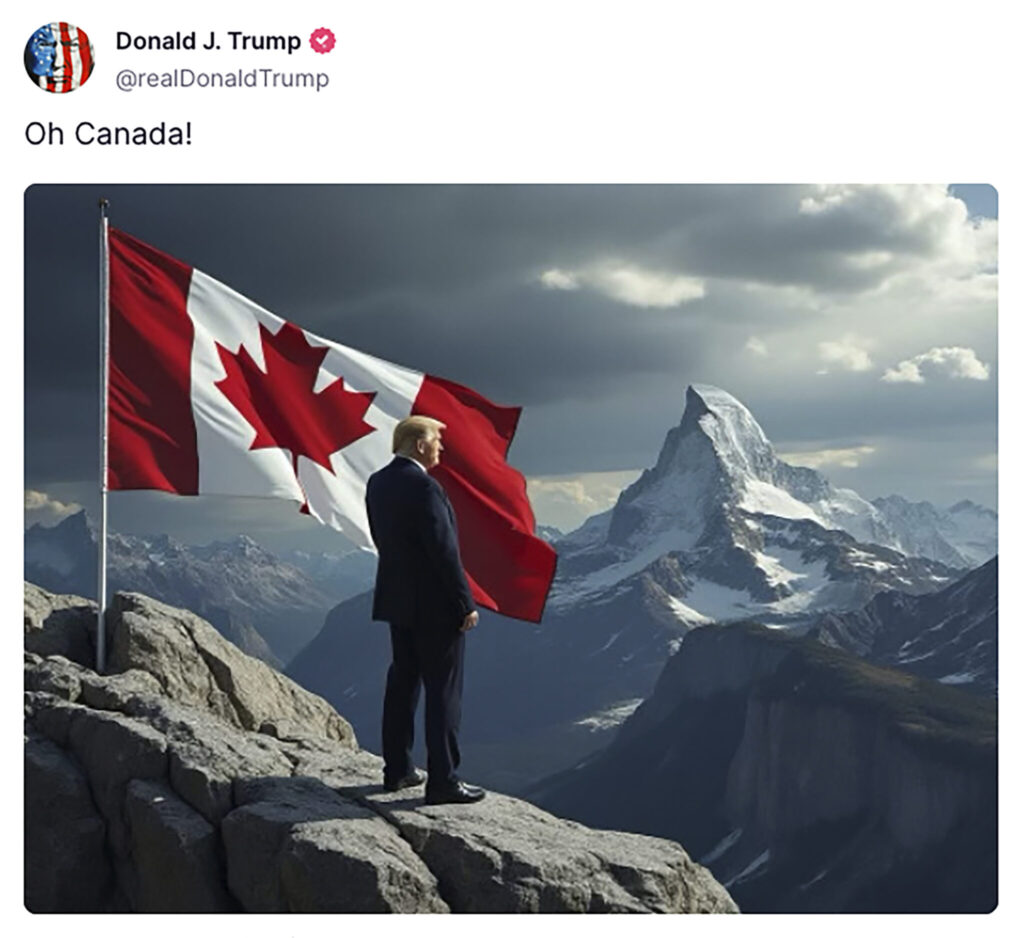
Externally, the orange emperor and his officials furiously issue threats against Iran , Cuba , Greenland (actually Europe, the US branch office), Colombia , Mexico , and Canada .

Permanent global state of exception
The narrative, whether or not it adheres to reality, allows us to identify the objective of each action; this applies to individuals and institutions. From this arises mythology, but also social contracts based on principles and values ​​that each group constructs to survive... or disappear, if things go wrong. Every sector of the human species, due to its cultural makeup, has ideals, and these structure behaviors.

In this regard, French analyst Arnaud Bertrand asks : What happens when a nation stops telling itself it must be good? The answer hangs in the air of the Caribbean and the entire planet; everyone senses it. The statements by Trump, Rubio, Waltz, and Miller demonstrate that the cultural fracture of the West is exposed, and the despair is painful.

The colonialist vision, which contradicts the philosophical foundations of political self-determination and economic independence that fueled the American Revolution, is the one that prevails in the country of Trump and the super-rich who occupy the government. It is a coalition that has chosen to grow without moral roots and that could further fragment that society and the rest of the planet, but irreversibly.

The rest of the "international community" reacts tepidly, like those who saw the emperor's new clothes, not daring to take a stand against a thuggish state, lest they appear to be what they have in fact revealed themselves to be. Many voices denounce the same thing as that child in the story, but everything indicates that turning a deaf ear will not prevent the collapse of a system that continues to show warning signs.

https://misionverdad.com/globalistan/el ... washington

Google Translator

******

Trump Has Changed And TDS With Him

When Trump did win his second term there were many people, including here, who were a bit in panic. Other characterized that as a ‘Trump Derangement Syndrome’ (TDS).

I had preferred Trump over the blabbering incompetent person the Democrats had put up as their candidate. I did not like Trump’s policies but I also thought that he would do just minor damage just like during his first term in office.

At first it looked like I had been right. The Alaska meeting with President Putin went reasonably well. The war in Ukraine seemed to move towards some sane outcome. His domestic policies were a bit wild but not far off from the expected trajectory.

Things have been going downward since. Something has definitely changed. But why and how this derangement happened is yet unknown.

The late December CIA attack on Putin’s residence in the Novgorod region, which includes strategic command facilities, has broken the rules that have governed relations between nuclear powers over many decades. Those relations have now deteriorated beyond fixing.

The attack on Venezuela was likewise beyond any reasonability. There is little chance that the U.S. will ever get what it wants from the country without on the ground intervention. But any commitment of troops to Caracas would end in disaster.

The administration defense of ICE goons, who clearly broke all rules of policing when they killed an innocent women, is also beyond all reasonability. There are certainly ways to explain the incident but they decided to smear the obvious victim.

That such behavior has become and will stay the norm for the Trump administration can be concluded from two recent interviews.

The first was on January 5 at CNN with Trump aide Stephen Miller:

TAPPER: So let’s — the question about who is now running Venezuela is one that even members of Congress who are big Trump supporters say they’re not quite sure about. Senate Majority Leader John Thune told CNN’s Manu Raju that he doesn’t know what President Trump meant by his assertion that the U.S. is running Venezuela. And he said he needs more information. Can you tell us what the President means when he says, is acting President Delcy Rodriguez in charge? Is she running Venezuela or not?

MILLER: Well, what the President said is true. The United States of America is running Venezuela. By definition, that’s true. Jake, we live in a law, I’m sorry, we live in a world in which you can talk all you want about international niceties and everything else, but we live in a world, in the real world, Jake, that is governed by strength, that is governed by force, that is governed by power. These are the iron laws of the world that have existed since the beginning of time. The United States —

TAPPER: But are you saying — but in terms of day-to-day operations in Venezuela, that is president, Acting President Rodriguez, right? It’s not some sort of American emissary.

MILLER: No, what I’m saying is, and we’ll keep going here, Jake. So I want to say what I’m saying, and then you’ll follow up. But what I’m saying is just one level above that, which is that, by definition, we are in charge because we have the United States military stationed outside the country. We set the terms and conditions. We have a complete embargo on all of their oil and their ability to do commerce.

So for them to do commerce, they need our permission. For them to be able to run an economy, they need our permission. So the United States is in charge. The United States is running the country during this transition period.


Miller really seems to believe that this is how the world works. It isn’t.

The second interview, on January 7, was by the NY Times with Trump himself:

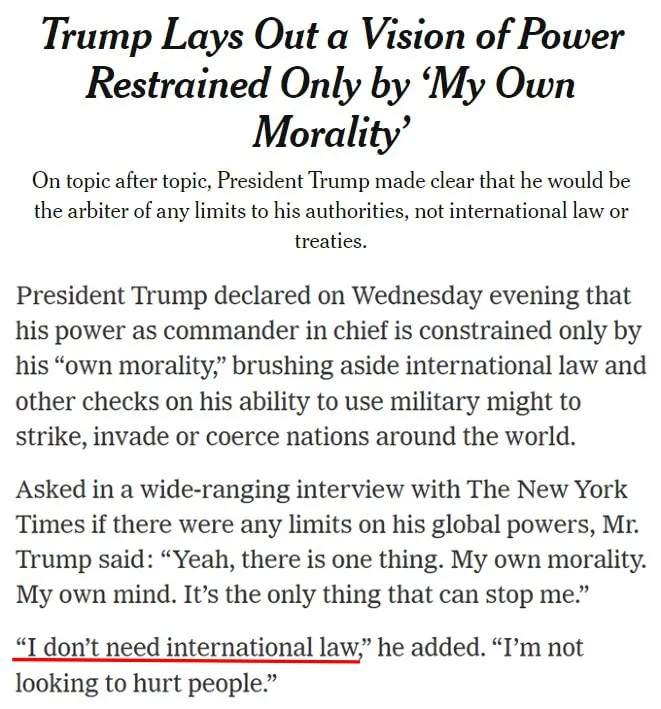
Trump Lays Out a Vision of Power Restrained Only by ‘My Own Morality’ (archived)

The relevant excerpt of craziness:

Asked in a wide-ranging interview with The New York Times if there were any limits on his global powers, Mr. Trump said: “Yeah, there is one thing. My own morality. My own mind. It’s the only thing that can stop me.”

“I don’t need international law,” he added. “I’m not looking to hurt people.”

When pressed further about whether his administration needed to abide by international law, Mr. Trump said, “I do.” But he made clear he would be the arbiter when such constraints applied to the United States.

“It depends what your definition of international law is,” he said.

Mr. Trump’s assessment of his own freedom to use any instrument of military, economic or political power to cement American supremacy was the most blunt acknowledgment yet of his worldview. At its core is the concept that national strength, rather than laws, treaties and conventions, should be the deciding factor as powers collide.


Trump’s take on domestic limits exposes a similar might-makes-right vision:

On the domestic front, Mr. Trump suggested that judges only have power to restrict his domestic policy agenda — from the deployment of the National Guard to the imposition of tariffs — “under certain circumstances.”

But he was already considering workarounds. He raised the possibility that if his tariffs issued under emergency authorities were struck down by the Supreme Court, he could repackage them as licensing fees. And Mr. Trump, who said he was elected to restore law and order, reiterated that he was willing to invoke the Insurrection Act and deploy the military inside the United States and federalize some National Guard units if he felt it was important to do so.

So far, he said, “I haven’t really felt the need to do it.”


TDS has changed its meaning. Trump is deranged and its not just a syndrome. I have yet to make up my mind of what is most likely to follow from this.

Is the U.S. sliding down the path towards full fascism? Or is this all pure bluster that will end as soon as it experience a serious bulwark?

Posted by b on January 9, 2026 at 14:08 UTC | Permalink

https://www.moonofalabama.org/2026/01/t ... h-him.html

(All these guys who not so long ago thought the Second Coming of Donald would be an improvement....but as Uncle Joe said in a similar context, "Both are worse.")

******

A Lawless Presidency
January 8, 2026

The catastrophe we all witnessed in Caracas — the result of expanding presidential power — is a body blow to the U.S. Constitution, writes Andrew P. Napolitano.

Image
U.S. President Donald Trump, center, monitors U.S. military operations in Venezuela, from Mar-a-Lago Club in Palm Beach, Florida, on Jan. 3, with C.I.A. Director John Ratcliffe on left, Secretary of State Marco Rubio on right. (White House /Molly Riley)

By Andrew P. Napolitano

The United States invasion of Venezuela and kidnapping of Nicolas Maduro, the domestically recognized Venezuelan president, violated the U.S. Constitution and international law.

The Constitution makes clear that only Congress can authorize a foreign invasion. In the pre-World War II era, Congress declared war on countries that attacked the U.S. or were allied with those that did, and those declarations expired upon the surrender by legal authorities in the targeted countries.

In the post-9/11 era, Congress has chosen to authorize the use of military force, without providing for a trigger that would terminate the authorization. Indeed, just last month, Congress rescinded George W. Bush-era military authorizations that had been used by Presidents Barack Obama and Donald Trump to target groups not even in existence at the time of the authorizations.

But, as morally deficient as the authorizations were, they were at least constitutionally sound, as they were the product of presidential requests and congressional deliberations and authorizations.

We now know that at least two of these were fraudulent — the administration lied to Congress and to the United Nations. But, again, at least it fomented debate and recognized its obligations under the Constitution and the U.N. Charter to seek approval before invading a foreign country.

The Charter is a treaty, drafted by U.S. officials in the aftermath of World War II and ratified by the Senate. Under the Constitution, treaties are, like the Constitution itself, the supreme law of the land.

Violating His Sworn Oath

President Donald Trump violated his sworn and paramount obligations to preserve, protect and defend the Constitution when he ordered his invasion of Venezuela without congressional authorization and when he attacked a member state of the U.N. without U.N. authorization.

James Madison himself argued at the Constitutional Convention that if a president could both declare war and wage war, he’d be a prince; not unlike the British monarch from whose authority the 13 colonies had just seceded.

And the American drafters of the U.N. Charter, indeed American senators who voted to ratify it, understood that its very purpose was to prevent unlawful and morally unjustified attacks by one member nation upon another.
Image
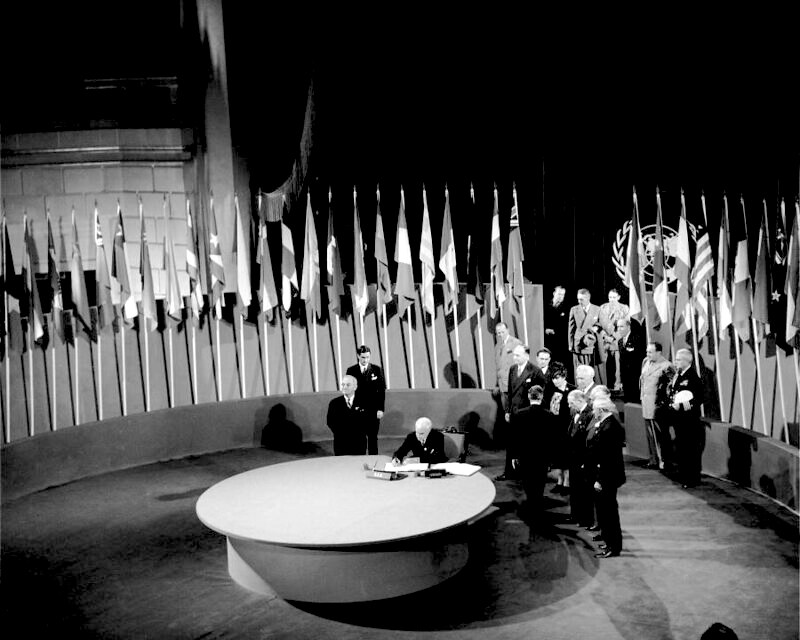
June, 26, 1945: U.S. Secretary of State Edward Stettinius, Jr., signing the U.N. Charter at a ceremony at the Veterans’ War Memorial Building. At left is President Harry S. Truman. (UN Photo/Yould,CC BY-NC-ND 2.0)

When he was asked after the troops had seized President Maduro why the administration had not complied with the Constitution and sought congressional approval for the invasion, Secretary of State Marco Rubio gave laughable answers.

First, he said the Maduro extraction was not an invasion. OK, an armada of ships, assault helicopters, hundreds of troops, 80 deaths and two kidnappings in a foreign land is not an invasion, but the sale of cocaine to willing American buyers is?

Then he said Congress cannot be trusted. Congress is a coequal branch of the federal government — under the Constitution, the first among equals.

Then he said that the Trump administration faced an emergency. Federal law defines an emergency as a sudden and unexpected event likely to have a deleterious effect on national security or economic prosperity. There was no emergency last weekend.

Why is it wrong for the president to violate the Constitution?

For starters, he took an oath to preserve, protect and defend it. It is the source of his governmental powers. The Supreme Court has ruled that all federal power comes from the Constitution and from nowhere else. This is manifested in the 10th Amendment, which commands that governmental powers not delegated in the Constitution to the federal government do not lie dormant awaiting a federal capture, rather they remain in the people or the states. This is at least the Madisonian view of constitutional government.

The Wilsonian Legacy

Image
U.S. President Woodrow Wilson returning to New York harbor from the Versailles Peace Conference on USS George Washington, July 8, 1919. (Wikimedia Commons, Public Domain)

Its opposite is the Wilsonian view — after that pseudo-constitutional law professor in the White House, Woodrow Wilson — which holds that the federal government can address any national problem, foreign or domestic, for which it has sufficient political support, except for the express prohibitions imposed upon it in the Constitution. Sadly, every president since Wilson has been a Wilsonian.

Trump acknowledged that the events of last weekend constituted an American “attack on sovereignty.” This, of course, defies the statements of Trump’s attorney general, who has instructed her prosecutors to claim that this was a simple arrest of a fugitive from justice.

She must have a perverse view of justice, the essence of which is fairness. Is it fair for the C.I.A. to engage in drug trafficking and then help prosecute the heads of state in which the trafficking occurs when they look the other way? Is it fair for the president to claim with a straight but exhausted face that the U.S. “owns” the oil in the earth under Venezuela? Is it fair for the federal government, which can’t deliver the mail, to “run Venezuela” as Trump claimed several times last week?

These questions are couched as moral inquiries, but they all bring us back to the Constitution. In the post-9/11 years, presidential power has expanded and congressional power has shrunk. This was not achieved by amending the Constitution, rather by Congress looking the other way as presidents killed and Congress hoped for popularly approved outcomes.

The result has been the catastrophe we all witnessed in Caracas. Eighty people were murdered by U.S. troops in order to capture scapegoats for C.I.A. drug trafficking and satiate the American lust for other people’s oil.

There is simply no legal defense to this. Trump’s own director of national intelligence — no doubt the first defense witness at Maduro’s trial — stated in March of last year that Venezuela is not a supplier of fentanyl or cocaine to the United States; and the U.S. is out of the regime-change business.

And Trump’s own Drug Enforcement Administration, whose agents accompanied U.S. troops in their invasion, has said the same about Venezuela.

The American invasion of Venezuela is a body blow to the Constitution. It reveals what many of us have feared — a might-makes-right presidency, a lawless, impulsive authoritarian machine that recognizes no legal or moral limits to its powers — abroad or at home.

https://consortiumnews.com/2026/01/08/a ... residency/

As much as I dislike 'Da Judge' his take on the situation of Bourgeois Democracy does chime with the title of this thread. Of course if 'reds' were the issue he'd have no problem with any done to them.
"There is great chaos under heaven; the situation is excellent."

User avatar
blindpig
Posts: 15306
Joined: Fri Jul 14, 2017 5:44 pm
Location: Turtle Island
Contact:

Re: Donald Trump, Avatar of his Class, Capitalism & the Decline and Fall of Bourgeois Democracy

Post by blindpig » Sat Jan 10, 2026 3:59 pm

Image

The gangster phase of imperialism
By Prabhat Patnaik (Posted Jan 10, 2026)

Originally published: Peoples Democracy on January 11, 2026 (more by Peoples Democracy) |

WHEN the Soviet Union collapsed, liberal bourgeois writers had proclaimed the arrival of an era marked by the universal triumph of democracy and stability; they had considered the socialist challenge unnecessary and counterproductive, and believed that capitalism which had already given political independence to its colonies, and introduced universal adult franchise and welfare state measures at its core, would, in the absence of this challenge, secure for mankind peace, economic security and individual freedom. Several Left writers, on the other hand, had seen decolonization, and the introduction of universal adult franchise and welfare state measures, as concessions wrung out of capitalism at a time when it faced an existential threat because of the socialist challenge, and had anticipated that the abatement of this challenge would make the system assume its usual predatory character and roll back these concessions; they have been proved right, and imperialism, with which alone we shall be concerned here, has shown its blatantly aggressive nature, exhibiting what can only be called a “gangster phase”.

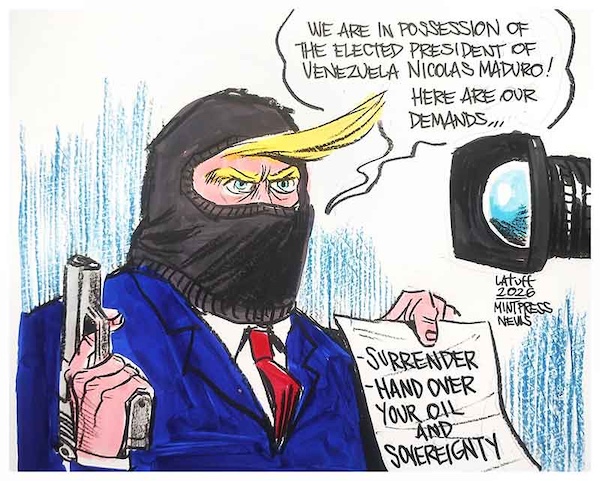
To abduct, as U.S. imperialism has done, a duly elected President of another country, Nicolas Maduro of Venezuela, and his wife, from their residence through a military operation, and bring them to the U.S. in handcuffs to face trial on trumped up charges for which no credible evidence has ever been provided, and to run their country directly as a U.S. colony until a suitable puppet government has been put in place, is an act of incredible audacity which violates all legal and moral norms of international behaviour and typifies this “gangster phase” of imperialism.

This however constitutes the latest act of the gangster phase of imperialism. The forcible removal of Iraq’s Saddam Hussein and his execution, again on totally false charges, the brutal killing of Libya’s Muammar Gaddafi, the occupation of Syria, the genocide perpetrated on the Palestinian people whose only “fault” lies in their desire not to be evicted from their homes by an imperialist-backed settler colonial project, the taking over of Gaza as a U.S. colony to be ruled by a “Viceroy” selected by Donald Trump and to be converted into a piece of prime real estate, are all episodes in the unfolding of the gangster phase of imperialism.

Liberal opinion, again, holds Donald Trump as a maverick responsible for behaving like a gangster and puts the entire onus of recent predatory acts on him alone. But most of the episodes mentioned above predate Donald Trump’s ascendancy to power; the difference between Trump and earlier U.S. Presidents lies only in the fact that the others had camouflaged their gangster acts under a patina of “civilized” verbiage, while Trump makes no bones about his administration’s intentions. Besides, every one of the episodes mentioned above, including even the genocide directed against the Palestinians, has the full support of other imperialist countries who never cease to advertise their so-called “liberal” principles. Even the abduction of Nicolas Maduro, while it has drawn condemnation from all over the world except a few in the global south wishing to curry favour with Trump (among whom alas India is included), has enjoyed the active or tacit backing of Germany, France and Britain.

An argument is being put forward, in particular by the European allies of the U.S., to the effect that Nicolas Maduro was an authoritarian ruler, so that no tears need be shed over his removal. The utter absurdity of this argument is palpable. International law does not allow the U.S., or any other country for that matter, to intervene militarily in the affairs of another country to establish democracy there; it is for the people of that country to determine who the ruler should be. Whether Maduro was authoritarian or not is thus completely irrelevant to the issue of U.S. intervention.

Besides, Trump himself has openly admitted that Maduro’s principal opponent in Venezuela, Maria Corina Machado, did not enjoy sufficient popular support to take over the reins of administration after Maduro had been arrested. In a country with two main political platforms, if one does not enjoy sufficient popular support, then it stands to reason that the other must have greater support. In such a case, to claim, as Trump himself and many European leaders have done, that Maduro lacks political legitimacy, is utterly absurd. If Machado lacks political legitimacy and so does Maduro, then Trump must specify who in Venezuela does enjoy political legitimacy.

The real reason for removing Maduro was revealed by Trump with his characteristic bluntness, when he stated at his Press Conference on Saturday January 3: “We are going to be taking out a tremendous amount of wealth out of the ground”. The money made according to him would not only go to the people of Venezuela but also to American oil companies and to the “United States of America in the form of reimbursement for damages caused us by that country”. The “damages” he was referring to were caused apparently by Venezuela’s nationalizing its oil resources. Venezuela has more oil reserves than any other country in the world, reserves amounting to as much as 17 percent of total world reserves. And Trump’s proposal to loot Venezuela’s oil is a brazen admission of his motive for taking over and “running” that country. This is nothing else but open gangsterism: you have oil and we shall take it from you by abducting your President if he stands in the way, and either by running your country directly as a colony or by putting in place some puppet government that would allow us to loot your country.

To be sure, looting the resources of other countries, including land or products of land, is what imperialism has always done; it is central to imperialism. After decolonization, it attempted to carry on the process of looting by toppling governments that stood in the way and putting in place pliant governments. The CIA-sponsored coups against Arbenz in Guatemala, Mossadegh in Iran, Lumumba in Congo (as it was then called), and Allende in Chile, come to mind as obvious examples. More recently, the various colour revolutions in Eastern Europe and former Soviet republics, and the American assault on West Asia, belong to the same genre. The difference between all these earlier cases and Venezuela lies in the fact that in earlier cases the U.S. gave the appearance of supporting one side in an internal conflict, while working on coups behind the scenes; but in Venezuela it has simply carried out a military intervention without this fig-leaf of supporting one side in an internal conflict.

Of course, it also targets those countries which have anti-imperialist governments even when they may not be minerally rich, and Trump has already announced his plans of targeting Cuba, Mexico and Colombia as part of his attempted revival of the infamous Monroe Doctrine. But it is not just Latin America and the Caribbean that constitute the domain of his empire. No country in the world is safe from U.S. intervention today.

The Soviet Union had come to the defence of Cuba during the so-called Cuban missile crisis when the U.S. had threatened to attack that island, even at the risk of provoking a nuclear conflict with the U.S., just as it had earlier come to the defence of Egypt against an Anglo-French invasion following Nasser’s nationalization of the Suez Canal; in both cases imperialism had to beat a retreat. The absence of the Soviet Union today will be sorely missed by all countries of the world that are threatened by imperialism led by the U.S.

This gangster phase of imperialism which constitutes the highest stage of imperialism to date cannot obviously last for long. The people of the world, especially of the third world who have been victims of imperialism, will not allow themselves once again to remain in thraldom to imperialist domination. In fact even in earlier cases of imperialist gangsterism in the Arab world the outcome of its interference has been quite different from what was intended.

It is significant in this context that Trump’s bland assumption that, with Maduro out of the way, the Vice-President of Venezuela, Delcy Rodriguez, who has taken his place, will obey American diktat has already proved hollow: she has condemned the U.S. action and demanded the release of Maduro because of which Trump has started threatening her with “a fate worse than Maduro”; and indeed the entire country has stood up against this act of U.S. gangsterism. While the absence of the Soviet Union has emboldened imperialism in its quest for world domination, this domination will remain a pipe-dream.

https://mronline.org/2026/01/10/the-gan ... perialism/


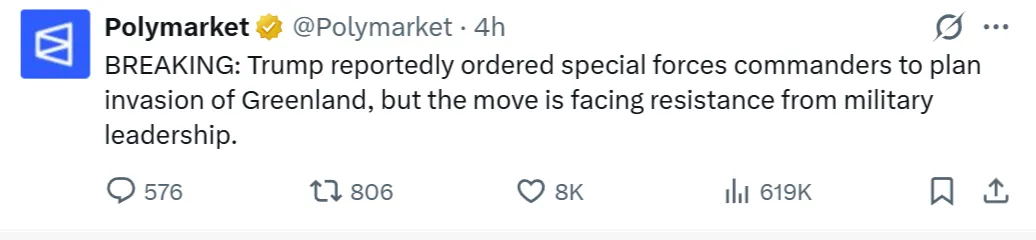
The US will do "something" in Greenland
January 10, 8:19

Image

They're going to do "something" with Greenland.

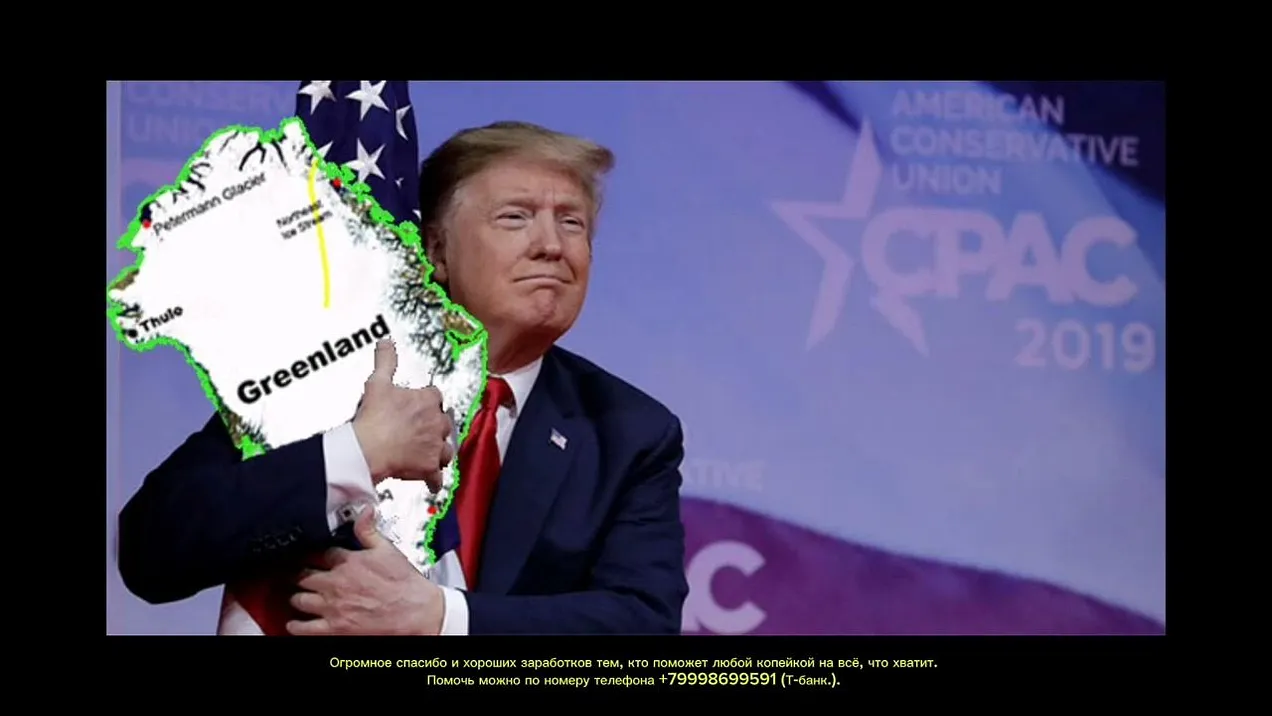
Just because the Danes landed a boat there 500 years ago doesn't mean they own the land – Trump on Greenland / When we own territory, we protect it, but leases don't protect it.
It needs to be owned. The US needs to own Greenland to ensure national security.
I'm not talking about money for Greenland yet. I might bring that up. But right now, we're going to do something in Greenland, whether they like it or not. (c) Trump

Warming up for the outright annexation of Greenland. This is against the backdrop of threats to attack Iran, Mexico, and Cuba.

https://colonelcassad.livejournal.com/10297227.html

Google Translator

******

Trump Cronies Hired By Greenland Mining Company As Threat Grows
Nate Bear
Jan 09, 2026

Image

The company suing Greenland for the right to mine rare earth minerals has hired a lobbying firm deeply connected to the Trump administration, increasing the threat of US action against the territory.

Energy Transition Minerals yesterday announced it had hired Ballard Partners, a lobbying firm run by Brian Ballard, a major donor and fundraiser for Trump, to assert what it says are its claims on the territory. Attorney General Pam Bondi, along with Trump’s Chief of Staff Susie Wiles, were both hired by Trump straight out of Ballard Partners.

The news, unreported previously, comes as the White House has stepped up its rhetoric over Greenland, saying this week that it was exploring all options to take control of the territory, including a military invasion.

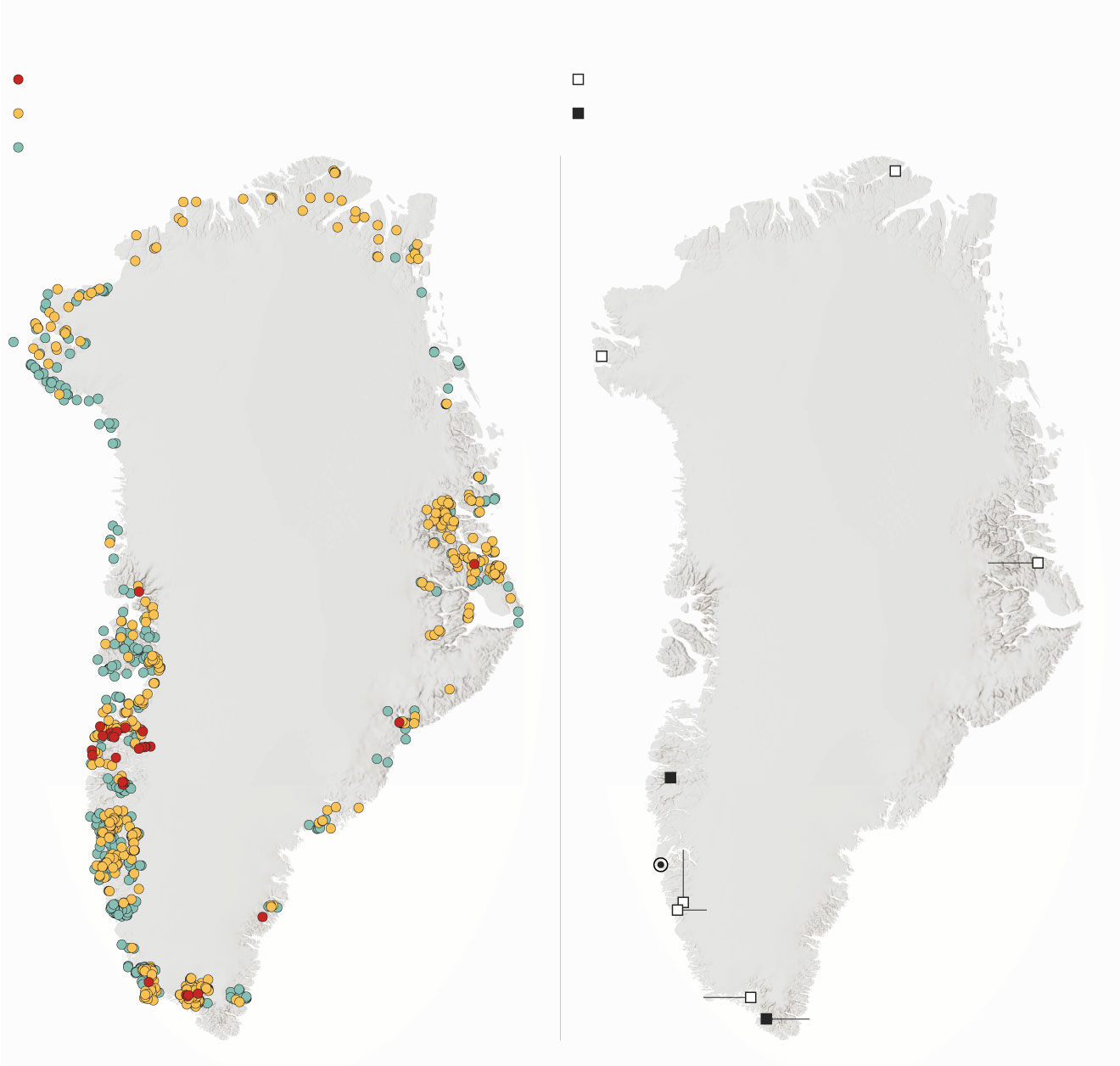
Energy Transition Minerals, an Australian mining company, was given a license nearly twenty years ago to explore the Kvanefjeld deposit, which contains over 11 million metric tons of rare earth minerals, including large quantities of uranium. The size of Kvanefjeld makes it the largest thorium deposit, the second-largest uranium deposit and overall the third-largest rare earths deposit in the world.

In a world hungry for new energy sources, Kvanefjeld’s significance can’t be overstated.

Indigenous victory
But in 2021, the indigenous Inuit Ataqatigiit party, following its victory in national elections where the future of Kvanefjeld was the central issue, banned Energy Transition Materials from mining the site. The decision was a campaign promise and a victory for grassroots activism and the coalition of sheep farmers, fishermen, and indigenous residents who said the radioactive pollution from the mine would wreck their livelihoods.

For ETM this was taking democracy too far. The following year the company sued Greenland under antidemocratic neoliberal ‘investor-state-dispute’ laws, arguing that the decision unlawfully removed the rights it had been granted in the mid 2000s. The company, which recently accused Greenland of delaying arbitration proceedings, is seeking compensation of $11.5 billion, more than four times Greenland’s GDP. And in an eerie echo of US claims that Venezuela ‘stole’ American assets by nationalising its oil fields, Energy Transition Minerals says its assets have been ‘expropriated’ by Greenland’s decision to block mining at Kvanefjeld.

For its part, Florida-based Ballard Partners, which didn’t even have a Washington DC office before Trump’s first term, has taken advantage of its relationship with Trump and the corruption of his administration to become the largest lobbying firm in the US. Its clients now include staples of the American security state including Palantir, Boeing, Amazon and Meta.

ETM’s hiring of Ballard Partners, whose role the company says “will include advising on public policy and regulatory issues which shape the global rare earths supply chain,” is highly ominous for Greenland, for Denmark, and for whatever remains of global stability.

ETM, according to my research, took little interest in US politics until recently. A Sydney-based company, it has no American executives and retained no relationships with US legal, public affairs or public relations agencies. Yet in common with Donald Trump, it has an adversarial relationship with the Greenland government and is making essentially the same claims about Greenland and rare earths that Trump made about Venezuela and its oil. It’s rhetoric and material interests are aligned with Donald Trump. And now it has a direct line to the Oval Office.

The danger to Greenland is real, and growing.

Katie Miller, a former spokesperson for Elon Musk’s DOGE department, and the wife of neo-Nazi Trump aide Stephen Miller, tweeted last week that the US would annex Greenland ‘soon.’

And in a New York Times interview yesterday, Trump asserted that he wanted the US to own Greenland, and that agreements and leases are not good enough.

The case of ETM will almost certainly be used by the US as a weapon to put maximum pressure on the indigenous leadership of Greenland, under threat of military force. ETM working with Ballard also means that not only will ETM have a direct line to the White House, but that the Trump administration will have allies on the ground in Greenland able to intimidate, bully, and report back.

The timing of ETM’s hire of Ballard is also extremely convenient for Attorney General Pam Bondi. Bondi, who earned millions in her seven years working for the firm, has an ethics agreement that prevents her from participating in any matter involving Ballard Partners or a party represented by them. This agreement expires early next month. Bondi then is likely to play a key role in ETM’s legal case and in US moves to annex Greenland, liaising between her former boss and her current boss.

And in a further ominous sign, ETM has hired the same advisory firm used by Trump last year to raise $2.5 billion for his Truth Social website. ETM says it has hired Cohen & Company Capital Markets to advise on a potential Nasdaq listing, which is curious given that ETM has never operated a single mine. The company has been sitting on shareholder capital for years, unable to act on its core business proposal. It makes little sense for an essentially inactive company tied up in an expensive legal battle to be pursuing a stock-market listing in the US. Unless, of course, it has gleaned information from its backdoor into the Trump administration that has encouraged it to believe it will soon be able to move forward with its core business proposal.

The case of ETM, Greenland and Trump is a case of the pieces coming together at a moment in history.

Of force multiplier acting on force multiplier, as I argued in my last article.

The gangster state stands poised for another naked breach of international law.

Once again the theft of resources from an indigenous population looms, assisted by neoliberal capitalist laws that enable corporations to over-ride democracy.

It must be resisted.

https://www.donotpanic.news/p/trump-cro ... dium=email

******

5 Defiant Voices: Greenland Leaders Assert Right to Self-Determination Against U.S. Threats

Image
Greenland leaders assert right to self-determination in unified response to U.S. aggression

In an unprecedented show of unity, all five political parties in Greenland’s parliament issued a joint declaration affirming their people’s sovereign right to decide their future.

January 10, 2026 Hour: 10:18 am

Greenland leaders assert right to self-determination amid Trump’s threats to seize the Arctic island “by force if necessary.” All five parties unite in historic declaration.

Greenland leaders assert right to self-determination in a historic, unanimous declaration following renewed threats from former U.S. President Donald Trump to seize control of the Arctic territory “by any means necessary.” On Friday, January 9, 2026, the leaders of all five parties represented in Greenland’s parliament—the Inatsisartut—signed a joint statement titled “We Stand Together as One People,” rejecting foreign interference and reaffirming that “Greenland belongs to Greenlanders.”

The declaration comes after Trump told reporters at the White House that the United States “will do something about Greenland—whether they like it or not”—citing alleged Russian and Chinese naval activity near the island as justification. “Right now, there are Russian destroyers around Greenland, Chinese destroyers, and Russian submarines everywhere,” Trump claimed, despite lacking verifiable evidence. He added that Washington cannot allow strategic rivals to “take over” the territory, suggesting military or political action is imminent.

In response, Greenland’s political class—traditionally divided on issues of independence from Denmark—closed ranks in defense of national dignity. “The future of Greenland must be decided by Greenlanders,” the statement reads. “This decision must be made without pressure and without the interference of other countries.”


Greenland Leaders Assert Right to Self-Determination Amid U.S. Coercion
The joint communiqué, signed by Prime Minister Jens-Frederik Nielsen and opposition leaders including Pelle Broberg of Naleraq—the party most open to U.S. cooperation—marks a rare moment of consensus in Greenlandic politics. It explicitly invokes both international law and Greenland’s 2009 Self-Government Act, which grants the territory extensive autonomy, including control over natural resources, policing, and judicial affairs.

“We elect our own parliament. We form our own government. And we will determine our own path,” the leaders declared, emphasizing that while Greenland values its partnerships with the U.S. and Western allies—particularly through the Thule Air Base agreement—it will not accept ultimatums disguised as security policy.

Notably, the statement directly challenges Trump’s historical revisionism. In recent remarks, the U.S. president dismissed Denmark’s sovereignty over Greenland, saying, “Just because they landed there with a ship 500 years ago doesn’t mean they own the land.” Greenlandic leaders countered that their legitimacy stems not from colonial inheritance but from democratic self-rule and Indigenous rights, rooted in centuries of Inuit presence long before European arrival.

Greenland’s autonomy framework is recognized under international law, and its people have the right to pursue full independence through peaceful, legal means—a process already underway via referendums and constitutional dialogue with Copenhagen.

The leaders also condemned what they called the “disdain” shown by U.S. officials toward their nation, urging Washington to engage through “diplomacy and international principles,” not coercion. “That is the way among allies and friends,” the statement insists.

Geopolitical Context: The Arctic as the New Frontier of Great-Power Rivalry
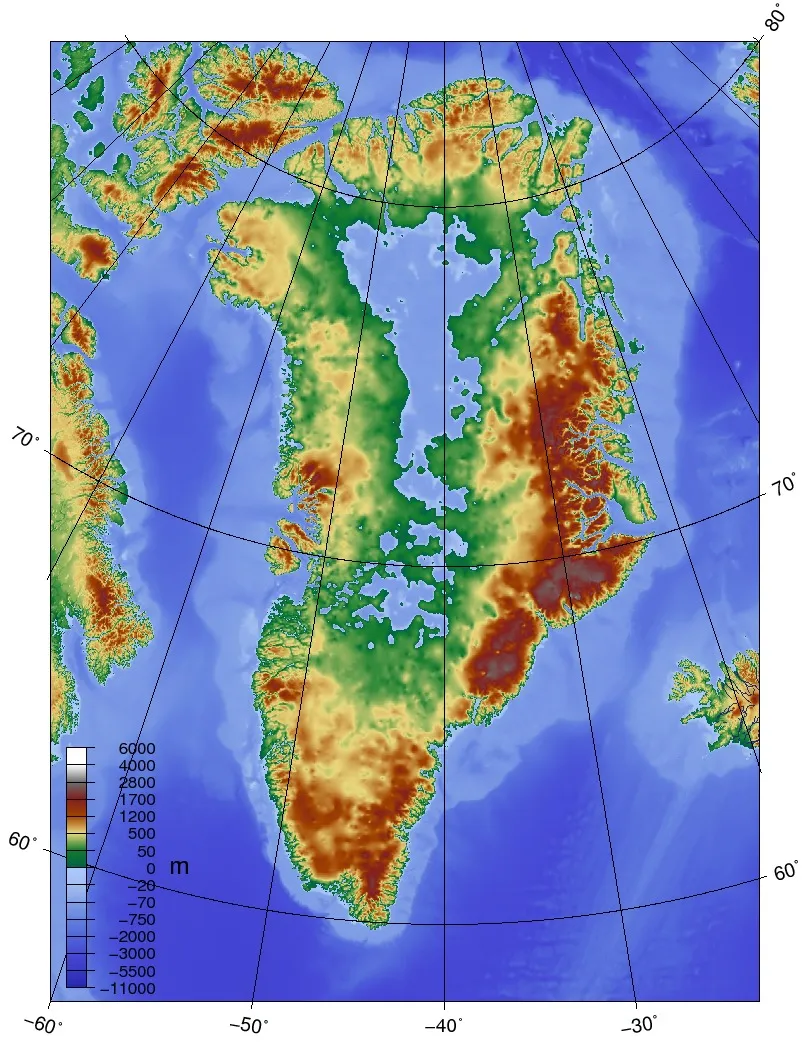
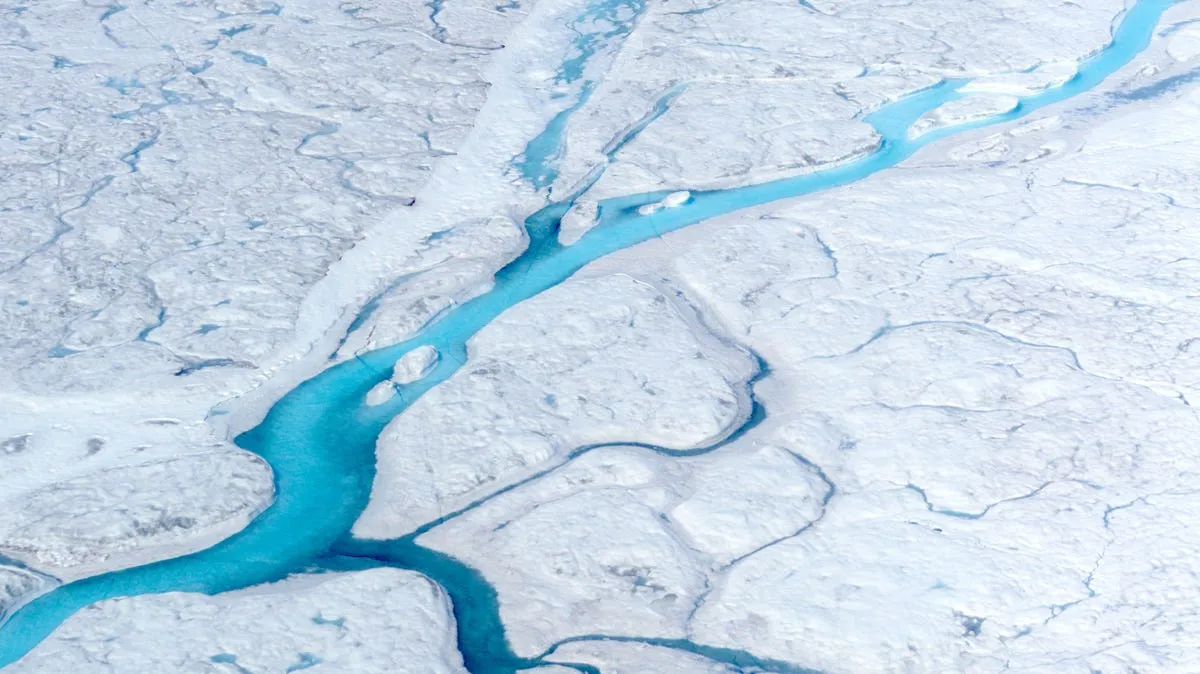
Greenland’s defiant stance unfolds against the backdrop of intensifying competition in the Arctic region, where melting ice is unlocking vast mineral reserves, shipping routes, and strategic military positions. The island—three times the size of Texas and home to critical missile-tracking infrastructure at Thule Air Base—is increasingly seen as a geopolitical prize.

While the U.S. has operated the base since 1951 under a defense agreement with Denmark, Trump’s rhetoric signals a shift from partnership to possession. His administration has repeatedly floated the idea of purchasing or annexing Greenland, first in 2019 and now with greater urgency. But such proposals ignore a fundamental reality: Greenland is not a commodity—it is a nation with a distinct identity, language, and political will.

This crisis also tests the limits of the Danish Realm, a constitutional union comprising Denmark, Greenland, and the Faroe Islands. While Denmark handles foreign and defense policy, Greenland’s 2009 statute allows it to assume those powers when ready. Recent polls show over 70% of Greenlanders support eventual independence, though timing remains debated.

Critically, U.S. threats risk alienating a key Arctic partner. Rather than pushing Greenland into Russia’s or China’s orbit—as Trump claims to fear—aggressive posturing may accelerate its move toward full sovereignty outside Western frameworks altogether. Meanwhile, NATO allies like Canada and Norway watch nervously, aware that militarizing Arctic diplomacy could destabilize the entire High North.

The Arctic Council, which includes eight nations and six Indigenous groups, has long promoted cooperation over confrontation. Trump’s approach directly undermines this model, replacing dialogue with deterrence—a dangerous precedent in one of Earth’s most fragile regions.

A Unified Front for Sovereignty and Peace
The declaration’s closing line—“Greenland belongs to Greenlanders”—resonates far beyond the Arctic Circle. It echoes anti-colonial movements worldwide and reaffirms a core principle of the UN Charter: the right of peoples to freely determine their political status.

Despite internal differences on economic policy or independence timelines, Greenland’s parties agree on one thing: no external power—not the U.S., not Denmark, not China—has the right to dictate their future. This unity sends a powerful message to Washington: respect, not force, is the only acceptable currency in modern diplomacy.

Looking ahead, U.S. Secretary of State Marco Rubio is scheduled to meet next week with Danish Foreign Minister Lars Løkke Rasmussen and Greenlandic Foreign Affairs Advisor Vivian Motzfeldt. The talks will test whether Washington can pivot from threats to genuine dialogue. As the Greenlandic leaders wrote: “We will continue working to ensure security for our people—but on our terms.”

For now, the Arctic wind carries a clear warning: sovereignty is not negotiable.

https://www.arctic-council.org/

https://www.telesurenglish.net/greenland-leaders/

******

Greenlanders are now pawns in a neo-colonial game of chicken chess between America and Denmark

Ian Proud

January 9, 2026

Trump’s hope is that Denmark will back down under pressure and sell Greenland on favourable terms.

The U.S. government has got the Europeans in a spin over Trump’s desire to annex Greenland. His Press Secretary Karoline Leavitt notably said that “utilising the U.S. military is always an option at the commander in chief’s disposal.”

Let’s be clear, Denmark would not be able to resist an American military annexation of Greenland. With 1.3 million active military personnel, it dwarves Denmark with 20,000 active soldiers. The U.S. spends twice as much on defence as all the other NATO members combined.

However, I see little likelihood of the U.S. going to war with Denmark over Greenland. The threat has to be taken seriously, but this appears to be classic Trumpian bluster aimed at securing favourable terms for the U.S. in Greenland.

What do the Americans want?

They want to deny Russia and China access to vast deposits of resources in Greenland;

They want to gain privileged access to U.S. firms to exploit those resources;

They want to have a more explicit security foothold in the Arctic, which is largely dominated by Russia and Canada (though Trump seemingly wasn’t to annex Canada too).

Trump might be able to achieve these goals over the longer term through strategic patience rather than resorting to military force. But he has only three years remaining in office and he would need to reach a deal with Denmark which appears unlikely in the short-term.

Trump is clearly pushing the art of the deal, hoping to force Denmark into backing down and agreeing to some sort of sale of Greenland to the U.S. But any deal to allow U.S. annexation of Greenland would amount to a modern-day version of the Munich agreement to allowed Adolf Hitler to annex the Sudetenlands.

Trump’s calculus, like Adolf Hitler’s, would be that no major European power would be willing to fight to prevent a military aggression against Greenland and would therefore settle to avoid that possibility.

France and Britain would almost certainly not fight to prevent U.S. occupation of Greenland. Britain this week allowed a major U.S. military build-up in the UK ahead of the operation to interdict the Russian flagged Marinera oil tanker.

European firms are so dependent on the U.S. as an export market that they would fear a collapse of the trans-Atlantic economic relationship, perhaps more than Trump does, who wants U.S. firms to be more self-sufficient.

The Munich analogy has been falsely, in my view, used to compare Russian action in Ukraine with Nazi action in Czechoslovakia.

It doesn’t work in the Russian context, because there is no evidence that Russia was seeking to annex parts of Ukraine before the war started in February 2022 but was rather seeking to prevent moves to incorporate Ukraine into NATO.

It was against the threat of what it considered to be military aggression by the western military alliance that Russia chose to act to prevent NATO expansion. All the evidence suggests that Russia saw the Donbas remaining part of Ukraine under the terms of the Minsk II agreement.

That’s not to justify Russian actions. But likening them to the Munich agreement is wholly misplaced, and completely unlike what Trump is trying to do now.

He is vocally saying: I want Greenland and I’m going to have it, like a spoiled fat kid in the playground. A U.S. military takeover of Greenland would be both a shocking breach of international law and an unrecoverable humiliation for political elites in Europe itself.

So, what happens next?

Denmark has made its position clear on Greenland and it should be assumed that it can rely only on verbal support from European allies, rather than commitments to help it defend Greenland.

It must feel under immense pressure, therefore, to concede.

Yet, Denmark’s biggest ally is U.S. public opinion.

In a poll last year, only 20% of Americans agreed with the idea of annexing Greenland.

Trump’s shocking move to kidnap Nicolas Maduro has led to widespread criticism of his actions among members of the opposition Democrat party who have criticised his side-stepping Congressional approval.

And that was against the authoritarian leader of a dysfunctional Latin American nation with a track record of exporting illegal drugs to America.

While shocking, the move to oust the Venezuelan President was limited in scope, only removing Maduro but leaving other members of the ruling party in place.

The U.S. hasn’t sought to occupy Venezuela to capture access to its vast mineral resources. Clearly, occupying a country of 31 million would be a far more hazardous endeavour that occupying Greenland with a population of less than 60 thousand. But, there seems almost no likelihood that the U.S. Congress would sanction military action to annex to sovereign territory of a hitherto friendly NATO ally.

That would certainly lead to the shattering of NATO which, while Trump is not a huge fan, is a massive revenue earner for U.S. defence firms that sell kit to Europe, at a time when European defence spending is shooting up, a key Trump demand.

So, for now at least, the best posture Denmark could take is defiance and calling Trump’s bluff.

Trump’s threat of military action to seize Greenland should be called out for what it is – a naked act of aggression – and Denmark should put its small military presence on Greenland on alert to defend the island against U.S. forces.

Clearly, Danish forces would be quickly overpowered in any military confrontation with America.

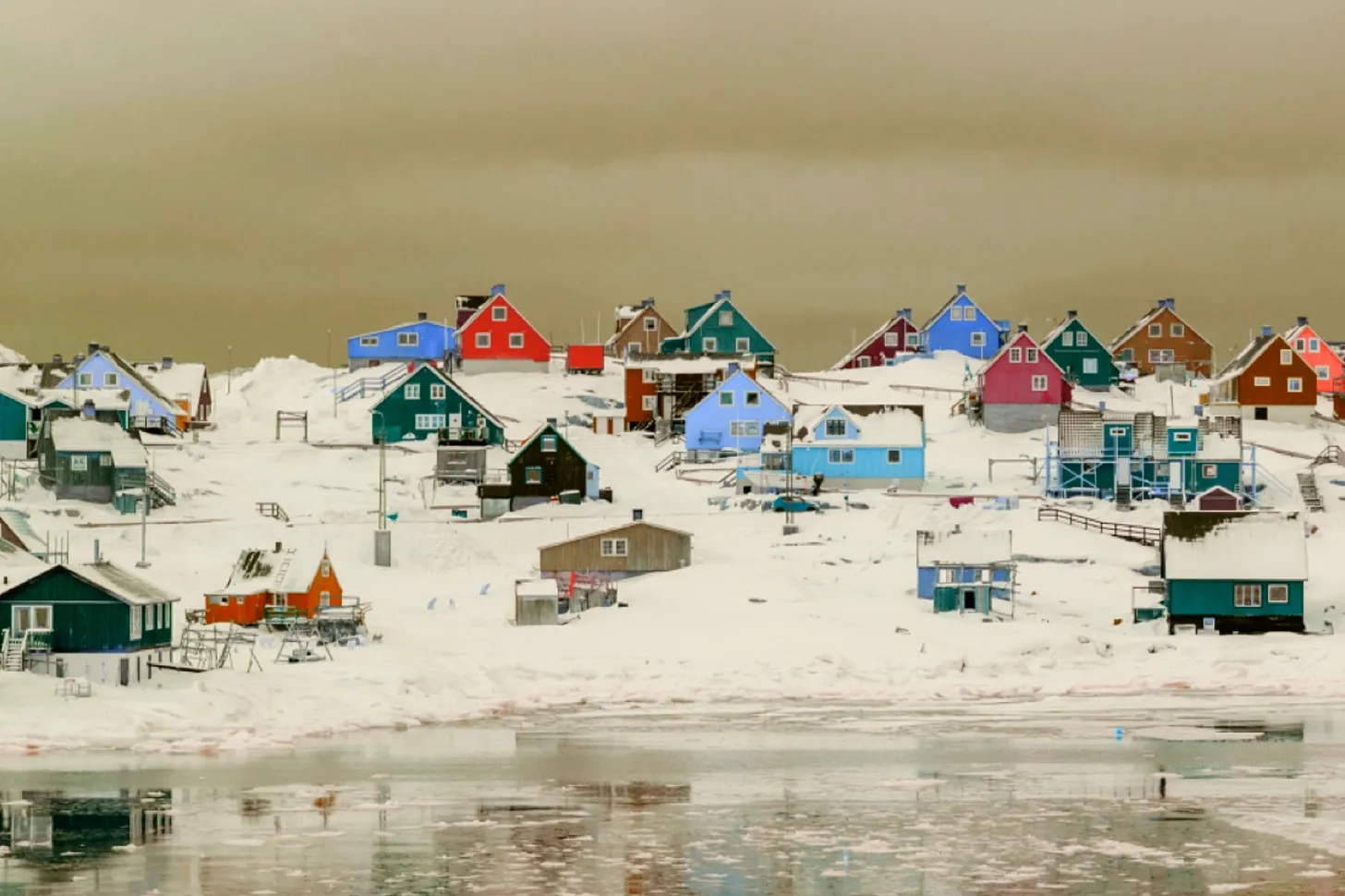
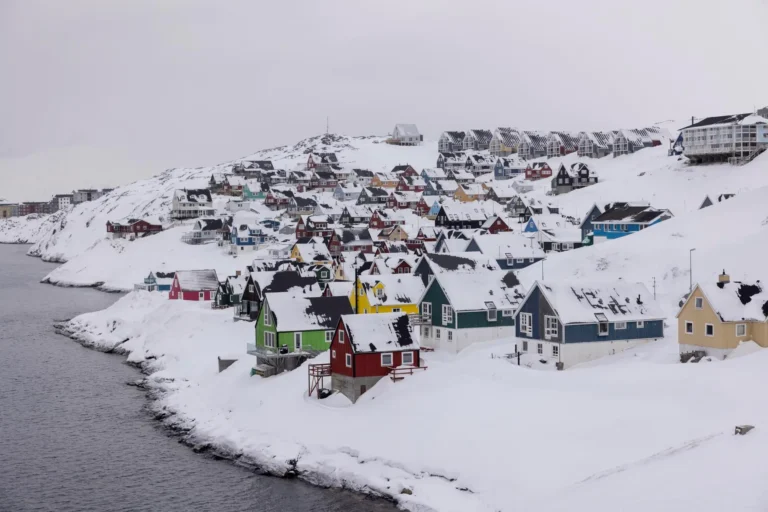
But that would put the U.S. in the position of having to justify to the American people firing upon friendly, allied European troops, in pretty chocolate box houses by clear waters. It is hard to measure the potential damage this would do to Trump’s image in the U.S., let alone in the wider world.

The big fly in the ointment is that under the terms of the 2009 Greenland Act of Self Government, the people of Greenland nonetheless have the right to vote to secede from Denmark.

The Americans are hoping that with pressure and offers of massive financial investment, the people of Greenland can be encouraged to secede from Denmark and align themselves with the U.S. in some way.

That wouldn’t necessarily have to be as a part of the U.S., but under the terms of a so called Compacts of Free Association, that the U.S. also has with small states in the Pacific – the Marshall Islands, Palau and the Federated States of Micronesia. This offers economic benefits to the Islands, including the right of citizens to work in the U.S., while giving the U.S. authority over national defence.

A military action by the U.S. to claim the Island may merely stoke fears in Greenland that it was to be recolonised again, as it was by Denmark before gaining self-autonomy in 1953 which and this may prove counter-productive to U.S. interests.

So, right now, Trump is engaged is a monumental game of chicken with Denmark.

His hope is that they will back down under pressure and sell Greenland on favourable terms.

Their hope is that his increasingly erratic policy may lead to a democratic party president arriving in power in January 2029.

That leaves three years in which the people of Greenland are treated like pawns on a neocolonial chessboard.

With Europe looking increasingly weak and irrelevant.

And with the U.S. increasingly seem by the developing world as a dangerous hegemon clinging to its final breaths of life.

What a sorry state of affairs.

https://strategic-culture.su/news/2026/ ... d-denmark/

******

Is the Empire starting to have blinks of consciousness?

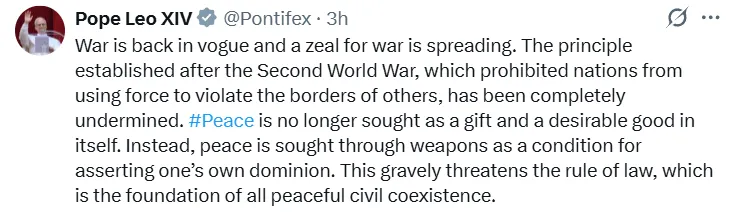
Will the American "law of the jungle" lead to a nuclear World War III?
Dr Ignacy Nowopolski
Jan 10, 2026

The unsubstantiated activities of Trump and his clique on the international arena catalyze negative results in US domestic policy as well.

The fact that no one in America cares about international law was proved in a previous article. And for this purpose, I used footage from the statements of parliamentarians from Capitol Hill. Such a method does not allow for any distortion of their intentions. It is easily verifiable for anyone who knows English.

In the case of the Constitution and American “national” legislation, the situation is identical. The Emperor of Washington has equal contempt for the requirements of national legislation.

He is no longer embarrassed in the “trade” of wealth looted in Venezuela with his billionaire buddies.

This is pointed out by the above-mentioned parliamentarians in their statements.

And these are not only Democrats, but also Republicans.

In its Venezuelan brawl, the White House was not bound by any laws. If only because the Emperor and his “court” (administration) collectively do not have enough intellect to understand anything from their own Constitution.

As a result, they are violating the fundamental rights of their own Empire by launching aggression against Venezuela without the required authorization from Parliament.

Both Democrats and Republicans emphasize this in their statements.

Footage from the parliamentary discussion on the topic can be found below:

Can’t Use US Troops...’: Trump In Shock As Republicans Join Dems To Block War Powers In Venezuela


On the other hand, the White House’s sweet belief in Venezuela’s control seems to be just another illusion of the “Chief Madman of the World” and his court lunatics in Washington and Brussels.

The following video illustrates the real situation in Caracas:


https://drignacynowopolski.substack.com ... ave-blinks

Google Translator
"There is great chaos under heaven; the situation is excellent."

User avatar
blindpig
Posts: 15306
Joined: Fri Jul 14, 2017 5:44 pm
Location: Turtle Island
Contact:

Re: Donald Trump, Avatar of his Class, Capitalism & the Decline and Fall of Bourgeois Democracy

Post by blindpig » Mon Jan 12, 2026 3:00 pm

Trump Cannot Reach Consensus on Venezuela With US Oil Corporations While Helping PDVSA Recover an Oil Tanker
January 11, 2026

Image
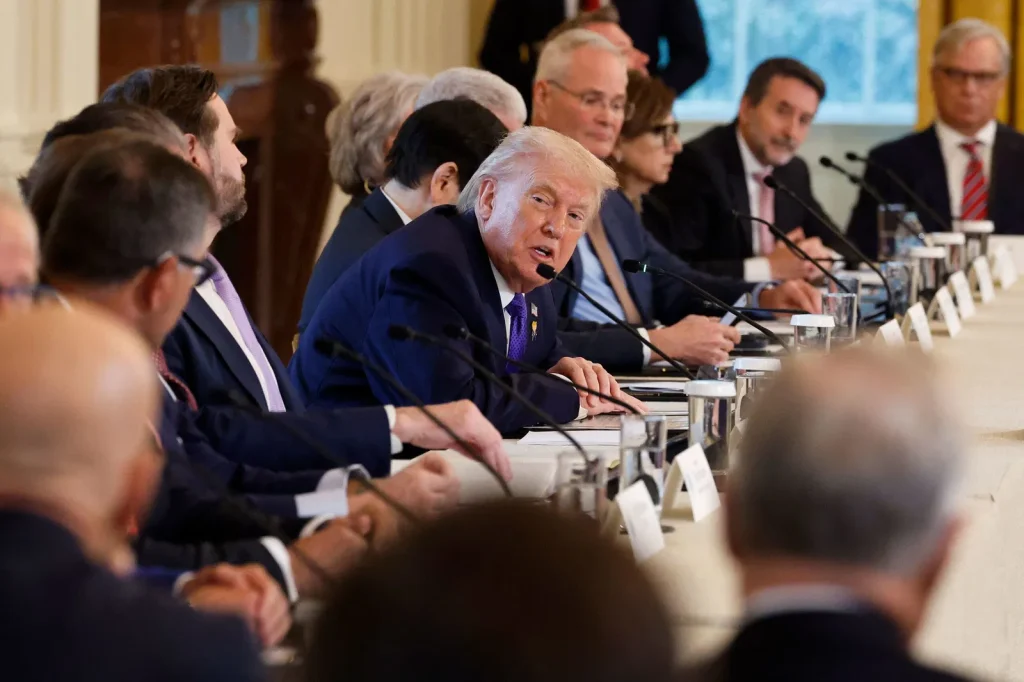
US President Donald Trump speaks at the meeting with oil and gas executives at White House, January 9, 2026. Photo: Chip Somodevilla/Getty Images.

Caracas (OrinocoTribune.com)—Contrary to what US President Donald Trump expected, a meeting with representatives of major US-based oil corporations ended in failure for his plans regarding controling Venezuelan oil. Those who got his “offer” to invest in Venezuelan oil did not show the reaction anticipated by the US president who had ordered the bombing of Venezuela on January 3. This bloody act, condemned by most of the world, resulted in the murder of 100 people, including military personnel and civilians.

“It’s uninvestible,” ExxonMobil CEO Darren Woods told US officials in a straightforward assessment of the obstacles to doing business in Venezuela at the meeting held on Friday, January 9, CNN reported.

Woods’ statement hinted that a real regime change is needed for ExxonMobil to invest in Venezuela. Nevertheless, the truth is that several oil corporations are working to get access to the Venezuelan oil market, as Chevron did by begging for licenses from the US Office of Foreign Assets Control (OFAC) that allowed it to resume operations in Venezuela in 2022.

Several other oil executives at Friday’s meeting expressed similar reluctance as the ExxonMobil CEO, CNN added. Earlier, the US president had shown his determination to win over investors, from whom he expected $100 billion in “investments” in Venezuela.

According to analysts, Trump’s meeting is part of a scam for the US populace, aimed at falsely portraying himself as the one in control of Venezuela and its oil. In reality, it is the Chavista leader Delcy Rodríguez who is functioning as the acting president of Venezuela following the abduction of President Nicolás Maduro by US special forces.

A scam
“It’s a Trump scam,” Venezuelan expert David Paravisini stated on Friday in comments to Venezuelan journalist Esther Quiaro, host of the podcast Los mediodías de La IguanaTV.

He pointed out that the offer from Trump “…is for the future,” and then explained that the proposal to the oil corporations originated because the US war regime has not been able to occupy the Venezuelan oil industry.

“Let there be no doubt: Venezuelan oil is in control of Venezuela,” he emphasized.

Minerva (Olina) oil tanker
The Venezuelan state oil company Petróleos de Venezuela SA (PDVSA) reported Friday that the oil tanker Minerva has been returned to Venezuelan waters, result of a successful joint procedure carried out by US and Venezuelan forces.

According to the New York Times, the Olina—formerly known as the Minerva—was previously reported by US Southern Command as being illegally boarded for allegedly being part of the Russian “shadow fleet.”

This hints at an unprecedented coordination between the two countries that correlates with recent announcements by both governments regarding an “exploratory procedure” for the restoration of diplomatic relations. PDVSA reported that the aforementioned tanker departed from Venezuelan ports without making the corresponding payment for the cargo that it was transporting, nor did it have authorization from Venezuelan authorities for the departure.

In its statement, PDVSA noted that due to this first joint action between the two countries, the ship is in Venezuelan waters for its safekeeping so that appropriate legal actions can be taken.


The announcement from PDVSA came after Trump had claimed that US forces intercepted the oil tanker Olina in the Caribbean Sea on Friday “in coordination with the Venezuelan authorities,” after the tanker had departed the country “without proper authorization.”

“This tanker is now on its way back to Venezuela. The oil will be sold through the GREAT Energy Deal, which we created for such sales,” the US president wrote on social media.

The following is the unofficial translation of the PDVSA statement:

The United States and Venezuelan authorities announce the successful joint operation for the return to the country of the Minerva vessel, which sailed without payment or authorization from the Venezuelan authorities.

Thanks to this first successful joint operation, the ship is now sailing back to Venezuelan waters for safekeeping and appropriate action.


https://orinocotribune.com/trump-cannot ... il-tanker/

******

Trump threatens to keep ExxonMobil out of plans to loot Venezuelan oil

Trump accused Exxon of 'playing too cute' after the firm's president declared that Venezuela is 'uninvestable'

News Desk

JAN 12, 2026

Image
(Image credit: : Alex Wong/Getty Images)

US President Donald Trump threatened to “keep Exxon out” of Venezuela on 11 January, adding that the company is “playing too cute” after the ExxonMobil CEO described the country as “uninvestable” during a recent meeting at the White House.

The remarks follow a high-profile White House gathering with major US oil executives, where Trump pushed for large-scale investment in Venezuela’s energy sector.

When asked by reporters if any oil companies have made commitments since the meeting, with a focus on Exxon, Trump said, “I don't want to say no. I didn't like Exxon's response.”

“We have so many [companies] that want [it], and I probably am inclined to keep Exxon out,” Trump added, saying that the company was “playing too cute.”

The US president said the warning was directed at Exxon after its chief executive, Darren Woods, challenged the feasibility of returning to Venezuela under existing laws and commercial conditions.

Woods told the meeting that Exxon had previously seen its assets seized twice in the country and that re-entering would require “pretty significant changes,” including reforms to hydrocarbons legislation and “durable investment protections”.

He said that under the current legal and commercial framework, Venezuela was “uninvestable,” a comment that quickly overshadowed the administration’s effort to project momentum around oil investment.


Trump reacted sharply, saying he “didn’t like Exxon’s response,” and suggested his administration would decide which companies would be allowed to operate, telling executives they would deal “directly” with Washington rather than Venezuelan institutions.

The president also said the US would disregard past corporate losses, adding, “We’re not going to look at what people lost in the past because that was their fault.”

ConocoPhillips echoed concerns, with its CEO calling for a restructuring of Venezuelan debt and its energy system, including PDVSA, while Trump claimed the company would recover much of what it was owed.

Trump later signed an executive order blocking courts or creditors from seizing Venezuelan oil revenues held in US Treasury accounts, reinforcing Washington’s control over the process.

The White House meeting brought together at least 17 oil executives and took place less than a week after US forces abducted Venezuelan President Nicolas Maduro, with Trump urging companies to commit up to $100 billion to revive the country’s oil industry.

Exxon, ConocoPhillips, and Chevron – the US’s three largest oil producers – were once major partners of PDVSA before the sector was nationalized under late Venezuelan president Hugo Chavez, a process that drove Exxon and ConocoPhillips out and left Venezuela owing them more than $13 billion under arbitration rulings.

https://thecradle.co/articles/trump-thr ... zuelan-oil

(Biting the hand that feeds him... the hubris grows...)

******

Trump Says It’s “Not Necessary” To Abduct Russian President Vladimir Putin

US president Donald Trump President has said he would not be issuing an order to abduct his Russian counterpart President Vladimir Putin.
Dr Ignacy Nowopolski
Jan 10, 2026

When asked by reporters whether he would ever order a mission to capture Putin, Trump said ” i don’t think it’s going to be necessary”

By contrast, Britain Defense Secretary John Healey has said he would like to abduct Putin. He said that given a choice out of all world leaders, he would kidnap the Russian President.

The comments were made a week after the US captured Venezuelan President Nicolas Maduro during a raid on his compound in Caracas.

Ukrainian leader Vladimir Zelensky reacted to the operation by saying, “If you can do that with dictators, then the United States knows what to do next.”

When Trump was fielding questions from reporters at his meeting with oil executives at the White House on Friday, Fox News’ Peter Doocy referenced Zelensky’s comments.

“Sounds like he wants you to go and capture Vladimir Putin,” Doocy said, asking Trump: “Would you ever order a mission to go and capture Vladimir Putin?”

Trump replied, “Well, I don’t think it’s going to be necessary. I’ve always had a great relationship with him.” He added that he was “very disappointed” that his efforts to mediate a ceasefire between Russia and Ukraine over the past year have been unsuccessful.

https://drignacynowopolski.substack.com ... -to-abduct

Google Translator

******

From Cassad's telegram account:

Colonelcassad
Trump on Greenland :

"If Washington doesn't take the island, Russia or China will: 'I won't let that happen';

'Greenland's entire defense essentially consists of two dog sleds

.' "One way or another, we'll have Greenland."

In this fictional world, Putin is preparing to conduct a nuclear strike in Greenland to seize it before Trump, and China, instead of landing in Taiwan, is planning a landing in Greenland. But the US will get there first.😀

https://t.me/s/boris_rozhin

Google Translator

******

The Rubicon crossed – Team Trump’s nihilistic anti-values paradigm

Alastair Crooke

January 12, 2026

When the moral pose is openly and exultantly flaunted as sham then young Christians who take themselves seriously become rebellious.

So, finally an act of unvarnished predatory action by Trump and his team – the abduction of President Maduro in a lightning night-time military strike – has launched 2026 into a pivotal moment. A pivotal moment not just for Latin America, but for global politics.

The ‘Venezuela method’ is aligned with Trump’s ‘business first’ approach which is rooted in constructing a ‘financial reward system’, whereby diverse stakeholders to a conflict are offered financial benefits that permit the U.S. to (ostensibly) achieve its own objectives, whilst locals continue to extract rewards from the exploitation of (in this case) Venezuelan resources – under U.S. close supervision.

In this template, the U.S. does not need to create a new governing régime from scratch, nor put ‘boots on the ground’ – for Venezuela, the plan is that the existing government of the newly-sworn in President, Delcy Rodriguez, will remain in control of the country – so long as she follows Trump’s wishes. Should she or any of her ministers fail to follow that blueprint, they will receive the ‘Maduro treatment’, or worse. Reportedly, the U.S. has already threatened Venezuela’s Interior Minister, Diosdado Cabello, that he will be targeted by Washington unless he helps President Rodriguez meet U.S. demands.

Put another way, the plan comes down to a single underpinning premise that the only thing that matters is the money.

In this context, the U.S. approach to Venezuela resembles that of a Vulture Hedge Fund ‘buy-out’: Remove the CEO and co-opt the existing management team with money to run the company to new dictates. In Venezuela’s case, Trump likely hopes that Rodriguez (who has been ‘talking’ with Secretary Rubio via the Qatari royal family, and who is also the Minister responsible for the oil industry) has squared off all the factions that compose the Venezuelan power structure to accept the relinquishment of state sovereign resources to Trump.

What is so pivotal here is the shedding of all pretence: The U.S. is in a debt crisis and wishes to seize – for exclusive U.S. use – Venezuelan oil. Submission to Trump’s demand is the only variable that matters. All masks are off. A Rubicon has been crossed.

“Venezuela will be turning over 30 and 50 MILLION Barrels of High Quality, Sanctioned Oil to the United States of America, sold at market price with the money controlled by me”, Trump has written on Truth Social.

The erasure of the American ‘project’ – the substituting of self-interested hard power for the American narrative of it being ‘a light to all nations’ – constitutes a revolutionary change. Myths and their supporting moral stories provide the meaning to any nation. Without a moral framework, what will hold America together? Ayn Rand’s celebrated belief that rational selfishness was the ultimate expression of human nature cannot reconstitute social order.

The western Enlightenment has turned on its own values – and has destroyed itself. The ramifications will ripple throughout the world.

Aurelian writes:

“It was Nietzsche, purveyor of uncomfortable truths, who pointed out that the ‘Death of God’, and the consequent lack of any agreed system of ethics would lead to a world without meaning or purpose, because all values are baseless, all action is pointless, all outcomes are morally equivalent and no objectives are therefore worth pursuing …”.

In his book Will to Power, Nietzsche’s thesis was that the end of all values and meaning would imply the end too, of the very concept of Truth, and would reveal the impotence of mechanical western Reason. Collectively, this would amount to “the most destructive force in history”, and would produce “catastrophe”. Writing in 1888, he predicted this would happen over the next two centuries.

Nietzsche was saying that when you cross that Rubicon, it is no small matter. The West would then lose the internal architecture that makes Moral life possible, both internally, and as an actor on the global stage. A state that loses its internal architecture becomes merely a mobster threatening anyone who will not accede to its predations and give it the money on which it has set its eyes.

It is far too early to say how events in Venezuela will turn out, but what can be discerned is that Caracas is collectively strategizing about how to manage an aggressive U.S. within the context of rising popular nationalism at home. Nor can we predict how Team Tump’s wider ambitions to hollow out the South American regional fabric (Cuba in particular) will fare. Equally, it is too early to judge whether Trump’s plan to ‘acquire’ Greenland may succeed.

What can be said nonetheless is that the existing calculus across the globe is upended by the shift to a nihilistic anti-values paradigm.

The world now is governed by strength, by force and power. “We have power”, (Team Trump is proclaiming), so we set the terms on the ground. Russia, China, Iran and others will understand that international niceties should be discarded. It is time to be resolute and utterly hard-nosed, for risk is no longer thought through and critical thinking is absent. Risk abounds.

Coercion breeds the search in others for more effective deterrence – in whatever form – and the merits to any diplomatic engagement will be carefully reviewed. How to trust the U.S.? Can the U.S. be convinced to revert to the politics of classical negotiation? Such a claim now will invite a heavy dose of scepticism.

How to protect oneself? Every leader is quietly doing the calculation. None less so than the Europeans.

Back in 2022 when Russia’s Special Operation in Ukraine began, western leaders were very aware of both their democratic ‘gap’ and lack of moral authority. The Special Operation in Ukraine however, seemed to give them a flag around which to gather their divergent constituent nations. They chose to reach for the Manichaeism that President Biden was embracing in respect to President Putin. It was good versus evil. Many Europeans were drawn to it; it seemed to fill a hole in EU legitimacy.

But today, Trump has ripped away that moral pose. Through the excitement of promoting Ukraine as a symbol for Europe taking the stage as a moral actor, as a consequence the EU at least rhetorically has been edging towards catastrophic war with Russia through a catalogue of misjudgments about the nature of the military conflict – and its causes. The EU leadership has bet the Union on inflicting a humiliating defeat on Putin; but has no answer to the present impasse beyond building castles-in-the-sky multi-point proposals that it hopes to persuade Trump to somehow impose on Moscow.

Instead Trump warns Europe rather that it anyway faces “civilisational erasure” and says that he is considering using military force against Denmark to acquire Greenland. Europe is left naked … and pretending to have moral agency.

Finally, how will this American shift to zero-sum nihilism impact within the U.S.? The MAGA base already has been fractured by Trump’s increasingly open partiality towards Israel – placing Israel First ahead of America First – and now by Jewish billionaires insisting that any criticism of Israel be digitally suppressed.

The images out of Gaza of dead women and children have galvanised many young Americans under 40 years old. Gaza has proved to be the example of an amoral power-politics so extreme that it has radicalised a younger generation that increasingly was leaning toward an uncompromising Christianity.

This was particularly true of the key constituency, Turning Point USA. A big part of the MAGA win in 2024 was due to this youth movement with thousands of chapters, Christian values and high energy. Turning Point USA potentially still offers the prospect for a formidable ‘Get Out the Vote’ operation.

But what many Republicans ignore is that their voter base is roughly one third of the electorate who turn out to vote, and therefore for Trump to win, he will need to persuade at least half of the ‘Independent third of the country’ to vote Trump. Polling shows his approval rating currently standing at -10.

A small group of GOP party officers in combination with powerful established politicians and billionaire donors seek to limit MAGA’s reach over the Republican Party. Just as they crushed the earlier Republican Tea Party movement that rose in 2010, the party apparatchiks want MAGA brought back under full Party control and to accept leadership instructions on who can stand as GOP lead candidates going into the 2026 midterm elections – and beyond into 2028.

In 2016, the agenda of the ‘Sea Island’ cabal of uniparty leaders and donors was focussed on preserving the business model of DC politics from the ‘wild card’ represented by Trump. Today, this extended group aims to fracture the MAGA base that has come to underpin the GOP, in order that they may continue their practice of purchasing all ‘horses (candidates) in the race’. The object being to provide a semblance of choice, whilst limiting that ‘choice’ to two lead candidates acceptable to both wings (Democrat and Republican) of the Uniparty command.

The problem here is that when the rulers become self-absorbed and without scruple, the amorality doesn’t remain contained at the top. It cascades down party structures. And when the moral pose is openly and exultantly flaunted as sham – as Team Trump is doing – then young Christians who take themselves seriously become rebellious. They are silent no more. They understand the nature of the game being played against them.

Will they ultimately comply with the party apparatchiks? That is a good question. The future course of America, to a large extent, hangs on the answer.

https://strategic-culture.su/news/2026/ ... -paradigm/

About them Christian values:

Image
The Looting of Jerusalem after the Capture by the Christians in 1099, Illuminated Miniature from a Universal Chronicle, 1440
"There is great chaos under heaven; the situation is excellent."

User avatar
blindpig
Posts: 15306
Joined: Fri Jul 14, 2017 5:44 pm
Location: Turtle Island
Contact:

Re: Donald Trump, Avatar of his Class, Capitalism & the Decline and Fall of Bourgeois Democracy

Post by blindpig » Tue Jan 13, 2026 2:07 pm

The US Empire is Going SUPERNOVA

When stars become exhausted, they go supercritical; we are learning, so do empires.
Simplicius
Jan 11, 2026

President Trump has set off a truly extraordinary string of global-order-destabilizing campaigns that have left the world reeling. From his attacks on Venezuela and promises of “action” against Mexico, Cuba, Nicaragua, and Iran, to his threats against allies in “securing” Greenland, it feels like one of those weeks Lenin had promised long ago: There are decades where nothing happens, and weeks when decades happen.

Image

In a mere week, it feels like Trump has turned the world upside down and flushed international law down with it.

Spoiler alert: This may not altogether be a bad thing.

Many world leaders and global figures have reacted to this unprecedented turn of events. Germany’s president Steinmeier: (Video at link.)

Arnaud Bertrand summarizes:

Truly extraordinary language by German President Steinmeier:

He says the US's values are "broken", that they're changing the world "into a den of thieves in which the most unscrupulous take what they want," and treat "whole countries" as their "property".

Pretty hypocritical too, Germany has a lot of self-reflecting to when it comes to breaking "values" given their stance on Gaza, and their general enabling of the US. In a very real way, it's also very much Europeans' fault.


Even the Pope was aghast at the degradation of the post-bellum “comity of nations” which has at various times been codified as the ‘rules based order’ or ‘international law’:

Image

Trump further outlined his vision of this restructuring by stating that international law does not apply to him, and he is guided only by the rubric of his own lofty moral compass:

Image
https://www.nytimes.com/2026/01/08/us/p ... ality.html

(Video at link.)

His personal advisor Stephen Miller fleshed it out even further:

“You can say whatever you want about international niceties and stuff like that. But we live in a real world that is governed by force, coercion, and authority. This is the iron law of the world” — Stephen Miller, Adviser to the President of the United States on Homeland Security.

Whispers from Europa’s interior tell us that the apparatchiks are panicking behind the scenes—the upending of their sacred order means a total reorganization of power balances at a time when European countries have no clout to demand a ‘place at the table’ for the ensuing negotiations over the leftover scraps. They now appear to be gravely rethinking their foolhardy choice in placing all their eggs in ‘daddy’ US’s patchy basket:

Image

But the truth is, this is not the same old whinging about Trump’s upending of international paradigms which you can find saturating every corner of the infospace. Rather, I wanted to peer more closely at one very specific aspect of ongoing developments: the mechanism by which US presidents seem to devolve into the worst caricatures of neocon archetypes soon after becoming elected.

Why is it that Trump so quickly back-pedaled into a seeming warmonger after promising no foreign entanglements and wasting of American resources on endless and fruitless geopolitical adventures? In short, why has Trump descended into a parody of Caligula to the point where many are questioning his mental sanity? And most importantly, what implications does this plunge into chaotic amorality have for the future of America as a whole?

(Paywall with free option.)

https://simplicius76.substack.com/p/the ... -supernova

******

The “Trump Doctrine” Is Shaped By Elbridge Colby’s “Strategy Of Denial”
Andrew Korybko
Jan 11, 2026

Image

The “Trump Doctrine” is all about the US’ continued military overmatch vis-à-vis China together with placing the US in a position where it can complementarily deny China access to the energy and markets that it requires to maintain its growth and thus its superpower trajectory.

Trump 2.0’s grand strategy has become much clearer over the past month since the US bombed ISIS in Nigeria on Christmas, executed its astoundingly successful “special military operation” in Venezuela, and is now threatening new strikes against Iran on the pretext of supporting anti-government protesters. What these three states have in common is their important roles in the global energy industry, whether present or potential (due to sanctions-related limitations), and in China’s Belt & Road Initiative (BRI).

Accordingly, coercing those countries into subordinating themselves to the US (whether by tariffs, force, subversion, etc.) would result in Trump 2.0 obtaining influence over their energy exports and trade ties, which could be weaponized to pressure China. What the US wants from China is for it to agree to a lopsided trade deal that would then be replicated with the EU and the US’ other partners for, as the new National Security Strategy states, “rebalanc[ing] China’s economy towards household consumption”.

The implied goal is to coerce China into correcting its overproduction, which is responsible for its unprecedented global exports that displaced the West’s leading role in world trade and led to enormous influence over the Global South, thus restoring the West’s global market share and influence. Such a radical policy change would have major economic and therefore political repercussions that could destabilize the country, not to mention ending its superpower rise, so it wouldn’t be done voluntarily.

US influence over Venezuela’s and possibly soon Iran’s and Nigeria’s energy exports and trade ties with China could be weaponized via threats of curtailment or cut-offs in parallel with pressure upon its Gulf allies to do the same in pursuit of this goal, but this might not suffice for ensuring China’s surrender. That’s why Trump 2.0 is also seeking a resource-centric strategic partnership with Russia that could deprive China of access to those of its deposits in which the US would massively invest in that scenario.

The quid pro quo for injecting billions of dollars into the Russian economy, including through the potential return of some of its estimated $300 billion in frozen assets for this purpose, is for Russia to concede on some of its security-related goals in Ukraine. That’s unacceptable for Putin and is why he’s thus far rejected Trump’s proposal. Nevertheless, even without Russia’s de facto (even if unaware) role in its grand strategy, the US can still apply more pressure upon China through traditional military means.

As Michael McNair notes in his article about “The Bridge at the Center of the Pentagon”, the US’ reassertion of influence over the Western Hemisphere “is a prerequisite for sustaining power projection into the Indo-Pacific” for the abovementioned purpose, which aligns with Elbridge Colby’s framework. He’s the Under Secretary of War for Policy and is actively implementing the ideas that he shared in his 2021 book titled “The Strategy of Denial: American Defense in an Age of Great Power Conflict”.

McNair compellingly argues that the new National Security Strategy has Colby’s fingerprints all over it, which makes sense given his position, and explains how Trump 2.0’s grand strategy is shaped by his work. As he wrote, “Colby’s core claim is that U.S. strategy in the 21st century should aim to prevent China from achieving hegemony over Asia. The rest of his framework follows from that point.” This is precisely what the ‘Trump Doctrine’, which has recently become much clearer, aims to achieve.

The US’ reassertion of influence over the Western Hemisphere, the policy of which can be described as ‘Fortress America’, would provide it with the resources and markets required for raising the defense budget by over 50% from nearly $1 trillion to $1.5 trillion like Trump just declared that he wants to do. The US’ drastically ramped-up military-industrial production would then go towards militarily coercing China into submitting itself to the US through the trade-related means that were earlier touched upon.

The ’Trump Doctrine’ is therefore all about the US’ continued military overmatch vis-à-vis China together with placing the US in a position where it can complementarily deny China access to the energy and markets that it requires to maintain its growth and thus its superpower trajectory. The first will be fueled by tariffs and the profits from ‘Fortress America’ while the others are furthered by subordinating the EU, pressuring the Gulf, and coercing strategic BRI partners (Venezuela, Iran, Nigeria, etc.) into submission.

Everything that Trump 2.0 has done so far aligns with these imperatives and modi operandi, including policies that haven’t succeeded such as the US’ attempted subordination of India and efforts to clinch a resource-centric strategic partnership with Russia at the expense of its security-related goals in Ukraine. Even Trump’s hatred of BRICS makes sense when viewed through this paradigm since he and his team perceive it as a Chinese-dominated front for internationalizing the yuan and weakening the dollar.

In sum, the US’ grand strategy as encapsulated by the Colby-influenced ‘Trump Doctrine’ is to coerce China into subordination, which it aims to achieve through a Reagan-esque military buildup with its AUKUS+ allies as well as entering into positions to deny it access to energy and markets. The end goal is to restore the US’ unipolar hegemony, first over the Americas and then the Global West (EU, the Gulf, and Indo-Pacific allies), the Global South, and finally China, with Russia relegated to a junior partner.

https://korybko.substack.com/p/the-trum ... y-elbridge

*******

Pirates of the Caribbean

Lorenzo Maria Pacini

January 12, 2026

One of the most “entertaining” news is the return of piracy, which the United States of America inaugurated at the beginning of 2026.

At the edge of the sea

So many things are happening in such a short space of time that it is difficult to keep track of them all. Certainly, one of the most “entertaining” is the return of piracy, which the United States of America inaugurated at the beginning of 2026.

We are talking about a new and particularly controversial phase of their economic and strategic pressure policy: the direct seizure of oil tankers on the high seas, believed to be involved in the transport of crude oil on behalf of states subject to unilateral U.S. sanctions, in particular Russia, Venezuela, and Iran. This practice, which Washington presents as a legitimate enforcement activity against illegal trafficking, is raising profound questions about international maritime law and the balance between state sovereignty, freedom of navigation, and the use of force.

From the Caribbean to the icy North Seas, the most emblematic case is that of the oil tanker Mariner, seized a few days ago after a long chase in the North Atlantic by the U.S. Coast Guard, while the ship was being joined by Russian naval forces. According to U.S. authorities, the ship was part of the so-called shadow fleet, an informal network of oil tankers that operate through frequent changes of name, flag, and management company in order to evade sanctions regimes. This operation is accompanied by other significant seizures or interceptions, including the tankers Sophia, Skipper, and Centuries, stopped in various maritime areas on similar charges of sanctioned oil trafficking and fraudulent use of flags of convenience. In short, a cinematic-style raid. Donald “Sparrow” Trump has found a new hobby.

As for the Mariner, to be fair, it is a VLCC oil tanker built in 2002. Its gross tonnage is over 318,000 tons, making it one of the largest types of oil tankers used in the global crude oil trade. In terms of age and technical characteristics, it is an ordinary working ship, designed to operate for 25-30 years, provided it passes inspections. Since its construction, the ship has not had a stable “nationality.”

Over the course of more than twenty years, it has changed its name, flag, and owners several times, a practice typical of tankers operating in sanctioned and semi-sanctioned segments of the market. The ship was successively named Overseas Mulan, Seaways Mulan, Xiao Zhu Shan, Yannis, Neofit, Timimus, Bella 1, and finally Marinera. Each name change was accompanied by a change of jurisdiction or management company. The flags also changed regularly. The ship flew the flags of the Marshall Islands, Liberia, Palau, and Panama. According to international databases, there was a period when the ship flew the flag of Guyana, indicating an incorrect or unconfirmed registration. This episode was subsequently used as a formal pretext for intervention by the U.S. Coast Guard.

After the persecution began, the ship obtained temporary registration under the flag of the Russian Federation with Sochi as its port of registry, as recorded in official ship registers. The history of the ship’s ownership and management also indicates its commercial rather than state nature. Over the years, the ship has been managed by companies registered in Asia and offshore jurisdictions, including structures linked to Chinese and Singaporean operators. Between 2022 and 2023, the owner and manager of the ship was Neofit Shipping Ltd, then Louis Marine Shipholding ENT. Since the end of December 2025, the owner and commercial operator of the ship has been the Russian company Burevestmarin LLC. This is a private entity, not linked to state-owned oil companies and not part of any “state fleet.”

In recent years, the ship has been used in the classic sanctions evasion scheme linked to the Iran-Venezuela-China routes. A crucial turning point came in mid-December 2025, when the United States announced an effective maritime blockade of Venezuela. The tanker, then called Bella 1, had left the Iranian port in November and was approaching the Venezuelan coast just as these measures were introduced. The attempt to enter the port was interrupted by the U.S., after which the ship set course for the Atlantic Ocean. The composition of the crew also clearly shows the commercial nature of the ship. Most of the sailors on board are Ukrainian citizens, while there were also Georgian citizens and only two Russians on board. The Mariner proved to be a convenient demonstration target for the U.S. as part of its new strategy of forcibly disrupting Venezuelan oil routes.

The owner’s attempt to hide under the Russian flag was a logical commercial move, but it did not change the intentions of the U.S. Russia was formally involved in the situation as the flag state and because of the presence of Russian citizens in the crew. The ship was not of strategic value to Russia and was not part of its oil logistics. Any escalation around a private tanker, which had been operating for decades on gray routes, would have made no rational sense.

From Washington’s point of view, the legitimacy of such actions rests on two main pillars. The first is the extraterritorial application of U.S. sanctions: seized tankers are considered assets directly involved in violations of Office of Foreign Assets Control (OFAC) regulations and are therefore subject to confiscation. The second pillar is the doctrine of the stateless vessel, according to which a ship that cannot credibly prove its nationality—due to irregular registrations, false flags, or contradictory documentation—loses the legal protection guaranteed by the flag state and can be stopped by any other state on the high seas.

Bye-bye Law of the Sea

It is precisely this second point that is the focus of much of the legal debate. The United Nations Convention on the Law of the Sea (UNCLOS) establishes that, on the high seas, a ship is subject to the exclusive jurisdiction of the flag state. Exceptions to this principle are limited and strict: piracy, slave trade, unauthorized radio transmissions, absence of nationality, or express authorization from the UN Security Council. The extension of these exceptions to the application of unilateral sanctions, not approved by the United Nations, is a highly contested interpretation.

Russia and China have reacted harshly to the seizures, calling them a blatant violation of international law and, in some cases, an act comparable to state piracy. Moscow argues that the seized tankers were flying regular flags and that the use of force against commercial vessels in peacetime, outside a UN mandate, constitutes a breach of the maritime legal order. Beijing, for its part, has emphasized the illegitimate nature of unilateral sanctions and the risk that such practices create dangerous precedents, normalizing the armed interdiction of commercial shipping.

The implications of this new phase are significant. On the legal front, there is growing tension between a law of the sea based on the neutrality of routes and freedom of navigation, and a power practice that tends to transform economic sanctions into instruments of military coercion. On the geopolitical front, there is a risk of maritime escalation, with possible countermeasures by the affected states and a progressive militarization of global energy routes.

On the other hand, all this is consistent with what the U.S. administration is doing: creating rapid chaos that distracts the world, while surgically targeting certain elements within the American system and, on the other hand, applying the Donroe Doctrine and establishing control over the Western Hemisphere.

The seizure of oil tankers is not just an isolated episode of conflict between states, but a sign of a deeper transformation of the international order. The U.S. has set out with conviction and has no intention of stopping. If this practice were to become established, international maritime law would risk being very quickly stripped of its fundamental principles, leaving room for a logic of force in which naval supremacy replaces shared legality. The issue, therefore, is not only about the seized ships, but the entire future of global maritime governance.

The U.S. has said it: Venezuela is American property and from now on will be its new backyard. Greenland will be next.

Piracy elevated to the rank of military strategy and international relations.

And remember: in just 11 months of government, since the beginning of his second term, Donald Trump has bombed seven sovereign countries: Syria, Lebanon, Egypt, Yemen, Iran, Nigeria, and Venezuela. He has kidnapped one head of state (Maduro) and threatened to kill three others: Khamenei, Petro, and Rodriguez. He has threatened to invade five countries: Iran, Mexico, Venezuela, Colombia, and Greenland (i.e., Denmark). He has done everything in his power to prevent the international community from passing resolutions against Israel and its prime minister Netanyahu during and after the massacres in Gaza.

Anyone with a modicum of common sense, who is not misled by political preconceptions, can draw the most basic conclusions from these actions.

https://strategic-culture.su/news/2026/ ... caribbean/

******

‘Completely bonkers’: Trump’s Greenland mining dreams collide with reality
By Matt Egan
12 hr ago

Image
Large icebergs float away as the sun rises near Kulusuk, Greenland, Aug. 16, 2019. Felipe Dana/AP

Greenland’s untapped mineral wealth has helped land the island at the top of President Donald Trump’s empire-building wish list.

Trump officials view Greenland’s underground riches as a way to loosen China’s stranglehold over the rare-earth metals that are critical for everything from fighter jets and lasers to electric vehicles and MRI scanners.

“We need Greenland … It’s so strategic right now. Trump told reporters aboard Air Force One earlier this month.

“We are going to do something on Greenland, whether they like it or not. If we don’t do it the easy way, we’ll do it the hard way,” Trump said Friday at a press conference with oil executives.

Although Trump has recently downplayed Greenland’s natural resources, his former national security adviser Mike Waltz told Fox News in 2024 that the administration’s focus on Greenland was “about critical minerals” and “natural resources.”

But the reality is that Denmark’s ownership of Greenland is not what’s stopping the United States from tapping the island’s treasure trove. It’s the punishing Arctic environment.

Researchers say it would be extremely difficult and expensive to extract Greenland’s minerals because many of the island’s mineral deposits are located in remote areas above the Arctic Circle, where there is a mile-thick polar ice sheet and darkness reigns much of the year.

Image

Not only that, but Greenland, a self-ruling territory of Denmark, lacks the infrastructure and manpower required to make this mining dream a reality.

“The idea of turning Greenland into America’s rare-earth factory is science fiction. It’s just completely bonkers,” said Malte Humpert, founder and senior fellow at The Arctic Institute. “You might as well mine on the moon. In some respects, it’s worse than the moon.”

Despite its name, approximately 80% of Greenland is covered with ice. And mineral extraction — or just about anything — in the Arctic can be five to 10 times more expensive than doing it elsewhere on the planet.

Greenland, unlike Venezuela, is open for business
Trump’s interest in Greenland is not new — nor is he the first US president to covet the island.


Yet Trump’s startling intervention in Venezuela and decision to take control of the South American nation’s vast oil riches have refocused attention on his interest in Greenland.

The chance that the United States takes control of any part of Greenland has surged to around 40% on prediction market Kalshi, up from about 20% in mid-2025.

Of course, there are major differences between the situations in Venezuela and Greenland.

Not only is Greenland a territory of NATO ally Denmark, but unlike Venezuela it is very much open to business that can operate there, and it has a long history of political stability.

For years, if not decades, officials in Greenland have courted foreign direct investment. People in Greenland say they already are open to business opportunities without any belligerence.

“I don’t see a need for taking over Greenland. We’re open to investment and working with Americans,” Christian Keldsen, managing director of the Greenland Business Association, told CNN in a phone interview. “Why would you say something like ‘take over the country’ when you can get what you want by just behaving?”

‘The pot of gold’ myth
Getting US businesses to take a chance on Greenland may be a fantasy, experts say.

“If there was a ‘pot of gold’ waiting at the end of the rainbow in Greenland, private businesses would have gone there already,” said Jacob Funk Kirkegaard, nonresident senior fellow at the Peterson Institute for International Economics.

However, Funk Kirkegaard, who previously worked with the Danish Ministry of Defense, said it’s just “very difficult” to make a business case for the very large upfront investment that would be required.

It’s possible Trump tries to provide financial incentives and guarantees to entice US companies to make those massive investments, similar to the guarantees that Big Oil is seeking to drill aggressively in Venezuela.

“If given enough taxpayer dollars, private business would be willing to do almost anything,” Funk Kirkegaard said. “But is that a good foundation on which to purchase a territory? The answer is no in Greenland, just as it’s no in Venezuela.”

Environmental factors
The climate crisis has caused melting ice and rapidly rising temperatures in the Arctic, leading some to hope for new economic opportunities.

However, it’s too early to say this will be enough of a game-changer to overcome the environmental challenges of mining in Greenland. While ice melt has opened up some shipping routes, it has also made the ground less stable to drill and raises the risk of landslides.

Image
New York University student researchers sit on a rock overlooking the Helheim glacier in Greenland, August 16, 2019. Felipe Dana/AP

“Climate change doesn’t mean it’s easy. This is not the Mediterranean or your bathtub. There’s just less ice freeze,” said Humpert of The Arctic Institute.

Relatedly, Greenland’s stringent environmental regulations would add expense and difficulty to widespread mining.


Of course, those regulations reflect the local population’s desire to keep the environment pristine. If the Trump administration somehow made those regulations disappear, it might prove deeply unpopular.

“You could end up having a hostile local political situation,” Funk Kirkegaard said.

Friend or bully?
Selling Greenland to the United States would likely require a referendum.

Yet a poll published in January 2025 found that just 6% favor Greenland becoming part of the United States. The overwhelming majority of Greenlanders, 85%, said they do not want that to happen.

Adam Lajeunesse, chair in Canadian and Arctic policy at St. Francis Xavier University, said the “bizarre rhetoric” about taking over Greenland risks undermining the economic and strategic objectives US officials by harming the relationship with Greenland and Denmark.

“You could see the United States no longer viewed as a friend and partner but as a bully that should be resisted,” he said.

To some extent, this may already be happening.

Keldsen, the Greenland Business Association executive, cautions US officials risk damaging the relationship with the local population.

“At the moment, everything American is a red flag,” he said. “Everyone is wondering, ‘Am I supporting someone taking over my country?’”

https://us.cnn.com/2026/01/12/business/ ... ela-mining

******

“Trump’s $1.5 Trillion Gamble: Will Endless Conflict Win Midterm Votes?”
Posted on January 12, 2026 by Yves Smith

Yves here. As is so often the case with articles by Paul Rogers, while the piece below makes some interesting observations, the way he has approached the topic is frustrating via its peculiar framing and omissions. But the subject is important so perhaps readers will indulge me and treat this offering as a critical thinking exercise.

Let me make two observations to get the ball rolling. One is that nowhere does Rogers mention that the US military is bloated and underperforming. Brian Berletic has regularly described how it is built for profit and not purpose. Russia is currently beating the US plus the rest of NATO all by its little lonesome in Ukraine. Russia is also ahead of the US in many critical weapons systems, such as hypersonic missiles, air defenses, signal jamming, and drones. China has the biggest shipbuilding industry in the world. And critical parts of the US forces, such as its navy, are poorly configured. For instance, Alexander Mercouris explained how the US navy is extremely thin on the classes of carriers like corvettes and frigates that would be needed if the US is serious about trying to police and interdict rogue tankers.

Second is the bizarre presumption that Trump’s military hypertrophy scheme is to help with the midterms. This is yet another vanity project, since Trump is addicted to intimidation, and secondarily an exercise in pork. Even if he were able to sell a hefty increase in war spending, it would have to be in the next budget, which means no practical effect until after the midterms.

In addition, whether we have midterms at all is open to question. Trump just told the New York Times that there is no limit to his power, save his warped sense of morality, and annoyingly and unfairly, sometimes the courts. Trump also genuinely believes that the only way he would lose is if the election were stolen. Ergo, that makes it OK for him to pre-emptively steal.

Polls and informal indicators, like Twitter now having more anti than pro-Trump comments despite its algos boosting otherwise, show that Trump’s approval continues to slide. Political scientist and money-in-politics maven Tom Ferguson recommends G. Elliott Morris as a pollster who avoids the common pitfalls. One of his fresh pieces is on the question of ICE but it also has a chart on Trump generally:

Image

And on ICE:

Americans have turned sharply against ICE in Trump’s first year back as president, and say the agency too often resorts to violence. More Americans than ever now say the agency should be abolished.

Image

Image

Needless to say, abolishing ICE is a radical measure; given how popular immigration reform once was, this level approval of elimination (as opposed to say, wanting only reform) is striking.

And that’s before getting to the James Carville one-stop analysis: “It’s the economy, stupid.” Trump has just tossed out a bunch of schemes for addressing the affordability crisis, like a Fannie/Freddie mini QE to lower mortgage rates. We plan to address them soon but for the most part, they look as well thought out and likely to work as the Trump plan to increase oil production in Venezuela.

So it is not hard to imagine that the ICE raids are to create enough domestic upheaval to justify imposing martial law in states with nasty uncooperative blue cities, or other measures that badly skew or prevent voting. I hate to even have to treat this as a serious possibility, but Trump’s insatiable ego and love of violence makes this all too possible a scenario.

IM Doc’s comments on this line of thinking:

There is a reason that the Founders had utmost in their mind the last 100 years or so of the Roman Republic. I am talking about the era of the Cataline, the Brothers Gracchi, Sulla, Marius, Pompey, Cicero and eventually Julius Caesar. Some of the issues we face are hauntingly familiar. Some of them are a bit different. Some of our issues are so alien to the Roman world that they would have been greeted as LOL by the Romans – as in how can you be that stupid as in exporting debt across the world instead of importing booty.

Nevertheless, the entire 100 or so years of the fall of the Republic as opposed to the several hundred years beforehand – was basically each side while in power meticulously and permanently altering political, cultural, and economic ( or all 3) NORMS and TRADITIONS that had been in place since the beginning. At first with just one or two things disrupted, it was not really noticeable…..toward the end it was clear to all just how different things were than a generation ago.

The average Roman by the time of Julius Caesar felt like an alien in an alien world. We have been doing the same since WWII and arguably WWI. All at the same time, the elite began to become much more brusque, brutish, aggressive and ugly towards one another. And eventually this all ended in catastrophic blood shed. Look around.

In addition, some of the very same side effects faced by the Roman Republic interestingly are all around us today – unbelievable deference to celebrities and celebrity culture, the wanton sexual acting out, intense violence in sports, the insane income equality, the increasing serfdom of the populace, the intensely aggressive and constant war posturing of the entire population….. I can go on and on.

The Founders knew these stories by heart – and tried to place fail safes in the founding documents and ideals. It has stood up pretty well – but even as it did in Rome – it cannot be expected to continue forward with partisans on all sides trashing it every chance they get. Trump, the brute, the berserker, is but the natural progression. And the Dems just welcomed him in – I am sure 1000 years from now, people will be shaking their heads contemplating the placement of a dementia patient as his opponent. This is why I know in my heart that this is going to be completely alien for Americans going forward. And indeed, we may very well have suspended elections. My big concern is “the twist” will actually be something absolutely dreadful that we never saw coming. The other joker that has to be seriously examined is the fact that any number of world leaders can lay waste to the entire Earth with the push of a button. That is a joker that is new to humanity and one we do not even begin to have the morality to deal with.

By Paul Rogers, Emeritus Professor of Peace Studies in the Department of Peace Studies and International Relations at Bradford University, and an Honorary Fellow at the Joint Service Command and Staff College. He is openDemocracy’s international security correspondent. He is on Twitter at: @ProfPRogers. Originally published at openDemocracy

<>The president this week unveiled his proposal to increase the defence budget by almost 60% by the 2027 fiscal year, after three weeks of lethal US operations in Nigeria, Syria, Venezuela and the Caribbean and Pacific littorals.

An increase of this kind, up from $901bn this year, suggests a White House making preparations for major war – a scenario that Trump has said the world must be prepared for.
Announcing the plan on his Truth Social platform after the US military’s kidnapping of Venezuelan President Nicolás Maduro, Trump said we are in “very troubled and dangerous times”.

Trump added that the spending increase “will allow us to build the ‘Dream Military’ that we have long been entitled to and, more importantly, will keep us SAFE and SECURE, regardless of foe.”

What the US president intends needs to be put in the context of what the Pentagon has been doing over the past three weeks.

The seizure of Maduro, as well as the assault on the Venezuelan capital, Caracas, and three other Venezuelan states, was a huge operation involving 150 US military aircraft and a large Special Forces contingent.

Damage on the ground was considerable, with 32 Cubans and 24 Venezuelans reported to have been killed, according to officials in both countries, although Venezuelan interior minister Diosdado Cabello put the losses much higher, at more than 100 people.

The attacks also did substantial damage to the country’s communications and power supplies. Since then, Trump has made clear that Venezuela’s role now is to supply the United States with oil and to buy US goods in return. Either it becomes a client state of the US, or it will be subject to further attack.

Trump’s attempted regime termination in Venezuela may have taken the US to a new level of militarism, but it also tells us how the ten months to the mid-term elections will likely pan out.

Media attention has focused on Venezuela over the past three weeks, but it has been far from the US’s only target. The US military has used lethal air power in at least four other conflicts across three continents, including a series of airstrikes against Islamist paramilitaries in northern Nigeria on Christmas Day.

Trump has said the attack was in response to the persecution of Christians in Nigeria, even telling The New York Timesthis week that more attacks will follow “if they continue to kill Christians”.

While there is little evidence to support this claim, it is a message likely to play well among US evangelicals, especially Christian Zionists, on whom Trump depends for votes. In practice, the security impact was minimal, and a week later, paramilitaries attacked Kasuwan Daji market in Niger Province, killing at least 30 people and abducting many more.

Meanwhile, US Southern Command forces continued a four-month campaign of attacks on small boats in the Caribbean and Pacific littorals, claimed to be transporting drugs from Venezuela to the United States. Attacks on 31 December killed five people, bringing the total since early September to 114 deaths across 35 attacks.

Still within the same three-week window, US Central Command carried out what it described as a “massive strike” against ISIS in Syria, attacking over 70 targets using strike aircraft, attack helicopters and artillery.

US forces were also involved in attacks against al-Shabaab Islamist paramilitaries near Jilib in central Somalia, the latest in a series of US operations across the country.

Furthermore, the Pentagon is expanding its operations to track and board oil tankers, particularly those transporting oil from Iran and Venezuela to Russia.

Beyond all this, Trump is allowing Netanyahu in Israel to act with impunity in Gaza, while pushing ahead with a huge new settlement construction programme in the Occupied West Bank and East Jerusalem.

This renewed emphasis on foreign interventions gives the lie to claims of a presidency seeking to avoid foreign wars. The reverse is true, and Trump appears utterly convinced that he can act with impunity in his efforts to make the US the world’s most powerful state.

Moreover, the scale of the Venezuela attack sends a clear message to Latin American countries about what Trump is willing to do. It also fits into a wider strategy of signalling power to China, a particular target of the Venezuela operation.

China is currently involved in some 600 joint projects with the Caracas government and has around $70bn invested in the country.

Within the depths of the Trump administration, there will be recognition that the US is in economic decline relative to the rise of China, particularly in its relations with the Global South. Where it is not in decline, however, is military power, with a burgeoning defence budget and a worldwide network of more than 750 military bases across eighty countries.

Partly because of this, Trump’s success in Venezuela gives him the confidence to go further, making him more willing to threaten regime change in Cuba, Mexico, Colombia and, of course, Greenland.

There is a further factor over the next ten months. For Trump’s MAGA movement to stay on track, Republicans must retain control of both Houses of Congress. Yet they already face serious problems in the Lower House, where all 435 seats are up for election in November, and polling suggests a potential loss of control.

Trump also faces deep domestic tensions in an increasingly polarised country, with the angry reaction to the killing of Renee Nicole Good by ICE agents in Minneapolis being only the latest example.

More generally, for most Americans, the state of the economy is making life worse, not better, unless they are among the minority benefiting from recent tax changes. At the same time, cuts to federally funded programmes in social security, health and other areas are becoming increasingly visible.

In such circumstances, selected foreign wars over the coming months would serve as powerful demonstrations of the supposed greatness of Trump’s America and could help MAGA in its moment of need. That is an added reason for political leaders in Cuba, Mexico, Greenland, Denmark and elsewhere to view the months ahead with trepidation.

https://www.nakedcapitalism.com/2026/01 ... votes.html

******

Greenland is for Americans only
January 12, 11:03 PM

Image

As usual, everything Soviet propaganda lied about turned out to be true.

Yesterday, Trump declared that Greenland will be American one way or another. The feverish nonsense about Greenland needing to be seized to prevent it from being seized by Russia or China makes little sense.
Previously, American media reported that the Trump administration was exploring several scenarios for seizing the island, including force, if anyone tried to organize resistance there.

And just now, a bill was introduced in the US Congress to annex Greenland and make it a state of the United States.

https://colonelcassad.livejournal.com/10302527.html

Greenland Defense Front
January 12, 9:03 PM

Image

The Greenland Defense Front will repel the machinations of American aggressors.


https://colonelcassad.livejournal.com/10302243.html

Google Translator
"There is great chaos under heaven; the situation is excellent."

User avatar
blindpig
Posts: 15306
Joined: Fri Jul 14, 2017 5:44 pm
Location: Turtle Island
Contact:

Re: Donald Trump, Avatar of his Class, Capitalism & the Decline and Fall of Bourgeois Democracy

Post by blindpig » Tue Jan 13, 2026 4:29 pm

(There is entirely too much Trump: today's 2nd entry...)

Caesar Crossed the Rubicon, So Did Trump
January 12, 2026

Image
Graphic illustration comparing Donald Trump to Julius Caesar. Photo: Getty/iStock via Politico.

By Maria Páez Victor – Jan 10, 2026

“I don’t need international law.” Trump

(NYT interview, The Guardian, 9/01/26)


Caesar crossed the Rubicon and by so doing, killed the Roman Republic.

A warning etched in history forever.

The attack on Venezuela was today’s Rubicon.

Take heed.


In carrying out a mindless and unprovoked attack on an unsuspecting nation and kidnapping its head of state and his wife, Trump has crossed a political, diplomatic, and even military line that has in one swoop dealt a lethal blow to the United States republic and to the foundations of international law.

A peaceful nation, which was not a security threat to the US, not having even a quarter of their military might, was brutally bombed, 100 killed in the attack, among the targets being civilian dwellings, a large medical depot, a library, and a university campus. The unimaginable view of 150 planes, many helicopters and missiles exploding over Caracas and other cities was horrific to Venezuelans who had never been to war with any nation since its bid for independence in the early 19th century.

The US, Europe, Canada, and other Western allies did not like Venezuela’s version of socialism, did not believe it is a democracy, did not like President Nicolás Maduro, and did not believe the US’s hostility was essentially about oil.

For years they fully backed Washington’s illegal sanctions and cared not one whit that 100,000 Venezuelans died because of them. They lavished support, media coverage, and millions of dollars on the bunch of self-appointed “leaders” of the Venezuelan opposition who live in Miami and Madrid. They even gave one of them a Nobel Peace prize despite that person being a publicly known warmonger, even having begged Washington and Israel to invade her own country. They fully backed Trump’s demonization of a country, a people, and their leader.

However, the blatant attack has spurred many spontaneous protests by the people on the streets within the US, as well as many anti-US protests around the world, especially in the Global South. But the elites, politicians, media, pundits, bought “influencers,” and social media have been guarded, nit-picking, when they should have been determinedly against this act of war and kidnapping. As to Europe, including the UK, to their peril, there has not been a serious enough condemnation by most of its leaders of the violation of international law. (Janina Dill, Oxford university)

This in itself is horrifying: a tacit acceptance of Trump’s patched-up lies and his vile use of military killings to get economic gain. These events have to be called for what they are: unlawful use of military power, piracy on oil tankers, extra-judicial, abhorrent murders of 115 innocent people in tiny boats at sea, an unprovoked act of war, and the criminal kidnapping of a standing president.

Trump declared to the New York Times that the only limit to his power he recognizes is himself: “My own morality. My own mind. It’s the only thing that can stop me.” This is from a man who is a convicted felon 34 times over, a sexual predator, friend of pedophiles, and a serial liar that has been caught in 30,573 documented falsehoods during his terms of office. His sense of morality is seriously deformed. He is drunk with power and disregard for any law, domestic or international. This should horrify the United States and the world. (The Guardian) (CBC News)

The charges against Nicolás Maduro and his wife are sheer nonsense: drug peddling and having a stash of arms. The Department of Justice just dropped the accusation against President Maduro of being the leader of “the cartel de los soles” because they had to admit that the cartel did not exist. It was an invention of the CIA, as Venezuelans had repeatedly said but were not believed.

The inescapable truth is the US attacked a sovereign nation without any legal justification. It was not acting in self-defense, nor did it have the approval of the UN Security Council, the only two legal reasons that could have made it valid. “The US committed multiple acts of war against a state that posed no immediate threat to it, without even the flimsiest attempt to establish a casus belli or secure UN authorisation.” (Tony Wood) This attack brings a fearful omen of the future: there was a clear violation of the rules that govern the relationships between nations, from the Westphalian principle of sovereignty of 1648, the Geneva Convention, the Vienna Conventions, The Statute of Rome, the Declaration of Universal Human Rights, to the United Nations Charter (Art. 2). On what basis will nations now relate to each other? On what basis will war be declared, waged, controlled, prevented? What country will be next invaded?

Trump has signaled his interest in controlling México, Colombia, Greenland, and Canada. Will “might” be de facto “right”? Certainly, countries will be increasing their arms spending to defend themselves. There also could be a run on developing nuclear weapons to avoid the fate of Venezuela.

For once Trump said something truthful by openly admitting that the attack on Venezuela was to control its oil: not “democracy,” not drugs. However, he went so far in his delusions to assert that the land and oil belong to the USA and Venezuela had stolen it from them. The absurdity of this mendacious statement has made Trump a laughingstock in the Global South. In fact, 24 foreign oil companies were compensated at the market price of US$1,000 million for the expropriation of their installations. They never owned either the land or the oil; they only worked under limited contracts. Venezuela never handed over ownership of land or natural resources to foreign companies at any time of the history of the oil industry, only working concessions and contracts. Venezuela owes the oil companies nothing for 60 years of blatant exploitation at the risible return of 1% of profits on billions of barrels of oil, before nationalization.

There is a lot of fear too as Trump’s lackeys follow his lead, giving fascism a wider foothold than just their leader: Trump’s most powerful adviser, Stephen Miller, stated that “the real world should be ruled by force” (Jason Stanley, Toronto Star, 9 January 2026) Trump is opening the door to true fascism, and unless the Western nations stop trying to cover this up with lame excuses about Venezuela, “dictator,” “failed nation,” “drug cartels,” etc., they will not be able to stop the next victims of Trump’s megalomaniacal lust for power and territory. He has dealt a direct blow to democracy in his own country, violating the US Constitution by not seeking Congressional approval to wage war, and to international law, which he is arrogant enough to say he does not “need.”

The kidnapping of Nicolas Maduro and his visibly brutalized wife, Cilia, who, as a lawyer, is a foremost champion of women’s rights in the country, has been widely condemned especially on the streets of the Global South, where it is said President Maduro is a victim of “the Washington cartel.” Supporters of US interventionism are justifying this act of war under the guise of the deplorable Monroe Doctrine, which has been aggrandized even more by Trump’s new National Security Strategy. This document clearly states the US intent to dominate the Hemisphere: “After years of neglect, the United States will reassert and enforce the Monroe Doctrine to restore American pre-eminence in the Western hemisphere…we will deny non-hemispheric competitors the ability to position forces or other threatening capabilities, or to own or control strategically vital assets, in our hemisphere.” Obviously, this is to stop China, Russia, or Iran from doing business in Latin America and the Caribbean. Perhaps he intends to build a wall around the continent?

US leaders criticizing the attack have largely ignored the moral implications. There is no moral excuse for a nation with nuclear capacity to wage such unequal and deadly force, that ended in killing and devastation, upon an unsuspecting population that did not even merit a declaration of war as a warning. As Interim President Rodríguez has said, “the Venezuelan people did not deserve this.”

However, it did not all go to plan for Trump. While the military “defense shield” of Venezuela obviously failed due to an overpowering cyber technology, even despite heroic attempts to fight the invaders, the socio-political shield held fast. There was no “regime change,” the nation’s institutions seamlessly continued to function, the Constitution was followed meticulously, and Dr. Delcy Rodríguez was duly sworn in as Interim President by both the Supreme Court and the National Congress. There was no civil war. There was no break in the top echelons of the government party. There were no riots. Indeed, for those who swore the opposition parties were the majority, they were not in the street celebrating. All opposition party leaders (the real ones not the Miami/Madrid imposters), were appalled by these events and wholeheartedly rejected the US attack and kidnapping. In fact, the war attack had the consequence of not only strengthening the governing Chavismo party, but also uniting Venezuelans of every political stripe against the US and creating a widespread surge of anti-US attitude among Venezuelans due to this outrage.

This act of war has had profound geopolitical consequences too: enter China, Russia, and Iran. Washington, seeking to break Venezuela with more than 1,000 illegal sanctions, cut it out of the international financial system. It impeded it from producing and selling its oil, its main source of revenue. Venezuela could not get loans, could not buy or sell, could not get dollars; its funds in foreign banks were all outright stolen, including 31 tons of gold in the Bank of England (directed by Mark Carney), and the CITGO oil company in the US. Even Covid-19 vaccines were denied to Venezuela. Some of those billions were actually given to the supposed opposition in Miami/Madrid, who proceeded to use them to finance sabotage and coups, and plenty of luxurious living. Washington shunned, beggared, and demonized Venezuela, and it became a political pariah and economically wounded.

How was Venezuela to feed its people? It diversified its economy, it accelerated agricultural plans for food security, and it obtained new friends and allies who were willing to help it and do business with it, despite the sanctions. There was plenty of humanitarian help from other nations such as China, Russia, Iran, Turkey, Cuba, and regional nations, and solid bilateral commercial agreements and contracts. Venezuela received loans, outlets for its petroleum and non-petroleum products, and best of all, social, cultural, and political solidarity from these countries. Washington kicked Venezuela out, but Venezuela picked itself up and now has one of the fastest growing economies in the region, with a GDP growth of 6% this year.

Meanwhile, in the US, oil experts told Trump late December 2025 that the oil reserves were dangerously low because both the Biden and Trump’s administration had been using that reserve to keep the price of gasoline down. Gasoline prices being a bellwether in US voting politics and mid-term elections are looming. Suddenly, Trump realized that contrary to what he had previously boasted, that the US did not need Venezuelan oil, in fact it was absolutely not true.

Trump could have very easily strengthened the contract of Chevron, because Venezuela has never refused to sell oil to the US. It in fact sells about 27% of its exported oil through Chevron to the US. The US oil company Chevron has been working in Venezuela for 100 years and still does. Any restriction on Chevron has come from Trump’s own sanctions and licenses, not Venezuela. But he decided to use military force to “own” Venezuela.

After the military act of war, the psychological war against Rodríguez and the governing Chavista party has gone into full force. The rumor machine is belittling her, accusing her of betraying Maduro, that all this was a “pact’ with Trump and other slanderous accusations. They seriously underestimate the ability, the experience, and the revolutionary dedication of Rodríguez. Washington just cannot believe it did not get regime change nor social chaos as it hoped. Rodríguez is an expert negotiator; she is in a dangerous position trying above all to ensure the life of President Maduro and his wife, safeguarding the country’s sovereignty and at the same time avoiding another military attack.

Nevertheless, living his fantasy, Trump assures he now “controls” the Venezuelan government, that he will own 30 to 50 million Venezuelan oil barrels which he himself would keep, sell, and distribute the money as he wills. He threatened Rodríguez that if she did not obey him, there would be another attack and she would have a fate worse than Maduro’s. He said that he “owns” Venezuela and that the Venezuelan government must do as he says. Furthermore, he has demanded Venezuela stop selling oil to Russia, China, Cuba, and Iran and must buy all its products from US companies. In other words, Venezuela must become a colony. This will never happen. Most emphatically, Rodríguez has unequivocally stated that Venezuela will never be a colony. For these absurd Trump demands to take place he would have to invade and kill most of the country’s inhabitants. It would be Vietnam redux.

There is also the reality of the reduced Venezuelan oil producing capacity. More than a decade of devastating sanctions has seriously impeded its production, reducing it from about 3 million barrels a day it once was capable of producing, to not nearly one million a day. Today it is not able to produce the 30 to 50 million barrels Trump is boasting about. Middle Eastern and Chinese oil experts have estimated that it would take an investment of $183 billion over 16 years to get the Venezuelan oil production to 3 million barrels a day. (Pepe Escobar)

Hence the reluctance of oil company executives to step in and try to “restructure” Venezuela’s industry as Trump proposed to them. Furthermore, with all the uncertainty that the military attack has provoked, the economic risks are very high. Trump will not rob Venezuela’s oil; he can get oil if he buys it in the normal commercial way.
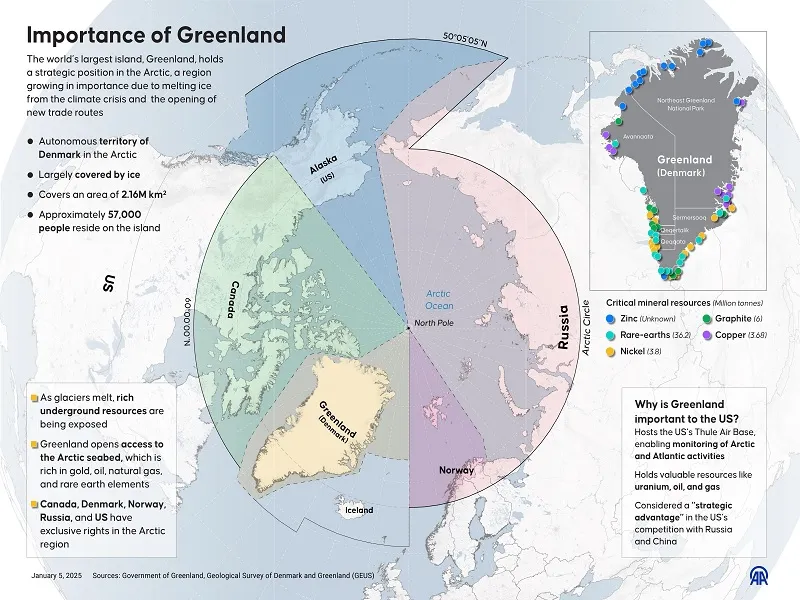
The media is not eager to report what the Venezuelan government is actually saying: that only the people of Venezuela and its government will make decisions about its oil, that it is very willing to sell oil to the US, but also to any other country in commercial contracts. Rodríguez has said firmly that Venezuela will not turn its back on contracts with Russia, Cuba, China, Iran, or any other nation.

Trump does not realize that the contracts Venezuela has signed with China, Iran, and Russia are binding and legal, not just something that can simply be brushed away. Contracts, like private property, are a pillar of the economic system backed by serious laws. Venezuela has signed more than 600 bilateral contracts with China for projects such as airports, dams, roads, communications, etc., that are paid for in barrels of oil. This is a debt of perhaps around $6 billion. In other words, most of Venezuela’s oil is already “sold” to China under these binding, legal contractual arrangements. If Trump wants to steal Venezuela’s oil, in fact, he would be stealing from China, and China will not simply let that happen.

“Unless the peoples of the United States and of the world and their leaders, revolt and oppose these crimes of the US under this megalomaniacal leader, they are encouraging more atrocious acts, and against any other country.” This is how impunity functions. The more you feed it the hungrier it becomes.” (Craig Mokhiber)

The question now is: what is the UN, Europe, Canada, Japan, and all nations going to do about countering this deadly blow to international law? If restraint is not forced upon Trump and his lackeys, we will enter a time of impunity and lawlessness at a world scale that will lead to chaos and most deplorably, to war.

https://orinocotribune.com/caesar-cross ... did-trump/

(Maria owes old Jules an apology. Sure, he was on his own side but he improved life for the proles, at least until Octavian took over.)

******

Trump Threatens 25% Tariffs on Countries Trading With Iran

Trump warns countries trading with Iran they will face a 25% tariff on all U.S. trade amid escalating tensions.

Image
Iranian woman in front of anti-American mural Photo: @EFEnoticias

January 13, 2026 Hour: 3:26 am

U.S. President Donald Trump announced on Monday that any country maintaining commercial relations with Iran will face a 25% tariff on all trade with the United States, escalating economic pressure amid growing tensions surrounding unrest inside the Islamic Republic.

The announcement was made through Trump’s social media platform, Truth Social, as Washington weighs its response to protests in Iran that authorities in Tehran say have been infiltrated by armed groups backed by foreign powers. “Effective immediately, any Country doing business with the Islamic Republic of Iran will pay a Tariff of 25% on any and all business being done with the United States of America,” Trump wrote. “This Order is final and conclusive.”

The White House did not publish official documentation detailing the legal authority for the measure, nor clarify whether the tariffs would apply to all of Iran’s trading partners. No response was issued to media requests for comment. Under U.S. trade rules, tariffs are paid by American importers of goods from the targeted countries.

Iran has faced extensive U.S. sanctions for years and exports much of its oil to China. Other key trading partners include Turkey, Iraq, the United Arab Emirates and India. China reacted critically to Trump’s statement, with its embassy in Washington saying Beijing would take “all necessary measures” to protect its interests and opposing “any illicit unilateral sanctions and long-arm jurisdiction.” A spokesperson added that “China’s position against the indiscriminate imposition of tariffs is consistent and clear. Tariff wars and trade wars have no winners, and coercion and pressure cannot solve problems.”

Image

Tehran has linked the current unrest to external destabilization efforts. Iranian authorities have accused armed groups allegedly orchestrated by Washington and Israel’s Mossad of infiltrating protests to attack infrastructure and security forces, altering demonstrations that initially emerged from economic grievances.

Iranian security sources told Sputnik that more than 500 people have died over the past five days of unrest, including civilians, police officers and members of the Islamic Revolutionary Guard Corps, with hundreds more injured. Iranian officials have criticized Western governments for condemning Iran’s police response while remaining silent on the war in Gaza and on previous U.S. and Israeli attacks that, according to Tehran, killed more than a thousand Iranian citizens.

Washington’s involvement has also been underscored by U.S. backing of figures linked to Iran’s former monarchy. Reza Pahlavi, based in the United States, has publicly called for intensified attacks in Iranian urban centers. Iranian authorities argue that such actions confirm the disturbances are part of a regime-change operation rather than spontaneous protests.

Iran also maintains commercial relations beyond Asia and the Middle East. Official data identify Brazil as its main trading partner in Latin America, particularly in agricultural products and fertilizers, alongside ties with Venezuela, Argentina, Cuba, Mexico, Colombia and Uruguay.

Trump’s latest tariff threat aligns with a broader pattern during his second term, in which trade measures have been used against countries over relations with U.S. adversaries and policies deemed unfavorable to Washington. His trade agenda is currently under legal scrutiny, as the U.S. Supreme Court considers whether to strike down a wide range of existing tariffs imposed by his administration.

https://www.telesurenglish.net/trump-th ... with-iran/

******

What Would a Trump Takeover Mean for Greenland’s Resources?
Posted on January 13, 2026 by Yves Smith

Yves here. While this article speculates about what a Trump seizure or forced sale of Greenland might mean for resource exploitation, it is key to keep in mind that that’s a pretext, just like the Trump bogus claim that Russian and Chinese naval vessels have been hovering offshore. This is a vanity project. Trump wants as part of his record that he secured a large territorial expansion for the US.

By Nicholas Kusnetz, a reporter for Inside Climate News. Originally published at Inside Climate News; cross posted from Undark

Even before U.S. forces seized Venezuela’s president, Nicolás Maduro, President Donald Trump reiterated his long-stated desire to take control of Greenland, the autonomous Danish territory.

“We need Greenland for national security,” Trump said publicly last month.

Those comments took on new urgency after the military intervention in Venezuela. Within a day, Trump was again speaking of seizing control of Greenland. Now European leaders appear to be taking the president’s comments seriously.

Last week, the leaders of Denmark, France, Germany, Italy, Poland, Spain, and the United Kingdom issued a joint statement saying that security in the Arctic should be achieved through cooperation by NATO allies, and reiterating the territory’s sovereignty.

“Greenland belongs to its people,” the statement said. “It is for Denmark and Greenland, and them only, to decide on matters concerning Denmark and Greenland.”

Despite that statement, White House Press Secretary Karoline Leavitt said last Wednesday that the administration was discussing how it might buy Greenland. In response to a question about military involvement, Leavitt said, “all options are always on the table.”

While Trump last month stressed that his interest in the Arctic island was driven by security, “not minerals,” members of his administration had previously listed Greenland’s mineral wealth as a reason to gain control.

Trump has put Venezuela’s oil wealth at the center of his administration’s intervention in that country. Now, the prospect of U.S. action in Greenland raises the question of what that could mean for the island’s substantial mineral deposits and for its environment.

According to the U.S. Geological Survey, Greenland holds significant undiscovered oil and gas reserves and the world’s eighth-largest stores of rare earth minerals, a group of metals with a wide range of applications, from renewable energy development and batteries to military hardware. The Trump administration has made securing access to those minerals a top priority, given China’s dominance of the supply chain for many key metals.

But Greenland’s harsh climate, remote location, and environmental laws and regulations make it difficult or impossible to extract most of the island’s resources.

In 2021, Greenland prohibited new offshore oil and gas exploration, with officials citing climate change as a key reason for the ban. There are a few active leases in one offshore area held by a British company that were issued before the ban. That company has said it is working with U.S.-based firms to drill, though there is no active production.

The island’s mineral deposits have attracted more interest from foreign firms, yet those companies face substantial obstacles, said Jørgen Hammeken-Holm, Greenland’s permanent secretary of the Ministry of Business, Mineral Resources, Energy, Justice and Gender Equality.

One large deposit is currently off-limits due to restrictions on mining of uranium, which is mixed together with the rare earth minerals. One company had secured a permit to explore the area more than a decade ago, and successfully lobbied to overturn a ban on uranium mining to open access to the reserves. But local opponents grew alarmed at the prospect of radioactive pollution, and they launched a campaign that helped prompt new limits on uranium mining in 2021.

That company, now called Energy Transition Minerals, is currently pursuing an arbitration claim against Greenland seeking access to the minerals or billions of dollars in compensation.

A second rare-earth deposit is licensed to a U.S.-owned company. But that project, too, has faced hurdles and is not in production, Hammeken-Holm said, because of the difficulty of processing the minerals once they are extracted.

Hammeken-Holm said he is confident that the territory’s environmental regulations would prevent adverse impacts from any mining, but that so far most projects have failed to advance due to a lack of funding.

While Hammeken-Holm declined to comment on the Trump administration’s efforts to gain control of Greenland, he said the country has not engaged with his government over access to minerals.

“We haven’t heard anything from the United States,” Hammeken-Holm said, adding that European countries have been more vocal about their interest to support mining in Greenland. “The United States has had a distance to us the last year since Trump came on board.”

A White House spokesperson declined to answer questions for this article, referring instead to Leavitt’s press briefing.

The most far-reaching environmental impacts of any actions in Greenland are likely tied to the ice sheet that covers most of its surface. That ice, nearly two miles thick at the center, holds enough water to raise global sea levels by more than 20 feet if it all melted. The frozen mass has been melting rapidly in recent years as one of the clearest, gravest signs of a warming climate.

That melting will continue, no matter who controls the territory, so long as the world continues to burn fossil fuels and send their carbon pollution into the air.

https://www.nakedcapitalism.com/2026/01 ... urces.html

******

From Greenland to Canada: Trump’s Annexation Fever
Posted by Internationalist 360° on January 12, 2026
Aidan J. Simardone

Image

Washington’s ambitions to control the Western Hemisphere are escalating. Canadians should not underestimate what this means for their future.

When US President Donald Trump first floated the idea of buying Greenland in 2019, it was widely dismissed as a bizarre imperial throwback. But today, as the US president once again signals ambitions for the world’s largest island, the idea no longer seems so far-fetched.

“We are going to do something on Greenland, whether they like it or not,” Trump recently declared. “Because if we don’t, Russia or China will take over Greenland, and we’re not going to have Russia or China as a neighbor.”

Greenland, an autonomous territory of Denmark, has become the site of intense geopolitical rivalry. As the Arctic ice melts and shipping lanes open, its strategic importance has skyrocketed.

In addition to Trump’s bold claim that the US will “run” Venezuela after abducting its president, Nicolas Maduro, his crude approach to Greenland marks a shift toward overt land grabs as a form of American hegemony preservation. And if Washington is serious about claiming Greenland, what stops it from eyeing the even larger, better-connected, and more resource-rich Canada?

Trump has repeatedly threatened to annex the country. Just as the fear is that Greenland will cozy up with competing superpowers, so too does the Trump administration worry about Ottawa’s pursuit of other partners.

Considered America’s closest ally, Canada is the second-largest country and has the fourth-largest oil reserves in the world. With the end of America’s global dominance, the US wants full control over the Western Hemisphere.

Following two centuries of assassinations, coups, and military intervention throughout the Americas, the US has now turned to outright conquest. In an uncertain world, being an ally is not enough. For the paranoid empire, only annexation can guarantee security.

Image

The Canada–US relationship is like that of two brothers who share the same genealogy, get along, but sometimes fight. Both countries began as British colonies and split after the American Revolution. War broke out again in 1812 when America’s genocidal expansion into Indigenous land was halted by British Canada’s support for Tecumseh’s confederacy, in a conflict which saw the White House burned down.

Though the war ended in a stalemate, US paranoia about its northern neighbor persisted. Until 1939, Washington maintained “War Plan Red,” a military strategy for invading Canada. The plan may have been shelved, but the instincts behind it never died.

Cooperation during the Cold War masked enduring strategic rifts. Ottawa joined NATO and helped militarize the Arctic, but refused to host nuclear weapons or support the US war in Vietnam. Even at the height of the Cold War, Canada kept cordial ties with Cuba. Former Canadian prime minister Pierre Trudeau and Fidel Castro were personal friends.

With the end of the Cold War, free market capitalism reigned supreme. In 1994, Canada joined the North American Free Trade Association (NAFTA) with Mexico and the US, greatly undermining its economic sovereignty.

Canada participated with the US in the 1991 Gulf War, the 1992–1993 Somalia conflict, the 1990s ‘Yugoslavia’ conflict, and the 2001 Afghanistan War. But not everything was perfect. Under pressure from the anti-war movement, Canada refused to join in the 2003 Iraq war.

Disputes also emerged over Arctic waterways, with Canada claiming it as its sovereign territory, while the US argued it was international waters. In 2005, an American submarine passed through the Canadian Arctic unannounced, violating the 1988 Arctic Cooperation Agreement.

With the War in Iraq and the Great Recession, American global dominance declined. The share of Canada’s trade done with the US went from 75 percent in 2000 to 62 percent in 2024. Meanwhile, trade with China, Canada’s second-largest trading partner, grew from one percent to eight percent over the same period. Although nearly all of Canada’s oil is exported to the US, a recent pipeline expansion to the west coast has seen oil exports to China skyrocket.

Resource hunger and geopolitical paranoia

Amid Ottawa’s partial divergence on foreign policy and growing economic relationship with Beijing, Trump has threatened to annex Canada. Many call it a bluff to get a better trade deal. But with the brazen attack on Venezuela and plans being drafted to seize Greenland, it is a serious possibility.

In 2014, Diane Francis, editor-at-large of the National Post, argued before the Canada Institute on the need for a merger with the US. According to Francis, this is necessary to counter rising superpowers like China and Russia and to advance resource development.

Canada, after all, is the second-largest producer of uranium, the fourth-largest producer of diamonds, the fourth-largest producer of gold, the fourth-largest producer of oil, and has the fourth-largest oil reserves.

It also dominates lesser-known minerals, including being the number one producer of potash (used as fertilizer) and the fourth-largest producer of indium (used in computer and phone screens and solar cells).

These resources are both essential and highly profitable to the US. Canada is the number one supplier of oil, gas, and uranium to the US. Even if Washington were to transition to green energy, Canada has many important resources, such as lithium, graphite, nickel, copper, and cobalt – minerals that are also critical to military technology.

It is these resources that have already motivated the Trump administration to invade Venezuela and try to annex Greenland. As former Canadian Prime Minister Justin Trudeau observed, “They’re very aware of our resources, of what we have, and they very much want to be able to benefit from those. But Mr. Trump has it in mind that one of the easiest ways of doing that is absorbing our country.”

Oil is especially critical for controlling, since its trade in US dollars props up the currency’s value. Undermining this is China’s goal of doing all oil trade using the renminbi – hence, the major threat growing China–Canada relations pose to America.

Canada is also critical for national security, especially in the Arctic. During the Cold War, the main concern was alerting about a Soviet attack. As the Arctic warms, shorter shipping routes are opening for trade from East Asia to Europe and the East Coast, and from Europe to the West Coast. Controlling these routes is essential for the US to protect its own trade and counter Russia (which controls the greatest area of the Arctic Circle) and China, whose presence is growing.

Toward the 51st State

As the second-largest country in the world, Canada would be extremely difficult to annex. Trump has three options: economic pressure, divide-and-conquer, and military force.

The first, economic pressure, is already being imposed through tariffs. Initially set at 25 percent, they were then raised to 35 percent and 50 percent on steel and aluminum. While nearly all countries were subject to this, Canada was significantly affected, given its high reliance on trade with the US.

In the second quarter of 2025, Canada’s economy contracted, and unemployment in September 2025 reached 7.1 percent, the highest since the pandemic. Rather than a trade negotiation tactic, some believe it is a deliberate act of economic sabotage, meant to weaken Canada so that it could be enticed to join the US. But this failed. Only 10 to 22 percent of Canadians are open to considering joining the States. While Canada gave in to some of Trump’s demands, such as increased border militarization, anti-American sentiment has increased.

For the first time ever, more Canadians see the US as an enemy or potential threat than China. Travel, essential for fostering relations between the countries, plummeted, with Canadians taking 33 percent fewer road trips to America in 2025 compared to 2024.

Most concerning for America was the Canadian government’s response to seek alternative trade partners. In September 2025, the Canada–Mexico Action Plan was launched to deepen trade between the two countries. Surprisingly, Canada also reached out to both China and India, both of which it had rocky relations with in recent years.

Canada–India relations soured in 2023 when the latter was accused of assassinating a Sikh separatist on Canadian soil. But in November 2025, the two countries agreed to launch a trade deal, which Canadian Prime Minister Mark Carney says could double trade.

Ottawa’s relations with Beijing deteriorated after the extradition of business executive Meng Wanzhou to the US and China’s arrest of a Canadian spy in 2018, but have warmed amid shared animosity against Washington.

At the time of writing, Carney is set to be the first Canadian prime minister to visit China in eight years, in the hopes of diversifying trade. Any more economic attacks from Trump against Canada risk further diversifying trade away from the US.

Divide and conquer, or unify the north?

The second option is fragmentation. Canada has separatist movements in Quebec (the second most populated province, where one quarter of the population lives) and Alberta, which produces 84 percent of Canada’s oil.

Trump could support Quebec independence, but this is unlikely given the province’s left-leaning politics. Alberta, with its oil and conservative politics, would be the prime target. Its separatist movement is new, stemming from frustration with 11 years of liberal prime ministers. The province is set to have a referendum this year or next.

Most Canadians still view Alberta separatism as unlikely to succeed, but engagement is high, and the movement is far from fringe. Over half of Albertans are closely following talk of a referendum – signaling that secessionist sentiment is more mainstream than many outside the province assume.

One poll found only 18 percent of Albertans support independence, but others have found as high as 45 percent, with most polls showing support hovering around one-third. Referendums also usually boost excitement around separation. Like Alberta, support for Scottish independence was between a quarter and a third of the population, but rose in the lead-up to the 2014 referendum, with 45 percent voting in favor.

Alberta separatists have already met with Trump officials in both Washington, D.C., and Mar-a-Lago, and many separatist X accounts were found to be based in the US. With its large media apparatus, America could easily launch an online campaign to sway opinion.

The problem is that Trump’s threats to annex the country might have the opposite effect. A recent poll found the share of people who are proud to be Canadian has increased since Trump assumed office. Rather than fragment Canada, the US president might unite the country.

The military scenario

Then there is the most extreme option: military invasion. On paper, it looks plausible. Canada has just over 70,000 active troops and 74 tanks. The US boasts 1.3 million personnel and over 4,600 tanks. Two-thirds of Canada’s population lives within 100 kilometers of the US border – making a swift strike feasible. Occupying this area would effectively end Canadian sovereignty. Canada also relies heavily on US military hardware, which could be digitally sabotaged.

And who would come to the rescue? Canada has no other neighbors, other than Greenland (Denmark), which has only 56,000 people. Although Europe is closely allied with Canada, involving France and the UK could risk escalating tensions with the US. It would also mean Europe redeploying its military assets away from the Russian front. Theoretically, the inclusion of France and the UK could bring with it the risk of nuclear war.

Combined, a hypothetical EU army would have personnel roughly the same size as America’s and a military budget half the size of the US, and would therefore be underequipped. Before arriving in Canada, a European army would have to cross the Atlantic Ocean. And with 38 American bases and more than 100,000 personnel stationed in Europe, the war would be at home too.

Why annexation remains unlikely – for now

Despite the threats, no military buildup is visible. Canada remains a key US ally. A hostile takeover would provoke enormous backlash, possibly on par with the Vietnam War. More critically, it could collapse the US dollar. An invasion of Canada would signal that no country is safe, prompting global sell-offs of US bonds and retaliatory sanctions.

Still, this is not just Trump’s fantasy. It represents a broader shift in US strategy. With global dominance slipping, Washington is focusing on hemispheric consolidation. That means subordinating even its closest allies.

Canadians should be under no illusion. Their country is not immune to empire. As the struggle for the Arctic and global resources intensifies, Canada finds itself on the frontlines – not of friendship, but of conquest.

https://libya360.wordpress.com/2026/01/ ... ion-fever/

(Canada is already part of empire and Rio Tinto wouldn't have it any other way.)

******

The empire strikes back

João Carlos Graça

January 13, 202

It is arguably time to have everybody sincerely concerned with the sovereignty of their countries.

The last editorial of SCF and the article by Finian Cunningham seem to adequately map the Western mainstream perception of recent events in Venezuela. Whereas the editorial underwrites in Trump’s conduct the generalized fall of the masks, and the possible advantages, at least, of the end of hypocrisy, Cunningham’s article highlights the correlate forging in the Western mind of a generalized idea about an alleged “symmetry” between Russia’s deeds in the Ukraine and the U.S. attack on the Bolivarian Republic.

The forging of this popular idea of a symmetrical relation between two alleged evils has, of course, a long story behind it. Actually, the modus operandi of this discourse and the correspondent memetic procedure is basically the same one that underlies the stories of Western supposed outrage referring to the Molotov-Ribbentrop’s pact of 1939. Jacques Pauwels has aptly exposed the fundamental sophistry and mystification behind this last case: see here, and here. I will now enunciate a number of relevant point regarding the more recent case.

First and foremost, no one made officially any supposed division of the world in “spheres of influence”, whether between the USA, Russia and China, or in some other version. No one, that is, except maybe some imperial propaganda outlets. Neither Vladimir Putin nor Xi Jinping announced whatever novelty concerning this topic. There was only a lot of media fuss about the USA tightening its grip over the “Western hemisphere”, as an obvious “compensation”, in case that they felt their influence threatened elsewhere. But that’s all.

Secondly, the relations USA/Venezuela and Russia/Ukraine are light-years away from each other, similitudes being almost impossible to track. To begin with, the Northern “great republic” of slaveowners and Gran Colombia could not be more different from the respective starts. The continuous territorial expansion, and the subsequent imperial evolution of the first, contrasted with the dismemberment of the second and the following hardships of its heirs (Colombia, Panama, Ecuador and Venezuela), configure totally different socio-historical trajectories. As for Russia and Ukraine, the true question is, oppositely, how could the deliberations of December 1991 by Boris Yeltsin, Leonid Kravchuk and Stanislav Shushkevich, the so-called Belavezha agreements, liquidating not just the USSR, but one entire millennium of united Russian existence, ever have occurred.

Any impartial spectator of the dismemberment of the USSR could only wonder: even in the assumption of a necessary downsizing of that body politic (with the unstoppable exit, namely, of the 3 Baltic republics), how was it that at least a “Slavic Union” based on Russia, Belarus and the Ukraine, was not even tried? How come, and why exactly this unbridled, radical furor of dissolution? How and why did the celebrated wet dream of so many in the Collective West (Ludendorff, Hitler, Churchill, Brzezinski…), about the “soft underbelly” of Russia being detached from it, and turned against it, was so easily made true?

That must remain for a long time as a topic for further research, obviously. But we must now add that, even in the reduced form that it retained in 1991, i.e. basically with a Western border matching the divide established by the infamous Brest-Litovsk Treaty (denounced a few years later by the Bolshevik government), the Russian Federation had an almost endless patience vis-à-vis its impertinent southwestern sister. The more recent cases of secession of former Ukrainian districts must really be considered according to UN deliberations establishing an equilibrium between the cardinal principles that are both the territorial integrity of states and the self-determination of populations. It must be more than obvious for anyone trying to keep an independent mind that Russia stepped in, and thus recognized the runaway regions, afterwards incorporating them, only when gross violations of UN General Assembly’s resolution 2625, of the 24th October of 1970 (stating that territorial integrity applies to states that behave in accordance with the principle of self-determination of peoples, thus having governments representing the entire population belonging to that territory), occurred in a repeated and consistent manner, therefore unequivocally making the balance tip towards the principle of self-determination.

Moreover, for its Special Military Operation Russia invoked collective security, also unquestionably a principle consecrated in UN guidelines, and in a more than reasonable and righteous manner in that respect. This refers not only to the Ukraine, let me now add up and underline. Various other recent NATO members of Eastern Europe, former Soviet republics and previous members of the Warsaw Pact alike, also behave recklessly in a consistent manner, explicitly and impudently threatening Russia, and thus making themselves become ipso facto a legitimate target for Russia’s military might. Obviously, nothing even remotely similar to this maddened pattern of behavior ever occurred in the Venezuela-USA relationship. The poor South American country would only like to be left alone. What a wonderful world this would really be, if only the USA were able to mind their own businesses and could live and let others live in peace…

But that’s all. The only more or less “symmetrical” event we ever had, referring to this subject, was of course the abusively called “Cuban missile crisis” of 1962, which was really the Turkish missile crisis of 1962:

step 1, the USA brazenly threated the USSR, via Turkey;

step 2, the USSR responded in kind, via Cuba;

step 3, the “exceptional country” got immediately outraged, totally freaked out and collectively panicked;

step 4, the two big white chiefs talked and smoked the pipes of peace;

step 5, the USSR withdrew from Cuba, and the USA removed its missiles from Turkey;

step 6, “hey, hey, we saved the world today, everybody’s happy, the bad thing’s gone away” (here).

Is it all over?

Unfortunately, nowadays, despite all the benefits associated with the resurrection of Russia that was accomplished under the presidency of Vladimir Putin, there is still no sufficient Russian “power projection”, as they say, to protect the Caribbean/South American countries. Therefore, no margin for any possible “tit for tat” à la Khruschev-Kennedy, instead only equivocated, likely deceptive pipes of peace: this time, to be clear, the bad things are here to stay. It’s only natural that people get the sad confirmation that the good guys always lose, that they have this Ulyssean dismal feeling of brokenness, “like their father or their dog just died”.

On the other hand, China seems to remain in its attitude of “pachyderm”, to use the expression of Jhosman Barbosa (here), limiting its preoccupations to the economic sphere, probably hoping to end up prevailing after the next five thousand years, and in practical terms letting the USA getting away with everything, assuming that in the end they are presented by the Yankees with a formally “win-win” transaction to formally compensate them. Be as it may, everything will remain hopelessly circumscribed and “transactional” within that realm.

Meanwhile, it is arguably time to have everybody sincerely concerned with the sovereignty of their countries debating what’s to be done in order to save what can and must be saved: this regards, for example, Brazil, which will definitely have to free the minds of its military cadres from the “education” they have been getting from their Northern patron in the last decades, and will likely have also to denounce the Treaty of Non-Proliferation of nuclear weapons that the country was persuaded to accept by Fernando Henrique Cardoso, such as argued by Paulo Nogueira Baptista here.

In a totally different environment, this concerns also all the so-called “European allies” of the USA, starting with the “EU”, Denmark officially ahead of all, of course (Greenland), Portugal arguably second in line (Azores). Ah, but for the moment we can rest sure that these things will not be discussed by anyone running for President of the Portuguese Republic in the electoral campaign occurring as I write, during this month of January. Not even remotely. Instead, the almost universal consensus will undoubtedly point out to: 1) acceptance of the celebrated 5 per cent of public spending ascribed to the purchase of US weapons; 2) persuasion of our youngsters to accept go die in the Scythian steppes, fighting the Orks and defending the interests of BlackRock.

It’s really no wonder if people gets the overwhelming feeling (to use the expression that Tom Waits picked up from Emir Kusturica), that basically “God’s away on business”; that there is more than a leak in the boiler room; that killers, thieves, and lawyers run everything; and that everything is merely “a deal”, or “a job”. But then again, is it really all over? Will it ever be all over? Although that may seem (and really be) nothing but a very meagre consolation, Ulysses’ broken feelings for the deaths of his father and his dog are not the way how the Odyssey finishes, are they?

https://strategic-culture.su/news/2026/ ... ck-gracha/
"There is great chaos under heaven; the situation is excellent."

User avatar
blindpig
Posts: 15306
Joined: Fri Jul 14, 2017 5:44 pm
Location: Turtle Island
Contact:

Re: Donald Trump, Avatar of his Class, Capitalism & the Decline and Fall of Bourgeois Democracy

Post by blindpig » Wed Jan 14, 2026 4:28 pm

Trump Gang Theft of Greenland: View from China

"If the United States succeeds in "owning" Greenland, it will trigger a catastrophic chain reaction"--Zheng Ge. A somewhat long read.
Karl Sanchez
Jan 13, 2026

Image

Yes, Trump has coveted Greenland since 2019 and likely much earlier.

A very detailed look at how the Trump Gang’s theft of Greenland will play out internationally as seen from the Chinese perspective. Published by Guancha on 10 January, the author Zheng Ge is a Professor and doctoral supervisor of Kaiyuan Law School of Shanghai Jiao Tong University. This is a long read so let’s dive in:
In 2019, Trump publicly announced that he would "buy" Greenland, causing a global uproar. Recently, this issue has been raised by Trump again in a more aggressive tone and has become an important issue for the United States to move forward after the abduction of Venezuelan President Maduro. The Danish and Greenland authorities denounced it as "absurd", and international public opinion mostly regarded it as a political farce. However, this seemingly bizarre event is no accident—it is a fuse that has detonated a geostrategic impulse buried for a century and a half and dragged the international legal order of the 21st century into a fundamental crisis of legitimacy.

Greenland is not an ordinary island. The world’s largest island of 2.17 million square kilometers has a population of only about 56,000, of which 89% are Inuit, and only a few are Danes and other Europeans. [Detailed ice-penetrating radar studies have recently shown Greenland’s foundation to be three major islands hidden under its massive icecap.] It guards the GIUK gap between North America and Europe (Greenland-Iceland-UK), which is the main conduit for the Russian Northern Fleet into the Atlantic Ocean and is the northern pillar of the US ballistic missile warning system.

As the Arctic sea ice melts, the commercial value of the Northwest Passage and the Northern Sea Route has surged, and Greenland has changed from a strategic barrier to a strategic corridor. Under the ice sheet, there is one of the world’s largest undeveloped rare earth deposits, as well as key minerals such as uranium and zinc. In the context of global supply chain restructuring, these resources are directly related to the balance of technology and industrial competition between major powers.

The United States coveted Greenland after Seward bought Alaska in 1867. In 1946, the Truman administration officially offered Denmark $100 million. During the Cold War, the United States gained a long-term military presence under NATO through the 1951 Greenland Defense Agreement, and Thule Air Base (now Pitupik Space Base) remains the core node of the U.S. space surveillance network. Trump’s “island purchase” remarks are nothing more than the naked business logic of the strategic planning in the Pentagon briefing. Beneath its absurd shell is a crude challenge to the basic norms of modern international relations.

1. The Maze of Sovereignty: When the Right to Self-Determination Encounters the “Danish Lock”

Greenland’s legal status is a unique “history of the gradual evolution of sovereignty”. In 1933, the Permanent Court of International Justice ruled in Denmark v. Norwegian Eastern Greenland that Denmark had valid sovereignty over the entire island. After World War II, Greenland became part of the Kingdom of Denmark from a colony, and the Autonomy Act of 2009 pushed it to a “high degree of autonomy:” almost all matters except foreign affairs, defense, security and monetary policy were transferred to the Greenland Autonomous Government.

However, this “high degree of autonomy” is embedded within a delicate and tense legal framework. Article 21 of the bill sets up a complex process for independence: the Greenland parliament proposes → pass a referendum→ negotiate an agreement with the Danish government→ and finally approve it by the Danish parliament. This means that Greenland’s independence is not a unilateral act, and its final decision remains in the hands of the Danish Parliament. This dual mechanism of “right to self-determination + consent of the mother country” has been criticized as a “conditional right to self-determination”.

What is more realistic is the “golden handcuffs” of economic dependence. Denmark’s annual “block allocation” accounts for about 60% of Greenland’s public budget. Although the Autonomy Act provides for a reduction in allocations when resource revenues are met, Greenland’s fragile single economy (dependent on fisheries), high development costs and lack of infrastructure make it extremely difficult to achieve financial self-sufficiency in the short term. Deep economic dependence constitutes the strongest practical constraint on the claim of complete independence.

The “embedded existence” of the United States constitutes the third layer of tension. The 1951 agreement gave the United States near-exclusive jurisdiction in the “defense zone”, and the Pitufik base became a “country within a country”. The Cold War-era “Iceworm Project” even secretly studied the deployment of nuclear missiles under ice sheets, and the crash of the B-52 nuclear bomber in 1968 exposed Denmark’s inability to regulate U.S. military activities. This tripartite co-governance pattern of “Denmark has de jure sovereignty, the United States exercises substantive control, and Greenland is responsible for internal governance” makes Greenland’s future inseparable from the attitude of the United States.

2. Trump’s strategy: the erosion of international norms by “the art of trading”

The Trump administration’s Greenland strategy is essentially a crude transplant of the business negotiation logic described in “The Art of Dealing” into the field of international politics, and its core is to reshape the existing rules and norms of the game by actively creating crises and exercising extreme pressure. This strategy was first manifested as a high-impact agenda-setting operation: by publicly talking about “buying” Greenland, Trump succeeded in instantly detonating this long-standing geopolitical issue into global focus.

This “real exaggeration” has forced Denmark, which originally had sovereignty, and Greenland, which enjoys autonomy, to become passive in the field of public opinion, and from territorial managers to asset holders who seem to be waiting for a price, thus suffering from moral and psychological pressure. This move clearly conveys that the United States has regarded Greenland as an open issue on its national security agenda and requires relevant parties to respond in accordance with the framework and rhythm set by the United States.

In terms of specific pressure methods, the Trump administration has skillfully used multiple levers. At the security level, it constantly exaggerates Denmark’s defense spending falling short of NATO standards and suggests that the United States assumes the primary responsibility for protecting Greenland while Denmark is underinvested, creating an excuse for the United States to seek more direct control.

On the economic level, on the one hand, Greenland is portrayed as a “financial burden” for Denmark, suggesting that the latter may be happy to unload this burden; on the other hand, it throws bait to Greenland to invest in infrastructure and develop critical minerals, aiming to create internal interest divergence, weaken its centripetal force against Denmark and seek a consensus base for complete independence.

What is even more hidden and far-reaching is the “legal war” it launched. The Trump team re-hyped up the vague provisions of the 1951 Greenland Defense Agreement, such as the expression “the current danger is past”, and tried to extend the so-called “dangerous” state indefinitely under the new narrative of the “Sino-Russian Arctic threat”, so as to expand the US military presence in Greenland and even seek some kind of “co-governance” arrangement to prepare a legal basis.

What is particularly dangerous is that its strategy deliberately invokes the historical precedents of the United States to purchase Louisiana, Alaska and other territories, trying to quietly create an atmosphere in the international cognition that “sovereign territorial transactions are uncommon but not impossible”, thereby eroding the principle of “sovereignty is not tradable”, which is one of the cornerstones of modern international relations.

The deep motivation of this strategy stems from the structural anxiety of the United States about the era of great power competition, and forms a logical closed loop: first, to deal with the increasingly active activities of China and Russia in the Arctic, to ensure that Greenland, a strategic point that guards the GIUK gap, is controlled and prevents it from being exploited by competitors; secondly, out of the need to “de-risk” to ensure the security of the critical mineral supply chain, the intention is to obtain Greenland’s rich rare earth resources to break the dependence on China’s supply chain; Finally, it is to consolidate absolute control of the North American air defense system and prevent Greenland from adopting a neutral or non-aligned policy due to independence in the future, thereby endangering the core security architecture of the United States.

3. China dimension: how to avoid strategic traps

For China, Greenland is a complex issue of resource security, polar governance, waterway rights and the balance of major powers. Chinese companies’ exploration of iron ore and lead-zinc ore in Greenland is a normal market behavior, but it has been “secured” by the US system as “infiltration” and “threat”, aiming to crowd out China and consolidate resource dominance.

China’s response must be based on the three principles of “legality, transparency and sustainability”: legitimacy—all activities strictly abide by Greenland, Danish law and international law, and respect Greenland’s decision-making sovereignty; Transparency-–strengthen ESG standard disclosure, communicate with local communities, hire local employees, and integrate corporate development with Greenland’s long-term goals. Sustainability—combine cooperation with the climate agenda and green transformation and show the image of a “development partner” in the fields of renewable energy and environmental resource development.

At the level of Arctic governance, China should adhere to the main channels of the Arctic Council, maintain the rule system with the United Nations Convention on the Law of the Sea as the core, oppose the “inland waterlogging” of waterways, and ensure that peaceful use and commercial navigation are in the common international interest. At the same time, we will deepen bilateral cooperation with Russia, Norway and other countries, build a diversified cooperation network, and enhance policy resilience.

The key to strategic determination is: not to intervene in the tripartite game between the United States and Denmark, respect Danish sovereignty and Greenland’s right to self-determination; safeguarding legitimate rights and interests and freedom of navigation; avoid “reactive” confrontation and not be disturbed by US provocations. Invest in soft power to support Greenland’s climate change adaptation and capacity building and show the image of a “scientific collaborator”, in contrast to the United States’ focus on military security.

4. The next step of the United States is to judge: from “free association” to “sausage cutting”

The United States’ long-standing coveting of Greenland resurfaced in an open, commercial and highly provocative way during the Trump administration, and heated up again with his re-election in 2024. Although the open “purchase” of a sovereign state’s autonomous territory is almost far-fetched under modern international law and has been firmly rejected by Denmark and Greenland, the strategic impulse in U.S. policymaking circles has never subsided. Through the appearance of political clamor, the United States may plan and implement a series of progressive, risk-and-reward strategic paths in order to substantially gain control of Greenland or maximize its strategic influence.

These paths are not isolated from each other, but may be driven by the logic of “America First” and great power competition, which may form a composite strategy, the core characteristics of which can be summarized as “gradual penetration and multi-track stress testing under strategic ambiguity”. The ultimate goal is to create a long-term strategic posture that is absolutely beneficial to the United States on the bottom line of not triggering a complete rupture of alliances and a complete boycott by the international community.

The first potential path is to promote the conclusion of a “free association agreement”. This model follows the existing arrangements between the United States and the Pacific island nations of Palau, the Marshall Islands, and the Federated States of Micronesia, and aims to achieve “quasi-sovereign” transfers through legal wrapping. This path has some resonance with the Greenland people’s own pursuit of independence.

Specifically, the United States will provide long-term, large-scale economic assistance to Greenland and assume full responsibility for its defense and security in exchange for exclusive military presence, facility construction and freedom of movement on Greenland’s territory, and may enjoy priority or even exclusive rights in core areas such as Greenland’s foreign security policy, critical mineral resource development, and Arctic waterway management.

From a legal and technical point of view, this pathway barrier is relatively low, as it ostensibly respects Greenland’s right to self-determination with Denmark’s sovereign framework–- which theoretically needs to be approved by the Greenlandic people (via referendum) and the Danish Parliament. For some of Greenland’s political powers, which aspire to economic independence but cannot afford the cost of full independence, the huge financial transfusions and security guarantees provided by the United States are tempting, as if providing a “shortcut” to get rid of Denmark’s dependence.

However, its essence is to replace the old one with a new, deeper dependency, transforming Greenland from a highly autonomous territory within the Kingdom of Denmark into a “protectorate” or “dependent state” that may be legally independent but highly dependent on the United States for defense, diplomacy and economic lifeline.

Although this move can circumvent the legal and moral condemnation of direct annexation, it will inevitably trigger strong backlash and deep concern from European allies, especially Denmark, fearing that the principle of sovereign equality within NATO will be eroded, and may attract strong opposition and countermeasures from Russia and China, which is seen as the resurrection of Cold War mentality and “neo-colonialism” in the Arctic.

The second, more subversive path is to take the initiative to promote Greenland towards “controlled independence”. The essence of this strategy is to exploit and manipulate the inherent demands for self-determination within Greenland. The United States will publicly “support the Greenlandic people’s right to pursue full self-determination” through multiple channels such as official statements, congressional actions, think tank public opinion and NGO activities, and at the same time draw a blueprint for economic prosperity and security after independence with the full support of the United States. Its commitments may include huge assistance during the transition period, a comprehensive “special partnership agreement” immediately after independence, and support for its rapid integration into the international financial system. The goal is to create a new country that has fallen politically, economically, and securely to the United States in all directions at the beginning of its founding.

This path relies entirely on the independent procedures set by Greenland’s 2009 Autonomy Act, which seems to respect the law but is actually a high-risk instrumental use. However, the biggest obstacle lies in Greenland’s public opinion and national identity. Several polls (such as data cited by The Guardian) show that while Greenlanders have mixed feelings about “final independence”, the proportion of people who support “joining the United States” is extremely low (only about 6%).

At the heart of Greenland’s national identity is “Greenland for Greenlanders”, stemming from its unique Inuit culture and historical relationship with Denmark, rather than plunging into the arms of another powerful country. If the United States acts too hastily, it may spark a nationalist backlash. What’s even more fatal is that if this move succeeds, it will be seen by Europe as a blatant destruction of the territorial integrity of U.S. allies, enough to destroy the alliance between the United States and Denmark and shake the foundation of NATO and even the entire transatlantic alliance, and its strategic cost is likely to be unbearable for the United States.

The third path, that is, escalating the “legal war” and carrying out gradual de facto control, is the most hidden and likely realistic operation that is currently happening. It does not pursue immediate changes in the form of sovereign law but uses the ambiguity of existing legal agreements to expand the actual presence and control of the United States in Greenland step by step through sustained, gradual actions, like “cutting sausages”.

Militarily, the United States can expand the size and scope of its garrison at the Pitufik (Thule) base, deploy more advanced weapons systems, and even extend its military presence to other strategic locations in the name of responding to the “Sino-Russian Arctic threat” in accordance with flexible provisions such as “common defense needs” in the 1951 Greenland Defense Agreement.

Economically, through funds or large enterprises with U.S. government backgrounds, large-scale investment and control of Greenland’s exploration, mining and downstream industrial chain of key minerals such as rare earths and uranium ores, and at the same time invest in key infrastructure such as ports, airports, and communication networks, so that Greenland’s economic lifeline is deeply bound to U.S. capital. At the cognitive level, through systematic public opinion shaping, narratives such as “Denmark ignores Greenland’s development”, “the threat of external infiltration (referring to China and Russia) is imminent”, and “the United States is the only reliable partner” are exaggerated, while deeply cultivating Greenland’s local society and cultivating pro-American elites and public opinion.

The “brilliance” of this path lies in its low threshold and high cumulative effect: each step can be carried out under the cover of “implementation of existing agreements”, “normal business practices” or “people-to-people exchanges”, making it difficult for the Danish and Greenland authorities to launch a strong confrontation on every “small” progress. However, over the years, the military, economic and social influence of the United States in Greenland will form an irreversible “fait accompli” and structural dependence, and even if the legal sovereignty remains unchanged, Greenland will have to first weigh the interests and reactions of the United States when making any major decisions, and the essence of sovereignty has been hollowed out.

The fourth path, that is, to take forced military action or instigate internal events, is the least likely but most destructive ultimate option. In extreme scenarios, the United States may intervene directly militarily under the pretext of “preventing a security vacuum,” “protecting expatriates and assets,” or “at the legitimate request of internal law.” Although some analysts believe that it is not technically difficult to control key nodes in Greenland with the strength of the US military, this move is politically and legally equivalent to suicide.

It will blatantly violate the core principle of the UN Charter on the prohibition of the use of force against the territorial integrity of other countries, and if it targets the territory of NATO ally Denmark, it will directly trigger the collective defense clause of Article 5 of the North Atlantic Treaty, leading to the existential crisis of NATO, the cornerstone of Western security. The United States’ global leadership, international credibility and alliance system will collapse in an instant, falling into unprecedented isolation. Therefore, the real value of the “military option” mentioned by White House officials is not mainly in the actual plan of action, but in serving as a deterrent tool for extreme pressure to intimidate Denmark and Greenland and seize more leverage in negotiations to force the other side to make concessions on other paths.

Based on comprehensive research and judgment, the United States is most likely to adopt not any of the above single paths, but a composite strategy of “gradual penetration and stress testing under strategic ambiguity”. The heart of this strategy is to maintain maximum flexibility and deterrence. At the public level, the United States will continue to claim respect for Danish sovereignty and Greenland’s self-determination, while promoting its vision of “free association” or similar frameworks as a long-term blueprint in the name of “deepening partnership” and “promoting security and development in the Arctic.”

At the practical level, it will spare no effort to implement the “sausage-cutting” tactics of “legal warfare” and de facto control and continue to patiently expand its presence and influence in the fields of defense, economy, and cognition. At the same time, the United States will pay close attention to and skillfully use the political dynamics within Greenland, strengthen contacts with independent forces, influence its political agenda, and shape a political ecology beneficial to the United States from within. In addition, the United States may also tie the Greenland issue to a broader strategic game, such as linking it to the performance of Denmark and its European allies on issues such as NATO military spending sharing and China policy coordination, exerting compound pressure.

If this compound strategy continues, it may eventually lead to an unstable but highly favorable long-term balance pattern for the United States: legal sovereignty still belongs to the Kingdom of Denmark in form, and security and defense dominance is firmly in the hands of the United States. Economically, Greenland oscillates between Danish subsidies and American investment, but the United States gradually gains the upper hand with its capital and technological advantages; At the level of public opinion, Greenlandic society is complexly divided between independence demands, relations with Denmark, and dependence on the United States, but the direction and rhythm of the independence process will be increasingly deeply influenced by American factors.

Under this pattern, it will be more difficult for Greenland to achieve full and true independence, because it will not only need to overcome economic dependence, but may also mean losing US security and economic support; Denmark’s sovereignty over Greenland will become increasingly “formalized” and “hollowed”, increasingly limited to managing internal social affairs, and marginalized in key areas that determine Greenland’s strategic destiny. This process will be gradual, full of diplomatic friction and legal controversy, but its potential direction, in the context of increasingly fierce competition among major powers, undoubtedly poses a serious and lasting challenge to the international legal order based on sovereign equality.

5. International Law Review: The Touchstone of the International Order

The Greenland issue has transcended the realm of mere geopolitical games and has evolved into a key litmus test for the resilience and effectiveness of the contemporary international legal order. The U.S. public intention to “take” Greenland and its potential strategic path are not an accidental diplomatic anomie or an isolated legal dispute, but a systematic and profound conflict with the post-war international legal order with the UN Charter at its core.

This conflict not only reveals the deep fragility of international law in restraining the “revisionist” [Outlaw] behavior of major powers but also exposes the crisis that legal principles may face overhead, instrumentalization, or even blatant trampling in the face of naked political calculations of power. Therefore, the international law review of the Greenland case must be carried out within the macro framework of maintaining a rules-based international system, and its conclusions are related to the survival of fundamental principles such as sovereign equality, national self-determination and treaty observance, which have an impact far beyond the Arctic.

The United States’ claims and actions against Greenland first constitute a fundamental impact on the principles of national sovereignty, equality and territorial integrity. The principles of sovereign equality, territorial integrity and the non-use of force or threat against the political independence and territorial integrity of any country, as established in Article II of the Charter of the United Nations, are the constitutional cornerstone of modern international relations and the core of the collective security pact concluded by the international community after the painful lessons of the two world wars. [All of which have been broken by the Outlaw US Empire since 1945.]

During the Trump administration, the public discussion of “buying” Greenland and treating the sovereign territory of Denmark, a founding member of the United Nations, and its people as valuable and tradable assets is itself a gross contempt and blatant challenge to the above principles. It revives the logic of colonialism and imperialism in the 19th century and even earlier in legal discourse, that is, territory and population can be transferred between sovereigns through trade, gift or coercion, which is contrary to the old norm of “territory can be transferred as an object of transfer” completely rejected by the post-World War II decolonization movement.

The complexity of Greenland’s legal status prevents it from being reduced to a “real estate transaction”. According to the 1933 ruling of the Permanent Court of Justice of the International Court of Justice and Denmark’s domestic constitutional arrangements, Denmark has sovereignty over Greenland recognized under international law. The Greenland Autonomy Act 2009 goes a step further by recognizing the Danish sovereignty framework while making it clear that the Greenlandic people are “a separate people with the right to self-determination under international law”.

This means that Greenland’s sovereignty structure has dual attributes and a dual consent mechanism: on the one hand, Denmark, as a sovereign holder under international law, enjoys ultimate legal authority. On the other hand, the will of the Greenlandic people, as the bearer of the right to self-determination, is the source of legitimacy for any eventual change of political status. Any act involving a fundamental change in sovereignty must be agreed upon by both the Danish state (usually subject to a strict parliamentary process) and the people of Greenland (through a free referendum in line with international standards).

The so-called “purchase” argument of the United States completely ignores this sophisticated two-tiered legal framework and attempts to use the single logic of commercial transactions to crudely deconstruct the complex reality of sovereignty and self-determination, which is not only a violation of Danish sovereignty, but also a complete denial of the status of the Greenlandic people as subjects of rights related to international law. Even if this discourse is not put into practice, the political signal it releases constitutes a symbolic erosion of the principle of sovereign equality, implying that the core principles of international law are compromiseable in the face of “strategic needs”, and the effect of norm loosening caused by this is far-reaching.

Second, the potential US operation on the Greenland issue, especially the possible “support independence to influence” path, involves serious distortion and instrumental exploitation of peoples’ right to self-determination. The right to self-determination is a fundamental right recognized by the Charter of the United Nations and the International Covenant on Civil and Political Rights and the International Covenant on Economic, Social and Cultural Rights.

In the context of decolonization, this right aims to free the people from colonial rule or foreign occupation and establish an independent state. Within Greenland’s constitutional framework, the Greenlandic people exercised the right to self-determination, with reasonable options including maintaining existing associative relations with Denmark, deepening autonomy or moving towards full independence.

However, if an external power induces or forces Greenland to enter into a de facto protective relationship or exclusive alliance with it after independence in the name of supporting “independence”, it is a fundamental betrayal of the spirit of self-determination. This operation alienates the right to self-determination into a kind of “conditional self-determination”: the premise of independence is to invest in the strategic arms of a specific power in exchange for security guarantees and economic aid at the cost of ceding dominance of defense, diplomacy and even key economic resources.

The result is not true “independence”, but a deformed state of coexistence of formal legal independence and substantive high dependence, that is, a modern replica of the relationship between “protectorate” or “vassal state” in the history of international law. This not only deviates from the essential goal of the right to self-determination to pursue freedom from external control and achieve independent development, but also violates the spirit of relevant international instruments (such as the United Nations Declaration on the Granting of Independence to Colonial Countries and Peoples) that the exercise of the right to self-determination should safeguard national sovereignty, independence and territorial integrity.

If the United States pursues this path, it will take advantage of the Greenlandic people’s legitimate desire for economic development and security to instrumentalize their desire for self-determination as a pawn to serve its own geostrategic interests, which constitutes a serious desecration of this basic human right and the moral values it carries.

Furthermore, the Greenland case once again confirms a key and unconfusing principled distinction in international law: “actual existence” or “de facto influence” is fundamentally different from “de jure sovereignty” on sovereignty issues.

Since World War II and the Cold War, especially through the 1951 Greenland Defense Agreement and its successor arrangements, the United States has established a deep, durable and highly exclusive military and security presence in Greenland, exemplified by the Thule base. Although this “embedded presence” is a powerful “de facto situation” that cannot be ignored and forms deep control in specific fields (such as defense and security), international law theory and practice strictly distinguish between such “functional control” based on the authorization of specific treaties and “effectivités” as a component of sovereignty.

In the case law of the International Court of Justice and related doctrines, “effective control”, which forms the basis of territorial sovereignty claims, usually refers to the full, peaceful and continuous exercise of state functions, including legislative, judicial, administrative and other sovereign powers, and the ability to show intention to act as a “sovereign”.

In contrast, the legal nature of the U.S. presence in Greenland is clearly defined from the beginning: it stems from the specific authorization of Denmark as a sovereign country through bilateral defense treaties, and its rights and activities are strictly bound by the purpose and terms of the treaty. This deep participation in a limited area, based on the consent of other countries, no matter how significant its physical existence, does not constitute “effective control” that can challenge or replace the original sovereignty. It is more of a powerful “right of use” or “management” that is licensed within a sovereign structure rather than “ownership”.

Therefore, the core of the modern international territorial law order is that the transfer or creation of sovereignty must be based on the explicit, voluntary and international law consent of the original sovereign (usually embodied in territorial treaties) or through the practice of national self-determination in accordance with international law standards. The legitimacy of all U.S. rights and activities in Greenland is based entirely on Denmark’s sovereign will and its continued consent.

Any attempt to unilaterally change the legal status of Greenland without the common, free, and express consent of Denmark (as a sovereign state over Greenland under international law) and the people of Greenland (as a people with the right to self-determination)—whether it is the so-called commercial “purchase”, the “independence” that lacks true autonomy through the exertion of asymmetric influence, or the distorted use of existing defense agreements beyond their original purpose and reasonable interpretation in order to gradually erode sovereign rights—they will be recognized as illegal and invalid under international law due to the lack of a valid title.

In the final analysis, the Greenland case clearly shows that in an international system composed of sovereign states, power projection and factual influence can shape political reality and negotiation situation, but the ultimate ownership of legal sovereignty is still determined by a relatively independent set of normative procedures. This procedure is based on the consent of the State and the self-determination of the people, and aims to set legal boundaries that cannot be arbitrarily crossed for the de facto exercise of power.

This paradox highlights the fundamental binding force of international law in limiting the behavior of superpowers: even with extreme disparities in power, the formal and procedural requirements of legal sovereignty still pose a normative barrier that is difficult to completely bypass. It suggests that power can create and maintain “facts”, but such “facts” cannot automatically generate new “legal rights” unless established legal procedures are followed and legally authorized.

No matter how extensive the U.S. “right to use” in Greenland is, as long as there is no voluntary transfer of sovereign rights, it can never be qualitatively transformed into “ownership”. The existence of this legal boundary is the last legal shield for weak countries and their peoples to defend their rights in the international system.

Fourth, if the U.S. continues to move, it will seriously erode the fundamental principle of international law of “Pacta Sunt Servanda” and trigger a far-reaching crisis of trust in the alliance. The 1951 Greenland Defense Agreement is a bilateral treaty concluded between the United States and Denmark under the framework of NATO’s collective defense, the fundamental purpose of which is to jointly respond to security threats, and its implicit premise and basis is mutual respect for sovereignty and territorial integrity.

The agreement gives the United States broad rights in specific defense areas and is an act authorized by Denmark based on sovereign freedom. If the United States uses this agreement as a springboard to go beyond pure defense cooperation and seeks to undermine or even eventually replace Denmark’s strategic objectives of sovereignty in Greenland, it is clearly contrary to the object, purpose and principle of good faith performance of the treaty. For example, unilaterally expanding the scope and nature of military activities, or using security dependencies as a lever of political pressure to force Denmark to make concessions on sovereignty issues, alienate alliance treaties as tools for strategic expansion.

Such behavior, if it occurs or is perceived as a real threat, will destroy the legal and political mutual trust on which NATO and the entire Western alliance system depend. The vitality of the alliance lies not only in the perception of common threats, but also in the assurance that member states will abide by the rules jointly formulated and respect their core sovereign interests.

If the most powerful allies can use the defense cooperation framework to erode or even covet their territories for their own strategic interests, then the alliance’s contractual foundation will collapse completely. Other small and medium-sized member states will fall into general insecurity and fear that they may become the next target, forcing the alliance to degenerate from a community with a shared future based on laws and rules to a loose collective that relies purely on force deterrence and exchange of interests, and its cohesion and operational effectiveness will be greatly reduced.

Finally, and most seriously, if the United States succeeds in changing Greenland’s legal status through any coercion, inducement, or legal brinkmanship tactics, it will set an extremely dangerous precedent in international law and have a global and systemic impact on the rules-based international order.

The central implication of this precedent is that as long as the force is strong enough and the strategic needs are urgent enough, the core peremptory norms of international law such as sovereign equality, territorial integrity, non-interference in internal affairs, and the prohibition of the use of force can be circumvented, overridden, or even blatantly violated: “Strategic necessity” or “national security” can be a “justification” for unilaterally changing the ownership of another country’s territorial sovereignty. This will fundamentally subvert the basic order established since World War II to curb territorial expansion ambitions and guarantee the political independence of all countries.

The ripple effects it triggers will be catastrophic:
First, it will encourage other countries with territorial claims or expansionist tendencies to invoke the “Greenland model” to find a cloak of so-called “legitimacy” for their actions in the surrounding area, exacerbating regional tensions and conflicts.

Second, it will greatly stimulate separatist movements on a global scale, making them more inclined to seek alliances with external powers, fantasizing about changing the internal balance of power by introducing external power intervention, exposing the territorial integrity of many countries to more complex and international challenges.

Third, it will plunge all small and medium-sized countries, especially those with strategic locations or abundant resources but weak national strength, into deep security anxiety, realizing that their survival is no longer guaranteed by universal rules of international law, but depends on whether they are regarded as pawns in the game by major powers and the strength of their ability to maneuver.

Fourth, it will seriously damage the mechanism and belief in the peaceful settlement of international disputes, send a red flag that “strength and fait accompli” are superior to “law and negotiation”, and lead to further marginalization of international law and its judicial and arbitration mechanisms.

To sum up, the Greenland issue is by no means an isolated geopolitical event, but a severe stress test for the international legal order. The relevant propositions and potential paths of the United States impact the basic principles of modern international law at many levels. The international community remains vigilant and stands firm not only in the legitimate rights of the people of Denmark and Greenland, but also in defending the foundations of an international system that is safer, predictable and fairer for all countries, large and small.

Against the backdrop of the political clamor of power, the principles of international law sometimes appear fragile, but they constitute the last line of defense against the willfulness of powers and the preservation of fundamental justice. The final outcome of Greenland will largely indicate whether our era has chosen to continue on the track of the rule of law or acquiesce to the dangers of regression to the “law of the jungle”. Upholding the legitimacy of international law in this case is therefore of universal significance beyond individual cases.

Epilogue

The complexity of the Greenland issue is far from being covered by a single legal interpretation or moral judgment. It is like a prism, reflecting the profound structural contradictions in international politics in the 21st century: the traditional principle of sovereignty rooted in the Westphalian system is encountering a new hegemonic practice characterized by strategic competition and influence projection. The theoretically lofty right of national self-determination is often closely entangled with the geopolitical intervention and economic temptations of major powers in practice. The competition for Arctic resources is superimposed on the existential challenge of global climate change, making any decision a difficult trade-off between short-term interests and long-term survival.

In this context, legal norms and power politics are not always binary opposites but often present a complex symbiotic relationship that shapes each other, uses each other, and restricts each other. The Trump-era “island purchase” rhetoric is an abrupt footnote to this complexity, which not only exposes the strategic anxiety of the United States in the face of the evolution of the global power pattern, but also reveals in an almost naked way the real fragility of the international legal order in the face of the unilateral will of a powerful country.

It must be recognized that the authority of international law, as a normative framework for exchanges between states, not only comes from the rationality and justice of the text but also depends on the continuous recognition and compliance of major actors, especially major powers. History has repeatedly shown that although hard power cannot automatically generate legitimate territorial sovereignty, it is enough to shape the political conditions and negotiation environment for realizing or changing sovereignty claims.

The future of Greenland should undoubtedly be legally guided by the principles of international law with the Charter of the United Nations at its core, and its ultimate status must respect the right of the Greenlandic people to self-determination and be achieved through a constitutional consultation process with the Kingdom of Denmark. However, the purity of this legal process is inevitably affected by the external influence of the sharp increase in the geoeconomic value of the Arctic.

“Soft” intervention by major powers through investment, scientific and technological cooperation, political lobbying, etc., like direct military coercion, may substantially affect or even distort the process of forming the will of the local people. Therefore, to maintain the authenticity of the right to self-determination, it is necessary not only to resist blatant coercion, but also to be vigilant against asymmetric dependencies under the appearance of interdependence.

For latecomer Arctic stakeholders such as China, the Greenland issue poses a very representative complex challenge. It requires participants to demonstrate superb strategic prudence and rule control ability while pursuing legitimate economic interests and scientific research rights. Adhering to the legality of actions, the transparency of the process and the sustainability of development are the cornerstones of obtaining long-term participation qualifications and accumulating international credibility.

This means that China’s Arctic policy should not only aim at short-term resource acquisition or strategic presence, but should aim to become a responsible incremental factor in the Arctic governance system, and actively maintain a network of regional rules based on international law such as the United Nations Convention on the Law of the Sea. At the same time, it is important to be soberly aware that the Arctic has become a new frontier in the strategic competition of great powers, and a purely idealistic “rules first” view may not be able to cope with the complex game reality.

Therefore, China needs to develop a more resilient and pragmatic diplomacy under the premise of abiding by the basic framework of international law, not only to avoid actively falling into the trap of confrontation, but also to have sufficient countermeasures to protect its legitimate rights and interests from erosion. This requires a fine balance: firmly uphold the rules-based international order in discourse and practice, while maintaining a clear understanding of the risk of the order being eroded or even instrumentalized by power politics in practice, and making corresponding policy reserves for this purpose.

The final enlightenment of the Greenland case to the international community may be to re-examine the real role and effectiveness boundaries of international law in the contemporary world. Although international law is an important tool and moral resource for small and medium-sized countries to regulate the behavior of powerful countries and protect their own rights and interests, its effectiveness is not automatically realized or absolutely reliable.

Its vitality depends on the self-restraint of the great powers in most cases for long-term interests and reputational considerations, and on the collective political will of the members of the international community to defend common rules. When major powers choose to prioritize short-term strategic gains over maintenance system legitimacy, international law norms are in danger of being overridden or selectively applied.

For the United States, if its Arctic policy or broader foreign behavior continues to demonstrate unilateralist departures from the rules it advocates, the cost will be far more than tension with specific allies. The deeper crisis is that this will accelerate the erosion of the credibility and cohesion of the liberal international order itself, led by the United States since World War II, and may eventually lead to a more fragmented global environment that relies more on pure power competition. The degradation of this system means higher transaction costs and unpredictable strategic risks for all countries, including the major powers themselves trying to reshape the rules.

Therefore, in order to deal with the governance problems of Greenland and similar global commons, a kind of normativism based on realism, or in other words, prudence and pragmatism with a sense of rules, must be adopted. It requires all countries, especially major powers, to pursue their own interests, at least as a serious “binding condition” and “language of dialogue”, rather than an obstacle that can be completely ignored.

The path to solving the problem ultimately returns to the complex process of dialogue, negotiation and exchange of interests, in which legal principles provide the basic framework and yardstick of legitimacy, and political wisdom is responsible for finding a feasible balance under the constraints of reality.

Therefore, Greenland’s future is not only a legal question of sovereignty and self-determination, but also a political litmus test to test whether the international community can manage great power competition, coordinate global interests, and respond to common challenges in a relatively orderly and controlled manner in the 21st century. Its final answer will profoundly affect the stability and direction of the Arctic and even the entire international system.
The author illustrates very well the importance of international law and why the Outlaw US Empire has sought to avoid the system it helped to establish—it has always operated unilaterally ignoring anything that gets in the way of its goals. Trump recently declared he’s unconstrained by any law—domestic or international—making his oath of office a profound BigLie. I know many readers are inimical to the UN and its Charter because there’s no way to police powers that break international law. However, I hope that after reading this they’ll appreciate just how valuable international law is for all nations big and small, and that the fault lies with the barbaric behavior of only a few nations. If their behaviors or nations didn’t exist, then the UN Charter and system would work well.

Below is a topographic map of Greenland’s bedrock as revealed by ground penetrating radar. This link is to a video about Greenland that shows and discusses what’s under the ice from the 11:30 mark to the 13:30 mark, although much more about Greenland is discussed. Far more extensive work on Greenland’s under ice construction exists online but the search for it isn’t as easy as it was when Nevin’s Arctic blog was active.

Image

I once followed changes in the Arctic and Greenland very closely but ceased about the advent of Covid. My previous laptop has many links to still active Arctic sites. Jim Hunt’s blog, The Great White Con, is still operating. And here’s a site Trump can’t close, National Snow & Ice Data Center. Both concentrate on science not politics.

Of course, developing Greenland for anything beyond fishing will require massive amounts of investment and Greenlanders claim they don’t want all that crap. I’m sure they’re also aware of the great disparity in welfare support systems between Denmark and the Outlaw US Empire, with the former being humane while the latter is inhumane. The thickness of Greenland’s ice cap is about 3 Km at its maximum but only about 1.7 Km average. There’s very little soil for cultivation, pasturage growth or foliage. Type Nuuk into your search engine and select images to see what it’s like around Greenland’s capital. Here’s what’s seen during the summer on the ice cap:

Image

Meltwater rivers that often flow into chasms that descend to the bedrock far below.

https://karlof1.substack.com/p/trump-ga ... nland-view

******

The United States is unmasked as a death-squad rogue regime under Trump

Finian Cunningham

January 14, 2026


The cold-blooded killing of an American mother by a federal agent points to a horrific reality – the U.S. is degenerating into a death squad state.

The cold-blooded killing of an American mother last week by a federal agent, and the justification of the murder by President Donald Trump, points to a horrific reality – the United States is degenerating into a death squad state.

Independent investigative journalist Dave Lindorff nails it. He says if this were happening in another country, the media would condemn it as a “police state.”

Lindorff warns that Trump is turning the U.S. into a fascist dictatorship where paramilitary forces are given a free hand to murder any designated political opponents.

Trump has used the scare tactics of mass immigration to militarize American cities and send in federal agents to terrorize communities portrayed as “enemies” and “human garbage.”

This is the playbook of Nazi Germany in the 1930s, when Hitler unleashed his private goon squad, the Gestapo, to harass and eventually eliminate anyone or any group designated as “undesirable.”

This week saw three people shot by Trump’s Department of Homeland Security agents, supposedly dispatched to round up illegal immigrants. Renee Nicole Good was shot dead by an agent who fired point-blank at her head as she calmly drove her vehicle away. Mrs Good presented no threat. She was an innocent U.S. citizen, a mother of three children, who had volunteered to monitor the Immigration and Customs Enforcement agents as they searched Minneapolis for immigrants. Like many U.S. citizens, Good appears to have been trying to observe ICE activities so that agents did not use unlawful violence. She ended up being murdered in an extrajudicial execution.

Trump and his Vice President, JD Vance, immediately covered up for the murder, claiming that the woman was a Radical Left lunatic who “weaponized her vehicle” and was threatening the ICE agents, who acted in self-defense. Video footage has shown this to be an out-and-out lie told by Trump and his aides to justify the cold-blooded murder of a U.S. citizen.

The rhetoric that Trump is using shows that his regime is creating a policy of political assassination against anyone who is designated and dehumanized as an enemy.

In a vile twist, first they came for the immigrants, then they came for the leftists, then they came for me.

This is all consistent with the facts that:

The U.S. created programs of political assassination over many decades in foreign countries: The Phoenix Program in Vietnam, the Salvador Option in Central America, and Operation Condor throughout Latin America. The United States has always acted as an imperialist rogue state under the guise of being the world’s policeman. But under Trump, the mask is off.

Trump this week declared that he considers that there is no limit to his power and that international law means nothing after he invaded Venezuela and kidnapped President Nicolás Maduro and his wife.

As Dave Lindorff points out, the U.S. corporate-owned media are saying nothing about the descent into fascist barbarism under Trump.

However, people are pushing back against the growing tyranny under Trump. The murder of Renee Good may prove to be a tipping point. But they will not find any help from the establishment politicians and media, who are cowardly and complicit, and are covering up the horror and danger of what the United States has become: a death-squad rogue state.

https://strategic-culture.su/news/2026/ ... der-trump/

******

Image

******

Greenland Is The Crown Jewel Of “Fortress America”
Andrew Korybko
Jan 13, 2026

Image

Building more facilities there to complement Pituffik Space Base would further the US’ “Golden Dome” missile defense plans for obtaining a strategic edge over Russia while extracting more critical minerals from there would reduce dependence on vulnerable Chinese supply chains.

Trump recently reaffirmed his intent to annex Greenland on the pretext that this would supposedly preempt China or Russia from invading NATO member Denmark’s autonomous territory. Many believe that his main motivation, however, is to obtain control over what’s estimated to be the world’s second-largest reserve of critical minerals. The Daily Mail then reported that the US itself is actually planning on invading the world’s largest island, not China or Russia, who Denmark doesn’t consider to pose a threat.

Amidst this news, Bloomberg reported that “UK, Germany Talk NATO Forces in Greenland to Calm US Threat” ostensibly with the intent of deterring the US even though it’s extremely unlikely that they’d fight it over Greenland just like it was earlier assessed that France wouldn’t either. Greenland is basically Trump’s for the taking if he really wants it since neither NATO nor the locals can stop it, the latter of whom have no realistic way to block it from extracting resources or building more military bases there.

Therein lies the goals that the US would advance since more facilities to complement Pituffik Space Base would further the US’ “Golden Dome” missile defense plans for obtaining a strategic edge over Russia while extracting more critical minerals would reduce dependence on vulnerable Chinese supply chains. Moreover, annexing Greenland would help build “Fortress America”, which is the “Trump Doctrine’s” plan as enshrined in the National Security Strategy for restoring US hegemony over the hemisphere.

Achieving this grand strategic goal would eventually help subsidize Trump’s proposed 50% increase in the defense budget to $1.5 trillion next year (and whatever more after), thus enabling the US to more muscularly contain China, and ensure that the US survives and even thrives in the (for now far-off) scenario that it’s expelled from the Eastern Hemisphere or withdraws from there. Greenland is the crown jewel of “Fortress America” for the aforesaid reasons so its annexation is imperative for the US.

That said, it’s also possible that some of Trump’s advisors convince him not to pursue since this might irreparably ruin ties with the EU and NATO, the first of whom the US envisages profiting tremendously from after last summer’s lopsided trade deal and the second of which it envisages leading Russia’s containment in Europe after the Ukrainian Conflict ends. Although the US would likely win a trade war with the EU, a protracted one could lead to less profits and more opportunities for China there.

As for NATO, without its full-fledged commitment to contain Russia after the Ukrainian Conflict ends, the US might balk at redeploying many of its forces from Europe to the Asia-Pacific for more muscularly containing China and thus undermine one of the tenets of the “Trump Doctrine”. Nevertheless, given the importance of the US market for the EU and most NATO members’ pathological fear of Russia, whatever damage the US’ potential annexation of Greenland inflicts on their ties should be quickly repaired.

For these reasons, it’s likely that the US will annex Greenland despite already enjoying full freedom of economic and military action there that neither China nor Russia ever will, in which case the US would remove any remaining doubt about its hegemonic intentions over its allies. Trump has never been deterred by concerns about hurting his counterparts’ feelings or their societies disliking the US, and the more that they talk about such consequences, the more he might want to do this just to spite them.

https://korybko.substack.com/p/greenlan ... f-fortress

(Apparently Little Andy has about as much grasp on Greenland facts as Trump...)
"There is great chaos under heaven; the situation is excellent."

User avatar
blindpig
Posts: 15306
Joined: Fri Jul 14, 2017 5:44 pm
Location: Turtle Island
Contact:

Re: Donald Trump, Avatar of his Class, Capitalism & the Decline and Fall of Bourgeois Democracy

Post by blindpig » Thu Jan 15, 2026 3:38 pm

Mock Strategy
January 14, 2026

The Trump administration’s NSS represents the sort of hodgepodge you get when nobody oversees and coordinates the document’s drafting.

Image
U.S. President Donald Trump meeting with NATO Secretary General Mark Rutte at the White House on July 14, 2025. (NATO/Flickr/CC BY-NC-ND 2.0)

By Michael Brenner

The crazy-quilt National Security Strategy (NSS) released some weeks back is a patchwork of declarations of intent, admonitions thrown at other countries and ad hominem statements of dubious validity.

It lacks coherence or consistency – much less a theme, a central idea, or a concept that gives pattern to its incongruent parts. Clearly, the document is the artless product of an assemblage of authors undisciplined by editorial direction.

Yet, many serious analysts claim to see in this disjointed attempt at composing a grand strategy a landmark signaling a fundamental shift in the way the United States sees itself in the realm of international affairs.

Only the last is surprising. There is no formal policy process in the Trump administration. Neither clear organizational lines, nor designation of mandated responsibilities, nor fixed procedures for deliberation and decision, nor an articulated set of policy guidelines.

The critical role of national security adviser belongs nominally to Marco Rubio whose day job of Secretary of State exhausts his limited time, skills and authority. He is merely one of Trump’s many appointees, White House aides, family and pals who vie for the President’s attention. Policy as free-form existential art.

The National Security Strategy is the sort of hodgepodge you get when nobody oversees and coordinates the document’s drafting.

Image
Donald Trump reveals a Presidential Executive Order on tariffs, larger than the Smoot–Hawley Tariff Act, on Apr. 2, 2025, in the White House Rose Garden. (White House via Wikimedia Commons)

This disorder suits the temper of Trump himself. For tidy procedure, disciplined logical thinking, action based on design – all are totally alien to his personality. They constitute restraint on impulse – on the freedom that his extreme narcissism demands.

That need requires a license to superimpose his distorted impressions of reality on actuality – to contradict himself in order to sustain Trump’s grandiose sense of self.

Ignorance follows – more precisely, perpetuating a condition wherein ignorance about the world outside the inflated ego’s imaginary reality is Trump’s narcissistic bliss.

The National Security Strategy, in these circumstances, bears all the earmarks of composition by multiple contributors, each of whom managed to squeeze in their pet ideas.

Eldrige Colby, the ‘brains’ of the Defense Department in his official position as assistant secretary for policy, seems to have had the largest input. He long has argued that the United States should focus on China as the greatest long-term threat to American hegemony.

Resources of every kind should be concentrated there; anything else is secondary – not unimportant, but given lower priority whenever tradeoff have to be made. Doubtless he was responsible for the insertion of language stressing that the present challenge is posed by China’s formidable technological and commercial competition.

The downplaying of the much discussed (publicly by senior officials and Pentagon chiefs) expectation of a military showdown within the decade made the supposed shift in focus a softer sell for those hesitant to put most of America’s chips onto East Asia while also satisfying Treasury Secretary Scott Bessent who is obsessed with conducting economic warfare on all fronts.

Stephen Miller at the White House doubtless kept an eagle eye on the document’s development so as to ensure that it contained nothing that could in any way diminish or qualify American backing for Israel’s plans to dominate the Middle East.

Marco Rubio, for his part, was the author of the updated Monroe Doctrine that prominently commits the United States to the status quo ante when Washington intervened unreservedly – by multiple means – in Latin American politics (such as in Venezuela) with the aim of preserving the controlling coalition of staunchly pro-American white elites and corporate interests, both American and local.

As for the Pentagon brass, nothing in the NSS’s verbiage disturbs their eager expectation that shortly they will be popping the champagne in celebration of their budget hitting the one-trillion-dollar mark. [Trump now wants $1.5 trillion].

Image
The second cabinet of Donald Trump pose for a picture in the Oval Office giving him ‘thumbs up.’ August 2025. (White House via Wikimedia Commons)

The unprecedently crude disparagement of the European allies, the E.U. and their national societies feel more like the release of pent-up emotion than the conclusion of anything approximating a serious thought process.

Likely, its inclusion was psychic raw meat served to satisfy Trump’s appetite for insult and invective while tapping more widespread feelings of disparagement toward European leaders.

Most likely, Trump himself never read a draft of the full document. We have the testimony of several insiders who have worked with Trump that his attention span is measured in minutes, that a paragraph is the maximum length of any reading that can hold his attention, that his communications are limited to short verbal exchanges and the nightly tweet fireworks.

We can readily imagine that his instructions as to what the National Security Strategy should say amounted to little more than a short list of highlighted topics punctuated by remarks like:

“Play up my successes as peacemaker in addition to crushing our enemies in Iran, Hamas, Hezbollah and Syria. America has never been as safe and secure as it is now under my presidency. Compare with the mess left behind by the feeble Biden. Make sure you hit those European guys hard — they deserve it; nothing nasty about China that could upset Xi before we meet in April; lay out the economic benefits to the U.S. from refusing to play patsy with foreign countries.”

When the full draft arrived in the Oval Office, it probably came with highlighted sentences annotated by an aide (Miller? Kushner?) looking over his shoulder to explain how this bit or that conforms to Presidential slogans, pronouncements and obsessions. Trump nods, he signs.

[Trump’s literal mindlessness would be on full display were he subject to probing questions from a truly inquisitive press corps. “Some commentators are claiming that the National Security Strategy points to an American retrenchment from its current strategy of global activism. Are we planning to pull back from some of our forward positions – if so, where?”

The reaction from Trump would be a typical outburst of disconnected catchwords and oaths rejecting the notion that the U.S. was in “retreat” and excoriating the usual suspects for raising doubts about the country’s unmatched power and commitment to working for peace all around the world.]

What Does the NSS Represent?

Back to the central question: Does the NSS document represent a basic reorientation of official thinking about America’s global strategy?

To offer an answer we should examine the process that generated it, decipher the exact meaning of the document’s many opaque passages, and compare what is written to recent actions.

A. Process affects the authoritativeness of the product. National Security Reviews can be placed on a continuum running from NSC 68 promulgated in 1948 to dreary boilerplate borrowed from vintage predecessors. This document cannot be located on that continuum. It is sui generis. How could that be otherwise in light of the process depicted above?

There is no basis/justification for interpreting its contents as the outcome of a sober deliberative reassessment that will enshrine its ideas as the fundamental guideposts for an official American worldview enduring into the future.

B. Let’s scrutinize what specifically the NSS document says:

China:

The NSS’s extended discussion of the China challenge can be boiled down to these points.

The PRC is the one power in a position to threaten the maintenance of the United States’ global supremacy.
China’s rise owes to the failures of previous Presidents to foresee the looming danger and to take appropriate steps to thwart it.
Therefore, it is imperative that all of America’s resources – supplemented by those of partners – should be deployed to weaken China, slow its economic growth, undercut its technology programs, and deter it from coercing or intimidating Taiwan by securing our military dominance.
That is the way to avoid a war over Taiwan.
Accept that we are rivals in a game of unprecedentedly high stakes. Our aims should be to achieve modus vivendi on America’s terms.
There is little reason to expect that relations could be cordial or cooperation beyond short term, specific issues. Our national interest does not require anything more.
Russia:

The NSS gives Russia short shrift compared to its preoccupation with China. The conflict over Ukraine is accorded a single paragraph which is a thinly veiled promo for the shelf-soiled 28-point plan long shown to be unviable.

Its acceptance is declared the foundation stone for stabilizing relations with Russia that, in turn, ensures stability across Europe.

Image
Map of the buffer zone established by the Minsk Protocol II, Dec. 2, 2015, sabotaged by the West. (Goran tek-en/Wikimedia)

Laying a heavy bet on the Kremlin’s readiness to swallow terms of an accord that contradict its oft-stated “bottom lines” – accepted by Trump at Anchorage — is an extreme example of the low level of sophistication that marks the NSS generally.

So, instead of sober diplomacy, we are treated to an endless reel of Trump-Zelensky get-togethers — repetitious palavers remindful of dreary soap opera reruns.

Moreover, the notion of ‘stability’ is liable to multiple meanings.

One, a Russia content to settle for annexation of the Donbas while a sovereign Ukraine integrates into the EU and keeps an army of 800,000.

Two, a Russia that exchanges a piecemeal easing of sanctions in return for opening its rich natural resources to American investment. Three, a Russia whose current leadership is replaced by a Western friendly, oligarch dominated government headed by a sober version of Boris Yeltsin.

The odds on any of these daydreams coming to pass are obviously extremely low.

General:

The United States is the cynosure of all that is good and virtuous in world affairs.
We have the resources – economic, military, technological to beat China in the competition to be global supremo and to contain the spread of Beijing’s influence worldwide .
Combining the power resources of the collective West – including Japan, South Korea and Europe (evidently rescued from the brink of civilizational erasure by American tough love)– tips the balance heavily in the U.S.’ favor.
The nation’s economy will flourish as we end being a soft touch and take from dealings with others what is rightly ours; that boom will accelerate as the world’s investors eagerly trigger a wave of capital investment.
Donald Trump’s unique vision and hard-headedness is setting the country on the path to accomplish that which the preceding four presidents failed to do.
We got it all of this wrong until Trump came along and set things right.
Geographic Segmentation

The idea of prioritizing certain regions over others can be read into the NSS, albeit nowhere is it made explicit. That ambiguity is understandable since such a strategic innovation is contradicted and overridden by the objective of securing the United States dominant position world-wide.

Europe is written off as a hopeless lost cause. Yet, at a later point in the document, we are told that, “Not only can we not afford to write Europe off—doing so would be self-defeating for what this strategy aims to achieve.” Consistency, it is said, is the hobgoblin of weak minds – or the ejaculation of infirmed minds. Of course, Washington has no intention of abandoning Europe. For one time, it is essential as an auxiliary in the economic war against China.
For another, its network of military bases are critical to the projection of American military might throughout the greater Middle East and in Africa. (The Army’s Africa Command is located in Stuttgart). We could not have supplied the Israelis with the weaponry and air power they needed for the annihilation of Gaza or the missile war with Iran without them.
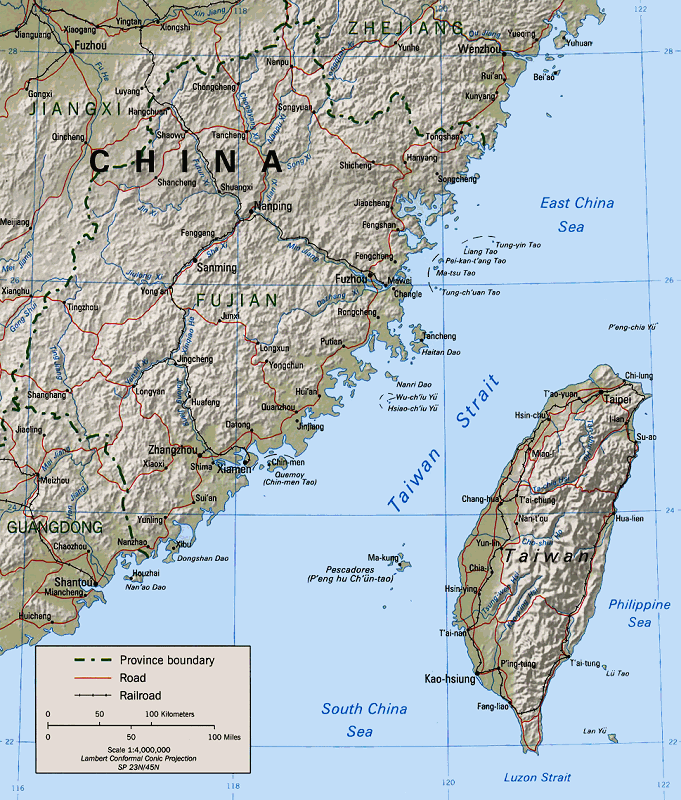
Much is written about the Rubio authored Monroe Doctrine II – the supposed tangible evidence of regional prioritization. Does it follow that Greenland is shifted by some tectonic slight-of-hand 24 degrees of longitude westward?
How do you reconcile the principle of geographic segmentation with retreating from the Middle East? Where do air strikes in Nigeria and Somalia, and Yemen fit in? It is a telling sign of the degeneration in American public discourse that this arrant nonsense is treated so widely as authoritative pronouncements from on high.
All of the above assertions could have been borrowed verbatim from National Security Strategies promulgated from every President from Clinton onwards. Historic reset? Retrenchment? Only in the eyes of the beholder.
“What differentiates America from the rest of the world—our openness, transparency, trustworthiness, commitment to freedom and innovation, and free market capitalism—will continue to make us the global partner of first choice.”
This last is a revealing indicator of the enduring conceits that underlie American thinking about its exceptionalism and unique place in the world. Ridiculous on the face of it, yet pervasive among Washington elites.
Today, post-Palestinian genocide, past tariff wars, past diplomacy as coercive bullying, past the aggression against Venezuela, past institutionalized hypocrisy – the United States’ standing in the world is at an all-time low.

Most of the world now sees the U.S. as the greatest threat to world peace. They fear it but do not respect it. Claims of moral authority are met with derision.

The “global partner of first choice”? Ask India, ask Brazil, ask Indonesia, ask Malaysia, ask Colombia, ask other BRIC members and applicants.

The proposition holds only for our vassal governments in the collective West led by feeble people whose abysmal popular standing reflects the scorn of their citizenry.

Finally, nobody trusts the United States’ leadership. We have now a demonstrable record of deceit, unilateral abrogation of contracts, treaties and understandings, arbitrary imposition of penalties on whomever is disobedient to Washington’s will, threat and intimidation as standard practice -– not to speak of Trump’s erratic, deranged behavior.

Yet, the NSS still insists on our referring to unrivaled “soft power.” This is one of Trump’s innumerable psychotic delusions – infecting his entire government.

C. Actions

As of Jan. 1, 2026, the United States is doing the following:

Continuing to conduct its undeclared war against Russia in and around Ukraine – by proxy, by complicity, by belligerency. It supplies arms (including state-of-the-art missilery); American military personnel on site direct the firing of HIMARS and ACADMS targeted on Russia proper – Ukrainian officers merely push the button; provides critical intelligence of both a tactical battlefront nature and for guidance of drone and missile strikes; financed government operations; plans military operations.
Direct tangible assistance has slowed but not stopped entirely, e.g. Congressional authorization of the defense budget allocated $800 million in aid to Kiev. In regard to weaponry, Washington no longer will donate arms but rather will sell them to the Europeans who have agreed to cover the cost and to transfer them to the Ukraine. The bulk of the payments will be recycled to American companies in the military-industrial complex.
The U.S. has tightened economic sanctions on Russia – concentrating on its energy trade. The measures include backing European states that are interdicting non-Russian flagged vessels transporting oil.
The U.S. is establishing a new set of bases in the Baltic countries. It also is adding to forward deployments in Poland and Romania.
In East Asia, Washington has announced an $11 billion military aid package to Taiwan that includes the most sophisticated high-tech weaponry.

Image
Map of the Taiwan Strait. (Wikimedia Commons)

The project of ringing the PRC with friendly allies and partners is gathering new steam – including a high-pressure campaign to cajole India into joining the anti-China “Quad” in what was, and remains, a futile cause (made all the more so by the knotting of new security ties with Pakistan).
Washington has refrained from speaking a single word of caution to Japanese Prime Minister Sanae Takaichi over her inflammatory declaration in Parliament that Taiwan (Formosa) falls within Japan’s vital security zone and, thus, prepared to defend it militarily against attack by the PRC. Whether those remarks were spontaneous or premeditated, it is reasonable to suppose that her attitude was well known in Washington policy circles, and that it was reinforced by contacts with like-minded persons there.
In the Middle East, American co-belligerency with Israel on all fronts is unabated. At the moment, the partners are putting in place a plan for a possible second assault against Iran.
Meanwhile, the U.S. is moving to implement its mandate to act as sovereign authority over Gaza with the stated intention of segregating the remnants of the Palestinian community into ghettos while commercially exploiting the territory. Palestine, like Ukraine, is being turned into a profit center for the U.S. and Trump favorites. This is what is passed off as a strategic reset in the region.
In Latin America, there is no ambiguity as to American purposes. The aim is to subordinate sovereign states to the dependency status they suffered in times past – to do so via interventions of all types (economic coercion, subversion, coup, military intimidation). Active support for a “League of Autocrats” is a major element in this strategy.

So, what is the NSS document? A boastful account of Trump’s wonderous achievements with a plan for even greater successes in shaping the world to American advantage based on fanciful premises?

Or, a landmark statement of a strategic reset that prioritizes certain regions over others and backs away from strident forecasts of military confrontation with China or Russia?

My opinion: it tilts sharply toward the former. Then again, we all have ways of amusing ourselves.

https://consortiumnews.com/2026/01/14/mock-strategy/

*******

Venezuelan Oil and the Limits of U.S. Refining Capacity
Posted on January 14, 2026 by Yves Smith

Yves here. Many commentators have described the sorry state of Venezuela’s oil industry and taken a stab estimating what it would take to turn that around. The near-universal view is that it would take many years of large-scale, sustained investment before any serious change in output was realized. This post usefully recaps that issue and then looks at the US refining side of the equation, identifying what it takes to process such heavy, nasty crude and the proportion of US refineries now able to handle that.

We are also reposting a particularly informative tweet that estimated the cost of a comprehensive upgrade of Venezuela’s oil production, including oft-neglected expenses to upgrade and greatly extend Venezuela’s grid. Note that the aim is to replace Canada’s heavy crude grades in the US, as in supply refiners set up to handle broadly similar feed stocks:

Image

I have spent a lot of time talking shit at people with opinions on Venezuela’s oil production potential, and how it’s going to “RePLaCe CanADa”. So here’s my contribution — how I see the cost of replacing Canadian crude with Venezuelan heavy.

I think it’s a nearly $1 trillion… pic.twitter.com/XFlPVwPdew

— Michael Spyker (@ShaleTier7) January 4, 2026


By Alex Kimani, a veteran finance writer, investor, engineer and researcher for Safehaven.com. Originally published at OilPrice

Trump’s push to lure U.S. oil majors back to Venezuela largely fell flat, with Exxon and ConocoPhillips calling the country uninvestable under current laws and citing past expropriations.
Venezuelan crude is attractive to complex U.S. refiners with coking capacity, but only a subset of Gulf and East Coast plants can fully process the heavy, high-sulfur oil.
Higher Venezuelan supply would displace Canadian, Mexican, and some Middle Eastern grades rather than broadly lift U.S. demand.
Last week, U.S. President Donald Trump’s Venezuela pitch to oil executives to invest the vast sums required to revive the country’s flagging oil sector proved largely ineffectual. Exxon Mobil (NYSE:XOM) CEO Darren Woods offered the starkest assessment, calling the South American country “uninvestable” under its current commercial frameworks and hydrocarbon laws, while ConocoPhillips (NYSE:COP) CEO Ryan Lance also gave Trump a reality check, informing him his company lost billions of dollars when it exited the country under the Chavez regime.

The serious descent of Venezuela’s energy sector into the abyss began after Hugo Chávez’s government nationalized the oil infrastructure and assets of ExxonMobil (NYSE:XOM) and ConocoPhillips (NYSE:COP) in 2007, after the companies refused to accept new terms that would give the Venezuelan state oil company, PDVSA, a majority share in their projects. The nationalization process was initiated in early 2007 through a presidential decree and a new Hydrocarbons Law.

Trump, however, scored some notable wins. To wit, Hilcorp‘s Jeff Hildebrand said his company is ready to go rebuild Venezuela’s energy infrastructure, while Chevron (NYSE:CVX) said it can ramp up its Venezuela production of 240K bbl/day “100% essentially effective immediately”.

Previously, we reported that it will take billions in infrastructure investments to return Venezuela’s oil sector to its 1970s peak production of 3.5 million barrels per day. Venezuela currently produces ~1 million barrels per day, with Chevron accounting for a quarter of that. U.S. refiners love Venezuelan crude because it provides a competitive advantage for complex refiners with substantial coking capacity that can process the heavy oil into high-value products. Merey crude from Venezuela’s Orinoco belt has among the lowest in API gravity and highest sulfur content globally, requiring specialized refinery units to break down the heaviest molecules and remove impurities.

Unfortunately, less than half of U.S. refineries have a coker, with refiners along the Gulf and East Coasts most likely to benefit from higher Venezuelan crude supplies. U.S. refiners with the highest coking capacity include Valero (NYSE:VLO), Exxon, Chevron, Marathon Petroleum(NYSE:MPC), Phillips 66 (NYSE:PSX) and PBF Energy (NYSE:PBF).

Coking and hydrocracking are petroleum refining processes that upgrade heavy crude oil fractions into lighter, more valuable products like gasoline, diesel, and jet fuel, but they use different methods: Coking is a thermal, carbon-rejection process, essentially baking heavy oil to leave solid petroleum coke and lighter liquids. Hydrocracking uses high-pressure hydrogen and a catalyst to chemically add hydrogen, breaking large molecules into smaller ones, producing cleaner fuels with fewer solid byproducts. Highly complex refiners can achieve distillate yields of 33% compared to 30% for medium-complexity plants. Shortages of heavy oils like Venezuelan crude have forced many U.S. refineries to invest in topping units to refine lighter oils such as U.S. shale oil.

Image
Source: Bloomberg

Increased availability of Venezuelan crude is, however, likely to take a toll on demand for Canadian crude, Mexican Maya, and Middle Eastern grades. The U.S. still buys 80% of Canada’s crude output, despite the recent TMX expansion improving access to Asia. This helps to keep WCS (Western Canadian Select) prices tied to U.S. refinery demand and alternative heavy grades. On the other hand, more Venezuelan flows are likely to benefit Mid-continent and West Coast refiners, including British Petroleum (NYSE:BP) and HF Sinclair (NYSE:DINO), thanks to greater WCS discounts if Gulf Coast demand is displaced.

That said, Venezuela’s low-hanging fruit is rather limited: According to Norwegian energy consultancy Rystad Energy, only 300-350 kbpd can be quickly restored with minimal spending from the current clip of 800,000 bpd-1 million bpd, with production beyond 1.4 mbpd requiring heavy, sustained investment.

Rystad estimates that Venezuela will require $53 billion over the next 15 years just to keep production flat at 1.1 mbpd, but could need up to $183 billion over the same period to ramp up production to over 3 million bpd, roughly equivalent to the entire North American land capex for one year.

Analysts at satellite intelligence company Kayrros have described Venezuela’s energy infrastructure as being in a “catastrophic state” following decades of under-investment, disrepair, and cannibalization of equipment.

According to Kayrros, numerous oil storage tanks at the Bajo Grande and Puerto Miranda terminals are out of order due to corrosion and a lack of maintenance. But this is an industrywide problem: Kayrros estimates that roughly a third of Venezuela’s storage capacity is currently inactive, reflecting unusable storage tanks, reduced refinery operating rates, and declining oil production. Meanwhile, operations at the large interconnected Amuay and Cardón refineries are running below 20% of capacity, essentially turning them into “de facto storage centres” according to the experts.

Not surprisingly, Venezuela’s pipeline network is in a similar state of disrepair: A leaked document from PDVSA in 2021 revealed that the country’s oil pipelines had not been updated in 50 years, with Venezuela’s National Oil Company estimating it would take a staggering $58 billion to get them back in peak condition. Recent estimates have placed the figure in excess of $100 billion. Venezuela’s operational oil pipeline network has a total length of 2,139 miles (approximately 3,442 kilometers). For some perspective, the UAE, which produces approximately 3.2 million bpd, has ~9,000 km of oil pipeline.

https://www.nakedcapitalism.com/2026/01 ... acity.html

******

The Picture Tells the Story

Karl Sanchez
Jan 14, 2026

Image

This photo captured the explicit message by our ICE masters sent nationwide during a press conference aired by all BigLie Media. It’s a Nazi slogan that described their policy during WW2 where whole villages would be rounded up, forced inside a building, and then burned alive as collective punishment, which is very similar to what the Zionists perform daily in Gaza, which also tells us where that came from since too many Zionists hold power within the Trump Gang. My wife showed me the photo from her Facebook feed. This is the sort of “news” that needs to go beyond viral—planetary. Russia has said it won’t negotiate with Nazis. Well Mr. Putin, here’s proof that the Outlaw US Empire has become Nazified. Do ask the two Jews you’ll soon host again to explain.

https://karlof1.substack.com/p/the-pict ... -the-story

******

Anything less than the inclusion of Greenland in the United States is unacceptable.
January 14, 7:06 PM

Image

"The United States needs Greenland for its national security. It is vital to the construction of the Golden Dome. NATO must lead the process of getting it. If we don't, Russia or China will, and that won't happen! NATO will be far more formidable and effective if Greenland is in the hands of the United States. Anything less is unacceptable." (c) Trump

NATO should lead the process of Greenland's accession to the United States.
That is, helping one NATO member take territory from another NATO member.
Transatlantic unity is what it is.

In response, Denmark announced it would send troops to the island, and France would "open a consulate." Pathetic.
Trump previously noted that the Greenlanders' reluctance to join the United States is their problem, not the United States'.

https://colonelcassad.livejournal.com/10306172.html

Google Translator
"There is great chaos under heaven; the situation is excellent."

User avatar
blindpig
Posts: 15306
Joined: Fri Jul 14, 2017 5:44 pm
Location: Turtle Island
Contact:

Re: Donald Trump, Avatar of his Class, Capitalism & the Decline and Fall of Bourgeois Democracy

Post by blindpig » Fri Jan 16, 2026 4:06 pm

Iran – Trump Chickened Out

Yesterday U.S. President Donald Trump was ready and willing to bomb Iran. The most important target would have been the Supreme Leader, Ajatollah Khamenei.

But Iran was ready and Khamenei safe. The U.S. military, in contrast, was not ready to defend against the inevitable retaliation that would have come out of Iran. There are only three destroyers with air-defenses in the area that could offer protection against a ballistic missile onslaught. A few minutes after the first strikes their arsenals would have been empty.

Before the last bombing of Iran THAAD and Patriot air defenses from the U.S. and South Korea had been flown to the Middle East. A U.S. carrier group was stationed nearby and U.S. bases had been depopulated. The military was able to provide Trump with somewhat reasonable options.

U.S. allies, most importantly Israel but also some Gulf countries, were fully on board.

This round was way different.

The military was unable to give any good options for strikes. It had to ask Trump to stand down.

The Gulf countries were anxious and did not want to be part of a campaign:

“Bombing Iran goes against the calculus and interests of the Arab Gulf States,” said Bader al-Saif, an assistant history professor at Kuwait University. “Neutralizing the current regime, whether through regime change or internal leadership reconfiguration, can potentially translate into the unparalleled hegemony of Israel, which won’t serve the Gulf States.”

Even Israel suggested to wait until the ‘regime’ breaks down.

That is not going to happen.

The internal configuration of the Islamic Republic has made ‘regime change’ nearly impossible. A majority of the country and the security forces support the country’s political structure. No bunch of paid terrorists, who shoot at random people as well as security forces, can break that connection.

In consequence, at least for now, Trump chickened out.

Posted by b on January 15, 2026 at 14:49 UTC | Permalink

https://www.moonofalabama.org/2026/01/i ... l#comments.

*******

The U.S. NATO conflict is growing; Trump needs Greenland for the "Golden Dome" project.

The hope for the eventual disintegration and fall of the Western Empire of Lies is becoming more and more real!
Dr Ignacy Nowopolski
Jan 15, 2026

Talks in Washington between USVP J.D. Vance and Danish representatives ended in failure.

Speaking to reporters at the White House, President Trump stressed that Greenland’s incorporation into the United States is necessary for the construction of the so-called “Golden Dome” system, which is to completely protect America from potential missile attacks by the Russian Federation and Communist China.


These explanations are not understood by America’s “allies” within NATO.

Deutsche Welle reports that the Bundeswehr is sending a military contingent to Greenland. The Swedes, French and Norwegians do the same.

Together, they are to conduct “exercises” on Greenland’s security, formally against Russia and China, but in reality aimed at a possible US aggression against the island.

So, we have a race of the “Western powers” against time.

What will happen first?

· U.S. aggression against Greenland

· The fall of the Trump regime

· The disintegration of NATO & the EU

· Or the unlikely attack by Russia and China on Greenland?

It should be emphasized here that the disintegration of the rotten colonial-imperial structures of the Western Empire of Lies is taking place at an accelerating pace.

Only a month ago, the reality described now would have been considered nonsense! As you can see, the reality is beginning to cause the erosion of the madness of the “Western globalist elites”, despite their complete detachment from the real environment.

In the light of the above, it is high time to start forging new alliances between the countries of Central Europe, so that the increasingly rapid and unpredictable development of the situation does not take them by surprise.

Germany, Sweden, France and Norway confirmed sending military personnel to Greenland | DW News


https://drignacynowopolski.substack.com ... wing-trump

Google Translator

******

(More on the decline and fall of bourgeois democracy...straight from da judge's mouth...)

Chopping Down Laws
January 15, 2026

Trump rejects the obligation to execute his job faithfully, writes Andrew P. Napolitano. His loyalty is to himself, not to the words or the values underlying the U.S. Constitution.

Image
President Donald Trump at an Army Navy football game in Baltimore in December 2025. (White House / Daniel Torok)

By Andrew P. Napolitano

In a scene in Robert Bolt’s famous play A Man for All Seasons, about the treason trial of St. Thomas More, More argues with the attorney general of Wales about the law. The attorney general says he’d cut down all the laws in England to get to the Devil.

More reminds him that the laws were written to protect us from those who’d cut them down, because, More asks, when the Devil turns round and seeks you, where would you hide, the laws having been flattened?

Answer: nowhere.

The recent statement of President Donald Trump in an interview with The New York Times that on the international stage only his “own morality” and his “own mind” can restrain him is a direct repudiation of his oath of office because it effectively cuts down the laws.

It profoundly rejects the restraints imposed upon him by the U.S. Constitution which he has publicly sworn to preserve, protect and defend, and by the treaties to which the U.S. is a party, and by appropriate federal statutes.

The purpose of the Constitution is to establish the federal government and restrain it. In the process of establishment, it has delegated all legislative power to the Congress and the executive power to the president. In so doing, it has intentionally kept each out of the work of the other.

Only Congress can raise taxes and declare war. Only the president can enforce the laws and wage the wars that Congress has declared. The judiciary has the final say on the meaning of the Constitution and federal laws.

This is the system of checks and balances, with powers circumscribed and restraints imposed so as to prevent the accumulation of excessive power in any one branch at the expense of either of the other two; and thereby — at least theoretically — protect personal liberty.

The Constitution is the supreme law of the land. It requires that every office holder and government employee — local, state and federal — swear allegiance to it. That allegiance is not only to the words in the Constitution and its 27 amendments, but also to the values that are manifested by those words.

Moreover, treaties to which the United States is a party by virtue of presidential assent and Senate ratification are also the supreme law of the land. Treaties of course cannot contradict or purport to nullify anything in the Constitution, but they can — like the Geneva Conventions — regulate and restrain American foreign policy.

Fidelity to Rule of Law

Image
The U.S. Capitol at night. (Diane Krauthamer, Flickr, CC BY-NC-SA 2.0)

All of this constitutes basic, sound constitutional jurisprudence, well-woven into the fabric of our history. There are, of course, numerous ways to interpret the Constitution; and the definitive interpretations can even change over the passage of time.

It took nearly 60 years for Plessy v. Ferguson, which approved state-imposed racial discrimination under the separate- but-equal doctrine to become Brown v. Board of Education, which declared that separate is inherently unequal. The same is the case for abortion.

It took 50 years for Roe v. Wade, which held that the right to privacy protected the mother’s ability to abort her child, to become Dobbs v. Jackson, which held that abortion is a matter of health and safety and these are inherently state concerns.

But some values can never change without materially undermining the scheme of government established by the Constitution. Foremost among those unchangeable values is fidelity to the rule of law. When the president takes an oath to preserve, protect and defend the Constitution, he agrees to follow the law, whether he agrees with it or not.

When the president takes the oath, he promises to execute the office “faithfully.” James Madison feared a cross-your-fingers-behind-your-back moment if the word faithfully were not in the oath.

Now back to Trump. By claiming that “on the world stage” — language used by the reporter who questioned Trump, not by Trump himself — only his mind and morality can restrain him, he has revealed by his own choice of words what his presidential behavior has already manifested.

He obviously rejects the obligation to execute his job faithfully. His loyalty is to himself, not to the words or the values underlying the Constitution.

Thus, when his own mind disagrees with a restraint on him — like, only Congress can impose taxes and only Congress can declare war — he will opt for fidelity to his own mind over fidelity to the Constitution and his oath to preserve, protect and defend it.

He has imposed sales taxes on the American people and he has directed the military to kill innocents on the high seas and to conduct an invasion of Venezuela and abduction of the recognized Venezuelan president and his wife.

In the process of these events, he has unilaterally extracted billions of dollars from consumers who pay for his sales taxes that he calls tariffs, and his troops have unilaterally murdered hundreds of innocents — on speedboats and fishing boats in international waters, while asleep in military barracks in Caracas and inside the Venezuelan presidential compound.

He has also announced that the U.S. will steal oil from the ground under Venezuelan sovereign land; and he even proclaimed himself to be the acting president of Venezuela.

The American Republic is based on the Constitution. It presumes that when a person takes an oath of fidelity to it, the person did so without mental reservation or purpose of evasion.

In the course of our history, we have had presidents murder innocent civilians, incarcerate innocents based on race and knowingly lie us into wars. And we have survived as a nation.

Now this.

This is a public rejection of the structural norms of government unseen in our history. If unchecked, America will never be the same as the nation suffers at the mercies of the presidential “mind.”

And the laws cannot protect us because this president has cut them down to crush whatever self-denominated devil comes into his crosshairs.

https://consortiumnews.com/2026/01/15/c ... down-laws/

******

Trump’s “Fix Affordability” 10% Credit Card Interest Rate Cap: A Gimmick, Not a Solution (and It Won’t Happen Anyhow)
Posted on January 15, 2026 by Yves Smith

It has gotten through to Trump that the state of the economy, and particularly consumer suffering from persistently high costs, aka the affordability crisis, can’t be solved by his barker’s patter about how great things are. So he’s roused himself to try to find some quick and easy wins so he can present himself as Doing Something. One of them is a proposed one-year cap on credit card interest rates at 10%, which would start January 20, conveniently timed to be in place for the midterms and fall away shortly after that.

Now with spreads over funding costs having risen so much in recent years, one might think that Trump’s new found anti-bank impulses are well warranted:

US interest rates on credit cards. pic.twitter.com/0NwMqwMFc1

— Steve Hall (@ProfHall1955) January 11, 2026


Another cut of the data, courtesy Andrew Ross Sorkin of the New York Times’ Dealbook:

Image

Except like the arsonist who shows up at a blaze with the firefighters, Trump did help create that problem:

Trump promised to cap credit card interest rates at 10% and stop Wall Street from getting away with murder.

Instead, he deregulated big banks charging up to 30% interest on credit cards.

The result? Last year, JPMorgan CEO Jamie Dimon made $770 million.

Unacceptable.

— Bernie Sanders (@BernieSanders) January 9, 2026


But Trump is just watering down another bad if appealing-sounding proposal, a five-year 10% rate cap put forward by Bernie Sanders, Josh Hawley, Alexandria Ocasio-Cortez and Anna Paulina Luna last year.

We hate to be the realist bearing unwelcome tidings, but as is so often the case, easy-sounding fixes to messy problems are seldom what they are cracked up to be. Here, sadly, it is both true that banks are making out overmuch like bandits on credit card charges, yet the simple-minded expedient of a 10% one-year cap will on the whole make matters worse, particularly for those in the most perilous financial shape. Our running buddy back in the foreclosure crisis days, Adam Levitin of Georgetown Law, who is a fierce critic of banks and credit card practices, minces no words. From a post on his Credit Slips blog:

The 10% rate cap was a terrible idea in 2025 and it’s a terrible idea now. It really doesn’t matter which end of the horseshoe it comes from. While it might sound great to get cheap credit, there’s no free lunch here…

I also have no issue conceptually with usury laws…But there’s a smart way to do them and a dumb way, and this is just plain dumb. The rate cap is inflexible and drastically too low. Simply put, the function of a rate cap on credit should be to protect against truly unmanageable credit at the margin. The policy reasoning behind usury laws is a suspicion that anyone borrowing at an extremely high rate is either uninformed or under such financial distress that they cannot say no. In other words, usury laws are meant to address concerns about market failures. It is not an affordability tool for the broad middle class. You cannot fix the economic strains on the middle class through credit policy, and you might even make them worse. To paraphrase a former blogger on this site, credit is a bandaid, not a life raft.

As many as 80% of customers would be money-losers under current credit terms, per Itamar Drechsler, a finance professor at Wharton.

This video on the Wharton findings, posted before the Trump proposal went live, explains why. With an astonishing average pool rate of over 23% (the Consumer Finance Credit Bureau found that as of December, the average rate was 25.2%), banks spend a lot of money on marketing to find and acquire new victims, um, customers. Rewards like cashbacks or airline miles are another big expense:


It is true that banks are making an awful lot of money on credit card interest charges.1 The evidence is not just the amount lead-opponent-to-interest-rate-cap JP Morgan is making, per Bloomberg:

Credit cards are major business for JPMorgan. Such loans totaled $247.8 billion at the end of December. In total, the bank’s card-services and auto business generated about $7.28 billion in revenue during the fourth quarter.

Mind you, this is not apples to apples since the revenue figure is for two businesses and includes a whole lotta other credit card revenue items, like annual fees, late fees, and critically, very juicy merchant discounts. But it is attention-getting.

But an indicator of how good the “charging interest” part of the business is that JP Morgan and other banks are keeping the loans on their balance sheets. A crude generalization is that banks retain loans (as opposed to securitize them) when there’s enough profit to compensate for their equity costs.

But the reason this can’t be harvested in a brute force manner by the proposed cap is that the issuers have engaged in a competitive arms race. In seeking more incremental revenue, they’ve added to costs and overheads. So they do make a lot of money, but as Levitin contends, the volumes are enormous, but the margins, not so much.

But regardless, this is simply na ga happen. First, the Trump scheme would require legislation, which both means that lobbyists could get their teeth into a draft bill plus the timing would impede consumers getting much if any relief by midterms. And many nerdy issues would need to be sorted out.2

Second, as we suspected and Levitin confirms, taking all that income from banks is a Fifth Amendment taking, and under very well established eminent domain rulings, they’d need to be compensated for the loss. Levitin takes a stab at how much consumers might save, which is a point of departure for how much banks might sacrifice:

Nationally, there’s about $1.23 trillion in card debt. But not all of that is part of revolving balances. 43% of cardholders paid their account balances in full each month in 2024, but that accounts for only 18% of outstanding dollar balances. So we need to reduce the relevant total debt outstanding to about $1 trillion. Additionally, the average rate on new offers is around 24%, but a sizable portion of outstanding ($352 billion) is at zero percent promotional rates and wouldn’t be affected by a rate cap. Instead, only about $657 billion would be affected.

If the average rate on those balances is 24%, continuously compounded, then a reduction to 10% would over the year save consumers around $109 billion.

Individually, the average card balance is (a bit under) $7,000 and the average rate is 24%, compounded continuously. Reducing that to 10% generates annual savings of about $1,162.54.

These “savings,” however, are just the reduction in interest paid on cards (assuming no change in balances). They do not account for the knock-on effects of capping card rates, which are likely to eat away much, if not all of the savings.

So even if in an alternative universe, a bill would pass and be signed into law, the banks would smartly march into court to have it declared unconstitutional. The whole matter would be in litigation easily until Trump had left office. No midterm bennies for him!

The users set to suffer most are those who are heavy users but not yet maxed out. Recall that even a consumer carrying a balance will not be charged interest until the charge has not been paid, as in actually gone on the statement and then that statement’s due date has passed. The Credit Card Act of 2009 allows banks to apply only the minimum payment to the lowest interest balances first; they are then required to credit the rest to the highest interest balances.3 Keep in mind we have been discussing only purchases; banks also charge interest on balance transfers, which regularly offer a teaser rate of a few months to perhaps as long as 18 months,4 and then a nosebleed interest rate kicks in. Devising, targeting, and hawking those balance transfers is no doubt a big part of the marketing costs we mentioned earlier.

Moreover, renting a car pretty much requires a credit card, so having them cancelled or credit lines cut to the existing balance would be very difficult for some. A few? A few more than a few? Even if the number is not that large, the consequences for this cohort alone would be serious. Levitin unpacks some of the consequences:

As a starting point, it’s important to recognize that it is impossible to operate a general card program profitably at 10% interest unless it is very heavy on transactors with high credit scores. Card issuers depend on three sources of revenue: interest, fees, and interchange and have cost of funds, credit losses, operating expenses, and rewards costs. If interest is 1000 bp, fees 250bp and interchange 800 bp, with cost of funds at Federal Funds (currently 364bp) credit losses (lets say 500bp on a blended portfolio), 500bp in operating expenses and 700bp in rewards, we are already in negative territory (-14bp). To even start to attract investment, the issuer would have to net at least 300bp, I’d think.

On a subprime portfolio it would be worse, with credit losses at 800bp (interchange and rewards would both be lower, say 400bp and 300bp respectively, but would net out around the same). So we’re talking about issuers operating at a loss of about 300bp, putting us at least 600bp in the hole. It’s hard to see a way that this will work at 10% interest without changing other parts of the card issuer business model.

If card issuers can’t operate profitably at 10%, what will they do? … the most likely outcome will be a huge contraction of credit card lines, particularly for borrowers with lower credit scores.

The effects will be devastating. Families that need the short-term float or the ability to pay back purchases over several months, won’t have it. How will they pay for a new water heater when the old one goes out and they don’t have $3,000 sitting around? …

The contraction of card credit will also be a pain in the butt for families that rely on credit cards for convenience liquidity—they’ll have to find another way to pay for all the streaming subscriptions and Amazon–and their rewards points will get squeezed. Chances are that we’ll see more use of debit cards with overdraft lines. That’s a bad trade given that legal protections for debit card users are weaker than for credit card users and overdraft lines can be much more expensive than a credit card if one is a “sloppy payor.”

A non-exclusive alternative to a contraction in credit availability would be an increase in credit card prices other than interest. I doubt we’d see much revival of annual fees, but the back-end, behaviorally contingent fees and junk fees (“network security fee” sort of thing) one finds are likely to proliferate.

But the fee increase I’d really expect to see would be merchant fees. Merchants really have no ability to bargain over these things (a couple of really big merchants aside), so that’s the easiest place for card issuers to seek to recover revenue. And increased merchant fees will mean higher prices at the register (or less customer service from merchants). There really is no free lunch…..

So whom does a 10% rate cap help? It helps politicians who want to make a show of helping on affordability, but don’t really care about the consequences. And maybe, just maybe, it helps some small set of people whose cards aren’t cancelled with some subsidized credit. But for most people, it will result in disruption to their personal finances, a loss of credit access, and a need to turn to other, less reputable and less convenient sources of credit. It’s a loser of an idea, whether it comes from Bernie or Donald. The idea of a 10% rate cap has all the seriousness of bread-and-circuses governance.

And what about those who otherwise depended on their credit cards for what can be unduly politely described as cash flow management? They might try friends and family first, but a lot will wind up at payday lenders, loan sharks, or the new trap of “buy now, pay later” loans. Buy now, pay later loans were the reason we heard of Charlie Kirk. A friend pointed out that they had become such a plague on campuses that Kirk was hearing of about debt-trapped students and described his alarm and disapproval in a Tucker Carlson interview.

If you think credit cards are evil, that should go double for buy now, pay later loans. They focus on subprime borrowers. They don’t charge interest but instead late fees that are a very rich interest rate equivalent. The lack of interest also helps them escape regulation as a lender. And the really nasty part is they make sure they get paid first. Users have to agree to let the buy now, pay later moneybags reach directly into their bank account on the due date (which the borrower can reset but only by incurring fees….).

The mainstream media is voicing similar concerns, albeit with much less detail and authority than Levitin, such as USA Today’sTrump’s 10 percent cap on credit cards may hurt more than some imagine. The Los Angeles Times’ Mike Hiltzik has a well-detailed and argued take in Trump is demanding a 10% cap on credit card interest. Here’s why that’s a lousy idea. A representative section:

A hard cap on interest rates “could create a sharp contraction in the kind of credit available in the marketplace,” says Delicia Hand of Consumer Reports. “It sounds good, but there could be unintended consequences, especially if you don’t think about what fills the gap,”

Alternative products aren’t regulated as stringently as credit cards. “Direct-to-consumer products can layer subscription fees, expedited access fees, and ‘voluntary’ tips in combinations that produce effective annual percentage rates ranging from under 100% to well over 300% — and in some documented cases, exceeding 1,000% when annualized for frequent users,” Hand said in remarks prepared for delivery Tuesday to the House Committee on Financial Services.

I am old enough to remember when credit cards were not pernicious. Once upon a time, credit card issuers universally charged annual fees. That meant they made money on all customers: ones who used cards rarely, ones who paid their charges in full every month, ones who ran up balances due to Christmas spending and paid that off early in the next year, and those who borrowed all the time. Accordingly, banks were pretty stringent about issuing credit.

When I was at McKinsey, sometime between 1985 and 1987, a Lazard investment banker called me to sanity check a position he was taking in the offering memorandum for a financial services company. He planned to take a strong-form position that the model described above was super attractive and the incumbents knew it and would not change it.

I told him he could not assume that. Just because there were no prospects or rumors I was aware of about industry members planning big shifts did not mean it could never happen.

It was only a few years later that banks started introducing no-fee cards and their business model changed to having lending be the big source of profit on the consumer side. And that evolved to seeking or creating chronically indebted users.

Credit cards do need to be reined in, but not in a lazy, headline-grabbing, casualty-inducing manner, but to get banks out of the business of creating chronic debtors for fun and profit. And that also means cracking down on payday lenders and buy now, pay later operators. But Trump and his team lack the attention span for anything that is either hard or genuinely salutary for ordinary Americans.

_____
1 For simplicity sake, we will not address American Express, since they run an integrated system and handle both customers and merchants (which they call “service establishments”) under the same roof. In the Visa-Mastercard world, a bank will handle its own retail and business card members, which includes deciding which ones get credit lines, what fees and interest rates they charge, and how they handle late payments, delinquencies, and defaults. On the “merchant” side, they may charge minimum monthly fees or set minimum transaction volumes for fee-free status, and apply “merchant discounts” (how much of the customer charge they retain) or other transaction-based fees. They also adjudicate customer disputes with merchants, aka chargebacks.

2 From Levitin:

My understanding of the President’s proposal is that he wants a temporary 1-year cap on credit card interest rates at 10%. What exactly does that mean? I’m not sure.
Is that 10% interest rate or 10% APR? Those aren’t the same thing. If the former, is it simple interest or compounded (and how frequently)? If the latter, it is going to really hit cards with annual fees.
Does 10% apply to all balances (as under Sanders-Hawley) or just purchase balances? If it’s everything, it’s basically creating low-cost leverage for cryptocurrency speculation and sports gambling (usually treated as cash advances, which have a higher interest rate than purchase balances).
Does 10% override penalty rates for delinquent accounts?
What happens at the end of the year? Would rates spring back to their contractual levels only on future balances or also on existing balances? And if they spring back, would it be applied to balances going back into the 1-year or only prospectively? These mechanics matter.
On some level these are all in-the-weeds details, but the point is that rate caps aren’t so simple, especially with revolving balances. Making laws work well requires getting the plumbing and wiring right. That sort of technical stuff is weedy, but really, really matters.
3 From NerdWallet:


The amount you owe on your credit card may appear on your statement as one number, but when it comes to how credit card payments work, it gets murkier. Depending how you’ve used the card, your total debt might be split into separate balances, such as:

A purchase balance, for things you bought with the card.

A balance transfer balance, for debts moved to the card from other accounts.

A cash advance balance, for money withdrawn from ATMs with the card.

4 “Life of the balance” offers were A Thing before the crisis. I don’t recall seeing any since then. Perhaps enough users were successful in gaming them and never triggering a penalty rate?

https://www.nakedcapitalism.com/2026/01 ... nyhow.html

Critics Say Trump ‘Joke Healthcare Plan’ Nothing But a ‘Con’ of the American People
Posted on January 16, 2026 by Yves Smith

Yves here. We wrote yesterday about the gimmick of Trump’s pretense that he will cap interest on credit cards at 10% for only a year. Not only won’t it happen because that change would require legislation, but more important because it is a terrible idea. We explained long form that it would hurt ordinary citizens, particularly the most financially stressed and merely inconvenience banks by making them have to rearrange their businesses so as to preserve their rents. There are ways to tackle bank predation by lending to weak borrowers and getting them on an extractive treadmill, but this is not that.

Trump has offered a new page from his bad playbook, of a sketchy healthcare scheme that might look good at a great distance, but falls apart, not just in delivering real benefits but actually working at all.

However, it is disappointing to see reform advocates continue to tout Medicare for All. Medicare is better than a lot of US insurance, but it’s unduly complex with many gaps and is being downgraded to something more like threadbare Medicare Advantage plans.

Twitter is full of catcalls from the peanut gallery. A sample:

🚨🚨BREAKING🚨🚨

Donald Trump has revealed “The Great Healthcare Plan” which will give families $2,000 annually to purchase their own health insurance.

The average annual health insurance premium for a family is $26,000.

His proposal will cover 28 days of health insurance… pic.twitter.com/uAHoM68Oju

— The Green Dragon Tavern (@greendragonhq) January 15, 2026


The Trump administration’s proposal to redirect health subsidies into direct cash payments is not a substitute for a healthcare plan. The Affordable Care Act’s protections for people with pre-existing conditions are not symbolic they are the product of enforceable rules such as… pic.twitter.com/myo7pvzh4L

— Gavriel E. Toviel (@GavrielEToviel) January 15, 2026


By Brett Wilkins, a staff writer at Common Dreams. Originally published at Common Dreams

US President Donald Trump on Thursday announced a “Great Healthcare Plan” that critics panned for being “short on details,” arguing that—contrary to White House claims—the scheme will lead to higher consumer costs and less care.

Trump called on Congress to pass his proposal, which he said will “lower drug prices, lower insurance premiums, hold big insurance companies accountable, and maximize price transparency.”

However, the advocacy group Protect Our Care called the proposal a “joke healthcare plan” and a “sad attempt to continue gaslighting the American people.”

“Since taking office, President Trump and his cronies in Congress have taken a hammer to American healthcare to enrich billionaires and big corporations,” the group said. “First, they slashed $1 trillion dollars from Medicaid, and then they doubled, tripled, and quadrupled health premiums for nearly 22 million Americans already struggling to get by in Trump’s unaffordable America.”

“Now that it is clear that busting working families’ budgets is bad policy and bad politics, Trump is scrambling for a lifeline,” Protect Our Care added. “The solution to ending the Trump-GOP premium disaster isn’t rocket science. It is the three-year, clean extension of the Affordable Care Act tax credits that the House passed. This commonsense solution that Trump callously threatened to veto is now sitting on Senate Republican Leader John Thune’s (SD) desk.”


The Senate—which last month voted down a similar three-year-extension to what House lawmakers passed—has yet to schedule a vote on the extension. An attempt to advance the bill through a unanimous consent agreement was blockedby Republicans on Wednesday.

Congressman Brendan Boyle (D-Pa.), ranking member of the House Budget Committee, said in a statement Thursday that “Trump’s half-baked healthcare ‘plan’ is a con that does nothing to help Americans facing soaring costs and would raise healthcare expenses while cutting coverage.”

“That’s no surprise from a president who is taking healthcare away from 15 million Americans to pay for tax breaks for billionaires,” he added. “If the White House is serious about lowering healthcare costs right now, they should support legislation to extend the enhanced Affordable Care Act (ACA) tax credits that already passed the House with bipartisan support. The American people deserve real solutions, not gimmicks.”

The nonpartisan Congressional Budget Office estimates that a three-year extension of the enhanced ACA premium tax credits would increase the number of Americans with health insurance by millions, including approximately 3 million in 2027 and 4 million in 2028.

Trump's new health care plan if it was honest: https://t.co/j0HczIQ44C pic.twitter.com/9n68wMEkgH

— Rep. Brendan Boyle (@CongBoyle) January 15, 2026


Eagan Kemp, healthcare policy advocate at the consumer watchdog group Public Citizen, said in a statement Thursday that “Trump’s Great Healthcare Plan is impressive only in the fact that it isn’t great, wouldn’t substantively improve healthcare, and isn’t even detailed enough to be considered a plan.”

“Trump and his cronies have had more than a decade to come up with something beyond ‘concepts of a plan’ but have failed time and time again,” Kemp continued. “The American people are suffering under a broken healthcare system that has been made worse by Trump and his MAGA allies.”

“By passing tax cuts for billionaires and paying for them through healthcare cuts for tens of millions of people, Trump and Republicans showed their disdain for everyday Americans. In the short run, the Senate must follow the lead of the House and pass a clean three-year extension of the ACA subsidies,” he said.

“In the longer term,” Kemp added, “we must finally pass Medicare for All, an actually great healthcare plan, to finally guarantee everyone in the US can get the care they need throughout their lives without financial barriers.”

https://www.nakedcapitalism.com/2026/01 ... eople.html
"There is great chaos under heaven; the situation is excellent."

User avatar
blindpig
Posts: 15306
Joined: Fri Jul 14, 2017 5:44 pm
Location: Turtle Island
Contact:

Re: Donald Trump, Avatar of his Class, Capitalism & the Decline and Fall of Bourgeois Democracy

Post by blindpig » Sat Jan 17, 2026 6:05 pm

Trump threatens tariffs on nations that oppose US annexation of Greenland

A bipartisan delegation of US lawmakers arrived in Copenhagen Friday for talks over the fate of the Danish territory

News Desk

JAN 16, 2026

Image
(Photo credit: Chip Somodevilla/Getty Images)

US President Donald Trump stated on 16 January that he may impose tariffs on countries that refuse to submit to US control of Greenland, just as a bipartisan congressional delegation arrived in Copenhagen for talks with the Danish government.


"I may put a tariff on countries if they don't go along with Greenland, because we need Greenland for national security. So I may do that," Trump stated during an event at the White House.

President Trump on Friday raised the threat of imposing tariffs on goods from nations that oppose his push to take control of Greenland https://t.co/hCjn7WmLg0 pic.twitter.com/gTHUoVX9UF

— Bloomberg (@business) January 16, 2026
This marks the first time Trump has floated the use of tariffs to pressure Denmark to give up the territory. He has stated in the past that military force may be required.

Since taking office one year ago, Trump has repeatedly said the semi-autonomous Danish territory is "vital" for US national security, citing its strategic location, mineral resources, and role in his planned Golden Dome air and missile defense system.

"President Trump has made it well known that acquiring Greenland is a national security priority of the United States, and it's vital to deter our adversaries in the Arctic region," said White House press secretary Karoline Leavitt in a statement on 6 January.

"The President and his team are discussing a range of options to pursue this important foreign policy goal, and of course, utilizing the US Military is always an option at the Commander in Chief's disposal," she added.


Earlier this week, the foreign ministers of Denmark and Greenland met in Washington with US Vice President JD Vance and Secretary of State Marco Rubio.

No resolution was reached, but the two sides established a working group to facilitate dialogue moving forward.

"We did not manage to change the American position," Danish Foreign Minister Lars Lokke Rasmussen told reporters after the meeting in Washington.

The Danish foreign minister said any plan that undermines Danish sovereignty or Greenland's political rights is "totally unacceptable."

A bipartisan delegation of US lawmakers held meetings with the leaders of Denmark and Greenland in Copenhagen on Friday, seeking to "lower the temperature” and counter Trump's message.

The lawmakers offered to recognize Greenland as an ally, not property, after Trump's threats to seize the Arctic island.

"We have heard so many lies, to be honest, and so much exaggeration on the threats towards Greenland," said Aaja Chemnitz, a Greenlandic politician and member of the Danish parliament who participated in the meetings with US lawmakers.

"And mostly, I would say the threats that we're seeing right now is from the U.S. side."


Nuuk, the Greenland-based Inuit Circumpolar Council, issued a statement saying the White House's threat to seize Greenland offers "a clear picture of how the US administration views the people of Greenland, how the U.S. administration views Indigenous peoples, and peoples that are few in numbers."

The Inuit Circumpolar Council represents around 180,000 indigenous people from Alaska, Canada, Greenland, and Russia's Chukotka region on international issues.

https://thecradle.co/articles/trump-thr ... -greenland

Trump's approval ratings tank over economic mismanagement, militaristic foreign policy: Polls

US voters oppose Trump's illegal interventions in Venezuela and Iran, as well as the president's plan to take over Greenland

News Desk

JAN 16, 2026

Image
(Phone credit: Jim WATSON / AFP via Getty Images)

US President Donald Trump's approval ratings have fallen significantly after his first year in office, with concerns about the economy, immigration, and foreign policy driving the disapproval, according to several new polls published by US media.


A poll conducted by AP-NORC found that 56 percent of US citizens believe Trump has "gone too far" in using military forces overseas.

Notably, a Quinnipiac poll shows that 57 percent disapprove of Trump's handling of foreign policy regarding Venezuela.

On January 3, Trump ordered US special forces to abduct Venezuelan President Nicolas Maduro, who is in New York to face trial on fabricated drug-trafficking charges.

Trump announced he was taking control of the country's oil and declared himself “president” in a move designed to benefit one of his largest donors, pro-Israel billionaire Paul Singer.

Trump also attacked Iran's nuclear facilities on Israel's behalf in June 2025 and has threatened a new attack amid foreign-backed riots seeking to destabilize the government in Tehran.

Seventy percent of voters think the US should not intervene in Iran, while only 18 percent said they support the military action, and 12 percent did not give an opinion, the Quinnipiac poll showed.

The poll also showed US voters disapprove of Trump's plan to take over Greenland.

Eighty-six percent opposed the use of military force to do so, while 55 percent opposed purchasing the resource-rich and strategically located Island from Denmark.

US voters also gave Trump poor ratings regarding his handling of the economy, which has suffered from runaway inflation, in particular in housing and food prices, since the end of Joe Biden's term in office.


Only 37 percent of US citizens approve of Trump's overall handling of the economy, while 62 percent disapprove, the AP-NORC poll shows.

Further, 53 percent believe the economy and country are “somewhat or much worse” off since Trump took office in 2025, while 57 percent say the cost of living is higher.

The AP-NORC poll shows that only 38 percent of US citizens approve of Trump's immigration enforcement policies, down from 49 percent in March.

The poll was conducted shortly after an Immigration and Customs Enforcement (ICE) agent shot and killed a 37-year-old woman, Renee Nicole Good, in Minneapolis. US authorities defended the killer and blamed the victim, labeling her a “terrorist.”

The Quinnipiac poll shows that 53 percent say the shooting was not justified, while 35 percent say it was justified, and 12 percent offered no opinion.

A new CNN poll conducted by SSRS also found that Trump's ratings have fallen since coming into office, with 58 percent of poll respondents calling the first year of Trump's term a failure.

"There's hardly any good news in the poll for Trump or the Republican Party entering a critical midterm year, with the president's handling of the economy looming as the defining issue in key House and Senate races," CNN wrote.

Trump's overall job approval rating now stands at 39 percent, the SSRS poll found, down from around 48 percent last February.

https://thecradle.co/articles/trumps-ap ... licy-polls

'Pathetic': Norwegians react after Nobel laureate Machado gifts peace prize to Trump

The far-right Venezuelan political figure thanked Trump for bombing her country and abducting President Nicolas Maduro

News Desk

JAN 16, 2026

Image
(Photo credit: The New York Times)

Norwegian politicians and academics strongly criticized Venezuelan opposition leader Maria Corina Machado’s decision to gift her Nobel Peace Prize to US President Donald Trump, calling it “pathetic” and “absurd.”


“It’s a total lack of respect for the award, on her part,” said Janne Haaland Matlary, a former politician who now teaches at the University of Oslo, calling the act “meaningless” and “pathetic.”

Trygve Slagsvold Vedum, the leader of the Centre Party, criticized Trump for accepting the medal.

“Whoever has received the prize has received the prize. The fact that Trump accepted the medal says something about him as a type of person: a classic showoff who wants to adorn himself with other people’s honours and work,” he stated.

Machado received the award on 10 December despite her years-long efforts to promote violent regime change in her home country.

On 3 January, Trump bombed Venezuela, killing over 100 people and abducting President Nicolas Maduro and his wife, Cilia Flores. Both are now imprisoned in New York City, facing trumped-up “narco-terrorism” charges.

In the months leading up to the operation, Trump ordered air strikes on fishing boats allegedly carrying drugs in the Caribbean and Eastern Pacific, extrajudicially killing at least another 100 people.


Machado first floated the idea of giving the award to Trump in January to thank him for toppling Maduro.

Trump accepted the medal from Machado at a White House meeting on Thursday. He deserved the medal as “a recognition of his unique commitment with our freedom,” Machado told him.
Trump had earlier said he deserved to win the award, despite bombing Iran and Nigeria since coming into office, as well as providing weapons to Israel to continue its genocide of Palestinians in Gaza.
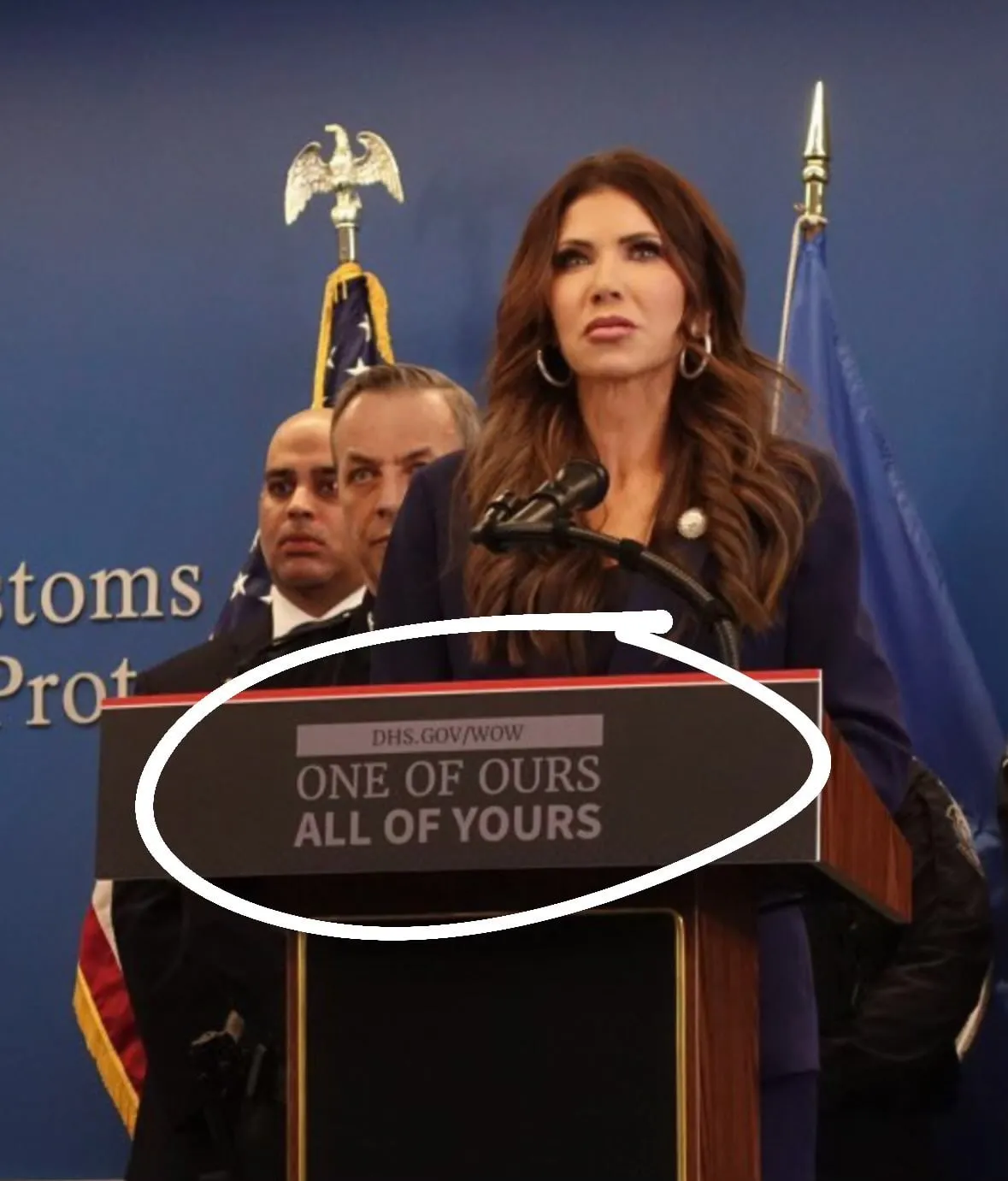
Trump has threatened to bomb Iran again and to take control of Greenland from Denmark using military force.

The Norwegian Nobel Committee said in a statement last week that the prize cannot be transferred or shared.

“This is, above all, absurd. The peace prize cannot be given away,” stated Kirsti Bergsto, the leader of Norway’s Socialist Left party.

“Trump will no doubt claim that he has now received it, but it cannot be transferred, and Trump’s repeated threats toward Greenland clearly demonstrate why it would have been madness to award him the prize,” Bergsto added.

“This is unbelievably embarrassing and damaging to one of the world’s most recognized and important prizes,” Raymond Johansen, a former Oslo mayor with the ruling Labor Party, said in a Facebook post.

“The awarding of the prize is now so politicized and potentially dangerous that it could easily legitimize an anti-peace prize development.”


The New York Times noted that “It is unclear what Ms. Machado gained out of her meeting with Mr. Trump.”

After abducting Maduro, Trump declined to install her in power, saying that “she’s a very nice woman, but she doesn’t have the respect” necessary to rule the country.

The Nobel Peace Prize is widely regarded as the most distinguished global honor for achievements in diplomacy. It is one of the five Nobel Prizes created under the will of Alfred Nobel, the Swedish inventor of dynamite, who died in 1896.

https://thecradle.co/articles/pathetic- ... e-to-trump

******

Trump imposes tariffs on Europe over Greenland
January 17, 8:41 PM

Image

This is ridiculous. But the US has imposed tariffs on European countries that oppose the US seizure of Greenland. In effect, they have imposed tariffs on "NATO allies."

On February 1st, tariffs on Denmark, Norway, Sweden, France, Germany, the UK, the Netherlands, and Finland will increase to 10%. On June 1st, they will add another 15% each. The total will be 25%.
These tariffs will remain in place until an agreement is reached on the final and complete purchase of Greenland.

Trump knows Europe's weakness (it caved in last time), so he is unleashing a new trade war against Europe without much fear.

The full text of the trade war declaration:

For years, we have subsidized Denmark, all countries of the European Union, and others without charging them tariffs or any other form of compensation.

Now, centuries later, it's time for Denmark to repay the debt—world peace is at stake! China and Russia want Greenland, and Denmark can't do anything about it.

They currently have two dog teams to defend it, one recently added. Only the United States of America under President Donald Trump can play this game, and very successfully at that! No one will touch this sacred patch of land, especially since the national security of the United States and the world as a whole is at stake.

Furthermore, Denmark, Norway, Sweden, France, Germany, the United Kingdom, the Netherlands, and Finland have traveled to Greenland for unknown purposes.

This is a very dangerous situation for the security and survival of our planet. These countries, playing this very dangerous game, have introduced a level of risk that is unsustainable. Therefore, to protect global peace and security, it is imperative to take decisive action to ensure this potentially dangerous situation ends quickly and without question.

Beginning February 1, 2026, all of the aforementioned countries (Denmark, Norway, Sweden, France, Germany, the United Kingdom, the Netherlands, and Finland) will be subject to a 10% tariff on all goods shipped to the United States.

Beginning June 1, 2026, the tariff will increase to 25%. This tariff will remain in effect until an agreement is reached to purchase Greenland in its entirety. The United States has been trying to achieve this deal for over 150 years. Many presidents have tried, and not without reason, but Denmark has always refused.

Now, because of the Golden Dome and modern weapons systems, both offensive and defensive, the need for acquisition is especially urgent. Hundreds of billions of dollars are currently being spent on security programs related to the Dome, including for the possible defense of Canada, and this very brilliant but extremely complex system can only operate at maximum potential and effectiveness if this land is angled, at an altitude of meters, and within the boundaries included in it.

The United States of America is immediately open to negotiations with Denmark and/or any of these countries, which have put such great risk, despite all we have done for them, including maximum protection, for so many decades. Thank you for your attention to this matter!


(c) Donald Trump

https://colonelcassad.livejournal.com/10311949.html

The problem of a tiny country
January 17, 11:25

Image

Enduring lessons of the new world order.

"Denmark is a tiny country with a tiny economy and a tiny army. They can't defend Greenland. They can't control Greenland's territory." (c) The White House.

As you might guess, this formula applies to more than just Greenland. Many other countries are tiny and have tiny armies.
Previously, international law could be invoked. Now, there is no international law.
So what arguments are there for a small country to control territory if it doesn't have a proper army?

https://colonelcassad.livejournal.com/10310817.html

Help is coming!
January 16, 7:07 PM

Image

Finally, a country has been found that is ready to provide Greenland with normal military support. (Video at link, funny.)

Image

Image

Image

Brave Greenlandic protesters! Seize American bases. Rewrite those who prevent you from doing so! Help is coming!

Meanwhile, the German Ministry of Defense announced it plans to send ships and planes to Greenland.
Germany has learned nothing from two world wars – they are once again preparing for a two-front war.

https://colonelcassad.livejournal.com/10309967.html

Google Translator

******

1 Year Into Trump 2.0, the Social Security Administration Is in Disarray
Posted on January 17, 2026 by Yves Smith

Yves here. While Trump’s epic disruptions, from the on again, off for now attack on Iran, his demand to annex Greenland, his threat to prosecute Fed chair Jerome Powell and ICE brown-shirting in Minneapolis dominate the headline, with cons like credit card relief also getting strong media play, Trump has also done a great deal of below-the-water-line damage to key institutions and policies, and those consequences continue to pay out. Here we have an update on the DOGE-initiated damage to the Social Security Administration.

Sadly, the remedy suggested here is for Democrats to Do Something. Good luck with that. It will take a lot more constituent howling for that to happen. So if you are afflicted by the deliberate wrecking of Social Security Administration operations, or have realistic expectations that that is coming soon, you need to complain early and often to your Congresscritters.

By Martin Burns, a former congressional aide, polling analyst, journalist, and lobbyist whose work has been published by The Hill, Irish Central, and the Byline Times and Mary Liz Burns, financial education consultant and content creator focusing on personal finance topics including retirement decisions, maximizing Social Security, and managing debt. Originally published at Common Dreams

There is no part of the federal government that Americans depend on more than the Social Security Administration. It is the agency that is charged with administering the earned benefits of millions. Unfortunately, after one year into President Donald Trump’s second term, SSA is in disarray. The Washington Post recently took an in-depth look at the SSA and reported among other things that:

Long-strained customer services at Social Security have become worse by many key measures since President Donald Trump began his second term, agency data and interviews show, as thousands of employees were fired or quit, and hasty policy changes and reassignments left inexperienced staff to handle the aftermath.

Exaggerated claims of fraud, for example, have led to new roadblocks for elderly beneficiaries, disabled people, and legal immigrants, who are now required to complete some transactions in person or online rather than by phone. Even so, the number of calls to the agency for the year hit 93 million as of late September—a six-year high, data shows.

SSA officials are likely to respond to the Washington Post story by pointing out that a recent SSA inspector general argued that SSA has made major improvements. Fox News reported that:

The inspector general’s report concluded that SSA’s telephone performance improved during fiscal year 2025 largely because of operational changes, including the rollout of a new cloud-based telecommunications platform, expanded automation, and staffing realignments. The platform, implemented in August 2024, allowed SSA to increase call capacity, expand self-service options, and monitor performance in real time, according to the report.

There is one catch with the inspector general’s report, and, to paraphrase Joseph Heller, it is one heck of a catch. This summer SSA changed “the type of data it reports publicly, removing information like callback wait times.” SSA Commissioner Frank Bisignano told members of Congress over the summer that SSA changed the metrics because reporting the wait times might discourage people from calling the agency. Yes, you read that correctly. So, rather than fixing the problem SSA decided to not share the data. This might be a solution to a public relations problem, but it is not going to help beneficiaries in the slightest.

There is no doubt about the fact that 2025 was a tumultuous time for SSA. The year began with Elon Musk, the then head of the Department of Government Efficiency (DOGE), calling Social Security a Ponzi scheme; and, in an address to Congress in January President Trump said that there were “shocking levels of incompetence and probable fraud” in Social Security and that people up to 160 years old were receiving Social Security benefits. None of these accusations, of course, proved to be true. While Trump and Musk’s spurious claims have faded away, the damage they have done to SSA lingers on.

The current congressional leadership has shown zero interest in exercising any oversight responsibility on any issue foreign or domestic. Congress’ lack of interest or will to scrutinize the Trump administration led Virginia Democratic Sen. Mark Warner to ask, “Is congressional oversight dead? Where does this end? If none of my Republican colleagues raises an issue, does this mean we are ceding all oversight?”

While they are not in the majority, Democrats on Capitol Hill are not powerless. They can still hold hearings of their own. These hearings would not be part of the legislative process. They would however give Democrats the platform they need to speak up for the American people. There is good news here for those who care about Social Security. The ranking Democrat on the Ways and Means Subcommittee on Social Security is Rep. John Larson of Connecticut who has fought for years to protect Social Security. Larson is the perfect person to shine a light on the current state of affairs at SSA.

If Republicans on Capitol Hill are not interested in exercising their duty to provide oversight, Democrats must step up to the plate. Seventy-five million Social Security beneficiaries are counting on them to protect their earned benefits.

https://www.nakedcapitalism.com/2026/01 ... array.html

(Red added)

*****

Will the U.S. and Europe go to war over Greenland?

January 16, 2026

The Europeans have formed a puny coalition of the willing to defend Greenland against the United States.

In short, the answer is No. As one media commentator remarked vividly this week, the European leaders have less backbone than a jellyfish, so all their wobbly concern about Donald Trump wanting to annex the Danish Arctic territory will amount to little in the way of an armed conflict.

There may be some theatrics as in the deployment of European troops this weekend to Greenland. There will be lots of bluster from European politicians. But at the end of the day, the vassals will be slapped into line.

However, the mere fact that there is a theoretical question is instructive of how abnormal international relations have become under the 47th president of the United States. In a crazy sort of way, that is good because it exposes the fraud and bankruptcy of the “moral West.”

For eight decades since the end of World War II, the U.S. has posed as the defender of European allies. The transatlantic alliance in the form of the North Atlantic Treaty Organization was supposed to be the cornerstone of Western democracy, peace, security, and international law.

Now, with Trump’s unalloyed ambition to annex Greenland, by military force if necessary, the whole facade of NATO is upended. The alliance is being attacked by its supposed leader, the United States.

Denmark and other European states are distraught, saying that if Trump goes ahead with his threats to “conquer Greenland,” then it is the end of NATO.

Bring it on.

This week, Danish and Greenlandic diplomats met with Trump administration officials, Vice President JD Vance, and Secretary of State Marco Rubio at the White House to plead for respecting the sovereign rights of Denmark and Greenland.

Trump is having none of the diplomatic niceties. He continues to insist on taking Greenland under U.S. control, and he is not ruling out the use of military force. The American president has declared that the annexation is a matter of national security for the U.S. because, he claims, the Arctic territory is in danger of being taken by China and Russia.

China rebuked Trump for invoking it as a threat to justify his territorial acquisition.

Russia is the largest Arctic territory, and its North Sea Route is a strategically important shipping conduit between Europe and Asia. It doesn’t need Greenland.

Trump’s pretext of national security is risible. He is shamelessly playing the Russia and China “threat” card as a cover for what is simply a naked imperialist land grab. This is exactly what the Americans and Europeans hypocritically and baselessly accuse Russia and China of.

Greenland is the world’s largest non-continental island, covering an area of over 2.1 million square kilometers. That’s about three times the size of Texas. The Arctic territory is rich in oil, gas, and minerals that the United States covets for its economic future. The calculation is the same as Trump’s criminal aggression against Venezuela.

If it were merely about national security, the U.S. has an air defense base on Greenland under a historic agreement with Denmark. Trump’s disparaging talk about Denmark not being militarily strong enough to defend Greenland (with two dog sleds, he mocked) could be easily resolved by the U.S. beefing up its existing base capabilities.

So, the invocation of Russia and China as a threat is a cynical excuse by Trump to expropriate prodigious Arctic resources.

In any case, the Danish government has dismissed Trump’s concerns about the risk of Russia and China taking over Greenland.

But when you lie down with dogs, you get up with fleas. Denmark and the other European lackeys have been outrageously playing the Russia threat card with regard to Europe’s security. In that way, they have helped create the bogus narrative that Trump is now using to snatch the Danish territory of Greenland.

Historically, the European Union has become an abject vassal of the United States. It has bent over backwards to appease Washington in every violation of international law and illegal aggression that the Americans have embarked on. Most recently, when Trump attacked Venezuela and kidnapped President Nicolás Maduro, the Europeans cheered instead of standing up for international law. As Trump threatens war on Iran over its attempts to quell an orchestrated regime-change assault, the Europeans are again cheering on the aggression.

Washington’s systematic and relentless violation of international law and the United Nations Charter over the decades has been enabled by Europe’s complicity or cowardly acquiescence. The impunity that this has conferred has culminated in the open contempt for international norms under the Trump presidency.

The U.S. imperial power has no respect for international law or sovereignty, as Trump arrogantly boasts. The European vassals with their jelly-like impotence are being treated with the contempt they deserve.

The Americans decided to blow up Europe’s strategic energy supplies from Russia with the sabotage of the Nord Stream pipelines in September 2022, bringing the European economies to their knees. And the Europeans didn’t even blink in protest. They have debased themselves even further in waging a futile proxy war in Ukraine against Russia and destroying their economies by inordinate spending on the American military racket.

No wonder then that Trump is exploiting the European weakness to the hilt by grabbing Greenland.

As our columnist Ron Ridenour has documented in several articles, one of the most abject of the European vassals is Denmark, which has done Uncle Sam’s bidding for years as an intelligence and propaganda asset. Denmark was a founding member of NATO in 1949. Copenhagen was also a Nazi quisling during WWII; its subsequent complicity with U.S. imperialism was par for the course.

So, as the American overlord turns the screws on his vassals, what are they going to do? Nothing.

This weekend, the Danes, British, French, Germans, Dutch, Norwegians, and others are sending a token number of troops to Greenland in a signal of solidarity against Trump with Operation Arctic Endurance.

How ridiculous. The Europeans have been talking for the past year about forming a coalition of the willing to deploy in Ukraine, purportedly to defend the Kiev NeoNazi regime against Russia. Now they have formed a puny coalition of the willing to defend Greenland against the United States.

All the same, there is a beneficial demonstration. The absurdity of all this is instructive in that it shows several things: the fraud that is NATO, the lawlessness and impunity of U.S. aggression, and the total moral bankruptcy of the European “allies”.

https://strategic-culture.su/news/2026/ ... greenland/
"There is great chaos under heaven; the situation is excellent."

User avatar
blindpig
Posts: 15306
Joined: Fri Jul 14, 2017 5:44 pm
Location: Turtle Island
Contact:

Re: Donald Trump, Avatar of his Class, Capitalism & the Decline and Fall of Bourgeois Democracy

Post by blindpig » Sun Jan 18, 2026 6:34 pm

Trump demands $1bn fee from states joining Gaza ‘Board of Peace’: Report

Several nations have rejected Trump’s demands, as critics express fear the president may be trying to create an ‘alternative’ to the UN

News Desk

JAN 18, 2026

Image
(Photo credit: Saul Loeb/AFP via Getty Images)

US President Donald Trump has demanded that countries seeking to join his ‘Board of Peace’ for Gaza must pay $1 billion, according to reports in Hebrew and western media.


“Each Member State shall serve a term of no more than three years from this Charter’s entry into force, subject to renewal by the Chairman (Trump),” says the text of the board’s charter, obtained by Times of Israel.

“The three-year membership term shall not apply to Member States that contribute more than USD $1,000,000,000 in cash funds to the Board of Peace within the first year of the Charter’s entry into force,” it added.

The charter of the Trump-led board was also obtained by Bloomberg.

The ‘Board of Peace’ is described in the charter as “an international organization that seeks to promote stability, restore dependable and lawful governance, and secure enduring peace in areas affected or threatened by conflict.”

It is supposed to become official once three member states agree to the charter. Trump will also select the organization’s official seal, the charter text says.

“Several European nations have been invited to join the peace board. The draft appears to suggest Trump himself would control the money, something that would be considered unacceptable to most countries who could have potentially joined the board,” informed sources told Bloomberg.


The sources added that several countries are “strongly opposed” to Trump’s charter for the board, and “are working on collectively pushing back against the proposals.”

A US official told Bloomberg that “while members would be able to join for free, the $1 billion fee would grant permanent membership.”

“The money raised will be used directly to accomplish the Board of Peace’s mandate to rebuild Gaza. The board will ensure almost every dollar raised is used to execute its mandate,” the anonymous source went on to say.

The ‘Board of Peace’ will hold voting meetings at least every year, and “at such additional times and locations as the Chairman deems appropriate,” the draft charter adds.

The agenda will be “subject to approval” by the chairman. The board will hold regular non-voting meetings with its executive board, and such meetings will be convened on at least a quarterly basis.

While US officials claim the funds would be used to rebuild Gaza, critics cited by Bloomberg warned the structure is a form of foreign trusteeship, and effectively creates a Trump-led “alternative” or “rival” to the UN that centralizes political and financial power in Washington.


The initiative, which aligns closely with long-standing Israeli demands for external oversight of Gaza’s postwar administration, has nevertheless drawn objections from Prime Minister Benjamin Netanyahu, who lamented that it was not coordinated with Israel, even as the framework largely meets Israeli demands.

Hebrew reports claim Israel is uncomfortable with Washington’s decision to include Turkish and Qatari officials, Turkish Foreign Minister Hakan Fidan, and adviser to the Qatari prime minister, Ali al-Thawadi, as part of the board.

"We did not tell Netanyahu in advance about the composition of the executive committee. He did not expect there to be representatives from Turkey and Qatar, but Gaza is now our show, not his show. If he [Netanyahu] wants the Trump administration to deal with Gaza - we will do it our way," US sources told Israel's Channel 12.

Netanyahu’s office said the premier has asked Foreign Minister Gideon Saar to discuss the matter with US Secretary of State Marco Rubio.

Opposition leader Yair Lapid called the board’s makeup a "diplomatic failure for Israel."

The board will be made up of 15 world leaders from countries including the UK, France, Germany, Saudi Arabia, Qatar, and Egypt.


Former Bulgarian politician Nikolay Mladenov has been designated the director-general.

Trump has named Rubio, his son-in-law Jared Kushner, West Asia envoy Steve Witkoff, and former UK prime minister Tony Blair as executive chairs of the board.

Blair has been a contender for a role in post-war Gaza for months. Reports from previous months said Arab and Palestinian officials were uncomfortable with his inclusion, particularly given his role in the US-led war on Iraq.

“We were surprised by the composition of the so-called “Board of Peace” and the names announced, which came in line with Israeli specifications and in a manner that serves the interests of the occupation, clearly indicating premeditated negative intentions regarding the implementation of the agreement’s provisions," the Palestinian Islamic Jihad (PIJ) movement said in a statement on Saturday.

https://thecradle.co/articles/trump-dem ... e_vignette

When does this crazy train stop? Doing his damnedest to shake down the planet.
"There is great chaos under heaven; the situation is excellent."

Post Reply