Published by @nsanzo ⋅ 16/11/2025

The Russian army is dying, argued Olha Stefanishyna, Ukraine's ambassador to the United States, in an appearance on Meet the Press , one of the most prominent political programs in the United States, using a discourse that didn't ring particularly true. The proof is that the question that arose after her comment was whether Ukraine would withdraw from Pokrovsk. Withdrawal wouldn't be a defeat, argues Ukraine, which seems to be preparing to present it as a delayed victory, one of those achievements that, with the movement of the front lines, are increasingly occurring closer to home. In this context, projecting one's own problems onto the enemy helps not only to try to maintain troop morale but also to prevent the spread of articles and denunciations of issues that, over the past year, haven't received enough attention.
The population difference between Russia and Ukraine, which makes mobilization always more complicated for Kyiv, and the attrition of war pose difficulties in replenishing ranks, especially during intense phases of fighting when casualties are higher. Fighting against a clearly insufficient Russian contingent and taking advantage of the nationalist wave that generated a large influx of volunteers to add to the general mobilization, Ukraine did not feel this problem until the war became protracted and Russia incorporated volunteers—thousands of them from prisons—and conscripts during the partial mobilization of autumn 2022. The failure of the 2023 counteroffensive, on which Kyiv and its allies had pinned all their hopes, transformed the conflict into a protracted war of attrition. The massive deployment of drones has created a killing zone, necessitating a large number of replacement troops that Ukraine cannot always recruit without resorting to force.
During this time, Ukraine has gone through all sorts of phases to avoid admitting reality. Considering weapons more important than the troops who must use them, Kyiv has even claimed to have entire brigades that could not be sent to the front due to the scarcity of weapons supplied by Western partners. Aware of the real situation, not the one presented in the media and war reports, Ukraine's allies pressured Kyiv for a time to lower the conscription age. After much pressure and an attempt to protect a young cohort that Ukraine cannot afford to lose, new legislation reduced the conscription age from 27 to 25, but it did not end the debate. Just this week, Kyiv Mayor Vitaly Klitschko, whose military-age children are witnessing the war from abroad, demanded that Zelensky lower the age again, from 25 to 22.
Another important aspect has been the ban on men over 18 leaving the country, which has led to a constant stream of escape attempts, including failed crossings of the Carpathian Mountains and the Dniester River, sometimes costing the lives of those fleeing the war. There has also been preferential treatment for those who could afford to leave. Simultaneously, there has been another exodus that Zelensky tried to stem in the summer: the departure of families whose children were turning 17, their last chance to avoid the risk of conscription. Leaving the country at that age means starting studies abroad and, therefore, not returning to Ukraine for several years. Preventing this double drain—of talent and potential recruits—was the aim of the measure announced by Volodymyr Zelensky in July, which lifted the travel ban for young people, always with the false hope that freedom of movement would lead to their return. However, the situation on the front lines and the risk of death if recruited has led to the opposite: a sustained exodus from the country that has been denounced and criticized by Poland and Germany, two of the countries with the largest number of Ukrainian refugees.
In the past, Germany has stood firm against Ukrainian suggestions to secure Berlin's cooperation in forcing refugees in Ukraine to return—either to the front lines or to contribute to the war effort in the military industry. Berlin has also rejected limiting aid to the refugee population as an incentive for their return. Although the change of government in Germany has left the Ministry of Defense in the hands of the same person, Boris Pistorius, and policies such as denying the Ukrainian government the Taurus missiles it so desperately wants have remained unchanged, notable shifts have occurred. “Watching mediocre bureaucrats transform into monsters eager to send masses of people to their deaths instead of helping them escape is chillingly fascinating,” commented Russian opposition journalist Leonid Ragozin on Friday, referring to Friedrich Merz's remarks.
“In a long telephone conversation today, I asked the Ukrainian president to ensure that young people, particularly those from Ukraine, do not come to Germany in ever-increasing numbers, but rather serve their country,” stated the German chancellor, prioritizing Ukrainian conscription over the well-being of the population and the right of Ukrainians not to be forcibly mobilized at any traffic light, supermarket, or workplace. “They are needed there,” declared the German head of government, effectively ordering the Ukrainian head of state to keep the fighting-age population tied up on the front lines. The proxy nature of this war, in which Ukraine acts as an army in a common war against Russia, means that the shortage of personnel and the possibility of the Armed Forces losing effectiveness is not only a concern for Kyiv, but also a demand from Western allies.
Merz's words, like those of the Polish president, who yesterday announced he would renew "for the last time" the protection afforded to the Ukrainian refugee population, who will lose that status in March, have been received without the slightest reproach in Ukraine. Ukraine is aware that it cannot afford to criticize its allies and, above all, that its interests in this matter are exactly the same as Germany's. Both countries want to keep military-age men in Ukraine and repatriate those who have left the country. Hence, there has also been no adverse reaction to the Washington Post 's report last Friday announcing the start of deportations of Ukrainian men currently in the United States. “Trump officials prepare to deport some Ukrainians despite military service fears,” reads the headline of the article, which explains that “the Trump administration is preparing to deport some Ukrainians with final removal orders to their war-torn homeland, as the government seeks to ramp up deportations and Ukraine moves to strengthen ties with Washington.”
“Olha Stefanishyna, Ukraine’s ambassador to the United States, said the embassy is aware of ‘approximately 80 Ukrainian citizens’ who have final deportation orders ‘for violating U.S. law.’ She stated that U.S. authorities were working on logistical preparations to carry out the deportations, ‘given the absence of direct international air service to Ukraine,’” writes The Washington Post . “I deserve to be deported,” says another man on the immediate deportation list, “but not to a war zone.” “How can they deport me to a place where there’s a war?” he adds, with an argument that is unlikely to convince the Trump administration, which has deported third-country nationals to South Sudan, a state on the brink of civil war. “Under international treaties, officials should not send people to countries where they may be persecuted or tortured. Even the most dangerous criminals must be protected from torture,” the newspaper notes.
For the authorities in Kyiv, the only problem with the deportations is the logistical challenge of getting the men to Ukraine. “It should be noted that deportation is a widely used legal mechanism provided for in the immigration laws of most countries in the world,” the ambassador insisted, justifying the deportation of dozens of men to a country at war. “It is a routine procedure applied to all foreigners and stateless persons who violate the terms of their stay in the United States, regardless of their nationality,” she added, perhaps referring to one of the men with a criminal record whom the Trump administration wants to deport to Ukraine: a Soviet-born Jew who arrived in the United States before the dissolution of the USSR and who, despite his efforts, was unable to obtain a Ukrainian passport. As the successor state to the Soviet Union, the most reasonable country to deport a stateless person of Soviet origin would be Russia, not Ukraine, where the man would not face an imminent risk of being drafted. His defense also argues that “not only does he face a high probability of being killed by the Russian army, but, as a Russian-speaking foreigner rather than a Ukrainian, he also faces a high probability of persecution by the Ukrainian authorities.” When necessary, accusations of discrimination against the Russian-speaking population, which are usually denied, resurface even in statements to the press.
The article notes that Russia typically refuses to cooperate with US deportations, an attitude it previously shared with Ukraine. However, circumstances have changed, and any man deemed suitable for deployment is now welcomed, regardless of whether he is a former convict or holds a Ukrainian passport. This attitude “may be shifting as Ukraine strives to repel Russian attacks, recruit soldiers, and maintain US government support,” states The Washington Post, quoting an advisor to Volodymyr Zelensky as saying, “The United States can deport as many as it wants.” “We’ll put them to good use,” he concludes. Any man of military age can be turned into cannon fodder and sent to fight in the ruins of Pokrovsk, Mirnograd, Gualiapole, or Konstantinovka.
https://slavyangrad.es/2025/11/16/carne-de-canon/
Google Translator
******
From Cassad's Telegram account:
Colonelcassad
On the situation on the front lines (data from @Belarus_VPO )
In Kharkivske:
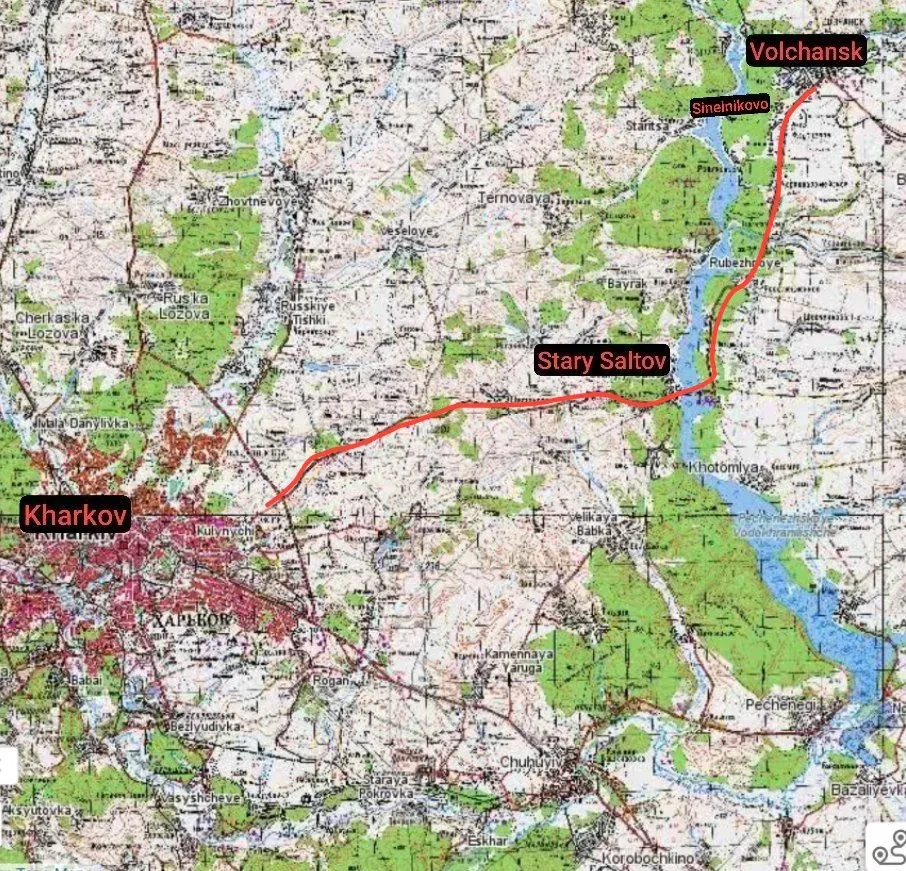
Russian troops continue to storm residential areas in the western part of Vovchansk and in the western part of Sinelnikovo, located to the south;
Russian Armed Forces have advanced in the area of Tatarsky Forest.
- In Kupyansko-Limanske:
fighting is ongoing in the central part of Kupyansk, the Ukrainian Armed Forces are attempting to counterattack, but are having no success;
Russian troops have advanced towards Petrovpavlovka over an area of 14 square kilometers;
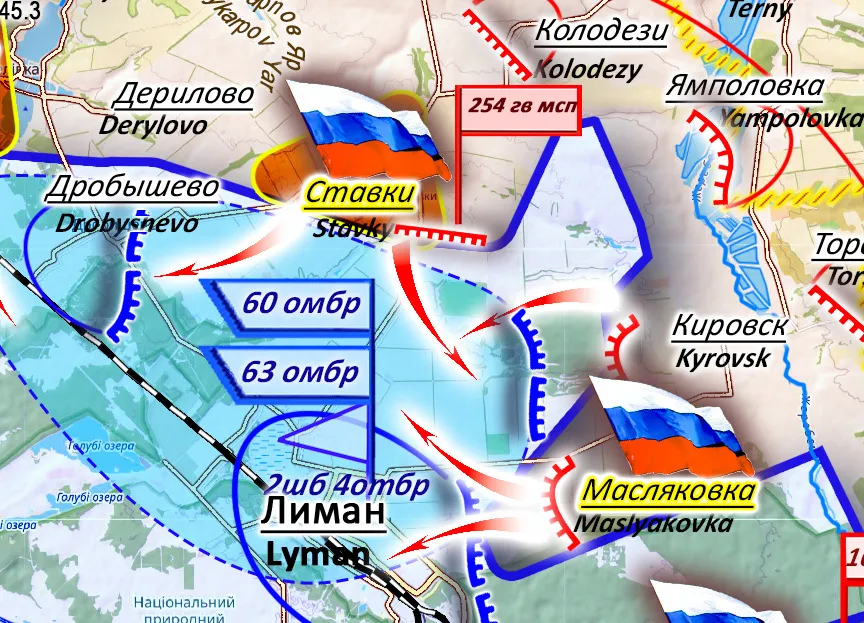
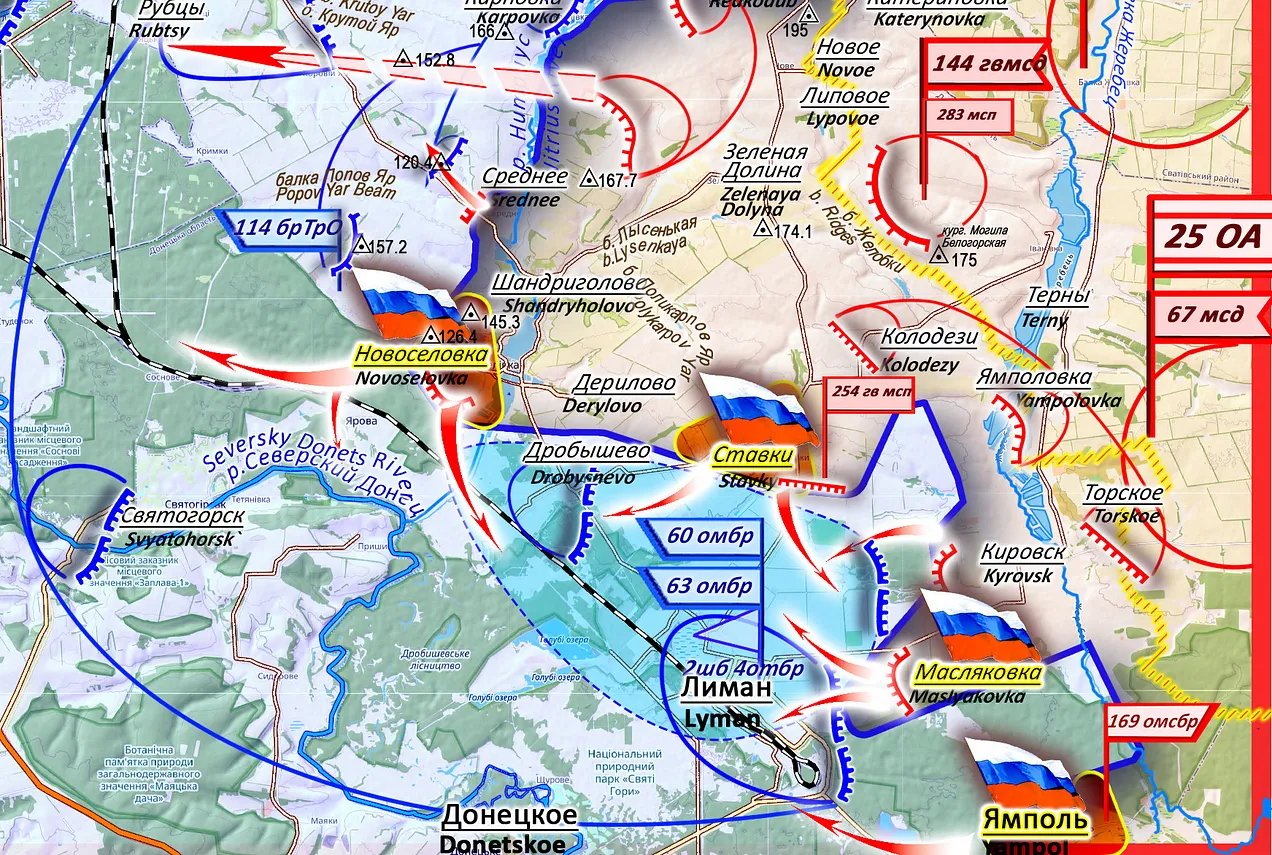
Russian troops are pressing the Ukrainian Armed Forces in the area of Yampol and are trying to break through closer to the center of the settlement
. - In Seversk:
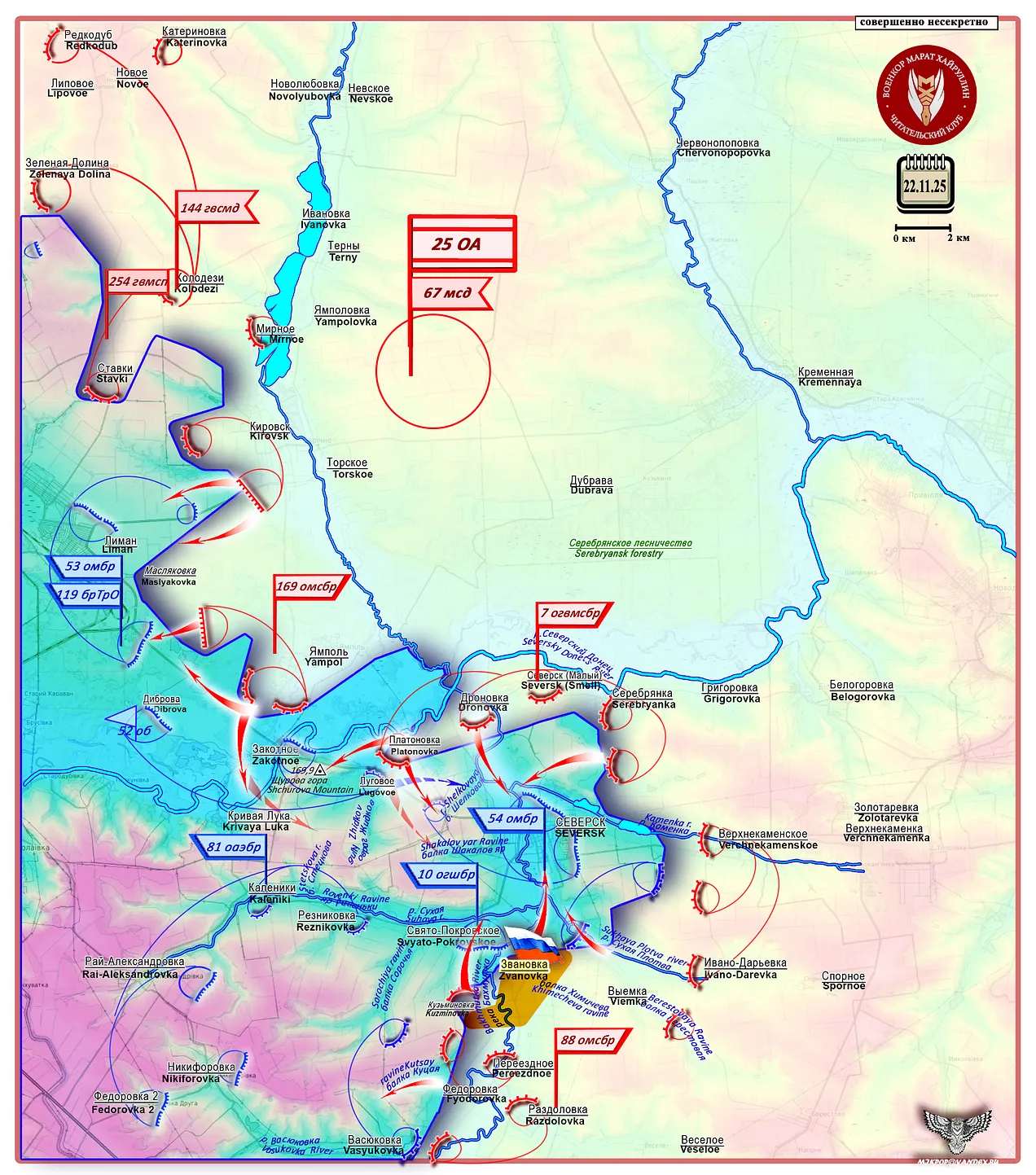
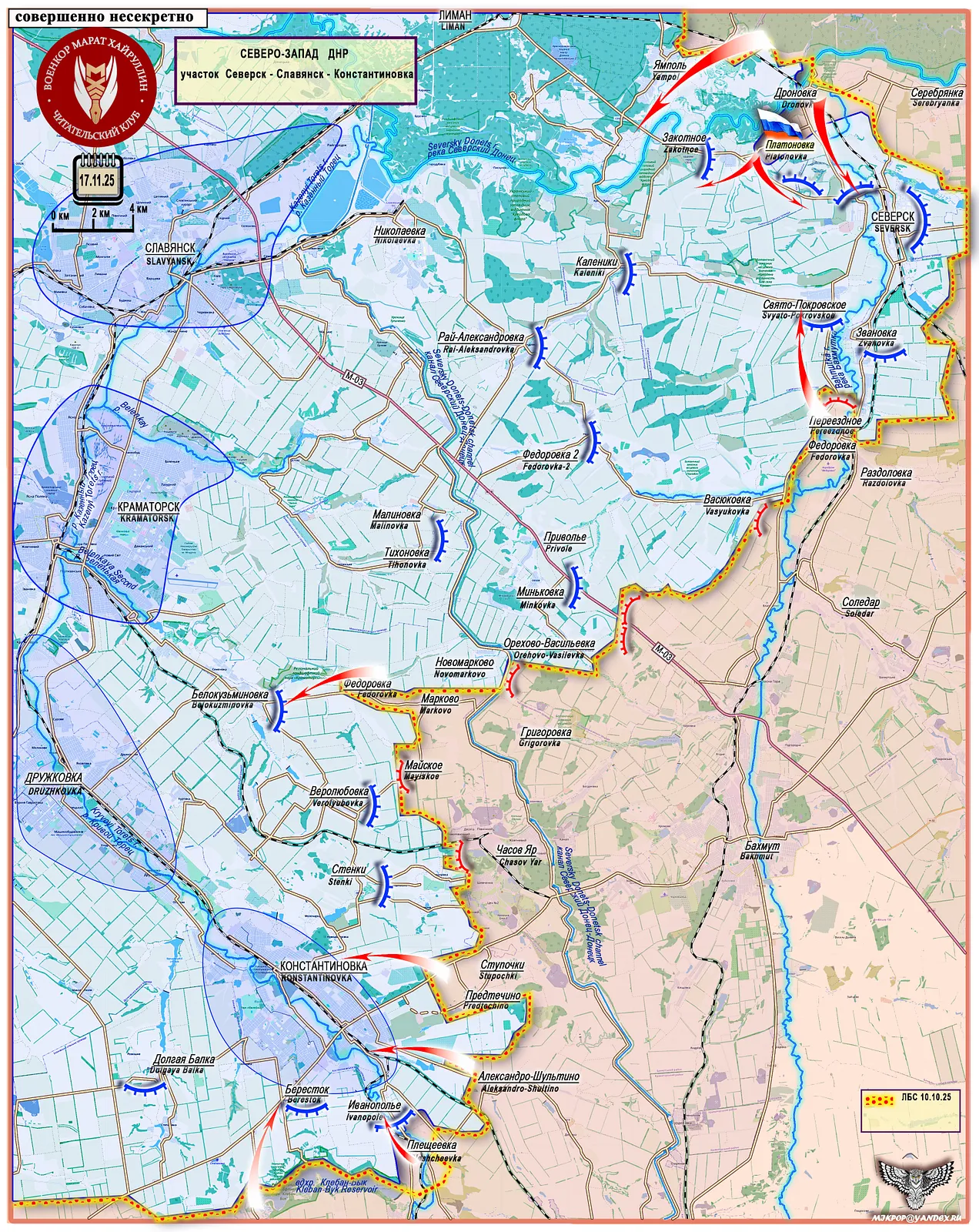
the situation has not changed significantly, clashes continue in Dronovka and on the flanks of Seversk.
- In Konstantinovskoye:
Russian Armed Forces continue assault operations in the direction of Pleshcheyevka, in the area of Nelepovka and along forest belts in the direction of Ivanpol.
— In Pokrovskoe:
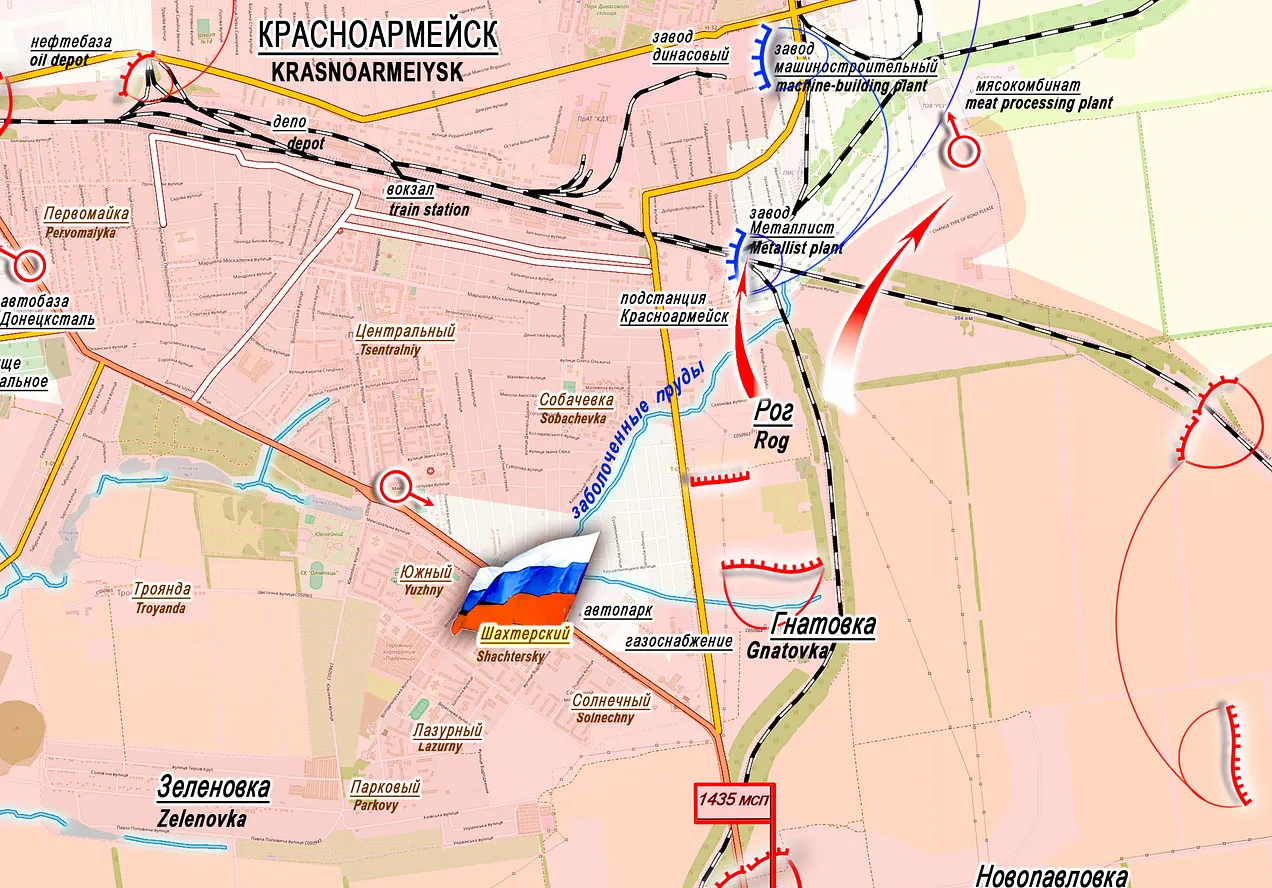
in Rodinskoye, small groups of the Russian Armed Forces are infiltrating through the southern and eastern parts of the city, pressing in a westerly direction;
on the northwestern outskirts of Pokrovsk, Russian troops have dug in among the buildings on the territory of the factories and continue to move up forces and assault along the forest belts in the direction of Grishino;
on the eastern outskirts of the city, the Russian Armed Forces have dug in near Rog and are assaulting in the direction of Rivne and in the area of the Dinasovy settlement;
in the southern part of Mirnohrad, the gray zone has expanded to the southeastern edge of the multi-story residential development, into which Russian infantry units are infiltrating.
— In Novopavlovske:
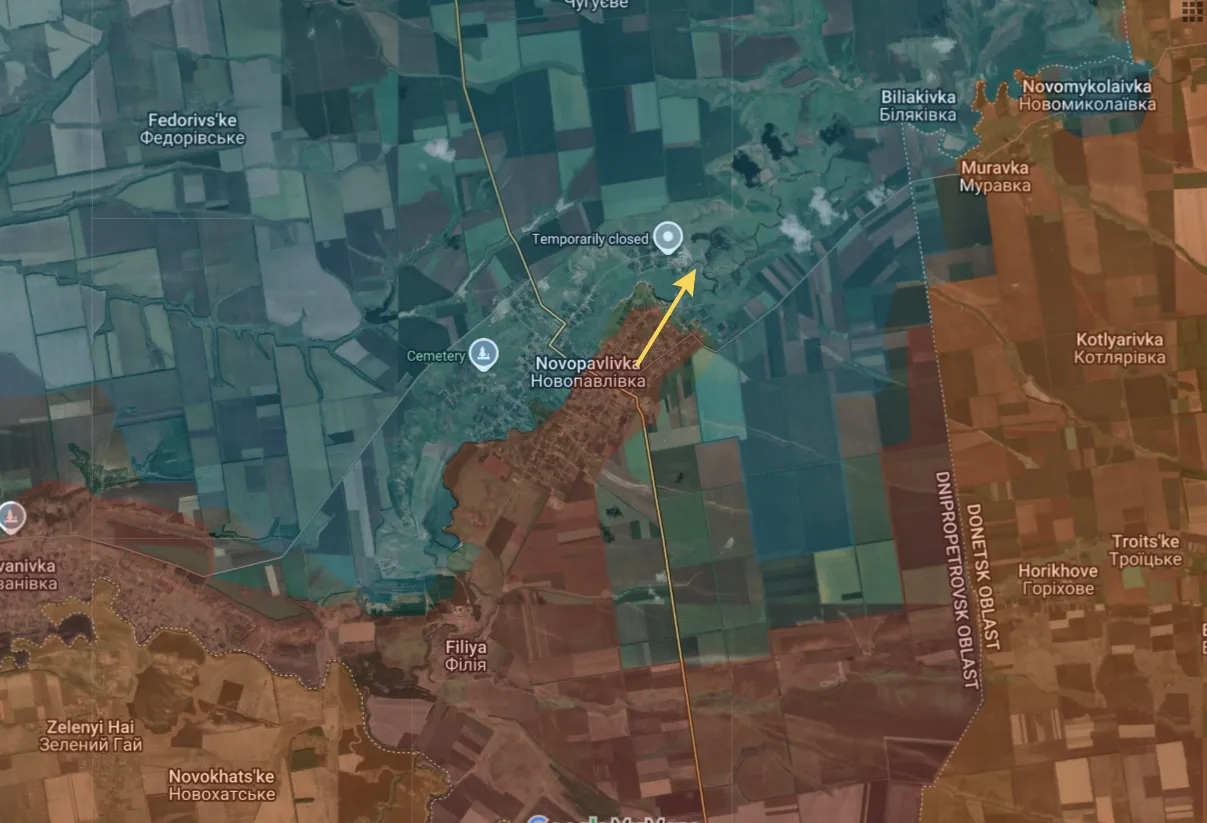
Russian troops, taking advantage of the weather conditions, managed to advance in the direction of Novopavlovka and gain a foothold in the residential development in the eastern part of the settlement;
the Russian Armed Forces are striving to move up forces as quickly as possible, while Ukrainian Armed Forces drone operators are actively operating along all routes to the village.
— In Gulyai-Polye:
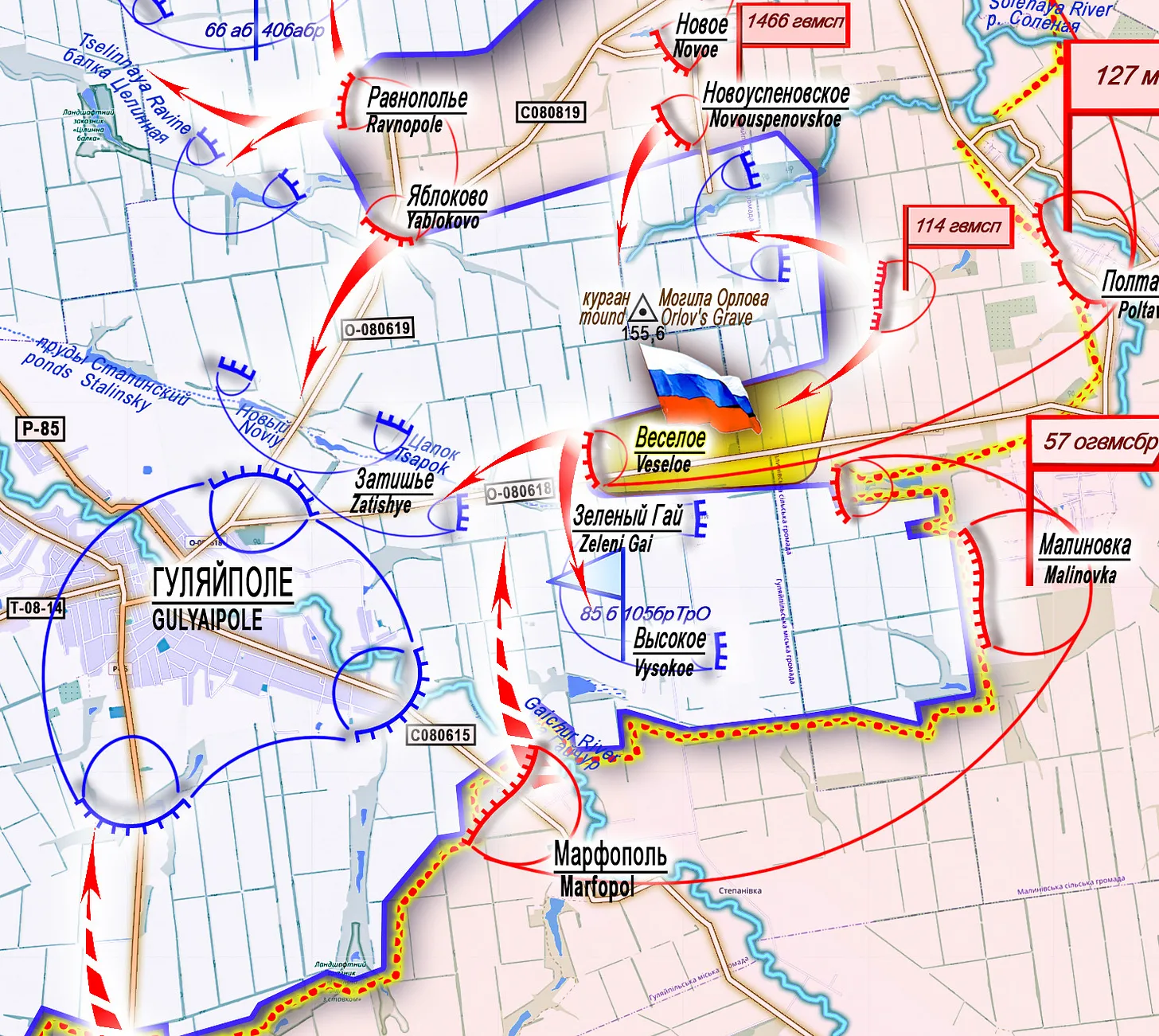
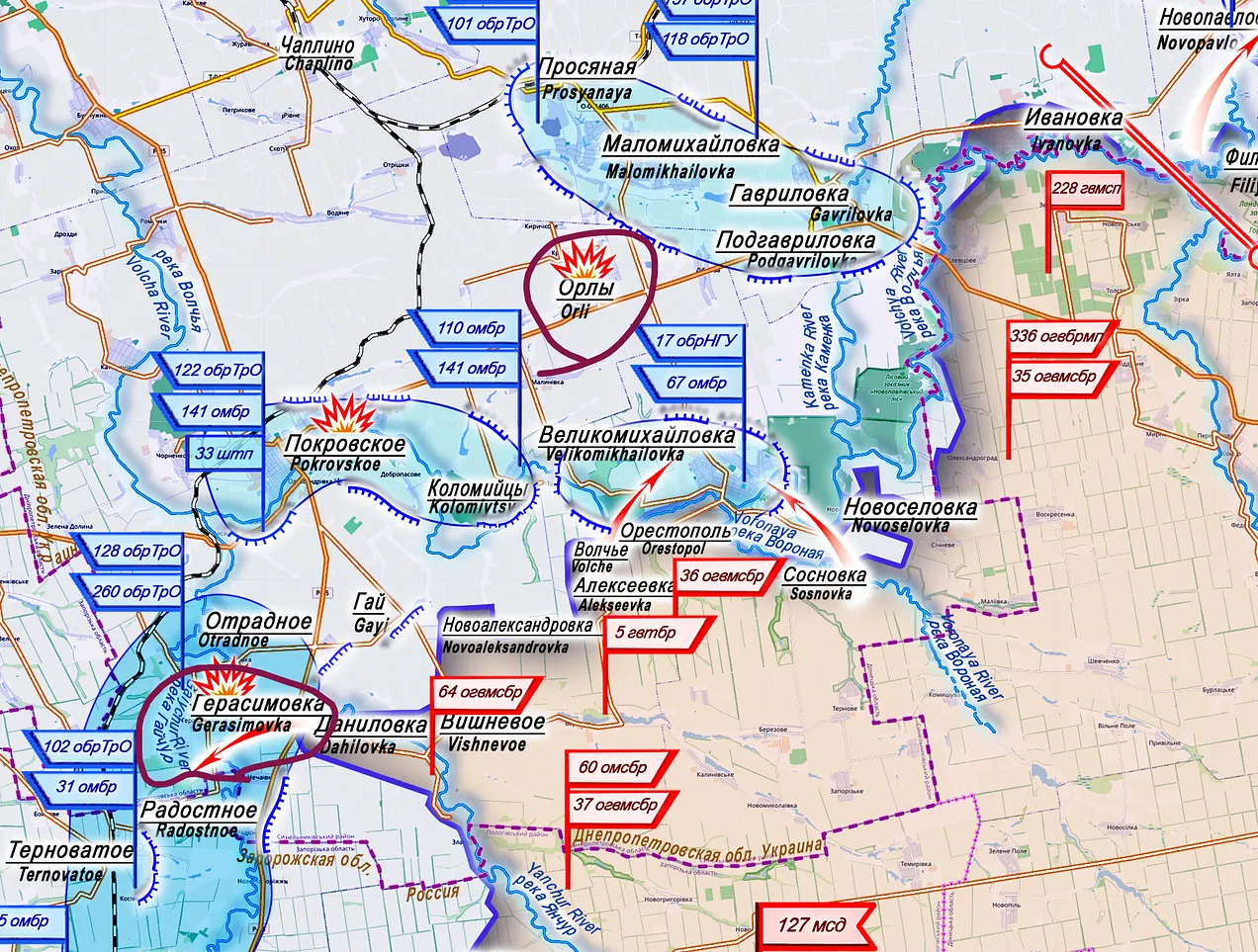
Russian forces have advanced west of Malinovka and reached the eastern outskirts of Vesyoloye, Zelenyi Gai, and Vysokoye. They have managed to gain a foothold south of Novouspenovskoye and are attacking toward Zatishye.
— In Zaporizhzhya:
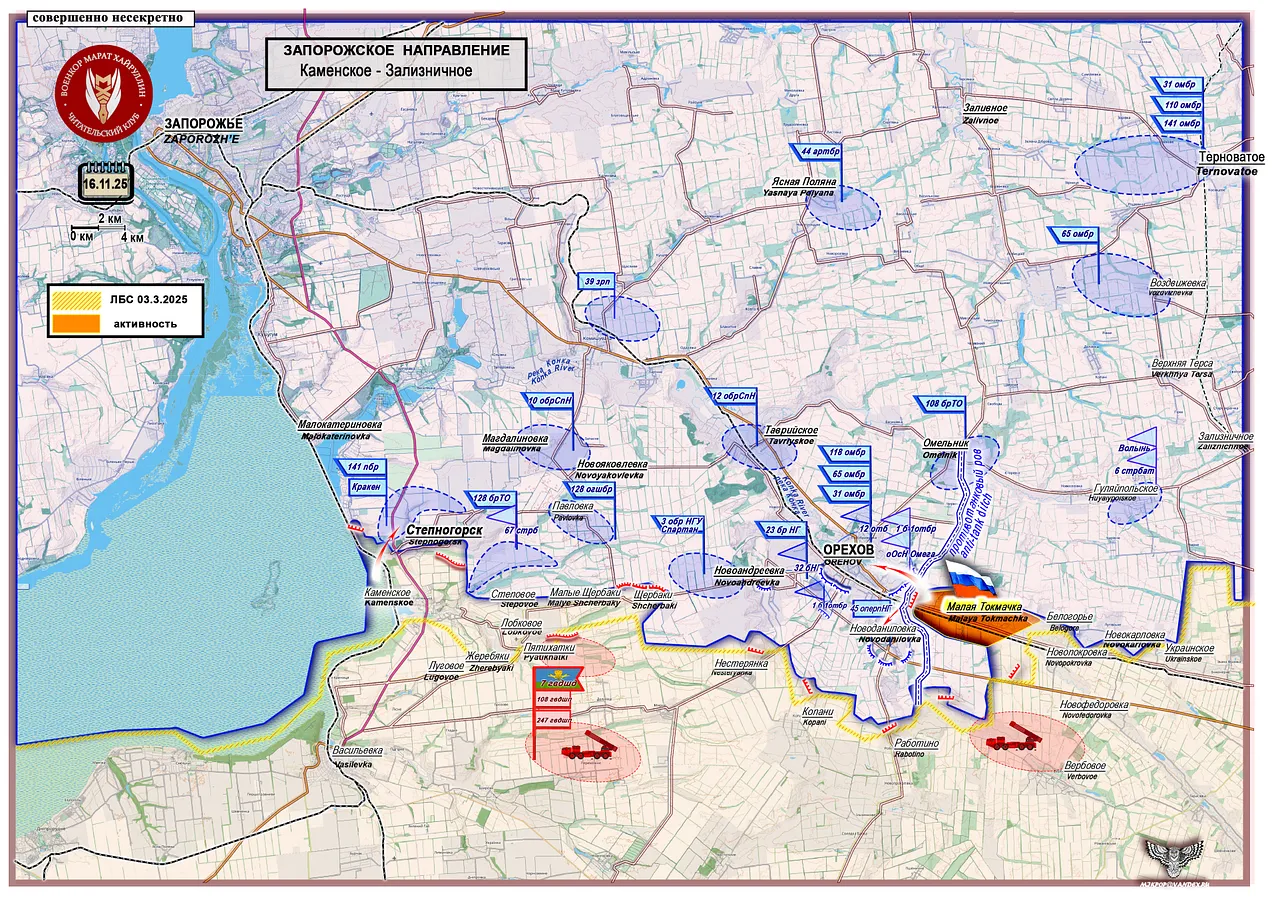
Russian forces are making tactical gains in Stepnogorsk. Ukrainian Armed Forces units have been initially blocked near their main fortified area, a sausage factory.
Russian forces continue to press Ukrainian forces in Primorskoye, also making tactical gains.
***
Colonelcassad
"Brussels is buying weapons with European money, only to send them to the military mafia with a golden toilet." (c) Hungarian Foreign Minister Szijjártó.
And these aren't the golden toilets of the Yanukovych era. These are brand-new, corrupt ones.
However, as Zelenskyy's gang has already explained, "corruption is an integral part of the economy."
***
Colonelcassad
6:11
"Syrsky has arrived, which means it's all over, fodder. Everyone will be sent to the infantry." Anton Aleksandrovich Zaitsev,
a serviceman with the 129th Brigade,January 12, 1987, has been fighting as a volunteer since 2022. He says he was inspired to join the Ukrainian Armed Forces by the opportunity to serve in a rear unit. However, after Syrsky was appointed Commander-in-Chief of the Ukrainian Armed Forces, Anton was sent to the infantry.At the time, the new commander-in-chief urgently needed "cannon fodder" for the "Kursk adventure," so our guest went to the Kursk region, where he immediately came under mortar fire and was later captured. @warriorofnorth
https://t.me/s/boris_rozhin
Google Translator
******
Brief Frontline Report – November 15th, 2025
Report by Marat Khairullin and Mikhail Popov.
Zinderneuf
Nov 15, 2025

Krasnoarmeysk (Pokrovsk) to Gulyaipole (Video at link.)
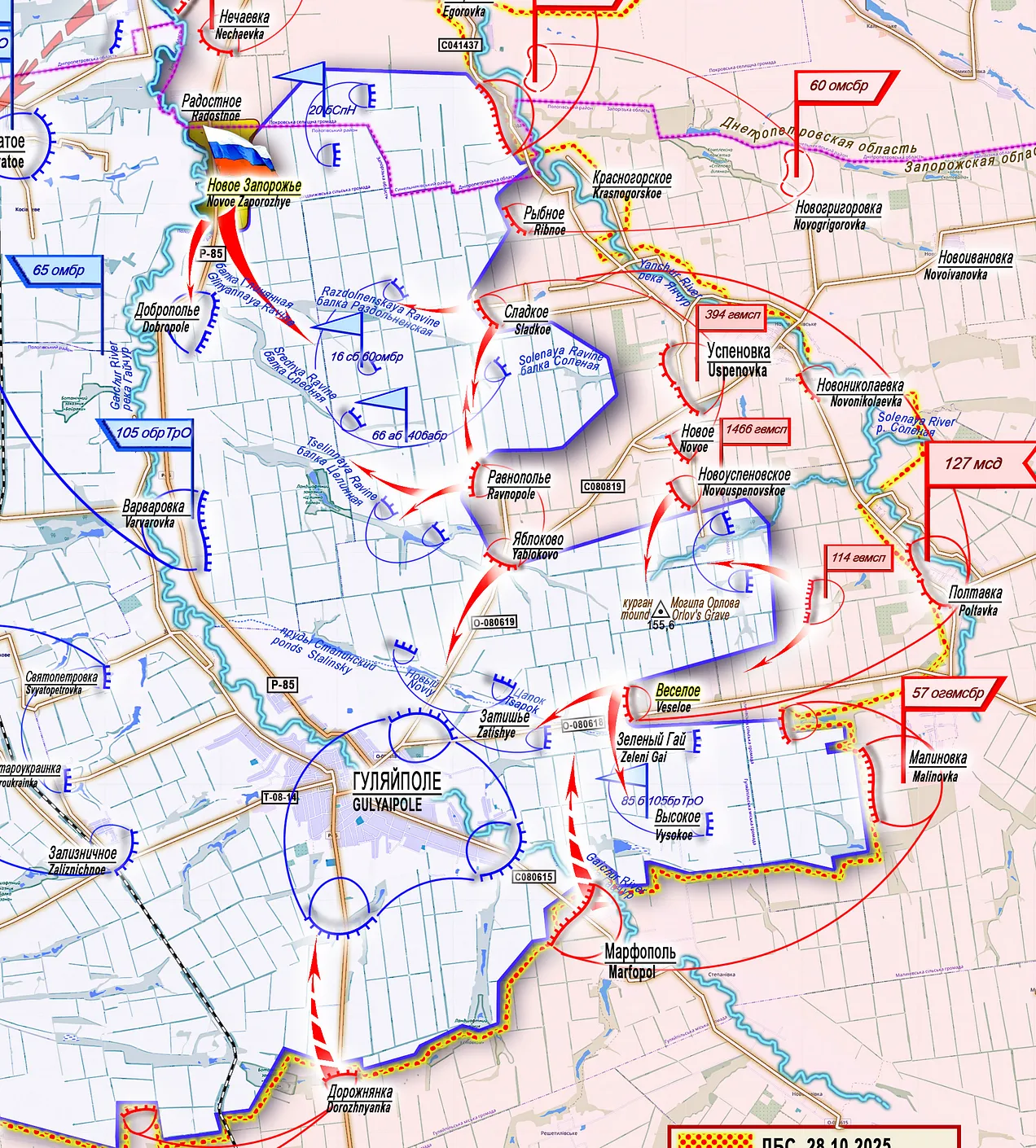
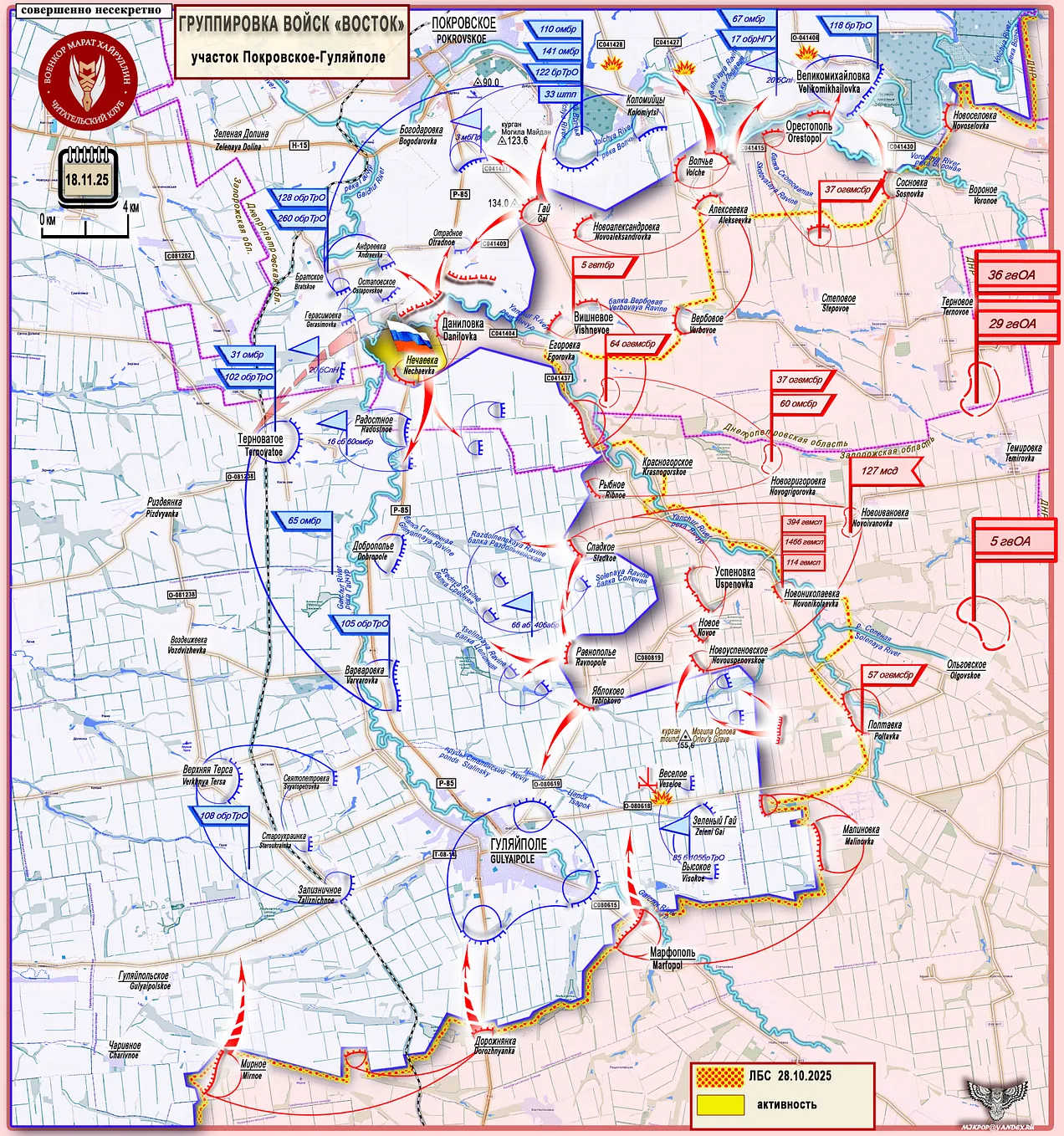
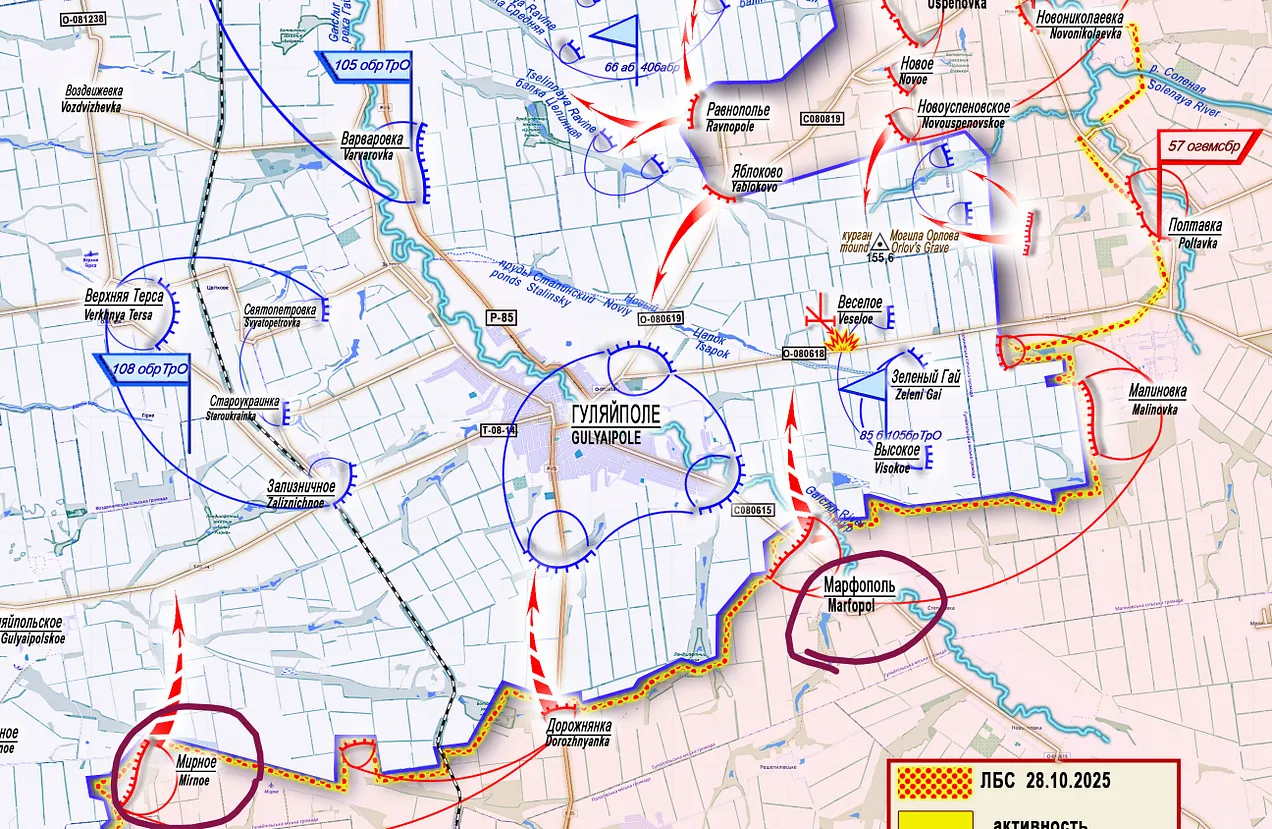
Message from the Ministry of Defense of the Russian Federation: "Assault units of the 114th Motorized Rifle Regiment of the 127th Division of the 5th Guards Combined Arms Army of the 'East' Group, without slowing the pace of the offensive after liberating Novouspenovskoe and Novoe, expelled the enemy from the settlement of Yablokovo in the Zaporozhye Oblast.
Success was achieved through coordinated actions of the 'East Group units, which were able to immediately develop the offensive and capture another settlement, the ninth this month.
The Primorye troops are advancing deep into the enemy's defensive lines in the Gulyaipole direction, simultaneously clearing the interfluve. In battles for the settlement, the Ukrainian Armed Forces units lost a large number of personnel and more than a dozen vehicles."
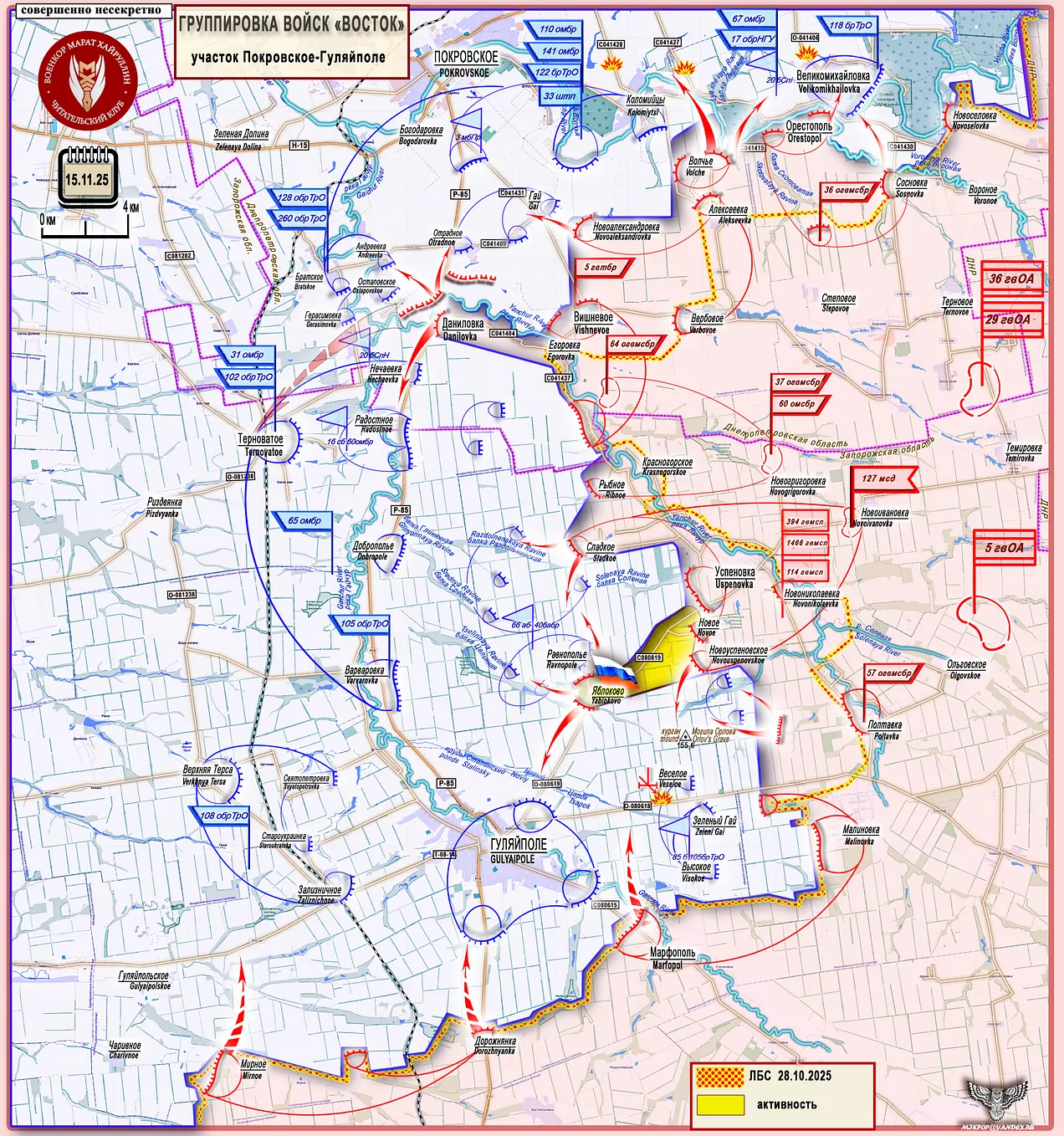
ЛБС 28.10.2025=Line of Combat Contact October 28th, 2025. АКТИВНОСТЬ=Activity.
Cutting the Uspenovka salient into two sectors, the Russian Armed Forces units advanced 4.5 kilometers southwest from the settlement of Novoe (liberated on 11.11.2025) and liberated the settlement of Yablokovo (47°43′44″ N, 36°19′33″ E, about 50 residents). They reached the watershed ridge of the Yanchur River and the Tselinnaya Ravine. The direct distance to the city of Gulyaipole is 7.5 kilometers.
Experts express concern that the Nazis are luring our fighters by simulating a weak defense, and then may counterattack our left flank from the "quiet" southern sector of Veseloe-Visokoe. In principle, they can. But, let's consider another interpretation – the command of the Russian group is provoking the Ukrainian Armed Forces command to stir up the quiet southern node and distract it in the area of Ravnopole-Yablokovo. And then they may initiate a strike in the AFU flank from Marfopol. (My humble interpretation.)

Update from the translator: Ukrainian sources are now in panic over a Russian assault on Novopavlovka coming from Filiya. More updates will come!

https://maratkhairullin.substack.com/p/ ... ember-15th
*****
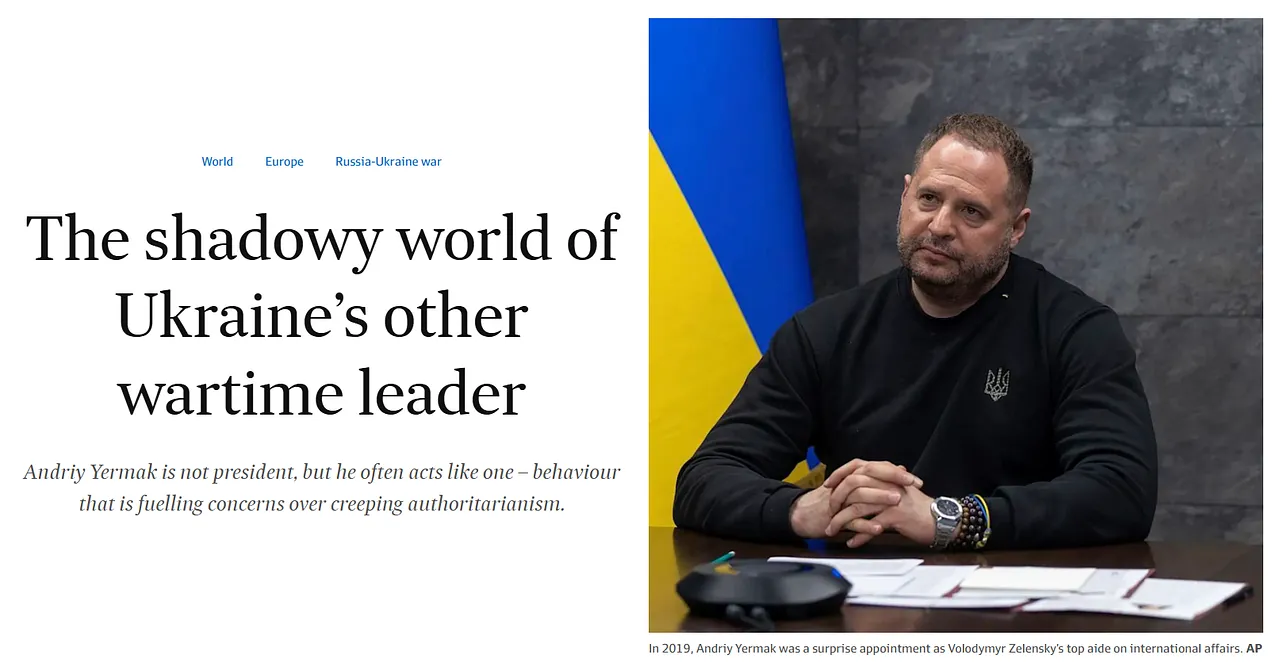
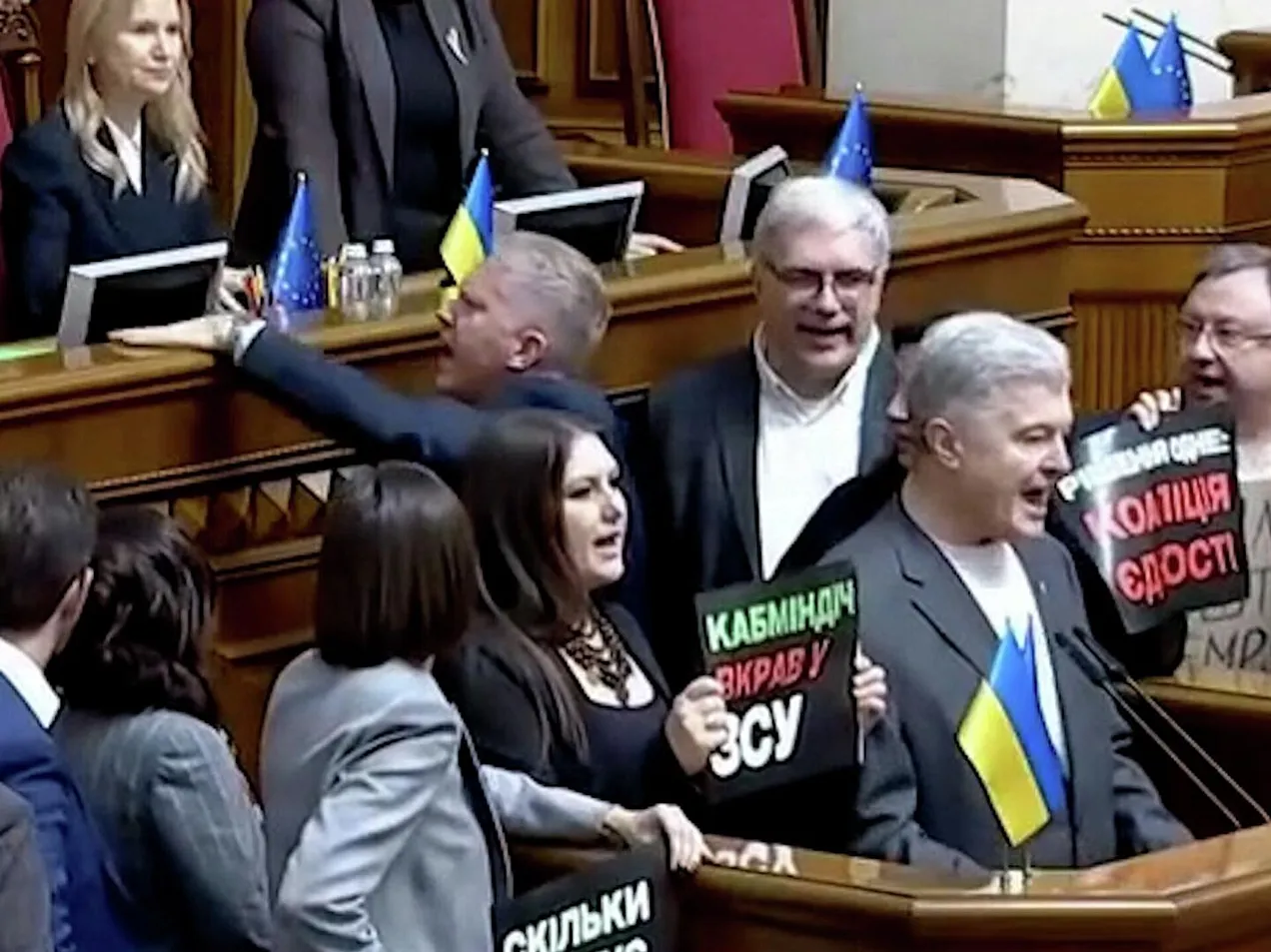
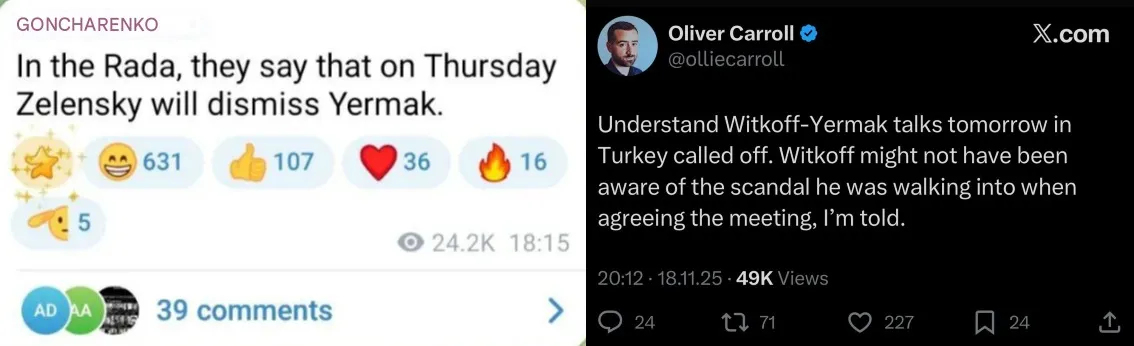
Chorus of 'Corruption' as Movement to Oust Zelensky Picks Up Steam
Simplicius
Nov 14, 2025
Major efforts are stepping up to put pressure on Zelensky in what’s beginning to look like a campaign to finally evict him from power:

Rumors are that the latest is being driven by billionaire former-sponsor Kolomoisky, who himself has just stated from his pre-trial detention that he believes Zelensky’s days are now numbered.
Ukrainian oligarch Igor Kolomoisky, who is in a pre-trial detention center, said after interrogations by anti-corruption agencies Ukraine that the country’s leader, Volodymyr Zelensky, would “soon be finished” amid the corruption case of businessman and presidential associate Timur Mindich. This was reported by the Strana newspaper, citing sources.

https://www.gazeta.ru/politics/news/202 ... 6030.shtml
It seems spurned billionaires always settle the score in the end.
Now even famed Ukrainian Nazi Korchinsky has openly stated that very powerful people are preparing a Maidan against Zelensky: (Video at link.)
“Serious people are preparing a Maidan against Zelensky,” — the leader of Ukrainian Nazis.
This is happening because of the corruption scandal with the “Mindich case,” claims the leader of the Nazi-terrorists Korchinsky, who are part of the GUR structure.
“As for street protests, they are already being prepared, a Maidan is being prepared, street riots are being prepared, an attempt to undermine the front is being prepared. And serious people are already involved in this. In particular, mayors of some cities or former mayors of cities are involved. The same Trukhanov is involved,” he emphasized.
We had already speculated, when the NABU controversy first began, that this was an obvious ploy by the powers-that-be to create an instrument within the Ukrainian state by which they can remove an intransigent Zelensky when needed. Zelensky himself was obviously wise to this and tried to de-fang these “anti-corruption” authorities, which immediately spurred Maidan-like protests, forcing him to back down.
The only question, as usual, is what precisely do these hidden forces seek to gain by potentially booting Zelensky? It’s not like a successor could change the tide of the war against Russia. Some options include: perhaps they merely want to reset society’s ill-will by putting in a new figurehead to boost morale for the continuation of the war. Or perhaps they want to find someone more amenable to launching full blown mobilization of the 18+ cohort to really supercharge Ukraine’s war of attrition against Russia. There are many other possibilities as well.
Now, in the gradual erosion of the Western pro-Ukrainian bloc’s position in the war, even Rubio has admitted the US is running out of options in regard to further Russian sanctions:
The United States has almost completely exhausted its options for imposing new anti-Russian sanctions, US Secretary of State Rubio stated.
He noted that Washington has already taken measures against Russia’s largest oil companies and added: “I don’t know what else needs to be done.” (Video at link.)
In the meantime, Russia continues its campaign of destroying what remains of Ukraine’s power grid. As of this writing another massive ballistic missile attack targeted Kiev’s thermal power plants.
Hell in Kyiv: “Iskanders” struck Kyiv’s CHP plants, power outages in the capital of Ukraine
Kiev last night: all of the capital’s Combined Heat and Power Plants and substations hit.
CHP-4, CHP-5, CHP-6, Bila Tserkva CHP. Capital substations were also hit.
Over 20 Kinzhal, Iskander and cruise missiles as well as more than 100 UAVs also arrived in Kiev.
It was reported the attack lasted hours:

Some videos gave an inkling of the ferocity of the attack: (Video at link.)
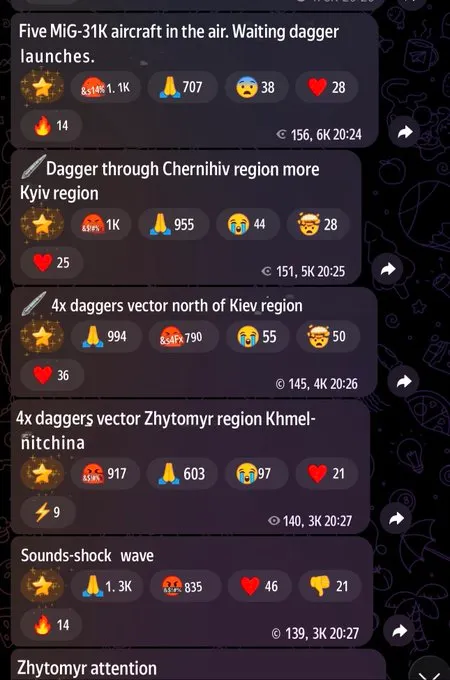
Photos of spent Patriot booster stages were seen, but apparently the missiles did little against the hypersonic Kinzhal barrage. That’s not to mention given what we now know, there’s good chance the Patriots themselves were hit, or will be soon.
Marco Rubio himself had just somewhat astoundingly admitted in the same interview as the above clip that AD systems delivered to Ukraine are usually wiped out by Russian strikes within a week of being brought in: (Video a t link.)
—
Let us turn to the battlefield where Ukraine’s collapse on the Zaporozhye front in particular is only accelerating.
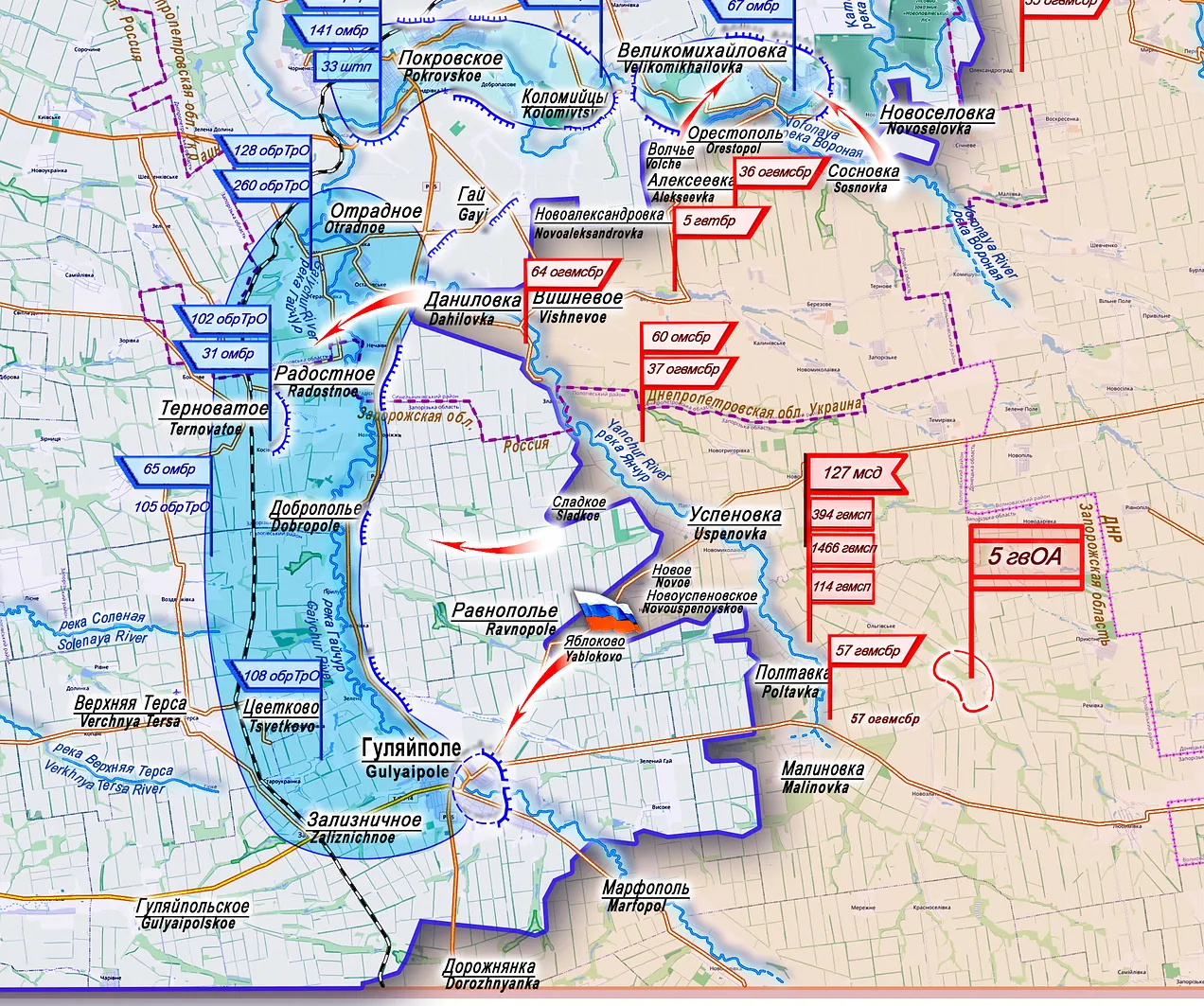
Things have moved so fast that Gulyaipole is already nearing encirclement:
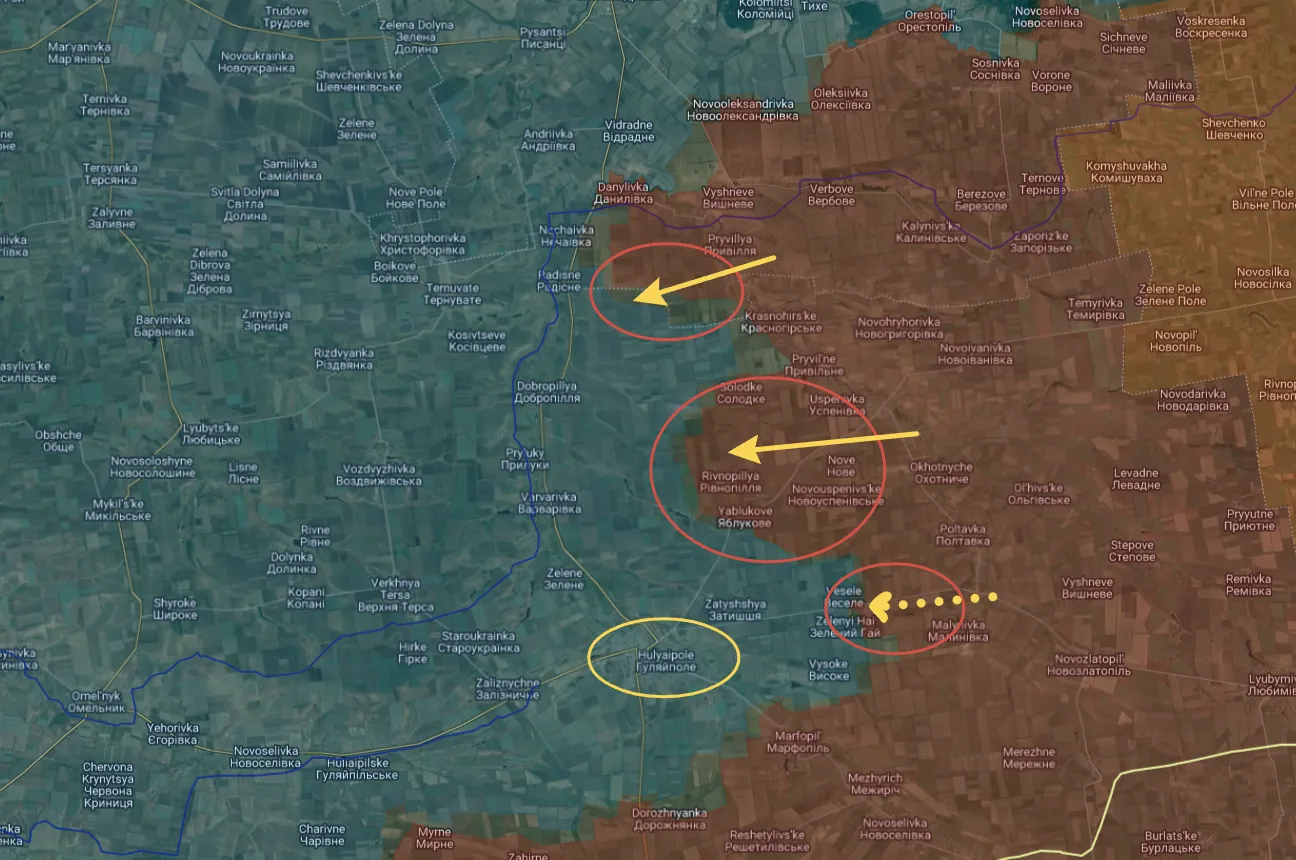
Ukrainian MP Marina Bezugla writes:


More top Ukrainian military accounts comment on the disastrously collapsing situation:


A Ukrainian officer writes:

This report from the official Ukrainian sector forces is interesting. It lists Russian casualties as “heavy”, with 58 KIAs in a single day over the entire vast front:

If you consider the fact that both sides—particularly from the official leadership accounts—inflate enemy losses, we can assume the 58 to probably realistically be 20-30, if not less. That amount of KIA for the second most active front of the entire war is not exactly what I’d call “heavy” casualties. Using that as a rubric, we can assume total Russian daily casualties really are in the 100-200 range that we’d long estimated. If the front with the fastest Russian advances is experiencing such few casualties, then what are less active fronts in Kupyansk, Seversk, Lyman, etc., experiencing?
Footage of Russia’s liberation of Danilovka:
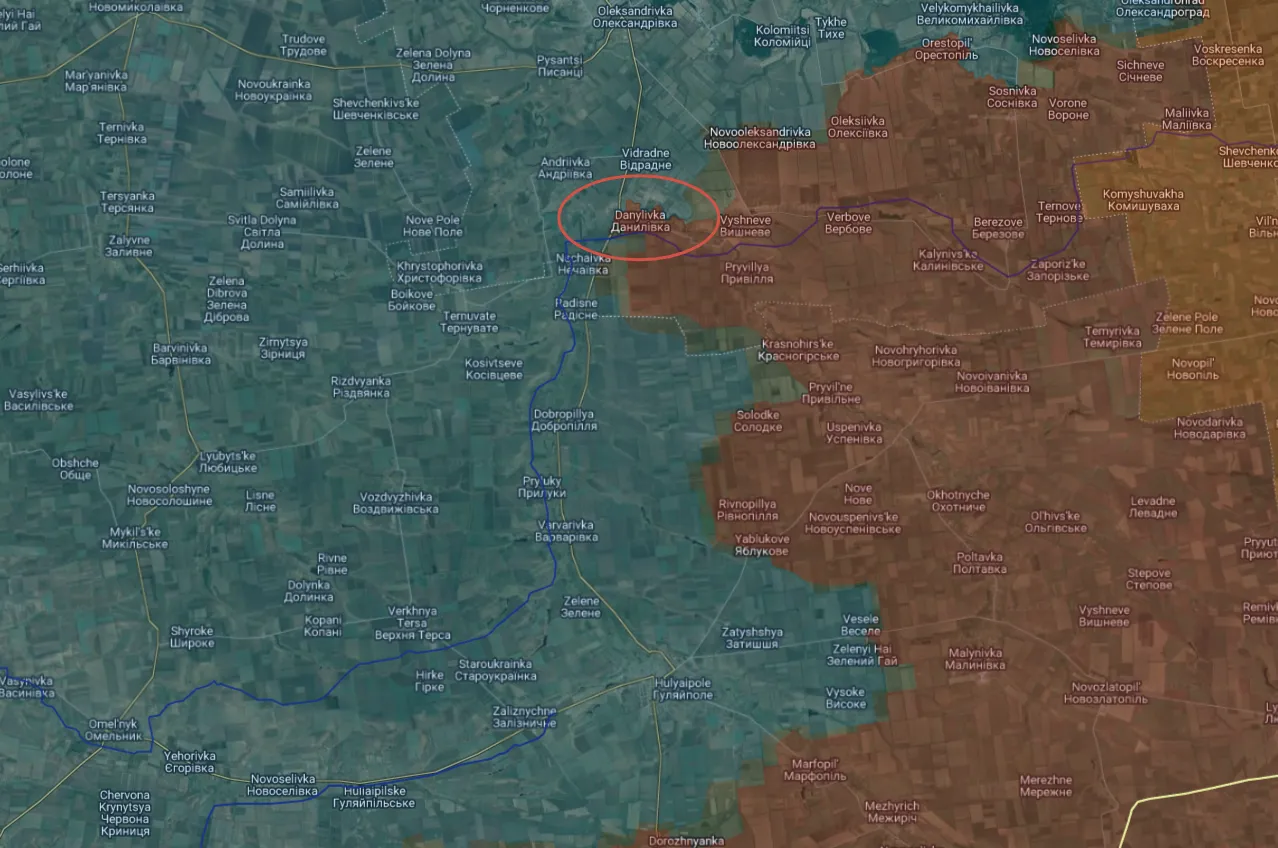
ENG: “UNITS OF THE “VOSTOK” TROOP GROUP HAVE LIBERATED THE SETTLEMENT OF DANILOVKA

 Guards of the 5th Tank Brigade of the 36th Army of the “Vostok” troop group decisively, with a combination of fire and maneuver, drove the enemy out of the settlement of Danilovka in the Dnipropetrovsk region and advanced 3 km deep into the enemy’s defense.The liberation of the settlement was complicated by the presence of serious defensive structures on the southern outskirts of Danilovka, consisting of anti-tank obstacles (ditches, tetrahedrons), minefields, and fortified firing points. In addition, the settlement is protected from the north by the Yanchur river. However, none of this prevented the Warriors from Buryatia from decisively and boldly breaking the enemy’s resistance in the shortest possible time.Thus, the clearing of the western bank of the Yanchur river continues on all fronts, and the enemy is retreating with heavy losses towards Gaichur.In the battles for the settlement, the enemy from the 154th Mechanized Brigade of the Armed Forces of Ukraine lost not only about a company of personnel but also a large amount of armored equipment - more than 12 units (self-propelled artillery, tanks, armored combat vehicles).As a result, more than 150 buildings were cleared of enemy presence. (Video at link.)
Also, in terms of casualties, note above the official Russian report relays Ukraine’s casualties as a full company of men just in the battles for Danilovka alone. A company should be 100 men, but let’s just say for Ukraine it’s 50 due to their manpower shortage. This is 50 men lost for a single settlement versus the Ukrainian claim of 58 Russians lost in the entire front comprising dozens of settlements. I leave it to the reader to decide which side’s claims are the more reliable.
Just northeast of there, Russian forces made a breakthrough in Novopavlovka, penetrating deeper into the town and capturing a large swath of it:
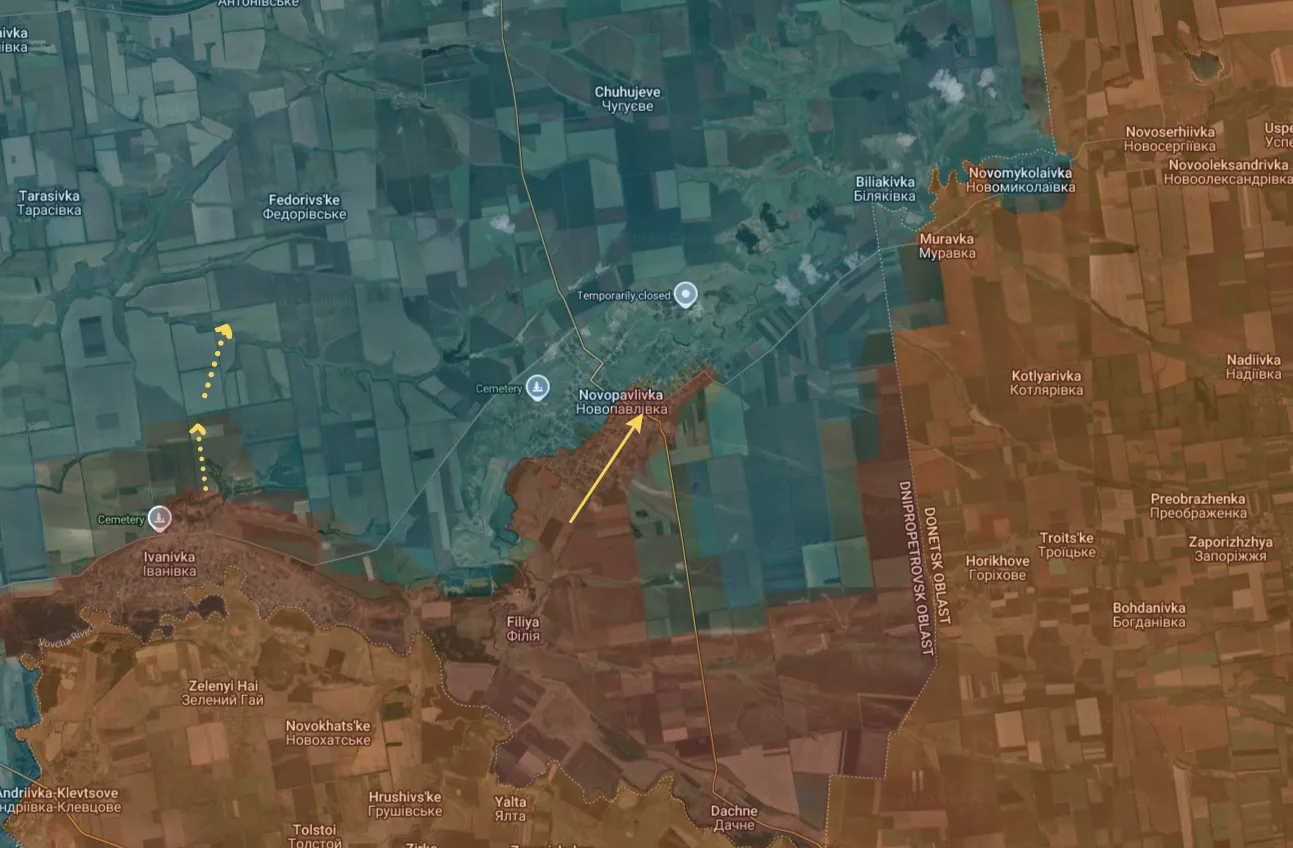
In fact, some new reports claim that the breakthrough is much deeper and most of the town is already captured, so do not be surprised to see it fall by next update.
In Pokrovsk, the situation is that the city of Pokrovsk itself is virtually entirely captured, though not yet fully swept and secured, with Mirnograd now being penetrated from both the south and northeast:
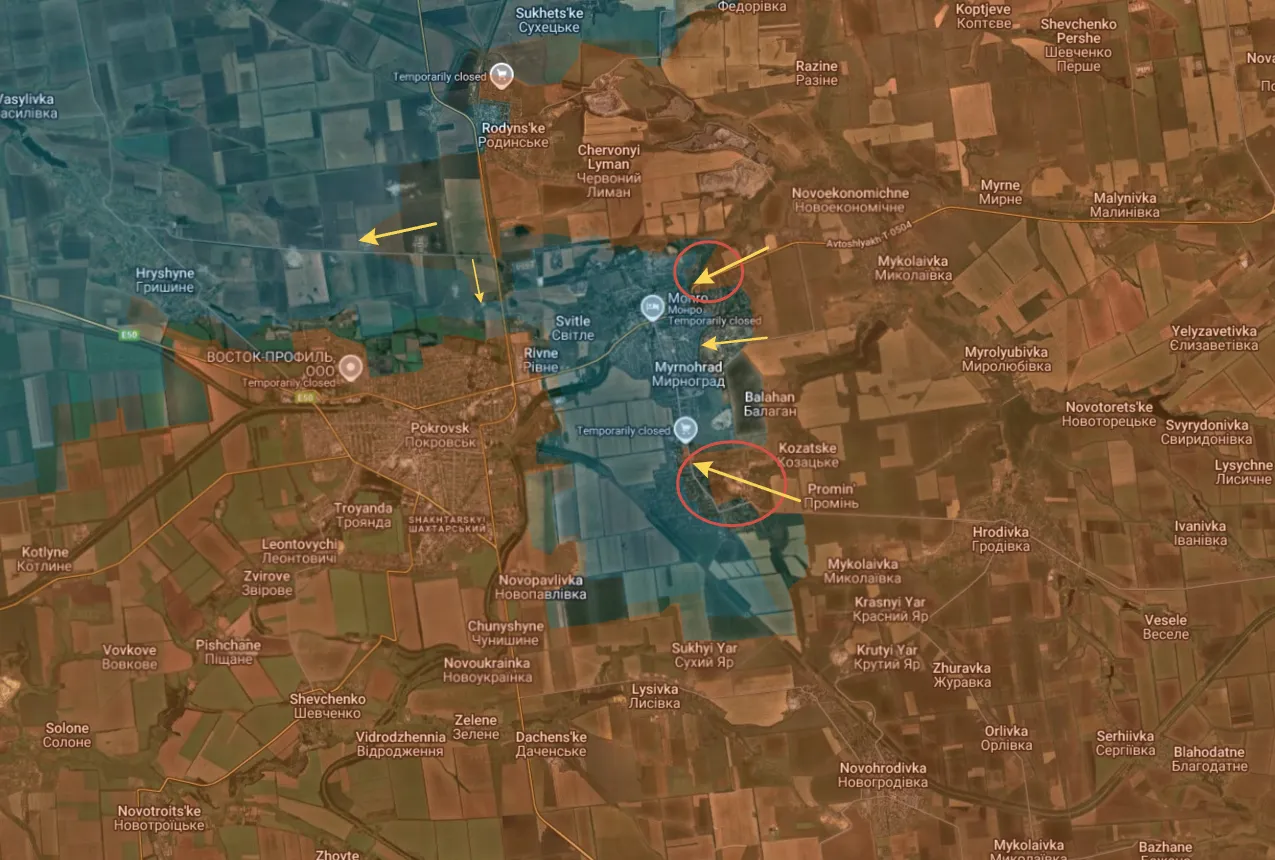
The reason such seeming encirclements do not result in complete or instantaneous collapses in modern warfare—as they would in the past—is because with the advent of drones, the trapped garrison can still receive ample resupply via the larger Baba Yaga type drones, which can regularly drop ammunition, food, and water to the besieged troops. A French reporter recently visited the Ukrainian front and implied the majority of supplies were already being delivered by large drone there:
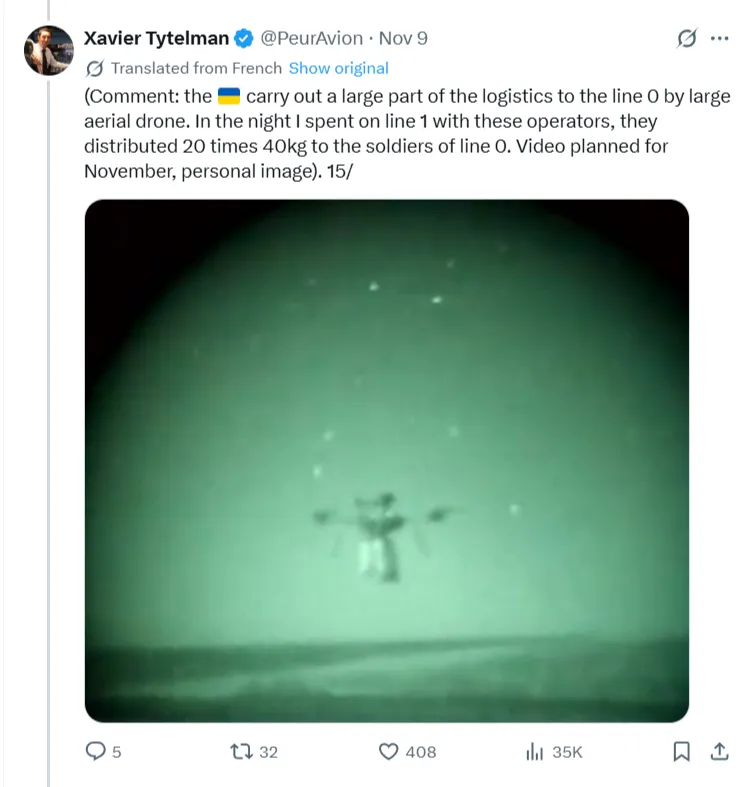
Of course, even this has its limits and will not allow them to hold too much longer.
A fascinating Russian write-up on the Pokrovsk situation which describes the new style of modern ‘shadow warfare’ taking place there—from veteran Russian frontline reporter Alexander Kharchenko:
Battle of Shadows
Ukrainian analysts on the maps have almost completely painted Pokrovsk red. But yesterday Zelensky stated that there are only 314 Russians inside the city. Let’s try to understand this paradox.
No, the Russian army has not been ground down by the Ukrainian defense. Tens of thousands of Russian soldiers are operating near Pokrovsk. You can see this if you get on a van-cabriolet and drive northwest from Selidovo. There are many vehicles. But if you look at Pokrovsk through a drone camera, you will hardly notice any soldiers. The fighting for the city is ongoing, but it is not engulfed in flames, and machine gun bursts are heard very rarely.
Both sides keep their main forces 10 km from the city. Drones control all approaches, and only the most desperate daredevils can get through this barrier alive. So it turns out that inside Pokrovsk only the shadows of the two armies, which stand on its outskirts, are fighting. Zelensky clearly underestimates the Russian forces, but you will no longer see an assault in the spirit of Bakhmut. There are fewer soldiers in the city than civilians. Three people can storm one street, and the most interesting thing is that they will be fighting against three similar enemy soldiers. And all this happens in front of a dozen grandmothers and grandfathers who did not want to leave the city.
When you imagine this picture, you will stop tormenting yourself with meaningless questions. War has changed and it no longer resembles a Hollywood action movie. This battle of shadows still needs to be described in literature. Meanwhile, we need to accept reality and study the vectors of its development.
Pokrovsk is 95% taken by the Russian army, but the complete encirclement of Ukrainian troops in Mirnograd has not happened.
Building both the outer and inner rings with a front movement speed of about 5 kilometers per month and kill zones of 15-20 kilometers is practically impossible.
The current discussion is about cutting off logistics, but for Mirnograd, logistics have been cut off for quite some time. However, the fact that the Russian Armed Forces are still holding in the breakthrough zone near Dobropillya, supplied by drones, shows that even in such a situation, it is not easy to dislodge the enemy. But, as I have already written, sitting in encirclement can make sense if there is some practical purpose. For example, gaining time to set up the next defensive line, preparing reserves in the rear, or at least having negotiations imminent.
However, the only reason Zelensky has not given the order to retreat is politics, and he himself admitted this. The President of Ukraine had a rather awkward meeting with the Chief of the General Staff of the Armed Forces of Ukraine, Hnatov, who vaguely mumbled that the Russians had indeed slipped into Pokrovsk, and decisions would be made by the military command. This sounded like a hint that the situation is under control and that the military, not politicians, are making the decisions.
But he said this immediately after Zelensky’s comment, who was sitting right opposite:
I think Russia, with this story about Pokrovsk, is trying to show success on the battlefield. Then they might try to revive the narrative that we will capture Donbass. [...] This is a factor that could influence the imposition or delay of sanctions.
This is how the President of Ukraine sees the situation; from his point of view, it is absolutely unacceptable to let the Russian Armed Forces capture Pokrovsk because it would be an argument for Trump to agree to Putin’s terms, and it could also delay sanctions. Therefore, he does not care about Hnatov’s opinion (if he even has one), who lies that decisions will be made by the military, not political leadership. Although this meeting in the presence of the press showed who and why makes the decisions.
But now, staying in Mirnograd threatens the destruction of two strong brigades. We do not doubt that they can organize an orderly exit from the city and will have this opportunity for a long time, but by staying in the city, they suffer losses. Not only direct losses but also because there is no way to evacuate the wounded. Supplies can be delivered by drones, but they do not yet transport people. And the later the retreat, the greater the losses will be, unless the Ukrainian Armed Forces can unblock Mirnograd from the north. There is such a chance, but it is, to put it mildly, not one hundred percent.
Does Zelensky understand that he can now buy some time at the cost of extra losses and already scarce infantry, but in the longer term lose much more? Most likely, he does not. And Pokrovsk may become the place where Ukraine lost the war.
Military analytics
Further north, Russian forces have closed in on Seversk to the point where the city is reaching its final brink before full penetration:

In the far north, Kupyansk saw a major Ukrainian counterattack with the purpose of relieving pressure on the city. This initially chewed off a piece of the Russian flank at the spot circled in yellow below, but it did not prevent Russian forces from advancing throughout the last southernmost portions of the city and capturing most of the remains there:
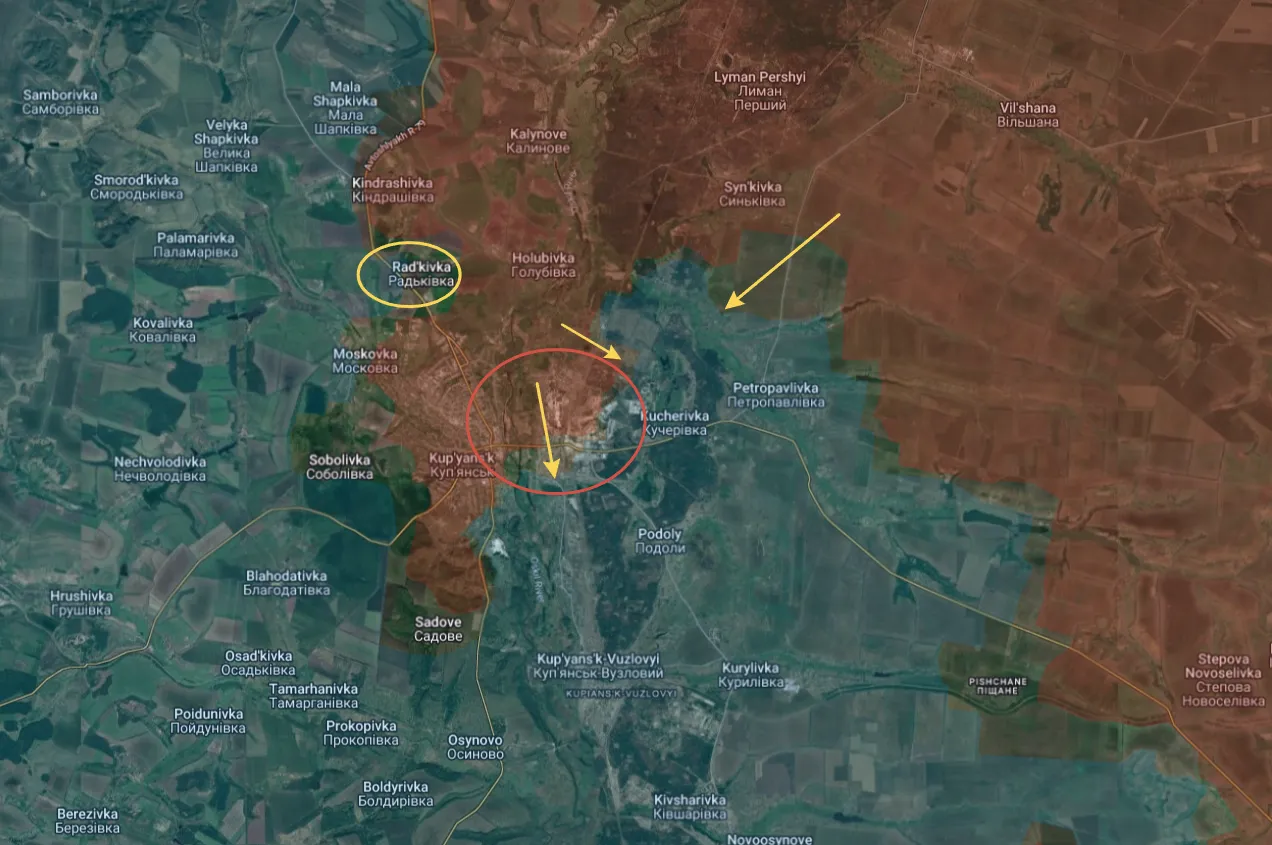
A note on this ‘counteroffensive’:
Yes, reserves (AFU) were brought into battle, including those that were located several months ago in the border territories of Chernigov and Sumy regions. The “counteroffensive” on the Kupiansk front began three days ago but has not brought significant success. Currently, the Russian Armed Forces units continue to face enemy counterattacks while simultaneously occupying more and more territory within the city itself.
The hasty counteroffensive on two fronts is a typical tactic of “containing betrayal” in Ukrainian society – the result is not important here, but the image, like “we are doing at least something,” despite the collapsing directions. At the same time, the position of enemy units in Kostyantynovka continues to be unstable – day by day, Russian assault troops advance forward, and directed urban battles similar to those in Pokrovsk and Kupiansk are already visible on the horizon. However, the enemy command sends reserves to the main “betrayal” directions precisely because they are more popular in the media than Kostyantynovka.
Meanwhile, the work continues...
—
Some last items:
The devastating power of Russian glide-bombs continues to be demonstrated. Here the Fab-3000 makes it clear how untenable it is for Ukrainian troops to hold static city positions for long: (Video at link.)
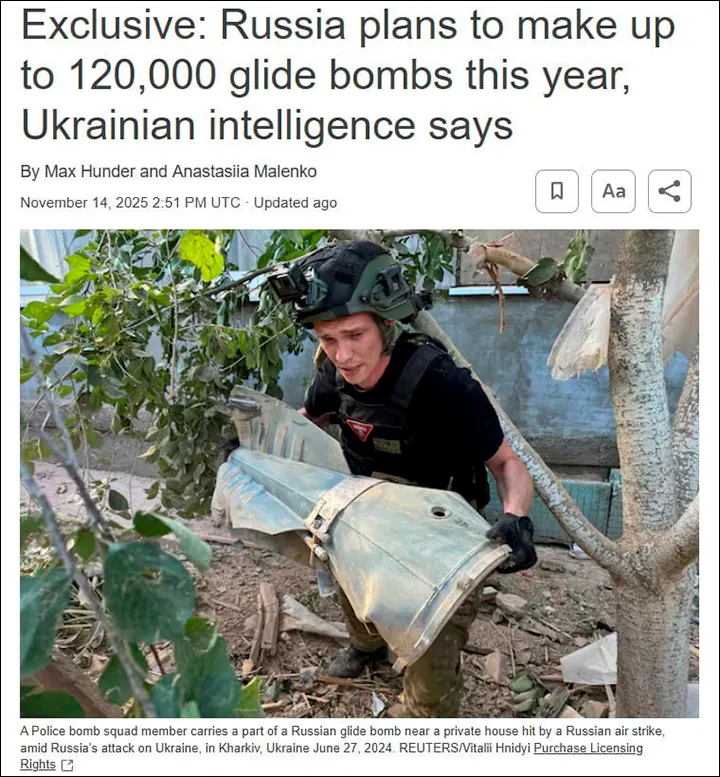
Meanwhile, Ukrainian sources state Russia is on track to manufacture a mind-numbing 120,000 glide-bombs in the coming year:

This equates to 10,000 a month, or 333 per day—which is simply staggering.
—
Ukrainian manpower woes continue:

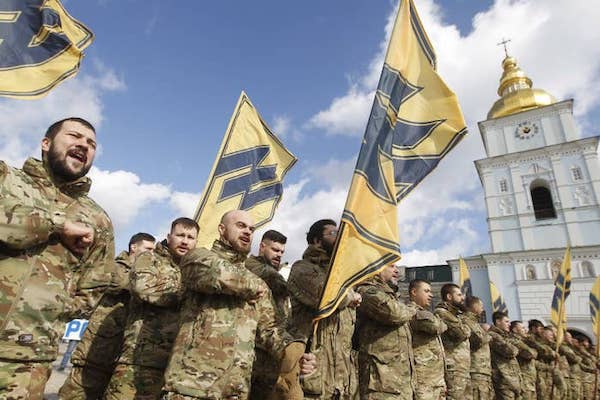
Recently, a top Ukrainian figure—former leader of the Kiev branch of Azov—stated that in a newly formed brigade, there were already 3,000 ‘SZCh’ before the brigade was even formed:

SZCh is самовільне залишення частини” (self-willed leaving of the unit), or in other words, AWOL. Given that a Ukrainian brigade likely only has 3,000 - 3,500 people tops, this figure would represent virtually the entire brigade.
That said, many or most SZCh end up being forcibly brought back—though their morale after that point would likely be ‘questionable’, to say the least.
—
Russia has launched a new quiet mobilization that many have not heard of. This time it is a mobilization of reservists but only for the purpose of acting as anti-air troops on the Russian territory, to defend against UAVs targeting energy infrastructure:

—
Lastly, on the topic of mobilization some may recall that I had opined several weeks ago that the reason Russia’s recruitment payouts had dropped was not because it was “running out of money”, as the pro-UA crowd crowed, but rather that Russia was likely exceeding its recruitment numbers and no longer needed to pay such exorbitant amounts. Well, what do you know—I was right, and here it’s even confirmed by the ‘venerable’ pro-Ukrainian analyst Michael Kofman

https://x.com/jakluge/status/1988199587228836242
German think-tanker Janis Kluge writes:
My latest post also discusses why several regions lowered their sign-on bonuses. These regions are “recruitment overachievers” who could afford to focus on fixing their budgets.
Of course, it’s still couched in the specious framing that these ‘overachievers’ are secondarily lowering the bonuses to “fix their budgets” in order to inject at least some negative aspect or angle to the clearly “inconvenient” datapoint. It has nothing to do with “fixing their budgets”: they merely surpassed their recruitment goals and no longer needed to pay extra—simple as that, without the fat.
We leave off with the latest Charlie Hebdo cover:

https://simplicius76.substack.com/p/cho ... s-movement
******
Kiev’s corruption cesspit is dragging the complicit EU down with it
November 14, 2025
The criminal proxy war is destroying its Western architects and sponsors.
The latest scandal involves $100 million in graft by senior Ukrainian government ministers and Zelensky’s friend, known as “his wallet”. The racketeering and Western complicity account for why this war drags on, with thousands of Ukrainian casualties every week.
The thieves in Kiev are only the scum that float to the surface. The real criminals are the Western so-called leaders who have enabled the entire war racket, a racket that bleeds Western societies and which is no longer concealable.
Even Western media are openly reporting the brazen corruption of the Kiev regime, with many commentators questioning how long the nominal president, Vladimir Zelensky, can remain in office, given the mire of sleaze engulfing him.
The Western media – in hock to their governments’ political agenda – have always played down the rampant corruption in Kiev, even though official U.S. and European auditing officials have at times flagged up the issue as a matter of grave concern. The European Union itself has half-admitted there is an endemic problem by insisting on reforms to clean up corruption as a condition for Ukraine joining the bloc in the future.
Up to now, the audacious racketeering in Kiev has been partly covered up by Western media claiming that it was “Russian propaganda” to smear Ukraine and its NATO sponsors. Well, it turns out that the rank thieving and money laundering in Kiev is not Russian propaganda. It is a fact that even the Western media can no longer ignore.
Still, the cover-up continues somewhat. Incredibly, Western governments and media are continuing to tolerate Zelensky and his cronies crying for more money, instead of demanding his resignation.
Four months ago, Zelensky, who has cancelled elections and made himself president indefinitely, tried to curb Ukraine’s anti-corruption agencies by removing their independent powers. That blatant move sparked mass protests, and he had to backtrack quickly amid public outcry.
This week, the same agencies uncovered the biggest corruption scandal yet in Ukraine’s long history of graft. The country’s energy sector was being milked by embezzlement and kickback schemes implicating senior ministers, industry chiefs, and a personal friend and business associate of Zelensky, who has fled overseas.
The justice minister, German Galuschenko, and energy minister Svetlana Grinchuk have had to quit pending an investigation. The alleged mastermind of the embezzlement is Timur Mindich, who fled the country before being arrested. He is a friend and business partner of Zelensky, who has gotten rich on government contracts since Zelensky became president in 2019, after laughably promising voters that he would eradicate Kiev’s notorious corruption.
The latest scheme involved contractors, who are tendering to build protection infrastructure for the country’s power industry, paying massive kickbacks to regime chiefs and business heads.
As the country suffers blackouts from the energy sector being hit by the war with Russia, it transpires that the problem has been greatly exacerbated by the Kiev regime being too busy siphoning off money rather than protecting the industry to serve citizens. The scandal is all the more grotesque as the nation faces mid-winter shortages and its soldiers are being killed amid collapsing frontlines in the east of the country.
Since the NATO proxy war against Russia escalated in February 2022, it is estimated that the United States and the European Union have pumped around $400 billion of Western taxpayers’ money into Ukraine. Western citizens have been bled dry by this war racket, which has enriched the military-industrial complex while paying off the Kiev regime.
President Donald Trump seems to have grown leery of the racket. Under his presidency, Washington has scaled back the money supply. Not so the European elite who keep pumping public money into the cesspit.
Hungary’s Prime Minister Viktor Orbán pointed out the madness of the EU leadership for insisting on throwing more money into Ukraine in light of the “mafia” under Zelensky. Orbán said his country is refusing to donate any more funds to Ukraine.
No doubt other European states are taking note of the despicable, criminal farce. As EU citizens endure increasing economic hardship from austerity and mounting living costs, their political leadership insists on supporting Ukraine in a futile proxy war.
This war should never have started and could have been avoided if the U.S. and European governments had engaged in diplomatic efforts with Russia. The NATO powers wanted a proxy war, and they, along with the servile media, concocted a fairytale narrative about “brave, noble” Ukraine fighting for supposed Western values against “Russian aggression.”
The conflict has persisted for nearly four years. European economies have been wrecked, and up to 2 million Ukrainian soldiers have been slaughtered – all for the Russophobic fantasy among NATO ideologues to “defeat Russia”.
The war has been a senseless bloodbath that has been sustained by Western lies and extortion of the Western public to prop up a corrupt regime in Kiev.
Now the corruption of the racket has become so putrid, it can no longer be covered up.
It is becoming politically precarious for Euro leaders to make the case for funneling more public funds to a regime that is siphoning off that money.
Hence, the European Commission President, Ursula von der Leyen, and her coterie of Russophobic elites, are proposing that billions will be routed to Ukraine not with public funds but with frozen Russian assets. As if that would make it any less criminal.
This week, Von der Leyen appealed to the European Parliament that €140 billion of Russian funds confiscated by the EU should be used as collateral for loans to Ukraine. These insane warmongers don’t know when to stop.
In the end, it’s fitting justice. The criminal proxy war is destroying its Western architects and sponsors. The Kiev cesspit is dragging them down. Good riddance.
https://strategic-culture.su/news/2025/ ... n-with-it/
******
Gulyaypole in safety
November 15, 9:03 PM

Field fortifications ( https://t.me/opor_2014/20235 ) covering Hulyaipole from the east and northeast.
Note that Yablokovo is already under the control of the Russian Armed Forces, and our troops reached the outskirts of Zatishie today. This effectively indicates that our troops routinely overcame the main line of Ukrainian Armed Forces field fortifications covering Hulyaipole from the east.
To the north, the Pokrovskoye-Hulyaipole road is already physically cut near Danilovka. The bridge over Pokrovskoye was demolished two weeks ago. Near Huliaipole, drones are burning enemy equipment on the roads, isolating this section of the front. As soon as Huliaipole is further encircled from the north, we can expect more active operations from the east and south to tighten the grip around the city.
Bezuglaya continues to hysterically predict the Ukrainian Armed Forces' retreat from the city and its surrender, but of course, blaming Syrsky, who has become Zelenskyy's gang's usual scapegoat for all failures on the front, rather than the cocaine-fueled Führer.
P.S. Towards evening, good news is still coming from Novopavlovka (partly our fault) and the Velykymykhaylivka area. The junction of the Zaporizhzhia and Dnipropetrovsk regions continues to provide consistently good news from the front. Without additional reserves, the enemy can hardly hope to stabilize the front in this sector. But they need to be drawn from somewhere.
https://colonelcassad.livejournal.com/10189082.html
The Hedgehog system
November 16, 9:58

The "Hedgehog" anti-drone defense systems, fashionable in 2025, are replacing the Mangal Tsars and Saray Tsars.
In this case, the "Hedgehog" is combined with DZ blocks and frontal chains.

https://colonelcassad.livejournal.com/10189387.html
Google Translator

 Where else are there successes ?
 In the area to the east, fighters from the "Vostok" group are advancing north of Volchye toward Tikhye . Several forest belts have come under control.












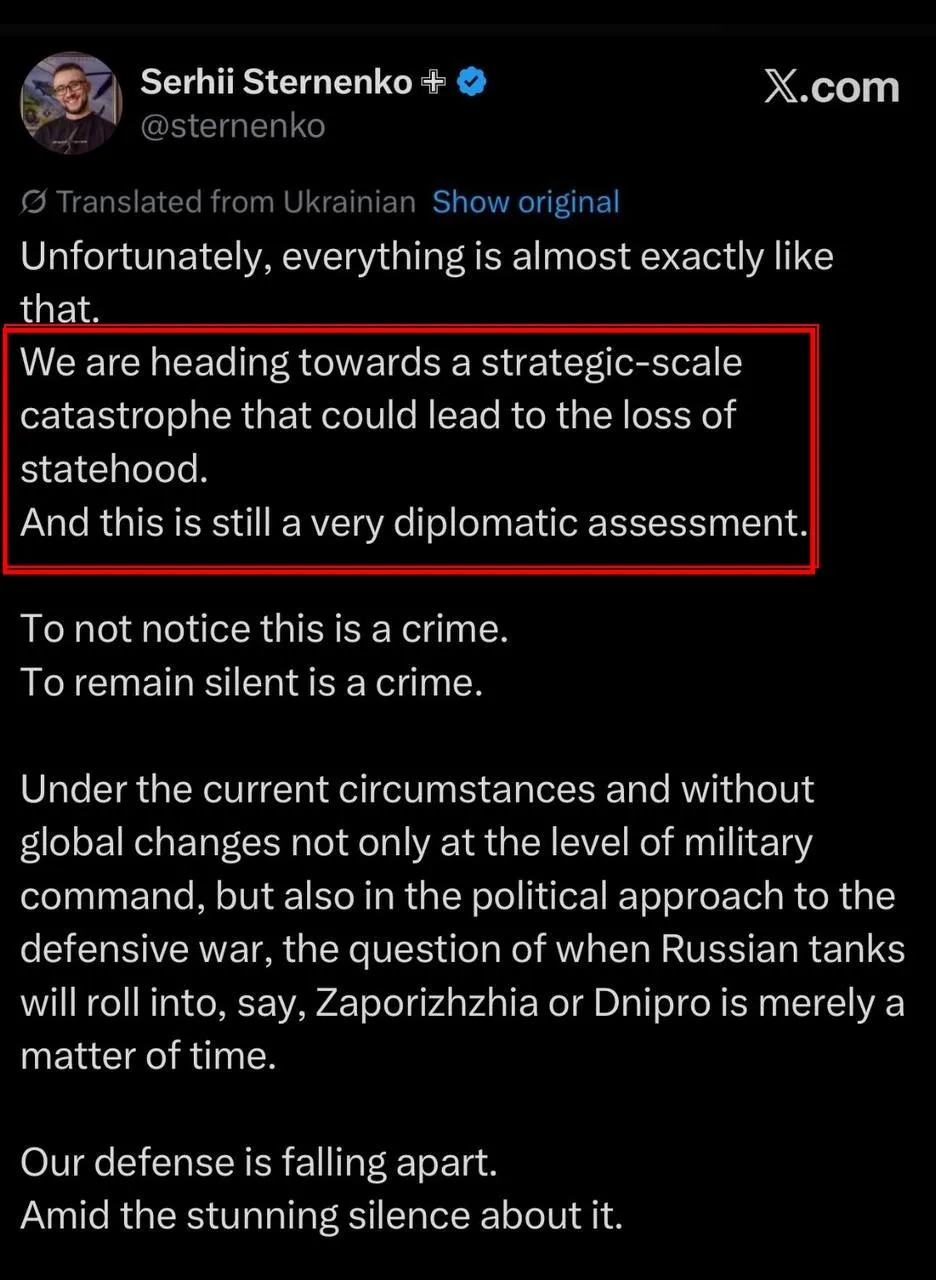

 A Ukrainian soldier from the 35th Marine Brigade:




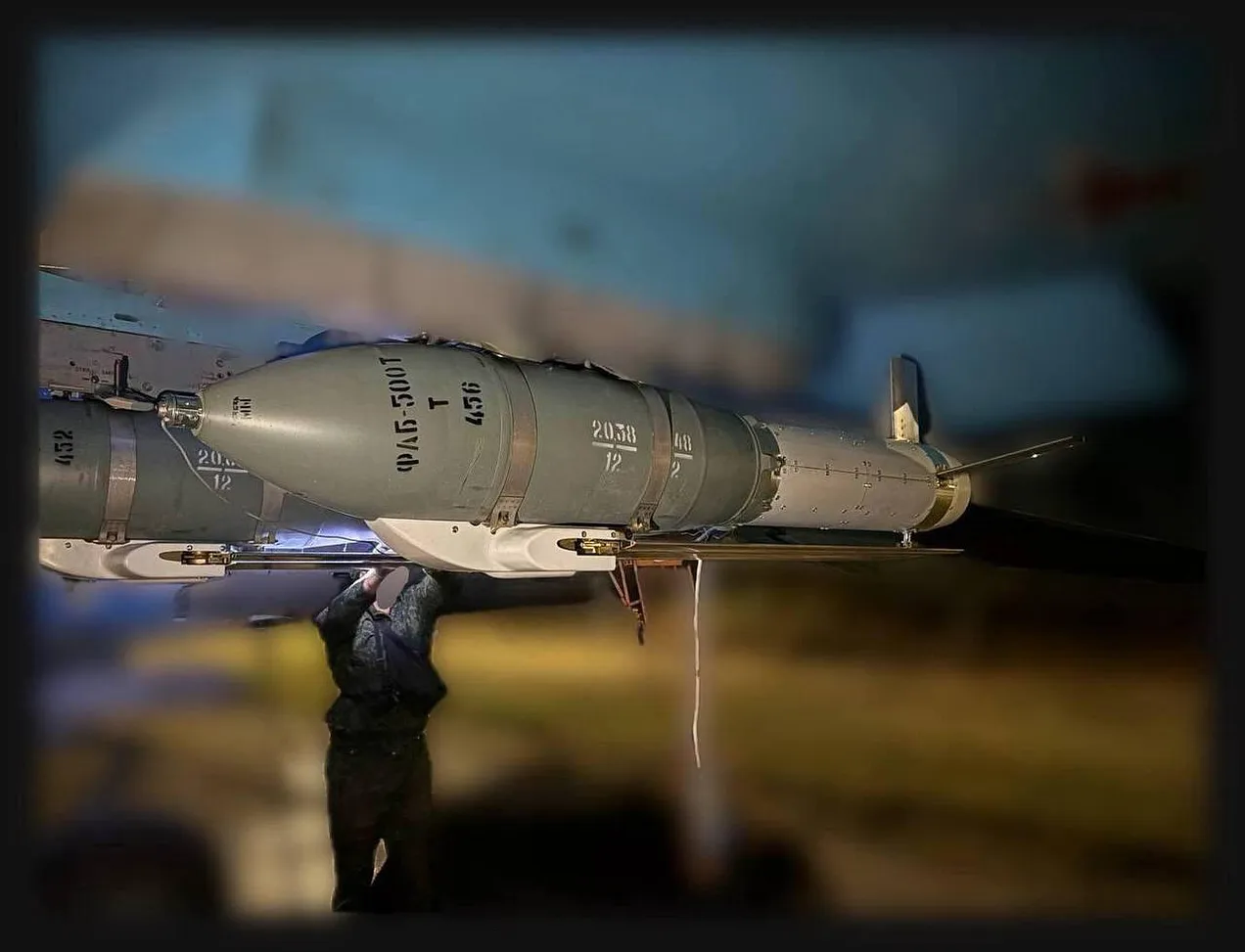








 The object in the video has a speed and trajectory that are not typical for a normal target approach. For example, the Geranium-2 dives toward its target at an angle and a speed of approximately 300 kilometers per hour. A cruise missile, even a subsonic one, also descends in a non-vertical direction during a dive and accelerates to speeds in excess of 1,000 kilometers per hour. The Iskander-M missile reaches hypersonic speeds during its approach to its target and also descends at an angle.





























 The hottest point right now is the southern flank. There, the gray zone has almost consumed the entire district: the enemy’s movement is constant, they advance in small groups, changing routes to disrupt the pace of our defense. But they also die there in packs because they have not been able to firmly establish themselves — they rush in, get hit hard, retreat, and try again.