Epstein: The Never Ending Story
Posted: Thu Feb 05, 2026 3:34 pm
Epstein and politics
Zelensky, Chomsky, Slovakia, Abramovich, Vilkul
Events in Ukraine
Feb 03, 2026
We all know that Epstein did bad things to little girls. But what exactly was he up to in the world? Why was he constantly discussing high (geo)politics with the world´s most powerful men?
Anyway, the western press is naturally running with the narrative that he was a spy for the all-powerful Putler. Naturally, the Polish PM concurs.
One often wonders why exactly the west hasn’t collapsed already, given such a level of deep infiltration of its political elite by the erstwhile enemy. But I’ll leave such paragraphs for the journalists at the Times to grapple with.
The reality, of course, is that almost all of the thousands of mentions of ‘Putin’ in the Epstein files are from the news articles he obsessively sent himself. When it comes to heads of state, the only person that Epstein was emailing personally on a (very!) regular basis was Ehud Barak — former prime minister of Israel, as well as ex-head of the Israeli military intelligence.
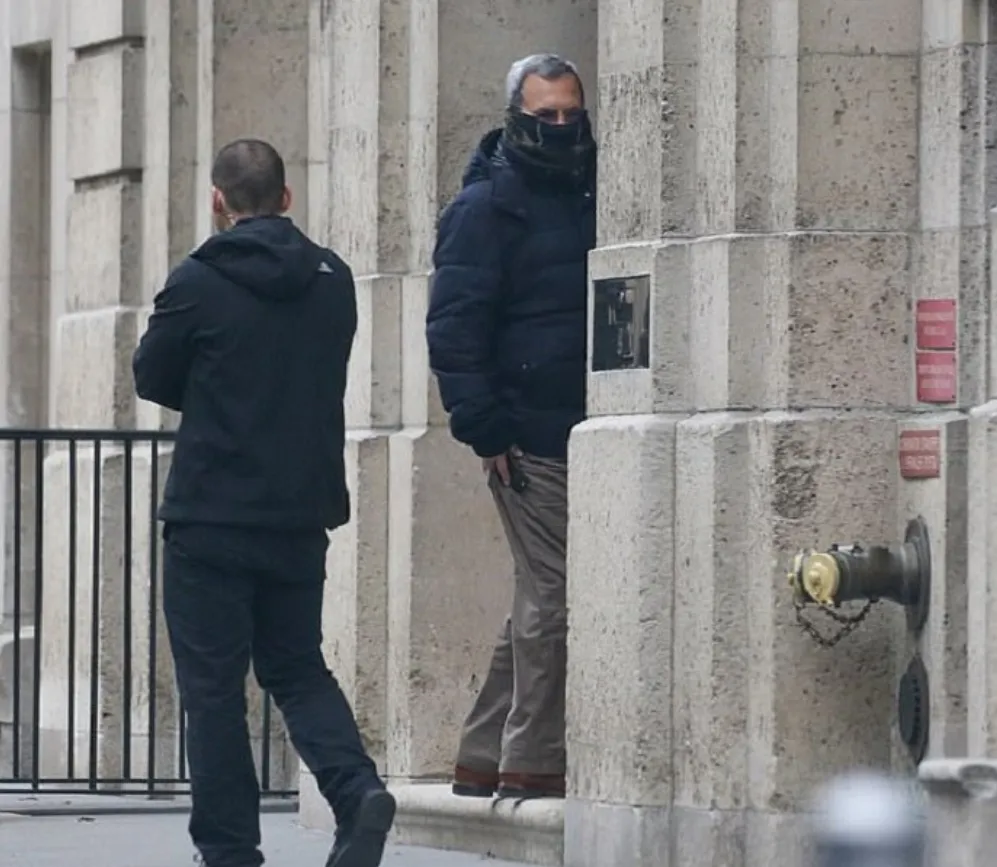
Barak’s furtive visit to Epstein’s residence in 2016
So Epstein was an Israeli agent? It’s certainly more likely than the alternatives. But I would push back on one popular narrative. This is the idea that Epstein entrapped public figures, sexually blackmailing them into abandoning any stances against the state of Israel.
To begin with, if this were true, one would see sex scandals targeting prominent anti-zionists. But most of the elite sex scandals I hear about don’t involve particularly anti-Israeli figures. Peter Mandelson wasn’t exactly a partisan of the Palestinian people. But he just left his post in the house of Lords due to the latest Epstein revelations.
And besides, if we’re talking about the sexual abuse of children by members of the elite, this is something like nuclear weapons in geopolitical terms. Mutually assured destruction.
Assume Epstein was taking videos of politicians violently abusing children with the intent of releasing them under certain conditions. If such videos really were released to the public, this would entirely shatter any public trust in their governments as a whole. Sure, the Epstein affair has already had such effects. But so far, there is still no smoking gun evidence that, say, Hillary Clinton ate a toddler. These aren’t weapons that can be used in inter-elite disputes, since it would destroy the elite as whole.
Don’t get me wrong, I’m not doubting that the power elite does terrible things to vulnerable people. And I do think such actions have real functions.
My view is that such activities act to solidify the elite, even to initiate one into it, so to speak. Acts of absolute transgression in the presence of others act as a powerful bond for the perpetrators. A deadly secret becomes shared. Each person involved knows at a deep personal level that he is just as bad as his peers. Moral reflection becomes entirely impossible, if it ever was for such people.
Besides, top members of the business and political class often have to do rather illegal things. A speculative financial deal impoverishing much of their own populations. Illegal arms sales. Secret negotiations with terrorists. Organizing a bloody false flag operation.
Having shared dark secrets after Epstein’s dinner parties further consolidates those involved in managing this world’s savagery. In that sense, figures like Epstein and the activities they organize are certainly crucial to the political fabric of the world.
But there isn’t just symbolic significance here. The emails show that Epstein was also involved in giving financial advice to figures of power. His putative expertise in this field also extended beyond the world of finance.
As Epstein said in a 2015 email with Noam Chomsky, modern politics is becoming increasingly similar to financial trading. As such, Epstein discussed events in Ukraine (and other global hotspots) with the former prime minister of Norway, head of the European Court of Human Rights, and general secretary of the council of Europe, Thjorborn Jagland:
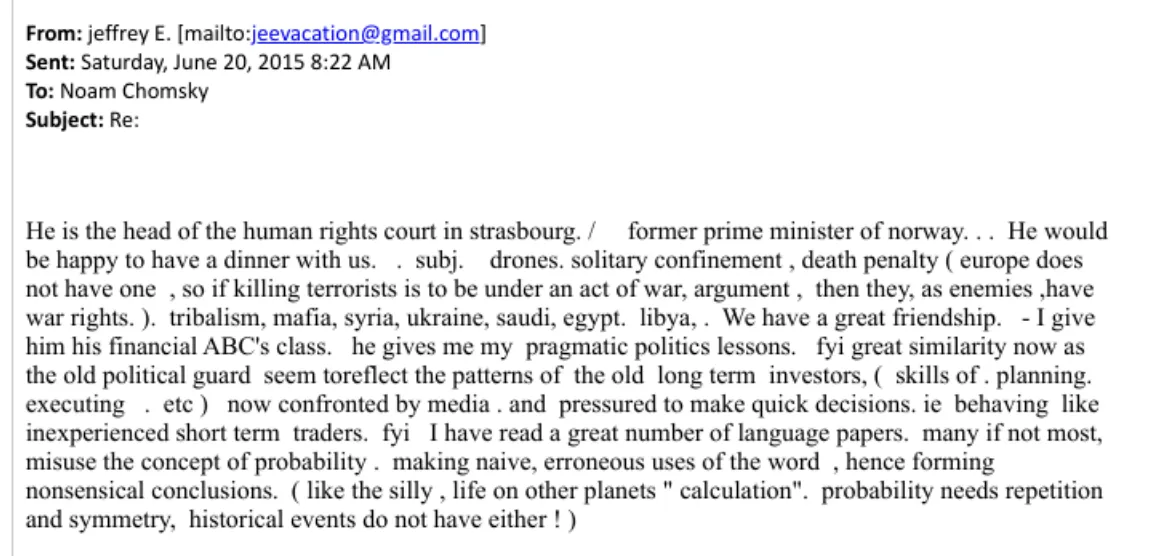
Politics as financial trading. When people rightfully point out Epstein’s obvious stupidity, the same is true of the polished politicians who respected him. Indeed, many of the actions of contemporary world leaders can be described little other than as the behavior of ‘inexperienced short term traders’.
Epstein’s powerful interlocutors seemed ready to put up with all his crackpot ideas. In another email, Epstein even boasts that Jagland appreciated hearing about Chomsky’s heterodox ideas on western imperial hypocrisy.
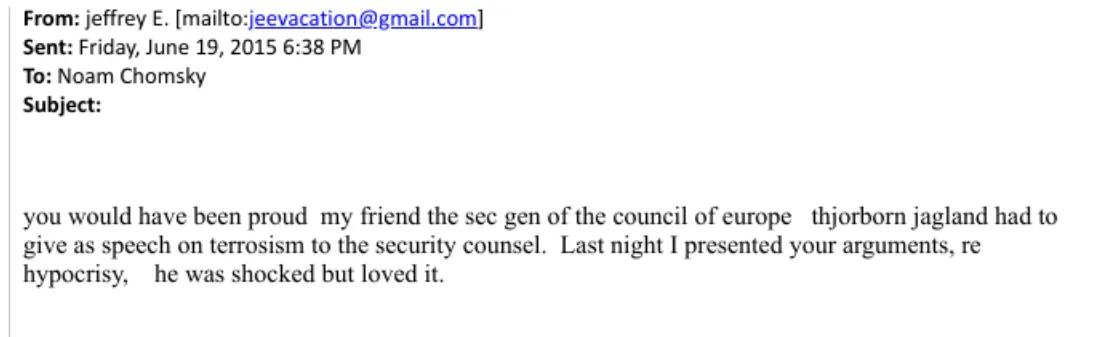
Epstein as operator
Epstein doesn’t exactly strike the tone of an ideologically puritan Atlanticism. I doubt he was much help in organizing broader NATO strategy towards eastern Europe. As his friend Alex De Rothshchild remarked to him in 2014, Ukraine’s pro-western revolution was merely beneficial to Epstein in terms of instability and poverty. As we saw yesterday, Epstein was more enthusiastic about snapping up untrustworthy Ukrainian real estate assets than even his friend, Jean-Luc Brunel (the pedophile that committed suicide in prison in 2022).
So what was his function? I think it’s fair to speak of at least two.
First and probably foremost, as an intermediary. Epstein’s provision of sexual services to the rich and powerful of the world offered him a wealth of contacts. If American diplomats wanted a back channel with the Russians or with pro-Russian politicians in Ukraine, Epstein was one of those to call. In this respect, one could rightfully draw parallels between Epstein and Chabad, the Jewish sect which keeps popping up as intermediaries for Trump’s shadow diplomacy in Ukraine and Russia.
An example of the type of useful contacts Epstein could boast of comes, for instance, in an early 2013 email. Here, seemingly one of Epstein’s ‘girlfriends’ tells him about her current destination:
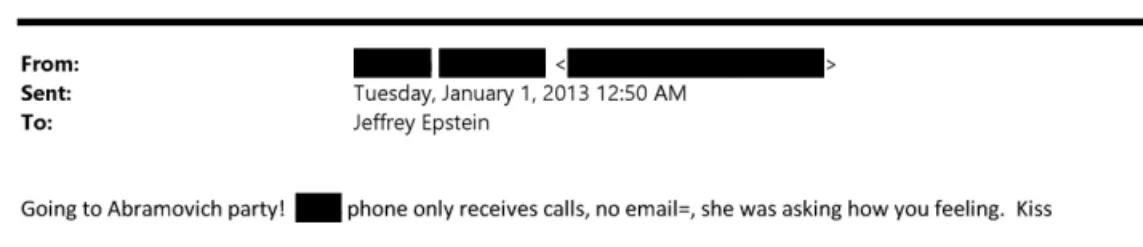
Roman Abramovich is one of Russia’s richest men. Though certainly a figure with a line to Putin, this is hardly a militarist opponent of the west. On the contrary, Abramovich was prominent in the March 2022 negotiations with Ukraine, as well as the grain deal that came a few months later. Abramovich was kind enough to fly Ukrainian POWs back from Russian captivity in his own private jet later in 2022 — he even gave them free iphones.
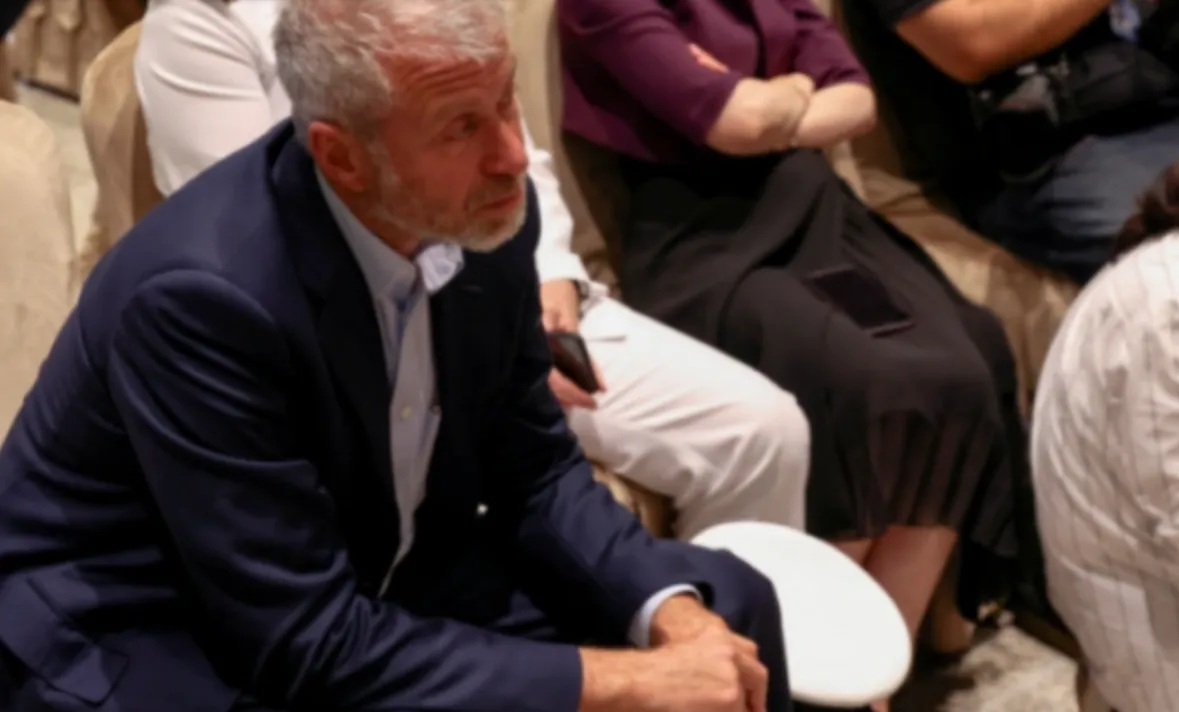
Abramovich at the grain deal signing ceremony in Istanbul, July 2022
In other words, this is a typical member of the Russian economic elite that would much prefer close economic ties with the west to anything else. That’s where his bank accounts lie, after all. This is someone considered a traitor by Russian patriots. A very important figure for western intelligence to have a line on, a line through which to send confidential messages. A way to coordinate negotiations. No doubt Epstein wasn’t the only such possible way into figures like Abramovich, but I’m sure it doesn’t hurt to have numerous options.
Second, Epstein surely functioned as a source of information. Epstein knew many and heard many things. In his emails, he was clearly a great fan of telling other powerful individuals interesting intel. I find it hard to believe that he wasn’t communicating even more explosive things through more secure channels to, say, his good friend Mr Barak.
Now we’ll examine Epstein’s likely designs on Zelensky, Epstein’s ‘pro-Russian’ (but actually quite the opposite) contacts in Ukraine, the geopolitical nature of his Slovakian friend, and much more.
(Paywall with free option.)
https://eventsinukraine.substack.com/p/ ... d-politics
*****
The Epstein Saga: Chapter 7, Hello Mr. Burns
Lorenzo Maria Pacini
February 5, 2026
A key figure in American political power, a connecting link between Democrats, Middle Eastern diplomacy, and intelligence, began associating with Epstein in 2014 and later became Director of the CIA.
A Highly Successful Director
Imagine being the Director of the CIA, as well as a veteran of American diplomacy. Power, knowledge, political and military influence. Now imagine a long series of trips to meet Jeffrey Epstein.
William Joseph Burns is regarded as one of the most experienced figures in U.S. foreign policy, with more than three decades of service at the State Department. Over the course of his career, he served as ambassador to Jordan, Under Secretary of State for Political Affairs, and played a key role in the secret backchannels with Iran that paved the way for the nuclear deal, building a reputation as a discreet, effective negotiator deeply embedded in the “labyrinths” of Washington’s bureaucracy. An impressive career, to say the least—a true statesman.
In 2014, Burns was Deputy Secretary of State, effectively the number two official at the Department, with direct access to the most sensitive dossiers on Russia, the Middle East, Iran, and the Ukrainian crises. Since 2021, he has led the CIA, a position that places him at the apex of the U.S. intelligence apparatus, already shaken by unresolved questions surrounding the handling of the “Epstein case.” It is precisely in 2014 that his contacts with Epstein begin, and it is easy to understand why every detail concerning his prior interactions with the financier is not perceived as mere social curiosity, but rather as a potentially significant piece in the mosaic of relationships linking political elites, intelligence services, and a figure at the center of a transnational network of sexual abuse, blackmail, and opaque financial flows.
Epstein’s internal documents—particularly calendars and emails reconstructed through journalistic investigations—indicate that at least three meetings between him and William Burns were scheduled in 2014. Reconstructions converge on a sequence: an initial meeting in Washington, followed by at least one visit by Burns to Epstein’s Manhattan townhouse, with the possibility of another meeting in the same city. These appointments appear in Epstein’s records between 2013 and 2017, that is, during a period in which the former money manager had already served a sentence for sexual crimes in Florida and was formally registered as a sex offender.
A CIA spokesperson, questioned after the revelations, stated that Burns—then Deputy Secretary of State—had been introduced to Epstein as a financial expert capable of offering general advice on transitioning into the private sector. According to this account, Burns allegedly had no detailed awareness of Epstein’s criminal past and did not maintain an ongoing relationship beyond those few meetings, described as limited contacts with no further developments. The spokesperson also emphasized that “they did not have a relationship” and that the Director does not recall subsequent contacts, including any car rides allegedly provided by Epstein.
However, several counterintelligence specialists have described it as “stunning” that such an experienced official would agree to meet a high-profile sex offender, stressing that even a minimal reputational background check should have raised red flags. From this critical perspective, there are only two possibilities: either Burns knew who Epstein was and underestimated the gravity of the issue, or he failed to ask sufficient questions—demonstrating, according to these analysts, a degree of carelessness incompatible with the security standards expected of someone who leads an agency like the CIA.
Elites and Intelligence
It is important to clarify what the documents that brought Burns’s name back into the spotlight do—and do not—represent. Epstein’s private calendars, agendas, and staff emails are an incomplete source: they record planned appointments, meeting proposals, invitations to events, and travel arrangements, but they do not always confirm that every entry resulted in an actual meeting. In Burns’s case, however, multiple sources agree that at least one or two of these meetings did take place—something the CIA spokesperson did not deny, while attempting to downplay their significance.
These calendars differ from Epstein’s private jet flight logs or the so-called black book, which listed contacts, phone numbers, and addresses and over the years fueled more or less responsible lists of names associated with the financier. While the black book suggests potential lines of contact and flight logs imply physical presence on aircraft and routes, the calendars represent the dynamic map of the social and business network Epstein sought to build. In this framework, Burns’s presence—at a moment when he was exiting a top-tier government role—places him among the high-level interlocutors Epstein aimed to involve in consulting activities, projects, or simply relationships of influence and prestige.
The political and media issue is not limited to what happened—some meetings in 2014—but extends to how and why. On the one hand, the official narrative insists on the absence of any structured relationship: Burns is portrayed as one of many officials leaving government service who, at the end of a long career, explore potential opportunities in the private sector, turning even to individuals presented as experts in finance and networking. On the other hand, a high-profile sex offender like Epstein was hardly an obscure figure in 2014, and merely crossing the threshold of his townhouse should have triggered ethical and security alarms.
The Burns case illustrates a systemic problem of “willful blindness” among elites, who are more inclined to value access to capital and contacts than to consider the risks of associating with toxic figures. The White House chose a policy of silence, declining to comment directly on the revelations regarding the 2014 meetings—a decision that reinforces the perception of a politically sensitive dossier that has not yet erupted at the institutional level.
Yet there is a detail that many risk overlooking: Burns was one of the quiet pillars of Barack Obama’s foreign policy.
The trajectories of the two men intersect during the decade in which Obama, first as a senator and later as president, sought to reshape U.S. foreign policy after the years of George W. Bush. Burns arrived at that juncture with a résumé already marked by explosive dossiers: ambassador to Jordan, then to Moscow, and later Under Secretary of State for Political Affairs—the third-highest position at the State Department. Obama met him personally in 2005 during a visit to the U.S. Embassy in Moscow, where he encountered Ambassador Burns and, by his own admission, was struck by his combination of caution, analytical clarity, and deep knowledge of Russian affairs.
When Obama entered the White House in 2009, it was no coincidence that he surrounded himself with figures “inherited” from the bureaucracy, considered reliable by both political parties. Burns was one of these technocrats of power, having served under five administrations, from Reagan to Obama. In those early years, the president faced the reset with Moscow, the war in Afghanistan, the remnants of Iraq, and the early signs of the Iranian nuclear crisis. In this context, Burns progressively emerged as one of the few officials Obama trusted enough to assign highly sensitive missions conducted outside official channels.
Perhaps the clearest sign of their relationship appears in Obama’s statement in April 2014 commenting on Burns’s retirement from the State Department. In that text, the president recalls meeting him in Moscow, admiring him from the outset for his precision, and adds a revealing sentence: “Since taking office, I have relied on him for candid advice and sensitive diplomatic missions.” Obama emphasizes that on multiple occasions he asked Burns to delay retirement—evidence of genuine political reliance on his ability to manage highly complex dossiers—going so far as to say that the country is “stronger” thanks to Burns’s service.
More than mere ceremonial rhetoric, diplomatic reporting confirms this centrality: biographical profiles and think tank analyses describe Burns as a “consummate diplomat,” a professional enjoying bipartisan respect, capable of engaging Netanyahu, Lavrov, Iranian negotiators, or Gulf monarchs with equal composure. In this context, the “friendship” with Obama takes the form of solidarity between cautious reformers: a president seeking to distance himself from the logic of military intervention, and a diplomat who had long argued for privileging negotiation over force.
A career without setbacks
The chapter that more than any other cements the political bond between Burns and Obama is that of the Iranian nuclear negotiations. Beginning in 2013, a small group of officials—led precisely by Burns and Jake Sullivan—was tasked with managing a series of secret meetings in Muscat, Oman, with Iranian representatives. The goal, as ambitious as it was controversial, was to determine whether there was space to defuse the nuclear crisis without open conflict, by opening a parallel channel alongside the official multilateral P5+1 format.
Accounts from those months, reconstructed by the Associated Press and other media outlets, speak of at least five secret meetings conducted by Burns and Sullivan, often with small delegations, during which the foundations were laid for the subsequent interim agreement and ultimately the 2015 JCPOA. In this narrative, Obama is the political decision-maker willing to risk enormous domestic and international credibility to achieve a historic outcome; Burns is the man who translates that risk into diplomatic practice, meticulously managing language, concessions, and pressure on skeptical allies—first and foremost Israel and Saudi Arabia.
One particularly significant detail concerns the triangular relationship between Obama, Burns, and Netanyahu. Analytical sources recall that the Israeli prime minister learned of the secret channel only in 2013 directly from Obama, and that managing this delicate balance—reassuring Israel while keeping negotiations with Tehran alive—depended in part on Burns’s ability to withstand intense crossfire. In some commentaries on Burns’s memoirs, the former diplomat describes Obama in largely positive terms on the Iranian front, crediting him with the determination to avoid “military adventures” and to invest in diplomacy under difficult conditions.
The Iran file is not the only one linking Burns’s political fate to Obama’s. As Under Secretary for Political Affairs and later Deputy Secretary of State, Burns was involved in the administration’s attempts to manage the Arab Spring, the war in Syria, the Libyan dossier, and, more broadly, the effort to realign U.S. policy in the broader Mediterranean after Iraq. His memoirs and several critical analyses note that, while supporting Obama’s negotiating approach, Burns was not without doubts—for example, he later reconsidered whether the United States should have taken a firmer stance against the Assad regime after the use of chemical weapons, in order to avoid a credibility vacuum.
This did not undermine his relationship with Obama, but rather reveals its nature: not blind loyalty, but an ongoing dialogue between a cautious president and a diplomat who shared that orientation while still pointing out the costs of certain hesitations. In essence, Burns embodies the most refined version of the Obama doctrine in the Middle East: fewer direct interventions, more multilateral pressure, more sanctions, and more parallel channels of communication—from Russia to Iran, from Gulf monarchies to opposition movements.
Around them moved an “Obama network” of figures who would later return to key roles: Jake Sullivan would move from the Biden vice presidency to President Biden’s White House; Wendy Sherman, who worked alongside Burns in the Iran negotiations, would become Deputy Secretary of State; other diplomats and advisers would find positions on boards of directors, in think tanks, and in foundations that populate the world of the American liberal establishment. Burns himself, after leaving the State Department, would lead the Carnegie Endowment for International Peace, one of the most influential foreign policy think tanks, becoming a permanent fixture in that ecosystem of intellectual and political elites shaped in part by the Obama experience.
Although Burns’s appointment as CIA Director formally came from Joe Biden in 2021, many commentators view that choice as the continuation of an “Obama line” on national security: placing a diplomat—rather than a former military officer or partisan politician—at the head of intelligence, reinforcing the idea that U.S. strength derives more from the negotiating table than from the battlefield. In this sense, the relationship with Obama helped define not only Burns’s public profile but also his symbolic role within the American power structure.
So, to sum up: Burns, a key figure in American political power, a connecting link between Democrats, Middle Eastern diplomacy, and intelligence, begins associating with Epstein in 2014 and later becomes Director of the CIA. Who knows what Burns and Obama whispered to each other, and even more so, who knows what they did on Jeffrey’s magical island.
All perfectly normal. That’s America!
https://strategic-culture.su/news/2026/ ... -mr-burns/
*****

Jeffrey Epstein, Jes Staley and Jamie Dimon © FT montage/Bloomberg
Epstein files shows how the elites move
Originally published: Black Agenda Report on February 4, 2026 (more by Black Agenda Report) | (Posted Feb 05, 2026)
The late Jeffrey Epstein was the subject of news for many years before his 2019 death and is still a newsmaker today owing to his years long relation with Donald Trump who is now in his second term in the presidency. The multi-millionaire financier had a tangled web of financial and political relationships with powerful people all over the world. Perhaps he was best known for the sex trafficking he used to compromise powerful people, but it seems that this activity, which is commonly known, was as it were, his side hustle.
Epstein moved in the highest circles of the world’s political and financial elite. He did far more than act as pimp for the powerful as he worked on behalf of Israel, UK politicians, and international corporate interests. His partner in crime, Ghislaine Maxwell, now languishes in a federal prison, but she began her life as a member of the upper echelon of the British elite. Her father was Robert Maxwell, a Jewish, Czech-born newspaper magnate who was an ardent and active zionist. After Maxwell died from a fall from his yacht in 1991, he was buried in Israel with the then-prime minister, Yitzhak Shamir, in attendance.
The Department of Justice’s release of more than 3 million pages of files, including photos and emails, is a treasure trove of information for Epstein watchers. The contents of these files confirm much of what was already known about him but add previously unknown details about his wealth and his political activities. Placing so much emphasis on sex scandals has covered up activities that are equally devastating in what they disclose about how the ruling classes rule.
Epstein evaded justice for years but finally died in a New York City jail in 2019. The cause of death was ruled a suicide but there were always doubts about that finding. Such questions are logical where people like him are concerned. Epstein was worth an estimated $578 million and was a friend of Donald Trump, Bill Clinton, and a former prince of Britain’s royal family who is no longer a prince, now just plain Andrew Mountbatten-Windsor, owing to the need to keep a family distance from scandal.
Epstein was Jewish, but as documents now tell us, he was also a believer in Jewish supremacy who worked with officials in allegedly democratic nations on behalf of the international ruling class and zionists. Epstein’s ties to Israel are well known to anyone who has been following this story, but his attitudes about people who aren’t Jews, “goyim,” as he often wrote in his emails, is a new revelation. “This is the way the jew make money… and made a fortune in the past ten years, selling short the shipping futures, let the goyim deal in the real world,” is just one of the missives found among Epstein’s emails. When a Hollywood publicist asked if an event would be “100% Jew night,” he replied,
No, goyim in abundance-JPMorgan execs, brilliant WASPs.
Any discussion of the topic of Jewish financial and political power is usually off limits, a sure means of being labeled anti-semitic. But the damning tranche of files and Epstein’s own words give a space for reporting what is documented.
What has been missing is a deeper dive into the web of relationships with prominent people such as corporate leaders, the Israeli government, and international financiers like Epstein himself. The emphasis on sex trafficking and sexual assaults of minors has quite rightly garnered great attention, but there are many more things we should know about Epstein and what his relationships tell us about how the world actually works.
In the UK, Peter Mandelson was forced to step down from the House of Lords and from the Labour Party because of revelations that he leaked official government information to Epstein about a plan to bailout that government during the 2008 market crash. Mandelson and his husband also received money directly from Epstein.
Mandelson is not just any prominent person. He was formerly the UK ambassador to the United States, a former member of parliament, and a leader among New Labour—that is to say, that wing of the party which purged the left and undermined Jeremy Corbyn’s leadership. Mandelson has been a mover and shaker for many years, and his relations with Epstein are just one indicator of how the world works, even in countries that claim to be democracies operating on behalf of their people. It was clear that Corbyn would never be allowed to become prime minister. Powerful people, even those ostensibly in the same party, engaged in behind-the-scenes machinations and collusion with the media to ensure that even a little bit of liberal reform would be off the table.
In 2010, Mandelson emailed Epstein that he had convinced the then-prime minister Gordon Brown to resign after failing to form a coalition government. “Finally got him to go today.” Brown resigned the very next day, and the conservative Tories were back in power. The supposedly left wing Labor party was actually and still is controlled by unprincipled people for whom the labels of left and right are meaningless.
Epstein also played a role in the 1993 Oslo process, which so devastated Palestine. A Norwegian married diplomatic couple, Mona Juul and Terje Roed Larsen, played a lead role in the Oslo Accords and were also on Epstein’s payroll. Larsen received a personal $130,000 loan from Epstein and had to step down from his post as president of the International Peace Institute after it was disclosed that the organization received $650,000 in donations from Epstein. Juul and Larsen’s children were reportedly left $10 million in Epstein’s will. As former UN official Craig Mokhiber says, “I can’t prove that Israel has corrupted UN political officials working on Palestine, but I know that Larsen and his successors as UN envoys (UNSCO) all consistently prioritized Israel regime sensibilities over international law and the human rights of the Palestinian people.” There was definitely great embarrassment in Oslo, Norway, where documents chronicling the process disappeared from official archives. Roed Larsen admitted to keeping a private stash but refused to return them to the state.
An Epstein associate advocated that he involve himself in the looting of Libya after the 2011 NATO regime change plot. The $80 billion in frozen assets were the target. “I have been speaking to the law firm Paul, Hastings, Janofsky & Walker . . . to go after the money on a contingency basis . . . But it would be to our advantage to pay them on an hourly basis and initially go after the low-hanging fruit, which would enable us to keep more of the money. I also have friends, formally with MI6 and Mossad, willing to help identify stolen assets and get them recovered.” Epstein did not demur his response, only stating that “Libyans now are legit… there will be many claims on that money.”
The list of misdeeds and insider wrongdoing is a long one, and there are still millions more files that have yet to be released, and the latest tranche was heavily redacted. The full extent of criminality is still unknown.
Epstein provides a useful window into the high echelons of wealth and power. It is useful that the public gets a glimpse of how little influence they actually have. While we are exhorted to vote at every opportunity, the Epsteins of the world are determining what does and does not happen. They work with intelligence assets, law firms, political parties, and the media to do their dirty work, and the people of the world be damned. If not for his sexual abuse and Donald Trump’s regretted pledge to release the files, we would not have such clear evidence of the corruption that runs the world.
https://mronline.org/2026/02/05/epstein ... ites-move/
Zelensky, Chomsky, Slovakia, Abramovich, Vilkul
Events in Ukraine
Feb 03, 2026
We all know that Epstein did bad things to little girls. But what exactly was he up to in the world? Why was he constantly discussing high (geo)politics with the world´s most powerful men?
Anyway, the western press is naturally running with the narrative that he was a spy for the all-powerful Putler. Naturally, the Polish PM concurs.
One often wonders why exactly the west hasn’t collapsed already, given such a level of deep infiltration of its political elite by the erstwhile enemy. But I’ll leave such paragraphs for the journalists at the Times to grapple with.
The reality, of course, is that almost all of the thousands of mentions of ‘Putin’ in the Epstein files are from the news articles he obsessively sent himself. When it comes to heads of state, the only person that Epstein was emailing personally on a (very!) regular basis was Ehud Barak — former prime minister of Israel, as well as ex-head of the Israeli military intelligence.
Barak’s furtive visit to Epstein’s residence in 2016
So Epstein was an Israeli agent? It’s certainly more likely than the alternatives. But I would push back on one popular narrative. This is the idea that Epstein entrapped public figures, sexually blackmailing them into abandoning any stances against the state of Israel.
To begin with, if this were true, one would see sex scandals targeting prominent anti-zionists. But most of the elite sex scandals I hear about don’t involve particularly anti-Israeli figures. Peter Mandelson wasn’t exactly a partisan of the Palestinian people. But he just left his post in the house of Lords due to the latest Epstein revelations.
And besides, if we’re talking about the sexual abuse of children by members of the elite, this is something like nuclear weapons in geopolitical terms. Mutually assured destruction.
Assume Epstein was taking videos of politicians violently abusing children with the intent of releasing them under certain conditions. If such videos really were released to the public, this would entirely shatter any public trust in their governments as a whole. Sure, the Epstein affair has already had such effects. But so far, there is still no smoking gun evidence that, say, Hillary Clinton ate a toddler. These aren’t weapons that can be used in inter-elite disputes, since it would destroy the elite as whole.
Don’t get me wrong, I’m not doubting that the power elite does terrible things to vulnerable people. And I do think such actions have real functions.
My view is that such activities act to solidify the elite, even to initiate one into it, so to speak. Acts of absolute transgression in the presence of others act as a powerful bond for the perpetrators. A deadly secret becomes shared. Each person involved knows at a deep personal level that he is just as bad as his peers. Moral reflection becomes entirely impossible, if it ever was for such people.
Besides, top members of the business and political class often have to do rather illegal things. A speculative financial deal impoverishing much of their own populations. Illegal arms sales. Secret negotiations with terrorists. Organizing a bloody false flag operation.
Having shared dark secrets after Epstein’s dinner parties further consolidates those involved in managing this world’s savagery. In that sense, figures like Epstein and the activities they organize are certainly crucial to the political fabric of the world.
But there isn’t just symbolic significance here. The emails show that Epstein was also involved in giving financial advice to figures of power. His putative expertise in this field also extended beyond the world of finance.
As Epstein said in a 2015 email with Noam Chomsky, modern politics is becoming increasingly similar to financial trading. As such, Epstein discussed events in Ukraine (and other global hotspots) with the former prime minister of Norway, head of the European Court of Human Rights, and general secretary of the council of Europe, Thjorborn Jagland:
Politics as financial trading. When people rightfully point out Epstein’s obvious stupidity, the same is true of the polished politicians who respected him. Indeed, many of the actions of contemporary world leaders can be described little other than as the behavior of ‘inexperienced short term traders’.
Epstein’s powerful interlocutors seemed ready to put up with all his crackpot ideas. In another email, Epstein even boasts that Jagland appreciated hearing about Chomsky’s heterodox ideas on western imperial hypocrisy.
Epstein as operator
Epstein doesn’t exactly strike the tone of an ideologically puritan Atlanticism. I doubt he was much help in organizing broader NATO strategy towards eastern Europe. As his friend Alex De Rothshchild remarked to him in 2014, Ukraine’s pro-western revolution was merely beneficial to Epstein in terms of instability and poverty. As we saw yesterday, Epstein was more enthusiastic about snapping up untrustworthy Ukrainian real estate assets than even his friend, Jean-Luc Brunel (the pedophile that committed suicide in prison in 2022).
So what was his function? I think it’s fair to speak of at least two.
First and probably foremost, as an intermediary. Epstein’s provision of sexual services to the rich and powerful of the world offered him a wealth of contacts. If American diplomats wanted a back channel with the Russians or with pro-Russian politicians in Ukraine, Epstein was one of those to call. In this respect, one could rightfully draw parallels between Epstein and Chabad, the Jewish sect which keeps popping up as intermediaries for Trump’s shadow diplomacy in Ukraine and Russia.
An example of the type of useful contacts Epstein could boast of comes, for instance, in an early 2013 email. Here, seemingly one of Epstein’s ‘girlfriends’ tells him about her current destination:
Roman Abramovich is one of Russia’s richest men. Though certainly a figure with a line to Putin, this is hardly a militarist opponent of the west. On the contrary, Abramovich was prominent in the March 2022 negotiations with Ukraine, as well as the grain deal that came a few months later. Abramovich was kind enough to fly Ukrainian POWs back from Russian captivity in his own private jet later in 2022 — he even gave them free iphones.
Abramovich at the grain deal signing ceremony in Istanbul, July 2022
In other words, this is a typical member of the Russian economic elite that would much prefer close economic ties with the west to anything else. That’s where his bank accounts lie, after all. This is someone considered a traitor by Russian patriots. A very important figure for western intelligence to have a line on, a line through which to send confidential messages. A way to coordinate negotiations. No doubt Epstein wasn’t the only such possible way into figures like Abramovich, but I’m sure it doesn’t hurt to have numerous options.
Second, Epstein surely functioned as a source of information. Epstein knew many and heard many things. In his emails, he was clearly a great fan of telling other powerful individuals interesting intel. I find it hard to believe that he wasn’t communicating even more explosive things through more secure channels to, say, his good friend Mr Barak.
Now we’ll examine Epstein’s likely designs on Zelensky, Epstein’s ‘pro-Russian’ (but actually quite the opposite) contacts in Ukraine, the geopolitical nature of his Slovakian friend, and much more.
(Paywall with free option.)
https://eventsinukraine.substack.com/p/ ... d-politics
*****
The Epstein Saga: Chapter 7, Hello Mr. Burns
Lorenzo Maria Pacini
February 5, 2026
A key figure in American political power, a connecting link between Democrats, Middle Eastern diplomacy, and intelligence, began associating with Epstein in 2014 and later became Director of the CIA.
A Highly Successful Director
Imagine being the Director of the CIA, as well as a veteran of American diplomacy. Power, knowledge, political and military influence. Now imagine a long series of trips to meet Jeffrey Epstein.
William Joseph Burns is regarded as one of the most experienced figures in U.S. foreign policy, with more than three decades of service at the State Department. Over the course of his career, he served as ambassador to Jordan, Under Secretary of State for Political Affairs, and played a key role in the secret backchannels with Iran that paved the way for the nuclear deal, building a reputation as a discreet, effective negotiator deeply embedded in the “labyrinths” of Washington’s bureaucracy. An impressive career, to say the least—a true statesman.
In 2014, Burns was Deputy Secretary of State, effectively the number two official at the Department, with direct access to the most sensitive dossiers on Russia, the Middle East, Iran, and the Ukrainian crises. Since 2021, he has led the CIA, a position that places him at the apex of the U.S. intelligence apparatus, already shaken by unresolved questions surrounding the handling of the “Epstein case.” It is precisely in 2014 that his contacts with Epstein begin, and it is easy to understand why every detail concerning his prior interactions with the financier is not perceived as mere social curiosity, but rather as a potentially significant piece in the mosaic of relationships linking political elites, intelligence services, and a figure at the center of a transnational network of sexual abuse, blackmail, and opaque financial flows.
Epstein’s internal documents—particularly calendars and emails reconstructed through journalistic investigations—indicate that at least three meetings between him and William Burns were scheduled in 2014. Reconstructions converge on a sequence: an initial meeting in Washington, followed by at least one visit by Burns to Epstein’s Manhattan townhouse, with the possibility of another meeting in the same city. These appointments appear in Epstein’s records between 2013 and 2017, that is, during a period in which the former money manager had already served a sentence for sexual crimes in Florida and was formally registered as a sex offender.
A CIA spokesperson, questioned after the revelations, stated that Burns—then Deputy Secretary of State—had been introduced to Epstein as a financial expert capable of offering general advice on transitioning into the private sector. According to this account, Burns allegedly had no detailed awareness of Epstein’s criminal past and did not maintain an ongoing relationship beyond those few meetings, described as limited contacts with no further developments. The spokesperson also emphasized that “they did not have a relationship” and that the Director does not recall subsequent contacts, including any car rides allegedly provided by Epstein.
However, several counterintelligence specialists have described it as “stunning” that such an experienced official would agree to meet a high-profile sex offender, stressing that even a minimal reputational background check should have raised red flags. From this critical perspective, there are only two possibilities: either Burns knew who Epstein was and underestimated the gravity of the issue, or he failed to ask sufficient questions—demonstrating, according to these analysts, a degree of carelessness incompatible with the security standards expected of someone who leads an agency like the CIA.
Elites and Intelligence
It is important to clarify what the documents that brought Burns’s name back into the spotlight do—and do not—represent. Epstein’s private calendars, agendas, and staff emails are an incomplete source: they record planned appointments, meeting proposals, invitations to events, and travel arrangements, but they do not always confirm that every entry resulted in an actual meeting. In Burns’s case, however, multiple sources agree that at least one or two of these meetings did take place—something the CIA spokesperson did not deny, while attempting to downplay their significance.
These calendars differ from Epstein’s private jet flight logs or the so-called black book, which listed contacts, phone numbers, and addresses and over the years fueled more or less responsible lists of names associated with the financier. While the black book suggests potential lines of contact and flight logs imply physical presence on aircraft and routes, the calendars represent the dynamic map of the social and business network Epstein sought to build. In this framework, Burns’s presence—at a moment when he was exiting a top-tier government role—places him among the high-level interlocutors Epstein aimed to involve in consulting activities, projects, or simply relationships of influence and prestige.
The political and media issue is not limited to what happened—some meetings in 2014—but extends to how and why. On the one hand, the official narrative insists on the absence of any structured relationship: Burns is portrayed as one of many officials leaving government service who, at the end of a long career, explore potential opportunities in the private sector, turning even to individuals presented as experts in finance and networking. On the other hand, a high-profile sex offender like Epstein was hardly an obscure figure in 2014, and merely crossing the threshold of his townhouse should have triggered ethical and security alarms.
The Burns case illustrates a systemic problem of “willful blindness” among elites, who are more inclined to value access to capital and contacts than to consider the risks of associating with toxic figures. The White House chose a policy of silence, declining to comment directly on the revelations regarding the 2014 meetings—a decision that reinforces the perception of a politically sensitive dossier that has not yet erupted at the institutional level.
Yet there is a detail that many risk overlooking: Burns was one of the quiet pillars of Barack Obama’s foreign policy.
The trajectories of the two men intersect during the decade in which Obama, first as a senator and later as president, sought to reshape U.S. foreign policy after the years of George W. Bush. Burns arrived at that juncture with a résumé already marked by explosive dossiers: ambassador to Jordan, then to Moscow, and later Under Secretary of State for Political Affairs—the third-highest position at the State Department. Obama met him personally in 2005 during a visit to the U.S. Embassy in Moscow, where he encountered Ambassador Burns and, by his own admission, was struck by his combination of caution, analytical clarity, and deep knowledge of Russian affairs.
When Obama entered the White House in 2009, it was no coincidence that he surrounded himself with figures “inherited” from the bureaucracy, considered reliable by both political parties. Burns was one of these technocrats of power, having served under five administrations, from Reagan to Obama. In those early years, the president faced the reset with Moscow, the war in Afghanistan, the remnants of Iraq, and the early signs of the Iranian nuclear crisis. In this context, Burns progressively emerged as one of the few officials Obama trusted enough to assign highly sensitive missions conducted outside official channels.
Perhaps the clearest sign of their relationship appears in Obama’s statement in April 2014 commenting on Burns’s retirement from the State Department. In that text, the president recalls meeting him in Moscow, admiring him from the outset for his precision, and adds a revealing sentence: “Since taking office, I have relied on him for candid advice and sensitive diplomatic missions.” Obama emphasizes that on multiple occasions he asked Burns to delay retirement—evidence of genuine political reliance on his ability to manage highly complex dossiers—going so far as to say that the country is “stronger” thanks to Burns’s service.
More than mere ceremonial rhetoric, diplomatic reporting confirms this centrality: biographical profiles and think tank analyses describe Burns as a “consummate diplomat,” a professional enjoying bipartisan respect, capable of engaging Netanyahu, Lavrov, Iranian negotiators, or Gulf monarchs with equal composure. In this context, the “friendship” with Obama takes the form of solidarity between cautious reformers: a president seeking to distance himself from the logic of military intervention, and a diplomat who had long argued for privileging negotiation over force.
A career without setbacks
The chapter that more than any other cements the political bond between Burns and Obama is that of the Iranian nuclear negotiations. Beginning in 2013, a small group of officials—led precisely by Burns and Jake Sullivan—was tasked with managing a series of secret meetings in Muscat, Oman, with Iranian representatives. The goal, as ambitious as it was controversial, was to determine whether there was space to defuse the nuclear crisis without open conflict, by opening a parallel channel alongside the official multilateral P5+1 format.
Accounts from those months, reconstructed by the Associated Press and other media outlets, speak of at least five secret meetings conducted by Burns and Sullivan, often with small delegations, during which the foundations were laid for the subsequent interim agreement and ultimately the 2015 JCPOA. In this narrative, Obama is the political decision-maker willing to risk enormous domestic and international credibility to achieve a historic outcome; Burns is the man who translates that risk into diplomatic practice, meticulously managing language, concessions, and pressure on skeptical allies—first and foremost Israel and Saudi Arabia.
One particularly significant detail concerns the triangular relationship between Obama, Burns, and Netanyahu. Analytical sources recall that the Israeli prime minister learned of the secret channel only in 2013 directly from Obama, and that managing this delicate balance—reassuring Israel while keeping negotiations with Tehran alive—depended in part on Burns’s ability to withstand intense crossfire. In some commentaries on Burns’s memoirs, the former diplomat describes Obama in largely positive terms on the Iranian front, crediting him with the determination to avoid “military adventures” and to invest in diplomacy under difficult conditions.
The Iran file is not the only one linking Burns’s political fate to Obama’s. As Under Secretary for Political Affairs and later Deputy Secretary of State, Burns was involved in the administration’s attempts to manage the Arab Spring, the war in Syria, the Libyan dossier, and, more broadly, the effort to realign U.S. policy in the broader Mediterranean after Iraq. His memoirs and several critical analyses note that, while supporting Obama’s negotiating approach, Burns was not without doubts—for example, he later reconsidered whether the United States should have taken a firmer stance against the Assad regime after the use of chemical weapons, in order to avoid a credibility vacuum.
This did not undermine his relationship with Obama, but rather reveals its nature: not blind loyalty, but an ongoing dialogue between a cautious president and a diplomat who shared that orientation while still pointing out the costs of certain hesitations. In essence, Burns embodies the most refined version of the Obama doctrine in the Middle East: fewer direct interventions, more multilateral pressure, more sanctions, and more parallel channels of communication—from Russia to Iran, from Gulf monarchies to opposition movements.
Around them moved an “Obama network” of figures who would later return to key roles: Jake Sullivan would move from the Biden vice presidency to President Biden’s White House; Wendy Sherman, who worked alongside Burns in the Iran negotiations, would become Deputy Secretary of State; other diplomats and advisers would find positions on boards of directors, in think tanks, and in foundations that populate the world of the American liberal establishment. Burns himself, after leaving the State Department, would lead the Carnegie Endowment for International Peace, one of the most influential foreign policy think tanks, becoming a permanent fixture in that ecosystem of intellectual and political elites shaped in part by the Obama experience.
Although Burns’s appointment as CIA Director formally came from Joe Biden in 2021, many commentators view that choice as the continuation of an “Obama line” on national security: placing a diplomat—rather than a former military officer or partisan politician—at the head of intelligence, reinforcing the idea that U.S. strength derives more from the negotiating table than from the battlefield. In this sense, the relationship with Obama helped define not only Burns’s public profile but also his symbolic role within the American power structure.
So, to sum up: Burns, a key figure in American political power, a connecting link between Democrats, Middle Eastern diplomacy, and intelligence, begins associating with Epstein in 2014 and later becomes Director of the CIA. Who knows what Burns and Obama whispered to each other, and even more so, who knows what they did on Jeffrey’s magical island.
All perfectly normal. That’s America!
https://strategic-culture.su/news/2026/ ... -mr-burns/
*****
Jeffrey Epstein, Jes Staley and Jamie Dimon © FT montage/Bloomberg
Epstein files shows how the elites move
Originally published: Black Agenda Report on February 4, 2026 (more by Black Agenda Report) | (Posted Feb 05, 2026)
The late Jeffrey Epstein was the subject of news for many years before his 2019 death and is still a newsmaker today owing to his years long relation with Donald Trump who is now in his second term in the presidency. The multi-millionaire financier had a tangled web of financial and political relationships with powerful people all over the world. Perhaps he was best known for the sex trafficking he used to compromise powerful people, but it seems that this activity, which is commonly known, was as it were, his side hustle.
Epstein moved in the highest circles of the world’s political and financial elite. He did far more than act as pimp for the powerful as he worked on behalf of Israel, UK politicians, and international corporate interests. His partner in crime, Ghislaine Maxwell, now languishes in a federal prison, but she began her life as a member of the upper echelon of the British elite. Her father was Robert Maxwell, a Jewish, Czech-born newspaper magnate who was an ardent and active zionist. After Maxwell died from a fall from his yacht in 1991, he was buried in Israel with the then-prime minister, Yitzhak Shamir, in attendance.
The Department of Justice’s release of more than 3 million pages of files, including photos and emails, is a treasure trove of information for Epstein watchers. The contents of these files confirm much of what was already known about him but add previously unknown details about his wealth and his political activities. Placing so much emphasis on sex scandals has covered up activities that are equally devastating in what they disclose about how the ruling classes rule.
Epstein evaded justice for years but finally died in a New York City jail in 2019. The cause of death was ruled a suicide but there were always doubts about that finding. Such questions are logical where people like him are concerned. Epstein was worth an estimated $578 million and was a friend of Donald Trump, Bill Clinton, and a former prince of Britain’s royal family who is no longer a prince, now just plain Andrew Mountbatten-Windsor, owing to the need to keep a family distance from scandal.
Epstein was Jewish, but as documents now tell us, he was also a believer in Jewish supremacy who worked with officials in allegedly democratic nations on behalf of the international ruling class and zionists. Epstein’s ties to Israel are well known to anyone who has been following this story, but his attitudes about people who aren’t Jews, “goyim,” as he often wrote in his emails, is a new revelation. “This is the way the jew make money… and made a fortune in the past ten years, selling short the shipping futures, let the goyim deal in the real world,” is just one of the missives found among Epstein’s emails. When a Hollywood publicist asked if an event would be “100% Jew night,” he replied,
No, goyim in abundance-JPMorgan execs, brilliant WASPs.
Any discussion of the topic of Jewish financial and political power is usually off limits, a sure means of being labeled anti-semitic. But the damning tranche of files and Epstein’s own words give a space for reporting what is documented.
What has been missing is a deeper dive into the web of relationships with prominent people such as corporate leaders, the Israeli government, and international financiers like Epstein himself. The emphasis on sex trafficking and sexual assaults of minors has quite rightly garnered great attention, but there are many more things we should know about Epstein and what his relationships tell us about how the world actually works.
In the UK, Peter Mandelson was forced to step down from the House of Lords and from the Labour Party because of revelations that he leaked official government information to Epstein about a plan to bailout that government during the 2008 market crash. Mandelson and his husband also received money directly from Epstein.
Mandelson is not just any prominent person. He was formerly the UK ambassador to the United States, a former member of parliament, and a leader among New Labour—that is to say, that wing of the party which purged the left and undermined Jeremy Corbyn’s leadership. Mandelson has been a mover and shaker for many years, and his relations with Epstein are just one indicator of how the world works, even in countries that claim to be democracies operating on behalf of their people. It was clear that Corbyn would never be allowed to become prime minister. Powerful people, even those ostensibly in the same party, engaged in behind-the-scenes machinations and collusion with the media to ensure that even a little bit of liberal reform would be off the table.
In 2010, Mandelson emailed Epstein that he had convinced the then-prime minister Gordon Brown to resign after failing to form a coalition government. “Finally got him to go today.” Brown resigned the very next day, and the conservative Tories were back in power. The supposedly left wing Labor party was actually and still is controlled by unprincipled people for whom the labels of left and right are meaningless.
Epstein also played a role in the 1993 Oslo process, which so devastated Palestine. A Norwegian married diplomatic couple, Mona Juul and Terje Roed Larsen, played a lead role in the Oslo Accords and were also on Epstein’s payroll. Larsen received a personal $130,000 loan from Epstein and had to step down from his post as president of the International Peace Institute after it was disclosed that the organization received $650,000 in donations from Epstein. Juul and Larsen’s children were reportedly left $10 million in Epstein’s will. As former UN official Craig Mokhiber says, “I can’t prove that Israel has corrupted UN political officials working on Palestine, but I know that Larsen and his successors as UN envoys (UNSCO) all consistently prioritized Israel regime sensibilities over international law and the human rights of the Palestinian people.” There was definitely great embarrassment in Oslo, Norway, where documents chronicling the process disappeared from official archives. Roed Larsen admitted to keeping a private stash but refused to return them to the state.
An Epstein associate advocated that he involve himself in the looting of Libya after the 2011 NATO regime change plot. The $80 billion in frozen assets were the target. “I have been speaking to the law firm Paul, Hastings, Janofsky & Walker . . . to go after the money on a contingency basis . . . But it would be to our advantage to pay them on an hourly basis and initially go after the low-hanging fruit, which would enable us to keep more of the money. I also have friends, formally with MI6 and Mossad, willing to help identify stolen assets and get them recovered.” Epstein did not demur his response, only stating that “Libyans now are legit… there will be many claims on that money.”
The list of misdeeds and insider wrongdoing is a long one, and there are still millions more files that have yet to be released, and the latest tranche was heavily redacted. The full extent of criminality is still unknown.
Epstein provides a useful window into the high echelons of wealth and power. It is useful that the public gets a glimpse of how little influence they actually have. While we are exhorted to vote at every opportunity, the Epsteins of the world are determining what does and does not happen. They work with intelligence assets, law firms, political parties, and the media to do their dirty work, and the people of the world be damned. If not for his sexual abuse and Donald Trump’s regretted pledge to release the files, we would not have such clear evidence of the corruption that runs the world.
https://mronline.org/2026/02/05/epstein ... ites-move/



 (@KAGdrogo) February 3, 2026