Blues for Europa

User avatar
blindpig
Posts: 14788
Joined: Fri Jul 14, 2017 5:44 pm
Location: Turtle Island
Contact:

Re: Blues for Europa

Post by blindpig » Tue Nov 11, 2025 2:58 pm

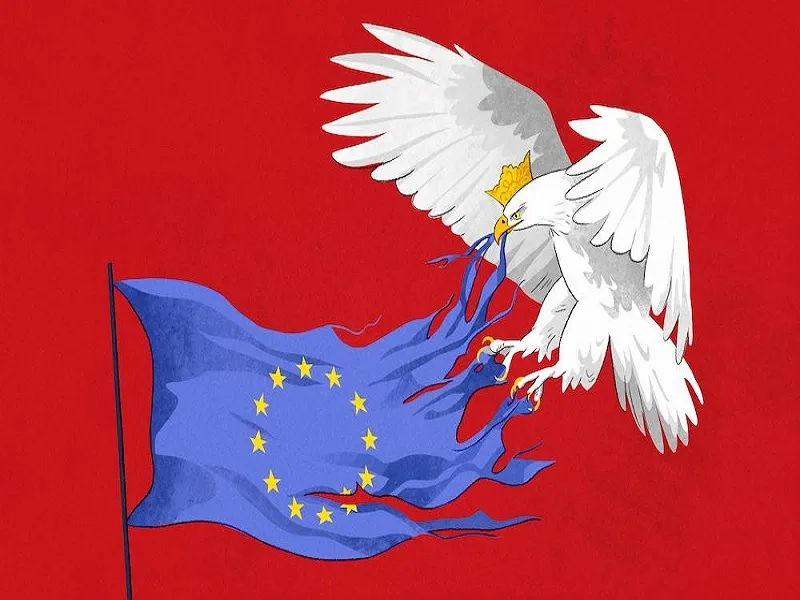
Poland Might Impede The EU’s Push To Speedily Grant Ukraine Membership
Andrew Korybko
Nov 09, 2025

Image

Poland has more to lose from this than Hungary does, but it’s happy to let Hungary feel the heat for impeding Ukraine’s plans, unless Orban is ousted next spring and Poland is then compelled to replace its role.

The EU is making a renewed push to speedily grant Ukraine membership as suggested by two recent news items. The first relates to Politico’s report about a proposal for granting countries membership without veto rights till after the bloc overhauls its functions, which Ukraine hopes will be agreed to by December, while the second involves Bloomberg’s report about the bloc’s plans to include a rapid path to membership for Ukraine a part of its 12-point peace proposal. Poland might impede all of this though.

Observers should remember that Poland and Ukraine were embroiled in a fierce grain dispute throughout most of 2023. It was caused by the bloc temporarily removing tariffs on a number of Ukrainian exports after the start of the special operation. The influx of cheap grain into the Polish market threatened to ruin the livelihoods of Polish farmers, who began blocking the border in protest. The state then imposed an embargo on Ukrainian grain in defiance of the EU that still remains in place to this day.

The dispute has abated since then, with the latest EU-Ukrainian trade agreement imposing a tariff-rate quota on the latter’s wheat exports that’s 80% lower than what the former imported last year (1.3 million metric tons vs. 6.4 million metric tons), with tariffs beyond that being prohibitively expensive. Nevertheless, just as the influx of cheap grain from Ukraine ended, there’s now an influx of cheap steel into the Polish market that Warsaw recently declared that it also wants to ban or severely regulate.

The abovementioned concerns would reach crisis proportions with far-reaching socio-economic and political consequences for Poland if Ukraine were to speedily join the EU’s single market even without veto rights. It’s due in large part to growing public awareness of the aforesaid that only 35% of Poles support Ukrainian membership in the bloc as of a credible poll conducted in their country over the summer, which is less than the 85% who were in favor of this shortly after the special operation began.

Hungary has hitherto been portrayed by Western media as the main stumbling block to Ukraine’s plans, a role that Poland’s ruling duopoly has been all too happy to let it play for self-serving political reasons even though their country is arguably a much greater stumbling block for the reasons explained above. Moreover, there’s a chance that the EU- and Ukrainian-backed efforts to meddle in Hungary’s next elections in April could finally oust Prime Minister Viktor Orban, thus removing him from the equation.

In that scenario, all eyes would then be on Poland, but neither half of its ruling duopoly wants to be blamed for the domestic consequences of Ukraine joining the EU, especially not ahead of fall 2027’s next parliamentary elections. Prime Minister Donald Tusk’s ruling liberal-globalist coalition is already facing an uphill battle and would torpedo any hope of keeping control if they supported this, while President Karol Nawrocki from the conservative-nationalist opposition would betray his base if he went along with them.

Unlike Hungary, Poland hasn’t been smeared as a Russian puppet, the claim of which would fall flat anyhow since it spent 4.9% of its GDP on Ukraine (mostly for its refugees), donated its entire stockpile to it, and spends more of its GDP on defense than any NATO member. It’s happy to let Hungary feel the heat for now when it comes to impeding Ukraine’s speedy membership in the EU, but if Orban is ousted next spring, then Poland will likely step up and replace its role since failing to do so would be disastrous.

https://korybko.substack.com/p/poland-m ... e-eus-push

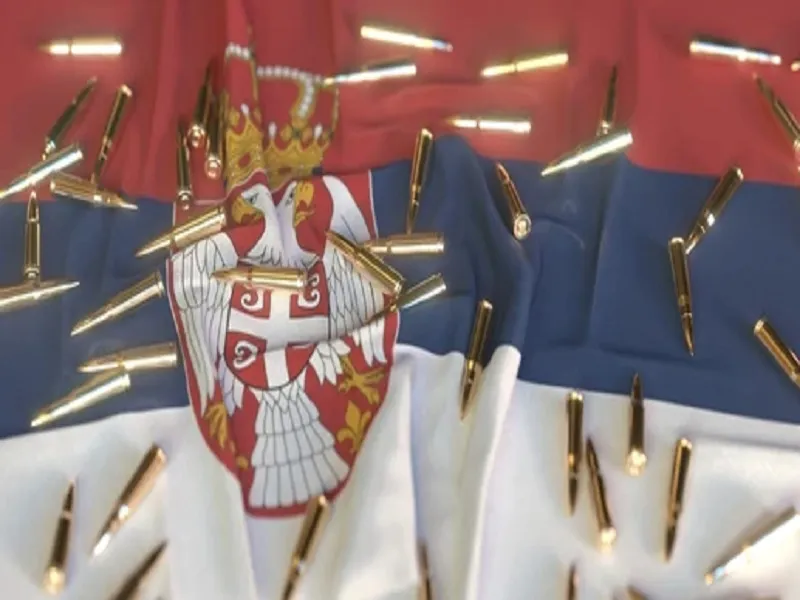
Serbia’s Continued Arming Of Ukraine Risks Rupturing Relations With Russia
Andrew Korybko
Nov 10, 2025

Image

Everything is proceeding according to the US’ plan, which Vucic might have even secretly agreed to.

Serbian President Aleksandar Vucic recently told German media that his country is eager to clinch large-scale ammo deals with the EU and doesn’t care whether they then pass his country’s wares on to Ukraine. Kremlin spokesman Dmitry Peskov responded to this by claiming that Russia “understands what unprecedented pressure is being put on Serbia” and that the issue is “not at all a simple story”, but nobody should fool themselves into thinking that it’s pleased with the latest development in this saga.

Russia’s Foreign Intelligence Service (SVR) accused Serbia of backstabbing it last May by indirectly arming Ukraine, after which Vucic resorted to his typical smooth-talking to promise that he won’t authorize any more ammo exports. This coincided with SVR claiming that this trade never stopped. In early August, Serbia then sent mixed signals about sanctioning Russia, which came roughly two months before Trump 2.0’s first sanctions against Russia. These imposed strict restrictions on its energy companies.

This coincided with unrelated US sanctions on Serbian national energy company NIS from earlier this year taking effect after it wasn’t granted another postponement. The Energy Minister accordingly warned in late October that its only oil refinery will run out by 25 November without new crude supplies, which it hasn’t been able to receive. This contextualizes Vucic’s eagerness to resume indirectly arming Ukraine since he might conceptualize this as part of a compromise for sanctions relief.

On the other hand, Vucic is nowhere near as close to Trump as the latter’s political ally Viktor Orban in Hungary is, who just obtained an exemption. This will certainly help his party during April’s next parliamentary elections and likely keep him in office for another term. By contrast, Serbia’s next elections will be held by the end of 2027, but Vucic said that he’ll move the date up. Any sanctions-instigated economic turmoil by then could ill for his party and possibly lead to a change in government.

Vucic is under what he and SVR consider to be Color Revolution pressure, the purpose of which appears to be punishing him for not going all the way in risking a rupture of relations with Russia by sanctioning it and openly arming Ukraine. He’s now explicitly defying his country’s traditional partner by expressing his eagerness to clinch large-scale ammo deals with the EU for arming Ukraine as part of NATO’s proxy war against Russia but hasn’t yet nationalized NIS, seized Russia’s other assets, and sanctioned it.

That might be just around the corner though if Trump predictably doesn’t grant Vucic a waiver after the latter resuming indirect arms exports to Ukraine and then he goes through with the rest of the US’ implied anti-Russian demands as a last-ditch attempt to secure relief from the sanctions and/or protests. It’s also hypothetically possible that the aforesaid sequence was agreed to in advance and that whatever public drama might then unfold would be a ruse for facilitating a phased leadership transition.

Vucic already declared over the summer that he won’t change the constitution to run for re-election so he’s on the way out no matter what if he keeps his word as is likely lest he risk more unrest if he doesn’t. In exchange for avoiding corruption charges by whichever even more pro-Western figure succeeds him and/or personal sanctions by the West on the same pretext, he might have agreed to set into motion the rupturing of Serbian-Russian relations, which is arguably unfolding and might ultimately be inevitable.

https://korybko.substack.com/p/serbias- ... of-ukraine

******

Political Crisis in Bulgaria: Euro Opponents Take to the Streets, Demand ‘Independence

Erkin Oncan

November 10, 2025

For Bulgaria, the euro debate is not merely an economic issue—it has become one of sovereignty and independence.

“We will tell these people two things: that they are not welcome in Bulgaria, and that Bulgaria does not want the euro. Even if they force us into the eurozone, the consequences will be far greater than they could ever imagine. The eurozone will collapse, and Bulgaria will regain its financial independence.”

These words belong to Kostadin Kostadinov, leader of the pro-Russian, anti-NATO and EU, far-right “Revival Party” (Vazrazhdane), widely known for its Eurosceptic political stance.

Gathering in front of the Bulgarian National Bank (BNB) to protest the visit of European Central Bank President Christine Lagarde, the Revival Party stands at the center of opposition to the country’s plan to adopt the euro on January 1, 2026, together with civil groups such as the “Leva Front.”

The government’s decision to adopt the euro under the narrative of “European integration” has triggered concerns about sovereignty and economic independence among broad segments of the population. Since the announcement, thousands have taken to the streets across the country, with both nationalist and left-wing groups uniting under a common discourse against “Brussels’ economic tutelage.”

As in other post-socialist Eastern European states such as Romania and Moldova, European integration has once again divided Bulgarian politics. Younger, urban, higher-income and higher-education groups generally support Europe, while lower-income, rural, working-class communities are more likely to oppose NATO, the EU, and the West.

Eurobarometer and similar polls conducted in spring 2025 show a divided public: roughly 43% support adopting the euro, while around 50% oppose it.

Similarly, as seen in other Eastern European countries, both the far right and the left are organizing within this anti-euro bloc.

The current “euro anxiety” is not new—it parallels Bulgaria’s own trajectory toward European integration.

What is the ERM II mechanism?

Since 2020, Bulgaria has been part of the Exchange Rate Mechanism II (ERM II). This mechanism requires candidate countries to peg their currency to the euro and comply with strict fiscal discipline criteria before adopting the euro.

In other words, ERM II is a kind of “waiting room.”

A country joining the mechanism must fix the value of its national currency to the euro, align its budget, public debt, inflation policies, and financial decisions with the Brussels–Frankfurt axis, and stay within this framework for at least two years.

While the EU refers to this period as an “adaptation process,” Eurosceptics regard it as an “economic quarantine.” In countries undergoing ERM II—Bulgaria included—stagnation, public sector downsizing, youth emigration, foreign capital dominance due to cheap labor, and shrinking public investments are described as “inevitable outcomes.”

Thus, for many Bulgarians, the process is seen not as a voluntary decision but as the result of systematic pressure from Brussels. Despite Bulgaria’s continuing inflation problem, the European Commission and the European Central Bank insist that the adoption timetable is “irreversible.”

Prime Minister Dimitar Glavchev has described the transition as “a demonstration of Bulgaria’s commitment to integrating into the heart of Europe.” But such promises fail to persuade the country’s poorer majority.

In this economic and political atmosphere, the Revival Party frames the elimination of the national currency as “a new form of dependency.”

Party leader Kostadinov summarizes their stance as follows:

“The lev is the symbol of our independence. The euro is Brussels’ yoke.”

The demand for a referendum

The Revival Party has launched a nationwide referendum campaign, arguing that the decision should be made by the people. Under the slogan “Defend the lev, not the euro,” thousands have participated in demonstrations.

Notably, the referendum was originally proposed by President Rumen Radev himself, although the idea was later rejected by parliament.

Euro opposition is not limited to nationalists. Communist parties, left-wing unions, small farmers’ associations, and independent economists also oppose euro adoption, arguing that it will turn Bulgaria into “Europe’s cheap labor reservoir.”

In recent weeks, thousands have taken to the streets in Sofia, Plovdiv, Varna, Burgas, and several other cities. Slogans such as “The lev is ours,” “No to the euro,” and “Decisions are made in Sofia, not Brussels” dominated the protests.

The number of clashes between protesters and police has increased. Most recently, tension escalated between demonstrators and security forces in front of the parliament in Sofia.

Some protesters burned European Union flags, while farmers blocked roads with their tractors.

Besides the Revival Party, groups like the Movement for Left Alternative and several trade unions declared that “euro adoption will leave Bulgaria unable to manage its own economy.”

The government, however, remains firm. Finance Minister Lyudmila Petkova argues that adopting the euro will bring price stability and boost investor confidence.

But for anti-Western groups in Bulgaria, such statements mean nothing more than legitimizing neoliberal prescriptions imposed by EU financial institutions. Despite joining the EU in 2007, Bulgaria remains the poorest country in Europe, trapped between low wages, high inflation, and capital dependency.

For Bulgaria, the euro debate is not merely an economic issue—it has become one of sovereignty and independence. While “economic integration” persuades governments, the economic crisis fueling anti-EU sentiment continues to grow across Europe.

https://strategic-culture.su/news/2025/ ... ependence/
"There is great chaos under heaven; the situation is excellent."

User avatar
blindpig
Posts: 14788
Joined: Fri Jul 14, 2017 5:44 pm
Location: Turtle Island
Contact:

Re: Blues for Europa

Post by blindpig » Fri Nov 14, 2025 4:32 pm

MAGA IS A NATO RACKET – TRUMP’S 5% MILITARY BUDGET HIKE TO FIGHT RUSSIA MAKES CORRUPTION IN ESTONIA

Image
By John Helmer, Moscow @bears_with

Estonian politics are being turned upside down because of a leaked report into the diversion of defence spending.

The timing is not an unlucky coincidence. It is the result of the country’s leaders claiming kudos for leading the NATO alliance in lifting the military proportion of their Gross Domestic Product (GDP) from 3.4% to 5.4%.

This increase was enacted in April when the Estonian government and parliament approved a four-year €2.8 billion additional defence funding bill in order to meet the NATO target dictated by President Donald Trump. The increased spending will lift Estonia from the 19th rank of the global defence/GDP ratio, four ranks behind Poland (4.15% as of 2024 ) and one rank behind the US (3.42%), to lead the NATO member states.

“I really, from this podium, in this building, want to applaud your leadership on meeting the five percent defense spending target, not years down the road but in all of your countries in 2026,” US Defense Secretary Peter Hegseth announced at a Pentagon meeting with Hanno Pevkur, the Estonian defense minister on July 25; beside Pevkur were his Latvian and Lithuanian counterparts. “It underscores your dedication to the Alliance’s security and sets a very clear example for others to follow.”

Pevkur replied: “Our meeting today is a testimony to the strong and trusted partnership between the Baltic States and the United States…We stand up for one another and we defend each other when it’s needed. This is what brotherhood in arms truly means.”

In the Estonian language, that last sentence of Pevkur’s means brother’s hands in each other’s pockets.

According to official announcements in Tallinn late last month, Pevkur has agreed to spend $4.73 billion on new US HIMARS artillery systems and ammunition. More than €10 billion ($12 billion) in defence spending is now planned for the four-year period, 2026-2029. The Estonian media report that “procurement accounts for 37 percent of the budget, ammunition for 25 percent, personnel costs for 14 percent, operating expenses for 13 percent, intelligence and early warning for 3 percent, support for the Defense League [citizen mobilisation] for 3 percent and infrastructure investments for 5 percent.”

More than half of this total is expected to go directly to the US military-industrial complex and a Ukraine-sized percentage of 10% to 15% return to Estonian middlemen as commissions. US and European military companies are also being invited to invest in new production of weapons and security technology in Estonia itself. “Estonia also plans,” the government says, “to invest €50 million in defence industry and innovation, including the establishment of a Future Capabilities and Innovation Command and a new defence industry park in Pärnu County.” The list of Russia warfighting allies to supply – sell to Tallin — was published in this Estonian government report, issued before the Trump increase was implemented.

This is the greatest boondoggle in the history of Estonia since the country pinned its hopes on Adolf Hitler and German military investment between 1941 and 1944.

ESTONIA’S DEFENCE SPENDING AS A PROPORTION OF GDP, 2024-25

Image
Source: https://www.intellinews.com/proposed-de ... rs-387401/

Image
Source: https://x.com/BudrysKestutis/status/1962505391972974801

“ ‘We have made a historic decision from the point of view of Estonian national defence. We have never allocated so much additional money to national defence in one year in Estonia,’ said Hanno Pevkur, Estonian Defence Minister. ‘Already next year, defence spending will rise to about 5.4% of GDP, or over 2% in one year, and it will stay there for quite a long time,’ noted Pevkur. ‘The four-year average is also 5.4%, and this will give us the opportunity to meet the military capability goals that we have agreed on in NATO,’ he added.”

Image
Pevkur and Hegseth at the Pentagon on July 25, 2025, with the Latvian Defense Minister Andris Sprūds (left) and Lithuanian Defense Minister, Dovilė Šakalienė (right).

The 240-page report on Estonia’s mismanagement of the military budget, prepared by a multi-party committee of parliament deputies, was leaked in an 11_page summary tabled in the Riigikogu, Estonia’s parliament, last week. The documents which have leaked to the Estonian press have not been released by parliament nor published.

In the selective reporting so far, it has been revealed that the Estonian military command has lost control of the new spending to two civilian agencies, the State Defense Investment Centre (RKIK, English acronym ECDI) and the Defense Resources Agency (KRA). They have been staffed by political appointees. Their job — it is suspected in the public at large — is the manipulation of contract pricing of procurements; collection of commissions; fabrication of deliveries and inventories; falsification of accounts; and laundering of the proceeds into offshore accounts operated for the benefit of government officials.

Image
Source: https://www.kaitseinvesteeringud.ee/en/

Image
Source: https://kra.ee/en/

The new report was compiled by a working party of MPs — Leo Kunnas (Independent), Alar Laneman (Reform Party), Neeme Väli (Isamaa), and Anti Poolamets (EKRE), and was led by Meelis Kiili (Reform), a former commander and major general of the Defense League. Peeter Tali (Eesti 200) was initially in the working party but he resigned in protest over some of the report’s claims.

In a press interview, Kiili responded to criticism that his report had unfairly blamed former military commanders for giving up control of the arms planning and procurement process, and for subordinating Estonia’s defence strategy to civilians too inexperienced to prepare for war with Russia.

“Question: The shorter, 11-page summary of the report presents a very serious assessment. I’ll quote: ‘In the working group’s view, the Estonian state as a whole is not sufficiently prepared for a potential war.’ Could you explain the reasoning behind that assessment?

“Answer: We also need local governments and society at large to be involved. We cannot place the responsibility of strategic tasks on subordinate structures. We can’t expect the Rescue Board to manage a nationwide crisis. These are our conclusions: fix the structures, grant the necessary authority and make sure that at the political level, we have decision-makers with the necessary competence. That’s quite simple. The assessment stems from the fact that we are preparing for crises and war using peacetime methods. We don’t truly grasp what a crisis or war entails. We haven’t experienced those kinds of crises ourselves — there’s no direct experience to draw from.”

“But what we’ve seen in Ukraine provides a very clear insight. Throughout the report’s drafting process, the working group constantly referred to both Russia’s military doctrine and developments in Ukraine. And in some ways, the situation we’re in today is one where people still say: ‘Let’s not talk about these things.’ I’d remind everyone that on February 22, 2022, President Zelensky told the Ukrainian people that there would be no war. People need to be spoken to honestly and directly. That’s why the language of this report is honest and straightforward. Speaking frankly gives us the opportunity to address these issues just as frankly. Also note that if the working group’s recommendations are implemented, much of this can be restored very quickly. What we need is to feel and know that the country is being led. We need to strengthen the prime minister’s role in times of crisis and war so that they lead decisively, not just chair meetings. This is about decision-making and the speed of decisions. We also need local governments and society at large to be involved. We cannot place the responsibility of strategic tasks on subordinate structures. We can’t expect the Rescue Board to manage a nationwide crisis. These are our conclusions: fix the structures, grant the necessary authority and make sure that at the political level, we have decision-makers with the necessary competence.”

Kiili’s report accepts without question that Estonia’s military priority is fighting Russia. There is no mention of over-pricing of US arms contracts; no allegation of official corruption and money laundering. The Estonian press and parliament have suppressed all public discussion of these local issues while discussion of newly revealed corruption in the Zelensky regime’s handling of defence contracts is widespread.

When the Russian press has reported this Estonian controversy, Estonian government officials have counter-attacked; they claim in the Tallinn media that criticism of Pevkur’s management of the defence budget, including a National Audit Office (Riigikontroll) investigation released before Kiili’s report surfaced, is Russian disinformation and Kremlin propaganda.

In September the state auditor had released a press statement exposing “problems in the management of contracts of the agencies under the Ministry of Defence, in the monitoring of contracts and their performance, in the verification and registration of the conformity and delivery of the goods received, which must be solved immediately against the backdrop of the rapidly growing defence budget.” The auditors also accused government officials of withholding data on contract monies, pricing, and over and under-stocking of inventories. This amounted to “a systemic problem in the use of funds that needs urgent and substantive attention by the Ministry of Defence.” The audit findings challenged “the accuracy of the inventory balance of the Ministry of Defence in the amount of €723.9 million”.

Image
Source: https://www.publicnow.com/view/4B2B371B ... 1756849697

The National Audit Office was also scathing in its criticism of the two military procurement agencies, RKIK and KRA: “The audit indicated that the Estonian Centre for Defence Investments and the Defence Resources Agency have problems in managing the contracts signed and in monitoring the arrival of the goods to be delivered.” Examples were cited of error payments of $79.1 million and “errors in the delivery and receipt documents of defence equipment purchases and in other purchase documents, which means that it is not always possible to verify the contract under which the goods were received and whether and when they arrived.”

Internal partisan politics, personal jealousies, and individual ambitions have also created disinformation, the Estonian media have claimed. “The general problem with this report [Kiili report] is that some good recommendations get buried — let’s be honest — under a disinformation campaign.”

In Moscow yesterday, an unusual assessment of the Estonian situation was published as an example of the impact on NATO of the Trump five-percent policy. The author was Stanislav Leshchenko writing in the Moscow security analysis platform, Vzglyad. Trump, he said, had created “a feeding trough for people close to the ruling party in the country. At least, the Estonian opposition is sure of this.”

Image
Source: https://vz.ru/world/2025/11/13/1373432.html
The translation which follows is verbatim. Illustrations have been added for English readers.
November 13, 2025
The “Russian threat” has turned out to be the reason for a big cut in
Estonia
By Stanislav Leshchenko

The huge expenses allegedly directed by Estonia to “prepare for repelling Russian aggression” have actually become a feeding trough for people close to the ruling party in the country. At least, the Estonian opposition is sure of this, and the data for this have been collected in the relevant parliamentary report. What exactly was discovered?

Estonia has been dramatically increasing its military spending recently, to the point where it is ready to take out huge loans. And recently, several experts from the commission of the Estonian Parliament (Riigikogu) on state defence released a report on how exactly this money is being used.

According to the authors of the report, the commander of the Defense Forces has been stripped of key functions which ensure effective management of the army, such as the issue of personnel and the direction of troop logistics. These functions have been transferred to the State Defense Investment Centre and the Defense Resources Agency, which have been pulled out of the army structure. Accordingly, the report identifies the main problem of the Estonian army: “The chain of command has fragmented, as the Ministry of Defense tried to transfer the peacetime management model to crisis and wartime.” The report holds former commanders-in-chief of the Estonian Army Riho Terras (who headed the Defense Forces in 2011-2018) and Martin Herem (2018-2024) responsible for this.

Image
Left, Lieutenant General Riho Terras: “Estonia has a clear plan for dealing with any ‘little green men’ — the undercover Russian special forces operatives who sprung up in the early days of the Ukraine crisis last year — according to the country’s chief of defence: they will be shot.” https://www.ft.com/content/03c5ebde-f95 ... 144feab7de
Right, Major General Martin Herem: “Estonia can't be occupied within days. It's possible that some areas may be taken, but the question becomes if the enemy really wants to go ahead if they face 21,000 men.” https://news.err.ee/652005/estonia-can- ... er-general

The full version of this report was supposed to be released on November 6, but it never happened. The negative reaction to the publication in the press of no more than excerpts from it turned out to be so great that the head of the parliamentary commission on state defense, Kalev Stoicescu (Estonia 200 Party), said that the report “requires serious changes” and that “we need to focus on security instead of solving social or other issues.” However, the main author of the sensational document, retired General Meelis Kiili, continues to insist on his vision: he believes that providing for the rear of the Estonian army does not meet its real needs. Kiili threatens that the document will be published again, and emphasizes that it was prepared by “specialists.”

Riho Terras and Martin Herem themselves disagree with the criticism. “Due to the existence of the Department of Defense Resources, battalion and brigade commanders are no longer engaged in the purchase of light bulbs, mowing grass, catering and other similar things,” Herem says, fighting back. And Terras claims that “many of those who compiled this report today were already involved in decision-making, but there was no criticism from them at that time.” The current Minister of Defense, Hanno Pevkur, also sided with them.: “I am more than convinced that the governance of Estonia, both in wartime and in peacetime, is well-regulated.”

Image

Estonia’s government was elected in 2023, with the Reform Party, led by Kaja Kallas, winning 31.2% of the vote; EKRE running second with 16.1%; and the Centre Party third with 15.3%. https://www.politico.eu/europe-poll-of-polls/estonia/ Since then voter support has turned sharply against the government coalition of Reform, the Social Democratic Party (SDE) and Eesti 200. https://news.err.ee/1609848678/norstat- ... -low-point As domestic disapproval of Kallas grew, she resigned in mid-2024 to become the European Union’s foreign minister.

It should be noted that in 2017 Estonia established the State Center for Defense Investments (RKIK). The competence of RKIK includes the organization and conduct of military tenders worth 10,000 euros and above. In turn, the Defense Resources Agency appeared fifteen years ago – and even at the very beginning of its activity, this institution was accused of squandering money: for example, it annually paid 30 thousand euros for the preparation of useless tests for conscripts.

Estonia has recently purchased a large number of different weapons, from Finnish SAKO TRG M10 rifles to Israeli-Singaporean Blue Spear 5G anti-ship missiles. All these purchases go through RKIK and often raise a lot of questions, from the adequacy and channels of the amounts paid to the quality of the products purchased. For example, in September of this year It turned out that the “high-precision” R20 submachine guns, purchased six years ago in the United States for several million euros, were of poor quality. The entire batch had to be sent to the factory for warranty repairs.

Also in early September, there was news that the State Audit Office had identified many problems in the field of the Estonian Ministry of Defense during the audit process, “both in the management and control of contracts concluded by the Ministry, as well as in verifying compliance and receipt of delivered goods, as well as in their registration.” It was noted that “with a sharp increase in the volume of funds used in the defense sector, the risks are also growing, which in some places have already become reality.”

The National Audit Office admitted that they were unable to verify some areas of the Ministry of Defense’s activities because the agency did not provide all the information necessary for the audit. The number of contracts is not even known, nor the time of their expiry or the total sum committed. “The problems we have identified cannot be reduced only to accounting issues – the audit showed serious confusion in the organization of work, which has financial consequences. The confusion with linking contracts, advance payments and goods, as well as other shortcomings listed in the report, indicate a systemic problem in the use of funds, which requires urgent and substantive attention from the Ministry of Defense,” said the head of the National Audit Office, Janar Holm.

According to him, the management of RKIK handles public funds with amazing ease. So, in March 2024, the State Defense Investment Center “mistakenly” paid about 79.1 million dollars to one of the suppliers, and in July of the same year – another 8.7 million dollars. The supplier returned $47.8 million, but the remaining amount ($40 million) was retained by him in the advance payment account to cover future transactions under the same contract. Moreover, RKIK did not consider it necessary to demand a refund of the overpaid amount, as it considered this too complicated an operation, saying that someday, over time, purchases for this amount would still be made.

Another supplier’s account has accumulated a prepayment balance of 9.6 million euros since 2018. Later, RKIK ordered additional goods from this supplier, but never used the opportunity to pay for them using this accumulated balance. There are errors in the documents on the transfer and acceptance of purchased weapons: therefore, it is not always possible to verify on the basis of which contract certain military goods were received and when they arrived. The state control service noted that there are no guarantees that after the acceptance of the acquired property and partial prepayment for it, it will be possible to control when and in what quantity it will actually arrive. The auditors also revealed cases when the purchased property was registered with the Army with a delay of several years. In April 2025, purchases from three suppliers totaling 45.8 million euros were retroactively attributed to expenses in 2024.

In general, a huge number of such violations have accumulated.

“Erroneous payments to contractual partners, which in the worst case reach several tens of millions of euros, or an advance payment of almost 10 million euros, which has been waiting for its settlement for eight years, are just the most striking examples. Confusion with the linking of contracts, advance payments and goods, as well as other shortcomings… they indicate a systemic problem in the use of funds”, Holm emphasizes. In his opinion, the Minister of Defense, together with the General Director of RKIK and the commander of the Army, should “immediately solve serious problems with property accounting, inventory and other work processes.”

In early June, Magnus-Waldemar Saar,who served as CEO of RKIK, announced his retirement. As the Estonian media wrote ironically, “it remains unclear what exactly influenced his decision – fatigue or the audit of the State Audit Office at that time.” However, there has still been no replacement for him. Defense Minister Hanno Pevkur reluctantly admitted that accounting for the state of military assets requires “refinement.”

Image
Left. Anu Rannaveski was appointed to lead the Defense Resources Agency (KRA) in 2022; the organisation website does not list its leadership. Centre, Janar Holm, appointed head of the National Audit Office since 2018. Right, Magnus-Valdemar Saar awarded the Class II Service Cross of the Defense Ministry on July 17, 2025, following his resignation after four years for his “systematic and transparent approach to national defence procurement”. https://www.kaitseinvesteeringud.ee/en/ ... emar-saar/

Former commander-in-chief Riho Terras (now a member of the European Parliament) spoke out in support of the National Audit Office, according to which “unacceptable chaos” reigns in the work of the Ministry of Defense. Terras believes that Defense Minister Pevkur is observing the state of affairs in his department “from the outside with cold indifference.”

“In a situation where Prime Minister Kristen Michal repeats that all proceeds from the tax rally go solely to increase defense spending, such chaos is unacceptable! It destabilizes the whole society and betrays taxpayers. “How can we know that our money is being handled as promised? There’s no way anymore. Because now it turns out that millions of euros are being paid by mistake,” Terras is indignant, calling on Pevkur to take responsibility for the “mess” and resign.


What does it all mean? The opposition EKRE party comments on the situation most openly. They believe that at one time the creation of the RKIK, an organisation that was removed from the control of the commander–in–chief of the Estonian army, was established in order to make the procurement process more efficient as a “feeder”. The founder of this party, Mart Helme accuses Prime Minister Kristen Michal and the Reform Party he heads that they have created an inexhaustible resource with their rhetoric about the “Russian threat.” According to Helme, the huge funds allocated for defence are flowing into the pockets of people close to the ruling party.

Last spring, EKRE stated: “We see how huge amounts of money are being sent to the so-called defence industry, which, in our opinion, has become another corrupt project of the Reform Party. The transfer of former high-ranking government officials and military personnel associated with the Reform Party to defence companies, for which hundreds of millions are allocated, in no way strengthens Estonia’s defence capability, but on the contrary, directs limited resources into the hands of a very narrow circle of people, bringing extremely insignificant results.”


In particular, EKRE criticizes the former head of the Estonian Defense Forces, Martin Herem, who, after leaving this post last year, received a warm place at Frankenburg Technologies. This company develops air defense systems. A number of former high-ranking officers of the Estonian army and functionaries of the Ministry of Defense have settled into the leadership of this company: for example, former Chancellor of the Ministry of Defense Kusti Salm and retired Major General Veiko-Vello Palm. Frankenburg Technologies ended last year with a loss of 1.1 million euros, but it is still considered a respected partner of the state. The opposition believes that Frankenburg Technologies, like RKIK, are links for withdrawing Estonian taxpayer funds into the pockets of a narrow circle of “respected people.”
https://johnhelmer.net/maga-is-a-nato-r ... more-92831

******

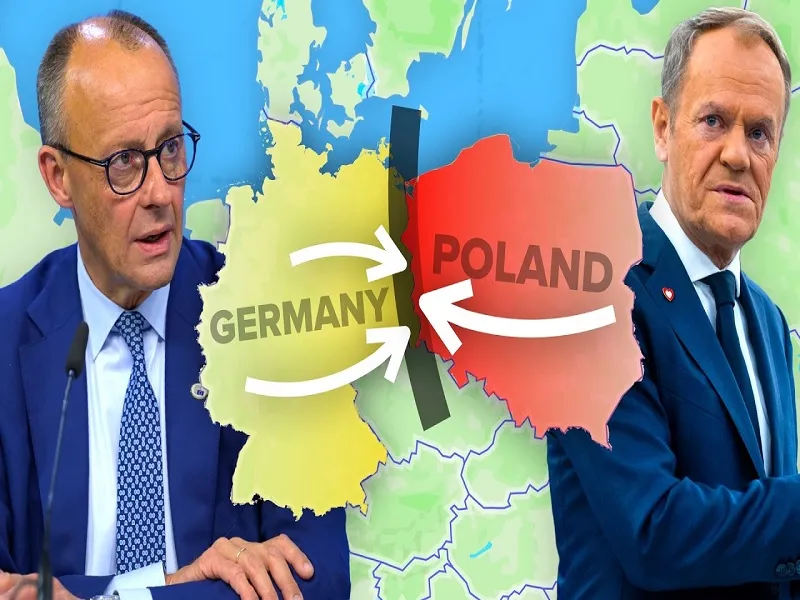
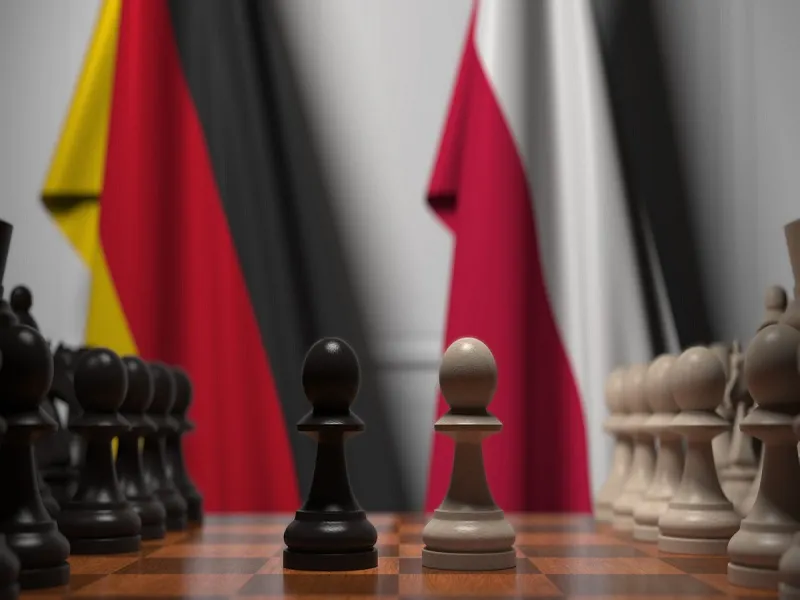
The Next Phase Of Germany’s Nord Stream Investigation Might Further Worsen Ties With Poland
Andrew Korybko
Nov 12, 2025

Image

Italy’s potential extradition of a Ukrainian suspect to Germany could lead to a highly publicized (and predictably politicized) trial that implicates Poland in this unprecedented attack on a fellow NATO ally.

The Wall Street Journal recently published a detailed piece about “The Nord Stream Investigation That’s Splintering Europe Over Ukraine”. The gist is that Germany’s investigation into the Ukrainian trace, which is likely a preplanned red herring as argued here in early 2023, has already worsened ties with Poland after one of its judges refused to extradite a Ukrainian suspect. It could soon worsen ties with Ukraine too if Italy soon extradites another one and a highly publicized (and predictably politicized) trial follows.

Germany’s Nord Stream investigation has placed it in a dilemma since it needs to pin the blame on someone for one of the largest sabotage/terrorist attacks in decades, yet it doesn’t dare look into the American trace that Pulitzer Prize-winning journalist Seymour Hersh drew attention to in early 2023. Accusing it of orchestrating this attack would risk punitive tariffs from Trump and could convince him to authorize the gradual transfer of some EUCOM infrastructure from Germany to neighboring rival Poland.

On that topic, the Ukrainian trace also conveniently implicates Poland, thus inflicting damage to its reputation. The idea that this NATO ally played even just a passive role facilitating a third country’s attack against a “fellow” member, let alone might be trying to cover the aforesaid up after declining to extradite one of the suspects, could have real-world consequences. Germany might rally other allies against supporting Poland in a hypothetical crisis with Russia, for example, and could even blame Poland for it.

Not only that, but Poland’s proposal for Germany to subsidize its arms industry as a form of World War II reparations could be opposed on the pretext that the long-term damage that Poland helped Ukraine inflict to Germany equals whatever Germany might have subsidized, therefore negating the request. Worsened bilateral relations could then give a boost to the conservative opposition, which dislikes Germany almost as much as it dislikes Russia, ahead of fall 2027’s next parliamentary elections.

Replacing the ruling liberal-globalist coalition, which could be achieved by allying with the populist-nationalist opposition upon complying with their demand that senior party leaders resign, would strengthen the challenge that Poland poses to German influence in the region. That’s because the Right would control the presidency and parliament, thus breaking the deadlock that’s been in place since the current coalition obtained power in December 2023 and enabling more effective policy implementation.

This outcome could still occur even without a highly publicized German trial implicating Poland in the Nord Stream attack, but it’ll make it much more likely if that happens. In such a scenario, already fractious EU and NATO unity might further weaken, with this possibly hamstringing cooperation against Russia through the “military Schengen” and other emerging multilateral frameworks. A security dilemma could also develop between them amidst their mutual adversarial perceptions and arms buildups.

Observers should remember that this is possible solely due to Germany refusing to investigate the American trace in the Nord Stream attack, instead opting to look into the Ukrainian one that also involves Poland. The public demands that someone be blamed for the spike in costs brought about by Germany being cut off from cheap and reliable Russian gas. The elite therefore decided to pin the blame on them, but it’s unclear whether they thought through the consequences touched upon in this analysis.

https://korybko.substack.com/p/the-next ... ord-stream

Poland just needs to snitch on the US...

The Pentagon’s European Drawdown Won’t Alleviate Russia’s Security Concerns
Andrew Korybko
Nov 14, 2025

Image

The US is offloading most of the responsibilities for containing Russia onto Poland, the UK, France, and Germany while retaining a minimal presence along NATO’s eastern flank for “deterrence” purposes.

The Romanian Defense Minister recently confirmed that the US will withdraw around half of its 2,000 troops as part of its plans to reprioritize Asia, which could include drawdowns from other countries as well. It was assessed last February that “Trump Is Unlikely To Pull All US Troops Out Of Central Europe Or Abandon NATO’s Article 5” since retaining a minimal presence in this region is psychologically reassuring for those countries that fear Russia and can also function as “a tripwire for deterring aggression”.

This is especially true for aspiring regional leader Poland. Trump said in early September that the US might even deploy more troops there upon request, and while that hasn’t yet happened, Poland’s Defense Ministry confirmed that US troop numbers remain stable amidst the latest news from Romania. Those two and the Baltic States also host multiple other allies’ forces, including nuclear-armed France’s and the UK’s, whose roles complement the US’ previously mentioned “deterrence” one.

Western, Central, and Eastern Europe are also being knit together through the “military Schengen”, which refers to the initiative for facilitating the flow of troops and equipment between members, while the last two regions are becoming more integrated through the “Three Seas Initiative”. Poland, which commands NATO’s third-largest army, plays a crucial role in both by connecting “mainland Europe” with the Baltic States. This explains why it’s tipped to become the US’ top European partner in the future.

From the US’ evolving perspective after the past 3.5 years of proxy warfare, its European junior partners are finally shouldering more of the burden for containing Russia, so the presence of so many of its troops on the continent is no longer required except for “deterrence” purposes. They’re much better put to use in Asia, as policy planners now seem to believe, for encouraging its junior partners there to replicate their European counterparts by shouldering more of the burden for containing China.

So long as nuclear-armed France and the UK retain their own military presences in the countries from which the US draws down its troops, then the US can expect them to “Lead From the Front” in a crisis while the US would only need to “Lead From Behind”. Those two and Poland would play the foremost roles in future tensions with Russia while the US would provide back-end support through logistics and intelligence. It could also directly escalate on its own if the going gets tough for its junior partners.

Minimal US troops along NATO’s eastern flank would draw lines that Russian troops would be deterred from crossing on pain of drawing America directly into the conflict. The direct involvement of French and UK troops in the region would complement that role by reminding Russia that the conflict could go nuclear so all sides should keep it conventional. If the crisis further worsens, then they could rattle their nuclear sabers, especially if they by then transferred some of their nukes to Germany and/or Poland.

The evolving geopolitical, military, and strategic situation in Europe is therefore such that the US is offloading most of the responsibilities for containing Russia onto Poland, the UK, France, and Germany. Of these four, Poland is the lynchpin upon which the success of this EU-fronted but US-backed containment plan is dependent for military logistical reasons, thus meaning that its ties with Russia will greatly determine the future of war and peace in Europe after the Ukrainian Conflict finally ends.

https://korybko.substack.com/p/the-pent ... wdown-wont
"There is great chaos under heaven; the situation is excellent."

User avatar
blindpig
Posts: 14788
Joined: Fri Jul 14, 2017 5:44 pm
Location: Turtle Island
Contact:

Re: Blues for Europa

Post by blindpig » Mon Nov 17, 2025 3:27 pm

German Pension Levels are Unsustainable: Merz

Image
X/ @flatterweib

November 17, 2025 Hour: 10:58 am

Christian Democratic youth rejects pension reform plan that guarantees benefits through 2031.
During a forum organized by Süddeutsche Zeitung on Monday, German Chancellor Friedrich Merz said demographic change is working against preserving current levels of public pensions.

“We know that the level of public pensions cannot be maintained in the long term, since that would require either higher contributions or increased federal funding for the pension insurance system. Therefore, corrections will be necessary starting in 2031 as part of a reform,” he said.

Germany’s pension reform has sparked internal debate within the Christian Democratic Union (CDU), Merz’s party, after its youth organization rejected an agreement reached by leaders of the governing coalition and threatened to derail it.

The coalition holds a 12-vote majority in the lower house of Parliament. If the 18 lawmakers from the Young Union (JU), which represents the CDU’s youth wing, rebel, the bill could not be approved.

🇩🇪 Germany has proposed raising the retirement age to 73 to prevent the collapse of the pension system

A new scientific advisory board under the German Ministry of Economy stated that there is almost no time left for reforms. According to experts, Germany’s economy has been…

— Visegrád 24 (@visegrad24) October 6, 2025


The draft legislation was approved unanimously by the Cabinet, meaning its rejection would be a major setback for the government and mark the second time that a Merz-endorsed compromise failed due to opposition within his own parliamentary group. The first was the failed election of a judge to the Constitutional Court in July.

The JU’s criticism focuses on a provision requiring that public pension levels remain stable at 48% of average wages at least until 2031. This would mean an additional cost to the pension system estimated at 120 billion euros. That provision was not originally in the coalition agreement but was added at the request of the Social Democratic Party (SPD) and accepted by the CDU and its Bavarian sister party, the Christian Social Union (CSU).

In exchange, the SPD accepted including the CDU’s proposal for “active retirement,” allowing people who have reached retirement age and continue working to deduct up to 2,000 euros from their taxes, regardless of whether they are receiving their pension.

The JU argues that, due to demographic change and an aging population, maintaining pension levels will place the financial burden primarily on younger generations.

The CDU/CSU has sought to divide the issue into two parts: the compromise with the SPD, viewed as a temporary arrangement for the coming years, and plans for a broader reform that will be drafted by a commission created by the government for that purpose.

Merz emphasized the need to strengthen the two other pillars of retirement — private pension plans and employer-subsidized retirement plans.


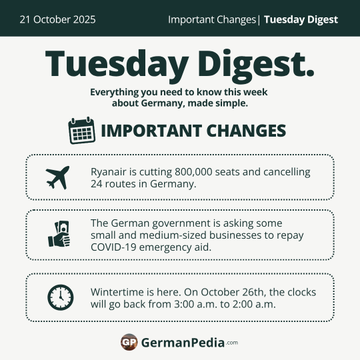
📬 Tuesday Digest is here!

Catch up on what’s new in Germany, made simple. This week, learn more about Bürgergeld Reform, “Bau-Turbo” Law, active pension, and other new updates.
Image
— Team GermanPedia (@TGermanPedia) October 21, 2025


On Monday, SPD Secretary Tim Klüssendorf said maintaining public pension levels is essential because most of the population depends on them in old age.

“For us it is clear that public pensions are the instrument most people consider when thinking about securing their old age. Keeping pension levels at 48% of net wages is key to ensuring people can live off their retirement income,” he said after a meeting of the party leadership.

Klüssendorf also said pensions cannot be viewed solely as expenses that can be cut, because they represent something people have worked for.

“Those who advocate most strongly for possible reductions are often people who, due to their social and economic position, do not depend on public pensions,” he said and rejected the notion that the debate is a generational conflict, arguing it is instead a divide between rich and poor.

https://www.telesurenglish.net/german-p ... able-merz/

******

In Serbia, a mother challenges the system

Stephen Karganovic

November 16, 2025

The crisis that is convulsing Serbia is multi-level, writes Stephen Karganovic.

It is little wonder that from her Olympian promontory, the Venezuelan Nobel Prize laureate, señora Maria Corina Machado, has missed a poignant spectacle unfolding in Belgrade. There, a desperate mother Mrs. Dijana Hrka for over ten days has been hunger striking in the proximity of Serbia’s parliament building. After a year of foot-dragging and inaction by the authorities, Mrs. Hrka is putting her life on the line to demand accountability for the death of her son Stefan in the collapse of the concrete canopy at the Novi Sad railway station. On 1 November 2024 the shoddily renovated structure collapsed, killing sixteen people and sparking in Serbia a social rebellion of hitherto unimaginable scope and intensity. Whilst señora Machado is using her newly acquired notoriety to enthusiastically invite foreign predators to help themselves to Venezuela’s vast resources in return for installing her as their next vassal in her country, Mrs. Hrka withers slowly in her tent, surrounded by a protective cordon of Serbian war veterans and concerned citizens.

Cornered by leaderless protests that have paralysed the country, Serbia’s Batista regime has responded with incredibly inept measures that in addition to students and young people had the arguably unintended consequence of successfully alienating other strata of society as well. The illegal paramilitary encampment of the regime’s menacing Tonton Macoutes militia still stands between the parliament building and the Presidency, in the heart of Belgrade. It continues to block traffic in one of the city’s busiest thoroughfares, at the same time sending the fully intended intimidating message to the citizenry. The thugs are apparently ensconced there with official blessing and they are being protected instead of dispersed by the police. Denizens of the encampment have been video-recorded whilst receiving daily remuneration for their mercenary services.

At the same time, the authorities are targeting and subjecting to merciless denigration and harassment anyone who is deemed a dissenter. The celebrated tennis player Novak Djoković, who just achieved the one hundred and first title of his career, and who has publicly endorsed the student movement, calling for snap elections and accountability for the corruption which precipitated the Novi Sad tragedy, was disdainfully dismissed by the director of the Informer media network Dragan Vučićević, the Julius Streicher of the Serbian regime, as a “failed tennis player.” Serbian basketball champion Vladimir Štimac was arrested twice on the spurious charge, which has now become standard feature in the regime’s prosecutorial repertoire, of “attempting to undermine the constitutional order.” Businessman Milomir Janićijević, who made his fleet of busses available to the students to ferry them to their protest events, has seen his vehicles confiscated by the authorities for such grave and indisputably non-political infractions as malfunctioning blinkers and inoperative windshield wipers. Since his livelihood is now on the verge of being destroyed Janićijević has also announced a hunger strike to seek redress for his grievances. Novi Sad city councilman Miša Bačulov, an outspoken critic of the regime, has been accused absurdly of being the saboteur who caused the deadly collapse of the concrete canopy. With a straight face the regime media have accused him of directing electromagnetic pulses from his mobile telephone device at the railway station, with deadly effect…

Against this background of officially generated lunacy, the Serbian Batista regime is seeking to consolidate foreign support by openly reorienting its policies toward NATO and the collective West, abandoning any remaining pretense of neutrality. The regime is caving in to every major demand of the collective West.

The until recently vehemently rejected option of imposing sanctions on Russia is now being floated as a reasonable possibility and an inescapable expression of solidarity with the collective West and the European Union, into which the ruling elite are determined to enlist Serbia. The new regime party line, articulated by Batista himself, is that “the government has the authority to amend the decision” not to impose sanctions, i.e. that it can decide to impose them after all. The policy reversal was announced in the presence of the European Union ambassador Andreas von Beckerath right after the ambassador presented Batista with the European Commission’s rather critical annual report on Serbia.
The crawling recognition of NATO occupied Kosovo, a key demand of the regime’s Western sponsors, has been accelerated further by the official announcement that in the Spring of 2026 a full-fledged system of border control will be in place between “Kosovo” and the “unoccupied” Vichy part of Serbia, with a visa requirement for everyone passing through frontier checkpoints.
As a gesture of subservience to the agenda of its collective West sponsors, the Serbian regime has agreed to establish on Serbian territory camps to accommodate migrants who have been expelled from Great Britain and the EU. Ominously for the domestic population, Serbia has signed with Ghana what amounts to a population replacement scheme that provides for the arrival in Serbia of 200,000 Ghanian workers to “boost” the allegedly labour defficient Serbian economy. That agreement flies in the face of the fact that according to government statistics nearly 300,000 Serbs are unemployed and that in the first quarter of 2025 joblessness had risen to a record high of 9,1%. The real figures are probably considerably higher.
In disregard of Russian objections, the Serbian regime has also taken radical steps to implement collective West policy that all vassals must join forces to supply the Ukrainian neo-Nazi regime with arms and ammunition. After a brief and deceptive halt in arms exports to Ukraine that were conducted through third parties, the Serbian regime has now unapologetically resumed that activity, openly stating that it does not care what the ultimate destination of its arms shipments will be. It has even boasted that about 93% of all regional assistance to Ukraine has originated from Serbia, which is “more than the entire Balkan region combined” according to the speaker of the Serbian parliament during her recent visit to Kiev.
Serbia’s semi-colonial status has also been confirmed by several arrangements that no sovereign country would enter into. A conspicuous and currently the most controversial example is the ninety-nine-year concession of the iconic army general staff building in central Belgrade, devastated by a direct hit during the NATO bombing in 1999. For the humiliating consideration of $2200, the beneficiary is the Kushner real estate development organisation which is planning to build a luxury hotel on this prime real estate site. It does not require a rocket scientist to decipher Batista’s motive for enabling this giveaway deal. It is of course to ingratiate himself with the concessionaire’s powerful father-in-law.
As further evidence of Serbia’s Zanzibar-like protectorate status, Sweden will be put in charge of training government officials “to increase their efficiency”, Germany will be producing the biometric passports Serbian citizens will be using, Great Britain has acquired and will be operating Serbia’s optic internet communication system, the U.S. are developing the 5G communications network, whilst the European Institute of Innovation and Technology [EIT] will take control of Serbian innovations, presumably promoting whatever may be of benefit to the EU and making sure to bury innovations that in some field of endeavour might actually give an edge to Serbia.
The crisis that is convulsing Serbia is multi-level. The social protests spearheaded by students have emerged as one of its significant yet in all likelihood ultimately superficial and ephemeral manifestations. Moral victories, of which the students and now also the hunger striking Mrs. Dijana Hrka have scored many over the past year, are exhilarating but do not produce coherent and enduring results in the political arena. They must be protected, to paraphrase the amoral Churchill, by the bodyguard of a well-articulated political programme and propelled by a suitably ruthless and professionally organised structure. The Serbian freedom fighters – we can confidently use that expression to describe them – lack both.

Credit is nevertheless due to Serbia’s youth, and the elders who have often hesitantly come over to their side, for at least temporarily upsetting the applecart of the professional players who are used to their schemes unfolding seamlessly and who had been in the game since long before most of the youngsters had been born. The professionals are now compelled to deal with an unexpected and for them insanely annoying bump in the road. It is a virtual certainty that since they are facing amateurs they will figure out how to bypass it. But it will be fascinating to watch just how they go about it.

https://strategic-culture.su/news/2025/ ... he-system/

*****

The rise of Reform

Is it likely that Nigel Farage will become British prime minister? And would this really make much difference to workers’ lives?
Lalkar writers

Saturday 1 November 2025
Image
The media has been working hard to cultivate an ‘outsider’ image for Nigel Farage, framing him as an ‘anti-establishment disrupter’ in the hopes that this will entice workers back towards putting their faith in the electoral system and accepting the Farage/Reform (bourgeois) narrative that immigrants and immigration are the cause of all their economic and social ills.

The Reform party is currently heading opinion polls, with 28 percent of people indicating their intention to vote for it at the next general election.

Of course, the next general election is not expected until 2029, and opinion polls are designed not so much to gauge opinions as to form them. It could also be argued that Reform’s ‘lead’ in the polls has been manufactured alongside the fomenting of anti-immigrant sentiment to stoke division within the working class.

That said, the party’s rise from its small beginnings as a party of resistance against the bureaucracy of the European Union to a potential party of government has been striking. Given the parlous state of the ruling class’s preferred parties of rule (the Conservatives and Labour, in that order of preference), however, it is not entirely surprising.

Reform’s ancestry goes all the way back to 1991, when a petty-bourgeois libertarian academic and lecturer in economics, Alan Sked, founded a cross-party grouping called the Anti-Federalist League. The grouping, which according to Sked held no position on immigration at the time of its formation because it was ‘not then seen as controversial’, was formed against the backdrop of the drafting of the Maastricht treaty – a treaty that established the European Union as the replacement for the old European Economic Community (EEC), a political entity that was built around three key pillars.

The first of these pillars would be the ‘European Communities’, around which economic, social and environmental policies would be set. The second was the establishment of common foreign and security policies, while the third was justice and home affairs. In summary, the Maastricht Treaty was the single most significant step towards the full federalisation of the imperialist trading bloc (now known as the European Union) since the founding of its ancestor, the European Coal and Steel Community, in 1952.

The Anti-Federalist League and Ukip
The Anti-Federalist League, holding an oppositional position to the federalisation of Europe and what it saw as Britain’s loss of independence within the European Economic Community, stood 17 candidates in the 1992 general election, but lost its deposits in all of them. With the signing of the Maastricht treaty by EEC member states, and with some Conservative MPs (known as the Maastricht rebels) mobilising in opposition to Britain signing this treaty, Sked and his associates in the league decided to transform their organisation into a bourgeois political party in its own right – the United Kingdom Independence party, or Ukip.

Ukip made no electoral breakthroughs in the period from 1992 to 1997. being overshadowed by another single-issue, anti-EU party in the form of the Referendum party. This organisation was led by Sir James Goldsmith, a millionaire businessman who, alongside other similarly wealthy individuals, bankrolled the party.

Nigel Farage stood as a Ukip candidate for election as an MP in the Wiltshire constituency of Salisbury in 1997, polling just 5.7 percent of the vote. This would be the second in a run of seven consecutive electoral defeats for Farage over a 30-year period that began in 1994.

Following this latest electoral disappointment, a faction of Ukip, led by Farage, held a meeting in Basingstoke, Hampshire to discuss the party’s poor electoral performance. They chose not to invite Sked, but they did invite media representatives. Sked claimed that the party, which had no media profile or name recognition, was able to field fewer than 200 candidates and had just £40,000 in the bank – an amount so modest that winning a single parliamentary seat would be difficult, let alone a general election.

In response to the convening of this meeting, Sked (or the party’s executive committee, exactly who is not clear and Sked’s own account is contradictory) expelled Farage and two other party members for “bringing the party into disrepute”, so beginning a long and expensive legal dispute that ended with the party relenting and restoring Farage and his co-conspirators to membership.

Sked himself left the party shortly afterwards. Accounts vary as to whether he resigned or was ousted in a Farage-led coup, but Sked said that he believed that the party that he had founded had become racist – a fair assessment given the number of contemporary members who have previously had associations with the racist British National party (BNP).

With its founder and leader gone, and with its 1997 election campaign a ruinous disaster, Ukip was handed a lifeline by the ruling class in 1999. The European Parliamentary Elections Act changed the electoral system for electing members to the European parliament (MEPs) from ‘first past the post’ (as used in British bourgeois parliamentary elections) to a ‘closed list’ system, whereby voters would vote for a party rather than a candidate.

Under this system, each party fields a list of candidates and those at the top are elected according to the proportion of the vote that they receive. This change meant that smaller parties like Ukip, but also Welsh nationalist party Plaid Cymru and the Green party were able to send MEPs to the European parliament – in some cases for the first time.

With the Referendum party wound up, Ukip became the main party of anti-EU protest votes – particularly in European elections, which suffered from notoriously low voter turnouts. The BBC took to inviting party representatives, principally Farage, to appear on the dreadful Question Time programme and its presenters were sure to steer every discussion point towards the political territory on which he felt most comfortable – immigration.

It should be noted that, despite the profile of the party being raised by the BBC and other sections of bourgeois media, this did not translate into domestic electoral success. In fact, the party only polled 3.1 percent of the popular vote in the 2010 general election.

2010 coalition and the demise of the Liberal Democrats
In 2010, the ruling class yet again gave Ukip a lifeline. The Liberal Democrats, a party that in the period leading up to the general election of that year had adopted policies which were arguably to the left of the Labour party, leapt into bed with the Conservatives and formed a coalition which was subsequently to prove completely disastrous for them.

The ConDem coalition government, in which the Liberal Democrats were junior partners, pushed through deeply unpopular policies, including the tripling of university fees and rampant austerity – an economic attack from which the working class is still reeling. As a result of its assistance in launching this class war, the LibDem party suffered reputational and electoral damage from which it still has not recovered.

With the option of the Liberal Democrats as an outlet for disgruntled protest votes gone, Ukip positioned itself as a party of protest for those who might otherwise abstain altogether. Capitalising on voter disgruntlement at swingeing cuts imposed by the government, and on the general societal malaise which accompanied this austerity programme, Ukip was able to gain a degree of electoral success in local elections in both 2012 and 2014 (when it won 163 council seats), and then in the 2015 general election.

The political presence of Ukip in this period not only corralled voters towards the notion that Britain’s ills could be solved by leaving the European Union, but re-opened fissures within the Conservative party, which has always been deeply split on the subject of the European Union.

The Conservatives won the 2015 election with an outright majority of 12 seats as the Liberal Democrats were almost completely wiped out – slumping from 57 seats to just eight. Labour’s long-standing support in Scotland also completely collapsed – partly because of its position on Scottish independence, but also because the party’s policies were almost indistinguishable from those imposed by the coalition for the previous five years. The phrase ‘Red Tories’ was first coined in Scotland.

Ukip actually gained a larger percentage of the popular vote than the Liberal Democrats in 2015, polling 12.6 percent of the vote, yet the vagaries of the British electoral system meant that its sizeable popular vote share resulted in the return of just one member of parliament – in Clacton. This Essex constituency was represented by Douglas Carswell, who had defected from the Conservatives to Ukip in 2014.

Meanwhile, Farage ran for MP in the since-abolished Kent constituency of South Thanet, but was pipped to the post by Conservative Craig Mackinlay by just over 2,800 votes.

Cameron’s Conservative compromise
With a growing number of Tory MPs agitating for a referendum on Britain’s future membership of the EU, and with the threat of these MPs deserting the party for Ukip, then prime minister David Cameron was forced into including a pledge in the Conservatives’ 2015 election manifesto that his government would hold a plebiscite on Britain’s membership of the EU if re-elected.

Accordingly, a plebiscite took place on 23 June 2016 after a campaign that ran from 15 April. All the major political parties, including the Conservatives, Labour (then at the time by the previously Eurosceptic Jeremy Corbyn), the LibDems, the Scottish National party (SNP), the Greens and others, all served the interests of their ruling-class masters by rallying to the cause of remaining in the European Union. Meanwhile, Ukip campaigned vociferously in favour of leaving, although it opted not to join the ‘official’ Vote Leave campaign, instead affiliating itself with the Leave.EU grouping.

The referendum gave the working class in Britain a unique opportunity to kick the ruling class where it hurt. British workers had seen at first-hand the effects of over five years of relentless austerity imposed by the government, and had seen also the paltry policy offerings of the major parties in the 2015 general election, which was essentially to carry on doing exactly the same as the Tories, LibDems and Labour had already done in the previous seven years since the financial meltdown of 2008.

Workers, who had been told over and over again via the bourgeois media and by all political parties, that their deteriorating living standards were caused on the one hand by immigration (especially the free immigration from the EU) and on the other by European bureaucracy, were resistant to ruling-class blandishments in favour of remaining in the EU and ‘not rocking the boat’. They knew they were being pressured (blackmailed) into voting Remain and, angry with austerity, they used the referendum as a ‘screw you’.

On 23 June 2016, in a referendum in which over 33 million people participated, it was decided that Britain would leave the European Union. Not only was this a pivotal moment for the British ruling class, it was also a pivotal moment for Ukip.

Nigel Farage, who had led the party since 2010 (having also led it for a previous stint from 2006-09) resigned his position and left the party, which then went into a period of decline. Arguably, its whole point of existence had been rendered moot by the decision to leave the EU, and its membership has since dwindled to just 3,000. As when it was a major political force in Britain, far-right elements continue to be active in its ranks.

However, this was not to be the end for Farage.

Farage’s next political vehicle: the Brexit party
The Brexit vote of 2016 sent shockwaves through the ruling class. Not only had the elites underestimated the levels of anger amongst British workers and their willingness to act upon it, they clearly had no idea how to deal with this huge blow that the working class had landed on them.

The political class went into a tailspin. David Lammy, the foul and contemptible Labour MP for Tottenham and now secretary of state for foreign and commonwealth affairs, called for Parliament to ignore the referendum, while prime minister David Cameron resigned immediately following the vote, standing down as an MP within three months.

There followed a prolonged period of prevarication on the part of a deeply divided ruling class, whose parliamentary representatives effectively split themselves into three camps: those who wanted a ‘hard’ Brexit (whereby Britain would exit the European Union on World Trade Organisation (WTO) rules), those who wanted to see Britain leave the EU but with a negotiated exit agreement that maintained many aspects of full EU membership, and those who didn’t want Britain to leave the EU at all.

By 2018, two years after the Brexit referendum, nothing suggested that the ruling class had either the inclination or the nous to deliver Brexit, and the electorate was becoming increasingly exasperated. What had at first appeared to the casual observer to be the ruling class making a careful, deliberate and cautious exit from the European Union had, after two years, started to look like blatant stalling and prevarication.

Jeremy Corbyn and the Labour party that he led was a key player in this stalling and prevarication. Farage, who was firmly in the camp of the hard Brexiteers, decided to show his hand.

He backed the ‘Leave Means Leave’ campaign, which was co-founded in 2016 following the Brexit referendum by property magnate Richard Tice. Farage was later to become the campaign’s vice-chair, and it was this association between Farage and Tice which was to lead to the foundation of the Brexit party in 2018.

‘Leave Means Leave’ held the position that any negotiations with the European Union on Britain’s exit must include a ‘no-deal’ Brexit as a fall-back position. Essentially, Britain should be able to fall out of the EU and default to WTO terms of trade if a settlement could not be reached through negotiation in a suitable timeframe.

To many in the ruling class, this position would be completely unacceptable: they expected and demanded frictionless movement of money, goods, services and, most importantly, people between Britain and the EU (and vice versa), and they simply could not countenance that frictionless movement ending.

However, capitalists like Farage and Tice always held the view that the EU acts as a bureaucratic barrier to this frictionless movement and asserted that leaving the union at any cost was necessary not only for this movement to continue, but also to allow the British ruling class to continue its attacks on the living standards of the British working class without any perceived hindrance from the European Union.

Of course, the reality is that the European Union has never been at the vanguard of protecting workers’ rights and only the most foolish trade union apparatchik could believe that it was. Weak and easily circumvented pieces of legislation like the ‘Working Time Directive’ have done almost nothing to protect workers from the predations of employers and, frankly, they were never intended to.

These laws are part of the costume in which the European Union has chosen to dress itself since the defeat of the working class in Britain in the mid-1980s: as a guarantor of workers’ rights against hostile national governments. And the British trade union movement fell for it hook, line and sinker.

Farage resigned from Ukip after 25 years’ membership in late 2018., and he let it be known that he was concerned with the Gerard Batten’s leadership of the party after he appointed far-right activist Stephen Yaxley-Lennon (better known as Tommy Robinson) as an adviser. Farage also complained that Batten was “obsessed with the issue of Islam” and stated that he didn’t believe that Ukip was founded to fight a “religious crusade”.

Clearly, Farage understood that in order to be of greatest service to the ruling class, he needed swiftly and decisively to distance himself from unsavoury elements like Tommy Robinson, whose viciously racist politics are not acceptable to the vast majority of British people.

While it may well be true that Ukip was not founded as an anti-islamic project, its populist leanings and the ruling class’s deeply islamophobic rhetoric and policies (which have their roots in Tony Blair’s government and the middle-eastern wars that were launched after the 9/11 attacks on the World Trade Centre in New York in 2001) have led Ukip to attract all sorts of far-right elements, some of whom came to the party as refugees from the shipwrecked British National party, which hit the proverbial rocks with the demise of Nick Griffin’s leadership in 2014.

Early 2019 saw Farage pushing his pro-Brexit agenda even more forcefully. The Brexit party, which was in fact a private limited company co-owned by Tice and Farage (with the latter owning the majority of the shares), announced its inauguration in January. Later the same year, Farage, as part of the ‘Leave Means Leave’ campaign, began the ‘March to Leave’ – starting in Sunderland on 16 March and scheduled to end with a rally in London’s Parliament Square on 29 March – the date that had been set for Britain to leave the European Union, but which was missed by a combination of conflicting ruling class interests and blithering incompetence.

The march may not have made the same impact as that which took place the previous week, when hundreds of thousands of pro-Remain campaigners marched on London calling for the democratically-determined decision of the working class be set aside in favour of more pressing concerns, like the ease of getting through passport control when on holiday or sending one’s offspring to Spain for work experience.

It was clear that the unresolved question of Britain’s EU membership (and the political establishment’s response to the voters having given the ‘wrong’ answer) still exercised a sizeable section of the electorate, creating a wave of discontent that Nigel Farage was intent on riding.

The Brexit party’s chief (arguably only) policy aim was for Britain to leave the European Union on WTO terms. Farage himself stated that there was no material difference in terms of policy between the Ukip party he had recently left and the Brexit party he was an integral part of founding, but that “in terms of personnel, there’s a vast difference” – implying that the Brexit party was very much like Ukip, but with the meddlesome far-right influences ‘removed’.

Farage and the Brexit party’s profiles were systematically elevated in the bourgeois media. Videos of his acerbic speeches to the European parliament were regularly uploaded to YouTube, while he added to his 33 previous appearances on BBC’s Question Time by making two more in 2019. This was on top of the countless appearances he made in interviews and discussions across the spectrum of bourgeois media.

It was clear that Farage was performing a vital service for the ruling class, which was to push for Britain’s exit from the EU to cause as little harm to their interests as possible, and to act as countervailing force to the continuing, though clearly foundering, attempts by Jeremy Corbyn’s Labour party to somehow deliver a ‘workers’ Brexit’.

Later in 2019 the Labour party, at its annual conference in Liverpool, voted to support a policy that committed a Labour government to putting any Brexit deal to the electorate, including an option to remain in the EU (ie, a second referendum). This complete reversal on the Brexit position contained in Labour’s 2017 general election manifesto was backed by sizeable sections of the trade union bureaucracy and was carried through with barely a whimper of resistance from Corbyn or his acolytes, and it effectively doomed Labour as an electoral force in the 2019 general election.

Meanwhile, the Brexit party took the decision not to stand candidates in 317 parliamentary seats in 2019. This ensured that the Conservatives, who had a clear ‘get Brexit done’ policy under leader Boris Johnson, had a clear run at office without the risk of the Brexit party splitting the pro-leave vote.

In fact, the Brexit party need not have concerned itself – the Labour party had done much of the electoral heavy lifting with its suicidal policy on a second referendum. The Tories cruised to victory, garnering an 80-seat majority and condemning Labour to its worst haul of parliamentary seats since 1935. Corbyn’s leadership of the Labour party was, deservedly, in tatters.

From Brexit to Reform
Following the 2019 general election the Brexit party announced its intention to rebrand itself as the ‘Reform party’ once Britain had left the European Union. Its MEPs continued to make mischief in the halls of European power, including former MP and right-wing firebrand Ann Widdecombe, who was expelled from the Conservatives after she stood, and won, as a candidate for the Brexit party in the European elections in 2019.

Widdecombe, who had built a reputation amongst the Tory right wing for her deeply conservative and religious views on topics like IVF, gay marriage and the age of consent, claimed that the established parties “needed a seismic shock” after their failure to deliver Brexit in a timely manner.

Farage decided to stand down as leader of the Brexit party in 2021, and Richard Tice took over. The party continued to poll modestly in elections, including for the Welsh senedd, Scottish parliament and European parliament. Despite its success as a buttress for the Conservatives’ ‘Get Brexit Done’ strategy in 2019, it had failed to make any electoral breakthrough of its own, notwithstanding the MEPs it had sent to Brussels.

However, the decline and fall of the Tories in the period from 2020 to 2024 offered Reform the opportunity to position itself as a ‘serious’ right-wing party and a viable alternative to the ruling class’s preferred party of government.

2020-25: The fall of the Tories and the rise of Reform
The Tories’ grip on power, which had seemed vice-like just months previously, began to loosen in the period from early 2020 until the July 2024 general election.

The government’s response to the Covid pandemic, as well as the fast-and-loose interpretation of lockdown rules adopted by government advisors, ministers and indeed the prime minister himself, led to the final downfall of Boris Johnson, and the 50-day term of office of his replacement, Liz Truss, was followed by the coronation of Rishi Sunak as prime minister just weeks after his own MPs had rejected him.

During this time, the Tories had slid from an apparently unassailable position to one of complete untenability. In May 2024, Rishi Sunak stood outside 10 Downing Street in the pouring rain to announce that he would be calling a general election for 4 July. It was clear that Sunak was hitting the electoral ‘eject’ button before the plane he was piloting crashed.

Inflation, previously rampant, had dropped to 2.3 percent (officially) and interest rates were down at 5.25 percent, good news that would mean that while the Tories would most probably lose and lose heavily, they would lose heavily on as near to their own terms as possible in the circumstances.

Reform, once again heavily promoted by bourgeois media in the period leading up to the election, was being deployed not as a potential party of government but as a means by which the voter base of the Tories could be split, securing their downfall – a strategy that was devastatingly successful.

Labour was returned to office for the first time since 2010, garnering just 34 percent (less than 10 million) of the popular vote in an election with a voter turnout of less than 60 percent. Yet despite this weak vote and poor turnout, Labour romped home with 415 seats – just three fewer than the 418 it gained in 1997, but with four million fewer votes!

The margin of Labour’s victory can be broadly explained as being due to Reform taking millions of votes from the Tories in hundreds of seats, splitting the right-wing vote and allowing Labour to take victory with fairly modest majorities in an election where the turnout was extremely low.

It was clear to many observers that Labour’s majority was ‘a mile wide, but an inch deep’. Labour’s sizeable parliamentary majority did not suggest that the party enjoyed any sort of popular mandate.

This made itself obvious in the weeks following Labour’s election. MPs voted to cut the Winter Fuel Payment, an allowance given to pensioners to assist them in paying their exorbitant energy costs in the winter months thanks to the price-gouging of the robber barons who own the privatised energy sector.

This abolition was met with outrage from the trade union movement, pensioners advocacy groups and charities. Months later, Labour made a U-turn of sorts, but the damage from pushing through this measure in the first place remained.

Labour also made itself deeply unpopular with farmers by abolishing the exemption on inheritance tax for land and property that farmers have benefitted from since 1984. This change meant that the children of farmers would in all likelihood be liable for inheritance tax on their farms when their parents died. Given that farmers who own their land are often asset rich but cash poor, this would mean that many would be forced to sell land to pay any tax bill.

With Monsanto and Dyson Farming among others eager to expand their agricultural landed estates, the case that this change in the law was a de facto method of transferring land ownership from the hands of individual farmers to huge corporations has merit.

All of this, along with policies continued from the previous government, including the transfer of billions of pounds to fund the Nato-backed proxy war in Ukraine, the cost-of-living crisis that continues unabated, and the continued and carefully managed decline of public services, has left the Labour government in an untenable position within just twelve months of its election.

The working class see, as clearly now as ever, that change cannot be achieved through the ballot box. Public faith in one of the bourgeoisie’s key pillars of ‘civilised society’, parliamentary democracy, is at an all-time low.

In order to restore at least some viability for bourgeois parliamentarism, the ruling class has been deploying a two-pronged strategy. It is using its organs of state propaganda to push the narrative that the nation is being flooded by a tidal wave of ‘illegal’ migration, while at the same time promoting Reform as its antidote.

In fact, the ruling class has always needed a readily available layer of hyperexploitable (preferably deportable) labour and has never cared a jot where that labour comes from. Governments have consistently placed immigrant workers in poor working-class areas whose public services, jobs and housing have already been cut to the bone, and then sought to blame said immigrants for the cuts that they, on behalf of the ruling class, have inflicted.

Reform’s leaders, like the Tories before them and like the Labour party today, use immigration as a weapon to divide the working class.

Farage demonstrates his suitability for bourgeois power
The keys to political power in this country are, as they have been for hundreds of years, held by the ruling class. Reform, which is positioning itself as the ‘anti-establishment’ alternative, will not be allowed near power unless it can meet the ruling class’s strict criteria.

To that end its leaders have undergone a series of tests to gauge their suitability for bourgeois office, and their actions are instructive for workers who are looking at Reform as a prospective party of rule.

Sir Rupert Lowe, elected as a Reform MP for Great Yarmouth in Norfolk, was unceremoniously booted out of the party for making the mistake of believing that Reform was really about ‘stopping the boats’ and deporting ‘illegal’ immigrants en masse – as its spokespeople have repeatedly proclaimed. This was not, in fact, Reform’s policy, and it never will be if it genuinely hopes to achieve bourgeois office.

While Reform’s policies on immigration included banning people on student visas from bringing their partners or children, charging employers 20 percent national insurance for foreign workers (instead of the going rate of 13.8 percent) and sending ‘illegal’ migrants crossing the Channel on boats ‘back to France’ (exactly how has not been explained), Reform acknowledged that the National Health Service (NHS) requires migrant workers to function, hence these workers being considered ‘essential’, and has therefore exempted them from its proposed draconian anti-immigration policies.

As we have written previously, the ruling class needs a constant and uninterrupted supply of labour. Reform’s 2024 general election manifesto, with all its equivocation on immigration, reflects this need.

Reform leader Nigel Farage has also done a very noticeable reverse ferret on Ukraine. In September 2014 he made a speech in the European parliament criticising his fellow parliamentarians and posturing as an antiwar, anti-establishment figure. He framed the European Union as an empire with territorial claims on Ukraine that was provoking Russian president Vladimir Putin into a military response to Nato’s baiting.

As recently as 2024, Farage reiterated his stance on Ukraine and the provocation that had led Russia to launch its special military operation. Speaking to the BBC, he stated that the “ever-eastward expansion of Nato and the European Union” since the fall of the Berlin wall had led to the Russian military action in Ukraine.

The bourgeois media were openly hostile towards Farage for taking this stance. Now, however, his position on Ukraine is almost indistinguishable from Sir Keir Starmer’s – or, indeed, form that of the rest of the imperialist political class.

In February 2025, US president Donald Trump characterised Ukrainian president Volodymyr Zelensky as a “dictator”. Zelensky has indefinitely postponed the Ukrainian presidential election (which was due in May 2024), declared martial law, banned trade unions hostile to his regime, heavily restricted the national media and repressed opposition parties. Given these facts, Trump’s characterisation of Zelensky appears perfectly fair.

Yet Farage took to media outlets to counter this characterisation, asserting that Trump’s assessment of Zelensky “should not be taken literally”. Farage was even criticised prominent Reform supporter Tim Montgomerie for not distancing himself from Trump’s comments sooner. The next month, Farage distanced himself from Donald Trump’s approach to securing a ceasefire in Ukraine, claiming that the president was conceding too much territory to Russia and would position President Putin as a “victor” in any settlement.

Farage and Reform know very well that, to attain office, they must show themselves to be trustworthy custodians of British imperialism – which means pledging to continue the seemingly endless slaughter in Ukraine in order to further the British ruling class’s aim of weakening (and ultimately destroying) Russia as an independent and sovereign state.

Then Farage, who just a few months earlier was criticising Sir Keir Starmer for his inability to define a woman, said that a Reform government would permit men to enter women’s prisons following a risk assessment:

“When it comes to trans women in prisons, isn’t it interesting that we run our country with people who become ministers who generally have no idea of the subject matter that they’re talking about.

“I’ve personally never worked in a prison so I can’t answer it but I think you’ll find the answer you get from somebody who has worked in prisons at the highest possible level is basically it’s about risk assessment.”

Farage’s assertion that because he hadn’t worked in a prison, he could not say whether biological men should be jailed in the female prison estate was somewhat curious, especially when set against the criticisms he aimed at Keir Starmer just months earlier.

Farage’s position was buttressed by his newly-appointed ‘prison tsar’, Vanessa Frake, who said: “There are equally vile women as there possibly are trans women. So it’s all about the risk assessments for me, and each has to be done on an individual basis.”

Farage subsequently “clarified” (backtracked on) his position, claiming that he had never supported men in women’s prisons. However it is hard to believe that Mr Farage, who usually very self-assured in conveying his political positions of a raft of topics, including on gender ideology and its pernicious consequences for women, could have made such a gaffe unless he had been explicitly briefed by his advisors to equivocate in the manner that he did.

Despite their protestations to the contrary, the Tories during their 15 years of bourgeois rule proliferated the spread of identity politics in all areas of the state, including the media, academia, the judiciary, the police and even the apparatus of the political class itself.

Gender ideology, like all identity politics, is bourgeois ideology designed to divide and atomise the working class. Reform will be expected to adhere to its tenets, or at least turn a blind eye to them, if it wants to be handed the keys to office by the ruling class.

Preparing the ground for election 2029
It is highly likely that, notwithstanding a meteoric rise in the fortunes of the Labour party between now and the next general election, Reform will be manoeuvred by the ruling class into a position either to form a government (albeit potentially a coalition one) or at least to form some sort of an electoral pact with the Tories.

With the full support of the British media, Reform’s leaders have gone to great lengths to create an image of anti-establishmentarianism, a ‘third way’ in political terms, and these efforts may bear electoral fruit.

But the case needs to be made to the working class that Reform is just another version of the same old story of which we are becoming so tired. In their efforts to maintain the facade of bourgeois democracy, the ruling class presents many shop fronts to the workers: Conservative, Labour, LibDem, Green … and now Reform.

Reform may be the shopfront of choice for the working class and wider electorate at this moment in time, but as the party’s actions in the last few months have demonstrated, it is every bit as much a ruling-class party as its more established counterparts. Bourgeois democracy in a decaying imperialist nation offers no prospect of change – the workers will only ever attain true liberation when they win it for themselves.

Meanwhile, we must not react to the rise of Reform with excessive fear. It is the bad habit, cultivated over 120 years, of so many working-class Britons voting for the imperialist Labour party that has been the real vehicle for tying British workers hand and foot to imperialism.

At present, the most important point for workers, socialists, communists and progressives to push is the necessity of breaking all links between the organised working-class movement and the Labour party.

This does not imply support for either Tory or Reform, any more than for LibDems, Greens, Plaid Cymru, the BNP or the Scottish National party. It simply means that once the workers have kicked the habit of Labour party social democracy, with the entire firmament of bourgeois politics in chaos and disarray, the opportunities for them to organise around a really revolutionary party and policies reflecting their own material interests will be far greater.

It is clear that, as the crisis of capitalism accelerates and the imperialists lose their grip on their colonial possessions, what is needed above all else is communist leadership. We are as yet a good distance from achieving this, but we can say with chairman Mao: “Everything under heaven is in utter chaos: the situation is excellent.”

https://thecommunists.org/2025/11/01/ne ... of-reform/

"There is great chaos under heaven; the situation is excellent."

User avatar
blindpig
Posts: 14788
Joined: Fri Jul 14, 2017 5:44 pm
Location: Turtle Island
Contact:

Re: Blues for Europa

Post by blindpig » Tue Nov 18, 2025 2:39 pm

Image

The intel scandal behind Prince Andrew’s twisted Epstein exploits
Kit Klarenberg·November 16, 2025

In an interview with The Grayzone, author Andrew Lownie details shocking findings of his research into Prince Andrew’s relationship with Jeffrey Epstein. Describing Andrew as his “Super Bowl trophy,” Epstein used the prince for intel, which he passed to foreign spy agencies. Lownie says further revelations threaten to “bury” the Royal Family.
Prince Andrew’s decades-long relationship with Jeffrey Epstein was “earlier, longer, and far more intimate than anyone has previously admitted,” historian Andrew Lownie told The Grayzone. Their friendship was so depraved that even Epstein, the self-proclaimed “king of kink,” was shocked by the Prince’s sexual appetites, according to Lownie’s new book, Entitled: The Rise and Fall of the House of York.

Based on years of research in BBC archives, interviews, and leaked emails, Lownie’s investigation provides a chilling portrait of a man shielded by royal privilege, addicted to sex from childhood, and ultimately undone by his alliance with the world’s most notorious pedophile. The historian reveals that Epstein not only supplied Andrew with a steady stream of underage girls, but also gathered intelligence from the prince, and dutifully passed it along to Mossad and other spy agencies.

“The Prince was a useful idiot who gave Epstein respectability and access to political leaders and business opportunities,” Lownie explained to The Grayzone. “Meanwhile, Epstein offered Andrew an opportunity to join the super rich and enjoy a lifestyle to which he had long aspired, an endless supply of women, a chance to make lots of money, and someone who would bankroll his lavish lifestyle as well as settle Sarah Ferguson’s debts.”

Lownie revealed that Epstein was able to gather a steady flow of sensitive intelligence from Andrew, including potential blackmail material which he could hawk to foreign governments. Epstein’s one-time ‘mentor,’ the serial fraudster Steven Hoffenberg echoed this account, claiming Epstein referred to Andrew as his “Super Bowl trophy.” While the British royal unwittingly spied on Epstein’s behalf, he simultaneously compromised himself, making him into a perfect tool.

For much of his life, Andrew enjoyed an astonishing level of protection and indulgence from his mother, Queen Elizabeth. A former worker interviewed by an Australian outlet divulged that royal staffers were terrified by the prince’s impunity, and largely avoided standing up to his compulsive bullying because “Her Majesty almost always backed him and he fully exploited that.”

Lownie told The Grayzone Andrew’s explosive tantrums at Buckingham Palace, which reduced some targets to tears, were a “virtually daily” occurrence.

A source close to Andrew revealed to Lownie that the prince began exhibiting unusual sexual tendencies when he was only eight years old. The problem only worsened when Andrew lost his virginity at age 11 after a friend’s father hired two escorts for the boys. Andrew reportedly informed the source that by the time he was 13, he had already slept with over half a dozen girls, leading the source to conclude that the prince had been “a victim of sexual abuse at a very young age.”

Thanks to Andrew and Epstein, the cycle of abuse allegedly continued with a number of young girls — most notably, Virginia Giuffre. When her allegations against the Prince became public in 2015, a BBC team secretly travelled across the US, reviewing police files, while interviewing the pair’s victims at length. Along the way, they unearthed emails between Andrew and Ghislaine Maxwell discussing Giuffre.

The emails offer no indication either were unaware of Giuffre, or any sense her allegations were bogus. Lownie says the BBC team’s lead investigator told him, “instead Andrew and Maxwell worked together to build a dossier about Virginia [Giuffre] to leak to the media.” In other words, the pair colluded to smear one of their victims in the court of public opinion, before legal action could be initiated. When a suit was finally initiated on her behalf, Andrew paid out handsomely rather than face scrutiny.

Lownie believes full disclosure of Andrew’s involvement with Epstein could permanently sink the House of Windsor. A former Buckingham Palace staffer told him, “they’d never be able to bounce back from it,” as the resultant scandal “would bury them for good.” Lownie’s source cautioned, “if the unconditional truth is ever released, the British public would try to impeach the Royal Family — after all, many of Andrew’s wrongdoings were done on the British taxpayer’s tab.”

Image

Andrew’s sexual depravity shocks even Epstein
Canadian journalist Ian Halperin was the only reporter to interview Epstein at length before the financier’s death. He provided Lownie with exclusive access to his records. They show Epstein was surprisingly candid about his predilection for underage girls, to the extent of openly arguing pedophilia should be decriminalized. Along the way, the pedophile offered a number of explosive revelations about Andrew, who he described as his “closest friend in the world.”

In one email, Epstein insisted he and Andrew were “very similar,” as they were “both serial sex addicts” who’d even “shared the same women.” Andrew was “the only person I have met who is more obsessed with pussy than me,” he attested. Based on “reports” Epstein received from their mutual sexual conquests, Andrew was “the most perverted animal in the bedroom,” he wrote. Epstein expressed awe at the degeneracy of Andrew, who he said possessed “the dirtiest mind I’ve ever seen,” concluding: “He likes to engage in stuff that’s even kinky to me – and I’m the king of kink!”

Lownie also provides evidence that the depraved duo crossed paths far earlier than is claimed by Andrew. According to a statement by the prince after Epstein’s death, he insisted they met in 1999 and subsequently saw each other “probably no more than only once or twice a year.” In reality, Andrew’s private secretary places the start of their friendship in “the early 1990s,” Lownie explained. Flight logs from Epstein’s private jet, nicknamed the Lolita Express, reveal that Andrew’s occasional partner, Sarah Ferguson, travelled on the aircraft with her children as early as April 1998.

By 2000, the royal had become a fixture at elite Stateside social events hosted by Epstein and Ghislaine Maxwell, the publishing heiress who met Andrew during the 1980s at Oxford University. As their friendship developed, Andrew and Ferguson often stayed at Epstein’s palatial New York and Florida homes.

These trips have largely been concealed from the public, which is perhaps understandable given the purpose of his visits.

“Whenever Andrew was in town, I’d be picking up young girls who were essentially prostitutes,” Epstein’s personal driver, Ivan Novikov, recalled to Lownie. “One time I drove him and two young girls around 18 to the Gansevoort Hotel in the Meatpacking District. Both girls were doing lines of cocaine. Prince Andrew was making out with one of them.”

All the while, Epstein and Maxwell were insinuating themselves into the top echelons of the British aristocracy. According to one now-deleted British media report, Andrew invited Epstein and Maxwell to attend events at Windsor Castle and Sandringham in 2001, including Queen Elizabeth II’s 74th birthday that August. The article, which has since been scrubbed from London’s Evening Standard website, quoted a friend of Ferguson’s as saying Andrew’s lewdness was so undisguised that he “travels abroad with his own massage mattress.” According to the Evening Standard, the “very manipulative” Maxwell introduced Andrew to a “sex aid entrepreneur” at Donald Trump’s Mar-a-Lago.

The same piece described Andrew traveling around Phuket, Thailand with Maxwell, frequenting “sex bars in the area’s red light district”, and visiting Los Angeles with his friend and “self-confessed drug dealer” Brett Livingstone-Strong. During this time, Andrew was apparently so infatuated with Epstein and his clique that he opted to stay at the pedophile’s Miami beach mansion rather than attend his daughter Eugenie’s 12th birthday party at Disneyland Paris, Lownie reveals.

Andrew’s fall from grace
In May 2007, Epstein began negotiating an unusually lenient plea deal with Florida authorities after local police uncovered a trove of evidence implicating the financier in a national sex trafficking conspiracy. Finally, English-language media began scrutinizing the potentially pedophilic implications of the financier’s bond with Prince Andrew for the first time. Another since-deleted Evening Standard report on their friendship noted Epstein’s Florida mansion was filled with pictures of nude girls, with two cameras found hidden in clocks.

The net significantly tightened in December 2014, when lawyers filed court papers in Florida alleging Andrew was one of several prominent figures who’d raped Virginia Giuffre at Epstein’s arrangement. The pair purportedly had sex in London, New York, and on Epstein’s private island, Little Saint James. In the latter case, Giuffre claimed to have been involved in a “disgusting” orgy with Andrew, Epstein, and multiple girls who “all seemed and appeared to be under the age of 18.”

The filings also alleged Andrew had lobbied on Epstein’s behalf after his arrest, working to ensure he received a light sentence. Epstein repaid the favor by clearing Sarah Ferguson’s substantial debts. British media reacted with shock: “Prince Andrew may have been secretly filmed with underage girl he is alleged to have abused,” blared one mainstream headline. That day, a seemingly frantic Andrew emailed Maxwell: “Let me know when we can talk. Got some specific questions to ask you about Virginia Roberts.”

Buckingham Palace issued a firm denial, stating “any suggestion of impropriety” by Andrew “with underage minors is categorically untrue,” and that he “emphatically denied the Duke of York had any form of sexual contact or relationship with Virginia Roberts.” Until Epstein’s death, the British media seemingly accepted the royal line. But Andrew’s now-notorious November 2019 Newsnight interview revived public suspicions, and ignited a new wave of scrutiny.

Over the course of an hour-long grilling, the Prince offered a series of preposterous excuses for his friendship with Epstein, while failing to credibly explain his time with Giuffre. For example, he claimed her account of him sweating profusely while they danced together at a London night club couldn’t be true, as he was unable to sweat at all because he suffered a scientifically implausible “adrenaline overdose” during the Falklands war.

Next, Andrew attempted to justify a four-day December 2010 visit to Epstein in New York, during which paparazzi documented a young woman leaving his town house, and a friendly walk he enjoyed with the prince through Central Park. (The tweet below incorrectly dates the footage from 2011; it was filmed on December 6, 2010).


In his Newsnight interview, Andrew claimed he initiated the meeting to break off ties with the financier following his conviction for sex trafficking offenses. He insisted that he felt the need to end their connection in person, due to his “tendency to be too honourable,” but struggled to explain why this necessitated a four-night-long stay, replete with a dinner party in his personal honor.

The prince claimed he opted to stay at Epstein’s mansion as “it was… convenient” — apparently overlooking the British consulate and numerous upmarket hotels which could have provided an alternative to staying with a convicted sex offender.

Furor over Andrew’s performance erupted as soon as the interview was broadcast, with one royal observer dubbing it, “nuclear explosion level bad.” Yet the Prince was initially satisfied with his public self-immolation. The Guardian reported at the time that Andrew “was so pleased with how things had gone that he gave the Newsnight team a tour of the palace afterwards.”

Andrew’s British state protection crumbles
Days after the disastrous interview, Andrew’s ex-girlfriend disputed his account of the 2010 visit with Epstein, stating that the prince’s main purpose was to determine whether the financier had “any dirt on him.” The pair reportedly also discussed securing $200 million funding for mysterious energy company Aria Petroleum, prompting Epstein to inform close contacts at JP Morgan that the prince sought to represent the interests of a Chinese commercial entity.

From this point on, Andrew withdrew from public life. Under pressure from British Army apparatchiks, he was stripped of his military awards and decorations. Charities distanced themselves from the royal, while polls indicated a majority of Britons believed he should be extradited to the US to face questioning. In May 2020, Andrew permanently resigned all his public roles over his Epstein connections. In the meantime, pressure began building in the US for the Prince to speak to Giuffre’s lawyers and federal investigators.

In his Newsnight interview and subsequent official statements, Andrew claimed he was happy to assist with any investigation into Epstein’s abuse. But the American prosecutor who led investigations into the financier and his associates in New York, Geoffrey Berman, reported he was repeatedly stonewalled by Buckingham Palace. Contacting royal lawyers was difficult enough in the first place, he said, and he described their communications as having quickly devolved into an never-ending series of questions.

“What kind of an interview will it be? Are there any protections? Is there this? Is there that? And where do you want it to take place?” Berman recalled. “It was an endless email exchange, and it was clear we were getting the run-around. He was not going to sit down for an interview with us.” Finally, Berman asked the State Department to dispatch a mutual legal assistance treaty (MLAT) request to British police, demanding an interview with the prince.

US prosecutors “almost always got what we asked when we put in an MLAT request,” Berman recalled. “But that was not what happened with Prince Andrew. We got absolutely nowhere. Were they protecting him? I assume someone was.”

Andrew’s state-level protections began to dissolve, however, after a December 2020 investigation by the Daily Mail into Giuffre’s claim that Andrew had sex with her when she was just 17. His alibis for the dates in question had been incinerated.

In August 2021, Giuffre’s lawyers filed suit against Andrew in a US court for “sexual assault and intentional infliction of emotional distress.” The action raised the prospect of Andrew giving sworn testimony proving his inability to sweat on the witness stand. Members of the Royal Family, including Ferguson and their daughters Princesses Beatrice and Eugenie, also faced the threat of grilling under oath. Rather than go to court, the House of Windsor settled for as much as $16.3 million.

Andrew Prince no more as scandals proliferate
For the first time, Buckingham Palace began to firmly distance itself from Andrew. As Lownie recorded, the media was informed that the Queen would no longer bankroll his legal fees. After a lifetime of protecting her son from the consequences of his excesses, fear of further damaging admissions may have motivated the monarch’s decision.

Those fears were well-founded, as Lownie revealed that Andrew emailed Epstein in February 2011, months after claiming to have cut off all contact with the financier following their four day 2010 ‘farewell’ summit in New York.

In that email, Andrew promised to “keep in close touch,” stating, “we are in this together and will have to rise above it,” and promising, “we’ll play some more soon!!!” That same year, Sarah Ferguson expressed her affinity and gratitude to Epstein in a separate covert email exchange. Sources suggested to Lownie that Epstein had supplied her with hundreds of thousands of dollars, far in excess of the £15,000 she claims to have received from the serial sex abuser.

In a 2011 interview, Ferguson said “having anything to do” with Epstein had been a “gigantic error of judgment” on her part. She added, “I abhor paedophilia and any sexual abuse of children…what he did was wrong and…he was rightly jailed.” Shortly after though, she contacted Epstein claiming she “did not, absolutely not, say the ‘P word’ about you.” Ferguson apologised for letting him down, stating “you have always been a steadfast, generous and supreme friend to me and my family.”

This October 30, as furor over Epstein’s activities engulfed the Trump administration, Buckingham Palace issued a shock declaration. Prince Andrew will be stripped of his titles, honors, and stately home, and now simply be known as Andrew Mountbatten Windsor – in effect excommunicated from the British Royal Family for life. While no formal explanation for the unprecedented move was provided, it was clear they were determined to cleanse Epstein’s stain from their house.

“These censures are deemed necessary, notwithstanding the fact that he continues to deny the allegations against him,” the royal statement read. “Their Majesties wish to make clear that their thoughts and utmost sympathies have been, and will remain with, the victims and survivors of any and all forms of abuse.”

But Andrew’s erasure from the spotlight, termination of his assorted patronages and curtailment of public duties may have come too late. After years of alternating between silence over his sexual abuse or flatly denying the allegations, Buckingham Palace faces the threat of further disclosures. As Lownie makes clear in his newly released book, Entitled, new details of the prince’s perversions could discredit the royal family for good.

https://thegrayzone.com/2025/11/16/prin ... am-palace/

*****

Class Consciousness at The World Transformed

16/10/2025
By Lewis Hodder

Although I’d joined the queue for the Assembly forty minutes early, by the time I entered the hall I soon found myself shuffling, single file, along the back of the hall where all the seats were taken, with too many people filing into a narrow dead-end made up of even more people. After apologising to those whose view I was blocking and some perfunctory humour from the chair, it became clear that the class consciousness of large sections of the room exceeds the movement’s leaders. Jeremy Corbyn is cited as a reason many people here were ever drawn to the left in the 2010s, but his own Bennite autodidactism that looks to concepts of peace and justice and to Percy Bysshe Shelley is a world away from the political experience of the British left today. The shared recognition of the hall was the necessity of building past the British left’s historical failures. Over forty proposals were submitted to be read and discussed across three assemblies at The World Transformed, each responding to the main challenges that face the left in Britain and globally, what were people’s vision for the new party, and what are its priorities and what is necessary to achieve them. Every speaker, whether speaking from the stage or from the floor, who at least openly declared their affiliation, was from a trade union like the British Medical Association, the National Education Union, or Equity, or RS21, Plan C, a faction of the new party itself, the Palestinian Youth Movement, from the Movement Research Unit, some students, people without any affiliation altogether, and a holistic mental health charity and members of the Greens. The established left-wing parties, the Revolutionary Communist Party and the Socialist Workers Party, by contrast, dutifully held their stalls outside the box office and main hall to attract anyone who wasn’t already familiar with them.

The assemblies themselves moved from rightful indignation at parliament to something more reconciliatory. The latter mood was centred around the Greens; surety of electoral alliances were coupled with anxiety around choosing them or the new party, as a member of Plan C with an “EAT THE RICH” jumper wasn’t able to decide between the two. What criticism was directed at Parliament was explicitly aimed at Adnan Hussain, and at first only implicitly at Corbyn for having allowed him to be associated with the party at all and its keen contempt for democracy. Adnan Hussain’s property portfolio and rigid defence of his own transphobia – which he attempted to read into the history of socialism and defended as essential to the Muslim community – sparked indignation, and Kieran Glasssmith’s essay “MPs Don’t Make Good Leaders”1 soon found its audience on the British left as Corbyn’s commitment to the broadchurch politics of the Labour Party reasserted itself in its most meek form. In his first interview after Zarah Sultana’s impromptu announcement of the new party and her role in it, Corbyn told Owen Jones that he’d made a pact with the Independent Alliance MPs that, “Where we agree, we’ll work together. Where we don’t agree, we’ll say no more about it.”2 This form of politics was plainly unacceptable to the hall; a working class party socialist cannot give an inch to reaction or capital.

Numerous interventions from the floor confirmed this. One person stated that “We don’t want to take over power, we want to smash it”, with multiple people calling to explicitly draw on Marxist and revolutionary traditions together and affirmations that socialism means liberation for all oppressed people. Another person stated that there should be wealth redistribution within the party itself, through the sale of inherited assets and MPs and staff being given a worker’s wage with the rest being donated. The proposal from Organising for Popular Power began by describing how little alignment they felt with the leadership of the party, which was contrasted by the strength of solidarity in the hall. The lessons of 2019 needed to be learnt: leadership cannot be depended on, the people cannot be passive, and branches must be placed above the leadership.

The largest and most forceful applause of each assembly went to speakers from the stage and from the floor who told the simple truth that the leadership of the party were fucking this up, and this was not theirs to fuck up – this must be a party of the working class, a party committed to solidarity with trans people and against racism in all forms. The first of such necessary interventions described the “sham democracy” of the founding process, the forthcoming regional assemblies that don’t deserve to be called assemblies at all, and added, at the end, a thank you to Corbyn and Sultana for initiating the process, but that the party was ours. The chair sheepishly followed by stating that Sultana was in the room and would be an unscheduled speaker next taking the stage. With noticeably less applause than what had immediately preceded it, Sultana tried to match that energy and anger of the floor. “I’m not a Labour hand-me-down”, she started, recalling how she’d actually gained her start in Palestine solidarity movement, and that this new party must be one that is not ashamed of its class politics and must seize the means of production, but not before adding that the party must “fight elections for the working class.” According to her, any disagreements that had emerged at the top of the nascent party were not of personalities but principles, and that principle was maximum democracy for the membership. Reading the mood of the hall, she outlined how crucial transparency was, that conference must be sovereign, MPs accountable to the membership, and subject to mandatory reselection – but, essentially, these all still need to be fought for within the party; this was by no means settled.

This was the assemblies at their most productive: in articulating the frustration with the leadership and formalising the base against them, to express clear demands that surpassed the class consciousness of the leadership. But they were by no means seamless, punctuated by tangent after tangent that fell beneath the level of politics necessary to recognise the British left’s immediate task. One such intervention from John Talbot who opened by saying that there was too much agreement in the hall, and that the problem was with democracy – neither elaborating whether this was bourgeois or capitalist democracy, or democracy at all – which left the hall puzzled. Class analysis disappeared and reappeared, at times deferring to discussions of establishment and anti-establishment and the popular slogans of Occupy Wall Street were repeated – though in one instance this was extended to a global context with the centre of imperialism being the one percent. While their presence had been entirely overlooked through the discussion of the new party’s practical politics and the impasse of British left, discussions of the Greens re-emerged as one member stated that their MP was Carla Denyer which was met with a solitary woo followed by silence. Another member soon added that their commitment was not to a party but to socialism, again putting forward the idea of an electoral pact between the Greens and the new party. One point that was met with cheers was a refugee asking how many others were in the hall, which fell into silence as people looked around them to see who was holding up their hands. He then proposed that future TWT tickets be reserved for refugees, which garnered more applause that continued as he began to decry “Eastern imperialism”, the imperialism of Russia, of China and the Uyghurs, and Iran. The discussion of fascism centred around its footsoldiers as misguided members of the working class, rather than expanding that class analysis to recognise the role played by the lumpenproletariat and petit-bourgeoisie – with the exception of one member of RS21 stating that the fascists he had spoken to were landlords, and another likewise pushed back to say that speaking to fascists directly won’t bring people over.

Nevertheless, there was broad acknowledgement that Palestine had brought the British left together, but it still lagged behind the militancy and organisation of European solidarity movements; speakers noted that the British left struggled with long-term offence through its lack of formal structures that a party would solve – together with the fact that Palestinians have the right to armed resistance, even if it was still not recognised by British parties. Where prior to the Al-Aqsa Flood on October 7th support for Palestine had been uncontroversial it had since, one rep from the BMA told the room, it was now met with repression and people found themselves afraid to speak out. Someone from the Palestinian Youth Movement stated that what had destroyed British socialism in 2019 had been Zionism itself, as a centre of reaction, and that the smears of anti-Semitism against Corbyn would not work again. There was one moment that was only met with cautious sympathy, until the crowd came together in applause: a speaker from the floor condemned the selective anti-imperialism of the British left: those who condemned intervention by the British, American, and Israeli state but were seemingly at peace with attacks against Iran. Others stressed that climate change is already here, and that it is not an immediate cataclysm but one that makes itself felt economically first – through the increase of prices of commodities with complications of production and the intensification of the “superexploitation” of the Global South, a burden that must be borne by the fossil fuel companies themselves. Someone from the floor added that fossil fuel companies must be nationalised, without compensation.

In the final assembly, Archie Woodrow was the first speaker and immediately reopened the question of the party: the organisation of the party is a farce, and people were already far more organised than those who were still creating the party through closed doors; people should turn up to the founding conference whether they were selected by sortition or not. The party itself likely won’t be dead on arrival, but it will fail to achieve what is historically necessary, which is to resolve the sectarianism that past generations have clung to: “So we’re likely to see socialists divided in different local areas between Your Party, the Greens, and independent local groups. Based on local circumstances, not principled political divisions.”3 The base of the party are the members of the organisations in that hall, and the assemblies at the World Transformed themselves have already demonstrated points of unity: a deep commitment to anti-chauvinism in all its forms, against racism and Islamophobia and transphobia; Palestine is the vanguard of international class struggle, and as socialists in Britain our main enemy is at home; a resolutely working-class party that wages class war at levels of society.

Over the three days of the festival, seven factions and tendencies4 that had already been created by supporters and members of the new party met together to discuss the prospect of working together. With the largest of the faction having approximately 500 members, this in itself represented something of a different magnitude to the pre-existing formations of the British; a faction already surpassing the number of members of RS21 and multiple British communist parties combined. Submitting one final proposal on the last day, they came out to announce a provisional minimum programme and constitutional demands that built on the points already discussed in the assemblies:

Minimum political programme

Anti-capitalism & socialist horizon – Power to the people: Socialism is only possible through the struggle of the working classes to own and democratically control the means of production and the organisation of society for people, not profit.
Leave no-one behind: Solidarity with all oppressed groups, including but not limited to anti-racism and migrant solidarity, queer and trans liberation, resisting islamophobia and disability justice.
Anti-imperialism: Freedom for all peoples dominated by empire. We deserve a world where all people are able to determine their own lives free from the scourge of imperialism, whether through war, finance or trade. Socialists in Britain have a responsibility to fight for a free Palestine, weaken British militarism, NATO, Zionism, and all cogs of the British imperialist machine.
Constitutional demands

Workers’ wage: Elected officials and party staff should take a salary no higher than the median wage in the area they live. The remaining money should go either to Your Party or to local class struggle organising.
Sovereign conference: Decisions made at conference are binding, the parliamentary or council whip should be used to ensure MPs and councillors vote in line with conference decisions.
Mandatory reselection: Before an election there must be an open vote of Your Party members in the relevant constituency on who the candidate will be – MPs do not automatically get to run for their seat again.
A genuinely democratic and sovereign conference to be held no more than 12 months after the founding conference.
Branch demands

Branches are well funded: receiving a significant portion of members’ subs and any MP salary shares, with autonomy over branch spending.
Data access: After the founding conference, the party must own all membership data. Elected branch committees must have access to full membership data for the area covered by their branch.
Base-building (meaning bringing new people into class struggle and movements) should be a core part of Your Party strategy.5
The factions then asked that the hall vote then and there on that provisional programme, to be taken and pushed for in members’ proto-branches and the regional assemblies, and the chairs duly obliged. The hall voted in favour, with some amendments but with abstentions centering on the legitimacy of the assembly, with one person voting against also repeating that sentiment.6 Amendments were then taken to the floor: there should be an explicit mention of Islamophobia in the programme, why was there no mention of climate?, and the necessity of dual memberships. When more questions were opened up to the floor, the first person said that it was clear that the “adults in the room” weren’t organising the party but were instead at this assembly, and that their informal group of party members would soon be in touch with the factions to work together.

The normal course of an assembly soon resumed, however: points about topics which weren’t quite relevant were raised, and as the event dragged on the chairs attempted to tease out practical solutions against people’s inclination to read an essay from their phones that they’d written earlier.

The recognition of the missed opportunity of a seamless launch was widespread, with calls for the pessimism of the intellect and optimism of the will repeated throughout the assemblies. But what the debacle has immediately revealed are the limits of the processes and the politics that are being built into the party. Any analysis must not remain at the level of personality – between a split or reconciliation of Corbyn and Sultana – but instead one of democracy and class-struggle; of the necessity of waging class against sections of society, against chauvinism in all of its forms, against landlords, the petit-bourgeoisie and the bourgeoisie itself together with its parliament and parliamentary politics. And so it was necessary that Corbyn was the one to mount such a failure, as each failure radicalises the left further and further and clarifies the contradictions between the necessities of bourgeois parliament and the working class. Much of the British left had looked to him for guidance since his election to Labour leader in 2015 and, without him, remained demoralised and siloed in local organisations before coming together around Palestine but, with the prospect of a new socialist party, people are ready to extend the fight for Palestine to all levels of British society and see in him only caution and lessons that weren’t learnt. Corbyn stood for peace and hope, against the threat of the right-wing of the Labour Party – repeating the simple and ahistorical concepts that Marx critiqued first in Proudhon and then in the First International. But in a party where some of the most class conscious socialists and communists in the country constitute its base, that abstraction is laid bare and he is instead part of its right wing: a political wing that looks to alliances with the landlords and petit-bourgeoisie, that substitutes any Marxist analysis of class for a politics that is only capable of thinking in the dichotomies of establishment and anti-establishment – and willing to renege hard-won truths around the oppression of those who constitute the working class itself.

References at link.

https://www.ebb-magazine.com/essays/cla ... ransformed

******

Poland’s Railroad Sabotage Incident Is Highly Suspicious
Andrew Korybko
Nov 18, 2025

Image

This might be a false flag to undermine the partial de-escalation of Polish-Belarusian tensions and provoke a worsening of Russian-US ones. It also comes six weeks after Russian spies warned about a joint Polish-Ukrainian “simulated (false flag) attack on critical infrastructure in Poland”.

Polish investigators claim that a railroad connecting Warsaw with Lublin was damaged by what they believe to have been an explosion. Prime Minister Donald Tusk wrote on X that “Blowing up the rail track on the Warsaw-Lublin route is an unprecedented act of sabotage targeting directly the security of the Polish state and its civilians. This route is also crucially important for delivering aid to Ukraine. We will catch the perpetrators, whoever they are.” The context surrounding this incident is very relevant.

Earlier that day, Poland had just reopened two border crossings with Belarus, which it closed in September in response to that month’s Zapad 2025 drills between Russia and Belarus. On the same day, Chief of the General Staff of the Polish Armed Forces Wieslaw Kukula also said that “(Russia) has begun the period of preparing for war. They are building an environment here intended to create conditions favourable for potential aggression on Polish territory.” This followed Tusk’s comments from last week:

“I don’t want to go into details, but I am in no doubt that recent attacks on several digital systems, not just [electronic payment system] BLIK, are the result of deliberate, planned sabotage. And there will be ever more, all over Europe. Because the war Putin is waging against the West is also taking place inside our societies. Putin has tools that can destroy the European Union as an organization, but also Europe as a cultural phenomenon. These tools are Russia’s fifth columns, present in every country of Europe.”

All of this unfolded around two months after Russian decoy drones entered Polish airspace, most likely due to NATO jamming. NATO then tried to shoot them down, but an errant missile damaged a local home. Tusk’s government lied that a Russian drone was to blame, however, and his rival President Karol Nawrocki only found out the truth from a media leak. Readers can learn more about this here, but the point is that the Polish “deep state” arguably sought to manipulate Nawrocki into war with Russia.

The events preceding Poland’s railroad sabotage incident explain why it’s highly suspicious. The Polish “deep state” already unsuccessfully tried to manipulate the President into war with Russia and was thus expected to try again sometime soon. His rival, the Prime Minister, then fearmongered about Russian fifth columns ready to carry out acts of sabotage all across the West one week before something of the sort seemingly happened, which coincided with the partial de-escalation of Polish-Belarusian tensions.

This development advances Russian interests and could be seen as a tangential outcome of its ongoing negotiations with the US in spite of Trump’s sanctions-related escalation a month ago. Accordingly, it doesn’t make sense for Russia to ruin this with a minor act of sabotage, which predictably risks reversing the aforesaid, not to mention hardening Trump’s newly adversarial position by lending credence to warmongers’ claims of Putin’s supposed perfidy. The only ones who benefit are those same warmongers.

Poland’s railroad sabotage incident might therefore be a false flag for achieving these two goals, particularly the worsening of Russian-US tensions, which could occur if Congress pushes through Lindsey Graham’s bill to punitively tariff Russia’s trading partners like Trump just endorsed. The US “deep state”, their Polish counterparts, the UK, and Ukraine all have an interest in this, and Russian spies recently warned about a joint Polish-Ukrainian “simulated (false flag) attack on critical infrastructure in Poland”.

https://korybko.substack.com/p/polands- ... e-incident
"There is great chaos under heaven; the situation is excellent."

User avatar
blindpig
Posts: 14788
Joined: Fri Jul 14, 2017 5:44 pm
Location: Turtle Island
Contact:

Re: Blues for Europa

Post by blindpig » Wed Nov 19, 2025 5:09 pm

Poland's top general orders the country to prepare for war with Russia!

It's heartbreaking to see such a bastard in a Polish uniform!
Dr. Ignacy Nowopolski
Nov 19, 2025

Image

Poland faces a potential attack from an “adversary,” according to Poland’s top general, Wiesław Kukuła.

The Chief of General Staff cited a series of alleged cyberattacks and acts of sabotage to support his claim.

He said that the “adversary,” Russia, has already begun preparing for war and is creating conditions for possible future “aggression.”

In an interview with Radio Jedynka on Monday, Kukula responded to statements by Pentagon chief Pete Hegseth, who compared the current global landscape to the period before World War II and the peak of the Cold War in 1981.

“This is a very good comparison, because everything today depends on our attitude – whether we manage to deter the enemy or, on the contrary, encourage aggression,” Kukula said.

He claimed that "the enemy has begun to prepare for war", creating "conditions favorable to potential aggression on Polish territory", although he did not specify which country he was referring to.

His comments followed an incident on the Warsaw-Lublin railway line to Ukraine, where the track was damaged twice within 24 hours on Monday. Polish Prime Minister Donald Tusk called the incident an act of sabotage, although the Ministry of Interior declined to confirm this.

Spokeswoman Karolina Galecka said there was no evidence to suggest deliberate actions by third parties, adding in a post on X on Sunday: “Speculation can cause unnecessary emotions and a sense of threat.”

This incident is part of a broader pattern. Last month, Tusk announced the arrest of eight people suspected of planning sabotage. Polish authorities previously said they had foiled alleged plots allegedly organized "for the benefit of foreign intelligence services." In August, Tusk's government accused Russia of recruiting citizens from Ukraine and Belarus for sabotage operations on Polish soil.

Tensions between Moscow and Warsaw escalated in September after Polish authorities accused Russia of conducting drone strikes. The Russian Defense Ministry denied any intention to attack Poland and offered consultations with the Polish military on the matter, but Poland did not respond.

NATO "politicians" are increasingly talking about the "Russian threat." Moscow has denied any aggressive intentions toward member states but warned of a harsh response in the event of an attack.

https://drignacynowopolski.substack.com ... a-nakazuje

*****

The Ongoing Dynamics Of The West’s Organic Crisis: Germany
Roger Boyd
Nov 19, 2025

I am starting a series for my paying subscribers covering how each Western nation is dealing with the specific challenges of the overall Western organic crisis. The amount of work involved in producing each country analysis is quite considerable. This is the first of the series that I am providing to all subscribers.

As I have covered previously, there is no such thing as an all encompassing single global capitalism but rather country specific capitalist hybrids (and of course non-capitalist nations such as Cuba, North Korea and China). The agglomeration we call the “West”, which is in fact the core of the US Empire, contains within it many different hybrids with their own specific manifestations of the overall organic crisis that set in after the post-WW2 rapid period of growth from 1945 to 1975, ending in the 1970s. The “Trente Glorieuse” as the French call that period, or the “Wirtschaftswunder” or “Miracle on the Rhine” as the Germans refer to it. With significant social unrest and the widespread questioning of social institutions peaking in the late 1960s and early 1970s.

With respect to Germany’s geopolitical position it must be noted that through the devastation of the two world wars, and the extensive theft of Germany’s intellectual property (e.g. the negation of German patents by the Allied nations) combined with the very large exodus of German scientists, the nation was no longer the leading edge technological powerhouse that it had been; that position had been taken by the US. Germany’s post-war economic growth was based on the “old” Second Industrial Revolution industries of machine tools, automobiles, pharmaceuticals and petrochemicals; driven heavily by the famous mittelstand small and medium sized enterprises aided by state development banks. A significant position in electronics and telecommunications was not established, an issue to be later repeated with the computing and software industries. This is a good article about the main drivers of the post-WW2 German economic growth years.

In addition, Germany has remained as a US-occupied country since its defeat in 1945 (with the East being occupied by the Soviets until reunification). The West German intelligence services were built by the US and remain highly aligned with the US. Numerous institutions and career paths were put in place to produce a US-oriented vassal ruling class, one of whom is the current “Chancellor from Blackrock”, Merz. The only time that Germany has ever had an even mildly independent and eastern facing chancellor has been with Willy Brandt from 1969 to 1974, and his political career was destroyed by a spy scandal.

By the 1960s much of the easy profits made from the rebuilding of a destroyed Germany and the related rapid economic growth were gone. Full employment lead to a change in the balance of power between workers and employers, with profits under pressure as workers gained an increasing share of value added. The ease of keeping and changing jobs also increased the political militancy of the majority in questioning basic societal institutions and power relationships; especially among the young. Their demands included a reexamination of the Nazi pasts that so many German officials (e.g the German Chancellor from 1966 to 1969) and members and courtiers of the oligarchy (e.g. the family that owns BMW, and the head of the Confederation of German Employers’ Associations and the Federation of German Industries) had.


There was full employment even with the Italian, Greek, Turkish, Moroccan, Portuguese, Tunisian, and Yugoslav “Guest Worker” programs that brought in many millions of foreign workers from 1955 onwards; several million ended up staying with their families. The time of left-wing and “OstPolitik” Chancellor Willy Brandt only lasted from 1969 to 1974, when he resigned in the wake of his personal assistant being shown to be a Soviet spy. He was replaced by a Helmut Schmidt who was on the right wing of the SPD, who professed support for a “political unification of Europe in partnership with the United States”. Many social liberal reforms were implemented, such as a liberalization of divorce laws that benefitted women, a law against sex discrimination, and another improving access to legal aid. These did not affect underlying political-economic realities, but helped blunt social unrest. In contrast to challenged corporate profits, state pensions doubled between 1969 and 1976, and unemployment benefits raised to 68% of previous earnings. Part of the wave of solid gains of the German majority that crested in the 1970s. Again, ameliorating some of the issues that fed social unrest, but not changing underlying economic and power relations.

Also pressuring profits were the oil crises (1973 and 1979) that increased a whole swathe of input prices, shifting profits from Western corporations to oil producing nations and oil companies; with Germany being an oil consumer with few if any oil companies. Then the extreme monetary and fiscal policies in both the US and UK created a global recession in the early 1980s. Keynesian reflation was attempted within Germany from 1979 to 1982, but this came to an end with the fall of the Brandt government in the latter year when Germany experienced recession. This was followed by slow growth until later in the decade.

The resulting unemployment (10.8% by the end of 1982, staying above 7% throughout the rest of the decade) helped rebalance worker-employer relations. 1982 was the low in German corporate profits, after which they grew strongly while real wages grew at a very modest rate. The inflow of over 300,000 Iranians fleeing the 1979 revolution, together with an increasing flow of ethnic German from the Soviet bloc, aided in restraining wage growth. At the end of the 1980s came the reunification of West and East Germany, the first spatial fix for the German capitalist class and one of many steps that were taken to deal with the organic crisis:

Takeover of East Germany.

Due to the increased supply of labour, real wages did not increase in the last decade of the twentieth century.

East Germany was substantially looted by West German capitalists facilitated by the state.

Immigration of over 4.5 million ethnic Germans from the ex Soviet bloc countries between 1990 and 2007. Added to these were hundreds of thousands of Yugoslav refugees at the start of the 1990s.

Another reason that real wages stagnated.

Expansion into the newly capitalist countries of Eastern Europe.

Replacement of the strong Deutschmark with the weaker Euro.

“Vendor Financing” of other nations’ consumption of German exports.

Wage suppression through the Hartz labour market “reforms” and union-employer “jobs for wage suppression” agreements, and the wider “Agenda 2010”.

Real wages did not rise during the first decade of the new century.

Government acceptance of extensive corporate collusion to limit competition.

A very large forced consumer subsidy for the corporate sector.

Expansion into the Russian and then the very fast growing Chinese markets.

Cheap Russian pipeline gas.

Nordstream 1 opened in 2011.

2010s inflow of around two million refugees from Syria, Iraq and Afghanistan.

These continual increases in the labour supply put downward pressure on wages.

By the late 1990s the massive state-facilitated corporate looting of the assets of East Germany, facilitated by the Treuhand state agency that was set up to sell off East German assets (the vast majority of the productive assets of East Germany), had been substantially played out and Germany was being called the “sick man of Europe”. Access to so many new workers from East Germany, made unemployed by the failing and closed East German enterprises, also helped stop any rise in German real wages in the decade; further enhancing corporate profits. As did millions of ethnic Germans from the ex-Soviet bloc countries and hundreds of thousands of Yugoslavian refugees. The closure of so many heavily polluting East German enterprises also helped Germany gain an unearned reputation as a “climate leader”.


With the establishment of the Euro at the start of 1999, Germany gained a weaker currency with which to boost its exports and the inability of the other Euro members (Austria, Belgium, Holland, France, Spain, Portugal, Italy, Ireland, Luxembourg, Finland) to devalue their currencies in response to productivity and cost trend differences. Greece was added in 2001, and exports boosted even more by wage suppression at home. The latter was achieved through the “Hartz” labour reforms and the wider “Agenda 2010” changes to welfare payments etc., and continued large-scale immigration.

With national credit spreads suddenly greatly reduced by market perceptions of their greater credit worthiness, many of the Euro nations such as Greece and Spain could borrow at newly low interest rates and consume German exports. German banks were responsible for much of this lending; a version of vendor financing for Germany’s export customers. The streets of Athens started to sport many more German luxury automobiles than they had previously, and the Greek military shiny new German weapon systems.

Germany also gained access to fast growing East European nations that offered new markets and cheaper production locations, as well as new assets that could be purchased at knock-down prices. VW took over Skoda in what is now the Czech Republic and Slovakia, and also gained full ownership of the previously state-owned SEAT in Spain. Much of the reduction of German greenhouse gas emissions in the first decade of the twentieth century was due to the offshoring of production facilities. Germany also struck it lucky in China, for example with a VW which was a pioneer in the Chinese car market.

Even with all the above advantages, German economic growth was still sluggish due to domestic wage suppression and very conservative monetary and fiscal policies; peaking at 2.5% in 2007. The German current account rebounded from deficits in the 1990s to a 6% of GDP surplus, showing the source of most of the economic growth. German corporate profits increased substantially in this period, increasing faster than dividend payments; instead of investing in their business operations, corporations used these extra funds to enhance their balance sheets. New productive investment was not a major driver of growth, especially in new technology sectors, placing the onus nearly totally on increased exports of mid-tier technology goods. The increase in corporate profits was enhanced by corporate collusion and corporate tax cuts.

In 2008 of course, so much of this nearly perfect profit making environment for German capitalists fell apart as the Global Financial Crisis (GFC) hit and then the European debt crisis exploded. The European Central Bank socialized the loan losses of the German banks while also forcing any remaining pain upon Germany’s export customers rather than Germany itself. The depreciation of the Euro in the first half of the 2010s, together with the still rapid growth in Eastern Europe and also China, managed to keep the German export and corporate profits engine turning over. For example, by 2015 German brands were selling 4 million cars a year in China; over 5 million in 2019. An experience repeated for many other German industrial sectors. Domestic real wages remained substantially suppressed, increasing from an index level of 94.8 to 104.2 in 2020; an increase of only 9.9% in a decade, lagging even the slow productivity growth. With wages suppressed by a new wave of immigrants. At the same time, Russia provided cheap natural gas for the energy-hungry industrial sector, with Nordstream 1 opening in 2011. German corporate profits increased significantly in the first half of the 2010s and then remained at that level into the 2020s. Economic growth was still slow, averaging about 1.5% per year.

Through a whole range of factors such as spatial fixes, currency suppression through the Euro, domestic wage suppression, cheap Russian gas, corporate tax cuts and even corporate collusion, together with the pre-GFC financing of exports (with the resulting losses socialized by the ECB and European Commission), the German capitalist class managed to significantly increase its profits and wealth while not significantly developing new competitive industries. Overcoming the organic crisis that threatened in the 1970s. Then the time of relatively easy profits ended:

Eastern European countries entered a slower growth stage as they matured after years of fast growth

Anti-Russia sanctions cut Germany off from the Russian market

Anti-Russia sanctions cut Germany off from cheap Russian gas

Exacerbated by the closing of the German nuclear power stations that had once provided 25% of German electricity.

China became competitive in one market after another that are the core of the German “second industrial revolution” mid level technology export industries

The hard part of climate change action is requiring a move to electric vehicles which directly challenges the German car industry profits, an industry which accounts for about 10% of German GDP when suppliers and related industries are taken into account.

The new US tariff regime impacted German exports

For a German economy that had a current account surplus of 7.5% of GDP in 2021, with growth and corporate profitability predominantly driven by exports of mid level technology goods facilitated by wage suppression and cheap Russian gas, this brought back the economic crisis that so many ameliorating circumstances and domestic policies had managed to keep at bay. Instead of any new spatial fix, Chinese competition is shrinking German export markets, competing very successfully with previously very profitable German subsidiaries in China itself, and even challenging German corporations in Europe and in the German home market. While the core automotive industry is also challenged by the move to electric vehicles, high energy costs and US tariffs.


One bonus for German capitalism was the wave of 1.25 million Ukrainian immigrants, providing a new source of cheap labour. With an employment rate of only 25% (as against 50% in the UK), there are increasing state efforts to get the Ukrainian refugees into the workforce. Benefits for new Ukrainian refugees have been cut to the lower levels provided to all other refugees. In 2025 it is expected that the number of accepted refugees will drop to about 100,000. There is a risk of a new wave of millions of Ukrainian refugees hitting Europe due to the destruction of the Ukrainian energy and heating infrastructure, together with the increasing pace of Russian victories. They will be much less welcomed than the first waves back in 2022 and 2023. Recently there has been a surge in young Ukrainian men arriving in Germany as the Ukrainian state allowed 18-22 year old men to leave the county. Chancellor Merz professes that he would rather see them die at the hands of the Russian army.


After decades of government fiscal discipline, which was self righteously enforced on its fellow European countries through the European Commission, we now see Germany opening up the fiscal spigots to drive domestic corporate profits through increased military and “infrastructure” spending. With a government debt of 62%, and a deficit of 3% of GDP, the government can afford to open up the deficit spending spigots. But at the same time, the German population is being told that the social benefits that they enjoy are no longer “affordable”!


While the German corporate sector enjoys very strong balance sheets with low levels of debt, with little orientation to develop new competitive industrial sectors or even computerize their operations at the level of many other Western nations. A problem mirrored within state and local governments, Germany is surprisingly far behind in the computer automation of government services.


German industry is generally still playing with the same deck of technology sectors that it had in the post-WW2 period. This deep conservativeness and parsimony was shown with the “Dieselgate” scandal, with German automakers being caught cheating on US diesel emissions tests in order to maintain their profits rather than invest the money required for better emission control systems.


The model of export driven growth is simply no longer feasible given the inability of the German oligarchy and its corporate and political courtiers to move beyond the same set of mid-level technology industries for over half a century. Together with the very conservative corporate behaviour that has tended to amass balance sheet strength rather than invest in new areas and heightened productivity. In 2023, China even surpassed Germany in the robot density of its manufacturing industries; with South Korea at more than double the rate of Germany and Japan just behind Germany.

So, the German oligarchy has directed the German government to forego its previous fiscal discipline and instead rain government largesse upon the corporate sector, while claiming that it can no longer afford the social state for the many. All covered up with claims of the need to rearm against Russian aggression and for “green” and “infrastructure” investments. The new spending has been structured in ways that provide great flexibility in how this massive new fiscal stimulus will be spent. We should not be surprised to see funds flowing into the automobile and engineering sectors as a form of hidden rescue from failures in the face of the increasing Chinese competition (VW producing military vehicles perhaps?), together with many infrastructure profiteering boondoggles. The old efficient infrastructure building Germany may be long gone if we are to judge from the epic history of the Berlin airport; not as bad perhaps as with the UK and US. The nation’s railways have certainly deteriorated from their prime.


The country still ran a current account surplus of 5.7% of GDP in 2024, but with increasing export competition, US tariffs, and significantly increased government deficit spending, that may be expected to shrink. While German corporate profits have expanded greatly since 1990, net real wages have to all intents and purposes stagnated. And now to keep those corporate profits expanding the German general population is being told that it must accept lower government social spending.

This is the last gasp of a nation undergoing an organic crisis, profit extraction turned inwards together with greater levels of authoritarianism. The German economy is also becoming more financialized to facilitate greater rentier profiteering at the expense of the domestic population. Greater and greater levels of authoritarianism may be required for such domestic profit extraction, the reason why the fascist AfD is being kept in the wings if such a need arises. As I have covered previously, the AfD is a fake populist neoliberal oligarch-funded party, just as the Nazi Party was in the inter-war period; with both its main funding conduit and its leader linked to the senior operatives within the Nazi past through their families. Its’ role is the same, a Caesarist entity to maintain bourgeois oligarch rule. Also why the left-wing BSW was so obviously cheated out of a place in the current German parliament; those unhappy with the way Germany is headed must be herded rightwards not leftwards.


As a US vassal, the German oligarchy’s options are hemmed in. Attempts to form a partnership with Russia, if even possible after the events of the past decade, will not be acceptable to the US imperial core. The utter lack of interest of the German authorities in finding out who really destroyed the Nordstream pipelines, especially after repeated US official statements that they would be stopped in whatever way was required, is indicative of the German weak vassal status. When the plan was put in place to close down the German nuclear power stations it was assumed that Germany would have access to increasing levels of cheap Russian gas. Instead it is now heavily reliant on expensive US and Qatari (and Russian) LNG, with the EU Commission voting to cut off all remaining Russian gas imports by 2028; including Russian LNG. And Germany must play its role in trying to limit the rise of China, even if the resulting policies are self-harming.


The future for the majority of the German population looks to be one of slow decline at best, while the German oligarchy feasts more and more upon them in a desperate attempt to maintain its’ profits. In 2020 German real wages fell by 1.2%, were stagnant in 2021, fell by 4% in 2022 and 0.1% in 2023, before a bounce of 3.1% in 2024; at the end of 2025 German real wages will still be below pre-pandemic levels. The Ukraine War is central to keeping the narrative of required sacrifices at home sustainable (actually required to feed oligarch profits), and that the many billions spent on the war have not been wasted. The increasing probability of a Russian victory will be met with even greater levels of anti-Russia propaganda and attempts to institute full conscription.

Also, quite possibly a CDU/CSU-AfD grand pact with the latter supporting increased militarization; an oligarch move to maintain capitalist rule and redirect popular anger against the Others from the East and the immigrant Others. With a move to an open Bonapartist (or Caesarist as Gramsci called it) rule if social unrest deepens due to increased oligarch domestic extraction, falling living standards for the many, and opposition to warmongering, war spending and national service. A great variety of “morbid systems” will continue to appear.

As the Duran below explains well, the current political setup in Germany is simply not sustainable, and the policies put forward by the current Merz government will in no way provide a solution to Germany’s underlying issues. One notable point made is the very small scale of the current German arms industry, which means that it can in no way replace the employment and output provided by the non-military industrial sectors. In addition, throwing huge amounts of money at such a small sector will lead to inevitable waste and profiteering. Another good point is that Germany cannot turn to protectionism, because its own domestic market is not big enough to support its industries.


https://rogerboyd.substack.com/p/the-on ... -the-wests
*****

Polish railway ‘sabotage’ runs on time for Europe’s military Schengen plan

Finian Cunningham

November 19, 2025

The militarization of Europe and its “NATO-ization,” entails an unprecedented and mind-boggling shift in public money to military corporations.

The European Commission is proposing to make the European Union of 27 nations a seamless territory for NATO transport across national borders. The concept is to create a “military Schengen” in analogy to the free movement of civilians across the bloc.

The controversial idea is strongly advocated by pro-NATO European leaders. The proxy war in Ukraine against Russia and the escalating tensions of a wider war have helped push the sweeping militarization of the EU as a single bloc.

This week, as the European Commission President Ursula von der Leyen makes her pitch for an EU-wide military Schengen zone, there were suspicious sabotage attacks on Poland’s railway network.

Von der Leyen is leading the calls for coordination of military forces to have free access to the EU’s transport links. The idea for a military Schengen-type arrangement for the EU has been around for several years, but there has been resistance from nations giving up control of their borders. The last time Von der Leyen’s German compatriots did that by marching across Europe did not go down too well.

What the proponents of the concept would like is for military forces from one country to be able to cross over several others with minimal inspection. The idea brings closer to realization the formation of an “EU army.” It also blurs the lines between NATO and the EU to the point where all 27 members of the EU become de facto members of the military alliance.

Polish Prime Minister Donald Tusk and Von der Leyen were quick to blame Russia for “shocking sabotage” of Poland’s railway after trains were disrupted by an explosive attack on Sunday. No one was injured. And, as usual, no evidence was provided. Russia was not openly blamed by name, but the media reporting implicated Russian involvement. Moscow has previously denied accusations of carrying out hybrid war attacks on transport and communication infrastructure across Europe, including the use of drones to disrupt air traffic.

Questions arise about the latest railway incidents in Poland. The affected rail line was from Warsaw to Lublin, and onwards to Ukraine. Tusk described the rail link as “crucially important for aid to Ukraine.” Indeed, the rail line is a major vector for munitions flowing to Ukraine. If it is such a vital supply route for NATO military equipment to Ukraine, one wonders why the rail line was not better guarded.

The railway damage was reported by a train driver on Sunday morning, yet the government and security authorities did not act until Monday. The delay in response caused anger among Polish citizens who remonstrated with officials at public gatherings. Were the authorities deliberately being negligent in ensuring the rail line was made safe, to contrive an accident?

The BBC reported local people claiming that they heard a massive explosion whose impact could be felt several kilometers away. The strange thing is that the reported railway damage did not appear to be extensive. One would expect from such a powerful blast that whole sections of the rail would have been destroyed, making the line impassable. However, it was reported that several trains were able to traverse the damaged section on Monday before the authorities acted. The traversing trains incurred shattered windows. But if they were able to traverse, then the tracks could not have been blown apart.

We might reasonably speculate, therefore, that the explosion was not the actual cause of the relatively limited rail damage. Perhaps the blast was detonated to bring the public’s attention to a separate act of sabotage to derail the trains (without causing a calamitous loss of life). The purpose was to conflate the perception of explosion with railway sabotage. And as Tusk, Von der Leyen, and the media have all dutifully followed suit, the convenient upshot is to level accusations implicating Russian hybrid warfare.

Poland’s Army Chief of Staff, General Wieslaw Kukula, articulated the narrative as quoted by Euronews: “The adversary has started preparations for war. They are building a certain environment here to bring about an undermining of public confidence in the government and bodies such as the armed forces and the police… [creating] conditions that are convenient for the potential conduct of aggression on Polish territory.”

Week after week, European politicians, military, security, and bureaucratic chiefs are claiming with shrill rhetoric that Russia is preparing to attack member states imminently. Earlier this year, Poland’s Tusk even accused Russia of intending to blow up civilian cargo airplanes. How easy it is to plant incendiary devices to blame someone else and report “suspects” arrested without court cases. The European public is browbeaten into consenting to increased military budgets, air defenses, anti-drone walls, and tens of billions of Euros more to prop up the corrupt Kiev regime. All to “defend” Europe against an evil aggressor.

Moscow has repeatedly dismissed claims that it intends to attack European states. But the war propaganda continues relentlessly to project Russia as a drooling barbarian.

A cruel irony is that passenger trains have been sabotaged in Russia in recent months, with the loss of lives, acts which have been attributed to NATO and Ukrainian covert operations. The Western media hardly reports on those atrocities.

But an apparently contrived false-flag operation in Poland is given maximum Western media coverage with the choreographed narrative that Russia is the villain. As with the flurry of mysterious drones suddenly invading European airspaces.

The proposal for a European military Schengen is very much aimed at bringing rail networks across Europe under a seamless command to enable the rapid mass movement of NATO forces over national borders. No questions asked. Just do it.

A false-flag sabotage on Polish railways reinforces the messaging that Europe’s transport network has to be turned over for military logistical control.

The militarization of Europe and its “NATO-ization,” entails an unprecedented and mind-boggling shift in public money to military corporations, the financial elite, and their political puppets. The corruption in the Kiev regime is a microcosm of the bigger war racket that Europe has become. False flags to scare European citizens into passive acceptance of the rip-off are running like clockwork.

It used to be joked about Mussolini and Hitler that at least the old fascists made the trains run on time. The new fascists make the trains come off the rails on time.

https://strategic-culture.su/news/2025/ ... ngen-plan/
"There is great chaos under heaven; the situation is excellent."

User avatar
blindpig
Posts: 14788
Joined: Fri Jul 14, 2017 5:44 pm
Location: Turtle Island
Contact:

Re: Blues for Europa

Post by blindpig » Mon Nov 24, 2025 2:29 pm

The AfD’s Co-Leader Declared That Poland Could Become A Threat To Germany
Andrew Korybko
Nov 23, 2025

Image

If it wasn’t for US support, Poland could never pose any strategic threat to Germany, so it’s really the US that already poses the greatest one of all to it.

AfD co-leader Tino Chrupalla said during a recent appearance on public media that “Poland could also become a threat to us…We see that Poland’s interests differ from Germany’s…We are seeing double standards on the Nord Stream issue. Poland did not extradite a wanted criminal, a terrorist, to Germany.” He’s not wrong, but he’s also not right for the reasons that people might think, namely the assumption that Poland might one day pose a military threat to Germany. The present piece will clarify the matter.

It’s true that “Poland’s interests differ from Germany’s”, though not necessarily in the economic sense since Poland became a larger export market for Germany earlier this year than China, and Poland has benefited from the German-led EU’s subsidies (that benefit Germany even more though). Their different interests largely pertain to the future of the EU, which Germany envisages becoming a federation under its leadership while Poland wants it to be a loose union of states that retain more of their sovereignty.

Nord Stream embodied these differences since Germany could have leveraged what would have been its leading energy role in the EU had the second pipeline come online to coerce the Central & Eastern European (CEE) countries into making more concessions on their sovereignty to Berlin-backed Brussels. Poland feared this scenario for self-evident reasons, while the US didn’t want the rise of a de facto German-led “Federation of Europe”, so they plotted together to prevent this from happening.

Poland’s Swinoujscie LNG terminal opened in 2015, and it’s now poised to serve as the entryway for US LNG into CEE as explained here, which will erode German influence there. In parallel, the US supports the Polish-led “Three Seas Initiative” of more robust integration among the CEE states, which is one of the means through which Poland plans to revive its long-lost Great Power status. These aforesaid policies were then given an unprecedent boost after the Nord Stream attack that the US arguably orchestrated.

Had the Ukrainian Conflict ended as a result of spring 2022’s peace talks, then the opportunity for blowing up that pipeline would have closed, hence the importance of Poland aiding the UK in its efforts to convince Zelensky to keep fighting by allowing the unlimited transit of military aid to that end. In the three years since that attack, the German economy greatly weakened, which Poland and the US expect to accelerate the erosion of German influence in CEE and facilitate its replacement with their influence.

Poland can’t replace Germany’s economic influence there even though it just became a $1 trillion economy, but the lopsided trade deal that the EU agreed to with the US could eventually see the latter doing so instead. Polish influence can instead take the form of leading CEE’s containment of Russia now that it commands NATO’s third-largest army, thus creating a wedge between Germany and Russia like the US also wants, and rallying the region behind its vision of the EU’s vision in opposition to Germany’s.

Chrupalla was therefore correct in claiming that “Poland could also become a threat to [Germany]” since the successful implementation of the abovementioned grand strategy would shatter German hegemony over CEE. What he didn’t mention, and perhaps he hasn’t (yet?) realized it, is that the aforesaid is a joint Polish-US plan that’s been operational for years already. If it wasn’t for US support, Poland could never pose any strategic threat to Germany, so it’s really the US that already poses the greatest one of all to it.

https://korybko.substack.com/p/the-afds ... lared-that

******

International IOF Volunteers: Today’s ‘Sniper Tourists’
November 23, 2025

Image
Steel screens shield an intersection from snipers during the Sarajevo siege during the winter of 1992-1993. Photo: Wikimedia/Christian Maréchal.

By James Ray – Nov 19, 2025

The siege of Sarajevo included allegations of wealthy foreigners paying to harm Bosnians in what has became known as “sniper tourism.” Today, something eerily similar is underway in Palestine.

“I think those are bullet holes.”

Those were the first words I muttered to my classmate on the bus into Sarajevo, Bosnia, during a brief visit in 2019. We had flown in from Frankfurt, Germany, as part of a study abroad program researching the interactions between the European Union (EU) and the post-Yugoslav and post-Soviet spheres. The program, as we quickly learned, amounted more to a lesson in how the German-dominated EU exploited the people of former communist projects for its own economic gain. Still, in the moment, all we could think of was how beautiful and, at the same time, damaged the city we were entering truly was.

Sarajevo is a city with a deep history, clearly visible in its architecture. Ottoman-era constructs, symbols of a historic occupation, give way to brutalist Yugoslav designs and, more recently, Gulf-state-funded malls and projects situated next to slums where Sarajevo’s poorest resided. Our tour guide, a Marxist feminist, later made sure to explain as we gazed upon the shanties that they were likely to be demolished by mall expansions and similar construction in the upcoming years.

For the moment, however, I sat in my bus gazing upon the buildings as they flew past my window. Tying together much of the architecture I saw, regardless of era, were the small marks and holes at various locations across their exteriors. These were the lasting scars of the dissolution of Yugoslavia—a series of events that saw Sarajevo put under a brutal multi-year siege by fascist ethnonationalist forces. The causes of the dissolution of what had been the hard-fought fruit of the Balkan people’s efforts to enact a unified socialist vision for their republics and the siege of Sarajevo were as tragic as they were numerous.

Yugoslavia’s dissolution: a brief overview
As outlined extensively in Mike Karadjis’ seminal work “Bosnia, Kosova, and the West,” the dissolution can be chalked up to numerous factors. A mixture of foreign meddling that included large amounts of foreign direct investments in the Yugoslav economy (centralized in Serbia, Croatia, and Slovenia), which frequently had disastrous impacts for the federation’s economies, and larger problems stemming from economic development paths of the federation’s republics, which oftentimes saw competition amongst them coupled with the underdevelopment of “poorer” southern republics played a sizable factor.

The development of the “special economic relationship” between Yugoslavia and the West post-World War II (following the split between Yugoslavia’s Josip Broz Tito and the Soviet Union’s Joseph Stalin) had a perhaps unintended consequence of outsized International Monetary Fund (IMF) and World Bank (WB) influence in the Yugoslav economy, which these institutions leveraged to extract concessions that included austerity measures and continued centralization of Yugoslav bureaucracy under an increasingly Serb-dominated state aparatus. The damage resulting from the federation’s domestic economic model, combined with foreign meddling and particularly IMF-WB pressure, had disastrous effects borne directly by Yugoslavia’s working class.

It’s hardly surprising that the conditions faced by so many in Yugoslavia as dissolution neared had the effect of what Karadjis described as “driving the republics apart, as each tried to fend for itself in an increasingly difficult environment.” Interestingly, it seems that the IMF-WB’s insistence on centralization may well have helped seal the federation’s fate, as non-Serbian republics felt the strain of an increasingly Serb-dominated central bureaucracy and military.

Nationalist movements began taking advantage of these pressures and the general discontent of various populations they created and expanded their influence, particularly those movements in Serbia and Croatia. It was in this context that Slobodan Milošević, former head of Beobank and Technogas, came to power in the former. According to Karadjis:

“Of the main aspects of his program — greater promotion of the market economy, greater recentralization, and the promotion of a virulent Serb nationalism — the first two were in accordance to IMF dictates, while the third diverted sections of the Serb working class from its joint struggle with other workers against the IMF program. Hence a ‘verticle’ integration along the lines of a new bourgeois nation could develop, to cut through the ‘horizontal’ alliance along class lines.”

Milošević 1988 “Milošević Commission,” made in collaboration with liberal economists and like-minded federal prime ministers, including Ante Markovic, described by the BBC at the time as “Washington’s best ally in Yugoslavia unsurprisingly focused on further liberalization of the economy. The commission effectively ended the socialist project in Yugoslavia. Karadjis explains:

“From May 1988, major changes, heralded by the Milošević Commission, formally abolished what was left of the socialist system. These included sweeping privatization and full ownership rights for foreign capital, deregulation of the banking system, equality of public and private ownership, and the abolition of ‘workers’ self-managament’ of enterprises — a key IMF demand.”

Coupled with these efforts were a series of moves that helped Milošević shore up his power, including the mobilization of Serbian nationalists in a so-called “anti-bureaucratic revolution” that brought down Communist governments in Vojvodina, Montenegro, and Kosovo. Within a few years, units of the Yugoslav People’s Army (JNA) under orders from Belgrade were embroiled in a war in Croatia in what was realistically a war of conquest in an effort to build a “Greater Serbia” advocated by Milošević and his nationalist allies.

The war would be a boondoggle for the JNA. Milošević himself survived the fiasco largely due to US support through the imposition of the “Vance Plan,” which froze the battle lines in Croatia to the benefit of the nationalist Serb Democratic Party (SDS) and, critically, allowed the JNA to remove its heavy armaments from Croatia into Bosnia. These heavy armaments included 300 tanks, 280 artillery pieces, 210 aircraft, and tens of thousands of tons of other equipment and supplies, per Karadjis.

All of this and more set the stage for what was to come in Bosnia.

Serbian siege, international tourism opportunity
Setbacks in Croatia did little to stifle the quasi-settler-colonial ambitions of Serbian nationalists, who saw securing the existence of “Greater Serbia” as necessary to secure a prosperous future for their state (or at least those within the national bourgeoisie who were the real intended beneficiaries of such a national project).

In April 1992, following a successful independence referendum in Bosnia, a mixture of 100,000 JNA soldiers and thousands of irregulars who would form fascist “Chetnik” militias, many of whom would later come together to form the Bosnian Serb Army (BSA), began military operations to secure territory and ethnically cleanse non-Serb populations within the nation. The heavy weapons that the JNA was able to remove from the Croatian front were retasked to help pro-Serb forces terrorize countless cities, among them Sarajevo.

April saw the beginnings of what would become the longest siege of a city in modern European history through the 20th century as Serbian forces entrenched themselves around Sarajevo. Unable to rally the manpower and resources to fully take the city, but unable to be dislodged due in no small part to a US-led arms embargo that left Bosnian military forces chronically undersupplied, Serbian forces resorted to collective punishment that bears a striking resemblance to what we have seen over the years in Gaza.

Image
The map of the front lines around Sarajevo is based on UN maps produced at the time. Map data: OpenStreetMap contributors, CC-BY-SA.

Supplies to the city were quickly cut off, resulting in widespread lack of food, electricity, and other goods. One Bosnian man whom I spoke to in Sarajevo, who lived through the siege, talked to me about the hunger he and his family faced, as well as the dangers inherent in trying to find anything to stave it off as they came under regular fire by Serbian forces. They spent much of the siege in a cellar, a makeshift bunker for the family, to avoid the violence that accompanied the starvation campaign.

They had good reason for going underground. As pro-Serb nationalist forces starved Sarajevo, artillery on the hills began opening fire. Over 300 shells were fired into Sarajevo daily during the more than 3-year siege, with 3,700 being fired in a single day in what those in the city call “Hell Day.” The times of these shellings were irregular to keep the population in a constant state of fear and disarray.

This had immediate effects on the daily lives of those in the city. A tour guide who took our student group through part of the city said, “Every day was gambling with your life,” and noted that Sarajevo’s residents had to choose every day to risk their lives just to obtain what little food and other supplies were available.

The result was widespread starvation. The same tour guide noted that as a child living through the siege, he “always felt hungry.” He recalled collecting and licking the wrappers of the chocolate bars from local UN distribution efforts to try to remember the taste. This story and countless others helped paint the picture of the general desperation that his family and countless others felt.

The shelling was coupled with the constant threat of sniper fire, which took the lives of countless people within the city and remained as unpredictable as the artillery bombardments. The targeting itself was indiscriminate, meaning anyone could find themselves in the crosshairs of snipers who were tasked with terrorizing as many as possible. Deaths were common as Sarajevo residents were gunned down while going about their day.

Biking to get food, walking across the street, opening a window at the wrong time, all of these actions and more could lead to injury and death. Thousands of people had to reconcile with a reality in which the possibility of loss lurked in every corner. The threat of loss permeated the air of the city, as did an uneasy realization that nowhere was safe from the violence of the siege.

Image
Overall view of downtown Grbavica, a neighbourhood in Sarajevo. Camera Operator: Lt. Stacey Wyzkowski. Date Shot: 19 Mar 1996.

Unbeknownst to many in Sarajevo, who spent years dodging between buildings to avoid the constant barrage of bullets, it seems that not all of the sniper fire came from the barrels of Chetnik fighters. Their hell, it seems, had been turned into a tourist opportunity. They called it “Sniper Tourism,” the process by which wealthy international audiences paid large sums of money to enter the front lines of the siege and join in the slaughter.

The reality of sniper tourism has seen renewed interest due to new cases in Italy, but the truth of these tours has been spoken of by those in Bosnia for some time now. Ezio Gavazzeni, a Milan-based writer, highlighted the multinational nature of these tourism efforts, claiming that alongside Italian citizens, “There were Germans, French, English … people from all western countries who paid large sums of money to be taken there to shoot civilians.”

By bribing military officials administering the siege, they could turn the slaughter of thousands into something of a safari. It is unknown how many men, women, and children were murdered by these tourists, but the existence of a pay-to-kill system whereby the wealthiest can hunt those starving under siege for sport is enough to make one’s stomach turn. It is not a historical event without a contemporary parallel, however, as a similar dynamic has been at play for years now in Palestine.

Israeli militourism: today’s ‘sniper tourists’
There has seldom been a military force more reliant on international support than the Israeli occupational forces (IOF). The military, like the colony itself, is largely the product of billions in economic aid and arms shipments. This support has, for decades, enabled it to sustain its occupation operations, including genocidal efforts like that in Gaza today and the continued theft and retention of land in Palestine, Lebanon, and Syria.

Without economic or manufacturing bases that would even begin to meet its domestic military needs, the colony has found itself continually and increasingly reliant on its imperial benefactors, who are arming it to the teeth and maintaining a “qualitative edge” over regional opposition forces. This has emboldened Israelis and allowed them to feel comfortable waging multi-front campaigns across the region in pursuit of political, economic, and military dominance.

This dependency, however, extends beyond aid and armaments. All the money and material in the world cannot overcome the limiting factor that is the domestic Israeli population. Even with millions in the colony being actively conscripted into various roles to support its efforts, there remain real limitations on the sustained mobilization capacity of the populace. One solution to this limit, or at least a means of raising the ceiling of the limit itself, has been a widespread effort to entice foreigners to settle in the colony and, critically, serve in its armed forces.

What this solution has looked like practically is a proliferation of organizations focusing on indoctrination and recruitment of international volunteers. These organizations have been highly successful, with tens of thousands of individuals going through their programs each year. As of recent reporting, around 23,380 American citizens currently serve in the ranks of the IOF.

Another 40,000 or so every year find themselves engaging in programs like Taglit Birthright, a 10-day propaganda excursion aiming to ensure that foreigners as young as 18 go home with a deepened commitment to the project and its values (ideally choosing to later settle in the colony and join its military ranks).

What the project has established is an external recruitment pipeline targeting people of all ages to entice them to join the occupation and assist in its violent operations. These foreigners, wearing the uniforms of a military body that itself is distinctly foreign to the land it occupies, are drawn to a “new frontier” where they can live out the violent fantasies of settler colonialists across history.

Thousands participate in military service before “going home,” reintegrating into their communities after aiding in genocidal slaughter and occupational acts of terror, free of consequence. In effect, these men and women are going on safari, their intended prey being Palestinians and all other people who find themselves in the sights of the IOF. These individuals can be understood as “militourists,” or those engaging in functional tourism that facilitates the military of the colony, whether by serving in combat units directly or engaging in support functions that keep the IOF running in the day-to-day.

This bears striking resemblance to the sniper tourists of Sarajevo, save for the amount of money required to participate and the length of stay. In the case of Israeli international volunteers, the cost is much lower, with Zionist organizations oftentimes covering much of the overhead. Unlike their historic counterparts in Sarajevo, they also spend much more time on the ground. As we will cover later in this piece, however, this is accounted for by the colony, which supports various programs to help volunteers of all stripes have engaging experiences with as much support as they need as they perform their roles.

The support front: keeping the IOF running smoothly
Not all of the participants in the slaughter and occupation of Palestinians are directly taking part in armed hostilities. Like all militaries, extensive logistical and support needs require busy hands that international volunteers of all backgrounds and ages can provide. In the Israeli context, hundreds of thousands have been put to use ensuring that these sometimes mundane tasks are completed, keeping the IOF running smoothly and best able to meet the challenges resultant from its continued occupational activity.

One major organization helping facilitate this militourist support front is Sar-El. Started in 1983, Sar-El describes itself as “a non-political volunteer organization dedicated to supporting Israel.” Since its foundation, the organization has had a fairly narrow goal of connecting international volunteers to the IOF, giving them a chance to help the Israeli cause without ever participating in armed combat.

Rather than directly killing Palestinians and others in the region, these militourists partake in all of the mundane activities that allow others in the IOF to do so as effectively as possible. Testimony from former Sar-El volunteer Judith Segaloff detailed the work she and others in the program underwent:

“The Sar-El program provides eager volunteers with any work that helps the army, such as painting barracks, fixing army bases, cleaning warehouses, preparing medical boxes, folding and organizing uniforms, and shipping rations to various units.”

Though not as flashy as the front-line combat roles that other militourists can volunteer for, the workforce Sar-El provides ensures that the military can redirect more of its active duty forces to other roles and relieve some of the pressure of traditional mobilization constraints. Given that they can participate without the need for basic training or an expectation of active combat, a wider population can participate as well, including individuals who otherwise wouldn’t pass IOF fitness requirements. That doesn’t mean these tourist volunteers are unable to live out a military experience on their trip. As Segaloff explained:

“The Sar-El volunteers dress in army uniforms, sleep in comfortable on-base accommodations with lockers, bathrooms, and showers, and have a living room. They must abide by army rules (no Wi-Fi, separate sleeping quarters for men and women, and no drugs or alcohol). They are supervised by 19-year-old IDF soldiers. The young soldiers create activities for the groups that include how to speak Israeli slang, Krav Maga, Magen David Adom first-aid courses, tours, lectures, and even midnight drills to simulate the real army experience.”

Sar-El alone has been an unmitigated success for the IOF, with more than 240,000 militourists signing up since its founding (over 36,000 of them having signed up after October 7th, 2023). It is not just a multinational force, including participants from over 40 nations, including but not limited to France, Australia, Hungary, Brazil, the United Kingdom, the United States, Norway, and the Czech Republic, but also a multifaith one. According to Segaloff, up to a quarter of Sar-El volunteers are not Jewish.

Image
Judith Segaloff, a Sar-El volunteer, is seen packing boxes for the IOF. Photo: IDF Spokesperson’s Unit.

Naturally, a non-insignificant number of these volunteers opt to later become more active members of the IOF. Councillors are on the ground for those who want to enlist after their time as volunteers, and even if they don’t, they are always free to participate in another “tour” as Sar-El militourists. As Segaloff noted:

“As for my dream of joining the army, even though packing boxes was by far not the most exciting task I’ve ever done in my life, the group was great, I felt useful knowing that I was doing something to contribute to the greater good, and I will absolutely do it again!”

The Zionist colony seeks more than just logistical and support role fulfillment from its international volunteers, however. For those who can make it through basic training, the colony has myriad organizations ready to help them kill their fellow man.

Direct military volunteers: occupational safari
Militourists who wish to serve in the IOF are a prized commodity for the colony. Unsurprisingly, this has led Zionists to put significant resources into foreign recruitment efforts. These volunteers, who in many cases do not need to live in the colony after their service, help the IOF bolster its ranks and externalize its losses should these soldiers be killed. After all, it is politically less costly for Israeli officials to lose a soldier who’s families is often living abroad, unable to effectively influence the domestic political scene or vote against them down the line.

Garin Mahal, a nonprofit established in 2009 in cooperation with Israel’s Ministry of Defense, offers programs specially tailored for foreign volunteers that prepare them for service in the Israeli military. It is part of a larger support front for would-be soldiers that helps ease their transition into military service, providing support and tools that help them succeed, and even housing for those in need of a roof over their heads in occupied Jerusalem.

These programs are vital for the overall sustained recruitment process, giving militourists who may very well feel uncomfortable or nervous in longer-term commitments a support network that helps them navigate a foreign space while providing their labor to the colony. Those who return home after their service may find themselves advancing the interests of the colony in different ways as well. The program offers “Israel advocacy training” so that volunteers can, as stated by the organization, serve a vital role as ambassadors to “Israel” both on campus and within their own communities.

Mahal is far from the only organization of this variety. Tzofim Garin Tzabar, founded in 1991, focuses on lone settler soldiers. It boasts of being the only “360 degree support system for its participants, with a comprehensive support network that they state includes:

“… accommodation on a full board basis throughout the whole service, physical and mental preparation to the army, Hebrew studies, assistance with Israel civil services and IDF bureaucracy, integration to Israeli society, building a family within a host community in Israel (kibbutz/Ra’anana).”

Tzofim Garin Tzabar and Garin Mahal have some differences in length of commitment and long-term benefits related to IOF service, but like Sar-El, they’ve been wildly successful. Tzofim Garin Tzabar alone cites having supported more than 7,000 young adults as they join the IOF since its founding, helping thousands of Zionists join the occupational forces and supplement the ranks of its genocidaires.


For lone soldiers, those who come over to serve in the IOF by themselves as their families remain abroad, the benefits of militourism can be fairly sizable, with a support network that extends even beyond service. The Nefesh B’Nefesh Lone Soldiers Program, for example, seems to help lone soldiers acclimate similarly to Tzofim Garin Tzabar and Garin Mahal, with the added push to help these militourists become permanently integrated settlers in the colony. The home page of its website states:

“With the full support of the IDF, and in cooperation with the Friends of the IDF (FIDF), the Nefesh B’Nefesh Lone Soldiers Program was established to assist and support the brave young men and women who choose to serve in the IDF, regardless of their country of origin.

The Lone Soldiers Program acts as the address for every Lone Soldier in Israel before, during, and after their service in the IDF. We provide resources, support and guidance for a successful IDF service and acclimation to life in Israel.”

These efforts have created a sustained recruitment pipeline for the colony’s combat and combat support units, with thousands bolstering the ranks of the IOF. They fight and sometimes die for the interests of Zionism, and in doing so help directly sustain the colony’s activities.

Connecting sniper tourism and IOF militourism
There are clear differences between the sniper tourists who went on Safari in Sarajevo and those who have chosen to become militourists in the IOF. Rather than a handful of foreign nationals of sizable wealth engaging in sporadic and comparatively brief excursions to Bosnia to hunt down those in the streets they overlooked, IOF militourism is incredibly expansive, encompassing hundreds of thousands of people spending months (if not years) facilitating the occupation of millions.

The individuals signing up to aid in the murder and subjugation of those in Palestine, Lebanon, Syria, and beyond are oftentimes financially supported, if not profiting from their activity outright, by a colony desperate to alleviate its own mobilization constraints and manpower needs. Rather than tourists simply paying off officials to play soldier, many IOF militourists become soldiers themselves, doing sustained harm on a much wider scale.

What connects these populations, however, is the willingness for those to go on excursions in foreign lands to do real harm against their fellow man before returning home and reintegrating into their cities, towns, and villages. The superwealthy multinational body that made up the ranks of sniper tourists left the front lines when they reached the end of the time they paid for, travelled back to Italy and other states they called home, and returned to their day-to-day. Similarly, thousands of IOF militourists have returned home after their volunteer service, whether as support staff or direct combat units, to reenter their jobs, hug their friends and family, and speak joyfully of the memories they made at the expense of millions.

Image
Photo of a “Sarajevo Rose,” one of many across the city. These markings memorialize spots in which artillery shells from the siege killed a resident.

Critically, both of these populations endured little to no consequence for the death and suffering they wrought. Bosnian lives in Sarajevo taken by sniper tourists have not resulted in prosecution to this point. Many of those involved have gone on to live lives without even being named in the atrocities they were complicit in. In the case of IOF militourists, they are oftentimes even celebrated by their friends, families, and communities. Their service is seen as a badge of honor rather than the moral stain that it is. Their work is seen as a worthwhile effort in a righteous cause.

All the while, their victims bear the scars and memories of the efforts of these international tourists. Palestinians and Bosnians remember the loss, the subjugation, the hunger, the fear, while those who joyfully participated in their slaughter rest easy under the roofs of warm homes alongside their families and friends. Whether in Sarajevo or Gaza, the joy of the oppressors is to the detriment of the oppressed.

(Commie Corner)

https://orinocotribune.com/internationa ... -tourists/
"There is great chaos under heaven; the situation is excellent."

User avatar
blindpig
Posts: 14788
Joined: Fri Jul 14, 2017 5:44 pm
Location: Turtle Island
Contact:

Re: Blues for Europa

Post by blindpig » Tue Nov 25, 2025 2:57 pm

Germany Poses A Significant Non-Military Threat To Polish Sovereignty
Andrew Korybko
Nov 24, 2025

Image

Its continued hegemony over Central & Eastern Europe threatens to further erode Poland’s already limited sovereignty, but this can be shattered with US support, though at the cost of subordinating Poland to Trump 2.0’s envisaged “Pax Americana” that would also impose limits on its sovereignty.

“The AfD’s Co-Leader Declared That Poland Could Become A Threat To Germany” earlier this month, the rationale of which was explained in the preceding analysis, but it’s also true that some in Poland regard Germany as threat to their country as well. Whereas the perception that some Germans have of Poland as a threat is derived from it trying to shatter Germany’s hegemony over Central & Eastern Europe (CEE), the perception that some Poles have of Germany as a threat is derived from that selfsame hegemony.

The grey cardinal of Poland’s conservative-nationalist opposition (“Law & Justice” or PiS per its Polish acronym), Jaroslaw Kaczynski, has been among the most outspoken voices about this. He’s spoken on this subject for years, even declaring right before the special operation that Germany’s EU federalization plans are an attempt to build a “Fourth Reich”. Kaczynski recently reaffirmed that Germany nowadays leads “a kind of new empire” and, together with France, “want[s] to take Poland’s sovereignty away.”

Prime Minister Donald Tusk is “a German agent” tasked for fulfilling this plot, he claimed in late December 2023 after PiS lost control of the Sejm following its defeat in that fall’s elections, but Trump 2.0’s envisaged “Pax Americana” can possibly save Poland according to his latest assessment. He said in late September that “Pax Americana would be global but it would allow for the existence of sovereign states, including a sovereign Poland, constrained only by demands of joint defence within NATO.”

This aligns with the insight shared in the earlier cited analysis about the AfD co-leader’s views on Poland, which drew attention to how the US is helping Poland shatter German hegemony in CEE in order to facilitate the creation of a Polish-led wedge (the “Three Seas Initiative”, 3SI) between Germany and Russia. For Poland to achieve its full geostrategic potential in this regard, both in furtherance of its own and the US’ shared interests, PiS must regain control of the Sejm during fall 2027’s next elections.

That would almost certainly necessitate allying with the Confederation party, which leads Poland’s populist-nationalist opposition and whose chief Slawomir Mentzen came in third place during the first presidential round with 14.81% of the vote, but Mentzen conditioned this on PiS’ top leaders resigning. Other than Kaczynski, he demanded the departure of former Prime Minister Mateusz Morawiecki, but their egos (especially Kaczynski’s) might prevent that despite it arguably being for the greater good.

In any case, Poland’s sovereignty can only enduringly be defended vis-à-vis Berlin-led Brussels by rallying CEE to collectively oppose the EU’s federalization plans, which can be advanced through transforming the US-backed 3SI into a political platform to this end. Poland must also continue reviving its lost Great Power status in parallel with replacing Hungary’s role as a continental hub for conservative-/populist-nationalist movements, which requires regaining control of the Sejm, all of which with US support.

Polish independence activists fought “for our freedom and yours” during the Partition period as they famously proclaimed, especially when they participated in independence struggles abroad, with their modern struggle against German hegemony over CEE representing the spiritual successor of that cause. Its success is also far from certain, but unlike back then, Poland can count on US support but at the cost of subordinating itself to “Pax Americana” with no chance of achieving full sovereignty under this order.

https://korybko.substack.com/p/germany- ... n-military

******

Europe enters the era of a ‘military Schengen’: The continent’s order is about to be rewritten

Erkin Oncan

November 25, 2025

The issue is not just allowing tanks to cross borders easily; it is the reorganization of borders, cities, ports, highways, and budgets according to military logic.

The European Union (EU), long associated with free movement, customs-free trade, and a common market, is now reshaping its borders for a completely different purpose: the seamless passage of tanks and armies.

The Military Mobility Package announced by the European Commission is, in the literal sense, a step that pushes Europe into the most comprehensive military infrastructure transformation since the end of the Cold War.

What is military mobility?

Military mobility means the rapid transfer of troops, equipment, and materials from one place to another — including crises requiring civilian evacuation. Achieving this depends on appropriate infrastructure, sufficient transport capacity, and effective rules and procedures. Transportation can be carried out by the armed forces or by civilian carriers contracted by military authorities.

The Commission’s proposal focuses on three main issues: regulatory facilitation, strengthening critical infrastructure, capability matching, and coordination with NATO.

With the new regulation, pre-determined procedures, emergency exemptions and prioritization mechanisms are introduced for the movement of military personnel, vehicles, and equipment across member states.

The plan emphasizes the importance of close coordination with NATO; many of the steps are intended to be aligned with both EU and NATO standards.

European security circles argue that the current system operates “slowly.”

Bridges unable to carry 60-ton tanks, tunnels too narrow, outdated rail systems, runways unable to support heavy cargo aircraft, current driver rest requirements, customs procedures, and — most importantly — permit processes stretching up to 45 days.

In short, any military force moving across Europe is legally, structurally, and practically forced to move slowly. What the EU wants to “change” is precisely this. Because the anticipated “big war” with Russia requires structural changes across Europe.

Although Brussels has published numerous documents on the plan, it can also be explained in simple terms: Tanks will now pass through “Schengen” too.

Permit times, traffic rules

The current notification requirement for cross-border military movements in Europe is 45 days. This is far behind the three-day border-crossing procedure EU countries committed to in 2024.

EU High Representative for Foreign Policy Kaja Kallas summarized the “problem” bluntly: “If a bridge can’t carry a 60-ton tank, we have a problem. If a runway is too short for a cargo plane, we cannot resupply our personnel. It is unacceptable 11 years after Russia’s annexation of Crimea.”

Under the new regulation, military forces moving across borders must be granted passage within three days. Compared to the present 45-day notification rule, this is a truly “radical” change.

Additionally, when an “emergency” is in effect, mandatory rest periods for drivers and certain traffic rules will be suspended, customs procedures for items such as food sent to military personnel will be accelerated, and military vehicles will be given priority in traffic.

This means, for example, that a tank brigade could be shifted from Germany to Poland and from there to the Baltic corridors in a very short time.

Critical infrastructure adjustments

Significant changes are also expected in Europe’s infrastructure for the Military Schengen.

The Russia–Ukraine war, and the heightened concerns it triggered across Europe, have reshaped perceptions of security within the EU, prompting member states to put infrastructure and logistics at the center of defence planning.

In Europe’s current infrastructure system, this has only one meaning: civilian domains being transformed for military purposes.

Strengthening infrastructure such as bridges, tunnels, ports, and railways “to support heavy military vehicles” may directly affect civilian use, and bridges or roads built or reinforced for military needs could reshape urban planning and civilian transportation.

Moreover, European countries — most of them NATO members — pledged in June to allocate 5% of GDP to defence in order to protect infrastructure and ensure defence readiness, with 1.5% earmarked specifically for critical infrastructure. Brussels argues the plan does not overlap with NATO but instead reinforces the alliance’s defence planning.

EU officials also announced that member states will be able to use existing EU infrastructure funds for transportation networks adapted to military needs and can additionally tap into a new €150 billion defence credit program. This entire picture suggests that the infrastructure adjustments will bring major changes both in budgetary and social terms.

EU officials have prepared a priority list of 500 bridges, tunnels, roads, ports, and airports that must be adapted or strengthened to withstand heavy military traffic. The cost of these investments is around €100 billion. In the proposed long-term EU budget for 2028–2034, military mobility spending is set to be increased tenfold to €17.6 billion.

In fact, the EU launched its military mobility policy back in November 2017. The first Joint Action Plan of 2018 focused on improving the Trans-European Transport Network (TEN-T) for dual-use purposes, leading to a €1.7 billion dedicated military mobility budget under the Connecting Europe Facility (CEF) for 2021–2027, supporting 95 dual-use transport projects in 21 member states.

The Connecting Europe Facility (CEF) — described as “an important EU funding instrument that promotes growth, employment and competitiveness through targeted infrastructure investments at European level” — will now be used for tank transit.

Completed projects

There are already completed projects aligned with the EU’s “new needs.” These projects are key to fulfilling the vision of a Military Schengen:

Three new overpasses on Wojska Polskiego Avenue in Poland were adapted for the passage of oversized military vehicles along the Baltic–Adriatic Corridor.

In Latvia, a new 1C-class icebreaker entered service in March 2025, improving civilian and military navigation in winter conditions and supporting NATO’s Eastern flank logistics.

In Portugal, WAM/ADS-B air surveillance technology improved the Air Force’s air traffic control capabilities and established a nationwide civil–military surveillance network.

Two bridges on the A2 highway in Poland were upgraded to support 130-ton vehicles.

In Italy, railway lines and systems in Pontedera and Palmanova were adapted to accommodate 740-meter trains.

Modifications at the Oritkari railway junction in Finland reduced maneuvering times and strengthened the system to enable the transport of large military equipment.

The Suwalki section of Lithuania’s A5 Kaunas highway was improved, enhancing security and strengthening military connections.

At Franjo Tuđman Airport in Croatia, taxiways were upgraded to accommodate military aircraft and lighting was improved.

New digital surveillance systems were developed at Warsaw Chopin Airport in Poland, adapted to military operations.

At the Verbrugge Zeeland Terminal in the Netherlands, two railway tracks were expanded to support 740-meter trains, capacity increased by 30%, and loading times “accelerated.”

Criticism and objections

This is the EU’s “official” project. While supporters argue it will make Europe safer, critics gather around three main arguments:

The reconstruction of civilian infrastructure according to military needs
Strengthening a bridge to carry a 60-ton tank may of course benefit civilian life. But it also means that cities and transportation networks will now prioritize military requirements.

The normalization of troop movements
Military convoys are not part of daily life in many EU countries. With this plan, Europe’s highways and railways will witness military transfers far more frequently.

Oversight problems
The question of which military unit can enter which country, and how fast, is an extremely political issue. Accelerating these processes may weaken the oversight power of parliaments and local governments.

In short, prioritizing this new military arrangement could, as “new necessities” emerge, mean additional restrictions in social, economic, and political terms.

Because the issue is not just allowing tanks to cross borders easily; it is the reorganization of borders, cities, ports, highways, and budgets according to military logic.

https://strategic-culture.su/news/2025/ ... rewritten/
"There is great chaos under heaven; the situation is excellent."

User avatar
blindpig
Posts: 14788
Joined: Fri Jul 14, 2017 5:44 pm
Location: Turtle Island
Contact:

Re: Blues for Europa

Post by blindpig » Sat Nov 29, 2025 2:48 pm

UK 2010s And Ongoing Self Harming Austerity

Now Being Continued By The Conservative “Labour” Government
Roger Boyd
Nov 27, 2025

Image
UK Government, the latest purveyor of austerity - Rachel Reeves

In 2007 the UK government debt was 36.1% of GDP, and its budget deficit was 2.7% of GDP. Government debt had been relatively stable as a share of GDP since the early 1990s, within a range between 25% and 35% of GDP; with a low of 23% in 1990.

Image
From Courtiers Asset Management, https://www.courtiers.co.uk/news-and-in ... ust-right/

Then the 2008 Global Financial Crisis happened:

2008 budget deficit: 10% of GDP; govt debt 47.6%; GDP growth -0.3%

2009: 6.3%; 57.5%; -4.9%

2010: 9.9%; 69.6%; +2.1%

2011: 8.4%; 73.8%; +0.8%

2012: 7.4%; 79.2%; +0.2%

The whole deterioration of the budget deficit and government debt was due to the 2008 GFC. Gordon Brown was the Labour Prime Minister from 2007 to 2010, and he had previously been the Chancellor of the Exchequer (Finance Minister) who had overseen much of the financial deregulation that facilitated the scale of the UK financial disaster during the GFC. The 2009 budget was balanced between some stimulatory changes and tax rises for richer individuals.

In 2010, the Conservatives won the election and formed a government with the Liberal Democrats. In their first budget they went for austerity in the middle of a still deflationary period; with a balance of 23% tax rises and 77% spending cuts. There was no thought of charging a substantial long term surtax on the financial sector that was responsible for the 2008 GFC, and a complete rollback of the past decades of dangerous and destabilizing financial deregulation, with only a puny rise in the tax rate for banks. Taxes on small business were reduced. The biggest tax rise was in the regressive (hits poorer people more than rich people) Value Added Tax, together with a jump in capital gains taxes for the richest. The previous March Labour budget had frozen the tax bands, the inheritance tax threshold, the bands for the regressive national insurance contributions, and had added a new 50% tax rate for those earning over GBP 150,000. With these changes being kept by the Conservatives, the tax changes were significantly deflationary. The VAT changes were especially regressive, as lower income earners tend to spend a much higher percentage of income than the rich (who save much more of their income).

The cuts to government expenditures were extremely deflationary given the multiplier effect, especially with a salary freeze that hit the vast numbers of low paid government employees. Also, pegging rises in state benefits, excluding pensions, to the lower consumer price inflation rather than retail price inflation was also long term deflationary and regressive. There was also a two year freeze on child benefits, and a to-all-intents-and-purposes cut and freeze on housing benefits; changes that targeted the poorest and therefore would have the most deflationary impact. No taxes were levied on the capital gains from selling a primary residence, nor were there any increase in house transaction fees. The old (who tended much more to vote Conservative) and the house rich (also voted more Conservative) were not to be touched. There was also no increase in corporate taxes, after decades of cuts. There were also major cuts to government research and development spending, as well government investment in general; a horrendous decision with respect to long term economic growth. After growing by 2.1% in 2010, GDP only grew 0.8% in 2011 and 0.2% in 2012 as the deflationary budget had its effect.

In the 2011 budget the Conservatives showed their true colours by cutting corporate taxes by 2% (from 28% to 26%) and committing to cut them to 23% within three years; while professing to be concerned about government deficits and debt! There is no evidence for any linkage between the level of corporate taxes and corporate investment in research and development, new products and growth. Local council taxes were frozen, a deflationary decision given that this would force local councils to cut spending. This general approach was followed in 2012, as taxes for the richest were cut, corporation tax was cut by a further 2% rather than the previously planned 1% (and the new target was now 22%), and the special old age people’s tax allowance was removed (another regressive tax decision). Consumption taxes on alcohol, tobacco and petrol (aka gasoline) were raised above inflation, also a regressive step. The cap on university student fees was also revised from GBP 3,000 to GBP 9,000, a change which hit working and middle income families the most.

In the 2013 budget the new corporation tax target was set at 20%, plus business national insurance bills were cut! While nominal spending cuts of 1% were made to all government departments except for the Departments of Health and Education. The 2014 budget did not involve major changes, apart from changes which benefitted richer pensioners the most. It was much the same for the 2015 budget, apart from a cut to the cap in benefits payments and the replacement of student maintenance grants with loans (regressive) and a rise in the inheritance tax allowance.

During the above years, the central government also changed the way that central funding for local governments was calculated which lead to a massive reduction in such funding; for every pound received in the 2010/2011 fiscal year councils received only 73.6 pence in 2013/2014 and that was in nominal, not inflation adjusted, terms. The cuts tended to affect lower income (and Labour voting) councils more than higher income councils (what a surprise!). English councils were also hit much more than Scottish and Welsh councils due to the differing funding for the latter two. All while the UK population increased by 2 million and the population aged. This was all severely deflationary, as local council spending tends to benefit the poorest the most and the cuts were concentrated in councils with the poorer constituents. The cuts also lead to the loss of hundreds of thousands of local council jobs. There was also a cap on the amounts that local governments could borrow to fund the building of new social housing, which of course exacerbated the housing crisis and benefitted private property owners and private landlords.

2013 budget deficit: 5.2% of GDP; govt debt 79.2% of GDP; GDP growth +1.9%

2014: 5.9%; 81.5%; +2.8%

2015: 4.4%; 81.7%; +2.3%

2016: 4.1%; 82.5%; +2.2%

Very little changed with the 2016 budget, while the 2017 budget provided some fiscal support for the inflated housing market and some belated extra funding for a health service the funding for which had fallen well behind the demand driven by inflation and a rising and ageing population. From 2010 to 2017 there was a public sector pay freeze, which meant public sector worker pay (which skewed toward the lower end of incomes generally) continuously fell in real terms. Given this group’s high propensity to consume income vs higher income individuals, this by itself produced a significant deflationary drag on the economy.

In the 2018 budget “the end of austerity was announced”. That austerity of course had been focused on the poor, the working class and the lower middle class while corporations and the rich got tax cuts, while they also benefitted from higher house prices and gains in financial instruments bolstered by the low interest rate regime. The spending increases in the 2018 budget were quite small when compared to the previous massive austerity. At the same time, the UK economy was now dealing with the drag to growth of BREXIT. The population had also increased by a further 2 million due to immigration, which put pressure especially on wages at the low end. The zero hours contracts of employment that were introduced by the Conservatives in the 1990s, and never removed by the Labour government, were also being abused on a wider and wider scale. The 2019 budget planned to increase spending by 4% in real terms.

2017 budget deficit: 2.3% of GDP; govt debt 81.7% of GDP; GDP growth +1.8%

2018: 2.1%; 81.3%; +1.4%

2019: 1.9%; 81.5%; +1.4%

And then came COVID. In 2010 the UK government debt had been 69.6% of GDP and had risen to 81.5% of GDP by 2019, as the deflationary policies of the Conservative governments had reduced economic growth levels below what they would otherwise have been and tax cuts for the rich had been passed; reducing tax revenues. Spending cuts were concentrated upon the lower income levels which have a greater propensity to consume, while tax cuts were concentrated upon corporations and rich individuals who tend to save a much greater share of income. At the same time, regressive consumption taxes and student fees were actually increased. All the while investment in government R&D spending, government infrastructure spending, and local government housing spending were all cut or capped in nominal terms; reducing the long term growth rate of the economy. In addition, no swingeing tax on financial profits and financial transactions was put in place to both claw back the costs of the 2008 GFC from the perpetrators and to limit financial speculation. The austerity of the 2010s did very serious damage to the UK economy while also cutting social benefits for those of lower incomes, while also rebalancing the taxes more toward those same groups. In parallel to all of this there was also an increased level of looting of the UK state by the capitalist class through such things as “Public Private Partnerships” and “sales and leaseback” agreement which socialized the risks and privatized the profits; with the latter many times ending up in offshore companies that did not pay UK taxes.


Real wages had not increased since 2010, and that would continue into the present day; all the gains from GDP growth were going to the capitalists and other asset holders. Labour productivity has increased, at the very slow rate of 0.4% per year - with lots of cheap immigrants for employers to use rather than invest in productivity.

Image
From Courtiers Asset Management, https://www.courtiers.co.uk/news-and-in ... ust-right/

It was in this miserable state, plus with the after effects of BREXIT, that the UK economy entered COVID. With the effects to be exacerbated by an incompetent and deeply corrupt government (e.g. the cost of “test and trace” an astonishing GBP 37 billion).


In 2017 Jeremy Corbyn had also been cheated out of an electoral victory by a concerted UK ruling class effort, aided by numerous traitors within the Labour Party itself.

2020 budget deficit: 15.3% of GDP; govt debt 97.6% of GDP; GDP growth -10%

2021: 6.4%; 96.2%; +7.5%

2022: 3.5%; 93.1%; +4.1%

2023: 2.2%; 95.8%; +0.3%

2024: 5.3%; 95%; +1.1%

The jump in 2024 was due to the moves of the new Labour government to undo some of the massive real income cuts to public sector pay. Even with the increases, public sector pay levels in real terms have still not regained the level of the early 2010s. The minimum wage was also increased after decades of being allowed to fall in real terms, and there was a GBP 22.6 billion increase in NHS funding which in no way made up for previous shortfalls, plus GBP 5 billion for public housing. There was also a completely unnecessary GBP 2.9 billion increase for war spending and GBP 2.26 billion for the corrupt Ukraine.

But the new Labour government intentionally trapped itself within an invented fiscal straight jacket with a budget surplus targeted for 2027-2028. With continued war spending increases and wasted billions on Ukraine this can only result in more pressure on spending and taxes. No attempt has been made to undo the 2010s Conservative corporate tax cuts and only a small move to undo the rich people tax cuts, while no effort to heavily tax the massive speculative profits of the financial sector. Let alone undo all of the tax cuts for the rich of the other Conservative governments of the 1980s and 1990s, nor even to end the zero hours contracts. There was some small increase to local government budgets, but not even enough to reduce the financial pressures given inflation and a continuously growing (immigration!) and ageing population. Net migration to the UK hit a new high in 2023, although it does seem to have collapsed by over half in 2024 due to both less immigration (new restrictive immigration rules) and more British people emigrating.

The 2024 budget looks like a one off exercise to “calm the angry mob” and to at least to resemble a little a Labour government before a step back straight into Conservative austerity. The capitalist media are in full on fever pitch declaring a fiscal calamity if the Chancellor of the Exchequer Rachel Reeves does not take deflationary budget actions, something that they had no problem with during the 2010s as the Conservative governments slashed taxes for corporations and the rich in the face of large budget deficits. UK GDP growth in 2025 has been held back somewhat by the one-sided trade agreement with the US, with the US tariff on the UK averaging 10% while the UK tariff on the US is now an average of 2%. In addition the tax rises in the 2024 budget, together with possibility now of new tax increases, is holding back consumption while the Bank of England is increasingly worried about inflation.

In the most recent budget, delivered Wednesday Ms. Reeves showed her capitalist class orientation as she steered away from reversing the massive tax giveaways of the 2010s and the decades before, and in investigating the colossally corrupt COVID era multi-billion pound deals. Nor in putting an end to the PPE deals that are continuously extracting money from the public purse, costing more than if the investments and services had been carried out solely by the state.

The main changes made by Rachel Reeves:

Freeze the tax bands and National Insurance contribution bands for three more years from 2018, both deflationary and regressive; these bands will be frozen until 2031. Inflation in the interim will push people into higher bands. It’s a “stealth” regressive extra tax.

2% point rise in taxes on income from property, savings and dividends, rather than raising such taxes at least to the level of earned income. No reversal of the huge cuts to corporate taxes made by the Conservatives in the 2010s. Capital gains taxes for owners selling shares in their company are actually cut in half!

Removing some of the tax benefits on pension schemes that are predominantly used by the better off.

Increase in the national minimum wage

Per mile excise tax on electric vehicles

New taxes on online gambling

Customs duties will be applied on parcels of any value, hitting the cheap online retailers such as Temu. Which is of course a new regressive consumption tax extension.

This is a highly deflationary budget, with the pain placed heavily upon the working and middle class, with economic growth forecast to average 1.5% per year. This Labour government is consolidating the ruling class economic gains made in the 2010s under the Conservatives, and of course all the gains made in the 1980s and 1990s; ready for a later Reform government that will show an even greater pro-oligarchy tilt than the Conservatives (both the official version and the “Labour” version). All the while increases on war spending and the corrupt Ukraine will increase, and the waste of many tens of billions of pounds on massively overpriced nuclear power stations.


There is a real alternative, for example:


The ongoing lack of government investments, which has stretched now for 15 years, has significantly reduced the growth potential of the UK economy while also reducing the average person’s quality of life. As with the US, the UK ruling class has pushed their domestic extractive activities to new highs in the past decade, while demanding greater spending on the profiteering and corrupt war industries and the utterly corrupt Ukraine. For example, the UK had to just halt indefinitely the use of the new Ajax armoured vehicle due to it having such high levels of vibration and noise that it left soldiers vomiting and disoriented; after GBP 6.3 billion. Or the two UK “aircraft carriers” that are utter maintenance hogs and have very questionable utility in any peer to peer conflict.

The UK ruling class is gutting the very economy and society that supports their wealth and power, with ongoing national decline the inevitable outcome. And the US oligarchy is helping the process along with its tariffs and demands for greater defence spending; the latter spent on wonderful US MIC products like the Ajax armoured vehicle and the F-35.

https://rogerboyd.substack.com/p/uk-201 ... lf-harming

******

The UK Is Cursed: How Finance Destroyed Our Economy
Posted on November 29, 2025 by Yves Smith

Yves here. Richard Murphy’s recent post, Why Britain Stopped Making, attracted a good deal of commentary, with some readers arguing that Murphy was unduly polemical. Colonel Smithers sent along this article, which is a follow-on of sorts and a very fine piece. Here, Murphy argues that the UK sufferd a dual curse, the classic resource curse during its North Sea oil exploitation period, and its finance curse.

Some had criticized Murphy’s earlier piece, contending that there was no way for the UK to reverse the decline of its industry. The fact that Russia with its protracted under-investment in the later USSR years, and then kicked down even further during the Western looting in the 1990, has been able to turn itself around impressively from an even lower baseline, disproves these assertions. The UK could have pulled itself out of its accelerating nosedive. Its leaders chose not to.

By Richard Murphy, Emeritus Professor of Accounting Practice at Sheffield University Management School and a director of Tax Research LLP. Originally published at Funding the Future

For more than 45 years, the UK has suffered not one, but two economic curses: the resource curse and the finance curse. Both were chosen, primarily by Margaret Thatcher, and both inflated the pound, destroyed industry, and left Britain dependent on hot money and speculation. In this video, I explain how we got here — and what we must do to rebuild a real economy based on work, fair reward and democracy.


This is the transcript:

The UK has been financially cursed for more than 45 years, and for once, I am not talking about antisocial neoliberalism.   I am instead talking about two forms of curse that are widely recognised within economics, and they are called  the ”Resource Curse” and the ”Finance Curse”. Both of them create a strong and overvalued pound.   Both of them have attracted hot money into the UK, and they have broken our economy by choice.

The term,  the ‘Resource Curse’ was created by an economist, Richard Auty, in 1993. He used it to describe countries   with abundant natural resources, who often, as a result, grew more slowly and less fairly than countries who were not blessed in that way with oil, gas, coal, mineral rights, timber, or even fishing. The UK is rarely described as having suffered a ‘Resource Curse’, but of course it did. We had an abundance of  oil and gas from the late 1970s and early 1980s onwards, and as a result, we should recognise   that this term, usually applied to developing countries, and also the Netherlands, applies equally to us.

The choice that was made by  Margaret Thatcher in the early 1980s, when she realised that she was going to have   the most phenomenal inflow of funds from the seas, largely off Scotland, was not accidental. She chose to pursue a deliberate political project, and we still live with the consequences of that.

Thatcher inherited a windfall.  North Sea oil and gas delivered it. Few governments have ever had luck on that scale,   and she blew it.

She could have modernised manufacturing.

She could have rebuilt infrastructure.

She could have created a sovereign wealth fund, as Norway did.

And she could have renewed the industrial fabric of this country, making it suitable and fit for future generations, but she didn’t.

She funded mass unemployment.

She funded the destruction of British industry, quite deliberately.

She funded tax cuts for the wealthy.

She sustained industrial closure.

And she expanded the impact of the City of London upon our economy.

She quite literally burned our future to fund her neoliberal dream.

Sterling   was pushed upward in value by the demand for oil, and the pound, in fact, rose in value and was maintained above value until 2008 as a consequence. Oil did this at first, and then, when oil began to fall in terms of its significance within the UK economy,  Gordon Brown ensured that we suffered a ‘Finance Curse’ instead, and kept sterling overvalued as a result for far longer than it should have been.

An overvalued pound makes our exports uncompetitive.

It means that the UK cost base rises when compared to our competitors.

And it means that imports can price out homemade products.

The consequence of the overvalued pound created by oil, and then the hot money in the City of London, has been that many industrial sectors in the UK have collapsed:  shipbuilding, steel, engineering, textiles, and electronics. In all cases, these have been largely eliminated from the UK economy.   It’s as if we’ve forgotten how to make anything but things that are financially engineered.

The government blamed the unions for what happened. They claimed that British business was inefficient, and I don’t deny it. British business was not in a great place in the late 1970s, but the opportunity to rebuild was provided by oil and was blown. The inflated exchange rate dealt the death blow to whatever was left of British business and currency policy by overflating the value of the pound was used as the hidden weapon of destruction that Thatcher unleashed upon the people of the UK.

By creating a financial revolution – the ‘Big Bang’, as she called it in 1986 – which led to deregulation of the  City of London and the expansion of our tax haven-linked entities through places like Jersey, Guernsey, the Isle of Man, the Cayman Islands, the British Virgin Islands, and others,   all of whom have a habit of putting the King’s head on their stamps, we got a model for our international finance that depended upon hot money flowing into the UK.

So what is hot money?  It is sometimes illicit funds, and sometimes it’s just excess monies held by speculators who are looking for the biggest return, subject to the lowest rate of tax and the lowest level of scrutiny and regulation.   That’s what the City of London provided as a result of Margaret Thatcher’s choice, which no one has ever overturned since.

Until the 1970s, we made things in the UK. Since 2000, we’ve only been exporting financial claims. We are now dependent upon hot money to keep the UK economy in balance. The sectoral balance data shows that.  Real work was replaced as a consequence by rent extraction.

And for 40 years, the Bank of England has reinforced this strategy.   It continues to hold rates too high, for example, by undertaking quantitative tightening at the moment, which might increase the real rate of interest being paid by the government and everybody else in the UK by nearly 1% per annum, which is significant when the Bank of England base rate is only 4%.

It has overinflated the value of our pound as a consequence.

It has increased our UK cost base.

And it has deepened de-industrialisation as a result.

And all of this is still going on today because the Bank of England wants it that way.  They focus their attention on the City. We should be looking elsewhere.

And we’re still  addicted to speculative inflows into this country, and the Labour Party is encouraging them. It calls them foreign direct investment, but that’s just a polite term for selling anything of value in the UK to foreigners at an underprice to grab hold of their money.  We are not actually, again, making things; we’re just flogging off what is left.

The consequence is clear. Industry is still paying. What we have left is suffering because exporters are squeezed. Investment is discouraged by the high price of borrowing. Production is offshored, and trade deficits are run because of policy and not because they’re necessary.

Meanwhile, the regions of the UK  where industry used to be have been hollowed out as London has centralised wealth.

The result is  that democracy has also been hollowed out. Governments fear markets and not citizens. Fiscal rules reassure investors rather than meet needs, and finance is treated as the master and not as the servant.

So what should we be doing?

We must break the residue of both these curses.

We must stop believing that hot money dependence can create prosperity.

And finance must become a public utility again.

We have to end quantitative tightening.

And we have to stop using interest rates as a proxy for industrial policy when they actually deliver industrial destruction. Instead,  we must set interest rates in this country for the benefit of the people who live here and our domestic reality, and not for the benefit of foreign capital.

That means that we must also build a modern industrial strategy with a competitive pound at its core, and that is the only basis on which we can build full employment based on lower borrowing costs. And we must create public banks to fund real investment when those we have will not do so.

We have another issue that we have to address as well. I have spent the last quarter of a century talking about the risks from the UK’s tax haven infrastructure, and I stand by all the analysis that I’ve ever presented on that issue, which once dominated my life. We still have to dismantle that infrastructure now because it still exists to undermine our democracy and to support the destruction that our finance-focused economy creates.  We must build an economy based on real work, fair reward, and democratic control and not on the pretence that these tax haven structures put in their place.

We need to move forward, and we can’t while we’re suffering these curses, which were chosen deliberately by our governments. We need governments that choose not to curse us all, but to work with us for our future prosperity. That has to be the core of where we go as a nation, as we abandon everything that antisocial neoliberalism has delivered to us.

https://www.nakedcapitalism.com/2025/11 ... onomy.html

******

European politicians are obsessed with drone hysteria and Russian spies

Sonja van den Ende

November 29, 2025

They appear to have forgotten the great European wars that originated in the heart of the continent.

European politicians have long been preoccupied with the spectre of Russian “spies or agents” and the threat of drone attacks. In recent weeks, this fixation has intensified, with a sudden surge of drone sightings being reported across the continent – particularly in Western European nations like the Netherlands and Belgium. The prevailing narrative among these politicians is that while Eastern European states such as Poland face a higher risk of sabotage by human agents, Western Europe is the primary target for drone-based operations.

Of course, in many cases it is just fake news. I will describe in detail what exactly is true and what is not.

In the first weeks of November 2025, several mysterious drone sightings were reported over Belgian airports and military bases, such as Brussels Airport (Zaventem), Liège Airport (Luik), and the Kleine-Brogel military air base – all reported by the so-called media and exaggerated by politicians.

Is there a chance it was done by “Russian spies”? Statistically speaking, it’s minimal. It’s more likely the work of teenagers, amateurs, or, yes, journalists who think the rules don’t apply to them and enjoy filming military bases, now that European politicians have gone mad and want war with Russia.

This led to temporary airspace closures in Belgium: on November 4, 2025, Brussels and Liège airports were forced to remain closed for hours, resulting in delays, diversions, and cancellations. There were also sightings over other locations. Belgian security services strongly suspected that Russia was behind these actions, possibly as hybrid warfare, related to Belgium’s role in freezing Russian assets through Euroclear and, of course, supporting Ukraine. Russia denies this, and they are right: it wasn’t Russia…

A few days after the major drone incident in Belgium, two journalists were stopped at Brussels Airport and their drones confiscated. According to an airport spokesperson, Belgian federal police security officers encountered two individuals outside the airport fence during a patrol. One of them was wearing a black ski cap and hoodie and was carrying a small drone. Police checked both individuals and verified that they had press passes. The pair stated that they intended to take photos at the airport fence, using the drone solely to illustrate press articles. So much for Russian spies and agents – they were simply Belgian journalists!

When the so-called drone attack happened, the UK, France, and Germany immediately sent equipment and personnel to assist Belgium with detection and countermeasures. The National Security Council approved a counter-drone plan with a budget of 50 million euros.

Last weekend it happened again: drones were spotted, this time in the Netherlands, and the Dutch Minister of Defense Ruben Brekelmans screamed bloody murder on his X account: “See, it’s the Russians, they want to sabotage us!”

The timing is, of course, perfect, now that Trump has presented his 28-point plan and Ukraine, the U.S., and Europe are sitting down in Geneva, Switzerland, to discuss it. The Dutch delegation immediately pointed the finger at Russia and made it clear to the Americans that Russia is a threat to Europe. In any case, the 28-point plan is merely a “trial run” by the U.S.; Ukraine and Europe don’t want peace anyway.

A down-to-earth Dutchman who runs the website Dronewatch Nederland and researches where and how drones are spotted had to tell the politicians the truth about these drone sightings.

But Dutch Minister Brekelmans emphasized on a Dutch television program called Buitenhof that Dutch fighter jets at Volkel are well-secured and that the Ministry of Defence immediately deployed resources to deter the drones!

However, the Ministry of Defence made no statements about the nature of the drone countermeasures. Also, “several drones” were sighted over Eindhoven, after which air traffic was temporarily halted.

But according to Dronewatch: “Volkel Air Base as well as Eindhoven Airport were disrupted by ‘small hobby drones’ that temporarily disrupted military and civilian air traffic.”

Once again the Dutch population was presented with a show about alleged Russian drones, all to scare them, of course, and especially to enlist them in the army, so that one day they can fight against Russia – madness at its finest.

Back to the Belgian hysteria: the Belgians took drastic measures, even though they knew it was only journalists with drones disrupting the airports. They immediately installed a drone detection system, the expensive ORCUS system from the Italian defence company Leonardo, manned by a team from the British Royal Air Force. Heavy equipment with specialized crews, as the Belgian ministry itself claims.

There is considerable fear in Belgium, because, as I already mentioned, the stolen Russian assets are stored in the European Euroclear bank, and according to Ursula von der Leyen, President of the EU, a decision must be made before Christmas. The assets are to be used as a loan for Ukraine (for weapons and so-called reconstruction), perhaps in the form of Eurobonds.

While the so-called “peace process,” the 28-point plan, is being discussed in Geneva (without Russia), Dutch Defense Minister Brekelmans announced that the purchase of drone radars will be approved sooner and given top priority. The duplicity of Western politicians – who talk of peace in Geneva while preparing for war – clearly indicates that they are really preparing for war, not to defend themselves, but to attack.

Besides the drones, the Poles are now claiming that “Russians” sabotaged a vital railway line between Poland and Ukraine. Western Europe has also become fearful of sabotage and will naturally take all sorts of drastic measures. The Netherlands in particular, as a hub for American NATO ammunition and weapons, has numerous storage depots scattered throughout the tiny country – completely irresponsible – and is now afraid of drones and sabotage.

Following this incident in Poland, where Poland directly accused Russia (without an investigation), Poland closed the last Russian consulate after what it called “state terrorism” on its railway. Polish Prime Minister Donald Tusk said that two Ukrainian citizens involved in the attack had been identified. They had arrived in Poland from Belarus and left shortly after placing explosives on the railway tracks. The PM said that Poland was convinced the men were collaborating with Russian security services and that one of them had previously been arrested in Ukraine for sabotage. But conviction is not an investigation, and as long as there is no evidence and a court case, nothing is proven.

According to the Netherlands, Belgium, and Poland, Russia sees Europe as a legitimate target for attacks. EU-politically connected researchers are warning the people of Europe, or rather, sowing fear. Statements intended to instil fear in the public appear daily on all kinds of media, such as television, radio, newspapers, and social media:

“For those who still think the war in Ukraine isn’t ours and therefore doesn’t affect us: wake up! It’s a war in Europe, and therefore in our ‘backyard.’ Russia is a threat to us too. Yes, we must prepare for this kind of sabotage. Hybrid warfare is making the world ‘smaller.’”

In Europe, they’re even going so far as to establish a military Schengen Zone. A kind of Schengen Zone already exists for the population, which is increasingly under pressure. The Schengen Zone was intended to allow the population free travel within Europe, visa-free travel, and the use of the euro as currency.

The European Union recently presented this plan for a military Schengen Area to facilitate the transport of defence equipment from one member state to another. Currently, rapid defence movements are hampered by narrow tunnels, weak bridges, and, above all, excessive paperwork. All this is intended to keep the aggressor Russia out of Europe.

EU foreign policy chief Kaja Kallas calls the measures necessary. “Military mobility is essential for ensuring European security,” she says. EU intelligence services warn that Russia could attack the EU within five years. In emergencies, military equipment should even be prioritized on European roads.

We can conclude that Europe is not seeking peace with Russia; on the contrary, they are seeking war. This is evident from the recent drone incidents, the rejection of the so-called 28-point plan, and the blaming of Russia for everything without any real evidence.

European politicians and elites speak with the unrestrained fervour of patients who have escaped a psychiatric institution. They appear to have forgotten the great European wars that originated in the heart of the continent – in Germany, aided by collaborators in the Netherlands and Belgium. They have forgotten the profound suffering of past generations and now operate under the delusion that the public will blindly march into the same trap of death and destruction as in 1914 or 1939. Their imaginary enemy, now as then, is Russia – resurrecting the “Red Threat” rhetoric of the German Nazis in 1939 and sustained throughout the Cold War, a phantom that haunts their policy to this very day.

https://strategic-culture.su/news/2025/ ... ian-spies/
"There is great chaos under heaven; the situation is excellent."

User avatar
blindpig
Posts: 14788
Joined: Fri Jul 14, 2017 5:44 pm
Location: Turtle Island
Contact:

Re: Blues for Europa

Post by blindpig » Mon Dec 01, 2025 3:30 pm

Radosław Applebaum has reached the maximum – he broke off diplomatic relations with Russia!

This will undoubtedly facilitate the unleashing of an armed conflict with the Federation on the scale of the Ukrainian one, which is currently ending.
Dr Ignacy Nowopolski
Nov 29, 2025

“Polish Deputy Prime Minister and Minister of Foreign Affairs” closed the last Russian consulate in Gdańsk, which, according to the rules of diplomacy, causes a Russian response in the form of breaking diplomatic relations with the globalist occupation regime of Gauleiter Tusk in Warsaw.

The consequences of this step for Poland and Poles will be catastrophic. Now we are separated by only one skillful provocation by NATO, the Banderites of Kiev, “polish” intelligence agents , or the GWP (Globalist Polish Army) itself, from the kinetic conflict with Russia.

Taking into account the hypersonic potential of the Russian arsenal alone, Poland and its population will not survive more than few days. While the Russian Federation has been treating with gloves the Kyiv Bandera regime, it will not show any mercy to NATO’s “Poland”.

It will have to clear its foreground (Poland) so that the troops of the North Atlantic Alliance trying to get to the east can easily be turned into ashes, on what is left of Poland, i.e. the scorched earth between the Oder and Vistula.

All enemies of Poland have been thinking of such a scenario for centuries. Führer Merz has been dreaming of such an arrangement since the beginning of his term in the office. Applebaum and Tusk delivered it to him!

https://drignacynowopolski.substack.com ... eached-the

EU plan to stop Ukraine's collapse: €140 billion geopolitical crisis

With the US withdrawing from financing the war in Ukraine, the EU is desperately looking for funds to continue paying for this conflict.
Dr Ignacy Nowopolski
Dec 01, 2025

The EU, itself in a critical financial situation, decided to take an unprecedented step, confiscating 140 billion euros of Russian assets accumulated in Belgium and transferring them to Zelensky in Ukraine.

The Belgian government strongly protested against such a move. Rightly fearing that in the future he will be forced to return the stolen funds, interest and contractual penalties to the rightful owner of the Russian Federation.

The final decision on this matter will be made on 18 December 2025 among the European Commission.

As such, the decision of the usurper of power in the Union, Ursula von der Leyen, will obviously be illegal, and on top of that, it will not help Zelensky’s criminal clique to stay in power.

On the other hand, it is crucial to finally undermine the EU’s credibility, this time in the financial sphere.

The very proposal of theft sends a powerful tectonic shock in the world of finance.

Rich countries of the south, such as Arabia, the Emirates, economic powers such as China and Brazil, can no longer assume the safety of their assets in EU financial institutions.

If the EU did not hesitate to propose the theft of Russian assets, a state that is the nuclear power of the world, then who will guarantee that at the opportune moment Western criminals will not decide to take a similar step in relation to funds that are someone else’s property?

The banking and financial system must be based on trust, if this disappears, the system falls apart.

This obvious truth will force all countries of the world to withdraw their assets from the EU area. The consequences of this will be catastrophic.

At this point, it should be emphasized that the United States did not decide to take a similar step in relation to Russia, rightly fearing a further acceleration of the collapse of the dollar as a reserve currency.

Going beyond the financial sphere, however, it should be emphasized that the Western Empire of Lies, and especially the EU, have once again shown the world their true bandit nature.

Behind the shrill gibberish about “laws and principles”, there is a criminal mafia of globalists devoid of any self-consciousness, moderation or even common sense!

The whole world already knows about it! And the consequences of this awareness show clearly on the political landscape.

Globalism, controlled by the Western financial oligarchy, is falling apart like a house of cards. And nothing can stop this process.

https://drignacynowopolski.substack.com ... s-collapse

******

Nawrocki Canceled His Planned Meeting With Orban On A False Pretext

Andrew Korybko
Dec 01, 2025

Image

The head of his foreign affairs office said that this is because Orban just met with Putin to negotiate energy deals, but Nawrocki met with Trump shortly after the latter hosted Putin in Anchorage to discuss even greater deals after the Ukrainian Conflict ends, so he clearly has ulterior motives.

New Polish President Karol Nawrocki was poised to meet with Hungarian Prime Minister Viktor Orban in Hungary a day after this week’s next Visegrad Group meeting there but canceled on the pretext that Orban just returned from a meeting with Putin in Moscow. The head of Nawrocki’s foreign affairs office claimed that the energy deals that Orban sought to strike there broke with the principle of EU solidarity towards Russia, ergo Nawrocki’s cancelation of their meeting in protest, but this is a false pretext.

None other than Trump, the leader of Poland’s top patron, granted Orban the one-year sanctions exemption that was the reason behind his meeting with Putin. Not only that, but Nawrocki himself met with Trump in early September around two weeks after Trump hosted Putin in Anchorage. Prior to that point, neither Russia nor the US made any secret of their desire to clinch mutually beneficial megadeals upon the end of the Ukrainian Conflict, the details of which the Wall Street Journal recently described.

Nawrocki’s pretext for canceling his planned meeting with Orban is therefore false, thus raising the question of what he wants to achieve through this faux drama. The earlier cited head of his foreign affairs office referenced the late Lech Kaczynski’s vision of European solidarity against Russia so perhaps Nawrocki wanted to play to his base, which is mostly supporters from Kaczynski’s (very imperfect) conservative party with whom he as a formal independent is allied. There might be more to it though.

He just shared his “vision of the direction in which the European Union should go” during his inaugural trip to Czechia in late November, the essence of which mirrors Orban’s in the sense of leading practical reforms for restoring the bloc’s original function as an economic union of sovereign nations. This can’t succeed without support from Hungary and vast network of like-minded populist-nationalists that Orban has built over the past decade, however, so Nawrocki is proverbially shooting himself in the foot.

The US-backed revival of Poland’s lost Great Power status, which readers can learn more about here and here, seems to have gotten to his head. That’s the only semi-cogent explanation for why he’d sabotage his own newly declared grand strategy that was supposed to inspire the Central & Eastern European countries of the Polish-led “Three Seas Initiative” to rally behind Warsaw for collectively reforming the EU. Simply put, Nawrocki and his backers might be jealous of Orban, whose role they want to replace.

Third-place presidential finisher Slawomir Mentzen, who leads the populist-nationalist Confederation party whose supporters helped Nawrocki eke out his narrow victory earlier this year, expressed dismay at this canceled meeting and concisely argued that it contradicts Poland’s national interests. Former Prime Minister Leszek Miller shared more detailed criticisms of it that can be read here. By contrast, incumbent liberal-globalist Prime Minister Donald Tusk and the Ukrainian Foreign Minister were pleased.

Their praise, the first’s subtle and the second’s explicit, is concerning. As a relatively young leader who’s formally independent of the conservative opposition with whom he’s allied, Nawrocki has the chance to reform some of their failed policies such as the one towards Hungary, whose leader they’ve shunned and insulted since 2022 due to his pragmatic foreign policy. It’s therefore incredibly disappointing to see him toeing their line at the expense of Poland’s national interests just for approval from that party’s leaders.

https://korybko.substack.com/p/nawrocki ... ed-meeting

******

What does the EU’s ‘Democracy Shield’ mean?

Erkin Oncan

December 1, 2025

The new security architecture that Europe is constructing under the banner of “democracy” will shift attention toward the countries located at the intersection of all these developments.

Last week, the European Commission announced a new initiative titled the European Democracy Shield (EDS).

According to the official statement, the project aims to strengthen “democratic resilience,” establish early-warning systems against disinformation and foreign interference, support the media and civil society, ensure election security, and create comprehensive crisis protocols.

Its scope, however, is not limited to European Union (EU) member states—candidate countries are also included. In other words, Europe is “imposing” the concepts listed above on candidate states as well…

Along with the Democracy Shield, the EU also unveiled its Civil Society Strategy. According to the official documents, this strategy envisions “free people, free and fair elections, a free and independent media, a vibrant civil society, and strong democratic institutions.”

How will the Democracy Shield work?

The European Democracy Shield has three main action plans:

the protection of “the integrity of the information space,”
the strengthening of “institutions, free and fair elections, and a free and independent media,”
and the enhancement of “societal resilience and citizen participation.”
At the heart of the project lies the phrase “defending democracy,” which is critical. This language is used to protect the EU’s geopolitical interests, to portray “rival actors”—primarily Russia—as adversaries, and to legitimize the EU’s foreign-policy tools.

How so? Because the project documents make clear that the system focuses directly on “foreign disinformation and interference.” Its implementation entails activating crisis protocols, early-warning centers, and international coordination mechanisms.

Any alleged “interference” in EU policies can thus easily be used to criminalize left/socialist movements or anti-EU circles.

In essence, although the official documents emphasize concepts such as “democracy,” “civic participation,” and “free citizens,” the EU is building a new security narrative through the enemies it points to—reshaping domestic politics through a security-based logic.

Media and civil society

Another notable aspect of the project is its promise of “increased funding for independent media, local journalism, and civil society actors.” Such funding mechanisms are, everywhere in the world, designed above all to “please the funder,” because the funding is determined from the outset through a model of selective support.

As past examples show, organizations receiving EU funding—willingly or unwillingly—were pushed toward positions aligned with EU policies.

The official justification for the plan is “democratic resilience.” Yet its focus on “candidate countries” is precisely where this becomes meaningful.

EU candidate states—Turkey, North Macedonia, Montenegro, Serbia, Albania, Ukraine, Moldova, Bosnia and Herzegovina, and Georgia—are all struggling with political crises in which at least one major actor competes on a “pro-EU” axis.
Coincidence? Of course not…

The “helping hand” reaching out from Europe naturally ends up shaping the editorial lines of these media outlets.

Regardless of the intentions behind their use, terms such as authoritarianism, authoritarian tendencies, democratic backsliding, power concentration, populist leadership, civil liberties, and many others have entered our vocabulary largely through this process—replacing the realities of production relations, class power, and the social domination of capital.

What we are left with is a single, standardized “liberal-democratic” civil-society model purportedly offered as the cure to “authoritarianism.”

Barbaric East – Civilized West

So much so that the “barbaric East / civilized West” formula—rooted in 40-year-old Cold War arguments—has been revived through this very process and has become the driving ideological force behind political currents that claim leadership over social opposition in our country.

While political actors who want their nations to “take their rightful place in the West” continue their praise, proposals such as requiring online platforms to assume greater responsibility against “hybrid threats” by joining a crisis protocol under the Digital Services Act (DSA) represent yet another obstacle in front of mass movements and trade-union/local solidarity networks—another threat rising before Europe’s own working class.

In short, Europe is treating democracy as a security issue in its new strategy. Through this, it merges “democratic protection” with security strategies, imposing a neoliberal model under the banner of “democracy.”

Up to this point, the picture is familiar—except for one difference: a Europe that is building a “shield” for democracy and seeking to include candidate countries in this process is preparing for war.

This process is also part of the EU’s internal and external struggles

The political crisis triggered by the Ukraine war during Donald Trump’s potential second presidency, as well as the rise of right-wing politics across the continent, has pushed Brussels to repeatedly seek new remedies.

Ultimately, the new security architecture that Europe is constructing under the banner of “democracy”—combined with the deepening economic crisis, the demands of the Ukraine war, the continent-wide investment in militarization, and the obligation of NATO alignment—will shift attention toward the countries located at the intersection of all these developments.

These same centers—arguably the primary actors responsible for the conditions faced by countries along the West–Russia axis—are, as they have been nearly every decade, preparing once again to appear on stage as the “helping hand.”

New projects, new partnerships, new funds…

It would not be an exaggeration to say that one dimension of today’s political crises is shaped by the question: Whom will the selective support continue with?

https://strategic-culture.su/news/2025/ ... ield-mean/

******

Thousands March Across Croatia to Protest Rising Far-Right Tendencies

Image
Anti-fascist march in Zagreb, Croatia, Nov. 30, 2025. X/ @zetacompa

December 1, 2025 Hour: 8:08 am

The protests were organized in response to incidents targeting ethnic minorities and cultural organizations.
On Sunday, thousands of people joined marches across Croatia to protest what they described as growing far-right and fascist tendencies in the country.

In addition to Zagreb, demonstrations were held in Rijeka, the country’s third-largest city, as well as in Zadar and Pula, the fifth- and seventh-largest cities respectively.

The nationwide protests were organized in response to a recent wave of extremist incidents targeting ethnic minorities and cultural organizations. A rise in far-right cultural activities has prompted growing public concern about a potential resurgence of fascism in Croatia.

Zagreb saw the largest turnout, with around 5,000 participants. Approximately 1,000 people marched in both Rijeka and Pula, while several hundred joined the protest in Zadar, according to local outlet Index.


“The march is just the beginning. Our joint work must not stop until we eradicate fascism and make our cities and villages safe for everyone,” a statement of the organizers said.

Pula’s march included several prominent political figures, including Istrian Prefect Boris Miletic, mayor Peda Grbin, and Deputy mayor Sinisa Gordic, according to N1 television.

Kristijan Kralj, an electrical engineering student, denounced that Croatia is experiencing a widespread revival of the ideology that characterized the Ustasha, an organization that “persecuted and killed hundreds of thousands of Serbs, Jews, Roma and anti-fascist Croats,” as France 24 recalled.

https://www.telesurenglish.net/thousand ... endencies/
"There is great chaos under heaven; the situation is excellent."

User avatar
blindpig
Posts: 14788
Joined: Fri Jul 14, 2017 5:44 pm
Location: Turtle Island
Contact:

Re: Blues for Europa

Post by blindpig » Wed Dec 03, 2025 3:25 pm

“No room for fear”: broad antifascist front confronts far-right violence in Croatia

Tens of thousands marched in four Croatian cities to oppose escalating far-right violence, intimidation, and revisionism.

December 02, 2025 by Ana Vračar

Image
Antifascist demonstration in Zagreb, November 30, 2025. Source: United Against Fascism/Bojan Mrđenović

Tens of thousands of people in four Croatian cities took to the streets on Sunday, November 30, responding to a call from the initiative United Against Fascism (Ujedinjeni protiv fašizma), a broad coalition of civil society organizations and grassroots groups. Marchers in Zagreb, Rijeka, Zadar, and Pula denounced the escalating wave of far-right violence and historical revisionism, vowing to build broad resistance to trends that are encouraged and supported by the political establishment.

“We stand united against fascism because, day after day, we are not witnessing isolated outbursts, but the emergence of a blueprint – one that grows when we remain silent, gains strength when we tolerate it, and ultimately turns fear into the rule rather than the exception,” United Against Fascism declared in its call. “But when we stand together, there is no room for fear.”

United Against Fascism warned that public funds are being cut from education and violence prevention budgets while military spending rises. “Society is being led to believe that armament is the solution, that enemies surround us, and that fear is the appropriate state of mind,” the statement continued. “More and more often, security is defined through borders, military might, and ‘external threats,’ while working conditions, housing, and social rights are ignored.”

Image
Antifascist demonstration in Rijeka, November 30, 2025. Source: United Against Fascism/Građani i građanke Rijeke Facebook

In Rijeka and Zadar, demonstrators faced coordinated attacks by right-wing groups, including members of violence-prone sports supporter factions. In Zadar, where assaults were anticipated, police intervened to push back the attackers. In Rijeka, despite the city’s reputation for tolerance and progressive-leaning politics, participants of the 2,000-strong march were targeted with pyrotechnics and confronted by men dressed in black performing fascist salutes. Police allowed them to remain nearby under “supervision,” drawing strong criticism from the organizers.

A summer of attacks
This weekend’s demonstrations were sparked by a series of far-right attacks on ethnic minorities and cultural events since the summer, a trend linked to the Croatian Democratic Union (HDZ) government’s revisionist narrative. Right wing forces in Croatia, including HDZ, have built their narrative around inciting chauvinism toward the Serb population, sustaining anti-communist animosity, and, more recently, directing public frustration over falling living standards at immigrants.

Among the most visible examples of the changing climate this year was a mass concert by right-wing singer Marko Perković Thompson in Zagreb. His performances, often banned domestically and abroad, are associated with symbols glorifying the World War II Ustaša regime. The concert in Zagreb welcomed thousands and was more or less explicitly endorsed by several senior officials, including Prime Minister Andrej Plenković.

Prompted by such signals, right-wing groups, including organizations representing veterans of the 1990s war, disrupted festivals and cultural events addressing Croatia’s antifascist legacy or including Serb voices. The attacks included the obstruction of a festival in Benkovac, a town where most of the Serb population was violently expelled in 1995. There, groups of men blocked a children’s theater performance and threatened local journalists, eventually leading to the event’s cancellation. More recently, organized mobs targeted a Serb youth folklore performance in Split and attempted to attack the opening of an art exhibition organized by the Serb national minority in Zagreb.

Image
Antifascist demonstration in Pula, November 30, 2025. Source: United Against Fascism/Tedi Korodi

These incidents are a reflection of ongoing processes led by the right. For more than three decades, Croatia has suffered a historical revisionism trend aimed at erasing the antifascist legacy of socialist Yugoslavia. Among other things, since the 1990s, HDZ and other conservative forces have reshaped school curricula to minimize or remove antifascist content. At the European level, political pressures to equate communism and fascism have further normalized alternative historical narratives that rehabilitate collaborators and demonize antifascist resistance. As a result, children and youth are pushed toward right-wing ideologies and offered fabricated historical accounts.

The organization Fališ, which successfully resisted right-wing attempts to cancel its annual festival in Šibenik this summer, linked these developments to reactions to last weekend’s protests, including comments claiming that Croatia was “occupied” between 1945 and 1991. This is “the result of a political perversion that turns liberation into occupation, and the defeat of fascism into a trauma,” Fališ wrote.

“It’s a complete reversal of reality, in which the antifascist becomes the enemy, the fascist becomes a patriot, and crime becomes identity,” they continued. “This logic erases all moral compasses and shapes a society in which truth is a nuisance and lies a political currency.”

Popular resistance challenges party silence
As alarms mounted over the rising violence, state authorities downplayed the danger and offered few concrete assurances to targeted communities. But the massive turnout over the weekend appears to have rattled government figures. Prime Minister Plenković attempted to recast the demonstrations as an effort to “destabilize” his administration, while Defense Minister Ivan Anušić, widely regarded as a leading figure of HDZ’s extreme-right wing, claimed: “This was a protest against Croatia, I would say pro-Yugoslav, maybe even more extreme than pro-Yugoslav.”

Image
Antifascist protest in Zadar, November 30, 2025. Source: United Against Fascism

Liberal parties, including social democrats and greens, also failed to take meaningful action against the growing right-wing violence. Instead, Zagreb’s Green-led city authorities acknowledged that another concert by Perković would take place at the end of the year despite recognizing possible correlations between such events and far-right mobilization.

Against this backdrop of institutional silence and complicity, protesters promised to continue building resistance. “We stand united against fascism because violence over blood cells or skin color must stop,” United Against Fascism stated. “We will not accept Serb children being attacked, insulted, or intimidated for dancing folklore. We will not accept that the presence of national minorities is treated as a provocation, or that migrants are considered less human.”

“We stand united against fascism because silence is never neutral. Silence always serves those who profit most from darkness.”

https://peoplesdispatch.org/2025/12/02/ ... n-croatia/

******

Hungary and Slovakia to Challenge EU Plan to Ban Russian Gas and Oil

Image
X/ @ConflictDISP

December 3, 2025 Hour: 9:23 am

The proposed 2027 cutoff is illegal and economically harmful.
On Wednesday, Hungary and Slovakia announced they will challenge before the European courts the European Union’s plan to permanently ban imports of Russian gas and oil by the end of 2027.

“As soon as it is approved in its final form, we will immediately challenge it before the European Court of Justice,” said Hungary’s foreign minister Peter Szijjarto, who stressed that Hungary “is not alone” on the issue and will coordinate its legal response with Slovakia.

The agreement reached by EU institutions envisions the bloc permanently halting its gas imports from Russia by the end of September 2027, and gradually moving forward with a similar phaseout of oil imports to end them by late that same year.

The two countries rely heavily on energy supplies from Russia and oppose cutting off the flow, arguing that because they are landlocked, they have no alternative routes.

Szijjarto reiterated that the proposal from the European Commission and the Council is “an unacceptable diktat,” and that complying with this “political and ideological” decision would be “impossible.” He said cutting energy imports from Russia would cause a “dramatic increase in prices” in the country.

Image

Legally, Szijjarto argued that the proposal is “totally contrary to EU treaties,” since energy policy falls under national competence. He called the chosen procedure a “legal fraud,” describing it as “a sanction disguised as a trade measure” that circumvents the requirement of unanimous approval by member states.

The EU is seeking to neutralize Hungary’s veto, as Budapest has categorically opposed energy sanctions against Russia for its attack on Ukraine, although it has approved all punitive packages so far. Brussels is expected to present a legislative proposal on the matter early next year.

“We are turning that page, and we are doing so forever. This is the dawn of a new era — the era of Europe’s full energy independence from Russia,” said European Commission President Ursula von der Leyen.

The plan to accelerate the phaseout of Russian hydrocarbons emerged under intense pressure from the United States for the EU to stop buying Russian gas and instead purchase U.S. liquefied natural gas.

https://www.telesurenglish.net/hungary- ... s-and-oil/

*****

Denmark hit by boomerang effect: War vs. welfare

Ron Ridenour

December 3, 2025

November 2025 will be remembered as the beginning of the end for PM Mette Frederiksen’s political career.

Social Democratic Party (SD), which has led two governments since 2019, experienced the worst regional election in a century thanks to its leading role in spending more on the Ukraine-Russia war than any other country per capita, and number four in absolute sums—$13 billion, with another billion in the pipeline.

That is $2,100 per person. It is also three times Denmark’s defense budget as of three year ago. The U.S. has appropriated $184 billion for a population of 340 million, according to the March 2025 Department of Defense figures. That is $410 per person.

According to EU figures from August, the EU has spent $186 billion, committed $54 billion more, and has “immobilized” $3.9bn Russian assets kept in western finance institutions for Ukraine. More than $300bn Russian funds have been “immobilized” and might be used to kill Russians and Ukrainians.Danes think they are protecting Ukraine’s “democracy and sovereignty”, and do so at greater cost to them than any of the 57 countries citizens lined up against Russia.

SD Prime Minister Mette Frederiksen heads a three-party coalition government, including the conservative Moderate party and the land-owner conservative Liberal (Venstre) Party. Moderate Party is a recent off-shoot of the Liberal Party. Frederiksen’s ratings before the proxy war against Russia fluxed between 27% and 35%. Following November 18 regional elections, Frederiksen’s rating fell to 17%.

Social Democrats lost mayor posts in most towns and main cities, including the over-mayor post in Copenhagen, which it has held for over 100 years. Leading members of Frederiksen’s party are calling for a new leader already a year before parliament elections.

None of the 12 parliamentary political parties in Denmark, or the handful of Communist and Trotskyist parties, consider that Russia has the right to protect its sovereignty against the ever-encroaching NATO alliance, which now has six countries bordering Russia out of 14 countries around its border. Schools do not allow pro-Russian views to be taught, nor does the media allow pro-Russian views to be expressed.

Nevertheless, for the first time to this reporter’s knowledge, state-sponsored TV news, and other msm, began reporting following the November election that many voters are tired of spending so much money for Ukraine, and less for welfare. Voters mainly blame the key spokesperson for war, Social Democrat Frederisken.

The Social Democrat-led governments have increased NATO funding from 1.3% of its GNP to 3.5% since 2022, and plan to reach 5% to meet President Trump’s demand. Defense budgets have tripled since 2022.

The mass media usually does not report on Ukrainian corruption, but they did when on November 10 anti-corruption investigators revealed that at least $100 million was siphoned from contracts to rebuild energy losses, plus money laundering conducted by Justice Minister German Galushchenko and, ironically, the Energy Minister, Svitlana Grynchuk.

Investigators also searched Tymur Mindich’s house just hours after he fled to Israel, in order to avoid possible prosecution. Mindich is considered President Zelenskyy’s close associate and confidant. Among other roles, he is co-owner of the TV production company “Kvartal-95,” which Zelenskyy helped set up.

In reality, Ukraine’s government officials have skimmed scores of $billion from at least $400 billion sent to Ukraine. It is no longer taboo to be wary of continued support despite the population’s traditional culture of not challenging Denmark’s authority powers. This scandal created skepticism about just what this war is all about only a week before Danes went to the polls.

Even the CIA-friendly Wikipedia admits that corruption is endemic. “Corruption in Ukraine is a significant issue that effects society going back to the dissolution of the Soviet Union in 1991.”

Welfare Down $4 Billion

The largest magazine in Denmark is Ældre Sagen (Senior’s Cause) with a 750,000 circulation out of six million people often reports on how the governments are spending less on welfare. Since 2015, welfare spending has deceased three percent ($4 billion).

The current issue of “Senior’s Cause” shows how much less support there is for seniors who cannot care for themselves without communes’ health care. Lack of help for bathing when needed has increased to 37% from 20% in 2021, just before the war. Percentage of elders need for cleaning homes has increased to 45% from 33% in the same period. Only 40% of those who have need for help at home or take a walk receive any whereas it was 56% just four years ago.

Sanctions against Russia cause a boomerang effect, because Danes have to use much more money to import expensive oil and gas energy sources from Norway and U.S. after they sabotaged the Nord Stream Pipelines, with Sweden and Denmark assistance.

Food prices have skyrocketed in the past couple of years. Just before the war, average Danes used 15% of their income for food and now 17%. Moreover, some favorite items have skyrocketed in price: coffee by 67%, hamburger meat by 50%, cheese 47%, milk 44%.

Despite silent but growing war weariness, PM Frederiksen spent time during her local election campaign to provoke Russia even though the election had nothing to do with foreign policy. She blamed Russia for sending drones over Denmark for which no evidence has been forthcoming. Nevertheless, some elected politicians proposed to shoot down drones that fly over these “targets” even if it may not be known that “they” are drones, or even if the senders are unknown.

Among false accusations was her claim that a Russian tanker, Boracay, which was sailing peacefully in international waters close to Denmark, was a “provocation”. At that time, Frederiksen was entertaining 26 heads of state on the Prime Minister grounds to discuss how to keep the war going in Ukraine. Her French sidekick, President Emmanuel Macron, then sent a war ship with soldiers to seize Boracay with the intention of putting its captain on trial.

Macron said: “We want to increase pressure on Russia to convince it to return to the negotiating table…[we are moving] towards to a policy of obstruction when we have suspicious ships in our waters that are involved in this trafficking.”

“Trafficking” means shipping oil to-and-fro countries, which is what the world’s capitalist economies do.

The Danish government is also encouraging more youth to join the military for longer times than the 11-month draft increased from just four months. The draft now includes women. The proposal to have women forced into military garb came during this war by a former communist party, now called Enhedslisten (Red Green Alliance or Unity List). It has nine of the Parliament’s 179 members.

Denmark invites Ukraine to produce rocket fuel

In September, the Danish government announced that it will build a factory for Ukraine missiles by the military Skrydstrup airport near the town of Vojens. Skrydstrup is where most of Denmark’s F-35s are located and where the U.S. will have one of its military contingents. This is the first time that a NATO country has invited a Ukrainian firm to produce weaponry on its soil.

The Ukrainian company Four Points is behind the project. It is best known for developing the 3,000-km range Flamingo cruise missile, which is having difficulties when fired. Four Points and Denmark will employ a couple hundred workers. They will produce rocket fuel and parts for at least two types of ballistic missiles, FP-7 and FP-9. These missiles will be transported to Ukraine where the military will fire them at targets inside Russia. FP-7 has a range of 200 kilometers at a speed of 1,500 meters per second. FP-9 has an 855-kilometer range at 2,200 meters per second.

At first, it was left unstated whether fuel will be made for the Flamenco in Denmark. Nevertheless, Denmark is considering buying some Ukrainian missiles and/or U.S.’s long-range Tomahawk. Denmark has put up $80 million for the rocket fuel project.

The media reported the response of Russian Ambassador to Denmark Vladimir Barbin: “Denmark is determined to continue the bloodshed in Ukraine. If Ukraine produces rocket fuel for cruise missiles on Danish soil, then it is increasingly difficult not to consider Denmark a direct participant in the conflict. The Ukrainian side has stated very openly that these missiles are intended to carry out attacks deep inside Russia.”

Then, a week after Zelensky’s buddy Minditi fled to Israel, it was revealed that he is the “mastermind” behind Four Points. Vojens citizens and opposition political parties now demand that their government assure people that no corruption will take place when the Ukraine team comes to work beside Danish workers to build the rocket fuel factory. No one is yet publically questioning why do this when it is all too apparent that Russia will win this war soon.

That scandal, though, was not enough. On November 30, the main war commander and peace negotiator, Chief-of-Staff Andriy Yermark, was forced to resign due to new economic corruption revelations, the extent of which is not yet out. These scandals tell the world that Zelensky only wants personal loyalty for his side-kicks, and not honesty and competence.

Nevertheless, construction of the war factory began as planned on December 1, under the name FPRT ApS. The media let many local citizens express concern that something amiss could occur, such as explosions of fuel inside the factory, and concern about what Russia might do.

Denmark Supports Palestinian Genocide While Preparing for Total War

Denmark’s government is also a supporter of Israel’s genocide against Palestinians. There was even an arms fair last August with seven Israel weapons firms selling their wares and Danish weapons sold to Israel. The weapons festival was held at the invitation of Denmark’s military. Two parliamentary parties complained about Israel’s participation. What was the Danish government’s explanation? “We need to quickly rearm for national security to meet the Russian threat.”

Frederiksen and company have concocted one falsehood after another about how Russia will attack first one of its non-NATO neighboring countries, then one NATO neighbor, and within five years invade the entire of Europe: 32 NATO countries have a total of 3.33 million troops (2022) compared to Russia’s 850,000. Six hundred million people inhabit the 30 European NATO countries, compared to Russia’s 140 million. The two North American NATO countries have 335 million and 40 million.

Allegedly, the only obstacle for Russia’s total invasion is to finish the war in Ukraine. Denmark’s only intelligence service, the Defense Intelligence Service (FE), subordinate to the CIA (about which I have written extensively), purports this scenario without offering one iota of evidence.

Since this hypothesis-as-truth surfaced last February, we are repeatedly told by politicians, military experts, and the media to prepare for war by storing water, food, medicines, hygiene articles, warm clothes and blankets, batteries, flashlights, cash, sun-cell or battery radios for three days. Shelters should be constructed or repaired. Land-owner-associations shall call community meetings to learn how best to prepare for war. Military experts are available to give advice.

Following the recent economic corruption cases, the media is open to question how long the war will last as enthusiasm is waning. For instance, some media reports that very few people are actually following the government’s advice to hoard necessities in case of war.

TV stations have long run several one-sided war programs daily. However, on November 26, DR TV’s “War’s Day” weekly program closed with a truthful and cynical Major in the Defense Academy stating: “If the Americans pull out completely, it will be very difficult for Ukraine but still better for us Europeans to continue fighting there, and cheaper than fighting Russians elsewhere.”

Danish Voters Getting Tired of War Cries

In September, dozens of drones (possibly) of various sizes popped up over civilian and military airports. Some were in the air for four hours the first day. Earlier reports of the like turned out to be that the “drones” were sun reflections, but this time they were real, meant the government.

Should unannounced drones be shot down, asked msm and some politicians? The hard-core right says yes. Middle-of-the-roaders point out that when Poland shot down a drone, its own missile destroyed a Polish house.

The key tabloid newspaper Ekstra Bladet went bananas. Its September 26 headline, “Drone Catastrophe-Denmark Humiliated” started seven pages of text and photos with front and back cover—one-fourth of the newspaper. Its reporters sharply criticized the government-military management for not either shooting them down or intercepting them, or knowing where they came from or where they went.

However, the tone in some media changed. I was pleasantly surprised to read the front-page story in the Christian Daily, November 28, headlined: “Critique: Drone-Communication Has Created Free and Wild Theories.

The article opens with a staunch supporter of Ukraine war. “Frederiksen and government rhetoric brings Denmark more in danger than what is necessary, and that worries me…Denmark’s interference in the war is too quick-tempered.”

The article points out that after several days of government shouting about how the Russians are threatening “our skies, our airports….” silence ensued. No proof of what the “drone interference” really was, not even if they were drones, or where they came from. Nevertheless, Frederiksen wouldn’t give up her rhetoric about the evil Russians. The newspaper quoted her: “It is primarily one land that constitutes a threat: Russia.”

The daily ended with the conclusion that the government presents its people with “a lack of information. [Regardless of what the disturbances were] the point is the government wishes to frighten the people and in that way keep them in an iron cage.”

Just three days before this seminal front-page story, PM Frederiksen spoke on TV about how it was still possible for Ukraine with even more massive European aid to win the war. She said so after Russia completely rejected Europe’s “Coalition of the Willing” 19-point peace proposal as a substitute to Trump’s 28-point plan, which the government and media imply is pro-Russian and supported by President Putin. Both suppositions are false.

The only peace plan for the inevitable Russian victory will be:

a) Crimean and Donbas regions now in the Russian Federation since the peoples’ referendum remain in Russia.
b) Ukraine will not be in NATO nor have associated “military security”.
c) Legal protection for ethnic Russians in Ukraine.
d) A de-Nazification process must begin to re-educate the rampant fascist mentality instilled in the government and military, and much of the population since the 2014 neo-fascist coup financed and organized by the Obama-administration.
November 2025 will be remembered as the beginning of the end for PM Mette Frederiksen’s political career, and the end of silence among the Danish population: Enough is Enough!

https://strategic-culture.su/news/2025/ ... s-welfare/
"There is great chaos under heaven; the situation is excellent."

Post Reply