Russia today

User avatar
blindpig
Posts: 14788
Joined: Fri Jul 14, 2017 5:44 pm
Location: Turtle Island
Contact:

Re: Russia today

Post by blindpig » Mon Nov 10, 2025 4:51 pm

RUSSIANS ARE CRYING OVER THE SPILLED MILK

Image

By John Helmer, Moscow
@bears_with

Russians are crying over the milk they can no longer afford to buy. The reason is that their income isn’t keeping up with the rapid rise in the price of milk, butter, and cheese.

Elvira Nabiullina (lead image, left), Governor of the Central Bank of Russia (CBR), is to blame.

The explanation, according to the National Association of Milk Producers (Soyuzmoloko) and dairy industry experts, is that Nabiullina’s policy of keeping the CBR’s key interest rate high is driving the economy into loss of demand and supply, falling investment, output and income, and at the same time rising prices combining altogether into a recession spiral.

“A slight reduction in the interest rate in question will not solve the problems in the industry,” says Sergei Blum, chief executive of Agromilk, publisher of the industry bible Dairy News. “The profitability of milk production has dropped significantly, and the current rate, which is essentially prohibitive, cannot affect this in any way. At a rate of 10%-11%, we will see stagnation in the industry. Recovery is possible only between 5% and 7%. The current level of the key rate has had a very negative impact on the leasing market, as well as on the secondary market of [used] agricultural machinery. Obviously, no one will give much clarity about how the key rate will change — this is not practiced anywhere in the world.”

In fact, accompanying the October 24 reduction of the key rate to 16.5%, Nabiullina issued CBR forecasts for three years – stagnation this year, and in 2026-27 recession with negative GDP growth rates between 2.5% and 3.5%. “The upward deviation of the Russian economy from a balanced growth path is narrowing,” Nabiullina reported this euphemistically and then admitted the truth. “The Russian economy’s potential and its growth rates will both decline. GDP will be contracting during two years. A significant decline in supply will be fuelling inflation.”

In the farmyard, at the dairy, and on the grocery store shelves, what this means is the slaughter of more cows, lower production of raw milk, higher processing costs, jumping retail prices, growing stocks of unsold products. They are not combining to reduce price inflation, as Nabiullina insists her monetary policy must do.

Instead, this is the recession which Russia should have, as Nabiullina’s protégée and former first deputy governor of the CBR, Ksenia Yudaeva, has assured the US Treasury and the Executive Board of the International Monetary Fund (IMF) since November of last year, when Nabiullina sent her to Washington to fill Russia’s IMF seat. In April 2022 the Treasury sanctioned Yudaeva; Nabiullina wasn’t sanctioned until five months later in September 2022. Now, however, Yudaeva is the highest ranking Russian Government official to enjoy US sanctions relief.

The spilled milk has become a rallying cry for the political opposition to Nabiullina and to Kremlin support of her. “The main condition for economic development is the refinancing rate, which must be reduced before the Central Bank ruins agricultural producers and starves consumers,” declared Sergei Mironov, head of the Just Russia-For Truth party in the State Duma. “Butter rose in price by 34%, sour cream and milk by 22%. And the incomes of most citizens, contrary to the Rosstat reports, are declining, and people are simply starting to save on food. The experts note a decrease in the consumption of dairy products in Russia: in the first seven months of the year, sales of sterilized milk decreased by 10.8%, butter by 10.7%. Did people stop liking milk? Of course not… It is necessary to support citizens and accept the proposals of Fair Russia: to reset VAT on basic foodstuffs; limit the trade margin to 15% of the manufacturer’s price.”

Image
Source: https://www.clal.it/en/?section=stat_russia

Mironov last met President Vladimir Putin at the Kremlin in November 2024 when the President said he “would like to hear your perspective on the current state of affairs. What do you identify as the most pressing and significant matters, and what initiatives is your faction undertaking within the Duma?” The Kremlin communiqué records the opening of Mironov’s agenda. Putin is recorded as saying: “Very well” and “indeed”. The two have not met this year.

Ten Russian experts on the dairy industry have recently explained in detail and in public what is happening and why; half of them are producers, half consultant analysts. To amplify on their remarks in the Moscow press, they were asked three questions: 1. If consumer incomes are falling and demand is down, and unsold stocks are rising, why are prices for milk, butter and cheese still going up? 2. If raw milk prices are reportedly dropping, why are processed product prices rising? 3. What percentage of processed product pricing is raw milk supply, what percentage is processing costs, financing costs, retail margin?

When contacted by telephone, they either refused to answer at all or requested an email — and then refused to reply to that. This is a wartime effect. During the Yeltsin Administration, when the country’s economy and military were being dismantled and destroyed by the Clinton Administration, there was no comparable reluctance of Russian businessmen and industry experts to speak to foreign reporters, especially Americans. Now, however, they will talk freely in the Russian media, but they are afraid to go on record with foreigners. Only the state media quote selected foreign journalists in their reporting, especially Americans.

The same refusals to answer questions have been documented in the reports earlier this year on vodka, wine and coffee consumption and sales; bread prices; and potatoes. When anonymity in the communication channel is trusted, or when Russian reporters ask the questions, the answers are given freely; carefully too, so that the criticism of Nabiullina and the CBR can be read between the lines.


Last week, for example, Artem Belov, director-general of Soyuzmoloko, told a dairy convention in Siberia, that the producers were forecasting a 1% decrease in milk consumption next year. “We predict that there will be a slight decrease in consumption growth. Now we have leveled off, plus or minus, but year by year, I think it will be zero, maybe minus 1%. The production of marketable milk will still be in the black by about 2%. There will be a decrease in import volumes of about 9%. This will help to balance the market situation.”

In fact, Belov’s numbers indicated a much more negative trend. “In the first quarter of 2025, consumption decreased by about 5%. At the same time, in some categories, such as butter, consumption fell by 30%. Consumption has decreased, and only now, in October, we have reached a situation where the volume of consumption is comparable to 2024.” The reason, Belov is quoted as saying, “is a slowdown in the growth of household incomes and “a fairly serious increase in the price of dairy products, which we observed last year…An additional factor was the sharp strengthening of the ruble. This led to a decrease in the growth rate [of consumption] and even to a decrease in export volumes to non-CIS markets…[and] a very serious increase in stocks in the main milk-intensive categories. In addition, Belov notes a 2% decrease in the number of cattle in 2025. In particular, a reduction in livestock is observed on small farms against the background of problems with a shortage of personnel, rising taxes and tightening monetary policy.”

Pravda — still an opposition medium though the online edition is no longer owned by the Communist Party — reported that Belov added in his speech to the Siberian Union of Milk Producers on November 5: “The situation next year will depend on the monetary policy of the Central Bank, the ruble exchange rate and the growth of real incomes of the population.”

A year ago, the domestic dairy industry picture was quite different. On the one hand, production of raw milk and processed dairy goods was rising, and at the same time demand was steady and sales were rising.

OUTPUT OF RUSSIAN DAIRY PRODUCTS, 2023-24

Image
Source: https://www.thebullvine.com/news/russia ... r-in-2024/

According to Anastasia Vyalikova, Director of Agriculture and Food Industry Development at Reksoft, a St. Petersburg-based consulting company, Russia’s self-sufficiency in production of cheese, butter and powdered milk had reached 76%, while overall coverage of domestic demand for dairy products had reached 85%.

Vyalikova told the industry media that in 2024, the volume of milk sales had reached 56,000 tonnes, which was 2,000 tonnes (4%) more than in the previous year. That indicated, Vyalikova said, the rate of increase in demand was growing faster than the supply of raw and processed milk to meet it. The reason, she said, was the result of low purchase prices for farmers and producers in 2023. At the same time, there were delays in the supply of feed, veterinary drugs and an increase in the wage fund, which negatively affected the profitability of dairy farms. According to Vyalikova, the cost of production significantly exceeded the dynamics of selling prices, and food inflation in the first half of the year was higher than the increase in retail prices for dairy products. By the end of the year, prices approached the level of cost. In 2025, she said she was anticipating a moderate increase in prices, which she believed would be restrained by government control measures.

“It is planned that by 2030, the volume of dairy exports from Russia will increase from $438 million to $731 million. This will be facilitated by an increase in global milk consumption, lower production volumes in Europe and New Zealand, as well as opportunities to increase domestic production. In 2024, exports have already shown significant growth: the volume of supplies increased by 6%, and their value increased by 19%. The main growth drivers are cheese, ice cream, milk, and cream.”

One of the impacts of the sanctions war has been the exit from the Russian market of the French dairy giant Danone, allowing both smaller and larger Russian dairy companies to gain market share and profitability. “The analysts reported that [in 2024] Wimm-Bill-Dann became the largest player in the Russian dairy market, with revenue close to RUB 136.7 billion (US$1.51 billion). The company overtook Health & Nutrition, former Danone, whose business experienced deconsolidation in some segments as Danone departed from Russia in 2023. This departure had a significant impact on the market dynamics, leading to a reshuffling in some market segments. The dairy industry is performing well compared to other agricultural segments.”

However, the impact of the high CBR key rate on costs and margins was acknowledged to be squeezing earnings, dividends, retained profits and investments. “Average profitability rate across all industry sectors has neared the level jeopardising further investments.”

For analysis of the oligarch takeover and monopolization of the Russian dairy industry implemented during the Medvedev presidential administration of 2008-2012, click to read the archive.

As the sanctions war escalated in 2022, PepsiCo, the US owner of Wimm-Bill-Dann, did not follow Danone in exiting from Russia, although it has sold a non-dairy part of its domestic beverage business. This followed Ukrainian pressure and advertising that PepsiCo was an “international sponsor of the war”.

Image
June 21, 2010: https://johnhelmer.net/suck-medvedev%e2 ... e-are-two/

Image
December 6, 2010: https://johnhelmer.net/spilt-milk-in-th ... eir-trail/

In April of this year, Dairynews.ru, the Russian industry bible, interviewed a group of producer representatives and consulting experts to explain what is currently happening in the domestic dairy market, their reasons, and their predictions for next year.

Image
Source: https://dairynews.ru/news/chto-proiskho ... val-i.html
Vladimir Mikhailov notes that, firstly, there is a decrease in demand for finished products. In January 2025, sales of dairy products have already fallen by 4% compared to the level of the fourth quarter of 2024. In March, according to cash receipts, the decrease was 5%-6% in the basic categories (milk, sour cream, cottage cheese). Secondly, the rise in prices for finished products has been affected: the rise in the cost of raw materials has led to an increase in retail prices which in turn has reduced the purchasing power of the population. Thirdly, there are seasonal factors: during the Lenten fasting period [March 5-April 17, 2025], consumption of dairy products is traditionally reduced. Fourth, there has been an increase in the production of marketable milk. In January-February 2025, production increased by 4% compared to the same period in 2024, which increased pressure on the market. Fifth, there is a change in the balance of supply and demand. In 2024, demand exceeded supply, but now the situation has changed, which has led to a price correction.

Alexander Polyak draws attention to the fact that the price of raw milk increased solely as a result of the increase in the price of butter. Now it is being adjusted, not falling, but simply coming into line after a strong rise. “It was clear that exactly this would happen last summer, as I mentioned in the comments for DairyNews.ru The situation with lower prices for raw materials is indeed somewhat similar to the situation in 2023. For several months in 2022 (due to the shock in the market after February 24), there was a strong jump in prices, then they slowly crept down, and then completely collapsed by an average of 25%,” explains Polyak.

According to Konstantin Sinetsky, the drop in raw material prices is most likely due to the fact that for some reason there was an excess volume of milk in the regions, which began to put pressure on the market. Producers of raw materials began to lower prices as buyers began to abandon expensive milk in favor of cheap milk. “In addition, retail chains which also monitor the situation require suppliers to reduce their prices. Accordingly, processors are redistributing the price burden — they are losing profits, in fact, they are cornered,” says Sinetsky.

Nikolai Trofimov is sure that it is definitely possible to talk about man-made causes. The [government] regulator is responsible for the growth of consumption of socially significant products, which is directly related to the retention of consumer price growth in retail chains. Regulation manifests itself in the administered price controls and in determining the volume of imports of finished dairy products at a cheaper price, which creates the effect of over-saturation of the market and puts pressure on the price along the entire chain from the counter to the producer. “Today we are faced with the consequences of an unreliable forecast for the growth of raw milk production and the need for measures to balance the market. A certain negative role is played by the factor of using unreliable data on evaluating the effectiveness of dairy cattle breeding without taking into account many of the costs of industrial production,” comments Trofimov.

Sergei Blum gives his arguments about the reduction in raw material prices: the process can be explained by the high exchange rate of the Russian ruble and traditions in which there is a lot of subjectiveness. “In my opinion, the reason is export/import. For example, Belarus has a milk surplus of 6-6.5 million tonnes per year. We do not know where it is going or how it affects the Russian market. The market needs correction tools. But today there are no real tools,” Blum sums up.

Sergey Anuchin, head of Chebomilk LLC, emphasizes that dairy price swings have always been present on the raw milk market. And this year is no exception. “I will cite a number of factors that, in my opinion, will correct the situation. The first two are associated with an increase in milk consumption, since the end of Lent and summer are ahead – it’s time for ice cream. The third is an increase in the dollar exchange rate, which will facilitate the export of dairy products. Everything will be fine, as always!” Anuchin is confident.

“Paradoxical as it may sound, it is now much more profitable for producers of raw materials to lower prices, which will eventually reduce prices for dairy products on the shelf. When demand starts to recover on the shelf, processors will need more milk again. Everything should be in accord: you can’t make cheap butter or other products from raw materials for 55 rubles,” Polyak believes. It is difficult to say how much milk prices will decrease, and how long this will last, according to Sinetsky. In any case, the market will adjust everything by itself, since there is no other mechanism. This expert is convinced: “The consumer will eventually pay for an increase or temporary decrease in milk prices. When there is a downward trend in prices for raw milk, some small and medium-sized producers go bankrupt or, for example, make an emotional decision to slaughter livestock. As a rule, such steps only worsen the subsequent situation in the milk market, as competition with raw material prices decreases.”

“I believe that the market will resolve everything — prices will return to the level of the end of summer 2024,” Dmitry Mironchikov predicts.

Vladimir Mikhailov believes that, in general, coordinated actions by all market participants are needed to stabilize the situation — manufacturers, processors and retailers. The conclusion of long-term contracts and flexible pricing policy will help mitigate market fluctuations and ensure the sustainable development of the industry.

“Today, the development of crisis situations cannot be blamed on the unrestrained nature of the market. Everything that happens is clearly visible and manageable at the 20% import level. The strong will survive, and those who have no financial savings will give up and say to themselves: ‘I am ordered to die in silence.’…In general, we expect professional work from the government regulator,” Trofimov comments on the situation.


Speaking about the emotional reaction of the market to what is happening, Blum notes that milk producers again have a reason to be uncertain about the future. According to the expert’s forecasts, by autumn, milk production will definitely begin to fall compared to spring, which will push up purchase prices. As a result, a correction will occur, even with a likely price increase. But such swings hurt the entire professional community.”
That was the way the market appeared in April. With partial substantiation, partial contradiction here is the Russian dairy industry data chart for 2021-24, plus forecasts for 2025; the chart has been compiled by the Italian dairy industry consultancy CLAL, using Russian and US Government data.

Image
Source: https://www.clal.it/en/?section=stat_russia

Five months later in September, Dairynews.ru reported its panel of experts as making more negative forecasts as they focused on the impact of the CBR’s key rate. The analysts agreed to speak on the record; the producers were more guarded. For this website report, none of those identified by name in this publication agreed to clarify their remarks or respond to the latest CBR forecast for a two-year recession.

Image
Source: https://dairynews.ru/hot_comments/ne_re ... anala.html
There’s no revolution — why the reduction of the key rate will not revive the dairy industry.

The key rate will fall from 18% to 16% next week, Sberbank predicts. The DairyNews.ru interviewed experts to ask whether they expect a reduction in the “key” and what level of the rate is necessary for the development of the economy and, in particular, the dairy segment of the agro-industrial complex.

Head of the dairy plant [anonymous]: “Indeed, we can expect that in September the rate will drop to 17% or even to 16%. But it’s too early to be happy, because for non-preferential investment programs or just large, serious investment projects, this level of the “key” remains too high, I would say, defensive. At the same time, for most existing concessional loans, a reduction in the key rate will be favorable, since most loans are tied to the “key”. . Accordingly, the burden on enterprises will decrease slightly at least.

In general, of course, reducing the “key” to 16% is not bad, but it is not at all a revolution. In my opinion, the market recovery can be expected from the key rate level of 12% and below.

Dmitry Mironchikov, a dairy market expert and managing partner of the Agromil consulting company: “I think that in September the Central Bank rate will decrease to 16%, and by the end of the year the interest rate may decrease to 14%. However, the rate of both 18% and 14% is a barrier to the implementation of new investment projects in both the production and processing of milk. This is because the payback period does not allow investors to reach a normal cash flow. However, preferential loans with a rate of 8% for the construction of new complexes have been preserved.

At the same time, I would not be too pessimistic. There are not as many investment projects as we would like — some of them are postponed, there is such investment boom such as in 2019-2020. But we still regularly hear about how various projects in the dairy industry are being launched in different regions, mainly in milk production, both in terms of modernizing existing production facilities and creating new dairy complexes.

The situation is worse in the milk processing segment, as there are clearly fewer government support measures than in milk production. In addition, the marginality of milk processing is lower due to rising costs and indirect price controls for finished products.

In my opinion, a comfortable rate for the implementation of new projects in the dairy industry is 4-5% on preferential loans. At the same time, it is necessary to understand whether the industry needs a large number of investment projects both in the field of processing and in the field of milk production. As an option, to export, but this direction is not very attractive for companies yet because of the strong ruble.


Dmitry Kumanovsky, media analyst at the Bonus Fabula telegram channel: “The Russian economy turned out to be super-cooled. In January 1, 2025, the share of unprofitable companies increased to 30.4%, almost repeating the 35% record of the pandemic year 2020. Therefore, it is urgently necessary to restore economic activity before the economy goes into recession. Since the [dairy] business is highly dependent on borrowed capital, the loan rates, taking into account the interests of the bank, should be no higher than 15%, and preferably 10%-12%. To do this, the discount rate of the CBR should fall to 12% and 7%-9%, respectively. So far, this is unlikely due to the fear of inflation risk. Therefore, at the end of the year, it is realistic to see the discount rate only at the level of 15%-16%, due to a decrease of 1%-2% at meetings of the Central Bank before the end of the year. And the main rate cut will be postponed to 2026. The 16% rate is not enough to revive the economy. Real loans from entrepreneurs at this rate will be at 19%-20% per annum, which significantly exceeds the profitability of most businesses. Such a rate will only reduce the interest payments paid on the obligations assumed. No more than that.”
https://johnhelmer.net/russians-are-cry ... more-92767

******


In Yaroslavl, they again tried to sell dual-use engines abroad.
November 10, 2:55 PM

Image

In Yaroslavl, FSB officers arrested individuals involved in the sale of dual-use engines abroad.

The FSB has stopped the illegal production and supply of dual-use engines abroad in Yaroslavl for the benefit of a foreign defense ministry; a criminal case has been opened. (c) FSB.

This immediately brought to mind the story of 2014-2015, when YaMZ engines were supplied to Ukraine during the ongoing war in Donbas.
I wrote about supplies to Avtokraz, for example, here: https://colonelcassad.livejournal.com/2277554.html

Supplies were officially stopped only in the spring of 2015. Before that, they were still being supplied and used in the production of Ukrainian MRAPs and tractors. Even after the official end of supplies, the engines miraculously continued to surface in Ukraine.
I wonder which country was illegally supplied with engines 10 years later?

P.S. Earlier this year, the FSB already shut down a channel for exporting helicopter components abroad https://colonelcassad.livejournal.com/9888686.html This issue also has its roots in 2014-2015, when similar shipments were attempted through Moldova and Transnistria. In short, there's still much work to be done.

https://colonelcassad.livejournal.com/10178772.html

Belarus doesn't need Poseidon and Burevestnik
November 10, 6:54 PM
Image

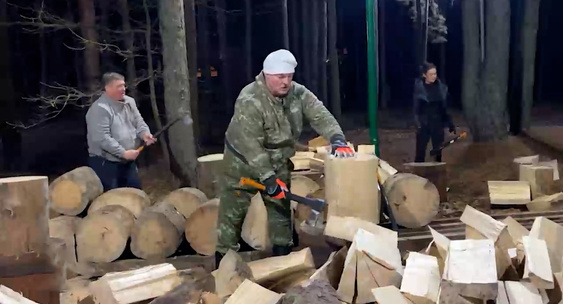
Belarus does not need Burevestniks and Poseidons.

We don't need the Burevestnik or Poseidon, of course. Because the Burevestnik flies for 24 hours, and it can be launched from Vladivostok—it can hit any target. Why drag it to the front lines? Or, say, the Poseidon. "What, are we going to launch a Poseidon missile on Naroch?" (c) Lukashenko.

When the choice arose—I want this kind of nuclear weapon, I don't want that kind...
Meanwhile, the Oreshnik missile system deployed in Belarus has a stated range of 5,500 kilometers.
Image

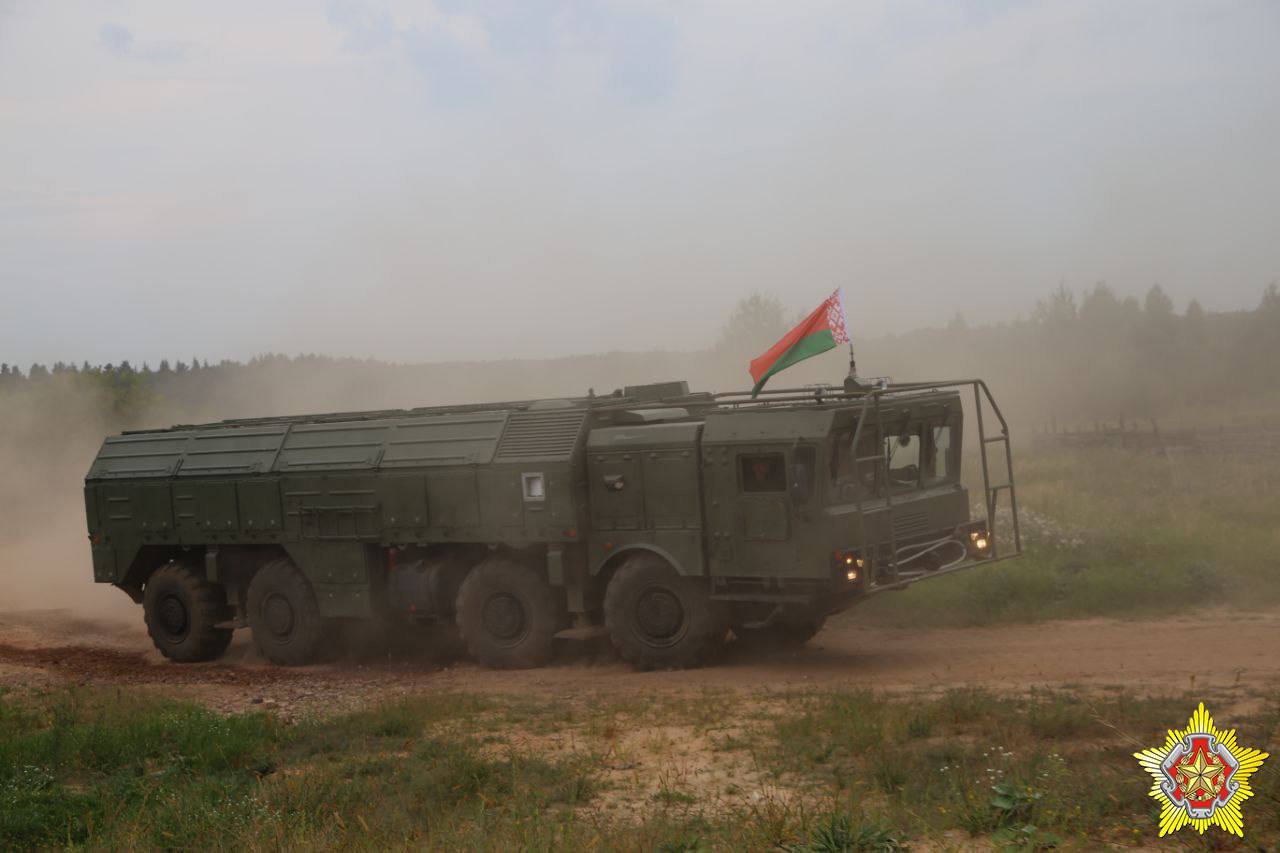
Iskander ballistic missile systems with nuclear warheads are also deployed in Belarus.
Image
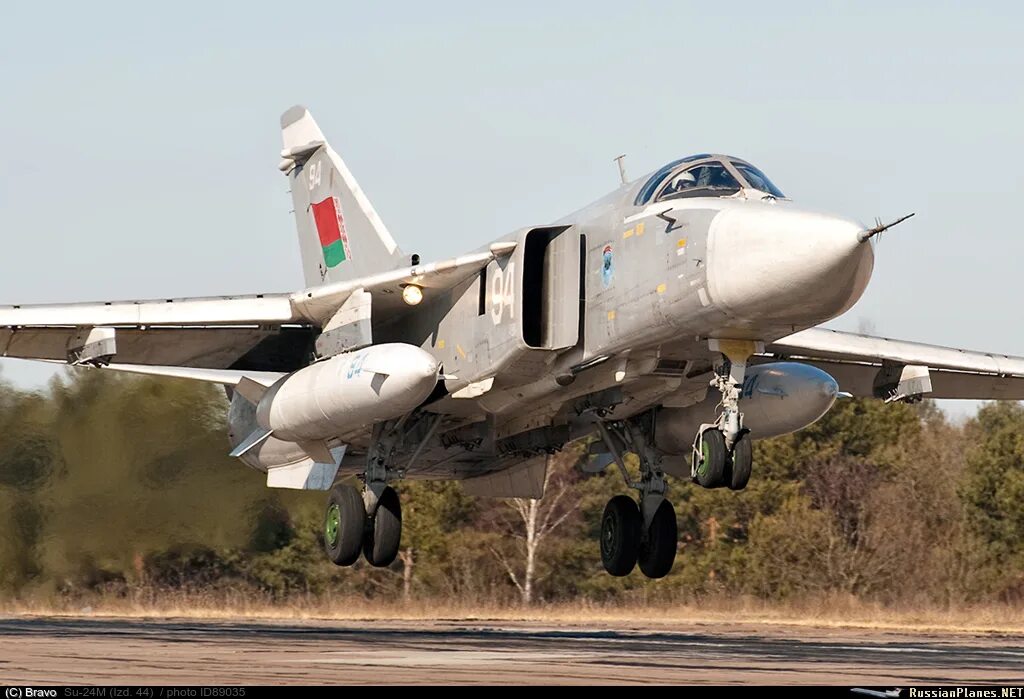
It was also reported that the Belarusian Air Force's Su-24 aircraft have undergone the necessary modernization for use as nuclear weapons carriers.

Image

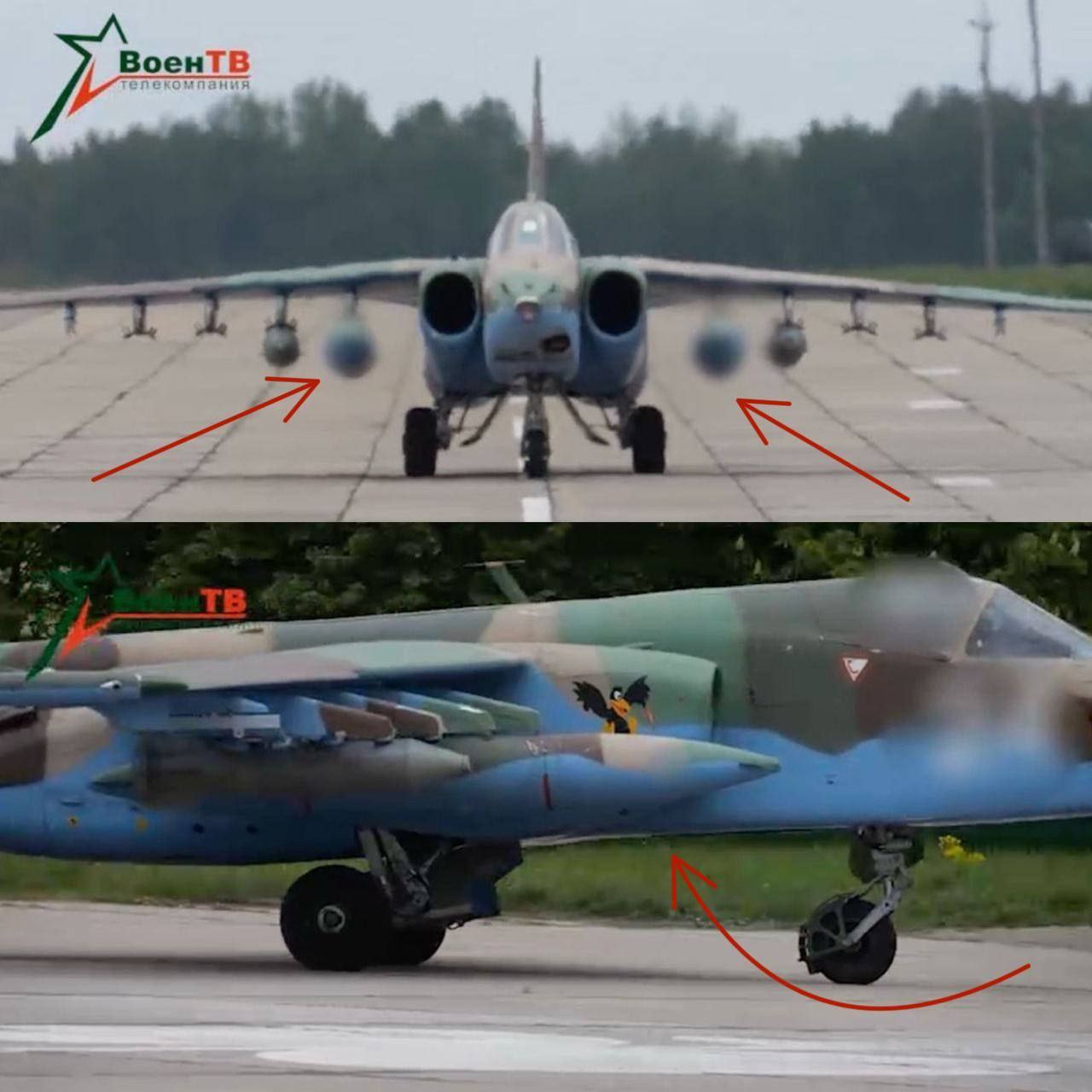
Modernized Su-25 attack aircraft capable of carrying nuclear weapons are also deployed in Belarus. Overall, both tactical and strategic nuclear weapons are currently deployed in Belarus. In this regard, it can be said that Lukashenko took over a country with potatoes and a Zmagar flag, but will leave it with nuclear weapons.

https://colonelcassad.livejournal.com/10179192.html

Google Translator
"There is great chaos under heaven; the situation is excellent."

User avatar
blindpig
Posts: 14788
Joined: Fri Jul 14, 2017 5:44 pm
Location: Turtle Island
Contact:

Re: Russia today

Post by blindpig » Tue Nov 11, 2025 4:19 pm

Ria Novosti Asks Lavrov THE Important Questions

And the interview is rather short by Lavrov standards because his answers are terse.
Karl Sanchez
Nov 10, 2025

Image

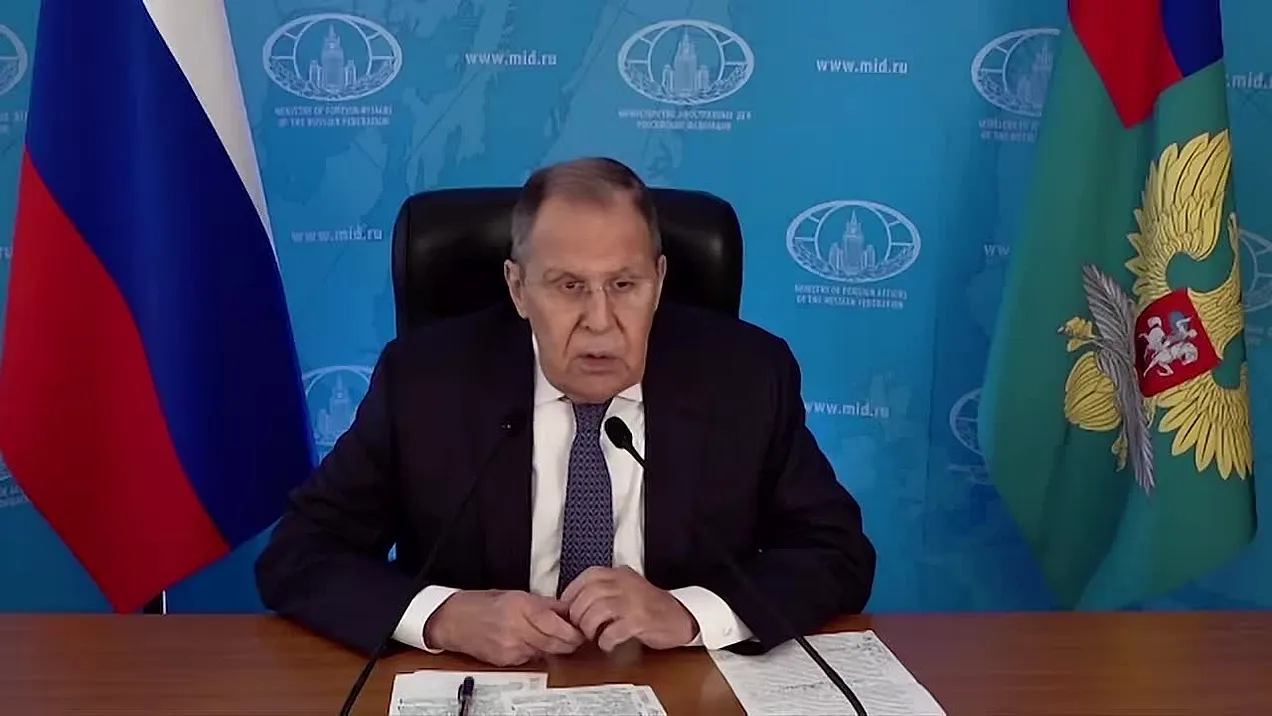
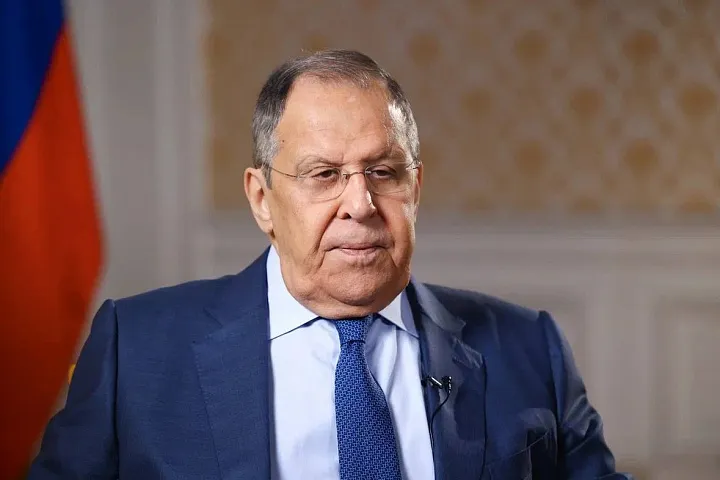
On Sunday the November 9th, Ria Novosti interviewed FM Lavrov and asked him the key questions Russians and the world want asked. Lavrov’s answers are shorter than usual but made in a way so no second guessing can be made. The interview also puts to rest the fake news about his being sidelined or retired. I note readership of his interviews has fallen off over the last several months. I hope more readers will read this report:
Question: President of Russia Vladimir Putin has announced that the Russian Federation is ready to continue to adhere to the restrictions under the Strategic Arms Reduction Treaty for a year after February 5, 2026. Were there any reciprocal signals from the United States? Has Moscow offered Washington a meeting to discuss the so-called post-New START period? If so, at what level?

Sergey Lavrov: The constructive initiative put forward by President Vladimir Putin in the post-New START sphere speaks for itself. It is devoid of a “double bottom” and is extremely easy to understand. Its practical implementation will not require any specific additional efforts. Therefore, we do not see the need for an in-depth discussion of our idea.

The only thing that is needed is reciprocity on the part of the United States: we will adhere to voluntary restrictions only if and exactly as long as the other side adheres to them. Of course, if the Americans have questions, they can always ask us.

So far, there has been no meaningful reaction from Washington. As we were told through diplomatic channels, “the issue is being considered.”

We are not going to persuade anyone. We believe that our step meets the interests of both sides and the entire international community. We are ready for any development of events. However, we hope that the result will be positive.

Question: What is the main stumbling block in the talks with the United States on a settlement around Ukraine? Where are we ready to make concessions, and where are we not?

Sergey Lavrov: The understandings on Ukraine reached during the Russian-US summit in Alaska on August 15 were formulated on the basis of the conditions for a fair and sustainable settlement set out by President Vladimir Putin back in June 2024 during his meeting with the leadership of our ministry. We also took into account the proposals that were conveyed to us by US Special Presidential Representative Stephen Witkoff shortly before Anchorage.

At that time, the Americans assured us that they would be able to ensure that V. Zelensky did not interfere with the achievement of peace. Apparently, certain difficulties arose in this matter. In addition, as far as we know, Brussels and London are trying to persuade Washington to abandon its intention to resolve the crisis through political and diplomatic means and to fully engage in efforts to exert military pressure on Russia, that is, to finally become part of the “party of war.”

Now we are waiting for confirmation from the United States that the Anchorage agreements remain in force. At the same time, I would like to emphasise that despite their–-in essence–-compromise nature, we have not and do not renounce the points of principle for us. And the Americans understand this. No one questions the territorial integrity of Russia and the choice of the residents of Crimea, Donbass and Novorossiya, who made fateful decisions to reunite with their historical homeland during the referendums in 2014 and 2022. We do not forget about the need to eliminate the root causes of the conflict, which we have mentioned many times.

Question: What will be Russia’s response if the frozen assets of the Russian Federation are used to help Kiev?

Sergey Lavrov: It has not been surprising for a long time that the European Commission interprets the UN Charter and other international legal norms, including the provisions on sovereign immunity and the inviolability of the assets of central banks. Such actions are open deception and robbery. Apparently, Europeans have awakened the old instincts of colonizers and pirates. No matter how the scheme for taking Russian money is arranged, there is no legal way to do it.

The confiscation of our gold and foreign exchange reserves will not save Kyiv’s protégés of “united Europe”. It is clear that the regime will not be able to repay any debts and will never pay off loans. Seeing this, not everyone in the European Union is ready to blindly take such steps, which are also fraught with serious reputational risks for the eurozone as a territory of economic activity.

Russia will give an adequate response to any robbery actions in accordance with the principle of reciprocity, based on national interests and the need to compensate for the damage caused to us. Brussels and other Western capitals may still come to their senses and abandon the planned adventure.

Question: Has the US administration informed you that it is ready to de jure recognise Crimea as Russian territory as part of the peace plan?

Sergey Lavrov: For obvious reasons, we do not disclose all the details of the discussions with the American side on the Ukrainian issue, [Lavrov answered this above implying the Americans do recognize those lands as Russian] although when outright fakes are planted in the media, we naturally make appropriate comments. The discussion covers a wide range of topics and is not limited to one aspect. Although this is how some journalists and experts are trying to “portray” the negotiations, which is fundamentally wrong.

I repeat once again that the end of the conflict, in our opinion, is impossible without taking into account Russia’s interests and eradicating its root causes. As for Crimea and Sevastopol, the inhabitants of the peninsula in March 2014 exercised their right to self-determination in a referendum, speaking in favor of reunification with Russia. So the question of the peninsula’s ownership is closed to us.

Question: When and where can the meeting of the Russian and American delegations on mutual irritants between the Russian Federation and the United States take place? And what about your meeting with Marco Rubio? Where and when can it take place?

Sergey Lavrov: There are a lot of irritants in Russian-US relations, and we inherited them from the previous US administration. It will take a long time to clear the rubble. [That “rubble” began with Obama in 2016 and has escalated since, even during Trump 1.0]

With the arrival of the new administration, we felt its readiness to resume dialogue. It is coming, but not as fast as we would like. In the spring, two rounds of consultations were held, a number of agreements were reached to improve the living conditions of diplomatic missions.

For our part, within the framework of this dialogue, we consider it important not to limit ourselves only to the problems of diplomatic missions. It is important to move on to such issues as the establishment of direct flights and the return of Russian diplomatic property, which was illegally taken away from us by Barack Obama in December 2016, three weeks before Donald Trump’s first inauguration. At that time, National Security Advisor candidate Michael Flynn called our ambassador and, on behalf of the future US president, asked him not to react sharply to the provocations of the outgoing Democratic administration: they said, “We will move into the White House and settle everything.” We are still waiting. The American side has been given our proposals on both diplomatic real estate and air traffic. Now there are working contacts on the possibility of continuing the dialogue.

Secretary of State Marco Rubio and I understand the need for regular communication. It is important for discussing the Ukrainian issue and for advancing the bilateral agenda. Therefore, we communicate on the phone, we are ready to hold personal meetings when necessary.
]

Unasked was the question: Does Trump have agency to make decisions about American policy towards Russia? Some have said that the men in black suits and sunglasses arrived which is why Trump has flip-flopped so much recently. Some analysts are saying the “structural” nature of the Deep State and its very longstanding ideologies are to blame for lack of progress. I’ve written several times that the Outlaw US Empire is unwilling to admit defeat and Trump’s job is to somehow twist history to erase the fact that the Empire invaded Ukraine in 2014 and began waging war on its Russian speaking inhabitants, thus initiating the genocide. The act of Aggressive War is a Nuremburg Class War Crime of which the Empire is guilty of in more cases than just Ukraine, but this instance differs somewhat from its previous crimes—it’s almost 100% use of a proxy to wage the war while the Empire leads from behind directly against a nuclear armed superpower.

Russia clearly doesn’t want a direct confrontation with the Outlaw US Empire/NATO but certainly wants to demilitarize and destabilize the latter as much as possible. IMO, Russia doesn’t want to see a revolution within the Empire, which further internal destabilization can make possible in the future. Yes, Russia wants to see vast political change in Europe that might lead to the dissolution of NATO. IMO, the only way for European NATO to rearm is for money to come from the outside—from the Empire—but Trump has emphatically said the Empire has no money for Europe and that Europe must pay tribute to the Empire—a situation that clearly works in Russia’s favor.

What will Russia do if the Outlaw US Empire does nothing? That was another question that should’ve been asked. IMO, as I’ve written before, Russia will force Ukraine and perhaps NATO to capitulate once it attains its SMO goals either on the battlefield or via negotiations with a non-Zelensky Ukrainian government. The current campaign to destroy electrical energy generation facilities will likely be 100% complete by the end of November, and that will incur more costs on the EU because Ukraine exported some of its electrical generation and gas supplies to the EU, the upshot being a worsening of the EU’s Winter energy situation. How fast the front will collapse is another unknown. The line of fortified cities in Southern Donetsk is now in Russia’s rear, and the way is open to Zaporozhye once the series of rivers in the Gulyaipole region are crossed and that city bypassed or cauldroned—the latter being most likely as this excellent sitrep reports. In the North of Donetsk, there remains Kramatorsk and Slavyansk as the last major line of fortified cities. It appears Russia plans to surround them from the North and West coming down from Kupyansk and Seversk, while also engaging from the South and East. How long those battles last depends mostly on the strength of Ukrainian forces in place as reserves are very few and almost all within Western Ukraine. It must be recalled that Ukraine has more than the Line of Contact to defend as it must also defend its borders. Plus, troops garrison the Odessa and Kherson regions. And lastly there are Ukraine’s neighbors who would like to regain the lands they lost in Western Ukraine at the end of WW2. Might those nations act in concert with Russia when the final settlement is made?

I don’t expect the SMO to end until early 2027 unless a massive upheaval in Kiev occurs that ousts Zelensky and the Nazis. The continual grift might be benefitting too many for that to happen soon, but what happens when the money flow ceases? How much will CIA and MI6 be willing to lose to further their Deep State Masters geopolitical game?

https://karlof1.substack.com/p/ria-novo ... -important

SberBank Performance as an Economic Indicator

Karl Sanchez
Nov 10, 2025

Image
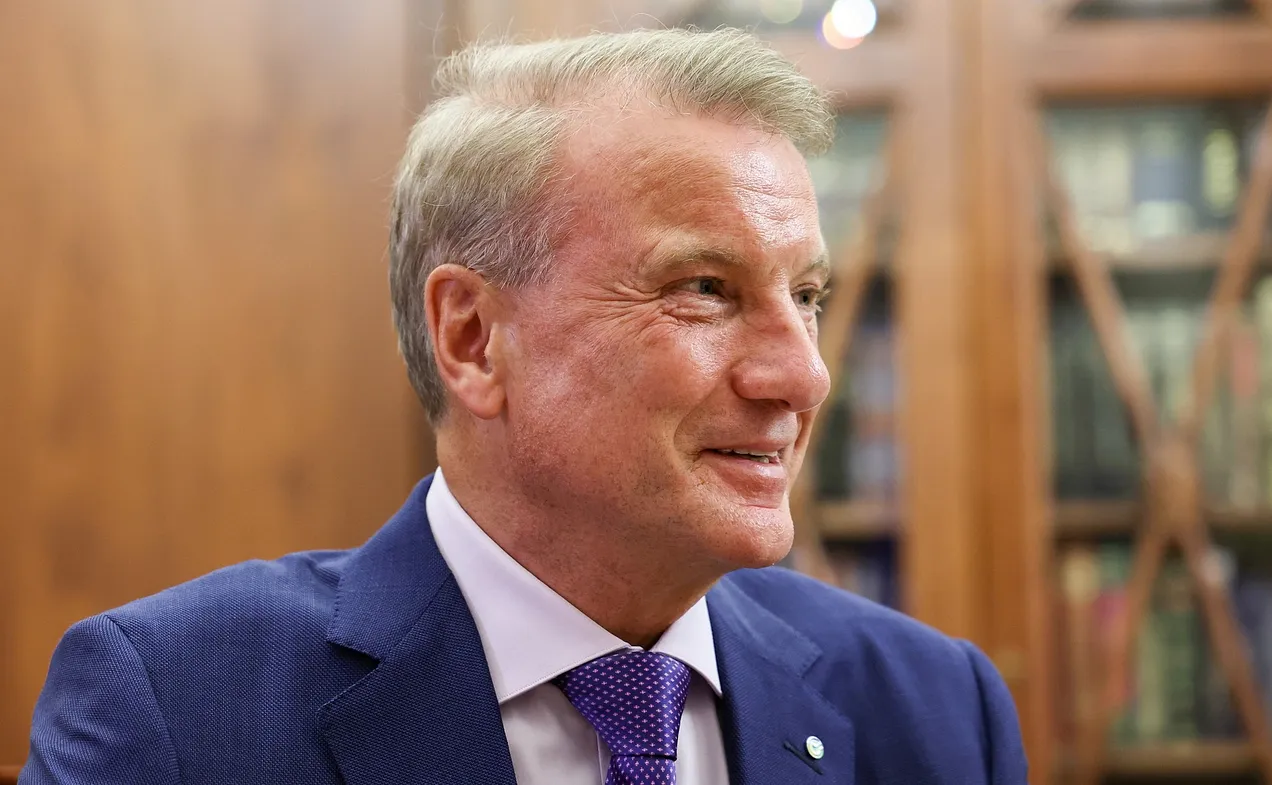
Chairman of the Executive Board of Sberbank Herman Gref.

Smiling and oozing confidence as CEO of the largest bank—publicly owned—in Russia and all of Eastern Europe (if it were allowed to operate there), his countenance buoyed by the best performance ever by his institution. Now, should we take that as a positive economic indicator? Well, what did he tell Putin in their short chat?
V. Putin: Good afternoon!

How are you, Herman Oskarovich?

G. Gref: Thank you, everything is fine.

V. Putin: How are you doing?

G. Gref: Everything is fine.

V. Putin: How good is it?

G. Gref: Vladimir Vladimirovich, we have finished paying record dividends in August. We paid 787 billion [rubles in] dividends this year. This is a record in the Russian market, and no company has ever paid this much in history. However, we hope to break this record next year.

We plan to get a profit this year about six percentage points higher than last year. Therefore, we will have higher dividends next year.

V. Putin: This speaks of the financial institution’s solid stability.

G. Gref: Yes, we have our risks completely under control.

Of course, we are growing at a very modest pace this year, due to the fact that the macroeconomic conditions are difficult. Some of our portfolios are slightly shrinking, particularly the portfolio of consumer loans. The rest are growing, but at a very slow pace, with a single-digit growth rate.

Mortgages will be lower this year than last year, and mortgage issuances will be significantly lower. We will be about 5-7 percent lower than last year, and the market will be about 10-15 percent lower than last year.

But in general, all the other portfolios will be in the black this year. It’s worse than we expected, but it’s not bad for such a challenging year.

We continue to develop technology. We recently introduced a completely new technology to the payment market as a replacement for Apple’s departure. Apple Pay was a very popular method of payment using a phone. However, they closed the so-called NFC port, making it impossible for Russians to pay. We have developed a technology that allows us to replicate this feature using the Bluetooth port, which cannot be closed. In the first month of its implementation, a significant number of people began to pay using their phones again. This is a convenient and fast method that takes only a second.

V. Putin: We have to develop our own technologies.

G. Gref: Such technologies, which, in general, do not exist in the world yet. Two technologies that are not yet available in the world are face payment (we have 1 million 300 [thousand] terminals in the country where you can pay by face) and “Whoosh”, we called it [so] because it is a very fast payment technology using Bluetooth.

We’re finishing a lot of projects this year.

V. Putin: Does the device read your face down to the smallest detail?

G. Gref: We made a small terminal, brought its cost down to $55, and thanks to this the payment system became available. Because usually for face recognition you need a 3D camera, and it is very expensive making it unprofitable. With 1 million 300 [thousand] terminals–-that would have been a huge amount of money making the system unprofitable.

We made a very cheap terminal. For the past two and a half years, we have been rolling out 1 million 300 [thousand] terminals across the country. From Kamchatka to Kaliningrad, you can pay by face everywhere. Now in buses, metro-all these payments are everywhere.

So, we’re making progress, Vladimir Vladimirovich.

V. Putin: Excellent. Good.

Thank you.
Sberbank also is involved with AI, making it much more than a mere financial institution. So, what made the year so “challenging”? The high prime rate that slowed the pace of credit provision and thus slowed the economy to kill inflation. Loan production was down yet profits rose. Plus, the high rate didn’t kill development because of the many special programs provided by the government. So, where do all those dividends go? Well, it’s a joint stock company that’s majority owned by the public via the state, so over 50% of those rubles flow into the state revenue system and some will go directly to other institutional stockholders, plus a small percentage will go to ordinary Russians who now have the ability to directly invest in publicly owned corporations like Sberbank. Russian government will use what it gets to finance more development, and many Russian institutional stockholders will do the same. And next year will be even better. I’m sure there ‘re many Western governments that really don’t want to hear that good news.

https://karlof1.substack.com/p/sberbank ... n-economic

******

Lucy Komisar: When Challenged On Ukraine, Hillary Clinton Lashes Out
November 10, 2025
By Lucy Komisar, The Realist Review, 10/14/25

Lucy Komisar is an investigative journalist based in New York. She won the Gerald Loeb, National Press Club and other awards for her expose in the Miami Herald of Ponzi fraudster Allen Stanford. Her articles have appeared in the New York Times, Washington Post, Wall Street Journal, Chicago Tribune and many other publications in the U.S. and Europe. Her website is https://thekomisarscoop.com/

A few days ago, former US Secretary of State Hillary Clinton replied to my question about Ukraine at the Council on Foreign Relations (CFR). She and John Sullivan, who served as Ambassador to Russia under both Presidents Trump and Biden, revealed themselves to be either liars or so ignorant of reasons for the U.S. Ukraine war as to be utter fools. [The full video can be found here].

This was a fly-on-the-wall event where you get to hear the delusions of the people who shape US foreign policy. The CFR meeting was hosted by the Dean of the Columbia School of International and Public Affairs, Keren Yarhi-Milo, who talked about the biases commonly found among policymakers and the intelligence community when they try to understand the intentions of US adversaries. She spoke about mirror imaging, which is what happens when you think that the adversary thinks in exactly the same way that you do; she spoke about the inability to empathize, she spoke about other biases that lead us to misunderstand and misperceive the intentions of our adversaries. She said it happens in the United States, repeatedly. All important.

But then Keren Yarhi-Milo veered into arm-chair psychology, telling the audience that in her view, ”[if] you want to understand the Ukraine, the decision to invade Ukraine, what’s driving this, you have to really understand Putin’s psychology, and the reference point, and how it’s all about, in his mind, regaining the Soviet empire.” So she knows what is in Putin’s mind, though he has never said that!

At the event, Ambassador John Sullivan, who also served as Deputy Secretary of State under Trump, echoed Yarhi-Milo, asserting that “you have to really understand Putin’s psychology” when evaluating his policy in Ukraine. He said, “I once had a conversation with my then-boss Secretary Blinken. And we were talking about what Putin is like. And, you know, he’s often compared to a gangster. And I didn’t want to make an ethnic reference, or if I made one it would be one that would be from my own tribe. So I’m from South Boston. And I started talking about Whitey Bulger.”

Bulger was a mafioso, murderer and a crook. Is that how Sullivan really feels about the Boston Irish?

“And I mean, you’ve got to understand, you can’t understand Putin unless you really understand where he’s from, what he’s about. He’s a tough kid from Leningrad, right? And not understanding who—his sense of grievance, his sense of loss.” He adds: “He is committed to the proposition that the great geopolitical catastrophe of the twentieth century was the demise of the Soviet Union. …He doesn’t lament the demise of Soviet communism. He famously says, if you’re not nostalgic for how we lived in Soviet days you don’t have a heart, but if you want to return to Soviet communism you don’t have a brain. I mean, it’s hard to be the richest person in the world with a billion-dollar palace in Sochi.”

So, Putin is like the Bulgar of the American politics, not Russia?

In fact, there is no evidence that Putin is richest person in the world (that seems to be Elon Musk) and there is also no evidence of this palace. But who cares about evidence! And even his “you don’t have a brain” quote contradicts what Putin said! But who cares!

For once, Clinton got closer to the truth when she said, “… it’s been our experience, and certainly the research shows, that you introduce, through this over-personalization, volatility. And really, the volatility becomes a greater driver than your credibility, your ability to really read this person, to manage this person, to try to shape the events.” But she didn’t challenge Yarhi-Milo or Sullivan on Putin. And she certainly didn’t like me raising the point when I asked her question:

My name is Lucy Komisar. I’m a journalist.

I was very impressed with the Dean’s analysis of how one should look with empathy and look at the other side. And then I saw in the discussion of Russia absolutely the opposite. I didn’t hear anybody talk about Kissinger and Kennan talking about not moving NATO one inch to the east, the 2014 American-sponsored coup that threw out an elected Ukraine head of government because he was too pro-Russian, the new government bombing the Russian speakers for eight years.”


David Westin of Bloomberg News, serving as moderator, then broke in:

There’s a question here, right? I’m sorry, ma’am, is there a question in here? Is there a question? This is a speech. I’m sorry.

[Here I would note that my comment was way shorter than others were allowed to make without interruption. But then again, those didn’t challenge the speaker.]

After the unasked for interruption, I continued:

Let me finish. That the Soviet Union, anybody that wanted it—that talked about it being collapsed, that it was a tragedy, but anybody that wanted to have it come back had no brain. Why did you not talk about any of these facts? And instead of that do a lot of armchair psychologizing about Putin and his motives?.

Enter Hillary.

Secretary Clinton, clearly annoyed by my daring to question the prevailing wisdom she has dedicated her career to crafting and selling replied:

First of all—(applause—of course there was applause, this was the Council after all)—I reject the premise of your question. I think you have gone into a lot of misstatements. (More applause). I don’t agree at all about a lack of empathy and understanding. You know, both John and I have spent a lot of time with Putin trying to understand. And what we finally understood is that he wants to destroy the West and destroy the United States.

…And you may disagree with that. You may have a more benevolent view of what he did, invading—you know, first of all, making up Chechen war, invading Georgia, invading Ukraine twice, threatening his neighbors, being Assad’s air force. I could go on and on. So you have your view. I do not think it is the view supported by history. And certainly not the view of what we’re seeing today.

I would commend to you, if you’re willing to read it, a recent study out of the University of Munich talking about what if Putin could win. Because there’s no doubt, with his latest drone activity and what he’s trying to do to intimidate everybody from Poland to Romania to Denmark to Italy, he is sending a message that you had better back off from supporting Ukraine, a free and independent country that has every right to chart its own sovereign future—just like Poland did joining NATO, just like Estonia, Latvia, and Lithuania did joining NATO. Putin and Russia don’t have a veto over what free and independent nations can choose for themselves. It’s time he understood that and got over both his history and the greater history that has kept him imprisoned and kept Russia poor, an extractive commodity market that could do so much more on behalf of its own people. And you and I have a disagreement. (Yet more applause).


A few comments are in order.

I found Clinton’s remarks deeply misinformed, especially since it’s clear that it was Washington that started this new Cold War. As former US Defense Secretary Robert Gates wrote in his 2014 memoir “Duty: Memoirs of a Secretary at War” that, “When the Soviet Union was collapsing in late 1991, Dick [Cheney] wanted to see the dismantlement not only of the Soviet Union and the Russian empire but of Russia itself, so it could never again be a threat.”

There is no time here to go into her nonsense about the drones (some of which are coming from Ukraine and Poland); the Russian invasion of Georgia which actually was a response to Georgian aggression; and the war in Ukraine which was clearly provoked after 8 years of Ukraine’s war on their own ethnic Russian citizens. Her remarks about Romania, Denmark, Italy: Any evidence? And if Russia is so poor how can it invade Europe? And how is it that its extractive market-based economy have a higher growth rate than the U.S. and Europe?

And then there is, given her record, the biggest question of all: Why would anyone believe (much less applaud) what Hillary has to say on these matters?

After Clinton’s diatribe, Westin, good establishment lackey that he is, added:

I will add only that I am so happy for the Council and for the United States of America where we can have this sort of discussion… There are a lot of places in the world we could not have had this sort of discussion, which is only beneficial.

Clinton replied, Absolutely.

Well.

Following Westin’s assertion that at the Council one could have this discussion, I was threatened by the Council director of meetings that I could be defenestrated (removed from membership) for asking my question. This is relevant in an era where from cancel-culture to deportations, free speech in the U.S. is under attack.

Here is her email:

Subject: 10/8 CFR Event
Date: Thu, 9 Oct 2025 21:16:34 +0000
From: Nancy Bodurtha NBodurtha@cfr.org
To: LK@Dear Lucy:

Following your disregard of the moderator at last evening’s discussion with Secretary Clinton, Dean Yarhi-Milo, and Ambassador Sullivan, I write to remind you that CFR’s code of conduct is explicit in the expectation that members exhibit the highest levels of courtesy and respect toward speakers, moderators, staff, guests, and one another. CFR reserves the right to drop or suspend members for any conduct that is prejudicial to the best interests, reputation, and proper functioning of the organization.

Sincerely,
Nancy

Nancy D. Bodurtha
Vice President, Meetings and Membership
Council on Foreign Relations
58 East 68th Street, New York, New York 10065
tel 212.434.9466
nbodurtha@cfr.org www.cfr.org

Here is my response:

Following my remarks, Westin said: “I am so happy for the Council and the United States of America where we can have this sort of discussion. There are a lot of places in the world where we could not have had this sort of discussion, which is only beneficial.”

I guess you don’t agree. Should I ask him if my question was “prejudicial to the best interests, reputation, and proper functioning of the organization”? Of course, there are countries where questions like mine would not be allowed. Was your message to me directed by Mike Froman or your own idea? BTW, NOBODY intimidates me!

—and—

The best interest of the Council is to promote diversity of views and expression, not to try to shut down minority views.

Lucy Komisar

***

Council officials should inform Nancy Bodurtha that it is not appropriate to threaten journalist members for asking challenging questions of powerful political figures. I would add that it is actually hard to know if my views are those of the “minority” since CFR members have often thanked me for questions they did not raise themselves.

https://natyliesbaldwin.com/2025/11/luc ... ashes-out/

******

The Warsaw Liberator
November 9, 9:04 PM

Image

A date that remains relevant today: November 9, 1794, Russian troops under Suvorov stormed Warsaw.
The historical retaliation for the Polish garrison in the Kremlin during the Time of Troubles arrived.

Suvorov's Capture of Warsaw

A brief overview of the events leading up to the defeat of the Polish uprising. After the French Revolution of 1789, proponents of reforms in the interests of the bourgeoisie emerged in the Polish-Lithuanian Commonwealth. A conflict arose between them and the conservatives, bordering on civil war. As often happens in such situations, one side (the conservatives) appealed to outside powers for help in resolving the internal dispute: Russia and Prussia agreed. In 1792, following the military detachments of Polish conservatives, Russian and Prussian troops entered Poland. On September 23, 1793, the Polish Sejm approved the Second Partition of Poland. Russia received lands "anciently belonging to Russia" with an Orthodox population: the Minsk, Kiev, Vinnytsia, and Cherkasy regions , while Prussia received Danzig. The Polish Crown Troops were reduced to 15,000 men, and Russian troops were stationed in Warsaw and several other cities to maintain peace.

Image

In March 1794, a Polish uprising led by Kościuszko began in Krakow (then part of Prussia). On April 17, 1794, Poles attacked unarmed Russian soldiers in Warsaw while they were attending an Easter service. During the massacre, 2,265 people were killed, 122 wounded, and 1,764 captured.

Image

Catherine II's reaction was predictable. Command of the suppression of the uprising was entrusted to Field Marshal P. A. Rumyantsev. A specially formed Russian corps under the command of A. V. Suvorov fought from Brest to Warsaw in September and October 1794. On November 4, 1794, the Warsaw suburb of Praga was stormed. The remnants of the Polish insurgents laid down their arms and dispersed. On November 9, on the banks of the Vistula, the Warsaw magistrate presented A.V. Suvorov with bread and salt, the keys to the city, and a gold and diamond snuffbox with the inscription: "Warsaw to its savior."

Image

Bismarck's words come to mind: "Form alliances with whomever you like, start any war, but never touch the Russians."

https://t.me/padikovo/4081 - zinc.

Image

Suvorov was promoted to field marshal following the Polish campaign of 1794.

https://colonelcassad.livejournal.com/10177349.html

Google Translator

******

"There is great chaos under heaven; the situation is excellent."

User avatar
blindpig
Posts: 14788
Joined: Fri Jul 14, 2017 5:44 pm
Location: Turtle Island
Contact:

Re: Russia today

Post by blindpig » Wed Nov 12, 2025 4:09 pm

Lavrov's More Extensive Very Detailed Q&A With Media

On 11 November 2025 New, alarming info on the nuclear testing issue.
Karl Sanchez
Nov 11, 2025

Image

In a far more detailed Q&A session with Russian media than was provided with his terse answers to Ria Novosti last Sunday, Mr. Lavrov revealed a number of important points and information that broadened his answers because in some instances more info became available or the questions asked differed. IMO, there’s some very important information here which many readers will miss obtaining because readership of his pressers is well below the average for Gym articles. The session lasted just under an hour:
Question: Does the fact that Moscow and Washington announced their intention to conduct nuclear tests almost simultaneously mean undermining stability on the world stage, or is it, on the contrary, a demonstration of equal opportunities, which means maintaining a kind of parity?

Sergey Lavrov: I have not heard of Moscow announcing nuclear tests. It is not very correct to say that Washington and Moscow did this at the same time.

As I already had the opportunity to mention in a recent interview with the Russian media, we have not yet received an explanation from our American colleagues about what US President Donald Trump had in mind – nuclear tests, or carrier tests, or the so-called subcritical tests, which are not associated with a nuclear reaction and are allowed under the CTBT. [Comprehensive Test Ban Treaty] There is no answer yet.

Yesterday there was a regular meeting of the CTBTO Preparatory Commission. The US representative also did not give an answer at it, although it would seem that “God himself ordered” at such a forum to explain what the US President meant.

In the United States, the administration is still being formed, and many second- and third-level positions, primarily in the Pentagon, are being filled.

In particular, R.P. Kadlek was nominated for the post of Deputy Minister of War for Nuclear Deterrence, Chemical and Biological Defense Policy and Programs. Last week, he testified before Congress. He was “tortured” about nuclear tests and the current administration’s approach to nuclear weapons. He said that D. Trump’s decisions to resume nuclear tests are dictated by geopolitical considerations. There is still no technical need for them. This is a strong statement. I do not know to what extent the author whom I have just quoted is aware of the seriousness of what has been said, but we must take it in the sense that, as we have said, there is no need for a technical nature in such tests. Then he completed this idea “for us” that the goal turns out to be geopolitical.

What could be a geopolitical goal for the United States? Dominance. If the factor of nuclear weapons is used for this purpose, then this is alarming. This is a significant departure from the concept approved by Ronald Reagan and Mikhail Gorbachev: a nuclear war cannot be won, so it must never be unleashed.

The same R.P. Kadlek, who is running for the post of Deputy Minister of War, said that it is necessary to develop nuclear options for responding to some potential regional conflicts. This is also an “interesting” statement. This is a direct indication that this gentleman will reflect in his position as Deputy Secretary of War in the spirit of threatening to use nuclear weapons in order to reach the decisions that the United States needs in a particular region.

He also demonstrated many more “miracles” of double standards when he said that NATO’s nuclear deterrence strategy could be changed due to the fact that Russian tactical nuclear weapons are deployed in Belarus. And the fact that this was done after many decades of “joint nuclear missions” (US tactical nuclear weapons were deployed in five NATO member countries a long time ago), and that we have been talking about this for a long time, proposed to “remove” all nuclear weapons on the territory of the countries to which they belong-–all this was “ignored.”

Since Belarus received nuclear weapons from Russia, then, they say, they will deploy them somewhere else. We know that there are relevant contacts with both South Korea and Japan. This is well known. These are very dangerous games.

Returning to your question. We have not announced that we are conducting nuclear tests. At a meeting of the permanent members of the Security Council, President Vladimir Putin drew attention to a statement by US President Donald Trump, who said that Russia and China have been doing this for a long time, so they should do it too. As you know, we immediately turned to our colleagues and explained to them that there was probably some misunderstanding here. We are waiting for clarifications.

Russian President Vladimir Putin instructed not to conduct nuclear tests and not even to prepare for them. The Russian Foreign Ministry and our other agencies, military and special services have been instructed to analyse the situation and come to a common opinion on whether this situation requires consideration of the resumption of nuclear tests.

Our principled position was set out by President of Russia Vladimir Putin in 2023, when, answering a question during one of his speeches, he said that if one of the nuclear powers tests nuclear weapons (not delivery vehicles, not subcritical tests), Russia will do the same.

Question: Recently, another article was published in which the author and his “sources” claim that the United States and, in particular, Secretary of State Marco Rubio were shocked by your uncompromising attitude. Were you really “strict” with the Americans, or is this just another article where you went too far with the sources?

Sergey Lavrov: We are polite people. We try to maintain this quality. I have already had the opportunity to answer such questions in a number of interviews.

Given the professional audience of journalists, I would like to draw your attention to the latest facts of unprofessional and harmful media coverage of certain events, primarily by the British. What is happening with the BBC now is well known. The fact that some “figures” are trying to justify what happened and talk about some kind of orchestrated campaign is a shame.

I would like to draw your attention to a publication by the Financial Times, which wrote some time ago that Donald Trump and Vladimir Putin agreed to meet in Budapest and instructed me and Marco Rubio to prepare for the meeting. Sergey Lavrov and Marco Rubio spoke on the phone, and before that, the Russians, they say, sent a harsh memorandum, upon receipt of which the Americans decided that it was useless and pointless to talk to us.

There are many lies here, including in terms of the sequence of events. The memorandum mentioned by the Financial Times journalists is a non-paper. This is an unofficial draft that was sent to our colleagues not after Vladimir Putin’s conversation with Donald Trump, but a few days before this conversation. The purpose of this memorandum was to remind our American colleagues what we talked about in Anchorage and what understandings, as it seemed to us (the Americans did not refute this), were reached during the meeting of the presidents of Russia and the United States. Nothing was contained in this non-paper except what was discussed in Anchorage and did not cause rejection among American interlocutors.

The presidents’ phone call took place after the material was handed over to the State Department and the National Security Council. During this telephone conversation, US President Donald Trump did not say a word about the fact that we had “planted” some provocative and “subversive” paper that destroys all hopes for a settlement. No, they spoke normally. President Vladimir Putin responded positively to US President Donald Trump’s proposal to meet in Budapest and suggested instructing the foreign ministries to prepare for this meeting. Which is what we planned to do.

US President Donald Trump said that US Secretary of State Marco Rubio would call me back. He called three days later. We had a good, polite, non-disruptive talk, confirmed the movement on the basis of Anchorage’s understandings, and then “parted.” The next step was to be a meeting of representatives of foreign policy, military departments and, probably, special services. But there were no further steps from the Americans, and it was from them that we expected the initiative on a specific place and time for such a preparatory meeting, since they came up with a proposal to prepare a summit.

Instead, there was a public statement that there was no point in dating. When US Secretary of State Marco Rubio publicly commented on our telephone conversation, he did not say that he had noticed some kind of aggravation and that it undermined the chances. If I remember correctly, he said that it was a constructive conversation and it showed quite clearly where we were, so it was not necessary to meet. This can be interpreted in different ways, but this is exactly what was said. There is a joke: our conscience is clear, we rarely use it. But in this particular case, it is absolutely so.

We have no excuse for the fact that we were and remain committed to what the presidents said in Alaska, and even if they did not agree on every “dot and comma,” they reached an understanding.

Question: You have just said about the meeting in Budapest. Following Hungarian Prime Minister Viktor Orban’s talks in the United States, he said that he still hopes that this meeting will take place. Does this chance remain? How did it happen that we are talking about nuclear tests, and before that we were talking about a meeting in Hungary? What has changed?

Sergey Lavrov: I have already answered. I cannot say what is behind the United States’ position on nuclear tests, because what US President Donald Trump said about the alleged “resumed” tests in Russia and China long ago is not true (if we are talking about nuclear weapons tests). The rest of the tests, both subcritical (without a nuclear chain reaction) and carrier tests, have never been prohibited by anyone. Therefore, we are trying to clarify this.

If we talk about the facts, the last time we conducted tests was in 1991, the Americans in 1993. China conducted its latest test not long later. The most recent was the DPRK’s test in 2017, and since then there have been no signs that anyone is preparing to resume this practice. Professionals who deal with this issue should say that this is being done secretly, deep underground. After all, to inform the White House, and not to “sit in your closets.”

There is a global monitoring system. Russia and the United States participate in it. It is based on seismic data and registers any more or less significant ground vibrations. They have long known what signal the use of a nuclear explosive device means. I would not mix the topic of nuclear tests with the topic of the Budapest Summit.

The other day I watched President Donald Trump receive Hungarian Prime Minister Viktor Orban at the White House and talk to journalists. When he was asked about the meeting in Budapest, he said that he had thought about it and decided not to hold this meeting for the time being, because, he said, we would not agree on anything. This is in the spirit and in line with his logic, which he recently outlined, that sometimes it is necessary to let warring countries fight.

I sincerely do not see a connection here. We are ready to discuss the suspicions that have arisen among our American colleagues that we are secretly “entrenched” deep underground and are doing something there. We are also ready to discuss with our American colleagues the resumption of preparatory work for the summit of the leaders of Russia and the United States that they have proposed.

If and when our American colleagues resume their proposal and are ready to start preparations for the summit so that it really ends effectively, of course, Budapest will be our preferred place. Moreover, at a meeting with Viktor Orban, Donald Trump confirmed the preference of Budapest for Washington as well.

Question: There is not much time left before the expiration of the New START Treaty, and the United States has not yet presented an official position on Vladimir Putin’s initiative. Do you think we can expect a response from the United States in the near future? And if it suddenly turns out that there is no clear answer, what does this change for Russia?

Sergey Lavrov: We have repeatedly said that this proposal is our unilateral manifestation of goodwill. In order for the United States to support our approach, no negotiations or consultations are needed. It is simply necessary for the United States to say that it will not increase the quantitative levels of the Treaty on Strategic and Offensive Arms for a year. At least as long as Russia adheres to its unilateral commitment. No other action is needed here.

As for whether negotiations are underway to extend it. No. To reiterate, the situation here is absolutely transparent. The quantitative levels are well known. We know what the Americans have. The United States knows what we have. Let’s take a year to, if you like, “cool down”, analyse the situation, stop measuring everything by the “Ukrainian yardstick” and look at the responsibility of the great powers for global security and stability, primarily from the point of view of preventing a nuclear war. We are ready for this.

This has nothing to do with the fact that deadlines are pressing. You can announce that the quantitative restrictions are extended at any time until February 5. By the way, when the current New START Treaty was extended immediately after Joe Biden took office, this was done a few days before the expiration of the original term. And it is much more difficult to extend the treaty itself than just voluntarily saying that we will comply with and respect quantitative parameters.

Question: Has Venezuela asked Russia for military assistance amid the aggravation of the situation in the region? Has there been a request from Caracas to deploy Russian weapons on their territory by analogy with Belarus?

Sergey Lavrov: No, there have been no such appeals to us.

I think it is incorrect to compare our relations with Belarus, which is part of the Union State, with which we have synchronous, coordinated and unified positions on all key issues of international security, on the one hand, and our relations with Venezuela, a friendly country. This is our strategic, comprehensive partner, for which we have recently signed a corresponding agreement.

But, of course, taking into account the geographical factor, including last but not least, it is incorrect to compare this with the Union that we have with the Republic of Belarus.

The treaty I mentioned is a completely new treaty. It was signed in May of this year during President Nicolas Maduro’s participation in the events marking the 80th anniversary of Victory in the Great Patriotic War in Moscow. It is now in the final stages of ratification. It is called the Treaty between the Russian Federation and the Bolivarian Republic of Venezuela on Strategic Partnership and Cooperation. It speaks of the need to continue our cooperation in the field of security, including in the field of military-technical cooperation.

We are ready to act fully within the framework of the obligations that we have reciprocally recorded with our Venezuelan friends in this treaty. It has not yet entered into force. Venezuela has completed the ratification procedures. We have just a few days left. Both chambers–-the State Duma and the Federation Council–-have already held the necessary hearings, so it is literally “on the way out”. We will be strictly guided by the obligations that are enshrined in it.

I cannot finish my comment on Venezuela without mentioning our position on the unacceptability of the actions taken by the United States under the pretext of combating drug trafficking, destroying not only without trial or investigation, but also without presenting any facts to anyone, as they claim, boats carrying drugs. This is not how law-abiding countries act, but those who consider themselves above the law.

Recently, Kommersant, referring to the Daily Mail, wrote that Belgium is rapidly turning into a narco-state, where bribes, blackmail, violence, and a shadow economy based on drug trafficking flourish in all spheres, from customs to the police. Not a very good source, but if they have already written about it, then, probably, they had no reason to blame their NATO partners in vain.

Instead of dealing with Nigeria and Venezuela in terms of destroying drugs there, and at the same time seizing oil fields, it would probably be more convenient for the United States to eradicate this phenomenon in Belgium. Moreover, there are already American troops there, other NATO troops. There will be no need to chase some “boats” of three people each. I am sure that this policy that the Trump administration has now chosen with regard to Venezuela will not lead to anything good. It will not increase Washington’s reputation in the eyes of the world community.

Question: You have repeatedly said that peace in Ukraine will be achieved only if the root causes of the conflict are addressed. As you know, one of the root causes of the conflict is neo-Nazism raging in Ukraine. Do you discuss this problem at talks with your American colleagues?

Sergey Lavrov: We regularly raise this issue. However, after Anchorage and my telephone conversation with Marco Rubio, we had no contacts. We did not start a conversation specifically on this topic in Alaska, but they are well aware of our position. They have it “on paper”. It is no secret. The position was voiced by President Vladimir Putin in June 2024, when he spoke at the Foreign Ministry, outlining our principled approaches to Ukraine and relations with the West.

Among other absolutely indispensable conditions for a settlement, such as demilitarization, the removal of any threats to the Russian Federation, including by “dragging” Ukraine into NATO, ensuring the rights of Russians and Russian speakers, the Ukrainian Orthodox Church, there is also a demand for denazification. It is not that we have invented some “thing” that would be alien to modern Europe.

It would seem that there is the Nuremberg Trials. Its results, which are part of the UN Charter, are part of the foundation of the international system that was created after World War II. Of course, the whole of Europe has signed up to this. In Germany, the process of denazification, the process of repentance, was carried out.

Unfortunately, now, including, and perhaps even starting with Germany, we feel that these repentances are of little value. I have already said that about 15 years ago, in the “best of times”, when communicating with our German colleagues, we noticed that they were sending such signals–-I will not say verbatim, but the meaning was very clear. The meaning of the signals was as follows, they say, dear colleagues, we paid off everyone for the Second World War, we do not owe anything to anyone else, and now we will behave based on these assessments.

Former Chancellors Angela Merkel and Olaf Scholz still tried to maintain decency, and Merz has repeatedly stated that his goal is to make Germany the main military force in Europe again. I don’t think there is any need to explain what kind of message is sent by such statements–-to make Germany the main military force again. It was already a military force when it conquered more than half of Europe, putting it “under arms” in order to attack the Soviet Union.

When such Nazi recurrences occur in the country that is the birthplace of Nazism, of course, it is alarming. Of course, this will require us and all those who are interested in a stable peace to be principled when the final parameters of a settlement are discussed.

If the West realises the hopelessness of such a scenario–-that it is not necessary to demand a cessation of hostilities in order to continue pumping weapons into Ukraine, but to do as President Donald Trump proposed before Alaska. He then said that a temporary truce would not solve anything and it was necessary to end the conflict on the basis of the principles of a sustainable settlement.

Yes, then Europe tried (and not unsuccessfully) to drag our American colleagues back into its camp of “truce, support for Ukraine, not a step back, not an inch to the left.” Nevertheless, President Donald Trump said this, and this became the basis for the understandings that were unequivocally agreed upon in Anchorage. By the way, this is the difference between the Republican administration and the Trump administration and its predecessor, the Joe Biden administration.

Recently, I came across an interview with Kurt Volker. He was the US State Department’s special representative for Ukraine under Joe Biden. He said that Russia would never agree to a peace agreement. Where he got it from is unclear, because we are the ones who are seeking a peace agreement. He added that Vladimir Putin does not consider Ukraine a legitimate and sovereign state. There is an answer to this too. We recognized Ukraine, which was not Nazi and did not ban (the only country in the world) any language, in this case Russian. We recognized Ukraine, which, in accordance with the Declaration of State Sovereignty and the Act of Declaration of Independence, was a nuclear-free, non-aligned, neutral state. That’s what we recognized, and what it all looked like.

Kurt Volker goes on to say that Vladimir Putin is convinced that Ukraine should be part of Russia (I will not even talk about this), and that the President of Russia considers Vladimir Zelensky a Nazi. And where is the proof to the contrary? Vladimir Zelensky regularly poses on TV screens, presenting awards to fighters of Azov[1] and other Nazi battalions, with chevrons of Nazi Germany on their sleeves. How else to treat this person?

The destruction of Nazism in Ukraine, denazification is an indispensable condition for a settlement, if we want it to be long-term. And we want this and will strive for it. But when no one in Europe, communicating with Ukraine, raises issues related to the Nazification of the country, when no one, with the exception of Hungary, touches on the topic of national minorities, when no one demands that Vladimir Zelensky repeal the law banning the canonical Ukrainian Orthodox Church... [fill in the rest]

In Alaska, when President Vladimir Putin told US President Donald Trump about our assessment of the situation in Ukraine, he mentioned that in 2024 they adopted a law aimed at banning the canonical Ukrainian Orthodox Church. US President Donald Trump did not believe it. He asked US Secretary-General Marco Rubio, who was present at this conversation, three times whether this was true. Marco Rubio confirmed that this is true. It was clear that the President of the United States was, to put it mildly, discouraged.

Returning to Ukraine and its legislation. I mentioned Hungary. When Brussels bureaucrats led by Ursula von der Leyen (who is now creating an intelligence structure and will be in charge of it herself) were pushing through the decision to start negotiations with Ukraine and on Kiev’s accession to the European Union, Hungary–-we must pay tribute to the courage of Hungarian President Viktor Orban and his Foreign Minister Peter Szijjarto–-single-handedly insisted that among the conditions that Ukraine must fulfill first, how the negotiations would begin indicated the renewal, the restoration of all Ukrainian obligations in the field of respect for the rights of national minorities. There is a fairly long text on this topic. It was not difficult to come up with, because the Constitution of Ukraine still requires respect for the rights of Russians (highlighted separately) and other national minorities.

Now there is the European Commissioner for EU Enlargement Marta Kos. When she says that Ukraine is already ready and has done everything to start negotiations, this is not true. Nothing has been done to satisfy or restore the rights of ethnic minorities, not even for the Hungarian minority, although Hungary is a member of both the European Union, which Ukraine is so eager to do, and NATO, which Vladimir Zelensky is also constantly striving for. Nothing is being done for this, as well as with regard to the remains of the victims of the Volyn massacre against Poland.

The European Union is generally silent on the topic of flagrant violations. Ukraine is the only country that has banned the language entirely. Even in Norway, where 7% of the population are ethnic Swedes, Swedish is the state language. The numbers are probably clear to you. Compare with how it looks in Ukraine. Regarding Ukraine’s actions, we do not hear anything from Brussels, except that they should be with Ukraine to the last, “until victory.”

This mantra was recently reproduced by M. Rutte and other representatives of the Western European community. They say that they must always defend Ukraine, because it defends European values. This is a confession. This is self-exposure. This means that European values in the understanding of the current Brussels bureaucracy are the revival of Nazism. Therefore, we cannot show weakness here.

Question: Recently, the Lithuanian authorities, under far-fetched pretexts, have been increasingly flirting with the topic of completely closing the borders and stopping transit to Kaliningrad for Russians. What measures are being taken to prevent this, perhaps together with Minsk? How will Russia respond to Lithuania if it does take this step?

Sergey Lavrov: These small countries, the “young Europeans - Lithuania, Latvia and Estonia–-greatly overestimate their importance for Western Europeans, for the “guardians” of the European Union. Those in Europe who maintain common sense and really care about the security of the continent (although there are fewer and fewer of them) are well aware of the provocative role assigned to these Baltic countries, first of all, by their British curators.

London’s role in provoking various situations is also well known. Including the recent case when the Russian FSB exposed a plot aimed at forcing one of the Russian pilots on a fighter jet with a Kinzhal missile to fly to the military base in Constanta, Romania, allegedly with the explicit aim of organizing the downing of this plane there, accusing Russia of attacking the North Atlantic Alliance. We leave this aside. The FSB of Russia exposed this in detail. I don’t know how the British will “wash off” from this, although their ability to be in the position of a “goose” coming out of the shower is well known.

There was an empire that ruled almost the entire world. Now it no longer exists. Nor does the “good, old England” that they are used to boast of. They have no economic power left, and their military power is also relatively weak, including their nuclear arsenal, which they cannot 100% dispose of themselves. This must be compensated somehow. They compensate with this traditional English desire everywhere, to put it decently, to divide and rule. There are also indecent ways to indicate how they behave and what goals they pursue.

Returning to your question. Indeed, recently, in addition to the constant threats to block Kaliningrad transit, some figures are no longer in Lithuania, but in the European Union, egging on the Balts, saying that Kaliningrad can be “razed to the ground.” Now Lithuania has closed the border with Belarus, leaving hundreds of trucks belonging to Lithuanian carriers on the territory of the neighboring Republic of Belarus.

President of Belarus Alexander Lukashenko, as always, spoke figuratively on this matter. These are outrageous actions. The Americans had this statement about dictators in Latin America, in Central America: “This dictator is a son of a bitch, but he is our son of a bitch.” The same attitude of the European masters of the Balts to their “twists”. They are assigned the role of doing as many heinous things as possible against the Russian Federation and at the same time provoking Russia to take actions that they will then try to “sell” to Washington, primarily as a basis for starting serious hostilities on the basis of Article 5 of the NATO Washington Treaty.

We see it. But the obligations on Kaliningrad transit are not only the obligations of Lithuania. These are the obligations of the European Union. Back in 1994, when the Agreement on Partnership and Cooperation between Russia and the EU was signed, it stipulated the need to ensure transit through each other’s territory, given that we are neighbouring countries. Then, in 2002, a separate joint statement on transit was signed. It had a direct effect. In 2004, when the Baltic States, along with a number of other Eastern European countries, were admitted to the EU, the Statement on the Enlargement of the European Union and the Principles of Partnership between the European Union and the Russian Federation was signed. All this is enshrined there.

After that, technical documents were adopted, including those that described the appearance and powers of the “temporary travel document”. All this was described in detail, to the smallest detail. How the passage of citizens and the delivery of goods are controlled on trains. The European Union should think about what responsibility it bears for the behavior of its “guys” who are out of control.

I remember when the decisions on the admission of Latvia, Lithuania and Estonia to the European Union were being prepared in 2004, we asked our European interlocutors (and then we had many contacts and quite confidential conversations) whether they were sure that these three Baltic countries were ready to meet the criteria for membership in the European Union. We were told, they say, it is clear that somewhere they are not up to par, but...

We then asked whether it makes sense to immediately “drag” such unprepared applicants into the EU. We were told that they understand what we were talking about, they retained phobias after gaining independence, they remember what an “occupied” situation they were in, and these phobias will not go away. We will accept them into the European Union and NATO, and they will “calm down”. Calmed down? It seems to me quite the opposite. Not only did they not calm down, but they decided that they would “call the tune” both in the European Union and in NATO, at least as far as openly Russophobic and anti-Russian “rhapsodies” are concerned. Therefore, they are now “standing”.

If, in response to what I am saying now, the European Union says that we have agreed on something, but you yourself invaded Ukraine. I have no doubt that there will be such people there. They do not want to remember how everything developed with Ukraine, how it all began long before the Minsk Agreements, long before Crimea, when in 2013 the then President of Ukraine Viktor Yanukovych analysed the prospects for signing an Association Agreement with the European Union and realised that many of its provisions would jeopardise trade, trade regime and other benefits that Ukraine had in economic contacts with the Russian Federation. When he realised this and asked to postpone the signing scheduled for the end of November 2013, we supported his approach. Not because they wanted to slap Ukraine on the wrist, not to allow it to develop relations with anyone other than the Russian Federation. We just wanted the obligations that Ukraine had within the framework of the CIS free trade zone, within the framework of relations with Russia, which brought significant results to Ukraine, not to suffer, and there were no contradictions between the principles that underlay these relations and those that were laid down in the agreement with the European Union.

At that time, President of Russia Vladimir Putin addressed the then head of the European Commission, Josep Manuel Barroso (former Portuguese Prime Minister), telling him that Russia has a free trade zone with Ukraine, and you also want to do something similar with Kiev. The principles on which these two zones are built contradict each other. Therefore, let’s get together the three of us–-Ukraine, Russia and the European Commission–-and think about how we can harmonize this. It would seem that what could be more reasonable? Through some channels, Josep Manuel Barroso replied that since the European Union does not interfere in Russia’s trade with Canada, let Russia “not touch” the EU’s relations with Ukraine.

We are now talking about former US Deputy Secretary of State Victoria Nuland, about how she admitted that the U.S. invested $5 billion in Ukraine in the years leading up to the coup. But the “stimulator” of this crisis in Ukraine was the European Union. It was the EU that raised the “Maidan,” and it was the European Union that threw in the slogan that “Ukraine should be with Europe, not with Russia.” They have publicly stated this. Therefore, there is no need to accuse us of anything here and try to justify our lawlessness with the actions that our country has already taken absolutely forcedly, having exhausted all the reserves of its goodwill, good proposals, etc.

Here are a few examples of the European Union’s dishonesty. In 2008-2009, the European Union, primarily France, had problems in Chad and the Central African Republic. There was a small French expeditionary force that lacked air support. They asked Russia to send a helicopter group there to assist in the fight against the rebels, who were engaged in genocide and other atrocities. We sent this group. Then we told the EU: since we have such experience, let’s create a mechanism for a joint crisis response to situations abroad.

We proposed an approach according to which if Russia conducts an operation, we can invite the European Union to take part in it on a parity basis. If the European Union does, then it can invite the Russian Federation. They did not refuse. We began to discuss this proposal. Everything was going to the point that we would come to an agreement. And then they told us: no, there will be no parity. They say that there is an agreement on the possibility of Russia’s participation in the operations of the European Union, and everything is stipulated in it. So much for an approach based on supposedly equality.

There are many other examples, including the so-called Meseberg Initiative (we have recently commented on it), when President of Russia Dmitry Medvedev and then German Chancellor Angela Merkel agreed in Meseberg on a statement on the establishment of the Russia-EU Committee on Foreign Affairs and Security Policy. Ukraine was not mentioned at all then, only Transnistria was mentioned. Angela Merkel very much wanted the creation of such a committee to be conditioned by progress in the Transnistrian settlement. They wrote down the following provision. Then, based on these agreements, we ensured the resumption of the work of the 5+2 format on the Transnistrian settlement, which had not met for several years. It resumed its activities. But when we said to the European Union—are we now creating a joint Committee on Foreign Policy and Security?-–they avoided answering, and the whole idea was “buried”. This is what the word and even the signature of the European Union are worth. In this case, in the person of the then German Chancellor Angela Merkel.

And a completely “screaming” example is the visa-free regime with the European Union. Negotiations were held even before 2004, because in 2004, at the Russia-EU summit, the then head of the European Commission, R. Prodi, said that in a couple of years we would come to easing the visa regime. Several years passed after that. We developed our internal norms based on the framework that was agreed with the EU. When we completed these norms within the country and agreed on bilateral agreements with each member of the European Union, there were no more conditions that would not be met. In response to our question about the possible timing of the abolition of the visa regime, the European Union thought for a long time. And then it replied it had a new draft document, so let’s think over joint steps. Only technical nuances were set out there. Nevertheless, we have joined this work. President Vladimir Putin has recalled those times more than once. At that time, not only was faith still alive, there was a glimmer of hope that we were dealing with decent people. As a result, these additional technical issues were also “closed”. It was the summer of 2013, and when we said that go ahead and announce, they (the EU) avoided official contacts on this topic and an official response. And “on the sidelines” we were “whispered” that, they say, you are already fully ready, but for political reasons we cannot conclude a visa-free agreement with you earlier than with Moldova and Georgia. Ukraine was not mentioned then.

Therefore, if the European Union accuses us of violating something, then, firstly, there is not a single fact, and, secondly, we have something to “reassure” our European colleagues.

Question: The Treaty of Good-Neighbourliness, Friendship and Cooperation between Russia and China expires next year. Are negotiations underway to extend it? Or will Moscow and Beijing work out new agreements taking into account the changed realities?

Sergey Lavrov: This treaty remains fully relevant. It is no coincidence that when its first term expired in 2021, about a month earlier, President of Russia Vladimir Putin and President of China Xi Jinping signed a document extending this treaty for five years. These five years are now expiring. In that statement of 2021, it was said that the treaty is fully relevant, remains in force and meets the interests of further building up a comprehensive partnership and strategic cooperation between our countries.

I believe that this assessment remains valid. But, of course, events are developing rapidly, and our strategic cooperation and multifaceted partnership with China is deepening and acquiring new dimensions. In principle, we have agreed with our colleagues from other agencies to see if there is any specific area that can be used to “enrich” this treaty. I don’t know in what form it can be. This can be done through the adoption of another document that will confirm and develop the provisions of this treaty. We do not have any clear decisions now. They are not required, because these decisions, when you put them on paper, fix the situation in real life. In real life, we have never had such advanced, close and trusting relationships. As our Chinese friends say, we work in all spheres of international life “shoulder to shoulder, back to back.” These are not simple words.

Therefore, I assure you that the date of July 16, 2026 will not go unnoticed. How exactly our cooperation with our Chinese friends will be confirmed, developed and deepened, this will be dealt with by the administrations of our leaders. Then a report will be made at the management level.
As we read, many important topics were discussed. Perhaps the two most glaring are the nuclear testing drama and that related to Venezuela. But the others follow close behind. The discussion of all the negated attempts by Russia to improve relations with EU and the clear adopting by its elites of Nazi values IMO also mirrors the Outlaw US Empire’s Deep State attitude as reflected by its behavior—recall its backing of the Salafi Terrorists in the Second Chechen War Lavrov didn’t mention, which was also a NATO action. Putin’s 2008 Munich speech warned that relations needed to improve but Russia was preparing itself if they didn’t. The trend was very clear: Use Russia as much as possible but don’t give it anything in return. All attempts were agreed to at first then the door slammed shut with no explanations. Then all OSCE Treaties were broken in 2014 with NATO’s war on Ukraine—a reality still denied. And then we have Russia’s December 2021 proposals that were spurned with no response at all. What I see in every instance is the negotiators having good intentions but having those intentions denied by the unelected unseen Higher Powers—Deep State—that exist in the Collective Western Empire. This behavior was recently shown in Anchorage by Trump that few until recently understood: Trump mentioned having another Summit to which Putin replied in English, “Next time in Moscow,” which completely took Trump by surprise and forced a very “well gee, sure, but I don’t know, um, I’ll need to see what can be done” response that showed he’s not at all in charge of his own actions, that he has no real agency. Now, that thesis is confirmed with his regression to the ceasefire first line he knows is unacceptable.

Again, Lavrov has the deep memory recall to bring forgotten facts and events back to life that backstop his and Russia’s position. That the treaty with Venezuela hasn’t come to completion is unfortunate and must be done ASAP. Lavrov’s characterization of the USA as an Outlaw is 100% correct and long overdue. Lavrov also made clear that deNazification needs to include the EU but wasn’t asked how that might be accomplished. Threats to Russian shipping also weren’t mentioned. I’m sure more questions might have been asked if time had allowed. The information provided about the nuclear views presented by the nominee for a key Pentagon position was very important and reveals how closely Russia watches such events. IMO, Kadlek is clearly a Neocon and thus very dangerous, and yet another indication of the tenor of Team Trump and its danger to Humanity. IMO, Trump is on a leash with the differences between Team Trump and Sullivan/Blinken shrinking daily. IMO, there will be no clarification of Trump’s words about testing, which fits the already established pattern. It doesn’t appear much of anything productive is happening in the backchannel arena either.

Two last notes. The Central Asian nations held a collective summit with Trump with much hot air being exchanged. The Uzbek and Kazakh presidents both contacted Putin—respectively, one by phone the other in person—to discuss what transpired. I also suggest readers pay attention to what is said in this RT report, ‘The dragon’s dome: China is making a revolution in global missile defense,” which IMO is an attempt to mask what Russia’s doing/has already done in that realm.

https://karlof1.substack.com/p/lavrovs- ... y-detailed

******

Russia is toughening penalties for acts of sabotage.
November 11, 8:54 PM

Image

The State Duma adopted a law increasing criminal penalties for acts of sabotage.

The law lowers the age of criminal responsibility for sabotage-related crimes to 14 years, similar to the existing law on liability for terrorism.

The law also supplements Articles 205.1 ("Assistance to terrorist activity") and 281.1 ("Assistance to sabotage activity") of the Russian Criminal Code with a qualifying feature that increases liability. Inciting a minor to terrorist or sabotage activity will be punishable by up to life imprisonment.

Another provision of the adopted law is the abolition of the statute of limitations for all sabotage-related crimes, a ban on suspended sentences for participation in a sabotage group, and a ban on mitigating punishment below the sanction provided for by the article of the Russian Criminal Code.

The law was initiated by 419 deputies, among the authors of which is State Duma Chairman Vyacheslav Volodin and leaders of all factions.

In recent years, an increase in the number of sabotage crimes has been recorded. If between 2019 and 2023, under Article While 13 people were convicted under Article 281 of the Russian Criminal Code in total, the figure has risen to 48 in 2024 alone.
Particularly concerning is the involvement of teenagers in subversive activities, who are often unaware of their actions. In pursuit of easy money, or through gambling, or through deception and blackmail, they become involved in crimes. We must do everything possible to protect children from this. We
are talking about ensuring the security of the state and its citizens. In the context of a special military operation, solving such problems requires additional action. Deputies from all factions co-sponsored the initiative. This demonstrates our shared understanding of the need to strengthen the country's defense against sabotage and terrorist threats. (c) Volodin.


He has been writing about the need to tighten these measures since 2022. We are gradually moving toward Soviet-era practices of punishing terrorism and sabotage (with the exception of the death penalty). It's a bit late. This should have been adopted already in 2023.

https://colonelcassad.livejournal.com/10181630.html

Anniversary of the Treaty of Karasubazar
November 12, 5:04 PM

Image

On November 12, 1772, the Treaty of Karasubazar was signed between the Russian Empire and the Crimean Khanate.

On the Russian side, the treaty was signed in Karasubazar (Belogorsk) by Prince Vasily Dolgorukov, on the Crimean side by Khan Sahib II Giray.
Crimea was declared a khanate independent of Turkey under Russian protectorate. The ports of Kerch, Kinburn, and Yenikale, along with their lands, were ceded to Russia, thus granting access to the Black Sea. Russian fishermen also received fishing rights in the Sea of ​​Azov and the Kerch Strait.

Image

In Akhtiar Harbor (the future Sevastopol Harbor), coastal batteries were built as early as the summer of 1772, and Russian troops were stationed there (six years earlier than is commonly believed). This is evidenced by a map drawn up in 1772.
These batteries became the basis for the fortifications that in 1778 helped A.V. Suvorov's efforts to drive the Turks out of Akhtiar Harbor became the foundation for the future Konstantinovskaya and Aleksandrovskaya batteries.

@sevastopolhistory - zinc.

The process of Crimea's incorporation into Russia was multi-stage, and its transition to the protectorate of the Russian Empire was one of the important milestones along the way. This date essentially predetermined the future construction of Sevastopol as Russia's main naval base on the Black Sea.

https://colonelcassad.livejournal.com/10182793.html

Google Translator
"There is great chaos under heaven; the situation is excellent."

User avatar
blindpig
Posts: 14788
Joined: Fri Jul 14, 2017 5:44 pm
Location: Turtle Island
Contact:

Re: Russia today

Post by blindpig » Thu Nov 13, 2025 4:06 pm

Russia Officially Introduces New Branch of the Armed Forces: Unmanned Systems Forces
Simplicius
Nov 12, 2025

Yesterday Russia officially established its Unmanned Systems Forces as a new separate branch of the Armed Forces.


Image
https://tass.com/defense/2042371

(Video at link.)

The Unmanned Systems Troops have been created in the Russian Armed Forces, announced the deputy head of the new branch of troops.

The head of the unmanned systems troops has already been appointed, military command bodies have been formed at all levels, and regular regiments, battalions, and other units have been assembled.

Combat operations of UAV units are conducted according to a unified plan and in coordination with other units.

👱‍♀️The Ministry of Defense showed the emblem of the unmanned systems troops in two videos — crossed arrow and sword with a winged microchip and a star at the intersection.
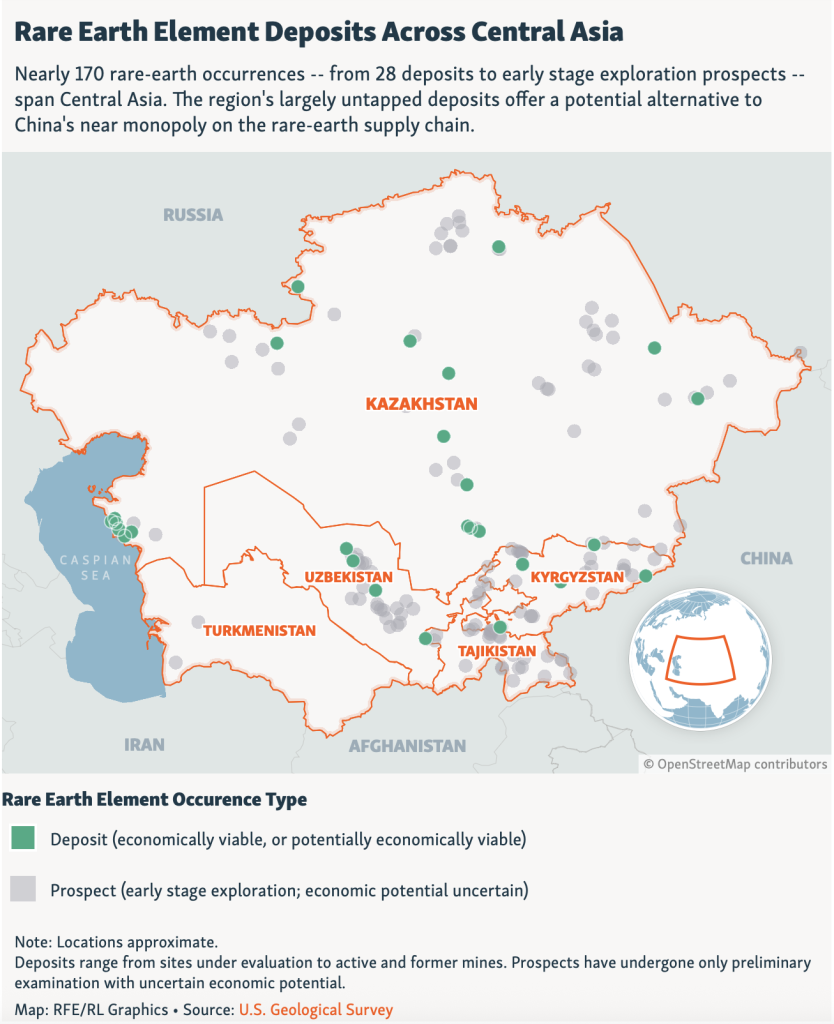
From the above, pay particular attention to this section, which will become important later: “Combat operations of UAV units are conducted according to a unified plan and in coordination with other units.”

As mentioned, the new emblem has been unveiled, which shows an arrow and sword under a microchip:

Image

It has garnered some controversy on pro-Russian channels, as they believe the microchip to be a poor design choice and that it should have instead been a symbol from more traditional heraldry.

One analyst notes:

Regarding the emblem of the unmanned systems troops.

The golden double-headed eagle with outstretched wings placed on it (similar to the State Emblem, but with differences in details) symbolizes statehood, unity, and sovereignty. There are no questions here. Nor are there any questions regarding the arrow and sword, which refer to attacking and destroying the enemy. However, the presence of a microchip, in our opinion, looks controversial. It would be appropriate here to place some Christian symbol like Saint George the Victorious (the fight against evil, tyranny, etc.). Or you could take an even simpler path — borrow the heraldry from an already existing structure: the Directorate for the Construction and Development of Unmanned Aerial Vehicle Systems. The latter looks as stately and beautiful as possible, since it also features a scepter — a symbol connecting earth and sky and referring to the fact that drone operators control the sky while working from the ground.


A clearer version:

Image

Before we get to the deeper analysis, another interesting point from the announcement video above is that we get one of our first ever glimpses of the Russian ASTRAS program in use—click the photos below to expand:

Image

It was immediately covered by Ukrainian outlets, noting that ASTRAS is Russia’s equivalent to Ukraine’s long-running DELTA system which I myself covered here with the massive ‘Delta leaks’ that had occurred in 2023.

Virtually nothing is known of it, but most can be assumed and surmised, as the above article does:

ASTRAS, judging by the published images, has an interface similar to civilian messengers. The system probably supports text chats, voice communication, and possibly file sharing.

It is not yet known who exactly developed ASTRAS, but it is likely that we are talking about one of the state or affiliated with the Russian Defense Ministry IT structures.


In short, it is a unified battlefield command and management architecture for integrating various units, commands, C4ISR assets, etc., for the ‘network-centric’ facilitation of carrying out timely OODA loops and kill-chains.

Now recall the earlier: “Combat operations of UAV units are conducted according to a unified plan and in coordination with other units.”

(Paywall with free option.)

https://simplicius76.substack.com/p/rus ... oduces-new

(Christian symbols, bah)

******

Fifteen thousand Finnish soldiers are approaching the border with Russia.

Helsinki is already regretting joining NATO. Russia has harshly punished Finland for its military provocation.
Dr. Ignacy Nowopolski
Nov 13, 2025


Finland is preparing for war. In late October, Helsinki announced plans to hold military exercises in November and December. Fifteen thousand troops are moving toward the Russian border, including troops from other NATO countries.

Officially, they claim that the sole purpose of the exercises is to improve the skills of Finnish reservists and test their combat prowess in cooperation with allies. They argue that they must be prepared to repel a possible attack from their large neighbor. Simply put, the Finns expect war with Russia and are preparing for it.

Immediate remedies
But angering the "Russian bear" was a mistake. Finland made a grave mistake by carrying out a military provocation, according to the popular Chinese daily Sohu. Putin reacted immediately: he ordered the deployment of a number of weapons near the border, including Iskander missile systems, which had proven effective in the "special military operation" in Ukraine.

It turns out that military exercises in Finland will take place under the watchful eye of the Russian army. The Chinese are delighted:

Russia immediately retaliated. The Finns received a right hook.

Journalists from Beijing point out that just a few years ago, Finland was considered one of the most peaceful places in the world. However, it decided to join NATO and is now reaping the rewards. Putin warned that joining the alliance would have serious consequences. The Chinese believe the Finns are being reduced to the role of pawns in a global conflict. A similar fate befell Ukraine.

The West's Mistakes
The negative consequences of NATO membership are obvious. First, the country's security is threatened. Second, Finland is suffering economic losses: border regions are teetering on the brink of bankruptcy due to the ban on trade with Russia, and the influx of Russian tourists has ceased.

Helsinki apparently thought the military exercises would strengthen the country. However, the opposite has happened. Now, the fearsome Iskander missiles are aimed at this neighbor. The more NATO arms Finland receives, the more Russia will accumulate on its border.

Chinese journalists note that the West has a habit of ignoring Putin and then lamenting its mistakes. This also applies to Kyiv. Zelensky was clearly told that if he didn't agree to Moscow's terms, they would become harsher. The result is visible on the front lines: the defense of the Ukrainian Armed Forces is crumbling, and the Russians are encroaching on the Dnipropetrovsk region.

https://drignacynowopolski.substack.com ... y-finskich

Google Translator

******

The Trans-Caspian Pipeline Is Resurrected as the U.S. Plots a Return to Central Asia
Posted on November 12, 2025 by Conor Gallagher

If the inflation of President Trump’s ego was any indication at the C5+1 summit at the White House last week that brought together the US President with the five presidents of Central Asia, big things are coming to the region.

“You are a great leader, a statesman sent from above to restore common sense and the traditions that we all share and value,”Kazakhstan’s President Kassym-Jomart Tokayev said of Trump.

“No other president of the United States of America has ever treated Central Asia the way you do,” Uzbek leader Shavkat Mirziyoyev told Trump, adding that he was “the president of the world” and that “in Uzbekistan, we call you the president of peace.”

For his part, Trump called Central Asia “an extremely wealthy region.” He was referring to its natural resources, specifically rare earths in this case.

Image

And while rare earths were largely what garnered the coverage—the meeting was more about pumping up a new US and allied push into Central Asia in order to strike a blow against Russia, China, and Iran.

The U.S. signed deals with Kazakhstan (which also joined the Abraham Accords), Uzbekistan, and Tajikistan on natural resources, Boeing planes, Starlink, and AI. The moves come at the same time that the European Union is doubling its efforts to gain more of a foothold in the region.

At the gathering Trump remarked that “Sadly, previous American presidents neglected this region completely.”

That’s not exactly true. The US has made previous attempts to become a larger player in the region.

As Ben Godwin, head of analysis at PRISM, a strategic intelligence firm in London, told RFE/RL:

“In the 2000s, it was the War on Terror and oil and gas. Then there was a decarbonisation era where many new projects in Central Asia were centred around renewable energy. Now it’s the role of critical minerals in national security.”

The problem is always staying power. Russia and China have geography on their side, as well as economic advantages and expertise in areas like rare earths. As we noted on Monday, the idea that the US is going to be competing with China on rare earth processing and refining in a year’s time is magical thinking.

While the US alone cannot compete with Moscow and no one can with Beijing in Central Asia, there are numerous players and factors involved. And as we’ve been reminded in places like Ukraine and the Caucasus, a nation’s economic self-interest is not always a guarantee of the path it will choose.

So as we’ll show below, Russia and China have the upper hand in more ways than one, but also have cause for concern—one of the biggest centers on the great ambiguity on the Bosphorous: Turkiye and its push into the region under the cover of Turkic brotherhood.

The Turkish Trojan Horse and Western Push in Central Asia

We’ve long been pointing out that despite friction between Ankara and Tel Aviv, Turkish-US-NATO cooperation was always present under the surface and picked up steam with the toppling of Assad in Syria.

Erdogan continues to cooperate with the US and Israel in Gaza.

We also just discovered that former NATO chief Jens Stoltenberg and Erdogan had/have a “bromance.” Who knew?

But while so much attention on the resurgent partnership between Ankara and Washington/NATO is focused on Ukraine and the Levant, eastwards into the Caucasus and Central Asia is just as important.

The Cradle recently described Turkiye’s Gaza push as “proxy politics under US watch.” A similar dynamic is at play from Azerbaijan to Kyrgyzstan where the two sides’ interests overlap.

If there is any winner of the Trump Route of International Peace and Prosperity (TRIPP), it is Türkiye. Ankara views the corridor that cuts across southern Armenia, and for all intents and purposes links Azerbaijan and Türkiye, helping to expand its influence to the Central Asian states. And as the US and EU pour money into Central Asia in an attempt to reorient its alignment westwards Türkiye will play an outsize role. There is a problem, however.

The Islamic Republic of Iran’s foreign minister has made it crystal clear today that Iran will not accept any changes to the Armenian southern border and that it will not tolerate any foreign forces there.
Image
— Seyed Mohammad Marandi (@s_m_marandi) November 6, 2025


But will Tehran intervene militarily to stop it? They may be faced with that choice before too long.

Arguably a much more consequential meeting than the C5+1 summit in Washington took place a month ago in Baku, Azerbaijan at the 12th Summit of the Organization of Turkic States.

It was there that Türkiye, Azerbaijan, Kazakhstan, Kyrgyzstan, Uzbekistan and Turkmenistan agreed to deepen cooperation across a range of areas, including trade and logistics—which would sideline Russia and increase cooperation with the EU—and defense cooperation, including joint military exercises.

And last week Baku also hosted a NATO delegation as it transitions to alliance standards and deepens cooperation with the Turkish military.

Around the same time that Türkiye was heading up the OTS meeting, the country’s lawmakers were encouraging NATO to take a heavier hand against Iran with all the usual strategies of sanctions, deterrence, and weakening Iranian “proxies” across the Levant.

A report authored by members of the main opposition party in Türkiye and presented at the NATO Parliamentary Assembly in Ljubljana alleges that Iran’s nuclear program, support for terrorism, military cooperation with Russia, and ties to China hurt Euro-Atlantic security.

While Erdogan was denouncing the genocide in Gaza, Türkiye over the past year has been steadily increasing its involvement in Western, including the launch of launch of a joint venture between Turkish drone maker Baykar (run by Erdogan’s son-in-law) and Italian defense contractor Leonardo, which has very close ties with Israel.

Of particular interest to Türkiye is expanding its access to the EU money dispenser whirring for rearmament. The two sides recently held defense talks after a three-year pause. At the end of October Türkiye and the UK signed a multibillion-dollar deal for the sale of 20 new EF-2000 Eurofighter Typhoon jets, which is a big deal for Türkiye as it looks to get its indigenous fighter jet program off the ground.

Türkiye certainly has agency, and Erdogan’s ruling elite have ambitions to resurrect the country as a world power, but for now both Iran and Russia view Ankara’s eastward moves as a trojan horse for the US, UK, and NATO. For now at least, it is a marriage of convenience. As Ali Nassar writes at The Cradle:

It reveals a layered geopolitical project anchored in Pan-Turanist nationalism, Muslim Brotherhood-aligned political Islam, and strategic deployment of military and development tools – crafted to serve Ankara’s national interests while converging with NATO’s broader regional goals.

…Pan-Turanism, an early 20th-century ideology premised on the unification of Turkic-speaking peoples from Anatolia to western China, has been resurrected in Ankara as a vehicle for geopolitical consolidation. Today, Turkiye deploys this vision to deepen its grip on Central Asia – particularly in Kazakhstan, Uzbekistan, Turkmenistan, Kyrgyzstan, and Azerbaijan.

This ideological push is operationalized through the Organization of Turkic states, which functions as a joint political, economic, and security bloc linking Ankara with these post-Soviet republics.

Türkiye and the West also have visions of using the TRIPP as an energy corridor to send fossil fuels and other resources from Central Asia and the Caspian westwards while cutting out Russia and Iran, all the while increasing their footprint in these countries, effectively carving out a chunk of the Eurasian “heartland.”

Resurrecting the (Idea of the) Trans-Caspian Pipeline—or a Tanker Fleet

Notably, Türkiye and Turkmenistan recently halted gas exports via Iran following the reverberations from the decision by Washington to block Iraq from importing gas from Turkmenistan via a swap deal with Iran. Now the Trans-Caspian Gas Pipeline—or transport via tankers— is back on the radar after years of technical, legal, and political obstacles. From Eurasianet:

The possible ramifications of the US [Iraq] block appear to have been understood by Ashgabat. Speaking at the 5th Tbilisi Silk Road Forum on October 22, Turkmen Foreign Minister Rashid Meredov confirmed that Ashgabat is committed to reviving the “Silk Road” concept of transiting gas from Central Asia to Europe.

“Turkmenistan has always emphasized the great importance of the Western direction, specifically the creation of a stable energy corridor along the Caspian Sea-South Caucasus-European route,” he said.

There are signs too that Azerbaijan, through which any Turkmen gas exports to Türkiye and Europe would have to transit, is open to the idea.

Baku’s strategy has always been to prioritize the development and export of gas from its own reserves. However, efforts to boost gas output from its giant Shah Deniz gas field and Azeri-Chirag-Guneshli oil field have yet to bear fruit. Azerbaijani officials accordingly have confirmed they will be unable to double gas exports to Europe to 20 bcm per year as promised to the European Union.

One reason Azerbaijan isn’t going to be able to fulfill that demand is because Russia is no longer laundering as much gas through Azerbaijan to the EU due to Western-supported friction between Baku and Moscow.

Back to the grand plan to replace it:

Additional volumes of Turkmen gas, then, could help Baku ultimately meet its delivery commitments.

If all sides are on board with a trans-Caspian pipeline, investors would be more likely to consider financing for construction, as well as the necessary expansion of capacity of existing lines through Azerbaijan, Georgia and Türkiye to Europe. Gas could also potentially transit via a pipeline built along the envisioned Armenian-Azerbaijani land corridor, dubbed the Trump Route for International Peace and Prosperity.

And so here we start to see the grand design come together. It would be a strange economic decision, but those seem en vogue these days.

A Trans-Caspian route would also upend Kazakhstan operations by Western majors like Chevron, ExxonMobil, and Shell, which already play major roles in Kazakh oil; the problem apparently is that more than 80 percent of it moves through the Caspian Pipeline Consortium (CPC), which delivers crude via pipeline through Russia to the Black Sea port of Novorossiysk. The pipeline has continued operating through three years of war and it by all accounts a good deal for all involved.

But Nurul Rakhimbekov, the Founder and President of the DC-based think tank Center for Global Civic and Political Strategies, writes that it’s not safe. As evidence, he cites the fact that in February and October of 2025, drone strikes on the pipeline infrastructure threatened supplies.

Who was behind the strikes? NATO-backed Ukraine, of course.

Supporters of the Trans-Caspian route envision it linking up with a new pipeline through TRIPP or the existing Baku–Tbilisi–Ceyhan (BTC) pipeline that runs from Azerbaijan to Türkiye via Georgia and then onto Europe. Rakhimbekov writes:

The BTC route offers a secure, Russia-free pathway from the Caspian to the Mediterranean, connecting Kazakhstan’s oil to markets in Europe and Israel via Türkiye’s port of Ceyhan. It also dovetails neatly with Western efforts to reduce dependence on Russian energy corridors.

Unlike the congested Black Sea route, BTC provides stable access to global markets and reduces insurance and logistics costs that have been driven up by regional instability. Technically, a trans-Caspian connection — whether through a growing tanker fleet or a future subsea pipeline — could handle 50 to 60 million tons per year, matching the CPC’s capacity and giving Kazakhstan more control over its own export future.

The diplomatic groundwork for this shift is already in place. Washington and its allies have expressed broad support for Kazakhstan’s diversification strategy. The next step is execution.

The tanker fleet comment is interesting. There are reasons why the pipeline hasn’t been built, chief among them that the 2018 Convention on the Legal Status of the Caspian Sea signed between Azerbaijan, Iran, Russia, Kazakhstan, and Turkmenistan didn’t solve disputes over submarine cables and pipelines.

Those are governed by the 2003 Tehran Convention, which stipulates environmental standards. Moscow and Tehran repeatedly invoke the Convention to effectively block the construction of pipelines between Azerbaijan and Kazakhstan and Turkmenistan.

A tanker fleet could be a different story (although it could face challenges posed by climate change shrinking the sea, including already 50 kilometers off the coast of Kazakhstan).

Sure, it wouldn’t make economic sense, but then again it would mirror Europe’s energy strategy for the past four years. And it would cut out Russia and Iran and serve as a”Western connection” into Central Asia.

Notably, the heads of state at the C5+1 endorsed the development of the Trans-Caspian Trade Route.

Europe is piggybacking on these designs with its own visions—all green of course. While Brussels supports the Trans-Caspian pipeline—or tankers— it’s also moving forward with plans for the Black Sea Green Energy Corridor, which would see power mostly generated from “renewables” sent from Azerbaijan and Georgia to Romania and then elsewhere in the bloc. That corridor could then link up with a trans-Caspian power line connecting Azerbaijan with Kazakhstan and Uzbekistan.

Concern in Moscow and Tehran (and Potentially Beijing)

A.V. Ananiev, former Senior Counsellor at Russia’s Ministry of Foreign Affairs, writes:

It is clear that the goal of the OTS is to create a Turkish, rather than a Turkic world, and to remove regional leaders from direct power, transferring their duties and responsibilities to supranational officials, following the example of the EU. To achieve this, it is necessary to focus not only on cultural and economic issues, but also on the development of military capabilities…The OTS activities are a cause for concern, considering that the organization has a number of post-Soviet states among its participants, including those that are also members of the EAEU and the CSTO. Türkiye is forming this institution to increase its influence in the region, while the member states are trying to use the OTS to balance their relations with other countries.

Yet economic ties between the OTS remain small while Russia and China still act as primary trading partners. But that doesn’t seem to be the same brake that it used to be. Armenia and Azerbaijan are to varying degrees dependent on Russia economically. The Central Asia states are too. Yet they all seem willing to put the relationship at risk. A partially befuddled Andrew Korybko recently tried to make sense of it:

…partially driven by the aforesaid fear that they have of Russia, they might have conceivably assessed – whether on their own, through consultations with one another, and/or with the assistance of the West – that a window of opportunity has opened to maximally “hedge their positions.” TRIPP is the logistical means for doing so, which would be complemented by the planned PAKAFUZ railway between “Major Non-NATO Ally” Pakistan and Central Asia if Afghan-Pakistani ties ever improve like Trump wants.

The shared development that Putin proposed during the Second Russia-Central Asia Summit in early October shows that his country recognizes these new challenges and is ready to compete with the West. Nevertheless, it might not suffice for preemptively averting the security threats that could materialize as a result of Turkiye spearheading the spread of Western military influence into this region. Russia’s brightest minds like Bordachev should therefore prioritize the formulation of a supplementary policy.

Still, at the same time Russia is facing challenges, Türkiye is trying to capitalize.

Following the OTS meeting, Türkiye simplified its employment rules for citizens of Turkic-speaking countries so that they can now work and conduct business freely in Türkiye without obtaining citizenship or special permits.

That move came as Russia is getting rid of 700,000-plus migrants, mostly Central Asians, a process which was jumpstarted by the terrorist attack on Crocus City Hall in outer Moscow in March 2024. Four Tajik men are on trial for the attack. And Central Asian states are frustrated with the current treatment of migrants in Russia.

The West is attempting to weaponize the issue. Mikhail Borkunov writes:

This is also evidenced by some of the materials recently released by pro-Western media agencies. Take, for instance, the article on “How Moscow’s Xenophobic Migration Policy is Impacting Relations with Central Asia” published on the Carnegie Politika website on October 1.

…The “analysis” reveals that Central Asia has long been discontented with the authorities’ failure to address the anti-migrant campaign allegedly initiated by Russia. The example of Baku has shown that such sentiments should be used to advantage rather than ignored. According to this account, Azerbaijan has stood up for its citizens by engaging in a conflict with the Kremlin.

Inspired by Baku, Central Asian states have allegedly set out to openly condemn the actions of the RF authorities and reconsider their relations with Moscow for the first time in many years.

Borkunov does admit that Russia’s migration policy is becoming more strict—not to be unexpected when it’s facing a full-scale, sustained destabilization campaign that has already seen terrorist attacks that took advantage of its Central Asia borders.

In fact, Moscow’s migration policy is gradually transitioning to a new level, as the Concept of State Migration Policy for 2026-2030, approved on October 15, 2022, focuses not on increasing the population through Central Asian citizens, but on strengthening control, digitalization, and the task of attracting only those migrants who share the “traditional spiritual and moral values” of Russian society.

And so Central Asian states are looking to redirect migrant workers elsewhere, especially to Europe, China, and the Gulf.

Speaking of the latter, big money from the Gulf is also starting to flow into Central Asia with the UAE, Saudi Arabia, and Qatar upping their presence in Central Asia. Over 2020-2024 trade increased 4.2 times in five years to $ 3.3 billion, with investments rising to $ 16.2 billion.

Along with infrastructure and energy projects, Turkish influence and Gulf monarchy money can also lead to other “projects”—namely what Professor Seyed Mohammad Marandi calls “CIA Islam”— which is of concern to Russia, Iran, and China.

China Fills the Vacuum, Not the West

With Russia under siege and preoccupied by Ukraine, it would seem to be an opportune time for the US and friends to move into Central Asia, but it is China that is only increasing its dominance there. Even with money coming in from the Gulf, China dwarfs all other players. Its investment in Central Asia hit $25 billion in the first half of 2025 alone. Even The Telegraph admits this:

Back in 2000, Russian trade with Central Asia outstripped Chinese trade with the region more than five-fold. Since then, Chinese trade with Central Asia has soared, accelerating after the launch of Beijing’s so-called “Belt and Road Initiative” in 2013 before rising even faster over the last three years, since Putin’s invasion of Ukraine in February 2022. Chinese trade with the region is now more than twice that of Russia.

With Moscow distracted and America’s Central Asian military bases closed since the US withdrawal from Afghanistan, Beijing has filled the vacuum – not only securing more resource deals with Central Asian nations but also engaging in a frenzy of infrastructure construction across the region to make sure China, whatever the geopolitical weather, can keep transporting goods to and from Europe and global markets.

Or keep itself supplied in case of any US-led shenanigans.

The Central Asian states, meanwhile, look to play balancing acts with all sides and avoid being dominated by the two Asian powers. In that sense, it’s logical that they would court involvement from the US and look to the OTS for strength in numbers.

The problem for such countries is that while Russia and China look to appeal to economic mutual interests, the other side has all tools on the table. More than competition on an economic playing field, that means weaponizing migrant issues, regime change, terrorism, and getting others to do their fighting.

Even if the West were to be successful at building infrastructure that helps the Central Asian states balance energy and mineral deliveries between China and Europe, it’s unlikely Washington would ever be satisfied with such a win-win arrangement. Instead there would be attempts to export destabilization into Russia and China’s Xinjiang region and beyond.

We’ll see if this go-round the US finds more success in the region. After all, the past decade has only brought failed coup attempts, an Afghanistan retreat, and a lot of talk but no action on the Trans-Caspian pipeline.

https://www.nakedcapitalism.com/2025/11 ... -asia.html

******

Does India have an answer to Russia’s demography problem?

Facing a deficit of up to 3 million workers by 2030, Moscow plans to boost recruitment from India, marking a shift in economic collaboration between the two nations
Anil Chopra

By Air Marshal Anil Chopra (Retired), an Indian Air Force veteran fighter test pilot and is the former Director-General of the Center for Air Power Studies in New Delhi.

Image
FILE PHOTO: Construction on India's bullet train project in Surat, India, May 2, 2025. © Raju Shinde/Hindustan Times via Getty Images

As Russia and India explore new dimensions of economic cooperation ahead of their leaders’ meeting in New Delhi next month, the issue of workforce mobility has emerged as a central theme among policymakers, experts, and business circles.

Last week, Indian Labor and Employment Minister Mansukh Mandaviya met his Russian counterpart, Anton Kotyakov, on the sidelines of the World Summit for Social Development in Doha. According to the Russian Foreign Ministry, the two sides discussed potential collaboration on social and labor issues, although details were not disclosed.

Russia is currently facing a significant labor deficit, particularly in its industrial regions, and plans to recruit up to 1 million foreign workers – including from India. The Russian Labor Ministry estimates the shortfall could expand to 3.1 million workers by 2030. To mitigate the gap, authorities intend to raise the quota for qualified foreign workers in 2025 by 1.5 times.

Russian companies in sectors such as machinery and electronics are increasingly interested in hiring skilled Indian professionals. India’s ambassador to Russia, Vinay Kumar, told TASS that the demand for Indian labor is expanding beyond traditional industries.

“At a broader level, there is manpower requirement in Russia, and India has a skilled manpower. So at present, within the framework of Russian regulations, laws and quotas, the companies are hiring Indians,” Kumar noted.

Historically, Indian workers in Russia have been concentrated in construction and textiles, but recruitment in machinery and electronics is now gaining momentum. According to Andrey Besedin, head of the Ural Chamber of Commerce and Industry, “By the end of the year, 1 million specialists from India will come to Russia, including to the Sverdlovsk region. A new Consulate General is opening in Ekaterinburg to handle these matters.”

He added that many Russian workers have been deployed in the Ukraine military operation, while younger Russians show limited interest in factory work. Sverdlovsk Region, situated in the Ural Mountains, remains the backbone of Russia’s heavy industry and defense manufacturing.

Contrasting Dynamics

Russia’s demographic profile poses structural challenges to economic growth. As of January 2025, its population is estimated at 146 million, down from 147.2 million in 2021. With a low population density of 8.5 people per square kilometer, a fertility rate of 1.41 (well below replacement level), and a median age of 41.9 years, Russia is among the world’s oldest societies.

How Washington’s crusade against Russian oil went sidewaysREAD MORE: How Washington’s crusade against Russian oil went sideways
In contrast, India – with 1.46 billion people, or 17.78% of the global population – has a young demographic structure, with a median age of just 28.8 years. India’s labor force advantage positions it as a potential global supplier of skilled workers to aging economies.

According to India’s Ministry of External Affairs, around 62,825 Indians currently reside in Russia, comprising students, entrepreneurs, and an increasing number of laborers filling industrial shortages. Concentrated in major cities such as Moscow, this diaspora is active in trade, IT, and manufacturing. Indian businesses in Russia import tea, coffee, spices, pharmaceuticals, and textiles, strengthening bilateral trade ties.

Applications for Russian employment visas from Indian nationals have risen sharply, with projections suggesting over 40,000 arrivals in 2025 to work across construction, agriculture, manufacturing, and logistics.

India’s Global Workforce Advantage

India has become the world’s leading source of skilled migration. A FICCI–KPMG study, ‘Global Mobility of Indian Workforce’, projects that by 2030, global demand for skilled workers will exceed supply by over 85 million, with advanced economies such as Germany, Japan, South Korea, Canada, Russia, and the US facing acute shortages. The global shortfall, growing by approximately 12% annually, could reach 250 million workers within 25 years.

While several African nations also possess labor surpluses, India stands out for its education infrastructure, technical training capacity, and governance systems that enable large-scale labor mobility. Currently, India deploys roughly 700,000 workers abroad each year, primarily in technology, healthcare, logistics, and hospitality – sectors where Indian talent enjoys strong international recognition.

Are Russia and India challenging the monopoly of Boeing and Airbus?READ MORE: Are Russia and India challenging the monopoly of Boeing and Airbus?
The Indian workforce has emerged as one of the most globally mobile and influential labor forces of the 21st century – shaping economic and cultural landscapes across continents. In West Asia alone, over 9 million Indians reside and work – most prominently in the UAE (over 3.5 million) and Saudi Arabia (around 2.5 million) – filling both skilled and unskilled positions. From nurses and technicians to construction and service workers, they form the backbone of vital industries in the Gulf. Their contribution extends beyond economics: The diaspora enhances India’s soft power through cultural exports like Bollywood and religious diplomacy, exemplified by the BAPS Hindu Temple in Abu Dhabi.

Remittances from this region inject billions of dollars annually into India’s economy, strengthening household incomes and foreign exchange reserves. At the same time, New Delhi’s engagement with West Asian partners in sectors such as healthcare, higher education, defense, and technology aims to transform this labor connection into deeper strategic cooperation.

Across the Atlantic, more than 5.2 million Indian Americans constitute one of the most successful immigrant groups in the US – representing about 21% of the Asian population. Characterized by high educational attainment and median household incomes exceeding $160,000, they occupy leadership positions in technology, academia, and governance. Indian-origin executives such as Sundar Pichai (Google), Satya Nadella (Microsoft), Arvind Krishna (IBM), Ajay Banga (World Bank), and Leena Nair (Chanel) exemplify this prominence.

Yet immigration policy shifts – especially during the Trump era – have underscored the fragility of visa regimes like the H-1B, revealing the tension between US labor demands and political constraints. The same pattern of integration and influence is visible across the United Kingdom, Canada, and Australia, where Indians now represent the largest ethnic minority or fastest-growing migrant community. Rishi Sunak’s tenure as Britain’s prime minister, Canada’s record 22 Indian-origin parliamentarians, and Australia’s nearly 1 million citizens of Indian ancestry underscore the scale and visibility of Indian migration in the Anglosphere.

‘We are treated like boat people’: Indian techies alarmed by Trump’s brosREAD MORE: ‘We are treated like boat people’: Indian techies alarmed by Trump’s bros
In parallel, Asian economies with aging populations – particularly Japan and Israel – are turning to India to fill acute labor and skills shortages. Japan, where nearly 30% of citizens are over 65, faces a projected shortfall of 11 million workers by 2040. To counter this, Tokyo has opened recruitment channels under the Specified Skilled Worker (SSW) visa across 14 sectors – from IT and healthcare to manufacturing and agriculture. Indian professionals, valued for their technical skills and adaptability, are increasingly sought after under bilateral talent-exchange frameworks that ensure training, certification, and labor protections. Israel, meanwhile, has turned to India to replenish its construction and caregiving workforce following the 2023 conflict, when Palestinian workers were barred. Thousands of skilled Indians – particularly in iron bending, framework, and tiling – have since arrived under a government-to-government recruitment model overseen by India’s National Skill Development Corporation, ensuring fair hiring and alignment with global skill standards.

Whether in the oil economies of the Gulf, the technology corridors of North America, or the aging societies of East Asia, Indian workers are increasingly indispensable to global growth and stability. Beyond remittances, their presence advances India’s geopolitical and economic interests – embedding the country more deeply in global supply chains and labor ecosystems. As demographic trends widen the gap between aging industrial powers and youthful developing nations, India’s ability to supply skilled, mobile, and adaptable talent positions it not only as the ‘workshop’ – but also as the ‘workforce hub’ – of the world.

Case for Russia

Despite its vast natural and industrial potential, Russia faces structural constraints – an aging workforce, inflation hovering around 8%, dependence on volatile commodity exports, and declining productivity under sanctions. The labor shortage, compounded by military conscription and restrictive migration policies, further threatens industrial output.

Russia’s efforts to diversify beyond energy exports and maintain competitiveness in manufacturing and defense will hinge on access to reliable, skilled labor. Indian workers, known for discipline, adaptability, and low political engagement, could offer a practical solution. Institutional mechanisms – similar to India’s arrangements with Japan – could ensure mutual protection for workers and employers.

Language barriers remain a challenge, but these can be mitigated through English-speaking supervisors and structured orientation programs. Enhanced labor cooperation would not only address Russia’s workforce deficit but also deepen the India-Russia strategic partnership.

India and Russia stand at a pivotal juncture where economic necessity aligns with demographic opportunity. For Russia, Indian labor can help offset demographic decline and sustain industrial momentum. For India, it presents an avenue for global workforce expansion and deeper economic engagement with a long-standing partner. Institutionalizing this cooperation through transparent, mutually beneficial frameworks could transform bilateral ties and anchor a new phase in India-Russia relations.

https://www.rt.com/india/627560-russia- ... -mobility/

******

"There is great chaos under heaven; the situation is excellent."

User avatar
blindpig
Posts: 14788
Joined: Fri Jul 14, 2017 5:44 pm
Location: Turtle Island
Contact:

Re: Russia today

Post by blindpig » Sat Nov 15, 2025 3:14 pm

US-Russia summit in Budapest is back on track

Image
The family photo G7 Foreign Ministers’ Meeting in Niagara-on-the-Lake, Ontario, Canada, November 11, 2025

The G7 foreign ministers meeting in Niagara, Canada, on November 11-12 turned out to be a significant event at a juncture when a pall of uncertainty had descended on the presidential dialogue between Donald Trump and Vladimir Putin. One may even sense the incipient signs of a new dawn breaking in the joint statement of the G7 FMs, which eschewed the customary vitriolic attacks on Russia.

The joint statement once again voiced the G7’s support for Ukraine in generalities “in defending its territorial integrity and right to exist, and its freedom, sovereignty, and independence” but didn’t go into specifics while seeking an immediate ceasefire in the war”;it restated that G7 is increasing the economic costs to Russia, and “exploring measures against countries and entities that are helping finance Russia’s war efforts” — words that didn’t carry conviction; it referred to “a wide range of financing options” potentially, including seizing Russian frozen reserves “in a coordinating way” although the way froward remains blocked; and it reaffirmed support for Ukraine’s energy security.

Conspicuously notable was the absence of any drum-beating or pledge of supply of advanced weaponry to Ukraine to hit deep inside Russia.

The G7 event coincided with the looming fall of Pokrovsk, a vital strategic hub militarily, coinciding with a massive $100 million corruption scam in the energy sector surfacing in Kiev involving some of Zelensky’s close associates, and German Chancellor Friedrich Merz after a call with him demanding a crackdown on corruption. The regime in Kiev is facing an existential crisis militarily and internally.

The most curious thing about the G7 statement was that there was a deafening silence about the oil sanctions against Russia, which is supposedly the locomotive of the western strategy going forward. Interestingly, US Secretary of State Marco Rubio had gone to the G7 after the White House meeting recently between Trump and the Hungarian Prime Minister Viktor Orban where the latter successfully sought a permanent waiver for his country from any secondary oil sanctions against Russia. [emphasis added.]

Coming out of the G7 summit, Rubio robustly defended the US waiver for Hungary at a press conference. On the whole, Rubio sounded unenthusiastic about the oil sanctions, saying more than once that Trump’s decision was actually in response to a European demand. He also distanced himself from the implementation of the decision to chase Russia’s so-called shadow fleet ferrying oil in the high seas calling it an ‘enforcement mechanism.’ He said, in principle, US agrees with the need to enforce the sanctions, but then, he passed the buck to the Europeans saying, “I do think there are things that the Europeans can do on shadow fleets since a lot of these are happening in areas much closer to them.”

By the way, Rubio also expressed his annoyance at the Europeans for criticising Trump’s recent moves to confront Venezuela. He said “I don’t think that the European Union gets to determine what international law is, and what they certainly don’t get to determine is how the United States defends its national security… I do find it interesting that all of these countries want us to send and supply, for example, nuclear-capable Tomahawk missiles to defend Europe, but when the United States positions aircraft carriers in our hemisphere where we live, somehow that’s a problem.”

Rubio reserved the main thrust of his signalling to Moscow for the concluding part of his press conference, where he messaged the White House’s readiness to put back on track the proposed summit between Trump and Putin in Budapest, which the US had once proposed and then called off.

This is how Rubio gingerly revived the idea: “Well, I mean, look, the last conversation [with his Russian counterpart] I think it might be – the way I would characterise it is I think there was agreement on both sides that the next time our presidents meet, there has to be a concrete result. We have to know going in that we have a real chance to get something positive coming out. And we’d love to see that happen. I mean, we’d love to see this war end, but we can’t just continue to have meetings for the sake of meetings. And I think both sides sort of view it that way, at least that’s what I took from our conversations. So my conversations with him have always been professional and productive.”

Bravo! One cannot but get an impression that it was a well planned question from the media and Rubio obliging with an answer.

At any rate, Rubio got the response he was expecting, with Moscow responding with alacrity. An unnamed diplomatic source told Tass, “The summit is definitely necessary, but it must be preceded by careful organisational and substantive preparation. However, this is only feasible if the US firmly adheres to the Anchorage agreements.”

That seems to be Foreign Minister Sergey Lavrov’s voice. By the way, on November 11, while the G7 was meeting, Lavrov had already set the record straight on his controversial phone conversation with Rubio a month ago in a detailed statement where he gently returned matters to the track of the planned Budapest summit idea that was languishing in the air with Trump putting it to sudden death.

Lavrov said with a touch of humour that he had “a polite conversation [with Rubio] without any nervous episodes, by and large reaffirming progress based on the agreements reached in Anchorage, and went off the phone.”

Indeed, Lavrov ridiculed the mischief played by the FT, and stated, “If and when our US counterparts renew their proposal and appear ready to begin preparations for a high-level meeting that could produce meaningful results, Budapest would, of course, be our preferred location. All the more so as, during his meeting with Viktor Orban, Donald Trump confirmed that Budapest was a preferable venue for Washington as well.”

Well, the storm in the tea cup has blown over. Let us fasten seat belts for the journey to Budapest in a near future.

Orban said yesterday in a media interview when asked about Hungary’s contribution to resolving the Ukraine conflict, “I don’t want to go into the details. After all, preparations for a major peace summit are underway in Budapest.” Orban argued that Hungary was the only EU country to maintain communication channels and “constant contact” with Russia. “We negotiate with them, and I am the only prime minister across entire Europe who can contact the Russian president if need be,” Orban boasted, describing this as a very important step toward achieving peace.

The consistency and firmness of Russia’s stance combined with the legendary flexibility and reasonableness of its diplomacy to navigate dire straits is once again on display. But the heart of the matter is, as the former Nato secretary-general Jens Stoltenberg told Times newspaper last Saturday in an exclusive interview, the western alliance will not risk a war with Russia over the Ukraine issue. The recent disclosure about new futuristic weapon systems in Russia’s armoury against which the West has no defence must also have come as a reality check.

Trump too did the right thing by announcing publicly that “sometimes you’re better off letting them [Russia and Ukraine] fight for a while.” The fall of Pokrovsk is virtually bringing the war to an end.


https://www.indianpunchline.com/us-russ ... -on-track/

******

Mike Fredenburg: Inflating Russian missile costs hides US weapons crisis
November 14, 2025
By Mike Fredenburg, Responsible Statecraft, 10/27/25

The West likes to inflate the cost of Russian weapons as a way to suggest Moscow is in a financial bind and manipulate the narrative of a looming Ukraine victory — while also masking real inefficiencies in the U.S. defense industry.

By assuming Russian weapons have input costs similar to U.S. systems or conflating export prices with Russia’s internal costs, Western estimates produce misleading figures. These inflated costs bolster the narrative that the strain on Moscow is tremendous, while downplaying the increasing challenges for Ukraine and NATO to effectively counter Russia’s relatively inexpensive missiles and drones.

Moreover, these estimates obscure a stark reality: due to difficulties in expanding production of prohibitively costly Western missiles, combined with low real-world missile interception rates, even if the U.S. and Europe sent all their air defense missiles to Ukraine, they would fall far short of being able to stop most Russian missile and drone attacks.

Overstated costs, underestimated resilience

Western media and think tanks have consistently framed Russian missile expenditures to imply unsustainability. For example, Forbes Ukraine estimated Russia spent $7.5 billion on missiles in the war’s first two months — 8.7 percent of Russia’s 2022 defense budget. A Newsweek article, citing Forbes Ukraine, reported that an August 19, 2024 attack on Ukraine’s energy infrastructure cost Moscow $1.3 billion. In the same article, the Institute for the Study of War stated that Russia “is likely unable to sustain such large-scale missile and drone strikes with regularity.” Yet, Russia’s sustained high-tempo operations over the past six months cannot help but cast doubt on this assessment.

Many of the articles emphasizing the high cost of Russia’s massive missile and drone strikes rely on missile cost estimates from an October 2022 Forbes Ukraine article estimating some key Russian missile costs including the Kh-101 at $13 million, the Kalibr at $6.5 million, the Iskander at $3 million, the P-800 Oniks at $1.25 million, the Kh-22 at $1 million, and the Tochka-U at $0.3 million.

While some of the Forbes UA cost estimates seem reasonable, most of them seem to arrive at costs suspiciously close to what U.S. taxpayers would pay for a comparable missile. Finding such costs not credible, Defense Express Ukraine made a good faith effort to come up with more realistic missile cost estimates, including the Kh-101 at $1.2 million; the Kalibr, approximately $1 million; the Iskander R-500, $1 million; the Iskander 9M723 ballistic, $2 million; and the replacement for the legendary SS-N-22 “Sunburn, supersonic anti-ship cruise missile,” approximately $3 million.

While Defense UA does not give an estimate for the Kinzhal (Kh-47M2) hypersonic missile, given that it is essentially an air-launched variant of the Iskander 9M723, the cost should be similar, about $2 million.

Still to be fair, the Russian military budget’s lack of transparency means that in most cases one has to guesstimate. However, with input costs for weapons production and development being much lower than those for the United States, one would expect Russian missiles to be less expensive than the production of U.S. or Western European ones. Russian defense manufacturing labor costs average $1,200 per worker per month, compared to at least $4,000 for U.S. workers. Materials like steel, titanium, and composites are also less expensive in Russia. Russia’s defense industry prioritizes mass production and efficiency, unlike the U.S defense industry, where profitability and shareholder returns are of greater importance.

When it comes to weapon systems development, Russia typically adopts an evolutionary approach, incrementally improving existing systems, while the U.S. is far more likely to pursue revolutionary designs incorporating unproven technologies, inflating costs.

For example, Russia’s battle-tested Kh-47M2 Kinzhal hypersonic missile builds on proven platforms, while the United States has yet to field a hypersonic missile due to projects like the U.S. AGM-183 Air-Launched Rapid Response Weapon (ARRW) program, which began in 2018. It took a much riskier approach and is now over budget, behind schedule, and in danger of being canceled after over $1 billion invested.

But even if it is not totally canceled and is eventually fielded, the ARRW, at $15 million to $18 million each, will be many times more expensive per missile than the Kinzhal, will have a similar range, and does not pack the same punch. Yes, its unpowered glide vehicle will be more maneuverable than the Kinzhal, but using that maneuverability can significantly impact its terminal impact velocity and range.

Another example is the American PAC-3 MSE Patriot interceptor and Russia’s S-400 9M96E2 interceptor. Both are highly agile short-range missiles with similar ranges of about 100 km and both use active radar to track and hit their targets. Both have interception speeds of about Mach 5. Yet the PAC 3 MSE missile costs $4 million-$6 million and the estimated cost of the 9M96E2 missile is between $500,000 and $1 million.

But how do they perform? An October 2, 2025 Financial Times article gives a big hint, reporting that the Patriot interceptor rate stood at 37% in August, was slashed in the month of September to just 6%. Of course it is standard operating procedure to overstate interception rates. But even if you buy the initial 37%, it was taking five interceptors to reach a 90 percent chance of intercepting one Kinzhal. At 6%, that goes up to 38 Patriot interceptors needed.

According to Military Watch magazine and other publications, on May 16, 2023, a Patriot System system/radar and at least one of its launchers were destroyed by a Kinzhal hypersonic missile despite launching 32 Patriot interceptors in an effort to protect itself. Unsurprisingly, this particular report has been contested, but given the long history of governments and vendors grossly overestimating air defense effectiveness, lack of transparency/veracity on actual Ukrainian losses, and the incredible interception rates regularly reported by Ukraine Air Force, the report cannot be dismissed out of hand.

We don’t have much objective information on the 9M96E2’s performance, but Russia also has a history of hyping the performance of its S-400 air defense systems. Still, even if the 9M96E2 is as ineffective as the Patriot interceptors, it costs a whole lot less.

By overstating Russian missile costs, Western analysts exaggerate Russia’s financial strain, while providing cover for exorbitant missile prices being charged by Western defense contractors. This distortion obscures the reality that Russia’s cost-effective missile production provides a big advantage in sustainability, while high Western missile costs, combined with U.S. difficulties in rapidly expanding missile production, is a huge disadvantage in any kind of sustained conflict, and could be a fatal disadvantage in going up against a peer competitor that can throw thousands of missiles at our ships and even attack U.S. based military facilities.

https://natyliesbaldwin.com/2025/11/mik ... ns-crisis/

*****

Ryazan, meet your fellow countryman
November 13, 11:06 PM

Image

Montenegro is deporting Navalny's ally, Artem Vetrov, to Russia.
He's being deported to his native Ryazan for his immoral lifestyle in Montenegro.
I don't even know why he's in Russia, much less Ryazan. What for?

https://colonelcassad.livejournal.com/10185504.html

Operators may be forced to disconnect communications at the request of the FSB.
November 14, 11:16 PM

Image

Operators may be required to disconnect communications at the request of the FSB, in which case they will not be held liable for failure to fulfill obligations under the service agreement.

The government submitted a corresponding bill to the State Duma.
A telecom operator is not liable for failure to fulfill or improper fulfillment of obligations under a telecom service agreement if such failure or improper fulfillment is related to the telecom operator's compliance with the requirements of the Federal Security Service.

This is part of a general policy of establishing direct state control over all cellular and digital communication channels. The work of Roskomnadzor and the FSB in this area is being consistently simplified. Similar processes are underway in the camp of our adversaries. The trends toward increased state control and regulation, as well as fragmentation of the global network, were evident even before the start of the Second World War; it's just that now everything has entered the home stretch.

Incidentally, rumors about the possible imminent blocking of Telegram and WhatsApp (which doesn't really matter) have resurfaced today. Just in case. My channel on MAX is https://max.ru/colonelcassad. If Telegram is blocked, the online broadcast of the war in Ukraine will move there.

Yesterday, the authorities announced that all residential chats in the country (more than 1,000,000 apartment buildings) would be migrated to MAX. Similar processes had previously taken place in schools and government institutions.
Amid the accelerated migration of other messengers' audiences to MAX, the authorities reported that it already has 55,000,000 users. If other messengers are blocked, the number will grow even higher. This is the price to pay for delaying the creation of their own alternatives when there was time. They're rushing things now because the political goal is to make the national messenger dominant in the Russian market (as a Russian equivalent of China's WeChat), but in reality, it's still in its infancy, in open beta. For example, if Telegram were shut down now and only MAX were left, people would physically be unable to comment on news there. It's likely that MAX's infancy is the reason why the blocking of foreign messengers is currently delayed. As soon as it reaches an acceptable state, what happened with YouTube will happen, when the authorities deemed the state of VKVideo and RuTube acceptable.

https://colonelcassad.livejournal.com/10187576.html

Gozman received a 10-year prison sentence.
November 14, 6:52 PM

Image

Gozman was sentenced in absentia to 10 years in prison for justifying terrorism.
He had previously been designated a foreign agent.

However, everything about Gozman was clear back in the 2000s. It's just that our state is liberal and tolerated all this for so long.

We definitely won't see this scum in Russia again.

* * *

Dud received one year and 10 months in absentia for failing to fulfill his duties as a foreign agent.
Yuri will go to jail. If he ever returns to Russia, especially since he's been on the federal wanted list for three years now.
So we won't see him in Russia again.

A good Friday today.

https://colonelcassad.livejournal.com/10187028.html

Google Translator

*****

Armenia’s Russian-Ukrainian Grain Scandal Is More Serious Than Many Might Realize
Andrew Korybko
Nov 13, 2025

Image

Armenia’s potential replacement of low-cost Russian grain with more expensive Ukrainian grain could worsen its already difficult financial situation and thus prompt Azerbaijan and/or Turkiye to propose a bailout in exchange for further sovereignty concessions in its strategic southern province of Syunik.

Russia’s Foreign Intelligence Service (SVR) reported that Armenia plans to replace low-cost Russian grain with more expensive Ukrainian grain subsidized by the EU as a way of signaling support for Kiev and further distancing itself from Moscow. Prime Minister Nikol Pashinyan denied the report, which Kremlin spokesman Dmitry Peskov insisted isn’t baseless, but confirmed that Armenia has received offers for better-quality and lower-cost grain that it won’t “turn a deaf ear to”. The larger context is important.

Armenia just received its first batch of Russian grain by rail via Azerbaijan in three decades, after which Pashinyan considered the import of other Russian goods via the same route. This was made possible by late summer’s US-brokered normalization of Armenian-Azerbaijani ties that also resulted in the “Trump Route for International Peace and Prosperity” (TRIPP). That corridor threatens to undermine Russia’s regional position by facilitating Turkiye’s injection of Western influence along its southern periphery.

It wasn’t known during Armenia’s latest unrest in early summer that TRIPP would be announced less than two months later, but in hindsight, it could have been averted had Pashinyan resigned like the protesters who he implied were backed by Russia demanded. He came to power riding a wave of anti-Russian sentiment and regularly played this card since then, especially after Armenia’s defeat in 2020’s Karabakh Conflict, even recently accusing the KGB of pitting his people against Azeris and Turks.

Russia therefore doesn’t trust Pashinyan, and his pattern of anti-Russian behavior lends credence to SVR’s report about his plans to replace low-cost Russian grain with more expensive Ukrainian grain subsidized by the EU despite his talk about ramping up imports of other Russian goods via Azerbaijan. As its spies assessed, “What’s appealing is that the EU is being offered a ‘three-for-one’ deal: grain for Armenia, support for Kiev, and the promotion of mistrust between Moscow and Yerevan.”

The problem, however, is over financing. According to them, the EU can’t comfortably foot the bill for the Ukrainian grain that’s “more than twice as expensive” as Russia’s, hence why it’s more likely that “Yerevan will have to pay on an ongoing basis” if it goes through with this scheme. The implication is that already financially troubled Armenia would struggle to do so, with prices rising across the board and the state coffers emptying at an even faster rate, thus possibly leading to another round of unrest.

The latest one was driven by the perception that Pashinyan sold Armenia out to its Turkic neighbors, and this belief might soon intensify if he goes through with the aforesaid deal. In that event, Azerbaijan and/or Turkiye might bail Armenia out in exchange for further sovereignty concessions in the southern province of Syunik that’ll host TRIPP, which might not lead to a formal territorial cession to avoid negative foreign reactions. This is a credible scenario that Pashinyan might even be purposely advancing.

Armenia’s subordination to the “Organization of Turkic States” as a de facto “Neo-Ottoman sanjak” might be inevitable due to TRIPP, which its Azeri-Turkish anchors are expected to use force to secure if Yerevan ever gets cold feet, but the terms might be less harsh as long as its not financially indebted to them. Its political independence is already lost, but the loss of its financial independence could lead to the loss of its socio-cultural independence, after which Turkification might follow even if only gradually at first.

https://korybko.substack.com/p/armenias ... nian-grain

*****

Western pressure on Georgia intensifies

Lucas Leiroz

November 15, 2025

Georgia resists EU pressure and reaffirms its national sovereignty.

Georgia continues to stand as an example of resistance amid growing external pressure to align the country with the directives of the European Union and its Western partners. Over the past few years, the government of the Georgian Dream party has faced repeated attempts at foreign interference, many of them coordinated through opposition groups financed and guided from abroad. The goal is clear: to turn Georgia into a point of strategic instability in the Caucasus while using it as a geopolitical tool against Russia.

Recent statements by the EU’s enlargement commissioner, Marta Kos, confirm that the Union’s accession process is being shaped not as a path of cooperation, but as an instrument of political control. In an interview with the Financial Times, Kos revealed that the bloc is considering imposing a “probation period” on candidate countries — such as Georgia, Ukraine, and Moldova — allowing for their possible future exclusion if they fail to strictly comply with Brussels’ demands. According to Kos, this policy aims to prevent “Russians from coming in through the back door,” a statement that makes clear the motivation is strategic rather than democratic.

This stance exposes the stark contrast between the EU’s rhetoric and its practice. While the bloc claims to promote democracy and the rule of law, in reality it treats aspiring countries as subordinates, imposing a hierarchical and unequal relationship. The EU’s latest annual report on candidate countries illustrates this imbalance: Georgia received a failing grade — an “F” — after it suspended negotiations with Brussels amid Western-backed protests. In other words, the penalty was not due to internal shortcomings, but because the Georgian government resisted external interference and prioritized national stability.

The mayor of Tbilisi and secretary-general of Georgian Dream, Kakha Kaladze, has been one of the strongest voices defending Georgian sovereignty. He has repeatedly stated that the Georgian people want constructive relations with the West — but based on mutual respect, not submission. Kaladze warns that the violent demonstrations organized by the opposition — often marked by vandalism and the use of foreign symbols — do not represent the interests of the country, but rather the strategy of external forces seeking to impose a pro-Western and anti-Russian agenda.

Aware of the country’s delicate geopolitical position, the Georgian government has pursued a prudent and balanced policy. Reopening hostilities with Moscow, as some Western-backed factions desire, would be a historic mistake that could jeopardize national security and Georgia’s territorial integrity. The memory of the 2008 conflict involving Abkhazia and South Ossetia serves as a reminder of the heavy price the country would pay if it allowed itself to be dragged into another war.

The Georgian case illustrates the kind of relationship the West seeks to impose on its so-called “partners”: rather than cooperation among equals, what is offered is an accession process based on surveillance, punishment, and political blackmail. By insisting on unfair measures, like the “probation periods” and the threat of total exclusion, the European Union makes clear that it does not see candidate states as future allies, but as tactical pieces in its geopolitical game.

In this context, the resistance of Georgian Dream government – with its pragmatic foreign policy – carries both symbolic and strategic value. It shows that it is possible to defend sovereignty and internal stability even under strong external pressure. Georgia demonstrates to the world that it does not intend to be an instrument in the hands of foreign powers, but a sovereign state that chooses its own path — guided by the interests of its people, not by agendas imposed from abroad.

https://strategic-culture.su/news/2025/ ... tensifies/
"There is great chaos under heaven; the situation is excellent."

User avatar
blindpig
Posts: 14788
Joined: Fri Jul 14, 2017 5:44 pm
Location: Turtle Island
Contact:

Re: Russia today

Post by blindpig » Tue Nov 18, 2025 5:10 pm

Trade Union Chief Talks to Putin

Vladimir Putin held a working meeting with the chairman of the Federation of Independent Trade Unions Russia (FNPR) Sergey Chernogaev.
Karl Sanchez
Nov 17, 2025

Image

Chairman of the Federation of Independent Trade Unions of Russia Sergey Chernogaev

As mentioned many times here at the Gym, Labor forms the third arm of Russia’s main economic triad—Government, Business, Labor—that pool their efforts to advance the wellbeing of Russians and strengthen the state. As Mr. Chernogaev notes, Russian trade unions arose as a result of the 1905 Revolution and thus the movement is 120 years old. This news item from the Federation’s website celebrates the twin anniversaries, provides a short history while focusing on more recent events, including the ongoing quest for a more equitable minimum wage. The conversation that we’re allowed to know about is not too long, and of course it’s the “other issues” that we’d like to know about:
V. Putin: Sergey Ivanovich, the FNPR is our leading trade union association, the largest and probably the most effective: 44, I think, sectoral all-Russian trade unions and almost 20 million trade union members, 18.8. These are working people and students of secondary and higher educational institutions. It performs an important state function, simply an important one, in protecting the rights and interests of workers. And it does a lot to control occupational safety, which is also important.

There is a lot of work to be done. The FNPR carries out its functions and, as a partner in the tripartite commission, works with employers and the government. Often, very often, it acts not as a partner, but as an opponent, fulfilling its function of protecting the rights of workers. There is indeed a lot of work to be done. However, this year we are also celebrating a number of anniversaries, as far as I remember.

S. Chernogaev: Yes, that’s correct. This year marks the 120th anniversary of the trade union movement in Russia and the 35th anniversary of the Federation of Independent Trade Unions of Russia.

Dear Vladimir Vladimirovich, I would like to tell you that on National Unity Day, November 4, you signed a Federal Law that amends Article 20 of the Federal Law on Free Legal Assistance. As a result, citizens will now be able to receive free legal assistance if their legal employment rights are violated.

I would like to thank you for your support, which allows us to effectively protect the professional interests of employees, primarily at the legislative level and, as you have already mentioned, through the tripartite partnership.

Now, if you don’t mind, a few words about the Federation itself. As you mentioned, we have 19 million union members. We are represented in 86 territorial unions. We have one general agreement, 84 regional agreements, six thousand sectoral agreements at the federal, territorial, and regional levels, and almost 110,000 collective agreements.

This is also an interesting fact. I would like to say that there are almost ten million union members covered by these collective agreements, and the total number of employees covered by these 110,000 collective agreements is one and a half times higher, at 15 million.

V. Putin: Please explain.

S. Chernogaev: Trade unions prepare collective agreements and sign them. However, the collective agreement applies not only to union members, but also to the entire workforce of the enterprise.

V. Putin: Everything is clear.

Sergey Chernogaev: As you have already said, we are working effectively within the framework of the Russian Trilateral Commission. During this time, eleven meetings were held, 90 working groups were held. We have introduced about 25 initiatives that have already been decided on or are currently under development. The main ones are presented here: basically, this is the indexation of pensions for working pensioners from January 1. [The measure] extended to almost eight million working people.

Legislation has established a norm for the minimum wage to grow at a rate higher than the growth rate of the subsistence minimum and the consumer price index. The wages of 4.2 million workers have increased, and from January 1, 2026, they will increase for almost five million more workers.

Changes have been made to the Labor Code of the Russian Federation regarding the establishment of additional payments for employees who perform the functions of mentors in the field of labor. This regulation has affected four million people.

V. Putin: This is an important undertaking. Mentoring is an important function.

S. Chernogaev: Mentoring is what allows you to train workers most effectively and enter the profession more quickly.

For our part, we have prepared amendments to the Labor Code of the Russian Federation regarding the regulation of platform employment.

You know that the law on the platform economy has been passed, and, of course, it is necessary to regulate labor relations in this regard. If these changes are adopted, they will affect about 9.5 million working people.

The draft Federal Law “On Amending Article 1 of the Federal Law on the Minimum Wage” has been considered. As of January 1, 2026, this will increase the wages of 4.6 million workers.

Of course, I can’t help but mention the support that trade unions provide to participants in the special military operation and their families. You have declared 2025 the Year of the Defender of the Fatherland. The Federation has declared the Year of Labor Valor, “Everything for Victory!” Thanks to the work that has been organized, more than four billion rubles have been collected in aid, and over 38,000 tons of humanitarian supplies and food kits have been sent. We have signed an agreement on cooperation with the committees of families of soldiers of the Fatherland and associations of veterans of the special military operation. I hope that we will be able to sign a similar agreement with the Defenders of the Fatherland Foundation this year.

During this time, 90 tons of donor blood have been collected, thanks to the fact that almost 42,000 trade union members have become regular donors. More than eight thousand sanatorium-resort vouchers for treatment have been provided for the treatment of participants in the special military operation and their families. More than four thousand children have been sent to children’s health camps. We have sent 700 children to Belarus and Uzbekistan for their health. We have provided children with tickets for various events.

I would also like to mention another campaign organized by the Trade Unions of Russia, which is called “Trade Unions of Russia - Za SVOI.” This campaign aims to provide anti-shrapnel protection for those who are currently performing their professional duties in operational services, working in border areas, and participating in planting and harvesting activities. In total, 377 million rubles were raised for this campaign.

V. Putin: In other words, they continue to work in difficult and, let’s say, dangerous conditions.

S. Chernogaev: That’s absolutely true, yes. But we are still trying to ensure the protection of our union members.

The Federation of Independent Trade Unions operates 21 temporary accommodation facilities, and more than two thousand evacuees are staying in our sanatoriums and hotels.

The Federation of Independent Trade Unions takes an active part in the social and political life of the country. In 2025, on the single voting day, we worked very hard together with the ONF, as shown in the figures. More than 46,500 trade union activists were public observers in 2025. We cooperate with the Public Chamber in this regard.

Trade union activists are also involved in campaigning to ensure that as many workers as possible come to the polls or vote remotely.

I believe that in 2026, when preparing for the State Duma elections, we will also take an active part in the preparation and conduct of these elections, using all the experience we already have today.

The main protection of workers’ labor rights is, of course, carried out by primary trade union organizations and committees. We try to resolve all issues directly at the enterprises. However, as practice shows, the 15,000 annual court hearings on labor disputes, which in 90 percent of cases decided in favor of the workers, allowed the workers to recover almost one billion rubles through the courts alone.

The Federation of Independent Trade Unions consists of 33 percent of young people, which is very encouraging: there are 6.3 million young people in the trade unions. Almost three million participants take part in our youth programs every year, which is also very important.

The main work among young people is aimed at solving demographic problems, such as starting families and having children. Of course, the collective agreement contains a large number of benefits, guarantees, and compensations specifically for this category of employees. Interestingly, 19 percent of primary trade union organizations are led by young people under the age of 35.

V. Putin: Very good.

S. Chernogaev: We see that today young people require new forms of interaction, they are used to digital solutions. According to our estimates, today users of digital services of the Federation are less than ten percent. This, of course, is not enough. We have decided to create a single digital feedback platform, which will have both a register of trade union members and personal offices, that is, for intra-union work and for trade union members directly.

We have set ourselves an ambitious goal of reaching 45 percent by 2029, but we will need to work hard to achieve this. However, it will be more comfortable, convenient, and, most importantly, faster to receive feedback from employees and respond to their needs.

Vladimir Vladimirovich, if you don’t mind, I would like to discuss a few issues.

V. Putin: All right.

Sergey Ivanovich, as for the draft law on amendments to the Labour Code regarding the improvement and expansion of the practice of applying the provisions governing the apprenticeship contract. You were talking about young people, but in this part. Perhaps not so many people will be directly affected – about 400,000, but it still matters for the training of personnel.

S. Chernogaev: Yes.

V. Putin: Okay. Thank you.
Russians in trade unions account for 35% of the workforce versus 9.9% of Americans. The recovery of wages since the 1990s disaster had remained slow until the 2020s. Unlike the US military with its below poverty level wages, Russia’s military starts with a salary of 160,000 rubles per month (approximately $1969). This is around three-and-a-half times the national average and helps to explain why enlistment numbers are so high and unemployment percentage so low—under 2.3%. Once the SMO ends, I’d expect contract pay to decline. The Russian government aim is to get average wages to rise and come close to eliminating poverty, although that will be difficult to do with indigenous peoples who continue their traditional lifestyle. The mentoring program emerged as a result of the Russian year of the Teacher and Mentor and has become very popular with both workers and business management. With the unemployment rate so low and with an admitted shortage of skilled workers in many industries, unions will continue their rise in importance as they become more involved in increasing their own productivity by teaming with management since the goal of both is the optimization of production along with product competitiveness. It will be interesting to see how technological innovations affect labor over the next decade. IMO, Russian society will be more receptive to the robotization of menial service jobs because many more sophisticated jobs will exist that people would rather perform. That is another future aspect that will need watching. IMO, robotization poses a greater threat to a Neoliberalized economy’s service workers than those of economies focused on continual development and modernization. Will robots unionize? or will business threat them like the slaves of yore?

https://karlof1.substack.com/p/trade-un ... s-to-putin

(Oligarch's) Business's interest in 'the wellbeing of the Russian people' is conditioned upon their turning many rubles. Trust them as far as the nearest gulag(where they belong).

*****

Russia: Containment or Competitive Coexistence?
November 15, 2025

By Thomas Graham, The National Interest, 10/26/25

President Donald Trump’s proposed meeting with Russian president Vladimir Putin in Budapest may never take place, and a final settlement of the Russia-Ukraine war may lie far in the future. Yet, it is not premature to consider how such a settlement should be framed to advance US interests in European security and in relations with Russia. Broadly speaking, two strategic approaches are available: containment, the preferred option of much of the foreign-policy establishment, and competitive coexistence. The choice between them depends on how the United States assesses Russia.

As during the Cold War, containment treats Russia as an implacable adversary with intolerable geopolitical ambitions in Europe and beyond. Echoing George Kennan’s logic, it assumes that thwarting Russian expansionist ambitions will eventually erode the foundations of the regime and yield a new Russia, a country more in tune with Western values and a potential partner for the United States.

A strategy of competitive coexistence, by contrast, begins from the assumption that Russia is a permanent rival whose domestic system and strategic mindset the West cannot change through pressure or inducement. It sees the task of US foreign policy not as defeating or transforming Russia but rather as managing competition responsibly to prevent direct military confrontation, which could prove catastrophic for both sides.

Containment and competitive coexistence share the goal of preserving Ukraine’s sovereignty and preventing further Russian aggression against its neighbors. Where they diverge is in their understanding of how to address the two central issues of this conflict: security guarantees for Ukraine and the disposition of disputed territory.

Containment: Moral Clarity and Strategic Rigidity

Applied to the current war, containment would take a principled stand in support of Ukraine’s right to seek NATO membership, even if that prospect remains remote for the time being. It would place no limits on Ukraine’s security cooperation with NATO or individual allies. It would reject any restrictions on Kyiv’s military capabilities beyond its voluntary commitment not to acquire nuclear weapons. Any Russian objections would be dismissed out of hand.

Containment would also insist on Ukraine’s territorial integrity within its internationally recognized 1991 borders, refusing to accept any political settlement that legitimized Russian gains since 2014. De facto Russian control of occupied territories might be tolerated as a temporary reality. Still, the United States would support Ukraine diplomatically, politically, and economically in efforts to recover them over time.

Containment thus satisfies the moral and legal imperatives of defending sovereignty and resisting aggression. Yet it carries costs. By denying Russia any face-saving exit or security assurances, containment risks prolonging the war. It could entrench a new Cold War dynamic, destabilize Europe, and impose devastating long-term costs on Ukraine, the very nation it seeks to protect.

Competitive Coexistence: Managing Rivalry to Avoid Ruin

A strategy of competitive coexistence, by contrast, would urge Ukraine to adopt a posture of armed neutrality as a way to secure its sovereignty while addressing Russia’s security concerns. Kyiv would forswear NATO membership and agree not to host foreign forces, while still developing its defense-industrial base—with Western investment and technology—to build the weapons needed for self-defense. It would limit Ukraine’s military capabilities, but only as part of a reciprocal arrangement imposing comparable restrictions on Russian forces within a defined zone along Ukraine’s border with Russia and Belarus.

On territorial questions, competitive coexistence would accept de facto Russian control over seized Ukrainian territory without recognizing it de jure. Rather than pursuing the restoration of the 1991 borders, it would instead favor a resolution grounded in the principle of local self-determination, allowing populations in disputed areas to decide their political affiliation through an agreed, internationally supervised democratic process. The outcome would not legitimize conquest but would instead reinforce a fundamental political right.

This strategy is pragmatic rather than principled. It recognizes that Ukraine’s security ultimately depends not on Western moral commitment but on a stable balance of power. It would enable Ukraine to survive, rebuild, and integrate with Europe without becoming a permanent flashpoint for confrontation between nuclear powers.

Pragmatism for a Multipolar World

Containment remains appealing because it expresses moral conviction and the confidence of a superpower that stands astride the global stage, as the United States did in the immediate post-Cold War years. But the world in which the United States could dictate outcomes has long since passed. A policy of competitive coexistence offers a more realistic framework for managing enduring competition with Russia in a multipolar system; the United States cannot dominate, as it faces a rival it cannot vanquish.

Competitive coexistence does not appease aggressors, as its critics claim, nor does it reward aggression. It contains it through balance, restraint, and diplomacy. It sees compromise—even with unsavory rivals—as an element of statecraft in an open-ended contest in which setbacks can be redressed and advantages accumulated over time. It seeks not decisive victory but durable stability, a peace of imperfect justice but one achievable in practice.

In the end, the United States must choose between a policy of moral clarity and one that works. Competitive coexistence, for all its ambiguities and imperfections, offers the surer path to a Europe at peace and a global order that advances US interests and values, if not as fully or as rapidly as some would hope.

https://natyliesbaldwin.com/2025/11/rus ... existence/

******

Lavrov on the Nuremberg Trials

Foreign Minister Sergey Lavrov's interview for the documentary Nuremberg, Moscow, November 16, 2025
Karl Sanchez
Nov 17, 2025

Image

On Sunday, FM Lavrov was asked how the Nuremberg Trials arose and provides some of the details regarding the resistance of the UK and Outlaw US Empire to the idea, which given what we now know was to be expected. IMO, this short segment is likely part of a longer interview that will surface sometime in the future.
Question: How and when did the idea of creating an International Military Tribunal appear? What role did the Soviet side play in organizing and holding it? Why was the position of the Soviet Union, which from the very beginning consisted in the need for a trial, alien to Great Britain and the United States in the early stages of the creation of the tribunal?

Sergey Lavrov: It was the Soviet Union that was the main driving force in initiating discussions and then creating the tribunal. The question of the need to ensure the inevitability of punishment of Nazi criminals was first officially raised in a note from the Soviet side in November 1941.

In 1942, there was a special Statement of the Soviet government, which called on all countries to cooperate in the detention, search, expulsion and trial of Nazi criminals. At first, our British and American colleagues (although a dialogue with the participation of the Soviet Union in this format “began” quite quickly) took this idea coolly for various reasons. But “on the surface” an argument was put forward that this issue is political and, they say, there is no need to make “judicial ideas” out of it.

In October 1943, at a meeting of the foreign ministers of the USSR, Britain and the United States in Moscow–-it was held in the Mansion of the Russian Foreign Ministry on Spiridonovka-–among other agreements, it was recorded that cooperation in identifying criminals and bringing them to justice would be established and organized. This idea was finally formalized in Yalta, and on “paper” it was legally enshrined in October 1945 in London, when the tribunal was created. The charter of this tribunal was signed, which formed the basis for all further activities.

I note that in the course of all these efforts, the Soviet Union acted independently. He did not just rely on the fact that one day we would create an international structure, and it would “restore justice.” In 1942, the Extraordinary State Commission for the Establishment and Investigation of the Crimes of the German Fascist Invaders and Their Accomplices was created. It accumulated facts, materials and eyewitness testimonies and organized several trials in the following years and after the end of the Great Patriotic War, including in Krasnodar, Kharkov and other cities. The experience gained in the framework of these judicial initiatives was actively used in the Nuremberg Tribunal.

As a result, the Americans and the British agreed to the creation of a judicial body. At first, they had doubts. There are such interesting facts. At some point, the then US President Franklin D. Roosevelt said that why create a tribunal, it would be better to simply demonstratively shoot 50 thousand German officers. And then British Prime Minister Winston Churchill also said that it was better to kill them than to try them. This is an interesting observation.

On the other hand, in the initially restrained attitude of the Anglo-Saxons to the idea of creating an international judicial body, as contemporaries write in their memoirs, there was a fear that the trial would somehow “touch” the question of the root causes of the war, why after the Treaty of Versailles, the countries that were supposed to ensure the deterrence of Germany under Adolf Hitler began to cooperate with him.

It is well known that in 1935 the British signed a naval agreement with Adolf Hitler, according to which, in gross violation of the Versailles Peace Treaty, they undertook to unilaterally assist Germany in increasing the composition of its naval forces by five times in comparison with the restrictions established in the Treaty of Versailles.

Of course, there is also such a thing as the Munich Agreement of 1938, which played a decisive role in what was later called “appeasement of the aggressor.”

Our Western colleagues did not want to go too far into history so that it would become known and talk about it again. These facts were well known at that time. We must give credit to the fact that in the end, the correct understanding of responsibility prevailed, and the arguments of the Soviet Union, which was the main initiator and driving force in the creation of the Nuremberg Tribunal, were heard and accepted. Our role here is absolutely undeniable.

Question: What do you think is the historical significance of the Nuremberg Trials in the post-war years? How did this affect the change in the world order?

Sergey Lavrov: The decision of the Nuremberg Tribunal contains principles that were first formulated during that trial. They formed the basis of modern international law. They abolished the right of the “strong” and enshrined the unacceptability of the use of force and the violation of humanitarian principles in any conflict.

The most essential principle of the inevitability of punishment for war crimes, aggression, crimes against humanity, and genocide was formulated on an international, universal scale during the Nuremberg trials.

Then this was organically reflected in the content of numerous conventions adopted in the UN and other formats. This is also reflected in the principles of international law that formed the basis of the activities of the UN International Law Commission. The International Court of Justice largely takes into account what was done in Nuremberg in its work.

The special significance of the Nuremberg Verdict lies in the fact that it established the absence of a statute of limitations for crimes against humanity, genocide, and war crimes. Nazi ideology, the party, structures such as the SS, SD and others were banned forever. Unfortunately, these parts of the decree are now being subjected to a significant test and are often violated.
As usual, the roots of the issue were to be avoided by the English speakers. That numerous pro-Nazi undertakings were engaged in by UK and USA even before the war formally ended speaks to the level of motivation those two nations had. The planning of Operation Unthinkable in 1945 and many other actions taken to protect German and Japanese war criminals are now known via the declassification of documents, such as the immediate support given to the Ukrainian OUN in 1945 to continue its Nazi aspirations that are on display today. Examining the roots of today’s SMO would reveal those illegal activities. Churchill’s Iron Curtain Speech in March 1946 must be seen within the context of the ongoing trials at Nuremberg that ran from 20 November 1945 to 1 October 1946. Churchill’s preference to silence those who knew things fits in with his Operation Unthinkable mindset and inner passion for Hitler’s Plan Ost.

Unfortunately, it appears the Nuremberg Trials will be a unique event since so many similar crimes have since been and are being committed, with several entities being repeat offenders, the Outlaw US Empire most specifically. Perhaps the most concerning issue related to Nuremberg’s uniqueness is the great erosion of the Rule of Law within many nations and internationally. Nuremberg effectively outlawed Aggressive War but did nothing to halt the Outlaw US Empire from perpetrating it in many different guises along with grossly violating the UN Charter at its inception. Somehow Humanity must rise above this very longstanding crisis and make the Rule of Law paramount and create means to genuinely enforce it. In today’s lawless world, that looks like an impossibility, but it must become a goal to be incorporated within the remaking of global governance.

https://karlof1.substack.com/p/lavrov-o ... erg-trials

******

Moscow-City Guest
November 17, 7:09 PM

Image

Hackers from Anonymous claim that the cocaine führer has been a Russian citizen since 2015

Image

He owns a 200-square-meter apartment in one of Moscow-City's towers (the Mercury Tower), purchased through proxies, worth 160 million rubles.
Considering that the Mindich case uncovered transfers to Moscow for the current senator, Derkach (a former Ukrainian MP allegedly linked to the GRU), I wouldn't be surprised if the cocaine führer's gang used the money stolen in Ukraine to buy property not only in London, Abu Dhabi, and Miami, but also in Moscow. It's like Poroshenko's candy factory in Lipitsk, which operated far longer than it should have.

It will be interesting to hear the comments of Russian and Ukrainian officials on this matter. If the cocaine führer's apartment in Moscow-City really does exist, it should certainly be confiscated and sold, and the proceeds turned into state revenue. Well, I have no doubt whatsoever that most of the Russophobes in Zelensky's gang have not only British but also Russian passports.

https://colonelcassad.livejournal.com/10192511.html

The keel of the nuclear icebreaker "Stalingrad" was laid.
November 18, 6:51 PM

Image

Putin launched the keel-laying ceremony for the nuclear-powered icebreaker "Stalingrad."
Its construction will strengthen Russia's global leadership in icebreaker construction.

(Video at link.)
Rosatom video about Project 22220 nuclear icebreakers

. A total of six icebreakers of this type will be built. Four are already completed. Two more will be built – "Stalingrad" and "Leningrad."

P.S. It's been a while since we've laid down a ship with Stalin's name in its name. Somewhere around the 1950s.

https://colonelcassad.livejournal.com/10194285.html

They went too far
November 18, 3:03 PM

Image

Complaints about unjustified freezing of bank accounts have increased, indicating that we've gone too far in the fight against fraud. (c) Nabiullina

. It's been less than four years. This immediately brings to mind the numerous scandals involving the freezing of cards belonging to volunteers and humanitarian foundations, which were subsequently unblocked after public outcry.

https://colonelcassad.livejournal.com/10193824.html

They probably haven't gone far enough... When they start squealing then you know you're on target. That woman should be fired.

Google Translator
"There is great chaos under heaven; the situation is excellent."

User avatar
blindpig
Posts: 14788
Joined: Fri Jul 14, 2017 5:44 pm
Location: Turtle Island
Contact:

Re: Russia today

Post by blindpig » Thu Nov 20, 2025 4:02 pm

THE BULLIES ON THE BEACH ARE BEACHED — TRUMP COVERS RETREAT FROM UKRAINE FRONT

Image

By John Helmer, Moscow @bears_with

War fighters like President Donald Trump can’t be seen to run away from losing their wars.

As Trump recently declared from the deck of the USS Harry Truman, celebrating the birthday of the US Navy: “We won War I, we won World War II, we won everything in between. We won everything before… In Vietnam, the Navy unleashed Operation Rolling Thunder and deployed a brand new unit, the Navy Seals, to tear up Mekong River Delta. Problem with Vietnam, we, you know, we stopped fighting to win. We would’ve won easy. We would’ve won Afghanistan easy, would’ve won every war easy. But we got politically correct, ‘Ah, let’s take it easy.’ It’s, we’re not politically correct anymore, just so you understand. We win — Now, we win. We don’t want to be politically correct anymore.”

In the latest blitz of Anglo-American press leaks, Trump has authorized his chief prompter Vice President JD Vance (lead image, centre), his bagman Steven Witkoff, and Vance’s university chum Army Secretary Daniel Driscoll (right) to concede 28 of the 31 points of Russia’s June 2 term-sheet for ending the Ukraine war; to tell the newspapers this is their “new peace plan for Ukraine”; and demand that the Zelensky regime and their European allies “under pressure both on the battlefield and on the home front (due to a burgeoning corruption scandal), will have to accept what’s on offer.”

Cautionaries have followed from the Russian Foreign Ministry and the Kremlin to look through the smokescreen.

“We’ve seen numerous biased articles and articles that describe various processes in every possible way,” said Maria Zakharova, spokesman for Foreign Minister Sergei Lavrov, “only to be refuted later, and so on. I will say what we should base our assessment of such publications on. There are official channels known in the United States for resolving relevant issues, discussing them, and conducting negotiations. These channels must be used by all means. The Foreign Ministry has not received any information from the American side in this context.”

Dmitry Peskov, President Vladimir Putin’s spokesman, said: “Moscow and Washington are not working on any new initiatives regarding the Ukrainian settlement beyond the agreements reached by Russian President Vladimir Putin and US leader Donald Trump in Alaska”. As for Driscoll’s newly publicized role as go-between, Peskov said “there are no plans” to communicate with him.

Russian officials like Kirill Dmitriev have been telling American reporters “he spent three days huddled with Witkoff and other members of Trump’s team when Dmitriev visited Miami from Oct. 24-26. Dmitriev expressed optimism about the [new peace] deal’s chances of success because, unlike past efforts, ‘we feel the Russian position is really being heard.’” This is Russian for “I’m in control here and not to worry”. After that notorious fabrication from US Secretary of State Alexander Haig when President Ronald Reagan had been shot, Reagan recovered; Haig did not.

View the new podcast with Jamarl Thomas to measure the American retreat and what the Russians are doing to force it.

“I think there is a healthy competition between the official diplomacy and the unofficial”, Oleg Tsarev has commented on the public notes from the Foreign Ministry, Kremlin, and Dmitriev. “I’m cheering for both sides. Let Russia win.” Tsarev is a leading Ukrainian opposition candidate for president currently based in Russian Crimea.

“Tsarev might be correct,” comments a Moscow source in a position to know. “Healthy or unhealthy competition, there certainly is a [Yury] Ushakov [presidential foreign affairs advisor] track, and there is a Lavrov track. Putin is also tracking with [Vadim] Medinsky [presidential negotiator], [Roman] Abramovich [oligarch] too. The Dmitriev-Witkoff track is overrated but the meetings to communicate the terms are making its way through the US administration, Pentagon and State.”

“All of them are helping the momentum that is building towards the White House. This is reinforcing what Trump and Vance had been briefed on from the start but now they are seeing the inevitable creep closer. This makes Trump, as you have already described him as a retreater, retreat faster. Since Trump has chosen a back-channel – which can both deliver and be deniable – Putin has done the same. MiD [Foreign Ministry] did its job, Ushakov his. The Trump whisperers now need to do theirs. But underlying this seems to be a clear understanding in the US military and the intel services that the war is lost and Russians are not giving an inch – that they will take all of the Ukraine as a complete capitulation nears.”

The Russian terms for war against the US, NATO, the Kiev regime

There are three basic documents setting down the Russian terms for an end to the long war between Russia, the US and the NATO alliance, and for an end to the short war on the Ukrainian battlefield. These are, first, the two draft treaties for security guarantees tabled on December 17, 2021; second, President Putin’s presentation to the Foreign Ministry on June 14, 2024; and third, the term sheet tabled at the Istanbul meeting with Ukrainian negotiators on June 2, 2025, titled “Proposals of the Russian Federation (Memorandum) on the settlement of the Ukrainian crisis.” The last of these comprises a total of 31 points; 28 if the three signing and ratification provisions are not counted; for analysis, click to read.

A shortened form of this framework has been discussed by the foreign ministers, Lavrov and Marco Rubio, at their face-to-face meeting in Kuala Lumpur on July 10; then by Putin and Trump at their Alaska summit meeting on August 16; and finally, on the telephone by Lavrov and Rubio on October 20. Russian officials have noted that for the time being, notwithstanding the “understandings” they claim to have reached, the Trump Administration has refused to agree to any form of normalization between the two diplomatic services, return of Russian diplomatic property in the US, resumption of direct air flights between Russia and the US, or acknowledgement of the proposed extension of time for a new strategic arms reduction treaty (START).

Image
Source: https://www.interfax.ru/russia/1029172

Russian opposition to UN Security Council Resolution 2803/2025

The course of the Trump Administration’s plan to get UN Security Council (UNSC) endorsement of the so-called “Comprehensive Plan to End the Gaza Conflict” ran into immediate opposition from Russia, China, and Algeria.

To counter this, the US persuaded Qatar, Egypt, the United Arab Emirates, Saudi Arabia, Indonesia, Pakistan, Jordan, and Turkey to issue a “joint statement…express[ing] our joint support for the Security Council Resolution currently under consideration, drafted by the United States after consultation and in cooperation with Council members and partners in the region.”

The Palestine State, under Mahmoud Abbas, then issued its own statement “to welcome the [US] statement’s affirmation of the Palestinian people’s right to self-determination and to establish their independent State of Palestine.”

Hamas issued a comprehensive condemnation in private to the Arab leaders, and then in public. “This resolution does not meet the level of our Palestinian people’s political and humanitarian demands and rights, particularly in the Gaza Strip, which for two years endured a brutal genocidal war and unprecedented crimes committed by the terrorist occupation in front of the entire world—the effects and repercussions of which remain ongoing despite the declaration of the war’s end according to President Trump’s plan. The resolution imposes an international guardianship mechanism on the Gaza Strip, which our people and their factions reject. It also imposes a mechanism to achieve the occupation’s objectives, which it failed to accomplish through its brutal genocide.”

STATEMENT OF OPPOSITION BY HAMAS (ISLAMIC RESISTANCE MOVEMENT)

Image
Source: https://x.com/DropSiteNews/status/1990550770073088154

Follow the course of the politicking over the language of the resolution and the attempts to amend it – click here.

Somalia and Algeria are the two Arab states which are currently non-permanent members of the Security Council. But Algeria was the only Arab state in the UN to join the Russian and Chinese opposition to Res 2803/2025, However, it abandoned its opposition and agreed with the other Arab and Muslim states to vote in favour of the resolution. The Russian and Chinese governments decided to abstain. The official justification the Russian UN Mission gave for opposition was that “UNSC resolutions are supposed to reflect the universally recognized international legal framework and reaffirm fundamental decisions and principles, first and foremost the two-State solution for the Israeli-Palestinian settlement. Unfortunately, these provisions were not given due regard in the US draft.”

Image
Source: https://russiaun.ru/en/news/comment_gaza_141125

This was a direct challenge to the legality of the US resolution and to the Trump plan which was annexed to the official document for the vote on November 17.

Image
Source: https://docs.un.org/en/s/res/2803(2025)

The overriding legal rights of the Palestinians had already been set out ahead of the UNSC vote by the International Court of Justice (ICJ) on October 22. This provided legal grounds for a Russian and Chinese veto; they opted not to invoke them and not to veto.

The reason for this was political, and was spelled out in a statement from the Ministry in Moscow the next day. “Russia abstained in the voting, taking into account the stance of the PNA [Palestine National Authority] leadership, the position of concerned Arab and Muslim countries in support of the American document, and to avoid a recurrence of violence and military actions in Gaza.”

Image
Source: https://mid.ru/ru/foreign_policy/news/2060230/

Responding to the critics, virtue signallers and armchair generals in the West, the Foreign Ministry’s explanation for its abstaining vote was that it could not vote against the Arabs and Turkey, but would support the continuing resistance of the Palestinians to the US and Israel. “It bears reminding that the war and the suffering of civilians in the enclave could have been halted long ago had Washington not consistently – six times in the past two years – used its veto to block draft resolutions demanding an immediate ceasefire. The paramount concern now is that this decision does not become a fig leaf for unbridled experiments in the occupied Palestinian territories, nor a final verdict on the legitimate rights of Palestinians to self-determination or the aspirations of Israelis for security and peaceful coexistence in the region.”

This was an implicit endorsement of continuing Palestinian resistance. It was an explicit dismissal of the Security Council itself.

“The UN Security Council and the UN Secretariat have been entirely sidelined, both in terms of oversight and accountability for the structures being established in Gaza, and the practical modalities for deploying and stationing the international contingent. Also telling are the rushed, indeed ultimatum-like, methods employed to advance the American draft – without genuine discussion, without addressing the substantive concerns of other delegations, and under direct threats of renewed large-scale bloodshed in Gaza. Even the circulation of a Russian counter-draft, aimed at overcoming the disagreements in the UN Security Council by returning to consolidated international legal foundations for Palestinian-Israeli settlement, failed to rectify the situation.”

“Legally, according to the Ministry’s interpretation of the resolution, no powers had been conferred on the Security Council, and the UNCR had gained no legal authority to violate the international law as it had been interpreted for Gaza and the Palestinians by the ICJ. It must be acknowledged that Resolution 2803, as adopted, does not grant the Security Council the requisite prerogatives to maintain peace and security. It contradicts the spirit of genuine peacekeeping and universally recognised international legal decisions, which envisage the creation of an independent and territorially contiguous State of Palestine within the 1967 borders, with East Jerusalem as its capital, coexisting peacefully and securely with Israel.”

In parallel — but ignored by the western media — the Russians had managed a vote trade with the Arab states to secure their votes for enactment of the Russian-drafted resolution for the UN General Assembly (UNGA) “combating glorification of Nazism, neo-Nazism and other practices that contribute to fuelling contemporary forms of racism”. This, a key objective of the Special Military Operation, was opposed by the US, the European states, and other allies except for Turkey, which abstained. Pakistan, which had voted in the Security Council for 2308/2025, voted for the Russian resolution in the General Assembly; so did Israel.

This illustrates the UNGA votes on this Russian resolution in each of the years of the Special Military Operation.

UN GENERAL ASSEMBLY VOTING ON RESOLUTION TO COMBAT NAZISM, RACISM
Image

Resolution texts, amendments, vote rollcalls and tallies are published by the UN since 2005, when the first resolution 60/143, titled “Inadmissibility of certain practices that contribute to fuelling contemporary forms of racism, racial discrimination, xenophobia and related intolerance” was voted in December 2005. https://docs.un.org/en/A/RES/60/143 For assessment of the 2022 vote, following the start of the Special Military Operation, read this. A UN summary of the draft amendment and voting process for the 2023 resolution can be found here.

China’s opposition to Res 2803/2025 and explanation for not using the veto
Fu Cong, head of the China Mission to the UN, issued a statement following the vote. Read it full here. The statement was less hostile towards the UNSC and towards the US than the Russian statement. The rationale for abstention instead of veto is the same: “Considering the fragile and severe situation in Gaza, the imperative of maintaining the ceasefire, and the positions of the regional countries and Palestine, China abstained in the vote.” 

Image
Source: https://un.china-mission.gov.cn/eng/hyy ... 755683.htm

https://johnhelmer.net/the-bullies-on-t ... more-92886

******

Why’d Russia Abstain From The Latest UNSC Resolution On Gaza Instead Of Veto It?
Andrew Korybko
Nov 20, 2025

Image

The global systemic transition to multipolarity is increasingly characterized by the “19th-century Great Power chessboard” paradigm in which such states prioritize their interests at the (perceived or actual) expense of comparatively medium- and smaller-sized ones and non-state actors.

Quite a few folks on social media are disappointed, enraged, and/or disgusted that Russia abstained from the latest UNSC Resolution on Gaza after it authorized an “International Stabilization Force” (ISF) there in alignment with the peace plan that the US mediated between Israel and Hamas. They believe that Russia should have vetoed the resolution in spite of the Palestinian Authority’s support for it, thus essentially suggesting that Russia should be “more pro-Palestinian than the Palestinians themselves”.

These expectations aren’t surprising since they align with the general sentiment espoused by many members of the Alt-Media Community, especially top influencers, quite a few of whom have peddled false claims about Russian policy towards the conflict or at least reinforced false perceptions of it. The foundational lie upon which all the others are built is that Putin is an anti-Zionist secretly allied with Iran against Israel and that all facts to the contrary are just him “playing 5D chess to psyche out the Zionists”.

The reality though is that he’s actually a proud lifelong philo-Semite, even going as far as to describe Russians and Israelis as “a true common family” and Israel as “a Russian-speaking country”, but false perceptions about his views and Russian policy continue to proliferate for the reasons explained here. Russia’s abstention might finally shatter this false paradigm since it’s extremely difficult to spin this as anti-Zionist, however, especially since it’s widely seen as having been imposed upon Hamas by the US.

About that group, Russia officially considers October 7th to have been a terrorist attack, but it doesn’t consider Hamas’ political wing to be a terrorist organization even though Israel wishes that it did. At the same time, Russia doesn’t consider Hamas to be the legitimate representative of the Palestinian people, the role of which it considers to be played by the Palestinian Authority. This further contextualizes why Russia abstained from the resolution instead of vetoed it even though Hamas was fiercely against it.

Be that as it may, Russia’s Permanent Representative to the UN still harshly criticized the resolution in his detailed comments that are worth reading in full here, thus dispelling speculation that Russia “sold out” Gaza to Israel after Putin’s call with Bibi ahead of the vote. Russia was therefore clearly displeased with this resolution, but it can’t realistically present itself as “more pro-Palestinian than the Palestinians themselves” after the Palestinian Authority supported it, ergo why it lambasted the draft then abstained.

Vetoing the resolution under these circumstances, especially without China doing so as well (it too abstained), would have therefore been blatant obstruction. It would also have offended those of Russia’s partners that are ready to participate in the ISF by withholding UNSC legitimacy from their mission. Since Russia has no desire to prevent them from deploying to Gaza, they’d thus likely do so anyhow, which would expose its grandstanding, embarrass it, and harm its ties with them without any benefit at all.

The global systemic transition to multipolarity is increasingly characterized by the “19th-century Great Power chessboard” paradigm in which such states prioritize their interests at the (perceived or actual) expense of comparatively medium- and smaller-sized ones and non-state actors. Accordingly, there was never any realistic chance of Russia siding with Hamas over the Palestinian Authority, Israel, and their shared ISF partners no matter how this makes some feel, which they still have the right to express.

https://korybko.substack.com/p/whyd-rus ... the-latest


Call it “19th-century Great Power chessboard” if you wish but that historical feature was simply a 'period' manifestation of imperialism which itself is capitalism. 'Multipolarity' is no panacea but taking down the hegemon is an improvement. But there will be more war and planetary devastation until capitalism is eliminated. (Which I don't think is in Little Andy's play book...)

*****

Change of signs
November 19, 9:02 PM

Image

To commemorate the anniversary of the Red Army's counteroffensive at Stalingrad, signs in Volgograd have traditionally been changed to read "Stalingrad."
These name changes are in effect for several days a year, commemorating commemorative dates related to the Battle of Stalingrad and the Great Patriotic War.
A similar practice applies to St. Petersburg/Leningrad, Donetsk/Stalino, and Luhansk/Voroshilovgrad.

https://colonelcassad.livejournal.com/10196734.html

The meeting took place in a friendly atmosphere.
November 19, 11:11 PM

Image

Amusing photos from the Russian and Syrian military talks in Damascus https://colonelcassad.livejournal.com/10193611.html
As they say, "the meeting took place in a warm and friendly atmosphere. Although, in reality, an agreement was reached (Yevkurov is quite effective on the external track).
But the views are highly symbolic.

https://colonelcassad.livejournal.com/10196919.html

And what about Titov?
November 20, 11:47

Image

The Supreme Court of Russia, following a lawsuit filed by the Ministry of Justice, liquidated the All-Russian political party "Party of Growth" for failure to comply with the law.
In the lawsuit, the Ministry of Justice drew the court's attention to the party's failure to comply with legal requirements, which require a party to have regional branches in at least half of the Russian Federation's constituent entities. As of the day the lawsuit was filed, regional branches of the party were active in 43 constituent entities.
Party representatives agreed to the demands.

And what about Titov?

P.S. Also yesterday, oligarch Khodorkovsky (surprisingly, not until 2025) and Gudkov (also surprisingly, not until now) were added to the list of extremists and terrorists.

https://colonelcassad.livejournal.com/10197058.html

132,000,000 Russian WhatsApp accounts have been hacked.
November 20, 5:02 PM

Image

132,855,022 active Russian WhatsApp accounts have been compromised.

As part of the SBA Research 2025 hacker study, 3.5 billion WhatsApp user accounts were identified worldwide. Despite zero (!) countermeasures from Meta*'s security and blocking mechanisms, the number of hacked Russian accounts represents approximately 4% of the messenger's entire global database.

Russia is among the top five countries by number of WhatsApp users and among the top three in terms of account vulnerability. The hack yielded key ID analysis and all user database metadata, including update history and cryptographic keys.

Sixty-two percent of Russian users have a publicly accessible profile photo, and 34% leave personal information publicly accessible.

The hack, using just one IP address and five accounts, achieved an attack speed of 7,000 requests per second, equivalent to scanning 100,000,000 numbers per hour. This demonstrates unprecedented vulnerability.

A year after the announcement, Meta* began to make progress toward actual fixes, and only recently, in October, was the critical vulnerability fixed.
At least, that's what they said.

Guys, at least enable two-factor authentication in WhatsApp if you're unwilling to switch to other platforms due to some inexplicable habit.

https://t.me/svarschiki/12262 - zinc.

Until they officially block it, this will continue.

https://colonelcassad.livejournal.com/10196919.html

Google Translator
"There is great chaos under heaven; the situation is excellent."

User avatar
blindpig
Posts: 14788
Joined: Fri Jul 14, 2017 5:44 pm
Location: Turtle Island
Contact:

Re: Russia today

Post by blindpig » Sat Nov 22, 2025 4:00 pm

Putin Visits West Group Command Post

Recent results and a few curious comments
Karl Sanchez
Nov 20, 2025

Image

President Putin capped a very busy day with a scheduled visit with his command team at what seems like a rather short interval since their last meeting on 25 October. It’s clear that Putin wasn’t there just to obtain a situation report plus the meeting is being shared with the world because of several comments made during the meeting that you’ll see emphasized and further discussed.
V. Putin: Dear comrades, good afternoon!

We held a similar meeting on October 25, with the participation of the Chief of the General Staff, the Chief of the Main Operations Directorate, and the commanders of the two groups, the West Group and the Center Group. At that time, both the commander and the Chief of the General Staff reported on the situation in Krasnoarmeysk and Kupyansk, where you had managed to block large enemy units.

Today, our meeting is also attended by the Chief of the General Staff, the Chief of the General Operations Directorate, the Commander and Operational Command Staff of the Western Group, as well as the Commander of the Southern Group. The former Commander of the Southern Group has been appointed to a new position as Deputy Minister of Defense of the Russian Federation. I am confident that he will use all of his knowledge and experience as a combat commander in his new role. This is highly relevant today.

I would like to hear the Chief of the General Staff’s report on the situation in the Center’s area of responsibility. I did not invite the Commander today, as he has other tasks to attend to. In fact, we both know what is happening, but I would like to hear your report on the current situation.

And then I would like to hear the new commander of the South Group. This is not a new job for you, given that you were the chief of staff of the same group. In this sense, we have complete and 100% continuity. Who else knows the situation in this area better than you? You have the upper hand, both literally and figuratively.

I would like to ask you to focus on the situation in Konstantinovka, where, as far as I know, fighting is already taking place, as well as on the overall situation in the Kramatorsk-Druzhkovka area and, of course, around Seversk.

Then I would like to ask the commander of the Western Group to report on the situation in Kupyansk, as well as on the left bank of the Oskol River. I am referring to Kupyansk-Uzlovoy and the surrounding area, where, as far as I know, you have also managed to block a significant enemy force. There were 18 battalions there not so long ago, and now, as the Chief of the General Staff reports, there are approximately 15 battalions. I would like to know how you plan to continue working in this area and in your overall area of responsibility. Are the 6th Army and the 1st Tank Army fighting on the left bank? Tell us more about it.

And, Valery Vasilyevich, I would also like to ask you to report on whether it is possible to create the conditions I have requested, so that the members of the Ukrainian Armed Forces can lay down their arms and surrender, given their current situation.

V. Gerasimov: Comrade Supreme Commander-in-Chief! These conditions have been created, and given the desperate situation, many military personnel have decided to surrender. However, most of them are unable to carry out this task due to the threat of being shot or destroyed by their own drones. The Ukrainian political leadership has not provided any instructions to their troops in this regard.

V. Putin: I understand. In fact, we already understand what the political leadership of Ukraine is. Since March last year, it has not been a political leadership at all. It has been a group of individuals, a criminal gang, and an organized criminal community that has usurped power since March last year and is using the pretext of continuing the war with Russia to maintain its control over Ukraine for personal enrichment. This has become a well-known fact based on the results of the anti-corruption investigation in Ukraine itself. I think it’s clear to everyone that these people, sitting on their golden pots, are unlikely to think about the fate of their country, the fate of ordinary people in Ukraine, the officers, and especially the ordinary soldiers. They don’t have time for that.

But we have our own tasks and goals. The main goal is to achieve the objectives of the special military operation and solve the problems that our country and the Russian people have set for us. The Russian people are counting on us, counting on you, and expecting the results that the country needs.

Let’s get to work. Valery Vasilyevich, please.

V. Gerasimov: Comrade Supreme Commander-in-Chief! The Armed Forces continue to carry out tasks in accordance with the plan of the special military operation. The troops of the combined group are advancing in almost all directions, developing the success achieved during the spring-summer campaign.

The enemy is trying to stop the advance of our troops. At the same time, they are focusing their main efforts on trying to stabilize the situation in the Krasnoarmeysky direction. The Northern Group’s responsibility includes the creation of a security zone in the border areas of the Sumy and Kharkiv regions of Ukraine. The group’s assault units are successfully advancing in the southeastern part of Volchansk. To date, more than 80 percent of the city’s territory has been liberated.
The units of the Western Group have liberated the city of Kupyansk and continue to destroy the formations of the Ukrainian Armed Forces that have been encircled on the left bank of the Oskol River. The offensive is progressing successfully in the Rubtsovsk and Krasnolimansk directions. The Southern Group, overcoming the enemy’s resistance, is advancing through the cities of Seversk and Konstantinovka. The most active combat operations are taking place in the area of responsibility of the Central Group in the Krasnoarmeysk direction. The enemy is putting up stubborn resistance and is not giving up its attempts to break through the encirclement of the Ukrainian armed forces in the Krasnoarmeysk-Dimitrovka agglomeration. In these circumstances, the troops of the Center group continue to destroy the encircled Ukrainian formations. Over the past week, the settlements of Gnatovka, Sukhoi Yar, and Rog, which are adjacent to Krasnoarmeysk, have been liberated. The advance in Krasnoarmeysk itself is also progressing actively. More than 75 percent of the city’s territory is under our control.

The Vostok Group continues to actively expand its control zone in the Dnipropetrovsk and Zaporizhzhia regions, advancing westward to bypass the enemy’s main defensive lines. Since November 1, we have liberated more than 230 square kilometers of territory and gained control over 13 settlements: six in the Dnipropetrovsk region and seven in the Zaporizhzhia region. The Vostok Group’s advance units have reached the Gaiчур River. The offensive in this direction continues.

The Dnipro military group has also liberated the village of Malaya Tokmachka in the Zaporizhzhia region. Fighting is ongoing to capture Primorsky and Stepnogorsk. In addition, according to the General Staff’s plan, targeted retaliatory massive strikes are being carried out against Ukraine’s military-industrial complex and the energy infrastructure that supports its operations.

Comrade Supreme Commander-in-Chief! The formations and military units of the combined group of forces will continue to carry out the tasks of liberating the Donetsk and Luhansk People’s Republics, the Zaporizhzhia and Kherson regions in accordance with the approved plan.

The report is finished.

V. Putin: Thank you very much.

Please, Commander of the Southern Group of Forces, Sergey Viktorovich.

S. Medvedev: Comrade Supreme Commander-in-Chief!

The southern group of troops is carrying out tasks in the Severodonetsk direction in accordance with the plan of the special military operation. In the Seversk direction, the assault units of the 3rd Army are advancing along the right bank of the Seversky Donetsk River, advancing towards the settlement of Zakotnoye. In the settlement of Seversk, the city blocks are being cleared of Ukrainian Armed Forces units.

In addition, the village of Platonovka was liberated this week, and the villages of Vasyukovka and Zvanovka were cleared of enemy units.

In the Kramatorsk-Druzhkovka direction, the main efforts of the group’s formations and military units are focused on the liberation of the village of Konstantinovka. Despite the enemy’s resistance, the group’s assault units have fully taken control of the eastern and southeastern parts of the city and are now conducting a sweep of the center.

In the Aleksandrovka-Kalinovka direction, the liberation of the village of Ivanopole is being completed. At the same time, an offensive is being launched north of the Kleban-Byksky Reservoir in order to capture the dominant heights and secure access to the southern outskirts of the village of Konstantinovka.

Comrade Supreme Commander-in-Chief! The southern group of troops continues to conduct offensive operations in all directions. All tasks facing the group’s formations and military units will be fulfilled.

The report is finished.

V. Putin: Sergey Viktorovich, you are “cutting” Seversk.

S. Medvedev: Yes, exactly. We’re covering, blocking, and dissecting them piece by piece, and then cleaning them up.

V. Putin: You have already approached from the North, the South, and the East. Now you are approaching from the West.

S.Medvedev: Yes, that’s right. Now the main actions are being carried out on the northeastern outskirts of the settlement and on the southern outskirts, and we continue to cover the settlement, its blocking.

V.Putin: Well, how do you assess the prospects in Konstantinovka?

S. Medvedev: Comrade Supreme Commander-in-Chief!

The settlement of Konstantinovka – as of today, we have captured more than 4,000 buildings. We continue to increase our efforts and plan to capture most of the settlement by mid-December.

V. Putin: Let’s not set specific dates, it doesn’t matter. It’s important that we work in a rhythmic manner and achieve all the goals that you consider to be priorities.

Thank you, Sergey Viktorovich. I want to wish you success in your new position as commander. What you have been doing is very important. Staff work is crucial. However, the personal responsibility for what is happening in the group now rests on your shoulders, and this is a special responsibility.

S. Medvedev: Thank you, Comrade Supreme Commander-in-Chief!

V. Putin: Good day.

Please, Commander of the Western Group. Sergey Yurievich, please.

S. Kuzovlev: Comrade Supreme Commander-in-Chief!

The troops of the Zapad military group continue to carry out combat missions in the Izium direction in accordance with the plan approved by the General Staff of the Armed Forces of the Russian Federation.

In the Kupyansk direction, the assault units of the 68th Motorized Rifle Division of the 6th Army completed the liberation of the city of Kupyansk.

V. Putin: So that’s it, we’ve finished everything?

S. Kuzovlev: Yes, exactly. The city is under our control. We are destroying small, scattered enemy groups.

The city was a key enemy defense node and an important logistics center for the Ukrainian armed forces in this area. Currently, the units and formations of the division, in cooperation with the 47th Division and the 27th Motorized Rifle Brigade of the 1st Tank Army, continue to destroy the Ukrainian armed forces formations encircled on the left bank of the Oskol River. The village of Petropavlovka has been liberated, and battles are ongoing to liberate the villages of Kucherovka, Kurilovka, and Kupyansk-Uzlovoy.

The enemy repeatedly attempted to break through the encircled group, restore the crossings over the Oskol River, and break out of the encirclement. All counterattacks were repelled, and the Ukrainian forces were prevented from breaking out of the encirclement.

In the Rubtsovsk direction, units and military formations of the 20th Army have completed the liberation of the settlements of Stavki and Novoselovka, and continue to engage in street fighting in the settlements of Drobyshevo and Yarovaya.

In the Krasno-Lyman direction, the settlement of Yampol was liberated. The assault groups of the 25th Army are actively advancing towards the city of Krasny Lyman, which is the largest railway hub in the region. The suburb of Maslyakova has also been taken under control.

Comrade Supreme Commander-in-Chief! The formations and military units of the Western Military District continue to carry out their assigned tasks in the designated area of responsibility.

The report is finished.

V.Putin: Sergey Yurievich, everything you said, everything you reported at the meeting on October 25, which I have already mentioned, everything related to this area of combat work, has been carried out. All the tasks that were set for you have been completed.

Thank you for this work. Thank you, all the personnel of the group, all the command staff. Thank you, comrades, for the results.

Replica: Serving the Fatherland!

V. Putin: And I have no doubt that everything we have discussed with you earlier, and what we will discuss today in a more limited format, will be carried out as we have agreed, as the General Staff has set the task, and, as I have already said, in order to achieve all the goals of the special military operation in your area, in your zone of responsibility.

Thank you very much.

S. Kuzovlev: Comrade Supreme Commander-in-Chief, the tasks will be completed.
]

The inability to surrender because they get targeted by their own forces IMO is coupled with the “criminal gang” description and observation that “they have too much to do” stealing money to do much of anything else, like responsibly command military forces that ought to be withdrawn instead of being told to hold at all costs, meaning to die where they are. The ongoing cinema of Zelensky moving about Europe then to the Outlaw US Empire begging for money and weapons that will then be stolen has lasted for two full years if not more. And of course, Ukrainian kleptocrats have been robbing Ukraine since 1990, and then started on the new flow of monies that began in 2013 when Nuland and her cookies arrived. Note nothing was mentioned about the supposed Trump peace plan mainly because it likely never existed. Did it get talked about once the cameras were turned off? IMO, very unlikely since it appears to be a rehash of the same old shit Russia’s rejected every time it surfaces.

So, what was “discuss[ed] today in a more limited format?” So far, the “approved plan” has not commenced any actions to cross the Dnieper to liberate the rest of Kherson and to develop operations beyond that into Odessa. Did the “approved plan” have a clause saying Kherson region will be discussed later based upon how our offensive progresses? Perhaps they want to wait for more troops to be redeployed to defend Kramatorsk and Slavyansk that will soon be subjected to assault and then launch Kherson at the new year, which is only six weeks away. As Putin said, the timing isn’t as important as completing the job.

Back to the “criminal gang” statement. I tried to find the earliest occurrence of that term. On 12 December 2023, TASS reported Thierry Mariani, a member of the European Parliament for France, saying Zelensky “behaves like a mafioso, ready to eliminate those whom he considers a threat to his own power.” And a mafioso always controls a gang who he employs in eliminating threats. However, it’s very likely Russia’s Investigative Committee on Ukraine has much earlier documentation. Note that Putin’s description differs somewhat from what he said earlier about those behind Zelensky being unfit to negotiate with. Would Putin still meet with Zelensky? He met with the former head-chopper, so anything seems possible. Perhaps one of the things Putin discussed was the political situation with there currently being no entity having agency to negotiate, and to consider plans to expand Russian territorial gains.

Good golly! Just six weeks until 2026!

https://karlof1.substack.com/p/putin-vi ... mmand-post

Putin on the 28 Points
Karl Sanchez
Nov 22, 2025

Image

Many have seen, read and commented on the Outlaw US Empire “draft” 28-point settlement document. Here’s what Putin said to his Security Council and the world:
V. Putin: Dear colleagues, good evening!

We have two important issues to discuss today: the priorities of the Russian chairmanship of the CSTO in 2026 and the Russian Federation’s strategy for combating neo-colonial practices. The Minister of Foreign Affairs is invited to address both issues.

V. Matvienko: Vladimir Vladimirovich, please.

V. Putin: Yes, please, Valentina Ivanovna. {Chairwoman of the Federal Assembly]

V. Matvienko: The 28-point Trump peace plan for the Ukrainian crisis is currently being actively discussed around the world. Could you please express your opinion and attitude towards this plan before we begin discussing the main issues on the agenda, and how it relates to your recent negotiations with Trump in Alaska?

V. Putin: Yes, of course, there is no secret here. We have hardly discussed this publicly, only in the most general terms, but it is not a secret: President Trump’s peace plan for resolving the situation in Ukraine was discussed before the meeting in Alaska, and during this preliminary discussion, the American side asked us to make certain compromises and show flexibility, as they put it.

The main point of the meeting in Alaska, the main purpose of the meeting in Alaska, was that during the negotiations in Anchorage, we confirmed that, despite certain difficult issues and challenges, we nevertheless agree with these proposals and are willing to demonstrate the flexibility that is being offered to us.

We have informed all our friends and partners in the Global South, including the People’s Republic of China, India, the Democratic People’s Republic of Korea, South Africa, Brazil, and many other countries and CSTO, of course, in detail about all these issues. All our friends and partners, and I want to emphasize this, have supported these possible agreements.

However, we see that there was a certain pause on the American side after the negotiations in Alaska, and we know that this was due to Ukraine’s actual rejection of the peace plan proposed by President Trump. I believe that this is the reason for the new version of the plan, which is essentially a modernized plan with 28 points.

We have this text, and we received it through our existing channels of communication with the American administration. I believe that it could be the basis for a final peace settlement, but it has not been discussed with us in any detail. I can guess why.

I believe the reason is the same: the US administration has not yet been able to secure the Ukrainian side’s consent, and Ukraine is opposed to it. It seems that Ukraine and its European allies are still under the illusion that they can inflict a strategic defeat on Russia on the battlefield. I believe that this position is not solely due to a lack of competence, which I will not discuss at this time. However, it is more likely that this position stems from a lack of objective information about the current situation on the battlefield.

And it seems that neither Ukraine nor Europe understands what this could lead to in the end. The most recent example is Kupyansk. As we remember, on November 4, two weeks ago, Kiev publicly announced that there were no more than 60 Russian soldiers in the city, and that it would be completely liberated by Ukrainian forces within the next few days.

But I want to inform you. I want to inform you that at that time, on November 4, the city of Kupyansk was almost entirely in the hands of the Russian Armed Forces. Our guys were just finishing off and clearing out individual neighborhoods and streets. The fate of the city had already been decided.

What does this mean? Either the leaders in Kiev do not have objective information about the situation on the front, or they simply do not have the ability to assess it objectively. If Kiev does not want to discuss President Trump’s proposals and refuses to do so, both they and the European warmongers must understand that the events that occurred in Kupyansk will inevitably repeat themselves in other key areas of the front. Perhaps not as quickly as we would like, but they will inevitably repeat.

In general, we are satisfied with this, as it leads to the achievement of the goals of the special military operation through armed struggle. However, as I have repeatedly stated, we are also ready for peaceful negotiations and the resolution of problems through peaceful means. This requires a detailed discussion of all the details of the proposed plan. We are ready for this.

Let’s move on to the topics that have been proposed for discussion during today’s Security Council meeting.

Please, Sergey Viktorovich….
Not much to comment upon. Is there a third answer to “What does this mean?” How much does the Grift-Graft scandal have to do with it all? Was/is there a monetary incentive to allow your troops to get mauled in cauldrons that they could have withdrawn from. My calculations show a Ukrainian soldier becomes a casualty every minute of the day. Who is profiting from the carnage? The contract backlogs at Collective West MIC corporations are years long and they’ve already banked the money for those contracts, so as crazy as it seems the MICs don’t have a motive to keep it going. However, there are a host of other sordid interests that would like to see the carnage continue along with their corrupt politician partners. And then there’re the banks laundering all the cash with the help of corrupt regulators. Larry Johnson says he’s seen evidence pointing to Estonian banks, and the amounts are in the Billions. not Millions.

So, paraphrasing Putin: Now we have something to discuss. Meanwhile the Russian military continues to advance.

https://karlof1.substack.com/p/putin-on-the-28-points

******

Arrest of gang extorting money from SVO veterans
November 22, 5:05 PM

Image

Arrest of a gang extorting money from veterans of the Soviet Military District.

A striking video of the arrest of a gang engaged in extorting money from veterans of the Soviet Military District.
The brutality is demonstrative and intended to serve as a warning to others. Being liberal with such people is not advisable, especially during a war.
(Video at link.)

The individuals in the video being targeted by the Special Rapid Response Team (SOBR) extorted money from SVO veterans using threats and violence.

The first information about the crimes committed by members of the organized crime group against special operations soldiers came to light from official reports on the Telegram channel "Courts of General Jurisdiction of the City of Moscow." It was revealed that the group operated at Sheremetyevo International Airport. According to investigators, the criminals operated as part of a group, specifically embezzling funds from SVO members. The perpetrators used fraud, theft, and extortion schemes at the airport against military personnel arriving in Moscow.

The Basmanny District Court of Moscow granted the investigators' motions and initially ordered pretrial detention for six members of the organized crime group. The defendants are charged with creating a group (Article 210 of the Russian Criminal Code), fraud (Article 159 of the Russian Criminal Code), and theft (Article 158 of the Russian Criminal Code) on an especially large scale. The first batch of suspects was sent to pretrial detention for two months. They are Alexey Andreyev, Artur Yusupov, Igor Morozov, Sergey Voloruyev, Alexander Lebedev, and Victoria Kalacheva.

They will likely receive substantial sentences.

https://colonelcassad.livejournal.com/10202226.html

Google Translator
"There is great chaos under heaven; the situation is excellent."

User avatar
blindpig
Posts: 14788
Joined: Fri Jul 14, 2017 5:44 pm
Location: Turtle Island
Contact:

Re: Russia today

Post by blindpig » Mon Nov 24, 2025 4:17 pm

Kommersant Interview: Russian Ambassador to Washington Alexander Darchiev on the prospects for relations with the United States

Published 19 November 2025
Karl Sanchez
Nov 23, 2025

Image
Alexander Darchiev

Russian publication Kommersant’s interview reveals many of the hidden “irritants” as they’re being called in relations between Russia and the Outlaw US Empire and uses this quote for its header:

“The fact that the dialogue has stalled does not mean that it has stopped”

IMO, it’s important to add what you learn from this interview with the last several utterings by Putin and Lavrov. I should mention that Larry Johnson returned to Moscow and conducted more interviews to go with the many he did just ten days before, all of which can be found here. Now let’s read what the ambassador said:
Donald Trump claims that the United States will conduct nuclear tests “very soon.” How will this affect Russian-American relations and strategic stability? The pause in response to Moscow’s initiative to extend the quantitative ceilings of the Strategic Arms Reduction Treaty (START) after its expiration (February 5, 2026 – Kommersant) has also dragged on...

- The situation is paradoxical. The US administration has not yet provided official explanations (requested, among other things, by the Russian Foreign Ministry) as to whether the US president had in mind full-scale tests with the detonation of a nuclear warhead, which will finally bury the arms control regime that has been largely destroyed by the Americans themselves–-or whether we are talking about testing new delivery vehicles. And this opens up a wide field for speculation and insinuation.

With regard to maintaining the limits set by the New START Treaty for a year after the end of the New START Treaty, which can be done quickly without getting involved in negotiations, and which we do not ask for, the Americans excuse themselves with the need for a scrupulous analysis of the Russian initiative, then creating fog around the most important issue of international security and strategic stability does not contribute to mutual trust and casts doubt on the responsible approach of the American side.

It is worth noting that in the United States itself, the potential resumption of nuclear tests is sharply criticized not only by Donald Trump’s political opponents, but also by the professional community: experts warn of serious negative consequences of such a step. Statements that Russia and China are allegedly testing nuclear weapons, and therefore America is obliged to keep up, are unfounded.

Such reversals of the current administration are dictated by the desire to ensure US military superiority. In Moscow, they are perceived calmly in the light of breakthrough and unparalleled models of the latest weapons created in recent years and reliably ensuring the security of our country.

We have never refused an honest and equal dialogue in this vital area with strict observance of Russian national interests. At the same time, it is necessary to understand that the prerequisites for its launch will ripen when we see further changes for the better in Washington’s policy towards Russia.

- The stalled negotiation process and Donald Trump’s cancellation of the summit with Vladimir Putin in Budapest proposed by him indicate that Washington has backtracked on the Ukrainian track. Can we say that the positive momentum of the Anchorage summit has exhausted itself?

— Not at all. The significance of the first personal meeting between Vladimir Putin and Donald Trump, who returned to the White House, is that both leaders negotiated on an equal footing, trying to find points of convergence of interests. The fact that the dialogue then stalled does not mean that it has stopped. Contacts at various levels continue, requiring patience and perseverance.

At the same time, of course, one cannot discount the pressure of the “deep state” opposing Donald Trump and its representatives in power, who are pushing the president to increase pressure on Moscow—which in itself is futile—in order to “force the Russians” to agree to an immediate cessation of hostilities in order to save the Zelensky regime. And the very basic postulates of Trumpism “America first” and “peace through strength” suggest the imperative of tough bargaining to remove the accumulated “irritants”, without relying on the personal “chemistry” that has developed between the leaders.

However, the bumps and traps in the process of such a dialogue, devoid of illusions (which, I repeat, is also taking place in a non-public format, in addition to the channels “exposed” in the media) should not obscure the main thing: Russia and the United States, as great powers, are doomed to agree on at least non-confrontational coexistence. This was well understood by Soviet and American leaders when they established diplomatic relations in 1933. The presidents of our countries also understood this, and they agreed in a telephone conversation on February 12, following the inauguration of Donald Trump, that they would seek to bring normalcy to the Russian-American agenda.

- What is the current state of consultations on “irritants” in bilateral relations? They were launched under the previous administration and in the new conditions, in theory, they should have ensured the rapid lifting of inherited bans and restrictions in the activities of the diplomatic missions of the two countries. This has not yet been observed. Moreover, the conditions for issuing visas to Russians have become stricter. Why?

- The dialogue on “irritants” has been maintained constantly, and by now it has been possible to achieve certain improvements. They, however, do not change the restrictive system imposed under Joe Biden, but mitigate its most odious manifestations.

An example is the mode of notification of trips of diplomatic mission personnel outside the free movement zone of 25 miles (for Americans in Moscow, it is “mirrored” set within 41 km), when permission must be obtained for each case of crossing it. Now there are concessions within the framework of the agreed quotas for trips for business and tourist purposes.

You rightly noted that the issuance of ordinary visas to our citizens, whom, citing a lack of staff, the Americans have stopped serving in Moscow, is now limited only to the consular sections of the US embassies in Warsaw, where a Schengen visa is required, and in Astana. At the same time, the situation with diplomatic and service visas has improved somewhat. This is important, taking into account the mass expulsions of employees of Russian diplomatic missions initiated by Washington, which were followed by retaliatory measures, which eventually led to a mutual personnel shortage. By the way, the working hours of our bloodless consular outlets have not changed, despite the fact that we have to cope with a small number.

During the above-mentioned consultations on “irritants”, the parties also agreed on uninterrupted banking services for diplomatic missions, undertaking not to block their financial transactions with the capitals with appropriate exemptions from the sanctions regime. First of all, this applies to the United States.

But progress has stalled in addressing the “root causes” of the abnormality in bilateral relations that impede the genuine normalization that the presidents had in mind. The State Department categorically refuses to talk about the return of six de facto confiscated diplomatic property belonging to the Russian Federation on the right of private property. The American special services, which took them under protection, illegally do not allow the Russian ambassador and our diplomats there. Similarly, by linking the start of any serious conversation on this topic with a settlement in Ukraine that suits the United States, the American side is reacting to the proposal to resume direct flights, interrupted by Washington after the start of the NWO.

- Is there any hope that it will be possible to stir up this dialogue?

- We do not give up, urging the negotiating State Department team not to “narrow”—contrary to how the presidents set the task—the dialogue on “irritants”. It is important not to limit ourselves only to the visa sphere and smaller, everyday aspects of ensuring the functionality of diplomatic missions, but to focus on restoring normalcy in a broad sense. As a first step, it is necessary to return to the starting point, when in December 2016, then-White House occupant Barack Obama, frustrated by Hillary Clinton’s defeat in the presidential election, set off the flywheel of the U.S.-Russian diplomatic war. Its consequences now have to be painfully dealt with. We will continue to work persistently in this direction.
As I’ve said many times since Trump said he wanted normal relations with Russia, the first and easiest step is to return the stolen diplomatic properties. Here we are almost a year later and zero progress can be reported on this most vital and visible part of diplomatic relations. IMO, that lack of progress provides the best way of assessing the state of relations. To me, it says Team Trump doesn’t really want improved relations but must at minimum talk to Russia given the umpteen number of Trump’s campaign pledges to end the war in 24 hours. So, what does that mean for the Big Picture? Team Trump behavior reveals its values and deviancies which when properly read can be parried. A proper read reveals a declining hegemonic outlaw empire whose military and economic power is vastly diminished which allows Trump only bluster and terror as tools of persuasion. Its recent behavior at the COP30 and G-20 Summits is indicative. And Trump’s noted cognitive issues at APEC and his meetings with Japanese PM Takaichi were as bad as some of Biden’s problems during the last eight months of his term. Many small facts signal Trump has no real agency to deal with Big Picture issues, and those small facts are snowballing.

Putin said Russia is fine if it must finish the SMO’s goals on the battlefield, but talks are still welcomed. IMO, the attitude observed at the G-20 and COP30 by the rest of the world is critical—essentially, the Empire was ridiculed for having no clothes. Russia’s ambassador to the Outlaw US Empire will continue to do his job advancing Russian policy. I sense he has no illusions and won’t be surprised if talking goes nowhere—that seems to be the overall Russian POV.

https://karlof1.substack.com/p/kommersa ... ambassador

*******

And That Is Without ...

... reference to REAL INDUSTRIAL output, which accounts also for spectrum of R&D which is simply beyond EU's capabilities.

Professor Niall Ferguson from Hoover Institute gives the Slava Ukraini crowd a cold shower in the form of some cold hard facts about the Russian economy and the fact that sanctions have "failed utterly". The corrupt 🇬🇧 political class does NOT want you to hear this 👇 (Sep 2025)
This also explains (if it turns out to be true) a desire of two US military professionals (obviously on orders from Trump) who DO have some ideas about SMO and REAL situation at the front to go to Moscow and see their Russian counterparts.


Here is a fuller version of "Russia Is About To Collapse" debunking and these are just a few points:

I sat through yet another Times Radio interview in which “expert” Diane Francis confidently told us yet again that Russia was on the brink of military and economic collapse. My quick search of the Times Radio content on YouTube revealed that this Murdoch outlet has been forecasting Russia’s imminent collapse on a monthly basis for well over three years, beginning with the predictions of Ben Hodges III, a Leftist retired U.S. general and a relentless war-monger.

The other salient point is this:

The “experts” that Times Radio platforms seem to have two main characteristics. Firstly, they have a deep-seated dislike of Russia and, secondly, they are funded by arms industry and Ukrainian billionaire funded “think-tanks”. Until recently, Ben Hodges was the “Pershing Chair in Strategic Studies” at CEPA (the Centre for European Policy Analysis based (confusingly) in Washington) with a salary of USD 200,000 per annum. Diane Francis is a “Senior Non-Resident Fellow” at the Atlantic Council, receiving an unknown but likely large amount in this capacity. No academic qualifications nor processes underpin the lofty titles handed out by “think tanks”. The titles are part of the intellectual cosplay of pretending to be centres of study, rather than arms industry fronts pushing war propaganda. The “analysis” is, for the most part, fact-free and relies on dishonesty and largely fabricated statistics. I thought that it would be interesting to look at some actual statistics reported by Russia.

It is not only fabricated statistics, but it is also inherent inability to deal with it assuming that they are provided a genuine one. It is overall weakness of West's military education for officer corps and an extremely rigid and backward approach to operational planning and operations based on ... yes--fabricated military history, statistics and inability to grasp COFM (Correlation Of Forces and Means), including the role of force multipliers such as Air Defense of which US military has no experience whatsoever. And then, of course, comes corruption within Military-Industrial-Congressional-Media Complex and decades of drinking own Kool Aid without understanding the realities of continental warfare.

I want to reiterate--this is the result of NATO's planning and these are the numbers no officer in Pentagon has any grasp of. This is just comparison between Vietnam War and SMO:

Image

Or another, again, same thing but different view ...

Image

And now that some corruption and money laundering schemes through 404 have been exposed, we may understand why Europe is so desperate.

European and Ukrainian officials have rejected Donald Trump’s latest proposal for a lopsided peace deal that favors Moscow, warning that caving in to Russia will only encourage Vladimir Putin to attack NATO next.

Yeah, sure. Russia sleeps and dreams how to put on her neck a bunch of paupers with no resources, filled with hatred of Russia and the whole idea of cleaning Paris alone is terrifying for Russians. (Video at link.)

Yep, the city of lights, alright.

http://smoothiex12.blogspot.com/2025/11 ... thout.html

*******

The Unknown 16th Republic of the USSR
November 22, 10:54 PM

Image

The Unknown 16th Republic of the USSR.

Daily Mail: Putin wants to reclaim all his former Soviet territories, including Alaska.

The terrible truth about the USSR, hidden in the archives for so long...

https://colonelcassad.livejournal.com/10203096.html

Remove the Solovetsky stone and return Dzerzhinsky
November 24, 11:02

Image

Deputy Lugovoy called for the removal of the Solovetsky stone dedicated to the victims of repression from Lubyanka Square and the return of Felix Edmundovich Dzerzhinsky in its place.

"Removing the Solovetsky Stone from Lubyanka Square" was proposed by Andrei Lugovoi, First Deputy Chairman of the State Duma Committee on Security and Anti-Corruption, Deputy Chairman of the State Duma Commission for the Investigation of Foreign Interference in Russia's Internal Affairs, and a member of the State Duma Commission for the Review of Federal Budget Expenditures Aimed at Ensuring National Defense, National Security, and Law Enforcement.

"The SVO has been going on for three years. The country is living in a state of mobilization and struggle. And who continues to flock to this stone? That's right, foreign diplomats. Agents of influence, undercover spies. Special envoys from the same Western capitals that are today arming Ukraine and targeting us with their sanctions. In full dress uniform and in full force. Because they've been ordered to "maintain the theme of repression" as a tool of pressure on Russia.

They stand there, laying flowers. You could set up a hidden camera and watch who shows up on holidays. Not a single one will name a single person from the list of victims. But the British, Germans, Swedes, Irish—all here, as if on order, for their labor.

They ask the diplomats: "Do you know who Murzhenko and Lyubarsky are?" They blink.
Meanwhile, these are the two people around whom "Political Prisoner's Day" was invented. One is a terrorist hijacker. The other is the author of fakes about the "atrocities" of the Soviet police. But the ambassadors stand there, nodding, smiling at the camera. They don't care who lies at the heart of the legend. They care only about the ritual. This is parasitism on memory.

Memorial* spent three decades building a political business around this stone. It lived on Western grants. It created a "culture of grief" that fit perfectly with Western propaganda: "Russia is a Gulag, Russians are slaves." And today, when the war is raging, they're once again dragging this same song out to the public, to attack us through the past.

We are a country that defeated fascism, emerged from the 1990s, is building its future, and is waging a brutal war against the collective West. And they keep dragging us back—to 1937. It's in their interests for Russia to be forever on its knees before its own past."

https://zavtra.ru/events/andrej_lugovoj ... s_lubyanki - zinc

I support this proposal. Remove the Solovetsky Stone, return Iron Felix to its place. Those who call for us to kneel and repent for our past should be sent packing.

Sooner or later, Iron Felix will return to Lubyanka. It's inevitable.

https://colonelcassad.livejournal.com/10205620.html

"Just a driver"
November 24, 9:20

Image
One of the gang members from the infamous video https://colonelcassad.livejournal.com/10202226.html

The "voidetl" turned out to be not a "random driver," but a tipster for a gang that used threats and violence to extort money from members of the SVO. He helped select the gang's victims.
He also turned out to be a member of a terrorist group. This is in response to the whining, "Why did they beat up a simple driver?" and his accomplices.
Overall, this demonstrative video is a bit like the story about the "legendary FSB swindler," where the authorities feel it necessary to show that they can deal with such scum. This isn't generally accepted practice, but simply a signal that they won't be lax in these matters. And that's right, especially in wartime.

https://colonelcassad.livejournal.com/10205375.html

Google Translator
"There is great chaos under heaven; the situation is excellent."

User avatar
blindpig
Posts: 14788
Joined: Fri Jul 14, 2017 5:44 pm
Location: Turtle Island
Contact:

Re: Russia today

Post by blindpig » Tue Nov 25, 2025 4:35 pm

Into the conspiratorium

Russian novelist Aleksandr Prokhanov. Early 2000s Russian politics. Putin, Berezovsky, and Andropov. KGB vs GRU. Literature and reality.
Events in Ukraine
Nov 24, 2025

The production of souls is more important than the production of tanks.... And therefore I raise my glass to you, writers, the engineers of the human soul

Joseph Stalin, “Speech at home of Maxim Gorky”, 26 October 1932


The substack is called events in Ukraine, but it also might as well be called ‘conspiracies in the world’.

I didn’t use to be particularly interested in such matters. Interest in Ukrainian politics forced me to. The country provides fertile soil for conspiracists. Given the importance of such narratives in political life — besides the fact that they might be true — I have dedicated quite a lot of time to covering them.

Today I’ll be writing about post-soviet Russia’s most influential conspiratorial novel and the 90s-2000s politics it concerns. It is obsessed with the famous question once posed by American journalist Trudy Rubin at the 2000 Davos World Economic Forum — ‘Who is Mr Putin?’ Surely an interesting question.

Image
Putin during his 2000 inauguration as president of the Russian Federation. Behind him is Boris Yeltsin.

To begin with, lets go through some of the conspiracies I have been writing about in Ukraine. Not to be cliched, but it’s all connected.

Currently, Ukraine is gripped by three competing conspiratorial theories. The first is the most banal — the western-funded anti-corruption organs accuse Zelensky’s coterie of secretly enriching themselves through covert control of a number of key state companies and positions.

Image

The other two theories are interpretations of the first. Zelensky and his loyalists claim that the anti-corruption organs have launched this probe on the command of the dastardly Americo-Russian alliance. The aim of the anti-corruption probe is hence to pressure Zelensky into signing a ‘capitulation’ peace deal.

Finally, there is a third theory — that the anti-corruption probe is being pushed by the Europeans, who also hope to pressure Zelensky. But where the Americans want him to sign a peace deal, the Europeans want to prevent him from doing so and ramp up mobilization. I first saw this theory put forth by the Ukrainian publication strana.ua, and I find it relatively convincing.

Lets move onto more entertaining conspiracies I’ve covered this year.

One particularly extravagant theory is that Ukraine’s ultra-nationalist Azov movement is actually a Kremlin deep operation to discredit Ukrainian nationalism by associating it with nazism. Yes, Azov, supposedly Russia’s greatest enemy, led by the ‘White Fuhrer’ Andriy Biletsky.

Image

Those advocating this theory are left-liberals or nationalists feuding with Azov. They also often tie its supposed status as a Russian psyop with Azov’s publicly declared geopolitical goal — to fracture the EU with a separate white nationalist regional alliance in eastern europe.

I also have a quite speculative (speculative!) addition here. Over the course of the past few years, Azov leaders and intellectuals have been some of the few in Ukrainian political life willing (or allowed) to say that a ceasefire might be better for Ukraine than endless war. If anyone has the nationalist credibility to broker a painful peace with Russia, it’s Azov.

But one of my sillier shower thoughts is that a hypothetical Azovite nationalist dictatorship, despite its putative anti-Russian ideology, might eventually steer Ukraine towards a rapprochement with Moscow. Kadyrov comes to mind. Azov leader Andriy Biletsky’s 2000s polemics against the degenerate, anti-Slavic NATO also come to mind. As do the close relationship once enjoyed by Azovite intellectuals and the Russian Aleksandr Dugin Anyway, total speculation.

Image

Mysterious events give birth to a constellation of unorthodox explanations. And there have been few events as bizarre as Evgeny Prigozhin’s march on Moscow of June 2023. This supposed Russian ultra-patriot decided to launch what is hard to describe as other than a mutiny, right as Ukraine launched its much-feted counter-offensive. Coincidence?

The extreme jubilation felt by Ukrainian nationalists and anti-Putin liberals, not to speak of the western press, made it hard to resist the feeling that Prigozhin wasn’t entirely acting of his own volition. I gathered together a range of curious clues here about the Russian businessman-cum-mercenary’s links with Ukrainian intelligence and Russian neo-nazis now fighting on Kyiv’s side.

Image

Zelensky and his entourage are also rather inscrutable individuals. Back when he was still a comic, Zelensky gave private shows to Russian prime minister Dmitry Medvedev. In the video below, you can also see him performing for a younger Putin. Kvartal 95 comedy studio was also pushed to success by the businessman Boris Rodynyansky throughout much of the 2000s, a period when Rodynyansky lived in Russia.

[youtube]https://youtu.be/mL_XlPP-IVQ[/youtube]

Anti-Zelensky liberal nationalists, led by ex-president Petro Poroshenko, are generally of the opinion that the president and his friends are a Russian deep operation to destroy Ukraine through corruption, endless war, and secret collaboration with Russia. It’s understandable where such a theory comes from, but to be consistent, it would have to apply to Poroshenko as well.

There are probably few figures that produce as many conspiracy theories as Andrey Yermak, the head of Zelensky’s Presidential Office. Liberal nationalists and the western press like to imply he is the Kremlin’s most important man in Kyiv. Other Ukrainian analysts believe he is the most devious agent of MI6, that Ukraine began its march to war around 2020 due to Yermak’s rise to power.

Image


Finally, one can also simply view Yermak as a typical representative of the post-soviet Ukro-Russian elites. Like the actor-comedian Zelensky, Yermak was a film producer. To paraphrase the Russian novelist Victor Pelevin, whose work is equally beloved by both Ukrainian and Russian spooks, the true conspiracy is the all-consuming power of mass media.

Image

That would make Yermak and Zelensky an extremely powerful duo. There is no defeating such a postmodern simulacrum — despite the ever-louder demands of the west, Zelensky continues to refuse to remove Yermak (more on that tomorrow). You can’t defeat the men behind the television.

Finally, a more old-fashioned theory - the Jews. Zelensky and Yermak are both Jewish. So are the other notoriously corrupt figures surrounding Zelensky, either now or in the recent past — Timur Myndich, Oleksei Chernyshov, and, of course, Igor Kolomoisky. Myndich, of course, managed to escape corruption charges back to his main place of residence, Israel. Both he and Kolomoisky are venerable members of Ukraine’s Jewish congress, and the latter even built the world’s largest Jewish culture center.

Image
Myndich and his business partner Oleksandr Tsukerman, both of whom comfortably left to Israel after being tipped off about raids on their houses by Ukraine’s anti-corruption organs

Sometimes I wonder if there’s a vast conspiracy afoot to see whether it’s possible to push 21st century Ukrainians back to the intense Jew-hatred that gripped their peasant forbearers hundreds of years ago, in the age of Bohdan Khmelnitsky. On the Ukrainian right, there are increasing calls for a ceasefire because the Ukrainian Christian masses are being eliminated by endless war manufactured by the Jewish elites ruling Ukraine (and Russia).

Besides such relatively ornate theories, there is also of course the more banal approach of calling anyone you disagree with a Russian agent. Zelensky enjoys using it against the anti-corruption agencies that critique him — Ruslan Magomedrasulov, the NABU detective who was apparently responsible for investigating Myndich, was imprisoned in July by Zelensky’s security services on account of supposedly selling marijuana hemp to a company in Russia.

This substack features a range of other delightful theories. Most relevant to readers around the world, probably, is that the ever-growing tide of chronically online young school shooters and serial killers has links to a number of intelligence services and nationalist paramilitaries based or active in Ukraine. The Christchurch Massacre of 2019 even plays in, as well as strange events in the USA.

Image
Ukrainian neo-nazi telegrams continue to sanctify the Christchurch shooter and churn out translations of his calls to violence

A conspiracy theory need not be opposed to the mainstream media. From 2016 onwards, the most radically centrist liberal western media became convinced that Moscow’s devious spooks had successfully derailed American elections. Quite impressive, given that these same western centrists generally deride Russia as a gas station with nuclear weapons.

But there are also conspiracies about this conspiracy. The dissemination of the ‘Russiagate’ narrative was largely thanks to Ukraine. Or more specifically, the NGOs and media publications set up in that country over the past few decades by the likes of USAID, NED, and the Open Society Foundation — hardly good friends of Donald Trump, needless to say.

East/west
In western literature on the topic, ‘conspiracy theory’ are often defined as the conviction that the truth is radically different from the narratives generally peddled.

In the post-soviet context, this may not be entirely true. Here, it is entirely normal to assume that covert intelligence agencies and secretive corporate networks control the world. It is commonplace to discuss which oligarch is currently renting which member of parliament.

It is generally agreed upon that the more sincere, revolutionary, and committed the politician, the more cynical his or her true goals and interests are. Ukrainian state media, for instance, enjoys pushing the narrative that the Russian liberal opposition figure Alexey Navalny (1976-2024) was in fact a ‘project of the Kremlin’, controlled opposition.


Western societies are also becoming increasingly paranoid. Occidental academic literature has made an interesting evolution on the topic of conspiracy theories — from their wholesale pathologization to the admission that they represent real social anxieties. Perhaps one day it will simply be admitted that rather than a sublimated expression of reality, they often just reflect it.

However one defines it, my own truth-seeking has led me to explore the covert, mysterious origins of contemporary Ukrainian and Russian nationalism. When it comes to Ukrainian nationalism, the picture is fairly obvious — the CIA, MI6, and all those other jolly anglo-saxons. Moss Robeson’s work on the topic is fundamental.

But there are few, if any, good English-languages analyses of Russian nationalism. Given today’s climate, of course, concluding that Russia is simply a genetically imperio-fascist abomination is an excellent way to receive academic grants in western countries. And naturally, it is generally assumed that this vile beast has pointed its horns at the Democratic West.

Russian nationalism is actually rather more interesting a phenomenon. The prominent western historian Geoffrey Hoskings believed that Russia’s imperial nature prevented the emergence of ‘normal’ western European civic or ethnic nationalism. The highly influential contemporary Russian historian Alexei Miller critiques Hoskings, pointing out that France and England history featured the same contradiction.

Image

And besides such high-flung debates, Russian nationalism is also most certainly not innately anti-western. In fact, it has often enjoyed a quite close relationship to the west — or to call a spade a spade, the CIA. Russian nationalist discourse often features a great deal of suspicion towards China — quite handy, given the grand American goal (or fantasy) of a ‘reverse Kissinger’, breaking up the Moscow-Beijing alliance to isolate the latter.

Ru/kraine
One of the reasons I have been interested in Russian nationalism is that one interested in Ukraine tends to encounter it. The Russian government began cracking down on violent ethno-nationalists in the late 2000s. Their predilection for murdering hundreds of migrant labourers a year and calling for armed insurrection against the government didn’t sit well with Vladimir Putin’s creed of stability and multi-national harmony. The attempt by Russian ethnonationalists to allow with anti-Putin liberals from 2011 onwards earned them even more attention from Russian law enforcement.

Luckily, Russian neo-nazis had somewhere to run. Following the 2014 victory of friendly ethnonationalists in Ukraine, the country became even more of a haven than ever for Russian race warriors. They continue to play highly important roles in Ukraine’s Azov movement. The Russian Volunteer Corps, currently a military unit in Ukraine’s Main Intelligence Directorate, enjoys positive growth dynamics and a key role in educating Ukraine’s nationalist youth through Azov’s deranged paramilitary Centuria.

Image
Prominent fighters of the soon-to-emerge Russian Volunteer Corps fighting with Azov in 2022

The Russians that fled to Ukraine tend to be of the satanist, militant racist variety. Of course, there are other varieties of nationalism entirely opposed to this. The great enemy of pro-Ukrainian Russian neo-nazis are pro-Russian Christian nationalists. Where the former support armed insurrection against the state by anarchic terrorist cells, the latter are generally statists allied with law enforcement.

Pagan neo-nazis and conservative Christians aren’t always entirely opposed. Their antagonistic relationship doesn’t preclude occasional moments of cooperation, such as the 1993 Russian constitutional crisis. Individuals can also flit between these two opposed tendencies. A man as well-known as Aleksandr Gelievich Dugin is a good example.

Image
Dugin and the Belgian SS veteran/NATO intelligence asset Leon Degrelle in the 1990s. I wrote more about their relationship here.

The life stories of some self-proclaimed anti-western Russian nationalists also raise certain questions. At the start of the year, I wrote about the curious background and even stranger friends of Russia’s most well-known ‘orthodox oligarch’, Konstantin Malofeev. Suffice to say that I understand why some Russian senators in Putin’s ruling party believe that Malofeev and his friends are CIA agents whose aim is to pull Russia into self-destructive wars.

Image
Malofeev, Russia’s Orthodox oligarch

I’ve also been writing about a man that some call the ultimate benefactor of soviet-era Russian nationalism - Alexandr Shelepin, the man that could have succeeded Khruschev as head of the USSR, the man some believe could have saved said Union. It goes without saying that Shelepin has nothing in common with Russians fighting for Azov. But Shelepin, an ideology-obsessed Marxist-Leninist, is also worlds away from the rabid, mystical anti-communism espoused by the likes of Malofeev.

Image
Shelepin, ‘Iron Shurik’

There is another man adjacent to Shelepin I will also be writing about extensively quite soon. I’m currently working through some fascinating books on one of the most contradictory and controversial figures of the 20th century - Yury Andropov. Head of the KGB from 1967 to 1982, General Secretary of the Communist Party of the USSR from 1982 until his death in 1984. Some believe he could have saved the USSR, others are convinced Andropov represented the main force in the Soviet establishment aiming to establish a market economy and dismember the Union.

Image
Andropov, not a man to be trusted

The Andropov mystery is deepened by his murky background — it is generally agreed that he was Jewish, though he gave a number of conflicting accounts regarding most aspects of his childhood. Andropov’s personal and ideological ambiguity stood in stark contrast to Shelepin’s rigid principles — I touched on their clash in my article on the latter. It is also very much worth noting that Andropov’s ascension to power in the 1980s coincided with harsher repression of Russian nationalist intellectuals.

Conspiracy literature
Conspiracies lend themselves quite well to fiction. Shifting between the non-fictional registers of speculation and fact is quite tiresome. American literature features plenty such truth-seekers, from Don Delillo to Thomas Pynchon.

Image

Contemporary (and not only) Russian literature is pointedly conspiratorial. Western academic work often tries to pathologize this fixation. At stake, critics (bibliography after today’s paywall) conclude, is a Russian inferiority complex before the west. This love-hatred-jealousy is sublimated into an obsession into conniving western conspiracies against the great Russian nation.

I won’t speak as to how accurate that might be. Personally, I find the actual conspiracies depicted in said literature quite interesting in their own right. They are also grossly mischaracterized by western critics as merely dividing the world into Evil foreign conspirators and Good patriots.

I recently finished reading Russia’s most influential conspiracy novel - Alexandr Prokhanov’s 2002 Mr Semtex (‘Gospodin Geksogen). Published by Ad Marginem, which generally releases translations of the likes of Roland Barthes and Susan Sontag, Prokhanov’s book heralded the rise of a new patriotic postmodern literature.

Image
Prokhanov has spawned a number of younger figures who also straddle the line between literature and politics. Two prominent examples are the communist party senator Sergey Shargunov and the even more visible Zakhar Prilepin.

Image
I very much enjoyed Shargunov’s novel ‘Bird Flu’

Naturally, all of these figures have been officially sanctioned by most NATO countries and Ukraine since at least 2022. Apart from voting in the Russian Duma in favor of Russia’s military intervention in Ukraine, Prilepin has also spent a great deal of time in the Donbass. A 2023 car bombing seriously injured Prilepin and killed his bodyguard, to the jubilance of the Ukrainian press. Prilepin’s war-focused literature is also published by Ad Marginem - in between translations of Derrida and Deleuze.

Image

A figure parallel to Prokhanov is Victor Pelevin. Pelevin enjoys the rare distinction of being an author beloved by both Russian and Ukrainian militarists. My own Ukrainian nationalist family once recommended I read him. His novel ‘Generation P’ (changed to ‘Homo Zapiens’ or ‘Babylon’ in published English translations) is often considered the most influential post-soviet novel, alongside Prokhanov’s Mr Semtex.

Image
Pelevin

But where Prokhanov is at least somewhat capable of identifying the secret clans battling for power over the post-soviet space, Pelevin is more pessimistic. He famously painted the Russian elite itself as a holographic projection created by cynical ad-men. These ad-men, despite their immense power, possess just as little understanding regarding who is really in charge. Best not to ask that question.

The line between literature and reality is just as confused as that between television and politics. Vladlen Tatarsky, the nom de guerre of the highly popular Donbass-born bank robber, pro-Russian fighter, and military commentator, was also killed by a bomb in 2023. Ukrainian intelligence operators had convinced or tricked a young Russian liberal woman to give him the explosive device as a gift during a militarist event in Saint Petersburg.

Image
Maksym Fomin, aka Vladlen Tatarsky

Vladlen took his name from the confused and terrified main character of Generation P, who ends the novel as an advertising demigod in charge of managing political ‘reality’. At the end of the novel, Vladlen seems to exit the mortal realm, becoming both demiurge and nothing but a recurring face in advertisements.


Aleksandr Prokhanov has quite confidently straddled these divides between literature, reality, and politics. He possesses astounding literary productivity, releasing a few kilograms of novelistic output just about every year since 1960. But this does not exhaust his talents. He is also a highly prominent political journalist, even a revolutionary activist. In the 80s, he travelled the world as a soviet military correspondent. In the 90s, he became the chief editor of Zavtra (later renamed Den’) Russia’s premier anti-liberal, national-imperial publication. He took part in the doomed 1993 attempt to overthrow the Yeltsin clique, an experience that haunts just about every subsequent novel of his.

Image
Prokhanov

Prokhanov was also a highly visible advisor to political heavyweights like communist party leader Gennadiy Zyuganov and the leftwing-nationalist presidential candidate general Albert Makashov. Prokhanov has nowadays become somewhat more positive towards Putin, though he is much more enthusiastic for revolutionary anti-Zionists like Hamas, calling himself their Moscow representative.

Image
Prokhanov in Afghanistan during the 1980s

Of course, I am most excited to finish reading his latest shelf-destroyer - Lemner, a 2025 novel all about none other than Evgeny Prigozhin. Prokhanov’s depiction of the century’s most colorful (Jewish) Russian nationalist personality is also a delightful satire of the Russian nationalist scene that Prokhanov himself belongs to. According to Dugin, he and Prokhanov discussed the Prigozhin question with Malofeev at Prokhanov’s countryside residence in early 2023 — only Prokhanov was concerned about Prokhanov’s increasing rebelliousness. As you might guess, the release of Lemner became both a scandal and a sensation in Russia.

Image
Prokhanov presents Lemner

The context of Mr Semtex
So, onto Mr Semtex, which is how Gospodin Geksogen is usually translated by critics. No English translation of the book exists, and I doubt one will be coming out anytime soon. That’s why I trust my English-language readers will not be worried about spoilers.

In any case, it is the real political context and contentions of the book that are truly interesting. The secret battle between the duplicitous KGB and the patriotic GRU, the great Reagan-Andropov conspiracy, and liberal imperialism — what could be better?

Image
An alternative cover for Mr Semtex

As one might expect from a book leaning towards five hundred pages, the book is about quite a lot of things. Archeology, resurrecting Lenin, KGB covert operations in the third world, butterfly collection. The main character is also haunted by hallucinations of old lovers - his youth sweetheart from provincial Russia, a voluptuous Italian spook whose death in Cambodia he partly caused, and a mystical Angolan with ‘purple nipples’ who swims up the Moscow river naked.

But most of all, Mr Semtex is about the politics of the late 1990s. The decrepit final years of the Boris Yeltsin presidency, enshrouded in a swirling mix of plots and counter-plots. All leading up to the finale - the rise of the young Vladimir Putin, a man who started out in Andropov’s KGB. And not to get ahead of myself for an upcoming post, but Andropov is a man who Putin admires very much.

Image
Putin is inaugurated as president, May 2000. Behind him is Yeltsin

As the title indicates, the book is largely about an explosion. Or rather, a set of explosions — those that roiled Russia in 1999 on the eve of the second Chechen war and Vladimir Putin’s rise to power. Like the liberal oligarchs he despised, Prokhanov believed that the apartment bombings were organized by the FSB to bring their man Putin to power. While Prokhanov and his pro-western, liberal opponents had quite a different interpretation of what this meant, the nationalist novelist and his cosmopolitan enemies also seemed to go through a brief courtship.

(Paywall with free option.)

https://eventsinukraine.substack.com/p/ ... piratorium

******

Elimination of terrorists in Altai
November 24, 9:04 PM

Image

Elimination of terrorists in Altai

FSB officers eliminated two terrorists in Altai who, on orders from Ukrainian intelligence services, were planning to blow up railway tracks and derail a train.
The FSB officers managed to uncover the plot in time and, upon arresting them, killed the two terrorists, who offered armed resistance. (Video at link.)

The idea of ​​spies and saboteurs on the railway was invented by the paranoid Stalin.

Image

Image

Image

Image

Image

(Other images at link.)

https://colonelcassad.livejournal.com/10206852.html

Google Translator

******

Finland and NATO Launch ‘Freezing Winds 25’ Drills

Image
X/ @ELMObrokenWings

November 24, 2025 Hour: 11:04 am

The naval exercise brings together 20 warships and 5,000 troops in the Baltic Sea.
On Monday, the Finnish Navy began the “Freezing Winds 25” military maneuvers, which involve 20 warships and about 5,000 troops from 11 NATO countries.

These 11-day drills will take place in Estonian territorial waters and in the waters of the Gulf of Finland, the Turku archipelago, and the southern coast of the Nordic country.

The naval exercises will focus on the security of maritime connections and critical infrastructure, defense against combat and amphibious assaults in the archipelago and along the coast, and joint operations between the navy and coastal forces.

The drills will include the participation of NATO’s Standing NATO Mine Countermeasures Group 1 (SNMCMG1) and troops and vessels from Germany, Belgium, Denmark, the United States, Estonia, France, Latvia, Lithuania, the Netherlands, and Poland.


The maneuvers will also involve personnel from the Finnish Air Force, the Defense Forces’ Logistics Command and the Border Guard. They will conduct flight operations with fighter jets, maritime surveillance aircraft and helicopters.

“Freezing Winds 25 demonstrates the commitment of the Allied countries and of Finland to the security of the Baltic Sea under any circumstances. We are capable of carrying out joint operations with the Alliance quickly and efficiently, and exercises like this maintain and develop those capabilities,” said Marko Laaksonen, head of Naval Operations for the Finnish Navy.

Finland, a neighbor of Russia, has significantly increased the frequency and scope of its military maneuvers since the start of the war in Ukraine and after joining NATO in 2023.

https://www.telesurenglish.net/finland- ... 25-drills/

******

Saturday ...

... on a lighter note. Estonian Army's helmet))

Image

http://smoothiex12.blogspot.com/2025/11/saturday.html
"There is great chaos under heaven; the situation is excellent."

Post Reply