Africa

User avatar
blindpig
Posts: 14788
Joined: Fri Jul 14, 2017 5:44 pm
Location: Turtle Island
Contact:

Re: Africa

Post by blindpig » Fri Nov 14, 2025 2:34 pm

Let the Sudanese People Walk toward Peace: The Forty-Sixth Newsletter (2025)

Backed by foreign powers, the Sudanese Armed Forces (SAF) and Rapid Support Forces (RSF) are locked in a bloody war with devastating consequences for the Sudanese people.

13 November 2025
Image
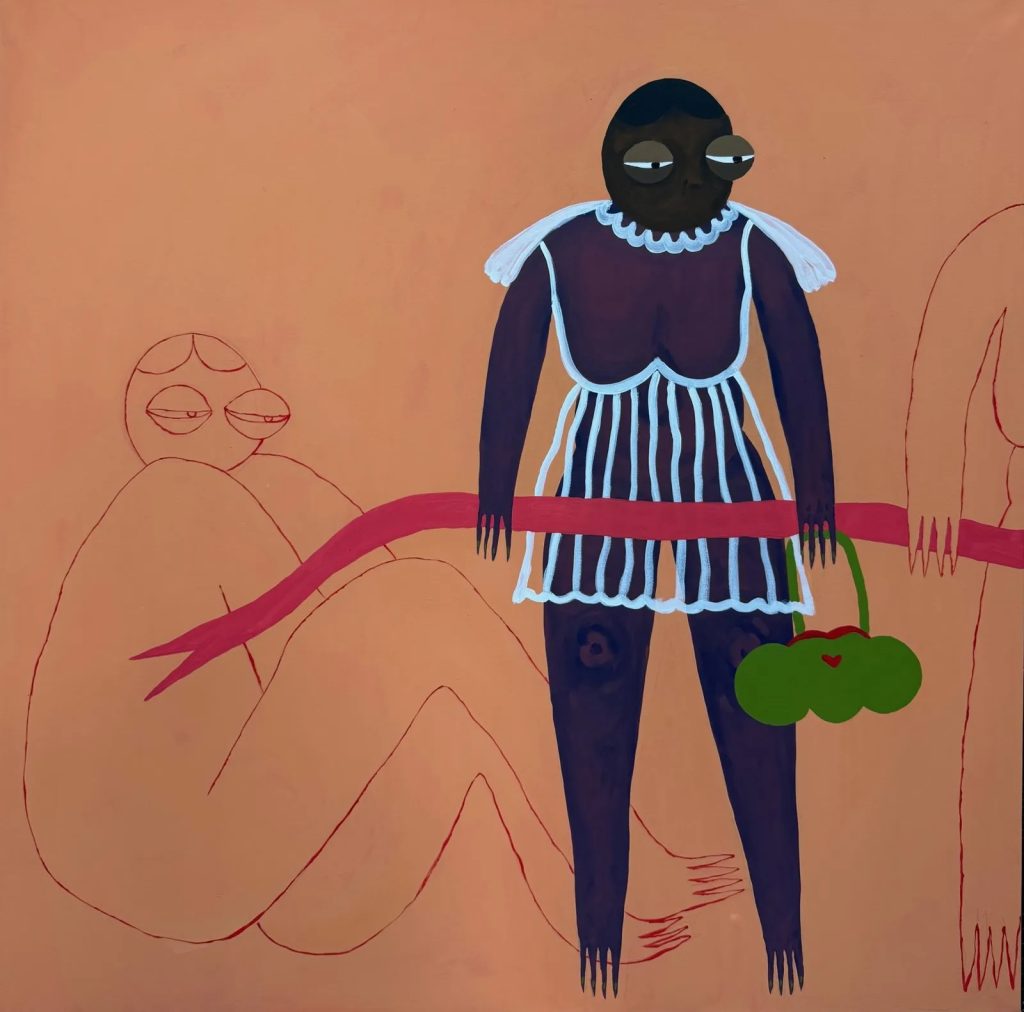
Reem Aljeally (Sudan), Ribbon Line, 2025.

Dear friends,

Greetings from the desk of Tricontinental: Institute for Social Research.

In early November, United Nations (UN) Secretary-General António Guterres addressed the ‘horrifying crisis in Sudan, which is spiralling out of control’. He urged the warring parties to ‘bring an end to this nightmare of violence – now’. There is a path to end the war, but there is simply no political will to enforce it. In May 2025, we wrote about the history of the conflict. In 2019, we explained the uprising that took place that year as well as its aftermath. Now, from Tricontinental: Institute for Social Research, the International Peoples’ Assembly, and Pan Africanism Today, comes red alert no. 21 on the need for peace in Sudan.
Image

What is the reality on the ground in Sudan?
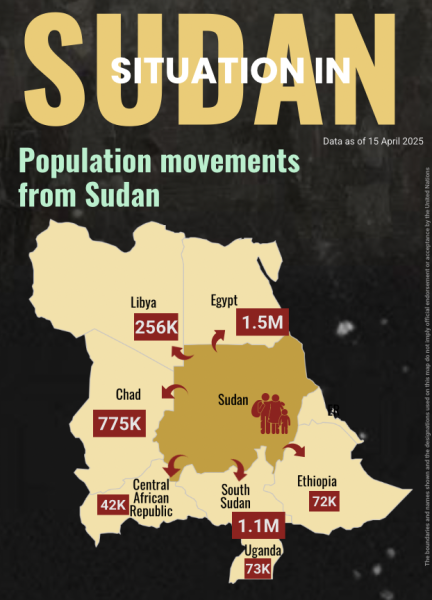
On 15 April 2023, war broke out between the Sudanese Armed Forces (SAF) – led by the head of the Transitional Military Council, General Abdel Fattah al-Burhan – and the Rapid Support Forces (RSF) – led by Lieutenant General Mohamed ‘Hemedti’ Hamdan Dagalo. Since then, backed by various governments from outside of Sudan, the two sides have fought a terrible war of attrition in which civilians are the main victims. It is impossible to say how many people have died, but clearly the death toll is significant. One estimate found that between April 2023 and June 2024 alone the number of casualties was as high as 150,000, and several crimes against humanity committed by both sides have already been documented by various human rights organisations. At least 14.5 million Sudanese of the population of 51 million have been displaced. The people who live in the belt between El Fasher, North Darfur, and Kadugli, South Kordofan, are struggling from acute hunger and famine. A recent analysis by the UN’s Integrated Food Security Phase Classification found that around 21.2 million Sudanese – 45% of the population – face high levels of acute food insecurity, with 375,000 people across the country facing ‘catastrophic’ levels of hunger (i.e., on the brink of starvation).

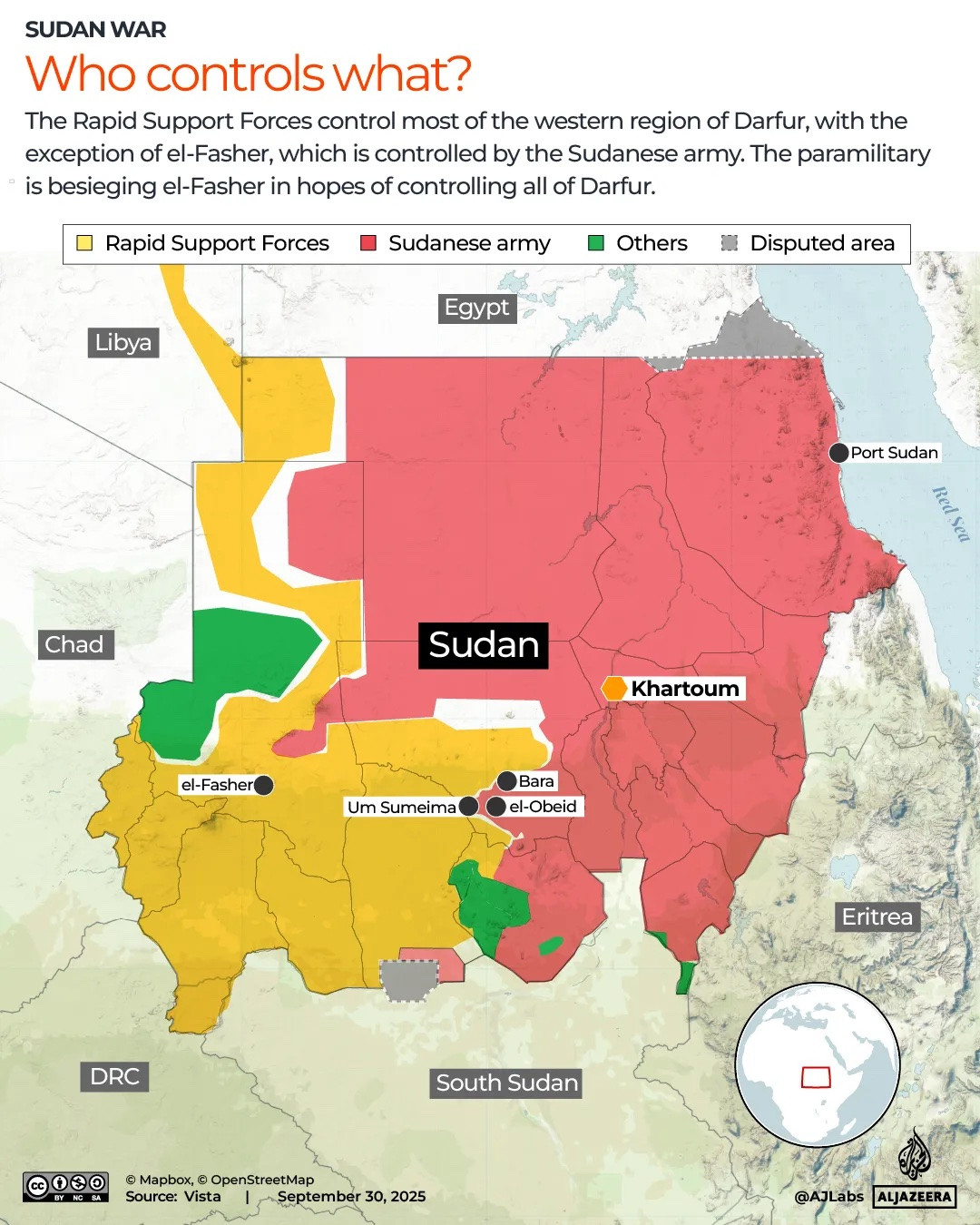
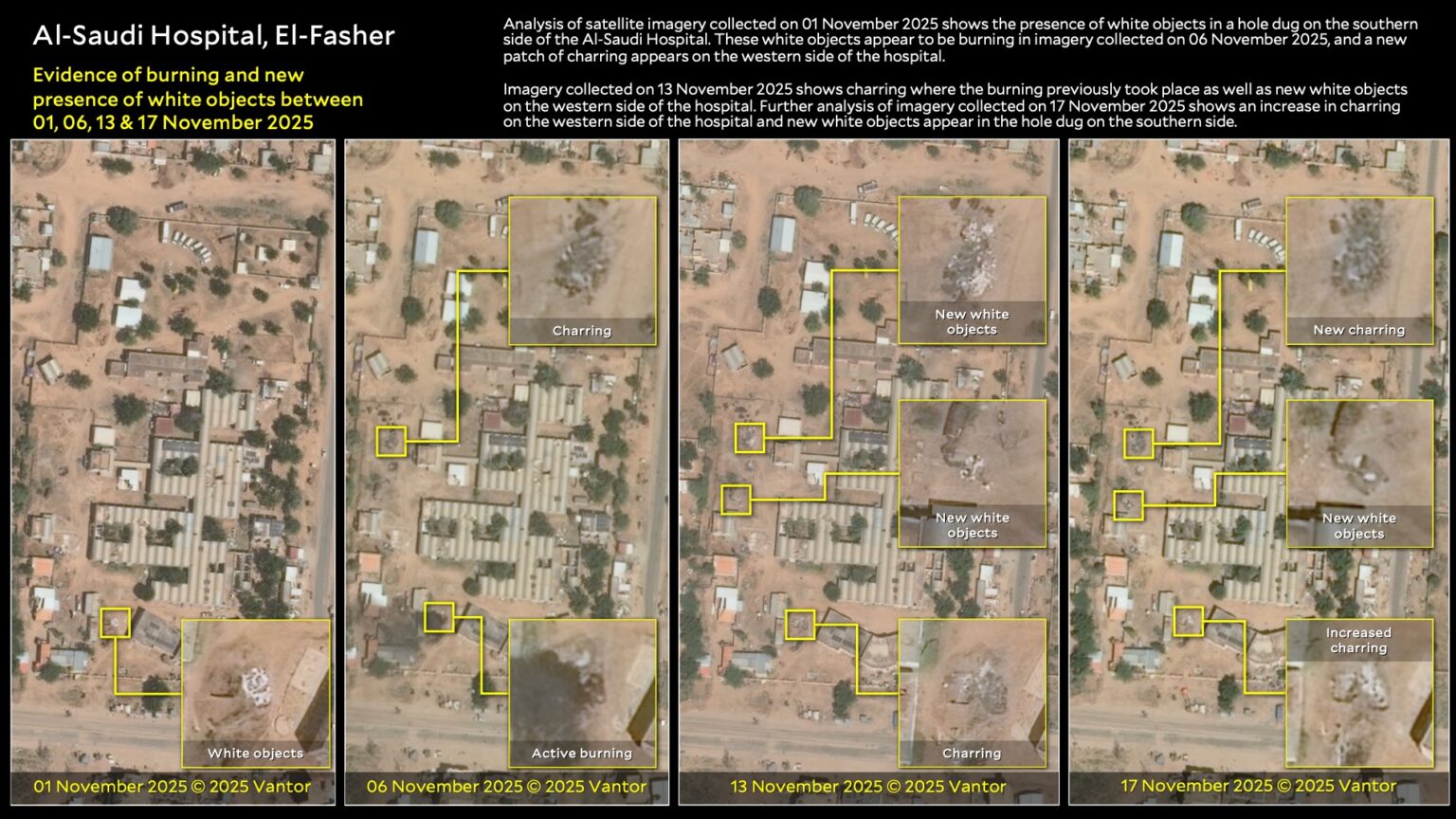
Since the war began, hundreds of thousands of internally displaced people sought refuge in El Fasher, then held largely by the SAF. Roughly 260,000 civilians were still there in October 2025 when the RSF broke the resistance, entered the city, and carried out a number of documented massacres. Among those killed were 460 patients and their companions at the Saudi Maternity Hospital. The city’s fall has meant that the RSF is now largely in control of the vast province of Darfur, while the SAF holds much of eastern Sudan – including Port Sudan, the country’s access to the sea and international trade – as well as the capital city of Khartoum.

There is no sign of de-escalation at present.
Image
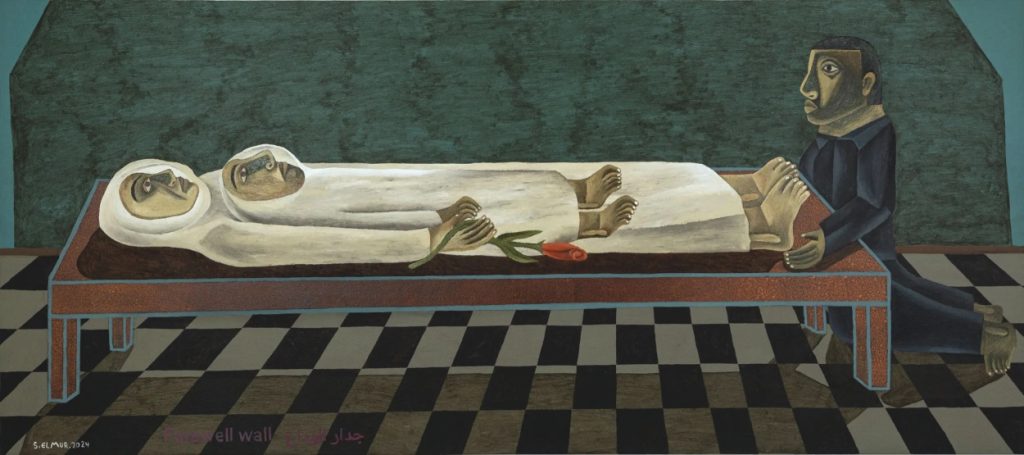
Salah Elmur (Sudan), Farewell Wall, 2024.

Why are the SAF and the RSF fighting?
No war of this scale has one simple cause. The political reason is straightforward: this is a counter-revolution against the 2019 popular uprising that succeeded in ousting President Omar al-Bashir, who governed from 1993 and whose last years in power were marked by rising inflation and social crisis.

The left and popular forces behind the 2019 uprising – which included the Sudanese Communist Party, the National Consensus Forces, the Sudanese Professional Association, the Sudan Revolutionary Front, the Women of Sudanese Civic and Political Groups, and many local resistance and neighbourhood committees – forced the military to agree to oversee the transition to a civilian government. With the assistance of the African Union, the Transitional Sovereignty Council was established, composed of five military and six civilian members. Abdalla Hamdok was appointed prime minister and judge Nemat Abdullah Khair chief justice, with al-Burhan and Hemedti on the council as well. The military-civilian government wrecked the economy further by floating the currency and privatising the state, thereby making gold smuggling more lucrative and strengthening the RSF (this government also signed the Abraham Accords, which normalised relations with Israel). The policies of the military-civilian government exacerbated the conditions toward the showdown over power (control over the security state) and wealth (control over the gold trade).

Despite their roles on the council, al-Burhan and Hemedti attempted coups until succeeding in 2021. Having set aside the civilians, the two military leaders went after each other. The SAF officers sought to preserve their command over the state apparatus, which in 2019 absorbed 82% of the state’s budgetary resources (as confirmed by Prime Minister Abdalla Hamdok in 2020). They also moved to retain control of its enterprises, running more than 200 companies through entities such as the SAF-controlled Defence Industries System (estimated $2 billion in annual revenue) and capturing a significant share of Sudan’s formal economy across mining, telecommunications, and import-export commodity trade. The RSF – rooted in the Janja’wid (devils on horseback) militia – tried to leverage the autonomous war economy centralised around the Al Junaid Multi-Activities Corporation, which controls major gold-producing areas in Darfur and about half a dozen mining sites, including Jebel Amer. Since 50–80% of Sudan’s overall gold production is smuggled (as of 2022) – mainly to the UAE – rather than officially exported, and since the RSF dominates production in western Sudan’s artisanal mining zones (which account for 80–85% of total production), the RSF captures huge sums from gold revenue every year (estimated at $860 million from Darfur mines alone in 2024).

Beneath these political and material contests lie ecological pressures that compound the crisis. Part of the reason for the long conflict in Darfur has been the desiccation of the Sahel. For decades, erratic rainfall and heatwaves due to the climate catastrophe have expanded the Sahara Desert southward, making water resources a cause of conflict and sparking clashes between nomads and settled farmers. Half of Sudan’s population now lives with acute food insecurity. The failure to create an economic plan for a population wracked by rapid changes in weather patterns – alongside the theft of resources by a small elite – leaves Sudan vulnerable to long-term conflict. This is not just a war between two strong personalities, but a struggle over the transformation of resources and their plunder by outside powers. A ceasefire agreement is once more on the table, but the likelihood that it will be accepted or upheld is very low as long as resources remain the shining prize for the various armed groups.
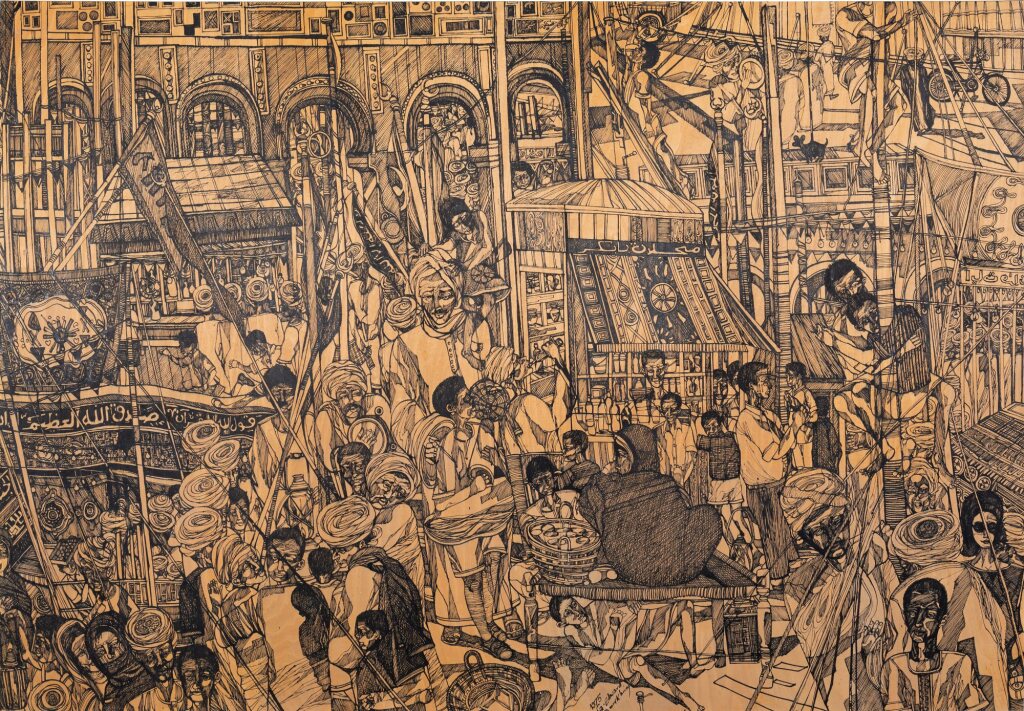
Image
Omer Khairy (Sudan), Market Scene, 1975.

What are the possibilities of peace in Sudan?
A path toward peace in Sudan would require six elements:

An immediate, monitored ceasefire that includes the creation of humanitarian corridors for the transit of food and medicines. These corridors would be under the leadership of the Resistance Committees, which have the democratic credibility and networks to deliver aid directly to those in need.
An end to the war economy, specifically shutting down the gold and weapons pipelines. This would include imposing strict sanctions on the sale of weapons to and the purchase of gold from the UAE until it severs all relations with the RSF. Export controls at Port Sudan must be implemented as well.
The safe return of political exiles and the start of a process to rebuild political institutions under a civilian government elected or supported by the popular forces – mainly the Resistance Committees. The SAF must be stripped of its political power and economic assets and subjugated to the government. The RSF must be disarmed and demobilised.
The immediate reconstruction of Sudan’s higher judiciary to investigate and prosecute those responsible for atrocities.
The immediate creation of a process of accountability that includes the prosecution of warlords through a properly constituted court in Sudan.
The immediate reconstruction of Sudan’s planning commission and its ministry of finance to shift surplus from export enclaves toward public goods and social protections.
These six points elaborate upon the three pillars of the African Union and the Intergovernmental Authority on Development’s AU-IGAD Joint Roadmap for the Resolution of the Conflict in Sudan (2023). The difficulty with this roadmap – as with similar proposals – is that it is dependent on donors, including actors that are implicated in the violence. For these six points to become a reality, outside powers must be pressured to end their backing of the SAF and the RSF. These include Egypt, the European Union, Qatar, Russia, Saudi Arabia, the UAE, and the United States. Neither this roadmap nor the Jeddah channel – a Saudi-US mediation track launched in 2023 that focuses on short truces and humanitarian access – includes Sudanese civilian groups, least of all the Resistance Committees.
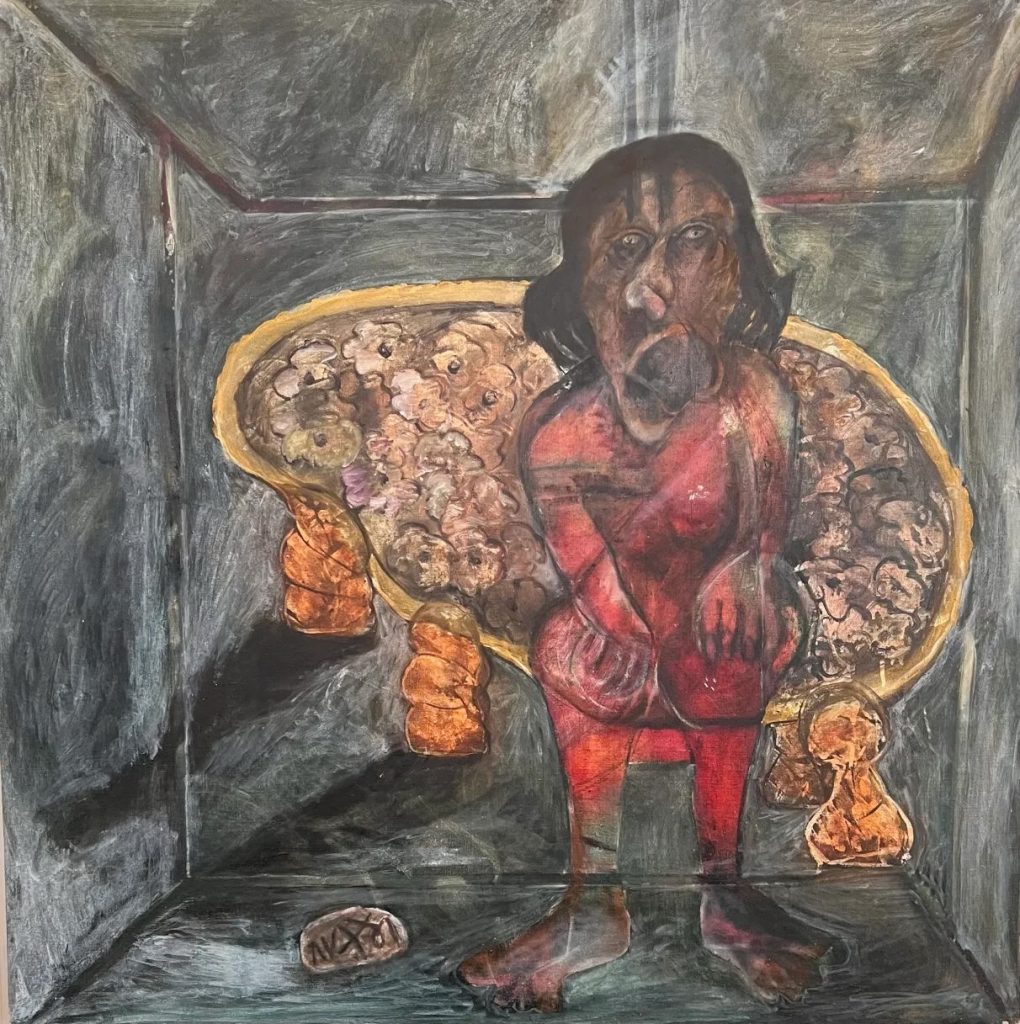
Image
Kamala Ibrahim Ishaq (Sudan), Loneliness, 1987.

Though Sudan has produced its share of poets who sing of pain and suffering, let us end on a different note. In 1961, the communist poet Taj el-Sir el-Hassan (1935–2013) wrote ‘An Afro-Asian Song’, which begins by commemorating the Kosti massacre at Joudeh in 1956, when 194 striking peasants were suffocated to death while in police custody. But it is to the end of the song that we turn, the voice of the poet ringing above the gunfire:

In the heart of Africa I stand in the vanguard,
and as far as Bandung my sky is spreading.
The olive sapling is my shade and courtyard,
O my comrades:
O vanguard comrades, leading my people to glory,
your candles are soaking my heart in green light.
I’ll sing the closing stanza,
to my beloved land;
to my fellows in Asia;
to the Malaya,
and the vibrant Bandung.

To the people of El Fasher, to those in Khartoum, to my comrades in Port Sudan: walk toward peace.

Warmly,

Vijay

https://thetricontinental.org/newslette ... dan-peace/

******

Agricultural offensive: how Burkina Faso is moving towards self-sufficiency in food production

The government of Ibrahim Traoré seeks to reduce dependence on imports in a country where 80% of the population are farmers.

November 13, 2025 by Pedro Stropasolas
Image
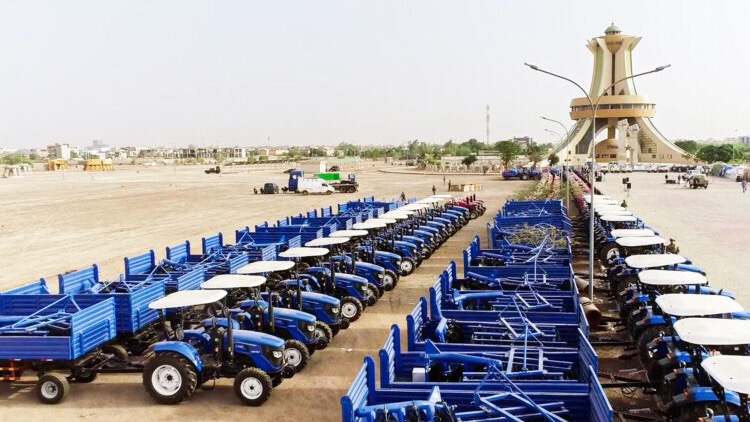
The distribution of agricultural machinery to farmers has been one of the cornerstones of the Agricultural Offensive of the Traoré Government. Photo: Presidency of Burkina Faso

Dependence on foreign aid, political instability, chronic poverty, and the effects of climate change are among the obstacles preventing Burkina Faso from achieving its longed-for food sovereignty.

Currently, about 80% of the population of the Sahelian nation is involved in agricultural activity, which accounts for a third of the GDP. Even so, the country still imports more than 200,000 tons of rice per year.

In response to this challenge, President Ibrahim Traoré’s government launched the so-called Agricultural Offensive in 2023, which has been revolutionizing the rural environment and serving as a model for the continent. The central objective is to end dependence on imports of widely consumed food products.

According to Mark Gansonré, a farmer and representative of farmers’ associations in the National Transitional Assembly, in implementing the program, the new government sought to listen to the country’s farmers. “I believe he [Traoré] took the time to understand the cry from the hearts of Burkina Faso’s farmers.”

Read More: In the fight against desertification, Burkina Faso mobilizes to plant 5 million trees in one hour
“Since 2002, we have undertaken a series of actions, beginning with the demand for recognition of agriculture as a full and legitimate profession. We obtained an agricultural guidance law to structure this recognition. We also worked to facilitate access to credit for small producers. Today, we have reached a point of true gratitude. Thank God, last year this government allocated 78 billion CFA francs for the purchase of agricultural equipment, making it available to farmers,” celebrates Gansonré.

The numbers of the Agricultural Offensive
The offensive has already yielded results in food self-sufficiency. Yields per hectare in the country have increased dramatically since the start of the offensive, with improvements of around 35% to 40%.

Most notably, the country achieved grain surpluses for two consecutive years, a stark contrast to the historical pattern of deficits prior to the current administration. In 2024, six million tons of grain were harvested in Burkina Faso.

This occurred despite the presence of fundamentalist jihadist groups around the country. By the end of this year, the agricultural program aims to create 100,000 jobs for the population displaced by terrorism. About 54% of the budget is funded by the private sector and 46% from the state.

“If there are more than a million displaced people, the majority of this population is in rural areas. Many of these farmers abandoned lands that could not be cultivated. But this does not prevent us from producing today. Despite the abandonment of several agricultural areas that could not be cultivated, there has been significant support so that in regions where there is still productive capacity, farmers could intensify production in order to feed the Burkinabé people,” Gansonré points out.

Luc Damiba, special advisor to the Prime Minister of Burkina Faso, believes that even in a context of low rainfall, the country has good land and abundant water, which, according to him, makes it possible to reorganize production to supply the citizens. He emphasizes that guaranteeing sufficient food for the population is the basis of any national project.

“We need to work with the peasants, work with them well. If we don’t do that, they will be occupied by the terrorists. That’s the first gain. The second gain is that they will produce enough to achieve food self-sufficiency. The third gain is that we will have well-prepared political actors committed to advancing the revolution,” he analyzes.

“If we don’t have the peasant world to carry out the revolution, we will fail. We can only count on the peasant world to accomplish it. And Traoré started well by adopting this offensive agricultural policy, capable of mobilizing this group, which became a fundamental political actor,” adds Damiba.

Relationship with Sankara
The quest for food sovereignty in the region has deep historical roots, dating back to Thomas Sankara’s revolution in the 1980s. The agrarian reform implemented by Sankara, in addition to distributing land to those who actually produced it, aimed to politically engage this large mass of small farmers. In 1987, after four years in power in Burkina Faso, the UN recognized the country for the first time as self-sufficient in food production.

Read More: Sankara’s revolution rises again
Following the assassination of the former president and leader of the historic Burkinabé revolution, however, decades of policies that prioritized export crops at the expense of family farming led the Sahel country to once again depend on external inputs.

The colonial model, dictated by global agribusiness multinationals, such as Monsanto, gained ground in the country during the regime of Blaise Compaoré, the mastermind behind the Sankara massacre, who governed the country from 1987 to 2014, with the support of the French government.

For Mark Gansonré, the implementation of the Agricultural Offensive is a symbol of Traoré’s alignment with Sankara’s ideas.

“It’s as if we have a Sankara. Sankara has awakened. It’s true that in his time most of the population didn’t quite understand his vision. He was a mobilizer… But today, after his passing, there has been an awakening, and this current government has effectively stimulated that awakening,” he said.

Mechanization
The current government’s offensive has been marked by strong direct support for rural producers and unprecedented investments in mechanization. The strategy focuses on substantially increasing production in eight priority areas: rice, corn, potatoes, wheat, fish, livestock, poultry, and mangoes.

Financing for the purchase of machinery in the country, much of it from China, relies on two main sources: the nationalization of gold and the creation of a patriotic fund financed by the population itself.

Since Traoré took control of two mines that previously belonged to a London-listed company and began construction of a state-owned refinery, the government has already allocated USD 179 million for the purchase of agricultural machinery.

Sawadogo Pasmamde, or Oceán, a multi-artist and member of the Thomas Sankara Center for Freedom and African Union, details the transformation.

“For the first time, tractors are being distributed throughout the country. Agricultural inputs are being delivered to farmers, giving them everything they need to produce. In addition, all the agricultural engineers who worked in the cities have been transferred to the countryside to directly monitor and support the farmers. And now, we see that the results are beginning to appear as a reward for this effort,” Oceán celebrates.

The two types of agriculture
According to the government’s announcement, the differentiated mechanization includes draft animals for small producers, and, on the other hand, tillers and tractors for large enterprises. Initially, more than 400 tractors were distributed, in addition to subsidized fertilizers. For the 2025-2026 campaign, the package should include the delivery of 608 tractors and 1,102 tillers.

According to Marc Gansonré, this is a long-standing demand from the country’s farmers that has never been fully met. He recalls that there was an initial attempt during the revolution led by Sankara, but the process was interrupted after his death.

During the Compaoré administration, he adds that a program even distributed carts to farmers, but without the necessary draft animals for their use. The initiative was stalled for years until, after demands from the farmers, subsidies were introduced for plows and for animals such as donkeys and oxen.

Even so, the reach of the policies remained limited. According to the parliamentarian, at the time there were about 1.4 million farming families in the country, but less than half were served by the programs: “coverage reached only 27%, then 32%”.

“And, thank God, we had the arrival of this current president, who understood from the beginning the signs of this need to support mechanization,” he emphasizes.

According to Marc, mechanization in the country today is carried out in a differentiated way, respecting the spatial dimensions of each cultivable area and the financial capabilities of the producing families.

He explains that in Burkina Faso, there are two types of agriculture: family-run farms and large-scale agricultural enterprises that require heavy equipment.

“Giving a rototiller or tractor to someone who doesn’t have the means to properly maintain that equipment is like doing nothing. That’s why we work to ensure that small producers continue to be supported with plows and draft animals, while those who have progressed a bit more can work with rototillers,” explains Gansonré.

“When rainfall doesn’t exceed 5 millimeters and you need to sow, it’s necessary to cultivate as much of the area as possible within the following 24 to 48 hours. And doing this manually is very difficult. That’s why seeders and tillers were introduced to improve soil preparation,” he adds.

Creation of industries
In addition to production, the Burkinabé government’s focus with its Agricultural Offensive is on industrialization and adding value to locally grown products. In the country, the creation of processing units has generated jobs and even allowed farmers to become shareholders in some of the factories that have been opened.

Read More: Forging a new Pan-African path: Burkina Faso, Ibrahim Traoré, and the Land of the Upright People
The country’s first tomato processing plant, inaugurated in 2024 in Bobo Dioulasso, has 20% state participation and 80% community capital, organized by APEC, the Agency for the Promotion of Community Entrepreneurship. The organization, founded in 2022, is primarily supported by the small and medium-sized national bourgeoisie.

Souleymane Yougbare, director of the National Council for Organic Agriculture of Burkina Faso (CNABio), believes that the initiative has reduced dependence on imports and developed the local economy.

“If we have, for example, 100% Burkinabé tomato puree, this allows us to protect our markets, it allows us to be autonomous in relation to the consumption of tomato puree and also avoid cases of poisoning. We don’t know how anything we import is produced,” says Yougbare.

He also highlights how the factory has added value to the farmers’ production, who previously lost a large part of their harvest due to a lack of alternative distribution channels.

“Before, tomato production in Burkina Faso was very high, but unfortunately, producers lost a good portion because the tomatoes rotted in the fields or had to be sold at very low prices. That’s sad. There were even exporters, or rather, importers and exporters, who came to buy at ridiculously low prices and resold in other countries. All of this destroys our economy,” he assesses.

On the other hand, Yougbare argues that the advancement of industrialization in the country must be accompanied by reflection on its impacts. “When we think about industrialization, and the name says it all, we need to be careful that it doesn’t bring other problems, as we see in developed countries: pollution of the ozone layer, the impact on the climate … Therefore, it is necessary that the solutions be truly local, adapted to our context and our needs,” he explains.

Member of Parliament Marc Gansonré believes that the country is currently experiencing a shift in consciousness, “a spirit of patriotism” that leads the population to say: “If we want to be autonomous, it’s good to receive help, but it’s better that we ourselves work to find solutions to our internal problems. And what we cannot do, we can seek outside.”

He concludes: “I recognize that these are truly new elements that we are observing today, thanks to the vision of the Head of State and his government. This gives us great hope that, soon, West Africa will be an example for other countries.”

https://peoplesdispatch.org/2025/11/13/ ... roduction/

Africa’s recent elections: crisis and a continent’s youth in revolt

The recent elections in Tanzania, Cameroon, and Côte d’Ivoire lay bare the contradictions of neoliberal democracy in Africa, where the ruling class clings to power through coercion and electoral manipulation to protect imperial and class interests.

November 14, 2025 by Nicholas Mwangi
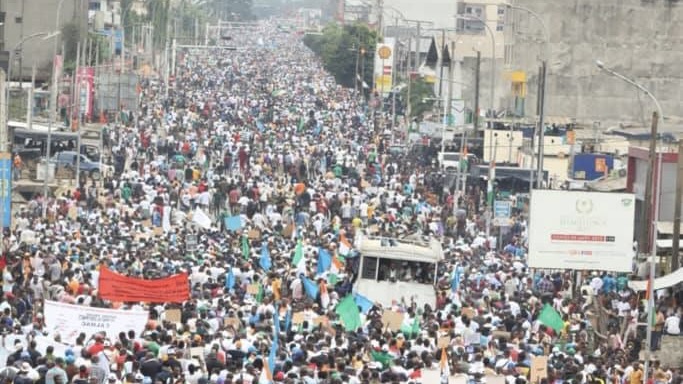
Image
Mass protest in the Ivory Coast. Photo: PCRCI

The past few months have seen three elections across Africa, in Tanzania, Cameroon, and Côte d’Ivoire. Each exposed a deepening democratic crisis on the continent. While the ballot boxes were filled and the slogans of “stability” and “unity” were loudly proclaimed, the underlying reality was very different; repression, exclusion, and a profound disconnect between the political class and the masses, especially youth.

In all three cases, aging leaders clung to power through electoral processes that were anything but democratic. The continuity of these regimes is part of Africa’s enduring entrapment within neoliberal and neo-colonial frameworks, where the ritual of elections serves to legitimize old orders and satisfy liberal democracy’s important symbolic tenet of holding elections without any fundamental change.

Tanzania: a crisis of legitimacy
The October 29, 2025 elections in Tanzania marked a turning point toward deeper authoritarianism. President Samia Suluhu Hassan was declared the winner with 97.66% of the vote, a margin that raised more questions than celebrations. The opposition, led by CHADEMA party figures such as Tundu Lissu and Amani Golugwa, faced relentless harassment long before polling day. Opposition rallies were dispersed, candidates were barred, and dozens of party members were arrested.

Following the announcement of results, Tanzanians poured into the streets of Dar es Salaam, Arusha, and Mwanza, only to meet state brutality. A total internet shutdown, curfews, and reports of mass killings and disappearances turned the election aftermath into one of the darkest chapters in Tanzania’s political history. Human rights groups have since alleged grave violations, though independent verification remains difficult under government censorship.

Read More: Post-election repression in Tanzania as President Suluhu “wins” with 97.66%
Regional responses were telling. The African Union (AU), initially quick to congratulate President Suluhu, later walked back its stance under public pressure, admitting the elections had “failed to meet democratic standards”. The Southern African Development Community (SADC) reported that even its own observers were harassed and detained by Tanzanian security forces. But, beyond rhetorical concern, no meaningful interventions followed.

Cameroon: the century of Paul Biya
Meanwhile, in Cameroon, Paul Biya, now 92 years old and in power since 1982, extended his rule for another seven-year term. The October 12, 2025 election, where Biya supposedly won 53.66% of the vote, came after mass disqualifications of opposition candidates 70 out of 83 applications were rejected by the Electoral Commission (ELECAM). Among those barred was Maurice Kamto, the major opposition figure who had previously challenged Biya in 2018.

With viable opposition effectively neutralized, Issa Tchiroma Bakary became the nominal challenger. His supporters protested even before the official results, alleging manipulation and fraud. Protests in Douala, Garoua, and Maroua were met with live ammunition and mass arrests. The images of unarmed protesters being shot at while demanding transparent elections have further tarnished Cameroon’s already fragile legitimacy.

Cameroon’s youth, facing unemployment rates above 30%, have become increasingly alienated from a political system that offers neither opportunity nor representation.

Côte d’Ivoire: the illusion of reform
In Côte d’Ivoire, President Alassane Ouattara, 83, secured a fourth term, continuing a pattern of constitutional manipulation that has defined Ivorian politics since independence. Having argued that the 2016 constitutional reform “reset” term limits, Ouattara sidelined his main rivals, Laurent Gbagbo and Guillaume Soro, both of whom were barred from contesting.

The election had no real competition and a state apparatus designed to reproduce the status quo. Opposition groups organized protests, only to face mass arrests and bans on demonstrations. The government’s heavy-handed tactics show what is becoming a broader regional trend, electoral processes are increasingly hollowed out, while Western donors and Bretton Woods institutions continue to embrace “stability” over justice.

Ouattara’s rule represents a particularly insidious strain of technocratic neoliberalism governance through economic orthodoxy rather than political legitimacy. Once hailed by the IMF and World Bank as a model reformer, Ouattara has overseen rising inequality, rural poverty, and youth unemployment, even as Côte d’Ivoire posts impressive GDP figures. As Jonis Ghedi Alasow of Pan African Today noted, “the reported approval ratings of over 90% in some of the elections (Tanzania and the Ivory Coast) stand in stark contrast to the palpable discontent in these societies. This discontent is not only evident in opposition politics during electoral cycles but also in the daily challenges and frustrations that citizens voice, extending far beyond electoral processes. These are not elections — they are coronations. Ouattara’s popularity in Western capitals stems from his willingness to implement austerity and privatization, not from the consent of his people.”

Beyond the ballot: what to make of Africa’s electoral crisis
The Accra Collective of the Socialist Movement of Ghana (SMG) released a statement calling out the wave of electoral fraud, constitutional manipulation, and state repression sweeping the continent. Declaring that “ruling elites have turned elections into tools for preserving power rather than instruments for expressing the popular will.”

Their critique points to a larger truth: Africa’s democratic crisis is not just political, it is structural. Elections are embedded within a neo-colonial framework, where sovereignty is constrained by debt, trade dependency, and elite alliances with global capital. Leaders like Biya, Ouattara, and Suluhu remain in power precisely because they are reliable custodians of imperial interests, managing resource extraction and neoliberal reforms under the guise of “stability”.

As Ghedi Alasow adds, “It is important to remember that elections have never been a panacea for the fundamental problems facing our people. Africa’s history is a testament to the fact that meaningful change emerges not from ballot boxes but from organized struggle.”

But, at the same time, popular anger is growing on the continent, the youth of Africa are beginning to question not just fraudulent elections, but the very legitimacy of the systems that sustain them. Movements inspired by Pan-Africanism, socialism, and grassroots organizing are re-emerging and organizing, calling for a politics that serves the people rather than capital.

Ghedi Alasow remarked, “The popularity of leaders like Traoré underscores what people truly seek: patriots who are willing to defend their interests. People are less concerned about the means through which leaders come to power, but more about whose interests those leaders champion once in office. The neocolonial order is in crisis. It can no longer credibly claim legitimacy or democratic character.”

Who makes the future
The crises in Tanzania, Cameroon, and Côte d’Ivoire are symptoms of a larger continental malaise; the collapse of bourgeois democracy under the weight of inequality, corruption, and neocolonial dependency. Electoral rituals continue, but their content has been emptied. Without popular participation, economic sovereignty, and mass organization, elections will remain instruments of domination, not change in any foreseeable future.

True democracy, as the Socialist Movement of Ghana reminds us, “must rest on popular sovereignty where power flows from the organized masses, not from the boardrooms of multinational corporations or the dictates of imperial powers.”

Africa’s future, then, will not be decided by the aging autocrats who cling to office, nor by the technocrats who serve imperial finance. It will be forged by a generation that refuses to be silenced, a generation determined to reclaim democracy from the shadows of neocolonialism and to rebuild it in the light of people’s power.

https://peoplesdispatch.org/2025/11/14/ ... in-revolt/
"There is great chaos under heaven; the situation is excellent."

User avatar
blindpig
Posts: 14788
Joined: Fri Jul 14, 2017 5:44 pm
Location: Turtle Island
Contact:

Re: Africa

Post by blindpig » Thu Nov 20, 2025 2:43 pm

Just Transition: Africa Nations Plan Coalition to Stop the Plunder of Green Minerals
Posted by Internationalist 360° on November 14, 2025
Cyril Zenda

Image
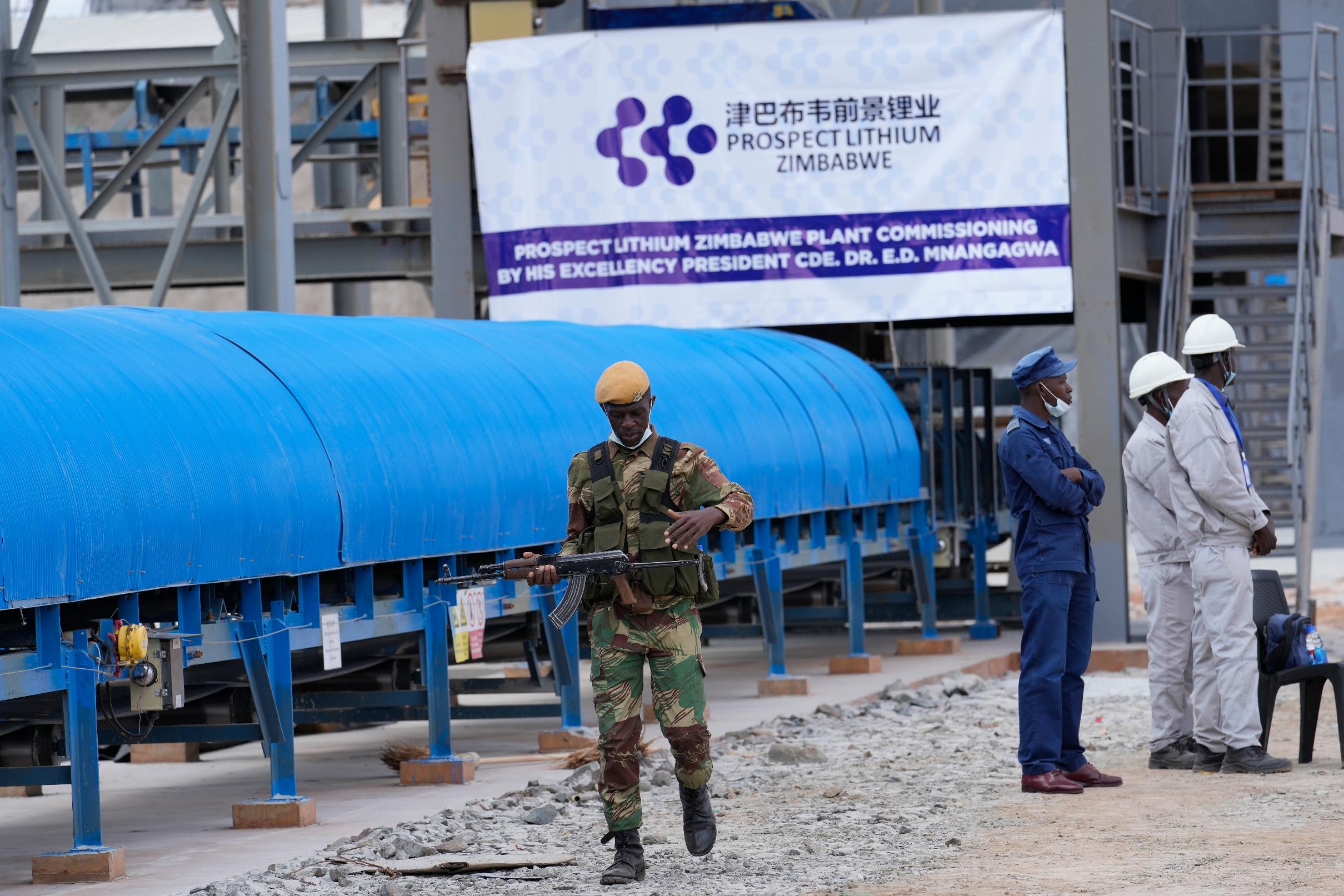
A Chinese mining company formally opened a $300 million lithium processing plant in Zimbabwe, which has one of the world’s largest reserves of the metal.

After centuries of its natural resources being plundered by foreign powers, Africa moves to stop this exploitation by creating a coalition of nations rich in strategic minerals vital to the global transition toward green energy.


When Zimbabwe banned raw base mineral ore exports in 2022, the mainly Chinese miners operating in the country moved to exporting lithium and chrome in semi-processed form as concentrates. The southern African country had realized that by allowing the export of the minerals in their raw form, it was effectively exporting jobs and revenue, while undermining industrial investment and eroding its skills base.

When in June this year the Zimbabwean government went further to announce that the export of the lithium concentrates will also be banned in the next two years upon the completion of local processing plants to ensure that the mineral is exported in the more processed form as lithium sulphate, the reaction of the Chinese miners was setting a rapacious target to export at least 60,000 tonnes of lithium concentrate before the ban takes effect.

OPEC-like coalition for bargaining power

This reaction clearly shows that the foreign mining firms benefit more from raw mineral exports to the disadvantage of the host countries. This depredatory trend has been going on across various sectors in Africa since the colonial days and continued into the post-colonial era.

It was for this reason that African leaders meeting at the African Union (AU) headquarters in Addis Ababa, Ethiopia, for the Climate Summit in September, resolved to establish a coalition of member states producing strategic minerals for the purpose of ending the exploitation that is being fuelled by the global rush toward green energy. The continent, which possesses immense mineral wealth, particularly in strategic metals – over which global powers are tussling – is suffering what is generally known as a resource curse and is now trying to set terms for the exploitation and trade of its mineral resources in the same way oil-producing countries do.

Green minerals such as cobalt, lithium, copper, manganese, graphite, and vanadium, among others, are critical inputs in the production of clean energy technologies and materials – from solar panels, batteries (for both clean energy storage and for use in electric vehicles), smartphones, computers, and the whole range of digital systems. Also known as ‘digital minerals’ due to their use in high-end tech products, these minerals are key for driving the global green transition, putting them at the centre of heightened geopolitical concerns.

Beyond raw minerals exports

Through the African Green Minerals Strategy (AGMS) that the AU adopted in February this year, it was recognized that Africa must move beyond raw mineral exports to build strong, integrated value chains that promote local beneficiation, job creation, and economic diversification. To achieve this ideal, the AGMS presents an ambitious strategy to reposition Africa from a mere supplier of green minerals to a strategic partner in global mineral value chains.

Experts note that with more than half of African countries endowed with at least one of the minerals and metals essential for the energy transition, the continent is strategically positioned to generate immense local economic benefits from clean energy value chains and related industries.

With the International Energy Agency (IEA) projecting the global demand for lithium to rise by up to fortyfold in the next two decades, while that for cobalt, nickel, and graphite is projected to grow 20-25 times, EVs and grid storage being the primary drivers, this demand targets Africa, sucking the continent into the vortex of geopolitical tussles. The experts emphasize that these shifting demand dynamics underline the urgency of coordinated action, warning that without it, oversupply shocks, price volatility, and the continued raw-ore exports could undercut the continent’s opportunity for sustainable growth.

Resource nationalism and geopolitical tussles

To counter China’s domination of the green race, the European Union (EU) last year signed a controversial minerals supply deal with Rwanda, while the United States early this year entered a minerals-for-security deal with the Democratic Republic of Congo (DRC). As these global powers are emphasizing domestic production of green technologies through their industrial policies, most African countries that possess these critical raw materials are resorting to resource nationalism. This has seen a number of African countries, such as Zimbabwe, Guinea, Uganda, Namibia, Zambia, Gabon, and Malawi, among others, imposing bans on raw mineral exports, while others, such as Botswana, Tanzania, and Ghana, demand substantial shareholding in the mining ventures. Others, like Niger, Mali, and Burkina Faso, have resorted to outright nationalization of the mines.

‘Neo-colonial, extractive approach’

Audrey Gaughran, the executive director of the Amsterdam-based Centre for Research on Multination Corporations (SOMO) – a global public good organization – told Al Mayadeen English that collaboration amongst mineral-rich African countries has the potential to break the cycle whereby foreign multinationals gain the most value from the region’s resources.

“This happens because most multinationals see it as being in the best interest of their shareholders to extract raw materials from Africa and add value elsewhere,” Gaughran said.

“We have seen this too many times in the past, such as during booms in gold, copper, or cobalt demand. Big foreign mining companies made millions but left the countries that owned the minerals with little to show for the extraction other than environmental damage and human rights abuses. The world needs Africa’s resources, and this must be on Africa’s terms.”

She said what the world is seeing is a scramble for transition minerals between the US, China, and the EU, resulting in a lot of lopsided deals.

“SOMO has been highly critical of the EU’s push to sign agreements with countries in Africa to gain access to resources,” Gaughran said. “These agreements use the same old language of ‘mutual benefit’, but in reality, represent a continuation of the neo-colonial, extractive approach that has characterized Europe’s economic relationship with Africa for decades.”

She said a strong collaboration of African nations on the issue of critical transition minerals would increase the negotiating power of countries, as well as send a powerful signal of intent in the new geopolitical context.

‘Governments seeking to assert greater control’

Dr. Carole Nakhle, a global energy expert, told Al Mayadeen English that resource-rich countries are increasingly recognizing the strategic importance of their mineral wealth to the global energy transition and the opportunities presented by rising demand.

“The recent call for a coalition of critical mineral-producing nations reflects a broader trend of host governments seeking to assert greater control over their natural resources,” she said.

Based on the continent’s past track record on making collaborative efforts, Nakhle, founder and CEO of Crystol Energy, expressed misgivings about the prospects of the latest idea.

“While this is not a new phenomenon, whether such initiatives will result in meaningful value addition and economic growth remains to be seen,” she said.

“Much will depend on the strength of national policies and the quality of governance in the extractive sector. Unfortunately, the track record across much of Africa has been mixed at best. Despite the continent’s vast resource wealth, many African nations continue to face extreme poverty and underdevelopment, highlighting a persistent disconnect between natural endowments and sustainable economic outcomes.”

Many obstacles to overcome

Gaughran highlighted that factors to be considered for the proposed coalition to succeed include challenges for value addition, including China’s dominance in the processing of key critical minerals; the investment in infrastructure that is needed to enable processing; and the fact that economically powerful countries and entities can leverage Africa’s debt to push countries to continue to focus on the export of raw materials.

“Any strategy to capture the full value of Africa’s critical minerals needs to go well beyond issues of mining and processing. A sectoral focus has limits because many of the reasons African countries have lost out in previous mineral booms are due to wider investment, tax, and trade frameworks. But African countries could leverage global demand for critical minerals, using it as a bargaining tool to reset some of the terms of economic engagement with other regions, including tying access to minerals to debt relief.”

Fierce competition

The experts say timing is critical. China has established a dominant position in mining stakes and refining capacity, controlling 60% of cobalt refining and over 80% of rare earth processing. The Asian giant secures supplies through debt-for-resources deals and vertical integration. Rivals like the US, the EU, Japan, and Saudi Arabia are moving fast to counter China’s dominance in the sector.

With this cutthroat competition going on, experts say that for African producers, the coalition could amplify bargaining power, but only if they collaborate instead of cutting bilateral deals.

“Africa’s mineral bloc will stand or fall on execution,” wrote Cynthia Ebot Takang, an African business analyst. “The Addis Ababa launch was only a first step. Unless a binding framework emerges by 2026, global buyers will continue to dictate terms, and the continent will remain a price taker. With the clean-energy economy racing ahead, this coalition is not optional—it is Africa’s chance to shape its own future in minerals.”

Gaughran said the other strategy would be for African countries to consider ending bilateral investment treaties that contain clauses, such as investor-state dispute settlement (ISDS), which undermine their sovereignty.

“In 2023, Kenya unilaterally ended its bilateral investment treaty with the Netherlands, which economic justice advocates consider an important step. SOMO worked with partner organisations in Kenya to promote this move, as the treaty gave businesses registered in Netherlands undue power when operating in Kenya.”

https://libya360.wordpress.com/2025/11/ ... -minerals/

Google Translator

******

Image

Nkrumaist, Sankarist, and creator of Afrobeat
Originally published: Morning Star Online on November 17, 2025 by Tony Burke (more by Morning Star Online) | (Posted Nov 19, 2025)

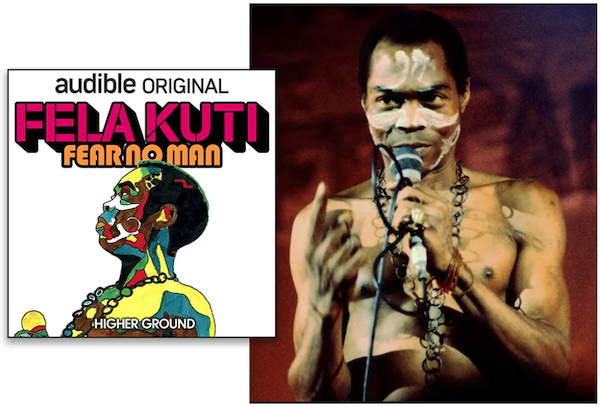
FELA ANIKULAPO-KUTI was one of the most influential musicians of the 20th century–using music as a weapon. Fela was the father of Afrobeat, dubbed “the black president,” and was a thorn in the side of the Nigerian establishment and government for 30 years.

A new 12-chapter series of one hour podcasts, called Fear No Man tells his life story, tracing the development of his politics and features plenty of his astonishing music with over 200 interviews. Hosted by veteran New York journalist Jad Abumrad, the series analyses Fela’s life from 1930s colonial Nigeria to his death from an Aids-related illness in 1997.

His impact on African music was massive. “He was making music that was just great to dance to but he was also structuring his music so that the people dancing would have these moments of awakening,” Abumrad says.

You could call him the Nigerian James Brown. There are elements of funk, jazz and West African drumming. But that doesn’t really capture him, as there are layers and layers of politics. So, you’d have to add in a Malcolm X and a Muhammad Ali.

Fela’s mother was a prominent women’s rights activist who later died at the hands of the Nigerian government. His father was a church minister and president of the Nigerian Teachers Union.

In 1958 Fela landed in London to study at the Trinity College Of Music and formed a band playing jazz and highlife music. Returning home in 1963 he trained as radio producer, played in various bands, then headed for Los Angeles in 1969 where he met another influential woman–Sandra Izadore–who introduced him to the Black Panther Party. Radicalised, he formed Africa 70 and his music became focused on social issues.

Post independence Nigeria relied on oil money and the corrupt Nigerian ruling class were beholden to British, German and U.S. energy companies. Fela’s subsequent albums became the sound track of the fight against them–notably his album Zombie from 1977 which forms a full chapter in the podcast series. Abumrad described Zombie as “a flagrant attack on the regime–basically calling the Nigerian soldiers brainless droids.”

Despite being banned, Zombie played out of every house in Lagos. The state’s retribution was to burn down his compound, including a recording studio, his store of master tapes and his music venue The Shine which had attracted international visitors, notably Ginger Baker (who recorded with Africa 70), Paul McCartney, Brian Eno (who described Fela’s dummer Tony Allen as “one of the truly great musicians of the twentieth century”) and Talking Head’s David Byrne.

Fela’s mother was thrown out of a window in the compound, and was later to die as a result of the violent attack.

The band, with a full brass section and back-up singers (some of whom were his wives), continued touring and recording notably wowing Glastonbury in 1984.

But Abumrad says:

The violence extracted a toll that was maybe too much for him to bear. What I find really beautiful about Fela’s story is that you see protest movements long after his death. In 2020, as the George Floyd protests were happening in America, in Nigeria, you had the End SARS movement, a protest also against police brutality with tens of thousands of young people in the streets playing Fela’s music.

“He was one of the first Africans to take such an overtly political position in his music,” says Brian Eno. “Fela used the great wealth of Nigerian aphorisms and proverbs to create a forceful new lyrical language. Songs with titles like Original Sufferhead, Chop And Quench, and He Miss Road let you know that something new was going on.”

Fela Kuti–Fear No Man is released by Higher Ground and available for download on audible.co.uk

https://mronline.org/2025/11/19/nkrumai ... -afrobeat/
******

Mali Holds Firm: West Eyes New Front to Sabotage Sahel Independence
Posted by Internationalist 360° on November 19, 2025
Aidan J. Simardone

Image

The west’s latest anti-Russia obsession disguises a plan to derail West African sovereignty and economic independence under the pretext of fighting terrorism. The west’s anti-Russia obsession masks a plan to derail West African sovereignty under the pretext of fighting extremism. By casting Mali as a ‘failed state’ just as it asserts control over its gold, uranium, and growing lithium reserves, western powers open the door to renewed intervention and the recovery of long-standing economic stakes.

If you are to believe western media, Mali is days away from falling to Al-Qaeda. Jama’at Nasr al-Islam wal-Muslimin (JNIM), a branch of Al-Qaeda in the Islamic Maghreb, is blockading fuel to the capital, Bamako. It is only a matter of time before growing frustration turns Malians against their “illegitimate” government. Or so the story goes.

The reality tells a different tale. The situation is serious, not only for Mali but also for the broader Alliance of Sahel States, which includes Burkina Faso and Niger. And yet, Mali is recovering. Russia has stepped in, delivering vital fuel shipments. Schools are reopening. Vehicles are back on the road. Towns previously captured by JNIM are being reclaimed.

It is a huge gamble for Russia. But should it succeed, Moscow will have secured a key ally and gained the favor of anti-imperialist countries in Africa. The risk, however, might not come from JNIM. Instead, it could come from a western-supported intervention that seeks not to stop Al-Qaeda, but to destroy the Alliance of Sahel States.

From French client to anti-colonial spearhead

After it gained independence, Mali continued to rely on France. Even its currency, the CFA franc, is pegged to the euro. In school, children were taught French history and learned to speak French. Until recently, France had 2,400 troops stationed as part of its “counterterrorism” operations.

Despite these apparent efforts, groups like JNIM, the Islamic State in the Sahel, and Azawad separatist militias grew. Meanwhile, western corporations profited as Mali became the fourth-largest producer of gold. With this wealth extracted, Mali remained one of the poorest countries in the world.

Bamako’s cooperation with the west did not always curry favor. Its alleged failure to follow the 2015 Algiers Accords with Azawad separatists resulted in the UN Security Council (UNSC) imposing sanctions in 2017. This made little impact, with Mali’s economy continuing to grow.

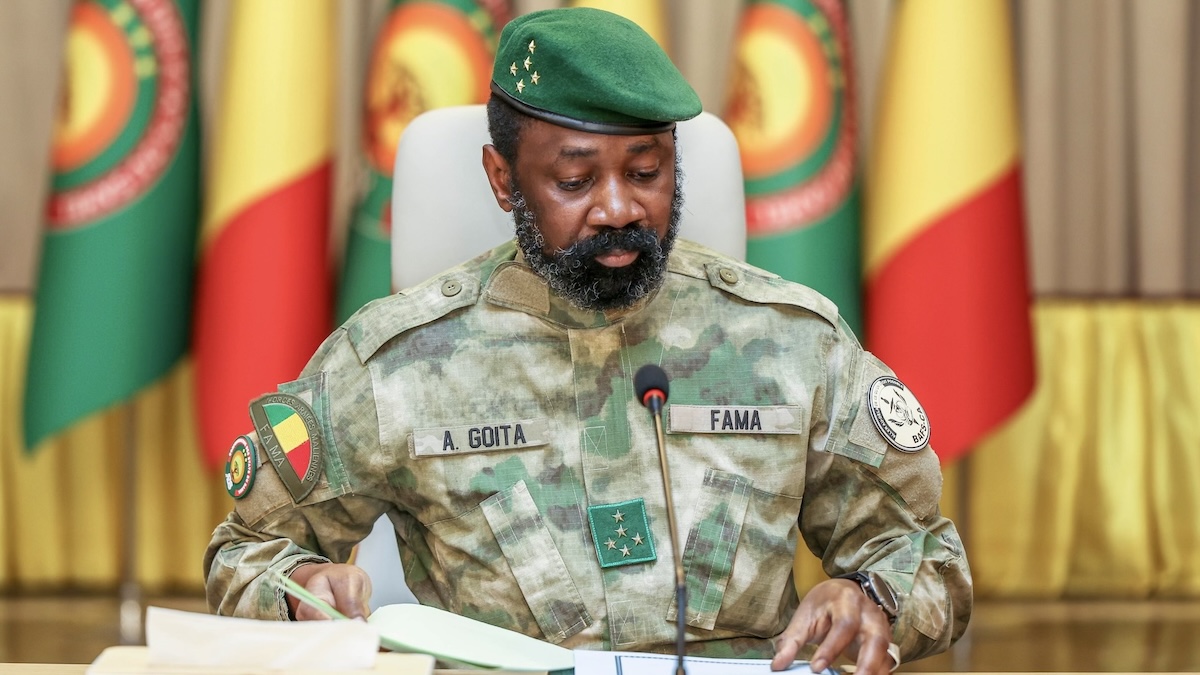
Yet most Malians were still in poverty, and the security situation worsened. Frustrated, a coup was launched in 2020. But when protests erupted, another coup followed in 2021, led by Assimi Goita, Mali’s current president. Western institutions portrayed it as democratic backsliding, with a military unjustly taking over the country. But the coup was highly popular, with people celebrating. According to a 2024 poll, nine out of 10 people thought the country was moving in the right direction.

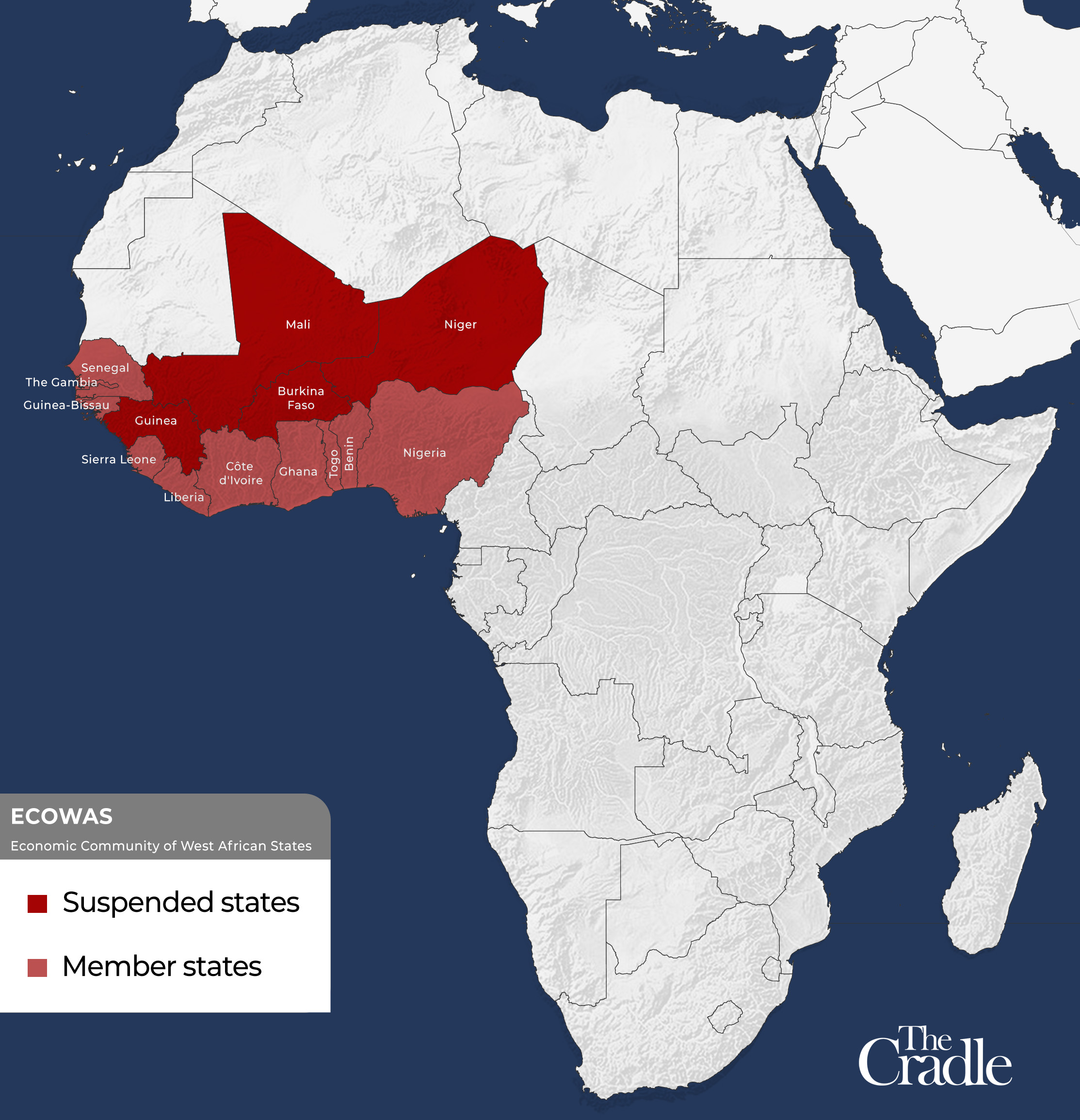
President Goita was a radical, anti-colonial, pan-Africanist. In 2022, he kicked French troops out, instead seeking help from Russia. In 2025, Mali withdrew from the Economic Community of West African States (ECOWAS), accusing it of working with western powers. Goita nationalized the gold mines, removed French as Mali’s official language, and replaced school curricula about French history with Bamako’s own rich history.

Western-aligned institutions retaliated with sanctions. ECOWAS, the West African Economic and Monetary Union (WAEMU), and the EU imposed economic penalties. Cut off from financial institutions, Mali defaulted on its debt. But the impact was partly muted.

A few months after sanctions were imposed, the court of the WAEMU ordered that sanctions had to be lifted. Gold mining, which contributes to 10 percent of the economy, saw no impact. Mali shifted its trade to non-ECOWAS countries, and the economy continued to grow.

The West African country redirected trade outside the ECOWAS bloc and resolved its debt in 2024. Far from isolating the country, sanctions strengthened internal solidarity.

Even when ECOWAS lifted sanctions in July 2022 – citing a transition plan to civilian rule – no action was taken when the deadline passed. The reason? The sanctions had backfired, exposing ECOWAS as a western instrument and bolstering support for the Goita government.

Image
Map of the Economic Community of West African States (ECOWAS).

Sanctions failed, so proxy war begins

JNIM continues to receive financing from Persian Gulf patrons and income from ransoms and extortion. While it has a strong rural presence, it controls no major cities. Azawad separatists and ISIS fighters are similarly confined to Mali’s remote north.

A different strategy was needed. In recent weeks, JNIM has attacked fuel trucks, depriving Bamako of oil. Cars were unable to fill up, and schools closed. According to western media, JNIM wants to strangle the capital to promote unrest. Mali has had five coups since independence, three of which have occurred since 2012. News reports suggest that given this history, JNIM can ultimately topple the Malian government.

Reports of an “immediate collapse” are nearly a month old. What Western media fails to understand is that, unlike previous governments in Mali, the current one is highly popular. Truckers are willing to risk their lives to bring fuel to the capital. “If we die, it’s for a good cause,” one trucker said. Even if the blockade were to stop all fuel, Malian’s resilience and support for Goita would only increase.

Thankfully for Bamako, JNIM is facing setbacks. Russia, which provides support from the Africa Corps (formerly Wagner Group) and, in 2023, vetoed the UNSC’s sanctions, sent 160,000 and 200,000 metric tons of petroleum and agricultural products. This has provided some relief, with fuel lines shortening and schools reopening.

On 15 November, Mali and the African Corps seized the Intahaka mine. The next day, the town of Loulouni was also recaptured. That same day, the blockade south of Bamako was weakened, allowing convoys of fuel trucks to reach the city.

Manufacturing consent for intervention

So why does the western media continue insisting that Mali is collapsing? Simple: to justify military intervention.

One of the biggest propagandists has been France. In a post on X from the French Ministry for Europe and Foreign Affairs, Paris blamed Russia for abandoning Mali, despite being one of the only nations supporting it during this crisis. French news channels LCI and TF1 ran stories such as “Mali, the Jihadists at the gates of Bamako” and “Mali, the new stronghold of Al-Qaeda.”

In response, Bamako banned them from the country. Niger has also accused Benin of being a base of operations for France. French state media, France 24, did not deny the claim, only disputing that the number of soldiers was far less than Niger claimed.

France stands to regain a significant geopolitical advantage from regime change in Mali. The country borders seven former French colonies. A return would reassert French regional influence and weaken the anti-imperialist Alliance of Sahel States. Niger remains crucial to France’s uranium supply, which is necessary for 70 percent of the country’s energy. Bamako is also quickly becoming a major exporter of lithium – essential for electronics and electric cars – with the recent opening of its second mine.

Other western countries have also lost out under Goita’s rule. Canadian company Barrick Mining lost $1 billion when Mali nationalized the mining industry. Last month, other western firms, such as Harmony Gold, IAMGOLD, Cora Gold, and Resolute Mining, had their mining exploration licenses revoked.

The growing Russia–Mali partnership resembles Moscow’s 2015 intervention in Syria. Just as Russia propped up Damascus for as long as it could from a US-led proxy war, it now shores up Bamako. The payoff could be similarly strategic: diplomatic support, military basing rights, and influence in an emerging multipolar Africa.

Unlike past interventions cloaked as counterterrorism, the west now appears reluctant. Washington and its allies, usually quick to bomb under any pretext, have done nothing to aid Bamako. This silence suggests either tacit support for JNIM or confidence that Mali will implode without direct action.

Outsourcing war

As a member of the Alliance of Sahel States, the west fears that Mali’s resilience will be an inspiration to others to join the anti-imperialist struggle. The 2021 coup emerged as a result of inequality and insecurity. These factors can be found in many other West African countries such as Benin, the Ivory Coast, and Togo.

Some observers theorize that Africa’s most populous country, Nigeria, could soon have a revolution, amid high inequality and insecurity from Boko Haram. Nigeria’s growing ties with Mali are a serious threat to the west.

With sanctions failing to bring Mali to its knees, the only solution for the west is military intervention. This might be direct, as seen with Niger, where French troops are stationed in bordering Benin. But more likely, western countries will outsource their intervention to African states. This has occurred in Somalia, where the US has Kenya and Uganda do its dirty work in return for aid. The same could occur with Mali.

The most likely actors to play this role are ECOWAS and the African Union. ECOWAS receives military training from the US, and many of its leaders are closely tied to Washington. It also receives extensive financing from the EU, most recently receiving €110 million ($119 million) to support “peace, trade, and governance.” Far from neutral, it has become an enforcement arm for western interests. The bloc has previously sanctioned Mali and, in 2023, threatened to invade Niger.

The African Union has also served the interests of the west, such as the African Union Mission to Somalia, which is supported and financed by Washington and Brussels. The African Union Constitutive Act prohibits military intervention in any member state, with the exception of war crimes or at the request of the state.

Mali, however, was suspended from the African Union in 2021, making intervention fully legal under the Act. Chairperson of the African Union Commission, Mahmoud Ali Youssouf, recently called for “urgent international Action as crisis escalates in Mali.”

Bamako versus the empire

Mali faces a two-pronged assault: economic strangulation and the threat of foreign-backed military intervention.

Though JNIM remains a nuisance, it has failed to topple the government. The bigger threat comes from western capitals and their African proxies. Russia remains one of Mali’s few reliable allies. If successful, Moscow’s support will elevate its standing across the continent.

More importantly, Mali’s endurance will inspire other African states to challenge western domination and reclaim sovereignty.

https://libya360.wordpress.com/2025/11/ ... ependence/
*****

Burkina Faso begins producing solar-powered electric cars with help from China

The Sahel country inaugurated an electric vehicle assembly plant in January 2025, revolutionizing the national automotive sector.

November 20, 2025 by Pedro Stropasolas

Image
Abdoulatif Rouamba, director-general of Itaoua: “With the assembly carried out directly in Burkina Faso, we will be able to further reduce the cost of the vehicles, which will facilitate access to electric vehicles for the population.” Photo: Pedro Stropasolas/Brasil de Fato
Under the government of President Ibrahim Traoré, Burkina Faso launched its first brand of domestically assembled electric cars, Itaoua. The name is a tribute to a village near Ouagadougou, the country’s capital. The horse that illustrates the logo represents strength, prestige, and longevity.

To learn about the models already available and understand how Itaoua has become a symbol of the industrial and sustainable transformation the country is experiencing, Brasil de Fato visited the company’s headquarters in Ouagadougou. The concessionaire’s general director, Abdoulatif Rouamba, recalls the beginning of this journey.

“Production began in January 2025. Then we started selling Itaoua electric vehicles. We began with two entry-level models, the Itaoua Sahel and the Itaoua Native. Later we received other models, such as the Itaoua Tenakuru and the Itaoua Land Elder, which is a pickup truck,” Rouamba explains.

“Today it’s possible to drive comfortably, at a low cost, and still protect the environment for future generations. Driving an Itawa electric vehicle is a direct contribution to this preservation,” he adds.

Economical and modern
With technical support from China, the electric vehicles are assembled in Ouaga 2000, a district located 25 km from the capital. According to Rouamba, Burkinabé engineers were trained in Chinese factories and are now applying this knowledge on African soil. He states that at the moment, the brand only handles the assembly process, but that there is a “prospect of launching our own designs in the coming years”.

The director also values ​​the partnership with the BRICS member countries. “We are working in a business environment with countries like China and Russia, within a win-win partnership logic. It’s not a collaboration model where we are exploited. Everyone gets their share. We are also involved in a technology transfer process. That’s why our technicians were trained abroad and today apply what they learned for the benefit of Itaoua, Burkina Faso, and Africa in general,” he says.

Despite the debate surrounding the use of minerals like lithium and cobalt, electric cars have a lower environmental impact due to the absence of direct CO2 emissions and other pollutants.

Itaoua’s most popular model is the Sahel, a compact, fully electric car equipped with GPS, Bluetooth, and a solar charging system. A full charge costs between 3,000 and 6,000 CFA francs, equivalent to between 30 and 60 reais. For comparison, a liter of gasoline currently costs around 8 reais in the country.

Salesman Cheik Omar Kone highlights the model’s efficiency: “The Itaoua Sahel has a range of up to 330 kilometers and can be recharged in just 30 minutes at home or at fast charging stations.”

The worker believes that the great advantage of electric vehicles is the low cost per kilometer driven. “The cars are economical, ecological, and fundamental for a country that faces difficulties in fuel management. With electric vehicles, we will help the population to move around more easily and sustainably,” emphasizes Omar Kone.

Ride-hailing service
Itaoua is also investing in hybrid models, such as the Tenakuru, equipped with 3D cameras, a panoramic sunroof, and three driving modes: economic, normal, and sport. According to representatives of the automaker, this new automotive industry is part of a strategy by the Ibrahim Traoré government to achieve energy sovereignty while providing employment for the country’s youth.

Read More: Sankara’s revolution rises again
For Omar Kone, this is a time of progress: “The country is evolving in several aspects: transportation, infrastructure, and much more. Many Burkinabés believe in electrification. We have already sold cars to the state, to private individuals, and even to a company that operates electric taxis. We are on the right track. The Burkinabé people truly trust electric vehicles,” assesses the young man.

Currently, around 30 electric taxis of the brand created by the Burkinabé government circulate in the capital Ouagadougou. The general director of Itaoua, Abdoulatif Rouamba, reveals plans to expand this fleet to more than 100 vehicles in the coming months.

“Currently, we have partners who purchase Itaoua electric vehicles and launch electric mobility models for app-based transportation, the VTCs. Instead of fuel-powered cars, there are already fully electric vehicles operating these services,” Rouamba emphasizes.

“It’s important to note that in Burkina Faso, most taxis are quite old, imported vehicles known as ‘France Au Revoir’. These cars arrive in the country already very worn out. Our goal is to create a new dynamic that allows taxi drivers to use brand new vehicles, which are much more profitable compared to those powered by fossil fuels,” he adds.

He concludes by projecting a future for this sustainable transformation: “I believe that, in the coming years, we will be able to conquer first West Africa, then all of Africa and, why not, reach European, American and Asian countries.”

https://peoplesdispatch.org/2025/11/20/ ... rom-china/
"There is great chaos under heaven; the situation is excellent."

User avatar
blindpig
Posts: 14788
Joined: Fri Jul 14, 2017 5:44 pm
Location: Turtle Island
Contact:

Re: Africa

Post by blindpig » Sat Nov 29, 2025 3:18 pm

On the road: an unprecedented cross-country journey by Niger’s president amid a neo-colonial proxy war

Amid the Western portrayal of Niger as a failed state reeling under attacks by terrorists after expelling the French troops, President Tchiani traveled on road in an unprecedented journey across the country’s seven regions, in an act of defiance as well as reassurance.

November 26, 2025 by Pavan Kulkarni

Image
Scenes from the visits of President of Niger, General Abdourahamane Tchiani in localities across Niger. Image: Midhun Puthu Pattu

Hundreds of thousands of people took to the streets across Niger between November 8 and 20 to greet their president, General Abdourahamane Tchiani, who was on an unprecedented trip to all seven regions by road in a 12-day-long journey.

“The last time a president travelled to all seven regions by road was in the 80s”, when Col. Seyni Kountché used to pay annual visits after harvest in this time of the year, said Abdullahi Salifou, deputy secretary of the Convergence for the National Sovereignty of the Sahel (COSNAS).

Since then, presidents have only travelled by air to the capitals of different regions for campaigning ahead of elections, he added, explaining the jubilation of the crowds on “seeing the president come to visit them via road for the first time in almost forty years.”

Even forty years ago, Seyni did not travel to all regions on a single journey, but on several trips from Niamey and back, which makes Tchiani’s cross-country road trip “unprecedented in the history of independent Niger,” said Aboubakar Alassane of the West Africa Peoples Organization (WAPO).

“Stopping at every village on route,” he met the traditional chiefs, women’s organizations, farmers, and civil society groups like COSNAS and M62 that had led the demonstrations demanding withdrawal of French troops, said Salifou.

“Entire towns and villages were out to greet him. Crowds were even larger than the mass mobilizations celebrating his coup,” ousting the France-backed regime in June 2023 amid the mass protests calling for the expulsion of French troops.

The popular trust in his military government, already consolidated by successfully expelling the French troops despite threats of war, has reached its highest after Tchiani made this journey, he insisted.

Land caravan organized amid a neo-colonial proxy war waged through terror groups
Tchiani’s journey came amid a proxy war allegedly waged by France using terror groups to destabilize the country after its troops were expelled. Niger’s partners in the Alliance of Sahel States (AES) – namely its neighbors Mali and Burkina Faso, which had also expelled French troops after popular coups amid mass protests – have also accused France of fielding terror groups to destabilize former colonies, asserting sovereignty.

Inflating the strength of these groups, Western media reports systematically omit mention of the gains made by the AES states in reasserting control over territories lost by the state to terror groups. Instead, they are portrayed as besieged military junta’s and struggling to survive after expelling the French troops, out of an excess of anti-colonial exuberance.

“Media reports and interviews with diplomats indicate that Tchiani is paranoid, often irrational, and rarely leaves his barricaded presidential palace,” according to a “policy brief” published by the European Council on Foreign Relations last October.

Just over a year later, Tchiani went on his journey across Niger, starting from Tillaberi, after spending a few days in this western-most region, beset by terror attacks.

The Islamic State in the Sahel Province (IS Sahel) had killed at least 127 villagers in five attacks across the region this March. Also active here is the Al-Qaeda affiliated JNIM, whose recent attacks on fuel tankers in Mali were exaggerated by the Western media and travel advisories as a siege on the capital.

Tchiani set out on his journey in this region on November 8 after a public meeting in the city of Téra. “In Téra! On the border with Mali and Burkina Faso!” Alassane exclaimed. The infamous tri-border had long been a lawless zone where the various terror groups, spawned across Sahel by NATO’s destruction of Libya in 2011, vied for territorial control.

“The president was there, several ministers were there. The people had gathered in large numbers. If these terrorists had any territorial control, they would have attacked. But they couldn’t because the state has regained control,” Alassane emphasized.

That is not to say, however, that the terror groups ravaging this region have been eliminated. On October 19, when Tchiani had travelled on to the eastern edge of the country, terrorists killed 17 soldiers in an attack on a gendarmerie post in the Tillaberi region’s Garbougna village on the Téra–Niamey road.

Some reports ascribe it to Islamic State in the Greater Sahara (ISGS), others to the JNIM, but Alassane insists these are only different names for the French proxy forces.

Although attacks by these groups persist, Alassane argues that their loss of territorial control and reassertion of state power in the region is a critical advance, demonstrated by Tchiani’s public meeting in Téra.

From Téra, he journeyed eastward to the neighboring region of Dosso, where he held another public meeting in Gaya, near the tense border with Benin, across which secret French bases are alleged to be training terror groups.

Then, covering the Tahoua region further east, Tchiani detoured north to Agadez, Niger’s largest region. From its capital by the same name, he went up the Sahara desert, all the way to Assamaka, a town in the far north near the Algerian border, “which no president had ever visited,” recalled Alassane.

Tchiani shatters stereotypes
Tchiani, he added, often left the road and ventured off onto the sands to greet the nomads passing by on camels to inquire “about their animals, their problems, and reassure them” of state support. “His security personnel were nervous and confused” by this mold-breaking gesture of shaking hands with camel-back nomads because they are commonly feared and suspected to be terrorists in this region of Africa, which has a centuries-old uneasy history with this community known as the Tuaregs.

It was the camel-back riders who raided the villages to abduct people and sell them as slaves in the markets of Saudi Arabia, he explained. When the Europeans arrived, the nomads collaborated with them in the transatlantic slave trade. Armed and licensed to kill by European colonizers who had hired them for policing, they were feared even after the end of slavery.

When terror groups and separatist insurgencies spread across the Sahel over the last decade in the aftermath of Libya’s destruction, they recruited camel-back nomads in large numbers. “Even today, fighters and weapons are transported across borders by terror groups mainly on camels”, which has given rise to stereotyping the Tuareg community as terrorists.

When people working in the fields encounter the nomads passing by on camels, “they run and hide in the bushes. But Tchiani has broken this stereotype by meeting and greeting them. He has given a political message to the country that there is no need to fear them – that they are not a danger anymore.”

Niger’s leader is not removed, but among the masses
On returning to Agadez city, Tchiani then traveled across the southern regions of Zinder and Maradi, before concluding the journey in the eastern region of Diffa, which borders Chad to the east and Nigeria to the south. Tens of thousands swarmed the National Route No. 1 to welcome Tchiani as he entered Diffa city.

“There was never such a large gathering in Diffa before. People feared attending even a small meeting because Boko Haram would attack. But Tchiani’s presence gave them confidence,” said Alassane, emphatic that he was not sealed off from the crowd in a security cordon.

“People came through to greet him. He instructed the security to allow them. He went through crowds of people. Anyone with a gun could have killed him.”

Thanking the region’s people for their warm welcome, Tchiani, in his address, spoke about the ills of drug use and unemployment among youth. He reassured them of jobs created by the government’s construction of roads and water towers, the oil exploration work that commenced last year, and the Large Irrigation Program being piloted in Diffa.

A struggle for survival between Imperialism and Sovereignty
Reassuring that the armed forces will protect the people, he went on to add that “the insecurity currently facing the Diffa region is totally different from” what is being portrayed in the media. It “has no connection with Islam. On the contrary,” he added, “it is a situation born from the desire of neo-colonial powers to continue their domination over our people.”

He reiterated this in a speech to the troops at the Diffa Defense Zone No. 5 that the problem of terrorism the region has been suffering for over a decade originates solely from the desire of certain neo-colonial powers to preserve their prosperity, wealth, and domination over our states.”

The unfolding conflict, he argued, is a “struggle for survival… on both sides”: the “greed” of the “imperialist powers” on the one end, and the people’s “dignity and sovereignty” on the other.

Having asserted its “dignity and sovereignty” by ousting France’s puppet regime, expelling its troops, and nationalizing resources like Uranium to wrest back control from French corporations, Niger has laid claim to “dignity and sovereignty”.

But “the fight ahead will be harder and longer”, he admitted, claiming no false victories in haste. Nevertheless, confident in the final victory because the imperialists are “living in the wrong era,” he declared: “What happened 130 years ago [colonization] will not happen again.”

A hero’s welcome
Thus concluding his road trip, Tchiani took a flight back to Niamey, geographically located in the Tillaberi region from where he started, but administered separately as the national capital. Salifou, along with tens of thousands of other people, had already lined up on either side of the road from Niamey airport to the Presidential Palace by that evening to give Tchiani a hero’s welcome.

“It was around 9 pm when he passed by us. As and when he passed, the people assembled along the road followed him” all the way to the Presidential Palace, Salifou recalled. “He marched with the people on foot for 12 kilometers from the airport to the Presidential Palace,” added Alassane.

“Entering the Palace carried by this human tide, General Tchiani demonstrated that his true legitimacy comes from the people”, said Abdourahamane Oumarou, president of Urgences Panafricanistes (Pan-Africanist Emergencies) in Niger.

“It reveals a Chief in symbiosis with his people, protected not by armored vehicles but by the energy of thousands of citizens.”

Arguing that “if the regime were not solid, no President would ever expose himself” as Tchiani did on this journey, Oumarou declared: “This Thursday evening, fear changed sides!”

https://peoplesdispatch.org/2025/11/26/ ... proxy-war/

******

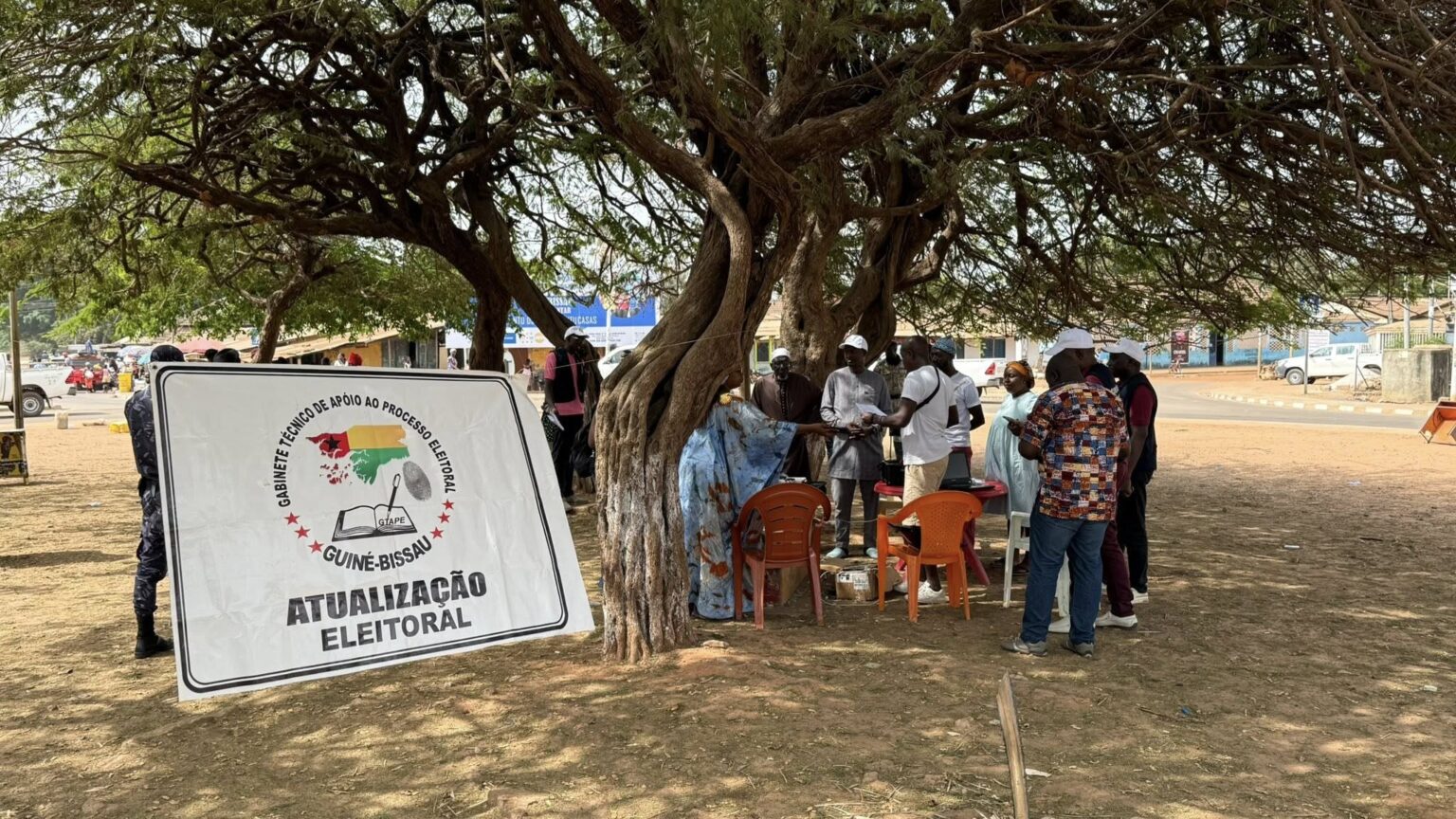
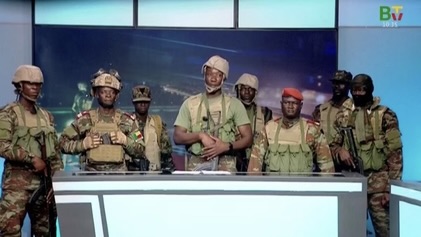
Guinea-Bissau’s President Seeks Refuge in Senegal After Military Deposition

Guinea-Bissau’s president fled to Senegal after a military coup, as regional leaders press for stability and a return to constitutional rule.

November 28, 2025 Hour: 6:54 am

Guinea-Bissau’s outgoing president, Umaro Sissoco Embaló, fled to Senegal on Wednesday after being removed from power in a military coup, according to an official statement released by the Senegalese government.

Senegal’s Ministry of African Integration and Foreign Affairs reported late Thursday that the government organized Embaló’s evacuation following negotiations with “all stakeholders in Guinea-Bissau.” According to the statement, authorities “chartered a plane to travel to Bissau,” which “allowed President Umaro Sissoco Embaló to arrive safely in Senegal.”

The ministry said Senegalese authorities, under the direct leadership of President Bassirou Diomaye Faye, have maintained continuous communication with political and military actors in Guinea-Bissau “since the beginning of the crisis.” These discussions focused on securing the release of Embaló, members of his entourage, and other detained political figures, as well as reopening the country’s borders to facilitate “the repatriation of people, including members of various election observation missions.”

Guinea-Bissau’s deposed President Embalo arrives in Senegal after coup https://t.co/dOdiD7DM83

— Al Jazeera English (@AJEnglish) November 27, 2025


The announcement followed President Faye’s participation in an extraordinary virtual summit of the Economic Community of West African States (ECOWAS) convened to assess the situation in Guinea-Bissau. Senegal reaffirmed its readiness to cooperate with ECOWAS, the African Union, and other partners to support dialogue, stability, and the rapid restoration of constitutional order and democratic legitimacy.

Military officers who seized power on Wednesday confirmed that General Horta N’ta, previously Embaló’s chief of staff, will lead a one-year transition. His appointment was formalized by the junta, which calls itself the High Military Command for the Restoration of National Security and Public Order, despite clear condemnations from the African Union, ECOWAS, South Africa, and Nigeria.

The coup unfolded on the eve of the expected release of provisional results from Sunday’s general elections, in which both Embaló and independent candidate Fernando Dias da Costa had declared victory. Embaló, elected in 2019, has governed amid recurrent political tensions, disputes within the security forces, allegations of failed plots, and ongoing concerns over military interference.

Since gaining independence from Portugal in 1974, Guinea-Bissau has endured four successful coups—in 1980, 1998–99, 2003, and 2012. The country’s Atlantic coastline has also made it a key transit point for cocaine trafficking between Latin America and Europe, intensifying pressure from criminal networks on its political system.

https://www.telesurenglish.net/guinea-b ... eposition/

******

The Wretched Still Rise: Fanonism, Neo-Colonialism, and the Unfinished African Revolution
Posted by Internationalist 360° on November 28, 2025
Samuel Akpobome Orovwuje

Image
Frantz Fanon walking up a ship gangway. To Fanon’s right is Rheda Malek, a journalist from the Algerian National Liberation Front newspaper El Moudjahid.

Fanonism today functions as a critique of both external imperialism and internal oppression.” Explore with Orovwuje how Fanonism expresses this critique and the corrective mechanisms required for revolutionary transformation.


The intellectual and political legacy of Frantz Fanon occupies a foundational place in the history of African liberation thought. His works—Black Skin, White Masks (1952) and The Wretched of the Earth (1961)—provided both a theoretical lens and a moral compass for revolutionary struggles against colonial domination. Fanon envisioned decolonization not as a transfer of power, but as a total reconfiguration of the human condition—a process through which the colonized reclaim history, and humanity (Fanon, 1961/2004).

Today, more than sixty years after the wave of political independence across Africa, Fanon’s warning about the pitfalls of national consciousness (Fanon, 1961) resonates powerfully. Many postcolonial states have replaced colonial hierarchies with domestic forms of elite domination, leaving structural dependency intact. Frantz Fanon’s revolutionary thought continues to shape intellectual and political discourses across Africa more than six decades after his death. His critical engagement with colonialism, psychological subjugation, and the necessity of violent liberation remains central to understanding the continent’s ongoing struggle for genuine emancipation. This paper revisits Fanon’s central ideas through the lens of the African experience in the 21st century, focusing on the persistence of neo-colonial structures and the unfulfilled promise of the postcolonial revolution. Drawing on Fanon’s seminal works, contemporary African scholarship, and political realities, the paper argues that the African revolution remains incomplete not for lack of struggle, but because liberation was often confined to political independence rather than a full transformation of consciousness, culture, and economic power. This paper argues that the African revolution remains unfinished precisely because it has not fulfilled Fanon’s demand for psychological, cultural, and economic transformation. It concludes by reasserting Fanon’s relevance as a framework for reimagining African freedom and development in a globalized yet unequal world.

The discussion proceeds by first revisiting Fanon’s revolutionary framework, then analyzing the persistence of neo-colonialism and the African bourgeoisie. It concludes by reasserting Fanon’s enduring relevance for contemporary struggles toward liberation.

Fanon’s theory of revolution emerges from his dual identity as psychiatrist and activist. His work in Algeria with the FLN (Front de Libération Nationale) grounded his ideas in the lived experience of colonial violence. For Fanon, colonialism was not merely a political system but a totalizing structure that dehumanized both the colonized and the colonizer (Gibson, 2017).

Central to Fanon’s framework is the concept of decolonization as a violent, cleansing process. He argued that liberation cannot occur through dialogue or reform but through confrontation that destroys the colonial order and creates new human relations (Fanon, 1961/2004). Violence, in this sense, is both material and metaphysical: it restores the agency and dignity stripped from the colonized subject. Moreover, Fanon saw psychological liberation as integral to revolution. In Black Skin, White Masks, he diagnosed the inferiority complex and alienation produced by colonial discourse, showing how colonial education and religion reproduced self-hatred among the colonized (Fanon, 1952/2008). Thus, revolution must dismantle not only political domination but also the epistemic structures of colonialism—the ways of knowing, valuing, and imagining shaped by empire (Gordon, 2015).

In contemporary African studies, this epistemic dimension has found renewed attention through the decolonial turn, emphasizing knowledge sovereignty and the revalidation of indigenous epistemologies (Ndlovu-Gatsheni, 2018). Yet, as Fanon foresaw, the struggle for decolonization is incomplete when political independence coexists with economic dependency and mental colonization.

In The Wretched of the Earth, Fanon’s critique of the “national bourgeoisie” stands as one of his most prophetic insights. He warned that postcolonial elites might inherit colonial institutions without transforming them, turning independence into mere symbolism (Fanon, 1961/2004). Instead of pursuing a people-centered revolution, these elites often became intermediaries in the global capitalist system—consumers of imported goods, agents of foreign interests, and custodians of inequality (Adi, 2018). This critique remains profoundly relevant. Neo-colonialism, as Kwame Nkrumah (1965) defined it, operates through economic control, debt dependency, and the cultural dominance of Western norms. African economies remain tied to the export of raw materials and the import of manufactured goods, perpetuating the logic of colonial extraction (Rodney, 2018).

Moreover, the African middle class, often celebrated as the sign of modern progress, has largely assimilated the values of consumer capitalism rather than advancing revolutionary transformation (Mamdani, 2020). The persistence of neo-colonial governance reveals that Fanon’s warning about a “false decolonization” has come to pass. Fanon’s critique of postcolonial elites was not merely pessimistic but diagnostic. He insisted that the future of Africa depended on the capacity of the people—the peasantry, the working class, and the intellectual vanguard to reinvent political life beyond imitation of Europe. The African revolution, therefore, required a redefinition of power rooted in local realities, culture, and communal ethics (Serequeberhan, 2019).

Fanon’s socio-political thought continues to animate African and global intellectual debates. Contemporary movements such as Rhodes Must Fall (South Africa), End SARS (Nigeria), and Fees Must Fall (South Africa) amongst others have revived Fanon’s call for radical restructuring of power and knowledge. These movements, while situated in different contexts, express a shared frustration with unfulfilled promises of postcolonial freedom. Fanonism today functions as a critique of both external imperialism and internal oppression. As Mbembe (2017) observes, the African postcolony is characterized by a paradoxical coexistence of sovereignty and dependency, freedom and subjection. Fanon’s insistence on the unity of political, psychological, and cultural liberation provides a framework for understanding this contradiction.

Recent African scholars extend Fanon’s work toward questions of development and governance. For instance, Ndlovu-Gatsheni (2021) argues that decolonization must be reconceptualised as an ongoing epistemic revolution rather than a historical event. Similarly, Adesina (2019) stresses the need for intellectual sovereignty to accompany political independence.

Fundamentally, Fanon’s existential vision of a new humanism also speaks to Africa’s place in a globalized world. He warned that nationalism without international solidarity risks reproducing the same hierarchies it sought to dismantle. In this sense, Fanon anticipates today’s calls for Pan-African unity, South-South cooperation, and post-Western global ethics (Amin, 2018).

Yet, the challenge remains translating Fanonian ideals into institutional practice. Education systems, political parties, and development agendas across Africa often remain structured around colonial logics of hierarchy and dependency. Without structural change, the revolution stagnates as rhetoric rather than praxis. Fanon’s concept of the unfinished revolution is not merely a lament but a call to continuous struggle. For him, liberation was an ethical and existential project—creating a new human being through collective transformation (Fanon, 1961/2004).

The African revolution, therefore, is incomplete because it halted at the stage of state formation without realizing social justice, cultural renewal, and economic autonomy. As Ngũgĩ wa Thiong’o (2016) argues, true decolonization requires the liberation of language, imagination, and production from the colonial matrix of power.

Sadly, this unfinished revolution manifests in persistent inequality, resource dependency, and political alienation. Across the continent, grassroots movements continue to challenge these legacies through local empowerment, feminist resistance, and ecological justice—all areas where Fanon’s humanist radicalism remains instructive (Oyěwùmí, 2020). The task, then, is not to merely commemorate Fanon but to actualize his ideas in contemporary governance, education, and social movements. This requires rethinking development as a process of liberation—centering dignity, equity, and indigenous knowledge

In the final analysis, Frantz Fanon’s revolutionary ideology remains indispensable to understanding and confronting Africa’s postcolonial realities. His insistence that decolonization is both material and psychological continues to challenge the continent to transcend dependency and reclaim autonomy. The persistence of neo-colonial structures, elite domination, and epistemic subjugation confirms Fanon’s insight that the African revolution remains unfinished.

Lastly, to revive this revolution requires a return to Fanon’s radical humanism—one that integrates liberation with responsibility, freedom with solidarity, and nation-building with moral renewal. As the wretched still rise, Africa’s future depends on transforming Fanon’s prophetic critique into a praxis of justice, dignity, and self-determination.

Samuel Orovwuje is a policy analyst and independent scholar at the Africa Development Studies Center, Nigeria. His research interests include postcolonial thought, African political development, and decolonial theory.

References

Adesina, J. O. (2019). Reclaiming the human sciences and humanities through Afrocentrism. CODESRIA Bulletin, 2(3), 1–14.

Adi, H. (2018). Pan-Africanism: A history. Bloomsbury.

Amin, S. (2018). Modern imperialism, monopoly finance capital, and Marx’s law of value. Monthly Review Press.

Fanon, F. (1952/2008). Black skin, white masks (R. Philcox, Trans.). Grove Press.

Fanon, F. (1961/2004). The wretched of the earth (R. Philcox, Trans.). Grove Press.

Gibson, N. C. (2017). Fanon today: Reason and revolt of the wretched. Lexington Books.

Gordon, L. R. (2015). What Fanon said: A philosophical introduction to his life and thought. Fordham University Press.

Mamdani, M. (2020). Neither settler nor native: The making and unmaking of permanent minorities. Harvard University Press.

Mbembe, A. (2017). Critique of black reason. Duke University Press.

Ndlovu-Gatsheni, S. J. (2018). Epistemic freedom in Africa: Deprovincialization and decolonization. Routledge.

Ndlovu-Gatsheni, S. J. (2021). The decolonial Mandela: Peace, justice, and the politics of life. Berghahn Books.

Ngũgĩ wa Thiong’o. (2016). Decolonising the mind: The politics of language in African literature. Heinemann.

Nkrumah, K. (1965). Neo-colonialism: The last stage of imperialism. Thomas Nelson.

Orovwuje, S.A. (2017). Federalism, Leadership & Development. Dictus Publishing.

Oyěwùmí, O. (2020). What gender is motherhood? Changing Yoruba ideals of power, procreation, and identity in the age of modernity. Palgrave Macmillan.

Rodney, W. (2018). How Europe underdeveloped Africa (Rev. ed.). Verso.

Serequeberhan, T. (2019). Existence and heritage: Hermeneutic explorations in African and contemporary thought. SUNY Press.

Source: Pambazuka News

https://libya360.wordpress.com/2025/11/ ... evolution/

******

Terror attacks in Mali as imperialists try to regain control of free Sahel states

The latest attempt at regime change in the Sahel has fallen flat on its face, despite western media attempts to spread panic and confusion.
Proletarian writers


Friday 28 November 2025

Image
Unable to launch a direct invasion, the imperialists are increasingly relying on a combination of economic sabotage, proxy terror gangs and media psyops to try to destroy sovereign countries. But those who are struggling to attain and hold onto liberation and sovereignty are getting wise to this formula and banding together to fight back.

French imperialists desperate to take back control of the alliance of Sahel states (AES) have launched a media and military offensive against one of the alliance’s members, Mali.

After numerous failed assassination attempts against the popular Burkina Faso president Ibrahim Traoré, imperialism is now attempting to take down neighbouring Mali instead.

Driven out of the country in 2022 after a military occupation of nearly ten years that only exacerbated the country’s security and terrorism problems, France is doing everything it can to regain control of the country’s abundant resources via the proxy army it created and trained during its military occupation.

In early October, France’s local terrorist proxy (and al-Qaeda offshoot) Jama’at Nasr al-Islam wal-Muslimin (Jnim), intensified its attacks on fuel convoys from Côte d’Ivoire and Senegal. This tactic caused severe shortages in the capital city Bamako and certain regions, paralysing transport, public services and economic activity. Endless queues of vehicles blocked petrol stations, while thousands of workers found themselves without transport or income.

Sahel alliance stands firm
The Malian government, which enjoys strong popular support, responded quickly to these attacks by calling on other AES members for fuel supplies and security.

“A total of 20 tanker lorries loaded with fuel from Labizanga in Niger completed a high-risk journey to Gao, escorted by the unified force of the Alliance of Sahel States.

“This operation marks a new stage in security and logistical cooperation between Burkina Faso, Mali and Niger. Other operations of this kind have taken place since then, illustrating the strengthening of joint actions within the AES.” (Mali: The Unified AES Force escorts a fuel convoy from Niger to Gao, AES Alerte, Telegram, 4 November 2025)

With the help of its AES allies and Russia, Mali is resiliently and courageously waging a continuous fight against terrorist forces to protect its sovereignty and territory.

At the beginning of November, an imperialist propaganda offensive announced via corporate and social media networks the imminent fall of the Malian government and the takeover of Bamako by Jnim terrorists. To create maximum panic and lend credibility to their lies, the French, US, Italian and German governments all called on their nationals to leave the country.

The aim of this psychological operation was clearly to spread confusion and cause unrest amongst the population, but it failed completely. According to journalist and Franco-African relations specialist Antoine Glaser: “This method reveals the group’s operational limitations.

“A direct offensive on Bamako would require complex military coordination, heavy logistics and a capacity to hold the ground that Jnim does not possess. Instead, the group seeks to exert economic and social pressure by targeting vital flows to provoke internal collapse or popular revolt against the authorities (ie, the usual imperialist attempt to starve people into demanding regime change – Ed).

“The fuel blockade highlights the structural vulnerabilities of the Malian state, but does not necessarily mean that its collapse is imminent …

“Jnim has neither the means nor the strategic interest to govern Bamako. Its objective is to maintain constant pressure, exhaust the state and destabilise the regime without ever seeking to replace it.’’ (Antoine Glaser, specialist in Franco-African relations: ‘Jnim cannot seize Bamako’, Maliweb, 12 November 2025)

These attempts at destabilisation have been strongly condemned by Russia. In a statement published on 14 November 2025, Russian foreign ministry spokesperson Maria Zakharova warned of intensified activity by islamist terrorist groups in the Sahel states. She also denounced what she described as a coordinated information campaign from abroad aimed at destabilising the Sahel countries that have adopted an “independent” foreign policy. Such pointed out that such activities, motivated by “geopolitical and economic” interests, deliberately harm civilian populations.

A few weeks ago, Russia went so far as to officially accuse France, Ukraine, Algeria and Mauritania of supporting terrorism in Mali in the United Nations security council, and has joined Mali in calling for an international investigation into evidence of French and Ukrainian support for terrorists via Mauritania and Algeria.

Building self-reliance
Far from letting those imperialist attacks set them back, Mali went ahead with holding the Bamako Defence and Security exhibition (Bamex 2025) on 11 November, an unprecedented event on the African continent. For the first time in the country’s history, African delegates gathered in its capital Bamako, sending a strong message to its enemies that the region is preparing to defend itself.

“Dismissing [the west’s hysterical headlines] as a scenario ‘concocted in the office of foreign intelligence services’, foreign minister Abdoulaye Diop insisted that ‘the fate of Mali, and the destiny of the people in the west African region, will not be decided’ by the media.

“He made these remarks on 12 November, addressing a press conference on the sidelines of Bamex 25, Mali’s first international defence expo, aimed at building ‘an autonomous security architecture’ for Africa in the face of ‘unprecedented security and geopolitical challenges’.

“This expo, he said, is yet another indication of the Malian government’s priority to strengthen its defence and security to combat the threat of terror groups that were spawned across the Sahel by Nato’s destruction of Libya in 2011 …

“‘There have been disruptions in the supply system,’ he said, but ‘the state organised itself, put in place a strategic plan to resume supplies, to ensure the security of convoys … And gradually, you see that hundreds of trucks are arriving every day to resume supplies to Bamako and other localities,’ Diop added in his press conference. ‘As I speak, Mali is able to ensure the supply of hydrocarbons and petroleum products to its population.’ …

“Mali’s first-ever national electronic payments exhibition was also organised in the capital by the Professional Association of Banks and Financial Institutions of Mali (APBEF-Mali) and the West African Economic and Monetary Union’s interbank electronic payment group (GIM-UEMOA).

“Schools reopened on schedule on 10 November. That day, President Assimi Goïta inaugurated the Presidential Emergency Hospital project to upgrade six existing health centres in Bamako to district hospitals by the end of 2026, for which a health budget of $349.2mn has been allocated. The inauguration also marked the start of construction of nine new hospitals, including in Bougouni, Bandiagara and Nioro, where attacks had been reported in the recent past.” (Mali defends sovereignty against a western-backed ‘proxy war’ by terror groups by Pavan Kulkarni, People’s Dispatch, 19 November 2025)

The defence event also provided an opportunity for the Russian deputy defence minister to pay a courtesy visit to his Malian counterpart, Lieutenant General Sadio Camara. Their meeting focused on strengthening military cooperation between Mali and Russia as well as wider bilateral relations.

While imperialism is using all its networks and dirty tricks to try to take them down, Mali and the other countries of the Sahel alliance are advancing and developing at an incredible rate, leaving the bitter imperialists to bite the dust.

https://thecommunists.org/2025/11/28/ne ... el-states/
"There is great chaos under heaven; the situation is excellent."

User avatar
blindpig
Posts: 14788
Joined: Fri Jul 14, 2017 5:44 pm
Location: Turtle Island
Contact:

Re: Africa

Post by blindpig » Wed Dec 03, 2025 3:40 pm

Eritrean President Isaias Afwerki Stands with Sudan
Ann Garrison, BAR Contributing Editor 03 Dec 2025

Image
Eritrean President Isais Afwerki arrived in Port Sudan on November 29 to stand with General Abdel Fattah al-Burhan for the unity of Sudan.

President Isaias Afwerki arrived in Sudan on November 29 on the invitation of General Abdel Fattah al-Burhan, the Chairman of Sudan’s Sovereign Council and Commander of the Sudanese Armed Forces (SAF). Isaias and his entourage traveled 305 miles by road from Asmara, the Eritrean capital, to the entrance of Port Sudan on the Red Sea, where thousands of the city’s residents came out to welcome them.

Eritrea’s Ministry of Information described the visit as “both symbolic and a vivid gesture of the warm and robust solidarity that Eritrea harbours towards the people of Sudan and their government in these times of adversity.” By standing alongside the Commander of the national army, President Isaias is standing for the unity of Sudan at a time when it is in danger of a second partition, which would create two smaller, weaker nations, both more vulnerable to neocolonial domination and resource exploitation.

Eritrea also has its own national security concerns, as the conflict has spilled into Sudan’s eastern Gedaref, Kassala, and Red Sea States, which share a porous 605-km border with Eritrea and ethnic ties to its western provinces. Eritrea is protecting itself from spillover violence, arms trafficking, and further refugee influxes. Over 100,000 Sudanese had fled to Eritrea by late 2025.

The worst humanitarian crisis in the world

The UN and humanitarian agencies now describe Sudan as the worst humanitarian crisis in the world with estimates of the displaced ranging from 9 to 13 million, at least a million more than the 8 million displaced in the Democratic Republic of the Congo. Seven million remain within Sudanese borders with the rest sheltering in neighboring countries.

On November 5, the International Rescue Committee reported that 30.4 million people, more than half the population, need aid but that attacks on aid workers make it difficult to deliver. They also called it “the largest recorded and fastest displacement crisis in the world.”

Over 635,000 people, many in the country’s largest camp for displaced people, are experiencing famine conditions and a heightened risk of death. That’s a greater population living in famine conditions than in the rest of the world combined. Food shortages are leaving people vulnerable to illness and infection, and basic medicines are in short supply if available at all.

The UN says it has received alarming reports of human trafficking by the Rapid Support Forces and widespread rape of girls, women, and children.

The Sudanese Armed Forces and the Rapid Support Forces

Sudan’s civil war began in April 2023 as a fight for power and resources between General al-Burhan, the Sudanese Armed Forces, and General Mohamed Hamdan Dagalo, also known as Hemedti, Commander of the Rapid Support Forces (RSF). The RSF is a paramilitary group that grew out of the Janjaweed, Arab militias that operated primarily in Darfur, western Sudan, and parts of eastern Chad during the Darfur conflict that began in 2003. Omar al-Bashir, the dictator who ruled Sudan from 1993 to 2019, used the Janjaweed to fight Sudan’s non-Arab populations. The group did not disband after the partition of Sudan and instead became a mercenary force serving both Saudi Arabia and the United Arab Emirates (UAE) in their war with Yemen’s Houthi rebels.

Al-Burhan and Hemedti at first united to overthrow al-Bashir in 2019, but Hemedti then refused to integrate his forces into the national army. He and his RSF are not fighting a secessionist war to detach a specific ethnic or regional territory (like Darfur) from Sudan to form an independent state. They have been fighting for national control and power, but their consolidation of a parallel government in the areas they control has led to de facto territorial divisions that risk once again partitioning Sudan.

On March 6, Sudan filed an application at the International Court of Justice (ICJ) accusing the UAE of violating the 1948 Genocide Convention through its alleged military, financial, and political support for the RSF. The case claims that the UAE is complicit in RSF-perpetrated atrocities against the Masalit ethnic group in West Darfur, including killings, rapes, and forced displacement amounting to genocide. Sudan requested provisional measures to halt UAE support and ensure reparations, but the ICJ rejected the case on jurisdictional grounds.

The Quad: US, Egypt, Saudi Arabia, and the UAE

"The Quad" refers to a diplomatic grouping of four key international actors—the United States, Egypt, Saudi Arabia, and the UAE—purportedly formed to mediate and push for an end to the civil war. This is distinct from the earlier "Quad" on Sudan (involving Saudi Arabia, UAE, UK, and the US from 2023), which focused on initial ceasefires but has since evolved.

In September 12, 2025, it put forth a proposal for a three-month humanitarian truce, a permanent ceasefire, and a nine-month transition to a civilian-led government excluding the warring parties and "extremist groups," implicitly targeting Islamist factions like the Muslim Brotherhood.

However, as of December 2025, the proposal remains stalled, with fighting intensifying and the RSF advancing in the Darfur region where they have filmed themselves committing massacres and atrocities that much of the world is now calling genocide.

Positive as the Quad's proposal sounds, its authors are external powers who’ve been fueling the conflict. Egypt and Saudi Arabia have backed the national army, but most importantly, the UAE has armed and financed the RSF, its sometime mercenary army, largely with profits from gold smuggled from Sudan to Dubai.

The UAE was NATO’s ally in the 2011 destruction of Libya and has since become an even closer US ally, so their agenda can be assumed to be the same, weakening Sudan and controlling its resources.

How can de facto perpetrators also be mediators?

Al-Burhan rejects the Quad proposal

Al-Burhan rejected the proposal, labeling it the "worst yet" for echoing Abu Dhabi "talking points." He argued it "eliminates the armed forces" while allowing the RSF to retain territorial gains, particularly in Darfur and Kordofan.

By calling for a permanent ceasefire, the proposal treats the national government and national army and the Rapid Support Forces as equals. It disrespects Sudan's legitimate institutions and its right to self-defense and sidelines Sudanese-led processes. Its call to exclude both the SAF and the RSF from the transition, while dissolving security agencies, is a de facto disarmament of the national army.

Al-Burhan, who rightly represents the Sudanese state, has insisted that any truce requires the RSF to "retreat totally.”

Once again, President Isais rightly stands with General al-Burhan for the unity and sovereignty of Sudan.

https://blackagendareport.com/index.php ... ands-sudan

******

Sudan’s RSF expands control eastward after taking over Darfur

Deploying more troops freed up from Darfur after the fall of El Fasher, the paramilitary RSF had since intensified attacks on Babanusa, stronghold of the army whose HQ of the 22nd Infantry Division was overrun on December 1.

December 02, 2025 by Pavan Kulkarni

Image
RSF fighters celebrating the takeover of Babanusa, Sudan. Photo: Screenshot / RSF Telegram

Consolidating its control over Sudan’s Darfur after overrunning the western region’s last resisting city of El Fasher and massacring its besieged civilians in late October, the Rapid Support forces (RSF) are advancing eastward.

On Monday, December 1, the paramilitary overran the 22nd Infantry Division of the Sudanese Armed Forces (SAF) – its former ruling partner – in the West Kordofan State’s Babanusa, under siege since January 2024.

Located just southeast of Darfur, Babanusa is on the western end of the strategic road to Khartoum, the Sudanese capital until the SAF-led government relocated to Port Sudan in the northeast after this war started in April 2023.

It is the closest of the major urban centers in Darfur’s neighboring Kordofan – the SAF’s “gateway” to Darfur from the region, including three states: North Kordofan, South Kordofan, and West Kordofan.

“If Babanusa falls, RSF fighters are expected to turn their attention to Heglig, home to a major oil field and Sudan’s last remaining military garrison in West Kordofan,” the Center for Development Studies and the Prevention of Extremism reported this June.

Deploying more troops freed up from Darfur after the fall of El Fasher, the RSF had since intensified attacks on Babanusa. The outnumbered SAF troops and local resistance fighters had been cut off even from the “unreliable airdrops” after the RSF shot down a cargo plane early last November. On December 2, they suffered a defeat.

The SAF, however, maintains in a statement on December 2 that its soldiers are still fighting in the city, disputing reports of RSF control. However, the Sudan War Monitor reported that the only surviving brigade of this division has retreated to “the southeastern corner of West Kordofan, along the border with South Sudan”, where the Heglig oil field is located.

The attack on Babanusa came on the heels of the rejection by Abdel Fattah al-Burhan, chief of the SAF and the head of the Sudanese government based in Port Sudan, of the US-backed ceasefire proposal put forth by the Quad.

The body includes Sudan’s regional neighbors, namely the UAE, Saudi Arabia, and Egypt, alongside the US – all of which have vested interests in the region, leaning on both sides of the warring parties.

“Any immediate ceasefire would freeze frontlines in a manner that effectively ratifies the RSF’s territorial dominance across Darfur and parts of Kordofan,” the Sudanese War Monitor reported.

Complaining that US President Donald Trump’s senior Africa envoy, Massad Boulos, had become “a channel for RSF narratives,” Burhan said on Sunday that Boulos was “dictating terms on behalf of the militia’s foreign backers.” This was mainly a reference to the UAE, a member of the Quad, to which the RSF has been reportedly smuggling the gold it extracts from Darfur, in return for weapons.

https://peoplesdispatch.org/2025/12/02/ ... er-darfur/

Africa at the digital crossroads: Why Ghana must lead a sovereign AI future

Ghana has made significant strides forward in advancing a digital agenda, but much has been at the expense of its own sovereignty, relying on Western companies and infrastructure

December 02, 2025 by Kambale Musavuli

Image
Ghana's Minister of Communication Sam George at the launch of Google's AI Community Center in Accra, Ghana. Photo: Google in Africa
A new scramble, waged in data

Africa is once again at the center of a global scramble. This time not for rubber, gold, or oil, but for data. Every mobile payment, social media post, satellite image, and biometric enrollment enriches the digital empires of Silicon Valley, Shenzhen, and other power centers. The pattern is hauntingly familiar: Africa supplies the raw input, but the wealth it creates flows elsewhere.

The stakes are higher now. Data is not just a new oil; it is memory, intelligence, and power. It shapes how governments deliver services, how companies build products, and how societies imagine the future. If Africa does not act deliberately, the digital century will repeat the economic and political dispossession of the colonial era, only now encoded in algorithms and cloud platforms instead of shipping contracts and gunboats.

Ghana, a nation that once ignited Pan African liberation under Kwame Nkrumah, is uniquely positioned to break this cycle. Our choices in the next decade will determine whether Africa remains a testing ground and data mine or becomes a sovereign architect of artificial intelligence. The question is not just about connectivity but about power: who owns the cables, who governs the clouds, and who writes the rules that will define the Fourth Industrial Revolution.

The digital colonialism we cannot ignore
Around the world, major powers are racing to shape artificial intelligence to fit their own interests. The European Union has finalized its AI Act, a sweeping framework for advancing “trustworthy AI.” The United States has unveiled its AI Action Plan to secure technological leadership and bolster domestic resilience. China, advancing its philosophy of a shared future, is building an AI ecosystem rooted in sovereignty and strategic autonomy.

Meanwhile Africa, home to 1.4 billion people and one of the richest data footprints in the world, is mostly absent from these decision-making tables. Our engagement in global AI governance remains limited, reactive, and heavily shaped by external agendas.

Ghana’s own experience shows how fragile our digital foundations remain. The March 2024 failure of three undersea cables (WACS, MainOne, and ACE) plunged West and Central Africa into near-blackout, crippling banks, hospitals, telecoms, and public services. Even Accra’s state-of-the-art data centers, built with foreign capital and Huawei technology, could not insulate us. Our digital economy still leans heavily on Amazon Web Services and Microsoft Azure, placing critical data under US and other foreign jurisdictions (World Bank Digital Economy Report, 2024).

In a striking global parallel, South Korea faced a catastrophic data center fire in late September 2025, which destroyed a battery array inside the National Information Resources Service (NIRS) data center in Daejeon. The blaze reportedly wiped out 858 terabytes of government data, some of which appears unrecoverable, because officials lacked adequate backups. The incident, which halted public services and exposed the vulnerability of centralized data holdings even in advanced economies, underscores why nations cannot afford weak infrastructure or external dependency in this domain.

This is what digital colonialism looks like: infrastructure that sits on African soil but remains governed elsewhere. Proximity without control. Connectivity without sovereignty. The blackout was not just a technical failure; it was a strategic warning about how dependency can paralyze entire economies overnight.

To avoid becoming a permanent digital dependency zone, Ghana, and Africa more broadly, must rethink its approach to ownership, infrastructure, and governance. Digital sovereignty today is not just about being online; it is about controlling the entire stack: cables, satellites, servers, software, legal frameworks, and the global standards that shape them.

Ghana’s digital ambition: promise and precarity
To its credit, Ghana has not been passive. The Digital Ghana Agenda has expanded broadband access, strengthened cybersecurity policies, and introduced the Data Protection Act (2012), one of the continent’s earliest attempts to regulate personal data. The Ghana Digital Acceleration Project aims to deepen access to digital tools and modernize the regulatory environment.

Most ambitiously, Ghana’s National AI Strategy (2023–2033) sets a vision to train citizens in AI skills, promote responsible AI use across key sectors like agriculture, health, finance, and education, and position Ghana as a continental hub for ethical and inclusive AI. Grassroots innovation is also thriving: the Ghana NLP Project builds open-source language models in Twi, Ewe, Ga, and Dagbani, helping preserve culture and enabling AI that actually speaks Ghana’s languages. These efforts prove that sovereign innovation is possible when African technologists lead.

Yet these gains remain fragile because they are deeply entangled with external power. Google’s AI Research Center in Accra develops useful tools, from flood prediction models to local language processing, but it is built on proprietary systems governed under US law. Starlink’s expansion across the continent improves connectivity but shifts control over internet routing and data governance to a private, foreign-owned satellite network, led by none other than billionaire Elon Musk himself. Even the headline-grabbing USD 1 billion UAE-backed AI and tech hub in Ghana’s Free Zones may operate outside the country’s full regulatory reach, creating enclaves of innovation divorced from national oversight.

This dependence creates a dangerous paradox: Ghana is advancing its digital agenda and at the same time reinforcing structural dependency. Ambition without autonomy risks entrenching a new form of economic subordination, one where Africa fuels the global AI economy but does not govern or profit from it.

To change course, Ghana must not only build infrastructure but own and govern it. Data localization alone is insufficient if servers are controlled by foreign companies and cloud platforms are subject to foreign laws. True sovereignty requires investment in African-owned satellites, diverse undersea routes, and locally controlled cloud systems. It also demands technical capacity: engineers, cybersecurity experts, and data scientists able to maintain and defend this infrastructure.

Africa’s minerals, Africa’s data: a shared struggle
The digital revolution rides on African soil. The Democratic Republic of Congo (DRC), where I was born, supplies roughly 70% of the world’s cobalt, a critical input for AI servers, smartphones, and electric vehicles (USGS, 2025). Alongside cobalt come coltan, copper, and lithium. These minerals are essential for batteries, chips, and the vast cloud infrastructure powering today’s algorithms. They underpin everything from electric buses to the GPUs that train large language models.

Yet, for decades, this mineral wealth has translated into neither prosperity nor autonomy. Instead, it has fueled war economies, corporate profiteering, and ecological devastation. Global supply chains move Congolese cobalt through complex networks of intermediaries, often obscuring child labor, unsafe mining conditions, and violent land dispossession. Reports such as “The Congolese Fight for Their Own Wealth” from the Tricontinental: Institute for Social Research document how foreign corporations and geopolitical interests continue to dominate extraction, while Congolese communities remain impoverished and displaced.

This history matters deeply for Africa’s digital future. As the global economy shifts from natural resources to data resources, the logic of exploitation risks simply migrating from mines to servers. If Africa could not achieve justice in cobalt and lithium, how will it achieve it in data, an even more intangible and easily expropriated resource? Data, like minerals, is extracted under the promise of progress, yet often leaves behind dependency and disempowerment.

We are already seeing the contours of this digital scramble for Africa. Vast amounts of user-generated data, mobile payment records, and biometric information feed the machine learning systems of Silicon Valley and Shenzhen. Even when data resides physically in Accra or Lagos, its governance is often tied to US or Chinese legal frameworks via platforms like Amazon Web Services and Microsoft Azure.

The consequences are profound. Without control over both physical supply chains (minerals) and digital supply chains (data), Africa risks becoming the raw material base of the Fourth Industrial Revolution just as it was in the first. A just AI future cannot be built on the blood of Congolese miners or the invisible labor of African data annotators. It requires a fundamental break from extractive economic patterns, one that links resource justice to digital sovereignty.

For Ghana, this means looking beyond connectivity to ownership and governance. Just as the DRC’s cobalt has powered global technologies without lifting Congolese communities, Ghana must avoid becoming a passive supplier of data and talent to foreign AI monopolies. Sovereignty demands more than cables and cloud servers; it demands control of the entire infrastructure stack, from satellites to legal jurisdiction, as well as the right to set the terms on how Africa’s digital assets are used.

A truly decolonial approach ties these struggles together: from mines to models. It insists that the minerals fueling GPUs and batteries be mined ethically and benefit African people, and that the data training those GPUs be governed under African laws and values. It connects environmental justice in Congo’s copper and cobalt belts to algorithmic fairness and equitable AI development across Africa. It sees sovereignty as a continuum, physical and digital, material and virtual.

Ghana’s path to AI sovereignty
Early, sweeping regulation can freeze a nascent AI sector before it matures. Countries that now lead in artificial intelligence, notably China and the United States, did not begin with comprehensive AI laws; they first built strong industries and shaped regulation through lived experience. China’s 2022 action against the ride-hailing giant Didi over data security violations is a striking example: instead of regulating in the abstract, it used a real case to refine and enforce rules that fit its fast-growing ecosystem.

Ghana should take note and adopt strategic sequencing: build first, regulate from evidence.

This means strengthening the backbone of the digital economy, expanding undersea and terrestrial networks, investing in African-owned satellites, and developing sovereign cloud and data centers to keep control over critical infrastructure. It also means enforcing the existing Data Protection Act (2012) while actively nurturing a home-grown AI industry before passing sweeping AI legislation. Ghana can learn from others by using practical case studies and pilot interventions to craft rules that are responsive to local realities rather than imported frameworks. At the same time, the country must invest in local language datasets, back community-driven AI projects, and support Ghanaian-led startups so innovation is rooted in local culture and needs.

But building capacity at home is only part of the equation. Ghana must also claim a seat where global AI standards and power dynamics are being shaped. Collaboration with the BRICS AI Center in Shanghai offers a critical opportunity: Ghanaian researchers and startups could access advanced computing resources, join joint research programs, and co-develop tools tailored to African realities. More importantly, it would give Ghana a voice in shaping the ethical and technical norms guiding AI’s future, ensuring that the Global South helps write the rules rather than merely adopting those set elsewhere. The July 2025 BRICS Statement on Inclusive and Sustainable AI provides a strong foundation for this vision, aligning with Ghana’s long-term sovereignty agenda.

Foreign partnerships should also be approached with strategic clarity: Ghana must demand technology transfer, local intellectual property ownership, and co-investment to avoid repeating extractive patterns of the past.

By combining industrial capacity with policy influence and actively shaping global AI standards, Ghana can move beyond being a technology consumer. It can lead Africa’s AI future on its own terms, protect its people’s data and dignity, and help define what responsible, inclusive, and sovereign AI looks like for the Global South.

For policymakers, movement leaders, and citizens, the message is clear: sovereignty is not a gift; it is built. Law by law. Cable by cable. Algorithm by algorithm. The choices we make today will determine whether Africa’s data feeds foreign AI monopolies or powers African-led innovation and dignity.

Kwame Nkrumah warned that political independence is meaningless without economic freedom. In the digital century, we must add: independence is hollow without data and AI sovereignty. Ghana can, and must, lead this transformation for Africa.

https://peoplesdispatch.org/2025/12/02/ ... ai-future/
"There is great chaos under heaven; the situation is excellent."

Post Reply