The Irreversible Balance: Israel’s Ledger, 2025
December 7, 2025
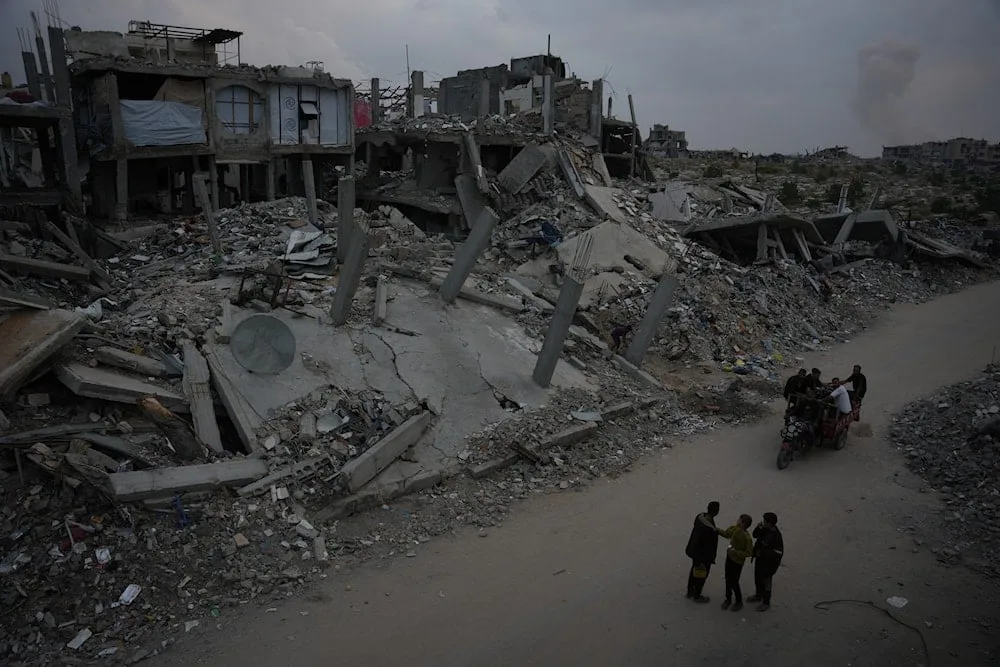
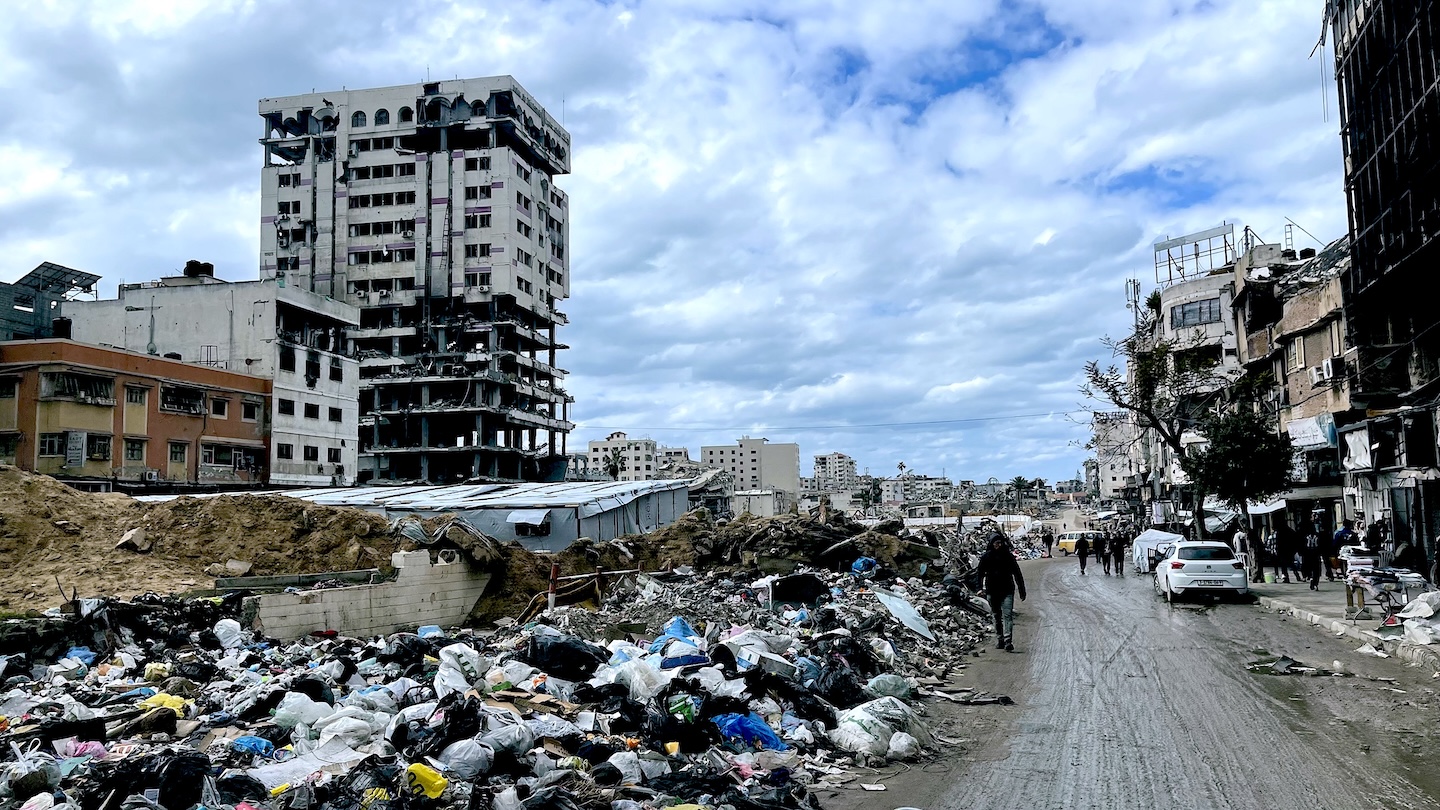
A neighborhood in Jabalia, northern Gaza Strip, destroyed by the Zionist entity. Photo: AFP.
By Rima Najjar – Nov 28, 2025
Introduction
By late 2025, the question confronting observers is no longer whether Israel has “won” or “lost” the war that began in October 2023. The question is how a state long accustomed to shaping its environment through force, deterrence, and American insulation has found itself trapped in a configuration where every instrument of power — military, economic, political, diplomatic, cultural — now generates diminishing returns or outright self-harm. The unprecedented scale of destruction in Gaza obscured, for a time, the parallel story unfolding inside Israel: a multifront conflict that exposed structural weaknesses the state can neither reverse nor openly acknowledge.
What has emerged over two years is not a sudden collapse but a multi-dimensional unraveling: a military machine forced into wars it cannot end; an economy restructured around emergency expenditure with no peacetime horizon; a society fractured along lines of religion, class, and geography; a political system that survives only because every major faction — government and opposition alike — knows that holding elections would destroy them all.
The Israeli public’s accumulated rage over casualties, displacement, economic collapse, and perceived abandonment would produce a result so toxic and fragmented that no existing party or coalition could form a stable government afterward. The voters would not hand victory to any alternative; they would simply burn the house down and leave no one with enough seats to govern the ashes. That is why no one dares open the ballot box: the election would not install a new regime; it would render the country ungovernable. And an international position degraded by the erosion of U.S. consensus and the rapid decline of Israel’s cultural legitimacy.
For decades, Israel’s power rested on its ability to enforce outcomes quickly, absorb minimal internal costs, and rely on America to stabilize the narrative. None of those conditions hold at the end of 2025.
In absolute terms, Israel retains formidable assets at the close of 2025: a qualitative military edge in airpower and intelligence, an undeclared nuclear deterrent that continues to impose strategic caution on all adversaries, uninterrupted flows of the most advanced American weaponry, and a high-tech sector whose core productivity has proven more resilient than any other advanced economy under comparable strain. These are not trivial advantages; in previous wars they would have been decisive. Yet they now function only as brakes on total collapse, not as engines of reversal — incapable of restoring deterrence, ending the multi-front attrition, or repairing the internal ruptures that have turned every remaining strength into another source of compounding liabilities.
Even before the first bombs fell on Gaza, Israel entered the conflict with a balance sheet already deep in the red. The judicial overhaul launched by Benjamin Netanyahu and his coalition partners in 2023–2024 did more than weaken the courts — it fractured the shared civic fiction that the state was governed by a coherent constitutional order. Hundreds of thousands of Israelis, largely secular and middle-class, had spent a year fighting what they saw as an attempt to convert Israel into a majoritarian illiberal regime.
The war merely forced a truce in the streets; it did not repair the rupture. The army entered the conflict with its officer corps deeply alienated from the government, its reservists exhausted from months of protests and counter-protests, and its legal system stripped of public legitimacy. When war demands unity, a state already at war with itself discovers that the tools of mobilization no longer function. The constitutional crisis did not cause Israel’s wartime failures, but it removed the last reserves of institutional credit that might once have absorbed them. The war did not strike a stable structure; it struck a ledger whose liabilities had been carried off the books for decades.
What follows is a mapping of these losses — not rhetorical, not moralistic, but structural. It is an accounting of how a state that once relied on decisive force has been drawn into an attritional landscape it cannot dominate; how the mechanisms that once guaranteed stability now accelerate instability; and how the political, demographic, and geopolitical constraints that Israel long deflected have returned as hard limits on its future. This is that ledger.
I. The Military Ledger: A War Israel Cannot Publicly Admit It Is Losing
Israel continues to insist it is advancing toward “total victory.” Yet every serious metric (casualties, readiness, material losses, troop fatigue, and the hidden register of shattered bodies the state refuses to publish) points instead to a grinding war of attrition that the state cannot end on its own terms.
Independent trackers and investigative outlets, aggregating data from Haaretz, +972 Magazine, and leaked IDF personnel records, now place the cumulative military death toll across Gaza, the West Bank, the northern front, and the Red Sea theater at between 1,250 and 1,350 soldiers (far exceeding the IDF’s official tally of around 900). This includes fatalities from ongoing guerrilla attacks in Gaza, intensifying resistance in Jenin, Tulkarm, and Toubas, and Hezbollah’s precision strikes on northern bases and naval assets. This is the highest sustained military death toll since 1973 (and still excludes units whose losses remain under military censorship: special forces, intelligence, aircrew, and Border Police).
But the official count is the smallest part of the story. The true ledger (the one the state seals behind censorship decrees, hospital blackouts, and gag orders) is the hidden casualty register that reveals a society absorbing injuries it cannot sustain and cannot acknowledge.
Haaretz investigations and the Association of Disabled Israeli Veterans, drawing on anonymized hospital data and whistleblower accounts from military medics, now estimate that for every soldier killed, between five and seven have been permanently wounded (placing the number of seriously injured somewhere between six and eight thousand, more than double the IDF’s acknowledged figures).
These are not superficial wounds. They include traumatic amputations, spinal and nerve injuries, shattered limbs from armored-vehicle incidents, tunnel-collapse victims with crushed bones, and blast-trauma cases who will require lifelong neurological care. In Haifa’s trauma centers and private clinics pressed into service to keep state hospitals from collapsing, doctors describe an influx of burn victims, shrapnel wounds, and traumatic brain injuries from targeted missile strikes on barracks and depots. Medical evacuations by air and land have surpassed twenty-two thousand since October 2023 (a figure so large it renders the public narrative of “low IDF casualties” a transparent fiction).
The long-term disability crisis is explosive. The Ministry of Defense faces a backlog of over fifteen thousand new claims in 2025 alone. Young men return unrecognizable: limbless, blind, deafened, trembling from repeated blast exposure. Behind each file is a household collapsing under caregiving burdens the state never budgeted for.
Deeper still lies the psychological rupture. Leaked data, rapidly suppressed and reported by Haaretz and Channel 12 before censorship, showed psychiatric referrals among reservists rising by more than 300 percent in 2025 (the largest mental-health breakdown in Israeli military history). Soldiers describe uncontrollable panic, violent mood swings, dissociation, and the moral injury of participating in a campaign widely viewed as directionless and punitive. Suicide attempts have sharply increased, though cumulative figures are now forbidden for publication. Military psychologists warn privately that the system is bankrupt.
Censorship has expanded in direct proportion to the wound count. Videos of wounded soldiers being offloaded from helicopters trigger immediate takedowns; images of ambulances, rehabilitation wards, and military funerals are prohibited; cumulative numbers of amputees and long-term disabilities may no longer be reported. Israel can tolerate mourning. It cannot tolerate despair.
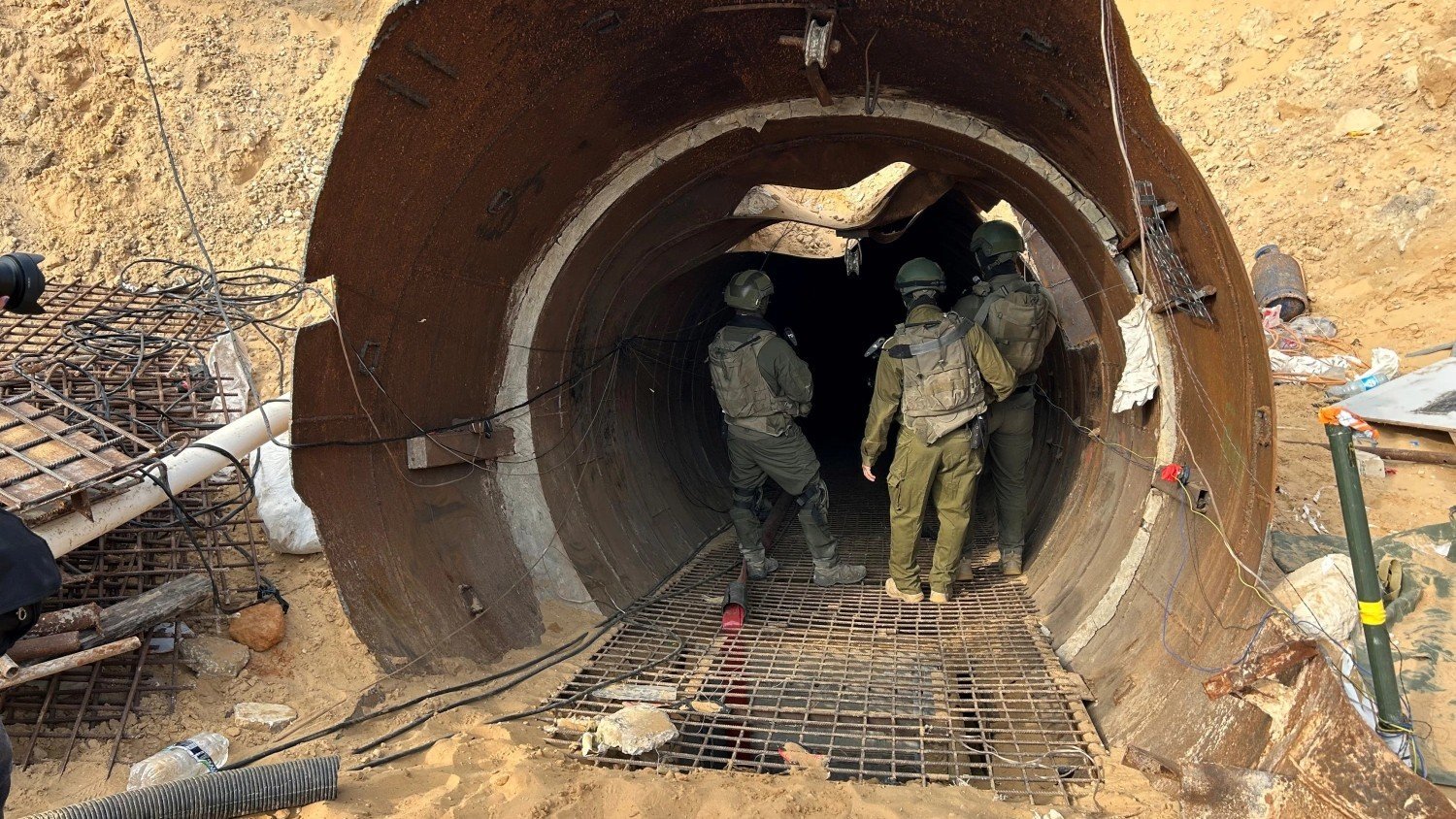
The pattern of physical losses remains concentrated in elite infantry brigades, engineering units tasked with tunnel demolition, and armored battalions operating in dense terrain where anti-armor ambushes have grown more effective. Hezbollah’s deployment of portable precision-guided munitions has sharply increased costs along the northern border, forcing the IDF to disperse units, deepen fortification, and abandon doctrines of maneuver warfare.
Operational fatigue has become chronic. Multiple brigades (Golani, Givati, Nahal, and select armored units) have required emergency rotation to rear positions to recover from injury and exhaustion levels commanders privately acknowledge as unsustainable. The IDF has not operated at this tempo for this long in any conflict in its history.
Material losses continue to pile up. Dozens more Merkava tanks, Namer personnel carriers, and combat engineering platforms have been destroyed or disabled. Militants have adapted rapidly: new anti-armor tactics, decoys, improvised drones, and tunnel-to-street ambushes have pushed Israel to rely almost entirely on airpower and stand-off munitions (tactics that devastate civilian neighborhoods but do not reduce Israeli casualties on the ground).
The reserve system (long mythologized as Israel’s backbone) has reached its structural limits. The peak wartime mobilization of 360,000 reservists hollowed out the civilian workforce for months. Refusal rates climb, exemptions expand, and internal polling shows collapsing public trust in the government’s war aims. Many reservists report they are simply “finished” (physically, emotionally, and economically).
All this produces a political truth the state cannot acknowledge: for the first time since its founding, Israel is engaged in a war it cannot decisively win, cannot politically afford to end, and cannot socially sustain.
The arithmetic is merciless. The ledger is irretrievably insolvent.
II. The Economic Collapse: A State Surviving on Optics, Not Fundamentals
Israel’s political leadership speaks of “recovery,” pointing to selective indicators that create the appearance of stabilization. Beneath the surface, the economic foundations have eroded in ways no ceasefire or credit-rating revision can disguise.
Current GDP projections show a modest rebound (around 2.5 to 2.8 percent growth), but this recovery is technical, not real. It reflects statistical whiplash after a historic contraction, not renewed economic vitality. Private economists inside Israel now warn that the country has entered a “war-economy trap,” in which temporary growth masks a long-term decline in productivity, investment, and consumer confidence. The sectors driving the uptick (military procurement, emergency infrastructure spending, and state-subsidized construction) are the same ones deepening the fiscal deficit, not repairing it.
Estimates compiled by independent economic trackers, including the Bank of Israel’s public projections and Haaretz analyses of leaked Defense Ministry documents, put the cumulative military expenditure since October 2023 at over NIS 300 billion (around $80 billion in direct costs alone), a figure that excludes the long-term obligations for disabled veterans and displaced populations.
Total indirect burdens (productivity losses, reconstruction voids, capital flight) push the real cost toward $100 billion and rising. The government has issued unprecedented short-term debt, ballooning the deficit and mortgaging future tax cycles. Credit-rating agencies upgraded Israel’s outlook from “negative” to “stable,” but this reflected external political assumptions, not economic health. The upgrade was widely understood inside Israel as a symbolic gesture premised on U.S. backing, rather than confidence in Israel’s capacity to grow while fighting on multiple fronts.
Meanwhile, the sectors that once underpinned Israel’s much-advertised “economic miracle” have not recovered. Tourism remains at a near standstill. Real estate (a pillar of household wealth) has slumped under the weight of uncertainty, stalled construction, and mortgage defaults from mobilized reservists unable to work. The tech industry, long Israel’s global calling card, has experienced capital flight and a quiet brain drain as foreign investors grow wary of legal instability, political volatility, and the ongoing war. The relocation of firms to Europe and the Gulf, once anecdotal, has become a trend significant enough to register in quarterly earnings and labor-market data.
The reserve mobilization (360,000 at its peak) inflicted damage economists describe as “intergenerational.” Families lost income, small businesses shuttered for good, and entire sectors of the economy were forced to operate at half capacity for months. Many reservists returned with disabilities or mental-health injuries that removed them permanently from the workforce, creating long-term productivity losses that no short-term GDP rebound can conceal. The state now faces mounting obligations to fund rehabilitation, disability pensions, and expanded social services at a scale it has never budgeted for.
The settlement project itself has become an economic black hole. The state now spends more per capita on security, infrastructure, and subsidies for the 750,000 Israelis living beyond the Green Line than on any other civilian population. Every new outpost, every bypass road, every additional battalion stationed in the West Bank is expenditure that generates zero taxable revenue and infinite political liability.
The fantasy that the settlements would one day “pay for themselves” through natural growth or annexation has collided with the reality that there is no annexation scenario the world will accept and no natural-growth scenario the army can protect. The settlements are not an asset; they are the most expensive unfunded liability on the balance sheet.
Israel’s settlement and occupation apparatus adds another layer of unsustainable cost. The operations in the West Bank (including the destruction of refugee camps and the expansion of permanent control zones) require constant spending on military fortification, surveillance infrastructure, and police deployments that consume billions annually without generating economic value.
Gaza’s devastation has produced a void that Israel is neither prepared nor able to fill; any future regime of “security administration” would demand perpetual military presence, reconstruction costs, and humanitarian outlays far beyond Israel’s fiscal capacity. Even the U.S., despite its political backing, has shown no willingness to underwrite an indefinite, open-ended occupation economy.
All of this converges into an economic picture that looks stable on the surface and untenable underneath. Israel has entered a phase where its global creditworthiness depends almost entirely on U.S. political will, not on the performance of its economy. The semblance of recovery is built on borrowed time, borrowed money, and borrowed political capital. The fundamentals (labor, investment, productivity, public trust) are weakening simultaneously.
What makes the moment unprecedented is that Israel is, for the first time, confronting a three-front war without a three-front economy. The illusion of resilience can be sustained for a year, perhaps two, but not indefinitely. The economic collapse is not an event; it is a trajectory.
The bill is coming due, and no credit upgrade can postpone the reckoning.
III. Internal Refugees: A Country Coming Apart From Its Edges
If the battlefield erosion exposes Israel’s military limits, the crisis of internal displacement exposes the final default of its social contract. Israel has quietly become a state with one of the highest per-capita populations of internally displaced civilians on earth (a fact it can neither politically admit nor materially resolve).
The northern front is the largest unsecured liability of the crisis. Since Hezbollah’s escalation in early 2024, more than 95,000 Israelis from the border towns (Kiryat Shmona, Metula, Shlomi, Margaliot, the Galilee hamlets) have lived as long-term internal refugees. The Israeli government promised temporary evacuations; instead, these families have spent over eighteen months in hotels, caravans, student dormitories, and improvised shelters.
The state’s attempt to rebrand the displacement as “relocation” does not change the reality: entire communities have lost their homes, schools, livelihoods, and any expectation of return. Hotels in Tiberias and Eilat have become de facto refugee camps (sites of fraying social cohesion and rising anger). Behind the photographs of children doing homework in repurposed lobbies is the simple truth no Israeli ministry can obscure: the northern frontier no longer exists as a livable space.
Gaza produced a parallel crisis. Rocket ranges, drone strikes, and cross-border fire emptied dozens of southern towns even before the ground invasion. Tens of thousands of residents of Sderot, Nir Oz, Nahal Oz, and Netiv HaAsara have still not returned to their homes, either because the state could not guarantee security or because the infrastructure had been destroyed or rendered uninsurable.
What the government calls “managed return” is little more than public-relations choreography; the reality is a zone of permanent precarity stretching from the Gaza envelope to the outskirts of Be’er Sheva. Municipalities warn privately that they cannot rebuild without assurances the state cannot give: certainty that the war will not reignite, and certainty that reconstructed homes will not be wiped out by the next artillery exchange.
The new wave of internal refugees does not emerge on a blank canvas. Israel has lived with a large population of internally displaced Palestinians since 1948 (citizens of the state who were never permitted to return to their homes, villages, or lands despite living within sight of them). These “present absentees,” from Iqrit, Bir’im, Saffuriyya, al-Bassa, Ma‘lul, and hundreds of other depopulated towns, remain refugees inside Israel’s borders to this day. Their homes were confiscated, their villages razed, their lands expropriated under the Absentees’ Property Law and related legal fictions.
For seventy-seven years they have petitioned courts, marched, campaigned, and commemorated their uprooting, only to be told that “security” requires their permanent exclusion. As a result, Israel’s internal displacement crisis is not only a product of the current war; it sits atop an older, foundational stratum of unresolved Palestinian dispossession.
And today, for the first time, Jewish Israelis experiencing long-term displacement are encountering a version of the same bureaucratic evasions, permanent temporariness, and state abandonment that Palestinian citizens have lived with for generations.
The economic fallout compounds the social one. Insurance companies have refused to extend coverage in both the north and the south, forcing homeowners either to abandon their properties or absorb premiums that make no economic sense.
Real-estate markets in affected regions have collapsed, creating a feedback loop of depopulation, disinvestment, and despair. Local businesses, dependent on foot traffic and seasonal workers, have shuttered in waves. Residents describe the sense of living in “temporary permanence” (a condition in which every week feels provisional, every month feels like deferral, and yet nothing changes).
Politically, the displacement crisis is dynamite. The constituencies most affected (northern development towns, poorer border communities, Mizrahi families with multigenerational ties to the region) were once the backbone of right-wing electoral coalitions. They are now among the most disillusioned segments of Israeli society.
The anger is not ideological but existential: their homes are gone, their schools closed, their lives suspended. They blame the government for promising protection it never delivered and for prolonging a war that has left them in limbo. In leaked recordings and town-hall confrontations, the sentiment is raw: “We are the sacrifice,” one northern community leader said. “They left us to burn.”
The political ramifications extend beyond electoral volatility. Internal displacement has exposed the state’s structural inability to defend its periphery. When a state cannot guarantee that its citizens can live in their own homes, or return to them after a year, its claim to strategic coherence breaks down. The displacement crisis also fractures the social contract between center and periphery: Tel Aviv continues to function, while the north and south become zones of indefinite abandonment.
The West Bank constitutes a second front of strategic loss. Israel is no longer governing the West Bank in any meaningful sense. The Palestinian Authority has entered a terminal legitimacy crisis. Its cities (Jenin, Tulkarm, Nablus) have become decentralized resistance zones. Israeli incursions have shifted to continuous occupation, yet control has diminished rather than expanded.
The periphery has been written off as a non-performing asset, its inhabitants (Jewish and Arab, northern and southern) converted into open-ended contingent liabilities. A state that cannot bring its citizens home, any of its citizens, has already recorded, in every column that matters, that sovereignty is a defaulted obligation.
IV. Political Implosion: A System Consumed by Its Own Contradictions
The political system in Israel is no longer merely unstable; it is disintegrating under the accumulated weight of military failure, mass displacement, economic fragility, and a governing coalition that has collapsed into mutual blackmail rather than shared purpose. What began as a crisis of competence has metastasized into a crisis of legitimacy, and then into a crisis of governability.
The government led by Benjamin Netanyahu survives not through public confidence but through fear: fear among coalition partners that elections would be a referendum on catastrophe, fear within the security establishment that political collapse would expose the scale of wartime losses, fear within the political right that any successor government might face international legal consequences. The coalition holds together because none of its factions can survive alone; it is an alliance of hostages, not allies.
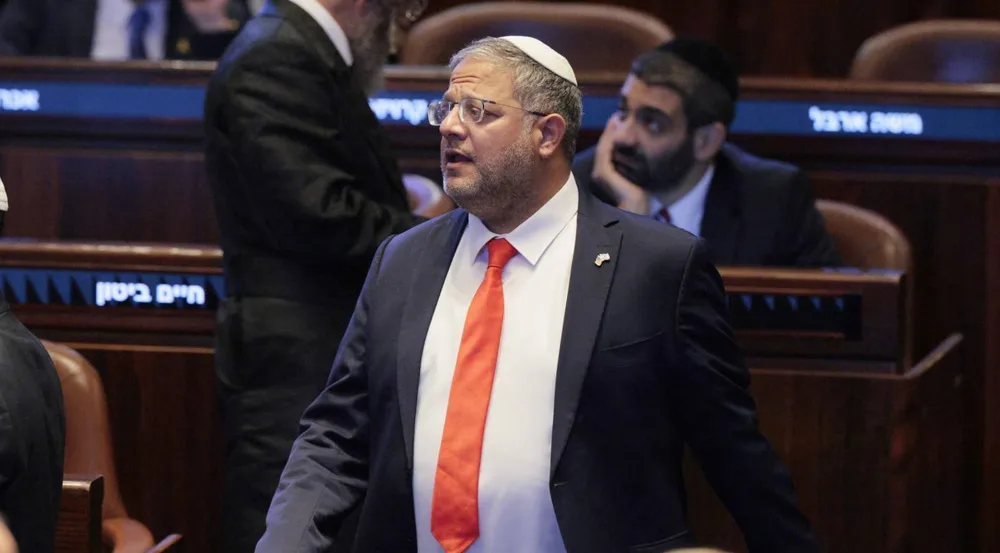
Inside the coalition, dependency on far-right partners (Itamar Ben-Gvir, Bezalel Smotrich) has become the central structural vulnerability. To remain in power, Netanyahu has relinquished control over policing, settlement policy, civil administration, and portions of the wartime narrative itself. The far-right tail no longer wags the dog. It is the dog — the only part of the animal still breathing, and the only asset the rest of the carcass is now valued against.
Yet the deepest detonator of the political order proved to be the draft crisis (the civic myth that for seventy-five years had papered over the religious–secular divide by pretending the burden of risk was equally shared). The war of 2023–2025, with its unprecedented duration and toll, tore that fiction apart with volcanic force.
The IDF faced the largest manpower shortfall in its history. Casualties in Gaza, continuous combat rotations, and escalating confrontation with Hezbollah created a sustained operational tempo the reserve system could not sustain. Reservists were being called up for months at a time, often repeatedly; families were buckling; employers were collapsing. The old nationalist rhetoric (“we are all in this together”) rang hollow against the reality that a significant segment of the population was not in it at all.
The secular public’s patience snapped. In Tel Aviv, Herzliya, Haifa, and the northern towns now living as internal refugee camps, resentment crystallized into a political conviction: the exemption system was no longer an anomaly; it was an injustice. By autumn 2025 a clear majority of secular Israelis supported compulsory service for Haredim, even if it risked collapsing the government.
But Haredi parties knew that conscription would detonate their social order. Their entire political identity rests on protecting their youth from the secularizing forces of military service. For them the war did not justify shared sacrifice; it justified deeper insulation. They responded by threatening to topple the government if draft reforms advanced. Benjamin Netanyahu, dependent on their support for political survival, capitulated again and again.
The result was total paralysis. The government could not draft the Haredim without collapsing. It could not avoid drafting them without collapsing public support. It could not reduce mobilization without losing the war. And it could not continue mobilizing without exhausting the country. Every path led to a contradiction the state could not resolve.
This deadlock fractured the army itself. Combat officers (particularly in the Golani Brigade and Givati Brigade) voiced unprecedented public frustration. Reservists announced refusals, not on ideological grounds, but on the simple principle that they would no longer serve in a system that refused to serve them. Military psychologists warned that morale was collapsing; commanders admitted privately that another year of multi-front mobilization would trigger systemic breakdown.
The religious–secular rupture also reshaped the coalition map. Secular right-wing voters (once the backbone of Likud) began drifting toward parties promising an end to exemptions. Haredi parties dug in, demanding more funds for yeshivas even as war-related spending swallowed the state budget. National-religious settlers used the crisis to push for deeper entrenchment in the West Bank, arguing that settlement expansion was an act of collective sacrifice equal to combat service (a claim that infuriated secular Israelis who saw their own children dying at the front).
By every measure the draft crisis was no longer about recruitment. It had become the central metaphor of a society breaking apart: one half fighting and dying, the other half exempt and subsidized; one half displaced, the other shielded by political leverage. The war did not unite Israel. It revealed that the state no longer possesses a common civic identity onto which a collective burden can be mapped.
A country cannot fight a multi-year war when its population no longer agrees on who should fight it. The religious–secular rupture is therefore not a cultural dispute or a demographic trend; it is a structural limit on Israel’s capacity to wage war, govern itself, or sustain the political order that has ruled it since 1977. When a state’s military burden becomes unequal, unbearable, and unfixable, the legitimacy of the state itself becomes the casualty.
The system does not govern; it merely persists (an empty corporate shell trading on fumes of political credit, sustained only because every shareholder knows that liquidation would wipe them all out).
V. The Epistemic Ledger: The Day the State Lost Its Monopoly on Truth
October 7, 2023 did not merely breach a border.
It breached the single most sacred contract between the Israeli state and its Jewish citizens: the promise us your taxes, your children, your unquestioning obedience, and we will guarantee that never again means never again.
That contract was not broken by Hamas alone. It was broken by the entire warning apparatus (Shin Bet, Unit 8200, Military Intelligence, the Prime Minister’s Office) that spent years assuring the public Hamas was deterred, contained, and more interested in Qatari money than in war. The warnings that did exist — from Unit 8200 analysts, field observers on the Gaza fence, and Egyptian intelligence — were dismissed or ridiculed as “fantasy” by the highest levels of command.
The consequences have been structural and irreversible.
By 2025 the Israeli public no longer believes the state’s threat assessments. When the IDF warns of an imminent Hezbollah attack, northern residents post videos mocking the warning. When Military Intelligence claims Iran is “years away from a bomb,” the joke is “just like Hamas was deterred.” When the Prime Minister declares “total victory is close,” the response is not hope but cynical laughter.
This is not mere distrust of politicians; it is distrust of the entire security priesthood. Reservists refuse orders not only because of the Haredi exemption crisis, but because they openly say “they lied to us once, they will lie again.” Families leaving for Portugal or Canada cite the same sentence in exit interviews: “We do not trust the state to protect our children anymore.” Global Jews who once sent their teenagers to fight now ask: “If Israel could not protect Kibbutz Be’eri, why would we send our son?”
The intelligence community itself describes the post-October 7 period as an epistemic rupture. Internal documents leaked in 2025 reveal that trust in IDF briefings among the political echelon has fallen below 30%. Officers report that when they present worst-case scenarios to ministers, the response is no longer “how do we prevent it?” but “how do we spin it?”
A state that has lost its monopoly on credible warning has lost the ability to mobilize society for the kind of endless, attritional war it is now fighting. Every new alert is met with fatigue rather than fear, every new call-up with suspicion rather than sacrifice. The public still pays the price, but it no longer believes the invoice.
This is the deepest default on the ledger: the day the state stopped being believed when it said “we will keep you safe.”
Once that line is crossed, no amount of military power can buy it back.
The balance sheet records a liability that cannot be refinanced, only carried forever.
VI. The End of Global Jewish Recruitment and the Slow Collapse of Zionist Identification Among the Young
For seventy-five years one of Israel’s quiet but decisive assets was the willingness of Jews around the world to identify with the state, defend it, fund it, and, when necessary, move to it and fight for it. That reservoir is drying up with a speed no government minister can publicly admit.
The numbers are stark. Aliyah from the West has fallen to its lowest level since the 1980s. Applications to the IDF’s overseas volunteer and lone-soldier programs have collapsed by more than 70% since 2023. The once-prestigious “I fought in Gaza” résumé line has become, for many younger Jews, a source of discomfort or shame.
In the United States, students who once joined Birthright or advocated for Israel now refuse association altogether. Major American Jewish organizations report their under-40 donor base shrinking year after year. In Europe, the decline is sharper: French and British Jewish youth now speak of Israel in the past tense.
Leaked 2025 reports from the so-called Ministry of Diaspora Affairs show that global Jewish identification with Israel as “central to my Jewish identity” has fallen below 50% among Jews under 35. Lone-soldier homes in Ra’anana and Tel Aviv stand half-empty, and the pipeline of Jewish doctors, engineers, and combat officers has slowed to a trickle.
Inside Israel, the Zionist narrative itself is fracturing. Polls of Jewish Israelis aged 18–24 show pluralities describing the state as “an apartheid regime” or “a colonial project.” Mandatory IDF service, once the rite of passage into adulthood, is increasingly seen as “participation in occupation.” Refusal rates among draftees have tripled since 2023, spreading beyond the anarchist left into mainstream Tel Aviv graduates.
A state that once defined itself as the insurance policy for world Jewry is now, for a growing share of that population, an uninsured liability.
VII. The Collapse of US Political Consensus
For decades, the single most durable external pillar of Israel’s strategic position was the illusion of an unshakable bipartisan consensus in Washington. That consensus has not merely eroded; it has collapsed.
Among Democrats, the shift is explicit. Once-automatic support fractured under the weight of civilian devastation in Gaza, mass displacement, and violations of ceasefire terms. Senior members of Congress began publicly questioning weapons transfers; younger lawmakers, shaped by movements from Ferguson to anti-Muslim-ban protests, redefined Palestinian rights as part of a broader struggle against racialized state violence. Even stalwarts like Chuck Schumer were forced to temper support, sensing the base had shifted. For the first time, a majority of Democratic voters identified Israel as a human-rights violator, not a democratic ally.
Within the Republican Party, the breakdown took a different form. Support for Israel remained loud but performative, serving as culture-war signaling to evangelical constituencies rather than coherent foreign policy. Yet even this pillar is cracking: Christian Zionists — long the unshakeable base of GOP backing — are showing signs of pullback.
Isolationist voices, amplified by figures like Tucker Carlson and Marjorie Taylor Greene, argue that U.S. weapons are being funneled into a war Israel could neither control nor conclude, while younger evangelicals increasingly view unconditional aid as incompatible with Christ’s teachings on justice and mercy.
Evangelical leaders like John Hagee face internal pushback, with denominations such as the Southern Baptists debating resolutions to condition support on humanitarian ceasefires. The transactional “bless Israel, be blessed” calculus that fueled billions in donations and votes is fraying as polls show support among Republicans under 50 dropping from 75% in 2022 to 50% in 2025.
The White House, under immense domestic pressure, began recalibrating. Public assurances of “ironclad” support continued, but private signals shifted: conditioning weapons systems, delaying resupply, and demanding concessions Israel refused to make. In 2025, the administration delayed or conditioned three tranches of precision-guided munitions — the first such restrictions since 1973. Senior Democratic senators floated “human-rights reviews” for future arms packages.
At the Pentagon, planners briefed journalists off-record that Israel had become “a strategic net drag” in any confrontation with China or Russia.
American civil society amplified the rupture. Human-rights groups, faith organizations, labor unions, and student movements treated Israel not as a special case but as an emblem of structural injustice. Corporate America, wary of reputational damage, began distancing itself from partnerships perceived as complicit. Tech leaders, donors, and university boards — once predictable reservoirs of pro-Israel sentiment — went quiet or pivoted to neutrality.
The think-tank world experienced upheaval. Analysts at Brookings and the Council on Foreign Relations published assessments questioning Israel’s strategic competence, long-term viability under permanent militarization, and the wisdom of binding U.S. credibility to a failing war.
Israel is no longer a consensus issue but an exposed one: a subject of partisan division, generational revolt, moral outrage, strategic doubt, and electoral risk. The bipartisan line of credit is gone, and with it the last external collateral that once allowed Israel to operate with an unlimited overdraft. What remains is an ally that can still extend arms shipments but can no longer underwrite the political risk.
VIII. The West Bank: A Control That No Longer Controls
The West Bank is the graveyard of the old governing model — the place where the thirty-year fiction of a “temporary,” “manageable,” and ultimately “reversible” occupation was buried once and for all.
What was sold to the world (and to Israelis) as an interim arrangement that could be traded away in a future peace deal has instead become a permanent, daily, unaffordable re-occupation with no political horizon, no willing Palestinian partner, and no international tolerance. The mechanisms that once sustained the illusion — a compliant Palestinian Authority, episodic raids, and the promise of an eventual withdrawal — are dead. All that remains is raw military control exercised at ever-higher cost and ever-lower legitimacy.
The territory that was meant to prove the occupation could be indefinitely sustainable has become the proof that it is not.
The Palestinian Authority has entered a terminal legitimacy crisis. Its security forces no longer command obedience and increasingly refuse to coordinate with Israel. Officers in Jenin and Tulkarm openly declare they will no longer “do Israel’s dirty work.” Joint patrols have virtually ceased. The PA survives only because Israel continues to transfer tax revenues; without those funds the Authority would fold within weeks.
The vacuum has been filled by decentralized armed factions. Jenin, Tulkarm, Nablus, and refugee camps have become no-go zones for Palestinian police. By mid-2025 the IDF was conducting an average of eighteen arrest raids per day in the northern West Bank, yet the number of active armed cells kept rising. Commanders admit that each battalion rotation simply generates more recruits for the other side.
The military posture has shifted from episodic incursions to permanent re-occupation. Districts are accessible only by armored convoy; checkpoints removed under Oslo have been rebuilt; new bases and bypass roads are expanding at a pace not seen since the early 2000s. Maintaining this deployment costs NIS 18–22 billion per year, hidden from the budget under “operational necessity.”
Settler violence has become the de facto governance mechanism in large parts of Area C. In 2025 the UN recorded the highest number of settler attacks ever documented; the army often stands aside or escorts rather than enforces. Ministers Ben-Gvir and Smotrich celebrate this reality, declaring that “Jewish power” has replaced Palestinian policing. The state has effectively privatized control to armed civilians while still bearing the military and diplomatic cost.
The fantasy of a “post-Hamas” administration in Gaza collapses when the neighboring West Bank is itself sliding beyond management. The territory meant to prove the occupation could be permanent-yet-tolerable has become the laboratory proving the opposite.
This is not a temporary setback. It is the structural failure of the governing architecture since Oslo. The West Bank is controlled only through raw, daily, unaffordable force — and even that is no longer enough.
The ledger records another default: the occupation has become an unfunded liability with no horizon, no partner, and no exit.
IX. The Deterrence Economy and Iran’s New Posture
For decades Israel sustained its regional dominance through what analysts once called the “deterrence economy”: a security architecture built on the assumption that overwhelming military superiority, backed by the United States, would prevent adversaries like Iran and its allied networks from ever challenging Israel directly. That model has collapsed.
The collapse began on the northern front. When Hezbollah responded with coordinated precision strikes, it exposed the vulnerabilities of Israel’s deterrent doctrine. For the first time, Hezbollah demonstrated the ability to hit Israeli airbases, naval facilities, and logistical hubs with accuracy that disrupted Israel’s military rhythm.
These calibrated blows forced evacuations, shut down bases, and created a new calculus: Israel could no longer escalate without absorbing damage it could not explain to its already traumatized public.
This shift emboldened Iran. Officials in Tehran interpreted Israel’s paralysis not as temporary strain but as evidence that decades of asymmetrical investment — precision missiles, UAVs, cyber capabilities, and region-wide networks — had matured into a viable counter-deterrent. Iran did not need to fight Israel directly; it only needed to raise the cost of Israeli action beyond what its political system could sustain.
Israel’s once-vaunted “Campaign Between the Wars” — the doctrine of continuous preemptive strikes across Syria, Lebanon, Iraq, and sometimes Iran — had to be scaled back dramatically. Every strike risked triggering a multi-front response. Every escalation risked another wave of displacement, casualties, and economic contraction. Deterrence had become a liability, not an asset.
Meanwhile, Iran orchestrated a patient, calibrated regional strategy. Its partners opened multiple low-intensity fronts that collectively drained Israel’s military, stretched its logistics, and exposed its economic vulnerabilities. None needed to win outright; they only needed to remain active. The attrition itself became the strategic outcome.
Israel can still inflict catastrophic damage, but it can no longer impose strategic outcomes. Its capacity to destroy remains high; its capacity to dictate terms has evaporated. The regional balance has inverted with a silence more damning than any battlefield defeat. Israel is no longer the creditor others restructure around; it is the distressed asset waiting to be marked to market.
Israel can still destroy anything it chooses to target. It can no longer force adversaries to accept the political outcome it desires. That is not stalemate; it is the precise definition of lost deterrence.
Every instrument Israel once relied on — force, deterrence, global Jewish solidarity, American protection, the myth of invulnerability — now accelerates the unraveling it was meant to prevent. The war did not break the state; it revealed that the state had already broken itself long before the first shot was fired.
More fundamental than diplomatic isolation or military strain is the collapse of the global narrative infrastructure that once upheld Israel’s self-presentation. Zionism’s legitimacy rested on myths — rescue from persecution, democratic exceptionalism, a fragile nation under siege — that no longer align with lived realities or the interpretive frameworks of Western institutions.
In universities across North America and Europe, Israel is now understood as a case study in entrenched colonial domination. In cultural spaces, the language that once naturalized Israeli force as “self-defense” has lost its moral coherence.
Even within Israel, younger generations increasingly describe the project not as sanctuary but as a system requiring perpetual war and dysfunction to sustain itself. When a national ideology loses narrative continuity — when its founding story is no longer believed by its own supporters — it enters an epistemic crisis. Power can persist for a time without legitimacy; it cannot endure indefinitely without narrative.
X. The Revenge Ledger: A Debt That Compounds Across Generations
Israel has always measured its security in decades, not years.
It has now created a liability that will be measured in centuries.
Every Palestinian child who watched a parent buried under rubble, every Lebanese family that spent weeks in a school corridor while Israeli jets levelled their village, every Iraqi, Syrian, or Yemeni civilian who lost a home to an Israeli strike carries a memory that no ceasefire will erase. These are not abstract grievances; they are visceral, inherited scores etched into millions of family histories.
The Arab regimes may sign normalization agreements, host investment summits, and mute their rhetoric for the sake of gas deals and American weapons. The populations do not forget. Polling across the region in 2025 (Morocco to Iraq) shows approval of Israel hovering between 3% and 9% — in some surveys lower than approval ratings for the Islamic State. When asked “Will you teach your children to forgive Israel?” the answer, in every country, is an overwhelming no.
This is not mere anger. It is the quiet, patient transmission of a debt.
In cafés in Amman, classrooms in Cairo, mosques in Jakarta, and Palestinian diaspora communities from Dearborn to Malmö, the footage from Gaza and South Lebanon is no longer news; it is origin myth. The same way Armenian grandparents spoke of 1915, the same way Jewish grandparents spoke of the Shoah, a new generation is being raised on images of white phosphorus over Beirut and Gaza neighborhoods turned to dust. They are learning that the world watched, shrugged, and sent more bombs.
Israel’s strategic planners once spoke of “mowing the lawn”: periodic operations to keep threats manageable. They have instead fertilized the soil. The harvest will be asymmetrical, patient, and multi-generational. It will not always wear uniforms or carry flags. It will appear in the teenager who hacks an Israeli power grid in 2041 because his father showed him a video of his grandfather’s house being bulldozed. It will appear in the diplomat who steers a UN vote in 2058 because he grew up in a refugee camp. It will appear in the investor who refuses Israeli bonds in 2070 because family stories never included forgiveness.
The Arab states can police their streets today. They cannot police the memories being written into millions of children tonight.
Israel has purchased short-term tactical space at the price of permanent strategic enmity.
The ledger now contains an entry that no amount of Iron Dome batteries, no quantum encryption breakthrough, no additional U.S. carrier strike group steaming into the Eastern Mediterranean can ever balance: a debt of rage that compounds across lifetimes, owed by people with nothing left to lose and decades to plan how to collect.
This is the final, unpayable line on the balance sheet for Israel.
The ledger is closed.
The balance is irreversible.
https://orinocotribune.com/the-irrevers ... dger-2025/
******
Liberation Is Not Integration: On Liberal Zionism, One-State Fantasies, and What Palestinians Actually Want
Posted by Internationalist 360° on December 9, 2025
Lara Kilani
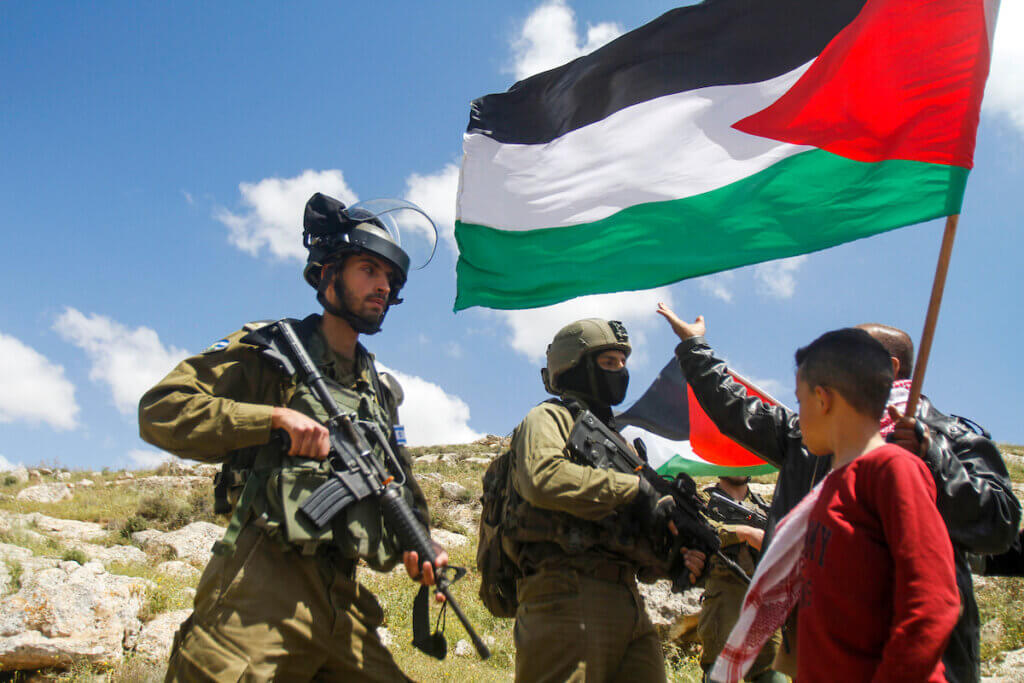
Palestinians block Israeli soldiers during a protest against the expansion of Jewish settlements, on April 28, 2023, in the West Bank village of Beit Dajan, east of Nablus. (Photo: Mohammed Nasser /APA Images)Palestinians block Israeli soldiers during a protest against the expansion of Jewish settlements, on April 28, 2023, in the West Bank village of Beit Dajan, east of Nablus. (Photo: Mohammed Nasser /APA Images)
The international left’s embrace of “one democratic state” as the self-evident endpoint of Palestinian liberation often fails to account for what Palestinians themselves wish to preserve: not just rights in the abstract, but a way of life, a cultural fabric, cities and villages that remain theirs. A single state premised on “equality” with Israelis is not liberation but continued entanglement with a society that has perpetrated and largely supported dispossession.
A few weeks ago, on our walk back from the market in Bethlehem’s old city, my friend abruptly turned to me and declared that she could not imagine a one-state solution, because it would certainly mean the transformation of our beautiful city as we know it and the alteration of so many of the things we love about it.
Her comment and the discussion that followed, our voices rising in volume as we carried on down Star Street, stayed in my mind on the way home and over the weeks that have followed. The questions that arise from discussions of political solutions and decolonization are many, and since publishing some thoughts on decolonization two years ago, the practical questions remain, nagging to be answered — or at the very least, put to words and shared.
As my friend astutely noted, the common slogans representing what has seemingly become the international leftist vision for Palestine’s future can be boiled down to a few, vague catchphrases: “one-state solution,” “one democratic state,” “equal rights for all,” and the like. There is significant scholarly engagement with this concept as well — academic treatises on the need for a binational approach, Omar Barghouti’s emphasis on “equality” over separation, and the ever-present lamentations that the two-state solution is dead.
Still, there is no shortage of liberal organizing spaces in the West in which these fuzzy, imprecise calls for a one-state solution are bandied about without tackling the difficult questions that come with them. For example, who makes up the “all” in “equal rights for all”? What does it mean to be “equals” when one group of people has built their collection of rights and privileges by stripping them from others?
Furthermore, do settlers who have freshly arrived from the United Kingdom, Germany, Brazil, or the United States have the same rights as Palestinians who will return from languishing in Lebanon’s refugee camps for almost eighty years? Do Israelis have collective rights? Do Palestinians? Who controls the military? What is the economic arrangement of the state? Do Israelis have to return more than a hundred years of looted wealth, land, and resources, and if so, to whom? What will the process of unmaking their settler status look like?
For those of us who understand anti-Zionism as a necessary form of decolonization, the question of recent settlers — dual citizens who arrived from the United States, Australia, and Europe — is not ambiguous. Historical decolonial movements in Algeria, Zimbabwe, Kenya, and elsewhere recognized that dismantling settler-colonial structures required the return of settlers to their metropoles. This was not punitive but necessary, as it facilitated breaking the material and ideological infrastructure of colonialism, establishing legal precedents for indigenous sovereignty, and creating the political conditions for genuine self-determination. Allowing settlers to remain unchallenged preserves the very power asymmetries that decolonization seeks to dismantle. At the same time, for settlers arriving from settler colonies like Canada and the United States, is the just response to send them packing back to their more established settler-colonial points of origin?
This brings us to the question at the heart of my friend’s outburst: who wants to be made to live and share space with genocidaires?
This brings us to the question at the heart of my friend’s outburst: who wants to be made to live and share space with genocidaires?
In Bethlehem, this is not a theoretical question. Already having been separated from Jerusalem artificially, by the wall and checkpoints, villages and towns surrounding Bethlehem city are also set to be annexed by Israel, with a census of their residents reportedly beginning in the new year. In September, Zionist forces installed new barriers to separate Beit Sahour, immediately southeast of Bethlehem city, from Dar Salah and cities in the north of the West Bank by disrupting the primary road. Now, a settlement has been approved in Oush Ghrab, only a short distance from Bethlehem and Beit Sahour. As Bethlehem becomes more physically isolated from other Palestinian cities while its residents are also prevented from reaching the lands occupied since 1948 by Israel’s colonial permit regime, and settlements grow closer and closer to the city, the violence of liberal notions of “integration” is foreboding. Under Zionism, integration is not a peaceful affair. The presence of Jewish settlers in Palestine is inherently violent, and until now has been characterized by the continual elimination of Palestinians for the purposes of replacement.
The questionable desirability of living alongside settlers as “equals” is also amplified by the conversations happening about Palestinians and around Palestinians by self-described Jewish anti-Zionists, though often without much thought for Palestinians themselves. Just over a month ago, Jewish Currents published a podcast episode titled “Confronting the Anti-Zionist Right,” focusing on the expressed rejection of Zionism by white supremacist characters such as Nick Fuentes, Candace Owens, Tucker Carlson, and the like, and discusses the history and politics of the commentators’ antisemitism. There is very little in the way of discussion about what anti-Zionist values should be, though the host acknowledged that, “we are in a competition with the right for what kind of anti-Zionism we’re going to practice, what it’s going to look like, and what, at core, its values are.”
The podcast episode mimics a recent talk in Jerusalem by Peter Beinart, Jewish Currents’ editor-at-large. Beinart also gestured at the growing influence of characters like Carlson in the movement away from Zionism by some elements on the U.S. right, and laudably noted the long ties Jewish American institutions have made to white supremacy and its agents. However, Beinart and the podcasters frame these moves (both Carlson’s proclaimed anti-Zionism and the history of collaboration with white supremacists) as dangerous for Jewish people, and fail at what are arguably the more important endeavors beyond this: 1.) identifying the responsibility of Jewish institutions and individuals who do not wish to maintain ties to white supremacy and Zionism, and 2.) how any of this affects Palestinians, who have long been the victims of both white and Jewish supremacists.
Both Beinart and the podcast contributors evade essential questions underlying the reality of the Jewish institutional investment in Zionism: how do we begin to calculate the responsibility of, say, Jewish Federations in the harm they have done to Palestinians by funding Zionist projects? Can organizations that are materially committed to colonization and genocide be reformed? Not even three months ago, the Jewish Federations of North America collaborated with the Jewish Agency to leverage $130 million in loans to Israeli “reservists,” but only those who had served more than 200 days since October 7, 2023.
What do these investments in the ongoing violence against Palestinians mean for civic organizations and other “social justice” groups that receive money from these Jewish Federations? Do organizations bear some responsibility for the politics of their funders, whose contributions to their “social justice efforts” may serve as a form of philanthropy-washing, or a smokescreen to distract from a more significant and consistent support for the violence of maintaining this colony in Palestine?
One-state proposals that fail to address land return, settler removal, and the redistribution of power risk becoming the new “Oslo peace process” with different branding.
Most importantly, figures like Beinart and the Jewish Currents podcasters offer no framework for dismantling structural violence, no mechanisms to prevent the liberal modes of colonization embedded in one-state proposals, and no meaningful centering of Palestinian voices in determining Palestine’s future. In the case of the podcasters, by offering nothing new to consider, they have rendered anti-Zionism as a marketing technique, wholly divorced from theories of justice. Their visions remain abstract, untethered from the material realities of power — outside of where power intersects with antisemitism. Palestinians, meanwhile, need no theoretical education on the imperialism latent in arrangements that promise equality while preserving asymmetry — they have the lived experience of the Oslo Accords, which offered the language of peace and statehood while entrenching occupation, fragmenting territory, and outsourcing the policing of Palestinians to Palestinians themselves. One-state proposals that fail to address land return, settler removal, and the redistribution of power risk becoming the new “Oslo peace process” with different branding.
Data shows Palestinians fully understand that Zionism and imperialism can be repackaged within the one-state framework.
October 2025 polling from PCPSR reveals the complexity of Palestinian political preferences. While 53% oppose a two-state solution outright, when asked to choose among options, 47% still prefer two states based on 1967 borders — compared to just 12% favoring a single state with equality between Palestinians and Israelis. Opposition increases sharply (to 59%) when a two-state framework is tied to Arab normalization with Israel. Meanwhile, Palestinians show stronger enthusiasm for joining international organizations (73%), unarmed popular resistance (54%), and dissolving the Palestinian Authority (45%) than for abandoning two-state advocacy in favor of one-state organizing (27%).
For many Palestinians, a single state premised on “equality” with Israelis is not liberation but continued entanglement with a society that has perpetrated and largely supported their dispossession.
The apparent paradox — opposing two states while also not embracing integration — reflects deeper currents. For many Palestinians, a single state premised on “equality” with Israelis is not liberation but continued entanglement with a society that has perpetrated and largely supported their dispossession. Separation offers something integration cannot: sovereignty, self-determination, and distance from those who have participated in or were indifferent to ethnic cleansing. There is also justified skepticism that equality within a single polity is achievable given the power asymmetries, institutional racism, and demographic anxieties that define Israeli political culture. For Palestinians emerging from genocide, the desire may be less for coexistence than for safety, autonomy, and the space to rebuild without their survival dependent on Israeli consent.
My dear friend’s passionate comments on Star Street were not close-minded or lacking in political imagination — rather they were, as the data suggests, widely shared opinions. The international left’s embrace of “one democratic state” as the self-evident endpoint of Palestinian liberation often fails to account for what Palestinians themselves wish to preserve: not just rights in the abstract, but a way of life, a cultural fabric, cities and villages that remain theirs. Bethlehem under a single state would not simply gain Jewish residents; it would be subjected to the same forces of settlement, capital, and demographic engineering that have transformed every inch of land Israel has controlled. The slogans sound liberatory, but they can obscure a kind of erasure dressed in the language of equality. What my friend articulated — and what the polling reflects — is a desire not merely for political arrangement but for protection: of home, of identity, of the right to continue existing as Palestinians in Palestine, without that existence being contingent on integration with those who have sought to eliminate these things.
https://libya360.wordpress.com/2025/12/ ... ally-want/
So then, do these Palestinians accept Israel's "right to exist"? Not that it ever really existed but allowing so for the sake of argument I'd say the events of the last two years irrevocably cancelled that massive injustice.

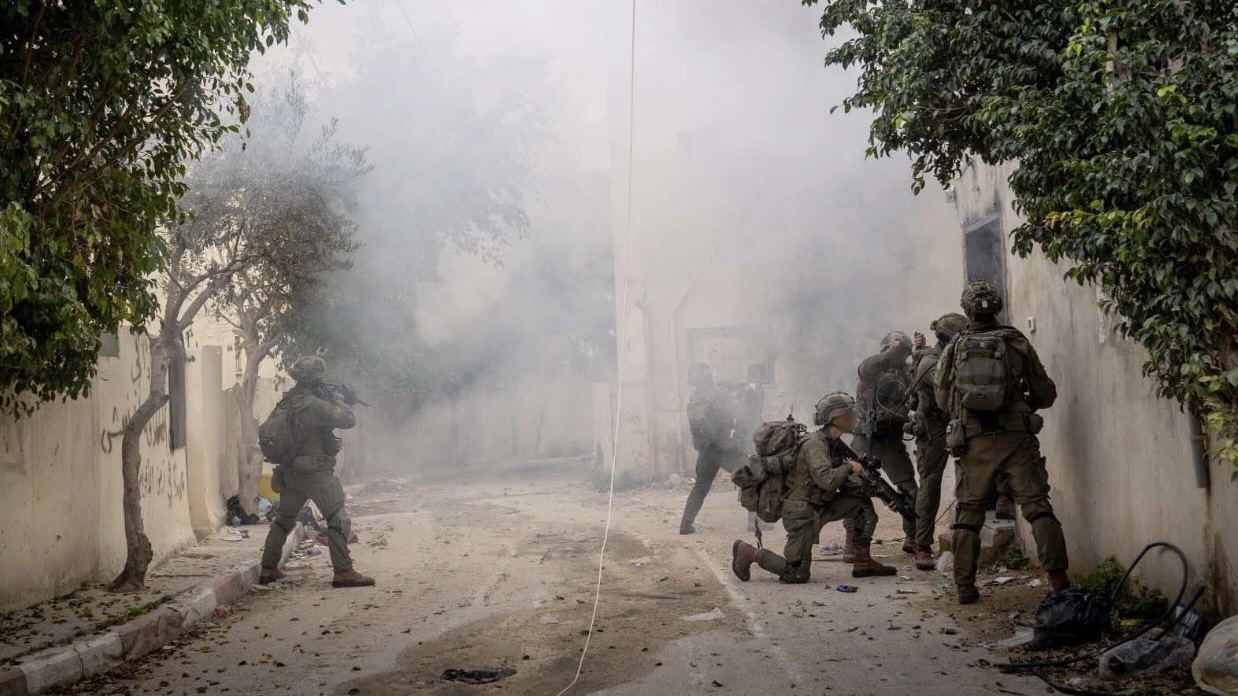
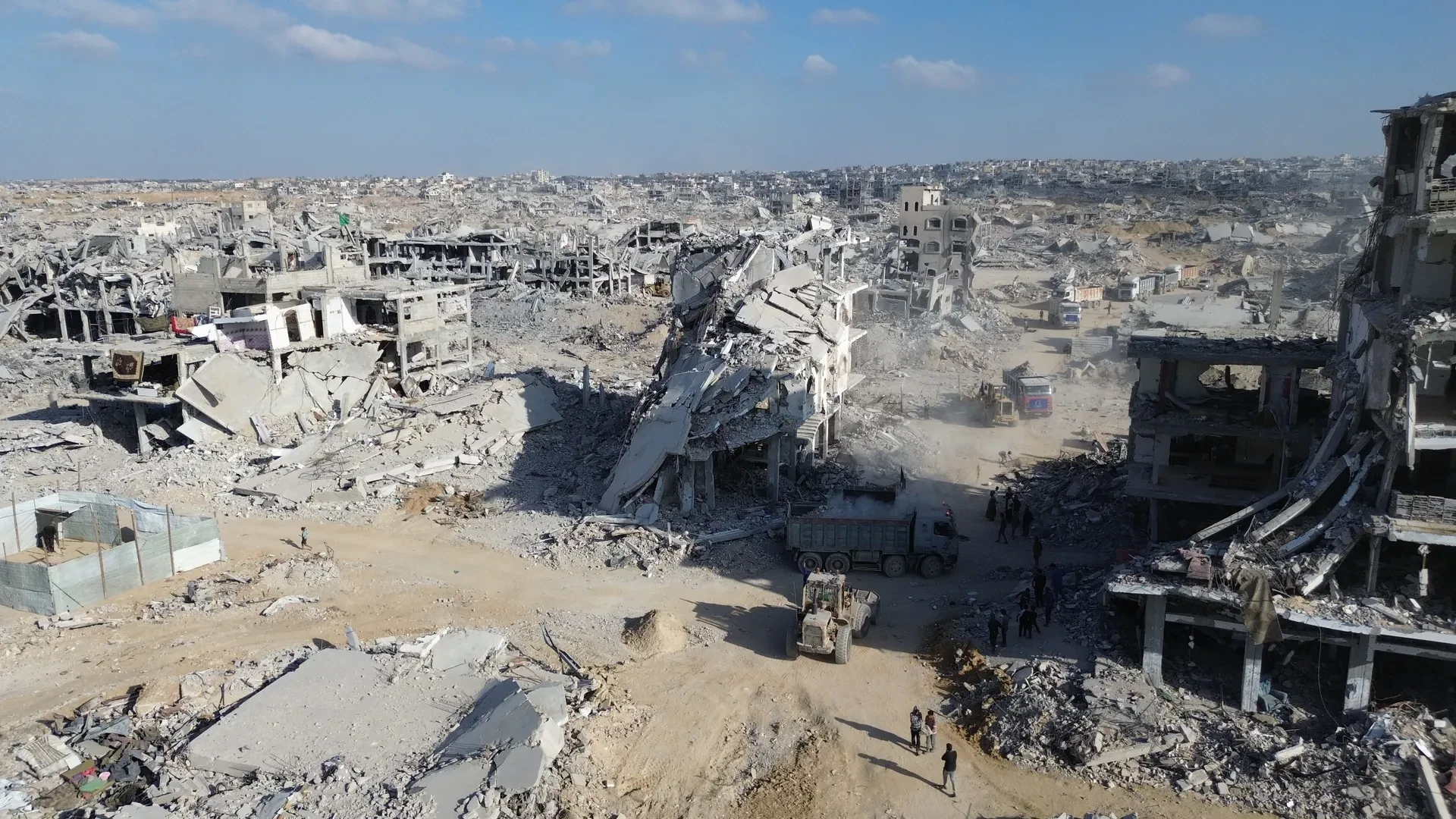






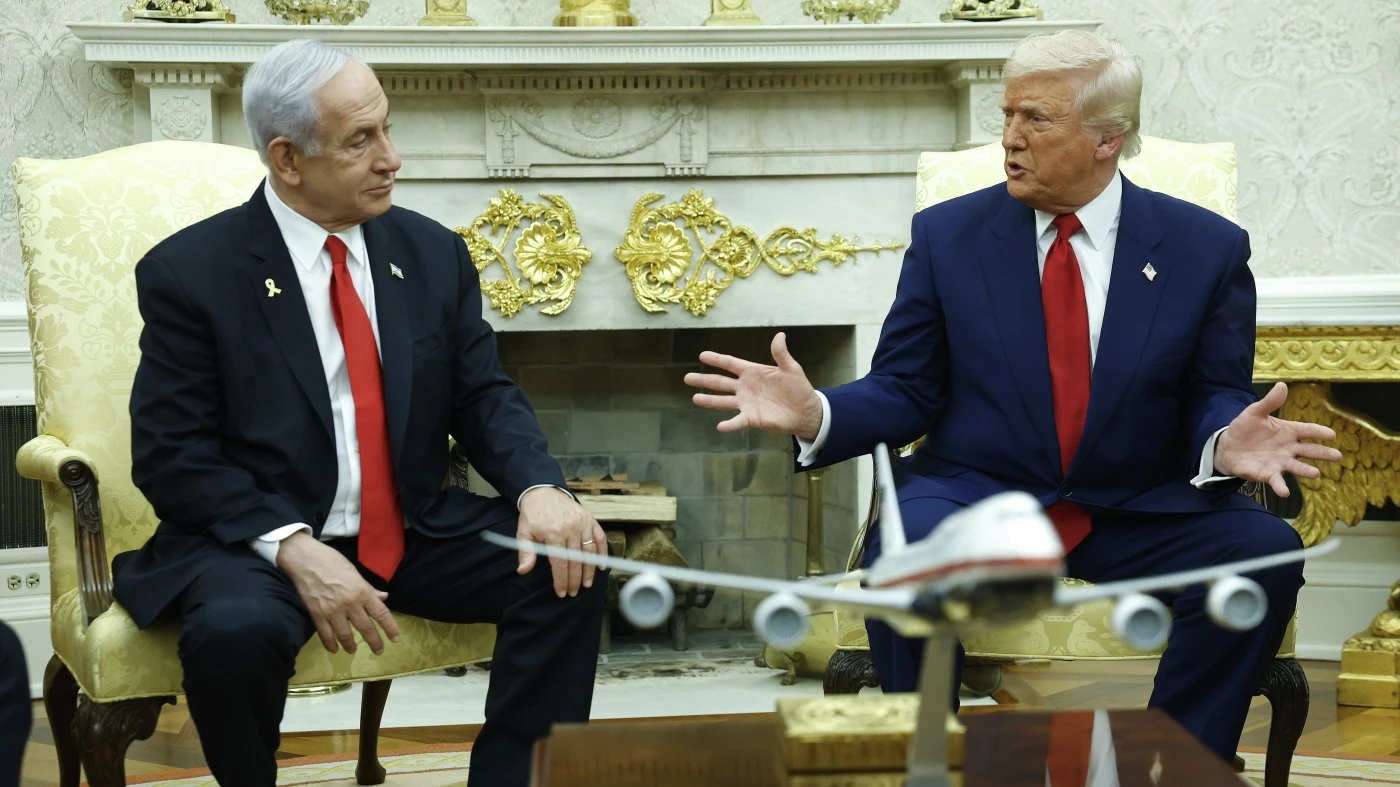

 NEW: Netanyahu rejected the Palestinian Authority as any future governing body in Gaza and floated installing a new leadership drawn from Palestinians “fighting Hamas.”