Amadou Sanogo (Mali), You Can Hide Your Gaze, but You Cannot Hide That of Others, 2019.
Africa, the collateral victim of a distant conflict: The Twenty-Second Newsletter (2022)
By Vijay Prashad (Posted Jun 03, 2022)
Originally published: Tricontinental: Institute for Social Research on June 2, 2022 (more by Tricontinental: Institute for Social Research) |
Globalization, Imperialism, Inequality, State RepressionAfricaNewswireTricontinental Newsletter
Dear friends,
Greetings from the desk of Tricontinental: Institute for Social Research.
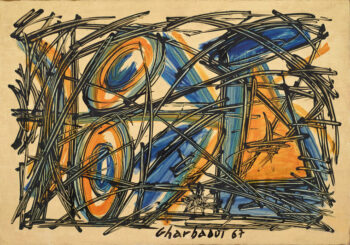
Jilali Gharbaoui (Morocco), Composition, 1967.
On 25 May 2022, Africa Day, Moussa Faki Mahamat–the chairperson of the African Union (AU)–commemorated the establishment of the Organisation for African Unity (OAU) in 1963, which was later reshaped as the AU in 2002, with a foreboding speech. Africa, he said, has become ‘the collateral victim of a distant conflict, that between Russia and Ukraine’. That conflict has upset ‘the fragile global geopolitical and geostrategic balance’, casting ‘a harsh light on the structural fragility of our economies’. Two new key fragilities have been exposed: a food crisis amplified by climate change and a health crisis accelerated by COVID-19.
A third long-running fragility is that most African states have little freedom to manage their budgets as debt burdens rise and repayment costs increase. ‘Public debt ratios are at their highest level in over two decades and many low-income countries are either in, or close to, debt distress’, said Abebe Aemro Selassie, the director of the African Department at the International Monetary Fund (IMF). The IMF’s Regional Economic Outlook report, released in April 2022, makes for grizzly reading, its headline clear: ‘A New Shock and Little Room to Manoeuvre’.
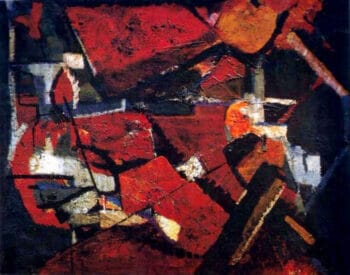
Choukri Mesli (Algeria), Algeria in Flames, 1961.
Debt hangs over the African continent like a wake of vultures. Most African countries have interest bills that are much higher than their national revenues, with budgets managed through austerity and driven by deep cuts in government employment as well as the education and health care sectors. Since just under two-thirds of the debt owed by these countries is denominated in foreign currencies, debt repayment is near impossible without further borrowing, resulting in a cycle of indebtedness with no permanent relief in sight. None of the schemes on the table, such as the G20’s Debt Service Suspension Initiative (DSSI) or its Common Framework for Debt Treatments, will provide the kind of debt forgiveness that is needed to breathe life into these economies.
In October 2020, the Jubilee Debt Campaign proposed two common sense measures to remove the debt overhang. The IMF owns significant quantities of gold amounting to 90.5 million ounces, worth $168.6 billion in total; by selling 6.7% of their gold holdings, they could raise more than enough to pay the $8.2 billion that makes up DSSI countries’ debt. The campaign also suggested that rich countries could draw billions of dollars towards this cancellation by issuing less than 9% of their IMF Special Drawing Rights allocation. Other ways to reduce the debt burden include cancelling debt payments to the World Bank and IMF, two multilateral institutions with a mandate to ensure the advancement of social development and not their own financial largess. However, the World Bank has not moved on this agenda–despite dramatic words from its president in August 2020–and the IMF’s modest debt suspension from May 2020 to December 2021 will hardly make a difference. Along with these reasonable suggestions, bringing the nearly $40 trillion held in illicit tax havens into productive use could help African countries escape the spiralling debt trap.
‘We live in one of the poorest places on earth’, former President of Mali Amadou Toumani Touré told me just before the pandemic. Mali is part of the Sahel region of Africa, where 80% of the population lives on less than $2 a day. Poverty will only intensify as war, climate change, national debt, and population growth increase. At the 7th Summit of the leaders of the G5 Sahel (Group of Five for the Sahel) in February 2021, the heads of state called for a ‘deep restructuring of debt’, but the silence they received from the IMF was deafening. The G5 Sahel was initiated by France in 2014 as a political formation of the five Sahel countries–Burkina Faso, Chad, Mali, Mauritania, and Niger. Its real purpose was clarified in 2017 with the formation of its military alliance (the G5 Sahel Joint Force or FC-G5S), which provided cover for the French military presence in the Sahel. It could now be claimed that France did not really invade these countries, who maintain their formal sovereignty, but that it entered the Sahel to merely assist these countries in their fight against instability.
Part of the problem is the demands made on these states to increase their military spending against any increase in spending for human relief and development. The G5 Sahel countries spend between 17% and 30% of their entire budgets on their militaries. Three of the five Sahel countries have expanded their military spending astronomically over the past decade: Burkina Faso by 238%, Mali by 339%, and Niger by 288%. The arms trade is suffocating them. Western countries–led by France but egged on by the North Atlantic Treaty Organisation (NATO)–have pressured these states to treat every crisis as a security crisis. The entire discourse is about security as conversations about social development are relegated to the margins. Even for the United Nations, questions of development have become an afterthought to the focus on war.
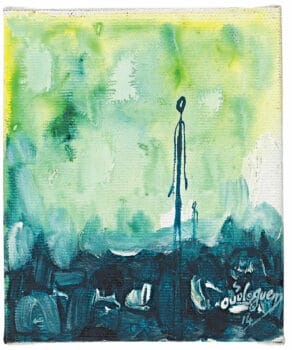
Souleymane Ouologuem (Mali), The Foundation, 2014.
In the first two weeks of May 2022, the Malian military government ejected the French military and withdrew from G5 Sahel in the wake of deep resentment across Mali spurred by civilian casualties from French military attacks and the French government’s arrogant attitude towards the Malian government. Colonel Assimi Goïta, who leads the military junta, said that the agreement with the French ‘brought neither peace, nor security, nor reconciliation’ and that the junta aspires ‘to stop the flow of Malian blood’. France moved its military force from Mali next door to Niger.
No one denies the fact that the chaos in the Sahel region was deepened by the 2011 NATO war against Libya. Mali’s earlier challenges, including a decades-long Tuareg insurgency and conflicts between Fulani herders and Dogon farmers, were convulsed by the entry of arms and men from Libya and Algeria. Three jihadi groups, including al-Qaeda, appeared as if from nowhere and used older regional tensions to seize northern Mali in 2012 and declare the state of Azawad. French military intervention followed in January 2013.
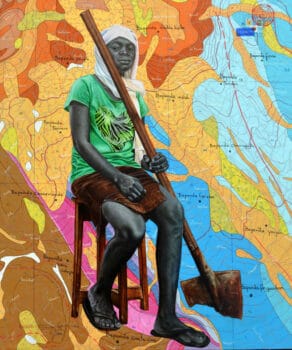
Jean-David Nkot (Cameroon), #Life in Your Hands, 2020.
Travel through this region makes it clear that French–and U.S.–interests in the Sahel are not merely about terrorism and violence. Two domestic concerns have led both foreign powers to build a massive military presence there, including the world’s largest drone base, which is operated by the U.S., in Agadez, Niger. The first concern is that this region is home to considerable natural resources, including yellowcake uranium in Niger. Two mines in Arlit (Niger) produce enough uranium to power one in three light bulbs in France, which is why French mining firms (such as Areva) operate in this garrison-like town. Secondly, these military operations are designed to deter the steady stream of migrants leaving areas such as West Africa and West Asia, going through the Sahel and Libya and making their way across the Mediterranean Sea to Europe. Along the Sahel, from Mauritania to Chad, Europe and the U.S. have begun to build what amounts to a highly militarised border. Europe has moved its border from the northern edge of the Mediterranean Sea to the southern edge of the Sahara Desert, thereby compromising the sovereignty of North Africa.
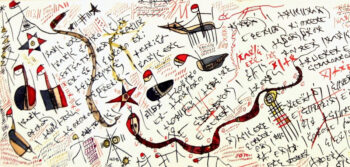
Hawad (Niger), Untitled, 1997.
Military coups in Burkina Faso and Mali are a result of the failure of democratic governments to rein in French intervention. It was left to the military in Mali to both eject the French military and depart from its G5 Sahel political project. Conflicts in Mali, as former President Alpha Omar Konaré told me over a decade ago, are inflamed due to the suffocation of the country’s economy. The country is regularly left out of infrastructure support and debt relief initiatives by international development organisations. This landlocked state imports over 70% of its food, whose prices have skyrocketed in the past month. Mali faces harsh sanctions from the Economic Community of West African States (ECOWAS), which will only deepen the crisis and provoke greater conflict north of Mali’s capital, Bamako.
The conflict in Mali’s north affects the lives of the country’s Tuareg population, which is rich with many great poets and musicians. One of them, Souéloum Diagho, writes that ‘a person without memory is like a desert without water’ (‘un homme sans mémoire est comme un desert sans eau’). Memories of older forms of colonialism sharpen the way that many Africans view their treatment as ‘collateral victims’ (as the AU’s Mahamat described it) and their conviction that it is unacceptable.
Warmly,
Vijay
https://thetricontinental.org/newslette ... -conflict/
**************************
South Africa and the Special Military Operation in Ukraine
Posted by INTERNATIONALIST 360° on JUNE 2, 2022
Dmitry Bokarev

Relations between the Russian Federation and the Republic of South Africa, which have always been cordial, are now being put to the test. This is due to the start of Russia’s special military operation in Ukraine. Many countries around the world are engaged in a public debate about Russia’s actions. South Africa, considered one of the leading nations on the African continent and a member of the BRICS, could not help but voice its position on the special military operation.
Soon after the fighting began, much of the South African media became critical of Russian policy, and representatives of the Ukrainian embassy in South Africa made many high-profile statements on the special military operation during televised appearances. This turn of events is largely due to the fact that a large part of South Africa’s news agencies are controlled by Western, including US, companies and therefore cannot objectively portray reality and show the true public sentiment. Representatives of the Russian Foreign Ministry who attempt to dispel the lies are not given the proper amount of screen time. However, the official position of the South African leadership differs from the rhetoric of the media.
Based on the UN General Assembly votes on the two anti-Russian resolutions related to the events in Ukraine, most of the African states were neutral towards Russia, with many countries choosing to abstain from voting. South Africa in particular refused to condemn Russia’s actions in both surveys. Moreover, South African representatives have proposed an alternative version of the resolution on Ukraine that makes no reference to Russian aggression against that state and the wording is more restrained. South African diplomats thus called on the international community to be more objective about what is happening.
On March 10, 2022, the Presidents of South Africa and Russia had a telephone conversation. During the conversation between the two leaders, the two countries touched on the expansion of bilateral dialogue, and the reasons and objectives of the special military operation were discussed. Russian President Vladimir Putin’s arguments proved compelling, and so South African President Cyril Ramaphosa concluded that this military conflict was the fault of NATO, which continued to expand eastwards, disregarding the growing instability in Europe. The South African leader was one of the few who was able to speak out openly against NATO. Such rhetoric shows that South Africa is able to conduct an independent foreign policy despite a difficult foreign policy environment.
It is interesting to note that this is not the first independent foreign policy move by South Africa, which in February 2020 was the only member state of the UN Security Council to endorse the Russian actions and criticize the British draft resolution that sought to approve the outcome of the Berlin conference to resolve the conflict in Libya.
Of course, in South Africa, as in any pluralist democracy, there are political forces that condemn the Kremlin’s policy on Ukraine. It is important to bear in mind that the Western-controlled South African media exaggerates the number of Russia’s opponents in the country: in reality, their numbers are small compared to those who agree with Russia’s actions.
The special military operation is mainly favored by South Africa’s left-wing parties, the Economic Freedom Fighters and the South African Communist Party. According to the communists, NATO itself provoked the conflict by sponsoring Ukrainian nationalists and sowing discord in Ukraine. Many opposition politicians point out that the US is not taking into account the treaties it has signed and is acting solely in its own interests. Julius Malema, leader of the Economic Freedom Fighters, endorsed the policy of the Russian Federation and said that the Soviet Union had contributed very much to the struggle of the people of South Africa against the apartheid regime. Malema is convinced that the current world order is outdated and that the global community is tired of Washington’s dominance.
Former South African President Jacob Zuma also voiced his position on the special military operation in Ukraine. He is convinced that the current conflict between Ukraine and Russia is part of the global confrontation between Russia and the West. The former president believes that Russia and China are defending their geopolitical interests and trying to pursue independent economic policies. Jacob Zuma’s daughter Dudu Zuma-Sambudla has launched the hashtag #IStandWithRussia on social media to show support for Russia’s policies. Western media attempted to discredit the former president’s daughter by accusing her of co-operating with Russian media holdings, but their efforts were in vain – this was a personal initiative of Dudu Zuma-Sambudla. It should be noted that, in general, pro-Russian sentiments in African countries are quite strong.
There are many reasons why Russia’s position is popular among South African politicians and public figures. First, South Africa’s population of 60 million is well aware of the double standard of the US and its allies. The US military interventions in Afghanistan, Iraq, Libya and many other countries are presented by the Washington-controlled media as wars of liberation against tyranny, but condemn Russia’s special military operation in Ukraine. Second, South Africa is very grateful to the USSR for its many years of assistance in combating the apartheid system. South African politicians remember the actions of the Soviet Union well and are therefore careful not to make harsh statements against Moscow. It is interesting to note that on February 23, the day before the start of the Russian special military operation in Ukraine, the South African minister of defense visited the Russian embassy, where Defender of the Fatherland Day celebrations were taking place. South Africa, aware of Russia’s military might, has for years been strengthening its military and political ties with Russia.
Still, we should not expect the South African leadership to openly defend Russia in the international arena. The country is very economically linked to Western countries. Public support for a special operation could lead to serious economic sanctions, a severe economic crisis and international isolation. It is more likely that if Russia fulfils all of its objectives and thus becomes geopolitically stronger, South Africa will revise its foreign policy more substantially.
Nor will the South African authorities openly condemn Russia’s actions to please Washington. Such a move would not be appreciated by many political forces in the country, and in turn the public would not react favorably to this rhetoric. It is also worth considering that by doing so, South Africa risks damaging relations with Russia and the countries that support it.
South Africa is in a difficult position. Public support for Russia would be painful for the economy and international relations, while condemnation of Russia’s special military operation in Ukraine could also lead to extremely negative consequences. In the current situation, the South African leadership has taken the best position for itself: neutrality. By maintaining neutrality, the country maintains normal relations with both sides of the conflict without harming its economy or provoking a negative public reaction.
https://libya360.wordpress.com/2022/06/ ... n-ukraine/
Notes from Wartorn Ethiopia, Part V
Posted by INTERNATIONALIST 360° on JUNE 2, 2022
Ann Garrison
Notes from Wartorn Ethiopia, Part 5Ethiopian Orthodox Christian monk Aba Gebreselassie explains how he fled when the TPLF invaded Waldeba
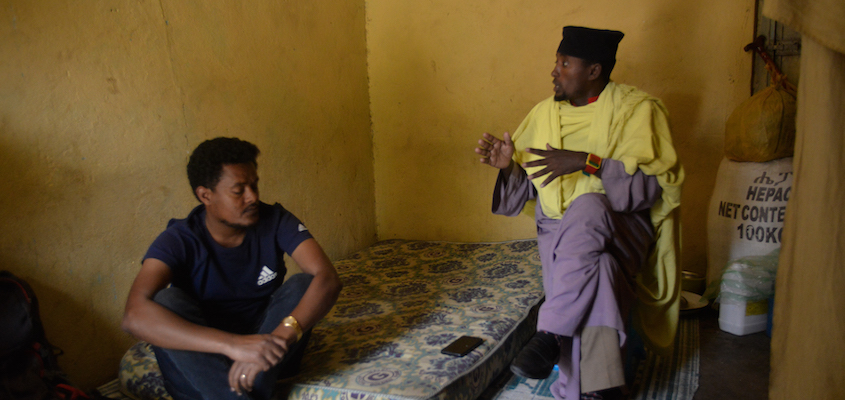
Monastery in Amhara Region, Ethiopia. University of Gondar Professor Menychle Meseret Abebe listens and translates. (Photo: Alastair Thompson)
Ann Garrison ends her reporting from the Horn of Africa with updates on the Grand Ethiopian Renaissance Dam and the conflict between Ethiopia and the TPLF.
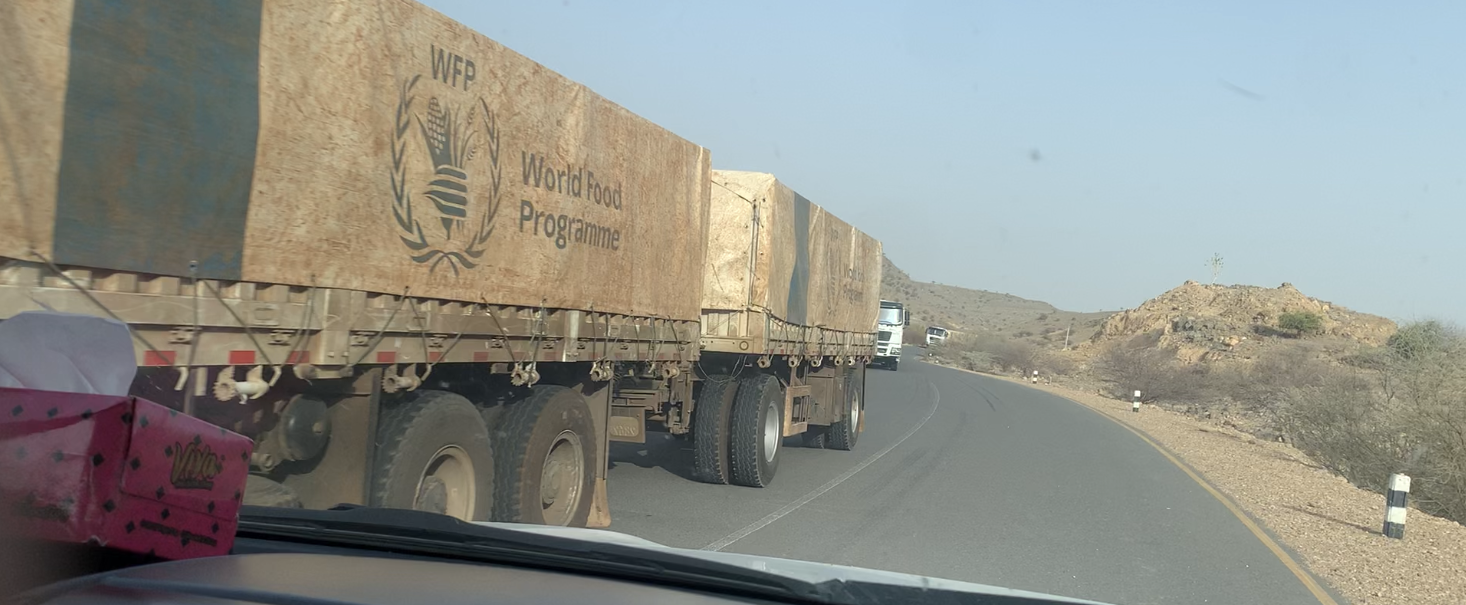
Barring anything unforeseen, these will be my last notes from Ethiopia for now. I have been in the Horn of Africa—specifically Ethiopia and Eritrea—for nearly two months. That’s far longer than I’d expected to stay, thanks to all the kind people who offered to host and facilitate my efforts, so that I could see and report more. I wouldn’t have been able to do this without them or without my traveling companions at various stages, US photojournalist Jemal Countess , Ethiopian American multimedia journalist Betty Sheba Tekeste , and Scoop-New Zealand journalist Alastair Thompson , whose insights and photos have all appeared in my reports. Their Twitter accounts are well worth following.
As I scroll through my cell phone snapshots, I come across one taken several days ago from the back seat of a bajaj, aka “tuk tuk,” one of the three-wheeled blue taxis in service all over Ethiopia. Drivers decorate these vehicles with their favorite decals, including the phrases “#NoMore” and “It’s My Dam,” images of Ethiopian Emperors Menelik and Tewodros, and the image of Bob Marley. The driver of this bajaj had affixed a red, green, and gold “RASTA” decal to one side of his front window and a red, green, and gold cannabis leaf decal to the other. Emperor Haile Selassie gave land to a Rasta community in Ethiopia, but smoking the sacred herb is still illegal. This is one of many things I still don’t understand here.
On every leg of the trip I’ve asked myself whether I really understand anything, though I’ve also reminded myself that any self-respecting journalist should. English is the most widely spoken foreign language in Ethiopia, but I’ve often relied on translation from Amharic, the most widely spoken Ethiopian language, and at times on translation from Afar to Amharic to English. Eighty indigenous languages are spoken in Ethiopia, as many as in the Democratic Republic of Congo. The state-owned Ethiopian News Agency (ENA) transmits news in the two most widely spoken domestic languages, Amharic and Oromiff, and plans to transmit in Tigrinya, Harari, Wolayetegna, Sidamegna, and Afari. It also transmits news in English, Arabic, and French, and plans to transmit in Kiswahili.
When I called ENA reporter Muse Mulessa to double-check that, he reminded me that I’d promised him speakers’ lists for the Sanctions Kill Coalition and the Black Alliance for Peace .
The Abay River and the unifying force of the Grand Ethiopian Renaissance Dam
On our way to Bahir Dar for a University of Bahir Dar conference on Ethiopia since 2018, Alastair Thompson and I flew over Lake Tana, the source of what we thought was the Blue Nile River. Lake Tana and the river are both muddy, heavy with sediment, so I asked why the river is called “the Blue Nile” and learned that Ethiopians don’t call it that; it’s the Abay River to them. It becomes “the Blue Nile” only after crossing into Sudan, where it joins the White Nile to become the Nile before crossing into Egypt. It seems that in Sudan the water level is so high during flood times that the river changes color to almost black and, in the local Sudanese language, the word for black is also used for blue.
Egypt claims to own every last drop of Ethiopia’s Abay River because it flows into what they call the Nile and some moldy British colonial treaty deeded all waters flowing into the Nile to them. On these flimsy grounds, Egypt bitterly opposed construction of the Grand Ethiopian Renaissance Dam (GERD) on the Abay River, just before it flows into Sudan and becomes the Blue Nile. Tension between Egypt, Sudan, and Ethiopia over the dam continues, but the dam is built, it began generating electricity in February this year, and the third filling will get underway soon, during the June-to-September rainy season.
Ethiopia’s hopes are heavily invested in the GERD. It’s a source of great pride that Ethiopians and the Ethiopian diaspora have financed its construction by purchasing bonds. Chinese interests are building the electricity delivery infrastructure, and at the outset of the TPLF war, Chinese and Ethiopian officials met to discuss protecting this and other Chinese investments.
Ethiopians are struggling to overcome the enormous damage done during the TPLF’s 27-years of divide-and-rule ethnic politics, backed by the US, and I haven’t seen anything that unites them more than the GERD. An Egyptian engineer, quoted in Al Monitor , described this strength from sore loser Egypt’s viewpoint: “The latter [Ethiopia] is exploiting the GERD project politically at the domestic level, claiming it is a national project unifying all Ethiopian ethnic groups.”
“Because it is! And it will!” said one of my hosts. “Ethiopians at every level leaped to invest in the dam. Even poor Ethiopians working in the Arab countries saved their money to invest in the dam. An attack on the dam would be like the Italian invasion that stirred Ethiopians to unite behind Emperor Menelik to win the Battle of Adwa in 1896.”
Everyone expects the TPLF to escalate the war again soon but not without US support
After the government declared a unilateral, humanitarian ceasefire at the end of December, the TPLF continued its attacks on the 1600-year-old Waldeba Monastery in Amhara Region, displacing 1000 monks. In Gondar, Amhara Region, Alastair and I interviewed a young monk who said the TPLF had demanded to know the positions of the Ethiopian military, the Amhara Special Forces, and the FANO militia, and then refused to accept the monks’ answers that they were not military men, but men of God. He said he had fled while the TPLF fired bullets after him, then jumped into a river to escape.
The Waldeba Monastery is spread out over a very wide area, including forests and caves. The displaced monks say that, with 75% of the monks gone, the TPLF have established a military base, which could be used for a new TPLF offensive into Amhara Region from the east.
Just before the government’s December ceasefire, the TPLF invaded Afar Region, shelling towns indiscriminately and displacing hundreds of thousands of Afar tribespeople, seemingly in an effort to once again threaten the Addis-Djibouti transport corridor, which is both a highway and railway line. However, Afar tribesmen, with some help from Ethiopian Air Force drones, drove them back inside the borders of Tigray Province roughly four weeks ago.
Fighting has been sporadic since, but in early May, the TPLF attacked the Eritrean Army at Badme, resulting in reported but as yet unconfirmed counterattacks.
Everyone we spoke to expects the TPLF to escalate again soon when June rains make it more difficult for the Ethiopian Air Force to operate its drone force. Many believe that TPLF forces amassed in Sudan may try to invade over Amhara Region’s western border.
Despite US declarations that all warring parties are responsible, no one we spoke to believes that the TPLF could keep fighting without the political, diplomatic, and most likely material support of the US, which may include pending sanctions.
I wish I could conclude on a lighter note, but summoning Gramsci’s “pessimism of the intellect, optimism of the will,” I can only resolve to share what I’ve learned back home and suggest that the US let Ethiopia live.
https://libya360.wordpress.com/2022/06/ ... ia-part-v/
Congress Passes Anti-Russia Bill Reinforcing Neo-Colonialism in Africa
Posted by INTERNATIONALIST 360° on JUNE 1, 2022
Abayomi Azikiwe
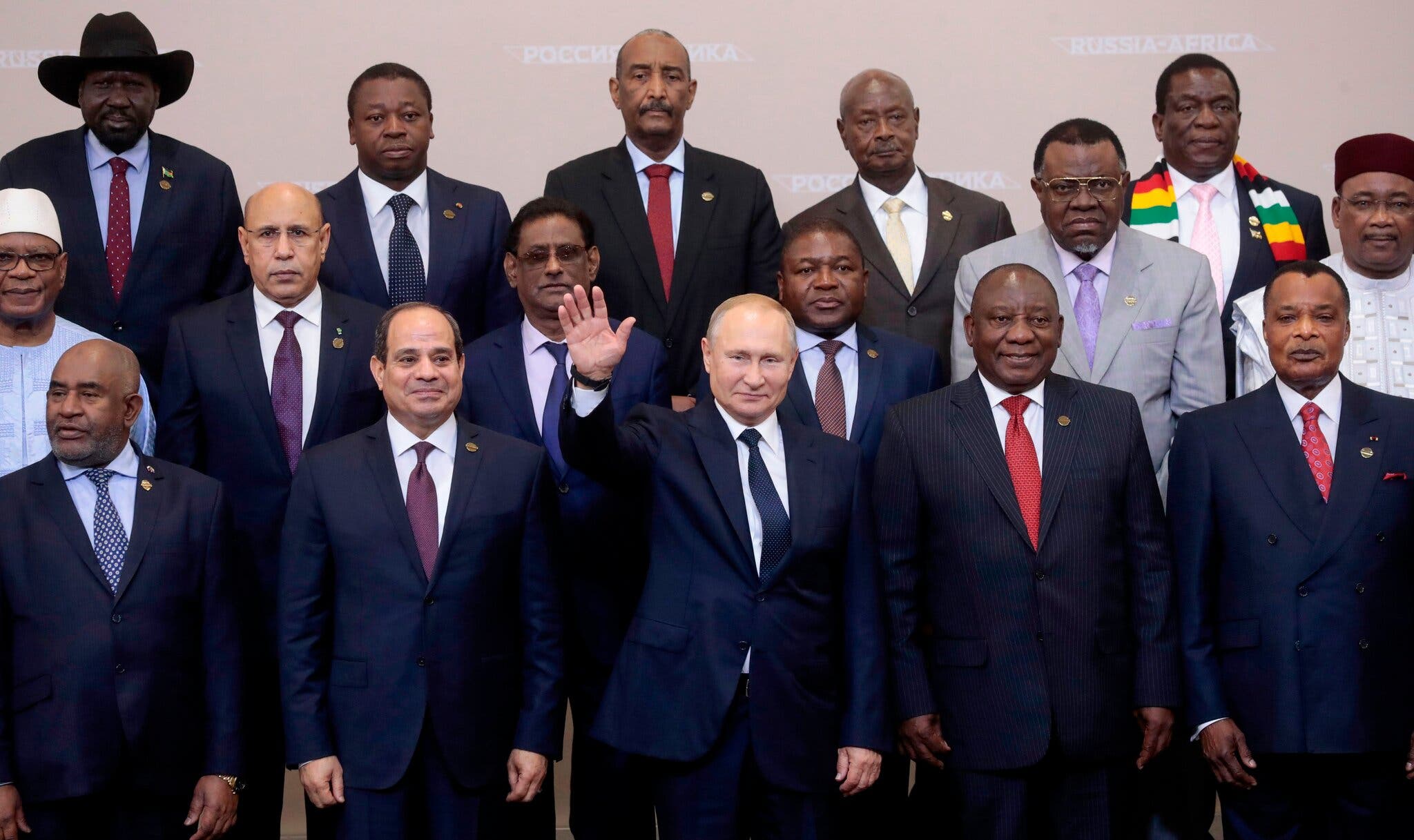
Africa and Russia Summit during 2019
A United States Congressional bill has been approved by a wide margin that would target and punish African states that maintain political and economic relations with the Russian Federation.
The hostile action by the Congress which is dominated by the Democratic Party continues the efforts to isolate Moscow and intensify the war in Ukraine.
Labeled as the “Countering Malign Russian Activities in Africa Act,” H.R. 7311 was passed on April 27 by the House of Representatives in a bipartisan 419-9 majority and will probably be approved by the Senate which is evenly split between the Democrats and the Republicans. This legislative measure is broadly worded enabling the State Department to monitor the foreign policy of the Russian Federation in Africa including military affairs and any effort which Washington deems as “malign influence.”
Russian military operations in Ukraine are in response to Washington and Wall Street’s efforts to expand the North Atlantic Treaty Organization (NATO) deeper into Eastern Europe as a direct threat to the interests of the Russian Federation and its allies. Two other bills have recently been passed to maintain and expand Pentagon military bases around the world along with providing an additional $40 billion to supply weapons to the Ukrainian government which is bolstered by neo-Nazi militias integrated into the armed forces.
During the early phase of the Russian special operations in Ukraine, many African states abstained from two United Nations General Assembly resolutions motivated by Washington to condemn the Russian government for its intervention in Ukraine while completely ignoring the level of fascist infiltration of Kiev military forces and the necessity of reaching a diplomatic solution to the burgeoning conflict. African heads-of-state, such as President Cyril Ramaphosa of the Republic of South Africa, have consistently argued that the African National Congress (ANC) led government in Pretoria will not support the Ukraine war along with the draconian sanctions instigated by the Biden administration. Ramaphosa has demanded that the U.S. State Department and White House support negotiations between Kiev and Moscow, which have been routinely undermined by Biden and his cabinet members.
Long before the February 24 intervention by the Russian armed forces, the U.S. had engaged in repeated threats against President Vladimir Putin and the entire government based in Moscow demanding that it acquiesce to the expansion of NATO. Unprecedented sanctions, with the stated aims of completely blockading Russia from the world economic system, have largely failed to curtail the advances by Moscow in eastern Ukraine.
The only foreign policy towards Eastern Europe that has been devised by the Biden administration, which follows a neocon ideological orientation, is to announce additional sanctions and send in more weapons to the regime of Ukraine President Volodymyr Zelensky. The war policy towards Moscow is extended to the People’s Republic of China where Biden has also threatened military intervention in relation to the Taiwan situation. Even within the Western Hemisphere, Biden has sought to isolate the Republic of Cuba and the Bolivarian Republic of Venezuela from a Summit of the Americas planned for June in Los Angeles.
A leading Nigerian newspaper, Premium, sought to provide a rationale for the legislation now moving through the Senate. The report issued on May 20 reads in part that:
“New York Democrat Gregory Meeks, chair of the House Foreign Affairs Committee, said the bill was designed to thwart Russian President Vladimir Putin’s efforts to ‘pilfer, manipulate and exploit resources in parts of Africa to evade sanctions and undermine U.S. interests,’ and to finance his war in Ukraine. Mr. Meeks also presented the bill as supportive of Africa, intended to protect ‘all innocent people who have been victimized by Putin’s mercenaries and agents credibly accused of gross violations of human rights in Africa, including in the Central African Republic and Mali.’ It is specifically in the Central African Republic (CAR) and Mali that Wagner has been accused of committing human rights violations to prop up dubious governments and thwart Western interests. Some African governments suspect there’s more at play than protecting ‘fragile states in Africa,’ as Mr. Meeks put it. ‘Why target Africa?’ one senior African government official asked. ‘They’re obviously unhappy with the way so many African countries voted in the General Assembly and their relatively non-aligned position.’”
‘Neo-Colonialism: The Last Stage of Imperialism’
Yet within Congressman Meek’s comments there is no acknowledgement of the centuries-long enslavement and colonization of African people by the western feudal and capitalist states, including the U.S. In fact, there has never been any apology let alone gesture towards paying reparations to the African people on the continent and throughout the globe for the destruction caused by the plunders of involuntary servitude and political domination engendered by international finance capital.
The actual historical record reveals that Russia, even under monarchial rule prior to 1917, never participated in the Atlantic Slave Trade, colonization on the continent or the Western Hemisphere where hundreds of millions of Africans remain up until this day. Contrary to the posture of the U.S. and its NATO allies, the former Soviet Union as well as China and other socialist states supported the anti-colonial, national liberation and civil rights struggles waged by the African people from the period after World I up until the 21st century. It was successive administrations in Washington which gave military and economic solace to the colonial powers operating in Africa and throughout the world. All of the legitimate liberation movements and popular struggles against racism, capitalism, colonialism and imperialism were opposed by the U.S.
Since the advent of independent African states during the late 1950s, the U.S. has become the leading neo-colonial imperialist power on the continent and around the world. Neo-colonialism seeks to maintain economic, political and social control over independent states through the roles of transnational corporations and military apparatuses, with NATO as the leading alliance designed to maintain the global status-quo.
According to Dr. Kwame Nkrumah, founder of modern Ghana and Africa, Neo-colonialism is the major threat to African unity and development since the 1960s. Nkrumah states in his book entitled “Neo-Colonialism: The Last State of Imperialism” (1965):
“Faced with the militant peoples of the ex-colonial territories in Asia, Africa, the Caribbean and Latin America, imperialism simply switches tactics. Without a qualm it dispenses with its flags, and even with certain of its more hated expatriate officials. This means, so it claims, that it is ‘giving’ independence to its former subjects, to be followed by ‘aid’ for their development. Under cover of such phrases, however, it devises innumerable ways to accomplish objectives formerly achieved by naked colonialism. It is this sum total of these modern attempts to perpetuate colonialism while at the same time talking about ‘freedom’, which has come to be known as neo-colonialism. Foremost among the neo-colonialists is the United States, which has long exercised its power in Latin America. Fumblingly at first she turned towards Europe, and then with more certainty after world war two when most countries of that continent were indebted to her. Since then, with methodical thoroughness and touching attention to detail, the Pentagon set about consolidating its ascendancy, evidence of which can be seen all around the world.”
Consequently, the U.S. Congress at the beckoning call of the Biden administration has no right to dictate what the relations between the Russian Federation and the African Union (AU) member-states should be. The AU governments and more so among the workers, women, farmers, youth and revolutionary intelligentsia, have nothing to gain from the U.S. attempts to prohibit sovereign states from engaging in trade deals and military alliances that Washington deems to be at variance with its own interests.
Moreover, the peace and antiwar movements in the U.S. should be outraged at all of these legislative and administrative measures which will not only harm the people of Africa and other geopolitical regions, these actions by the ruling elites in Washington are a detriment to the working class and oppressed within North America. As U.S. working families face the highest increases in fuel, food, housing and other costs in over four decades, it will not be long before the people understand that the alleviation of the impoverishment among the masses cannot be addressed absent the elimination of the Pentagon budget and dismantling of military bases around the globe.
https://libya360.wordpress.com/2022/06/ ... in-africa/
********************
“Security situation in Darfur remains very dangerous”
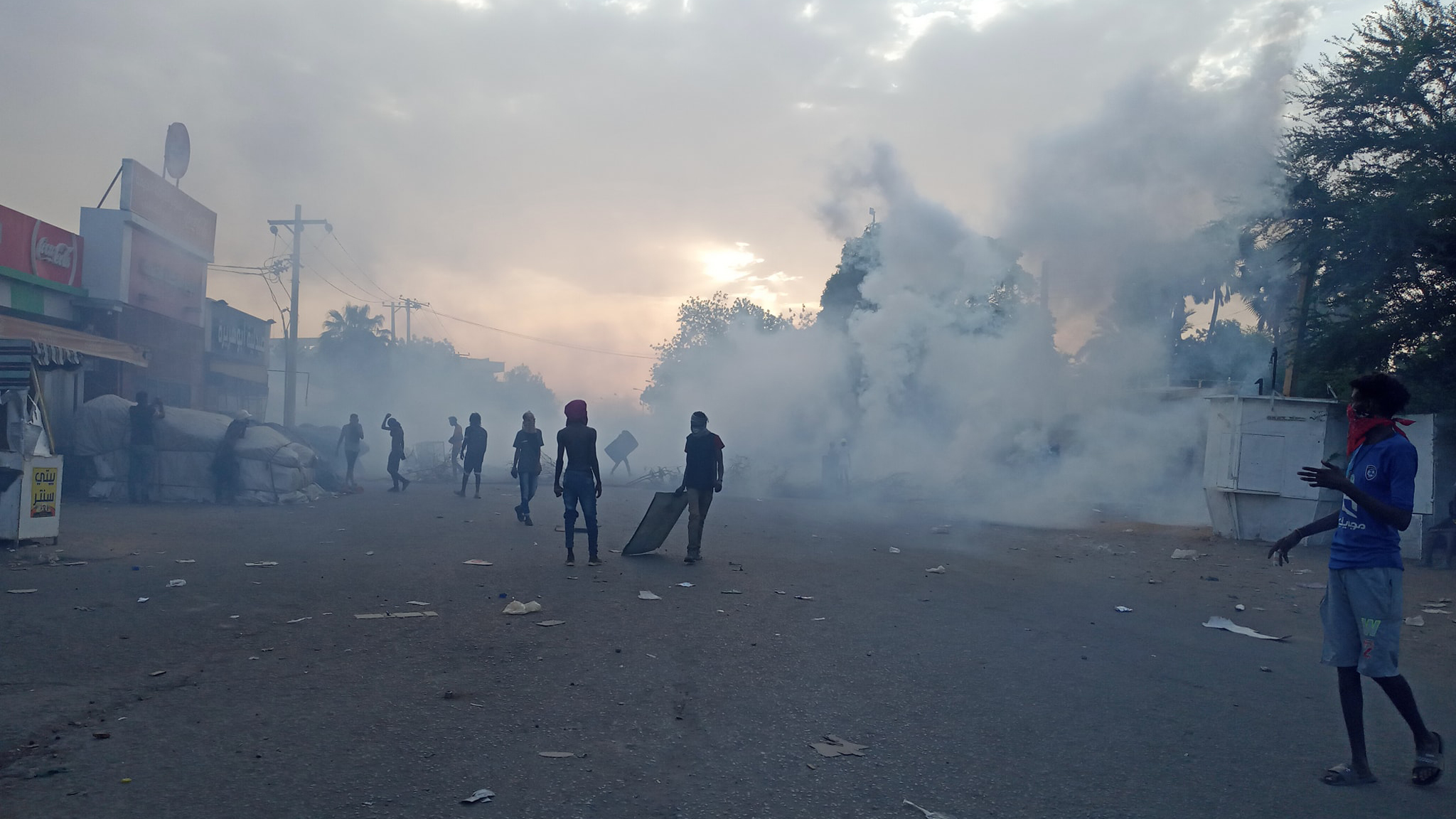
Reiterating the call for a UN force to protect the displaced who have been “left at the mercy of militias,” Adam Rojal, spokesperson of Darfur’s refugees and IDPs, told Peoples Dispatch that violence in Darfur is part of the military junta’s campaign “to kill the surviving victims of genocide and war crimes”
May 30, 2022 by Pavan Kulkarni
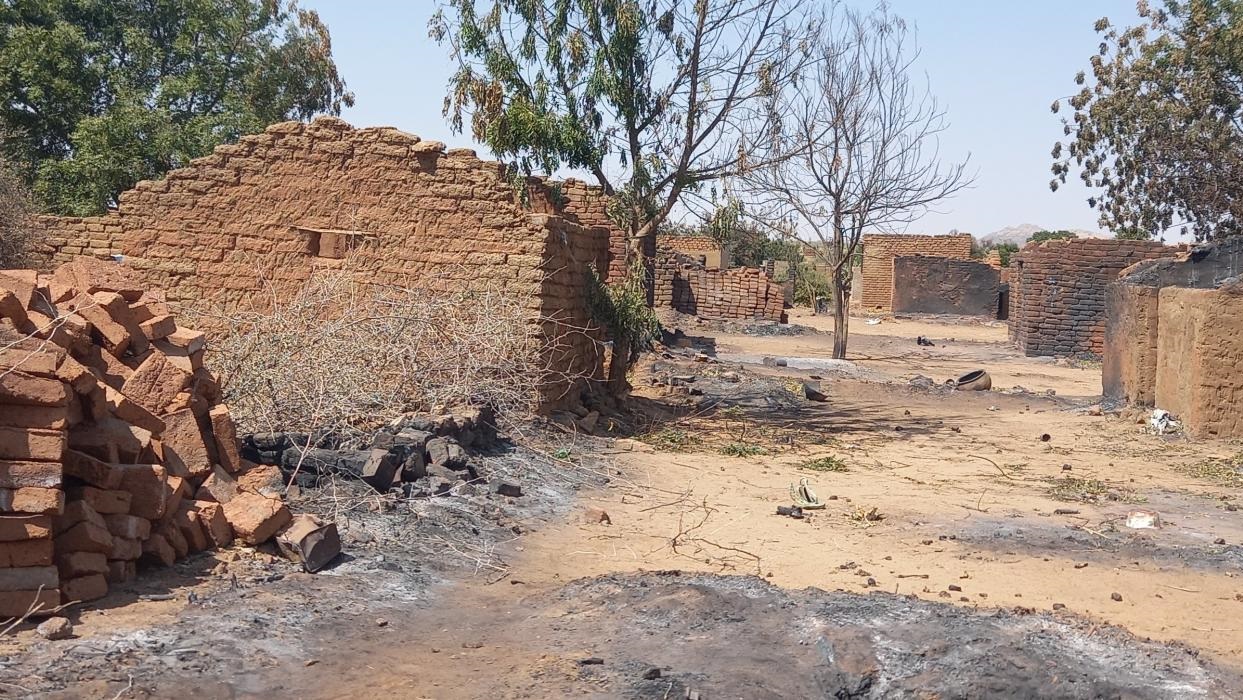
Damaged structures in the city of Kreinik in Sudan's West Darfur from March 2022. Photo by Wilberforce Musombi / NRC.
A month after the deadly armed attacks which started in West Darfur’s Kereinik town and spread to the State’s capital El Geneina, killing at least 200 between April 22 and April 30, the security situation in the Sudan’s Darfur region “remains very dangerous,” according to Adam Rojal, spokesperson of the General Coordination of Displaced and Refugees.
The UN estimated that 85,000 to 115,000 people were displaced in the violence and have been unable to return as “their homes, their livelihood in markets and the local institutions have all burnt down,” he told Peoples Dispatch in an interview.
With an uncertain future ahead, they live in the fear that “another attack will happen and the security forces present there will withdraw and leave the civilians and the displaced at the mercy of the Janjaweed militias, like on April 24, when Kereinik was attacked from all directions.”
The road linking this town to El Geneina “is still closed by the Janjaweed militias who loot, kill and rape civilians trying to pass through,” he added. “Supplies of food, water etc. get into Kereinik only twice a week when the security forces provide escort.”
Rojal maintains that at this point, there is no alternative to a UN-backed “international force under Chapter 7 to protect the citizens and displaced people in the Darfur region. Without this, violence, attacks and killings will continue until there is a civilian government made up of independent professionals who have a record of confronting this military junta and its generals.”
The army, he argues, cannot be relied upon to defend the civilians as it collaborates with the Rapid Support Forces (RSF), which was involved in the attack on April 24. The RSF, which was formed from the notorious Janjaweed militias in 2013, is led by the military junta’s second-in-command, General Mohamad Hamdan Dagalo, aka Hemeti.
These militias of nomadic herdsmen were armed and trained in the early 2000s under the regime of former dictator Omar al-Bashir to suppress the rebel groups of the marginalized sedentary communities of farmers and pastoralists. Even after the integration of many of these militias into the RSF, those that remain outside are not disbanded and disarmed. RPGs and other weapons used by these militias in the attacks were owned by the RSF, Rojal claimed.
While the media had widely reported the massacres last month as “tribal violence,” Rojal asserted that the “massacres were carried out in a very orderly and systematic manner, using weapons and vehicles from the state’s warehouses. No citizens own these hundreds of large vehicles equipped with the modern weapons that were used in the attack. This is not a tribal war. It is the state which kills, rapes and displaces its citizens and cloaks it as a tribal conflict.”
He argues that the characterization of the violence in Darfur as a tribal conflict is the state’s attempt to conceal “the truth of the matter” that “an attempt is underway to kill the surviving victims of genocide and war crimes, with the aim of eventually seizing their lands” that are “rich in mineral wealth.”
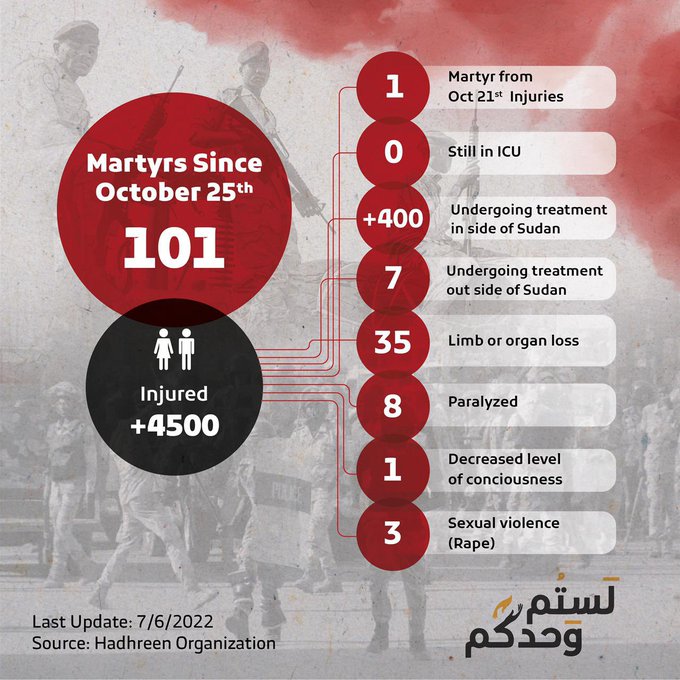
At least 300,000 have already been killed and over 2.5 million displaced in this conflict in Darfur which is nearing two decades. The violence has intensified since the military coup in October 2021. The Janjaweed militias, Rojal said, “have been reassured and further emboldened, because the generals, under whose supervision they had carried out the campaign of genocide and crimes against humanity in Darfur, are the ones who seized power.”
Only four months before the coup, by the end of June 2021, the withdrawal of the African Union-United Nations Hybrid Operation in Darfur (UNAMID), which had begun at the start of last year, was complete. Its mandate, which ended in December 2020, was not renewed because the military and the armed rebel groups had signed a peace agreement in South Sudan’s capital Juba by October that year.
“The government had claimed they would form a joint security force including even the rebel fighters who had signed the Juba peace agreement. UNAMID accepted this and left. But this joint force is totally incapable of acting to protect civilians. So civilians, including those displaced, are left at the mercy of the Janjaweed militias. This is one of the great crimes that happened at Juba,” Rojal said.
Those displaced in the war and the organization representing them “were never consulted when the agreement was signed in Juba. We had said at the time that this Juba agreement – like the agreements in Abuja, Tanzania and Qatar – will only bring more killing, bloodshed, destruction and displacement. But UNAMID and the sponsors of the agreement brought people from the cities to represent our will and speak on our behalf.”
Rojal argued that for “a comprehensive peace process that addresses the roots of this historical Sudanese crisis, the putschists must be overthrown – forced to submit to the demands of the Sudanese people and hand over power to civilians.” He insists that only a civilian government “made up of independent professionals who have a record of confronting this military junta and its generals” can lead a genuine peace process inclusive of all sections.
Peoples Dispatch: Following the massacres in West Darfur in the last week of April, killing at least 200 and displacing about a 100,000, incidents of armed robberies, rapes and murders continue to be reported from various parts of Darfur. What is the current security situation in the region?
Adam Rojal: The security situation in Darfur remains very dangerous – to the extent that you could be walking in the street and be hit by a bullet, because the government has left the citizens and the displaced at the mercy of the Janjaweed militias and Rapid Support Forces (RSF). Killings, rapes, displacement and looting, torture, arbitrary detention and other human rights violations continue in all of Sudan, especially in the states of West Darfur and South Darfur.
PD: What is the situation in El Geniena and Kereinik that witnessed much of the killings last month?
AR: In Kereinik and El Geneina, where more than 200 were killed and 136 wounded, we lost scholars, government employees, health workers, religious elders and others. All local houses, markets and police stations were burnt. The situation in these cities is still frightening. The road linking Geneina and Kereinik is still closed by the Janjaweed militias who loot, kill and rape civilians trying to pass through. Supplies of food, water etc. get into Kereinik only twice a week when the security forces provide escort. We need international protection under Article 7 of the Charter of the United Nations, not by the Sudanese government forces which have failed and appear unable to carry out its primary and first duty, which is to protect civilians and defenseless citizens.
PD: UN OCHA had said at the start of this month that anywhere between 85,000 to 115,000 people were displaced in the violence in the last week of April. How many of them, by your estimation, have been able to return since?
AR: No, the victims have not returned to their areas or to their homes because they have lost everything. How can people return when their homes, their livelihood in markets and the local institutions have all burnt down? How can they return when there is no longer any shelter? To help their return, the state needs to provide them with care and emergency services, food, water, medicine and other daily humanitarian needs. Until now, what has been provided is insufficient, since their number is very large. People are still afraid that another attack will happen and the security forces present there will withdraw and leave the civilians and the displaced at the mercy of the Janjaweed militias, like on April 24, when Kereinik was attacked from all directions. All trust between the people and security forces is lost.
PD: You have pointed out that the heavily armed men in the uniforms of Rapid Support Forces (RSF), which is led by the military junta’s second-in-command General Hemeti, were involved in these attacks. This has been well-established in several video footage and eyewitness accounts also. But you have also accused the army and the military junta, which is de-facto the state, of being complicit.
AR: The accusation is 100% correct. The RSF is central to these attacks. There are also indications that the RPGs and many other weapons used by the other Janjaweed militias (not formally integrated into the RSF) were also owned by the RSF. The army and the other Sudanese security forces are also complicit. If there was no complicity and coordination, they would not have withdrawn just as the attack started, leaving the citizens at the mercy of these militias. The massacres were carried out in a very orderly and systematic manner, using weapons and vehicles from the state’s warehouses.
No citizens own these hundreds of large vehicles equipped with very modern weapons that were used in the attack. This is not a tribal war. It is the state which kills, rapes and displaces its citizens and cloaks it as a tribal conflict. From central government to local governments, from the de-facto head of state, General Abdel Fattah al-Burhan and his deputy Hemeti to West Darfur’s governor, Khamis Abdallah Abkar – all of them bear responsibility.
PD: Much of the media continues to report on these massacres as “tribal violence.” UN bodies also refer to it in their official statements as conflict between “Arabs” and “non-Arabs”. But you have been arguing that what is unfolding is a state-led depopulation campaign on mineral-rich lands. Can you elaborate?
AR: Yes, the current violence in Darfur has nothing to do with tribal conflicts. The state gives that characterization to the violence in order to divert attention, because the truth of the matter is that an attempt is underway to kill the surviving victims of genocide, war crimes and crimes against humanity, with the aim of eventually seizing their lands. And these lands are rich in mineral wealth. For the state to benefit from these resources, the indigenous population must be evicted, especially because they object to excavation. So civilians in these areas are targeted in order to force them to flee.
PD: Armed attacks and consequent displacements had never really stopped in Darfur despite the short-lived joint civilian-military government or the Juba peace agreement it signed with most rebel groups. But specifically, since the coup last October, has there been an observable deterioration in the security situation in Darfur?
AR: The joint civilian-military transitional government that was formed after the remarkable overthrow of Omar al-Bashir never really accorded us our natural rights as victims in refugee camps. But it was still better than what we are facing now. When there were attacks by RSF and Janjaweed militias, they were at least documented. But after the coup, these militias have been reassured and further emboldened, because the generals, under whose supervision they had carried out the campaign of genocide and crimes against humanity in Darfur under Bashir, are the ones who seized power.
PD: Only months before the coup, by the end of June 2021, the withdrawal of the African Union-United Nations Hybrid Operation in Darfur (UNAMID), which had already begun since January, was complete. Its mandate ended in December 2020 and was not renewed. You were among the people who had strongly warned against the withdrawal. An estimated 430,000 were displaced last year alone. Looking back, do you believe the continued presence of UNAMID would have served to deter any of the violence that followed?
AR: We continue to warn about the security consequences even after the withdrawal of UNAMID. There is no longer an alternative to UNAMID protecting the displaced and citizens in the Darfur region. UNAMID was something better than nothing. Although it did not have the ability to use force to protect the victims, it was standing with the victims and submitting periodic reports to the UN Security Council. And these were neutral reports. But after the exit of UNAMID, there was no longer an independent body capable of reporting these violations to international bodies. The government had claimed they would form a joint security force including even the rebel fighters who signed the Juba peace agreement. UNAMID accepted this and left.
But this joint force is totally incapable of acting to protect civilians. So civilians, including those displaced, are left at the mercy of the Janjaweed militias. This is one of the great crimes that happened at Juba. That is why we renew our demand to the United Nations, the Security Council and all free people that there should be an international force under Chapter 7 to protect the citizens and displaced people in the Darfur region because violence, attacks and killing will continue until there is a civilian government, made up of independent professionals who have a record of confronting this military junta and its generals.
PD: A year before the coup, in October 2020, the Juba peace agreement was signed between the armed rebel groups and the military. While no peace followed in Darfur, the rebel groups which were offered a share in state power, went on to support the military coup in October 2021. How do the victims of the war, especially the IDPs, perceive this peace agreement?
AR: We, as the displaced and the general coordination acting on their behalf, were never consulted when the agreement was signed in Juba. We had said at the time that this Juba agreement – like the agreements in Abuja, Tanzania and Qatar – will only bring more killing, bloodshed, destruction and displacement. But UNAMID and the sponsors of the agreement brought people from the cities to represent our will and speak on our behalf. Despite our respect for the state of South Sudan, which is assisting the displaced Sudanese who were forced by circumstances to migrate there, we have to say that this agreement that was negotiated there is not valid. It does not meet the aspirations of the victims, refugees and displaced persons. Rather, it was an agreement to achieve the individuals’ aspirations for power.
PD: When this agreement was signed, it was a joint civilian-military transitional government where state power was shared between military and the civilian representatives chosen by the centrist and right-wing political parties in the Forces for Freedom and Change (FFC) coalition. This civilian presence in the state had given a certain legitimacy to the agreement, in Sudan and also internationally. How do you assess the conduct of these political parties and their representatives vis-a-vis the IDPs?
AR: These traditional parties, which have existed since 1956, have often shared power to form joint civilian-military transitional governments. Every time, this is followed by a coup in a couple of years or so. The FFC never considered us as victims. After they formed a government with the military, the civilian Prime Minister Abdalla Hamdok had come on a visit to the Abu Shouk camp on his Darfur trip. At the time, we had put forth more than 13 demands. These included provision of security, disarming and disbanding the Janjaweed forces, expelling new settlers the regime had brought in to occupy the lands and buildings of the displaced people, and the hand over to International Criminal Court of Omar al-Bashir, his former defense minister Abd al-Rahim, and all the other perpetrators of genocide, crimes against humanity and war crimes in Darfur.
We had also demanded compensation – both individual and collective. Individual compensation is necessary for the displaced to have something in hand to start restoring a normal life upon returning to their villages. Because all the wealth we had, all our inheritance from our ancestors, were plundered when the Sudanese army, RSF and the Janjaweed militias displaced us. As for collective compensation, we demanded the construction of model schools and provision of water, electricity and other basic services that the Sudanese people and the people all over the world should have. We had also demanded that the Prime Minister should visit the other camps. But our demands were not implemented. The Prime Minister never returned for a second visit.
PD: Let’s talk about the December Revolution. People of Darfur took a very active part in these protests which led to the overthrow of Omar al-Bashir in 2019. Given that the core circle of Bashir’s generals had managed to hold on to power despite his own overthrow, the nature of the state and its policy in Darfur may not have changed significantly. But has the revolution, particularly as a result of the formation of Resistance Committees in neighborhoods, had an enduring impact on conduct of popular politics and resistance in Darfur?
AR: Of course we, as victims in the camps, have resisted al-Bashir for more than 18 years. Although the Resistance Committees are not in the IDP camps but in the cities, we communicate and closely coordinate with them. Their appearance in Darfur with the December Revolution has indeed brought about a political change in that the people learnt how to confront the regime through peaceful organization of sit-in protests. Even after Bashir’s overthrow in 2019, there were four or five more sit-in protests organized in Darfur. The demands of most of them had to do with security. I will never forget the revolutionary slogans that resonated in these protests. I salute everyone involved in organizing these.
PD: Going forward, what would be a realistic plan to bring peace in Darfur? Are you hopeful about the future of Darfurians?
AR: Existence of a civilian government is essential for peace. In order to reach a comprehensive peace process that addresses the roots of this historical Sudanese crisis, the putschists must be overthrown – forced to submit to the demands of the Sudanese people and hand over power to civilians. After this a government should be formed of independent professionals known for fighting al-Bashir and his military elite now in power. This government should oversee a Sudanese-Sudanese dialogue that brings together all the Sudanese people without exclusion – including nomads, farmers, displaced persons and all other Sudanese people. This government should also undertake a restructuring of state’s institutions.
As for our optimism about the future of Darfur, there will be a beautiful future, but it will take many sacrifices to get there. Because we are now in a situation where the original landowners, forced to flee from their homes only three years ago, are not recognized anymore as the owners because these areas are controlled by militias. But in the end, we will definitely win. Because this is a legal issue, the law must take its course and those behind the horrific crimes must be brought to justice. Then there can be social peace and tolerance.
But at the present time and in the near future, if these things that I have explained are not achieved, it is very difficult to reach common ground. With the current economic and security situation, violence could escalate further, threatening also other of the regions in Sudan and even the other East African neighbors.
https://peoplesdispatch.org/2022/05/30/ ... dangerous/





 .
.