From Ghassan Kanafani to Walid Daqqah: Assassination, Imperialism, Resistance and Revolution
JULY 10, 2023

By Samidoun – Jul 8, 2023
On the 51st anniversary of the assassination of Palestinian revolutionary leader, intellectual, writer and artist, Ghassan Kanafani, and his niece Lamis Najem, in Beirut by a Mossad car bomb in 1972, Kanafani’s revolutionary direction, critical eye and focus on the popular forces and working class of Palestine are perhaps more relevant today than they have ever been.
We mark this anniversary while the resistance in Jenin refugee camp turned back the occupier’s destructive war machine, while the sons and daughters of the Palestinian popular classes organize, fight and resist in the villages camps and prisons of occupied Palestine, in the refugee camps surrounding the occupied land, and everywhere in exile and diaspora. And on this occasion, it is clear just why the Zionist regime targeted him — and the politics he represented — for assassination.
Ghassan Kanafani was targeted for assassination as part of a comprehensive policy of the Zionist regime to eliminate the leaders, spokespeople and revolutionary voices of the Palestinian liberation movement, a policy that continues to the present day. Kanafani’s assassination was followed shortly by that of Mahmoud Hamshari, Basil Kubaisi, Wael Zuaiter, Kamal ‘Udwan, Mohammed Yousef al-Najjar, Kamal Nasser, Mohammed Boudia, and many others, a policy that has continued with the assassination of Wadie Haddad, Khaled Nazzal, Abu Jihad, Fathi Shiqaqi, Abu Ali Mustafa, Abdel-Aziz Rantisi, Sheikh Ahmed Yassin, Samir Kuntar, Basil al-Araj and many others. From the Elbit drones used in Gaza and Jenin to assassinate leaders and resistance fighters today, to the continued targeting of Iranian and Arab scientists who serve national priorities and the resistance, the assassination policy is a linchpin of Zionist strategies of control.
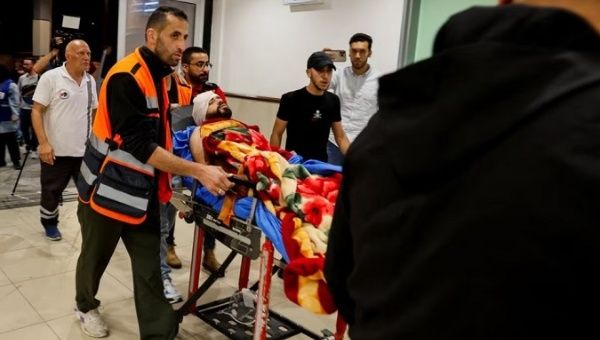
The Palestinian prisoners’ movement is not exempt from the policy of assassination. From the killing under torture of Ibrahim al-Rai, to the systematic medical neglect targeting Palestinian prisoners today, the occupation regime does not require a “death penalty” in law to target Palestinian prisoners for assassination. Just two months ago, Palestinian hunger striker and prisoners’ movement leader, Sheikh Khader Adnan, was systematically denied medical treatment on his 86th day of hunger strike: an assassination behind bars. The occupation regime continues to detain his body.
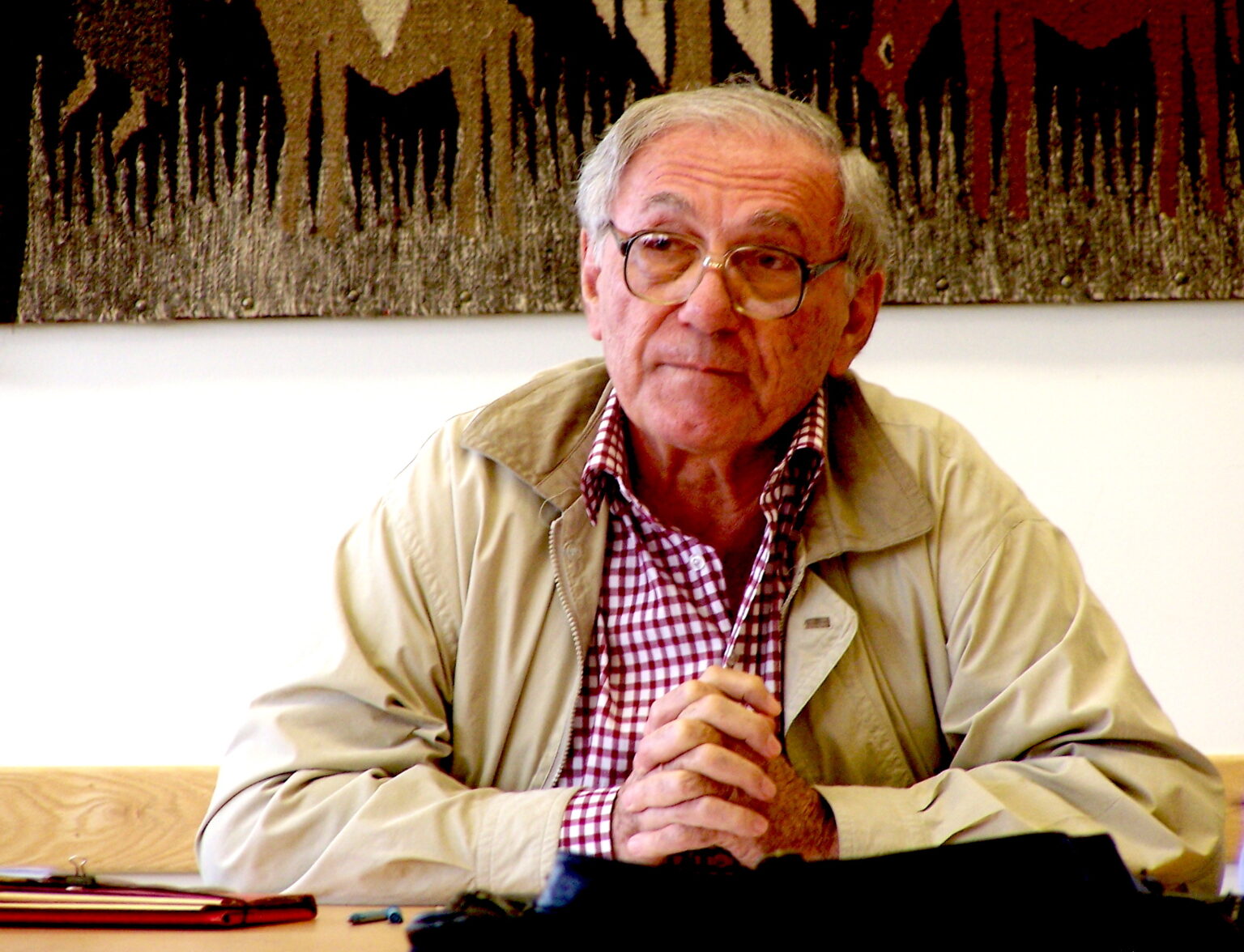
Right now, there is a Palestinian revolutionary, intellectual and writer behind bars who is facing the assassination policy of the Zionist project: Walid Daqqah. Like Kanafani, Daqqah’s role in the Palestinian liberation movement, and the prisoners’ movement in particular, spans the political and intellectual, engaged in a revolutionary project for the liberation of Palestine. Walid Daqqah has been imprisoned for over 37 years for his role in the Palestinian resistance in 1986. Today, as global left publishers wrote in a statement demanding his freedom:
“He is a voice of the people, a voice that the Occupation fears and hopes to silence. But though his body is behind bars, his voice has broken free through his novels, essays, and letters, which have nourished and motivated the Palestinian prisoner movement, the resistance, and the international solidarity movement in all corners of the world.”
He has been diagnosed with myelofibrosis, a rare bone marrow cancer that requires specialized treatment, including a bone marrow transplant. Since December 2022, he has suffered a stroke, developed pneumonia, had a portion of his lung surgically removed, and undergone multiple infections, all while being denied the care he needs — and the freedom that he requires.
Despite the fact that his sentence expired on 24 March 2023 and he is now serving a two-year penalty for smuggling a mobile phone, he has been repeatedly denied early release by multiple Zionist courts and review panels, even as he continues to be transferred back and forth between civilian hospitals and the notorious Ramleh prison clinic, called “the slaughterhouse” by Palestinian prisoners. His family have stated that these decisions are “permission for his execution,” and, indeed, we are watching the Zionist assassination policy carried out in real time inside the prison system, with the weapon of medical neglect.
On the 51st anniversary of the assassination of Ghassan Kanafani, now is the time to take action to free Walid Daqqah and to stop the latest assault of the occupation regime. Kanafani, a committed internationalist, urged all to confront imperialism everywhere — just as the Palestine Actionists are doing in Britain, fighting imprisonment to dismantle the Zionist war machine, a battle supported by the Palestinian prisoners’ movement. The imperialist powers are partners in the crimes against Walid Daqqah, all Palestinian prisoners, and the Palestinian people as a whole — which makes actions everywhere critically important. Samidoun Palestinian Prisoner Solidarity Network urges all to join in the events being organized by the Palestinian Youth Movement between 7 and 15 July, and to take up the struggle to free Walid Daqqah — to honour Ghassan Kanafani, and to stop the assassination of another Palestinian revolutionary in the gunsights of the occupier.
**
Ghassan Kanafani, Resistance and Revolution
Ghassan Kanafani, born in Akka, Palestine, on 9 April 1936, was forcibly exiled from Palestine with his family in the 1947-48 Nakba, first to Lebanon and then to Syria. After he was dismissed from Damascus University for political reasons, he taught in Kuwait before returning to Beirut as part of the Arab Nationalist Movement, the pan-Arab revolutionary movement founded by Dr. George Habash. The ANM transformed into the Popular Front for the Liberation of Palestine, which Kanafani co-founded, becoming the editor of Al-Hadaf magazine and an international spokesperson of the Front.
While serving the revolution as a political leader and representative, he also designed and drew many of the Front’s early political posters. A revolutionary Marxist-Leninist, Kanafani was greatly inspired by Arab, African and Asian liberation movements, and played a major role in the development of the “Strategy for the Liberation of Palestine.”
Kanafani was a revolutionary intellectual, the first to use the term “resistance literature” to describe Palestinian writing, even as he produced it. His creative writing, alongside his political work, brought the struggles and revolutionary potential of the Palestinian working and popular classes to the forefront, as did his studies and political analysis. Throughout his writing, editing and mentorship, he remained a committed revolutionary and organizer committed to the defeat of Zionism, imperialism and Arab reactionary forces serving the interests of the former, and to the liberation of all of Palestine, from the river to the sea.
However, Kanafani’s revolutionary vision did not limit itself to the borders of Palestine. He was an Arab revolutionary, dedicated to Arab unity and liberation from the ocean to the Gulf, with a keen interest in the development of Arab forces throughout the region to confront imperialism and achieve true self-determination and liberation. Kanafani and his comrades sparked and nurtured Arab resistance from Lebanon to Oman, developing revolutionaries like Georges Abdallah, imprisoned in France for over 38 years. Today’s rising resistance throughout the Arab nation and the region more broadly, particularly the Lebanese resistance that expeled the occupier in May 2000, continues to point a necessary path to victory for Palestine and for the region as a whole.
Ghassan Kanafani was a dedicated internationalist, a Marxist-Leninist who led in shaping the foundational relationships of the Front in the 1960s and 1970s with African, Asian and Latin American movements as well as with the emerging revolutionary forces in Europe, Japan and throughout the imperial core.
Kanafani’s famous quote on internationalism remains an urgent call to action today: “Imperialism has laid its body over the world, the head in Eastern Asia, the heart in the Middle East, its arteries reaching Africa and Latin America. Wherever you strike it, you damage it, and you serve the World Revolution…The Palestinian cause is not a cause for Palestinians only, but a cause for every revolutionary, wherever he is, as a cause of the exploited and oppressed masses in our era.”
Kanafani’s work is not an artifact of history or an intellectual exercise but a call to revolutionary action, to revolutionary engagement with culture, with political organizing and with resistance and revolution, at the Palestinian, Arab and international levels. As we remember Kanafani today, and as we struggle to bring an end to the policy of assassination, it is clear that the road forward is a revolutionary, anti-imperialist approach. It is also clear, more than ever, the bankruptcy of the path of Madrid and Oslo, represented by the Palestinian Authority and its “security coordination” with the occupation regime, that abandoned Jenin to the invaders while arresting and imprisoning resistance fighters, is the same reactionary enemy exposed in Kanafani’s political and creative writing, and exposed constantly by his political and organizational practice.
As Khaled Barakat, Palestinian writer and co-founder of the Palestinian Alternative Revolutionary Path Movement (Masar Badil), writes today:
“The 51st anniversary of the martyrdom of the writer Ghassan Kanafani this year coincides with the victory of the Jenin camp in the seemingly impossible battle led by the youth of the Brigades…The anniversary coincides with the resistance tent raised on a high southern hill in Lebanon, as a sign of victory, spreading awareness, light and challenge, and overlooking occupied Palestine. It is the resistance tent that heralds return and liberation…
The memory of Kanafani’s martyrdom…comes to say: Something great is being born now in the tunnels and tents of the valiant resistance in the south of Lebanon, in Gaza, and in Jenin, and there is a bridge and an embrace that extends between the south of Lebanon and all of Palestine: a small tent, from which the great Arab liberation project will be born, from the ocean to the Gulf.”
On this anniversary, the vision is clear, emerging from the camps, from the resistance, and from the prisoners’ movement, leading and fighting behind bars, and all led by the sons and daughters of the working class and popular forces: All of us have the responsibility to take up the challenge — to strike imperialism, to damage it, and to serve a liberated Palestine and a world revolution.
(Samidoun)
https://orinocotribune.com/from-ghassan ... evolution/
******
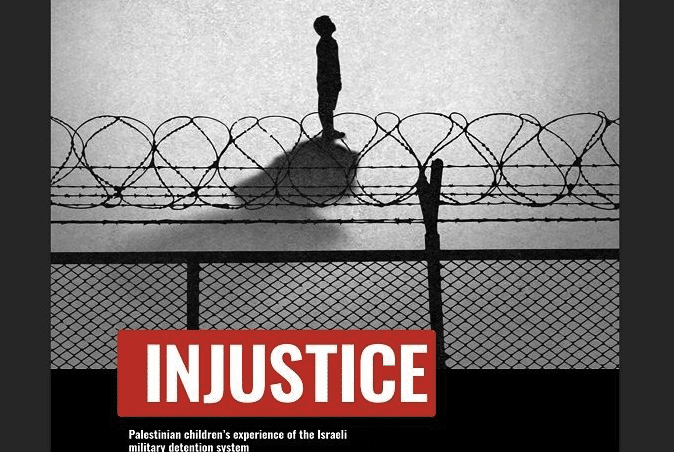
Save the Children has been working with Palestinian children since 1953. (Image: Save the Children Website)
Caged, stripped, beaten: Latest ‘Save the Children’ report on Palestine makes chilling read
Originally published: Palestine Chronicle on July 10, 2023 by The Palestine Chronicle, MEMO (more by Palestine Chronicle) | (Posted Jul 12, 2023)
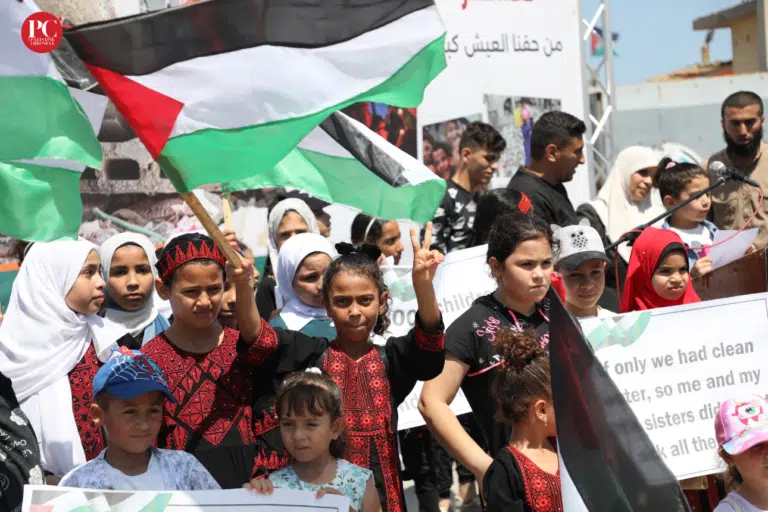
The research found that nearly half—42 per cent—are injured at the point of arrest, including suffering gunshot wounds and broken bones.
Worse, some report violence of a sexual nature and some are transferred to court or between detention centers in small cages, the child rights organization said.
New Evidence
The new research comes as the UN Special Rapporteur on the situation of human rights in the Palestinian territories occupied since 1967 presents evidence today to the Human Rights Council on Palestinian children in detention.
It is estimated that there are between 500 and 1,000 children held in Israeli military detention each year.
Jason Lee, Save the Children’s country director in the occupied Palestinian territory, said:
There’s simply no justification for beating and stripping children, treating them like animals or robbing them of their futures. This is a child protection crisis that can no longer be ignored. There must finally be an end to this abusive military detention system.
Save the Children and a partner organization consulted 228 former child detainees from across the occupied West Bank, detained for a period of between one and 18 months, and found that most children are beaten, handcuffed and blindfolded during arrest.
“They are also interrogated at unknown locations without the presence of a caregiver, and are often deprived of food, water and sleep, or access to legal counsel,” according to the research.
The main alleged crime for these detentions is stone throwing, which can carry a 20-year sentence in prison for Palestinian children.
Khalil, who was detained when he was 13 and whose name has been changed, said that he did not receive essential healthcare.
He said,
I had an injury in my leg, I had a cast, and had to crawl to be able to move. I felt my body being torn apart. I had no canes to help me walk, I kept asking soldiers for help during the transfer, but no one helped me.
He continued,
The soldier threatened to kill me when he arrested me for the second time. He asked me, ‘Do you want the same fate as your cousin?’ as he had been killed. He promised me that I would have the same fate and die, but that he would send me to prison first. He told me that he’s coming back for me—and every day, I wait for that day to come.
Some children reported being coerced into falsely incriminating others in order to be freed.
As a result of the abuse, the report warned, children are increasingly unable to fully return to their normal life following release from detention,
.. with the number of children having frequent nightmares rising from 39% to 53% and those suffering from insomnia or difficulty sleeping rocketing from 47% to 73%, compared to the children surveyed in 2020.
Lana, the mother of Mohammed who was detained when he was 14 (both names have been changed), said:
After my son was released… he refuses to leave the house.
Save the Children is calling on the Israeli occupation authorities to respect all children’s rights and international law.
“No children should be prosecuted in military courts or any court that lacks comprehensive fair trial rights and juvenile justice standards,” the rights group has said.
Testimonies
The following are a few excerpts from the report, highlighting brief testimonies from some of the children interviewed.
Hisham—detained when he was 14:
Every day something happens. Two weeks ago, I was hanging out with my friend and then I left him and went home. An hour later I heard that he had been shot and arrested. A few days later, I went to visit another friend, where they announced that he’d been killed. We’re always afraid.
Jamal—detained when he was 15:
You have your whole life planned out but then you get arrested, and it ruins everything. After you are released from prison you start racing against time trying to catch up and trying to do something useful. It feels like all the dreams you had prior to your arrest just passed you by, and you try to catch up to them, but you can’t. Whatever you had in mind before just doesn’t feel attainable anymore. It’s as if this experience robs you of your time and your future.
To view the full report, click HERE.
https://resourcecentre.savethechildren. ... -2023.pdf/
https://mronline.org/2023/07/12/caged-stripped-beaten/
*******
Israel has turned all of occupied Palestine into an open air prison, says UN expert’s report
A report by UN Special Rapporteur Francesca Albanese says that apart from physically arresting over 800,000 Palestinians, including tens of thousands of children, Israel also controls the movement of millions through barriers, permits, and illegal settlements
July 11, 2023 by Peoples Dispatch
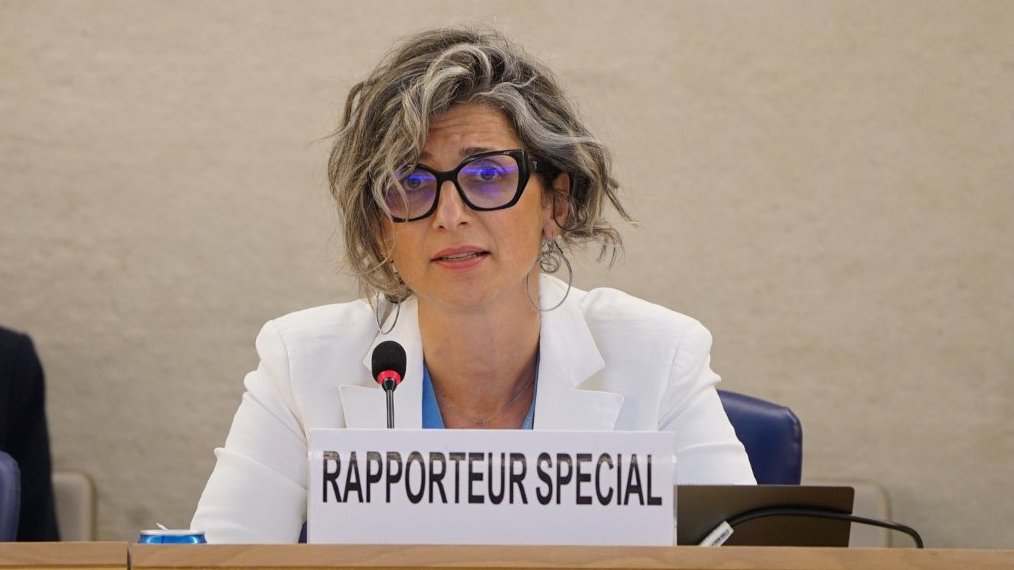
UN Special Rapporteur on the situation of human rights in Palestinian territories Francesca Albanese.
Calling the Israeli occupation a “carceral regime,” the UN Special rapporteur on the situation of human rights in Palestinian territories, Francesca Albanese, in a report to the UN Human Rights Council on Monday, July 10, asked the international community to take urgent measures to “abolish the unlawful occupation.”
Albanese said that Israel has been using the Palestinian territories as an “open air prison” through a combination of direct incarceration and also by “hunting them [Palestinians] outside prison.”
“Blockades, walls, segregated infrastructures, checkpoints, settlements encircling Palestinian towns and villages, hundreds of bureaucratic permits and a web of digital surveillance, further entrap Palestinians in a carceral continuum across strictly controlled enclaves,” Albanese said.
Albanese’s report notes that Israel has arrested more than 800,000 Palestinians, including tens of thousands of children, since its occupation of Palestinian territories in 1967, and continues to defy all international norms to pursue its criminal regime.
Occupation’s inherent apartheid
For Albanese, by “bundling Palestinians as a collective ‘security threat’ Israel has used draconian military orders to punish the exercise of basic rights. These measures have been used as tools to subjugate an entire population, depriving them of self-determination, enforcing racial domination and advancing territorial acquisition by force.”
“The widespread and systematic arbitrariness of occupation’s carceral regime is yet another expression of the apartheid imposed on the Palestinians and strengthens the need to end it immediately.”
Underlining that for “over 56 years, Israel has governed the Palestinian territory through stifling criminalization of basic rights and mass incarcerations,” and now attempts “de-Palestinization” of these areas so that it can “incrementally annex” them, Albanese asked the world community to stop these practices and help Palestinians to achieve their right to self determination.
Albanese has been targeted by Israel over her critical stand on its settler colonialism project and apartheid regime. Israel boycotted the presentation of her report on Monday.
The state of Palestine, however, supported Albanese’s conclusions and asked the international community to follow the report’s recommendations.
Arresting and torturing Palestinian Children
The report notes that Israeli occupation authorities arrested around 7,000 Palestinians in 2022 alone, including 882 children. Out of around 5,000 Palestinians inside Israeli jails now, around 155 are children. There are 1,014 Palestinians who have been in prison for months without being charged or tried.
The report also notes that “approximately 10,000 Palestinian children have experienced institutionalized ill-treatment during arrests, prosecutions, and sentencing and the consequent traumas on themselves and their families.”
“Arrest involves transferring children to interrogation facilities like dangerous criminals, blindfolded and hand tied in military jeeps,” the report says.
“During interrogation, Palestinian children endure severe ill-treatment: they are strip searched, kept blind-folded and tightly bound for long hours, insulted and ridiculed, physically abused and denied basic needs including access to toilets and medical care.”
The report also notes that nearly half of the children detained for interrogation by Israel in 2021-22 were subjected to solitary confinement, for an average of 12.5 days in windowless cells constantly illuminated causing immense physical and psychological distress.
According to some studies, the number of Palestinian children arrested by the Israeli occupation since 1967 goes beyond 50,000.
Albanese’s findings about the treatment of Palestinian children in Israeli custody have been substantiated by a recent study published by Save the Children. According to the research, four out of every five children in Israeli jails are beaten by the prison authorities and at least 69% are strip searched.
https://peoplesdispatch.org/2023/07/11/ ... ts-report/