Blues for Europa

User avatar
blindpig
Posts: 14829
Joined: Fri Jul 14, 2017 5:44 pm
Location: Turtle Island
Contact:

Re: Blues for Europa

Post by blindpig » Wed Feb 12, 2025 3:37 pm

Alice Weidel: Oligarch Tool
Roger Boyd
Feb 11, 2025
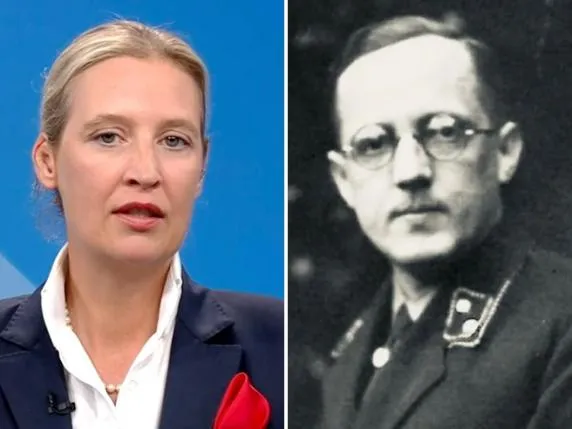
Image
Corriere Della Serra (Weidel and her Nazi military judge grandfather)

From the very start Hitler was financially supported and groomed by elements of the German establishment. As that establishment’s hold on the German people was challenged by the Great Depression they decided to move from liberalism (control the population through a hegemonic culture and false consciousness) to fascism. Hitler’s Nazi Party was very fully funded by German big business, but its vote share fell in the November 1932 election (from 37.3% in the July 1932 election to 33.1%). So the German establishment quickly installed him as the Chancellor of Germany (January 30th 1933). With this new power he utilized the state and the SA to fix the 1933 elections in his favour. Hitler was always a creation of the German oligarchs for the benefit of the German oligarchs.

Once in power Hitler rapidly moved to crush the SA, which was the arm of the Nazi Party most committed to real social change to benefit the working people. He then also rounded up the communists (hence the first line of the famous Niemoller poem “first they came for the communists”), banned independent trades unions, privatized state enterprizes, and removed many labour regulations - all to serve the German oligarchy. The latter lost control a little as Hitler went to war but were more than happy to make endless profits off the dispossession of Jewish properties, the looting of the occupied territories, the mass use of slave labour, and the colossally profitable armaments spending. After WW2 most of these war criminals got off scot free and in many cases prospered in post-WW2 Germany, like the Nazi family that now controls BMW.

The AfD was founded by a group of neoliberal professors (Lucke, Ederer, Homburg, Starbatty) who wanted to “gut the state, minimize the tax burden and overhaul the social market economy according to libertarian ideas” while being socially conservative and nationalist. This article provides the details of how the AfD is “neoliberal to the core”. The party really took off with the German refugee crisis, benefitting from the growing anti-immigrant wave. Much of the new membership was more traditionally right wing, not neoliberal, and a multi-year fight within the party resulted; with some members being expelled from the party. The more traditional right-wing members can be seen as the equivalent of the Nazi SA, hating “the bosses” as much as the immigrants. From early on the Swiss-based German billionaire August von Finck financially supported the AfD; mirroring the early financial support given to the Nazis by Fritz Thyssen, I. G. Farben and Krupp. He also funded a newspaper The Deutschland Kurier that both editorially supports the AfD and provides services to the party. Finck and other rich donors to the AfD can be seen as political venture capitalists, who fund and keep alive political parties which may be useful to them in the future. Finck’s father was a leading and influential banker during both the Weimar Republic and the Nazi Reich, helped fund the Nazi Party during the 1930s, and was part owner of Merck, Finck & Co. which served as Hitler’s personal bank.

The two groupings within the AfD have managed to come together and paper over their differences to achieve electoral success. The party is co-headed by Tino Chrupella and Alice Weidel, with the latter being put forward for the position of German Chancellor in the current election campaign. She is the perfect candidate to keep the AfD on the extremist neoliberal path. Die Linke, the socialist party that should have thrived in an East Germany utterly exploited by the West German oligarchs destroyed itself through the usual infiltration of “critical theory” and identity politics (as so many left wing parties have in the West) that were nurtured by the Western security states to force out actual real socialism during the Cold War. As usually happens when the left alternative is extinguished, the working people turned to the right, the AfD.

Weidel is the leader that the oligarchy has selected. She is a fully paid up member of the neoliberal extremists, a member of the Frederick Hayeck Society since 2016. Her employment history includes Goldman Sachs, the Bank of China and Allianz Global Investors (the latter founded by Finck’s father); hardly that of someone fighting for the working people. Her PhD thesis advisor was Peter Oberender, a neoliberal economist and founder of the predecessor party to the AfD, Wahlalternative 2013. She is his political protege. Her first political campaign was found to be illegally funded by Finck, the AfD ended up having to pay a big fine but Weidel went unpunished. She is also very usefully fluent in Mandarin, something that will be helpful if the German oligarchy takes a more nationalist stance and needs to mend bridges with China. No more of the Baerbock idiocy. Weidel is also a woman and a lesbian, fitting the bill to widen the appeal of a fascist leader.

Her Wikipedia entry interestingly does not follow the usual norm of naming both parents, perhaps because that may lead us to her grandfather who was a Nazi military judge directly appointed by Hitler. No wonder she calls for an end to what her party defines as a “cult of shame” over the Nazi atrocities. Or tries to label Hitler as a socialist and communist during an interview with Elon Musk (starts at the 22 second mark).


Weidel is far too intelligent and well educated to not know that such statements are utter lies; pure propaganda. Elon Musk’s maternal grandparents moved from Canada to South Africa because they preferred the apartheid system. It is also interesting that oligarch Trump backer Peter Thiel was born in Germany, and his father’s doings during the Nazi era are utterly obfuscated. Thiel lived with his family in South Africa for a few years during his childhood. Now both Thiel and Musk are very much supporters of Weidel. Below is Musk’s full interview with Weidel, where she shows herself to be an arch propagandist in mixing facts with half truths, manipulations, and absolute lies while leaving out important facts that are problematic for her narrative.


The AfD will most probably not win a place in the next German government, which will most probably be a CDS/CDU one lead by the oligarch vassal tool Merz. A recent poll shows the CDS/CDU at 29%, the AfD at 23%, and the SPD at 15%, which once the parties that did not gain at least 5% of the vote have been removed may just allow for a CDS/CDU-SPD ruling coalition. Otherwise the Green Party polling at 13% would have to be added to the anti-AfD coalition. The truly left wing BSW hovering just above the 5% cutoff and the FDP and Die Linke on or below it. As with other right-wing parties, the polls may understate the support for the AfD due to reticence among those surveyed to say that they will be voting for such a party.

Like the Nazis, the AfD is a longer term investment initiative, being held back for use in case the current dominant parties start to be fully rejected by the populace. Then, as in 1932 the fascist alternative can be placed in power by the German establishment. As it is no longer acceptable to use the Jewish community as the official Other it will now be the turn of the Arabs/Moslems. As the German economy continues to decline the probable CDS/CDU-SPD coalition will begin to “own” the decline and fall in popularity. In parallel Ms. Weidel will be normalized by the German establishment so that the AfD can be accepted into a ruling coalition. She has already established her dominance in the AfD, being put forward as the proposed AfD Chancellor in the February elections.

Weidel is just like Meloni in Italy, the leader of a fascist party that fully serves the oligarchs. Also a parallel of Starmer, who was used to fully co-opt the British Labour Party into serving the oligarchy. In the UK the oligarchs are already working on their next backup candidate, the utterly fascist oligarch tool Farage. She is also like the oligarch-serving Freeland in Canada, who was raised at the feet of her Nazi-serving fascist grandfather. In many ways Weidel is also a “sane” and calm version of the fake populist Milei in Argentina. National oligarchies can produce an endless procession of new “protest” political alternatives that will in reality keep all state policies that serve the oligarchs while removing state support and protections for the majority. Just like Trump, the business disaster who is fully bought and paid for by real billionaires. A man so rich he desperately plays every cheap money-raising trick in the book, the latest being his and his wife’s shitcoins. We see his financial assets, but his financial liabilities remain extremely opaque.

In the last great crisis of Western capitalism, the 1930s, the oligarchs had a choice between fascism and some other form of capitalism. In the US a compromise with the working people was chosen given that it could be aligned with the high profits of Fordism; a compromise that the oligarchs set about undermining nearly immediately. Fascism had actually been used, from 1917 to 1921, to force an unwilling US population into WW1 and to destroy the core of the working class movements (e.g. “The Wobblies”) under the leadership of the racist bigot President Wilson. In Britain the stopgap of Bonapartism was utilized with a “national” government papering over the cracks but not resolving anything. In France there was the chaos of the dying embers of the French Third Republic, resolved with the German invasion and the fascist Vichy regime followed by the fascist de Gaulle. In Italy, Germany, Spain, Portugal and Japan fascism was chosen. In the post-war period many of the Western “democracies” had extremely fascist elements, how else could the 1950s McCarthyism and security services widespread spying and involvement in politics be typified. Or the Italian post-war era, culminating in the Strategy of Tension. Or the reams of Nazi criminals that took senior positions in the governments of both Germany and Austria? Or the fascist South American governments, fully backed by the US, that terrorized their own populations into subjugation?

Fascism never went away because it is a tool of capitalist oligarchy always kept in reserve in case “liberalism” fails to control the population with its more subtle methods. As Gramsci so well identified, the utilization of a hegemonic culture to control the population does not mean that the state and oligarch weapons of coercion and violence are put away. They are always kept available for use, and many times used in specific instances requiring a “heavier hand”.

It is sad that so many of the “alternative” commentators mistake the Trumps, the Melonis, the Farages, the Weidels for agents of real change. But that is the genius of the oligarchy, it excels at co-option, corruption and misdirection to keep the eyes of the working majority away from the greatest problem in society; themselves. And also to mislead the majority into serving the interests of the small oligarch minority.

https://rogerboyd.substack.com/p/alice- ... garch-tool

******

Germany and the Antifascist Firewall That Never Was
Posted by Internationalist 360° on February 7, 2025
Timo Al-Farooq

Image

Germany’s so-called antifascist “firewall” against the far-right has collapsed, but mainstream parties have in fact long been complicit in militarism, anti-refugee policies, and unconditional support for “Israel”—all hallmarks of modern fascism.

There is a word that has been on everyone’s lips in recent days and weeks in Germany: “Brandmauer.” Meaning firewall, it refers to the consensus among the country’s mainstream political parties that forbids any cooperation with far-right parties.

That non-codified agreement was thrown overboard recently when the opposition centre-right Christian Democrats (CDU), poised to win the upcoming snap federal elections on 23 February, proposed an anti-immigrant parliamentary motion that passed with support from the right-wing Alternative for Germany (AfD).

Though the draft law was ultimately voted down by the Bundestag on 31 January, CDU leader Friedrich Merz’s decision to burn down the antifascist firewall without batting an eye bodes ill for what is to come after the elections.

With the CDU currently polling at 30% and the AfD at 22%, this would give both parties a comfortable majority to form a coalition government under a Chancellor Merz between what many from the left see as two parties with eerily aligning ideologies when it comes to migration.

While Merz continues to pay lip service to the intactness of the anti-AfD firewall, promising delegates at his party’s congress last Monday that there would be “no cooperation” and “no minority government” with the AfD, Merz’s unprecedented move to join forces with a party that Germany’s Verfassungsschutz intelligence agency has classified as “presumably right-wing extremist” can only be seen as a dry run meant to desensitise voters to the prospect of what could well be post-WW2 Germany’s first federal government with far right participation.

The hypocrisy of anti-AfD protests

Following the CDU’s historic paradigm shift towards further normalising the AfD by soliciting its support in parliament, hundreds of thousands of protesters took to the streets across Germany.

Under the banner “Aufstand der Anständigen” (Uprising of the decent), 250,000 people, according to the organisers, descended upon Berlin’s government district on 2 February.

While mainstream German media is celebrating these numbers as proof positive of the broader electorate’s unwavering democratic and antiracist convictions, these protests are highly controversial because they selectively blame the opposition CDU and AfD for reactionary policies the governing centre-left coalition of Social Democrats (SPD), Greens and Liberals (FDP) has been implementing for years.

The firewall against the AfD might have crumbled, but it was never very sturdy to begin with due to one key engineering flaw: mainstream parties’ complicity in the unstoppable rise of the far right.

Many of those scandalised by Merz’s transgression fail to see the hypocrisy of protesting against the future possibility of fascism from the right, but remaining markedly silent on the present fascist re-modelling of the German state spearheaded by the liberal elites in power.

Germany’s unfettered militarism in the wake of the Ukraine war, its unapologetic material and moral support for “Israel’s” fifteen-month-long genocide in Gaza (which has now shape-shifted into the post-ceasefire ethnic cleansing of the Occupied West Bank), and accompanying crackdowns on Palestine solidarity, as well as the passing of draconian anti-refugee laws, are all policies vigorously pursued by so-called liberals and progressives.

Why get riled up about Merz’s anti-immigrant overtures when Chancellor Olaf Scholz proudly proclaimed in 2023 to “deport on a grand scale” and his Green party Foreign Minister, Annalena Baerbock described the European Union’s controversial 2024 migration reform, which allows for asylum-seekers who are waiting for their applications to be approved, to be held in detention centres at the EU’s external borders for up to 12 weeks as a testament to “humanity and order?”

Antiracist, yet pro-Zionist

A prime example of liberal Germany’s selective outrage is the utter lack of indignation at an anti- democratic resolution passed on the same day the AfD-supported CDU motion to toughen migration policy which shocked German complacency into action. Entitled “Anti-Semitism and hostility towards Israel at schools and universities”, it is an unprecedented state-sponsored attack on the constitutionally enshrined autonomy of universities and academic freedom in the service of “Israel”.

Albeit non-binding, the resolution calls for, among other things, the expulsion of students who participate in activities that promote what Germany’s Zionist consensus has termed “Israel-related antisemitism”, a designation based on the infamous IHRA working definition of antisemitism which views any criticism of “Israel” as inherently anti-Jewish. These activities could include anything from calling for the boycott of “Israel” to protesting against its violent settler colonialism.

Yet antidemocratic developments like this latest legislative expression of anti-Palestinian racism made under the guise of fighting Jew-hatred (the second in three months) have failed to inform the antiracist motivation of so-called decent citizens who are taking to the streets in their hundreds of thousands against the spectre of right-wing authoritarianism embodied by an AfD in government.

Nor has Germany’s centre-left coalition government’s steadfast support for the most fascist Israeli government in the Zionist entity’s history while it conducted the world’s first live-streamed genocide, described by Palestinian American legal scholar Noura Erakat in an X post as the “cruelest phase” of a 76-year-long Nakba, led to any kind of self-critical reflection among these so-called antifascist protesters, many of whom are Social Democratic and Green party loyalists.

On the contrary: The Greens boasted a record number of 5000 new membership applications in five days following Merz’s political sacrilege of collaborating with the AfD.

As the Europe Palestine Network, an Instagram account with 120,000 followers, put it candidly in a comment on the mass protest in Berlin, “We wish all these people stood up against the genocide and supported Palestine too. They are against AfD and not necessarily against Israel and the crimes it commits in Gaza.”

Germany’s much lauded “Brandmauer”: the antifascist firewall that never was.

https://libya360.wordpress.com/2025/02/ ... never-was/

******

Europe pays the price for its own mistakes

Lucas Leiroz

February 8, 2025

The allies supported the United States in promoting the American slogan of the “rules-based order.” Now they are enjoying the consequences.

Since 1991, the collective West has actively promoted the concept of a “rules-based world order.” However, from the beginning, this concept has served mainly as a justification for unilaterally imposing U.S. interests on other countries, ignoring legitimate international treaties and conventions. Europe, which was complicit in this abrupt change in international law, now appears to be reaping the bitter fruits of its own choices.

The idea of a “rules-based order” has always been malleable, molded to suit U.S. interests. What has become clear, however, is that European allies—as well as some puppet states in the “Global South” itself—have ended up ceding their sovereignty to Washington in the name of an alliance that, unsurprisingly, has weakened them politically. Greenland is an emblematic example of this new geopolitical reality. The island, which belongs to Denmark, was the target of an explicit attempt to buy it by Donald Trump during his previous presidency. Now, in his new term, Trump seems even more determined to “take” Greenland, not even ruling out the use of military force.

As the United States seeks to expand its presence in the Arctic, seeking control of sea routes and natural resources, European allies such as France find themselves in an difficult position, having to publicly defend Danish sovereignty. Despite European resistance, Washington continues to exert pressure. The root of the matter is not the fate of Greenland itself, but the fact that, by supporting the United States, Europeans have become hostages to the American agenda, losing the means to exercise their sovereignty and challenge Washington’s strategic interests.

The inability of European allies to effectively resist U.S. interests in the Arctic illustrates how the “rules-based order” has become a tool of control rather than a globally equitable legal system. The U.S. not only dictates the rules, but also imposes its will directly on its own allies, as demonstrated in disputes over strategic territories such as Greenland itself. While Europeans argue about borders and sovereignty, the U.S. makes the game in its favor, ignoring international agreements and the will of other states – even supposed “allies.”

American foreign policy, especially under the influence of the Trump doctrine, is not limited to reducing the U.S. global presence, but also seeks to expand control over nearby geographic zones. Trump’s rhetoric about the annexation of territories such as Greenland is not a mere provocation, but a clear message about the dominance that Washington intends to maintain in the Americas and the Arctic, which are the portion of the world map that the U.S. keeps preserving in the midst of the process of multipolarization. The allies, although initially resistant, do not now seem to be able to effectively oppose American pressure, resulting in a scenario where U.S. geopolitical interests prevail over the sovereignty of European nations.

By supporting this “rules-based order,” which in practice serves only to consolidate American interests, European countries have contributed to the weakening of international law. The lack of a firm stance against Washington’s impositions has allowed the United States to consolidate a position of power, where the rules are adapted to suit its needs. Now, nations that previously supported U.S. initiatives find themselves in a situation of submission, with their foreign policy legitimacy being questioned. The direct consequence is the erosion of international law and the diminished ability of these countries to defend their interests on the global stage.

The most significant impact of this dynamic is the loss of sovereignty for U.S. allies, who over the years have allowed Washington to set the rules while burying the international law that was supposed to protect their borders and interests. In exchange for an alliance based on liberal ideology but not on justice, these nations now find themselves forced to follow Washington’s directives without the ability to challenge them, as evidenced by the disputes over Greenland, Canada, Panama, and other strategic territories.

In the end, it is possible to say that the world is witnessing a restructuring of international relations in which the “rules-based order” created to benefit the United States has resulted in friction among America’s own allies.

https://strategic-culture.su/news/2025/ ... -mistakes/
"There is great chaos under heaven; the situation is excellent."

User avatar
blindpig
Posts: 14829
Joined: Fri Jul 14, 2017 5:44 pm
Location: Turtle Island
Contact:

Re: Blues for Europa

Post by blindpig » Thu Feb 13, 2025 3:28 pm

Danger Ramps Up in the Baltics, as War Party Won't Go Quietly
Simplicius
Feb 12, 2025

Events again accelerate, as geopolitical inevitabilities come to a head on the stage.

We’ll get to the ostensibly biggest storylines revolving around the crescendoing Ukrainian peace talks, but the biggest story slipping under the surface revolves around the escalating threats from the Baltics and their masters toward Russia as a new vector of provocation from the West.

In light of Ukraine’s proceeding collapse, the Empire badly needs to find a way to ‘self-fulfill’ the prophecy of Russia attacking Europe, in order to sell its own fraudulent historiography of the war, which underpins all the malice carried out against Russia to this point.

Thus lies the need to ramp up provocations to force Russia into making some militarily aggressive action or attack on another neighboring country, to sell the whole narrative. This would serve two purposes: if the war in Ukraine ends, the West needs some way to keep Russia busy and pressured to slow its development, particularly now that its economy is rapidly distancing itself from decaying Europe. But the second purpose lies in—even if the Ukraine war goes on—forcing Russia to respond aggressively to a neighboring country to galvanize European, and even global, solidarity, allowing the fulfillment of all the military rearmament dreams NATO’s magpies have been twittering about.

Now that Ukraine teeters on the edge, the plan is ramping up. Several major concerted ‘events’ occurred this week, by no coincidence of their own:

Firstly, Russian Rostelecom’s underwater Baltika cable in the Gulf of Finland was “damaged”, i.e. severed, clearly not by ‘accidental action’:

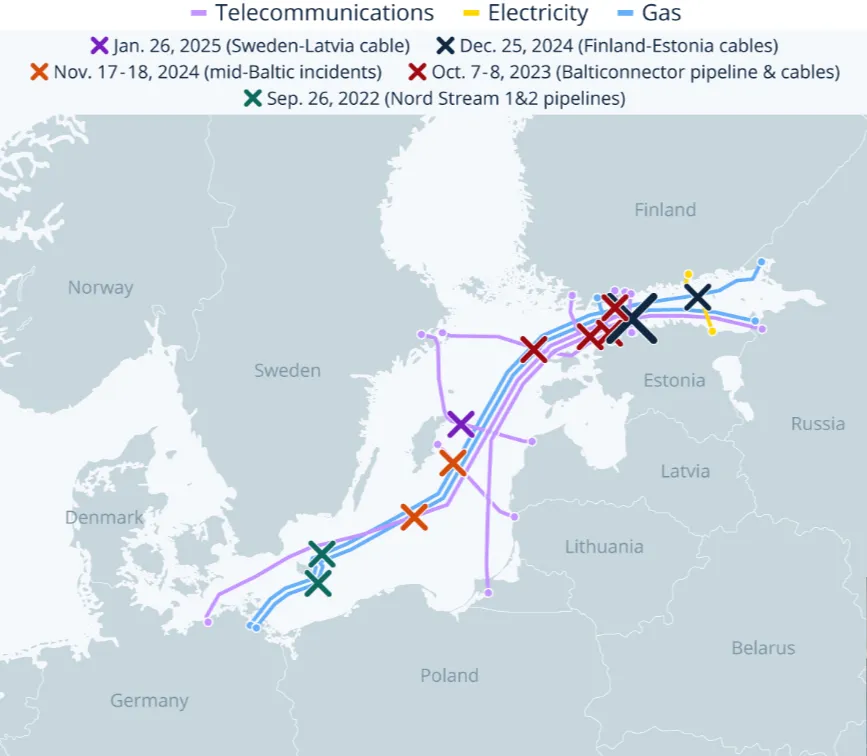
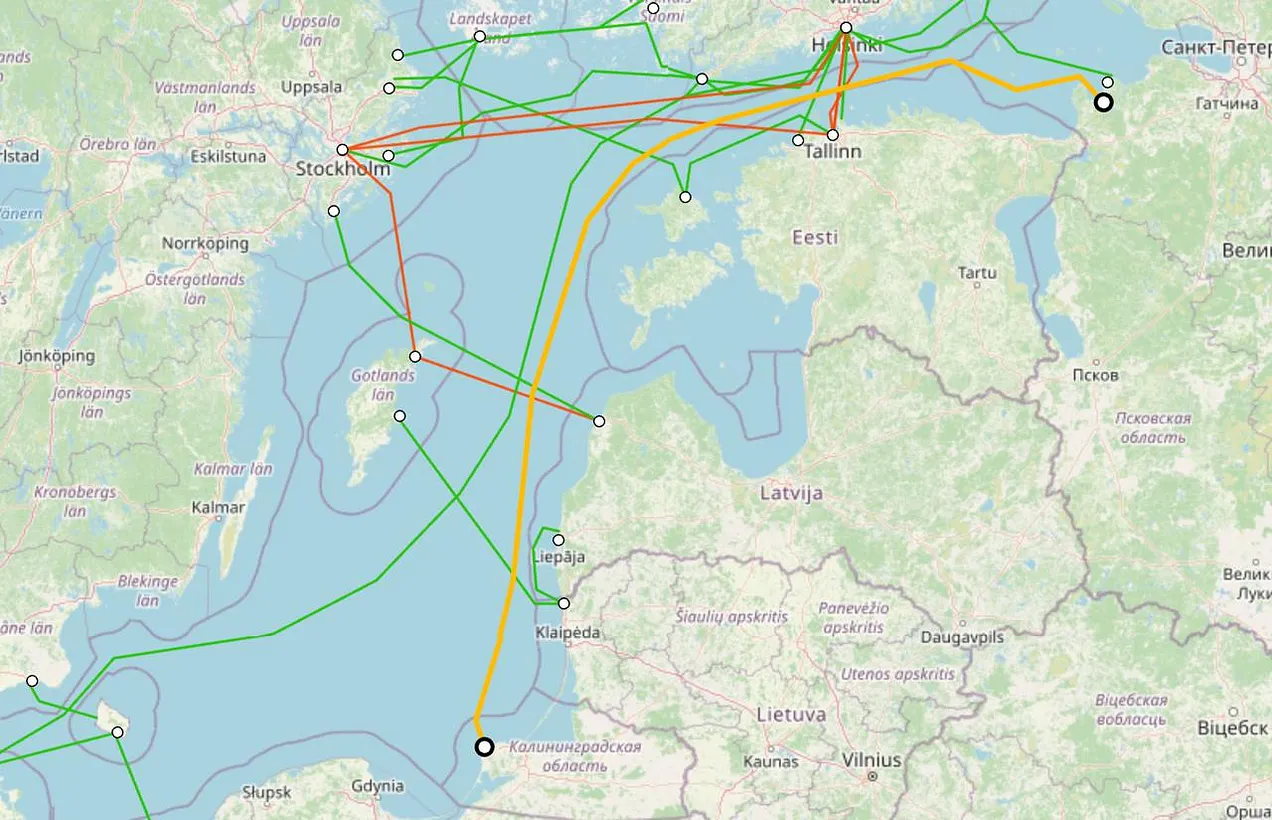
In the Gulf of Finland, the Rostelecom cable connecting Kingisepp with Kaliningrad was damaged again. What other incidents with underwater communication infrastructure occurred in the Baltic Sea-in the RBC infographic

On February 8, Rostelecom reported damage to its underwater telecommunications cable Baltika. It connects the Leningrad Region with Kaliningrad and partly passes through the economic zones of Finland and Sweden. The previous accident on the Baltika occurred on October 7, 2023.

Image
The length of the underwater cable, which was apparently damaged, is 1,115 km. It connects Kaliningrad and Kingisepp in the Leningrad region.


The severing of this cable potentially cuts Kaliningrad’s communications from the Russian mainland.

Zerohedge details the pile-up of Baltic sea cable incidents of late:
Image

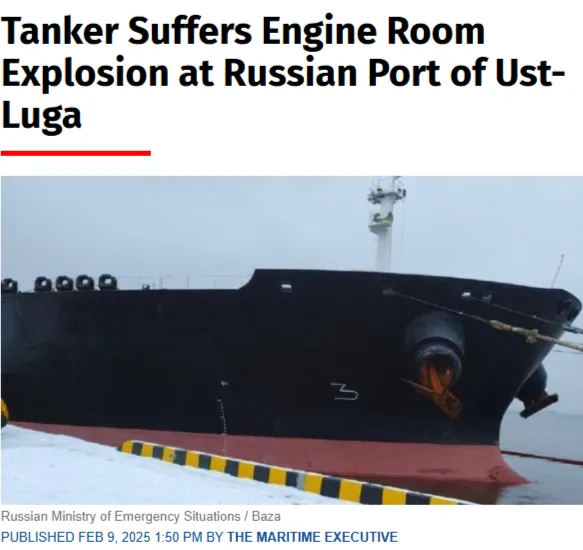
Around the same time a Russian oil tanker suffered an ‘explosion’ in its port of Ust-Luga, which sits on the Gulf of Finland mere miles from the Estonian border:

Image
https://www.maritime-executive.com/arti ... f-ust-luga

Some Russian reports impute certain sabotage:

Enemy saboteurs probably worked in Ust-Luga. The recent explosion in the engine room of the Koala tanker (164,500 tons), according to sources of Ambrey Analytics (a company in the field of marine risk management), was associated with the installation of underwater mines on the outer part of the hull. Three explosions resulted in three holes: one 100 cm by 80 cm, and two large 4 by 2 meters.

Yesterday, the Russian Foreign Intelligence Service warned about upcoming terrorist attacks and incidents that Ukrainian intelligence plans to carry out in order to ban Russian cargo and ships from passing through the Baltic Sea. We are seeing the first such incident.


And as the above alludes to, Russian SVR suddenly announced that Ukraine is in the process of finalizing major provocations in the Baltic Sea area. The plan specifically includes blowing up a foreign ship to blame Russia, presumably as a putative Russian “response” to the Russian assets now being targeted in the region:

The SVR says that the special services of Ukraine, with the support of the West, are planning a series of high-profile anti-Russian provocations. The main task is to close Russia's access to the Baltic Sea under the pretext of Moscow's aggressive actions. The first terrorist attack may be the detonation of Russian/Soviet-made mines on a foreign ship in the Baltic waters. They are looking for people from Asia and the Middle East to carry out the terrorist attack, the salary is 20 thousand dollars, there are no contract details. The attacks will begin as soon as possible in order to weaken the Kremlin's negotiating position as soon as possible.

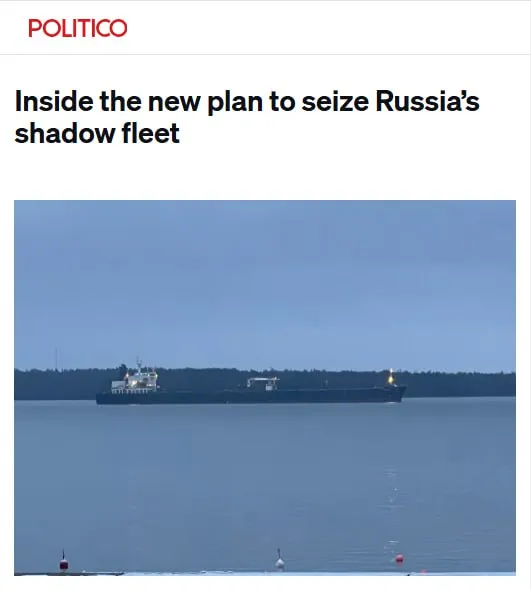
Lo and behold, on the heels of the above, major press outlets like Politico announce a renewed initiative to target and “seize” Russia’s shadow fleet:

Image
https://www.politico.eu/article/russia- ... e-kremlin/
Summary:

EU Pirates of the 21st Century: Baltic States Seek New Opportunities to Capture Russia's Shadow Fleet — Politico

▪️Finland, Estonia, Lithuania and Latvia are looking for loopholes in international law to seize Russian ships.
▪️The European Union is holding "behind-the-scenes talks" on a large-scale seizure of Russian oil export tankers, Politico writes.

▪️European countries bordering the Baltic Sea are developing new legislation to make it possible to seize ships on "environmental or piracy grounds."

▪️The new proposals come amid widespread frustration that Western sanctions against Russia are not working, as Moscow continues to ship its oil and evade sanctions.

▪️Now, countries are looking for a pretext to develop new national laws for the pirate seizure of more Russian ships, accusing the country of attacks on underwater infrastructure and environmental damage.


The article even names Ust-Luga as the critical port from which a vast portion of Russia’s oil transport originates:

As a result, “the shadow fleet is now transporting over 80 percent of all Russian crude oil,” said Isaac Levi, the Russia-Europe lead at the Centre for Research on Energy and Clean Air think tank.

The Baltic Sea is the critical artery for that illegal trade, he argued. The vessels are typically loaded with Russian oil at ports like Ust Luga near St. Petersburg before winding their way through the Gulf of Finland and across the Baltic Sea to the world’s oceans via the North Sea.

Last year, 348 shadow fleet vessels making up 40 percent of Russia’s total oil sales departed from Baltic ports, Levi said — a figure equivalent to a third of Moscow’s annual defense budget.


A Russian Duma Defense Committee chairman issued a threatening warning:

Any attack on our ships can be considered an attack on our territory, even if it is a vessel flying a foreign flag: this, by the way, is a completely common practice in maritime shipping. It is possible that we will respond not only with retaliatory measures, such as boarding Western ships in the Baltic Sea, but also with active actions by our Baltic Fleet.

Aleksey Zhuravlyov, the Deputy Chairman of the Defense Committee of the State Duma of the Russian Federation, in response to the clowning in the Baltic Sea.


Of course, the above is precisely what the string-pullers want.

The USAID-sponsored Politico rag devoted an entire new article to the warning, titling it “Russia lashes out at EU plans to seize its ‘shadow fleet’ in the Baltic Sea”. Funny how protecting your ships from illegal seizure amounts to “lashing out”, while the announcement to illegally seize a sovereign nation’s ships is couched in soft, accepting headlines.

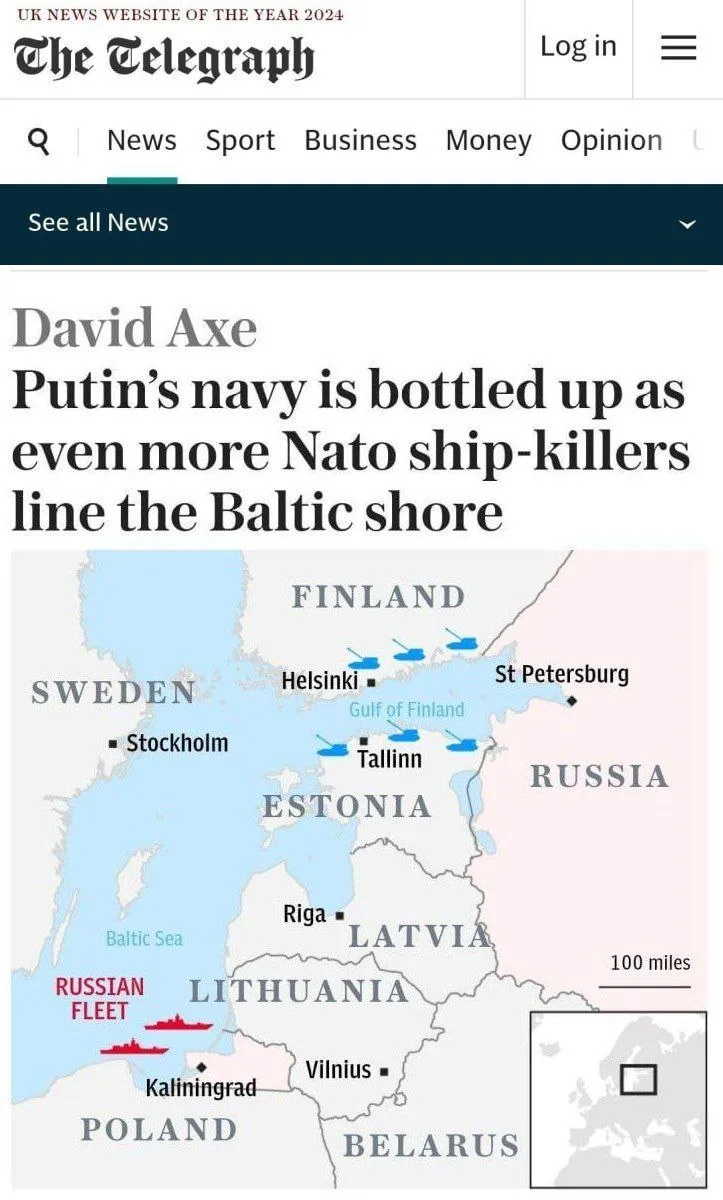
Western press has long been rejoicing over NATO’s provocations dangerously backing Russia into a corner:

Image
https://www.telegraph.co.uk/news/2025/0 ... nd-sweden/

Image

Meanwhile, the NATO Reichsmarschall continues beating his snare drum of war: (Video at link.)


The next ‘happenstance’ was the grandiose performance the Baltics put on in disconnecting their little puffed-up gnome villages from the Russian electric grid. The level of absurd theatricality must be seen to be appreciated: (Video at link.)

Three Baltic "tigers", led by Ursula von der Leyen are celebrating disconnection from the Russian energy system

Lithuanian President says "Goodbye, Russia! Goodbye, Lenin!" and others applause.

This is some kind of public demonstration of absolute feeblemindedness.

What Lenin? He died a hundred years ago. How does he influence the lives of Lithuanians?


Have you noticed the simple-minded immaturity, a kind of crassly ersatz Hollywood tincture to these performances the West puts on? Virtually everything seems made ‘for show’. Can you imagine Putin or Xi putting on such a display when signing their comprehensive partnerships with Iran, or other serious adult members of the world community?

The moment when Estonia's energy system was disconnected from Russia

⚡️Today, the Baltic countries (Latvia, Lithuania and Estonia) officially left the BRELL energy ring, disconnecting from the energy systems of the Russian Federation and Belarus.
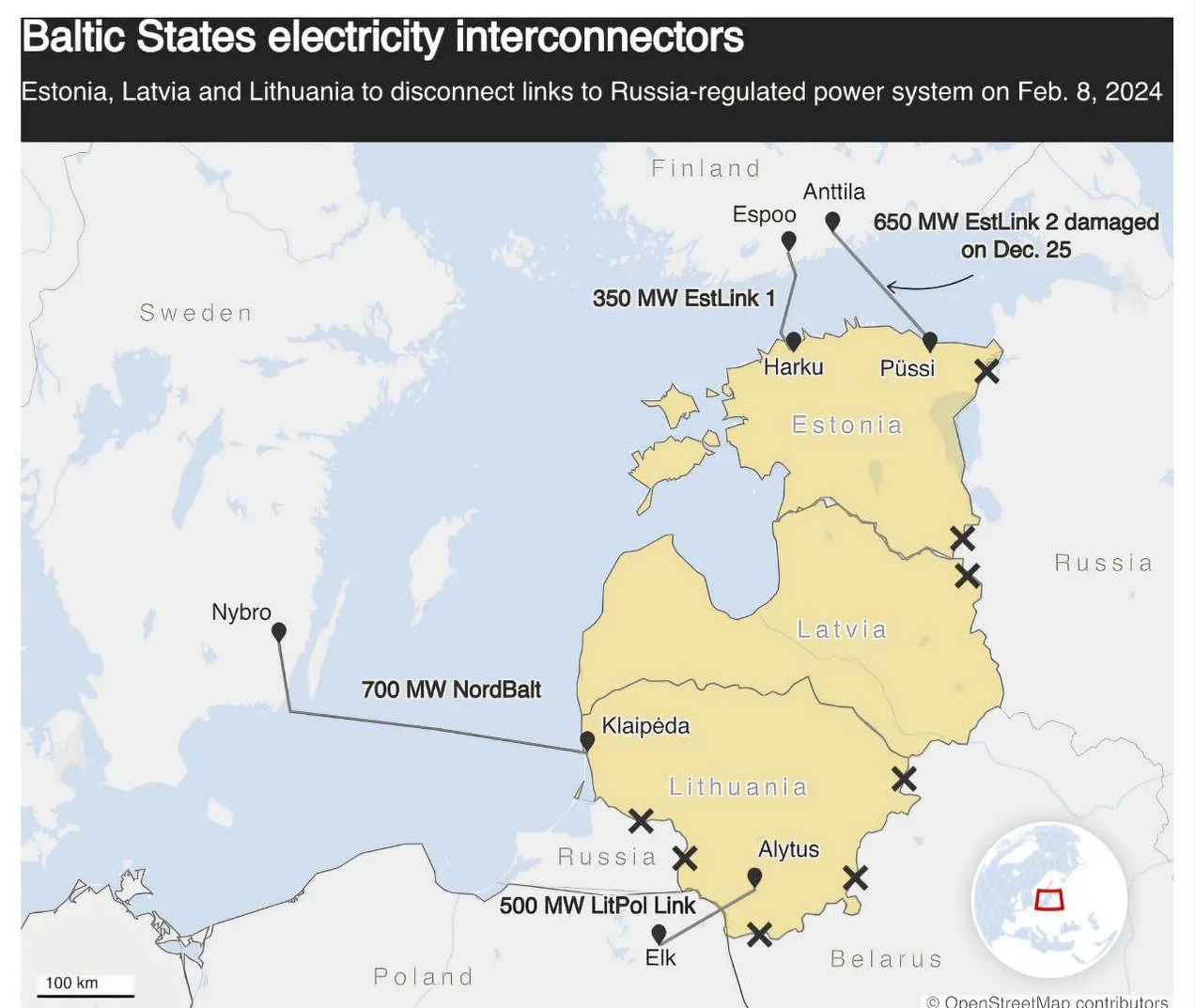
"We have removed any theoretical possibility of Russia using energy [grid] control as a weapon," Lithuanian Energy Minister Zygimantas Vaiciunas said.

The Baltic countries spent nearly 1.6 billion euros ($2.6 billion) since 2018 to upgrade grids to prepare for the switch.


Queen of the Maggot Infested Empire, Ursula, posted the video of the full charade, frilled with more empty fanfare and highschool theatrics:

Image

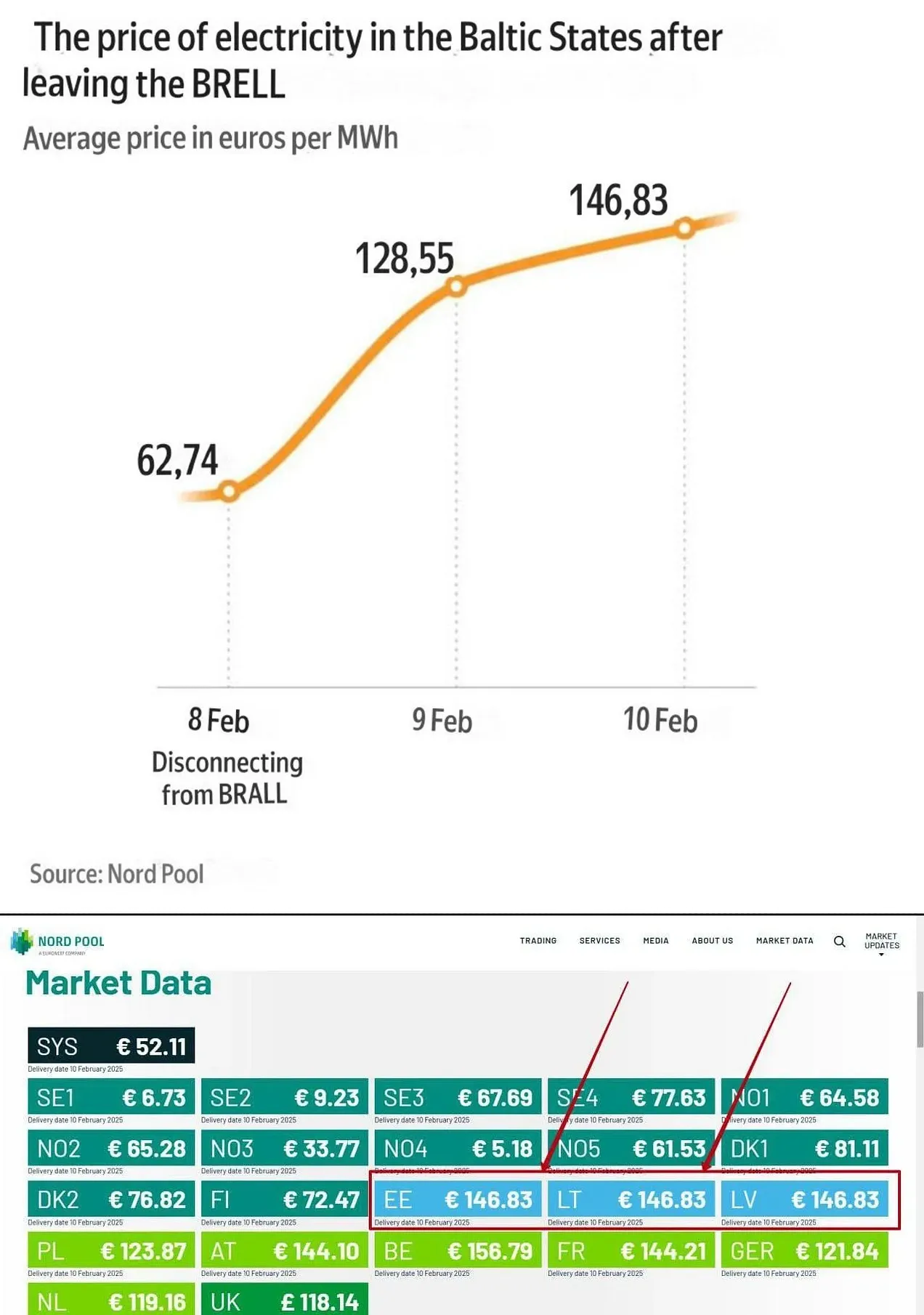
Some energy ‘independence’:

Image

Congratulations, the electricity prices in Lithuania, Latvia and Estonia are the highest prices in Europe.

Only Belgium has higher prices

Take that Pyutin!


But the play which skimmed under the radar was the Baltic power cut’s secret ulterior objective to pressure Kaliningrad’s power grid.

Image

Report highlighted below:

The Kaliningrad Region power system has switched to autonomous operation mode.

This happened after Latvia, Lithuania and Estonia left the single energy ring with Russia and Belarus, the Ministry of Energy reports.

-> When the Baltics disconnected from the Russian grid and connected to the EU grid, to allegedly stop Putin’s non existent blackmail, they actually put pressure on Kaliningrad. Now Kaliningrad is in its own grid and can be pressured easier.

The government of the Kaliningrad Region prepared for this development in advance, the Ministry of Energy said.

“The total capacity of Kaliningrad power plants is 1.88 GW, which is more than twice the peak energy consumption of the region”


This is in conjunction with other work taking place in reportedly disconnecting Russian ships from Inmarsat satellite comms systems in the region, as recently outlined by Patrushev:

NATO wants to paralyze the work of Russian ports in the Leningrad and Kaliningrad regions

Chairman of the Russian Maritime Collegium Nikolai Patrushev

According to him, Western countries are disconnecting ships under the Russian flag from the Inmarsat satellite communications system - an integral component of the Global Maritime Distress and Emergency System.

❗️Russia has the will and resources to make NATO's dreams of turning the Baltic Sea into an "internal lake" of the alliance unrealistic, - Russian Ambassador to Finland Pavel Kuznetsov

Remember when last year Lithuania suddenly restricted rail cargo from Russia to Kaliningrad to escalate the same pressure. It is all integral to the coordinated effort to slowly isolate Kaliningrad in order to force a Russian reaction, preferably a military one, that can be used as justification for further hysteria and NATO military buildup, intervention, etc.

However, a month ago Politico had already unlidded a growing harsh reality—that the Maggot Queen’s nonstop attempts to turn the nations of the EU into her own personal geopolitical Ken-and-Barbie-Playhouse has begun to tire EU leaders:

Image
https://www.politico.eu/article/ursula- ... -capitals/

How long before her and her rotten empire fatefully join Zelensky in the swirling porcelain bowl of history?

https://simplicius76.substack.com/p/dan ... baltics-as

*****

Switching off Russian gas pipelines hurts Europe far more than it hurts Russia

Ian Proud

February 12, 2025

Mothballing Russian pipelines as putative punishment for the war in Ukraine is having the opposite effect.

European industry is being crippled by high energy prices, and we are told, this is Russia’s fault. But it is driven by self-defeating energy policies in Brussels and Berlin. The only answer is to boost global supply which may involve uncomfortable choices about Russian pipelines.

The Financial Times recently reported that some European member states are pondering restarting supplies of Russian piped gas on the back of any future ceasefire in Ukraine. This is proving controversial, not least among hard-line Russophobe states like Poland and the Balts. But it might make economic sense, not for Russia’s sake, but for Europe’s.

Before war started, gas prices in Europe were extremely low – comparable to U.S. gas prices today – because of hugely favourable global supply. LNG from the U.S., the Middle East and Africa together with piped gas from Norway and Russia, pushed the wholesale price of gas down to levels not seen since 2005.

European LNG imports had risen sharply after the onset of the Ukraine crisis in 2014 increasing from only 10% of to nearly 50% today, while Russian piped gas kept flowing. As part of this, imports from the U.S. tripled in volume between 2021 and 2023 and they now make up almost 50% of total European LNG imports.

Read the European press and you’ll hear often how U.S. LNG is too expensive, which contributes to the economic headwinds manufacturers in Germany and else are facing. Emmanuel Macron has in the past called out the U.S. as ‘unfriendly’ for selling expensive LNG. But this is deeply misleading.

Back in 2019, there was more gas than the world could possibly use, bearing down on prices. The fact of piped or shipped was immaterial to the glut in supply.

The surge in U.S. supplies was doing to global gas prices what the glut of U.S. shale oil was doing in January 2016 when prices sunk to $26 per barrel.

The 2016 oil price collapse put immense pressure on Russia’s economy, which is heavily reliant on tax from oil and gas exports. Russia’s current account surplus in 2016 hit its lowest level since 1999, pinching tax income significantly. And that was at a time when Russia was pumping record amounts of oil and gas.

Because herein lies a truth; the global price of energy has a much bigger impact on Russia than the amount of energy that you buy from Russia.

When President Trump talks to OPEC about slashing the oil price, and, by extension, the gas price, he thinks that this will damage Russia’s economy more than cutting Russian supplies

However, Russian monetary policy today is very different to 2016. A low rouble is embraced which helps to offset energy price slumps and brings in bigger surpluses when prices soar.

So, even cutting the oil price to $45 – which Trump is talking about – might not have as big an impact on Russia as he believes. And, in any case, those prices will only be possible by radically changing the supply equation.

Mothballing Russian pipelines as putative punishment for Putin’s war in Ukraine is having the opposite effect – restricting supply, pushing up prices and hurting Europe far more than it is hurting Russia.

In 2018, Europe imported 201 BCM of gas from Russia, mostly through pipelines, accounting for 38% of its total gas imports. Since the war started, Europe has shut down 185 BCM in potential yearly supply, or 35% of its total gas imports.

This includes the destruction or suspensions of the Nordstream pipelines (110 bcm), the suspension of the Yamal Pipeline via Belarus (33 BCM) and now the cutting off of gas transit via Ukraine at the start of 2025 (42bcm). That leaves just 17.5 BCM in pipeline capacity through Turkey for Russian gas.

On the demand side, the European Commission has encouraged fear-induced gas stockpiling pouring further fuel on inflation.

Add to that Germany, once the economic engine of Europe and now its sick man. While in the long-term, its green energy strategy might make sense, closing its remaining nuclear power stations in 2023, the year after war in Ukraine started, was foolish as best. Little wonder that Annalena Baerbock, Germany’s Green Foreign Minister, is doing all she can to blame Russia, and not her own political party, for Germany’s self-inflicted economic car crash.

On the back of this surge in demand, there is massive profiteering in Europe by traders sealing long term contracts with U.S. suppliers and selling gas on at a mark-up.

Prices don’t lie. The cost of natural gas in Europe is astronomical compared to in America. At the end of 2024, U.S. natural gas prices were $3 per MMBtu compared to $13.55 in Europe, a four-and-a-half fold difference.

One of the reasons that the U.S. economy grew at 2.8% and the Russian economy grew by over 3% is both countries’ abundance of cheap energy. The UK and Eurozone economic dials barely shifted last year.

Meanwhile, Russia’s export strength shows no obvious signs of weakening. After a hugely profitable year in 2022, Russia pulled in a trade surplus of $88bn in 2023 and $120bn in 2024 with two thirds of its exports oil and gas. There’s little to suggest 2025 will be different.

Because gas, like oil, flows to where the demand is. War in Ukraine has seen continued growth in Russian gas supplies to China. Russia has increased its LNG exports to Europe at a higher price than cheaper piped gas supplies. And Russia is now developing a Caspian supply route to Iran.

It’s a timely reminder of how, in the war in Ukraine, statecraft has again become victim to the tyranny of short-term thinking.

We are in the situation where Europe is being weakened, and Russia is being bolstered, by the decision in Brussels to cut off supplies of pipeline gas, with European leaders trumpeting this as success.

If President Trump wants to ‘drill, baby, drill, to flood Europe with even more American liquefied natural gas (LNG) then European leaders should say ‘ship, baby, ship’, as that would drive prices down, providing European industry with a desperately needed boost. Don’t say it too loudly, but buying Russian piped gas might help Europe too.

https://strategic-culture.su/news/2025/ ... ts-russia/
"There is great chaos under heaven; the situation is excellent."

User avatar
blindpig
Posts: 14829
Joined: Fri Jul 14, 2017 5:44 pm
Location: Turtle Island
Contact:

Re: Blues for Europa

Post by blindpig » Sat Feb 15, 2025 5:17 pm

"United" Germany before the elections
February 14, 21:00

Image

The map of the ADF dominance is similar to the borders of the annexed GDR. Under the signboard of the FRG, two Germanys continue to exist.

https://colonelcassad.livejournal.com/9670741.html

Munich flogging
February 14, 18:55

Image

The biggest threat to Europe comes not from Russia, but from within – from the various commissioners in Brussels (c) US Vice President Vance

Vance, stop repeating after Channel One and Russia Today. 😀

Vance also accused the EU of abandoning the principles of democracy, stealing the elections in Romania through the courts, and generally behaving incorrectly. And that Europe will have to tolerate Elon Musk, since the US was forced to tolerate Greta Thunberg. Britain

also got it for violating freedom of religion, Brussels for calling for the closure of unwanted media and treating voters like obedient animals. In general, for the Munich Conference, this speech will be as memorable as Putin's speech in 2007.

The representative of the overlord is essentially organizing a public flogging of vassals in Munich.
It's been a long time since the hegemon has publicly reprimanded European clowns like that

https://colonelcassad.livejournal.com/9670503.html

Google Translator

******

Vance Criticizes Europe In Fierce Speech

The 2007 speech by Russia's President Vladimir Putin at the Munich Security Conference was one for the ages.

Concepts mentioned therein are only now getting acknowledged:

It is well known that international security comprises much more than issues relating to military and political stability. It involves the stability of the global economy, overcoming poverty, economic security and developing a dialogue between civilisations.
This universal, indivisible character of security is expressed as the basic principle that “security for one is security for all”.
...
The unipolar world that had been proposed after the Cold War did not take place either.
...
It is world in which there is one master, one sovereign. And at the end of the day this is pernicious not only for all those within this system, but also for the sovereign itself because it destroys itself from within.
...
There is no reason to doubt that the economic potential of the new centres of global economic growth will inevitably be converted into political influence and will strengthen multipolarity.


Eighteen years later the new U.S. Secretary of State Marco Rubio acknowledged the fact of a multipolar world. Defense Secretary Pete Hegseth demolished any hope for Ukraine to enter NATO. Donald Trump, by calling President Putin, accepted the concept of a shared if not yet indivisible security. In 2007 Putin also spoke out against the abuse of so called NGOs to manipulate foreign countries' internal policies. Trump has now stopped USAID and NED from financing these.

Eighteen years on the core concepts of Putin's speech have thus been accepted.

Yesterday another speech at the Munich Security Conference was given by U.S. Vice-President JD Vance (video, transcript). It will also echo for years to come:

Vance opened by saying that the biggest threat to Europe comes not from Russia or China or other external threats. It comes from within by the antidemocratic instincts and behavior of those in power, who trample free speech in the name of fighting ‘disinformation’ and show no respect for political opposition.

While I agree with Vance on this I wonder if he can acknowledge his own U.S. made hypocrisy. It were not the Europeans who initiated the campaign against 'disinformation'. It was the U.S. who came up with this concept and which has been using its 'soft power' to push censorship into Europe.

The German Defense Minister immediately reinforced Vance's critique of too little tolerance for political speech in Europe by calling his speech unacceptable:

"Democracy was called into question by the US Vice President for the whole of Europe earlier," German Defense Minister Boris Pistorius said from the main stage at the conference. "He speaks of the annihilation of democracy. And if I have understood him correctly, he is comparing conditions in parts of Europe with those in authoritarian regions... that is not acceptable."

This critique by Vance is also shallow:

I was struck that a former European commissioner went on television recently and sounded delighted that the Romanian government had just annulled an entire election. He warned that if things don’t go to plan, the very same thing could happen in Germany too.
Now, these cavalier statements are shocking to American ears.

For years, we’ve been told that everything we fund and support is in the name of our shared democratic values. Everything—from our Ukraine policy to digital censorship—is billed as a defense of democracy.

But when we see European courts canceling elections, and senior officials threatening to cancel others, we ought to ask whether we’re holding ourselves to an appropriately high standard.


As Arnaud Bertrand points out:

O]n Romania and much of Vance's criticism directed at Europe, the U.S. was right there alongside Europe acting jointly, and often even guiding Europe's actions. Specifically on Romania for instance, I believe that the US State Department was first in issuing a statement on December 4th (https://2021-2025.state.gov/statement-o ... elections/) expressing its concern about "Russian involvement in malign cyber activity designed to influence the integrity of the Romanian electoral process" which led to the elections being cancelled two days later (and which, it was later proven, was completely false: it turned out that this "malign cyber activity" were paid for by the very Romanian party in power that cancelled the elections!). It's only after that State Department statement that the Europeans followed the U.S.'s lead.
So it's a bit rich, even very rich, for Vance, less than 2 months afterwards, to lecture Europeans on this without as much as acknowledging the U.S.'s own role in a lot of it.


Vance also criticized mass immigration to Europe. But he is neglecting the fact that the streams of Afghan, Syrian and Ukrainian refugees are a consequence of wars that the U.S. has caused and is waging. He laments the de-industrialization of Germany but ignores the U.S. bombing of the Nord Stream pipelines which is the greatest cause of it.

Vance calls for more democracy in Europe but at the same time is actively meddling in it. By pushing nationalist parties against European institution he is endangering peace in Europe.

The speech is a wake up call for Europeans to fight for their own sovereignty. As such it may have good impact:

After the dark days of the Biden repressions, the reliance of Power on corrupt intelligence agencies and the weaponization of the Justice Department, it was remarkable to be treated to such brave words from a top American official in defense of the people against the authoritarian rulers in Brussels, in Berlin, in Paris.
It is hard to see how the usurper Ursula van der Leyen and her whole team of people-haters will be able to hold onto power in these conditions.


Vance's speech may also be seen as the watershed where the U.S. divorces from Europe. There is a hidden danger in this:

The Europeanisation of Nato, framed as a necessity following US withdrawal, has accelerated the continent’s militarisation and its leaders’ demonisation of Russia, perpetuating the very conditions that caused the conflict in Ukraine in the first place. Instead of using this moment to engage in diplomacy, European leaders view the US retreat as a reason to escalate militarily. In this sense, Washington’s decoupling from Europe is at odds with Trump’s stated aim of achieving peace in Ukraine.
...
Ironically, the US’s attempt to distance itself from European security affairs may ultimately pull it back into an even larger conflict — one that it will have far less control over.


Posted by b on February 15, 2025 at 12:57 UTC | Permalink

https://www.moonofalabama.org/2025/02/v ... .html#more

******

Power Prices in Baltics Nearly Double After Cut From Russian Grid
February 14, 2025

Image
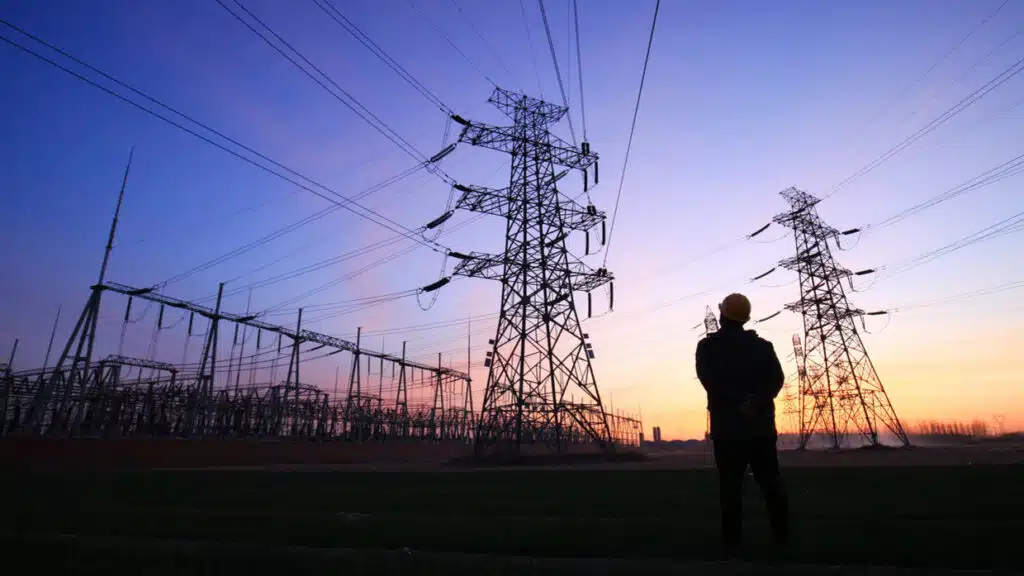
Power lines and a worker at sunset. Photo: Zhengzaishuru/Getty Images.

Lithuania, Latvia and Estonia recently disconnected from a Moscow-run transmission network
Electricity prices in the Baltic region have nearly doubled since Estonia, Latvia, and Lithuania disconnected from Russia’s electricity transmission grid last week, trading data from Nord Pool showed on Wednesday.

The network that the three Baltic states left, called the BRELL Energy Ring, synchronized the grids of Belarus, Russia, Estonia, Latvia, and Lithuania under Moscow’s central dispatch. However, several years ago the three EU states pledged to eventually cut their systems off from BRELL, claiming that reliance on a network controlled by Russia jeopardized their energy security. On Sunday, they announced having successfully disconnected from BRELL and synchronized their systems with the European continental power grid.

However, according to figures from Nord Pool energy exchange, while the average price of electricity in the Baltics in January was €92 ($95) per megawatt-hour (MWh), it jumped by roughly 25% to €125 euros per MWh following the grid switch. On February 12, the average price of electricity in Latvia, Lithuania and Estonia soared further to €230 euros per MWh, more than doubling from last month’s average.

Some experts have argued that the price spikes are not attributable to the grid switch, which they portray as merely symbolic, as all three countries had long since stopped buying Russian and Belarusian electricity. Nevertheless, the Baltic nations continued relying on the Russian grid to control frequencies and stabilize networks to avoid outages.

Estonian gas transmission system operator Elering blamed the recent spike in prices on low wind and solar output, higher electricity consumption due to a cold snap and an increase in natural gas prices over the past week. Other experts also noted that the Baltic states are currently lacking some of their regular electricity connections, such as the Estlink 2 cable to Finland and the NordBalt cable connection with Sweden, both of which were damaged late last year.


The operator for the Unified Energy System between Russia and Belarus said last week that the withdrawal of the Baltic States from BRELL did not affect its grid, and that the energy system of Kaliningrad Region was secure.

The Russian mission to the EU last week warned that the decision by the Baltic nations to disconnect from BRELL would only worsen the economic prospects for the bloc, and said it saw the move as politically motivated.

“Disconnecting from the BRELL… will drive up regional electricity prices, make power grids less reliable, and further erode the EU’s economic competitiveness,” the mission said on Telegram on Saturday.

Russian Foreign Ministry spokeswoman Maria Zakharova also criticized the move in a statement on Sunday, calling it their “logical next step in destroying their countries and peoples that once had all the prerequisites for prosperity and independence.”

(RT)

https://orinocotribune.com/power-prices ... sian-grid/


Nose, spite, face...

******

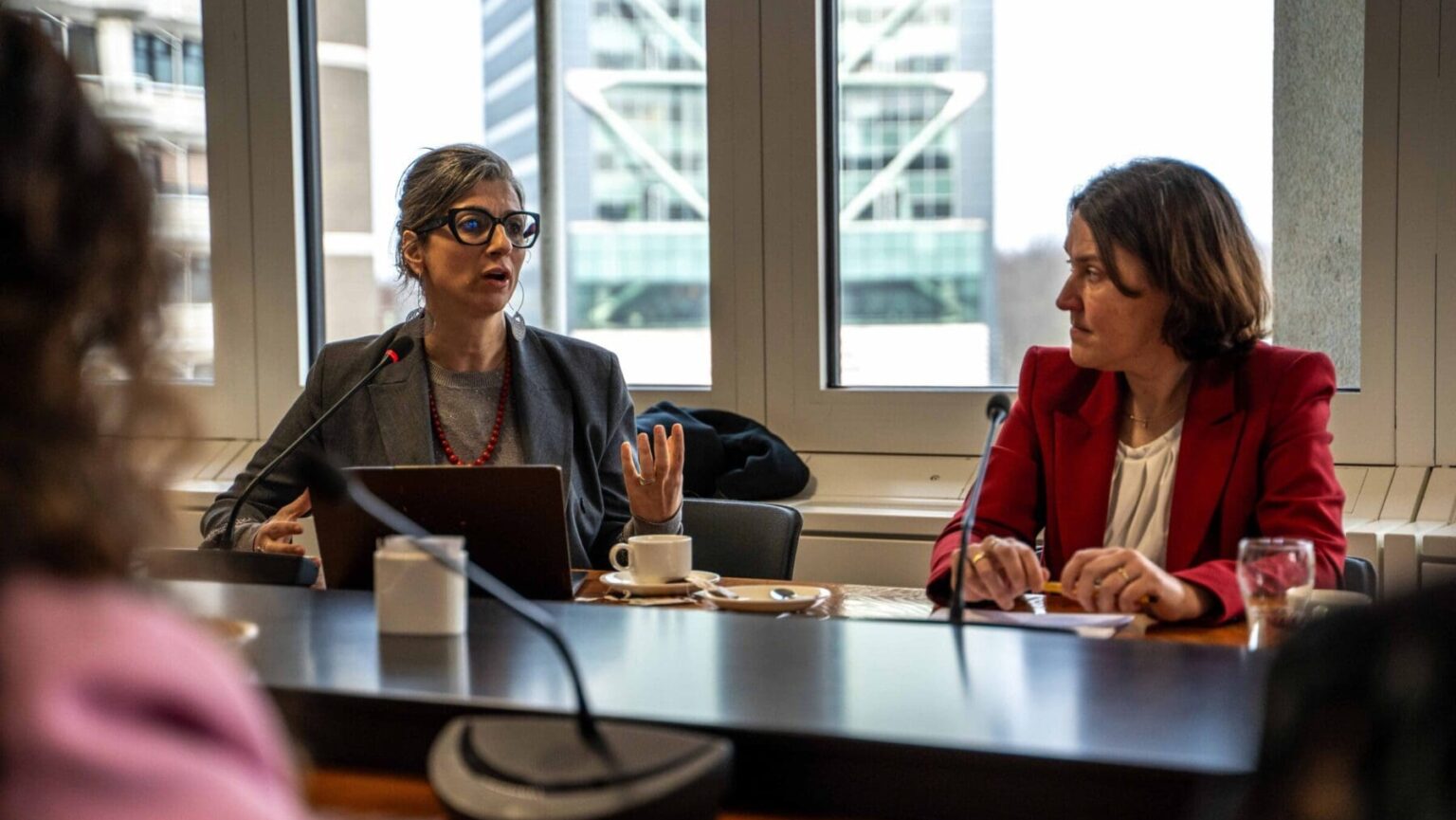
Dutch parliamentarians withdraw invitation to UN Rapporteur Francesca Albanese

Dutch parliamentarians withdrew an invitation to UN Rapporteur Francesca Albanese after pressure from right-wing groups

February 14, 2025 by Peoples Dispatch

Image
UN Rapporteur Francesca Albanese meeting Dutch MPs. Source: GroenLinks-PVDA

In a controversial move, the Foreign Affairs Committee of the Dutch Parliament this week retracted an invitation extended to Francesca Albanese, the United Nations Special Rapporteur on Human Rights in Palestine, to speak about her findings on the ongoing situation in Palestine. The invitation had originally been issued at the initiative of the Dutch Labour Party (PvdA) and the Greens (GroenLinks), two prominent center-left parties in the Netherlands. However, after sustained pressure from the pro-Israel lobby organization CIDI, which accused Albanese of antisemitism, the invitation was rescinded in a new vote.

Albanese, a well-respected human rights advocate, has been outspoken about the human rights violations taking place in Palestine, particularly under the Israeli occupation. Her UN role involves examining issues of human rights within the occupied Palestinian territories, and she has consistently called for accountability regarding Israel’s actions in the region.

The vote came amid intense political lobbying by right-wing factions in the Netherlands, including three out of four parties that form the current ruling coalition: the fascist Party for Freedom (PVV), led by Geert Wilders, the People’s Party for Freedom and Democracy (VVD), and the Farmer-Citizen Movement (BBB). Christian parties such as the Christian Union and the Reformed Political Party sided against the invitation, and so did the far-right Forum for Democracy.

Geert Wilders, the leader of PVV, who is known for his staunchly racist and anti-Islam rhetoric, has consistently demonstrated support for Israel. Earlier this year, he visited Israeli Prime Minister Benjamin Netanyahu, even after an international arrest warrant was issued against Netanyahu by the International Criminal Court (ICC) for alleged war crimes.

Albanese expressed her disappointment. She said: “I am disappointed to see that parliamentary members, who gather in the same city as the International Court of Justice (ICJ) and the ICC, deny what is happening in Palestine. Israel has created circumstances that have led to the destruction of Palestinian lives. Even Israeli military personnel have admitted to committing crimes. Yet, the politicians in your country only listen to the Israeli government, whose Prime Minister faces an arrest warrant for suspected war crimes.”

The UN Rapporteur also voiced her skepticism regarding the prospect of a ceasefire, asserting that true peace can only be achieved when Palestinians are given the freedom to live as a people without oppression. She warned against complacency, stating: “Genocides, whether in Europe or elsewhere, occur when the majority of people ignore the dehumanization of others. As long as we continue to overlook our own biases and orientalist views, there will be no peace in Israel or Palestine.”

Despite the official disinvitation, Albanese was warmly received by center and left-wing political groups in a smaller setting on February 12. On the same day, she was welcomed by a vibrant Palestinian solidarity movement in the streets of the Netherlands. Albanese was honored with the Dries van Agt Prize, which recognizes individuals who have shown courage in defending human rights.

The cancellation of Albanese’s invitation is seen by many as a setback for open dialogue on human rights and peacebuilding. However, the continued support for her from Dutch civil society and political progressives underscores a commitment to raising awareness about the situation in Palestine and advocating for the rights of the Palestinian people.

https://peoplesdispatch.org/2025/02/14/ ... -albanese/
"There is great chaos under heaven; the situation is excellent."

User avatar
blindpig
Posts: 14829
Joined: Fri Jul 14, 2017 5:44 pm
Location: Turtle Island
Contact:

Re: Blues for Europa

Post by blindpig » Mon Feb 17, 2025 3:53 pm

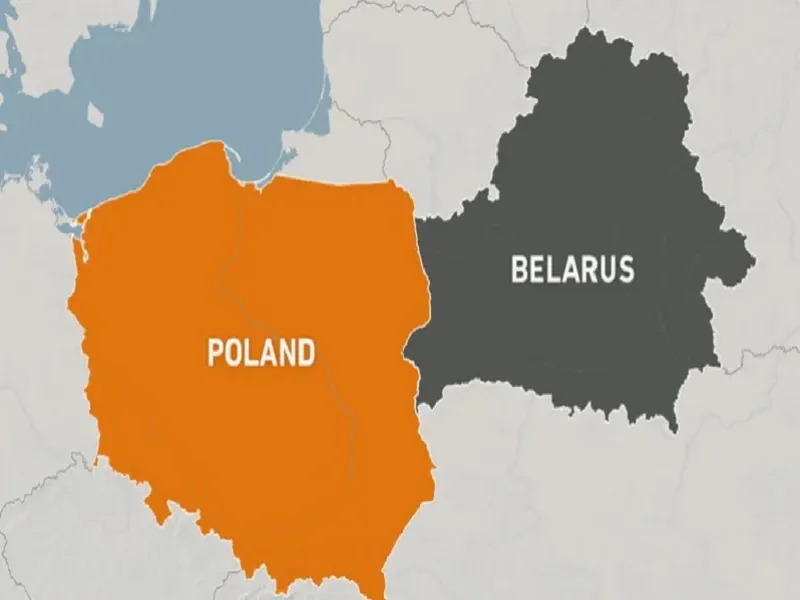
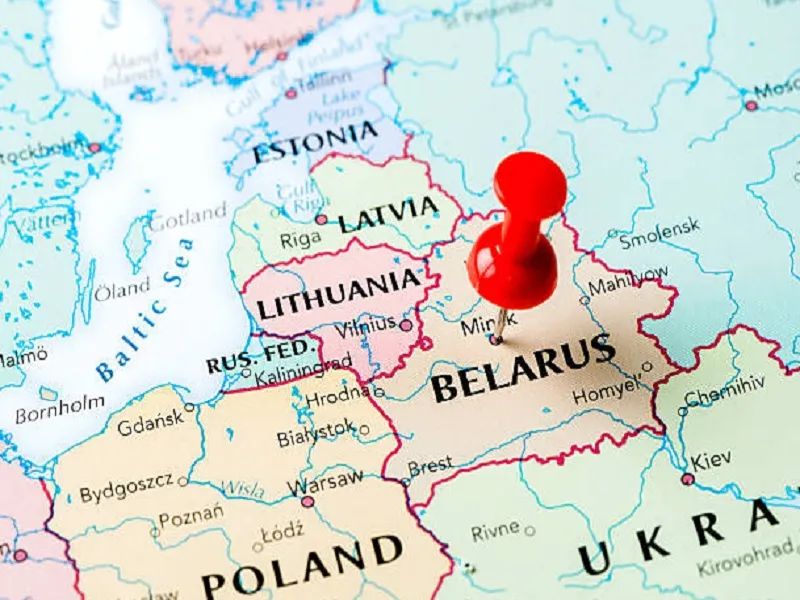
Poland Will Be Left In The Lurch If The US Patches Up Its Problems With Belarus
Andrew Korybko
Feb 16, 2025

Image

The best course of action would be to beat the US to the punch instead of accept whatever it agrees to with regard to Russia and/or Belarus but neither half of its ruling duopoly has any such interest.

The New York Times reported on Saturday that a recent trip to Minsk by the Deputy Assistant Secretary of State as part of the latest Russian-US prisoner swap could precede a Belarusian-US rapprochement. According to their sources, that official told Western diplomats that they’re exploring a “grand deal” whereby Lukashenko “would release a slew of political prisoners” in exchange for the US relaxing sanctions on his banks and potash exports, which could pair with the US’ latest diplomacy with Russia.

They quoted a relative of one of the most prominent imprisoned figures as suggesting that this arrangement could “loosen Belarus’s dependence on Russia and preserve some leverage for the U.S. and E.U.” Extrapolating on that potential imperative, another attempt could then be made to incentivize Lukashenko into drifting westward like he was prior to summer 2020’s failed Color Revolution, which might pressure Russia into being more flexible towards any compromises on Ukraine if he bites the bait.

Any improvement of Belarusian-US relations regardless of their motive would leave neighboring Poland in the lurch, however, since it’s been at the forefront of this Western regime change operation against Lukashenko. He then arguably responded to this unprovoked Hybrid War aggression by at the very least turning a blind eye towards civilizationally dissimilar illegal immigrants invading Poland from across their shared border. Tensions have since spiraled to their present nadir. Here are five background briefings:

* 13 May 2024: “Poland’s Border Fortification Buildup Has Nothing To Do With Legitimate Threat Perceptions”

* 2 June 2024: “Poland Can Defend Itself From Invading Illegal Immigrants Without Worsening Tensions With Russia”

* 19 July 2024: “Why’d Poland Rebuff Belarus’ Proposal To Resolve Their Border Problems?”

* 26 November 2024: “The West’s Next Anti-Russian Provocation Might Be To Destabilize & Invade Belarus”

* 30 January 2025: “Poland Won’t Send Troops To Belarus Or Ukraine Without Trump’s Approval”

Even though new Secretary of Defense Pete Hegseth praised Poland as “the model ally on the continent” during his first European bilateral visit, Trump 2.0 is putting American interests first, not any single partner’s or group thereof like NATO’s. This is taking the form of prioritizing a peace deal with Russia over Ukraine that could then at minimum facilitate the US’ “Pivot (back) to Asia” for more muscularly containing China and at maximum build a “new world order” with it. Here are three briefings about that:

* 13 February 2025: “Here’s What Comes Next After Putin & Trump Just Agreed To Start Peace Talks”

* 14 February 2025: “Why Might Russia Repair Its Ties With The West & How Could This Reshape Its Foreign Policy?”

* 15 February 2025: “Vance’s Munich Speech Vindicated Putin’s Summer 2022 Prediction About Political Change In Europe”

The first scenario could result in a speedy ceasefire or armistice while the second could see Russia and the US joining forces, whether in general or on a case-by-case basis, to support a global populist-nationalist revolution aimed at bringing to power figures and movements that share their worldview. Polish Foreign Minister Radek Sikorski already hinted last month that the US might interfere in May’s presidential election via Musk personally and his X platform more broadly as was analyzed here.

The opposition “Law & Justice” (PiS) party is more socially conservative and pro-American than the ruling liberal-globalists from the “Civic Platform” (PO), who align a lot closer with Germany but still aren’t anti-American by any stretch. PiS was in power from 2015-2023, thus making them responsible for both summer 2020’s failed Color Revolution in Belarus and Poland’s continued support of anti-government militants afterwards as well as helping the UK sabotage spring 2022’s Russian-Ukrainian peace talks.

How all of this relates to May’s presidential election is that neither outgoing President Andrzej Duda’s replacement by fellow PiS member Karol Nawrocki nor PO member Rafal Trzaskowski will make any difference in terms of Polish-Belarusian ties since each of them practices pretty much the same policy. The only difference is that keeping PiS in the presidency amidst PO leader Donald Tusk’s tenure as premier (Poland has an odd ruling arrangement right now) will prevent the latter from changing society.

Neither electoral outcome though is expected to see Poland beat the US to the punch by patching up its problems with Belarus before the US does, which would objectively be the best course of action. Therefore, Poland will likely be forced to accept whatever the US agrees to with regard to Russia and/or Belarus instead of shaping circumstances in the direction of its national interests, such as prioritizing a rapprochement with Belarus and/or Russia in order to get ahead of the US and the EU in this respect.

What this means in practice is that Poland will continue being excluded from key regional developments just like how it was earlier excluded from last fall’s Berlin Summit between the German, American, British, and French leaders. Its ruling duopoly’s dreams of restoring Poland’s lost geopolitical glory through the creation of a regional sphere of influence will correspondingly remain nothing but delusions of grandeur made impossible by their lack of vision and loyal fealty to their foreign patrons’ interests.

https://korybko.substack.com/p/poland-w ... -the-lurch

******

Update: More and more European leaders will gather in Paris this morning. To discuss exactly what?

The latest news on the meeting of European leaders that Emmanuel Macron will convene in Paris this morning published in The Financial Times online edition presents many questions that are not now unanswerable, but which should be identified at once if we are to make sense of the announcements made at the end of this gathering.

First, it would now appear that the leaders present will be more numerous than originally stated. Besides Germany, Poland, Italy and the United Kingdom, who were named initially, it seems that the heads of government from Spain, the Netherlands and Denmark will be there. Moreover, and very importantly, we can expect NATO Secretary General Mark Rutte to have a seat, which is quite extraordinary given that Team Trump stated explicitly that any peace-keeping force provided under the terms of an eventual peace settlement will not be a NATO mission.

Extraordinary as it may be, it fits in with the concept that the Europeans seem to share, that the ‘peace keepers’ are there to protect Ukraine from some expected attempt by the Russians to renew their aggressive war and seize more territory at some date in the future. That is to say, they willfully ignore the possibility, shall we say the likelihood that violations of any cease-fire and agreed borders will come from the revanchist Ukrainian side. That is precisely what happened during the positioning of OSCE monitors at the Donbas-Ukraine line of confrontation to enforce the Minsk-2 agreements.

The OSCE monitors were rapporteurs, nothing more. But their reports in the weeks prior to the Russian invasion in February 2022 clearly showed that the Ukrainian side was greatly increasing the frequency of its artillery barrages directed at the civilian population on the ‘rebel’ Donbas side in what could be construed as a ‘softening up operation’ ahead of the massive armed attack on the Donbas that the Kremlin feared was coming, and against which it had prepared its own 150,000 soldiers stationed at Ukraine’s borders.

If the peace-keeping force that the Europeans will propose today, specifying at their meeting in Paris the numbers of soldiers and equipment available for the mission, is intended to look only one way, at Russian violators of the peace terms, then indeed war will break out again. Under this protective cover, the Ukrainians may start lobbing missiles and artillery shells over their heads against the Russian settlements on the other side of the border. In short, that would be a self-fulfilling prophecy of Russian ‘aggression’ to come and is precisely the opposite of what Team Trump’s stated objective is – namely a definitive end to hostilities and normalization of relations with Russia.

As I have written in the past week, the mention by Team Trump of a ‘non-European’ contingent in the future peace-keeping force is precisely to ensure that the force is not a NATO mission. The reason is clear: Vladimir Putin surely told Trump that the Russians will not accept a NATO presence in Ukraine whatever it may be called. Full stop.

The sad reality is that the European leaders assembling today in Paris are diehard enthusiasts for precisely the situation that Team Trump rejects: they do not want a durable peace with Russia and a revision of the European security architecture that brings Russia in from the cold. The sense of their insistence that Ukraine be a party to the negotiations from the start is that Ukraine would be allowed to present yet again its claims to recovery of all its lost territory and to receive war reparations from Russia. In short, they want to receive at the peace table what Ukraine and the US-led West have lost on the battlefield. This runs directly against the thinking of Team Trump and we may expect a harsh clash between the sides in the coming week or so.

Proof of my formulation of the problem is to be found in the latest statements of Antonio Costa, head of the European Council, who will also be participating in the Paris meeting at the invitation of Emmanuel Macron. He is cited in today’s FT thus:

The negotiations on the new security architecture need to take into account that Russia is a global threat, not only a threat to Ukraine

To this the FT adds:

Costa cited Russia’s aggressive stance towards the Baltic states Estonia, Latvia and Lithuania, which are EU and Nato members, and occupation of territory in states on the EU’s eastern flank as reasons why Brussels needed to be part of the talks.

And it then quotes Costa directly again:

[/i]Russia is clearly a threat to Baltic sovereignty, to our eastern border…They have a military presence in Moldova, in Georgia.

What I am saying is that Costa, and likely the heads of the EU member states gathering in Paris today, are planning for a continuation of the ongoing Cold War not for its final resolution. For this they want and expect to receive US logistical and other support that is critically needed if their troops on the ground in Ukraine can be viable.

And that is where the European retrogrades and Team Trump will be in a direct clash.

Watch this space…

©Gilbert Doctorow, 2025

https://gilbertdoctorow.com/2025/02/17/ ... ctly-what/

******

Munich Security Conference Concludes Amid Strained Transatlantic Relations

Image
A street near the hotel holding the 61st Munich Security Conference is blockaded, Feb. 16, 2025. Photo: Xinhua.

February 17, 2025 Hour: 7:40 am

During this year’s meeting, participants discussed challenges such as climate change, European security, and regional conflicts.

On Sunday, the 61st Munich Security Conference (MSC) concluded amid strained transatlantic relations. “We have to fear that our common value base is not that common anymore,” Christoph Heusgen, chairman of the MSC, remarked, pointing to the growing divide between Europe and the U.S., as he closed the three-day annual event.

In the wake of U.S. Vice President J.D. Vance’s controversial speech at the MSC, Heusgen expressed his gratitude that European politicians had “spoken out and reaffirmed the values and principles they are defending.”

During this year’s meeting, participants, including around 60 heads of state and government and 150 ministers, discussed key global security challenges such as climate change, European security and regional conflicts.

Yet, divisions persisted on issues like the Ukraine conflict and European defense, amid an increasingly complex geopolitical landscape.


What set this year’s MSC apart was Vance’s comment regarding Europe’s democracy and free speech, which sparked widespread backlash and openly exposed the rift between the U.S. and its allies, said Xiao Qian, deputy head of the Center for International Security and Strategy at Tsinghua University.

Heusgen emphasized the urgent need for shared norms and principles in a multipolar world. “This order is easy to disrupt, to destroy, but much harder to rebuild,” he noted.

Highlighting the rising importance of the Global South, Heusgen concluded that over 30 percent of speakers at this year’s conference were from Africa, Asia, Latin America, ensuring their voices were heard in discussions on the evolving multipolar order.

https://www.telesurenglish.net/munich-s ... relations/

******

U.S. Questions For European Governments - Another Wake-up Call

U.S. Vice President JD Vance has held up a mirror to Europe's 'elite' which did not like to acknowledge what could be seen in it: Minions, a lot of minions.

"But our common values?" cried Christoph Heusgen, the chairman of the Munich Security Conference.

What values Mr. Heusgen? Those displayed daily, with your applause, by the European colonists in Palestine?

"Like a headless chicken," is what the German broadsheet Frankfurter Allgemeine called the reaction of Chancellor Olaf Scholz. The descriptions fits to (nearly) all European leader.

Today U.S. Secretary of State Marco Rubio will meet Russia's Foreign Minister Sergei Lavrov in Saudi Arabia. They will talk like grownups, EU be damned, and find ways to achieve peace in Ukraine and elsewhere.

The Europeans are aghast that they are not invited to take part in the talks.

But why would one invite parties to peace talks when they want nothing more than to sabotage those? The EU's foreign representative Kaja Kallas, a former mayor of Baltic villages, dreams of breaking up Russia into smaller states. How could Russia ever seriously negotiate with such people?

Today the Europeans will huddle in Paris to find some, any, way to get out of the mess. It won't work unless they acknowledge that the war in Ukraine has been lost.

The U.S. has recognized that there aren't enough troops, money or will to achieve a better negotiation position for what's left of Ukraine. The European 'elite' still fails to get that.

Any prolongation of the war will lead to more losses of land to Russia. Will it take the fall of Odessa for the Europeans to be finally ready for talks?

There are still dreams of 'security guarantees' which would be given to Ukraine after it files for peace or surrenders.

No such guarantees would make any sense. When peace is achieved there will be only one manner that can prevent a new outbreak of war: good behavior towards Russians and Russia by what will be left of Ukraine.

Failing that no European battalions strewn over Ukraine could prevent or even hinder another special military operation.

The U.S. negotiation team handed the Europeans a list of questions that will hopefully help them to come to grips with that:

The United States has sent European governments a set of questions about what they would need from the U.S. in order to provide Ukraine with security guarantees.
A U.S. State Department spokesperson said that Washington "has been clear that we expect European partners to take the lead in establishing a durable security framework and look forward to their proposals."


Here are the questions with answers by me in Italic:

1) What do you view as a Europe-backed security guarantee or assurance that would serve as a sufficient deterrent to Russia while also ensuring this conflict ends with an enduring peace settlement?

There is no Europe-backed guarantee possible that would be a 'sufficient deterrent'.

2) Which European and/or third countries do you believe could or would participate in such an arrangement?

Each could provide a few dozen soldiers (plus rotations). None has the size of forces and/or stamina to really commit to the mission.

Are there any countries you believe would be indispensable?

The U.S. - if it would give nuclear guarantees to prevent the eventual annihilation of any 'security guarantee' force.

Would your country be willing to deploy its troops to Ukraine as part of a peace settlement?

No!

3) If third country military forces were to be deployed to Ukraine as part of a peace arrangement, what would you consider to be the necessary size of such a European-led force?

500,000 men, i.e. about the same size as the Russian forces in that theater.

How and where would these forces be deployed and for how long?

No idea. Any stationary deployment would be open to a Russian surprise attack. A forever roving force is thinkable but not practicable.

4) What actions do U.S., allies and partners need to be prepared to take if Russia attacks these forces?

Nuke Russia and risk being nuked back.

5) What, if any, U.S. support requirements would your government consider necessary for its participation in these security arrangements?

Nukes and the will to use them. Plus satellite based intelligence to have at least some warning.

Specifically, which short-term and long-term resources do you think will be required from the U.S.?

See above.

6) What additional capabilities, equipment and maintenance sustainment options is your government prepared to provide to Ukraine to improve its negotiating hand and increase pressure on Russia?

Never ending bickering.

I am sure the questions above, as cited by Reuters, are not meant to really be answered.

They are supposed to induce some realist thinking.

Applying such one will come to the conclusion that nothing but a long term peace agreement, which does not necessitate 'guarantees', makes any sense.

Posted by b on February 17, 2025 at 15:04 UTC | Permalink

https://www.moonofalabama.org/2025/02/u ... .html#more

******

I do not expect anything to come of the impending peace talks. The Trumpster is intent upon fashioning a 'win' out of this catastrophe and only 'facts on the ground' mightbring realization that this is impossible. Despite the Russian penchant for being diplomatic I don't see how they could put lipstick on the pig without giving up more than is wise for their at least mid-term security.
"There is great chaos under heaven; the situation is excellent."

User avatar
blindpig
Posts: 14829
Joined: Fri Jul 14, 2017 5:44 pm
Location: Turtle Island
Contact:

Re: Blues for Europa

Post by blindpig » Wed Feb 19, 2025 4:01 pm

Increasing Spending on War in Europe
February 18, 19:05

Image

Increasing Spending on War in Europe

Shares in European defense companies are rising amid NATO's announcements of increased military spending.

NATO Secretary General Mark Rutte said the alliance's spending target would be well above 3% of GDP.
NATO officials said significant increases in defense budgets were needed to continue supporting Ukraine and deter Russia from any potential attacks on NATO territory. Shares in Germany's Renk Group rose 12% to €28.08 in early trading on Monday, while Rheinmetall gained 8.4% to €885.8 and Hensoldt gained 6.5% to €43.33.
In the UK, BAE Systems rose 5.25% to £12.93 and QinetiQ gained 3.4% to £3.81. In France, Thales rose 3.75% to €171.55 and Dassault Aviation gained 4.75% to €227.20. Italy’s Leonardo rose 4.3% to 33.05 euros, while Sweden’s Saab rose 6.5% to 260.5 Swedish crowns.

Mark Rutte said the alliance’s spending target would be significantly higher than 3% of GDP, up from the current 2% target set in 2014, and that its members would have to comply with a strict timetable to be agreed at a summit in The Hague in June. NATO’s new spending target signals an expansion of Europe’s defence industry, as leaders seek to buy and develop European weapons, resisting calls to order more US systems. Defence stocks have been rising steadily since February 2022, as investors bet the conflict would persuade governments to invest in the defence sector. But a 5% jump on average is a significant indicator, suggesting investors are likely to be informed of specific decisions by EU leaders, including increased defence production and future support for Ukraine.

European Commission President Ursula von der Leyen, meanwhile, said the 27-member EU currently spends 2% of its GDP on defense, but that it needs to increase that by "hundreds of billions of euros" in annual investment. In addition, the EU's executive body will exempt defense from spending caps imposed by EU governments.

European arms manufacturers also received support at a meeting of key European leaders in Paris on Monday, hosted by French President Emmanuel Macron. The meeting focused on defense capabilities in Europe and what the EU could offer Ukraine as security guarantees in the event of a ceasefire.

In general, if we are being objective, European leaders heard the US message, feigned surprise, someone even shed a tear, and began to arm themselves in earnest.

@neinsider - zinc

On the issue of the fact that the war in Ukraine is not the only issue. The conflict will drag on for years one way or another, at least as long as the globalists retain control of Brussels.

https://colonelcassad.livejournal.com/9678389.html

Google Translator

******

EU suffers from “foot in mouth” once again over Ukraine war

Martin Jay

February 18, 2025

The total detachment from reality doesn’t help anyone strive for peace and prosperity, but this is not the objective of this elitist cabal in Brussels.

The European Union has a problem. It so badly needs to project itself around the world and also to its own citizens as a major player on the world stage, with a solid ‘foreign policy’ and the means to act upon it, whereas in reality the superpowers of the world – U.S., Russia, China – don’t take it seriously. Leading up to the peace summit in Saudi Arabia which caretaker President of Ukraine Zelensky was not invited to, senior EU officials began to panic. They quickly set up their own meeting to show their own people and the EU fraternity that they are still relevant but it’s not really convincing anyone. At moments like this, the worry for EU folks is that humble people in Europe will realize that all the international foreign policy posturing is based on a piece of paper with some ideas, or dreams, written on it.

The very fact that Trump is able to set up peace talks with Putin and bypass the EU altogether shows how ineffective it is. It’s easy to spend EU taxpayers’ money, harder to develop policies to enact, especially when member states don’t have the confidence in Brussels to carry out its global aspirations.

It was as though there was a scramble for EU senior figures, ladies, to outbid one another for the most stupid things to say about Ukraine. A failed Ukraine would weaken both Europe and the U.S.? Really? Then, not to be outdone in the “sounding like an idiot” stakes, Annalena Baerbock added to the mix how it would be impossible for a peace deal to go ahead with “us” (the Germans); but the best one surely has to go to Kaja Kallas, the EU’s so-called foreign policy chief who said that no Russian civilians were being killed in the Ukraine.

The level of rank stupidity if not ignorance is quite astounding.

Kallas can’t be that stupid and that misinformed, right? Many will ask how does such a top EU official even arrive at such a conclusion when she has the resources to understand the statistics and other such data of the war? Perhaps she simply choses to close her eyes and ignore the hundreds of children killed by shelling in the Donbas and Donetsk regions – both in recent war but also before in 2014. Or for that matter the civilians slaughtered like animals by Ukrainian soldiers in Kursk. And that’s without even tackling Russian civilians killed or maimed by the drone attacks within Russia.

Unfortunately, these kind of statements only make the EU look even more stupid and ineffective with the major powers in the world. The total detachment from reality doesn’t help anyone strive for peace and prosperity, but this is not the objective of this elitist cabal in Brussels. They place their own highly paid jobs and lifestyle first and protecting one another.

Typically, the post of the “EU’s top diplomat” as it is often called is always given to a numpty. It’s as though member states and the EU circle had agreed beforehand that the main criteria for the job is that it must go to someone who is incapable of actually doing anything, someone can be guaranteed to not achieve anything on the world stage but simply able to talk. The thinking behind this is that EU member states are divided over how the EU could move forward with a bold, shiny foreign policy, so prefer that Brussels actually doesn’t do anything except talk the talk. And nothing else. And even this, they don’t want to have too much impact as this would create further problems. So, the best type to install into such a job is an idiot, someone who has failed in politics, isn’t very good at public speaking and who would be very grateful for the position, but who can also be guaranteed not to actually achieve anything.

Previous EU diplomatic chiefs all fitted this criteria, but the most stupid of all was Catherine Ashton who was such an underperforming junior minister under Blair that she had to be sent to Brussels. Poor Catherine was so inept at her job that she became a laughing stock even among her own people who still dine out on the hilarious anecdote of her visiting a foreign country and managing to get lost within one of its ministries. Someone had to be sent to get her out of the building as she struggled with the lifts and the various buttons.

Kallas isn’t much better. She comes from a corrupt political dynasty in Estonia whereby her father was PM before her, while he too was given a cosy job in Brussels as an EU commissioner. There is a pattern to corruption within the EU elite. It always rewards its own people with absurdly well-paid jobs when no one else takes them seriously. Kallas had to resign as PM in her own country after it became clear to the Estonians that she was just a tad useless. Even a poll showed that 70 percent of Estonians didn’t have the confidence in her to govern. Where do utterly useless EU politicians go after that? Brussels of course!

When you have such dopes in senior positions within the EU, of course making any progress on Ukraine becomes hard as their blinkered vision of the situation slows everything down. Of course, von der Leyen, Baerbock and Kallas are never going to admit that their strategy bankrupted EU member states’ economies and left the EU in tatters. But their arrogance and stupidity is part of the problem and can never be part of the solution. Trump knows this which is why the EU wasn’t invited. He has brought with him common sense to end the most insane war in history – one whereby EU countries stab themselves in the face each day as sanctions backfire – which enriched the U.S. no end under Biden. If the EU pushes back on the initiative, Trump may well lose his patience and have to think of way to get it back in line, probably threatening to withdraw the U.S. from NATO and/or a tariffs trade war. How will the likes of these three ladies explain that to the voters when inflation creeps up even more? Just how many old people need to freeze to death in their homes during winter for people in those countries to realize that the Ukraine war was essentially a racket?

https://strategic-culture.su/news/2025/ ... raine-war/

The expansion of NATO and the dissolution of the pan-European order

Lorenzo Maria Pacini

February 18, 2025

Let’s briefly retrace one of the fundamental steps in reaching the current status quo: the dissolution of the order that reigned in Europe.

First rule, conquer

The choice to promote a global order dominated by the collective hegemony of the West after the Cold War had profound consequences for European security. It was clear that NATO enlargement would compromise efforts towards an inclusive pan-European security architecture, leading to a new division of the continent, the isolation of Russia and the reignition of latent conflicts. Many political leaders had warned of the risks of a new cold war resulting from the expansion of the Alliance; however, it was pursued by taking advantage of Russian weakness, with the conviction that any crises could be managed by the West. The expansion of NATO was conceived as a guarantee against future clashes with Russia, which, paradoxically, would have been triggered precisely by this expansion. This contradiction, which led the West into direct confrontation with Moscow, became a central element of the new world order.

There have been many attempts to build a pan-European security architecture based on the Westphalian principles of egalitarian sovereignty, indivisible security and a continent without divisions. The expansion of NATO, on the other hand, rejected this balance of power, favoring the inequality of sovereignty, strengthening its own security at the expense of Russia’s and perpetuating the fragmentation of Europe with a permanent military alliance in peacetime. NATO became an instrument for consolidating U.S. hegemony in Europe and for the strategic containment of Russia, hindering its capacity for nuclear retaliation. For Moscow, these developments represented an existential threat, pushing it to oppose Western unilateralism and to promote multilateral alternatives, although always based on the Westphalian principles.

A common European home against an integrated and free Europe

After the division of Europe after World War II, the capitalist and communist blocs tried to maintain a balance without compromising their respective regional orders. The Helsinki Accords of 1975 marked a turning point, establishing a common framework for European security and reinforcing fundamental principles such as equal sovereignty, indivisible security and respect for territorial integrity. At the same time, principles of justice were sanctioned, such as the self-determination of peoples and respect for human rights.

These developments favored Gorbachev’s internal reforms and his proposal for a “common European home”, which foresaw the demilitarization of foreign relations with the dissolution of the Warsaw Pact and NATO. The model envisioned by Gorbachev aimed to overcome the logic of blocs, replacing them with a single European institution to harmonize ideological differences. The United States, however, countered this vision with the concept of “a whole and free Europe” in 1989, also rejecting Mitterrand’s project for a European confederation. Fearing a possible unification of Europe outside of the Atlantic institutions, Washington insisted on the universalism of liberal democracy as the basis of the European order, aiming to extend the transatlantic system under its own leadership. The choice of names, decades later, sounds really curious. The Anglo-Americans never abandoned the communicative marketing strategy according to which the USA stood for freedom and Eastern Europe for slavery and oppression, even when this turned out to be exactly the opposite.

Despite many contrasts, the end of the Cold War led to progress in pan-European integration. The 1990 Charter of Paris for a New Europe, inspired by the Helsinki Accords, outlined a new security order, reaffirming the principles of equal sovereignty, indivisible security and a continent without barriers. In all this, a contradiction remained between the right of states to freely choose their own alliances and the principle of indivisible security. Although each state had the right to join NATO, the expansion of the Alliance would redivide the continent and undermine the concept of common security. And since NATO became the main guarantor of security in Europe, states had no choice but to join in order to guarantee their protection, since any independent alternative was opposed by Washington. Russian efforts to promote alternative integration, such as the proposed economic union between Russia, Belarus, Ukraine and Kazakhstan in 2004, were seen as attempts to restore Russian influence and were rejected by the West. Similar opposition occurred with security agreements between China and other nations, showing that the principle of “freedom of choice” was only supported when it favored the Atlantic order.

The Organization for Security and Co-operation in Europe (OSCE), created in 1994 to reinforce the Helsinki principles, remained marginal due to the U.S. reluctance to share leadership of European security. NATO thus confirmed itself as the main instrument of American domination on the continent. As Brzezinski observed, “Europe is America’s essential geopolitical bridgehead in Eurasia” and NATO served to root the U.S. political and military presence in the region.

Dividing Europe to consolidate U.S. hegemony

The expansion of NATO led to a new division of Europe and renewed hostility with Russia. In 1994, U.S. President Clinton recognized that an enlargement of the Alliance could recreate divisions, and initially proposed a Partnership for Peace as an alternative. However, this initiative quickly became a springboard for NATO membership, making Washington’s intention to progressively integrate the former Warsaw Pact states into the Alliance clear.

Despite Western reassurances, Russia interpreted these moves as a threat to its security. Already in 1994, Boris Yeltsin warned Clinton that NATO was creating “a new rift in Europe”. Many American diplomats, such as Ambassador Pickering, recognized Russia’s extreme sensitivity towards the Alliance’s expansion. However, the belief that Moscow was too weak to react prevailed in Washington. Defense Secretary William Perry admitted that the United States had ignored Russian concerns, treating it as a “third-rate power”.

Many foreign policy experts opposed NATO expansion, fearing it would isolate Russia and make true collective security impossible. In 1997, fifty American analysts wrote to Clinton calling the enlargement of the Alliance “a historic mistake”. The U.S. strategy was based on the idea that a weakened Russia would have to accept the new balance of power. This presumption proved to be wrong, leading to a deterioration of relations and the emergence of a new phase of geopolitical confrontation.

A strategy of neo-containment

A totally different containment strategy was needed. John Matlock – U.S. ambassador to the Soviet Union from 1987 to 1991 and one of the key players in the negotiations that ended the Cold War – emphasized that public opinion had been led to believe that NATO aimed to eliminate divisions in Europe, when in reality these had already disappeared. In his opinion, “the expansion of the military alliance, which had maintained a defensive line in the heart of the continent, was a sure way to rekindle the divisions”. Instead of honoring the commitment to build an inclusive European security architecture, Matlock said that Washington had repeated the mistake of the 1919 Treaty of Versailles, excluding Russia and imposing a security system that perpetuated its fragility.

Despite the official rhetoric about extending peace and stability, NATO was simultaneously preparing for a possible confrontation with Russia. Supporters of Clinton’s decision to expand the military alliance justified the initiative by calling it an “insurance policy” against possible future tensions with Moscow. What Yeltsin perceived was that his interlocutors in Washington were preparing an insurance policy to guarantee themselves an advantage over Russia in the event that relations deteriorated. As early as January 1994, before NATO’s expansion had been decided, Secretary of State Warren Christopher and Clinton’s adviser on Russia, Strobe Talbott, argued that the enlargement of the alliance would make it easier to contain Moscow. Thus, after the Cold War, NATO justified its existence by addressing the security threats that its own expansion helped to generate. Former Secretary of State James Baker warned that this strategy risked becoming a self-fulfilling prophecy: those who supported the enlargement of the alliance wanted to be prepared in case Russia responded by expanding itself, but this same expansion could have pushed it to do so. Criticizing the return to a policy of containment, Baker emphasized a fundamental point: “The best way to make an enemy is to look for one, and I fear that is what we are doing in trying to isolate Russia.”

To avoid provoking a hostile reaction from Moscow or appearing too aggressive, in 1994 the expansionists within the National Security Council argued that NATO’s cohesion depended on strategic ambiguity towards Russia. While some Western European states were unwilling to openly declare Moscow a threat, some Eastern European countries would have lost confidence in the alliance if it was not perceived as a bulwark against Russia. Although the Eastern European countries had historical reasons to fear Moscow, the use of NATO as a containment tool aggravated the security dilemma, increasing Russian insecurity. The relationship between NATO and Russia has therefore developed around the contradictory “deterrence-cooperation dichotomy”: on the one hand, the alliance tried to contain Moscow, on the other hand it tried to reassure it by denying that it considered it a danger, to avoid negative reactions.

The USA has an interest in maintaining a level of tension with Russia, in order to feed the idea of an external threat, strengthening the cohesion of the alliance and limiting economic integration with Moscow. American influence in Europe depends strongly on the region’s dependence on the security guaranteed by Washington: an excess of trust and stability would reduce this control. Furthermore, the military-industrial complex has played a key role in promoting NATO expansion, seeing it as an opportunity to increase profits. They invented think tanks as a tool to replenish the territory and get rid of some of the work that needs to be done to proceed with the expansion.

Towards a new cold war

Many American leaders were aware that conflict, and even war, could be probable consequences of NATO expansion.

In 1997, during a Senate hearing, Ambassador Matlock warned that NATO enlargement could be “the greatest strategic mistake since the end of the Cold War”. He explained that this policy “could trigger a series of events capable of generating the most serious threat to American security since the collapse of the Soviet Union”. In equally strong terms, Pat Buchanan, former advisor to Nixon, attributed to Washington the responsibility for the increase in resentment in Russia: “It is the fault of the American elite, who have done everything to humiliate Moscow. Why are we doing this? Buchanan predicted that Russia would eventually respond to this threat, forcing the United States to choose between a confrontation with a nuclear power determined to re-establish its sphere of influence or a withdrawal from its NATO commitments.

The expansion of NATO profoundly altered the European military balance, contributing to the progressive dismantling of arms control treaties. The deterioration of the Treaty on Conventional Armed Forces in Europe (CFE), accentuated by the NATO missile shield, was a clear sign of this. Even fundamental treaties such as the Anti-Ballistic Missile (ABM) Treaty, the INF Treaty and the Open Skies Treaty collapsed, marking the decline of a security architecture based on cooperation and reciprocal obligations.

Since the beginning of the 2000s, NATO has continued to expand at a rapid pace, in step with the Russian Federation’s economic and commercial acceleration, reaffirming our status as a global power. The Americans – and the British – knew how to do it and when to do it.

Destabilizing and dissolving the pan-European order was fundamental to opening the way for the next step: bringing the war to Europe. And so we come to the present day.

https://strategic-culture.su/news/2025/ ... ean-order/

******

Meeting in Paris is a flop: no agreement on sending troops for peace-keeping in Ukraine
gilbertdoctorow Uncategorized February 17, 2025

Both Le Monde and The Financial Times this evening are reporting that the meeting earlier in the day of the heads of government of the most interested EU member states, the secretary general of NATO, the president of the European Council, the head of the European Commission and her Commissioner for External Relations to discuss their response to Trump’s request to list the number of units and equipment they are ready to deploy in Ukraine as peacekeepers and enforce a peace settlement with Russia ended only in discord.

To be sure, Keir Starmer of the United Kingdom said he was ready to deploy troops. The Swedes were more circumspect, saying they ‘do not exclude’ such a possibility. However, German Chancellor Scholz put a firm Nein! to the idea which he called ‘very inappropriate’ and ‘premature.’ Most surprisingly, the viscerally anti-Russian prime minister of Poland Donald Tusk also said his country is not ready to deploy. Tusk knows better than anyone else among his neighbors the might of the Russian armed forces and the wholly underprepared state of Polish military assets.

The meeting in Paris lasted 3 hours and appears to have adjourned without any joint statements, meaning it was a failure for Europe.

Where there are losers on one side, there are winners on the other side. The failure of the Europeans represented a victory for President Trump. When the moment came to ‘put up or shut up’ as poker players say in the States, Europe just shut up. Quite possibly this is precisely what Trump expected when he demanded not generalities about their values but solid commitments of men and materiel from the European allies.

Prime Minister Starmer, who was hoping to speak for Europe when he visits the White House shortly and to play the role of intermediary, now will arrive in Washington with empty hands.

For the Russians this failure removes one headache in their talks with the Americans which open in Riyadh tomorrow. The Kremlin was staunchly opposed to any NATO boots on the ground in Ukraine, saying it would violate the basic principle over which they have fought their war in and over Ukraine these past three years.

The outcome of Paris talks was unknown when the authoritative Russian talk show The Great Game was taped late in the afternoon Moscow time. However, host Vyacheslav Nikonov elicited some interesting and useful comments from his panelists on what the meeting of the U.S. and Russian delegations in Riyadh tomorrow will be working on.

The Russians expect the talk will start with the respective American and Russian views of what a New World Order will look like, and only when that is out on the table and, hopefully, agreed can they proceed to discuss a settlement in Ukraine. They anticipate that there will be very tough talk about that World Order, because surely Team Trump wants to draw Russia away from Iran, North Korea and, most importantly, China. For their part, the Russians insist that it is naïve on the American part to think they can drive a wedge between Russia and China. Another tough issue will be BRICS, which Trump would like to destroy but which the Russians treasure as a major achievement in moving the world towards multipolarity. And multipolarity has already been conceded as The Next Big Thing by Marco Rubio.

Per Nikonov’s panelists, the Kremlin also expects that a key subject for discussion will be restoring normal state to state relations which have been nearly entirely severed during the Biden years. As a related matter, they will try to identify major issues in the international agenda where they can cooperate constructively. Presumably the situation in West Asia, and in particular the Iran nuclear program would be such subjects.

I close this brief update by sharing what Dmitry Peskov said today about the Russian delegation on its way to Riyadh for talks with the Americans. The head of the delegation is, of course, Foreign Minister Sergei Lavrov, whose counterpart on the American side is Marco Rubio. The second figure named is Yuri Ushakov, whose title as Assistant to the Russian President. In terms of rank, that puts him together with Steve Witkoff, Trump’s personal emissary.

Who is Ushakov? Wikipedia tells us everything we need to know. Obviously, he enjoys the full trust of Vladimir Putin, because he has been an assistant to the president since 2012. But that is only a small part of the story. Ushakov is a consummate diplomat who graduated from the prestige Moscow Institute of International Relations (MGIMO) that produces the vast majority of Russian senior diplomats. He has a doctorate in history. More to the point, for 10 years beginning in 1998, he was the Russian ambassador to the United States. He is fluent in English and Danish.

©Gilbert Doctorow, 2025

https://gilbertdoctorow.com/2025/02/17/ ... n-ukraine/

*****

Yes, Colonel, Patience ...

... is lacking in the instant gratification culture.

]

Yes, NATO has been exposed for what it is--a posse to beat up defenseless powers under false pretexts. Also, to project the totally false image of powerful defensive alliance. Defensive alliance it is not, neither is the EU as economic manifestation of NATO, neither is powerful. Once the EU is broken up de jure, NATO will follow. As I state non-stop, don't raise your hopes high in terms of Russian-American conversations (those are not even negotiations--just the agreement to continue conversations). It is merely a good step, and that superpowers are talking is a good sign. It is still one up over what it used to be. Russia, meanwhile, continues with SMO and those who ask if removing the anti-tank dragon teeth in Kharkov area by Russians are indications of Russians planning to go on the offensive there--for all I care this could be simply a feint to stress and stretch already badly depleted 404 reserves even more. Russia has many options, 404 and the West have none.

http://smoothiex12.blogspot.com/2025/02 ... ience.html

******

NATO’s Nazi Roots
Posted by Internationalist 360° on February 17, 2025
Gabriel Rockhill

Image

The birth of NATO is often described, by bourgeois historians, as the result of the recognition that a north Atlantic defense organization was necessary in order to contain the so-called Soviet threat. What the bourgeois historians fail to mention is that the idea that an anticommunist military alliance between Western Europe and the US was so strongly supported by a major figure in German politics that NATO has sometimes been described as his brainchild. This man was Heinrich Himmler, renowned for his role as the leader of the SS and one of the main architects of the Nazi Holocaust.

The heart of the Second World War was in the East, where Hitler, with the financial backing of major Western capitalists, vowed to destroy what fourteen capitalist states had failed to eradicate in the wake of 1917: actually existing socialism. Once it became clear to Himmler that this war had failed, beginning around the time of the battle of Stalingrad in 1943, he started making secret overtures to the West in order to form an alliance that would allow them, collectively, to do what the Nazis—as well as the Japanese fascists—were incapable of doing on their own. This was appealing to sectors of the Western elite, and powerful figures in the leading imperialist countries shared Himmler’s opinion. Allen Dulles, the future head of the CIA, complained that his country was fighting the wrong enemy because the Nazis were pro-capitalist Aryan Christians, whereas the real opponent was godless communism.

Dulles, working at the time for the CIA’s wartime predecessor, the Office of Strategic Services, was one of Himmler’s interlocutors for the planned anticommunist north Atlantic alliance. General Karl Wolff, formerly Himmler’s right-hand man, offered Dulles, in return for postwar amnesty, to develop, with his Nazi allies, an intelligence network against Stalin. This is exactly what happened, and Dulles integrated many other Nazis and fascists into the ranks of an anticommunist international. This included the head of the Nazi intelligence service focused on the USSR, Reinhard Gehlen, who was appointed by the CIA to head West German intelligence after the war, where he proceeded to hire many of his Nazi collaborators. It also comprised, as part of Operation Sunrise in Italy, Valerio Borghese, the man known as the Black Prince and one of the major leaders of postwar fascism, who was saved from the communists by the OSS and then worked for the CIA. The Japanese official who signed the declaration of war against the US, Nobusuke Kishi, who was known as the “Devil of Shōwa” for his brutal rule of a Japanese colony in Northeast China, was also rehabilitated by the infamous Agency, which financed his rise to become the Prime Minister of Japan. These examples are only the tip of the iceberg, however, since an incalculable number of fascists were rehabilitated after the Second World War, at least 10,000 of which were brought directly to the US.

When NATO was officially established in 1949, Portugal was one of its founding members. It was a fascist dictatorship at the time, which demonstrates that NATO was, from its very founding, a military alliance of the imperialist powers—be they bourgeois democracies or fascist states—against communism, which is precisely what Himmler had had in mind. Greece joined NATO in 1953, after the communists, who had played a leading role in liberating the country from the Nazis, had lost a brutal war against their new anticommunist occupiers: the UK and the US. Having first reinstated the profascist King and then established a rightwing puppet government, the Western imperialist powers welcomed Greece into NATO once it had been remade into a reliable anticommunist client state. These patterns are visible throughout NATO’s long history, and the Ukraine is but one of the latest versions of a fascistic anticommunist client state.

West Germany joined NATO in 1955, the same year that the rearmament of the Federal Republic of Germany was authorized through the Paris Accords. The West German government screened volunteers and admitted 61 generals and admirals from the Nazi Wehrmacht into its new military, as well as many more at lower ranks. Among the most senior Nazi officers integrated into the West German military were Hans Speidel and Adolf Heusinger, who were sworn in as its first two lieutenant generals. Speidel became “chief of the Combined Forces Department at the Ministry of Defense” and served as one of Chancellor Konrad Adenauer’s key military advisers (a position later occupied by Heusinger). Heusinger, whom Hitler had referred to as “my true and loyal collaborator,” became West Germany’s senior serving military officer, the equivalent of the U.S. chairman of the Joint Chiefs of Staff. He also served as chief of evaluation for the CIA’s Gehlen Organization, performing his task so well that the Agency “seriously considered” him for Gehlen’s position, according to internal documents. He served as a CIA agent, who “continued to consult with and confide in CIA representatives,” who reported that they “found Heusinger’s political views clearly in the interest of the U.S.” These two Nazi leaders were both promoted and became West Germany’s first four-star generals.

Both of these major Nazi officers played key roles in NATO. In 1954, Speidel was appointed as the principal “negotiator on the question of German entry into NATO.” He oversaw the integration of West Germany’s armed forces into NATO and was appointed chief of Allied Land Forces in Central Europe. This meant that Speidel was “the senior operational commander of all German, American, French and British divisions assigned to NATO’s Central Region.” A high-ranking Nazi official, directly involved in the genocidal war of elimination against the USSR, would thus have been the senior NATO ground commander if war broke out with the Warsaw Pact countries. Heusinger became NATO’s “senior military officer and chief military adviser to the secretary general,” serving as the Chair of the NATO Military Committee, “the highest rank in the organization’s non-civilian branch.”

Speidel and Heusinger, like many others who were integrated into NATO, had not been low-ranking Nazis. Speidel was promoted to Lieutenant general in January 1944, and he received the Knight’s Cross of the Iron Cross for his service in the anti-Soviet war of elimination. Heusinger, according to US Senator Wayne Morse’s 1961 fact sheet, had become the “chief of operations on Hitler’s general staff” in 1941 and was “responsible for the military planning of all Nazi invasions from then on.” He commanded the special extermination squads (Einsatzgruppen) that were tasked with liquidating “all Jews and other groups.” Heusinger explained his view on these matters with remarkable candor: “It had always been my personal opinion that the treatment of the civilian population and the methods of anti-partisan warfare (extermination) presented the highest political and military leaders with a welcomed opportunity for carrying out their plans, namely, the systematic extermination of Slavism and Jewry.”

Speidel and Heusinger were far from the only Germans to follow the Nazi to NATO pipeline, but their leadership positions reveal how brazen NATO has been regarding its fascist ties. They were also both involved in setting up stay behind armies, which were secret fascist militias whose purported objective was originally to serve as military forces that would stay behind enemy lines to carry out acts of sabotage, espionage, exfiltration, etc. in the case of a Soviet invasion. In Germany, the Nazi colonel Albert Schnez set up a network of some 2,000 Nazi officers and 10,000 soldiers, claiming to be able to mobilize 40,000 fighters in the event of a war. They had financial backing from the business world and regularly shared intelligence with the Gehlen Organization. Gehlen himself was “the spiritual father of Stay Behind in Germany.” Schnez’s organization also had contacts with two other stay-behind Nazi networks, both of which were secretly funded by the U.S.: the Technischer Dienst (Technical Service) and the League of German Youth.

The stay behind armies that these Nazi leaders established across West Germany were part of a Western European network of sub rosa fascist militias set up by the CIA, MI6, and NATO. These organizations recruited Nazis, fascists, and other extreme rightwing anticommunists, provided them with weapons and ammunition, and fully equipped them for waging war. They were activated to commit false flag terrorist attacks, targeting the civilian population, which were blamed on communists in order to justify crackdowns and drum up support for so-called law and order governments. This anticommunist strategy of tension was extremely deadly, killing hundreds of people and injuring thousands. NATO was behind these false flag terrorist attacks, and NATO’s Nazis were—at a minimum—involved in setting up the organizations that committed them.
The well-known joke that NATO is really NAFO, the North Atlantic Fascist Organization, is no joke at all. It is a deadly serious reality, and it needs to be changed. The fight against NAFO is an essential part of the broader struggle against fascism and imperialism.

https://libya360.wordpress.com/2025/02/ ... azi-roots/
"There is great chaos under heaven; the situation is excellent."

User avatar
blindpig
Posts: 14829
Joined: Fri Jul 14, 2017 5:44 pm
Location: Turtle Island
Contact:

Re: Blues for Europa

Post by blindpig » Fri Feb 21, 2025 3:49 pm

Poland’s Refusal To Dispatch Peacekeepers To Ukraine Imperils European Warmongers’ Plans
Andrew Korybko
Feb 20, 2025

Image

Poland’s direct participation in the conflict, even if only in a peacekeeping capacity, is integral to either perpetuating hostilities or rekindling them in the event that a ceasefire is agreed to.

Polish Prime Minister Donald Tusk reaffirmed his position from late last year that his country won’t dispatch peacekeepers to Ukraine, which followed new Secretary of Defense Pete Hegseth declaring that the US won’t extend Article 5 guarantees to any NATO members that send troops there. Tusk’s Defense Minister Wladyslaw Kosiniak-Kamysz then drew attention to how Polish soldiers in Ukraine could escalate tensions with Russia, an obvious observation of course but one that Poland had hitherto never shared.

Poland’s newfound pragmatism is attributable to political calculations ahead of May’s presidential election. The ruling liberal-globalists want to replace the outgoing (and very imperfect) conservative president with one of their own in order to remove this obstacle to their plans for transforming Polish society. They’re therefore compelled to respond to worsening public opinion on Ukraine by precluding the dispatch of peacekeepers lest their candidate lose May’s election if they warmonger.

Poles’ views towards Ukraine have changed so much that Politico just published a detailed article about this here, where they cite the latest opinion polling from a reputable Polish research center showing that “only one in four Poles has a positive opinion of Ukrainians, while nearly a third hold a negative view.” In connection with that, a similarly reputable institution’s polling from last summer showed that only 14% support their troops deploying to Ukraine, which might be even less now after all that’s happened.

In brief, the revival of the Volhynia Genocide dispute combined with Ukrainian ingratitude to Poland after Kosiniak-Kamysz revealed that his country had maxed out its pro bono military aid to toxify mutual perceptions, with this being much more pronounced in Polish society than in the Ukrainian one. This shift resulted in Foreign Minister Radek Sikorski scrapping his earlier proposal for Poland to shoot down Russian missiles over Western Ukraine on the pretext of protecting its nuclear power plants.

The ruling liberal-globalists’ stance towards Ukraine then shifted so dramatically that Deputy Prime Minister Krzysztof Gawkowski from the Left (“Lewica”) wing of their parliamentary coalition accused Zelensky in early November of wanting to drag Poland into a war with Russia. Kosiniak-Kamysz then reminded everyone earlier this week of conservative grey cardinal Jaroslaw Kaczynski’s spring 2022 proposal to dispatch troops to Ukraine, a position that he himself no longer holds, Kaczynski said.

Kaczynski’s candidate for president also came out against sending their country’s soldiers there, thus showing how Poland’s ruling duopoly of the liberal-globalists and (very imperfect) conservatives is now competing with one another over who’s more likely to stay out of that conflict. Each’s previously aggressive position has flipped at some point over the past three years as proven in the preceding two paragraphs, which is the result of most Poles now wanting peace in Ukraine even at Kiev’s expense.

This greatly imperils European warmongers’ plans since Poland’s direct participation in the conflict, even if only in a peacekeeping capacity, is integral to either perpetuating hostilities or rekindling them in the event that a ceasefire is agreed to. Poland is the indisputable leader of the Central & Eastern European region due to its much greater population, stronger economy, and larger military, not to mention the civilizational legacy that its erstwhile Commonwealth left in some of these countries to this day.

Its leadership’s decision to restrict their country’s participation in the conflict to a logistical role accordingly reshapes scenario forecasts. This means that only Western European countries might take part in any peacekeeping role, but their respective leaderships are just as sensitive to worsening public opinion on Ukraine as Poland’s, perhaps even more so given their propensity for early elections. It therefore can’t be taken for granted that any of them will go through with this unless Poland does too.

After all, Russian Foreign Minister Sergey Lavrov just confirmed his country’s position that “the presence of armed forces from NATO countries, even under the EU flag or as part of national contingents, is completely unacceptable to us.” Recalling how Hegseth recently declared that the US won’t extend Article 5 guarantees to any NATO members that send troops there, and keeping in mind the significance of traditionally anti-Russian Poland sitting on the sidelines, Western Europe might reconsider its plans.

If that comes to pass and none of them risk provoking Trump’s wrath or a hot war with Russia by unilaterally dispatching troops to Ukraine, then that would be the result of Poland’s newfound pragmatism, which is largely due to worsening public opinion on Ukraine as was explained. There’s of course the chance that the liberal-globalists capture the presidency after May’s election and then capitulate to the European warmongers, but that would risk them losing 2027’s parliamentary elections.

In fact, there’s even the possibility that their ruling parliamentary coalition collapses as a result and early elections are called shortly after such a fateful decision might be made, which could lead to the (very imperfect) conservative half of the Polish duopoly replacing them. There’s also the possibility that Confederation’s populist-nationalists, whose presidential candidate reached an historic high of 16,8% in the latest poll, make a surprise showing to emerge as a powerful independent third force in parliament.

These credible political risks might convince the liberal-globalists to keep their pledge not to deploy any troops to Ukraine no matter the pressure upon them. That would worsen their ties with Western Europe while their ties with Russia show no signs of improvement, thus leading to Poland’s relative isolation from continental affairs. As was just explained here, that could lead to the US exploiting Poland’s position to divide-and-rule Europe after the Ukrainian Conflict ends, which observers should keep a close eye on.

https://korybko.substack.com/p/polands- ... acekeepers

The Polish Defense Minister Told Europe To Prioritize Ukraine’s Reconstruction Over Peacekeepers
Andrew Korybko
Feb 20, 2025

Image

His rhetoric is very powerful and was completely unexpected from most observers, but that’s because Western and Russian ones alike don’t understand contemporary Poland all that well.

Poland has unexpectedly emerged as the main opponent to the deployment of European peacekeepers to Ukraine, which is made all the more significant by its reputation as NATO’s anti-Russian vanguard state, thus preemptively discrediting predictable accusations that it’s “doing the Kremlin’s bidding”. The latest development on this front came after Defense Minister Wladyslaw Kosiniak-Kamysz told Europe to prioritize Ukraine’s reconstruction over peacekeepers otherwise they risk escalating tensions with Russia.

In his words, “I believe that it is more important to send Polish, European and American companies there than to send soldiers. Looking at the UN mission in Lebanon, soldiers are no guarantee of peace. Dozens of countries, from China through all countries, have not guaranteed peace, even on the line where they are stationed… (Furthermore,) if European soldiers from countries bordering Russia were fired upon (in Ukraine) and one of them died, (then) this is already the beginning of an armed conflict (with Russia).”

This atypically pragmatic position is driven by several calculations. First, new US Secretary of Defense Pete Hegseth declared that his country won’t extend Article 5 guarantees to any NATO members that send its troops there. Second, Poland would stretch its military capabilities to the limit by participating in any such mission. Third, it doesn’t want to place its troops under others’ command. Fourth, it could entail enormous economic costs. And finally, Poles are adamantly against sending troops to Ukraine.

The last point is especially relevant ahead of May’s presidential election that the ruling liberal-globalist coalition wants to win in order to replace the outgoing (and very imperfect) conservative president with one of their own so as to remove this major legal obstacle to their plans for transforming Polish society. While it might have been the initial reason why they began ruling out the scenario of troops late last year, the other factors are now just as influential, if not more. Here are some background briefings:

* 8 November 2024: “Poland’s Deputy Prime Minister Accused Zelensky Of Wanting To Provoke A Polish-Russian War”

* 29 December 2024: “Five Reasons For Poland Not To Directly Participate In Any Ukrainian Peacekeeping Mission”

* 18 February 2025: “The Polish Security Chief Shared Some Interesting Insight About The Ukrainian Conflict’s Endgame”

* 19 February 2025: “Poland Is Once Again Poised To Become The US’ Top Partner In Europe”

* 20 February 2025: “Poland’s Refusal To Dispatch Peacekeepers To Ukraine Imperils European Warmongers’ Plans”

The assessments contained therein are now arguably shared by the Polish leadership itself as evidenced by Kosiniak-Kamysz’s latest words, the impact of which can’t be overestimated in terms of how it might reshape the conversation about sending European peacekeepers to Ukraine. His three points are all valid: 1) post-conflict reconstruction can help a lot more than peacekeepers; 2) peacekeepers don’t keep the peace as proven by Lebanon; and 3) they could even serve as tripwires for World War III.

In the order that they were mentioned, the first might have a self-interested motivation of sorts in that “Polish exports to Ukraine – from machinery to processed foods – are at record highs” according to Politico’s latest report about this, due in no small part to Poland being the EU’s gateway to Ukraine. Simply put, Poland wants to slyly carve out a sphere of economic influence for itself at least in Western Ukraine through these means, which would be free of the costs and risks associated with sending troops.

As for the second point about peacekeepers not actually keeping the peace, that’s undeniable and made more poignant than ever after the latest Lebanon War. Referencing that precedent was meant to instill maximum doubt in the public’s mind about the prospects of a successful peacekeeping mission in Ukraine. This motive circles back to the aforementioned point about Poland’s economic advantages in post-conflict Ukraine’s reconstruction and Warsaw wanting to convince everyone else to follow its lead.

And finally, the last point simply reinforces the former but reminds the public of the potentially existential consequences if something goes wrong with the European elite’s proposed peacekeeping mission in Ukraine. Taken together, Kosiniak-Kamysz’s rhetoric is very powerful and was completely unexpected from most observers, but that’s because Western and Russian ones alike don’t understand contemporary Poland all that well. Its recalibrated strategic calculations therefore deserve closer study.

https://korybko.substack.com/p/the-poli ... ister-told

******

Image

Laughter and fears: Berlin Bulletin No. 231, February 18, 2025
By Victor Grossman (Posted Feb 19, 2025)

For good people these are times to weep, rage and, above all, to fight back! But sometimes we may allow ourselves a laugh. Such a time arrived this past weekend in Brussels and at the Security Conference in Munich. Though the big shots present were in no laughing mood—but in shock!

The reason for an all too rare happy moment for some like me was strangely due to the words of two men I have absolutely no love for, JD Vance and his colleague, for whom probably nobody has any love, Defense Secretary Pete Hegseth. Nor do I have a grain of affection for their fearsome boss back home—or should I say two bosses?

How could one stop grinding teeth—and laugh? Despite many complexities, one thing has been clear in recent years; the main ruling powers in Europe, most menacingly its strongest, Germany, have shown a greed, indeed a craving, for military adventurism, for spending ever more euro-billions on armaments, frightful air power, naval maneuvers in all surrounding waters, Baltic outposts. All are based on eastward expansion, with one declared enemy, whose ruler is denounced, derided, and demonized daily in most of the media. Hardly a page or newscast fails to warn that Russia, if it wins out in the Ukraine, is an awful threat not only to Poland, the Baltic countries, all its neighbors but even to “our Germany” which, though without a common border, seems to somehow want to feel equally threatened. The result: calls for a new military draft, even for women, for air-raid shelters, school air-raid drills and for strengthened bridges and highways if leading eastwards. Almost audible is the hand-rubbing and heel-clicking among the generals, nationalists, and imperialists generally. Hardly less audible; the clinking of champagne glasses at offices of armament firms like Rheinmetall, which are already raking in armament billions like never before, all paid for with money stolen from the living standards of most German and European civilians. And they want more!

This “readiness for war” demanded by Germany’s bloodthirsty Defense Minister Boris Pistorius and backed by the equally belligerent Foreign Minister Annalena Baerbock (whose declared aim is to “ruin Russia”) was carried out under the aegis of the USA, the great protector of “rule-based international order”, democracy and anti-authoritarianism (also called anti-totalitarianism). Therefore: weapons for Zelenskyy, bigger, stronger, further-reaching missiles, the Ukrainians must be aided until all territories are regained (or all Ukrainians dead). And Washington demanded 2% more of the budget, then 3.5%, maybe 5%.

Then suddenly an unloved vice-president and even more repugnant Secretary of Defense came to Europe with the news that Trump had telephoned with Putin and the two wanted to negotiate on peace in the Ukraine. The greatest danger to Europe, they were told, was not Russia, not China, but the “danger from within.”

The shock was visible in their faces. What? Peace? Has the USA gone completely off its rocker? How can we justify our build-up? Our strategies? Our maneuvers? To make matters worse, Vance not only threatened with peace, but criticized the European countries for repressing oppositional ideas. True, the object of his concern and support was the far-rightist Alternative for Germany (AfD), with whom Musk has become so chummy. For its own reasons, the AfD also supports a swift end to the Ukraine war. Though Musk chose a nasty object for his affection (and open intervention in a foreign election campaign), it is true that many German leaders do want to get the AfD verboten—not because of its antagonism toward all “foreigners,” which they increasingly echo, but because it is polling in second place, at over 20%. There is indeed increasing repression of dissent in Germany and Europe. It is directed against any criticism of Netanyahu’s Israel and its fearful annihilation in Gaza, killing up to a hundred thousand Palestinians. No, Vance wasn’t against that! But thus far mention of any form of repression in “our freedom-loving Germany” has been mostly leftist, hence taboo. But now suddenly from our Big Brother! Unheard of! That is why those who want peace above all, from whatever quarter, could laugh at those stony faces and enjoy their consternation when their bellicosity and hypocrisy were so suddenly exposed, like never before. Our joy fits the word “Schadenfreude”!

Of course, they hastened to shape up a counter-attack! In Paris the worried leaders of Europe sought ways to put a spoke in the peace wheel. “No negotiations without us!” they cried. “We must also be involved! Oh yes, with Zelenskyy too of course!”, they recalled.

But if despite our efforts Trump and Putin find agreement, they agreed, then we must go it alone. Unified European armed forces, headed by Germany (plus a jealous but currently troubled France) must hoist the banners, train the troops, build more tanks and planes and conduct more borderline maneuvers. And perhaps some day we can join our calloused hands with the USA again, and with Israel, in killing Palestinians and opposing China.

This development calls for a difficult, complicated, even twisted path for leftists in the USA. Of course they must fight back with all their might against Trump’s (and Musk’s) horrific measures—repressive (at home), racist, anti-refugee, anti-women, anti-queer, above all anti-union and anti-democratic. Yes, his foreign policy is appalling on Gaza, frightful on Iran and Latin America, unclear but worrisome on China. But I hope true leftists do not join those bellicose liberals, mostly Democrats, who may or may not swallow or ignore those sins but whose opposition to Trump inexorably includes attacks on his moves toward detente with Russia and willingness to negotiate on Ukraine. And exactly these issues are most urgent of all. Peace and joint armament limitations are decisive matters of world destiny!

These issues have become part of the German election scene which culminates with the voting on Sunday. The “Christian Union” is polling well ahead, with 30%, thus assuring wealthy, reactionary Blackrock lobbyist Friedrich Merz the job as chancellor. But he needs a junior partner. The Social Democrats and the Greens are polling in third and fourth place; which will Merz prefer? Except for a small number of reluctant Social Democrats, all three favor militarization and war preparations. And all three were completely confused by tough criticism—not from the left, which they always disregarded—but by words and deeds from their hitherto guiding patron on the Potomac. All three parties now want the German eagle to ignore Trump and lead the flock in pushing war preparation.

A major irritation is the strength of the Alternative for Germany, nationalist, militarist, racist and misogynist, strongly pro-Netanyahu but strangely favoring Ukrainian peace. It is led by the clever, well-spoken Alice Weidel, who has become friendly with Elon Musk and evidently JD Vance as well. The AfD has become a scapegoat or “whipping boy” for the major parties, thus distracting genuine, systematic opposition. But AfD policies are increasingly copied and the “fire-wall” taboo against it is crumbling.

And on the left? Unfortunately split, now with two main contenders, both have raced to reach the 5% line of Bundestag survival. The Linke, basically for peace but still divided between “reformers” and militant fighters on opposition or grudging acceptance of NATO and even on Israel criticism, now seems to be reviving the militant positions and actions it had largely neglected in past years. It stresses rent pricing and housing, while placing foreign policy in the background, at least for now. Almost amazingly, within months, even weeks, it soared from a static 4% to poll results of 6%, 7%, today 9% (and in the youth-based TikTok poll an amazing first-place, 20%). It has won thousands of new members, mostly young (especially female) and seems very safe in the elections.

The break-away Sahra Wagenknecht Alliance, on the other hand, while most vigorously in favor of Ukrainian peace moves, is still basically anti-immigrant, with the Christians and the AfD, and seems closer to middle-class interests than to working class militancy. It is now teetering just under that crucial 5% level. With its purposely small, select membership and only rudimentary structures on state or county levels, it has hardly a chance for the three district victories which would save it from Bundestag extinction. Its big swoop upwards last September in eastern Germany is almost forgotten.

It would be good, I think, if both survive—and perhaps some day even join together again. Despite all hopes of success in Trump-Putin peace endeavors the marching tread of German boots in Europe has grown much louder and the new government to be formed this spring will certainly take Germany even further to the right. That will no longer be a laughing matter—for me or anyone! Above all it is necessary to have more anti-war leftists in parliaments and, even more important, with more anti-billionaire strikes and peace demonstrations supporting and encouraging them in the streets and plazas. Any such success in strong, central Germany would assist similar progress all around Europe!

https://mronline.org/2025/02/19/laughte ... y-18-2025/

******

Arnaud Bertrand: ‘This is insane; Europe should make its own deal with Russia’
February 19, 2025
By Arnaud Bertrand, Twitter, 2/15/25

This is beyond insane: Keith Kellog, Trump’s special envoy for Ukraine and Russia, confirms that Europe will NOT have a seat at the table in the negotiations to end the war.

When asked at the Munich Security Conference “Can you assure this audience that Ukrainians will be at the table and Europeans will be at the table?”, his response was: “the answer to that last question is no.” By “last question”, he meant whether Europeans will be at the table.

Later on in the conversation, he was asked to confirm this: “So the Europeans […] you don’t think should be at the table directly?”. His answer again was “I’m from the school of realism, I think that’s not going to happen”, and that he understood hearing this might be “like fingers on a chalkboard, may grate a little bit but I’m telling you something that’s really quite honest.”

He was very clear though that he still expected Europeans to provide security guarantees and abide by the deal: “you have to understand, when you sign up for these security guarantees, that is an obligation and the reason I say that and I challenge many people that are out there, right now, 2014 Wales declaration, all the NATO allies, 2% of GDP, 20% of that was modernization, there are still 8 nations who’ve not even gotten to that number, okay? So when we get to it make sure you check your 6 as they say that the obligation is upon YOU when WE make these commitments.”

So to sum up, the US position is that Europe should stay out of negotiations that will fundamentally affect their security architecture – yet bear the primary responsibility and cost for the negotiations’ outcome.

And on top of that, it’s quite clear from previous Trump declarations (like here: https://nypost.com/2025/02/10/us-news/t ... -minerals/) that the U.S. will be looking in the deal to take control of Ukraine’s rare earth minerals as payment for the military aid it has provided, leaving presumably nothing to Europe.

I’ve repeatedly warned that Europe was fast walking towards its own century of humiliation if it continued on its current path. I think it’s now pretty damn clear that we’re very much there already.

If this goes through, this would possibly be unprecedented in European history – never before, to my knowledge, has Europe’s security architecture been redrawn without any European power at the table. Even during Europe’s darkest moments – including the Mongol invasions, the Ottoman expansions, or the Yalta Conference – European powers always had some voice in negotiations affecting their future.

To be clear, the primary culprit here isn’t the U.S. or Trump: any student of history knows that we live in a deeply unfair world where, as ancient Greek historian Thucydides wrote 2,500 years ago, “the strong do what they can and the weak suffer what they must.” As such the blame lies almost entirely on us Europeans, or more precisely on our immensely incompetent leaders. And I want to stress this last point: they are literally incompetent on a millennia scale, given that they’ve managed to reduce Europe to a position that lacks any historical parallel, where it’s expected to simply accept and implement whatever security arrangements others decide for it.

Trump himself does what’s best for the U.S. – “America first”, remember? – and to be fair to him the Biden administration left him with a pretty bad hand. It’s crystal clear that Russia won in Ukraine, despite all of NATO’s efforts, and as such the U.S. very much risked coming out of it looking like the loser that it objectively is.

Faced with this, Trump’s strategy clearly is to reframe this defeat into an “art of the deal” victory by securing U.S. access to Ukraine’s natural resources while offloading the costs and responsibilities of the post-war security arrangement onto Europe. Meanwhile Europe, which has failed to develop any meaningful strategic autonomy over the past decades (in fact it’s moved in the opposite direction), finds itself with little leverage to prevent this.

In fact, European “leaders”, in their treasonous meekness, are already signaling that they’ll resign themselves to their fate. Mark Rutte, NATO’s Secretary General, for instance enticed Europeans not to complain about the situation (“to my European friends, I would say, get into the debate, not by complaining that you might, yes or no, be at the table, but by coming up with concrete proposals, ideas, ramp up (defense) spending”, https://voanews.com/a/europe-will-not-b ... 76497.html).

And Keir Starmer, invited by Macron at a “crisis summit” in Paris to discuss the situation, said that his primary goal in the meeting would be “to ensure we keep the US and Europe together. We cannot allow any divisions in the alliance to distract from the external enemies we face.” (https://theguardian.com/world/2025/feb/ ... ne-kellogg).

I let you appreciate the perfect illustration this provides of the very mindset that has led Europe to this unprecedented position of weakness – responding to diplomatic humiliation with calls for even more subservience.

So what could Europe do? After all, it is true that they have very little leverage, mainly due to the fact that they are “protected” by the very power that decided to put them on the menu instead of at the table.

One idea could be to out-Trump Trump, and to angle for a deal where the U.S., not Europe, ends up the loser. They could for instance finally tell the truth about what led to the war in the first place, namely NATO expansion pushed by the U.S., as well as the U.S.-led coup in Ukraine in 2014, and dissociate themselves from this, just the way Trump is very conveniently trying to dissociate himself from his own country’s previous policies.

They could make it clear that they reject any deal that gives the U.S. access to any of Ukraine’s resources, and signal to Russia that they’re open to a different kind of security architecture in Europe – one that doesn’t rely on U.S. leadership or NATO. After all, if Trump can say he’ll make deals with Putin, why couldn’t Europe do the same?

They could also reach out to China, which has already made it very clear that it opposed a deal in Ukraine without Europe at the table (https://reuters.com/world/china-calls-a ... 025-02-15/) and which is anyhow much better positioned to negotiate with Russia than Trump is.

We could end up with a Europe freed from American tutelage for the first time since 1945, establishing a new multipolar equilibrium with China and Russia – turning Trump’s attempt to exclude Europe into the very catalyst that finally enables European strategic autonomy.

But this would require a level of strategic thinking that current European leaders have consistently shown themselves incapable of. Instead I’m afraid they’ll continue their current path of attempting to maintain the façade of transatlantic unity even as they’re being openly humiliated.

https://natyliesbaldwin.com/2025/02/arn ... th-russia/

******

Why European leaders are experiencing the final stages of grief as their Ukraine policy is confirmed dead

Ian Proud

February 21, 2025

If foreign policy is human, then war in Ukraine killed the prodigal child of Biden and many European leaders.

If foreign policy is human, then war in Ukraine killed the prodigal child of Biden and many European leaders, leaving them bereaved. Proof of death occurred when the 2023 Ukrainian summer counter-offensive failed. Eighteen months on, Zelensky and European leaders remain unable to break out of the cycle of grief. Trump has unwittingly become their therapist.

Loss is devastating. I lost my mum to cancer in 2008, and it was the worst day of my life. Hundreds of thousands of people in Russia and Ukraine have had to confront a premature reckoning with grief of much younger relatives, and in many unforgivable cases, children, in the teeth of this pointless war.

Little thought seems given to them, when the polished limos glide up to the red carpets in Brussels and elsewhere, and our besuited leaders shake coiffured heads at how awful it all is.

Yet von der Leyen, Scholz, Macron and the countless British Prime Ministers since war broke out, have experienced their own particular form of grief, caused by the Biden-inspired misadventure in Ukraine. This helps to explain their inability to let go of a lifeless foreign policy.

Their dead brainchild, a belief that a smaller, economically fragile, conventionally armed Ukraine could defeat a much larger, economically robust and nuclear armed Russia.

This belief held strong with billion dollar buttresses of cash from America, Albion, Europe and elsewhere. Because the collective West is economically much stronger than lone Russia by many multiples, after all? Our cash was like the best Kevlar, or so we thought.

But then it turned out that wars are won by people, not pipedreams. Mostly men, but also women, holding guns, killing other humans they had never before met.

In the summer of 2023, after the uplifting success of Ukraine’s army in the second part of 2022, hopes were high of a smashing Ukrainian breakthrough. So high, the press were celebrating before the first whistle for troops to go over the top and confront the hail of bullets, on 4 June.

Yet we understood, deep down, that Ukraine didn’t have enough people or enough guns to win. Indeed, the intelligence told us that was so. And as we did not want our western children to die in the fight, that is how it proved. The bullet of realism killed our brainchild, though hundreds of thousands more people would go on to die or be injured in a war that continued for eighteen months more.

In my diplomatic career, I was involved, in one way or another in the response, to mass casualty events around the world, including 911, the first Bali Bombing and the Indian Ocean Tsunami and Fukushima. So I’ve met a lot of a grieving relatives. And while I would never compare their feelings to those of out-of-touch politicians, their cycle of grief bears some similarity.

Firstly there is the shock and denial. In the denial stage of grief, we struggle consciously or unconsciously to acknowledge the loss, as a way to protect ourselves from the pain.

Ten days after the Ukrainian counter-offensive, after President Putin announced it was proving a catastrophe for Ukraine, the western press sprung into action to deny this was true. Read this piece by the BBC for a classic example of denial journalism.

Yevgeny Prigozhin’s wild bid to mount a coup in Russia on 23-4 June 2023 added to the press’ sense that Russia was falling apart, and that news of Ukrainian failure on the battlefield must necessarily be false.

The Institute for the Study of War on 1 July announced that attempts to play up Russia’s successful defence were an information operation. Both General Mark Milley and Antony Blinken assured us that the counter-offensive had months to run.

Zelensky ranted that western nations needed to speed up weapons’ deliveries. Biden ordered delivers of cluster munitions. Denmark and the Netherlands agreed to provide F16s.

Denial was in full swing.

But then came the anger. On 1 November, Chief of the Ukrainian Army Valerii Zaluzhnyi, in an interview with the economist admitted that the situation on the frontline had reached a ‘dead end’. Widespread recriminations followed. Ukraine’s troops were too inexperienced, the Ukrainian military didn’t have sufficient firepower. When Zelensky finally admitted failure of the counter-offensive, he blamed the tilt of western attention towards Gaza, following the Hamas Terrorist attack and the ensuing Israeli military action which killed thousands of innocents.

If only the west weren’t so flighty, Zelensky thought he should have had enough weapons to win. Now was not the time to negotiate, he told us.

And then in 2024 the bargaining commenced, in the which Zelensky, Biden, Von der Leyen, whoever was Prime Minister of Britain at that time, and new characters like Kaja Kallas, struggled to accept their policy really had died and the limits of their control.

This is the period in which Avdiivka fell after a brutal and bloody bombardment, and the Russian army slowly, and unrelentingly ground their way westwards through the Donbas. ‘twas the season of peace summits to which Russia was not invited, as any dialogue to end the war would require a terrifying reckoning with reality. Indeed, dialogue was made illegal. Ever more powerful weapons were thrown in and leaders dissembled about negotiations on the basis of strengthening Ukraine’s position. While Ukraine continued to lose territory.

And then the confrontation with death. On 12 January, President Trump’s phone call with President Putin, and the subsequent peace talks in Saudi Arabia, finally pulled to white shroud over the corpse of Biden’s policy, confirming it dead. This has left European leaders depressed and resentful, the penultimate stage of grief.

This period of depression and recrimination will go on until the gunfire stops and the ceasefire line is finally and mercifully drawn in Ukraine. Only then, will western leaders finally reach acceptance that their policy was shot through with a bullet called realism, and move on. And perhaps realise that President Trump has offered them the therapy they needed.

The good news is that we seem to be at approaching the final stage of the cycle.

https://strategic-culture.su/news/2025/ ... rmed-dead/

******

French trade unions respond to fascist attacks in Paris

Trade unions and antifascist groups in France are rallying in response to a violent attack by far-right thugs in Paris

February 18, 2025 by Ana Vračar

Image
MP Raphaël Arnault during antifascist mobilization. Source: La France Insoumise/X

French trade unions and antifascist organizations have launched a wave of mobilizations following a violent assault by far-right groups on young activists on Sunday, February 16. The attack, carried out by around 20 fascist thugs, targeted attendees of a film screening organized by Young Struggle and the Turkish Migrant Workers Cultural Association (ACTIT) in Paris. The assailants beat several audience members and stabbed one of them, a member of the General Confederation of Labor (CGT).

While some attempted to frame the attackers as members of the Turkish neo-fascist Grey Wolves organization, activists on the ground identified markings linked to French far-right groups. They warned that the growing confidence of these factions is happening in parallel with the National Rally’s rise and the mainstreaming of far-right rhetoric by centrist and right-wing parties. A broad coalition of left-wing organizations condemned the attack, noting that it came just as Interior Minister Bruno Retailleau expressed support for xenophobic collectives and ideas, fueling hatred against immigrants, women, LGBTQ+ communities, and left activists.

The normalization of Marine Le Pen and her party as just another political force within the liberal parliamentary system has emboldened fascist groups, giving them a sense of impunity. “The attackers shouted, ‘Paris is Nazi,’” warned France Unbowed MP Raphaël Arnault. “They’re not even hiding anymore. They are galvanized.”

Sunday’s assault is not an isolated incident. Similar attacks have occurred in the same neighborhood in recent years, carrying racist undertones. The rise in far-right violence coincides with the erosion of social protections and workers’ rights under successive governments backed by President Emmanuel Macron. Just as antifascist, anti-racist, and anti-capitalist struggles are deeply interconnected, so too is the reality that calls for social justice are increasingly coming under attack from chauvinist groups—while, as France Unbowed put it, the state remains silently passive and complicit.

Trade unions have echoed these concerns, calling on mainstream politicians to acknowledge the deadly consequences of fascism and take action. “The CGT has been sounding the alarm for a long time: the emboldened far-right is violent—it thrives on the red carpet rolled out for it every day,” the union stated after the attack on its activist. “Despite its attempts to present a sanitized, pacifist image, the far right remains, as ever, intolerant, racist, and offers no future other than repression,” added the trade union confederation Solidaires.

However, workers’ organizations have made it clear that they will not rely on mainstream politicians to resist these violent trends. Instead, they have announced more mobilizations alongside antifascist networks. “We will give them no ground—not in our cities, not in our neighborhoods, not in our workplaces, and not in our struggles,” Solidaires declared.

https://peoplesdispatch.org/2025/02/18/ ... -in-paris/
"There is great chaos under heaven; the situation is excellent."

User avatar
blindpig
Posts: 14829
Joined: Fri Jul 14, 2017 5:44 pm
Location: Turtle Island
Contact:

Re: Blues for Europa

Post by blindpig » Sat Feb 22, 2025 2:38 pm

Poland Should Accept Belarus’ Proposal For Mutual Military Inspections But Probably Won’t
Andrew Korybko
Feb 22, 2025

Image

Entering into a rapprochement with Belarus along the lines of what the US is reportedly working towards would prevent Poland’s ruling duopoly from playing the Russian card against one another during elections and nullify the imperative behind its large-scale military buildup.

Belarus offered an olive branch to Poland amidst the US’ reported attempt to repair ties with Minsk by proposing mutual military inspections 80 kilometers deep inside one another’s border. The purpose is to rebuild lost trust, alleviate their security dilemma that worsened over the last three years, and ideally lay the basis for their own rapprochement that could follow the US’ attempted ones with Russia and Belarus. Here’s what its International Military Cooperation Department head Valery Revenko just said:

“We have informed our neighbors via the OSCE communication network that we are ready to conduct activities within the framework of regional confidence-and security-building measures under the Vienna Document 2011. This means that we are ready for negotiations, for visits to military units <...> and for mutual inspections. Both on the territory of Belarus and Poland within an 80-kilometer zone.

Poland can see for itself that we are oriented towards peace, ready for dialogue and cooperation…(This is) a kind of test and an indicator of Poland’s policy. If our neighbor to the west is ready for these activities, then we will also be able to understand that their policy is one of peace and aimed at finding compromises and establishing good neighborliness, good dialogue.”

Here are five background briefings for readers to review before proceeding:

* 21 July 2023: “The Latest Polish-Belarusian Border Tensions Actually Advance Both Of Their Interests”

* 12 August 2023: “What’s Behind Lukashenko’s Surprise Proposal For A Belarusian-Polish Rapprochement?”

* 13 May 2024: “Poland’s Border Fortification Buildup Has Nothing To Do With Legitimate Threat Perceptions”

* 19 July 2024: “Why’d Poland Rebuff Belarus’ Proposal To Resolve Their Border Problems?”

* 26 December 2024: “The West’s Next Anti-Russian Provocation Might Be To Destabilize & Invade Belarus”

They show that Belarus already extended two olive branches to Poland during prior border tensions.

Each was rejected, just like this one likely will be even though Poland should take Belarus up on its third offer, because the ruling duopoly benefits from fearmongering about their tensions. There’s no desire on the current liberal-globalist coalition’s part or the former (very imperfect) conservative government’s to enter into a rapprochement with Belarus. Doing so would prevent them from playing the Russian card against one another during elections and nullify the reason behind Poland’s historic military buildup.

It's a pity that Poland doesn’t have a truly patriotic leadership because otherwise they’d take this opportunity in a heartbeat to get ahead of their Western European competitors, especially Germany, as the nascent Russian-US “New Détente” transforms global affairs. Instead of voluntarily remaining in a position of weakness whereby it continues reacting to others’ moves, Poland could proactively shape these processes in the direction of its objective national interests through this way.

To explain, Poland could be at the center of the inevitable Russian-EU rapprochement that’ll follow sometime after the Russian-US one if it was the first to repair its ties with Belarus and Russia, after which it can profit from facilitating the EU’s trade with them and China too. That could speed up multipolar processes and hasten the rise of inter-civilizational cooperation in the global systemic transition but will regrettably not happen due to the ruling Polish duopoly’s politically driven obstructionism.

https://korybko.substack.com/p/poland-s ... s-proposal

Trump Is Unlikely To Pull All US Troops Out Of Central Europe Or Abandon NATO’s Article 5
Andrew Korybko
Feb 22, 2025

The era of Europe freeloading off of the US and its liberal-globalists manipulating it into doing their geopolitical bidding against Russia might soon end to the benefit of peace-loving people and businessmen on all three sides.

Germany’s Bild cited unnamed members of Western security services to sensationally report that Trump is allegedly planning to pull all US troops out of Central Europe in compliance with one of the security guarantee requests that Putin put forth in December 2021 as an attempt to avert the special operation. Friedrich Merz, the frontrunner to become Germany’s next Chancellor, shortly thereafter publicly declared that his country must prepare for the possibility that Trump abandons NATO’s Article 5.

He's unlikely to do either of these things, but American policy towards NATO will certainly change in the coming future, which will likely take the form of what was detailed in the policy brief that was published at the Trump-affiliated Center for Renewing America in February 2023. Titled “Pivoting the US Away from Europe to a Dormant NATO”, it describes how the US can get the EU to defend Europe while the US focuses on containing China in Asia and was analyzed here last July, which readers should review.

This goal explains why Trump is demanding that all NATO allies spend 5% of GDP on defense and accounts for the nascent Russian-US “New Détente”. Brokering an armistice or peace deal between Russia and Ukraine is meant to free up some of the US’ forces in Central Europe, which includes Germany, for redeployment to Asia. Forcing the Europeans to accept what had practically been their worst nightmare for the past three years should then motivate them to increase defense spending.

New US Secretary of Defense Pete Hegseth praised Poland as “the model ally on the continent” during his trip to Warsaw earlier this month and Trump sought to make Poland the US’ top ally there during his first term so he probably won’t pull out of there. In fact, “Poland Is Once Again Poised To Become The US’ Top Partner In Europe” for the reasons explained in the preceding hyperlinked analysis, which boil down to restoring its historical geopolitical role as a wedge between Germany and Russia.

The Baltics might not fare the same though since they have nowhere near the same regional significance as Poland does and they could try to provoke a war with Russia in order to drag the US in via NATO. Accordingly, Trump might calculate that it’s better to withdraw some or even all American troops from there while conveying to them that the US won’t come to their aid if they instigate a regional conflict, which could be expressed either behind the scenes or through one of his characteristic pronouncements.

The newfound US-German political tensions could even possibly see the US redeploy some troops from there to Poland, which in the most extreme scenario could result in transferring the headquarters of its European Command from Stuttgart to some Polish city, though it’s too early to say for certain. After all, something as serious as the second-mentioned requires a lot of work, and Trump might also wager that it’s better to keep the headquarters where they’re at in order to not lose more influence in Germany.

In any case, redeploying US troops from Europe to Asia would likely please Russia even if some are transferred from Germany to Poland, especially if Trump makes it clear that NATO members can’t provoke a conflict with Russia and expect America to ride to their rescue via Article 5. Retaining some troops in Europe alongside the integrity of Article 5 amidst the aforesaid conditions could be a pragmatic compromise between the US and Russia’s security interests.

The purpose would be to alleviate their security dilemma that was worsened by NATO’s eastward expansion after the end of the Old Cold War all while maintaining some American military influence on the continent as the US “Pivots (back) to Asia” to more muscularly contain China. The era of Europe freeloading off of the US and its liberal-globalists manipulating it into doing their geopolitical bidding against Russia would end to the benefit of peace-loving people and businessmen on all three sides.

https://korybko.substack.com/p/trump-is ... ull-all-us

******

“How Can Europe Respond to the Ukraine Standoff?”
Posted on February 22, 2025 by Yves Smith

The landing page at the European edition of The Conversation provides good one-stop shopping on the depth of denialism on the potential impact of the US severely cutting NATO funding and coming to a settlement with Russia over the Ukraine conflict. The article cross posted below is the current lead article..

Chas Freeman, in a new talk with Nima, pointed out how unhealthy it was for the Europeans to have had the US dominated their affairs for over 80 years, and how it had weakened them. He further observed that Europe could not hope to contest Russia militarily, not just now but ever (I am not sure of the latter but it would take a decade+ of concerted effort to bulk up markedly, and it seems doubtful the that the bloc could muster the commitment and the staying power, so I would put it in the category of “extremely unlikely” as opposed to “impossible”). His bottom line is Europe has to grow up, and that means accepting their status as a group of small and not very strong states near a much greater power, namely Russia, similar to Southeast Asian countries vis-a-vis China. (It annoyingly looks like Nima has gone full clickbait. You can’t find his full interview from a mere 11 hours ago in YouTube search; it looks like he tried to replace it with a bunch of shorter segments, but I did find it here in my browser history).

This article handwaves about how the US may be leaving Europe defenseless, with not much consideration of what to do then. It claims the US may ask Europe to send peackeepers, when this has consistently been a European Trojan horse, to get forces into Ukraine. It has repeatedly rejected by Russia, which has said it will attack any troops sent to Ukraine except as approved by the UN as peackeepers…which Russia could veto in the Security Council were it to be attempted against their will. The article also trots out the usual scaremongering about Russia attacking NATO.

Another confection on The Conversation landing page is German election: a triple crisis looms large at the heart of the economy. You will see no mention of the fact that Western sanctions on Russian gas and oil produced a big rise in energy prices that has led to German de-industrialization. The in-passing formula is “prices rose because war”.

By Salvador Sánchez Tapia, Profesor de Análisis de Conflictos y Seguridad Internacional, Universidad de Navarra. Originally published at The Conversation

Last weekend’s events will have left many with the dizzying sensation of watching historic events unfold before their eyes. The content of the speeches delivered by US Defence Secretary Pete Hegseth and Vice President JD Vance – at NATO’s headquarters in Brussels and at the Munich Security Conference, respectively – was not wholly unexpected, but their delivery was destructive. Both offered nothing short of a blistering attack on their European partners and allies.

The on-the-ground consequences of these speeches remain to be seen in full, but they may well alter the course of history. Whatever comes to pass, it is already undeniably clear that transatlantic relations have taken a massive hit.

The United States is, it seems, no longer willing to unconditionally cover Europe’s back, and the security guarantee it has extended to the continent since 1945 will now depend on allies meeting Washington’s demands. The relationship is quickly evolving into an asymmetrical one, in which everything has a price.

EU: Declining and Ineffective?

Vance and Hegseth’s speeches lay bare a number of hard truths. They demonstrate how little respect the US is prepared to show its European partners, whom it regards as declining and ineffective, and they showcase President Trump’s realist and transactional view of foreign relations (while glossing over the fact that the US’ presence in Europe serves its own geostrategic interests above all else).

They also expose the stark reality that Europe is as good as defenceless in the face of the threats looming over it, and that, if it fails to react, it is condemned to irrelevance, if it is not already there.

A hastily organised European summit held two days later in Paris – with its litany of complaints from those not invited and disagreements over Europe’s role in such a crucial moment – has only made matters worse.

The EU: a Military Minnow

Many will argue that Europe is reaping today what it has sown. For decades the bloc has ignored demands to build its defence capabilities, opting instead to become a military minnow, meaning President Trump can now decide to settle the future of Ukraine bilaterally with Russia, without taking the wishes of either Ukraine or Europe into account.

This view is not completely wrong, but it is unfair. Despite considerable political headwinds, Europe has given substantial financial and material assistance to Ukraine. The continent has also made a major effort – from which the United States has benefited – to reduce its dependence on Russian energy resources.

Moreover, Europe has a direct stake in the conflict since it lives side by side with Russia, while the US has the Atlantic Ocean for a buffer zone.

A Peacekeeping Force in Ukraine?

Negotiations are only just beginning, and little is clear, but the idea of deploying a multinational European peacekeeping force to Ukraine seems to be emerging as one of Trump’s possible demands.

If Russia were to eventually agree to such a deployment, Europeans would probably accept the decision so as not to further alienate the United States. It would, however, require clarification of crucial issues, such as the need for a resolution from the UN Security Council (where the UK and France have a veto), a clear outline of the force’s mission, the conditions for the use of force, and the desired end-state for its withdrawal.

The force would also need to have a robust command and control system, and essential resources such as communications, intelligence and air defence. Lastly, it would need to have a strong reserve and credible support from other sources to deter Russia from attacking, provoking, or otherwise engaging forces deployed in Ukraine. All of this, at present, means that US involvement must be kept to a minimum.

The Worst-Case Scenario
Accepting deployment without first addressing these concerns will entail significant risk. What happens if, for example, Russia attacks a NATO member?

To participate or not would be a sovereign decision for each European country. For the sake of their own security, European nations should also continue to demand a voice in the decisions that so seriously affect them.

Trump’s arrival has opened a turbulent chapter that could, theoretically, close with a return to normality when his term ends. However, Europe has to prepare for the worst-case scenario, in which transatlantic relations are damaged beyond repair.

If this is the case, Europe will have little choice but to make a virtue of necessity by moving towards real strategic autonomy. This can only be done by working hand in hand with NATO, an organisation which, against the odds, remains vital for the continent’s security.

https://www.nakedcapitalism.com/2025/02 ... ndoff.html
"There is great chaos under heaven; the situation is excellent."

User avatar
blindpig
Posts: 14829
Joined: Fri Jul 14, 2017 5:44 pm
Location: Turtle Island
Contact:

Re: Blues for Europa

Post by blindpig » Mon Feb 24, 2025 3:21 pm

German elections: the far right and militarism advance

The far-right AfD surges to become the second strongest party in Germany, while anti-militarist voices are pushed out of parliament

February 24, 2025 by Matthew Read, Max Rodermund

Image
Friedrich Merz and CDU supporters celebrating on Sunday February 23. Photo: CDU / Tobias Koch

In Germany’s federal election on Sunday, the conservative Christlich Demokratische Union (CDU) came out on top. While CDU leader Friedrich Merz will likely be the new chancellor, his party recorded its second worst result since the founding of the Federal Republic in 1949. With 28.5%, the party is today far less popular than it was during the height of the Merkel years when it received over 40% (2013). The other traditional Volkspartei (“people’s party”), the Social Democrats (SPD), received its worst result in over 130 years, securing only 16.4%. The Greens and the liberal-democratic FDP – both of which had been governing together with the SPD until November 2024 – also suffered significant losses. The FDP did not make it over the 5% hurdle to enter parliament.

Far-right surge
In contrast to the centrist parties, the far right has recorded historic gains. The Alternativ für Deutschland (AfD) will now be the second strongest force in parliament, having won over 20% and thus doubling its share of the vote. The party, whose traditional support base is the petty bourgeoisie, was able to draw strength particularly from young people, the working class, and the unemployed. Of the votes cast by 18–24-year-olds, the AfD gained 14% more than it won four years ago. A similar pattern could be seen with 25–34-year-olds. In East Germany, the party was by far the strongest political force, winning every third vote.

The AfD was founded in 2013 by former right-wing CDU members who aspired to create a Eurosceptic and economically liberal party. Since then, it has become a rallying point for far-right and fascist forces while simultaneously being accepted into Germany’s political landscape. In Sunday’s elections, the AfD drew support through slogans for more diplomacy and an end to weapons deliveries to Ukraine. Yet, with their demand to spend over 5% of GDP on the military and to support a tactical pause in the war against Russia, the AfD holds a similar position as Trump regarding Europe’s foreign policy. This was a contributing factor to the electoral support offered to the AfD by the highest circles of the US political establishment (Musk, Vance, and others).

Elections amid crisis
The elections on Sunday took place against the background of Germany’s recession, a massive wave of austerity, and hysteria around Russia and migration. The polarized political landscape drove up voter turnout, which was 83% on Sunday and thus markedly higher than in 2021 (76.4%).

An unexpected result was achieved by Die Linke (“The Left”). Until a few weeks ago, polls were suggesting that the party would not make the 5% hurdle required to enter parliament. With 8.8%, Die Linke was able to increase its share of the vote by almost 4%. This last-minute success is based largely on Die Linke’s ability to profile itself as the only party not explicitly inciting against migrants and asylum seekers. Just three weeks prior to the election, the CDU tabled a bill to clamp down on migrants and controversially relied on support from the AfD for the first time in parliament. Although the SPD and the Greens joined Die Linke in voting against the bill, they have otherwise been competing with the CDU and AfD to prove themselves “tough on migration”. Many in the youth wings of the Greens and SPD turned to Die Linke in response to their party leadership’s racist demagoguery. The pro-asylum image, along with the avert anti-AfD stance, helped Die Linke make significant gains amongst the youth and urban populations. Particularly in university cities in West Germany where the Greens had previously achieved strong results, Die Linke was able to secure marked gains. In East Germany, on the other hand, the party only made slight improvements to its major losses from 2021. This reflects a significant shift in Die Linke’s electoral basis, away from the working class in the East and towards a young liberal generation in the West.

Anti-militarist voices pushed out of parliament
The Bündnis Sahra Wagenknecht (BSW) – a split from Die Linke – missed the 5% hurdle by just 13.500 votes. After over a decade in parliament, Wagenknecht and her affiliates will thus not return. The new party achieved impressive results in state-level elections in 2024, but lost momentum during the federal elections. The BSW’s campaign was largely based on anti-militarism and a vision of social-democratic market economics. The party had, however, joined the AfD in voting for the CDU’s migration bill and played into the anti-migrant incitement, thereby alienating much of its traditional leftist base.

The failure of BSW will have ramifications for the debate around militarization and Germany’s preparations for war. The BSW was the only remaining party to take a clear stance against NATO and provocations against Russia and China. The new leadership of Die Linke has distanced itself from their party’s previously critical position on NATO, upheld Israel’s alleged “right to self-defense” in occupied Palestine, and joined the centrist parties in smearing BSW as a “party of the Kremlin”.

The lack of a strong anti-militarist voice in parliament comes at a particularly dangerous time in Germany. The country’s ruling class is facing numerous challenges on the world stage: China’s rise as an increasingly sophisticated economic rival, Russia’s defiance towards Western expansionism, the instability caused by Israel’s ambitions in West Asia, and now the cold shouldering from the opposite side of the Atlantic. In response to these developments, the previous government announced the beginning of a Zeitenwende (an “era shift”) in 2022. The objective is to construct a war-time economy capable of competing in “the race” for “access to raw materials, new technologies and global trade routes”, as Ursula van der Leyen described it at Davos in January 2025. According to this logic, the “new era of harsh geostrategic competition” requires a strong, militarized Germany. Minister of Defence Boris Pistorius – who is likely to return to government – named 2029 as the year by which Germany must be “war ready”. The CDU stands united with the SPD, Greens, and AfD in advancing militarization. The economic crisis is to be overcome by “growth through armaments”, as the business newspaper Handelsblatt put it a few days prior to the election.

A shift to wartime Keysianism
The outgoing “traffic light” coalition government (SPD, Greens, FDP) collapsed in 2024 because of divergent views on how to best carry this Zeitenwende forward. The centrist parties have been squabbling whether the challenges of the day warrant a revision of the hardline zero-debt clause they adopted in 2009. The SPD and Greens are in favour of taking on debt to mitigate the austerity necessitated by the massive increases in military spending. The CDU’s Merz has suggested he is open to discussing this possibility, but not if it will be used to “spend even more money on consumption and social programs”. Ultimately, Germany’s political establishment is shifting away from the austerity-driven “neoliberal” model towards a form of “wartime Keysianism” to meet the challenges of the “new era”.

It is most likely that Germany will now see a return to the coalition of the SPD and CDU. Yet, at the end of the day, the next chancellor’s program was already set before the new government has even been formed. The AfD, meanwhile, is gearing up on the sidelines, getting ready to take an ever more prominent position on the stage.

https://peoplesdispatch.org/2025/02/24/ ... m-advance/

*******

The roots of neo-fascism in East Germany

The fall of the Berlin Wall enabled neo-fascist activity to spill over into East Germany, laying the groundwork for the strengthening of right-wing forces today

February 22, 2025 by Jacob Yasko

Image
Berlin Wall Brandenburger Tor, 1989. Source: Wikimedia Commons

On November 9, 1989, the German Democratic Republic (GDR) relinquished its border security to the Federal Republic of Germany (FRG). While the world watched images of euphoric citizens pouring into West Berlin, the political reality of the moment was far more sobering: the opening of the border sealed the future of socialism in Germany. What followed was annexation, accompanied by economic liquidation, mass unemployment and the subjugation of the entire GDR population under a new order.

The FRG, designed as a frontline state against socialism, had long incorporated far-right elements into its institutions. In this context, the Berlin Wall was not just a border, but also a protective barrier against fascism. After 1989, neo-fascist groups rapidly expanded into East Germany, reinforcing the argument that the Wall had served as a defense against reactionary forces. Even figures like John F. Kennedy understood that without the Wall, conflict was inevitable. The same claim was later supported by Heinz Kessler and Fritz Streletz, who presented extensive evidence on the subject in their book Without the Wall, There Would Have Been War.

Yet, to this day, bourgeois authors and politicians attempt to shift blame for the rise of neo-fascist movements in East Germany to the GDR. By doing so, they ignore a crucial reality: after the annexation, anti-fascism and communist consciousness were fought against through a calculated political campaign. This was driven by West German authorities just as much as fascist currents that moved into the region to reshape its ideological landscape.

The protective wall
While West German media incited hostility against migrants, the FRG was stripping the GDR of its economic resources, dismantling industries, and destroying hundreds of thousands of livelihoods. At the same time, the so-called “reappraisal” of the GDR’s history was underway—a process in which neo-fascist actors played a direct role. Former Marxist professors were purged from universities, anti-fascist monuments were demolished, and figures from the Nazi era were rehabilitated, while the GDR’s long-standing anti-fascist culture was banished. Now, 35 years after the fall of the Berlin Wall, it is crucial to examine how the destruction of these border fortifications paved the way for an unprecedented influx of neo-fascist groups into East Germany.

Even before the opening of the border, West German neo-fascists were smuggling music and propaganda into the GDR, embedding themselves within the skinhead and hooligan scenes. This trend intensified with time, aided in part by the Community of Like-Minded People of the New Front (Gesinnungsgemeinschaften der Neuen Front, GdNF), a network set up by neo-Nazi cadre Michael Kühnen. The organization gathered numerous fascists, including individuals who had previously served prison sentences in the GDR before being redeemed by the FRG—after which they quickly resumed spreading the poison of anti-communism and racism.

In the 1980s, Kühnen’s network developed into a larger umbrella organization with contacts not only in the GDR, but also in other countries. The GdNF had dozens of front structures and held close contacts with numerous parties, while its leadership structures were riddled with informants who invested their generous salaries from the German domestic intelligence agency (Verfassungsschutz) into far-right political work.

Kühnen himself held strong connections to intelligence services. While the Lower Saxony Verfassungsschutz claimed it had lost all files on such activities, a dossier from the GDR State Security uncovered these connections. GDR’s agencies had been investigating Kühnen since 1970 and documented that after his release from prison in 1982, he was picked up by a vehicle linked to Verfassungsschutz. The conclusion of GDR investigations was that Kühnen’s years in prison were likely used to recruit him as an informant or secure other forms of cooperation.

A few years later, Kühnen authored a strategic document, Workplan East (Arbeitsplan Ost), outlining a blueprint for the network’s expansion into the GDR. This plan guided various neo-fascist organizations and front groups, with the fall of the Berlin Wall serving as their signal to act. Kühnen himself claimed that he was able to cross into the GDR “with the help of local comrades,” setting the stage for an influx of far-right cadres into the region. In the months that followed, dozens of leading figures from Kühnen’s network, as well as members of the New Right, followed his example.

Building a neo-fascist movement
After the fall of the Berlin Wall, neo-fascist groups quickly took root in the former GDR, occupying properties and establishing strongholds in various neighborhoods. Violence and pogroms targeting anti-fascists and foreigners soon followed, particularly against young people. Under the patronage of Michael Kühnen and the GdNF, offshoots of the Free German Workers’ Party (Freiheitliche Deutsche Arbeiterpartei) and the National Democratic Party of Germany (NPD) emerged, alongside dozens of new organizations such as the Lichtenberger Front and Deutsche Alternative. By March 1990, neo-fascists were openly joining anti-GDR demonstrations, exploiting their anti-communist sentiment to gain visibility.

Despite being marginalized by the FRG’s policies, anti-fascist resistance persisted. Protesters fought against the remodeling of concentration camps, the demolition of monuments, and the infiltration of universities by Western far-right groups. Even Rainer Eppelmann, head of the Commission for the Reappraisal of GDR History, acknowledged widespread public support for preserving the GDR’s anti-fascist legacy.

The December 1990 amnesty for political prisoners further galvanized the ranks of neo-fascists in East Germany. Among them were perpetrators of the Zionskirche attack and figures like Ingo Hasselbach, later known as the “Führer of Berlin.” Many of these cadres, released from prison or arriving from West Germany, actively built fascist networks, held recruitment events, and invited prominent extremists from abroad. British Holocaust denier David Irving, for instance, was brought to Dresden by the Deutsche Volksunion to push the myth of the “Allied bombing holocaust,” with his expenses covered by West German millionaire and neo-fascist financier Gerhard Frey.

In the time surrounding the final days of annexation of the GDR approached, neo-fascist violence escalated dramatically. On the night of October 2–3, 1990, over 1,500 armed neo-Nazis launched coordinated attacks against anti-fascists, squatters, and migrants across East Germany, with 30 violent incidents recorded in multiple cities. These attacks were part of a broader surge in far-right activity. Earlier that year, Ingo Hasselbach, in collaboration with Michael Kühnen, had founded the National Alternative in Berlin, stockpiling weapons and organizing paramilitary training. Nazi slogans such as “Rotfront Verrecke” (“Rotfront perish”) and “Kanaken Raus” (“Immigrants out”) were openly chanted at protests, while Jewish cemeteries, Red Army graves, and the Soviet war memorial at Treptower Park were vandalized. However, such provocations did not go unanswered—on January 3, 1990, 250,000 GDR citizens mobilized in a mass anti-fascist protest.

State backing and support
The wave of far-right violence in the early 1990s only continued to grow, with 1992 recording more violent right-wing extremist crimes than any year since 1949. This surge was enabled by the deliberate inaction of German authorities and intelligence services, and a media landscape that promoted racist smear campaigns and narratives. In cities like Dresden, Leipzig, Halle, Jena and Weimar, right-wing mobs were able to carry out attacks and arson assaults almost unhindered. Pogroms in Hoyerswerda and Rostock were not only tolerated, but took place amid media coverage of the so-called “asylum problem,” while the police routinely failed to act.

The CDU/FDP federal government used the wave of racist violence to further fuel the so-called asylum debate that it had sparked, with the Social Democrats soon falling into the same line. In 1993, the basic right to asylum was abolished. Politicians pushed for this outcome by promoting xenophobia: immediately after the Rostock-Lichtenhagen mob attacks, Schwerin CDU leader Eckhardt Rehberg declared: “The fact that foreigners do not know our customs and traditions, and perhaps do not even want to, disturbs our citizens’ sensitivities.“

The refascization of East Germany
The “baseball bat years,” as the media called them, were far more than street violence by neo-fascist gangs. The opening of the borders accelerated a targeted re-fascization of East Germany, facilitated by the political and media establishments. Within a short period, anti-fascist and communist positions were marginalized, while neo-fascist movements provided a violent mechanism to intimidate opponents and absorb let-down youth.

At the same time, the ideological offensive of the New Right gained ground within the political establishment. Anti-fascist organizations were banned, history rewritten, and monuments, schools, and streets were stripped of their GDR-era names. These processes did not come out of the blue: in contrast to the GDR’s systematic persecution of fascists and war criminals, West Germany reinstated former Nazi officials into government and administration long ago. While ex-concentration camp inmates held office in the GDR, their former tormentors returned to positions of power in the FRG.

The dismantling of GDR anti-fascism and the rise of a neo-fascist movement in East Germany were two sides of the same coin—an ongoing process still visible today, 35 years after the fall of the border. Anyone seeking the roots of today’s far-right resurgence need look no further than the rulers of the Federal Republic, where fascism was never truly eradicated after 1945.

https://peoplesdispatch.org/2025/02/22/ ... t-germany/

******

Germany Holds an Election in an Alternate Reality
Posted on February 24, 2025 by Conor Gallagher

Germany held an election yesterday. It went about as expected. The biggest surprise continues to be how the majority of parties all support some flavor of ongoing belligerence towards Russia — a policy that is destroying Germany.


The Alternative for Germany (AfD) achieved its best result in any national vote (20.8 percent) since it was founded in 2013. The party which started out more as an anti-EU, anti-NATO party and became more ethno nationalist and now favors both an end to conflict with Russia as well as strong ties with the US, looks likely to be excluded from government according to statements from Christian Democratic Union (CDU) leaders.

The pro-war, capital-friendly CDU came in first with 28.6 percent and will likely head the next government with former Blackrock executive Friedrich Merz at the helm.

Chancellor Olaf Scholz’s centrist Social Democratic Party (SPD) was rewarded for its disastrous governance of the past four years with its worst national election result (16.4 percent) in more than a century. Yet its stance on “supporting” Ukraine remains unchanged.

And the warmongering Greens lost a few points from 2021 but remained mostly steady with 11.6 percent of the vote.

As of Monday morning in Berlin the anti-war Sahra Wagenknecht Alliance (BSW) is at 4.97 percent, which means the party would just miss getting into the Bundestag. Some BSW members are crying foul:

Image

The Germans abroad referenced by De Masi cannot vote at embassies or consulates and postal delays might have prevented their ballots from arriving on time. Euronews, for example, reports on abroad voters still waiting for their ballots on Thursday, which even if returned immediately via express mail would have been unlikely to arrive before the 6 pm Sunday deadline.

Here are some possibilities on the future governing coalition from Deutsche Welle:

To form a government, a majority of at least 316 seats out of the 630 seats in the Bundestag is needed. A coalition between CDU and AfD would have been possible numerically, as both parties easily pass this threshhold, adding up to 358. But according to conservative leader Friedrich Merz, this is out of the question.

That leaves Olaf Scholz’s SPD as a possible partner, which together with CDU scrape by with 328 seats. A bigger majority could be formed if CDU were to add the Greens to the mix, reaching 416. But the CDU’s junior partner CSU has repeatedly ruled out governing with the Greens.

Over the coming days and weeks a coalition will likely be formed, voter shifts will be dissected, and campaign promises will fade away.

There will be plenty of time to examine that, but here I’d like to pose a few questions. Will the new chancellor and the new government be able to confront reality and begin to seek a path out of Germany current …predicament? How could they do so? And are any of the parties that will be seated in the upcoming Bundestag even asking the right questions that would lead to possible answers?

Germany’s House of Mirrors

Germany’s political elite largely represented by the four parties (the CDU/CSU, SPD, Greens, and the Free Democratic Party, which fell below the five percent threshold to be seated in the Bundestag) remain stuck in the “rules-based order” transatlantic fantasyland championing their democracy and liberal values while demonizing Russia, reality is at the gates.

It’s increasingly difficult to square that paradigm while remaining obsessed with supporting Israel’s genocide campaign and criminalizing speech (notice JD Vance in his widely celebrated Munich dress down didn’t criticize Germany’s heavy handed approach when it comes to this area of free speech).

But more than anything it is an economy circling the drain, which is largely the result of the war against Russia, as well as hitching itself to the US empire with a more combative stance against Beijing.

And for all the talk of a US-Russia peace, what do we have so far? Let’s cut away all the headline-grabbing transatlantic political fights and look at the ways Germany and Europe remain on autopilot on a journey to becoming the next Ukraine:

The EU is using the current US-Ukraine split for a renewed push to repurpose cohesion funds and/or get Eurobonds. The idea of joint EU debt in order to fund militarization is reportedly “picking up steam.”
The madwoman in Berlin, foreign minister Annalena Baerbock let the cat out of the bag on the sidelines of the Munich Security Conference that $700 billion is coming. She told Berliner Zeitung the following:

“We will launch a large package that has never been seen on this scale before,” said Baerbock. “Similar to the euro or the [Coronavirus] crisis, there is now a financial package for security in Europe. That will come in the near future.”

According to Baerbock, the deal will be announced sometime after the German election. The package is believed to include money for ​​”military training, the acceleration of relief efforts, arms deliveries and what Europe could offer for security guarantees.”

Merz, too, is reportedly on board. He had this to say following yesterday’s victory. From DW:

The favorite for the future German chancellor, Friedrich Merz, sharply criticized Donald Trump’s administration and urged Europe to distance [itself] from Washington during a post-election panel airing on state broadcaster ARD.

“I am communicating closely with a lot of prime ministers, and heads of EU states and for me it is an absolute priority to strengthen Europe as quickly as possible, so that we achieve independence from the US, step by step,” Merz said.

“Step by step” is doing a lot of work there. Merz was after all recently floating the idea of buying F-35s from the US.

How will the European public, which has largely soured on the war, react to more power going to Brussels and loads of debt in order to keep losing to the Russians?

The humiliation from the US has been so thorough — self-inflicted by Europe but humiliating nonetheless — while the propaganda against Russia so relentless for years, I wonder if we’re going to see a rally around the EU flag moment similar to the time after the official start of the Ukraine war in 2022. The hatred and fear of Russia certainly remains strong:

Image

Where will the EU get most of the weapons paid for from the proposed $700 billion package? They’ll turn to the US. There will be little benefit for EU economies. Bloomberg notes how if increased military spending were funded with tax increases, or cuts in other areas, military keynesianism won’t be in the cards:
One factor limiting the stimulus to be had from rearmament is that Europe buys much of its military gear from American suppliers. Former European Central Bank President Mario Draghi’s competitiveness report estimated that 78% of purchases come from production outside the EU—and 63% from the US alone. That means any “multiplier” effect of stepped-up spending on growth would be low. What’s more, recruiting more Europeans to the military and defense industry would bring down unemployment, possibly fueling inflationary pressures that would lead to higher interest rates. In all, Rush calculates that EU economic output might be higher by about 0.6% in 2028, “which implies a modest nudge up in GDP growth in the next few years.”

Neoliberal dream. Germany’s railway system is in a state of collapse, it and other EU countries are now cutting sick benefits, and other social programs as the costs of “supporting” Ukraine’s national suicide and the EU’s economic suicide add up.
And yet the priority is more weapons to fund an unwinnable war and prevent the Russians from conquering Europe — a threat for which there is still no evidence and makes no sense if you spend ten seconds thinking about it.

But on the plus side from the perspective of the European vultures, it provides cover to continue dismantling the welfare state and privatize everything from infrastructure to social services.

For a time US natural gas exporters get to continue to profit. Following the Munich Security Conference humiliation, the EU trade chief Maroš Šefčovič flew to Washington promising more concessions from Europe in order to please the empire’s capital. Among the potential offers from the EU: axe EU methane emission rules that would punish the US LNG industry while ponying up evermore money to buy more from the US, cut tariffs on US-made cars, and get tougher on China.
Oh and there’s the potential that should the US and Russia eventually enforce a peace, American companies will in the not-too-distant future return to Russia. European ones? Not until the EU swallows some humble pie. And it will be the US that gets to pick over the scraps of whatever is left of Ukraine (Washington is targeting more than just rare earths in Ukraine’s real assets: pipelines, ports, nuclear power, and key infrastructure). The EU can deal with the fallout of the failed state on its and Russia’s borders.
The US and Russia could work out some rapprochement, which some in Washington believe will help with other wars in the Middle East, as well as the looming confrontation with China.

Meanwhile, the EU continues to piss into the tent, and should talks between Washington and Moscow fall apart, Europe’s militarization is setting it up to become the next Ukraine. That would certainly “extend” Russia as the famous 2019 RAND report suggested. At the very least, Europe’s doubling down on suicidal belligerence ensures that it remains walled off from the Eurasian project for the foreseeable future, and the US can focus its efforts on blowing up other bridges in the world’s heartland.

Image

One would have thought that the US would have had to stay in the heavyweight fight against Russia in order to continue to profit off of Europe’s misery, but this line of thinking might have underestimated the EU’s impotence. As of now, it looks like the EU countries are content with ongoing vassalage despite the increasing abuse coming from Washington.

What Is Needed to Get Germany — and Europe — out of This Mess?

The New York Times ran a Friday guest essay by one Konstantin Richter entitled “Germany Is in Big Trouble, and Nobody Knows What to Do About It.”

What? There are plenty of people who have been saying for the past three years (at least) that Germany was heading down a ruinous path.

To change course all it would take would be a minimal amount of courage to imagine Germany as part of Eurasia, break with transatlantic slavishness — including quitting NATO, repair ties itself with Russia, take up China on its offer to merge the Belt and Road Initiative with Europe’s Global Gateway, and forge stronger ties in other areas.

Rather than spend untold billions on arming against some imaginary Russian invasion, the EU could use that money to rebuild its economies with the help of Russian energy, Chinese investment, and integration with Eurasia. Yet, there are no signs this is being considered — at least not yet.

Why, for example, are European heads of state not requesting their own bilateral talks with Russia? There is nothing preventing them from doing so. Why not resurrect the Organization for Security and Co-operation in Europe? At some point — one way or another — Europe is going to have to come to terms with Russia’s desire for a new European security architecture agreement.

Do any of Germany’s leaders look capable of such a task? Are they even thinking about it? Are any in Europe for that matter? Maybe Orban?

What’s on Offer Instead?

Well, let’s take a brief look at the positions of the parties in yesterday’s election.

Merz and the CDU. They represent the status quo with regards to Russia and atlanticism with more financialization to boot. Merz is the author of 2008 book “Dare more capitalism” and dare he does. The former Blackrock executive loves himself some privatization and deregulation. German workers are likely to see their living standards continue to decline under a Merz government.

Merz likes to talk about Germany taking on a leadership role in Europe. What does that entail?

Here’s a taste:

International fugitive and Israeli Prime Minister Benjamin Netanyahu said he had a “warm conversation” with new German chancellor Friedrich Merz. Despite an ICC arrest warrant, Merz said he would invite Netanyahu to Germany, according to Netanyahu's office.
3:32 AM · Feb 24, 2025


Here’s what the European Council on Foreign Relations expects:

Should Merz triumph, the new German government will have a mandate to pursue a foreign policy based on integration steps concerning defence spending and debt-sponsored innovation policies. Eventually, Germany will be less likely to aim for the broad supranational alliances it previously developed to ensure no state was left behind. Instead, a ‘two-speed Europe’ is likely—although it come at the cost of alienating Germany’s core EU partner, France.

…apart from Merz, the CDU’s leaders are generally younger—the powerful leader of North Rhine-Westphalia, Hendrik Wüst, is 49; the informal leader of the CDU’s conservative wing, Jens Spahn, is 44. Politically socialised in a reunified Germany, this new generation refers to their country as a clear leader in both Europe and the EU. Their parents were born after the second world war, while their grandparents—who might retain some connection to the post-war order—have long since passed away. Consequently, they lack the ties which defined previous generations of German leaders. To them, restraint is a foreign policy concept not rooted in personal conviction.

AfD – Who knows? What Wolfgang Streeck said last year in an interview with Die Zeit about the AfD rings increasingly true:

​​I don’t know a single consistent thought from [Bjorn] Höcke and his followers. It’s all just cynical symbolic provocations.

Lately that lack of consistency means taking a more friendly turn towards the US. The party that started out as an anti-EU and morphed more into an anti-immigrant has long been hated and feared by the German political-media establishment. Yes, it has a small core support from neo Nazis, but the real reason was its anti-NATO stance, brutal honesty about Berlin being a “slave” to the US, and a desire to make nice with Moscow seeing as it is in the national interest of Germany to do so.

Well, last month the AfD adopted a motion in support of Germany and the US building closer relations, and it has embraced of Elon Musk and the Trump administration. So one can expect it to be an extension of the US rebrand in Europe. The shift also shows up in polling. German public opinion begins to take a more realistic view of the country’s relationship with the US:

Image

But the AfD supporters, unlike other German voters, are softening their stance towards Washington:

Image

Streeck, in that interview with Die Zeit, continued:

Conservatives on the right believe in a natural hierarchy, a world in which the better ones are there to tell the less good ones what to do. But I am an unconverted egalitarian: all people are of equal value. Furthermore, right-wing conservatives believe that there can be no peace in this world: there are Schmittian existential enemies with whom we can only live if we don’t let them live. The latter has become a central theme of the American neocons and the European NATO conservatives, including our foreign minister.

Zeit: Are you comparing Annalena Baerbock to Höcke?

Streeck: If you say that this war can only end when we hand Putin over to The Hague, then that means final victory: German tanks in Moscow. And I say we should think about that again.

And that leads us to…

The Greens

At least we know what we’re going to get here: more crazy, exemplified by Baerbock.

Annalena Baerbock is apparently still angry about Russia's WW2 defeat of Nazi Germany. Baerbock fixates on the Oder River, where her Nazi grandfather fought against Russia. Imagine the anti-Russia hatred in the Baerbock households during Annalena's formative years.

The Greens are already angling to get into the next government with the party’s Bundestag leader, Britta Haßelmann, telling DW that the Greens are now more of a governing party than an opposition party. Wonderful.

SPD. Representative of the “center.” Largely on board with Germany’s neoliberal war path, but might get there slower than the Greens and CDU.

Die Linke. The Left Party collapsed in recent years after abandoning nearly all of its former working class platform in favor of identity politics in an attempt to appear “ready to govern.” The party saw a resurgence in response to the AfD’s rise, as well as a renewed focus on economic issues. It also softened key foreign policy stances including dropping any pretense of opposition to NATO, and there’s no evidence that the party is prepared to consider what is necessary to get Germany out of the hole it has dug for itself.

BSW. Sahra Wagenknecht from the party that bears her name might be the one politician who grasps the enormity of Germany’s challenge and what it takes to tackle them. She’s been pushing the balancing of ties between the US and Eurasia and rebuilding German industry while also curtailing immigration. Alas, as of Monday morning in Germany BSW is only at 4.9 percent — just short of the 5 needed to get the party’s anti-war voice in the Bundestag.

If Merz and company are serious about moving forward with hundreds of billions for militarization, it’s hard to see how the situation in Germany doesn’t go from a disaster to devastation. Even without that colossal misstep, it still appears as though the situation is destined to get a lot worse before it can get better.

It all brings to mind something Glenn Diesen wrote the other day:

… idealism is dangerous as unrealistic demands and uncompromising moral slogans are destroying both Ukraine and Europe. A key rule in political realism is that refusing to accept the world as it is will result in devastation.

https://www.nakedcapitalism.com/2025/02 ... ality.html
"There is great chaos under heaven; the situation is excellent."

User avatar
blindpig
Posts: 14829
Joined: Fri Jul 14, 2017 5:44 pm
Location: Turtle Island
Contact:

Re: Blues for Europa

Post by blindpig » Tue Feb 25, 2025 3:44 pm

Elections In Germany: "Erst kommt das Fressen ..."

In comments I was asked to write about yesterday's elections in Germany. But I find it difficult to describe my country from its inside. There are already good reviews available and Conor Gallagher at Naked Capitalism has done a great job with this one which I highly recommend to read:

Germany Holds an Election in an Alternate Reality - Naked Capitalism, Feb 24 2025

In the alternate reality of German politics the U.S. is a friend. It did not blow up the Nord Stream pipeline and it did nothing to provoke the proxy war with Russia. In the alternate reality the Weakness in the German Manufacturing Sector has not been caused by it.

In the alternate reality it is all about 'values'.

The legendary writer Billmon had named his blog Whiskey Bar. It was a reference to the Alabama Song by Berthold Brecht. When Billmon closed the comments at his site I opened this blog as an alternative. I named it Moon of Alabama in reference to the chorus of that song.

The German election has brought another Brecht opera to my mind.

Living in their alternate reality the ruling parties in Germany have forgotten that "Fressen" (Engl.: guzzling, seizure, scoring) comes before "Moral" (Engl.: ethics, morale, values).

The voters have honored that by looking and voting for 'alternatives':

Berhold Brecht, Dreigroschenoper, NR. 15. ZWEITES DREIGROSCHEN-FINALE.

MAC - Ihr Herrn, die ihr uns lehrt, wie man brav leben
Und Sünd’ und Missetat vermeiden kann,
Zuerst müßt ihr uns was zu fressen geben,
Dann könnt ihr reden: Damit fängt es an.
Ihr, die ihr euren Wanst und uns’re Bravheit liebt,
Das eine wisset ein für allemal:
Wie ihr es immer dreht und wie ihr’s immer schiebt,
Erst kommt das Fressen, dann kommt die Moral.
Erst muß es möglich sein auch armen Leuten,
Vom großen Brotlaib sich ihr Teil zu schneiden.
HINTER DER SZENE - Denn wovon lebt der Mensch?

Berhold Brecht, Three-Penny Opera, 15th ACT, II FINALE

M. - You gentlemen preach to us that honesty is the best policy.
Stay clear of sin and crookedness, you say.
First tell us how to fill our stomachs,
then you can talk, that’s how to begin.
You who have a great time getting fat while we stay honest,
learn a lesson, once and for all;
no matter how you twist and turn, no matter what you’re shooting at,
first come the eats and then the moralizing.
First the people who have nothing
must get a slice of your loaf of bread.
CROWD — On what does a person live?


I have voted for the BSW, the new party of the 'conservative socialist' Sarah Wagenknecht. In my view it is the only party which has understood Brecht's warning to the rulers: Pragmatism, here: bread through peace with Russia and migration limits, must come first; before all appeals to abstract 'values', ethics and morale.

The still very young BSW party has received 4.97% of all votes. 13,500 votes less than needed to take the 5% hurdle and seats in the parliament. That is unfortunate but there are reasons for it:

[T]he BSW was caught off guard by the snap election. The party lacked local infrastructure and was short on cash for the campaign. It was forced to hurriedly register regional branches in order to participate in the national election.

I am optimistic that the party will continue to grow as it is currently the only real alternative in German politics.

As for other parties: The Alternative für Deutschland, AfD, was the clear winner in these elections. It was often described as 'hard-right' and even compared to fascism. That has created a kind of Streisand effect and allowed for its growth. But its program and ideas remind one of the conservative Christian Democrats during the 1980s. It is avidly pro-capitalist and pro-American but, inconsistently, also pro-Russian. That has helped it win in eastern Germany.

The center-left Social Democrats were the biggest losers in these election. It is the first time since 1887(!) that it is not the number one or number two party in Germany but had to take the third place. But it is still highly likely that it will govern again as the junior partner of the Christian Democrats.

Proportional voting in Germany (no 'first past the post') pretty much guarantees that all German governments are based on coalitions. The need to compromise prevents radical outcomes. It leads to policies of muddling through issues rather than resolving them.

That's not a good outlook for Germany but we will have to, again, live with it.

On a positive note: 100% of the 50 million votes, all on paper ballots, were counted within 8 hours. There was no strife.

---
This is a MoA donation week. Please help to keep this blog going.
Posted by b on February 24, 2025 at 15:17 UTC | Permalink

https://www.moonofalabama.org/2025/02/e ... .html#more
"There is great chaos under heaven; the situation is excellent."

User avatar
blindpig
Posts: 14829
Joined: Fri Jul 14, 2017 5:44 pm
Location: Turtle Island
Contact:

Re: Blues for Europa

Post by blindpig » Wed Feb 26, 2025 3:17 pm

Analyzing The Scandal Over Serbia’s Latest Anti-Russian Vote At The UNGA
Andrew Korybko
Feb 26, 2025

Image

Defying two of the three Great Powers with the greatest influence over Serbia was an epic error of judgement, hence Vucic’s unbelievable claim about some vague “mistake” being responsible for this.

Serbian President Aleksandar Vucic claimed that his country mistakenly voted in support of an anti-Russian resolution at the UNGA, the explanation of which was accepted by Kremlin spokesman Dmitry Peskov, but there’s much more to this scandal than observers might think. UNGA votes aren’t made by mistake, but they’re also only symbolic since all that matters is what the UNSC decrees. In any case, Serbia already voted for several anti-Russian resolutions, none of which Vucic claimed were a “mistake”.

These include the one from early March 2022 condemning the special operation, the next one later that month condemning Russia for creating a humanitarian crisis, April 2022’s suspending Russia from the Human Rights Council, October 2022’s condemning Russia’s annexation of Ukrainian land, and February 2023’s calling on Russia to unilaterally withdraw from Ukraine. The only one of the six prior UNGA resolutions on Ukraine that Serbia abstained from was November 2022’s for reparations from Russia.

Serbia’s support for almost all of the UNGA’s anti-Russian resolutions over the past three years had no negative effect on its ties with Russia. The Kremlin seemingly concluded that this was done under Western pressure, plus it knows how purely symbolic these votes are anyhow. What matters most to Russia is that Serbia continues to defy Western sanctions. This is apparently even more important to it than the reports from 2023, which Vucic denied, of Serbia indirectly arming Ukraine.

What’s surprising about Serbia’s latest vote though is how it aligned with the EU instead of the US, the latter of which teamed up with Russia to veto the UNGA’s anti-Russian resolution and then joined forces with it once again later that same day to approve a neutral resolution at the UNSC. Readers can learn more about their significance of their diplomatic choreography here but referencing it in this analysis is meant to show that Serbia evidently felt more pressured by the EU than the US this entire time.

After all, if Serbia was following the US’ lead over the EU’s, then it would have shifted its policy towards the conflict at the UNGA just like the US just did by abstaining from that body’s latest anti-Russian resolution. Instead, Serbia’s position mirrored the EU’s, which it always has on every such occasion till this one except for November 2022’s resolution for reparations from Russia. The only reason why Serbia abstained from that one was because it feared setting a precedent that Kosovo could exploit against it.

What’s most interesting about the abovementioned observation is that Trump’s Envoy for Special Missions Ric Grenell, who served as his Envoy for Serbia and Kosovo during his first term, has recently feuded with Kosovo’s leader on X. That’s good news for Serbia so one would have thought that it would have vetoed the latest UNGA resolution alongside the US as a show of thanks, which would have finally aligned Serbia with Russia on this issue at the UN, instead of voting alongside the EU against both.

Defying two of the three Great Powers with the greatest influence over Serbia was an epic error of judgement, which Vucic either realized on his own or was made aware of by his advisors, hence his unbelievable claim about some vague mistake being responsible for that infamous vote. This wasn’t meant to appeal to Russia since Serbia voted against it on five out of the prior six resolutions till this one but to signal to the US that Belgrade now wants to align itself more with Washington than with Brussels.

Therein lies the real reason behind Vucic’s volte-face. Serbia now realizes that the transatlantic rift between the US and EU, which is caused by the nascent Russian-US “New Détente”, is real and can have serious implications for its interests. Vucic thus clumsily recalibrated his country’s policy towards the Ukrainian Conflict after the vote even though he should have done so ahead of time. Nonetheless, it’s better late than never, and it’ll be interesting to see what effect this might have on the Kosovo issue.

https://korybko.substack.com/p/analyzin ... er-serbias

Announcing a 'new detente' between the US and Russia is a bit premature and the wishful thinking of a Sinophobe.

******

Kaja Kallas: the cleverest and also most dangerous High Representative of the European Commission for Foreign Affairs and Security Policy since the post’s creation

Ursula von der Leyen must be delighted that she chose Estonian prime minister Kaja Kallas to be her Vice President / High Representative of the European Commission for Foreign Affairs, etc. Especially now when relations with the USA are fractious and it is very easy to make a misstep that will ruin your career.

Kallas said yesterday that she will soon be on her way to Washington to meet with U.S. Secretary of State Marco Rubio and other officials to talk about the end of the war in Ukraine and Europe’s role in the settlement. This is an unenviable task. Donald Trump may be polite with the president of France and with the prime minister of Great Britain. But his utter disdain for the EU is well known and Kallas will likely be exposed to various indignities upon arrival in Washington, while von der Leyen sits comfortably in Brussels.

However, Kallas may find a way to shine nonetheless, because she is a sly one.

Kaya Kallas is one of a handful of ‘big people who talk to us’ shown on the BBC promotional clip for its interview program ‘Hard Talk’ hosted by Stephen Sackur. In the promo, Sackur asks her whether she ever considered resigning due to a scandal following the revelation that her husband had been violating the prohibition on doing business with Russia, which she claimed to know nothing about. Kallas demurely smiled and said that ‘yes’ she had considered it. Full stop.

Just how sly she can be was demonstrated very nicely a day ago when she commented on the now strained relationship with the United States and concerns that Washington will not honor its Article 5 obligations under the NATO treaty to come to Europe’s defense. She reminded her audience that Article 5 had been invoked only once in history and then to aid the USA after the September 11th terrorist attacks. She said that Estonia had done its duty and that 12 Estonians died in the effort, which she considered a big sacrifice given the country’s tiny population. The logic is that Washington should not leave Europe in the lurch today.

Do the math. Twelve deaths come to 0.0000085 of the Estonian population. Cleverness aside, I would say that her math skills are on a par with those of the dumbbell outgoing German Minister of Foreign Affairs Annalena Baerbock, famous for her 360-degree turn of policy.

In calling Kaja Kallas the cleverest person ever to hold the position of High Representative (HR), I am doing her no favors. Her predecessors from the creation of the post were a succession of dolts or mentally unstable under-performers. Kallas is the first HR to come from a very tiny European state. Her predecessors were from the heavy lifters: UK (pre-Brexit), Italy and Spain. Her predecessors were also all socialists of one variety or another. Kallas stands on the far right of center.

Kallas has been a leading personality in Estonia’s Reform Party, which is generally described by mainstream media as “liberal.” Its social policies allow us to more precisely call it ‘neo-Liberal,’ meaning in fact conservative, with a strong anti-Russian platform from the beginning.

Since the late 1990s, within the European Parliament the Reform Party has been a member of the Alliance of Liberals and Democrats for EUROPE (ALDE) that was put together and long led by Belgium’s Thatcherite prime minister Guy Verhofstadt. For more than a decade, ALDE promoted sanctions against Russia based on the U.S.’s Magnitsky Law (2012). ALDE later merged with Macron’s Renew Europe parliamentarians.

During her premiership in Estonia, 2021-2024, Kallas was one of the loudest anti-Russian voices in the EU. When the Ukraine war started, she repeatedly called for Kiev’s victory, Russia’s defeat. Just a few months ago, when the approaching Russian victory on the battlefield was being acknowledged even by Western mainstream media, Kallas declared that the mission was still ‘to bring Russia to its knees.’ This, from a country counting a bit less than 1.4 million citizens of whom a substantial minority are Russian-speakers.

Allow me to list here the dullards who preceded Kallas to the very important post of Europe’s chief diplomat, the ‘go-to’ person in answer to Henry Kissinger’s question of whom to phone to hear Europe’s voice on a given question.

First in line was the upper crust Englishwoman Baroness Margaret Ashton, 2009 – 2014, whose main government service had been in the House of Lords and who had no experience relevant to international affairs and diplomacy. She was an empty vessel, as all could see.

Then came the Italian Federica Mogherini, 2014-2019, who made up for Ashton’s failings in experience and also in looks. A very handsome lady, Mogherini was experienced in electoral politics as a member of the Italian parliament and also served (less than a year) as Minister of Foreign Affairs just prior to her nomination to the HR position in Brussels. Unfortunately, Mogherini was not able to cope with the stress of office and clearly suffered a nervous breakdown before our eyes. Her face before cameras was distorted. She was suffering. Then, miraculously, once relieved of her duties in Brussels and come home to Italy to a university teaching position, she at once regained her poise and good looks. But during her time in office, the EU was poorly served.

Finally, we come to Josep Borrell, 2019-2024, the Spaniard, who had served in high positions in EU Institutions, including as president of the Parliament from 2004-2009. Just before his nomination as HR, he was the Foreign Minister in the government of Sanchez. Regrettably, the outcome of Borrell’s long service in top positions was arrogance, shall we say ‘hubris.’ His place in history is assured by his remark to reporters that “Europe is a garden and outside its walls there is the jungle.” Unfortunately for Borrell such patently neo-colonialist views have not served Europe well with the rising Global South.

****

The times are a-changing. It will take all the cleverness of Kaya Kallas to hold onto her recently acquired top spot in European diplomacy. At a minimum she will have to eat her words and make nice to Russia and to Donald Trump’s America. Will her boss, von der Leyen, do better?

©Gilbert Doctorow, 2025

https://gilbertdoctorow.com/2025/02/26/ ... -creation/
"There is great chaos under heaven; the situation is excellent."

Post Reply