Blues for Europa

User avatar
blindpig
Posts: 14829
Joined: Fri Jul 14, 2017 5:44 pm
Location: Turtle Island
Contact:

Re: Blues for Europa

Post by blindpig » Thu Feb 27, 2025 3:18 pm

How MI6 Infiltrated ‘Neutral’ Switzerland
Posted by Internationalist 360° on February 26, 2025
Kit Klarenberg
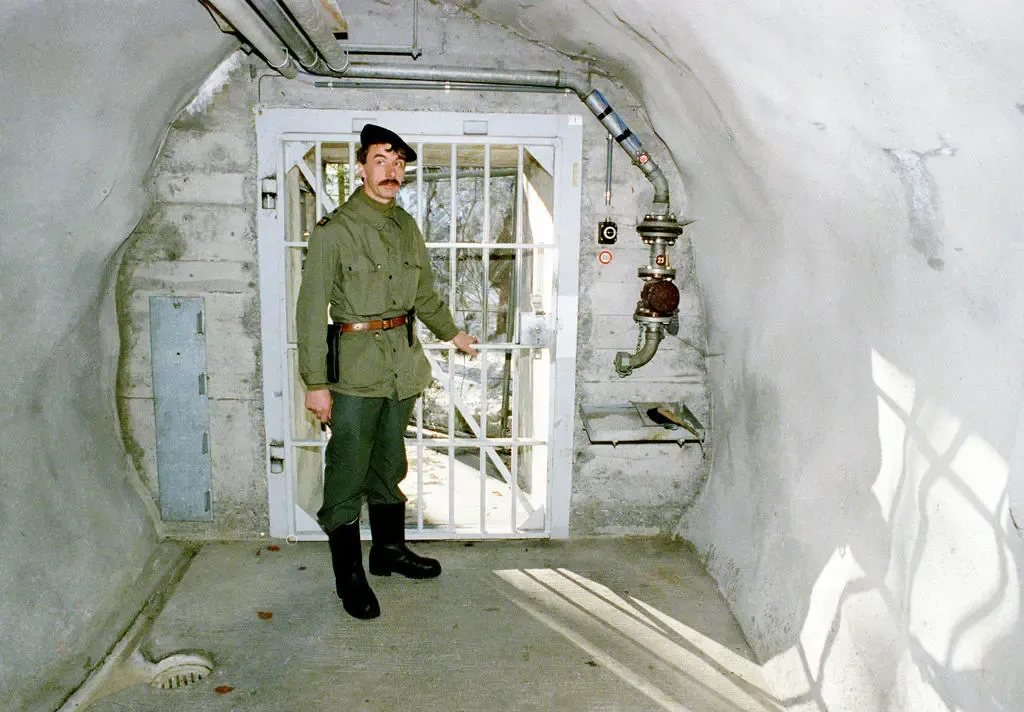
Image
A Swiss soldier tours another secret P-26 bunker

On January 25th, prominent Palestinian-American journalist and activist Ali Abunimah, cofounder of Electronic Intifada, was violently arrested by undercover operatives in Switzerland, en route to a speaking event. He proceeded to spend three days and two nights in jail completely cut off from the outside world, during which he was interrogated by local defence ministry intelligence apparatchiks without access to a lawyer or even being informed why he was being imprisoned. Abunimah was then deported in the manner of a dangerous, violent criminal.

Abunimah’s ordeal caused widespread outcry, not least due to Switzerland being the oldest ‘neutral’ state in the world. Such is Bern’s apparently indomitable commitment to this principle, it initially refused to join the UN lest its neutrality be compromised, only becoming a member in September 2022, following a public referendum. Moreover, the country routinely scores highly – if not highest – in Western human rights rankings, and has provided a safe haven for foreign journalists and human rights activists fleeing repression.

Abunimah’s flagrantly political persecution and ruthless treatment, undoubtedly motivated by his indefatigable solidarity with Palestine, stands at total odds with Swiss neutrality. So too Bern’s secret, little-known involvement in Operation Gladio. Under the auspices of this monstrous Cold War connivance, the CIA and MI6 constructed underground shadow armies of fascist paramilitaries that wreaked havoc across Europe, carrying out false flag terror attacks, robberies, and assassinations to discredit the left, install right-wing governments, and justify vicious crackdowns on dissent.

Switzerland’s Gladio unit was known as Projekt-26, the numerals referring to the country’s separate cantons. Its existence was uncovered in November 1990, as a result of an unrelated Swiss parliamentary investigation triggered months earlier. This probe was launched after it was revealed local security services had kept detailed secret files on 900,000 citizens, almost one seventh of the country’s total population, throughout the Cold War.

The inquiry found during the same period, P-26 operated “outside political control”, and specifically targeted “domestic subversion”. Its membership ran to around 400, with “most” being “experts” in “weapons, telecommunications and psychological warfare.” The unit moreover “maintained a network of mostly underground installations throughout Switzerland,” and was commanded by “a private citizen who could mobilise the force without consulting [the] army or government.” Parliamentarians also concluded P-26 “cooperated with an unidentified NATO country.”

It was some time before that “NATO country” was confirmed to be Britain. Subsequent investigations shed significant light on London’s mephitic relationship with P-26, and the unit’s role within the wider Operation Gladio conspiracy. Much remains unknown about the extent of its activities, and will most certainly never emerge. But while P-26 was officially disbanded after its public exposure, the recent persecution of Ali Abunimah strongly suggests MI6 continues to exert unseen influence over Switzerland’s politics, and intelligence, military and security apparatus today.

‘A Scandal’

Discovery of P-26 prompted a dedicated inquiry into Switzerland’s “stay behind” network, overseen by local judge Pierre Cornu. It was not until April 2018 that a truncated version of his 100-page-long report was released, in French. No English translation has emerged since, and a dedicated multi-page section on P-26’s relationship with US and British intelligence is wholly redacted. Still, the report acknowledged the unit’s operatives were trained in Britain – Gladio’s secret “headquarters” – and remained in regular, covert contact with London’s embassy in Bern.
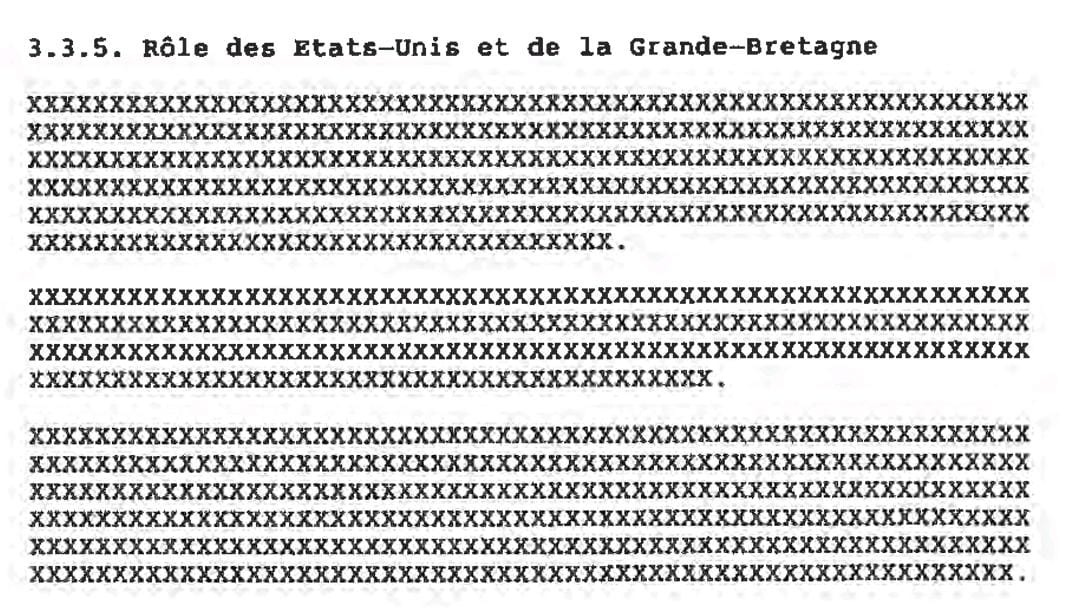
Image
Redacted excerpt of Cornu’s report on P-26’s relationship with the CIA and MI6

Oddly, a 13-page summary of Cornu’s report, published in September 1991, was far more revealing. It noted British intelligence “collaborated closely” with P-26, “regularly” tutoring its militants in “combat, communications, and sabotage” on its home soil. British advisers – likely SAS fighters – also visited secret military sites in Switzerland. Numerous formal agreements were signed between the clandestine organisation and London, the last being inked in 1987. These covered training, and supply of weapons and other equipment.
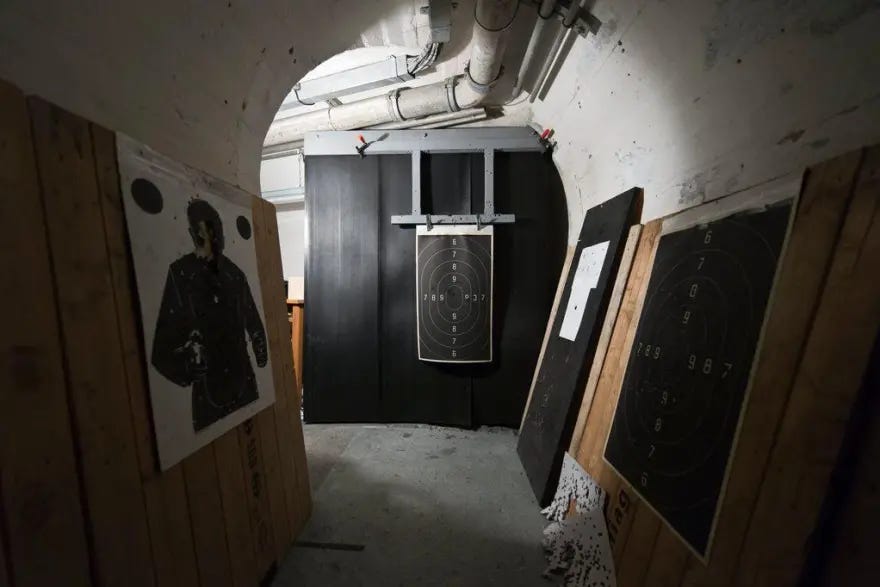
Image
A secret P-26 bunker in Bern

Describing collaboration between British intelligence and P-26 as “intense”, the summary was deeply scathing of this cloak-and-dagger bond, describing it as wholly lacking “political or legal legitimacy” or oversight, and thus “intolerable” from a democratic perspective. Until P-26’s November 1990 exposure, elected Swiss officials were purportedly completely unaware of the unit’s existence, let alone its operations. “It is alarming [MI6] knew more about P-26 than the Swiss government did,” the summary appraised.

P-26 was moreover backed by P-27, a private foreign-sponsored spying agency, partly-funded by an elite Swiss army intelligence unit. The latter was responsible for monitoring and building up files on “suspect persons” within the country, including; “leftists”; “bill stickers”, Jehovah’s witnesses, citizens with “abnormal tendencies”; and anti-nuclear demonstrators. To what purposes this information was put isn’t clear. Many documents detailing the activities of both P-26 and P-27, and the pair’s coordination with British intelligence, apparently couldn’t be located while Cornu conducted his investigation.

Obfuscating the picture even further, in February 2018 it was confirmed 27 separate folders and dossiers amassed during Cornu’s probe had since mysteriously vanished. Local suspicions this trove was deliberately misplaced or outright destroyed to prevent embarrassing disclosures about “neutral” Switzerland’s relationship with US and British intelligence, and NATO, emerging abound to this day. At the time, Josef Lang, a left-leaning former Swiss lawmaker and historian, who had long-called for the Cornu report to be released unredacted form, declared:

“There are three possibilities: the papers were shredded, hidden or lost, in that order of likelihood. But even if the most innocent option is the case, that’s also a scandal.”

‘Clandestine Networks’

The unsolved murder of Herbert Alboth amply reinforces the conclusion that shadowy elements within and without Switzerland were determined certain facts about the country’s involvement with Operation Gladio would never be known. A senior intelligence operative who commanded the “stay behind” unit during the early 1970s, in March 1990 Alboth secretly wrote to then-Defence Minister Kaspar Villiger, promising that “as an insider” he could reveal “the whole truth” about P-26. This was right when Swiss parliamentarians began investigating the secret maintenance of files on “subversives”.

Alboth never had an opportunity to testify. A month later, he was found dead in his Bern apartment, having been repeatedly stabbed in the stomach with his own military bayonet. Contemporary media reports noted a series of indecipherable characters were scrawled on his chest in felt pen, leaving police “puzzled”. Strewn around his home were photographs of senior P-26 members, “stay behind” training course documents, “exercise plans of a conspiratorial character,” and the names and addresses of fellow Swiss spies.

On November 22nd 1990, one day after P-26 was formally dissolved, the European Parliament passed a resolution on Operation Gladio. It called for the then-European Community, and all its member states, to conduct official investigations “into the nature, structure, aims and all other aspects of these clandestine organizations or any splinter groups, their use for illegal interference in the internal political affairs of the countries concerned,” their involvement in “serious cases of terrorism and crime,” and “collusion” with Western spying agencies. The resolution warned:

“These organizations operated and continue to operate completely outside the law since they are not subject to any parliamentary control and frequently those holding the highest government and constitutional posts are kept in the dark as to these matters…For over 40 years [Operation Gladio] has escaped all democratic controls and has been run by the secret services of the states concerned in collaboration with NATO…Such clandestine networks may have interfered illegally in the internal political affairs of member states or may still do so.”

Yet, outside formal inquiries in Belgium, Italy, and Switzerland, nothing of substance subsequently materialised. Today, we are left to ponder whether Gladio’s constellation of European “stay behind” armies was ever truly demobilised, and if British intelligence still directs the activities of foreign security and spying agencies under the noses of elected governments. Given London’s intimate, active complicity in the Gaza genocide, and ever-ratcheting war on Palestine solidarity at home, Ali Abunimah is an obvious target for MI6.

So too Richard Medhurst, a British-born, Vienna-residing independent journalist and prominent anti-Zionist arrested upon arrival at London’s Heathrow airport in August 2024 on uncertain “counter-terror” charges. On February 3rd, Austrian police and intelligence operatives ransacked his home and studio, confiscating many of his possessions, including all his journalistic materials and tools, before detaining and questioning him for hours. Believing this to be no coincidence, Medhurst asked the officers if London had ordered the raid. An officer replied, “no, Britain doesn’t talk to us.”

Coincidentally, Austria is another ostensibly “neutral” country which MI6 embroiled in Operation Gladio. Following World War II, British intelligence armed and trained a local “stay behind” cell comprised of thousands of former SS personnel and Neo-Nazis. Innocently named the Austrian Association of Hiking, Sports and Society, like its Swiss counterpart, the unit operated with such secrecy that “only very, very highly positioned politicians” were aware. For his part, Medhurst is absolutely convinced London is behind his ongoing persecution:

“Some of these Austrian accusations are very similar to the British ones…I think it’s being coordinated with Britain…British police seized a Graphene OS device from me and [it’s] very unlikely they’d be able to crack it…I suppose that’s why Britain asked the Austrians to raid me, grab anything they could find and go on this massive fishing expedition. The warrant even mentions my arrest in London to try and bolster their case.”

https://libya360.wordpress.com/2025/02/ ... itzerland/

******

Denmark Prepares for Russian “Invasions of NATO Lands”
By Ron Ridenour - February 26, 2025 1
Image
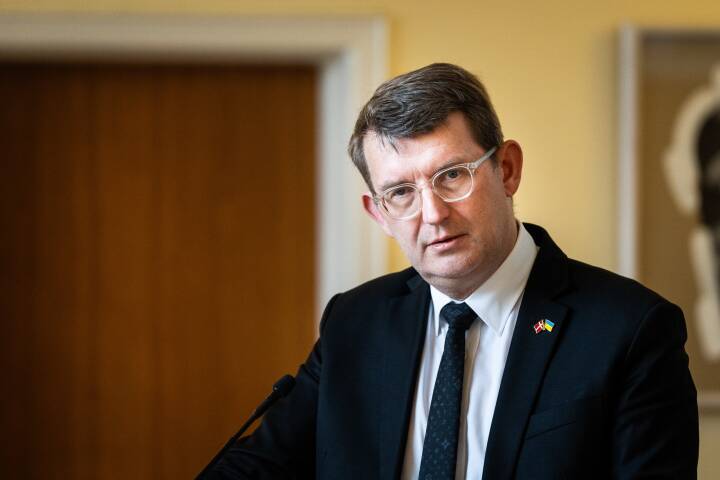
Denmark Defense Minister Troels Lund Poulsen. [Source: aa.com]

Continues Supporting Ukraine War and Tripling War Budget

“We have decided to offer Ukraine NATO membership. But it is also clear that we must all agree on it if it is to happen,” said Denmark’s Defense Minister Troels Lund Poulsen following the Ukraine Defense Contact Group meeting at NATO headquarters in Brussels on February 13.

Poulsen must have referred to the previous U.S. president’s wish for Ukraine to be in NATO, because the new president’s defense minister, Pete Hegseth, said the opposite following Donald Trump’s 90-minute telephone talk with Vladimir Putin: No NATO for Ukraine, and give up territory, meaning Donbas and Crimea, which joined the Russian Federation by referendum.

Image
Pete Hegseth [Source: x.com]

The call came the day before the NATO meeting. Trump said he and the Russian president had “agreed to have our respective teams start negotiations immediately”—meaning this would bypass Volodymyr Zelensky and Europe.

Hegseth asserted, at the NATO Brussels meeting, that Trump was the “one man in the world” capable of bringing both sides together, and insisted U.S. attempts to negotiate peace were “certainly not a betrayal” of the Ukrainian soldiers fighting Russian forces.

Image
Presidents Trump and Putin meet in Helsinki, July 10, 2018. [Source: abcnews.go.com]

Kremlin spokesperson Dmitry Peskov said Putin supported Trump’s idea that the time had come to work together. A date to begin peace negotiations has not been set.

Poulsen and other European leaders, as well as Ukraine’s Volodymyr Zelensky, appeared flustered by being left out of Trump-Putin’s upcoming peace-in-Ukraine meeting. Denmark and other EU-NATO leaders say they will continue to send weapons to Ukraine for an unknown period, thus diverging from their decades-long dependency upon and support for all U.S. wars. (See my CAM Scandinavian series.)

While deftly defying the U.S.’s new government decision to end the proxy war against Russia, Poulsen and other defense ministers expressed relief that the U.S. would not leave NATO. However, President Trump and his defense secretary said Europe should increase their defense funding from 2% of GNP to 5%. Denmark is suggesting it could increase its current share of 2.4% to 3.5%. Denmark and other European leaders are already succumbing.

In 2024, the official defense budget figure was $5 billion. Denmark’s additional “donations” to Ukraine’s war, as of August 2024, was $10.28 billion plus an additional $760 million for EU’s Ukraine Fund.

The day following NATO’s Brussels meeting, Poulsen said that, with new “war taxes,” the sum could reach $14 billion annually, that is three times as much for just national defense.

In Prime Minister Mette Frederiksen’s six years as government leader, with two different cabinets, the defense budget has nearly doubled. She is proud that Denmark’s population of six million people is number one in donating the most aid per capita of the 52 countries which are participating in the proxy war against Russia, and is number four in absolute funding in sending weaponry, tanks and jets.

Image
This pair of warring leaders sit in one of Denmark’s F-16 jets, 19 of which were sent to Ukraine.[Source: kyivindependent.com]

Intelligence Report: Russian Threat Against the Danish Commonwealth
The Danish government and the mass media do not mention that, if Russia invades one NATO country, all others are required to defend the one attacked, according to Article 5 of its charter.

Denmark’s Defense Intelligence Service (FE) at least mentions Article 5 as a deterrent for Russia to invade one of Europe’s NATO countries. On February 9, FE released its “View 2024” report. It concluded that the likelihood of a possible invasion of one or more NATO countries increases as Russia’s “balance of [military] power shifts in its favor”—over the 30 European countries, if the U.S. and Canada were not to engage.

The 32 NATO countries have a total of 3.33 million troops (2022) compared to Russia’s 850,000.

Six hundred million people inhabit the 30 European NATO countries, compared to Russia’s 140 million. The two North American countries have 335 million and 40 million.

One wonders how these Danish spooks can be serious! What could motivate such futile aggression, especially since much of Russia’s huge territory has not been explored, and untold quantities of minerals exist there. Yet FE presents the possibility that the U.S. might not “support European NATO countries in a war with Russia,” which would encourage Russia to do battle against just 30 countries with four times the population of Russia.

Alas, ordinary Danes believe this irrational propaganda. Even my love’s reading group believes that Russians lust after conquering Europe. All but her obey the constant reminder to prepare for three days of food and water provisions with oil lamps and flashlights expecting that electricity fails, and no government contact can be expected when/if Russia invades.

The Defense Intelligence Service report continues: “Russia sees itself in conflict with the West and prepares for a war against NATO. This does not mean that a decision has been taken to start such a war, but Russia is rearming and building the capacity to take such a decision.”

Russia’s capacity to wage war against Europe generally “depends also on how the war develops in Ukraine…[Once the war ends] Russia could free its great military resources and extend its military ability to conduct a direct threat to NATO.”

FE spooks propose a three-stage strategy, given that Russia wants to take over Europe:

Stage 1: “In six months [Russia] will be able to fight a local war against a country at its border.” Russia has 14 borders; six of them are members of NATO.

Stage 2: “In two years [Russia] will constitute a reliable threat against one or more NATO-lands and thus be ready for a regional war against several lands in the Baltic Sea area.”

Stage 3: “In five years [Russia] will be ready for a large-scale war on the European continent where USA will not be involved.”

The rest of the report encourages Denmark/Europe to escalate war production, rearm massively in order to deter Russia from its apparent thirst for warring against an entire continent. That thirst also includes “threatening behavior…with far-reaching plans…in the Arctic…[including] control right up to the North Pole.”

FE admitted that a direct Russian takeover of Greenland and the Faroe Islands is not expected, given U.S. interests in the Arctic. Nevertheless, Denmark is increasing its military-surveillance presence in that area several fold. Those measures do not prevent hybrid instrument attacks.

FE concludes: “If Russia obtains more resources to rearm in the Arctic, it is probable that Russia will continue and possibly increase its offensive behavior.”

Hard Core Europeans Ready to Send Troops
“Ukraine’s Western partners have been quietly working on a plan to send troops to [Ukraine], an AP report claimed on Saturday. Britain and France are leading the effort, though details remain scarce.”

After Trump was elected in November 2024, some European leaders met with Zelensky, in December, at NATO Secretary-General Mark Rutte’s residence in Brussels. They came from Britain, France, Denmark, Germany, Italy, Poland and the Netherlands.

“I won’t get into the particular capabilities but I do accept that, if there is peace, then there needs to be some sort of security guarantee for Ukraine, and the UK will play its part in that,” Britain’s Prime Minister Keir Starmer said, on February 13, if Ukraine does not come into NATO.

Addressing the Munich Security Conference one day later, Zelensky said that, if Ukraine is not accepted into NATO, another NATO will have to be made in Ukraine, an “Armed Forces of Europe.”

He and other European leaders meant it was “unacceptable” that the United States would negotiate terms of peace in Ukraine without its own leader and European NATO leaders involved. While some of them mull over the idea of sending their own uniformed troops to protect Ukraine, the prime minister of Europe’s number one weapons donor—Denmark’s Frederiksen—skirted the issue. She is waiting for Yankee troops to occupy her country at any time. She is one of many European leaders banking on fortifying their national armies, in order to deter further Russian intrusions.

Danish Media in Shock
Since the FE’s latest report, followed by Trump-Putin talk, and the NATO and Munich meetings, Denmark’s media have been saturated with alarming articles and editorials; TV and radio broadcasts, all bemoaning the new reality that Denmark and Europe can no longer rely on the U.S. to go to war, at least in their zone.

A major TV debate program, “Deadline” paired off a political journalist and an academic political analyst on the topic of whether Trump is a fascist or not. That subject, in and of itself, was unheard of concerning any leader in the United States of America Racist Military Empire (US-ARME).

Former FE chief analyst Jacob Kaarsbo told the Christian Daily: “Donald Trump’s approach to peace in Ukraine is a knee drop for Putin. He expects nothing from Russia…Putin perceives that Trump does not believe in democracy, and that he will rather make a deal with Russia than stand fast with that, which holds Europe and USA together.”

Christian Daily’s headline five days following the “intelligence” report was “Europe and Denmark have a long way to go to be able to take care of themselves.” The sub-head stated that this is “the worst security situation since 1939,” thus suggesting Putin as another Hitler.

My hope that Trump’s semi-isolationist presidency would encourage Denmark and Europe to look inwardly and see the need for finding their own sovereignty—which would be based upon peaceful cooperation with the world instead of the “good ole bang-bang you’re dead” Yankee winner-takes-all approach—is clearly not on their agenda.

West Historic Aversion to Russia’s Sovereignty
There are never any media reports, or politician references, to the historical context of the West’s actions and threats to take over or annihilate Russia. Great Britain has long wanted to quell Russia, and fought with France against Russia’s Patriotic War of 1812.

In the summer of 1918, the UK, U.S. and 15 other countries invaded Russia while World War I still raged after the new revolutionary Russia withdrew from World War I to establish its vision of Peace, Land, Bread. So subversive were they.

Democratic President Woodrow Wilson sent 13,000 troops, part of 300,000 (70,000 Japanese) to prevent Russia from building a cooperative, socialist society, in order to abolish greedy capitalism’s winner-take-all ideology and profiteering. The Russian aristocratic White Army had about one million troops. Russia’s working people and a quickly organized Red Army fought those forces until total victory in 1925.

Image
U.S. soldiers fighting a counter-revolutionary war in Siberia. [Source: foreignpolicy.com]

Twenty years later, after the Soviet Union led the victory over Nazi-Fascist European forces, the UK-U.S. tried again to conquer Russia and the entire Soviet Union’s 15 republics. Even before the last bullet was fired in Europe, Prime Minister Winston Churchill devised Operation Unthinkable. Had Churchill the atomic bombs he needed from his understudy Harry Truman, he would have invaded Moscow, Stalingrad and Kiev, in the summer of 1945.

Churchill had asked President Truman for use of his atomic weapons, but Truman needed the few being made for Hiroshima and Nagasaki. Two other factors prevented such an untoward act. Labour Party leader Clement Attlee defeated Churchill in an election and took office on May 23. He treated Russia/USSR as real allies.

Nevertheless, Truman heeded Churchill’s wish and started his own operations to destroy the Soviet Union following Japan’s surrender. The Cold War/Truman Doctrine organized several operations: Pincher (1945); Broiler, Frolic, Sizzle (1948); Trojan, Shakedown and Dropshot (1949).

Dropshot called for 400 atomic bombs to be dropped upon 200 targets over 100 Soviet cities. The United States government planned to attack in 1950-51.

Image
Illustration from A Compassionate Spy showing the proposal to nuke 200 targets over 100 Soviet cities. They would have annihilated several million humans and conquered the rest. [Source: covertactionmagazine.com]

This would have made the U.S. an unstoppable empire to end all empires. Yet, two conscientious scientists at the Manhattan Project—Klaus Fuchs and Ted Hall—gave the Soviets secret formulas, which enabled them to complete their own atomic bomb ahead of the time estimated by the U.S.

Image
Klaus Fuchs (left) and Ted Hall (right). [Source: pace.edu]

Journalist Dave Lindorff wrote: “What put a thunderous halt to the U.S.’s planned genocidal attack was the surprise on August 29, 1949, when the Soviets tested their atomic bomb, which was based on Ted Hall and Klaus Fuchs’s information that they gave the Soviets. Truman, the U.S.’s intelligence apparatus, Pentagon strategists and nuclear scientists were stunned. They had not expected the Soviets to get their own bomb before 1953 or 1954.”

For the complete story, see Lindorff’s co-produced documentary film, A Compassionate Spy; and his book, Spy for No Country: The Story of Ted Hall, the Teenage Atomic Spy Who May Have Saved the World (Amherst, NY: Prometheus Books, 2023).

Since 1991, Denmark has followed the U.S. in all its aggressive wars. Two weeks before Russia’s February 24, 2022, military incursion into Ukraine, PM Frederiksen told the world that her country was inviting Yankee troops and weaponry of known and unknown types to occupy Denmark permanently.

“Denmark and the USA have a special bond—a strong community of values, and since the end of World War II, the USA has been Denmark’s most important ally, and the guarantor of our security and safety through NATO,” she told a news conference on February 10.

Image
PM Mette Frederiksen [Source: stiften.dk]

“That is why we are starting concrete negotiations with the USA on a new Defense Cooperation Agreement (DCA)…with closer Danish-American cooperation.”

A similar DCA was signed with Sweden and Finland during the same month; Norway already had such an agreement. The DCA will mean 47 U.S. bases. They will be separate or part of already-existing national military bases: Sweden 17, Finland 15, Norway 12, Denmark starting with 3).

The U.S.-ordered DCA treaties allows it to place weapons without the nation’s knowledge or investigation. The U.S. is also the sole police-judge of any crimes committed by U.S. personnel.

“We Cannot Count on USA…”
One of four Christian Daily articles published on February 14 concerning the new U.S.-Europe paradigm was written by security-political analyst Jens Worning. The former Danish general consul in St. Petersberg concludes that Denmark’s geopolitical position is in an “historic existential crisis, because our most important ally challenges us.”

Image
Jens Worning Sørensen, in 2022, when DR TV headlined its story about the 70th birthday of Putin as the “World’s most hated leader.” [Source: dr.dk]

Denmark’s three-year long logo “Ukraine Shall Win,” Worning surmised, “died” at NATO’s meeting the day before he wrote. “Is it still valid to call USA our ally?”

Worning’s last words echo the newspaper’s own editorial: “In practice, we cannot count on USA as our guarantor for military security…Trump sends a clear signal that aggressive dictators deserve more room than invaded lands.”

https://covertactionmagazine.com/2025/0 ... ato-lands/

*****

Transcript of ‘Judging Freedom’ edition of 26 February
Transcript submitted by a reader

Napolitano: 0:32
Hi everyone, Judge Andrew Napolitano here for “Judging Freedom”. Today is Wednesday, February 26th, 2025. Professor Gilbert Doctorow will be here with us in just a moment on Europe Stands Alone. But first this.

0:48
[commercial message]

1:57
Professor Doctorow, welcome here, my dear friend. Always a pleasure to chat with you. I wonder if Emmanuel Macron on his flight over the Atlantic from Washington back to Paris felt fulfilled or gratified. I mean, another way to put this is what leverage do President Macron and Prime Minister Starmer have with President Trump?

Gilbert Doctorow, PhD: 2:24
Not much. They are respected in a way that Donald does not respect the Canadians, for example, and all the– and Germany, for example. He has a certain romantic inspiration with the United Kingdom, so he is not about to insult the prime minister the way he did Angela Merkel during his first term. As for Macron, I don’t think that he feels very comfortable with Macron, but Macron has nothing to offer him. And I think what came out of the meeting they had in the White House and the press conference which followed it, which was easily available on YouTube by a variety of carriers, showed that Macron thought that he had done mission accomplished and that he had brought Donald Trump on line for the European role in the post-peace Ukraine.

3:34
But as even a Russia-hostile news organization like the “Financial Times” commented yesterday morning, Donald Trump had not been forthcoming. He had not committed the United States to anything, even if Macron said that he thought he did.

Napolitano: 4:01
Very interesting. Why would the Europeans even expect Trump to include them in negotiations with the Russians?

Doctorow:
Well, they are committed, they have taken enormous expenses in following a line that was set down by the Biden administration. They have spent a lot, and they still have the prospect of spending a great deal more if they are involved in the post-peace situation. Now, there is a– let’s make a division here between the leaders of the countries and the national interests involved. Just as in your show, there’s a lot of discussion about-

Napolitano:
Let me stop you. Did you say there’s a gap between the national interest and what the leaders of these countries– we’re talking about France and Great Britain– want?

Doctorow: 5:03
And not just France and Great Britain. All of those EU countries that have signed on for the Biden program of marginalizing Russia and punishing Russia, They are led by people who, in the vernacular of critics, would be called compradors. They are people who are bought into the American empire, who personally profit from it, and who are indifferent to their own nation’s interests. Now, that isn’t a remarkable thing to say. A similar thing could be said about American foreign policy, which for 30 years by well-regarded polls showed that the majority of Americans were not interested in being the policemen to the world.

Napolitano: 5:58
Well, does the European public fear and despise Russia the way European leaders do?

Doctorow:
That’s a difficult question. There are certain people who do, of course. “Fear” is the better word and fear leads to despising. The key word here is “fear”. Yes, they do fear Russia, and they might well, because they’ve stirred it up. They have poked the bear in the eye repeatedly.

Let’s be honest about it. When the Russians moved into Ukraine, the Europeans suddenly understood that they are defenseless and they are defenseless without the American NATO participation. Now I’ve gone over this question, why are they defenceless? They spend 10 times more money on defense than Russia did before it went into the war.

6:56
So why do they have nothing to show up, to put up? Well, I can give you an example from the country I live in, from Belgium. I spoke to– it was at a luncheon that we had at one of these fancy clubs where the speaker was from the Defense Ministry of Belgium. And we were asking him about the budget and asking him about mobilization. And he said, what?

That Belgium cannot mobilize, it has no money in the budget for it. And then he told us where the money is going. Maybe 80 percent of the Belgian Ministry of Defense budget is going on personnel. That is the salaries and benefits of the serving military and the very large component of retired military, not on new hardware, simply to pay the existing forces, as small as they are, that Belgium has.

Napolitano: 7:48
Well, let me ask you about Great Britain. When Prime Minister Starmer two weeks ago offered to send troops to Ukraine, was that essentially a farce? Does he have the troops to send?

Doctorow:
No, of course he doesn’t. As far as I know, the active military force of Britain is something like 50,000 people. I could be wrong, but this way or that. But there’s a reason why these were so small. And it’s not because these countries were dependent on America for their defense. As Donald Trump has been saying, they haven’t paid their fair share. No, no, they knew what they were doing. The reason why Europe was defenseless was because Europe saw no need for defense.

8:33
Europe understood that there was no hostile country in their neighborhood. They did not, until they were provoked and pushed by Washington, they did not see Russia as threatening. The United States policy so provoked Russia that it invaded Ukraine, and that was the epiphany moment for Europe. when they saw that they were defenseless. But it’s not because they had been stupid before. It’s not because they had been cheapskates before– they’d spent a vast amount of money that was wasted– it’s because there was no threat until the United States created a threat by forcing its way into Ukraine by the coup d’état that triggered a very strong Russian reaction.

Napolitano: 9:21
Do the European leaders by and large– and we can use as our examples President Macron and Prime Minister Starmer– believe that Russia is worthy of trust with respect to any agreement that it enters into? Or are they like Victoria Nuland and Senator Graham, Senator Lindsey Graham, who believe that Russia needs to be rid of Vladimir Putin, can’t be trusted, wants to expand to the old Soviet borders, wants to invade Eastern Europe?

Doctorow:
Well, let’s differentiate here. When we speak about Macron, we’re speaking about a chameleon. His only interest is holding power and he will do whatever is opportunistic at the moment. So he has been for the last three years one of the leading voices condemning Russia, trying to mobilize Europe under his direction to defeat Russia. But as the situation changes, as the United States position becomes crystal clear, and as he finally realizes when he gets home and thinks it over that he didn’t persuade Donald Trump of anything, he will slowly– he will not be embarrassed to change his direction. He’s been changing his direction every two days for the last five years, so it’s not new. Mr. Starmer, I don’t think is so bright, and I don’t think he is such an opportunist. He would find it embarrassing to flip-flop the way Macron does quite naturally.

Napolitano: 10:44
What do you think Prime Minister Starmer hopes to achieve by his trip or his visit to the White House tomorrow? Apparently he is going to offer to increase the government’s military budget from 2 percent of GDP to 2.3 percent of GDP. I don’t know what that is in actual numbers. And he’s going to invite the president to dinner with the king. Well, that’s not going to animate Donald Trump, is it?

Doctorow: 11:22
Well, he wouldn’t mind having a dinner with the king. That would animate Donald Trump, but doesn’t obligate him to do anything. The numbers, as far as I know, were 12 billion pounds, which must be 15 billion dollars, something like that. This is the increase.

Napolitano:
But what does Starmer, to be blunt, what does Starmer hope to get from his trip to the White House tomorrow?

Doctorow:
The Americans backstopping the mission of European peacekeepers in Ukraine. They all know that without the United States logistical support, intelligence support from the satellites, they cannot possibly send troops there who will not be murdered very quickly by the Russian forces. So that is a critical point, and he hopes to bring Donald Trump around to this idea of being the final guarantor. It won’t work.

Napolitano: 12:20
Do Prime Minister Starmer and President Macron– I suppose we could throw in, we haven’t discussed him yet, Chancellor-in-waiting Merz– understand the Russians will never accept a foreign peacekeeping force in Ukraine, any more than America would accept Chinese troops in Mexico?

There are a number of reasons for it, and one that is very little discussed is, which way are they looking? The assumption that Macron set out, and that Starmer will certainly repeat when he’s in the Oval Office, is that the Russians can’t be trusted.

The Russians have already twice invaded, first in 2014 when they took Crimea and now, and then in 2022 when they invaded Ukraine and headed towards Kiev, the capital. They can’t be trusted. They’re aggressive, they’re recidivist. These are dictatorships, dictatorships are fragile, they only can maintain their people in place by foreign wars. And so, well, that’s the story that he’ll deliver.

13:38
I don’t think that Donald Trump will be buying any of it. But if you have such a position, if the Russians can’t be trusted and are intent on war, then you’ll be looking east. You’ll have all the peacekeepers looking east and they won’t be looking up over their heads while the Ukrainians restart their genocidal activities that precipitated the Russian invasion in 2022. That is firing east into Russian settlements. That is what touched off the war. And there you have it. The Russians have seen this–

Napolitano:
Do you know if the Ukrainians are still firing east using American ATACMS and British Storm Shadows, I think they’re called?

Doctorow:
Yeah, I don’t believe they are. What we read about, hear about now are primarily drone attacks. And let’s be clear about it. The drone attacks are much more difficult to stop than the ATACMS or Storm Shadows. These are first, these highly sophisticated missiles are extremely expensive. The Ukraine has few of them. They are husbanded, they are used sparingly, and they are reasonably easy to shoot down with the standard high-accuracy air defenses, of which Russia has perhaps the leading air defense.

15:17
Now the drones are a different story. They’re harder to detect. And maybe you shoot down a great, some of them, but whole swarms of them come in. You hear about a hundred or more drones being sent east by the Ukrainians, being sent west by the Russians, and inevitably some of them get through.

And we knew about this last week. We knew about the success of the Ukrainian drone in destroying an oil pipeline pumping station that was essential to maintain flows of petroleum, raw petroleum from Kazakhstan into the pipeline network in Turkey, I believe. It works. You can destroy things with the drones. The drones cost a fraction of the cost and the Ukrainians make many of them themselves in the underground small-scale plants.

16:19
This is a factor in what has slowed down the Russian advance, and why all calculations of how they can sprint and go to the Dnieper in two days are mistaken. With drones, a relatively small number of Ukrainian skilled forces can cause serious risk to the lives of an advancing Russian battalion. Therefore, they have to proceed very carefully. And this frustrates those of us, particularly the military experts, who are trying to tell us that the war is close to an end.

Napolitano:
Well, yes, the military experts that appear on this show, all of whom have a professional lifetime of experience in this, all tell us, you know, it’s not months, it’s weeks. Are you suggesting that the use of drones will extend the life of the Ukrainian military?

Doctorow:
It is extending the life. But all these experts are not spending much time looking at Russian television. They would see and hear from the soldiers on the ground who are being given the microphone by the Russian war journalists that it’s tough slogging, you have to be very careful of the little birdies, that is both the reconnaissance and the kamikaze birdies. They are deadly and the Russians use them to great advantage. We see on the screen this tank, that personnel carrier, whatever, every day being destroyed by one or another Russian–

Napolitano: 18:03
Well, are the Ukrainian, is the Ukrainian military pushing the Russians back or is the Russian military continuing to move inexorably but slowly westward?

Doctorow:
The second scenario, You described it very accurately and concisely. The Russians are advancing cautiously and not like a steamroller all along the front, but in select places where they see that the Ukrainians are weaker.

Napolitano: 18:36
What is the reaction of Russian elites to some of the more extreme statements articulated by President Trump? “Ukraine started the war, Zelensky is a dictator.” Comments of that nature, I would imagine they’re ecstatic over what he says, or do they not take him seriously because he sometimes says one thing on one day and the opposite on the next.

Doctorow:
Well, they don’t want to spoil the air. So they’re not directing attention to these inconsistencies in Donald Trump’s statements. I’d give them credit in being, that is, Russian television. Let’s be honest about it. These talk shows bring on serious experts, and they are given the microphone, and nothing is ever censored or cut from the transmissions on air.

19:35
But nonetheless, the hosts know what is acceptable and not acceptable to be aired. And the conversations are steered accordingly. There is nothing disparaging said about Donald Trump. What is paid attention to is less his words than his deeds. And I think the Russians were much more interested in what happened in the voting in the United Nations on Monday than they were in any particular remark that Donald Trump said about Zelensky.

Napolitano:
Why do you think, Professor Doctorow, president Trump is offering Ukraine continued military assistance in return for access to minerals in the earth, if he really wants to bring about peace? Why doesn’t he just turn off the Joe Biden military spigot?

Doctorow: 20:27
Well, he’s not adding anything to the flow.

Napolitano:
Well, what is he getting in return? Excuse me, what is he offering Ukraine in return for the mineral assets, or are those mineral assets payback for what Trump says is a loan and Biden says was a grant.

Doctorow:
It’s the retrospective payback. It is not the very– he’s very careful. And when he was speaking with Macron, he did not support the notion that the United States is going to commit anything further to Ukraine. I think it is of great importance to Donald Trump to be able to argue to the American people that he has taken back the enormous expense that the United States incurred without any strings attached under the Biden administration. He is going to spare himself the embarrassment of an Afghanistan 2.

21:31
He is stuck with a losing hand in Ukraine, but if he can at least have the external signs of recovery of America’s investment in this failed war, he will look good.

Napolitano:
Where are these minerals for which he’s negotiating? Some of our military people tell us that the vast majority of them are in the four provinces or oblasts that are now controlled by Russia in eastern Ukraine.

Doctorow:
Again it would be better if they paid more attention to what the Russians are saying. The Russians are saying on television that about 30 percent of these minerals are in the eastern provinces or the oblasts that Russia holds.

22:18
And indeed in his offer, in Vladimir Putin’s offer to Trump a day ago, to make available to the United States its resources in rare earth and other critical elements for modern and future electronics production. He mentioned both Russia’s vast expanse going out to the Far East where these deposits are located in various places, and to jointly exploit those elements that are in the four provinces, the oblasts that Russia has taken from the Ukraine.

So he also said that Russia’s holdings in all of these minerals and metals is, as he said, an order of magnitude greater than Ukraine’s and that is believable.

Napolitano: 23:19
Right, right, very interesting. Dr. Doctorow, thank you very much. As always, it has been a fascinating conversation with you. And as always, we are deeply appreciative. And as always, we look forward to seeing you next week.

Doctorow:
Thanks so much.

https://gilbertdoctorow.com/2025/02/26/ ... -february/

******

Budanov’s Fearmongering About A Russian Invasion Of Poland Is A Response To The Latest Polls
Andrew Korybko
Feb 27, 2025
Image

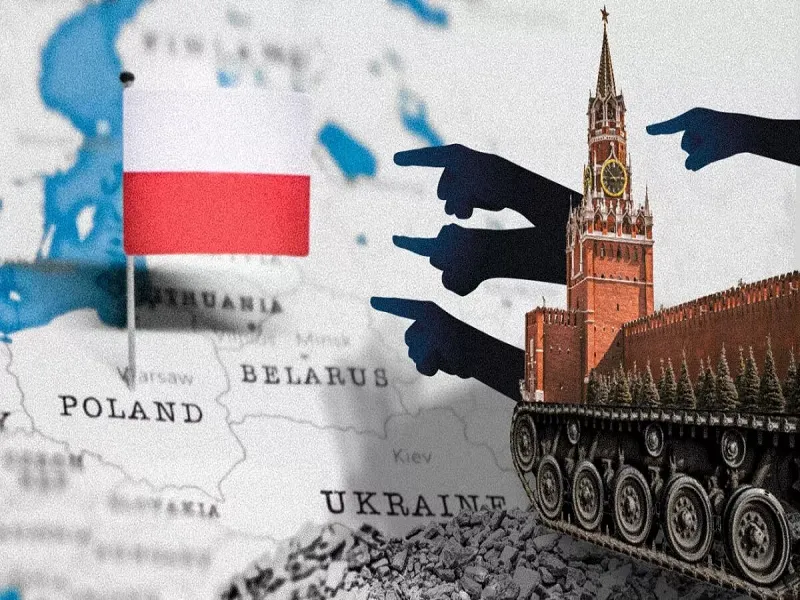
He hopes to shift Polish public opinion in support of dispatching peacekeepers after May’s presidential election.

GUR chief Kirill Budanov fearmongered earlier this week about the “worst-case scenario” of Russia invading Poland and then rest of the former Warsaw Pact countries if Ukraine loses the current conflict. His prediction contradicted what Polish Foreign Minister Radek Sikorski told CNN’s Fareed Zakaria the day prior about how the US reaffirmed that it would rush to his country’s aid if it was attacked by Russia. A possible explanation for Budanov’s curious comments is that they’re a response to the latest polls.

Almost 60% of Poles believe that Ukraine must “seek peace as soon as possible” while slightly more than half are against continued military aid to Ukraine (presumably even as a loan like Warsaw said last fall would be the way forward). These views influenced the ruling coalition’s decision to rule out dispatching peacekeepers to Ukraine, which imperils European warmongers’ plans as explained here since Poland now has NATO’s third-largest military whose participation is pivotal to the success of any such mission.

Budanov knows this and therefore might have thought that fearmongering about a Russian invasion of Poland could shift Polish opinion in support of dispatching peacekeepers, perhaps after May’s presidential election like populist-nationalist Confederation’s candidate Slawomir Mentzen warned. In connection with that, he recently tabled a resolution at the Sejm prohibiting the deployment of Polish troops to Ukraine, but the ruling coalition suspiciously ensured that it was defeated.

Mayor of Lvov Andrey Sadovoy also speculated that Poland’s approach towards dispatching peacekeepers to Ukraine might change after the presidential election, though that might of course be dependent on the outcome, particularly whether or not the ruling coalition’s candidate wins. If the (very imperfect) conservative opposition’s one bests him, such as with the support of Confederation in the second round per a deal ahead of fall 2027’s next parliamentary elections, then it might not happen.

Sadovoy is also angry with Mentzen after the latter recorded a video during his recent trip to Lvov where he stood in front of a Bandera statue and condemned him as a terrorist. Mentzen also referenced the revived Volhynia Genocide dispute that’s toxified their ties since last fall. Sadovoy responded by taunting Mentzen to record a video at the Donbass frontline. He also questioned whether or not Mentzen is even able to enter Ukraine in a hint that he might soon be banned or even placed on its infamous kill list.

Through these two moves, Mentzen placed himself at the center of the two most sensitive issues at the heart of the newly troubled Polish-Ukrainian partnership, peacekeepers and Volhynia. How this relates to Budanov’s fearmongering about a Russian invasion of Poland is that they could counteract whatever effect the GUR chief’s words might have on shifting public opinion and therefore ruin his plans. The chances of that happening would spike if Mentzen is banned from Ukraine or placed on its kill list.

Nevertheless, the outcome of the next presidential election might be what ultimately determines whether or not Poland dispatches peacekeepers to Ukraine like Budanov clearly wants, hence why it can’t be concluded with full certainty that the ruling coalition’s decision to rule this out is sincere. After all, they banded together to ensure that Mentzen’s resolution on prohibiting the deployment of Polish troops to Ukraine was defeated, which implies that they might change their mind if their candidate wins.

https://korybko.substack.com/p/budanovs ... -a-russian

Romania Is At The Center Of The Struggle Between Liberal-Globalists & Populist-Nationalists
Andrew Korybko
Feb 27, 2025
Image

What’s unfolding in this Balkan country is nothing less than the opening of another New Cold War front, albeit this time an ideological one which also interestingly pits nominal NATO allies against one another as the EU and the US take opposite sides.

Observers were shocked on Wednesday after former Romanian presidential front-runner Calin Georgescu was temporarily detained and charged on six counts amidst police raids against some of his closest supporters as he was preparing to file for his candidacy in May’s election redux. The first round last December was annulled on the basis that an unnamed state actor promoted him on TikTok prior to the vote but it was later discovered that this was just another party’s marketing campaign gone wrong.

It was explained here how Georgescu’s election could have ruined the US “deep state’s” escalation plans against Russia while this analysis here added more context after the annulment. The immediate run-up to the latest developments saw Vice President Vance lambast the Romanian government as anti-democratic for what it did last December. Wednesday’s events were then followed by Musk retweeting a video of State Department whistleblower Mike Benz describing the “deep state’s” interest in Romania.

Benz drew attention to how Romania agreed to host NATO’s largest airbase in Europe and has played a crucial role in clandestinely transferring Pakistani military equipment to Ukraine. These are important points, as is the “Moldova Highway” that’s mentioned in the two analyses cited above since it completes the last part of the corridor stretching from Greece’s Mediterranean ports to Western Ukraine, but there’s more to what’s happening that just geopolitics. Ideology is arguably just as significant of a factor.

Romania has been under liberal-globalist control for decades after these forces exploited its political dysfunction and endemic corruption to continually install their preferred candidates into power. Georgescu represents the most promising opportunity in years for a populist-nationalist revolution that could finally resolve the aforementioned systemic challenges and thus restore Romania’s sovereignty. His appeals to history, religion, and national interests genuinely resonate with many of his compatriots.

Georgescu can therefore be described as a “Romanian Trump”, but both figures are really just tapping into the populist-nationalist zeitgeist that’s been spreading across the West for years in reaction to the liberal-globalists’ socio-political and economic excesses. He’s his own man, as is Trump, and both simply embody the trend of the times. Like all revolutionaries (or counter-revolutionaries from the perspective of regaining the power that was seized from the people), however, they’re also facing lots of resistance.

It took Trump over eight years before he was able to neutralize the “deep state’s” subversive plots so it’s no surprise that Georgescu, who only just recently began his political career, is having a hard time. Trump was a trailblazer though whereas Georgescu is following in his footsteps so it’s possible that Trump could lend Georgescu a helping hand to greatly speed up the time that it takes for him to neutralize his own “deep state’s” subversive plots. It’s here where the ongoing struggle between the US and EU is relevant.

“Vance’s Munich Speech Vindicated Putin’s Summer 2022 Prediction About Political Change In Europe” and made clear that the US stands on the side of all populist-nationalist movements on the continent. The Romanian “deep state’s” latest attempt to take down Georgescu is essentially a gauntlet thrown at the Trump Administration by its liberal-globalist opponents in Brussels who fully back Bucharest. They want to test whether the US will do anything in response to the EU’s rolling coup in Romania.

What’s unfolding in this Balkan country is nothing less than the opening of another New Cold War front, albeit this time an ideological one between liberal-globalists and populist-nationalists, which also interestingly pits nominal NATO allies against one another as the EU and the US take opposite sides. It’s incumbent on the Trump Administration to do what’s needed to ensure that Georgescu is allowed to run as president in May’s election redux and that the vote is truly free and fair instead of flawed as usual.

To that end, targeted sanctions against Romanian figures, credibly threatening to withdraw its troops from Romania, suspending arms contracts, and extending full political support to populist-nationalist protesters could pressure the authorities into reconsidering the wisdom of doing Brussels’ bidding. At the same time, a comprehensive pressure campaign could also backfire if the German-led EU exploits it as the pretext for deepening its already immense control over Romania, though that could backfire too.

It was explained here in response to the likely next German chancellor’s pledge to “achieve independence” from the US that military, economic, and energy factors make that a lot easier said than done. If provoked, like could soon happen if the German-led EU pushes back against the US’ potentially impending pressure campaign on Romania, then Trump could weaponize each of them in his own such campaign against the EU and Germany that he stands a good chance of winning on both fronts.

Altogether, what just happened in Romania places the country at the center of the intra-Western ideological dimension of the New Cold War, which will determine the future of Europe. Liberal-globalists will either entrench their power in full defiance of Trump, possibly at enormous costs to their countries, or they’ll be democratically deposed by populist-nationalists who share the same worldview as his team. This struggle is historic and the consequences of its outcome will reverberate for decades.

https://korybko.substack.com/p/romania- ... e-struggle
"There is great chaos under heaven; the situation is excellent."

User avatar
blindpig
Posts: 14829
Joined: Fri Jul 14, 2017 5:44 pm
Location: Turtle Island
Contact:

Re: Blues for Europa

Post by blindpig » Fri Feb 28, 2025 3:23 pm

On the Nuclear Arsenals of the US's European Satellites
February 27, 21:02

Image

On the Nuclear Arsenals of the US's European Satellites

Discussions on the issue of Euro-deterrents have intensified again, primarily in the format of the materialization of the French nuclear umbrella in Germany and the possible involvement of Great Britain in the relevant tasks.

We gave a commentary for the material ( https://www.vedomosti.ru/politics/artic ... m-oruzhiem ) "Vedomosti", below is an expanded version.

So far, we are talking about very hypothetical scenarios. The French have a rather specific nuclear "leg" in the form of "Rafales" with supersonic missiles in nuclear equipment ASMP-A (by the way, tests of its modernized version were demonstrated almost in parallel with the beginning of Russian-Belarusian exercises to prepare for the use of NSNW). Moreover, Rafales from the "nuclear" squadrons sometimes appear over the Baltics as part of NATO's "Baltic Air Policing".

In addition, "Poker" exercises are regularly held in France, practicing nuclear strikes from aircraft carriers and comprehensive support for such strikes in terms of reconnaissance, target designation, refueling and cover for nuclear missile carriers using "conventional" aviation. Expert circles sometimes discuss the theoretical possibility of involving "non-nuclear" European countries by providing their aircraft and/or air bases in such exercises as the first stage of a kind of "joint EU nuclear missions".

Whether it makes sense to deploy French aircraft and store their missiles directly in Germany is a big question. From a military point of view, the sustainability of such "forward basing" always raises questions, but, on the other hand, the existing practice of storing American nuclear bombs at European air bases is primarily political, if not symbolic.

As for the second part of the French nuclear dyad, submarine-launched ballistic missiles, in principle, even based on the existing French declarative nuclear policy, one can conclude that the security of Europe (in terms of the EU) is a vital interest, and Paris protects vital interests, including through nuclear deterrence. At the same time, France is outside the contours of NATO nuclear planning, although it has very developed cooperation with Great Britain in the sphere of nuclear weapons.

The situation with Great Britain is somewhat different: British submarines carry American ballistic missiles, but with British nuclear warheads (albeit highly unified with American analogues).

Moreover, according to some reports, it happens that American submarines provide combat duty for British ones. In fact, the "leasing" of the Trident-2 SLBM is a vivid illustration, so to speak,limited nuclear sovereignty of Great Britain.

London is a full participant in the NATO Nuclear Planning Group, while the United Kingdom has left the EU. It is difficult to imagine how this paradox is supposed to be resolved in Germany.

As for the sufficiency of the French and British nuclear potentials to cover the whole of Europe, it is unlikely that anyone will give a clear answer to this question, each country has its own criteria for the stability of nuclear deterrence.

Yes, of course, the French and British arsenals are significantly inferior to the Russian and American ones, primarily in terms of quantity and diversity. However, absolute numbers do not always play a key role, and after several rounds of reductions, the relative "weight" of their warheads has grown significantly. Hence the Russian demand to take these arsenals into account in possible future negotiations with the United States.

In general, for Russia, such a development of events does not change much. Of course, replacing NATO's joint nuclear missions with similar EU missions, conditionally, will not lead to a sharp improvement in the situation in the sphere of European security. However, if this is accompanied by the withdrawal of American bombs from the continent, then perhaps one can even be cautiously happy.

https://t.me/vatfor/9880 - zinc

It is not at all believed that the nuclear missile arms race will end in the coming years, nor that nuclear arsenals will be reduced. The picture will most likely be the opposite.

https://colonelcassad.livejournal.com/9696075.html

Google Translator

*******

The arrest of Georgescu will push against NATO

Lorenzo Maria Pacini

February 27, 2025

Călin Georgescu has been arrested. Now Romania has a great opportunity.

Every cloud has a silver lining

On February 26, 2025, Călin Georgescu – president-elect in the 2024 Romanian elections and then deposed under pressure from the EU by annulling the election results in violation of Romanian national laws – was arrested on his way to present his candidacy for the presidency of Romania. The car he was traveling in was blocked in traffic and he was taken for questioning at the Attorney General’s office.

There you have it, ladies and gentlemen, another exemplary episode of European democracy. When the arrogance and arrogance of democracy and information warfare are not enough, the henchmen of London, Washington and Tel Aviv resort to strong-arm tactics. It’s certainly nothing new, but what is striking every time is the total nonchalance with which such events are carried out, while the mass of citizens stand by and watch helplessly. Or not.

This time the situation is very, very heated. At the election, Georgescu had won 22.94% of the vote, beating former premier Marcel Ciolacu, who was considered the favorite, and Elena Lasconi (whose campaign was financed by USAID). In total, the Romanian right wing had won 55% of the vote. In Bucharest the crowds were celebrating. The problem is that Georgescu was accused of deception and propaganda, of being too pro-Russian: the accusers accused him of having received money from the Kremlin to make electoral propaganda on social media. He was therefore impeached by the European Union, to the point of arbitrarily canceling the election result.

A few weeks later, at the end of December, the truth emerged. The Romanian tax agency ANAF has established that the TikTok campaign of the winner of the annulment of the first round of the Romanian presidential elections, Kelin Georgescu, was not paid for by the Russians, as stated by Romanian intelligence (which was the formal reason for the annulment of the first round results), but by the pro-European National Liberal Party of Romania. The tax service has determined that Georgescu-Roegen’s social media campaign was paid for by the National Liberals, whose goal was to turn voters away from their rivals, the Social Democrats. Following investigations by Snoop investigators, the company hired by the Kensington liberals admitted that the campaign was paid for by the PNL, but claims that it was part of a larger campaign conducted “under the direction of the National Liberal Party to raise public awareness”.

A real electoral deception, in perfect novelistic style.

From that moment on, Romanian citizens began to protest the situation. Weeks and weeks of squares and streets full of demonstrators led President Klaus Iohannis to resign on February 12th, and new elections were confirmed for the month of May.

This situation is too dangerous for the EU.

A curious piece of news from America, which will probably be important for future developments: Elon Musk commented on Georgescu’s arrest on X, writing “They just arrested the person who got the most votes in the Romanian presidential election. This is crazy”.

Romania in the clutches of NATO

Romania, unfortunately, is one of those countries on which NATO and the globalist elites have had their eyes set for some time.

At the beginning of the 1990s, after the political transition known as the regime change, in which the second level of the Romanian Communist Party assumed power proclaiming democracy, the debate among the elites concerned the strategic direction of the country. The central question was whether to remain in the Soviet-Russian sphere of influence or to orient itself towards the West.

In the end, the choice to integrate with the West prevailed. In 2004, Romania joined NATO and has since progressively strengthened its ties with the alliance, gradually delegating some aspects of its sovereignty and territorial control. A key element of this process has been the expansion of military bases on its territory, consolidating its position as a strategic NATO ally in the region.

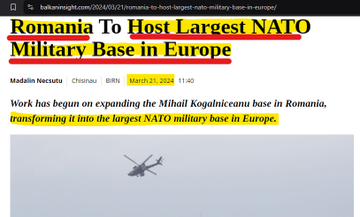
A significant example of this military cooperation is the expansion of the Mihail Kogălniceanu base in Constanta, which is intended to accommodate up to 10,000 soldiers once completed.

In recent decades, Romania and Poland have distinguished themselves as some of the most Atlanticist NATO member states, maintaining close ties with the United States despite the geographical distance. Since 2014, with the rise of European security, both countries have embarked on ambitious military modernization programs, often in collaboration with American companies. However, economic and trade relations with the United States remain relatively limited. Despite this, Romanian society generally has a positive opinion of Washington and supports the continued political and military alliance with the United States.

This study analyzes the historical and political processes that have led to this situation.

The Romanian state began to form in the mid-19th century, in 1856, after centuries of foreign domination, and since then its primary objective has been to safeguard its own existence. During the transformations of the 20th century, Romania consolidated its position through strategic alliances, obtaining territorial advantages such as Transylvania and Dobruja. However, maintaining these territories and legitimizing its conquests forced Romania to constantly justify its position. Bucharest’s foreign policy has always sought to establish the country as a regional power in Eastern Europe, going beyond the role of a minor state. To achieve this goal, Romania focused on population growth, territorial expansion and economic influence. After the collapse of the communist regime in 1989, this strategy became progressively clearer.

Despite the initial difficulties of the 90s, the end of the Cold War led to a significant change in the relationship between Romania and the United States. Although diplomatic relations between the two countries dated back to the end of the 19th century, the wars of the 20th century hindered their development. During the Soviet period, Romania maintained a certain degree of autonomy with respect to other countries in the Eastern Bloc. A clear example of this was the green light obtained from Moscow in the 60s to start, with the help of Canada and using American technology, the construction of nuclear reactors that are still operational today. Furthermore, Romania was the only Warsaw Pact country not to participate in the suppression of the Prague Spring in 1968 and it took part in the Los Angeles Olympics in 1984, which were boycotted by the USSR. These elements demonstrate that the Romanian political and intellectual elite already looked to the West before 1989.

Further confirmation came with the granting of “most favored nation” status by the United States between 1975 and 1988. A few months after the 1989 revolution, in February 1990, U.S. Secretary of State James Baker visited Bucharest to meet with the new government and the opposition. This visit was not only of symbolic value, but was part of Washington’s strategy to evaluate the potential of the new post-communist states, including Romania, which already showed a favorable predisposition towards the United States.

The early 1990s were a period of uncertainty for Romania, both domestically and internationally. The new political system needed time to consolidate and define its foreign policy. The changed world order required a redefinition of national interests and Romania’s role in the region. Although some describe the period 1990-1995 as a phase of ambiguity in Romanian foreign policy, it was during those years that the Euro-Atlantic integration process began.

The first Romanian strategic formulations were often incoherent. The “National Security Concept” proposed in 1991 under the presidency of Ion Iliescu, and its updated version of 1995, were not approved by Parliament due to internal contradictions and gaps on human and minority rights. In an attempt to stabilize national security, Iliescu signed a treaty with the Soviet Union in April 1991, which guaranteed the inviolability of the borders and a mutual commitment not to join hostile alliances. However, a few months later, on July 4-5, 1991, NATO Secretary General Manfred Wörner visited Bucharest, marking one of the first steps towards Romania’s entry into the alliance. Although the Black Sea was not a priority for NATO at the time, Romania was clearly moving in this direction.

In 1993, the United States restored Romania’s most favored nation status, which was strengthened by Congress in 1996 to facilitate economic transition and bilateral relations. This policy was accelerated with the visit of U.S. President Bill Clinton to Bucharest in 1997, when a strategic partnership agreement was signed. Romania reaffirmed its commitment to Euro-Atlantic integration and granted the United States the use of its airspace and bases during the attacks on Serbia, demonstrating its willingness to support Washington and NATO.

In 2005, a year after joining NATO, Romania and the United States signed a cooperation agreement for the permanent deployment of American troops in the country. For Russia, these moves violated previous bilateral agreements and testified to the strategic estrangement between Bucharest and Moscow. The rift deepened further in 2011 with the joint declaration on the 21st-century strategic partnership between Romania and the United States, which strengthened political-military cooperation and included economic and energy issues.

In 2015, Romania inaugurated the Aegis Ashore missile defense system in Deveselu, managed entirely by American military personnel. After Russia’s annexation of Crimea, this base became a central element in European security and American strategy. Like Poland, Romania has repeatedly justified strengthening its defense by citing the Russian threat, referring to the 2008 Russian-Georgian war, the annexation of Crimea in 2014 and the invasion of Ukraine in 2022.

From Moscow’s point of view, Romania’s rapprochement with the United States and NATO, and its failure to respect previous agreements, prompted Russia to take countermeasures to protect its interests. A sense of encirclement and a certain imperial pride led to increasingly radical reactions. The annexation of Crimea marked a turning point in Russian-Romanian relations, making Bucharest aware of the growing security threat in the Black Sea.

After the 1989 revolution, the Romanian army faced significant challenges, including the reorganization of command structures and the obsolescence of Soviet military equipment. In 2022, the Romanian armed forces numbered 71,500, with a defense budget that, despite a slight decrease, represented 1.7% of GDP, which in 2022 rose to 300 billion dollars. In response to the conflict in Ukraine, Romania plans to increase its defense budget to 2.5% of GDP in the coming years.

Romania’s military equipment, particularly for the ground forces, is still largely obsolete, with T-55AM and TR-85 tanks in need of modernization. Romania has also purchased Piranha armored vehicles and HMMWVs. The air force has C-130 and C-27J transport planes and has invested about 6.2 billion dollars in American military equipment. The Romanian navy, which includes two frigates and other vessels, has not been adequately modernized, despite previous plans and a contract with the French group Naval Group, which will be withdrawn in 2023.

In 2023, Romania decided to strengthen its armed forces, announcing over 1,000 new military service positions. It has obtained U.S. approval for the purchase of 95 Joint Light Tactical Vehicles (JLTV) and related armaments, with the purchase of another 34 vehicles planned for the future. The Romanian ground forces will also acquire 298 infantry fighting vehicles and five self-propelled howitzers, with a total investment of 3.6 billion euros. In addition, Romania will seek to purchase 54 M1 Abrams tanks and 32 F-35 fighter jets. The Ministry of Defense plans to purchase 41 air defense missile systems, totaling 4.2 billion euros. Domestic production of small arms for infantry began in 2024.

Romania’s current military development program, Armata 2040, is a strategic initiative that involves an investment of over 100 million euros. This modernization effort is driven by several key factors, including the need to meet NATO standards and improve collaboration with the United States. The proximity of the ongoing war in Ukraine, along with other global challenges, has highlighted the need to upgrade Romania’s military capabilities. The main objective of the Armata 2040 program is to guarantee territorial defense, while supporting NATO and EU missions to maintain regional and global stability.

In Romania’s 2024 defense strategy, Russian aggression is identified as the most significant threat, prompting a greater focus on modernization efforts under the Armata 2040 initiative. The project also aims to strengthen Romania’s security in the Black Sea region, a critical geopolitical area for both Romania and NATO. In recent years, Romania has made significant efforts to improve its international standing, actively participating in global defense forums and contributing to various NATO operations.

Romania’s procurement projects have mainly favored American defense systems, reflecting Romania’s growing commitment to its strategic partnership with the United States. This preference is driven by several factors, including the interoperability of American systems with those used by other NATO members, thus improving Romania’s integration into the alliance. These defense investments not only signal Romania’s commitment to NATO military standards, but also highlight the political dimension of Romania’s growing role within the organization. Romania’s political influence in NATO has been further strengthened by the appointment of Mircea Geoană as NATO Deputy Secretary General. In addition, Romanian President Klaus Iohannis has expressed interest in running for NATO Secretary General in the upcoming 2024 elections, a potential candidacy that would have significant symbolic and practical implications for Romania’s geopolitical position.

In addition to military and defense cooperation, economic and political relations between Romania and the United States have evolved significantly. In 2020, Romania’s trade with the United States reached a total of $3 billion, with Romania importing $1 billion worth of goods and exporting $2 billion worth of goods. Although this volume of trade represents a small fraction of Romania’s total global trade, it nevertheless emphasizes the growing economic ties between the two countries. However, Romania’s trade relations with European countries far exceed its relations with the United States. In particular, Romania’s trade with Germany, Italy and France is far superior, with volumes of 35 billion, 16 billion and 9 billion dollars respectively. Trade with China has also grown significantly, mainly thanks to Romania’s strategic position near the Black Sea ports, which makes it a key player in Chinese trade routes in the region.

Although Romania’s trade with the United States is not substantial compared to its European or Asian partners, it remains an important element of Romania’s broader foreign policy. The strategic partnership between Romania and the United States has been strengthened by cooperation in international organizations and joint military initiatives. However, there are still areas where cooperation remains limited, particularly with regard to visa liberalization. Romania has yet to secure visa-free access to the United States for its citizens, despite several attempts. American officials have indicated that this could be achieved if the visa refusal rate for Romania fell below 3%, but it remains above 10%, preventing Romanians from fully accessing travel to the United States.

Since the establishment of the Strategic Partnership between Romania and the United States in 1997, Romania has sought to raise its profile in the United States. This has involved a focus on political dialogue, cooperation in international forums and cultural initiatives. Romania has organized cultural events in major U.S. cities, while promoting American studies in several Romanian universities, demonstrating a deepening of cultural and educational exchange between the two nations.

In summary, Romania’s military development program, Armata 2040, represents a strategic and long-term investment in its defense capabilities, particularly in response to the growing security threats posed by Russia. This initiative, together with the strengthening of Romanian-American relations, positions Romania as a key player within NATO and a strategic partner of the United States. Despite challenges in some areas, such as trade imbalances and visa issues, the growing cooperation between Romania and the United States reflects a broader trend of increasing alignment between the two nations in both the military and economic fields.

The Romanian people can hold their heads high

The trouble with all this complex organization is that the Romanian people have been subjected to a gradual impoverishment that is no longer bearable.

Now, with the arrest of Georgescu, the possibility of a collective revolt against NATO hegemony has arisen. It’s an incredibly useful opportunity on a political level. This could also involve other European countries, whose citizens don’t want to enter into direct conflict with Russia, nor do they want to continue to submit to the wicked policies of the European Union.

The blatant and repeated violation of any freedom and sovereignty is so obvious that social anger is reaching a level of tension that could be explosive.

The interventions of the two great partners behind the scenes will now be fundamental: Trump’s America, which has already supported Georgescu on several occasions, and Putin’s Russia, which favored the Romanian elections.

NATO’s eastern front is heating up. Let’s hope it’s not the heat of bombs.

https://strategic-culture.su/news/2025/ ... inst-nato/

Baltic/Black Sea power games and red lines intersect in a “strange war”

Pepe Escobar

February 27, 2025

No one ever lost money betting on the batshit crazy “policies” of the ferociously yapping Baltic chihuahuas.

No one ever lost money betting on the batshit crazy “policies” of the ferociously yapping Baltic chihuahuas. Their latest power play of sorts is a drive to turn the Baltic Sea into a NATO lake.

The notion that a bunch of Russophobic sub-entities have what it takes to expel the Russian superpower from the Baltic Sea and pose a threat to St. Petersburg does not even qualify as cartoonish. Yet that is indeed part and parcel of NATO’s re-configured obsessions, as their warmongering “vanguard” has been relocated to a London-Warsaw-Baltic chihuahuas-Ukraine axis.

What kind of black hole rump “Ukraine” will turn out to be after the end of the war – which may not even happen in 2025 – remains to be seen. What’s certain is that in the case of a Ukraine exit – whatever the modalities – enter Romania.

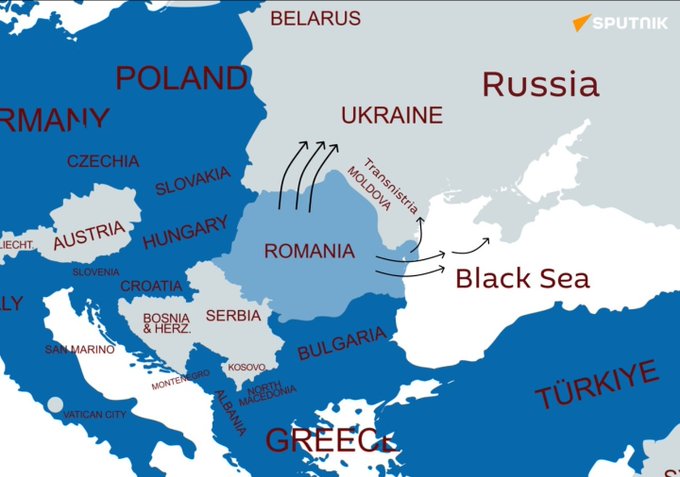
The whole electoral farce in Romania – complete with the demonization of election front-runner Calin Georgescu – revolves around the upgrading of the Mihail Kogalniceanu base, which will become the largest NATO military base in Europe.

So, once again, this is all about the Black Sea. NATO wreaking havoc in the Black Sea carries way more savory prospects than NATO via chihuahuas monopolizing the Baltic Sea.

Ilya Fabrichnikov, a member of Russia’s Council on Foreign and Defense Policy, has published a remarkable essay essentially focusing on the Black Sea (this is a short version on the Kommersant daily).

Fabrichnikov convincingly argues that from an European – UE/NATO – angle, what really mattered in Ukraine was “to move its borders, along with its military, political and economic infrastructure, close to Russia’s, to put under full control the strategic Black Sea trade corridor – which easily stretches further north along the Odessa-Gdansk route – in order to more conveniently and quickly explore the economic spaces of Asia and North Africa, and to begin dictating its terms to Russian supplies of oil, gas and other resources needed by the European economy.”

As this focused power play instrumentalizing Ukraine is unravelling in real time, a replacement is needed – even as warmongering Eurocrats keep peddling their Orwellian “peace is war” dementia non-stop, complete with a non-stop tsunami of sanctions and renewed promises of avalanches of weapons to Kiev.

This is a classic Brussels vassals affair – even as the toxic Medusa von der Lugen as head of the EC and Rutti-Frutti as the new head of NATO were essentially appointed by Washington and London. Collectively, Europe has pumped way more military-political funds into black hole Ukraine than the Americans.

The reason is simple. For Europe there’s no Plan B apart from that mirific “strategic defeat” of Russia.

The EU/NATO Black Sea power play would make it even more imperative for Russia to connect with Transnistria. The only one who can answer whether this is part of the current planning is of course President Putin.

Neo-nazis go pipeline bombing

Russian intel is very much aware that the Europeans have to some extent already carved up their own areas in Ukraine – from ports to mines. Not surprisingly the Brits, via MI6, are ahead of the “continentals”, mostly Germany.

All that intertwines with the extremely murky weapons-for-metals deal clinched by Trump 2.0 with the totally illegitimate sweatshirt actor-turned-gangster in Kiev. The only thing that matters for Trump is to get U.S. money back – whether the total bill is $500 billion or less (actually, much less).

Into this kabuki steps in the real power in Kiev after the proclamation of martial law: the National Defense and Security Council of Ukraine. The unelected, actually illegal actor is not taking any major decisions for some time now. These are issued by the former head of the foreign secret service, Oleksandr Lytvynenko.

It was the council that on February 17 ordered the bombing of the crucial pipeline owned by the Caspian Pipeline Consortium (CPC) linking Kazakhstan to Novorossiysk, exporting loads of Kazakh and Russian oil.

Crucially, CPC shareholders included Italy’s ENI (2%); the Caspian Pipeline Co., which is a subsidiary of Exxon Mobil (7.5%); and the Caspian Pipeline Consortium Co., a subsidiary of Chevron (15%).

Well, that’s not very bright; the “integral nationalists”, code for neo-nazis in Kiev decided to bomb a partially owned American asset. Not only there will be blowback by Trump 2.0; it is already on.

On the equally murky rare earths front, Putin’s recent interview to Channel One seems to have thrown everyone off balance. Russia, he said, has way more rare earths than Ukraine and is “ready to work with our foreign partners, including the U.S.” to develop these deposits. That’s classic Sun Tzu Putin: the Americans won’t have rare earths to exploit in the future rump Ukraine – because they don’t exist. But they can be partners with Russia in Novorossiya.

All of the above of course would presuppose a solid U.S.-Russia negotiation on Ukraine. And yet Team Trump 2.0 still does not seem to grasp the real Russian red lines:

1. No temporary ceasefire “along the front line”.

2. No trading of new territories acquired in the battlefield.

3. No NATO or European “peacekeepers” in the western borders of Russia.

Putin discombobulating Trump

As it stands, Washington and Moscow remain divided by an abyss.

Mr. Disco Inferno simply cannot make serious concessions – or de facto recognize the strategic defeat of the Empire of Chaos. Because that would seal the Definitive End of Unilateral Hegemony.

Putin for his part simply will not give away the hard-won victories on the battlefield. Russian public opinion expects nothing less. After all Russia holds all the cards leading to a possible negotiation.

The EU/NATO will never admit their own, self-inflicted strategic defeat; hence those Baltic/Black Sea dreams, which carry the extra self-inflicted fantasy of disrupting China’s New Silk Roads as much as “isolating” Russia.

Putin is actually performing virtual somersaults to instill some common sense. In his Mr. Disco Inferno he noted how, on U.S.-Russia relations, “this first step should focus on increasing the level of trust between the two countries. This is exactly what we have been doing in Riyadh, and this is what our next high-level contacts will be devoted to. Without this, it is impossible to solve any issue, including one as complex and acute as the Ukrainian crisis.”

Trust is far from being re-established, especially vis a vis a Lavrov-defined “non-agreement capable” Empire of Chaos with its global credibility in tatters. Add to it bombast after bombast manufactured to control the news cycle 24/7: the preferred Trump 2.0 modus operandi. None of it leads to that prime diplomatic mantra: “confidence building”.

And it will get even murkier – and way more dangerous – if Russian public opinion is confronted with the fact that after 11 years fighting a vicious proxy war with the Empire of Chaos, they may become partners in strategic industry sectors that Putin himself defined as essential to Russia’s national security.

Just like that. Or that may be just Putin discombobulating Trump with some unforeseen Sun Tzu gambit.

Earlier this week I had a fabulous off the record conversation with Sergey Glazyev, formerly with the Eurasian Economic Union (EAEU) and now leading the consolidation of the Union State (Russia-Belarus). It was up to Mr. Glazyev to come up with the definitive summary of everything unrolling before our eyes: “This is a very strange war”.

https://strategic-culture.su/news/2025/ ... range-war/

On the cognitive dissonances of ‘Europeans’: Ukraine is just a pretext

João Carlos Graça

February 28, 2025

Dialogue is always better – except for the cluster of the murderous psychos – than mutual assured destruction.

In Portugal, as in most countries of the Collective West, the recent diplomatic developments regarding the Ukrainian conflict have left a very important sector of public opinion apoplectic, in fact the segment that has been the most prominent both in decision-making political circles and in the media. Among us there is, of course, a whole huge cohort of potential Christoph “Cry Baby” Heusgen. The difference is that in Portugal a certain residual cult of manhood persists (“a man does not cry”, etc.), preventing such pathetic scenes, at least in public. Our political life is decidedly very advanced in infantilization; but we have perhaps not yet reached the level of “gender fluidification” required by these things. I do not know whether we will continue to catch up with “Europe” or not, but that matters little now.

At the opposite extreme of these attitudes are those who conclude for a dry “realism” in matters of international relations, a “realism” understood most times as a simple cult of force. “Command those who can, obey those who ought to/must”, as the old saying goes. The power lies with the USA and Russia, which therefore decide. Europe, if it wants to have anything decisive to say, must grow before it dares to show up. Some sectors within this current (a minority, approximately late fans of Charles de Gaulle) infer from this the need to break with U.S. tutelage, but even these tend to the mythical notion of the unity of Europeans as an alternative. Other sectors (the majority, usually incensed by the media) conclude above all that we must start dedicating a far higher percentage of GDP to military spending. The TV talking heads – the same ones who for decades have been preaching “austerity” and cuts in public spending in education, health and social security – usually align themselves with this new “spendthrift” tune. There is nothing like militarism and Russophobia to make Portuguese political commentators suddenly shift to “Keynesianism”.

Somewhere in the vast mêlée between these positions, one hears and reads a lot of whining, coming from very varied quarters, regarding the alleged betrayal and misdoing that Trump’s USA would have practiced against “poor little Europe” and (even more) “poor little Ukraine”. In this regard, it is appropriate to remind all these Calimeros (Calimero – Wikipedia) of a certain number of elementary “facts of life”, only partially in line with “realistic” arguments. And I will say right away that no sir, I do not agree with the inference that we must spend a higher percentage of GDP on military build-up. We have much more urgent matters to deal with, namely an imperiled “welfare state” (public education, national health and social security system under menace of rupture), permanently threatened by the demands of the same “European” circles that now, with superlative hypocrisy and nauseating impudence, order us to spend more – but with armed forces, to protect us from “bad Russkies”.

Here are the facts we need to consider.

1 – NATO has always been an extension of the U.S. to Europe; never a “partnership”. It has always been a way to keep the “Americans in”, the “Germans down” (actually, all Europeans down), and the “Russians out”. It always has been, it is, and it will be that. And that’s all there’s to it. The “fight against communism” has always been no more than an imaginary crusade, to begin with because the USSR never wanted to expand, at least not in the “European theater”.

2 – After 1991, undeniably, all this became even more true, and above all much more obvious. It has always been obvious, I repeat, even shockingly obvious, at least since 1991.

3 – To accept NATO membership is to accept the idea that whatever the USA at a given moment deem convenient is convenient for us. If they shift into finding the same thing inconvenient, it becomes ipso facto inconvenient. End of conversation; or, at least, end of adult conversation.

4 – The “EU”, on the other hand, is basically a monstruous gear, a “satanic mill” aimed at imposing neoliberal economic policies on all European countries – and nothing more than that. There has not been, there is not, and there will never be concerted conduct by Europeans except for this line action, which is a line of action against themselves (in the sense of being contrary to the interests of each-and-every European people). The “EU” is not a multiplying device for the potentia agendi of the European peoples. Rather, it aims to increase the power of Europe’s transnational elites, at the expense of their peoples. It aims to remove democratic content from the political organization of each-and-every nation state that makes up the “EU”.

5 – It is not possible to make the “EU” better by democratizing it… for the simple reason that the “EU” is the mere result of actions that fall themselves within the sphere of diplomacy, hidden interests and powers, and secrecy, not publicity, rational debate and democracy. There is no European “public sphere”, for the simple reason that there is not even a coherent European “demos”. If we believe in democracy as a method for improving people’s lives, and if we want to democratize Europe, we must keep the various European nation states democratic, and leave the “EU”. As soon as possible. (On this, see Thomas Fazi here).

6 – If, in political analysis, we forget to start from what “things really are”, taking them for what we would like them to be, if we confuse the “factual truth” of things with what (in our opinion) they should be, we will live in a continuous “transfer”, from one old cognitive dissonance into one new cognitive dissonance. In this regard, all the commentators affiliated with “realism” have a huge advantage vis-à-vis the hysterical-demented group and its howling-at-the-moon of delusional and fatuous indignations. Those who fall into this second group risk coming out of the painful experience of this conflict without learning anything at all.

7 – As people sometimes say, “if you are not OK, move on”. The problem arises precisely when awareness of these elementary facts has already been erased from the minds and, therefore, the possibility of a “necessary divorce” is no longer considered – to use the expression of João Ferreira do Amaral, who however refers only to one divorce, when in the case of Portugal (a case of bigamy, in which both our spouses are abusive towards us, but one of them is also so vis-à-vis the other) two divorces are undeniably necessary: from NATO, of course; and also from the “EU”.

8 – There would obviously be much more to say, referring to the conflict in Ukraine. But I think these are the basic problems, the vices that generate all our other mistakes. Ukraine, most likely, is just a pretext.

In this regard, I would just add that I am obviously glad that the North Americans (that is to say, those who started by stirring all this up) have decided to talk to the Russians (instead of just insulting them) and listening to them seriously. Dialogue is always better – except for the cluster of the murderous psychos – than mutual assured destruction. The road to agreement is undoubtedly long and will be difficult to travel, but it is already, in essence, designed as a defeat for the Collective West, in a game where the bigger shark (the USA), after having already pushed the smaller shark (what is usually called “Ukraine”) to death, is now humiliating and will also end up condemning the mid-sized shark (aka “the Europeans”). They, the U.S., mostly concerned with China’s unstoppable rise, cannot indulge much longer into exercises of mythomania.

And besides, they have “better [or badder, depending on the perspective] fish to fry”…

https://strategic-culture.su/news/2025/ ... t-pretext/
"There is great chaos under heaven; the situation is excellent."

User avatar
blindpig
Posts: 14829
Joined: Fri Jul 14, 2017 5:44 pm
Location: Turtle Island
Contact:

Re: Blues for Europa

Post by blindpig » Sat Mar 01, 2025 2:38 pm

Romania Police Arrest Georgescu; SWAT-Style Raids on Private Security
February 28, 2025
Active Measures, 2/26/25

Calin Georgescu, the populist frontrunner in Romania’s annulled 2024 presidential election, was arrested today while en route to register his candidacy for the upcoming May election.

He has been accused of spreading “disinformation,” “anti-Semitism,” and improper campaign financing, with charges that carry a prison sentence of 20 years.

Romanian authorities conducted 47 raids across multiple counties.

According to Romanian media outlet G4Media, sources say the raids targeted a private security firm hired by Georgescu. Are they targeting his contractors to take down their real target – Georgescu?

The militarized, SWAT-style raids and arrest of Georgescu come just months after the presidential election he won was canceled over evidence-free allegations of “Russian interference.”

Is this what is now meant by “European-style democracy?”


***

Romanian prosecutors charge Georgescu on six counts in criminal case rocking the country

Euronews, 2/26/25

Prosecutors in Romania have opened criminal proceedings against ultranationalist politician and 2024 presidential election candidate Călin Georgescu on six counts, including anticonstitutional acts and misreporting his finances, authorities said on Wednesday.

The charges also revolve around his support for sympathisers of the Iron Guard, a pre-World War II fascist and antisemitic movement and political party, which is illegal under Romanian law.

Georgescu, known as “The TikTok Messiah,” has also been barred from leaving the country and is not allowed to create new social media accounts on top of the ones he already owns, according to Euronews Romania sources.

The authorities have stopped short of arresting him, however.

“We are the people, we are the power. We will not kneel before anyone. This was expected. The whole world knows what is happening in Romania now. It’s the despair here combined with that of Brussels,” Georgescu said after leaving the Public Prosecutor’s Office on Wednesday evening.

Earlier in the day, Georgescu was picked up by police officers from a traffic stop and taken to the Prosecutor General’s Office for questioning.

The prosecutors questioned Georgescu as part of an investigation reportedly looking into “zero expenses” declared by Georgescu for last year’s electoral campaign, sources said.

He was initially asked to provide information over two counts: “false statements regarding funding sources” and “communicating false information,” Euronews Romania reported in their live coverage.

Prior to his questioning, prosecutors gathered all the documentation used by Georgescu to sign up for the presidential race, sources in the judiciary told Euronews Romania.

Georgescu was on his way to file his candidacy for the presidency when he was stopped in traffic, a statement issued by his team on Facebook claims.

“About 30 minutes ago, the system stopped him in traffic and he was pulled over for questioning at the Prosecutor General’s Office. Where is democracy, where are the partners who must defend democracy,” the statement said.

Contrary to Georgescu’s team’s claims, sources at the Electoral Commission told Euronews Romania that the candidate registration process has not opened yet.

Supporters of the far-right Party of Young People (POT), which splintered from another far-right party, AUR, and is among Georgescu’s most vocal backers, announced they would protest in front of the Prosecutor General’s Office. Some 200 people have gathered since.

“The judiciary has the duty to present extremely solid proof to the public (…) so that this criminal investigation is not hijacked into an election manifesto by a certain candidate,” Romanian Prime Minister Marcel Ciolacu said in a statement.

“The judiciary is independent and the law must be applied regardless of the persons involved, respecting the fundamental rights and freedoms of the citizens,” Ciolacu added.

Raids in five counties
Georgescu’s questioning was part of a nationwide police action that also involved raids against a total of 27 individuals under investigation for a number of crimes, including anti-constitutional actions, possession of illegal weapons caches, instigating racism, fascism and xenophobia and “promoting a cult of personality accused of genocide and war crimes”.

The sweeping raids, taking place at more than 40 locations across five Romanian counties, also included Horațiu Potra, a mercenary previously linked to Georgescu.

Potra, who owns a private military company and is a former member of the French Foreign Legion, was detained in mid-December over allegations of planning large-scale protests in favour of Georgescu.

Potra was investigated on illegal possession of weapons and ammunition charges, as well as public incitement to unsanctioned gatherings, but was ultimately released.

Romania’s Georgescu slammed over links to controversial former mercenary
Georgescu came out on top in the first round of Romania’s presidential elections in December, which the country’s constitutional court annulled following the declassification of intelligence reports showing Russian involvement in influencing voters through social media to support the then-relatively unknown candidate.

In recent times, Romanian politics have suddenly come to the fore among top allies of US President Donald Trump, with his Vice President JD Vance, Elon Musk and Donald Trump Jr all backing Georgescu or criticising Bucharest for annulling the December vote.

The South African-born billionaire has reacted to news of Georgescu’s questioning, labelling it as “messed up”.

“They just arrested the person who won the most votes in the Romanian presidential election,” he said on his platform X on Wednesday.

https://natyliesbaldwin.com/2025/02/rom ... -security/

******

Germany’s Left Party Surges, Taking 10% of Bundestag Seats
March 1, 2025

Image
Heidi Reichenneck a new leader of the Left Party in the German Bundestag. Photo: Jannis Hutt/Wikipedia.

By Victor Grossman – Feb 26, 2025

The winner of the German elections Sunday with the most votes (28.5%), though fewer than in past elections, was the Christian sister team (CDU-CSU) called the “Union.” Its top leader and future chancellor, Friedrich Merz, a former financial lobbyist and board chairman of the American investment giant, BlackRock’s German subsidiary, will head the new government, in which he is expected to pursue a course of militarization and preparation for war as it moves German foreign policy further to the right.

Determined to rebuff any increased possibility of peace arising from the dialing down of the Ukraine War, the CDU plans are for more German tanks, more planes, and more missiles directed at Russia. Short, the majority vote Merz needs in the Bundestag to form a coalition he will enlist the Social Democratic Party to cobble together just enough for a majority. The last time the Social Democrats were in coalition with the Christian parties, they sold out many of their pro-worker positions, contributing heavily to the decline in their popularity.

The neofascist AFD was expected to gain and did gain heavily in the Sunday elections, garnering 20 percent to put it in second place behind the CDU.

The big surprise, however, was the Left Party vote, which catapulted it into the German parliament, where it will have 64 of 630 seats, a bit more than 10 percent of the total. Only a month ago, the party was limping along with 4 percent in the polls, not enough to meet the 5 percent threshold to even get into the Bundestag.

The surprising comeback was powered by young voters, anger at the war budgets pushed by conservatives, and a massive door-to-door operation coupled with a social media campaign. The gains were made even more important since German politicians, including Social Democrats, have been moving to the right, immigrants have come under attack, and the AfD is making historic and dangerous gains.

A recent speech by the 30-year-old Heidi Reichenneck, a newly popular Die Linke leader, went viral on social media and is believed to have helped propel the party’s gains. Speaking angrily to the leadership of the CDU, she decried what she said was their collaboration with neofascists. She challenged the notion that the CDU was serious about opposing fascism. “You just said that no one from your party is reaching out to the AfD,” she declared. “That’s right, they’ve been happily embracing each other for a long time already.”

The CDU’s solution for Germany’s current economic distress includes lower taxes on wealthy corporations and less benefits for the jobless, immigrants, children, and seniors, many of whom face poverty. But billions for a giant armament build-up and preparations for an openly-planned conflict with Russia are all okay.

The Greens, who took some losses Sunday (down to 12%), retain only mild echoes of their radical past; their remaining support on LGBTQ rights, same-sex marriage, abortion, and marijuana may still upset some “anti-woke” blockheads but would otherwise be secondary since they lead the whole ruling pack in heating up war fever with their “ruin Russia” policy. The Greens find increasing comfort with big business interests. But their poor electoral showing gives them too few seats to provide the Christian Parties with a majority.

Another loser was the small Free Democratic Party, which even more overtly plugs the low-tax interests of big business. Its leader, the suave, smartly dressed Christian Lindner was the difficult member of the governing trio of Social Democrats, Greens and Free Democrats that collapsed, necessitating the early elections last Sunday rather than the next ones originally planned for the Fall.

Caused the collapse
Seeing his party glued unchangingly to the losing 4% level, it was he who caused the downfall of the ruling triumvirate, in hopes of joining a new, openly conservative constellation. But his risk misfired; his party stayed below the needed 5% in the vote, and he must now say goodbye to the Bundestag and to politics. The general feeling of “good riddance” was almost audible!

So Merz must turn to the Social Democrats. Their results (16.4%), their worst since 1949 (or since 1887, some have found), do provide just barely enough seats to paste a coalition together. It would undoubtedly not include the party’s present leader until now, the soon ex-Chancellor Olaf Scholz, who is largely blamed for the distress of his party and of Germany in general.

Scholz is still occasionally plagued by a revived influence-peddling bank scandal from his early days as mayor of Hamburg. But the reasons for his party to scuttle him are both his immense unpopularity as head of a government which failed and, equally important, his occasional leaning, though hesitant and inconsistent, toward the few courageous leaders among the Social Democrats who are not pushing for long-range missiles for Ukrainian President Zelensky and an insane confrontation with Russia.

Instead, party politics now lean toward gung-ho crusaders like Defense Minister Boris Pistorius, who calls for “war.” This makes them eligible as junior partners in a new coalition with Merz & Co. and Pistorius possibly as vice-chancellor.

The frighteningly big vote winner, however, was the far-right Alternative for Germany (AfD), in second place nationally (20.4%) and winning a solid first place in all five East German states. It builds almost totally on hatred toward immigrants and all ”foreigners.” It also supports Israel’s Netanyahu to the hilt, as an “anti-Muslim.” It calls (but very quietly) for lower taxes and regulations for the big corporations. And it demands conscription and more German dominance in the world.

Its “expel immigrants” pressure has pushed all but the LINKE in the same direction. But it is still too far, far radically rightist to be officially accepted as a partner by the Christians, although the so-called “stonewall” separating them shows increasing signs of crumbling, as has been pointed out by Die Linke leaders. And AfD agrees Germany must build military strength. The ruling German parties all agree that the so-called “defense” buildup must continue ever closer to Russia’s borders with better and faster planes, bombs, and missiles.

Those who like to read about history and perhaps find analogies may have noted that the AfD result on Sunday, 20.8%, was close to double its 9.4% count in the previous election. They also note that the Nazis got only 2.6% in 1928, but reached 18% in 1930 and 37% in July 1932. The giant jumps were clearly a result of the terrible Depression and the threat of worker resistance against the corporations and government. Is the downward-fading German economy now facing a new Depression?

If the wins of the AfD were most alarming, one losing result was truly tragic. The Sahra Wagenknecht Alliance (BSW), which split away a year ago from what it considered a far too conformist, compromising LINKE, won surprisingly high results in last year’s European election and in three East German states, starkly reducing voters’ support for its former parent party, the LINKE, which soon sank to a dangerously low 4% for the rest of 2024.

But while the BSW maintained its cease-fire/anti-NATO position in the Ukraine war and its total condemnation of Netanyahu’s genocidal massacres in Gaza and now the West Bank, it was no longer seen so clearly as a protest party, partly because it had joined in state governing coalitions in Brandenburg and Thuringia, and because it stuck far too close to the AfD and mainstream parties on anti-immigrant questions it also suffered loss of support from progressives.

Also, it was hurt, no doubt, because Wagenknecht kept membership down to a tiny number, about 1,100. This enabled more control from the top of the party on issues and the selection of candidates.

Applicants for membership must be vetted by the central executive committee, with thousands on the waiting list, and well under 100 members in every state. All these problems added up, plus new negative treatment in the media.


Heart-breaking and close total
For all of these reasons, their vote on Sunday came to a heartbreakingly close 4.972% election result, thus falling below the 5% level needed to enter parliament by only 14,000 votes! Its further existence in the Bundestag was gone; some hostile critics predicted its further existence as well. Some of the leading activists on the left, including those who now lose their Bundestag seats, will soon be out in the cold.

But there was also a second major winner on Sunday, one which caused amazement all over Germany. Seemingly doomed to a similar fate as its breakaway BSW offspring, and after big losses in all 2024 elections and a glue-like, fateful 4% in the polls, Die Linke finally drew conclusions about its reformist character, which had caused it, in its former East German bastions, to really become viewed a part of the establishment.

Late in 2024 it finally returned to vigorous protest. It remained divided on key questions, with some comfortably-seated leaders bowing to government and media pressure, nearing a pro-NATO tolerance and supporting not only Zelensky but even “Israeli “self-defense” slogans. But it decided to steer away from these questions, at least during the elections, adopting a plan to knock on doors of tens of thousands of households and ask those they met what they wished for.

It then focused loudly and vigorously on these major worries: fuel and grocery prices, criminally little affordable housing, and frightening rent increases. With three elder leaders (calling them “The Three Silverlocks”) and charismatic young female leaders in TikTok appeals, they hammered on these subjects, demanded a genuine ban on raising rents, and, alone among the main parties, called for solidarity and clear support for immigrants’ rights. Die Linke then rapidly gained thousands of new members, mostly young, and soared in two months from 4% to an amazing final 8.8%!

The most spectacular success for the LINKE was in Berlin. Down, year for year, to only 6% as late as November, it has soared in this city-state, within three months, to a fantastic first place with 19.9%, ahead of the governing Christians and Social Democrats, the Greens and the AfD!

Overcoming years of decline, it won direct seats for four Bundestag candidates: Pascal Meiser won in Kreuzberg/Friedrichshain with 30%, Ferat Kocak, of Kurdish background, in a former West Berlin district (the first such success for the LINKE), the new, energetic young party chairwoman Ines Schwerdtner won in Lichtenberg with 34.5% and veteran leader Gregor Gysi was re-elected with an almost unbelievable 41.8%!

Die Linke will have much to deal with, however. The coming government headed by Mertz will be even more dangerous than the previous ones in a rapid push towards conflict, even if that means a partial break with the traditional U.S. patrons across the Atlantic.

If it weakens or breaks relations with Trump, it will not be because of his racism and increasing repression, his climate warming plan, or even primarily for his painful tariff plans. These forces now hate him for talking to Putin about ending the fighting in Ukraine, his only good move, for whatever reason. This has enraged them for they do not want a ceasefire or negotiations, they want to earn more billions on weapons, they want to expand, they even want conflict, so they can regain their old-time strength in Europe and spread their euro-heavy wings into Ukraine, Moldova, and beyond. Harkening back to the traditional goal of German war expansionists, they look longingly at those Eurasian expanses, those markets for German goods, the mineral wealth, cheap skilled labor and a powerful geographical position.

Berlin is not Germany but is, after all, its capital and largest metropolis. The victory of Die Linke here, the amazing nationwide 8.8% with its increase to 64 Bundestag seats (out of 630), plus the many thousands of enthusiastic new members, still represent only a very thin slice of the political scene.

But there is now new, strong hope that the LINKE can overcome the influence and the strength of those compromising “reformers,” who still stand for a ruinous status quo and have forgotten the basic goal of the party, a peaceful, non-profit, truly socialist society.

Perhaps some of them may even have been moved by the fresh campaign methods into a new belief in genuine action. And if this can be achieved, this victory can have far-reaching importance well above its numbers, and can possibly help in the resurrection of left-wing opposition not only in Germany but in France, Poland, Britain and all the rest. It is a spark of hope which may comfort, encourage, and even help comrades in other countries.

https://orinocotribune.com/germanys-lef ... tag-seats/

<snip>

Europe has no manufacturing capacity, and it could be, if it decides to go, as Larch posited correctly, terrorism and sabotage rout, Russia can and will suffocate it by cutting off energy streams which still trickle through today and that will kill off the remnants of EU's real economy. Military-wise, Europe is not even in the same league as Russia, and I mean advanced weaponry. Against the background of what today could be semi-official start of dissolution of NATO, let me remind you this, again:

Image

This time Russians may not be so benevolent, and they will wipe out (or sink) some UK assets if London will continue to exercise illusions about own greatness. Will UK declare war on Russia? Russia has a lot of scores to settle with London. If MI6 and British Ministry of Defense still didn't get the memo to 10 Downing Street--they better now. I am sure American side shared the photos of Yuzhmash with its British allies ... or maybe not allies at all, and, in fact, one of the enemies of the United States? While contemplating all that, recall what the CEO of Rheinmetall stated 10 days ago.

The EU has depleted its arms stockpiles due to the Ukraine conflict, leaving it exposed to a potential Russian threat, Armin Papperger, the CEO of German arms manufacturing giant Rheinmetall, has stated. The defense executive’s warning was voiced in an interview published by the Financial Times on Monday. It comes amid a renewed attempt at launching a US-Russia dialogue, with the sides on Tuesday holding their first meeting since the start of the Ukraine conflict. Speaking to the FT on the sidelines of the Munich Security Conference, Papperger, the head of one of the key Western firms supplying Kiev with military equipment, projected sustained high demand for arms in the region, even if peace talks lead to a Ukraine-Russia ceasefire.

I have news for Herr Papperger--good luck trying to ramp up anything for REAL war.

Image

Or, as Harry Callahan used to say: "Do you feel lucky, punk(s)?" Choose your own league, Europe.

http://smoothiex12.blogspot.com/2025/02 ... larry.html
"There is great chaos under heaven; the situation is excellent."

User avatar
blindpig
Posts: 14829
Joined: Fri Jul 14, 2017 5:44 pm
Location: Turtle Island
Contact:

Re: Blues for Europa

Post by blindpig » Sun Mar 02, 2025 7:11 pm

The Euro Vassal Ukraine Hissy Fit
Roger Boyd
Mar 01, 2025

The leaders of the European vassals, including the British Starmer, have been utterly blindsided by the change in the balance of power among the US oligarchy. The latter have decided to move on from Ukraine to focus on the main “enemy” China, while the Euro vassal leaders have dug themselves in deep supporting the previous US oligarch position. Many of them, like so many of the US courtier administrative, political and think tank class, are now surplus to US oligarch requirements. So just as the US courtier class is being replaced with those that align with the new US oligarch position (dump Ukraine and move on to China, while extracting more from the vassals), the vassal leaders will be replaced unless they get in line. The whole Euro elite class is shocked because they have become utterly Atlanticist in the past decades and simply cannot believe that their boss is turning on them, even though they have been so dutiful and obedient. They are finding, just like mafia underlings, that when the boss changes his strategy anyone can be expendable. Best to get in line quickly before getting whacked.

The fully controlled Euro media outfits displayed the angst of the elites. Like the below Martin Wolf of a Financial Times that has degraded so much in recent years into a propaganda organ.

These past two weeks then have made two things clear. The first is that the US has decided to abandon the role in the world it assumed during the second world war. With Trump back in the White House, it has decided instead to become just another great power, indifferent to anything but its short-term interests, especially its material interests. This leaves the causes it upheld in limbo, including the rights of small countries and democracy itself. This also fits with what is happening inside the US, where the state created by the New Deal and the law-governed society created by the constitution are both in danger of destruction.

In response, Europe will either rise to the occasion or disintegrate. Europeans will need to create far stronger co-operation embedded in a robust framework of liberal and democratic norms. If they do not, they will be picked to pieces by the world’s great powers. They must start by saving Ukraine from Putin’s malevolence


Like some old grandpa who has had just a little too much port, blabbering to himself in a chair in the corner of the room. Or this from the UK state propaganda broadcaster, with the BBC Ukraine correspondent idiot Ukraine propagandist blabbering utter nonsense about Zelensky “having to stand his ground.”


And then the "warm welcome” for Zelensky in London after his thrashing in the Whitehouse, with the ex-Obama US Ambassador to the EU spouting utter TDS craziness; a courtier out of touch with the new US oligarch position.


And the German state-owned propaganda organ DW News. Including the non-entity Kaja Kallas explicitly calling for a new leader of the “Free World”; how much more could she insult the boss? And of course the idiot warmongering Baerbock, who will soon be replaced given the results of the recent German elections. Unfortunately for the Germans, the new German Chancellor Merz is even more of a delusional warmonger than Sholz. Also, utter garbage from the DW Ukraine correspondent another Ukraine propagandist about the fallout in Ukraine.


But even they could not stoop as pathetically low as the official Canadian propaganda mouth piece, bringing on a Ukrainian-Canadian to spout her sense of “betrayal” and a whole bunch of utter nonsense, as the Canadian political leadership shout their undying support for Ukraine.


Ukraine is now the walking dead, Europe (and the UK and Canada) simply do not have the industrial capacity, the financial heft, nor the military capability to stop the inevitable. Any thoughts of European peacekeeping troops in Ukraine were quickly scuttled with Trump’s refusal to back such a move. Russia has already stated that any such troops will immediately become legitimate targets and will be targeted.

The problem for the European elites is that without the Ukraine project what are they? And how do they walk back the intense propaganda and financial costs of their support for the Ukrainian regime? Without the Ukraine project, and without the warm embrace of their boss, they are simply a declining archipelago on the western end of Eurasia which burnt its bridges with Russia and are on the path to doing the same with China. The great days of the Western European colonial empires are long gone, as is the post-WW2 economic miracle years, as is the euphoria after the fall of the Soviet Union. The European elites have made themselves irrelevant through their blind vassalage to the US, as have their Canadian counterparts to an even greater extent. They built the hole that they are now in and have not even yet understood that they need to stop digging.

https://rogerboyd.substack.com/p/the-eu ... -hissy-fit

******

Fight until victory over Putin
March 1, 17:46

Image

At a huge anti-Putin rally in Germany (the size of the hugeness is in the photo), the "Russian opposition" was called upon to fight against Putin until victory,

Image

All that remains after the USAID money stopped coming in.

"Anti-war activists" continue to demand to fight to the bitter end.

https://colonelcassad.livejournal.com/9698733.html

Romanians demand free and fair elections
March 1, 20:42

Image

Here are real, not paid protests. Romanians are protesting against the theft of their presidential elections, demanding a free vote with all candidates (including Georgescu), as well as punishment for corrupt officials from the current government who are carrying out orders from Brussels.

Romania is now the most striking example of how the EU suppresses the rights and freedoms of citizens, depriving them of the right to choose. On its own territory.

Image

https://colonelcassad.livejournal.com/9698832.html

Google Translator

*******

There’s No Place for Europeans at the Negotiating Table When Deciding the Fate of Ukraine
Posted by Internationalist 360° on March 1, 2025
Lorenzo Maria Pacini

Image
European leaders standing in a row outdoors in Kyiv showing solidarity with UkraineEuropean leaders attending the ceremony at the memorial to the fallen Ukrainian soldiers on Independence Square in Kyiv, Ukraine, Monday, Feb. 24, 2025. (Ukrainian Presidential Press Office via AP)

The USA and Russia will sit down at the negotiating table and decide what face to give to the whole of Europe, at least until the next war.


Everything is happening very quickly: Trump excludes Europe from negotiations with Putin on Ukraine. Macron calls a meeting of European leaders in Paris to decide who will have to clean the toilets during the Russia-United States summit. After years of bombastic demagogy about weapons and conquests, the rats are now fleeing the sinking ship.

Minsk would have been enough, but no

We are approaching the tenth anniversary of an important historical event: the Minsk Agreements.

The Minsk Agreements 1 were an attempt to resolve the conflict that broke out in eastern Ukraine in 2014 between the Ukrainian coup government forces and the separatists of the Donetsk and Lugansk People’s Republics. The agreement was negotiated with the mediation of the Organization for Security and Co-operation in Europe (OSCE) and signed on September 5, 2014 in Minsk, Belarus, by the Trilateral Contact Group, which included representatives from Ukraine, Russia and the OSCE.

The document contained 12 key points aimed at establishing a ceasefire and laying the foundations for a political solution to the conflict. Among the main points:

Immediate ceasefire in the Donetsk and Lugansk regions.
Monitoring of the ceasefire by the OSCE.
Decentralization of power in Ukraine through a constitutional reform that would guarantee greater autonomy to the eastern regions.
Withdrawal of illegal armed forces and foreign mercenaries.
Exchange of prisoners between the parties in conflict.
Creation of a security zone on the Russian-Ukrainian border.
Restoration of Ukrainian government control over the occupied areas.
Local elections in the separatist regions, in accordance with Ukrainian legislation.
Improvement of the humanitarian situation in the areas affected by the conflict.
Resumption of economic and social relations between the separatist regions and the rest of Ukraine.
Despite the signing of the agreement, the planned ceasefire was never fully respected. In the days following the signing, both sides accused each other of violations. Fighting continued in strategic areas such as Donetsk airport and the city of Debaltseve.

One of the main problems of Minsk 1 was the absence of effective mechanisms to monitor and enforce the commitments made. The OSCE, in charge of supervision, had limited resources and couldn’t prevent violations on the ground. Furthermore, the lack of a clear definition of Russia’s role in the conflict complicated the implementation of the agreement: Moscow denied direct involvement, while Kiev and Western countries accused the Kremlin of actively supporting the separatists with weapons and troops.

The agreement contained ambiguities regarding the autonomy of the separatist regions. Ukraine saw Minsk 1 as a means to re-establish control over Donetsk and Luhansk, while the separatists and Russia interpreted it as legitimizing their de facto independence. This divergence of views contributed to the ineffectiveness of the agreement, which was effectively rendered null and void following the perpetration of Ukrainian attacks.

The failure of Minsk 1 led to the need for a new agreement: in February 2015, as the conflict intensified, the Minsk 2 Protocol was negotiated, mediated by France and Germany in the so-called Normandy Format (Russia, Ukraine, France, Germany). This new document included many of the provisions of Minsk 1, but made them more detailed and articulated, including, among other things, the withdrawal of heavy weapons from the front and a constitutional reform to guarantee a special status to the separatist regions.

Minsk 2 also proved ineffective in the long term. The ceasefire was repeatedly violated and the situation on the ground remained unstable. Ukraine did not implement the constitutional reforms required to grant autonomy to Donbass and continued to attack uninterruptedly until 2022, when the Russian Special Military Operation began.

An objective analysis allows us to understand a purely diplomatic fact: the agreements failed because, in the meantime, European policy towards Ukraine (and Russia) had also changed. In 2014, all European leaders condemned the Maidan coup, questioned Ukrainian crimes in the European Parliament and called for international intervention in the conflict territories. Over the years, however, the Washington puppet has managed to capture the interest of many heads of state, causing positions to shift significantly. Obviously this change was fueled and supported by the United States and the United Kingdom, with a very detailed human intelligence operation.

Yet the resulting narrative was that Europe was Ukraine’s best friend, that the Church of Rome was ready to help the Ukrainian Uniates in every way, that the Western order would triumph against the Soviet tyrant. None of this worked. When the conflict changed shape in 2022, European leaders competed to see who could try to climb on the bandwagon of the “victors”, proclaiming themselves war heroes.

Ten years on, the facts speak louder than anything else: not only has Russia gained the upper hand politically, legally and militarily, but Europe is the one that has emerged defeated and extremely embarrassed.

Everyone’s good at playing sovereign with other countries

They’re all good at playing the sovereignist with other countries, but they hardly ever think about their own internal situation. European countries are victims of a military occupation that this year turns 80 (sic!). There is no real and total sovereignty. The Americans occupied Europe and the British took political control. From that moment on, the whole European order was subverted, giving rise to a project that was certainly not that of a sovereign Europe made up of sovereign peoples, but rather that of the City of London, of transnational high finance, of Masonic lodges set up as shadow governments.

What we are witnessing today is the natural outcome of a condition of subjection. Subjects are not given the power to decide on their master’s affairs. As a result, we see the United States lecturing European leaders, while planning to divide up Ukraine with Russia without involving Europe.

In fact, to be precise, we should say that they are negotiating much more than just Ukraine: the future of the whole of Europe is at stake, both as a continent and as the European Union. Let’s try to analyze some scenarios:

The agreement is not signed, no agreement is reached. The USA, together with the UK, call on EU member states to gather their troops and fight a proxy war. It’s up to Europe to defend its borders and interests, even if the war was started by others. It matters little, it’s the ruthless logic of the political hierarchy. The hierarch commands, the subject obeys. Best wishes to all.
The agreement is signed and peace takes shape. Russia wins politically, having managed to impose its conditions and resisting the desperate attempts of the West to advance on the front. The European leaders suffer a further setback, because none of them, and not even all of them together, have managed to achieve anything. After all, there isn’t a politician left with an intact backbone, they’re all servile to Brussels, Tel Aviv, London and Washington. At that point the USA can decide whether to abandon the project of expansion to the East, or to take a break and then start again. Obviously, it’s the Europeans who are fighting. Same scenario as before, only postponed for a while.
On the other hand, as J. D. Vance reminded us: these are the values of democracy. And it’s funny to think that an American is being celebrated for giving us a life lesson. It’s the Stockholm syndrome: prisoners love their jailer.

The EU is a symbol of Europe turned upside down, a project to subjugate the people. Mr. Vance, can you explain to us where Europe has lost its way? Or is it time we grew up and figured it out for ourselves? An American coming to Europe to give a lesson in “civilization” would be the height of ridiculousness.

The new European geography may not be decided by Europeans

Ironically – or perhaps we should say that it’s the wheel of karma – it won’t be Europeans who sit at the negotiating table on the future of Europe. Yalta 2.0 is a defeat for Europe in every sense. Once again, we are being reminded that we are losers, defeated.

This time it was the governments themselves that decided to lose the battle, by supporting the wrong side in a war that was forced upon us. The leaders preferred to prove themselves faithful and obedient servants, instead of taking advantage of this opportunity to free themselves from colonial rule.

The European states are in a serious economic crisis, with Europe being kept alive artificially, inflation skyrocketing, the cost of living increasing daily and a major demographic crisis, but they have time to waste resources on battles for non-existent rights and other people’s wars.

Now the wheel is turning again and Europe’s fate will not be in the hands of Europeans. Whether we like it or not, once again others will decide for us. We don’t have the economic strength, the political will, the collective awareness or even the human resources to undertake the battle that should belong to us more than any other, that is, the battle for our freedom.

One day, we hope, history will be called to account for the madness we are experiencing. One day someone will wonder what the rulers were thinking as they signed their own death warrants. And the masses who watched the macabre spectacle without reacting will also be called to account.

There is no real sovereignty, therefore no authority to negotiate. Diplomacy is also a power game. The USA and Russia will sit down at the negotiating table and decide what face to give to the whole of Europe, at least until the next war.

https://libya360.wordpress.com/2025/03/ ... f-ukraine/


"Masonic lodges'....
"There is great chaos under heaven; the situation is excellent."

User avatar
blindpig
Posts: 14829
Joined: Fri Jul 14, 2017 5:44 pm
Location: Turtle Island
Contact:

Re: Blues for Europa

Post by blindpig » Mon Mar 03, 2025 3:30 pm

The EU Carnival Brings Same Old Road-Show to Town
Simplicius
Mar 02, 2025

The Great European Traveling Circus has gathered for another emergency clown convention in London:

Image
Don’t look so glum, you have a world to save.

It was meant to ‘signal solidarity’—or something to that effect—as envisioned by the behind-the-scenes scriptwriters tediously working to adapt decades-obsolete PR briefs to contemporary audiences. In fact, the bizarrely-staged spectacle looks all-the-more anachronistic each time you look at it.

Ask yourself: who are these optics for, exactly?

Certainly not for Americans who could no longer care less about Ukraine, or Europe for that matter. And not even for the Europeans, who no longer control the democratic levers able to make any appreciable shifts in the dialogue. In the end, it seems, the spectacle is staged for itself, because the European elite have fashioned a kind of simulacrum echo-chamber onto which they project their own tinsel performances ad nauseam, like a weird reality glitch. It’s a broken TV tuned to a dead station, sputtering noise in a long-abandoned flat.

Pouring digital honey into their own ears using the bygone rulebooks of a derelict age:

Image

I’m not just playing up the drama for a gag—it’s seriously the case, when you step back and think about it. The Incredible Shrinking Carnival feels increasingly smaller, less consequential, and more isolated than ever. One of the reasons behind it is the ‘leaders’ which have been appointed lately themselves—they’re a cut below in class than even the notorious cohort of recent years.

The cabalists who run the show now have to scrape the fond from the pan, the very pond-scum from the bottom of the barrel to come up with the rouged clowns now paraded about as ‘authorities’. Kaja Kallas being a prime example, who now calls for European ‘war’ despite not a single European having voted her into “top diplomat of Europe” status.

Image

Note how deviously they use couching terms like “tipped”, since “elected” is out. One can hear them saying, “Lenin ‘tipped’ himself to succeed Tsar Nicholas.”

The EU has turned into a carnival Hall of Mirrors attraction, where the same spooks are shuffled around over and over to posture before their own ghastly reflections. Tusk is another repurposed slab of leather, who today expectorated his ludicrous script to the empty theater: (Video at link.)

Britain’s dead-eyed toad proceeded to promise backing Ukraine’s sovereignty with ‘boots on the ground and planes in the air’: (Video at link.)

With the shill press immediately latching on:

Image
https://www.telegraph.co.uk/news/2025/0 ... p-starmer/

But all this smoke and mirrors failed to conceal that the ‘plan’ is entirely contingent on reaching a ceasefire with Russia first. In the last report we explained that Russia has now unequivocally stated no such ceasefires along the current contact line will be entertained—so what exactly are these empty suits chin-wagging about?

That’s where we get to the heart of the newly refashioned plan:

Image

You see, they want to first create a fast ‘temporary truce’ to save Ukraine, and quickly pump it up with arms under the guise of escalating ‘peace talks’. During this brief truce they intend to wedge their armed forces onto the ‘DMZ’ to change the calculus of the war. But the trick is cheaper than a dollar-store shower curtain and has no chance of achieving anything beyond a short chortle from the man now in the driver’s seat—Putin.

Macron told Le Figaro newspaper that he does not believe in a ceasefire that could be agreed upon by the US and Russia.

"If there were a complete ceasefire, it would be extremely difficult to monitor its observance," explains the French president.

Instead, he and Starmer proposed a "truce in the air, at sea and on energy infrastructure" for one month.

Foreign troops, in his opinion, will be deployed in Ukraine only in the second stage. He believes that "this plan will allow the Europeans to enter the game, where Trump and Putin would gladly remain one-on-one."

Macron also expressed confidence in the possibility of "de-escalation" between Trump and Zelensky. He already spoke with the American president on Friday and Saturday: "In the coming days, we should be able to re-establish dialogue."


The crux of the entire thing lies in the fine-print of Starmer’s above statement—watch it carefully again: he states that the only way British-French ‘peace keeper’ troops can be brought on the ground is if they are back-stopped by US power. In short: Europe is too terrified to go it alone, and will not deploy troops unless it has American guarantees about backing them up, should Russia turn their peace keepers into toasted compost. The US has already rejected such possibilities numerous times, so Starmer and Macron’s charade is just more empty static.

Russia preemptively expressed what it thinks of such plans, when two Iskanders turned a British arms shipment into a molten reef in the port of Odessa last night:

Image

Vladimir Putin unleashed a missile strike to 'sink' a cargo ship amid unconfirmed Russian claims it was carrying British weapons for use by Ukraine. Two Iskander-M ballistic missiles hit the Panama-flagged container ship MSC LEVANTE F - reportedly Swiss-owned - soon after it arrived in Odessa on March 1, after making a stop in Turkey. PS. Swiss owned, Panama flagged, loaded in Turkey with British weapons, yet everyone says that this war is still only between Russia and Ukraine.

Rumors claim at least 10 British ‘mercenaries’ became ‘sunken treasure’ along with their ship.

All the put-ons couldn’t gloss the fact that the charade is coming down in tatters like old wallpaper. Admiral James Stavridis echoed the sentiment when he warned that NATO is a dying relic:

"I don't wanna be overly dramatic, but we could be looking at the last days of NATO”

— James Stavridis, the former Supreme Allied Commander Europe.(Video at link.)


Image

Meanwhile, NYT reports that the flow of US weapons to Ukraine has been nearly halted:

Image
https://archive.ph/jKHSQ

The carousel goes round and round, with the same old tired European gimmicks that have worn out the ears of weary EU citizens: more defense spending, more unity, more war, war, war, as citizens freeze, starve, and get abused by migrants. The propaganda’s diminishing returns have hit full tilt, and the only reason these cretins are holding on to power is because they still have control over the fraudulent electoral system, demonstrated lately in Romania, where Georgescu was arrested days ago.

Image

https://simplicius76.substack.com/p/the ... e-old-show

(Much more at link.)

*******

Tripartite Government Takes Office in Austria

Image
Leaders of the Austrian government coalition, March 3, 2025. X/ @BloombergAsia

March 3, 2025 Hour: 8:17 am

The new government replaces the conservative-Green coalition that had governed the country since 2019.
On Monday, the coalition between the Austrian People’s Party (ÖVP), the Social Democratic Party (SPÖ), and the New Austria Party (NEOS) assumed office.

This comes 154 days after the legislative elections on September 29, in which the ultranationalist Freedom Party of Austria (FPÖ) emerged as the most voted political force nationwide, with 28.8%.

Led by conservative Christian Stocker, the 21 members of the new cabinet were sworn in before the country’s president, ecologist Alexander Van der Bellen, in a live televised ceremony from the Hofburg Palace, the seat of the presidency.

Out of the 183 seats in Parliament, the governing coalition holds 110 seats (51 from the ÖVP, 41 from the SPÖ, and 18 from NEOS), while the opposition consists of the far-right FPÖ, led by Herbert Kickl, with 57 deputies, and the Greens (ecologists), with 16.

“Good things come to those who wait,” said Van der Bellen, referring to the arduous negotiations required to reach a government agreement. With two failed attempts, they were the longest negotiations on record.


The head of state expressed satisfaction that the three parties were able to overcome their differences, “put the country’s interests ahead of party interests, and reach compromises.”

Now, “there is much to be done: first and foremost,” added the president, emphasizing the urgent need to “ensure peace in Europe,” as well as “strengthen liberal democracy,” achieve economic stability, and guarantee social cohesion and security.

The new government replaces the conservative-Green coalition that had governed the country since 2019. ÖVP leader Stocker is the new Federal Chancellor, while SPÖ leader Andreas Babler serves as Vice Chancellor and Minister of Housing, Arts, Culture, Media, and Sports. Meanwhile, the NEOS president is the new Minister of Foreign Affairs.

The conservatives will oversee six ministries, including Interior, Defense, and Agriculture, while the SPÖ will manage another six, including Finance and Justice. NEOS will lead the ministries of Education and Foreign Affairs. The team is completed by seven state secretaries.


Negotiations for a three-party coalition began after the far-right’s victory but collapsed in early January when NEOS leader Beate Meinl-Reisinger announced that her party was withdrawing from talks with the ÖVP and SPÖ due to a lack of reforms.

Following NEOS’ withdrawal, FPÖ leader Herbert Kickl was tasked by Van der Bellen with forming a government, an attempt he pursued with the ÖVP, the only parliamentary force willing to work with the far-right. However, those negotiations also collapsed due to a lack of agreements, particularly on foreign and European policy, as well as the distribution of ministerial portfolios.

After this second failure, the ÖVP resumed talks with the SPÖ and NEOS, which this time successfully reached a government agreement, marking the first three-party coalition since 1949.

The new government aims to govern for the next five years, with the objectives of pulling the country out of recession, reducing illegal immigration, and curbing the rise of far-right populism in Austria.

https://www.telesurenglish.net/triparti ... n-austria/

******

Two years after Tempi train crash, workers shut down Greece in general strike

Two years after the Tempi train disaster, one million people mobilized across Greece, blaming privatization and austerity

February 28, 2025 by Peoples Dispatch

Image
Athens during demonstrations on February 28, 2025. Source: PAME Greece.

Unprecedented protests swept across Greece today, as approximately one million people took to the streets in hundreds of localities, demanding justice for the victims of the Tempi train crash. Trade unions, student associations, and political organizations led the mobilization, turning the day into a nationwide general strike that shut down public services, transport, and universities.

Athens

The biggest #strike of modern times
February 28 Greece General #strike #τεμπη_εγκλημα #τεμπη #απεργια #strike #huelga #greve #28_Φλεβαρη pic.twitter.com/AC4fXzyOWH

— PAME Greece International (@PAME_Greece) February 28, 2025


Two years ago, a passenger train and a freight carrier collided on the Athens—Thessaloniki line near Tempi, killing 57 people and injuring 85. Yet today’s mobilization was not only about a tragic accident. Instead, it was a response to what the All-Workers Militant Front (PAME) described as a systemic crime decades in the making due to privatization, deregulation, and austerity imposed by successive governments and the European Union.

Read more: Greeks demand justice on first anniversary of Tempi train collision
The protests demanded full accountability for the train crash, rejecting attempts by the New Democracy government to whitewash the event. At the same time, trade unions and left organizations pushed for the collision to be recognized as a crime caused by government choices. Dozens of complaints from trade unionists sent before February 28, 2023, revealed that there were serious safety concerns about the railway line, PAME stated. “Everybody knew, governments, EU, companies. They are all complicit.”

However, the trade unions warned, all of these actors chose not to act in order to protect profits. Echoing this warning, protesters marched behind banners reading “Their profits or our lives,” calling for an end to the status quo. Even in the aftermath of the tragedy, the Greek government has failed to change the policies that led to the Tempi crash, they denounced. The privatization and underfunding of public transport have left the national railway network in a dire state, with 2,000 railway workers positions unfilled and basic safety measures still non-existent.

Greek journalist Vangelis Ilias told Peoples Dispatch that there are still many unanswered questions regarding the circumstances of the crash, including the explosion and if it was related to what cargo the trains were transporting, “everything is open”. He added that many people are assessing that neoliberalization and privatization of everything “has been destroying the lives of the people in Greece”.

The same trends have led to city buses catching fire while in service, hospitals struggling under severe staffing shortages, and workers dying in their workplace because of unsafe conditions. Over 300 workers have died in workplace accidents in the past two years, PAME pointed out—a direct result of a system where worker safety is treated as an unnecessary expense.

Organized anger against austerity and militarization
While the Tempi crash was the main reason behind the protest, the mobilization captured a much wider anger against the current socioeconomic situation in Greece. People on the streets denounced the lack of investment in public education, soaring living expenses, and stagnating wages, hitting the population hard while the government continues spending billions on militarization. Protesters condemned the use of Greek transport infrastructure to facilitate NATO arms shipments, rejecting Greece’s complicity in imperialist military operations while social needs at home remain unmet.

The success of the mobilization was the result of weeks of organized efforts by the Communist Party of Greece (KKE), PAME, and other trade unions and organizations. Throughout this time, dozens of assemblies and meetings were held across Greece, students canvassed universities, and trade union chapters took up the call to action in order to ensure mass participation.

Trade unions which had been planning the strike for more than a month, tapped into the deep “anger and disappointment” of the Greek people, and the “need to do something”, Greek journalist Vangelis Ilias told Peoples Dispatch. He stated, “you have this combination of anger on one side and an organized movement that can put this together and take people into the streets.”

The reaction these efforts created signaled that the working class in Greece is no longer willing to accept a system that values profit more than their lives. As the organizations coordinating the protests stated, the anger that erupted after the Tempi crash was not gone—instead, it has been organized into a movement strong enough to halt the country and demand radical change.

PAME, the KKE, and other left organizations have vowed to continue mobilizing until the people’s demands are met. They pledged in their statements: “We will not live in a vast valley of Tempe. We will fight in an organized way against the policies that sacrifice our lives for the profits of a handful of parasites.”

https://peoplesdispatch.org/2025/02/28/ ... al-strike/
"There is great chaos under heaven; the situation is excellent."

User avatar
blindpig
Posts: 14829
Joined: Fri Jul 14, 2017 5:44 pm
Location: Turtle Island
Contact:

Re: Blues for Europa

Post by blindpig » Wed Mar 05, 2025 3:59 pm

EU Wants to Steal Elections from Romanians
March 4, 19:07

Image

The EU leadership is behind the decision of the Romanian prosecutor's office to bring charges against presidential candidate Calin Georgescu.
Ursula von der Leyen demanded that the authorities in Bucharest not allow Georgescu to participate in the elections in May and threatened to restrict Romania's access to EU funds if the representative of "non-systemic forces" continues to participate in the campaign (c) Foreign Intelligence Service of the Russian Federation

Everyday life of European "democracy". Georgescu's potential victory in the elections would be a serious blow to the Brussels bureaucracy, so serious efforts will be made to deprive Romanians of choice.

https://colonelcassad.livejournal.com/9705070.html

Google Translator

******

Europe does not need a domestic Trump clone

Trump’s power play with Zelenskyy exposes US imperialism, Europe’s subjugation, and the urgent need for diplomacy over war.

March 03, 2025 by Peter Mertens

Image
Aircraft from various European nations executed exercise over the Baltic region. Photo: NATO

What US President Donald Trump did on February 28 to Ukrainian President Volodymyr Zelenskyy typically happens behind closed doors. Now, in Trump’s words, it was “great television.” This is how the US has treated countries in the Global South for years: as neo-colonies expected to meekly say “Thank you” for imposed agreements that plunder their resources. It’s no different from how Trump speaks about Panama, Greenland, or Gaza, complete with repulsive AI animations. The US sees the world as a giant globe of resources that belong to it. This has a name: imperialism. It never truly left; it has simply returned naked and unashamed, trampling the last remaining counterforce that once restrained it—international law.

Domestically, Trump does the same. He seeks to revive the 19th-century capitalism of the “robber barons,” a capitalism without counterweights: no unions, no labor protections, and absolute power to make decisions affecting millions, up to and including deportation. To win this war, he has enlisted Elon Musk and his Department of Government Efficiency (DOGE) team.

Zelenskyy’s calm and controlled demeanor in the face of the world’s most powerful president commanded respect, particularly among Global South nations all too familiar with US bullying. But this brings us no closer to peace. “The unwinnable war,” I wrote in Mutiny, “has already fed tens of thousands of young men into the meat grinder at the dawn of their lives.” On the eve of the Trump-Zelenskyy meeting, a deal seemed imminent through which Trump would shift the cost of war to Europe while the US would receive control over Ukraine’s resource-and-mineral extraction via a new fund. This laid bare that this dirty war was never about values—only geostrategic interests and control over resources and fertile land. The question is: Why did the deal collapse at the last minute?

One possibility is that the US aims to further weaken Zelenskyy’s position, humiliate him, and ultimately push for regime change. This has been the hallmark of US foreign policy for decades: orchestrating regime changes whenever and wherever US interests are deemed unserved. This was the fate of Manuel Noriega in Panama and Saddam Hussein in Iraq. One day, a trusted ally; the next, overthrown. Former US diplomat Jeffrey Sachs reminded me last week of an alleged Henry Kissinger quote: “It may be dangerous to be America’s enemy, but to be America’s friend is fatal.”

Even one of the United States’ strongest allies, the European Union, is learning this. In September 2023, I wrote in Mutiny that Europe is losing the continent precisely because it blindly follows Washington. “It’s a kind of Stockholm syndrome,” I told Belgian Prime Minister Bart De Wever in Parliament last week. “The more the US humiliates Europe, the tighter Europe clings to Uncle Sam’s coattails.” Our Defense Minister, Theo Francken, insists on maintaining privileged ties with Washington at all costs, claims inspiration from the US “social model,” finds it normal for Trump to attempt to annex Greenland, and happily wants to order more unaffordable F-35 fighter jets from the US.

How many shocks does Europe need for it to grow up? The German recession post-sanctions wasn’t enough. Elon Musk’s meddling in election campaigns? Not enough. Humiliation by US Vice President JD Vance and Defense Secretary Pete Hegseth in Munich? Still not enough. Trump’s new tariff war? Even less. Today, Europe’s establishment panics again, charging off like a wild horse escaping a barn—more weapons, more war, preparing for World War III! Europe must not become a clone of the US. It does not need a domestic Trump. Instead, it must dare to chart a new course.

Meanwhile, the EU’s Foreign Minister Kaja Kallas insists in statements on prolonging the dirty war in Ukraine, feeding it with weapons and young men and women. Kallas lacks the democratic legitimacy to engage in such incendiary talk. Europe needs fewer warmongers like Kallas and more maturity to truly change course and unite with Global South nations like Brazil and China, which have long pursued negotiated solutions.

As I wrote in Mutiny, this war has always been Janus-faced. On one side is the violation of Ukraine’s territorial integrity, the flouting of international law through Russian aggression. Global South nations understand this. On the other is a US-Russia proxy war on Ukraine’s soil, where tens of thousands of young people are cannon fodder for geostrategic conflict. Washington now shamelessly admits this was a proxy war fueled by the US. Trump, however, claims it was the “wrong” proxy war—that Russia isn’t the US’s real adversary, and all efforts must shift to the coming war his administration is preparing against China. This is solely because Washington sees its economic and technological hegemony challenged by China.

The latest fashionable sophistry is that “if you want peace, prepare for war”. It sounds catchy but is catastrophic. History shows that when economies gear for war and minds are primed for conflict, war draws closer. Step by step, hysteria replaces sober analysis. More politicians chirp about war; fewer dare speak of peace. Thinking stops, diplomatic solutions are dismissed, and global peace is gambled away. Europe has no future as a war continent. Militarization will gut its manufacturing industry, and permanent tension with eastern neighbors won’t inch us closer to peace.

“My experience teaches that you must talk to the other side. You can’t say, ‘We won’t talk—we know what they think.’ Diplomacy is essential, especially in tense moments,” Jeffrey Sachs told me.

Europe must find its own path. Russia isn’t moving; you can’t erase it from the map. Instead of sinking deeper into the vortex of hysteria and platitudes, Europe must develop mature diplomacy – one that charts an independent course with a vision for its manufacturing sector, respect for international law, and pragmatic relations with all economic giants: the US, China, India, Russia, Brazil, and South Africa.

Peter Mertens is General Secretary of the PVDA-PTB (Workers’ Party of Belgium) and a member of the Belgian Chamber of Representatives. His latest book, from LeftWord Books (India), is Mutiny: How Our World is Tilting

https://peoplesdispatch.org/2025/03/03/ ... ump-clone/

******

EU meddling in Romanian election backfires

The exposure of EU manoeuvring has led even its own stooge candidate to distance herself from Brussels, and highlighted deep divisions in the imperialist camp.
Proletarian writers

Tuesday 4 March 2025

Image
It is clear to all thinking people that the real objection of western elites to Calin Georgescu is not his espousal of various reactionary viewpoints but his adamant refusal to allow Romania’s people to become the next proxy force for the imperialist war on Russia. Which is precisely why so many of Romania’s people defied their instructions and voted for him.
In November last year, Calin Georgescu won the first round of Romania’s presidential election, on a platform of ending all further Romanian political and military support for the Ukraine regime. He won decisively, garnering 23 percent of votes as against the 19 percent secured by the pro-EU candidate Elena Lasconi, who took 19 percent.

However, the constitutional court annulled this result, citing unproven claims of ‘Russian electoral interference’. On 26 February Georgescu, on his way to register for new elections in May, was detained and called in for interrogation by the prosecution office, and he now stands accused of lying about his election spending and of “founding or supporting fascist, racist, xenophobic or antisemitic organisations”.

But according to the Telegraph, the accusations “stopped short of providing detailed evidence linking Russian interference to the election results. Now, critics say that the evidence is thin and does not warrant the result being cancelled.”

Presumably feeling the heat of public outrage, even the European Union’s stooge candidate, Elen Lasconi, has felt obliged to distance herself from this farce. Ms Lasconi has denounced the cack-handed way the prosecutors are dealing with the case, which she says makes a mockery of ‘democracy’ (and which will no doubt be putting her own role in the affair under unwelcome scrutiny).

Allegations of foreign interference in domestic elections are rich coming from those in the west for whom meddling with every one else’s elections is a full-time profession and a god-given right. Even leaving aside the whole history of postwar western Europe, one need only recall the continuing attempts by the USA to impose the reactionary nobody Juan Guidó onto the Venezuelan people in preference to their chosen president Nicolás Maduro. Or the arrogance with which then-US president Barack Obama lectured workers in Britain on the perils of abandoning the EU imperialist club at the time of the Brexit referendum.

Especially rich are the allegations that Georgescu supported “fascist, racist, xenophobic or antisemitic organisations”, or praised the wartime fascist dictator Ion Antonescu who allied himself with Hitler. Whatever the truth or otherwise of such allegations, the fact remains that the people who are making them happen to be the most vocal supporters of the present-day Ukrainian fascists, who have been running the Kiev junta since 2014. The pot indeed paints the kettle black.

As splits within the imperialist camp are driven deeper, EU imperialists will find that it is not so easy as hitherto to expect the rest of the ‘free world’ to snap to attention every time Brussels gets its knickers in a twist over people voting for the ‘wrong’ candidate. US Vice-president JD Vance, chose the occasion of his speech to the European security conference in Munich to denounce Romania for cancelling the elections based on “flimsy suspicions” and under “enormous pressure” from other European countries.

And responding to the news that Georgescu had been arrested, Elon Musk, the billionaire adviser to President Donald Trump, posted: “They just arrested the person who won the most votes in the Romanian presidential election. This is messed up.”

https://thecommunists.org/2025/03/04/ne ... backfires/
"There is great chaos under heaven; the situation is excellent."

User avatar
blindpig
Posts: 14829
Joined: Fri Jul 14, 2017 5:44 pm
Location: Turtle Island
Contact:

Re: Blues for Europa

Post by blindpig » Thu Mar 06, 2025 3:39 pm

Europe’s Face-Saving Theater on Ukraine
March 5, 2025

Britain’s prime minister called an “emergency” summit in London following the Oval Office Fiasco to try to convince the world it will not be Europe’s fault, but America’s (Read: Donald Trump’s) when Ukraine collapses, writes Joe Lauria.

Image
Starmer and Zelensky at Lancaster House European Summit on Sunday, March 2, 2025. (Lauren Hurley / No 10 Downing Street/Wikimedia Commons)

By Joe Lauria
Special to Consortium News

In his speech following the emergency European summit he called in London on Sunday, British Prime Minister Keir Starmer said Britain was prepared to send “boots on the ground” and “planes in the air” to defend Ukraine against the evil madman, Vladimir Putin.

Then Starmer added: but only if the United States joins us.

He said:

“We will go further to develop a ‘coalition of the willing’ to defend a deal in Ukraine…

And to guarantee the peace.

Not every nation will feel able to contribute.

But that can’t mean we sit back.

Instead, those willing will intensify planning now – with real urgency.

The UK is prepared to back this…

With boots on the ground, and planes in the air…

Together with others.

Europe must do the heavy lifting…

But to support peace on our continent.

And to succeed, this effort must have strong US backing.

We’re working with the US on this point, after my meeting with President Trump last week.”


Donald Trump has made it clear he is not going to commit U.S. troops to Ukraine, however. And Russia has said it would never accept Western troops there.

What Starmer is really saying is: Europe stands ready to fight and die as peacekeepers to save Ukraine if necessary, but only with the Americans. So when they refuse to come and the disastrous Project Ukraine at last comes crashing on our heads, don’t blame us, blame the U.S.A.

Trump will become even easier to blame now that he has cut off military aid and intelligence to Ukraine.


Two men sharing a laugh on their way out of power: Volodmyr Zelensky and Justin Trudeau at the European Leaders Summit, March 2, 2025 at Lancaster House. Picture (Lauren Hurley / No 10 Downing Street)

The theater piece directed by Starmer at Lancaster House with an assembly of 15 European heads of government (and Justin Trudeau of Canada) was not really choreographed to try to convince Trump to reverse course, which appears unlikely, but as an elaborate presentation to save the hides of politicians who invested so much of their own political capital and wasted so much of their citizens’ money in the inevitable and humiliating defeat of Ukraine.

The summit was called by Starmer within two days of what he and the other Europeans saw transpire in the Oval Office on Friday. [See: Trump, Vance School Zelinsky on Reality of His War]. That occured at the end of a week in which both Starmer and French President Emmanuel Macron had paid a visit to the same Oval Office where they learned first hand Trump’s determination to end the war even if it means Ukraine’s defeat.

That Ukraine would lose was obvious two years ago to Macron and German Chancellor Olaf Scholz when they both gently broke that news to Zelensky privately in Paris in February 2023.

The private remarks clashed with public statements from European leaders who had routinely said then, and still say today, that they will continue to support Ukraine for as long as it takes to achieve victory on the battlefield. That was Joe Biden’s line too.

The Wall Street Journal, which reported on the private remarks to Zelenksy two years ago, wrote:

“The public rhetoric masks deepening private doubts among politicians in the U.K., France and Germany that Ukraine will be able to expel the Russians from eastern Ukraine and Crimea, which Russia has controlled since 2014, and a belief that the West can only help sustain the war effort for so long, especially if the conflict settles into a stalemate, officials from the three countries say.

‘We keep repeating that Russia mustn’t win, but what does that mean? If the war goes on for long enough with this intensity, Ukraine’s losses will become unbearable,’ a senior French official said. ‘And no one believes they will be able to retrieve Crimea.'”


Indeed Ukraine’s losses have become unbearable. Macron and Scholz tried to tell Zelensky at that Élysée Palace dinner in February 2023 that he must consider peace talks with Moscow, the Journal reported.

Image
Zelensky, Starmer and Macron at Lancaster House March 2, 2025. (Lauren Hurley / No 10 Downing Street)

According to its source, the newspaper quoted Macron as telling Zelensky that “even mortal enemies like France and Germany had to make peace after World War II.”

Macron told Zelensky “he had been a great war leader, but that he would eventually have to shift into political statesmanship and make difficult decisions,” the newspaper reported.

One wonders then why Scholz and Macron and the rest of Europe have persisted in fueling a lost cause that has since chewed up tens of thousands of additional Ukrainian lives. Could they be so corrupt that the survival of their political careers was worth the carnage of another nation’s men?

Could they have been as corrupted as Antony Blinken, who insisted to the end of his time as U.S. secretary of state that Ukraine lower the conscription age to 18, even though he knew these youth would be sent to certain death? Have Western leaders not understood that the only chance Ukraine had to win the war was with NATO’S direct participation, risking a nuclear holocaust ?

It seems that U.S. and European leaders kept an unwinnable war going until now to save their own careers. They could never admit defeat. But it did not save Biden or Harris or Blinken or Scholz or Trudeau, and Macron is in trouble too as voters saw through them all.

They’d all staked too much on the outcome of the war. They allowed their economies to fall. They pushed government censorship of social and alternative media to hide criticism that they were allowing men to die so that they would not be accused of “losing Ukraine.”

It’s been a cornerstone of history from ancient emperors to Lyndon Johnson and Richard Nixon in Vietnam, and now Biden and Starmer in Ukraine: Let them die so that we may stay in office.

With defeat staring them in the face, who better to blame it on than the ogre, Donald Trump, who has dared to inject realism into the twisted dream of using Ukraine to weaken and defeat Russia.

It’s a failed policy that the European and Ukrainian leaders desperately need to keep going. One way to attempt this, as Chicago University professor John Mearsheimer said, is for the British, French and Ukrainians to “trap” the United States into giving a “security guarantee” to Ukraine.

Language in the mineral deal Zelensky had gone to the U.S. on Friday to sign calls for “common protection of critical resources.” Mearsheimer told a TV network in India that that is “the way they are trying to trap Trump and Co., and Trump won’t be trapped.”

This became evident in the Oval Office dust up last Friday when Trump angrily rejected Zelensky’s insistence on a U.S. “security guarantee” before he’d agree to a ceasefire and sign the mineral agreement. [See: Trump, Vance School Zelensky on Reality of His War]

The only way to keep their war going is to cajole Trump into getting the U.S. deeper into the morass, rather than wisely pulling out and pushing for a deal to end it.

As much as they might despise Trump, Starmer’s Sunday performance was designed to suck up to him. And an ungrateful Zelensky, reconsidering his public feud with Trump, is trying to make up with a man that seems susceptible to flattery.

Image
Donald Trump addressing a joint session of Congress on March 4, 2024. (President Donald Trump/Wikimedia Commons)

In his address to the U.S. Congress Tuesday night, Trump said:

“Earlier today I received an important letter from President Zelensky of Ukraine. The letter reads: ‘Ukraine is ready to come to the negotiating table as soon as possible to bring lasting peace closer.’

‘Nobody wants peace more than the Ukrainians,’ he said. ‘My team and I stand ready to work under President Trump strong leadership to get a peace that lasts. … We do really value how much America has done to help Ukraine, maintain its sovereignty and independence. … Regarding the agreement on minerals and security, Ukraine is ready to sign it at any time.’

That is convenient for you. I appreciate that he sent this letter. I just got it a little while ago. Simultaneously we’ve had serious discussions with Russia. Then I’ve received strong signals that they are ready for peace. Wouldn’t that be beautiful? Wouldn’t that be beautiful?

Wouldn’t that be beautiful?

It’s time to stop this madness. It’s time to halt the killing. It’s time to end the senseless war. If you want to end wars, you have to talk to both sides.”


Desperate Europeans and Ukrainians need Trump to keep their war and thus their careers going, perhaps none more so than Zelensky.

Will Trump stand firm, or will he succumb to a trap?

https://consortiumnews.com/2025/03/05/e ... n-ukraine/

******

Musing About Europe Without NATO

Tonight Trump will address Congress. There are unconfirmed rumors that he will announce a U.S. exit from NATO.

Now that would be a bummer for the Europeans.

During the last 80 years European leaders never had to think strategically about their own nations' security. The U.S. and USSR did that for them.

How would or should Europe look without NATO?

Over the last eight decades NATO and the U.S. (and until 1990 the Warsaw Pact and Russia) have largely prevented wars between European countries. The continent - where nations have been at war with each other for centuries - could easily fall back into that bad habit.

Just look up what Polish revisionists think of Germany and how that country is re-building its army ...

As a German I understand that my country is, financially and size wise, the biggest dog in the European pack (ex Russia). It would be wise for it to declare absolute neutrality and to refrain, like Austria, from joining any alliance. Its army, based on a short conscription of every men, should be stationed and act only within its own borders.

That done it would be time to launch a new Concert of Europe (incl. Russia):

... a general agreement among the great powers of 19th-century Europe to maintain the European balance of power, political boundaries, and spheres of influence. Never a perfect unity and subject to disputes and jockeying for position and influence, the Concert was an extended period of relative peace and stability in Europe following the Wars of the French Revolution and the Napoleonic Wars which had consumed the continent since the 1790s.

The last concert did not keep the continent at total peace but it prevented crises from escalating beyond narrowly defined borders. In that respect it lasted from 1820 up to the start of the first World War.

To conduct such a concert would probably require another Prince Metternich or Otto von Bismark. There is however no such person in sight. (Lavrov would be good at that job but he is Russian, too old and otherwise committed.)

The EU bureaucracy in Brussels has neither legitimacy nor competence in inner-European or international security issues.

Don't count on it when NATO is out.

What are other alternatives?

Posted by b on March 4, 2025 at 20:08 UTC | Permalink

https://www.moonofalabama.org/2025/03/m ... l#comments

*****

France, Germany, & Poland Are Competing For Leadership Of Post-Conflict Europe
Andrew Korybko
Mar 06, 2025

Image

The interplay between them, Russia, and the US will determine the continent’s future security architecture.

French President Macron’s declaration on Wednesday that he’s flirting with extending his country’s nuclear umbrella over other continental allies shows that he’s throwing down the gauntlet to Germany and Poland for leadership of post-conflict Europe. Outgoing German Chancellor Scholz published an hegemonic manifesto in December 2022 that later took the form of what can be described as “Fortress Europe”, which refers to the German-led attempt to lead Europe’s containment of Russia.

This concept requires Poland subordinating itself to Germany, which unfolded over the first half of last year but then slowed as the ruling liberal-globalist coalition started taking a more populist-nationalist approach towards Ukraine ahead of May’s presidential election. Even if this started off insincerely, it’s since assumed a life of its own and created a new dynamic in the latest circumstances brought about by Trump’s return whereby “Poland Is Once Again Poised To Become The US’ Top Partner In Europe”.

Poland’s economy is the largest of the EU’s eastern members, it now boasts NATO’s third-largest army, and it’s consistently sought to be the US’ most reliable ally, the last point of which works most in its favor amidst the transatlantic rift. If these trends remain on track, Poland could prevent France or Germany from leading post-conflict Europe by carving out a US-backed sphere of influence in Central Europe, but it would have a shot at leadership in its own right if conservatives or populists come to power.

The sequence of events that would have to unfold begins with either of them winning the presidency, and this either pushing the liberal-globalists more in their direction ahead of fall 2027’s parliamentary elections or early elections being held on whatever pretext and then won by conservatives or populists. Poland’s former conservative government was very imperfect, but their country served as a bastion of EuroRealists (usually described by the Mainstream Media as Euroskeptics) during those eight years.

Should it reassume that role upon the return of conservative rule in parliament, perhaps in a coalition with populists, then this would perfectly align with Trump’s vision and could result in Poland either leading similar domestic political processes across the continent or at least in its own region. Even if only the second-mentioned scenario materializes, it would most effectively prevent liberal-globalist France or Germany from leading Europe as a whole by bifurcating it into ideologically competing halves.

France’s nuclear weapons are the ace up its sleeve though that it might play for keeping some conservative/populist-inclined societies under liberal-globalist sway by extending its umbrella over those countries which fear that Russia will invade but that they’ll then be abandoned by the US. That might help reshape some of their voters’ views if they come to feel dependent on France and thus decide to show fealty to it by keeping their ideologically aligned governments in power instead of change them.

This doesn’t mean that France will succeed, but what was explained above accounts for Macron’s unprecedented proposal in the context of his country’s Great Power ambitions at this historic moment. A lot in this regard will likely depend on the outcome of Romania’s domestic political crisis, which readers can learn more about here, since the liberal-globalist coup against the populist-nationalist frontrunner in May’s election redux could further entrench French influence in this geostrategic frontline state.

Few are aware, but France already has hundreds of troops there, where it leads a NATO battlegroup. It also signed a defense pact with neighboring Moldova in March 2024, which could hypothetically include the deployment of troops to there too. France’s military presence in Southeastern Europe places it in a prime position for conventionally intervening in Ukraine if it so chooses, whether before or after the end of hostilities, and suggests that Macron will focus on this region for expanding French influence.

Should progress be made, then three other scenarios would be possible. The first is that Poland and France compete in Central Europe, with the first eventually extending its sway over the Baltics while the second does the same over Southeastern Europe (within which Moldova is included in this context due to its close ties with Romania), thus trifurcating Europe between them and Germany. In this scenario, Germany would also have some influence over each Central Europe region, but it wouldn’t predominate.

The second scenario is that Poland and France, which have been historical partners since the early 1800s, cooperate in Central Europe by informally dividing the Baltics and Southeastern Europe between them in order to asymmetrically bifurcate Europe into imperfectly German and Polish-Franco halves. The Polish part would either remain under partial US influence if Poland continues aligning with the US even under liberal-globalist rule or the liberal-globalists might pivot towards France and away from the US.

The final scenario is that all three employ their Weimar Triangle format to coordinate tripartite rule over Europe, but this is dependent on the liberal-globalists capturing the Polish presidency in May and then aligning with Berlin/Brussels over Washington. It’s therefore the least likely, especially since the liberal-globalists might pivot towards France instead of Germany/EU as a compromise between their ideological, electoral, and geopolitical interests ahead of fall 2027’s parliamentary elections.

Regardless of what ends up transpiring, the “military Schengen” that was pioneered between Germany, Poland, and the Netherlands last year and to which France expressed an intent to join will likely continue incorporating more EU members in order facilitate these three aspiring leaders’ interests. Germany needs this for its “Fortress Europe” plans, Poland needs its allies to swiftly come to its aid in a hypothetical war with Russia, while France needs this to entrench its influence in Southeastern Europe.

What’s ultimately being determined through the interplay of France, Germany, and Poland’s competing leadership plans for post-conflict Europe is the continent’s future security architecture, which will also be influenced to varying degrees by Russia and the US, be it jointly through their “New Détente” and/or independently. There are too many uncertainties at present to confidently predict what this emerging order will look like, but the dynamics described in this analysis account for the most likely scenarios.

https://korybko.substack.com/p/france-g ... -competing

******

A Europe frozen in time and without centrality

Hugo Dionísio

March 6, 2025

The European Union is absolutely devastated. It remains unclear exactly why this is happening.

The European Union is absolutely devastated. It remains unclear exactly why this is happening. Some say it is because the United States has abandoned it, shifting their attention from Europe to the Pacific, particularly to China. Others argue that the EU’s fear stems from its inability to defend itself against threats, particularly from its arch-enemy, the Russian Federation. Still, others claim that the despair is due to the loss of leadership, which is ironic: so much talk of freedom, yet Europe seems afraid to be free. Europe is scared to break away from the U.S., and in the face of this possibility, it feels abandoned.

Whatever the reason, all these explanations boil down to one thing: the loss of its centrality. The European Union, often confused with “Europe” by those who do not understand what “Europe” truly is, is terrified of losing its centrality once and for all. Dubbed the “old continent,” Western Europe has, for centuries, been the seat and cradle of the most advanced ideas of civilization and the recipient of the world’s plundered resources. European “civilization” represented, in terms of importance during that period, what the ancient civilizations of Greece and Rome once represented.

From ancient Greece to republican and imperial Rome, from Enlightenment France to liberal England, and ending with socialist Russia, Europe has been the birthplace of some of the most transformative ideas in human history. These ideas, with all their inherent contradictions, pushed the world forward. But Europe has also been the source of some of the greatest tragedies of our time, from the Inquisition to despotism, from the slave trade to slavery, from savage capitalism to fascism and Nazism. It has always proven that for every moment of action, dream, and adventure, there is a corresponding reaction, nightmare, and dystopia. Europe would not be what it was, or what it is, without these two sides of the coin, as no civilization would. It is part of the human condition. We must not forget that the hegemonic and imperial United States and the super-industrial socialist China are also concrete results of European influence and its central ideas of civilization. It is as if each represents an opposite pole of the ideological dispute that took place within Europe itself.

But this Europe, particularly Western Europe, even in its current state of decline, has grown accustomed to being the center of attention, the center of the world, the contested world. If China once was known as the “Middle Kingdom,” in another historical period, Western Europe also aspired to be the center. During the Cold War, it was in Western Europe that the ideas of system convergence were sold, blending Anglo-American private liberalism with Soviet scientific socialism, resulting in a mix of utopian socialism and capitalism, which we called “social democracy.” This was only because it did not deny the main political rights to the rich, allowing them to create parties and seize power through their economic might. Today, we see the result of such democracy, entirely anchored in parties that represent the wealthiest, funded by them, and often with “entrepreneurs” as their representatives. When Jeff Bezos declares that only his opinions on “freedom and free markets” will be published in The Washington Post, we realize that the sublimation of liberal democracy lies in revealing its own democratic limitations.

Western Europe attempted, and in some dimensions succeeded for a time, in synthesizing the contradiction between the neoliberal, individualist, and minarchist United States and the collectivized, socialist, and highly centralized USSR. Between the individualist vision of “every man for himself,” of “winners and losers,” and the collectivist vision of “no one left behind.” This was the era of reformist social democracy, an ideology aimed at preventing the transition to socialism across the entire European continent. Beyond continuing to do so, the EU now finds itself trapped in centrist and status quo fanaticism, ideologically immobilized. It is a Europe clinging to the superficial to avoid changing the core and fundamental issues.

In short, the loss of European centrality is reflected in the historical obsolescence of Europe’s “social market economy,” a concept that has become redundant in the face of the emergence of a China that successfully combines socialist direction with an ultra-dynamic market and broad freedoms of initiative, not confined to traditional “private enterprise.” The loss of geographical centrality parallels the loss of ideological centrality. When we hear von der Leyen claim that Europe has a “social market economy,” what we witness is the passing of an unrealistic idealist certificate, inconsistent with her intentions, the intentions of the forces that support her, and, even less, the current needs of the European peoples, who have been robbed of their dreams, their idea of perpetual progress and development, replaced by a fallacy called the “end of history,” which celebrates “free markets” and the freedom of the super-rich to live off the labor of millions of poor.

It is ironic that, to a large extent, Fukuyama’s “end of history,” eagerly embraced by European elites, ended up representing “the end of this chapter of European history.” Without realizing it, the celebration of the end of history, with the fall of the Soviet bloc, also marked the end of Europe’s ideological centrality, the end of its virtue, the end of the central relevance of its ideas. In this new world, Europe has nothing to offer that is not offered more effectively by others. Europe, the European Union, has not only lost its centrality; it has lost its relevance. Europe has ceased to synthesize two opposites. By succumbing to the neoliberalism of the Washington Consensus, the EU transformed the central pole it represented between two opposing poles into a world of only two poles. With two poles, centrality ceases to exist; it becomes physically impossible.

The loss of ideological relevance eventually led to the loss of geographical relevance. Situated between czarist Russia, first rural, backward, and feudal, then the collectivized socialist USSR, and now the Russian Federation with its reconstituted capitalism but vehement defense of its sovereignty, a civilization that, in its various reincarnations, was more oriented toward its Western, Europeanist side, seeking acceptance into the elite of world nations that constituted Western Europe, this Europe had, to the west, a United States highly focused on its relationship with the USSR, first, and later, still living in Cold War mode, overestimating the “threat” of Russia and its military capabilities. A United States that had not yet completed the task it set for itself when it caused the collapse of the USSR. The task was to fragment that entire territory.

This Europe, which on one side had a friend saying, “Don’t join Russia, they are a threat,” feeding and being fed by the idea of a permanent need for military buildup, viewing the European continent as a vehicle and battlefield for the conquest of its vast natural resources, and on the other side had a “threat” that repeatedly tried to convince it that it was an equal nation, a European nation, as if saying, “Don’t see me as an enemy, I want to be your friend,” was, as a result, a Europe that represented the center of attention of two of the world’s greatest powers, around which much of the world orbited.

If, in the U.S., this Europe drank in its neoliberal ideas, foreign direct investment, capital, and accessed the world’s largest consumer market, in the USSR, and later the Russian Federation, Europe had the cheap energy and resources it needed to fuel a globally competitive industry. These resources on one side and the market on the other side of the Atlantic, combined with trillions of capital accumulated from colonial and neocolonial plunder, allowed the EU to finance its expansion and extend its centrality for a little longer. The attention of two opposing poles allowed the continuation of its synthetic version, its mediating role, the connection between two opposing worlds. The fact that the U.S. still saw Russia as a version of the USSR contributed to this centrality. This position of relative independence — consider Schroeder and Chirac’s stance on the Iraq War—gave Europe a few more years of life as the center of global attention.

But there were dark clouds over Europe. It was not just a matter of failing to protect itself from these clouds, of anticipating their arrival and taking necessary precautions. It was worse than that. The EU first decided to pretend not to see them, and as they approached, already caught in the heavy rain, it decided to say it was sunny, even as the storm froze our bones. From there to canceling anyone who appeared wet in front of it was just a step. We can debate the reasons why this ultra-bureaucratized European Union, this omnipresent and omnipotent European Commission, was unable to see, analyze, and deal with the approaching storm. The answer, I think, can be found in a book about the USSR called “Socialism Betrayed,” which objectively and clearly discusses the causes that led to the fall of the Soviet bloc and which stem from the co-optation of its elites by interests antagonistic to the service of the enemy.

The European elites were also widely co-opted, and the resistance we witnessed during the wars in Afghanistan and Iraq no longer happened. Massive investments in “Fulbright” courses, “Leadership” programs, and a lot of USAID in mainstream media resulted in an Americanized European elite, without any trace of independence but with all the marks of subordination. Gradually, we saw the decline of European GDP relative to that of the U.S. (in the 1980s and 1990s, U.S. GDP was lower than that of Germany, England, France, Spain, and Italy) and the dominance of American capital structures in Europe. With economic power established, the conditions were set for the definitive takeover of political power, as had been planned since the Marshall Plan and the creation of the European Coal and Steel Community.

The intention not to dissolve NATO in 1991 was one of the first dark clouds that the EU did not want to face. This inability to welcome the “new” Russian Federation into its fold translated into European actions the intentions of the White House to help that country as little as possible. Not content with maintaining security tensions within the European continent, at its own borders, successive European administrations and respective states first witnessed the expansion of NATO towards the borders of the European country that was one of its economic pillars, and later, the instrumentalization of the EU as an extension of NATO itself. If it doesn’t go to NATO, it first goes to the EU and then has a clear path (“fast track,” as the “American” Von Der Leyen says). Initial European resistance to the entry of former Soviet states was removed over time.

Not content, the European Union embarked on the Orange Revolution, Euromaidan, and the persecution of Russian-speaking peoples in Ukraine. It was a Europe incapable of preventing U.S. maneuvers in its space, incapable of preventing support for neo-Nazi, fascist, and xenophobic groups. This Europe made Russophobia its main agenda and, under its guise, canceled many of its own citizens, ostracized others, censored, cut ties, severing one of its economic pillars, the one on which its need for cheap energy and minerals in large quantities rested. Instead of pushing the U.S. away and saying, “In Europe, we solve our own problems,” it allowed itself to be conditioned and instrumentalized, watching impassively as its own infrastructure was sabotaged. Ukraine became the EU’s raison d’être.

It was clear what would happen if Europe were to antagonize the Russian Federation. Not only would it lose all the advantages of having nearby what it now has to seek from afar, of having easy access to what is now costly, and of having cheap what is now expensive. But it did even worse, allowing the distancing and the turn of the Russian Federation towards the East. Not wanting to buy Russian gas, lubricants, paper, cereals, gold, or aluminum, the executive led by Vladimir Putin did what was expected of him: he turned to China, in a move that, at its core, was as natural as it was contradictory in relation to Russian history over the last 30 years. Even the USSR always lived in doubt about its Eastern or European identity. Russia’s turn towards China not only reinforced the Asian superpower but also allowed the Russian Federation a resounding victory in the Ukrainian issue and further removed Europe’s centrality. Europe would no longer be important to Russia or to the world. Over time, it would also cease to be important to its leader, the U.S.

Since centrality only exists when it is the object of attention, having one less bloc converging towards Europe would already be a negative outcome. But with the strategic union between the Russian Federation and the People’s Republic of China, another effect occurred: this reality forced the U.S. to definitively decide what to do about Asia. Faced with a lack of resources to fight on two fronts, the U.S. was forced to “hand over” the defense of Europe to the EU itself and divert resources to the Pacific. Trump only accelerated a process that would have happened anyway, even under Biden and the Democratic Party. The U.S. is not a nation that waits for others; it would always make a decision.

The strategic strengthening of the Chinese economy, represented by the understanding with Russia, forced the U.S. to shift its attention to the East. When the Russian Federation initiated the “Special Military Operation,” Russian authorities stated that this action aimed to “dismantle the hegemony of the U.S. and the West.” The first step was the elimination of the EU from the competition with Russia, a step also desired by the U.S. NATO, which had the objective of “keeping Germany down, Russia out,” and “the others in,” fulfilled its goal of eliminating Europe, instrumentalizing it as a competitor to the U.S.

Today, when we see Trump negotiating with the Russian Federation for cooperation in the area of mineral resources and appropriating, in a neocolonial manner, Ukrainian resources, we not only confirm the suspicion that Ukraine was a U.S. colony but also that, in the end, Europe is being traded by the U.S. as the preferred destination for Russia’s vast mineral resources. But the U.S. also ensured something else: that they receive these resources and Europe does not. This fanatical, Russophobic Europe is incapable of taking advantage of the benefits it has on its own continent, allowing competitors to enter, appropriate them, and prevent Europe from using them. A perfect job, indeed.

The EU, divorced from the Russian Federation, left the U.S. more at ease with the possibility of a union between the two blocs, allowing them to turn to Asia, and suddenly, the two most important gazes upon Europe, those that conferred upon it the centrality it still had, converged on Asia. The People’s Republic of China, two centuries later, has returned to being the “Middle Kingdom,” a centrality achieved also at the expense of Europe, which was unable to come to terms with it. Suddenly, the U.S., wanting to avoid Chinese centrality, ends up handing it to them on a silver platter. First, by forcing Europe to push the Russian Federation towards the East, and then, as a result of that action, forcing itself to turn to the East.

If the U.S. and the EU seem to be at the mercy of events, chasing after losses and reacting to the actions of others, the truth is that, of the two, only the U.S. acts according to its own designs, which is always an advantage. Indeed, of the three competitors in conflict, of which Europe was the center, only Europe finds itself overtaken by events, not acting to counteract them but, instead, acting to aggravate them. The Russian Federation and the U.S., certainly as a result of contingencies, chose to go where they went. The EU has yet to decide anything, nor does it seem inclined to do so.

The People’s Republic of China, suddenly, finds itself at the center, as a synthesis. And it is here that the loss of European civilizational relevance occurs. Once again, China is rejuvenating as a power of innovation. If before Europe had conquered this position by being at the forefront of technology, ideas, culture, and the economy, today it is China and Asia that occupy this space. China achieves a perfect synthesis of mercantile capitalism and socialist direction based on strategic sectors. In modern China, the freedom of enterprise coexists with the freedom of public, cooperative, and social property, all coexisting and competing for more and better. All this, with a capacity for decentralized long-term planning that makes the entire surrounding universe more stable. China provides harmony, stability, and predictability. The EU has come to represent the opposite. Erraticness, indecision, reaction, and inaction.

While in the West, in Europe, the European Commission and the White House push for privatization, in China, the freedom of initiative is promoted through new and more diverse historical forms of property, with each individual free to choose how to do it. The result is a technological—and consequently ideological—revolution that will correspond to what the Industrial Revolution was for the world in 18th-century Europe. If before it was to Europe that foreigners came to study the economic system, today it is in China that one learns how to build the future. Everyone wants to know, increasingly, how to emulate Chinese success.

Unlike Europe and the U.S., which impose and propose to others what to do, the People’s Republic of China allows the absorption of the lessons its model offers, without restrictions or conditions, admitting its use in connection with other models, fostering the emergence of new proposals and models of public and private management. Without the rigidity of the West of yesteryear, the superiority of the Chinese model will give the world economic democratization, without which social democratization is impossible. Europe of “values” loses because it chose to build “values” from the top down, from bureaucracy rather than from material, science, or the economy. Instead, it ended up destroying the economic dimensions that gave it the golden years of modern and social democratic Europe, which were based on a more virtuous and symbiotic relationship between different forms of property. Democratic forms of property (collectives, cooperatives, associations, public enterprises) coexisted, generating diverse and innovative production relations, as well as strong social movements, from which democracy emanated. All of this, Europe of “values” has destroyed, to the point where it can no longer teach it to anyone. Everything has been reduced to the minarchist state, the private sector, and “public-private partnerships” that guarantee private rent-seeking from essential public services. The European Union has become indistinguishable from the U.S.

The most interesting aspect of this loss of centrality, by countries, by nations, is that the European Union itself will split apart if it does not find a strategic direction that effectively solves the problems of its peoples, among which, not yet, is war. Not yet! Europe, the EU member states, must build a defense to protect its sovereignty, not to impose on others what to do, considering as threats all those who are not like it. If it does not do this, we will witness the convergence of European nations towards Asia as well.

As a result of the “Special Military Operation,” Turkey itself will become an important economic, industrial, energy, and security hub. Due to its Eurasian position, like the Russian Federation, it will serve as a passage point from East to West. Mediterranean nations will have to turn to it. Here we see how alone France, Portugal, England, the Netherlands, or the Baltics feel. Suddenly, they will have to learn to live with their neighbors, because their patron has turned elsewhere, and the Democratic Party, when it comes, will be able to do nothing. This “new” Europe is in that period of life where one is an adult in age but a child in behavior. This is offensive to children, as they are capable of getting along with their neighbors.

The fear of abandonment that the U.S. suffers from, which led them to manipulate Europe and the EU, has materialized within the European continent itself. By failing to understand that the debate was between itself and the U.S., with the question being which of the two would be left behind in this shift toward the East, Europe, by acting first, has been abandoned by the U.S., left lonely. This Europe, incapable of embracing the Eurasian project, divorced from itself and its own, inactive and immobile, as if frozen in time, has allowed the end of the U.S.’s history to become its own end of history. Had Europe embraced the Eurasian project, uniting with Asia and Africa into a single bloc of development, cooperation, sharing, and competition, it would have been the U.S. left abandoned. This is the level of betrayal we have suffered at the hands of “our rulers.”

Instead, the Europe of Von Der Leyen, Costa, and Kallas decided to abandon itself, and with that abandonment, it was abandoned by those it believed would protect it. One day, they will be judged for such crass and inconsequential mistakes. For now, we will all become a little more insignificant, until one day our minds are able to reinvent themselves and embrace the future. This will only happen when the European peoples realize that the times of greatness and centrality are gone, abandon their arrogance and pedantry, and, with humility, behave as the challenges demand.

The recovery of any kind of centrality will only be possible through a sovereign, fair policy that promotes freedom and diversity, respecting the national identity of each people, each nation-state, leveraging that multiplicity as the driving force of reinvention, rather than restricting or conditioning it through outdated models like liberal and neoliberal ones.

On this path, only isolation and depression await us.

https://strategic-culture.su/news/2025/ ... entrality/
"There is great chaos under heaven; the situation is excellent."

User avatar
blindpig
Posts: 14829
Joined: Fri Jul 14, 2017 5:44 pm
Location: Turtle Island
Contact:

Re: Blues for Europa

Post by blindpig » Fri Mar 07, 2025 4:34 pm

No Money For The Poor, Plenty For War
Nate Bear
Mar 07, 2025

Image

Yesterday Europe agreed to waive its strict budget limits to spend eight hundred and eighty eight billion euros on new weapons systems, missiles, tanks, drones and fighter jets.

This embrace of financial imprudence came less than a decade after many of these same leaders plunged their own member state, Greece, into penury for not doing austerity hard enough.

Neoliberalism is a sickness.

An ideology obsessed with cutting pensions, taking away benefits limiting social spending but which waives those limits to buy killing machines and weapons of war.

And yesterday we saw how deeply this sickness is embedded in the bones of the neoliberal managers of our societies.

In 2015 the Greek government held a referendum on whether to move forward with spending cuts demanded by the EU in exchange for bailout loans. Sixty percent of people voted no to more cuts. The EU immediately said it would withdraw all funding for Greece, effectively threatening to drop a financial nuclear bomb on the country. The government backed down, imposed cuts of thirteen billion euros to health, wages and pensions while privatising huge sections of the economy.

The subsequent years saw suicides in Greece skyrocket by a massive forty percent as huge numbers of people lost their jobs, many of them in the public sector. Millions were pushed into desperate poverty.

Now these same leaders who ignored Greek democracy because it defied their ideology, who through austerity kill their own citizens for that ideology, tell us that money is no object in the supposed defence of democracy and the citizenry.

The same leaders who for years have told European countries they can’t break strict fiscal rules to spend money on public goods have decided that the one industry for which these rules can be broken is the arms industry.

Leaders like Kier Starmer, who last week cut the UK’s aid budget, slashing money for the world’s poorest people by the largest amount in history to pay for murder weapons.

They tell us there is no other choice.

As if peace with Russia isn’t a choice that can be made.

These same centrist liberals who tell us that peace isn’t a choice, that it would ‘reward Putin’s aggression’ rewarded George W Bush's aggression with full rehabilitation, Blair's aggression by making him the Middle East envoy, Obama's aggression with Netflix contracts and Biden's aggression with fealty.

Do they see their rotten, rank hypocrisy in any of this?

Do we not see how perverted, how twisted the western value system is?

Do we not see how it appears we in the west love war? How we love it not as an abstraction, but how we truly love to kill people?

In just the last 20 years Americans and Europeans have killed millions of people. Beheaded them, disembowelled them, tortured them, men, women and children alike. So many children. And babies. With absolutely zero consequence. Zero fucking consequence.

You can listen to Obama, a guy who bombed wedding parties in Afghanistan and Yemen, who murdered entire families, who slaughtered a bride and groom on their wedding day, now tell you about the extraordinary lives of blue whales.

And they dare to moralise about ‘rewarding aggression.’

America has a global empire and one hundred and twenty eight military bases without firing a shot I guess.

The impunity of it all. It’s a fucking sickness.

From the illegal war on Iraq which some estimates say killed one million people, to the overthrow of the Libyan government which transformed the most prosperous country in north Africa to the poorest, to the utter depravity and ultra violence of the genocide in Gaza.

It honestly looks like white westerners love killing the demonised other.

Now we are being enjoined to see massive anti-Russia militarisation as good and moral and upstanding and purely defensive because good old white Europeans would never wage war. Oh no!

Never!

If we have to wage war, it is purely and absolutely only in defence of the poor old put upon nations of Europe and America.

We promise!

Do we not see how deranged our promises and protestations might look to someone on the other side of the equation?

Do we not see the bone deep racism and the selective morality?

Do we not see the undisguised xenophobia?

We have to talk about this xenophobia, this warmongering xenophobia.

Donald Tusk, the prime minister of Poland and former head of the EU’s European Council tweeted this the other day:

Image

Can you believe it? Lunatic levels of Russophobia and the stirring of hate in service of militarisation.

You could pick any moment of twentieth century history to whip up warmongering sentiment against almost any western country. You could talk about Britain’s concentration camps in South Africa and India which murdered millions, you could flame anti-German sentiment by talking about the six million dead in the Holocaust. You could tweet that on August 6th 1945 Washington DC made the decision to drop an atomic bomb on Hiroshima and murder eighty thousand Japanese civilians within minutes. You could say that this was a warning to the world never to be friends with America.

What are Tusk’s words supposed to achieve?

Aggression, anti-Russian fever. The manufacturing of consent for militarisation. For war.

Then yesterday he tweeted this:

Image

Unhinged, bloodthirsty.

Arms race? Like the Soviet Union?

The collapse of the Soviet Union after the Cold War arms race was one of the worst humanitarian disasters in human history. The average life span of a Russian shrunk to 57 years old and hundreds of millions were immiserated while a few oligarchs consolidated unprecedented wealth and power.

I am afraid that Europeans are too propagandised for peace.

I am afraid many truly believe Russia is going to invade Lithuania, Latvia and Estonia and then move on to Poland and then Germany and then France and then England.

I am afraid they know nothing.

That they can’t see their projections for what they are.

I am afraid we are walking towards world war three.

In response to a tweet I wrote about asking people in favour of this militarisation to think about who dies in wars, someone said “Russians, hopefully lots of Russians.”

Image

I am afraid that in the west we truly do love to kill people.

Because the extreme militarisation of Europe obviously raises not lessens the risk of war. Finland is now in NATO. It has a one thousand mile border with Russia. A border that will now be heavily armed. It will only take one misunderstanding, one miscommunication, one faulty radar reading on this border to risk war world three.

And for what?

For what?!

Because we refuse to understand that we aren’t the only big swinging dick in the playground. Because we refuse to understand security requires compromise and dialogue, not militarisation.

What would America do if there were Russian and Chinese troops on the borders of Mexico and Canada? What would Europe do if Ireland, Portugal and Finland were allied with Russia and China and the EU was encircled by ‘enemy’ troops? Or is only one side allowed to legitimately fear for its safety?

The entitlement and superiority complex of the average white American or European is stunning.

And liberal leaders like Tusk have the shamelessness to talk only now, as he also did the other day, about the end of the ‘rules-based international order’ after supplying the weapons and political cover for a genocide.

Disgusting.

But Nate, what would you do? Putin invaded Ukraine!

I’m sure in the propaganda addled brain of the average westerner what I’m going to say next makes me a Putin apologist or a Trump appeaser.

But here goes.

In 1990 the US and western European countries all promised Gorbachev that NATO would not expand eastward. This was a promise repeated on multiple occasions to secure Soviet agreement for a unified Germany. Then NATO expanded to Russia’s borders, with only two of these accessions ratified by referendums. Other referendums on NATO membership failed or, in the case of most like all those on Russia’s border, people were never asked. In 2002, the US unilaterally withdrew from the Intercontinental Ballistic Missile Treaty they’d signed with Russia. Then, having done this, they put missiles that could hit Moscow in five minutes on Russia’s border in the new NATO countries. In 2014 the US supported the overthrow of Yanukovych, the (extremely corrupt) president of Ukraine who had committed Ukraine to neutrality. His replacement committed Ukraine to NATO, a long standing Russian red line. The history of Ukraine’s Maidan ‘revolution’ of 2014 is contested, but there’s no question that the outcome favoured (and funded) by the west happened. And we can’t ignore the messy history of Ukraine in all of this. The country is divided along social and cultural lines, with support split pretty much down the middle between those who support Europe and those who support Russia.

If you only read mainstream news sources you might be unfamiliar with these facts. Maybe they are uncomfortable. But they are facts and they are historical context almost entirely ignored in the story of how we ended up in this moment.

(This ten minute video by Professor Jeffery Sachs of Columbia University outlining the buried history of Ukraine, Russia and the west is worth a watch).

None of this is to justify anything. War is the worst thing that can happen to people. It is shit, horrendous, grotesque. It is the singular worst evil that humans can do to each other. It is the mass, orchestrated, strategic murder of young working men who, as in the case of Ukraine and Russia, have no choice. Mass murder which in 2025 is achieved using the most despicable weaponry ever invented. ‘Switchblade’ drones. ‘Loitering’ munitions. ‘Hellfire’ missiles. Young working men conscripted to be meat shields for rich, cosseted, powerful men.

But once it has started the only thing we should think about is how to stop it, not how to prolong it.

All wars end with a peace agreement. All of them. That agreement comes after a protracted, violent stalemate with neither side making gains and thousands dead. Or it comes after one side has been thoroughly eviscerated and destroyed with usually millions dead and one or multiple countries in ruins.

Once war has started, these are the only two choices there can ever be.

And the neoliberals in the US and Europe, as Tusk explicitly said, seem to be gleefully backing the latter: the total destruction and collapse of Russia using Ukrainian men, and maybe eventually men from across Europe as fodder for this goal.

Personally I know one thing for certain: when the headlines are full of pro-war agitation, when those who hold onto anti-war ideals are shamed as weak and pathetic, that is the moment to resist to drumbeats. I know that when the voices of war become the loudest voices on our screens, that is the moment to double down on pro-social, pro-human, anti-war principles.

No to an arms race.

Yes to peace.

End the killing.

Stop the war.

https://www.donotpanic.news/p/no-money- ... plenty-for

Wars end when one side's army is decisively defeated. Otherwise all agreements are just a hiatus.
"There is great chaos under heaven; the situation is excellent."

User avatar
blindpig
Posts: 14829
Joined: Fri Jul 14, 2017 5:44 pm
Location: Turtle Island
Contact:

Re: Blues for Europa

Post by blindpig » Sat Mar 08, 2025 3:09 pm

Germany Tosses The Austerity Bullshit For War Spending
Roger Boyd
Mar 07, 2025

For many decades Germany has trodden the path of internal deflation relative to other EU nations, racking up huge trade surpluses that heavily contributed to the European Debt Crisis of the early 2010s. Greatly aided by the inability of the other Euro nations to devalue given the single currency, and the neoliberal policies that suppressed German real wages. The country was also central to the EU decision to limit national government deficits to 3% of GDP and imposed upon itself a “debt brake” (the balanced budget amendment) that restricts annual structural government deficits to 0.35% of GDP. Germany’s current account surplus averaged 3.3% of GDP from 1980 to 2023, with a high of 8.9% in 2016. In 2023 the current account surplus was 5.8% of GDP and the trade surplus widened in 2024 as imports dropped more than exports. All while German GDP growth averaged only 1.23% from 1992 to 2024; with Germany in recession in 2023 and 2024 and real GDP flat lining since the last quarter of 2017. Germany’s real GDP has only grown by 14% since the first quarter of 2008, and 27% since 2000. Better than an Italy that has stagnated during that period, but far behind the rising east - including a Russia that has a larger economy (using PPP) than Germany.

Such austerity was always a class project, to produce fake reasons why there would never be enough money for more social spending, or even spending on the nation’s infrastructure. After 2008 it was also a way of making the general population pay for the massive bailout of the banks, rather than making the rich that had profited massively off pre-2008 financial bubble pay for it. Colossal amounts of private debts were socialized onto the state or the books of the European Central Bank; private creditors were directly bailed out on a massive scale. It was the way to remove the possibility of big tax raises on the rich and corporations, and tighter regulation of the banking system.


It was always a lie, based upon simplistic views of governments and national economies as equivalent to a household (the “fallacy of composition”) when in fact in times of low capacity utilization and the need for economic upgrading such spending can drive economic growth that reduces government debt as a share of GDP and increases tax revenues. The austerity of many of the European nations over the past decades has instead lead to much lower growth, lower tax revenues and rotting infrastructure that limits future growth. While not reducing debt as a percentage of GDP. In Germany the austerity even produced a railway system which is less reliable than the British one.


And now the German oligarchy and their courtier class have decided that its time to throw away the debt brake, well actually to define it as inapplicable to chunks of spending. For urgent spending to upgrade industry, to build more social housing to combat rent profiteering, for urgent research on climate geo-engineering? No, for defence spending and “infrastructure”. When it comes to defence the courtiers will do “whatever it takes” to defend themselves against the mythical threat of a Russian invasion of Europe.


They may even subvert democracy by passing the new spending law in the small window when the Bundestag representation still reflects the pre-election composition. A two-third majority is required to pass the legislation and that may be impossible with the new Bundestag representation that will reflect the very recent stated will of the German electorate. Once again, democracy is only important when it aligns with the requirements of the oligarchy; as we have seen recently in Romania.

Incredibly, there will be no debt brake limit on defence spending at all! This is laughably called “investing in defence” when it is in fact the spending of huge amounts of money on things that are simply not required as Germany is not at risk of being at war with any of its neighbours nor with Russia - unless it is Germany that attacks Russia (again). A chunk of this spending will go on useless expensive crap from the US MIC (a form of tribute to the imperial core) and will also massively inflate German MIC profits given the current state of the German defence industry. There will also be Euro 500 billion to fund “infrastructure” spending and some relaxation of local government deficit rules to allow them to spend more. This is classic military Keynesianism, with infrastructure upgrades required to support rapid mobilization and the concentration of forces.

With a government debt to GDP ratio of 62% and a large current account surplus, Germany is more than capable of funding these spending increases. But it has been in that position for decades, while only now that the Ukraine proxy war project is at risk and the US demands more tribute (purchases of overpriced US MIC products) does the German government make this move. As we are seeing with DOGE in the US, military spending will never be opened up to the detailed scrutiny and spending limits that spending for the benefit of the general population is. The Imperial Project must always have its defence war spending. As the spending spigots are opened across Europe to fund a “defence” against a mythical threat, the years of austerity based on a lie will be quickly forgotten by the political, media and think tank courtiers. And the German, and other stock markets, will rise; especially the defence stocks such as Rheinmetall which has more than doubled in the past months.

At the same time the real oligarch position is given voice by Janan Ganesh, a Nigerian immigrant to the UK who has excelled at becoming a dutiful courtier to the oligarchs, in this article in the Financial Times. He argues that the spending on the many must be cut to fund war spending to defend against the mythical Russian threat. The possibility of reversing some of the tax cuts for the rich are fobbed off using the usual right-wing bullshit talking points and misrepresentations.

The reason Merkel wanted some welfare trimmings was to preserve Europe’s “way of life”. The mission now is to defend Europe’s lives. How, if not through a smaller welfare state, is a better-armed continent to be funded?

… The other option is to raise taxes. At the margins, this could happen. But big rises? In an already undynamic continent? It would show that Europe has learnt nothing from decades of economic torpor, or from endless competitiveness reports, or from America. It isn’t even clear that tax increases are more saleable to the electorate than spending cuts. In Britain, a government with a huge mandate hasn’t entirely recovered from autumn’s tax-raising Budget, even though its brunt fell mostly on business. Twice, Emmanuel Macron has incurred protests that shook the French state. The first was against a tax rise.

… Either way, the welfare state as we have known it must retreat somewhat: not enough that we will no longer call it by that name, but enough to hurt. It was never designed for a world in which living to 100 is banal. It was never meant to enable such things as Britain’s current out-of-work benefits bill. The rise in social spending over the past century has been uncannily global — encompassing Japan, the US, Australia, Canada — but the absolute levels are highest in Europe. As the most militarily exposed of those places, this isn’t tenable.

… By now, quick-minded readers will have registered what a more militarised, less welfarist continent would evoke: the superpower that is turning from it. As a result of their geopolitical estrangement, Europe and America could end up looking much more like each other than they ever did as two blocks of a cohesive “west”. Whether this is an irony or a paradox or something else, it would be enough to raise half a smile, were the circumstances less desperate.


And there we have it in the last paragraph, Europe must become like the US. An imperial power with outsized defence spending and downsized social spending - all because of “big bad Russia”. War spending good, oligarch war profiteering good, social spending bad, taxes on rich people bad. While the US becomes more like Milei’s Argentina.

But the financial markets have gotten used to austerity combined with the money printing and excessively low interest rates that were required to cover over the cracks created by the early 2010s European Debt Crisis and then the pandemic shutdowns. Through 2022, the ridiculous negative interest rate on the German 10 year bond (that had been in place since April 2019) was replaced with yields above 2.5%. The yield had been below 1% since August 2014, an eight year period when increased risk taking, malinvestment and rising property prices had been facilitated. With the announcement by the leader of the CDS/CDU of much increased government spending funded with debt, the 10 year yield has jumped and is now threatening to break out above 3% and perhaps higher to levels not seen until before the 2008 GFC. The probability of greater fiscal spending across Europe has also spiked government bond rates in Italy and France (back to 2008 levels), and Spain (just below 2008 levels). UK government debt yields did not spike, but these were already back to pre-GFC levels.

With the very slow levels of European nominal GDP growth that is below these yields, such an environment could rapidly destabilize government finances and financial markets; requiring perhaps another ECB monetization event. Especially when so many countries have government debt levels above 100% of GDP, with Italy being the poster child (138% of GDP, with nominal GDP growth of 1.7% in 2024). The early 2010s European debt crisis was never properly resolved, and the continuing very low growth in (and recently contraction in some) European nations has always meant that Europe hovered near a new financial crisis with little wriggle room to spare; hence the government drives to keep interest rates extremely low. Borrowing money to throw at war spending and “infrastructure” does not fix Europe’s long-term problems. That would require an end to the self-harming anti-Russia sanctions, fixed and operating Nordstream I and II, the reversal of the previous tax cuts for the rich, disincentives to financial and property speculation, and an integrated industrial policy combined with increased government investment to grow the productive forces; all of which directly clash with the ruling ideology of the European oligarchy and their courtier class.

The same austerity BS helped wreck the British economy in the 2010s while the financial sector was bailed out from the GFC mess that it had created. Between the first quarter of 2008 and the third quarter of 2024 British GDP grew by only 18% (while the population grew by 11%), and has hardly grown at all since 2019; and it is stuck in a growth rate of 1% or below per annum.


Mark Blyth below on the history of the austerity idea, the reality is that the bourgeoisie want a state to provide the required functions that allow capitalism to exist but not one that provides benefits to the many, regulates their ability to make profits and taxes their riches. Therefore, they always want to keep the state on a short financial leash with the propagandist arguments that support austerity used to hide the real reasons. After 2008 it was also used to hide the fact that the rich few wanted to be bailed out by the many, even though they made out like bandits in the preceding boom.


Clara E. Mattei has also written an excellent book on this The Capital Order: How Economists Invented Austerity and Paved the Way to Fascism. We need to remember that mainstream economics is a class project to obfuscate how the economy really works, while passing itself off as apolitical, to the benefit of the rich. Here she is talking about the book:


The best way to understand the economy is to read the works of such thinkers, and fully understand political economy, and as Steve Keen proposes - do not study mainstream economics in university. Doing the latter will reduce your understanding of how the economy and society works, as it is based on an utterly delusional, propagandist and intellectually limited model of human society.


When the oligarchy decides that austerity needs to be tossed, for example to help bail out the financial and corporate sector (i.e. the rich) from a crisis it created (2008 GFC and 2019 Repo-Crisis with the bailout hidden under the COVIC epidemic), no problem. Or to rescue the Ukraine proxy war project, and to provide the required increase in imperial tribute. To be followed by austerity for social spending, and even hidden increased taxes and fees on the less well off, to clean up the bail out at the expense of the majority. If it will serve the oligarchy there is never an issue with extra spending, as long as the oligarchy does not have to pay for the extra spending itself.

https://rogerboyd.substack.com/p/german ... y-bullshit

******

The “ReArm Europe Plan” Will Probably Fall Far Short Of The Bloc’s Lofty Expectations
Andrew Korybko
Mar 07, 2025

Image

The estimated €800 billion in defense spending that’s supposed to follow in the next four years might sound impressive, but it becomes much less so when considering the difficulties in optimizing this.

The EU swiftly responded to Trump’s decision to freeze all military aid to Ukraine by having European Commission President Ursula Von der Leyen unveil the bloc’s “ReArm Europe Plan” the very next day. It calls for: 1) boosting Member States’ defense spending by 1.5% on average for a collective €650 billion more in the next four years; 2) offering them €150 billion worth of loans for defense investments; 3) leveraging the EU budget; 4) and mobilizing private capital for this through two existing institutions.

The estimated €800 billion in defense spending that this is supposed to lead to might sound impressive, but it becomes much less so when considering the difficulties in optimizing this. For starters, no mechanism exists for dividing defense investments among Member States, nor might any such as the proposed “Army of Europe” ever come to fruition due to concerns over Member States’ sovereignty. NATO can’t suffice for this either since it’s dominated by the US whom many Europeans now distrust.

Even if some mechanism was agreed to for organizing the division of defense investments among Member States or they agreed to follow their shared senior US partner’s advice on this, then the next challenge is expanding production capabilities and purchasing the remainder abroad. It’s here where the €150 billion worth of loans becomes relevant for placing advance purchases that justify producers expanding their capabilities, but there might then be competition for this among leading Member States.

France, Germany, Italy, and Sweden would naturally want to produce as much of their own wares as possible while also selling as much to other Member States as they can, while Poland might ramp up domestic production to further diversify from its dependence on imports (including for ammo). That segues into the next point about purchasing the remainder of Member States’ needs abroad since there’ll likely also be fierce competition for this too.

The US and South Korea are some of top suppliers to EU Member States, but they’ll also have their own needs to meet as the Asian front of the New Cold War inevitably replaces the European one, which could lead to European customers not having all their own needs met due to these evolving dynamics. In the event that they meet all or at least most of their needs, however, they’ll then have to expand the “military Schengen” across bloc to facilitate the movement of troops and equipment throughout it.

Progress is already underway on this after Germany, the Netherlands, and Poland pioneer this initiative last year, following which France declared that it wants to participate too, but there’s still a lot of bureaucratic work that must be done to bring the rest of EU into this ambitious arrangement. The preceding three objectives associated with the “ReArm Europe Plan” can be advanced in parallel with building the “European Defense Line” along the Baltic States’ and Poland’s border with the Union State.

This project can serve as a litmus test of how effectively the EU can organize a multilateral defense initiative since the results or lack thereof will be evident for everyone given its tangible nature. The “European Defense Line” also implies these four states hosting others’ forces for deterrence purposes, both in rapidly responding to speculative provocations but also being forward-positioned to cross the frontier if the decision is made, which is also much more difficult to organize than it might seem.

And finally, the last obstacle to the “ReArm Europe Plan” might end up being Poland, which now boasts NATO’s third-largest army. It’s the most likely launching pad for European armies – whether individually, via “coalitions of the willing”, or as part of an “Army of Europe” – against Russia, both in the potential Belarusian and Ukrainian battlegrounds, but only the latter might see action. That’s because European countries are unlikely to invade Russia’s mutual defense partner while Ukraine has no such guarantees.

Poland already ruled out participating in the “Army of Europe” and might not want to risk any potential EU-Russian hot war in Ukraine spilling over into its own borders by letting Member States use its territory for staging military operations there that Warsaw doesn’t have a veto over. From Poland’s perspective, the US is the most reliable security provider and will accordingly be prioritized over any European analogue, to which end it’s actively courting the redeployment of US troops from Germany.

With these five obstacles in mind, the “ReArm Europe Plan” will most probably underperform, especially if Poland doesn’t allow itself to be larger Member States’ launching pad against Russia. Even if defense investments are effectively divided among Member States, the “military Schengen” is agreed to, and the “European Defense Line” built to last, it won’t amount to much if European armies aren’t on standby in Poland with the authority to proactively intervene in Ukraine without Warsaw’s permission.

For these reasons, and remembering that Poland is doing everything to become the US’ top ally in Europe, the “ReArm Europe Plan’s” ultimate success is largely dependent on Poland. This gives it huge influence over the post-conflict European security architecture, but only if its leadership understands this and has the will to advance national interests, not subordinate itself to Germany like some expect that the ruling liberal-globalist coalition will do if their candidate wins the presidency in May.

If the conservative candidate or the populist-nationalist one wins, however, then there’s a greater chance that Poland will keep aligning with America at Europe’s expense. That could then see the US using its influence there to contain those Europeans who might plot to provoke a hot war with Russia in the future if they had full access to the Polish launching pad. In any case, even if Poland was fully on board everything that the “ReArm Europe Plan” entails, it’ll still likely fall far short of expectations.

https://korybko.substack.com/p/the-rear ... l-probably

******

Paralyzed by acute dementia, Europe declares war on Russia all over again

Pepe Escobar

March 7, 2025

The SMO will keep rollin’ on. And as the Europeans want it, to the last Ukrainian.

Let’s start with U.S. Secretary of State Marco Rubio’s Road to Damascus moment:

“Frankly, it’s a proxy war between nuclear powers, the United States helping Ukraine and Russia, and it needs to come to an end”.

Now that’s a howler. Jeffrey Sachs to the rescue. Of course, the correct formulation would be “proxy war launched by the United States”. But still: Hallelujah! Such illumination – by proxy – from Heavens Above could never had hit the previous American Secretary of Genocide.

Now cut to panic. Total European panic.

Le Petit Roi, as popular in France as nighttime mosquitoes in a five-star beach resort, has declared that peace in Europe is only possible with a “tamed” Russia – and that Russia is a direct threat to France and Europe.

On Ukraine, he pontificated that peace simply cannot take place under Russian terms or via the – inevitable – Ukrainian surrender.

Le breathless Petit Roi literally went nuclear. He stressed that France possesses a nuclear deterrent – and offered it to the rest of Europe, while insisting that Europe’s future should not be dictated by Moscow or Washington.

Le Petit Roi napoleonically all but declared war on Russia. Well, the fact remains that the overwhelming majority of France would gladly agree that mini-Napoleon should be dispatched to the battlefields in the black soil of Novorossiya right away – where he would surrender in less than 5 minutes, waving a rainbow flag, as he realizes he’s about to be turned into an instant steak tartare.

Now couple this Moliere farce with the fate of the much larger, fatter, pan-European New Model Woke Army regimented by the Fuhrerin SS von der Lugen out of Brussels, allegedly to be financed to the tune of 800 billion euros – money that no one has, and would have to be loaned then repaid with sky-high extorsion interest rates to the usual international financial system vultures.

SS von der Lugen insists Europe is in danger, so the solution is a massive expansion of the military-industrial complex – in practice, buying more overpriced American weapons – and “rearmament”.

Talk about Gotterdammerung on crack.

Were the New Model Woke Army ever come to light, surrender would also be a matter of less than 5 minutes – brandishing rainbow flags – as its woke warriors would face the dire prospect of being Oreshniked to a pile of charcoal grilled burgers.

Add to it the Return of the Nord Stream Saga – with a new plot twist. Sy Hersh conclusively proved that the Nord Streams were bombed under orders of the previous Crash Test Dummy regime in Washington. Now Nord Stream 2, at least, could be back in business via a not-so-secret U.S.-Russia deal involving Gazprom and American oligarchs.

All that while fanatics in Berlin assure right and left they want to explore every possible way to prevent (italics mine) the Nord Stream system from being repaired – because after all no one, especially the new BlackRock chancellor, can deviate from the official policy of destroying the German economy by all means necessary.

Compounding the Kafkaesque scenario, the Prime Minister of Denmark – which is on the brink of losing Greenland “one way or another” to Trump 2.0 – immortalized the words, “peace in Ukraine will be more dangerous than war.” The Polish Prime Minister did not miss a beat, adding that “Europe is stronger than Russia and capable of winning in any military, financial, or economic confrontation.” Europe is in such a “winning” streak now – as the record shows.

All this discombobulated Tower of Babel proves, without a shadow of a doubt, that Europe is geopolitically – and geoeconomically – dead and buried. No Teutonic Gods – complete with fat lady singin’ – will be able to resurrect it.

Flirting with a one-way ticket back to the Stone Age

The notion that Europe is able to pose a military threat to Russia does not even qualify as trashy propaganda for sub-zero IQs. It would take at least a decade to re-militarize Germany as its economy is moribund, serially stabbed by unmanageable energy costs. Russia for its part is protected from a possible nuclear attack by Le Petit Roi’s puny “umbrella” arsenal by the most sophisticated missile defenses in the world.

The Aegis defensive missiles in Poland are relatively worthless – even if their prime danger to Russia remains that the system can be converted to handle offensive missiles. As a whole, the Aegis, Patriot, THAAD-PAC-3, SBIR-HIGH Ground Based Infrared Systems are all relatively useless.

Other than the U.S., NATO simply has no military worth. And Washington under Trump 2.0 simply will not be involved in the next European War.

The U.S. has satellite systems for targeting but no one else in NATO has them. With the U.S. pulling out, and in the event of a hypothetical von der Lugen-led New Woke Army attack against Russia, Russian missiles can knock out all European ports, airports and manufacturing and energy systems in a day max – instantly returning Europe to the stone age.

This applies to England, France, Germany, not to mention assorted chihuahuas: all of NATO. Russia can knock out all British power systems with Zircons launched from a conventional submarine. Stone Age, here we come. Russian hypersonic missiles cannot be intercepted.

Meanwhile, President Putin insists on talking sense to lunatics. At the Collegia of the FSB on February 27, he noted how, “some Western elites are still determined to maintain instability in the world, and these forces will try to disrupt and compromise the dialogue [with the U.S.] that has begun. We see this. We need to take this into account and use all the possibilities of diplomacy and special services to disrupt such attempts.”

As Andrei Martyanov has noted, superpowers have “only two options in the 21st century: either start WWIII which will end with nuclear exchange or find a modus vivendi.” That’s a conversation for adults that automatically excludes the European hospice and the childish tantrums of the cracked actor in Kiev.

The cracked actor never had any (italics mine) cards. He now cuts a pathetic figure, doing somersaults to cling to power, propped by (former) collective West money, weapons and massive propaganda. Now the 404 nation he “created” is losing not only the war but the P.R. war as well.

The former adviser to the head of Zelensky’s office, Oleksiy Arestovych, as slimy as they come, but always with his pulse on reliable info, is convinced that the Ukrainian Army, blind and cross-eyed, can hold out at best for another one and a half to two months without all those American goodies. Without intel data, Kiev’s forces cannot prepare strikes against the Russian federation or conduct reconnaissance and cyber ops.

Country 404 as a whole is now entering Walking Dead territory. Europe, with or without its SS von der Lugen Invincible Armada, does not have the industrial capacity, the financial might, and the military capability to stop the debacle. Russia has already stated that any European “peacekeeping” troops will immediately become legitimate targets.

The spectacular failure of Project Ukraine is a sight to behold. It’s no wonder the current, tawdry, ghastly political “elites” are in total panic. Without Project Ukraine, and without the Mafia protection of His Master’s Voice, they are just, geopolitically, an irrelevant, post-colonial small peninsula on the western borders of fast-integrating Eurasia.

As for Trump 2.0 and the Kremlin already having hit some sort of pre-deal – even before the start of serious negotiations – there’s no evidence yet to corroborate it. According to Russian intel sources, what has been struck is a general agreement on the framework of discussions, and what can be achieved in practice. This initial stage will last at least a few months.

Themes on the table range from lifting sanctions on Russian banks and the use of MIR cards to restoring direct flights and curbing the militarization of the Arctic.

Everything essentially hinges on whether Trump wants – and is able to ensure – a fast endgame in Ukraine while disengaging, slowly but surely, from NATO.

Considering what seems to be his strategic direction, Trump wants to make sure he won’t have to offer Mafia protection to European NATO members if they insist on keep going with their Forever War against Russia. It’s clear that shutting off Starlink and shutting off satellite ISR would lead to a much faster endgame in the battlefield.

The SMO, meanwhile, will keep rollin’ on. And as the Europeans want it, to the last Ukrainian.

https://strategic-culture.su/news/2025/ ... ver-again/

Soros’s hands on Romania

Lorenzo Maria Pacini

March 7, 2025

Nothing happens by chance. Especially not the attempts to subvert a State.

Nothing happens by chance. Especially not the attempts to subvert a State. Here is a brief account of the hands of one of the Lords of Globalism and his activities in Romania.

Many years ago, at Colectiv

Bucharest. The historic Colectiv factory is transformed into a nightclub. It had a legal capacity of 80 people. But on the evening of 30 October 2015, over 400 young people crowded into the century-old building for the launch of the album ‘Mantras of War’ by the heavy metal band Goodbye to Gravity, the first one released with the Romanian branch of Universal. At 10 p.m., the band took the stage and, with two pyrotechnic effects, began with the main single, ‘The Day We Die’.

A girl in the audience, who preferred to remain anonymous to avoid problems with her parents, told the newspaper Magyar Nemzet that around 10:30 p.m. she felt ill and asked her boyfriend to take her outside for some air. As they headed for the only exit of the venue, two more powerful fireworks went off from the stage.

‘It wasn’t part of the show,’ joked singer Andrei Găluț, as a column covered in acoustic foam caught fire from the sparks. He calmly asked for a fire extinguisher, but no one had time to find one.

Within seconds, flames reached the top of the pillar.

Panic spread as the ceiling exploded in a cascade of fire, with incandescent debris raining down on the crowd, who trampled each other in their haste to escape. When the crowd opened the venue’s double doors, the influx of oxygen caused an explosion that raised the temperature to over a thousand degrees. In one minute and 19 seconds, the flames had engulfed the entire dance floor: carbon monoxide and cyanide saturated the air, killing many before they could reach the exit.

Meanwhile, the girl and her boyfriend were waiting outside for their friends to come out. ‘I was the luckiest one,’ she said. ‘People could hardly walk. One of them told us that there was a pile of bodies about a metre and a half high at the exit, which he had to climb over.’ One of their friends suffered burns to 70% of his body; the other never made it out. In the end, 64 people lost their lives, including four of the five members of the band, while the only survivor was left without his girlfriend.

The grief turned to anger against the mayor’s office of Sector 4 of Bucharest, as it was believed that bribes had allowed the club owners to ignore safety regulations and exceed the maximum capacity.

However, singer Andy Ionescu told Digi 24 television that if the authorities had carried out serious inspections, every club in Romania would have been closed. Bianca Boitan Rusu, PR manager of an alternative rock band, attributed the problem to the fact that almost all the clubs in Bucharest had been converted from old factories.

Despite this, on 3 November tens of thousands of people took to the streets demanding not only the resignation of the mayor, but also that of the prime minister Victor Ponta and the entire government, considered guilty of corruption.

Many waved the national flag with a hole in the centre, evoking the 1989 revolution, when demonstrators removed the communist emblem.

‘Corruption kills’ became the slogan of the protest, while in several cities politicians were accused of being the real culprits of the tragedy.

On 4 November, the mayor, Ponta and his cabinet resigned. President Klaus Iohannis, Ponta’s rival in the 2014 elections, seized the opportunity to take the credit: ‘My election was the first big step towards the clean and transparent politics you desire,’ he declared at a press conference. ‘It took deaths to bring about these resignations.’

However, two days later, a survey revealed a clear discrepancy between the population and the protesters. Only 7% of those interviewed considered the government responsible for the tragedy, the same percentage that blamed the band. Furthermore, only 12% attributed the blame to the political class in general. 69% evaluated the government’s response to the tragedy positively.

A month later, another survey confirmed these figures: just 14.8% blamed the central government. The inclusion of the ‘pyrotechnics company’ option seemed to have shifted some of the responsibility away from the mayor’s office.

Thus, in a country of 20 million people, less than 60,000 protesters, with the support of less than 15% of the population, forced a government to resign.

Education, citizenship, political activism

As Romania approached membership of the European Union – or, according to Soros’s NGOs, maturity as a democracy – the Soros network began to engage in more explicit political activity. The most prominent case of direct political activism in which Soros took part in Romania was that of Rosia Montana.

In 2000, the Canadian mining company Gabriel Resources made a deal with the Romanian government to start gold mining near the village of Rosia Montana, in the Apuseni Mountains of Transylvania. However, when news of the project spread to the West, NGOs and left-wing journalists flooded the area to foment opposition, despite the fact that the majority of the local population was in favour of the project.

European activist journalist Stephanie Roth compared the project to imperialist exploitation and called Gabriel Resources and another company ‘modern-day vampires’. For her efforts in opposing these ‘vampires’, Roth received the $125,000 Goldman Environmental Prize from the Richard & Rhoda Goldman Fund of San Francisco. Meanwhile, the miners in the village, who the project would have helped, continued to live on around $300 a month.

The Charles Stewart Mott Foundation in Flint, Michigan, invested millions in the NGO campaign, including $426,800 for the Environmental Partnership of Romania through the German Marshall Fund of the United States. Much of this money was used to spread anti-mine propaganda among Romanians, many of whom lived far from Rosia Montana and, after decades of communism, were wary of large industries owning private property.

But did the NGOs offer environmentally sustainable alternatives to Gabriel’s mining? Why should an NGO propose alternative projects? This is not the job of civil society. We are not a humanitarian organisation, but a militant environmental NGO. If the whole community supports the project, we simply put them on our enemies list.

In June 2006, Soros declared that the OSF would use ‘all legal and civic means to stop’ the mine, financing anti-mine NGOs with his resources. This endeared him to both the Romanian nationalist right and the environmental left, as the media widely reported that the philanthropist, apparently motivated by environmental concerns, actually owned shares in Gabriel Resources through his subsidiary Newmont Mining, which held about a fifth of the company. Although the gains for Soros would have been negligible, the impoverished Romanians didn’t have much to compare it with. For Soros, money has always been just a means to achieve political ends.

In addition to direct funding from the OSF, Soros has also indirectly donated millions of dollars to Romanian NGOs through the Trust for Civil Society in Central and Eastern Europe (CEE Trust).

In 2001, his OSI, together with five other progressive foundations – Rockefeller Brothers Fund, Atlantic Philanthropies, Ford Foundation, Charles Stewart Mott Foundation and German Marshall Fund of the United States – created the CEE Trust to channel funds to NGOs in Central and Eastern Europe.

In addition to the 12 original NGOs that formed the Soros Open Network (SON), dozens of other Romanian NGOs were born out of them, with the aim of transforming Romania’s conservative and Christian Orthodox culture by promoting socially liberal values.

Now, in the second decade of the 21st century, Soros has been able to reduce his direct involvement in Romania, leaving behind a loyal army of civil society activists.

How to get into politics

Many of Soros’s collaborators and allies have attained influential positions in the Romanian government, particularly after the 2004 elections.

Sandra Pralong, former director of communications at Newsweek, led the Soros Foundation Romania as its first executive director. In 1999, while working as an advisor to Romanian President Emil Constantinescu, she published a book in honour of Soros’s mentor, entitled ‘Popper’s Open Society After Fifty Years: The Continuing Relevance of Karl Popper’.

The first president of the GDS, Stelian Tănase, was chairman of the board of the Soros Romania Foundation from 1990 to 1996. He later became chief of staff to Prime Minister Adrian Năstase (2000–2004) and won a seat in the Romanian Parliament in 2004.

Renate Weber led the Board of the Soros Foundation twice between 1998 and 2007, taking an active role in the Rosia Montana protest. When the NGO-friendly President Traian Băsescu was elected in 2004, Weber became his constitutional and legislative advisor. In November 2007, when Romania joined the EU, she obtained a seat in the European Parliament.

It is not surprising that some Romanian citizens might feel resentment towards fellow Romanians who have received American opportunities denied to them, or towards a foreign billionaire who influences politics and attacks their traditional values. But why do the PSD and other Eastern European parties feel the need to demonise Soros and his network of NGOs?

One hypothesis is that the ruling party perceives threats greater than simple bad publicity in the media close to Soros.

In the United States, demonstrations only have an impact if the participants keep their cause alive during elections or convince the political class of their influence. In Romania, on the other hand, the 1989 Revolution ingrained in the collective mentality the idea that mass protests can actually overthrow a corrupt government. This belief has given rise to a tradition of popular mobilisation, as pointed out by political scientist Cristian Pîrvulescu, who told the New York Times in 2017 that mass movements in Romania are not just struggles against corruption, but broader battles to defend democracy. This context has made the country particularly receptive to the strategies of political change promoted by figures such as George Soros and his Open Society Foundations.

The text then focuses on Monica Macovei, a Romanian jurist who, in December 2004, received an unexpected offer to join the government. While spending Christmas with her family, she received repeated calls from an unknown number. She initially ignored them, until an acquaintance asked her why she didn’t answer the President of Romania. Only then did she discover that the newly elected Traian Băsescu wanted to appoint her as Minister of Justice. Caught by surprise, Macovei asked for time to think. Her mother urged her to refuse, as the new position would keep her away from her family, and accepting it would mean abandoning her previous activities, including the management of an important NGO in Romania.

Macovei had a strong legal background: she had graduated in 1982 from the University of Bucharest, ranking fourth in the country. She had worked as a prosecutor both before and after the fall of communism and, like many young professionals in Eastern Europe, had benefited from training programmes funded by Western organisations. In 1992 she received a full scholarship to the Central European University (CEU), graduating in law in 1994. The CEU, founded by Soros, was part of a wider strategy to train new elites in post-communist countries.

The text analyses the role of Western NGOs in shaping Eastern European politics, citing the work of Joan Roelofs, who in his book Foundations and Public Policy: The Mask of Pluralism describes ‘leadership training’ as a strategy for influencing the governance of former communist countries. Macovei herself had collaborated with various NGOs, including the Open Society Institute, the UNDP and the Helsinki Committee financed by Soros.

When she had to decide whether to accept the ministerial post, she asked two colleagues for advice. Manuela Ştefănescu, the leader of an important NGO, advised her not to accept, arguing that the role of civil society was to control the government, not to be part of it. On the contrary, Alina Mungiu-Pippidi, a member of the European Advisory Committee of the Open Society Foundations, urged her to accept, stating that refusing would have given an impression of weakness to the NGO network.

The text emphasises how Băsescu’s election was seen by many as an epochal change. His coalition was compared to the Orange Revolution in Ukraine, an event that in the West was considered a victory against post-Soviet corruption. According to Ion Mihai Pacepa of the National Review, for the first time in sixty years Romania had a government free of communists. Băsescu, an outsider on the political scene, wanted to surround himself with people equally unfamiliar with the old power games.

The NGOs financed by Soros and other American philanthropists constituted a pool of ideal talent: well-educated individuals with experience in the West and no ties to traditional politics. Their entry into Romanian institutions was seen as a sign of renewal, but it also raised questions about the role of NGOs in national politics and the real independence of the new government.

(Much more at link.)

https://strategic-culture.su/news/2025/ ... n-romania/
"There is great chaos under heaven; the situation is excellent."

User avatar
blindpig
Posts: 14829
Joined: Fri Jul 14, 2017 5:44 pm
Location: Turtle Island
Contact:

Re: Blues for Europa

Post by blindpig » Mon Mar 10, 2025 3:04 pm

Authorities Reject Georgescu’s Presidential Candidacy, Sparking Violence In Bucharest
Posted on March 10, 2025 by Conor Gallagher

Conor here: Unsurprisingly, US government mouthpiece Radio Free Europe/Radio Liberty omits from the following piece the fact that the great Tik Tok campaign that first ignited the whole controversy around Romanian presidential candidate Calin Georgescu was orchestrated by the political opposition. For more background on that sordid affair and why Georgescu is seen as such a threat, see here. Long story short, the EU and its Romanian underlings blamed it on Russia and nullified the Nov. 24 election. Now they’re using that lie to keep Georgescu off the rerun ballot.

Here’s some more background:

NATO is building the largest NATO military base in all of Europe in Romania, right on Romania’s Black Sea coast pointing at Crimea, the crux point of contest in the Russia-Ukraine war.

NATO feared the man who won Romania’s now-canceled election would cut or shut the base down.
Image
— Mike Benz (@MikeBenzCyber) December 17, 2024


Maps sometimes tell the story:

Why are the people of Romania not allowed to elect an anti-war president?

This map says it all, like Turkey and Greece, Romania is too important to NATO’s plan to contain Russia….
Image
— Richard (@ricwe123) December 6, 2024


From 2023, still germane:

Many Russian military analysts conclude that the West-backed Kiev Putsch regime’s continued maritime drone attacks even after Russian strikes destrohttps://pbs.twimg.com/media/F214AONXUAEzA4D?format=jpg&name=smallyed Ukrainian ports on the Danube in Reni & Izmail, is that they are being constructed & launched out of NATO territory in Romania.
Image
— Mark Sleboda (@MarkSleboda1) August 6, 2023


Some questions no longer seem all that outlandish:

]EU is a geopolitical project. Romania is too important a piece on the chess board to allow to be free. This mask off moment started with “TikTok Russia meddling.”
Which Europe election will get OnlyFans Russia meddling?
November 27, 2024 👇
Image
— Alex Christoforou (@AXChristoforou) March 9, 2025


By RFE/RL’s Romanian Service. Originally published at RFE/RL.

Romania’s Central Electoral Board (CEB) rejected the candidacy of far-right politician Calin Georgescu from a rerun of a presidential election, sparking clashes between his supporters, angry at the move, and police.

The CEB said on March 9 that it disqualified Georgescu’s application based on the Constitutional Court ruling that halted the original election in November following his first-round win.

“His candidacy does not meet the conditions provided by law, as established by the Constitutional Court in December 2024,” the CEB said.

“Consequently, at the resumption of the electoral process, the members of the BEC consider that it is inadmissible to consider that the same person meets the conditions to accede to the Presidency of Romania.”

Georgescu, who is critical of NATO and opposes Romanian support for Ukraine against Russia’s invasion, filed his candidacy for the rerun, to be held on May 4, on March 7.

The CEB had 48 hours to accept or reject the application. Georgescu has 24 hours to appeal the CEB move, which prompted hundreds of his supporters who clashed with security forces in front of the Board’s headquarters in central Bucharest.

Pro-Georgescu demonstrators set fire to street furniture and heavy objects at police, who responded with tear gas, law enforcement officials said.

Georgescu and his supporters have claimed Romanian authorities are trying to block his candidacy in the rerun. He reacted angrily to the rejection, calling it “a direct blow to the heart of democracy.”

“I have one message left! If democracy in Romania falls, the entire democratic world will fall! This is just the beginning. It’s that simple!…Europe is now a dictatorship, Romania is under tyranny!” he added in a social media post.

The first round of the presidential election was canceled by the Constitutional Court on December 6 after Romanian intelligence reports said foreign actors had manipulated social-media platforms, especially TikTok, to benefit Georgescu, a far-right, pro-Russian candidate.

The annulment of the vote has exacerbated deep divisions in Romanian politics and sparked international concern over the course of democracy in the European Union and NATO member.

Last month, US Vice-President JD Vance made thinly veiled criticism of the country’s moves against Georgescu, telling delegates at the Munich Security Conference that “if your democracy can be destroyed with a few hundred thousand dollars of digital advertising from a foreign country then it wasn’t very strong to begin with.”

Georgescu was a little-known figure in Romania until he unexpectedly won the first round of the presidential election on November 24 with about 22 percent of the vote.

The 62-year-old was to face pro-European centrist candidate Elena Lasconi in a runoff, which had been seen as a referendum on the future course of Romania.

Romanian Prime Minister Marcel Ciolacu, who supported the Constitutional Court’s decision to annul the election, said the authorities have the right to present the public with extremely solid evidence in the investigation, “which involves a potential candidate in the May elections.”

Romanian President Klaus Iohannis on February 10 said he was resigning from his post amid an effort by the opposition to have him impeached after he stayed in power following the Constitutional Court’s election annulment.

Just days before the vote, Georgescu launched a TikTok campaign calling for an end to aid for Ukraine, apparently striking a chord with voters. He has also sounded a skeptical note on Romania’s NATO membership.

His anti-Western messaging is routinely amplified on Russian, state-run media and Kremlin-friendly social media.

His other stances included supporting Romanian farmers, reducing dependency on imports, and ramping up energy and food production.

https://www.nakedcapitalism.com/2025/03 ... arest.html

******

b]Alexander Zaitchik: Romania’s Voided TikTok Election[/b]
March 9, 2025 natyliesb
By Alexander Zaitchik, Drop Site News, 1/28/25

This story is co-published with Drop Site News and Truthdig.

On November 24, at the southeastern frontier of the European Union and NATO, Romanian voters delivered an unexpected victory to a rightwing populist named Călin Georgescu in the opening round of the country’s presidential election. Always considered a longshot, Georgescu had been polling in the single digits just weeks before surging to claim first place with 23 percent of the vote. The result shocked Romania’s two dominant parties, who found themselves on the sidelines as Georgescu campaigned for the runoff against another anti-establishment candidate who came in second place, Elena Lasconi of the reformist Save Romania party.
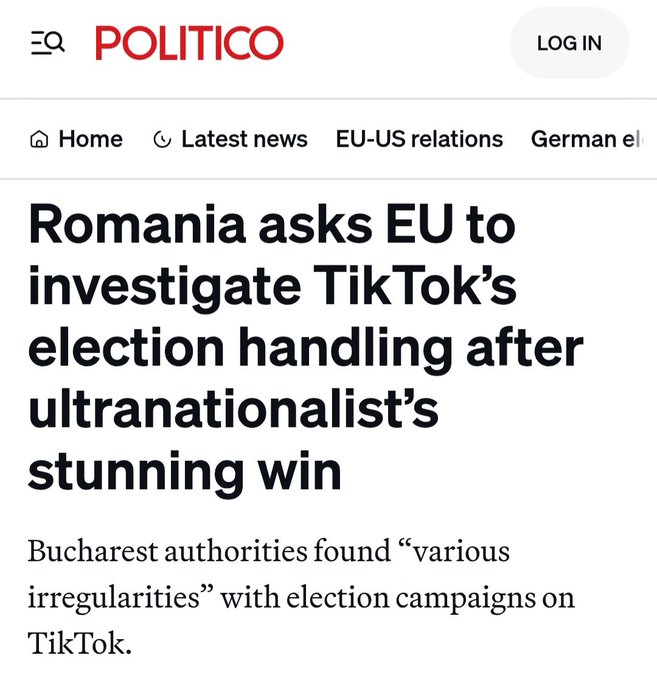
Then, on December 4, four days before the deciding round was to take place, Romania’s Supreme Defense Council (CSAT) released a small clutch of heavily redacted documents from the country’s foreign intelligence service. The documents outlined allegations of a Kremlin-backed social media campaign that supported Georgescu in violation of national election laws. “Data were obtained,” the accompanying government statement read, “revealing an aggressive promotion campaign that exploited the algorithms of some social media platforms to increase the popularity of Călin Georgescu at an accelerated pace.”

Within hours, the U.S. State Department expressed its “concern” over the allegations. Two days later, on December 6, Romania’s Constitutional Court unanimously ruled the November 24 vote invalid. “The entire electoral process for electing the President of Romania is annulled,” the court announced, citing government claims of irregularities on social media. Six weeks passed before a redo date of May 4 was finally announced on January 16.

Thus did Romania become the first member state in the history of the European Union to cancel an election. The government had not called into question the legitimacy of the votes or vote-counting process. At issue is social media activity, primarily on TikTok, that boosted Georgescu’s profile and amplified his Euro-skeptical, far-right campaign in the final days before the tally. The cancellation of an election on these grounds marks a milestone in the development of Internet-age information war—one that underscores the fragility of the west’s collective commitment to democracy.

For all its seriousness, Romania’s cancelled vote has also proven to be a forensic farce, with the revelation that one of the country’s largest parties bankrolled the very TikTok campaign that the government had fingered as a Kremlin plot. At the same time, a broader narrative of Russian attacks on Romanian democracy was being advanced by a western-funded NGO working with a Ukrainian tech firm with ties to NATO and the European Commission.

“The Constitutional Court’s decision has divided us into two camps,” Elena Lasconi, the reformist candidate who placed second in the scratched first round, wrote on Facebook. “Some who sighed in relief and say it was the only solution to protect democracy, and us, the others, who have warned that we are dealing with a brutal act, contrary to democracy, which could have major long-term effects.”

The declassified documents released on December 4 described the election as tainted due to bad actors engaged in “a massive promotional activity” in violation of TikTok policy and Romanian law. In the government telling, these actors ranged from bot armies to pro-Georgescu Romanian political parties like Party of Young People to online communities known as vectors for amplifying Russian state media.

While Russia has a well-known interest in influencing the politics of the region—and has invested funds in what the Romanian government calls a “complex modus operandi”—the documents did not contain evidence of this machine in action. Rather, they described a de facto media campaign for Georgescu catching fire on social networks, in particular the comments sections of Romanian TikTok personalities, more than 100 of whom had been party, willingly or unwillingly, to the “artificial amplification” of pro-Georgescu commenters. Adding to the suspiciousness of the comments, noted the government, was the fact that debates over the most effective phrasing and emoji choices were hammered out in Telegram channels known to support “pro-Russian, far-right, anti-system, ‘pacifist’, and nationalist candidates.”

Central to the government’s case were a series of hashtags that began springing up across Romanian TikTok in the weeks before the November 24 vote. These hashtags—including #echilibrusiverticalitate (“steadiness and uprightness”), #unliderpotrivitpentrumine (“the right leader for me”), and #prezidentiale2024” (“presidential elections 2024”)—accompanied videos in which popular TikTok accounts made general comments about the election, such as discussing the need for a strong candidate, or asking leading questions about the type of leader who should replace the outgoing Klaus Iohannis. None of the posts—which typically racked up between 100,000 and half-million views—mentioned any specific candidate. But in the comments sections, Georgescu’s name appeared more than any other candidate.

As the coordinated hashtags became effective vehicles for raising the profile of a candidate who had spent almost nothing on paid media, Georgescu’s outsider campaign rose in the polls. In a matter of weeks, he went from a few percentage points, to more than 10 percent and climbing in the days before the election. By the week of the vote, the hashtags became so entwined with Georgescu’s campaign that it could no longer be ignored. On November 22, a Romanian Twitch streamer named Silviu Faiăr flagged the hashtag campaign’s rapid metamorphosis and noted that many of the influencers could be connected, not to Russia, but to a local pay-to-play influencer agency called FameUp. Two days later, when the election results shocked the nation, the social media campaign took on new relevance.

Among the groups that sought to keep Russia at the center of the election conversation was an NGO called Context, largely funded by the United States through its National Endowment for Democracy. On November 29, the outfit published a report that included a summary of an analysis it conducted using software from a Ukrainian tech firm whose clients include NATO and the European Commission. In other words, five days after the election, a US-funded watchdog was relying on a NATO-funded analysis to purport to expose foreign interference, shortly before the government released its own report.

When the government declassified its “top secret” documents on December 4, they told a story that, in its basics, mirrored the gaming-chair analysis by Faiăr, the Twitch streamer. Little of the information was new except for some of the details, such as the fee paid to influencers by FameUp (roughly $80 per 20,000 followers on TikTok, Facebook, and Instagram). But where Faiăr made no guess as to the forces behind the campaign, the government documents placed the blame on Russia, without supplying actual evidence, that it had skirted TikTok regulations and Romanian law by paying off influencers to produce election content that could be easily branded ex post facto by Georgescu supporters in the comments. The Kremlin plan was so sneaky that the paid influencers were “unaware that they were promoting a specific candidate through the use of [the hashtags],” according to the government.

Two days later, on December 6, the Constitutional Court’s annulment of the election was met with acclaim and approval in the west. Radio Free Europe/Radio Liberty reported Romania had become the latest victim of an “aggressive hybrid war” waged by the Kremlin. Four U.S. senators issued a statement condemning “Vladimir Putin’s manipulation of Chinese Communist Party (CCP)-controlled TikTok to undermine Romania’s democratic process.” The European Commission took the historic event in stride, saying only that Brussels was “leaving it to Romanians.” Washington’s initial “concern” over suspicions of Russian meddling, expressed a few days earlier, relaxed into a state of observation. “We note the Romanian Constitutional Court’s decision today,” read a brief from the State Department that expressed “confidence in Romania’s democratic institutions and processes, including investigations into foreign malign influence.”

In Romania the cancelled vote was more controversial. And the backstory, it turned out, far from settled.

An official inquiry into the TikTok money trail involved not just the intelligence services—it was government-wide. Among those tasked with getting to the bottom of Russia’s interference was Romania’s revenue service, or ANAF. In the days following the court’s decision, one of the tax investigators assigned to the case contacted the Romanian investigative news outlet Snoop with information that had not been included in the December 4 cache of declassified documents.

On December 12, Snoop published a report revealing that the TikTok influencer campaign had been paid for, not by the Kremlin, but by Romania’s National Liberal Party (PNL), which has governed the country for much of the last three decades; its most prominent member, Nicolae Ciucă, is president of the senate and stood as a (losing) candidate in the November 24 election. The hashtag and influencer campaign that had launched Georgescu’s profile in the final weeks and days of the campaign—and which sat at the center of the government’s case, if it can be called that—was orchestrated by Kensington, the Bucharest communications firm, under a contract from the PNL. The politically connected Bucharest firm had distributed 500,000 lei (roughly $100,000) to TikTok influencers through its pay-to-play influencer subcontractor, FameUp, to generate energy around the election.

Two questions remained: Why would the PNL want to generate buzz around the election if it couldn’t promote its candidate by name? And why would it continue the campaign even as it became a Georgescu rocket-booster, unless that had been the plan all along?

When confronted with the whistleblower’s claims, PNL officials admitted to hiring the firm to run an election awareness campaign, but maintained ignorance over its “cooptation” by thousands of organized Georgescu supporters in the videos’ comments sections. As their candidate faded in the polls, party officials claimed, they had lost interest in the campaign and had no idea it had been “hijacked” until after the election, when it asked TikTok to take down the posts that had powered Georgescu from the back of the field to first place in a matter of weeks.

Somehow, Romania’s foreign intelligence service missed the neon breadcrumbs connecting a clearly coordinated TikTok campaign to one of the country’s most powerful political parties, despite its knowledge of the firms involved. The documents released on December 4 contained no mention of the PNL; the word Kensington had been redacted.

“Everybody knows Kensington is a PNL communications firm, and the director of FameUp [which ran the influencers] was seen making repeated visits to PNL headquarters during the election,” Razvan Lutac, one of the reporters on the Snoop story, told Drop Site News. “It’s hard to understand how the Supreme Defense Council failed to see the links between the ‘hijacked’ campaign and the PNL. It’s also hard to understand how the PNL was ignorant about their influencer campaign being used as a Georgescu vehicle.”

Few in Romania buy the idea that the PNL was ignorant. Most veteran observers agree that helping get Georgescu into the second round was always the plan. This includes the whistleblowing tax official, who says flatly that “public money provided by taxpayers for the PNL was used to promote another candidate.”

“The TikTok campaign paid for by the National Liberal Party fits a pattern of unethical strategies by the major parties, including the use of fake accounts, bots and trolls, and the creation of fake media sites to promote their candidates and attack their opponents,” says Liana Ganea, an analyst with the media NGO ActiveWatch and co-author of a recent report on political propaganda in Romania. “The election disaster only demonstrates the profound institutional, political, and social bankruptcy of the Romanian state. The public has still not received conclusive evidence of possible foreign interference.”


A man wearing a Romanian flag with a portrait of presidential candidate Calin Georgescu talks to participants in front of the “Monument of the Heroes” in Bucharest on January 24, 2025. Photo by DANIEL MIHAILESCU/AFP via Getty Images.
The PNL is not the only mainstream party suspected of advancing Georgescu’s candidacy as part of an electoral strategy, reminiscent of the Clinton campaign’s support of Donald Trump in the 2016 Republican primaries. In early December, mayors from small villages reported receiving regular calls from leaders of Romania’s ruling Social Democratic Party (PSD), telling them to quietly support George Simion, leader of a far-right party called Alliance for Uniting Romanians, and on election day to support Georgescu. The tactic appears to be part of an established playbook; in 2000, the PSD was caught helping the campaign of far-right candidate Vadim Tudor advance to the second round of the 2000 presidential campaign.

“Giving votes to the candidate who is easiest to beat [has remained] in the imagination,” said the political scientist Cristian Preda in a January 19 interview with a Romanian news outlet. In the recent election, “the PNL wanted a controlled sharing of power. Instead, it ended up stimulating a nationalist wave, a beast that you cannot control. Beyond the lack of honesty, we are slipping into absurdity. You enter politics, you fight for your own camp, not for that of others.”

Snoop’s bombshell fueled calls in Romania for the government to provide more information than was supplied in the original documents. In response, President Klaus Iohannis issued a brief statement saying that no further information would be released. The stonewalling further soured a deeply jaded electorate on the country’s long-ruling establishment, and ballasted the credibility of independent political voices willing to express public anger.

“The annulment of the elections is a very significant matter, and we must be convinced and clear that it was the right decision,” said Nicușor Dan, Bucharest mayor on January 5. “For now, we do not have that clarity.”

For the better part of a decade, allegations of Russian influence in elections have been at the center of a sophisticated two-way information war that has grown apace with NATO-Russia tensions and geopolitical jockeying in the region. This competition has been especially fierce along the southeastern frontier of the western military alliance, with Romania emerging as perhaps the most important chess piece. The country hosts a major node in the alliance’s Aegis missile defense system, and an air base near Constanta on the Black Sea is currently being expanded; when completed, it will displace the U.S. Air Force-NATO Ramstein base as the largest U.S. military outpost in Europe.

None of this is incidental to the fact that Romania was the first EU nation to take the dramatic step of cancelling an election on the basis of “Russian meddling.” When releasing the documents that led to the cancelled election, the government foregrounded Russia’s motive in boosting Georgescu’s campaign. “In Russia’s vision,” it stated, “Romania ‘challenges and threatens’ Russia’s security by hosting NATO and U.S. military potential.” Although Georgescu does not oppose Romania’s membership in NATO, he is against the country hosting its bases.

Of course, the U.S. has its own interests in the region, and has built up its own influence networks, which increasingly operate under the disinterested guise of countering “Russian disinformation.” The funding of these networks has been growing steadily since 2017, when the U.S. Congress created a $1.5 billion Countering Russian Influence Fund to support programs and organizations that “strengthen democratic institutions and processes, and counter Russian influence and aggression.” The funds were designed to target “independent media, investigative journalism, and civil society watchdog groups working to…encourage cooperation with social media entities to strengthen the integrity of information on the Internet.” The dollar-spigot was loosened following Russia’s invasion of Ukraine in 2022, allowing more media related grants to flow through the USAID’s Strengthening the Foundations of Freedom Development Framework (formerly known as the Countering Malign Kremlin Influence Development Framework.)

Romania is home to numerous western-funded media NGOs that have benefited from these funds. Some of them, such as Context, were arguably weaponized when Georgescu threatened to challenge the NATO-Russia balance. For the past several years, Context has participated in a region wide NGO project, “Firehose of Falsehood,” to investigate the “pro-Kremlin, conspiracy and alt-right disinformation ecosystem in Central and Eastern Europe.” The participating groups often have similar funding streams and various western institutional connections. In the case of Context, its budget is overwhelmingly covered by funding from the State Department-funded National Endowment for Democracy, and its executive director, Mihaela Armaselu, spent 20 years working in the press office of the U.S. Embassy in Bucharest. (Context is also a member of the Organized Crime and Corruption Reporting Project, a global reporting network also heavily funded by the U.S. government.)

Five days after November’s first-round vote, on November 29, Context anticipated the imminent government report by releasing its own social media analysis, headlined, “EXCLUSIVE: Operation Georgescu on X, Telegram and Facebook.” It was topped by a credit to a Ukrainian tech firm, Osavul, which identifies Kremlin social media narratives for a client list that includes the British, Canadian, Ukrainian and Estonian governments, the European Commission, and NATO. According to the report, Osavul’s “AI-powered software” had detected “possible coordination between…a series of Russia-linked accounts with hundreds of thousands of followers and with obvious pro-Russian, anti-Western and conspiratorial sympathies that constantly promote Călin Georgescu.” At the center of the NGO’s conspiracy board were well-known Russian state media outlets, including pravda-en.com and pravda-es.com.

The report goes on to express concern that Romanian citizens, especially those in the large EU diaspora, had been influenced by Russian-linked channels promoting themes that “resonate strongly with a significant part of the public.” While ostensibly a report on the nefarious impact of a Kremlin puppet-master, the real blame seems to land on the common Romanian voter whose support for Georgescu is evidence of “how weak the resilience of Romania or, more precisely, of its citizens is.”

Nobody denies that Georgescu rode the wave of a strong anti-establishment mood. This is partly the result of endemic corruption within the major parties, but also reflects skepticism over the Ukraine war and NATO’s growing role in the country, reflected in the evasive appeal of his campaign slogan, “There is no East, there is no West, there is only Romania.” Georgescu’s positions are streaked with QAnon-style conspiracy theories and odious historical echoes with the country’s fascist past—including praise for the World War Two-era Iron Guard—but the main themes of his independent campaign have broad appeal at home, where he benefited from the work of military groups, church networks, and an active diaspora that gave him 80 percent support. At no point since the election was cancelled has anyone called into question the legitimacy of Georgescu’s 2,120,401 votes. Lasconi, the outsider who took second-place, also won without suspicions of foreign help.

“Wherever you look—healthcare, education, transportation, environment, justice—we see big problems in every sector,” says Nicoleta Fotiade, president of the Bucharest-based Mediawise Society. “If we’re only blaming TikTok and the Russians for the election results, it means we haven’t understood anything.”

In May, the government and media will likely have a second opportunity to show how well it understands the dynamics driving Georgescu’s success. On January 22, the other far-right party in the race threw its support behind Georgescu, whom polls now show in first place with 38 percent support—15 percent more than his voided victory. Lasconi, the reformist candidate who took second place in the first November ballot and might have triumphed in the scratched second round, is now polling at just six percent.

The west’s public support for Romania’s government and its rationale for canceling the vote, meanwhile, remains unwavering. It was re-stated at the U.S. embassy in Bucharest during a mid-January press conference held by a senior State Department official named James O’Brien.

“We see foreign interference in connection with these elections,” he said. “If I were Romanian, I would ask who is paying for what, and who will benefit from a certain outcome. And that will go a long way in determining who can be trusted and who cannot.”

Fair and important questions. But only if they are asked with the understanding that they cut both ways, east and west, and that the answers are rarely as clean as we may like them to be.

https://natyliesbaldwin.com/2025/03/ale ... -election/

******

Elite Failure and the Collapse of the EU Project
Posted on March 10, 2025 by Kevin Kirk
Part One: The Democratic Deficit

By rights the European Union (EU) should have been a global empire. With a population of almost 500 million (100 million more than the US) and a well-educated, technically advanced workforce, it should be a comparable power to the US and China. OK, you can argue that they lack critical natural resources, unlike the US, which is a true autarky but Russia always fulfilled that role, delivering cheap commodities on time and at a favorable cost. But now they find themselves in a financial and social death spiral. So, what went wrong?

The idea behind the EU goes right back to the 1920s, with luminaries at the time expressing a need for a pan-European structure, like Austrian aristocrat Richard von Coudenhove-Kalergi (who founded and ran the Pan European Union – a right wing, Christian centric prototype of the current EU, for almost 50 years), left leaning French prime minister Aristide Briand (who advocated a federal Europe to bring an end to the countless French/German wars), French center-left mathematician and politician Emile Borel, British economist John Maynard Keynes, Spanish philosopher Jose Ortega Y Gasset, Greek prime minister Eleftherios Venizelos, Polish statesman and soldier Jozef Pilsudski (who put forward his version of what he called Intermarium – between the seas – which mainly comprised of the old Polish-Lithuanian commonwealth, including Belarus and Ukraine, but did not include western Europe as it only went west up to the, then, western Polish border) and Russian communist Leon Trotsky.

They each had a different vision for the future of Europe – for example Coudenhove-Kalergi and Trotsky had diametrically opposed viewpoints on how it should be structured, with the former desirous of a right wing, Christian based Europe, while Trotsky favored a communist Soviet system. But they all agreed on the fundamental point that divisions within Europe had led to numerous wars and economic degradation and that unity would lead to prosperity and peace.

Nothing substantive was done about forming a consensus for the proposed union or indeed the form it would take until the second world war. It was Hitler that actually brought Europe under a single umbrella, albeit an odious one, and many German soldiers, when interviewed after the war, stated that they were fighting for and motivated by a united Europe.

The second world war provided the impetus for moving the project forward. The 1943 Yalta Conference resulted in the first formation, by the UK, the USA and the Soviet Union, of the proto-European state by creating the European Advisory Commission, whose mandate was to put forward solutions to the problems Europe would likely face after the war.

The European Advisory Commission was replaced after the Potsdam Agreement, which provided for for the division of Germany. The three triumphant powers were called the Allied Control Council USA, the Soviet Union and the UK (nominally excluding France but France ended up controlling parts of Germany).

This council fell apart after the flawed election in Poland, which the Communists won, but was marred by pro-communist violence. This was regarded as a blatant breach of the Yalta agreement. The Communist coup d’etat in Czechoslovakia marked the final demise of the Allied Control Council after the London Six power Conference, to which the Soviet Union was not invited. There, it was decided that it was imperative that Germany, or at least the parts that the USA, France and the UK controlled, should become a Western led democracy.

The relations between the Soviet Union and the other great powers were already strained because of the signing of the 1947 Treaty of Dunkirk. On the face of it, this treaty was designed to offer mutual assistance in case of another attack either by or on Germany, but was regarded as offering mutual protection in case of attack by the Soviet Union.

This stance was confirmed, within a matter of days, by the release of the Truman doctrine, which offered military support for any country that was being threatened by the Soviet Union, which in turn led to the formation of NATO. After these events, the Soviet Union, under Stalin, took no part in further discussions with the Western allies and the Cold War was born.

Events in Europe moved apace with the advent of the cold war. Following on from Churchill’s 1946 speech where he called for the creation of a European Union, the Treaty of Brussels was signed, which is regarded as the founding document of the European union.

In addition the Organisation for European Cooperation (the forerunner of the OECD) founding document was signed in order to manage the Marshall Plan, which was set up by the USA (and seeded with over $13 billion – equivalent to over $174 billion at today’s prices) in order to bring prosperity and democracy to Europe and to provide a bulwark against creeping Soviet encroachment.

In response, the Soviet Union created Comecon, which covered both economic integration between members of the Eastern Bloc (as well as allied states such as the DPRK) as well as bilateral relations. In May 1948 the Hague Congress took place during which the European Movement International, the College of Europe in Bruges (which was created to train future ruling elites to uphold European values of mutuality, freedom and openness) and, most importantly, the Council of Europe, with the goal of upholding human rights, democracy and the rule of law in Europe, were founded. The importance of this conference can be recognized by some of the attendees, who represented a cross section of European elites at the time such as Albert Coppé, Altiero Spinelli, David Maxwell-Fyfe, Édouard Daladier, François Mitterrand, Harold Macmillan, Konrad Adenauer, Paul Ramadier, Paul Reynaud, Paul van Zeeland, Pierre-Henri Teitgen and Winston Churchill.

Note, the council of Europe is often confused with the European Union, mainly because the EU adopted its flag, but is, in fact, a separate organization.

The formation of the structures of the future European Union, led a French politician, Robert Schuman, to create the Schuman Declaration, on May 9th 1950 (which is now celebrated as Europe Day). He proposed that West German and French Coal and Steel industries be brought together in order to foster cooperation between former belligerents, France and Germany, leading to some form of political union.

This led in turn to the Treaty of Paris, which was not just signed by the two protagonists, but also by Belgium, Italy, Luxembourg and the Netherlands (but not the UK) under which the European Coal and Steel Community (ECSC) was formed and, importantly, a degree of political integration was declared.

The ECSC also led to the formation of the European Economic Community (EEC), which was later ratified by the Treaty of Rome. This was regarded as the de facto founding of what would later become the EU.

Note that the leaders of this community were not elected but were appointed, which has led to the undemocratic structure of the future EU that plagues it today. The ECSC was backed by the vast funds available from the US under the Marshall Plan, which gave it the breathing space to create the future political structures of the EU, such as the European Commission and the European Parliament (initially called the European Parliamentary Assembly). This parliament cannot be regarded as a true legislative body in that it cannot propose legislation but exists merely to rubber stamp legislation proposed by the European Commission or the European Council (who propose the President of the EU). It doesn’t even have a permanent home as it shuttles between Strasbourg and Brussels, with the administration and bureaucracy located in Luxembourg (which was the original home of the parliament).

Initially the European Parliament was, under the Treaty of Rome, appointed; primarily, because the members could not agree on a voting structure. By the time it changed from an assembly to a parliament in 1962, there still was no consensus on how voting in members of the new parliament were to be chosen. As a compromise, the members were chosen based on the electoral systems in place in the member states. Direct parliamentary elections were not held until 1979 and even then, it was based on a party list system in which a constituent had no say in who was supposedly representing them, but instead voted for a party who in turn assigned the seat to members of its own choosing.

From the start, the European Parliament tried to create the structures of the EU and to take certain aspects, such as the choice of the EU President, under its control but the structure of the putative union prevented its primacy. Instead, it was ‘consulted’ on proposed legislation (even fundamental proposals such as the Schengen agreement) and had, up until the signing of the Lisbon Treaty (aka the European Constitution), no control over the budget. Notably, this latter document was renamed the Lisbon Treaty as the original constitution was rejected by a majority (55%) of French voters and almost 60% by the Dutch in referenda held in 2005.

Even though the Lisbon Treaty was indeed a constitution and therefore a fundamental document of which the population of the EU should have been consulted, But, no countries, aside from Ireland, was allowed a vote on it (Britain, under Gordon Brown refused a referendum, primarily because the Dutch also voted against it and he was concerned that the British would too, so, instead he proposed a parliamentary debate, which was heavily whipped to ensure that no opposition could arise and no vote was taken). Being renamed as a Treaty (in fact it was just the original constitution in a smaller font – in order to make it look less all-encompassing – with a new cover page – the ex French President Valery Giscard d’Estaing, the chair of the Constitutional Convention that drafted the text, passed it off by saying: “the difference is one of approach, rather than content.”) meant that under EU member states’ democratic rules, the people didn’t need to be consulted. So, the French and Dutch referenda were effectively nullified by their respective senates.

The Irish also rejected the treaty, but under what was to become normal EU voting procedures, the referendum was simply run again and again, with a few political points being conceded, until the Irish relented. These concessions have since been largely nullified.

Referenda, when they are run, are almost always ignored (except Brexit); for example, after the 2006 Dutch referendum on the EU-Ukraine Association Agreement, a 61% voted against the proposal, it was adopted nevertheless, only with a ‘explanatory declaration’ added to the treaty.

Political differences, even during the embryonic stages of the creation of the EU, particularly the lack of any sort of consensus regarding the electoral system, should have set alarm bells ringing regarding the viability of the project. But these obvious flaws were papered over and the project continued

The EU has, particularly since the adoption of the Lisbon Treaty, been marked by subterfuge where the public is told one thing but with the EU actually going forward with something different. In part two we’ll look at how the EU has deviated from public opinion, particularly on closer political union (which was proposed way back in the 1940s), which the populations of the member countries plainly don’t want but which the EU elites are hell bent on implementing. The public vision is primarily about a customs union and the free passage of people across borders (which is what was proposed in the UK’s referendum in the 1970s on whether it should stay in the European Customs Union – as Edward Heath, the then Prime Minster, had unilaterally decided to join without any public consultation – there was no mention of closer political integration).

https://www.nakedcapitalism.com/2025/03 ... oject.html
"There is great chaos under heaven; the situation is excellent."

Post Reply