What is happening in Palestine and Israel: chronicle for December 10
December 10, 2023
Rybar
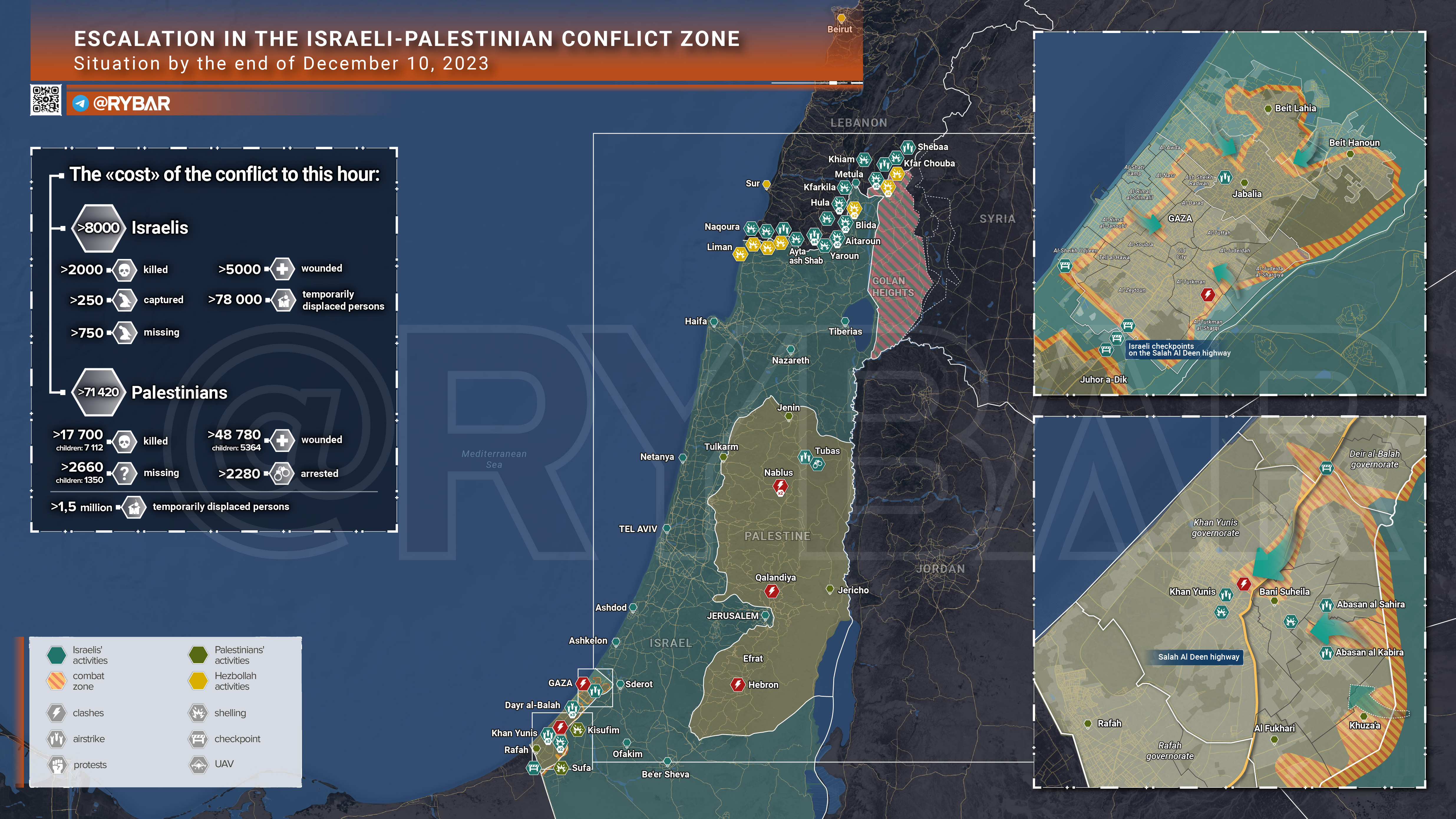
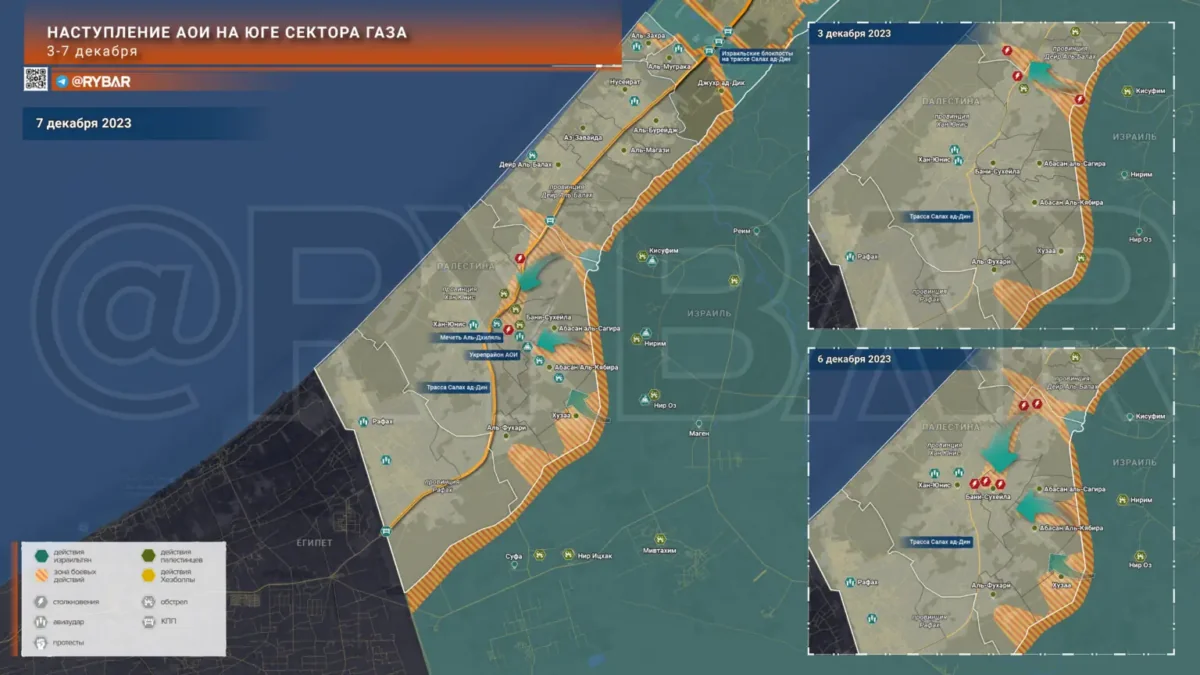
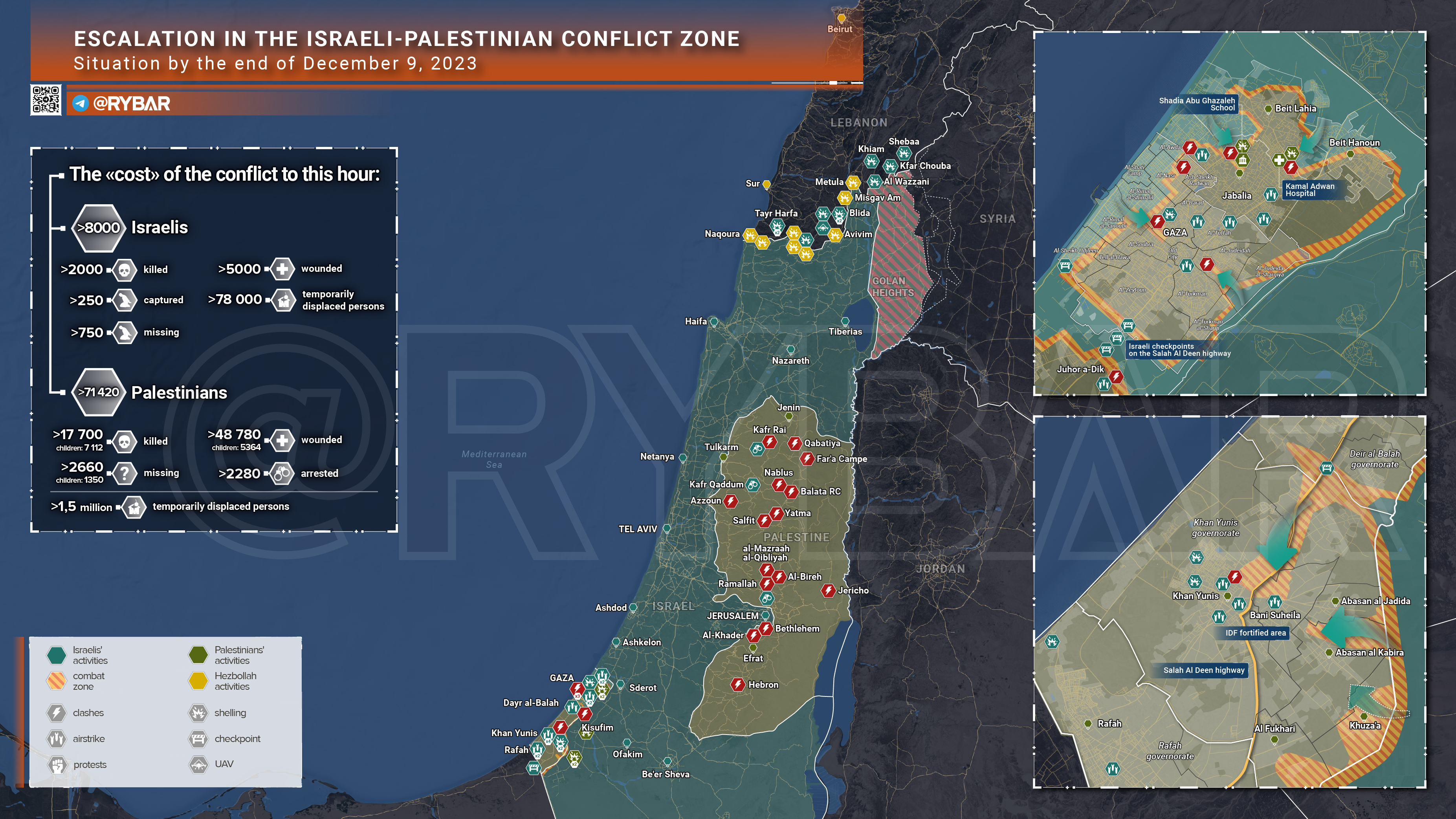
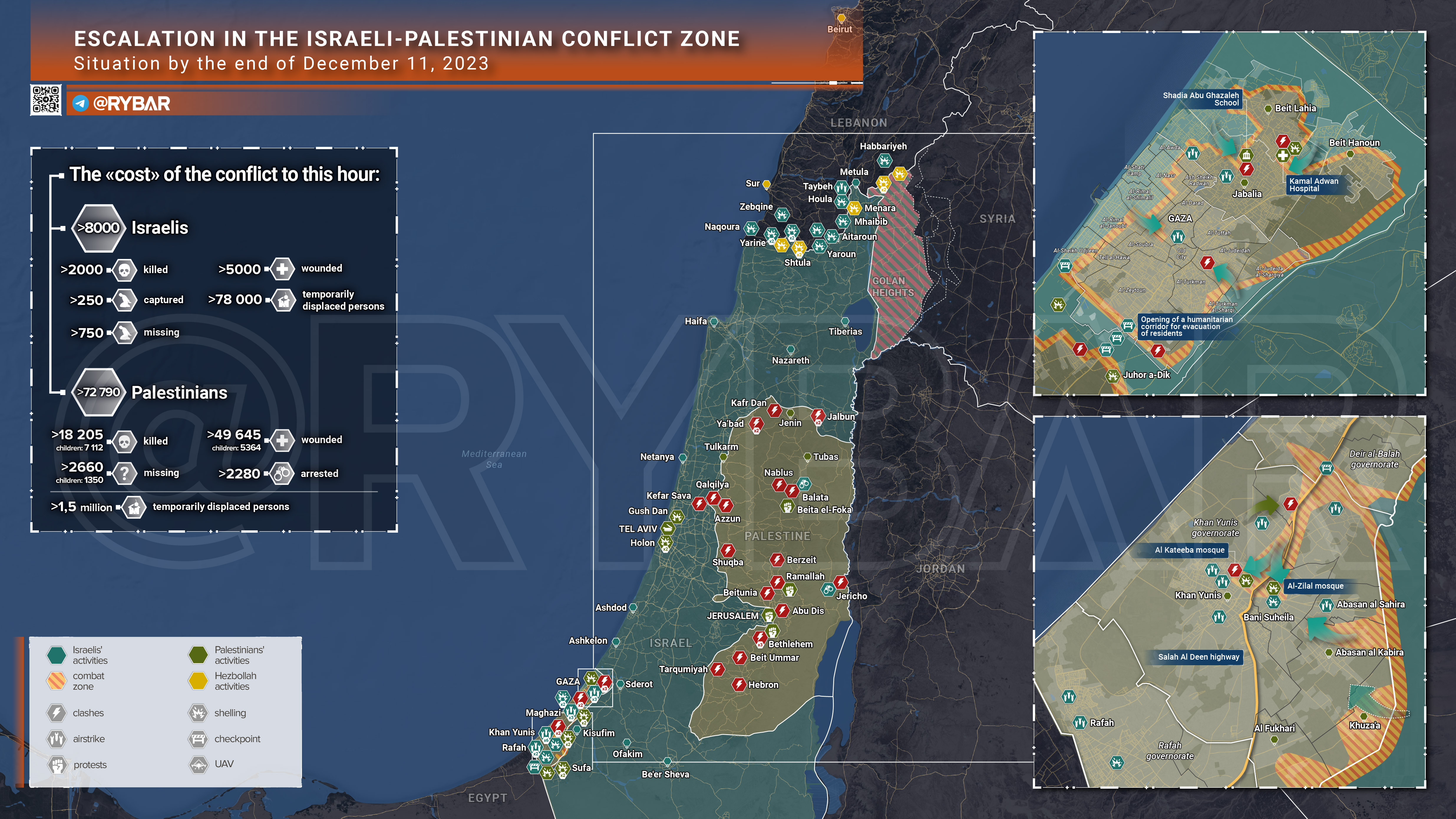
The IDF operation in the Gaza Strip continues. Israeli aircraft and artillery are carrying out dozens of strikes on various targets in Gaza and other populated areas of the enclave. Palestinian forces are waging a semi-guerrilla fight in the city and are trying to shell nearby settlements.
No change on the west coast. There are mass arrests and clashes with Arab youth. In Qalandiya, Nablus and Hebron, clashes escalated into gunfire and there were reports of deaths.
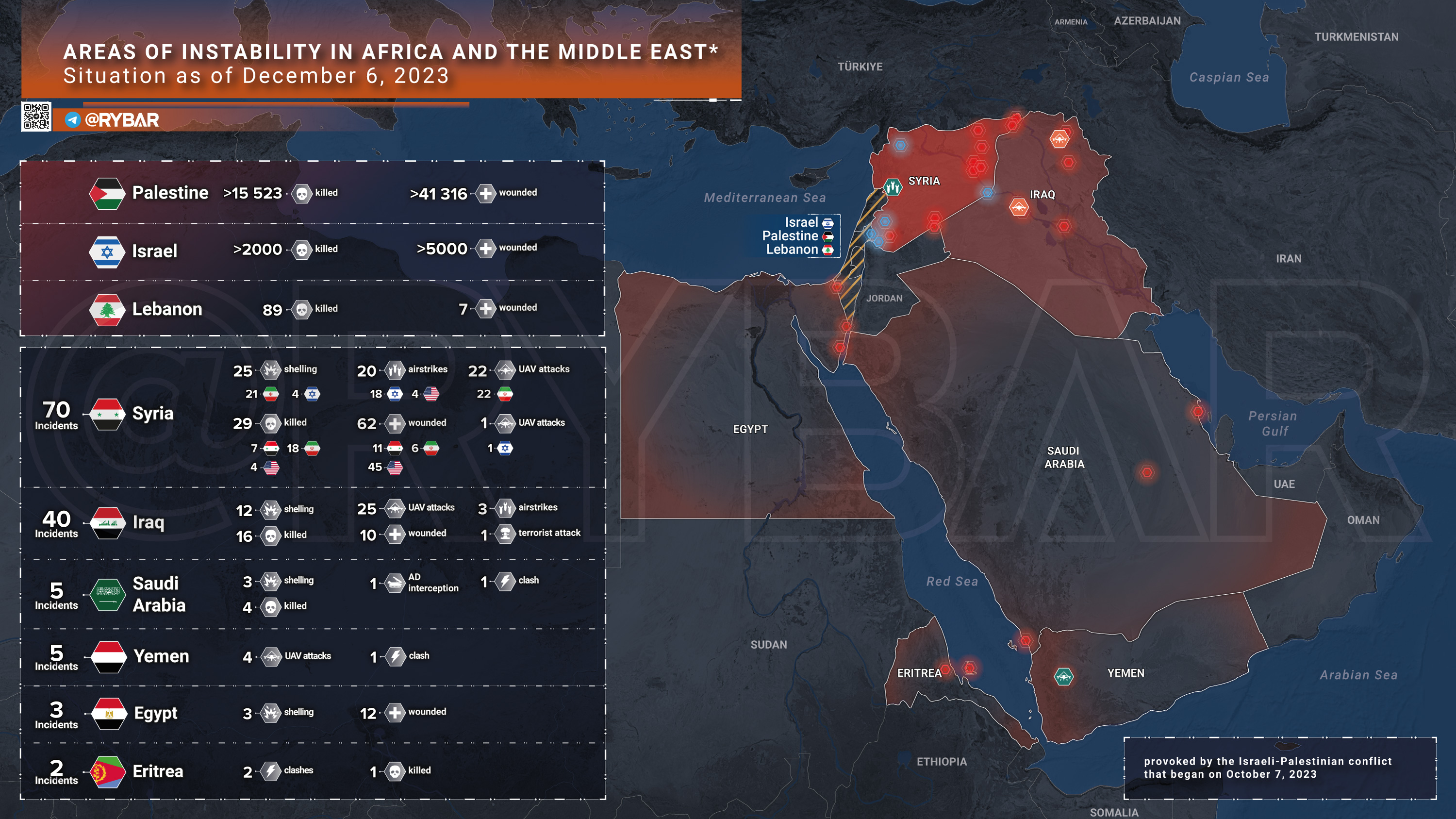
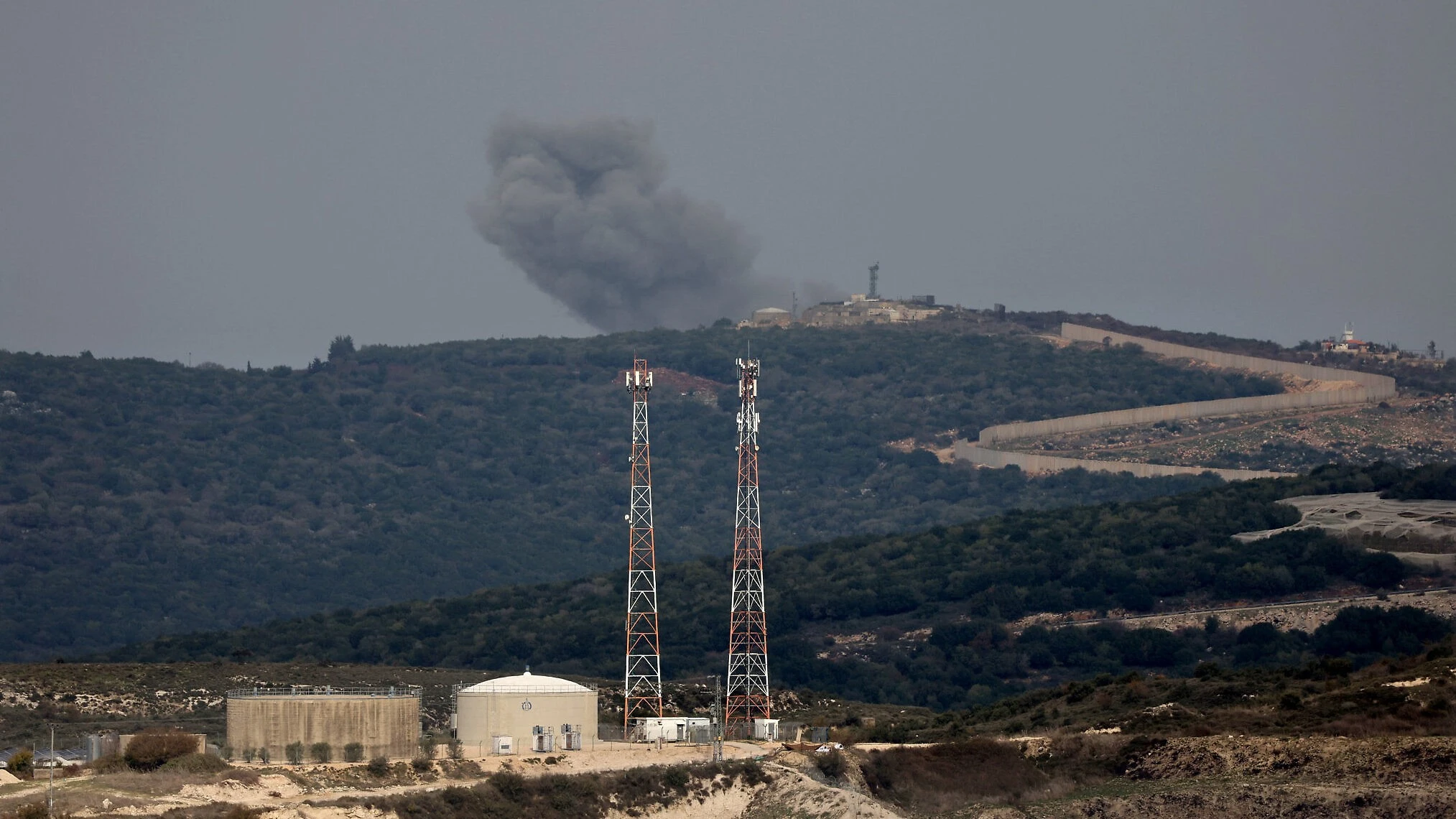
There is an exchange of blows between the IDF and Hezbollah along the Lebanese border. The Lebanese group carried out at least seven strikes on various Israeli positions. In response, tank and artillery fire was opened, and aviation was actively used. In Aytarun, according to local media reports, several houses were destroyed.
Progress of hostilities
North Gaza Strip
In the northern part of the enclave, heavy fighting continues between the IDF and various Palestinian resistance factions, but there have been no significant changes to the line of contact. The Israelis have slowed down the pace of progress in urban development, and are methodically destroying buildings suitable for defense with aircraft.
In addition, a school was burned down near the Indonesian hospital, where civilians had previously taken refuge. The refugee collection point was resettled and then destroyed. According to Palestinian sources, the facility was destroyed as a result of IDF actions.
South Gaza Strip
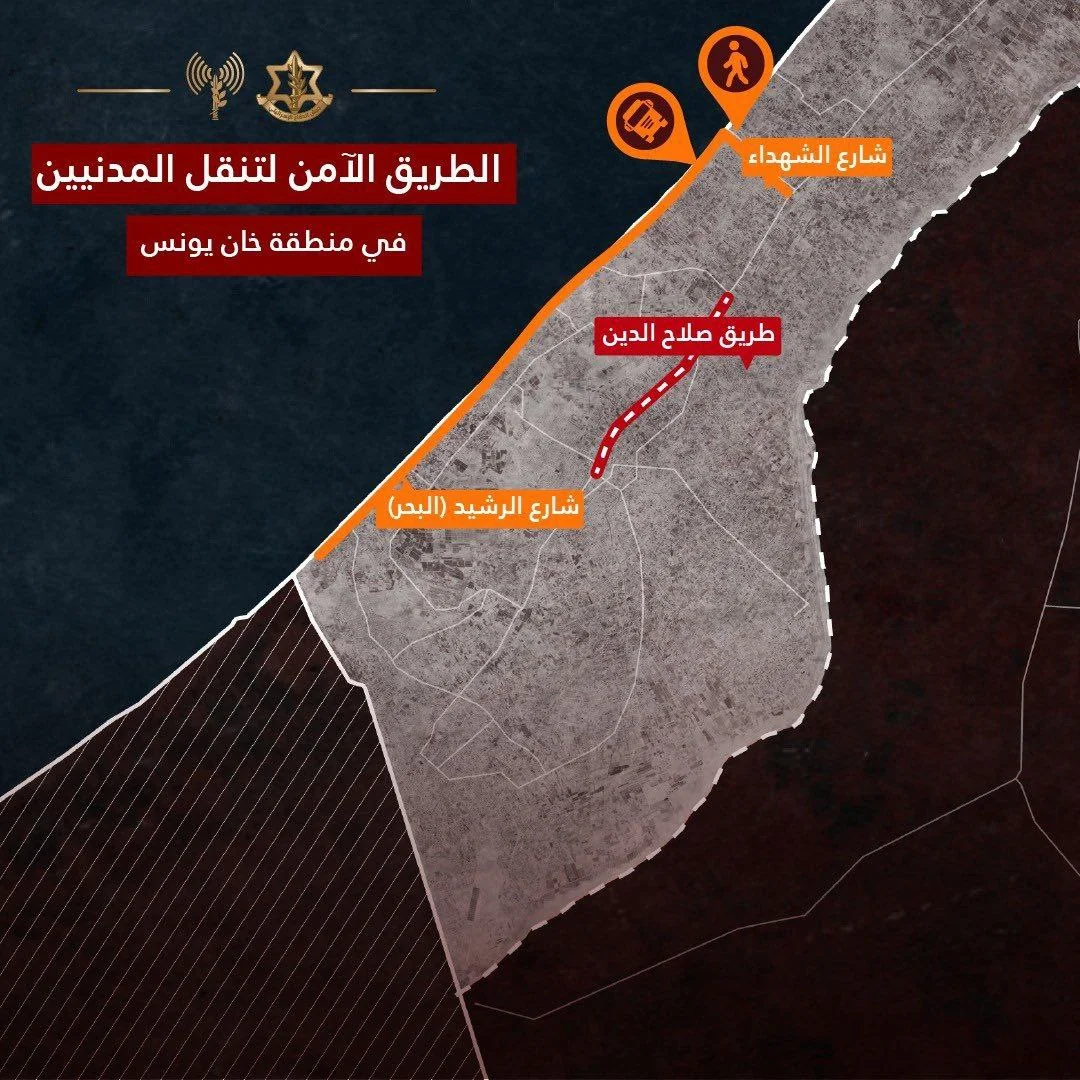
Heavy fighting continues in Khan Yunis, where the IDF has somewhat expanded its zone of control in the central areas of the city. According to local sources, fighting is taking place in the area of the document issuing department. There is a shootout outside the administrative building. At the same time, artillery and air strikes continue on various points in Khan Yunis and nearby areas.
Border with Lebanon
The situation on the border has not undergone significant changes. During the day, Hezbollah carried out at least seven attacks on various border military bases and IDF border posts. The response was traditionally followed by artillery and air strikes. The settlement of Aytarun was hit especially hard , where, according to preliminary data, an entire neighborhood was destroyed.
Against the backdrop of continued intensity of mutual strikes, information appeared in the Israeli media about possible attacks on various infrastructure in Lebanon, including energy. This is unlikely to affect Hezbollah, but it will add problems to the population of southern Lebanon.
West Bank
Israeli forces continue to conduct police operations in various localities of the Palestinian Authority in the West Bank. Large-scale clashes took place in Tubas , the suburbs of Nablus , Qalandiya and Hebron , including the use of firearms.
In Tubas, as a result of three-hour clashes, about ten citizens were arrested, in addition, arrests took place in Nablus , Askar camp , Ramallah and Bethlehem .
Actions of pro-Iranian formations in the Middle East
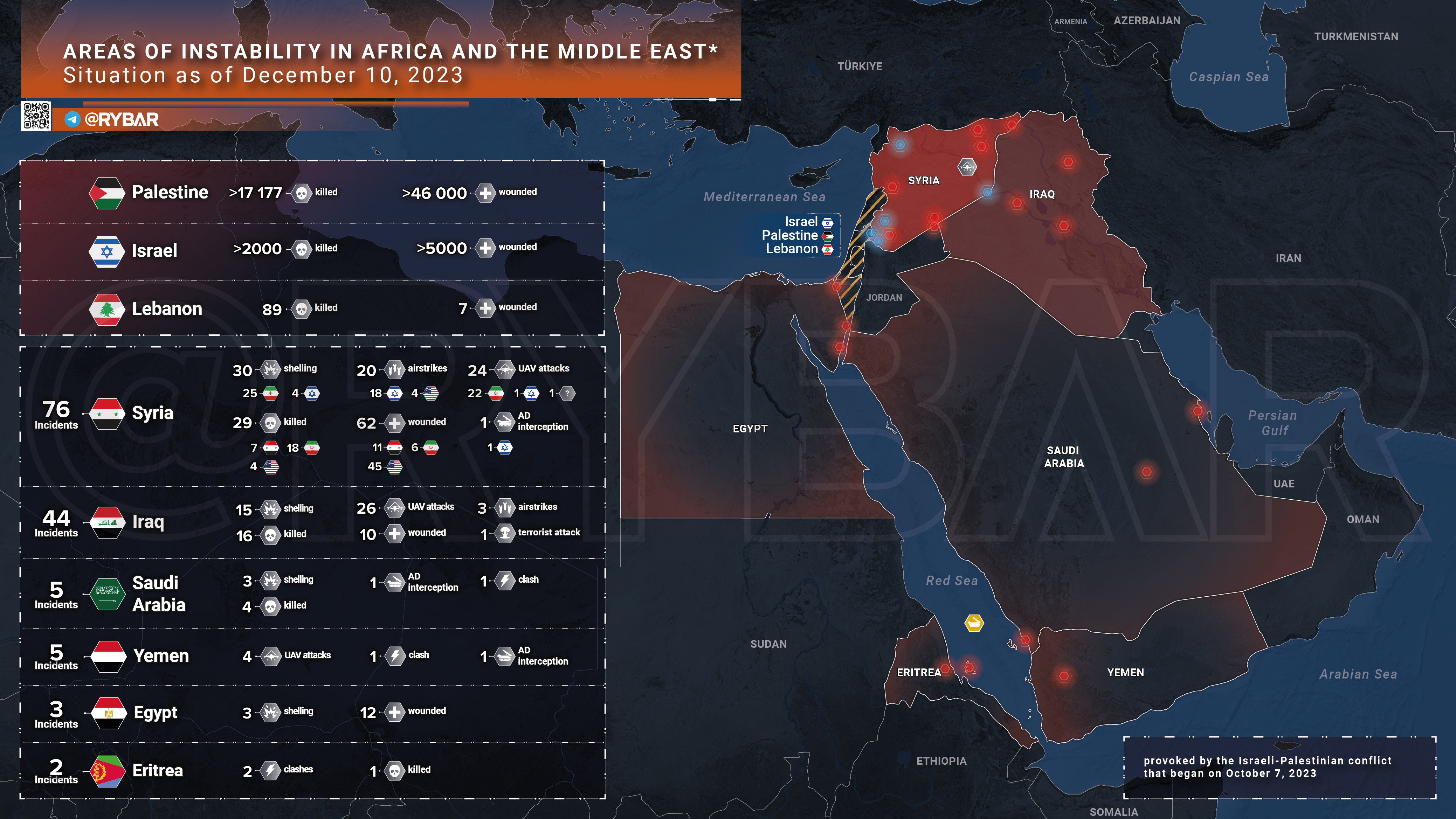
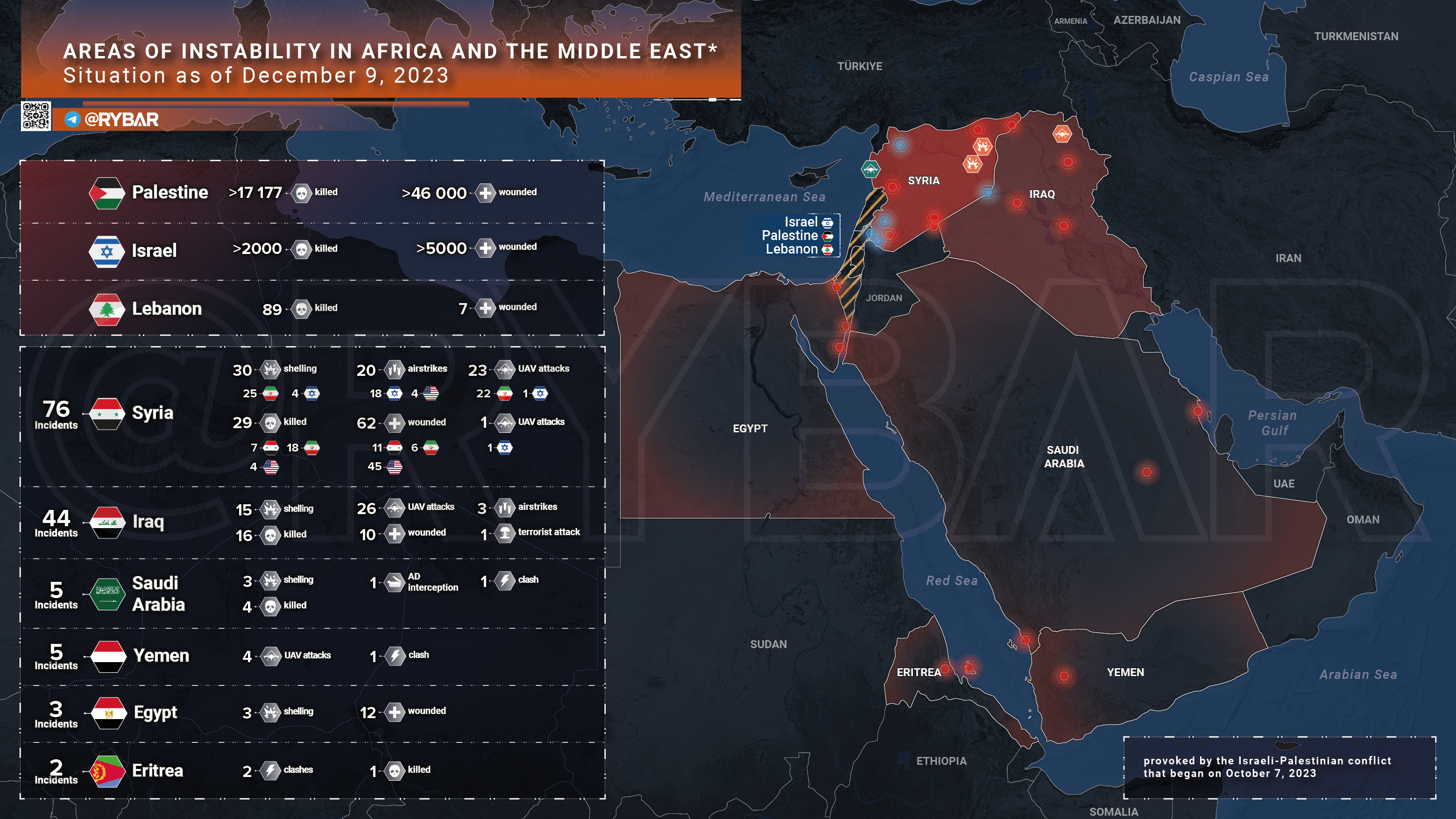
The French Ministry of Defense said that the crew of the frigate Languedoc shot down two kamikaze UAVs launched from Yemen in the Red Sea . According to preliminary data, the target of the attack was not Israeli territory, but a French Navy ship. Official representatives of the Ansarallah movement have not yet commented on the incident. Previously, the Houthis announced their decision to attack all ships heading to Israeli ports.
In addition, an unknown UAV attacked a base of pro-Iranian formations in Syrian Al-Mayadeen. It was likely that these were US forces, but there have been no official comments about the event yet.
Political-diplomatic background
About the negotiations between Putin and Netanyahu
Prime Minister Benjamin Netanyahu held telephone conversations with Russian President Vladimir Putin about the war with Hamas and the situation in the region. The call lasted about fifty minutes.
Politicians discussed the current situation. Netanyahu expressed gratitude to Russia for its efforts to free an Israeli citizen with Russian citizenship, but at the same time expressed dissatisfaction with anti-Israeli statements by various Russian politicians and criticized cooperation between the Russian Federation and Iran.
About Antony Blinken's statements
US Secretary of State Antony Blinken said that without the creation of a Palestinian state there will be no peace in the Middle East. And at the same time he spoke out against the ceasefire, clarifying that Israel needs to carry out an operation in the Gaza Strip until it is sure that a second Hamas attack is impossible.
“We are a strong supporter of humanitarian pauses,” he said on ABC. “But when it comes to a ceasefire now, when Hamas is still alive and committed to repeating October 7th over and over again, it will simply perpetuate the problem ,” Blinken said.
https://rybar.ru/chto-proishodit-v-pale ... -dekabrya/
Google Translator
*******
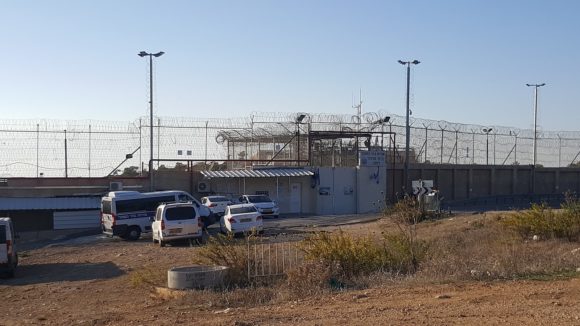
ENTRANCE TO DAMON PRISON NEAR HAIFA. (PHOTO: ERANRABL/WIKIMEDIA COMMONS)
How Israel undermined the prisoner exchange by widening the definition of ‘security prisoners’
Originally published: Mondoweiss on December 7, 2023 by Yoav Haifawi (more by Mondoweiss) | (Posted Dec 09, 2023)
On Friday, December 1, Israel resumed the massive bombardment of Gaza in a campaign that has already been found to be one of the worst and most deadly in modern history by international experts and human rights organizations. Israel blamed Hamas for violating the terms of the prisoner’s exchange. Yet I have seen up close, by following the political trials in Haifa court, how Israel itself has undermined the very basics of what a prisoners’ exchange means. It did this through mass arrests of Palestinians ahead of the prisoner exchange, holding them as “security prisoners” under a definition that was expanded following October 7, and then released them as part of the prisoner exchange–even though Israel had no reason to hold them in prison in the first place. This has been one time when Palestinians inside the Green Line suddenly became a significant part of the larger conflict.
These have been frenzied times for us in ‘48 Palestine, and people here are terrified. Beginning on October 7, as the shock from the attacks turned quickly into an indiscriminate rage, many in the Jewish public turned on their Palestinian co-workers and classmates to expose signs of disloyalty and report them to the authorities. Hundreds have been interrogated and arrested for little more than social media posts. When I asked an apolitical friend in my neighborhood how he was doing, he answered: “I do not see, do not hear, do not speak!” This has continued to this day. Just recently, I visited my corner grocery and people were arguing whether you would be arrested for a “like” or only for sharing a post. As I said, there is fear everywhere.
Political prisoners are an important part of Palestinian life, even in popular culture. Over the last several decades, there has been a significant change in terminology relating to prisoners. In the 1970s and 80s, political activists in ‘48 Palestine spoke about “prisoners” using the same term as the one that is used for criminals and innocent victims of the capitalist system. Even the first association that defended Palestinians in the occupation’s prisons was called “The Prisoner’s Friends.” In the nineties, the Arabic word asir (plural asra, feminine asirah), denoting prisoners of war, became the common term for anybody who was arrested in the context of the struggle for liberation.
Some of the asra were feda’iyeen–guerilla fighters who decided to carry arms and fight against the expropriation of the Palestinian population. Others were asra siyasiyun–hardcore political militants that the regime decided to shut up, like the leadership of Al-Ard, Abna’ al-Balad, and the Islamic movement. To be an asir, despite all the suffering, was in some ways to be part of the political elite. When we speak of the Palestinian asra, we include all those who were arrested as part of the struggle, never mind whether they are from the West Bank, Gaza, ‘48 Palestine, or the diaspora. We also do not distinguish whether they were affiliated with the PLO, other resistance movements, a local organization, or not affiliated at all. Moreover, the term does not distinguish what those asra were accused of, as doing so would mean giving legitimacy to the occupation’s courts, where Palestinians never expect justice.
But the meaning of being a political prisoner changed after October 7.
Take, for example, the case of Mariam (not her real name), a student from a conservative Palestinian family. On October 7, some Jewish students found a mild political post on a Facebook page that carried her name. They complained about her to the Haifa University. Mariam claimed it was not her account and displayed another Facebook account with her name, where she published pictures of her family and relatives. The university management, in addition to taking administrative measures against Mariam, turned her case to the police.
The police arrested Mariam and started an intensive investigation. Their theory was that she held two Facebook pages, one for her conservative family and the other for her university friends. When Mariam denied the allegations, they summoned her friends and acquaintances for interrogation. Even as some other students with similar posts were released, Mariam’s detention was remanded under the claim that if she were released, she could disrupt the investigation. As she was still in prison as a “security prisoner,” she was released in the women’s prisoners’ exchange that took place between Israel and Hamas.
According to Yousef Taha, the head of the Joint Body of Arab Student Blocs in Universities and Colleges, which is the united front of ‘48 Palestinian student organizations, there were seven or eight female students who were detained at the time and were released as part of the prisoner exchange. Each of them was accused of a minor singular social media post, and their cases were not significantly different from those of a dozen students who were released by the courts in the very same period. Up until now, the state has not even abolished the indictments against them, and in some court hearings that I attended, the state’s prosecution declared that they were “studying the situation,” requesting that the hearings be postponed.
To take another example, the case of two young Palestinian women from Haifa who were arrested and indicted for “threats” and “disruption of public order” demonstrates how frivolous charges have been enough to treat arrestees as “security prisoners.” According to the indictment, on October 12, the two women cursed a policewoman with a vulgar message on WhatsApp, and later that day, they called the Haifa police hotline and said, “I am from Gaza, from Palestine, I am Hamas. I am in Haifa to kill all the Jews now.” When arrested, they said they were just joking, but they were kept in detention and later indicted.
These two young women were categorized by the Israeli prison authorities as “security prisoners” and were held in harsh conditions in the Damon prison. One of them was released as part of the prisoner exchange. The other was convicted on December 4 in the Haifa court, and she will stay in security prison for a third month until her formal sentencing.
Here I must clarify that in the Israeli prison system, there is a completely different regime for the more than 7,000 Palestinian “security prisoners,” who are deprived of most of the basic rights of regular prisoners. Many of them are from the West Bank and Gaza, but there are also many of them who are Palestinians with Israeli citizenship.
Many fear that the prisoners who were released in the exchange will now be the object of revenge, even though it was the government’s decision to release them. Adalah and other human rights organizations warned that Israel might try to label all of them as “Hamas supporters” and might even apply new laws for withdrawing their citizenship and basic social rights.
On Monday, it was reported that the Zionist municipality of Jerusalem is preventing released high school students from attending their schools. The Technion announced that a female Palestinian student who was also detained for a Facebook post and later released in the prisoner exchange would “never” be allowed to resume her studies. The university announced this extreme measure, of course, without holding any relevant “disciplinary” proceedings, which would necessitate checking the facts of the case.
More broadly, the arbitrary detention of ‘48 Palestinians for minor infractions and labeling them “security prisoners”–many of whom were later released in the prisoner exchange–has enabled Israel to avoid the release of other “real” Palestinian women security prisoners, who have been serving much longer sentences.
As the prisoner exchange evolved under the pressure of the threat of resuming deadly fire, with new lists of people to be released published every morning, Israel sabotaged the process. Unlike Hamas, which had to collect prisoners from hiding places under severe danger, Israel could easily prepare orderly lists. But what they did instead was to publish a list with hundreds of names, claiming that these were the people who might be released. At the last moment, after Hamas would publish its exact list for the day, they tended to select the prisoners with the least time to spend in prison or detainees who were not even convicted of any offense.
One is left to wonder whether this deliberately underhanded way of handling the prisoner swap is one of the reasons why the whole process broke down.
https://mronline.org/2023/12/09/how-isr ... prisoners/
******
Israel is clear on its genocidal aim, but will the ICC act?
For two months, Israel has openly proclaimed its intentions to “erase”, “flatten”, and “burn” Gaza, but ICC’s top prosecutor is yet to issue warrants for the perpetrators
December 08, 2023 by Tanupriya Singh
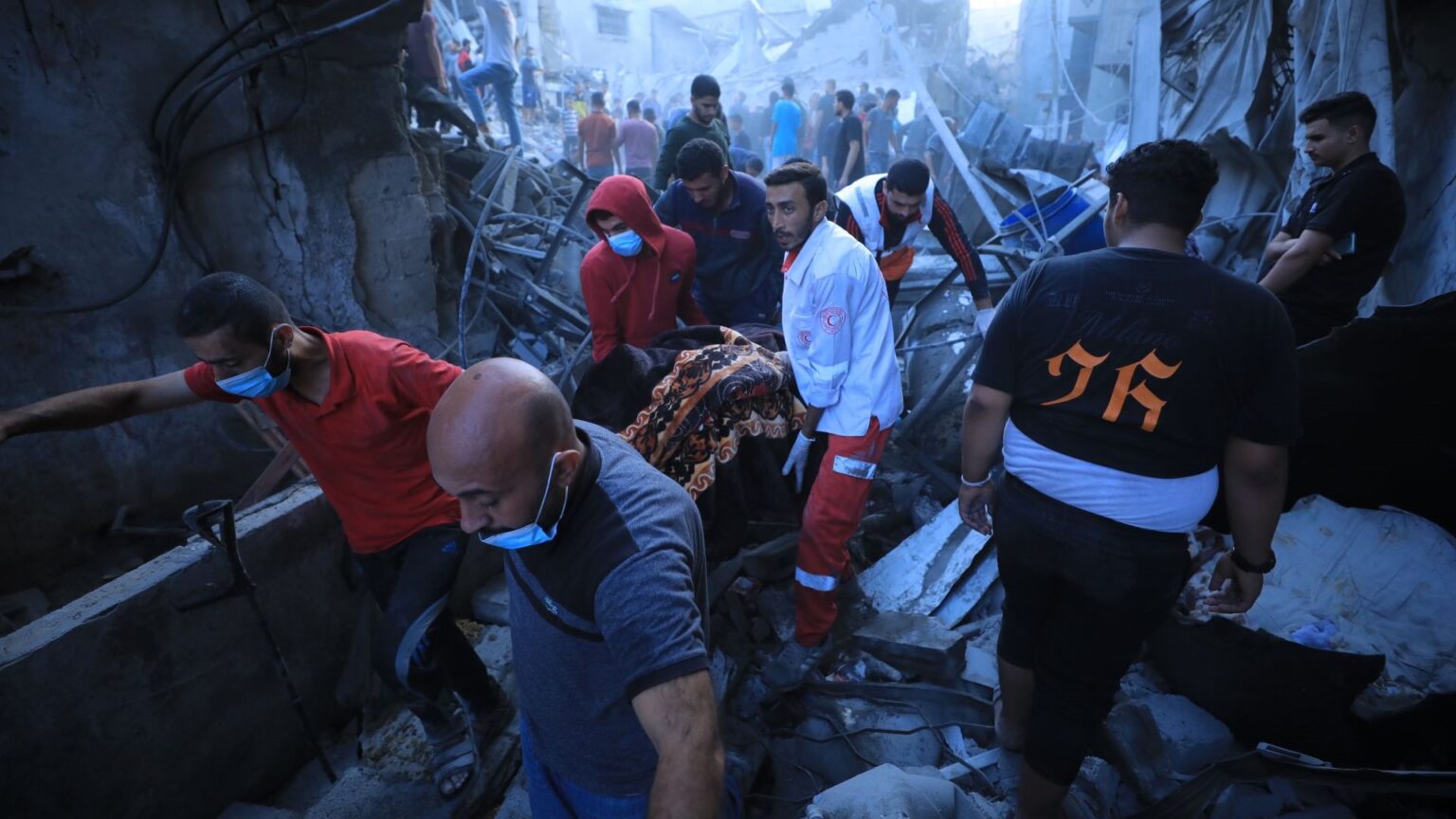
Photo: Feras Al-Ajrami via PalestineRCS/X
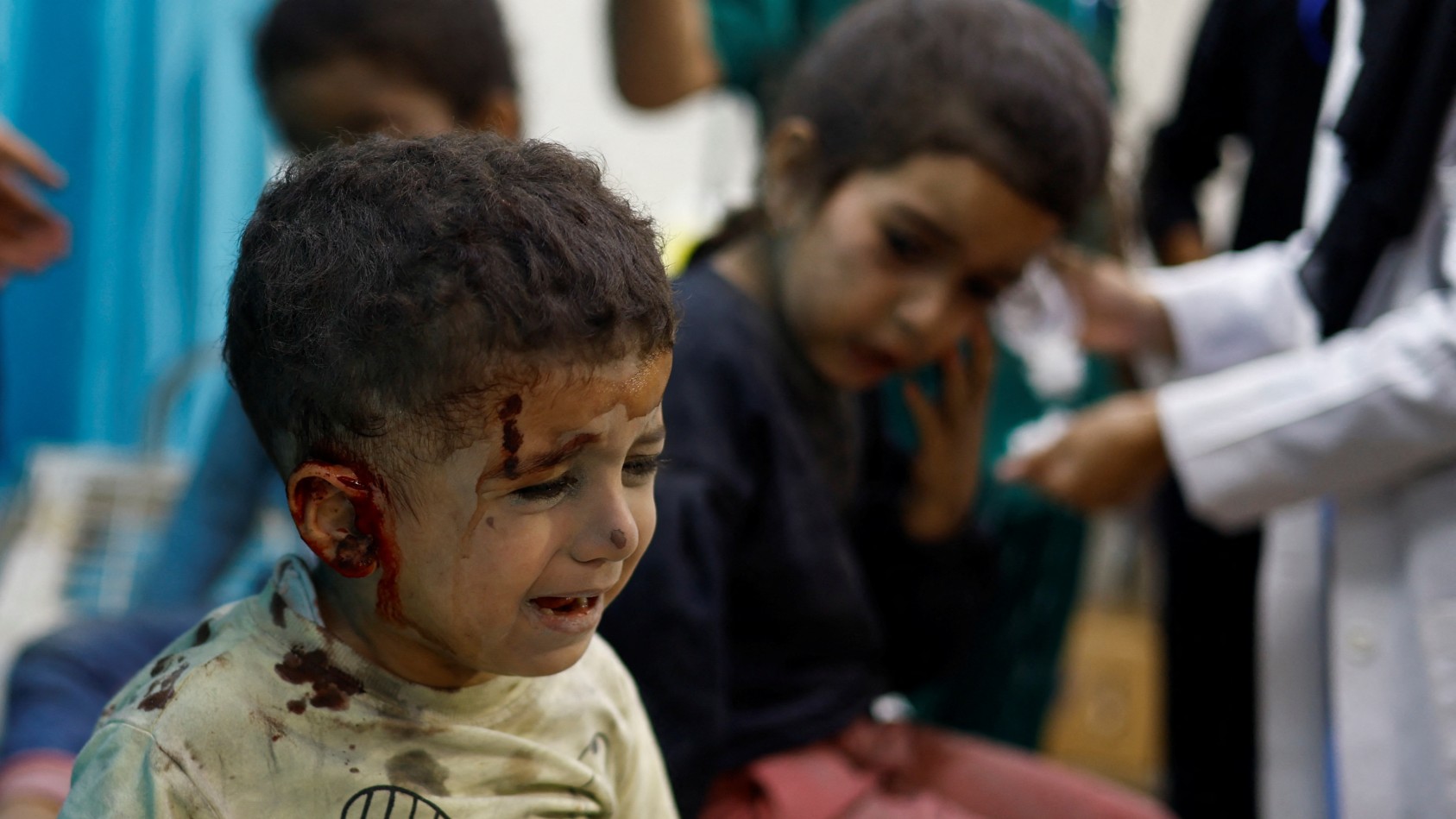
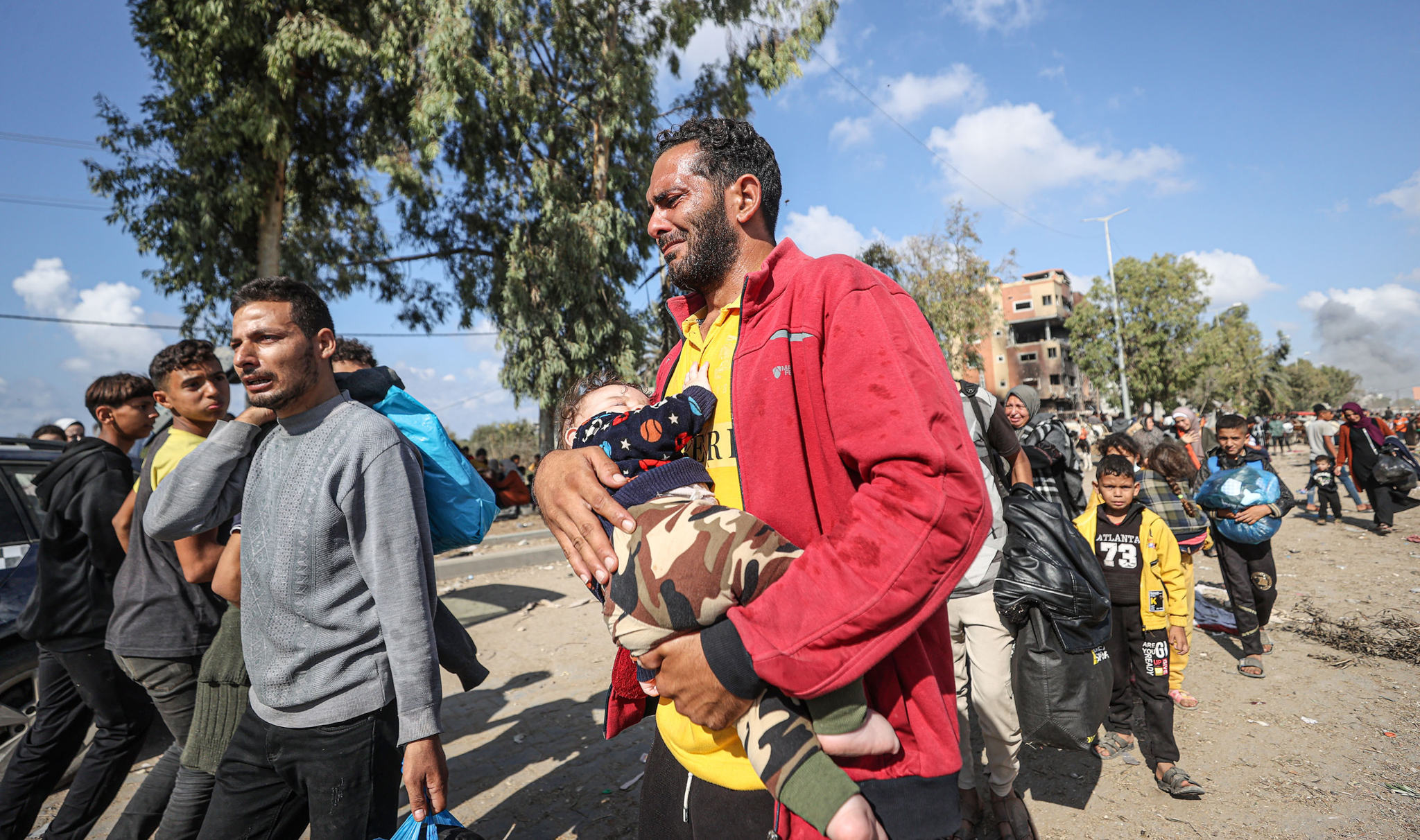
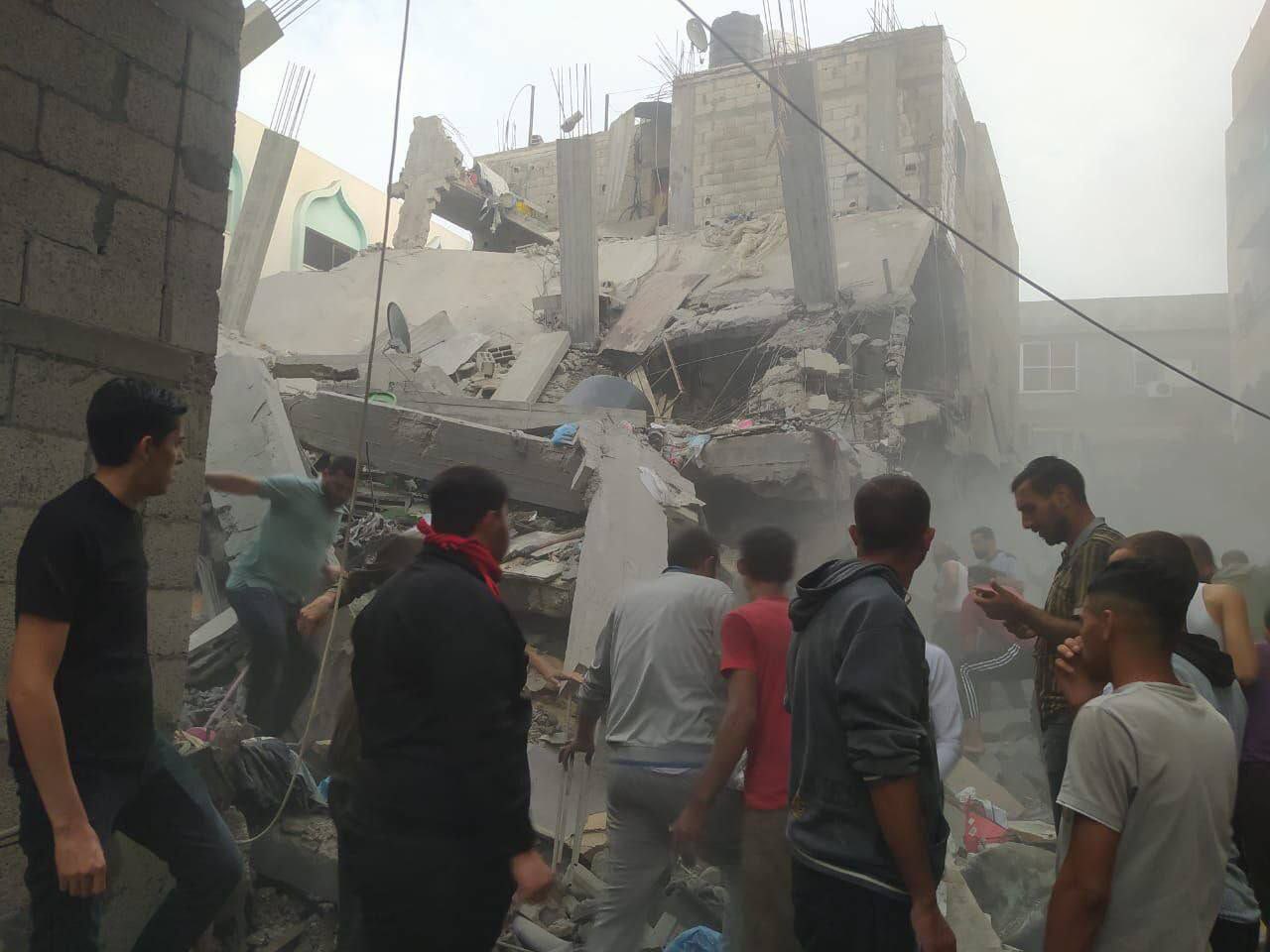
In the eight weeks since Israel began its latest bombardment of Gaza, it has massacred over 17,000 Palestinians in the besieged strip, with thousands of people still missing and trapped under the rubble. Over 1.8 million people, or almost 80% of Gaza’s population has been forcibly displaced and Israel has destroyed at least 60% of all housing units.
According to the Financial Times, the level of catastrophic damages wrecked upon northern Gaza has “approached that caused by the years-long carpet-bombing of German cities during the second world war.”
In October, Israeli politician Moshe Feiglin, the founder of the Zehut Party had called for the “complete” destruction of Gaza before it was invaded— “I mean destruction like what happened in Dresden and Hiroshima, without nuclear weapons.” It seems Feiglin’s call was answered by the IOF.
Israel has dropped bombs individually weighing up to 2,000 lbs on a population held captive in the world’s largest open-air prison, as Israel maintains an air, land, and sea blockade of Gaza. The destruction of Gaza’s critical civilian infrastructure including water and sanitation systems and medical facilities is so severe that the WHO has warned that “we will see more people dying from disease than from bombardment.”
A genocide, in Israel’s own words
Since the very beginning, these airstrikes have been accompanied by openly genocidal rhetoric, with Israeli lawmakers calling for a repeat of the Nakba (the genocidal expulsion of Palestinians that first accompanied the formation of the state of Israel in 1948), “erasing all of Gaza from the face of the earth”, to “flatten Gaza”, to “burn Gaza now”, to turn it into a “place where no human being can exist.”
“You must remember what Amalek has done to you,” Israeli Prime Minister Benjamin Netanyahu had declared on October 30, the biblical analogy condemned as an “explicit call to genocide.” There were also multiple claims, including by Israeli president Isaac Herzog, that there were simply no civilians in Gaza.
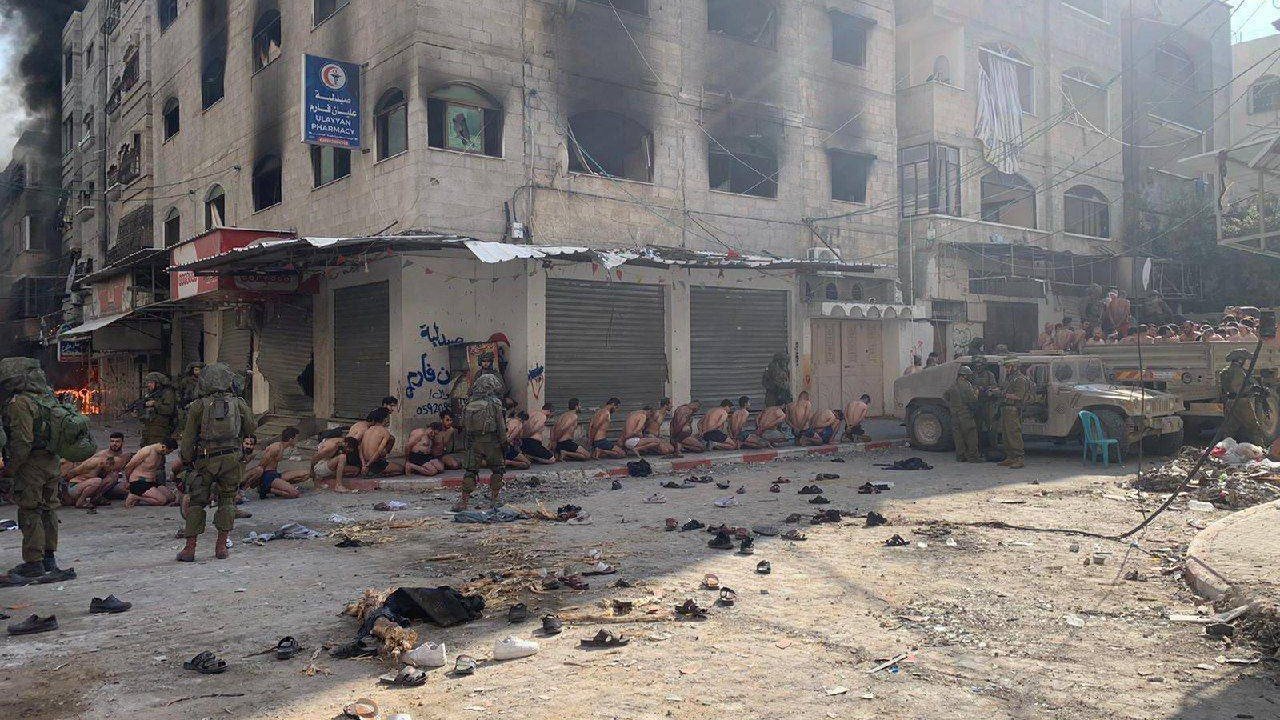
On December 7, amid horrific reports of Israeli forces stripping, blindfolding and detaining Palestinian men from UN-designated shelters in Gaza, Arieh King, the deputy mayor of the occupation government in Jerusalem, called for the “ants” to be buried in the dirt: “They are not human beings, and not animals, they are subhuman.”
Israel continues to illegitimately claim a “right to self-defense” – a right to which it is not entitled as a belligerent occupying power – to ceaselessly bomb Gaza. However, the colonial underpinnings of its actions were apparent even back in September, as Netanyahu stood before the UN General Assembly holding up a map which showed the Occupied West Bank, Gaza, and the occupied Syrian Golan Heights as part of Israel.
Israel is now circulating plans to carve out a “buffer zone” in Gaza, with Netanyahu instructing his top advisor to come up with a plan to “thin” Gaza’s population to a “minimum”, and one which “enables a mass escape [of Palestinians] to European and African countries.”
The Israeli Ministry of Intelligence had previously also recommended the “forcible and permanent transfer” of the 2.2 million Palestinians in Gaza to the Sinai Peninsula. Israel has reportedly also submitted a proposal to the US Congress making US aid to Arab countries conditional on whether or not they would be willing to accept expelled Palestinians.
While Washington has bent over backwards to justify Israel’s genocide in Gaza, speaking of an “intent to protect civilians,” the fact is that Israel has never tried to hide its objectives. The emphasis is on damage and not on accuracy, IOF spokesperson Daniel Hagari had said mere days into Israel’s operation in Gaza.
“Nothing happens by accident,” an Israeli intelligence source said in an investigation by +972 Magazine and Local Call. “When a 3-year-old girl is killed in a home in Gaza, it’s because someone in the army decided it wasn’t a big deal for her to be killed…Everything is intentional. We know exactly how much collateral damage there is in every home.”
Israel’s use of a largely artificial-intelligence based system called Habsora to “generate” targets has facilitated what a former intelligence officer called a “mass assassination factory.”
Warnings ignored
On October 9, the Occupation’s Defense Minister, Yoav Gallant had proclaimed that Israel was fighting “human animals”, as he announced a “complete siege” on Gaza: “no electricity, no food, no fuel, everything is closed.”
Palestinian organizations had warned the international community at the time that Israel was “taking steps” to act on its genocidal intentions: “deliberately inflicting on the Palestinian people conditions of life calculated to bring about its physical destruction in whole or in part” — recognized as genocide under both the Genocide Convention and the Rome Statute.
Former ICC chief prosecutor Luis Moreno Ocampo had similarly said that “Just the blockade of Gaza [which has been in place for over 16 years]— just that— could be genocide under Article 2(c) of the Genocide Convention.”
According to the latest food security assessment published by the World Food Program, 48% of households in northern Gaza and 38% in southern Gaza are suffering from “severe levels of hunger” with the figure reaching 46% among internally displaced people (IDPs). Nearly 90% of people in the northern governorates and 54% in the south are spending “at least one full day and night without eating.”
The prices of what little is available have skyrocketed, with wheat flour prices rising by 50% and fuel by 500%.
Following the bombing of the Al-Ahli hospital on October 17, a group of UN experts warned of crimes against humanity in Gaza, adding that “considering statements made by Israeli political leaders and their allies, accompanied by military action in Gaza and escalation of arrests and killing in the West Bank, there is also a risk of genocide against the Palestinian people”
There have been several such warnings since, of a “serious risk of genocide”, a “genocide in the making”, or a “textbook case of genocide” in Gaza. In November, South Africa was among countries who submitted a referral to the International Criminal Court (ICC) to investigate the commission of “war crimes, crimes against humanity, and genocide” by Israel.
Earlier that month, Palestinian human rights organizations had filed a lawsuit with the Court, calling its attention to ongoing Israeli crimes including airstrikes on civilian areas, the siege of Gaza and the denial of necessities such as food, fuel and water, forced displacement, and the use of toxic gas.
These submissions to the Court have been made in the midst of an ongoing investigation that was launched by the ICC in March 2021 regarding the “Situation in Palestine” covering crimes committed since June 13, 2014. This was following a preliminary examination under then chief prosecutor Fatou Bensouda concluded there was “a reasonable basis to believe that war crimes have been or are being committed in the West Bank, including East Jerusalem, and the Gaza Strip.”
Palestinian organizations have now called upon the ICC prosecutor Karim Khan to include crimes against humanity, notably apartheid, and the crime of genocide, in the Court’s ongoing investigation. They have also urged the court to issue arrest warrants for those suspected of these crimes within the Israeli political, military and administrative establishment, particularly Netanyahu, Herzog, and Gallant.
Though Israel is not a State Party to the Rome Statute which established the ICC, Palestine was accepted as a State Party in 2015. In February 2021, a pre-trial chamber of the ICC ruled that the Court’s territorial jurisdiction extended to “territories occupied by Israel since 1967, namely Gaza and the West Bank, including East Jerusalem.”
Israel had declared from the very beginning that it would not cooperate with the investigation. Despite this, ICC chief prosecutor Karim Khan’s visit to Israel last week was closely coordinated by the Occupation. Yet, repeated calls by Palestinian and other civil society and human rights organizations for Khan to intervene were left unheard.
Delays and double standards
“Since the start of the ICC’s preliminary examination on the Palestine situation, Al-Haq and partner organizations have submitted 8 major communications which provided solid evidence on crimes committed in the occupied Palestinian territory,” Tahseen Elayyan, a legal researcher at Al Haq, told Peoples Dispatch.
“We have also been calling on the current prosecutor to issue a preventive statement to deter the commission of further crimes in Palestine but unfortunately he has refused under the reasoning that this is prosecutorial policy.”
“The Prosecutor has not put in place any effective investigation, and allocated very minimal and largely insufficient funding to the investigation since it opened,” said Triestino Mariniello, a legal representative of Palestinian victims at the ICC.
Khan has still neither visited Gaza, nor sites in the West Bank since Israel’s ongoing attacks since October 7. Instead, he traveled only to Ramallah to meet with officials from the Palestine Authority government of President Mahmoud Abbas, who has been widely-opposed by Palestinians.
This is despite the fact that Israel has been conducting violent raids in the West Bank, killing at least 266 Palestinians since October 7 alone. During the same period, Israeli occupation forces and Israeli settlers have demolished over 70 houses leading to the forced displacement of 300 Palestinians, Elayyan said.
As of December 7, 3,670 people had been arrested in the occupied territory in the past eight weeks, according to the Commission of Detainees and Ex-Detainees Affairs.
Arrests have taken place on charges related to something as simple as a Facebook post, Elayyan said. While Israel continues its violent rampage in the West Bank, heavy restrictions have been placed on movement, making it difficult for field researchers to document these abuses, he added. The appropriation of land has also continued.
Meanwhile, glaring imbalances have been highlighted in the statement Khan issued at the end of his visit. He called for the immediate and unconditional release of all hostages taken by Hamas and other terror organizations — this classification in itself being a serious matter of concern, as Ahmed Abofoul, a lawyer and researcher at Al Haq has pointed out, when “the context is that of a struggle for self-determination against settler colonialism, occupation, and apartheid.”
Importantly, Khan raised no call for Israel to release the thousands of Palestinians that it continues to hold captive and subject to severe abuse in its prisons.
While the October 7 offensive by Palestinian resistance groups represented, for Khan, “some of the most serious international crimes…crimes which the ICC was established to address,” when referring to Israel’s actions, Khan simply mentioned “credible allegations of crimes” which “should be the subject of timely, independent examination and investigation.”
“In my meeting with the families of the victims of these attacks, my message was clear: we stand ready to work in partnership with them as part of our ongoing work to hold those responsible to account,” Khan said.
When it came to Palestinian survivors, all he said was “I was grateful to hear such personal accounts of their experiences in Gaza and the West Bank. We must never become numb to such suffering.”
“The language used by the Prosecutor made us even more convinced that political considerations are given more weight than justice and international law. When it comes to the events of 7 October he uses affirmative language such as “crimes have been committed” and “ crimes that shock the conscience of humanity.” But when he speaks about crimes that have been committed in Gaza he uses terms such as ‘alleged crimes,’” Elayyan said.
He added that various attempts by Palestinians to hold Israel accountable for its crimes through different accountability mechanisms had been unsuccessful, with this failure ascribed to “a lack of political will on the part of Third States and the politicization of justice… a policy of double standards has been the norm.”
While emphasizing that “civilians must have access to basic food, water…and medical supplies,” Khan made no mention of the brutal siege that Israel has imposed on Gaza, which makes this very humanitarian access effectively impossible. Instead, his statement added that aid must not be “diverted or misused by Hamas.”
While Khan made a reference to “incidents of attacks by Israeli settlers” in the West Bank, legal experts have warned against attempts to isolate settler attacks from Israel’s construction and expansion of settlements as a matter of state policy, foundational to its settler-colonial project.
“Israeli settlements, which imply the commission of war crimes and crimes against humanity, are built by official decisions, taken at the highest level, funded from the Israeli budget…Settlers’ violence is only one manifestation of this overall criminal enterprises,” said Palestinian ambassador Riyad Mansour in his address to the Assembly of State Parties of the ICC on December 6.
This is especially important as countries including Germany and the US are making a big show of sanctioning “violent Israeli settlers” —as if the expulsion of Palestinians and the colonization of their land to build settlements is not wholly violent in itself— while still continuing to arm Israel and refusing calls for a ceasefire.
Shockingly, the ICC’s official X account also posted a photo of Khan where he is standing both in and overlooking Occupied East Jerusalem with a caption that states he is visiting Israel.
Since Khan took office in June, 2021 serious concerns have been raised about his conduct, and his “unprecedented politicization” of the ICC. In his first briefing delivered to the UN Security Council, Khan stated repeatedly that he would “prioritize” cases referred to the Court by the UNSC. It bears repeating that the US is among countries that holds a veto in the UN body, a power it has consistently deployed to protect Israel.
By September, Khan announced his decision to “deprioritize” the investigation into war crimes committed by US forces in Afghanistan. The US had previously threatened to prosecute ICC officials over its investigation into the matter, and also imposed sanctions on senior officials including Bensouda. In fact, the US also has in place what is known as the “Hague Invasion Act”, authorizing the use of force to prevent any prosecution of the US’ armed forces or its allies.
Analysts have also contrasted Khan’s conduct regarding the genocide in Gaza with the swiftness with which he issued an arrest warrant for Russian president Vladimir Putin just days into the beginning of the war in Ukraine.
Much of this might seem unsurprising given reports of the US and Israel’s concerted efforts to make sure Khan was appointed prosecutor of the ICC, despite the fact that neither country is a party to the entity.
“We joined the ICC 9 years ago, at a time where crimes had been committed for decades. And the crimes continued being committed for 9 years. And not a single arrest warrant has been issued yet. This is a failure…to deliver justice to victims and…to deter the perpetrators,” Mansour had said.
“Gaza makes any further delay unacceptable, unjustifiable, unforgivable.”
https://peoplesdispatch.org/2023/12/08/ ... e-icc-act/
******
America’s War for the Greater Middle East (Continued)
Posted on December 10, 2023 by Conor Gallagher
Conor here: Bacevich framing it as an Israel-Hamas War obscures the fact it is an Israeli war of ethnic cleansing on Palestinians, and his plea that it should not become America’s war is too late – at least in the eyes of the world majority. He is also far too kind to Israel and the US in general, and his argument is essentially that another war in the Middle East is the wrong war at the wrong time for the US. I’m probably missing some other problems as well. Nonetheless, his larger point is that post-9/11 policies make it even more likely that Washington might start another war or be dragged into one and that alarm bells should be going off. Can’t argue with that.
By Andrew Bacevich, chairman and co-founder of the Quincy Institute for Responsible Statecraft and author of On Shedding an Obsolete Past: Bidding Farewell to the American Century. Originally published at TomDispatch.
One way of understanding the ongoing bloodbath pitting Israel against Hamas is to see it as just the latest chapter in an existential struggle dating back to the founding of the Jewish state in 1948. While the appalling scope, destructiveness, and duration of the fighting in Gaza may outstrip previous episodes, this latest go-around serves chiefly to reaffirm the remarkable intractability of the underlying Arab-Israeli conflict.
Although the shape of that war has changed over time, certain constants remain. Neither side, for instance, seems capable of achieving its ultimate political goals through violence. And each side adamantly refuses to concede to the core demands of its adversary. In truth, while the actual fighting may ebb and flow, pause and resume, the Holy Land has become the site of what is effectively permanent conflict.
For several decades, the United States sought to keep its distance from that war by casting itself in the role of regional arbiter. While providing Israel with arms and diplomatic cover, successive administrations have simultaneously sought to position the U.S. as an “honest broker,” committed to advancing the larger cause of Middle Eastern peace and stability. Of course, a generous dose of cynicism has always informed this “peace process.”
On that score, however, the present moment has let the cat fully out of the bag. The Biden administration responded to the gruesome terrorist attack on October 7th by unequivocally endorsing and underwriting Israeli efforts to annihilate Hamas, with Gazans thereby subjected to a World War II-style obliteration bombing campaign. Meanwhile, ignoring tepid Biden administration protests, Israeli settlers continue to expel Palestinians from parts of the West Bank where they have lived for generations. If Hamas’s October assault was a tragedy, proponents of a Greater Israel also saw it as a unique opportunity that they’ve seized with alacrity. As for the peace process, already on life support, it now seems altogether defunct. Prospects of reviving it anytime soon appear remote.
More or less offstage, the fighting is having this ancillary effect: as Israeli Defense Forces (IDF) employ U.S.-provided weapons and munitions to turn Gaza into rubble, the “rules-based international order” touted by the Biden administration as the latest organizing principle of American statecraft has forfeited whatever slight credibility it might have possessed. Russia’s assault on Ukraine appears almost measured and humane by comparison.
As if to emphasize Washington’s own limited fealty to that rules-based order, President Biden’s immediate response to the events of October 7th focused on unilateral military action, bolstering U.S. naval and air forces in the Middle East while shoveling even more weapons to Israel. Ostensibly tasked with checking any further spread of violence, American forces in the region have instead been steadily edging toward becoming full-fledged combatants.
In recent weeks, U.S. forces have sustained dozens of casualty-producing attacks, primarily from rockets and armed drones. Attributing those attacks to “Iran-affiliated groups,” the U.S. has responded with air strikes targeting warehouses, training facilities, and command posts in Syria and Iraq.
According to a Pentagon spokesman, the overall purpose of American military action in the region is “to message very strongly to Iran and their affiliated groups to stop.” Thus far, the impact of such messaging has been ambiguous at best. Certainly, U.S. retaliatory efforts haven’t dissuaded Iran from pursuing its proxy war against American military outposts in the region. On the other hand, the scale of those Iran-supported attacks remains modest. Notably, no U.S. troops have been killed — yet.
For the moment at least, that fact may well be the administration’s operative definition of success. As long as no flag-draped coffins show up at Dover Air Force Base in Delaware, Joe Biden may find it perfectly tolerable for the U.S.-Iran subset of the Israel-Hamas war to simmer indefinitely on the back burner.
This pattern of tit-for-tat violence has received, at best, sporadic public attention. Where (if anywhere) it will lead remains uncertain. Even so, the U.S. is at risk of effectively opening up a new front in what used to be called the Global War on Terror. That war is now nearly dormant, or at least hidden from public view. The very real possibility of either side misinterpreting or willfully ignoring the other’s “messaging” could reignite it, with an expanded war that directly pits the U.S. against Iran making the Israel-Gaza war look like a petty squabble.
Then there are the potential domestic implications. No doubt President Biden’s political advisers are alive to the possibility of a major war affecting the outcome of the 2024 elections (and not necessarily to the incumbent’s benefit either). One can easily imagine Donald Trump seizing on even a handful of U.S. military fatalities in Middle East skirmishing as definitive proof of presidential ineptitude, akin to the bungled withdrawal from Kabul, Afghanistan, during Biden’s first year in office.
Two Wars Converge
Understanding the larger implications of these developments requires putting them in a broader context. In Gaza in the last two months, two protracted meta-conflicts that had unfolded on parallel tracks for decades have finally converged. That is likely to have profound implications for basic U.S. national security policy, even if few in Washington appear aware of the potential implications.
On the one track, dating from 1948 (although its preliminaries occurred decades earlier) is the Arab-Israeli conflict. Enshrined among Israelis as the War for Independence, for Arabs the events of 1948 are seen as the Nakba, or “Catastrophe.” Subsequent eruptions of violence have ensued from time to time, as Arab nations vented their anger at the Jewish state and Israel pursued opportunities to create a strategically more coherent and more economically viable, not to mention biblically endorsed, “Greater Israel.”
Initially intent on steering clear of the Arab-Israeli conflict — occasionally even denouncing Israeli misbehavior — American officials allowed themselves over time to be incrementally drawn into becoming Israel’s closest ally. Yet under the terms of the relationship as it evolved, the Israeli leaders insisted on retaining a large measure of strategic autonomy. Over Washington’s vociferous objections, for example, it acquired a robust nuclear arsenal. To guarantee their security, Israelis placed paramount emphasis on their own military capabilities, not those of the United States.
Meanwhile, on the other track, dating from the promulgation of President Jimmy Carter’s Carter Doctrine in 1980, U.S. forces have had their hands full in the region. With Israel exacerbating or fending off threats to its own security, successive American administrations undertook a series of new military commitments, interventions, and occupations across the Greater Middle East that had little or nothing to do with protecting Israel.
In the Persian Gulf, the Levant, the Horn of Africa, the Balkans, and Central Asia, the Pentagon dealt with problems of its own as those regions became venues for hosting American forces engaged in operations intended to protect, punish, or even “liberate.” Such military exertions and the presence of U.S. forces became commonplace throughout the Middle East — except in Israel. In the wake of the 9/11 attacks, Washington’s military actions reached their apotheosis when President George W. Bush embarked on a global campaign with the aim of eliminating evil.
Meanwhile, the various engagements undertaken by Israeli forces from the 1950s into the present century achieved mixed results. On the one hand, the Jewish state persists and has even expanded — a minimalist definition of “success.” On the other hand, recent events affirm that threats to Israel’s existence also persist.
In comparison, the U.S.-led Global War on Terror proved an outright failure, even if strikingly few ordinary Americans (and even fewer members of the political establishment) appear willing to acknowledge that fact.
Once the U.S.-supported regime in Kabul collapsed in 2021, it appeared American military misadventures in the Greater Middle East might be petering out. The humiliating result of Operation Enduring Freedom in Afghanistan in the wake of the disappointing outcome of Operation Iraqi Freedom had seemingly exhausted Washington’s appetite for remaking the region. Besides, there was Russia to tend to — and China. Strategic priorities seemed to be shifting.
Alarm Bells, American-Style
Now, however, in the wake of the atrocities committed on October 7th and Washington’s tacit acquiescence in Israel’s maximalist war aims, the dubious notion that vital American interests are still at stake in the Greater Middle East has taken on new life. Dating from the 1980s, Washington had cycled through a variety of arguments for why that part of the world was worthy of spending American blood and treasure: the threat of Soviet aggression, U.S. reliance on foreign oil, radical Arab dictators, Islamic jihadism, weapons of mass destruction falling into hostile hands, potential ethnic cleansing and genocide. All of those were pressed into service at one time or another to justify continuing to treat the Middle East as a strategic U.S. priority.
In truth, though, none of them has stood the test of time. Each has proven to be fallacious. Indeed, efforts to cure the sources of dysfunction afflicting the region proved to be a fool’s errand that has cost the United States dearly in money and lives while yielding little of value.
For that reason, allowing Israel’s conflict with Hamas to draw the United States into a new Middle Eastern crusade would be the height of folly. In fact, however, with little public attention and even less congressional oversight, that is precisely what may be happening. The Global War on Terror seems on the verge of absorbing the Gaza War into its current configuration.
In recent years, a shift in Pentagon priorities to the Indo-Pacific and to a future face-off with China has left only about 2,500 U.S. troops in Iraq and 900 more in Syria. The nominal mission of such modestly sized garrisons is to carry on the fight against the remnants of ISIS.
White House officials have, however, never gone out of their way to explain what those troops are really doing there. In practice, they have effectively become inviting stationary targets. As a consequence and not for the first time, “protecting the troops” has emerged as a convenient pretext for mounting a broader punitive response.
With Congress accepting claims that the Authorization for Use of Military Force (AUMF) enacted in response to 9/11 suffices to cover whatever U.S. forces in the region may be up to 22 years later, the Biden administration functionally has a free hand to act as it wishes. The course it has chosen is to use Israel’s war in Gaza as a rationale for reversing course in the Middle East and once again making violence and threats of violence the basis of U.S. policy there. On that score, the fact that some American forces are now covertly operating in Israel itself should set off alarm bells.
The Gaza War will change Israel in ways that may be difficult to foresee. The failure of its vaunted military and intelligence establishments to anticipate and thwart the worst terrorist attack in that country’s history leaves Jewish Israelis with a sense of unprecedented vulnerability. It will hardly be surprising if they look to Washington for protection, in which case Israel’s survival could become an American responsibility.
The invitation is one that the United States would do well to refuse. Accepting it will confront Americans with challenges they are ill-equipped to meet and with obligations they can ill afford. Deepening the Pentagon’s involvement in the Greater Middle East will only compound the failures to which the Carter Doctrine has already subjected this nation, while scrambling U.S. strategic priorities in ways sure to prove counterproductive.
In 1796, George Washington warned his countrymen of the dangers of allowing a “passionate attachment” to another nation to affect policy. That warning remains relevant today. The Gaza War is not and should not become America’s war.
https://www.nakedcapitalism.com/2023/12 ... inued.html
******
Zionist Suppression in Congress
December 10, 2023
It isn’t enough for U.S. legislators that Palestinians are suffering genocidal violence, writes Corinna Barnard. Last week lawmakers went after the freedom to protest in support of Palestinians as well.

Stand With Israel event in Washington, D.C., on Oct. 11. (Utah Reps, Wikimedia Commons, PDM-owner)
By Corinna Barnard
Special to Consortium News
The U.S. is currently in the chokehold of a monstrous effort to fixate the nation on fears of an entirely hypothetical genocide when a real one is taking place.
Last week a House committee redolent of the McCarthyist days of the notorious House Un-American Activities Committee conducted an inquisition of three university presidents about their toleration of terms such as “intifada,” which The New York Times, in its coverage, described as “an Arabic word that means uprising and that many Jews hear as a call for violence against them.”
The key phrase in that sentence is “that many Jews hear,” a concession to the hearing being a confrontation over terminology and viewpoint. In this Zionist slapdown, legislators — with Rep. Elise Stefanik of New York displaying particular ferocity — made it clear which viewpoint could prevail, politically speaking, in their house.
While fending off calls to punish their students’ political outcry during the hearing, two university leaders backtracked afterwards under growing political pressure.
They caved to the distorted notion that the speech in question called for the “genocide of the Jews,” as The New York Times laid it out, in an article entirely devoid of any examples of blatantly genocidal language.
The meeting created a sinkhole for the principle of free speech, in which words used to express the cause of Palestinian resistance were twisted into an evil intention towards Jews, at the exact time when the Israel military is perpetrating genocide.
This was more than a side show about semantics. It was a lesson in who runs Congress and whose speech is free and whose isn’t.
By Saturday the Zionists had scored a victory with news that both the University of Pennsylvania’s President Elizabeth Magill and its board chairman, Scott L. Bok, were leaving those posts under what The New York Times called “intense pressure from donors, politicians and alumni.” Magill will remain at the university as a faculty member of the law school.
News of the victory left Stafanik hungry for more heads to roll. “One down. Two to go,” she wrote, insatiably, on Twitter/X.
Palestinians may be suffering ruthless violence, but for U.S. legislators that isn’t enough. They also have to als target the supporters of Palestine and try to extinguish their power to freely speak, shout and wave placards. It’s a suppression familiar to many who have worked in major U.S. news media.
Smearing Legitimate Criticism
Last week also found the U.S. Congress — at a time when legislators ought properly to have been considering action to stop Israel’s assault on Palestinians — instead passing a resolution conflating political opposition to Israel with anti-Semitism, the generalized antagonism towards Jewish people.
Given the atrocities being committed by Israel — and the justified anger that provokes — this congressional resolution boggles the mind.
First off, the political opposition currently raging against Israel is not focused on Judaism. The opposition is that of an occupied people against a brutal occupier.
For Palestinians, the religion of this present-day occupier can be no more pertinent than was the Christianity of U.S. President Andrew Jackson for the Indigenous people he forced onto The Trail of Tears in the 19th century. What matters is the actions of the occupier, not their religion.
Secondly, Judaism is an ancient religion while Zionism is a relatively recent political project with far-right Christian supporters that has proven itself to be genocidal. None of that has to do with Jews in general and it’s highly problematic to suggest it does.
[See: Chris Hedges: The Israel Lobby’s Useful Idiot]
Jewish historians and intellectuals — Norman Finkelstein’s name springs to mind along with that of the Israeli historian and author Ilan Pappé — have been long-standing and courageous champions of Palestinian rights. Jewish organizations such as Jewish Voices for Peace and If Not Now have been actively promoting a ceasefire since the Hamas attack on Israel on Oct. 7.
Dangerous Triumph
The extent to which media attention has minimized such individuals and groups and instead given U.S. Zionists the big platform to speak on behalf of Jews in general — at a time when thousands upon thousands of Palestinians are getting slaughtered — is a triumph of the Israel lobby’s influence and propaganda.
That achievement comes with the potentially dire consequence, however, of associating Jewish people and American citizens, generally, with the Israeli government’s genocidal violence. Numerous enemies can be created by such a devious process.
And as Cara MariAnna recently warned in her article “Israel Lobby’s Disastrous Domination,”
“U.S. security and standing in the world are suddenly more precarious than they have been the whole of its history. The U.S. is being damaged — is seriously damaging itself — by its continued unwavering support of a nation that is so clearly out of control and that has been recognized by many human rights organizations as an apartheid state. Supporting Israel is no longer in the best interest of the United States, if ever it was, and is becoming an increasing liability. “
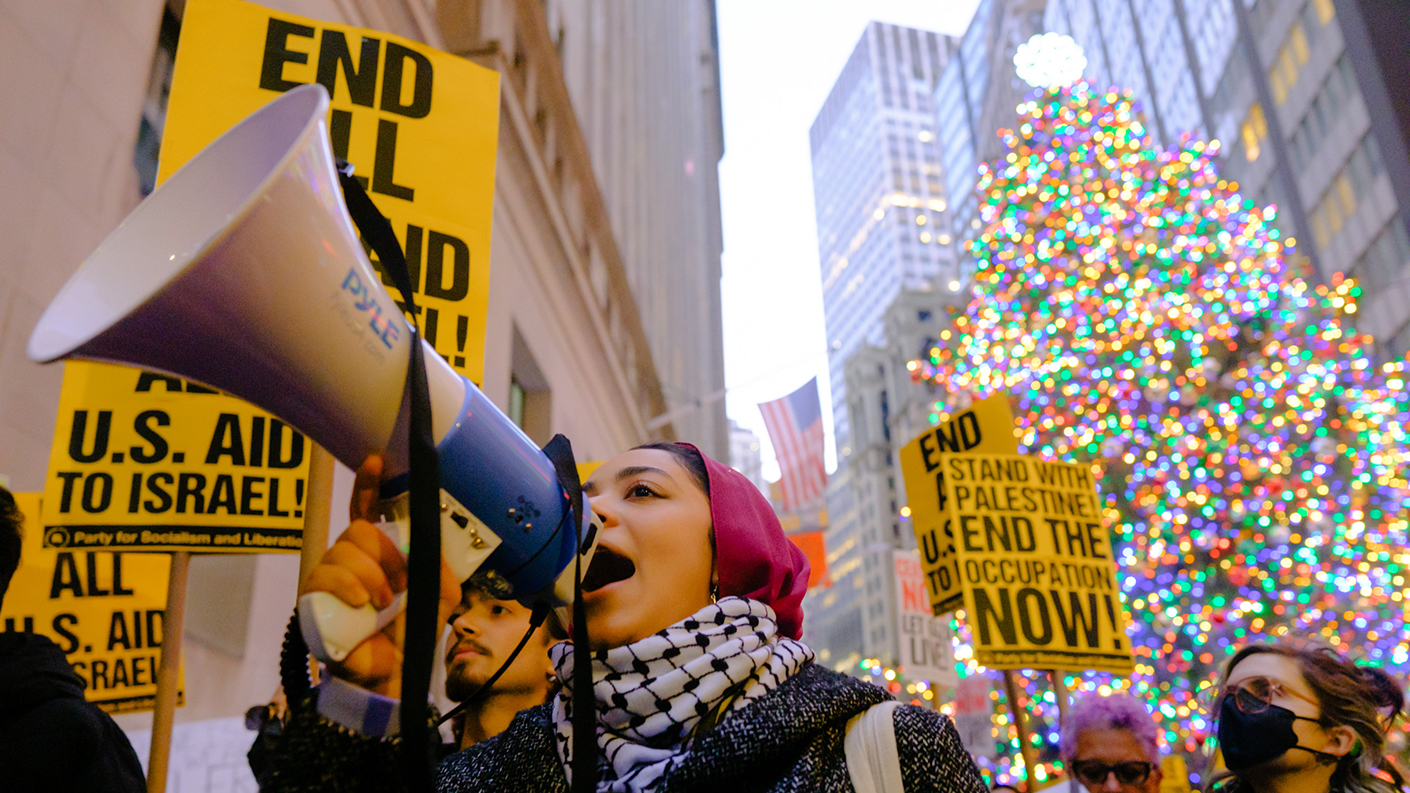
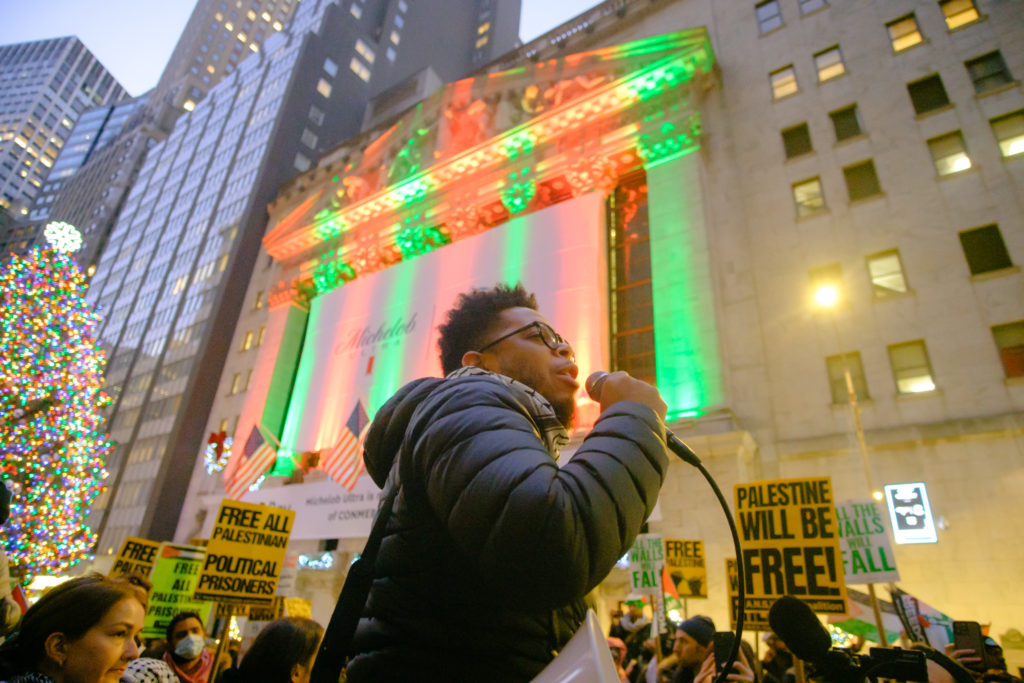
The hand of the Israel lobby can also be assumed to be at work in the crackdown on people of conscience, who are speaking up and doing what they can to alter the evil course of events. They are in the streets shouting about the liberation of Palestine “from the river to the sea;” they are throwing paint on the buildings of weapons makers, they are confronting politicians with their inaction while children are getting killed.
These are all our everyday heroes, displaying a dedication to justice and compassion. These are the citizens we should be proud to join and know. Instead they are getting vilified, arrested, intimidated and, inevitably now it seems, cast as anti-Semites.
Historical Void

Convoy of trucks and cars led by white U.N. jeeps travel through Gaza desert carrying Arab refugees from Gaza to Hebron, Transjordan, for repatriation. (UN Photo)
Americans are often encouraged to consider the situation in Israel too complicated to understand. It can be viewed as “that situation over there,” where they “just hate one another” to be dismissed with a fed-up gesture of the hand. Zionists rush in to fill this void with Hasbara versions — drawn from Israel’s “public diplomacy” or propaganda — of history.
Even though it doesn’t take a deep knowledge of the region to grasp the great wrong being done, a few bullet points might help create a general context:
–Israel was not created on a land without people for a people without a land. There was a thriving Palestinian society and Israel was established in 1948 by destroying hundreds of villages, killing thousands of Arabs, driving 750,000 Palestinians from their country and not allowing them to return as documented by Israel’s “new historians,” particularly by Pappé in his The Ethnic Cleansing of Palestine.
—Israel’s status among human rights groups today is that of an apartheid state since Palestinians occupied illegally on the West Bank and Gaza by Israel since 1967 (in violation of U.N. Security Council resolutions) have no rights;
–West Bank Israeli settlers attack Palestinians and drive them out of their homes and off their land in a slow continuation of the cleansing begun in 1947-8, now sped up in Gaza;
—Israel’s military justice system holds Palestinians in detention for years, without ever charging them with a crime; many of them children;
—Gaza is widely known as an open-air prison.
Against this basic backdrop comes the daily overload of atrocities in Gaza, which provide plenty of moral clarity, for any who are willing to follow them. Just some of the painful realities exposed daily now:
—Thousands of civilians, many of them women and children, are getting slaughtered by constant bombing.
—Israeli doctors providing written support for their military to bomb hospitals in Gaza. (Doctors gave the OK to bomb hospitals, it’s worth repeating since it’s so shocking.)
—Conditions so harsh that the rampant outbreak of disease could become an even bigger killer than all the bombing.
A video has recently surfaced showing about a hundred Palestinian men — the total number of civilians among them not yet known — stripped and kneeling in front of gun-wielding captors. An Al Jazeera reporter said the images of those Palestinian men, photographed kneeling and naked, “echo the history of the region, where stripped men are taken to unknown locations.”
Experts on the region could rattle off a much longer litany of Israeli crimes. But the point is that this list has gotten longer every day since Hamas’ attack on Israel on Oct. 7. Any American can take a position at this point, without holding an advanced degree in history.
Questions About Oct 7
There is the question of what Hamas did and didn’t do on Oct. 7, when its militants broke out of Gaza and went on the offensive. Some of the worst initial reports of atrocities against civilians have been debunked.
Other allegations are held at arms’ length until further verification is provided.
There is a live information war now over Oct 7 and it’s safe to assume that as journalists and investigators slowly settle at least some more facts, public attention will move on.
While the horrified reaction to the reports of Hamas’ Oct. 7 attacks on civilians is understandable, Israel’s military reaction to them is not justified. Nor is it acceptable to start and end the story on Oct. 7. Before that date and on almost every single day since, Israel has been committing collective punishment on Palestinians, which is a war crime. Amid all this, an occupied people’s right to resist must be kept in clear sight.
The extent to which Israeli crimes are being reported is shrinking as the death toll among journalists rises. More than 60 journalists and media workers in Gaza have been killed so far.
Over the Thanksgiving break three college students of Palestinian descent — two of them reportedly wearing the keffiyeh, the black-and-white scarf that can symbolize Palestinian solidarity — were shot while in the state of Vermont. Last week the last of them was released from hospital, paralyzed from the waist down, and heading to rehab.
“The shooting came as threats against Jewish, Muslim and Arab communities have increased across the U.S. in the weeks since the Israel-Hamas war erupted in early October,” local press reported.
Surely this increase in threats is a problem to solve — most effectively and obviously by working to stop Israel’s collective punishment of the Palestinian people, which arouses understandable passions along with plenty of misunderstandings.
No one in their right mind should feel safe while this atrocity is grinding on, day after day, without any end in sight. The unhinged, vengeful violence, based on openly genocidal intentions, should freeze all our blood. So should the behavior of U.S. lawmakers last week.
Sunday, Dec. 10, by macabre timing, is United Nations’ Human Rights Day. What better time to reflect on the extent to which the U.S. and Israel violate the enormous humanitarian effort made after World War II to steer the world away from the horrors of further war. In a recent ranking of nations’ compliance with the U.N. Charter, Israel and the U.S. come last.
[See: US & Israel Dead-Last in Following UN Charter]
For human rights to be restored in Palestine, the people of Israel and Palestine need to be given the chance to live in one civil society together, sustained by international law and some means of protection to rebuild. But before anything so ambitious and hopeful can be attempted, the urgency now is to stop the bloodshed, insist on a ceasefire and attend to the wounds and suffering.
American popular pressure is required to achieve an end to the killing and to overcome the mind games of war-crime apologists. Don’t be “Good Germans,” who are condemned by history for secretly disagreeing with the Nazis, but averting their gaze and doing nothing to stop their atrocities.
https://consortiumnews.com/2023/12/10/z ... -congress/











 (@Blackbird2093) December 1, 2023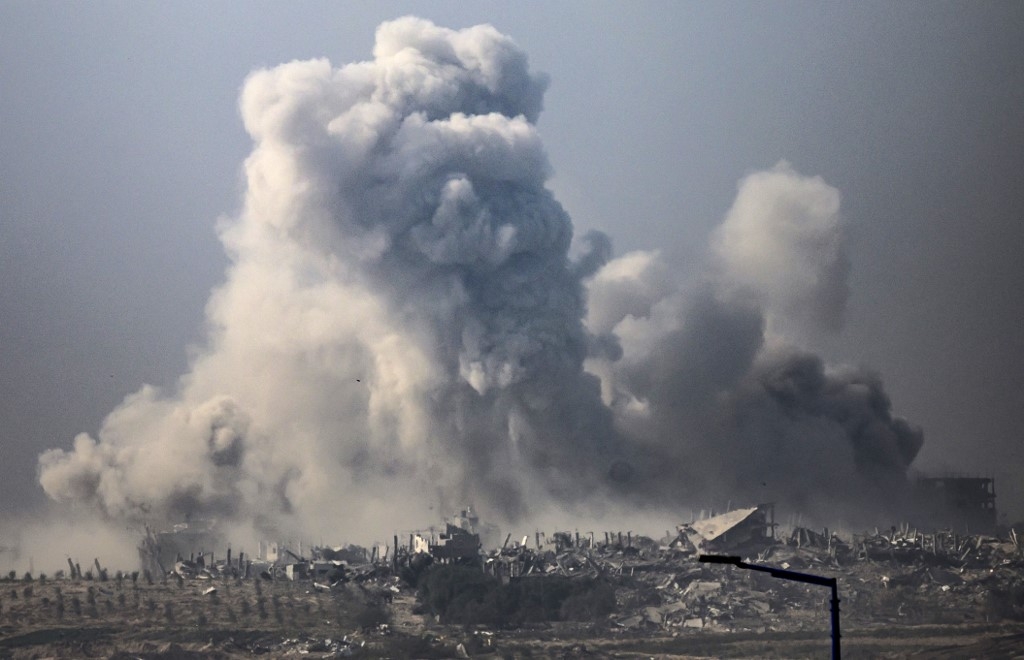













 @itranslate123 - 13:01 UTC · Nov 1, 2023







 According to @washingtonpost,