
January 30, 2024
There is enough in the document to declare the birth of a new Hamas movement, which breaks with its early founding years.
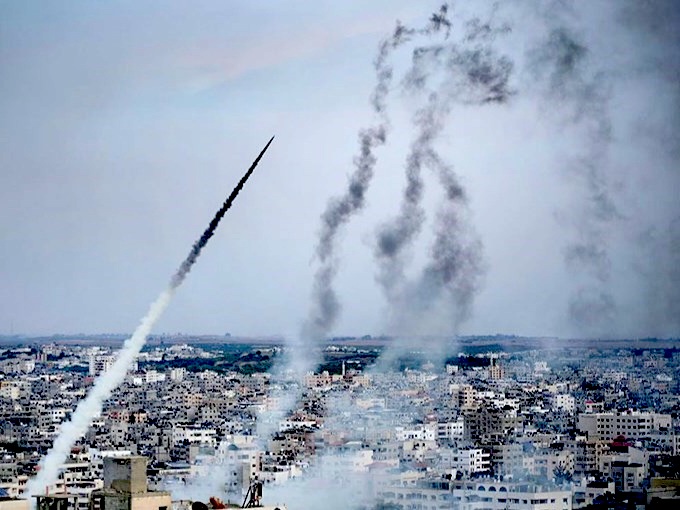
Hamas rocket attack from Gaza into Israel, Oct. 7, 2023. (Tasnim News Agency, Wikimedia Commons, CC BY 4.0)
By As`ad AbuKhalil
Special to Consortium News
Last week, the Information Office of Hamas issued a special document titled “This is our account: Why the Aqsa Deluge.” In it, the movement explains in detail its motives and goals for the operation.
The document is not likely to get Western media and government attention because Hamas’ narrative of the events of Oct. 7 clashes with the propaganda put out by Israel and spread by Western governments and media. Nevertheless, there is enough in the document to declare the birth of a new Hamas movement, which breaks with its early founding years.
In the history of Palestinian struggle, political organizations fade away while new ones always emerge to replace them. Leaders are discredited after major historical events, and new leaders emerge and capture the imagination of a new Palestinian generation.
Some political organizations (resistance groups) survive and stay, but undergo major political transformations. The Fatah movement was, in the 1960s and 1970s, the backbone of Palestinian military and political struggle.
While it did not achieve military success, and most of its operations against Israel failed, the Palestinian people rallied behind Fatah because Yasser Arafat was perceived to be the new (and later sole and undisputed) leader of the Palestinian revolution.

Feb. 19, 1988: Yasser Arafat, chairman of the Executive Committee of the Palestine Liberation Organization, addressing U.N. Commission on Human Rights in Geneva. (UN Photo)
Today, the Fatah movement is perceived, rightly, by most Palestinians as the surrogate army of the Israeli occupation and of the U.S. The Biden administration insists that Fatah (after some “revamping” and rebranding) will be the only acceptable party (acceptable to the U.S. and to some in Israel) to manage security and government in Gaza after the war.
The Palestinian people think otherwise and regard the army of the Palestinian Authority as the arm of repression on behalf of Israel and U.S. The notion that the U.S. and Israel can pick Palestinian leaders is as old as occupation and colonization.
Hamas has also changed over the years. When it was founded in 1987, it was a militant organization that focused heavily on religious rhetoric, and did not count on successful military operations as a source of legitimacy and credibility. It was associated closely with random bombings in the second intifada, when Arafat and the PLO were pushing a peaceful settlement with Israel.
But what accounts for change in the structure, role, and policies of a movement or resistance groups in the Arab East? In examining the changes in Hamas, it is instructive to look at the history of Hizbullah, the Shi’ite resistance group to Israel in Lebanon.
Change Factors

Sayed Abbas Al Mosawi, the co-founder and secretary general of Hezbollah. (Tasnim News Agency, Wikimedia Commons, CC BY 4.0)
Nasrallah also Lebanonized the party and married it to the Lebanese political scene where it had been somewhat alien before. He was behind abandoning the goal of an Islamic Republic in Lebanon, which had been Hizbullah’s centerpiece when the party was first established.
Nasrallah did not end the collective leadership which characterized Hizbullah since its founding, but his charisma propelled him into regional leadership, far beyond the narrow confines of Lebanese politics. Nasrallah consults with Iran and others within his party, but he is expected to make the party’s final strategic decisions, especially when it comes to Palestine and Lebanon.
Hizbullah was feared before Nasrallah, never loved or understood. In the Nasrallah era, the party became loved by some (most before the 2011 Syrian war), hated by others and misunderstood by many. (Of course, Saudi regime media specialize in distorting the meaning of Nasrallah’s words as part of its regional propaganda campaign to demonize enemies of Israel.)
The new leader of Hamas, Yahda Sinwar, is causing a drastic change in the role, practice, and effectiveness of Hamas. Just like Nasrallah, Sinwar began to leave his mark soon after assuming leadership in 2017.
Like Nasrallah (who served a security role with Hizbollah years before assuming the leadership), Sinwar had a security role with Hamas. He allegedly hunted down Israeli collaborators within Hamas and inside Gaza.
Israel’s failure to reach Hamas’ leadership and command structure has been because of the security regime installed in Gaza by Sinwar.
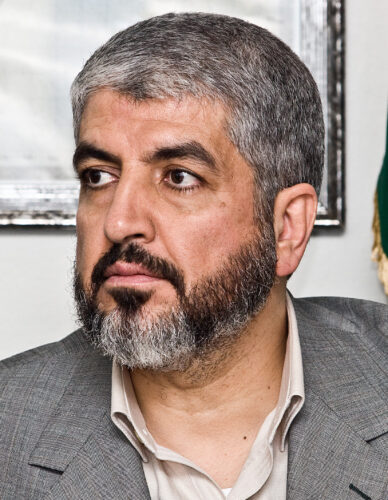
Khaled Meshaal in 2009. (Trango, Wikimedia Commons, CC BY 3.0)
He is not a wheeler-dealer like Khalid Mishal, the former Hamas leader, and avoids inter-Arab regime politics and conflicts. He also is a firm believer in the efficacy of the regional axis of resistance and puts that to great effect in how he husbands the movement’s military resources.
Hamas broke with its previous era when Mishal turned Hamas into an arm of Qatari foreign policy. Mishal was closer to Qatar and Turkey while Sinwar is closer to Iran, which supplies the movement with crucial military aid (Qatar supplies Hamas with financial aid, but reportedly in close coordination with Israel).
A party may change by learning from its past mistakes. When Hamas emerged, it had no qualms expressing anti-Jewish sentiments, even citing the notorious Protocols of the Elders of Zion. Hamas wasn’t even sensitive to Christian sensibilities at first. But that changed over time.
In this document (and in a political document of 2018) the movement made it clear that it harbors no ideology of hostility against Jews, qua Jews. This is a major shift, which was also articulated by Hizbullah in its political document of 2009.
To be sure, Israel and Western Zionists don’t want to concede that movements change. They want to pigeonhole all Palestinian and Arab resistance groups as Nazi-like, no matter what they do and say. To this day, Western media refers to the political rhetoric of Hamas from its first year and not from its more recent years.
They do the same with Hizbullah: Saudi regime media relish finding very old speeches of Nasrallah in which references to an Islamic state are made to alienate non-Shiite supporters in Lebanon and the Arab world.
Hamas also broke with its history of not trying to distinguish between Israeli military and civilian targets (despite its earliest statements that it does). It’s not easy for Arab resistance groups to make that distinction because: a) Israel and the Zionist movement since the 1930s never bothered to make distinctions between Arab civilians and combatants; b) because many Israelis (males and females) are armed and serve in the reserves.
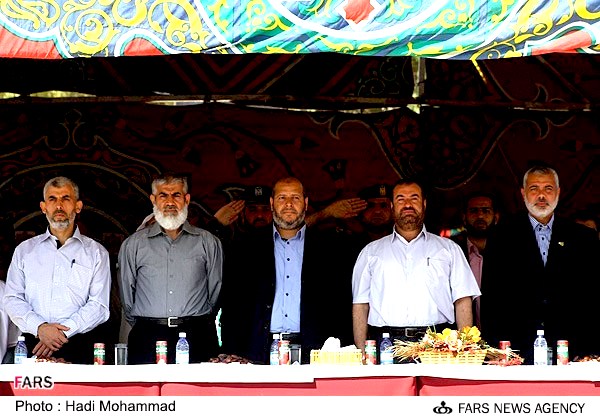
Hamas’ Yadar Sinwar , left, during police force exercise in Gaza in 2012. (Fars Media Corporation, Wikimedia Commons, CC BY 4.0)
The wave of suicide attacks by Hamas during the second intifada turned off Arab and non-Arab supporters of the Palestinians. In the new document Hamas enunciates a declared policy of avoiding targeting civilians as part of its religious and ethical doctrine. (I will delve deeper into this question in Part Two of this article.)
There was a similar path in Hizbullah’s history. Hizbullah is now very keen to avoid targeting civilians. Even in the recent months of war between Hizbullah and Israel, Hizbullah strictly targeted military sites in Israel when it would have been much easier to fire randomly.
In contrast, Israel in all its wars, manages to kill many (or mostly) civilians. In fact, Israel — in this recent war of genocide – does not deny that most of its victims in Gaza have been civilians but maintains many of those slaughtered were Hamas combatants.
(U.S. intelligence estimates that Israel has exaggerated the percentage of combatants killed). In the July war of 2006, the overwhelming majority of those killed by Hizbullah were soldiers and officers, while most of those who were killed on the Lebanese side were civilians.
https://consortiumnews.com/2024/01/30/a ... l-account/
*******
Israel Plans to Attack Lebanon Because Israel Is Not Winning Against Hamas
Posted on January 30, 2024 by Yves Smith
Once in a great while, things so speak for themselves that there is not much point in going on overmuch. Israel is not winning against Hamas. So it plans to take on a much tougher opponent, Hezbollah, which will be the result of executing on its plan to enter and occupy Lebanon up to the Litani River. This is not the way clear-thinking people operate.
But as Alastair Crooke explains (more on this soon), the Israelis recognize that they are no longer feared militarily in their ‘hood. Maintaining that fear is fundamental to Israeli citizen’s sense of security. Proof comes via Israel having had to pull its citizens out of the border to Gaza and Lebanon and not having been able to turn things around so they can return. Although I cannot prove a negative, Crooke and some Twitterati maintain that this effective loss of territory very much puts Israel on the back foot, since Israel historically has used buffer zones as an interim step in increasing the area under its control, and understands the risks when that process goes the other way.
Despite the assumption by many military experts at the start of the Israel campaign in Gaza, that the IDF would prevail given its much greater resources and ease of resupply, here we are, over 100 days in, and Israel is not all that much closer to victory, save in exterminating the Palestinian population in Gaza, as opposed to eliminating or at least crippling Hamas. Israel has not killed any of the leadership of Hamas’ military wing. Israel has not rescued any hostages. It is not clear how many Hamas fighters Israel has killed, but its claim of 10,000 versus the 27,000 dead reported in Gaza seems unreasonably high, particularly given admissions that schemes like flooding the tunnel system have not worked very well.
Hamas has been retaking Northern Gaza after Israel claimed to have secured it. And on top of that, as an article in today’s Links pointed out, Israel is having to husband its artillery use in Gaza in light of global shortages. So they plan to take on Hezbollah with less than a full magazine?
There are signs of dissent within Israel over where to go in the war. More and more family members of hostages have been getting sympathetic coverage in the press and support from some officials for their demand that Israel negotiate with Hamas now to get the hostages back. A new story in Christian Science Monitor recounts a key rupture:
The cracks in what had been near universal public unity supporting Israel’s war aims in the conflict’s first few months have even reached the five-person wartime Cabinet tasked with prosecuting the campaign against Hamas.
In a bombshell television interview on Israel’s Channel 12 this month, Gadi Eisenkot, a centrist politician and former military chief who joined Mr. Netanyahu’s wartime coalition in October, said the welfare of the hostages had to take precedence.
The government, he added, needed to stop “selling fantasies” to the public that their release would be achieved through force alone.
And the dissent continues:
But at this point, with Hamas doing not badly given the givens, it has escalated its demands. Israel meeting its demands for their return would be seen by its citizens as a capitulation:
Netanyahu, who also has his own survival to consider, is fiercely maintaining that defeating Hamas remains the priority, and the release of the hostages will follow from that.
Mind you, there are recent reports of negotiations between Israel and Hamas over the release of the hostages. With Tony Blinken involved, I didn’t see much reason to be optimistic (how many deals has Blinken said were imminent, like Egypt accepting Palestinian refugees in bulk, that came to naught?). Alastair Crooke, who has long-standing, high-level contacts all over the Muslim world, didn’t see fit to dignify them in his recent presentations. A new report in the Times of Israel suggests they are not going anywhere. The subhead:
Terror group appears to pour cold water on mediators’ latest offer after Qatari PM says ‘good progress’ made; Israel said open to lengthy truce but refuses to end war
On top of that, Israel is telegraphing its intent to go into Lebanon, despite the Anglopshere media not taking much notice. Israel first engaged in the lame pretext of “negotiating” with Lebanon to pull back to the Litani, as in cede a habited area to Lebanon for the benefit of Israeli settlers near the border. Israel is housing these families at what is reported to be non-sustainable cost. The border residents have said they won’t return until they can’t see Lebanese from their homes. Quite the ask, and Israel has said it will deliver. It has promised these border denizens they will return. The initial promise was by the end of January, which is clearly na ga happen. But Israel is signaling it plans to move soon. From the Times of Israel over the weekend:
The IDF said Saturday it was further increasing its preparedness on the northern border, publishing footage from recent “intensive” training exercises carried out by the 226th Reserve Paratroopers Brigade, as Hezbollah-led forces in Lebanon continue to launch attacks on Israeli communities and military posts along the border…
The drill by the health system this week dealt with a variety of potential scenarios involving the operation of hospitals, health maintenance organizations’ community clinics, medical evacuations, and the provision of support to chronically ill people in need of immediate assistance.
From the Reuters today:
Israeli troops will “very soon go into action” near the country’s northern border with Lebanon, Defense Minister Yoav Gallant said tonight, as tensions surge amid the Israel-Hamas war in Gaza.
Gallant told troops near the border with the Gaza Strip that others were being deployed to Israel’s north.
“They will very soon go into action… so the forces in the north are reinforced,” Gallant said.
“The forces close to you… are leaving the field and moving towards the north, and preparing for what comes next,” he said.
Yes, Hezbollah has been shelling the border area, but in tit for tat attacks. Crooke contends that both sides so far have been somewhat careful, hoping to goad the other side into a disproportionate reaction they can use to justify a larger attack.
But reminiscent of the Great Ukraine Counteroffensive, Israel is committed to Doing Something, and is making that awfully clear in advance too.
Without belaboring the issue, there is no reason to think Israel will win against Hezbollah. It was eventually beaten in 2006. Hezbollah is a much better fighting force than then while Israel is no better and perhaps worse. Among other things, Israel is betting on the US entering the conflict and saving its bacon, when Scott Ritter has warned that recent war game have shown Israel to lose against Hezbollah even when the US saddles up. And those didn’t factor in the Houthis interfering with ship getting to Israel’s ports. On top of that, the US has brought aerial refueling planes after the supposed drone attack on an outpost in Jordan that killed three service members. Many observers claim that means the US feels it needs to keep its jets in the air so as not to have them destroyed on the ground. That would have to complicate air support for Israel in Lebanon.
In other words, this plan seems, to be polite, a reckless gamble. Yet the Israelis seem fanatically committed to moving ahead with it. Crooke tries to explain what looks like determination to self-destruct:
Israel is boxed-in, as is becoming very evident to many Israelis. One Israeli correspondent (formerly a Cabinet Secretary) illustrates its nature:
The meaning of the 7th October default is not only the loss of lives … but mainly the potential transformation of how Israel is perceived … as no longer to be feared by Middle Eastern actors.
The Israeli leadership must internalize that we can no longer be content with a ‘sense of victory’ among the Israeli public … It is doubtful whether victory in Gaza is enough to restore the fear of Israel to the levels we had vis-a-vis our enemies. A victory that boils down to just the release of the captives and confidence-building measures to establish a Palestinian state would not be enough in shoring up Israel’s image in that regard.
If the quagmire of Gaza … brings the [Israeli] leadership to the realization that there is no ability to present a clear victory on this front, one that will lead to a strategic change in the region, they must consider switching fronts and reasserting Israeli deterrence through the removal of the strategic threat in Lebanon … victory against one of the richest and most powerful terrorist organizations in the world – Hezbollah – can restore deterrence in the region in general … Israel must remove the threat from the north and dismantle the power structure Hezbollah has built in Lebanon, regardless of the situation in the south.
But without victory in the south, a significant achievement in the north becomes that much more important.
The above quotation goes directly to the heart of the issue. That is: ‘How can Zionism be saved?’. All the rest of the ‘blah-blah’ coming from world leaders is largely bluff. Not only is Gaza NOT giving Israelis a sense of victory; on the contrary, it is widely proliferating a violent anger at a surprise, ‘shameful’ defeat…
The latest Peace Index survey reflects the pervasive gloom: 94% percent of Jews think Israel has used the right amount of firepower in Gaza (or “not enough” (43%)). Three-quarters of all Israelis think the number of Palestinians harmed since October is justified to achieve its aims; a full two-thirds of Jewish respondents say numbers of casualties are definitely justified (only 21% say “somewhat” justified).
Crooke explains that Zionism promised Jew security within Israel, and that promise has been turned on its head. Not only are Jews in Israel now insecure, but blowback from the Gaza campaign is also threatening the diaspora. Biden is merely pursuing containment posturing; the two state solution is a non-starter and as we described earlier, the normalization scheme with Saudi Arabia is an empty exercise in optics.
He argues in his latest article that Israel feeling it has its back pushed against the wall has unleashed deeper impulses in the form of hewing to cultural archetypes. His article goes through some analogies. I think Crooke is on the right track but has not quite nailed this analytically. But explaining what looks like a mass psychosis is not easy.
Crooke has another go at trying to explain Israel’s overwrought state in his current Judge Napolitano talk, where he describes the conflict as an Armageddon-like struggle which is partly fueled by the way the Islamic world has been in decline for the last 1000 years, with the meddling of Europeans in the last 500 years a major contributor. And the Israel side even more so is seeing it in Biblical and eschatological terms. Hence the emotionality and lack of sound calculations.
Crooke has warned (as have a few others) that Israel is putting its survival as a state at risk if it launches a full scale attack against Lebanon. But even that possibility seems to be no deterrent.
https://www.nakedcapitalism.com/2024/01 ... hamas.html
******
‘Diamond in the sky': Hezbollah flashes new missile at Israel
Hezbollah's launch of the Iranian-made Almas missile — reverse-engineered from the Israeli ATGM, Spike — is a major military development in the northern battlefield, and a dismaying surprise for Tel Aviv.
The Cradle's Military Correspondent
JAN 30, 2024

Photo Credit: The Cradle
On 25 January, the Lebanese resistance movement Hezbollah orchestrated a bold strike against Israel's strategic Jal al-Alam site, using what appeared to be a new missile system that immediately captured the attention of war observers.
As seen in a video released by Hezbollah's media division, the Iranian-made Almas missile appeared to ascend before homing in on its target with extraordinary clarity - thanks to a camera affixed to the projectile itself — prompting widespread buzz about this "special weapon," its features, and capabilities.
‘Plunging fire’
The Almas is an anti-armor missile equipped with a distinctive "top attack" feature. Unlike traditional systems such as the American TOW, Russian Concourse, or Russian Kornet, which follow a straight trajectory toward the target, this weapon takes an “indirect” path. Operating on an arc trajectory, the missile ascends to a specific altitude before descending toward its target from above.
Why the top-down approach? Armored vehicles, including tanks, prioritize varying thicknesses of armor on different sides to balance weight and maintain mobility. Typically, armor is thickest on the front, less on the sides, and even less on the back or roof.
For instance, a tank's front armor might be three to four times thicker than its side armor. Consequently, a projectile needs a smaller, more targeted explosive charge to penetrate the tank, specifically from above or the front.
The concept of top-down missiles is not novel, and recent conflicts have seen a surge in their use. In the Second Nagorno-Karabakh war between Azerbaijan and Armenia, Israeli Spike anti-tank missiles wreaked havoc on Armenian vehicles, complemented by Turkish Bayraktar drones dropping projectiles from above. Both weapons rarely failed to break the armor of Soviet-era Armenian tanks, (mostly T-72E and B tanks).

Hezbollah's Almas Missile
Drones and anti-tank dynamics
The battlefield in Ukraine, it should be said, has been a wider and more geographically and temporally extended arena for experimenting with multiple different types of these munitions.
As air defenses heightened on both sides, larger armed drones like the Bayraktar and its Russian counterpart, the Orion, were sidelined in favor of smaller quadcopters. These nimble drones either drop munitions from the air or act as suicide missions, targeting tanks at their weakest points—namely, the roof, sides, or rear.
Notable anti-armor weapons, such as the US-made Javelin or the British NLAW, initially shifted the balance but later succumbed to conventional two-dimensional anti-armor weapons like the Kornet-inspired Stugna.
Several countries boast portable weapons with top-attack capabilities, including China's Red Arrow and Japan's Type 1 LMAT. Notably, Israel possesses a range of such weapons, with the Spike system leading the pack in various sizes and ranges.
The differentiating factor lies in the Spike's ability to not only employ the "fire-and-forget" (F&F) feature, where the missile autonomously directs itself based on the target image, but also in its semi-automatic guidance across the line of sight. This distinctive feature also surfaced in a recent rocket utilized by the Lebanese resistance in two strikes, leaving analysts speculating on the identity of this advanced weapon.
Iranian engineering excellence
In recent years, Hezbollah’s ally Iran has achieved remarkable advancements across various military technology domains, showcasing prowess in cruise missiles, drones, and air defense systems. A notable addition to this arsenal boasting a top attack feature is the Almas (Diamond) missile, described as a clone of the Spike-MR.
Initially unveiled in a 2020 video, the Diamond made its debut on the global stage with the armed Ababil-3 surveillance and reconnaissance drone, gaining attention at military exhibitions. What distinguishes this weapon is its readiness for export, as evident from appearances not only in Iranian military showcases but also at arms exhibitions abroad.
The screen of the Almas’ scoring device matches the screen that appeared in the one launched by Hezbollah, and the blurred image of the device in the second video of the Naqoura strike matches the shape of the weapon itself, which is mounted on a three-legged base.
A similar Iranian anti-tank guided missile, the Sadid-365, which differs from the Almas in various aspects, surfaced in a test video last year. The Naqoura site's second video revealed a significant change in the rocket's post-launch behavior, transitioning from a fully-driven system to a lock frame, a departure from the Sadid’s method of scoring.
This locking mechanism appeared to memorize the target's image, adjusting its course based on the target's shape rather than a singular point and direction, as observed in the case of the Almas.
Despite the rocket's upward trajectory in the first video, the missile's sensor remained fixated on the target. This seemingly complex operation is facilitated by top-down missiles employing a biaxial seeker or "gimbal," akin to the gyroscope principle used in stabilizing cameras for movement. This feature allows the missile's researcher to maintain focus on the target while the rocket ascends, directing the hull towards the target when reaching a certain altitude.
Shaking up the northern front
There are three main tactical implications for Hezbollah using this new weapon on the battlefield against the Israeli occupation forces:
First, is to target the enemy's vulnerabilities: The Almas’ ability to hit Israeli tanks and vehicles from above exploits the weakest angle of their armor. Cages installed on Israeli tanks may offer little defense against such munitions, designed primarily for smaller threats like quadcopter-dropped munitions.
Second, is to defeat Israel's costly Trophy systems: The Israeli defense system, "Trophy" or "Windbreaker," proves ineffective against projectiles coming from above.
Third, is complicating Israel's target searches: Launching the rocket from behind natural barriers, without direct line-of-sight, makes it nigh impossible for enemy forces to locate the shooters or their launch areas. This goes beyond the Israeli struggle with direct missiles like the Kornet; the Almas creates new angles and possibilities that evade traditional search calculations, rendering the old shooting-and-hiding tactics unnecessary.
The ramifications of Hezbollah's Almas missile disclosure are not just limited to the weapon's battlefield implications. This tactical “reveal” also places Israel's military top brass on notice about the potential pitfalls of an expanded conflict with Lebanon.
The cost of conflict for Tel Aviv could significantly increase if the resistance adopts this method to strike the enemy's military vehicles and gatherings. The weapon's unique features, including its wired guidance through fiber optic wire, make traditional countermeasures like jamming ineffective.
While the Almas’ existence does not single-handedly alter the strategic outlook of the battles on Israel's northern front, it complements second-generation anti-armor weapons like the Konkurs. Each weapon on the battlefield plays a specific role, and their integration with shooters and strategic planners is crucial in imposing Hezbollah's will on the occupation entity.
https://thecradle.co/articles/diamond-i ... -at-israel
******
Egypt Rejects Israeli Control of the Philadelphi Corridor
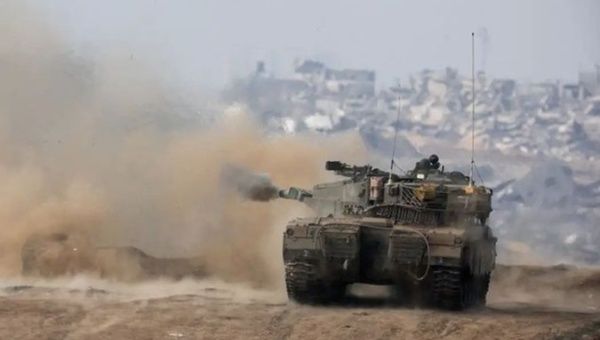
A tank of the Israeli occupation forces. | Photo: X/ @KnowTheWorld23
Published 31 January 2024
Israel's retaking control of this zone would violate the 1979 peace treaty, said the chairman of Egypt's State Information Service.
On Tuesday, an Egyptian high-ranking official said that any Israeli attempt to control the Philadelphi Corridor along the border between Egypt and the Gaza Strip is "unacceptable."
"No new arrangements have been discussed with Israel regarding the Philadelphi Corridor on the border, and any Israeli unilateral moves in this regard are unacceptable," the unnamed Egyptian official was quoted as saying by Egypt's Al-Qahera News TV.
The remarks came a week after Diaa Rashwan, the chairman of Egypt's State Information Service, warned that Israel's retaking control of the Philadelphi Corridor would violate its 1979 peace treaty with Egypt.
Also known as "The Philadelphi Route," this corridor is a 100-meter wide, 14-km-long buffer zone along the Egypt-Gaza border.
Israeli Prime Minister Benjamin Netanyahu recently expressed his desire to retake control of the corridor to ensure future demilitarization of Gaza and prevent the alleged smuggling of weapons into Gaza through border tunnels. Rashwan also denied last week the Israeli claims about the weapon smuggling from Egypt to Gaza.
The Rafah border crossing between Egypt and Gaza has been a major lifeline to provide humanitarian aid to the Palestinians in the war-ravaged enclave, which has witnessed relentless Israeli bombings and a massive military offensive since last year.
Since October 7, 2023, Israeli occupation forces have killed 26,751 Palestinians and injured 65,636 people. The death toll figures could be higher due to the undetermined number of Palestinians trapped under the rubble of buildings and homes.
https://www.telesurenglish.net/news/Egy ... -0003.html
******
China Urges Effective Implementation of ICJ Ruling
JANUARY 30, 2024

Wang Wenbin, spokesperson for China's Ministry of Foreign Affairs. Photo: VCG/File photo.
On Monday, China urged the effective application of the provisional measures issued by the International Court of Justice (ICJ) regarding the genocide perpetrated by the Israeli entity against defenseless Palestinian civilians. The ICJ ruling requires the Israeli colony to take immediate measures to halt its genocidal actions.
The spokesperson for the Chinese Foreign Ministry, Wang Wenbin, said that the ruling, ratified almost unanimously by the ICJ judges, responds to the widespread concern of the international community to protect civilians, de-escalate the threat of an expanding war, and ease the humanitarian crisis.
China condemns attacks on Palestinian civilians
China’s position on the Palestinian issue is consistent and clear, Wang said: the country condemns all acts against the civilian population and opposes measures that violate international law.
The definitive answer to the Palestinian question lies in compliance with the two-state solution, said Wang, which could bring a comprehensive, fair, and lasting solution to the problem.
Attacks continue
Despite the ruling of the international court, indiscriminate attacks, bombing, and killings of civilian populations by Israeli occupation forces continue.
A report issued on Sunday indicated that at least 26,422 Palestinians have been killed and 65,087 injured since last October as a result of the constant attacks and bombings perpetrated by the Israeli occupation entity in the Gaza Strip and other parts of the occupied Palestinian territories. Most of the casualties are children and women.
https://orinocotribune.com/china-urges- ... cj-ruling/
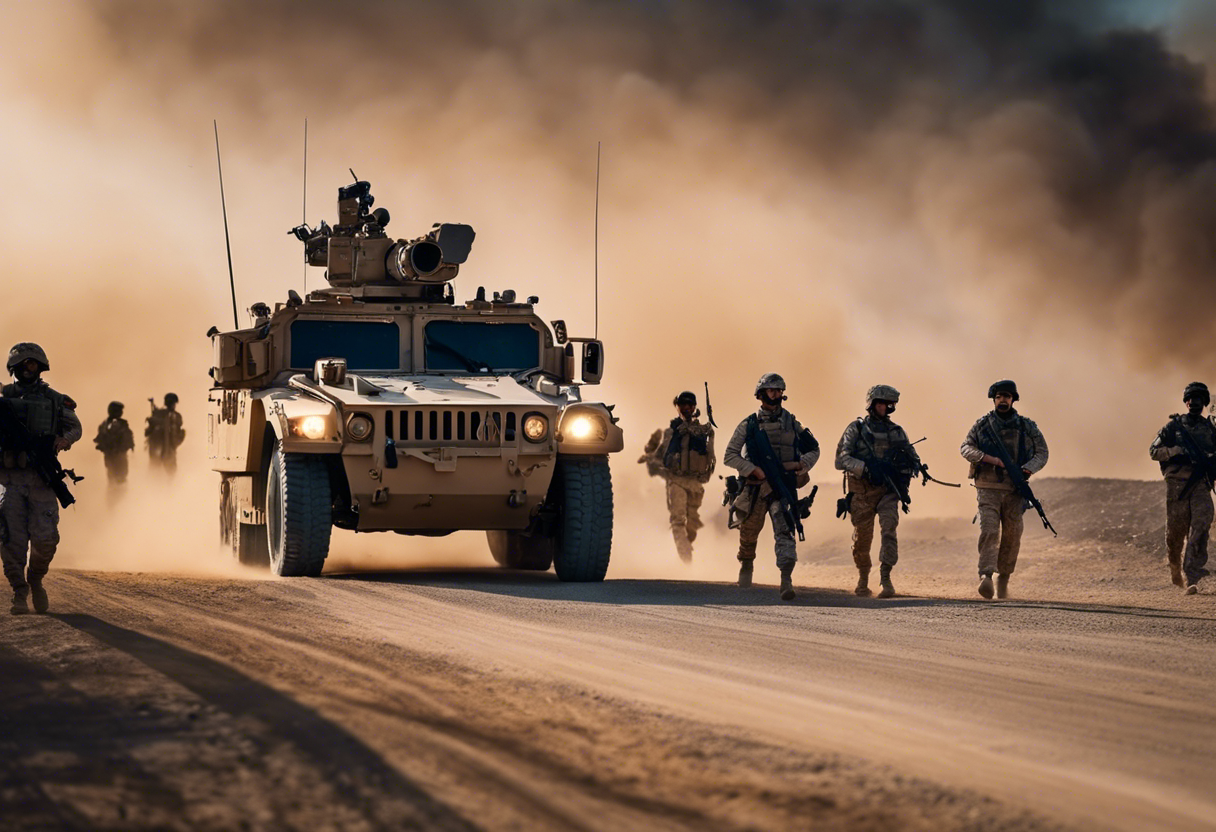










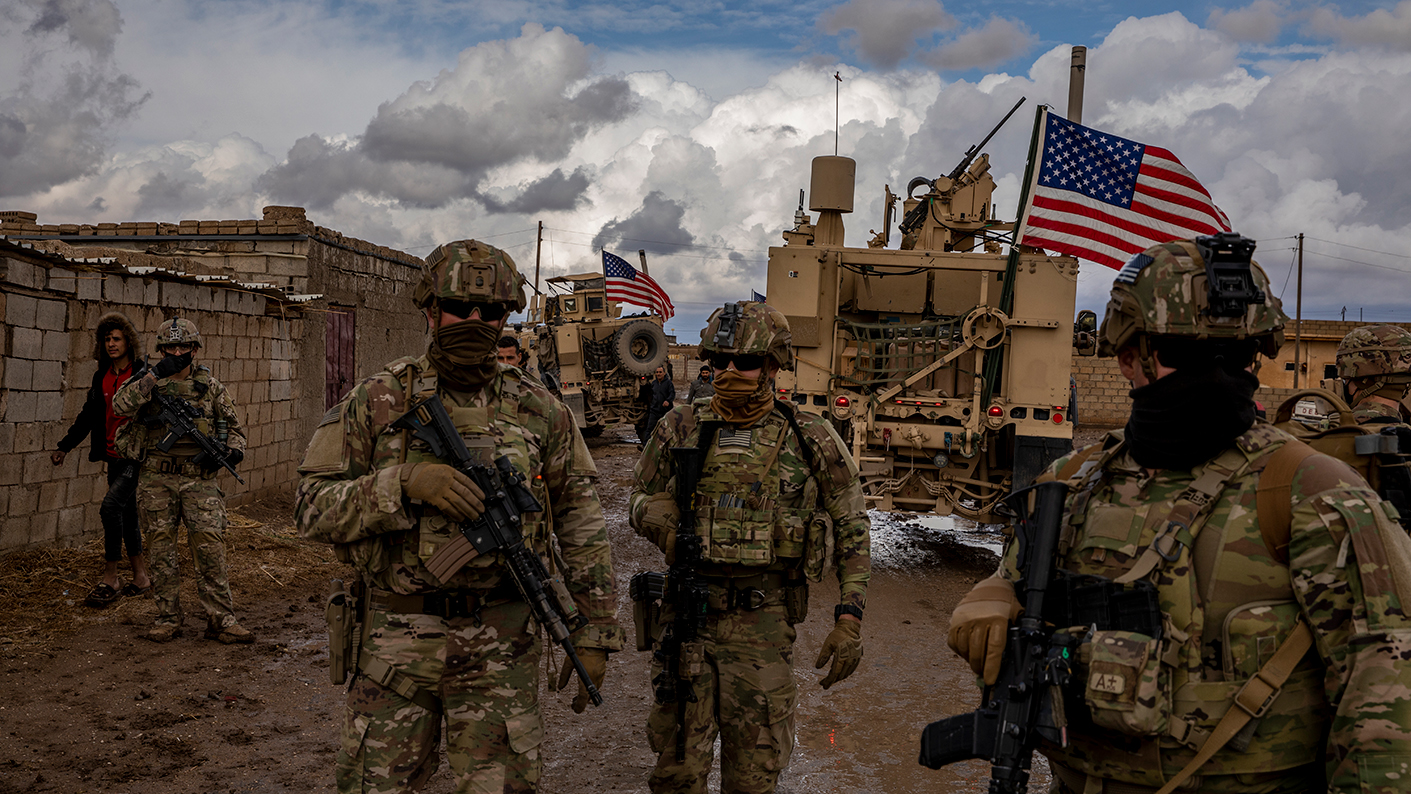
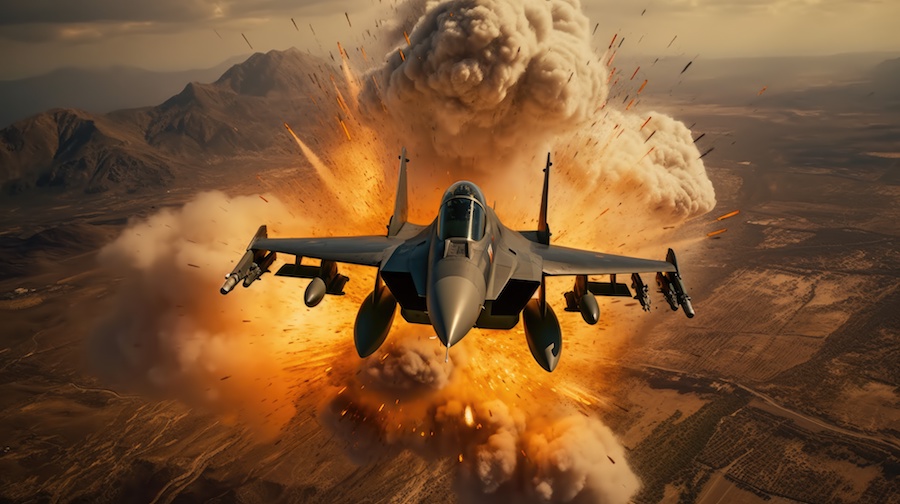






 Footage shows the explosions of the headquarters of the Anbar Operation Command & the headquarters of the 13th Hashd al-Sha’bi Brigade, after it was targeted by US raids, in the Anbar province of Iraq






 Israeli coward Ben Gvir:








 @KSAmofaEN - 0:09 UTC · Feb 7, 2024


