South America

User avatar
blindpig
Posts: 15306
Joined: Fri Jul 14, 2017 5:44 pm
Location: Turtle Island
Contact:

Re: South America

Post by blindpig » Thu Dec 25, 2025 3:32 pm

Austerity and alignment to Washington: Two years of President Javier Milei
In this article, we review some of the general trends and attitudes of Milei’s government two years into his term.

December 22, 2025 by Pablo Meriguet

Image
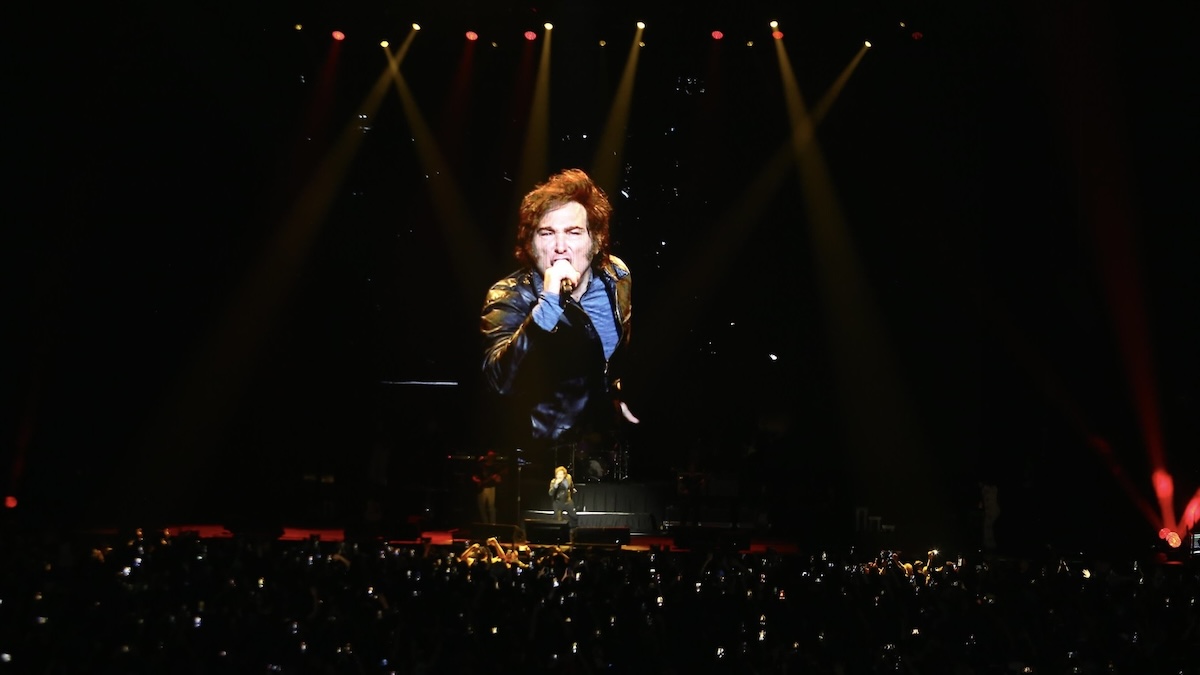
Argentina President Javier Milei. Photo: Javier Milei / X

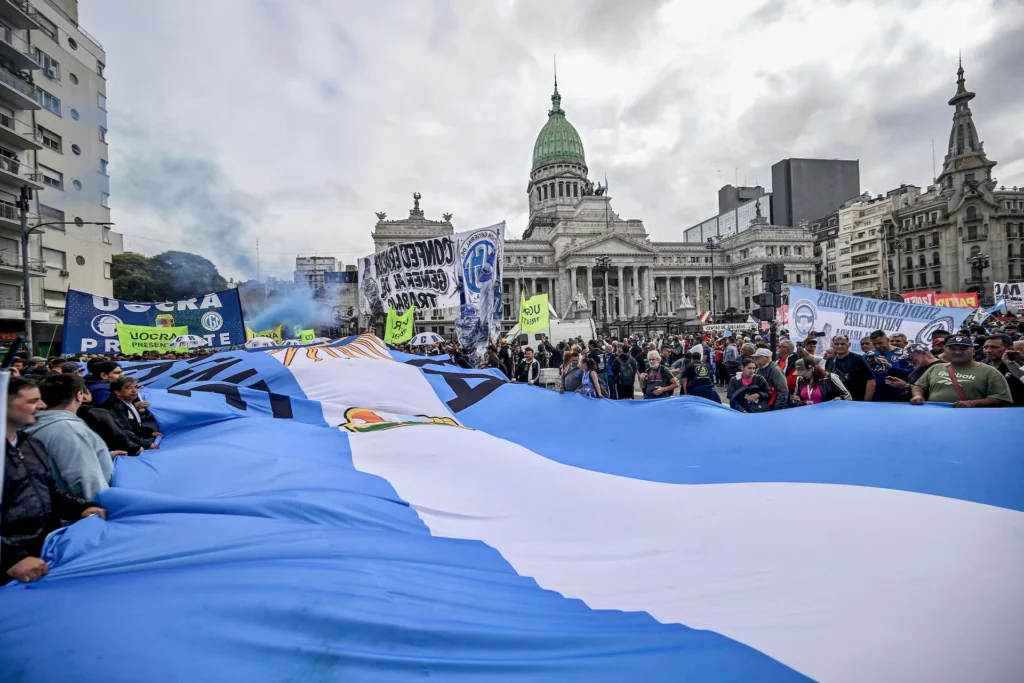
Thousands of Argentines endured high temperatures as they took to the streets on December 18 to protest the labor reform of Javier Milei’s far-right government. The call to action by the General Confederation of Labor (CGT) was supported by several trade unions, which claimed that the measure seeks to destroy workers’ rights to benefit big business: “This reform will only deepen poverty, social exclusion, and job insecurity. We will not give up our fight for decent work,” the CGT said in a statement.

The government has justified the measure by citing an alleged need to modernize labor relations: “The text also incorporates specific incentives for the formalization of employment, new rules for the platform economy, more efficient employer contribution schemes, and mechanisms that reduce litigation, providing the system with greater predictability and long-term stability.”

However, organized workers claim that this is a labor flexibility project that aligns with President Milei’s neoliberal agenda. Cristian Jerónimo, leader of the CTE, said: “[The labor reform] does nothing to benefit the world of work; it is written in favor of Argentina’s large corporations and does not favor small and medium-sized enterprises.”

But for the protesters, this reform comes as no surprise. Long before becoming president, Milei announced that it was imperative to reform the entire structure of the Argentine state in order to put it on the “path to freedom,” which means neoliberalizing the economy, reducing state participation in the economy to a minimum, strengthening the apparatus of repression, and aligning the South American country geopolitically with Washington’s interests. In short, to return to the path of the Washington Consensus.

After the day of mass mobilization, the government announced that the debate on the reform would be postponed until February, an initial sign that Milei is feeling the pressure of the popular demonstrations. Yet, after two years in office, Milei has done everything possible to push forward his neoliberal agenda even amid many rounds of mass demonstrations. A series of laws, executive decrees, and international diplomatic engagements have been the clearest signs of the path taken by the right-wing libertarian leader who governs a country that, despite his promises, is once again returning to the path of economic crisis and political instability.

Economy: fiscal adjustment and social tension
In line with neoliberal orthodoxy, Milei has implemented a series of fiscal adjustments to eliminate the deficit, even though this has been at the expense of the material stability of the most disadvantaged sectors, who have taken to the streets to protest against cuts in health, education, and other areas that the Argentine state now refuses to cover in full or adjust in line with the current economic reality. Students, teachers, researchers, and university workers have also taken to the streets consistently, demanding improvements in higher education funding, funding for science and health research, and defending free and public education.

Repression of mass protests, ordered by Security Minister Patricia Bullrich, has been severe. Hundreds have been arrested and injured, including Pablo Grillo, a journalist who was nearly killed when a tear gas canister struck him in the head.

Nevertheless, Milei did not slow down. The elimination of subsidies, wage freezes, and widespread privatization of public companies generated the long-awaited fiscal surplus in more than a decade. Year-on-year inflation, which stood at around 211% at the end of 2023, was reduced to 3% at some point in 2025.

Despite this, several analysts have stated that the 2.3% increase in inflation in October 2025 reflects the shortcomings of a neoliberal model in sustaining a long-term surplus.

Furthermore, it is important to remember that this year, Donald Trump’s administration bailed out Argentina with a record payment of more than USD 20 billion, in addition to the IMF’s generous granting of USD 20 billion to Argentina.

In other words, the surplus that the executive branch promotes as its great economic success has been achieved thanks to enormous support from its international allies, who demand neoliberal macroeconomic change not only in Argentina but throughout the region. This, of course, comes at a price that Argentines will have to pay for decades to come. Argentina has the largest IMF debt in the world. Its debt of more than USD 64 billion is “the price of freedom.”

Politics: reduction of the state and open confrontation
Following his economic model, Milei’s government has pushed radical downsizing. More than 10 ministries and 200 government departments were eliminated in one fell swoop. This meant the dismissal of almost 50,000 people who suddenly found themselves thrown into unemployment and precarity.

These decisions were made abruptly and aggressively, political attitudes that the president has adopted as part of his communication strategy. Bypassing parliamentary approval whenever possible, Milei always sought to govern unilaterally whenever possible.

But Milei has also achieved significant legislative victories. At the beginning of his administration, he had the support of only 39 deputies and six senators; however, he managed to pass several laws, such as the Bases Law (which allowed for the radical privatization of the Argentine state) and tax reforms.

He achieved this thanks to the support of the PRO, a right-wing party led by former president Mauricio Macri, and certain dissident Peronists. The formation of the so-called “May Pact,” a major agreement between Argentina’s right-wing parties and governors, allowed him to negotiate and agree on several reforms desired by right-wing libertarianism.

This pact prevented an increase in pensions for the elderly, who have regularly protested to demand more money to buy medicine and food, which are now major obstacles in their lives. Despite this, the Pact has not budged and continues with its neoliberal drift.

Political and judicial scandals
Milei’s administration has also been marked by several scandals. Very early on, he began a dispute with Victoria Villarruel, his vice president, whom he accused of playing into the hands of his political enemies.

He was also involved in the “$LIBRA” scandal, in which he is accused of being part of an international fraud scheme related to the sale of cryptocurrencies. A parliamentary commission concluded that Milei did use his position as president to promote the scam, which caused millions in losses to investors around the world.

But the event that probably had the greatest impact on Milei’s popularity involved his sister. Karina Milei, who serves as Secretary to the President, is accused of participating in a bribery ring that operated through the National Disability Agency (ANDIS). Many saw the emergence of this scandal as the reason for his resounding defeat in the Buenos Aires Province elections on October 26.

Despite this, Milei managed to recover and his party, La Libertad Avanza (LLA), won the next legislative elections and increased its number of seats in the legislature. His strategy was the usual one: accusing Peronism of destroying Argentina and presenting himself as the only one capable of saving the country. However, this messianic communication strategy has begun to be questioned precisely because of the corruption and fraud scandals that have plagued his government.

Alignment with Washington
Milei has made a significant shift in the country’s foreign policy. Argentina’s vote against the UN resolution condemning the US economic and trade blockade of Cuba reflects an important change. Historically, Argentina has maintained a diplomatic position against any act of imperialism due to its claim over the Malvinas Islands, which, despite being off its coast, are governed by the United Kingdom. The dispute has escalated to military levels despite repeated claims by the Argentine authorities.

Image
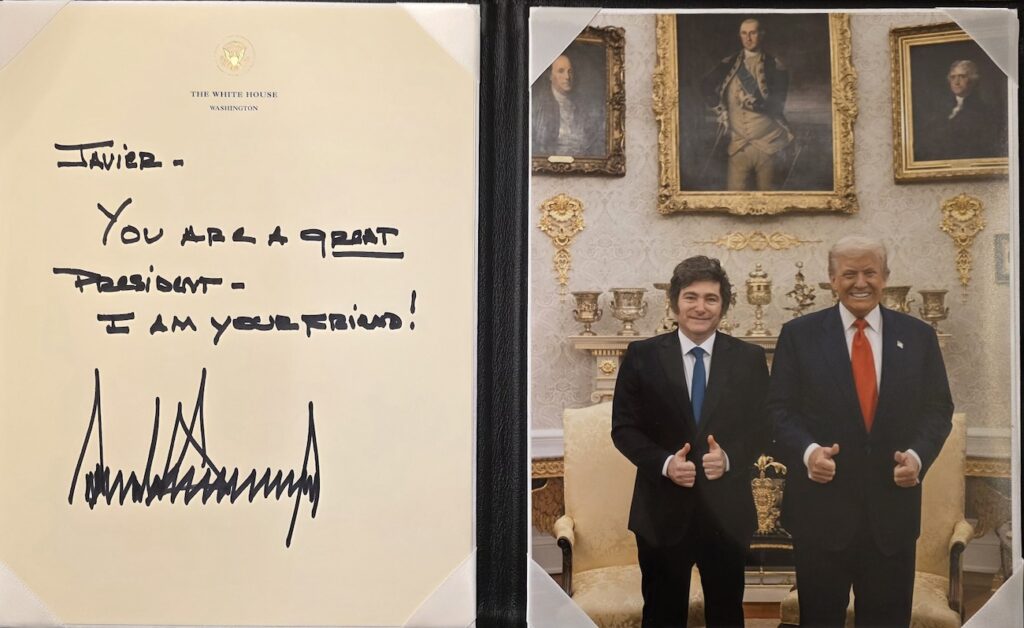
Donald Trump-signed photo of him and Javier Milei. Photo: Javier Milei / X

But the change is much more than nominal. Argentina has become the Trump administration’s greatest ally in South America. Milei has praised Trump’s personality, and Trump has publicly supported him, like when, in the last legislative elections, he suggested an end to cooperation between Buenos Aires and Washington if Milei lost. In response, the Argentine president has repeatedly declared his loyalty to Trump’s geopolitical project and has supported all of his initiatives both within and outside the region.

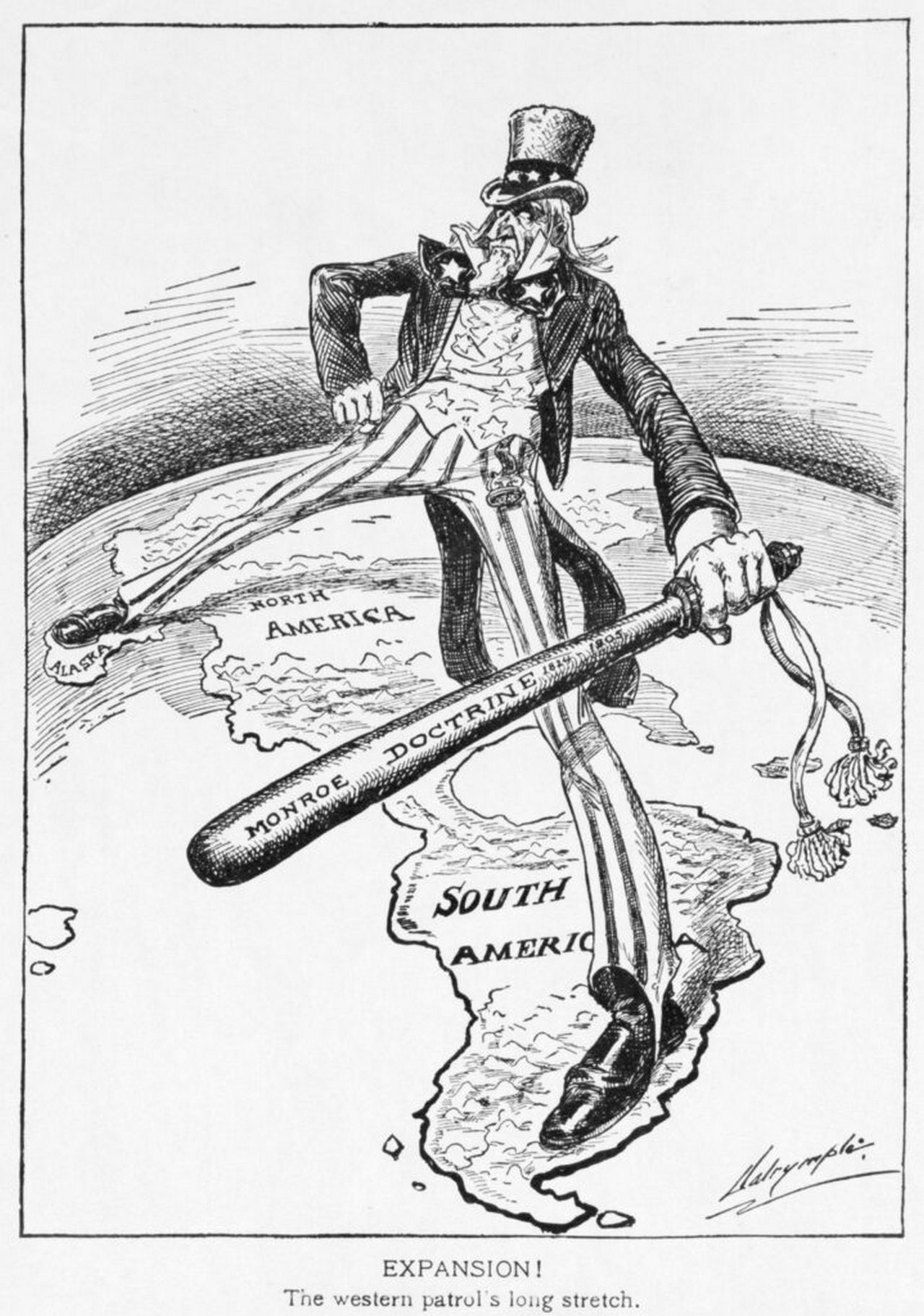
In this way, Milei has become a sort of archetype for the leaders of the new Latin American right. With radical fiscal adjustment at the expense of the most impoverished sectors, open confrontation with their opponents, and an international policy fully aligned with Washington (which has initiated a new chapter of the Monroe Doctrine), far-right governments are beginning to gain ground in the region: Kast in Chile, Paz in Bolivia, etc., are examples of an ideological and geopolitical shift in the region that is impossible to understand without the figure of Javier Milei.

https://peoplesdispatch.org/2025/12/22/ ... ier-milei/

******

Report from the Panama Canal: Panamanians Denounce U.S. Aggression
Posted by Internationalist 360° on December 23, 2025


Reason2Resist with Dimitri Lascaris

From the Panama Canal, Reason2Resist correspondent Rami Yahia reports on protests against U.S. aggression and the U.S. invasion of Panama in 1989.

On the 20th of December in that year, the United States invaded Panama under the pretext of removing de facto head of state, Manuel Noriega.

In reality, the invasion was motivated by the U.S. government’s desire to seize control of the Panama canal.

Thirty-six years later, Panamanians continue to commemorate the 1989 invasion by mounting protests against U.S. aggression. This year, those protests have taken on added significance due to the Trump regime’s criminal war of aggression on neighbouring Venezuela.

Throughout this report, you’ll hear directly from relatives of people who resisted the U.S. invasion, as well as young anti-imperialists who have not forgotten the brutality of the U.S. aggression against the Panamanian people.

In the latter half of his report, Rami refers to the defence fund of JR-16, which is currently being targeted by the Panamanian state. You can contribute to that defence fund here: https://www.patreon.com/JuventudesRevolucionariasPanama

https://libya360.wordpress.com/2025/12/ ... ggression/
"There is great chaos under heaven; the situation is excellent."

User avatar
blindpig
Posts: 15306
Joined: Fri Jul 14, 2017 5:44 pm
Location: Turtle Island
Contact:

Re: South America

Post by blindpig » Tue Jan 06, 2026 3:42 pm

Chile’s Failure to Bury Neoliberalism Led to an Overtly Pinochetista President

Posted by Internationalist 360° on December 28, 2025
Francisco Dominguez

Image
New President Jose Antonio Kast

Decades of centre-left accommodation and deepening inequality have opened the door to a hard-right restoration — posing stark challenges for the left.

Stunning, though expected, on December 14, a majority of Chileans (58 per cent to 41 per cent) elected far-right Republican Party candidate Jose Antonio Kast as president for the 2026-30 term, defeating the Communist candidate Jeannette Jara in the second round.

A strong admirer of the Pinochet dictatorship, Kast is also an open supporter of Argentina’s Javier Milei and Donald Trump, and maintains close links to the Trump-affiliated Heritage Foundation. His victory presents a significant opportunity for US imperialism.

Kast is a lawyer and legislator, brother of Miguel Kast — a “Chicago Boy” minister under Pinochet — and son of Michael Kast, a German army officer and Nazi party member who emigrated to Chile after World War II.

During his campaign, Kast “did not rule out pardoning convicted perpetrators of the military dictatorship, including Miguel Krassnoff, who is serving over 1,000 years in prison for crimes against humanity.”

Since the dictatorship ended in October 1989, the centre-left Concertacion coalition governed Chile almost uninterruptedly for 28 years (until 2010, and again from 2014-18 and 2022-26).

During this period, the people made significant gains in political freedoms and poverty reduction (from 45 per cent in 1987 to 6 per cent in 2024).

However, the Concertacion spent most of those years perfecting Pinochet’s neoliberal model, transforming Chile into a paradigm of privatisation. Health, education, utilities, pensions, rivers, the sea, natural resources and infrastructure were all placed in private hands, with adverse social consequences for the majority of Chileans.

Inevitably, the worsening conditions created by a small, immensely wealthy and arrogant Pinochetista oligarchy erupted into a social rebellion in October 2019. This was triggered by right-wing president Sebastian Pinera’s attempt to impose an austerity package, which was met with brutal repression. Throughout 2019 and 2020, mass protests unfolded to the rhythm of “El pueblo unido jamas sera vencido,” carrying images of Salvador Allende and the dictatorship’s victims.

The diverse mass movement extracted substantial concessions, including the return of pension contributions from the widely despised private administrators (AFP), which is a colossal swindle.

Most crucially it won the right to elect “a constitutional convention tasked with drafting an anti-neoliberal constitution to replace” Pinochet’s 1980 “constitution.” The historic opportunity to bury Pinochetismo and its neoliberal legacy seemed within reach when the convention issued its radical proposal for a referendum in September 2022.

In May 2021, those in favour of change obtained 118 seats in the Convention to the right wing’s 37 (plus 17 reserved for indigenous nations), and elected Elisa Loncon Antileo, Mapuche leader, as its president. In November 2021, Concertacion candidate Gabriel Boric, then 35, comfortably defeated Jose Antonio Kast to become president. Approving the new constitution seemed a foregone conclusion.

However, in August 2022, the Concertacion got an agreement to make the previously voluntary vote compulsory. This brought a depoliticised 30-50 per cent of the electorate — disenchanted with politics and, notably, containing Chile’s most pro-Pinochet segment among the poorest 20 per cent — into the process.

This bloc became an easy target for a corporate and social media campaign of toxic disinformation, spreading lies that the new constitution would confiscate homes to be given to the homeless or that it would permit abortion up to the ninth month of pregnancy.

The Concertacion leadership, including President Boric — who had openly supported the Convention’s objectives — failed to prepare an effective counter-campaign. Instead, Boric devoted time to criticising Cuba, Venezuela and Nicaragua as dictatorships (applauded by far-right media), (un)wittingly legitimising the right’s narrative and sapping the constitution’s appeal. He also held a high-profile meeting with Volodymyr Zelensky to support Ukraine.

With little defence against the disinformation campaign, the constitution was rejected by 62 per cent to 38 per cent. Boric and the Concertacion had snatched defeat from the jaws of victory.

Thereafter, the centre-left position deteriorated. Neoliberalism had entrenched high levels of informality (28 per cent), precarious employment (longer hours, smaller salaries), and staggering inequality: the top 1 per cent and 10 per cent receive over 36 per cent and nearly 60 per cent of total income respectively, while the poorest 50 per cent accounts for about 7 per cent. Millions are trapped in debt at exorbitant rates to make ends meet (household debt reached 37.7 per cent of the country’s GDP, and $133.4 billion by late 2025, and Chile suffers the worst income inequality in the OECD, after Brazil and South Africa.

Boric’s presidency “failed to change the economic structure and the social inequalities in Chile.” His approval rate plunged to 22 per cent by May 2024, with right-wing media unashamedly capitalising on high crime levels and illegal immigration flooding the labour market to blame his government.

In this climate, Jeannette Jara, candidate of the revamped Concertacion coalition “Unity for Chile,” faced an uphill battle. She sought to offer a progressive break with Chile’s complacent pro-neoliberal centre-left while simultaneously retaining old coalition support. Her platform included key anti-neoliberal policies, but it proved to be too little too late. Nevertheless, her 41 per cent vote represents solid support for a leftward shift.

As Boric’s labour minister, Jara secured a “long-awaited reform of the pension system, which, among other things, increased current and future pensions through a system of solidarity among contributors. She also achieved the reduction of [working hours] from 45 to 40 hours a week and she is also remembered for her efforts to increase the minimum wage to more than 500,000 Chilean pesos, around $530.”

However, these achievements — largely down to her initiative — were insufficient to convince poorer right-wing voters that she represented a fresh start. The long-term clientelistic relationship between sections of the poor and Pinochetismo meant that Kast won in four of the five poorest districts in the country (in 2021 Kast won in the 20 poorest districts).

There is a deeper reason for this “anomaly”: the main concerns of the poorest 50 per cent of the population are crime, immigration, pensions, health and income inequality, areas inadequately addressed by Concertacion governments.

Jeannette Jara’s candidacy expressed the political necessity to break neoliberalism’s 50-year grip with a radical programme to reverse its grossest inequities that will be attractive to the poorest. Winning 41 per cent as a Communist candidate is a notable feat.

Kast’s victory proves that “managing neoliberalism” is a failed strategy for the left, as it only fuels Pinochetismo, which the centre-left accommodated for decades. The left, with the Communist Party at its core, now faces the challenge of organising mass resistance against Kast’s agenda of fiscal austerity, mass expulsion of immigrants and a full neoliberal restoration that will erase even the timid Concertacion progressive reforms of 1990-2025.

Chile’s communists, as the most consistently anti-neoliberal force within the broader left, have the potential to shape and organise a broad political and social front of resistance against Kast’s extreme right-wing government. Resistance against Kast will be inextricably linked to the struggle against neoliberalism. A critical weakness in Chile remains the lack of an authoritative left leadership capable of successfully organising the working class to fulfil Boric’s own promise: “If Chile was the birthplace of neoliberalism, it will also be its grave.”

Source: Mornin Star

https://libya360.wordpress.com/2025/12/ ... president/

******

US Militarization of Latin America is Expanding at Breakneck Speed
January 5, 2026

Image
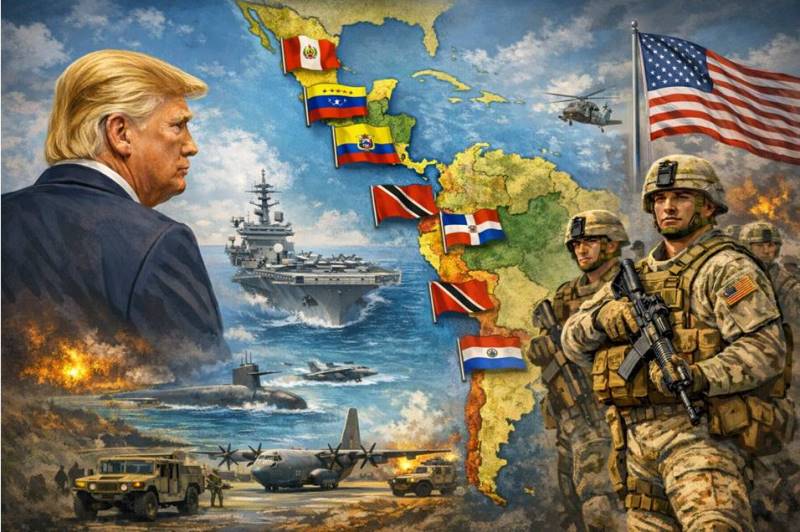
A composite illustration showing US ruler Donald Trump and various US military forces overlooking and encroaching upon a map of Latin America and the Caribbean. Photo: Pia Global.

By Héctor Bernardo – Jan 1, 2026

While the threat against Venezuela persists with the presence of aircraft carriers and troops in the Caribbean Sea, Marco Rubio and Pete Hegseth are busy finalizing agreements to send marines to Peru, Ecuador, Paraguay, Trinidad and Tobago, and the Dominican Republic. Opinion by Telma Luzzani, researcher and author of the book “Monitored Territories.”

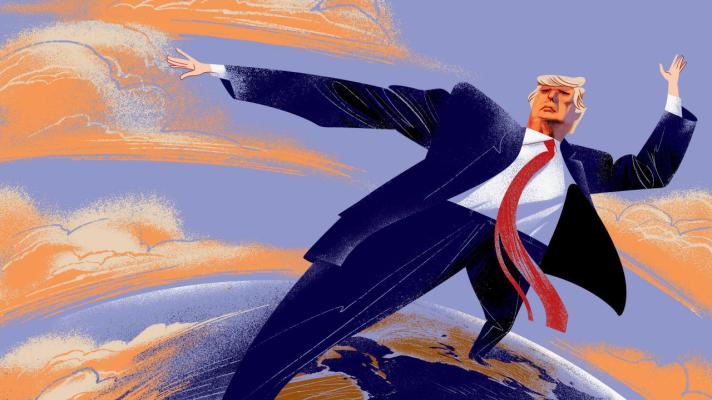
The corollary with which President Donald Trump updated the Monroe Doctrine takes different forms. Strategies that mutate, but that pursue the same goal: to regain control of the territory that the United States has always considered its “backyard” and to control the natural resources that are currently in dispute with other major powers.

One of the forms the Trump Corollary has taken involves increasing the US military presence in Latin America and the Caribbean. The pretext: the fight against the current enemy, “narco-terrorism.” Those in charge of carrying out this strategy: Secretary of State Marco Rubio and Secretary of Defense (or War) Pete Hegseth.

In addition to the well-known threat against Venezuela, with the largest military deployment that Washington has ever made in the region, the presence of an aircraft carrier, troops, and even a nuclear submarine, there is the deployment of marines to Peru, Ecuador, Paraguay, Trinidad and Tobago and the Dominican Republic.

Image
US Secretary of Defense Pete Hegseth and Dominican Republic President Luis Abinader. Photo from the official website of the Dominican Republic Presidency.

Dominican Republic
On November 26, during his visit to the Dominican Republic, US Secretary of Defense Pete Hegseth thanked President Luis Abinader for supporting a “temporary agreement” that allows the United States to deploy troops on Dominican soil. Hegseth stated that this is “a great collaboration and, truly, a joint effort between our two countries against drug trafficking and narco-terrorism.”

Along the same lines, President Abinader asserted that there is “a threat that recognizes no borders, that does not distinguish flags, that destroys families, and that has tried to use our territory as a route. That threat is drug trafficking, and no country can, nor should, confront it without allies.”

According to a statement from the official website of the Dominican Republic’s Presidency, “The United States Southern Command and Air Force will provide refueling and airlift aircraft to support counter-narcotics operations, including Operation Southern Spear, announced by US Secretary of Defense Pete Hegseth on November 13, which also combats illicit arms trafficking.”

“This collaboration aims to disrupt illicit operations by transnational criminal organizations (TCOs) and foreign terrorist organizations (FTOs), identified by the United States on various routes spanning the entire Caribbean Sea,” the text adds.

It is also noted that “there will be a presence of several KC-135 tanker aircraft in support of air patrol missions, expanding monitoring and interdiction capabilities over a large part of the maritime and air domains, and will provide refueling services to aircraft of partner countries, thus ensuring sustained operations of monitoring, detection and tracking of verified illicit smuggling activities.”

“Additionally, the C-130 Hercules cargo aircraft will facilitate aeromedical evacuations, firefighting, meteorological reconnaissance, and disaster relief,” the official text states.

Trinidad and Tobago
A few days later, on November 29, according to the Trinidad and Tobago Guardian website, Prime Minister Kamla Persad-Bissessar confirmed that the United States had installed “a new radar to monitor activities inside and outside of Trinidad and Tobago.”

The radar was located at the ANR Robinson International Airport, a few kilometers from the Venezuelan coast.

According to the Zona Militar website, “Authorities in Trinidad and Tobago recently confirmed that the US. Marine Corps is reinforcing its local presence with the deployment of an AN/TPS-80 G/ATOR radar. This assistance is part of an agreement between the two countries to increase surveillance capabilities against illegal flights directly linked to narco-terrorist organizations and the growing tension with Venezuela.”

According to reports, Marines from the 22nd Expeditionary Unit, who were on the island for joint exercises in mid-November, remain in Trinidad. The website highlights that “in addition to the ground component, the Marines have air assets such as helicopters and fifth-generation F-35B Lightning II fighter jets, as well as amphibious assets from the US Navy and aircraft from the Air Force.”

Image
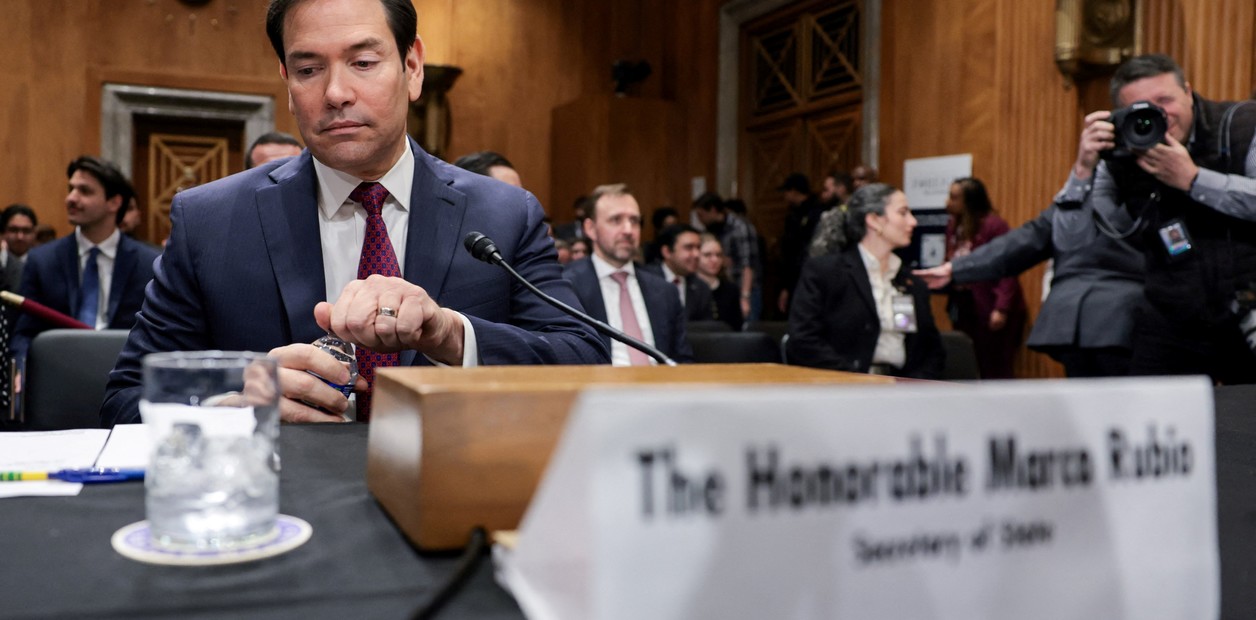
Kamla Persad-Bissessar, Prime Minister of the Republic of Trinidad and Tobago, and Marco Rubio, United States Secretary of State. Official photo from the Department of State.

Peru
On December 5, the government of Peru reported that “the Plenary of the Congress of the Republic approved, by majority (73 votes in favor, 25 votes against and 2 abstentions), Legislative Resolution 13436/2025-CR, authorizing the entry of foreign military personnel with weapons of war into the territory of the Republic of Peru.”

The statement emphasizes that “the military personnel of the United States Department of Defense, specified in its first article, will enter national territory with weapons of war from January 1 to December 31, 2026,” that is, for one year.

“The institutions involved are: Joint Special Operations and Intelligence Command (CIOEC); Joint Special Force (FEC) and Special Operations Forces (FOES) of the Navy; Special Forces Group (GRUFE) of the Peruvian Air Force; 1st, 3rd, and 6th Special Forces Brigades of the Peruvian Army and National Police of Peru (DIROPESP, DIRANDRO, GRECCO),” the official information states.

Paraguay
Just nine days later, on December 14, an official statement from the United States Embassy in Paraguay announced that “Secretary of State Marco Rubio met today with Paraguayan Foreign Minister Rubén Ramírez Lezcano to sign a Status of Forces (SOFA) agreement between the United States and Paraguay.”

“The historic agreement establishes a clear framework for the presence and activities of the US Department of War military and civilian personnel in Paraguay, facilitating bilateral and multinational training, humanitarian assistance, disaster response, and other common security interests,” the text states.

It is noted that “Secretary Rubio emphasized that the SOFA reflects the United States’ commitment to coordinate closely with Paraguay on regional security and the growing importance of Paraguay as a regional leader and defender of security in our hemisphere.”

“The agreement strengthens a long-standing partnership and supports our shared priorities. Both officials expressed their confidence that the agreement will strengthen the sovereignty of both countries and enhance our cooperation to achieve greater stability and prosperity in the region,” the text concludes.

Image
Paraguayan Foreign Minister Rubén Ramírez Lezcano and US Secretary of State Marco Rubio. Official website of the Paraguayan Foreign Ministry.

Ecuador
Three days later, on December 17, the US embassy in Ecuador posted a welcome message on social media to the US troops arriving in that territory.

In a text beginning in a confusing manner, saying that “the United States welcomes United States Air Force personnel for a temporary operation with the Ecuadorian Air Force in Manta.”

“This short-term joint effort is part of our long-term bilateral security strategy, in line with current agreements under Ecuadorian law,” it added.

The post concludes that “the operation will enhance the Ecuadorian military’s ability to combat narco-terrorists, including strengthening intelligence gathering and counter-narcotics capabilities, and is designed to protect the United States and Ecuador from shared threats.”

On the same day, Ecuadorian President Daniel Noboa also posted on X that “with the support of the United States, we have activated a temporary operation in Manta with the Ecuadorian Air Force, as part of a long-term bilateral security strategy. This operation will allow us to identify and dismantle drug trafficking routes and bring to justice those who thought they could take over the country.”

Image
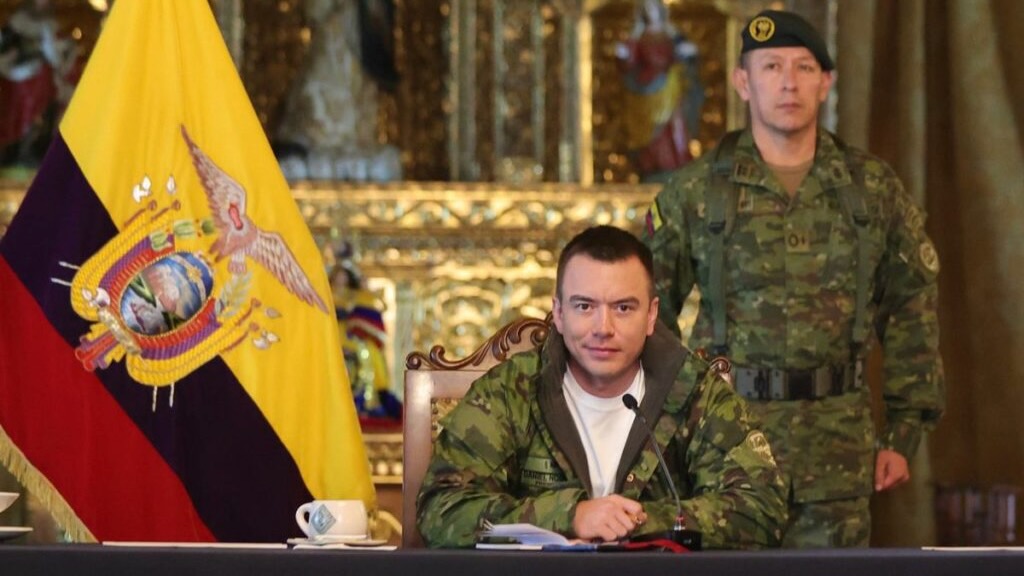
Secretary of State Marco Rubio and the President of Ecuador, Daniel Noboa. Photo from the official website of the Government of Ecuador.

Advanced militarization with a history
Regarding Washington’s new military redeployment in the region, PIA-GLOBAL spoke with Telma Luzzani, a journalist, researcher and author of the book “Monitored Territories. How the network of North American military bases operates in South America.”

Luzzani pointed out: “In one way or another, the United States, at this stage—a stage of hegemonic decline—is seeking to militarize its security zone, its vital platform, through which it was historically able to expand and become the world’s leading power. It does so with subservient governments, like those of Ecuador, Peru, and Argentina. It does so explicitly by directly announcing the arrival of Marines who will control absolutely everything in those countries and in the region. It does so explicitly and obviously, with the acquiescence of puppet or subservient governments.”

“However, it also does so in a different way with governments that maintain a sovereign stance. That is why the Caribbean Sea is militarized today, why supposed drug-trafficking vessels—which are actually fishing boats, as has been proven on more than one occasion—are bombed in the Pacific, and why, in my opinion, it seeks to implement a kind of pincer movement against Brazil from the north and from Argentina in the south. Brazil, let us remember, is a BRICS country. Therefore, it is fundamental to this stage of the United States’ strategy. One of its main objectives is the destabilization of BRICS,” she emphasized.

Luzzani recalled that “the strategy has always been one of absolute domination and militarization of our countries. There was a period during the Cold War when our governments were military governments. Under the pretext of the Soviet threat or the threat of communism, the aim was to militarize our region, our Latin America, through military governments. In fact, the United States specifically had the School of the Americas in Panama to train military personnel in this way. That is to say, it did not do it directly as it does now, but through the armed forces of the various South American or Latin American countries.”

“In the post-Cold War era, in 1991, General Powell, for example, was very explicit regarding the role the United States wanted for Latin American militaries. He said that in the plan the United States had drawn up at that time, the Latin American Armed Forces ‘should maintain only those military capabilities necessary for self-defense, for combating drug trafficking, natural disasters, and for safeguarding peace in accordance with the laws and principles of the Charter of the United Nations and the OAS.’ This was stated by Colin Powell under the presidency of George H.W. Bush in 1991.”

The analyst stated that “today, with Donald Trump, that framework is explicitly violated. The Charters of the United Nations and the OAS are irrelevant. Donald Trump has set his own rules, which are very clearly stipulated in the National Security Strategy, where the first region he refers to is ours, recognizing it as a primary area, and where he outlines a significant reform at the Pentagon.”

“A few months ago, Trump held a meeting at the Quantico military base, where American generals, who came from all over the world, were given new instructions, not only regarding other nations, but also regarding a supposed internal enemy in the United States. This speaks to a significant change in US military policy,” he asserted.

Luzzani pointed out that “in this new phase, we have a significant change within the Pentagon, a new foreign policy expressed in the National Security Strategy, and specifically, actions in our region. In Argentina, the military base in Ushuaia is a crucial point due to its easy access to Antarctica. Paraguay has historically been occupied by US armed forces at their bases. Peru is of great concern to the United States because it is home to the port of Chancay, where China has a strong presence. Ecuador is also a concern, with its renewed attempts to remilitarize Manta and the Galapagos Islands, dismissing a referendum in which Ecuadorians voted against the installation of foreign bases on their territory. Added to this are the military actions being carried out against Venezuela and the harassment of Gustavo Petro.”

“It is important to remember that Colombia, until the arrival of President Gustavo Petro, always had right-wing governments that were completely subservient to the United States. In fact, the United States considered Colombia its most important strategic point in South America. There, with Plan Colombia, they even managed to control a large part of the region, especially in relation to Central America to the north and South America to the south, including the Amazon. Furthermore, Colombia is a country rich in oil, so that was also a fundamental interest for the US,” the analyst concluded.

https://orinocotribune.com/us-militariz ... eck-speed/
"There is great chaos under heaven; the situation is excellent."

User avatar
blindpig
Posts: 15306
Joined: Fri Jul 14, 2017 5:44 pm
Location: Turtle Island
Contact:

Re: South America

Post by blindpig » Thu Jan 08, 2026 3:17 pm

ESSAY: National Liberation: Categorical Imperative for the Peoples of Our Americas, Manuel Maldonado-Denis, 1982
Editors, The Black Agenda Review 07 Jan 2026
Image

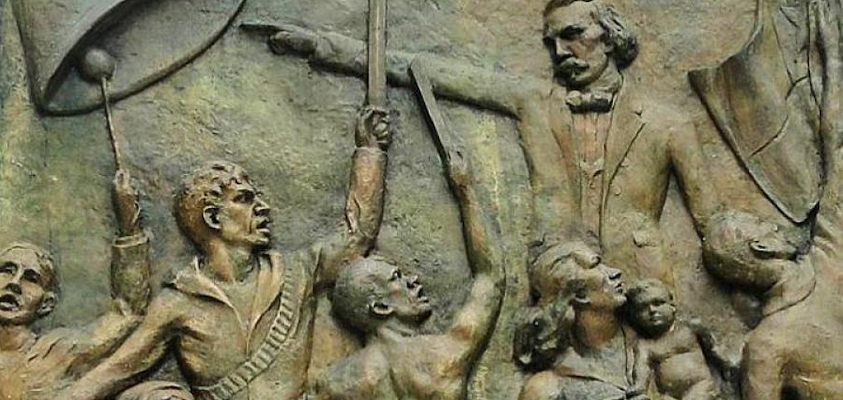
“The national independence struggles of the peoples of Our America have simultaneously been anti-imperialist struggles from Tupac Amaru up through our times.”

From September 4th to 7th, 1981, writers, poets, and scholars converged in Havana, Cuba, for the Primero Encuentro de Intelectuales por la Soberanía de los Pueblos de Nuestra América — the first Conference of Latin American and Caribbean Intellectuals for the Sovereignty of the Peoples of Our America. Hosted by Casa de las Americas, participants came from across the region, bringing with them a range of ideological and political stances.

But they came together around one thing: the threat of Ronald Reagan and the United States to the peace, security, and sovereignty of the Americas. Indeed, in the introduction to Nuestra América: En lucha por su verdadera independencia, the print publication of the conference proceedings, the editors noted the rare political urgency that marked the atmosphere of the conference. But it also pointed to what Uruguayan journalist, novelist, and poet Mario Benedetti described as the "unprecedented unity" of the conference participants in the face of the threat of Reagan. The editors continued:

with his neutron bomb, with his hysterical escalation of the arms race, with his insistence on stoking the Cold War, with his hatred of socialism and the cause of national liberation, and his frequent aggressions against countries struggling for their full independence, Ronald Reagan unwittingly helped the participants at the meeting realize that while the aggressiveness of American imperialism exhibits more weakness than strength, it is nevertheless a powerful enemy that is infringing upon the fundamental rights of our people and that we must confront the enemy decisively, using all the resources at our disposal to overcome it.

In short, Ronald Reagan not only unmasked the true face of US imperialism, but also exposed inherent weaknesses and vulnerabilities.

One of the most remarkable and stirring contributions to the congress was an address by the Puerto Rican political scientist Manuel Maldonado-Denis (1933-1992). Published in Spanish in Nuestra América as the essay, “La liberation Nacional: imperative categorically de Nuestra America,” it appeared in 1982 in English in the Havana-based journal Tricontinental, as “National Liberation: Categorical Imperative for the Peoples of Our America.”

Denis’s essay captured the militant energy of the Havana congress. He invokes the long history of Indigenous and African resistance in the Americas, and of peasant and worker struggles for freedom. He also reminds us of the main tasks of national liberation: “a) the struggle for national independence; b) the struggle against other subtle, and not so subtle, forms of colonization that continue even after national independence has been won; c) the struggle for economic independence, that is, the struggle to recover for the use and enjoyment of the nation and all those means of production remaining in private hands; [and] d) the socialization of these means of production and the process of building socialism.”

Importantly, for Maldonado-Denis national liberation can only be achieved if regional unity is established for its defense. It is no wonder that Donald Trump, like Reagan before him, is continuing the unhinged violence of US imperialism in the region and doing everything in his power to breed division and suspicion amongst the nations and peoples of our Americas. It is long past the time that the peoples of our Americas realized their mutual interests to come together and fight back against the monster.

We reprint Manuel Maldonado-Denis’s essay, “National Liberation: Categorical Imperative for the Peoples of Our Americas” below.

National Liberation: Categorical Imperative for the Peoples of Our Americas
Manuel Maldonado-Denis


When Emmanuel Kant, the idealist philosopher, set out to explain the essence of each person’s moral obligation to the rest of mankind, he proceeded to define it in the following way: “Always try to act in such a way so that the principle of your behavior can serve as a general rule.” This categorical imperative, as it was called in the ethics of this renowned philosopher from Konigsberg, was echoed in Jose Martí’s famous advice: “Every true man must feel upon his own cheek the slap upon any other man’s cheek.” This responsibility of mankind arises from the very process of human solidarity: to fight injustice and oppression wherever it arises. This is true both for individuals and for peoples. Hence Martí tell us in the Manifesto of Montecristi: “It is touching and an honor to think that when an independence fighter falls upon Cuban soil, perhaps abandoned by the unwary of indifferent nations for which he sacrificed himself, he falls for the greater good of mankind, the affirmation of the moral republic in America, and for the creation of a free archipelago where the respectable nations may lavish their wealth which, as it circulates, must fall upon the crossroads of the world.” Can one imagine a better or fuller expression of this internationalist spirit, which guided Martí and continues to inspire all those who see the struggle against imperialism as one clearly transcending national boundaries, inserted in the very center of the fight against injustice and oppression, whether in Palestine or South Africa, El Salvador or Puerto Rico? A categorical imperative is a mandate, a specific statement calling for fulfilling the duty of universal solidarity. This duty at present means on a collective level fighting for independence and national liberation for the world’s peoples.

Specifically in Our America it means supporting all peoples’ struggles against imperialism, colonialism and neocolonialism. Or, to continue in the line of thought of the peerless Cuban liberator, it consists of unceasingly fighting with every means at our disposal for the first and the second independence of all our peoples, perennial victims of imperialism’s domination and exploitation.

The history of Our America is singularly rich in terms of its liberation struggles. Fortunately, the new generation of Latin American historians and sociologists has taken on the job of retrieving these social struggles from the buried past where they have been assigned by official versions of history molded to the ideas of Latin America’s ruling classes. The struggles against oppression, from the uprising of the original Indian populations to those of the black slaves, from Tupac Amaru to Macandal, are glorious chapters in our peoples’ histories. The popular masses, the workers, these “historyless” peoples, are now in the forefront of current historical processes. We can view in this context those who took up the cause of these people, those who fought against oppression and plunder. We can put into their correct perspective events such as the 19th century Haitian Revolution and the 20th-century Cuban Revolution, the recent Sandinista Revolution and the glorious struggle being waged by the Salvadoran people right now. Our youth can identify with such men such as Toussaint L’Ouverture, Simon Bolívar, Ramón Emeterio Betances, Eugenio Maria de Hostos, Jose Martí, Augusto César Sandino, Augusto Farabundo Martí, Julio Antonio Bella, Pedro Albizu Campos, Ernesto Guevara, Salvador Allende, in short, with all those who embodied in word and deed, the hopes and desires of the peoples of Our America—without excluding, of course, all those anonymous heroes who daily are resisting and fighting, everywhere on every battlefront, attempts to deny our popular sector’s inalienable right to a decent life within their societies.

The concept of national liberation requires an exhaustive and thorough study which we cannot provide in his brief paper. But if we had to define its main outlines we could list the following: a) the struggle for national independence; b) the struggle against other subtle, and not so subtle, forms of domination that continue even after national independence has been won; c) the struggle for economic independence, that is, the struggle to recover for the use and enjoyment of the nation and all those means of production remaining in private hands; d) the socialization of these means of production and the process of building socialism. All these steps should take place for the full development of the national liberation process which, as can be seen, must culminate with socialism.

If we analyze in detail the ups and downs of these processes we can see that they have hardly followed a linear path; rather each process itself has been marked by advances and reverses. One thing is clear, nonetheless. The people’s struggle for liberation can be temporarily held back; it can even be contained for relatively long periods by the use of systematic repression against the popular sectors, but it can never be totally destroyed. As has been amply demonstrated in countries of the southern cone and Central America, fascist methods are used when the system of imperialist domination is threatened.

We will now proceed to examine more thoroughly each of the aspects of the national liberation struggle listed above.

In the first place, it is clear that for a people to exercise their sovereignty they must have national independence. Since Jean Bodin defined the concept of sovereignty in the 16th century, this has meant the exercise of supreme authority within a specific territory. For this concept to be not just a legal, but a real one, the people must be the basic source of that sovereignty. Therefore, colonialism, by placing the source of power in the hands of another country, is the denial of the principle of sovereignty. National independence, therefore, is the peoples’ basic freedom because it grants them the power to exercise sovereignty over a specific territory. The fact that this sovereignty can be infringed upon, even after achieving national independence, is common knowledge. But this is precisely why the peoples’ national independence struggle must be a frontal attack on imperialism, mortal enemy of the liberation of the world’s peoples. Those who do not perceive that imperialism is a system of global domination; who do not realize that this system, as Lenin so rightly affirmed, is the highest stage of capitalism in its monopoly stage; who do not understand that the socialist countries have not participated in the plunder of the natural and human resources of the peoples who have been and still are the victims of colonialism and neocolonialism, but rather that the socialist countries have aided in their struggle against underdevelopment, are seriously mistaken in their historical outlook, as Fidel Castro has pointed out on many occasions. The national independence struggles of the peoples of Our America have simultaneously been anti-imperialist struggles from Tupac Amaru up through our times.

But national independence is just a milestone — a very important one — in the national liberation process. Once independence has been attained, then the problem arises of the dependent relations which refuse to die and continue to be reproduced under the new sovereign status. These dependent relations have deep economic, social, political and cultural roots. When countries attain their independence under the system of dependent capitalism — as has usually been the case — their hard-won independence seems virtually annulled given the stubborn factors tending to perpetuate uneven development and economic backwardness. As shown by the unsuccessful efforts to create a new international economic order, and the failure of the overblown North-South dialogue, the capitalist countries are not willing to give up their privileges and prerogatives they derive from unequal exchange between raw materials and manufactured goods. Attempts by raw material exporting countries to excercise sovereignty over these resources have encountered the open hostility of the importing countries. Despite this, it should not be forgotten that the demand for full exercise of the people’s sovereignty over their natural resources was raised by General Lázaro Cárdenas in Mexico and with his actions an irreversible process was set into motion, refuting the already discredited notion that our peoples are incapable of efficiently administering what by right is theirs.

Therefore, if there is no struggle for economic independence, national independence runs the risk of becoming merely the nominal exercise of sovereignty. Martí warned us in the 19th century of the tiger stalking our peoples even after they have attained national independence. It is necessary to be on guard against this tiger because it always returns by night to endanger the gains of the peoples. Martí was referring, needless to say, to the imperialism he knew so well, having lived in its entrails; thus he warned the peoples of Our America to resolutely struggle for that second independence which could only be won through a frontal attack against that “violent and brutal north which despises us.” Economic independence is a requisite for the real exercise of sovereignty; it is the people’s’ demand that they not be subject to the conditions imposed by transnational corporations, that their natural and human resources not be subservient to international industrial and financial capital, and that their territories not bristle with army and naval bases which foreclose the peoples’ sovereignty. In reference to this last point, we have the situation of the base at Guantanamo in Cuba, which continues to be a flagrant insult to our peoples.

From what has been said up to here we can see that the peoples’ struggle for the full exercise of their sovereignty must lead to the socialization of the principal means of production and a process towards socialism. This, of course, is no easy task. The resounding victories of the peoples of Cuba, Vietnam, and Angola — to mention only three examples — have provided a revanchist dynamic in Western ruling circles, a dynamic which has as its current political expression the coming to power of the Reagan administration.

In the current political situation, national independence and sovereignty of all the world’s peoples are endangered by the rise to power of the most recalcitrant and militaristic sector of the U.S. ruling class. In the Caribbean, Nicaragua and Grenada are daily facing the threats of intervention that have long been part of our peoples’ history under U.S. hegemony. Revolutionary Cuba is facing new aggressions from U.S. Imperialism. The only thing that can stop this power, the only force able to counteract its mad ambition for world domination is the existence of the socialist world, which has stood up to the arrogance which has characterized the imperial republic of the United States since its very inception.

Imperialism, as a worldwide system of domination, can live with national independence only if this independence is not used to challenge capitalist relations of production. The process towards economic independence is already an irritant in imperialism’s relations with independent countries, but there is always the possibility of creating new trade and industrial relations which turn into a mockery, or make inoperable the processes of socialization of social wealth. Capitalism, however, cannot live with the transition toward socialism which endangers its domination over the lives and wealth of “Third World” social formations. Not even the creation of structures like people’s power is acceptable to the ruling classes. They will not permit naughty children: the empire demands total submission, and if this is not forthcoming, it means war: a war which at the beginning takes the form of economic aggression but with the broad range of resources at its disposal can even go as far as chemical and biological warfare.

It is in this context that the struggle is being waged by the peoples for their sovereignty, i.e. for complete control over their national territories, including the subsoil and surrounding territorial waters, the fauna and flora, water resources, etc. This sovereignty cannot be fully exercised unless real power is held by the social class which produces social wealth, the class that along with the natural resources which are mankind’s heritage, represents the most important of the material productive forces: the working class.

It is precisely the working class, together with the peasants and the other popular sectors, which is called upon to play the historical role as protagonist of the struggle for national liberation and socialism which is the only path to win our people’s sovereignty.

When our first liberators fought against the disintegrating Spanish empire, their main concern was to end the horrible system of oppression that prevented, by its retarding action, the full moral and material development of our peoples. In the Antilles, for example, this great struggle was waged not only to attain national independence, but also to end black slavery. It was in this sense that the three great 19th-century Antillean figures — Hostos, Betances, and Martí — were not only revolutionaries who fought to break colonial ties with Spain, but also they couldn’t imagine for a moment that black slavery would be tolerated in the new republics. They fought for a political revolution as well as a social one. By this time Karl Marx had already written the first volume of Capital and had founded the International Workingmen’s Association. But socialism, as a historic vision, valid for Europe of this period, did not appear, nor could appear, in the political outlook of these great Antillean revolutionaries.

The struggle to liberate the Antilles began at the same time as imperialism’s mad scramble for colonies in which over two-thirds of the world’s population fell victim to capitalist expansion. Marx, who died in 1883, had already started to analyze this process but a fuller description would have to wait for V.I. Lenin in his work, Imperialism: The Highest Stage of Capitalism. Although Martí, even before Lenin, had given a brilliant description of this phenomenon he did not hesitate to call imperialism, unquestionably it was Lenin who based his analysis on historical materialism and delineated the historical role of the national liberation movements in the struggle against imperialism. Thus the basis was established for the anticolonial and anti-imperialist struggles to be connected to the struggle for national liberation and socialism. What better example of this than the life and work of the great revolutionary and people’s leader named Ho Chi Minh!

Therefore the Latin American revolutionary tradition, to the extent it has been consistently anti-imperialists, goes perfectly hand in hand with the current struggle of the peoples to exercise their sovereignty and for their national liberation. On the centennial of the Grito de Yara, Fidel Castro stated, referring to the 19th-century revolutionaries, that if they were alive today they would be like us, and if we had lied then we would have been like them. We must meet this challenge if we are determined to confront the most powerful enemy in mankind’s history.

One last thought. The national liberation of the peoples of what Martí called Our America can never be complete until all the countries Bolivar included in his liberating vision have attained their independence. I come from a U.S. colony which is one of the strongest links in its chain of domination in the Caribbean. None other than Major Ernesto Guevara affirmed that one’s anti-imperialism could be measured by the extent of one’s solidarity with Puerto Rico. For more than a century our people have been waging a struggle for independence and national liberation. Different historic reasons have made it impossible up to now to write this last verse of Bolivar’s poem. But as long as Puerto Rico has not attained its full sovereignty and independence, the sovereignty of all the peoples of Our America is endangered. Therefore, we affirm in conclusion, that Puerto Rico’s national liberation is a categorical imperative demanding the militant solidarity of all the world’s peoples.

Manuel Maldonado-Denis, “”National Liberation: Categorical Imperative for the Peoples of Our America,” Tricontinental 82 (1982), 8-15 .

https://blackagendareport.com/essay-nat ... denis-1982

******

Reopening the Veins of Latin America
Posted on January 6, 2026 by Nick Corbishle
y
Latin America is the region of open veins. Everything, from the discovery
until our times, has always been transmuted into European— or later United
States— capital, and as such has accumulated in distant centers of power.
Everything: the soil, its fruits and its mineral-rich depths, the people and their
capacity to work and to consume, natural resources and human resources.
Production methods and class structure have been successively determined
from outside for each area by meshing it into the universal gearbox of
capitalism…

For those who see history as a competition, Latin America’s backwardness
and poverty are merely the result of its failure. We lost; others won. But the
winners happen to have won thanks to our losing: the history of Latin
America’s underdevelopment is, as someone has said, an integral part of the
history of world capitalism’s development. Our defeat was always implicit in
the victory of others; our wealth has always generated our poverty by
nourishing the prosperity of others — the empires and their native overseers.


Eduardo Galeano, The Open Veins of Latin America

These two paragraphs, taken from page two of Galeano’s 1971 classic tome, pretty much sum up the basic argument of The Open Veins of Latin America: what should have been a source of strength for the region — its vast wealth of natural, mineral and energy resources — became its greatest curse, attracting the unending attentions of foreign powers.

Since Columbus’ first voyage over 500 years ago, Latin America has always served the economic interests of an imperial metropole — first Madrid and Lisbon, then Paris and London, and finally Washington. By contrast, the 13 colonies to the north had been blessed with “no gold or silver, no Indian civilizations with dense concentrations of people already organized for work, no fabulously fertile tropical soil on the coastal fringe. It was an area where both nature and history had been miserly: both metals and the slave labor to wrest it from the ground were missing. These colonists were lucky.” (p.133).

It is a compelling argument, though one that, as Galeano himself would later admit*, overlooked other fundamental factors such as weak institutions, government corruption and the unwillingness of the local comprador elite to share in the spoils of entreprise. Nonetheless, the book would go on to become the Bible of the Latin American left, so much so that it was banned in many of Latin America’s military dictatorships, including Galeano’s native Uruguay.

In April 2009, during the Fifth Summit of the Americas held in Port of Spain, Venezuela’s former President Hugo Chávez famously gave President Barack Obama a copy of the book. Obama had only been president for about 100 days and Chávez may have hoped that Nobel Peace Prize winner Obama had actually sincerely meant what he had said about hope and change, and ending US wars.

Presumably, Obama didn’t even bother to read the book. If he had, he may not have issued a presidential order in 2015 declaring the situation in Venezuela an “unusual and extraordinary threat to the national security and foreign policy of the United States”. That declaration opened the way for endless rounds of crippling sanctions against Venezuela’s economy and people.

As Vijay Prashad delicately put it an an interview with Katie Halper, the United States, regardless of who is in power, “is a piece of shit when it comes to Latin America.”

However, in the past two and a half decades, something else has happened: China went global, becoming a near-peer economic rival to the US. At the turn of the century, as Washington was shifting the lion’s share of its attention and resources away from its immediate neighbourhood to the Middle East, where it squandered trillions spreading mayhem and death, China began snapping up Latin American resources.

This doesn’t mean that US-backed coups were not attempted during this period, including against Venezuela in 2002 and 2019 (both unsuccessful) and Honduras in 2009 and Bolivia in 2019 (both successful), but rather that for a brief while Washington’s leash was loosened a little (h/t Valiant Johnson).

In the first decade governments across Latin America, from Brazil to Venezuela, to Ecuador and Argentina, took a leftward turn and began working together across various fora. They also began working with China. Unlike the US, Beijing generally does not try to dictate how its trading partners should behave and what sorts of rules, norms, principles and ideology they should adhere to.

Even governments in thrall to the US, such as Milei’s in Argentina, have reluctantly embraced China’s way of doing business. Chinese trade with Latin America grew over 40-fold between 2000 and 2024, from $12 billion to $515 billion.

Now, however, as the US retrenches from some of its commitments further afield (or at least tries/pretends to), the Trump administration is looking for peoples, resources and markets closer to home to respectively exploit, plunder and crowbar open. Sadly, it seems that a new chapter in Latin America’s long history of open veins is about to be written, and unfortunately Galeano is no longer around to do it, having passed away in 2015.

Dark Shades of the Past

In the wee hours of January 3, the US carried out its first direct military intervention in Latin America since its 1989 invasion of Panama to depose the then-military ruler, Manuel Noriega. That attack resulted in the deaths of at least 3,000 people, mostly civilians. Current reports suggest that around 100 people, including 32 Cuban soldiers that were protecting President Nicolás Maduro, died in the US attacks against Venezuela in the early hours of January 3.

The attack has drawn inevitable parallels with the “capture” of Noriega as well as the Honduran army’s kidnapping and removal of President Manuel Zelaya to Costa Rica in 2009. It also bears similarities with the US’ kidnapping of the Mexican drug cartel leader Mayo Zambada in 2024. Like Zambada, Maduro may have been kidnapped by US forces as a result of insider betrayal, but there is as yet no definitive proof of this.

As Ambassador Chas Freeman said in an interview with the Neutrality Studies podcast, Maduro appears to have fallen victim to his own complacency regarding Trump’s intentions:

Nicolás Maduro discounted it too much. He seemed to believe that Trump would not be serious. The first thing to note is that the operation itself was very skilfully managed. The second is that it is entirely illegal, indecent, an atrocity really. And I think it put to an end three centuries of trying to develop a rule of law internationally.

Lawrence Wilkerson put it even better on the Dialogue Works podcast, saying that Trump’s assault on Venezuela has not only put an end to international law, it has replaced it with chaos.

The Trump administration claims to have taken full control of Venezuela despite having no troops on the ground, apart from presumably a few special forces. The Chavista government and political system remains very much in tact despite the US’ extraordinary rendition of its president.

As such, the Trump administration’s claims that the US is now in full control of Venezuelan oil are almost certainly premature. What’s more, the US has not nearly enough troops in the region to carry out a full scale invasion of Venezuela. Even if it did, it would risk suffering a fate similar, or even worse, than Vietnam, as we warned a few months ago.

The question many are now asking is how long can this new, highly precarious situation hold together, especially with Trump threatening to launch a second wave of attacks should the new government fail to comply with US demands. The answer is nobody knows.

One thing that is known is that the Chavista government is nothing if not resilient. It has faced just about every possible form of attack from the US over the past two and a half decades, with the exception of a full-scale invasion. Yet somehow, like Cuba, it has managed to survive. In other words, it has deep wells of resolve and support. But will they hold if the US intensifies its shakedown of the government and tightens its chokehold on the economy?

In her first communication as new acting president of Venezuela, Delcy Rodríguez struck a combative stance, accusing Israel of involvement in the attack and declaring that Venezuela will never be the colony of an empire again. She also demanded the release of President Maduro. In her second address, however, she struck a much more conciliatory tone:

“Venezuela reaffirms its commitment to peace and peaceful coexistence. Our country aspires to live without external threats, in an environment of respect and international cooperation. We believe that global peace is built by first guaranteeing peace within each nation,” according to a post Rodríguez wrote in Instagram on Sunday.

“We invite the US government to collaborate with us on an agenda of cooperation oriented towards shared development within the framework of international law to strengthen lasting community coexistence,” read the post.

“President Donald Trump, our peoples and our region deserve peace and dialogue, not war. This has always been President Nicolás Maduro’s message, and it is the message of all of Venezuela right now. This is the Venezuela I believe in and have dedicated my life to. I dream of a Venezuela where all good Venezuelans can come together. Venezuela has the right to peace, development, sovereignty and a future.”

Rumours of Betrayal

Some prominent Chavistas, including Eva Golinger, are clearly not happy about Rodriguez’s acquiescence, with some even using the word “betrayal” to describe her actions.

When it comes to betrayal by presidential successors, Latin America has a rich, storied history, as reader vao noted in yesterday’s comments:

The handover from Rafael Correa to Lenin Moreno in Ecuador constitutes a sobering precedent: from a leftist government that implemented quite a number of reforms favouring the working class, sovereignty in the exploitation of resources, and autonomy from the USA to one doing a 180-turn (Baerbock-360) that privatized everything, abolished social reforms, exited ALBA, accepted the yoke of the IMF, and started a steady cooperation with the USA. The former base of Correa protested heavily, and was crushed.

Moreno had been vice-president of Correa, and was member of the same party — just like Delcy Rodriguez wrt. Nicolas Maduro.

Rodríguez’s promotion also brings to mind the US-approved appointment of Dina Boluarte, Peru’s then-vice president, as president in 2022, following the removal, arrest and imprisonment of Pedro Castillo, Peru’s first ever indigenous president. Broadly reviled from the get-go, Boluarte would go on to become one of the world’s most unpopular leaders, reaching a disapproval rating of 94% before herself being impeached by Peru’s Congress late last year.

A Loaded Gun to the Head

For the moment, I am unaware of any conclusive evidence that Rodríguez betrayed Maduro. Things are moving extremely fast, good information is scarce, even in the Spanish-speaking press, and the dust has not even settled from the US’ January 3 attack.

Also, in her defence, what else could she have done?

She essentially has a loaded gun at her head. Trump himself, in full New York mobster mode, has said she could “pay a very big price, probably bigger than Maduro”, if she doesn’t comply with US demands, including giving US corporations “total access” to “the oil and other things”. At the same time, the US’ naval blockade is beginning to asphyxiate the Venezuelan economy.

Delcy and her brother, Jorge, the president of Venezuela’s National Assembly, are arguably the most powerful duo in Venezuela. But they also know from first-hand experience just how high the stakes can go in US-led power struggles: their own father, Jorge Antonio Rodríguez, a student leader and left-wing politician, was tortured to death by Venezuela’s US-controlled security forces in 1976 at the age of 34.

Two things we know for sure: Nobel War Prize winner María Corina Machado has been left out of the picture by both Trump and (a presumably reluctant) Rubio, at least for the foreseeable future. Trump said that while Machado was a “very nice woman,” she “doesn’t have the support within or the respect within the country” to lead Venezuela.

As we have been warning over the past month or so, there is no way the Venezuelan people, including many opposition supporters, would accept a Machado-led government, especially after Trump’s announcement in December that Venezuela’s oil effectively belongs to the US. There are apparently other reasons, however, including Trump’s wounded ego…

Image

In abandoning Machado, Edmundo González and most other members of Venezuela’s rent-an-opposition, the Trump administration has infuriated elements of Spain’s Conservative Right, including José María Aznar’s FAES foundation, which has invested lots of political and financial capital propping them up. And that in turn appears to be causing a split in Spain’s right-wing bloc. And that’s at least one positive to take from all this.

The second thing we know for sure is that Latin America now faces a new wave of US gangsterism and resource plunder — one that has even less regard for things like national sovereignty, international law and human rights. While this new wave may be led and personified by Trump, behind him is the full weight of the US energy and military complexes as well as the Tech bro billionaires, who are looking not only for resources to plunder but also new freedom cities to seed, just like Prospera Inc. in Honduras.

The attack on Venezuela was the first real manifestation of the so-called Trump corollary to the Monroe Doctrine. Said corollary, as outlined in the recently published National Security Strategy document, asserts Washington’s right to “restore American pre-eminence in the Western Hemisphere,” and to deny “non-Hemispheric competitors” — primarily, China — “the ability to position forces or other threatening capabilities, or to own or control strategically vital assets.”

Those vital assets apparently include Venezuela’s vast oil reserves, which Trump cannot stop talking about. However, as Yves pointed out in her post yesterday, “wringing more production out of Venezuela’s oil fields would require a long period of investment before any real payoff took place.” And that investment is likely to run into the tens of billions of dollars.

Trump has also stated that while his government would open Venezuelan crude only for US companies, he expected to keep selling crude to China, which currently consumes most of Venezuela’s small (but recovering) output.

A Treasure Trove of Strategic Minerals

But oil isn’t the only strategic resource lying under Venezuelan soil. The country is also home to the fourth largest gold reserves on the planet and eighth largest natural gas reserves, as well as a treasure trove of critical minerals (bauxite, iron ore, copper, zinc, nickel and even rare earth materials). However, as Investor News points out, these critical mineral riches remain largely theoretical – geological possibilities rather than proven, bankable reserves:

Yet despite this vast resource wealth, commercial extraction is negligible. Minerals such as coal, lead, zinc, copper, nickel, and gold each account for less than 1% of Venezuela’s output (Ebsco.com), and there are no major foreign mining projects on the ground…

Due to a chronic lack of infrastructure, investor-friendly regulations and up-to-date exploration data, commercial extraction is negligible, notes the Investor News piece. Minerals such as coal, lead, zinc, copper, nickel, and gold each account for less than 1% of Venezuela’s output, and there are no major foreign mining projects on the ground. At least not yet.

However, Wall Street funds are apparently already eying opportunities in the country, reports the Wall Street Journal. The kidnapping of Maduro has apparently sparked renewed interest in unlocking Venezuela’s abundant natural resources:

Some on Wall Street are already considering possible investment opportunities in Venezuela following the capture of Nicolás Maduro, according to Charles Myers, chairman of consulting firm Signum Global Advisors and a former head of investment advisory firm Evercore.

Myers said in an interview he is planning a trip to Venezuela with officials from top hedge funds and asset managers to determine whether there are investment prospects in the country under new leadership. The trip will feature about 20 officials from the finance, energy and defense sectors, among others, Myers said. The tentative plan is for the group to travel to Venezuela in March and meet with the new government including the new president, finance minister, energy minister, economy minister, head of the central bank and the Caracas stock exchange.

And lest we forget, the Trump corollary is as much about trying to shut out the US’ strategic rivals — namely China, Russia and Iran — from strategic resources on the American continent as it is about the US getting its own dirty, blooded hands on them. And as we reported some time ago, China had begun to invest a lot in Venezuela’s oil sector, including in local refineries.

Put simply, the spice must not be allowed to flow to US rivals. Here we have the US ambassador to the UN saying exactly that yesterday:

This may sound vaguely familiar to long-standing NC readers, since a similar message was sent three years ago by the former SOUTHCOM commander, general Laura Richardson, in her address to the Atlantic Council.

In the speech Richardson relayed how Washington, together with US Southern Command, is actively negotiating the sale of lithium in the lithium triangle to US companies through its web of embassies, with the goal of “box[ing] out” our adversaries — i.e. China, Russia and Iran.

Which begged the question: what would happen if the US was unable to “box out” Russia and China, especially given the explosion of Chinese trade and investment in the region? Richardson answered as follows (emphasis my own): “in some cases our adversaries have a leg up. It requires us to be pretty innovative, pretty aggressive and responsive to what is happening.”

As we noted at the time, the US was essentially rejigging its Monroe Doctrine for a new age — an age in which it was rapidly losing economic influence, even in its own “backyard” — in order to apply it to China and Russia. At more or less the same time, the Biden administration signed, to minimal fanfare, a “minerals security partnership” (MSP) with some of its strategic partners, including the European Union, Canada, Australia, Japan, the Republic of Korea and the UK.

In a press statement, the US Department of State said:

“The goal of the MSP is to ensure that critical minerals are produced, processed, and recycled in a manner that supports the ability of countries to realise the full economic development benefit of their geological endowments.”

As NC reader Sardonia put it sardonically, this is “surely some of the most polite language ever heard from someone holding a gun to someone else’s head as they demand the contents of their victims’ purse.” The US describes the partnership as a coalition of countries that are committed to “responsible critical mineral supply chains to support economic prosperity and climate objectives.” Reuters offered a more fitting description: a “metallic NATO.”

The Trump administration is merely taking this approach to a whole new level, and doing so in the crassest, most dangerous possible way. After kidnapping Maduro and his wife, Cilia Flores, just two days ago, the Trump administration will presumably be returning its attentions to the Panama Canal and Greenland. Trump has already made direct threats against the governments of Cuba, which depends heavily on Venezuela’s commandeered oil, Colombia and Mexico.

Senator Lindsay Graham is hardly able to contain his glee as Trump tells reporters that “Cuba is ready to fall”, and that there are “a lot of great Cuban Americans that will be happy about this”.

Here is Rubio, again, explaining that while the US (apparently) doesn’t need Venezuelan oil, China, Russia and Iran certainly shouldn’t be getting their hands on it.

On Sunday, Trump told reporters on Air Force One:

“Colombia is governed by a sick man, who likes to make cocaine and sell it to the United States, but he is not going to continue for much longer, let me tell you.”

When asked by a reporter if Washington is considering “an operation like the one in Venezuela,” Trump did not rule it out: “It sounds good to me.”

Trump has also threatened, once again, to attack Mexico in recent days, prompting a stinging rebuke from President Claudia Sheinbaum:

We categorically reject intervention in the internal affairs of other countries. The history of Latin America is clear and compelling: Intervention has never brought democracy, has never generated well-being or lasting stability.

Five Latin American states (Mexico, Brazil, Colombia, Uruguay and Chile) issued a joint statement with Spain’s Pedro Sánchez government rejecting the US’ unilateral military operations in Venezuela, describing them as violations of international law and warning of the risk to regional peace.

This is a tiny fraction of the total number of countries in Latin America and the Caribbean (33). As always, Latin America is sharply divided between pro-US national governments and more independent-minded ones. However, populist right-wing parties are having more success at the ballot box, in part because of Trump’s threats of dire consequences if voters support other parties, as we have already seen in Argentina and Honduras.*

It remains to be seen how the US’ naked aggression in Venezuela will play out among voters in Colombia and Brazil, where elections will be held this year. Meanwhile, as Spain’s El Diario recently reported, while the US has escalated its war of aggression against Venezuela, the White House has been discreetly signing security agreements with other countries that will allow it to deploy soldiers in Latin America and the Caribbean:

In recent weeks, the United States has struck military deals with Trinidad and Tobago, Paraguay, Ecuador, and Peru, as the Trump administration announced blockades of sanctioned oil tankers, ordered the seizure of ships, and launched the airstrikes that have killed more than 100 people in the Caribbean and Pacific. In addition, Washington has opened a new phase in its campaign against Maduro with CIA attacks inside the country.

The agreements range from access to airports, as in the case of Trinidad and Tobago, to the temporary deployment of U.S. troops in joint operations against “narco-terrorists,” as in Paraguay. They are being signed under the banner of the so-called “war on drugs,” the same justification that Washington uses for its offensive against Venezuela, although White House officials and Trump himself have said that toppling dictator Nicolás Maduro and seizing the country’s gigantic energy reserves are also among the objectives.

But even that narrative is now being discarded — at least for Venezuela. Now that Maduro is in a New York prison awaiting trial, the US Justice Department has quietly dropped its claim that Venezuela’s “Cartel de los Soles” is an actual group.

Image

As we warned from the very beginning of the US’ deployment of troops in the Caribbean, the US’ rapidly escalating war on the drug cartels is nothing but a handy pretext for another wave of resource grabs in a region the US has always seen as its own backyard:

This forever war has about as much to do with combatting the narcotics trade as the forever wars in Iraq, Syria, Libya and Afghanistan had to do with combatting Islamist terrorism.

After all, the US is arguably the largest enabler of drug trafficking organisations on the planet while it wages a Global War on Drugs, just as it has been arguably the largest supporter of Islamist terrorist organisations while waging a Global War on Terror. Both types of organisations have proven to be useful allies in the pursuance of US imperial ambitions (e.g. the Colombian and Mexican cartels during Nicaragua’s Contra insurgency in the 1980s, or the Al Qaeda offshoots in Syria) while also serving as handy pretexts for military intervention.

In the following clip, Erik Prince, the founder of Blackwater, sums up the (not exactly) new brand of imperialist thinking underpinning the Trump administration’s naked expansionist goals: if the natives can’t manage their own resources, we’ll just have to do it for them. Then, after plundering the mineral resources of the region’s countries, the US can turn around and blame them for being poor.

But just because Washington covets Latin America’s resources does not mean it will actually get them. As Yves documented yesterday, it will take years of investment and (at least) tens of billions of dollars for Venezuelan oil to be even close to ready to be exploited in serious volumes. Few companies are likely to be willing to part with that sort of cash, especially in light of the fact that Washington does not control Venezuelan territory, even at a figurative level.

However, Trump just announced that it will be the US government that will be doing the spending (h/t JD). After all, socialising private sector losses — and now, large scale investments — while privatising profits is now the model of US governance. Exxon Mobil, for example is currently under investigation in the US Senate over allegations that US taxpayers are unknowingly subsidizing the oil giant’s lucrative operations in neighbouring Guyana.

As the Guyana Business Journal reported in September, ExxonMobil is essentially claiming US tax credits for taxes on oil revenues that the Guyana government itself pays on the company’s behalf, rather than taxes the company actually pays itself. Keep in mind that Exxon is (presumably) one of the oil companies that Marco Rubio claims will be helping to rebuild Venezuela’s oil sector for the benefit of the Venezuelan people.

The US will presumably fail in its latest attempt to take over Latin America, lock, stock and, ahem, barrel, due in large to the Trump administration’s abject inability to plan for complex situations — it can’t even run its own government departments let alone others’. However, it is perfectly capable of sowing a vast trail of devastation and bloodshed in its wake, just as US governments have been doing in the region for the best part of the past two centuries.

* In 2014, Galeano partially disowned “Open Veins…“, saying in a speech in Brasilia that he would never read [the book] again, because if he did, he would faint.” According to Galeano, the book was written in a tedious style (and I have to admit, it’s not easy) and using the doctrinal tone of the traditional left. He added that in those early days of his career, he didn’t know enough about politics and economics to write a book of such scope.

From Revista Factum (machine translated):

He realizes that the dependency paradigm, with its rejection of Western capitalism, which underpinned his book had important shortcomings and overlooked other fundamental problems. Galeano underestimated the impact of weak institutions – anticipated by Bolívar in the early 19th century – and internal political and economic problems, such as government corruption and the unwillingness of the ruling classes to contribute to the development of more democratic and egalitarian societies, as Marx himself would argue when writing about the countries of the South.

For interested readers, here’s a link to a full copy (in English) of The Open Veins of Latin America, which includes a foreword by Isabel Allende.
https://library.uniteddiversity.coop/Mo ... merica.pdf

https://www.nakedcapitalism.com/2026/01 ... erica.html
"There is great chaos under heaven; the situation is excellent."

User avatar
blindpig
Posts: 15306
Joined: Fri Jul 14, 2017 5:44 pm
Location: Turtle Island
Contact:

Re: South America

Post by blindpig » Thu Jan 29, 2026 3:25 pm

Ecuadorian Prosecutor’s Office Raids on Homes of Citizen Revolution Leaders

Image
Police raid on the residence of a Citizen Revolution politician, Jan. 28, 2026. X/ @FiscaliaEcuador

January 28, 2026 Hour: 9:51 am

Former President Correa denounces political persecution of leftist figures.
On Wednesday, former Ecuadorian President Rafael Correa said the Prosecutor’s Office raided the home of Luisa Gonzalez, the former presidential candidate of the Citizen Revolution movement.

As part of a case known as “Petty Cash” (Caja Chica), the Prosecutor’s Office led an operation over alleged “organized crime for the purpose of money laundering.”

“It is presumed that illicit cash was brought in from Venezuela to finance the 2023 presidential campaign,” the Public Prosecutor’s Office wrote on X. It did not release names.

In another post that included photos with faces blurred, the Prosecutor’s Office said that, together with police, it carried out “raids on three properties in Pichincha province and one property in Guayas province.”

The text reads, “Breaking news. The hunt has begun! As expected, the government has launched its campaign against former presidential candidate Luisa Gonzalez from Manabi. Her home was raided early this morning in Quito. This is a developing story.”

“They are raiding the homes of Pichincha lawmaker Patricio Chavez; former presidential candidates Luisa Gonzalez and Andres Arauz; and former superintendent of companies Suad Mansssur, based on a complaint filed under seal in November that we have not even seen,” Correa posted on X.

“This doesn’t happen even in the worst dictatorships! Enough already! Since the ‘Cartel of the Suns’ didn’t work for them, now they’re making this up. Enough!” he added.

“Instead of fighting drug trafficking, this miserable government only knows how to persecute,” Correa said in another message.

Minutes later, Pichincha Prefect Paola Pabon, a member of the Citizen Revolution movement, said the people whose homes were raided are “victims of judicial persecution.”

“When the country urgently demands that this government do something about security and confront a real fight against organized crime, they prioritize their political agenda,” she said, referring to the administration of right-wing President Daniel Noboa.

“This is not the fight of one party, but a struggle to defend democracy — not only in Ecuador but around the world, which is living through dark times. This must stop,” Pabon said. Luisa Gonzalez lost in a runoff in the 2025 elections to President Noboa, who won reelection through 2029.

https://www.telesurenglish.net/ecuadori ... n-leaders/

*****

Noboa promises a new security plan after the most violent year in Ecuador’s history

Two years after declaring an internal armed conflict, the results of Noboa’s government have not been as expected. Faced with this reality, the executive branch promises a new plan to alleviate violence in the country.

January 29, 2026 by Peoples Dispatch

Image
President Daniel Noboa at the Cabinet meeting in January. Photo: Ecuadorian Presidency

In January 2024, a group of hooded individuals entered the premises of TC Televisión in Guayaquil, Ecuador’s most important port city. At the same time, several attacks took place in the city by people identifying themselves as members of one of several Organized Crime Groups (GDO) that have been fighting for control of the routes across Ecuadorian territory used to export drugs for several years.

Following these attacks, Daniel Noboa’s right-wing government declared internal armed conflict, which allowed it to mobilize the Armed Forces against the GDO. Under the pretext of defending the population from crime, he called a referendum in 2024, in which the Ecuadorian people gave him the support he sought on issues related to strengthening the state’s control and armed forces. Under a so-called “Plan Fënix” for security, which was never revealed, Noboa promised to reduce violence and eradicate the GDO from the country. But the opposite has happened.

Not only have the GDO increased their economic power and diversified their activities beyond drug trafficking (including arms trafficking, illegal mining, and other illicit businesses), but there is no clear perspective on how the state can confront a power that has clearly interfered in various social functions and the state apparatus itself.

Ecuador is currently the world’s leading exporter of cocaine, which is produced on a massive scale in neighboring Colombia and Peru. This has led to violence between large organized crime groups, causing a sharp increase in crime and violence in the country.

One of the most violent countries in the world
2025 was the most violent year in the country’s history: nearly 9,216 murders, representing a 32% increase compared to 2024. This means that Ecuador has a chilling violent death rate of 50.91 per 100,000 inhabitants.

This makes it the country with the second-highest homicide rate in Latin America (only behind Haiti) and one of the most violent in the world.

Noboa attempted to repeat the maneuver in 2025, calling a referendum to supposedly tackle crime. According to him, the problem in fighting drug trafficking lies in the legal structure and the absence of foreign troops. However, this time the Ecuadorian people clearly said NO. In a historic referendum, Noboa suffered a quadruple defeat, after which the path long sought by his economic group to eliminate the 2008 Constitution’s protective provisions and replace it with a neoliberal one, aligned with the demands of the International Monetary Fund and Washington, the great ally of the Ecuadorian presidency, was closed. Likewise, the possibility of installing foreign military bases in Ecuador, another of Noboa and company’s deepest desires, was denied.

However, time is not on their side. Ecuadorians remain distressed and fed up with living in fear, continuing to demand solutions from politicians who promised to resolve the country’s worst security crisis. Noboa is also aware that local elections are approaching, followed by national elections. Several experts are betting that Noboa will seek re-election.

Thus, after a long absence from the country (he is the current president who has spent the most time outside the country in Ecuador’s history), Noboa returned to Ecuador to propose a new plan to reduce violence and crime. According to the president, the old political groups used the GDOs to act politically. But he has also made a clear statement by stirring up the waters of Andean diplomacy.

One of the first actions taken by the government, in Trump style, was to increase tariffs on Colombian products by 30%. Colombia responded by eliminating the sale of energy to Ecuador. According to the Ecuadorian government, Colombia is not properly guarding the border crossings through which tons of cocaine enter the country. Bogotá has said that the security problem lies with Ecuador, not Colombia.

Noboa has recently said that only an international alliance could tackle drug trafficking in the region, although several experts have criticized whether imposing tariffs is the best way to bring about coordination and interstate alliance between several Latin American countries.

Within the borders, Noboa said that a strategy involving various agencies is needed, such as the authority that investigates money laundering (UAFE), intelligence agencies, the National Police, and the Armed Forces.

And while this is not the first time that the government has announced the coordination of several institutions, it is the first time that it has promised the immediate purchase of seven helicopters, a multipurpose logistics vessel, new radars, scanners, and drones for border control. According to Defense Minister Gian Carlo Loffredo, 180 million USD will be invested in the acquisition of security equipment. He also promised to tighten controls against illegal mining.

Interior Minister John Reimberg also said that construction of the so-called Carcel del Ecuentro and a new prison will be completed by 2027, with a capacity to hold 15,000 inmates. For his part, Julio José Neira, director of the Financial and Economic Analysis Unit (UAFE), promised that the sources of financing for organized crime that sponsors violence, arms sales, and political corruption will be cut off. According to Neira, politicians and local governments that are allegedly receiving financing from illegal groups have already been identified.

In total, Noboa promised on national television a record investment of 230 million USD to tackle crime, which he said requires “cooperation and political determination.” Some critics of the government fear that, under the pretext of tackling crime by politicians financed by the GDOs, political persecution will begin.

The truth is that Noboa will have to act quickly if he wants to retain the support that enabled him to become president. Ecuadorians are no longer waiting for Noboa to act; they are demanding immediate results. Pessimism is not usually a good indicator for politicians in power. According to a survey by the Center for Specialized Studies Research (CIESS), about 72% of Ecuadorians see a negative future, and 60% of the population disapproves of Noboa’s administration.

Whether Noboa’s new security plan arrives on time or delivers the promised results will determine the political future of his right-wing neoliberal project. Poor execution of the plan or a failure to reduce violence could increase disapproval of Noboa, which could lead to the early termination of a project that promised to last several presidential terms.

https://peoplesdispatch.org/2026/01/29/ ... s-history/
"There is great chaos under heaven; the situation is excellent."

User avatar
blindpig
Posts: 15306
Joined: Fri Jul 14, 2017 5:44 pm
Location: Turtle Island
Contact:

Re: South America

Post by blindpig » Sat Feb 07, 2026 3:01 pm

Is sovereignty an obsolete concept in Latin America?
February 6, 2026 , 10:04 am .

Image
The 2026 elections in Latin America would be monitored by the White House through financial and media pressure to ensure that natural resources remain under the control of US corporations (Photo: MSN)[/img]

The geopolitical architecture of Latin America has entered a phase of forced reconfiguration. Following the publication of the National Security Strategy (NSS) in December 2025, and the National Defense Strategy ( NDS ) last January, the Trump administration has formalized what analysts call the "Donroe Doctrine."

This imperial acceleration responds to the urgency of a US economy undergoing deindustrialization that needs, existentially, to secure control of critical raw materials, cheap labor, and nearby markets in the face of China's solid advance in the Western Hemisphere.

A pivotal moment is the electoral victory of Laura Fernández Delgado in Costa Rica on February 1st. Described as the "heir to former president Rodrigo Chaves," she is openly backed by Donald Trump and won with a platform focused on security, conservative values, and strategic alignment with Washington. This result opens up new perspectives, especially alongside the controversial Honduran electoral process, in which the interference of the magnate president was blatant.

This year, voters in Colombia will go to the polls in March and May, Peru in April, Brazil in October, and Nicaragua in November. Candidates aligned with the Trump agenda will seek to capitalize on social discontent, coercion, and economic instability fostered by Washington to impose a new balance of political power favorable to US interests.

Donroe Doctrine: Sovereignty as an obsolete concept
The Donroe Doctrine stems from a logic of great power competition , explicitly positions China as a hemispheric rival, and underscores Washington's urgent need to secure dominance in a vital economic theater of operations that it considers its backyard. In addition to the violence displayed against Venezuela on January 3rd, Trump and his administration also use promises of investment and threats of sanctions to sway support for figures who can guarantee a united front against the Asian presence in the region.

On January 3, 2026, the world watched in astonishment as "Operation Absolute Resolution" unfolded: a military attack by 150 aircraft against strategic targets in Caracas and the states of La Guaira and Miranda that culminated in the kidnapping of President Nicolás Maduro and his transfer to New York to face alleged charges of narcoterrorism.

Meanwhile, analysts agree that the United States is no longer aiming to lead a shared international order, but rather to manage its power through spheres of influence and selective coercion. Both the National Security Strategy (NSS) and the National Development Strategy (NDS) are abandoning all rhetoric of multilateral cooperation in favor of an openly confrontational and zero-sum competitive tone.

In 2025, Trump announced punitive tariffs—up to 25% on Colombia and Mexico—and threatened to "take back" the Panama Canal, forcing Panama to withdraw from the Belt and Road Initiative (BRI) under pressure from Secretary of State Marco Rubio. These measures respond to a structural urgency to rebuild supply chains through nearshoring . Latin America, rich in resources and geographically accessible, thus becomes the essential battleground for the economic survival of the declining empire.

The aggression against Venezuela is understood as a turning point in a fragmented region, facilitating economic capitulation. This energy dominance is complemented by unlimited electoral interference. The National Security Strategy (NSS) establishes that any political project that contravenes US "national security" interests will be treated as a hostile threat.

On the other hand, US interference operates openly against other governments not entirely aligned with the US, from accusations against Gustavo Petro for drug trafficking and threats of military intervention in Mexico, to explicit support for former Brazilian president Jair Bolsonaro, convicted of attempted coup d'état. Washington is playing all its cards to prevent those it considers ideological adversaries from retaining their strongholds.

This jeopardizes the principles of sovereignty and self-determination, meaning that the 2026 elections in Latin America would be closely monitored, with the White House deploying financial and media pressure to ensure that resources—oil, copper, lithium, and strategic minerals—remain under the control of US corporations. This reflects the ongoing attempt to achieve political and economic dominance through extraction and cheap labor.

The kidnapping of Maduro, in addition to controlling Venezuelan oil, seeks to render sovereignty an obsolete concept when it conflicts with Washington's interests. Secretary of State Marco Rubio has made it clear that the strategy combines diplomacy, economic coercion, and military force, and that the "naval quarantine" imposed on Venezuela—which intercepts oil tankers and controls crude revenues— is applicable to other scenarios.

Image
Before the Senate Foreign Relations Committee, Rubio indicated that the priority is for Venezuela to cease being an "enclave for transcontinental interests" (Russia, China and Iran) that threatened the security of the hemisphere, according to the Donroe Doctrine (Photo: Reuters)

This doctrine implies the redefinition of critical minerals and oil as part of the national defense infrastructure, and also enables economic and military intervention under the argument of "energy security".

China as a "hemispheric rival" of the United States: A struggle for influence in the region
The Trump administration seeks to force a "decoupling" of China on the continent, even if this means undermining the economic interests of its Latin American partners that depend on the Asian market.

Faced with the US offensive, China has reconfigured its strategy in Latin America without abandoning the region, but adapting to a more hostile environment. According to the China Investment Monitor for Latin America and the Caribbean, Chinese direct investment reached $8.748 billion in 2023, barely 10% of the total received by the region, reflecting a decline from the peak of the previous decade.

However, this quantitative contraction accompanies a qualitative reorganization in which Beijing has shifted its focus from large state loans to investments in new infrastructure — 5G technology, clean energy, electromobility and artificial intelligence — which accounted for more than 60% of the projects announced in 2022.

Even so, China remains the main trading partner of nine Latin American countries, with bilateral trade exceeding $500 billion in 2024. Its strategy is based on investments in infrastructure, energy and mining—especially in the "Lithium Triangle"—and on offering financing without political conditions, in contrast to Washington's coercive diplomacy.

China's strategy is based on multilateralism and non-interference, principles that contrast with Trump's unilateralism and that find receptiveness in progressive governments in the region.

China's policy document on Latin America, published in December 2025, reaffirms the region as a key partner but prioritizes "high-quality" cooperation in sustainability and technological innovation. This reorientation responds to US pressure, which explicitly aims to curb Chinese influence in the hemisphere, labeling Beijing as its main rival.

US pressure has created fissures through a combination of "carrots and sticks," where the threat of economic sanctions is as real as the promise of access to the US market. On January 29, Panama's Supreme Court declared unconstitutional the concession granted for nearly 30 years to the Hong Kong-based company CK Hutchison to operate the ports of Balboa and Cristóbal, located at opposite ends of the Panama Canal. Meanwhile, Brazil has refused to formally join; Luiz Inácio Lula da Silva has preferred bilateral agreements "on mutually acceptable terms."

For many Latin American countries, this competition had been an opportunity to diversify alliances, but Trump's new strategy seeks to eliminate that strategic ambiguity and force a complete realignment. The dispute is commercial on the surface but geopolitical and technological at its core.

Fragmentation as Washington's greatest ally
The 2026 elections will be crucial because, in Brazil, Lula is seeking reelection in October against the Bolsonaro machine; in Colombia, Iván Cepeda is leading in the polls but faces a resurgent right wing. These two countries, along with Mexico, account for 66% of the region's GDP and represent 59% of the Latin American population, but their inability to coordinate a joint response to the aggression against Venezuela reveals a regional crisis that appears to have historical significance.

Colombian President Gustavo Petro forcefully condemned the attack on Venezuela, calling it a "return to the era of brutal interventions" and a "spectacle of death comparable to Guernica." He also convened an emergency meeting of the Community of Latin American and Caribbean States (CELAC), which yielded mixed results.

Petro has turned Colombia, a traditional and staunch ally of the United States, into the epicenter of a diplomatic strategy that culminated in a meeting with Trump on February 3. His own officials are trying to contain the escalation so as not to jeopardize anti-narcotics cooperation.

Mexican President Claudia Sheinbaum combines her high domestic popularity with a rhetoric of sovereignty. She condemned the aggression against Venezuela, but her language was more measured, reflecting the extreme sensitivity of the relationship with its northern neighbor. However, she has categorically rejected subordination to the United States in the face of Trump's demands to sever ties with China, Russia, and Iran.

His refusal to attend the Summit of the Americas due to the exclusion of Cuba, Venezuela, and Nicaragua, and his announcement of humanitarian aid to Cuba despite pressure from Washington, mark a line of independence that contrasts with his commercial pragmatism.

The key issue, however, is Brazil. President Lula finds himself in an awkward position because his government seeks to preserve the relationship with the United States, crucial for technology and investment, but at the same time cannot and will not relinquish the strategic alliance with China, a pillar of the Brazilian economy.

At the Latin America and Caribbean International Economic Forum 2026, organized by the Development Bank of Latin America and the Caribbean (CAF) last January, Lula denounced that Latin America is experiencing "one of its greatest setbacks in terms of integration," criticizing CELAC for "not even being able to produce a single declaration against illegal military interventions." His call to overcome ideological divisions through pragmatism, and to build an integration reminiscent of the Congress of Panama of 1826, resonates in an institutional vacuum, given that UNASUR "succumbed to the weight of intolerance" and the OAS remains an instrument of US influence.

This dual dependency paralyzes Brasilia's capacity for regional leadership. An analysis in Revista Fal argues that "Latin American unity is postponed once again, not for lack of rhetoric, but due to the convergence of overwhelming external pressures and divergent national calculations," which portrays the former union leader as a frustrated architect of a unity that never materializes. This is the same Lula who voted against Venezuela in 2023 for its entry into the BRICS and who recently declared that, more than the release of Nicolás Maduro and Cilia Flores, "the main concern is strengthening democracy in Venezuela."

Image
A cartoon by American Louis Dalrymple shows "Uncle Sam" brandishing a large stick (a metaphor for military force) with the inscription "Monroe Doctrine 1824-1905" (Photo: Zvezdaweekly.ru)

The year 2026 is shaping up to be a turning point for a divided and fragmented Latin America, which risks losing the historic opportunity to build its own pole in the new multipolar order. This is because the necessary integration scenarios seem more distant than ever, precisely when they are most needed.

Trump's military, economic, and diplomatic offensive is, in practical terms, a way to recolonize his sphere of influence. This would allow domestic conservative forces, revitalized by external support, to see an opportunity to reverse national-popular projects and further institutionalize structured plunder.

The real battle, however, is not between China and the United States, but for Latin America's right to exist as a group of sovereign nations capable of diversifying their international relations without suffering coercion, and to define their own development model.

The answer to this challenge will depend on whether the region's leaders and people can finally overcome fragmentation and build a unity of purpose and action that transcends electoral cycles and immediate partisan interests. Otherwise, the dream of definitive independence will continue to be postponed, drowned out by the noise of the dispute between giants.

https://misionverdad.com/globalistan/la ... ica-latina

Google Translator

*****

Argentinean Unions to Mobilize Against Controversial Neoliberal Labor Reform

Image
(FILE) The labor union does not rule out the possibility of calling a general strike in the future. Photo: NA.

February 7, 2026 Hour: 6:06 am

Argentinean Unions announced a mass mobilization to the National Congress to reject President Javier Milei’s proposed neoliberal labor reform bill.

Argentina’s General Confederation of Labor (CGT), announced Friday, February 6, a massive mobilization to Congress for next Wednesday, February 12.

The demonstration aims to vehemently reject President Javier Milei’s proposed labor reform bill, which is slated for debate in the Senate on that day. This action marks a significant escalation in the union’s ongoing campaign against the far right-wing Government’s legislative agenda, which they view as a direct assault on workers’ fundamental rights.

Jorge Sola, one of the three General Secretaries of the Conferation, confirmed the mobilization during a press conference following a meeting of the confederation’s Directive Council. This mobilization forms an integral part of a broader action plan initiated last December, when the neoliberal President sent the contentious project to Congress, signaling a protracted struggle against the Government’s economic policies.

“The action plan is long-term; this is not a battle we consider lost, and we are increasingly implementing protests” he affirmed, highlighting the union’s resolve.

📌La ciudad de Córdoba, #Argentina🇦🇷, fue escenario este jueves de una masiva movilización en rechazo a la reforma laboral que actualmente se debate en el Congreso. Esta jornada de protesta subraya la firme oposición de diversos sectores sociales frente a políticas que amenazan… pic.twitter.com/S1GFYQoAe6

— teleSUR TV (@teleSURtv) February 5, 2026


Text reads: “The city of Cordoba, Argentina, was the scene of a massive demonstration on Thursday in protest against the labor reform currently being debated in Congress. This day of protest underscores the strong opposition of various social sectors to policies that threaten to dismantle historic gains made by workers in the region…”

The proposed reform is seen as a direct “attack and encirclement of workers’ labor and collective rights”, asserting that “the responsibility and the solution are political”, thereby placing the onus on legislators to protect workers’ interests.

The union leader issued a strong appeal to lawmakers, urging them to oppose the bill. He also made it clear that the confederation has not ruled out the possibility of calling for a general strike in the future, a move that would represent a significant escalation of industrial action and could paralyze large sectors of the country’s economy, further increasing pressure on the government.

The controversial reform bill, which proposes measures that could extend working hours and link salaries directly to productivity, has drawn widespread condemnation from various labor groups. Unions argue that these changes would dismantle decades of established labor protections, leading to precarious working conditions and a reduction in real wages for many Argentine employees.

In addition to the central mobilization in Buenos Aires, other actions are planned for next Wednesday. Protesters will gather in front of government buildings in various provinces across the country. These decentralized demonstrations aim “to also show in those places the rejection of this law that will be discussed”, underscoring the nationwide opposition to the proposed legislation.

Some more combative unions, seeking to maximize the impact of the protests and encourage greater attendance, even proposed more drastic measures. They suggested that, alongside the mobilization, a 12-hour general strike should be called to facilitate the participation of demonstrators and amplify the message of rejection to the government and legislators.

The proposed reforms represent a fundamental shift in Argentina’s labor landscape, and the unions are prepared for an extended fight to prevent their implementation.

The debate in the Senate next week will be a critical juncture, determining the immediate future of labor relations under the Milei administration.

https://www.telesurenglish.net/argentin ... or-reform/
"There is great chaos under heaven; the situation is excellent."

Post Reply