Israel Attempted To Assassinate Canadian Journalist in Lebanon
JULY 13, 2024
White Phosphorous was dropped by Israel on the edge of this house in South Lebanon, just 200 meters away from Canadian and Lebanese journalists who were doing a report for Free Palestine TV. Credit: 'X'/@HadiHtt.
Canadian citizen and journalist, Laith Marouf, was reporting for Free Palestine TV along with Hadi Hotait in Marjaayoun, South Lebanon, to report on Zionist revenge attacks in the region, when they both faced an assassination attempt.
Marouf and Hotait were only 200 meters away from where White Phosphorous was dropped by Israel, and soon afterwards an Israeli guided missile landed in the same area. Only a cement fence protected Marouf and Hotait from death. And given that White Phosphorous causes your skin to melt (if you’re lucky) and burn your lungs (fatal), this was the second time in short moments where they’d both narrowly escaped death.
Hotait said publicly that an open field beside a house Marouf and him had lined up to take pictures had been hit directly, while the shell landed at the edge of a house on the side of the road right near them. This simply can not be a fluke, given there were no weapons or military installations in the area. And given Israel’s relentless killing of journalists in occupied Palestine, there should be no pretentions about any Israeli concern for journalists (they’ve already killed 158 journalists from October 7, 2023 to present).
Concerningly, no Canadian journalists’ institution nor journalism school at a Canadian higher education institution has condemned the assassination attempt against Marouf and Hotait, as of this article’s release.
Free Palestine TV, who are they
After getting unfairly run out of Canada for his anti-colonial principals, expressed in an imprecise manner occasionally, which was taken advantage of by Zionists, Marouf came to Lebanon.
When Free Palestine TV began, Marouf says the hope was for it to be an anti-imperialist, pro-Axis of Resistance outlet where volunteer students from Lebanese universities were trained and would produce content. But in November 2023, after FPTV began to criticize Fatah and Mahmoud Abbas’ (‘Palestinian Authority’ leader) collaboration with Israel, ‘Fatah goons’ came crashing into FPTV’s studio in Lebanon, pulled guns on people and stole the equipment they couldn’t destroy. Over $20 000 USD in equipment was stolen.
Afterwards, FPTV was reorganized and professionalized, to avoid putting students’ lives at risk. There are still volunteers, but they aren’t put in front of the camera and aren’t put in credits, to safeguard them. FPTV now does reports from the field on the border between South Lebanon and Israel/occupied Palestine and a weekly show called Wartime Café where Lebanese pro-resistance activists, artists and thinkers are interviewed, and translation of all the resistance videos coming out from Palestine, Lebanon and Iraq, around the whole of the Axis of Resistance.
The Popular Front for the Liberation of Palestine and Democratic Front for the Liberation of Palestine are very active with videos, while even Fatah and ex-Fatah fighting groups are resisting Israeli occupation, with 8 to 12 videos coming out per day. The Fatah and ex-Fatah fighting groups actions show that the actions of ‘Fatah goons’ against FPTV and those of Abbas are disconnected from Fatah membership and other Palestinians in occupied Palestine, says Marouf.
Meanwhile, The Canada Files’ Editor-in-Chief, this author, and Marouf, co-host a weekly show called Canada and Palestine: The War on Zionism. Marouf appears on other shows regularly every week, and regularly is interviewed by prominent Canadian lawyer and journalist Dimitri Lascaris.
Despite hostility in Canada, from collaborators with Zionism, and even the Israeli state itself, Marouf and Free Palestine TV are carrying on their work with a reach that grows every day.
More Than 70 Palestinians Killed as ‘Israel’ Strikes Al-Mawasi ‘Safe Zone’ in Gaza
JULY 14, 2024
Aftermath of an Israeli strike in Al-Mawasi, Gaza. Photo: BBC.
Israeli occupation forces killed at least 71 civilians and injured 289 more in a series of massive airstrikes on the Al-Mawasi region on the southern Gaza coast, Al Jazeera reported on 13 July.
An official at Nasser Hospital in Khan Younis told Al Jazeera that more than 20 bodies and dozens of wounded people have been brought to the hospital.
He said civil defense teams continue to recover from the rubble, but the hospital cannot receive any more wounded patients.
An eyewitness told the BBC that the strike site looked like an “earthquake” had hit. The British state broadcaster reported that “videos from the area show smoldering wreckage and bloodied casualties being loaded onto stretchers. People can be seen trying desperately to pick through the rubble of a large crater with their hands.”
Abu Zuhri, a senior Hamas official, denied a claim by Israeli Army Radio that the strikes targeted the head of Hamas’ armed wing, Mohammed al-Deif.
“All the martyrs are civilians and what happened was a grave escalation of the war of genocide, backed by the American support and world silence,” Abu Zuhri said.
Zuhri also said that the attack showed Israel was not interested in reaching a ceasefire agreement.
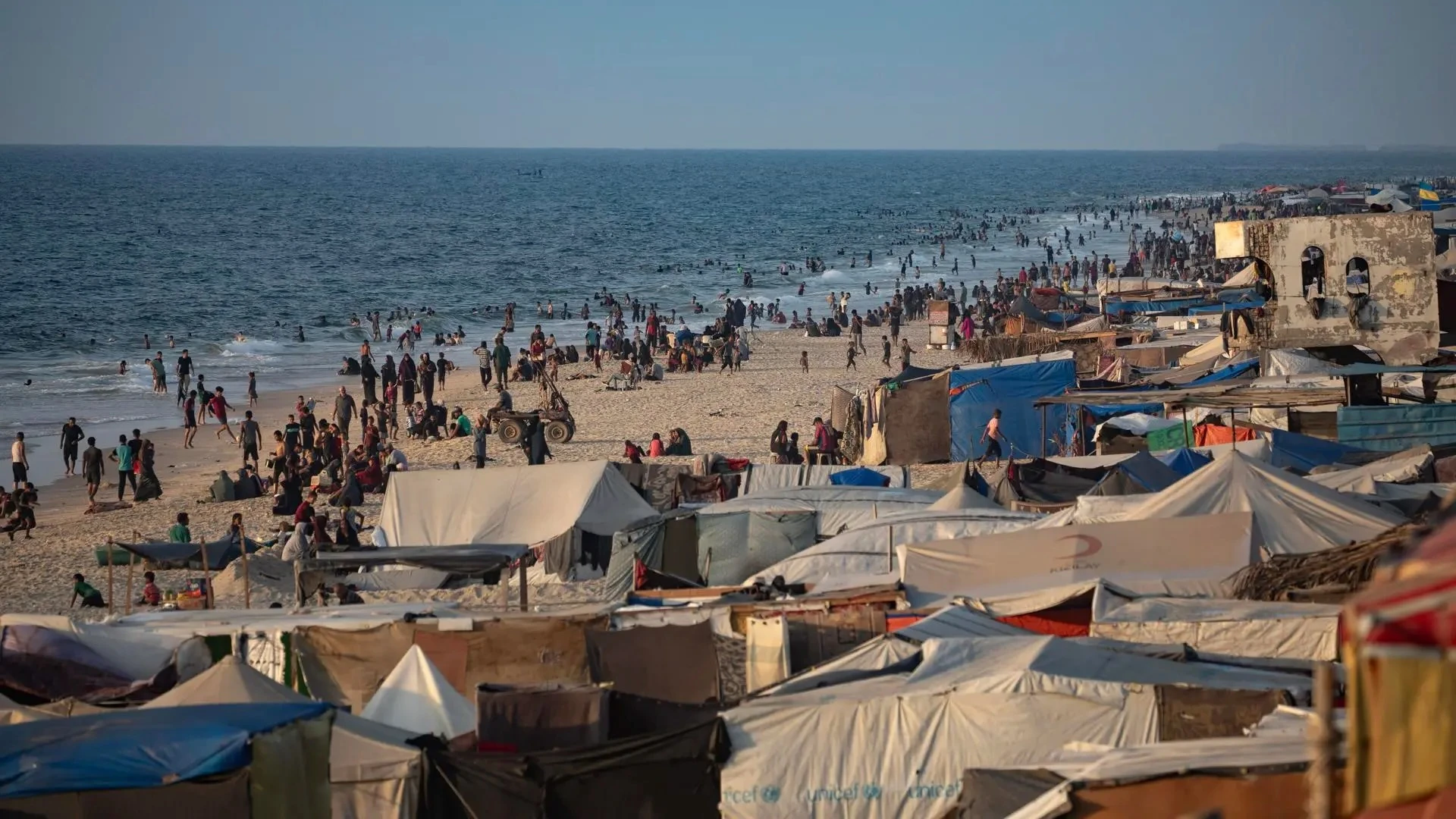
Al-Mawasi, a Bedouin town west of Khan Younis, is filled with hundreds of thousands of displaced Palestinians living in tents.
Israel designated the area a “safe zone” shortly after the war began in October and demanded Palestinians flee there to escape massive Israeli bombardments and ground assaults throughout the strip. A new wave of displaced families fled to the area after the start of Israel’s offensive in nearby Rafah in early May.
But Israel has bombed Al-Mawasi multiple times.
In late June, Israeli forces killed 22 Palestinians when they shelled the office of the International Committee of the Red Cross (ICRC) in Al-Mawasi. The ICRC office was surrounded by hundreds of displaced Palestinians living in tents.
Witnesses told AP that some people were killed as they went to help others who panicked after an initial bombardment.
Source tells Al-Mayadeen: Mohammed al-Deif is alive and well
The Israeli occupation has begun to backtrack on claims of assassinating the general commander of Hamas’ armed wing, the Izz al-Din al-Qassam Brigades, Muhammad al-Deif, after “near confirmation about this in the past hours,” according to Israeli media citing a political source.
This came after a reliable source had previously confirmed to Al-Mayadeen that Commander Muhammad al-Deif is well, stressing that the Israeli allegations about his injury are baseless.
In the same context, the Hamas movement confirmed that the Israeli occupation’s claims about targeting leaders are false, noting that this is not the first time the occupation has claimed to target Palestinian leaders, only for it to be proven false later.
The movement emphasized in a statement that the purpose of these allegations is to cover up the horrific massacre committed by the Israeli occupation in Khan Younis, in the southern Gaza Strip.
It also explained that the Khan Younis massacre indicates the occupation government’s continuation of its genocidal war against the Palestinian people, through the repeated and systematic targeting of unarmed civilians, in tents, displacement centers, and residential neighborhoods, committing the most heinous crimes against them.
Hamas also pointed out that the occupation’s disregard for international law and treaties, and the widespread violations it commits against unarmed civilians, would not have continued without the support provided by the US administration to the Israeli occupation’s extremist government and its terrorist military.
Israel has killed over 38,000 Palestinians, the majority women and children, since the beginning of the war in October.
Thousands more are feared dead, trapped under the rubble and in streets inaccessible to rescue and ambulance crews.
Israeli jets strike residential building in Damascus
Israel has stepped up its illegal attacks against Syria since the start of its genocide in Gaza
News Desk
JUL 14, 2024
(Photo credit: SANA)
A Syrian soldier was killed and three others injured in Israeli bombardment on Damascus early on 14 July.
Syrian state news outlet SANA said the strikes targeted a residential building in the capital’s Kfar Sousa neighborhood and a number of army sites in the vicinity of Damascus.
“The Israeli enemy carried out an aerial aggression from the direction of occupied Syrian Golan, while our Syrian Arab Army’s air defense systems intercepted the missiles launched by the Israeli enemy and downed some of them,” a military source told the news outlet.
Local radio station Sham FM reported that an ammunition depot exploded as a result of the attack.
BREAKING | Israeli jets bombard the vicinity of Syria's capital, Damascus, targeting a building in the Kfarsousa neighborhood. pic.twitter.com/JYcxUcmZ59
— The Cradle (@TheCradleMedia) July 13, 2024
“The IDF attacked a central headquarters and military infrastructure of the Syrian army. In addition, targets used by the air defense system of the Syrian army were attacked. This attack was carried out in response to the interception of the two UAVs that made their way from Syrian territory towards the area north of Eilat yesterday (Saturday). The Syrian regime is responsible for any terrorist activity on its territory and will bear the consequences for it,” an Israeli army spokesman said on 14 July. Tel Aviv hardly acknowledges its strikes on Syria.
Israel’s frequent illegal airstrikes and attacks on Syria have witnessed an uptick since the start of the genocide war being waged against Palestinians in the Gaza Strip.
The Israeli army shelled several sites belonging to the Syrian Arab Army (SAA) in the occupied Golan Heights on 10 July. According to Tel Aviv, the sites in question were established in violation of the 1974 Disengagement Agreement, the deal signed indirectly between Syria and Israel that officially ended the 1973 Arab–Israeli war.
Israeli strikes targeted the port city of Baniyas in western Syria a day earlier, on 9 July, which caused some material losses.
Israel has been attacking Syria for several years, targeting what it says are Iranian and Hezbollah interests in the country in an attempt to stifle Tehran’s military support for the resistance in Lebanon. This unofficial campaign, which Israel does not publicly acknowledge, has been referred to as ‘the battle between wars.’
However, the strikes have been unable to affect the flow of weaponry to Hezbollah.
According to The Cradle columnist Khalil Nasrallah, the Resistance Axis in Syria has managed to establish “a more pronounced military and political stance,” establishing new rules of engagement that “constrain both Washington and Tel Aviv’s once-untethered freedom to operate in this strategic theater.”
In April, Nasrallah wrote that Hezbollah has been able to enhance and augment its military capabilities since the start of Israel’s unofficial campaign in Syria, representing “a substantial strategic setback for Israel, which has expended vast sums on its strategy in Syria without achieving its objectives.”
Israel promotes battalion commanders who committed 'gross human rights violations' to senior positions
Members of the Netzah Yehuda battalion murdered 78-year-old Palestinian-American Omar Assad, but the US has yet to cut military aid to the unit
News Desk
JUL 14, 2024
Israeli soldiers of the Jewish ultra-Orthodox battalion Netzah Yehuda. (Photo credit: Menahem Kahana, AFP/ File picture)
Former commanders of the Netzah Yehuda battalion, an Israeli military unit that has been accused by the US of committing gross human rights violations against Palestinians in the Israeli-occupied West Bank before 7 October, have been promoted to senior positions in the Israel army and are now training Israeli troops and leading operations in Gaza, a CNN investigation published on 14 July found.
In April, the State Department said that it had determined that the Netzah Yehuda battalion, created initially to accommodate ultra-Orthodox Jews in the military, has committed gross human rights violations.
The State Department considered restricting US military assistance to the unit based on the Leahy Law. The law states that the US government cannot provide assistance to military units of foreign allies found to commit human rights violations until reforms are implemented.
Only US Secretary of State Antony Blinken or the Deputy Secretary of State can determine whether units remain eligible to receive US military assistance.
According to testimony from a former soldier of the unit who spoke with CNN, the commanders of the Netzah Yehuda battalion encouraged a “culture of violence" and “the “collective punishment” of Palestinians. The soldier gave an example of the battalion’s forces assaulting a Palestinian village and invading random homes with stun grenades and gas grenades in revenge for children throwing rocks.
However, CNN found that after the State Department threatened to impose sanctions on the Netzah Yehuda battalion, its commanders were nevertheless promoted and are now training soldiers and leading operations in Gaza.
Israeli troops have rampaged through Gaza since the start of the war in October, looting and burning homes and executing Palestinian civilians, including women and children, in so-called “free fire zones.”
CNN writes that “One of the most shocking and widely reported incidents involving the Netzah Yehuda battalion was the death of a 78-year-old Palestinian-American man.”
In January 2022, troops from the battalion invaded Omar Assad’s home in the village of Jiljilya in the occupied West Bank. They gagged Assad with his hands tied until he died.
Current and former US officials also told CNN that the State Department had found additional units of the Israeli military guilty of committing human rights abuses, including from the Yamam special police commandos, Border Police, and Israeli Internal Security Forces (IISF). However, Blinken's State Department has taken no action to cut off US military assistance to these units.
These abuses included the rape of a 15-year-old boy by an interrogator from the IISF at a detention facility known as the Russian Compound in Jerusalem in January 2021.
Josh Paul, a former director in the State Department’s political-military affairs bureau, stated that a charity reported the rape to the State Department, which raised the “credible” allegation with the Israeli government.
“And do you know what happened the next day? The IDF went into the (charity’s) offices and removed all their computers and declared them a terrorist entity,” Paul told CNN’s Christiane Amanpour.
Paul told CNN that there was “not even the slightest basis” to suggest that Israeli units accused of human rights abuses had done anything to reform.
The fact that the US has never imposed sanctions on any Israeli military unit shows “the lack of political will and moral courage to hold Israel accountable,” Paul added.
New Israeli massacre at UNRWA school in Nuseirat Camp kills at least a dozen displaced Palestinians
Israel has stepped up its attacks on schools and facilities housing hundreds of forcibly displaced Palestinians in a blatant effort to exert pressure on Hamas in the ongoing ceasefire negotiations
News Desk
JUL 14, 2024
Palestnian man wounded in strike on Gaza's Nueseirat camp (Photo credit: Jehad al-Shrafi/AP)
Israeli forces carried out an airstrike on the UNRWA-run Abu Oreiban school in central Gaza's Nuseirat Camp on 14 July, massacring at least 15 displaced Palestinians and injuring over 70, the Gaza health ministry reported.
According to the director of Al-Awda Hospital, 70% of the casualties are women and children.
Hundreds of forcibly displaced Palestinians are seeking shelter in the Abu Oreiban school.
On 10 July, it was reported that four schools had been targeted by Israel in just four days.
Nuseirat Camp has been a major target of Israeli planners in the past month, especially schools sheltering Palestinians displaced from their homes elsewhere in the strip by Israeli bombing.
Israeli forces have carried out over 40 massacres in the crowded camp since the start of the war in October,
On 7 July, Israeli forces bombed a UNRWA school, killing 16 and injuring 50 others, among them children.
On 8 June, massive Israeli strikes killed at least 274 Palestinians, including 64 children and 57 women, and injured nearly 700 in Nuseirat Camp. The bombings came as part of an operation to rescue four Israelis held captive by Hamas.
On 16 March, an Israeli airstrike in Nuseirat massacred 36 members of the same family gathered in their home to break the daily Ramadan fast. Mohammed al-Tabatibi, 19, showed correspondents from AFP where the bodies of his relatives were spread out at the Al-Aqsa Martyrs Hospital in nearby Deir al-Balah.“This is my mother, this is my father, this is my aunt, and these are my brothers,” Tabatibi stated in tears.“They bombed the house while we were in it. My mother and my aunt were preparing the suhoor food. They were all martyred,” he explained before the bodies were stacked on a truck to be driven to a cemetery.AFP added that because there were not enough body bags, some of the dead – including at least two children – were wrapped in white cloth stained with blood. On 20 October, Israel bombed the al-Aydi family home in Nuseirat, killing 28 civilians, including 12 children. The house was located in the area where the Israeli military had ordered residents of northern Gaza to evacuate.
Amnesty International reported that Rami al-Aydi, his wife Ranin, and their three children - Ghina, ten, Maya, eight, and Iyad, six - were killed. Zeina Abu Shehada and her two children, Amir al-Aydi, four, and Rakan al-Aydi, three, were also killed, along with Zeina’s mother and two sisters.
Gaza Strip: UN Warns of Food, Water and Health Crisis
Donations of WFP in Gaza, July 2024 Photo: @WFP
July 15, 2024 Hour: 1:14 pm
The agency said that access to emergency medical care is also a challenge for the population.
On Monday, a UN agency warned that food is now a major problem in Gaza, compounded by a shortage of clean water, a health crisis and a collapsed sanitation system.
In a statement released here, the World Food Programme (WFP) denounced “Israeli bombardment from the air, land and sea” against large areas of the coastal enclave, home to more than two million people.
Almost the entire population of Gaza is food insecure, this is a major problem in the territory, he stressed.
On the issue, it stressed that recent evacuation orders by the Israeli army further hamper the ability of humanitarian organizations to respond to the crisis, it said.
WFP explained that in Gaza City, located in the north of the enclave, WFP was forced to temporarily reduce food rations to families.
It warned that sanitation is almost non-existent in the Strip, a situation that exacerbates the problem and threatens to cause large-scale epidemics.
“Sewage and mountains of rubbish have led to sky-high infection rates,” he said.
The agency said that access to emergency medical care is also a challenge for the population.
With regard to the West Bank, it noted that security there has deteriorated significantly due to increased attacks by settlers and the Israeli military.
In the West Bank, hundreds of Palestinians are reported dead, thousands of arrests and restrictions preventing movement between towns and communities, he criticized.
“These restrictions, along with violence and checkpoints, severely impacted the economy and daily life,” he stressed.
Last month, the United Nations Children’s Fund (UNICEF) warned that 90 per cent of children in the Strip suffer from severe food poverty and survive on two or fewer meals a day.
In a report on the sector worldwide, UNICEF warned that “months of hostilities and restrictions on humanitarian aid have collapsed food and health systems, with catastrophic consequences for children and their families”.
For its part, the NGO Action Against Hunger stressed that more than half a million children and mothers are in need of nutritional assistance in the territory, while half of the population there suffers from lack of food.
US proxies attempt to disrupt Syria’s parliamentary elections
The SDF, a US-backed Kurdish militia, has reportedly arrested a number of candidates and imposed roadblocks to prevent the transfer of ballot boxes
News Desk
JUL 15, 2024
(Photo credit: X)
Syrians made their way to the polls for parliamentary elections on 15 July, voting to elect new members to the People’s Assembly for the fourth legislative term.
The polls opened at 7:00 am and will remain open until 7:00 pm. Polling could be extended for up to five hours by the Supreme Judicial Committee for Elections.
There are 8,151 polling stations nationwide, with 1,516 candidates competing for the People’s Assembly’s 250 seats.
President Bashar al-Assad and other government officials, including Prime Minister Hussein Arnous, cast their votes early on Monday, along with scores of Syrian citizens. The vote-counting process will start immediately after the polls close.
Over the past few days, the US-backed Kurdish militia – the Syrian Democratic Forces (SDF) – attempted to obstruct the electoral process.
“After arresting a number of candidates, they closed the roads leading to the sites controlled by the Syrian state in the city of Qamishli in the east of the country, while announcing their non-participation in the elections and their boycott,” a Sputnik correspondent reported.
The correspondent reported that the SDF set up roadblocks and security belts to prevent the transfer of ballot boxes to areas under its control.
This aimed to “prevent civilians from going to the elections … and deprive them of their constitutional democratic right.”
The SDF previously announced that it would boycott the election. “As we announce a boycott of the planned legislative elections, we urge the Syrian people and all national and democratic forces not to participate in them. We stress that a comprehensive political solution, based on Security Council Resolution 2254,” the Syrian Democratic Council (SDC), the SDF’s political wing, said in a statement.
UN Resolution 2254 was issued in 2015 and called for an immediate ceasefire and political settlement in Syria. The resolution failed to address the large sections of Syria illegally under the control of extremist armed groups.
Last year, SDF representatives had been in dialogue with the Syrian government, but little progress was made.
Several Syrian cities have witnessed protests in recent days rejecting the parliamentary elections, most notably Sweida and Daraa, where participants confirmed their boycott of the elections.
The Syrian opposition has labeled the elections illegitimate.
The head of the Syrian Negotiations Commission (SNC), Badr Jamous, said earlier this week that it was “a repetition of all previous elections that represent the ruling authority alone... in the absence of a political settlement.”
Israel singled out for ‘extraordinary’ US support in Republican party platform
The platform will be ratified at the party's convention, which begins this week, to confirm Donald Trump as the Republican nominee for US president
News Desk
JUL 15, 2024
President Trump and Israeli Prime Minister Benjamin Netanyahu shake hands in May 2019. Trump has since distanced himself from Netanyahu. (Photo credit: Sebastian Scheiner / Associated Press)
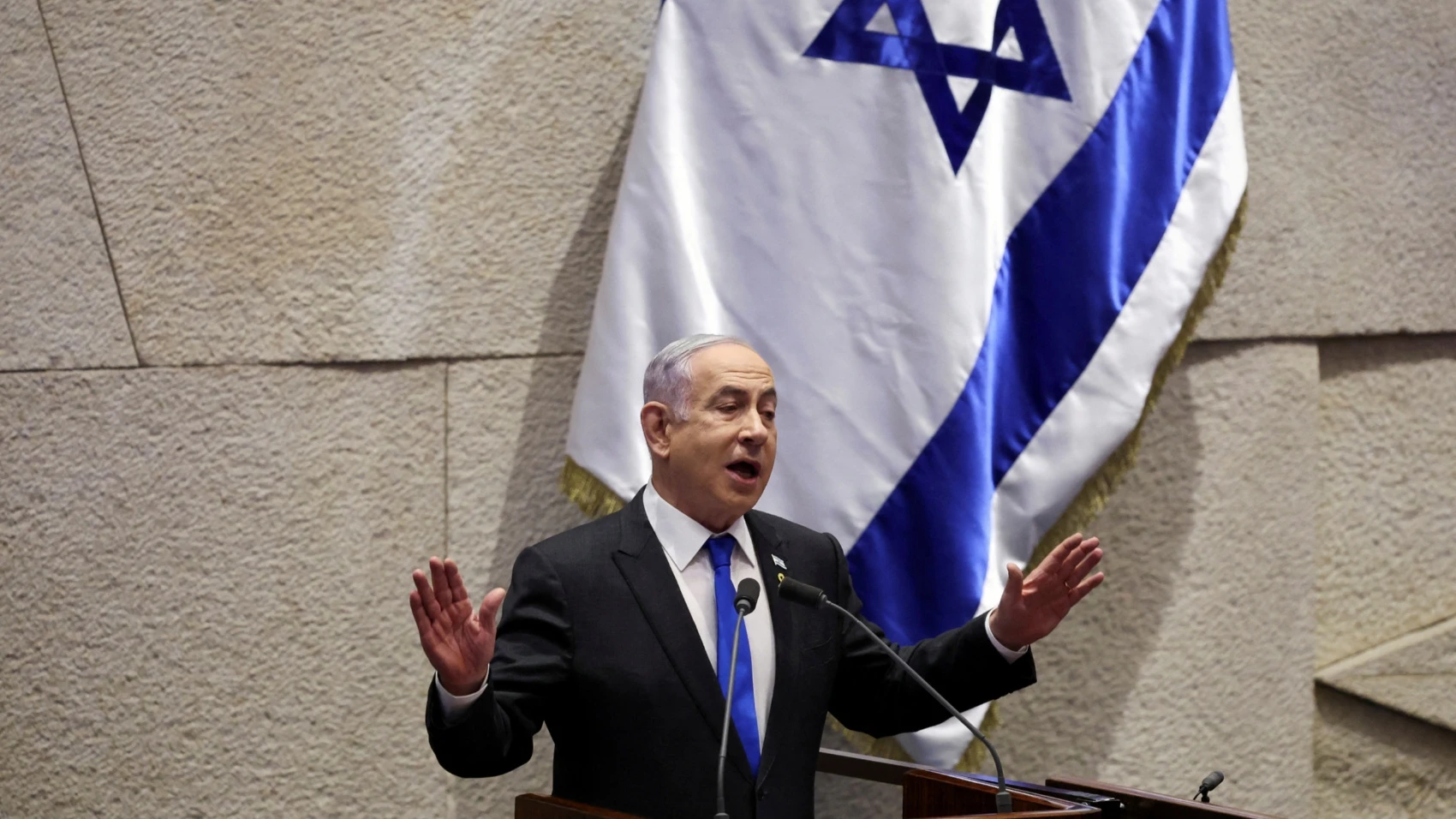
Israel is the only foreign nation mentioned in the Republican Party’s newly published platform, signaling Donald Trump’s strong support for Israel should he win November’s US presidential election, Israel Hayom reported on 15 July.
The platform was published ahead of the Republican Party’s national convention, which begins Monday in Milwaukee, Wisconsin. On Thursday, Trump will be formally declared the party’s nominee for the presidential election.
During the convention, Republican party members will ratify the party platform, which details Trump’s agenda for the next four years if he defeats President Joe Biden.
The platform states that Trump wishes to strengthen the US domestically and abroad, restore fiscal balance, curb undocumented immigration, and champion family values.
The platform confirms Trump’s strong support for Israel, stating, “We will stand with Israel, and seek peace in the Middle East.”
In an interview with Israel Hayom several months ago, Trump said he “was the best president in the history of Israel.”
The Republican Party is known to have strong ties with Israeli Prime Minister Benjamin Netanyahu and his governing Likud Party.
Israel Hayom notes that “unlike other nations, Israel is not singled out as a country expected to fully fund its defense expenses” in the Republican platform.
The platform states that NATO member states must “meet their obligations to invest in our Common Defense and by restoring Peace to Europe.” However, no such demand is made of Israel.
The Council on Foreign Relations notes, “Israel has been the largest cumulative recipient of US foreign aid since its founding, receiving about $310 billion (adjusted for inflation) in total economic and military assistance.”
Since the start of Israel’s war on Gaza in October, the US has enacted legislation providing at least $12.5 billion in military aid to Israel.
“The extraordinary flow of aid has included tank and artillery ammunition, bombs, rockets, and small arms,” the Council added.
Israel’s war on Gaza has killed over 38,000 Palestinians, the majority women and children, while flattening large swathes of the enclave.
Saudi support for Israel will not go unpunished by Yemen
Ansarallah leader Abdul Malik al-Houthi has upped the ante, threatening Riyadh with huge economic and military consequences if the Saudis continue to align with US policies and support the occupation state.
Khalil Nasrallah
JUL 15, 2024
(Photo Credit: The Cradle)
In a strategically-timed message to the Saudi rulers, Abdul Malik al-Houthi, the leader of the Yemeni Ansarallah movement, warned of an imminent escalation of clashes on 7 July:
We will respond in kind: banks for banks… the airport in Riyadh for the airport in Sanaa… and seaports for seaports.
The warning followed a recent surge in threats from Sanaa directed at Saudi Arabia. The most notable of these occurred earlier this month when Yemen issued an ultimatum demanding that Riyadh expedite the return of detained Yemeni pilgrims to Sanaa on a Yemenia Airways flight that had been delayed for a week. The Saudis complied within the three-day deadline, having understood “the language of force.”
Ansarallah’s escalation is directly tied to actions taken by the Riyadh-backed Yemeni government under US influence, aimed at deterring Sanaa from continuing its naval blockade in support of Gaza. This was explicitly spelled out by Houthi, who warned the Saudis against colluding with the US in its efforts to undermine the region’s Axis of Resistance.
Economic aggression renews conflict
In early April, the Aden-based Central Bank of Yemen (CBY), aligned with the Riyadh-backed government, ordered banks in Sanaa to relocate their headquarters to the southern port city within 60 days or face sanctions under anti-terrorism, corruption, and money laundering laws.
The de-facto government in Sanaa perceived this as an attempt to pressure it into halting its support for Gaza, following a direct US warning backed by threats of renewed Saudi aggression. Instead of backing down, Sanaa expanded its Red Sea operations toward the Mediterranean Sea, having already moved into waterways, including the Indian Ocean and the Gulf of Aden.
Two weeks ago, Saudi maneuvers to limit flight restrictions from Sanaa airport and detain Yemeni Hajj pilgrims in Jeddah prompted further threats from Ansarallah’s leadership.
Houthi explicitly threatened Saudi Arabia with severe consequences for these actions and its support for Israel against Yemen.
Following his speech, Saudi Arabia appeared to reverse its stance by instructing the Aden government to postpone its decision on banks. This move was taken up by UN envoy to Yemen Hans Grundberg, who requested the head of the Saudi-formed Presidential Leadership Council (PLC), Rashad al-Alimi, to “postpone the decision to withdraw the licenses of commercial banks until the end of August and engage in negotiations under the United Nations’ auspices to discuss economic developments.”
Sanaa swiftly informed the UN envoy of its “categorical rejection of the attempt to whitewash the issue as an internal affair,” according to Hussein al-Ezzi, Deputy Foreign Minister in the Sanaa government. Ezzi says that “the use of the language of postponement and deportation in matters related to the rights of the Yemeni people is unacceptable.”
Sanaa’s refusal indicates a new phase in its efforts to lift the blockade, emphasizing how its support operations in Gaza and strikes against US and UK-led military operations on Yemen demand a change in how it is approached.
Yemeni military readiness
As soon as Yemen’s Ansarallah-allied armed forces announced their retaliatory preparedness against Saudi airports, banks, and ports – usually tied to the siege on the Yemeni people – and Riyadh’s actions in support of Israel, the Yemeni military issued a warning statement on Friday.
The statement, which announced a naval military operation, declared:
The Yemeni Armed Forces, in the face of the hostile moves of the great Yemeni people by the Saudi regime, in implementation of American directives and in service of the Israeli enemy, to confirm its military readiness to implement popular demands. In a legitimate response to those moves.
The readiness announced by the Yemeni Armed Forces indicates its preparation for military action against targets in Saudi Arabia, pending leadership decisions. Sanaa is preparing for a multi-front war from a defensive position and has developed a diverse and extensive target bank over the past two years, resulting in increased damage potential.
But Yemen’s ambitions are broader than mere military responses. Hinting at its varied strategic calculations, a senior member of Ansarullah’s political bureau, Mohammed Nasser al-Bukhaiti, said in a post on X, “We will defeat the Saudi regime not through our force of arms, but by its alignment with the most tyrannical and criminal regimes, and our support for the oppressed and marginalized.”
Houthi’s threats are not mere warnings, either. Hizam al-Assad, a member of Ansarallah’s political bureau and Shura Council, confirms to The Cradle that there is “a general mobilization and a resumption of fighting to deliver a blow to the Saudi regime by targeting its economic, developmental, vital, and military resources.”
Assad attributes the resumption of fighting to the continued “Saudi regime’s aggression against the Yemeni people, along with its conspiracies with the Americans and Israelis against the nation and its just causes.”
The Saudi regime has provided services to the Israeli enemy during this crucial period by opening a land path to supply the Israelis with arms and supplies, thus, the Saudi regime declares hostility and alignment with Israel against the Palestinian people and the people of Gaza, participating in committing heinous massacres in Gaza.
No clear Saudi position has emerged publicly. Riyadh will likely begin contact through intermediaries like Oman or attempt direct communication with Sanaa to avoid escalation, considering that the latter’s actions could lead to significant economic damage in Saudi Arabia.
This would not be the first time the Saudis have experienced a hit to their economy – Yemen has regularly launched retaliatory strikes on the kingdom’s energy facilities and vital infrastructure, disabling half of Saudi Arabia’s oil production as far back as 2019. If the conflict escalates again and circumstances worsen, the consequences on the Saudi economy, including its large projects like NEOM, could be greater.
Riyadh’s miscalculation of Sanaa’s resolve
For nine months since the start of Operation Al-Aqsa Flood, Saudi Arabia has tried to remain neutral in any aggression against Yemen. It has publicly refused to participate in US-led naval operations or allow its territory to be used for airstrikes.
The US and Israelis were informed of the first Yemeni strikes toward the occupied territories on 18 October 2023, after Sanaa announced that a wave of missiles and drones would be launched targeting Israel, not Saudi Arabia.
Since then, Saudi Arabia has tried to establish new facts on the ground inside Yemen, with the Central Bank’s move to Aden being one example. Riyadh has secretly facilitated land passage toward Israel as compensation for Sanaa’s closure of the port of Eilat after preventing ships from reaching it.
Recently, it has implemented US demands related to the blockade on the Yemeni people, showing no desire to move forward with peace talks with Yemen, which could have led to the end of bilateral aggressions and lifted the blockade.
In light of these factors, it is clear that Riyadh has misjudged Sanaa’s position. Yemen has now prioritized supporting the Palestinian people, considering it an opportunity to freeze any practical steps related to stopping the nine-year Saudi–Emirati aggression.
The Saudis have bet on regional variables favoring the US and Israelis, hoping to free themselves from many pressures. This is evidenced by their continuation of Washington-backed negotiations on “normalization” with Tel Aviv, despite regional realities in which US deterrence has been weakened, and Israel struggles to achieve its declared goals in its Gaza war.
In response, Sanaa believes it must make the Saudis understand that their calculations are wrong and that future strikes will occur if Riyadh does not change its regional policy.
Yemen attacks Israeli ship, port city in response to Khan Yunis massacre
Sanaa has vowed to continue its operations until Israel's genocidal war on Gaza is brought to an end
News Desk
JUL 15, 2024
(Photo credit: AP)
The Armed Forces of Yemen’s Sanaa government, aligned with the Ansarallah resistance movement, announced on 14 July an operation against an Israeli ship in the Gulf of Aden and an attack targeting Israel’s southern port city of Eilat, known in Arabic as Umm al-Rashrash.
Sanaa’s forces said the operations were a “response to the Al-Mawasi massacre in Khan Yunis, which was committed by the Israeli enemy [on Saturday].” At least 90 Palestinian civilians were killed in the massacre in southern Gaza.
“The naval forces, the unmanned air force, and the missile force of the Yemeni armed forces carried out a joint operation targeting the Israeli ship (MSC UNIFIC) in the Gulf of Aden, with a number of ballistic missiles and drones,” Yemeni army spokesman Yahya al-Saree said in a statement on Sunday.
“The Air Force launched a number of drones targeting a number of military targets of the Israeli enemy in the Umm al-Rashrash area, south of occupied Palestine. The operation achieved its goals successfully,” Saree added.
Sanaa also confirmed “full readiness to carry out joint military operations with any Arab or Islamic party that supports the oppressed Palestinian people.” The Yemeni army has carried out several joint operations with the Islamic Resistance in Iraq (IRI) recently. The Yemeni statement came after renewed US–UK airstrikes on Yemen on 14 July.
Yemen’s Al-Masirah TV reported on Sunday that three US–British airstrikes targeted Hodeidah province west of the country. The attacks followed a US–UK strike targeting the Buhais area in Yemen’s northwestern Hajjah province.
Washington and London have recently increased their illegal attacks on Yemen, as Sanaa’s forces remain undeterred and continue their blockade on Israeli shipping. US and UK warplanes launched several airstrikes on Hodeidah International Airport in western Yemen on 12 July.
The attacks came after several US–UK attacks on Yemen on Thursday.
Yemen has imposed a naval blockade on all ships delivering goods to Israeli ports in the Red Sea, Arab Sea, Gulf of Aden, the Indian Ocean, and the Mediterranean – in support of the Palestinian resistance in Gaza.
Ansarallah and the Armed Forces of Yemen’s Sanaa government, which are merged with one another, have also been striking US and British warships in response to a violent and illegal campaign of airstrikes launched by Washington and London against Yemen in January.
Ansarallah leader Abdel al-Malik al-Houthi said in a speech on 11 July that 57 people have been killed and 87 wounded in 570 airstrikes carried out by the US and UK against Yemen since the start of the western campaign.
The Yemeni army has vowed not to stop its operations until the war in Gaza comes to an end.
The western campaign has done nothing to deter the Yemenis. US and EU maritime task forces have failed to progress in preventing attacks on ships, which have strained both the Israeli economy and international shipping as a whole.
Commander Benjamin Orloff, a Navy pilot who recently returned home from deployment, described the experience of intercepting Yemeni missiles and drones as “traumatizing” in an interview on 13 July.
Late last month, a US navy commander said the threat posed by Yemen’s forces in the Red Sea and elsewhere poses a threat unseen by Washington since the Second World War.
Israel’s Inertial Genocide
Posted on July 15, 2024 by Yves Smith
Those who pay a wee bit of attention to Israel’s conduct over many years may have noticed its tendency to use major news events in the US as cover for Doing Things that might otherwise generate well-warranted press criticism or even some official pushback. The fact that there hasn’t been any apparent Israel Surprise, big or small, during the weeks of the press being dominated by the debate over Biden’s political future, and now the Trump assassination attempt, suggest that Israel is already just as far as it can go up its escalation ladder with Palestine, ex nuclear war.
Mind you, the above statement is not to deny that absolutely terrible things are happening daily in Gaza and the West Bank. But the horrors have been so frequent, even with new sadism of the infliction of starvation, that observers have become numbed to them. Admittedly, by cutting power (and thus the ability to get images out of Gaza) and systematically killing journalists, Israel has succeeded in choking the chronicling of the genocide, which also means casual news watchers (who might be more susceptible to reacting to fresh outrages) have less fodder for outrage.
One might argue that the fresh Israel attack on al-Mawasi, a designated safe zone in Gaza, which killed over 90, so heinous as to elicit Palestinian general strikes in many West Bank cities, was an effort to take advantage of the Presidential election upheaval in the US. As has also become common, the Israeli strike was a so-called double tap, where Israel first bombed the target, then hit a second time so as to kill first responders.
But after Israel destroying hospitals and even torturing doctors, it’s hard to see this heinous act as much of an escalation, save perhaps for the intelligence-insulting justification. Israel claimed it was after Palestinian commander Muhammad Deif, but even Netanyahu has said it has not confirmed he was killed.
And the event du jour is Israel flattening a UN school:
I think this child survived.
Israel just bombed a UN school in Nusairat refugee camp and buried more children under rubble.
Gaza is a constant daily massacre. Please don't let the media distract you with propaganda about other events.
Keep focused. Keep sharing.
To widen the frame just a smidge, the Lancet analysis that at least 186,000 Palestinians have died in Gaza has, in keeping, also been under-reported.
Scott Ritter went through typical ratios of buried dead to other deaths when buildings are destroyed, and argued the Lancet had used the low end of the range. He thought total deaths of 250,000 were more plausible and much higher numbers entirely possible.
Instead they maimed and killed many civilians, including children, which as Lambert faux-blandly noted, seemed to be the point. And of course genocide is the point. We’ve read and heard innumerable statements from Israeli officials and ordinary citizens about how all Palestinians are combatants and/or subhuman, and so entirely deserve to be exterminated.
One could argue that a new Israel act under the cover of the US presidential race mayhem is that Israel has finalized its annexation of the West Bank. But that might not be sexy, erm, nauseating enough to merit much press notice even in less turbulent times. And the perp, Ben Smotrich, is so persistently defiant of US opinion that I doubt he gives our news cycles much mind. From Haaretz in Smotrich Has Completed Israel’s Annexation of the West Bank:
A few days ago, the constitutional revolution was completed, but no, not in Israel. Few were aware of it, but the Ben-Gvir-Smotrich-Netanyahu government has conspired to carry out two coups – one in Israel and the other in the West Bank….
Quietly, without any ceremonies or press announcements, Yehuda Fuchs, the head of the army’s Central Command (and the commander of Israeli forces in the West Bank), signed an order creating a new position in the army’s Civil Administration, “deputy head for civilian affairs” and the Civil Administration’s head signed a document delegating powers to the holder of the new office.
But the “deputy” is in fact a civilian appointed by Smotrich and is in no way a deputy because he is not subordinate to the head of the Civil Administration. He needs no approval for his actions, is not required to consult with or report to him. He is subordinate alone to Smotrich.
The order and the letter of delegation of powers transferred most – in fact almost all – of the powers held by the head of the Civil Administration to the new deputy. Land management, planning and construction, enforcement against unpermitted construction, supervision and management of local authorities, professional licensing, trade and economy, management of nature reserves and archaeological sites…
In order to understand how dramatic this change is, one should realize what international law was trying to achieve when it determined that occupied territory should be managed by a military government.
International law regulates a state of occupation as a temporary management of the territory by the occupier, and it categorically prohibits its unilateral annexation. This is not just another prohibition, but a key principle meant to cement the principle which precludes the use of force in international relations except in self-defense. If it is clear sovereignty cannot be acquired by force, there will be less motivation for embarking on a war of aggression. In other words, this prohibition on unilateral annexation of an occupied territory principle is at the core of the international rule-based order established after World War II, that in its heart lies the desire to eradicate wars. The purpose of determining that an occupied territory will be managed by a temporary military administration, and not directly by the occupying government, was to create a buffer between the citizens of the occupying country, who are its sovereign, and the ruling apparatus in the occupied territory.
But despite the ever rising toll of death and destruction in Gaza, Israel’s success in exterminating or otherwise ethnically cleansing the Palestinian population is not coming quickly enough, at least for its citizens. Alastair Crooke has stressed that Israel’s premise, of being a haven where Jews could everywhere be safe, was shattered by October 7. Not only has it not been restored, it is unlikely ever to be restored.
The pretext for the extermination in Gaza was to, as Netanyahu vowed, to eliminate Hamas. Many pointed out that could never happen, that more Hamas fighters would enlist and replace the ones lost. But more important than external opinion is increasing confirmation in Israel. For instance, from CNN in late June:
Israel’s top military spokesman has said Hamas cannot be made to “disappear,” casting doubt about whether the government’s war aim of defeating the militant group can be achieved and drawing a sharp rebuke from Prime Minister Benjamin Netanyahu.
“The idea that it is possible to destroy Hamas, to make Hamas vanish — that is throwing sand in the eyes of the public,” Israel Defense Forces (IDF) spokesman Rear Adm. Daniel Hagari said Wednesday in an interview with Israel’s Channel 13.
The IDF kinda-sorta walked that back, but the point was made.
More generally, as many Western military commentators have pointed out, Israel and the US are both set up to wage high intensity, airpower dominated, relatively short conflicts. Hamas (and Hezbollah and Iran) all understand that, and so went well underground and set themselves up to wage a war of attrition.
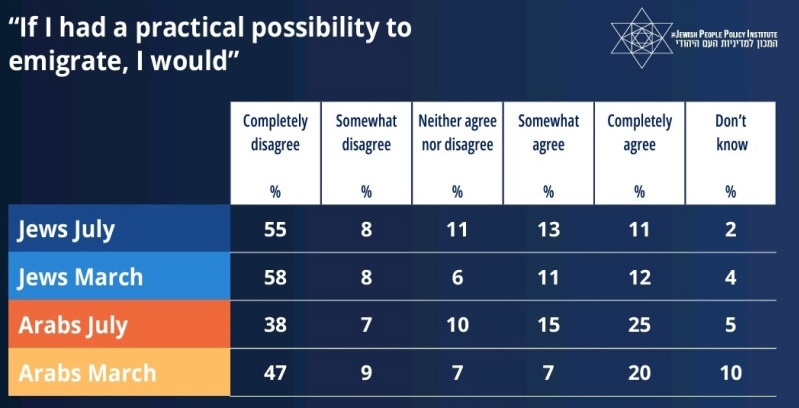
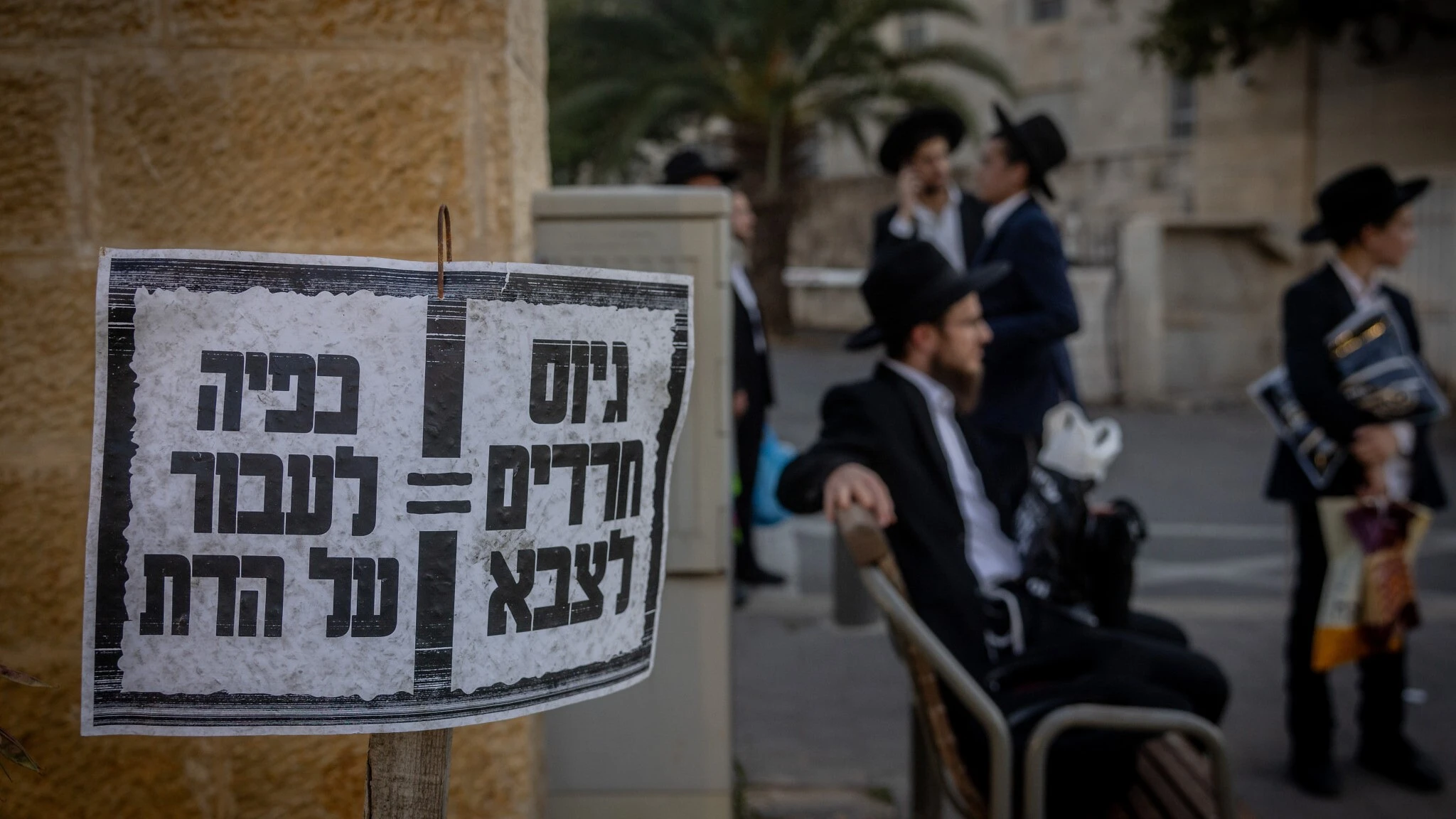
Despite the appearance of cohesion and normalcy in key centers (think of Kiev until recently as an analogue), there are plenty of cracks beneath the surface: the departure of some Israelis over the war (generally Ashkenazis, including skilled, readily employable IT workers), the refusal of the ultra-religious to serve in the military, the failure of the government to secure the release of most hostages, and Hezbollah’s continues shelling of northern Israel. Israel has been threatening for months to attack Lebanon, with hardliners strutting that they will push Hezbollah to the Litani River. In fact, Israel only barely got there in its failed 2006 war, planting a flag for a photo and quickly running away. And everyone watching this war who also possesses an operating brain cell, above all IDF leaders, know that Hezbollah is much more powerful than in 2006 and Israel is not. So many commentators believe that the reason for the continuing saber-rattling is that Israel leaders are confident that the US would join a war with Lebanon, even though the head of the US Joint Chiefs of Staff Charles Brown cleared his throat to state otherwise. In a potentially more convincing communication, the US also said Ukraine was the top priority customer for new Patriot missile deliveries, and asked Israel to turn over eight (admittedly stockpiled) Patriot batteries to Ukraine.
One has to wonder if Netanyahu and the hardliners continue to talk up launching a war with Lebanon to try to wear down the IDF, or whether instead this is actually an empty formula to try to placate the angry, displaced border area settlers.The recent dustup with Iran over the Israel attack on Iran’s consular premises demonstrated conclusively how vulnerable Israel is. Iran agreed to hit only pre-identified targets and sent a big wave of slow-moving drones to announce it was coming. Even with all that notice, Iran was still able to penetrate Israeli defenses and take out military assets at these highly defended sites. So if Israel (with US and French assistance) can’t protect itself in textbook perfect circumstances, how will it do in a bare knuckle conflict?
In another proof of US weakness, the Houthis continue to wreak havoc in sea lanes and the US has spent a lot of money in not subduing them:
And Israel’s economy continues to suffer. From Middle East Monitor last week:
Some 40,000 Israeli companies have closed their doors since October, amid expectations that the number will rise to 60,000 by the end of the year, Israel’s Maariv newspaper said yesterday.
The Israeli paper cited data from the CEO of business information company CofaceBDI, Yoel Amir, saying: “This is a very high number that includes many sectors.”
The vast majority, 77 per cent, of the companies are small businesses which are most vulnerable.
He pointed out that the most affected sectors are construction and related industries such as ceramics, air conditioning, aluminium and building materials.
While trade, including fashion, furniture and household appliances and the service sector, including cafes, entertainment and entertainment services, and transportation have also been hit hard.
Tourism has been severely impacted by the war with almost non-existent foreign tourism, along with the decline in national mood.
“The damage in combat zones is more serious, but the damage to businesses is across the country, with almost no sector spared,” Amir noted….
“Apart from companies closing their doors, there has been a sharp decline in corporate activity in various sectors since the beginning of the war,” he added.
And some prominent individuals are speaking out. From TurkiyeToday:
Former Israeli Defense Minister Avigdor Lieberman said Monday that Israeli soldiers are having nightmares, the economy is collapsing and diplomacy is eroding.
“Nine months have passed since the deadly surprise attack by Hamas on the state of Israel and its people, and it seems as though nothing has changed within the Israeli leadership,” Lieberman wrote in an article published on the Israeli news site Walla.
“Children and adults, soldiers, and reservists are suffering from nightmares about what has happened and what might happen. The Israeli economy is collapsing, and Israeli diplomacy is eroding,” the leader of the right-wing opposition Yisrael Beiteinu Party said.
Lieberman also addressed tensions between Israel and the Lebanese group Hezbollah, saying: “The north is desolate and scorched; Iran continues to arm itself; and while all this is happening, the corrupt government continues as if nothing has happened.”
Israel seems to have become a hostage to its vision of itself, above all its sense of divine entitlement to Biblical lands and to subjugate, expel, or exterminate its inhabitants. Israel has managed the difficult task of uniting not just its neighbors but now the entire world against it, and remains defiant even as its sponsor is visibly enfeebled and overcommitted.
So even if Netanyahu, in his speech to Congress next week, gets his expected record level of applause and again tells us how to run our foreign policy, the US does not have the resources to make commitments to change Israel’s trajectory. The time it will take to have largely exterminated the Palestinians is more than it has. Yet Israel, like many old people, insists on being even more of who it always was no matter what the longevity cost.
Operation Guardian of Prosperity has failed
July 15, 15:44
Operation Guardian of Prosperity has failed.
The Houthis have attacked another merchant ship off the coast of Yemen.
They also confirmed an attack on the Greek frigate Spara (the Greeks claim that they were able to fight off the drones).
Meanwhile, the United States has quietly reduced the level of support for Operation Prosperity Guardian - the naval group off the coast of Yemen has been reduced, and the intensity of US and NATO ship actions off the coast of Yemen has sharply decreased. The reason is simple - Operation Prosperity Guardian has completely failed without achieving any of its objectives.
1. Instead of reducing the intensity of Houthi attacks, we have seen an increase in the number of these attacks, as well as their diversity.
2. Instead of reducing the Houthi's determination to wage war, we have achieved a strengthening of the determination and involvement of the Houthi leadership in this war.
3. Instead of strengthening the security of ships off the coast of Yemen, we have seen an increase in the danger for US and British ships associated with Israel off the coast of Yemen.
4. Instead of localizing the conflict off the coast of Yemen, we have seen it expand to the Indian Ocean and the Mediterranean Sea.
5. Instead of protecting Israel from Houthi attacks, we received Houthi missiles and drones in Haifa and Eilat.
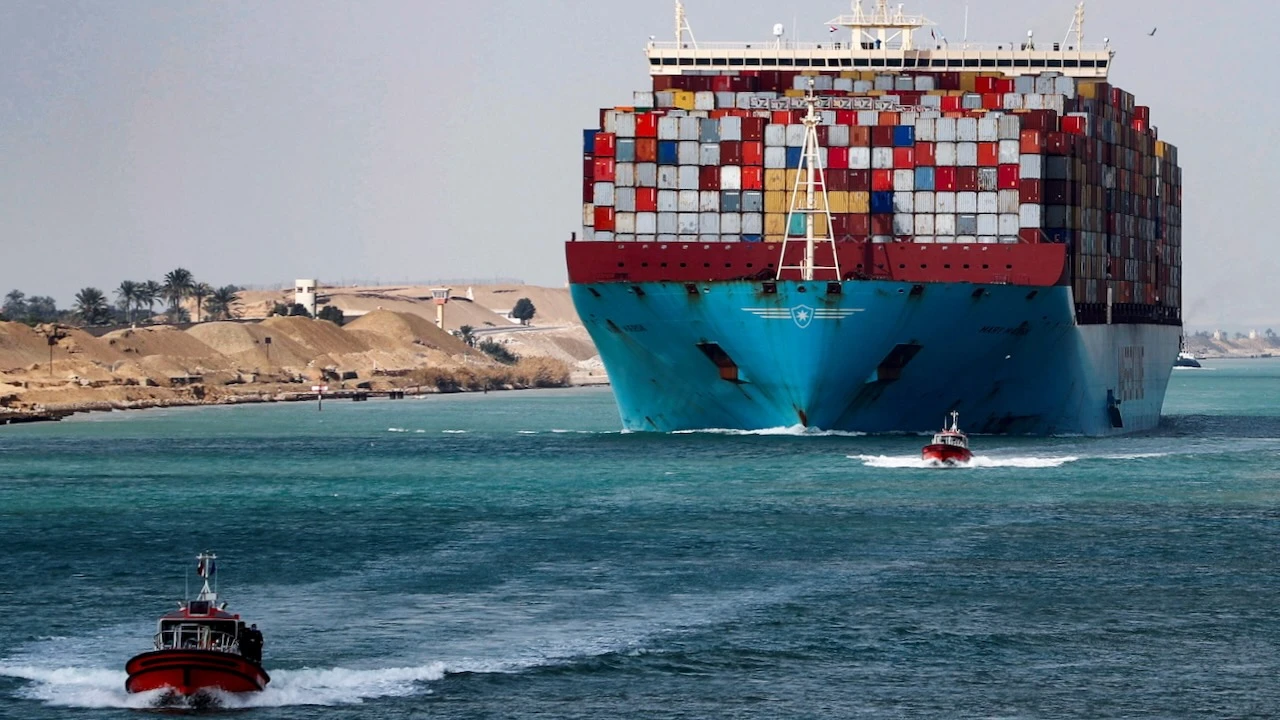
6. Instead of demonstrating the power of the US Navy's AUG, we received a cowardly escape of the AUG through the Suez Canal after possible Houthi ballistic missiles.
7. Instead of a convenient remote war, we received "accidentally drowned" sailors and marines after Houthi attacks.
Thus, the Houthis and their allies completely thwarted the plans of the US and Israel. The region sees this, so the Houthis have further strengthened their positions. The US authority in the Middle East has been dealt another powerful blow.
Assassinations Fail to Break Palestine’s Al-Qassam: The Brigades Are Resilient and Flexible
JULY 15, 2024
Al-Qassam General Commander Mohammed Al-Deif. Photo: Quds News Network.
By Yousef Fares – July 15, 2024
The military wings of the Palestinian resistance factions are reticent to release any information related to their martyrs, both leaders and personnel. This is not out of a desire to conceal their human losses, as is believed, but because the Zionist enemy is keen to carry out revenge attacks against the families of resistance fighters, whether the fighters are alive or martyred. It will track down and pursue their families with violent raids even if only children and women remain.
In light of this, everyone has come to believe that there are no significant losses among the resistance’s ranks of personnel and leaders. However, the reality known to those who have lived through this war is that the resistance suffers, on a daily basis, a large number of martyrs among its leaders and personnel. Some of those martyrs were successfully assassinated by the Zionist enemy from the air, while others ascended during field battles. Such losses could have created a vacuum and deteriorated the ability of the Al-Qassam Brigades to confront the enemy on the battlefield. This would be the case for regular armies, and even in the traditional scenario of resistance formations. However, the principle of flexibility in the military hierarchy of the Al-Qassam Brigades suits the conditions of the current war. This flexibility allows the organization to continuously absorb all blows against it and continue to effectively operate as if no one had been assassinated.
The day before yesterday, the Israeli Prime Minister Benjamin Netanyahu came out celebrating the hypothesis that the enemy forces had managed to assassinate Mohammed Al-Deif, the general commander of the Al-Qassam Brigades. Al-Deif’s name has a special resonance in the Israeli public consciousness and haunts the entire Israeli security establishment.
Mohammed Diab Ibrahim Al-Masri, born in 1965, whom the occupation army’s chiefs of staff have failed to assassinate time and again since they began pursuing him in 1995, has become “the ghost with seven souls” as he is conventionally called in Hebrew media (referring to the number of times the enemy army has failed to kill him.) For them, he has become the “tipping point” that tilts the balance of victory in all battles and wars. Perhaps the Israeli prime minister desired to record an achievement of this magnitude in his career, giving him authorization to continue fighting or to stop it without paying the political cost that awaits him.
The Zionist intelligence agency Shin Bet, whose “golden intelligence” led to the massacre in Al-Mawasi, Khan Younis under the pretext of targeting Al-Deif, is focused on identifying and eliminating resistance leaders. In this context, the Shin Bet announced that it succeeded in assassinating Rafaa Salameh, the commander of the Khan Younis Brigade, while it could not confirm information about the fate of Al-Deif.
However, the number of assassination against military and resistance faction leaders during the war has showed that none of these operations succeeded in affecting the level of unity or escalation of the resistance in the field. Perhaps the clearest example of this is the North Gaza Governorate, where the Zionists succeeded in assassinating the commander of the Northern Brigade, Ahmed Al-Ghandour as well as the most prominent leaders of the Brigades and military specialists, such as Raafat Salman, Ayman Siyam, Wael Rajab, Ibrahim Biari, and Naseem Abu Ajina, most of whom were killed in the second month of the ground operation. The occupation army assumed that these assassinations had broken the spirit of the Northern Brigade and undermined its ability to keep fighting. However, the moment of truth was revealed during the ground incursion into Jabalia camp at the beginning of May, where the Zionist army admitted that that the Northern Brigade, which was supposed to have been defeated seven months ago, engaged it in some of the most intense fighting since the outbreak of the war.
The uniqueness of Al-Qassam
The military apparatus of the Hamas movement possesses a uniqueness with respect to the military arms of other resistance factions, as it has been able to maintain a large number of members from its founding generation, who have built up the Al-Qassam Brigades from the mid-1980s up through Al-Aqsa Flood. These individuals, who today hold positions of brigade commanders and military specialists, are all over 55 years old. Perhaps this large group of qualified cadres and leaders, who are all capable of leading operations on the front, explains the principle of “flexibility” that the spokesman for the Al-Qassam Brigades, Abu Obeida, spoke about in a previous speech.
It has also allowed the Al-Qassam Brigades to absorb all the concentrated assassination strikes against its military leadership in Gaza. Accordingly, whether Mohammed Al-Deif is assassinated or not will only have a symbolic effect on the battle. The enemy is the one in need of symbolic achievements to lift its morale, whereas the resistance realizes that its leaders, in front of its soldiers, are on the path of martyrdom.
US, Israel reward setters looting Gaza aid with ‘tax-deductible’ donations
Israeli settlers looting or destroying aid deliveries bound for Gaza has become routine since the start of the war
News Desk
JUL 16, 2024
(Photo credit: AP)
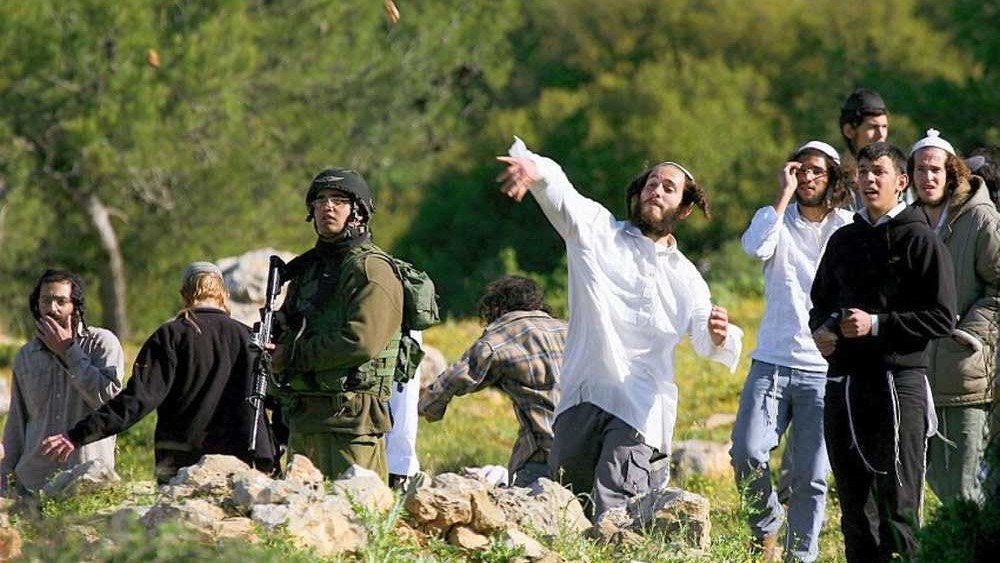
Extremist Israeli settler groups blocking humanitarian aid deliveries to besieged Palestinians in the Gaza Strip have been receiving tax-deductible donations from Washington and Tel Aviv, according to a joint investigation by AP and Israeli outlet Shomrim.
“Three groups that have prevented humanitarian aid from reaching Gaza – including one accused of looting or destroying supplies – have raised more than $200,000 from donors in the US and Israel,” AP wrote on 16 July.
Citing aid groups involved in efforts to secure the entry of aid into Gaza, the investigation adds that “incentivizing these donations by making them tax-deductible runs counter to America’s and Israel’s stated commitments to allow unlimited food, water and medicine into Gaza.”
According to Tania Hary of the Israeli NGO Gisha, Israel is demonstrating a “lack of coherence” in its policy, which it claims aims to secure as much aid entry into Gaza as possible.
“If you’re on the one hand saying you’re allowing aid in but then also facilitating the actions of groups that are blocking it, can you really say you’re facilitating aid?”
Tel Aviv did not respond to a request for comment on the new investigation. The US State Department said it was working to ensure aid delivery but did not comment on the donations to setter groups who have been blocking and destroying humanitarian aid deliveries.
Israeli settlers have repeatedly attacked and obstructed aid trucks from entering Gaza. In late April, a group of Israeli settlers attacked and damaged an aid convoy heading to Gaza from Jordan. Videos at the time showed settlers climbing the aid trucks and dumping food contents onto the ground.
Months earlier, in February, settlers attacked an aid truck at the Nitzana border crossing, with footage showing them smiling, carrying flags, and claiming to be “protecting Israel” by “blocking food from Hamas.”
The attacks on aid trucks have become routine since the Gaza war started.
In early May, Israel seized the Rafah border crossing as part of its incursion into the southernmost city, severely hindering efforts to send aid into Gaza. Last month, Israeli forces set fire to the Rafah crossing, essentially destroying it and making it incapable of receiving deliveries.
Humanitarian aid is also piling up at the Kerem Shalom crossing leading from Israel into the besieged strip. Barely any aid has entered the strip over the past weeks.
Washington’s floating pier project – which has been described as a complete failure by US media – has failed to alleviate the severe lack of humanitarian assistance entering Gaza.
The investigation comes a week after the UN declared that famine has now engulfed the entirety of the Gaza Strip.
Blinded by the flawed logic of its supremacist ideology, the zionist state is hurtling towards its doom.
The longer the genocide in Gaza continues, the more the true nature not only of zionism but of the entire imperialist system is being exposed before the eyes of the masses the world over. Meanwhile, as the crisis-ridden clique in Tel Aviv prepares to expand its genocidal war into Lebanon, it is only ensuring the certainty of its own demise.
Harpal Brar
Monday 15 July 2024
Some facts
Israel’s genocidal war against the Palestinian people has been going on for over eight months, during which:
37,780 named Palestinians have been slaughtered, including 548 in the West Bank – most of them women and children. This does not include at least 10,000 still buried in the rubble.
At least 42 Palestinians have been murdered in Israeli prisons.
About 1.7 million, or 75 percent of Gaza’s population are presently displaced.
About 1.1 million, out of a total population of 2.3 million, are facing catastrophic levels of food insecurity.
90,237, including 5,200 in the West Bank, have been wounded.
Tens of thousands of Palestinians are languishing in Israeli prisons, where they are routinely tortured, mistreated and subjected to starvation and denied medical treatment. The Sde Teiman military base, where Palestinians captured for no reason are held, has received well-deserved notoriety as a torture centre and a place where the victims of zionist gangsters and thugs, who pass for the Israeli Defence Force – self-described as “the most moral army in the world” – are humiliated and beaten as a matter of course. Prisoners characterised as ‘unlawful combatants’ can be held for up to 75 days without judicial permission and 90 days without access to a lawyer, let alone a trial.
Barbaric attacks
On Sunday 26 May, in a barbaric attack, the Israeli air force bombed the tent camp in Tal as Sultan, burning alive 45 people, 23 of them women and children. This savage bombing caused outrage across the globe, and Israel was forced to apologise, claiming it had been a “tragic mistake”.
Indiscriminate Nazi-style disproportionate bombing left people trapped inside the burning plastic tents with the resultant horrific casualty toll. According to UN experts: “Harrowing images of destruction, displacement and death have emerged from Rafah, including infants torn apart and people burnt alive.”
All this was done in violation of the laws of war and of international law, let alone human decency and collective humanity. Two days later, on 28 May, the zionist butchers struck the al-Mawassi camp, previously designated as “safe” by Israel, and to which the Palestinians had been asked to move. This attack left dozens killed and many more injured.
Throughout the nine months of this war, it has been the consistent tactic of the zionists to designate certain areas as ‘safe’ then to bomb them indiscriminately as soon as the victims of their genocidal intention have moved to the place in question. Often people have been slaughtered while making their way to the supposedly ‘safe’ places.
Four hostages for one thousand Palestinians
On 8 June, Israel launched a mammoth assault on Nuseirat in Rafah to rescue four Israeli hostages held by the resistance. In the process, they killed 274 and injured 600 Palestinians – an egregious massacre, even by fascist Israeli standards of savagery. It has come to light that, as a part of this operation, the Israelis used the pier built by the USA that was allegedly there to facilitate the delivery of humanitarian aid to the besieged people of Gaza.
What is more, the USA supplied intelligence for the operation, gathered through drone footage, satellite imagery, communications intercepts and data analysis, using advanced software, some of it powered by artificial intelligence, according to current and former US and Israeli intelligence officials. It was indeed a case of unprecedented intelligence-sharing partnership.
Even according to the New York Times, a fiercely pro-zionist organ, the Gaza pier, built at a cost of $230 million “has largely failed in its mission”. (Pier for Gaza aid is failing, and could be dismantled early by Helene Cooper and Eric Schmitt, 9 June 2024)
It has been in service for a mere ten days since it was attached to the shoreline. For the remaining time it has been out of service “for reasons of security or repairs”. But it has served its main purpose – namely, to provide ‘humanitarian’ cover for the Biden administration’s unreserved and unstinting support for Israel’s non-stop brutal bombing of Gaza.
If the USA were serious about providing aid to Gaza or, for that matter, stopping the Israeli genocide against the Palestinian people, it would take no more than a short telephone call to the Israeli prime minister to tell him in no uncertain terms to stop hindering humanitarian assistance and to stop forthwith the assault on Gaza, failing which the USA would withhold all military, economic and diplomatic support for Israel.
Such a message would meet with an instant positive response from the Israeli side, for without such US support Israel cannot continue to exist.
Imperialist complicity
But this won’t happen, because Israel is the chief attack dog of US imperialism in the middle east – a dagger pointed at the hearts of the Arab people’s democratic and revolutionary movement serving US monopolies.
The truth is that US imperialism, and its junior imperialist partners – Britain, Germany, France, etc – are right behind Israel’s genocide. They are all guilty of the genocide. The peoples of Asia, Africa, Latin America, and increasingly the masses in the USA and Europe, have grasped this truth. And precisely for this reason, the imperialist narrative no longer carries much weight, based as it is on falsification and downright lies.
Just one example will illustrate this. When, in their attempt to rescue four hostages, the Israelis attacked Nuseirat refugee camp, killing and wounding the thousand innocent men, women and children, the political representatives and leading propaganda organs of imperialism were ecstatic over the rescue of four hostages, with hardly a word of sympathy for the Palestinian victims, let alone any condemnation of this senseless slaughter by the zionist savages.
As one commentator put it: this was an unadulterated display of colonial racism.
Ethnic cleansing
Since the resistance launched its Al-Aqsa Flood operation on 7 October, Israel has committed (in 251 days) 3,308 massacres in Gaza, claiming the lives of nearly 50,000 Palestinians – mostly women and children. Starvation, famine, denial of water, electricity, fuel and medical supplies have been weaponised in Israel’s medieval siege of Gaza, accompanied by relentless bombing 24/7.
Israeli destruction of Gaza’s farming, fishing and banking have all added to food insecurity, all of which is aimed at the ethnic cleansing of Gaza. Not only is Israel hindering the delivery of food to Gaza, but it is trying its best to have Unrwa, the UN’s chief humanitarian agency for Gaza, designated as a terrorist organisation!
On Wednesday 29 May, Israel seized control of the Gaza side of the narrow buffer zone that runs across the territory’s entire southern border with the tip of Egyptian Sinai peninsula, putting its troops in control of the military zone for the first time since 2005. This was in brazen violation of a treaty with Cairo that saw Israel evacuate the eight-mile buffer zone and hand over control to Egyptian forces as part of its unilateral withdrawal of forces from the Gaza Strip 19 years ago.
To increase the economic pain of the Palestinians, Israel has frozen work permits for 80,000 West Bank Palestinian workers, 170,000 of whom were working in Israel before the war. It has begun transferring part of the tax revenue it collects on behalf of the Palestinian Authority to the families of Israeli hostages.
The Israeli army of occupation is a collection of thugs, thieves and murderers
According to the Palestinian journalists’ syndicate there have been 84 incidents of the Israeli Defence Force (IDF) personnel stealing the personal property of journalists since October.
His blood lust not yet satisfied by the genocide in Gaza, Israeli finance minister Bezalel Smotrich has demanded that Palestinian corpses should be put in carts and dragged through the streets as a warning to others.
Israel’s failed war
But for all its genocidal activity, the cruelty inflicted on the people of Gaza and the weaponisation of starvation, Israel is as far from achieving its twin goals of destroying Hamas and freeing the hostages as it was on 8 October last year. Over 120 Israeli hostages remain in Gaza and Israel continues to face stiff Palestinian resistance.
High-ranking serving and former Israeli military personnel are now openly admitting that ‘Hamas’ (the Israeli and imperialist nomenclature for the entire Palestinian resistance) cannot be defeated, for it has strong roots in Palestinian society. The ideology of resistance resonates with the Palestinian people, who continue to support it even at the risk of losing their lives.
Isolation
Israel has lost not only militarily but also in the court of world public opinion, where its very name has become a synonym for genocide. The zionists, with their racist supremacist ideology, hand in hand with their countless massacres of Palestinian people, have brought shame to the jewish people who, through their suffering and their participation in the movement for the liberation of humanity over centuries, played such an important role in history, and who are now sought to be enrolled by the zionists into the ranks of those perpetrating and supporting the genocide in Gaza.
No wonder, then, that progressive jewish people in the USA and Europe, disgusted by Israel’s genocidal assault on Palestine, and by the support given to it by various imperialist powers, are increasingly turning away from zionism and giving their support to the Palestinian resistance. No longer are they frightened by accusations of antisemitism so lavishly thrown around by the zionists and the imperialist establishment.
As a result, the BDS (Boycott, Divestment and Sanctions) movement is growing with accelerated momentum, and even the USA, under extreme pressure, was forced to take a resolution calling for a permanent ceasefire to the United Nations security council.
Repression
Unable to keep control of the narrative, the governments of imperialist countries and the zionist lobby are increasingly advocating repression of those who support Palestine. Students at universities across the USA and Europe are being persecuted for supporting the people of Gaza, whether by opposing the genocide or supporting the Palestinian resistance. All over the imperialist west, police violence against peaceful protestors and prosecution of demonstrators on trumped-up charges are the order of the day.
In Britain, members of the Communist Party of Great Britain (Marxist-Leninist) were arrested on two occasions, detained in police cells, their houses searched in the early hours, then released on bail subject to severe restrictions on their freedom of movement. After six months, they have finally been informed that no further action will be taken against them.
Lalkar sends its heartfelt greetings to these comrades and salutes them for their courageous stance against persecution.
As was to be expected, in this episode the zionist establishment played an active role by assisting the police in spotting our comrades for arrest, going so low as to get in touch with employers of at least one of them in an attempt to prevent him earning his living. But all that ended in a fiasco.
If our comrades had been taken to court, the case against them, being as baseless as it was, would have been thrown out.
Economic cost
Israel’s economy has been hit badly by this war. According to Bloomberg, the total cost to Israel of the war until 2025 will be $67.4bn. In the fourth quarter of 2023, Israeli economic output fell by 21.7 percent year on year, according to the Bank of Israel.
Before the war, Israel’s defence spending was 4.5 percent of its GDP. This year, however, it will be nine percent, resulting in stagnation or a reduction in spending on health and education – Israel’s strengths. In addition, the war has caused a flight of investment and skilled labour. Half a million Israelis have fled the country since October, according to reliable estimates.
Displacements
Since October, not only have tens of thousands been evacuated from their homes in southern Israel (occupied Palestine), on the border with Gaza, but an even larger number have fled northern Israel consequent upon the daily exchange of fire taking place between the IDF and the Lebanese liberation movement, Hezbollah.
About 150,000 civilians in Israel and Lebanon, and probably an equal number in each country, have been displaced. The Israelis who left their homes in the north of the country are now living in hotels in central Israel and won’t return home until it is safe to do so. They are draining the Israeli exchequer and depriving Israel of their labour power.
Israel now finds itself in a bind: whether or not to wage a full-scale war against Hezbollah, knowing that Hezbollah is a very hard nut to crack. In 2006, Israel fought a 34-day war against Hezbollah and lost it, being forced into a humiliating retreat.
War against Hezbollah?
Today, however, Hezbollah is far stronger than it was in 2006. It has tens of thousands of battle-hardened troops, as well as an arsenal that includes 200,000 rockets, drones and long-range precision-guided missiles that can strike targets deep inside Israel.
The 2006 war killed one thousand Lebanese and 160 Israelis, and displaced over a million people. In that war, Hezbollah fired about 4,000 rockets towards Israel. Now, however, it could fire that many rockets in just one day; its drone strikes could overwhelm Israel.
When a recent Israeli strike killed Hezbollah commander Taleb Abdullah, the assassination prompted Hezbollah to step up its retaliatory strikes on Israel, wounding several Israeli soldiers and civilians. Since October, 80 Lebanese and at least 11 Israeli civilians have been killed in the fighting, In addition, 300 Hezbollah fighters and at least 17 Israeli troops have been killed.
A full-scale war with Hezbollah would be devastating for Israel and could result in its physical destruction. The resistance force recently released a video showing an aerial view of the important Israeli sites in Hezbollah’s crosshairs should war break out.
This drone-shot footage of sensitive Israeli sites sent the zionists into a state of panic. They made arrangements with Cyprus to move some of their air force there, but the arrangement came unstuck when Hezbollah found out and told Cyprus bluntly that it would be wiped out should it host the Israeli air force, forcing Cyprus to scuttle the arrangement.
Israel beaten
In fact, Israel has already lost the war. The Palestinian and middle-eastern resistance today is stronger than it was before 7 October. Notwithstanding the industrial-scale destruction of human lives and infrastructure, the resistance continues to put up a spirited response, and Israel continues to lose at least 15 soldiers a day (true numbers are not known). There are now at least 70,000 Israeli soldiers permanently wounded, the cost of looking after whom is now an extra long-term burden on Israeli finances.
The Israeli war cabinet has collapsed, while the fissures in Israeli society continue to widen. Even Israeli-US relations are becoming strained, to say the least. Israeli prime minister Benjamin Netanyahu has publicly accused the USA of withholding ammunition, something that no previous Israeli leader has ever dared to do – for the simple reason that, without US support, Israel cannot continue to exist.
In the international arena, Israel has become a pariah state. The International Court of Justice will soon deliver its final verdict in the proceedings brought before it by South Africa, accusing Israel of committing genocide.
Even the International Criminal Court (ICC), which had become a laughing stock as a tribunal that only ever prosecuted Africans, has initiated an investigation into war crimes by Israeli prime minister Netanyahu and his defence minister Yuav Galant, evoking the wrath of Israeli leaders and their chief backers in the USA, all of whom have threatened the ICC’s chief prosecutor with dire consequences should he persist with pursuing the Israeli war criminals.
Preparing for wider war
Faced with an almost impossible situation, the Israeli ministry of defence announced on 8 June that top military commanders had approved operational plans for a potential offensive against Lebanon. Unless it can come to some agreement with the Palestinian resistance and put an end to the war, it is likely that Israeli forces will instead widen the war to include a northern front against Hezbollah.
If that does indeed happen, as seems all too likely, large swathes of Israel will be destroyed. While such a war would bring serious material and human losses to Lebanon, it could also end by destroying the ethno-racist zionist state of Israel altogether.
The Israeli army is fully aware of the fearful consequences of a war against Hezbollah, but, blinded by the ideology of zionism, it is hurtling towards self-destruction.
If war on the northern border breaks out, Hezbollah will be supported by the Palestinian, Yemeni and Iraqi resistance, and it would enjoy the sympathy of the overwhelming majority of humanity.
Victory to the Palestinian and Lebanese resistance!
Death to zionism!
Death to imperialism!
The dramatic escalation of violence in the West Bank is overshadowed by the genocide in Gaza. But it has become a second front. If Israel can empty Gaza, the West Bank will be next.
Which Genocide Are You On? – by Mr. Fish.
By Chris Hedges
in Ramallah, Occupied Palestine
ScheerPost
It comes back in a rush, the stench of raw sewage, the groan of the diesel, sloth-like Israeli armored personnel carriers, the vans filled with broods of children, driven by chalky faced colonists, certainly not from here, probably from Brooklyn or somewhere in Russia or maybe Britain. Little has changed.
The checkpoints with their blue and white Israeli flags dot the roads and intersections. The red-tiled roofs of the colonist settlements — illegal under international law — dominate hillsides above Palestinian villages and towns.
They have grown in number and expanded in size. But they remain protected by blast barriers, concertina wire and watchtowers surrounded by the obscenity of lawns and gardens. The colonists have access to bountiful sources of water in this arid landscape that the Palestinians are denied.
The winding 26-foot high concrete wall that runs the 440 mile length of occupied Palestine, with its graffiti calling for liberation, murals with the Al-Aqsa mosque, faces of martyrs and the grinning and bearded mug of Yasser Arafat — whose concessions to Israel in the Oslo agreement made him, in the words of Edward Said, “the Pétain of the Palestinians” — give the West Bank the feel of an open air prison.
The wall lacerates the landscape. It twists and turns like some huge, fossilized antediluvian snake severing Palestinians from their families, slicing Palestinian villages in half, cutting communities off from their orchards, olive trees and fields, dipping and rising out of wadis, trapping Palestinians in the Jewish state’s updated version of a Bantustan.
On the Palestinian side of the apartheid wall in East Jerusalem, 2006. (delayed gratification, Flickr, CC BY-NC-SA 2.0)
It has been over two decades since I reported from the West Bank. Time collapses. The smells, sensations, emotions and images, the lilting cadence of Arabic and the miasma of sudden and violent death that lurks in the air, evokes the old evil. It is as if I never left.
I am in a battered black Mercedes driven by a friend in his thirties who I will not name to protect him. He worked construction in Israel but lost his job — like nearly all Palestinians employed in Israel — on Oct. 7. He has four children. He is struggling. His savings have dwindled. It is getting hard to buy food, pay for electricity, water and petrol. He feels under siege. He is under siege.
He has little use for the quisling Palestinian Authority. He dislikes Hamas. He has Jewish friends. He speaks Hebrew. The siege is grinding him, and everyone around him, down.
“A few more months like this and we’re finished,” he says puffing nervously on a cigarette. “People are desperate. More and more are going hungry.”
We are driving the winding road that hugs the barren sand and scrub hillsides snaking up from Jericho, rising from the salt-rich Dead Sea, the lowest spot on the earth, to Ramallah.
I will meet my friend, the novelist Atef Abu Saif, who was in Gaza on Oct. 7 with his 15-year-old son, Yasser. They were visiting family when Israel began its scorched earth campaign. He spent 85 days enduring and writing daily about the nightmare of the genocide. His collection of haunting diary entries have been published in his book Don’t Look Left.
He escaped the carnage through the border with Egypt at Rafah, traveled to Jordan and returned home to Ramallah. But the scars of the genocide remain. Yasser rarely leaves his room. He does not engage with his friends. Fear, trauma and hatred are the primary commodities imparted by the colonizers to the colonized.
“I still live in Gaza,” Atef tells me later.
“I am not out. Yasser still hears bombing. He still sees corpses. He does not eat meat. Red meat reminds him of the flesh he picked up when he joined the rescue parties during the massacre in Jabalia, and the flesh of his cousins. I sleep on a mattress on the floor as I did in Gaza when we lived in a tent. I lie awake. I think of those we left behind waiting for sudden death.”
We turn a corner on a hillside. Cars and trucks are veering spasmodically to the right and left. Several in front of us are in reverse. Ahead is an Israeli checkpoint with thick boxy blocks of dun colored concrete. Soldiers are stopping vehicles and checking papers.
Palestinians can wait hours to get past. They can be hauled from their vehicles and detained. Anything is possible at an Israeli checkpoint, often erected with no advance warning. Most of it is not good.
Oct, 2, 2006, at the Awarta checkpoint just south of Nablus in the West Bank: Israeli soldier forcing Palestinians men to show their stomachs to prove that they are not carrying explosives or other contraband. (Michael loadenthal, Flickr, CC BY-NC-SA 2.0)
We back up. We descend a narrow, dusty road that veers off from the main highway. We travel on bumpy, uneven tracks through impoverished villages.
It was like this for Blacks in the segregated south and Indigenous Americans. It was like this for Algerians under the French. It was like this in India, Ireland and Kenya under the British.
The death mask — too often of European extraction — of colonialism does not change. Nor does the God-like authority of colonists who look at the colonized as vermin, who take a perverse delight in their humiliation and suffering and who kill them with impunity.
The Israeli customs official asked me two questions when I crossed into occupied Palestine from Jordan on the King Hussein Bridge.
“Do you hold a Palestinian passport?”
“Are either of your parents Palestinian?”
In short, are you contaminated?
This is how apartheid works.
The Palestinians want their land back. Then they will talk of peace. The Israelis want peace, but demand Palestinian land. And that, in three short sentences, is the intractable nature of this conflict.
I see Jerusalem in the distance. Or rather, I see the Jewish colony that lines the hills above Jerusalem. The villas, built in an arc on the hilltop, have windows intentionally narrowed into upright rectangles to double as gun slits.
We reach the outskirts of Ramallah. We are held up in the snarl of traffic in front of the sprawling Israeli military base that oversees the Qalandia checkpoint, the primary checkpoint between East Jerusalem and the West Bank. It is the scene of frequent demonstrations against the occupation that can end in gunfire.
Qalandia checkpoint from West Bank into Jerusalem. (Joe Lauria)
I meet Atef. We walk to a kebab shop and sit at a small outdoor table. The scars of the latest incursion by the Israeli army are around the corner. At night, a few days ago, Israeli soldiers torched the shops that handle money transfers from abroad. They are charred ruins. Money from abroad will now be harder to get, which I suspect was the point.
Israel has dramatically tightened its stranglehold on the more than 2.7 million Palestinians in the occupied West Bank, who are surrounded by more than 700,000 Jewish colonists housed in some 150 strategically placed developments with their own shopping malls, schools and medical centers.
These colonial developments along with special roads that can only be used by the colonists and the military, checkpoints, tracts of land that are off limits to Palestinians, closed military zones, Israeli-declared “nature preserves” and military outposts form concentric circles. They can instantly sever the flow of traffic to isolate Palestinians cities and towns into a series of ringed ghettos.
“Since Oct. 7 it is hard to travel anywhere in the West Bank,” Atef says.
“There are checkpoints at the entrances of every city, town and village. Imagine you want to see your mother or your fiancée. You want to drive from Ramallah to Nablus. It can take seven hours because the main roads are blocked. You are forced to drive through back roads in the mountains.”
The trip should take 90 minutes.
Israeli soldiers and colonists have killed 528 Palestinian civilians, including 133 children, and injured more than 5,350 others in the West Bank, since Oct. 7, according to the U.N. human rights chief.
Israel has also detained over 9,700 Palestinians — or should I say hostages? — including hundreds of children and pregnant women. Many have been severely tortured, including doctors tortured to death in Israeli dungeons and aid workers killed upon their release. Israel’s National Security Minister Itamar Ben-Gvir has called for the execution of Palestinian prisoners to free up space for more.
Ramallah, the seat of the Palestinian Authority, was in the past spared the worst of Israeli violence. Since Oct. 7, this has changed. Raids and arrests take place almost daily in and around the city, sometimes accompanied by lethal gunfire and aerial bombardments.
Israel has bulldozed or confiscated more than 990 Palestinian dwellings and homes in the West Bank since Oct. 7, at times forcing owners to demolish their own buildings or pay exorbitant fines.
Heavily armed Israeli colonists have carried out murderous rampages on villages east of Ramallah, including attacks following the murder of a 14-year-old colonist on April 12 near the village of al Mughayyir. The colonists, in retaliation, burned and destroyed Palestinian homes and vehicles across 11 villages, ripped up roads, killed one Palestinian and wounded more than two dozen others.
Israel has ordered the largest West Bank land seizure in more than three decades, confiscating vast tracts of land northeast of Ramallah. The extreme rightwing Israeli Finance Minister Bezalel Smotrich, who lives in a Jewish colony and is in charge of colonial expansion, has promised to flood the West Bank with a million new colonists.
Smotrich has vowed to obliterate the distinct areas in the West Bank created by the Oslo accords. Area A, which comprises 18 percent of the West Bank, is under exclusive Palestinian control. Area B, nearly 22 percent of the West Bank, is under Israeli military occupation, in collusion with the Palestinian Authority. Area C, over 60 percent of the West Bank, is under total Israeli occupation.
Area A in green, Area B in red and Area C in pink on 2017 map of the control status of the West Bank as per the Oslo Accords. (SoWhAt249, Wikimedia Commons, CC BY-SA 4.0)
“Israel realizes that the world is blind, that no one will force it to end the genocide in Gaza, and no one will pay attention to the war in the West Bank,” Atef says.
“The word war is not even used. This is called a normal Israeli military operation, as if what is happening to us is normal. There is no distinction now between the status of the occupied territories, classified as A, B and C. The settlers are confiscating more land. They are carrying out more attacks. They do not need the army. They have become a shadow army, supported and armed by Israel’s rightwing government. We have lived in a continuous war since 1948. This is simply the newest phase.”
Jenin and its neighboring refugee camp are assaulted daily by Israeli armed units, undercover commando teams, snipers and bulldozers, which level entire neighborhoods. Drones equipped with machine guns and missiles, as well as warplanes and Apache attack helicopters, circle overhead and obliterate dwellings.
Medics and doctors, as in Gaza, are assassinated. Usaid Kamal Jabarin, a 50-year-old surgeon, was killed on May 21 by an Israel sniper as he arrived for work at the Jenin Governmental Hospital. Hunger is endemic.
“The Israeli military carries out raids that kill Palestinians and then departs,” Atef says.
“But it returns a few days later. It is not enough for the Israelis to steal our land. They seek to kill as many of the original inhabitants as possible. This is why it carries out constant operations. This is why there are constant armed clashes. But these clashes are provoked by Israel. They are the pretext used to continually attack us. We live under constant pressure. We face death daily.”
The dramatic escalation of violence in the West Bank is overshadowed by the genocide in Gaza. But it has become a second front. If Israel can empty Gaza, the West Bank will be next.
“Israel’s objective has not changed,” he says. “It seeks to shrink the Palestinian population, confiscate larger and larger tracts of Palestinian land and build more and more colonies. It seeks to Judaize Palestine and strip the Palestinians of all the means to sustain themselves. The ultimate goal is the annexation of the West Bank.”
“Even at the height of the peace process, when everyone was mesmerized by peace, Israel was turning this peace proposal into a nightmare,” he goes on. “Most Palestinians were opposed to the peace accords Arafat signed in 1993, but still they welcomed him when he returned. They did not kill him. They wanted to give peace a chance. In Israel, the prime minister who signed the Oslo accords was assassinated.”
“A few years ago, someone daubed a strange slogan on the wall of the U.N. school east of Jabaliya,” Atef wrote from the hell of Gaza.
“‘We progress backwards.’ It has a ring to it. Every new war drags us back to basics. It destroys our houses, our institutions, our mosques and our churches. It razes our gardens and parks. Every war takes years to recover from, and before we’ve recovered, a new war arrives. There are no warning sirens, no messages sent to our phones. War just arrives.”
The Jewish settler colonial project is protean. It changes its shape but not its essence. Its tactics vary. Its intensity comes in waves of severe repression and less repression.
Its rhetoric about peace masks its intent. It grinds forward with its deadly, perverted, racist logic. And yet, the Palestinians endure, refusing to submit, resisting despite the overwhelming odds, grasping at tiny kernels of hope from bottomless wells of despair. There is a word for this. Heroic.
In 1979, Israeli settlers and soldiers were already terrorizing residents of the Palestinian village of Halhoul and committing violence elsewhere, writes Ellen Cantarow.
Israeli settlement of Har Homa, aka Homat Shemu’el, in East Jerusalem, West Bank, 2016. (Ronan Shenhav, Flickr, CC BY-NC 2.0)
By Ellen Cantarow
TomDispatch.com
In 1979, I made the first of what would turn out to be decades of periodic visits to Israel and the West Bank. I traveled there for the New York alternative publication The Village Voice to investigate Israel’s growing settler movement, Gush Emunim (or the Bloc of the Faithful).
The English-language Israeli newspaper, The Jerusalem Post, then reported that settlers from Kiryat Arba, a Jewish West Bank outpost, had murdered two Palestinian teenagers from the village of Halhoul. There, in one of the earliest West Bank settlements established by Gush Emunim, a distant cousin of my husband had two acquaintances. Under cover of being a Jew in search of enlightenment, I spent several days and nights with them.
Gush Emunim: The Origin of the Settlement Movement
Zvi and Hannah Eidels, my hosts, lived in a four-room apartment in the settlement, which jutted out of an otherwise lovely Mediterranean landscape dotted with stone terraces, olive trees, fruit groves, and grape vines. Kiryat Arba flanked the Palestinian city of Hebron and was an eight-minute car drive from Halhoul on which I wrote a separate article about the murder of those two teens.
My initial evening with the Eidels happened to be on the holy day of shabat.
The rush to finish cooking ended just before sundown and 32-year-old Hannah, very pregnant with her sixth child, turned to me. “Do you light?” she asked. For a moment I thought she was asking how I coped with power failures in the American economic twilight.
She took me to the 10-by-12-foot living room. Just above a photograph of the spiritual father of Gush Emunim, Rabbi Avraham Kook, a bearded man with a fur-trimmed hat and heavy-lidded eyes, stood a row of candles on a tiny shelf. I suddenly recalled Friday evenings in my grandmother’s apartment in Philadelphia and was unnerved to find myself, an assimilated Jew — an atheist, no less — standing in Kiryat Arba, once again brushing up against Orthodoxy. I nonetheless took the matchbox, lit the candles, and stood there quietly for what I hoped was a decent interval.
Later, Hannah filled me in on her theory of Jewish superiority: all of creation, she assured me, is suspended in a great chain of being. On the bottom: inanimate non-living things. A link farther up: animate vegetation. Then, non-human animal life. Next, animate non-Jews. On the top, of course, were the Jews. “This may shock you,” she said, “but I don’t really believe in democracy. We believe,” she faltered for a moment, glancing at Zvi who was sitting quietly beside us cracking sunflower seeds and spitting the husks expertly onto a plate, “in theocracy. Right, Zvi?” “Not exactly,” said Zvi. “Not a theocracy. The government of God.”
Gush Emunim was both religious and militant. In a curious blend of ultra-Orthodoxy and historically secular Zionism, “the Faithful” claimed as their own some of the territories conquered in the Six-Day War, the 1967 conflict Israel fought against a coalition of Arab states, during which it took the West Bank, which its leaders called “Judea and Samaria.”
Chief of Staff Lt. Gen. Yitzhak Rabin, right, in the entrance to the old city of Jerusalem during the Six Day War, with Moshe Dayan and Uzi Narkiss, left. (Ilan Bruner, Wikimedia Commons, CC BY-SA 3.0)
“Here began our first place,” one movement leader told me, “in Schechem [Nablus], where Jacob bought a plot of land. Here is the true world of Judaism.”
“Some people think the goal of Zionism was peace,” another Gush activist explained. “That is ridiculous. The goal of Zionism is to construct a people on its land.” But, he continued, “there were moral problems. There were Arabs living here. By what right did we throw them out? And we did throw them out… All the stuff about socialism, about national redemption, may be true, but that’s only one part. The fact is, we returned here because the Eternal gave us the land. It’s ridiculous, stupid, simplistic, but that’s what it is. All the rest is superficial. We came back here because we belong.”
And so began the settler movement, which, to this day, has never ended or stopped taking land from the Palestinians.
The Alon Plan
Even before that Jewish supremacist incursion, Israeli politician Yigal Alon drafted a plan calling for settlements that would extend Israel’s political boundaries to the Jordan River. Such new Jewish settlements would ring Palestinian villages and towns and separate them from one another.
In 1979, when I interviewed the mayor of Halhoul, where those two teens had been murdered, he took me to a hilltop, pointed to Kiryat Arba, and said all too prophetically: “The settlements are a cancer in our midst. A cancer can kill one man. But this cancer can kill a whole people.”
Following the Six-Day War, leaders of the Faithful supplied the shock troops for those growing settlements. It was common wisdom then that the situation “on the ground” was changing from month to month in favor of the Israelis.
When I first started reporting there, a trip between East Jerusalem and Ramallah took about 20 minutes. However, once settler-only highways had been built and checkpoints put in place for Palestinians, the trip became at least twice as long. Initially, just soldiers posted on the roads, such checkpoints would later be industrialized with footpaths, tunnels, and turnstiles that looked like the ones in the subway system of New York where I later lived. Palestinians were then often forced to wait, sometimes for hours, before being allowed — or not — to proceed to their destinations.
The Israel-US Peace Process
Israeli Prime Minister Yitzhak Rabin, U.S. President Bill Clinton and the PLO’s Yasser Arafat at Oslo Accords signing ceremony, Sept. 13, 1993. (Wikimedia Commons)
In 1993, a “peace process” was launched in — yes, you could hardly get farther away — Oslo, Norway. It “changed the modalities of the occupation,” as Noam Chomsky put it,
“but not the basic concept… [H]istorian Shlomo Ben-Ami wrote that ‘the Oslo agreements were founded on a neo-colonialist basis, on a life of dependence of one on the other forever.’”
The U.S.-Israeli proposals at Camp David in 2000 only strengthened that colonialist urge. Palestinians were to be confined to 200 scattered areas. President Bill Clinton and Prime Minister Ehud Barak proposed the consolidation of the Palestinian population into three cantons under Israeli control, separated from one another and from East Jerusalem.
From then on, Israel only continued its relentless occupation of Palestinian land. In 2002, it started erecting an enormous barrier wall along the Green Line and parts of the West Bank. At its most dramatic, that wall is a series of 25-foot-high concrete slabs punctuated by militarized watch towers, supplemented by electronically monitored electrified fences stretching over vast distances.
Israeli West Bank barrier wall near Mount Zion in 2009. (Kyle Taylor, CC BY 2.0, Wikimedia Commons)
After 1979, every time I traveled to the West Bank I saw new Jewish settlements in formation, with their characteristic red-tiled roofs and white walls. Meanwhile, the Israelis restricted Palestinians from building new homes or even additions to current ones. In the West Bank city of Ramallah, that prohibitive situation has resulted in an uglified city center with ever taller buildings. Today, in photos of Ramallah’s contemporary downtown I can’t even recognize the place I last visited in 2009.
Violence
From the very start, Jewish violence has accompanied the proliferation of settlements. In 1979, settlers and soldiers were already terrorizing residents of the Palestinian village of Halhoul and committing violence elsewhere. “A rash of civilian acts of vandalism occurred last spring,” I wrote that year. “Settlers… uprooted several acres of grapevines belonging to farmers from Hebron… Kiryat Arba residents also broke into several Arab houses in Hebron and wrecked them.”
A 4-year-old boy slipped out of his house during one of the curfews (levied by the Israelis on Halhoul, but not, of course, on Kiryat Arba). That child was then stoned by Israeli soldiers. Five months later, I reported speaking with his mother. She “thrust the child toward me and pointed at a scar that still showed on his forehead. ‘What can we do?’ she implored me. ‘We have no weapons. We are helpless. We can’t defend ourselves.’”
In 1994, an American extremist settler, Baruch Goldstein, murdered 29 Palestinian worshipers at the Cave of the Patriarchs in Hebron and wounded another 125 of them. He was a supporter of the extremist Kach (Thus) movement founded by American rabbi Meir Kahane. In 1988, that movement and a split-off from it called Kahane Chai (Long Live Kahane) were declared to be “terrorist” in character by the Israeli government. It mattered little, however, since terrorism against Palestinians continued to flourish.
Too Little, Too Late
Israeli soldiers searching a Palestinian in Tel Rumaida, Gilbert checkpoint in the occupied West Bank city of Hebron. (Friends123, CC0, Wikimedia Commons)
Forty-five years after my first report on the settlements, New York Times columnist Nicholas Kristof wrote that a farmer in his seventies living in the West Bank village of Qusra, Abdel-Majeed Hassan, had shown him
“the blackened ground where his car had been set on fire, the latest of four cars belonging to his family that he said [Israeli] settlers had destroyed.”
Six residents of Qusra had been killed in such attacks, Kristof reported, between October 2023 and late June 2024. Israel’s government responded to the October 7th Hamas assault in Gaza by endorsing “more checkpoints, more raids, more Israeli settlements.” Almost duplicating the agonized statement of that Palestinian interviewee of mine in 1979, another Palestinian, an American engineer who had returned to the West Bank, told Kristof, “I’m an American citizen, but if they attack me here, what can I do? They can break my gate; they can kill me.”
His article was entitled “We Are Coming to Horrible Days.” Coming? The horror began over half a century ago. Had the New York Times run similar articles, starting in the late 1970s; had successive American governments not turned a blind eye to what was happening; had Washington not continued funding Israel’s crimes with some $3 billion a year in aid, that country’s land thefts and other crimes on the West Bank could never have continued. In 1979, Israel was already confiscating water from Halhoul and other Palestinian villages, while in the ensuing years you could see swimming pools and lush lawns in the Jewish settlements there, even as Palestinian villages and towns were left to collect rainwater in barrels on housetops.
Twenty-three years after I made my first trip, the Israeli human rights organization B’tselem reported that, in “the first decade following the occupation, the left-leaning ‘Alignment’ governments followed the Alon Plan.” It advocated settling areas “perceived as having security importance” and sparse in Palestinian populations. Later, governments under the far more conservative Likud Party began establishing settlements across the West Bank, not just based on security considerations but ideological ones.
Jewish Supremacy
A word about the attitudes of Israeli Jews. In 1982, I interviewed a group of Israeli teenagers, one of whom, the daughter of Israeli leftist acquaintances of mine, told me that each new generation in her country was more right-wing than that of its parents. On one of several trips to Hebron in those years, I read this graffiti on a wall: “ARABS TO GAS CHAMBERS.” It certainly caught the mood of both that moment and those that followed to this day. For decades, in fact, the cry “Death to Arabs!” could be heard at some Israeli demonstrations. By the time Israel began its genocidal campaign in Gaza in 2023, you could watch videos of Israeli soldiers dancing and chanting “Death to Amalek! (The name Amalek refers to ancient biblical enemies of the Jews.)
“Gas the Arabs” painted on the gate outside a Palestinian home in Hebron, West Bank, by Israeli settlers. It is signed “JDL” for Jewish Defence League, 2008. (Magne Hagesæter, Wikimedia Commons, CC BY 3.0)
Kristof writes that
“Israel’s ‘state-backed settler violence,’ as Amnesty International describes it, is enforced by American weapons provided to Israel. When armed settlers terrorize Palestinians and force them off their land — as has happened to 18 communities since October [2023] — they sometimes carry American M16 rifles. Sometimes they are escorted by Israeli troops…The United States is already in the thick of the West Bank conflict… Many settlers have American accents and draw financial support from donors in the United States.”
But keep in mind that this is nothing new. Baruch Goldstein, that infamous mass murderer of 1994, was an American and it was very clear even then that American Jews were among the most rabid of the settlers.
In 2021, fulfilling the prophecy of the very first Israeli settler I ever visited, Zvi Eidels, the Israeli regime established what the human rights organization B’tselem called “a recognition of Jewish supremacy from the Jordan River to the Mediterranean Sea.”
It feels bitter indeed to me to be able to say, “I told you so.” My accounts were largely ignored in those decades when I periodically reported from the West Bank. After all, I wrote for The Village Voice and other non-mainstream publications. The New York Times was largely silent on the subject then and Kristof’s recent telling observations sadly come decades too late. Even as I was finishing this article, Israeli forces were bombing densely populated neighborhoods in the Nur Shams and Tulkarem refugee camps in the northern West Bank. (The Nur Shams brigade, which was an Israeli target, is an armed resistance group affiliated, according to Mondoweiss, with the military wing of Palestinian Islamic Jihad.)
Raja Shehadeh, one of Palestine’s greatest writers, recently let me know that even he – whom Israeli forces once recognized as an illustrious person and allowed to travel in relative freedom — fears venturing outside since the settlers are “all over” the West Bank. In a recent Guardian article he wrote: “I spent the last 50 years of my life getting used to the loss of the Palestine of my parents; and… I might spend the remaining years of my life trying to get used to the loss of Palestine in its entirety.”
I’ve known Shehadeh since 1982 and never in all those years had I seen him despair. It’s unbelievably depressing to find him writing this now. All I could write back was: “I’m afraid you may be right.” Sometimes evil does triumph. Israel has now become a largely fascist country with a deeply fascist government and it has been transformed into that, at least in significant part, because my country has profusely underwritten the most malignant developments there, which are still ongoing.
Just as I was finishing this article, in fact, the Associated Press reported that “Israel has approved the largest seizure of land in the occupied West Bank in over three decades.” That land grab, its account added, “reflects the settler community’s strong influence in the government of Prime Minister Benjamin Netanyahu, the most religious and nationalist in the country’s history.” Thus have the prophecies of the religious-nationalist Gush Emunim been fulfilled.
Why Blaming the Israel Lobby for Western Middle East Policies Is Misguided
JULY 16, 2024
By Joseph Massad – Jul 16, 2024
The claim that the Israel lobby controls US policy in the Middle East amounts to absolving the US of responsibility for its imperialist policies in the Arab world
Over the last few weeks, the Israel lobby has been increasingly featured in the news in the context of the ongoing election seasons in the UK, France, and the US.
News articles proliferate about the huge funds the UK’s Israel lobby contributed to candidates in the recent elections, the Israeli ministerial interference in the recent French elections, or the defeat of US Congressional Representative Jamaal Bowman due to the support of his opponent by the American Israel Public Affairs Committee (Aipac), the most influential pro-Israel lobby group in the US.
This is in addition to media coverage of the role the lobby has played since 7 October in silencing critics of Israel and its genocide in Gaza.
As I have argued previously, there is often an excitement that afflicts many pro-Palestine supporters in the US and the Arab world when the Israel lobby’s machinations are exposed in the western press.
It is based on their perception that once aware of the inordinate power of this lobby, the broader US and western public will correct the aberrations of US foreign policy towards the Palestinians and the Middle East, which they believe are caused by the lobby’s interference.
The common assumption among these Americans and pro-western Arabs who support the Palestinians is that absent the Israel lobby, the US government and other western powers would become more friendly or, at the very least, far less hostile towards Arabs and Palestinians.
The seduction of this argument hinges on its exoneration of the US government from all the responsibility and guilt that it deserves for its policies in the Arab world.
It seeks to shift the blame for US policies from the US onto Israel and its US lobby and gives false hope to many Arabs and Palestinians who wish America would be on their side instead of on the side of their enemies.
Critical studies
For at least half a century, the lobby’s formidable power in deciding elections in western countries and its influence on universities, the press, and cultural and educational institutions have been the subject of many books and articles.
Perhaps the first such treatment, albeit one that expressed mild criticisms of pro-Israel forces in the US, was an article that George Ball, the under secretary of state in the Johnson and Kennedy administrations, published in Foreign Affairs in 1977.
Ball and his son later published a complete study of the matter in book form.
Other books published in the next decade include Paul Findley’s 1985 They Dare to Speak Out: People and Institutions Confront Israel’s Lobby. Findley was a former US Republican congressman whose re-election campaign was defeated by the Israel lobby in 1982 after he had served 11 terms in the House of Representatives.
A former Aipac president described Findley as “a dangerous enemy of Israel”, which led to his political demise.
Another book, The Lobby: Jewish Political Power and American Foreign Policy, by former Time Magazine writer Edward Tivnan, was published in 1987 and elaborated on the same theme.
However, it was not until the prominent mainstream political scientists John Mearsheimer and Stephen Walt published a paper in 2006 on the Israel lobby and US foreign policy, which they later expanded and published as a book in 2008, that its role in shaping policy became a major topic of discussion in the US mainstream, even if only to defame its authors and defend the lobby against their cogent arguments.
In addition to objective assessments of the role of the Israel lobby, there exists a motley collection of antisemitic and white-supremacist conspiracy theories about the alleged influence of “the Jews” in western countries and their alleged control of the US government.
Pro-lobby commentators, however, use this as a cudgel to beat down those with valid criticisms of the Israel lobby that have nothing to do with antisemitism – a treatment meted out to Mearsheimer and Walt, among others.
Sane and reasonable discussions on the Israel lobby range between those who argue that absent the formidable influence of the lobby, US policy towards the Middle East would be less hostile to the Palestinians, and those who believe that the lobby’s influence does not extend beyond cheering and pushing existing US policy further in the same direction to which it is beholden.
My view has always been more akin to the latter.
An ‘implacable enemy’
The claim that the Israel lobby controls US policy in the Middle East amounts to absolving the US from responsibility for all its imperialist policies in the Arab world and the Middle East at large since World War Two.
Rather, it is Israel and its lobby that have pushed the US to enact policies that are detrimental to its own national interests and only benefit Israel, the argument contends.
The US record is one of being the implacable enemy of all national liberation groups from Greece to Latin America to Africa and Asia
That the US blocks all international and UN support for Palestinian rights while it arms and finances Israel in its war against a civilian population and shields it from the wrath of the global community should also be blamed not on the US and its western allies but on Israel and its lobby, it further insists.
What this line of thinking elides is the reality that the US government has never supported national liberation in the Third World.
The US record is one of being the implacable enemy of all national liberation groups, including European ones, from Greece to Latin America to Africa and Asia.
Its backing of groups like the Afghan mujahideen in their war against the Afghan revolutionary government and the Soviet Union; Unita and Renamo, the main terrorist allies of apartheid South Africa in Angola and Mozambique, against their respective anti-colonial revolutionary national governments; and the Contras against the revolutionary Sandinista government in Nicaragua, were all cases in which the US was supporting counter-revolutionary groups intent on destroying national liberation revolutionary governments.
Why the US would then support Palestinian national liberation absent the Israel lobby is something this argument fails to address.
When I first made these arguments two decades ago, a pro-Palestinian white Christian American academic objected to them in a conversation, insisting that the US supported Egyptian President Gamal Abdel Nasser against the 1956 tri-partite invasion of Egypt by France, Britain, and Israel.
But US support in this orphan case, as I retorted to him, was premised on clipping the wings of France and Britain. These erstwhile empires thought they could still act imperially after the Second World War when it was the US that rescued them from Nazi aggression.
The US further opposed Israel’s decision in that instance to coordinate its aggression on Egypt with these former empires rather than with its own government.
Israel soon realised that it could instead pursue the same aggression on its neighbours in coordination with the US. Expectedly, the US did not object at all to any subsequent Israeli invasions (1967, 1978, 1981, 1982, 1985, etc) of neighbouring Arab countries.
US imperial interests
A related argument that the Israel lobby’s influence on the US government is what led to the US invasion of Iraq is equally unpersuasive.
This is not to say that the lobby did not actively support the US-led war effort (it certainly did). Still, it was ultimately pushing for a war that was already desired and planned by other American political and economic imperial interests with far superior influence.
The invasion of Iraq follows a consistent policy of the US since the Second World War of overthrowing all regimes across the Third World that insist on controlling their national resources, whether it be land, oil, or other valuable minerals.
This extends from Iran in 1953 to Guatemala in 1954, to the rest of Latin America, and all the way to present-day Venezuela and Iran.
Africa has fared much worse in the last six decades, as have countries in Asia.
Palestinian women shout slogans against the US and Israel during a demonstration against the planned US invasion of Iraq in Gaza City on 1 March 2003 (Mohammed Saber/AFP).
The overthrow of regimes including Guatemala’s Jacobo Arbenz, Brazil’s Joao Goulart, Iran’s Mohammed Mossadegh, Congo’s Patrice Lumumba, and Chile’s Salvador Allende, and the attempts to overthrow Hugo Chavez and Nicolas Maduro, are prominent examples, as are the overthrow of nationalist regimes like Ahmad Sukarno’s in Indonesia and Kwame Nkrumah’s in Ghana.
The terror unleashed on populations who challenged the US-imposed regimes from El Salvador and Nicaragua to the Congo, and later Zaire, Chile, and Indonesia resulted in the killing of hundreds of thousands, if not millions, by repressive police and militaries trained for these important tasks by the US.
This is aside from direct US invasions of Southeast Asian and Central American countries that killed untold millions for decades.
As the Israel lobby played no role in all these other invasions or interventions, why then would the US not have invaded Iraq (or Afghanistan) or stopped threatening Iran on its own? These are policy questions that critics of the Israel lobby’s perceived stranglehold on the US government can never explain.
Such a line of argument would have been more convincing if the Israel lobby was forcing the US government to pursue policies in the Middle East that are inconsistent with its global policies elsewhere.
This is far from what happens, however.
Overlapping agendas
While US policies in the Middle East may often be an exaggerated form of its repressive and anti-democratic policies elsewhere in the world, they are not incongruent with them.
One could easily make the case that the strength of the Israel lobby is what actually accounts for this exaggeration, but even this contention is not entirely persuasive.
I have often argued that it is the very centrality of Israel to US strategy in the Middle East that accounts, in part, for the strength of the Israel lobby and not the other way around.
Indeed, some cite the role of pro-Israel, and especially pro-Likud, members of the Bush administration (or even of the Clinton administration), let alone those of Obama, Trump, or Biden, along with pro-Israel American billionaires, as evidence of the lobby’s awesome power.
The Israel lobby could not sell its message and would not have any influence if Israel were a communist or anti-imperialist country or if Israel opposed US policy elsewhere in the world
However, it could be argued that it is these US politicians and billionaires who, since the 1990s, have pushed Likud and other Israeli political parties to embrace a more aggressive agenda. Such incitement persists today amid Israel’s genocidal war on the Palestinians of Gaza.
This is not to suggest that Israel lobby leaders do not regularly boast of their crucial influence on US policy in Congress and the White House.
They most recently celebrated their success in defeating Bowman and have regularly bragged about their role since the late 1970s.
But the lobby is powerful in the US because its major claims are about advancing US interests, and its support for Israel is contextualised in its support for US militarism and its overall strategy in the Middle East.
The Israel lobby plays the same role today that the China lobby played in the 1950s in support of Taiwan against the People’s Republic of China, and the Cuba lobby still plays against Cuba’s revolutionary government and in support of counter-revolutionary Cuban exiles.
That the Israel lobby is more influential than any other foreign-policy lobby in the US is not because it commands some fantastical power to steer the US away from its “national interest”. If anything, it only proves how important Israel is to US grand strategy.
The Israel lobby could not sell its message and would not have any influence if Israel were a communist or anti-imperialist country, or if Israel opposed US policy elsewhere in the world. Indeed, this would be a laughable proposition.
Arab approval
Some would argue that even though Israel attempts to overlap its interests with those of the US, its lobby deliberately misleads US policymakers and shifts their position from one of objective assessment of what is truly in America’s best interests and that of Israel’s.
The argument has it that US support for Israel leads political and militant groups in the Middle East who oppose Israel to become hostile to the US itself and to target it for attacks.
Such support also costs the US the loss of friendly media coverage in the Arab world, impacts its investment potential in Arab countries, and weakens its Arab regional allies.
But none of this is necessarily true.
Lebanese activists block the road leading to the Egyptian embassy in Beirut in protest against the closure of the Rafah crossing between Egypt and the Gaza Strip, on 19 February 2024 (Anwar Amro/AFP)
The US has been able to be Israel’s biggest backer and financier and its staunchest defender and weapons supplier while maintaining strategic alliances with most, if not all, Arab dictatorships, including the Palestinian Authority, under both Yasser Arafat and Mahmoud Abbas.
Indeed, the more intransigent the US is in supporting Israel’s current genocide of the Palestinians, the more it is embraced by its Arab puppet rulers.
The more intransigent the US is in supporting Israel’s current genocide of the Palestinians, the more it is embraced by its Arab puppet rulers
Moreover, US companies and investments have the largest presence across the Arab world, most prominently, but not exclusively, in the oil sector.
A whole army of Arabic newspapers, private and state-run television stations, and myriad satellite television stations owned by Arab Gulf princes, not to mention massive websites and internet news outlets funded by western NGOs, are deployed to promote the US point of view.
They celebrate American culture, broadcast its television programmes, and attempt to sell US positions as effectively as possible, encumbered only by the limitations that actual US policies in the region would place on common sense.
Even the offending Al Jazeera network has bent over backwards to accommodate the US point of view but, again, is often undercut by actual US policies in the region.
Under tremendous pressure and threats of bombing from the US during its invasion of Iraq, Al Jazeera stopped referring to the US military in Iraq as “occupation forces”, shifting to “coalition forces”.
Mutual benefit
In their financial arguments about the tremendous influence of the Israel lobby, many point to the fantastical amount of money that the US “gives” to Israel – too exorbitant a cost that is out of proportion to what the US obtains in return.
In fact, the US spends much more on its military bases in the Arab world, including Qatar, Bahrain, Jordan, Saudi Arabia, Kuwait, and the United Arab Emirates – let alone those in Europe, Africa, or Asia – than it does on Israel.
Between 7 October 2023 and January 2024, the US spent $1.6bn on its military build-up in the Middle East to defend its imperial interests. Between 2001 and 2019, the US spent $6.4 trillion on its wars in Afghanistan, Iraq, Syria, and Pakistan alone.
Israel has indeed been very effective in rendering services to its US master for a good price, whether in channelling illegal arms to Central American dictatorships in the 1970s and 1980s or helping pariah regimes like Taiwan and apartheid South Africa in the same period.
It has additionally supported pro-US, including fascist, groups inside the Arab world to undermine nationalist Arab regimes, from Lebanon to Iraq to Sudan.
It has come to the aid of conservative pro-US Arab regimes when threatened, as it did in Jordan in 1970. And it outright attacked Arab nationalist regimes in 1967 with Egypt and Syria and in 1981 with Iraq when it destroyed the country’s nuclear reactor.
Whereas the US had been able to overthrow Sukarno and Nkrumah in bloody coups in the mid-1960s, Nasser remained entrenched until Israel effectively neutralised him in the 1967 war.
It is thanks to this major service that the US increased its support to Israel exponentially.
Moreover, Israel’s neutralisation of the PLO in 1982 was no small service to many Arab regimes and their US patron, which could not fully control the organisation until then.
None of the American military bases on which many more billions are spent can claim such a stellar record.
Some might push back, arguing that if this were true, then why did the US have to intervene directly in Kuwait and Iraq?
In those instances, direct US intervention was needed as it could not rely on Israel to do the job due to the sensitivity of including it in such a coalition, which would embarrass Arab allies. While this may have shown Israel’s uselessness as a strategic ally, the US also could not rely on any of its military bases to launch the invasions on their own and had to ship in its army to finish the job.
US bases in the Gulf did provide essential support, but so did Israel.
It is true that Operation al-Aqsa Flood has completely overturned Israel’s strategic military importance to the US.
Israel’s military defeat against the Palestinian resistance continues to necessitate American and British military help. Its calls for western support began as early as 8 October to prop up its military might, with additional requests for backup in April.
The US, the UK, and US bases in Jordan did most of the work in defending Israel against Iranian missile retaliation following Israel’s bombing of the Iranian consulate in Damascus.
Still, for the US, Israel’s manifest weaknesses have not altered the role it plays in the region. This includes the destruction of all resistance to US interests and anything that would undermine its strategy, including Israel’s place within it.
Exaggerated claims
As the Israel lobby’s most formidable force, Aipac is indeed powerful insofar as it pushes for policies that accord with US interests and are resonant with the reigning US imperial ideology.
The last nine months have made amply clear that the power of the Israel lobby, whether in Washington or on university campuses, is not based solely on its organisational skills or ideological uniformity.
The US government and its western allies are the ones who bear responsibility for abetting, supplying, and defending Israel’s right to commit genocide against the Palestinians
In no small measure, antisemitic attitudes among congressional leaders, policymakers, and university administrators underpin their beliefs in the lobby’s exaggerated claims – and those of its enemies’ – about its actual power, resulting in their toeing the line.
In such a context, it does not matter if the lobby has real or imagined power.
As long as government leaders and, more notably, university administrators believe it does based on their antisemitic bias or objective assessments, it will remain effective and powerful.
Some might then ask: without such influence of a powerful Israel lobby, what would have been different about US policy in the Middle East?
The answer, in short, is the details and intensity but not the direction, content, or impact of such US policies.
So, is the Israel lobby extremely powerful in the US?
As someone who has been facing the full brunt of its power for the past two decades, through its outsized influence on my own university and intense pressure campaigns to get me fired, I answer with a resounding yes.
Is the lobby primarily responsible for US policies towards the Palestinians and the Arab world? Absolutely not.
The Arab world, and especially Palestinians, oppose the US because of its history of pursuing policies that are inimical to the interests of most people in those countries.
Its sole objective has been to safeguard its own interests and the minority regimes in the region that serve those interests, including Israel.
It is only in the absence of harmful US policies, not the lobby that supports them, that the ongoing Israeli genocide against Palestinians can stop.
The US government and its western allies are the ones who bear full responsibility for abetting, supplying, and defending Israel’s right to commit genocide against the Palestinians.
The efforts of the Israel lobby to have the US support Israel even more than it does is a complicitous act in the ongoing genocide, but it certainly is not the principal cause of this monstrous crime.
‘Some Cut To Many Pieces, Some Burnt Alive’: Aabasan Massacre Horrors
JULY 16, 2024
A paramedic carries a Palestinian child wounded during Israeli bombardment to the emergency ward at the Nassr Hospital in Khan Younis, southern Gaza Strip, July 9, 2024. Photo: AFP.
XTelegramRedditWhatsAppLinkedInFacebookThreadsMessengerWeChatMastodonEmailPrintCopy LinkShare
Expressions of “there was no trace of my child,” “blood was the only thing you could hear, see and smell,” and “the street was a pool of blood” unravel the horrors of the Aabasan massacre.
Dozens of residents of Aabasan al-Kabira, located on the southeastern outskirts of Khan Younis in Gaza, were massacred by heavy bombs, which were dropped on civilians by Israeli warplanes. This is just one of thousands of similar massacres in recent months, through which Israeli occupation forces are turning Gaza into a lifeless region.
“There was no trace of my child,” “blood was the only thing you could hear, see and smell,” and “The street was a pool of blood” are testimonies The Guardian reported from survivors of one of four harrowing massacres that occurred at or near schools housing forcibly displaced families over the course of four days last week.
I think this child survived.
Israel just bombed a UN school in Nusairat refugee camp and buried more children under rubble.
Gaza is a constant daily massacre. Please don't let the media distract you with propaganda about other events.
On Saturday, an Israeli strike targeted a UNRWA-run school in the Nuseirat refugee camp in central Gaza, where approximately 2,000 forcibly displaced individuals were taking shelter, resulting in the killing of 16 people.
On Sunday, an Israeli strike on a church-run school in Gaza City resulted in the killing of dozens, as reported by local sources.
Additionally, on Monday night, another UNRWA-run school in the al-Nuseirat camp was bombed by Israeli airstrikes, resulting in several casualties.
‘There was no trace of my child’
Last Tuesday evening, at around 6:30 pm, Rita Abu Hammad, an energetic and cheerful eight-year-old, stood in front of the school where her family had been sheltering for weeks amid the ongoing Israeli genocide in Gaza. Nearby, in a tent, were her three brothers, sister, and their mother, Rima Abu Hammad.
“Suddenly, we heard sound of a missile, and then a very strong explosion,” Abu Hammad, 36, told The Guardian. “Then the sound of screaming, ashes, and blood were the only thing you could hear, see and smell. When I pulled myself together, I remembered that my daughter had been standing near the school’s gate. I ran madly, and screaming her name.”
In piercing pain, Abu Hammad began looking for her daughter, searching through the injured, the dead, and the scattered body parts, but she was unable to find her.
“There were many bodies, including children, women, and men, some cut to many pieces, some burnt alive. The street was a pool of blood. But there was no trace of my child,” she sorrowfully said.
This is the 500 tone bunker buster the US gave Israel to genocide #Gaza pic.twitter.com/gOW8nmO2qY
— Syrian Girl (@Partisangirl) July 14, 2024
Abu Hammad and her relatives spent an hour searching around the site of the school bombing in Aabasan. When they still couldn’t find her daughter, they went to the hospital and separated to continue the search.
“I said to my brother, I will go to the emergency department, and you will go to the mortuary and look for her. After a long search, I found her, she was alive but badly injured with shrapnel in the back and chest,” she said.
“I felt very happy and sad at the same time. I was happy because I did not lose her, she was still alive with me, and I felt sad for her condition and pain, but I still thank God for her presence and that she was not among the children who died there. It is true that the war is nine months old, and every day has been difficult, but I did not have a harder day than that day,” she painfully narrated.
‘I found all my friends and people around me, cut into pieces, and killed’
On Tuesday, Khaled Abu Anza, 23, was sitting at the gate of the Aabasan school next to his Wi-Fi stall when the Israeli airstrike hit.
“We were going to go and play football but we decided to stay. There was an explosion and when I looked around, I found all my friends and people around me, cut into pieces, and killed. I wanted to help people but when I looked at myself, I found that I had shrapnel in my chest, back and feet, and I was bleeding,” he told The Guardian.
“After about 20 minutes, a truck came and they carried me with it, and it was full of corpses … And I was the only living person in the truck … This is enough, ……………………, just to stop the war,” he agonizingly said.
‘Daily vision of horror’
Over the weekend, the UN and other humanitarian officials reported worsening conditions as temperatures reached 40°C, highlighting shortages of essential supplies, limited water, and increasing disorder.
An official described the situation as a “daily vision of horror” with minimal stocks of medicine, insufficient supplies of food, and “nowhere near enough water.”
“Hospitals keep reopening with fewer doctors, less machines, less medicines each time. They are run by an army of burned-out heroes,” the official stressed, as reported by The Guardian.
Dr. Mohamed Saqr, the head of nursing at Nasser Hospital in Khan Younis, told The Guardian that the situation there was “catastrophic”. Even before the brutal Israeli attacks last week, the hospital was full.
“We are the only operating major hospital in southern Gaza serving more than 1.2 million residents and displaced people in Khan Younis. There were no single empty beds, even in the emergency department,” Saqr bitterly stated.
When the school was bombed by Israeli airstrikes on Aabasan, the Nasser Hospital received 23 martyrs and 56 injured in less than half an hour.
“The situation was very difficult. We did not have sufficient tools or equipment, not even sterilizers or even gauze to wrap wounds, even gowns for operations. We treated the injured on the floor of the reception area or in corridors,” Saqr stressed.
The US Seeks to Recover Regional Control with NATO Office in Jordan
Posted by INTERNATIONALIST 360° on JULY 16, 2024
Aseel Saleh
Dr. Issam Khawaja
Dr. Issam Khawaja told Peoples Dispatch that by opening the office, the US-dominated alliance is seeking to enhance its presence in the Eastern Mediterranean, prevent the eruption of a regional war, and protect Israel.
During the 2024 Summit of the North Atlantic Treaty Organization (NATO) in Washington DC, the alliance announced the establishment of a liaison office in Jordan’s capital Amman.
NATO, considered by many to be a tool to assert and consolidate US military dominance across the world, stated that the Amman office will be its first-ever liaison office in the so-called “Middle East and North Africa” region. The announcement comes as Israel’s genocidal war in Gaza, backed and enabled by the US and NATO allies, completes nine months.
Peoples Dispatch interviewed Deputy General Secretary of the Jordanian Democratic Popular Unity Party (known in Jordan as Wihdah Party), Dr. Issam Khawaja, to discuss more about what is behind the establishment of this office.
Peoples Dispatch: How do you view the establishment of a NATO liaison office in Jordan and its possible repercussions?
Dr. Issam Khawaja: The establishment of a NATO liaison office is not the first step for Jordan to build or consolidate the relations with the Western alliance in general and the United States, in particular. Jordan had already made its decision to be part of this alliance that seeks to maintain its strategic interests in the region, above all the security of the Israeli occupation entity. This step was preceded by signing the Israel-Jordan Peace Treaty (also known as Wadi Araba Treaty) and the Defense Cooperation Agreement which the United States and Jordan signed on January 31, 2021, and entered into force on March 17, 2021, without the approval of the Jordanian parliament.
The agreement authorizes US troops, aircrafts and vehicles to have unimpeded access and use of agreed areas and facilities in Jordan. It also authorizes the US to control the entry to agreed upon facilities and areas that have been provided for exclusive use by US forces, in a way that may undermine Jordan’s sovereignty. Moreover, the United States moved many military bases and weaponry warehouses from Qatar to Jordan in the last couple of years. This means that Jordan is becoming a hub for the United States military presence in the region.
PD: Why Jordan?
Dr. Issam Khawaja: From a geopolitical perspective, Jordan has a central geographical location between Iraq, Syria, Saudi Arabia and the Palestinian territories occupied by “Israel”. The Jordanian border with Syria has a remarkable significance to NATO due to its relation with the conflict between the alliance and Russia.
Russia has control over the most important naval military base in the Eastern Mediterranean region, located in Tartus city, Syria. The importance of the base stems from its location that connects Asia with Europe on one hand, and the natural gas resources extending from the Syrian coast to the occupied Palestinian coast on the other hand.
Furthermore, Jordan has direct borders with Iraq, where Iran has considerable influence, so Jordan will be acting as a buffer preventing what the US and NATO consider as the expansion of the Iranian influence into other countries in the region, and therefore protecting NATO’s interests from what the US-dominated alliance identifies as Iran’s threats. Establishing the office in Jordan may go beyond the level of liaison, as it may become a center for security conferences and workshops, strategic analysis, emergency planning, cyber security issues, and security- military training for NATO troops for future confrontations with Iran.
Jordan’s location is also highly important because it has the longest borders with the Israeli entity, which means that Jordan is the guarantor of the security of the eastern territories occupied by “Israel”.
PD: Why now?
Dr. Issam Khawaja: The intention to establish the office in Amman had been already announced by NATO in July, 2023. The alliance stated then that the main reason behind the establishment of the office was the mounting Iranian influence in the “Middle East”. Taking into consideration the current Israeli aggression on Gaza that provoked a multi-front war with the Axis of Resistance as a whole, NATO’s concerns about Iran have increased.
The defeat of the Israeli occupation may result in a regional war that may enhance and expand the Iranian influence with the assistance of its allies in the Axis of Resistance. Moreover, NATO’s decision to open an office in Jordan became worthier than ever, after Jordan had taken part in intercepting the Iranian attack on Israel last April.
Additionally, NATO is looking forward to enhancing its presence in Jordan in light of the Russian-Ukrainian conflict, which the US and its allies have failed to contain. Since the Israeli aggression on Gaza began, the US and its allies have become unable to be fully dedicated to supporting Ukraine in its war against Russia, as their attention was drawn towards supporting the Zionist entity, which has been facing the danger of survival-existence after October 7. NATO is hoping that the Amman office will help in keeping the situation in the “Middle East” under its control, so they can refocus on the Ukrainian-Russian conflict.
PD: Will the office opening have an impact on countries in the region?
Dr. Issam Khawaja: With the office opening, NATO will become more engaged in the national affairs of countries in the region by putting more pressure on them to take positions in favor of the Israeli occupation, and revive their endeavors for normalization with the Israeli occupation and the so-called Abraham Accords.
PD: Is there any relation between the office opening and the latest news on the possibility of deploying joint Arab “peace keeping” forces in Gaza as part of post-war plans?
Dr. Issam Khawaja: It will definitely serve the intended plan, which the United States and its allies believe will be more acceptable and feasible for Palestinians than deploying international peacekeeping forces. The office’s role, in this regard, would be to pressure Arab countries and the Palestinians to accept the deployment of Arab forces in Gaza as the only viable and available option. This option would be a guarantee to maintain the security of the Zionist entity and help determine how “the day after” war in Gaza will look like.
Nonetheless, the Palestinian resistance factions already rejected having any external actor ruling them, considering the “the day after” war a purely Palestinian matter. They instead suggested a Palestinian national technocrat government to rule the Gaza strip and the West Bank with the consensus of the Palestinian resistance factions, without any connection with Arab countries that ally with the United States and normalize with the Israeli occupation.
By Failing to Stop the Gaza Genocide, the ICJ is Working Exactly as Intended
Posted by INTERNATIONALIST 360° on JULY 16, 2024
Emilio Dabed
Israeli soldiers operating in Rafah, in the southern Gaza Strip, July 15, 2024. (Oren Cohen/Flash90)Israeli soldiers operating in Rafah, in the southern Gaza Strip, July 15, 2024. (Oren Cohen/Flash90)
The ICJ has aptly and tragically participated in Israel’s old game: the constant resort to “strategic interpretations” of legal norms, principles, and concepts to enforce its biopolitical and territorial ambitions through a discourse of rationality. More than intending to simply operate against or outside the law, it is meant to bring imperial and colonial violence and their legitimizing mechanisms into the law.
Millions worldwide are appalled by what they see as the total failure of the international legal order to prevent Israel’s genocide in Gaza. Despite major cases before the International Court of Justice (ICJ) and the International Criminal Court (ICC), there is a growing sense of frustration that the law has not done its job. While understandable, this outrage is based on a fundamental misconception that international law’s objective is to eradicate violence; that may be what the UN Charter promises, but it is not what international law is expected to do nor what it actually does.
The shock and anger at these seemingly futile legal developments, as the philosopher Walter Benjamin would say about our concept of history, is largely the result of an untenable view of the international legal order itself. This order is not failing in Gaza, but is in fact yielding the very fruits it was meant to produce. The genocide of Palestinians has not stopped because all things are working exactly as intended.
Far from ending war, the international legal system has been constructed and functions to administer it. The system does not simply do this in a deterministic or blind way; the concept of administration of violence refers to the dynamics by which imperial and colonial parameters of what is legitimate and illegitimate violence are introduced into the law: what kind of violence can be supported or must be rejected or criminalized, and who can or cannot defend themselves. And at the same time, the law silences the very violence that it inflicts.
The ICJ’s decisions regarding South Africa’s case of genocide against Israel are a prime example of this. It was extremely surprising, sometimes even frustrating, to hear the generally uncritical welcome given to the first ICJ ruling on Jan. 26, granting provisional measures. Many people argued that, even though the decision did not order a ceasefire, we needed to use its positive dimensions to advance advocacy for Palestine — and they are absolutely right in that.
For instance, the decision triggered third states’ responsibility to prevent genocide, and any doubts invoked before are no longer reasonable after Jan. 26. It also allows bringing to justice those countries complicit in genocide, and for a wide range of other legal actions, in domestic and international jurisdictions, against public officials and individuals who are complicit or otherwise participate in war crimes in Gaza; these avenues are currently being explored and pursued in many countries including the United States, the United Kingdom, and Canada.
A man looks at television screens broadcasting a court hearing from the International Court of Justice in the lawsuit of South Africa against Israel, at a shop in Jerusalem, January 26, 2024. (Chaim Goldberg/Flash90)
The positive implications of the ICJ decisions should thus certainly be put at the service of Palestinian rights advocacy and orient our actions and strategies when pertinent. But this should be done without fooling ourselves or turning a blind eye to other extremely deleterious effects of the decisions, including making a solid critique of what those legal processes do to our political claims.
In fact, the course of events in Gaza makes this critique urgent: the genocide has continued unfolding, only now obfuscated and rationalized in legal language and technical debates about whether Israel is respecting the court’s decisions, whether Israel has a right to self-defense, and what this all means for third states’ responsibility under international law.
Legally flawed and politically obscene
We shouldn’t spare the ICJ from the critiques that its decisions legitimately deserve. After all, in its first ruling, the court agreed that Israeli actions in Gaza “plausibly” constitute genocide and that the situation was so horrific that it justified provisional measures. However, and despite these incontrovertible facts, the court did not order the one measure that could stop the genocide: an immediate and permanent ceasefire.
The court only ordered Israel to “implement all measures in its power to avoid the commission of acts of genocide, to allow humanitarian aid in, and to report on all measures taken within 30 days.” That decision left us trapped in the absurd position of having to sit with the perpetrators of genocide and discuss for months whether they are doing everything in their power to avoid what they have publicly declared they intended to do, and are actually doing.
In this respect, the Jan. 26 decision was legally flawed and politically obscene. The court could and should have ordered a ceasefire, but it didn’t. The concrete — even if unwanted — effects of this decision were to facilitate the continuation of the genocide, now obfuscated by bureaucratic and legalistic debates.
On Feb. 12, South Africa requested that the ICJ order a halt to Israel’s military operation in Rafah; the court did not consider it necessary to order new measures. On Feb. 26, Israel submitted its report on all measures taken to implement the court’s first order. On March 11, South Africa responded to the Israeli report. On March 6, South Africa submitted a new request asking the court, for the third time, for further provisional measures, including the suspension of military operations. On March 28, the court, recognizing the extreme gravity of the conditions in Gaza, ordered new provisional measures but not the suspension of military operations.
View of an UNRWA health center that was destroyed during an Israeli military opration in Rafah, July 15, 2024. (Oren Cohen/Flash90)
In the time since that first ICJ ruling, more than 12,000 Palestinians have been savagely murdered and many thousands more injured. We have continued to witness the systematic destruction of all infrastructure in Gaza required for life: hospitals have been repeatedly besieged and destroyed, their patients killed and their medical staff kidnapped; dozens have starved to death as a result of an intentionally calculated famine; and lifeless children are still being pulled from the rubble every day as a result of unceasing Israeli attacks on homes, schools, and refugee camps.
Why, then, did the court still refuse to order a ceasefire? Among many explanations offered, a key reason has been overlooked: that the ICJ itself is driven by the same power dynamics as the rest of the international legal system and that, wittingly or unwittingly, it participates in the administration and legitimization of imperial and colonial violence.
Why are we not making this critique? Because we should act strategically and mobilize the limited decision in the advancement of Palestinian rights? Fine, agreed. We should do so, but without fooling ourselves and, while integrating the critiques into our strategies, making the court accountable for the concrete effects of its decisions. In this light, it is worth responding to some of the common reactions to the ICJ’s ruling.
‘A ceasefire order wasn’t realistic, and Israel would’ve disobeyed it anyway’
Many observers have said that the court’s refusal to order a ceasefire was expected; I agree, precisely for the reasons mentioned above. Others argued that even if the court ordered a ceasefire, Israel, backed by its Western allies, would simply ignore it. But Israel’s blatant disregard for international law does not make such an order any less necessary, nor could it possibly free the court from its legal obligation, as an organ of the UN, to do everything in its power to prevent genocide irrespective of Israel’s reaction; courts are hardly shy in ordering a remedy for fear that the culprit will not abide by it.
Others claimed that a ceasefire was not what the ICJ proceedings were about. But if these proceedings were not about trying to obtain a cessation of hostilities to prevent a genocide, then what could they possibly be about? Creating an interesting example of jurisprudence for scholars and legal practitioners to debate about? Changing the international community’s opinion?
Displaced Palestinians living in destroyed homes, in the city of Rafah, southern Gaza Strip, January 31, 2024. (Abed Rahim Khatib/Flash90)
Palestinians are beyond those things; they have painfully learned that in their struggle, among the community of states, they are virtually alone. What Palestinians wanted was simply not to be victims of an premeditated and televised genocide, and this could only be averted by a ceasefire.
‘Ceasefires cannot be unilateral’
Another argument is that ceasefires ordered by the court need to be reciprocal, bilateral, or multilateral, but cannot be unilateral. However, there is no legal provision in international law that supports this thesis. Indeed, Article 41 of the ICJ’s Statute indicates that “The Court shall have the power to indicate, if it considers that circumstances so require, any provisional measures which ought to be taken to preserve the respective rights of either party.”
This plain wording undoubtedly includes unilateral ceasefire orders: in its decision on the Russia/Ukraine genocide case on March 16, 2022, the ICJ resorted to Article 41 to order a unilateral Russian ceasefire, with no mention of Ukraine in the provision. Accordingly, there is no question that the court can do the same with Israel.
‘The decision was consistent with the court’s precedents’
Others affirmed that the court’s ruling was consistent with its previous decisions in cases of genocide. The truth is actually more complex than that and seems to add insult to injury: the court did not order a ceasefire in the proceedings for provisional measures regarding the Bosnia/Serbia, Gambia/Myanmar, and South Africa/Israel cases of genocide, but it certainly did so in the case of Russia/Ukraine. What the court’s decision is consistent with, however, is the treatment given to genocides targeting non-white, non-Christian nations, while departing from its refrain on an immediate ceasefire when it came to the targeting of a white, Christian population.
Some would counter that the circumstances in the Russia/Ukraine case were different because the conflict began with a Russian act of aggression and, therefore, the court ordering a Russian ceasefire was reasonable. It might well be the case, but this is also the case in Gaza.
Notwithstanding the Hamas-led October 7 attack, according to international law and the ICJ’s own interpretation of it, Israel’s war on Gaza should be regarded as constituting an illegal act of aggression. In its 2004 consultative opinion on the legality of Israel’s separation wall, the ICJ declared that while Israel can protect its citizens in accordance with international law, it does not have the right to self-defense invoking Article 51 of the UN Charter from attacks coming from a territory that Israel occupies.
Israeli soldiers operating in Rafah, in the southern Gaza Strip, July 15, 2024. (Oren Cohen/Flash90)
Why did the ICJ decide this in 2004? Because the court understands that, under international law, occupation itself constitutes an act of aggression, and that what it really triggers is the right of the occupied people to resist the occupying power. Only military actions in self-defense are legal under international law and, therefore, if the months-long Israeli attack on Gaza can’t be justified as such, then it is an illegal use of force. The court did not have a legal reason, on these bases, to decide differently than in the Russia/Ukraine case.
‘The measures indicated by the court amount to a ceasefire’
Finally, some people also argued that the Jan. 26 provisional measures in the Gaza case effectively amounted to a ceasefire, because the only way in which Israel could properly respect the order (not killing or injuring Palestinians) was by a total cessation of military operations. At first glance, it is a smart point to make. However, as well intentioned it might be, it does not hold either.
Courts do not leave their remedies open to the interpretation of the parties: if the court intended its decision to be interpreted as ordering a ceasefire, it would have explicitly said so, as South Africa demanded, and in the same way that the court did in the case of Russia/Ukraine.
Sacrificing law and justice
In light of all this, the ICJ did not have any legal or factual reason not to order a ceasefire. It simply chose not to do so because, within the parameters of administering imperial and colonial violence, the court’s legitimacy and authority would be seriously threatened among Western powers.
As the ICC prosecutor Karim Khan recounted to CNN, many Western governments clearly believe that international courts were created only for “Africans and thugs like Putin.” In its fear of being delegitimized or even sanctioned — as happened to the ICC after suggesting it would open investigations into U.S. war crimes in Afghanistan, and now after Khan announced he was seeking arrest warrants against Israeli officials — the ICJ simply lived up to the imperial expectations.
Prosecutor Karim Khan during his visit to Kiev, Ukraine, March 2023. (ICC-CPI)
In addition, we witnessed two extraordinary further examples of, on the one hand, the court’s fears of delegitimation, sanctions, and threats of other retaliatory measures by U.S. and Israeli officials, and on the other hand, the continued participation of the court in the politics of administration of imperial and colonial violence.
First, the former president of the ICJ, Joan Donoghue from the United States, made deceptive declarations in the media in a disgraceful legal pirouette after completing her tenure in February. In its Jan. 26 decision, Donoghue alleged, the court had not found that the claim of genocide is plausible but rather that the Palestinians’ right to be protected from genocide was plausible. The statement is so fallacious that it suffices to say that if the Palestinians’ right to be protected from acts of genocide is plausible, it can only be so because the court considers it plausible that Israel is committing acts of genocide.
Donoghue is a renowned and experienced jurist, and she perfectly understands that this is the only sensible way of interpreting the decision. Yet, in what would appear to be a desperate attempt to preserve her reputation within the circles of power, and perhaps to protect herself and her family from retaliatory measures, she made an undignified mockery of her profession.
Second, after four successive requests by South Africa for a ceasefire order, on May 24 the ICJ finally ordered Israel to “immediately halt its military offensive, and any other action in the Rafah Governorate, which may inflict on the Palestinian group in Gaza conditions of life that could bring about its physical destruction in whole or in part.”
There is much that can be said about this ruling. It confirms that the court always had the power to order a unilateral halt to military operations, but it is also evidence of how, in these proceedings, the court has sacrificed law and justice to abide by the imperatives of the administration of violence in contemporary politics. If the court really wanted to prevent Israel’s infliction of those harms, it should have ordered a total halt to military operations since this violence is not only genocidal but also an illegal use of force. In the end, Israel not only ignored the May 24 order, but the order also gave grounds to Israel to continue carrying out genocidal acts in the rest of Gaza.
Within these dominant legal parameters and the general cover-up of the genocide in Gaza by Western countries, the ICJ has aptly and tragically participated in Israel’s old game: the constant resort to “strategic interpretations” of legal norms, principles, and concepts to enforce its biopolitical and territorial ambitions through a discourse of rationality. More than intending to simply operate against or outside the law, it is meant to bring imperial and colonial violence and their legitimizing mechanisms into the law.
The point of these critiques should not be misunderstood as advocating for an abandonment of international law and the international legal system. Rather, it is an invitation to continue a necessary and honest debate on the role of law in liberation struggles, to identify its paradoxes, ambiguities, and traps, and to learn how we can counter its pitfalls with a politically sound legal strategy.
PRESS RELEASE: the #ICJ will deliver its Advisory Opinion in respect of the Legal Consequences arising from the Policies and Practices of Israel in the Occupied Palestinian Territory, including East Jerusalem on 19 July 2024 at 3 p.m. https://t.co/y0CgVd2hss Watch live @UNWebTV pic.twitter.com/C9skl1mAGN
Over a quarter of Israel's population contemplate emigration: Poll
Nine months into the Israeli genocide of Palestinians in Gaza, hopes for the recovery of the country's economy and security appear increasingly grim
News Desk
JUL 17, 2024
(Photo Credit: Debbie Hill/UPI)
More than a fourth of Israel’s population say they would leave the country if they could, according to a new survey published on 17 July by the Jewish People Policy Institute (JPPI).
The poll results show that about 25 percent of Jewish Israelis and 40 percent of Palestinians with Israeli citizenship agreed with the statement, “If I had a practical possibility to immigrate abroad, I would do so.”
Based on the most recent census figures from Israel’s Central Bureau of Statistics, this would be proportional to 1,811,750 Jewish Israelis and 835,600 Palestinians with Israeli citizenship, making up more than a quarter of the country’s population.
The survey also shows that public trust in Israel’s political and military leadership has dropped dramatically. Fifty-five percent of respondents said they had low or very low trust in the army’s command, and only 26 percent expressed confidence in Prime Minister Benjamin Netanyahu’s government.
Concerning who should rule Gaza once the genocidal war ends, Jewish Israelis do not show a significant preference for any of the options available. Thirty-five percent support Palestinian civilian rule and Israeli security control, while 28 percent want to see full Israeli civilian and security control of the strip.
Only 12 percent of Jewish respondents support a US-backed plan for civilian rule by “Palestinian entities with Arab support” and Israeli security control.
The JPPI survey also sheds light on shifting attitudes toward Tel Aviv’s plans to expand the war against Lebanon, with support for the anticipated campaign dropping from 62 percent in March to 56 percent in July. Concurrent with this drop, support for a diplomatic solution with Beirut has risen, as 37 percent of Jewish Israelis and 67 percent of Palestinians with Israeli citizenship say they support a “political settlement” without expanding the war.
On Israel’s battered economy, most respondents said they do not want the government to hike security spending at the cost of public services and lower the standard of living, with only 41 percent of Jewish Israelis and 21 percent of Palestinians with Israeli citizenship agreeing such a move is needed.
Hezbollah chief dispels rumors of border deal with Israel before Gaza ceasefire
The Lebanese resistance leader also warned Israel against waging an all-out war on Lebanon, stressing that it ‘will have no tanks left’ if it does so
News Desk
JUL 17, 2024
(Photo credit: Richard Saleme/L'Orient Today)
The leader of Lebanon’s resistance, Hezbollah’s Hassan Nasrallah, vowed in a speech on 17 July that his group would expand its range of targets and strike new Israeli settlements if Tel Aviv continues its indiscriminate attacks on civilians.
“Continuing to target civilians will push the resistance to launch missiles and target new settlements that were not targeted before,” Nasrallah said in a speech commemorating Ashura.
An Israeli airstrike on the southern Lebanese town of Umm al-Tout on 16 July killed five people, including three children. Hezbollah responded by firing dozens of Katyusha rockets at the Saar and Gesher Haziv settlements in the western Galilee.
“All that is being circulated about a ready agreement on the situation on the Lebanese front is incorrect. The future of the situation in the south will be decided in light of the results of the battle in which the resistance and the support fronts will be victorious,” Nasrallah added, responding to western efforts for de-escalation.
Led by senior White House adviser Amos Hochstein, the US has been advancing a proposal to push Hezbollah away from the border and work towards a demarcation agreement. Nasrallah has previously said that the border between Israel and Lebanon is already demarcated and that what is necessary is an eventual Israeli withdrawal from occupied Lebanese land.
Hezbollah has also repeatedly said that any negotiation can only take place once the war in Gaza ends.
“Our front in Lebanon will not stop as long as the aggression against Gaza, its people, and its resistance continues in its various forms … in the event of a ceasefire, the party concerned with negotiating and providing answers is the Lebanese state,” Nasrallah said on Wednesday.
Responding to increased Israeli threats against Lebanon and about a recent Hebrew media report that Tel Aviv faces a significant shortage of tanks due to losses in Gaza, Nasrallah said, “If your tanks come to Lebanon and its south, you will not suffer a shortage of tanks because you will have no tanks left.”
He also praised the supporting fronts, particularly the operations of the Yemeni army – which has devastated the Israeli economy and has resulted in the port of Eilat’s bankruptcy. “This has serious repercussions on the entity.”
“Israel finds itself unable to achieve its goals and is suffering in its army, its security apparatus, its government, its political parties, [it is dealing with] reverse migration, self-confidence issues, and lack of confidence of its people to remain [in Israel], and [is suffering from] the world's view of it. This is the result of fighting and steadfastness," Nasrallah added.
He also held Washington “fully responsible for the massacres committed by the Israeli enemy.”
Why Israel’s ‘Gaza Security Bubbles’ Will Fail
Posted by INTERNATIONALIST 360° on JULY 17, 2024
Mohamad Hasan Sweidan
Tel Aviv’s plan to launch a political phase in its ill-conceived Gaza war is likely to end in strategic disaster, just as US artificial constructs failed in Vietnam. One cannot simply sidestep complex social dynamics and strong local resistance to erect false leaders atop synthetic ‘bubbles.’
On 23 June, Israeli Defense Minister Yoav Gallant began a three-day visit to Washington, DC, where he met with prominent US officials, including Defense Secretary Lloyd Austin and Secretary of State Anthony Blinken.
According to statements from the US Departments of State and Defense, Gallant’s discussions centered on three key issues: escalating tensions with Hezbollah on the northern front, the next phase of the Gaza war, and efforts to ease the strained relationship between Israeli Prime Minister Benjamin Netanyahu and the Biden administration, particularly over the former issue.
Lessons from Vietnam
Any effective post-war plan must realistically consider the conditions and power dynamics that have emerged from a conflict. The success of a “day after” strategy relies heavily on acknowledging and adapting to these realities. Ignoring them leads to impractical and unfeasible strategies that will lose a war – by way of political defeat.
A case in point is the US strategy in the Vietnam War, particularly the implementation of the Strategic Hamlet Program in the early 1960s. This program aimed to create “fortified villages” to reduce the influence of the North Vietnam-supported National Liberation Front (NLF) on rural villagers.
Despite its intentions, the program failed to account for the complex social and cultural dynamics of Vietnamese rural life. Forced relocations disrupted traditional lifestyles and agricultural practices, leading to widespread resentment, ultimately strengthening popular support for the NLF while reinforcing the notion of a people’s war.
Because US planners underestimated the NLF’s deep-rooted influence and support within rural communities, the program inadvertently pushed more villagers to support it. Naturally, the NLF exploited the program’s failures as propaganda, highlighting the incompetence of the US-backed South Vietnamese government.
To demonstrate that the US “fortified villages” lacked proper protection and adequate security, the NLF infiltrated these hamlets, undermining their intended purpose, exposing villagers to further danger, and reinforcing the belief that the puppet government was unable to protect its people.
The failure of the Hamlet Strategic Program can largely be attributed to its neglect of the cultural and social backgrounds of the Vietnamese people, which led to its abandonment by the mid-1960s.
Israel’s next phase in Gaza
Israel appears to have learned little from these past experiences. Despite American efforts to share its historical lessons to avoid repeating mistakes – such as those made post-9/11 – Israel’s post-conflict plans for Gaza suggest a determination to push ahead toward strategic failure.
According to the Washington Post, “The least visible, but perhaps most important, subject Gallant discussed during his visit was a detailed plan for postwar transition in Gaza.” The plan would proceed even if Hamas continues to reject unfeasible and unfavorable ceasefire proposals and the release of Israeli captives.
The plan reportedly includes the following components: The transition process in Gaza will be overseen by a steering committee led by the US and its allied Arab partners. An international force, potentially including troops from Egypt, Jordan, the UAE, and Morocco, will oversee security, with US forces providing command, control, and logistics support from outside Gaza, possibly in Egypt.
A compliant Palestinian force will also be established to gradually take on local security responsibilities. This Palestinian security force is expected to be trained under the existing security assistance program of the collaborative Palestinian Authority (PA), headed by US General Michael Wenzel, stationed in Jerusalem as the security coordinator for Israel and the PA.
The transitional plan will be implemented in phases, starting in northern Gaza and expanding south as conditions improve. Finally, the security “bubbles” will be expanded to eventually encompass 24 administrative districts in Gaza.
Bursting the bubble
Earlier this month, an article in the Financial Times hinted that Israel is preparing to test these “bubbles” for managing Gaza in the post-war phase. The pilot scheme for these “Hamas-free” bubbles will soon be launched in the Al-Atatra, Beit Hanoun, and Beit Lahia neighborhoods of northern Gaza. Notably, both the article and sources familiar with the plan express skepticism about the feasibility of this approach, with some even considering it an “imaginary project.”
The initial phase involves the occupation forces directing aid from the nearby western Erez crossing to vetted local Palestinians. These individuals will be responsible for distributing aid and gradually taking control of civilian governance in what’s left of Gaza.
Tel Aviv hopes that if this experiment proves successful, the “bubbles” can be expanded southward to other parts of Gaza, thereby replacing Hamas rule.
Under the full plan, PA officials and other local leaders inside Gaza would manage the new system, leading to the formation of a technocratic government. This local government will include representatives from the international and Arab coalition, the PA, private sector contractors, and businessmen.
Supported by the Israeli security establishment and Defense Minister Gallant, this strategy envisions the establishment of a comprehensive international and Arab coalition to provide the necessary support for a sustainable post-war regime in Gaza.
Security arrangements are also a crucial element of the plan. There are schemes to train a local Palestinian security force from inside Gaza, consisting of former PA security personnel who were trained in Jordan or the occupied West Bank under the supervision of General Wenzel.
Majid Faraj, head of Palestinian intelligence, has reportedly begun screening candidates for this security force and identified several thousand men as potential recruits.
According to Lebanese daily Al-Akhbar, citing Palestinian sources in Ramallah, the occupation state is openly coordinating with the Palestinian security services to “create a wide circle of communication with specific Gazan families, businessmen and local companies,” and the goal is to “form the nucleus of an alternative authority.”
Risk of repeating history
If Israel tries to implement the US “fortified villages” model through Israeli “bubbles,” it will likely run into the same problems as the Strategic Hamlet Program. A major reason for its potential failure is that Palestinian factions refuse to let any international or Arab force enter the Gaza Strip, viewing these troops as “unacceptable and tantamount to an occupying force.”
The Follow-up Committee of the National and Islamic Forces, which includes most Palestinian factions, clearly expressed this sentiment in a statement from March. Ignoring this reality and pushing forward with the “bubbles” idea would be a serious mistake. Moreover, any non-resistance Palestinian leadership to emerge from the scheme would likely be painted as “collaborators,” reducing any prospects of Gazans supporting their authority.
Despite Saudi Foreign Minister Faisal bin Farhan’s support for deploying an international force in Gaza through a UN decision to support the PA, Palestinian resistance factions have rejected this proposal.
The Popular Front for the Liberation of Palestine, for instance, reiterated that “the Palestinian people are the only body authorized to determine the future and form of the ruling authority in the Gaza Strip.”
Given the steadfast resistance of Palestinians in Gaza over nearly nine months of constant bombardment and Israel’s failure to achieve its declared war goals, coupled with Netanyahu’s unrealistic insistence on “achieving absolute victory,” it appears the Israeli government is heading toward another failure with its day-after plan for Gaza.
An opinion poll published last month by the Palestinian Center for Policy and Survey Research showed that 75 percent of Gaza’s population opposes the deployment of an Arab security force and that Hamas still garners significant popularity in the region.
Therefore, if the occupation state continues to deny the realities on the ground, it will likely add another failure to the west’s collective history of conflicts with local populations and struggles against people’s wars.
Will Turkiye move to scuttle Israeli–Cypriot cooperation?
The growing military collaboration between Israel and Cyprus has intensified Turkiye’s security concerns in the Eastern Mediterranean. Will this trigger Ankara to beef up its military footprint in Northern Cyprus, following similar observations and warnings by Lebanon’s Hezbollah?
Suat Delgen
JUL 18, 2024
(Photo Credit: The Cradle)
Israel’s relentless military onslaught against civilians in Gaza has not only embroiled much of West Asia in an expanding warfront but also caused substantial geopolitical shifts in the Eastern Mediterranean – including, now, in the sleepy island of Cyprus.
At the same time, escalating clashes between Israel and Hezbollah in the south of Lebanon also risk expanding the conflict into a broader multi-region conflagration.
On 19 June, Hezbollah Secretary General Hassan Nasrallah issued stern warnings that any Israeli attempts to utilize airfields and ports in southern Cyprus to target Lebanese territory would lead to these sites being considered legitimate military targets by the Lebanese resistance.
Cypriot President Nikos Christodoulides wisely sought to quell Lebanon’s concerns and downplayed any claims of Nicosia’s collaboration with Tel Aviv, saying simply that Cyprus “is in no way involved.” But late last month, Turkiye’s Foreign Minister Hakan Fidan revealed the existence of intelligence reports showing that Greek Cyprus was assisting Israel and its western allies by serving as an operational base for Gaza ops.
The Cyprus divide: Historical context
Cyprus remains divided into two distinct parts: the north is governed by the Turkish Republic of Northern Cyprus (TRNC), which declared independence on 15 November 1983 following the 1974 Turkish military intervention; while the south is governed by the Republic of Cyprus, recognized internationally, but referred to by Turkiye as the Greek Cypriot Administration.
As a former British protectorate, the UK has retained control over two base areas in Cyprus – Akrotiri and Dhekelia – sovereign British territories under the 1960 Treaty of Establishment. These bases serve as strategic assets for the UK, particularly for military operations and listening posts in West Asia.
Both British bases are frequently used by the US and UK for transferring weapons to Israeli airbases, with the Akrotiri base notable for being used by British jets to attack Yemen and is reportedly part of British efforts to support Israel’s war on Gaza.
The Treaty of Guarantee, signed on 16 August 1960, by Cyprus, Greece, Turkiye, and the UK – established to ensure the independence, territorial integrity, and security of the Republic – plays a pivotal role in defining Turkiye’s rights and responsibilities concerning Cyprus.
In the event of a breach of the treaty’s provisions, the foreign guarantor powers are required to consult each other to determine necessary measures. If concerted action is not possible, each guarantor reserves the right to take unilateral action to re-establish the state of affairs as defined by the treaty.
This treaty provision was invoked by Turkiye during its 1974 intervention in Cyprus. According to the Turkish foreign ministry, Ankara’s intervention “blocked the way to the annexation of the island by Greece, stopped the persecution of the Turkish Cypriots and brought peace to Cyprus.”
As a guarantor power, Turkiye’s concern for the security of the entire island remains paramount despite the current division of Cyprus’ administration.
A decade of diplomatic shifts
Since 2010, Turkiye’s foreign policy has undergone a significant transformation, largely influenced by the political Islam marked by two decades of President Recep Tayyip Erdogan’s reign. This shift has led to increased tensions between Turkiye and Israel and, at times, impacted their bilateral relations, though business has continued as usual despite Erdogan’s pro-Palestine rhetoric.
The Mavi Marmara incident on 31 May 2010 was a significant turning point. Israeli forces intercepted a flotilla attempting to break the economic blockade of Gaza, resulting in the deaths of nine Turkish human rights activists. The fiasco caused a severe diplomatic crisis, leading to reduced diplomatic, military, and economic cooperation between Ankara and Tel Aviv.
In the wake of deteriorating relations with Turkiye, Israel sought to strengthen its ties with Greece and southern Cyprus. This strategic realignment manifested in joint military exercises, signaling a new era of cooperation in the Eastern Mediterranean.
Notable exercises include the Onisilos–Gideon drills involving aerial maneuvers and naval operations. Israel and southern Cyprus have also signed several defense agreements, facilitating intelligence exchange and counterterrorism cooperation. For instance, Cypriot troops have participated in counterterrorism training in Israel, and the two neighboring countries have coordinated responses to security threats.
Recognizing the strategic value of this level of cooperation, the US supported the trilateral partnership between Israel, Greece, and southern Cyprus, which led to the establishment of the ‘3+1’ mechanism, which formalized the cooperation between these states and the US.
In 2019, the US Congress passed the Eastern Mediterranean Security and Energy Partnership Act, which aims to bolster energy security and defense cooperation among the trio. A notable development occurred in September 2020, when the US partially lifted its arms embargo on Cyprus, which had been in place since November 1987.
On 17 June, US Secretary of State Antony Blinken met with Cypriot Foreign Minister Constantinos Kombos to announce the initiation of a strategic dialogue between the two countries. The first meeting is scheduled for fall 2024 in Cyprus.
Geopolitical implications and Turkiye’s response
The Eastern Mediterranean pipeline, a major joint geopolitical project, further illustrates the strategic cooperation between Israel, Greece, and southern Cyprus, in addition to Egypt. Designed to transport natural gas from the Eastern Mediterranean to Europe, the pipeline aims to reduce dependence on Russian gas and enhance regional energy security. The project has drawn considerable interest and support from Washington, aligning with its strategic goals in the region.
Now, Nasrallah’s statements toward Cyprus have caught the attention of other major powers involved in the Eastern Mediterranean power struggle, particularly Russia and China. By targeting Cyprus, the weakest member of the 3+1 mechanism, the Hezbollah leaders may be seeking to weaken the US-led alliance with diplomatic support from Moscow and Beijing against Israel.
From Turkiye’s perspective, the military rapprochement between southern Cyprus and Israel threatens Cypriot security and potentially impacts Turkiye’s safeguards. The use of southern Cyprus ports and airspace by warships and military cargo planes of some EU member countries and the US Navy following Operation Al-Aqsa Flood has been a source of serious discomfort for Ankara.
Turkish Minister of National Defense Yasar Guler recounted at length his administration’s position to the official government news outlet, Anadolu Agency, on 14 July:
Since October, when the Israel–Hamas conflict began, we know that military elements of some European states (Germany, France, Netherlands, etc.) have been deployed to the Greek Cypriot Administration under the guise of civilian evacuation and humanitarian aid. We are also aware that warships from other countries, primarily the US (UK, Greece, Italy, etc.), have been using ports belonging to the Greek Cypriot Administration. We will continue to take all necessary measures against the Greek Cypriot Administration’s activities that disrupt the balance on the island and pose a threat to the TRNC’s security. We are fully determined to both build a future where our Cypriot brothers live in confidence, peace, and prosperity and to protect the rights and interests of Turkiye and the TRNC in the Mediterranean. Turkiye will continue to stand by its Cypriot brothers with the understanding of ‘one nation, two states, and one heart’ within the framework of the Guarantee and Alliance Treaties, as it has done until today. It will further develop and continue its efforts to ensure that the Turkish Cypriot people look to the future with confidence and to raise their level of prosperity.
As Guler’s statement reveals, based on the rights granted by the Treaty of Guarantee, Turkiye may deploy additional air and missile defense systems and frigates tasked with air defense warfare in Northern Cyprus to increase security measures in the Turkish part of the island.
The evolving situation in the Eastern Mediterranean, centered around Cyprus, reflects a complex interplay of historical tensions, strategic alliances, and geopolitical ambitions. The strengthening ties between Tel Aviv, Athens, and Nicosia, backed by Washington’s increased involvement, can significantly alter the regional balance of power.
In response, Turkiye, invoking its rights as a guarantor power under the Treaty of Guarantee, is signaling a potential military buildup in Northern Cyprus to safeguard its interests and those of the Turkish Cypriots.
The situation remains fluid, with major powers like Russia and China potentially playing more active roles in the future.
The coming months will be crucial in determining whether diplomatic efforts can prevail or whether the Eastern Mediterranean will face further militarization and instability. Cypriot planners will also have to tread carefully, being acutely aware that the island is firmly on Hezbollah’s radar.
Egypt's Suez Canal takes hit from Yemeni ops in support of Gaza
Revenues for the Suze Canal fell by 23 percent as ship owners and operators are choosing alternative sea routes
News Desk
JUL 18, 2024
(Photo Credit: MOHAMED ABD EL GHANY/Reuters)
The Chairman of Egypt’s Suez Canal Authority, Lieutenant General Osama Rabie, announced on 18 July that the vital sea route’s annual revenue dropped by almost a quarter in its latest financial year.
“Navigation statistics during the fiscal year 2023/2024 recorded the passage of 20,148 ships with a total net tonnage of one billion tons, achieving revenues of $7.2 billion, compared to the passage of 25,911 ships during the fiscal year 2022/2023 with a total net tonnage of 1.5 billion tons and revenues of $9.4 billion,” Rabie said during a reception ceremony for the commander of US Central Command (CENTCOM), General Michael Kurilla.
Rabie stressed that navigation through the Suez Canal “was severely affected by the repercussions of the Red Sea crisis, as the security challenges have prompted many ship owners and operators to take alternative routes.”
Yemen’s operations, which are ongoing despite an illegal US–UK war, have forced major shipping companies to avoid the Suez Canal and circumnavigate Africa along the Cape of Good Hope, increasing delivery times as well as shipping and insurance costs.
“Despite the challenges, the Canal’s development strategy is progressing rapidly to improve its capacity and efficiency, maintaining competitiveness and strengthening its leadership role in global shipping lanes,” Rabie said on Thursday, adding that “there is no a realistic alternative to the Suez Canal.”
Since last November, the Yemeni armed forces have targeted at least 172 vessels in the Red Sea, including commercial ships linked to Israel and western warships. The naval campaign was launched in support of Palestinians in Gaza, as Sanaa has repeatedly stated that the operations would end once Israel’s campaign of genocide stops.
Yemeni authorities have expanded their naval operations to include the Mediterranean Sea, the Indian Ocean, and the Arabian Sea in recent months.
As a result of the joint actions of the Axis of Resistance, the Israeli economy has received a severe blow, with 60,000 businesses expected to shut their doors across the occupied territories by the end of the year and one of Israel’s main ports recently declaring bankruptcy.
Knesset firmly rejects Palestinian statehood ahead of Netanyahu’s US trip
Several countries recently recognized Palestine as a state, coinciding with mounting outrage over the genocide war in Gaza
News Desk
JUL 18, 2024
Benjamin Netanyahu speaking at the Knesset on 17 July, 2024. (Photo credit: Ronen Zvulun/Reuters)
The Israeli Knesset passed a vote early on 18 July, rejecting the establishment of a Palestinian state.
The resolution was supported by Prime Minister Benjamin Netanyahu’s ruling coalition and several opposition parties, including Benny Gantz’s National Unity party.
Lawmakers from opposition leader Yair Lapid’s Yesh Atid party walked out on the vote, while members of Labor, Raam, and Hadash-Taal parties opposed it. The resolution was passed with a 68-9 vote.
“The Knesset of Israel firmly opposes the establishment of a Palestinian state west of Jordan. The establishment of a Palestinian state in the heart of the Land of Israel will pose an existential danger to the State of Israel and its citizens, perpetuate the Israeli–Palestinian conflict and destabilize the region,” the resolution stated.
“It will only be a matter of a short time until Hamas takes over the Palestinian state and turns it into a radical Islamic terror base, working in coordination with the Iranian-led axis to eliminate the State of Israel,” it added.
“Promoting the idea of a Palestinian state at this time will be a reward for terrorism and will only encourage Hamas and its supporters to see this as a victory, thanks to the massacre of October 7, 2023, and a prelude to the takeover of jihadist Islam in the Middle East.”
A resolution backed by Netanyahu was passed in February, rejecting the unilateral establishment of a Palestinian state without a peace deal between Israel and the Palestinians.
However, the resolution passed on Thursday completely rejects Palestinian statehood even as part of any future peace agreement.
The resolution came just days ahead of Netanyahu’s visit to the US, where he is reportedly scheduled to meet US President Joe Biden on 22 July, an official told the Times of Israel on Sunday. The premier will also hold a session addressing the Congress two days later, as announced by Republican Speaker of the US House of Representatives, Mike Johnson, in late May.
“The president has known Prime Minister Netanyahu for three decades. They will likely see each other when the prime minister is here over the course of that week, but we have nothing to announce at this time,” the Times of Israel cited a White House official as saying on 14 July.
The visit will mark Netanyahu’s first to the US since the signing of the Abraham Accords in 2020. The prime minister was invited to the White House in September last year during his meeting with Biden at the UN General Assembly in New York.
In March, Netanyahu delayed a planned trip to the White House.
Thursday’s Knesset vote is expected to be met with distaste from Democrats who support the establishment of a two-state solution. Washington has always maintained that it would support the establishment of a Palestinian state as part of a negotiated settlement with Tel Aviv.
In late May, several countries, including Spain, Norway, and Ireland, recognized Palestine as a state amid mounting criticism of Israel’s genocidal campaign in Gaza.
Late last month, Israeli Finance Minister Bezalel Smotrich announced a decision to legalize five illegal settlement outposts in the occupied West Bank and impose sanctions on the Palestinian Authority (PA).
The decision was taken as retribution for the recognition of Palestine as a state by several countries.
“The Security Cabinet authorized one outpost for every country that unilaterally recognized Palestine as a state in the last month,” the minister said.
Thousands to protest Netanyahu Congressional visit in Washington, DC
Israeli PM Netanyahu who faces charges from the ICC, was invited by US lawmakers to speak in front of Congress on July 24
July 18, 2024 by Peoples Dispatch
Thousands of activists will once again travel to Washington DC to protest the US support of Israel's genocide, and this time, the visit of Benjamin Netanyahu. Photo: Sofia Perez
Israeli Prime Minister Benjamin Netanyahu is set to speak on July 24 in front of the United States Congress following an invitation by leading politicians from both mainstream parties. Netanyahu is considered a war criminal internationally, with the ICC expected to issue a warrant for his arrest within the next two weeks—however, he is completely safe in the United States, which is not a state party to the Rome Statute of the ICC.
Both the Israeli Prime Minister and Defense Minister Yoav Gallant are wanted for “war crimes and crimes against humanity.” In May, Chief ICC Prosecutor Karim Khan applied for arrest warrants for the two officials, which are expected to be issued within the next two weeks. The United States has threatened to sanction the ICC for these arrest warrants. “Together, we’ll find a way to register our displeasure with the ICC, cause if they’ll do this to Israel, we’re next,” said Graham on Tuesday, indicating that US officials have at least a sense of their complicity in the genocide in Gaza. A recent letter published in the Lancet indicates that the true death toll of this genocide could be as high as 186,000.
The mass mobilization, which is set to surround the US Capitol building, is being organized by several grassroots organizations including American Muslims for Palestine, the Palestinian Youth Movement, the People’s Forum, ANSWER Coalition, the Palestinian Feminist Collective, the Arab Resource and Organizing Center, Al-Awda: The Palestine Right to Return Coalition, US Palestinian Community Network, US Campaign for Palestinian Rights, International Jewish Anti-Zionist Network, Palestinian American Organizations Network, American-Arab Anti-Discrimination Committee, the Palestinian American Women’s Association, CodePink, Jewish Voice for Peace, Palestinian Assembly for Liberation, and Writers Against the War on Gaza.
“July 24th will be remembered as a dark stain on the legacy of the 118th Congress. Inviting a war criminal to speak in our legislative halls while he is committing genocide is a new low for this body,” said Mohamad Habehh, Director of Development at American Muslims for Palestine. “Schools, hospitals, houses of worship, and residential neighborhoods have been leveled by relentless Israeli bombardment. Since the announcement of this speech, we have seen the bombing and killing increase. Congressional leaders have supported this genocide in Gaza in both word and deed. Not only have they excused the atrocities Israel is committing, they have passed billions of dollars in funding to enable them. This has empowered Netanyahu to continue committing these crimes and, by inviting him, Congress is sending a clear message to the American people and the rest of the world, that criminals will be rewarded and red carpets will be rolled out for them.”
“Netanyahu and the members of Congress he will be addressing are partners in crime,” said Hatem Abu Dayyeh, National Coordinator of USPCN.
“Israel’s killing spree in Gaza would not be possible were it not for the constant stream of weapons being provided by the US government,” Abu Dayyeh continued. “These missiles, bullets and bombs are funded through acts of Congress and delivered by the Biden administration. We are gathering to express our outrage not only with Netanyahu, but also with the US political elite who are indispensable to Israel’s ability to massacre Palestinians.”
According to Brian Becker, National Director of the ANSWER Coalition, “The majority of people in this country want a ceasefire. But instead, Netanyahu and his friends in Congress are threatening to expand the war with an invasion of Lebanon.”
“The US corporate media always portrays Israel as the victim, but the reality is that the fighting along the Israel-Lebanon border is a result of the genocide being committed in Gaza.” Becker stated. “The only way to ensure that a devastating regional war does not break out is for Israel to immediately end its attack on Gaza and withdraw its troops.”
Rethinking Holocaust memory after October 7
Originally published: Public Books on July 15, 2024 by Marianne Hirsch (more by Public Books) (Posted Jul 19, 2024)
“Right now, we stand here as men who refute their Jewishness and the Holocaust being hijacked by an occupation which has led to conflict for so many innocent people.” The anguish expressed in this 60-second acceptance speech at the 2024 Academy Awards by Jonathan Glazer, the director of The Zone of Interest, sparked great acclamation from critics of the violence perpetrated by the Israeli state, as well as venomous outrage on the part of Israel’s supporters.
As a child of Holocaust survivors and a scholar of Holocaust memory and its transgenerational transmission—a process I have discussed as “postmemory”—I am not surprised by how prominently the specter of the Holocaust has loomed in the aftermath of the attacks by Hamas of October 7, 2023. Still, the radical discord about the longstanding effects of the Holocaust and the virulence of the debate over its meaning have given me pause. The outcry against Jewish artists like Glazer has been so extreme and despairing that I feel I must pay attention to it, even if such outrage appears, at times, to be manipulated and disingenuous.
The concern about the ideological misuse of Holocaust memory that Glazer bemoans is not a new phenomenon. Prominent Jewish survivors and intellectuals like Jean Améry, Primo Levi, Zygmunt Bauman, and, of course, Hannah Arendt condemned the use of the memory of the Holocaust for the state of Israel’s political purposes. Yet the misappropriation they warned against has only been amplified after October 7: Israeli politicians and the media have repeatedly and increasingly equated Hamas with Nazis, as well as called Palestinians “human animals,” recalling Nazi rhetoric against Jews. Absurdly, some have called Jews who support Palestinian liberation “Kapos.”
This current weaponization of the Holocaust and of antisemitism is something that I have contested, along with colleagues from the field of Holocaust studies. Of particular concern is how such weaponization authorizes retaliatory, eliminationist violence even if under the guise of security and self-defense.
But there is something that those of us in this field have not yet done. We have not considered how the approaches to the memory of the Holocaust that predominated in our own scholarship and pedagogy for several decades have left a space for its ideological and political misuse. Might the structures of remembrance our work has featured also have fueled the kind of existential fear of the Holocaust’s return that we are currently witnessing?
I am thinking, in particular, of how the focus on severe trauma has long dominated a potentially exceptionalist understanding of Holocaust victimization, as well as the powerful ways in which trauma has been transmitted across multiple generations. To inherit the legacy of the Holocaust in the second, third and subsequent generations—many have claimed—is to suffer from transgenerational trauma.
That is not how I have meant “postmemory” to be understood. But now I find myself rethinking earlier assumptions.
Individual acts of survivor witness have been collected in video testimony archives since the 1970s and have widely influenced Holocaust pedagogy at both secondary and college levels. The extreme psychic injury movingly expressed in some of these accounts has also influenced the aesthetic choices of Holocaust art, including film, literature, visual art, music, museology, and memorialization, inviting empathy and identification. Some second and third generation writers and commentators—those who are currently amplifying fears of rampant antisemitism and evoking the phantom of Holocaust destruction in hyperbolic ways—are also the ones who attended school and college just when Holocaust and trauma studies were developing.
In what ways does their current panic hark back to the trauma-driven memory that some of us in the field might have enabled?
Over the last decade, the study and practice of cultural memory and memorialization have shifted—acknowledging the deep traumatic injuries left by painful histories of enslavement, colonialism, racism, war, and genocide, but also modulating their scope. To be sure, Holocaust victimization remains an ever-present subject. In some popular cultural and also scholarly venues, moreover, what Alisa Solomon has recently called the “lachrymose” approach to Jewish history leading back to the Holocaust is enduring. Within the field of memory studies, however, the centrality of the Holocaust as a universal signifier and limit case has largely changed. Today, memory studies focuses on comparative, multidirectional, and connective methodologies that relate, without conflating, distinct historical catastrophes, while also granting each its own historical specificity and evolution.
At the same time, memory scholars and many artists have been trying to contest the inevitability of traumatic return that leaves those affected by violence, along with their descendants, forever as victims, forever vulnerable to repetition—whether psychic or material. A turn toward practices of communal healing and repair has occasioned activist interventions in the interest of preventing further violence and envisioning a more just, interconnected future. Importantly, these methodologies have made it imperative, for example, to connect the memories and postmemories of the Holocaust and the Nakba, connections that are essential to what Edward Said called the “bases for coexistence.”
But in the crisis after October 7, the paradigm of trauma has regained momentum, both through its own historical and affective persistence and through political and media-driven manipulation and exploitation. The lens of compounded trauma has magnified a vision of uniqueness that, in Omer Bartov’s terms, “extracts [the Holocaust] from history.” And it feeds the reactivation and contagion of unruly affects like fear, terror, guilt, and rage: revealing the reactionary potentials of transgenerational memory.
What, then, is the responsibility of those of us who might have contributed—however inadvertently—to the tenacity of this trauma-dominated version of Holocaust memory?
The testimony of witnesses has been central to how the Holocaust is remembered, as French historian Annette Wieviorka showed in her 1998 book L’ère du témoin (The Era of the Witness). Immediately after the war, numerous hidden and buried testimonials by victims were recovered, and many survivors were interviewed. However, the “advent of the witness” did not occur on a global scale until the Jerusalem trial of Adolf Eichmann in 1961.1
This first televised trial was meant to serve broad pedagogical purposes, exposing viewers around the globe to the ultimate evil of a Nazi perpetrator sitting in a glass box. But it was also meant to feature the embodied survivor-witnesses who, in Wieviorka’s terms, became “bearers of memory”—narrating and acting out their devastating experiences on the stand. Tellingly, Hannah Arendt—who reported on the trial for the New Yorker and later published her dispatches in Eichmann in Jerusalem—was critical of how the Jewish state instrumentalized victim suffering into a tool of nation-building.
It was not until the 1980s and 1990s, however, that the voice of the witness “from inside the event” (in the terms of the survivor psychoanalyst Dori Laub) became the primary source for attempting to understand the Nazi genocide. But it also became the way to understand the workings of trauma more generally: its injury of psyche and soul, its seeming incurability and inevitable repetition, its transmissibility across generations.2 This coincided with the DSM-III’s first entry on post-traumatic stress disorder in 1980 and sparked a growing multidisciplinary scholarship on the effects of trauma on remembrance and transmission. It is true that some key works on trauma as a multipronged field of knowledge production by Judith Lewis Herman (1992) and Cathy Caruth (1995), for example, were daringly comparative—showing similar effects in the experiences of child sexual abuse, wartime suffering for soldiers and civilians, nuclear destruction, and more.
Still, the Holocaust became fundamental to the study of trauma. And, at the same time, trauma became essential to studying the Holocaust.
And how could that not be? After all, witness testimony has the potential to “burn through the ‘cold storage of history,’” explained Geoffrey Hartman, one of the founders, in 1979, of the Fortunoff Video Archive for Holocaust Testimonies.3 Watching and teaching footage from the Eichmann trial and subsequent video testimonies collected in archives, we could not only study the events of the past but also observe how their memory lives on in the individual body, and is communicated to listeners and descendants.
It was in this spirit of embodied remembrance and traumatized speech that Claude Lanzmann’s 1985 film Shoah soon became a staple of Holocaust remembrance and pedagogy. Consisting of nine and a half hours of witness testimonies, Lanzmann’s film enabled viewers and students to hear and see on screen fractured testimonial accounts emerging from within the remembering body and voice. In a few uncanny scenes, survivor and bystander witnesses no longer merely narrate the past but literally seem to be back inside it. In these moments of muteness—in which the witnesses’ mouths literally dry up and can no longer utter words and sentences—memory gives way to what Lanzmann calls “incarnation,” illustrating the paralyzing effects of the past’s seemingly inescapable traumatic return in response to present triggers.
It is these moments, also, that the Italian philosopher Giorgio Agamben highlights in his influential 1999 book Remnants of Auschwitz: The Witness and the Archive, asserting, in a reading of Primo Levi, that “the one who cannot bear witness” is the “true witness,” enacting “humanity at its limits.”4
Testimony archives illustrate the need for memory and affect to supplement historical documents, so as to produce a more encompassing understanding of the past—not just what happened, but also how it continues to be transmitted. But, as the work of Holocaust scholars like Dominick LaCapra, Thomas Trezise, Sidra DeKoven Ezrahi, and my own in collaboration with Leo Spitzer, have cautioned over the years, featuring muteness as communicating more than speech comes with considerable dangers of mystifying the Holocaust.
Staying with the enormity and unspeakability of these histories risks obscuring the voices of those witnesses who, committed to passing it on for the future, do tell their story as best they can. It risks privileging utter victimization, thus obscuring moments of resilience, courage, and ingenuity that enabled survival. And it risks precluding the possibility of therapeutic listening in the interest of healing and repair.
Powerful affect, moreover, lends itself to uniqueness and exceptionalism that draw readers, viewers and students into a traumatic past, which can then highjack the present. Many post-Holocaust works invite us to identify and, indeed, to allow ourselves to be traumatized. But this invitation risks contributing to, and authorizing, the ongoing sacralization that the Holocaust has acquired in cultural memory.
This is why it is especially important, after October 7, to recognize the dangers of building Holocaust memory on victimization alone. For if we only remember the Holocaust through extreme trauma, then, in turn, we allow the Holocaust to continue to serve as the privileged site for the study of traumatic injury, isolating it from history.
POSTMEMORY
The evolution of the trauma paradigm defining Holocaust remembrance—as well as the shifting pedagogical, scholarly, and aesthetic choices that have emerged to reflect it in literature, art, memorials, museums, and syllabi—are largely the work of my generation. That is, they are the work of descendants of survivors.
Many of us scholars, teachers, and artists came to the work on trauma and memory with our feminist, antiracist, anticolonial, and antimilitary commitments. The turn to the past, for us, was part of an intellectual and political project dedicated to critiquing and enlarging the present, to contesting official histories, and to making space for suppressed or forgotten voices that might enlarge the historical archive. But for some of us this turn was also personal.
In my own case, there were times when my parents’ memories of surviving the war in collaborationist Romania felt more real than my own childhood memories. They felt more real even though, as for other familial descendants, they were transmitted incompletely and indirectly: leaving space for imaginative investment, projection, and creation. For us, these were not memories, but what I have described as postmemories: powerful and vivid, yet belated and mediated, temporally and qualitatively removed.
The weighty inheritance of such extreme trauma came with an important caveat, however—the consciousness that, no matter how immediate it feels, no matter how much we identify and empathize, our postmemory is vicarious. We are not, as many erroneously insist, second-generation survivors: we are descendants of survivors.
It can be easy to forget that, although it could have been me, importantly and decidedly, it was not me—it was their story and not ours. Our postmemories do not grant us the status of victims.
Have we insisted on this distinction forcefully enough? The unmediated reenactment of inherited trauma, whether familial or collective, that manifests itself in the fears of annihilation expressed by many Jews in the aftermath of October 7 would suggest not.
Memorial artists, writers, and museologists have developed a compelling postmemorial aesthetic, which reflects the complex, contradictory, and multiply mediated elements of this structure of transmission. They evoke the haunting that ensues in the aftermath of trauma and the pull to relive it. Yet, the gaps in knowledge and understanding, the silences and fractures that characterize this aesthetic, acknowledge the unbridgeable distance of such extreme experiences, even as they provoke an urge to learn more and to understand. Postmemorial works engage readers and viewers in acts of mourning for a lost world, in impulses to repair the loss and heal those who have suffered it, while at the same time recognizing the unbridgeable disconnection of the aftermath.
Maus (1986 / 1991) is the now classic work of the second-generation artist Art Spiegelman. And Maus is a great example of a text that modulates familial proximity to the victims with unbridgeable distance, identification with disavowal. Spiegelman cautions against easy identification with this history of victimhood and demonstrates its risks. When his character wears a concentration camp uniform, he has a mental breakdown. When he draws himself as a mouse, he is back inside, a terrified child. His own generational distance is signaled by the mouse mask that can be removed. But sometimes the smoke from the crematorium chimneys comes into his drawing studio, merging with the smoke from his cigarette.
This conflating of the present with the past that Spiegelman shows with the image of the smoke is something Edward Said warned against decades ago when he wrote, in The Question of Palestine, “there can be no way of satisfactorily conducting a life whose main concern is to prevent the past from recurring. For Zionism, the Palestinians have now become the equivalent of a past experience reincarnated in the form of a present threat. The result is that the Palestinians’ future as a people is mortgaged to that fear, which is a disaster for them and for Jews.”5
After October 7, we are seeing how, at moments of crisis and danger, the phantom of the Holocaust can resurface to reactivate trauma in Jewish communities for those who were there. But we are also seeing how it activates inherited trauma for those who, decidedly, were not there.
Contagious among persecuted groups, transgenerational trauma and the resulting dread can easily be amplified and exploited. But, as real as they might feel, we do need to ask whether these fears emerge from actual memories, or postmemories, of the Holocaust or of Nazism or whether they are vicarious “Holocaust effects” that act like memories (to use a term coined in the 1990s by the scholar Ernst van Alphen to describe post-Holocaust art). As symptoms, they resurrect a past, even a long past, catastrophe in groups that are still haunted by it.
I do not, in any way, deny the existence and growth of global antisemitism, nor the phenomenon of lasting indirect or compounded transgenerational trauma. But we must be aware of how the contagion driving these phenomena can lead to the perpetuation of a culture of defensiveness and denial, of racialized hatred, nationalism and ethnocentrism that can only result in further violence. We must be aware of how the inherited trauma we have ourselves studied and theorized can make it difficult to perceive and acknowledge larger contexts and the suffering of those deemed “other.” Most immediately, as the trauma paradigm persists for Jews, it is Palestinians whose inherited and ongoing trauma of expulsion and dispossession is made invisible and whose lives are deemed less precious and, in Judith Butler’s terms, less “grievable.”6
In recent years, however, it is precisely these larger contexts and the responsibilities they have spawned that have come to shape memory studies and its commitment to social justice. Comparative, multidirectional, and connective approaches to memories of painful pasts have certainly brought the insights and theories of trauma and witnessing drawn from Holocaust testimony to other historical catastrophes. But they have also enjoined us to revisit the trauma suffered by Holocaust survivors and to find alternative stories and representations contained in their accounts.
Importantly, the moments of resistance and resilience—as well as possibility, potentiality, and even hope that have emerged in the stories of survivors of enslavement, dictatorship, gender-based and racialized persecution—have helped Holocaust scholars and artists reimagine the exclusive focus on trauma and its inexorable aftereffects. To come back to Maus, as one instance, the story of Anja Spiegelman, the mother, need not be seen exclusively as one of victimization, suffering, and suicide as told by Vladek and Artie. We can go back to a few scenes that suggest a different story of Anja’s activism in the resistance and her participation in a network of activist women in Auschwitz.
Thus, individual and collective accounts can be reread and even reimagined. In so doing, Holocaust memory can participate in the practices and discourses of accountability, justice, care, mutual aid, and repair; practices that aim to resist trauma’s unforgiving return and to create different memories to pass down to future generations. Such a relational memory of the Holocaust that contests the inevitability of continuing trauma was beginning to take shape, only to be halted in the response to the violence of October 7.
AFTER OCTOBER 7
Why continue to teach the Holocaust? Why continue to build and visit Holocaust memorials and museums? What lessons do they offer our present and future—now, after the attacks of October 7 and in the midst of the genocidal devastation in Gaza?
For survivors and the generations born after, it has been, in large part, to practice an ethos of “never again,” not just for Jews, but for everyone. Although this universalizing vision of Holocaust memory has certainly eroded over the last decades, we now see “never again” serving as a uniquely ethnonationalist Israeli reaction formation to October 7 that fuels defensiveness and disavowal, paranoia, and renewed cycles of violence.
It is only when “never again for anyone” becomes a rallying cry for justice and possibility that we can assume responsibility to, in Judith Butler’s terms, “preserve the life of the other.”7 A relational understanding of memory based on a shared, if differential, embodied vulnerability elicits different demands across subjects and generations—not so much the identification and empathy we have learned from Holocaust trauma, for some repeated on October 7, 2023, but, in a more activist vein, forms of co-witnessing, solidarity and co-resistance that also grant distance and difference.
The acknowledgment of vulnerability rather than demands for inviolability and permanent security would entail a pedagogy that engages with memory relationally. That pedagogy would have to include the legacy of the Nakba and the costs of Jewish settlement in Palestinian lands in the aftermath of the Holocaust. At this moment, I cannot imagine a course on the Holocaust that would not include reflections on a Palestinian narrative following from the Nakba and acknowledging its continuity.
The Holocaust has inspired a postwar regime of what has come to be called “transitional justice,” not only by way of trials, but by what Pankaj Mishra, in his article on “The Shoah After Gaza,” calls the “edifice of global norms built after 1945. … In the absence of anything more effective,” he writes, “the Shoah remains indispensable as a standard for gauging the political and moral health of societies.” Mishra believes that the Shoah’s “moral significance” could be rescued if the present calamity is acknowledged. Yet if we recognize how Palestinians have been left out of this evaluation of the “political and moral health” of postwar societies, and how the present war is being waged in the narrow interest of “never again” for an ethnonationalist Israeli state alone, I doubt that the Holocaust could ever serve as a “universal reference” again, if it ever did.
The numerous and increasing links between the Holocaust and the attacks of October 7 conflate the extremity of one with the extremity of the other, as Enzo Traverso among others has argued. Echoing the fear of Holocaust denial, for example, as Linda Kinstler has shown, the “Israeli campaign for memory” of October 7 amasses and disseminates visual evidence and testimony, not “as a means of ‘truth-telling,’ but … instead as material for hasbara, which literally means ‘explanation’ but practically means ‘propaganda.’” These links become institutionalized when, for example, the USC Shoah Foundation expands its archive of Holocaust survivor testimony by interviewing survivors of the October 7 attacks in their immediate aftermath.
The characterization of the Holocaust as the crime of all crimes—one that is always in danger of being displaced or denied—impedes, rather than clarifying, an understanding of other genocides, and of the genocidal character of the war in Gaza.
SOLIDARITY
I am writing this amid immeasurable trauma suffered by Gazans faced with destruction of their lives and life-worlds and enduring starvation and death, and by Palestinians in the increasingly violent West Bank. It is hard to imagine how this complex compounded trauma can be addressed and worked through and how it will it be transmitted to future generations.
What conditions, what kind of structure of care in the form of a “safe and supportive ‘container’”—to use the phrase of psychoanalyst and trauma expert Bessel van der Kolk—will be needed to confront this devastation and envision a sustainable future for Palestinians?8 What forms of accountability and justice could enable a communal coming to terms with these crimes? And, also, in view of the ways in which they have all been amplified, politically weaponized, and placed under the shadow of the Holocaust, how will the violence of October 7, the plight of Israeli hostages, and Israel’s responsibility for genocide in Gaza be worked through, remembered and transmitted? These tasks appear more overwhelming and intractable with every passing day.
One lesson we have learned from the violence of the 20th and 21st centuries, of which the Holocaust was a part, is that our futures depend on a confrontation with painful and traumatic pasts, not as victims but as world citizens in solidarity with others. Confronting the traumas we have inherited in this way is a first step toward enabling their transformation in the present and for the future.
The postmemory of the Holocaust can be useful at this moment. But that is true only if those of us who have a stake in it refute, in Jonathan Glazer’s terms, the inevitability of continued victimization, and refuse to allow our histories to be used as an alibi for war and destruction. It can only be useful if the Holocaust’s postmemory is viewed in relation to other violent and genocidal histories, and not as external to or exceeding them. Each, in its own specificity, can gesture toward a possible future after such ruin. That said, the current and longstanding history of violence in Palestine will need its own structures of liberation and justice, community building and healing.
I can only speak for the responsibility of Jews who have lived with the legacy of the Holocaust. As the postmemory generations, we might begin by acknowledging how, inadvertently perhaps, we have ourselves perpetuated an image of Jewish victimization that has contributed to the present defensiveness that takes the form of aggression. Let us use our painful inheritance in the interests of justice and solidarity with Palestinians whose lives are being destroyed.
Violent histories can be simplified in their aftermath. It is up to us to ensure that this moment will be remembered and transmitted as one not only of devastation, but also of activist solidarity and co-resistance—leaving a space for hope.
Notes:
1.↩ Annette Wievorka, The Era of the Witness, translated from the French by Jared Stark (Cornell University Press, 2006), pp. 56—95.
2.↩ Shoshana Felman and Dori Laub, Testimony: Crisis of Witnessing in Literature, Psychoanalysis and History(Routledge, 1992), pp. 75—92.
3.↩ Geoffrey Hartman, The Longest Shadow : In the Aftermath of the Holocaust (Indiana University Press, 1996), p. 142.
4.↩ Giorgio Agamben, Remnants of Auschwitz: The Witness and the Archive, translated from the Italian by Daniel Heller-Roazen (Zone Books, 1999), pp. 41—86.
5.↩ Edward W. Said, The Question of Palestine, (Times Books, 1979), p. 231.
6.↩ Judith Butler, Frames of War: When Is Life Grievable, (Verso, 2009).
7.↩ Judith Butler, The Force of Nonviolence: An Ethico-Political Bind, (Verso, 2020).
8.↩ Bessel van der Kolk, The Body Keeps the Score: Brain, Mind, and Body in the Healing of Trauma (Penguin, 2014), p. 302.
Israel’s draft of ultra-Orthodox to begin with 1,000 orders
Prominent religious figures within the Haredi community have been calling on their followers to dodge draft orders
News Desk
JUL 18, 2024
(Photo credit: Flash90)
Israeli Defense Minister Yoav Gallant instructed the army on 18 July to send out 1,000 draft notices to members of the ultra-Orthodox community, also known as the Haredim.
They will be sent out on 21 July. The draft orders are the first part of a screening and evaluation process implemented by the Israeli army for fresh recruits, coming before official enlistment the following year.
More draft orders will be sent in two more waves over the coming week, according to the Israeli Defense Ministry.
The orders will be sent to those aged between 18 and 26, the ministry said, adding that after each batch of draft notices, a “learning process will take place in order to improve the following waves.”
The decision was taken by Gallant after a meeting on Thursday morning with the Israeli military’s Chief of Staff, Herzi Halevi, and other top officials.
Tel Aviv announced on 16 July that it would send thousands of draft orders to Haredi men on Sunday.
According to Haaretz, 6,000 ultra-Orthodox men are expected to receive notices. The army had previously said it currently has the capacity to draft 3,000 ultra-Orthodox men.
“The notices will go out as part of the IDF's plan to promote the integration of the ultra-Orthodox community into its ranks,” the army said on Tuesday.
Prominent religious figures from within the community have staunchly opposed the drafts. Israel’s Former Chief Sephardic Rabbi, Yitzhak Yosef, called on 16 July for ultra-Orthodox Jews to refuse army conscription orders.
“I say, anyone who receives a draft notice should tear it up and not go. He is with the Torah. He is a soldier in the army of God. He won’t be afraid of them. Certainly, he won’t listen to them. If they take him to jail, the head of his yeshiva [religious school] will go with him,” Yosef said. “It’s a shame they don’t understand these things.”
Yosef has been vocal about Haredi conscription. In March, he said his Sephardic community will leave Israel if they are forced into military service. His recent comments came the same day as clashes between Israeli police and ultra-Orthodox Israelis, which erupted after they blocked a highway in the city of Bnei Brak in protest against the decision to start drafting.
Yosef is not the first rabbi to call on the ultra-orthodox to dodge draft orders. “The order for yeshiva members is do not show up at recruitment offices at all, and do not respond to any summons,” wrote Rabbi Dov Lando, head of an Israeli yeshiva east of Tel Aviv, in an article published in the ultra-Orthodox Yated Ne’eman newspaper on 11 July.
Ultra-Orthodox Israeli Jews of military age have been able to avoid compulsory enlistment into the army for decades by enrolling in yeshivas and obtaining repeated one-year service deferrals until they reach the age of military exemption. In practice, ultra-Orthodox men have received exemptions even while they were not studying.
The issue has been a source of great tension in Israel, particularly following the start of the war, as many believe that the burden of service falls on all Israelis. Others, namely the leaders of far-right religious parties on which the coalition relies, were pushing for continued exemptions for the Haredim.
The draft orders come as the Israeli army faces a serious enlistment crisis. Shortages of soldiers have plagued the army due to the heavy losses being taken during battles with the Palestinian resistance in Gaza.
Trump says those holding US captives will 'pay big price' in veiled threat against Hamas
Trump and his Republican party are viewed as close allies of Israel's Netanyahu and his Likud party
News Desk
JUL 19, 2024
Donald Trump and his running mate, Ohio Senator JD Vance, at the Republican National Convention, July 15, 2024, in Milwaukee. (Photo credit: AP/Charles Rex Arbogast)
Former US president Donald Trump warned that countries holding US citizens captive will pay “a very big price” during his speech to accept the Republican nomination for president on 18 July.
“To the entire world, I tell you this: We want our hostages back, and they better be back before I assume office, or you will be paying a very big price,” Trump warned.
Trump did not specify which captives he was referring to.
More than 60 US citizens are being held captive around the world, including eight being held by Hamas in Gaza. The Palestinian resistance took 251 Israelis, soldiers and civilians, captive to Gaza during Operation Al-Aqsa Flood on 7 October last year.
The parents of a US–Israeli captive held by Hamas, Omer Neutra, addressed the Republican National Convention (RNC) on Wednesday evening.
“President Trump told us personally right after the attack when Omer was taken captive. We know he stands with the American hostages,” said Ronen Neutra, who gave a speech at the RNC alongside his wife, Orna.
Omer, a native of Long Island, New York, was serving in the Israeli army as a tank commander when Hamas fighters took him prisoner on 7 October.
The RNC crowd of thousands greeted Ronen and Orna Neutra with chants of “Bring them home.”
In their speech, the Neutras did not call for the ceasefire deal recently proposed by US President Joe Biden to exchange Israeli and Palestinian captives.
Instead, Ronen used his remarks to claim that the 7 October attack was an attack on the US as well.
“Where is the outrage? This was not merely an attack on Israel. This was and remains an attack on Americans,” he claimed.
While President Biden and his Secretary of State Antony Blinken have been enthusiastic supporters of Israel’s genocide of Palestinians in Gaza, Israeli Prime Minister Benjamin Netanyahu and his Likud Party are closely linked to Trump and his Republican Party.
“There’s not much daylight between Netanyahu and Republicans, at least Republican elected leaders,” said Matt Brooks, executive director of the Republican Jewish Coalition, told Politico in 2019.
Jeremy Ben-Ami of the Democratically aligned group J Street agreed.
“Netanyahu is essentially an Israeli Republican,” said Ben-Ami.
PIJ, Hamas call on PLO to ‘withdraw recognition’ of Israel
The joint statement was a response to an Israeli Knesset vote rejecting the establishment of a Palestinian state
News Desk
JUL 19, 2024
(Photo credit: AFP)
Hamas and the Palestinian Islamic Jihad (PIJ) movement called in a joint statement on 19 July for the Palestinian Liberation Organization (PLO) to drop its recognition of Israel.
The statement called on the PLO and its affiliated legislative body, the Palestinian Authority (PA), to “withdraw its recognition of the Zionist entity, in response to the Knesset’s decision not to recognize a Palestinian state.”
It was drafted on Thursday evening in the Qatari capital of Doha following a meeting between Hamas and the PIJ representatives.
“The leadership [of the two factions] believed that, in light of the Knesset’s stated position of rejecting the right of the Palestinian people to establish their independent state; Today, the national group is required to take a unified stance to confront these attempts to erase the Palestinian issue and build on what the battle [of Al-Aqsa Flood] accomplished,” it said.
“They called on the leadership of the PLO to withdraw recognition of the Zionist entity, stressing at the same time the right of our people to establish their independent state with Jerusalem as its capital, and the right of return for refugees.”
The Israeli Knesset passed a vote early on 18 July, rejecting the establishment of a Palestinian state.
The resolution was supported by Prime Minister Benjamin Netanyahu’s ruling coalition and several opposition parties, including Benny Gantz’s National Unity party.
“The Knesset of Israel firmly opposes the establishment of a Palestinian state west of Jordan. The establishment of a Palestinian state in the heart of the Land of Israel will pose an existential danger to the State of Israel and its citizens, perpetuate the Israeli–Palestinian conflict and destabilize the region,” the resolution stated.
“It will only be a matter of a short time until Hamas takes over the Palestinian state and turns it into a radical Islamic terror base, working in coordination with the Iranian-led axis to eliminate the State of Israel,” it added.
A resolution backed by Netanyahu was passed in February, rejecting the unilateral establishment of a Palestinian state without a peace deal between Israel and the Palestinians. However, the resolution passed on Thursday completely rejects Palestinian statehood even as part of any future peace agreement.
Washington’s line has, for years, been that Palestinian statehood must be achieved through a settlement between Israel and the Palestinians.
The PA was formed in the aftermath of the US-sponsored 1993 Oslo Accords between the PLO and Israel. While the agreement was meant to set a pathway for eventual Palestinian statehood in exchange for the PLO’s renunciation of armed resistance, it ended up solidifying Israeli occupation and accelerating the establishment of illegal settlements.
The joint Hamas-PIJ statement came on the 287th day of Israel’s genocidal war on the Gaza Strip.
Efforts to reach a ceasefire and prisoner exchange agreement remain stalled over Netanyahu’s insistence that Israel be allowed to resume fighting and achieve its goal of destroying Hamas once the captives are swapped.
Meanwhile, Hamas holds fast to its terms – a permanent ceasefire and full Israeli withdrawal from the Gaza Strip.
ICJ: Israeli Occupation of Palestinian Lands is ‘Unlawful’ ‘De-Facto Annexation’
Posted by INTERNATIONALIST 360° on JULY 19, 2024
Judge and President of the International Court of Justice (ICJ), Nawaf Salam (R) delivers a non-binding ruling on the legal consequences of the Israeli occupation of the West Bank and East Jerusalem at the International Court of Justice (ICJ) in The Hague on July 19, 2024 (AFP)
Israel’s decades-long occupation of Palestinian territories should be brought to an end ‘as rapidly as possible’
The International Court of Justice (ICJ) has issued an advisory opinion on Friday finding Israel’s decades-long occupation of the Palestinian territories to be “unlawful”, and should be brought to an end “as rapidly as possible.”
Legal Consequences arising from the Policies and Practices of Israel in the Occupied Palestinian Territory, including East Jerusalem
The Court gives its Advisory Opinion and responds to the questions posed by the General Assembly
Delivering the court’s findings, ICJ President Nawaf Salam said that Israel must make reparations to Palestinians for damages caused by its occupation, adding that the UN Security Council, the General Assembly and all states have an obligation to not recognise Israel’s occupation as legal.
“The sustained abuse of Israel of its position as an occupying power through annexation and an assertion of permanent control over the occupied Palestinian territory and continued frustration of the right of the Palestinian people to self-determination violates fundamental principles of international law and renders Israel’s presence in the occupied Palestinian territory unlawful,” he said.
The decision follows a request in December 2022 by the United Nations General Assembly for the court to give its view on Israel’s policies and practices towards the Palestinians and on the legal status of the 57-year-long occupation of Palestinian lands.
Among other comments, he said that the “transfer by Israel of settlers” to the occupied territories was contrary to the Geneva Convention, adding that Israel’s occupation of natural resources is “inconsistent with Palestinians right to sovereignty over natural resources.”
The advisory opinion has no binding force but carries significant legal and moral authority, and could increase pressure on Israel over its assault on Gaza.
Salam said, in reference to objections raised to their being asked to deliver the ruling, they said there were “no compelling reasons for it to decline.”
He added that the West Bank, East Jerusalem and Gaza were considered a single unit under international law and rejected the arguments put forth by Israel that it was no longer occupying Gaza because of the removal of settlers in 2005.
Israeli Prime Minister, Benjamin Netanyahu condemned the court’s decision as “false,” adding that “the Jewish people do not “occupy their own land.”
In February, the court heard submissions from 52 countries and three international organisations, more than in any other case since the ICJ’s establishment in 1945. The vast majority of them arguing that the occupation is illegal and urging the court to declare it as such.
This development coincides with a separate case brought by South Africa to the ICJ, accusing Israel of committing genocide in the enclave.
In January, the ICJ ordered Israel to prevent genocidal acts against Palestinians in Gaza, allow more humanitarian aid to enter and preserve evidence of violations.
However, humanitarian organisations have repeatedly criticised Israel’s aid restrictions, as famine threatens the area.
Israel has been occupying what is recognised under international law as Palestinian land since the 1967 war. East Jerusalem, the West Bank and Gaza all fall under this category, and the separate legal systems, construction of settlements and acts of violence meted out against Palestinian residents are all key factors that will be considered in the hearings.
This is the second advisory opinion delivered by the world court since 2004, when it issued a landmark opinion on the legality of Israel’s construction of a wall in occupied Palestine. The court decided that the wall, often referred to by Palestinians and rights group as the “apartheid wall”, was illegal and should be destroyed.
Collapsing Empire: Yemen Defeats US Navy
Posted by INTERNATIONALIST 360° on JULY 19, 2024
Kit Klarenberg
British-registered cargo vessel, Rubymar, sinking in the Red Sea off the coast of Yemen, 03 March 2024 (issued 07 March 2024). EPA/Yemeni Al-Joumhouriya TV
Undefeated and indefatigable, God’s Partisans are not backing down, and are going nowhere. The Resistance fights to win.
On July 12th, the Associated Press (AP) published an astonishing report, on the return of US Navy fighter pilots to Virginia after nine months of failing to thwart the righteous anti-genocide blockade of Red Sea shipping by Yemen’s Ansar Allah. The article was at pains to portray the pilots’ arrival Stateside as a heroic homecoming for courageous American flying aces. In reality, the Empire’s terminal weaknesses, and drastically ever-reducing power, were amply exposed.
AP described the pilots as “feeling relieved…after months of shooting down Houthi-launched missiles and drones off Yemen’s coast in the most intense running sea battle the Navy has faced since World War II.” Accompanying photos depicted them embracing their wives, and children waving the Star Spangled Banner. One pilot, “clearing the emotion from his voice,” boasted that he “couldn’t be prouder of his team” – the USS Dwight D. Eisenhower aircraft carrier strike group – and “everything that the last nine months have entailed.”
The pilot looked ahead to spending time with his family, and trying to “make up for nine months of lost time.” The wife of a Navy lieutenant commander and pilot lamented that she “initially thought this deployment would be relatively easy” – “it was going to be, if you could call it, a fun deployment where he’s going to get lots of ports to visit.” As it was, the USS Eisenhower became embroiled in a brutal, unwinnable quagmire, and “plans continued to change.”
The drastic prolongation of her husband’s deployment “was exacerbated” due to knowing “people” – in other words, Ansar Allah – “[wanted] to harm the ship.” She was forced to consult “counselors provided by the Navy,” and was not alone. AP records “months of fighting and extensions placed extra stress on roughly 7,000 sailors and their families.” Pentagon officials are now investigating how to care for pilots and sailors “when they return home, including counseling and treatment for possible post-traumatic stress.”
It’s been a hellacious nine months for the US Navy in the Red Sea, courtesy of God’s Partisans [literal translation of Ansar Allah]. AP notes the Eisenhower and its accompanying ships have been bombarded relentlessly by Ansar Allah drones, and ballistic and cruise missiles. Frequently, these attacks have penetrated multiple layers of on-ship defenses, which is totally unprecedented in modern history. AP reports many sailors “have seen incoming Houthi-launched missiles seconds before they are destroyed by their ship’s defensive systems.”
Battling an enemy that can actually fight back has been a deeply ravaging experience for the US Navy. One pilot remarked, “most of the sailors…weren’t used to being fired on given the nation’s previous military engagements in recent decades.” He described the experience as “incredibly different”, “traumatizing for the group”, and “something that we don’t think about a lot.” A new experience it may be – but it’s one the US military will need to promptly and permanently adapt to.
At least 65 countries’ interests have been affected
A Houthi forces helicopter approaching the cargo ship Galaxy Leader on November 19, 2023, in the Red Sea. (Houthi Media Center via AP, File)
Given the pace with which events move in this epoch, many may have forgotten the tubthumping fanfare that accompanied Operation Prosperity Guardian’s launch in December 2023. This followed a flurry of ineffectual, flaccid British and US airstrikes on Yemen. Officials in Washington bombastically announced that a multi-country coalition led by the US, comprising Bahrain, Britain, Canada, France, Italy, the Netherlands, Norway, the Seychelles, and Spain would be dispatched to the Red Sea, to decisively end Ansar Allah’s blockade, and ensure “freedom of trade”.
Almost immediately though, the much-vaunted coalition came apart. France, Italy, and Spain all announced they wouldn’t actually be taking part. Despite this inauspicious debut, when footage emerged of a grand international naval flotilla dramatically slicing its way to the region, many prominent social media users shrieked that Yemenis were about to find out why Americans don’t enjoy universal healthcare. Fast forward to July this year, and the US Defense Intelligence Agency (DIA) published a forensic report on the impact of AnsarAllah’s “attacks on international trade.”
It found that container shipping through the Red Sea, which typically accounts for approximately 10-15% of international maritime trade, had declined by approximately 90% since Operation Prosperity Guardian began. Due to Ansar Allah’s inexorable onslaught against corporations and countries supporting the Gaza genocide, many ships were forced to take alternative routes around Africa, adding approximately 11,000 extra nautical miles, up to two weeks further transit time, and approximately $1 million in additional fuel costs for each voyage:
“For many shipping companies, the combined costs of crew bonuses, war risk insurance (roughly 1000% more than pre-war costs), and Suez transit fees make the additional time and financial costs traveling around Africa less expensive by comparison…Threats to Red Sea transits are compounding ongoing stress to global maritime shipping…Insurance premiums for Red Sea transits have risen to 0.7-1.0% of a ship’s total value, compared to less than 0.1% prior to December 2023.”
The DIA calculates that “at least 65 countries’ interests have been affected” by Ansar Allah’s actions, and “at least 29 major energy and shipping companies have altered their routes to avoid Houthi attacks.” And this is while their anti-shipping aerial strikes have been subject to relentless bombardment by US missiles and pilots.
On July 15th, mere days after Associated Press surveyed the smoldering wreckage of Operation Prosperity Guardian, AnsarAllah announced three separate operations in response to the Zionist entity’s massacre at the UN al-Mawasi Khan Yunis refugee camp. Undefeated and indefatigable, God’s Partisans are not backing down, and are going nowhere. The Resistance fights to win.
Lancet Study Places Gazan Death Toll at Possibly Over 186,000
By Jeremy Kuzmarov - July 19, 2024 1
[Source: aljazeera.com]
Staggering Figure Amounts to 8% of Population of Gaza
August 7 marks the ten-month anniversary of the Israeli attack on Gaza.
A study by The Lancet, the prestigious British peer-reviewed medical journal, warns that the death toll could be 186,000 or more, almost five times the “official” figure of just over 38,000 and a staggering figure which amounts to 8% of the population of Gaza.
Josh Paul, who resigned his position in the State Department, compared Israeli army operations to the carpet bombing of Germany during World War II.
Josh Paul [Source: news18.com]
A new documentary produced by Al Jazeera is fittingly subtitled “Biden’s War in Gaza.”
It details the Biden administration’s staunch support for Israel and provision of massive amounts of weaponry used to pulverize Gazans.
The U.S. has long supported Israel as a key strategic proxy and junior partner in the Middle East.
Israel houses U.S. military bases, coordinates with U.S. intelligence and does much dirty work for the U.S.—like helping to debilitate U.S. nemesis Gamal Abdel Nasser in the 1967 Six-Day War, weakening U.S. regional adversaries like Hezbollah, and trying to destabilize Iran and murdering its nuclear scientists.
U.S. military base in the Negev. [Source: middleeastmonitor.com]
Since the 1960s, Israel has wanted to build a canal cutting through parts of Gaza (the Ben-Gurion canal—envisioned as an alternative to the Suez canal) that could definitively solve Israel’s water shortage problems and improve trade with the rest of the Middle East.
Israel and the U.S. further support the Israeli takeover of Gaza so they can access offshore oil deposits that were discovered in 1999 and which currently fall under the jurisdiction of the Palestinian Authority as was mandated under the 1995 Oslo accords.[1]
The Gaza coast has natural gas deposits, which the Biden administration has encouraged Israel to develop, though Hamas claims Gazans should have control over.
When a cease-fire declaration was first proposed at the UN Security Council for the Israel-Gaza War, U.S. Ambassador Linda Thomas-Greenfield, predictably and dutifully, vetoed it.
Linda Thomas-Greenfield vetoing proposed cease-fire. [Source: timesofisrael.com]
On at least two occasions, the Biden administration bypassed Congress to deliver extra weapons—as if the weapons Israel already had were not enough.
In late June, the White House bragged that it had provided more than $6.5 billion in weapons since October 7—a figure nearly double the U.S.’s typical annual Israel military aid budget of $3.4 billion, which was further supplemented by $14 billion in weapons funding allocated by Congress this year.
[Source: mintpressnews.com]
The weapons have included thousands of precision-guided munitions, Hellfire missiles, artillery ammunition, charges for howitzers, tank rounds, shoulder-fired rockets, and small-diameter, bunker-buster, and 2,000-pound bombs.
Speaking to The Washington Post, former Biden administration official Jeremy Konyndyk said that the “extraordinary number of sales over the course of a pretty short amount of time” suggests that Israel would not be able to maintain its operation against Hamas in Gaza “without this level of U.S. support.”
Defense Secretary Lloyd Austin, right, and Israeli Defense Minister Yoav Gallant, on the left (dressed in black), sit down for a meeting at the Pentagon in Washington on June 25, 2024. [Source: wsws.org]
Dr. Agnès Callemard, the Secretary General of Amnesty International, said that U.S. weapons had been used by IDF forces in the obliteration of Palestinian families.
Dr. Agnès Callemard [Source: amnesty.ie]
Dave DeCamp reported in Antiwar.com on July 10 that a U.S.-made GBU-39 small-diameter bomb, a 250-pound munition made by Boeing, struck a school in the town of Abassan that was sheltering civilians, killing 31 people including eight children.
The Al Jazeera documentary featured horrific stories of Gazans whose homes were bombed and families were killed.
One woman lost her six-year-old daughter, Hind Rajab, after an IDF tank fired on her car for no apparent purpose. The ambulance sent to rescue Hind and her family was also fired upon.
Many members of the Salem family were killed when the IDF bombed an apartment building in Gaza City, killing more than 100 civilians.
After survivors moved to another building across town, that building was also bombed and attacked by IDF Special Forces officers who, in front of the women and children (the women were stripped naked), beat, tortured and executed the men.
Yahya Anan, a surviving member of the Salem family who lived through an unimaginable hell. [Source: thenation.com]
Project Air War reported that the experience of the Salem family was not out of the ordinary; there were many cases where 100+ civilians were killed in Israeli air strikes, many of them carried out with U.S.-made weapons, and many other Gazans were subjected to beatings and torture.
A crater in Jabaliya, a densely populated area just north of Gaza City, in October. The crater was created by a 2,000-pound bomb. [Source: nytimes.com]
Footage from the documentary shows Israeli soldiers firing on unarmed Gazans desperately trying to get food, and others walking down the street, in blatant war crimes.
A lingering question about the Israeli war on Gaza is whether October 7 was a false-flag attack and the extent to which the Israeli government deliberately allowed it to happen.
A report on ABC News featured IDF female soldiers at a surveillance outpost along the Gaza border who said they reported to their superiors on suspicious activity by Hamas before October 7 but that the reports were ignored.
On October 7, their outpost was overrun and many of the young women who worked there were killed or taken hostage.
IDF field observers (tatzpitanitot) seen in happy times. Their reports of suspicious Hamas activity were suppressed prior to October 7. [Source: hadassahmagazine.org]
Eyal Eshel (left) lights candles for his daughter Roni in the remains of the Nahal Oz command center; Roni Eshel (right) smiles for the camera with fellow soldier and friend Roni Lifschitz. Their reports of suspicious Hamas activity were suppressed. [Source: hadassahmagazine.org]
Dr. Philip Giraldi, a former CIA official, wrote:
“As a former intelligence officer, I find it impossible to believe that Israel did not have multiple informants inside Gaza as well as electronic listening devices all along the border wall which would have picked up movements of groups and vehicles. In other words, the whole thing might be a tissue of lies as is often the case.”
Dr. Philip Giraldi [Source: ebene-media.com]
Efrat Fenigson, a former IDF intelligence official, stated:
“There’s no way Israel did not know of what’s coming. How come border crossings were wide open? Something is VERY WRONG HERE, something is very strange, this chain of events is very unusual and not typical for the Israeli defense system. To me this surprise attack seems like a planned operation. On all fronts.”
Efrat Fenigson [Source: bitchute.com]
According to Israel’s Defense Ministry, the Gazan border fence that Hamas was able to cross on October 7 had hundreds of cameras, radars and other sensors.
The Ministry said the project’s “smart fence” is more than six meters high (approximately 20 feet) and its maritime barrier includes means to detect infiltration by sea and a remote-controlled weapons system, making it impossible to penetrate in the way that it was.
[Source: globalresearch.ca]
The commander of the Kerem Shalom Battalion, who was intimately familiar with the fence, said that “the obstacle is built so that even a fox cannot pass it….Something here [October 7] doesn’t add up to me!!!”
According to the commander, there are 24/7 on-duty forces responsible for guarding the fence and observations cover every inch of it. They detect movement near the fence and respond to it well before the fence could be breeched.
Michel Chossudovsky, General Herzl Halevi and Dr. Paul Craig Roberts ask in light of all of the above:
“How the hell does a Palestinian tractor move towards the fence without anyone reacting to it?
How did the tractor manage to sabotage the fence for a long hour and open access to Israel without anyone reacting to it?
How did hundreds of terrorists and civilians cross the barrier without anyone on our side lifting a finger?
How did terrorists arrive on foot and in vehicles, armed from head to toe, to dozens of Israeli settlements, without any reaction from our [the Israeli] side?
How did hundreds of terrorists stay in Israeli territory for long hours, shoot hundreds of Israelis, loot property, without there being even a single reaction on our [the Israeli] side?
How did it happen that hundreds of terrorists kidnapped dozens of Israelis, surprised soldiers, officers when they were not ready, and kidnapped them to Gaza, without anyone stopping them?
How is it that one bullet was not fired?
How did all this happen under our noses?”
Israeli authorities of course are unable to answer these questions.
Chossudovsky, who is founder of the website Globalresearch.ca, concludes that October 7 was “a false flag operation carried out by a ‘faction’ (intelligence assets) within Hamas [which Netanyahu bragged about helping to finance], in close liaison with Mossad and U.S. intelligence. The false flag logic—which has resulted in Israeli casualties—has provided Israel with a justification to undertake a genocide against Palestinians.”
This genocide has long been the ambition of Israel’s far right, which refers to the Palestinians in the kind of subhuman terminology that Nazis once applied to Slavs and Jews.
Israeli Prime Minister Benjamin Netanyahu needed a war, furthermore, to retain his power. He wanted to turn the Israeli people’s attention away from growing class inequalities and his own corrupt practices, which may yet land him in jail.
An Undying Dream of Sovereignty and Liberation: Anouar Abdel-Malek’s Egypt: Military Society
JULY 19, 2024
Book Cover: Egypt: Military Society: the Army Regime, the Left, and Social Change under Nasser (1968). Photo: Liberated Texts.
By Ameed Faleh – Jul 18, 2024
The Zionist entity’s genocide in Gaza has heightened the need to understand the role of Egypt in the Arab World, notably in light of its arrest of activists protesting the genocide and the central role it has played in enforcing the blockade on Gaza since 2007. Since signing the Camp David Accords in 1978, Egypt has become ever more entrenched within the US-led imperialist system, imposing neoliberal economic policies and dismantling its earlier role, during the Presidency of Gamal Abdel Nasser, as a bastion of sovereignty and development in Afro-Asia. It is thus imperative to analyse this era in order to gain historical perspective and allow for a more comprehensive analysis of Egypt’s contemporary condition. Revisiting Anouar Abdel-Malek’s seminal work, Egypt: Military Society: the Army Regime, the Left, and Social Change under Nasser, offers an ideal means through which to gain such an informed perspective.
Originally published in 1962 in French – with a translated English edition appearing in 1968, just a year after the Six Day War – Abdel-Malek’s study tackles the transformation of the Egyptian state and the role of its army using a Marxist lens.1 Its aim is to analyse a certain historical materialist continuity – since the times of Pharaonic Egypt – in the Egyptian state and army’s “tendency to unity, to centralism, to concentration” over the political and economic apparatuses in Egyptian society.2 This tendency, according to Abdel-Malek, is not the result of a superstructure – in this case, ideology – that acts independently from the productive forces of Egypt. Rather, it is the result of the precarious position of the Nile Valley, with its floods, which makes the centralised state take on the task of building dams and distributing the surplus. The productive forces (the base) – the floods of the Nile Valley, Egypt’s majority peasant population, and the lack of exploitable land beyond the Nile Valley – in turn, shaped the ideology of the state in the socioeconomic spheres towards state-led planning and the micromanagement of the economy in society: the need for dams, irrigation, and agrarian planning.
It is through this analysis that Abdel-Malek presents a sociological, macroeconomic, and political description of Egypt before the Free Officers’ Revolution of 1952 and the subsequent changes – both positive and negative – that took place under Nasser’s sovereign republican welfare state project, which the author describes as an extension of the all-imposing presence of the state in economic planning and political life.
As such, this review will explore the Nasserist welfare state, its achievements and shortcomings up until the Naksa, while arguing that the political right – that seeped into Egyptian political discourse after the fall of the republican unity with Syria – represented a destructive force that went on to control post-Nasser Egypt, signing the Camp David Accords while surrendering the welfare state to economic neoliberal capitulations represented by the International Monetary Fund (IMF) and the World Bank’s conditional aid. Central to this discussion will be the losses of 1967 and 1973 and how they, along with the rise of Anwar Sadat dismantled an ideology of resistance to western imperialism.
The Life of Anouar
Before delving into the content of the book, a brief biographical description of Abdel-Malek is needed both to assess his position vis-à-vis Nasser’s project, as well as his views on Marxism and its application in the Arab context. Born in Cairo to a Coptic family in 1924, Abdel-Malek’s childhood and adolescence was marked by the ascension of a number of centrifugal political forces in Egypt: independent politicians – propped up by Britain and representing the industrial and technocratic bourgeoisie;3 the big tent of the Wafd Party that represented, in Abdel-Malek’s words, “the genuine expression of the entire nation, asserting itself as the authentic, […] tenacious, noisy, and steadfast representative of the national will” with a big section of landowners, rural and urban middle classes, government employees and merchants, as well as agricultural and urban workers serving as its constituency;4 the nationalist right with fascist sympathies represented by Young Egypt and the Socialist Party, with the latter’s name intended to cynically capitalise on the rise of the popularity of socialism in the aftermath of the Russian Revolution.
There was also the Muslim Brotherhood, which fought against any potential National Front between the Wafd and the Communists in the name of religion and sowed confusion in Egypt during its reigns of terror against Egyptian political figures and civilians;5 and the Communists represented by Iskra and the Egyptian Movement for National Liberation and their subsequent merger group, the Democratic Movement for National Liberation.
During this ebb and flow cycle of political mobilisation and repression by the alliance of the British and the Egyptian bourgeoisie – landowning and industrial – Abdel-Malek chose Marxism as his political compass and joined the Democratic Movement for National Liberation. Palestine, however, would form a decisive factor in his evolution as a self-described National Marxist:
“The Egyptian Communist Movement had two directions: it had an internationalist direction, and another national direction. The first direction, which was the predominant direction in the Second [Communist] Movement from 1939-1949, envisioned accepting the Partition [of Palestine]. The second direction rejected [the Partition Plan] in the fiercest manner, and this was the reason for the fragmentation of the Egyptian Communist Movement […] I had the honor to be part of the central command of the National Marxist current in Egypt.”6
It was argued by Egyptian Communists who supported the partition of Palestine that the class development of Arab societies was still backwards (i.e., feudal) and that the nascent Israeli settler society represented the first capitalist force in the Arab World, within which class struggle could be waged as it was perceived to be one social step ahead of Arab societies. On this basis, support for the Partition Plan of 1947 gained a veil of legitimacy for the adherents of the “internationalist” wave.7 This dogmatic perception of Marxism, that does not account for imperialism, settler-colonial regimes, and that the capitalist mode of production indeed permeated the Arab World through foreign domination,8 prevailed for the Arab Communist parties during this period. This erroneous argument, that pitted Abdel-Malek’s staunch anti-Zionism against a (then) large section of Egyptian Communists, prompted him, along with his long-time comrade and friend, Shohdi Attia al-Shafei (to whom Egypt: Military Society is dedicated) to split from the Democratic Movement for National Liberation to create the Democratic Movement for National Liberation: Revolutionary Bloc, representing the anti-Zionist Marxist current in Egypt.9
The rest of Abdel-Malek’s life was marked by repression by the nascent Free Officers movement, followed by exile in France, and multiple fruitful academic publications that contributed to Arab thought. In addition to Egypt: Military Society, his analysis of Orientalism in “Orientalism in Crisis,” published in 1963, stands out; his study served as one of the chief inspirations for Edward Said when he produced his most celebrated book Orientalism over a decade later.10 A series of his other works explored the themes of national sovereignty, heritage, social revolution, and the rise of the East (chiefly China) on the world stage. The two volumes of Social Dialectics, China in the Eyes of Egyptians, The East Wind, among other works, were published in French, English, and Arabic. These works served an entire generation of thinkers and contributed to discussions surrounding issues of sovereignty and national liberation, and underlined the necessity of breaking away from colonial epistemological molds. Abdel-Malek passed away in 2013, leaving behind him a legacy of writings that remain pertinent and illuminating today.
Pre-1952 Egypt
It would be a monumental task to discuss Abdel-Malek’s work in full. It is thus imperative to provide the defining aspects that characterise his thesis on the historical specificity of Egypt. His four parts, divided into fourteen chapters, cover four periods: pre-1952; 1952-1956; 1956-1960; 1961-1967. It will be delineated below to offer the author’s insights into the socioeconomic and political reality of Egypt.
The first period (pre-1952) starts with a general outlook on the class formation of Egypt, tackling both the superstructural and infrastructural dynamics rooted in the persistence of the agrarian question in Egypt and the various political forces that either maintained it or favored reforming it – to the extent of which their class interest allowed them to. To this end, the Communists and Wafdists stand out. The former displayed an initial suspicion towards peasants as they only focused on mobilizing workers, while the latter favored a liberal reform policy that aimed not to upset their big tent constituency – which included the landed aristocracy that was exploiting the peasants.11 The tumultuous agrarian situation on the eve of 1952 is summed up by agriculture being outpaced by population growth; 68 percent of Egypt’s population belonging to the indentured peasantry; and the fact that six percent of landowners held 65 percent of arable land.12 This prompted national discussions on the agrarian question – with only a few political forces that represented the interests of landowners, completely rejecting this discussion. Touching upon the industrial question before the eve of 1952, Abdel-Malek states that “the monopolist character of the Egyptian industrial economy was visible everywhere: in the sugar and cement industries, in the distilleries, in chemical fertilizers, but above all within the group of industrial companies set up or brought together by the Bank Misr.”13 Bank Misr, later to be nationalised in 1960-1961, represented a monopoly in which foreign participation was substantial. As such, Egyptian industry (mainly light industry) was largely in service of the imperialist foreign and domestic financial and industrial bourgeoisie interests. There was also the question of the British occupation and guerrilla attacks against it by clandestine organisations that were prevalent throughout the pre-1952 period to varying degrees. The popular guerrilla resistance at the Suez Canal Zone, occupied by British forces, reached its peak during that period, with Britain and King Farouk of Egypt feeling threatened. The guerrilla resistance attacks culminated in the 1952 Ismailia massacre of the (predominantly peasant) Egyptian police by the British army, sparking popular demonstrations throughout Egypt. King Farouk responded quickly, arresting thousands, suspending the constitution, imposing a nationwide curfew, and dismissing the Egyptian government.14 The army, sidelined from the political picture but deeply affected by the seeming impotence of the political forces within Egypt to achieve change – despite the growing popular discontent that Abdel-Malek touted as a “genuine popular revolution”15 – decided to act. This background of joint palace-imperialist domination was the catalyst for the Free Officers to begin reshaping Egypt into a modern industrial welfare state. In the eyes of the Free Officers Movement, the political deadlock that destabilised Egypt had to end.
National Construction, Sovereignty, and Pan-Arabism
The rise of the Free Officers in 1952 in the second period (1952-1956) – after deposing King Farouk and thereby abolishing the monarchy which held supreme political power in Egypt – was inaugurated with a number of key events including the worker uprising at Kafr al-Dawwar and the Free Officers’ repression of it through the execution of its leaders, the agrarian reform of 1952, and the banning of the entirety of the political parties in Egypt.16 The Revolutionary Command Council (RCC), the official body of the Free Officers, created the Liberation Rally in an effort to centralise political decision-making power. Political repression followed, with the Muslim Brotherhood’s assassination attempt of President Nasser in Alexandria serving as the driving factor towards greater state control of politics.
Economic steps were also taken with the agrarian reform of 1952 which had varying degrees of success in terms of allocation to the peasantry, but not in terms of stripping the upper landed bourgeoisie of its economic power nor increasing the amount of agricultural productivity per acre.17 This was amended in 1958 and 1961 to abolish any residues of the upper landed bourgeoisie in Egypt as the original agrarian reform only improved the situation of the middle-class peasantry. The path towards industrialisation was a consistent pattern throughout Nasser’s rule, as was the modernisation of the military, which compelled him to reject American arms control and buy weapons from Czechoslovakia and the socialist bloc. The Egyptian state’s search for arms before the Czech arms deal of 1955 had been controlled by Britain, France, and the United States. Limited quantities of weapons were given to Egypt for the dual purpose of maintaining Zionist military supremacy in the region while trying to assuage Egypt’s fears of being militarily unequipped. The strategy failed given the consistent demands for arms that might change the qualitative balance of power in favor of Egypt. Whenever talks over arms that would change Egypt’s military standing started, they were conditioned on the basis of Egypt’s adherence to a mutual defense treaty with Europe and the US but “this Cairo would not give.”18
The broader context of course was US imperialism’s staunch opposition to any form of sovereign development and means of defense against Israel – a development Abdel-Malek described as “nationalitarian construction,”19 a term that Abdel-Malek created to delineate the difference between nationalism – a Eurocentric construct of the Westphalian state that had negative, perhaps fascistic, connotations in his eyes – and the type of national consciousness that the Global South has accumulated as a result of its anti-imperialism. In this respect, nationalitarianism serves as an impetus for increasing South-South cooperation; nonalignment; and pride of one’s own heritage and political project in the face of Western attacks on sovereignty rather than a mode of exclusion à la European nationalisms. This opposition to the West steered Egypt towards the socialist bloc and the Non-Aligned Movement, taking the planning of Nehru’s India as an inspiration for Nasser’s socialist state project.20 Financing a modern industrial welfare state required funds, which prompted the nationalisation of the Suez Canal. The subsequent failed aggression on Egypt by Israel, France, and Britain only strengthened the hold of Nasser’s project and made him the most popular figure of resistance to foreign domination in the Arab World, as well as to large sections of the oppressed throughout the world.
Nasser’s seeds of pan-Arab political consciousness were sowed through the interconnected nature of Egypt and Palestine, with Nasser citing the annual Egyptian demonstrations against the Balfour Declaration as the catalyst for the development of his political thought.21 The Nakba too, and his participation in the war effort against Zionism in the now-ethnically cleansed Palestinian village of al-Faluja, made him cognisant of the fact that Palestine is not separate from Egypt – nor the entirety of the Arab World at large. Fighting imperialism and building a nationalitarian welfare state that guarantees a safety net for the working class and peasantry was emphasised by Nasser as the solution for both Egypt and Palestine’s plights.
Fighting imperialism was the start of the third period (1956-1961) with the 1956 Tripartite Aggression (i.e., “the Suez Crisis”) against Egypt as a result of the loss of British and French colonial prestige with the nationalisation of the Suez Canal Company a few months before the neocolonial attack. This period was also marked by the state oscillating between relaxation (1956-1958) and repression (1959) of the political forces of Egypt (chiefly communists); the nationalisation of foreign banks (1957); positive neutrality and nonalignment which stimulated both US and USSR economic aid in service of Egypt’s national development (starting in 1955, but accelerating during the period 1956-1961);22 the commencement of the two five-year plans of 1960 that emphasized the role of state planning and the goal of “doubling national income in all sectors of the economy”;23 the nationalisation of monopoly banks, chiefly Bank Misr;24 the development of a pan-Arab socialist ideology that fueled the enthusiasm for state planning (1956-1961); as well as the rise and fall of Egyptian-Syrian republican unity in the form of the United Arab Republic (1958-1961). These events, which represent the defining features of the period, serve as the general outline of how the army and the state envisioned an industrial welfare state and what it did in service of that goal – or rather, how the productive base shapes the ideology of the state.
Development in 1961, Defeat in 1967, and Neoliberal “Peace” in 1978
The fourth and final period assessed by Abdel-Malek is the years 1961-1967. For the sake of highlighting the contemporary relevance of Abdel-Malek’s work, I shall continue this analysis up to the post-Camp David present. This fourth period marked the state’s conslidation of its grip over Egyptian economic life through the July 1961 nationalisations of large and medium-scale private enterprises,25 the proclamation of the Charter of National Action in 1963, and the creation of the Arab Socialist Union as a successor to the National Union. The rationale behind the nationalisations was legitimised after appealing to private capital to contribute to Egypt’s development to no avail. To drive the point further, Abdel-Malek says the following of the landed bourgeoisie, which is also evidently true for all sectors of the “national” bourgeoisie: “[T]he landed wing of the bourgeoisie refused to be reconverted, to invest in industry for its own profit. It reinforced itself in its apartment buildings, its bank accounts, its exports of capital, its pasha style of living.”
It is at this point that both Nasser and Abdel-Malek reach an agreement in principle – one cannot rely on the initiative of the bourgeoisie, however national it appears to be. The base determines the ideology of the state once again. The removal of the political isolation of the bourgeoisie, despite stripping them of their economic power, however, thrust them into the political life of Egypt in the context of the National Congress of Popular Forces. Through this avenue, the right attempted to stifle Nasser’s attempts at development through polemical, but unproductive, discussions surrounding the draft of the new Charter of National Action of Egypt.26 Despite right-wing intrusion, talk of socialist development, inspired by the Indian and to a lesser extent Yugoslavian examples, emerged. Whatever this pathway of development may have been, be it socialist or not, it undoubtedly improved the living standards of the working classes in contrast to the crippling stranglehold of the post-Nasser neoliberalism.27
Nasser’s rapid centralisation and his expansion of the welfare state in the periods of 1964-1967 made imperialism go to work through the tool of Israel, resulting in the Six Day War of 1967. Nasser needed to be discredited and the right needed to be bolstered as a result of his fall from grace. To put it simply, and as described by Ali Kadri’s central thesis in the Unmaking of Arab Socialism: “[The] two principal defeats by, and losses of territory to, Israel in 1967 and 1973, and many others that followed, left behind more than mere destruction of assets and loss of human lives; the Arab World […] lost its ideology of resistance, Arabism, and its associated socialism.”28
The turn towards neoliberalism, then, must be understood as a crushing of the state-led project that Nasser had been building, with all of its shortcomings and benefits. Regardless of whether it was truly socialism, as Ali Kadri put it, or state-led capitalism; this is about developing the means of production while protecting the welfare state from domestic and foreign threats. The now-loose grip of the Egyptian state over worker and peasant security following the “advice” of the World Bank and the International Monetary Fund – the conditional “aid” that Nasser would’ve rejected – and the rise of the right following Nasser’s death, as represented in the figure of Anwar Sadat, which precipitated the normalisation of Camp David in 1978 – all of this erased Egypt’s national sovereignty in the face of its most principal threat: the Zionist entity, after Palestine had served as Nasser’s point of personal political development. It is clear that the events of 2011, the rise (and fall) of Mohammad Morsi, and Sisi’s consolidation of power have not fundamentally changed the reality of a post-Camp David Egypt.
Historical Specificity Evaluated
Abdel-Malek’s thesis on the historical specificity of Egypt, which he argues tends towards the centralisation of the state apparatus and its control of the economic and political life through the army, is weaved throughout the book. A Gramscian analysis of hegemony permeates his writing to cover the ideological dynamics of the army, the upper landed and industrial bourgeoisie, the working classes, and the intellectuals. The dialectic of the superstructure (the state’s ideology) and the base (the productive forces and the development stage of Egypt) is emphasised by Abdel-Malek.
The reality of neoliberalisation and the hegemony of the army as an imposing police state, in direct congruence with the loss of Egypt’s regional and international prestige and symbolism, begs the question: how valid is Abdel-Malek’s theory of Egyptian specificity? To investigate this, one must look at how Abdel-Malek later flipped the dynamic of the economic base and the superstructure; by subordinating the productive forces to the “centralist” ideology of the Egyptian state and army, Abdel-Malek applied the same argument of historical specificity since the times of the Pharaohs. Centralism and specificity later became an ideology for the state rather than simply the product of geographical constraints and the productive forces that shape Egypt. This change was elaborated upon by Abdel-Malek during an April 1974 seminar titled “The Crisis of Civilisational Development in the Arab World.” The revision of his analysis of historical specificity prompted a harsh critique from Mahdi Amel, a prominent Arab Lebanese intellectual and member of the Lebanese Communist Party: “With [specificity], the author isolates a certain superstructural phenomenon aspect from the historical materialist base that produced it, rendering it a phenomenon above history itself – an ahistorical phenomenon!”29
Amel went on to argue that Abdel-Malek’s assertions of an ideological specificity that permeates the state and the army, without taking into account the productive forces that shape and mold the ideology, contradict the essence of Marxism-Leninism. Mahdi Amel ended his critique by praising the earlier conception of historical specificity in Abdel-Malek’s Egypt: Military Society, because it is consistent with the Asiatic mode of production as articulated by Karl Marx.30 What prompted Abdel-Malek to view the superstructure as more important than the base is unclear. What was clear, however, was that the right wing that Abdel-Malek warned about, in light of Nasser’s 1967 defeat, did come to power in Egypt and continues to rule it to this day, as it abets a genocide in the Gaza Strip.
The question of Nasser, his rule, and the subsequent shredding of the welfare state he built, cannot be reduced to the abstract notion of a police state that represses political freedoms. What was evident from Nasser’s development project (as inspired by his interactions with the Palestinian cause) was the intention to create a sovereign welfare state able to defend itself, serving as an example of resistance against colonialism. Nasser’s failure to arm the people after 1967 – despite constant popular requests – reflects his refusal to trust the very masses who had rejected his resignation in the aftermath of al-Naksa (i.e., “the Six Day War”).31 It is through the improvement of the conditions of the working class and arming them against Israel and the resurgent right that national liberation and sovereignty can be achieved and acute crises can be faced. Nasser’s aversion to this idea constituted a greater error than his persecutions of communists, the defeat of 1967, or the end of Egypt’s unification with Syria.32
Palestine and Egypt
Here, the importance of Abdel-Malek’s Egypt: Military Society makes itself apparent: it lies in discussing the historical specificity of the relationship between the army, the state, and the people in Marxist terms while not diminishing the impact of the Nasserist period. Serving as a reminder of the other possibilities before the Six Day War of 1967, this book sheds light on an enduring dream and a guide for true national construction that mixes elements of the state, the army, and the people in the process of building sovereignty – be it political or economic. Abdel-Malek’s dismissal of the superstructure (pan-Arab socialism, for example) in favor of a materialist point of view must be emphasised as one of the shortcomings of his book, with him dismissing Nasser’s political development as being emotionally-driven and lacking revolutionary substance. Ali Kadri, in contrast, paid more attention to the pan-Arab socialist ideology while accounting for the factors behind its fall and the deformation of the productive base after Sadat’s intifah33 that reduced working class and peasant social security while reorienting state control of the private enterprises into the hands of a rightist bourgeois elite who propped up an ideology of defeat after the wars of 1967 and 1973 with the Zionist entity. Ali Kadri perfectly described post-Nasser Egypt as follows: “Egypt’s current rate of abjection and the malnutrition of its children could only bespeak of tragedy incurred in wartime-like conditions”34
The domestic economic forces that rose in post-Nasser Egypt are important to highlight. One example that came to the spotlight recently is Ibrahim al-Arjani and his Hala Company, which levies exorbitant fees to Gazans escaping genocide through the Rafah Crossing in collaboration with the ruling regime. On the other hand, healthcare, funding of public universities, and state subsidies on bread have all been cut based on the “advice” of the IMF and the World Bank since Sadat’s rise to power. Child malnutrition, as a result of food insecurity and the lack of agrarian planning, has reached alarming heights. In 2014, one out of five children under the age of five had stunted growth, with incidences of anemia reaching 27 percent of children.35 Neoliberalism, as such, can be seen as an attempt at politically disempowering Egypt by increasing its reliance on foreign aid while worsening the conditions of the working class and the peasantry to the lowest possible point.
Nasser’s rule should be contrasted with the subsequent bastardisation of the role of the state in the political and economic fields under Sadat and his successors. The images of Zionist forces proudly waving the Israeli flag in the face of idle Egyptian soldiers, during the invasion of the Rafah Crossing in May 2024, serves as a reminder of how an entire army – a people’s army, as said by Abdel-Malek – has been subordinated to imperial diktats. Later in the same month, the killing of two Egyptian soldiers by the Israeli military was a direct affront to Egypt’s national sovereignty. Nonetheless, Egypt has not responded – neither diplomatically nor otherwise. For Egypt to return it to what it once was, as a model of national liberation that – though not perfect – built an extensive welfare system for the working class, it is clear that Camp David and neoliberalism must be abolished. Analysing Egypt through the connection between its welfare state and the Palestinian cause is of great utility to the interconnected Egyptian-Palestinian struggles – the two causes for which both Nasser and Abdel-Malek fought.
‘Deterrence has collapsed’: Israeli media laments ‘mega-failure’ after Yemeni strike
The Yemeni army drone traveled 2,100 kilometers before reaching Tel Aviv and carrying out a successful and deadly strike
News Desk
JUL 19, 2024
(Photo credit: Yemen Military Media)
Hebrew media has lamented the Yemeni drone attack on Tel Aviv as a significant failure that marks a new phase in the war.
In the title of a 19 July report, Hebrew newspaper Maariv asks, “Is the UAV in Tel Aviv just the opening shot?” adding that the Yemeni Armed Forces and Ansarallah resistance movement have “revealed a game-breaking weapon.”
“Of course, this is a failure of Israel’s air defense and warning system … This is a UAV of the order of magnitude that the State of Israel is supposed to identify and intercept,” retired Israeli general Amir Avivi told Maariv in another report on 19 July.
The commentator on military and security affairs for Hebrew news outlet Channel 14, Noam Amir, said that “the Houthi drone covered a distance of 2,100 kilometers until it reached Tel Aviv,” adding that this “is a mega-failure for the Israeli army.”
“The Chief of Staff and the Air Force Commander, not an army spokesman, should have presented a statement to the Israeli public, with one simple word: We failed,” said Channel 14’s military correspondent, Hillel Rosen-Biton.
The government “once again failed to protect the Israelis, despite all the most advanced means of defense in the world that the Israeli army possesses,” Rosen-Biton added, referring to Tel Aviv’s failure to prevent Operation Al-Aqsa Flood on 7 October.
According to Haaretz newspaper, the Yemeni operation indicates a “new phase” in the ongoing war. The Israeli daily also said the war is quickly developing into a regional and multi-front war.
“What if the drone had exploded in the heart of the Ministry of Defense in Tel Aviv?” asked Amir Bou Habout, a military affairs analyst for the Israeli news website Walla. “The drone incident proves that deterrence has collapsed.”
According to Israeli media, the army has blamed its failure in intercepting the drone on “human error.”
The air force said it is also examining why the drone did not trigger sirens after entering Israeli air space from the south.
Israeli Army Radio reported on Friday morning that a preliminary military investigation showed that air defense systems detected the drone, but it was not classified as an aerial threat. Therefore, no alarm was activated, and the target was not shot down.
One Israeli was killed and at least eight others injured in the unprecedented Yemeni attack on Tel Aviv.
“The crash of the UAV in Tel Aviv is further proof that this government does not know and cannot give security to the citizens of Israel. Those who lose deterrence in the north and south also lose it in the heart of Tel Aviv,” Israeli opposition leader and former prime minister Yair Lapid said via X.
A Yemeni source told Al Mayadeen that the drone has modern jamming and infiltration capacities and that “the operations will not stop.”
While announcing the attack on Friday, Yemeni army spokesman Yahya Saree declared Tel Aviv an “unsafe zone and a primary target within our weapon range.” He revealed that Sanaa holds “a bank of targets in occupied Palestine, including sensitive military and security targets, and will, with Allah’s help, continue to strike these targets in response to the enemy’s massacres and daily crimes against our brothers in Gaza.”
How western Big Tech giants enable Israel's occupation
Hewlett Packard, Motorola, and other western tech conglomerates have been deeply involved in providing the technological infrastructure that supports Israeli apartheid and settler colonialism. This is how they profit from the oppression of Palestinians.
Kit Klarenberg
JUL 20, 2024
Photo Credit: The Cradle
On 10 July, Hebrew newspaper Maariv reported that 46,000 Israeli businesses have been forced to shut down due to the ongoing Gaza war and its devastating effect on the economy. The outlet referred to Israel as a “country in collapse.”
Regular readers of The Cradle will be well aware of the scale of the occupation state’s economic collapse since the Gaza genocide began. Yet, its effect on the precipitous decline of Tel Aviv’s once-thriving tech sector remains underexplored.
Complicity in occupation infrastructure
In mid-June, mainstream news outlets reported that chip giant Intel was halting expansion of a major factory project in Israel, which was slated to pump an extra $15 billion into the occupation entity’s economy.
Intel is just one tech giant whose fortunes have soured since Palestinian freedom fighters breached Gaza’s concentration camp walls on 7 October 2023.
The same fate has been suffered by multiple consumer-facing tech companies profiteering from illegal Zionist settlement expansion, which also provide infrastructure and resources used to oppress Palestinians and enforce Tel Aviv’s apartheid.
This week, the International Court of Justice (ICJ) ruled that Israel's continued presence in occupied Palestinian territory is unlawful and should come to an end “as rapidly as possible.” Notably, the court opened the door to “reparations” for any illegal actions carried out by Israel and other entities since 1967.
Multiple consumer-facing western tech companies that not only profit from illegal Jewish settlement expansion but actively provide core infrastructure and resources used to oppress Palestinians and enforce Tel Aviv's apartheid could now be subject to lawsuits.
The ICJ's landmark judgment means the long-term viability of these tech firms' operations in the occupied territories is moribund - for fear of legal repercussions, if nothing else.
Fittingly, given Germany is currently in the dock at the ICJ for its support and facilitation of the genocide in Gaza, Munich-headquartered tech conglomerate Siemens is among the culprits.
The firm is “focused on automation and digitalization in the manufacturing industries, intelligent infrastructure for buildings and distributed energy systems, smart mobility solutions for rail transport, and medical technology and digital healthcare services.” Its products are profuse throughout the occupation state and its illegal settlements.
Traffic control systems and traffic lights produced by Siemens can be found in areas of the West Bank where Palestinian residents are forbidden from traveling. In 2014, the company’s Israeli subdivision RS Industries won a tender to provide traffic control systems across the Jerusalem Municipality too - East Jerusalem, designated as the capital of the Palestinian state, was occupied in 1967, and falls within the ICJ's mandate.
Elsewhere, Siemens provides its DDEMU model cars for the Tel Aviv Jerusalem Fast Train and, in 2018, was awarded a $1 billion contract by the entity-owned Israel Railways to supply 330 electric cars as part of Israel’s electrification project, which includes the Tel Aviv - Jerusalem Fast Train (A1).
A highly controversial project that passes through two areas of the West Bank, including privately owned, occupied Palestinian land, it is intended for exclusive use by Israeli Jews.
Don’t Buy Into Occupation (DBIO) states: “Siemens’ activities are of concern, as they are linked to the provision of services and utilities supporting the maintenance and existence of settlements.”
However, the company’s activities extend far further. Through its Israeli representative, Orad Group, the company provides equipment and technology to the notorious Israel Prison Service (IPS).
In 2004, the Orad Group provided a Siemens technology-based perimeter security system to Gilboa prison — a detention center specifically designated for Palestinian political prisoners. Siemens also supplies the IPS with a sophisticated fire detection and extinguishing system.
Connecting settlements
US brand Motorola is widely recognized for its innovative smartphone devices. However, DBIO has meticulously documented the involvement of Motorola's Tel Aviv division in settlement expansion over the past decade.
The tech giant has collaborated closely with Israeli occupation forces, the Ministry of Defense, and Zionist settlement councils across the illegally occupied territories. A prime example of this collaboration is the surveillance system "MotoEagle," designed to monitor settlers on appropriated land, operate within occupation military bases, and oversee the Gaza concentration camp’s separation wall.
Notably, Motorola-produced radar stations have been installed on illegally appropriated private Palestinian land, restricting Palestinian movement in these areas. Furthermore, Motorola supplies the Ministry of Defense’s Zramim System, a smart card operation utilized at Israeli checkpoints to monitor goods transportation.
Palestinian drivers, merchants, and transport companies are compelled to register their personal information in this system, enabling Tel Aviv to monitor all entry and exit points meticulously.
The company is also a preferred contractor for internal security systems in numerous occupation settlements. The Jordan Valley regional council, encompassing more than 20 settlements in the occupied West Bank, employs multiple Motorola products, including command and control systems and surveillance cameras. Additionally, the Population and Immigration Authority in the settlement of Beitar Illit uses Motorola for its security needs.
In 2022, Motorola Solutions secured a contract to provide security cameras and entrance control resources for the Jerusalem Light Rail’s (JLR) entire Green Line. This route links the Gilo settlement in occupied East Jerusalem with the city center and the Ramat Eshkol, Ma’alot Dafna, and French Hill settlements, facilitating connectivity between settler enclaves and supporting settler movement. Consequently, Motorola has been listed in the UN’s database of firms profiting from illegal settlement expansion.
Powering apartheid
Hewlett Packard Enterprises (HPE), which split from personal computer and printer provider Hewlett Packard in 2015, is one of the most profitable US corporations. However, it is less well-known that HPE supplies and manages much of the technological infrastructure underpinning the occupation state’s apartheid and settler colonialism.
For example, HPE provides “Itanium” servers and maintenance services to Tel Aviv’s Population and Immigration Authority. This computerized Israel’s checkpoint system while storing vast amounts of information on all Palestinians with Israeli citizenship and non-citizen Palestinian residents of occupied East Jerusalem.
HPE directly contracts with the illegal settler municipalities of Modi’in Ilit and Ariel, two of the largest Jewish-only settlements in the West Bank, providing them with a range of services. Additionally, HPE maintains the central server system for the Israeli Prison Service (IPS), placing the company at the core of Tel Aviv's use of mass incarceration to suppress Palestinian resistance. A 1994 Human Rights Watch report highlighted this by noting:
“The extraction of confessions under duress, and the acceptance into evidence of such confessions by the military courts, form the backbone of Israel's military justice system.”
Moreover, HPE is the primary provider of the Basel system, an automated biometric access control system employed at Israeli checkpoints and the Gaza apartheid wall. ID cards distributed under Basel are integral to the systematic discrimination against Palestinians.
The checkpoints, by design, segregate and fragment the Occupied Palestinian Territories and its inhabitants, separating workers from their places of employment, students from their schools, and families from each other through electrified fences, watchtowers, and concrete barriers.
Electronic counter intifada
This system is part of a broader state of siege under which Palestinians have lived for decades, significantly intensified by the sealing off of Gaza and the West Bank. The Israeli navy, another HPE customer, relies on the company’s IT infrastructure and support services. The siege severely restricts the movement of goods and people in and out of Palestinian territories, aiming explicitly to crush Palestinian resistance.
In 2006, Dov Weisglass, an adviser to then-Israeli Prime Minister Ehud Olmert, explained: “The idea is to put the Palestinians on a diet, but not to make them die of hunger.” It was hoped hunger pangs through limited caloric intake might encourage Palestinians to reject Hamas or at least force its fighters to temper their resistance efforts. The starvation of Palestinians has only galvanized their support for Hamas and their yearning for freedom from Israeli occupation.
The occupation state failed to crush the Palestinian resistance via Operation Swords of Iron, an effort so catastrophic that even Israeli media has branded it a “total defeat.”
Following Iran's successful 14 April retaliatory strikes against Israel, Tel Aviv’s reign of impunity appears to be nearing its long-overdue end. It is only a matter of time before major western tech firms like HPE, which facilitated the oppression of Palestinians, will face consequences for their complicity.
Israeli army raids triple in occupied West Bank since 7 Oct[/img]
The escalation in raids comes amid increases in settler attacks and calls for annexation of occupied Palestinian territory by Israeli ministers
News Desk
JUL 20, 2024
Israeli troops invade the West Bank's Far'a camp, on June 10, 2024. (Photo credit; Israel Defense Forces)
The number of Israeli army raids on Palestinian communities in the occupied West Bank has tripled in the past nine months amid an escalation in attacks by illegal Israeli settlers as well, Al-Jazeera reported on 20 July.
On Saturday, undercover Israeli special forces abducted a young Palestinian man, former detainee Muhammad Shabaro, during a raid in the Old City of Nablus.
Al-Jazeera added that as the International Court of Justice (ICJ) read its ruling stating Israel’s occupation of the West Bank is illegal under international law, Jewish settlers attacked Palestinians in the town of Huwara near Nablus, burning businesses and fields.
Also on Friday, in the South Hebron Hills, Jewish settlers attacked a family, severely beating a woman who is now being treated in the hospital.
The Associated Press (AP) noted on 19 July that the UN has documented 1,000 settler attacks in the West Bank in the nine months since the start of Israel’s war on Gaza, averaging four attacks per day.
Settlers have killed 10 Palestinians during that time, including two children, and injured 234 people, according to the non-profit group AIDA, the AP added.
The settlers have become increasingly bold in confiscating Palestinian land and establishing farming outposts, which are illegal not only under international law but even under Israeli law.
Outposts are now “one of the primary methods employed by Israel to take over areas in the West Bank and to expel Palestinian communities,” said a July report from Israeli rights group B’Tselem cited by the AP.
The increase in violence comes as National Security Minister Itamar Ben Gvir continues to arm Jewish settlers in the West Bank.
Immediately after the start of the war in October, Ben Gvir purchased 10,000 rifles to arm civilian security teams, specifically those in towns close to Israel’s borders around the country, as well as mixed Jewish-Arab cities and West Bank settlements.
Annexing the West Bank and expelling its indigenous Palestinian population is a key goal of Ben Gvir and the broader coalition of political parties comprising the Israeli government under Prime Minister Benjamin Netanyahu.
Ben Gvir and fellow minister Bezalel Smotrich issued statements on Friday calling for annexing large parts of the West Bank in response to the ICJ’s ruling that Israel’s occupation is illegal under international law and that West Bank settlements should be evacuated.
In May, Israeli-born US citizen Miriam Adelson, the wife of the late billionaire Sheldon Adelson, reportedly pledged to spend more than $100 million to support Donald Trump’s presidential campaign.
In a profile in New York magazine, Adelson suggested that she would push Trump to allow Israel to annex the occupied West Bank if he wins a second term. The magazine described West Bank annexation as “unfinished Israel business from Trump’s presidency.”
Tel Aviv ‘No Longer a Safe Zone’, Yemen Says After Launching Radar-Evading Drone
JULY 20, 2024
Members of Israeli forces are seen where a drone exploded in Tel Aviv on July 19, 2024. Photo: AFP.
The spokesman for Yemen’s Armed Forces has warned Israel against any further act of aggression against Palestinians in the Gaza Strip, saying the coastal city of Tel Aviv in the 1948 Israeli-occupied territories is no longer a safe place as it is within range of Yemeni weapons.
“The Yemeni Army hereby declares that occupied Yafa [the name of the ancient Palestinian port city where Tel Aviv is established] is no longer a safe zone, and will continue to be a primary target within the range of our weapons. We will focus on targeting sites and facilities deep inside the occupied lands,” Brigadier General Yahya Saree said in a televised speech broadcast live from the Yemeni capital Sana’a on Friday morning.
The remarks come as a drone hit an area near a US consular facility in Tel Aviv early on Friday, killing one person and injuring 10 others as the Israeli air defenses failed to intercept the drone.
Saree highlighted that Yemeni air defense units employed for the first time an advanced and radar-evading unmanned aerial vehicle (UAV), dubbed “Yafa,” to strike Tel Aviv.
Saree described the operation as successful, noting that it had accomplished the desired objectives.
The high-profile Yemeni military official added that the drone strike was carried out in support of oppressed Palestinians in Gaza and their valiant resistance fighters, and in retaliation for the massacres that the Israeli military is perpetrating against the civilian population in the besieged territory.
Saree underscored that Yemeni Armed Forces have “a bank of Israeli targets”, including sensitive military and security buildings, and they will continue to strike such structures in response to the Israeli military’s atrocities and daily crimes in Gaza.
“The Yemeni Armed Forces’ operations will continue in support of heroic resistance fighters in Gaza, who are defending our Arab and Muslim lands. Our operations will not cease until the ongoing aggression against Gaza stops and the tight blockade on Palestinians is lifted,” he pointed out.
Yemenis have declared their open support for Palestine’s struggle against the Israeli occupation since the regime launched a devastating war on Gaza on October 7.
Venezuela & Yemen Review West Asia Situation (+Heroism)
Yemeni Armed Forces have said that they won’t stop their attacks until Israeli ground and aerial offensives in Gaza, which have killed at least 38,848 people and wounded another 89,459 individuals, come to an end.
The leader of the Ansarullah resistance movement, Abdul-Malik al-Houthi, has said that it is “a great honor and blessing to be confronting America directly.”
The attacks have forced some of the world’s biggest shipping and oil companies to suspend transit through one of the world’s most important maritime trade routes.
Tankers are instead adding thousands of miles to international shipping routes by sailing around the continent of Africa rather than going through the Suez Canal.
The ‘Tel Aviv’ Operation and Expanding Hezbollah’s Attacks: First Signs of the Resistance’s New Program
JULY 21, 2024
The aftermath of an Israeli airstrike on Lebanon's southern village of Jmaijmeh, July 19, 2024. Photo: Mahmoud Zayyat/AFP.
By Ibrahim Al-Amin – July 20, 2024
In his first speech after the Al-Aqsa Flood Operation, Hezbollah Secretary General Seyyed Hassan Nasrallah stated that the support front from Lebanon operates according to two criteria: one related to the scale of the Zionist enemy’s attacks, and the other concerning the support needed to prevent the breakdown of the resistance in Gaza. The leader of Ansarallah, Seyyed Abdul-Malik Al-Houthi, was quick to announce that Yemen’s participation in the battle aims to stop the aggression and lift the siege on Gaza. Both parties, in all subsequent statements issued by their respective military media, emphasized key phrases: supporting Gaza, backing its resistance, and striving to stop the aggression and lift the siege.
Later, Nasrallah and Al-Houthi developed their stance in several speeches, linked to various events, most importantly, the coordination between the forces of the Axis of Resistance, which took a different form and settled on strategies that included all fronts, including Gaza itself. It would not be long before some of the daily operational coordination, both politically and on the ground, among the parties of the Axis is revealed, from the center in Iran, passing through Iraq, Syria, Yemen, Lebanon, and reaching Gaza and the rest of Palestine.
Over the past nine months, the Resistance in Gaza has provided consistent evidence of its steadfastness, patience, and effectiveness, supplying allies with sufficient information about its conditions. The leaders of the Axis realized that the enemy would not achieve its goal of breaking the resistance in Gaza. The focus then shifted to supporting strategies that benefits the resistance in Gaza in two aspects: the first involves the attrition of the enemy and pushing it to stop the war, and the second concerns the position of the resistance in the ongoing negotiations to stop the war, especially since the political pressures on the resistance are immense, involving Palestinians, Arabs, and the US and “israeli” enemies.
Recent weeks have shown that Benjamin Netanyahu’s government does not intend to proceed with a deal to end the war, and he openly rejected a settlement he said achieves Hamas’ goals. He then engaged in a new maneuver that became more tied to the US election, his party members no longer hide their bet on the fall of Joe Biden’s administration, and they are relying on Donald Trump’s victory. They are now acting on the basis of continuing the war until these elections, with “israeli” Security Minister Itamar Ben-Gvir going so far as to reveal the big secret by stating that agreeing to the proposed deal would be a stab in the back of Trump.
Alongside the constant question about the most beneficial form of support for Gaza and its resistance, regional and international items were added to the Axis of Resistance’s agenda, including how to deal with the United States. Axis leaders are acting on the basis that there is no point in waiting for any change in the positions of the official Arab system: Saudi Arabia and the UAE show readiness to take revenge on Yemen, while Jordan cooperates with the Ramallah Palestinian Authority and its Security Forces in plans to suppress the Resistance in the West Bank, and everyone, under Egypt’s patronage, is involved in searching for an alternative authority to Hamas in Gaza, despite all being aware that achieving this would lead to a Palestinian-Palestinian civil strife that the enemy wants to be the top priority in its “Day After” program.
Hezbollah and Ansarallah have said, since the early days of the war, that they will not allow the defeat of the resistance in Gaza.
All this necessitated reconsidering the field programs of the resistance forces, imposing changes that can be implemented according to an arrangement that does not contradict the specificity of each party in the Axis of Resistance, without necessarily leading to a wide-scale regional war.
The resistance in Gaza has started transitioning from confronting the infiltration operations carried out by occupation forces to striking the gathering points and command centers of these forces across the Strip. In the past two weeks, they have shown models of this new pattern, reflecting continued reconnaissance capabilities and ambush setups, including planting explosives and carrying out precise attacks by commando groups or by shelling with various projectiles. Additionally, a symbolic step in the battle involves continuing to launch rocket salvos towards the settlements of the Gaza envelope.
On the eastern front, the Iraqis are involved in a special cooperation program with Ansarallah to carry out operations targeting vital enemy sites at multiple points within the entity, from Haifa in the north to “Eilat” in the far south. This sends the message that they can target US bases in the region at any moment.
Ansarallah’s qualitative operation of bombing “Tel Aviv ” at dawn on July 19 indicated that it was not random, nor a “one-time thing,” but was prepared with precise calculations, including how to choose from the abundant bank of targets available to the Axis of Resistance. It is noteworthy that footage revealed by Hezbollah about sensitive sites in the enemy entity represents a “natural yield” in the resistance units’ intelligence, where there is no shortage of targets in the entity.
Regarding Lebanon, the enemy entity may still doubt what the Hezbollah Secretary-General announced in his last speech about striking new settlements in the entity. Therefore, the bombing of new settlements came as a first message that the resistance in Lebanon, when it announces its readiness to strike new civilian centers, understands the likelihood of the enemy responding with bigger strikes. Accordingly, the resistance has prepared itself for a counter-response targeting new centers with greater force. If the new bombing warrants a new “israeli” response, the resistance in Lebanon is saying, in advance, that it is ready to match escalation, up to a comprehensive war.
Between the bombing of “Tel Aviv” and the bombing of new settlements in the north, there is a very thick thread extending to Gaza, where the enemy as well as the Gaza resistance know that the Axis of Resistance bears its responsibility not only in supporting Gaza but in doing more to serve the primary goal, which is stopping the aggression in all its forms. The resistance has clearly stated that any announcement about a ceasefire is only effective after it is announced by the Palestinian resistance.
Yesterday, the Al-Aqsa Flood battle entered a new phase. According to simple field calculations, what happened in “Tel Aviv” and the new targeted settlements indicates that the resistance forces are able to carry out operations that the enemy cannot prevent. Everyone should act on the basis that what the enemy could not achieve after nine months of killing and destruction will not be achieved through a harsh starvation war against the people of Gaza.
As for the friends of the resistance who “believe” that it has become necessary to prepare a political program for the “day after,” they must move from their current position to a very clear position and political program that supports the option of resistance. Any talk about the so-called cost of resistance serves the interest of the enemy and will not help revive all the illusions of negotiation, reconciliation, and political solutions… Because the entity’s remaining lifespan is much shorter than many imagine.
Searching for Gaza’s Missing Children
Posted by INTERNATIONALIST 360° on JULY 20, 2024
Ibtisam Mahdi
Photos of Fayez and Kariman, the children of Anas Juha, who were killed and trapped under the rubble by an Israeli airstrike in Gaza City, alongside Anas’ wife Lena. (Courtesy of Anas Juha)
Buried under rubble, lost in the chaos, decomposed beyond recognition: the desperate struggle to find thousands amid Israel’s ongoing war.
Every day for the past seven months, 28-year-old Anas Juha and his surviving relatives have visited the ruins of their family home in the hope of finding the remains of their missing loved ones. On Dec. 6, a single Israeli airstrike crushed their five-storey building in Gaza City’s Al-Fayoumi neighborhood, killing 117 members of the family. Fifty-seven bodies were recovered and identified; 60 others have remained trapped under the debris ever since.
By sheer coincidence, Anas had left his wife and children at home that morning while they ate breakfast in order to run an errand at his father’s house nearby. Upon hearing the powerful blast, he rushed back to check on his family, and was horrified to find only a cloud of smoke and dust. “The whole building was reduced to rubble,” he told +972. “All I could think about was the 140 people who were inside.”
Anas began desperately searching for his family, together with his wounded cousins Mohammad and Naji, who had survived the strike after the force of the explosion propelled them out of the collapsing building. They conducted the initial search-and-rescue efforts alone, without the help of Gaza’s Civil Defense, which is tasked with locating survivors and martyrs after Israeli airstrikes; with internet and communication networks cut off across the Strip at the time, the survivors were unable to inform the emergency services of the attack. Ambulances arrived at the scene only after the first group of wounded people reached Al-Ahli Baptist Hospital in private cars, and reported the location of the strike.
Anas’ wife, Lena, and their two children, 5-year-old Kariman and 3-year-old Fayez, were not among those pulled out of the rubble. Nor were Lena’s parents and siblings.
After grasping the magnitude of the tragedy that had befallen him, Anas began writing down the names of those whose bodies could not be retrieved. Initially, the shock was so severe that he couldn’t recall many of their names, including those of his own wife and kids. But with time, he managed to note down all 60.
“We have been decimated,” Anas said of his family. “What was their crime, to be killed like this? None of them belonged to any faction or organization, and we weren’t targeted in any previous wars.”
The building where Anas Juha and his family lived, before and after an Israeli airstrike destroyed it and killed residents inside in December 2023, in Gaza City. (Courtesy of Anas Juha)
Despite the months that have passed since the bombing, Anas has not lost hope that he will one day be able to give his family a proper burial. For now, however, the Civil Defense cannot do more to help retrieve his relatives’ remains: their equipment is worn out, and they don’t have the personnel to cope with the scale of Israel’s bombardment, which is still ongoing.
“They are also busy responding to attacks where there may be survivors — they don’t have time for cases like ours,” Anas added. “Our hearts ache with anguish.”
Decaying corpses
Anas’ family are among thousands of Palestinians recorded as “missing” in Gaza since October 7, the majority of whom are thought to be trapped dead or alive under destroyed buildings and whose bodies have not been registered as arriving at hospitals. The International Committee of the Red Cross (ICRC) has received enquiries regarding more than 8,700 such cases; three-quarters of them remain unresolved.
Gaza’s Health Ministry estimates the total number of missing persons to be even higher: around 10,000. This number is not incorporated into the ministry’s overall death toll from Israel’s bombardment, which currently stands at more than 38,000. With most of Gaza’s medical facilities no longer functioning as a result of being bombed or forcibly evacuated, the work of retrieving, identifying, and counting all of the victims is likely to continue for years to come.
“When we learn about the number of people that we are unable to rescue, especially children, we feel frustrated and cry a lot over our helplessness, despite our efforts,” Civil Defense spokesperson Mahmoud Basal told +972. The worst part, he said, is when “we hear someone’s voice [calling] from under the rubble and we cannot rescue them.”
Basal explained that the extent of the devastation from Israel’s onslaught, the intensity of the attacks, and the restrictions on bringing new machinery and equipment into the besieged enclave make it impossible for rescue personnel to recover all of the bodies. According to him, Civil Defense teams also come under fire when responding to airstrikes, despite the protections they should be afforded under international law. “This is a heinous crime,” he stressed.
Palestinians bury their relatives who were killed in an Israeli airstrike in Khan Younis, southern Gaza Strip, February 26, 2024. (Abed Rahim Khatib/Flash90)
Basal emphasized that until there is a full cessation of Israeli attacks, the Civil Defense will be unable to recover most of the bodies of Gaza’s missing people. Even then, he estimates that it could take two to three years at best to recover them all. “During the temporary truce [which lasted seven days in late November], we tried to retrieve some missing persons from under the rubble of houses, but the limited time and lack of equipment slowed down the process,” he said.
Where they have managed to recover bodies, on days when Israel’s attacks have been less intense, Civil Defense teams have discovered corpses in states of advanced decay. “The bodies of martyrs had completely decomposed, especially those of children,” Basal recounted.
According to the UN, clearing the 40 million tons of rubble in Gaza could itself take 15 years. Already, Basal warned, “the continued accumulation of thousands of bodies under the rubble has started to spread diseases and epidemics — especially with the arrival of summer and the increase in temperatures, which accelerates the decomposition process.”
‘WCNSF’
Among the estimated 10,000 missing persons thought to be under the rubble, Save the Children estimates that more than half of them are children. Thousands more have been buried in unmarked or mass graves, detained by Israeli forces, or been lost or separated from their families in the chaos, taking the total number of Palestinian children whose whereabouts is currently unknown to approximately 21,000. Some of those who have arrived at hospitals unidentified are categorized by the morbid acronym “WCNSF”: wounded child, no surviving family.
For months, social media accounts in Gaza have been flooded with announcements about missing persons, especially children. These have only increased in the wake of the latest mass displacement created by Israel’s invasion of the southern city of Rafah in early May.
Among them is Ahmad Hussein, a young boy who has not yet turned 2. He disappeared during the exodus from the Awda Roundabout area in the center of Rafah, as residents fled toward the coastal area of Al-Mawasi.
Ahmad Hussein, 2, son of Samah and Rami Hussein, who was lost while his family were fleeing Rafah, in Gaza. (Courtesy of the Hussein family)
“We were three families transporting our belongings in two trucks,” Ahmad’s mother, Samah, told +972. “I thought Ahmad was with his father, who thought he was with me. We discovered he was missing while unloading the trucks in Asdaa’ area; I asked his father about him, but he did not know where Ahmad was.”
Ahmad’s father, Rami, quickly returned to the starting point of their journey, but he couldn’t find Ahmad, and nobody else in the area had seen him. Rami subsequently filed reports with both the ICRC and the police regarding his son’s disappearance , and posted several announcements on social media.
“Every day, we search for him among the living and the dead,” Samah said. “We’ve looked everywhere — every hospital, every [humanitarian] organization, every police station. But we have not received any information.”
Taking my hand in hers, Samah continued: “If I knew he had been martyred, it would be easier for me than this uncertainty. We do not know if he is alive or dead, if he was attacked by dogs, detained, or taken by a soldier from the occupation army and kidnapped into Israel.”
Identifying bodies
Gaza’s police forces do not participate directly in the search for missing persons, due to their limited resources and the fact that police stations and officers are often targeted by the Israeli military. However, a source at the Khan Younis police station, who spoke to +972 on the condition of anonymity due to fear of being targeted, said that the police still try to assist where they can, albeit without coordination with or assistance from international organizations.
“There are no specialized search teams,” the source explained. “Instead, information is gathered from relatives, and announcements are disseminated on police-specific WhatsApp platforms regarding the missing person. The complainant’s mobile number, address, and photos are circulated. Once any information is found, the complainant is notified.”
Papers with names of people who lived inside the building in Gaza City where Anas Juha lived, which was destroyed by an Israeli airstrike in December 2023. (Courtesy of Anas Juha)
The source described the process of trying to identify bodies that arrive at hospitals: “When the body has already decomposed, photos of their clothing and any identifying marks are taken; this information, along with the location [where the body was found], is registered in the General Investigation Department’s records.
“When the body has not yet decomposed and the facial features are identifiable, the body is photographed, and those photos are posted on social media platforms,” the source continued. “The body is then placed in the hospital refrigerator for three days. If it remains unidentified after this period, it is buried.”
When hospitals are too full of martyrs, however, the source explained that the bodies are assigned numbers and then buried immediately in a designated spot. Upon being identified, “the number is replaced with the real name of the person, and they are removed from the missing persons list. The family can then decide whether to transfer the body to their family burial place, or leave it in the same burial place where it was initially interred.”
The source emphasized that the numbers of missing persons or those registered as unidentified are only estimates: every day, new bodies are registered as missing while others are identified. “To accurately ascertain all the figures, we first need the war to stop.”
Meanwhile, the ICRC has been actively working on family reunification since the war began, including by facilitating the release of detainees and returning them from Israeli detention centers to their families. According to ICRC’s spokesperson in Gaza, Hisham Mhanna, the organization has contacted more than 980 released detainees to collect information about their treatment and detention conditions. In doing so, he explained, the ICRC aims to “strengthen our dialogue with relevant authorities on this matter, and increase pressure on the Israeli authorities to permit the resumption of prison visits.”
‘Meaningless’
According to Gaza’s Health Ministry, Israel’s bombardment has killed more than 14,000 Palestinian children since October 7, approximately half of whom have not yet been fully identified. A recent UN report noted that children were also among those recently discovered in mass graves, where bodies showed signs of torture, summary executions, and potential cases of people being buried alive.
Palestinians bury their relatives who were killed in an Israeli airstrike in Khan Younis, southern Gaza Strip, February 26, 2024. (Abed Rahim Khatib/Flash90)
As Save the Children explains, children are seven times more likely than adults to die from blast injuries due to the vulnerability of their bodies, which means they are also more likely to suffer wounds so horrific that their bodies are deformed beyond recognition. But sometimes, children’s small sizes can be an asset, saving them from being crushed by rubble or struck by shrapnel.
Two-year-old Hamza Malaka, for example, was the sole survivor — a “WCNSF” — of an Israeli airstrike on Oct. 14 that wiped out multiple generations of his family, including elderly people, young children, and a pregnant woman. Nine months later, no one has been able to determine the total number of martyrs still trapped under the rubble of his house in the Zeitoun neighborhood of Gaza City. According to neighbors’ estimates, the family comprised 26 people, some of whose bodies are still to be recovered.
Hamza’s uncle, Mohammad, who lives in California, told +972 that he arranged for a friend to look after Hamza until he can find a way to evacuate the child from Gaza and take him into his own care. “I do not know how many people were in the house when it was bombed, or how many had already left and are now displaced in other areas of Gaza,” Mohammad said.
Naji Juha, the cousin of Anas, wishes only to be able to give his 2-year-old daughter Kenzi a proper burial. After the airstrike on the family’s building that killed 117 of his relatives, he was able to recover the bodies of his mother, father, siblings, nieces, nephews, wife, and son — but the hardest thing, he said, is not knowing what happened to Kenzi.
“Was her body eviscerated? Did she burn to death in the explosion? Did she survive the blast before suffocating under the rubble?” With these unanswered questions, Naji is struggling to continue a life that he says has “become meaningless.”
Ibtisam Mahdi is a freelance journalist from Gaza specializing in reporting about social issues, especially concerning women and children. She also works with feminist organizations in Gaza on reporting and communications.
BREAKING: The Lancet has just published this article “conservatively” estimating that the death toll in the Gaza genocide could be 186,000 people or more. That’s 8% of the population, obliterated. These are apocalyptic figures.https://t.co/HaRTAvTvVI
— Jason Hickel (@jasonhickel) July 7, 2024
Over 200,000 Palestinians—not 35,000—have already died since October. This is based on nearly 100,000 bombs and missiles directly on civilians, without food, water, medicine, electricity, healthcare and World Health casualty projections starting last October. The 35,000 official…
Israeli settlers attack and injure Palestinian, US activists in occupied West Bank
The UN has documented 1,000 settler attacks in the occupied West Bank since the start of Operation Al-Aqsa Flood and Israel's brutal war on the Gaza Strip
News Desk
JUL 21, 2024
Israeli settlers in the occupied West Bank. (Photo credit: WAFA)
A Palestinian citizen and several foreign activists, including US citizens, were injured on 21 July following an assault by Israeli Jewish settlers in the town of Qusra, located south of the city of Nablus in the occupied West Bank.
WAFA news agency reported that, according to local sources, a group of settlers attacked the activists with batons and stones while they were working to plow and clear weeds from village lands.
The Palestinian Red Crescent Society (PRCS) said its medics transferred two US citizens to the hospital after they were assaulted.
Jewish settlers have become increasingly bold in confiscating Palestinian land and establishing farming outposts, which are illegal not only under international law but even under Israeli law.
The Associated Press (AP) noted on 19 July that the UN has documented 1,000 settler attacks in the West Bank in the nine months since the start of Israel's war on Gaza, averaging four attacks per day.
Settlers have killed 10 Palestinians during that time, including two children, and injured 234 people, according to the non-profit group AIDA, the AP added.
At least 578 Palestinians have since been killed and nearly 5,400 others injured by Israeli army fire in the occupied West Bank, according to the Health Ministry.
On Friday, the International Court of Justice (ICJ) issued an advisory opinion ruling that Israel's decades-long occupation of Palestinian land is "unlawful" and should be brought to an end "as rapidly as possible."
Israel gives 400,000 Palestinians minutes to flee Khan Yunis before latest blitz
About two million Palestinians have been forcefully displaced since 7 October as Israel regularly bombs so-called 'safe zones'
News Desk
JUL 22, 2024
(Photo Credit: HAITHAM IMAD/EFE)
The Israeli army ordered the sudden evacuation of over 400,000 Palestinians taking shelter in eastern Khan Yunis on 22 July, dropping leaflets in the besieged city moments before warplanes began their raids.
At least 35 deaths, including five children, were reported in the initial aftermath of the attacks. Dozens of injured Palestinians have also been pouring into the barely functional Nasser Medical Complex.
Authorities at Nasser Medical Complex appealed for urgent blood donations, saying it faces a shortage of blood units, “which poses a serious threat to the lives of the sick and injured in light of the ongoing massacres carried out by the occupation forces against the innocent and civilians.”
“The IDF is about to forcefully operate against the terror organizations and therefore calls on the remaining population left in the eastern neighborhoods of Khan Yunis to temporarily evacuate to the adjusted humanitarian area in Al-Mawasi,” the Israeli military said in a statement on Monday morning.
Israeli Army Radio reported that Monday’s air raids in Khan Yunis are the most violent since the end of the military operation in the city earlier this year.
Local reports say many victims are still under the rubble and scattered along the streets, with ambulance and civil defense crews unable to reach them due to the violent and continuous shelling.
The brutal attack on thousands of displaced families comes as Israeli Prime Minister Benjamin Netanyahu is on his way to the US capital to meet with top authorities before addressing a joint session of congress.
Speaking to reporters before his trip, the premier said his visit to Washington would be “an opportunity to discuss with [US President Joe Biden] how to advance in the critical months ahead the goals that are important for both our countries – achieving the release of all our hostages, defeating Hamas, confronting the terror axis of Iran, and ensuring that all of Israel’s citizens can return safely to their homes in the north and the south.”
Netanyahu is on a direct flight to the US capital, deciding to avoid stops in any European nation under fears of being detained in compliance with an expected arrest warrant from the International Criminal Court (ICC) over war crimes committed in Gaza.
Israeli construction signals 'long-term' occupation of Gaza-Egypt border
The Israeli military is building infrastructure to maintain control of the strategic Rafah border crossing and Philadelphi Corridor
News Desk
JUL 21, 2024
Israeli army vehicles on widened roads in the southern Gaza Strip, (Photo credit: Ohad Zwigenberg/Reuters)
The Israeli military is building new infrastructure near the city of Rafah on the Gaza-Egypt border to support the long-term presence of Israeli troops, The Guardian reported on 21 July, in a sign that the now nine-month war is nowhere near an end.
The British newspaper reported that satellite images and social media video uploaded by Israeli soldiers stationed around Rafah show that roads have been widened for armored vehicles, and watch towers have been erected for Israeli troops to observe the Philadelphi Corridor, which stretches along the Gaza-Egypt border.
According to a 1979 peace agreement between Israel and Egypt, Israeli troops are not permitted in the corridor. But Israeli forces took control of it and the Rafah border crossing, a lifeline to Palestinians in Gaza, in early May.
The Rafah crossing is now closed after being destroyed, allowing Israel to prevent humanitarian aid for starving Palestinians from entering the strip and injured Palestinians from evacuating to the outside world for life-saving treatment.
The Guardian notes that videos uploaded by soldiers show Israeli construction equipment and bulldozers “surrounded by total destruction, including buildings razed to the ground in the once bustling city.”
“It’s almost a forever war,” said Nadav Weiman, the head of Breaking the Silence, an organization of Israeli veterans critical of the state and military’s policies.
Israeli forces also built a new road between Rafah and the Kerem Shalom crossing point, where the Egypt, Israel, and Gaza borders meet.
One satellite image shows how buildings and clusters of tents near the Egyptian border have been removed. A large space has been cleared next to the Philadelphi Corridor, and the road along it has been widened.
The Israeli military’s construction activity on the Gaza-Egypt border is mirrored by that in the Netzarim Corridor, which bisects the strip and cuts off Gaza City in the north from the cities of Rafah and Khan Yunis in the south. Control of Netzarim allows Israel to prevent displaced Palestinians sheltering in tents in the south from returning to their destroyed homes and lands in the north.
Israel has also demolished large swathes of land on the Gaza-Israel border to create a buffer zone that takes up 26 percent of Gaza’s territory.
When The Guardian asked whether Israeli troops would continue to occupy the Philadelphi Corridor long term, the Israeli army said it “does not comment on operational plans.”
Israeli Prime Minister Benjamin Netanyahu, who has repeatedly sabotaged ceasefire negotiations with Hamas, made a highly symbolic visit to the Rafah crossing in recent days. He inspected a lookout point at the Philadelphi Corridor shortly before flying to Washington to address the US Congress and meet President Joe Biden.
“The understanding that our possession of the Philadelphi Corridor and the Rafah crossing are essential only grew stronger” during this visit, Netanyahu told the soldiers serving there.
Netanyahu added that he would promote Israel’s “righteous cause” in Gaza as well as the “heroism of its soldiers” while he was in Washington.
Ministers in Netanyahu’s ruling coalition have stated clearly that their goal is to destroy Gaza, ethnically cleanse the strip of its 2.3 million indigenous Palestinian inhabitants, and annex it to Israel to build Jewish settlements.
Former US Army Col. Douglas McGregor stated, “After 7 October, it became more and more clear with every passing week that the Israeli goal had nothing to do with retribution over 7 October. It was a campaign to systematically destroy or kill the population of Gaza.”
Palestinian foreign policy advisor Riad Malki speaks to media at the International Court of Justice, or World Court, in The Hague, Netherlands, Friday, July 19, 2024. The top U.N. court said Friday that Israel’s presence in the Palestinian occupied territories is “unlawful” and called on it to end and for settlement construction to stop immediately, issuing an unprecedented, sweeping condemnation of Israel’s rule over the lands it captured 57 years ago.
Settlers launch wave of attacks after UN’s highest court rules Israel must end colonisation of West Bank
Originally published: Morning Star Online on July 20, 2024 by Morning Star Online Staff (more by Morning Star Online) | (Posted Jul 22, 2024)
ISRAELI settlers have launched a wave of attacks on Palestinians in the occupied West Bank following the UN’s highest court ruling their settlements there are illegal.
In Huwara near Nablus settlers burned Palestinian shops and fields, while in the South Hebron Hills they assaulted a family, beating a woman so badly she was hospitalised. Israeli soldiers were reported to be watching these attacks without interfering.
The International Court of Justice found on Friday that Israel’s massive expansion of settlements in the West Bank, Palestinian territory it has held under military occupation since 1967, was unlawful.
The judges pointed to a wide list of policies, including the building and expansion of Israeli settlements in the West Bank and east Jerusalem, use of the area’s natural resources, the annexation and imposition of permanent control over lands and discriminatory policies against Palestinians, all of which it said violated international law.
The court said Israel had no right to sovereignty in the territories, was violating international laws against acquiring territory by force and was impeding Palestinians’ right to self-determination. It said other nations were obliged not to “render aid or assistance in maintaining” Israel’s presence in the territories. It said Israel must end settlement construction immediately and that existing settlements must be removed, according to a summary of the more than 80-page opinion read out by court president Nawaf Salam.
Almost all countries, including Israel’s close allies the United States and Britain, already hold that the settlements in the West Bank are illegal, but the court called on the UN general assembly and security council to consider measures to end the Israeli occupation, raising pressure for international action.
Israel immediately rejected the ruling, with Prime Minister Benjamin Netanyahu saying the West Bank is part of the historic homeland of the Jewish people, an openly expansionist rationale for the ongoing illegal occupation. Finance Minister Bezalel Smotrich has called for Israel to formally annex the West Bank in response to the ICJ ruling, while the Knesset voted on Thursday against the two-state solution paid lip service by Israel’s Western allies, saying any Palestinian state would pose an “existential threat” to Israel.
In Britain, former Labour leader Jeremy Corbyn said the ruling vindicated the Boycott, Divestment & Sanctions campaign against the occupation of Palestine, which the previous Conservative government sought to ban.
“For years, BDS campaigners have been demonised for opposing the occupation of Palestine.
“Today, they have been vindicated by an ICJ judgment, which called on states to stop aiding Israel’s unlawful presence in Palestinian territories.
(Hardly different from 'How The West Was Won'. Waiting for the Zionists to bring that to the attention of the world.)
******
NATO/U.S. Complicity in the Relentless Israeli Genocide of Gaza
Posted by INTERNATIONALIST 360° on JULY 20, 2024
Colonel (Ret) Ann Wright
Palestinians evacuate the wounded after an Israeli bombardment of Rafah, southern Gaza Strip, Tuesday, Oct. 17, 2023. (AP Photo/Hatem Ali)
As Israel continued its relentless genocide on steroids of Palestinians in Gaza with over 140 killed in the past weekend, imprisonment without charges of thousands of Palestinians in the West Bank and destruction of the hospitals, universities, schools (8 UNRWA schools bombed in the past 10 days), cultural centers and indiscriminate bombing of markets, soccer fields and “safe area” residents of Gaza have been forced into, an assassination attempt was made on former President Trump and NATO finished its gala 75th Anniversary celebrations in Washington, DC.
Biden Says “U.S. Politics Should Never Be A Killing Field,” While He is complicit in the Israeli “Killing Fields” in Gaza
As the genocide continued and a few days after the end of the NATO celebrations, an assassination attempt on former President Trump caused President Biden to address the nation and orate that “political violence has no place in America and U.S. politics should never be a killing field.”
The statement of no political violence and no killing fields in America rings totally hollow as the Biden administration and NATO countries fuel the Israeli killing fields in Gaza with over 90 Palestinians killed and 300 wounded by multiple Israeli rocket attacks in Khan Yunis on Saturday, July 12, and 80 Palestinians killed in the past 24 hours of July 13 in several refugee camps.
NATO members fuel the Genocide of Gaza by Selling/Sending Weapons to Israel
Heads of 32 NATO member states and 10 NATO “global partners” , Australia, New Zealand, Japan, South Korea, Colombia, Mongolia, Iraq, Afghanistan and Pakistan, met in Washington, DC at the 75th Anniversary events of NATO.
Some of the NATO members and partners are the same countries that are aiding and abetting the Israeli genocide of Gaza.
An Office for the State of Israel Located in the NATO Headquarters
NATO has a long, close and relatively unknown relationship with Israel that, eight years ago, resulted in establishment of an Israeli office in NATO headquarters in Brussels in 2016. Underscoring the importance to Israeli association with NATO, Prime Minister Netanyahu said upon the opening of the office,
This is an important step that helps Israel’s security. It is further proof to the status of Israel and the willingness of many organizations to cooperate with us in the field of security.”
The invitation from NATO for Israel to have an office in NATO headquarters was a result of pressure by other NATO members on Turkey to drop its veto of the invitation. The invitation arose through a new NATO partnership policy beginning in 2014 but Turkey vetoed the invitation until 2016.
Behind the scenes negotiations between Turkey and Israel in 2015 warmed the chilly relationship that had been essentially severed between the countries in 2010 over Israeli commandos killing 10 Turkish activists and wounding over 50 participants on the Mavi Marmara, a Turkish ship bound for Gaza as a part of the 7-ship Gaza Freedom Flotilla.
According to NATO documents, NATO and Israel have worked together for almost 30 years, cooperating in science and technology, counter terrorism, civil preparedness, countering weapons of mass destruction and women, peace and security. To strengthen NATO naval interoperability NATO brought on Israel as a partner for NATO’s Operation Sea Guardian. Israel’s military medical academy now serves as a “unique asset” for NATO’s Partnership Training and Education Centers community.
Israel is not officially integrated in NATO but is part of the Mediterranean Dialogue, a program sponsored by NATO in cooperation with seven countries of the Mediterranean.
Only 4 of 32 NATO Members do NOT Sell Weapons to Israel or Buy Weapons from Israel
NATO’s long-standing working relationship with Israel has translated into NATO countries selling weapons to Israel and other countries buying weapons from Israel’s big weapons industry.
With the exception of Canada, the Netherlands, Spain, and Belgium, the remainder of the 32 NATO members continue to sell/send weapons to Israel as Israel conducts genocide operations on Palestinians in Gaza. Due to a court case, Denmark may suspend export of F-35 fighter jet parts to the U.S., because the U.S. sells the jets to Israel.
Even Latvia sold weapons to Israel, while Lithuania bought weapons from Israel. Greece, Albania, Slovakia, and many other NATO countries have purchased military equipment from Israel.
The Action on Armed Violence has a comprehensive worldwide listing of weapons sales and transfers to Israel.
The U.S. is the mammoth supplier to Israel, providing an estimated 68% of Israel’s foreign-sourced weapons
Israel has been the largest cumulative recipient of U.S. foreign aid since its founding in 1948, having received about $310 BILLION dollars in economic and military assistance. Since October 7, 2023, the U.S. has passed legislation that has provided at least $12.5 billion in military aid to Israel, which included $3.8 billion from legislation in March 2024 and $8.7 billion from a supplemental appropriation in April 2024.
Since October 7, only two of the more than one hundred military aid transfers to Israel have reportedly met the congressional review threshold of $250 million to be made public, and since the records for the other weapons transfers have not been made public, we can’t be sure . Additionally, the Israeli military received expedited deliveries of weapons from a strategic stockpile of weapons that is normally used to replenishment weapons for U.S. units in the Middle East. The U.S. has maintained massive warehouses for the stockpile of huge variety and amount of weapons since the 1980s.
All of the Israeli Air Force’s manned aircraft that are bombing people in Gaza are American-made, with the exception of one helicopter built by France’s Airbus Helicopters. Israel is the first international operator of the U.S. F-35 Joint Strike Fighter, the most technologically advanced fighter jet ever made, and had taken delivery of 36 of 75 F-35s by the end of 2023, paying for them with U.S. assistance.
In 2016 the U.S. and Israel signed a third 10-year Memorandum of Understanding covering the 2018-2028 period providing for $38 billion in military aid, $33 billion in grants to buy military equipment and $5 billion for missile defense systems. Israel received 69% of its military aid from the U.S. in the 2019-2023 period, according to a March fact sheet issued by the Stockholm International Peace Research Institute (SIPRI).
Israel ranks 98th in world population, with a population of only 9.4 million, only 0.11% of the world’s population, and ranks 154th of all countries in land mass. Despite its small population and land, a study by SIPRI ranks Israel as the world’s 15th top weapons importer, receiving 2.1% of all imports, according to globally available data from 2019-2023. Israel is the world’s 9th top weapons exporter, responsible for 2.4% of exports.
Germany is the second largest weapons provider to Israel providing around 30% of all foreign weapons to Israel
Germany is the second largest weapons provider to Israel providing around 30% of all foreign weapons to Israel. In 2023, Germany approved military equipment and arms exports to Israel worth $353.70 million, a 10-fold increase compared with 2022, This includes 4 submarines. according to the German Economy Ministry data and data submitted to the International Court of Justice in Nicaragua’s case against Germany for complicity in the genocide of Gaza.
In April 2024, Nicaragua argued that Germany had breached the UN genocide convention by sending military hardware to Israel, thereby aiding and abetting genocide and violating international humanitarian law in Gaza.
Remarkably, after the International Court of Justice called on nations and citizens to do more to prevent the genocide, the ICJ ruled against issuing emergency orders to stop Germany’s arms sales to Israel.
As a slap-in-the-face to reality, after denying the emergency request to halt German weapons to Israel, presiding Judge Nawaf Salam had the gall to say that the court “remains deeply concerned about the catastrophic living conditions of the Palestinians in the Gaza Strip, in particular in view of the prolonged and widespread deprivation of food and other basic necessities to which they have been subjected.”
Adding, that the court “considers it particularly important to remind all states of their international obligations relating to the transfer of arms to parties to an armed conflict, in order to avoid the risk that such arms might be used” to violate international law.
The dissenting opinion in the ICJ ruling noted that the German government was not honest in its case: “Indeed, since the closure of oral hearings, Nicaragua has brought to the Court’s attention information from the German Government concerning the export licences granted for Israel in 2024. These include war weapons and other military equipment, apparently not for training or test purposes, as Germany had suggested in respect of certain earlier licences. Licences granted in 2024 concern, among other things, ammunition for machine guns; propellant charges; items falling within the category of warships (surface or underwater), specialized naval equipment, accessories, components and other surface vessels; and, most ominously, an item falling into the category of chemical agents, biological agents, irritants, radioactive substances, associated equipment, components and materials. It is also worth pointing out that the Court dealt with “other military equipment” as exclusively relating to non-lethal equipment. This was an oversimplification dealt with summarily by the Court since, under German law, certain lethal weapons may fall under the “other military equipment” category.”
In April 2024, citing international law and the ongoing genocide in Gaza, human rights lawyers asked the Berlin administrative court to suspend the German government’s decision to send 3,000 anti-tank weapons to Israel, according to Reuters. An export permit application for 10,000 rounds of ammunition to Israel had yet to be approved.
Conveniently, the U.S., which provides Israel with twice as much weaponry as Germany, does not recognize the ICJ’s compulsory jurisdiction
The U.S., which provides Israel with twice as much weaponry as Germany does not recognize the ICJ’s compulsory jurisdiction.
While the United States initially accepted the general compulsory jurisdiction of the ICJ, it withdrew consent in 1985 after the ICJ issued an unfavorable jurisdictional decision in a case relating to U.S. military intervention in Nicaragua. Subsequently, ICJ jurisdiction over the United States became contingent on specific treaty provisions—creating a limited exposure that the United States has generally sought to avoid, particularly in more recent years. In 2005 and 2018, the United States responded to another series of unfavorable ICJ decisions by similarly withdrawing from the Optional Protocol for the Vienna Convention on Consular Relations (VCCR).
Sevim Dagdelen, member of the German Parliament, Opposes German Weapons Sales and Transfers to Israel
Member of the German Parliament Sevim Dagdelen spoke in Washington, DC on July 6, 2024 at the NO to NATO; YES to PEACE symposium and on July 7 at the rally for peace at the White House.
In her talks, she said that while from 2019 to 2023, 30 percent of weapons into Israel came from Germany, in 2023, the percentage of weapons sent to Israel dramatically increased to 47 percent from Germany while the USA supplied 53 percent.
Dagdelen spoke of three myths concerning NATO.
First myth: That NATO is a defensive alliance abiding by international law.
Dagdelen said that “over the last quarter century, NATO has waged unprovoked, illegal wars of aggression against Yugoslavia and Libya; and the United States, the leader of the alliance, invaded and occupied Iraq, in a catastrophic adventure—to name three notorious examples.”
Second myth: That NATO stands for democracy and the rule of law.
“The reality is that NATO has never had a problem with counting military dictatorships or fascist regimes among its members. Portugal, one of NATO’s founding members, murdered thousands of Africans in its colonial wars and tortured hundreds to death in concentration camps. That was never a problem for this particular collective of shared values, just as Erdoğan’s Türkiye, with its support for jihadists terrorist groups in Syria, poses no particular ethical problem for it today.”
Third myth: That NATO is a community of shared values and stands for human rights.
“In reality, the wars conducted by the United States and its Allies over the last 20 years alone have killed four and a half million people, as calculated by researchers at the esteemed Brown University. The torture and detention camp at Guantánamo Bay Naval Base is still in operation to this day. The journalist Julian Assange was tormented nearly to death for 14 years because he had published evidence of U.S. war crimes. Benjamin Netanyahu’s far-right government continues to receive American and European support in the form of arms deliveries for its onslaught against Gaza, which cannot credibly be justified by recourse to the right of self-defense.”
Italy is Number 3 provider of Weapons to Israel; UK still grants export licenses for weapons to Israel; France still providing weapons to Israel
According to the Stockholm International Peace Research Institute (SIPRI), from 2013-2013, Italy is the third highest weapons seller to Israel providing 4.7% of foreign weapons.
In 2023, Britain granted export licenses to sell at least $52.5 million of military equipment to Israel—mainly munitions, unmanned air vehicles, small arms ammunition and components for aircraft, helicopters, and assault rifles.
The UK government does not give arms directly to Israel but rather licenses companies to sell equipment components into U.S. supply chains, such as for F-35 jets.
The most recent shipment of war equipment to Israel from France was electronic equipment for drones from the French firm Thales. The shipment took place on May 26, 2024.
Not Just NATO Members, but Many of NATO’s Partners Sell Weapons to Israel
South Korea’s weapons trade with Israel has grown significantly over the past decade. South Korea sold weapons worth $47 million to Israel over the past 10 years and the Hyundai corporation has sold equipment to Israel that is used to demolish Palestinian homes for Israeli settlement.
Penny Wong, the Australian foreign affairs minister, has said her country has not supplied weapons since the start of the Gaza conflict yet data from the Department of Foreign Affairs and Trade (DFAT) shows that in February 2024 alone Australia directly exported over l$1.5 million in ‘arms and ammunition’ to Israel. At an Australian Senate Estimates hearing, the Chief Economist of DFAT acknowledged that Australia has exported $10 million worth of ‘arms and ammunition’ to Israel over the past five years.
Of the larger NATO partners, Japan and New Zealand have stopped selling weapons to Israel during the genocide period.
NATO’s Washington Final Statement includes no mention of the genocide of Gaza and only a short reference to the Middle East
While NATO members are deeply complicit in the Israeli genocide of Gaza, the final statement of the NATO summit in Washington mentioned nothing about the Israeli genocide of Gaza, the deaths of 38,000 Palestinians, the wounding of over one hundred thousand and the destruction of housing, hospitals, schools, universities, religious buildings and UN facilities for 2.1 million Palestinians.
Instead, NATO included only a brief reference to the Middle East, referring to the region as the “southern neighbor.” The paragraph on the Middle East concludes that the NATO Secretary General will designate a Special Representative for the southern neighborhood, the Hashemite Kingdom of Jordan has agreed to have a NATO Liaison Office located in Amman, the NATO-ICI Regional Centre will continue in Kuwait and “based on the request of the Iraqi authorities, we have broadened the scope of our support to the Iraqi Security Institutions and will continue our engagement through the NATO Mission Iraq (NMI).”
Israeli army shields itself from poliovirus as disease runs rampant in Gaza
Dangerous illnesses have been spreading across the strip due to Israel's decimation of infrastructure, including sewage lines
News Desk
JUL 22, 2024
(Photo credit: Fadi Shana/Reuters)
The Israeli army launched a campaign on 21 July to provide its troops with polio vaccines, as Palestinians are left unprotected against the virus that has spread across the strip due to Israel’s genocidal war.
“The IDF carried out sampling tests in various areas where the remains of the polio virus, which is contagious by drinking or coming into contact with the mouth with contaminated water, were discovered,” the Israeli army said in a press statement.
“Following the findings, the IDF decided, in coordination with the Ministry of Health, to vaccinate the maneuvering forces against the virus in order to maintain the health of IDF soldiers and Israeli citizens,” the statement added.
The campaign was launched by the army’s Technology and Logistics Division, according to the statement, which said the vaccinations would be carried out gradually.
It comes days after the Palestinian Health Ministry released a statement warning of the presence of poliovirus in Gaza, which was found in sewage sampling tests undertaken in coordination with UNICEF.
The Palestinian Health Ministry said on 18 July in a statement that the presence and spread of poliovirus is caused by the overcrowding of displaced persons, the destruction of health and sanitation infrastructure, and the shortages of medical and cleaning supplies.
It warned that this poses a threat to thousands of Gazans and called for an immediate end to the war, the provision of safe water, and the repair of sewage lines that were destroyed by Israeli forces.
Palestinian medical sources told The New Arab on Sunday that Israeli attacks on Gaza have destroyed more than 60 percent of infrastructure, including desalination plants, which are out of service due to the war.
The sources highlighted that the ravaged health sector in the strip suffers from severe shortages of medicines and vaccines.
Responding to Israeli claims that hundreds of thousands of polio vaccines have been allowed into the strip, Ismail Thawabta, director of the Government Media Office in Gaza, told The New Arab, “All the Israeli claims are not true … it seems that the Israeli authorities decided to kill all the Palestinians in Gaza, either through the strikes or diseases and starvation.”
“The virus in sewage portends a real health disaster and exposes thousands of residents to the risk of contracting polio,” he went on to say.
The World Health Organization (WHO) and others have been warning about the spread of harmful bacteria and serious illnesses across the besieged enclave since the start of Israel’s war.
Israeli army admits troops 'likely killed' two captives held in Gaza
Hamas announced Israel's responsibility for the deaths of the two captives in March
News Desk
JUL 22, 2024
Alexander Dancyg, 76, and Yagev Buchshtab (Photo credit: Jewish Press)
The Israeli army has confirmed the death of two Israelis held captive in Gaza by Hamas and that Israeli forces probably killed them by mistake, The Jerusalem Post reported on 22 July.
Hamas fighters took Alexander Dancyg, 76, and Yagev Buchshtab, 35, captive during their attack on Israeli military bases and settlements during Operation Al-Aqsa Flood on 7 October.
Hamas announced the deaths in March amid a brutal three-month Israeli military operation and bombing campaign in the city of Khan Yunis in southern Gaza, where the men were being held.
Hamas stated at the time that Israeli forces were responsible for their deaths.
The Israeli military confirmed their deaths Monday based on new intelligence information.
The military did not disclose the exact circumstances of the two captives’ deaths; however, “it is likely that they were mistakenly killed by Israeli forces,” The Jerusalem Post reported, adding, “there have been multiple cases where the IDF mistakenly killed hostages.”
The decision to confirm their deaths was made in consultation with the army rabbinate, the Health Ministry, and forensics officials.
Buchshtab’s wife was also taken captive by Hamas on 7 October. She was released on 28 November as part of a captive exchange deal between Israel and Hamas.
The Hostages Families Forum said the news of their deaths only increased the urgency to secure a deal that would bring home the rest of the captives.
“This morning’s devastating news about their deaths serves as yet another stark reminder of the urgency to bring home the hostages, who face immediate mortal danger every moment in Hamas’s hell,” the forum said in a statement.
“Yagev and Alex were taken alive and should have returned alive to their families and to their country,” the forum said.
“Their death in captivity is a tragic reflection of the consequences of foot-dragging in negotiations. We reiterate our demand to the Israeli government and its leader: Approve the deal immediately and bring back all 120 hostages – the living for rehabilitation and the murdered for proper burial in their homeland. Time continues to run out for the hostages with each passing week,” the forum said.
Despite the deaths of more and more Israeli captives in Gaza, Israeli Prime Minister Benjamin Netanyahu and fellow ministers Bezalel Smotrich and Itamar Ben Gvir continue to block a ceasefire deal that would secure their release in exchange for an end to the war and the release of thousands of Palestinians abducted and held in Israeli prisons.
Netanyahu has insisted on continuing the war until Hamas is defeated, while Ben Gvir and Smotrich state they want it to continue until Gaza is destroyed and ethnically cleansed of Palestinians to pave the way for Jewish settlement.
Palestinian factions agree to ‘national unity’ govt following China talks
The agreement follows a Knesset decision totally rejecting Palestinian statehood, and comes as ceasefire efforts remain stalled due to Israel’s position on continuing the war
News Desk
JUL 23, 2024
(Photo credit: Pedro Pardo/AFP/Getty Images)
Hamas, the Palestinian Authority’s (PA) Fatah party, and twelve other Palestinian factions have signed a Chinese-brokered reconciliation agreement during meetings in Beijing, which began on 21 July and ended on 23 July.
The 14 factions agreed on “ending division and strengthening Palestinian unity,” Chinese broadcaster CCTV reported on 23 July.
The agreement was “dedicated to the great reconciliation and unity of all 14 factions,” Chinese Foreign Minister Wang Yi said on Tuesday.
“The core outcome is that the Palestine Liberation Organization (PLO) is the sole legitimate representative of all Palestinian people. An agreement has been reached on post Gaza war governance and the establishment of a provisional national reconciliation government,” he added.
Hussam Badran, head of Hamas’ National Relations Office, said in a press statement that the agreement was a positive step on the right path and thanked China for its mediation efforts and support.
“The Beijing Declaration is an additional positive step on the path to achieving Palestinian national unity,” he said, expressing his “high appreciation for the great efforts made by China to reach this declaration.”
“The official statement signed by the factions is clear in its contents, and is not what has been published and circulated since yesterday,” Badran added. “There was agreement on the Palestinian demands related to ending the war and barbaric aggression, which are: a ceasefire, complete withdrawal from the Gaza Strip, relief, and reconstruction.”
He went on to say that the most important point of the agreement was the idea of establishing a national consensus government “that would manage the affairs of our people in Gaza and the West Bank, supervise reconstruction, and prepare the conditions for elections,” adding that this was Hamas’ position since the start of the war.
According to a copy of the declaration obtained by Al Mayadeen on Monday, the factions vowed to “end the Palestinian national division” and “unify national efforts to confront the [Israeli] aggression and stop the genocide.”
According to the document, the Palestinian factions will implement the agreement with support from Egypt, Algeria, China, and Russia.
It emphasizes the “commitment to the establishment of an independent Palestinian state with Al-Quds (Jerusalem) as its capital,” to be implemented through UN Resolution 181 (1947 resolution on partition) and UN Resolution 2334 (which labels Israeli settlements illegal under international law).
The declaration also highlighted the Palestinian people’s right to resistance, right to end the occupation, and right to self-determination, according to Al Mayadeen.
A final and official statement on the Beijing meeting has yet to be released.
Last week, Hamas and the Palestinian Islamic Jihad (PIJ) movement called in a statement for the PLO to drop its recognition of Israel, coming as a response to the recent Knesset vote completely rejecting the establishment of Palestinian statehood.
The Beijing talks come as the US and Israel have been floating ideas on a post-war international mission involving Arab states that would administer Gaza once the fighting comes to an end. The initiatives exclude Hamas and involve a “reformation” of the PA.
Several resistance factions, including Hamas and the PIJ, have rejected these initiatives and repeatedly stressed that the Palestinian people will be the ones to decide the future of the strip and its governance.
Israel Launches Strikes on Yemen’s Hudaydah After Drone Attack on Tel Aviv
JULY 22, 2024
A handout picture obtained from Yemen's Ansarullah Media Center show a huge column of fire erupting following reported strikes in the Yemeni port city of Hudaydah on July 20, 2024. Photo: AFP.
Israeli warplanes have carried out airstrikes against Yemen’s strategic western province of Hudaydah, following the regime’s threats to retaliate an earlier drone strike by Yemeni armed forces against the occupying entity.
Israeli military spokesman Daniel Hagari said that Israeli fighter jets attacked military targets in Hudaydah. He said the airstrikes were in response to the hundreds of attacks against Israel in recent months.
It was the first time the Israeli regime has publicly attacked Yemen in months of escalating tensions.
Yemen’s al-Masirah television network reported on Saturday that the attack targeted fuel storage facilities in the port city, igniting a fire in the area.
The port contains oil export facilities, but is also a vital conduit for civilian goods and humanitarian aid to Yemen.
The television network also reported that the Israeli strikes killed a number of people, without specifying the exact number of casualties.
Mohammed Abdulsalam, the spokesman for Yemen’s Ansarullah movement, also said in a statement on X that “A brutal Israeli aggression has targeted civilian buildings, oil facilities and power station in Hudaydah, aiming at pressuring Yemen to stop supporting Gaza, but the attack will only increase our determination, steadfastness, continuity.”
An Israeli official also confirmed the strike, saying it was conducted in coordination with the United States and in response to hundreds of attacks carried out against Israel in recent months.
The United States and Britain have struck hundreds of targets in Yemen since November and have been sharing intelligence with the Israeli regime for months.
The latest aggression came a day after the Yemeni Armed Forces carried out a drone strike on Tel Aviv in response to the Israeli genocide in Gaza.
The drone hit an area near a US consular facility in Tel Aviv early on Friday, killing one person and injuring 10 others as the Israeli air defenses failed to intercept the drone.
Ansarullah has already said it was “prepared for any Israeli response” to the strike.
Yemenis have declared their open support for Palestine’s struggle against the Israeli occupation since the regime launched a devastating war on Gaza on October 7.
Yemeni Armed Forces have said that they won’t stop their attacks until Israeli ground and aerial offensives in Gaza, which have killed at least 38,919 people and wounded another 89,459 individuals, come to an end.
Yemen Strikes Israeli Targets in Eilat With Ballistic Missiles in Response to Hudaydah Attack
JULY 22, 2024
The Eilat port in the occupied Palestinian territories. Photo: Reuters.
The Yemeni armed forces say they have targeted with ballistic missiles the port city of Eilat in the south of the Israeli-occupied territories as well as an American and an Israeli-owned vessels in the Red Sea following the regime’s latest attack on the Arab country.
The forces’ spokesman Brigadier General Yahya Saree announced in a statement on Sunday that they carried out a specific military operation against important targets in the Umm al-Rashrash (Eilat) area “with a number of ballistic missiles and the operation has achieved its goals successfully.”
Saree also said the naval and the missile units of Yemen’s Armed Forces conducted a joint military operation targeting the American ship “Pumba” in the Red Sea with a number of ballistic missiles and drones.
“Yemen’s Armed Forces affirm their full right to defend beloved Yemen against the American-British aggression, as well as against the Israeli aggression, and that this aggression will not deter the great Yemen from its solid stance towards the oppression of the Palestinian people,” the spokesman said.
Saree underlined that the Yemeni forces would continue their naval operations against Israeli, American, and British ships or those heading to Israeli ports until the regime’s aggression stops and the siege on the Palestinian people in the Gaza Strip is lifted.
“The Yemeni armed forces confirm that the response to the Israeli aggression against our country is inevitably coming and will be huge and great,” he asserted.
Israeli warplanes targeted on Saturday civilian facilities in the western Yemeni province of al-Hudaydah, killing three people and wounding more than 80 others.
The regime said it carried out the attacks in response to hundreds of operations that Yemen’s Armed Forces have been conducting against the occupied Palestinian territories and Israeli interests in support of Palestinians in the Gaza Strip, who are enduring a genocidal Israeli-US war.
In a daring attack on Friday, the Yemeni forces struck with drones an area near the US consular facility in Tel Aviv early on Friday, killing one person and injuring 10 others as the Israeli air defenses failed to intercept the unmanned aerial vehicle.
Yemen has been targeting the occupied territories as well as Israeli ships and vessels affiliated with the illegal regime since October 7, 2023 when Tel Aviv began a genocidal war against the Gaza Strip.
They have vowed to keep up their operations as long as the regime sustained the war and a simultaneous siege that it has been enforcing against the Palestinian territory.
The Israeli onslaught on Gaza has so far resulted in 38,919 documented Palestinian fatalities, mostly women and children, in addition to 89,622 injuries.
Capitol Hill: Netanyahu’s Second Home
July 22, 2024
The appearance again in Congress of the Israeli prime minister makes it seem as if he is the American president and Israel and the U.S. are one country, writes Corinna Barnard.
Netanyahu addressing U.S. Congress for third time on March 3, 2015.
(Speaker John Boehner, Flickr, CC BY-NC 2.0)
By Corinna G. Barnard
Special to Consortium News
A man whose arrest warrant is being sought by an international court prosecutor for war crimes is making his triumphal return to Washington.
When Benjamin Netanyahu addresses a joint session of Congress on Wednesday for the fourth time, some representatives and senators will boycott the event in protest against the genocidal devastation in Gaza that the Israeli prime minister has, for months, been directing.
But the chamber where he delivers his speech is sure to be filled with ardent admiration bestowing on him the legitimacy he is rapidly losing at home.
Given the grisly crimes against humanity that Netanyahu’s armed forces are committing, and the International Court of Justice’s ruling last week about the illegality of Israel’s occupation of Palestinian territory, the Israeli prime minister’s celebrated appearance on Capitol Hill will evoke images worthy of Federico Fellini’s surrealist Satyricon.
Imagine the rousing applause, the elbow rubbing, the pomp and protocol while the devastation in Gaza grows direr by the day and hour.
Netanyahu arrives on the tailwinds of a historic vote in the Knesset, the Israeli Parliament, on July 17, in which lawmakers voted against Palestinian statehood and in the process, put the kibosh on the long-standing talk by U.S. policymakers about a two-state solution, while rebuffing White House plans for a ceasefire.
The Knesset vote represents a defiant rejection of U.S. influence over Israel’s affairs. But in the U.S. House of Representatives, it’s just the opposite; whatever Israel wants, for now and the foreseeable future, it gets.
How the American public, broadly speaking, feels about this, is hard to say. The numbers of Americans who disapprove of Israel and its conduct move around in polling data like a great unknown beneath the surface of the news.
Sometimes a majority of voters back Israel, sometimes a majority disapprove. But whatever the U.S. public thinks, it doesn’t seem to matter, as far as the election season goes.
Neither of the leading candidates offers anything to stop Israel’s barbaric slaughter. Vice President Kamala Harris, now contending for the Democratic nomination, will follow in the footsteps of President Joe Biden, “aka Genocide Joe,” who was the leading recipient of cumulative pro-Israel funding over the years and continues to arm Israel’s genocide.
The Biden-Harris administration has worked to expand the Trump administration’s so-called Abraham Accords, which were helping Israel sideline the Palestinian cause by removing it as a thorn from Israel’s relations with regional neighbors. Biden himself credited Hamas’ fear of normalized Israel-Saudi relations with motivating the Oct. 7 attacks.
Former U.S. President Donald Trump, for the Republicans, meanwhile, is awash in millions from Zionist mega donor Miriam Adelson, who is hoping to see Trump push for the Israeli annexation of the West Bank.
While in office, Trump, 78, — who has advised Biden to let Israel “finish the job” in Gaza — escalated Palestinian-Israeli tensions. In addition to helping Israel normalize relations with the U.A.E, Bahrain and Sudan, the Trump White House moved the U.S. embassy in Israel from Tel Aviv to the flashpoint of Jerusalem, reportedly to please Sheldon Adelson, before his death in 2021.
Leading independent candidate Robert F. Kennedy Jr. opposes a ceasefire in Gaza, where people, Al Jazeera reports, are now drowning in sewage due to Israel’s wholesale destruction of the territory.
With support for the Israel genocide in Gaza ironclad across all three of those rivals, three third party candidates are staunchly anti-genocide, Green Party presidential candidate Jill Stein, independent candidate Cornel West and Libertarian candidate Chase Oliver.
Doubts on Ukraine, But Never on Israel
Some Republicans at their convention last week in Milwaukee, such as venture capitalist David Sacks, blasted the White House for provoking Russia to enter the war in Ukraine and for subverting peace initiatives there.
But nowhere, on either side of the main partisan contest, is much of anything being said against Israel or the war crimes for which Karim Khan, the chief prosecutor of the International Criminal Court, is seeking the arrest of Netanayhu and Israeli Defense Minister Yoav Gallant, along with some Hamas leaders.
Politicians’ reluctance to raise the ICC’s pursuit of Netanyahu is not surprising. The U.S. House of Representatives made it clear, a couple of months ago, that such subject matter is taboo.
Most of the world became aware of ICC Prosecutor Khan’s application for arrest warrants for the Israeli prime minister and defense minister, along with three leaders of Hamas, after he gave CNN’s Christiane Amanpour the scoop on May 20.
But Israel’s vigilant Republican allies in the U.S. House of Representatives, alert to early press reports in late April about the move Khan was mulling, were on the job before the news broke on CNN.
By May 7, almost two weeks before Khan’s official announcement, they had drafted the Illegitimate Court Counteraction Act, which imposes sanctions on anyone involved with the ICC prosecution. Approved by the House on June 4, the bill, which was ultimately opposed by the White House, stalled in the Senate.
But it made its point. With the support of 42 Democrats it served as a bipartisan renunciation of the ICC and its criticism of Israel.
The bill targeted “foreign people” linked to the pursuit of Netanyahu and Gallant with a number of restrictions. It blocked and revoked visas. It barred property transactions. It served, essentially, as a big “No Entry” sign to the Israeli leader’s pursuers.
“This land is Netanyahu’s land” it said and he’s welcomed anytime.
In December 2023, the U.S.-based human rights group Democracy for the Arab World Now (DAWN), founded by the Saudi journalist Jamal Khashoggi who was assassinated in 2018, submitted a dossier on 40 commanders of the Israeli Defense Forces to the ICC for war crimes.
In June, Raed Jarrar, DAWN’s advocacy director, issued a warning about lawmakers’ handiwork on their anti-ICC legislation.
“The House bill exposes U.S. lawmakers themselves to the risk of ICC sanctions and arrest warrants for violating Article 70 of the Rome Statute which prohibits intimidation, retaliation, or obstruction of the court’s judicial proceedings,” Jarrar said in an email statement to Consortium News.
Before the vote, U.S. Rep. Chip Roy, the Texan Republican who sponsored the anti-ICC bill, hyped it as a means of protecting nothing less than U.S. sovereignty.
“And let’s be clear, this isn’t just about Israel, this is about ensuring that our nation’s sovereignty is protected, as well as our service members,” Roy said on Twitter/X to promote the bill. “Absent decisive leadership at the White House, Congress must stand in the breach defending our allies and our sovereignty.”
U.S. Rep. Daniel Webster, a Florida Republican, echoed the sovereignty claim.
“This bill sends a clear message to the ICC,” Webster wrote on Twitter/X. “The United States will defend the sovereignty of our country and will protect our allies against illegitimate attacks by sanctioning ICC officials.”
To say that the ICC’s interest in Netanyahu and Gallant for committing war crimes in Gaza somehow constitutes a threat to U.S. sovereignty demonstrates a confusion about the difference between Israel and the U.S.
Israel does, of course, exert undue influence over U.S. politicians, as overwhelming congressional support for the Israeli military’s genocidal operations in Gaza has made clear.
On top of that, Netanyahu repeatedly shows up for joint sessions of Congress in the manner of a U.S. president delivering a state-of-the-union address.
As a result, Israel and the U.S. appear to be blurring together into one country for many in Congress. That’s the real sovereignty problem; the willing conflation between Israeli national interests and those of U.S. lawmakers’ own constituencies.
Middle East Heating Up: Increased Hezbollah, Houthi Attacks on Israel after Israel Strike on Yemen Port,
Posted on July 23, 2024 by Yves Smith
The intensification of Hezbollah’s and Yemen’s strikes against Israel feels like more than just a short-term uptick, but we’ll have to follow the pace over the upcoming week or more to be sure. But on the surface, it looks as if the Houthi and Hezbollah are ratcheting up their operations to a degree that this new campaign has good odds of being sustained.
For quick confirmation, see these news updates from The Hindustan and Times of India, both reputable outlets:
There appear to be additional Hezbollah strikes since the time of those videos: (Video at link.)
Due to this account being based on breaking news, please forgive us for going a bit light on background.
The proximate cause of the Hezbollah strikes, as the Hindustan Times confirms in its segment headline above, is retaliation for the Israeli response against a Houthi drone attack on Tel Aviv last Friday. That was clearly a significant escalation from Israel’s perspective. It destroyed a house and resulted in a fatality.
The National, in Israel and Yemen braced for wider war after escalation of hostilities, recaps the Israel response of striking a Yemen port city, which among other things blew up fuel storage tanks. That port also receives humanitarian aid, and many reports singled out Israel as also intending to curb food supplies to Yemen, which has suffered from both food shortages and outbreaks of cholera during its war with the Saudis. From the National:
Houthi-controlled areas were bracing for the prospect of regular missile, drone and aerial attacks on Sunday, after the first Israeli air strikes in Yemen since the war in Gaza started.
Residents of Houthi-controlled Hodeidah woke up to palls of black smoke over their port city, while in Eilat, Israel, air-raid sirens sounded.
Both Yemenis and Israelis are now facing a wider war between the two countries.
A resident of Hodeidah told The National the entire city was engulfed in smoke, the density of which increased closer to the port hours after Israel’s counter-strike on Saturday. The attacks left fuel depots blazing, turning parts of the horizon fiery red and black.
One might wonder why Ansar Allah decided to attack Tel Aviv when it did, which was pretty much guaranteed to elicit Israel lashing back. I don’t think one has to look further than, “Because it could.”
The Houthis are set on punishing Israel and any sea carriers it reaches until Israel stops its genocide in Gaza, which Israel is absolutely determined to continue. The Houthis have been implementing new strategies with increasing success, such as low tech gambits like sending unmanned boats full of explosives into ships. But it has also been claiming to be upping its rocket game with new weapons. Whether they are indigenous or supplied by friends seems unimportant compared to the result, that the Houthis can and are inflicting more pain on Israel.
We have the question of why Hezbollah decided to up the ante now, particularly with Netanyahu appearing before Congress this week. Hezbollah increasing its attacks would seem to play directly into Netanyahu demanding US assistance.
But none other than the head of the Joint Chiefs, Charles Brown, has already told Israel that the US can do little to help. From the Jerusalem Times in late June:
Joint Chiefs of Staff head Charles Q. Brown warned on Monday that the US may not be able to help defend Israel against an all-out war with Hezbollah in the same way that it stepped in during the Iran drone attack in April.
That remark is even more fraught with meaning than it might appear.
In the armed exchange Brown is describing, Israel first hit an Iranian embassy compound in Beirut, killing seven officials, including a top member of Iran’s Revolutionary Guard.
Iran and the US then effectively negotiated what the US presumed would be a face-saving retaliation. Iran would target only specified military sites. In other words, Israel and the US had full notice of what to expect.
Iran started out by sending a huge wave of very slow moving drones, all of which the US, Israel, and France took down. However, this response allowed Iran to identify where air defenses were operating from. Iran then sent in missiles. All of the ones targeting two airbases, which are supposed to be the best protected spots in Israel, got through. Scott Ritter, who worked extensively with the IDF in the 1990s, deemed this to be a decisive demonstration of Iran’s ability to penetrate combined US and Israel defenses even under textbook conditions for Israel.
So Israel ought to have worked out that it is not able to defend itself against a serious attack from Iran, bar nukes.
The US further underscored its message to Israel that “There’s really not much we can do” by asking Israel to ship eight Patriot systems to Ukraine, and also by telling all Patriot users that Ukraine was getting top priority in new missile deliveries. Even if the US and Israel both knew those systems were mothballed, Israel might still want them as backups or for parts. And the message about not being in the front of the line for new Patriot missiles was hard to misconstrue.
We are overdue on a post on the increasingly wobbly state of the Israel economy, but even in the Israel gung-ho Western press having to admit to growing military weakness. Admittedly, the most commentary comes from independent media. Former colonel Larry Wilkerson, in a remarkably round-about way, depicted Israel as having lost 10% of its forces, which is the threshold at which a force loses combat capability (not immediately, mind you, but the trajectory is baked in).1 Scott Ritter has pointed out that even though the level of reported IDF deaths is not terrible, the irrecoverable losses (as in serious injury) is very high. He adds the IDF was never a great force to begin with and restoring losses with new conscripts is not a winning proposition.
Israel has admitted to a tank shortage. From Elijah Magnier two days ago:
The commander of the Israeli occupation army, Herzi Halevy, has acknowledged a severe shortage of tanks and ammunition resulting from the prolonged conflict, putting pressure on Prime Minister Benjamin Netanyahu to call for an end to the already 10-month ongoing war. This marks the first time that the most powerful army in the Middle East has admitted to the significant loss of tanks, as well as the crews operating them and the commanders who were injured or killed in battles.
What is particularly striking is the announcement of the withdrawal of a substantial number of tanks from service and a lack of training programmes for personnel and the resources needed to maintain the tanks. According to a report published by the Israeli newspaper Maariv, Israel admits that more than 500 armoured vehicles of various types have been damaged since October 7, along with their crews inside. Meanwhile, Al-Qassam announced that it had hit more than a thousand tanks and armoured vehicles inside Gaza.
Recall that Hezbollah and Israel have been engaged in what until recently were tit for tat attacks in the border region, albeit at such a high level that (depending on who is counting) 60,000 to 100,000 settlers have left or been evacuated from Israel border towns, and are being housed at government expense. Hezbollah has said the strikes will cease only when Israel ends its war on Gaza.
Israel has cheekily demanded that Lebanon pull back to, as in abandon Lebanon up to the Litani River, supposedly to provide for settler peace of mind so they can return. Recall Israel only for a nanosecond got to the Litani in its failed 2006 war. Hezbollah’s chief Nasrallah has flatly rejected this ask, saying Lebanon will cede no territory to Israel.
Let us not forget that Lebanon has a long-standing grievance, that Israel occupies the formerly Lebanese Shebaa Farms area. Hezbollah was shelling that area regularly before October 7.
So propaganda videos like this are not entirely bluster: (Video at link.)
Now after this perhaps long-winded intro, let us return to the Hezbollah part of the action. The definitely-not-Axis-of Resistance-sympathetic Sky News, Hezbollah is prepared for a war – and is changing its tactics against Israel amid global alarm contends that Israel has so far been out-matching Hezbollah in the border exchanges (since all the information appears to come from the Israel side, prudence suggests discounting it). The article still has some nice infographics and tidbits like: (Video at link.)
When we join them, there seems to be an uptick in the tit-for-tat attacks between the Israeli military and the Iran-backed Lebanese Hezbollah fighting group.
It’s too early to reach any conclusions yet. But a first guess is that Ansar Allah is relentlessly escalating as its capabilities increase, while Hezbollah may sense opportunity. If nothing else, it is clearly not deterred by Netanyahu trying to shake more backing out of an overextended US.
_____
1 I can’t find the segment with Nima of Dialogue Work, but I did listen to the relevant section twice to make sure I heard it correctly. Wilkerson started by saying he had fresh information about IDF losses and without giving a number, implied they were worse than generally known. He then shifted immediately to a discussion of Operation Barbarossa. The main point there was the Germans lost 10% of their forces in that campaign, which was enough to seal their fate)
Palestinian factions agree to end division in pact brokered by China - SCMP
Rival Palestinian factions including Fatah and Hamas have signed an agreement aimed at ending their division and building unity following talks in Beijing, marking a diplomatic win for China.
Over the years Fatah and Hamas had already signed several agreements to build some unity government. All however have failed.
What gives hope is that this agreement might be sustained is the participation of all other Palestinian groups as well as the significance of China as the guarantee power behind this:
Senior representatives of 14 Palestinian factions reached the agreement – called the Beijing Declaration – after reconciliation talks that began on Sunday.
The pact aims to unite Palestinians in their conflict with Israel, which launched a war on militant group Hamas in Gaza in October.
The Chinese foreign ministry said the agreement was a first step to promote a “comprehensive, durable and sustainable ceasefire” in the Gaza Strip that would eventually lead to Palestine being admitted to the United Nations as a fully fledged member and becoming an independent state.
“The declaration reaffirms [the] commitment to establishing an independent state of Palestine with Jerusalem as the capital city based on relevant UN resolutions and ensuring the integrity of Palestinian territory including the West Bank, Jerusalem and Gaza,” ministry spokeswoman Mao Ning said.
This implies that Hamas, as well as all other groups, have agreed to a two-state solution - the aim the United Nations has agreed upon. (Just last week the current Israeli parliament rejected such a solution.)
Also important is the envisioning of a unity government for Gaza:
Foreign Minister Wang Yi on Tuesday said the signing of the agreement was “an important, historic moment in the Palestinian cause”.
He said that under the deal the rival groups had agreed to set up an “interim national reconciliation government” to govern post-war Gaza.
The west will of course at first reject the whole process and result because it had no part in creating it.
But last year's agreement between Saudi Arabia and Iran, also brokered by China, has held far beyond the low expectations put into it.
The Palestinian agreement may, via the UN, give a new impetus towards a ceasefire and a new situation in Gaza that is mostly free of Israeli interference.
I trust that China can sustain the global soft-power necessary to lead this development towards success.
Posted by b on July 23, 2024 at 15:34 UTC | Permalink
Devil in the details: How HRW laundered Israel’s 7 October falsehoods
Human Rights Watch’s recent report not only whitewashes Israel’s killing of its own citizens during Operation Al-Aqsa Flood, but also omits critical evidence of the occupation army’s orders to deliberately target fellow ’civilians.’
William Van Wagenen
JUL 23, 2024
(Photo Credit: The Cradle)
Human Rights Watch (HRW) issued a new report on 17 July entitled “I Can’t Erase All the Blood from My Mind,” in which the US-based rights group brazenly claims that Hamas’ leadership issued orders for its fighters to deliberately kill Israeli civilians during their attack on Israeli military bases and settlements in the Gaza envelope on 7 October.
Then, based on that unsubstantiated premise, HRW declares that Hamas leaders are guilty of committing crimes against humanity for launching last year’s Operation Al-Aqsa Flood.
However, any close reading of the report reveals that HRW bases these allegations on dubious evidence. The rights group deliberately ignores the much stronger evidence – presented by numerous Israeli military sources – that Israeli military leaders issued orders to their forces to kill Israeli civilians deliberately.
HRW omits the Hannibal Directive
But the massive 67,000-word HRW report fails to mention the controversial Israeli military doctrine, known as the Hannibal Directive, which directs Israeli forces to kill Israeli civilians and soldiers rather than allow them to be taken captive by an enemy.
As The Cradle and other independent news outlets have documented, multiple reports in the Hebrew language media show how the occupation military used Apache attack helicopters, Zik drones, and Merkava tanks to fire heavy weapons at Israelis within Israeli territory, including in settlements (kibbutzim), military bases, the town of Sderot, and the grounds of the Nova music festival.
HRW even ignored a detailed account published in major Israeli daily Haaretz just this month, which outlined the occupation state’s use of the Hannibal Directive on 7 October:
Documents obtained by Haaretz, as well as testimonies of soldiers, mid-level and senior IDF officers, reveal a host of orders and procedures laid down by the Gaza Division, Southern Command and the IDF General Staff up to the afternoon hours of that day, showing how widespread this procedure was, from the first hours following the attack and at various points along the border.
“The instruction,” said a source in the army’s Southern Command, “was meant to turn the area around the border fence into a killing zone.”
By omitting Israel’s own reporting, HRW misleads by implying that Hamas and other Palestinian resistance groups killed virtually all of the 1,195 Israelis who died during the 7 October resistance operation.
The Nova Festival
The HRW report covers events at multiple locations that day, starting with the Nova music festival, an event “dedicated to peace and love” attended by some 4,000 settlers, which took place next to Israel’s Re’im military base and right on the border with the open-air prison that is Gaza.
HRW uses passive language to note the number of people killed at the festival, suggesting that Hamas and other Palestinians killed all 364 of them. The report quotes testimony from the Nova festival security manager Roi G., who said he counted at least 300 bodies on the ground after the fighting ended.
“Many were burned, including some lying on the sides of the roads where gunmen attacked, along with many burned-out cars,” HRW writes.
HRW also quotes Nachman Dyksztejn, a member of the dubious volunteer rescue organization ZAKA. According to the report, when Dyksztejn and his colleagues reached the festival site, “Many of the bodies were still smoldering from being burned – Dyksztejn said his plastic gloves and the body bags started melting as they wrapped some of the bodies.”
But how were so many bodies and cars burned? One plausible explanation is that Israeli helicopters used high-caliber incendiary munitions to turn the festival area into a free-fire zone, following the issuance of the Hannibal directive to prevent Hamas and other Palestinian fighters from taking partygoers captive back to Gaza.
HRW, however, completely ignores reports from the Israeli police confirming that Israeli attack helicopters opened fire on the festival site – which it doesn’t bother to investigate – instead stating, “It is unclear what led to the cars being set on fire.”
HRW also avoids this critical question when discussing the Israeli military’s response to the Hamas attack on Nova. The report claims HRW was “not able to obtain sufficient information about the Israeli military response to the attack on the Supernova music festival to accurately report on what occurred once soldiers arrived in the area.”
This omission allows HRW to avoid discussing reports that anti-terror police commandos from the Israeli Border Patrol were dispatched to the Nova site early in the morning on 7 October and set up roadblocks, trapping partygoers as helicopters began opening fire.
ZAKA’s links to Israeli intelligence
Continuing with its passive rhetoric, the HRW report also avoids mention of attacks by Israeli helicopters when discussing the events at Kibbutz Be’eri, instead brashly implying that the 97 Be’eri residents killed that day were all slain by Hamas and other Palestinians.
HRW once again cites ZAKA member Dyksztejn, who showed its researchers the photograph of a body he “found in the rubble of a collapsed house” in Be’eri, adding that there were bodies of “terrorists all around.”
HRW writes that it was “unable to identify the body or the cause of death,” but implies that the victim was killed by Hamas or other Palestinian fighters.
HRW adds that another ZAKA member “found one of the legs severed five to seven meters from the body.”
It is unclear why HRW cites testimony from ZAKA, whose members have spread many of the more ridiculous atrocity falsehoods – later fully debunked by media and experts – including the myth of the beheaded 40 babies.
As detailed previously on The Cradle, ZAKA has links to Israeli intelligence, and many of its members who have provided testimony to Israeli and foreign media outlets are also members of the Israeli army. Ironically, even the testimony given by ZAKA members suggests Israeli forces killed the victims.
If ZAKA members found bodies missing limbs in collapsed houses near the bodies of dozens of dead Hamas fighters, this indicates that Israeli forces attacked the homes with heavy weapons from drones, tanks, or helicopters, killing both Israelis and Hamas fighters.
Mass Hannibal, constant missile attacks
Multiple testimonies have appeared in the Israeli press confirming that occupation forces opened fire on homes in the kibbutzim using helicopters, tanks, and drones, causing massive destruction and inevitably killing large numbers of Israeli civilians.
In November, Mishpacha Magazine reported that Squadron 161, which operates Israel’s fleet of Hermes 450 Zik drones, carried out strikes on Israeli kibbutzim and military bases “on an undreamt-of scale.”
In late October, Haaretz reported that “According to Be’eri members, some of the kibbutz was destroyed by the army’s attack helicopters, which shot dead hundreds of terrorists … one-third of the houses are irreparable.”
Noam Lanir, a former drone pilot in the army, wrote on X on 7 October that his close friend, an Apache helicopter pilot, had “shot into the kibbutzim like a madman.”
Erez Tidhar, a rescue and evacuation volunteer for the Eitam unit of the army who deployed to Be’eri, described how he witnessed strikes on the kibbutz from both Apache helicopters and tanks:
Every minute a missile comes down on you, every minute.
The extensive HRW report, however, only once acknowledges a case in which an Israeli helicopter killed an Israeli civilian, and only because the Israeli military itself officially disclosed it. HRW writes that an internal inquiry found that an Israeli military helicopter “apparently killed” Nir Oz resident Efrat Katz, 68, as fighters were attempting to take her and others to Gaza in a tractor.
In that case, however, HRW makes no mention of the Hannibal Directive or that the Israeli army had turned the Gaza border into a “killing zone,” instead suggesting the helicopter killed Katz by accident.
To note, in November, Israeli air force (reserve) Colonel Nof Erez revealed to Haaretz that Apache helicopter pilots deliberately targeted Israeli civilians in the Gaza border area in a “mass Hannibal” event.
Testimony cited in the HRW report from Be’eri also undermines the claims that Hamas fighters were ordered to kill civilians. The report cites Nira Herman Sharabi, 54, who was taken prisoner by Hamas along with her husband and three children, and testified that when the fighters took them out of the house, they took a selfie with the family, got a shirt for her teenage daughter who was not fully dressed, and took them to a garden where another family was being held.
The fighters later put Sharabi’s husband and a 15-year-old boy from the other family in a black car and abducted them to Gaza. Rather than kill Sharabi and the other women and children, the fighters simply let them go.
HRW cites another similar case from Kibbutz Kfar Azza that indicates fighters were not under orders to kill civilians. Rotem Holin, 44, told HRW that when six gunmen dressed in black entered her home, their commander said in English, “I am a Muslim. We are not going to hurt you.”
The gunmen then asked her where “the soldiers” were, expecting to fight the Israeli army. “For the next two hours, one gunman sat in the safe room watching her and her children, while the rest ate, drank, and used the toilet, before they eventually left,” HRW writes.
‘Even at the cost of civilian causalities’
The HRW also whitewashes the well-known instance in Kibbutz Be’eri where the Israeli army fired not one, but four, tank shells at a home where Hamas fighters were holding 14 Israeli civilians captive.
Thirteen Israeli civilians were killed in the incident, but HRW appears to believe that the tank shells miraculously failed to kill any of them. Instead, HRW inexplicably suggests the Israeli civilians were shot and killed by the Hamas fighters, even though the fighters were also using them as human shields to secure safe passage back to Gaza.
HRW denies that Israeli forces killed the Israeli civilians, even though General Barak Hiram acknowledged to the New York Times that he ordered the tank to fire at the home “even at the cost of civilian casualties.”
HRW makes its claim even though one of the survivors, Yasmin Porat, who HRW interviewed elsewhere, testified that Israeli fire killed the civilians – and even clarified the Hamas fighters treated her and the other Israeli captives “humanely” and that “their objective was to kidnap us to Gaza. Not to murder us.”
According to Porat, Israeli forces “undoubtedly” killed the Israeli captives. “They eliminated everyone, including the hostages,” the mother of three told Israeli broadcaster Kan.
Ignoring key facts or propaganda for genocide?
HRW relies in part on “planning documents” allegedly carried by Hamas fighters during Operation Al-Aqsa Flood to claim the Hamas leadership ordered them to kill and torture civilians.
HRW somehow deems the documents credible while acknowledging they were “reportedly found by Israeli authorities” and HRW “was unable to verify their authenticity.”
At the same time, HRW refuses even to mention the evidence acquired by Haaretz, including documents from the army and testimonies from soldiers and mid-level and senior army officers indicating that the Israeli military leadership issued orders to kill Israeli civilians.
This raises further questions not only about the tarnished credibility of the US-based Human Rights Watch as an organization but also about the influence the Israeli government can exert over HRW researchers and directors to help spread its propaganda and justify its ongoing genocide of Palestinians in Gaza.

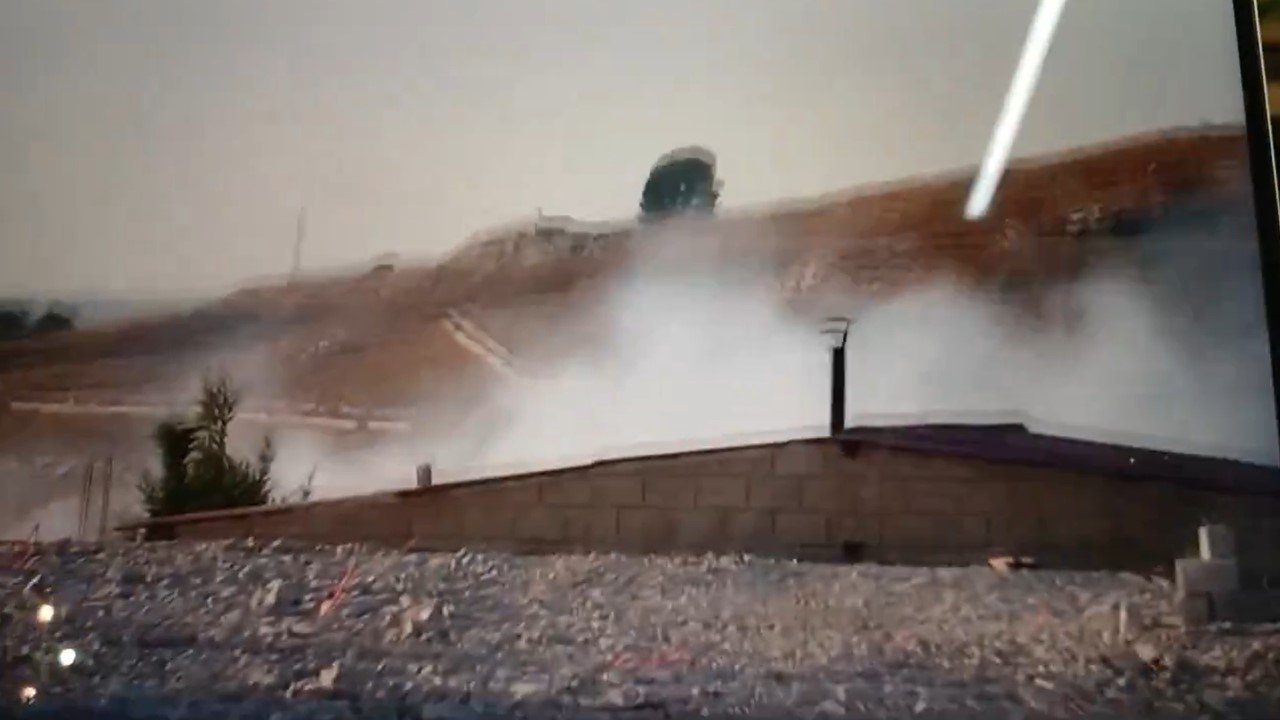
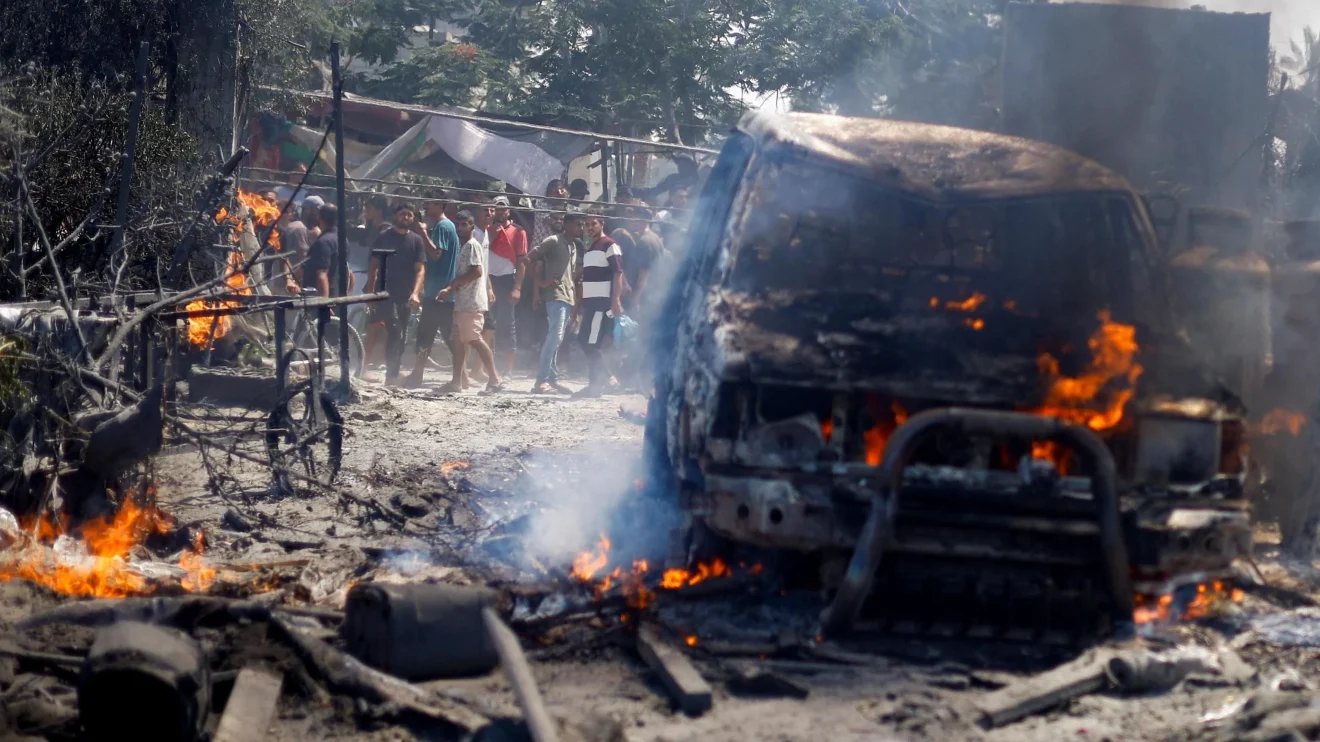

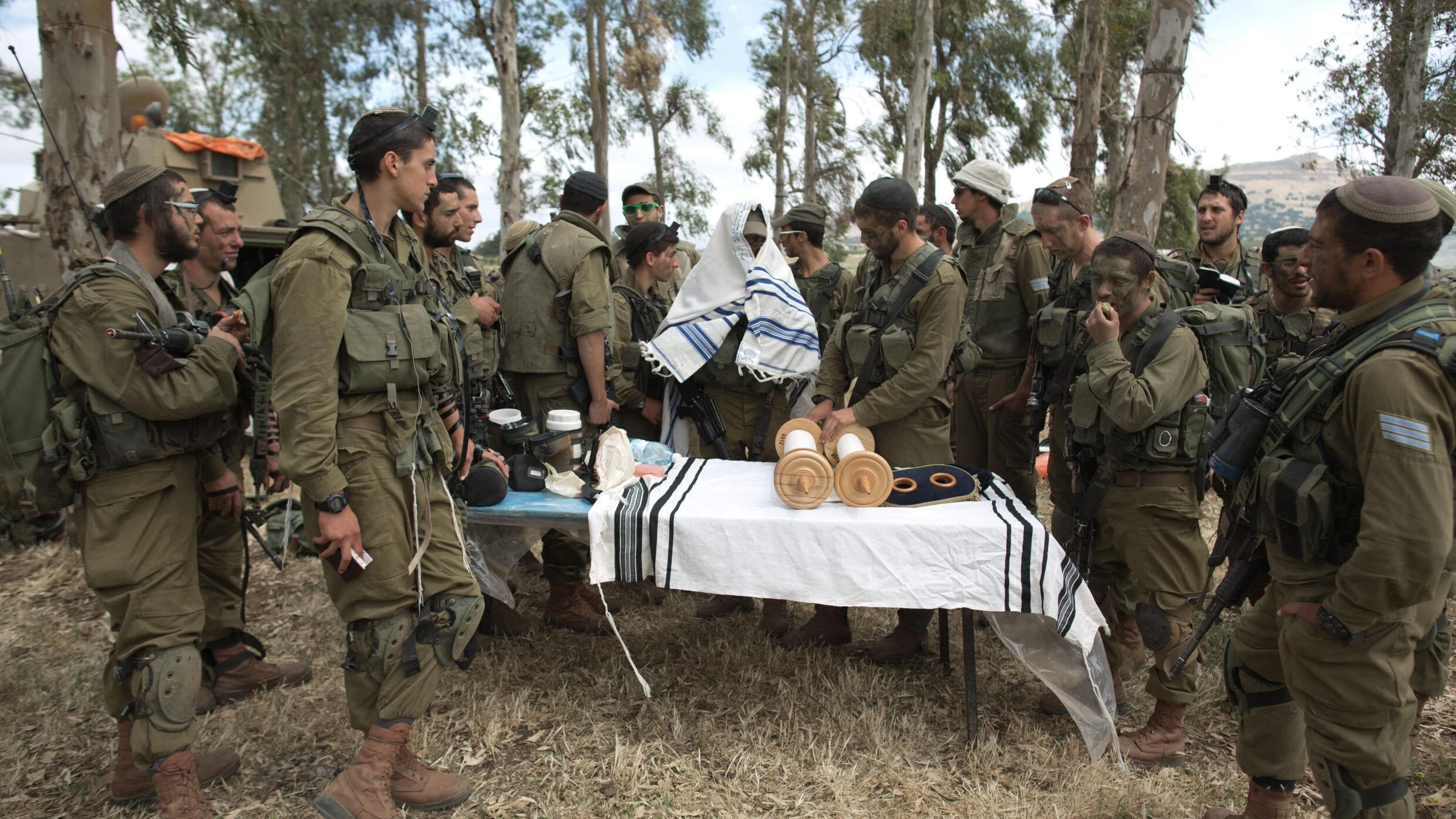
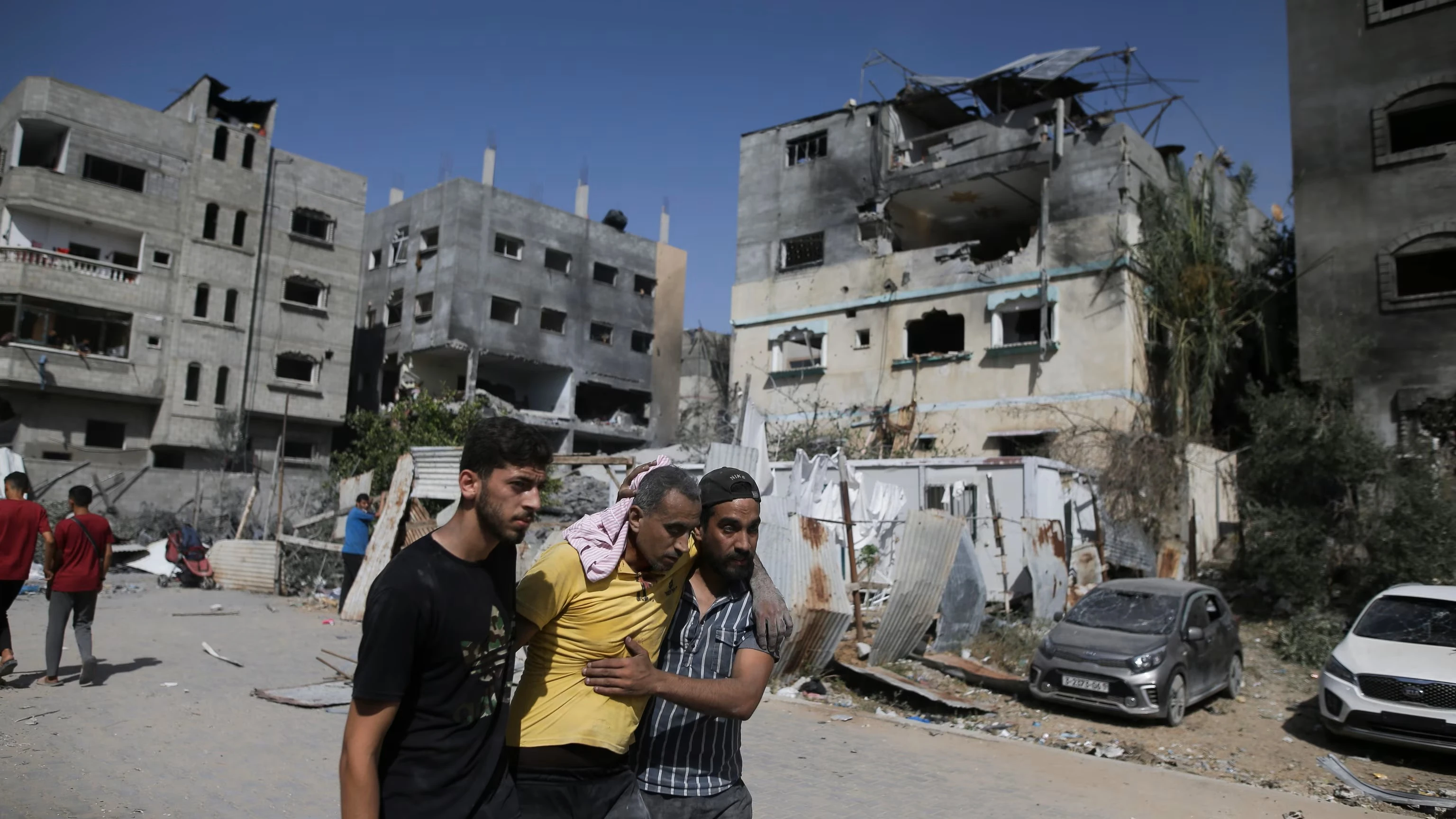

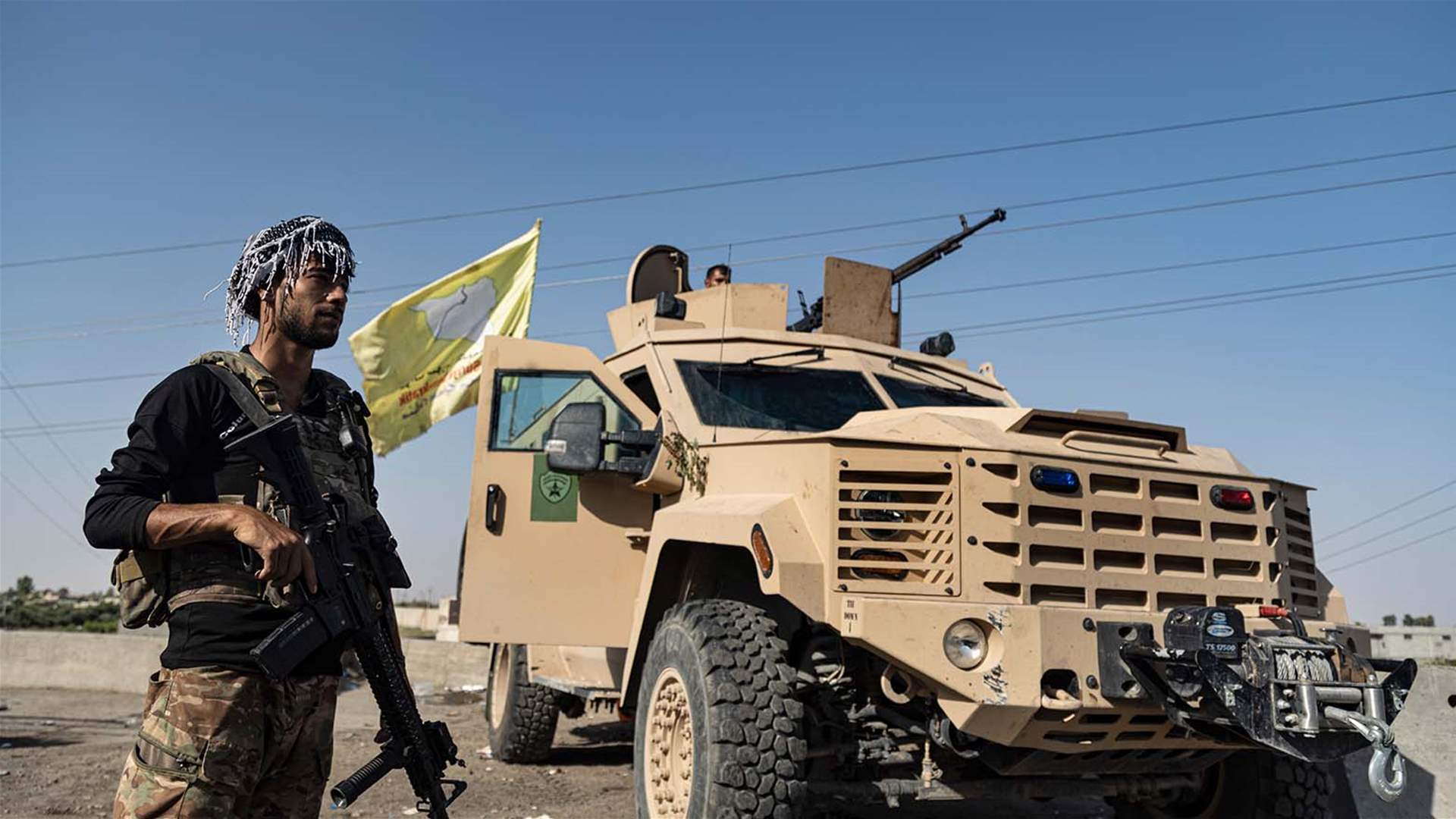
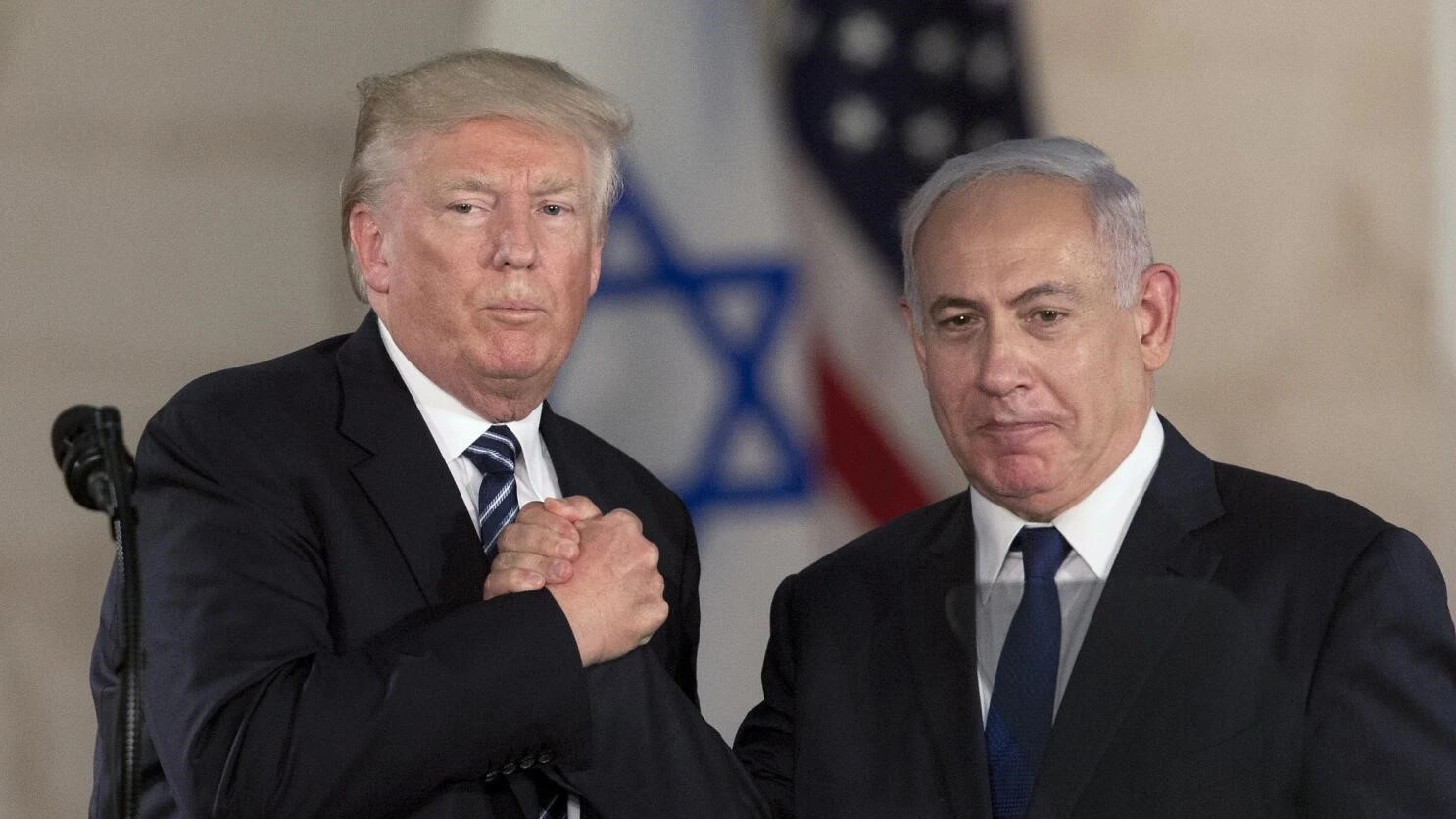
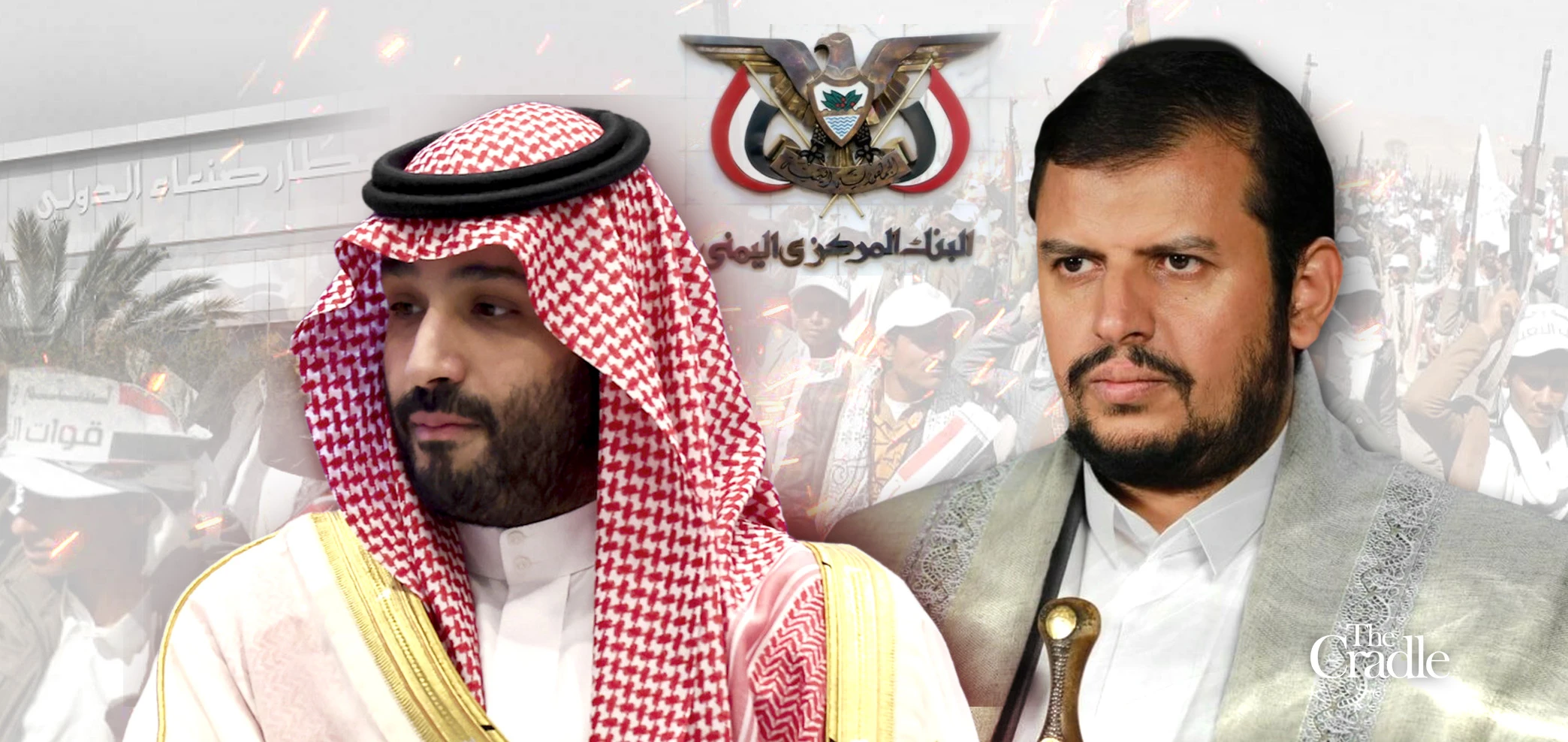



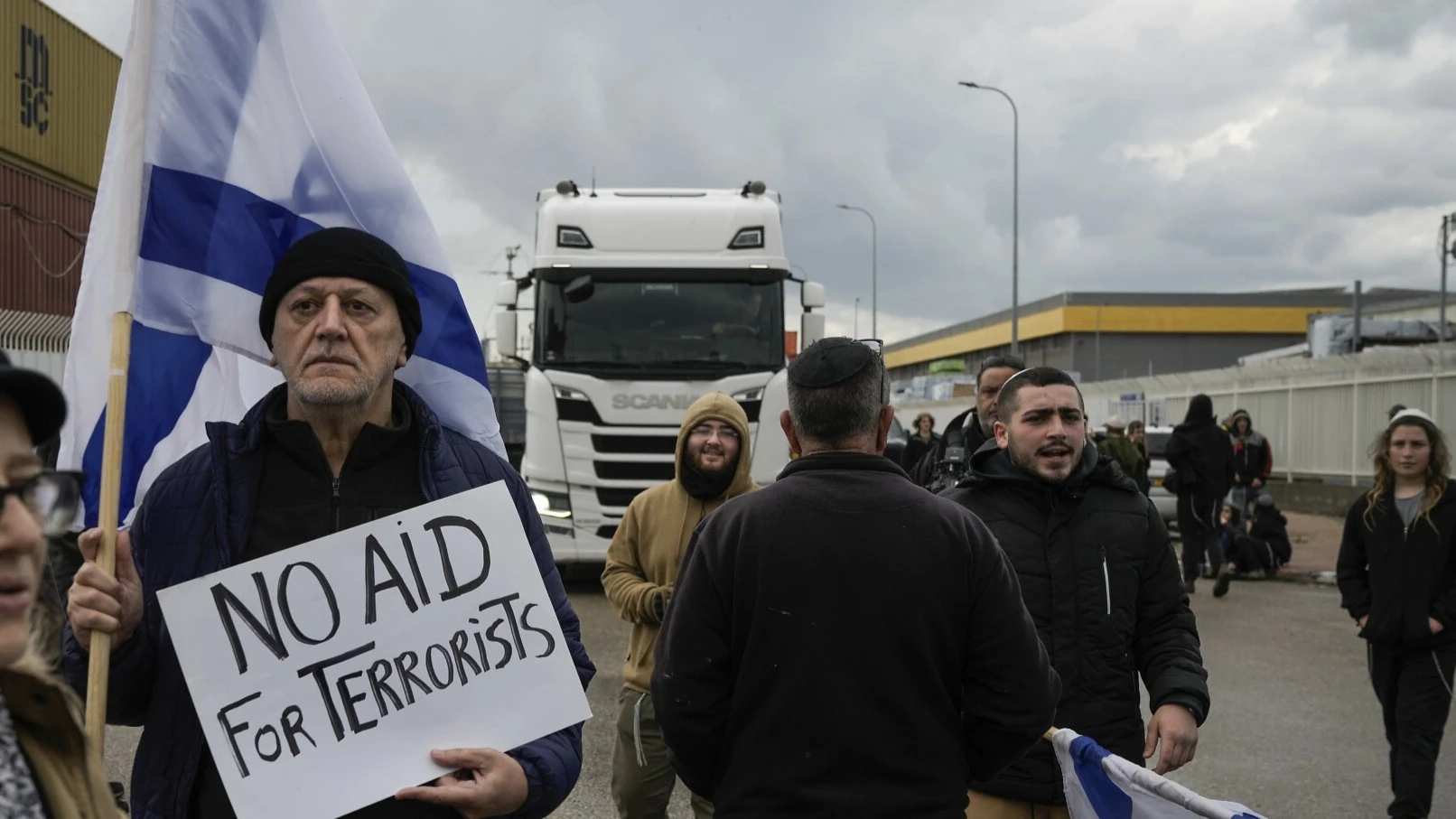


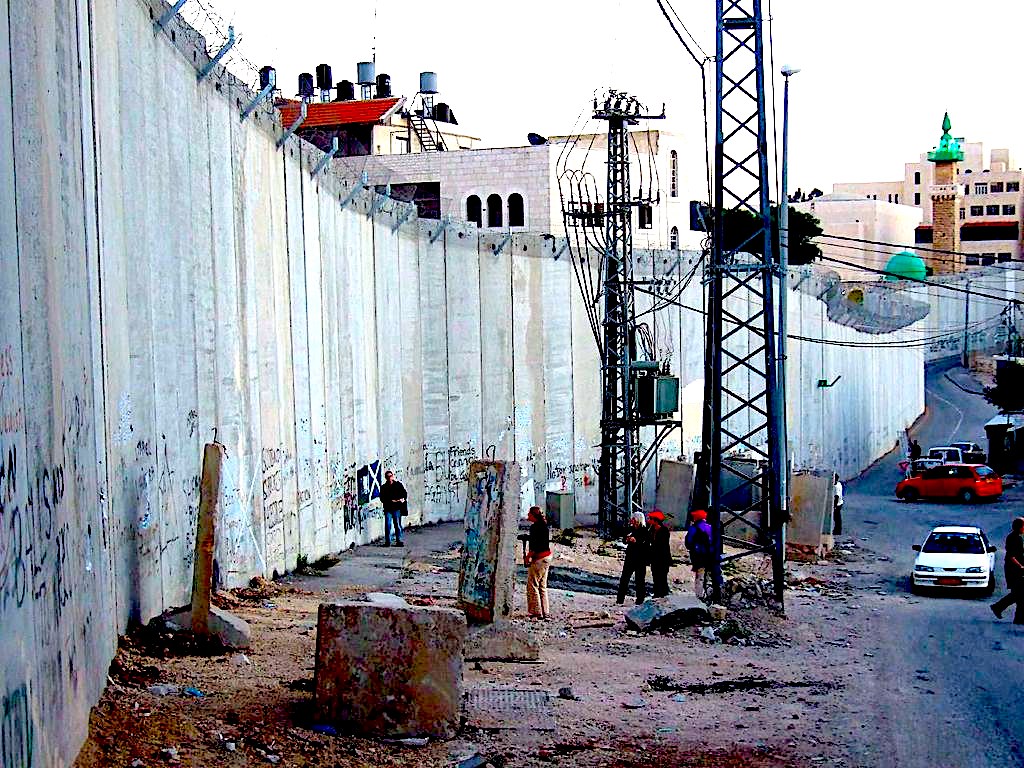

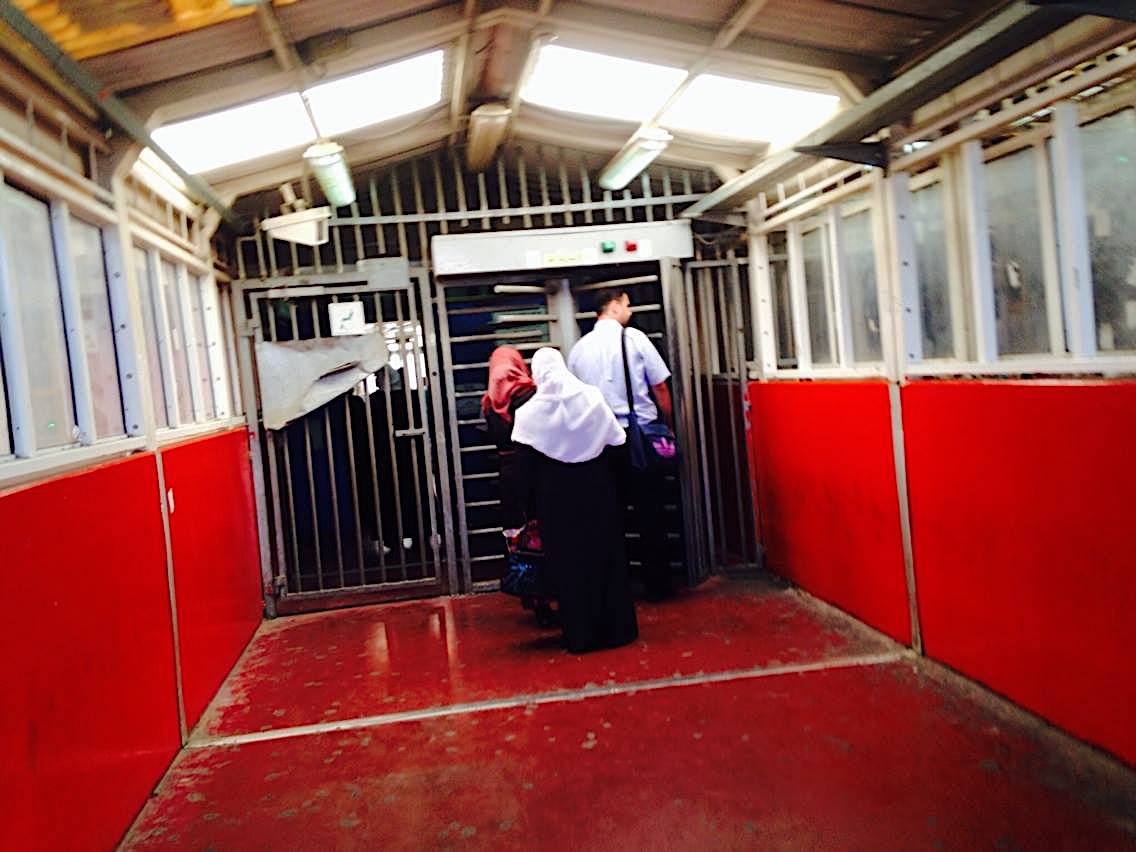
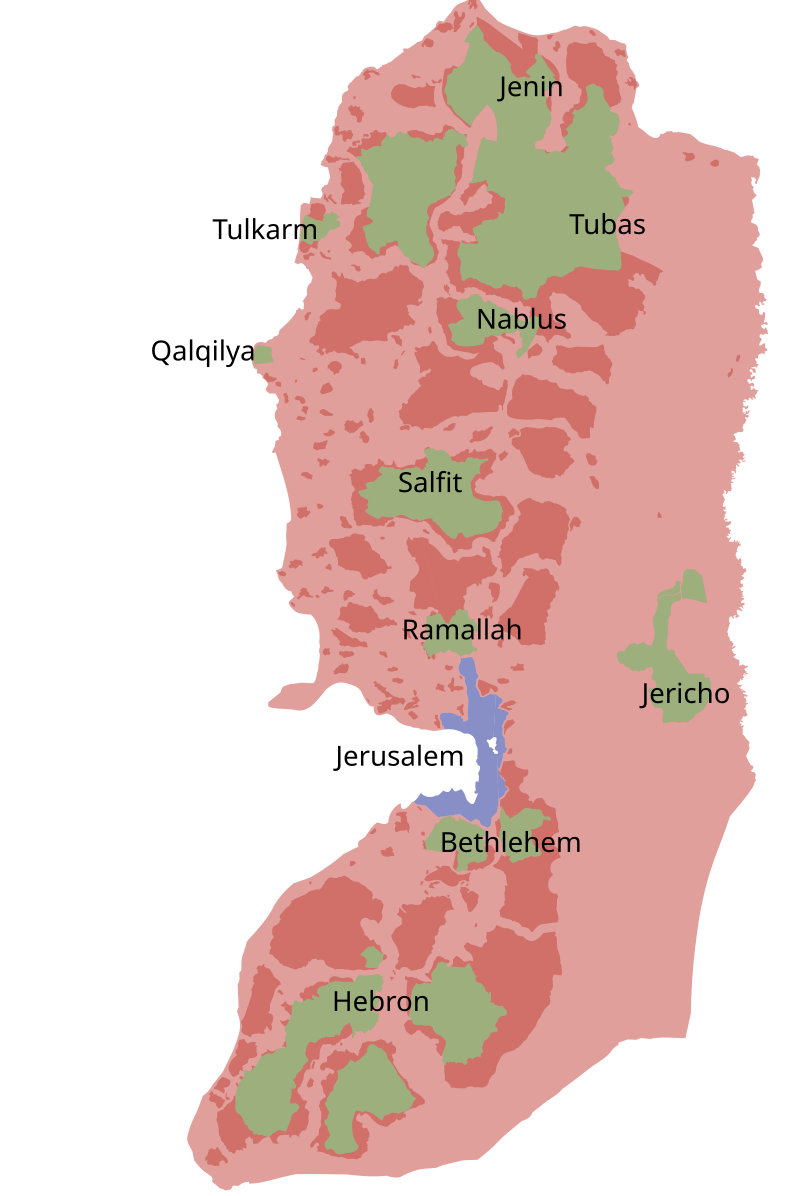

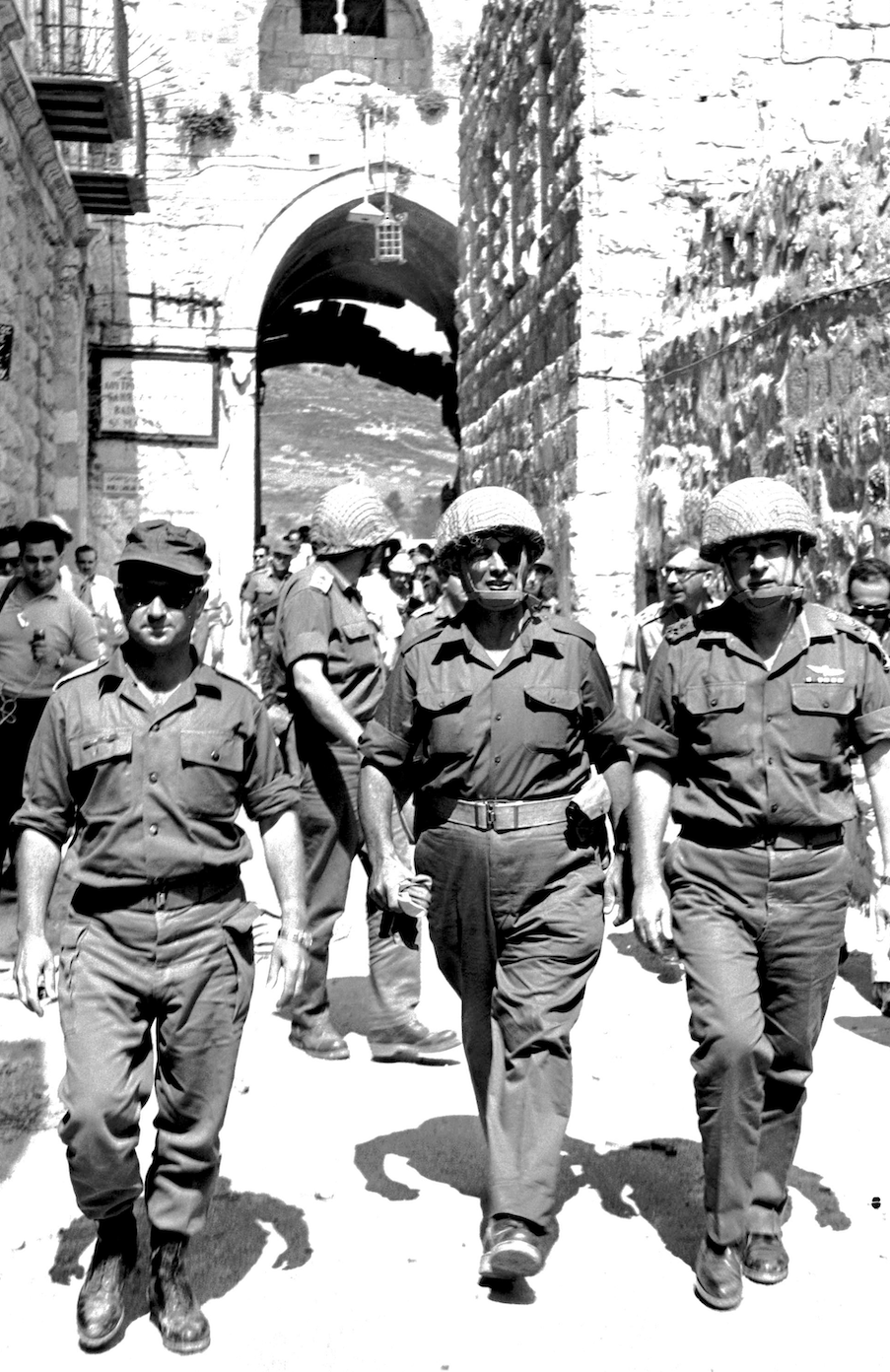
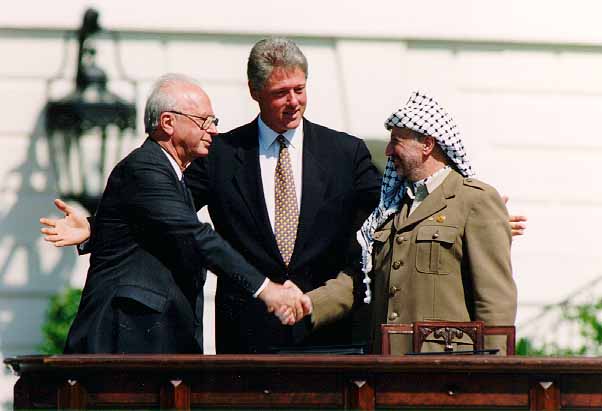




 (@Partisangirl) July 14, 2024