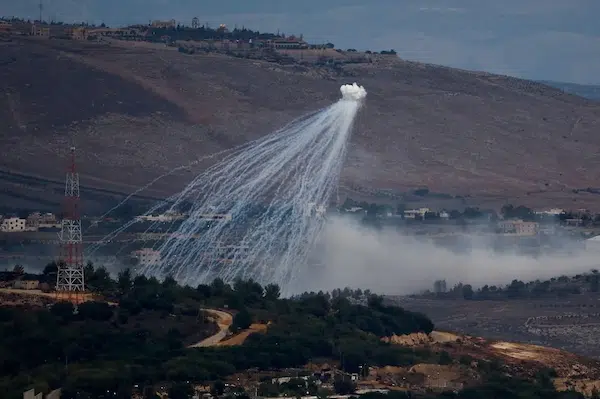
White phosphorus fired by Israeli army to create a smoke screen, is seen on the Israel-Lebanon border in northern Israel, November 12, 2023. (Photo: REUTERS/Evelyn Hockstein)
Gaza breakdown: 20 times Israel used U.S. arms in likely war crimes
Originally published: Responsible Statecraft on August 26, 2024 by Stephen Semler (more by Responsible Statecraft) (Posted Aug 29, 2024)
The Biden administration recently approved five major arms sales to Israel for F-15 fighter aircraft, tank ammunition, tactical vehicles, air-to-air missiles, mortar rounds, and related equipment for each. Though technically sales, most if not all of this matériel is paid for by U.S. taxpayers–Israel uses much of the military aid Congress approves for it effectively as a gift card to buy U.S.-made weapons.
The total value of the five weapons sales exceeds $20.3 billion.
More extraordinary than the price tag of these arms deals is that the White House made them public. Prior to last week’s announcements, it had disclosed just two arms sales to Israel. By March, the Biden administration had already greenlit more than 100 separate weapons deals for Israel, or about one every 36 hours, on average. The administration presumably kept the value of each arms deal “under threshold” to avoid having to notify Congress.
From 2017 to 2019, the U.S. had approved thousands of below-threshold arms sales to Saudi Arabia and the United Arab Emirates worth a total of $11.2 billion. Exploiting this loophole helped the Trump administration avoid scrutiny of its enabling of a devastating and indiscriminate bombing campaign in Yemen. The Biden administration appears to be following the same playbook for the destruction it is enabling in Gaza.
The White House isn’t shy about publicizing arms transfers to other countries. For example, it has been very transparent about the military aid it sent Ukraine since February 2022. Biden promotes arming Ukraine as industrial policy, marketing the military aid as a boon for domestic manufacturing and jobs. The Pentagon not only itemizes what specific matériel the U.S. sends to Ukraine, but also shows on a map where in the U.S. those weapons and equipment are made.
By contrast, nearly all the publicly available information on U.S. arms transfers to Israel comes from leaks reported by the media. The Biden administration says very little about the weapons it delivers to Israel or how the Israeli military uses them. The following analysis is intended to shed light on both. In doing so, it helps explain why the Biden administration prefers to arm Israel in secret.
What follows is a non-exhaustive list of attacks by the Israeli military since October 7 that likely violated international law, grouped by the type of U.S.-supplied weapon involved in the attack.
In order for an attack to be listed below, there must be sufficient evidence that it violated international law. In all of the following cases, it’s at least more likely than not that the attack was a violation. Many of them almost certainly were in breach of international law. This is a very high threshold–as former State Department lawyer Brian Finucane wrote in Foreign Affairs,
The law of war permits vast death and destruction. This is true even under restrictive interpretations of the law.
Furthermore, in order for an attack to be listed, there must be concrete forensic evidence that a U.S.-supplied weapon was likely used to commit the probable violation of international law. Only the types of weapons the U.S. has reportedly delivered to Israel since October 7 are considered. This report draws from forensic investigations that have been conducted by reputable international organizations, civil society groups, media outlets, and independent analysts.
The following 20 incidents represent a small fraction of potential war crimes committed with U.S.-provided weapons. First, information gathering and fact finding is extremely difficult. Israel restricts U.N. and NGO access to Gaza and doesn’t cooperate with investigations into misuse of U.S.-supplied arms. Members of the press are routinely denied access or attacked: Since October 2023, 116 journalists and media workers have been killed by Israeli airstrikes or sniper fire in Gaza, representing 86 percent of all those killed worldwide, according to data from the Committee to Protect Journalists. Prolonged communication blackouts are commonplace in Gaza.
Second, Israel’s military campaign relies on U.S. weapons, and so U.S. matériel is involved in nearly every facet of Israel’s campaign. For example, Israel uses U.S.-made aircraft like the F-35, F-16, and F-15 to drop U.S.-made bombs, including the MK-84 (2,000 pounds), MK-83 (1,000 pounds), MK-82 (500 pounds), and 250-pound “small diameter” bombs, which can be fitted with U.S.-made Joint Direct Attack Munition (JDAM) guidance kits.
The vast majority of bombs Israel drops on Gaza are U.S.-made. The U.S. even provides Israel with jet fuel. The U.S. has sent so many arms to Israel since October 7 that the Pentagon has struggled to find sufficient cargo aircraft to deliver the matériel.
Third, Israel’s campaign is historically destructive. In the three weeks after October 7, Israel dropped an average of 6,000 bombs on Gaza per week. By comparison, U.S. and coalition forces dropped on average 488 bombs per week on ISIS militants in Iraq and Syria during Operation Inherent Resolve (OIR) between August 2014 and March 2019. OIR caused immense civilian harm–particularly in densely-populated areas like Mosul and Raqqa–but the scale of death and destruction doesn’t come close to what Israel has done in Gaza.
A former high-ranking officer in the Israeli military told Haaretz that Israeli forces could have made as much progress as they have so far in Gaza with one-tenth of the destruction. This “unusually wasteful” and “reckless” conduct “reflects an absolute assumption that the U.S. will continue to arm and finance it,” he is quoted as saying.
What’s more, according to reporting, Israel has used an Artificial Intelligence program called “Lavender” to generate an unprecedented number of bombing targets with minimal human oversight. The AI program is coded with instructions that appear inconsistent with international law and is deployed with little to no human oversight.
The Biden administration acknowledges that Israel likely broke human rights law with U.S.-supplied weapons, but claims it doesn’t have enough evidence to link U.S.-supplied weapons to specific violations that would warrant cutting off military aid to Israel. As national security adviser Jake Sullivan told CBS,
We do not have enough information to reach definitive conclusions about particular incidents or to make legal determinations, but we do have enough information to have concern…Our hearts break about the loss of innocent Palestinian life.
None of that is believable. As this report demonstrates, there is more than enough available information. If the Biden administration is truly concerned about the loss of innocent Palestinian life in Gaza, it can stop Israel’s atrocities by denying it the tools it needs to commit them.
MK-84 and other 2,000-pound bombs
Amount delivered since October 7: At least 14,100 (as of June 28). The U.S. sent Israel at least 14,000 MK-84 2,000-pound bombs from early October to late June. Another shipment 1,800 MK-84s is pending: The White House approved their transfer in March, but then paused shipping them in May. The U.S. also delivered 100 2,000-pound BLU-109 bunker-buster bombs between October 7 and December 1.
By mid-December, the Biden administration had already provided Israel with more than 5,000 MK-84 2,000-pound bombs, four times heavier than the largest bombs the U.S. dropped in Syria and Iraq in its war against ISIS. In the first month of its military offensive in Gaza, Israeli forces dropped more than 500 2,000-pound bombs, more than 40 percent of which were dropped in Israeli-designated safe zones. Six weeks into the war, Israel had dropped 2,000-pound bombs in areas to which it had instructed civilians to flee more than 200 times.
October 9, 2023: Israeli airstrikes hit a busy market in Jabalia refugee camp, killing at least 69 people. The market was more crowded than usual because people were in the process of fleeing their homes at the instruction of the Israeli military. The U.N. Office of the High Commissioner on Human Rights (OHCHR) analysis reported that “one or two GBU-31 air dropped munitions were used” and found no military objective to justify the strike. The GBU-31 is made from a U.S.-made 2,000-pound MK 84 or BLU-109 bomb and a JDAM guidance kit. Neither U.N. OHCHR nor Amnesty International found evidence of a military target at the time of the attack. Even if there was a legitimate military target, the scale of destruction indicates the Israeli military’s attack was disproportionate. Disproportionate attacks are war crimes–international law prohibits attacks that are expected to cause excessive civilian harm compared to the direct and provable military advantage anticipated from the attack.
October 17, 2023: After the Israeli military told Gazans to flee to Khan Yunis for their safety, it bombed the al-Lamdani family house in Khan Yunis. Between 15 and 40 people were killed in the attack. Remnants of a U.S.-made MK-84 2,000-pound bomb were found at the site
October 25, 2023: Israeli airstrikes flattened at least 5,700 square meters in the Al Yarmouk neighborhood of Gaza City, killing at least 91 people, including 39 children. A U.N. assessment determined that “several” 2,000-pound GBU-31s air-dropped munitions were likely dropped by Israeli forces in the attack. According to a report from U.N. OHCHR, “The use of a GBU-31 or a GBU-32, in such densely populated areas in the middle of residential neighborhoods when extensive civilian harm would be foreseeable, raises very serious concerns that those attacks were disproportionate and/or indiscriminate, and that no or insufficient precautions were taken.”
October 31, 2023: After Israeli airstrikes on Jabalia, Gaza’s largest refugee camp, a nearby hospital said it received 400 casualties, including 120 dead, most of whom were women and children. An analysis of the site showed at least five craters, the largest one likely from a GBU-31. The GBU-31 is made from a JDAM and either a 2,000-pound BLU-109 or MK-84 bomb. According to reports, Israeli forces gave no warning before the attack, and no effort was made to evacuate the residential buildings. U.N. OHCHR said the attack on Jabalia refugee camp could amount to a war crime.
January 13, 2024: Israeli forces dropped a U.S.-made MK-84 2,000-pound bomb from a U.S.-made F-16 aircraft on a house in Deir al-Balah but it didn’t explode. A second airstrike did destroy the home, leaving an approximately 40-foot size crater, characteristic of a 2,000-pound bomb with a delayed fuse. The Israeli military had designated Deir al-Balah as a safe zone in October. Israeli forces instructed Palestinians in northern Gaza to flee there on December 11 and told Palestinians in central Gaza the same thing on December 22. By mid-January, Israeli bombing had leveled entire city blocks and dozens of family homes in Deir al-Balah.
GBU-39 and other ‘small diameter’ bombs
Amount delivered since October: At least 2,600 (as of June). More than 2,000 of these “small-diameter” bombs are 250-pound GBU-39 munitions. After Israel received an expedited shipment of 1,000 Boeing-made GBU-39s in early October, the Biden administration approved the transfer of more than 1,000 GBU-39 bombs for Israel on April 1, the same day that Israeli forces bombed a World Central Kitchen convoy, killing seven aid workers. It’s likely that far more GBU-39s have been delivered to Israel than the amount listed here.
Purportedly out of concern for Palestinian civilians, the Biden administration is urging the Israeli military to use more 250-pound GBU-39s and fewer less-precise 2,000-pound bombs. The result appears to have been a surge in possible war crimes committed with GBU-39s. The relative size of bombs doesn’t matter much if Israeli forces disregard fundamental rules governing targeting in international law, including distinction, precautions, and proportionality. As retired U.S. Air Force master sergeant Wes Bryant told the New York Times,
While they’re using smaller bombs, they’re still deliberately targeting where they know there are civilians.
Boeing markets its GBU-39 as a “low collateral damage” precision weapon. Echoing Boeing, White House spokesperson John Kirby said Israel’s use of these 250-pound bombs is “certainly indicative of an effort to be discreet and targeted and precise.” The blast from a GBU-39 bomb can kill or injure people over 1,000 feet away, and shrapnel from the bomb’s steel casing can kill or injure anyone within 570 feet.
January 9, 2024: Israeli forces bombed a residential building in a neighborhood the Israeli military had repeatedly ordered displaced Gazans to flee to. The attack killed 18 people, including 10 children, and wounded at least eight others. Israeli forces gave no warning to evacuate. An investigation found no evidence that the building or anyone in it could be considered a legitimate military target. The Israeli government has yet to give a reason for the strike. Fragments from a U.S.-made Boeing GBU-39 were recovered from the rubble.
May 13, 2024: Israeli forces bombed a school housing displaced civilians in Nuseirat, killing up to 30 people. A tail fin of a U.S.-made GBU-39 was recovered at the location of the strike
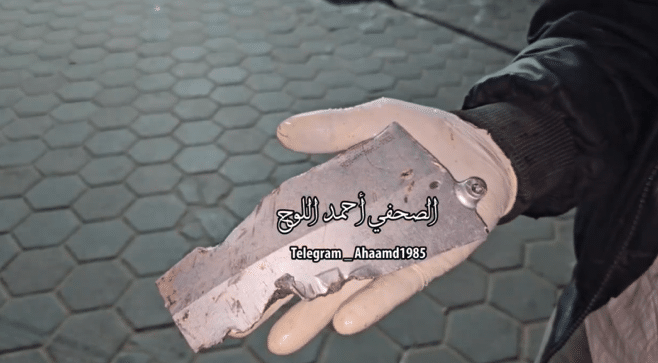
Photo: @AlQastalps
May 26, 2024: An Israeli airstrike on a displacement camp in Rafah filled with makeshift tents killed at least 46 people–including 23 women, children and older adults–and injured more than 240 others. The tail of a U.S.-made GBU-39 bomb was recovered at the site of the attack. The “81873” on the munition fragment is the identifier code the U.S. government assigned to Woodward, a Colorado-based manufacturer that supplies bomb parts, including the GBU-39. The State Department refused to acknowledge that this was a U.S.-made weapon. Israeli forces claimed munitions stored at the camp caused most of the devastation, but there is no evidence of a weapons cache present.
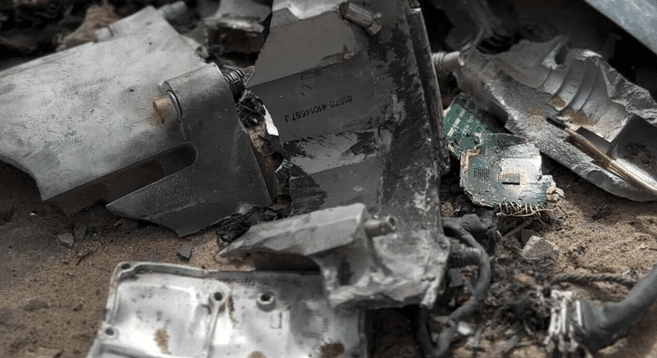
Photo: @trbrtc/Alam Sadeq
June 6, 2024: At least two GBU-39 munitions were used in an Israeli airstrike on the UN-run al-Sardi school in Nusreit, central Gaza. At least 40 people were killed in the strike, including nine women and 14 children. About 6,000 displaced Palestinians were sheltering at the school when it was bombed. The Israeli military denied that there were any civilian casualties. Israeli human rights group B’Tselem said the attack is a possible war crime. A U.S.-made navigation device manufactured by Honeywell was also documented at the site.
August 10, 2024: More than 100 Palestinians were killed in an Israeli airstrike on al-Tabin school in Gaza City, which was being used to shelter displaced people. The Israeli military said it used “precise munitions.” Paramedics who arrived at the scene said they found bodies “ripped to pieces” and that many bodies were unidentifiable. Parents reported difficulty identifying their deceased children. Remnants of at least two Boeing-made GBU-39 small diameter bombs were identified at the scene. Two investigations found no evidence that the school was being used for military operations, as the Israeli military claimed. The list of fighters the Israeli army alleged it killed in the strike included several people who had previously been listed as deceased and civilians with no known military ties.
Joint Direct Attack Munitions (JDAM)
Amount delivered since October 7: At least 3,000 (as of December 1).
October 10, 2023: An Israeli airstrike on the al-Najjar family home in Deir al-Balah killed 24 civilians. The code stamped on a recovered munition fragment, 70P862352, indicates that a U.S.-supplied JDAM was used in the attack. The Boeing-made guidance kit was likely fitted to a 2,000-pound bomb. Survivors said Israel gave civilians no warning of an imminent strike. Amnesty International said the attack must be investigated as a war crime.
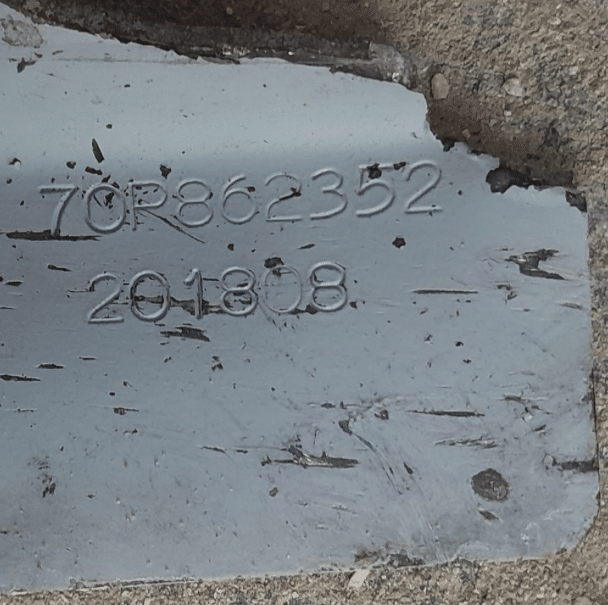
Photo: Private/Amnesty International
October 22, 2023: An Israeli airstrike on the Abu Mu’eileq family home in Deir al-Balah killed 19 people, including 12 children. The home was located in the area to which the Israeli military had ordered residents of northern Gaza to flee on October 13. The code stamped on the recovered scrap, 70P862352, is associated with JDAMs and Boeing. The Boeing-made JDAM kit was fitted to a bomb that weighed at least 1,000-pounds. Survivors said Israel gave no warning of an imminent strike. Amnesty International said the attack must be investigated as a war crime.
Photo: Private/Amnesty International
March 27, 2024: An Israeli strike on the Emergency and Relief Corps of the Lebanese Succour Association, a humanitarian organization, killed seven emergency and relief volunteers in southern Lebanon. The strike used a U.S.-made JDAM guidance kit affixed to an Israeli-made 500-pound bomb. Human Rights Watch said that the incident should be investigated as a war crime.
July 13, 2024: An Israeli strike on the Al-Mawasi–an Israeli military-designated “safe zone”–killed over 90 people and injured hundreds more. Remnants of a U.S.-made JDAM were found at the scene. Based on the size of the fin fragment, the JDAM was likely fitted to either a 1,000- or 2,000-pound bomb.
Hellfire missiles
Amount delivered: At least 3,000 (as of June 28)
June 8, 2024: Israel’s operation to rescue four hostages in the Nuseirat refugee camp in central Gaza killed nearly 300 Palestinians. A witness reported Israeli attack helicopters launching many strikes in Nuseirat and surrounding areas. Another witness said 150 rockets fell in less than 10 minutes. Remnants of at least two U.S.-made Hellfire missiles were found in a damaged residential building. Video shows U.S.-made Apache helicopters firing several Hellfire missiles into the Nuseirat refugee camp. The Israeli military also bombed a busy market several blocks south of where the Israeli hostages were kept, and in the opposite direction of the evacuation route. U.N. OHCHR said the raid “seriously calls into question whether the principles of distinction, proportionality and precaution–as set out under the laws of war–were respected by the Israeli forces.”
June 23, 2024: An Israeli airstrike on a health clinic in Gaza City killed five people, including Hani al-Jaafarawi, Gaza’s director of ambulances and emergency. He was reportedly the 500th medical worker killed during Israel’s military campaign in Gaza. The rocket motor of a U.S.-supplied Hellfire missile was recovered at the health care center.
July 14, 2024: Hundreds of Palestinians were taking refuge at the United Nations Relief and Works Agency for Palestine Refugees (UNRWA) Abu Oraiban school when it was hit by an Israeli airstrike, killing at least 22 people. The Israeli military issued no warning to the displaced people sheltering there before the attack. U.S.-made Hellfire missile fragments were found at the school, including part of its guidance system and motor. (Remnants of a Boeing-made GBU-39’s tail section were also recovered at the site.)
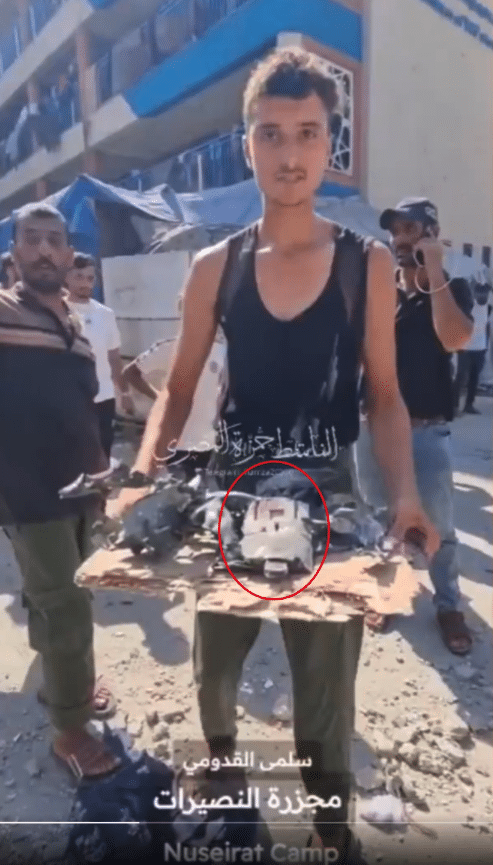
Photo: @Easybakeovensz
120mm tank shells
Amount delivered since October 7: At least 13,981. A day after the U.S. vetoed a U.N. Security Council resolution calling for a ceasefire in Gaza and the unconditional release of hostages, the White House notified Congress on December 8 that it had approved the sale of 13,981 120mm M830A1 high-explosive tank cartridges to Israel.
The Biden administration invoked an emergency authority to bypass the congressional review period. Because the shells were sourced from U.S. Army inventory, they could be transferred immediately to Israel.
The day before, Reuters, Human Rights Watch, and Amnesty International all published investigations providing evidence that an Israeli tank likely deliberately fired two Israeli-made 120mm shells at a group of journalists in southern Lebanon in October, killing one Reuters journalist and injuring six others. Both Human Rights Watch and Amnesty International said the incident was an apparent war crime. Israeli tanks have also struck hospitals and humanitarian shelters using 120mm tank rounds. On August 13, the Biden administration notified Congress that it approved a $774 million arms sale to Israel for 32,739 120mm tank cartridges.
January 29, 2024: Six-year-old Hind Rajab was the only survivor in her family’s car after Israeli tanks opened fire. Over the phone, Hind begged rescue workers to come save her. The Palestine Red Crescent Society dispatched an ambulance with two emergency workers. At least one Israeli tank opened fire, killing both paramedics. A fragment of a U.S.-made M830A1 120mm tank round was documented at the scene.
155mm artillery shells
Amount delivered: At least 57,000 (as of December 1). This total includes thousands of 155mm rounds originally for Ukraine that the Biden administration diverted to Israel in October. Netanyahu specifically requested 155mm artillery shells from U.S. lawmakers in mid-November.
Around the same time, more than 30 organizations urged the Biden administration to not supply Israel with these munitions because their inaccuracy and 100-300 meter casualty radius make them “inherently indiscriminate” in the Gaza context. “It is difficult to imagine a scenario in which high explosive 155mm artillery shells could be used in Gaza in compliance with [international humanitarian law],” the organizations wrote.
On December 29, the White House notified Congress that it approved the sale of an additional 57,021 155mm shells to Israel. The Biden administration invoked an emergency authority to bypass the congressional review period. Israeli forces will likely fire these rounds from U.S.-made howitzers. The Israeli military announced earlier that month it fired over 100,000 artillery rounds during the first 40 days of its ground invasion of Gaza, adding that artillery plays a “central role” by providing “intense fire cover” for its ground forces.
October 16: Israeli forces fired 155mm artillery shells containing white phosphorus into Dhayra, southern Lebanon. At least nine civilians were killed and civilian property was damaged. Lot production codes found on the shells indicate they were made in the U.S. Amnesty International said the attack was indiscriminate and must be investigated as a war crime.
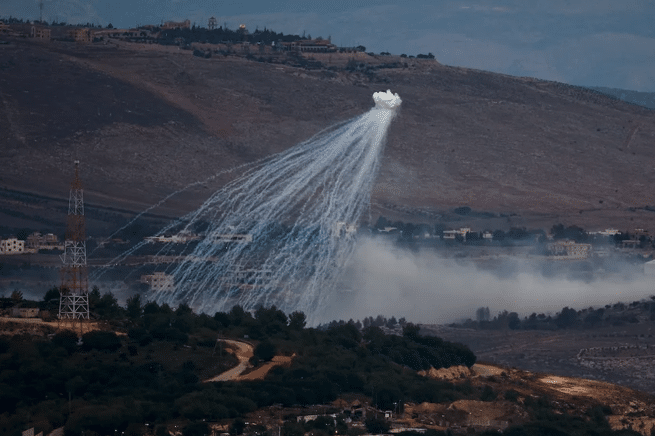
White phosphorus fired by Israeli army to create a smoke screen, is seen on the Israel-Lebanon border in northern Israel, November 12, 2023. (Photo: REUTERS/Evelyn Hockstein)
Armored vehicles
Amount delivered since October 7: Unknown. The Israeli Ministry of Defense reported on October 19 that U.S. Air Force cargo airplanes delivered the first tranche of U.S.-made David light armored vehicles, part of a $22 million arms deal from April 2023.
November 14, 2023: The first photo below from the Israeli Ministry of Defense shows David light armor vehicles after being unloaded from a U.S. Air Force C-17 at Ben Gurion Airport on October 19. The second photo shows Israeli forces using David light armor vehicles to obstruct an ambulance en route to a hospital on November 14, arresting the wounded person inside. International humanitarian law prohibits attacks on and obstruction of medical transport.

Photo: @Israel_MOD
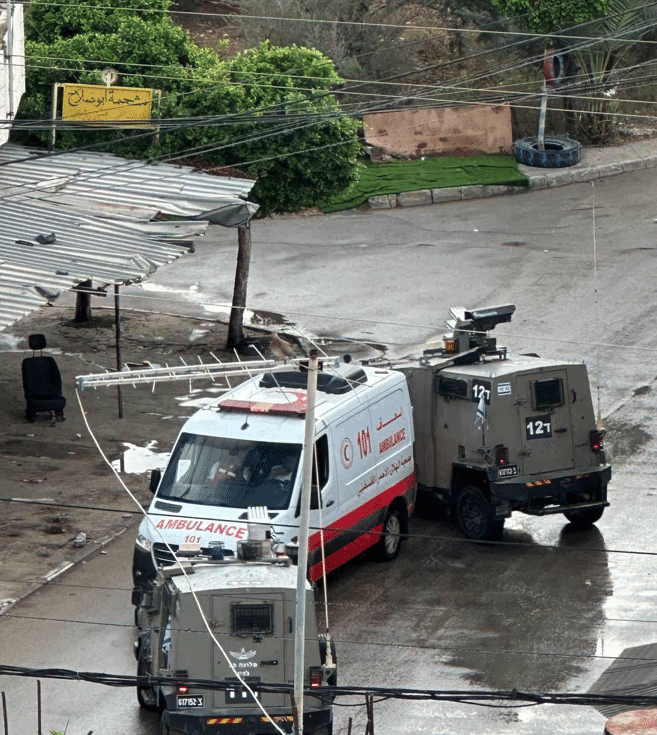
Photo: @PalestineRCS
https://mronline.org/2024/08/29/gaza-br ... ar-crimes/
******
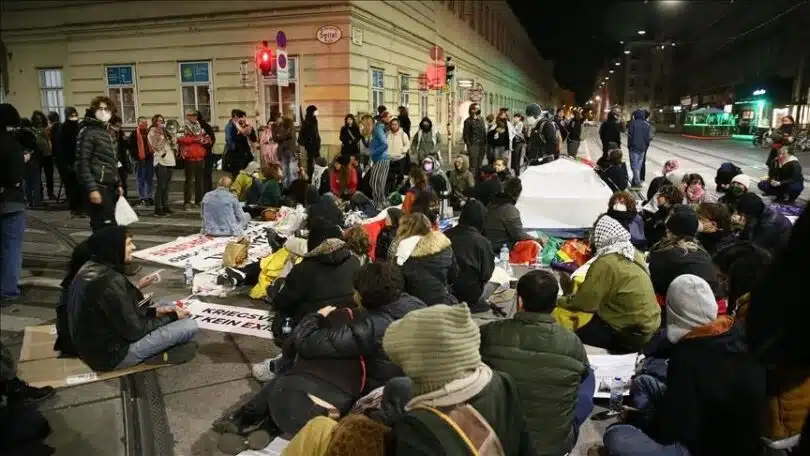
Students at the University of Vienna protest the genocide in Gaza, May 9, 2024. Source: aa.com.tr
A Punishing Memory Culture
By Kevin Potter (Posted Aug 29, 2024)
The first day of a new semester can be a thrill. I have adrenaline pumping through my entire body and, despite knowing better, I still consume more coffee than I should while my fingers shake visibly from all the nervous energy.
This past semester brought a new set of anxieties. I was, for the second time in my six years of teaching, bringing a class on Palestinian Literature to the University of Vienna. But this time, it’s in a context where the tensions after October 7 are noticeably high. The University of Vienna is, of course, Theodor Herzl’s alma mater and an institution with a troubling history under fascism, but also, more recently, it’s a place where few dare to sound out the word genocide while harrowing images of one in Gaza are beamed into our phones every minute.
By any reasonable metric, the lead-up to this semester was far from normal. The university had already carried out a series of high– and low-profile cancellations and violations of academic freedom. These actions put the University of Vienna on watch from plenty of scholars and observers around the world, but hardly any staff from within the university seemed to notice at all, let alone care.
The nerves I felt on the first day didn’t come from the usual worry that my students might not like me. I was worried instead about proving everyone right who told me I was neither prepared for, nor aware of, the consequences of teaching Palestinian literature in a context that lives with the traumatic legacy of antisemitism. Putting aside the built-in implication that I’m inept at my job and derelict in my engagement with history (a loaded accusation that I’m quite used to), there’s also the uglier assumption that writing or teaching on Palestine automatically entails anti-Jewish racism. I guess it’s easy to assume that when you regard Palestinian life as intrinsically hateful.
Throughout this year, I’ve had to contend with a specific form of ostracism, arising from what Steve Salaita calls the “customs of obedience” in academe. It’s not one where I fear losing my job (for now). It’s one that translates to a profound alienation that makes the day-to-day isolation even more demoralizing. For my part, I found myself in the awkward position of being looked upon with a new brand of suspicion among colleagues with whom I’ve spent the last six years acting as an otherwise decent co-worker: available for committees, generous with my time, and only occasionally given to complaining.
The system of labor discipline looks (only slightly) different in the context of an ostensibly public university. This is a context where the regulatory apparatus is less about courting support from a donor class and more about neutralizing tensions among students and staff, lest they get any ideas in their heads about how universities should actually operate (God forbid they’re held democratically accountable). But the same culture of tone-policing and flattering bourgeois sensibilities is alive and thriving.
For those of us who write about or teach on Palestine, our teaching and scholarship are often considered “too political” (and, therefore, intellectually unrigorous). For whatever pedigrees I achieve, I’m still marked as someone who doesn’t conform to the expectations of professional decorum or respectability.
My encounter with the students, however, tells a different story altogether. They were nothing close to how those who occupy the citadels of government, authority, and administrative power see them—castigating them as a rabble of thoughtless, politically immature bandwagoners. Perhaps when you already arrive with deep-seated contempt and hostility toward students, that’s how they might appear to you.
The students who attended my class, by contrast, were among the most thoughtful, eager, and perceptive minds I’ve come across in years. They treated the topic with intellectual seriousness, avoiding the clichés and platitudes that distract them from analyzing and understanding history, power, war, and occupation. Their commitment to Palestine was rooted in a genuine engagement with history and an abiding interest in critical thought. I had the pleasure of teaching the works of Hala Alyan, Susan Abulhawa, Mohammed El-Kurd, and Atef Abu Shaif, among others, and they did most of the heavy lifting in offering insight and clarity.
Students in the Struggle for Palestine
Before this year, no one before had ever seen this level of effervescent activism around Palestine at the University of Vienna. This fact alone is a disgrace; that it has taken a mass slaughter for there to even be an active student organization for Palestine is nothing to be proud of, knowing that the Palestine tragedy did not begin in October 2023. The first three months of 2023 alone were among the deadliest in the West Bank since the Second Intifada.
Nevertheless, the students learned quickly that their university leadership was never going to provide them a chance to engage with Palestine’s history, to understand the martyrdom of Gaza, and the broad political structure that enables their ethnic cleansing. Even faculty-led efforts to offer teach-ins, workshops, and lecture series (some of which I was involved in) were met with egregious forms of censorship. As a result, some of the most intrepid and passionate people I’ve ever known took matters into their own hands, creating a new space for Palestinian solidarity where it never existed before.
This dynamic is emblematic of what has always undergirded political, discursive struggle, especially when it happens at a university, which is why administrators and overseers are panicking. Universities have historically been sites of political struggle. Students are challenging the status quo, putting the Zionist consensus on trial, and rejecting the university’s campaign to obscure its own complicity in propping up apartheid.
The encampment on our campus, inspired by those in the United States, United Kingdom, and around the world, lasted only two days. The Vienna police summarily (and violently) evicted them on the spurious basis that they were promoting terrorism.
To say that these accusations and other smears were not only false, but also offensive, is far too obvious a statement to make. The short two hours that I spent at the Students for the Palestine Cause encampment—where I had the honor of leading a teach-in on the 1982 invasion of Lebanon and its attending literary context—taught me something special. I discovered the electrifying power of solidarity, generated from those whose commitment to Palestinian liberation extends from the humanistic concern for everyone, no matter who they are. The integrity and camaraderie I witnessed put the university’s purported concerns for safety to shame. The students wanted safety and care; it was instead the university and the powers that be who sought to discipline them through terror and intimidation.
Absolution for the Crimes of their Ancestors
The immediate response from colleagues when I mention my Palestinian Literature course is to ask how I handle antisemitism. After all, you can’t walk down any street in Vienna for more than five minutes without coming across reminders of the Nazi Anschluss and the horrors of fascist deportations. The anxiety and impact of antisemitism permeate the entire cityscape.
This ambient sense of guilt fits into the larger structure of memory culture (Erinnerungskultur) throughout Germany and Austria. Historian Samuel Clowes Huneke documents the historic process whereby this Erinnerungskultur in Germany eventually “calcified,” producing “a set of rituals progressively hollowed of the critical edge they were originally intended to wield.” Huneke stresses how this was especially the case when it came to Israel, where the “country’s recognition of its historic responsibility to prevent genocide slowly hardened into Merkel’s 2008 formula that ‘the security of Israel’ is the German ‘Staatsräson,’ the reason for the state of Germany to exist.”
In Austria, this commitment to memory culture contains similar traits, including the memorials, exhibitions, and Stolpersteine that are installed throughout major cities. As my colleague Birgit Englert points out, only one year after Germany passed anti-Boycott, Divestment, and Sanctions resolutions, Austria followed suit, producing the very same instruments for undermining solidarity with and public discussion of Palestine. Unsurprisingly, this has led to an environment where scholars who teach about and research Palestine are pushed to the margins.
The differences are, however, striking, given Austria’s rather late arrival at acknowledging its shared responsibility for the Holocaust. Once positioned as “the first victim of Nazi aggression,” Austria has since proceeded to recognize its distinct role in enabling that aggression. This shift crystallized after the so-called Waldheim Affair, in which then-candidate for president in 1986, Kurt Waldheim, was exposed for having been a Wehrmacht officer during the Second World War. Then, in the early 1990s, Chancellor Franz Vranitzky acknowledged Austria’s part in the war, once in front of Parliament and once again in Jerusalem. After this moment, as Noga Sagi notes, “the new official Austrian narrative of co-responsibility was warmly welcomed by Israel.” The bilateral, diplomatic relations between Austria and Israel required that Austria acknowledge its past and help secure “the memory discourse between the two countries.”
The belated acknowledgment of its Nazi past and its sought-after diplomatic alliance with Israel turbo-charged its investment in and panic around memory culture. As a result, Austrian society took on the incoherent image of a place that at once seeks to emulate Germany, while also simultaneously distinguishing itself through its supposedly “neutral” (read: opportunistic) stance in times of war. This facile (and ultimately unconvincing) impartiality becomes a miniature farce of itself when the University of Vienna justifies the censorship of its own researchers and staff.
No serious thinking person believes that this traumatic history and memory of antisemitism should deter us from showing concern for the Palestinian struggle. But we’re not talking about serious thinkers. We’re talking about those who care more about seeking absolution for the crimes of their ancestors than they do about recognizing a large-scale genocide as it’s happening at this very moment. We should refuse to offer them absolution on this basis, just as we should refuse to accept that the people of Gaza should die for them to achieve it. The breathless support for Israel’s scorched-earth campaign has shattered any image the Austrian establishment has conjured of peace or justice, and permanently damaged any claim to atonement for a genocidal past.
Furthermore, the university and the wider ecosystem of Zionist apologists routinely compromise the safety of Jewish activists who put their bodies and lives on the line for the Palestinian cause. They dismiss the Jewish anti-Zionists who fervently reject the effort to instrumentalize their pain, memory, and identity in support of a genocide. If we’re looking for a better way to assuage our guilt and correct past crimes, then we needn’t look any further than the materialist struggle against class rule and the forces of dispossession—an insight we inherit from one of the greatest Palestinian novelists, Ghassan Kanafani.
At the same time, the fact that this context once produced Herzl and still by and large embraces the modern Zionist tradition tells us something even more sinister than the pathological need for guilt-alleviation. It tells us that Aimé Césaire was more correct than he could have known: that the collective shame felt among Europeans doesn’t stem from the fact that the Holocaust happened; it’s that, to them, its cruelty was supposed to be reserved for the wretched beyond their borders, not brought home to their own backyard. Right now, the vicious tools of genocidal racism, perfected since before the Age of Empire, are being put to use against the already-besieged population of Gaza with the permission and complicity of the European establishment. Here in Austria, many are happy to act and speak in the service of an explicitly imperial project, so long as they can ignore its horrific effects from a distance.
Lessons Learned
I worry for students who aren’t accustomed to these conditions. While I’m used to people rolling their eyes at me, the students probably feel insane. They spend only ninety minutes per week reading about Palestine and the rest of their week hearing from politicians, journalists, and other teachers that everything I’m teaching them is actually “too complicated and too complex” to have an opinion on. This pattern of nuance-mongering and placatory “both-sides”-isms is deployed to the shameful discredit of universities everywhere, but especially in the German-speaking world.
If you listen to the university’s leadership, you’d hear them express concern that a lecture or event on Palestine might create a hostile educational environment. I’ve learned to interpret this canard as a fear that students might actually demand better from their institution and its instructors. It’s a fear that students could be led to believe that those entrusted with knowledge-production should also model moral courage and critical thinking. But lest they get any ideas of that sort in their heads, the university ensures instead that an environment of distrust and paranoia keeps them expecting and hoping for less and less.
https://mronline.org/2024/08/29/a-punis ... y-culture/
******
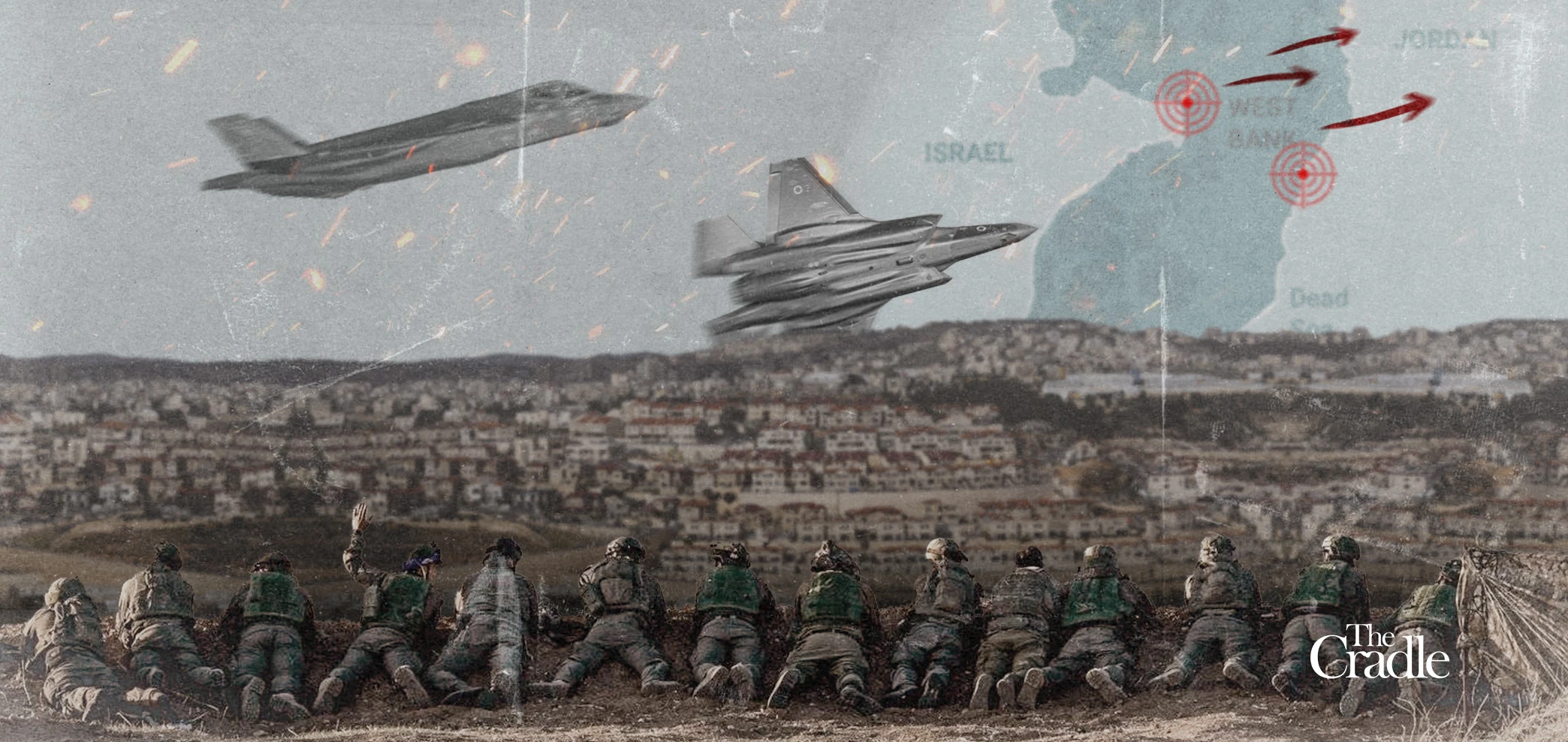
Palestinian factions call for mobilization in defense of West Bank as clashes rage
Several West Bank resistance factions are currently confronting Israeli troops in the camps and streets of Jenin, Tulkarem, and Tubas
News Desk
AUG 28, 2024
(Photo credit: Reuters)
The Committee of National and Islamic Forces in Gaza, consisting of Hamas, the Palestinian Islamic Jihad (PIJ) movement, and several other factions, has called on all Palestinian people to confront the ongoing Israeli attack on the occupied West Bank.
“This aggression is an extension of the war of extermination and displacement against the Palestinian people and their land,” the committee said in a statement, adding that the “resistance is steadfast and will thwart the occupation’s goals.”
The committee mourned those who were killed in the West Bank on 27 August. It also called on the Palestinian Authority (PA) and its affiliated security services to “carry out its duties to protect the Palestinian people” and “take the initiative to the field of honor and dignity and confront the Zionists and their settler gangs.”
It called on all Palestinians to “mobilize for a general confrontation and open engagement with the enemy to defend the land and identity and support our people in the northern West Bank.”
In a separate statement, Hamas called on every Palestinian “in every place in our occupied land” to escalate resistance against Israel.
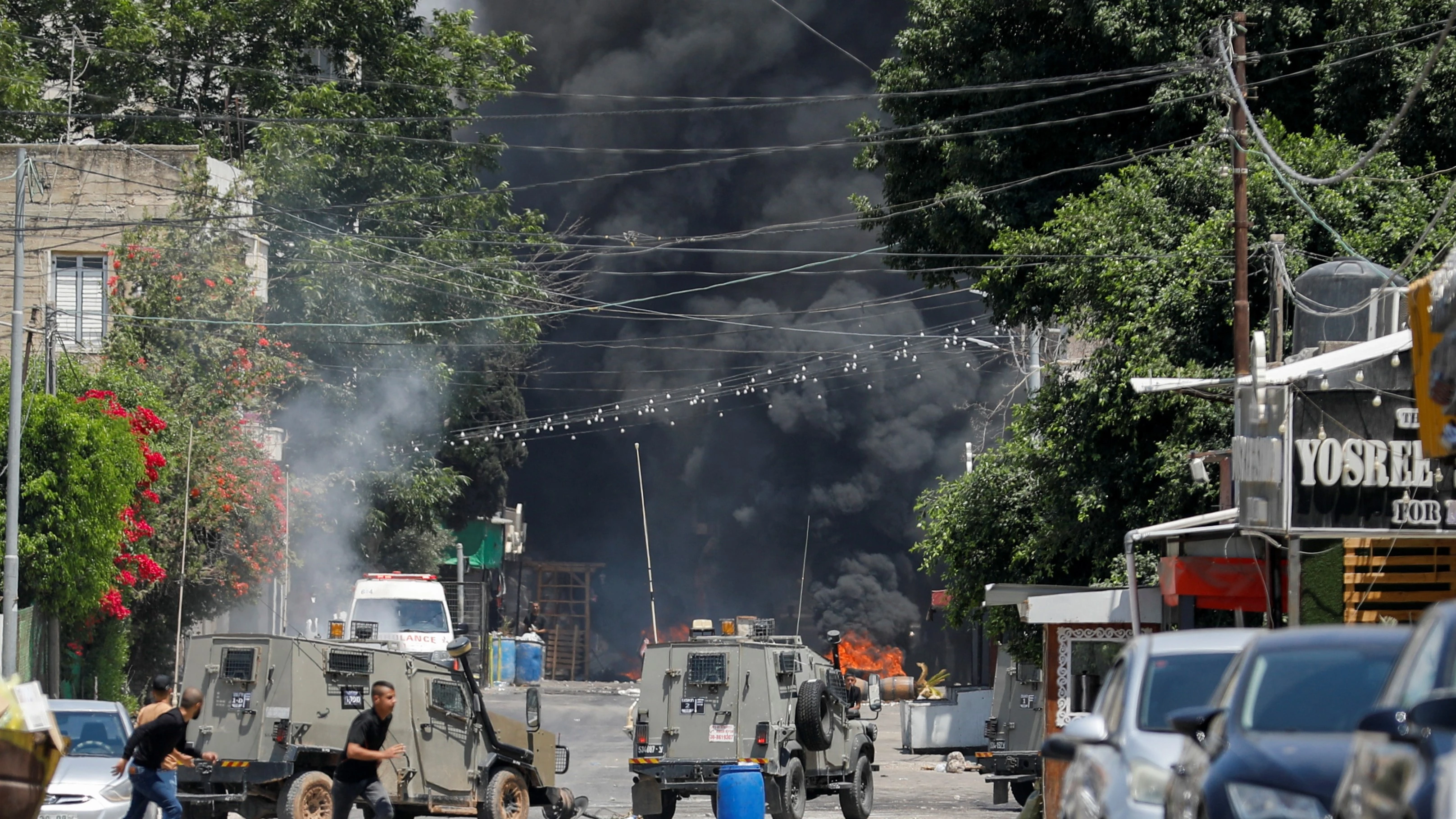
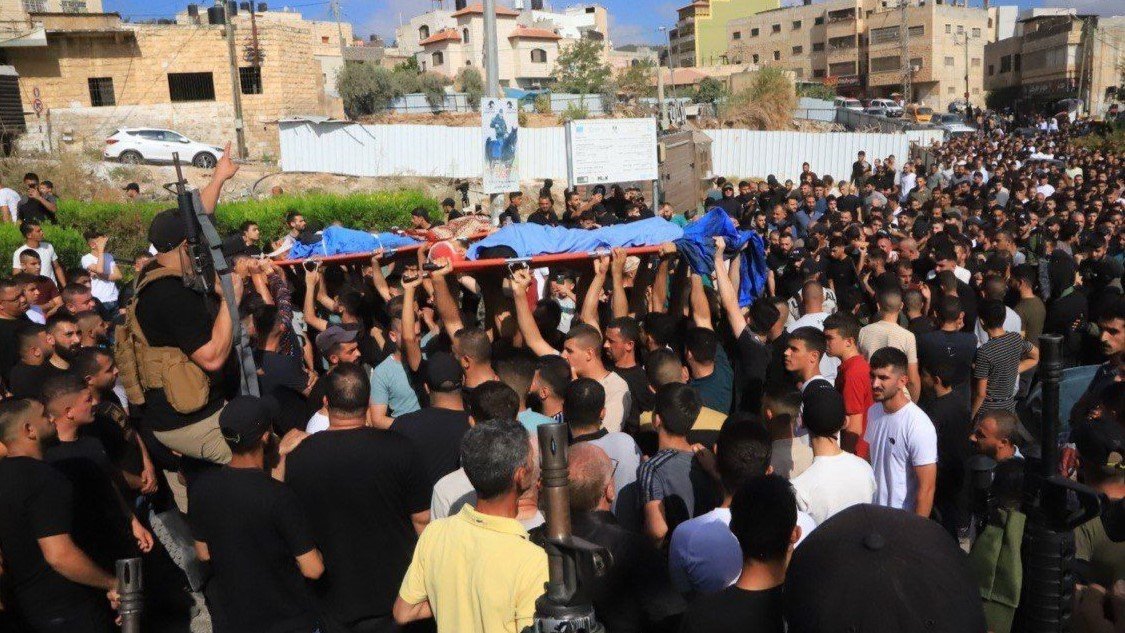
The Israeli army launched its largest operation in the occupied West Bank in over two decades early on 28 August, raiding Jenin, Tulkarem, and Tubas with hundreds of troops and launching airstrikes on the three cities, considered major hotbeds of resistance in the territory.
At least nine Palestinians have been killed since the operation – dubbed “Camps of Summer” – began. The operation is expected to last several days.
Israel’s Foreign Minister has called for forced evacuations of civilians across the West Bank, as has been done in Gaza.
According to Palestinian journalist Azzam Abu al-Adas, Israeli forces turned a shop in the Faraa camp near Tubas into a detention and interrogation center.
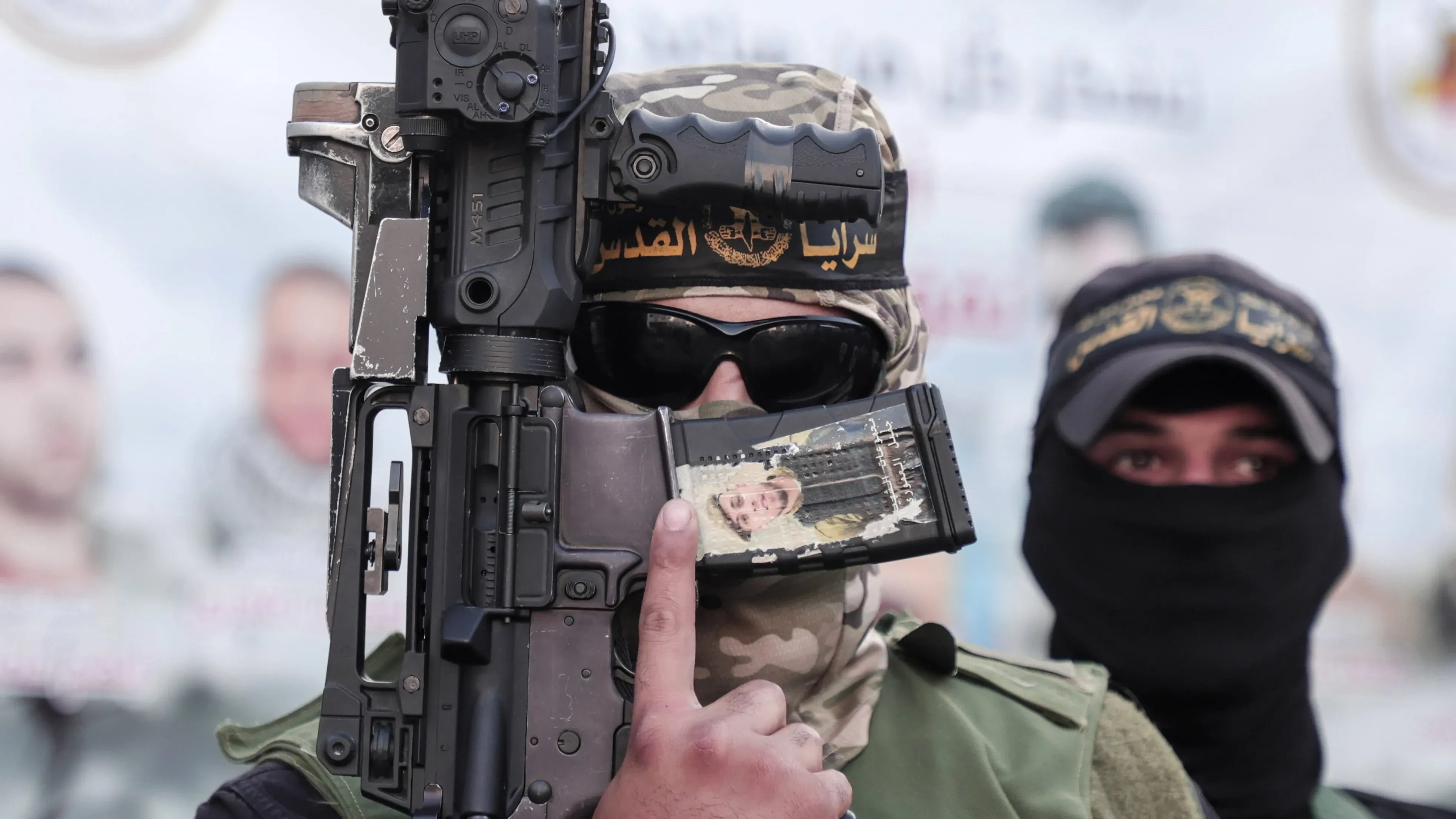
The West Bank branches of Hamas’ Qassam Brigades and the PIJ’s Quds Brigades, as well as the Al-Aqsa Martyrs Brigades and other groups, have been confronting the Israeli army in the camps of Jenin, Tulkarem, and Tubas since the incursions started at midnight on Tuesday.
“Our fighters, in coordination with other resistance factions, are engaged in fierce clashes to repel the ongoing occupation aggression in the Faraa camp (near Tubas), Tulkarem, and Jenin. They are targeting enemy forces and their vehicles with machine guns and explosive devices, achieving direct hits,” the Qassam Brigades’ West Bank branch said in a statement on Wednesday afternoon.
The Quds Brigades Jenin branch, known as the Jenin Brigade, said in a statement that it “targeted enemy forces and military reinforcements with a high-explosive device, and our heroes continue to target enemy forces with heavy barrages of bullets, achieving direct hits.”
Footage on social media showed an Israeli army bulldozer in Jenin being struck by an explosive device.
Unconfirmed reports state that an Israeli soldier was wounded by the resistance in the Faraa camp south of Tubas.
https://thecradle.co/articles/palestini ... ashes-rage
‘Karbala is the path to Al-Aqsa’: an Iraq diary
Iraq’s prime minister hosted a unique conference in Baghdad during the 21 million-strong Arbaeen march, linking the seventh-century murder of Imam Hussain in Karbala to Israel’s current genocide of Palestinians.
Pepe Escobar
AUG 29, 2024

(Photo Credit: The Cradle)
BAGHDAD and KARBALA – Arriving in Baghdad today comes as an electric shock to any visitor who remembers recent, somber Iraqi history.
There are virtually no checkpoints, apart from sensitive government areas. None of those ghastly cement blocks from the time of the American occupation, forcing a slow slalom every few minutes. No sense of unpredictable danger capable of striking at any minute. Lush greenery thrives all over the capital city. Haifa Street has been rebuilt practically from scratch. Bustling commerce, from non-stop action in Karrada to a complex of restaurants by the Tigris called (most appropriately) Thousand and One Nights.
After over three decades of unspeakable horrors inflicted on the cradle of civilization, for the first time, Baghdad exudes a sense of normalcy. This has much to do with the new administration, led by Prime Minister Mohammed Shia al-Sudani, that has been in power for just over two years.
Last week, the Office of the Prime Minister sponsored a unique conference titled The Road to Al-Aqsa Flood, inviting popular bloggers and influencers from the Arab world – Palestine, Kuwait, Jordan, Sudan, and Lebanon, among others – and only a few westerners. The bloggers were all young; most had never been to Iraq and, thus, had no memories of Shock and Awe and the occupation – at best, some hazy recollection of the ISIS years. They were all stunned by the hospitality, the dynamism, and, most of all, the hope now firmly embedded in Baghdad life.
The Iraqi government actually came up with a titillating concept, tying a serious discussion about all aspects of today’s ongoing Palestinian tragedy not only to Baghdad but to Arbaeen in Karbala.
Arbaeen marks the 40th day after Ashura, the Shia rite to honor the martyrdom of Hussein Ibn Ali, the Prophet Muhammad’s grandson, who was brutally murdered alongside his entire family by the Umayyad Caliph Yazid Ibn Muawiya. For Shia Muslims, this dishonorable slaughter represents the ultimate embodiment of injustice and betrayal, considered foundational evils by the religious sect.
It’s all about Resistance – without explicitly mentioning the Axis of Resistance. The martyrdom of Imam Hussein at the Battle of Karbala was – in Baghdad today – directly tied to the ongoing Israeli genocide of tens of thousands of Palestinians, in a “twenty-first-century Karbala.”
Twenty-one million walking pilgrims
Flying right before sunset on a Soviet helicopter from a military base by the Tigris in Baghdad to a mini-base in Karbala, some 10 kilometers away from the magnificent Hazrat Abbas shrine, is an astonishing experience.
Irrepressible commander Tahsin, in Karbala, had ordered the pilot to follow the Arbaeen pilgrim route – one of the multiple axes crisscrossing Iraq and leading to the shrine.
The feeling is of a long cinematic traveling shot. Rows and rows of pilgrims, mostly dressed in black, with their backpacks, carrying banners, walking at a steady pace, going through a collection of stalls, resting places, and mini-restaurants, mingling with volunteers offering free water bottles and free drinks to quench the thirst on this spiritual, yet, arduous journey during a scorching Iraqi summer.
As we approach Karbala, the crowd gets much thicker. It’s a sort of community spirit moveable feast. Spontaneous chants pop up, punctuated by infectious rhythm, and above all, there’s this relentless drive to keep walking, to try get as close to the shrine as possible.
We are told it’s absolutely out of the question to approach the shrine – the road is jam-packed, body pressed upon body. So the next best option is somewhere five kilometers away: a sort of mini-Palestine compound featuring an exhibition of military feats from Gaza, a space for lectures, a mini-mosque, a small replica of Al-Aqsa and even a road sign: “Al-Aqsa Mosque, 833 km.”
That couldn’t be more graphic: the Karbala–Al-Aqsa connection, at the heart of Arbaeen. It’s like the spirit of Imam Hussein veiling over every soul along these 833 kilometers.
This compound has been one of the focal points of this year’s commemoration. The flow of pilgrims from all over the Muslim world is relentless – and many stop to pay their respects. Nearby, commander Tahsin introduces us to a hard-as-nails anti-ISIS fighter from the Anbar province, who now supervises an Iraqi kebab stall, making delicious food for free, “in the spirit of Imam Hussein.”
Flying back to Baghdad at night, the pilot circles around the dazzling lights of the Hazrat Abbas Shrine – a spectacle worthy of a remixed One Thousand and One Nights. Later, the shrine’s management would confirm that an astonishing 21.4 million pilgrims had come to Karbala for Arbaeen.
Meeting al-Sudani
Prime Minister Sudani receives the foreign guests for a special meeting at one of those proverbially monumental marble-filled Saddam-era palaces inside Baghdad’s protected Green Zone.
Cool, calm, collected, he talks authoritatively not only about the Palestinian plight, but on his vision for a stable nation, detailing his “Iraq First” policy. It’s about sustainable development; investments in education and new technology; an affirmation of sovereignty; and in foreign policy, an extremely careful balancing act, juggling the US, the EU, Russia, China and Arab/Muslim partners.
A suggestion is made for Iraq to go to the next level and consider applying to join BRICS. PM Sudani duly takes notes.
The message is clear: Iraq is finally on the road to stability and normalcy. Earlier, a government official had observed, “Daesh [ISIS] set us back many years. Otherwise, we would have made even more progress.”
According to Dr Hussein Allawi, a top adviser to the Prime Minister, ISIS has been reduced to, at best, a few hundred fighters on the fringes of the Syrian–Iraqi desert, protected by local tribes. The threat seems to be finally contained, despite US efforts to exaggerate it.
But what gets Allawi really excited are the ramifications of the “Iraq First” policy – and an array of investment possibilities ahead. On energy, for instance, China buys nearly half of Iraq’s oil production; is a leading operator in several oil fields; and even diversifies in projects such as oil-for-schools, helping Baghdad on the education front.
Iraq is at the forefront of China’s ambitious, multi-trillion-dollar Belt and Road Initiative (BRI) in West Asia. The key focus is on the $17 billion Strategic Development Road: a transport corridor from Basra to Western Europe, to be finished by 2028, eventually to be connected to BRI – a route that will ultimately prove much cheaper and faster than the existing Suez one.
A visit to Abu Hanifa Mosque seals the Coming of the New Baghdad. This is where the first massive anti-occupation, Sunni-Shia march started in 2003, only nine days after the US-engineered fall of Saddam Hussein’s statue in Tahrir Square. The bombed-out minaret has been rebuilt, the mosque is now in impeccable condition, and an annex featuring precious Sufi objects has been sponsored by a Turkish cultural foundation.
The cradle of civilization is slowly but surely being reborn.
https://thecradle.co/articles/karbala-i ... iraq-diary
******

Washington’s Israel Policy Is Just Feigning Ignorance Of Israeli Depravity
It’s so unfair how Israel’s neighbors keep attacking it completely unprovoked while Israel is just innocently minding its own business trying to commit a little genocide in peace.
Caitlin Johnstone
August 29, 2024
❖
It’s so unfair how Israel’s neighbors keep attacking it completely unprovoked while Israel is just innocently minding its own business trying to commit a little genocide in peace.
❖
Activists: Israel couldn’t continue killing Gaza without US weapons
Experts: Israel couldn’t continue killing Gaza without US weapons
Israel: We couldn’t continue killing Gaza without US weapons
Biden-Harris: [sends US weapons to Israel]
Biden-Harris: The killing in Gaza must not continue!
❖
Israeli insiders keep very straightforwardly acknowledging that an arms embargo would bring an end to their genocidal atrocities. Biden and Harris oppose an arms embargo because they want those genocidal atrocities to continue.
❖
The US knows Israel has nuclear weapons but simply pretends it does not know this.
The US knows it’s Netanyahu sabotaging a peace deal but simply pretends Hamas is the real obstacle.
The US knows Israel is committing genocide but simply pretends that saying this is antisemitic.
The US knows Israel is deliberately targeting civilians but simply pretends to believe it is exclusively targeting Hamas.
The US knows Israel is committing war crimes in Gaza which make it illegal to send them weapons, but simply pretends it hasn’t seen solid evidence of this.
The US knows Israel will never agree to a two-state solution but simply pretends to believe a two-state solution is right around the corner.
The US knows there can never be peace and stability in the middle east as long as Israel exists in the way that it exists, but simply refuses to acknowledge this self-evident fact.
US policy on Israel is to simply refuse to acknowledge self-evident realities which can be immediately observed with the naked eye. It’s pretending to believe up is down, day is night, and a spade is a pineapple, while privately knowing that none of these things are the case. It maintains the status quo through narrative control, and it maintains narrative control through tenaciously feigned ignorance.
❖
A lot of liberals say things like “I support the Palestinians AND Israel!”
Yeah me too man, I always support both the victim and the victimizer. I support the battered wife AND the wife beater. I support the molested child AND the child molester. When I watch Schindler’s List I cheer for the Jews AND the Nazis.
❖
Right wing translation guide:
“this is communism” = “this is capitalists doing capitalism”
“this is Marxism” = “this is capitalists doing capitalism”
neo-Marxist = capitalists doing capitalism
globalists = capitalists doing capitalism
technocrats = capitalists doing capitalism
❖
One thing I think about sometimes is the absolute certainty that undiagnosed psychopaths and sociopaths enlist to serve in conflict zones for the purpose of acting out their sadistic fantasies. I’m sure most of the abuses we see in places like Gaza have mundane systemic explanations like the fact that Zionists are indoctrinated from birth to see Palestinians as less than human, but I’m also sure there are people who’ve volunteered to participate in this genocide because they just want to inflict pain and death on other human beings.
I’m sure this is happening in Gaza, and I’m sure this happens in all instances of mass military violence. A war zone is a collapse in law and order where might makes right and whoever has the guns makes the rules. People who normally wouldn’t risk imprisonment for acting out their fantasies of torture and murder have the opportunity during wartime to become one of the people with the guns who make the rules. They have a helpless population at their fingertips to whom they can do anything they like.
War is the worst thing in the world. It’s the most insane thing humans do. So, so much of the trauma and dysfunction of our species are the lingering reverberations from wars which ended decades ago, passed down from generation to generation by soldiers returning home and by civilians who’ve been subjected to unfathomable abuse by those who found themselves free to do anything they want to them.
❖
It’s obnoxious that more western artists don’t denounce the west-backed genocide in Gaza and other western atrocities, but more than this it’s obnoxious that they don’t make it central to their art. When you live in the heart of a murderous dystopian civilization, as an artist you’ve been handed the gift of actually having something to say that’s worth saying. But hardly anyone does.
Most of our art completely ignores the true nature of the freakish hellscape we find ourselves in (or even actually runs cover for it), preferring to make pretty shapes and catchy jingles over actually confronting the giant murder machine right in front of them. Poets write poems about poetry. Hip hop artists rap about rapping. Novelists tell the trillionth story of a budding young romance. Pop artists write songs about what a great time they’re having in this nightmarish freak show and how much cool stuff they own. Screenwriters — the worst of all — type out scripts normalizing the abuses of capitalism and imperialism by depicting everyone doing basically fine under status quo systems and telling heroic stories about western soldiers, cops and spies.
Art can be used to open eyes, but most western artists spend their lives working instead to close them. And of course this is because artists are themselves victimized by the systems under which we live, finding it nearly impossible to make a living doing what they know they were born to do unless they produce very non-confrontational and non-subversive works. In our society it is the wealthy people who benefit from our existing systems that get to decide what art becomes elevated to mainstream attention, so artists look at who’s making a “successful” living at their art and what they’re creating and they model their output on examples which challenge the powerful in no meaningful way.
But there is so, so very much to say about this weird electronic wasteland we find ourselves in if you don’t let the bastards hijack your creativity like that. It takes some learning, some understanding, some insight and some courage, but these are all qualities that every artist must have anyway. Anyone with the artist’s fire burning within them has the power to use their gift to sow the seeds of awakening in some very inconvenient places within our society.
And from those seeds, a healthy world can one day begin to grow. A healthy society where it really does make sense for artists to be talking about how great things are and what a fun time they’re having. Where songs about singing and poems about romance really do have their place — because they’re not being used to distract and divert from the horrors that are unfolding right in front of our faces in a situation that urgently needs everyone’s care and attention.
But until then, as long as we’re living under an empire that is fueled by human blood in a mind-controlled dystopia on a dying planet, it is our responsibility as artists to continually point to what’s happening and the urgent need to address it, in every way that we can.
https://caitlinjohnstone.com.au/2024/08 ... depravity/