Palestine

User avatar
blindpig
Posts: 14804
Joined: Fri Jul 14, 2017 5:44 pm
Location: Turtle Island
Contact:

Re: Palestine

Post by blindpig » Wed Jan 22, 2025 3:56 pm

Fault lines deepen: Smuggling and Islamist resurgence grip Lebanon

Lebanon’s pursuit of political stability is overshadowed by escalating smuggling networks, sectarian tensions, and the volatile aftermath of Syria’s collapse.


Tamjid Kobaissy

JAN 21, 2025

Image
Photo Credit: The Cradle

The ousting of former Syrian president Bashar al-Assad and the collapse of the Syrian state in December sent shockwaves across West Asia, stoking fears of a resurgence of political Islam in neighboring states.

The swift ascent of Al-Qaeda-linked Hayat Tahrir al-Sham (HTS), led by Ahmad al-Sharaa (previously known as Abu Mohammad al-Julani), exacerbated concerns that Lebanon, already fragile from years of turmoil, could bear the brunt of this seismic shift.

Due to the spill-over of the Syrian civil war that started in 2011, Lebanon endured devastating terrorist attacks and simmering Sunni–Shia tensions exploited by foreign-backed sleeper cells. Now, the fear is that the region might once again face chaos with the establishment of a new extremist Syrian government.

Adding to this unease was the ‘coincidence’ of Assad’s downfall that overlapped with the start of a ceasefire agreement between Israel and Lebanon. Hezbollah, though demonstrating extraordinary resilience, suffered severe blows militarily and politically.

The assassination of Hezbollah’s secretary-general Hassan Nasrallah and the resistance movement's top military leadership left a vacuum that emboldened extremist groups in Lebanon. Perceiving Hezbollah as weakened, these groups may view this moment as a perfect opportunity to strike, particularly in light of Lebanon’s apparent new-found political stability under the western-backed newly elected President Joseph Aoun.

The celebrations masking deeper anxieties

Lebanon's reaction to Assad's fall was polarized. Celebrations erupted in several Lebanese northern areas, including Tripoli, with car parades, fireworks, and chanting. Yet beneath the surface, these public festivities often hinted at a more sinister reality.

While some remained limited to harmless jubilation, others carried ominous undertones – extremist groups seizing the moment to reassert themselves after years of operating in the shadows.

The most alarming incident took place in Beirut’s Sabra neighborhood. Security sources reported the raising of Nusra Front flags and armed displays by Syrian nationals wielding Kalashnikov rifles and donning headbands emblazoned with the group’s emblem.

Led by the Salafi-leaning Sheikh “Zakur A,” this show of force was officially limited to taking pictures and blasting religious chants and anthems. Yet, security experts fear these actions could signal a deeper strategy, particularly given similar activities in Shatila camp, where celebratory gunfire accompanied organized gatherings.

Arms flowing into Lebanon

The fall of Assad coincided with significant security shifts in Lebanon, including the implementation of UN Security Council Resolution 1701. This development compelled Palestinian factions to surrender positions outside the camps, prompting leading groups like Fatah al-Intifada to redistribute weapons among their members while retaining a portion to deceive authorities, as observed in the Sirub area near the Ain al-Hilweh camp in Sidon (Saida).

This was only the beginning of a broader arms influx. Weapons looted from Syrian military depots flooded into Lebanon, sold at extremely low prices.

A Kalashnikov rifle could be purchased for as little as $25, fueling an arms trade that empowered militants and criminal gangs alike. The proliferation of cheap, accessible weapons spurred fears of internal conflict as groups in Sabra, Shatila, Naameh, Khaldeh, and other areas began stockpiling arms.

Lebanese authorities have exposed intricate smuggling networks driving the flow of arms into militant-controlled areas. Disguised as poultry shipments from Akkar, these weapons ended up in the possession of armed groups.

Smuggling routes and key players

On the night of 3 January, a fresh arms shipment arrived in Beirut’s Sabra area. Security sources confirmed that a group of Syrians and Lebanese with Salafi leanings, led by J.H., a Lebanese associate of imprisoned cleric Sheikh Ahmed al-Assir, took delivery near the Hariri dispensary adjacent to Shatila camp and Tareeq al-Jadida.

This was not an isolated event. Similar arms deliveries have reportedly been occurring since the Syrian government’s fall. Among the recipients were participants in the 2012 Tareeq al-Jadida clashes against Arab Movement Party leader Shaker al-Berjawi, including members of the Al-Taqwa Association and other Islamist groups. Members of Fatah al-Intifada in Shatila camp, many with criminal records for offenses such as illegal firearm use and drug trafficking, also obtained weapons.

Smuggling activities are entrenched in Akkar, in northern Lebanon. Stolen motorcycles, for instance, are transported weekly to Syria via Wadi Khaled, often with altered or erased chassis numbers.

Despite these covert operations, security forces have made some headway. Last month, Lebanon's State Security arrested M.H., a prominent arms smuggler in Akkar, and seized a cache of 25 Kalashnikov rifles and PKC machine guns. M.H. is accused of bringing in multiple shipments of 30-50 weapons each, most of which have already been sold.

Reports suggest that some of these arms were funneled to Syrian families in Khaldeh, with the Mufleh clan emerging as primary beneficiaries.

Political maneuvering amid Lebanon’s uncertainty

Political involvement has added a layer of complexity to the situation. Tripoli MP Ashraf Rifi reportedly made two visits to Khaldeh last month – once to congratulate Sheikh Omar G., a controversial figure linked to the 2021 Khaldeh clashes, on his release from prison, and another time in a covert meeting believed to be aimed at cultivating local alliances.

In Naameh, Sheikh Tareq M. has been a key figure in overseeing arms distribution. After returning from Syria following Assad’s fall, he was prominently seen alongside Sharaa during his victory speech at the Umayyad Mosque. Footage of Sheikh Tareq kissing Sharaa’s hand has been widely circulated, signaling his alignment with the new government.

Symbols of shifting allegiances have also emerged. In Naameh, Sharaa’s image was raised, while in Khaldeh, a large picture of Assir appeared near the Shibli Center, sparking unrest among locals. The Lebanese Army Intelligence quickly intervened to remove the provocative image.

Meanwhile, a meeting in Damascus brought together senior Lebanese and Syrian security officials to discuss multiple issues, including border security and arms smuggling prevention.

When questioned about Syrian support for Lebanese militant groups, Syrian officials reportedly stated:

“Numerous Lebanese factions have approached us, requesting our support to extend our influence in Lebanon through them. However, our vision is different – we do not wish to repeat the past 50 years.”

The collapse of Assad’s government after five decades of authoritarian rule marked a dramatic shift, but its consequences extend far beyond Syria’s borders. In Lebanon, the fallout has emboldened extremist groups, flooded the country with weapons, and intensified political rivalries.

With Hezbollah weakened and weapons saturating the streets, the threat of renewed sectarian violence feels increasingly tangible. The collapse of Assad’s government has set off a chain reaction, spilling across borders and destabilizing Lebanon’s already fragile state.

https://thecradle.co/articles/fault-lin ... ip-lebanon

Israeli forces ravage infrastructure in Jenin as deadly operation enters second day

Israeli troops invading Jenin and its refugee camp killed 10 Palestinians, injured over 40, and displaced hundreds

News Desk

JAN 22, 2025

Image
(Photo credit: AFP)

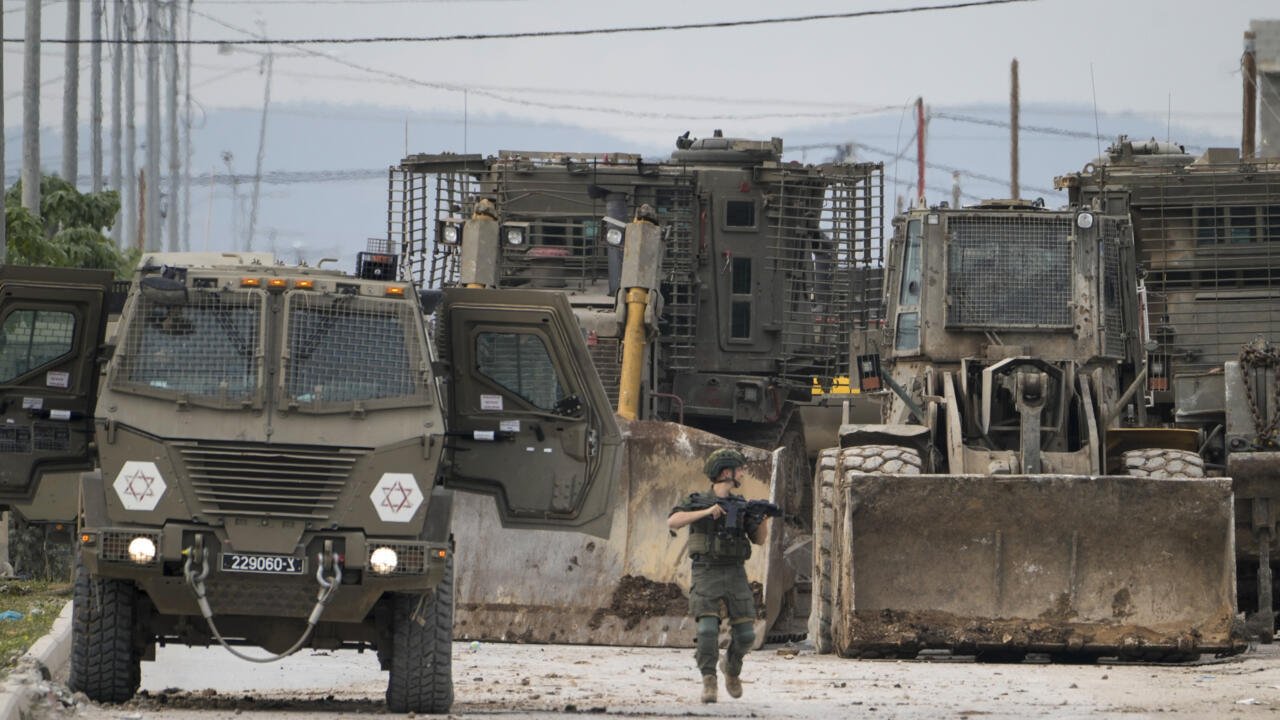
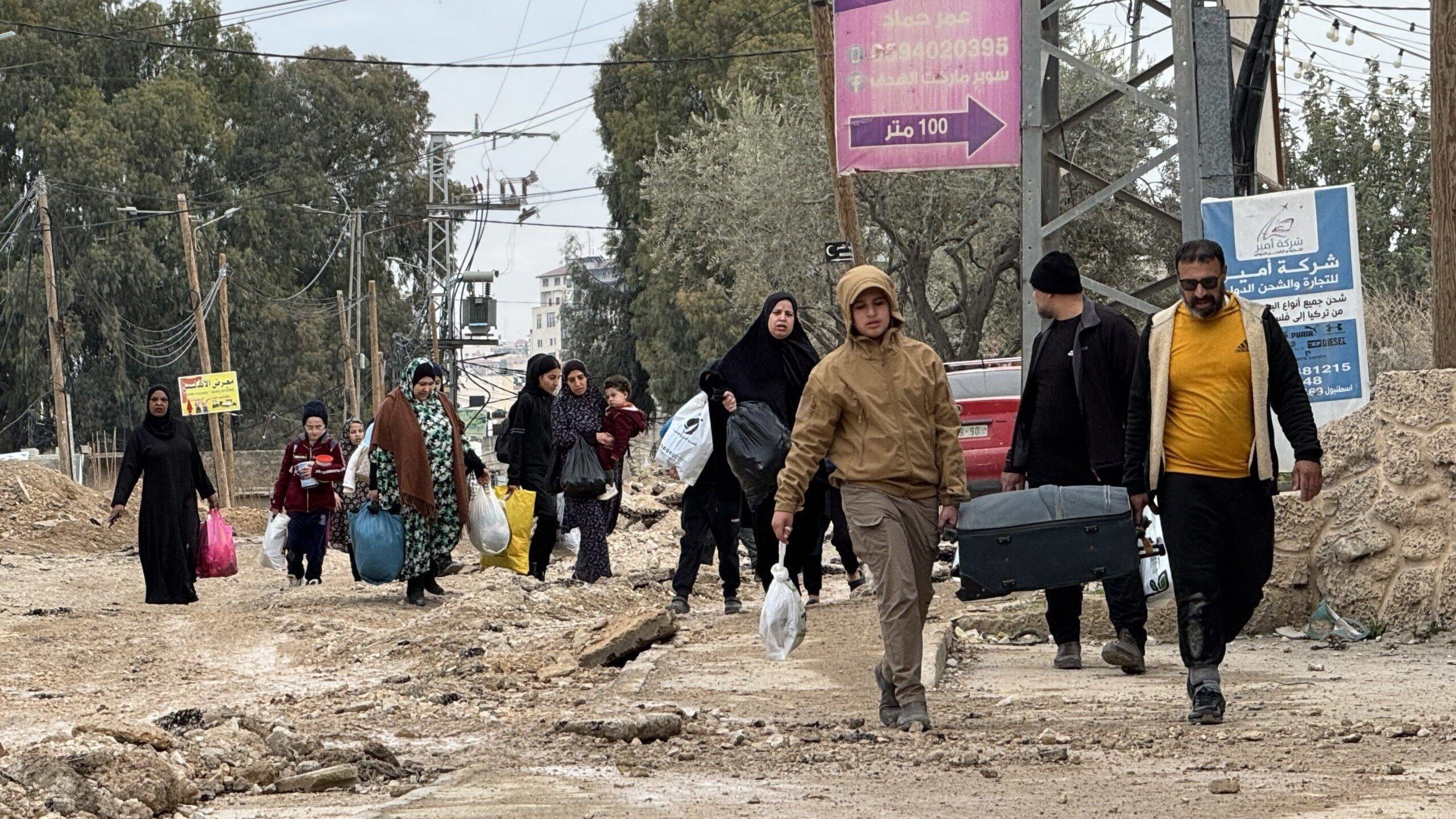
Israel’s deadly operation in the occupied West Bank’s Jenin has entered its second day, as troops continue to tear up infrastructure and reinforce their presence across the city and its battered refugee camp.

Videos shared on social media on 22 January showed roads destroyed by the Israeli army’s bulldozers.

Israeli forces destroyed the road around Jenin Government Hospital and bulldozed the entrance to the medical facility, blocking it with mounds of dirt. Destruction was also carried out in the vicinity of Ibn Sina Hospital.

Director of Jenin Government Hospital Wissam Bakr told WAFA news agency that the ability to transport wounded Palestinians to hospitals has been affected.

The army has closed off the entrances to the Jenin refugee camp.

“The occupation forces are sending more military reinforcements to the city of Jenin and the entrances to its camp,” WAFA reported.

The Jenin Brigade of the Palestinian Islamic Jihad (PIJ) movement’s Quds Brigades said on Wednesday that its fighters were confronting Israeli forces with machine guns and explosive devices.

Israel launched a large-scale military operation in Jenin on 21 January, coinciding with airstrikes on the city.

The Israeli army announced on Wednesday that it hit several “terrorist” targets in Jenin over the past 24 hours and destroyed explosives planted on roads. The operation is expected to last several days.

Ten Palestinians have been killed and at least 40 others injured since the operation – dubbed “Iron Wall” – began. The Israeli army killed a man in front of his wife and three kids on Tuesday night.

Ahmad Shayeb was driving home with his family with him when Israeli snipers opened fire at the car. Video footage showed the final moments before he was killed.

Bashir Matahen, the director of Public Relations and Media at the Jenin Municipality, told Anadolu Agency (AA) that over 600 Palestinians have been displaced from the camp as a result of the Israeli invasion.

Israel signaled this week that it is preparing for “major” operations across the occupied West Bank.

Before “Iron Wall” was launched, the Palestinian Authority (PA) had been besieging the Jenin camp for six weeks in an Israeli-backed operation that Ramallah said was aimed at rooting out the Jenin Brigade and establishing control over the camp.

Haaretz newspaper reported on Monday, citing a Palestinian source, that Israel asked the PA security services to withdraw from Jenin before the Israeli army entered.

At least 868 Palestinians have been killed by Israel in the West Bank since 7 October 2023.

https://thecradle.co/articles/israeli-f ... second-day

Israel's chief of staff, top military officials to resign over '7 Oct failure'

Many reports since the start of the war in Gaza have revealed that Israeli authorities ignored crucial warnings that could have prevented Hamas’s operation

News Desk

JAN 21, 2025

Image
(Photo credit: Reuters)

The Israeli army’s Chief of Staff, Herzi Halevi, announced his resignation on 21 January over his failure to prevent Hamas’s Operation Al-Aqsa Flood, along with several other military officials.

“On the morning of 7 October, under my command, the IDF failed in its mission to protect Israel’s citizens. The State of Israel paid a heavy and painful price – in lives lost, in hostages taken, and in those wounded both physically and emotionally,” Halevi said in his resignation letter, published by the Times of Israel.

“In recognition of my responsibility for the IDF’s failure on October 7, and at a time when the IDF has recorded extraordinary achievements and restored Israel’s deterrence and strength, I request to conclude my tenure on 6 March 2025,” the chief of staff added.

Several other military leaders are also set to resign, including Halevi’s deputy Amir Baram, head of the Intelligence Directorate Aharon Haliva, commander of the army’s Southern Command Yaron Finkleman, and commander of the elite intelligence force Unit 8200 Yossi Sharel, according to Israeli news outlet Channel 14.

Last year, it was reported that Halevi and several others were planning their resignation following the war – including Haliva and the chief of Israel’s Shin Bet security service, Ronen Bar.

Bar had acknowledged his responsibility for failing to prevent the 7 October operation. “As the one who heads the organization, the responsibility for this is mine,” he declared at the time.

Israeli media also reported in late 2024 that the chief of Israel’s police intelligence division Dror Assaraf was intending to resign.

Several reports have emerged since the war in Gaza began, revealing that Israeli authorities ignored multiple warnings about Operation Al-Aqsa Flood.

In December 2023, Yedioth Ahronoth reported that the Shin Bet received crucial intelligence that could have prevented Hamas’s attack. According to the report, Shin Bet director Ronen Bar was present at the agency headquarters in Tel Aviv the night before the attacks.

Financial Times (FT) said in November 2023 that a detailed report by low-ranking officers was sent to senior officials in the army weeks before the attack. The army report warned Hamas was training to “blow up border posts at several locations, enter Israeli territory, and take over kibbutzim.”

The officers also provided video footage of Hamas practicing taking prisoners.

The Times of Israel reported in October 2023 that warnings provided by low-level surveillance soldiers were ignored by their superiors for months.

Significant amounts of evidence have emerged regarding the army’s role in killing many of its citizens on 7 October as part of the mass implementation of the Hannibal Directive.

Halevi’s resignation comes just days after the start of the ceasefire in Gaza, which has so far seen the release of three Israeli captives in exchange for 90 Palestinian prisoners.

https://thecradle.co/articles/israels-c ... ct-failure
"There is great chaos under heaven; the situation is excellent."

User avatar
blindpig
Posts: 14804
Joined: Fri Jul 14, 2017 5:44 pm
Location: Turtle Island
Contact:

Re: Palestine

Post by blindpig » Thu Jan 23, 2025 4:01 pm

Returning to Devastation
January 22, 2025

“This is what extermination and genocide looks like” — Sharon Zhang reports on what people are finding in areas of Gaza made inaccessible by Israel’s siege.

Image
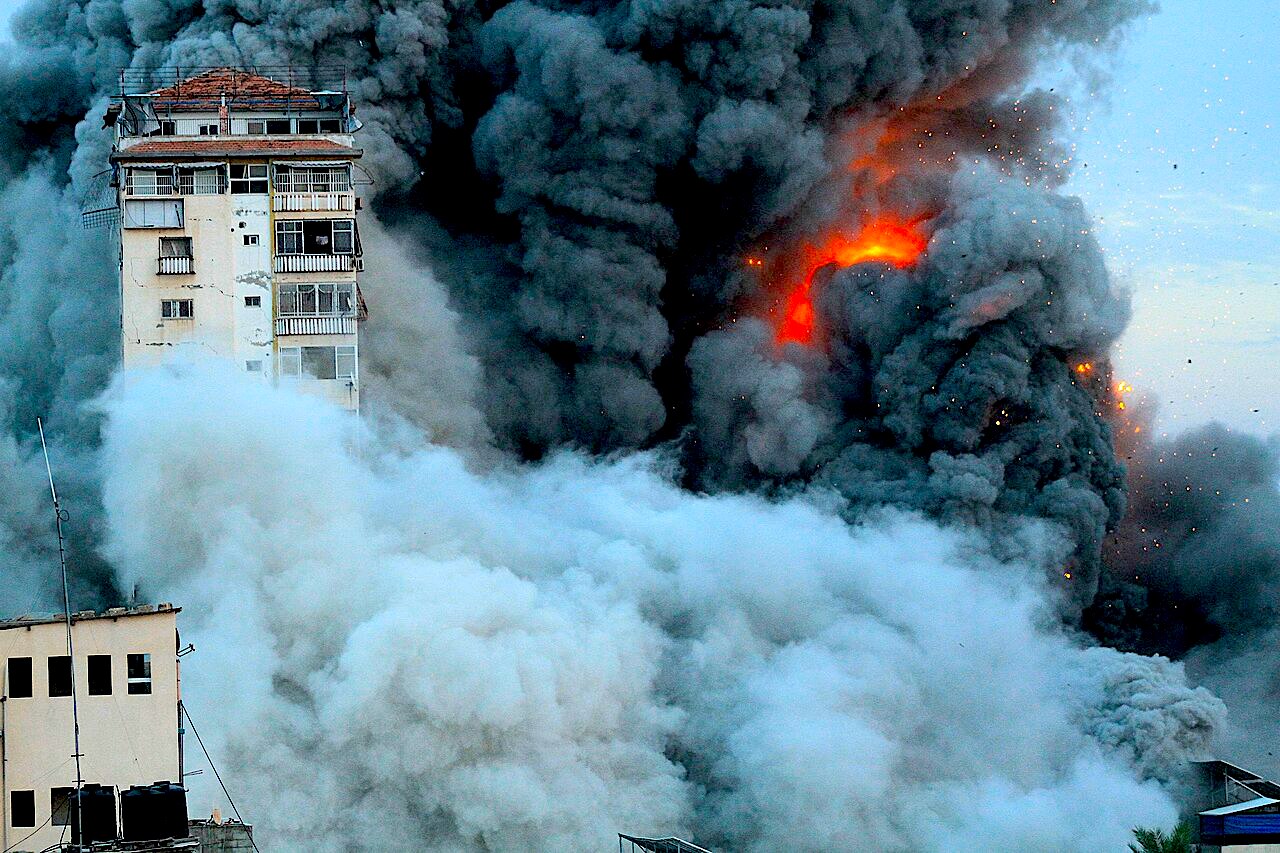
Israeli attack on Gaza, Oct. 7, 2023. (Ali Hamad of APAimages for WAFA, Wikimedia Commons, CC BY-SA 3.0)

By Sharon Zhang
Truthout

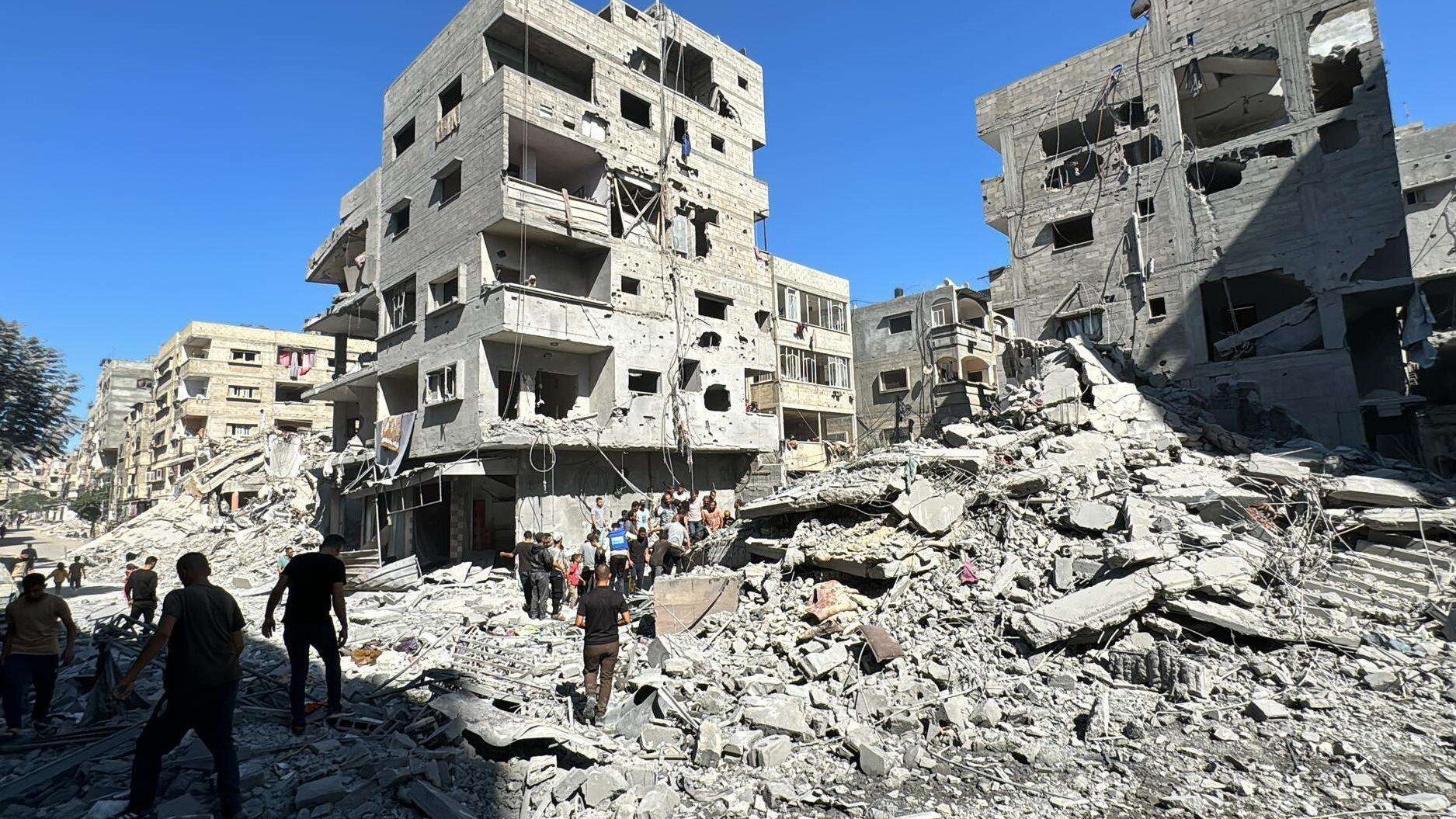
Palestinians and aid groups in Gaza are returning to areas made inaccessible by Israel’s siege only to find that entire neighborhoods have been reduced to rubble, with even basic infrastructure like wells for water destroyed by Israel’s carpet bombing campaign.

“We have been driving for the last 10 minutes here in Jabalia [refugee] camp, and I haven’t seen a single building standing,” said Gloria Lazic, a worker for the U.N. Office for the Coordination of Humanitarian Affairs (OCHA), in a video posted by the agency on Tuesday.

Before the genocide, Jabalia was home to over 119,000 registered refugees, according to the U.N. Now, after an intense Israeli siege of northern Gaza, piles of rubble and trash line the streets, with only some concrete frameworks of bombed-out buildings left erect.

“The situation is a nightmare for people trying to return,” said Lazic. “The area is full of unexploded bombs and ordnances that need to be disposed, and people don’t have time to wait. They want to come back home. They’re pitching tents in order to be as close [as possible] to what used to be their homes.”

North Gaza Al Jazeera journalist Anas Al-Sharif also reported from Jabalia, posting a video of the camp where the only thing in sight was masses of destroyed buildings. He warned that the ceasefire is far from enough to support Palestinians as they return to neighborhoods without houses or any other basic infrastructure.

“These areas have been reduced to rubble, with thousands of homes destroyed. The situation is dire: A complete lack of water and basic infrastructure. No displacement shelters, tents, or caravans,” Al-Sharif said. “Families returning from the South are facing catastrophic conditions, with no access to even the most basic necessities.”

Though Israel is supposed to allow families to return to their homes in northern Gaza as part of the ceasefire deal, Al-Sharif reported that some families have been returning but then leaving again after finding no resources and no homes to return to.

Israel’s invasion of northern Gaza was particularly intense, but none of Gaza has been spared.

Israeli forces have destroyed over 90 percent of homes in Gaza amid the genocide, causing damages that experts say will take tens of billions of dollars and decades, if not hundreds of years, to recover from; the U.N. has estimated that just clearing out unexploded bombs could take 14 years.

The Israeli military’s destruction was funded in large part by the U.S., which provided a near-endless flow of bombs and other weapons to fuel the assault.

Gaza journalist Abubaker Abed reported from Al-Bureij refugee camp in central Gaza on Wednesday, saying, “I cannot really see any inch without total destruction. Families are returning to the area and scrounging for any place to live or anything to salvage.”

“Total destruction. That is massive obliteration. This is what extermination and genocide looks like,” said Abed.

Similarly, the U.N.’s OCHA said its workers returned to a former critical health facility the agency had in Rafah, in south Gaza, to find a shell of a building.

The U.N. Relief and Works Agency for Palestine Refugees (UNRWA) posted footage of Rafah showing city blocks turned to dust, saying: “Homes, hospitals, schools, including UNRWA premises — no place has been spared.”

https://consortiumnews.com/2025/01/22/r ... vastation/

Digging Out the Bodies From the Rubble
January 22, 2025

With thousands more Palestinians’ bodies still trapped under the rubble, 248 deaths have been added so far to the official toll from Israel’s attacks, Sharon Zhang reports.

Image
Palestinians in the ruins of Aklouk Tower destroyed in Israeli airstrikes in Gaza City on Oct. 8, 2023. (Naaman Omar, Palestinian News & Information Agency, Wafa, for APA images, Wikiedia Commons, CC BY-SA 3.0)

By Sharon Zhang
Truthout

Rescuers in Gaza have already recovered hundreds of bodies from under the rubble in Gaza in less than a week since the ceasefire began, Gaza officials reported on Wednesday, with thousands of more Palestinians’ bodies still trapped.

The Palestinian civil defense agency and medical facilities have reported that since the ceasefire began on Sunday about 200 bodies have been recovered from under debris.

As many as 248 deaths have been added to the official death toll, with health facilities reporting they have received 54 bodies in the last 24 hours — a mix of those rescued from the rubble and Israel’s apparent ceasefire violations in recent days.

This has brought the total death toll of the genocide to 47,161 people, according to official counts, with over 111,100 injured.

As the rescue efforts demonstrate, the true toll is likely far higher, with thousands of people still missing.

One recent study in The Lancet found that the death toll from traumatic injury alone is likely to be over 64,000 people, 40 percent higher than the official toll — and that’s before counting deaths from other causes like starvation and disease.

Officials estimate that there are 10,000 bodies still trapped under the rubble, including thousands of children. Each of these bodies represents a family member, friend and neighbor who effectively went missing amid the genocide, some of their deaths presumed, but never confirmed by loved ones.

Some bodies may never be found. An estimated 2,840 bodies have been evaporated by Israeli attacks, impossible to count because all trace of them is gone, Gaza civil defense spokesperson Mahmoud Basel has said. Others may be buried in unmarked mass graves.

Many bodies were torn into pieces by Israel’s bombs and rendered completely unrecognizable, forcing Palestinians to search for any scrap that may identify them, like a shred of a shirt or a shoe.

“My children are still under the rubble. I am trying to get them out,” Mahmoud Abu Dalfa told Reuters, saying that he and the civil defense workers lack the tools to excavate his family, who were killed in the early months of the genocide. “My wife was killed along with all my five children — three daughters and two sons. I had triplets.”

“I hope I can bring them out and make them a grave. That’s all I want from this entire world. I don’t want them to build me a house or give me anything else. All I want is a grave for them — to get them out and make them a grave,” Abu Dalfa said.

According to U.N. satellite assessments, there are 50 million tonnes of debris in Gaza as of December, with over 170,800 structures damaged or destroyed by Israel’s bombardments. Removing the debris would take 21 years at least, officials say, and cost up to $1.2 billion.

https://consortiumnews.com/2025/01/22/d ... he-rubble/

******

Israel’s Next Step After the Gaza Ceasefire Deal
Posted by Internationalist 360° on January 21, 2025

Was the Gaza ceasefire deal engineered to strengthen both Trump and Netanyahu politically?


Syriana Analysis Interviews Dan Cohen

https://libya360.wordpress.com/2025/01/ ... fire-deal/

******

Over a dozen killed in Jenin in under 48 hours as PA joins brutal Israeli operation

Clashes are raging between Israeli forces and the Palestinian resistance in Jenin and its refugee camp

News Desk

JAN 23, 2025

Image
(Photo credit: AP)

The death toll from Israel’s brutal operation in the occupied West Bank city of Jenin and its refugee camp has risen to 13, as Palestinian Authority (PA) forces cooperate with Tel Aviv in the indiscriminate assault.


A young resistance fighter, Mohammad Shadi al-Sabah, was shot dead by PA troops in the Jenin camp late on 22 January, bringing the number of deaths to 13 in under 48 hours.

Israeli troops demolished a home in the town of Burqin, west of Jenin, on Wednesday night after besieging it for hours. The resistance fighters who were inside reportedly refused to surrender. Two fighters responsible for a shooting operation that assassinated three Israelis in Al-Funduq village earlier this month were killed.


Heavy clashes continued to rage in the area as well as in Jenin city and the camp, continuing into the next morning – with the Jenin Brigade of the Palestinian Islamic Jihad (PIJ) movement’s Quds Brigades announcing several operations against Israeli forces.

“Our fighters detonated a guided explosive device in a military vehicle in the Jalbuni axis, achieving confirmed injuries,” the Jenin Brigade said early on 23 January.

Jenin’s mayor said on Thursday that the displacement of residents in the camp has continued. At least 600 Palestinians have been forced to flee their homes as a result of the Israeli–PA violence.

Roads and sidewalks have been decimated by Israeli army bulldozers.

Israel launched a large-scale military operation in Jenin on 21 January, coinciding with airstrikes on the city. The operation has been dubbed “Iron Wall.”

Before “Iron Wall” was launched, the Palestinian Authority (PA) had been besieging the Jenin camp for six weeks in an Israeli-backed operation that Ramallah said was aimed at rooting out the Jenin Brigade and establishing control over the camp.

Despite Hebrew media reporting earlier this week that the PA withdrew from the area at the request of Israel, Ramallah’s forces are confirmed to be taking part in the operation. Al Jazeera reported on Thursday that one of its correspondents was detained by the PA due to coverage of the massive and deadly operation in Jenin.

PA troops and Israeli forces simultaneously besieged several hospitals in Jenin on Wednesday.

According to a PA official cited by the Times of Israel on 17 January, the PA reached a deal with the Jenin Brigade to end the siege. The deal reportedly requires specific members of the Jenin Brigade to hand over their weapons and allows the PA to operate freely in the refugee camp, the official stated.

https://thecradle.co/articles/over-a-do ... -operation
"There is great chaos under heaven; the situation is excellent."

User avatar
blindpig
Posts: 14804
Joined: Fri Jul 14, 2017 5:44 pm
Location: Turtle Island
Contact:

Re: Palestine

Post by blindpig » Fri Jan 24, 2025 2:36 pm

Hamas’s strategic survival drives Israel crazy

By harnessing its institutional strength, field adaptability, and psychological tactics, Hamas masterfully turned Gaza's destruction into a display of resilience, achieving both symbolic and tactical gains while preventing Israel from claiming any political victory.


The Cradle's Palestine Correspondent

JAN 23, 2025

Image
Photo Credit: The Cradle

The release of three Israeli female prisoners in Gaza by Hamas’s military wing, the Qassam Brigades, in exchange for 90 Palestinian detainees, triggered a media frenzy in the occupation state.

The dramatic “scene” – fighters emerging amidst the ruins of war, surrounded by a jubilant crowd – undermined official Israeli narratives about the war, its goals, and the treatment of Israeli captives. It raised a sobering question for Israelis: What were we doing in Gaza for 15 months?

The Qassam Brigades orchestrated every detail of the event to maximize impact. From the branded gift bags to the polished uniforms of the fighters, the display exuded calculated precision. A military procession was even held in Saraya Square – an area heavily besieged by Israeli occupation forces. The site’s selection was deliberate, showcasing continued resilience in a location meant to symbolize Tel Aviv's defeat in its longest military campaign ever.

Sources in Hamas inform The Cradle that the selection of Gaza City – positioned north of the Gaza Valley and the Netzarim axis, a divide created by the Israeli army to split the strip into two sections, soon expected to be dismantled – was a deliberate and symbolic decision, chosen over other alternatives for its strategic and political implications.

Of course, Hamas had the option to release the female prisoners in “safer” locations, such as central or southern Gaza, but it intentionally chose the square.

Strength through strategy

The delay in handing over the three Israeli prisoners for several hours caused confusion among Israelis, leading to multiple violations of the ceasefire agreement. The Qassam Brigades then surprised the Israeli public by announcing the prisoners' names before the Israeli government, military, or Hebrew media could do so. Minor logistical issues also briefly delayed the release of the 90 male and female Palestinian prisoners but were quickly resolved.

The three Israeli captives were handed release certificates in both Hebrew and Arabic – mirroring Israeli practices with Palestinian prisoners – and were given souvenirs from Gaza, including a detailed map of the entire strip. According to the sources, these “deliberate and carefully planned steps” were intended to send a clear message to Israel: Hamas is neither defeated nor on the brink of elimination.

Israel’s Channel 12 called the ceasefire agreement a “bag of sarcastic surprises,” but the prisoner exchange's strength lay elsewhere. For months, Israeli negotiators had tried through Qatari and Egyptian mediation – and failed – to extract a list of the Palestinian prisoners to be freed.

Hamas refused, citing security risks, and forced Israel to pay a far higher price than in earlier deals. The initial truce on 24 November 2023 saw three Palestinians exchanged per Israeli. Now, after 15 grueling months of war, Israel had to release 10 times that ratio, a clear indication of Tel Aviv's lost leverage.

That first, brief six-day truce gave Palestinian resistance factions a chance to regroup. Sources reveal that several battalions, battered by relentless Israeli bombings, managed to regain their operational footing during the break. While Israeli Prime Minister Benjamin Netanyahu had pushed for continuous pressure without any pause in Israel's brutal military campaign, the short truce showed Hamas was resilient enough to spring back into form quickly.

Did Hamas achieve victory in Gaza?

All of this raises the central question: Did Hamas achieve victory in Gaza, and if so, how and why? To answer fully, one must first analyze the foundational and evolving sources of the resistance movement’s strength, examine the mechanisms behind its adaptability and renewal, and finally consider who currently leads the organization, particularly within the Gaza Strip.

Hamas today remains deeply present not only in the Palestinian street but also across the broader Arab and Islamic worlds. Despite the devastation of war, Operation Al-Aqsa Flood, which was launched on 7 October 2023, continues to resonate strongly, shaping public and personal sentiment across the globe. Moreover, sources tell The Cradle that these events have fueled significant recruitment, with thousands of young Palestinians joining Hamas’s ranks.

Even Hebrew media, despite its often propagandistic tone, has acknowledged this phenomenon. While much of Israel's narrative aims to justify prolonged conflict or the potential resumption of war, occasional admissions reveal the growing appeal of resistance among Palestinians.

Hamas sources argue that Israel has created “a vendetta for generations,” describing the war as not merely a battle against the resistance movement, but a war on all citizens of Gaza. The widespread massacres and destruction have unified the Palestinian street, blurring distinctions between Hamas supporters and others.

“Those who are not part of Hamas inevitably become part of the resistance,” one source explains, emphasizing that even if Hamas were to cease, a new and perhaps stronger movement would emerge in its stead.

A European security official reportedly shared similar concerns with a Hamas representative in Lebanon. The official warned that Gaza’s estimated 18,000 orphans, created by this war alone, could form a new “liberation army” within a decade, one even fiercer than its predecessors.

Adaptability and strategic learning

Hamas has leveraged this dire situation for reconstruction and renewal, refining its strategies and operations. By the sixth month of the war, it was evident that its focus extended beyond ammunition and weaponry to the cultivation of leadership and cadres.

The Qassam Brigades has prioritized the safety of fighters and the efficiency of operations, ensuring that resources are not squandered and that retreat paths remain secure. Israel’s starvation policy, particularly in northern Gaza, aimed to weaken resistance fighters by restricting vital nutritional elements like animal proteins. Despite these tactics, Hamas adapted swiftly, mitigating the impact through preemptive measures.

Another critical factor in Hamas’s resilience is its systematic approach to leadership development. Before the war, its military arms, particularly the Qassam Brigades, operated training programs and maintained a semi-official military academy.

This structure allowed the group to maintain high-caliber leadership despite the assassination of many of the movement's commanders. Expertise in manufacturing weapons and missiles was rapidly transferred, ensuring continuity in operations.

Intel warfare

Hamas’s intelligence apparatus also played a pivotal role, in which “secrecy” was maintained over key information. Sources tell The Cradle that the movement’s security infrastructure, including the intelligence arm of the Qassam Brigades, General Security, and Internal Security, was critical in preserving the organization's structure and integrity throughout the war.

“As long as the security apparatus is strong, the movement will endure,” one source notes. Even as Israeli forces targeted intelligence members, Hamas adapted, employing thousands, securing prisoners, and transferring money – within its existing security frameworks and new methods developed during the war.

The resistance movement also demonstrated remarkable counterintelligence capabilities. Israeli forces, dissatisfied with their aerial and technical surveillance, resorted to storming locations not just for military gains but to install surveillance equipment to try to fill their intel gaps. Meanwhile, Hamas prioritized operational secrecy, closely monitoring journalists and photographers among displaced communities to prevent leaks that could endanger fighters or their families. The source explains it thus:

“As long as the security apparatus is present and strong, the movement will remain fine ... It does not matter how weak it is militarily, politically, or even financially; what is important is that security remains fine. After months of military combat, the battle turned into an intelligence war, specifically between the Qassam Intelligence and the Shin Bet.”

Leadership in Gaza: Who leads Hamas?

Following the martyrdom of Yahya Sinwar – the powerful and intelligent Hamas leader and ‘architect’ of Operation Al-Aqsa Flood – the resistance movement refrained from announcing a new political bureau chief, leaving questions about its leadership unanswered. The Cradle sources confirm, however, that the movement is currently governed by a five-member committee representing Gaza, the West Bank, and the diaspora, with Musa Abu Marzouk playing a key role in international relations.

Israeli media has frequently speculated about the role of Mohammad Sinwar, Yahya’s brother, portraying him as a central, uncompromising figure in Hamas’s decision-making. The younger Sinwar's life is no less mysterious than that of the Qassam Brigades Military Commander Mohammed Deif, and he has also been subjected to six assassination attempts during the last 30 years.

While Mohammad Sinwar lacks a political or security background, his expertise as a brigade and operations commander has made him a formidable figure in Gaza's resistance. Reports suggest that during negotiations, Israel even proposed deporting the younger Sinwar to resolve the conflict – an offer Hamas dismissed.

Although Israeli reports often personalize and exaggerate leadership roles – often right before an assassination attempt – insiders stress that Hamas operates as an institution, not as a personality-driven movement. This institutional framework has been key to its resilience, enabling it to withstand external pressure and internal challenges.

Despite the devastation wrought by the war, Hamas has succeeded in fortifying its institutional framework and maintaining cohesion – a rare feat among Palestinian factions. While Yahya Sinwar’s leadership during pivotal operations, such as Operation Al-Aqsa Flood, demonstrates the movement’s strategic acumen, the true source of Hamas’s strength lies in its collective and institutional structure. This framework has enabled it to endure even the most extreme challenges.

Without this institutional resilience, Hamas’s gains would likely have disintegrated early in the conflict, handing the occupation state the decisive political victory it sought – a victory that remains unattained.

https://thecradle.co/articles/hamass-st ... rael-crazy

Israel seeks to delay south Lebanon withdrawal by 30 days: Report

Hezbollah officials have said that the resistance will confront the Israeli troops if they do not withdraw by the end of the 60-day period, which is due in a few days

News Desk

JAN 23, 2025

Image
(Photo credit: AFP)

Israel has requested that Washington approve an extension for its army’s presence in the south of Lebanon past the 60-day ceasefire implementation period, which is set to end this weekend, according to Israeli media.

“Israel has requested the US for a 30-day extension to the IDF's deadline for withdrawing from southern Lebanon set in the ceasefire agreement,” Haaretz newspaper reported on 23 January.

A French diplomatic source told the newspaper that France, Israel, and Lebanon are holding “intensive” talks on the matter, adding that Paris will agree to any outcome accepted by all parties that guarantees the continuation of the ceasefire.

Israeli Ambassador to the US, Michael Herzog, confirmed to Haaretz that Tel Aviv is discussing the possible extension with the government of US President Donald Trump.

Herzog said the US understands Israel’s “security concerns,” and that a deal can be reached.

“The agreement included a 60-day target for completing the IDF's withdrawal from southern Lebanon and for the Lebanese Army to take its place, but it isn't set in stone and was phrased with some flexibility,” he said.

“We are in discussions with the Trump administration to extend the time needed to enable the Lebanese Army to truly deploy and fulfill its role under the agreement. These discussions are ongoing,” Herzog added.

Israeli assessments stipulated two months ago, not long before the ceasefire agreement was reached, that a 60-day period for withdrawal was not realistic, according to the report. Recent weeks have seen the Israeli army prepare for a longer stay in south Lebanon.

The military reached the conclusion that it would have to delay its withdrawal until the Lebanese Armed Forces (LAF) were able to fulfill their end of the agreement.

UN sources cited by Al-Akhbar newspaper said Israel informed the ceasefire implementation committee, which is headed by the US and includes France and Lebanon, that Israeli forces need “additional time” in the eastern sector.

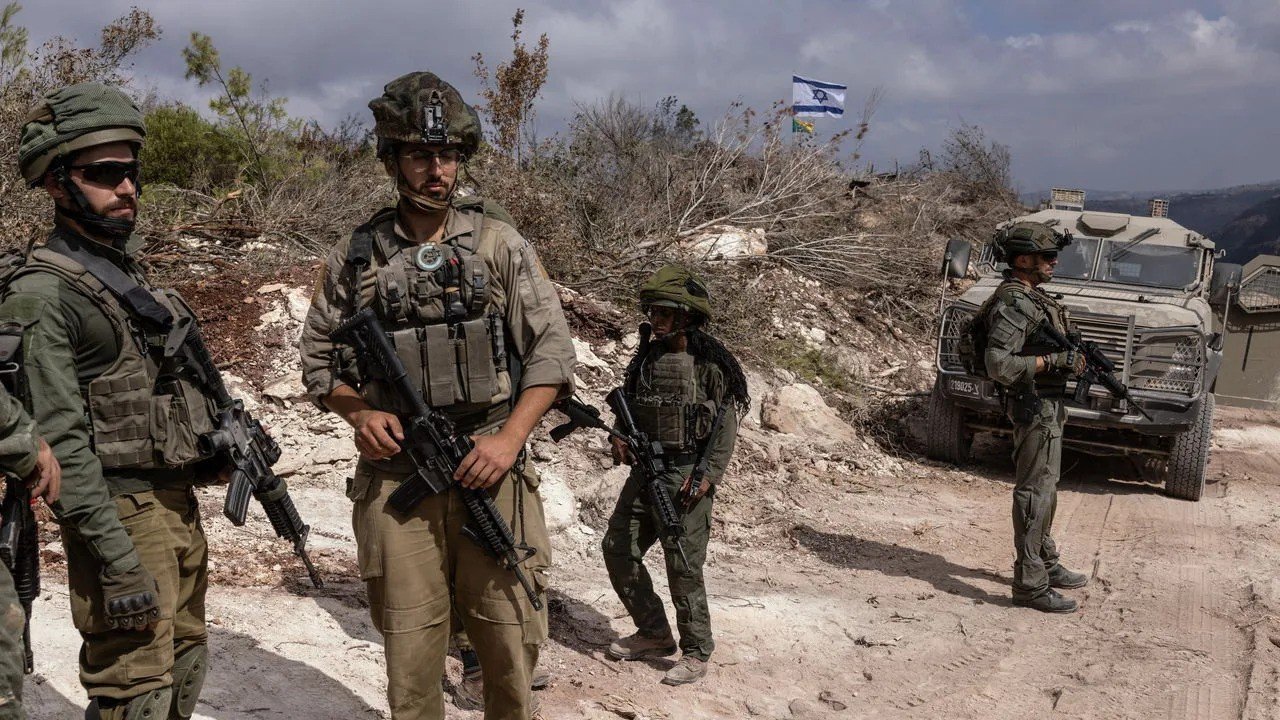
Israeli troops have left some areas in south Lebanon but remain deployed in several towns and villages.

According to a report by Israel’s Channel 13 on 22 January, Israeli Prime Minister Benjamin Netanyahu has enlisted Strategic Affairs Minister Ron Dermer to ask Trump to approve an extension of the Israeli presence in Lebanon.

“We must remain in southern Lebanon, but with the approval of the Trump administration. Israel requested to maintain five military points, which will be decided upon in a special meeting of the security and political cabinet today,” Israeli security sources told Channel 13.

The Jerusalem Post also recently reported that there are Israeli concerns about Hezbollah’s ability to “reconstitute” once the Israeli army withdraws from Lebanon.

The deal, based on UN Resolution 1701, is meant to see the Lebanese army dismantle Hezbollah’s presence and infrastructure south of the Litani River, while Israeli forces are required to withdraw from the country. This is supposed to take place within the 60-day period that began in late November and is set to end on Sunday, 26 January.

Tel Aviv has accused Hezbollah of failing to abide by the agreement and remaining south of the Litani. Defense Minister Israel Katz threatened earlier this month that “there will be no agreement” if the “condition is not met.”

Israel has violated the agreement over 1,000 times since it took effect.

“The enemy must commit to withdrawing completely from all Lebanese territories on Sunday, otherwise Monday will be another day,” Ghalib Abu Zeinab, a member of Hezbollah’s political council, said on 21 January.

Hezbollah MP Ali Fayyad said on Monday that the resistance will confront Israeli forces “with all possible means and methods” if they do not withdraw.

https://thecradle.co/articles/israel-se ... ays-report

Over a dozen killed in Jenin in under 48 hours as PA joins brutal Israeli operation[

Clashes are raging between Israeli forces and the Palestinian resistance in Jenin and its refugee camp

News Desk

JAN 23, 2025

Image
(Photo credit: AP)

The death toll from Israel’s brutal operation in the occupied West Bank city of Jenin and its refugee camp has risen to 13, as Palestinian Authority (PA) forces cooperate with Tel Aviv in the indiscriminate assault.

At least 13 Palestinians were killed in the ongoing Israeli invasion of occupied West Bank’s Jenin Camp:

1 - Khalil Tariq Al-Saadi.

2 - Khalaf Ahmed Jamhawi.

3 - Hussein Abdel Moneim Abu al-Haija.

4 - Yousef Khalil Abu Awad.

5 - Moataz Imad Abu Tabikh.

6 - Ahmed Nimer… pic.twitter.com/7ePzcam7di

— The Cradle (@TheCradleMedia) January 23, 2025
A young resistance fighter, Mohammad Shadi al-Sabah, was shot dead by PA troops in the Jenin camp late on 22 January, bringing the number of deaths to 13 in under 48 hours.

Israeli troops demolished a home in the town of Burqin, west of Jenin, on Wednesday night after besieging it for hours. The resistance fighters who were inside reportedly refused to surrender. Two fighters responsible for a shooting operation that assassinated three Israelis in Al-Funduq village earlier this month were killed.

BREAKING | Fierce clashes are ongoing in Burqin, west of Jenin, where invading Israeli forces are besieging resistance fighters inside a building.

Reports that Israeli forces are bombarding the building with shoulder fired missiles. pic.twitter.com/zsmZiXCzBT

— The Cradle (@TheCradleMedia) January 22, 2025
Heavy clashes continued to rage in the area as well as in Jenin city and the camp, continuing into the next morning – with the Jenin Brigade of the Palestinian Islamic Jihad (PIJ) movement’s Quds Brigades announcing several operations against Israeli forces.

“Our fighters detonated a guided explosive device in a military vehicle in the Jalbuni axis, achieving confirmed injuries,” the Jenin Brigade said early on 23 January.

Jenin’s mayor said on Thursday that the displacement of residents in the camp has continued. At least 600 Palestinians have been forced to flee their homes as a result of the Israeli–PA violence.

Roads and sidewalks have been decimated by Israeli army bulldozers.

Israel launched a large-scale military operation in Jenin on 21 January, coinciding with airstrikes on the city. The operation has been dubbed “Iron Wall.”

Before “Iron Wall” was launched, the Palestinian Authority (PA) had been besieging the Jenin camp for six weeks in an Israeli-backed operation that Ramallah said was aimed at rooting out the Jenin Brigade and establishing control over the camp.

Despite Hebrew media reporting earlier this week that the PA withdrew from the area at the request of Israel, Ramallah’s forces are confirmed to be taking part in the operation. Al Jazeera reported on Thursday that one of its correspondents was detained by the PA due to coverage of the massive and deadly operation in Jenin.

PA troops and Israeli forces simultaneously besieged several hospitals in Jenin on Wednesday.

According to a PA official cited by the Times of Israel on 17 January, the PA reached a deal with the Jenin Brigade to end the siege. The deal reportedly requires specific members of the Jenin Brigade to hand over their weapons and allows the PA to operate freely in the refugee camp, the official stated.

https://thecradle.co/articles/over-a-do ... -operation
"There is great chaos under heaven; the situation is excellent."

User avatar
blindpig
Posts: 14804
Joined: Fri Jul 14, 2017 5:44 pm
Location: Turtle Island
Contact:

Re: Palestine

Post by blindpig » Sat Jan 25, 2025 3:37 pm

Winners in Gaza
January 25, 17:10

Image

Netanyahu - We will destroy Hamas.
Meanwhile in the Gaza Strip...

Image

Image

Image

Image

Image

Image

P.S. Another hostage exchange took place today.
Hamas took the opportunity to publicly show that it is not defeated, as the US and Iran actually reported. Against this background, Israeli generals continue to shower statements about a lost war.

https://colonelcassad.livejournal.com/9631726.html

Google Translator

******

US Private Contractors To Supervise Key Gaza Checkpoint at Netzarim – Reports
January 25, 2025

Image
Israeli soldiers remove the Israeli flag from the Netzarim axis. Photo: Palestine Chronicle.

The consortium is made up of three private companies that were selected by the US, Egypt and Qatar, according to Axios.

Private US security contractors will oversee a key checkpoint at Gaza’s Netzarim Corridor in the coming days and deploy armed guards to the enclave, Axios has reported.

The security companies will operate in Gaza “as part of a multinational consortium” that has been established under the ceasefire deal “with the backing of its brokers: the U.S., Egypt and Qatar,” according to the report on Thursday that cites two Israeli officials and a source with direct knowledge.


“The role of the U.S. contractors will be to inspect Palestinian vehicles that move from southern Gaza to northern Gaza and make sure no rockets or other heavy weapons are being transferred,” it added.

Military Zone
The seven-kilometer-wide Netzarim corridor, located just south of Gaza City, separates northern Gaza from the rest of the besieged enclave. Nearly every building in the area was completely demolished by the Israeli army and all Palestinians were displaced before it was turned into a military zone during Israel’s 15-month-long onslaught on the Strip.

In December, the Israeli Haaretz newspaper reported that Israeli army officers revealed that an area along the Netzarim corridor at that time was a designated “kill zone” where “anyone who enters is shot.”

‘Key Sticking Point’
The multinational consortium, according to Axios, was negotiated to “solve a key sticking point around the movement of displaced Palestinians back to northern Gaza.”

Israel had demanded that all Palestinians who return to the north go through security checks at the Netzarim corridor, the report stated. However, “Hamas refused.”

“The compromise was that vehicles would be able to go to northern Gaza only through one road and would have to be inspected at a checkpoint on the Netzarim corridor operated by a third party,” reported Axios.

A source familiar with the issue told Axios that “The consortium’s role is to oversee, manage, and secure a critical vehicle checkpoint along Salah al-Din Road, facilitating the safe return of displaced Palestinians to northern Gaza.”

“The consortium aims to ensure orderly vehicle movement while preventing the transport of weapons northward, in line with the ceasefire terms,” the source added.

Hamas Statement
Hamas said in a statement on Thursday that on the seventh day of the truce (January 25) “after the end of the prisoner exchange process that day, and the occupation completes its withdrawal from the Rashid Street “Al-Bahr” axis; internally displaced pedestrians will be allowed to return north without carrying weapons and without inspection via Rashid Street, with freedom of movement between the south and north of the Gaza Strip.”

“Vehicles (of all types) will be allowed to return north of the Netzarim axis after inspecting the vehicles,” the statement added.

As for the 22nd day of the agreement, the statement continued, “internally displaced pedestrians will be allowed to return north from Salah Al-Din Street without inspection.”

US and Egyptian Companies
The consortium is made up of three private companies that were selected by the US, Egypt and Qatar, according to Axios.

It identified the American companies as Safe Reach Solutions (SRS), “a strategic planning and logistics company” and UG Solutions, a security company that “operates armed guards around the world.”

Some of the guards “are Americans who served in U.S. military special forces and others have various foreign nationalities,” a source told Axios.

The third company is an Egyptian security company “which has been approved by the Egyptian intelligence service,” the report noted, citing a senior Israeli official. The company will also deploy security guards to the enclave.

According to the Axios report, US contractors were expected to operate in Gaza until the end of the first phase of the captive exchange deal “whether as a result of an agreement on the second phase of the deal that includes a full Israeli pullout from Gaza or as a result of a break down in the negotiations and renewed fighting.”

The report also noted that it would be the first time “in decades” that private American security companies will operate in Gaza.

https://orinocotribune.com/us-private-c ... m-reports/

The West Bank’s Crucial Moment: ‘Israel’s’ Gamble and the Palestinian Authority’s Betrayal – Analysis
January 25, 2025

Image
'Israeli' occupation forces storm the town of Ya’bad, south of Jenin. Photo: Quds News Network.

By Ramzy Baroud – Jan 22, 2025

Israel’s escalating military campaign in the West Bank, coupled with the PA’s complicity, sets the stage for a pivotal confrontation in Palestinian resistance.

The Israeli army continued its onslaught on the Jenin refugee camp, a military campaign that began almost immediately after a Gaza ceasefire was announced.

Though the epicenter of the campaign remains in Jenin, where many Palestinians have been killed or wounded, major West Bank cities have also been raided.

Israeli raids have reached numerous villages and refugee camps, leading to the arrest of many Palestinians.

The Palestinian Authority (PA), which has long acted as a supposed vanguard of Palestinian rights, is actively participating in the Israeli campaign. In fact, the PA was involved in pacifying the Resistance in Jenin and other West Bank areas prior to Israeli attacks, seemingly setting the stage for a larger Israeli military crackdown.

PA Role
The irony is that the PA named its operation in Jenin, which extended from December 5 to January 21, “Protecting the Homeland.” Yet, the operation merely tried to pacify the “homeland,” making it easier for the Israeli military mission to follow through.

The degree of PA violence against Palestinians in the West Bank is increasingly comparable to Israeli violence, further cementing the claim that the PA is, in fact, a tool of control used by the Israeli occupation against Palestinians.

In 2007, Gaza rebelled against the PA in what was erroneously dubbed at the time as the Hamas-Fatah clash, with Fatah being the dominant party in the PLO and the faction of PA President Mahmoud Abbas.

It is unclear whether a similar rebellion against the PA is possible in the West Bank, at least for now, considering the Palestinian population there faces three tiers of violence: the Israeli army, armed illegal Jewish settlers, and Abbas’ security forces.

Hoping to “preserve Palestinian blood,” the Jenin Resistance had agreed, on January 14, to sign an agreement with the PA, allowing PA forces to enter Jenin without confrontation, as long as they refrained from taking violent measures against the Resistance. The PA reportedly reneged on the agreement, leaving parts of Jenin open to Israeli military entry.

The days of urging the PA to prioritize national unity over its “security coordination” with Israel are over, as Palestinians now see the PA as an integral component of the Israeli army.

The Timing
But why is Israel attacking the West Bank, and why now?

The Israeli military operation in the West Bank, codenamed ‘Iron Wall’, was ostensibly carried out for the sake of “destroying terrorist infrastructure in Jenin,” and preventing another October 7, according to Israeli security sources cited by Channel 14.

However, this cannot be true. Even with heightened resistance in the northern West Bank, the region appears unprepared for an October 7-like Al-Aqsa Flood Operation.

The logic of the ‘Iron Wall’ lies more within the political and psychosocial realms.

First, Israel was defeated in Gaza, an unprecedented defeat in the history of the country, according to David K.Rees, writing in The Times of Israel. From the official Israeli viewpoint, the psychological impact of that defeat requires immediate action to prevent Israeli society and media from dwelling on its larger and long-term consequences.

This is partly why Israel is attacking the West Bank, which, at least for now, represents the soft belly of Palestinian resistance, partly due to PA repression.

The same logic can explain why Israel has agreed to a ceasefire in Lebanon while advancing unopposed in Syria.

Israeli muscle-flexing is largely aimed at sending a message of power and control to the Israeli public, which has lost faith in its army, intelligence, and political institutions.


Second, the Israeli operation in the West Bank is part of a political trade-off between Israeli Prime Minister Benjamin Netanyahu and extremist Finance Minister Bezalel Smotrich. The latter, though opposed to the Gaza ceasefire, remained in the government, bolstering Netanyahu’s fractious coalition.

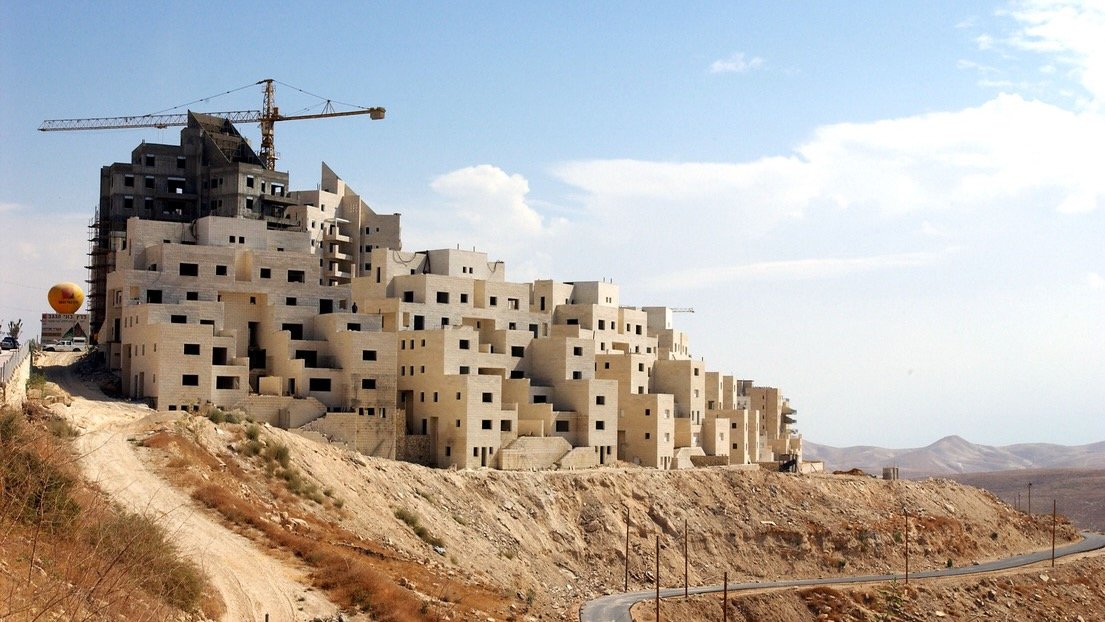
Unlike Minister of National Security Itamar Ben-Gvir, who resigned along with his Otzma Yehudit (Jewish Power) party, Smotrich stayed, on the condition of carrying out a major military operation in the West Bank, paving the way for further expansion of illegal settlements.

This exchange benefits both Smotrich and Netanyahu. Smotrich can now rally more followers to his far-right base, claiming to have stood firm on Israel’s national security in Gaza while suppressing Palestinians in the West Bank.

For Netanyahu, it’s also a way to keep Smotrich’s supporters happy, as the rise of Smotrich’s base could weaken Ben-Gvir’s influence, as both vie for the same constituency.

New Intifada?
While Israeli leaders ramp up violence in the West Bank for political gains, they are not paying much heed to warnings from military and intelligence leaders.

On January 9, for example, Israel’s Channel 12 reported that Chief of Staff Herzi Halevy and senior officers warned the war cabinet that the West Bank is on the brink of an explosion, and that tensions could lead to a “a third intifada (uprising).”

Indeed, Israel’s miscalculation in the West Bank could potentially lead to a much-anticipated popular uprising, which, if it occurs, will be difficult, if not impossible, to control according to Israeli military timetables.

Palestinian anger resulting from the Israeli genocide in Gaza, coupled with the collective sense of victory from the ceasefire, makes the possibility of an Intifada very real. If such an Intifada takes place, much of the West Bank—and Palestinian political life—would change.

The PA has already chosen sides in the upcoming conflict. The Israeli government, reeling from the Gaza defeat, is ready to engage in more military gambles. The world continues to watch in silence, as it has during 471 of Israel’s genocides.

Will the West Bank erupt with the same vigor and determination to win against the Israeli occupation, as their brethren in Gaza have? If the answer is yes, the Israeli occupation will face another major blow, paving the road for Palestinian freedom.

https://orinocotribune.com/the-west-ban ... -analysis/

******

An Exclusive Interview with Hamas
By Christopher Helali - January 24, 2025 1

Image
Christopher Helali interviews Dr. Basem Naim at the Hamas Political Office in Doha, Qatar, on August 22, 2024. [Source: Photo by Mahmoud Dakhil; licensed creative commons CC BY-SA]

In late August, I traveled to Doha, Qatar, to meet and interview Hamas political bureau members Dr. Basem Naim and Osama Hamdan. After nearly four months of planning and coordinating, I was finally approved to come and conduct the interview at their diplomatic headquarters in Qatar. Given the security situation, the details were carefully orchestrated.

My arrival needed to be precise. Locations and instructions were provided to me mere minutes before I was supposed to arrive. After arriving, my passport and credentials were checked, I was screened for weapons and communication devices, and escorted through the complex to the diplomatic reception room. My cameraman, Mahmoud Dakhil and I set up and started the meeting right on time. What was scheduled for an hour turned into a nearly three-hour meeting that explored various aspects of the ongoing negotiations, the history, and the complex realities on the ground in Gaza, in the other areas of Palestine, and beyond.

Due to the complexity and sensitivity of the then ongoing cease-fire negotiations, I decided to hold off publishing the transcript until a cease-fire deal was reached. Now with a tentative deal in place which I provide more details of below, I have published an edited transcript of our conversation below.

Dr. Basem Naim is a member of the Politburo of Hamas and served as the Minister of Health during the Palestinian Authority Government of March 2006 (popularly known as the First Haniyeh Government) and later as Minister of Youth and Sports in the Palestinian National Unity Government of March 2007 (popularly known as the Second Haniyeh Government). He represented Hamas during negotiations in Moscow in 2023.

Osama Hamdan is a member of the Politburo of Hamas and served as the Representative of Hamas in Tehran, Iran, from 1992 to 1998 and as the Representative of Hamas in Lebanon from 1998 to 2009. Since then, Osama Hamdan continues his diplomatic and political work for Hamas.

Christopher Helali: First, I would like to extend my deepest condolences and profound sympathies to you, to all of the members and supporters of Hamas, and to the Palestinian people on the assassination of Ismail Haniyeh and all the martyrs and innocent lives lost during this brutal genocide in Gaza. Given that we are 11 months into this brutal and horrific genocide of the Palestinian people in Gaza, what can you tell us about the status of cease-fire negotiations and the possibility of achieving a durable and lasting peace to end the suffering of the people of Gaza?

Dr. Basem Naim: Thank you very much for your visit. It is really appreciated from the movement, from our people in Palestine in general, in Gaza in particular, for a U.S. citizen to come here to show his solidarity and sympathy with the just cause of the Palestinian people. We believe that this is the real spirit of most of the people around the world, including the United States.

We believe that the American policies are not representing the wish and the will of most of the Americans, because any human being who believes in justice and peace, he will stand on the right side of history to support the oppressed people and the just cause of the Palestinian people.

What we are struggling for and what we are fighting for now for 75 years or more is how to get rid of the occupation. How to live like any other people in peace and security. How to secure a better and prosperous future for our children. How the Palestinian people who are really very ambitious can participate with other people, other nations around the world, for the goodwill of all people around the world.

We have offered at different stages a political solution to this conflict, but unfortunately the Zionist regime, not only this Zionist fascist regime led by Netanyahu, unfortunately supported by the American administrations, all the time they have undermined these chances hoping that day after day the Palestinians will become fatigued and give up their hopes of independence, freedom, self-determination, and right of return. Then they can implement their dreams, which is a nightmare for us, how to annihilate the Palestinian people, how to terminate the Palestinian existence on their own land, and how to build the greater state of Israel on the corpse, not only of the Palestinians, but of a lot of people here in the region.

I have here also to emphasize that our struggle is only against the occupation, regardless of its nationality, or religion, or political faith. We are fighting only against the occupation, someone who is driving a tank, or to attack our people, to destroy our houses. We have never had any problems with people of other religions, in particular here, in this case, with Jews or Judaism. On the contrary, we have a lot of friends who are Jews and who are good friends of us who are supporting our cause.

By the way, when Jewish communities in Europe and the West, in different countries, even before the Holocaust, were persecuted and attacked from different regimes in Europe, since the 19th century, they were welcomed in all Arab and Islamic countries, including in Palestine. They have lived in peace with our people for decades. The problem was serious only when they started to convert this humanitarian situation of the Jewish people who were persecuted in different countries in Europe into a political project on the corpses of the Palestinian people. Those who have offered them space in a house and accommodation, they have to leave the country based on some beliefs and tools from religious books.

Our struggle is only for freedom, dignity, independence, peace, and prosperity, a better future for all people. But again, we are not ready to give up or surrender under any kind of violence or massacres or from any party, not only the Israeli party. Therefore, we hope that the American people can understand the real story on the ground. It is a fight of people who are looking for freedom and dignity against oppression.

Unfortunately, we have always asked journalists, politicians, and diplomats only to tell the people, the ordinary people everywhere, including in the United States, the reality on the ground, what they have seen with their own eyes.

We are not asking anyone to fabricate stories or to lie on behalf of the Palestinians, only to reflect the reality. Can you imagine that the Gaza Strip, for example, 2.3 million Palestinians living now for more than 17 years under a suffocating siege?

So that a lot of international human rights organizations, including, by the way, some Israeli organizations, they have considered the Gaza Strip as the biggest open-air prison and one of the concentration camps of the 21st century with 70% of those 2.3 million people being children and minors with no hopes, no future, no horizon. This has led to the moment we are living now.

Again, what we are calling for is only to implement what humanity has agreed upon in international law and international humanitarian law, that all people have the right to their freedom, dignity, independence, and sovereignty.

When we have resorted to armed resistance, it is not only based on a historical reading of the conflicts everywhere in Vietnam, Algeria, and South Africa, but it is also based on international humanitarian law and international law that all people under occupation have the right to resist their occupation by all means, including armed resistance.

But this happened after we have given all the chances for a political solution and we have failed. No, we didn’t fail. The international community has failed.

Unfortunately, with the support of the United States, Israel has behaved as a rogue state, as a state above the law. Therefore, what we are calling for once again is to implement the international resolutions which are guaranteeing the Palestinians all the rights to an independent self-sovereign state. Palestinians have the right to a better future, the right of return, and also the right of resistance.

Welcome again and we hope to see the American people in the streets, the universities and everywhere supporting our just cause. We were really very proud of observing and watching thousands and thousands of Americans in the streets, in the railway stations, at the universities, protesting and demonstrating for the just cause of Palestine and against the genocide and massacres committed by the Israeli regime against our people. By the way this is not our description of the case, this is the ICJ description of the situation on the ground that it is a genocide and it has to be stopped. The children and people of Palestine have the right of a better future. Thank you very much.

Christopher Helali: Thank you very much, Dr. Naim.

Dr. Basem Naim: Before asking brother Osama to talk a little bit about the latest when it comes to the negotiations, I have to say that we Palestinians we believe, yes, we are paying a very, very, high price, a very precious price for this struggle to achieve our goals, but we believe we are on the right way and we will sooner or later achieve our goals. This is the history of a lot of people around the world in Vietnam, in Algeria, in South Africa and other countries.

Unfortunately, we didn’t resort to armed resistance because we are for violence, but they have obliged us when they have blocked any chance for a political solution, they have undermined any chance to reach a solution for this conflict.

But we believe sooner or later we will achieve our goals and we are enjoying enough strength and commitment and we have enough dreams to fulfill in the future. Therefore, inshaAllah [God willing], we will with you celebrate our victory and freedom and independence and self-sovereignty and right of return in Jerusalem, the capital of the free state of Palestine.

Osama Hamdan: When what’s called in Europe the Crusades came to Palestine, we don’t call it a crusade, we call it “the foreigners war,” this is in our books, when they came to Jerusalem, they killed in the first days around 30,000 Palestinians who were living in Jerusalem.

They did not differentiate between a Muslim and a Christian. Christians were killed at the same time. Here is new information that may be shocking for most of the people. The keys of the Church of the Holy Sepulchre are in the hands of a Muslim family for more than 1,000 years. They do not differentiate between Muslims and Christians, so they trust each other.

Even the Jewish people, when they came to Palestine in the 18th century, they were not kicked out, they were not treated badly, they were welcomed. We used the word Hawajah; it’s a kind of respect for them, but when they tend to be part of the Zionist strategy as a project, that creates problems, and that happened under the occupation of the British Empire at that time.

Going back to the negotiations, or, what’s called the negotiations, it’s a long period of negotiations, it’s around six months, more than six months, started in fact before even the Paris meeting in February.

But I have to say through that process, we were committed to the main principles which were declared in the Paris meeting: the cease-fire, the complete withdrawal from Gaza, sending the needed aid for the Palestinians, the reconstruction, and to lift the siege on Gaza.

Then we were talking about prisoner’s exchange. Through that process, it was clear that whenever the mediators sent some ideas, the Israelis’ reaction was either to commit new massacres to undermine the process or to add more conditions which maybe were not negotiated before or either negotiated and agreed upon before.

I don’t want to talk about the whole process, we are preparing a paper about that, so I think our brother, Dr. Basem, will send it for you. But we have at least two important steps. The first one, the mediators have sent a proposal at the 5th of May.

We discussed that proposal on the level of the leadership, and we agreed on that. The next day we informed the mediators that it’s okay, we accept the proposal as it is. We have, you know, you can’t have a complete 100% proposal, but at least we felt it’s a good proposal.

The reaction of the Israelis the next day, the 7th of May, was to invade Rafah. They went to Philadelphi, and they put their hands on the crossing point of Rafah. That means a complete siege on Gaza, nothing coming in or getting out of Gaza.

They committed a massacre in Khan Yunis. After three weeks of that, the Israelis sent a new paper with a lot of changes. They said that was their answer for the proposal. Anyway, that was on the 27th of May.

Four days later, President Biden reacted in his famous public speech. He has his own initiative, based on their paper, in fact, more than anything else. But he concentrated on the same principles which we have talked about.

Then there was the International Resolution at the Security Council on the 10th of June. Although we have some problems with some sentences, in general, we felt that it’s a good chance to achieve the goals.

The Israelis did not react. On the 24th of June, the Americans sent a paper, a proposal, through the mediators, based on a Biden initiative and the International Security Council Resolution, and mostly on the Israeli paper.

We discussed the proposal with them, and there were guarantees if we accept some ideas, they will have an acceptance or an agreement from the Israeli side. In general, it was an accepted proposal from Hamas, so we declared our acceptance on the 2nd of July.

What was the reaction of the Israelis? They committed the massacre of al-Mawasi [July 13, 2024]. They claimed that brother Mohammed Deif was there, he wasn’t there, and they knew that they were lying. More than 75 [90] Palestinians were killed.

Al-Mawasi was announced as a safe zone in Gaza, so they killed 75 [90] Palestinians and more than 200 were injured. Then they committed another massacre in Khan Yunis, around 30 Palestinians were killed, and then they assassinated brother Ismail Haniyeh.

They expected that we would say we are not participating in the negotiations anymore. Our reaction, which was told to the mediators, was that, although it was a heavy price, but it was made from the blood of the Palestinians. Brother Ismail Haniyeh is a leader, but we don’t differentiate between Brother Ismail Haniyeh and any Palestinian leader and the people of Palestine. We are still committed, but we want to implement what we have agreed on. It’s your proposal, and we are ready to implement that directly.

On the 8th of August, they had the declaration from President Biden, Sheikh Tamim, and President Sisi. The next day within a few hours, they committed the massacre at the Al-Tabaeen school. They knew that there were no militants, no leaders from Hamas, no senior officials from the Palestinian Authority, but they wanted to sabotage everything.

In this massacre, they killed directly 100 Palestinians. Now the number is around 130, because some people passed away after a few days, and more than 250 Palestinians were injured. No one said anything.

Then they said that they would have a meeting on the 15th of August. Our position was clear. We told the mediators there is no need for more negotiations. We have achieved at least twice a good proposal introduced by the mediators, and each time the Israelis are sabotaging that.

If we follow that process, they will sabotage any proposal at any time. They don’t want to have a cease-fire. They want to continue the genocide. So, it’s your turn as a mediator, not just to provide ideas. You have to make the needed pressure to implement those ideas, especially since there is a side who’s saying, “okay,” and they say “okay,” and then they move to sabotage that on the ground.

(Much, much more at link.)

https://covertactionmagazine.com/2025/0 ... ith-hamas/

******

The fight starts over Gaza's next leaders

As Gaza emerges from war, Hamas – politically victorious at immense cost – faces unprecedented challenges in rebuilding the strip. Meanwhile, tenacious foreign powers maneuver to impose their own vision for Gaza's governance.


Ibrahim Al-Madhoun

JAN 24, 2025

Image
Photo Credit: The Cradle

Since the outbreak of Israel's war on the Gaza Strip following Operation Al-Aqsa Flood in October 2023, the occupation state’s primary objective has been to dismantle Hamas as the leading political and governing authority in the besieged enclave.

This US-backed aim reflects Israel’s long-standing unease with Hamas as both a political and military force, given the Palestinian resistance movement's refusal to recognize the unpopular and practically obsolete Oslo Accords and its rejection of the legitimacy of the occupation.

Hamas’s rule in Gaza

Hamas has governed the Gaza Strip since its victory in the 2006 Palestinian legislative elections, which led to the formation of the 10th Palestinian government under the late, martyred Ismail Haniyeh. However, the political rift between Fatah and Hamas in 2007 resulted in the exclusion of the Palestinian Authority (PA) from Gaza, leaving Hamas in full control of the territory.

Since assuming power, Hamas has endured multiple conflicts with Israel, notably in 2008, 2012, 2014, and 2021, culminating in the 2023 Operation Al-Aqsa Flood – a move that has shaken West Asian and international dynamics, and brought the Palestine issue back to the forefront of the global agenda.

Israel’s strategic dilemma

As the conflict escalated, Israel sought to impose new realities in Gaza, employing several strategies, each of which faced considerable challenges. Initially, the occupation state aimed to invade Gaza and impose direct military rule.

This plan, however, was met with fierce Palestinian resistance, rendering it impossible to achieve sustained control of the strip. The financial and human toll of the war further complicated this approach, with Israel’s expenses estimated at 150 billion shekels (approximately $41.64 billion) and casualties amounting to at least 840 soldiers killed and 14,000 injured. This reality forced the occupation to rethink its strategy.

In an attempt to undermine Hamas’s governance, Israel deliberately targeted Gaza’s administrative and service infrastructures, including government institutions, municipalities, and public facilities.

The destruction was extensive, with a report from the UN Satellite Centre (UNOSAT) in late 2024 estimating that 66 percent of Gaza’s buildings had been damaged or destroyed. Despite this systematic devastation, Hamas demonstrated resilience, maintaining its control of Gaza with relative efficiency by relying on its extensive experience in crisis management.

Israel also tried to exploit Gaza’s tribal and familial networks, attempting to co-opt prominent families and clans to create localized administrative bodies.

This approach, too, was widely rejected by Gaza's population, who viewed it as a thinly veiled effort to legitimize the occupation and fragment the national fabric. Prominent analysts, including Tahani Mustafa of the International Crisis Group, a Brussels-based think tank, said Israel was “desperately looking for local clans and families on the ground to work with ... they refuse.”

In parallel, Israel, the US, and allied Arab states have explored alternatives to Hamas’s rule, such as reinstating the PA or establishing an internationally supported technocratic government.

While the PA declared on 16 January its intention to “[form] a crisis cell to work in the Gaza Strip,” Hamas announced its preparations to immediately begin administering the city following the implementation of the ceasefire agreement. The resistance movement stressed that it would not allow the ensuing “chaos and vacuum” in the strip to be exploited.

Meanwhile, the Israeli–American initiatives remain limited in their impact due to the complexities of the Palestinian internal situation, the weakness and unpopularity of the PA, and the mass rejection by Palestinians of a return to the pre-2007 order.

Challenges facing Hamas

Despite Israel’s failure to overthrow Hamas militarily – evidenced by the movement’s strong presence on the battlefield and in the media, particularly during the propagandized handover of three female prisoners in exchange for 90 Palestinian prisoners – the war has left Hamas grappling with significant challenges on multiple fronts.

The massive destruction inflicted on the Gaza Strip makes the rebuilding of critical infrastructure a top priority for Hamas. This reconstruction effort will require substantial international funding and support, raising concerns about potential external interference that could shape Gaza’s future governance.

Additionally, the ongoing Israeli blockade continues to exacerbate economic hardships in Gaza, placing relentless pressure on Hamas to devise solutions that can sustain the delivery of basic services to the enclave's beleaguered population.

Hamas is also facing mounting pressure from regional and international actors to agree to political arrangements that could require extraordinary concessions. These might include accepting the oversight of an international administration or the deployment of Arab forces to manage a transitional phase in Gaza’s governance.

Possible scenarios for Gaza’s future

Several scenarios have been proposed regarding the future governance of the Gaza Strip, reflecting both internal dynamics and external influences:

Hamas remains confident in its ability to govern the strip despite the destruction and siege. The movement draws on widespread popular support in the region and its intact organizational infrastructure. It has also displayed a degree of flexibility in engaging with the PA and Egypt to explore potential compromises.

Yet efforts – led by Israel and supported by some regional actors – persist to reinstate the PA in Gaza. However, Mahmoud Abbas, Palestine's president and head of Fatah, faces widespread criticism for his weak leadership and collaborative efforts in clamping down on resistance in the West Bank, making this scenario contingent on internal reforms or a change in PA leadership.

The possibility of a power-sharing arrangement between Hamas and the PA further complicates this option, as both sides hold entrenched positions on governance.

Alternatively, Egypt and other regional stakeholders have proposed the establishment of a technocratic committee comprising independent academic and community leaders to manage Gaza’s administration. While this idea has garnered some support from national and community bodies in the enclave, it has been rejected by the PA, which views it as a threat to its political dominance.

The Israeli Broadcasting Authority (KAN) reported that Egypt and Israel discussed the establishment of a security inspection mechanism in the Netzarim corridor, which connects the northern and southern parts of the strip.

Arab intervention

The US has also floated the idea of deploying an Arab security force, potentially involving Egypt and the UAE, to oversee Gaza’s transition. It is, at best, a proposal fraught with challenges.

Both Egypt and the UAE – strongly opposed to the Muslim Brotherhood, from which Hamas originates – are cautious about becoming deeply entangled in the Palestinian conflict.

They are particularly wary of the potential for Israel to exploit their involvement as a means to evade its obligations as an occupying power. Moreover, such a scenario risks alienating the Palestinian population and could provoke significant political and public backlash against the participating Arab states.

A potential, albeit challenging, solution involves the formation of a joint national committee comprising representatives from Hamas, Fatah, and other Palestinian factions. This scenario requires a level of political consensus that has been elusive thus far.

Furthermore, external actors, including the US and its allies, are likely to push for an arrangement that aligns with Israel’s strategic interests, complicating efforts to achieve a purely Palestinian-led solution.

In contrast, Hamas finds support from countries such as Iran, Qatar, and Turkiye, which strengthens its position in the face of international pressure.

Towards a comprehensive Palestinian consensus

The future of Gaza remains dependent on the extent to which the Palestinian parties are able to achieve an internal consensus that guarantees inclusive political representation of the Palestinian people. Hamas is showing political flexibility in the context of preserving its national and administrative gains, while the deeply unpopular PA is looking to restore the people’s confidence.

The best option for Palestinians is to move toward a comprehensive reconciliation that rebuilds the Palestine Liberation Organization (PLO), and from which a new leadership emerges that adopts a unified national strategy.

The foundation for that vision was set by the Beijing Declaration last July, when 14 Palestinian political factions committed to the idea of national reconciliation under the auspices of China rather than partisan Arab states.

This scenario, despite its difficulty, remains the ideal solution to avoid external interference and ensure stable and independent management of Gaza in the post-war period.

https://thecradle.co/articles/the-fight ... xt-leaders

Netanyahu signals Israel will remain in south Lebanon after withdrawal deadline

Hezbollah said in an official statement that any breach of the ceasefire deal will ‘not be tolerated’

News Desk

JAN 24, 2025
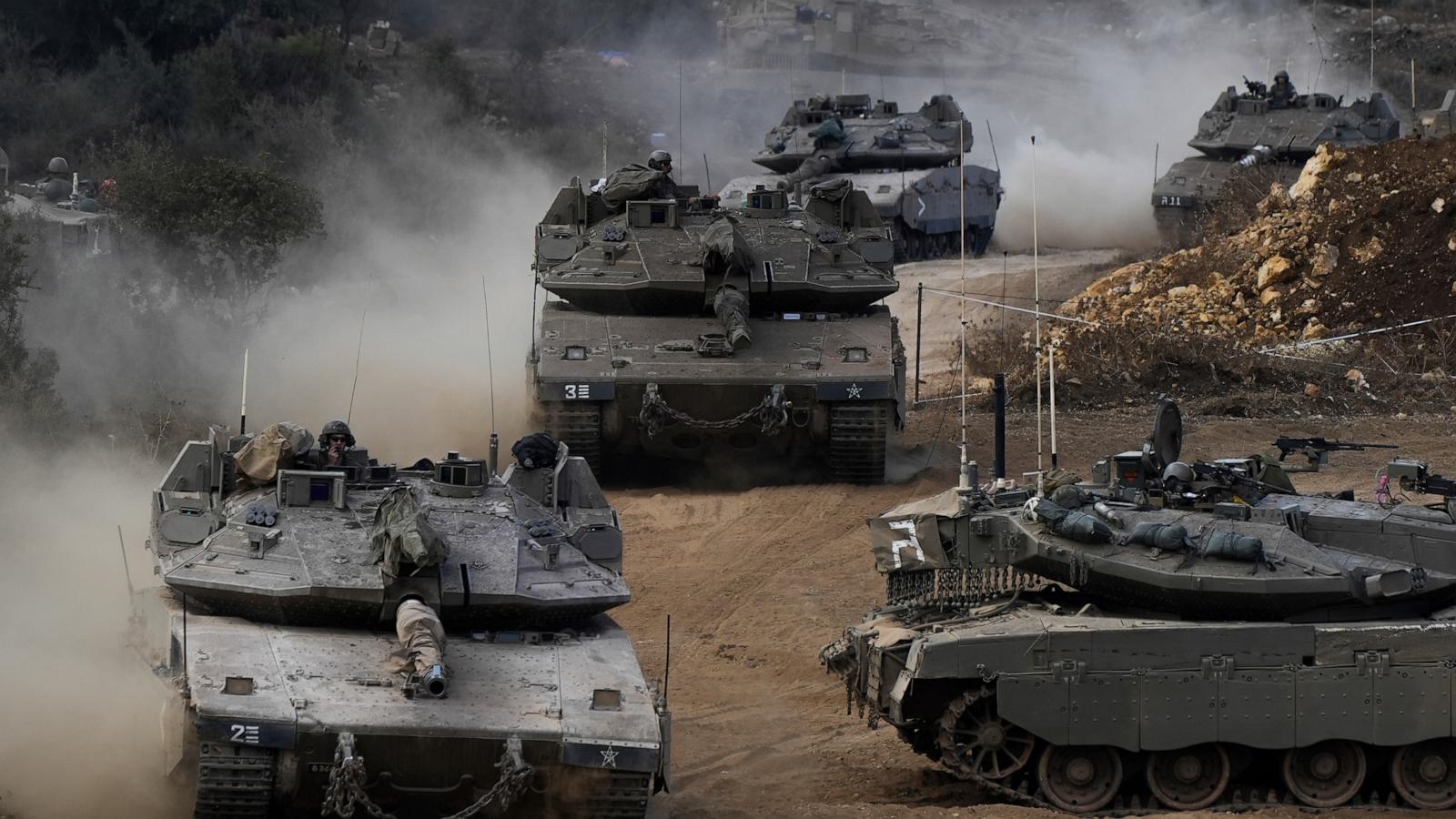
Image
(Photo credit: AP)

The office of Israeli Prime Minister Benjamin Netanyahu signaled in a statement on 24 January that Tel Aviv’s forces will not withdraw from south Lebanon by the end of the 60-day deadline.

“The ceasefire agreement in Lebanon stipulates that the gradual withdrawal of IDF forces will be implemented within 60 days. The section was formulated in this way with the understanding that the withdrawal process could take more than 60 days,” the office's statement said.

“The IDF withdrawal process is conditional on the deployment of the Lebanese army in southern Lebanon and its full and effective implementation of the agreement, while Hezbollah withdraws beyond the Litani. Since the ceasefire agreement has not yet been fully implemented by the Lebanese state, the gradual withdrawal process will continue in full coordination with the United States,” it added.

The premier’s office went on to say that Israel “will not endanger its settlements and citizens, and will insist on the full implementation of the goal of the fighting in the north – the safe return of residents to their homes.”

The statement followed a report by Israel’s Broadcasting Corporation (KAN) on Friday, which said that “the political leadership directed the Israeli army yesterday evening, Thursday, not to withdraw at this stage from the eastern sector in southern Lebanon.”

According to KAN, the Israeli army is redeploying in the western sector of south Lebanon.

“Israel is holding talks with the new administration in the United States, to obtain additional time until the complete withdrawal from Lebanon,” the broadcasting corporation stated, echoing what was reported by Haaretz a day earlier.

KAN said the Israeli forces will remain in south Lebanon for “a period of time, ranging from days to weeks.”

Yedioth Ahronoth reported that the decision to stay in southern Lebanon was taken during an Israeli security cabinet meeting on Thursday.

Other media outlets said the cabinet failed to reach a consensus on the matter.

Israel's Channel 12 reported this week that Tel Aviv has requested Donald Trump's approval for the Israeli army to maintain five military points in southern Lebanon.

A Lebanese army source told Al-Araby al-Jadeed on Friday that Lebanon’s Armed Forces (LAF) has not been informed by the ceasefire implementation committee – which is led by the US and includes France – about anything relating to a delay in the Israeli army’s withdrawal.

Hezbollah said in an official statement on 23 January: “As we continue to monitor the developments of the situation, which are supposed to culminate in a full withdrawal in the coming days, we affirm that any breach of the agreement or attempt to evade commitments under weak pretexts will not be tolerated. We call for strict adherence to the agreement, without concessions.”

The ceasefire deal, based on UN Resolution 1701, is meant to see the Lebanese army dismantle Hezbollah’s presence and infrastructure south of the Litani River, while Israeli forces are required to withdraw from the country. This is supposed to take place within the 60-day period that began in late November and is set to end on Sunday, 26 January.

Tel Aviv has accused Hezbollah of failing to abide by the agreement and remaining south of the Litani. Defense Minister Israel Katz threatened earlier this month that “there will be no agreement” if the “condition is not met.”

Israel has violated the agreement over 1,000 times since it took effect.

https://thecradle.co/articles/netanyahu ... l-deadline

PA detains, tortures Palestinians in Jenin as Israel continues deadly assault

Ramallah has intensified its operations around the city of Jenin despite an alleged agreement it reached with the resistance recently

News Desk

JAN 24, 2025
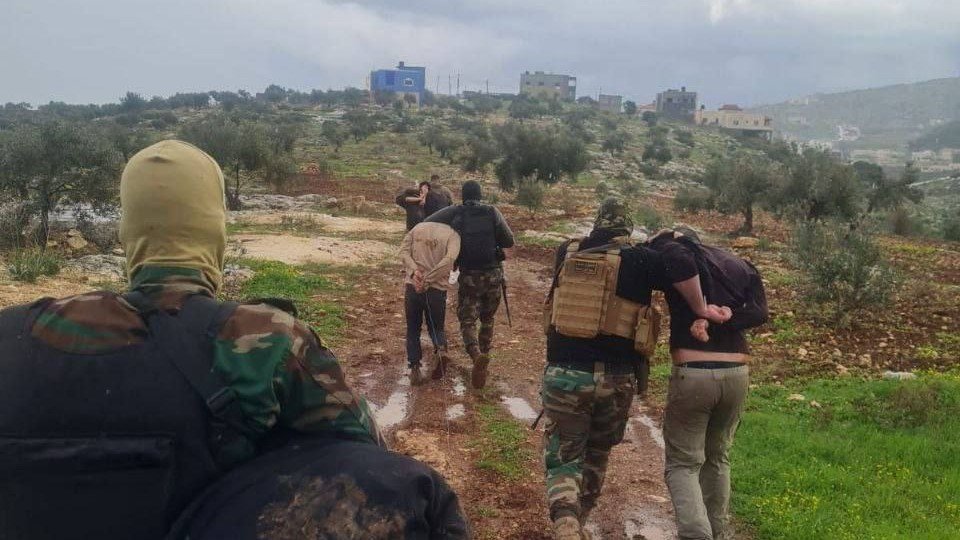
Image
(Photo credit: X)

Palestinian Authority (PA) troops have been detaining and torturing resistance fighters in the occupied West Bank city of Jenin, where a joint operation carried out by Israel and Ramallah’s forces has been ongoing for days.

(Photo not found)
Photos of the detainment and torture of Palestinian civilians and resistance fighters in Jenin at the hands of the Palestinian Authority's (PA) forces. The arrests are carried out in parallel with Israel's brutal assault on Jenin Camp. pic.twitter.com/j2dnv9Hc8u

— The Cradle (@TheCradleMedia) January 24, 2025


Photos from 24 January circulating on social media showed young Palestinians in PA custody bruised from being beaten and lying flat on the ground with their hands bound.


Deputy head of Hamas in the West Bank Abdel Hakim Hanini condemned the PA on Friday and said these “scenes that offend human dignity will push the fighters and their families to take revenge on the authority.”

“We would have liked to see the authority’s security forces confronting the settlers, not torturing our children,” Hanini added.

At least 65 Palestinians have been detained by the PA in Jenin over the last few days, while dozens of others have been arrested by Israeli forces.

Hundreds have been displaced from Jenin camp by Israeli army forces and the PA. Thirteen Palestinians have been killed.

Israel launched its large-scale military operation in Jenin on 21 January, coinciding with airstrikes on the city. The operation has been dubbed “Iron Wall,” and came after a deadly six-week siege on Jenin’s refugee camp by PA forces – targeting the Quds Brigades of the Palestinian Islamic Jihad (PIJ) movement’s Quds Brigades, as well as allied elements of Hamas’s Qassam Brigades and other groups.

The PA reportedly withdrew from Jenin last week as part of a deal reached between Ramallah and the resistance. However, it quickly joined the Israeli operation that started days ago. According to the agreement, PA forces have been given freedom of movement and operation within Jenin camp.

“After the resistance fighters agreed with the PA to allow its security forces to enter the camp for a specific period of time, the resistance fighters decided to withdraw and spread out to different areas of Jenin, fearing the authority’s treachery and pursuit of them inside the camp, and also to stop the bloodshed and prevent bloody clashes if the authority tried to arrest one of the resistance fighters,” sources told Quds News Network (QNN) on Friday.

“The PA security leadership deluded its elements into believing that an agreement had been reached with the resistance fighters, and sought to prevent PA elements from leaking information to the resistance. However, with the start of the military operation by the occupation army, decisions were made that the PA must monitor the villages and towns of Jenin, including medical centers, the outskirts of villages, abandoned houses, mosques, and the homes of liberated prisoners,” they went on to say.

The PA security services have “intensified their operations in the Jenin countryside,” the sources added.

https://thecradle.co/articles/pa-detain ... ly-assault

"There is great chaos under heaven; the situation is excellent."

User avatar
blindpig
Posts: 14804
Joined: Fri Jul 14, 2017 5:44 pm
Location: Turtle Island
Contact:

Re: Palestine

Post by blindpig » Sun Jan 26, 2025 6:40 pm

Residents return to Lebanese border villages as Israeli withdrawal deadline expires
At least 11 people have been killed and dozens of others wounded after Israeli forces opened fire at civilians and Lebanese soldiers

News Desk

JAN 26, 2025

Image
(Photo credit: Ali Shoeib/Telegram)

Residents of south Lebanon who were displaced during the war returned to their towns and villages on 26 January upon the expiration of the 60-day ceasefire implementation period.

“Army units entered the town of Maroun al-Ras - Bint Jbeil and other border areas, where they stand alongside the citizens in the face of the Israeli enemy, which continues to refuse to abide by the ceasefire agreement and withdraw from Lebanese territory,” the Lebanese Armed Forces (LAF) said in a statement on X.

The Lebanese army said earlier that it accompanied returning residents to Aita al-Shaab, Bint Jbeil, Deir Saryan, Adshit al-Qusayr, Taybeh, Qantara-Marjayoun, in addition to other border areas, and called on citizens to exercise restraint and follow directives in order to stay safe.

It also announced deploying in the towns of Qawzah, Debel, Hanin, and Beit Lif in the central sector of the southern Litani region after Israeli forces withdrew.

Israeli troops opened fire at residents attempting to enter several villages on Sunday, killing at least 11 people and wounding 83, according to the Lebanese Health Ministry. At least two Lebanese soldiers were wounded and one killed.


Video footage showed an unarmed woman confronting Israeli soldiers as the troops shot at a group of Lebanese residents.

Unarmed woman confronts Israeli occupying forces, saying, "This is our land, we want to return home" as they open fire on residents returning after the end of the 60-day deadline for Israeli withdrawal. pic.twitter.com/X1uaUPN7iu

— The Cradle (@TheCradleMedia) January 26, 2025


Israeli forces also blew up infrastructure in the town of Wazzani as residents were returning to the south.

“The timelines envisaged in the [ceasefire deal] have not been met. As seen tragically this morning, conditions are not yet in place for the safe return of citizens to their villages along the Blue Line. Displaced communities, already facing a long road to recovery and reconstruction, are therefore once again being called on to exercise caution. Also, violations of United Nations Security Council resolution 1701 (2006) continue to be recorded daily,” said the office of the UN Special Coordinator for Lebanon (UNSCOL).

Security officials cited by Israel’s Broadcasting Corporation (KAN) claimed that Hezbollah has enlisted citizens to head to southern Lebanon and “confront Israeli army forces with the aim of escalating the situation and putting the Lebanese army in a predicament.”


Military Correspondent in the North for Israel's Yedioth Ahronoth, Yair Kraus:

"These are exactly the images that used to scare people in the north: Hezbollah members, residents of villages near the border in southern Lebanon returning carrying Hezbollah flags." pic.twitter.com/x1eHC65Cbu

— The Cradle (@TheCradleMedia) January 26, 2025


Israel has accused Hezbollah of failing to abide by the terms of the ceasefire deal by remaining south of the Litani River, and has criticized the Lebanese army for not implementing its part of the agreement.

Yet Lebanon’s army says Israel’s “procrastination” in withdrawing has hindered its work that it must carry out in accordance with the agreement.

The office of Israeli Prime Minister Benjamin Netanyahu signaled in a statement on 24 January that Tel Aviv’s forces will not fully withdraw from south Lebanon by the end of the 60-day deadline.

The US called for an urgent extension of the ceasefire implementation period after Netanyahu's statement.

https://thecradle.co/articles/residents ... ne-expires

Israel prevents return of displaced Palestinians to north Gaza

At least one Palestinian has been killed and others wounded by Israeli gunfire as thousands wait to return to the north via the Netzarim Corridor

News Desk

JAN 26, 2025

Image
(Photo credit: X)

Israel is continuing to prevent displaced Palestinians from returning to the north of the Gaza Strip, accusing Hamas of violating the ceasefire deal and demanding the release of a captive who it said was supposed to be released as part of the last round of exchanges.


Hamas said in a statement on 26 January that it “is following up with mediators on the [Israeli] occupation’s prevention of the return of the displaced from the south to the north, which constitutes a violation and breach of the ceasefire agreement.”

“[Israel] is stalling under the pretext of the captive Arbel Yehud, even though we informed mediators that she is alive and gave all the necessary guarantees for her release. We hold the occupation responsible for obstructing the implementation of the agreement, and we are following up with the mediators with full responsibility to reach a solution that leads to the return of the displaced," it added.

Israeli political sources cited by Israel Hayom and other Hebrew outlets that Prime Minister Benjamin Netanyahu “stands firm on the decision he made not to allow the passage of Gazans northward through the Netzarim Corridor — until the issue of the return of Arbel Yehud is resolved.”

Yehud, a female Israeli soldier, is being held by the Palestinian Islamic Jihad (PIJ) movement. Hebrew media claimed on Friday that the PIJ was refusing to release her and was facing pressure from the movement’s leadership abroad.

Israeli officials cited by the New York Times (NYT) said the release of Yehud was not Hamas’ responsibility alone.

Thousands of Palestinian civilians are waiting at the Netzarim corridor to be allowed entry into northern Gaza as per the terms of the ceasefire agreement reached earlier this month. Israeli forces are also supposed to withdraw from Netzarim, according to the deal, but are delaying the exit.

Video footage showed Israeli tanks and vehicles deployed along the Salah al-Din Road, preventing the return of the displaced to the north.

At least one Palestinian has been killed and over a dozen injured over the past 24 hours as a result of Israeli troops opening fire at displaced residents waiting to return.


The delay comes after Israeli authorities released 200 Palestinians from Israeli prisons on 25 January as part of the ceasefire agreement with Hamas. Hamas released four female Israeli soldiers as part of the deal earlier in the day.

One hundred fourteen Palestinian prisoners were transferred from Ofer Prison in the occupied West Bank for release in Ramallah, 16 were returned to Gaza, and 70 were exiled outside Palestine, WAFA news agency reported. Egypt will host them for 48 hours before they are sent to Tunisia, Algeria, and Turkiye – which all agreed to receive them.

https://thecradle.co/articles/israel-pr ... north-gaza

The Zionists are every bit as good at fulfilling agreements as the USA....

******

Image

Trump Reveals Plan For The Ethnic Cleansing Of Gaza

President Trump has said he wants to “clean out” Gaza and relocate its population to US client states Egypt and Jordan, which would of course be a textbook case of ethnic cleansing.

Caitlin Johnstone
January 27, 2025

Well that didn’t take long. President Trump has said he wants to “clean out” Gaza and relocate its population to US client states Egypt and Jordan, which would of course be a textbook case of ethnic cleansing. It would also align perfectly with longstanding Israeli agendas to remove Palestinians from their homeland so that their territory can be seized and settled by Jews.

Speaking with the press on board Air Force One on Saturday, Trump said he talked to Jordan’s King Abdullah II about taking in large numbers of Palestinians from Gaza, and said he plans to speak with Egypt’s president Abdel Fattah el-Sisi about doing the same.

“I’d like Egypt to take people and I’d like Jordan to take people,” Trump told reporters, saying the Gaza Strip is “a real mess” and “literally a demolition site”.

“You’re talking about probably a million and a half people, and we just clean out that whole thing,” Trump said.


The president said that this new arrangement could be either temporary or long-term, but one would have to be extremely naive to believe that either Israel or Washington plan on emptying out Gaza of its inconvenient population, rebuilding it, and then bringing them all back to shiny new homes. Israel has a very extensive history of grabbing land from Palestinians and then refusing to give it back, which is why there are so-called “refugee camps” for displaced Palestinians that are as old as the state of Israel itself.

“Just five days into his second term as president, Trump left no doubt about what his intentions are for Gaza,” Joe Lauria wrote for Consortium News on Trump’s comments, adding, “He tried to present what he was saying as humanitarian concern, but only the most ill-informed person about Gaza would not see that he is talking about committing the crime of forcibly relocating a population.”

Trump supporters will no doubt defend his stated plans as a compassionate effort to rescue Palestinians from unfortunate circumstances, because Trump supporters are chowder-brained bootlickers who would defend literally anything their president did. But make no mistake: this is the advancement of an agenda to end the existence of the Palestinian people in their historic homeland, and would fulfill the darkest desires of the most depraved political factions in Israel.

Mere days after the Hamas attack on October 7 2023, Israel’s Intelligence Ministry produced a document proposing the removal of Gaza’s population to Egypt’s Sinai Peninsula. At around the same time, an Israeli think tank called the Misgav Institute for National Security & Zionist Strategy published a paper arguing that “There is at the moment a unique and rare opportunity to evacuate the whole Gaza Strip in coordination with the Egyptian government.”

Since that time both the Israeli government and the Israeli media have gotten much less shy about saying that ethnic cleansing is the plan for Gaza. A few weeks ago multiple far-right Knesset members wrote a letter to Israeli defense minister Israel Katz demanding the “complete cleansing” of northern Gaza using siege warfare and attacks on civilians to drive the population out of the area. In November of last year, former Israeli defense minister Moshe Yaalon stated unequivocally that Israel was indeed in the process of ethnically cleansing Gaza. In October, the Israeli outlet Haaretz published an editorial titled “If It Looks Like Ethnic Cleansing, It Probably Is”.


One narrative Israel and its apologists like to push is that this forced mass displacement would be “voluntary migration”, which is ridiculous nonsense. Obviously if you make a place completely uninhabitable and refuse to rush massive amounts of aid to them so that they can live, you are forcing them to relocate as surely as if you’d forced them at gunpoint. Giving people the choice to relocate or starve is not giving them a choice at all.

Israel’s plan for Gaza once its ethnic cleansing agenda is complete is of course to begin building Jewish settlements there. Last year Israeli forces sparked a minor controversy by sneaking extremist settlement movement leader Daniella Weiss into northern Gaza so that she could scout the land for future use. Back in April a Knesset member named Limor Son Har-Melech stated on Israeli television that there are secret plans within the Israeli government to settle Gaza after military operations are complete. This past November numerous Israeli officials attended an event brazenly titled “Preparing to Resettle Gaza,” just in case you needed it spelled out even more clearly where all this appears to be headed.

Trump’s comments help illuminate what he meant when he gushed about all the wonderful things that could be done with Gaza when speaking to the press the other day.

“Gaza’s interesting, it’s a phenomenal location,” he said on Monday. “On the sea, the best weather. Everything’s good. Some beautiful things can be done with it. It’s very interesting. Some fantastic things can be done with it.”

It remains to be seen if Jordan and Egypt can be bribed or coerced into participating in the empire’s ethnic cleansing plans for Gaza, but either way the last word I would use to describe those plans is “fantastic”.

https://caitlinjohnstone.com.au/2025/01 ... g-of-gaza/
"There is great chaos under heaven; the situation is excellent."

User avatar
blindpig
Posts: 14804
Joined: Fri Jul 14, 2017 5:44 pm
Location: Turtle Island
Contact:

Re: Palestine

Post by blindpig » Mon Jan 27, 2025 3:05 pm

Gaza Checkpoint Shell Company Led by Former CIA Paramilitary Chief
Posted by Internationalist 360° on January 26, 2025
Jack Poulson

Image
Former CIA paramilitary chief Philip F. Reilly outed himself on Saturday as head of the shell company credited with drafting the operational plan for the vehicle checkpoint in Gaza’s Netzarim corridor which opened this weekend.

The shell company credited by Axios with having “drafted the operational plan” for a newly opened vehicle inspection checkpoint along the Netzarim corridor in Gaza is led by the former head of the CIA’s paramilitary arm, then known as the Special Activities Division but renamed to the Special Activities Center circa 2015. Mr. Philip F. Reilly was also the CIA’s Afghanistan station chief circa 2008 to 2009, as well as chief of operations of the agency’s Counterterrorism Mission Center, which led the agency’s highly controversial drone strike program during the Global War on Terror.

According to a story planted in The Washington Post yesterday evening in response to a pair of investigations from this publication into the paramilitary ties of the two American companies running the checkpoint, Mr. Reilly was simply noted in the closing statement of the article to be “a former CIA senior intelligence officer with extensive overseas service.” Also left unsaid was that Mr. Reilly was previously senior vice president of special activities of the private military contractor Constellis, the owner of the company formerly known as Blackwater, which became publicly equated with American mercenaries thanks to a series of investigations spearheaded by journalist Jeremy Scahill.

More recently, this publication exposed several accidentally published data brokerage agreements between the Orbis Discovery product of the private intelligence firm Orbis Operations — a company Mr. Reilly joined as senior vice president by January 2020 — and surveillance companies such as the commercial cellphone location tracking firm Anomaly Six, the covert human intelligence collection platform Premise Data, and the social media monitoring firm Fivecast, whose license agreement involved the creation of ‘sockpuppet’ accounts. After publication of the investigation, Orbis had the Wayback Machine, the de facto standard nonprofit archive of webpages, retroactively delete all copies of their license agreements webpage and exclude any future caches.

Mr. Reilly was also listed as a board member of the social media surveillance firm Circinus in 2016. The company was purchased by the convicted undeclared foreign agent and President Trump-associate Elliott B. Broidy roughly two years prior and, according to reporting by The New York Times in 2018, signed contracts with the government of the United Arab Emirates “worth several hundred million dollars.”

Prior to joining the paramilitary arm of the Central Intelligence Agency, Mr. Reilly was a member of the U.S. Army Special Forces, which was originally formed in 1952 as a post-World War II guerrilla warfare unit and, like the Special Activities Center, traces its lineage to the behind-the-lines operations of the Office of Strategic Services (OSS). Reilly specifically served as a non-commissioned officer with the 7th Special Forces Group in the early 1980s, which came to focus on counter-narcotics missions in Latin America. (According to Mr. Reilly’s LinkedIn profile, he transitioned to the CIA immediately after serving in the Green Berets from August 1982 to August 1985.)

As part of its mission in the area of operations defined by U.S. Southern Command, 7th Group is the U.S. Army’s go-to unit for training the military and broader special operations forces of Nicaragua, where the founder of fellow American checkpoint contractor UG Solutions, Jameson Govoni, noted that he operated “undercover” as part of counter-sex trafficking operations. Mr. Govoni publicly disclosed his time in 7th Group through a press release published under an anonymous byline by “US Reporter,” a content mill owned by Matrix Global LLC which excludes its website from the Wayback Machine. The nominal publication date was September 12, 2023.

A spokesperson who phoned the author at 10:36 p.m. Eastern Standard Time on Friday spent the majority of a more than 90 minute discussion attempting to pursuade this publication to stop digging into who was running the Safe Reach Solutions shell company: “I’m not trying to run you off a story, you can do whatever you want. Someone else is going to break that one,” the spokesperson continued, in an apparent reference to their process of burying the detail into a story at The Washington Post. “The next story to write if I’m you, is a piece about the humanitarian [aid] and hostages.”

A far more transparent competitor to Safe Reach Solutions, Fogbow, is similarly run by Michael P. “Mick” Mulroy, who left his role as chief of department in the CIA’s Special Activities Center circa November 2017 to become U.S. deputy assistant secretary of defense for the Middle East.

After initially feigning ignorance as to the existence of Fogbow, the UG Solutions spokesperson pivoted to harshly criticizing the company, arguing that they produced useful papers but lacked the manpower to actually operate a checkpoint, stating: “Mike’s a nice enough guy, super smart, but call that guy up [and ask] ‘Hey man, how many people work for you that you could get on an airplane today?’ Just wait and see if he answers.”

The UG Solutions spokesperson was then reminded that they too had refused to answer how large their staff was, or roughly how many of their people were being deployed to man the Gaza checkpoint.

Update, January 26, 2025, at 12:25 p.m. Eastern Standard Time: Because the Wayback Machine retroactively deleted the author’s previous cache of Orbis Operations’ surveillance data brokerage agreements after they were cited in an investigation, the author’s full direct cache of the page is being included here directly.

Orbis Discovery data brokerage agreements
775KB ∙ PDF file
Download

A print to PDF of a manual cache of the data brokerage agreements published by Orbis Operations to http://www.orbisoperations.com/license and reported on by the author. The author separately saved a copy in the Wayback Machine, at http://web.archive.org/web/202401132315 ... m/license/, then reached out to Orbis Operations for comment. Beyond immediately deleting the license agreement, they also had the author’s Wayback Machine cache retroactively deleted and permanently excluded the URL from the archive.


https://libya360.wordpress.com/2025/01/ ... ary-chief/

New ICJ President a Christian Zionist Influenced by End Times Theology
Posted by Internationalist 360° on January 26, 2025
Max Blumenthal

Image

Julia Sebutinde stood alone in rejecting South Africa’s genocide case against Israel at the International Court of Justice. Now the court’s president, the Ugandan judge suggests her motives for protecting Israel can be found in the Old Testament.

With new countries joining South Africa’s case accusing Israel of committing genocide in the Gaza Strip, and a ceasefire potentially enabling war crimes investigators to gather fresh evidence of Israeli atrocities, a leadership shakeup at the International Court of Justice (ICJ) threatens to undermine the campaign for legal accountability.

The ICJ’s President Nawaf Salam resigned on January 14, 2025 to become Prime Minister of Lebanon, and was succeeded by Justice Julia Sebutinde of Uganda. Many observers were stunned when Sebutinde voted “no” on all resolutions introduced by South Africa in January 2024, placing herself in opposition to all ICJ judges, including her Israeli colleague, Aharon Barak.

The Ugandan judge rejected the court’s call for the Israeli military to halt deliberate assaults on civilians, end its policy of forced displacement, and cancel its planned invasion of Rafah. In a previous advisory case on the legal consequences of Israel’s occupation of the Palestinian Territories, Sebutinde insisted that Palestinians had not been subjected to any military occupation whatsoever. In fact, she concluded that Israel may have the right to maintain a permanent presence in the West Bank and the whole of Jerusalem on the basis of purely biblical claims.

Sebutinde’s opinion opened with a lengthy history of the Israel-Palestine conflict that blended well-worn Zionist propaganda with the Old Testament. In rejecting her colleagues’ ruling declaring Israel’s military occupation of the West Bank and East Jerusalem illegal, she resorted to accounts of the Jewish presence in the biblical land of Israel, omitting any mention of UN resolutions or international law.

“There is substantial evidence that Jewish people lived in the region of ancient Israel between 1000-586 BCE. This period corresponds to the era of the United Monarchy under Kings Saul, David, and Solomon, and the subsequent divided kingdoms of Israel and Judah. The evidence includes archaeological findings in the City of David…” Sebutinde insisted. “The Hebrew Bible (Old Testament) offers detailed accounts of the history, culture, and governance of the Israelites during this period. While these texts are religious in nature, many scholars consider them valuable historical documents.”

Her opinion was so extreme, and so shot through with theological commentary, it prompted Uganda’s ambassador to the United Nations, Adonia Ayebare, to declare her “ruling at the International Court of Justice does not represent the Government of Uganda’s position on the situation in Palestine.”

Justice Sebutinde ruling at the International Court of Justice does not represent the Government of Uganda’s position on the situation in Palestine. She has previously voted against Uganda’s case on DRC. Uganda’s support for the plight of the Palestinian people has been expressed…

— Adonia Ayebare (@adoniaayebare) January 26, 2024


So what accounted for Sebutinde’s defiance in the face of the entire ICJ panel and her own country’s diplomatic corps? Had she been handled by malign external forces? Or was she driven by deeply held personal passions?

Israel’s history of bribing, threatening and blackmailing officials around the world – and destroying those who forcefully oppose it – is well documented. Karim Khan, the chief prosecutor of the International Criminal Court, fell under heavy Mossad surveillance after he introduced warrants for the arrest of Prime Minister Benjamin Netanyahu and his then-Defense Minister, Yoav Gallant. In October, 2024 when an anonymous accuser brought forward allegations of sexual harassment against Khan, there could be little doubt an Israeli hand had finessed the scandal.

Sebutinde’s fanatical adherence to Israel’s agenda does not appear to be the product of manipulation or enticement, however. The views expressed in her dissent on the South African case were much more likely a reflection of the Christian Zionist belief system she developed as a member of Watoto, a Pentecostal megachurch in the Ugandan capital of Kampala. It was there that Sebutinde says she developed her worldview under the tutelage of a Canadian pastor and End Times aficionado named Gary Skinner.

“The godly values of integrity, honesty, justice, mercy, empathy, and hard work that the Skinners and Watoto Church instilled and nurtured in me, over the years, account for who I am today and have immensely contributed to my incredible career as a judge in Uganda and a judge at the International Court for Justice,” Sebutinde proclaimed during a June 2024 ceremony for the launch of a new branch of the church in downtown Kampala.

“What happens to Israel is a sign of the End Times scenario”

Since he founded Watoto in 1984, Skinner has instilled a virulently anti-Arab strain of Christian Zionism in his congregation of 36,000 in Kampala. In a 2021 sermon entitled, “Israel: The Greatest Sign,” Skinner spun together an assortment of cherry-picked biblical verses with potted history to justify Israel’s military control over historic Palestine. He punctuated his jeremiad with an admonition to his parishioners and gentiles everywhere: “If you bless the Jews, you will be blessed. If you curse the Jews, you will be cursed.”

Like all Christian Zionists, Skinner saw Israel’s foundation as the fulfillment of prophecy: “May the 14th, 1948,” the tinny-voiced preacher proclaimed, “and on that day, little four or five foot three David Ben Gurion, with his lion like hair, stood up and declared: ‘The Jewish nation reborn,’ to be called Israel. For 2400 years, no Jewish flag had flown over Israel until that day… but God fulfilled his prophecy by bringing them back the greatest sign of the any moment return of Jesus.”

Minutes later, Skinner emphasized that Israel’s existence as a self-proclaimed Jewish state “is the most dramatic sign that Jesus is about to return. What’s going to happen ahead of us – Israel is that barometer,” the preacher continued. “What happens to Israel is a sign of the End Time scenario. The national rebirth of Israel is the greatest End Time sign we have.”

The ICJ’s next president, Julia Sebutinde – who was alone in opposing all resolutions against Israel – is a Christian Zionist End Timer

Here’s her pastor in Uganda, Gary Skinner, whom she says “immensely contributed to my incredible career as a judge”https://t.co/8689Ec1kbA pic.twitter.com/vSt3at67Vk

— The Grayzone (@TheGrayzoneNews) January 24, 2025


In his sermon, Skinner also boasted of Watoto’s donations to an array of evangelical charities inside Israel through the church’s FIRM Israel initiative, including some that promote religious conversion. “We, as a church, give a lot of money every year to support God’s work in Israel,” he stated, beaming with pride, “because we know that God has a plan for the nation, and it’s the greatest sign of His return.”

Skinner’s eschatological view of history clearly informed Sebutinde’s dissent against the ICJ ruling on South Africa’s genocide case against Israel. Though Uganda’s Foreign Ministry condemned her radical opinion, powerful evangelical figures inside the country with close ties to the presidency hailed her as a heroine.

“Not all heroes wear capes,” declared Patience Rwabwogo, an influential Pentecostal preacher in Kampala. “Julia Sebutinde has made a historic stand at the ICJ. May God always remember her for mercy and may Uganda as a nation always be found on the Lord’s side.”

Rwabwogo happens to be the daughter of Yoweri Museveni, the flamboyantly evangelical president of Uganda, whose wife Janet – a close ally of Watoto Church – is known for her biblical interpretations of history.

Frank Kisakye, a Ugandan constitutional scholar, argued that the endorsement of Sebutinde’s ICJ dissent by Museveni’s daughter demonstrates the judge’s opinion was “almost certainly informed by the terms of Genesis 12:1-3,” the verse interpreted by Christian Zionists to mean that anyone who blesses the Jews will be blessed, and was therefore “wholeheartedly sanctioned by the Ugandan Pentecostal movement.”

Now at the helm of the ICJ, Sebutinde gains the power to break a deadlocked vote, and may be able to undermine the South African case in a more substantive way than before. With Israel likely to shatter the Gaza ceasefire, time is running out for war crimes investigators. But the Ugandan judge appears to be operating on a schedule free from earthly concerns, dictated instead by the End Times.

https://libya360.wordpress.com/2025/01/ ... -theology/

******

Muslims in US Say Trump’s Plan to Emptying Gaza of Palestinians Is Delusional

Image
Palestinian families wait to return to the northern Gaza Strip from the southern Gaza Strip, along Rashid Road, west of Nuseirat refugee camp, central Gaza Strip, 26 January 2025. Photo: EFE/EPA/HAITHAM IMAD

January 26, 2025 Hour: 4:43 pm

The Council on American-Islamic Relations (CAIR), the largest Muslim organization in the United States, described President Donald Trump’s proposal to relocate more than a million Gazans to Egypt and Jordan as “delusional and dangerous” this Saturday.

Those statements occurred after Trump explained to reporters on board the Air Force One on Saturday that he had spoken on the phone with the King of Jordan, Abdullah II, on the possibility of housing and moving more than one million Palestinians from Gaza to neighbouring countries such as Jordan and Egypt.

“The idea of carrying out an ethnic cleansing of more than a million Palestinians in Gaza is delusional and dangerous. The Palestinian people are not willing to leave Gaza, and neighboring countries are not willing to help Israel carry out ethnic cleansing,” CAIR stated in a press release.


The organization noted that if Trump “seriously wants to achieve some kind of major peace agreement in the Middle East, he needs to take things seriously and do it quickly.”

The body pointed out that “the only way to achieve a just and lasting peace is to force the Israeli government to end its occupation and oppression of the Palestinian people.”

CAIR also condemned the Republican’s decision to transfer a shipment of 1,800 bombs weighing 900 kilograms to Israel, which had been halted by the previous Joe Biden Administration for fear they would be used in densely populated areas of Gaza.

“President Trump must stop pursuing a foreign policy that prioritizes Israel and start pursuing a foreign policy that prioritizes the United States,” he stated.

https://www.telesurenglish.net/muslims- ... elusional/

******

Trump’s Gaza Proposal Takes A Page From Ralph Peters’ “Blood Borders”
Andrew Korybko
Jan 26, 2025

Image

He might have convinced himself that ethnically cleansing the Palestinians is the only way to decisively end the conflict, ensure Israel’s long-term security, and restore regional business opportunities like the India-Middle East-Europe Economic Corridor.

Ralph Peters is a former US Army analyst who became famous in the mid-2000s for his article “Blood Borders: How A Better Middle East Would Look”, which proposed redrawing the region’s borders according to local identities. He justified this on the basis that “Ethnic cleansing works.” Even though Peters wrote that Israel should return to its pre-1967 borders, the overall gist of his piece might have inspired Trump’s latest proposal to “just clean out” Gaza by sending its people to Egypt and Jordan.

He isn’t influenced by moral or humanitarian arguments when formulating his country’s policies, only practical ones, which in this case are driven by his interest in decisively ending the conflict and then restoring regional business opportunities in its wake. All references to moral and humanitarian arguments, such as him telling the Davos elite that he wants to end the Ukrainian Conflict just for the sake of stopping the killing, are just attempts to make his envisaged proposals more publicly acceptable.

That’s why he has no qualms about suggesting something that essentially amounts to ethnically cleansing the Palestinians from their homeland, but there are several problems in his latest proposal. For starters, there’s no way to coerce them into exile without risking another conflict. The nascent ceasefire calls for allowing the Palestinians to return to their homes and permitting hundreds of aid trucks into the strip each day. Hamas is expected to resume hostilities if Israel reneges on these crucial parts of the deal.

Bibi might feel emboldened to do this though due to how unpopular the ceasefire is at home, after Trump’s de facto ethnic cleansing proposal, and upon receiving the 2000-pound bombs from the US whose Biden-era hold was just lifted over the weekend. In that event, Israel could cut off aid to the strip and remain on its side of the border wall to bait Hamas out into the open while waiting until civilians become desperate enough to flee to Egypt, but that requires Cairo’s complicity in this possible plot.

It refused to open its borders to refugees during the latest war citing security threats, which Alt-Media dishonestly spun as principled opposition to ethnic cleansing, but Trump could leverage the US’ foreign aid to Egypt to coerce it into agreeing. After all, Egypt was just exempted from the US’ 90-suspension of foreign aid alongside Israel, while Jordan (which used to control the West Bank and also receives over $1 billion in US foreign aid a year) has yet to receive a notice of aid suspension at the time of writing.

Accordingly, he could either threaten to curtail existing aid to them if they don’t go along with this and/or offer to increase some of their aid to help pay for it, the latter of which could be bolstered by those three’s shared Saudi ally contributing to these resettlement efforts. Mohammed Bin Salman (MBS) might also invite some of the Palestinians to live in his Kingdom, not only out of ethno-religious solidarity, but more importantly to cushion the criticism connected to his potential recognition of Israel.

He's expected to make serious concessions on his country’s officially strict position of only recognizing Israel once Palestine receives independence since this move is required for unlocking the India-Middle East-Europe Economic Corridor (IMEC). That megaproject was announced at the G20 Summit in Delhi less than a month before Hamas’ sneak attack abruptly suspended work on it. MBS is eager get IMEC back in action since his country’s (likely delayed) “Vision 2030” development plans are dependent on it.

To that end, it’s imperative for him to assist with a swift resolution of the conflict even if it involves the de facto ethnic cleansing of Gaza, which is why he’s expected to play a direct (resettlement) and/or indirect (financing) role in this if Trump coerces all players to do so. While he’ll certainly be lambasted by Western activists and the Iranian-led “Resistance Axis’” media surrogates for this, he might wager that most Arabs will breathe a sigh of relief that this dimension of the conflict has finally been resolved.

As for the much larger one regarding the West Bank’s final status, he might settle for vague promises of future autonomy from Israel, or he might go along with another Gaza-like plot to push those Palestinians into Jordan. In any case, what he’s not expected to do is oppose the joint American-Israeli imposition of “Blood Borders” onto Palestine, whether Gaza and/or the West Bank. He didn’t do anything but mildly complain during the latest war so precedent suggests that he won’t do more if another one breaks out.

It can’t be ruled out that hostilities won’t resume either considering the ease with which Israel could violate the ceasefire after the return of the remaining living hostages (or possibly after all the remaining bodies of the dead hostages too if it wants to wait longer). This could take the form of cutting off aid to the strip in order to coerce civilians into fleeing to Egypt, from where some could then be resettled to Jordan, Saudi Arabia, and/or elsewhere within the “Ummah” (international Muslim community).

Trump might have convinced himself that this is the only way to decisively end the conflict, ensure Israel’s long-term security, and restore regional business opportunities like IMEC. It doesn’t mean that he’ll succeed, but just that there’s a probable chance that he’ll attempt it, which could bring about a new war. If Egypt is coerced by the US’ foreign aid leverage into opening its borders to refugees, then the de facto ethnic cleansing of Gaza could proceed, after which the US might approve of Israel annexing it.

While the last-mentioned would be easier said than done considering how difficult the latest war with Hamas was for Israel, the large-scale exodus of civilians that the US might engineer per a deal with Egypt could change the next conflict’s dynamics. Trump might give Bibi the greenlight to go all out in bombing Hamas after a certain time has passed on the pretext that all civilians had the chance to evacuate to Egypt by then so all that remains are supposedly only armed Hamas members.

Israel was accused of targeting civilians during the last war but it could have absolutely gone much further if it felt that it had full American support, which it didn’t receive from the Bibi Administration, whose members remained somewhat sensitive to global opinion and also wanted to overthrow Bibi. Trump doesn’t care about global opinion and, despite his personal problems with Bibi, doesn’t want to carry out regime change in Israel by placing a Democrat-backed liberal-globalist in power there.

For these reasons, it’s very possible that Trump might make good on his proposal to have Israel “just clean out” Gaza by coercing the Palestinians there into fleeing to Egypt and thenceforth to other “Ummah” countries, which is why observers should take his “Blood Borders”-inspired plan seriously. Any moves that he and Israel might take towards implementing it won’t be stopped by public condemnation, but only possibly by Hamas, though it might be too weak by now to prevent ethnic cleansing there.

https://korybko.substack.com/p/trumps-g ... kes-a-page
"There is great chaos under heaven; the situation is excellent."

User avatar
blindpig
Posts: 14804
Joined: Fri Jul 14, 2017 5:44 pm
Location: Turtle Island
Contact:

Re: Palestine

Post by blindpig » Tue Jan 28, 2025 2:40 pm

Israel to demolish entire village east of Bethlehem in latest West Bank land grab

Dozens of families have been notified of their imminent displacement as Tel Aviv seeks to expand its illegal occupation of Palestinian lands

News Desk

JAN 27, 2025

Image
(Photo Credit: Getty Images)

On 26 January, Israeli authorities notified the residents of al-Numan village, located east of Bethlehem in the occupied West Bank, of plans to demolish all homes and displace dozens of Palestinian families in order to annex their land to the boundaries of occupied Jerusalem.

“Employees of the Jerusalem Municipality, affiliated with the occupation, stormed the village accompanied by occupation forces and distributed demolition notices to residents for 45 homes in the village, which represent the total number of homes there,” Hassan Breijieh, director of the Wall and Settlement Affairs Commission Office in Bethlehem, told Anadolu Agency.

“The demolition orders were issued under the pretext of lacking building permits, despite the village being established before 1948, with the last house built in 1993,” Jamal al-Daraawi, head of the al-Numan village council, said to reporters.

Daraawi highlighted that the Palestinian village, which covers an area of 1.5 square kilometers, is home to 150 residents who live in houses made of old stone and built before the Nakba of 1948.

According to the UN Office for the Coordination of Humanitarian Affairs (OCHA), Israel demolished 1,058 Palestinian structures in Area C of the occupied West Bank throughout 2024, including 192 residential buildings, resulting in the displacement of 860 Palestinians and adversely affecting approximately 38,000 others.

The demolitions were mainly concentrated in Jerusalem, with 190, Hebron, with 172, and Bethlehem, with 68.

In July, Israeli authorities approved the largest seizure of land in the occupied West Bank in more than three decades, allowing for the appropriation of 12.7 square kilometers of land in the Jordan Valley, northeast of the West Bank city of Ramallah.

Israel’s illegal land grabs are a direct threat to the formation of an independent Palestinian state. Although Israeli settlements in the occupied West Bank and East Jerusalem are illegal under international law, more than 700,000 Jewish settlers occupy over 200 settlements and outposts across the territory.

https://thecradle.co/articles/israel-to ... -land-grab

Israeli soldiers detained for leaking 'very sensitive' Iron Dome secrets to Iran

One of the soldiers faces a potential life sentence for spying for the Islamic Republic during a time of war

News Desk

JAN 27, 2025

Image
An Iron Dome platform destroyed by Hezbollah in June 2024. (Photo credit: X)

Two Israeli soldiers have been detained by police on charges of involvement in an Iranian espionage plot targeting “sensitive military installations” in Israel – including the Iron Dome missile defense system, according to Hebrew media.

One of the detained soldiers served at an Iron Dome battery “and documented classified materials at Iranian handlers' request,” Israeli newspaper Israel Hayom reported on 27 January. The other served at the Kirya base in Tel Aviv – where the army and Defense Ministry headquarters are located.

Both told interrogators that they were struggling financially and, for that reason, accepted an Iranian offer. They are reportedly set to be indicted.

The spy operation took place in September and October of last year, as Israel was at war with Hamas in Gaza and Hezbollah in Lebanon. One of the suspects faces a potential life sentence for providing information to Iran during wartime.

They were initially requested to spray pro-Iran graffiti in certain areas. One of the soldiers withdrew from the operation when he realized he could face legal repercussions for espionage.

The other soldier – who was stationed at an Iron Dome battery – continued to provide his handlers with information and recorded a video detailing the operation of the missile defense system. Israeli army experts who reviewed the video determined that its contents could benefit Israel’s adversaries.

“I appeal to citizens. Anyone in contact with foreign elements should stop,” said Israeli Chief Superintendent Sarit Perez. “Identifying them as soldiers with access to IDF information led the Iranians to focus on military intelligence, including requesting details about aircraft damage from their missile strike against Israel,” he added, referring to Iran’s early October missile attack on Israeli bases which Tel Aviv responded to later that month with strikes on Iranian military sites.

Investigators are looking into possible associates or people who may have known about the operation but failed to report it.

According to Israel Hayom and other Israeli media outlets, Iran has been escalating espionage operations against Israel.

In late October, Israeli police and the Shin Bet security service announced that seven Israelis were detained on charges of spying for Iran by collecting sensitive information on military bases.

According to prosecutors, the seven Israelis carried out around 600 espionage missions for the Islamic Republic. They were all residents of Haifa and the north and included a soldier who had deserted the Israeli army. Prosecutors also said some of them had been spying for Iran for around two years.

The military sites involved in the espionage allegedly carried out by the seven suspects included Ramat David airbase, Nevatim airbase, the Glilot base, and the Golani Brigade base near Acre – which have been targeted by Iran and Hezbollah.

https://thecradle.co/articles/israeli-s ... ts-to-iran

Urgent shelter needed as Palestinians return to ‘wasteland’ in north Gaza

Displaced people returning to the north say there is no electricity and that essential facilities have been wiped out

News Desk

JAN 28, 2025

Image
(Photo credit: MSF)

Hundreds of thousands of displaced Palestinian civilians who have returned to northern Gaza are in urgent need of accommodation due to the massive amount of destruction caused by Israel’s genocidal war.

The Government Media Office in Gaza announced on 28 January that Palestinians in the northern strip “need at least 120,000 tents.”

“There is an operations room dedicated to monitoring the conditions of the displaced. More than 33 camps have been prepared to accommodate the displaced,” it added, highlighting that “the convoys of returnees to the north extended for hundreds of meters.”

More than 300,000 Palestinians have returned to the battered north after the displaced began flooding back into their destroyed cities on Monday.


Civilians who spoke with Al Jazeera on Tuesday said facilities and infrastructure are in total ruin. They said they are in need of generators due to a complete lack of electricity, and that all water tanks on building rooftops have either been destroyed or severely damaged – adding that they have returned to a “wasteland.”

Hospitals, in particular, are in a dire state due to the Israeli campaign against medical facilities across the strip – which escalated significantly in the final months of the war, particularly in the north.

The rest of the enclave has also been decimated. According to the UN, nearly 70 percent of all structures in Gaza are destroyed or damaged.

In the southernmost city of Rafah, destruction is widespread, and unexploded ordnance poses a serious threat to residents.

“Health services, including the rest of humanitarian aid and rebuilding of the city, are needed for life to be able to come back to Rafah, but it’s still too dangerous for people to return in most areas. As we were going to visit the former MSF Shabboura clinic in Rafah, we saw a child playing with a shell in Mawasi area. Although we cannot hear the bombs anymore, there are still dangers,” said Doctors Without Borders (MSF) official Pascale Coissard on 27 January.

Rafah previously housed the largest grouping of displaced Palestinians – around 1.5 million people – who were uprooted from different areas of Gaza due to Israeli airstrikes, forced evacuation orders, and devastating ground operations.

MSF says clearing out unexploded ordnance in Rafah alone will take years.

https://thecradle.co/articles/urgent-sh ... north-gaza
"There is great chaos under heaven; the situation is excellent."

User avatar
blindpig
Posts: 14804
Joined: Fri Jul 14, 2017 5:44 pm
Location: Turtle Island
Contact:

Re: Palestine

Post by blindpig » Wed Jan 29, 2025 3:27 pm

Israeli settlers refuse to return north despite 'extended' Lebanon ceasefire: Report

Nearly 10,000 buildings were damaged or destroyed by Hezbollah in northern Israeli settlements, from which tens of thousands of settlers were evacuated

News Desk

JAN 28, 2025

Image
(Photo credit: AFP)

Israeli settlers evacuated from the northern settlements battered by Hezbollah during the war are still refusing to return – citing a lack of security and fear of the Lebanese resistance, the Ynet news site reported on 28 January.

“I’m very worried. I left a home of 32 years and I can’t see a way back,” Rachel Biton, from the Avivim settlement in the upper Galilee, told the newspaper. “After 7 October, I don’t want to live in fear anymore. We’re not naive,” she added.

Her husband Rafi told the daily, “For a decade, we’ve been abandoned with technology like radars and cameras,” and that “Hezbollah disabled it all on the war’s first day, leaving us exposed.”

“Security means having the army inside, ensuring Hezbollah isn’t watching us anymore,” he said. He also lamented that the Lebanese village of Maroun al-Ras, facing Avivim, will be rebuilt “a year from now.”

The Israeli couple have been residing in a hotel since fleeing from Avivim at the start of the war.

Avivim was one of the settlements that were hit with heavy fire from the Lebanese resistance during the war that ended on 27 November after the signing of a ceasefire agreement, which was opposed by far-right officials and northern settlers alike.

Missile, rocket, and drone attacks launched by Hezbollah from the start of the war until the announcement of the Lebanon ceasefire caused major destruction in many northern settlements – from which tens of thousands of settlers were forced to evacuate.

Most of these settlers are refusing to return to the north, despite the ceasefire in Lebanon and the evacuation period for Israelis being scheduled to officially end next month.

The 60-day ceasefire implementation period was extended on Sunday night.

According to property tax data obtained by Ynet in late November, “a disturbing partial image emerges that indicates destruction and damage to approximately 9,000 buildings and over 7,000 vehicles that were damaged mainly by Hezbollah fire.”

Ynet added that “about NIS 140 million [$38,368,316] has been paid to compensate for the damages.”

A large 2025 budget to rebuild damaged infrastructure in northern and southern Israeli settlements has been “frozen,” according to a senior Finance Ministry source cited by Yedioth Ahronoth on Tuesday.

The source said the budget “will not be able to be used until the final approval of the government budget.”

It added that the failure to approve the 2025 budget is damaging the Israeli economy and that there are concerns that Israel will be forced to run on an interim budget. In this case, the budget for January, February, and March will be one-twelfth the original government budget for the previous year.

“The Finance Ministry's accountant general decided to allocate a smaller budget, fearing that there would be a need to finance additional months with an interim budget, and to create a reserve aimed at preventing disruption to the budgets of vital services for Israelis,” according to the report.

The report added that it will not be possible to approve the government budget before the end of March, citing the source as saying that this would be a “disaster.”

The use of an interim budget will also damage security given the negative impact on the ability to recruit soldiers, strengthen the presence of troops, and enhance protection of the borders.

Israeli settlements in both the north and south – including in the Gaza envelope – suffered significant destruction and damage as a result of the war that began after Operation Al-Aqsa Flood on 7 October 2023.

During the 7 October attacks and Israel’s implementation of the Hannibal Directive, settlements and Kibbutzim in the Gaza envelope were ravaged.

https://thecradle.co/articles/israeli-s ... ire-report

******

Hezbollah blasts international community's 'chronic indifference' to Israeli violations

At least 36 people were wounded in less than a day by Israeli airstrikes on south Lebanon and attacks on residents returning to their villages

News Desk

JAN 29, 2025

Image
(Photo credit: X)

The head of Hezbollah’s Loyalty to the Resistance parliament bloc, Mohammad Raad, slammed the international community’s inaction regarding Israel’s ceasefire violations, stressing the Lebanese people’s “legitimate and sacred” right to confront the Israeli occupation.

Raad’s statement came a day after the Israeli army launched airstrikes on Nabatieh and Zawtar in south Lebanon – one of the deepest attacks since the ceasefire was reached in late November.

“The treacherous and condemned Zionist aggression on the southern towns of Nabatieh al-Fawqa and Zawtar last night is a new example of the permanent and ongoing threat posed by the Israeli entity against our people and our country and against the security and stability of all the peoples and countries of our region,” Raad said.

“The chronic international indifference to the transgressions of this usurping entity and its persistence in aggression has led it … bullying, arrogance, and violation of all international and humanitarian rules, standards, and laws,” he added.

Raad went on to say that “the right of our people in Lebanon to confront the occupation and Israeli attacks is a legitimate and sacred right that they exercise at the time and place they deem appropriate to thwart the enemy’s goals and preserve Lebanon’s security, sovereignty and interests.”

He vowed that the “resistant people” of Lebanon “will combine with the efforts of the state and its concerned institutions when they undertake to carry out their duties in protecting the people and the country.”

Israel carried out large attacks on Nabatieh and Zawtar on the evening of 28 January, claiming to target vehicles transporting weapons belonging to the Lebanese resistance. Thirty people were injured in the attacks, according to the Lebanese Health Ministry.

BREAKING | A number of injuries in an Israeli airstrike on Nabatieh in southern Lebanon. pic.twitter.com/yFjPVBNsql

— The Cradle (@TheCradleMedia) January 28, 2025
At least six others were wounded as Israeli troops opened fire at Lebanese civilians attempting to enter the town of Yaroun on Tuesday.

Residents of southern Lebanon border villages who were displaced during the war started returning to their towns on 26 January upon the expiration of the 60-day ceasefire implementation period. Over two dozen Lebanese citizens have been killed since the displaced began returning to their destroyed villages.

Israel was meant to withdraw its troops from south Lebanon during the 60-day period, during which the Lebanese Armed Forces (LAF) was required to dismantle Hezbollah’s presence and military infrastructure south of the Litani River.

Tel Aviv claims the LAF did not fulfill its commitments, prompting US approval for an extension of the 60-day period until 18 February.

The Lebanese government has condemned Israel’s failure to withdraw but accepted the extension of the implementation period, which will prolong the Israeli presence in south Lebanon.

“We are facing an occupier that assaults and refuses to withdraw, and the Resistance has the right to act as it deems appropriate in terms of the nature, form, and timing of the confrontation,” Hezbollah Secretary-General Naim Qassem said in a speech on 27 January.

Israel has violated the ceasefire over 1,300 times since the agreement was reached. The US-led tripartite mechanism tasked with overseeing ceasefire violations has not held Israel accountable. Israel claims it is acting “in accordance” with the agreement.

https://thecradle.co/articles/hezbollah ... violations

******

‘Conspiracy Theory’ is Now Fact: Greater Israel Has Arrived
Posted by Internationalist 360° on January 28, 2025
Kit Klarenberg

Image

Ever since Tel Aviv’s 1948 creation, much has been said and written about ‘Greater Israel’ – the notion Zionism’s ultimate end goal is the forcible annexation and ethnic cleansing of vast swaths of Arab lands for Jewish settlement, based on Biblical claims that this territory was promised to Jews by God. The media typically dismisses this concept as an antisemitic conspiracy theory or, at most, the fringe fantasy of a minuscule handful of Israelis.[/b]

In reality, as The Guardian admitted in 2009, the idea of a Greater Israel has long appealed to “religious and secular right-wing nationalists” alike in Tel Aviv. They have the shared objective of “[seeking] to fulfill divine commandments about the ‘beginning of redemption,’ as well as create ‘facts on the ground’ to enhance Israel’s security.” The outlet acknowledged this motivation was a key contemporary driving force in mainstream Israeli politics, which “effectively turned the Palestinians into aliens on their own soil.”

The Nation has described the push to establish Greater Israel as “the central ideological goal” of Benjamin Netanyahu’s Likud Party, which has dominated Israeli politics in recent decades. In July 2018, Israel passed the “Nation State of the Jewish People” law. It enshrines “the development of Jewish settlement as a national value.” Meanwhile, the state is legally obligated “to encourage and promote” the “establishment and consolidation” of settlements in illegally occupied territory.

This is based on the Jewish people’s “exclusive and inalienable right” to territory as far away from present Israel as Saudi Arabia. Old Testament terms such as “Judea and Samaria” are also employed. Markedly, this text is absent from the legislation’s official English translation. Israeli chiefs may not have wanted to make their irredentist, settler colonial ambitions quite so obvious at the time. Fast forward to now, though, and Zionists at every level are wholly unabashed about their grand expansionist plans in the Middle East.

The Syrian government’s fall has raised questions, concerns, and uncertainties locally and internationally. Can the country survive in its present form? Will Western-backed ‘former’ ultra-extremists be able to run a government? Could the Iran-led Axis of Resistance, which inflicted serious harm to Israel and its Western allies throughout 2023 and 2024, be under threat? The list goes on. But one thing is sure – Israel is seeking to profit handsomely from the chaos, and if successful, the results will be revolutionary.

‘Defensive Position’

On December 8, a triumphant, smart-casual-bedecked Benjamin Netanyahu made a public address from an Israeli Defense Force observation point in the illegally occupied Golan Heights. Taking personal credit for Bashar Assad’s ouster, he hailed “a historic day” for the region, which offered “great opportunity.” The Israeli leader bragged that Israel’s “forceful action against Hezbollah and Iran” had “set off a chain reaction” of upheaval, showing no sign of abating. Nonetheless, he warned of “significant dangers.”

One of those hazards, Netanyahu declared, was “the collapse of the Separation of Forces Agreement from 1974.” This largely forgotten accord was signed by Damascus and Tel Aviv following the 1973 Yom Kippur War. Both sides agreed not to mount hostile military operations of any kind against one another from their shared Golan Heights border. Perhaps surprisingly, it was scrupulously adhered to for 50 years. Now, though, Assad’s fall has sparked a Syrian military withdrawal from the area, and, in turn, the IDF is moving in.

Netanyahu announced that orders had been given to the IDF to push deep into the demilitarized zone created by the Agreement, which is legally and historically Syrian territory. He claimed this was merely a “temporary defensive position until a suitable arrangement is found.” Yet, ever since, it has become increasingly unambiguous that for Israel, Assad’s departure not only greenlights the tearing up of longstanding diplomatic agreements but the entire map of the Middle East as we know it.

For now, the IDF has captured strategically invaluable Mount Hermon, Syria’s tallest mountain, from which Damascus can be seen just 40 miles away. Concurrently, hundreds of Israeli airstrikes have obliterated what remained of Syria’s military infrastructure, leaving the country utterly defenseless from any incursions by air, land, and sea. The stage is set for a major escalation and an attempt by Israel to absorb further territory. Who or what could stop them?

On December 10, while testifying at his long-running corruption trial, Netanyahu used the occasion to hint strongly at Assad’s defeat, heralding a significant reshaping of the region. “Something tectonic has happened here, an earthquake that hasn’t happened in the 100 years since the Sykes-Picot Agreement,” the Israeli leader said, referencing the 1916 treaty under which Britain and France carved up the Ottoman Empire creating a series of new nations in the Middle East.

In an ironic twist, the destruction of the Sykes-Picot Agreement, which divided the Middle East into artificial boundaries under Western colonial rule, was a regular feature in ISIS propaganda. The group used the pact as a symbol of Western oppression against Islam, presenting its demise as a religious duty. With figures associated with ISIS taking charge in Damascus, that vision could now be achieved, a prospect that would undoubtedly serve Israel’s interests and align with Netanyahu’s long-standing ambitions.

‘Living Room’

Israeli media has undergone a significant tonal shift. Historically, news outlets and journalists in Israel have framed the state’s actions—ranging from operations against neighboring countries to settlement expansion and land confiscation—in terms of “security” and “defense,” even when those actions faced criticism. In the days leading up to Tel Aviv’s invasion of Lebanon on October 1, 2024, The Jerusalem Post published a strikingly candid explainer guide for its readers, enquiring, “Is Lebanon part of Israel’s promised territory?”

The Post leaned on a Brooklyn-based Rabbi to “graciously” explain in detail how based on multiple passages in Jewish scripture, “Lebanon is within the borders of Israel,” and Jews are therefore “obligated and commanded to conquer it.” The article was subsequently deleted after mass backlash and condemnation. But lessons from the debacle evidently weren’t learned in some quarters.

On December 4 – four days before the Syrian government’s fall – The Times of Israel published an op-ed on how “Israel’s exploding population” urgently required “Lebensraum,” a notorious German concept meaning “living room,” typically associated with the Nazis. The piece noted that Israel’s population was projected to grow to 15.2 million by 2048. Tel Aviv’s territory rapidly needed to be expanded – perhaps not to the size of Russia, but certainly considerably.

This extremist rhetoric was likewise purged from the web due to widespread public outcry and mocking. Yet, since the collapse of Assad’s government, the phrase “Greater Israel” has reemerged in Israeli media, with the idea of annexing territory from neighboring countries openly debated on Israeli primetime television. Geopolitical analyst and founder of The Cradle Sharmine Narwani tells MintPress News that, in a way, the blatant nature of these discussions is a welcome development, as it lays bare Israel’s extreme ambitions. However, she warns, attempts to expand Israel’s borders could backfire in catastrophic ways.

The good news is, Israel has completely dropped all its masks. The bad news is it will go for land grabs everywhere. But this will be done opportunistically and without much forethought or strategic planning. In the end, which country besides the US will be able to support Israel publicly? Tel Aviv will corner itself because the dominant Western discourse and EU law are still premised on human rights and ‘rules.’ Allowing Israel these land grabs will also sink the Western-led global order.”

‘Primary Target’

Academic David Miller concurs the mask is off once and for all. Gravely, he tells MintPress News, “The fact that the CIA-backed regime in Damascus is openly saying it is no threat to Israel is another indication regime change in Syria is a planned attempt to destroy the Axis of Resistance, and finally genocide all Palestinians.” Furthermore, he believes the writings of Zionism’s founder, Theodore Herzl, make clear seizing Lebanese and Syrian territory was Israel’s plan all along.

Miller adds that this objective was echoed in the statements of countless prominent Zionists over decades and “even codified and published as the Yinon Plan.” Little known today, this extraordinary document was published in February 1982 in the Hebrew journal Kivunim under the title “A Strategy for Israel in the 1980s.” Its title is derived from author Oded Yinon, former Israeli Foreign Ministry official and advisor to Israeli leader Ariel Sharon.

Some sources claim the Yinon Plan provided a blueprint for major future events in the Middle East, such as the 2003 U.S. invasion of Iraq, the Syrian conflict, and emergence of ISIS. While it might be an exaggeration to claim the plan explicitly predicted these events, its proposals closely mirror developments that later unfolded in the region.

Image
A boy carrying bread cycles home as Israeli military vehicles block a road leading to the Syrian city of Quneitra, Jan. 5, 2025. Mosa’ab Elshamy | AP

For example, the plan noted the potential for “domestic trouble” to erupt in Syria between “the Sunni majority and the Shiite Alawi ruling minority” – the latter constituting a “mere 12% of the population” – to the extent of “civil war.” While Damascus’ “strong military regime” was considered formidable, Yinon declared “the dissolution of Syria into ethnically or religiously unique areas” and the destruction of its military power as “Israel’s primary target” on its Eastern front.

The plan envisaged similar outcomes for other countries in Israel’s vicinity. Lebanon was to be broken up into “five provinces” along religious and ethnic lines, partition “[serving] as a precedent for the entire Arab world.” Yinon wrote, “This state of affairs will be the guarantee for peace and security in the area in the long run, and that aim is already within our reach today.” Four months later, Israel invaded Beirut, carrying out ethnic cleansing, massacres, and land theft along the way.

Once Israel’s immediate neighbors were neutralized, Iraq was placed squarely in the crosshairs. Baghdad, “rich in oil” while “internally torn” between its Sunni and Shiite population, was “guaranteed as a candidate for Israel’s targets.” Its destruction was “even more important for us than that of Syria” due to its “power” and strength relative to other regional adversaries. Yinon hoped the then-ongoing Iran-Iraq war would “tear Iraq apart and cause its downfall,” preventing Baghdad from ‘[organizing] a struggle on a wide front against us”:

Every kind of inter-Arab confrontation will assist us in the short run and will shorten the way to the more important aim of breaking up Iraq into denominations as in Syria and in Lebanon…It is possible that the present Iranian-Iraqi confrontation will deepen this polarization.”

‘Permissive Approach’

Yinon also considered it a “political priority” to regain control of the Sinai peninsula, over which Israel had fought its Arab neighbors since inception, before relinquishing all claims to the region to Egypt under the March 1979 Camp David Accords. He slammed these peace agreements and looked forward to Cairo “[providing] Israel with the excuse [emphasis added] to take the Sinai back into our hands” due to its vast “strategic, economic and energy” value:

The economic situation in Egypt, the nature of the regime and its pan-Arab policy, will bring about a situation after April 1982 in which Israel will be forced to act directly or indirectly in order to regain control over Sinai…for the long run. Egypt does not constitute a military strategic problem due to its internal conflicts and it could be driven back to the post 1967 war situation in no more than one day.”

We are now well past April 1982. In the intervening time, successive Israeli governments have demanded Egypt allow the IDF to relocate Gaza’s population to the Sinai. Netanyahu is particularly taken with the prospect. In the wake of October 7, 2023, the official Israeli government and Zionist think tank policy papers have openly advocated driving Palestinians into the neighboring desert. It has been reported that Israeli officials requested the U.S. to pressure Cairo into allowing this mass displacement.

Since his inauguration, Donald Trump has expressed a keen interest in “[cleaning] out the whole” of Gaza. This would necessitate shunting Palestinians into Jordan and Egypt. Despite opposition even from his allies, widespread condemnation of the plan as grotesque ethnic cleansing, and both target countries rejecting the idea, the new President shows no sign of backing down.

For Israel, this strategy’s appeal is self-evident. On top of emptying Gaza of Palestinians for settlement, forcing countless people into Sinai would inevitably create mass chaos and tensions there, which could, in Yinon’s phrase, provide “the excuse” for Tel Aviv to militarily occupy the region in the manner of the West Bank. Just as a “temporary defensive position until a suitable arrangement is found,” of course, as Netanyahu said of the IDF’s brazen creation of a prospective beachhead on Mount Hermon.

In December 2024, Haaretz observed Netanyahu was “angling for a legacy as the leader who expanded Israel’s borders” and “wants to be remembered as the one who created Greater Israel.” Simultaneously, neoconservative Brookings Institute Vice President Suzanne Maloney wrote for Foreign Affairs that the incoming Trump administration “will surely take a permissive approach to Israeli territorial ambitions.” After all, recent developments showed that “a maximalist military approach yields spectacular strategic dividends along with domestic political benefits” for Israel.

We must hope, as Sharmine Narwani prophesied, that Netanyahu’s megalomaniacal reveries of Greater Israel are just that. Despite understandable mass anti-imperialist mourning over the demise of Assad’s government, Tel Aviv faces a panoply of intractable internal problems. Contrary to claims of Tel Aviv’s population “exploding,” tens of thousands of residents are routinely fleeing due to ongoing attacks on Israel. At the same time, its economy has perhaps permanently been relegated to the doldrums, the country dependent on U.S. largesse to endure.

Feature photo | Illustration by MintPress News

https://libya360.wordpress.com/2025/01/ ... s-arrived/

Unarmed Civilians Force Zionist Occupiers to Flee South Lebanon
Posted by Internationalist 360° on January 28, 2025


Free Palestine TV

Laith Marouf & Hadi Hotait join the people of south Lebanon as they attempt to return to their villages, on the first day of the official end of the “ceasefire” with the Zionist enemy of humanity. They witness the bravery of the Lebanese people, the cowardice of the Lebanese army, and the satanic criminality of the Zionists shooting on unarmed civilians.


https://libya360.wordpress.com/2025/01/ ... h-lebanon/
"There is great chaos under heaven; the situation is excellent."

User avatar
blindpig
Posts: 14804
Joined: Fri Jul 14, 2017 5:44 pm
Location: Turtle Island
Contact:

Re: Palestine

Post by blindpig » Thu Jan 30, 2025 2:51 pm

The Life Expectancy of Palestinians Fell by 11.5 Years in the First Three Months of the Genocide: The Fifth Newsletter (2025)

The US-backed genocide in Gaza has led to a precipitous loss in the population’s life expectancy. Even as the ceasefire allows aid to enter Gaza, this profound demographic loss will take generations to revert.

30 January 2025

Image
Abdel Hadi el-Gazzar (Egypt), Popular Chorus, 1949.

Dear friends,

Greetings from the desk of Tricontinental: Institute for Social Research.

The idea of a ceasefire is as old as the idea of war. In old records, one reads of halts in firing for humans to eat or sleep. Rules of combat developed out of an understanding that both sides had to rest or refresh themselves. Sometimes, this understanding included the lives of animals. During the Easter Rising in 1916, for instance, the Irish rebels and the British troops stopped their shooting around St. Stephen’s Green in Dublin so that James Kearney, the park keeper, could enter and feed the ducks. It was this caesura, or pause, of gunfire that popularised the term ‘ceasefire’.

For Palestinians in Gaza, any ceasefire that promises to stop the bombardment and allow for the arrival of humanitarian aid (particularly food, water, medicine, and blankets) is a relief. In the days since 19 January, when a temporary ceasefire went into effect, aid at scale has been able to reach Gazans, United Nations Office for the Coordination of Humanitarian Affairs spokesperson Jens Laerke confirmed. On the first day of the ceasefire, 630 trucks entered Gaza – many more than the fifty to one hundred trucks per day that struggled to get in during the Israeli bombing. These trucks are ‘getting food in, opening bakeries, getting healthcare, restocking hospitals, repairing water networks, repairing shelter, family reunifications’, and carrying out other essential work, Laerke said. After almost five hundred days of genocidal violence, this aid is more than a relief. It is a lifeline. But this ceasefire agreement had first been tabled in May 2024, when it was approved by the Israeli government and later agreed to by Hamas until ultimately being rejected by Netanyahu. The guns could have been silenced then.

Image

Palestine has been deeply impacted by the genocide. Using estimates from the United Nations’ World Population Prospects 2024, Tricontinental: Institute for Social Research and Global South Insights analysed the decline in Palestinian life expectancy caused by the Israeli bombardment in Gaza and found that Palestinian life expectancy at birth fell by 11.5 years between 2022 and 2023, from a respectable 76.7 years in 2022 to just 65.2 years in 2023. It was the first three months of the US-backed Israeli bombing – from October to December 2023 – that brought about this terrible decline in total life expectancy. We are not aware of such a rapid decline in life expectancy at any other period of modern human history. A Palestinian life is now more than seventeen years shorter than an Israeli one. This gap is greater than that which existed between blacks and whites in apartheid South Africa, which was fifteen years in 1980.

Eleven and a half years lost per Palestinian. That is almost 60 million years lost for the remaining 5.2 million Palestinians who have remained in Palestine and survived the genocide. This loss cannot easily be recovered. It will take years of immense work to rebuild Palestinian society and reach anything near the pre-genocide life expectancy. Health systems will need to be rebuilt: not only hospitals and clinics, which were almost all destroyed in Gaza, but new doctors and nurses will have to be trained to replace those who were killed. Food systems will need to be recovered: not only bakeries, but fields will need to be detoxified and fishing boats repaired. Housing will need to be rebuilt to replace the 92% of homes in Gaza that were destroyed or damaged (what the UN has called a ‘domicide’). Schools will need to be rebuilt. The mental trauma that afflicts children will need to be healed so that they feel that these structures are not graves but places of safety and learning.

Image
Ahmad Nawash (Palestine), The Elephant, 1989.

The data is messy. Tens of thousands of Palestinians have been killed in the carnage, including at least 14,500 children. According to a report produced by the Danish Refugee Council, the Agricultural Development Association, and the Women’s Affairs Centre, between October 2023 and October 2024 ‘over 90% of Gaza’s population has been displaced, with individuals displaced an average of six times, and some up to 19 times’. Furthermore, the report states, Palestinians have faced forced displacement orders with ‘inadequate warning’ and have struggled to survive as the ‘designated “safe zones”’ have been ‘subjected to bombardment and lack basic resources’. The neurological problems faced by survivors are extreme. ‘There is ongoing concern for the mental health of everybody in Gaza, particularly for children who are so deeply traumatised’, Nebal Farsakh of the Palestine Red Crescent Society said, pointing out that ‘there are at least 17,000 children unaccompanied or separated from their parents’. As we noted in the first newsletter of this year, a December 2024 report conducted by the Community Training Centre for Crisis Management in Gaza found that ‘96% of the children in Gaza felt that death was imminent’.

A preliminary assessment suggests that rebuilding Gaza will cost $80 billion. The UN Development Programme has signed an agreement with the Università Iuav di Venezia to design a new Gaza that proposes first building a city ‘nucleus’ for 50,000 people amidst the rubble and then building outwards. There are at least 50 million tons of rubble in Gaza from the destruction of more than two-thirds of the area’s infrastructure (including 92% of housing units), which will take years to clear. In the ruins, alongside the bodies of missing Palestinians, are unexploded munitions and toxic materials: it is not possible to just line up a row of bulldozers and drive from one end of the Gaza Strip to the other.

Image
Fadi al-Hamwi (Syria), Gloating, 2013.

Palestinian institutions simply do not have the money to rebuild Gaza. The Gulf Arab states, which do have the money, will certainly try to wrest unforgiveable political concessions from the Palestinian political factions in exchange for any aid. The countries that want to make Israel pay for the devastation it has wrought on the Palestinians do not have the political leverage to do so, nor can they hope to push the countries that armed Israel (such as the United States, the United Kingdom, and Germany) to pay for the damage done with their munitions.

The perpetrators of the genocide want to convert Gaza into their real estate playground. US President Donald Trump says Gaza is a ‘phenomenal location’ that currently looks like a ‘massive demolition site’, echoing his son-in-law and advisor on Middle East strategy Jared Kushner’s assessment in February 2024 that Gaza’s ‘waterfront property could be very valuable’. Last year, Israeli Prime Minister Benjamin Netanyahu said that the northern part of Gaza, including Gaza City, would remain a ruin and be annexed, while Israel would control the rest of Gaza and build settlements along its edges. The settler movement, which is hell-bent on ethnically cleansing the Palestinians – and part of Netanyahu’s base – is prepared to seize the beachfronts and build their own settlements there. The pressure on Palestinians to leave Gaza will remain intense, despite this momentary ceasefire.

Image
Dima Hajjar (Lebanon), Olympia Network, c. 2002–2004.

Palestinians, who have lost at least 11.5 years of their lives as a result of this horror, will take what they can get now – even this threadbare ceasefire. But they deserve much more, and they will continue their struggle to get it.

That is why on 27 January, hundreds of thousands of Palestinians sheltering across Gaza began marching northward to their homes. They will not live through another Nakba (Catastrophe). They will rebuild with their fingers in the dirt if necessary.

Warmly,

Vijay

P. S. The graph above is part of a new series from Tricontinental: Institute for Social Research and Global South Insights (GSI) called Facts. Each month, we will release a new visual from this series based on research produced by GSI’s big data system.

https://thetricontinental.org/newslette ... s-in-gaza/

*******

'We will not withdraw until we see fit': Israel digs heels in south Lebanon

A recent extension of the ceasefire period will see Israeli forces maintain their presence and continue violent attacks in the south

News Desk

JAN 29, 2025

Image
(Photo credit: Israeli army)

Israel will not withdraw its troops from southern Lebanon until it deems that the Lebanese army has fulfilled its commitments in the ceasefire agreement, an Israeli military official told the Ynet news site on 29 January.

“Until the Lebanese army fulfills its missions and demonstrates good and sufficient control over the territory, we will not recommend transferring control to [the Lebanese army],” the source said.

The report comes after the extension of the 60-day ceasefire implementation period, which was supposed to see the Israeli army withdraw from Lebanon and the Lebanese Armed Forces (LAF) dismantle Hezbollah’s presence and infrastructure south of the Litani River.

The implementation period has now been extended until 18 February as a result of Israeli pressure on the US. The Lebanese state reluctantly agreed to the extension.

According to the Ynet report, the next three weeks will see Israeli troops “remain in southern Lebanon and conduct a long series of operations to destroy terrorist areas and collect weapons that Hezbollah has hidden and that still remain, mainly in the eastern sector, which borders the Upper Galilee.”

“In the villages that are not adjacent to the fence in the western and central part of southern Lebanon, we have returned control to the Lebanese army. But in the villages that are adjacent to us and along the border fence, along its entire length, we are still there. The responsibility for the security of our residents lies with the IDF, and certainly not with the Lebanese army or any other foreign force,” the source added.

Israel also plans to establish an outpost between every Israeli settlement and the Lebanese border fence. The report says the Israeli forces have already started building these outposts. While some of the settlers from Israel’s evacuated northern settlements have begun returning, many others are reluctant to do so and fear that Hezbollah poses a threat to them.

Israel carried out large attacks on Nabatieh and Zawtar on the evening of 28 January, claiming to target vehicles transporting weapons belonging to the Lebanese resistance. Thirty people were injured in the attacks, according to the Lebanese Health Ministry.

They were among the deepest attacks since the ceasefire was reached in late November.

At least six others were wounded as Israeli troops opened fire at Lebanese civilians attempting to enter the town of Yaroun on Tuesday.

Residents of southern Lebanon border villages who were displaced during the war started returning to their towns on 26 January upon the end of the 60-day ceasefire implementation period, which has now been extended. Over two dozen Lebanese citizens have been killed since the displaced began returning to their destroyed villages.

Israel accuses the returning Lebanese residents of being “Hezbollah activists” and “rioters.” It also claims that the LAF did not fulfill its commitments in the agreement, claiming that Hezbollah is still present south of the Litani River.

Israel has violated the ceasefire over 1,300 times since the agreement was reached. The US-led tripartite mechanism tasked with overseeing ceasefire violations has not held Israel accountable. Israel claims it is acting “in accordance” with the agreement.

https://thecradle.co/articles/we-will-n ... -in-south-

Trump signs executive order to 'find and deport' pro-Palestine student activists

Claiming US campuses are 'infested' with antisemitism, the US president has pledged to cancel the student visas of anyone who mobilized to oppose Israel's ethnic cleansing campaign of Palestinians in Gaza

News Desk

JAN 30, 2025

Image
(Photo Credit: Reuters)

US President Donald Trump signed an executive order on 29 January directing federal agencies to identify and deport “non-citizen participants” in pro-Palestine protests that swept college campuses last year.

“I will issue clear orders to my Attorney General to aggressively prosecute terroristic threats, arson, vandalism, and violence against American Jews,” the White House quoted Trump as saying earlier on Wednesday.

“To all the resident aliens who joined in the pro-jihadist protests, we put you on notice: come 2025, we will find you, and we will deport you. I will also quickly cancel the student visas of all Hamas sympathizers on college campuses, which have been infested with radicalism like never before,” the order's fact sheet reads.

He added that the Department of Justice will “quell pro-Hamas vandalism and intimidation” and “investigate and punish anti-Jewish racism in leftist, anti-American colleges and universities.”

The executive order requires federal agency and department leaders to “provide the White House with recommendations within 60 days on all criminal and civil authorities that could be used to fight antisemitism,” according to the fact sheet.

The Council on American-Islamic Relations released a statement on Wednesday calling the executive order “a dishonest, overbroad and unenforceable attack on both free speech and the humanity of Palestinians.”

“It’s time for President Trump to pursue an America First agenda, not an Israel First agenda,” the statement adds.

Despite rampant claims of “antisemitism” during campus protests that demanded an end to the Israeli genocide of Palestinians in Gaza, a study published last May by Armed Conflict Location & Event Data (ACLED) found that 97 percent of the protests were peaceful.

“My promise to Jewish Americans is this: With your vote, I will be your defender, your protector, and I will be the best friend Jewish Americans have ever had in the White House,” the White House quotes Trump as saying.

https://thecradle.co/articles/trump-sig ... -activists
"There is great chaos under heaven; the situation is excellent."

User avatar
blindpig
Posts: 14804
Joined: Fri Jul 14, 2017 5:44 pm
Location: Turtle Island
Contact:

Re: Palestine

Post by blindpig » Fri Jan 31, 2025 3:36 pm

Israeli troops forcibly displace 20,000 Palestinians from Jenin

The Israeli army has been systematically demolishing homes across Jenin Camp over the past 10 days

News Desk

JAN 30, 2025

Image
(Photo credit: Issam Rimawi/AA)

Authorities in the occupied West Bank city of Jenin announced that tens of thousands of Palestinians have been displaced from the city’s refugee camp as a result of the ongoing Israeli operation there.

The Jenin Governorate said in a statement on 30 January that “most of the Jenin Camp residents, estimated at 20,000 citizens, were displaced as a result of the Israeli aggression.”

It added that “about 400,000 Palestinian citizens have been affected by the siege and aggression on Jenin.”

The Israeli operation in Jenin – dubbed Iron Wall – has entered its 10th day. At least 16 Palestinians have been killed. The operation also includes violent Israeli army raids in other areas of the West Bank, such as Nablus and Tulkarem.

Israeli troops have been systematically destroying homes and expelling residents from the Jenin and Tulkarem Camps.

Sixty homes have been demolished by Israeli forces in Jenin Camp, Hebrew newspaper Yedioth Ahronoth reported on 30 January. An Israeli airstrike targeted a building in Jenin Camp on the same day. “A warplane bombed a building inside Jenin Camp with two missiles,” according to WAFA news agency.

Israel’s military also deployed reinforcements toward Tulkarem on Thursday.

Meanwhile, the resistance in Jenin announced several operations against invading Israeli forces. The Jenin Brigade of the Palestinian Islamic Jihad (PIJ) movement’s Quds Brigades said in a statement on Thursday afternoon that it “detonated a KJ37 ​​land explosive device in a military jeep … to cut off the path of the rescue and support force that rushed to rescue a force that had fallen into a field of fire while trying to fortify itself in one of the [Jenin] camp’s houses, achieving confirmed casualties.”

Palestinian resistance fighters in Jenin, occupied West Bank, detonate explosives on Israeli forces invading the camp.

Despite being under siege for nearly 50 days, the resistance continues to successfully plant and detonate explosives. pic.twitter.com/IzZz8lyBwk

— The Cradle (@TheCradleMedia) January 30, 2025
Earlier, the Jenin Brigade said its fighters were engaged in heavy gun battles with Israeli troops in Jenin Camp.

An Israeli soldier was reportedly killed, and two others were seriously wounded, according to Israeli media reports.

The clashes come a day after 10 Palestinians were killed in an airstrike on the town of Tamun in the Tubas governorate of the occupied West Bank.

“We declared a war on Palestinian terror in the occupied West Bank. Operation Iron Wall comes to defeat the terror infrastructure built in the Palestinian refugee camps with Iranian financing and supply. [Jenin Camp] will not return to be what it was. After the operation is completed, Israeli troops will remain in the camp to make sure the terror does not return,” Israeli Defense Minister Israel Katz said on 29 January.

“I send a clear message from here to the Palestinian Authority (PA): Stop funding terrorism and murder of Jews, and start fighting terror seriously. Anyone who funds the families of terrorists and murderers, and educates his children to destroy Israel, endangers his very existence,” he added.

Prior to Tel Aviv’s operation in Jenin, the PA waged an indiscriminate six-week siege and military campaign against the city’s camp on behalf of Israel. PA forces have also taken part in the new Israeli operation in Jenin.

https://thecradle.co/articles/israeli-t ... from-jenin

******

The Ceasefire So Far
January 30, 2025
Shares
Nothing we’ve heard so far from the Israeli state gives confidence that the Gaza ceasefire agreement will last past the first phase, writes Michel Moushabeck.

Image
Mural on the apartheid wall in Bethlehem, Palestine, 2011. (Michael Rose, Flickr, CC BY-NC-ND 2.0)

By Michel Moushabeck
Truthout

The fragile, incomplete and long overdue Israel-Hamas ceasefire agreement has brought huge relief to the millions of Palestinians who have been under daily threat of airstrikes, bombardment and forced starvation for over 15 months.

The numerous scenes of Palestinians celebrating — a boy raising a Palestinian flag at the top of the rubble of his family’s destroyed home; an old man kneeling to kiss the soil as he returned to Rafah; and a journalist taking off his PRESS jacket after the announcement of the ceasefire agreement — are very heartwarming.

There is some hope that this agreement will halt Israel’s genocidal campaign and lead to the release of all the hostages taken on Oct. 7 and the tens of thousands of Palestinian hostages languishing in Israeli jails under largely inhumane conditions.

Senior Hamas officials say they intend to fully abide by the ceasefire agreement. “We will exert the maximum efforts to give this deal a chance to succeed. We are looking for how to prevent the war again, how to protect our people,” Basem Naim, a senior member of the Hamas political bureau, told Drop Site News.

He went on to say that Hamas is prepared to begin fighting again should Israel violate the agreement.

“We believe that this is a just cause, a just struggle and we have all the guaranteed right by the international law to resist the occupation by all means, including armed resistance. What we are looking for is an independent state. If we can get it politically or through a U.N. Security Council resolution, this is the preferable way.”

Meanwhile, nothing we’ve heard so far from the Netanyahu government gives confidence that the agreement will last past the first phase.

Israeli Prime Minister Benjamin Netanyahu, who resisted a ceasefire deal for months, has been treating the inked agreement as one he is not planning to see through and uphold.

In a televised speech, he called the ceasefire “temporary.” In that speech on Jan. 18, he declared that if negotiations for Phase 2 do not go well, Israel maintains the right to continue its assault.

“If we need to resume fighting, we will do that in new ways and we will do it with great force,” he said.

Soon after the agreement had gone into effect and Israel released the first batch of 90 Palestinian captives in exchange for three Israeli hostages — and within hours of President Donald Trump’s inauguration — Israel launched a massive military operation in the occupied West Bank, raiding towns and villages and detaining more than 90 Palestinians.

Is it possible that this operation was part of a deal Netanyahu struck with far-right cabinet members so that they would not resign and topple the government?

As reported by CNN, Israeli Finance Minister Bezalel Smotrich, a far-right nationalist who opposed the Gaza ceasefire, said in a statement on Jan. 21 that security in the West Bank had been added to the country’s “war goals.”

In a post on X, Netanyahu said: “We are acting systematically and decisively against the Iranian axis wherever it extends its reach – whether in Gaza, Lebanon, Syria, Yemen, or Judea and Samaria – and our efforts will continue.”

He was quoted in The New York Times as saying that the military operation in the West Bank was aimed at “eradicating terrorism” and would be “extensive and significant.”

While far-right National Security Minister Itamar Ben-Gvir resigned from the government in protest of the ceasefire agreement, Smotrich decided to keep his far-right Religious Zionism Party in the governing coalition after receiving assurances that the genocidal assault on Gaza will resume at the end of Phase 1, with the aim of “a gradual takeover of the entire Gaza Strip.”

In a post on the Telegram platform, Smotrich said:

“Look at Gaza, it’s destroyed, uninhabitable, and it will stay that way. Do not be impressed by the forced joy of our enemy. … Very soon, we will erase their smile again and replace it with cries of grief and the sobs of those who were left with nothing.”

Image
Netanyahu and Trump in Washington in January 2020. (White House, D.Myles Cullen)

The second phase of negotiations will determine the success of the ceasefire agreement and whether it will lead to a complete withdrawal of the Israeli military from Gaza.

Mairav Zonszein, an expert on Israel-Palestine with the International Crisis Group, said: “Israel is very good at breaking ceasefires and making it appear that it wasn’t its fault.”

Daniel Levy, a former Israeli negotiator, told Al Jazeera that Netanyahu is likely to continue provocations to try to “upend” the ceasefire.

“We can expect ongoing efforts to goad and provoke the unravelling of this deal. We’ll see, I’m sure, ugly things going on in the West Bank and East Jerusalem” as well as “aggression against UNRWA,” Levy said. “This is a fragile place to be.”

Two powerful leaders — each with a long track record of lies and deceptions — that are likely to render the peace temporary are Trump and Netanyahu.

On the campaign trail, Trump promised “We’re going to do a lot for Israel; we’re going to take care of Israel.” Immediately following the inauguration, President Trump signed an executive order that rescinded sanctions on extremist settlers in the West Bank who committed violent crimes against Palestinians.

He also reversed President Biden’s restrictions on sending Israel those 2000-pound bombs that can erase entire neighborhoods. I fear that we shall soon find out what kind of a deal was made between Trump and Netanyahu in order to get a ceasefire deal concluded before Trump’s inauguration and what price will Palestinians pay in the months ahead.

Did Trump promise the removal of sanctions on Pegasus, the surveillance company which makes the spyware tool, so Israel can export it to other authoritarian states? Did he agree to support Israel as it keeps troops in southern Lebanon and part of Syria?

Did Trump agree to increased Israeli settlements on stolen Palestinian lands in the West Bank? Or did he promise Israel’s future annexation of the West Bank, a decision favored by Trump’s appointee for U.S. ambassador to Israel, ultra-Zionist evangelical Christian Mike Huckabee?

The global failure to stop the genocide and Western complicity — whether it’s military, financial or diplomatic — does not give Palestinians any hope that the colonial structures of international law and international institutions, such as the United Nations, the International Court of Justice (ICJ) and the International Criminal Court (ICC), will have the ability and will to protect them and safeguard their rights.

Image
Palestinians with the corpses of people killed by Israeli airstrikes outside the Indonesian Hospital in Jabalia, north of the Gaza Strip, on Oct. 9, 2023. (Bashar Taleb, Palestinian News & Information Agency for APAimages, Wikimedia Commons, CC BY-SA 3.0)

As we have already seen, the U.S. Congress will make certain that Israel will not be held accountable by the U.N., the ICJ, the ICC, or any other international institution. On Jan. 9, the House passed the Illegitimate Court Counteraction Act, which would place sanctions on officials within the ICC because of the arrest warrants it issued for Netanyahu and Yoav Gallant, Israel’s former defense minister. [But the U.S. Senate failed to pass the bill on Wednesday.]

Palestinians’ worst nightmare is that Trump will help speed up Israel’s endgame of the “out-of-state” solution: emptying Gaza of Palestinians and continuing its ethnic cleansing of the West Bank and East Jerusalem — and now southern Lebanon and part of Syria — in order to realize its ultimate goal of a “Greater Israel” Jewish ethnostate.

This will undoubtedly increase instability as it will trigger massive anger and unrest in the entire region and will have global repercussions.

We have already seen movement in that direction with a recent Trump proposal that aligns with Israel’s moves toward ethnically cleansing the Gaza Strip. Trump said that it was time “to clean out Gaza” and urged King Abdullah of Jordan to take in Palestinians.

Trump said that he told Jordan’s King Abdullah in a call on Jan. 25: “I would love for you to take on more, ‘cause I am looking at the whole Gaza Strip right now, and it’s a mess. It’s a real mess.”

He also said he would make a similar demand of Egypt’s President Abdel Fattah el-Sisi:

“I would like Egypt to take people …. You’re talking about probably a million and a half people, and we just clean out that whole thing and say: ‘You know, it’s over.’”

[See: Trump Wants to ‘Clean Out That Whole Thing,’ Meaning the People of Gaza]

“It is literally a demolition site right now,” Trump told reporters of Gaza. “Almost everything is demolished and people are dying there.”

Ahmed Derly, a Palestinian journalist in Gaza, reacted to Trump’s proposal in Middle East Eye:

“For 15 months, I lived conditions beyond imagination. I lost my best friends, my home, and my life’s work, and still I remained steadfast on my land in the north. This is not a choice; Palestinians will not leave their land. It is a part of our identity. … We are a people who deserve respect. It is stunning that, after all the suffering we have endured, the president of a major country could simply propose removing us from our land.”

Limitations of the Deal

The nightmare isn’t over for the children of Gaza — those who lost their parents and family members; those who were maimed by the airstrikes; and those who will be traumatized for the rest of their lives by the death and destruction they have witnessed with their own eyes, including children burned alive in their tents or shot in the head by Israeli snipers.

The rage over the complicity of Western governments in the genocide and Gaza’s total destruction — primarily the United States, United Kingdom and Germany, in collaboration with corporate media and academia — will not subside.

The global pro-Palestinian solidarity movement that mobilized students and the younger generation will likely intensify its efforts and protests in the months ahead.

From calls for divestment from arms manufacturers on university campuses to “Tell Congress to Stop Arming Israel” and BDS (Boycott, Divestment and Sanctions) campaigns, numerous pro-Palestinian groups are organizing actions for Gaza in their communities despite attempts to thwart them, putting the issue back in the spotlight. These protesters are the waves of light in a sea of darkness.

An immediate ceasefire was a necessary first step, but it changes little of the reality on the ground when it comes to the Israeli occupation and the siege of Gaza and the daily violence suffered by Palestinians in the West Bank and East Jerusalem at the hands of Israeli soldiers and armed settlers.

In the absence of justice, equality and freedom, Palestinian resistance to Israeli occupation and apartheid will continue as long as occupation and apartheid continue. And this applies to Gaza, the West Bank and East Jerusalem.

No amount of bombardment or military force can destroy the resistance. The right of Palestinians to resist the ongoing occupation is enshrined in international law, including the right to armed resistance.

Without addressing the root causes of the struggle — an end to occupation and apartheid — there will never be peace in Southwest Asia and Israelis will have neither safety nor security. And without freedom and equality for everyone from the river to the sea, every Palestinian will remain a hostage under Israel’s control.

https://consortiumnews.com/2025/01/30/t ... re-so-far/

******

After Israel’s Defeat in Gaza: What Comes Next?
Posted by Internationalist 360° on January 30, 2025


Reason2Resist with Dimitri Lascaris

As the ceasefire between Lebanon and Israel expired, Laith Marouf travelled to Lebanese villages on the border of Palestine.

There, Marouf witnessed the vast devastation inflicted by Israel’s genocidal army. He also accompanied villagers who had been warned to stay away from their homes by the occupier, but who were determined to return to their homes nonetheless.

Meanwhile, hundreds of thousands of Palestinians streamed into northern Gaza from the southern encampments where they had sought refuge during fifteen months of Israeli genocide.

On January 29, 2025, Dimitri Lascaris spoke with Laith Marouf about Israel’s failure to inpose its will upon the Indigenous peoples of the region, and the prospects for a sustained peace.


On January 27 – the anniversary of the liberation of the Auschwitz death camp – tens of thousands of displaced Palestinians marched joyously from their temporary camps in the southern Gaza Strip to their devastated homes in the northern Gaza Strip.

Dimitri Lascaris and Rami Yahia discussed the significance of this historic moment.

They also discussed the effect on the Israeli psyche of the prisoner exchange between the Palestinian resistance and Israel. Despite claims by the Netanyahu regime that the Palestinian resistance had been fatally weakened, the prisoner exchange revealed to Israelis that the resistance is very much alive.


Alon Mizrahi is an Arab Jewish writer and activist who left Israel over the genocide it has perpetrated in Gaza. He now resides in the United States.

On January 21, 2025, Dimitri Lascaris spoke with Alon about his experiences as an Arab Jew in Israel, his abandonment of Zionism, and the future of the ‘Jewish state’.

According to Alon, Israel’s political elite and society have become so infused with hatred of Arabs, and have enjoyed impunity for so long, that the region cannot achieve a lasting and just peace unless Israel is dismantled.


On January 15, 2025, hours after Hamas and Israel agreed to a ceasefire, Dimitri Lascaris delivered a speech in Windsor, Canada about the significance of the ceasefire agreement.

In his speech, Lascaris argued that the ceasefire constituted a strategic defeat for Israel.

Lascaris was joined at the event by Canadian peace activist Tamara Lorincz, who spoke about the NATO proxy war in Ukraine.

https://libya360.wordpress.com/2025/01/ ... omes-next/
"There is great chaos under heaven; the situation is excellent."

Post Reply