
January 31, 2025
The “War on Terror” was built on a series of deceptions to persuade the Western public that its leaders were crushing Islamist extremism. In truth, they were nourishing it.

U.S. Army paratrooper with two chemical lights, near Camp Ramadi, Iraq, Oct. 26, 2009. (U.S. Army, Flickr, Michael J. MacLeod, Public domain)
By Jonathan Cook
Jonathan-Cook.net
The story: Did you believe it 30 years ago when they told you that the Oslo Accords would bring peace to the Middle East? That Israel would finally withdraw from the Palestinian territories it had illegally occupied for decades, end its brutal repression of the Palestinian people and allow a Palestinian state to be created there? That the longest running sore for the Arab and Muslim worlds would finally be brought to an end?
The reality: In fact, during the Oslo period, Israel stole more Palestinian land and expanded the building of illegal Jewish settlements at the fastest rate ever. Israel became even more repressive, building prison walls around Gaza and the West Bank while continuing to aggressively occupy both. Ehud Barak, Israeli prime minister of the time, “blew up” — in the words of one of his own main advisers — the U.S.-backed negotiations at Camp David in 2000.
Weeks later, with the occupied Palestinian territories seething, opposition leader Ariel Sharon, backed by 1,000 armed Israeli troops, invaded occupied Jerusalem’s al-Aqsa mosque — one of the holiest places for Muslims in the world. It was the final straw, triggering an uprising by Palestinians that Israel would crush with devastating military force and thereby tip the scales of popular support from the secular Fatah leadership to the Islamic resistance group Hamas.
Further afield, Israel’s ever-more abusive treatment of the Palestinians and its gradual takeover of al-Aqsa — backed by the West — served only to further radicalise the jihadist group Al-Qaeda, providing the public rationale for attacking New York’s Twin Towers in 2001.
The story: Did you believe it in 2001, after the 9/11 attack, when they told you that the only way to stop the Taliban harbouring Al-Qaeda in Afghanistan would be for the U.S. and U.K. to invade and “smoke them out” of their caves? And that in the process the West would save Afghanistan’s girls and women from oppression?

President George W. Bush delivers remarks on the terrorist attacks Tuesday, Sept. 11, 2001, from Barksdale Air Force Base in Louisiana, before departing for Offutt Air Force Base in Nebraska. (Eric Draper, Courtesy of the George W. Bush Presidential Library)
The reality: As soon as the first U.S. bombs fell, the Taliban expressed readiness to surrender power to the U.S. puppet Hamid Karzai, stay out of Afghan politics and hand Osama bin Laden, Al-Qaeda’s leader, over to an agreed third country.
The U.S. invaded anyway, occupying Afghanistan for 20 years, killing at least 240,000 Afghans, most of them civilians, and spending some $2 trillion on propping up its detested occupation there. The Taliban grew stronger than ever, and in 2021 forced the U.S. Army out.
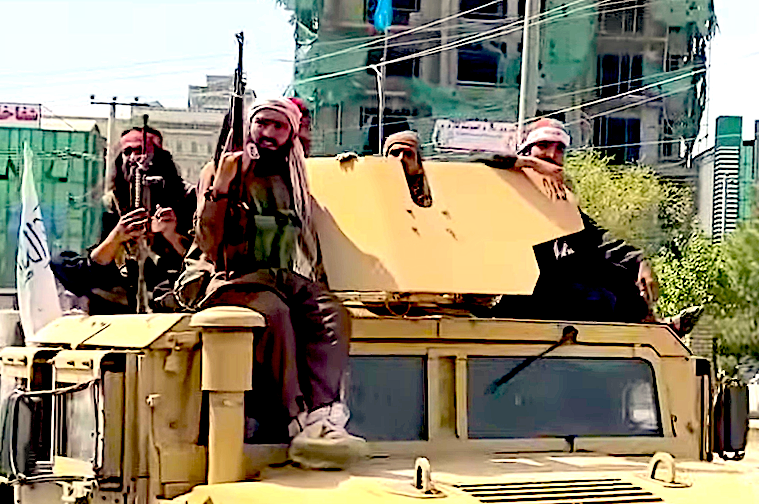
Taliban fighters patrolling Kabul in a Humvee on Aug. 17, 2021. (Voice of America, Wikimedia Commons, Public domain)
The story: Did you believe it in 2003 when they told you that there were weapons of mass destruction in Iraq that could destroy Europe in minutes? That Iraq’s leader, Saddam Hussein, was the new Hitler, and that he had allied with Al-Qaeda to destroy the Twin Towers? And that for those reasons the U.S. and U.K. had no choice but to invade Iraq pre-emptively, even if the United Nations refused to authorise the attack.
The reality: For years, Iraq had been under severe sanctions following Saddam Hussein’s foolhardy decision to invade Kuwait, and upset the regional order in the Gulf designed to keep the oil flowing to the West. The U.S. responded with its own show of military force, decimating the Iraqi army. The policy through the 1990s had been one of containment, including a sanctions regime estimated to have killed at least half a million Iraqi children — a price the then-U.S. ambassador to the U.N. Madeline Albright famously said was “worth it.”
Saddam Hussein had also to submit to a programme of rolling weapons inspections by U.N. experts. The inspectors had concluded with a high degree of certainty that there were no usable WMD in Iraq. The report that Saddam Hussein could fire on Europe, hitting it in 30 minutes, was a hoax, it eventually emerged, cooked up by the U.K. intelligence services. And the claim that Saddam had ties to Al-Qaeda not only lacked any evidence but was patently nonsensical. Saddam’s highly secular, if brutal, regime was deeply opposed to, and feared, the religious zealotry of Al-Qaeda.
The U.S.-U.K. invasion and occupation, and the vicious sectarian civil war it unleashed between Sunni and Shi’a Muslims, would kill — on the best estimates — more than 1 million Iraqis and drive from their homes a further 4 million. Iraq became a recruiting ground for Islamic extremism and led to the formation of a new, far more nihilistic, Sunni competitor to Al-Qaeda called Islamic State. It also bolstered the power of the Shi’a majority in Iraq, who took power from the Sunnis and forged a closer alliance with Iran.
The story: Did you believe it in 2011 when they told you that the West was backing the Arab Spring to bring democracy to the Middle East, and that Egypt — the largest Arab state — was at the vanguard of change in removing its authoritarian President Hosni Mubarak?
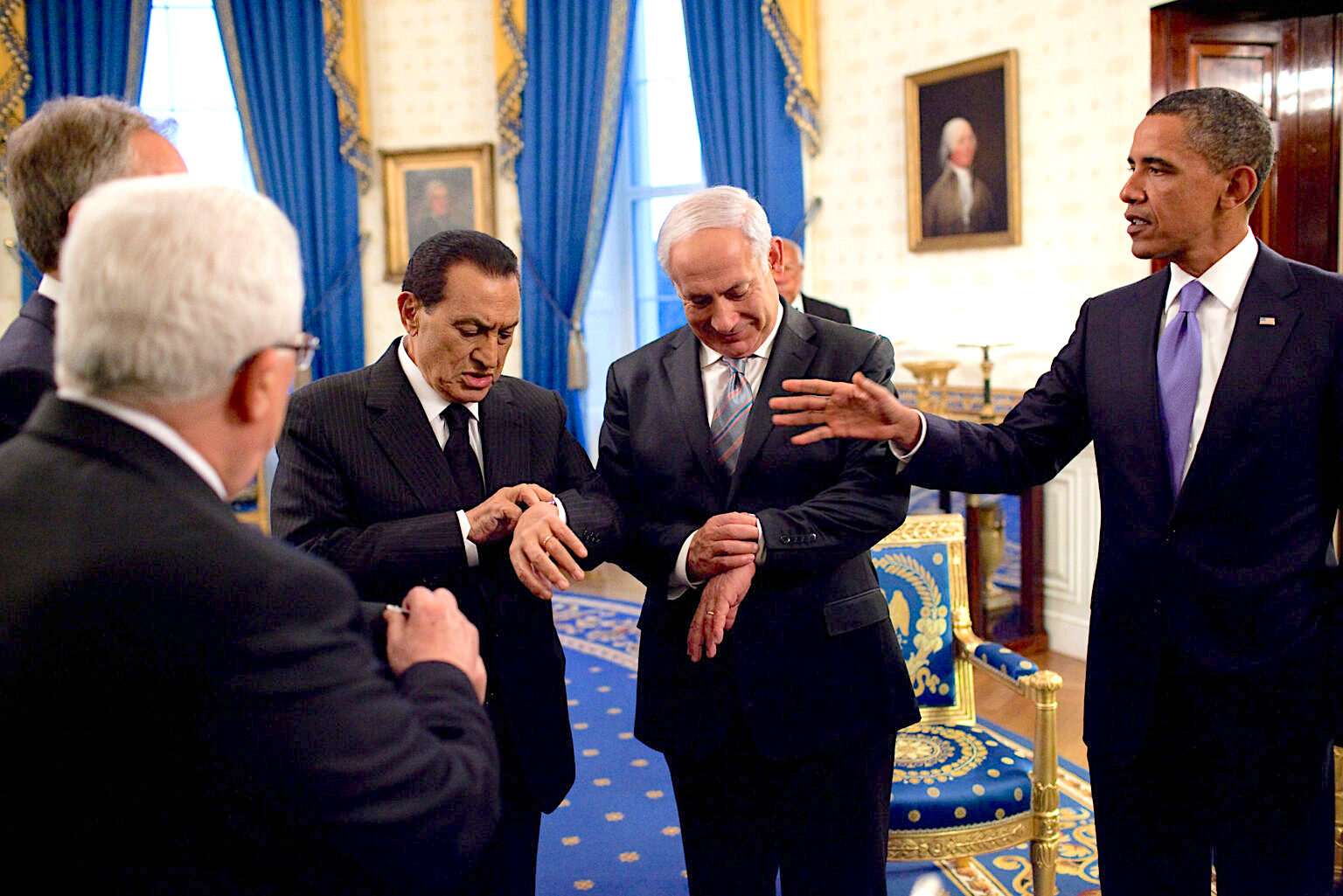
Checking their watches: Mubarak, second from left, in September 2010, with, from left: Palestine Authority President Mahmoud Abbas, back to camera, Israeli Prime Minister Benjamin Netanyahu and U.S. President Barack Obama. (Obama White House/ Pete Souza, Public domain)
The reality: Mubarak had been propped up by the West as Egypt’s tyrant for three decades, and received billions in “foreign aid” each year from Washington — effectively a bribe to abandon the Palestinians and maintain peace with Israel under the terms of the 1979 Camp David agreement. But the U.S. reluctantly turned its back on Mubarak after assessing that he could not withstand mounting protests sweeping the country from revolutionary forces released by the Arab Spring — a mix of secular liberals and Islamic groups led by the Muslim Brotherhood. With the army holding back, the protesters emerged victorious. The Brotherhood won elections to run the new democratic government.
Behind the scenes, however, the Pentagon was tightening ties to the remnants of Mubarak’s old regime and a new aspirant to the crown, General Abdel Fattah el-Sisi. Reassured that there was no danger of U.S. reprisals, el-Sisi finally launched a coup to return Egypt to military dictatorship in 2013. Israel lobbied to make sure el-Sisi’s military dictatorship would continue to receive its billions in annual U.S. aid.

Secretary of Defense Chuck Hagel meets with Egyptian President Mohamed Morsy in Cairo, Egypt, April 24, 2013. Egypt is Hagel’s fourth stop on a six day trip to the middle east to meet with defense counterparts.(Erin A. Kirk-Cuomo, U.S. Marines) (Released)
In power, Sisi instituted the same repressive powers as Mubarak, ruthlessly crushed the Brotherhood and joined Israel in choking Gaza with a blockade to isolate Hamas, Palestine’s own version of the Brotherhood. In doing so, he gave a further shot in the arm to Islamist extremism, with the Islamic State establishing a presence in Sinai. Meanwhile, the U.S. further confirmed that its commitment to the Arab Spring and democratic movements in the Middle East was non-existent.
The story: Did you believe it when, also in 2011, they told you that Libyan dictator Muammar Gaddafi posed a terrible threat to his own population and had even given his soldiers Viagra to commit mass rape? That the only way to protect ordinary Libyans was for NATO, led by the U.S., U.K. and France, to bomb the country, and directly aid opposition groups to overthrow Gaddafi?
The reality: The claims against Gadaffi, as against Saddam Hussein, lacked any evidence, as a U.K. parliamentary investigation concluded five years later, in 2016. But the West needed a pretext to remove the Libyan leader, who was seen as a threat to Western geopolitical interests. A release by WikiLeaks of U.S. diplomatic cables showed Washington’s alarm at Gadaffi’s efforts to create a United States of Africa to control the continent’s resources and develop an independent foreign policy.

March 28, 2011: President Barack Obama delivering an address in Washington, D.C., on the situation in Libya, including the transition to NATO command and control. (National Defense University, Wikimedia Commons, CC BY 2.0)
Libya, with Africa’s largest oil reserves, had been setting a dangerous precedent, offering Russia and China new oil exploration contracts and renegotiating existing contracts with Western oil companies on less favourable terms. Gadaffi was also cultivating closer military and economic ties to Russia and China.
NATO’s bombing of Libya was never intended to protect its population. The country was immediately abandoned after Gadaffi’s overthrow and became a failed state of warlords and slave markets. Parts of Libya became a stronghold for Islamic State. Western weapons supplied to “rebels” ended up strengthening Islamic State and fuelling the sectarian bloodbaths in Syria and Iraq.
The story: Did you believe it when, again from 2011 onwards, they told you that democratic forces were lined up to overthrow Syria’s dictator Bashar al-Assad, and that the country was on the verge of an Arab Spring-style revolution that would liberate its people?
The reality: There’s no doubt that Assad’s rule — combined with drought and crop failures brought on by climate change — led to growing unrest in parts of Syria by 2011. And it was also true that, like other secular Arab regimes based on the rule of a minority sect, Assad’s government depended on brutal authoritarianism to maintain its power over other, larger sects.
But that is not why Syria ended up being plunged into a bloody civil war for 13 years that dragged in actors from Iran and Russia to Israel, Turkey, Al-Qaeda and ISIS. That was largely down to Washington and Israel pursuing their geostrategic interests once again.
The real problem for Washington was not Assad’s authoritarianism — the U.S.’s strongest allies in the region were all authoritarian — it was two other critical factors.
First, Assad belonged to the Alawite minority, a sect of Shi’a Islam that had a centuries-long, theological and sectarian feud with a dominant Sunni Islam in the region. Iran was also Shi’a. Iraq’s Shi’a majority had come to power after Washington eviscerated the Sunni regime of Saddam Hussein in 2003. And finally, the Lebanese militia Hizbullah was Shi’a. Together, these comprised what Washington increasingly described as an “Axis of Evil.”
Second, Syria shared a long border with Israel and, pivotally, was the main geographic corridor connecting Iran and Iraq to Hizbullah guerrilla forces north of Israel, in Lebanon. Over decades, Iran had smuggled tens of thousands of increasingly powerful rockets and missiles into southern Lebanon, close to Israel’s northern border.
That arsenal served during most of that time as a defensive umbrella, the main deterrence preventing Israel from invading and occupying Lebanon, as it had done for many years until Hizbullah fighters forced it to withdraw in 2000. But it also served to deter Israel from invading Syria and attacking Iran.
Days after 9/11, a senior U.S. general, Wesley Clark, was shown a paper by an official in the Pentagon setting out the U.S. response to the toppling of the Twin Towers. The U.S. was going to “take down” seven countries in five years. Notably, the bulk of the targets were the Middle East’s Shi’a strongholds: Iraq, Syria, Lebanon and Iran. (The 9/11 culprits, let us note, were Sunni — mostly from Saudi Arabia.)
Iran and its allies had resisted Washington’s moves — backed increasingly openly by the Sunni states, especially those in the oil-rich Gulf — to oppose Israel as the regional hegemon and allow it to erase unopposed the Palestinians as a people.
Israel and Washington, we might note, are actively seeking to achieve these very goals right at this moment. And Syria was always critically important to realising their plan. Which is why, as part of Operation Timber Sycamore, the U.S. secretly pumped huge sums of money into training its erstwhile enemies of Al-Qaeda into creating an anti-Assad militia that drew in Sunni jihadist fighters from around the region, as well as arms from failed states like Libya. The plan was backed financially by the Gulf states, with military and assistance and intelligence from Turkey, Israel and the U.K.
By late 2024 Assad’s main allies were in trouble of their own: Russia was pinned down by a NATO-led proxy war in Ukraine, while Tehran was increasingly on the back foot from Israeli strikes on Lebanon, Syria and Iran itself. It was at this moment that Hay’at Tahrir al-Sham (HTS) — a rebranded Al-Qaeda outfit – seized Damascus at lightning speed, forcing Assad to flee to Moscow.
If you believed all of these stories, and still believe that the West is doing its best to bring to heel Islamic extremism and a supposed Russian imperialism in Ukraine, then you presumably also believe that Israel levelled Gaza, destroyed all its hospitals and starved its entire population of 2.3 million simply to “eliminate Hamas,” even though Hamas has not been eliminated.
You presumably believe that the International Court of Justice was wrong nearly a year ago to put Israel on trial for committing a genocide in Gaza.
You presumably believe that even the most cautious Israeli Holocaust experts were wrong back in May to conclude that Israel had indisputably moved into a genocidal stage when it destroyed the “safe zone” of Rafah, where it had herded most of Gaza’s population.
And you presumably believe that all the major human rights groups were wrong to conclude late last year, after lengthy research to protect themselves from smears from Israel and its apologists, that Israel’s devastation of Gaza has all the hallmarks of a genocide.
You will doubtless also believe that Washington’s long-held plan for “global full-spectrum dominance” is benign, and that Israel and the U.S. don’t have Iran and China in their sights next.
If so, you will keep believing whatever they tell you — even as we hurtle, lemming-like, over the cliff edge, sure that, this time, it will all turn out differently.
https://consortiumnews.com/2025/01/31/j ... east-lies/
*****
Hamas confirms assassination of Mohammed al-Deif and other top commanders
Deif was one of several top commanders assassinated by Israeli Occupation Forces, and had “exhausted the enemy for more than 30 years”
January 31, 2025 by Aseel Saleh
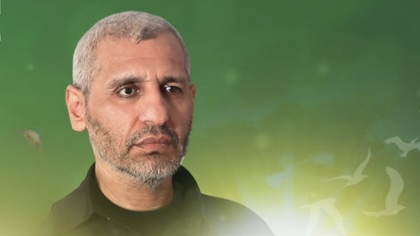
Mohammed Deif. Photo: Telegram
Al-Qassam Brigades, the military wing of the Palestinian Islamic Resistance Movement (Hamas) announced, on Thursday, January 30, that its Commander Mohammad al-Deif was assassinated by Israel. The brigades also announced the killing of six other top leaders throughout the “Al-Aqsa Flood” battle.
Al-Qassam spokesperson Abu Obaida mourned al-Deif and others in a televised speech on Thursday. “We proudly announce to our great people the martyrdom of Mohammad al-Deif, the Chief of Staff of Al-Qassam Brigades, Marwan Issa, the Deputy Chief of Staff of al-Qassam, Ghazi Abu Tama’a, the Head of Weapons and Combat Services, Raed Thabet, the Head of Manpower Division, and Rafi Salama, who was the Commander of the Khan Younis Brigade,” Abu Obaida said.
“We had already announced the martyrdom of our leaders Ahmed al-Ghandour, the Commander of the Northern Brigade, and Ayman Nofal, the Commander of the Central Governorate Brigade, during the battle,” he added.
Abu Obaida confirmed that all those leaders were killed “while fighting bravely during the ‘Al-Aqsa Flood’ battle as they were handling their duties inside the operation rooms, while directly clashing with the enemy in the battlefield, or as they were inspecting the fighters, regulating the battle and managing the combat.”
According to Obaida, “This is befitting of our leader Mohammed al-Deif, who exhausted the enemy for more than 30 years.”
Abu Obaida further stressed “the martyrdom of our great leaders—despite the immense loss we feel at their departure—has not and will not weaken our brigades or our resistance.”
Israel had confirmed the assassination of al-Deif in an airstrike in July, 2024. However, Hamas had not issued any statement to confirm or refute Israel’s claims until Thursday. Israel considered al-Deif its number one wanted Palestinian resistance leader, as it is said that he was the so-called mastermind behind the October 7 attacks.
Despite the periodic assassination of top Palestinian resistance leaders since October 7, including Ismail Haniyeh and Yahya Sinwar, Palestinian resistance to Israeli genocide and occupation has not once faltered.
https://peoplesdispatch.org/2025/01/31/ ... ommanders/
******
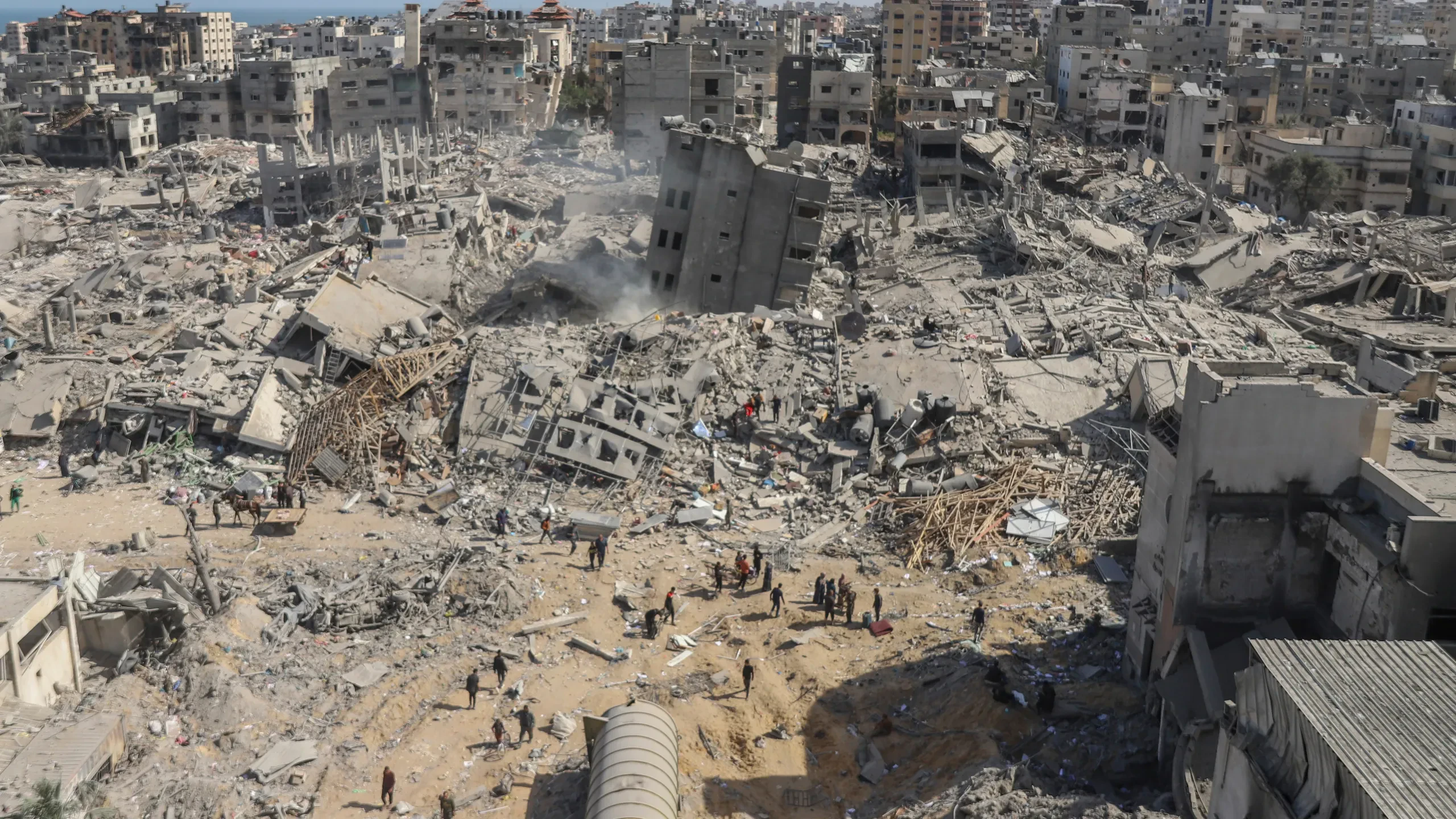
‘A City of Ghosts’ — Returning to Rafah To Find Death and Destruction
January 31, 2025

An aerial view of the destruction caused by the Israeli military in Rafah, Gaza Strip. January 24, 2025. Photo: Hasan Eslayeh/Anadolu via Getty Images.
By Abubaker Abed – Jan 29, 2025
Over 80 Palestinians have been killed across Gaza since the ceasefire took hold, 49 of them in Rafah alone
On the morning of January 19, Khalil Fahjan left his family’s small, damp tent in Deir al-Balah and quickly headed south to his family home in Rafah. The deadline for a “ceasefire” agreement to halt Israel’s genocidal assault on Gaza, at least temporarily, was supposed to go into effect at 8:30 a.m. that morning. He had not been to Rafah in more than seven months, since the Israeli military invaded the city, and he was desperate to go home.
Fahjan, 25, was unaware that the Israeli military had delayed the implementation of the deal by nearly three hours, attacking and killing Palestinians in Khan Younis and northern Gaza in the interim.
When he arrived in his neighborhood of Tal-al-Sultan, he struggled to comprehend the scene before him. “It was such utter devastation that I could see the sea from central Rafah, which is four kilometers away,” Fahjan told Drop Site News. “All the houses in my area were turned into piles of rubble. At first glance, I couldn’t identify my neighborhood or my home. Every landmark that I had once known was erased. It is now a city of ghosts.”
He described walking through an open graveyard, watching people collecting decomposing body parts and human remains in an effort to identify their loved ones amid unexploded munitions on the streets and inside buildings.
When he reached his home, it was barely standing. The interior was burnt out and charred, and the walls were crumbling and riddled with bullet holes. “My house, where all my memories, my work, my dreams, my certificate—where my entire life was—had simply vanished,” he said. “This war has stolen everything from us. I look at Rafah and ask myself whether or not I will stay in a tent for the next two or three years. The city needs 10 to 20 years to get back to a sense of what it was before.”
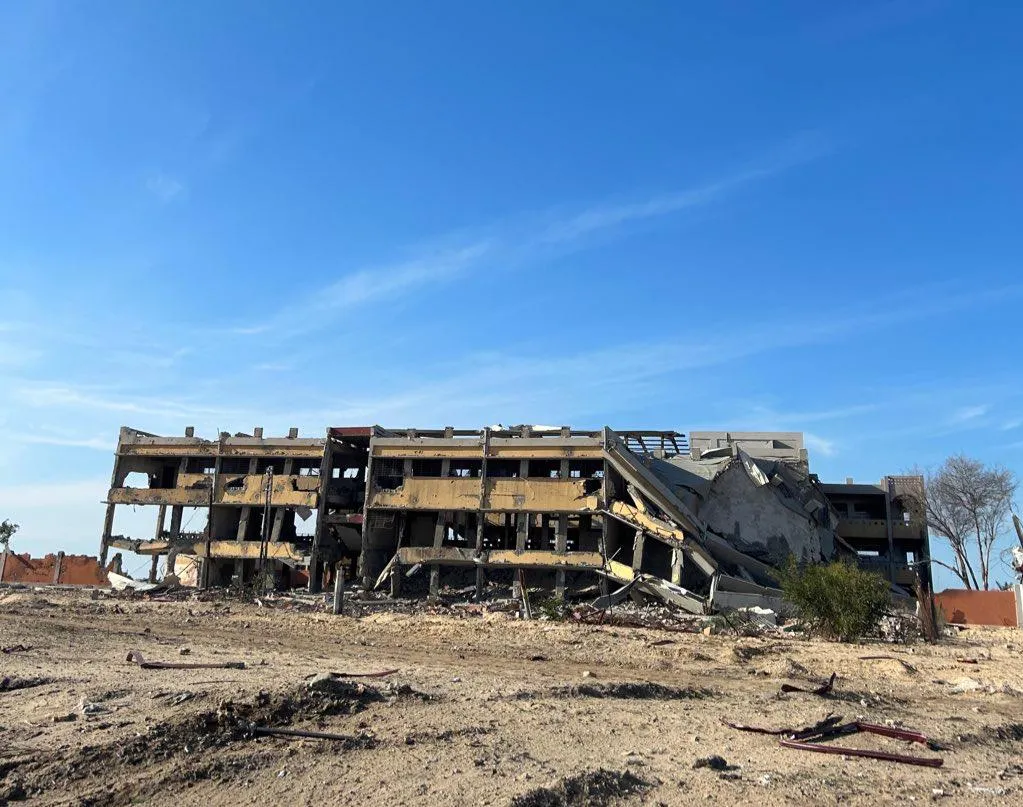
Al-Fardous school in Rafah, Gaza Strip. (Photo by Rola Sababah)
Before the war began 15 months ago, Rafah, the southernmost city in the Gaza Strip, was home to some 280,000 people; and the Rafah crossing on the border with Egypt was the only path into Gaza not controlled by Israel. All that was to violently change.
As Israel’s aerial bombardment intensified, Palestinians across Gaza were forcibly displaced southward, many to Khan Younis at first and then—as Israeli troops invaded Khan Younis in early December following a week-long ceasefire—to Rafah. The number of people in Rafah swelled to more than 1.5 million, nearly three quarters of Gaza’s population.
In April, Israel announced it would invade Rafah despite dire warnings from humanitarian organizations, the United Nations, and other international bodies. Even President Biden warned he would not supply offensive weapons to Israel if it invaded Rafah, only to characteristically backtrack.
The Israeli invasion, when it came in May, forced over a million Palestinians to be displaced yet again, many of them cramming into Deir al-Balah and Mawasi Khan Younis. The Israeli military took over the Philadelphi corridor that runs along the border with Egypt and shut down the Rafah border crossing. In the ensuing months, Israeli troops proceeded to systematically demolish much of the area. The Biden administration maintained the steady flow of U.S. weapons and political support to Israel.
According to a debris quantification assessment conducted by UN-Habitat and the UN Environment Program, the debris generated by the war on Gaza increased from 22.9 million tonnes on January 7 2024 to 50.8 million tonnes by December 1 2024, marking a 121 percent rise in 11 months. The most significant increase was observed in Rafah where the amount of debris grew by a staggering 1,898 percent—a nearly twenty-fold increase.
After the “ceasefire” went into effect last week, Israel repeatedly violated the agreement, killing dozens of civilians returning to their devastated neighborhoods, the majority of them in Rafah. More than 80 Palestinians have been killed across Gaza since the ceasefire took hold, Dr. Zaher al-Wahaidi, director of the information center at the Ministry of Health, told Drop Site News—49 of them in Rafah alone. Meanwhile, the official toll of confirmed deaths in Gaza continues to shoot up as dozens of bodies are retrieved from under the rubble. Over 470 bodies have been recovered since January 19, al-Wahaidi said—150 of them in Rafah.
“We need caterpillars and bulldozers to clear up the wreckage and recover these corpses. People are getting back to literally nothing. Rafah is destroyed, and the killing and bombing continue there,” al-Wahaidi told Drop Site. “Nearly 700 bodies are still trapped under the rubble in Rafah; retrieving them mainly depends on allowing this essential machinery that can help with this cumbersome mission.”
A week into the “ceasefire”, some residents of Rafah are still unable to return to their devastated neighborhoods. Mostafa Sabasi, 33, was displaced four times along with his family after the Israeli invasion of Rafah in May. When the ceasefire went into effect, he finally returned to Rafah and found his home intact, albeit with the windows and doors blown out, the walls damaged, and the roof cracked. “I was lucky that my home was somehow still standing, but reconstructing it will need a lot of time and effort,” Sabasi told Drop Site. However, he said he was unable to stay in his damaged home as it is in al-Jneina, a neighborhood in eastern Rafah that Israeli troops have repeatedly fired upon over the past several days. Sabasi is now back, along with 10 members of his family in their shelter in Khan Younis.
“I know that the Israeli army leaves immense destruction behind in every place it enters, but Rafah was totally destroyed. I never predicted I would see that scale of destruction. The city has become a flat landscape with debris piled up everywhere,” Sabasi said. “All the public, educational, and health facilities were reduced to rubble. It really took me hours to realize that I was in Rafah. People went back to see their homes; however, nearly all people have lost theirs,” he said, adding, “along the streets were remains of people. I saw jaws, skulls, skeletons, limbs, and fingers. People simply don’t know where to go or what to do.”
“This war deprived us of everything and killed our dreams and passion. My house was damaged, my work stopped, my dreams faded away, and my family was separated. Several members of my relatives were also murdered during the genocide. That sense of tranquility, safety, and stability is all gone. I feel insecure living in a city that only paints a miserable and traumatic picture since many of my neighbors were killed and all of the neighborhoods have been leveled. In and around my home were multiple exploded shells, fired rounds, and undetonated and detonated missiles. I was very alarmed to walk the streets because I could lose my life at any moment.”
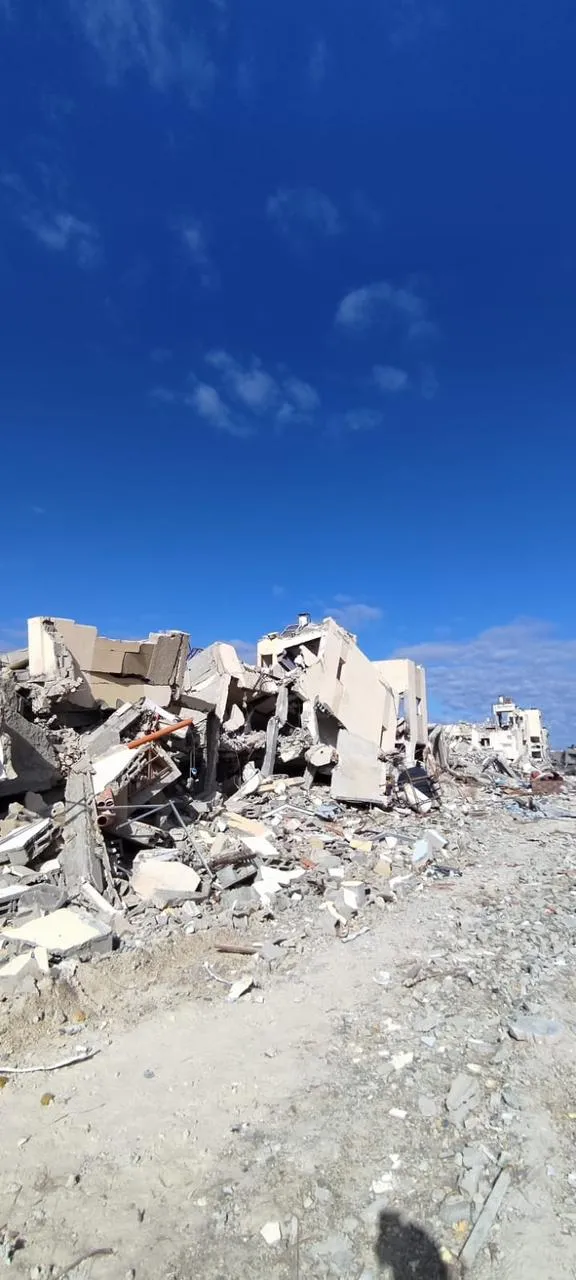
The Saudi neighborhood in Rafah, Gaza Strip. ((Photo by Rola Sababah)
.
When the initial phase of the ceasefire agreement officially took hold, 21-year-old Fedaa Sababah was elated—she could finally return to her home in Rafah after being displaced in Mwasi, Khan Younis for over eight months. Yet she soon discovered that on the second day of the ceasefire, Israeli tanks and troops had repositioned in an area near her home in the “Saudi” neighborhood and her house was inaccessible.
“When my grandfather first heard the news of the coming Rafah invasion, he couldn’t take it and died of a heart attack,” Sababah told Drop Site. “I feel like I’ve lost everything. The ceasefire was a breath of fresh air, but our happiness was incomplete because I lost irreplaceable things. Then came the return to Rafah, which was a journey mixed with pain and hope. When I entered it, I felt an enormous shock to see my home in ruins.”
“Explosives were everywhere. While we were heading towards our home, some people warned us against going to specific areas because many mines were planted there. We were about to walk across those areas. We’re really lucky to have escaped death. Loads of explosives, mines, bullets, and remains of grenades and weapons from the Israeli army were scattered all over our neighborhoods. We were terrified to walk the streets, so we followed the tank prints to avoid any unseen mines or explosives,” Sababah recalled. “The scenes of decomposing bodies being recovered from under the rubble were the most difficult ones I’ve had to see in my entire life. Everyone was picking up bodies and pieces. No one could know whose leg that is, whose hand that is, whose head that is.”
https://orinocotribune.com/a-city-of-gh ... struction/
******
Egypt Confirms Reopening of Rafah Crossing for Transporting Injured from Gaza

January 31, 2025 Hour: 8:23 pm
The Egyptian government has confirmed the reopening of the Rafah border crossing to facilitate the transport of injured individuals from Gaza. This critical move comes amid escalating tensions and ongoing conflict in the region, providing a crucial passage for humanitarian aid and medical assistance.
According to Egyptian authorities, the decision was made to address the urgent need for medical treatment for those wounded in the recent clashes.
The Rafah crossing, which serves as the primary gateway between Egypt and the Gaza Strip, has been a focal point in the humanitarian efforts to support the affected population.


 JUST IN:
Thousands of Egyptians gathered near the Rafah Border Crossing, Gaza’s only gateway to the world, to protest against the displacement of Palestinians following Trump’s call for Egypt to accept them. Demonstrators voiced their firm rejection of any plans to… pic.twitter.com/OtNMxr29To
— Suppressed News. (@SuppressedNws) January 31, 2025
Human rights organizations and international bodies have welcomed the reopening, emphasizing the importance of uninterrupted access to medical care for civilians caught in the crossfire. The Egyptian government has assured that all necessary measures are in place to ensure the safe and efficient transfer of the injured to medical facilities.
As the situation in Gaza remains volatile, the international community continues to call for a ceasefire and peaceful resolution to the conflict.
The reopening of the Rafah crossing marks a significant step in alleviating the humanitarian crisis and providing much-needed relief to the people of Gaza.
https://www.telesurenglish.net/egypt-co ... from-gaza/
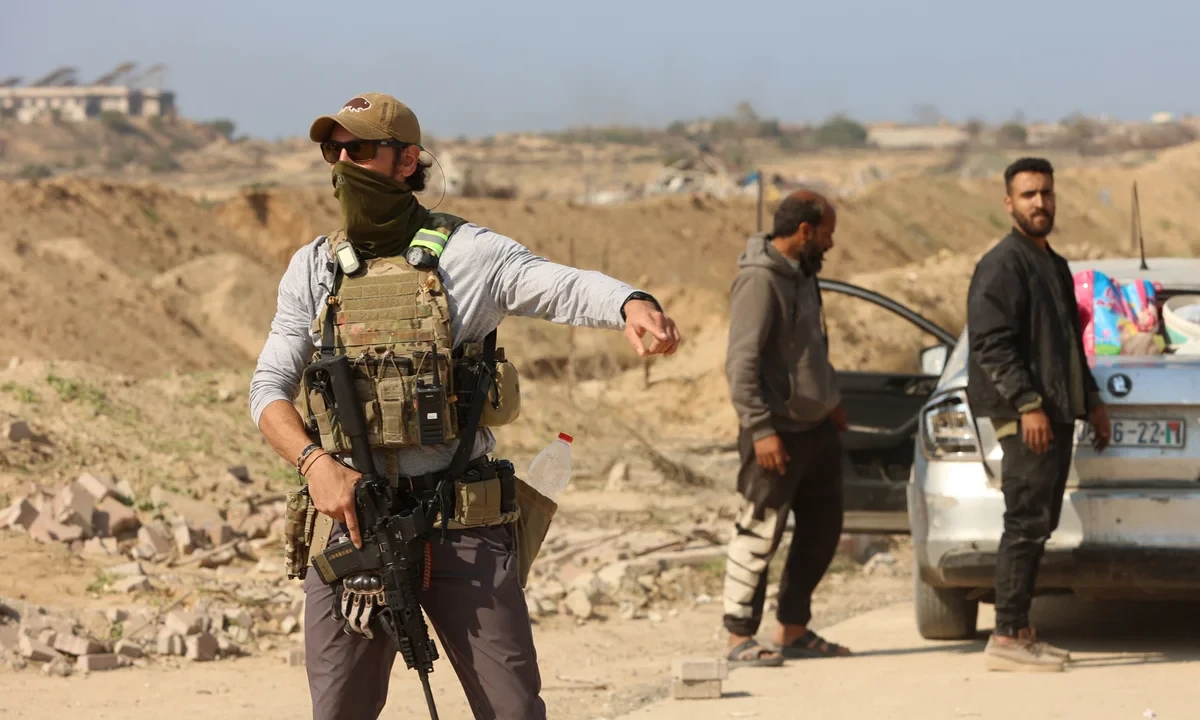
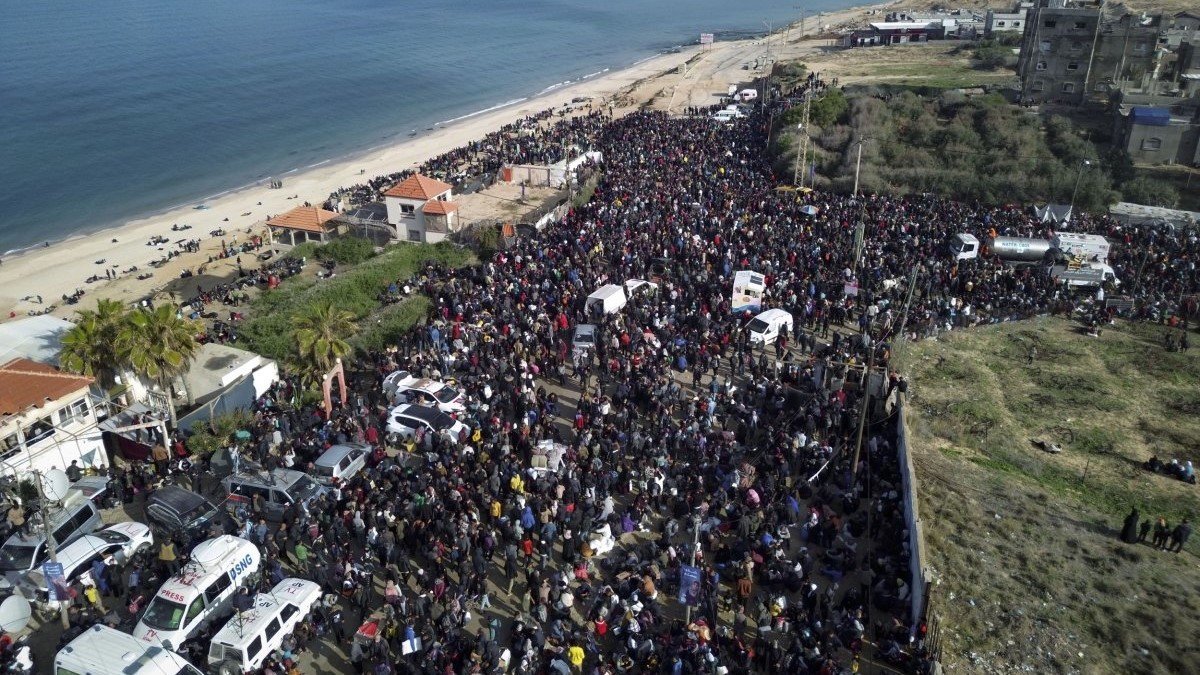


 LIVE updates: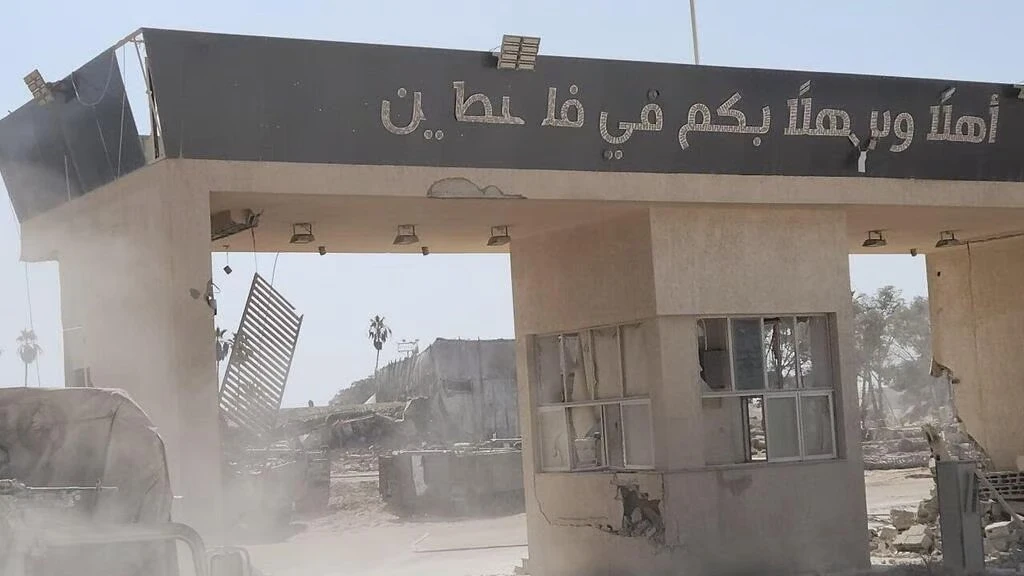
















 (@FPindiana71802) February 10, 2025


 King Abdullah of Jordan to President Trump:
 pic.twitter.com/vEUSfiDuin
 (@angels_bac58190) February 11, 2025