Palestine

User avatar
blindpig
Posts: 14788
Joined: Fri Jul 14, 2017 5:44 pm
Location: Turtle Island
Contact:

Re: Palestine

Post by blindpig » Fri Nov 28, 2025 2:48 pm

After the “Iron Wall”: Israel launches another large-scale operation in northern West Bank

The IOF claims that the extensive military campaign aims to crackdown on new Palestinian armed resistance groups in the making.

November 27, 2025 by Aseel Saleh

Image
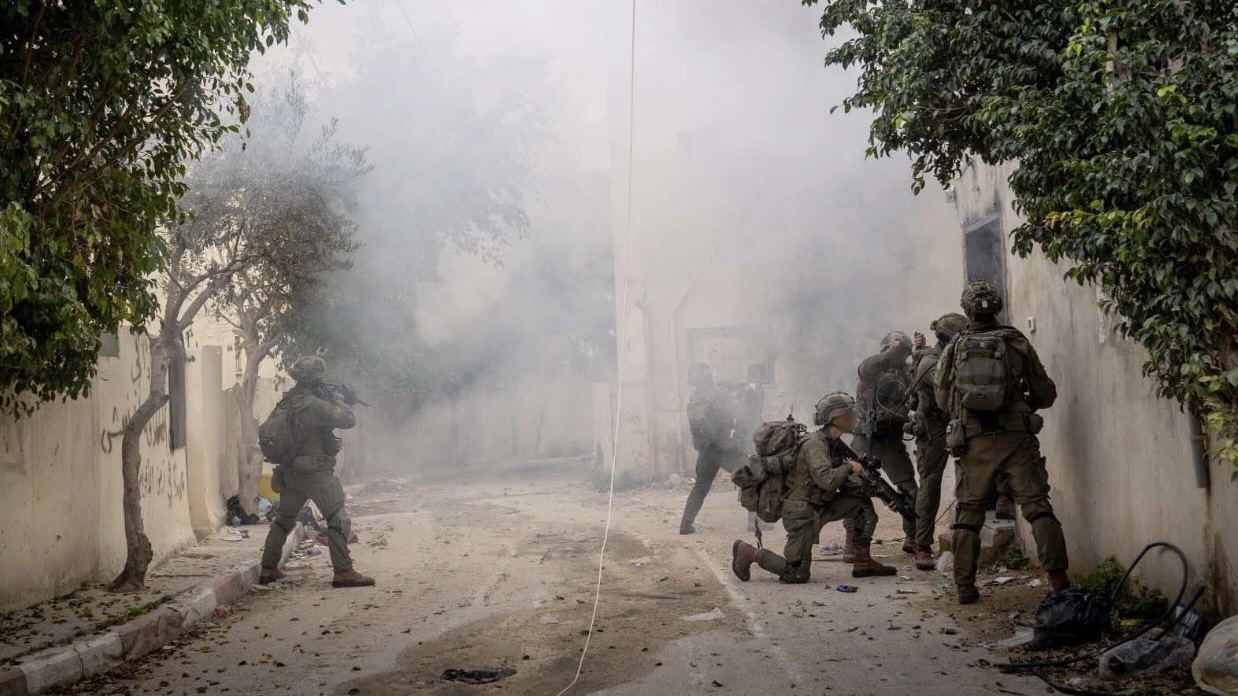
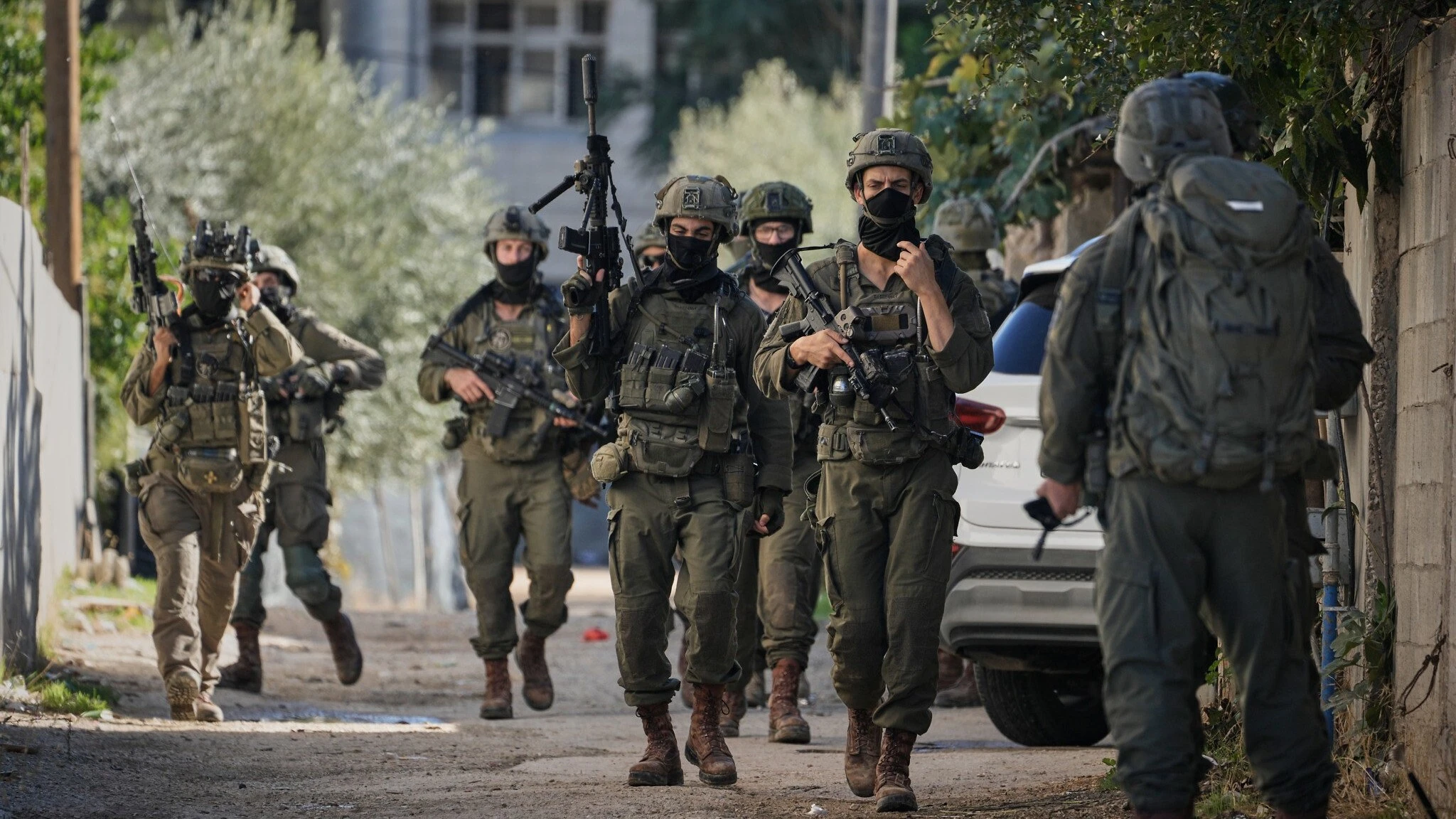
IOF soldiers carrying out a raid in Jenin, in January 2025, as part of Operation Iron Wall. Photo: IOF Spokesperson's Unit

After Israel’s 10-month “Iron Wall” operation in the northern governorates of the occupied West Bank had failed to eradicate Palestinian resistance, the Israeli Occupation Forces (IOF) launched yet another extensive military campaign on Wednesday, November 26, targeting the same areas.

The IOF and the Israel Security Agency (known as Shin Bet) said in a joint statement on Wednesday morning, that the new operation aims to prevent emergent Palestinian resistance groups from being established in several areas in the northeast of the West Bank, including Tubas, Tammun, and Aqaba.

According to Israeli newspaper Yedioth Ahronoth, the intensive military action involves three IOF brigades, forces from the Commando Brigade, Samaria and Menashe regional brigades, Shin Bet agents and Border Police officers.

The Israeli Air Force is also taking part in the operation by carrying out strikes “to isolate and seal off” the targeted areas.

The broad assault expanded to the northern governorate of Jenin on Wednesday night, resulting in the killing of Osama Kameel (20) in Qabatia town.

On Thursday, November 27, the IOF announced that the Israeli Air Force targeted seven sites allegedly used as hideouts by resistance groups in different parts of the West Bank with airstrikes.

Furthermore, over 220 sites were searched, dozens of Palestinians were interrogated and several others were detained.

Citing the Israeli Army Radio, Palestinian Ma’an news agency reported that the Israeli forces assassinated three Palestinian resistance fighters during a raid in the neighborhood of Jabal Abu Dhuhair, in the outskirts of Jenin refugee camp on Thursday. However, the identities of the slain Palestinian men have not been revealed yet.

The operation was preceded by bloody days across the West Bank

Israel’s new wide-scale offensive followed some of the bloodiest days across the West Bank, during which the IOF had murdered a number of Palestinian youths.

On Friday, November 21, Israeli soldiers shot dead Amr Al-Marboua (18), and Sami Mashaikha (16) during a military incursion in the town of Kafr Aqab, north of occupied Jerusalem.

Palestinian police officer Younis Shtayyeh (24) was also killed by the IOF on Friday, in the town of Tell near the northern West Bank city of Nablus.

On Sunday, November 23, Adel Qazzaz (26) succumbed to injuries he sustained after being shot by Israeli troops days earlier in Dura town, in the West Bank southern governorate of Hebron.

That same day saw the killing of Baraa Maali (20) at the hands of the IOF, while he was confronting an attack by illegal Israeli settlers on the village of Deir Jarir northeast of the Ramallah and Al-Bireh governorate, in the central occupied West Bank.

“Resistance is a viable and continuous effort”
The current Israeli military campaign in the northern West Bank marks a crucial development, because it has once again confirmed the determination of the Palestinian people to continue resisting Israel as a fascist occupying power.

Analysts claim that while Netanyahu’s government has relentlessly sought to resolve the Arab-Israeli conflict by waging a brutal indefinite multi-front war across West Asia, its goal seems to be far from attainable, as facts on the ground show that the peoples of the region continue to support the path of resistance.

This approach brings to mind the legacy of late Palestinian resistance icon and writer, Basel Al-Araj, who once said: “Resistance is a viable and continuous effort”.

https://peoplesdispatch.org/2025/11/27/ ... west-bank/

******

'No progress' made in implementing phase two of Gaza ceasefire: Report

Palestinian and Arab sources told Israeli media that Tel Aviv is still hoping to use the 'military option' to disarm Hamas

News Desk

NOV 27, 2025

Image
(Photo credit: AA via Getty Images)

Arab and Palestinian sources told Israeli media on 27 November that “no progress is visible” in implementing phase two of the Gaza ceasefire, while warning that Hamas will not disarm unless Washington presses Tel Aviv to withdraw its forces from the strip.

According to a Haaretz report, both Hamas and Israel are reluctant to move forward on major issues linked to phase two of the plan.

One Palestinian source said Israeli Prime Minister Benjamin Netanyahu does not want to withdraw Israeli troops any further before the general election next year, adding that the bodies of the two Israeli captives that remain in Gaza serve as an excuse for Israel not to pull out.

“Each side has its demands and claims. But to be honest, Israel is the stronger party, and Netanyahu isn't interested in progress so long as there is no real international pressure, mainly from America,” the source went on to say.

“Hamas is not ready to disarm without a clear commitment to a complete Israeli withdrawal and a detailed plan for who would get the weapons it surrenders and who will be enforcing the process,” other Arab sources told Haaretz. “Israel may still be looking at a military option as a way of disarming Hamas and therefore is in no hurry to transition into the ceasefire's second stage.”

Questions on the International Stabilization Force (ISF) included in US President Donald Trump’s Gaza plan remain unanswered, the Haaretz report says.

Over the past few days, Qatar, Turkiye, and Egypt have been holding talks in Cairo aimed at stabilizing and advancing the ceasefire agreement, as well as moving forward with the ‘day-after’ plan.

“Without clear American pressure on Israel, no progress is expected in these talks,” the sources said.

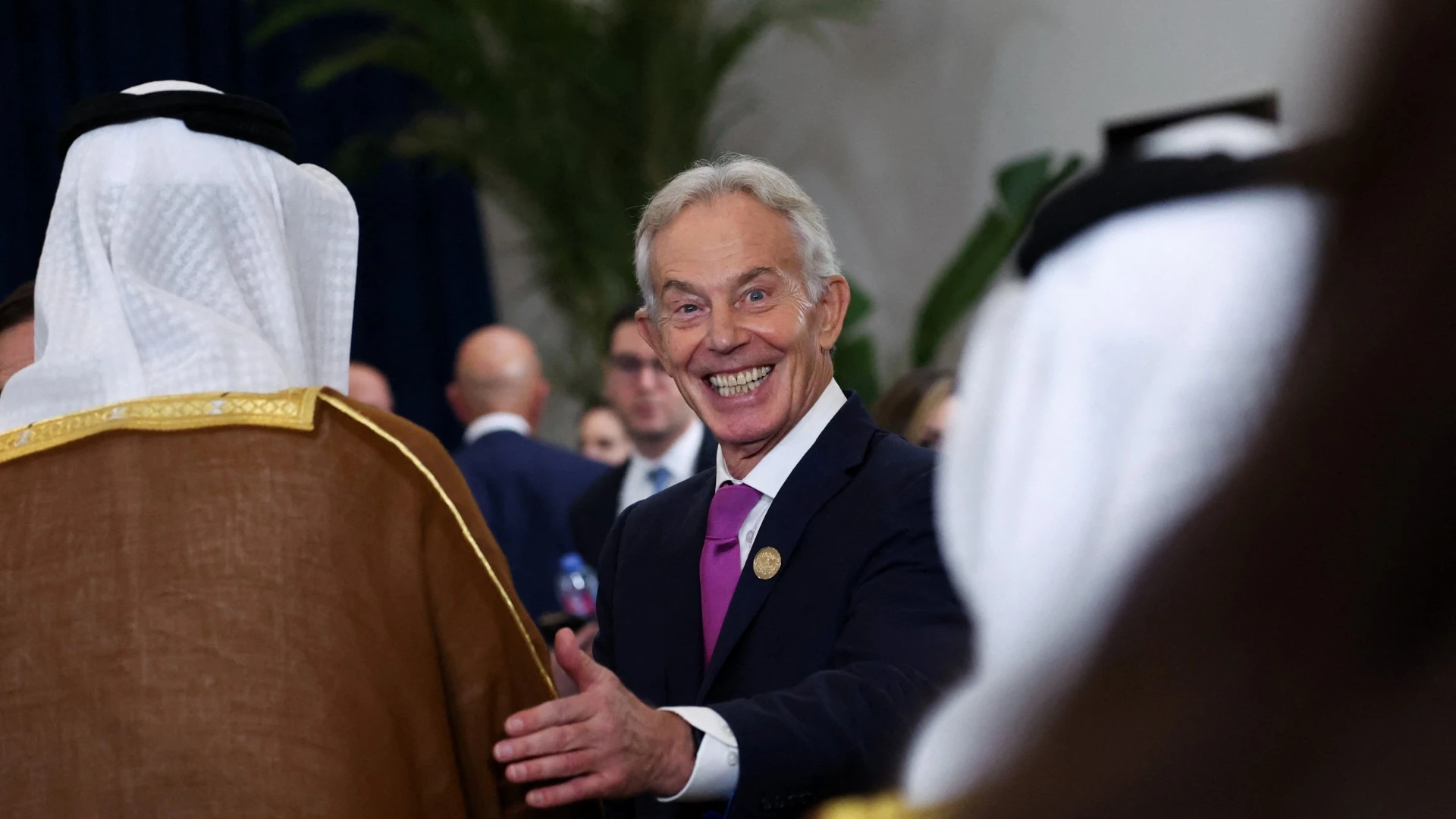
Palestinian sources also criticized the involvement of Tony Blair in the ceasefire process, adding that the former British premier and co-architect of the Iraq war “is seen as a proxy for [Trump's son-in-law and former advisor] Jared Kushner rather than as someone leading an internationally-backed independent process.”

Talks over the captives’ bodies left in Gaza have sidelined any work to retrieve the bodies of thousands of Palestinians trapped under rubble. Authorities in the strip fear that even if work begins to locate Palestinian bodies, it will be limited to areas under Israeli control.

The Haaretz report also reveals that there is “no orderly plan to begin rebuilding” in most of Gaza, where the majority of the population is.

Trump’s ceasefire plan allows the Israeli army to maintain a presence inside the strip until Hamas and other resistance factions are fully disarmed. The plan states that the disarmament must be carried out by the ISF.

However, many reports have emerged in recent weeks that Washington has been unable to secure commitments from regional states, which are uncomfortable with the prospect of clashing with Hamas and doing the job Israel failed to accomplish during its genocidal war.

The UN Security Council (UNSC) passed the US resolution on implementing phase two earlier this month, effectively bringing Gaza under the control of a ‘Board of Peace’ led by Trump.

Hamas and other factions have condemned the resolution as an imposition of a foreign guardianship over Gaza and a new form of occupation.

Since the agreement was reached in October, over 300 Palestinians have been killed and at least 750 injured, according to Gaza’s Health Ministry.

Senior Hamas official Izzat al-Rishq said on 23 November that Israeli forces have pushed past the ‘yellow line’ – where Israeli troops were meant to withdraw to as part of the ceasefire agreement.

https://thecradle.co/articles/no-progre ... ire-report

Gaza doctor kidnapped in ambush coordinated by French 'journalist'

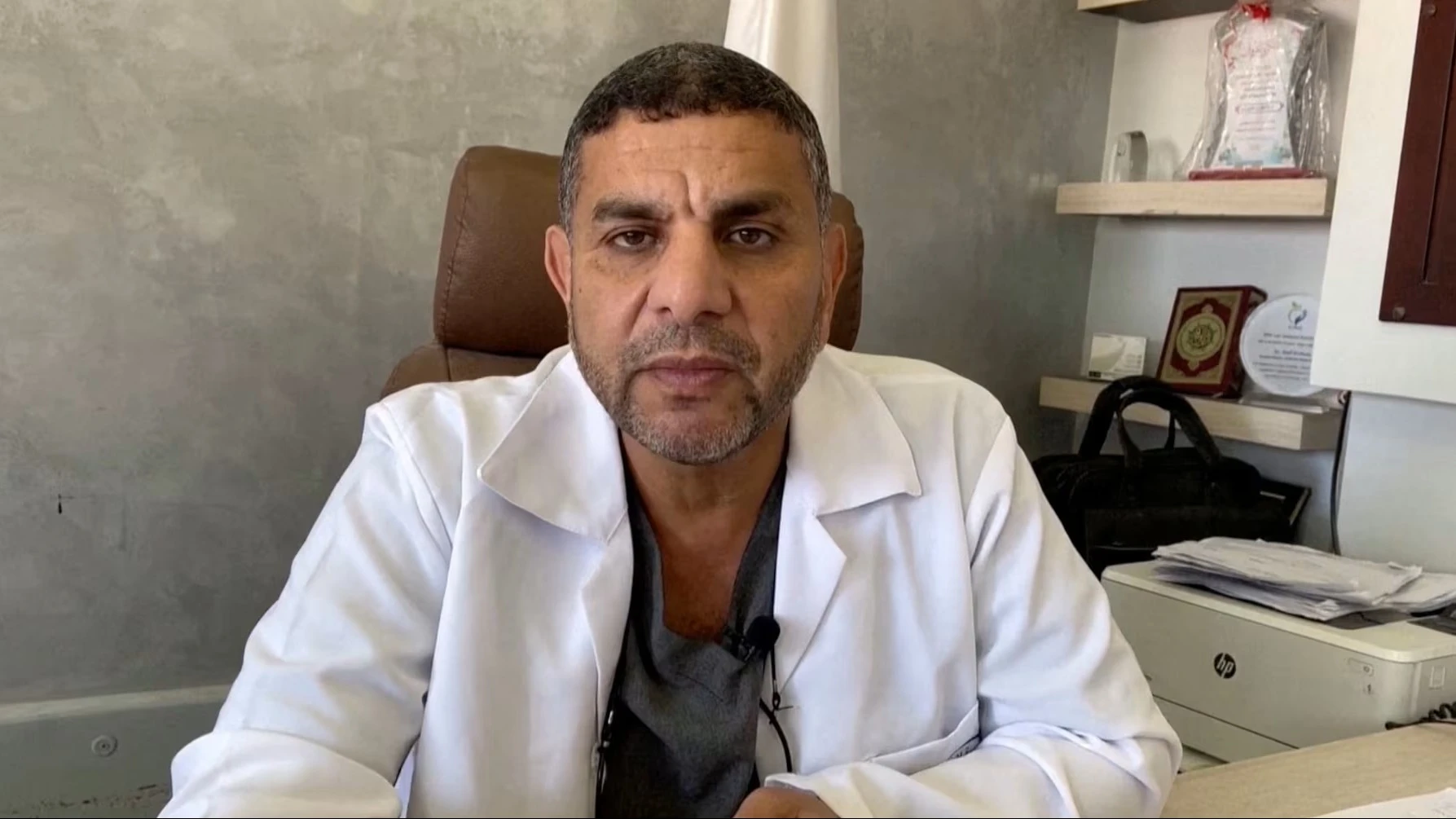
Director of field hospitals in Gaza, Marwan al-Hams, was tricked into thinking he was participating in a documentary before being nabbed by undercover Israeli forces in July

News Desk

NOV 27, 2025

Image
(Photo credit: Reuters)

A new Arabic language video released online anonymously reveals details about Israel’s capture of Palestinian doctor and director of Gaza's field hospitals, Marwan al-Hams, earlier this year.


The video alleges that Hams, the director of field hospitals in Gaza, was lured to the location where he was abducted in July after being told to participate in a documentary about him titled “Hero of Gaza.”

The footage includes excerpts of the Palestinian doctor talking to a French woman – who allegedly recruited him for a fictional film project in order to lure him into a trap.

The captions on the video say the fake journalist “succeeded in drawing him into an ambush and deceiving him.”

The woman identified herself as Charlotte and said she was behind an organization called Belgian Consultations.

“Doctor Marwan is seen as a hero by some people, but this is not the truth. Marwan is part of a brutal terrorist organization,” the captions in the video added.

According to Israeli news site Ynet, the video “appears to have been released by Israeli intelligence elements.”

Last week, the Israeli army and Shin Bet released a joint statement claiming that Hams is a Hamas operative who had knowledge of the location of Hadar Goldin’s body. Goldin was taken captive by Hamas in 2014. His body was released earlier this month during the Gaza ceasefire.

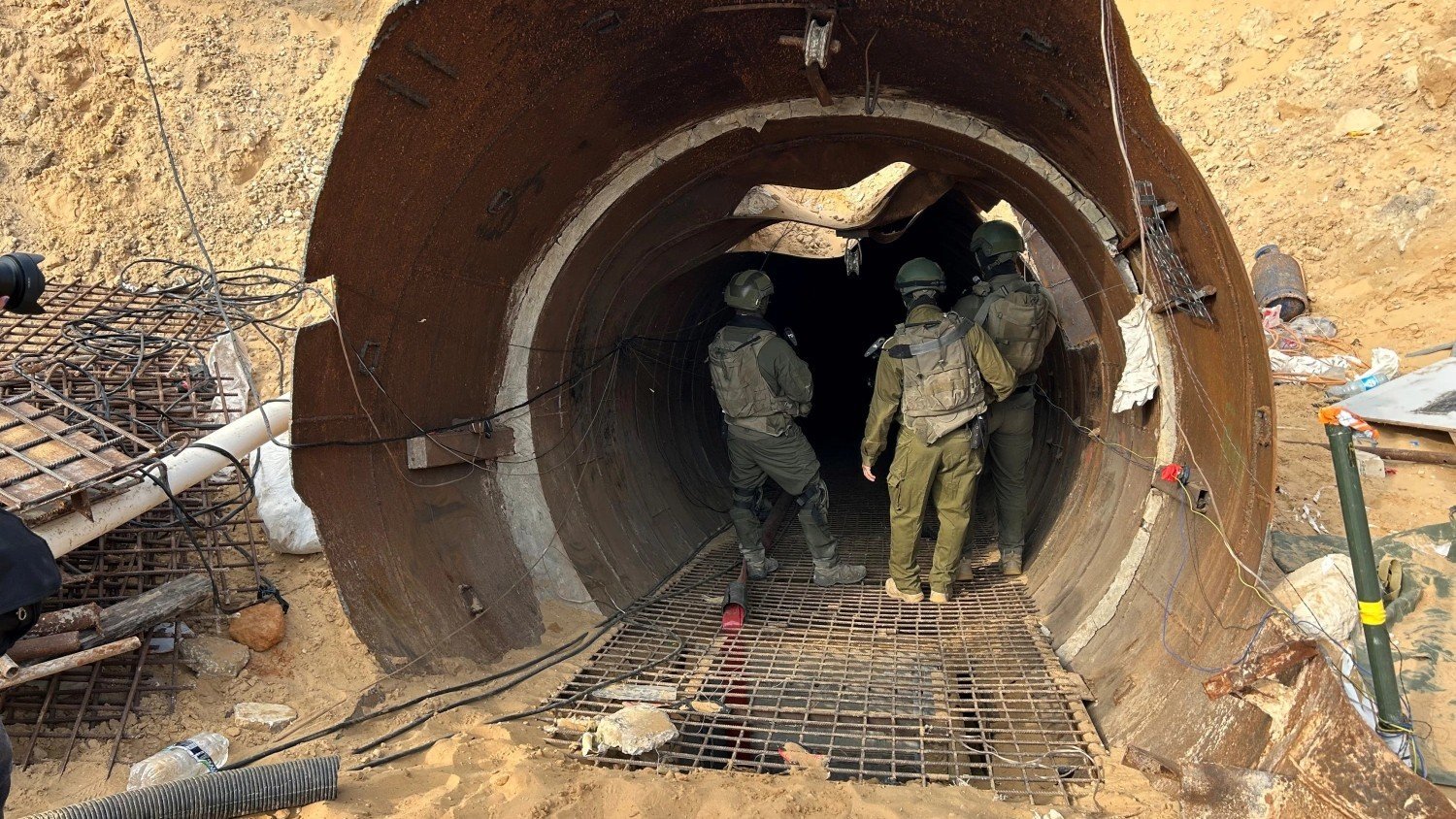
Hams was “involved in declaring the death” of Goldin after his abduction by Hamas in the 2014 Gaza war, and “is suspected of knowing where he was buried” in the tunnel in Rafah, the statement went on to say. It added that the detention of the doctor was part of “dozens of covert operations” over the past six months aimed at returning Goldin’s body.

Tel Aviv has also claimed Hams is a brigade doctor serving Hamas’s military wing.

On Thursday, Hams’s daughter Tasneem was released by Israel alongside four other Palestinian detainees. Israeli troops had abducted her in southern Gaza in early October.


The Palestinian Center for the Defense of Prisoners reported earlier this week that it has evidence that Israeli authorities abducted Tasneem to use her as blackmail and pressure her father into providing statements and confessions that he assisted in identifying Goldin’s body.

Over the two-year genocide in Gaza, the Israeli army decimated the Gaza Strip’s medical sector, destroying hospitals, killing health workers, and abducting scores of medical personnel.

Last month, Israel extended by six months the detention of Dr Hussam Abu Safia, who was abducted from northern Gaza’s Kamal Adwan Hospital last year.

Abu Safia was abducted by Israeli troops in December 2024 and taken to the notorious Sde Teiman detention center, where Palestinians have been killed, tortured, and sexually assaulted.

He was detained with dozens of others during an Israeli raid on Kamal Adwan Hospital, one of many throughout the war. According to the Euro-Med Human Rights Monitor, people were executed during the raid, including medical staff and displaced civilians who had been sheltering in the hospital.

https://thecradle.co/articles/gaza-doct ... journalist
"There is great chaos under heaven; the situation is excellent."

User avatar
blindpig
Posts: 14788
Joined: Fri Jul 14, 2017 5:44 pm
Location: Turtle Island
Contact:

Re: Palestine

Post by blindpig » Sat Nov 29, 2025 3:05 pm

Israeli troops caught on camera executing unarmed Palestinians in West Bank's Jenin

The Palestinian men, both members of a resistance faction, were shot dead after surrendering themselves and declaring that they were unarmed

News Desk

NOV 28, 2025

Image
(Photo credit: Flash90)

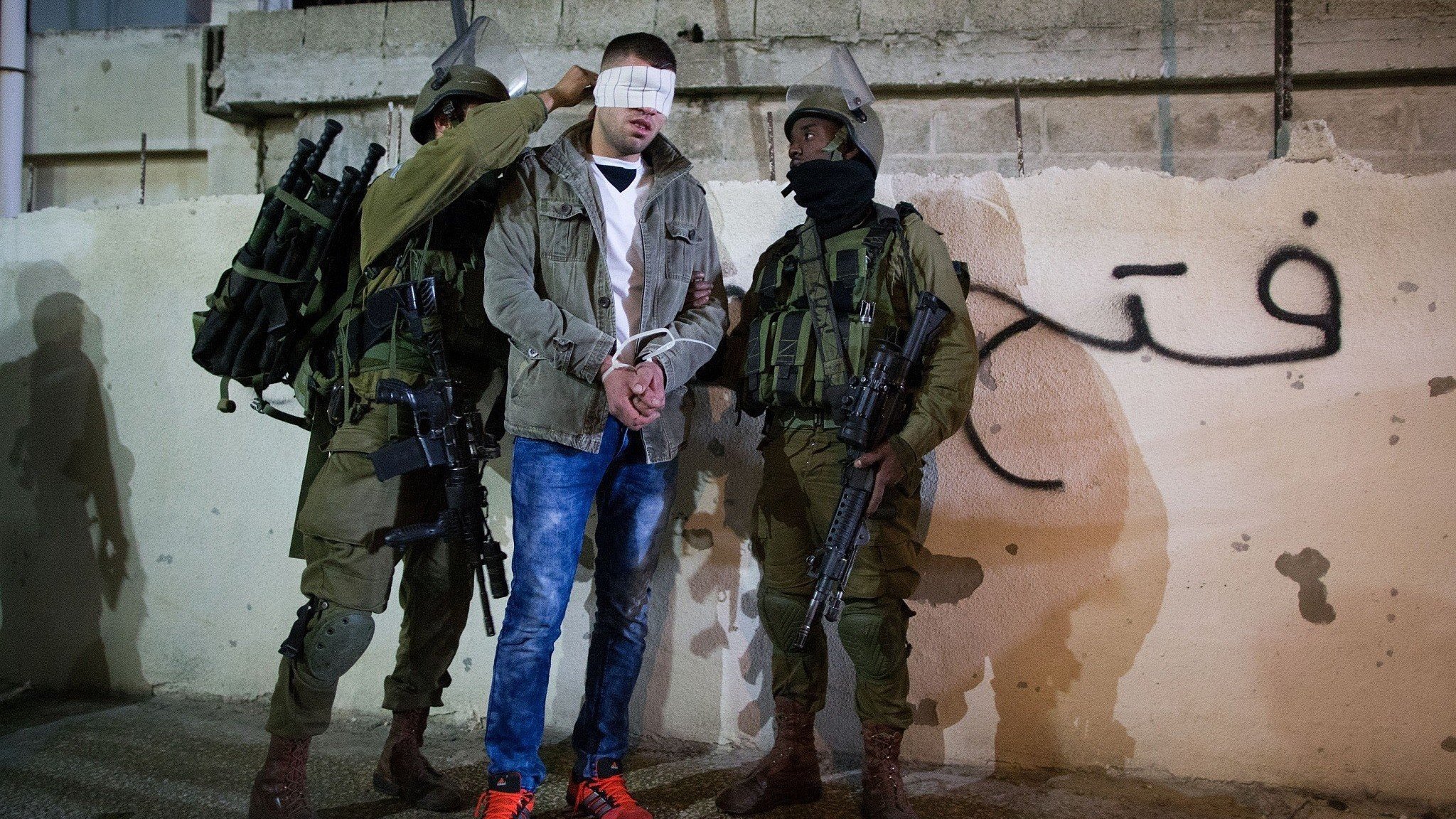
Video footage from 27 November showed Israeli troops executing two unarmed Palestinian resistance fighters in the occupied West Bank, where Tel Aviv has recently escalated raids and attacks as part of a new operation against resistance factions in the territory.

The two men who were executed were killed as they were surrendering themselves to the Israeli army in the occupied West Bank city of Jenin on Thursday, the footage showed. In the video, the two lift up their shirts and hold their hands up to show they are unarmed.


VIDEO | Footage from today of invading Israeli occupation forces executing two Palestinian men in cold blood at point-blank range after they surrendered in Jenin, West Bank — a documented war crime. pic.twitter.com/pbKX1S6pfl

— The Cradle (@TheCradleMedia) November 27, 2025
An Israeli soldier is seen kicking one of the Palestinians in the footage. Both are then lined up and shot dead at the entrance of the storage facility, where they were initially surrounded by the Israeli army.

After the execution, an army bulldozer is seen demolishing the facility over their bodies.

The two were members of the Jenin Brigade of the Palestinian Islamic Jihad (PIJ) movement’s Quds Brigades. They were killed as they surrendered following a clash with Israeli troops.

They have been identified as 37-year-old commander Yusuf Ali Asasa and 26-year-old fighter Al-Muntasir Billah Mahmoud Abdullah.

The Quds Brigades released a statement mourning the resistance members, “who ascended to the highest ranks after a journey filled with jihad and resistance, following a field execution carried out by the Nazi enemy army … after their ammunition ran out during an armed clash with enemy forces that besieged them.”

The Israeli army admitted in its own statement that the two men were shot during a joint operation by the military and border police around Jenin city.

It added that the shooting “is under review by the commanders on the ground and will be transferred to the relevant professional bodies.”

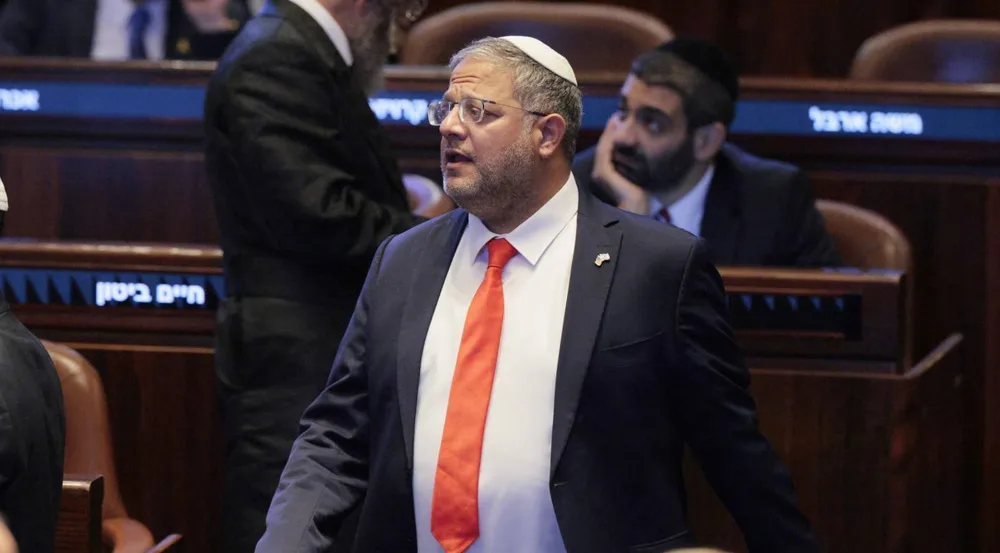
Israel’s National Security Minister Itamar Ben Gvir, who has been pushing the death penalty for Palestinian prisoners, defended the execution, saying that “terrorists must die.”

“We must put an end to investigations targeting our soldiers who open fire on terrorists,” the minister added.

Israeli Army Radio reported that three soldiers from the undercover ‘Mista'arvim’ unit are being investigated.

“The extrajudicial killing of two unarmed Palestinians in Jenin in the occupied West Bank, who posed no threat, constitutes another link in the chain of extrajudicial killings targeting Palestinians throughout occupied Palestinian territory. This is a grave violation of international humanitarian law … amounting to war crimes that warrant international criminal prosecution,” said Euro-Med Human Rights Monitor.


إعدام الجيش الإسرائيلي فلسطينيَّين ميدانيًا في جنين، وهما أعزلان ودون أن يشكّلا أي خطر أو تهديد، يشكّل حلقة أخرى في سلسلة القتل العمد خارج نطاق القانون التي تستهدف الفلسطينيين في عموم الأرض الفلسطينية المحتلةhttps://t.co/qobUiIIVDU

— المرصد الأورومتوسطي (@EuroMedHRAr) November 28, 2025
“Approximately 6,300 of the nearly 70,000 Palestinians killed by Israel in the Gaza Strip over the past two years were killed in circumstances constituting extrajudicial killings, whether by gunfire, drone strikes, or being run over by tanks,” it added.

The new, documented Israeli war crime coincided with raids and incursions across the occupied West Bank, including the city of Tubas and the nearby town of Tammoun.

The Israeli army has also escalated operations in Nablus and in Jenin and its refugee camp.

Israeli troops have been occupying the Jenin camp since the start of the year. Tens of thousands of Palestinians have been displaced from there since then.

The Israeli army, Shin Bet security service, and border police announced the start of a broad military operation in the occupied West Bank on 26 November, aimed at rooting out “terror” across the territory.

The new Israeli assault coincides with a recent surge in resistance activity in the occupied territory.

Clashes have erupted between resistance fighters and Israeli troops in the occupied West Bank since the new operation began.

“The operation was launched in response to efforts by Palestinian terror groups to establish a presence in the area, alongside an uptick in the number of terror incidents there,” Israeli military sources told the Times of Israel on Wednesday.

Sources told Hebrew newspaper Maariv that Israeli authorities have observed attempts by West Bank resistance groups to restructure and strengthen their forces.

https://thecradle.co/articles/israeli-t ... anks-jenin

Gaza 'stabilization force' fails to launch as nations unwilling to commit troops: Report

Several nations that previously committed troops to the US-led occupation force have 'backpedaled' amid fears they will have to kill Palestinians

News Desk

NOV 29, 2025

Image
(Photo credit: Yoan Valat/Pool via Reuters)

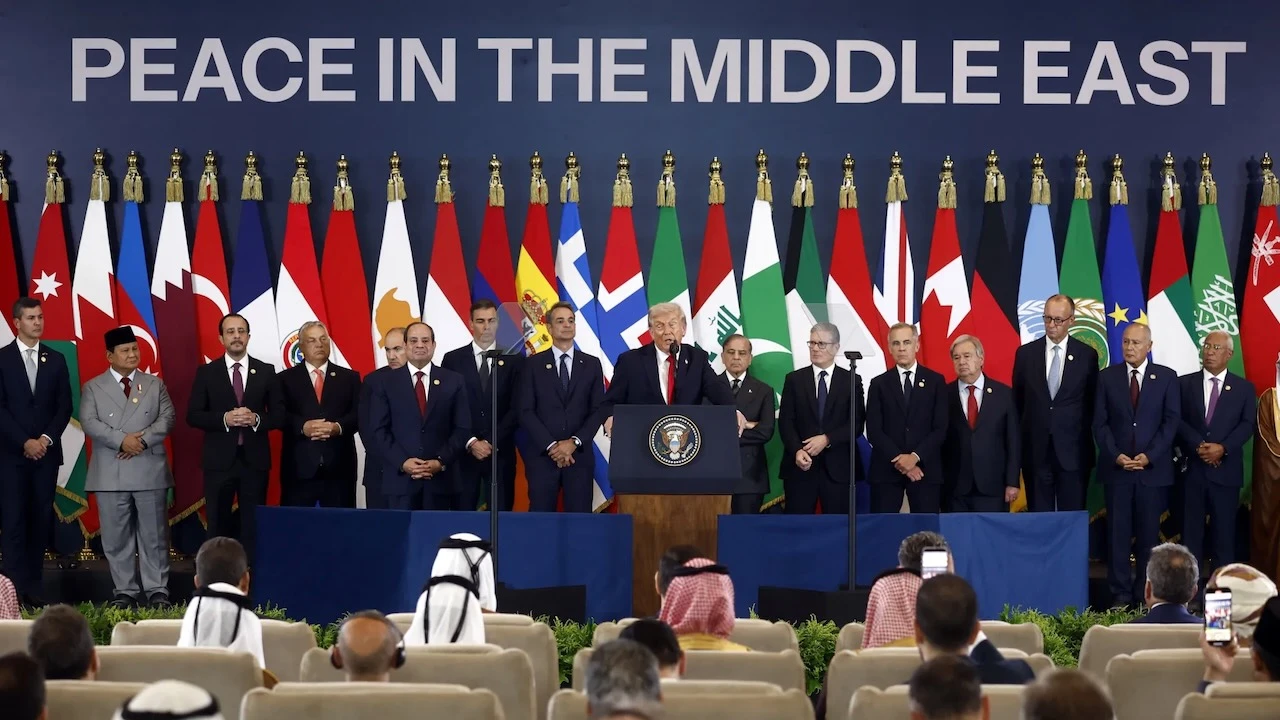
The White House is having difficulty launching its so-called Gaza International Stabilization Force (ISF), as countries that previously expressed willingness to deploy troops to the project now seek to distance themselves from it, according to a 29 November report in the Washington Post.

The ISF “is struggling to get off the ground as countries considered likely to contribute soldiers have grown wary” over concerns their soldiers may be required to use force against Palestinians.

Indonesia had stated it would send 20,000 peacekeeping troops. However, officials in Jakarta speaking with the US news outlet said they now plan to provide a much smaller contingent of about 1,200.

Azerbaijan has also reneged on a previous commitment to provide troops. Baku will only send troops if there is a complete halt to fighting, Reuters reported earlier this month.

US President Donald Trump’s plan for Gaza envisioned meaningful troop contributions from Arab states, including the UAE, Bahrain, and Qatar. But after expressing early interest, none have committed to participating.

“A month ago, things were in a better place,” one regional official with knowledge of the issue stated.

Trump’s plan for post-war Gaza rests on the ability of an international force to occupy the strip and was endorsed by a UN Security Council resolution on 17 November.

However, because the resolution gave the force the mandate to “demilitarize” the Gaza Strip, many countries are resisting participation.

They say their troops could be required to disarm Hamas on Israel’s behalf. This would require killing Palestinians and possibly cast their forces as co-perpetrators in Israel’s genocide in front of the world.

Some officers are “really hesitant” to participate, one Indonesian official said.

“They want the international stabilizing force to come into Gaza and restore, quote unquote, law and order and disarm any resistance,” a senior official in Indonesia’s Ministry of Foreign Affairs said. “So that’s the problem. Nobody wants to do that.”

Participation would also put their soldiers in harm’s way, whether from Hamas or the ongoing Israeli airstrikes, which regularly kill Palestinians despite the alleged ceasefire that took effect in October.

Sources familiar with the plan told the Washington Post that the White House plans to man the force with between 15,000 and 20,000 foreign troops, divided into three brigades to be deployed in early 2026.

However, details have not been finalized, which has led to additional hesitancy among potential participating nations.

“Commitments are being considered. No one is going to send troops from their country without understanding the specifics of the mission,” the official said.

Efforts to establish the so-called “Board of Peace,” a committee of Palestinian technocrats taking orders directly from the White House to deal with the day-to-day administration of the enclave, have also stalled.

“We thought, with the Security Council resolution, within 48 to 72 hours, the Board of Peace would be announced,” another person familiar with the plan told The Post. “But nothing, not even informally.”

No other members of the Board of Peace have yet been named.

Israeli Prime Minister Benjamin Netanyahu has stated that the Israeli army will disarm Hamas if foreign countries are unwilling to do so for them.

“All indicators show that indeed no countries are willing to take on this responsibility, and that understanding is sinking in both in Israel and in the US,” said Ofer Guterman, a senior researcher at the Institute for National Security Studies (INSS) in Tel Aviv.

“Bottom line: It’s unlikely that the ISF, if it’s established at all, will lead to Gaza’s demilitarization,” he added.

Tamara Kharroub, Deputy Executive Director and Senior Fellow of the Arab Center in Washington, DC, described the Trump plan as “Permanent Palestinian subjugation and neocolonial rule dressed up as peace.”

“There are no guarantees or binding mechanisms or clarity around what constitutes reform or demilitarization and around who determines what they are. The plan ultimately gives Israel a blank check to prolong its presence in Gaza, fully reoccupy it, or resume its genocidal war,” Kharroub wrote.

https://thecradle.co/articles/gaza-stab ... ops-report

Northern Israel remains 'crippled' one year after ceasefire

Settlers struggle to return and resume their lives one year after Israel's the war on Lebanon formally ended

News Desk

NOV 28, 2025

Image
(Photo credit: PBS)

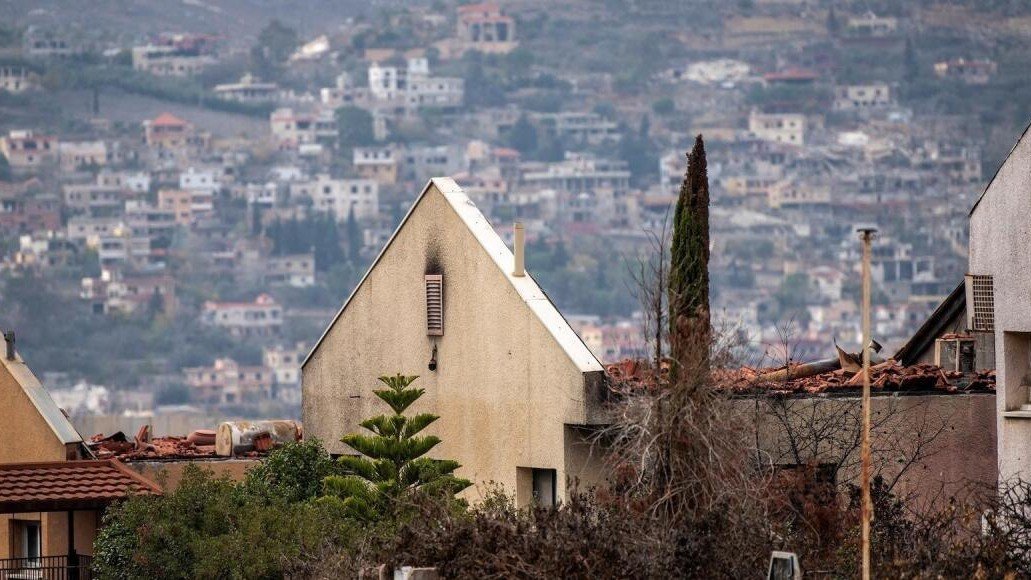
Northern Israel remains severely weakened a year after the ceasefire, with core services, population levels, and economic activity still far from recovery, Israeli newspaper Maariv reported on 27 November.

During the Israeli war on Lebanon last year, over 60,000 Israelis evacuated from settlements in northern Israel, including Kiryat Shmona and Metula, due to the threat of missiles and drones of Hezbollah.

Despite Israel's ongoing aggression, Hezbollah has honored the ceasefire, allowing security to return to the northern settlements. But many Israelis have not returned, fearing another war may break out and displace them once again.

“From a security perspective, we are in a completely different place since the agreement,” says Avichai Stern, mayor of Kiryat Shmona.

“The IDF enforces the understandings with Lebanon every day, and any attempt by Hezbollah to approach the border is dealt with immediately. But we are all aware that it is probably inevitable that the situation will flare up again,” he stated.

The mayor explained that Kiryat Shmona has 18,000 residents out of the 26,000 that were there before 7 October, when Hezbollah opened the support front for Gaza.

“There are those who waited to see which way the wind would blow, and returned, and there are those who decided they couldn't go through another round of fighting like this, and left,” Stern added.

As a result, only about 50 percent of the businesses in the city have reopened, yet are not operating at full capacity like before. Many businesses are deeply in debt, while residents struggle to make ends meet.

“Did anyone think that after two years of evacuation and war, everything would be rosy again? No, there is no magic formula. Rehabilitation takes time, certainly after a period like this,” the mayor commented.

He explained that plans to establish a railway line, a new university, and to build three new neighborhoods have all been delayed by a decade.

Tourism, a major driver of the economy in Israel's north, has also suffered. The entire summer season was lost, which provides 40 percent of revenues for the year.

“I wish I could say that the domestic tourism situation in the northern region is exciting, but no,” admits Michal Shiloah, CEO of the Western Galilee Now Tourist Association.

“Going back from zero to a hundred is a process. It's not like the war is over and the doors are opened.”

Most young people have left the cities in central Israel to study, work, or serve in the reserves of the army, causing a labor shortage as well.

“We lost a significant group of young people who left the north – students who moved to the center, many young people who are still in the reserves – and the shortage of manpower is noticeable in hotels, restaurants, and businesses.”

The return of residents, tourists, and businesses is also hampered by fears that the fighting will begin again.

“If the campaign in the north returns, it will be catastrophic, and this fear is always here.”

An Israeli war on Hezbollah in Lebanon is looking increasingly likely, as the US acts on Israel's behalf to pressure the resistance movement to give up its weapons.

US envoy Tom Barrack told Israel's Channel 13 this week that he has given the Lebanese Army a deadline until the end of November to disarm the Hezbollah.

The envoy warned that if no change occurs, Israel has already been given the green light from Washington to launch yet another major war against Lebanon. Other reports suggest US President Donald Trump has given a deadline of 31 December.

https://thecradle.co/articles/northern- ... -ceasefire
"There is great chaos under heaven; the situation is excellent."

User avatar
blindpig
Posts: 14788
Joined: Fri Jul 14, 2017 5:44 pm
Location: Turtle Island
Contact:

Re: Palestine

Post by blindpig » Sun Nov 30, 2025 3:22 pm

Israel Expands Yellow Line, Controls Nearly 60% of the Gaza Strip
November 29, 2025

Image
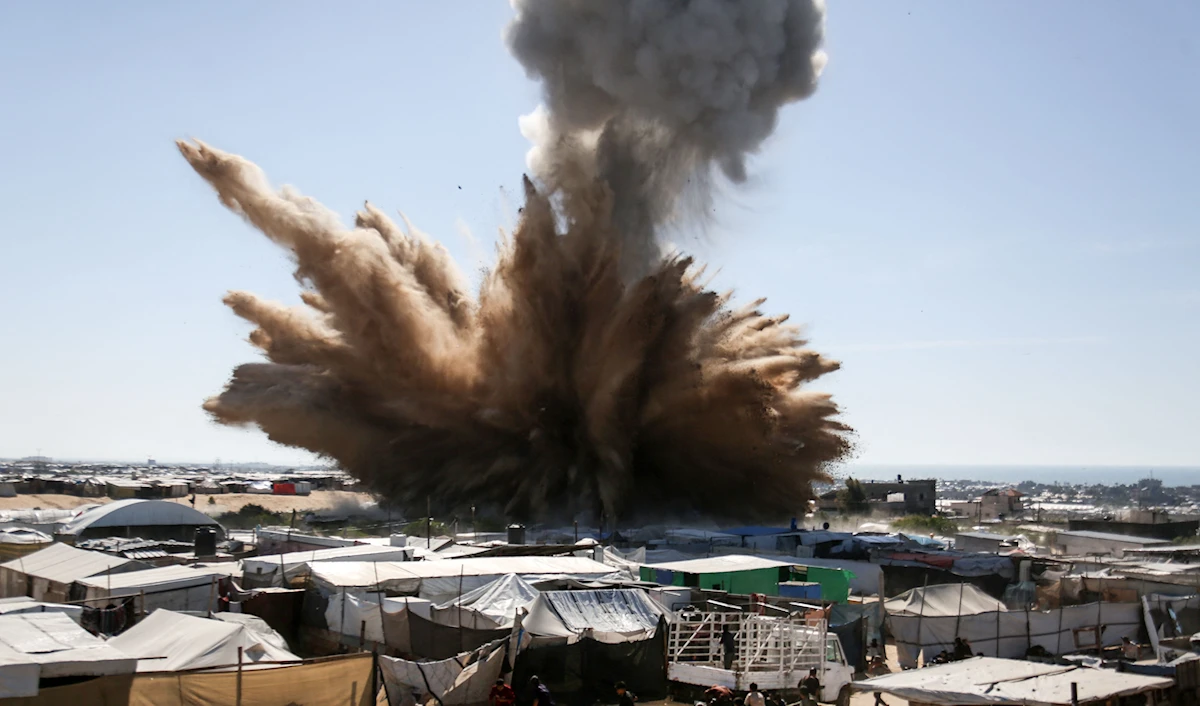
Israeli bombing of a Palestinian refugee camp in Gaza. Photo: AFP.

By Youssef Fares – Nov 26, 2025

Israel is tightening its control over Gaza’s map, expanding the “yellow line” zone and committing daily violations with no pushback from mediators or the wider international community. Over the past week, the Israeli occupation has pushed the zone 300 meters westward, adding new yellow concrete blocks across eastern Shujaiya, Shaaf, and eastern Tuffah. It has also seized more land in Jabalia camp, Beit Lahia, Bani Suhaila, and Al-Qarara. The army now imposes permanent fire-control over hundreds of meters around these positions, giving it effective control over nearly 60% of the Gaza Strip.

This expanded zone has become the scene of near-daily killings. On Sunday, a day described as relatively calm, Israeli forces killed four Palestinians. The army said three had crossed the yellow line, while witnesses disputed the claim. Israeli forces shot another man dead in Shaaf, also well beyond the yellow line boundary.

This control allows the army to shape the narrative, while independent verification remains impossible. The pattern reflects a broader approach in which Israel reshapes the ceasefire parameters according to its ‘security needs’ while normalizing routine breaches.

Saturday evening marked the latest escalation, the fourth in 44 days. The army claimed that Al-Qassam Brigades fighter attacked its positions along the yellow line east of Khan Younis. Hours later, it launched a pre-planned assassination campaign targeting senior figures in Palestinian armed factions.

Israeli airstrikes hit a civilian car in central Gaza City, killing five people. The army’s spokesperson said one of the casualties was Al-Qassam Brigades logistics chief. Additional strikes hit homes in Gaza City and Nuseirat camp, as well as an apartment crowded with displaced civilians. The strikes killed 20 Palestinians and injured 83.


Although the escalation was brief, the strikes targeted commanders who had survived repeated assassination attempts over the past two years. The pattern suggests that new intelligence drives each round of attacks on high-value targets. The army said it killed Alaa la-Hadidi, head of supply in Hamas’ production headquarters and deputy commander of the Gaza City Brigade. It also recently claimed the killing of Imad Aslim, commander of Al-Zeitoun Battalion, in a strike on a building sheltering displaced families. Aslim played a key role in ambush operations in Al-Zeitoun and had been reported killed several times before.

These confrontations come with heavy nighttime demolitions. In Tal Al-Zaatar, east of Jabalia, bulldozers have flattened all homes and replaced them with an elevated military site where tanks fire on returning residents. In Shujaiya, the army continues to build new military positions and communication posts, tightening its hold on the area even as the ceasefire’s next phase remains stalled.

The scale of settlement-style construction and logistical activity indicates that the Israeli occupation has no intention of moving to the second phase of the ceasefire agreement, which requires a withdrawal to the ‘red line’ near the border fence.

Meanwhile, a Hamas delegation led by Leadership Council Chief Muhammad Darwish, and including Khaled Meshaal, Khalil Al-Hayya, Nizar Awadallah, Zaher Jabarin, and Political Bureau member Ghazi Hamad, met in Cairo two days ago with Egypt’s intelligence chief Hassan Rashad. The discussions focused on the ceasefire’s progress, conditions in Gaza, and the contours of the agreement’s second phase.

In a statement, Hamas said the delegation reaffirmed full commitment to the first phase and called for ending the Israeli occupation’s ongoing violations through a clear monitoring mechanism overseen by the mediators. The talks also covered the situation of Rafah fighters in the south, with Hamas noting that communication with them has been cut off in the eastern areas under occupation control.

According to AFP, a Hamas official said the meetings will also address arrangements for forming an independent Palestinian technocratic committee. The delegation is expected to hold bilateral meetings with several Palestinian factions to discuss internal dynamics, Gaza’s governance, and efforts to set up a forthcoming Fatah–Hamas meeting in Cairo.

https://orinocotribune.com/israel-expan ... aza-strip/

*****

Gaza 'stabilization force' fails to launch as nations unwilling to commit troops: Report

Several nations that previously committed troops to the US-led occupation force have 'backpedaled' amid fears they will have to kill Palestinians

News Desk

NOV 29, 2025

Image
(Photo credit: Yoan Valat/Pool via Reuters)

The White House is having difficulty launching its so-called Gaza International Stabilization Force (ISF), as countries that previously expressed willingness to deploy troops to the project now seek to distance themselves from it, according to a 29 November report in the Washington Post.

The ISF “is struggling to get off the ground as countries considered likely to contribute soldiers have grown wary” over concerns their soldiers may be required to use force against Palestinians.

Indonesia had stated it would send 20,000 peacekeeping troops. However, officials in Jakarta speaking with the US news outlet said they now plan to provide a much smaller contingent of about 1,200.

Azerbaijan has also reneged on a previous commitment to provide troops. Baku will only send troops if there is a complete halt to fighting, Reuters reported earlier this month.

US President Donald Trump’s plan for Gaza envisioned meaningful troop contributions from Arab states, including the UAE, Bahrain, and Qatar. But after expressing early interest, none have committed to participating.

“A month ago, things were in a better place,” one regional official with knowledge of the issue stated.

Trump’s plan for post-war Gaza rests on the ability of an international force to occupy the strip and was endorsed by a UN Security Council resolution on 17 November.

However, because the resolution gave the force the mandate to “demilitarize” the Gaza Strip, many countries are resisting participation.

They say their troops could be required to disarm Hamas on Israel’s behalf. This would require killing Palestinians and possibly cast their forces as co-perpetrators in Israel’s genocide in front of the world.

Some officers are “really hesitant” to participate, one Indonesian official said.

“They want the international stabilizing force to come into Gaza and restore, quote unquote, law and order and disarm any resistance,” a senior official in Indonesia’s Ministry of Foreign Affairs said. “So that’s the problem. Nobody wants to do that.”

Participation would also put their soldiers in harm’s way, whether from Hamas or the ongoing Israeli airstrikes, which regularly kill Palestinians despite the alleged ceasefire that took effect in October.

Sources familiar with the plan told the Washington Post that the White House plans to man the force with between 15,000 and 20,000 foreign troops, divided into three brigades to be deployed in early 2026.

However, details have not been finalized, which has led to additional hesitancy among potential participating nations.

“Commitments are being considered. No one is going to send troops from their country without understanding the specifics of the mission,” the official said.

Efforts to establish the so-called “Board of Peace,” a committee of Palestinian technocrats taking orders directly from the White House to deal with the day-to-day administration of the enclave, have also stalled.

“We thought, with the Security Council resolution, within 48 to 72 hours, the Board of Peace would be announced,” another person familiar with the plan told The Post. “But nothing, not even informally.”

No other members of the Board of Peace have yet been named.

Israeli Prime Minister Benjamin Netanyahu has stated that the Israeli army will disarm Hamas if foreign countries are unwilling to do so for them.

“All indicators show that indeed no countries are willing to take on this responsibility, and that understanding is sinking in both in Israel and in the US,” said Ofer Guterman, a senior researcher at the Institute for National Security Studies (INSS) in Tel Aviv.

“Bottom line: It’s unlikely that the ISF, if it’s established at all, will lead to Gaza’s demilitarization,” he added.

Tamara Kharroub, Deputy Executive Director and Senior Fellow of the Arab Center in Washington, DC, described the Trump plan as “Permanent Palestinian subjugation and neocolonial rule dressed up as peace.”

“There are no guarantees or binding mechanisms or clarity around what constitutes reform or demilitarization and around who determines what they are. The plan ultimately gives Israel a blank check to prolong its presence in Gaza, fully reoccupy it, or resume its genocidal war,” Kharroub wrote.

https://thecradle.co/articles/gaza-stab ... ops-report

Israel to promote commander of soldiers who executed Palestinians in Jenin

Itamar Ben Gvir congratulated the soldiers who murdered two Palestinian resistance fighters in cold blood after their surrender

News Desk

NOV 30, 2025

Image
(Photo credit: AP Photo/Majdi Mohammed)

Israeli National Security Minister Itamar Ben Gvir announced on 29 November that the commander of a Border Guard unit would be promoted, just one day after the commander's subordinates executed two Palestinian resistance fighters who had surrendered and raised their hands in the air on camera, Haaretz reported.

Ben Gvir personally arrived on Friday at the base of the Border Guard's undercover unit in the occupied West Bank to announce the promotion of the commander, Lieutenant Colonel K., to the rank of deputy superintendent.

At the same time, three officers from the unit were being interrogated at the Israeli army headquarters in Nazareth, over the killing of two resistance fighters from the Palestinian Islamic Jihad's (PIJ) Quds Brigades during an assault in Jenin on Thursday.

During a brutal assault on the town in the north of the occupied West Bank, 26-year-old Muntasir Billah Mahmoud Qassem Abdullah and 37-year-old Youssef Ali Youssef Assa'sa were besieged in a house. They clashed with invading Israeli troops before eventually putting down their weapons and surrendering with their hands in the air— only to be executed in cold blood at point-blank range.

Though the video of the killings clearly shows the two men were unarmed and complying with demands to surrender, the soldiers claimed that they felt their lives were in danger after the Palestinian fighters made "suspicious movements."

After the video of the execution in cold blood led to international condemnation, National Security Minister Ben Gvir defended the soldiers and their commander.

Ben Gvir released a recording of himself from the undercover unit base in which he hugs Senior Lieutenant Colonel K., as well as a video in which he expressed support for the unit's soldiers under investigation.

"We need to put an end to this distorted procedure: when one of our fighters shoots a terrorist, we immediately take him in for questioning. We are fighting enemies and murderers who want to rape women and burn babies," Ben Gvir stated.

On Thursday, the minister further supported the conduct of the three officers, writing on his X account: "The fighters acted exactly as expected of them, terrorists must die!"

According to a police source speaking with Haaretz, the decision to promote Senior Lieutenant Colonel K. was made by the police commissioner and senior command staff about two weeks ago. The army also supported the promotion.

The source speaking added that the decision required Ben Gvir's approval. K. himself previously served as commander of the undercover unit in Jerusalem, including during the events of 7 October.

"A horrific event that once would have made headlines, shaken the army and the political system, and ended careers in its wake — has now become a detail that everyone will forget in two days," wrote Haaretz columnist Iris Leal in response to the killing.

"Israel has become a murderous dystopia in which the killing of unarmed people has apparently happened dozens of times. It will be absorbed into the general atmosphere without leaving a scar," she added.

She noted that the Army's Central Command decided to apply the same free-fire policies used in Gaza to the West Bank, allowing soldiers to shoot anyone who looks suspicious.

In compliance with the new procedures, soldiers shot and killed a woman in her eighth month of pregnancy and wounded her husband when they arrived in their car at an Army checkpoint in the Tulkarm area.

According to the army investigation, this happened because the woman "looked suspiciously at the ground," Leal added. The woman's unborn baby did not survive.

The Haaretz columnist observed that Israeli authorities have no desire to investigate or prosecute such crimes, which only draw attention or controversy if a video of the crime surfaces.

She noted the case of the soldiers from Force 100, who gang raped a Palestinian prisoner on film in 2024. When the video of the rape was leaked by the military's top lawyer, Yifat Tomer-Yerushalmi, she was publicly harassed until attempting suicide twice, and “will probably end up in prison. Now no one is in a hurry to file charges against the soldiers.”

"We are so sick and exhausted as a society that in the end the investigation will be redirected to the only crime known here: distributing the video and searching for traitors," Leal concluded.

https://thecradle.co/articles/israel-to ... s-in-jenin
"There is great chaos under heaven; the situation is excellent."

User avatar
blindpig
Posts: 14788
Joined: Fri Jul 14, 2017 5:44 pm
Location: Turtle Island
Contact:

Re: Palestine

Post by blindpig » Mon Dec 01, 2025 3:15 pm

The Irreversible Balance: Israel’s Ledger, 2025
Posted by Internationalist 360° on November 29, 2025
Rima Najjar

Image

A Strategic Autopsy

By late 2025, the question confronting observers is no longer whether Israel has “won” or “lost” the war that began in October 2023. The question is how a state long accustomed to shaping its environment through force, deterrence, and American insulation has found itself trapped in a configuration where every instrument of power — military, economic, political, diplomatic, cultural — now generates diminishing returns or outright self-harm. The unprecedented scale of destruction in Gaza obscured, for a time, the parallel story unfolding inside Israel: a multifront conflict that exposed structural weaknesses the state can neither reverse nor openly acknowledge.

What has emerged over two years is not a sudden collapse but a multi-dimensional unraveling: a military machine forced into wars it cannot end; an economy restructured around emergency expenditure with no peacetime horizon; a society fractured along lines of religion, class, and geography; a political system that survives only because every major faction — government and opposition alike — knows that holding elections would destroy them all.

The Israeli public’s accumulated rage over casualties, displacement, economic collapse, and perceived abandonment would produce a result so toxic and fragmented that no existing party or coalition could form a stable government afterward. The voters would not hand victory to any alternative; they would simply burn the house down and leave no one with enough seats to govern the ashes. That is why no one dares open the ballot box: the election would not install a new regime; it would render the country ungovernable. And an international position degraded by the erosion of U.S. consensus and the rapid decline of Israel’s cultural legitimacy.

For decades, Israel’s power rested on its ability to enforce outcomes quickly, absorb minimal internal costs, and rely on America to stabilize the narrative. None of those conditions hold at the end of 2025.

In absolute terms, Israel retains formidable assets at the close of 2025: a qualitative military edge in airpower and intelligence, an undeclared nuclear deterrent that continues to impose strategic caution on all adversaries, uninterrupted flows of the most advanced American weaponry, and a high-tech sector whose core productivity has proven more resilient than any other advanced economy under comparable strain. These are not trivial advantages; in previous wars they would have been decisive. Yet they now function only as brakes on total collapse, not as engines of reversal — incapable of restoring deterrence, ending the multi-front attrition, or repairing the internal ruptures that have turned every remaining strength into another source of compounding liabilities.

Even before the first bombs fell on Gaza, Israel entered the conflict with a balance sheet already deep in the red. The judicial overhaul launched by Benjamin Netanyahu and his coalition partners in 2023–2024 did more than weaken the courts — it fractured the shared civic fiction that the state was governed by a coherent constitutional order. Hundreds of thousands of Israelis, largely secular and middle-class, had spent a year fighting what they saw as an attempt to convert Israel into a majoritarian illiberal regime.

The war merely forced a truce in the streets; it did not repair the rupture. The army entered the conflict with its officer corps deeply alienated from the government, its reservists exhausted from months of protests and counter-protests, and its legal system stripped of public legitimacy. When war demands unity, a state already at war with itself discovers that the tools of mobilization no longer function. The constitutional crisis did not cause Israel’s wartime failures, but it removed the last reserves of institutional credit that might once have absorbed them. The war did not strike a stable structure; it struck a ledger whose liabilities had been carried off the books for decades.

What follows is a mapping of these losses — not rhetorical, not moralistic, but structural. It is an accounting of how a state that once relied on decisive force has been drawn into an attritional landscape it cannot dominate; how the mechanisms that once guaranteed stability now accelerate instability; and how the political, demographic, and geopolitical constraints that Israel long deflected have returned as hard limits on its future. This is that ledger.

I. The Military Ledger: A War Israel Cannot Publicly Admit It Is Losing

Israel continues to insist it is advancing toward “total victory.” Yet every serious metric (casualties, readiness, material losses, troop fatigue, and the hidden register of shattered bodies the state refuses to publish) points instead to a grinding war of attrition that the state cannot end on its own terms.

Independent trackers and investigative outlets, aggregating data from Haaretz, +972 Magazine, and leaked IDF personnel records, now place the cumulative military death toll across Gaza, the West Bank, the northern front, and the Red Sea theater at between 1,250 and 1,350 soldiers (far exceeding the IDF’s official tally of around 900). This includes fatalities from ongoing guerrilla attacks in Gaza, intensifying resistance in Jenin, Tulkarm, and Toubas, and Hezbollah’s precision strikes on northern bases and naval assets. This is the highest sustained military death toll since 1973 (and still excludes units whose losses remain under military censorship: special forces, intelligence, aircrew, and Border Police).

But the official count is the smallest part of the story. The true ledger (the one the state seals behind censorship decrees, hospital blackouts, and gag orders) is the hidden casualty register that reveals a society absorbing injuries it cannot sustain and cannot acknowledge.

Haaretz investigations and the Association of Disabled Israeli Veterans, drawing on anonymized hospital data and whistleblower accounts from military medics, now estimate that for every soldier killed, between five and seven have been permanently wounded (placing the number of seriously injured somewhere between six and eight thousand, more than double the IDF’s acknowledged figures).

These are not superficial wounds. They include traumatic amputations, spinal and nerve injuries, shattered limbs from armored-vehicle incidents, tunnel-collapse victims with crushed bones, and blast-trauma cases who will require lifelong neurological care. In Haifa’s trauma centers and private clinics pressed into service to keep state hospitals from collapsing, doctors describe an influx of burn victims, shrapnel wounds, and traumatic brain injuries from targeted missile strikes on barracks and depots. Medical evacuations by air and land have surpassed twenty-two thousand since October 2023 (a figure so large it renders the public narrative of “low IDF casualties” a transparent fiction).

The long-term disability crisis is explosive. The Ministry of Defense faces a backlog of over fifteen thousand new claims in 2025 alone. Young men return unrecognizable: limbless, blind, deafened, trembling from repeated blast exposure. Behind each file is a household collapsing under caregiving burdens the state never budgeted for.

Deeper still lies the psychological rupture. Leaked data, rapidly suppressed and reported by Haaretz and Channel 12 before censorship, showed psychiatric referrals among reservists rising by more than 300 percent in 2025 (the largest mental-health breakdown in Israeli military history). Soldiers describe uncontrollable panic, violent mood swings, dissociation, and the moral injury of participating in a campaign widely viewed as directionless and punitive. Suicide attempts have sharply increased, though cumulative figures are now forbidden for publication. Military psychologists warn privately that the system is bankrupt.

Censorship has expanded in direct proportion to the wound count. Videos of wounded soldiers being offloaded from helicopters trigger immediate takedowns; images of ambulances, rehabilitation wards, and military funerals are prohibited; cumulative numbers of amputees and long-term disabilities may no longer be reported. Israel can tolerate mourning. It cannot tolerate despair.

The pattern of physical losses remains concentrated in elite infantry brigades, engineering units tasked with tunnel demolition, and armored battalions operating in dense terrain where anti-armor ambushes have grown more effective. Hezbollah’s deployment of portable precision-guided munitions has sharply increased costs along the northern border, forcing the IDF to disperse units, deepen fortification, and abandon doctrines of maneuver warfare.

Operational fatigue has become chronic. Multiple brigades (Golani, Givati, Nahal, and select armored units) have required emergency rotation to rear positions to recover from injury and exhaustion levels commanders privately acknowledge as unsustainable. The IDF has not operated at this tempo for this long in any conflict in its history.

Material losses continue to pile up. Dozens more Merkava tanks, Namer personnel carriers, and combat engineering platforms have been destroyed or disabled. Militants have adapted rapidly: new anti-armor tactics, decoys, improvised drones, and tunnel-to-street ambushes have pushed Israel to rely almost entirely on airpower and stand-off munitions (tactics that devastate civilian neighborhoods but do not reduce Israeli casualties on the ground).

The reserve system (long mythologized as Israel’s backbone) has reached its structural limits. The peak wartime mobilization of 360,000 reservists hollowed out the civilian workforce for months. Refusal rates climb, exemptions expand, and internal polling shows collapsing public trust in the government’s war aims. Many reservists report they are simply “finished” (physically, emotionally, and economically).

All this produces a political truth the state cannot acknowledge: for the first time since its founding, Israel is engaged in a war it cannot decisively win, cannot politically afford to end, and cannot socially sustain.

The arithmetic is merciless. The ledger is irretrievably insolvent.

II. The Economic Collapse: A State Surviving on Optics, Not Fundamentals

Israel’s political leadership speaks of “recovery,” pointing to selective indicators that create the appearance of stabilization. Beneath the surface, the economic foundations have eroded in ways no ceasefire or credit-rating revision can disguise.

Current GDP projections show a modest rebound (around 2.5 to 2.8 percent growth), but this recovery is technical, not real. It reflects statistical whiplash after a historic contraction, not renewed economic vitality. Private economists inside Israel now warn that the country has entered a “war-economy trap,” in which temporary growth masks a long-term decline in productivity, investment, and consumer confidence. The sectors driving the uptick (military procurement, emergency infrastructure spending, and state-subsidized construction) are the same ones deepening the fiscal deficit, not repairing it.

Estimates compiled by independent economic trackers, including the Bank of Israel’s public projections and Haaretz analyses of leaked Defense Ministry documents, put the cumulative military expenditure since October 2023 at over NIS 300 billion (around $80 billion in direct costs alone), a figure that excludes the long-term obligations for disabled veterans and displaced populations.

Total indirect burdens (productivity losses, reconstruction voids, capital flight) push the real cost toward $100 billion and rising. The government has issued unprecedented short-term debt, ballooning the deficit and mortgaging future tax cycles. Credit-rating agencies upgraded Israel’s outlook from “negative” to “stable,” but this reflected external political assumptions, not economic health. The upgrade was widely understood inside Israel as a symbolic gesture premised on U.S. backing, rather than confidence in Israel’s capacity to grow while fighting on multiple fronts.

Meanwhile, the sectors that once underpinned Israel’s much-advertised “economic miracle” have not recovered. Tourism remains at a near standstill. Real estate (a pillar of household wealth) has slumped under the weight of uncertainty, stalled construction, and mortgage defaults from mobilized reservists unable to work. The tech industry, long Israel’s global calling card, has experienced capital flight and a quiet brain drain as foreign investors grow wary of legal instability, political volatility, and the ongoing war. The relocation of firms to Europe and the Gulf, once anecdotal, has become a trend significant enough to register in quarterly earnings and labor-market data.

The reserve mobilization (360,000 at its peak) inflicted damage economists describe as “intergenerational.” Families lost income, small businesses shuttered for good, and entire sectors of the economy were forced to operate at half capacity for months. Many reservists returned with disabilities or mental-health injuries that removed them permanently from the workforce, creating long-term productivity losses that no short-term GDP rebound can conceal. The state now faces mounting obligations to fund rehabilitation, disability pensions, and expanded social services at a scale it has never budgeted for.

The settlement project itself has become an economic black hole. The state now spends more per capita on security, infrastructure, and subsidies for the 750,000 Israelis living beyond the Green Line than on any other civilian population. Every new outpost, every bypass road, every additional battalion stationed in the West Bank is expenditure that generates zero taxable revenue and infinite political liability.

The fantasy that the settlements would one day “pay for themselves” through natural growth or annexation has collided with the reality that there is no annexation scenario the world will accept and no natural-growth scenario the army can protect. The settlements are not an asset; they are the most expensive unfunded liability on the balance sheet.

Israel’s settlement and occupation apparatus adds another layer of unsustainable cost. The operations in the West Bank (including the destruction of refugee camps and the expansion of permanent control zones) require constant spending on military fortification, surveillance infrastructure, and police deployments that consume billions annually without generating economic value.

Gaza’s devastation has produced a void that Israel is neither prepared nor able to fill; any future regime of “security administration” would demand perpetual military presence, reconstruction costs, and humanitarian outlays far beyond Israel’s fiscal capacity. Even the U.S., despite its political backing, has shown no willingness to underwrite an indefinite, open-ended occupation economy.

All of this converges into an economic picture that looks stable on the surface and untenable underneath. Israel has entered a phase where its global creditworthiness depends almost entirely on U.S. political will, not on the performance of its economy. The semblance of recovery is built on borrowed time, borrowed money, and borrowed political capital. The fundamentals (labor, investment, productivity, public trust) are weakening simultaneously.

What makes the moment unprecedented is that Israel is, for the first time, confronting a three-front war without a three-front economy. The illusion of resilience can be sustained for a year, perhaps two, but not indefinitely. The economic collapse is not an event; it is a trajectory.
The bill is coming due, and no credit upgrade can postpone the reckoning.

III. Internal Refugees: A Country Coming Apart From Its Edges

If the battlefield erosion exposes Israel’s military limits, the crisis of internal displacement exposes the final default of its social contract. Israel has quietly become a state with one of the highest per-capita populations of internally displaced civilians on earth (a fact it can neither politically admit nor materially resolve).

The northern front is the largest unsecured liability of the crisis. Since Hezbollah’s escalation in early 2024, more than 95,000 Israelis from the border towns (Kiryat Shmona, Metula, Shlomi, Margaliot, the Galilee hamlets) have lived as long-term internal refugees. The Israeli government promised temporary evacuations; instead, these families have spent over eighteen months in hotels, caravans, student dormitories, and improvised shelters.

The state’s attempt to rebrand the displacement as “relocation” does not change the reality: entire communities have lost their homes, schools, livelihoods, and any expectation of return. Hotels in Tiberias and Eilat have become de facto refugee camps (sites of fraying social cohesion and rising anger). Behind the photographs of children doing homework in repurposed lobbies is the simple truth no Israeli ministry can obscure: the northern frontier no longer exists as a livable space.

Gaza produced a parallel crisis. Rocket ranges, drone strikes, and cross-border fire emptied dozens of southern towns even before the ground invasion. Tens of thousands of residents of Sderot, Nir Oz, Nahal Oz, and Netiv HaAsara have still not returned to their homes, either because the state could not guarantee security or because the infrastructure had been destroyed or rendered uninsurable.

What the government calls “managed return” is little more than public-relations choreography; the reality is a zone of permanent precarity stretching from the Gaza envelope to the outskirts of Be’er Sheva. Municipalities warn privately that they cannot rebuild without assurances the state cannot give: certainty that the war will not reignite, and certainty that reconstructed homes will not be wiped out by the next artillery exchange.

The new wave of internal refugees does not emerge on a blank canvas. Israel has lived with a large population of internally displaced Palestinians since 1948 (citizens of the state who were never permitted to return to their homes, villages, or lands despite living within sight of them). These “present absentees,” from Iqrit, Bir’im, Saffuriyya, al-Bassa, Ma‘lul, and hundreds of other depopulated towns, remain refugees inside Israel’s borders to this day. Their homes were confiscated, their villages razed, their lands expropriated under the Absentees’ Property Law and related legal fictions.

For seventy-seven years they have petitioned courts, marched, campaigned, and commemorated their uprooting, only to be told that “security” requires their permanent exclusion. As a result, Israel’s internal displacement crisis is not only a product of the current war; it sits atop an older, foundational stratum of unresolved Palestinian dispossession.

And today, for the first time, Jewish Israelis experiencing long-term displacement are encountering a version of the same bureaucratic evasions, permanent temporariness, and state abandonment that Palestinian citizens have lived with for generations.

The economic fallout compounds the social one. Insurance companies have refused to extend coverage in both the north and the south, forcing homeowners either to abandon their properties or absorb premiums that make no economic sense.

Real-estate markets in affected regions have collapsed, creating a feedback loop of depopulation, disinvestment, and despair. Local businesses, dependent on foot traffic and seasonal workers, have shuttered in waves. Residents describe the sense of living in “temporary permanence” (a condition in which every week feels provisional, every month feels like deferral, and yet nothing changes).

Politically, the displacement crisis is dynamite. The constituencies most affected (northern development towns, poorer border communities, Mizrahi families with multigenerational ties to the region) were once the backbone of right-wing electoral coalitions. They are now among the most disillusioned segments of Israeli society.

The anger is not ideological but existential: their homes are gone, their schools closed, their lives suspended. They blame the government for promising protection it never delivered and for prolonging a war that has left them in limbo. In leaked recordings and town-hall confrontations, the sentiment is raw: “We are the sacrifice,” one northern community leader said. “They left us to burn.”

The political ramifications extend beyond electoral volatility. Internal displacement has exposed the state’s structural inability to defend its periphery. When a state cannot guarantee that its citizens can live in their own homes, or return to them after a year, its claim to strategic coherence breaks down. The displacement crisis also fractures the social contract between center and periphery: Tel Aviv continues to function, while the north and south become zones of indefinite abandonment.

The West Bank constitutes a second front of strategic loss. Israel is no longer governing the West Bank in any meaningful sense. The Palestinian Authority has entered a terminal legitimacy crisis. Its cities (Jenin, Tulkarm, Nablus) have become decentralized resistance zones. Israeli incursions have shifted to continuous occupation, yet control has diminished rather than expanded.

The periphery has been written off as a non-performing asset, its inhabitants (Jewish and Arab, northern and southern) converted into open-ended contingent liabilities. A state that cannot bring its citizens home, any of its citizens, has already recorded, in every column that matters, that sovereignty is a defaulted obligation.

IV. Political Implosion: A System Consumed by Its Own Contradictions

The political system in Israel is no longer merely unstable; it is disintegrating under the accumulated weight of military failure, mass displacement, economic fragility, and a governing coalition that has collapsed into mutual blackmail rather than shared purpose. What began as a crisis of competence has metastasized into a crisis of legitimacy, and then into a crisis of governability.

The government led by Benjamin Netanyahu survives not through public confidence but through fear: fear among coalition partners that elections would be a referendum on catastrophe, fear within the security establishment that political collapse would expose the scale of wartime losses, fear within the political right that any successor government might face international legal consequences. The coalition holds together because none of its factions can survive alone; it is an alliance of hostages, not allies.

Inside the coalition, dependency on far-right partners (Itamar Ben-Gvir, Bezalel Smotrich) has become the central structural vulnerability. To remain in power, Netanyahu has relinquished control over policing, settlement policy, civil administration, and portions of the wartime narrative itself. The far-right tail no longer wags the dog. It is the dog — the only part of the animal still breathing, and the only asset the rest of the carcass is now valued against.

Yet the deepest detonator of the political order proved to be the draft crisis (the civic myth that for seventy-five years had papered over the religious–secular divide by pretending the burden of risk was equally shared). The war of 2023–2025, with its unprecedented duration and toll, tore that fiction apart with volcanic force.

The IDF faced the largest manpower shortfall in its history. Casualties in Gaza, continuous combat rotations, and escalating confrontation with Hezbollah created a sustained operational tempo the reserve system could not sustain. Reservists were being called up for months at a time, often repeatedly; families were buckling; employers were collapsing. The old nationalist rhetoric (“we are all in this together”) rang hollow against the reality that a significant segment of the population was not in it at all.

The secular public’s patience snapped. In Tel Aviv, Herzliya, Haifa, and the northern towns now living as internal refugee camps, resentment crystallized into a political conviction: the exemption system was no longer an anomaly; it was an injustice. By autumn 2025 a clear majority of secular Israelis supported compulsory service for Haredim, even if it risked collapsing the government.

But Haredi parties knew that conscription would detonate their social order. Their entire political identity rests on protecting their youth from the secularizing forces of military service. For them the war did not justify shared sacrifice; it justified deeper insulation. They responded by threatening to topple the government if draft reforms advanced. Benjamin Netanyahu, dependent on their support for political survival, capitulated again and again.

The result was total paralysis. The government could not draft the Haredim without collapsing. It could not avoid drafting them without collapsing public support. It could not reduce mobilization without losing the war. And it could not continue mobilizing without exhausting the country. Every path led to a contradiction the state could not resolve.

This deadlock fractured the army itself. Combat officers (particularly in the Golani Brigade and Givati Brigade) voiced unprecedented public frustration. Reservists announced refusals, not on ideological grounds, but on the simple principle that they would no longer serve in a system that refused to serve them. Military psychologists warned that morale was collapsing; commanders admitted privately that another year of multi-front mobilization would trigger systemic breakdown.

The religious–secular rupture also reshaped the coalition map. Secular right-wing voters (once the backbone of Likud) began drifting toward parties promising an end to exemptions. Haredi parties dug in, demanding more funds for yeshivas even as war-related spending swallowed the state budget. National-religious settlers used the crisis to push for deeper entrenchment in the West Bank, arguing that settlement expansion was an act of collective sacrifice equal to combat service (a claim that infuriated secular Israelis who saw their own children dying at the front).

By every measure the draft crisis was no longer about recruitment. It had become the central metaphor of a society breaking apart: one half fighting and dying, the other half exempt and subsidized; one half displaced, the other shielded by political leverage. The war did not unite Israel. It revealed that the state no longer possesses a common civic identity onto which a collective burden can be mapped.

A country cannot fight a multi-year war when its population no longer agrees on who should fight it. The religious–secular rupture is therefore not a cultural dispute or a demographic trend; it is a structural limit on Israel’s capacity to wage war, govern itself, or sustain the political order that has ruled it since 1977. When a state’s military burden becomes unequal, unbearable, and unfixable, the legitimacy of the state itself becomes the casualty.

The system does not govern; it merely persists (an empty corporate shell trading on fumes of political credit, sustained only because every shareholder knows that liquidation would wipe them all out).

V. The Epistemic Ledger: The Day the State Lost Its Monopoly on Truth

October 7, 2023 did not merely breach a border.
It breached the single most sacred contract between the Israeli state and its Jewish citizens: the promise us your taxes, your children, your unquestioning obedience, and we will guarantee that never again means never again.

That contract was not broken by Hamas alone. It was broken by the entire warning apparatus (Shin Bet, Unit 8200, Military Intelligence, the Prime Minister’s Office) that spent years assuring the public Hamas was deterred, contained, and more interested in Qatari money than in war. The warnings that did exist — from Unit 8200 analysts, field observers on the Gaza fence, and Egyptian intelligence — were dismissed or ridiculed as “fantasy” by the highest levels of command.

The consequences have been structural and irreversible.

By 2025 the Israeli public no longer believes the state’s threat assessments. When the IDF warns of an imminent Hezbollah attack, northern residents post videos mocking the warning. When Military Intelligence claims Iran is “years away from a bomb,” the joke is “just like Hamas was deterred.” When the Prime Minister declares “total victory is close,” the response is not hope but cynical laughter.

This is not mere distrust of politicians; it is distrust of the entire security priesthood. Reservists refuse orders not only because of the Haredi exemption crisis, but because they openly say “they lied to us once, they will lie again.” Families leaving for Portugal or Canada cite the same sentence in exit interviews: “We do not trust the state to protect our children anymore.” Global Jews who once sent their teenagers to fight now ask: “If Israel could not protect Kibbutz Be’eri, why would we send our son?”

The intelligence community itself describes the post-October 7 period as an epistemic rupture. Internal documents leaked in 2025 reveal that trust in IDF briefings among the political echelon has fallen below 30%. Officers report that when they present worst-case scenarios to ministers, the response is no longer “how do we prevent it?” but “how do we spin it?”

A state that has lost its monopoly on credible warning has lost the ability to mobilize society for the kind of endless, attritional war it is now fighting. Every new alert is met with fatigue rather than fear, every new call-up with suspicion rather than sacrifice. The public still pays the price, but it no longer believes the invoice.

This is the deepest default on the ledger: the day the state stopped being believed when it said “we will keep you safe.”
Once that line is crossed, no amount of military power can buy it back.
The balance sheet records a liability that cannot be refinanced, only carried forever.

VI. The End of Global Jewish Recruitment and the Slow Collapse of Zionist Identification Among the Young

For seventy-five years one of Israel’s quiet but decisive assets was the willingness of Jews around the world to identify with the state, defend it, fund it, and, when necessary, move to it and fight for it. That reservoir is drying up with a speed no government minister can publicly admit.

The numbers are stark. Aliyah from the West has fallen to its lowest level since the 1980s. Applications to the IDF’s overseas volunteer and lone-soldier programs have collapsed by more than 70% since 2023. The once-prestigious “I fought in Gaza” résumé line has become, for many younger Jews, a source of discomfort or shame.

In the United States, students who once joined Birthright or advocated for Israel now refuse association altogether. Major American Jewish organizations report their under-40 donor base shrinking year after year. In Europe, the decline is sharper: French and British Jewish youth now speak of Israel in the past tense.

Leaked 2025 reports from the so-called Ministry of Diaspora Affairs show that global Jewish identification with Israel as “central to my Jewish identity” has fallen below 50% among Jews under 35. Lone-soldier homes in Ra’anana and Tel Aviv stand half-empty, and the pipeline of Jewish doctors, engineers, and combat officers has slowed to a trickle.

Inside Israel, the Zionist narrative itself is fracturing. Polls of Jewish Israelis aged 18–24 show pluralities describing the state as “an apartheid regime” or “a colonial project.” Mandatory IDF service, once the rite of passage into adulthood, is increasingly seen as “participation in occupation.” Refusal rates among draftees have tripled since 2023, spreading beyond the anarchist left into mainstream Tel Aviv graduates.

A state that once defined itself as the insurance policy for world Jewry is now, for a growing share of that population, an uninsured liability.

VII. The Collapse of U.S. Political Consensus

For decades, the single most durable external pillar of Israel’s strategic position was the illusion of an unshakable bipartisan consensus in Washington. That consensus has not merely eroded; it has collapsed.

Among Democrats, the shift is explicit. Once-automatic support fractured under the weight of civilian devastation in Gaza, mass displacement, and violations of ceasefire terms. Senior members of Congress began publicly questioning weapons transfers; younger lawmakers, shaped by movements from Ferguson to anti-Muslim-ban protests, redefined Palestinian rights as part of a broader struggle against racialized state violence. Even stalwarts like Chuck Schumer were forced to temper support, sensing the base had shifted. For the first time, a majority of Democratic voters identified Israel as a human-rights violator, not a democratic ally.

Within the Republican Party, the breakdown took a different form. Support for Israel remained loud but performative, serving as culture-war signaling to evangelical constituencies rather than coherent foreign policy. Yet even this pillar is cracking: Christian Zionists — long the unshakeable base of GOP backing — are showing signs of pullback.

Isolationist voices, amplified by figures like Tucker Carlson and Marjorie Taylor Greene, argue that U.S. weapons are being funneled into a war Israel could neither control nor conclude, while younger evangelicals increasingly view unconditional aid as incompatible with Christ’s teachings on justice and mercy.

Evangelical leaders like John Hagee face internal pushback, with denominations such as the Southern Baptists debating resolutions to condition support on humanitarian ceasefires. The transactional “bless Israel, be blessed” calculus that fueled billions in donations and votes is fraying as polls show support among Republicans under 50 dropping from 75% in 2022 to 50% in 2025.

The White House, under immense domestic pressure, began recalibrating. Public assurances of “ironclad” support continued, but private signals shifted: conditioning weapons systems, delaying resupply, and demanding concessions Israel refused to make. In 2025, the administration delayed or conditioned three tranches of precision-guided munitions — the first such restrictions since 1973. Senior Democratic senators floated “human-rights reviews” for future arms packages.

At the Pentagon, planners briefed journalists off-record that Israel had become “a strategic net drag” in any confrontation with China or Russia.

American civil society amplified the rupture. Human-rights groups, faith organizations, labor unions, and student movements treated Israel not as a special case but as an emblem of structural injustice. Corporate America, wary of reputational damage, began distancing itself from partnerships perceived as complicit. Tech leaders, donors, and university boards — once predictable reservoirs of pro-Israel sentiment — went quiet or pivoted to neutrality.

The think-tank world experienced upheaval. Analysts at Brookings and the Council on Foreign Relations published assessments questioning Israel’s strategic competence, long-term viability under permanent militarization, and the wisdom of binding U.S. credibility to a failing war.

Israel is no longer a consensus issue but an exposed one: a subject of partisan division, generational revolt, moral outrage, strategic doubt, and electoral risk. The bipartisan line of credit is gone, and with it the last external collateral that once allowed Israel to operate with an unlimited overdraft. What remains is an ally that can still extend arms shipments but can no longer underwrite the political risk.

VIII. The West Bank: A Control That No Longer Controls

The West Bank is the graveyard of the old governing model — the place where the thirty-year fiction of a “temporary,” “manageable,” and ultimately “reversible” occupation was buried once and for all.

What was sold to the world (and to Israelis) as an interim arrangement that could be traded away in a future peace deal has instead become a permanent, daily, unaffordable re-occupation with no political horizon, no willing Palestinian partner, and no international tolerance. The mechanisms that once sustained the illusion — a compliant Palestinian Authority, episodic raids, and the promise of an eventual withdrawal — are dead. All that remains is raw military control exercised at ever-higher cost and ever-lower legitimacy.

The territory that was meant to prove the occupation could be indefinitely sustainable has become the proof that it is not.

The Palestinian Authority has entered a terminal legitimacy crisis. Its security forces no longer command obedience and increasingly refuse to coordinate with Israel. Officers in Jenin and Tulkarm openly declare they will no longer “do Israel’s dirty work.” Joint patrols have virtually ceased. The PA survives only because Israel continues to transfer tax revenues; without those funds the Authority would fold within weeks.

The vacuum has been filled by decentralized armed factions. Jenin, Tulkarm, Nablus, and refugee camps have become no-go zones for Palestinian police. By mid-2025 the IDF was conducting an average of eighteen arrest raids per day in the northern West Bank, yet the number of active armed cells kept rising. Commanders admit that each battalion rotation simply generates more recruits for the other side.

The military posture has shifted from episodic incursions to permanent re-occupation. Districts are accessible only by armored convoy; checkpoints removed under Oslo have been rebuilt; new bases and bypass roads are expanding at a pace not seen since the early 2000s. Maintaining this deployment costs NIS 18–22 billion per year, hidden from the budget under “operational necessity.”

Settler violence has become the de facto governance mechanism in large parts of Area C. In 2025 the UN recorded the highest number of settler attacks ever documented; the army often stands aside or escorts rather than enforces. Ministers Ben-Gvir and Smotrich celebrate this reality, declaring that “Jewish power” has replaced Palestinian policing. The state has effectively privatized control to armed civilians while still bearing the military and diplomatic cost.

The fantasy of a “post-Hamas” administration in Gaza collapses when the neighboring West Bank is itself sliding beyond management. The territory meant to prove the occupation could be permanent-yet-tolerable has become the laboratory proving the opposite.

This is not a temporary setback. It is the structural failure of the governing architecture since Oslo. The West Bank is controlled only through raw, daily, unaffordable force — and even that is no longer enough.

The ledger records another default: the occupation has become an unfunded liability with no horizon, no partner, and no exit.

IX. The Deterrence Economy and Iran’s New Posture

For decades Israel sustained its regional dominance through what analysts once called the “deterrence economy”: a security architecture built on the assumption that overwhelming military superiority, backed by the United States, would prevent adversaries like Iran and its allied networks from ever challenging Israel directly. That model has collapsed.

The collapse began on the northern front. When Hezbollah responded with coordinated precision strikes, it exposed the vulnerabilities of Israel’s deterrent doctrine. For the first time, Hezbollah demonstrated the ability to hit Israeli airbases, naval facilities, and logistical hubs with accuracy that disrupted Israel’s military rhythm.

These calibrated blows forced evacuations, shut down bases, and created a new calculus: Israel could no longer escalate without absorbing damage it could not explain to its already traumatized public.

This shift emboldened Iran. Officials in Tehran interpreted Israel’s paralysis not as temporary strain but as evidence that decades of asymmetrical investment — precision missiles, UAVs, cyber capabilities, and region-wide networks — had matured into a viable counter-deterrent. Iran did not need to fight Israel directly; it only needed to raise the cost of Israeli action beyond what its political system could sustain.

Israel’s once-vaunted “Campaign Between the Wars” — the doctrine of continuous preemptive strikes across Syria, Lebanon, Iraq, and sometimes Iran — had to be scaled back dramatically. Every strike risked triggering a multi-front response. Every escalation risked another wave of displacement, casualties, and economic contraction. Deterrence had become a liability, not an asset.

Meanwhile, Iran orchestrated a patient, calibrated regional strategy. Its partners opened multiple low-intensity fronts that collectively drained Israel’s military, stretched its logistics, and exposed its economic vulnerabilities. None needed to win outright; they only needed to remain active. The attrition itself became the strategic outcome.

Israel can still inflict catastrophic damage, but it can no longer impose strategic outcomes. Its capacity to destroy remains high; its capacity to dictate terms has evaporated. The regional balance has inverted with a silence more damning than any battlefield defeat. Israel is no longer the creditor others restructure around; it is the distressed asset waiting to be marked to market.

Israel can still destroy anything it chooses to target. It can no longer force adversaries to accept the political outcome it desires. That is not stalemate; it is the precise definition of lost deterrence.

Every instrument Israel once relied on — force, deterrence, global Jewish solidarity, American protection, the myth of invulnerability — now accelerates the unraveling it was meant to prevent. The war did not break the state; it revealed that the state had already broken itself long before the first shot was fired.

More fundamental than diplomatic isolation or military strain is the collapse of the global narrative infrastructure that once upheld Israel’s self-presentation. Zionism’s legitimacy rested on myths — rescue from persecution, democratic exceptionalism, a fragile nation under siege — that no longer align with lived realities or the interpretive frameworks of Western institutions.

In universities across North America and Europe, Israel is now understood as a case study in entrenched colonial domination. In cultural spaces, the language that once naturalized Israeli force as “self-defense” has lost its moral coherence.

Even within Israel, younger generations increasingly describe the project not as sanctuary but as a system requiring perpetual war and dysfunction to sustain itself. When a national ideology loses narrative continuity — when its founding story is no longer believed by its own supporters — it enters an epistemic crisis. Power can persist for a time without legitimacy; it cannot endure indefinitely without narrative.

X. The Revenge Ledger: A Debt That Compounds Across Generations

Israel has always measured its security in decades, not years.
It has now created a liability that will be measured in centuries.

Every Palestinian child who watched a parent buried under rubble, every Lebanese family that spent weeks in a school corridor while Israeli jets levelled their village, every Iraqi, Syrian, or Yemeni civilian who lost a home to an Israeli strike carries a memory that no ceasefire will erase. These are not abstract grievances; they are visceral, inherited scores etched into millions of family histories.

The Arab regimes may sign normalization agreements, host investment summits, and mute their rhetoric for the sake of gas deals and American weapons. The populations do not forget. Polling across the region in 2025 (Morocco to Iraq) shows approval of Israel hovering between 3% and 9% — in some surveys lower than approval ratings for the Islamic State. When asked “Will you teach your children to forgive Israel?” the answer, in every country, is an overwhelming no.

This is not mere anger. It is the quiet, patient transmission of a debt.
In cafés in Amman, classrooms in Cairo, mosques in Jakarta, and Palestinian diaspora communities from Dearborn to Malmö, the footage from Gaza and South Lebanon is no longer news; it is origin myth. The same way Armenian grandparents spoke of 1915, the same way Jewish grandparents spoke of the Shoah, a new generation is being raised on images of white phosphorus over Beirut and Gaza neighborhoods turned to dust. They are learning that the world watched, shrugged, and sent more bombs.

Israel’s strategic planners once spoke of “mowing the lawn”: periodic operations to keep threats manageable. They have instead fertilized the soil. The harvest will be asymmetrical, patient, and multi-generational. It will not always wear uniforms or carry flags. It will appear in the teenager who hacks an Israeli power grid in 2041 because his father showed him a video of his grandfather’s house being bulldozed. It will appear in the diplomat who steers a UN vote in 2058 because he grew up in a refugee camp. It will appear in the investor who refuses Israeli bonds in 2070 because family stories never included forgiveness.

The Arab states can police their streets today. They cannot police the memories being written into millions of children tonight.

Israel has purchased short-term tactical space at the price of permanent strategic enmity.
The ledger now contains an entry that no amount of Iron Dome batteries, no quantum encryption breakthrough, no additional U.S. carrier strike group steaming into the Eastern Mediterranean can ever balance: a debt of rage that compounds across lifetimes, owed by people with nothing left to lose and decades to plan how to collect.

This is the final, unpayable line on the balance sheet for Israel.

The ledger is closed.
The balance is irreversible.

https://libya360.wordpress.com/2025/11/ ... dger-2025/

******

Israeli troops kill most Hamas fighters trapped in Rafah tunnels: Report

Tel Aviv vowed to kill all the fighters last week after rejecting a deal that would grant them safe passage in exchange for handing over their weapons

News Desk

DEC 1, 2025

Image
(Photo credit: NBC News)
The majority of the resistance fighters who were trapped in tunnels under Gaza’s southernmost city of Rafah have been killed by the Israeli army, Hebrew media reported on 1 December.

“The Southern Command estimates that they are close to breaking most of the terrorist cells trapped in the underground tunnels in Rafah,” Israeli journalist Amir Bohbot wrote for the Hebrew news site Walla.

“The White House would like to see Israel approve Phase II and, accordingly, establish the city of Rafah as an initial model for a terror-free space that would accommodate hundreds of thousands of Palestinians after security checks,” Bohbot added.

The number of fighters trapped in the Rafah tunnels initially stood at around 200. Hamas leadership had confirmed it lost all contact with them several months ago. Two soldiers were killed by besieged resistance fighters in Rafah during the first weeks of the ceasefire, prompting indiscriminate Israeli airstrikes on Gaza.

It is likely the trapped fighters were unaware a truce was reached. In recent weeks, western and Hebrew media reports claimed the US was pressuring Israel to accept a deal in which the fighters surrendered themselves and handed over their weapons, in exchange for being allowed to return to Hamas-controlled areas in the strip.

US officials reportedly hoped to use the surrender of the Rafah fighters as a ‘model’ for further disarmament across the enclave.

However, Israel rejected the idea and vowed to kill them all.

On Sunday, the Israeli army released a statement saying over 40 fighters have been killed in the past week. “Additionally, dozens of tunnel shafts and terrorist infrastructure sites, both above and below ground, were dismantled in the area,” it said. The fighters are running low on food and supplies, and are often targeted by Israeli troops as they attempt to emerge or flee from the tunnels.

Some of the fighters have also been arrested by the Israeli army.

According to reports, one of the resistance fighters killed recently by Israeli troops in Rafah is the son of senior Hamas official Ghazi Hamad.


“Since the issue … in Rafah began, we have conducted many negotiations with mediators to reach a logical and satisfactory solution that preserves the lives and dignity of the mujahideen, but the occupation has been stalling from the start, proposing unrealistic ideas and sometimes presenting ideas only to retract them,” Hamas official Hossam Badran said on Sunday.

“Regarding surrendering, handing over weapons, and thus arrest, these were mentioned at some points during the negotiations, but they were rejected by us, and we understand that the mujahideen on the ground cannot accept such an option,” he added.

Last week, Hamas called for the fighters to be granted safe passage and condemned Israel’s “brutal” attempt to “liquidate” them.

Israel’s Channel 12 reported days ago that Tel Aviv has conveyed a proposal that would allow the remaining fighters under Rafah to be released from the tunnels, on the condition that they surrender and agree to be transferred to Israeli prisons.

The report says they would later be eligible for release and relocation as long as they pledge not to rejoin the resistance’s ranks.

“We gave the terrorists in Rafah the option to live and to leave the tunnels. So far, they have not agreed to meet the conditions we set. It appears they have decided to become martyrs,” an Israeli official told Channel 12.

https://thecradle.co/articles/israeli-t ... els-report
"There is great chaos under heaven; the situation is excellent."

User avatar
blindpig
Posts: 14788
Joined: Fri Jul 14, 2017 5:44 pm
Location: Turtle Island
Contact:

Re: Palestine

Post by blindpig » Tue Dec 02, 2025 4:31 pm

Disarming Hamas and Hezbollah
Posted by Internationalist 360° on November 27, 2025
Rima Najjar

Image
When dignity is stripped away, when there is no political horizon, the act of laying down a weapon becomes a spectacle of domination

The Kind of Disarmament That Makes the Next War Inevitable

Author’s Note: In recent months, both Donald Trump and Benjamin Netanyahu made similar ultimatums demanding the disarmament of Hamas and Hezbollah. Trump was blunt: “They will disarm — or we will disarm them by force.” His warning extended to Lebanon, insisting the Lebanese state compel Hezbollah to surrender its weapons or “accept that Israel will handle it.” Netanyahu struck the same chord, telling his cabinet: “Hamas will be disarmed,” while cautioning that Lebanon must also “uphold its commitments — namely, to disarm Hezbollah.” Israeli defense officials have since underscored that dismantling Hezbollah’s arsenal could not be achieved through negotiation, but only through a major military operation.

This essay argues that these demands belong to a specific, coercive tradition of disarmament — one that has little to do with security and nothing to do with peace. Unlike processes that trade weapons for political rights, sovereignty, and dignity, this model demands unilateral surrender, institutionalizes humiliation, and guarantees future conflict by leaving every underlying grievance untouched.

History is unequivocal: this type of disarmament almost never produces stable peace. It produces a defeated population, a deepened sense of injustice, and the conditions for the next eruption. It is a form of coerced domination whose message is unmistakable: your weapons will be taken, your dignity is incidental, and no political price will be paid in exchange.


I. The Spectacle of Surrender: What Coerced Disarmament Looks Like in Practice

If anyone doubts what “disarmament” means in Trump and Netanyahu’s vocabulary, they need only look at what Israel has already done in Gaza. The rituals have been enacted in the open — filmed, distributed, and defended by the Israeli government as signs of “victory.” These are spectacles of subjugation, rituals designed not to neutralize threat but to erase dignity.

Forced Mass Stripping and Kneeling

In December 2023, dozens of Palestinian men and boys from northern Gaza were rounded up by the Israel Defense Forces, ordered to strip to their underwear, blindfolded, and made to kneel in rows on a roadside in the winter cold. Images circulated globally — men shivering, some elderly, some barefoot, hands bound, bodies exposed. Israeli officials labeled them “terror suspects.” Later reporting revealed that many were civilians: teachers, medical workers, laborers, university students.
This was not counterterrorism; it was the public choreography of defeat.

The White-Flag Marches Under Gunpoint

Throughout late 2023 and early 2024, displaced Palestinians attempting to flee bombardment were ordered to march south in long columns, many holding white flags — filmed by drones and ground units of the Israel Defense Forces. Witnesses described soldiers shouting instructions through loudspeakers, firing near the feet of civilians who slowed or deviated, and detaining men at makeshift checkpoints.

Eyewitnesses and journalists also documented bodies strewn along these corridors — dismembered civilians killed by Israeli tank shells and drone strikes as they attempted to follow evacuation orders. The massacre did not occur only in hospitals or shelters; it unfolded on the open road, where the very act of obeying Israeli commands became a site of extreme vulnerability and death.

The white flag here did not signify a negotiated ceasefire; it signified a population compelled to enact, step by step, the script of its own political erasure.

Abuse and Torture in Detention Camps (“Tests of Loyalty”)

In the makeshift desert detention facility at Sde Teiman, international human rights organizations documented beatings, stress positions, sleep deprivation, sexualized threats, and forced confessions. Detainees reported being compelled to repeat scripted lines, praise interrogators, or denounce Palestinian factions on camera.
These were not security screenings — they were loyalty tests imposed on a captive population.

Bulldozed Piles of “Surrendered” Weapons

As Israel bulldozed neighborhoods in northern Gaza, Israeli media showcased footage of soldiers piling “seized” weapons in dramatic heaps — rusty rifles, misfiring pistols, old grenades, knives, even metal pipes presented as proof of “disarmament.” Cameras panned over the piles like trophies.
The theatricality was the point: the spectacle of stripping a people of the symbols of resistance, regardless of their military value.

Public Humiliation of Medical Workers and Journalists

Doctors, nurses, paramedics, and journalists were detained en masse, forced to kneel outside hospitals such as Al-Shifa, stripped of their ID badges, and photographed like prisoners of war. Many were later released without charge.
The message was unmistakable: Palestinian civic existence itself was being placed under arrest.

Home Raids Performed as Acts of Degradation

In raid after raid, soldiers filmed themselves using families’ living rooms as “victory rooms,” mocking residents, vandalizing belongings, and scrawling slogans on walls. This had nothing to do with military necessity.
It was the invasion of the private sphere as a stage for domination.

How These Rituals Function

These acts are not separate from the demand for disarmament — they are its operational meaning. Coerced disarmament is never just the confiscation of weapons; it is the stripping of dignity, the deliberate remaking of a people into something that can be managed, subdued, and ruled.

Each ritual follows the same grammar: the public exposure of the body, the imposition of helplessness, the compulsory performance of submission, the documentation of that submission by the occupying force, and its broadcast as proof of control.

This is why the disarmament Israel envisions is not a technical security measure but a form of political annihilation. Its purpose is not to prevent future attacks; it is to produce a population that cannot stand, cannot speak, cannot claim self-defense, and ultimately cannot exist as a political community.

II. Two Traditions of Disarmament — And Why One Ends Wars While the Other Makes Them Inevitable

Across modern conflicts, disarmament has followed two fundamentally different traditions, and confusing them is fatal. One produces durable political settlements; the other guarantees renewed war.

Tradition A treats disarmament as the final step in a negotiated political settlement. It is reciprocal, rooted in dignity, and embedded in frameworks that provide shared political power, rights, representation, security guarantees, and a visible horizon of self-determination.
This is the only model under which armed groups have ever voluntarily disbanded.

The record is well-established.
The IRA in Northern Ireland decommissioned its weapons only after power-sharing, police reform, equality guarantees, and prisoner releases. In Colombia, the FARC disarmed in exchange for amnesty, congressional seats, land reform, and reintegration. In 1979, Egypt accepted a demilitarized Sinai only because it received full sovereignty, full withdrawal, and a binding peace treaty.

In each case, the armed group traded weapons for concrete political gains that addressed the grievances driving the conflict.

Tradition B, by contrast, treats disarmament as pacification: an act of domination imposed by overwhelming force and outside any political process. It offers no reciprocity, no rights, no political horizon, and no address of root causes. It is disarmament as subjugation.

French colonial forces in Algeria confiscated rifles village by village with no political concession. After the 1857 revolt, the British in India imposed arms-licensing regimes designed to keep Indians permanently subordinate. In 1975, Baghdad forcibly disarmed Iraqi Kurds after abandoning them — only to face a stronger insurgency later.

Tradition B never ends wars; it merely postpones them.

Why Tradition B Always Fails (Structural, Not Circumstantial)

Tradition B collapses because of its internal architecture, not because of mismanagement. It treats armed groups as criminal syndicates rather than political-military expressions of large constituencies, ignoring the social and historical forces that sustain them. It leaves the core grievances — occupation, dispossession, blockade, demographic engineering, and the constant threat of invasion — entirely intact. And it is lived by the targeted population as collective humiliation, visible from the stripped men of Beit Lahiya to the emptied Shia villages south of the Litani.

The outcome is consistent: a power vacuum filled by more radical or more capable successors. The PLO’s forced disarmament in 1982 helped give rise to Hamas; the post-2007 attempts to fragment Gaza’s factions produced more hardened groups.

Tradition B does not eliminate resistance; it cultivates its next iteration.

Why Tradition A Succeeds

Tradition A succeeds because it restructures political incentives. It recognizes that armed groups represent real constituencies; it addresses the injustices that produced the insurgency; it gives all sides a stake in the stability of the political order; and it distributes security rather than hoarding it. This is not idealism — it is the only proven alternative to permanent occupation or mass extermination.

The 2025 Demands as Pure Tradition B

The demands placed on Hamas and Hezbollah in 2025 — total, unilateral, permanent disarmament with no rights, no sovereignty, and no political horizon — are not flawed attempts at Tradition A. They belong squarely to Tradition B.

And Tradition B has never been satisfied with taking weapons alone; its deeper purpose is the subordination of a population already pushed beyond the borders of moral concern. Demonization paves the way, humiliation accompanies the process, and domination is the intended endpoint.

III. Dehumanization Cleared the Way for Tradition B

Within hours of the attack, large parts of the Israeli political and military establishment — echoed by Western officials and media — collapsed the distinction between Hamas fighters and the Palestinian population as a whole. The Defense Minister called them “human animals” and imposed a total siege: no electricity, no food, no water, no fuel. Senior lawmakers demanded that Gaza be “flattened,” “erased,” turned into a “slaughterhouse.” The Prime Minister invoked the biblical Amalek, a people commanded to be exterminated to the last child.

This was not spontaneous rage. It was the activation of a ready-made script, long rehearsed in slogans like “there are no innocents in Gaza” and “death is their culture.” After October 7, it simply accelerated. The result was the removal of two million Palestinians from the boundaries of moral consideration. Once that threshold was crossed, the spectacle of stripped, kneeling men in Beit Lahiya no longer looked aberrant — it looked like order restored.

History is brutally consistent on this point. The atomic bombs could fall on Hiroshima and Nagasaki only after propaganda had rendered the Japanese a faceless, fanatical horde. Vietnam’s “free-fire zones” were possible only because civilians were pre-classified as indistinguishable from the Viet Cong. The sequence is always the same: first dehumanization, then unrestricted violence, then unconditional surrender and permanent disarmament presented as self-defense.

That is the Tradition B playbook — and that is precisely the playbook being executed against Palestinians in Gaza and Lebanese Shia in the south in 2025.

IV. The Moral Inversion at the Core of Today’s Demands

What makes the current moment historically grotesque is not only the scale of destruction but the fact that the logic once used to punish genocidal aggressors is now being applied to the people who have endured ethnic cleansing and occupation.

Historically, punitive, unilateral disarmament coupled with public humiliation was the victor’s response to states that had waged wars of conquest and extermination — postwar Germany, imperial Japan. Germany and Japan were disarmed because they had waged exterminatory wars. Palestinians and Lebanese Shia are being asked to disarm because they have survived exterminatory violence.

Yet the same disarmament toolkit is now being deployed in reverse: the side with overwhelming military power, an undeclared nuclear arsenal, and an ongoing system of occupation and blockade casts itself as the besieged victim requiring the permanent disarmament of a far weaker party.

This inversion is possible only because a supremacist logic has taken hold — one that treats Jewish security as absolute and existential while viewing Palestinian or Shia armed resistance as inherently illegitimate, even when directed against occupation. The result is a fascist hierarchy dressed as security necessity: one people granted a permanent, unilateral right to arms and domination; the other told that its very impulse toward self-defense disqualifies it from political existence.

V. What Was Being Fought For — and What Is Still Being Fought For

A. The Irish Republican Army (1919–1998)

The IRA fought to end the partition of Ireland and British rule in Northern Ireland, where Catholics lived as a discriminated-against minority: gerrymandered out of power, denied fair housing and jobs, marched through their neighborhoods by triumphalist Protestant parades, and policed by a state that interned suspects without trial and whose paramilitary auxiliaries shot civilians with impunity. The IRA’s methods were frequently murderous and sectarian, but the grievance — systematic second-class citizenship inside the United Kingdom — was real and structural.

B. Palestinian National Resistance (Including Hamas): The Nakba, Occupation, and the Unresolved Right of Return

If the IRA fought to end an externally imposed partition that consigned Catholics to second-class citizenship, Palestinians are fighting a deeper and more entrenched partition — one born in 1947–48 and reinforced by military occupation, blockade, and the denial of return. What differs is not the nature of the demand — reunification and self-determination on their own land — but the balance of power and the fact that one partition (Ireland) eventually yielded a negotiated path to unity by consent, while the other has been hardened for seventy-seven years into permanent domination.

Palestinians are fighting not only against the 57-year military occupation that began in 1967 — an occupation the International Court of Justice declared unlawful in July 2024, ordering Israel to withdraw, dismantle settlements, and pay reparations — but against the foundational catastrophe of the 1948 Nakba, when approximately 750,000 Palestinians — over 80% of the Arab population in what became Israel — were expelled or fled under attack, more than 500 villages were destroyed, and they were permanently denied return. UN General Assembly Resolution 194 affirms their right to return and receive compensation; Israel has always rejected this right as an existential threat to its Jewish majority. The ICJ’s 2024 ruling explicitly links the illegality of the occupation to the ongoing denial of the right of return and the resulting apartheid-like segregation.

To my knowledge, no other occupying power has been found by the ICJ to be in an unlawful occupation and ordered to end it and dismantle settlements, while its main backer simultaneously presses the occupied population to disarm.

Layered atop the Nakba’s unresolved wounds, the 1967 occupation entrenched dispossession. In the West Bank, three million Palestinians live under permanent military rule: checkpoints, night raids, arbitrary detention (over 9,000 held without charge or trial in 2023), land seizure for settlements (12,000 new units approved in 2023), and state-backed settler violence (1,229 attacks in 2023, the highest on record). In Gaza, a 16-year blockade — described by the United Nations as “the world’s largest open-air prison” — has deliberately kept the population at subsistence level. Non-violent paths, including Oslo, produced only deeper subjugation.

VI. The Asymmetry of Grievance and Power

Hamas was born as an Islamist resistance movement during the First Intifada. Its 1988 charter undeniably contained antisemitic language — a fact it formally disavowed in its 2017 policy document, which removed all religious or ethnic references to Jews and redefined the enemy strictly as the “Zionist project.” Israel, by contrast, has never disavowed — indeed has repeatedly reaffirmed — state-level doctrines that cast the Palestinian and broader Arab presence as an existential demographic and civilizational threat.

Basic Laws (2018) enshrine Jewish settlement as a national value and Jewish self-determination as exclusive to Israel; military plans openly discuss “thinning” Gaza’s population to a “minimum required”; ministers speak of Palestinians as “human animals” or “Amalek” without sanction; and the official response to October 7 included calls from cabinet members to “erase” Gaza or turn it into a place where “no Arab can live.”

Israel demands that Palestinians permanently renounce and disarm any trace of antisemitism — real or formerly held — while itself maintaining, legally and rhetorically, an ideology of Arab exclusion and elimination. This double standard is living proof that the demanded disarmament is not about mutual security or moral consistency; it is about ensuring one side alone retains the perpetual right to arms and domination.

On October 7, Hamas and allied factions launched an operation aimed at Israeli military bases and positions along the Gaza perimeter. Once fighters breached the fence, the assault spread into nearby Israeli settlements and the Nova music festival, resulting in the mass killing of civilians and the taking of hundreds of hostages — most of whom were later released in negotiated swaps for Palestinian prisoners held without charge or trial.

Independent investigations indicate that some Israeli civilian and soldier deaths were caused by Israeli helicopter and tank fire during the chaos,

These were war crimes and atrocities. But atrocities do not arise in a political vacuum; they emerge from conditions the law itself recognizes as drivers of violent resistance when every other avenue has been sealed off.

The hostage-taking was part of this structure, not an aberration. Hamas has said openly that hostages were seized to force exchanges for the thousands of Palestinian prisoners Israel holds indefinitely — including minors, elected officials, and long-term administrative detainees. In other words, the taking of hostages mirrored Israel’s own system of mass detention: each side holding the bodies of the other because no political mechanism exists to resolve the conflict.

This is where hostage-taking links directly to the disarmament debate. A population denied every legal and political mechanism to defend itself — stripped of land, sovereignty, mobility, and the right to bear arms — will still find ways to assert leverage.

When Palestinians in the West Bank were effectively disarmed, resistance reappeared in the form of knives, cars, and improvised means — not because these were effective weapons, but because they were the only tools available. In Gaza, under siege and blocked from negotiation, Hamas turned to hostages as leverage for prisoners. Coercive disarmament does not end resistance; it forces it into more desperate and unpredictable forms.

These acts arose from a population that has endured seventy-seven years of dispossession and fifty-eight years of military occupation — whose every non-violent attempt at redress, from the First Intifada’s stones to the 2018–19 Great March of Return, was met with live fire, siege, and expanding settlements.

When legal pathways to freedom are systematically closed, when the ICJ declares the occupation illegal and orders its end, and when the occupying power responds by intensifying annexation, some segment of the occupied will inevitably conclude that armed resistance is the only remaining language.

The demand that Palestinians unilaterally disarm while those root causes remain untouched is therefore not a demand for security or morality. It is a demand that the victims of an illegal, apartheid-like regime renounce the means to say “no” to their own dispossession while the occupying power keeps every weapon, every settlement, and every veto over their future. That is the essence of Tradition B: pacification, not peace.

Israel’s response since October 7 has escalated into what Human Rights Watch and Amnesty International describe as acts of genocide, extermination, and ethnic cleansing: intentional water deprivation, starvation as a method of warfare, with over 450 reported deaths from malnutrition, most of them children, and bombardment that has killed at least 66,000 Palestinians — Palestinian authorities say over 69,000 —(59% women, children, elderly) and destroyed or damaged around 80% of Gaza’s buildings.
In the West Bank, Israel has killed nearly 1,000 Palestinians since October 2023, and emptied entire refugee camps. Israel continues to violate the ICJ’s repeated orders to prevent genocide and allow aid.

D. Hezbollah and the Lebanese Shia

Hezbollah emerged between 1982 and 1985 as a direct response to Israel’s invasion and 18-year occupation of south Lebanon — an occupation that killed an estimated 20,000 Lebanese and Palestinian civilians, displaced entire regions, and left Shia communities living under daily military harassment.

For the historically marginalized Shia of the south, the occupation was not a geopolitical abstraction but an intimate, grinding reality of checkpoints, arbitrary detentions, cluster-bombed villages, and massacres such as Sabra and Shatila. Under these conditions, Hezbollah’s rise was not simply ideological; it was the organized, militarized expression of a population abandoned by its own state and subjected to systematic external violence.

The movement’s continued armament after Israel’s 2000 withdrawal reflects not only this historical memory but the political landscape Israel left behind. Israeli forces never fully ceased their encroachments: they continued violating Lebanese airspace daily, launched periodic cross-border raids, and refused to relinquish the Shebaa Farms, a territory Lebanon claims as occupied land.

The 2006 war reinforced the prevailing lesson among Lebanese Shia — that only a credible deterrent prevents a return to occupation, a conclusion strengthened by the fact that Hezbollah withstood the assault and forced a military stalemate despite overwhelming Israeli firepower.

That logic has only deepened since 2024. Even after the ceasefire, Israel has maintained multiple fortified outposts on strategic highlands inside southern Lebanon, expanded access roads, and continued demolishing civilian infrastructure in border villages, effectively transforming “temporary” military positions into de facto occupation zones. Many residents remain displaced; several villages have been blocked from returning; and the rebuilt fortifications signal not de-escalation but the entrenchment of Israeli military control.

In other words, Israel retains the capacity and terrain for renewed occupation at any moment — while demanding that the population it repeatedly invades give up all means of deterrence.

Hezbollah’s weapons, in this context, are not an ideological commitment to perpetual war but the predictable response of a community that has learned, repeatedly, that neither the Lebanese state nor international actors can protect it from Israeli incursions, bombings, or territorial expansion.

As long as that asymmetry persists — and as long as Israel maintains active military positions on Lebanese soil — the demand that Hezbollah disarm unilaterally belongs squarely within Tradition B: an approach that seeks to remove the only form of leverage held by a population whose security has never been guaranteed in any political framework.

VII. What Israel Is Doing (2023–2025): Expansion, Not Prevention

Israel continues to frame its campaigns in Gaza and Lebanon as wars of prevention — operations meant to dismantle Hamas and Hezbollah while establishing “temporary” buffer zones such as the Netzarim Corridor in Gaza and an expanded security belt in southern Lebanon. In practice, however, these buffers have been transformed into mechanisms of permanent territorial expansion and demographic engineering.

By late 2025, a patchwork of buffer zones, corridors (including the former Netzarim axis), and military “no-go” areas gives Israel effective control over well over half of the Strip’s territory, with millions of Palestinians confined to shrinking, devastated enclaves., carving it into disconnected enclaves and preventing the return of hundreds of thousands of displaced Palestinians. Entire urban areas — Beit Hanoun, Shuja’iyya, Khan Younis — have been systematically razed under the logic of “clearing” space for indefinite military access.

In southern Lebanon, the pattern is unmistakably similar. Despite the November 2024 ceasefire, Israel continues to entrench highland outposts, expand forward positions, and widen the so-called security belt beyond the Blue Line. Some areas — from Houla and Kfar Kila to the outskirts of Bint Jbeil — have been subjected to recurring “clearing” operations, with the de facto result being a creeping territorial presence reminiscent of the pre-2000 occupation. Israeli officials describe this as necessary for deterrence; the physical reality is a slow, incremental expansion of military footprint under the cover of security rhetoric.

Meanwhile, in the West Bank, settlement construction has surged by over 250 percent since October 2023. New outposts are legalized retroactively, existing settlements expand deep into Palestinian land, and annexation bills advance in the Knesset with open political support.

Although the language remains the language of “security,” the infrastructure on the ground — razed cities, depopulated borderlands, fortified corridors, expanding settlements — reveals a consistent trajectory. These are not temporary defenses. They are long-term instruments of domination designed to reshape the demographic and territorial landscape far beyond the horizon of any ceasefire or negotiation.

VIII. What the Trump Administration Is Doing (November 2025)

The incoming Trump plan openly adopts Israel’s demand for permanent Palestinian and Lebanese Shia disarmament while offering no reciprocal political concessions — no settlement freeze, no end to the Gaza blockade, no resolution of Shebaa Farms, and no pathway to sovereignty. In this framework, disarmament is not the outcome of negotiation; it is the precondition for being allowed to negotiate at all.

As argued earlier, this is unambiguous Tradition B elevated to doctrine: weapons must disappear while the structures that generated the conflict — occupation, blockade, annexation, demographic engineering — remain fully intact.

In every successful example of integrative disarmament, armed groups exchanged their weapons for political recognition, security guarantees, and meaningful rights. In none of those cases was one population told to disarm while the other retained its nuclear arsenal, settlements, military occupation, and unilateral freedom of action.

IX. Objections — and Answers

“But Hamas and Hezbollah want to destroy Israel.”

The IRA’s constitution called for a 32-county socialist republic by force if necessary. The armed wing of the ANC openly sang “kill the Boer” during the struggle against apartheid. Every major national liberation movement has, at some stage, articulated maximalist or eliminationist rhetoric. Negotiation is not moral approval of an adversary’s ideology; it is the only proven alternative to endless war or mass extermination.

Nor is Israel exempt from this history. The Irgun, the Lehi, and other pre-state militias that became part of the Israeli army carried out bombings, assassinations, expulsions, and massacres — including the massacre at Deir Yassin and attacks on civilian markets in Jerusalem — because they believed violence was the only path to establishing a state. States do not come into being because their armed actors held pure or restrained ideologies; they come into being because political settlements eventually replaced armed confrontation.

The lesson is consistent across cases:
It is not ideological moderation that makes negotiation possible — it is negotiation that makes ideological moderation possible.

“But Israel cannot risk another October 7.”

Israel tried permanent domination for seventeen years in Gaza and eighteen years in south Lebanon. It got October 7 and the 2006 war.
Domination is not safety; it is only risk postponed.

X. The Choice

At this point, only two futures remain.

The first is the familiar illusion of pacification: continuing to demand unilateral Tradition B disarmament — periodic campaigns of overwhelming force followed by enforced submission — and accepting that such an approach leads inevitably to another war in five, ten, or fifteen years.

The second is the far more difficult path of justice: beginning the phased, verified, reciprocal work of Tradition A, where weapons are exchanged for political horizons, rights, and dignity, and where the causes of the conflict are addressed rather than buried.

Until a credible political horizon is placed on the table — one that acknowledges the Nakba’s unresolved right of return, ends the illegal occupation and settlement expansion, and resolves the Lebanese border disputes — the expectation that Hamas and Hezbollah will simply dissolve is not a peace plan. It is the continuation of war by other means.

The kneeling men of Beit Lahiya and the emptied villages of south Lebanon were not isolated abuses; they are the visual grammar of a doctrine that mistakes humiliation for security. A population cannot be stripped, starved, or degraded into peace. It can only be forced into temporary silence, and that silence always breaks. As discussed earlier, Tradition B does not produce peace; it produces intervals between wars. And that is the future being constructed today — slowly, insistently, brick by brick and demand by demand.

https://libya360.wordpress.com/2025/11/ ... hezbollah/

*****

Beit Jinn: The ambush that shattered Israel’s illusions in south Syria

The calm in southern Syria has broken, exposing a volatile front that none of the major players – Damascus, Tel Aviv, or Washington – seems prepared for what is to come.


Aghiad Hegazi

DEC 1, 2025

Image
Photo Credit: The Cradle

At 2:52 am on 28 November, a reserve unit from the Israeli army’s 55th Paratroopers Brigade, under the command of Division 210, slipped across the Syrian border into the town of Beit Jinn in the southwestern Damascus countryside.

Its mission was a raid-and-arrest operation. These intrusions have become near-routine in Syria's fragmented south. But this time, the Israeli incursion met an unexpected response.

‘House of Jinn’

After arresting three men alleged by Haaretz to belong to the Jamaa al-Islamiyya (Islamic Group), Israeli troops came under fire from Beit Jinn residents. A close-quarters firefight broke out, marking the first time in years that Tel Aviv's forces encountered direct armed resistance deep inside Syrian territory.

According to the occupation army’s spokesperson, six officers and soldiers sustained injuries ranging from serious to minor. However, Hebrew media outlets later reported that as many as 13 Israeli troops were wounded in the assault. It was, by any measure, a debacle.

On the Syrian side, 20 people were killed – among them women and children – and 25 more were injured. These casualties resulted from both the clash itself and the subsequent Israeli shelling using artillery and airstrikes, which also displaced many of the town’s residents.

Since the fall of the previous government last year, Israel has expanded its military footprint in Syria's south with impunity. The only comparable precedent came on 25 March this year, when residents of Koya in Deraa fired at Israeli soldiers. That attack caused no injuries, but six Syrians were killed in Israel's retaliatory bombing.

Beit Jinn, then, marks a first: a local resistance act that inflicted real damage on the occupation forces.

Narrative shifts and political blame games

Initially, Israeli sources blamed the attack on the Jamaa al-Islamiyya, a designation some interpreted as a reference to the Lebanese branch of the Muslim Brotherhood, which is closely aligned with Hamas. The group denied any involvement, insisting its operations are confined to Lebanon.

Later, Israel’s Public Broadcaster (KAN) cited unnamed sources claiming that some of the assailants were affiliated with Syrian General Intelligence. That allegation stunned Syrian observers, especially given the lack of a coherent state presence in the south.

The confusion did not end there. Syria’s Al-Thawra Newspaper briefly published a profile of one of the fallen, “Hassan Ahmad Abdul Razzaq al-Saadi,” describing him as “among the first to join the internal security forces after the fall of the former regime.” The article was swiftly scrubbed from all platforms.

Image

Meanwhile, the Syrian Foreign Ministry issued a strong statement condemning what it called a “criminal assault” by Israeli forces. It credited local residents for repelling the incursion and forcing a withdrawal. The contradiction between Damascus’s official denial and the newspaper’s quiet admission hinted at deeper fractures.

Strategic implications and Israeli recalibration

Why the contradictory accounts from Tel Aviv? Syrian academic Dr Ahmad al-Kanani believes they reflect panic and have raised alarm in Tel Aviv over the possibility that Damascus may have “assets in the region,” particularly given the Sunni-majority demographic, which in Israeli calculations might seem more pliable.

Kanani told The Cradle that the preliminary investigation results seemed to serve as “messages” confirming Israel’s focus on Islamic groups – such as Jamaa al-Islamiyya and its ally Hamas – as the security justification for resuming wide incursions into the Mount Hermon area and southern Syria. Political analyst Mohammad al-Huwaidi shares the view that the incident was a surprise, noting that the resistance in Beit Jinn appeared to act independently of the Damascus government. He tells The Cradle that the self-appointed Syrian President Ahmad al-Sharaa (formerly known as Abu Muhammad al-Julani when he was an Al-Qaeda leader) has failed to defend southern Syria, giving Israel the space to entrench its presence. For Damascus, the Beit Jinn firefight came as a shock.

Huwaidi believes the official Syrian response reflects “confusion and detachment from the reality on the ground,” and describes the state’s handling of the south as “flailing.” He points to Turkiye’s interference as a major constraint on Sharaa, saying Ankara has effectively imposed a “veto” on any potential Syrian–Israeli security arrangements.

At the same time, Sharaa lacks the capacity to halt Israel’s ongoing incursions, leading to contradictory and incoherent statements from Damascus.

Huwaidi characterizes Sharaa’s stance on the south as weak and unclear: “He doesn’t seem to understand what Israel might do next.” According to him, none of the political or military factions aligned with the Syrian government have taken any concrete action – they have issued statements, and little more.

From raids to assassinations

Israel’s Channel 13 reported that the occupation army is now weighing a shift toward “airborne assassinations” to address what it labels as emerging security threats in Syria. The channel cited military sources as saying the Beit Jinn incident could prompt a shift in operational patterns, with fewer raids and greater reliance on airstrikes to reduce the risk to ground forces.

A full-scale operation may also be on the table if Syrian General Intelligence is proven to be involved.

Kanani believes Israel is now crafting a strategic response aimed at “restoring deterrence without ground deployments.” This likely means increased reliance on drones and airpower for special operations. But he cautions that this approach is militarily expensive and will likely limit future ground incursions, especially given the resource demands of sustained aerial operations.

He notes that since the collapse of former Syrian president Bashar al-Assad's government, Israel has carried out arbitrary arrests and raids across the south, and now holds 42 Syrian detainees without concrete evidence linking them to hostile activity. For Kanani, the Beit Jinn operation has “redrawn the map,” halting part of Tel Aviv’s ground campaign.

Huwaidi, for his part, argues the incident may prompt Tel Aviv to “recalculate” its approach, possibly even launching a large-scale military operation in the south. He says Israeli Prime Minister Benjamin Netanyahu will exploit the event both domestically and internationally to bolster claims that Israel faces an armed threat on its northern frontier.

The missing envoy: Tom Barrack

Notably absent in this episode is the voice of Tom Barrack, the US envoy to Syria. Since the release of emails linking him to convicted sex trafficker Jeffrey Epstein, Barrack has vanished from the public eye. Once a frequent commentator on Syrian affairs, his silence since 12 November – even as Israeli operations intensify – is striking.

Barrack had long played the role of US facilitator in Syria, shuttling between capitals and weighing in on minute policy details. Now, amid one of the most significant Israeli setbacks in years, he is nowhere to be found.

The Beit Jinn episode, with its complex military details, conflicting Israeli accounts, and divergent Syrian positions, reveals a new phase of turbulence in Syria’s south – one in which security, political, and regional dynamics are colliding like never before.

For Israel, the operation was unexpected. Despite surveillance, checkpoints, and sweeping arrests, it suffered its first real blow since these cross-border raids began.

The clash not only exposed the fragility of Israel's southern strategy but also revealed the vacuum left by Damascus, the opportunism of Tel Aviv, and the silence of Washington.

The south remains contested, volatile, and wide open to the next blow. Whether Beit Jinn marks a new chapter in the Syrian resistance or merely a spike in the chaos depends on what follows – but one thing is certain: the rules have changed.

https://thecradle.co/articles/beit-jinn ... outh-syria

Canadian, Italian activists brutally beaten by Jewish settlers in West Bank village

Non-violent activists hope their presence will deter attacks on Palestinian villagers in danger of losing their lands

News Desk

DEC 1, 2025

Image
(Photo credit: B'TSelem)

Italian and Canadian activists were attacked by Jewish settlers on 31 November in a village in the occupied West Bank while volunteering to help protect Palestinians.

All four were hospitalized, one seriously, after settlers assaulted them in the village of Ein al-Duyuk near Jericho.

“At 4.30am on 30 November, 10 masked settlers, two carrying army-issued rifles, burst into the home where we were sleeping after night-watch,” the Canadian activist said in a written statement.

“They beat us for about 15 minutes. I was repeatedly kicked in the head, ribs, hips, and thighs. They shouted insults at us in Arabic and told us we had no right to be there. They smashed the interior of the house and destroyed the solar batteries before leaving,” the female activist added.

“This is not about us. We were beaten for 15 minutes. Palestinians here endure this violence every day, every hour, a thousand-fold.” The activist did not want her name mentioned for security reasons.

Last night, Israeli settler terrorists stormed the Ein al-Duyuk area near Jericho in the West Bank, attacked a house where foreign activists were staying, assaulted them, and stole their belongings — including passports and cellphones.

Three Italians and one Canadian were… pic.twitter.com/RMWzm0UL1y

— Ihab Hassan (@IhabHassane) November 30, 2025


Jewish settlers have increased attacks on Palestinian residents of Ein al-Duyuk since establishing an illegal outpost near the village two months ago.

Young, aggressive settlers carry out attacks almost daily, including descending on the village in mobs to break into homes, beat residents, steal sheep, and destroy solar panels.

The settlers seek to ethnically cleanse Palestinians from their lands, claiming “God gave the West Bank to Jews.”

All settlements in the occupied West Bank are illegal under international law. Outposts established by Jewish settlers are also typically illegal under Israeli law.

However, settlers squatting on Palestinian land are rarely evicted by Israeli authorities and typically attack Palestinians while enjoying the protection of Israeli soldiers.

Duyuk, despite being in Area A, faces daily settler and IOF terror—part of the occupation’s push to annex the West Bank. Yet its people remain steadfast in their sumud.#FAZ3A pic.twitter.com/kVWu9Wnaob

— Popular Struggle CC (@PSCC_Palestine) November 29, 2025
Manal Tamimi, a Palestinian activist in the organization Faz3a who recruits foreign volunteers, said that the settlers “are very violent and seem to belong to an organized group, because they attacked the volunteers in a really organized way.”

Tamimi said that Palestinian residents of Ein al-Duyuk “are very resilient and they refuse to leave the area. That’s why it’s very important to put international volunteers with them.”

The activists, who are unarmed and believe in non-violence, argue that settlers are less likely to carry out attacks against Palestinians if they are witnessed and documented by foreigners from the North America and Europe.

“The villagers stood taller while we were present,” the Canadian volunteer explained. “The children played freely. People slept through the night. That alone made our presence worthwhile.”

https://thecradle.co/articles/canadian- ... nk-village
"There is great chaos under heaven; the situation is excellent."

User avatar
blindpig
Posts: 14788
Joined: Fri Jul 14, 2017 5:44 pm
Location: Turtle Island
Contact:

Re: Palestine

Post by blindpig » Fri Dec 05, 2025 2:46 pm

Image

Water colonialism: How ‘Israel’ weaponizes the lifeblood of the Levant
Originally published: Al Mayadeen on December 3, 2025 by Rabih Abdallah (more by Al Mayadeen) | (Posted Dec 05, 2025)

Water is not just a natural resource in the Levant. It is the foundation of sovereignty, survival, and power. In this region, the deliberate control and redirection of water to entrench domination form the infrastructure of the Israeli occupation’s fantasies. “Israel’s” colonialism is not only reflected in its domination of Palestinian society; it extends beyond that into a project of hydro-colonialism. To understand “Israel’s” ambitions, and resist them, we must look not only at walls and settlements, but also at rivers, aquifers, and water infrastructure. Hydro-colonialism is the hidden architecture of domination. Water sovereignty for native communities is not a peripheral demand; it is a precondition for sovereignty and liberation.

From the aquifers of the West Bank to the snow-fed headwaters of Jabal al-Sheikh [Mount Hermon] and the rivers of Lebanon, “Israel” has built a colonial order that captures and weaponizes water. The case of water colonialism in the Levant demonstrates that scarcity is man-made, produced by systems of domination that “Israel”, as a colonial project, epitomizes. In Palestine, water scarcity is shaped by Israeli policies that determine who drinks and who does not, who farms and who must abandon their land, and, most importantly, who is made dependent and who dictates the region’s future.

Apartheid by the tap
“Israel’s” hydro-colonialism manifests as an instrument of apartheid in Palestine. In the West Bank, inequality is inscribed into the landscape: settlers enjoy irrigated gardens and swimming pools while Palestinian villages ration water by the bucket. Since 1967, “Israel” has asserted complete control over Palestinian water, requiring permits, almost never granted, for drilling wells, laying pipes, or repairing infrastructure.

A B’Tselem report reveals a brutal arithmetic of domination. Israeli settlers consume an average of 247 liters per person per day. Palestinians in the West Bank survive on less than 80 liters per day, and in some rural areas, consumption falls below 30 liters per person per day. This allocation is far below the 100 liters per day that the World Health Organization considers the minimum for basic health.

Controlling people’s lives through water is a colonial tactic adopted by the Israeli government, and it is not unique to “Israel”. A similar dynamic persisted in South Africa even after the formal end of apartheid. During prolonged droughts, Black communities saw their water supply rationed while water parks in white urban neighborhoods continued operating as usual. What “Israel” exercises in Palestine is the epitome of colonial domination. Nowhere is water colonialism clearer than in Gaza.

Gaza, under siege for nearly two decades, is the most brutal face of “Israel’s” water colonialism. According to UNICEF, nearly every drop of Gaza’s groundwater is now unfit for human consumption. The Israeli blockade has not only strangled fuel and goods; it has corroded the very arteries of life. “Israel” prohibits the repair of pipes and wells, then bombs whatever infrastructure remains. Families survive on trucked water rations, and desalination plants sputter whenever fuel is withheld. Gaza’s thirst is no accident. It is a system of deliberate, slow asphyxiation, where scarcity itself becomes a weapon of domination.

In occupied Palestine, apartheid by the tap, where Israelis enjoy water abundance while Palestinians are forced into engineered scarcity, makes clear that “Israel’s” control over water is not just a symptom of occupation but one of its central mechanisms.

Colonialism Beyond Palestine: Jabal al-Sheikh, the Jordan River, the Litani, and the Wazzani
Hydro-colonialism does not end at the so-called “Green Line”. It is a regional project that extends “Israel’s” power far beyond occupied Palestine, reshaping watersheds and redefining political relations.

The Jordan River originates in the snows of Jabal al-Sheikh and the Yarmouk, shared between Jordan and the Israeli settler-colonial entity. Since the 1960s, “Israel” has diverted and dammed the river to feed its “National Water Carrier”. Today, the paradox is glaring: Jordan, one of the most water-scarce countries on earth, is forced to buy water from Israel, pumped from their common river. Hydrological power has been transformed into political leverage.

Jabal al-Sheikh, described in Israeli military discourse as “the Eyes of the Nation,” is another emblem of colonial hydro-politics. Its snowmelt, originating largely in Lebanese and Syrian territory, flows south into the Jordan basin, sustaining agriculture, cities, and industry downstream. Yet neither Lebanon nor Syria benefits from this flow. Since occupying the Golan Heights in 1967, “Israel” has ensured that the headwaters of this vital system remain under its control. Here, colonialism is not only about territory, it is about seizing the very origins of life.

Lebanon’s rivers reveal the same story. “Israel’s” longstanding ambition to divert the Litani River has shaped Zionist strategic thinking since the early years of the project, during which the proposed partition of “Israel” included the Litani within its borders. But the Litani is only part of the picture. The Wazzani springs, which feed the Hasbani River, have been a persistent flashpoint.

When South Lebanon attempted in 2002 to pump a minimal share of Wazzani water, less than what the 1955 Johnston Plan allocated, Israel threatened war. Hezbollah vowed to retaliate, and the crisis ended only after Western mediation. The pump was built, but in 2006 “Israel” bombed the Wazzani station during its war on Lebanon, crippling local supply. In the 2024 war, Israeli strikes again targeted the station, demonstrating “Israel’s” hegemonic fury toward even the smallest attempt by Lebanon to exercise water sovereignty.

This is colonialism without borders. “Israel” recognizes no limits—geographical or political. It is an expansionist ideology that claims not only land but also rivers and springs that never cross into its territory.

Climate crisis as colonial opportunity
As the region warms at nearly twice the global average and droughts intensify, the colonial stakes of water control grow even higher. “Israel” markets itself as a “water superpower,” exporting desalination technology and selling water to Jordan and the Palestinian Authority. But beneath this narrative of innovation lies a reality of deliberate dependence: the same state that markets water abroad denies it at home to those under its occupation.

Palestinians, prohibited from building wells or modern irrigation systems, are structurally prevented from adapting to climate change. As aquifers dry and rainfall declines, farmers lose crops, families are displaced, and economic dependency deepens. Environmental stress becomes a tool of colonial control.

Meanwhile, Lebanon and Syria, weakened by war and economic crisis, lack the capacity to assert their water rights. Jordan remains trapped in unequal arrangements that ensure its reliance on Israeli water. Climate change, a planetary emergency, thus becomes an opportunity for “Israel” to entrench hydro-hegemony, turning ecological vulnerability into geopolitical power.

The struggle for life
The great error in mainstream narratives about water in the Levant is the assumption that scarcity is natural or the inevitable result of arid geography, overpopulation, or climate change. Scarcity here is engineered by the Israeli colonial project.

Scarcity is weaponized to sustain “Israel’s” hydro-hegemony. Rivers do not dry by accident; they are diverted. Wells do not empty by chance; they are placed under military permit regimes. States do not become dependent by choice; they are rendered dependent through decades of deliberate hydrological domination.

Understanding hydro-colonialism allows us to grasp the deeper structures of the Zionist project, to look beyond the visible superstructures and into the underground infrastructures of colonialism.

Until the waters of the Levant run free, from the snows of Jabal al-Sheikh to the wells of Gaza, from the Litani to the Jordan, the region will remain captive to the Zionist project. As long as water is colonized, life itself will remain under occupation, demanding cultural, political, and armed resistance to reclaim sovereignty over our lives and resources.

https://mronline.org/2025/12/05/water-c ... he-levant/

******

Trump to announce phase two of Gaza truce ‘before Christmas’: Report

Hebrew media had recently reported that ‘no progress’ was being made to move forward with the second phase

News Desk

DEC 5, 2025

Image
A portrait of Trump made out of Legos, unveiled at the White House earlier this week as part of Christmas decorations. (Photo credit: Getty Images)
US President Donald Trump is planning to announce Phase Two of the Gaza ceasefire agreement before Christmas, according to two US officials and a western source cited by Axios.

“All of the different elements are pretty well-advanced. It's all moving ahead, and the aim is to announce it before people break for the holidays,” said the western source, who is involved in the ceasefire process.

The Trump-led ‘Board of Peace’ will “include approximately 10 leaders from Arab and western countries,” the US officials told the outlet.

Directly underneath the ‘Board of Peace’ will be an international executive body that includes former UK prime minister Tony Blair, Trump’s advisors Jared Kushner and Steve Witkoff, and other senior officials from different countries represented on the board.

Under that will be a technocratic body of Palestinians not linked to Hamas or the Palestinian Authority’s (PA) Fatah party.

“The initial list included 25 individuals, around half of whom have been ruled out. Some of the candidates currently live in Gaza, while others have in the past and would return to serve in the new government,” said a source involved in the vetting process.

The sources also told Axios that Washington is in the “final stages of achieving consensus with Israel, the Palestinian Authority, and countries in the region on the composition of the technocratic government.”


One of the major aspects of Trump’s ‘peace plan’ is the deployment of an International Security Force (ISF) made up of regional countries. Turkiye, Qatar, Azerbaijan, Indonesia, and Pakistan have signaled willingness to contribute troops.

However, the Trump plan places the ISF in charge of disarming and dismantling Hamas and other resistance factions. Multiple reports have emerged in recent weeks revealing significant Arab and regional discomfort with the idea of being forced to enter into armed clashes in Gaza.

A top Pakistani official said recently that his country is ready to contribute troops for peacekeeping, but ruled out participating in any disarmament.

“Qatar, Egypt, and Turkiye are negotiating with Hamas on an agreement under which the group would step back from governing Gaza and begin a process of disarming,” the sources went on to tell Axios. “Under the proposal, Hamas would first lay down its heavy weapons and then start the process of decommissioning its light weapons,” they claimed.

The western source said Egypt and Qatar are optimistic. “[Prime Minister Benjamin Netanyahu] is skeptical but committed to give it a chance to work.”

According to the ceasefire plan, the Israeli army is required to withdraw further as the disarmament process takes place. The Trump plan allows Israel to maintain a perimeter presence in Gaza until the complete surrender and dismantlement of the resistance is achieved.


“The equation will be IDF out of Gaza but Hamas out of power. The big question is will Hamas agree to disarm and allow the new government to take power and govern the place. They can't be in government directly or indirectly through their weapons. The moment of truth will come in the next few weeks,” the source concluded.

Trump’s plan also includes an eventual return of the Palestinian Authority (PA) to govern Gaza, conditional on specific reforms.

But Netanyahu has rejected this, telling the New York Times (NYT) in an interview this week that Israel prefers an “alternative” government in Gaza led by the Palestinians who “are fighting Hamas” – a reference to the gangs and militias that were backed by Israel during the war but rejected by the population in Gaza.

Palestinian resistance factions have strongly condemned the UN Security Council resolution that approved Trump’s plan for Gaza.

The factions, including Hamas, said the deployment of an ISF tasked with disarmament aims to achieve what Israel could not during the two-year genocidal war.

Arab and Palestinian sources told Israeli newspaper Haaretz on 27 November that “no progress is visible” in implementing phase two of the Gaza ceasefire, while warning that Hamas will not disarm unless Washington presses Tel Aviv to withdraw its forces from the strip.


According to the Haaretz report, both Hamas and Israel are reluctant to move forward on major issues linked to phase two of the plan.

One Palestinian source said Israeli Prime Minister Benjamin Netanyahu does not want to withdraw Israeli troops any further before the general election next year.

“Each side has its demands and claims. But to be honest, Israel is the stronger party, and Netanyahu isn't interested in progress so long as there is no real international pressure, mainly from America,” the source went on to say.

“Hamas is not ready to disarm without a clear commitment to a complete Israeli withdrawal and a detailed plan for who would get the weapons it surrenders and who will be enforcing the process,” other Arab sources told Haaretz. “Israel may still be looking at a military option as a way of disarming Hamas and therefore is in no hurry to transition into the ceasefire's second stage.”

Hundreds of Palestinians have been killed by Israeli violations since the deal took effect in October.

https://thecradle.co/articles/trump-to- ... mas-report

Netanyahu pleads for 'more support' from Trump to secure pardon
The Israeli Prime Minister's trial on corruption charges resumed this week

News Desk

DEC 4, 2025

Image
(Photo credit: Kevin Dietsch/Getty Images North America)

Israeli Prime Minister Benjamin Netanyahu has asked US President Donald Trump for more help to receive a pardon from Israel's president, Axios reported on 4 November.

Netanyahu made the request during a lengthy phone conversation with Trump on Monday, Axios wrote, citing two US officials and one Israeli official familiar with the matter. The two leaders also discussed Israel's ongoing occupations of Gaza and Syria.

Netanyahu's trial on multiple corruption charges began in May 2020, but the drawn-out proceedings were halted in October 2023 due to the start of Israel's genocide of Palestinians in Gaza.

The trial resumed this week, with prosecutors questioning Netanyahu in the Tel Aviv District Court in Wednesday's session.

In the most serious case, prosecutors say the prime minister provided regulatory and other benefits to the owner of the Walla news site and the telecommunications firm Bezeq, in exchange for favorable media coverage.

Last month, Trump sent an official letter to Israeli President Isaac Herzog calling on him to issue a pardon for Netanyahu.


On Sunday, Netanyahu's lawyer sent an official letter and 111 pages of documents to Herzog formally requesting a pardon.

The Israeli prime minister claims he needs a pardon to lead Israel's ongoing low-intensity wars in Gaza, Syria, and Lebanon.

Herzog said he is reviewing Netanyahu's request, but the process of reaching a decision could take two months.

During Monday's call, “Trump told Netanyahu he thinks the pardon will work out but didn't commit to any further steps,” Axios wrote, citing a US official.

“Netanyahu wants Trump to do more, but the president has done all he can do,” a second US official added.

During the call, Trump allegedly told Netanyahu he should be “a better partner” in implementing the peace agreement with Syria.

Trump also allegedly told Netanyahu to “take it easy” in Syria after Israeli strikes killed 13 people in the village of Beit Jinn earlier this month.

“The president told Netanyahu that the new leadership in Syria is trying to make it a better place,” one of the US officials said.

Since coming to power one year ago with Israeli assistance, Syria's new government has carried out a series of major massacres against the country's minority Alawite and Druze populations.

On Wednesday, Israel carried out additional strikes in Syria, this time on the outskirts of Beit Jinn in the western Damascus countryside near Mount Hermon.

Trump also questioned the Israeli prime minister's decision last month to kill 40 Hamas resistance fighters trapped in tunnels in the Israeli-controlled areas of Gaza rather than allowing them to surrender, as Trump had asked.

Trump had allegedly encouraged Netanyahu to give some 200 trapped Hamas fighters amnesty in exchange for surrendering, seeing it as a model for disarming Hamas throughout the strip and as a way to advance the ceasefire.

On Wednesday, Israeli drone strikes killed five Palestinians, including two children, in the Al-Mawasi tent camp in Gaza.

Since the start of the genocide in October 2023, Israel has killed at least 70,112 Palestinians, including at least 357 since a US-backed ceasefire went into effect in October of this year.

https://thecradle.co/articles/netanyahu ... ure-pardon

Netanyahu rejects PA return to Gaza, says Israel ready to back Palestinians who oppose Hamas

US President Donald Trump’s 'peace plan' includes Ramallah’s eventual return to the Gaza Strip, conditional on specific reforms

News Desk

DEC 4, 2025

Image
(Photo credit: David Dee Delgado/Getty Images via AFP)

Israeli Prime Minister Benjamin Netanyahu renewed his rejection of the Palestinian Authority’s (PA) return to the Gaza Strip in an interview with the New York Times (NYT) released on 3 December.

⭕️ NEW: Netanyahu rejected the Palestinian Authority as any future governing body in Gaza and floated installing a new leadership drawn from Palestinians “fighting Hamas.”
At the NYT DealBook Summit, he attacked the PA as “very corrupt” and illegitimate for not holding elections… pic.twitter.com/fQ6sFVfEZ2

— Drop Site (@DropSiteNews) December 4, 2025


“The PA was in Gaza. We’ve already tried that. They were kicked out summarily, they’re very corrupt, they’ve never had elections,” the premier told NYT.


“I said to my people, we’re not gonna bring them down, although I have a lot of people egging me to do that,” he added, referring to figures in his coalition such as Finance Minister Bezalel Smotrich – who has led a financial strangulation campaign targeting Ramallah and has repeatedly threatened to collapse the PA.

“But we’ll keep them at bay, and the most important thing, we will demand genuine reforms. They cannot teach their children to become suicide bombers. They cannot ‘pay-for-slay,’” he went on to say, in reference to a PA law which for years allowed the payment of stipends to the families of Palestinian prisoners convicted for resistance attacks on Israelis.

Ramallah scrapped the law under US pressure, and recently sacked its finance minister for illicitly continuing the stipends.

The PA is “not a partner for peace,” the premier told NYT. “There are other possibilities, and I think we’ll get Palestinians who really want a future to take over Gaza eventually.”

“And by the way, right now there are Palestinians in Gaza who are fighting Hamas … These people don’t want the PA and they don’t want Hamas, they wanna be masters of their own destiny.”


“They say, ‘Enough of the dictatorship of terror,’” the premier went on to say. “I think we should give them a chance.”

Netanyahu was referring to armed groups in Gaza that were backed by Israel throughout the war, including the gangs of Yasser Abu Shabab and Hossam al-Astal. These groups are responsible for the looting of aid and the killing of Palestinian civilians, and have coordinated with the Israeli army against the resistance.

Many of these militias have also received PA and Arab backing, and have plans to dismantle Hamas and form a “new Gaza,” Sky News reported in October.

Netanyahu suggested in the interview that these groups form an alternative leadership.

He also said Israel aims to expand the 2020 Abraham Accords, including agreements with “Islamic countries outside the region,” but renewed his rejection of Palestinian statehood.

US President Donald Trump’s ‘peace plan’ for Gaza includes an eventual return of the PA to Gaza, conditional on reforms that must be carried out by Ramallah. However, Tel Aviv has repeatedly rejected the idea of PA governance in the strip.


Ramallah has already begun carrying out reforms at the request of Washington, Arab states, and western countries, including earlier this year when it ended the stipends policy.

In September, the French and UK governments announced their recognition of a Palestinian state. According to a report by The Telegraph that month, London and Paris conditioned their recognition of Palestine on an “overhaul” of the Palestinian education system.

Egypt and Jordan have unveiled a plan to train thousands of PA officers with the aim of eventually deploying them to Gaza as a local police force.

This would all come as part of the second phase of the Gaza ceasefire, which Israel has reportedly been reluctant to move forward with.

The PA was formed in the aftermath of the 1993 Oslo Accords between Israel and the Palestinian Liberation Organization (PLO). Abbas was elected as president in 2005, and has been in power since then despite the expiry of his term in 2009.

Hamas expelled the PA from Gaza in 2007 after Hamas won an election the year before.


Despite years of deep security coordination between Ramallah and Tel Aviv, and the PA cracking down on West Bank resistance on behalf of Israel, the authority is facing an Israeli campaign of financial strangulation and is constantly accused of encouraging terrorism and antisemitism.

https://thecradle.co/articles/netanyahu ... pose-hamas

Gaza families receive mutilated remains of loved ones as Israel withholds forensic records

The UN has determined Israel maintains a 'de facto state policy of organized torture' as Gaza officials say bodies returned by the occupation army are often bound, stitched open, or missing organs

News Desk

DEC 4, 2025

Image
(Photo credit: Mahmoud Issa/Reuters)

Palestinian families searching for closure say the bodies returned by Israel over recent months arrived in Gaza in such disfigured condition that many could barely be identified, deepening their grief and raising fears about what happened to their relatives in custody, Palestinians revealed to the Middle East Eye (MEE) on 3 December.


At Nasser Hospital in Khan Yunis, staff received hundreds of bodies that were “frozen, numbered, and silent,” with many bearing severed fingers, missing toes, long stitched incisions, and, in several cases, signs of restraint and blunt-force trauma.

Families told MEE that they recognized loved ones by fragments – a piece of clothing, a jawline, a birthmark – after years of uncertainty.

Forensic doctors in Gaza say they are unable to determine whether organs were removed, despite widespread suspicion among families. Khalil Hamada, director general of forensic medicine, said bodies arrive in “extreme freezing conditions,” sometimes partly decomposed, allowing only external inspection.


Gaza lacks DNA testing and 4D CT scans, leaving most remains unidentified. “This severely limits our ability to conduct precise forensic examinations,” he said.


Muhammed Ayesh Ramadan, from Deir al-Balah, identified his brother Ahmed after searching hospital images for days.

He described burns, bullet wounds, a missing toe, and a stitched incision “running vertically from his chest downward.”

Ahmed had never undergone any surgery, and doctors noted that the missing toe was consistent with a practice they say is routine, in which Israeli authorities remove thumbs or big toes for DNA sampling before handing bodies back.

Gaza’s Government Media Office formally accused Israel of stealing organs from Palestinians after 120 mutilated bodies were returned during the recent ceasefire, saying many arrived blindfolded, bound, crushed, or missing corneas, livers, and limbs. Officials in Gaza called for an international investigation, warning that the scale and condition of the remains pointed to systematic abuse.

Other families reported bodies bound at the hands and feet, blindfolded, or marked by torture. Zeinab Ismail Shabat found her brother Mahmoud’s remains with his wrists tied, a fractured skull, and injuries suggesting he had been hanged.


Photographs used for identification show close-ups of fingers, jaws, clothing scraps, and other recognizable details because Israel provides no names, cause-of-death information, or forensic reports with the bodies.

A recent report by the UN Committee Against Torture stated that Israel has employed a “de facto state policy of organized and widespread torture” against Palestinians, noting that such practices had intensified since 7 October 2023.

The findings reflected many of the physical conditions families now describe in the bodies returned from Israeli custody.

Israel has returned 345 bodies; only 99 have been identified. The remainder were buried in mass graves without names.

For many, the condition of these bodies leaves more questions than answers. As Hamada explained, Gaza’s inability to conduct internal examinations forces families to bury loved ones while still unsure of how they died, or what was done to them.

Claims of Israel harvesting organs are not new.

Israel has confirmed that in the 1990s, its state forensic institute harvested corneas, skin, bones, and heart valves from Palestinians and others without family approval.


The disclosure comes from an interview with Dr Jehuda Hiss, former head of the Abu Kabir Forensic Institute, who said the procedures were “highly informal” and done without consent.

A controversial 2009 report by Swedish journalist Daniel Bostrom, published in the prominent Swedish newspaper Aftonbladet, investigates the allegations of Israelis harvesting organs.

He writes about 17-year-old Bilal Ahmed Ghanan, who was killed by Israeli special forces in 1992, and his body was returned five days later. At the burial, relatives saw a long stitched incision from abdomen to chin – a detail families say is common among Palestinians returned from Israeli custody.

Such cases have fueled persistent questions across the occupied West Bank and Gaza about why bodies are held, autopsied without consent, and released only under tight military control.

https://thecradle.co/articles/gaza-fami ... ic-records
"There is great chaos under heaven; the situation is excellent."

User avatar
blindpig
Posts: 14788
Joined: Fri Jul 14, 2017 5:44 pm
Location: Turtle Island
Contact:

Re: Palestine

Post by blindpig » Sat Dec 06, 2025 3:25 pm

Gaza's smoke clouds the West Bank's flames: The colonial project made permanent

As international eyes stay locked on Gaza, Tel Aviv is executing its most aggressive campaign of ethnic cleansing and land theft in the occupied West Bank since 1948.

A Cradle Correspondent

DEC 5, 2025

Image
Photo Credit: The Cradle

On the morning of 7 October 2023, while the world braced for the fallout of Operation Al-Aqsa Flood, another front of war opened quietly. Not with airstrikes or artillery, but with bulldozers, laws, and settler militias.

As the bombs pulverized Gaza, the occupied West Bank ignited in a different fire: one of systematic expulsion, violent dispossession, and legal annexation.

The settler state advances

This war does not light up news headlines or trend on social media – unless one follows these developments. But its consequences may prove even more lasting. Under the cover of Gaza's devastation, Israel has accelerated a long-planned campaign to forcibly dismember the occupied West Bank, destroy Palestinian agricultural life, and erase any prospect of a sovereign Palestinian state.

Its instruments are both brutal and bureaucratic, and include armed settlers, water theft, archaeological decrees, economic strangulation, and the political neutering of what is left of the Palestinian Authority (PA).

Settler violence becomes state doctrine

Settler attacks on Palestinians are no longer random or rogue. Once attributed to fringe factions like the “Hilltop Youth,” this violence has, since 7 October, transformed into a semi-official paramilitary extension of the Israeli state. Armed settler mobs now operate in full coordination with the occupation army, acting as enforcers of a policy of forced displacement.

In Areas B and C of the occupied West Bank, Palestinian farmers and villagers have been hunted by these militias who break into homes, destroy solar panels, poison water tanks, and torch crops – not just to intimidate, but to injure, kill, and drive people off their land.

These attacks reflect a strategic shift. According to the UN's Office for the Coordination of Humanitarian Affairs (OCHA), more than 260 settler assaults were recorded in October alone –the highest number since 2006. These assaults, averaging eight per day, are systematic, disproportionately targeting farmers during harvest season and shepherd communities in remote areas.

The real weapon, however, is impunity. Settlers now act with full confidence that the state will protect them, not prosecute them. In one case, settlers torched a mosque in Deir Istiya and graffitied its walls with a defiant message: “We are not afraid of Avi Bluth,” referring to the Israeli army’s Central Command chief. Backed by extremist ministers like Bezalel Smotrich and Itamar Ben Gvir, they feel – and function – as the true sovereigns of the land.

Israeli rights group Yesh Din reports that even before the war, 94 percent of settler violence cases ended without indictment. Since the war began, even the appearance of legal process has evaporated.

Criminalizing olive trees

In the occupied West Bank, Israel's war extends to the roots – literally. The olive tree, lifeblood of rural Palestinian society and economy, is now a frontline target. Tel Aviv has weaponized resource control and environmental laws to dismantle Palestinian agriculture and detach people from their land.

Palestinian farmers, according to Amnesty International, are subjected to a regime of domination that severely restricts access to vital resources. Israel controls 85 percent of the occupied West Bank’s water and bans the digging of wells, forcing many to rely on traditional rain-fed agriculture – a practice rendered unstable by climate change and groundwater theft for the benefit of nearby, lush settler colonies.

This war on agriculture is also waged through Kafkaesque legalities. Israel has criminalized the harvesting of native Palestinian plants like thyme, akkoub, and sage, citing “nature protection” laws. While bulldozers raze thousands of dunams of wild flora to expand settlements, Palestinians gathering akkoub for a family meal are fined and jailed. Experts argue this is part of a broader campaign to sever Palestinians from their land, even controlling what they eat and how they live.

Meanwhile, settlers launch direct assaults on crops, block Palestinian farmers’ access to hundreds of hectares of olive groves, and cripple the local economy. When Palestinians resist, they are charged with terrorism. The goal is to make staying on the land too dangerous, too expensive, and ultimately impossible.

‘Creeping’ or open annexation?

Alongside violence, Israel is pushing a quieter, perhaps more dangerous campaign: the legal absorption of the occupied West Bank into the settler state. This creeping annexation does not rely on declarations or ceremonies. It operates through zoning laws, civilian governance, and strategic archaeology.

One of the most alarming manifestations of this shift is the weaponization of archaeology. The Israeli government seeks to place the occupied West Bank under the authority of its “Israel Antiquities Authority,” stripping jurisdiction from the military administration and handing it to a civilian body – a de facto annexation.

Under the pretext of preserving “biblical heritage,” vast areas are declared “archaeological sites” or “national parks,” creating an exclusively Jewish narrative that automatically bars Palestinians from building or farming on these lands.

This historical fabrication erases the region’s multi-layered past in favor of a singular Jewish mythos designed to justify colonization.

By replacing military rule with civilian law, Israel is reclassifying the occupied West Bank not as occupied territory, but as a sovereign extension. The lines between Tel Aviv and Tulkarem blur, and apartheid becomes formalized.

Dismantling the political center

As bulldozers dig up fields and laws suffocate villages, Tel Aviv is also re-engineering Palestinian political life. The goal is not to dismantle the collaborative PA outright – it still serves an administrative and security function in Area A – but to reduce it to a neutered municipal subcontractor.

Israel is bypassing the PA altogether, striking direct relationships with tribal leaders, village councils, and local power brokers. This is a classic colonial policy of dividing the indigenous polity, elevating local collaborators, and eliminating the possibility of unified national leadership.

This aims to fracture Palestinian cohesion and recast the cause from a national liberation struggle into isolated humanitarian cases – villages like Hebron, Nablus, and Jenin presented as disconnected communities in need of charity.

In parallel, Tel Aviv is choking the PA financially by siphoning off its tax revenues, as permitted under the Oslo Accords. As the “Authority” collapses into dysfunction, the resulting chaos is used to justify further Israeli control.

The new Nakba

The sum of these parts – settler militias, scorched agriculture, illegal land grabs, and political fragmentation – is a campaign of forcible displacement without tanks. In short, it is a silent Nakba (catastrophe).

A B’Tselem report confirms that settler violence alone has displaced 44 Palestinian shepherding communities since the war began. As Yair Dvir from the organization explains: “When you look at what’s happening, there’s an entire system in place. These are not just rogue settlers. They are backed by the Israeli establishment. The goal is clear: forced Palestinian displacement.”

While Gaza’s destruction captures the cameras, the occupied West Bank is being methodically emptied through fear, poverty, and thirst. Israel’s strategic objective is to eliminate the two-state framework and enshrine a one-state reality in which full rights are reserved for Jews, while Palestinians are confined to disconnected enclaves, stripped of sovereignty, and eventually pushed toward the east bank of the Jordan River.

To speak of a “day after” in Gaza without reckoning with what is being cemented in the hills of the occupied West Bank is to miss the heart of the project. The warplanes may go quiet, but the machinery of colonization – the fences, permits, laws, roads, and guns – grinds on. It is here, in the silence, that the erasure is completed. A future where return is denied, justice outlawed, and history repaved with concrete and myth.

https://thecradle.co/articles/gazas-smo ... e_vignette

Israel moves to extend army service to 36 months

Officials say the military is already short 12,000 troops, with numbers expected to fall further by early 2027

News Desk

DEC 5, 2025

Image
(Photo credit: Jonatahn Weitz)

Israeli Defense Minister Israel Katz and Finance Minister Bezalel Smotrich announced on 5 December a plan to extend mandatory military service to 36 months.

The move raises the current service terms from 30–32 months to a full 36 months and marks a significant shift in how Tel Aviv intends to staff its army at a time of deep political rupture and growing pressure on its northern front.

The ministers said the extension would add “10,000 service days per year” and could delay the discharge of soldiers scheduled to complete their service in 2026.

Katz’s office said the government will cut roughly 30,000 reserve duty positions and rely instead on longer compulsory service to fill the gaps.

The move also comes as the government promotes legislation to exempt the ultra-Orthodox, known as the Haredim, from the draft, while expecting regular soldiers to make up for the shrinking reserve force.

Opposition leader Yair Lapid condemned the arrangement as “a budget of corruption and draft-dodging.”

The adjustment is included in a significantly expanded 2026 defense budget. According to the prime minister’s office and statements issued by Katz, the budget now stands at $34.72 billion, up from an earlier draft of $27.90 billion.

Katz said the government will “reinforce the IDF and … reduce the burden on reservists,” though the plan effectively shifts that burden onto conscripts who will now serve an extra year. Smotrich said the overall increase compared with 2023 reached $14.57 billion.

The manpower strain has sharpened in recent months. Israeli Brigadier General Shai Tayeb told lawmakers that the army is currently short 12,000 recruits, including 7,000 combat soldiers, and warned that troop levels are projected to decline even further by early 2027.

Tayeb told the Knesset that Israel “needs to expand the base of those serving” and is preparing for three-year service terms and 70 days of annual reserve duty within five years.

Israel has even begun turning to foreign mercenaries to fill its ranks, with losses from campaigns in Gaza and Lebanon, rising dropout rates, and growing reluctance among reservists to return to service, the army is left to face what officials describe as a “huge shortage” of capable fighters.

https://thecradle.co/articles/israel-mo ... -36-months

Israel sets 2026 defense budget at over $30bn amid continued violations in Gaza, Lebanon

Tel Aviv is escalating strikes on Lebanon and threatening a new war on the country, coinciding with continued attacks in Gaza and Syria

News Desk

DEC 5, 2025

Image
(Photo credit: Israeli army)

Israeli Defense Minister Israel Katz announced on 5 December that Tel Aviv’s 2026 defense budget has been set at NIS 112 billion ($34.63 billion), up from the NIS 90 billion ($23.4 billion) included in an earlier draft.

“We will continue to act decisively to reinforce the IDF and to fully address the needs of the fighters and to reduce the burden on reservists – in order to ensure the security of the State of Israel on every front,” Katz’s office added.

The Israeli government approved the 2026 budget on 5 December, Prime Minister Benjamin Netanyahu’s office announced.

The approval of the budget caused an uproar among the opposition.

“This morning, the government is approving a budget of corruption and draft-dodging. In order to fund the NIS 60 billion ($18.6 billion) cost of Haredi draft-dodging, they are raising taxes on the citizens of Israel,” said opposition leader Yair Lapid. “They didn’t even consider closing superfluous government offices, or getting rid of the corrupt coalition funds.”

The overall state budget has been set at NIS 662 billion (around $205 billion).

“We are bringing forward a balanced budget that will meet Israel’s comprehensive security needs,” Netanyahu said on Thursday ahead of the cabinet debate on the budget.

The approval of the budget comes as Israel continues to violate two ceasefire agreements.

In Gaza, deadly airstrikes have not stopped since US President Donald Trump’s ‘peace plan’ came into effect. Israeli forces have killed hundreds of Palestinians since the truce was reached in October.

“Israel may still be looking at a military option as a way of disarming Hamas and therefore is in no hurry to transition into the ceasefire's second stage,” sources told Haaretz late last month.

Meanwhile, in Lebanon, dozens have been killed in the past two months alone. Israel has threatened to launch a new war against the country unless Hezbollah surrenders all its arms by year’s end.

Israel is also expanding its occupation in southern Syria, and is reportedly considering expanding its attacks there after a rare resistance operation wounded six Israeli soldiers. Israel's attacks killed 13 Syrians in response to the ambush against its troops.

A report by Israel’s Channel 12, released after the truce was reached in Gaza, suggested Tel Aviv may even be considering renewing attacks on Yemen, despite the Yemeni army ending its pro-Palestine operations following the ceasefire deal.

https://thecradle.co/articles/israel-se ... za-lebanon
"There is great chaos under heaven; the situation is excellent."

Post Reply