
Left: former CIA chief of station for Venezuela Enrique de la Torre. Right: retired US ambassador to Venezuela James Story.
Spook Story: Ex-US amb. to Venezuela monetizes coup-plotting alongside former CIA officials
Jack Poulson and Max Blumenthal·December 27, 2025
While pushing for war on Venezuela in legacy media, former US ambassador Jimmy Story is soliciting clients for consulting firms run by notorious ex-CIA officials.
Editor’s note: Former US ambassador to Venezuela James “Jimmy” Story has gone from de facto manager of the putschist, Washington-backed opposition in Venezuela to one of the most prominent voices promoting the Trump-Rubio regime change policy inside legacy media.
On December 7, CNN’s Fareed Zakaria featured his calls for toppling Venezuela’s government during a panel with convicted Iran-Contra felon Elliot Abrams, while the New York Times provided Story with space to argue that “Washington should approach dismantling the Maduro regime as we would any criminal enterprise.” Story’s appearance on Piers Morgan did not work out quite as well because Grayzone editor Max Blumenthal was present to dismantle his neocolonial propaganda.
While he pushes a US war on Venezuela in the media, Story is also monetizing his coup-plotting experience by soliciting clients for a series of consulting firms, where he works alongside top former CIA officials who orchestrated destabilization operations inside Venezuela.
The first of these firms is Dinámica Americas, where Story serves as a senior advisor helping “companies, philanthropies, non-profits, and multilateral and other organizations successfully navigate evolving conditions in the Americas.” Among his colleagues at Dinámica is Juan Cruz, the former CIA director for Latin America, whom The Grayzone exposed for his role in managing opposition assets in the lead-up to the failed Operation Gideon mercenary invasion.
At Frontier Advisors, a risk management firm he co-founded, Story works alongside Zodiac Gold CEO David Kol, whose company exploits the mineral wealth of Liberia, which suffers from rampant smuggling and deforestation due to foreign domination of its gold mining zones. Story’s fellow managing partner at Frontier, former Lt. Gen. Dave Bellon also runs a private equity firm, Global Frontier Capital, that “create[s] carbon credits to sell to investors and polluters in need of offsets” in South Asia and South America. These are precisely the kind of figures yearning to feast on the carcass of the Venezuelan state in a fantasy post-Maduro scenario.
Finally, Story is listed as “strategic partner” at Tower Strategy LLC, a lobbying firm founded by the ex-CIA station chief for Venezuela, Enrique “Rick” de la Torre. As journalist Jack Poulson explains in the article we’ve republished from his All Source Intelligence, de la Torre previously worked at a lobbying firm founded by one of the closest confederates of Secretary of State Marco Rubio – the lead architect of Trump’s regime change strategy in Venezuela.
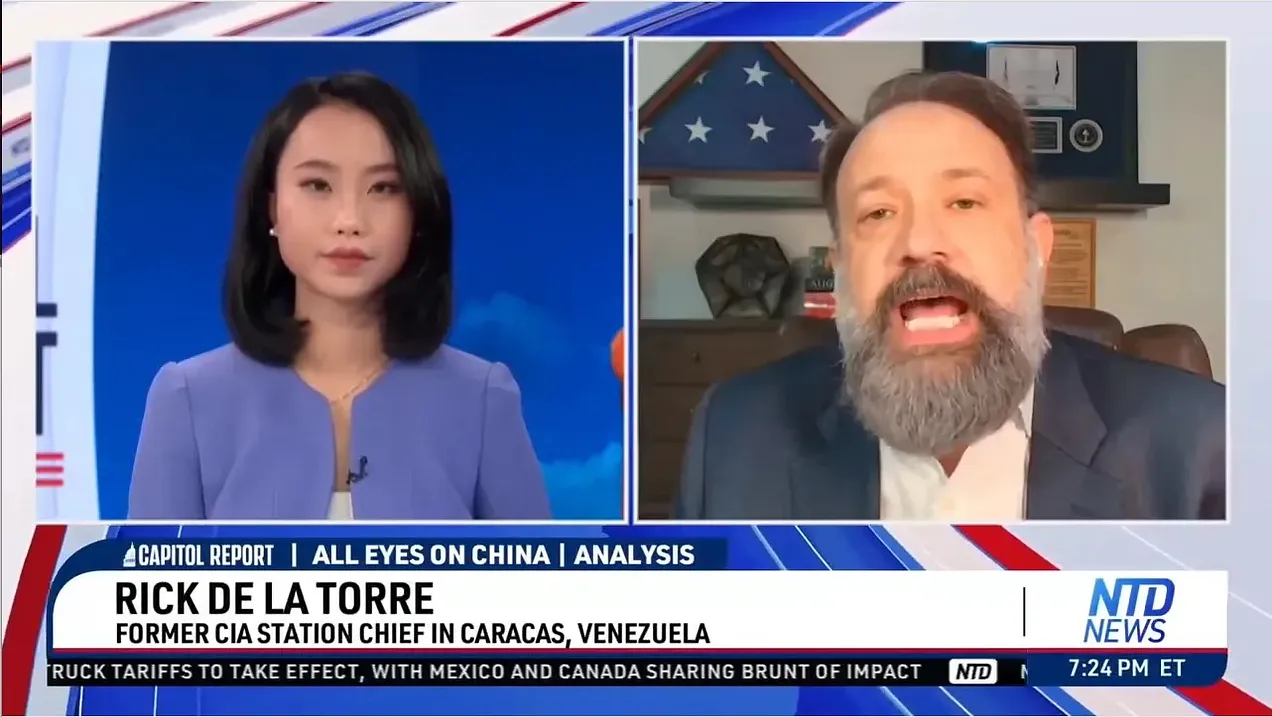
Below is Poulson’s report originally published at All Source Intelligence: “Former CIA Venezuela chief is raiding clients from Rubio-affiliated lobbying firm while the US continues seizing oil tankers.”
A former CIA chief of station for Venezuela, Enrique “Rick” de la Torre, last month formed his own lobbying firm, Tower Strategy LLC, advertising former U.S. Ambassador to Venezuela James B. Story as a “strategic partner.” All four of Tower Strategy’s newly registered lobbying clients were picked up through Mr. De la Torre’s work at his previous employer, the D.C.-based firm Continental Strategy.
Continental was founded in 2021 by Carlos Trujillo, a former U.S. Ambassador to the Organization of American States (OAS) with close ties to current U.S. secretary of state Marco Rubio, and De la Torre widely shared a photograph of himself wearing a CIA pin next to Secretary Rubio as part of his January announcement of joining Trujillo’s firm.
De la Torre was previously vague about which Latin American country’s CIA station he led, but the country was named as Venezuela in at least three recent interviews with conservative news outlets, including Breitbart, NTD News Capitol Report, and SiriusXM Patriot.
The rough date range of Mr. De la Torre’s tenure leading Venezuela operations remains unclear — beyond his retirement from the agency taking place circa June 2024 — but his lobbying partner Mr. Story led the State Department’s Venezuela Affairs Unit from November 18, 2020 until May 19, 2023. Story’s main post-diplomatic gig has been as a senior advisor to the Latin America-focused consulting firm Dinámica Americas, alongside former CIA Latin America chief Juan Cruz.
De la Torre in late November published a blog post entitled “The Case for Ending Maduro’s Rule,” which blamed the Biden administration’s reluctance to overthrow the Maduro government largely on Juan S. González, a former national security advisor for the Western Hemisphere. One day prior to De la Torre’s article, the Peter Thiel-backed Human Rights Foundation (HRF) released a series of social media posts claiming to have evidence of González’s conflicts of interest regarding Venezuela, vis-à-vis Greylock Capital CEO Hans Humes.
“I don’t lobby, represent, or do FARA work for anyone, and my views are not for sale,” González replied on social media, later repeatedly noting the hypocrisy of President Trump pardoning the convicted drug trafficker and former Honduran president Juan Orlando Hernández.
Ambassador Story has been equally as supportive of U.S.-led regime change in Venezuela as De la Torre. After President Trump in October announced his authorization for the CIA to conduct covert operations against the government of Nicolás Maduro in Venezuela, Story told CBS News that, “The assets are there to do everything up to and including decapitation of [the] government.”
But the Trump administration’s intense naval build-up in the region has primarily led to the seizure of two Venezuelan oil tankers, the Skipper and the Centuries, with a chase of a third tanker, the Bella 1, reported to be ongoing as of Friday evening.
Former CIA director Mike Pompeo called the tanker seizures the “right course of action” in an interview with Fox & Friends on Monday, further suggesting that, in the case of Maduro’s government being overthrown, “American companies can come in and sell their products — Schlumberger, Halliburton, Chevron — all of our big energy companies can go down to Venezuela and build out an economic capitalist model.”
The former station chief’s lobbying clients and foreign agent activity
After a brief tenure at the information technology arm of the Reston-based weapons manufacturer General Dynamics, De la Torre spent roughly 11 months as both a lobbyist and registered foreign agent through Continental Strategy, including for the Dominican Republic’s National Intelligence Department (DNI) and for the Ministry of Foreign Affairs of Guyana, whose western Essequibo region has long been a source of tension with Venezuela.
The former Green Beret and acting USAID administrator John Barsa registered alongside De la Torre as a foreign agent of both governments, and Barsa and De la Torre jointly lobbied the U.S. State Department through Continental for the Houston-based international ammunition exporter TXAT. Perhaps best known as the exclusive reseller of the Mexican ammunition manufacturer Aguilar, TXAT advertises the Houston Police Department, the Mexican Navy, and the Special Branch Bureau of the Royal Thai Police as partners.
De la Torre’s more senior predecessor as a station-chief-turned-lobbyist, Dale Bendler, was sentenced to one year in jail last month, including as a result of failing to register as a foreign agent for the Venezuelan media executive Armando Capriles, whom he visited on behalf of the D.C.-based firm BGR in the eastern Punta Cana region of the Dominican Republic two months prior to a raid alongside U.S. federal agents of the reported villa in the area of Samark López-Bello, whom the U.S. has sanctioned for alleged money laundering activities on behalf of former Venezuelan petroleum minister Tareck El Aissami. The U.S. State Department-backed media outlet Insight Crime has further noted the rumor that López-Bello was involved in the shadowy sale of Mr. Capriles’s family’s media outlet, Cadena Capriles, which later named to Ultimas Noticias Group.
Mr. De la Torre’s new firm, Tower Strategy, does not yet have any public foreign agent registrations, but all four of its disclosed lobbying clients have recently worked with Continental Strategies: the controversial treasure-hunting company Odyssey Marine Exploration, the Singapore-based and Tether-affiliated cryptocurrency company Bitdeer, the solar supply chain company T1 Energy, and the international solar power export company UGT Renewables / Sun Africa.
Though originally based in Norway and focused on lithium battery development, Freyr Battery relocated to Austin, Texas after facing intense competition from Chinese manufacturers and rebranded as an America-first company named T1 Energy in February. T1 lists David Manners — a former CIA chief of station in Amman and Prague — as a member of its board of directors and announced a partnership with the data analytics giant Palantir in September. “We’re partnering with Palantir to gain critical data-driven insights as we quickly build an ecosystem of suppliers in the United States to create jobs and meet new legislative requirements,” the company stated.
Of Tower Strategy’s four new clients, only Odyssey Marine Exploration can count itself as the source of three international scandals. An international arbitration tribunal ordered the Mexican government to pay Odyssey $31.7 million in September of last year, after the company sued Mexico in 2019 for backing out of a phosphate-mining deal, but the company is best known for its role in the “Black Swan” treasure-hunting scandal. After extracting 17 tons of gold coins from a wrecked Spanish ship off the coast of Portugal in 2007, the Spanish government’s Guardia Civil boarded two of Odyssey’s vessels and arrested their members. After a legal battle, the company was ordered by a U.S. court in 2013 to pay the Spanish government $1 million for “bad faith and abusive litigation.”
Shortly before Christmas in 2015, the Odyssey Explorer was boarded by the government of Cyprus in Limassol and, according to reporting in The Independent, “588 separate artefacts dating from the 18th century” were seized.
Tower’s Europe-focused solar supply chain client UGT Renewables, and its Africa-focused sister company Sun Africa, are the least controversial of the lot. A press release from the U.S. Export-Import Bank notes that its approval of a $900 million solar energy project in Angola was “initially announced during the 2022 G7 Summit by the Government of Angola, U.S. firm AfricaGlobal Schaffer, and U.S. project developer Sun Africa.”
UGT Renewables and Sun Africa CEO Adam Cortese transitioned from his role as CEO of AfricaGlobal Schaffer in the months surrounding the mid-2022 announcement and publicly noted UGT’s negotiations with Egypt’s Ministry of Petroleum and Iraq’s Ministry of Electricity earlier this year. Reporting from Bloomberg in April noted the Iraqi ministry’s agreement with UGT “to establish a 3-gigawatt integrated solar energy project, for which the US Export-Import Bank, the UK Export Finance and JPMorgan will provide financing.”
“Big week last week for UGT Renewables in the Middle East! In addition to our negotiations in Egypt, we executed an agreement with the Government of Iraq and are now off and running in Baghdad!” wrote Cortese on LinkedIn.
https://thegrayzone.com/2025/12/27/stor ... officials/
******
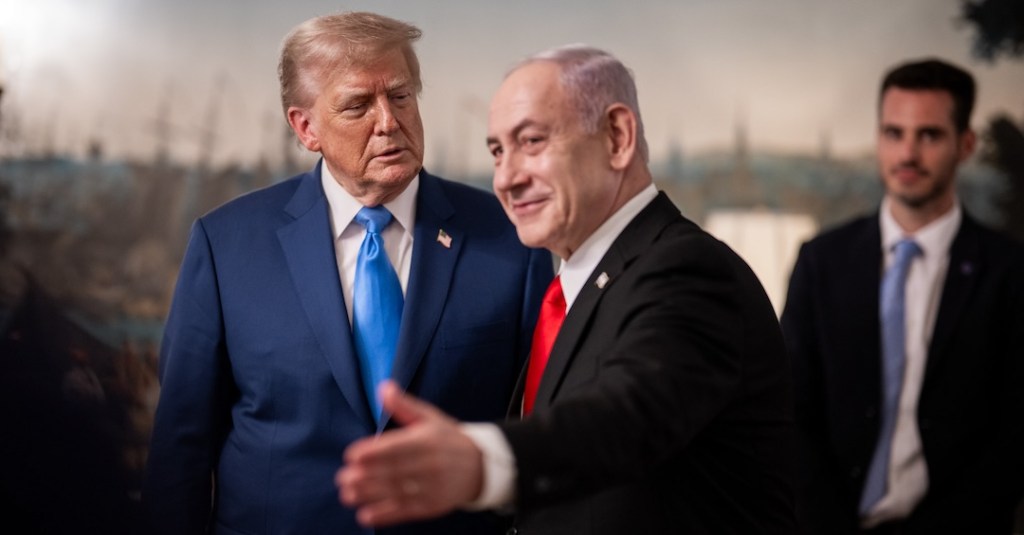
Netanyahu Is Visiting Trump For The FIFTH Time This Year, And Other Notes
But of course it would be antisemitic to suggest that there’s anything strange about the US president meeting with the Israeli prime minister more frequently than with any other foreign leader on the planet.
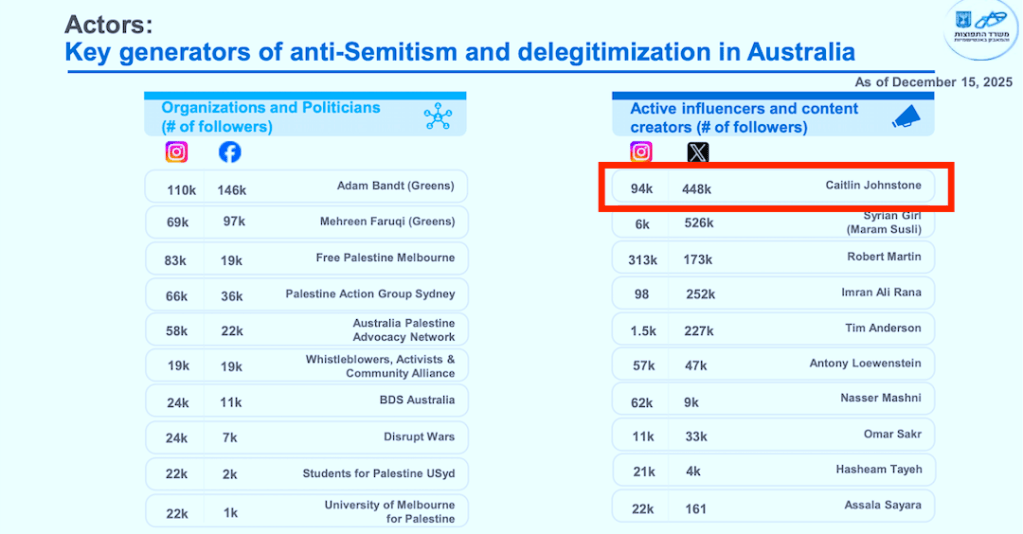
Caitlin Johnstone
December 28, 2025
Benjamin Netanyahu will be meeting with President Trump again on Monday. This will be the pair’s fifth meeting in the United States this year, but of course it would be antisemitic to suggest that there’s anything strange about the US president meeting with the Israeli prime minister more frequently than with any other foreign leader on the planet.
NBC reports that Netanyahu is expected to discuss more attacks on Iran during the visit, citing concerns about “Iran’s efforts to rebuild facilities where they produce the ballistic missiles and to repair its crippled air defense systems.”
Which is just wild. They’ve stopped making up pretend nonsense about nuclear weapons and now they’re just going “We need to attack Iran because Iran is rebuilding its ability to stop us from attacking it.”
❖
On Christmas Day, Donald Trump became the first American president ever to bomb Nigeria. While Trump claimed the Tomahawk missile strike was directed at ISIS targets with the goal of protecting Christians in the northwestern farming community of Jabo, locals told CNN that Islamic State has had no presence in the area and that Christians and Muslims coexist peacefully there. Residents also told Al Jazeera that the airstrikes resulted in no casualties, civilian or otherwise, meaning the bombing accomplished nothing besides terrifying some farmers and setting a precedent to normalize US airstrikes in yet another African nation.
❖
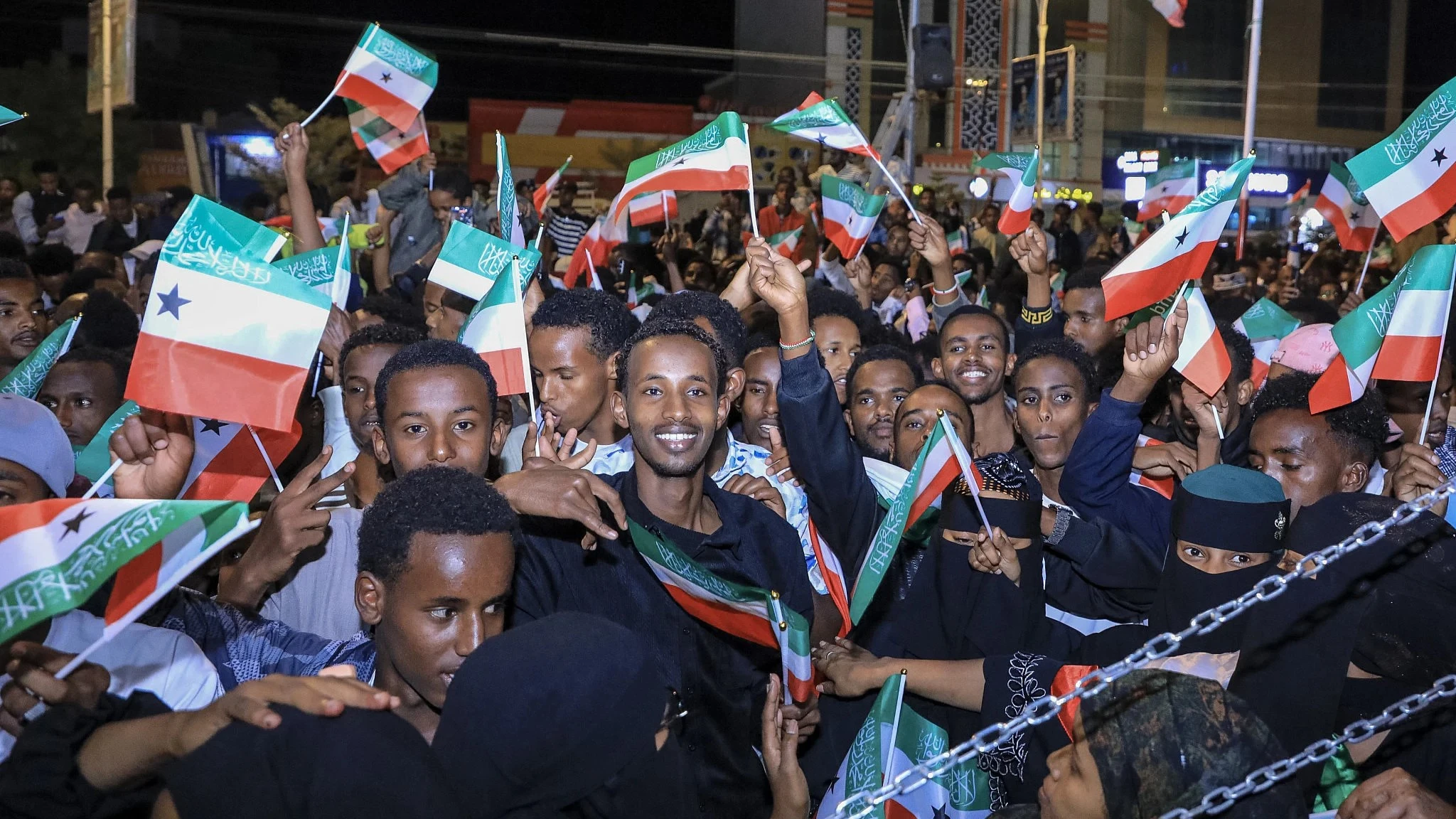
Israel has ignited worldwide controversy by formally recognizing the breakaway Somali region known as Somaliland. I’ve seen a lot of people highlighting reports that Israel has been in communication with Somaliland as a potential location to which the population of Gaza might be deported in an ethnic cleansing operation of the Palestinian territory, noting that recognition could be a way of enticing Somaliland to agree to the arrangement.
Back in August the Times of Israel reported that “Israel is in talks with five countries or territories — Indonesia, Somaliland, Uganda, South Sudan and Libya — about potentially accepting resettled Palestinians from the Gaza Strip,” adding that “Somaliland is a breakaway region of Somalia that is reportedly hoping to secure international recognition through the deal.”
❖
A German journalist named Anna Liedtke reports that she was raped by Israeli forces after she was abducted from the Global Sumud Flotilla while attempting to deliver aid to starving people in Gaza this past October. Unsurprisingly, as of this writing there appears to be a near-total media blackout on Liedtke’s story in the German press.
❖
Activist Greta Thunberg has been arrested by British police because in the UK it is considered an act of terrorism to hold a sign which says “I support the Palestine Action prisoners. I oppose genocide.”
Zionism is the single greatest threat to free speech in the western world.
❖
New South Wales Premier Chris Minns defended his authoritarian crackdown on pro-Palestine protesters following the Bondi shooting by arguing that Australia doesn’t have the same free speech protections as the US.
“I acknowledge that we don’t have the same free speech rules that they have in the United States and I make no apologies for that, we have got a responsibility to knit together our community,” Minns said.
And of course Minns isn’t wrong when he says Australians don’t have any real free speech rights (Australia is the only western democracy without any kind of national bill of rights), but it is a bit odd to be openly proclaiming that this is a good thing because it means you’re allowed to stomp out criticism of Israel. Kinda feels like that’s saying the quiet part out loud.
It’s been so surreal watching in real time as Australians get manipulated into accepting the Zionist narrative about the Bondi Beach attack. As of this writing we have not been presented with the tiniest shred of evidence that anti-genocide protests had anything whatsoever to do with the massacre, but the nation is proceeding as though this is an established fact. NSW is banning the phrase “globalise the intifada” and passing laws allowing for demonstrations to be made illegal for up to three months while PM Anthony Albanese rolls out more policies to align with “antisemitism envoy” Jillian Segal’s plan to crush free speech in Australia. After being smashed in the face with an extremely aggressive mass media propaganda campaign to marry the Bondi attack to anti-genocide demonstrations in the minds of the public, a recent poll by the Resolve Political Monitor found that 53 percent of Australians now support a ban on pro-Palestine marches.
Again, this is happening in light of literally zero evidence that pro-Palestine demonstrations were even slightly responsible for the Bondi attack. None. Nothing. They’re suggesting that there is an association between the two, and they are lying. They’re rolling out pre-existing agendas to crush free expression in opposition to an active genocide, and they are doing so based on lies.
And Australians are just going right along with it, like a bunch of human livestock. We’re a whole damn continent full of bipedal sheep. Absolutely fucking pathetic.
❖
I still can’t believe what evil, disgusting pigs Israel supporters are. The instant the Bondi shooting happened, their very first thought was “How can we use this to stomp out pro-Palestine demonstrations?” Not their third or fourth thought. Their first. They started pushing it instantly. Didn’t even wait for the bodies to cool, the sick fucks. All to stop people from protesting a genocide.
I am so angry at them right now. Absolute worst people in the world.
https://caitlinjohnstone.com.au/2025/12 ... her-notes/
******
The Problem with Jewish Advocacy for a ‘One-State Solution’: Clarifying the Role of Jewish Anti-Zionists in Dismantling Zionism
Posted by Internationalist 360° on December 25, 2025
Sara Kershnar

Jewish advocacy for a one-state solution represents a form of Zionism that centers Jews in Palestine’s future. Instead, anti-Zionist Jews must aim to accelerate the dismantling of Zionism both in Palestine and worldwide.
The clarity and questions raised by Lara Kilani’s astute piece, “Liberation Is Not Integration: On liberal Zionism, one-state fantasies, and what Palestinians actually want” and Rima Najjar’s incisive response, “The Settlers Are Not Leaving: Decolonization, not coexistence,” place the discussion of the future Palestine where it belongs – among Palestinians. The questions both pieces raise affirm a long-standing opinion of the International Jewish Anti-Zionist Network, of which I am a co-founder, that Jews do not and should not play a role in envisioning, directing, or participating in the designs of a liberated Palestine. Instead, as anti-Zionist Jews, our role lies in expediting the dismantling of Zionism – both its genocidal, colonial expression and expansion in Palestine and its fortification through organizations and institutions across the globe. As Najjar argues, such de-Zionization is a precondition of sorts for Palestinians to have the space and possibility to determine what liberation looks like and the society they want to build in its aftermath.
As anti-Zionist Jews, our role lies in expediting the dismantling of Zionism – both its genocidal, colonial expression and expansion in Palestine and its fortification through organizations and institutions across the globe.
It is and has always been Palestinians who must determine the nature of “the state” and the society they want to live in once colonialism is dismantled. “Greater Israel” is closer to being secured than ever before – through collaboration and shared interests of the ruling elite in the United States, Saudi Arabia, the United Arab Emirates (UAE), Qatar and Turkey. As Najjar notes, calls for one state without a clear plan for decolonization and de-Zionization risk replicating rather than dismantling Zionism. Furthermore, discussions of a one-state solution that fails to assert the centrality of Palestinian self-determination – particularly the right to not be forced to integrate with those who have not only committed but celebrated genocide against you – is not only abstract, but damaging.
When Jewish academics, activists and organizations call for and lift up their vision of a one-state in Palestine, it is Zionism. One way or another, it is based on an investment in Palestine remaining a place in which Jews are central to the vision of the state and society. It is, therefore, our mandate to be unwavering in our support for the decolonization and de-Zionization of Palestine and the means necessary to shift the structural conditions in this direction.
At minimum, this includes engaging in the divestment and dismantling of all Zionist institutions and structures and BDS, and reinforcing, without hesitation, the Palestinian right to resist, right to return, and right to rebuild, as well as broader anti-imperial, anti-monarchy, anti-capitalist struggles in the region.
Our mandate to be unwavering in our support for the decolonization and de-Zionization of Palestine and the means necessary to shift the structural conditions in this direction.
For the very small number of anti-Zionist Jews from ‘48 (“Israelis”) who have worked, often over decades, with Palestinians calling for a “democratic one-state,” it could be argued that the role in these discussions might be different. However, this movement does not currently exist. Until there is a mass movement led by Palestinians in which Jews on the ground in Palestine are participating in the dismantling of colonialism, fully supporting the right of return, and taking action in solidarity with Palestinian resistance, any individuals currently dedicated to one state are just that – a handful of individual Jews against a majority that is actively participating, complicit and/or not active in stopping genocide and colonial expansion. In light of this reality, when anti-Zionist Jews from ‘48 or elsewhere organize with the explicit goal of a one-state solution, they are assuming that Jewish people remain a central consideration and feature of Palestine once Zionist colonization is dismantled.
Our work against Zionism is specific and, of course, different from the work of Palestinians in their own liberation. The self-determination of Palestinians includes their agency to set the terms of their struggle, to not, as Najjar says, have their aspirations overwritten by the interests of others. Against “neutralizing” the “political meaning of Palestinian suffering” through liberal and abstract notions of integration, “equity” and/or “co-existence” in an attempt to ameliorate Jewish anxiety and advance self-interest, the goal of anti-Zionist organizing is, as she names, supporting the conditions for “building decolonial power.”
Kilani’s questions highlight the need to translate this goal into concrete strategies. In addition to participation in the broader work of the growing mass movement for Palestine, Jewish anti-Zionists can play a more specific role in expanding BDS to target Zionist organizations, funders and corporations. Campaigns like Stop the Jewish National Fund, can expose the parastatal nature of Zionist organizations (directly facilitating the work of the State of Israel through funding, lobbying and attacks on its opponents). It should not just be the State of Israel who returns “more than a hundred years of looted wealth, land, and resources.” As we call for the stripping of their farcical “non-profit” status, we can also call for seizing of the assets of Zionist organizations as a consequence for their participation in genocide; redirecting them towards the rebuilding of Gaza and Palestine more broadly as a form of reparations.
Additionally, it is our work to expose, dismantle and/or reclaim so-called Jewish community organizations, and institutions, including religious ones, that have been repurposed, warped into vehicles for defending and advancing Zionism. Jewish Anti-Zionists can organize civil society and social justice groups to isolate and begin to reject funding from Zionist funders, such as the Jewish Federation, who both use their funding of social justice organizations as a “form of philanthropy-washing” and economic coercion to silence criticism and solidarity. Another role of Jews living outside of Palestine could be to facilitate the mass exodus of Jews who do not have the means and wish to relocate. This could mean turning the early “Renounce Aliyah” campaigns of anti-Zionist Jews into a practical project – a sort of anti-Zionist Jewish (relocation) Agency, particularly for working class and poor Southwest Asian North African, Ethiopian, ultra-Orthodox (anti-Zionist), and Russian Jews.
As raised by both pieces, harder questions arise about the process of decolonization in relation to the settlers committed to retaining “sovereignty, military dominance, and demographic permanence.” The de-Zionization of Palestine is unlikely without the forced removal of settlers that will be met with the violence they have consistently used and are prepared to escalate. As Najjar names, this is a reality that cannot be avoided nor the flight of settlers assumed. Instead, anti-Zionist Jews must be ready to support how Palestinians chose to address this aspect of their anti-colonial struggle.
Picking up where Najjar concludes, “A just future depends not on selecting the correct blueprint but on reorganizing Palestinian political life, weakening the structures that sustain Israeli supremacy, cultivating international leverage, and restoring Palestinian agency to the center of political imagination.” As Palestinians reorganize the representatives political leaders of that self-determination in the aftermath of the long-standing political undermining and assassinations of their political leaders, it is imperative that the “left,” including and particularly anti-Zionist Jews, does not rush in to pre-define the “endpoint of Palestinian liberation.” Just as the liberation of Palestine is not limited to the choice of liberal or reactionary Zionism, Palestinian liberation and political imagination is not limited to either a liberal one-democratic state or a two-state solution. The endpoint must and will arise from the decolonization itself; the needs, priorities and political imagination of Palestinians, and not from a proscribed state vision of socialism, secularism or liberal democracy.
The proximity, stake and therefore role of anti-Zionist Jews in the process of de-Zionization is, of course, different than that of Palestinians. It is, first and foremost, solidarity with the struggle for the survival, self-determination and liberation of Palestinians, yet dismantling Zionism is ultimately also critical for Jews. It is central to redirecting history away from the most violent strands of the 20th century, including the most successful genocide of Jews, but moreso, it is central to the collective future of humanity. In 2005, we traveled to Palestine to present the idea of an international network of Jewish anti-Zionists to combat the international role and impact of Zionism to Palestinian organizers. Founding organizer of the Palestinian BDS National Committee (BNC) and founder of Stop the Wall, Jamal Juma’s response was that, “we don’t need Jewish people for the liberation of Palestine, we need anti-Zionist Jews as part of the broader global struggle against imperialism,” of which Israel, with the U.S., is a watchdog and key beneficiary.
Meaning, the stake is not based on the “intertwining of fates” or vague concerns for “safety” that liberal Zionists attempt to push and that leave Jews short from truly fulfilling our mandate as anti-Zionists. It is the willing, principled and self-motivated participation we enact as anti-Zionists in anti-imperialist struggle, which represents a return to and affirmation of historical Jewish participation in struggles towards collective liberation. This is not only a mandate for anti-Zionist Jews but for all those who understand that Zionism is part of the devaluing of life, the unsustainable extraction and depletion of resources, the destruction of the planet, and escalating authoritarianism required to suppress growing dissent. Therefore, contributing to the conditions in which Palestinians build the power to decolonize their homeland is at the heart of building the power we all need for the pressing fight for the preservation of humanity and life on the planet. Anti-Zionist Jews are part of this, but not exceptionally so. Our ability to participate with clarity is part of rejoining us with the rest of humanity from which Zionism – its Jewish exceptionalism and supremacy – has separated us. To do so, we need to know and claim our place without displacing the centrality of Palestinian will and imagination.
https://libya360.wordpress.com/2025/12/ ... g-zionism/











 (@fbhutto) January 4, 2026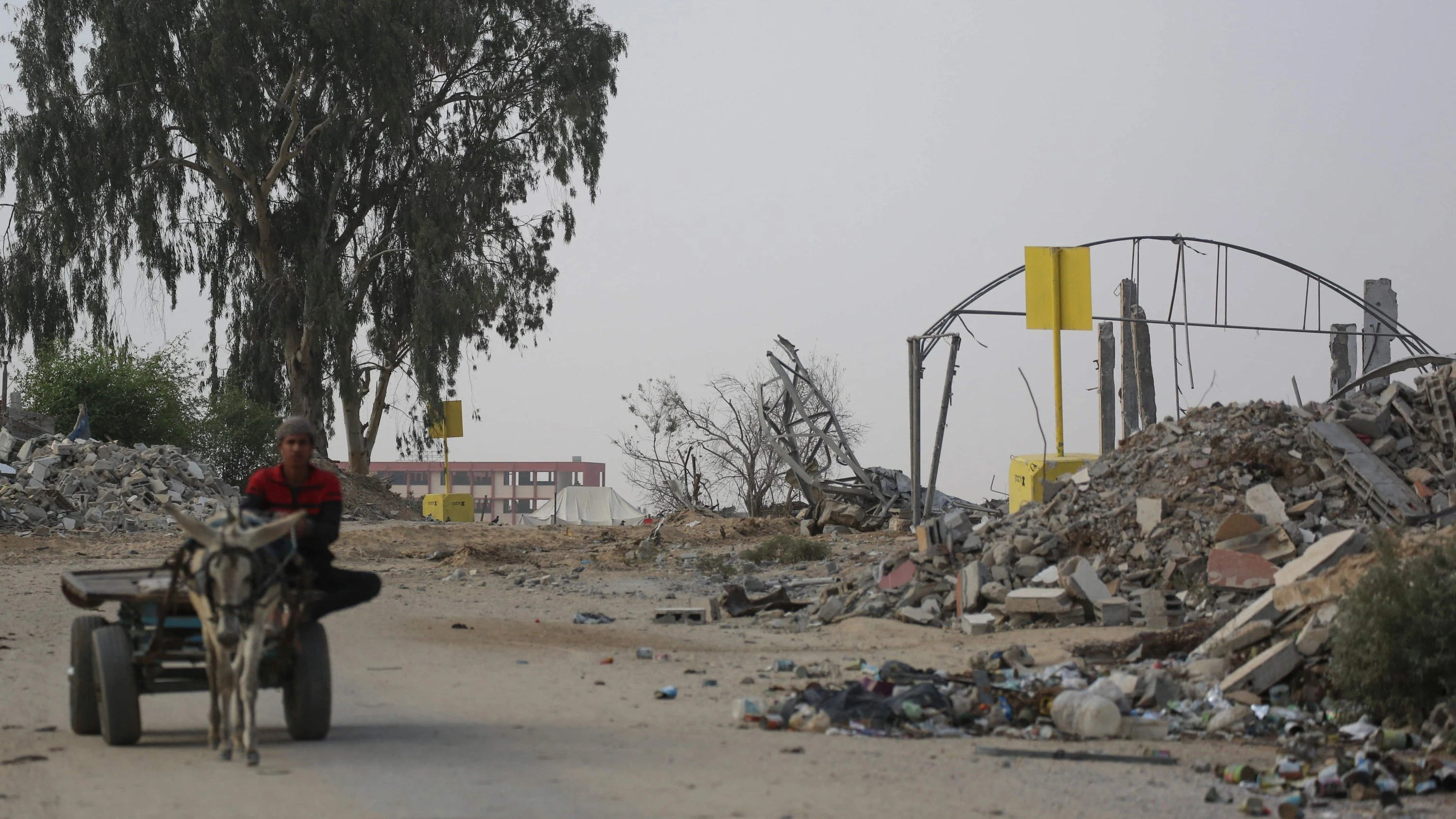











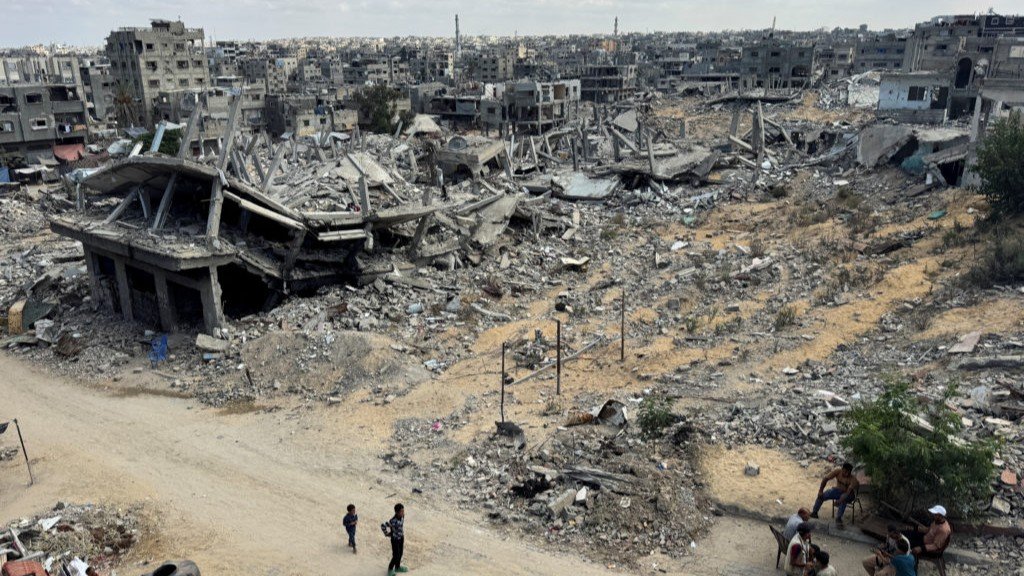
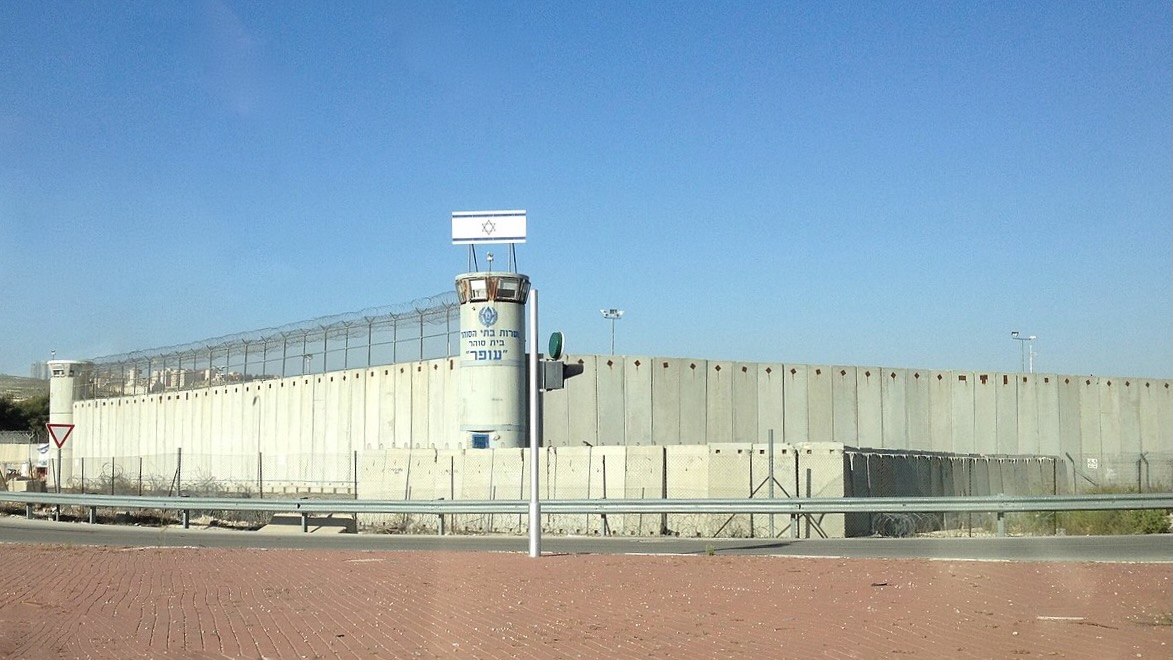
 New horrifying footage from Gaza: Israeli demolition units continue to level schools, homes, and what remains of the Strip’s infrastructure , all under a “ceasefire” that exists in name only. pic.twitter.com/tpybeXoiUW