
By John Helmer, Moscow @bears_with
There is only one way to interpret the meaning of the carefully scripted, rehearsed, memorized , sloganized, and repeated words which President Donald Trump announced in his Monday meeting with Mark Rutte, the Dutch ex-prime minister and now Secretary-General of NATO. They mean the opposite of what he thinks he is saying; and he cannot comprehend either the difference, or that they mean nothing at all. Between meaning that is false in fact and meaning that is non-credible to a friend or foe, Trump’s brain cannot discriminate; does not comprehend.
By Russian as well as Anglo-American neurological and psychiatric standards, this man is a certifiable maniac.
The strategic problem this poses for Russia’s military and political decision-makers, according to a source in a position to know, is that Trump’s mental disability is not that he is lying – he doesn’t aim to deceive. Rather, he is clinically incapable of understanding the logic, the evidence, the weight of options, and the sequence and consequence of actions. He cannot think; ergo, he cannot negotiate in good or even bad faith. He is, according to this Russian neurological diagnosis, a mentally incapacitated brain with only one reflex – the use of force to compel capitulation or effect destruction.
Trump said it himself during his 34-minute press briefing yesterday (July 14) with NATO Secretary-General, ex-Dutch premier Mark Rutte. “[President Vladimir Putin] fooled a lot of people. He fooled Bush. He fooled a lot of people. He fooled Clinton, Bush, Obama, Biden. He didn’t fool me. But what I do say is that at a certain point, you know, ultimately talk doesn’t talk. It’s got to be action.”
By action, Trump told Rutte, “we make the best and we’re going to be sending the best to NATO, and in some cases, to maybe, at Mark’s suggestion, if we go to Germany where they’re going to send early on missiles and they’ll be replaced and NATO is going to take care of it…we’re going to make top of the line weapons and they’ll be sent to NATO. NATO may choose to have certain of them sent to other countries where we can get a little additional speed where the country will release something and it’ll be mostly in the form of a replacement…we have the best equipment in the world. We make equipment like no other. You know, our submarines, nuclear submarines are so powerful, they’re the most powerful weapon ever built. And we have the best in the world by — they’re [Russia] 20 years behind 25 years behind us. We have the greatest equipment anywhere in the world. I just hope we don’t have to use it.”
Rutte acknowledged that the new US arms to be supplied to the Ukraine will include both Patriot missile batteries for air defence, as well as long-range missiles. “You,” Rutte to Trump, “are the most powerful nation on Earth, the most powerful military on Earth. But given that, the US has decided to indeed massively supply Ukraine with what is necessary through NATO. Europeans are 100 percent paying for that. And what we have been doing over the last couple of days is talking with countries…it will mean that Ukraine can get its hands on really massive numbers of military equipment both for air defence but also missiles, ammunition, etc., etc…this afternoon, Boris Pistorius, the German defense minister is visiting Pete Hegseth, the Secretary of Defense and we’ll discuss also I think on this whole Patriot thing. Norway is involved. So that’s on the Patriots. But this whole deal is also about missiles or ammunition. So it’s broader than Patriots…I can tell you that at this moment, Germany massively but also Finland and Denmark and Sweden and Norway, we have Kingdom, the Netherlands, Canada, they all want to be part of this and this is only the first wave. There will be more. So what we will do is work through the NATO systems to make sure that we know what Ukrainians need so that we can make packages.”
Trump added that President Putin is “pleasant” to talk to but not “serious”. After Putin delivered last week (July 10), through Foreign Minister Sergei Lavrov, a revised set of end-of-war proposals which Secretary of State Marco Rubio called a “new idea, new concept”, Trump doesn’t dismiss them so much as indicate that he does not know what the July 10 proposals are, or how they differ from those tabled by Russia in Istanbul of June 2
In Trump’s recall, as he reports himself, there have only been his telephone calls with Putin. He does not remember anything else.
“I [Trump] speak to him a lot about getting this thing done and I always hang up and say, well, that was a nice phone call, and then missiles launched into Kyiv or some other city. And I said, it’s strange. And after that happens three or four times, you say, the talk doesn’t mean anything. My conversations with him are always very pleasant. I say, isn’t that a very lovely conversation, and then the missiles go off that night. I go home, I tell the First Lady, you know, I spoke to Vladimir today, we had a wonderful conversation. She said, oh, really, another city was just hit. So it’s like, look, he’s — I don’t want to say he’s an assassin, but he’s a tough guy.”
Trump is repeating himself. “We get a lot of bullshit thrown at us by Putin, if you want to know the truth,” he said at a cabinet meeting on July 9. “He’s very nice all the time, but it turns out to be meaningless” – Min 5:26.
Rutte spoke for Trump when he dismissed the 33-point Russian negotiating memorandum of June 2 because the messenger, head of delegation in Istanbul Vladimir Medinsky, was “this historian, explaining history of Russia since 1250…So if I was Vladimir Putin today and hear you speaking about what you were planning to do in 50 days and this announcement, I would reconsider whether I should not take negotiations about Ukraine more seriously than I was doing at the moment, if I was Vladimir Putin. But when I’m Ukraine, I think this is really great news for them.”
At NATO prompting, the Trump Administration has now dismissed the Russian terms of June 2 and the new July 10 Lavrov proposals as perfunctorily as the Biden Administration dismissed the proposed treaties for the US and NATO, which Lavrov’s ministry submitted on December 17, 2021.
Those were the final terms before Russian strategy was compelled to pre-emptive and preventive war, but on Putin’s orders, that was a “special military operation” short of war.
Moscow sources now say that on the evidence of Trump’s latest statements, he will not negotiate on any terms Russia has already submitted or will submit. He can only understand terms of capitulation he dictates himself. But even those ceasefire and peacemaking agreements Trump claims the credit for negotiating himself are garbled in his recitation of them. In addition to the Pakistan-India, Israel-Iran, Congo-Rwanda and Serbia-Kosovo agreements he has mentioned before, he told Rutte he is now claiming credit for two new ones he hasn’t mentioned earlier – for which there is no evidence at all.
“We solved another one, one that we just seemed to have Armenia and Azerbaijan. It looks like that’s going to come to a conclusion, successful conclusion. We worked on Egypt with our [their] next-door neighbour who is a good neighbour [Ethiopia]. They’re friends of mine, but they happened to build a dam which closed up water going into a thing [sic] called the Nile. I think if I’m Egypt, I want to have water in the Nile and we’re working on that one. It’s a problem, but it’s going to get solved. They [Ethiopia] built one of the biggest dams in the world, a little bit outside of Egypt. You know about that. You’ve been hearing about that one and that turned out to be a big problem. I don’t know. I think the United States funded the dam. I don’t know why they didn’t solve the problem before they built the dam, but it’s nice when the Nile River has water. It’s a very important source of income in life. It’s the life of Egypt and to take that away is pretty incredible, but we think we’re going to have that solved very quickly. So we do good.”
Trump’s references are to the Grand Ethiopian Renaissance Dam (GERD) which has been built between 2011 and 2023, on Ethiopia’s Blue Nile River, east of the Sudanese border, and 2,500 kilometres upstream from Egypt. China was involved in the financing; the US was not. Ethiopia’s conflict with Egypt over the dam can be followed here.
Trump’s recall of the GERD project was from a meeting he had a month ago, on June 18, with Ethiopia’s newly appointed ambassador to the US, Binalf Andualem. The Ethiopian press agency reported the meeting briefly. Trump ignored it in his tweet record, and there is no reference to the meeting in the official White House calendar for the day. Click for a brief review.

Left, President Trump in the Oval Office on June 18 with Ethiopian Ambassador Binalf Andualem.
Russian sources also believe that Trump’s incapacity is well understood by his own officials – the subordinates he has appointed, and the staffs under them – to be as useful to them for continuing their war against Russia as it was for their predecessors to have under the President Joseph Biden who was incapacitated by Lewy Body dementia associated with his late-stage Parkinson’s Disease.
The mental incapacity of a US president is not exactly a new problem for the Kremlin. It was last recognized in Ronald Reagan during his first term — as early as April 1981, after Reagan had survived a gunshot wound and two hours of surgery under general anaesthesia. But at that time, the Soviet Politburo was already in the Afghanistan War and struggling with the incapacities of Leonid Brezhnev, Yury Andropov and Konstantin Chernenko. Compared to the Polish mania of Zbigniew Brzezinski who had triggered the war in Kabul in 1979, the Reagan succession was a small relief for the Kremlin.
In strategizing for Russia’s defence, President Putin has always opted against deterrent, preventive or pre-emptive military measures, insisting on more time, and allowing the oligarch constituencies surrounding him to persuade against recognizing the US war as a permanent threat to Russia.
Putin has just admitted this in a television interview on July 14. “I thought that the contradictions with the West were primarily ideological,” he said. “It seemed logical at the time – Cold War inertia, different views of the world, values, the organization of society. But even when the ideology disappeared, when the Soviet Union ceased to exist, the same, almost routine deviation from Russia’s interests continued. And it was not because of ideas, but because of the pursuit of advantages – geopolitical, economic, strategic. The world respects only those who can protect themselves. Until we show that we are an independent and sovereign power that stands behind our interests, there will be no room for anyone to treat us as equals.” Source: https://t.me/s/zarubinreporter — translated here.

President Putin in interview with Pavel Zarubin, July 14. Source: https://x.com/onlydjole/status/1944402835988201736
This is Putin’s acknowledgment, without his using the Soviet terminology, that it’s not his fault that reality turns out to be Marxist – the famous quip of Che Guevara.
The General Staff reaction to Trump’s new 50-day deadline for Russia to capitulate is to anticipate an escalation in US force. According to a source in a position to know, “50 days means special ops, attacks [inside Russia] within the next few weeks. That’s Trump’s bluff. Any escalation from Trump will get Oreshniki. Otherwise we will keep grinding away, hit new targets. Americans and Europeans, too. But both sides would like the full-fledged war to be delayed and try to win now through deep destructive strikes. On our side, there is a huge sense of relief that the war continues. Everyone wants peace but no one wants not to win.”
Whether or not Trump has agreed with German Chancellor Friedrich Merz to supply long-range offensive missiles for the Germans to operate in the Ukraine against Russian hinterland targets is not yet clear. Germany’s Defense Minister Boris Pistorius was at the Pentagon while Rutte was with Trump at the White House, but the press release from the Pentagon omits detail. “Beside bilateral topics,” Pistorius told Secretary of Defense Peter Hegseth, “we will have the opportunity today to discuss some of the key security challenges we face together, strengthening NATO and enhancing our collective defence capabilities, which is really a relevant challenge, maintaining our steadfast support for Ukraine in its courageous fight for freedom and sovereignty, and addressing regional security dynamics in key regions like the Middle East and the Indo-Pacific.”
In advance of his arrival in Washington, Pistorius telegraphed his Ukrainian arms plan. “‘We only have six [Patriot systems] left in Germany,’ Pistorius said, adding that two others had been lent to Poland and at least one was always unavailable due to maintenance or training. ‘That’s really too few, especially considering the Nato capability goals we have to meet. We definitely can’t give any more…Pistorius said he would discuss a proposal he made to Hegseth last month to let Germany buy two Patriot systems from the US for Kyiv…Pistorius said Germany would not deliver its long-range Taurus missiles to Ukraine despite a wave of recent Russia air attacks and a renewed request from Kyiv.”
https://johnhelmer.net/trump-escalates- ... e-marxist/
******
Can an Examination of Social Issues Reveal the Ideology Trying to Resolve Them?
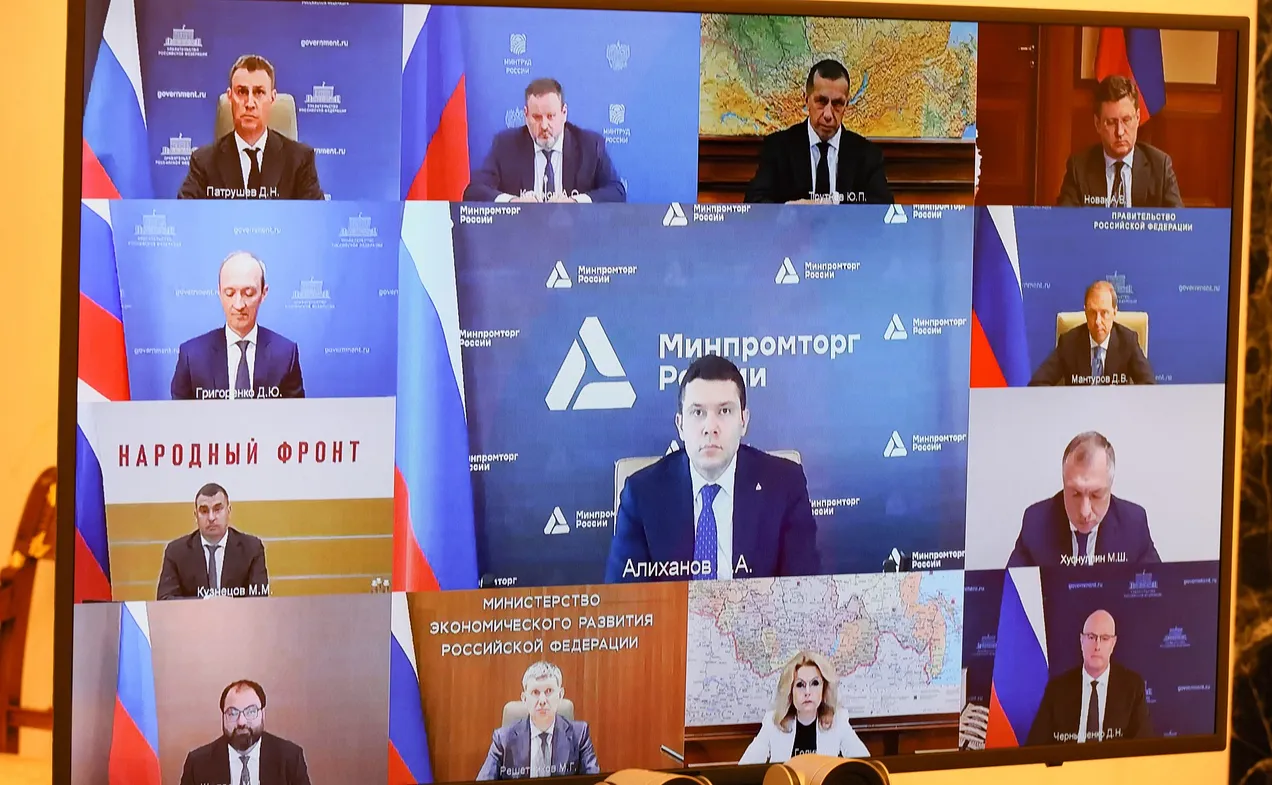
Putin held a meeting on social issues
Karl Sanchez
Jul 14, 2025
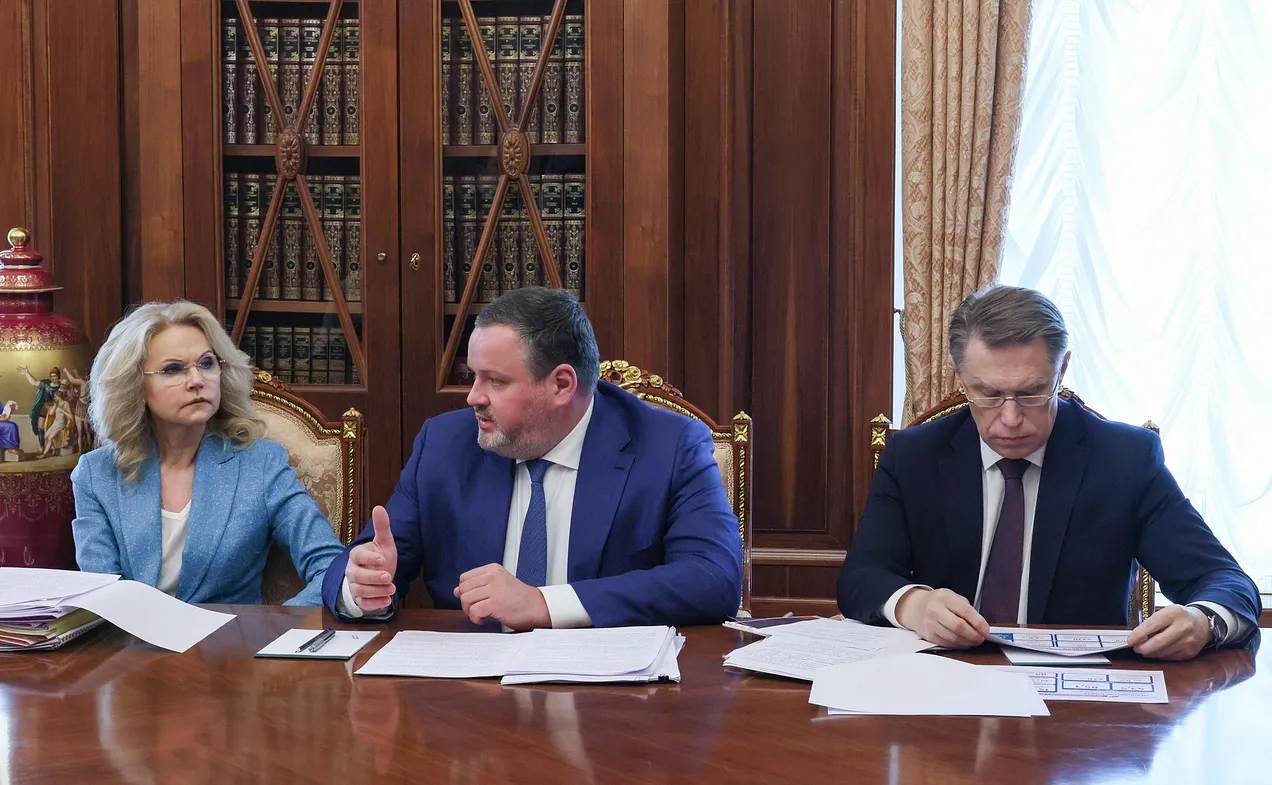
Putin on far left out-of-picture, Deputy Prime Minister Tatyana Golikova, Minister of Labour and Social Protection Anton Kotyakov and Minister of Healthcare Mikhail Murashko, left to right.
A debate of sorts has arisen regarding Russia’s ideology, which was the focus of the Gym’s previous article and the topic of today’s Moon of Alabama article, whose commentary is all over the place. Oddly, few if any want to engage the source and the argument that a nation’s deeds can reveal its ideology. Putin’s meeting to examine social issues, primarily health care and demography issues a few days after a long discussion about education, ought to shine some light onto the ideological issue and perhaps solve it. The meeting lasted about 40 minutes, so let’s see what it reveals:
I’ve emphasized most of the socialistic elements displayed during this meeting. IMO, what we just read about describes the components of an ideology that’s Pro Life, an ideology that aims to do all it can to make life better for all Russians, not just to look after their health but to help them become a positive asset for themselves and for all Russians. Note that many of the national projects were suggested by Putin that inform us of what he thinks is important and of course that’s formed by his ideology, which is clearly humanistic. It most certainly isn’t Neoliberal; I would say it’s the exact opposite given what we see occurring in Neoliberal dominated nations. Here within the Empire, healthcare is being cutback and costs are crazy. Note that all those hospitals and other medical facilities being built in Russia are paid for by the state. As a person with heart disease, I applaud what Russia’s doing; same with its outstanding oncology efforts. The mother and child benefits are said to be exorbitant here within the Empire, but Russia seems to have no problem in servicing that priority. And that’s really it—people’s welfare is Russia’s priority, and that in my book constitutes Socialism—the overall wellbeing of society. And I do believe that’s made a priority within Russia’s Constitution. Here are some examples:V. Putin: Tatyana Alekseyevna, did you want to start with the results of the Year of the Family? Let's do that.
T.Golikova: Thank you, Vladimir Vladimirovich. As you remember, we summed up the results of the Year of the Family at a meeting of the State Council at the end of the year, and in general, we note quite serious and positive changes in the focus of our citizens on having children and on large families.
In line with the instructions you have given, and in pursuit of the main national goal of preserving the population and improving health, well-being, and family support, we have adopted a new strategy for implementing family and demographic policies and supporting large families. We are currently working with the expert community, citizens, and our regions to develop a plan for implementing this strategy.
I would like to say that, of course, the main legacy of the Year of the Family and the development of the strategy that I mentioned, as you instructed, has begun to implement four national projects that are under our supervision and are aimed at achieving the national goal.
This is probably the most extensive national project, "Family", which amounts to almost 18 trillion rubles over six years. Then there is the national project "Long and Active Life", which is another 2.1 trillion rubles. The national project "Personnel" is worth 114 billion rubles. And the national project of technological leadership "New Technologies and Health Preservation" is not as large, with a budget of 38 billion rubles, but the main thing is not the budget, but the result that we want to achieve through the implementation of this national project, as it aims to address the challenges of regenerative medicine, active longevity, and extended longevity. I have already discussed this national project and its objectives with you.
At the end of last year, when you held a meeting of the State Council, you gave us an order to implement additional measures that need to be implemented in 2025 and 2026.
What do I mean? I mean that we have made a decision – and this will be implemented as of September 1, 2025 – that young women who are enrolled in full-time education will no longer receive maternity benefits based on their stipend, which is relatively small at two to five thousand rubles, but instead will receive maternity benefits based on the minimum subsistence level set in their region of residence. This means that we are moving away from the two to five thousand rubles, and the maternity benefit will now be around 90 thousand rubles.
In addition, the Government has recently approved draft laws, which have been submitted to the State Duma for adoption. These laws relate to changes in the pension provision for mothers with many children. Previously, we counted one and a half years of work experience for every four children, but now this six-year limit has been removed, and the number of children will be counted in the work experience.
And another measure that we have adopted and included in the draft law is a measure that equates the Mother-Heroine with the Hero of Labor in terms of benefits. This will mean that they will receive 72,000 rubles per month, or if they want, then they will be able to receive benefits in kind if they make such a choice. Once they reach retirement age, they will receive an additional 32,000 rubles to their pension.
At the same time, I would like to say that we have made a decision to recalculate pensions, not from the date of the law's entry into force [to recalculate from scratch].
In addition, I would like to say that starting from January 1, 2026, the so-called family tax payment [a refund or deduction] will be made for the first time based on the results of 2025. You may remember that when we modernized the tax legislation, we made this decision regarding income tax. What is important? According to our calculations, this payment will affect almost ten million children from 4.2 million families. In terms of scale, it is comparable to the single allowance, because the single allowance is also received by ten million children today.
And I would like to add, before I hand over the floor to my colleagues, that Anton Olegovich could say a few words about the Family National Project in addition to what I have already said. As you instructed, the Family National Project has implemented a new demographic support form since January 1, 2025. We have allocated 75 billion rubles (12.5 billion rubles annually) until 2030 to support the demographic measures that the regions of the Russian Federation consider crucial for their regions. At the same time, 41 regions were included in this support, which have a total birth rate below the national average in 2023.
We have created a so-called demographic menu of ten measures that are most frequently asked about by our citizens, and as part of this demographic menu, we have suggested that the regions take these measures into account in their demographic support programs. We now know what decisions the regions have made and what they consider to be important.
I would like Anton Olegovich to say a few words about what we are doing for large families and what measures will be taken. Then Mikhail Albertovich will talk about healthcare.
V.Putin: Good. But before we pass the floor, colleagues, we discuss demographic issues regularly, and we probably remember well the famous song from Soviet times, when girls came to the dance and some of them stood aside, because “according to statistics, there are nine guys for every ten girls.” I understand that our statistics have changed, and we now have a shortage of women.
T. Golikova: By the way, there were a little more boys born in 2024, I think 51.5 percent of boys were born in 2024. It used to be the other way around.
In general, Vladimir Vladimirovich, unfortunately, this is a serious problem that is related to two demographic waves. One demographic wave was during the Great Patriotic War, and the other was during the 1990s, which essentially overlapped and dramatically reduced the number of women in their reproductive years.
That's why we're betting on large families. It's very important for us that every family has at least one child. Even if there are no [natural] children in that family, it's still one, two, or three. This is crucial for a country as large as ours. Therefore, we're focusing our support measures on large families.
V. Putin: Anton Olegovich, please.
A. Kotyakov: Thank you, dear Vladimir Vladimirovich.
As part of the national Family project, which Tatyana Alekseevna has already started talking about, we are focusing on supporting large families so that they become the new social norm.
When the Year of the Family began, you signed a decree on defining the status of a large family, which established uniform principles for defining and classifying large families. In accordance with your decree, all regions have adopted the necessary legal framework, and 42 regions have defined the status of a large family and the full range of federal measures without the need criterion. Gradually, the number of regions is increasing. Today, we can see that large families have a special status in the regions of the Russian Federation.
Of course, we are working to make the benefits and preferences available to large families more convenient for our citizens to use. As a result, we have launched a registry of large families that can be verified electronically through the unified portal of public services. This is convenient for our citizens when they apply for support measures, and it is also convenient for businesses when they want to create specific support programs for large families.
Today, there are already 2.8 million large families in our country, and 2.1 million of them are already registered. We are filling up the registry. In general, it is in demand today, which means that it is an opportunity to document your status, and it is also quite convenient to use a barcode or a portal, and citizens are actively using it.
As Tatyana Alekseevna has already said, we have started preparing for the introduction of the so-called family tax payment, which will start on January 1, 2026. The program and the implementation of this decision itself...
V. Putin: Deductions.
T. Golikova: Deductions. It's called the Family Tax Benefit.
A. Kotyakov: It is calculated as a compensation for the previously paid personal income tax, minus the percentage until it reaches six percent. This means that if a citizen has paid 13 percent of their income tax and has two children in their family, and their income is less than one and a half times the minimum subsistence level for each family member, they have the right to submit an application during the declaration campaign, and we will reimburse them for the previously paid personal income tax up to the six percent rate.
Today, together with the Federal Tax Service and the Ministry of Digital Development and the Social Fund, we are carrying out all the necessary preparations. The process of receiving this payment will be quite simple, again through the possibility of submitting an application through the unified portal of public services. We plan that by the middle of 2026, citizens will be able to receive the corresponding payment, and by the end of the year, everyone will be able to return the previously paid personal income tax.
I would like to emphasize once again that we believe that this should be as simple and convenient as possible for our citizens, which is why we are doing it on the principles of the social treasury.
V. Putin: Will it happen within a year?
T. Golikova: Yes, we assume that the amount of the payment can range from 89 thousand to 156 thousand rubles in terms of the refund.
A. Kotyakov: This is based on the amount that was previously paid to citizens. Accordingly, based on the coverage, we can see that this measure could potentially benefit families with around ten million children. This is approximately 4.2 million families. This will be a significant financial support for families in 2026.
The new measure is, of course, comparable to the mass measure that is already being used in the Russian Federation, such as the unified allowance. Today, more than ten million children who are being raised in families are also covered by the unified allowance.
The new unified allowance is also received by pregnant women who register early in their pregnancy. This means that by the end of 2024, approximately 150,000 pregnant women will be able to receive state support during their pregnancy, even if they face financial difficulties, which is comparable to the minimum subsistence level for working-age individuals.
Vladimir Vladimirovich, as part of the national project "Family", we continue to implement such support measures as maternity capital. Today, in total, over the entire period of the state program of maternity capital, it has been provided to 14.8 million children.
In parallel with the development and recording of new ways to use maternity capital, the procedure for obtaining a certificate was also an important factor. Today, maternity capital is provided proactively to our citizens, without an application, upon the birth of a child. As soon as the child is registered with the civil registry office, the Social Fund provides a certificate to the mother's "Personal Account" on the unified portal of public services within seven working days, which can already be used.
At the same time, we are also working to simplify the procedure for using maternity capital. Today, thanks to active cooperation with the banking community, it is possible to use maternity capital funds to pay off a mortgage, to pay off a loan, or to make a down payment, all without leaving your home, using a mobile banking app. This is quite convenient. Banks are also interested in this, as it helps them build their customer base.
Vladimir Vladimirovich, I cannot help but focus on the issues of demography. Today, Tatyana Alekseyevna has already mentioned that, as part of your instructions, we are allocating additional funds from the federal budget for the co-financing of regional demographic programmes, and we are doing this for those regions that have a total birth rate below the national average. Currently, 41 regions of the Russian Federation are eligible for these funds [There are 85 regions]. This year, we have allocated 12.5 billion rubles for the co-financing of their programmes.
At the same time, if we look at the areas, together with the professional community, together with public organizations, together with members of the State Duma, and together with experts, we have discussed possible areas that could be offered to the regions in addition to the federal level, in addition to the federal measures that are currently provided, in order to expand their regional component, taking into account local specifics.
Accordingly, we have formed ten recommended support measures. It is clear that the subject has the right to expand this list with its own funds, but the ten measures that are co-financed by the federal budget.
Accordingly, today these ten measures are implemented differently in each constituent entity of the Russian Federation. We are already seeing, let's say, an increase in efficiency in certain areas, and this allows us to understand that we can extend this to other territories in the future.
It should also be noted that we have developed demographic growth programs in all our regions, but only 41 regions receive additional financial support from the federal budget.
We have a fairly close relationship with our colleagues from the healthcare sector, because we understand that demographic issues and fertility issues are directly related to the demographic component. Mikhail Albertovich has a separate federal project within the Family national project, a separate independent national project that focuses on the health of our citizens, including reproductive health.
V. Putin: Please, Mikhail Albertovich.
M. Murashko: Thank you very much.
Dear Vladimir Vladimirovich, first of all, I would like to say that we have achieved all the results related to the health of children and adolescents through the programmes and national projects that have already been implemented, and the infant mortality rate was 4 per 1,000 in 2024 [6.5 in 2023], which is one of the lowest rates [Slovenia and Singapore were lowest at 1.5 in 2023, the latest year for complete global data]. In 2025, at one of the meetings, you stated that we have maintained a positive trend this year, and the current rate is 3.7 per 1,000.
If we look at the overall child mortality rate, it has decreased by more than 16 percent over the past five years, and we have seen a decrease in all age groups of children. We have also created a solid infrastructure, including 21 new children's hospitals, re-equipped children's clinics, and the implementation of modern lean technologies for patients. To ensure a comfortable patient experience, we have established simulation centers for skill development and, of course, fully implemented technology in all regions of the Russian Federation and made telemedicine consultations available. If necessary, we can transfer you to a higher level, which ensures continuity of medical care in all regions.
On your instructions, we are implementing a project to create world-class rehabilitation centers. You have opened one of them in Podolsk. This year, we plan to open another unique center in Yevpatoria, near Lake Moinaki, where the most advanced and revolutionary technologies will be available to children. We are also continuing construction in Novosibirsk, which will be the third center. We have decided to call them “ships”--three ships that will provide health services. This is a unique result, as doctors are saving children who were previously considered unrecoverable.
On your instructions, we are implementing a neonatal screening program, which is the most extensive, and many countries are already interested in learning how we have implemented it. This is because neonatal screening helps to prevent disabilities, as the Circle of Kindness Foundation, which operates on your instructions, provides full medical support from the moment of diagnosis, even before the onset of clinical symptoms. This helps children avoid any health problems or disabilities.
And the new national project, which concerns family health and, first of all, motherhood and childhood, of course, concerns the re-equipment of perinatal centres. The unique programme that we have implemented in previous years in the country to create perinatal centres, it is time for their re-equipment. Therefore, 142 perinatal centres will be re-equipped, we have entered this programme already this year. Everything is going according to plan, the most modern equipment will be supplied.
I would like to point out that these projects are pulling the domestic industry forward. We can see the number of domestic devices being supplied in this area, and we are essentially covering almost the entire range.
336 new women's consultations will be established. These women's consultations will essentially ensure full coverage of all services necessary for women to implement their reproductive plans.
We will equip 180 children's hospitals. There is a very important component here – an emphasis will be placed on providing emergency assistance. Because older children most often have problems--some injuries, [when] children are playing, somewhere there is a situation when it is simply necessary—and the emphasis will be placed on emergency care and minimally invasive technologies so that the child can quickly recover and enter his normal life.
We are also purchasing 536 cars for children's polyclinics. We have implemented this technology in the new regions, and when you gave us the task of examining all the children, we carried it out. In six months, we conducted medical examinations of every child, and we developed a technology that involves equipping cars with mobile equipment. When we visit schools or kindergartens, we conduct comprehensive examinations within a short period of time.
It's a unique technology. It's fast and efficient, and it's uploaded to an electronic card and provided to parents, including a treatment and rehabilitation plan. Now, the same technology will be implemented in all regions, and these machines will essentially provide services directly to organized groups. It's convenient, efficient, and can be done during the learning process.
Now, let's talk about the national projects that were implemented for the adult population.
First of all, we should mention diseases of the circulatory system. During this period, 159 new centers were established to provide assistance to patients with cardiovascular diseases. Today, this number has exceeded 600, with 653 vascular centers operating in various regions. This has led to a decrease in mortality rates from diseases of the circulatory system.
This is another important point. When the decision was made to provide medication to patients who had suffered heart attacks and strokes, this medication therapy led to a decrease in mortality and prevented repeated heart attacks and strokes, and almost 20 percent of people survived thanks to this medication therapy after the events they had experienced. We have expanded this program to include severe patients with chronic heart failure who are under long-term observation, which also helps to prolong their lives.
The second major project that has been implemented is the provision of assistance to patients with malignant neoplasms. This project is unique in its scope and scale, as the most advanced equipment has been delivered to the regions, making chemotherapy and radiation therapy accessible to every citizen of our country.
I would like to note that 18 new oncology dispensaries have been built and 569 outpatient oncology centers have been opened, which have brought chemotherapy closer to patients' homes, making it more convenient and comfortable. Additionally, the technologies have been standardized, as we have adopted clinical guidelines nationwide this year.
And medical examinations help this. There are 109 million people who underwent medical examinations and medical examinations last year, which allows us to detect [diseases] at an early stage, while in oncology, 61 percent of diseases were detected at the first or second stage. That is, both early diagnosis and treatment stages are now available, and the complexity of treatment.
Since we have created a material and technical base, we could not help but change the state guarantees program. As part of the state guarantees program for this year, since we now have both equipment and financial resources available, we have increased the number of patients receiving stenting by 30 percent. We already had very high numbers, and we are now expanding our efforts to be proactive, identifying and referring patients.
In addition, we have increased the volume of care for patients with rhythm disorders by 60 percent, including the installation of a cardiac pacemaker, and have increased the number of interventions for this year for patients with atherosclerotic lesions of the brachiocephalic vessels, which are the vessels that supply the brain. When this surgery is performed, it effectively prevents future strokes. Therefore, it is not only a treatment but also a preventive measure in this situation.
Therefore, these projects are absolutely clearly linked to their subsequent implementation. And as part of the implementation of new national projects, we have essentially taken them up.
Speaking about new national projects, we have the Long and Active Life project, which essentially includes the continuation of cancer care, but at a new level. We have already contracted for equipment that will be supplied for the diagnosis of cancer stages more broadly, which also improves the quality of diagnosis. We are also creating a production of radiopharmaceuticals, and we have one of the most extensive ranges in the world today, including special scanners that will detect the stage of the process and treat patients.
We continue drug therapy in cardiology.
On the modernization of primary education. Over the past four years, we have opened an average of eight to nine new facilities after repairs and new construction every day. This is a tremendous number. In the next period, we will continue to open ten thousand facilities, and we will complete this task on your behalf.
And another important point is digitalization. You gave the order to create a unified information system in each region. Almost all regions have already done this. The electronic medical record is the basis for implementing artificial intelligence programs, forecasting, and individual management. Therefore, this is probably the industry that has widely implemented artificial intelligence today. And not only for diagnostics, but also for helping doctors make diagnoses and create treatment programs, so this is all happening at a new level.
And the new national project "New Technologies for Health Preservation." It is primarily focused on scientific research, as it is the research that allows us to have an interest in our medicine and to introduce new drugs more widely. Therefore, it is also funded for scientific research, and we have allocated funds to support the material and technical base of institutions that conduct clinical research, and we have already allocated funding this year. Additionally, we have established special units that provide patenting, support, and the search for industrial partners and databases for conducting preclinical and clinical research.
In other words, we are essentially accompanying scientific research throughout its entire development process. Today, we can see that the return on investment in scientific research is increasing, and these results will be implemented in accordance with the planned timelines.
V.Putin: Good. Digitalization in healthcare is indeed developing quite quickly, and 900 million medical documents can already be obtained in electronic form. This is a good thing.
We have a large programme to combat malignant growths and neoplasms, and it is being implemented, as I can see. Indeed, the work is progressing actively. However, there are regions where the level of cancer is quite high, and no new facilities have been established there yet. I have already forwarded some of the governors' appeals to you, and I would like to draw your attention to this.
T. Golikova: Yes, when we are planning the budget for 2026-2028, we are primarily looking at the instructions that you have given, taking into account the number of cases and the decrease in mortality in these regions.
V.Putin: All right, thank you.
T. Golikova: Therefore, we will implement this part.
Can I say a few more words about the national project that I mentioned, which has been implemented since January 1, 2025? This is the national project "Personnel." It is a challenge for our country. We will say a few words about it.
It may not be very large in terms of volume, at 114 billion rubles, but it includes completely new approaches. For the first time since last year, we have started to form a five-year–-and from this year, a seven-year–-forecast of labour resource needs by professional and qualification groups and regions. This is important for us in order to ensure that the education system and the system of retraining meet the current needs of the labour market.
Now, our colleagues from the education sector are adjusting their admission targets to match the forecasts we are building. However, we are doing this in collaboration with employers. Currently, we have 320,000 employers participating in a seven-year forecast survey, providing us with information about the skills they require. This seven-year forecast is linked to the track of secondary and higher education.
Today, we see that secondary vocational education will be in high demand for the Russian economy in the near future. According to all estimates, this is already 70 percent. Higher education is slightly less popular, but it is also focused on other areas.
I'll ask Anton Olegovich to say a few words, because I think it's important.
A. Kotyakov: Today, we are making forecasts in two directions: from top to bottom and from bottom to top.
That is, from top to bottom, based on the parameters set out in the socio-economic development forecast, we have clearly calculated the main growth indicators for the industries that we need. Why did we also go from bottom to top and conduct a survey of employers? Because it was important for us to understand the regional aspect, which we do not always see in the socio-economic development forecast, the qualification breakdown, and the industry breakdown.
Today, we have involved local employers in this work. Employment centers are working with them, as are the constituent entities of the Russian Federation, including the bodies responsible for personnel policy in their territories.
This work was started for the first time last year. We have held quite a few training seminars specifically for employees of enterprise human resources departments, because today we are practically creating a new culture of forecasting, of personnel forecasting for the medium and long term.
Unfortunately, it was lost in certain years. Today, we often see that businesses are living in the present, with a maximum of one or two years ahead. In order to synchronize training with the demands of the manufacturing sector, we had to move to a seven-year horizon, taking into account the training periods in higher education institutions. This was the key point of employer involvement.
What are 320,000 enterprises? This is 23.5 million employees, which is almost 50 percent of the people who are currently employed. This means that we have a very good representative sample that allows us to form long-term trends in production development.
At the same time, we have put a lot of effort into synchronizing the development concept of individual sectors and their parameters for increasing labor productivity with the forecasts we had for socioeconomic development. There was a certain discrepancy, let's say, in certain sectors. Additionally, we saw underestimated parameters for increasing productivity in certain areas.
Today, our colleagues have specific targets both within the framework of the national project and in terms of productivity growth, which they must achieve. At the same time, we understand that if productivity growth is lower than what we have stated in our forecast, it will generate an additional shortage of personnel.
Today, according to our estimates, we need to involve 10.9 million people in the economy by 2030. This includes those who are currently retiring due to their age. This means that approximately 800,000 people will be employed in new jobs, while approximately 10.1 million people will reach retirement age.
Thanks to this work, we have seen today that we do not have a clear connection between educational tracks, educational programs, and professional standards, which are currently being formed by business as a need. Consequently, as part of our work with experts, we have ensured that the professional standard for a profession is fully aligned with the educational standard that is currently being implemented in educational institutions. As a result, our colleagues have adjusted the admission targets, as we have shown them which professions will be in demand in the near future. Based on this… It is clear that it is impossible to reconfigure the admission figures all at once, but our colleagues have started to adjust them and have developed a plan for transitioning to the formation of admission figures based on requests.
If we are talking specifically about the labour market, then today another important factor is the formation of work attitudes for the younger generation. Therefore, a separate block within the national project "Personnel" is dedicated to the popularisation of working professions and the popularisation of work functions among our young people. This includes the re-launch of the "Best in Profession" competition, where we have selected more than 20 of the most in-demand professions for which we are conducting all-Russian competitions. The prize money has been increased to one million rubles, and all participants have the opportunity to win these prizes.
Today, we have formed the All-Russian Employment Fairs program. This year, it was a kind of celebration in the regions. People are already coming to the fairs with their families. We see that they come not only with students who are close to graduation, but also with young children, in order to form and understand where they can go. Today, we are also paying a lot of attention to career guidance within the framework of the fairs.
Therefore, taking into account the demand that the labour market is forming today, taking into account the parameters that we see today, the labour market and the requests from employers, we understand that our main reserve is young people. Therefore, as part of the national project, we are moving in terms of point routing, personal support for young people who are currently studying.
This means that starting from the first year, students will be matched with their future employers and mentors in the workplace. We are currently implementing this through 11 pilot projects across the Russian Federation, and starting from September 1, this personalized support program will be implemented throughout the country.
T. Golikova: And this project includes women who are on maternity leave, as well as participants in the special military operation. On your instructions, we have adopted a separate plan to increase the employment of participants in the special military operation. We are moving in this direction.
We recently held a commission on veterans' affairs and looked at this issue in detail by subject of the Russian Federation, in order to guide our colleagues to create the most convenient environment and infrastructure for our young people to find employment.
I would just like to remind you that we are subsidizing jobs, and we are providing 200,000 rubles for those who have health restrictions and have been demobilized from the army. In addition, we are subsidizing employers for the minimum wage, so that they are interested in employing people. We are also actively monitoring employment conditions in order to adjust the appropriate measures.
V.Putin: Yes, it is very important. I ask you to continue this work, we are constantly talking about it.
As for early career guidance, this is an issue that is constantly in our field of vision, and we have already seen some results. The number of young people who are interested in pursuing a career in the workplace is increasing, and the number of students enrolling in these programs is also growing. Overall, I believe that we are on the right track.
Thank you.
That’s a de jure social contract. Yes, it’s financed by taxes that are collected by a government that’s elected by the people of Russia on national, regional and local levels. And Russians are prodded by government to give feedback about government’s performance at all three levels. Russia doesn’t boast or advertise its system as the USSR once did. IMO, today’s Russia is a vast improvement over the USSR for many reasons, yet it still retains its fundamental socialist basis and ideology.Article 38.1: Maternity and childhood, and the family shall be protected by the State.
Article 39. 1-3: 1. Everyone shall be guaranteed social security at the expense of the State in old age, in case of an illness, disableness, loss of the bread-winner, for upbringing of children and in other cases established by law.
2. State pensions and social allowances shall be established by law.
3. Promotion shall be given to voluntary social insurance and the creation of additional forms of social security and charity.
Article 40. 1-3: 1. Everyone shall have the right to a home. No one may be arbitrarily deprived of his or her home.
2. The bodies of state authority and local self-government shall encourage housing construction and create conditions for exercising the right to a home.
3. Low-income people and other persons mentioned in law and in need of a home shall receive it gratis or for reasonable payment from the state, municipal and other housing stocks according to the norms fixed by law.
Article 41. 1 & 2: 1. Everyone shall have the right to health protection and medical aid. Medical aid in state and municipal health establishments shall be rendered to individuals gratis, at the expense of the corresponding budget, insurance contributions, and other proceeds.
2. In the Russian Federation federal programmes of protecting and strengthening the health of the population shall be financed by the State; measures shall be adopted to develop state, municipal and private health services; activities shall be promoted which facilitate the strengthening of health, the development of physical culture and sport, ecological and sanitary-epidemiological well-being.
Article 43. 1-4: 1. Everyone shall have the right to education.
2. Guarantees shall be provided for general access to and free pre-school, secondary and high vocational education in state or municipal educational establishments and at enterprises.
3. Everyone shall have the right to receive on a competitive basis a free higher education in a state or municipal educational establishment and at an enterprise.
4. The basic general education shall be free of charge. Parents or persons in law parents shall enable their children to receive a basic general education.
https://karlof1.substack.com/p/can-an-e ... ial-issues
Well, Karl's wrong about Russia/USSR. We'll see how long the 'socialism' lasts after the war is over. If oligarchs dominate the government and the means of production how can it be socialism? I think he's confused, he's talking about a welfare state.
*****
Chkhartishvili sentenced to 14 years in prison in absentia
July 14, 23:07
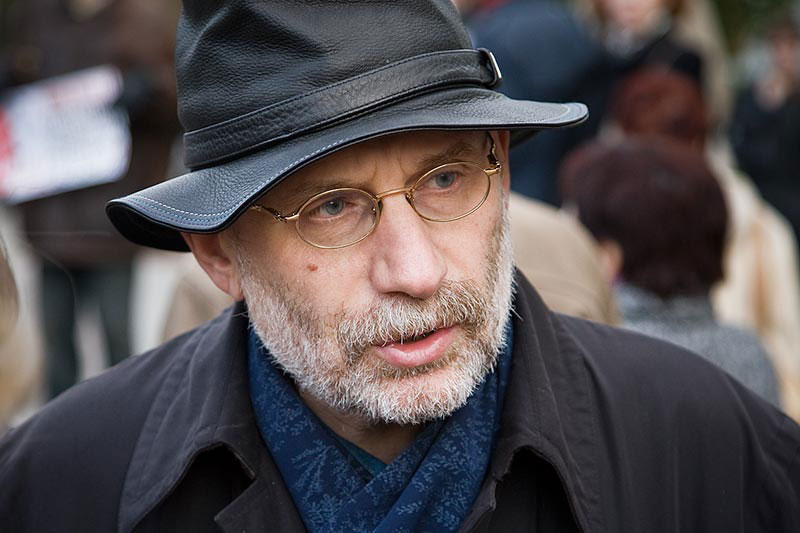
Chkhartishvili was sentenced in absentia to 14 years in prison for disseminating fakes about the Russian Armed Forces. He will not return to Russia and will most likely die abroad.
The prosecutor's office asked for 18 years.
A fine of 400,000 rubles was also imposed. A ban on the administration of websites on the Internet after a hypothetical prison term.
P.S. Also today, Zilbeltrud was put on the federal wanted list "for evading the duties of a foreign agent." We will not see him in Russia again.
https://colonelcassad.livejournal.com/9955409.html
Google Translator
******
Ahem, I Am Taking My Bows ...
... and my curtain calls)) Here is from Maria herself, about West's elites and their edikeishn))
When I talk, ad nauseam, about these creeps being uneducated--this is not a figure of speech; whole Western "elite" and their "academe" in any serious field--from governance to military--would be considered failures in Russia. Practically whole (with some exception) "humanities" field in the West related to history, governance and economics is an academic fraud as are those Ph.Ds who abuse academic sinecures BSing their students who merely, upon graduation, boost already a shocking rate of intellectual decay in the combined West.
http://smoothiex12.blogspot.com/2025/07 ... -bows.html












 Russia brutally punished Azerbaijan: A key refinery blew up – Moscow just showed Baku where it belongs


 Kievsky Railway Station