
Is It about the Oil?
“No War for Oil” is one of the most popular slogans in the many emergency demonstrations sprouting up around the world in response to the criminal kidnapping of Nicolas Maduro and Cilia Flores from their residence in Caracas, Venezuela and their forced removal to detention in the US.
For many outraged by the naked military aggression on Venezuelan sovereignty, the abduction is an escalated step toward the capture of Venezuelan energy resources by the US government, given that Venezuela has the largest proven petroleum reserves of any country at this moment.
The argument goes that-- when you pull the curtain back-- the ultimate goal of US imperialist designs is the control over and possible exploitation of Venezuela’s most important resource.
Having argued frequently that oil-imperialism or energy-imperialism is often an important-- if not decisive-- factor in capitalist foreign policy, this claim is appealing. Since the time when Britain in the early twentieth century turned from coal-burning naval ships to oil, petroleum has become more and more essential for the functioning, growth, and protection of capitalist economies. Consequently, intense competition for a rapidly diminishing, increasingly hard to discover, and growing-costly-to-exploit resource dictates the actions of great power rivals.
History gives us important examples of resource-scarcity spurring devastating imperialist aggression by capitalist powers. Nazi Germany’s Lebensraum program had at its core the necessity of acquiring energy resources to propel its imperialist designs-- a program that led to world war. Similarly, Hirohito’s Japan-- a resource-poor island nation-- launched its Pacific offensive largely to acquire the oil to continue its war against China in the face of a US embargo.
The US embargo to deny oil to Republican Spain was, conversely, an aggressive act in oil imperialism, as is today’s blockade of Cuba. The war in Ukraine is indirectly a war over energy resources, since US resolve was stoked by the opportunity to win the vast EU market from Russia-- a convenient, inexpensive, and formerly reliable supplier.
Less well known, the major oil and gas suppliers are constantly influencing global politics through manipulating production and prices. The most well-known example is the 1970’s OPEC oil strike against Israel’s Western supporters (an act that the Arab countries have lost the stomach for in recent times).
As a wise friend speculated once: “Why do you think the US never occupied Somalia after the Battle of Mogadishu in 1993 left 92 US casualties? Because there was no oil!”
Yet many believe that the attack on Venezuelan sovereignty was not about the oil… even with the President of the aggressor state saying that it was!
Instead, they believe it was about Western values, the rule of law, democracy, petty grievances, hubris, or even drug smuggling. Those in the loyal opposition-- Democratic Party leaders-- share many of these same explanations, but fault the Trump administration for its procedural or legalistic errors.
The center-left, the bogus-left, and the anti-Communist left deny that oil could be the motive because they imagine that it might bolster the case for an explanation based upon classical Leninist imperialism-- that the invasion of Venezuela was motivated by corporate interests, by exploitation of resource-rich countries.
Thus, widely-followed liberal economist Paul Krugman scoffs at the idea that Venezuela was invaded for oil: “... whatever it is we’re doing in Venezuela isn’t really a war for oil. It is, instead, a war for oil fantasies. The vast wealth Trump imagines is waiting there to be taken doesn’t exist.”
Krugman collects and endorses the most popular arguments against the “war for oil” viewpoint:
Venezuela reserves are a lie.
Venezuela's heavy crude oil is uneconomic, undesirable, and unwanted.
The Venezuelan industry is so decrepit that it is beyond rescue.
The US has so much sweet, light crude oil available at low cost that no one would want Venezuelan oil.
The Nobel prize award-winner’s dismissal could easily be dismissed by simply asking why-- if acquiring Venezuelan oil is so pointless-- did Chevron ship 1.68 million barrels of Venezuelan crude oil in the first week of January, according to Bloomberg?
And then there is the ever-voracious, parasitic Haliburton-- the consummate insider corporation-- that announced that it's ready to go into Venezuela within months!
It is worth looking a little deeper into the reasons that Venezuela’s oil is a possible target of imperialist design.
If Venezuela’s oil reserves are even one-third of what OPEC, The US Energy Information Administration, or The Energy Institute concede, their reserves would still be double those of the US.
While Venezuela's heavy, sour crude is costlier to extract and refine, it remains as a legacy with many refineries in the US that were established before the shale boom. Naked Capitalism concedes that “t is true that the US has motive, in that our refineries are tuned so that 70% of the oil they process is heavier grades, despite the US producing light sweet crudes.” It further quotes The American Fuel and Petroleum Manufacturer's website:
Long before the U.S. shale boom, when global production of light sweet crude oil was declining, we made significant investments in our refineries to process heavier, high-sulfur crude oils that were more widely available in the global market. These investments were made to ensure U.S. refineries would have access to the feedstocks needed to produce gasoline, diesel and jet fuel. Heavier crude is now an essential feedstock for many U.S. refineries. Substituting it for U.S. light sweet crude oil would make these facilities less efficient and competitive, leading to a decline in fuel production and higher costs for consumers.
Currently, Canada exports 90% of its very heavy, sour oil to the US, accounting for approximately a quarter of its total exports to the US. Oil from the Alberta oil sands is also expensive to extract and refine, but nonetheless amounts to 4 to 4.5 million barrels per day exported to the US. It must be acknowledged that future Venezuelan oil counts as powerful leverage in the recent and continuing political and economic friction between the US and Canada, especially as Canada is defying the US by building “a new strategic partnership” with China.
Much has been made of the state of the Venezuelan oil industry, today producing around a million barrels a day, down from its peak at over 3.5 million barrels per day decades ago. Indeed, the US blockade has stifled investments, shuttered export markets, and denied technological advances. Nonetheless, Venezuela has produced as much as 2 million barrels a day as recently as 2017. Admittedly, it would take significant investment to return to the 2017 level and vast investment to restore the level of the 1970s.
Many commentators are “shocked” by the enormous capital required to upgrade the Venezuelan oil industry. They forget earlier “shocking” assessments of the fracking revolution: “The U.S. shale oil industry hailed as a “revolution” has burned through a quarter trillion dollars more than it has brought in over the last decade. It has been a money-losing endeavor of epic proportions.”
Still, the Trump administration's gambit has many competitors concerned that US control over Venezuela’s oil “would reshape the global oil map--putting the US in charge of the output of one of the founding members of the Organization of the Petroleum Exporting Countries and, along with America’s own prodigious production, give it a potentially disruptive role in a market already struggling with oversupply.” According to The Wall Street Journal, US oil production, US political and corporate domination of Guyana’s emerging energy sector, and now Venezuela’s reserves, may place the US in a position to unbalance the market, particularly at the expense of the OPEC alliance, a move of enormous political consequence.
The critics of oil-imperialism fail to understand all of its dimensions. They crudely simplify the politics of oil to the immediacy of extraction and its costs of the moment, ignoring indirect impacts, the wider prospects, and the longer term.
Nor do they grasp the issues that are facing the US domestic oil industry. While fracking has allowed the industry to return to being the largest crude oil producer in the world, the industry faces the perennial question of peak production for a given technology-- the ever-present problem of rising costs of discovery and extraction. Further, the exalted Permian Basin is “becoming a pressure cooker”, pressing upon both costs and public acceptance. “Swaths of the Permian appear to be on the verge of geological malfunction. Pressure in the injection reservoirs in a prime portion of the basin runs as high as 0.7 pound per square inch per foot, according to a Wall Street Journal analysis of data from researchers at the University of Texas at Austin’s Bureau of Economic Geology.” As The Wall Street Journal also reports: “A buildup in pressure across the region is propelling wastewater up ancient wellbores, birthing geysers that can cost millions of dollars to clean up. Companies are wrestling with drilling hazards that make it costlier to operate and complaining that the marinade is creeping into their oil-and-gas reservoirs. Communities friendly to oil and gas are growing worried about injection.”
Because of the current glut of oil (likely retaliation by OPEC+ producers seeking to drive down US production below its cost of production and recover market share) the number of operating rigs is down 14% in the Permian. Oil markets are volatile, competitive, and transient. Where Venezuelan crude will fit into these equations remains an open question.
And then there is the Essequibo, a region currently within the borders of Guyana, but disputed by Venezuela. Recent discoveries in the area promise a potential of over 11 billion barrels of oil, with Exxon estimating a production of 1.7 million barrels per day by 2030. This economic plum is now off the table in the conflict between the Maduro government and Guyana and Exxon. As OILPRICE.com puts it succinctly: Trump’s Venezuela Takeover Will Make Guyana Oil Safer… for the US and Exxon.
Let us not forget China. The People’s Republic of China has granted around $106 billion in loans to Venezuela since 2000. Daniel Chavez, writing in TNI, notes that those loans place “it fourth among recipients of Chinese official credit globally.” Estimates vary, but the PRC imports between 400,000 and 600,000 barrels per day from Venezuela, at least doubling since 2020. While it is less than 5% of PRC usage, it is not inconsequential. And it represents a serious penetration of capital and trade in the Western hemisphere-- the US sphere of interest.
It underscores the reality that oil-politics is not merely about the immediacy of reserves, extraction, costs, and price, but also about competition and rivalry within the imperialist system. The competition and conflict between the US, Venezuela, Guyana, Canada, PRC, OPEC, and other oil-producing countries is intrinsic to a system that lives and breathes thanks to its exploitation of energy resources. In that regard, it is still most clearly viewed through the prism of Lenin’s theory of advanced capitalism devised over a hundred years ago.
I give the last word to the informed and serious student of the oil industry, Antonia Juhasz:
If the greatest lie the devil ever told was to convince us that he wasn’t real, the greatest lie the oil industry ever told us is to convince us that they don’t want oil. Where do we even begin to think about that as possible? They want to control when they produce it and how, and under what terms. They need to show a growing amount of oil that they can count as their reserves.
There are very few big pots of oil left sitting around anywhere unclaimed. The only way to get that is to increase technology, go into very expensive, technologically complex modes of production that face a lot of resistance. Venezuela is a country that [the big oil companies] were producing in not that long ago and making money in not that long ago and have wanted to get back into but on their own terms.
So I think when they protest publicly, one, it’s to distance themselves from Trump’s extremism, but two, it’s a great public negotiating tactic. They’re basically saying publicly, and the media is repeating it, “We wouldn’t want to operate in Venezuela. Oh, my God, it’s expensive, it’s technologically complex.” I actually think those are ridiculous things if you look where else they operate.
Greg Godels
zzsblogml@gmail.com
http://zzs-blg.blogspot.com/2026/01/is- ... t-oil.html
Venezuela
Re: Venezuela
"There is great chaos under heaven; the situation is excellent."
Re: Venezuela
Former Manager of PDVSA: Trump’s Oil Viceroyalty Over Venezuela Is Fantasy (Interview)
January 24, 2026
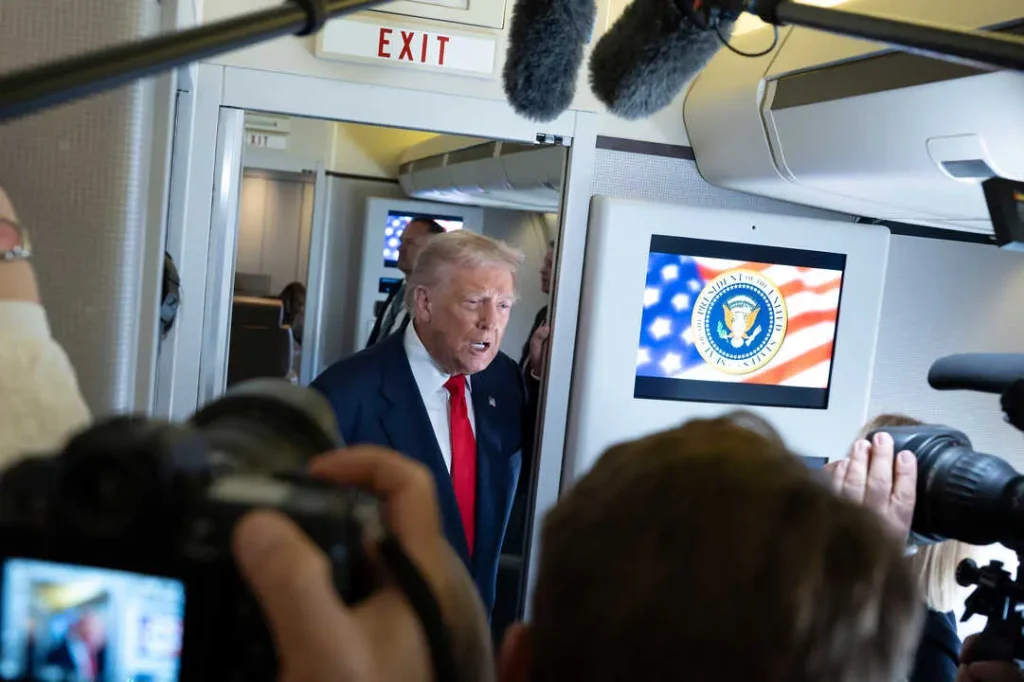
US President Donald Trump speaks to the press at the Andrews Joint Base. Photo: Joyce Boghosian/White House/Zuma Press.
Several weeks after the kidnapping of President Nicolás Maduro by US forces, Donald Trump announced plans to “market” Venezuelan crude oil through US oil corporations such as Vitol, Trafigura, and Chevron.
He promises the return of ExxonMobil and ConocoPhillips to Venezuela, talks about “confiscating” 50 million barrels of Venezuelan oil in storage, and proposes a scheme in which the United States would control Venezuela’s oil exports. The question is inevitable: is this viable or simply another fantasy of Trumpian rhetoric?
To answer these questions, Diario Red spoke with Einstein Millán Arcia, a petroleum engineer who graduated from the Universidad de Oriente of Venezuela (1979), got a master’s degree in petroleum engineering from the University of Oklahoma (1990), and has served as manager and advisor to the Venezuelan state-owned oil company PDVSA, YPFB-Bolivia, Kuwait Oil Company (KOC), and PEMEX (Mexico), as well as other oil companies.
As a PDVSA employee, he was part of the team that brought the oil company back on its feet after the 2002 sabotage against the company, led by former executives at odds with Hugo Chávez, and later of the PDVSA Gas Anaco team. Thanks to this experience, he knows the ins and outs of the Venezuelan oil industry and the risks that PDVSA faces in this new political moment in the country.
In his opinion, the possibility of Venezuela handing over all its oil to the United States would be like the Venezuelan government itself “plunging a sword of Damocles into its own back.” Something that is unviable and unrealistic.
In your opinion, how does what happened on January 3—the kidnapping of Maduro and all the announcements now circulating about the US government or its trading companies marketing Venezuelan crude—affect Venezuelan oil?
There is talk of the return of some companies whose assets were nationalized, or of the 50 million barrels of oil that would be delivered to the United States, according to Trump.
You know what the prevailing rhetoric in the United States is like these days: mostly fantasy with just a small grain of truth. So much so that the US Attorney’s Office appointed by Trump himself declared that the story of the Cartel de los Soles is false, and the charge [of drug trafficking against President Maduro] was discredited.
The idea that the US will confiscate Venezuelan oil production and commercialization, do business, and then keep the money to convert it all into US products for export to Venezuela is also false.
The case is as follows: if Venezuela falls into a situation like that, it becomes insolvent. How does it pay salaries? How does it maintain the institutions? How does it sustain the nation’s internal system? Under what parameter will it survive as a country?
The official statements issued by the acting president [Delcy Rodríguez] and by Petróleos de Venezuela also contradict Trump’s rhetoric, as they assert that business with the United States will be conducted just as with any other entity, such as Chevron or any other multinational corporation. That is the official position that has been maintained so far.
Trump claims that the United States will be the sole marketer of Venezuelan oil. At the same time, Washington blocks and confiscates vessels of the “ghost fleet” that were transporting Venezuelan crude to China at steep discounts through intermediaries. In light of this scenario, several questions arise. Is it possible for two marketing mechanisms to coexist in the medium and long term? On the one hand, a portion of Venezuelan production operating under the scheme proposed by Trump, where sales are deposited into accounts from which Venezuela can purchase goods, and on the other, continued flows to China and Russia via shadow fleets. Or, instead, will the United States monopolize the marketing of Venezuelan oil?
That is what Trump aspires to, but it is unfeasible, since it would leave a country without funds, adrift, and unable to sustain itself socially, economically, or politically. It would not be sustainable. It would be like the government itself plunging a sword of Damocles into its own back.
That is unviable, unrealistic, even comical if you will—something that makes you laugh: that a government, even an acting government, would accept such terms. That is why the issue is not what Trump proposes; it is what suits Venezuela. That is the government’s firm position.
It is one thing for Venezuela to sell crude oil to US corporations, and another for it to deliver the crude to the US government. PDVSA and Venezuela must be open to negotiating with anyone on terms set by law and in Venezuela’s best interest.
In regard to foreign currencies, PDVSA relies on limited revenue sources, such as Chevron, for example, and some spot sales. However, most of the revenue comes from cryptocurrencies and other arrangements with countries such as China, which receives 85% of Venezuela’s oil exports.
Other inflows, through Turkey and other Middle Eastern countries, come in exchange for raw materials, which provide Venezuela with constant liquidity. That sustains and enables the Venezuelan state to prosper, especially when you consider that Venezuela’s oil production increased in 2025 to over one million barrels per day and will close 2026 at around 1.2 million barrels per day—perhaps even higher if you factor in the 60,000 to 70,000 barrels per day of condensate that are not reported to the Organization of the Petroleum Exporting Countries (OPEC).
Sure, but what Trump is saying now—according to the Wall Street Journal and Reuters—is that he wants to put trading firms like Vitol, Trafigura, or Chevron in charge of selling Venezuelan crude around the world, a kind of indirect export control. Beyond political will, in operational terms, would that new format of oil viceroyalty proposed by Trump be viable?
It is not about what Trump proposes, I repeat. The important thing is whatever suits Venezuela. That is the [Venezuelan] government’s firm position.
Now, Venezuela has always traded some of its crude oil with Glencore and third parties, such as independent Swiss brokers, for example, as well as Malaysian and Abu Dhabi brokers. There is nothing new there. But handing over Venezuela’s entire oil resource exclusively to a foreign government is not viable. It makes the country unviable. That is what it is all about. It is like shooting yourself in the foot.
Now, regarding the possible lifting of sanctions: Trump is lifting the same measures he imposed in 2019 and 2020, including the ban on the sale of Venezuelan oil. He also met at the White House with oil companies such as Repsol, Eni, and Chevron, the very ones that received licenses during the Biden administration.
What impact could resuming that agenda of opening up and bringing back foreign companies have, given that PDVSA has ceded equity stakes in oil projects because sanctions have left it in a complicated financial situation?
These companies have always negotiated with Venezuela on good terms: Repsol, Eni, Maurel & Prom, Shell, Exxon itself, ConocoPhillips, Chevron, Total. That means the State could reserve the right to award assets whenever it is deemed expedient to achieve a rapid increase in production and deliver a greater return to our nation. That is the government’s position, and it is the position of Petróleos de Venezuela (PDVSA).
Now, it is the terms that you have to know how to negotiate. Because, for example, it is impossible for conditions like those prevailing in Guyana to exist, where companies like Exxon Mobil pay 2% royalties and have capital recovery of up to 75% of gross sales revenue.
The negotiations must respect the established law regarding royalties, taxes, and profits. Now, that does not mean it cannot be renegotiated.
What you need to understand is that there is a huge difference between a production cost of $30 per barrel for a company like Exxon on an asset with a limited production window, such as those in Guyana, which last less than 10 or 15 years, and assets like Venezuela, where production costs can be as low as $10 to 15 per barrel and last for more than 20 years, because these assets hold remaining reserves of medium, light, and condensate crude oil exceeding 30 billion barrels in Venezuela, not counting the 270 billion barrels of heavy and extra-heavy crude.
In addition, there are 200 trillion cubic feet of gas, which, converted into crude oil equivalent, represent a monumental productive capacity.
This magnitude of resources guarantees that, sooner or later, all these corporations will establish themselves in Venezuela, since there is no other country in the region, apart from Canada, with sufficient reserves to sustain operations over such a long time frame.
There is talk of the possibility that oil companies such as ExxonMobil and ConocoPhillips, whose assets were nationalized in Venezuela under Hugo Chávez’s government, may return.
These companies had rejected the new terms of the Hydrocarbons Law, which stipulated that PDVSA must hold a majority stake, leading to nationalization and multimillion-dollar claims against the Venezuelan state.
Trump has even suggested that they first invest in the country, and then they will see how the money they are claiming for the nationalizations is “returned” to them.
First, for them to return, there needs to be stability in relations between the two governments. That is not ready yet. Now, with ExxonMobil, there is no debt, since that was declared in an international court. Yes, there is a misunderstanding, but no debt, since the International Center for Settlement of Investment Disputes did not rule in Exxon’s favor. That lawsuit reached a settlement in which Venezuela emerged as the winning party.
Now, the lawsuit by ConocoPhillips is still pending resolution. The lawsuit is still ongoing.
It is necessary to delve into a bit of history. Between 1914 and 1920, Shell and Exxon arrived in Venezuela through their predecessor companies. Shell was only just beginning its international expansion, while Exxon consolidated its global corporate structure precisely thanks to its Venezuelan operations.
In fact, the first mass exports of both companies came from Venezuela, which catapulted them into transnational corporations.
These companies obtained disproportionate profits by taking advantage of the rudimentary Venezuelan accounting system and the lack of international oversight.
In practice, they extracted discretionary volumes of oil and reported figures at their convenience, especially during the world wars when controls were virtually nonexistent.
In this context, the 1976 nationalization was the product of a transparent and legally impeccable process, accepted by both parties.
The companies received cash compensation of over $1.5 billion at the time, as well as favorable export agreements and service contracts that accounted for 1.7% of Venezuelan exports.
Therefore, they lack any legal basis to claim additional compensation for that nationalization, and their track record in the country is far from exemplary.
And what about the price that PDVSA will ultimately receive for its sales? Because until now, due to the embargo and sanctions, anyone trading and buying Venezuelan oil received a discount of between 1o and 20 dollars.
Global oil markets are governed by three factors: quality differentials, discounts, and risk premiums. The differential is based on crude oil quality, while the risk premium determines the applicable discounts.
There is a fundamental distinction in our exports: Orinoco Belt crude oil in its unrefined state and Merey, which is refined crude oil. Merey has a lower sulfur content than Iraq’s Basra Light and Saudi Medium crude. Although there is talk of “Venezuelan acidic crude,” our Merey is less acidic than Saudi medium and Basra light. This is why it is priced the way it is.
It is important to clarify a key technical point: the crude oil from the Orinoco Belt is not bitumen; it is petroleum. It flows naturally from the wells under initial conditions. Its API gravity reaches as high as 17 degrees in some blocks of the Belt, although other blocks range from 6 to 7 degrees API, and most exceed 10 degrees API.
Before the sanctions and the 2008-2009 Oil Sovereignty Plan, Venezuela maintained a diversified crude oil portfolio. The Orinoco Belt produced between 300,000 and 400,000 barrels per day, while the rest came from light, medium, and condensate. This production of light, medium, and condensate crude oil covered the country’s diluent needs.
Imports were targeted for specific processes: just 17,000 to 18,000 barrels per day. Production costs before 2008 were less than $6 or $7 per barrel. Before 2006, they were below $4 per barrel. All of this is officially documented.
When the Orinoco Belt’s production was massively incorporated, and PDVSA reoriented its activity from traditional light, medium, and condensate crude fields toward heavy and extra-heavy crudes, the production of condensate, light, and medium crude slowed while that of heavy and extra-heavy crude accelerated.
This reduction in light, medium, and condensate crude eliminated the diluent available to upgrade the Orinoco Belt crude and convert it into Merey. PDVSA had to import diluents, which directly impacted production costs.
Moreover, this cost increase put our flagship crude at a disadvantage, and it began to be exported en masse compared to other grades. Previously, varieties such as Tía Juana Light and Mesa were exported. Later, exports were concentrated solely on Merey.
All of this affected profits, since thinner had to be imported. Imports reached 200,000 barrels per day in 2025. Currently, it stands at 180,000 barrels per day, ten times more than it was until 2007-2008. This factor drove production costs from $4-6 to $14-18, and finally to $36 per barrel. Now they have stabilized between $27 and $33.
At the same time, the country’s risk premium rose due to sanctions and political instability. Buyers, especially those in the spot market, demand discounts to assume the risk, which reduces profit margins for Venezuelan crude.
The result is a mix of decisions made during Rafael Ramírez’s tenure as president of PDVSA under the Chávez government, plus the sanctions imposed by the US in collaboration with Venezuelan opposition sectors.
It is a political conspiracy combined with a strategy from the North to facilitate unconventional situations, such as those in the Essequibo, Brazil’s pre-salt summit, and Argentina’s Vaca Muerta.
The numbers prove it. The United States exceeds $50-60 per barrel in production costs, Guyana is at $30, Argentina is $40-45, Brazil is $49-50, Colombia is $45-50, and Trinidad and Mexico have similar figures as Colombia.
No one could compete with Venezuela before 2007, when our costs were one-tenth of theirs. This entire situation was woven from the start to enable these major developments.
Now that the United States has reached its peak production, thanks to fracking, and is entering a decline, it has become a priority for it to secure its energy by appropriating resources from other countries without negotiating, as required under the global economic order.
[Author’s note: API gravity (American Petroleum Institute gravity) is a scale that measures the density of crude oil relative to water. It is the most widely used international standard for classifying oil quality. The higher the API gravity, the lighter and less dense the crude; the lower the API gravity, the heavier and denser the crude.]
(Diario Red) by Bruno Sgarzini
https://orinocotribune.com/former-direc ... interview/
January 24, 2026
US President Donald Trump speaks to the press at the Andrews Joint Base. Photo: Joyce Boghosian/White House/Zuma Press.
Several weeks after the kidnapping of President Nicolás Maduro by US forces, Donald Trump announced plans to “market” Venezuelan crude oil through US oil corporations such as Vitol, Trafigura, and Chevron.
He promises the return of ExxonMobil and ConocoPhillips to Venezuela, talks about “confiscating” 50 million barrels of Venezuelan oil in storage, and proposes a scheme in which the United States would control Venezuela’s oil exports. The question is inevitable: is this viable or simply another fantasy of Trumpian rhetoric?
To answer these questions, Diario Red spoke with Einstein Millán Arcia, a petroleum engineer who graduated from the Universidad de Oriente of Venezuela (1979), got a master’s degree in petroleum engineering from the University of Oklahoma (1990), and has served as manager and advisor to the Venezuelan state-owned oil company PDVSA, YPFB-Bolivia, Kuwait Oil Company (KOC), and PEMEX (Mexico), as well as other oil companies.
As a PDVSA employee, he was part of the team that brought the oil company back on its feet after the 2002 sabotage against the company, led by former executives at odds with Hugo Chávez, and later of the PDVSA Gas Anaco team. Thanks to this experience, he knows the ins and outs of the Venezuelan oil industry and the risks that PDVSA faces in this new political moment in the country.
In his opinion, the possibility of Venezuela handing over all its oil to the United States would be like the Venezuelan government itself “plunging a sword of Damocles into its own back.” Something that is unviable and unrealistic.
In your opinion, how does what happened on January 3—the kidnapping of Maduro and all the announcements now circulating about the US government or its trading companies marketing Venezuelan crude—affect Venezuelan oil?
There is talk of the return of some companies whose assets were nationalized, or of the 50 million barrels of oil that would be delivered to the United States, according to Trump.
You know what the prevailing rhetoric in the United States is like these days: mostly fantasy with just a small grain of truth. So much so that the US Attorney’s Office appointed by Trump himself declared that the story of the Cartel de los Soles is false, and the charge [of drug trafficking against President Maduro] was discredited.
The idea that the US will confiscate Venezuelan oil production and commercialization, do business, and then keep the money to convert it all into US products for export to Venezuela is also false.
The case is as follows: if Venezuela falls into a situation like that, it becomes insolvent. How does it pay salaries? How does it maintain the institutions? How does it sustain the nation’s internal system? Under what parameter will it survive as a country?
The official statements issued by the acting president [Delcy Rodríguez] and by Petróleos de Venezuela also contradict Trump’s rhetoric, as they assert that business with the United States will be conducted just as with any other entity, such as Chevron or any other multinational corporation. That is the official position that has been maintained so far.
Trump claims that the United States will be the sole marketer of Venezuelan oil. At the same time, Washington blocks and confiscates vessels of the “ghost fleet” that were transporting Venezuelan crude to China at steep discounts through intermediaries. In light of this scenario, several questions arise. Is it possible for two marketing mechanisms to coexist in the medium and long term? On the one hand, a portion of Venezuelan production operating under the scheme proposed by Trump, where sales are deposited into accounts from which Venezuela can purchase goods, and on the other, continued flows to China and Russia via shadow fleets. Or, instead, will the United States monopolize the marketing of Venezuelan oil?
That is what Trump aspires to, but it is unfeasible, since it would leave a country without funds, adrift, and unable to sustain itself socially, economically, or politically. It would not be sustainable. It would be like the government itself plunging a sword of Damocles into its own back.
That is unviable, unrealistic, even comical if you will—something that makes you laugh: that a government, even an acting government, would accept such terms. That is why the issue is not what Trump proposes; it is what suits Venezuela. That is the government’s firm position.
It is one thing for Venezuela to sell crude oil to US corporations, and another for it to deliver the crude to the US government. PDVSA and Venezuela must be open to negotiating with anyone on terms set by law and in Venezuela’s best interest.
In regard to foreign currencies, PDVSA relies on limited revenue sources, such as Chevron, for example, and some spot sales. However, most of the revenue comes from cryptocurrencies and other arrangements with countries such as China, which receives 85% of Venezuela’s oil exports.
Other inflows, through Turkey and other Middle Eastern countries, come in exchange for raw materials, which provide Venezuela with constant liquidity. That sustains and enables the Venezuelan state to prosper, especially when you consider that Venezuela’s oil production increased in 2025 to over one million barrels per day and will close 2026 at around 1.2 million barrels per day—perhaps even higher if you factor in the 60,000 to 70,000 barrels per day of condensate that are not reported to the Organization of the Petroleum Exporting Countries (OPEC).
Sure, but what Trump is saying now—according to the Wall Street Journal and Reuters—is that he wants to put trading firms like Vitol, Trafigura, or Chevron in charge of selling Venezuelan crude around the world, a kind of indirect export control. Beyond political will, in operational terms, would that new format of oil viceroyalty proposed by Trump be viable?
It is not about what Trump proposes, I repeat. The important thing is whatever suits Venezuela. That is the [Venezuelan] government’s firm position.
Now, Venezuela has always traded some of its crude oil with Glencore and third parties, such as independent Swiss brokers, for example, as well as Malaysian and Abu Dhabi brokers. There is nothing new there. But handing over Venezuela’s entire oil resource exclusively to a foreign government is not viable. It makes the country unviable. That is what it is all about. It is like shooting yourself in the foot.
Now, regarding the possible lifting of sanctions: Trump is lifting the same measures he imposed in 2019 and 2020, including the ban on the sale of Venezuelan oil. He also met at the White House with oil companies such as Repsol, Eni, and Chevron, the very ones that received licenses during the Biden administration.
What impact could resuming that agenda of opening up and bringing back foreign companies have, given that PDVSA has ceded equity stakes in oil projects because sanctions have left it in a complicated financial situation?
These companies have always negotiated with Venezuela on good terms: Repsol, Eni, Maurel & Prom, Shell, Exxon itself, ConocoPhillips, Chevron, Total. That means the State could reserve the right to award assets whenever it is deemed expedient to achieve a rapid increase in production and deliver a greater return to our nation. That is the government’s position, and it is the position of Petróleos de Venezuela (PDVSA).
Now, it is the terms that you have to know how to negotiate. Because, for example, it is impossible for conditions like those prevailing in Guyana to exist, where companies like Exxon Mobil pay 2% royalties and have capital recovery of up to 75% of gross sales revenue.
The negotiations must respect the established law regarding royalties, taxes, and profits. Now, that does not mean it cannot be renegotiated.
What you need to understand is that there is a huge difference between a production cost of $30 per barrel for a company like Exxon on an asset with a limited production window, such as those in Guyana, which last less than 10 or 15 years, and assets like Venezuela, where production costs can be as low as $10 to 15 per barrel and last for more than 20 years, because these assets hold remaining reserves of medium, light, and condensate crude oil exceeding 30 billion barrels in Venezuela, not counting the 270 billion barrels of heavy and extra-heavy crude.
In addition, there are 200 trillion cubic feet of gas, which, converted into crude oil equivalent, represent a monumental productive capacity.
This magnitude of resources guarantees that, sooner or later, all these corporations will establish themselves in Venezuela, since there is no other country in the region, apart from Canada, with sufficient reserves to sustain operations over such a long time frame.
There is talk of the possibility that oil companies such as ExxonMobil and ConocoPhillips, whose assets were nationalized in Venezuela under Hugo Chávez’s government, may return.
These companies had rejected the new terms of the Hydrocarbons Law, which stipulated that PDVSA must hold a majority stake, leading to nationalization and multimillion-dollar claims against the Venezuelan state.
Trump has even suggested that they first invest in the country, and then they will see how the money they are claiming for the nationalizations is “returned” to them.
First, for them to return, there needs to be stability in relations between the two governments. That is not ready yet. Now, with ExxonMobil, there is no debt, since that was declared in an international court. Yes, there is a misunderstanding, but no debt, since the International Center for Settlement of Investment Disputes did not rule in Exxon’s favor. That lawsuit reached a settlement in which Venezuela emerged as the winning party.
Now, the lawsuit by ConocoPhillips is still pending resolution. The lawsuit is still ongoing.
It is necessary to delve into a bit of history. Between 1914 and 1920, Shell and Exxon arrived in Venezuela through their predecessor companies. Shell was only just beginning its international expansion, while Exxon consolidated its global corporate structure precisely thanks to its Venezuelan operations.
In fact, the first mass exports of both companies came from Venezuela, which catapulted them into transnational corporations.
These companies obtained disproportionate profits by taking advantage of the rudimentary Venezuelan accounting system and the lack of international oversight.
In practice, they extracted discretionary volumes of oil and reported figures at their convenience, especially during the world wars when controls were virtually nonexistent.
In this context, the 1976 nationalization was the product of a transparent and legally impeccable process, accepted by both parties.
The companies received cash compensation of over $1.5 billion at the time, as well as favorable export agreements and service contracts that accounted for 1.7% of Venezuelan exports.
Therefore, they lack any legal basis to claim additional compensation for that nationalization, and their track record in the country is far from exemplary.
And what about the price that PDVSA will ultimately receive for its sales? Because until now, due to the embargo and sanctions, anyone trading and buying Venezuelan oil received a discount of between 1o and 20 dollars.
Global oil markets are governed by three factors: quality differentials, discounts, and risk premiums. The differential is based on crude oil quality, while the risk premium determines the applicable discounts.
There is a fundamental distinction in our exports: Orinoco Belt crude oil in its unrefined state and Merey, which is refined crude oil. Merey has a lower sulfur content than Iraq’s Basra Light and Saudi Medium crude. Although there is talk of “Venezuelan acidic crude,” our Merey is less acidic than Saudi medium and Basra light. This is why it is priced the way it is.
It is important to clarify a key technical point: the crude oil from the Orinoco Belt is not bitumen; it is petroleum. It flows naturally from the wells under initial conditions. Its API gravity reaches as high as 17 degrees in some blocks of the Belt, although other blocks range from 6 to 7 degrees API, and most exceed 10 degrees API.
Before the sanctions and the 2008-2009 Oil Sovereignty Plan, Venezuela maintained a diversified crude oil portfolio. The Orinoco Belt produced between 300,000 and 400,000 barrels per day, while the rest came from light, medium, and condensate. This production of light, medium, and condensate crude oil covered the country’s diluent needs.
Imports were targeted for specific processes: just 17,000 to 18,000 barrels per day. Production costs before 2008 were less than $6 or $7 per barrel. Before 2006, they were below $4 per barrel. All of this is officially documented.
When the Orinoco Belt’s production was massively incorporated, and PDVSA reoriented its activity from traditional light, medium, and condensate crude fields toward heavy and extra-heavy crudes, the production of condensate, light, and medium crude slowed while that of heavy and extra-heavy crude accelerated.
This reduction in light, medium, and condensate crude eliminated the diluent available to upgrade the Orinoco Belt crude and convert it into Merey. PDVSA had to import diluents, which directly impacted production costs.
Moreover, this cost increase put our flagship crude at a disadvantage, and it began to be exported en masse compared to other grades. Previously, varieties such as Tía Juana Light and Mesa were exported. Later, exports were concentrated solely on Merey.
All of this affected profits, since thinner had to be imported. Imports reached 200,000 barrels per day in 2025. Currently, it stands at 180,000 barrels per day, ten times more than it was until 2007-2008. This factor drove production costs from $4-6 to $14-18, and finally to $36 per barrel. Now they have stabilized between $27 and $33.
At the same time, the country’s risk premium rose due to sanctions and political instability. Buyers, especially those in the spot market, demand discounts to assume the risk, which reduces profit margins for Venezuelan crude.
The result is a mix of decisions made during Rafael Ramírez’s tenure as president of PDVSA under the Chávez government, plus the sanctions imposed by the US in collaboration with Venezuelan opposition sectors.
It is a political conspiracy combined with a strategy from the North to facilitate unconventional situations, such as those in the Essequibo, Brazil’s pre-salt summit, and Argentina’s Vaca Muerta.
The numbers prove it. The United States exceeds $50-60 per barrel in production costs, Guyana is at $30, Argentina is $40-45, Brazil is $49-50, Colombia is $45-50, and Trinidad and Mexico have similar figures as Colombia.
No one could compete with Venezuela before 2007, when our costs were one-tenth of theirs. This entire situation was woven from the start to enable these major developments.
Now that the United States has reached its peak production, thanks to fracking, and is entering a decline, it has become a priority for it to secure its energy by appropriating resources from other countries without negotiating, as required under the global economic order.
[Author’s note: API gravity (American Petroleum Institute gravity) is a scale that measures the density of crude oil relative to water. It is the most widely used international standard for classifying oil quality. The higher the API gravity, the lighter and less dense the crude; the lower the API gravity, the heavier and denser the crude.]
(Diario Red) by Bruno Sgarzini
https://orinocotribune.com/former-direc ... interview/
"There is great chaos under heaven; the situation is excellent."
Re: Venezuela
Delcy Rodríguez Rejects US ‘Orders’ as Venezuela Advances Hydrocarbons Law Reform
January 27, 2026
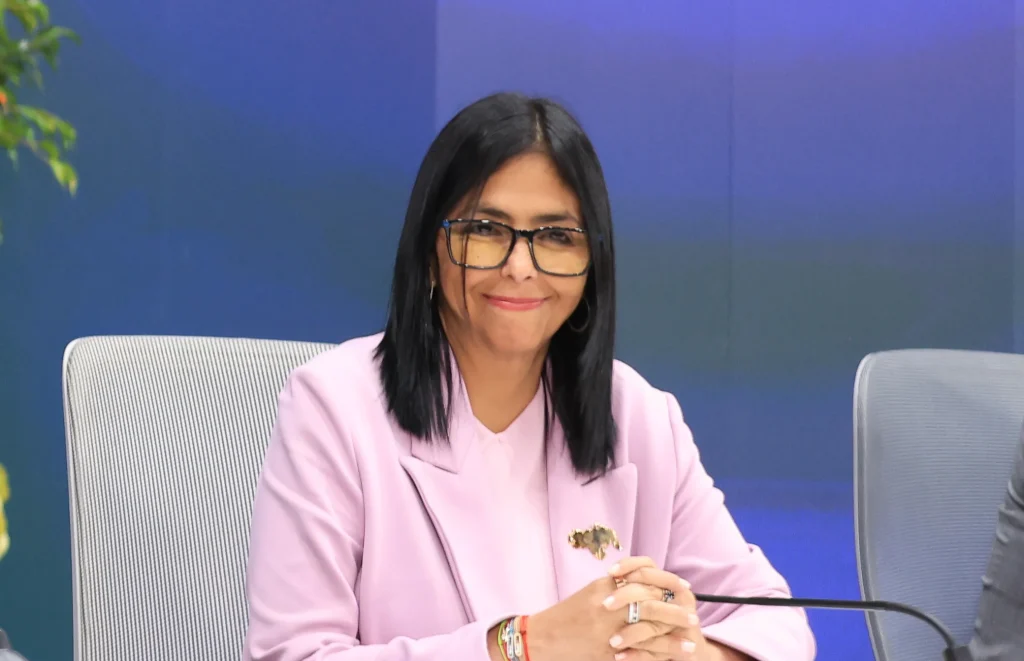
Venezuelan Acting President Delcy Rodríguez during a consultation of the reform of the Hydrocarbons Law in the PDVSA headquarters in Caracas on Monday, January 26, 2026. Photo: Radio Miraflores.
Caracas (OrinocoTribune.com)—On Monday, Venezuelan Acting President Delcy Rodríguez led a meeting within the context of the public consultation of the partial reform of the Organic Hydrocarbons Law, which has received 80 proposals from all sectors of the country. During the meeting, she stated that Venezuela must become an oil production powerhouse, asserting that merely possessing the largest oil reserves on earth is not enough. She also responded firmly to recent statements by US Treasury Secretary Scott Bessent.
Orlando Camacho, Venezuelan deputy and president of the Parliamentary Energy Commission, provided an overview of the preliminary results from the PDVSA headquarters in Caracas. This process follows the National Assembly’s (AN) approval of the draft in its first discussion.
“As stated in the rules of debate regarding the public consultation, I want to inform you that we have received 80 proposals from the hydrocarbons commission today,” Camacho announced to the acting president and representatives from both the public and private energy sectors.
Camacho stated that this law fulfills an obligation to the people and the business sector active in Venezuela, aiming to incorporate values that strengthen legal protections for investors. He also took the opportunity to debunk misinformation in the media regarding the ownership of resources.
“Of course, we have seen some media outlets talking about ‘privatization,’ but no, the company remains exactly the same: the ownership of the deposit belongs to Venezuela, and it is all Venezuelan,” Camacho clarified. “What we are going to incorporate is the proposal that the president brought forward, which is to copy everything that has been done through the Anti-Blockade Law and incorporate it into this new reform of the Organic Hydrocarbons Law.”
Camacho further noted that the country does not need to contribute funds, as resources will come from local and international private investors. He highlighted that these investments will reach remote areas of the country to develop roads, housing, and public services.
Acting president’s key statements
During the meeting, Acting President Rodríguez condemned recent statements made by US Treasury Secretary Bessent, calling them “irrelevant and offensive.”
Bessent had made comments “clarifying” that while the US does not control Venezuela, it controls its policy. He claimed the US would begin lifting sanctions soon and would “order” elections in due time, while vilely suggesting María Corina Machado would be the right choice.
Rodríguez reaffirmed Venezuela’s sovereignty and the principle of self-determination. “The people of Venezuela do not accept orders from any external factor. We have a government, and this government obeys the people,” she stated.
She emphasized the deep connection between the Venezuelan people, their authorities, and their institutions, noting her honor in representing citizens in the current situation. “We have no external factor to obey,” she reiterated.
Regarding personal threats against her, Acting President Rodríguez stated: “We are not afraid, nor are we afraid of respectful relations with the United States, but they must be based on respect—respect for international law, minimum human respect in interpersonal relations, and respect for the dignity and history of Venezuela.”
Returning to the legal reform, she stated that Venezuela must transition from being the country with the largest oil reserves to becoming a large producer.
“Let Venezuela be a giant. Let us be giant oil producers, because it is enough to have the title of having the largest reserves and not have that translate into development for Venezuela. Enough is enough,” she said, adding that the main goal of the reform is to guarantee the economic and social happiness of the Venezuelan people.
“Today, we have an obligation to the country, which is to guarantee the future, to guarantee the social and economic happiness of the Venezuelan people,” the Chavista leader added. “With this reform, we hope to attract significant flows of international investment as well as national investment, because we have always opened the doors to international investment and the national private sector.”
National Assembly president
Before the acting president’s speech, National Assembly President Jorge Rodríguez stated that Venezuela continues to reach emblematic milestones in the oil industry. He noted that the country hit the mark of 1.2 million barrels per day at the end of 2025, a goal he expects will be far exceeded after the passage of the Hydrocarbons Law reform.
“We will not stop congratulating and thanking the oil industry workers, because amid the greatest difficulties, amid the greatest vicissitudes, we achieved what seemed impossible,” Rodríguez said during the meeting with business leaders on Monday, January 26. “We have closed the year 2025 with 1,200,000 barrels of daily production.”
He further announced that the first article of the reformed Hydrocarbons Law will expand the scope of the energy sector.
“The Hydrocarbons Law, in its first article, broadens the scope to include all products—not only oil and fuels, but all oil derivatives,” he explained.
https://orinocotribune.com/delcy-rodrig ... aw-reform/
******
Venezuela as a turning point in a fragmented region
January 26, 2026 , 4:43 pm .
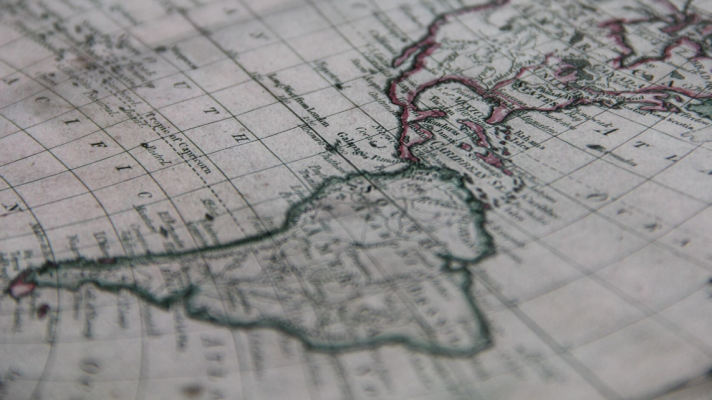
Latin America has done very little to promote regional integration in recent times (Photo: Leon Overweel)
January 3rd marked a turning point in the recent political history of Latin America. The military action carried out by the United States against Venezuela was a large-scale operation with a dense doctrinal content, which inaugurated a new phase of open intervention in the region
This event starkly exposes a shared responsibility: the passivity of Latin American governments, the absence of a common strategic vision, and the inability to build effective consensus to deter illegal actions of this nature.
Countries that today condemn the aggression, such as Brazil, Chile and Uruguay, opted for years for silence, ambiguity or political distance, renouncing an early defense of the principle of regional sovereignty.
Regional fragmentation
The fragility of the regional framework was already evident in 2023, during the Summit of South American Presidents convened by Brazil
In that space which, at first, seemed encouraging, President Nicolás Maduro made an explicit call to overcome sterile ideological disputes and move towards real integration mechanisms, based on a long-term, state-oriented vision.
"Let's put aside that ideologization and take steps forward, with a vision of the State, of high standards, so that this initiative (...) is the beginning of a new stage, hopefully of true unity," he stated at the time, clearly anticipating the risks of a disjointed region facing external pressures.
However, that call clashed with a political reality marked by ambiguities and lukewarmness.
While the president of Brazil, Luiz Inácio Lula da Silva, oscillated between gestures of rapprochement and statements that relativized the nature of the Venezuelan political system:
"Our region has allowed ideologies to divide us and disrupt integration efforts. We have abandoned our existing channels of dialogue and cooperation mechanisms. As a result, we have all lost," the Brazilian president stated .
Other actors, such as the Chilean government of Gabriel Boric, opted for public disagreements of a more childish than strategic nature.
"I respectfully stated that I disagreed with what President Lula said yesterday, in that the human rights situation in Venezuela was a narrative construct," Boric said during the meeting.
These positions, divorced from an understanding of the geopolitical landscape, ultimately revealed the unpreparedness of certain leaders to confront global power dynamics. The result was an incomplete, merely declarative, and fragile integration, incapable of offering effective support during critical moments such as those that unfolded during the first year of the Trump administration.
This same logic was reproduced in the expanded multilateral sphere.
Brazil's decision to veto Venezuela's entry into the BRICS was a far-reaching strategic error, aggravated by the way in which it was executed.
Lula, who was unable to travel to Kazan due to health reasons following a domestic accident that resulted in his hospitalization, could not personally assume the political cost of the decision, and was forced to outsource the operation through his technical and diplomatic team.
From that position, the Brazilian government blocked Caracas's inclusion. This line of reasoning was put forward by its special advisor for International Affairs, Celso Amorim, who, in an interview with CNN, maintained that the BRICS "need countries that can contribute," in a direct and explicit allusion to Venezuela, ignoring the country's economic and commercial limitations under sanctions and a blockade.
The Brazilian government decided to prioritize a narrow and functional interpretation of Western power structures rather than closing ranks with its neighbor.
This action was a sign of regional disengagement that weakened Latin American cohesion and facilitated the subsequent advance of the US strategy, as it sent a signal of regional vulnerability that was quickly capitalized on by Washington.
However, on the day of the attack, the reactions of Latin American governments revealed a wide spectrum of positions :
Mexico : Claudia Sheinbaum , the Mexican president, "strongly" rejected the attack, stating that it violates the Charter of the United Nations and requesting that the UN "act immediately" to preserve peace.
Honduras: President Xiomara Castro called the operation a "military aggression" and described the kidnapping of the president and first lady as an affront to the sovereignty of Latin American peoples.
Cuba : Miguel Díaz-Canel called the attack "criminal" and called for an urgent response from the international community. Like Mexico and Honduras, his statement was direct .
Argentina : President Javier Milei celebrated the attack, calling it "excellent news for the free world," showing an explicit alignment with the Trump administration .
Chile : Newly elected José Antonio Kast called the attack "great news for the region" and emphasized the need to coordinate the safe return of Venezuelans.
Ecuador : Daniel Noboa, the Ecuadorian president, merely stated that "their time will come for all narco-Chavista criminals," framing the attack within an internal anti-Chavista narrative, without acknowledging the illegality of the intervention or the impact on sovereignty.
Peru: President José Jerí welcomed a "new era of democracy and freedom" in Venezuela and announced measures to facilitate the return of Venezuelan migrants .
Even twenty days after the attack took place, completely out of sync, President Lula publicly expressed his outrage at the United States' intervention in Venezuela and the kidnapping of President Nicolás Maduro and the First Lady, Cilia Flores.
Taken together, these statements displayed a combination of rhetorical acrobatics, functional neutrality, outright rejection, or explicit alignment with the Trump administration, highlighting the inability of several governments to adopt a firm and cohesive regional stance in defense of regional sovereignty against US aggression.
The Trump corollary in a fragmented continent
Exactly one month after the publication of the National Security Strategy 2025, the United States carried out the first military action that materialized the programmatic document.
The January 3 attack was the operational debut of a doctrine formally announced and politically assumed by the Trump administration, which was the immediate translation of a strategic framework into practice, sending an unequivocal signal to the continent about the new phase of the exercise of American power.
The Strategy explicitly redefines US security and foreign policy priorities. It formalizes the Trump Corollary to the Monroe Doctrine and justifies the deployment of military, economic, and coercive instruments to neutralize "threats," displacing international law as the regulatory framework.
In this new scheme, the classical notion of state sovereignty is replaced by a functional sovereignty, measured by the degree of alignment with Washington's strategic priorities.
Thus, an asymmetric and conditional sovereignty is introduced, where the United States reserves for itself the status of the only fully sovereign subject on the continent, while the rest of the nations are treated as derived, subordinate and revocable sovereignties.
In fact, the president of Colombia, Gustavo Petro, commented on this:
"I know perfectly well that what Donald Trump has done is abhorrent. They have destroyed the rule of law worldwide. They have bloodily urinated on the sacred sovereignty of all of Latin America and the Caribbean."
The practical validity of each State is subject to technical assessments of risk, governance and geopolitical utility.
The text itself states that the fate of the hemisphere should be controlled exclusively by the American people, excluding both extra-hemispheric powers and multilateral institutions. This formulation transforms the continent into an area of expanded strategic jurisdiction.
The attack against Venezuela, in that context, served as the founding act of this new doctrinal phase. It was a show of force aimed even at gauging regional reactions.
That this debut occurred on a fragmented continent, lacking effective mechanisms for collective defense and with governments incapable of articulating a common response, was no accident. The political balkanization of Latin America, a product of short-sighted decisions and self-centered perspectives, created the ideal scenario for this strategy to be implemented without immediate costs within the region itself.
Ultimately, what happened sets a precedent that redefines the rules of the Latin American game and exposes the accumulated cost of regional fragmentation.
This is a continent traversed by governments that did not give due historical and transcendental importance to the schemes of integration and strategic cooperation repeatedly proposed by Venezuela, conceived not as ideological alignments, but as mechanisms of collective protection against external aggressions.
As happened with Gaza, the condemnation from regional leaders comes too late, when the damage is already done and the precedent has been set.
History repeats itself; only after open aggression does indignation emerge that could have been translated earlier into political and diplomatic restraint.
"Surely unity is what we lack to complete the work of our regeneration": so said Simón Bolívar. And two hundred years later, he remains tragically right.
January 27, 2026
Venezuelan Acting President Delcy Rodríguez during a consultation of the reform of the Hydrocarbons Law in the PDVSA headquarters in Caracas on Monday, January 26, 2026. Photo: Radio Miraflores.
Caracas (OrinocoTribune.com)—On Monday, Venezuelan Acting President Delcy Rodríguez led a meeting within the context of the public consultation of the partial reform of the Organic Hydrocarbons Law, which has received 80 proposals from all sectors of the country. During the meeting, she stated that Venezuela must become an oil production powerhouse, asserting that merely possessing the largest oil reserves on earth is not enough. She also responded firmly to recent statements by US Treasury Secretary Scott Bessent.
Orlando Camacho, Venezuelan deputy and president of the Parliamentary Energy Commission, provided an overview of the preliminary results from the PDVSA headquarters in Caracas. This process follows the National Assembly’s (AN) approval of the draft in its first discussion.
“As stated in the rules of debate regarding the public consultation, I want to inform you that we have received 80 proposals from the hydrocarbons commission today,” Camacho announced to the acting president and representatives from both the public and private energy sectors.
Camacho stated that this law fulfills an obligation to the people and the business sector active in Venezuela, aiming to incorporate values that strengthen legal protections for investors. He also took the opportunity to debunk misinformation in the media regarding the ownership of resources.
“Of course, we have seen some media outlets talking about ‘privatization,’ but no, the company remains exactly the same: the ownership of the deposit belongs to Venezuela, and it is all Venezuelan,” Camacho clarified. “What we are going to incorporate is the proposal that the president brought forward, which is to copy everything that has been done through the Anti-Blockade Law and incorporate it into this new reform of the Organic Hydrocarbons Law.”
Camacho further noted that the country does not need to contribute funds, as resources will come from local and international private investors. He highlighted that these investments will reach remote areas of the country to develop roads, housing, and public services.
Acting president’s key statements
During the meeting, Acting President Rodríguez condemned recent statements made by US Treasury Secretary Bessent, calling them “irrelevant and offensive.”
Bessent had made comments “clarifying” that while the US does not control Venezuela, it controls its policy. He claimed the US would begin lifting sanctions soon and would “order” elections in due time, while vilely suggesting María Corina Machado would be the right choice.
Rodríguez reaffirmed Venezuela’s sovereignty and the principle of self-determination. “The people of Venezuela do not accept orders from any external factor. We have a government, and this government obeys the people,” she stated.
She emphasized the deep connection between the Venezuelan people, their authorities, and their institutions, noting her honor in representing citizens in the current situation. “We have no external factor to obey,” she reiterated.
Regarding personal threats against her, Acting President Rodríguez stated: “We are not afraid, nor are we afraid of respectful relations with the United States, but they must be based on respect—respect for international law, minimum human respect in interpersonal relations, and respect for the dignity and history of Venezuela.”
Returning to the legal reform, she stated that Venezuela must transition from being the country with the largest oil reserves to becoming a large producer.
“Let Venezuela be a giant. Let us be giant oil producers, because it is enough to have the title of having the largest reserves and not have that translate into development for Venezuela. Enough is enough,” she said, adding that the main goal of the reform is to guarantee the economic and social happiness of the Venezuelan people.
“Today, we have an obligation to the country, which is to guarantee the future, to guarantee the social and economic happiness of the Venezuelan people,” the Chavista leader added. “With this reform, we hope to attract significant flows of international investment as well as national investment, because we have always opened the doors to international investment and the national private sector.”
National Assembly president
Before the acting president’s speech, National Assembly President Jorge Rodríguez stated that Venezuela continues to reach emblematic milestones in the oil industry. He noted that the country hit the mark of 1.2 million barrels per day at the end of 2025, a goal he expects will be far exceeded after the passage of the Hydrocarbons Law reform.
“We will not stop congratulating and thanking the oil industry workers, because amid the greatest difficulties, amid the greatest vicissitudes, we achieved what seemed impossible,” Rodríguez said during the meeting with business leaders on Monday, January 26. “We have closed the year 2025 with 1,200,000 barrels of daily production.”
He further announced that the first article of the reformed Hydrocarbons Law will expand the scope of the energy sector.
“The Hydrocarbons Law, in its first article, broadens the scope to include all products—not only oil and fuels, but all oil derivatives,” he explained.
https://orinocotribune.com/delcy-rodrig ... aw-reform/
******
Venezuela as a turning point in a fragmented region
January 26, 2026 , 4:43 pm .
Latin America has done very little to promote regional integration in recent times (Photo: Leon Overweel)
January 3rd marked a turning point in the recent political history of Latin America. The military action carried out by the United States against Venezuela was a large-scale operation with a dense doctrinal content, which inaugurated a new phase of open intervention in the region
This event starkly exposes a shared responsibility: the passivity of Latin American governments, the absence of a common strategic vision, and the inability to build effective consensus to deter illegal actions of this nature.
Countries that today condemn the aggression, such as Brazil, Chile and Uruguay, opted for years for silence, ambiguity or political distance, renouncing an early defense of the principle of regional sovereignty.
Regional fragmentation
The fragility of the regional framework was already evident in 2023, during the Summit of South American Presidents convened by Brazil
In that space which, at first, seemed encouraging, President Nicolás Maduro made an explicit call to overcome sterile ideological disputes and move towards real integration mechanisms, based on a long-term, state-oriented vision.
"Let's put aside that ideologization and take steps forward, with a vision of the State, of high standards, so that this initiative (...) is the beginning of a new stage, hopefully of true unity," he stated at the time, clearly anticipating the risks of a disjointed region facing external pressures.
However, that call clashed with a political reality marked by ambiguities and lukewarmness.
While the president of Brazil, Luiz Inácio Lula da Silva, oscillated between gestures of rapprochement and statements that relativized the nature of the Venezuelan political system:
"Our region has allowed ideologies to divide us and disrupt integration efforts. We have abandoned our existing channels of dialogue and cooperation mechanisms. As a result, we have all lost," the Brazilian president stated .
Other actors, such as the Chilean government of Gabriel Boric, opted for public disagreements of a more childish than strategic nature.
"I respectfully stated that I disagreed with what President Lula said yesterday, in that the human rights situation in Venezuela was a narrative construct," Boric said during the meeting.
These positions, divorced from an understanding of the geopolitical landscape, ultimately revealed the unpreparedness of certain leaders to confront global power dynamics. The result was an incomplete, merely declarative, and fragile integration, incapable of offering effective support during critical moments such as those that unfolded during the first year of the Trump administration.
This same logic was reproduced in the expanded multilateral sphere.
Brazil's decision to veto Venezuela's entry into the BRICS was a far-reaching strategic error, aggravated by the way in which it was executed.
Lula, who was unable to travel to Kazan due to health reasons following a domestic accident that resulted in his hospitalization, could not personally assume the political cost of the decision, and was forced to outsource the operation through his technical and diplomatic team.
From that position, the Brazilian government blocked Caracas's inclusion. This line of reasoning was put forward by its special advisor for International Affairs, Celso Amorim, who, in an interview with CNN, maintained that the BRICS "need countries that can contribute," in a direct and explicit allusion to Venezuela, ignoring the country's economic and commercial limitations under sanctions and a blockade.
The Brazilian government decided to prioritize a narrow and functional interpretation of Western power structures rather than closing ranks with its neighbor.
This action was a sign of regional disengagement that weakened Latin American cohesion and facilitated the subsequent advance of the US strategy, as it sent a signal of regional vulnerability that was quickly capitalized on by Washington.
However, on the day of the attack, the reactions of Latin American governments revealed a wide spectrum of positions :
Mexico : Claudia Sheinbaum , the Mexican president, "strongly" rejected the attack, stating that it violates the Charter of the United Nations and requesting that the UN "act immediately" to preserve peace.
Honduras: President Xiomara Castro called the operation a "military aggression" and described the kidnapping of the president and first lady as an affront to the sovereignty of Latin American peoples.
Cuba : Miguel Díaz-Canel called the attack "criminal" and called for an urgent response from the international community. Like Mexico and Honduras, his statement was direct .
Argentina : President Javier Milei celebrated the attack, calling it "excellent news for the free world," showing an explicit alignment with the Trump administration .
Chile : Newly elected José Antonio Kast called the attack "great news for the region" and emphasized the need to coordinate the safe return of Venezuelans.
Ecuador : Daniel Noboa, the Ecuadorian president, merely stated that "their time will come for all narco-Chavista criminals," framing the attack within an internal anti-Chavista narrative, without acknowledging the illegality of the intervention or the impact on sovereignty.
Peru: President José Jerí welcomed a "new era of democracy and freedom" in Venezuela and announced measures to facilitate the return of Venezuelan migrants .
Even twenty days after the attack took place, completely out of sync, President Lula publicly expressed his outrage at the United States' intervention in Venezuela and the kidnapping of President Nicolás Maduro and the First Lady, Cilia Flores.
Taken together, these statements displayed a combination of rhetorical acrobatics, functional neutrality, outright rejection, or explicit alignment with the Trump administration, highlighting the inability of several governments to adopt a firm and cohesive regional stance in defense of regional sovereignty against US aggression.
The Trump corollary in a fragmented continent
Exactly one month after the publication of the National Security Strategy 2025, the United States carried out the first military action that materialized the programmatic document.
The January 3 attack was the operational debut of a doctrine formally announced and politically assumed by the Trump administration, which was the immediate translation of a strategic framework into practice, sending an unequivocal signal to the continent about the new phase of the exercise of American power.
The Strategy explicitly redefines US security and foreign policy priorities. It formalizes the Trump Corollary to the Monroe Doctrine and justifies the deployment of military, economic, and coercive instruments to neutralize "threats," displacing international law as the regulatory framework.
In this new scheme, the classical notion of state sovereignty is replaced by a functional sovereignty, measured by the degree of alignment with Washington's strategic priorities.
Thus, an asymmetric and conditional sovereignty is introduced, where the United States reserves for itself the status of the only fully sovereign subject on the continent, while the rest of the nations are treated as derived, subordinate and revocable sovereignties.
In fact, the president of Colombia, Gustavo Petro, commented on this:
"I know perfectly well that what Donald Trump has done is abhorrent. They have destroyed the rule of law worldwide. They have bloodily urinated on the sacred sovereignty of all of Latin America and the Caribbean."
The practical validity of each State is subject to technical assessments of risk, governance and geopolitical utility.
The text itself states that the fate of the hemisphere should be controlled exclusively by the American people, excluding both extra-hemispheric powers and multilateral institutions. This formulation transforms the continent into an area of expanded strategic jurisdiction.
The attack against Venezuela, in that context, served as the founding act of this new doctrinal phase. It was a show of force aimed even at gauging regional reactions.
That this debut occurred on a fragmented continent, lacking effective mechanisms for collective defense and with governments incapable of articulating a common response, was no accident. The political balkanization of Latin America, a product of short-sighted decisions and self-centered perspectives, created the ideal scenario for this strategy to be implemented without immediate costs within the region itself.
Ultimately, what happened sets a precedent that redefines the rules of the Latin American game and exposes the accumulated cost of regional fragmentation.
This is a continent traversed by governments that did not give due historical and transcendental importance to the schemes of integration and strategic cooperation repeatedly proposed by Venezuela, conceived not as ideological alignments, but as mechanisms of collective protection against external aggressions.
As happened with Gaza, the condemnation from regional leaders comes too late, when the damage is already done and the precedent has been set.
History repeats itself; only after open aggression does indignation emerge that could have been translated earlier into political and diplomatic restraint.
"Surely unity is what we lack to complete the work of our regeneration": so said Simón Bolívar. And two hundred years later, he remains tragically right.
"There is great chaos under heaven; the situation is excellent."
Re: Venezuela
Mass Demonstration in Venezuela for Release of President Maduro and Cilia Flores 1 Month After Their Abduction
February 4, 2026
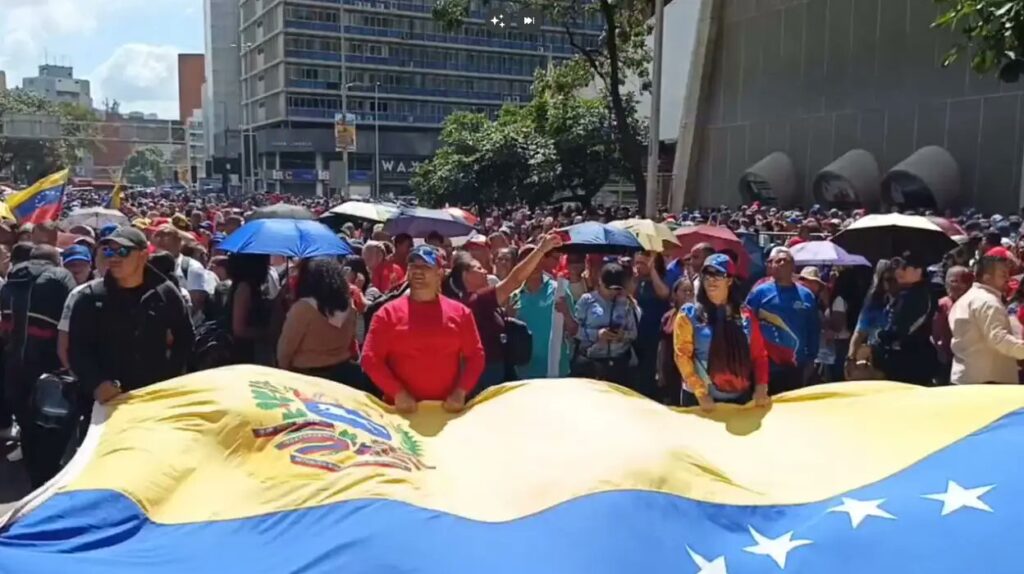
Venezuelan marching in Caracas demanding the return of President Nicolás Maduro and his wife Cilia Flores on Tuesday, February 3, 2026. Photo: Telesur.
This Tuesday, January 3, the Venezuelan capital, Caracas, was the scene of a massive demonstration of citizens demanding the return of the Constitutional president of Venezuela, Nicolás Maduro, and the first lady, Cilia Flores, abducted by US imperialism exactly one month ago.
The protest brought together workers, students, and social movements near the La Previsora building in Plaza Venezuela. From there, the march proceeded along Libertador and Urdaneta avenues, ending at the corner of Santa Capilla in the city center, where the demonstrators reaffirmed their commitment to fighting against external pressures.
The vice president of mobilization and events of the United Socialist Party of Venezuela (PSUV), Nahum Fernández, highlighted that the protest was a demonstration of the “unwavering loyalty” of Venezuelans.
Fernández stressed that after 30 days of absence of the head of state and his wife, the popular outcry has not diminished, emphasizing that national unity is the main tool to confront the external siege and defend the sovereignty of the country.
The Venezuelan people, under the premise that there is no power capable of subduing an organized nation, have reiterated that the goal of the street actions is clear: the return of the Bolivarian leaders. In addition, the demonstrations reaffirm the country’s historical commitment to maintaining Venezuela as a free, independent, and sovereign territory.
In the early hours of January 3, US military forces bombed Caracas and several areas of the states of Aragua, Miranda and La Guaira. The illegal incursion left more than 100 people dead, including civilians and military personnel, 32 of them Cuban combatants.
During the attack, the presidential couple was abducted and illegally transported to the United States, where they remain imprisoned in a maximum-security facility. In his first statements before a New York court, Maduro declared: “I am the president of Venezuela and I consider myself a prisoner of war. I was captured in my home in Caracas.”
The president’s courage, as described by Venezuelans, has become a source of strength and resilience in every corner of the country despite the indignation that the US imperialist attack has produced. These are not just political demonstrations: they are acts of love that transform indignation into collective strength, as the protesters emphasized.
The sense of justice has transcended Venezuelan borders. Since the US military attacks, not only have the Venezuelan people taken to the streets but globally, protesters in multiple countries, including the United States, have demanded the return of President Maduro and Cilia Flores to their nation.
The widespread condemnation of the illegal military attack perpetrated by the US Trump administration has generated an unprecedented wave of international solidarity. Under slogans such as “Hands off Venezuela!” and “No to Colonialism and Fascism,” these campaigns repudiate the flagrant violation of sovereignty and human rights.
These voices not only demand justice but also rise up in defense of the right of peoples to self-determination, refusing to condone the use of force as a mechanism of subjugation.
https://orinocotribune.com/mass-demonst ... abduction/
*****
Global Protests Demand Release of Venezuela’s President Maduro
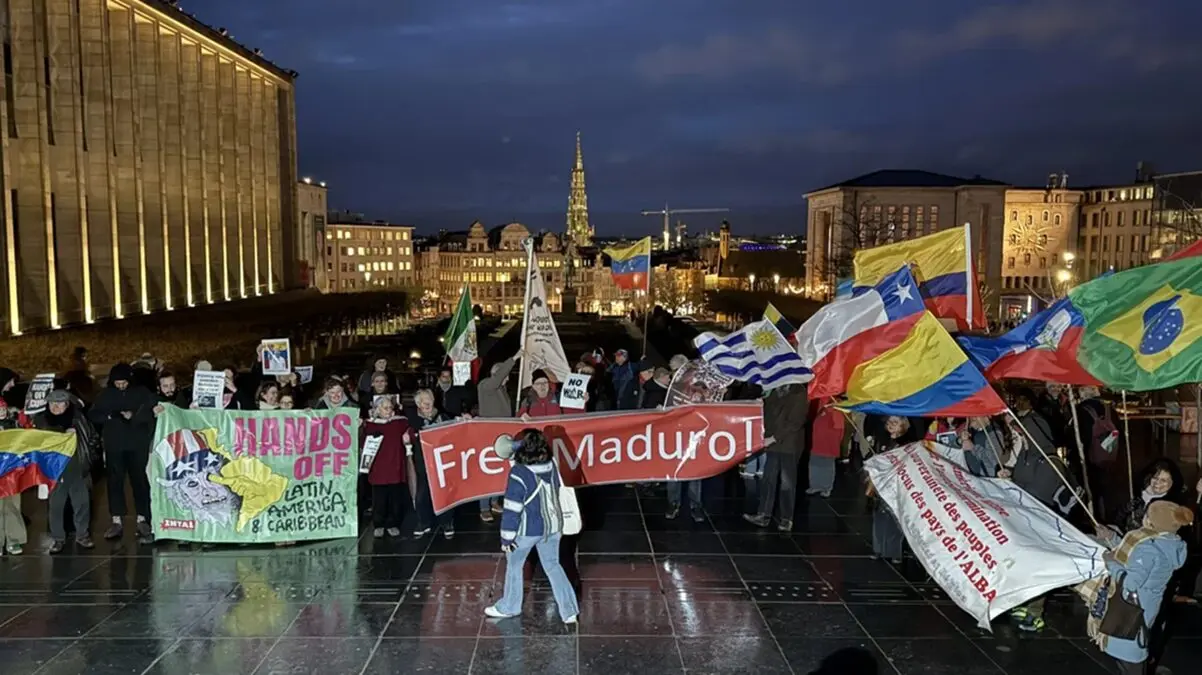
March for the release of Venezuelan President Nicolas Maduro in Brussels, Belgium. Photo: missionven_ue
February 4, 2026 Hour: 8:17 am
Demonstrations held in 60 cities worldwide call for respect for the Bolivarian nation.
On Tuesday, social movements, political parties and human rights organizations staged the “Bring Them Back” protest in 60 cities around the world, demanding the release of Venezuelan President Nicolas Maduro and First Lady Cilia Flores.
They were kidnapped on Jan. 3, when U.S. military forces carried out a military assault on Venezuelan territory that violated the country’s sovereignty and left at least 100 people dead.
Maduro and Flores were later brought before the U.S. Federal Court for the Southern District of New York, where both pleaded not guilty. The Venezuelan head of state then declared himself a “prisoner of war.”
Americas: Mass Mobilizations in Solidarity With Venezuela
In the United States, the “Hands Off Venezuela” movement led a protest outside New York’s Metropolitan Detention Center, where President Maduro and his wife are being held. At the same time, images denouncing the situation were projected in front of the United Nations headquarters.
In Colombia, sit-ins and marches were held in Bogota, Medellin, Cali, Barranquilla, Cucuta and Cartagena. Social organizations maintained a significant presence outside the U.S. Embassy in Bogota.
In Brazil, the Landless Rural Workers Movement (MST) planted trees at the Cuban Embassy in Brasilia as a symbolic expression of Latin American peoples’ resistance to the U.S. blockade and aggressions.
“The offensive of capital and imperialism against peoples who fight for their sovereignty does not silence us. On the contrary, it strengthens us in collective resistance,” the MST said.
In Mexico, the Anti-Imperialist Front gathered outside the U.S. Embassy, joined by activists and social sectors who demanded respect for Venezuelan sovereignty and condemned the kidnapping of President Maduro and his wife. The mobilization expressed international solidarity with the Bolivarian nation and called for the immediate release of its leaders.
In Uruguay and El Salvador, social organizations held rallies in public squares and outside embassies in support of the Venezuelan people and to denounce U.S. military action.
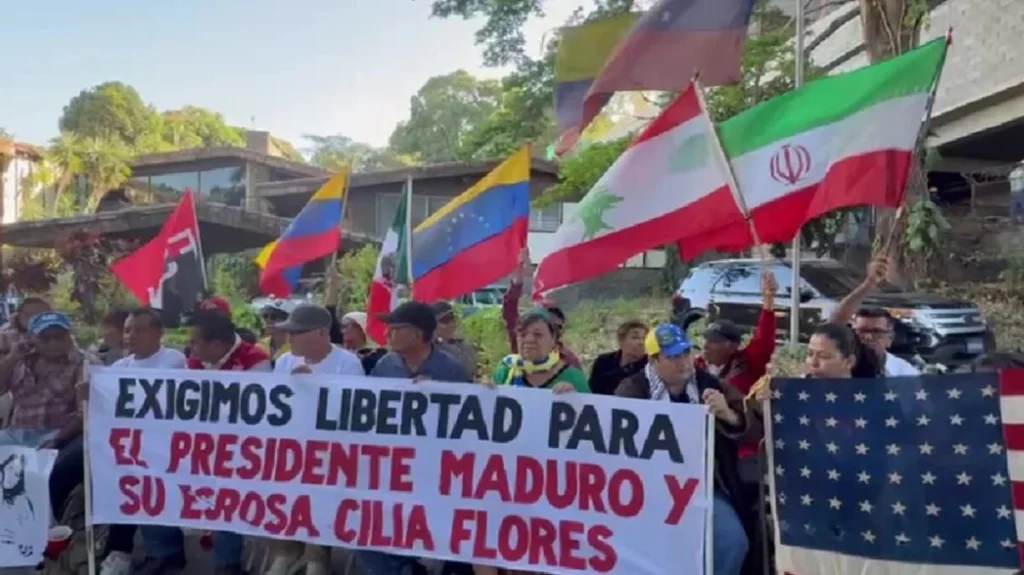
Africa: Film Screenings and Academic Seminars
In Angola, Kenya, Uganda and Congo, the documentaries “Nicolas, the Origin” and “From Yare to Miraflores” were screened, recounting the life story of the Venezuelan president and his political trajectory within the Bolivarian Revolution.
The University of South Africa organized an academic seminar on the Venezuelan situation, while in Johannesburg the national chapter of the campaign for the release of President Maduro and his wife was launched.
As part of the “Bring Them Back” campaign, social activists and jurists in Mali carried out actions demanding the freedom of President Nicolas Maduro and First Lady Cilia Flores.
In Senegal, the African Patriots of Senegal for Work, Ethics and Fraternity (PASTEF), the Stand Up for the People Party (PTAW), the International Anti-Imperialist, Afro-Descendant and African Cumbe, pan-African organizations and youth movements demanded the immediate release of Maduro and Flores.
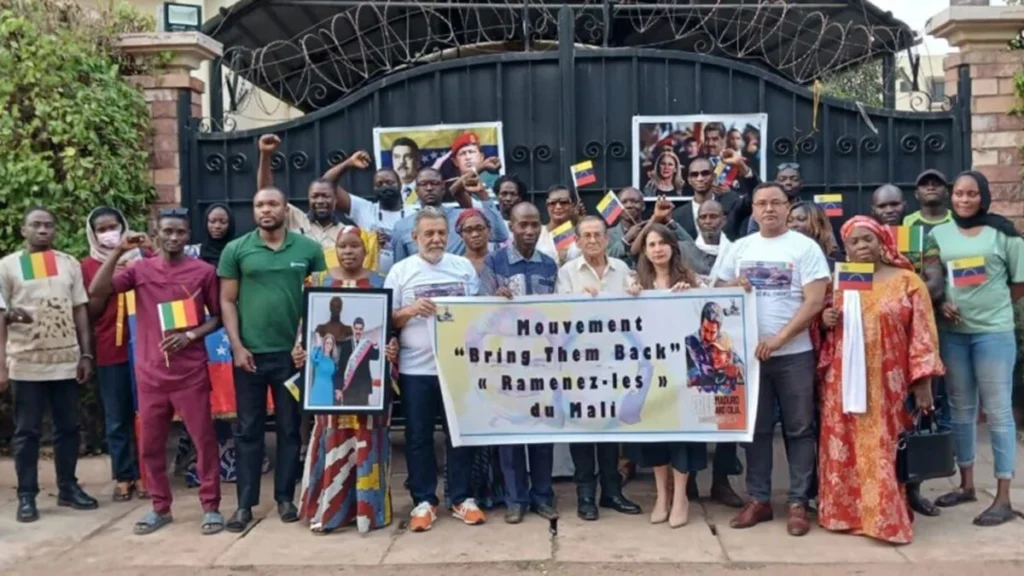
Europe: Protests in Capitals and Cultural Events
Public squares in capitals such as Belgium, Germany and Spain were the scene of rallies demanding the return of President Maduro and First Lady Flores to Venezuela and protesting U.S. military aggression against the South American nation.
The Basque Country and Spanish cities including Tenerife, Las Palmas, Vigo and Madrid also hosted demonstrations in support of the Venezuelan leaders.
In the Netherlands, a protest was held outside the U.S. Consulate in Amsterdam. In Austria, the Venezuelan Embassy organized a screening of the documentary “Nicolas, the Origin” together with solidarity groups.
In Moscow, citizens mobilized near the Venezuelan Embassy, condemning the U.S. attack. Venezuelan Ambassador Jesus Salazar thanked Russia for its support and denounced violations of the United Nations Charter. In Minsk, commemorative events were held at Bolivar Square.
In Türkiye, student and youth movements gathered in Ankara. Aslı Sezen Sezgin, of the Türkiye Youth Union, said: “We are with you with all our hearts and demand the immediate freedom of the Venezuelan President and his wife.”
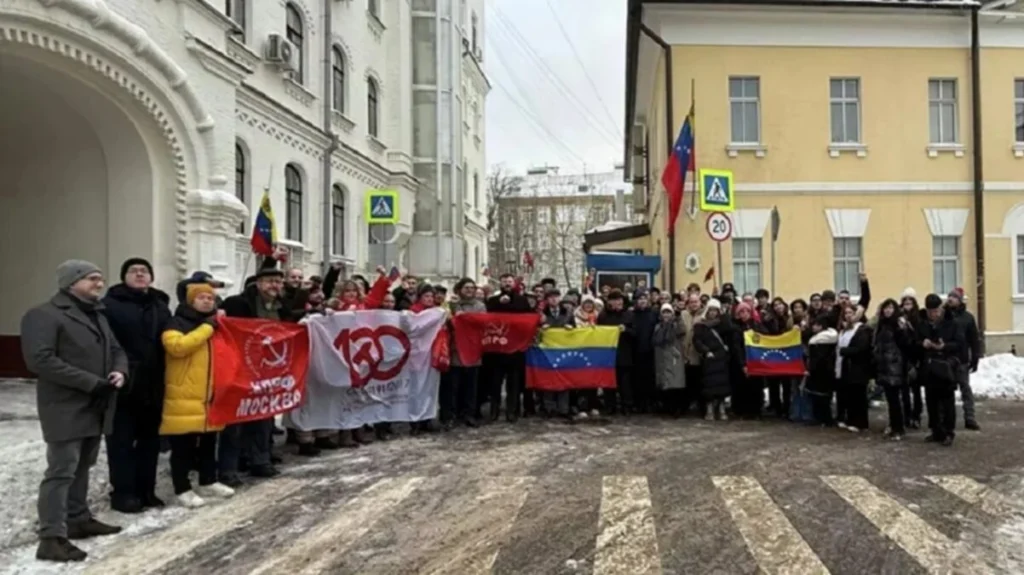
Asia Shows Strategic Alliances With Venezuela
Several mobilizations were also held across Asia in favor of peace in Venezuela and the release of President Maduro. In China and Vietnam, solidarity organizations organized film screenings and diplomatic events in Guangzhou and Hanoi.
In South Korea, the People’s Democracy Party and the Che Guevara Defense Brigade protested outside the U.S. Embassy in Seoul, chanting slogans such as “Free Maduro” and “Down with Imperialism.”
In the Philippines, the forum “Sovereignty Under Siege: A Forum on Venezuela and Our Shared Struggle Against U.S. Imperialism” was held, addressing the impact of U.S. coercive measures and the role of international media.
In Iraq, Lebanon and Saudi Arabia, political movements and intellectuals denounced U.S. military aggression and the abduction of President Maduro and his wife.
So far, the “Bring Them Back” campaign has become a focal point of international coordination through which social activists and human rights defenders denounce Washington’s submission of Maduro and Flores to a rigged trial based on unfounded drug trafficking charges.
These accusations are part of a narrative used by the administration of President Donald Trump to justify aggression against Venezuela, a country rich in energy resources.
https://www.telesurenglish.net/global-p ... nt-maduro/
February 4, 2026
Venezuelan marching in Caracas demanding the return of President Nicolás Maduro and his wife Cilia Flores on Tuesday, February 3, 2026. Photo: Telesur.
This Tuesday, January 3, the Venezuelan capital, Caracas, was the scene of a massive demonstration of citizens demanding the return of the Constitutional president of Venezuela, Nicolás Maduro, and the first lady, Cilia Flores, abducted by US imperialism exactly one month ago.
The protest brought together workers, students, and social movements near the La Previsora building in Plaza Venezuela. From there, the march proceeded along Libertador and Urdaneta avenues, ending at the corner of Santa Capilla in the city center, where the demonstrators reaffirmed their commitment to fighting against external pressures.
The vice president of mobilization and events of the United Socialist Party of Venezuela (PSUV), Nahum Fernández, highlighted that the protest was a demonstration of the “unwavering loyalty” of Venezuelans.
Fernández stressed that after 30 days of absence of the head of state and his wife, the popular outcry has not diminished, emphasizing that national unity is the main tool to confront the external siege and defend the sovereignty of the country.
The Venezuelan people, under the premise that there is no power capable of subduing an organized nation, have reiterated that the goal of the street actions is clear: the return of the Bolivarian leaders. In addition, the demonstrations reaffirm the country’s historical commitment to maintaining Venezuela as a free, independent, and sovereign territory.
In the early hours of January 3, US military forces bombed Caracas and several areas of the states of Aragua, Miranda and La Guaira. The illegal incursion left more than 100 people dead, including civilians and military personnel, 32 of them Cuban combatants.
During the attack, the presidential couple was abducted and illegally transported to the United States, where they remain imprisoned in a maximum-security facility. In his first statements before a New York court, Maduro declared: “I am the president of Venezuela and I consider myself a prisoner of war. I was captured in my home in Caracas.”
The president’s courage, as described by Venezuelans, has become a source of strength and resilience in every corner of the country despite the indignation that the US imperialist attack has produced. These are not just political demonstrations: they are acts of love that transform indignation into collective strength, as the protesters emphasized.
The sense of justice has transcended Venezuelan borders. Since the US military attacks, not only have the Venezuelan people taken to the streets but globally, protesters in multiple countries, including the United States, have demanded the return of President Maduro and Cilia Flores to their nation.
The widespread condemnation of the illegal military attack perpetrated by the US Trump administration has generated an unprecedented wave of international solidarity. Under slogans such as “Hands off Venezuela!” and “No to Colonialism and Fascism,” these campaigns repudiate the flagrant violation of sovereignty and human rights.
These voices not only demand justice but also rise up in defense of the right of peoples to self-determination, refusing to condone the use of force as a mechanism of subjugation.
https://orinocotribune.com/mass-demonst ... abduction/
*****
Global Protests Demand Release of Venezuela’s President Maduro
March for the release of Venezuelan President Nicolas Maduro in Brussels, Belgium. Photo: missionven_ue
February 4, 2026 Hour: 8:17 am
Demonstrations held in 60 cities worldwide call for respect for the Bolivarian nation.
On Tuesday, social movements, political parties and human rights organizations staged the “Bring Them Back” protest in 60 cities around the world, demanding the release of Venezuelan President Nicolas Maduro and First Lady Cilia Flores.
They were kidnapped on Jan. 3, when U.S. military forces carried out a military assault on Venezuelan territory that violated the country’s sovereignty and left at least 100 people dead.
Maduro and Flores were later brought before the U.S. Federal Court for the Southern District of New York, where both pleaded not guilty. The Venezuelan head of state then declared himself a “prisoner of war.”
Americas: Mass Mobilizations in Solidarity With Venezuela
In the United States, the “Hands Off Venezuela” movement led a protest outside New York’s Metropolitan Detention Center, where President Maduro and his wife are being held. At the same time, images denouncing the situation were projected in front of the United Nations headquarters.
In Colombia, sit-ins and marches were held in Bogota, Medellin, Cali, Barranquilla, Cucuta and Cartagena. Social organizations maintained a significant presence outside the U.S. Embassy in Bogota.
In Brazil, the Landless Rural Workers Movement (MST) planted trees at the Cuban Embassy in Brasilia as a symbolic expression of Latin American peoples’ resistance to the U.S. blockade and aggressions.
“The offensive of capital and imperialism against peoples who fight for their sovereignty does not silence us. On the contrary, it strengthens us in collective resistance,” the MST said.
In Mexico, the Anti-Imperialist Front gathered outside the U.S. Embassy, joined by activists and social sectors who demanded respect for Venezuelan sovereignty and condemned the kidnapping of President Maduro and his wife. The mobilization expressed international solidarity with the Bolivarian nation and called for the immediate release of its leaders.
In Uruguay and El Salvador, social organizations held rallies in public squares and outside embassies in support of the Venezuelan people and to denounce U.S. military action.
Africa: Film Screenings and Academic Seminars
In Angola, Kenya, Uganda and Congo, the documentaries “Nicolas, the Origin” and “From Yare to Miraflores” were screened, recounting the life story of the Venezuelan president and his political trajectory within the Bolivarian Revolution.
The University of South Africa organized an academic seminar on the Venezuelan situation, while in Johannesburg the national chapter of the campaign for the release of President Maduro and his wife was launched.
As part of the “Bring Them Back” campaign, social activists and jurists in Mali carried out actions demanding the freedom of President Nicolas Maduro and First Lady Cilia Flores.
In Senegal, the African Patriots of Senegal for Work, Ethics and Fraternity (PASTEF), the Stand Up for the People Party (PTAW), the International Anti-Imperialist, Afro-Descendant and African Cumbe, pan-African organizations and youth movements demanded the immediate release of Maduro and Flores.
Europe: Protests in Capitals and Cultural Events
Public squares in capitals such as Belgium, Germany and Spain were the scene of rallies demanding the return of President Maduro and First Lady Flores to Venezuela and protesting U.S. military aggression against the South American nation.
The Basque Country and Spanish cities including Tenerife, Las Palmas, Vigo and Madrid also hosted demonstrations in support of the Venezuelan leaders.
In the Netherlands, a protest was held outside the U.S. Consulate in Amsterdam. In Austria, the Venezuelan Embassy organized a screening of the documentary “Nicolas, the Origin” together with solidarity groups.
In Moscow, citizens mobilized near the Venezuelan Embassy, condemning the U.S. attack. Venezuelan Ambassador Jesus Salazar thanked Russia for its support and denounced violations of the United Nations Charter. In Minsk, commemorative events were held at Bolivar Square.
In Türkiye, student and youth movements gathered in Ankara. Aslı Sezen Sezgin, of the Türkiye Youth Union, said: “We are with you with all our hearts and demand the immediate freedom of the Venezuelan President and his wife.”
Asia Shows Strategic Alliances With Venezuela
Several mobilizations were also held across Asia in favor of peace in Venezuela and the release of President Maduro. In China and Vietnam, solidarity organizations organized film screenings and diplomatic events in Guangzhou and Hanoi.
In South Korea, the People’s Democracy Party and the Che Guevara Defense Brigade protested outside the U.S. Embassy in Seoul, chanting slogans such as “Free Maduro” and “Down with Imperialism.”
In the Philippines, the forum “Sovereignty Under Siege: A Forum on Venezuela and Our Shared Struggle Against U.S. Imperialism” was held, addressing the impact of U.S. coercive measures and the role of international media.
In Iraq, Lebanon and Saudi Arabia, political movements and intellectuals denounced U.S. military aggression and the abduction of President Maduro and his wife.
So far, the “Bring Them Back” campaign has become a focal point of international coordination through which social activists and human rights defenders denounce Washington’s submission of Maduro and Flores to a rigged trial based on unfounded drug trafficking charges.
These accusations are part of a narrative used by the administration of President Donald Trump to justify aggression against Venezuela, a country rich in energy resources.
https://www.telesurenglish.net/global-p ... nt-maduro/
"There is great chaos under heaven; the situation is excellent."
Re: Venezuela
How Venezuela Poses an “Unusual and Extraordinary Threat” to the US Agenda
Posted by Internationalist 360° on February 5, 2026
Celina della Croce
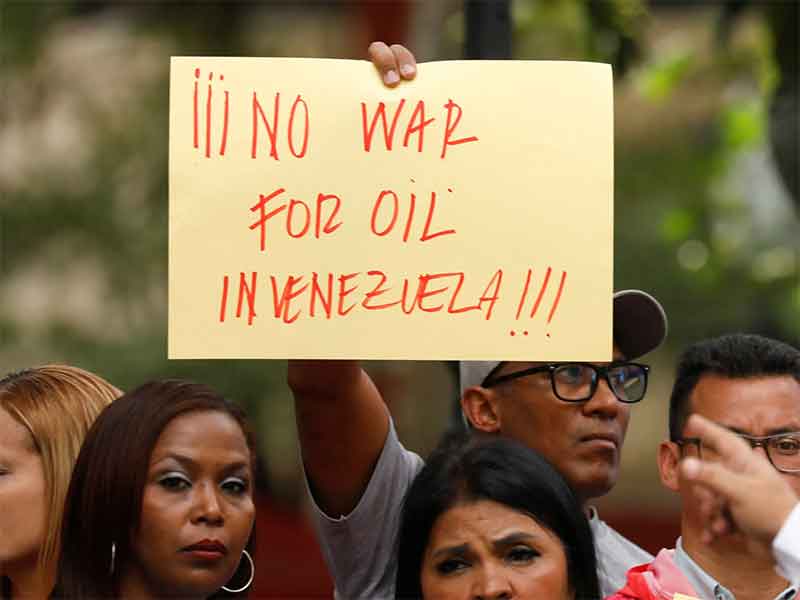
U.S. President Donald Trump has not shied away from admitting his thirst for Venezuelan oil. On 16 December 2025, in the leadup to the 3 January bombing of Caracas and kidnapping of the country’s president and first lady, Nicolás Maduro and Cilia Flores, he claimed ownership over Venezuela resources, stating that “America will not… allow a hostile regime to take our Oil, Land, or any other Assets, all of which must be returned to the United States, IMMEDIATELY”. In his previous administration, he echoed the same obsession with resource-driven regime change, decrying in June 2023 that “When I left , Venezuela was ready to collapse. We would have taken it over. We would have gotten all that oil. It would have been right next door.” Yet Venezuela is not only home to the world’s largest known oil reserve, but also the continent’s largest gold reserves and an ample supply of bauxite, diamonds, iron ore, nickel, and coal… And, not least of all, hope.
Trouble at Home
Within his own borders, Trump faces heightened civil unrest, with over 100,000 people in Minneapolis alone taking to the streets (roughly a quarter of the city’s population) during a 23 January general strike—an action that has not been seen on this scale for decades—and again during a 30 January nationwide shutdown. Similar uprisings have spread across the country, from Los Angeles to New York, following ICE’s murder of Renée Good and Alex Pretti. This massive outpouring follows a year of discontent and marches decrying Trump’s anti-immigrant, anti-poor policies.
The escalation of ICE’s tactics under the Trump administration has cost U.S. taxpayers, reaching an all-time high of $85 billion in allocated funds (compared to annual spending that has hovered around $10 billion or less for the past decade). Much of these funds go to benefit private corporations: for instance, 86 percent of detainees are held in private, for-profit prisons (whose stocks skyrocketed as a result of Trump’s election and subsequent policies), and the cost of deportation flights, also run by private companies, is astronomically higher than commercial flights (the per-person cost of a deportation flight from El Paso to Guatemala, for example, is $4,675—five times higher than a commercial first-class ticket for the same route). At the same time, Trump’s administration has slashed social spending, with a $186-billion reduction to Supplemental Nutrition Assistance Program (SNAP) benefits alone (a program that, up to that point, helped 1 in 8 people in the U.S. with the basic provision of food).
In the United States, and the West in general, there is a deep-seated narrative that this is just the way things are. Perhaps we can tone back the violence—swap out a Donald Trump for a Joe Biden who is more cautious with his tactics and open to mild concessions but no less interested in protecting capitalist profits at all costs. Even key figures in Trump’s own party, from Senators Josh Hawley (R-MO) and Todd Young (R-IN) to Trump’s former Vice President Mike Pence, have sought to distance themselves from his extreme tactics and distaste for liberal democracy (a general audacity that risks backfiring lest it create sufficient dissent and turmoil to provoke a mass uprising and turn to the left). Yet neither party is willing to allow anything further than a meek liberal democracy beholden to the interest of a small but powerful elite, at most with enough provisions to keep the general population at bay.
Venezuela’s Break With the End of History
The U.S. population, like much of the world, has been told, time and time again, that History has ended. We may be able to eke out higher wages, and certainly demand that the heightened assault on liberal democracy through ICE and the openly fascistic declarations by Donald Trump be brought under control, but anything beyond that is painted as impractical at best, and perilous at worst. Just look at the Soviet Union, we are told—it just doesn’t work. Socialism sounds nice, but look at the suffering in Venezuela and Cuba. You don’t want that, do you?
Yet this way of understanding the past, present, and future not only seeks to protect the interests of capital, tricking many working-class people into betraying their own interests, but is wildly inaccurate both by omission and by outright lies. And it seeks to cover up another extraordinary resource that Venezuela represents: a living example of hope, of unmovable dignity, of the success of a revolution that has not only brought a population out of extreme poverty but has lifted up its confidence and consciousness. In a country under extreme siege by more than 1,000 U.S.-led unilateral coercive measures, there are nonetheless a fraction as many homeless people as in the U.S. (where there are roughly 28 vacant homes to every 1 homeless person and 60 people froze to death in the streets during the most recent winter storm alone).
Even at the height of the crisis in Venezuela, as Trump ramped up his maximum pressure campaign and 40,000 Venezuelans died in a single year (2017-2018) due to the lack of medicines and healthcare that had previously been provided freely to the population, the vast majority of Venezuelans have continued to fight to defend not only their right to self-determination, but also to revolution and transformation. What exactly are the Venezuelan people fighting for that the U.S. government tries so hard to cover up? What is the source of resiliency and loyalty to the Bolivarian Revolution, despite the tremendous human cost of U.S.-led efforts to overthrow it? And, what is the “unusual and extraordinary threat” that Venezuela poses to the U.S.—as then President Barack Obama decreed in a 2015 executive order that paved the way for the economic siege?
When President Hugo Chávez came to power in 1999, a revolutionary process began that would set out to repay the “social debt” owed to the Venezuelan people, beginning by dedicating 75 percent of national spending to social investment—funds, importantly, generated by the country’s historically predominant oil sector. Through missions that began the year Chávez was elected, the country elevated its population out of poverty and illiteracy, reaching a 100 percent literacy rate, with more than three million people learning how to read and write (Mission Robinson); training 6,000 professionals in universities and graduating one million high school students (Mission Sucre); granting nearly 5 million homes to families across the country (Mission Vivienda); building health clinics in 320 of Venezuela’s 355 municipalities (Mission Barrio Adentro); and restoring the eyesight of some 300,000 Venezuelans while providing eye surgery to 1 million (Mission Milagro).
President Nicolás Maduro has continued this legacy, despite the duress imposed by the U.S.-led unilateral coercive measures imposed in the years following Chávez’s death, ensuring not only that the country’s resources benefit the well-being of the majority, but also that power is given back to the people through a model of direct democracy. Weeks before he was kidnapped, for instance, Maduro convened the Constitutional Congress of the Working Class, the culmination of 22,110 assemblies in workplaces across the country in which delegates debated and made proposals to the president about the future of the country’s labor sector and productive processes, such as strengthening domestic production of machinery components in order to reduce external technological dependency. Aprobada (‘approved’), Maduro told delegate María Alejandra Grimán Rondón as she presented him with the conclusions of the congress in front of a packed auditorium; for another proposal, “the method still needs to be refined”, he replied, outlining next steps for further debate. Furthermore, communes (grassroots organisations at the heart of Venezuela’s direct democracy through which communities exercise self-governance) have engaged in quarterly national consults since 2024, with millions voting on the allocation of government funding for thousands of projects that most need attention in their communities, from updating medical equipment in their local health clinics to investing in water filtration supplies to ensure access to potable water.
Both of these processes are part of a model of direct democracy that, in the 27 years of the Bolivarian Revolution, has held 31 elections, carried out constitutional reform, and created structures for everyday people to make direct decisions about the path of the country. In short, while the accomplishments of the revolution are far too numerous to list here, at their core is a people who have reclaimed their dignity, taken control of their future, and made the irreversible decision to stand upright.
Unlike social democratic projects in the West, Venezuela’s Bolivarian Revolution has set out to fundamentally transform society and build a socialist project rooted in class struggle and run by its people. That means that the social advances are also tied to a process of raising consciousness among the population, whereby people become the protagonists of their own struggle in a process that ultimately seeks to give them the power and tools to run the country, replacing the bourgeois state with a communal one. In this system, decisions are made by the population which is organized into communes and various social and political movements across the country. Through these processes, people learn how to run productive processes, from coffee to construction materials, and be effective owners of their own means of production; how to engage in popular decision-making processes across thousands of households; run communications teams; carry out education programs; identify, prioritize, and fix issues in their communities; and other elements that are necessary for a productive society that prioritizes the well-being of its people. All of this is done in line with core principals such as protecting the planet (with some communes collecting recyclable plastics and turning them into playgrounds, benches and chairs for the elderly and schoolchildren, and other needs expressed by the community) and centering the leadership and rights of women and marginalized sectors.
What Does the Future Hold for the Nobodies?
This dynamic process is a continuation of the path set out by Chávez, one that called upon the “nobodies” to be the makers of their own destiny. These “nobodies”—today the protagonists of one of the world’s most resilient and equitable democracies—have shown, time and time again, that they will not sacrifice their dignity nor sovereignty at any cost, no matter how severe the threat. This example is no less valuable a resource than the country’s oil, nor any less of a threat to the Trump regime and U.S. agenda at large. The example set by the Bolivarian Revolution and its people creates a fissure in the narrative that the U.S.—and the world—population must make the best of what we have, go to work every day with our heads down and spirits crushed, and forfeit our dreams of a better world. It opens a window for the nobodies of the world—and especially of the U.S.—to see that on the other side of events like the mass uprisings sweeping the country, they, too, could live in a society where the wealth that they themselves generate is reinvested into the common good rather than paying for bombs and lining the pockets of the few.
https://libya360.wordpress.com/2026/02/ ... us-agenda/
Venezuela: The Fable of “Political Prisoners” and Complicit Silence in the Face of Kidnapping
Posted by Internationalist 360° on February 5, 2026
Carlos Gutierrez

Venezuelan government supporters have taken to the streets to protest against the US attack and presidential kidnapping. (Presidential Press)
There are facts that, due to their historical gravity, force us to redefine the meaning of words that seemed already consolidated: human rights, sovereignty, due process, democracy. On January 3, 2026, Venezuela was the target of a direct military attack by the United States, with a tragic toll: 100 people killed, hundreds injured, homes destroyed and incalculable material damage. It was not a surgical operation or a “humanitarian intervention”, as barbarism is often called from imperial centers, but rather an open aggression against a sovereign State. And no small detail, many of the victims were not affected by the Bolivarian Revolution. The bombs, as always, do not ask about political militancy.
However, the roar of the missiles contrasted with a deafening silence: that of the Venezuelan opposition leadership.
For years, these sectors have built an obsessive narrative around the so-called “political prisoners”. An expression carefully designed to erase an essential distinction of law: not every imprisoned politician is a political prisoner. In Venezuela, as in any State that exercises its sovereignty, there are imprisoned politicians, because they have committed classified crimes, judged with all the guarantees that they deny by the national legal system. But the opposition has made this narrative its moral banner, its permanent excuse, its alibi to ignore institutions and justify confrontation.
What is truly revealing is not that they defend those they consider theirs. The scandalous thing is who they decide not to defend.
Because while they tear their clothes for alleged violations of due process, they maintained a complicit silence in the face of the kidnapping of the constitutional president of Venezuela, Nicolás Maduro, and the first combatant, Cilia Flores, transferred outside the national territory to be subjected to an extraterritorial trial that violates all the norms of International Law: from presidential immunity, through non-intervention, to the basic principle of sovereign jurisdiction.
Here irony imposes itself:
those who denounce the “politicization of justice” applaud the fact that a foreign power assumes the right to decide who is or is not president of Venezuela;
those who cry out for human rights remain silent in the face of an invasion that tramples them en masse;
those who demand due process justify an international kidnapping worthy of the worst chapters of the 20th century.
The contradiction is not accidental. It’s structural.
Because accepting that Nicolás Maduro is today a imprisoned president, in an unfair manner that violates any legal standard, would imply recognizing something that the opposition refuses to admit: that his speech is neither ethical nor legal, but instrumental. That human rights do not matter to them as a universal principle, but as a selective political weapon.
There is an uncomfortable truth that must be said clearly: no one has the moral authority to defend an imprisoned politician if they do not first defend the kidnapped president of their country.
No one can talk about justice while endorsing the law of the strongest.
No one can demand judicial sovereignty while celebrating its annulment from Washington.
History is relentless with these inconsistencies. And when this chapter is written, it will be recorded not only who dropped the bombs, but also who remained silent, who looked the other way and who confused the political opposition with the total renunciation of national dignity.
Because in the end, the question is not ideological, but ethical: are human rights valid for everyone or only for allies?
And the answer, today, is being given by the Venezuelan opposition… with its silence.
https://libya360.wordpress.com/2026/02/ ... idnapping/
*****
Partial Reform of the Venezuelan Hydrocarbons Law: An Analytical Review
February 4, 2026
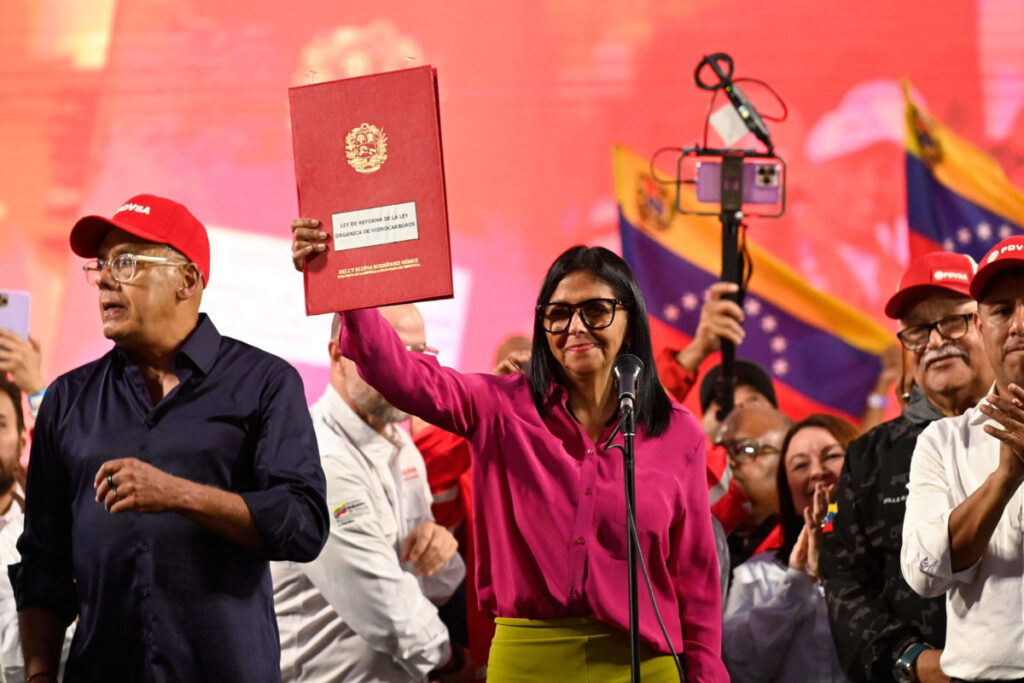
Acting President Delcy Rodriguez holds up the document of the partial reform of the Organic Hydrocarbons Law (LOH) in front of a crowd. Photo: Maxwell Briceno/Reuters.
By Misión Verdad – Feb 3, 2026
The partial reform of the Organic Hydrocarbons Law (LOH) is at the center of the debate in Venezuela, given that, from various angles of politics, a set of interpretations of the text have been made, in many cases through political biases and deliberate misrepresentations.
The approved text is a reform that builds upon the basic law presented in 2002 by then-President Hugo Chávez through enabling powers to legislate.
In 2006, the LOH was modified to give legal form to the mixed enterprise scheme, within the framework of the re-nationalization process of oil assets, especially in the Orinoco Oil Belt.
The 2026 reform ratifies and, in some aspects, deepens essential elements of the previous legislation.
But, without a doubt, it creates the legal basis for a complete strategic adaptation of the Venezuelan hydrocarbon industry, considering elements of the present context: the persistence of an extended and adverse cycle of illegal sanctions on hydrocarbon activities, and the investment, modernization and growth needs of this activity—the most economically important in Venezuela.
The ‘privatization’ of PDVSA
The new LOH reaffirms that Petróleos de Venezuela SA (PDVSA), or, as it is called, the “company exclusively owned by the Venezuelan State and its subsidiaries,” is of an inalienable and non-transferable nature, preserving the public domain and the ownership of the nation over it, in accordance with what is stated in Article 141 of the National Constitution, cited in the reform in its Article 1.
The new text does not affect this essential principle, as it remains identical to that established in the laws of 2002 and 2006, in accordance with the Bolivarian Constitution.
Primary activities
In the hydrocarbon sector, primary activities—commonly called “upstream”—are the processes that encompass the exploration, extraction, collection, transportation, and initial storage of crude oil and natural gas.
These stages search for deposits, drill wells and manage production from the subsoil to processing centers, which could be refineries or terminals for dispatch and/or marketing, which would already be part of the set of secondary activities.
The new law ratifies the expansion of the scope of participation in primary activities, which was previously exclusively in the hands of state-owned companies, so that national or foreign private companies can also participate.
Is this really new? Definitely not. The reference to “ratify” alludes to reaffirming something that already exists.
The presence in Venezuela of foreign companies such as Chevron, Repsol, and CNPC is possible due to the provisions established by the 2006 reform, which endorsed the joint venture regime under the Hydrocarbons Law. These foreign companies participate directly in primary activities in Venezuelan fields.
Likewise, the Anti-Blockade Law facilitated agreements that allowed private investment in these processes through Productive Participation Contracts (CPP).
Private participation in primary activities was already well-established and was addressed in another complementary law on the matter: the now-repealed Law on the Regulation of Private Participation in Primary Activities (2006). This law would not exist if there were no activities to regulate.
What does this mean in concrete terms? It means that Venezuela could, for example, enter into advanced hydrocarbon exploration contracts with companies that possess technologies PDVSA lacks. Or that a private company could assume operational management of a field, for various financial or technical reasons.
Thus, according to the new Article 23, primary activities will be carried out by three types of companies classified according to their type of ownership: the state-owned (PDVSA), mixed companies, and “private companies domiciled in the Bolivarian Republic of Venezuela, within the framework of contracts signed with companies exclusively owned by the Republic or its subsidiaries.”
Nothing new under the sun.
About joint ventures
Joint ventures are ratified in the new Hydrocarbons Law (LOH) as part of PDVSA’s management and partnership model with other companies, both national and foreign. This was already established in the 2006 LOH, and the spirit of that era is reaffirmed now.
These are referred to as “companies in which the Republic or a public entity owns a share greater than fifty percent (50%) of the share capital, which gives it shareholder control,” according to Article 23 of the reformed law.
In light of this, it is not true that PDVSA will now undergo a process of “de facto privatization” of its subsidiaries under the guise of joint ventures, nor that it will grant majority shares in said companies. Doing so is impossible according to the new Hydrocarbons Law.
Therefore, there is no impact on the shareholding situation of mixed companies currently established or that may be formed in the future.
Productive Participation Contracts
The new law recognizes the types of contracts that can be made by PDVSA and its subsidiaries, according to the new Article 40.
As explained, Productive Participation Contracts (CPP) transcend the Anti-Blockade Law and take shape through the figure of “Contracts for the Development of Primary Activities.”
These are broad contracts—covering services, exploration, and product extraction—under a model known as “comprehensive management of primary activities.” The private party in these contracts, whether domestic or foreign, is referred to as the “operator.”
Is this really something new? Absolutely not. PDVSA has been authorized to enter into contracts with private companies, both domestic and foreign, for primary activities. This explains, for example, the presence in Venezuela of multinationals like Halliburton and Baker Hughes, which provide oil services.
However, and this is the important part, this law does provide additional incentives that translate into greater responsibility and operational autonomy for the companies listed in the contracts, depending on the specifics of the projects.
Contracts for the Development of Primary Activities are specially designed for “green fields,” or areas with underground resources that have not yet developed infrastructure or received investment.
The LOH, as is fitting in the spirit of all laws, has been reformed in accordance with the particularities of the times. The 2026 text recognizes several objective conditions.
First, the conditions in the oil business have changed significantly since 2002 and 2006. Investments are now more expensive, the market is more volatile, and there is competition from new technologies in the battle for energy resources (the energy transition). In the long term, this context makes investments more expensive, reduces profits, and increases risks.
Second, the national hydrocarbon industry is burdened by a cumulative 10 years of coercive sanctions, divestment strategies in Venezuela, asset freezing—both liquid and capital goods—and direct impact on the financing mechanisms (petro-bonds) of PDVSA and the nation.
Third, most of Venezuela’s oil reserves are heavy and extra-heavy crude, which requires new technologies and costly investments to be extracted and diluted for commercialization.
These conditions impose a stark reality: neither PDVSA nor the Venezuelan state has the resources to invest heavily in new developments and oil fields. Therefore, further incentives are being offered to attract new investment in these undeveloped oil fields.
This does not imply a loss of sovereignty; it implies creating comparative advantages to attract investment where it is needed.
To determine whether these types of contracts involve a loss of sovereignty or are harmful to the nation, it is necessary to observe what is stated in Article 43:
“Once the term of the contract for the development of primary activities has ended, the operating company must return the leased assets and transfer ownership, free of any encumbrance, to the company wholly owned by the Republic or its subsidiaries (PDVSA), of all assets incorporated, constructed or acquired during the term of the contract, including all data obtained, generated, processed and interpreted, without this generating any obligation of payment or compensation.”
The new Hydrocarbons Law is clear and, in fact, resembles the 1946 law in that it refers to the reversion of assets to the Republic upon termination of contracts, without the need for a nationalization process that would entail high costs for the nation. This is a huge difference compared to the legal framework of the Operating Agreements of the 1990s, which involved high compensation payments and costly legal proceedings when the 2006 nationalization occurred. The cases of Exxon and ConocoPhillips are a prime example.
The marketing of products
This is one of the most prominent—and, in some ways, controversial—elements in the new LOH, especially because it is subject to biased interpretations.
Now, through contracts, private national or foreign companies are authorized to assume, in a shared or total manner, some key processes of the marketing of products outside the country, but “at their exclusive cost, account and risk,” the regulation states verbatim.
Here again, is the application of principles into a law built on the objective realities of the moment, and this refers specifically to the regime of illegal coercive sanctions that exists against Venezuela.
The reality is that no sanctions have been lifted against Venezuela. Nor should we confuse the granting of licenses by the US Treasury Department with the lifting of unilateral sanctions. These hostile measures are a reality, they are long-standing, deeply entrenched, and were not foreseen in either 2002 or 2006.
It is well known that PDVSA’s marketing of products outside the country has resulted in the freezing of assets and even the seizure of vessels and the theft of products.
Now the law protects Venezuela from this risk, creating windows and guidelines for other actors to assume the risk, exposure to hostile financial measures, sanctions and the like.
What does that imply? Some companies that enter into a contract with PDVSA could, in some cases, assume a minority or majority stake in the marketing of hydrocarbons, autonomously carrying out the commercial management process, as indicated in Article 41, as part of the favorable compensation for operators.
If a private company can take over the marketing of certain products in specific sectors, how does the nation benefit? Article 42 states that:
“… as consideration for the use of said assets and areas, the operating company will pay the companies wholly owned by the Republic or its subsidiaries a percentage of the volume of controlled hydrocarbons that will be set in the respective contract.”
In addition, taxes and royalties would be added to this.
Again, with reference to sovereignty and the non-diminution of national heritage, Article 40, in its paragraph 3, states:
“The Republic will retain ownership of the hydrocarbon deposits on which the operating companies will develop their activities… .”
Whereas Article 68 explicitly states:
“The authorized direct marketing will not, under any circumstances, imply the transfer of ownership of the deposits or the authorization for the creation of real guarantees on deposits or on sovereign rights.”
The law is absolutely clear on this point. The Venezuelan State externalizes and transfers to others the risks of commercial activity, while directly benefiting from the activities of the operators, fully preserving public ownership of the deposits and resources.
Taxes and royalties
The 2002 law and its 2006 reform maintained a strict royalty regime, applied to all projects.
The 2026 Hydrocarbons Law, on the other hand, establishes a flexible framework. It sets a maximum royalty rate of 30%, while each project will have its own characterization to determine the royalty margin, according to a discretionary policy of the Ministry of Hydrocarbons, based on technical information.
What does this mean? It means that a green field should not pay the same royalties as a mature field, or that a field in the expansion production phase—which has not yet reached its peak of barrels per day—should not pay the same royalties as a field in depletion or outright decline.
The technical parameters will apply to both nascent developments, where there is no infrastructure, and to established fields. Obviously, fields under development are likely to pay lower royalties.
The reasons governing this criterion are fundamentally technical, as indicated in the new Article 51:
“… taking into account the nature of the project; the capital investment requirements; the cost-effectiveness of the project; and the need to ensure international competitiveness.”
Here, the factors of viability prevail to attract new investments and encourage new developments, based on a criterion of “economic equilibrium,” says the law, which can be applied favorably to the nation once the projects are more profitable, or favorably to an operator if the technical and commercial environment conditions make them less profitable.
This criterion is clearly designed to ensure the operational continuity of projects. Even if environmental conditions change—as has happened in recent years with sanctions and licensing changes—royalties can be adjusted to preserve the “economic equilibrium” in each field, avoid paralysis and disinvestment, and mitigate risks.
Article 51 states:
“The National Executive, through the Ministry with competence in hydrocarbon matters, is empowered to modify the royalty percentage within the limit provided for in this article, when it is demonstrated that it is necessary to guarantee the economic balance of the project, under the terms provided for in this Law.”
What was previously known as the Extraction Tax is now referred to as the Integrated Hydrocarbons Tax, which reaches up to 15%, but is subject to modification depending on the same technical factors that govern the amount of royalties.
Dispute resolution
The reform of the LOH contemplates the resolution of disputes in three stages or levels: first, by promoting amicable settlement and agreement between the parties; second, through independent international arbitrations; and, third, through courts established in the Republic.
Nowhere does the reform of the Hydrocarbons Law establish the jurisdiction of foreign courts over matters related to hydrocarbons owned by the nation. There is no mention of this, and any assertion to that effect is completely false.
Regarding independent international arbitration, Article 8 refers to it as “alternative dispute resolution mechanisms.” This needs further explanation.
Independent arbitrations are activities carried out by law firms or firms specializing in specific areas, agreed upon by both parties. They are contracted to facilitate negotiations, discuss disputes, reach decisions, and arrange settlements privately and promptly.
This should not be confused with placing Venezuelan issues on the desk of a Democratic or Republican judge in New York, as was customary before the 2002 law.
In the event that PDVSA resorts to independent arbitration, the LOH establishes that the criteria for such a case will be governed in accordance with the provisions of the Organic Law Decree of the Attorney General’s Office and the Commercial Arbitration Law, according to the new Article 8. That is, there is no separation of the State bodies from these matters.
It is worth mentioning that, in practice, many companies would prefer to reach amicable settlements or arbitration in cases of disputes with PDVSA, rather than resorting to Venezuelan courts. The Hydrocarbons Law (LOH) provides incentives to build trust—legal certainty—aimed at companies investing in Venezuela, but emphasizes the need to operate transparently and avoid friction and disputes, since, according to the LOH, the final decision still rests with Venezuelan courts.
(Misión Verdad)
https://orinocotribune.com/partial-refo ... al-review/
Posted by Internationalist 360° on February 5, 2026
Celina della Croce
U.S. President Donald Trump has not shied away from admitting his thirst for Venezuelan oil. On 16 December 2025, in the leadup to the 3 January bombing of Caracas and kidnapping of the country’s president and first lady, Nicolás Maduro and Cilia Flores, he claimed ownership over Venezuela resources, stating that “America will not… allow a hostile regime to take our Oil, Land, or any other Assets, all of which must be returned to the United States, IMMEDIATELY”. In his previous administration, he echoed the same obsession with resource-driven regime change, decrying in June 2023 that “When I left , Venezuela was ready to collapse. We would have taken it over. We would have gotten all that oil. It would have been right next door.” Yet Venezuela is not only home to the world’s largest known oil reserve, but also the continent’s largest gold reserves and an ample supply of bauxite, diamonds, iron ore, nickel, and coal… And, not least of all, hope.
Trouble at Home
Within his own borders, Trump faces heightened civil unrest, with over 100,000 people in Minneapolis alone taking to the streets (roughly a quarter of the city’s population) during a 23 January general strike—an action that has not been seen on this scale for decades—and again during a 30 January nationwide shutdown. Similar uprisings have spread across the country, from Los Angeles to New York, following ICE’s murder of Renée Good and Alex Pretti. This massive outpouring follows a year of discontent and marches decrying Trump’s anti-immigrant, anti-poor policies.
The escalation of ICE’s tactics under the Trump administration has cost U.S. taxpayers, reaching an all-time high of $85 billion in allocated funds (compared to annual spending that has hovered around $10 billion or less for the past decade). Much of these funds go to benefit private corporations: for instance, 86 percent of detainees are held in private, for-profit prisons (whose stocks skyrocketed as a result of Trump’s election and subsequent policies), and the cost of deportation flights, also run by private companies, is astronomically higher than commercial flights (the per-person cost of a deportation flight from El Paso to Guatemala, for example, is $4,675—five times higher than a commercial first-class ticket for the same route). At the same time, Trump’s administration has slashed social spending, with a $186-billion reduction to Supplemental Nutrition Assistance Program (SNAP) benefits alone (a program that, up to that point, helped 1 in 8 people in the U.S. with the basic provision of food).
In the United States, and the West in general, there is a deep-seated narrative that this is just the way things are. Perhaps we can tone back the violence—swap out a Donald Trump for a Joe Biden who is more cautious with his tactics and open to mild concessions but no less interested in protecting capitalist profits at all costs. Even key figures in Trump’s own party, from Senators Josh Hawley (R-MO) and Todd Young (R-IN) to Trump’s former Vice President Mike Pence, have sought to distance themselves from his extreme tactics and distaste for liberal democracy (a general audacity that risks backfiring lest it create sufficient dissent and turmoil to provoke a mass uprising and turn to the left). Yet neither party is willing to allow anything further than a meek liberal democracy beholden to the interest of a small but powerful elite, at most with enough provisions to keep the general population at bay.
Venezuela’s Break With the End of History
The U.S. population, like much of the world, has been told, time and time again, that History has ended. We may be able to eke out higher wages, and certainly demand that the heightened assault on liberal democracy through ICE and the openly fascistic declarations by Donald Trump be brought under control, but anything beyond that is painted as impractical at best, and perilous at worst. Just look at the Soviet Union, we are told—it just doesn’t work. Socialism sounds nice, but look at the suffering in Venezuela and Cuba. You don’t want that, do you?
Yet this way of understanding the past, present, and future not only seeks to protect the interests of capital, tricking many working-class people into betraying their own interests, but is wildly inaccurate both by omission and by outright lies. And it seeks to cover up another extraordinary resource that Venezuela represents: a living example of hope, of unmovable dignity, of the success of a revolution that has not only brought a population out of extreme poverty but has lifted up its confidence and consciousness. In a country under extreme siege by more than 1,000 U.S.-led unilateral coercive measures, there are nonetheless a fraction as many homeless people as in the U.S. (where there are roughly 28 vacant homes to every 1 homeless person and 60 people froze to death in the streets during the most recent winter storm alone).
Even at the height of the crisis in Venezuela, as Trump ramped up his maximum pressure campaign and 40,000 Venezuelans died in a single year (2017-2018) due to the lack of medicines and healthcare that had previously been provided freely to the population, the vast majority of Venezuelans have continued to fight to defend not only their right to self-determination, but also to revolution and transformation. What exactly are the Venezuelan people fighting for that the U.S. government tries so hard to cover up? What is the source of resiliency and loyalty to the Bolivarian Revolution, despite the tremendous human cost of U.S.-led efforts to overthrow it? And, what is the “unusual and extraordinary threat” that Venezuela poses to the U.S.—as then President Barack Obama decreed in a 2015 executive order that paved the way for the economic siege?
When President Hugo Chávez came to power in 1999, a revolutionary process began that would set out to repay the “social debt” owed to the Venezuelan people, beginning by dedicating 75 percent of national spending to social investment—funds, importantly, generated by the country’s historically predominant oil sector. Through missions that began the year Chávez was elected, the country elevated its population out of poverty and illiteracy, reaching a 100 percent literacy rate, with more than three million people learning how to read and write (Mission Robinson); training 6,000 professionals in universities and graduating one million high school students (Mission Sucre); granting nearly 5 million homes to families across the country (Mission Vivienda); building health clinics in 320 of Venezuela’s 355 municipalities (Mission Barrio Adentro); and restoring the eyesight of some 300,000 Venezuelans while providing eye surgery to 1 million (Mission Milagro).
President Nicolás Maduro has continued this legacy, despite the duress imposed by the U.S.-led unilateral coercive measures imposed in the years following Chávez’s death, ensuring not only that the country’s resources benefit the well-being of the majority, but also that power is given back to the people through a model of direct democracy. Weeks before he was kidnapped, for instance, Maduro convened the Constitutional Congress of the Working Class, the culmination of 22,110 assemblies in workplaces across the country in which delegates debated and made proposals to the president about the future of the country’s labor sector and productive processes, such as strengthening domestic production of machinery components in order to reduce external technological dependency. Aprobada (‘approved’), Maduro told delegate María Alejandra Grimán Rondón as she presented him with the conclusions of the congress in front of a packed auditorium; for another proposal, “the method still needs to be refined”, he replied, outlining next steps for further debate. Furthermore, communes (grassroots organisations at the heart of Venezuela’s direct democracy through which communities exercise self-governance) have engaged in quarterly national consults since 2024, with millions voting on the allocation of government funding for thousands of projects that most need attention in their communities, from updating medical equipment in their local health clinics to investing in water filtration supplies to ensure access to potable water.
Both of these processes are part of a model of direct democracy that, in the 27 years of the Bolivarian Revolution, has held 31 elections, carried out constitutional reform, and created structures for everyday people to make direct decisions about the path of the country. In short, while the accomplishments of the revolution are far too numerous to list here, at their core is a people who have reclaimed their dignity, taken control of their future, and made the irreversible decision to stand upright.
Unlike social democratic projects in the West, Venezuela’s Bolivarian Revolution has set out to fundamentally transform society and build a socialist project rooted in class struggle and run by its people. That means that the social advances are also tied to a process of raising consciousness among the population, whereby people become the protagonists of their own struggle in a process that ultimately seeks to give them the power and tools to run the country, replacing the bourgeois state with a communal one. In this system, decisions are made by the population which is organized into communes and various social and political movements across the country. Through these processes, people learn how to run productive processes, from coffee to construction materials, and be effective owners of their own means of production; how to engage in popular decision-making processes across thousands of households; run communications teams; carry out education programs; identify, prioritize, and fix issues in their communities; and other elements that are necessary for a productive society that prioritizes the well-being of its people. All of this is done in line with core principals such as protecting the planet (with some communes collecting recyclable plastics and turning them into playgrounds, benches and chairs for the elderly and schoolchildren, and other needs expressed by the community) and centering the leadership and rights of women and marginalized sectors.
What Does the Future Hold for the Nobodies?
This dynamic process is a continuation of the path set out by Chávez, one that called upon the “nobodies” to be the makers of their own destiny. These “nobodies”—today the protagonists of one of the world’s most resilient and equitable democracies—have shown, time and time again, that they will not sacrifice their dignity nor sovereignty at any cost, no matter how severe the threat. This example is no less valuable a resource than the country’s oil, nor any less of a threat to the Trump regime and U.S. agenda at large. The example set by the Bolivarian Revolution and its people creates a fissure in the narrative that the U.S.—and the world—population must make the best of what we have, go to work every day with our heads down and spirits crushed, and forfeit our dreams of a better world. It opens a window for the nobodies of the world—and especially of the U.S.—to see that on the other side of events like the mass uprisings sweeping the country, they, too, could live in a society where the wealth that they themselves generate is reinvested into the common good rather than paying for bombs and lining the pockets of the few.
https://libya360.wordpress.com/2026/02/ ... us-agenda/
Venezuela: The Fable of “Political Prisoners” and Complicit Silence in the Face of Kidnapping
Posted by Internationalist 360° on February 5, 2026
Carlos Gutierrez
Venezuelan government supporters have taken to the streets to protest against the US attack and presidential kidnapping. (Presidential Press)
There are facts that, due to their historical gravity, force us to redefine the meaning of words that seemed already consolidated: human rights, sovereignty, due process, democracy. On January 3, 2026, Venezuela was the target of a direct military attack by the United States, with a tragic toll: 100 people killed, hundreds injured, homes destroyed and incalculable material damage. It was not a surgical operation or a “humanitarian intervention”, as barbarism is often called from imperial centers, but rather an open aggression against a sovereign State. And no small detail, many of the victims were not affected by the Bolivarian Revolution. The bombs, as always, do not ask about political militancy.
However, the roar of the missiles contrasted with a deafening silence: that of the Venezuelan opposition leadership.
For years, these sectors have built an obsessive narrative around the so-called “political prisoners”. An expression carefully designed to erase an essential distinction of law: not every imprisoned politician is a political prisoner. In Venezuela, as in any State that exercises its sovereignty, there are imprisoned politicians, because they have committed classified crimes, judged with all the guarantees that they deny by the national legal system. But the opposition has made this narrative its moral banner, its permanent excuse, its alibi to ignore institutions and justify confrontation.
What is truly revealing is not that they defend those they consider theirs. The scandalous thing is who they decide not to defend.
Because while they tear their clothes for alleged violations of due process, they maintained a complicit silence in the face of the kidnapping of the constitutional president of Venezuela, Nicolás Maduro, and the first combatant, Cilia Flores, transferred outside the national territory to be subjected to an extraterritorial trial that violates all the norms of International Law: from presidential immunity, through non-intervention, to the basic principle of sovereign jurisdiction.
Here irony imposes itself:
those who denounce the “politicization of justice” applaud the fact that a foreign power assumes the right to decide who is or is not president of Venezuela;
those who cry out for human rights remain silent in the face of an invasion that tramples them en masse;
those who demand due process justify an international kidnapping worthy of the worst chapters of the 20th century.
The contradiction is not accidental. It’s structural.
Because accepting that Nicolás Maduro is today a imprisoned president, in an unfair manner that violates any legal standard, would imply recognizing something that the opposition refuses to admit: that his speech is neither ethical nor legal, but instrumental. That human rights do not matter to them as a universal principle, but as a selective political weapon.
There is an uncomfortable truth that must be said clearly: no one has the moral authority to defend an imprisoned politician if they do not first defend the kidnapped president of their country.
No one can talk about justice while endorsing the law of the strongest.
No one can demand judicial sovereignty while celebrating its annulment from Washington.
History is relentless with these inconsistencies. And when this chapter is written, it will be recorded not only who dropped the bombs, but also who remained silent, who looked the other way and who confused the political opposition with the total renunciation of national dignity.
Because in the end, the question is not ideological, but ethical: are human rights valid for everyone or only for allies?
And the answer, today, is being given by the Venezuelan opposition… with its silence.
https://libya360.wordpress.com/2026/02/ ... idnapping/
*****
Partial Reform of the Venezuelan Hydrocarbons Law: An Analytical Review
February 4, 2026
Acting President Delcy Rodriguez holds up the document of the partial reform of the Organic Hydrocarbons Law (LOH) in front of a crowd. Photo: Maxwell Briceno/Reuters.
By Misión Verdad – Feb 3, 2026
The partial reform of the Organic Hydrocarbons Law (LOH) is at the center of the debate in Venezuela, given that, from various angles of politics, a set of interpretations of the text have been made, in many cases through political biases and deliberate misrepresentations.
The approved text is a reform that builds upon the basic law presented in 2002 by then-President Hugo Chávez through enabling powers to legislate.
In 2006, the LOH was modified to give legal form to the mixed enterprise scheme, within the framework of the re-nationalization process of oil assets, especially in the Orinoco Oil Belt.
The 2026 reform ratifies and, in some aspects, deepens essential elements of the previous legislation.
But, without a doubt, it creates the legal basis for a complete strategic adaptation of the Venezuelan hydrocarbon industry, considering elements of the present context: the persistence of an extended and adverse cycle of illegal sanctions on hydrocarbon activities, and the investment, modernization and growth needs of this activity—the most economically important in Venezuela.
The ‘privatization’ of PDVSA
The new LOH reaffirms that Petróleos de Venezuela SA (PDVSA), or, as it is called, the “company exclusively owned by the Venezuelan State and its subsidiaries,” is of an inalienable and non-transferable nature, preserving the public domain and the ownership of the nation over it, in accordance with what is stated in Article 141 of the National Constitution, cited in the reform in its Article 1.
The new text does not affect this essential principle, as it remains identical to that established in the laws of 2002 and 2006, in accordance with the Bolivarian Constitution.
Primary activities
In the hydrocarbon sector, primary activities—commonly called “upstream”—are the processes that encompass the exploration, extraction, collection, transportation, and initial storage of crude oil and natural gas.
These stages search for deposits, drill wells and manage production from the subsoil to processing centers, which could be refineries or terminals for dispatch and/or marketing, which would already be part of the set of secondary activities.
The new law ratifies the expansion of the scope of participation in primary activities, which was previously exclusively in the hands of state-owned companies, so that national or foreign private companies can also participate.
Is this really new? Definitely not. The reference to “ratify” alludes to reaffirming something that already exists.
The presence in Venezuela of foreign companies such as Chevron, Repsol, and CNPC is possible due to the provisions established by the 2006 reform, which endorsed the joint venture regime under the Hydrocarbons Law. These foreign companies participate directly in primary activities in Venezuelan fields.
Likewise, the Anti-Blockade Law facilitated agreements that allowed private investment in these processes through Productive Participation Contracts (CPP).
Private participation in primary activities was already well-established and was addressed in another complementary law on the matter: the now-repealed Law on the Regulation of Private Participation in Primary Activities (2006). This law would not exist if there were no activities to regulate.
What does this mean in concrete terms? It means that Venezuela could, for example, enter into advanced hydrocarbon exploration contracts with companies that possess technologies PDVSA lacks. Or that a private company could assume operational management of a field, for various financial or technical reasons.
Thus, according to the new Article 23, primary activities will be carried out by three types of companies classified according to their type of ownership: the state-owned (PDVSA), mixed companies, and “private companies domiciled in the Bolivarian Republic of Venezuela, within the framework of contracts signed with companies exclusively owned by the Republic or its subsidiaries.”
Nothing new under the sun.
About joint ventures
Joint ventures are ratified in the new Hydrocarbons Law (LOH) as part of PDVSA’s management and partnership model with other companies, both national and foreign. This was already established in the 2006 LOH, and the spirit of that era is reaffirmed now.
These are referred to as “companies in which the Republic or a public entity owns a share greater than fifty percent (50%) of the share capital, which gives it shareholder control,” according to Article 23 of the reformed law.
In light of this, it is not true that PDVSA will now undergo a process of “de facto privatization” of its subsidiaries under the guise of joint ventures, nor that it will grant majority shares in said companies. Doing so is impossible according to the new Hydrocarbons Law.
Therefore, there is no impact on the shareholding situation of mixed companies currently established or that may be formed in the future.
Productive Participation Contracts
The new law recognizes the types of contracts that can be made by PDVSA and its subsidiaries, according to the new Article 40.
As explained, Productive Participation Contracts (CPP) transcend the Anti-Blockade Law and take shape through the figure of “Contracts for the Development of Primary Activities.”
These are broad contracts—covering services, exploration, and product extraction—under a model known as “comprehensive management of primary activities.” The private party in these contracts, whether domestic or foreign, is referred to as the “operator.”
Is this really something new? Absolutely not. PDVSA has been authorized to enter into contracts with private companies, both domestic and foreign, for primary activities. This explains, for example, the presence in Venezuela of multinationals like Halliburton and Baker Hughes, which provide oil services.
However, and this is the important part, this law does provide additional incentives that translate into greater responsibility and operational autonomy for the companies listed in the contracts, depending on the specifics of the projects.
Contracts for the Development of Primary Activities are specially designed for “green fields,” or areas with underground resources that have not yet developed infrastructure or received investment.
The LOH, as is fitting in the spirit of all laws, has been reformed in accordance with the particularities of the times. The 2026 text recognizes several objective conditions.
First, the conditions in the oil business have changed significantly since 2002 and 2006. Investments are now more expensive, the market is more volatile, and there is competition from new technologies in the battle for energy resources (the energy transition). In the long term, this context makes investments more expensive, reduces profits, and increases risks.
Second, the national hydrocarbon industry is burdened by a cumulative 10 years of coercive sanctions, divestment strategies in Venezuela, asset freezing—both liquid and capital goods—and direct impact on the financing mechanisms (petro-bonds) of PDVSA and the nation.
Third, most of Venezuela’s oil reserves are heavy and extra-heavy crude, which requires new technologies and costly investments to be extracted and diluted for commercialization.
These conditions impose a stark reality: neither PDVSA nor the Venezuelan state has the resources to invest heavily in new developments and oil fields. Therefore, further incentives are being offered to attract new investment in these undeveloped oil fields.
This does not imply a loss of sovereignty; it implies creating comparative advantages to attract investment where it is needed.
To determine whether these types of contracts involve a loss of sovereignty or are harmful to the nation, it is necessary to observe what is stated in Article 43:
“Once the term of the contract for the development of primary activities has ended, the operating company must return the leased assets and transfer ownership, free of any encumbrance, to the company wholly owned by the Republic or its subsidiaries (PDVSA), of all assets incorporated, constructed or acquired during the term of the contract, including all data obtained, generated, processed and interpreted, without this generating any obligation of payment or compensation.”
The new Hydrocarbons Law is clear and, in fact, resembles the 1946 law in that it refers to the reversion of assets to the Republic upon termination of contracts, without the need for a nationalization process that would entail high costs for the nation. This is a huge difference compared to the legal framework of the Operating Agreements of the 1990s, which involved high compensation payments and costly legal proceedings when the 2006 nationalization occurred. The cases of Exxon and ConocoPhillips are a prime example.
The marketing of products
This is one of the most prominent—and, in some ways, controversial—elements in the new LOH, especially because it is subject to biased interpretations.
Now, through contracts, private national or foreign companies are authorized to assume, in a shared or total manner, some key processes of the marketing of products outside the country, but “at their exclusive cost, account and risk,” the regulation states verbatim.
Here again, is the application of principles into a law built on the objective realities of the moment, and this refers specifically to the regime of illegal coercive sanctions that exists against Venezuela.
The reality is that no sanctions have been lifted against Venezuela. Nor should we confuse the granting of licenses by the US Treasury Department with the lifting of unilateral sanctions. These hostile measures are a reality, they are long-standing, deeply entrenched, and were not foreseen in either 2002 or 2006.
It is well known that PDVSA’s marketing of products outside the country has resulted in the freezing of assets and even the seizure of vessels and the theft of products.
Now the law protects Venezuela from this risk, creating windows and guidelines for other actors to assume the risk, exposure to hostile financial measures, sanctions and the like.
What does that imply? Some companies that enter into a contract with PDVSA could, in some cases, assume a minority or majority stake in the marketing of hydrocarbons, autonomously carrying out the commercial management process, as indicated in Article 41, as part of the favorable compensation for operators.
If a private company can take over the marketing of certain products in specific sectors, how does the nation benefit? Article 42 states that:
“… as consideration for the use of said assets and areas, the operating company will pay the companies wholly owned by the Republic or its subsidiaries a percentage of the volume of controlled hydrocarbons that will be set in the respective contract.”
In addition, taxes and royalties would be added to this.
Again, with reference to sovereignty and the non-diminution of national heritage, Article 40, in its paragraph 3, states:
“The Republic will retain ownership of the hydrocarbon deposits on which the operating companies will develop their activities… .”
Whereas Article 68 explicitly states:
“The authorized direct marketing will not, under any circumstances, imply the transfer of ownership of the deposits or the authorization for the creation of real guarantees on deposits or on sovereign rights.”
The law is absolutely clear on this point. The Venezuelan State externalizes and transfers to others the risks of commercial activity, while directly benefiting from the activities of the operators, fully preserving public ownership of the deposits and resources.
Taxes and royalties
The 2002 law and its 2006 reform maintained a strict royalty regime, applied to all projects.
The 2026 Hydrocarbons Law, on the other hand, establishes a flexible framework. It sets a maximum royalty rate of 30%, while each project will have its own characterization to determine the royalty margin, according to a discretionary policy of the Ministry of Hydrocarbons, based on technical information.
What does this mean? It means that a green field should not pay the same royalties as a mature field, or that a field in the expansion production phase—which has not yet reached its peak of barrels per day—should not pay the same royalties as a field in depletion or outright decline.
The technical parameters will apply to both nascent developments, where there is no infrastructure, and to established fields. Obviously, fields under development are likely to pay lower royalties.
The reasons governing this criterion are fundamentally technical, as indicated in the new Article 51:
“… taking into account the nature of the project; the capital investment requirements; the cost-effectiveness of the project; and the need to ensure international competitiveness.”
Here, the factors of viability prevail to attract new investments and encourage new developments, based on a criterion of “economic equilibrium,” says the law, which can be applied favorably to the nation once the projects are more profitable, or favorably to an operator if the technical and commercial environment conditions make them less profitable.
This criterion is clearly designed to ensure the operational continuity of projects. Even if environmental conditions change—as has happened in recent years with sanctions and licensing changes—royalties can be adjusted to preserve the “economic equilibrium” in each field, avoid paralysis and disinvestment, and mitigate risks.
Article 51 states:
“The National Executive, through the Ministry with competence in hydrocarbon matters, is empowered to modify the royalty percentage within the limit provided for in this article, when it is demonstrated that it is necessary to guarantee the economic balance of the project, under the terms provided for in this Law.”
What was previously known as the Extraction Tax is now referred to as the Integrated Hydrocarbons Tax, which reaches up to 15%, but is subject to modification depending on the same technical factors that govern the amount of royalties.
Dispute resolution
The reform of the LOH contemplates the resolution of disputes in three stages or levels: first, by promoting amicable settlement and agreement between the parties; second, through independent international arbitrations; and, third, through courts established in the Republic.
Nowhere does the reform of the Hydrocarbons Law establish the jurisdiction of foreign courts over matters related to hydrocarbons owned by the nation. There is no mention of this, and any assertion to that effect is completely false.
Regarding independent international arbitration, Article 8 refers to it as “alternative dispute resolution mechanisms.” This needs further explanation.
Independent arbitrations are activities carried out by law firms or firms specializing in specific areas, agreed upon by both parties. They are contracted to facilitate negotiations, discuss disputes, reach decisions, and arrange settlements privately and promptly.
This should not be confused with placing Venezuelan issues on the desk of a Democratic or Republican judge in New York, as was customary before the 2002 law.
In the event that PDVSA resorts to independent arbitration, the LOH establishes that the criteria for such a case will be governed in accordance with the provisions of the Organic Law Decree of the Attorney General’s Office and the Commercial Arbitration Law, according to the new Article 8. That is, there is no separation of the State bodies from these matters.
It is worth mentioning that, in practice, many companies would prefer to reach amicable settlements or arbitration in cases of disputes with PDVSA, rather than resorting to Venezuelan courts. The Hydrocarbons Law (LOH) provides incentives to build trust—legal certainty—aimed at companies investing in Venezuela, but emphasizes the need to operate transparently and avoid friction and disputes, since, according to the LOH, the final decision still rests with Venezuelan courts.
(Misión Verdad)
https://orinocotribune.com/partial-refo ... al-review/
"There is great chaos under heaven; the situation is excellent."