Bolivia

The fightback
User avatar
blindpig
Posts: 15306
Joined: Fri Jul 14, 2017 5:44 pm
Location: Turtle Island
Contact:

Re: Bolivia

Post by blindpig » Wed Aug 20, 2025 3:13 pm

Bolivia at a Crossroads: Deciphering the Electoral Shift After the 2025 First Round

Image
August 20, 2025 Hour: 10:24 am

The general elections of August 17, 2025, in Bolivia cannot be understood as an isolated event, but rather as the crystallization of a process of deep political polarization that has been brewing since the institutional crisis of 2019.

The election symbolizes a decisive crossroads for the country, which must choose between giving continuity to a project that has made a significant difference in social and economic terms, or shifting towards a right wing that proposes to dismantle much of the progress achieved over the last two decades.


Historical Context: The 2019 Crisis and its Aftermath
The crisis that triggered Evo Morales’s resignation in 2019 was a turning point with multiple facets. Morales and his then vice president, Alvaro Garcia Linera, made the difficult decision to leave power amid strong mobilizations and allegations of electoral fraud, something that generated an unprecedented institutional vacuum.

The Bolivian constitution establishes a clear line of presidential succession: first the president of the Senate and, failing that, the president of the Chamber of Deputies. Both had resigned, which allowed Jeanine Áñez, the second vice president of the Senate, to assume the interim presidency.

Her government was marked by a wave of violent repression against social mobilizations, which included episodes that international human rights organizations classified as massacres.

The institutional violence and the questioned legitimacy of this period generated an environment of deep political and social division in the country.

By 2020, Bolivia returned to the democratic path with the election of Luis Arce, candidate of the Movement Towards Socialism (MAS). His arrival was a hope for a majority that longed for stability and institutional recovery.

Arce achieved a resounding victory in the first round, demonstrating that the political project led by Evo Morales still retained solid popular support, especially in the defense of social policies and economic sovereignty.

From a Fragmented MAS to the Emergence of the Right
Although initially Luis Arce and Evo Morales walked together, over time the relationship deteriorated.

Arce showed a growing desire to politically separate himself from the former president and consolidate his own figure within the MAS, which generated an internal fracture that significantly weakened the leftist party. This division was key to its historic defeat in the first round of 2025.

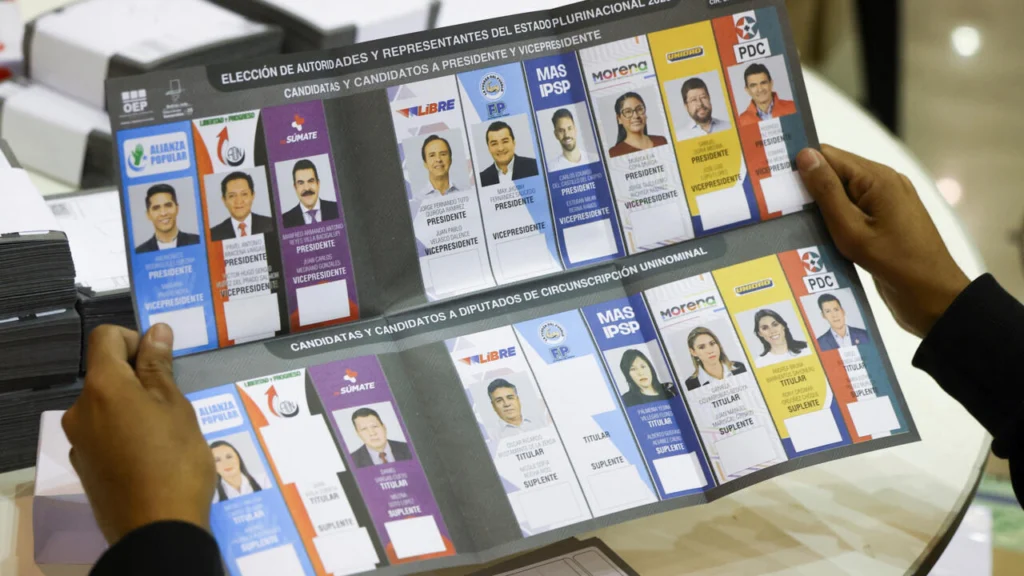
The electoral result of August 17 surprised even the most optimistic analysts on the right. The MAS, which had dominated Bolivian politics for more than a decade, suffered the worst defeat in its history by obtaining just 3.2% of the votes with its candidate Eduardo del Castillo.

For the first time since 2005, the left did not even manage to make it to a second round; an alarming fact that reflects the internal crisis of its leadership and the disconnect with broad sectors of its base.


The Electoral Pulse: High Participation and Null Votes as a Manifestation of Discontent
The elections proceeded normally, under a climate of civility that was highlighted by international observation organizations.

The voter turnout rate was high, which speaks to the mobilization and interest that these elections awaken in Bolivian society.

However, one of the most revealing data points was the prominence of the null vote: 19% of the total, equivalent to more than 1.2 million votes.

This is an unprecedented phenomenon, driven largely by Evo Morales himself, who during the campaign made an explicit call for a null vote.

This percentage not only reflects an intent to punish or a simple rejection of the available candidates, but also the deep frustration and disillusionment of broad social sectors with the current political panorama.

Ultimately, this null vote fragmented the left, weakening the MAS and paving the way for the right to emerge as the only possible alternative in the second round.

The Second-Round Candidates: Two Faces of the Bolivian Right
According to the results, the second round in October will pit two figures from conservative and liberal sectors against each other, but with profiles and proposals that differ substantially.

Rodrigo Paz Pereira: The Moderate Center-Right

Rodrigo Paz Pereira, candidate of the Christian Democratic Party (PDC), leads the race with 32.14% of the votes (more than 1.6 million).

Paz Pereira is the son of former president Jaime Paz Zamora and has a long political career, from his mayoralty in Tarija to his seat in the Senate.

He is recognized for a center-right position with a moderate discourse, based on reconciliation and the fight against corruption.

His proposal is based on a model of “capitalism for all,” aimed at including the informal sector, with a strong rejection of external debt and a plan for economic stabilization.

Paz Pereira promises to carry out constitutional reforms, reduce the bureaucratic apparatus, and privatize deficit-ridden public companies, but with a discourse that seeks to avoid abrupt ruptures to pacify the country.

This candidate has managed to attract sectors disillusioned with both the MAS and the hard right, capitalizing on the desire for change without radicalization.

Jorge “Tuto” Quiroga: The Conservative and Liberal Right

For his part, Jorge Quiroga, of the Liberty and Democracy party, obtained 26.81% of the votes, establishing himself as the other contender for the second round.

A former president between 2001 and 2002, Quiroga is a veteran politician, with a career marked by a frontal stance against the MAS and Evo Morales.

He defines himself as a representative of the conservative liberal right and has championed the “end of the hegemony of 21st-century socialism.”

His proposals are clearly liberal: he proposes eliminating fuel subsidies, cutting the fiscal deficit, and reducing the size of the state.

In terms of governance, he bets on a deep judicial reform and proposes establishing a new Constitution with radical changes.

His campaign highlighted the economic crisis, the deficit in international reserves, and the corruption of the Arce government.


The Challenges of the Second Round: Alliances and Perspectives

With the left fragmented and the MAS absent from the second round, what remains is a dispute between two variants of the right that, although different, share the objective of definitively displacing the popular political project.

The scenario is complex. The so-called “useful vote” and alliances will be decisive in defining the future government.

Former president and businessman Samuel Doria Medina, leader of the National Unity Front, has already announced his support for Paz Pereira, ensuring important backing for the center-right candidacy.

On the opposite side, Quiroga will seek to amalgamate the votes of more conservative and anti-MAS parties to reinforce his base.

The electorate faces a dilemma: vote for the more moderate and conciliatory option proposed by Paz or bet on the continuity of Quiroga’s neoliberal and confrontational discourse. Neither option fully convinces those seeking true change that deepens social justice and economic sovereignty.

Where is Bolivia Headed After a Result That Raises More Questions Than Answers
The historic defeat of the MAS and the absence of any progressive force in the second round reflect not only a conjunctural crisis within the ruling party but also the structural fragility of the leftist project in Bolivia.

The inability to reconcile internal differences and present a united front has cost the popular sectors dearly, who today are forced to choose between two right-wing options that could jeopardize the social advances of recent years.

Bolivia is at a crossroads. Political atomization and the high percentage of null votes evidence a deep disillusionment with the traditional elites and a latent desire to refound national politics from a perspective that truly addresses popular demands.

The second round will be decisive in defining whether Bolivia opts to continue on the path of social inclusion and economic sovereignty or whether it leans towards a model that reinforces neoliberal agendas, often associated with social setbacks.

For the left and social movements, the task is urgent: to rebuild bridges, articulate a renewed and popular project that regains the trust of the citizenry.

Democracy and social justice are at stake, and the country’s political future will depend on the level of mobilization, unity, and capacity for dialogue they manage to build in the coming weeks.

https://www.telesurenglish.net/bolivia- ... rst-round/
"There is great chaos under heaven; the situation is excellent."

User avatar
blindpig
Posts: 15306
Joined: Fri Jul 14, 2017 5:44 pm
Location: Turtle Island
Contact:

Re: Bolivia

Post by blindpig » Tue Dec 30, 2025 1:59 pm

Bolivia’s new right-wing government eliminates fuel subsidies and thousands of workers fight back

Massive protests have forced the government to seek dialogue with unions and small and medium-sized mining companies. Protesters are demanding the complete repeal of the decree eliminating hydrocarbon subsidies.

December 24, 2025 by Pablo Meriguet

Image
Leaders from the Bolivian Workers' Center (COB) meeting with President Rodrigo Paz on December 24, 2025. Photo: Facebook / Rodrigo Paz

The recently inaugurated right-wing government of Rodrigo Paz in Bolivia has kicked off its administration by shaking up the Andean country’s economy and targeting a historic policy of the Movement Towards Socialism (MAS)-led government of change. As one of his first actions, Paz eliminated the various gasoline subsidies that, according to workers, helped the most impoverished sectors to produce.

On his X account, Paz justified the unpopular measure: “I have decided to declare an economic and social emergency that seeks to bring hydrocarbon prices into line with reality, a difficult but necessary decision to guarantee fuel supplies and stop bleeding our reserves dry. These new resources will not remain in the central government, but will be distributed 50% directly to our regions and subnational governments, ensuring that everyone’s efforts are converted into better hospitals, schools, and services for every Bolivian.”

As a compensatory measure, Paz ordered an increase in the minimum wage: “From January 2026, the national minimum wage will rise to 3,300 bolivianos, an increase of 20%, and we will raise the Renta Dignidad (Dignity Income) to 500 bolivianos for our senior citizens.”

The decision was welcomed by the US Department of State in a statement on X: “The United States welcomes President Rodrigo Paz’s announcement of a significant package of economic reforms aimed at restoring stability, prosperity, and investment in Bolivia after decades of failed policies.”

Workers fight back
Organized workers, including miners, laborers, transport workers, and coca growers, quickly announced protests against the executive’s decision and demanded the repeal of Decree 5503, which they claim will increase the price of products in a country suffering from an economic crisis.

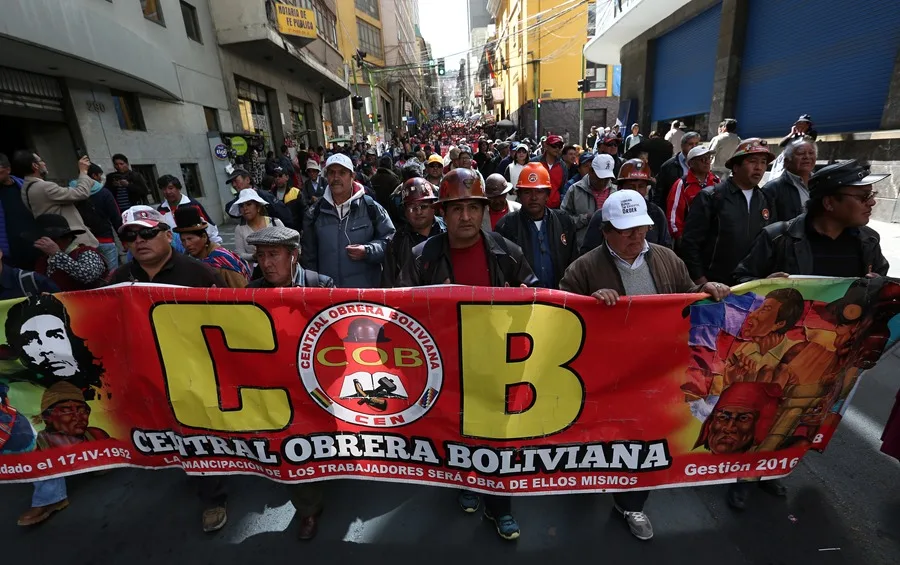
Thousands of workers filled the streets of downtown La Paz on December 22, demonstrating once again the historic capacity for mobilization that unionized Bolivian workers have always had. “[Decree 5503] contains provisions that seek to sell off our country, our companies, and our natural resources, making the millionaires richer and the poor poorer. We cannot allow that to happen!” said one of the union leaders.

In addition, six of the country’s nine departments have experienced road closures, demonstrating the national reach of workers’ organisations that have resisted the neoliberal reforms of various governments for decades.

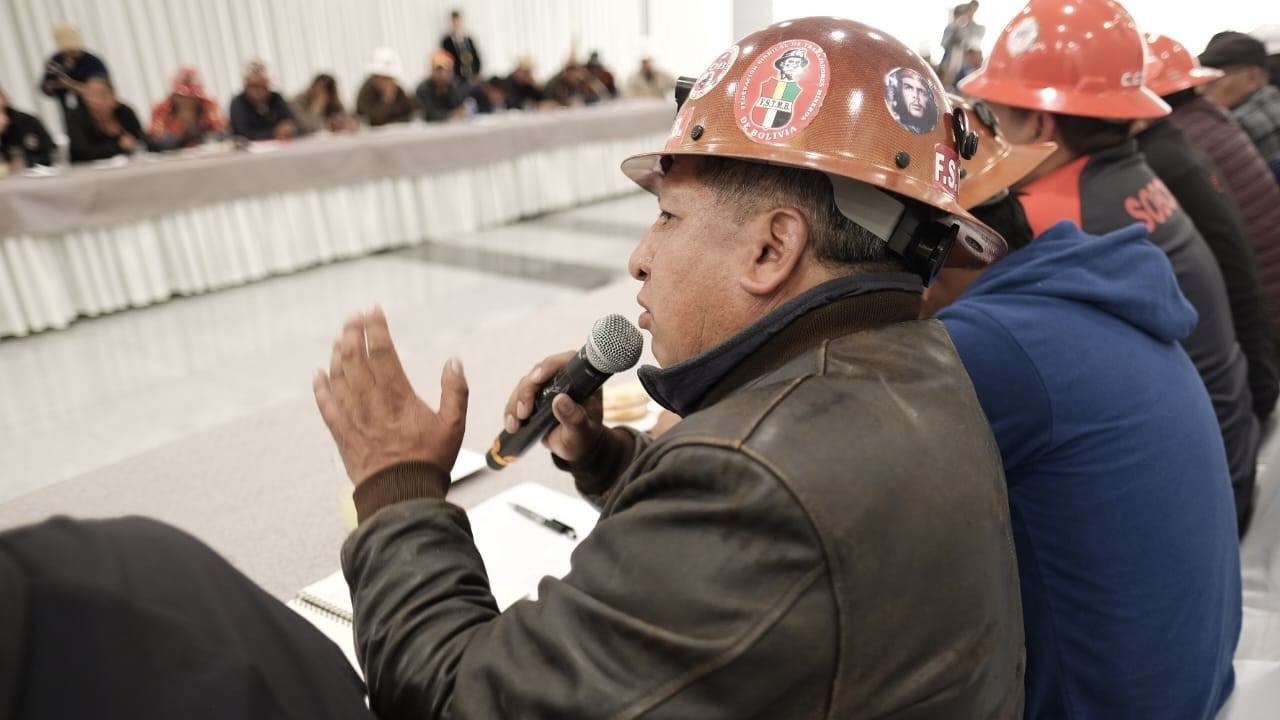
The National Federation of Mining Cooperatives of Bolivia (Fencomin) led the massive mobilization on Monday that descended from the town of El Alto to the seat of government in the city of La Paz. Alfredo Uño, one of the leaders of the miners, says the decision will radically increase operating costs for small and medium-sized mining companies, leading to unemployment and hunger among workers.

At the same time, the Organization of Factory Workers closed several points in Cochabamba that connect Oruro with La Paz as a protest measure. For their part, the independent transport unions also announced that they will take measures to pressure the government to reverse its decision.

The Bolivian Workers’ Union (COB) stated that President Paz’s decision was not consulted with the sectors that would be most affected, and therefore, they claim that it is a unilateral decision. Mario Argollo, the COB’s top leader, said: “We will not back down, we will not negotiate without our people, we will not betray the trust that has been placed in us to lead this protest movement.”

And although the COB agreed to begin talks with the Paz administration, the first of which took place on Wednesday, December 24, it also stated that it will not call off the protests in La Paz and other regions until Decree 5503 is repealed. Fencomin joined these talks, also denouncing that the executive branch’s measures facilitate the transfer of strategic resources to the private sector, which directly violates the Constitution and national sovereignty.

https://peoplesdispatch.org/2025/12/24/ ... ight-back/

******

Bolivia: General Strike Led by Miners’ Union Continues
December 29, 2025

Image
Members of the Bolivian Workers' Central (COB) marching through the streets of La Paz, Bolivia. Photo: EFE/Martin Alipaz.

An indefinite general strike called by the Bolivian Workers’ Central (COB) has now entered its second week. The strike has been in response to Supreme Decree 5503, a law condemned by unions and peasant organizations for being part of an “IMF-imposed adjustment” that is deteriorating the standard of living of the working population. Miners have been at the forefront of these protests.

Since last Monday, December 22, thousands of miners have been marching on La Paz. Wearing helmets and carrying tools, they have set up roadblocks and blockades around Plaza Murillo, the central square of the national government. The police have responded with repression, tear gas, and barricades, leading to hours of clashes and the arrival of reinforcements from other union sectors, including teachers, factory workers, and neighborhood committees.

The mobilizations also reached Cochabamba, El Alto, and several strategic road corridors. Road blockades have been reported.

#ENVIDEO📹 | Diversas organizaciones sociales y sindicales, afiliadas a la Central Obrera Boliviana #COB 🇧🇴, marcharon por sexto día en rechazo al Decreto Supremo 5503 del Gobierno de Rodrigo Paz pic.twitter.com/QnrUTA0XhX
— teleSUR TV (@teleSURtv) December 28, 2025


Despite the protests, President Rodrigo Paz defends the decree as a “necessary measure” to eliminate fuel subsidies, which would result in an 86% increase in the price of gasoline and a 160% increase in the price of diesel.

Social organizations condemn the adjustment for including the elimination of taxes on large capital, the opening to foreign investments through a 30-day automatic approval mechanism, and a legal regime that guarantees 15 years of protection to transnational companies, particularly in the mining and energy sectors.

According to unions and critical economists, the decree was enacted after meetings with delegations from the DFC, EXIM Bank, USTDA, and the US State Department, fueling accusations of alignment with external interests over Bolivia’s strategic resources.

The COB reaffirmed at a Christmas plenary session that it will not lift the strike while the decree remains in effect. The leadership argues that the movement must be sustained through factory assemblies, struggle committees, and territorial coordination, in a scenario reminiscent of the historical Bolivian labor movement.

The government is attempting to counter the popular pressure through negotiations with transport workers, mining cooperatives, and sectors of the middle class, in addition to political and mainstream media campaigns against the protesters.

Meanwhile, a subnational electoral process scheduled for March 2026 is underway, and the Supreme Electoral Tribunal is evaluating the annulment of the legal status of the Morena party, led by the mayor of El Alto, Eva Copa, amid internal fragmentation within the MAS party.

This conflict is not only about the gas price hike but also about Bolivia’s economic model, the control of natural resources, and the framework of state regulatory sovereignty. For labor unions, the struggle will determine whether Bolivia enters a cycle of accelerated privatization of lithium, rare earth elements, and public companies. For the government, it represents a test of strength to maintain its economic program.

The miners, once again at the forefront of Bolivian history, are not backing down. Now, the entire country is watching to see if this latest social conflict will be resolved through dialogue, in the streets, or in a larger crisis.

https://orinocotribune.com/bolivia-gene ... continues/
"There is great chaos under heaven; the situation is excellent."

User avatar
blindpig
Posts: 15306
Joined: Fri Jul 14, 2017 5:44 pm
Location: Turtle Island
Contact:

Re: Bolivia

Post by blindpig » Fri Jan 30, 2026 3:59 pm

Bolivian workers’ thirst for a decent life remains unquenched

Rights to exploit Bolivia’s lithium will likely be offered to western investors, instead of the Russian and Chinese companies that were given preferential access by MAS.
Lalkar writers

Thursday 1 January 2026

Image
Former president Evo Morales and his followers remain the great imponderable of Bolivian politics – the 65-year-old veteran politician still has the power to mobilise masses of the populace. But for the moment, the long-suffering workers of Bolivia will have to look for a more solid strategy to assert the rights and agency that they seemed so close to securing, but which once more have eluded them.

The portents were ominous following the election in November of a new right-wing president of Bolivia, Rodrigo Paz, and the humiliation of the Movement for Socialism (MAS), which had dominated the country’s political landscape for the past 20 years.

“Even before the new president was sworn in, in the House of Deputies the bible and cross were reinstated, even though the constitution defines the plurinational state as secular. The multicoloured wiphala flag, one of the country’s three official flags, representing indigenous peoples, was removed from outside the presidential palace. Public bodies have replaced the chakana, the Andean cross, on their letterheads with the national shield.” (Bolivia Information Forum, Bulletin 63, 1 December 2025)

Such changes are more than symbolic niceties. When Evo Morales, a former leader of Bolivia’s coca-growing trade union and founder of MAS, swept to power in 2005, he instituted a wide-ranging recalibration of the country’s stagnant neoliberal political and economic complexion. Bolivia’s majority indigenous population, of which he is a member, were for the first time granted equal rights and standing with other citizens, and their cultural attributes and languages (he himself is an Aymara speaker) were welcomed and celebrated.

Under a new constitution, hallowed and venerated status was even granted to Pachamama (Mother Earth), and the philosophy of suma qamaña – ‘living well’ in Aymara – was enshrined as a revolutionary new environmental consciousness and perspective which demanded respect for nature and living in harmony with it.

On a practical note, President Morales’s governmentnationalised Bolivia’s lucrative hydrocarbon industries – the backbone of its economy – within a hundred days of becoming president. He had been carried to power on a wave of worker and peasant militancy that had built up over previous decades, and which focused on the so-called gas and water wars – a groundswell of popular demand for control of the landlocked country’s vital natural resources that reached a crescendo with his election.

Initially, he did not disappoint. The country’s GDP grew by an average of 4.8 percent a year from 2004 to 2017, while the proportion of the population living in extreme poverty fell by more than half from 36 percent to 17 percent over the same period.

In 2010, the World Bank changed Bolivia’s classification from ‘lower income’ to ‘lower-middle income’ after the country surpassed the $1,100 national earnings per person threshold for middle-income status. The MAS government also carried out a far-reaching programme of agricultural reform, redistributing some 134 million acres of land to indigenous families, many of whom had previously been subjected to semi-feudal exploitation.

Bolivia was also riding the commodities boom of the 2000s, in which the price for the country’s gas and oil shot up, pumping new revenue into the economy. Morales channelled that money into schools, hospitals and civic infrastructure. He also raised the minimum wage several times during his presidency, and provided grants to young children to enrol in primary education and remain in school.

In 2009, the MAS government introduced old-age pensions and established a welfare programme for pregnant women – the Bono Juana Azurduy, named after a heroine of the struggle for Bolivian independence from Spanish rule – to finance regular visits to healthcare facilities during pregnancy and in the first two years after childbirth.

So far, so good. But as a Lalkar article written before Morales came to power had observed: “The needs of the Bolivian people are great, and imperialism is not going to meet them. The Bolivian people show signs of having realised this and of being prepared to fight to the death for a better life. If the quality of their militancy and determination is matched by the quality of their leadership, then they will be invincible.” (Bolivians rise up against imperialist looting, Lalkar, November 2003)

As the people of the Bolivian altiplano – the country’s high Andean plain – and its less extensive lowland and tropical jungle regions threw in their lot with one charismatic but politically unsophisticated leader, these words were to prove prescient.

A change in the economic weather
On assuming the presidency, Evo Morales had pledged to bring power to marginalised groups and to end discrimination, and he fulfilled that promise. MAS had won a majority in congress, and within two years of taking office Morales convened a constituent assembly to formulate a new, inclusive constitution that granted rights to indigenous Bolivians and those of African descent – the Plurinational State of Bolivia was born. The country’s judges were to be elected by popular vote, and political agency was decentralised.

With a buoyant world market, the price of hydrocarbons skyrocketed, and even the nationalisation of Bolivia’s natural gas resources did not deter investors. But renegotiation of contracts with foreign energy companies was not always concluded on favourable terms – the new Bolivian government demanded only a 51 percent stake in such enterprises, and offered ample, over-generous compensation.

MAS was acutely aware that Bolivia, primarily an exporter of raw materials, would benefit greatly from developing its manufacturing base. But, predictably, gas prices eventually fell as discoveries were made elsewhere, and the state-owned gas company failed to consolidate production and invest adequately in new facilities.

A clash between the interests of indigenous Bolivians and farming campesinos in 2011 was perhaps a bellwether of things to come. The MAS government proposed building a road between the cities of Cochabamba and Trinidad that would pass through a national park and indigenous reserve, the Isiboro Sécure, known as ‘Tipnis’:

“The proposed road has brought to a head differences between the government and the lowland indigenous peoples and their organisations, between opening up new areas for development on the one hand and protecting the environment and indigenous people on the other.

“From the 1970s onwards, Aymara and Quechua campesino colonisers from the Altiplano and high valleys began to settle in the area to the south of the park, closest to Cochabamba and adjacent to the coca-producing Chapare area. They began to produce cacao, bananas, cassava, maize, citrus fruits and coca. With time, their numbers increased and pressure on the lands of the natural reserve grew.” (Bolivia Information Forum Special Briefing, October 2011)

A march by indigenous groups anxious to protect their reserve from encroachment was violently dispersed by police, and President Morales was obliged to temporarily suspend the road-building programme, which some had argued would primarily only benefit the economic interests of neighbouring Brazil for the transportation of goods. But the conflict was symptomatic of the divergent paths of conventional economic development and the people-centred model ostensibly championed by the MAS government.

Macro-economic projects, as Morales should have known, could no longer be steamrolled through, and the people – more traditionally represented by the Confederation of Bolivian Workers (COB) trade union, which had for decades brought uncompromising militancy to the mining sector, would be on the streets to prove it.

Nonetheless, in 2017 Morales gave the go-ahead for building the controversial highway, accentuating the split between the indigenous groups that stood to lose from the project and the coca growers and other cultivators who would gain. He also encouraged ‘slash and burn’ practices in forested areas as a means of clearing land for more cattle-ranching and farming.

A spike in this policy was linked to fires that blazed through the Chiquitania region – a unique area of tropical savannah and biodiversity in the east of the country – early in 2019, devastating the homeland of the Chiquitano indigenous people. According to World Wildlife Fund Bolivia, in the indigenous community of Monte Verde more than 250,000 acres of forest were burned. Hardly an indication of living in harmony with nature.

Overstepping the mark
Evo Morales had built up a huge personal following in Bolivia, although – as outlined – his policies could also prove divisive. The MAS leader was twice re-elected as president, but when he sought to stand for a fourth term of office in 2019 he had to bend the rules and make a court appeal to be allowed to run beyond the constitutionally mandated term limit. He had already narrowly lost a national referendum seeking to revise the laws in his favour, but remained undeterred.

Although he won the election, opinion in the country was split, and right-wing opposition groups made the most of allegations of polling irregularities and fraud. Unrest ensued, and security forces fired on protesters supporting Morales, killing more than 30 people. The writing was on the wall, and at the request of the Bolivian military the newly re-elected and hitherto seemingly unassailable former coca grower stepped down and fled for his life to Mexico, where he was granted political asylum.

There followed a year-long ‘interregnum’, during which the presidency was assumed by little-known right-wing senator Jeanine Áñez, who was backed by the armed forces and whose government did its level best to undo as many of the social gains instituted by MAS as possible. Of course, President Añez was also supported by the United States, with whom Morales had had a frosty relationship, expelling the US Drug Enforcement Agency from the country.

It is to the credit of the Bolivian people that they agitated relentlessly for new elections and refused to confer any legitimacy on the Áñez regime. After a year of enduring what was effectively a dictatorship, Bolivian voters once again elected MAS to power – this time under the leadership of Luis Arce, who had served as finance minister under Morales.

Arce pledged to continue implementing MAS policies – but under much more challenging economic conditions. By 2024, the Bolivian economy was limping along at 1 percent growth, central bank reserves were severely depleted, and inflation hit 23 percent. US dollars were scarce, fuel had to be imported, and many Bolivians were struggling to make ends meet in the face of soaring food prices.

Meanwhile Morales, who had made a hero’s return to Bolivia, remained leader of MAS, although he was not in the government. There followed a momentous power struggle between him and Arce as they jostled for position to be the MAS candidate in the 2025 election. Arce was embroiled in accusations of corruption, with his sons mysteriously enriching themselves during his presidency. Some Morales supporters scathingly label him ‘Bolivia’s Lenin Moreno’ – a reference to the Ecuadorian president who reneged on the socialist policies of his predecessor and former compatriot, Rafael Correa.

What kind of future?
In a country where extractive industries have traditionally been the backbone of the economy, Bolivia’s lithium deposits – among the world’s largest – have attracted much attention from overseas investors in recent years.

They are primarily located under the Salar de Uyuni, the world’s most extensive salt flats, in south-west Bolivia, near the city of Potosí. Ironically, Potosí is where silver mines first drew the Spanish conquistadors like a magnet during their spoilage of South America. To this day, the Spanish expression vale un potosí means ‘it’s worth a fortune’. And it undoubtedly is, but the question is: to whom?

After several failed attempts to build a lithium industry, the Arce government concluded a series of contracts at the end of 2024 with the Russian company Uranium One and Hong Kong CBC Investment Ltd of China for the extraction of lithium carbonate directly from the salt flats. There would be no battery production or any other type of industrial processing to speak of. Rather, it would simply mean the exploitation of a natural resource for immediate export. Once again, Bolivia was condemned to remain a producer of raw materials.

In mid-2025, Standard & Poors lowered their credit rating for Bolivia from ‘CCC+’ to ‘CCC-’, citing the country’s difficulty in servicing its external debt, and a negative economic outlook.

Meanwhile, with the 2025 elections looming, Arce managed to secure a judicial ruling disqualifying Morales from standing for office. Morales, whose personal conduct had been less than impeccable, was also being pursued by the Bolivian judiciary on charges of statutory rape, and found himself holed up and effectively in hiding under the protection of his coca-growing comrades in the Chapare hills. But Arce was also becoming increasingly unpopular as Bolivians wrestled with the acute economic crisis, and MAS eventually settled on a different presidential candidate, Eduardo del Castillo.

Under the circumstances, Morales appealed to his supporters to cast a ‘null and void’ protest ballot in the first round of the poll, and an impressive 19 percent of voters did so. Del Castillo garnered a meagre 3 percent of electoral support, leaving the once mighty MAS with a single seat in the lower house of congress, and none in the senate. The run-off was between two right-wing neoliberal candidates.

The new president, Rodrigo Paz of the victorious Christian Democrat party (PDC), wasted no time in appointing a government in which business interests are powerfully represented. The government is looking for loans from multilateral banks and towards mending fences with Washington. Although fuel shortages have been partially resolved, other problems of immediate concern, such as a dollar scarcity and the high price of basic necessities, remain to be dealt with. The promised removal of state subsidies is likely to present the new government with significant popular opposition.

Concessions for exploiting Bolivia’s lithium reserves are now expected to be offered to western investors – instead of the Russian and Chinese companies that were originally offered preferential access but have yet to ramp up production.

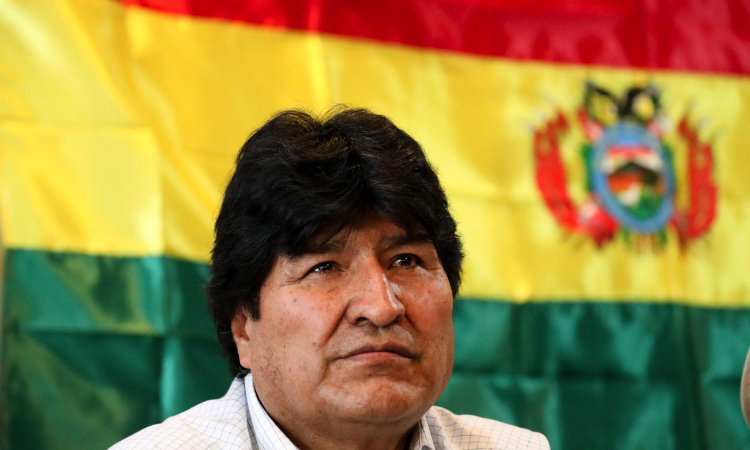
Evo Morales and his followers remain the great imponderable of Bolivian politics – the 65-year-old veteran politician still has the power to mobilise masses of the populace. But for the moment, the long-suffering workers of Bolivia will have to look for a more solid strategy to assert the rights and agency that they seemed so close to securing, but which once more have eluded them.

https://thecommunists.org/2026/01/01/ne ... nquenched/
"There is great chaos under heaven; the situation is excellent."

Post Reply