January 10, 2026
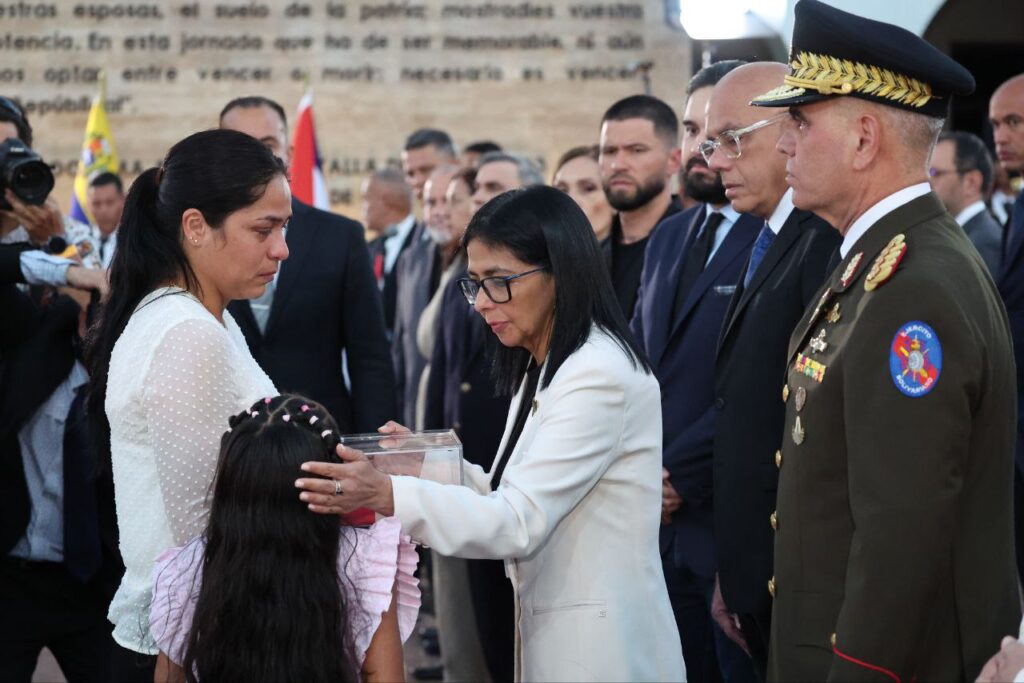
Venezuelan Acting President Delcy Rodríguez honors the wife and daughter of a fallen soldier killed by US military aggression against Venezuela. Caracas, Thursday, January 8, 2026. Photo: Venezuelan Presidential Press.
Venezuela’s Acting President Delcy Rodríguez presided over a moving ceremony on Thursday at the Eclectic Monument of the Bolivarian National Guard Military Academy in Caracas, honoring the memory and sacrifice of soldiers and civilians killed on January 3 in the illegal bombing carried out by the US regime in an operation aimed at abducting President Nicolás Maduro and First Lady Cilia Flores. Those wounded that day were also honored.
During the ceremony, wreaths, medals, and posthumous decorations were presented to the families of 39 officers and professional troops who were posthumously promoted for their heroism in fulfillment of their oath. The tribute included military personnel of various ranks and civilians who were victims of the imperialist aggression.
Millions of Venezuelans followed the ceremony with tears on their faces, sharing the visible pain of the relatives of the fallen soldiers, as reported by Orinoco Tribune. “The sentiment of being violated is now part of the Venezuelan soul, and this has been translated into a stronger anti-imperialist national sentiment,” said Orinoco Tribune’s editor, Jesús Rodríguez-Espinoza.
The ceremony also paid tribute to the 32 Cuban soldiers and officials who were also killed defending Venezuela on January 3. Cuban Foreign Minister Bruno Rodríguez and the Cuban ambassador to Venezuela, Jorge Luis Mayo Fernández, took part in the wreath-laying ceremony on behalf of these fallen soldiers.
Lessons of diplomacy
“I speak to the people of the United States: the people of Venezuela did not deserve this vile, warmongering aggression from a nuclear power,” said Acting President Delcy Rodríguez. “I said yesterday that it has become a stain on our relations and on our history. If I could say anything, it is not about revenge, but rather about vindication. We will give lessons and examples of what the Bolivarian Diplomacy of Peace in international action truly means.”
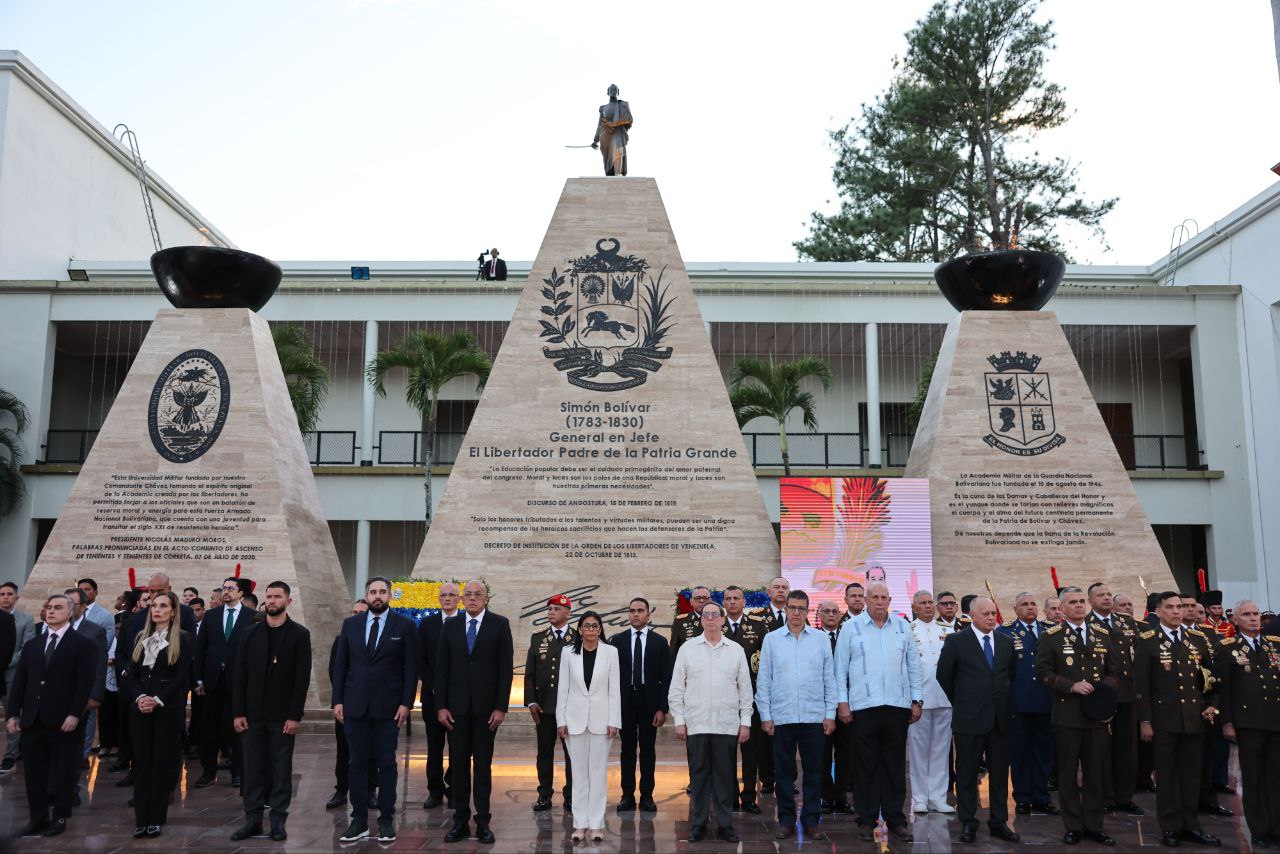
She emphasized that “our men and women who fell in combat are heroes and heroines of the homeland of Simón Bolívar, and the brothers of Cuba, sons of Martí and Fidel, are also heroes and heroines of this homeland, because as one people they fought in defense against an illegal and illegitimate aggression.”
“We are not warmongers; we are men and women of the state, lessons we learned from Bolívar: what it means to have dignity, to have moral superiority, and to have spiritual wealth,” she noted.
Rodríguez invoked the military doctrine of the nation’s father, Simón Bolívar, emphasizing that the Venezuelan Army has been trained for defense, not war. “Bolívar never taught the use of supremacy to humiliate anyone. There was always respect for the dignity of the adversary,” she stated, recalling Bolívar’s maxim: “Liberty is the only objective worthy of the sacrifice of men.”
The Chavista leader reiterated that the concept of homeland in Venezuela transcends borders and is based on love, reaffirming that the country will continue to set an example of dignity before the world, keeping its head held high and its spirit unyielding in the face of any attempt at forced subordination.
Rodríguez also emphasized that the men and women of the Venezuelan armed forces wear their uniforms to protect the republic and defend national morale. In this regard, she elevated to the status of heroes of the homeland not only the fallen Venezuelan fighters, but also the Cuban brothers and sisters who died defending Venezuelan soil, sons of Martí and the commander of the Revolution, Fidel Castro.
Victims committee
Rodríguez announced the creation of a commission to provide comprehensive support to the families of the fallen heroes. “I have seen in the faces of the mothers—I saw the face of a woman, my mother, when my father was murdered. In the faces of the wives of the fallen, I have seen the face of my mother, who also lost a husband, and in the faces of the girls and boys who lost their fathers, I have seen the faces of Jorge and me, when we also lost our father as children, vilely murdered,” she said.
She reaffirmed her absolute loyalty to the constitutional order and to President Nicolás Maduro: “We have historical dignity, and we have commitment and loyalty to President Nicolás Maduro, who has been kidnapped. We have loyalty to the first lady, Deputy Cilia Flores, and we have committed ourselves to not rest until we see them free, back home, and back in their homeland.”
The acting president also announced the construction of a memorial to those who refused to surrender to foreign aggression. “Rest assured that Venezuela stands with us on this journey, and that is why we have decided to build a monument in honor of our heroes, heroines, and martyrs,” she added.
At the closing of her speech, she declared, “Honor and glory to the men and women who died in combat. No one surrendered here! There was combat here, combat for this homeland, for our Liberators, for Miranda, Sucre, Ribas, for Urdaneta, for Manuela Sáenz, for Ezequiel Zamora, for our Liberator Father Simón Bolívar. There was combat here for Chávez, and there was combat for Venezuela!”
High-ranking military officers were present, including General Vladimir Padrino and other members of the high military command.
Cuba’s foreign minister
Cuban Foreign Minister Bruno Rodríguez pledged the joint struggle of both nations to ensure the release of the Venezuelan president and his wife, as well as the victory of the Revolution that both countries lead.
“I came from Cuba to pay an emotional tribute to the Venezuelan combatants who fell in combat in defense of the Bolivarian and Chavista Revolution and the sacred Venezuelan homeland,” Minister Rodríguez stated before Delcy Rodríguez and leaders of the Bolivarian National Armed Force.
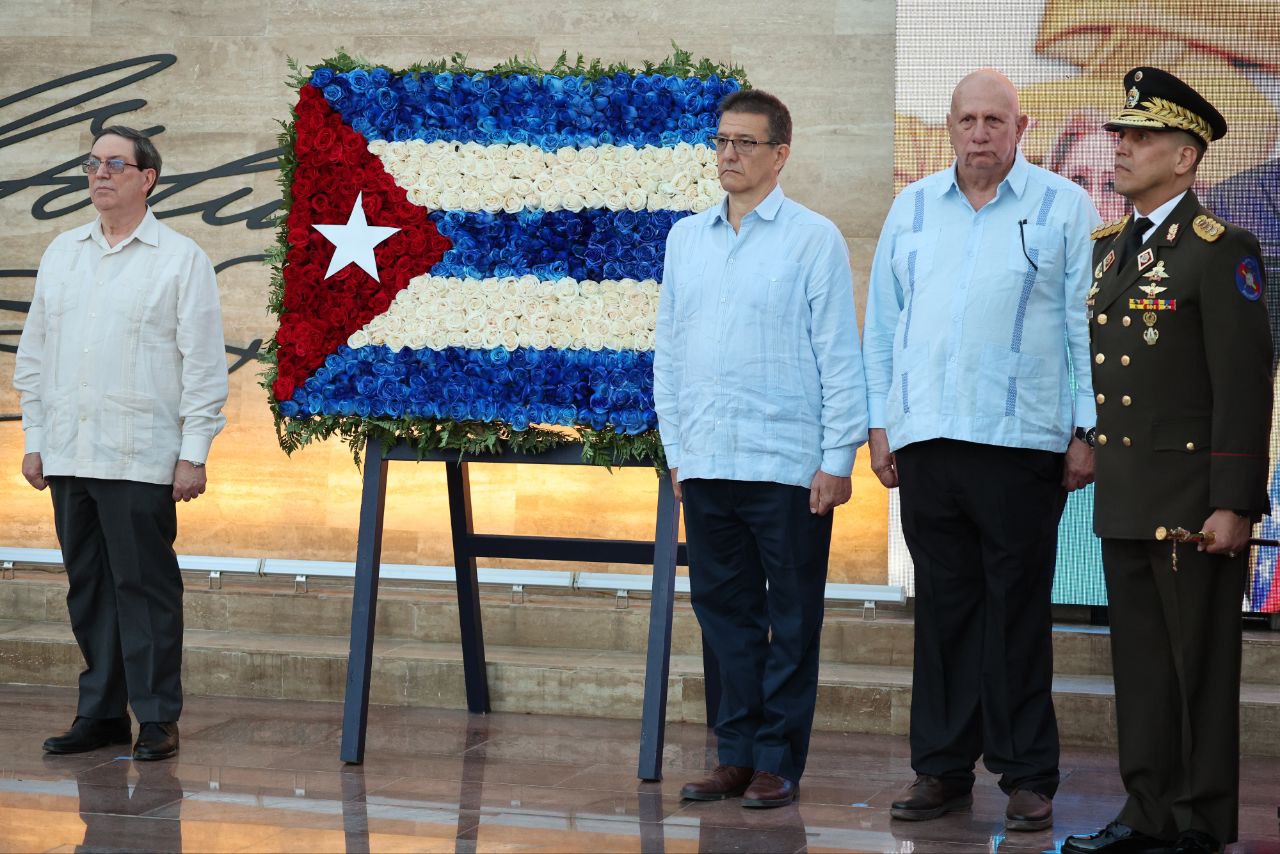
In his speech, he highlighted the work of the Cuban troops who, “in unequal combat, confronted the imperialist enemy that was desecrating the sovereignty of the Venezuelan homeland and protecting the constitutional president, Nicolás Maduro.” The Cuban foreign minister extended a message of “honor and glory” to those who fell, and of “love and peace” to the Venezuelans killed during the US military attacks.
In the political and diplomatic sphere, Minister Rodríguez shared the conviction that both revolutions, the Bolivarian and the Cuban, are beacons for the liberation of Latin America. This led him to remember Army General Raúl Castro, the Eternal Commander Hugo Chávez, and President Miguel Díaz-Canel, who, loyal to the thought of Bolívar and Martí, have paved the way in the construction of the emancipation of the peoples.
“Hasta la victoria siempre, venceremos!” he said after finishing his speech to the families of the military personnel and civilians who gave their lives during the imperial armed aggression.
List of martyrs honored:
• First Lieutenant Christopher Barreto
• Second Sergeant Major Andrés Barina
• Third Sergeant Major Pedro Carrillo
• Third Sergeant Major Jesus Martinez
• Third Sergeant Major Brayan Núñez
• Third Sergeant Major Adrián Robles
• Third Sergeant Major César García
• Third Sergeant Major Yoicar Brito
• Third Sergeant Major Luis Baraco
• Third Sergeant Major Eduardo Peraza
• Third Sergeant Major of the Militia José Rodríguez
• First Sergeant Elietnis Camacho
• First Sergeant Crisbel Gómez
• First Sergeant Angel Divas
• First Sergeant Anahís Molina
• First Sergeant Alejandra Oliveros
• First Sergeant José Vera
• First Sergeant Richard Rodriguez
• First Sergeant Fabián Estévez
• First Sergeant Ramón Martínez
• First Sergeant Jonathan Cordero
• Second Sergeant Saúl Pereira
• Second Sergeant Carlos Mata
• Second Sergeant Victor Hernandez
• Second Sergeant Pedro Carruido
• Second Sergeant Joel García
• Second Sergeant José Sucre
• Second Sergeant Ezequiel Monjes
• Second Sergeant Luis López
• Second Sergeant Fran Gerson Hurtado
• Second Sergeant Jean Pierre Parra
• Second Sergeant José Ilarraza
• Second Sergeant Jerry Aguilera
• Second Sergeant Franco Contreras
• Second Sergeant Isaac Tovar
• Second Sergeant Ángeles Tovar
• Second Sergeant Juan Fernández
• Second Sergeant Kelvin Sojo
• Citizen Johana Sierra
• Citizen Rosa González
• Citizen Lenin Ramirez
• Citizen Javier Soto
• Third Sergeant Major Jesús Alberto Martínez Marantes
Diplomatic contacts
On Friday, Venezuela’s Acting President Rodríguez announced that she had held telephone conversations with the presidents of Colombia, Brazil, and Spain, “in the context of the serious criminal, illegal, and illegitimate aggression perpetrated against Venezuela,” as reported by Alba Ciudad.
“During these exchanges, I provided detailed information about the armed attacks against our territory. These attacks resulted in the murder of over 100 civilians and military personnel, as well as about the serious violations of international law, including the violation of the personal immunity of the constitutional president of the republic, Nicolás Maduro, and First Lady Cilia Flores,” explained Delcy Rodríguez.
“Likewise, we agree on the need to advance a broad bilateral cooperation agenda, based on respect for international law, the sovereignty of states, and dialogue between peoples,” she said.
• Rodríguez gave special thanks to Brazilian President Luiz Inácio Lula da Silva and the people of Brazil “for the support and assistance given to Venezuela in the most critical moments after the aggression suffered.” The US military attack destroyed a major warehouse with insulin doses delivered for free by the Venezuelan government to renal patients. Brazil immediately sent shipments of insulin to solve the emergency.
• With Colombian President Gustavo Petro, Rodríguez reported that “I reaffirmed that Colombia and Venezuela are brother countries, committed to moving forward together to confront and resolve the problems that commonly affect us, based on mutual respect and regional cooperation.”
• In a conversation with Spanish President Pedro Sánchez, Delcy Rodríguez reported that “I thanked him for the courageous stance of the Spanish government in condemning the aggression against Venezuela and expressed our interest in working together on a broad bilateral agenda that is beneficial to both our peoples and governments.”
• “I reaffirmed that Venezuela will continue to confront this aggression through diplomatic channels, faithful to the principles of Bolivarian Diplomacy of Peace as the only path to defending our sovereignty and preserving peace,” said the acting president.
• She also published a statement expressing, on behalf of the Venezuelan government, her deep gratitude to the Emir of the State of Qatar, His Highness Sheikh Tamim bin Hamad Al Thani, and his government for the support given to Venezuela during the grave hours of the unequal and illegitimate aggression against the noble Venezuelan people.
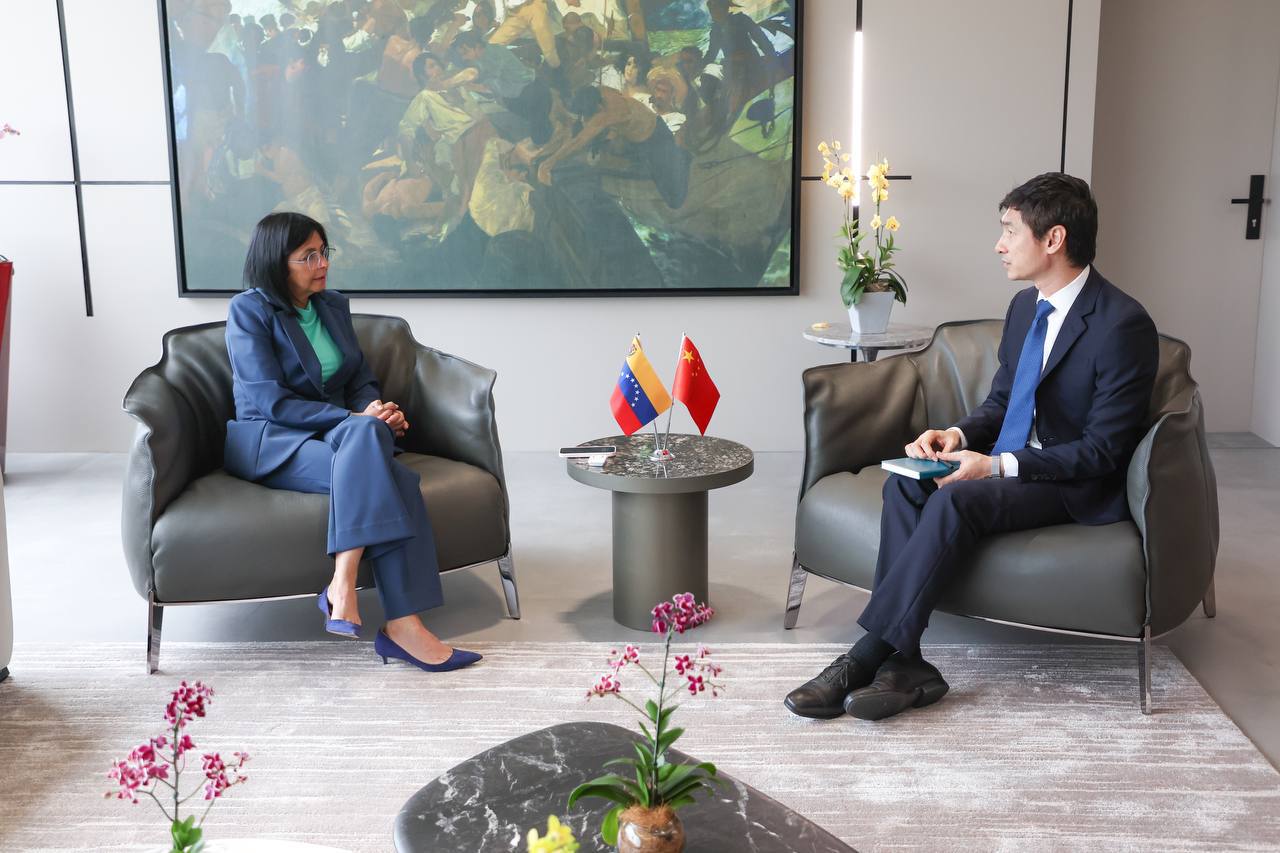
• Rodríguez also reported having a cordial meeting with the ambassador of China, Lan Hu, “to whom we conveyed our sincere gratitude for his condemnation of the abduction of President Maduro and First Lady Cilia Flores, as well as the aggressions against Venezuela. We value China’s firm and consistent position in strongly condemning the serious violation of international law and Venezuelan sovereignty.”
Later, the Venezuelan Foreign Minister Yván Gil reported receiving the Russian ambassador, Sergey Melik-Bagdasarov. “In this meeting, we received a renewed message of solidarity and support from the Russian government toward the Venezuelan people and government, which is currently facing the kidnapping of President Maduro and First Lady Cilia Flores, following an illegal and unjustified military aggression that has claimed the lives of over 100 civilians and military personnel.”
“We agreed on the importance of jointly defending dialogue, diplomacy, and respect for international norms and the sovereignty of nations as the only ways to foster constructive bilateral and international relations. We continue working on the cooperation agenda between our two countries,” Gil wrote on social media.
(Alba Ciudad) with Orinoco Tribune content
https://orinocotribune.com/no-one-surre ... ggression/
Venezuela Initiates Diplomatic Talks With Washington to Resume Bilateral Relations; SOUTHCOM’s Piracy Continues
January 10, 2026
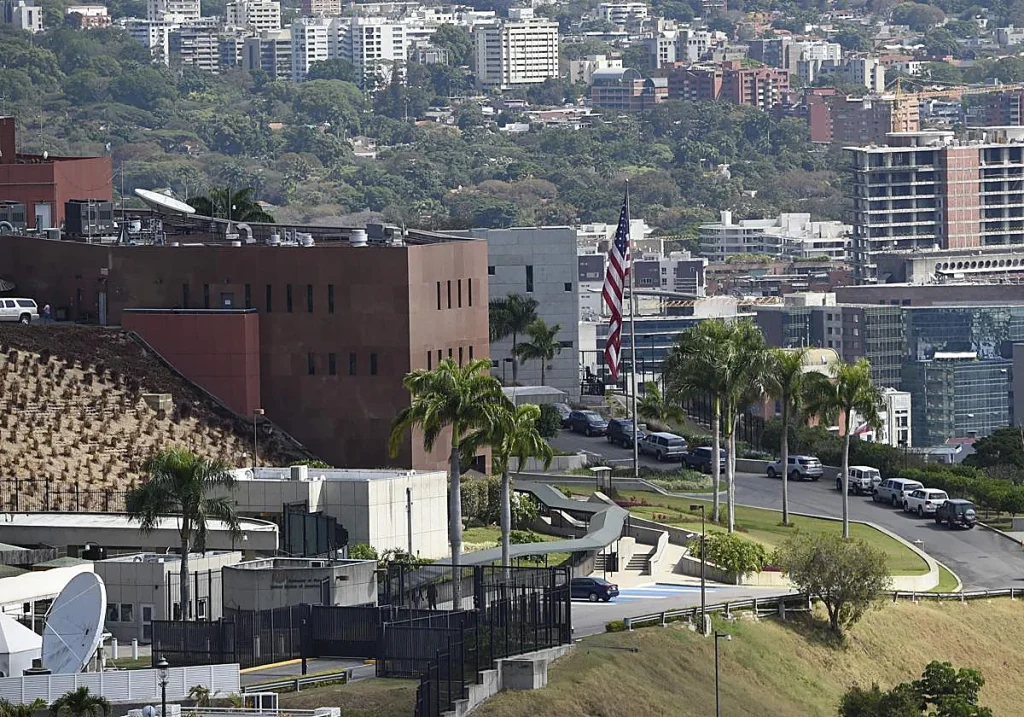
A view of the US embassy in Caracas, Venezuela, March 12, 2019. Photo: Juan Barreto/AFP/file photo.
Caracas (OrinocoTribune.com)—On Friday, Venezuela announced that it has begun “an exploratory diplomatic process” with the United States to resume bilateral relations, according to a statement released by Foreign Minister Yván Gil. “Venezuela has decided to initiate an exploratory diplomatic process with the US government, aimed at re-establishing diplomatic missions in both countries,” the statement read.
To this end, a delegation of diplomatic officials from the US State Department arrived in Caracas on Friday to conduct technical and logistical assessments related to the resumption of diplomatic operations. Similarly, Venezuela will send a diplomatic delegation to Washington to carry out the corresponding tasks, Venezuelan authorities explained in the statement.
On Thursday, Deputy Nicolás Maduro Guerra, the son of President Nicolás Maduro, explained during an international webinar that this plan was drafted before the US military attack against Venezuela, as was the plan to sell Venezuela’s overstock inventories to the US regime.
The statement begins by reiterating the international condemnation that Venezuela “has been the victim of a criminal, illegitimate, and illegal aggression against its territory and its people.” The attack left over 100 civilians and military personnel dead, “who, in defense of the homeland, were killed in flagrant violation of international law.”
The statement reiterates that the illegal abduction of the constitutional president of the republic, Nicolás Maduro Moros, and First Lady Cilia Flores occurred in the context of the Saturday, January 3, aggression, constituting a serious violation of the personal immunity of heads of state and the fundamental principles of the international legal order.
Finally, the letter states that “as acting president, Delcy Rodríguez has reiterated that Venezuela will confront this aggression through diplomatic channels, convinced that Bolivarian Peace Diplomacy is the legitimate path for the defense of sovereignty, the restoration of international law, and the preservation of peace.”
The unofficial translation of the statement follows:
The government of the Bolivarian Republic of Venezuela reiterates its international condemnation of the criminal, illegitimate, and illegal aggression against its territory and its people, an action that has resulted in the deaths of more than 100 civilians and military personnel who, in defense of the homeland, were killed in flagrant violation of international law. As is well-known, the constitutional president of the republic, Nicolás Maduro Moros, and First Lady Cilia Flores were illegally abducted, constituting a grave violation of his personal immunity as head of state and of the fundamental principles of international law.
In order to address this situation within the framework of international law, and in strict adherence to the principles of national sovereignty and Bolivarian Peace Diplomacy, the Bolivarian government of Venezuela has decided to initiate an exploratory diplomatic process with the government of the United States of America, aimed at reestablishing diplomatic missions in both countries. This process seeks to address the consequences of the aggression and the kidnapping of the president of the republic and the first lady, as well as to develop a working agenda of mutual interest.
In this context, a delegation of diplomatic officials from the United States Department of State is arriving in the country to conduct technical and logistical assessments related to diplomatic functions. Likewise, a delegation of Venezuelan diplomats will be sent to the United States to carry out the corresponding duties.
As Acting President, Delcy Rodríguez has reiterated that Venezuela will confront this aggression through diplomatic channels, convinced that Bolivarian Diplomacy of Peace is the legitimate path for defending sovereignty, restoring international law, and preserving peace.
Caracas, January 9, 2026.
Naval blockade continues
Also on Friday, the US regime announced the seizure of the Olina oil tanker carrying Venezuelan oil in the Caribbean Sea.
The US Southern Command explained that Marines and sailors departed from the aircraft carrier USS Gerald R. Ford to stop the ship without incident, with the support of the US Navy’s Amphibious Group and the USS Iwo Jima, USS San Antonio, and USS Fort Lauderdale ships.
The Olina is the fifth vessel seized by US forces as part of their recent operations in Latin America and the Caribbean. On January 7, it was confirmed that US forces boarded the Russian oil tanker Marinera.
This action against the Russian-flagged vessel was condemned by China, whose government warned thatthis was a serious violation of international law. Mainstream media reports that the oil shipment’s final destination was China.
Blockade statistics
As of January 9, 2026, the US naval blockade has significantly intensified. While several high-profile seizures have occurred in the last 48 hours, a substantial flotilla of tankers has successfully defied it and is currently navigating toward international markets.
Five major tankers have been confirmed as seized by US forces. These vessels are being redirected to US ports for the final consolidation of what analysts label an act of piracy:
• Skipper: Seized on December 10, 2025. The Guyana-flagged vessel was the first to be taken and is currently held near the Port of Galveston, Texas.
• Centuries: Seized on December 20, 2025. It remains under US custody off the coast of Texas.
• Marinera (formerly Bella 1): In a high-stakes operation on January 7, 2026, the US Coast Guard cutter Munro boarded this Russian-flagged tanker in the North Atlantic between Iceland and Scotland. Despite being escorted by a Russian submarine and naval vessel, US special forces boarded the ship without incident.
• M/V Sophia: Also seized on January 7, 2026, in a pre-dawn operation in the Caribbean.
• Olina: Reports from January 9 indicate that the US Coast Guard has intercepted the tanker.
The US blockade of Venezuela is materially imperfect and extremely hard to enforce, despite the unprecedented level of US warships in the area. However, oil experts have reported that Venezuelan inventories have begun to rise. If they reach their peak, the country will be forced to close oil rigs, with terrible implications for Venezuela’s oil production recovery.
Despite the heavy presence of the US war machine in the Caribbean, a significant number of vessels have managed to clear Venezuelan waters or are currently attempting to disperse in the central Atlantic.
The Flotilla of 16: According to vessel-tracking data, at least 16 tankers have left Venezuela in defiance of the blockade since the beginning of 2026.
Bertha, Veronica III, and Aquila II are three large tankers—two VLCCs and one Suezmax—that were visually confirmed to depart Venezuela on January 3, laden with crude and fuel oil. They are currently unaccounted for but are believed to be leading a larger group of 12 other vessels.
Aria and Tia: As of January 8, these two tankers were spotted sailing through the English Channel toward Russia. Both vessels have so far avoided interception by navigating through heavily trafficked waters.
Galileo: This vessel is also attempting to break the blockade by disabling its Automatic Identification System (AIS) transponders and performing ship-to-ship transfers to avoid illegal US seizure.
The US regime has stated, without legal backing, that any attempt to export Venezuelan oil will be met with force. Meanwhile, analysts suggest that the oil freedom fleet is successfully dispersing to make a total blockade physically impossible.
https://orinocotribune.com/venezuela-in ... continues/
Venezuela: Communes Are on the Frontline in Defense of the Bolivarian Revolution
January 10, 2026
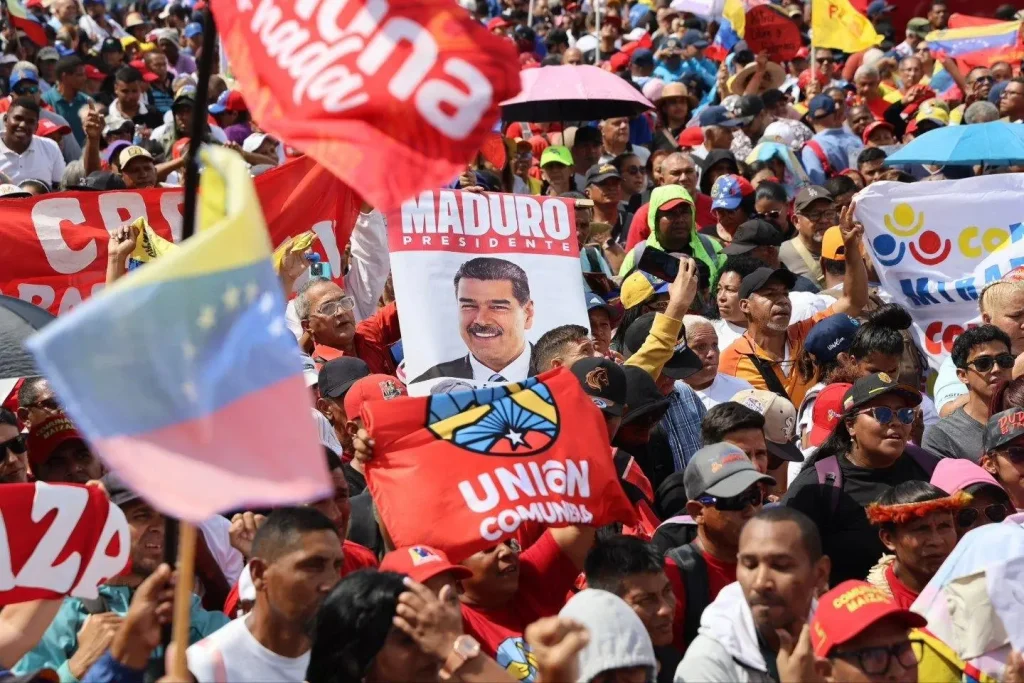
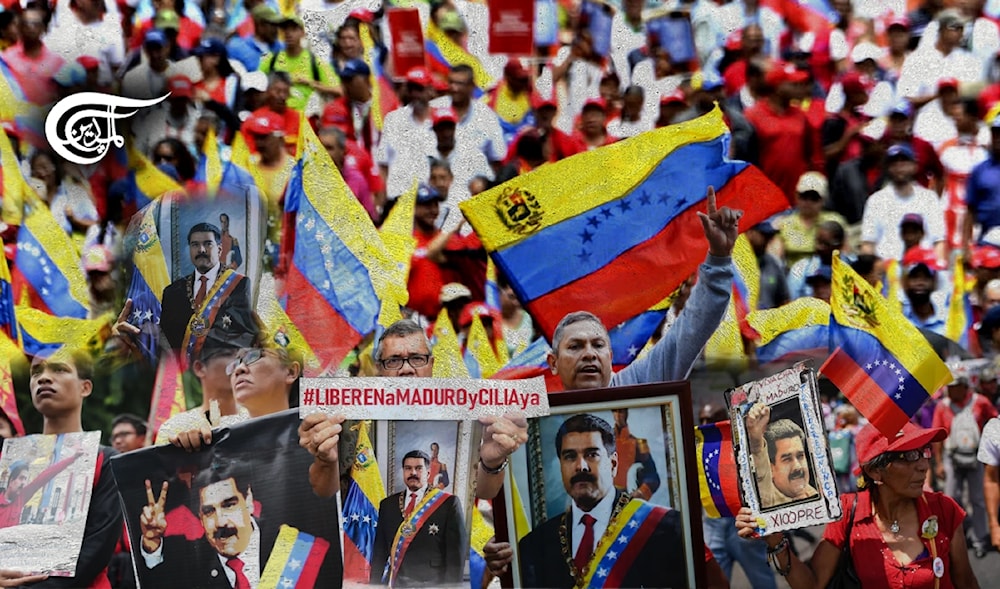
Caracas, January 7, 2026: Demonstrators demand that their president, Nicolás Maduro, be liberated by the US. President Maduro was abducted in the morning of January 3, 2026. Photo: Thierry Derrone.
On January 6, a new wave of popular mobilization took place to defend Venezuela’s Bolivarian Revolution and demand the immediate release of the country’s president, Nicolás Maduro, and his wife Cilia Flores. Thousands of representatives from self-governing communes from across Venezuela gathered in the streets of the capital.
The fundamental strategy of the Bolivarian Revolution is the transfer of political and economic power to the communes—the only way to build a true direct democracy. This movement, initiated by President Hugo Chávez and continued by President Maduro, will develop in 2026. During her first visit with the people since assuming the interim presidency, Delcy Rodriguez met with residents of the José Félix Rivas Commune in Caracas.
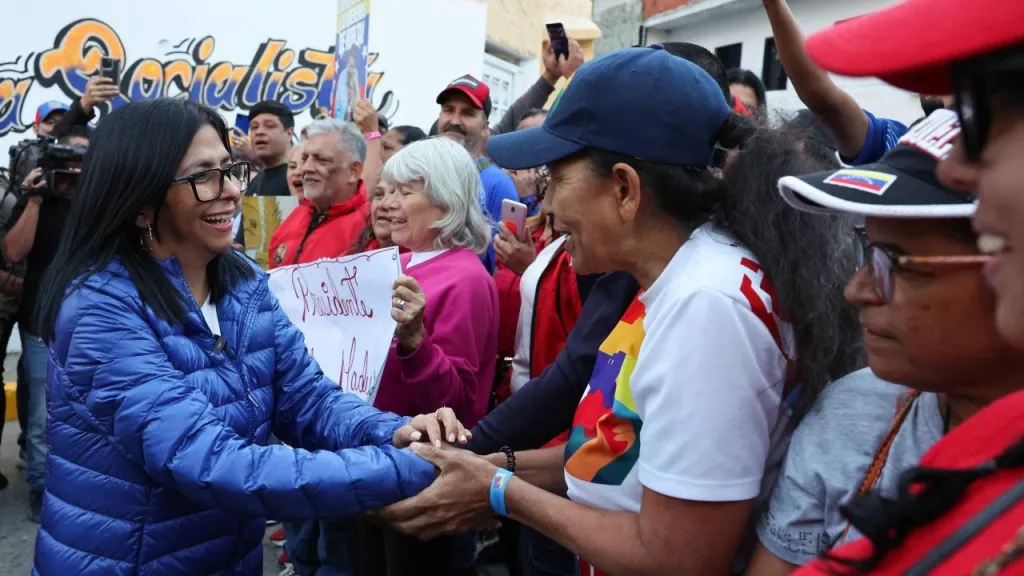
On January 7, 2026, Interim President Delcy Rodríguez met with residents of the José Félix Rivas Commune in Caracas.
This “revolution within the revolution” already encompasses 4,950 communes. These are people’s self-governments that are found in both urban and rural areas. They can range in size from 1,000 to over 50,000 inhabitants, depending on the case.
In 2024, President Nicolas Maduro appointed Angel Prado—leader of the peasant commune “El Maizal”—to head Venezuela’s Ministry of Communes, Social Movements, and Urban Agriculture.
In 2025, two-thirds of residents reported that a commune existed in their area, and 83% of them knew the members of their communal council. One of the missions entrusted to the new minister was to reach out to and strengthen 6,000 communes by the end of 2026. In 2025, the president issued directives to the ministers: “70% of each of your budgets must be transferred to the communal councils and communes.”
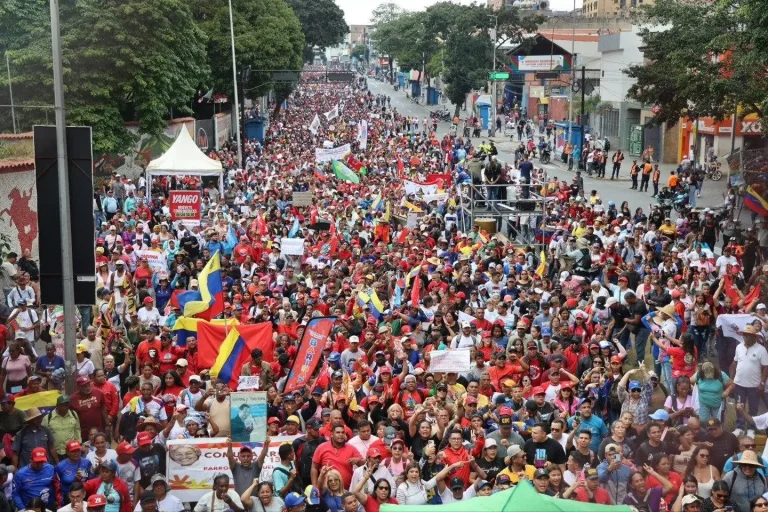
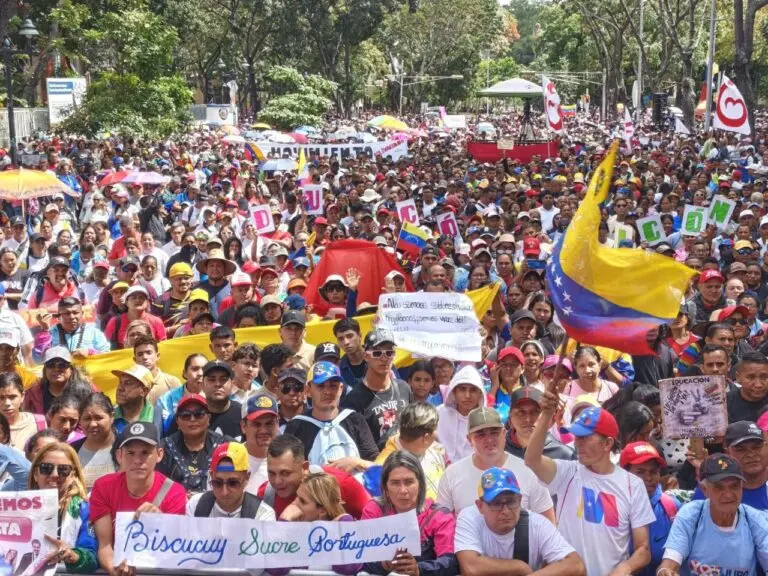
January 7, 2026, in Caracas: fifth straight day of massive demonstrations in support of President Maduro and the ongoing Bolivarian Revolution. The mobilization of January 7 was led by the country’s 5,000 communes. Photo: Thierry Derrone.
In parallel, every three months, in a nationwide vote, residents of the communes choose one of seven projects (socio-productive, infrastructural, cultural, educational, public services, etc.) previously defined by their assemblies. The implementation of these projects are co-financed by the government. These “consultas populares” (popular consultations) are a training ground for meaningful participation by everyone, regardless of their political affiliation, as well as an effective tool against corruption, since communal committees receive, monitor, and report to the residents on the proper use of the funds provided by the government.
For the November 23, 2025, election, 8,508 polling stations were set up, including 2,518 new ones, to ensure greater accessibility to voting. This represents a 70% increase in the number of polling stations compared to previous elections.
This bottom-up communal model has also enabled the implementation of a new justice system. On December 15, 2024, in 4,817 polling stations spread across communes throughout the country, Venezuelans elected 28,486 communal justices of the peace. These justices of the peace are responsible for arbitrating local disputes between citizens living in the communes, thus preventing them from having to resort to traditional courts.
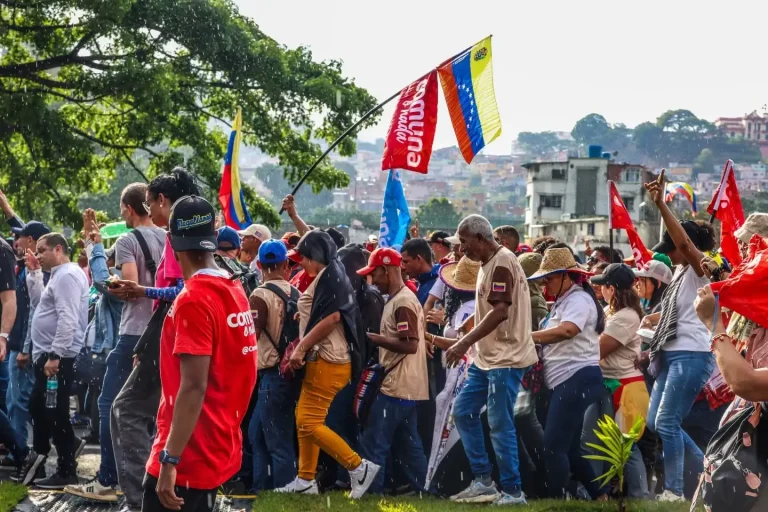
The mobilization of January 7 was led by Venezuela’s 5,000 communes. Photo: Thierry Derrone.
Another large-scale creation that complements the political, economic, productive, and legal aspects is the University of Communes, a comprehensive training center in law, political economy, agroecology, and other pertinent fields. This university, the main headquarters of which opened on May 24, 2025, in the state of Carabobo, develops course content and organizes training throughout the country based on needs assessments conducted by the inhabitants of the communes.
Furthermore, in 2026, a sweeping Constitutional reform will make the commune a foundation of the Venezuelan state. Thousands of assemblies will be held throughout the country to generate proposals aimed at “building a modern democracy based on the direct participation of citizens, the power of social movements, and the community,” in the words of Nicolás Maduro. “We are moving towards a major process of broad democratization of Venezuelan society, of political, institutional, economic, social, cultural, and educational life.”
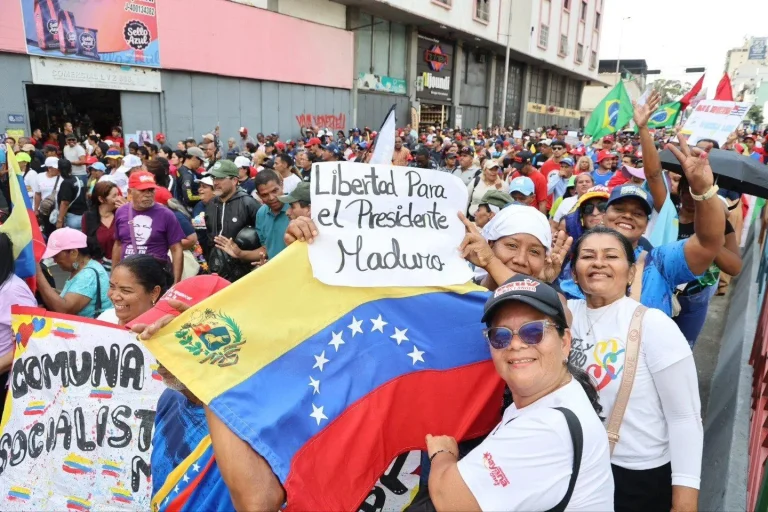
Caracas, January 7, 2026: Demonstrators demand that their president, Nicolás Maduro, and his wife, Cilia Flores, be liberated by the US. President Maduro was abducted in the morning of January 3, 2026. Photo: Thierry Derrone.
https://orinocotribune.com/venezuela-co ... evolution/
******
5 Critical Tons: Brazil Sends Medical Aid to Venezuela After U.S. Bombing Destroys Dialysis Supplies
Brazil sends medical aid to Venezuela to replace dialysis supplies destroyed in U.S. bombing
Venezuela receives 40 tons of urgent medical supplies from Brazil to restore hemodialysis services after U.S. airstrikes damaged critical health infrastructure.
January 10, 2026 Hour: 10:01 am
Brazil sends medical aid to Venezuela following U.S. bombing that destroyed 85 dialysis containers. 40 tons delivered, 300 total pledged for renal patients.
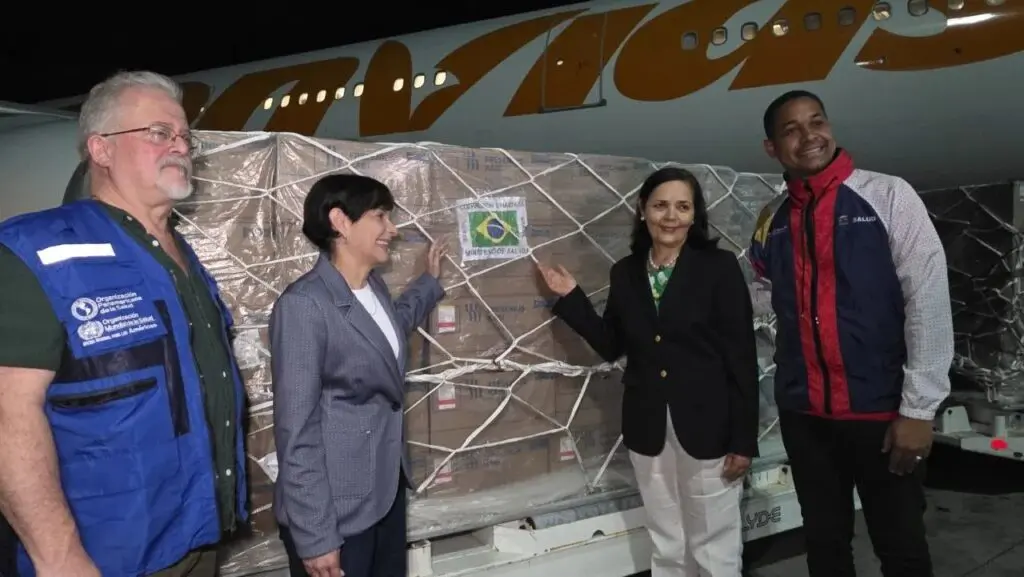
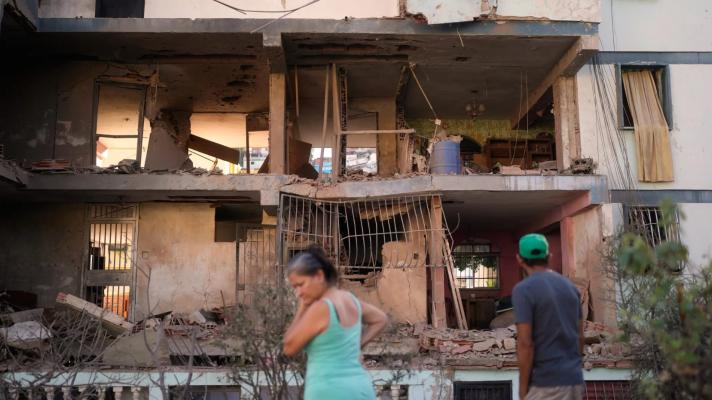
Brazil sends medical aid to Venezuela in a swift humanitarian response to the destruction of life-saving health infrastructure during the U.S. military operation on January 3, 2026. On Saturday, the first shipment—40 metric tons of dialysis kits, catheters, solutions, and pediatric medical supplies—arrived in Caracas aboard a Conviasa cargo flight from São Paulo. The donation aims to restore Venezuela’s National Hemodialysis and Nephrology Program, which was severely compromised when U.S. forces bombed a key medical warehouse in La Guaira state, destroying 85 containers of dialysis materials destined for thousands of patients.
Vice President for Science, Technology, Ecosocialism, and Health, Gabriela Jiménez Ramírez, confirmed the delivery during a press event at the airport. “We received today the first containers of nephrology supplies—dialyzers, catheters, and solutions—for the hemodialysis program,” she said, emphasizing that the aid directly addresses “the damage caused by the bombing carried out by the U.S. Army.”
This emergency shipment is part of a larger commitment: Brazil will send a total of 300 tons of medical aid over the next two months, coordinated with the Pan American Health Organization (PAHO) and diplomatic channels. The goal is to secure up to three months’ worth of treatment reserves for Venezuela’s most vulnerable renal patients—especially children and the elderly.
Brazil Sends Medical Aid to Venezuela to Restore Lifesaving Dialysis Program
The targeted destruction of Venezuela’s dialysis supply chain has placed an estimated 15,000 patients at immediate risk, including over 3,000 children who depend on regular hemodialysis to survive. According to Jiménez Ramírez, the La Guaira warehouse was the central distribution hub for the entire public health system’s nephrology network. Its loss threatened to collapse treatment nationwide—until Brazil stepped in.
“The people of Bolívar deserve peace, well-being, and tranquility,” the vice president declared, praising the rapid response of Conviasa crews who traveled to São Paulo within 24 hours of the bombing to collect the first batch. She confirmed that distribution to hospitals would begin immediately to ensure “100% coverage” of the national program.
The Brazilian government’s action reflects both humanitarian solidarity and regional responsibility. In a message conveyed by Ambassador Glivânia Maria de Oliveira, President Luiz Inácio Lula da Silva reaffirmed his “fraternal and unwavering support for the Venezuelan people during these difficult hours.” The ambassador stressed that the aid is not political but human: “We are bringing supplies so that children, the elderly, and all those affected by this tragedy can receive their dialysis treatment.”
The Pan American Health Organization (PAHO) has long supported Venezuela’s health system, even amid sanctions and shortages. Dr. Armando Di Negri, PAHO’s representative in Caracas, hailed the speed of the Brazil-Venezuela coordination as “exemplary in a health emergency.” He noted that the 300-ton pledge will create a strategic buffer, preventing future disruptions to chronic care.
Geopolitical Context: Solidarity as Resistance in Latin America
This medical lifeline arrives amid one of the most severe geopolitical crises in recent Latin American history. The U.S. military strike—widely condemned as illegal by Russia, China, Iran, India, Serbia, and the Vatican—has fractured regional diplomacy. While some governments remain silent, Brazil’s concrete humanitarian gesture signals a reassertion of South American unity under Lula’s leadership.
Critically, Brazil’s aid bypasses politicized narratives. It does not recognize or reject any government—it simply saves lives. In doing so, it challenges the logic of collective punishment often embedded in sanctions regimes. By replacing what was destroyed in a bombing justified as “counter-narcotics,” Brazil implicitly questions the proportionality and legality of the U.S. operation.
Moreover, this move strengthens the CELAC (Community of Latin American and Caribbean States) framework, which declared the region a “zone of peace” in 2012. CELAC’s principles explicitly reject foreign military intervention, and Brazil’s action aligns with that vision—not through rhetoric, but through tangible solidarity.
In a continent scarred by coups, blockades, and invasions, medical aid becomes a form of resistance: a refusal to let civilians pay the price for geopolitical battles. As Uruguay remains officially silent and Spain’s left demands NATO withdrawal, Brazil’s choice to act—quietly, urgently, and effectively—offers a different path forward.
A Coordinated Humanitarian Lifeline for Venezuela’s Most Vulnerable
The specificity of the aid underscores its urgency. The 40-ton shipment includes 110,000 dialysis treatment kits, with formulations tailored for pediatric use—a detail that highlights the precision of Brazil’s response. Unlike generic aid packages, this donation was designed in consultation with Venezuela’s Ministry of Health to match exact clinical needs.
Jiménez Ramírez emphasized that the state remains fully committed to guaranteeing medical care “without exception.” She noted that logistics teams are already deploying supplies to regional hospitals, prioritizing areas with the highest patient loads. “We have the stock now,” she affirmed. “We will ensure the program runs at full capacity.”
This effort also marks a rare moment of functional international cooperation amid crisis. With PAHO facilitating technical coordination, Brazil providing resources, and Venezuela managing distribution, the operation demonstrates how multilateralism can work—even in wartime conditions—when human lives are prioritized over politics.
Ambassador Oliveira concluded her remarks with a poignant reminder: “Behind every dialyzer is a child who wants to live.” It is this simple truth that has galvanized Brazil’s response—and that stands in stark contrast to the bombs that shattered warehouses and silenced machines just days earlier.
Conclusion: Medicine Over Missiles
As Venezuela reels from military aggression and institutional rupture, Brazil sends medical aid to Venezuela not as charity, but as an act of regional kinship. In a world where power often speaks through explosions, this shipment speaks through syringes, catheters, and saline solution—quiet tools of survival that defy destruction.
While Washington celebrates a “brilliant operation,” Caracas counts the cost in interrupted treatments and anxious families. But thanks to this solidarity, thousands will continue their therapy. Thousands will live.
In the end, the most powerful response to violence may not be more force—but more humanity.
https://www.who.int/news-room/fact-shee ... rage-(uhc)
https://www.telesurenglish.net/brazil-s ... venezuela/
******
Special Analysis: January 3rd and the Imperial Rationality Against Venezuela
January 8, 2026 , 8:07 pm .
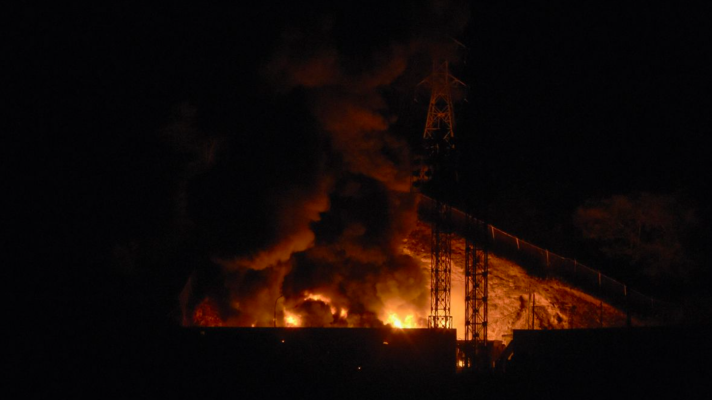
Image of the fire at Fort Tiuna, Venezuela's largest military complex, after the US bombing in Caracas on January 3 (Photo: Luis Jaimes / AFP)
The events of Saturday, January 3rd, are widely known; therefore, we will not provide a summary of the events. Rather, we will point out the underlying reasons for the US attack on Venezuelan soil and the kidnapping of President Nicolás Maduro and First Lady Cilia Flores.
Beyond the ethical condemnation, a necessary question remains: Why did the U.S. go to the extreme of making a decision of this magnitude in the 21st century, clearly harmful given the political results in both the United States and Venezuela?
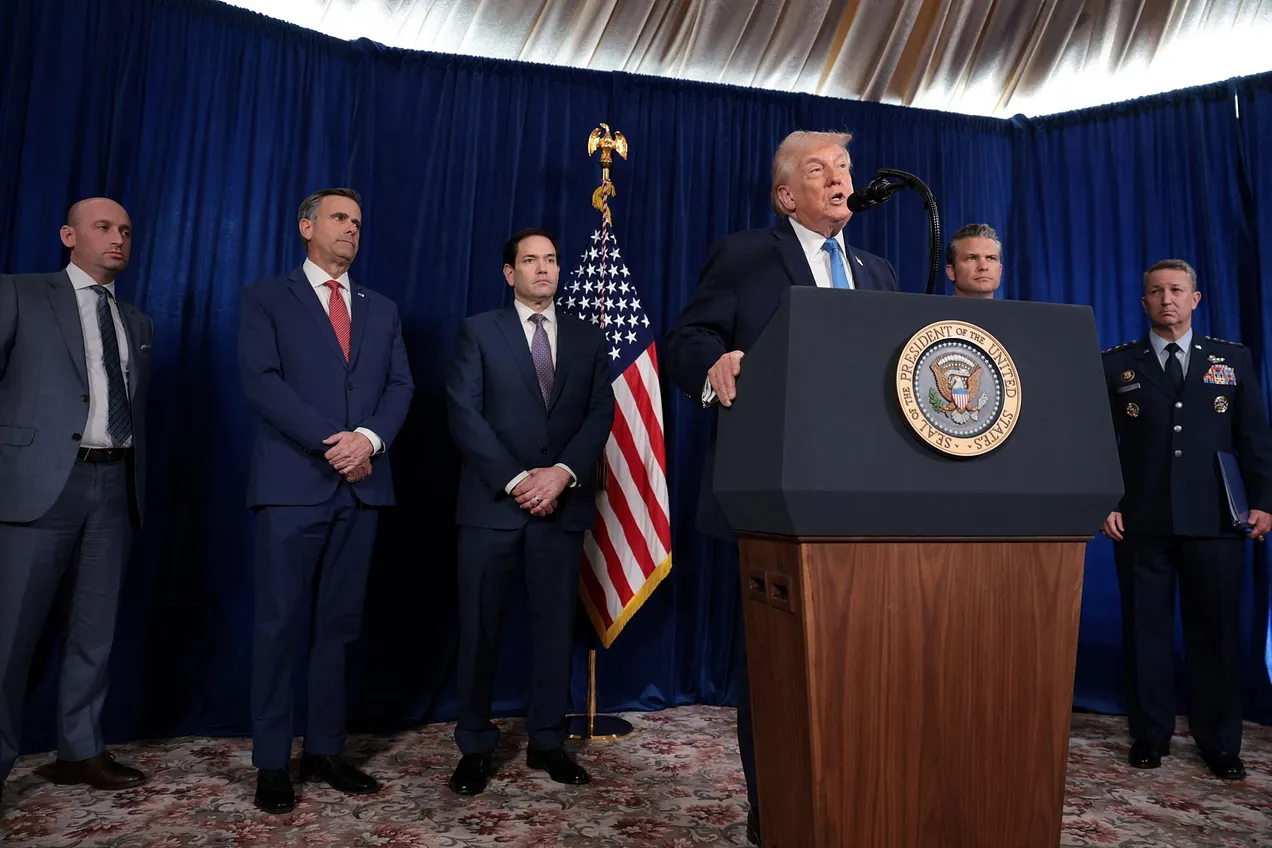
The answer isn't found in Trump's speeches ("we're going to manage Venezuela") or in the slogans of Pete Hegseth and Marco Rubio. Rather, several answers can be argued, all centered around a document that coldly and technically outlined US actions weeks earlier: the National Security Strategy 2025 (NSS).
The Trump Corollary: When sovereignty is a coercive offer
The National Security Strategy (NSS) is a political act that reconfigures the rules of the game in the Western Hemisphere. In its 33 pages, it introduces what has been called the "Trump Corollary to the Monroe Doctrine," which does not define whether a state is sovereign or not, but rather what kind of sovereignty counts as legitimate for the U.S. hemispheric order.
Undoubtedly, this is an ontological statement within the regime of exception that Trump 2.0 is trying to establish in this part of the world.
Because legitimacy no longer depends on the internal regime or compliance with international norms, but on its compatibility with the US value chain. The ESN states this unambiguously:
"We will deny non-hemispheric competitors the ability to position threatening forces or other capabilities, or to own or control strategically vital assets, in our Hemisphere" (p. 15).
"The terms of our agreements (...) must be single-source contracts for our companies" (p. 19).
"We must do everything possible to expel foreign companies that build infrastructure in the region" (p. 19).
This implies that the sovereignty of others is measured by their ability to not interfere with, and preferably facilitate, the vital interests of the U.S.
A state can be fully recognized by the UN, hold elections, and have territorial control. But if it allows a Chinese company to build a port, a mine, or a 5G network, its sovereignty becomes functionally illegitimate. We have referred to this concept as functional sovereignty in a special analysis of the document .
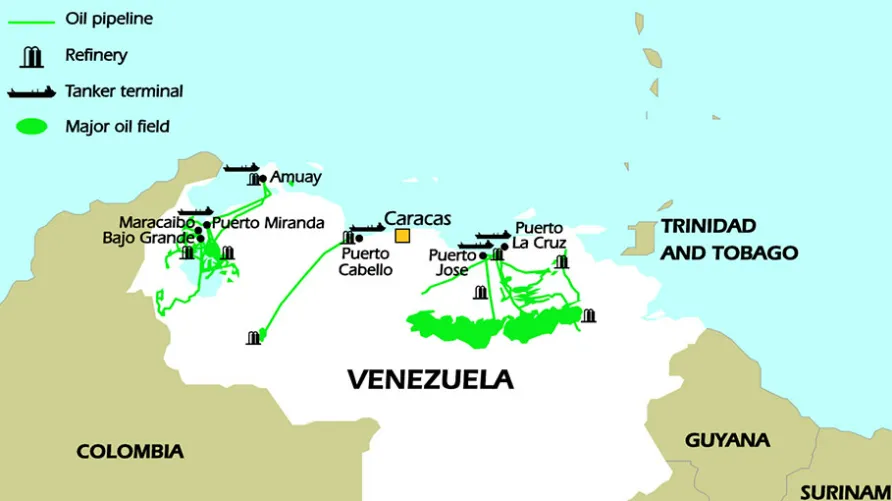
Venezuela embodies the ultimate challenge to this doctrine: it is the extreme case. It maintains strategic alliances with China, Russia, and Iran; it controls critical resources without surrendering their management to aligned capital; and it has developed exchange mechanisms that circumvent the dollar and US value chains.
In this structural vacuum—where a country is sovereign according to international law, but illegitimate according to imperial logic—any measure against it becomes "reasonable." According to the reason imposed by Washington, not by analogy but by functional relationship:
Sanctions are "containment measures".
The economic embargo is "the restoration of minimum conditions of stability."
Military aggression is "threat prevention".
And the kidnapping of a constitutional president, in this context, is not a violation of sovereignty: it is a technical risk management operation. This is why the fiction of the "Cartel of the Suns" is no longer necessary within the framework of justifications for violations.
The collapse of the petrodollar
The crux of the matter is not Venezuela's oil reserves—even though they are by far the largest in the world—but rather the currency in which they are traded. As analyst Pepe Escobar points out :
"The heart of the matter is not Venezuela's oil reserves per se , but oil denominated in dollars. Printing endless green toilet paper—intrinsically worthless—to finance the military-industrial complex means that the dollar will remain the global reserve currency, including the petrodollar."
Venezuela, in order to establish a framework for resisting illegal sanctions—whether effectively or not is another discussion—broke the financial blockade. Integration into the Chinese CIPS system, the SWIFT mechanism that is beginning to project itself as a real alternative to systemic dollar-centrism, created the conditions for crude oil to be paid for in yuan, rubles, or a basket backed by gold.
That step was not technical, but the first real breach in the oil dollar monopoly since 1974.
The petrodollar is the material pillar of American power, along with its industrial and military projection capabilities. Without it, the US cannot finance its deficit ( 6-7% of GDP ), its debt ( more than 120% of GDP ), or its military spending ( $1.5 trillion this year ).
The kidnapping of Maduro was thus intended to stem the flow of dollars from the global oil trade, while simultaneously securing control over Citgo to hand it over to the vulture fund of financial tycoon Paul Singer (Elliot Investment Management). PDVSA's US subsidiary, also seized under the sanctions framework, is a critical energy infrastructure. Its transfer is part of a hemispheric reconfiguration, in line with what was outlined in the National Security Strategy.
The financial-speculative fiction and the skeleton of the looting
Contemporary capitalism, especially in its American variant, has entered a phase in which value is no longer produced primarily in the productive sphere, but in financial speculation.
Since the 1970s, and accelerating after the 2008 crisis, the US economy has become increasingly dematerialized: its wealth is based on derivatives, algorithms, sovereign debt, and the financialization of everyday life. This process does not create new value (in Marxist terms), but rather redistributes and anticipates future value through fictitious mechanisms.
Value in contemporary capitalism remains grounded in human labor; it continues to have material roots. The paradox lies in the fact that, while financial-speculative capital, traded in New York, moves away from production, it urgently needs to reappropriate real spaces of material wealth to sustain its fiction.
Venezuela—with the world's largest oil reserves, gold, coltan, strategic biodiversity, and energy sovereignty—represents a territory of ontological rescue for a capital that no longer knows how to create value.
Therefore, it has never been about "liberating" Venezuela, but about reintegrating its resources into the orbit of US accumulation, stripping it of its capacity for resistance.
The history of capitalism has been marked by cycles of expansion and crisis. But today the system faces a structural crisis of accumulation: markets are saturated, the rate of profit is falling, and technological innovation no longer revives production but destroys jobs and value, according to research based on empirical data presented by researchers Güney Işıkara and Patrick Mokre (in their 2025 book Marx's Theory of Value at the Frontiers , reviewed by the English economist Michael Roberts).
In this context, capital can no longer expand "inwardly," but only "outwardly": through dispossession, war, and the forced reconfiguration of borders. From this analytical perspective, Işıkara and Mokre confirm that the US attack on Venezuela was not an isolated military adventure. Let's examine this.
Between 1990 and 2020, $70 trillion—5.9% of annual global output in productive industries—was transferred from the Global South to the imperial core, with the US and Japan as the main beneficiaries. Mexico, Brazil, Indonesia, and Russia are major net donors of value. This transfer is not only due to labor exploitation but also to differences in the organic composition of capital (technology, productivity).
However, Venezuela's case is different: by nationalizing its resources and resisting the neoliberal extractivist logic, it has become a defining obstacle to the reproduction of Western capital. It not only fails to deliver value; it withholds it. Therefore, the only way to reintegrate it into the accumulation circuit is through force or regime change (something that failed to materialize with the kidnapping of President Maduro).
Under this framework, the military deployment in the Caribbean is, essentially, the materialization of the logic of US capital in its terminal phase; when it can no longer negotiate, but only impose its regime of exception: Washington only wins because it is more predatory.
Venezuela, by refusing to be a "space of exploitation," became a systemic obstacle. Its elimination—political, legal, physical, as a possible alternative—was a structural necessity for imperial capital in its terminal phase.
And here lies the lethal paradox: the more the US demands that others be "functional," the more evident its own dysfunction becomes. Its economy depends on unsustainable deficits; its middle class, on which its internal stability depends, is decimated; its political cohesion is fractured by a technocratic oligarchy that governs through algorithms and investment funds.
The America First rhetoric ultimately reveals a deep insecurity: it is the voice of someone who fears losing control. Therefore, Trump (and Rubio and Miller and so on) was looking for a dramatic effect that could stir his own narcissistic ego.
The civilizational collapse
But beyond the economic aspect, the operation of January 3 reveals something even more serious: the civilizational collapse of the American project.
Trump, Rubio, and Hegseth did not invoke the UN Charter, international law, or even the pretext of "free trade." They justified it with apocalyptic rhetoric, using the easily dismissive labels of drug trafficking, terrorism, and "imminent threats."
This rhetoric is the language of a power that has lost its compass, that no longer knows what future to offer the world; not even its own citizens.
And behind the rhetoric lies the reality: more than 100 people killed in the Caribbean—Venezuelans, Colombians, Trinidadians, and others—without trial, without witnesses, without legal basis; the use of drones, bombers, and marines without congressional authorization; the invention of the category of "illegal combatants" to circumvent the Geneva Conventions. These are extrajudicial killings disguised as the "war on drugs," but in practice, they constitute military operations directed from the highest levels of U.S. politics.
And the attack against Venezuela represents the ultimate logic of a system without a project: when it can no longer seduce, it intimidates; if it can no longer convince, it eliminates.
Because, by all accounts, the US faces a civilizational crisis of legitimacy. American capitalism promised democracy, progress, and prosperity, but it has generated extreme inequality, systemic racism, ecological destruction, and a culture of predatory individualism. The middle class is disintegrating; life expectancy is declining; mental health is collapsing. The model no longer appeals, not even within its own borders.
Faced with this loss of cultural hegemony, the establishment resorts to a substitute religion: imperial nationalism. The "Donroe Doctrine" and the MAGA are political slogans, yes, but above all, mourning rituals for a lost greatness. In this context, Venezuela becomes the perfect scapegoat: its demonization and the threat of its destruction allow—in theory—the symbolic reunification of a fractured society.
This logic manifests itself in a necropolitical rationality (to borrow Achille Mbembe's concept): power no longer manages life, but rather decides who can be imprisoned without trial, kidnapped without rights, or bombed without justification. Nothing that happened on January 3rd was an isolated incident, but rather the normalization of the exception . US foreign policy has become collective therapy for a civilization in mourning, where every military threat is an act of faith in a power that no longer believes in itself: only in force, and therein lies the danger (which is saying something).
Above all, in the face of the oligophrenia of a narcissistic rich man installed in the White House who perfectly embodies imperial desperation.
The broken mirror
January 3rd was not a "successful coup": we can see that in the streets of Venezuela, in the political stability provided by the administrative continuity of the State with interim president Delcy Rodríguez at the helm. But it was the first public implementation of the Trump Corollary, beyond its Caribbean manifestation: a doctrine that replaces legal sovereignty with functional sovereignty, international law with technical risk management, and diplomacy with structural coercion.
In that show of force, the US revealed its deepest weakness: it can no longer impose its order through consensus, nor even through sustained fear. It needs to kidnap presidents, murder civilians indiscriminately, and fabricate existential enemies to maintain the illusion of control.
Under this regime of imperial realism, Venezuela constitutes a historical exception —imperfect, contradictory, but real— that has managed, against all odds, to maintain state control over its strategic resources.
This poses a danger to American interests and to the predatory order that has sustained Western capital for decades.
We could say, without any suspicion of demagoguery or mere propaganda, that what was feared was not Maduro himself, but the spread of his example.
And in that, failure is already written: as long as Venezuela continues to exist —we repeat: as a possible alternative—, the functional order of the decadent empire will not be complete.
https://misionverdad.com/venezuela/anal ... -venezuela
Google Translator


 Print Article


 The Cayapo