October 10, 2023
Rybar

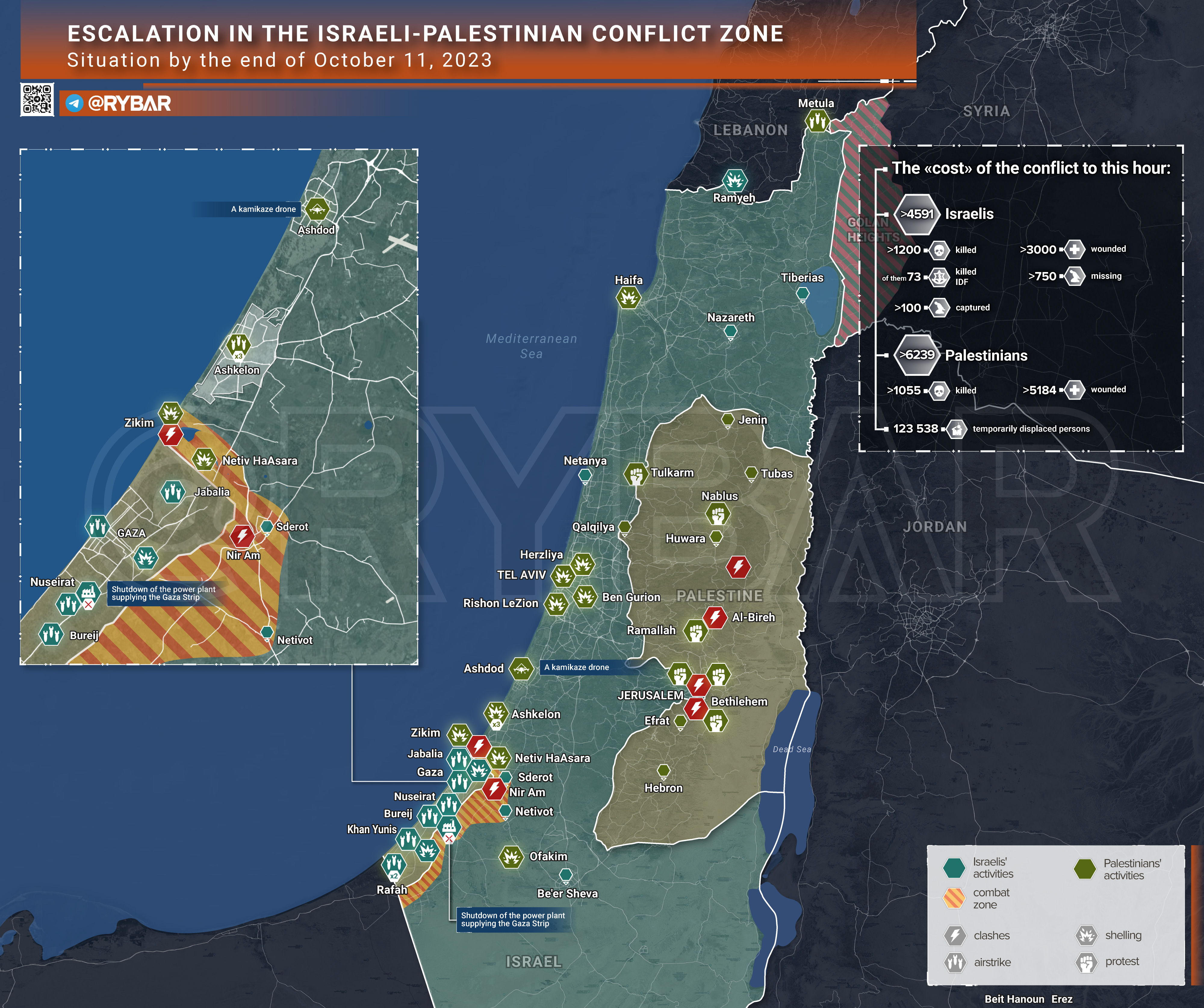
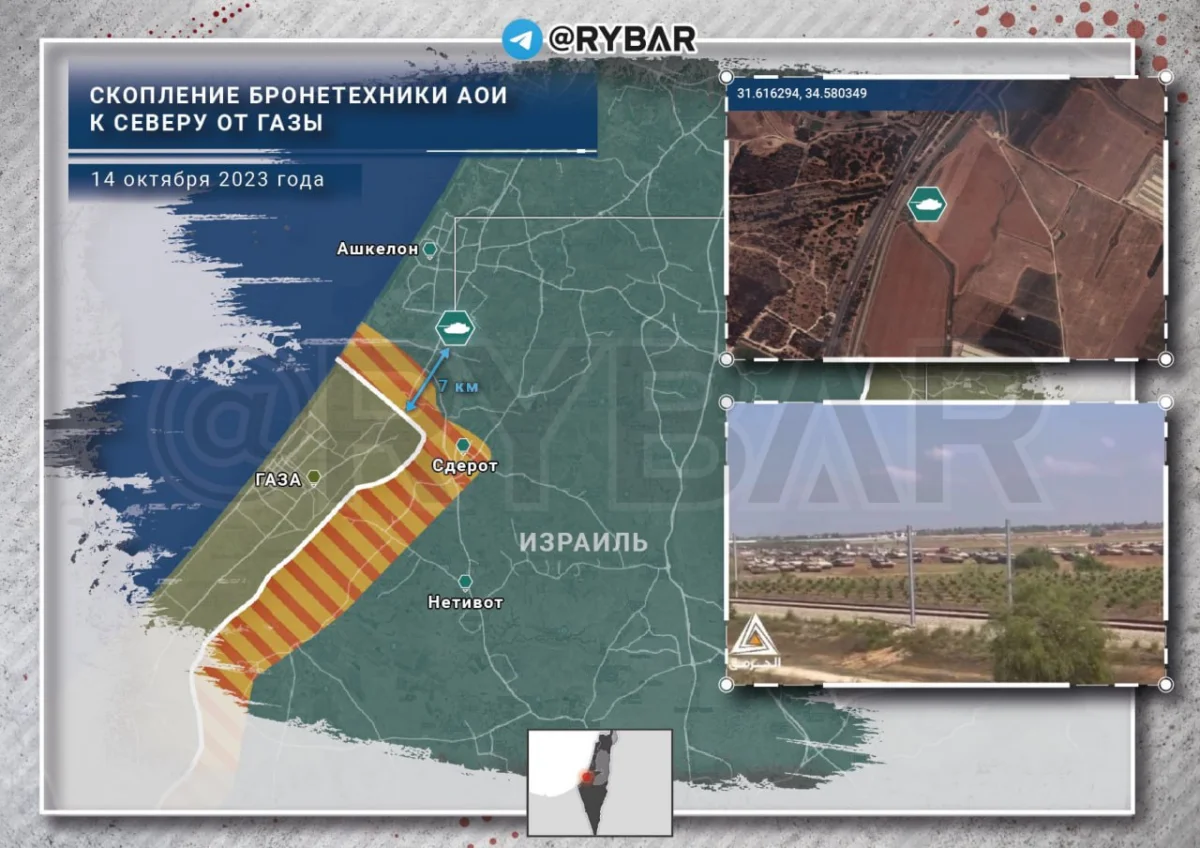
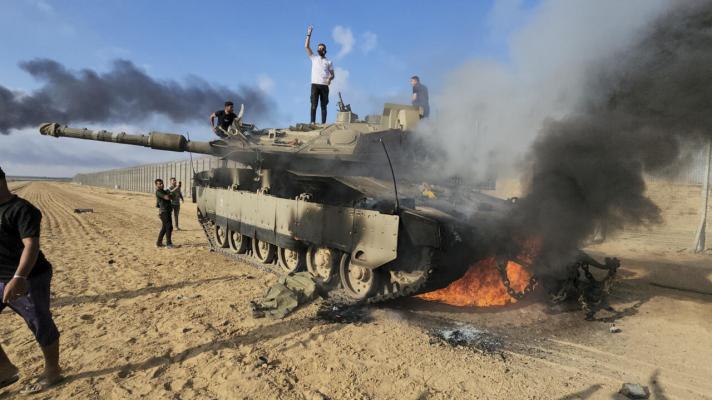
Fierce fighting between the Israel Defense Forces and Palestinian groups has continued for four days: IDF units continue to clear border areas in the northern and eastern directions, repelling attacks by Hamas militants. At the same time, by evening the intensity of the fighting increased sharply again. At the same time, the parties continue to exchange massive attacks on each other’s territories.
Shelling also occurs periodically in northern Israel. Today, Hezbollah militants from Lebanon fired at the Israeli border, damaging one IDF infantry fighting vehicle. Israeli troops responded by bombing southern Lebanon . By evening, several mines were fired from Syrian territory into the occupied Golan Heights . The Israelis again responded with fire.
During the day, Israeli aircraft fired several times at the Rafah border crossing , used for the exit of Gazans into Egypt . The IDF explained the attack on the facility by the presence of smugglers' tunnels underneath it, and also threatened Egypt with the destruction of all trucks with supplies if they were sent to Gaza . However, Egyptian President Abdel Fattah al-Sisi did not listen to the threats and ordered the preparation of a humanitarian convoy to Gaza.
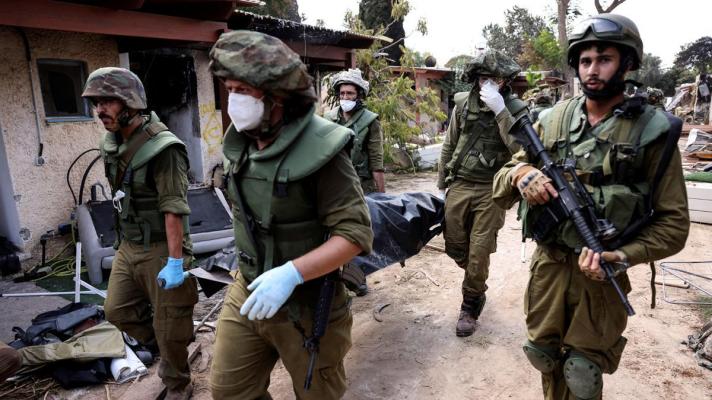
A significant stir was caused by a story published by the Israeli media about the discovery of 200 killed residents, including 40 children, in the kibbutz Kfar Aza , abandoned by Hamas militants . At the same time, only a few dozen corpses are visible in the footage distributed online, which raises doubts about the accusations made. However, over four days of confrontation, both sides of the conflict demonstrated their readiness to destroy civilians.
Today, the head of the Israeli Ministry of Defense, Yoava Gallant, announced that IDF soldiers were relieved of responsibility for all their actions during the conflict. It is possible that in addition to the carpet bombing of the Gaza Strip, outright atrocities by the Israelis against the Palestinians will be added, which can no longer be recognized as a crime in a military court.

Progress of hostilities
Northern direction
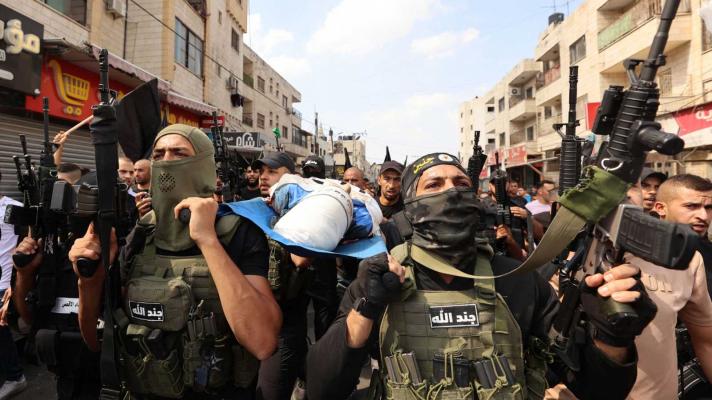
Soldiers of the Maglan special forces worked on a group of Hamas militants heading towards Kibbutz Zikim . The Palestinians responded by firing rockets at the populated area itself. Israeli troops later reported killing four more Palestinian militants in the beach area of Kibbutz Zikim. However, already at night, clashes in the area of the populated area resumed again. Local residents also reported the sound of gunshots near the Ashdod beach : as it turned out later, another episode of friendly fire occurred between law enforcement officers, two of them were seriously injured.
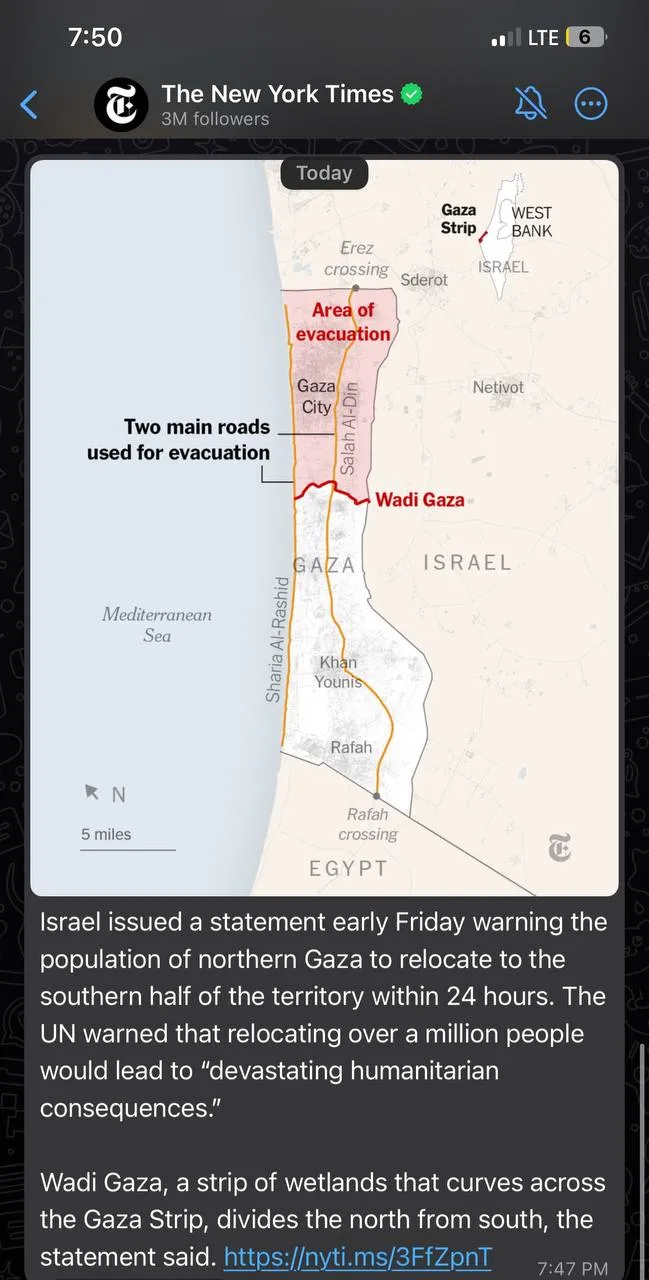
Hamas representatives accused the Israelis of forcing Palestinians to leave several areas of the Gaza Strip and called on residents of Ashkelon to leave their homes until 17:00 this evening, after which they fired a new salvo at the city and settlements to the south, firing more than 100 rockets. In this case, the Palestinians were clearly playing to the public in order to present themselves as gentlemen warning enemy civilians about attacks. Especially against the background of the IDF, which is demolishing the Gaza Strip with aircraft and artillery.
In addition, in the Sderot area , Israeli troops eliminated one of the militants: filtration activities continue in the settlement aimed at identifying Hamas fighters in the city. Four more Palestinian militia members were killed in the Ashkelon industrial zone.
East direction
Last night, Palestinian forces entered Kibbutz Saad in two vehicles , but retreated after a short shooting battle. The raid on neighboring Nahal Oz also ended in failure for them. In the late afternoon, local residents reported the sound of gunfire in the border area east of Gaza City. In addition, one of the Palestinian militants was eliminated in the area of Kibbutz Reim .
At the same time, the IDF allowed media representatives to enter Kfar Aza to record and document the crimes of Palestinian groups. Journalists published several stories from the locality, in which they stated that after the departure of Hamas fighters, more than 200 burned residents were found in the kibbutz, 40 of them were babies, including beheaded ones.
South direction
The Israeli Air Force twice struck the Rafah border crossing , which only this morning resumed operation for the withdrawal of residents to Egypt - travel through the checkpoint was again stopped. Israeli troops confirmed a strike on the terminal, citing the discovery of smugglers' tunnels. In addition, Israel threatened Egypt with the destruction of all supply trucks that try to enter Gaza through the Rafah crossing. Nevertheless, Egyptian President Abdel Fattah al-Sisi ordered a humanitarian convoy to be sent to Gaza.
Gaza Strip
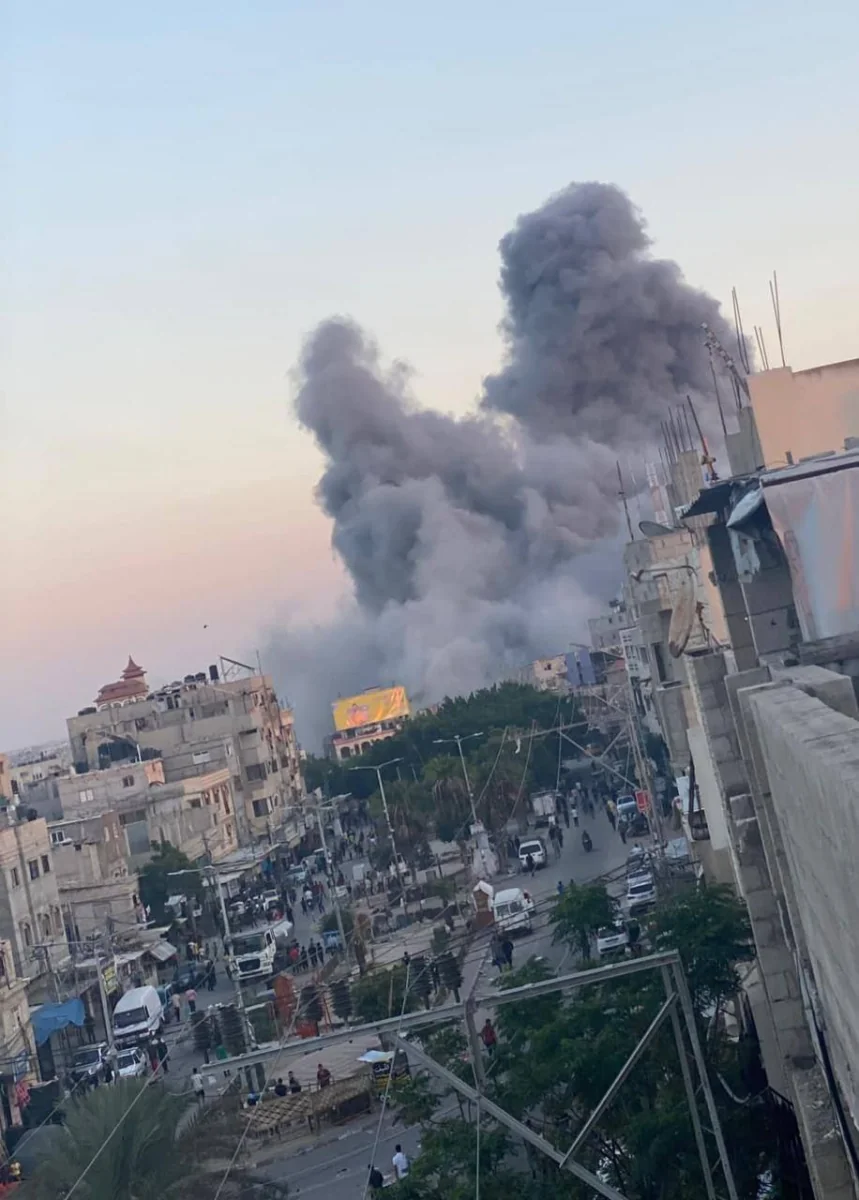
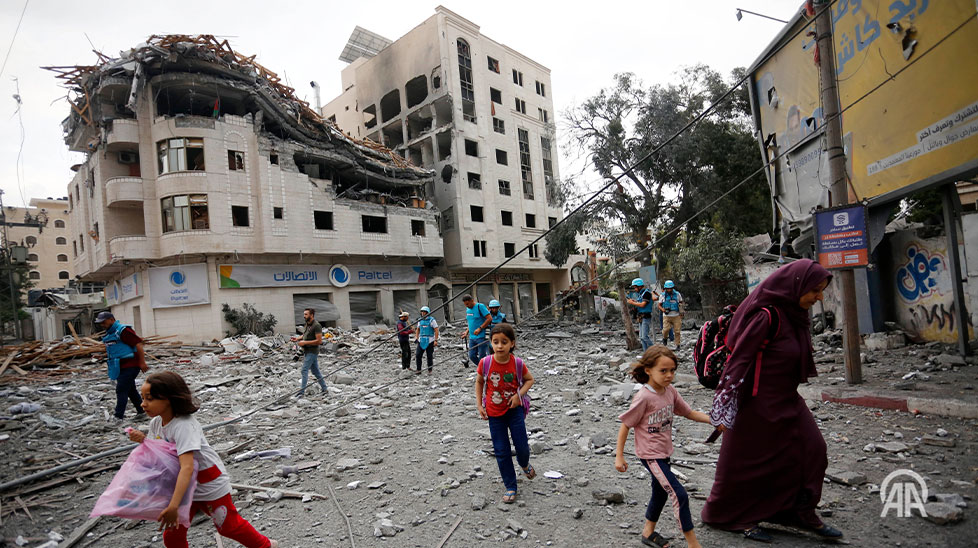
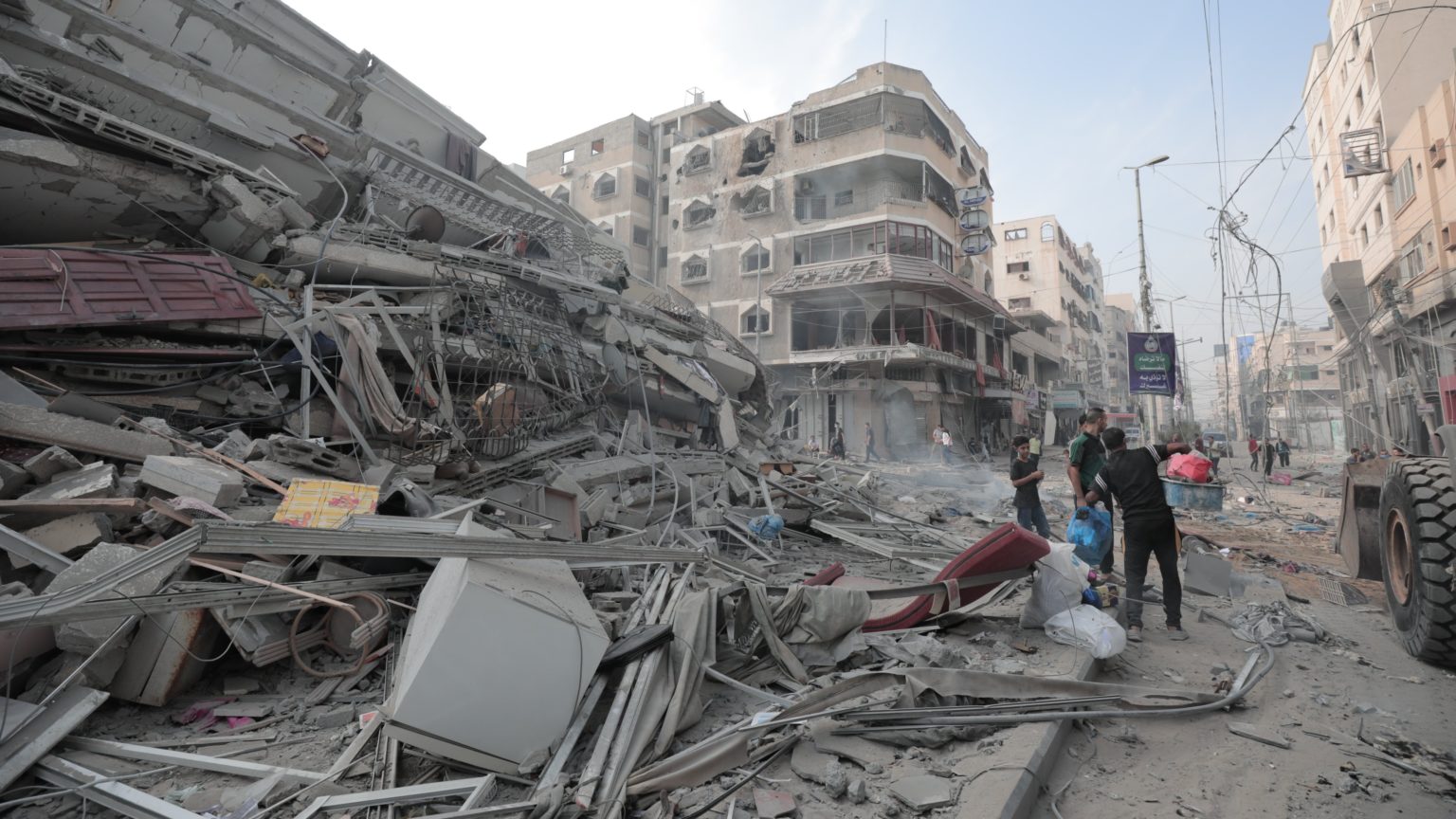
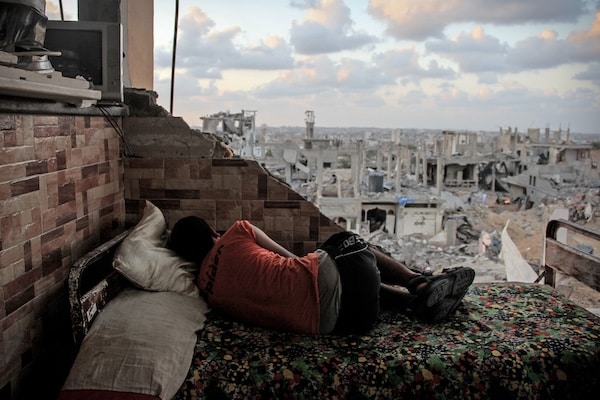
The Israeli Air Force continues to bomb the infrastructure of the Gaza Strip . The scale of the raids is evidenced by the fact that usually the objective control footage from UAVs simultaneously captures several attacks on buildings at once. The situation is complicated by the quality of buildings in the Palestinian enclave - little attention is paid to building codes there.
Therefore, during any arrivals, the houses are completely folded together with everything inside. The Israeli Air Force still has enough bombs, so they are capable of demolishing the lion's share of buildings in Gaza. But the IDF cannot do without a ground operation for either military or political reasons.
Palestinian media distributed footage of the IDF using incendiary shells in the northern Gaza Strip. Their use in itself has long become the norm in the world: in particular, on the fronts of the Northern Military District they are used by both sides to attack positions on the front line. Given the high density of buildings in Gaza and the presence of Hamas infrastructure there, the Israelis will generously sprinkle them on the entire enclave, justifying themselves purely by military necessity.
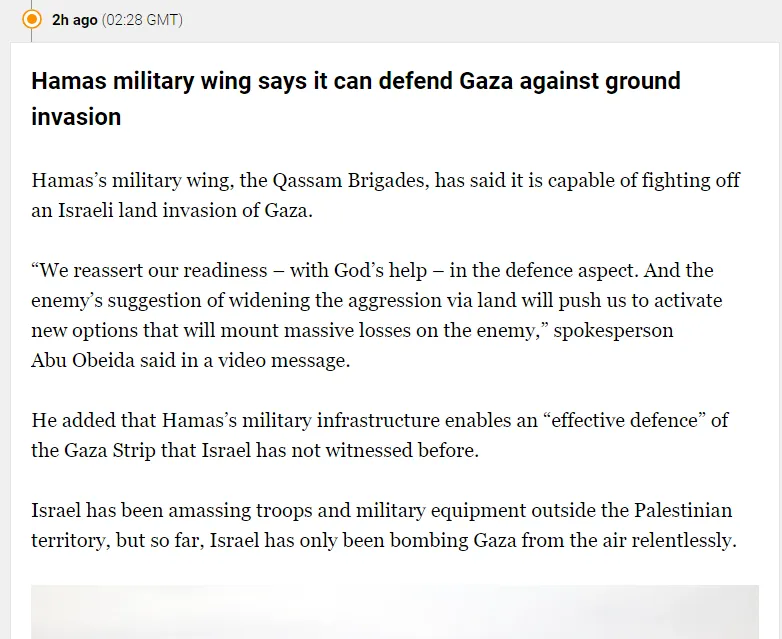
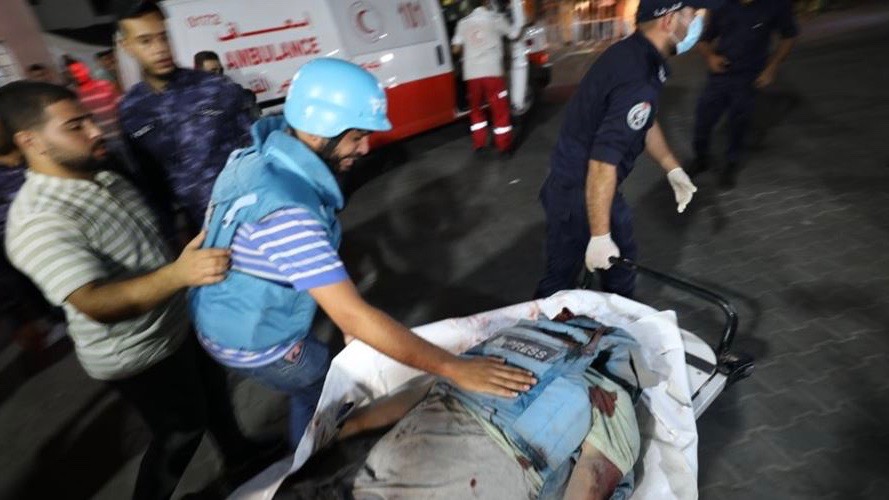
At the end of the day, the death toll in the region exceeded 770 people, and at least four thousand were injured. In this case, two members of the Hamas Politburo, Zakaria Muammar and Jawad Abu Shimal , were killed, and the building of the local Ministry of Finance was significantly damaged. In response to continued shelling, Palestinian factions again fired rockets at Ben Gurion Airport .
Border with Lebanon
In the morning, information appeared about a landing of Palestinian forces in the Golan Heights and Upper Galilee , but later IDF representatives denied this information. In addition, the IDF confirmed the death of the deputy commander of the 300th Brigade, Lieutenant Colonel Elim Abdullah, during yesterday's fighting in the border area.
Towards evening, the situation escalated again: at least 12 rockets were fired at Israel from Lebanese territory. In response to this, Israeli soldiers fired at two observation posts of the Hezbollah group from tanks. Then Lebanese militants re-launched missiles, hitting an Israeli Zelda-type armored personnel carrier in the border area.
West Bank
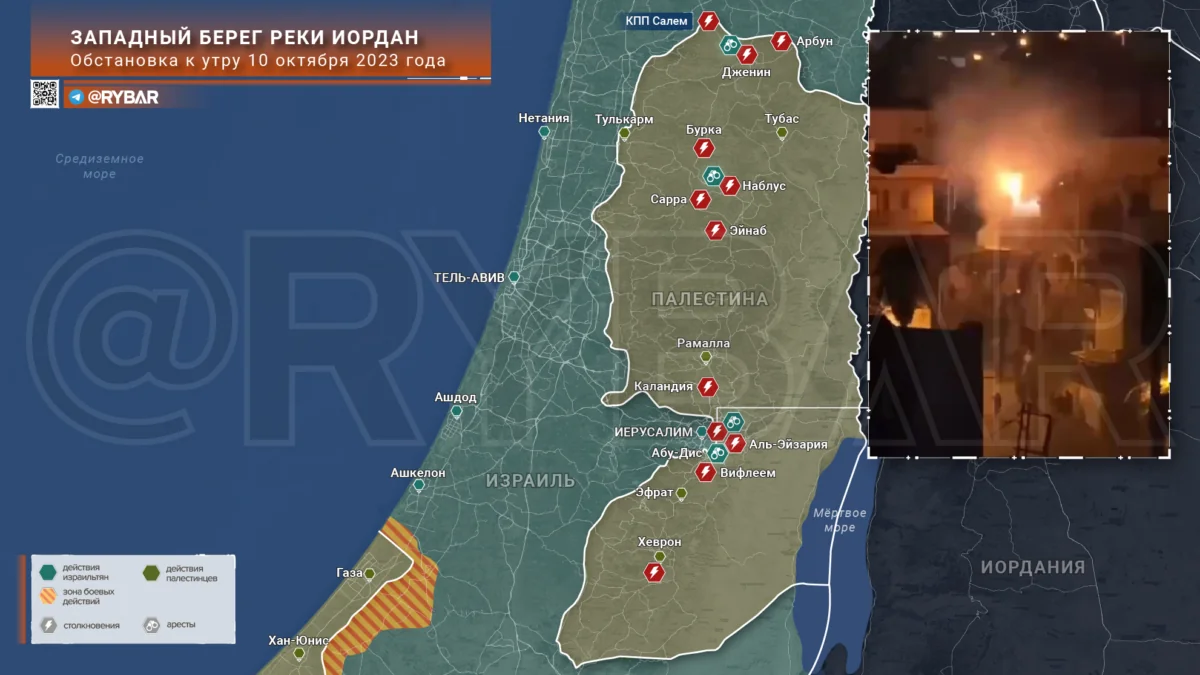
Last night in the West Bank, attacks by Palestinian youth against Israeli security forces and settlements in this territory resumed. Not many truly large-scale events happened: Palestinian groups with small arms attacked the Salem checkpoint and entered into battle with security forces near Bethlehem , as well as in the city of Beit Ummar north of Hebron . The group's fighters also attacked Israelis near the village of Einab , killing several civilians. Another attack occurred in the village of Arbun near Jenin , where Palestinians managed to wound an Israeli Defense Forces soldier.
In East Jerusalem , Burqa , Al - Eizariya , Hebron , Nablus and the Qalandiya camp , everything ended with mass protests and, in rare cases, the throwing of Molotov cocktails at cars. The Israelis, in turn, respond by arresting those they consider involved in terrorist activities: similar raids took place in Jenin , Jerusalem , Abu Dis and Nablus . At the same time, in Jerusalem the Israeli
Consequences of the conflict for the Israeli economy
According to Ori Grinfeld , chief strategist at the Psagot investment house , the current conflict will have a more serious impact on the Israeli financial market compared to the local military operations that have been carried out in the south of the country over the past few years. The war, which began over the weekend, is expected by investors to be much longer and its consequences will be more widespread.
According to economists, during the conflict, the Israeli consumer will leave the house less and, naturally, will reduce consumption . Also, with a high probability, the volume of investment in the economy , both private and public sectors, will decrease . In addition to this, it is likely that we will see the shekel weaken against the dollar and other currencies in the near future. The Bank of Israel has already announced foreign exchange interventions in the amount of $30 billion to stabilize the national currency.
In addition, now the Israeli government may be forced to make tough decisions, including in the field of financial control, which will not be favorably received by large investors. This could trigger a large-scale outflow of private capital. The flow of international investment into Israel and trade relations with other countries will suffer. This will affect both economic activity and the stability of the national currency.
The current conflict, unlike previous operations against Hamas, presents unprecedented challenges. First, the tourism and events industries will suffer. The flow of tourists will now decrease sharply. The number of visitors to cultural events will also decline. One can also roughly estimate the damage to the industrial sector, since about 18% of industrial production in Israel occurs in the Ashkelon area, and if the Be'er Sheva area is added, it is about 25%.
This indirectly confirms that the main target of Israel's military operation is Gaza. Destroying the military potential of the enclave, while maintaining it as a source of cheap labor for local production, is quite similar to a business plan. A recent economic study by the Bank of Israel concluded that the high-tech sector, which is the main driver of the economy, is the least sensitive to military action.
If the threat of rocket attacks continues for a long time, a decision will likely be made to relocate production. Partners , for example, from the USA or Switzerland, who have comparable technological potential, can take advantage of this. According to a Bank of Israel report, the Second Lebanon War in 2006 resulted in a loss of 0.35-0.5% of GDP. These were insignificant numbers, especially against the background of the rapid economic recovery. But now the losses will be many times greater.
Israel's budget will now be greatly overloaded. Naturally, the Ministry of Defense will require additional funding. The healthcare system is already overburdened and will require additional budgetary allocations. In the southern part of the country, non-urgent patients are sent home. The system of medical institutions has actually turned into a huge field hospital.
Against this background, the medium-term forecast for the Israeli economy is moderately negative. Under current conditions, raising funds to finance war-related expenses will not only be more difficult, but also much more expensive. Israel's economy could take years to recover, and the costs to the population would be significant.
Political-diplomatic background
About the statements of Ayatollah Ali Khamenei
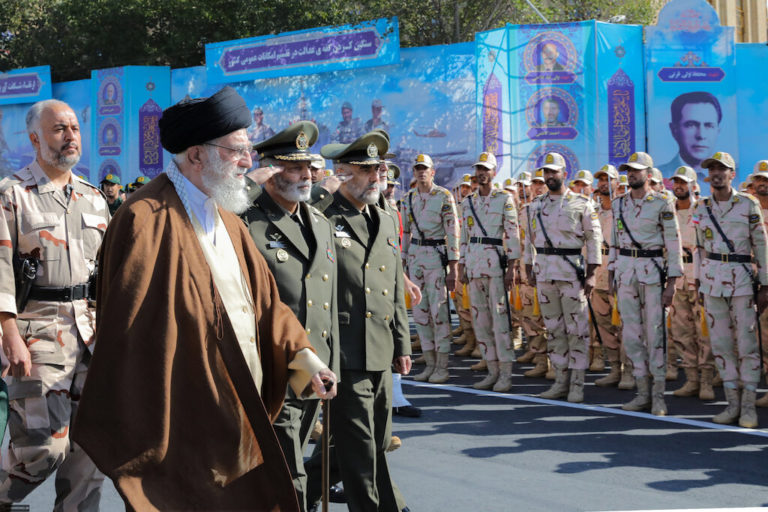
The Supreme Leader of Iran, Ayatollah Ali Khamenei, made a completely expected speech regarding the situation in the Israeli-Palestinian conflict zone. He supported the actions of Palestinian groups against the Zionist state, calling the cause of the conflict “Israeli crimes against the Gaza Strip and Palestine.” The leader of the Iranian nation noted that Palestinians have the right to fight for their freedom. However, there were no statements on his part about the possible entry of the Iranians into the conflict. At the same time, he noted a very important thing: after October 7, Israel’s position has changed radically, and it will not be the same.
About statements by the leader of the Houthi movement “Ansar Allah”
Abdul Malik Al-Houthi announced the readiness of the Yemeni people to join the struggle of the Palestinian people. He added that US intervention would be a pretext for the Houthis to enter the conflict. It was quite obvious that the Houthi movement would speak out in support of Palestine - the Shiite allies of Iran and Hezbollah could not stay away from what was happening. True, the Palestinians should definitely not expect military assistance from the Ansar Allah group now. Their position will be consistent with the wait-and-see approach of Iran and Hezbollah, unless something extraordinary happens. Given this state of affairs, the Houthis' missiles and drones could theoretically reach Israel. Royal family of Saudi Arabiawill not let you lie.
Massacres in Kfar Azah
By evening, Israeli and Western media began to actively disseminate publications about the brutal murder of civilians in Kibbutz Kfar Aza. According to media reports, Palestinian militants killed 200 civilians there, 40 of whom were children. However, it is still possible to establish for certain the number of deaths only from statements by the Israelis: photographs were published online showing several dozen bodies; there is also no list of names. We do not rule out the possibility that the radicals could have dealt with civilians, but in recent conflicts there have been too many such falsehoods aimed at dehumanizing the enemy.
New statements by Yoav Gallant
After yesterday’s statements by the head of the Israeli Ministry of Defense, Yoav Gallant , that the Israelis were fighting “humanoid animals,” no one expected more, but today this has translated into real actions (in addition to the carpet bombing of Gaza). Gallant said that the soldiers of the Israel Defense Forces are completely relieved of responsibility for all their actions during the operation against the Palestinians and military courts will not work.
Western support for Israel
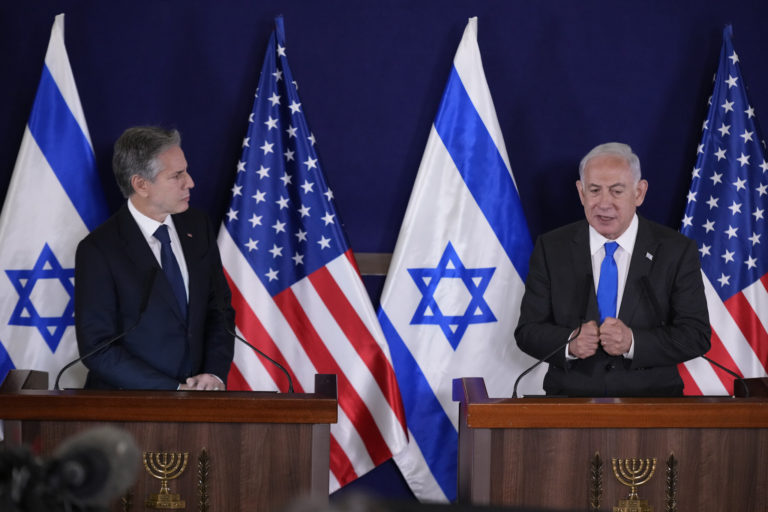
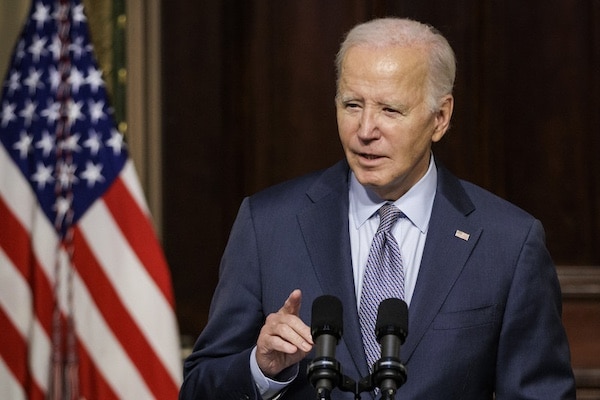
Against the background of the above, the news that the European Union has recognized Hamas as a terrorist group fades somewhat. Nevertheless, European countries and the United States have expressed active support for Israel . American officials noted that they intend to support the Israelis, including with weapons. Meanwhile, several countries even stopped providing humanitarian support to the Palestinians: Denmark was one of them.
https://rybar.ru/obstanovka-v-zone-izra ... 2023-goda/
*******
The Palestinians’ Inalienable Right to Resist
Posted by INTERNATIONALIST 360° on OCTOBER 10, 2023
Louis Allday
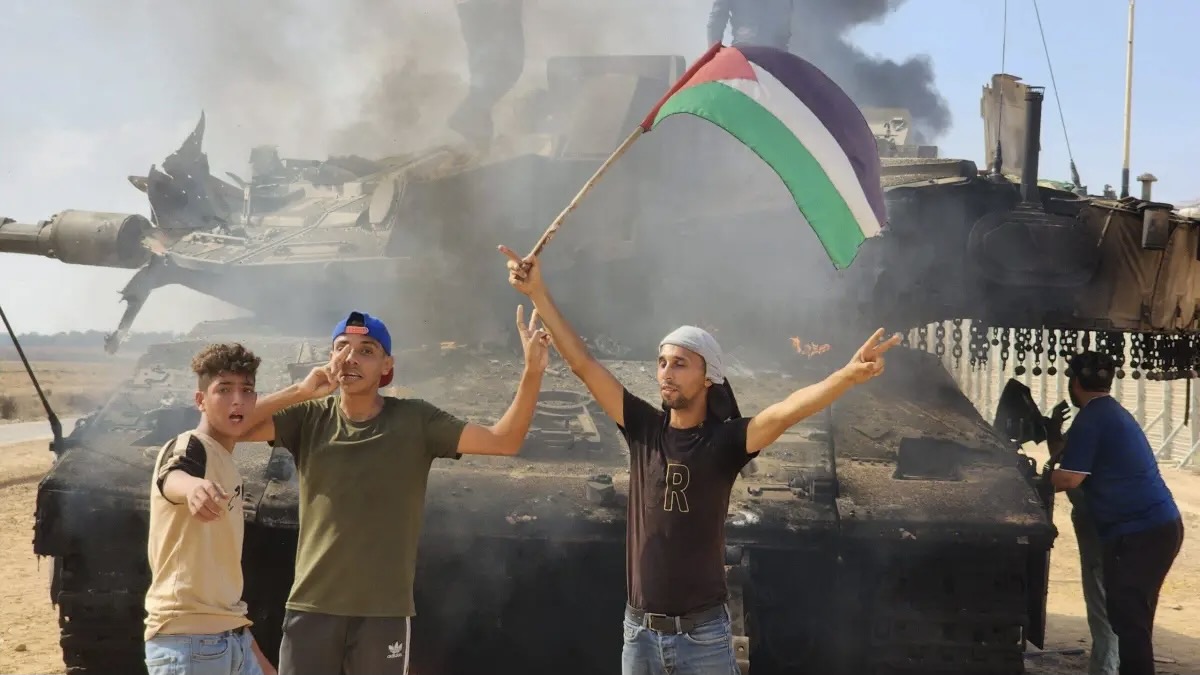
We remembered all the miseries, all the injustices, our people and the conditions they lived, the coldness with which world opinion looks at our cause, and so we felt that we will not permit them to crush us. We will defend ourselves and our revolution by every way and every means.
George Habash (1926-2008)
A freedom fighter learns the hard way that it is the oppressor who defines the nature of the struggle, and the oppressed is often left no recourse but to use methods that mirror those of the oppressor.
Nelson Mandela (1918-2013)
In December 1982, following Israel’s devastating invasion of Lebanon six months earlier, the United Nations General Assembly passed resolution A/RES/37/43 concerning the ‘importance of the universal realization of the right of peoples to self-determination’. It endorsed, without qualification, ‘the inalienable right’ of the Palestinian people to ‘self-determination, national independence, territorial integrity, national unity and sovereignty without outside interference’, and reaffirmed the legitimacy of their struggle for those rights ‘by all available means, including armed struggle’. It also strongly condemned Israel’s ‘expansionist activities in the Middle East’ and ‘continual bombing of Palestinian civilians’, both said to ‘constitute a serious obstacle to the realization of the self-determination and independence of the Palestinian people’. In the four decades since then, Israel’s violence against the Palestinian people and its colonisation of their land has not ceased. Up to the present moment, all over historical Palestine, from the Gaza Strip to Sheikh Jarrah, Palestinians are still under that same occupation, subject to suffocating control over virtually every aspect of their lives – and the sadistic, unaccountable violence of the Zionist state.
In addition to its endorsement by the UN, the Palestinians’ right to resist their occupation is also guaranteed by international law. The Fourth Geneva Convention requires an occupying power to protect the ‘status quo, human rights and prospects for self-determination’ of occupied populations, and as Richard Falk – an expert in international law who later went on to be appointed the UN’s Special Rapporteur on Human Rights in the Occupied Palestinian Territories – has explained, Israel’s ‘pronounced, blatant and undisguised’ refusal to ever accept this framework of legal obligations constitutes a fundamental denial of the Palestinians’ right to self-determination and engenders their legally-protected right of resistance. Israel’s occupation of Palestinian territory and its flagrant disregard for international law through the construction of illegal settlements and other daily violations has continued unabated since Falk’s assessment was made during the al-Aqsa Intifada. In fact, the occupation has only become further entrenched since then with the collaboration of the comprador Palestinian Authority.
Furthermore, regardless of what is mandated by international law, the Palestinians possess a fundamental moral right to resist their ongoing colonisation and oppression through armed resistance, and that right must be recognised and supported. The multi-generational suffering of the Palestinians, perhaps none more so than those who live in the besieged and bombarded Gaza strip, is unremittingly cruel and has one central cause: Israel and the perpetual belligerence, expansionism and racism that is inherent to its state ideology, Zionism. Moreover, contrary to the Western media’s narrative that, without fail, portrays Israel as acting in ‘retaliation’, it is the actions of the Palestinians which are fundamentally reactive in nature, because the violence that Israel inflicts upon them is both perpetual and structural, and therefore automatically precedes any resistance to it. ‘With the establishment of a relationship of oppression, violence has already begun’, said Paolo Freire; ‘[n]ever in history has violence been initiated by the oppressed’. In Palestine, as Ali Abunimah recently wrote, ‘the root cause of all political violence is Zionist colonisation’.
Given that the Palestinians’ legal and moral right to pursue armed resistance is clear, endorsement of this position should be uncontroversial and commonplace among supporters of their cause. Yet in the West, such a position is rarely expressed – even by those who loudly proclaim their solidarity with Palestine. On the contrary, acts of Palestinian armed resistance, such as the firing of missiles from Gaza, are condemned by these ostensible supporters as part of the problem, dismissed condescendingly as ‘futile’ and ‘counter-productive’, or even labelled ‘war crimes’ and ‘unthinkable atrocities’, said to be comparable to Israel’s routine collective punishment, torture, incarceration, bombardment and murder of Palestinians. This form of solidarity, as Bikrum Gill has argued, is essentially ‘premised upon re-inscribing Palestinians as inherently non-sovereign beings who can only be recognized as disempowered dependent objects to be acted upon, either by Israeli colonial violence, or white imperial protectors’.
To sit in the comfort and safety of the West and condemn acts of armed resistance that the Palestinians choose to carry out – always at great risk to their lives – is a deeply chauvinistic position. It must be stated plainly: it is not the place of those who choose to stand in solidarity with the Palestinians from afar to then try and dictate how they should wage the anti-colonial struggle that, as Frantz Fanon believed, is necessary to maintain their humanity and dignity, and ultimately to achieve their liberation. Those who are not under brutal military occupation or refugees from ethnic cleansing have no right to judge the manner in which those who are choose to confront their colonisers. Indeed, expressing solidarity with the Palestinian cause is ultimately meaningless if that support dissipates the moment that the Palestinians resist their oppression with anything more than rocks and can no longer be portrayed as courageous, photogenic, but ultimately powerless, victims. ‘Does the world expect us to offer ourselves up as polite, willing and well-mannered sacrifices, who are murdered without raising a single objection?’ Yahya al-Sinwar, Hamas’ leader in Gaza, recently asked rhetorically. ‘This is not possible. No, we have decided to defend our people with whatever strength we have been given.’
This phenomenon speaks to what Jones Manoel calls the Western left’s ‘fetish for defeat’ that predisposes it towards situations ‘of oppression, suffering and martyrdom’, as opposed to successful acts of resistance and revolution. Manoel continues:
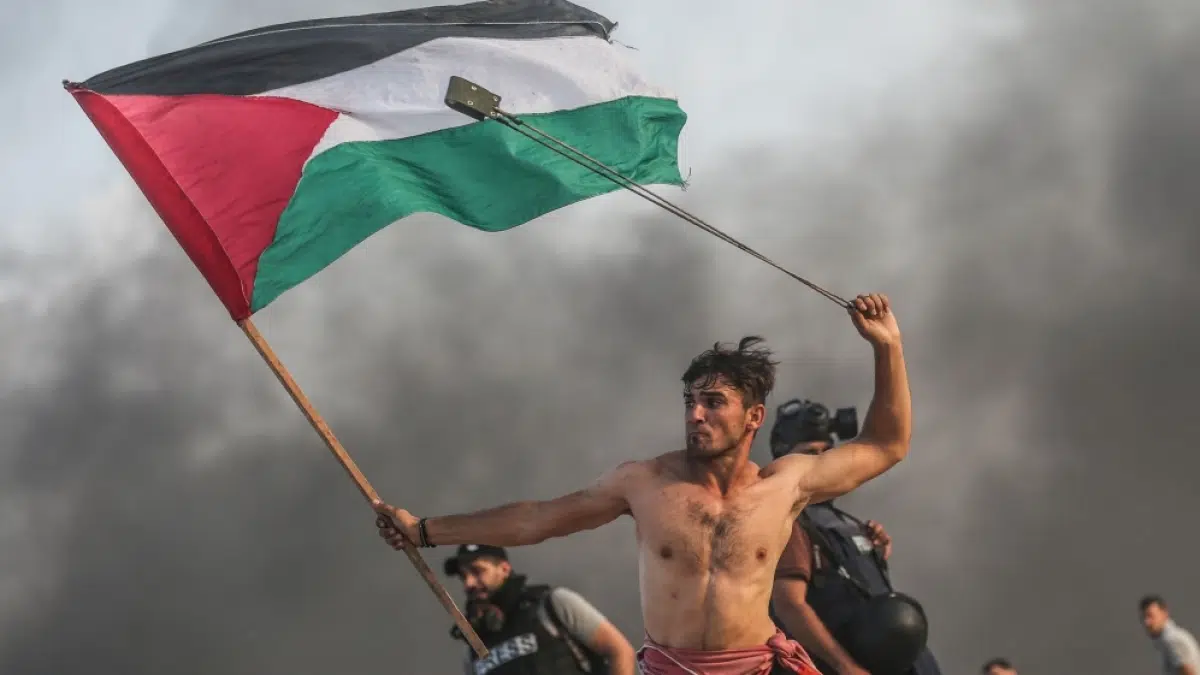
People become ecstatic looking at those images – which I don’t think are very fantastic – of a [Palestinian] child or teenager using a sling to launch a rock at a tank. Look, this is a clear example of heroism but it is also a symbol of barbarism. This is a people who do not have the capacity to defend themselves facing an imperialist colonial power that is armed to the teeth. They do not have an equal capacity of resistance, but this is romanticized.
As a result, large swathes of the Western left express solidarity with the Palestinian cause in a generalised, abstract way, overstating the importance of their own role, and simultaneously rejecting the very groups who are currently fighting – and dying – for it. All too often, those who have refused to surrender and steadfastly resisted at great cost, are condemned by people who, in the same breath, declare solidarity with the cause. Similarly, it is common for these same people to either ignore or demonise those external forces that materially aid the Palestinian resistance more than any others – most notably Iran. If this assistance is acknowledged, which is rare, the Palestinian groups that accept it are typically infantilised as mere ‘dupes’ or ‘pawns’, for allowing themselves to be used cynically by the self-serving acts of others – a sentiment that directly contradicts Palestinian leaders’ own statements.
A specific criticism of Hamas that is frequently deployed in this context is the ‘indiscriminate’ nature of its missile launches from Gaza, actions which both Human Rights Watch and Amnesty International regularly label ‘war crimes’. As observed by Perugini and Gordon, the false equivalence that this designation relies upon ‘essentially says that using homemade missiles – there isn’t much else available to people living under permanent siege – is a war crime. In other words, Palestinian armed groups are criminalised for their technological inferiority’. After the latest round of fighting in May 2021, al-Sinwar stated clearly that, unlike Israel, ‘which possesses a complete arsenal of weaponry, state-of-the-art equipment and aircraft’ and ‘bombs our children and women, on purpose’, if Hamas possessed ‘the capabilities to launch precision missiles that targeted military targets, we wouldn’t have used the rockets that we did. We are forced to defend our people with what we have, and this is what we have’.
This failure to support legitimate armed struggle is a part of a wider problem with the framing used by many supporters of the Palestinian cause in the West, that obscures its fundamental nature and how it must be resolved. Palestine is not simply a human rights issue, or even just a question of apartheid, but rather an anti-colonial fight for national liberation being waged by an indigenous resistance against the forces of an imperialist-backed settler colony. Decolonisation is a word now frequently used in the West in an abstract sense or in relation to curricula, institutions and public art, but rarely anymore in connection to what actually matters most: land. And that is the very crux of the issue: the land of Palestine must be decolonised, its Zionist colonisers deposed, their racist structures and barriers – both physical and political – dismantled, and all Palestinian refugees given the right of return.
It should be noted that emphasising the importance of supporting the Palestinians’ right to carry out armed struggle in pursuit of their freedom does not mean that their supporters in the West should recklessly call for violence or fetishize and celebrate it unnecessarily. Nor does it mean that non-violent efforts such as the Boycott, Divestment and Sanctions Movement (BDS) are inconsequential or unimportant. Rather, BDS should be considered part and parcel of a broad spectrum of resistance activities, of which armed struggle is an integral component. Samah Idriss, founding member of the Campaign to Boycott Supporters of Israel in Lebanon has stated: ‘both forms of resistance, civil and armed, are complementary and should not be viewed as mutually exclusive.’ Or, as Khaled Barakat has stressed: ‘Israel and its allies have never accepted any form of Palestinian resistance, and boycott campaigns and popular organizing are not alternatives to armed resistance but interdependent tactics of struggle’.
Nelson Mandela’s analysis is relevant in this context, when he wrote that, ‘[n]on-violent passive resistance is effective as long as your opposition adheres to the same rules as you do’, but if peaceful protest is met with violence, its efficacy is at an end’. For Mandela, ‘non-violence was not a moral principle but a strategy’, since ‘there is no moral goodness in using an ineffective weapon’. Clarifying the rationale behind the African National Congress’ decision to adopt armed resistance, Mandela explained that it had no alternative course left available: ‘[o]ver and over again, we had used all the non-violent weapons in our arsenal – speeches, deputations, threats, marches, strikes, stay-aways, voluntary imprisonment – all to no avail, for whatever we did was met by an iron hand’. This standpoint is reflected in the words of al-Sinwar, who when referring to the Great March of Return protests in 2018-19, during which Israeli snipers shot dead hundreds of Gazan protestors and seriously wounded thousands more said: ‘we’ve tried peaceful resistance and popular resistance’, but rather than acting to stop Israel’s massacres, ‘the world stood by and watched as the occupation war machine killed our young people’.
Mandela’s reference to efficacy is crucial. Despite what many Western supporters seem intent on implying, although it comes at a huge cost, the Palestinian armed resistance in Gaza is not ‘futile’ and has grown enormously in effectiveness and deterrent capacity. This was already evident after Israel’s failure to win the 2014 war on Gaza and has been underlined by the recent success of the resistance in May 2021, during which it launched an unprecedented number of missiles that can now reach deep inside historical Palestine. In spite of its devastating aerial bombardment of Gaza, Israel was unable to stop the launch of these missiles and, after the losses it experienced in 2014, is now too fearful of launching another ground invasion of the strip – notably as the resistance is now equipped with greater numbers of Kornet missiles previously used to such deadly effect against Israeli tanks in Southern Lebanon. The ceasefire that was declared on May 21st was widely seen in Israel as a defeat, and was celebrated by Palestinians across historical Palestine as a victory. The military balance has changed, and although Israel is still vastly more powerful by every conventional measure, the resistance is in a stronger position now than it has been for years. It has built upon the successes of Hezbollah against Israel in 2000 and 2006 and with the support, training and further aid of the Lebanese group and others in the Resistance Axis, it has taken its capabilities to a higher level. This change is reflected in the fact that since 2014, Israeli arms sales have stagnated and its aggressions against Gaza no longer lead to an immediate rise in the stock price of its arms companies that use Gaza as a training ground and stage for its latest technologies. Shir Hever has noted that after Israel’s failures in Gaza beginning in 2014, customers of its arms companies began to ask ‘What is the point of all this technology? If you cannot pacify the Palestinians with these missiles, why should we buy them?’.
In addition to its practical impact, armed struggle has significant propaganda value. The reality is that Palestine would not have dominated global news headlines in May 2021 in the way that it did were it not for the armed resistance in Gaza that – contrary to the Western media’s singular focus on Hamas – is composed of a united front of various factions including Palestinian Islamic Jihad (PIJ) and the Marxist-Leninist Popular Front for the Liberation of Palestine (PFLP). The PFLP is a case in point in this regard, for it was their actions throughout the late 1960s and early 1970s, most notably a series of plane hijackings (in which passengers were released unharmed), that implanted the Palestinian cause in the consciousness of millions of people for the first time and marked a key turning point in raising awareness of the Palestinians’ plight globally. Indeed, the Palestinian writer and PFLP spokesman, Ghassan Kanafani, believed that armed struggle was the ‘best form of propaganda’ and that in spite of the ‘gigantic propaganda system of the United States’, it is through people who fight to liberate themselves in armed struggle ‘that things are ultimately decided’.
In 1970, after the Western-backed regime in Jordan had shelled Palestinian refugee camps in the country, the PFLP – under the leadership of Kanafani’s comrade (and recruiter) George Habash – took hostage a group of nationals from the US, West Germany and Britain (Israel’s primary supporters) at two hotels in Amman. In return for their safe release, the PFLP demanded that ‘all shelling of the camps be ended and all demands of the Palestinian resistance movement met’. Shortly before the hostages were eventually released, Habash addressed them apologetically and said:
I feel that it’s my duty to explain to you why we did what we did. Of course, from a liberal point of view of thinking, I feel sorry for what happened, and I am sorry that we caused you some trouble during the last 2 or 3 days. But leaving this aside, I hope that you will understand, or at least try to understand, why we did what we did.
Maybe it will be difficult for you to understand our point of view. People living different circumstances think on different lines. They can’t think in the same manner, and we, the Palestinian people, and the conditions we have been living for a good number of years, all these conditions have modelled our way of thinking. We can’t help it. You can understand our way of thinking, when you know a very basic fact. We, the Palestinians… for the last 22 years, have been living in camps and tents. We were driven out of our country, our houses, our homes and our lands, driven out like sheep and left here in refugee camps in very inhumane conditions.
For 22 years our people have been waiting in order to restore their rights, but nothing happened… After 22 years of injustice, inhumanity, living in camps with nobody caring for us, we feel that we have the very full right to protect our revolution. We have all the right to protect our revolution…
We don’t wake up in the morning to have a cup of milk with Nescafe and then spend half an hour before the mirror thinking of flying to Switzerland or having one month in this country or one month in that country… We live daily in camps… We can’t be calm as you can. We can’t think as you think. We have lived in this condition, not for one day, not for 2 days, not for 3 days. Not for one week, not for 2 weeks, not for 3 weeks. Not for one year, not for 2 years, but for 22 years. If any one of you comes to these camps and stays for one or two weeks, he will be affected.
You have to excuse my English. From the personal side, let me say, I apologize to you. I am sorry about your troubles for 3 or 4 days. But from a revolutionary point of view, we feel, we will continue to feel that we have the very, very full right to do what we did.
Habash’s words should be listened to carefully. The urgency that underlines his message is even more palpable half a century later, for the Palestinians – consistently refusing passive victimhood – have now lived in the wretched conditions Habash depicts for 73 long years, not 22.
Revolution, Mao Zedong once remarked, ‘is not a dinner party, or writing an essay, or painting a picture, or doing embroidery; it cannot be so refined, so leisurely and gentle’. The same is true of decolonisation, in which although past struggles have been multi-faceted, armed resistance of some kind was almost invariably an integral component of the struggle. Palestine is no exception. Beyond endorsement of BDS and other civil society campaigns, the Palestinians’ unassailable right to pursue armed struggle must be supported by those who choose to stand in solidarity with them and their righteous cause.
Louis Allday is a writer and historian based in London. He is the founding editor of Liberated Texts, the first published volume of which can be purchased via Ebb.
This article was first published on Ebb Magazine, May 21, 2021
https://libya360.wordpress.com/2023/10/ ... -resist-2/
******
THE SILENCE OF THE BEARS – RUSSIA IS REORIENTING TOWARDS THE ARABS

By John Helmer, Moscow @bears_with
Until now Russia has never been so silent in the middle of a Middle Eastern war.
Russian opinion pollsters are reluctant to reveal how far the country’s public opinion is moving away from Israel towards the Palestinians and the anti-American Arab and Iranian side.
The silence from the Kremlin reveals how thoroughly the Israelis have burned their bridges to President Vladimir Putin, and how far, if silently, the Russian President has moved to the side of the General Staff in their assessment of Israel as hostile – on the enemy front with the Ukraine, the US and NATO. Putin’s pro-semitism, on display in his relationship with Prime Minister Benjamin Netanyahu for several years, is now impossible in public, also in private.
The Russian money which has moved easily between Moscow and Tel Aviv and exercised its influence on Putin’s dealings with the Israelis, is now fleeing back to Moscow with the oligarch, Mikhail Fridman. About Fridman’s flight to safe haven in Russia, the Kremlin spokesman, Dmitry Peskov, has said: “Fridman is a citizen of the Russian Federation. He can come back, live here, leave here, just like any other citizen of the Russian Federation. There is nothing unusual.”
About that, the Speaker of the Duma, Vyacheslav Volodin, said something more unusual. “Anyone who left the country and engaged in reprehensible acts, celebrating gunfire on Russian territory and wishing victory to the Nazi Kiev regime, should realize they are not only unwelcome here, but if they do return, Magadan [the gulag] is waiting for them.”
From a policy of equivalence and equivocation between Israel and the Arabs, Russia has reached the policy of engagement on the Arab side. The driver has been the US war to defeat and destroy Russia through the Ukraine. The longer the new Palestinian war lasts, the more clearly Russian military and political strategy in the Middle East will pursue a new anti-American line. The consequences are as great as the defeat of the US and NATO which Russia is now inflicting in Europe, and of the western sanctions war in the global commodity markets and the trading lanes at sea.
“We are witnessing a sharp deterioration of the situation in the Middle East,” Putin said in his public welcome for Iraq’s prime minister, Muhammed Shia al-Sudani, at the Kremlin on Tuesday morning. “I think that many will agree with me that this is a clear example of the United States’ failed policy in the Middle East, which tried to monopolise the settlement process, but, unfortunately, was not concerned with finding compromises acceptable to both sides, but, on the contrary, put forward its own ideas about how this should be done and put pressure on both sides, truly both — first on one, then on the other. But each time without considering the fundamental interests of the Palestinian people, bearing in mind, first of all, the need to implement the decision of the UN Security Council on the creation of an independent, sovereign Palestinian state.”
The Foreign Ministry followed Putin later in the afternoon, when the regular weekly briefing by Maria Zakharova was advanced several days early in order to report there have been direct negotiations with the leaders of Egypt, the United Arab Emirates, the Arab League, Iran, and Turkey – not with Israel.”*
“The US bet on the ‘freezing’ of the status quo and the promotion of ‘economic peace’, as well as the use of collective formats tailored for crisis response, has not justified itself,” Zakharova said. “Everyone sees the result…The statements of American politicians and public figures calling for ethnic cleansing in the region look monstrous. They openly call for one group of people [to be] near-doomed to complete destruction. Once again, aggression, violation of the rule of law, and the caveman’s hatred have emerged on the surface of the American declarations of good looks and human rights dogmas.”
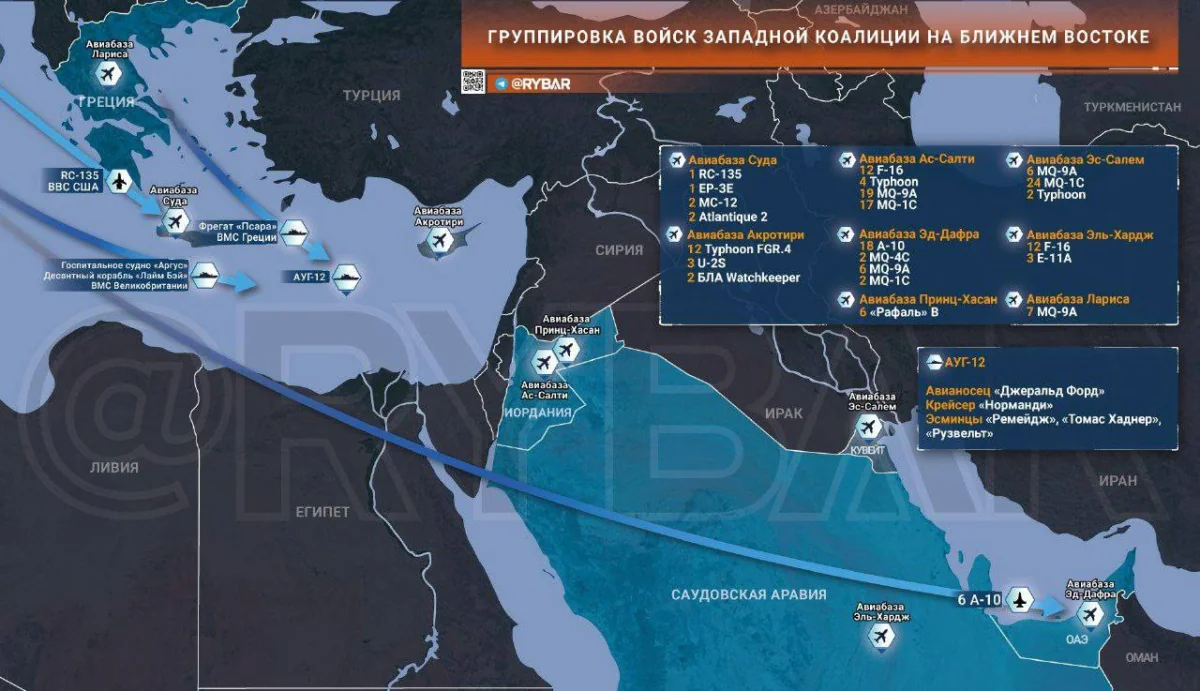
In the first direct Russian warning to the US Navy force in the Eastern Mediterranean, Zakharova added: “So far we see that the situation is developing along the path of escalation. There is a great risk of involving third forces in this conflict. And this is fraught with long-term consequences for the region and for the world.”
Putin followed in the evening on the telephone with the Turkish President, Recep Tayyip Erdogan. “The need for an immediate ceasefire by both sides and the resumption of the negotiation process was emphasised,” according to the Kremlin’s communiqué. “Mutual readiness to actively contribute to this was expressed…Separate issues of Russian-Turkish cooperation in various fields were also touched upon.”
Erdogan’s press release was more revealing. He and Putin had “touched upon what initiatives can be taken to meet humanitarian needs in the region, as the Turkish president told Putin that targeting civilian settlements is worrying and Türkiye does not welcome such move.” Erdogan’s twitter announcement adds: “President Erdoğan and President Putin of Russia also exchanged views on potential initiatives to meet humanitarian needs in the region.”
This is a hint that Erdogan and Putin are contemplating a Turkish ship convoy of aid to Gaza, protected from Israeli attack by the Russian Navy from its Tartous base on the Syrian coast, and by the Russian Air Force from Hmeimim. This humanitarian operation by sea would aim at breaking the blockade of the coast by the Israelis, and running the gauntlet of the USS Gerald Ford and its squadron further offshore. If this operation, a reminder of the Gaza Flotilla of 2010, is in planning now – the open signals are warning Washington and the US Navy to expect it – then the confrontation, and the risk to the US and Israel of strategic defeat at sea, are unprecedented.
The planning of Russian military protection of seaborne humanitarian aid convoys to the Gaza also extends to Egypt.
This was touched on in the conversation which Egyptian Foreign Minister Sameh Shoukry had with Foreign Minister Sergei Lavrov. That was followed by Egyptian press disclosure of Israeli warnings, following by bombings, to stop Egyptian trucks delivering aid into Gaza across the Rafah land bridge at the southern end of Gaza.

An alternative Egyptian option is a naval convoy. If this will be coordinated through the Kremlin and the Russian Defense Ministry with an Erdogan-Putin plan of a Turkish convoy sailing from the north, the escalation to regional and superpower level will have materialised before the Israeli invasion of Gaza can preempt it.
The Russian Defense Ministry has not been silent towards Israel in the past. Since the ambush by the Israel Air Force of the Russian Il-20 surveillance aircraft, and the killing of its 15-man crew in September 2018, the General Staff has said it has been reserving its moves against the Israelis while identifying them as the enemy.
Vzglyad, the Moscow platform for Russian military and security thinking, editorialised on April 17, 2023, that in siding with the Ukraine during the Special Military Operation, the Israeli government had become Russia’s adversary: “The time has come to take a new position on the Palestinian issue. To take the celebration of Al-Quds Day to a new level, as well as to take a more pro-Palestinian position in the Middle East conflict. To stand on the side of those who help Russia within the framework of their own interests (Iran, Saudi Arabia) against those who help our enemies. And thereby to send a very clear signal to the world – a signal that Russia will treat its partners exactly as they treat it. To help supporters – and not to act in the interests of opponents.”
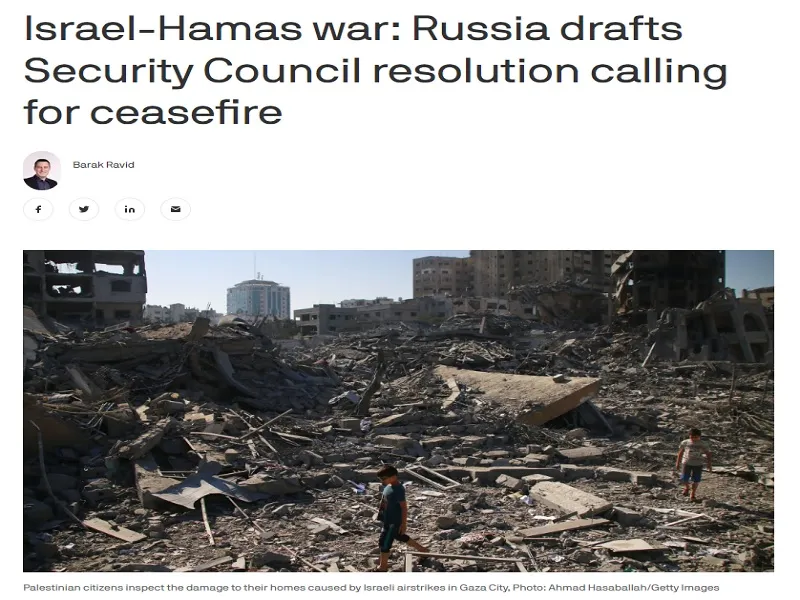
The creation of a humanitarian corridor was explicitly mentioned in the Foreign Ministry briefing on Tuesday. “Tensions are rising in the West Bank of the Jordan River. There are high risks of the conflict spreading to the area of the Lebanese-Israeli border and drawing new parties into it. A large-scale humanitarian catastrophe is unfolding before our eyes. The main thing now is to cease fire and stop the bloodshed. We support the efforts of interested parties aimed at solving this priority task. This would make it possible to avoid new victims, end the suffering of the civilian population, ensure its evacuation through humanitarian corridors and prevent the situation from sliding into a region-wide humanitarian catastrophe. This is not just a crisis or an emergency. We are talking about the fate of millions of people.”
Spokesman Zakharova also struck at the CIA and the Pentagon for their surprise defeat by Hamas. “How did it happen that in a year; that’s how much time the operation was being prepared for, then carried out now in a few days, the United States as Israel’s closest ally did not warn about this? They have satellites everywhere, appropriate tracking devices, military bases, including in the region. There are all the possibilities to carry out, not just monitoring, but surveillance — the facts speak for themselves — of all information circulating on American-made equipment (hardware and software). For the whole year of preparing such a large-scale operation, the United States with all the power of its special services did not transmit anything to Israel as intelligence…How did it happen that during the whole year of preparation of the corresponding operation in the Middle East, the United States did not transmit any information to its partners in Israel?”
By contrast, the Foreign Ministry spokesman said, “for two months at the end of 2021 and two months at the beginning of 2022, the United States at all levels told how Russia would ‘attack’ Ukraine. This was done specifically to create an information backdrop in order to divert the eyes of the whole world from how, for all these years, the United States and their NATO colleagues (primarily the United Kingdom) have been pumping Ukraine with weapons and creating the anti-Russia project, an anti-Russian springboard…After the corresponding instruction from Washington, a multiple increase in the shelling of Donbass by the regime of V.A. Zelensky followed. Then, in late 2021-early 2022, the US ‘knew everything’ and told everyone. But in the area of their direct responsibility — the Middle East has always been one of them — in relation to the closest ally over which the American protectorate is carried out, the US special services, the State Department and the White House did not transmit any information necessary for self-defence.”
The first public indication of how Russian military intelligence and the General Staff assessed what had happened surfaced in Vzglyad on Sunday.

Source: https://m.vz.ru/
“Those who were previously perceived as peasants in woven slippers, capable at best of blowing up a bus stop, destroyed one of the myths about the state of Israel in a few hours,” Yevgeny Krutikov concluded after itemizing the weaknesses of Israel’s defence lines, over-confidence in its technology, and under-estimation of Arab capabilities. “The IDF [Israel Defence Forces] was in a coma…Thus, Israel has suffered losses more important than just tragic losses in manpower and equipment. The Palestinian attack has destroyed the idea of how the Israeli security forces are organised and how capable they are. It has turned out that the Israeli security forces rest on the laurels of the victories of past generations. Intelligence and counterintelligence are ineffective, and the Israeli military has been asleep through the changes in combat tactics taking place during the contemporary conflicts right now.”
In a personal Telegram post, Krutikov spelled out the consensus of Russian military staff thinking at present: “1. The IDF and the Mossad were completely unprepared. There is no primary protection system, the garrisons of the border posts were fast asleep on Saturday on the [Simchat Torah religious] holiday. The Arabs on foot, slowly, reached the unguarded positions of the Jews. The very idea of these posts was nonsense. 2. They don’t know what drones, air defence systems and all of this are at all. The Iron Dome is a fiction. They’ve been living in some kind of fantasy world for the last few years.3. Everything about Israel is a myth. There is no such defence system, there is no such intelligence. Their PR is solid. 4. Either the Arabs were trained in a special way, or they somehow unexpectedly evolved into a new form of life. The operation was planned for at least a year, taking into account all the new trends…5. A huge amount of weapons from the Arabs could not fall from the sky. How did it get there? again, we convey our warmest greetings to the Israeli mother of intelligence. 6. Tactical training is completely absent. As well as the vaunted patriotism. 7. Exceptional cruelty is a sign not only of this region. God is dead, including the Jewish God. 8. Where else will catch fire?”
In a last line intended to be an ironic echo of the Orthodox Jewish belief in the apocalypse, Krutikov wrote: “Truly, the last days are coming.”
The reporter, who has served in the field as a GRU officer, reported in Vzglyad on Sunday: “It is clear that Israel is technologically stronger. If it follows that, sooner or later, such a degree of destruction of Gaza will be achieved, that Tel Aviv will be able to call a victory, nevertheless the Arabs have already achieved the main thing: they have destroyed the myths around Israel’s defence systems, and this moral victory is much more important than the purely military counterattack that the Jewish state is now organizing against them. Furthermore, the events of these days may reshape the entire military-political structure of the Middle East, and lead to the emergence of new alliances and new front lines. Against the background of all other world events, this is almost the most terrible thing that could happen.”
Late on Tuesday, US time, a NATO veteran of the Afghan war cast doubt on what the Israeli offensive will be able to achieve in Gaza.
“The Israelis don’t have the staying power to dig through, let alone occupy, Fort Gaza. Now, thanks to the bombing, they’ve turned it into a giant improved defence complex. It’s sure to be laced with tunnels and other underground workings well-stocked with food, water, medical supplies, weapons, ammunition, etc. We can bet those workings crisscross the border with Egypt. We can also bet that, no matter how nervous General Sisi [President Abdel Fattah el-Sisi, right], there is certainly Egyptian support where it counts now.”
“The Israelis are said to be mobilising 300,000 reservists. How long can such a mobilisation last before it tells on the country’s economy? The US, after nearly exhausting its arms stocks, and a great deal of treasure, on the war against Russia via the Ukraine, has little to show for it. How will ‘giving Israel all it needs’ to slog through the ruins of the Gazan death trap work out any better?”
“All of this goes without counting what the Russians, Turks, Iranians, Lebanese in the form of Hezbollah, and others, may do. If the Russians launch a blockade-busting run with the Turks, will the Americans and Israelis risk a nuclear exchange trying to stop them?”
[*] Late on Tuesday evening in Moscow, the Israeli ambassador to Russia, Alexander Ben Zvi, was admitted on his request to an interview with Deputy Foreign Minister Mikhail Bogdanov at the latter’s reception room at the ministry. The Russian communiqué indicates the Israeli official was warned the proposed IDF plan to destroy Gaza, occupy the territory, and cleanse it of “human animals” -- was “fraught…with the most devastating consequences for the humanitarian situation in the region.” The Israeli press has not reported Bogdanov’s warning to Ben Zvi; the Israeli had been telling Tass hours earlier: “when we declared a state of war with Hamas, we meant that the state of war implies everything, including a ground operation," Ben Zvi said. "When will it begin? Right now certain work is being done so as not to make any hasty steps. It is necessary, of course, to analyze things thoroughly. What is needed? How should it be done? I cannot rule out that it will not happen, either. It is possible that it will happen. I don't know, it is to be decided at the army level.” He then told a meeting with Moscow Jews that Israel is not targeting all the Palestinians of Gaza: “this war will continue as long as Hamas exists as a terrorist organization, and we will have to pay with more and more casualties. In order to prevent this, we need to destroy all these terrorist cells of Hamas.”
https://johnhelmer.net/the-silence-of-t ... more-88656

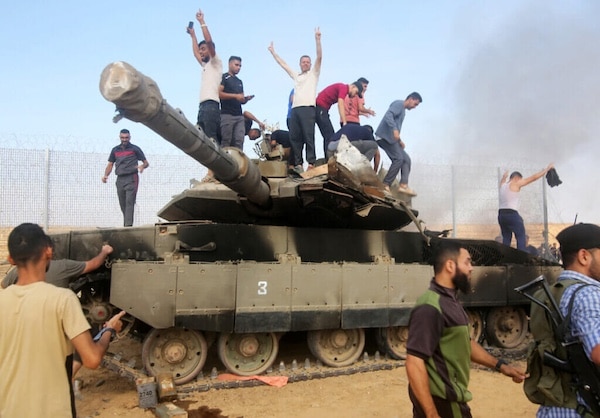


 now in DC pic.twitter.com/5ncVJT5nS5
 today: pic.twitter.com/OQSyNHo2FW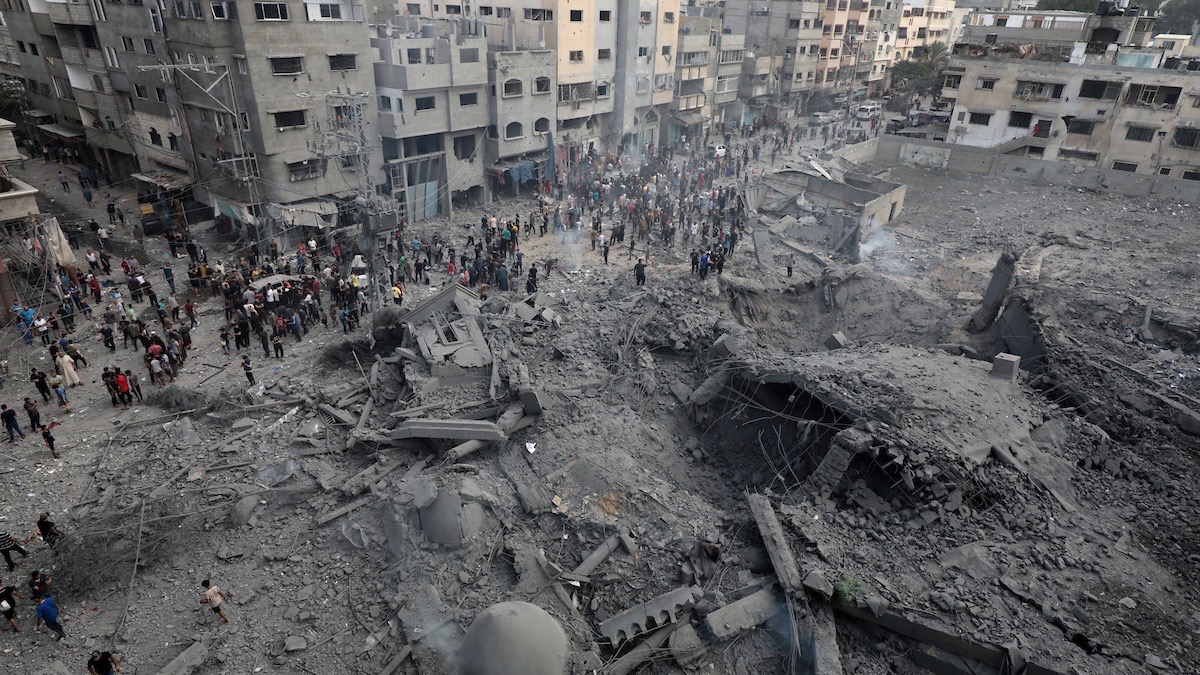





 .
.











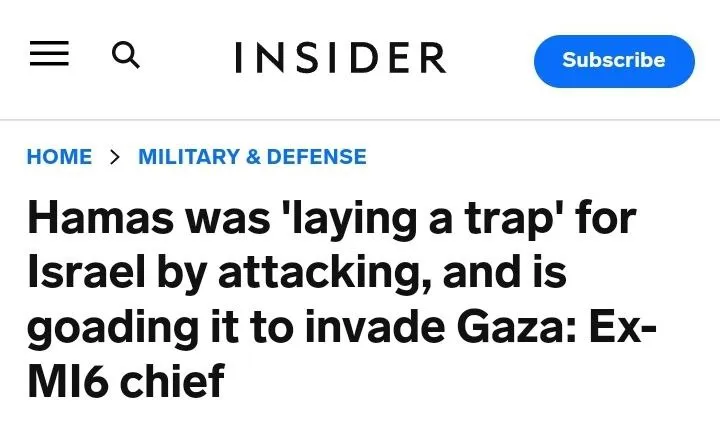
 "I absolutely understand and endorse Israel's right to defend themselves in the circumstances, and indeed to restore the credibility of those defenses, so that that sense of psychological safety can be restored to the people.