 Germany and Netanyahu: Berlin Bulletin No. 223, June 7, 2024
By Victor Grossman (Posted Jun 07, 2024)
For people in southern Germany, there was not much to be happy about this springtime; many were hit by the worst flooding in living history. Not a few lost the results of a life’s work. Some were aware that the major perpetrators had known—decades ago—what cardinal sins they were committing but had preferred to lie and deceive the world, gloating over soaring bank accounts rather than bothering their brains about retreating icecaps, glaciers and forests.
But, far from water-logged Bavaria, immensely worse destruction was bloodily wrecking two million lives, and with Germany, though so distant, deeply involved. Of course I mean Palestine, especially Gaza. For decades the media has distorted or ignored what was happening there. After October 7th ignoring it was no longer possible, here or anywhere. But in Germany there were some differences.
Ever since the West German government was founded in 1949 it held tight to two basic strategies for winning a seat at the table of Western market-oriented respectability. One was to loudly proclaim democracy and freedom: free elections, free press, free speech, a free refuge for the persecuted of the world.
The second strategy embraced unquestioning support for Israel’s rulers in their every word and deed, thus demonstrating to the world its total regret for Hitler’s 12-year terror and mass murder of the Jews of Germany and Europe. These two strategies, aimed primarily at western public opinion, largely achieved their goal. But critics who delved somewhat deeper found faults in both.
Below the surface of speeches, proclamations and editorials, and after the most infamous, best-known Nazi leaders were removed or had gone underground, often in South America, all the other ex-Nazis retained an amazing degree of control in West Germany; in schools and universities, courts and police departments, journalism, the diplomatic corps, at all levels of government from small town mayors up to at least one chancellor, one president and a large number of cabinet ministers. More important, the main sources of power, the companies which managed World War I, sponsored and financed the Nazis, raked in millions from companies stolen in countries they occupied and from hundreds of thousands of forced laborers, concentration camp inmates and POWs forced to toil in arms industries, including Auschwitz. The same companies—often the same men, after a few easy-going prison years in a few especially horrendous cases (before soon being amnestied)—amended their methods but seldom their views or their ambitions for higher stacks of wealth and for expansion—to regain “Germany’s place in the sun.” Though this time, if necessary, as partners with powerful rulers in the USA and Israel, whose goals were not so very different.
Indeed, they were to become very similar. Within weeks of Roosevelt’s death and Hitler’s defeat, Truman, like most of his successors and their backers, was already aiming in a contrary direction. Two symbols were Hiroshima and, even more, Nagasaki. Both contained implicit threats. In Europe, Truman & Co. supported the rebuilding of German economic strength and, after a short pause, its military power as well. Here, too, there were symbols. The top generals in the new West German army were the bloodiest of war criminals. The head of the new Federal Intelligence Service (like the CIA in charge of anti-Soviet espionage) was General Reinhard Gehlen, who had headed the Foreign Armies East section of the Nazi German general staff counter-intelligence service. In domestic matters, Adenauer’s closest aide and “second most powerful man in Germany” was Dr. Hans Globke, a major administrator of the Holocaust against the Jews of Germany, Austria and Czechoslovakia. During the Eichmann trial a deal was made with the Israeli government: Don’t let the Eichmann-Globke connection be mentioned and Germany will recompense you with billions in military aid. So much for the sincerity of fighting anti-Semitism!
After “unification” of East and West Germany (in the East often called “annexation” or “colonization”), those two strategy pillars remained constant and were no longer weakened by East Germany’s exposés of old fascists like Globke or hampered by its role as barrier against neo-Nazi movements. And since they were fundamental pillars, any doubts about them meant challenging the whole structure. Any questions as to the nature of Germany’s “free democratic constitutional rule”? Then you were most likely “an extremist of the right or of the left”! Any questions about Israeli rulers’ repression? Then you were obviously “anti-Semitic” (or, if possibly Jewish, a “self-hater”). And the controls in the media were tight, with pink slips painfully available!
Then came the Gaza tragedy. Of course the shock at the terrible events on October 7th filled the media, with all the horrible details, the true ones and those later found to be untrue (like the “beheaded babies”). But the fierce invasion of Gaza which immediately followed, with the expressed goal to annihilate all “sub-humans” there, to deny them food, water, fuel, gas, electricity, with the destruction of almost every building, school, mosque, theater and, worst of all, hospital, shocked millions and led to angry demonstrations, biggest in Britain but also all around the USA and in many places in Germany, where the anger threatened to challenge those basic pillars, thus frightening the powers-that-be like never before (or since the 1980s).
Could the actions in the months that followed be seen as counter-measures to such threats? Starting suddenly in January, following a strange exposé of a small off-beat right-wing meeting two months earlier, there was a series of giant, extremely well-organized rallies in cities and towns everywhere, directed against the fascistic Alternative for Germany party (AfD), with hundreds of thousands rejecting its xenophobic hatred of anyone considered foreign, un-German, “different”. An admirable intent, and admirable those who marched, especially since the AfD is in second place in national polls and first place in most of East Germany. But these rallies, often with governing politicians, lacked any basic criticism of the status quo or of policies which helped cause the right-wing surge. Organizers In some places even prevented Arabic protesters from taking part. Were these anti-AfD rallies possibly expected to head off more intensive or fundamental protests?
The same might be asked about a big media campaign against anti-Semitism. There were certainly enough traces of this filthy, age-old infection of German society, always lurking beneath the surface but, since reunification, marching ostentatiously down the streets and giving concerts with the worst Nazi texts and salutes. Then, too, it was hardly surprising that some Arab ex-pats, including Palestinians with families in Gaza, tragically often victims, occasionally shouted anti-Israel slogans (or, very rarely, anti-Jewish ones as well). Not every single person recognized the difference between armed Jewish soldiers looting and killing in Gaza and ordinary Jewish people in Germany, especially if their organizations unreservedly supported the soldiers, bombers and drones. (And yes, sadly, but luckily quite rarely, there are some who consider themselves leftists but cannot grasp that for every Goldman Sachs bank there is a Bank of America, a Chase, Wells Fargo or Citibank. And for every Theodor Herzl or Jabotinsky there was a Karl Marx, a Rosa Luxemburg and a multitude of Jewish anti-fascist heroes and heroines. But anti-Semitism in Germany is not nearly as widespread as anti-Islam, anti-Muslim, anti-Arab prejudice—or as violent. A one-sided media constantly worsened the matter.
Such top-led campaigns failed to silence all the protests. The next Gaza action planned was a three-day conference in mid-April, aimed at opposing Germany’s role as a major supplier of weapons to Netanyahu. Predictably, it ran into trouble from the start; Berlin mayor Kai Wegner found “intolerable” that it was to take place in Berlin. But he could not forbid it. Or could he?
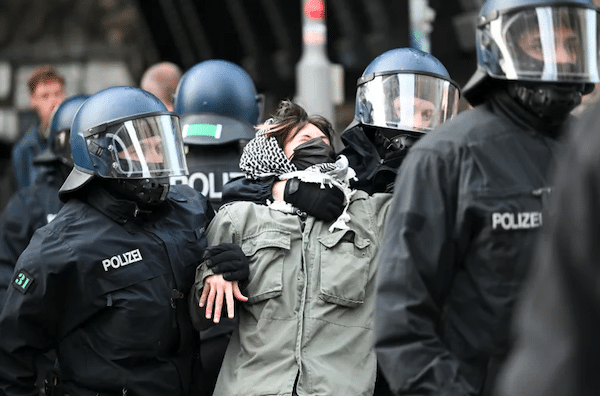
Less than two hours after it began hundreds of policemen, uniformed or plain-clothed, stormed in, cut livestream video and even electricity, dispersed the 250 people taking part and roughly arrested one Jewish participant who dared to talk back.
The police offered an explanation: “There is a risk that a speaker will be shown via video who in the past made anti-Semitic remarks and glorified violence. For this reason, the gathering was ended and banned on Saturday and Sunday as well.” It seems that the exiled Palestinian writer Salman Abu Sitta, scheduled to appear by video link, had earlier stated that the men from Gaza who conducted the raid on October 7th had “broken through a siege.”
Another planned speaker, the Palestinian-British surgeon Ghassan Abu Sittah (who is Rector of Glasgow University, elected by the students), was held for three and a half hours by federal police at Berlin airport and then prevented from entering Germany (or, soon after, any EU territory).
Former Greek Finance Minister Yanis Varoufakis had also been scheduled to address the congress per video; the organization he founded in 2016, Democracy in Europe Movement 2025 (DiEM25) , with members including Ken Loach, Naomi Klein, Noam Chomsky and Julian Assange, was a major sponsor of the congress. Reacting angrily to the raid and ban, Varoufakis wrote that what “Germany’s police has just done is proof that fascists no longer need to be in government to be in power.”
Terminating the conference was certainly a clear warning to keep quiet. But with Gaza still being reduced to ruins, as bad or worse than those I saw in Dresden in 1952, with the number of children killed, maimed or starved still increasing, the protests did not cease. It was then that the students, inspired by those at Columbia, UCLA, also Harvard and Yale, also demonstrated and camped out at colleges and universities all across Germany. The police, also copying methods of their American colleagues, broke up the camps and arrested students, despite angry responses by many professors and other staff members. At the moment, as in the USA, college presidents are under attack.
But the pillar-protectors of German “law and order” have also taken some hard body blows.
In January, in two days of public hearings before the International Court of Justice (ICJ) at the Peace Palace in The Hague, South Africa alleged that Israel had committed and was committing genocide in the Gaza Strip, and it included Israel’s 75-year apartheid, 56-year occupation, and 16-year blockade of the Strip. South Africa called for an immediate end to any acts contrary to the 1948 Genocide Convention, while also expressing concern about the fate of the Israeli hostages in Gaza. In March the court ordered new emergency measures to ensure basic food supplies, as Gazans face famine and starvation. In May, by a vote of 13 votes to 2, it ordered an immediate halt to Israel’s Rafah offensive.
Then came the next blow. The International Court of Justice (ICJ) considers cases that involve countries and nations. The unrelated International Criminal Court (ICC), also confusingly located in The Hague, brings cases against individuals for war crimes or crimes against humanity. It was created by the Rome Statute and is independent of the UN. 124 countries are members, but not Israel, the USA, India or Russia. But if the court issues arrest warrants, all member countries, including Germany and Britain, are obliged to arrest those accused and extradite them to The Hague.
It was therefore a giant sensation when the British barrister Karim Khan, currently chief prosecutor for this Criminal Court, applied for arrest warrants for Binyamin Netanyahu, his defense minister Yoav Gallant, and three leaders of Hamas, because of “reasonable grounds” to believe they are responsible for crimes against humanity and war crimes, including Israel’s “use of starvation as a weapon of war.”
Of course a storm of outrage from the Israeli leaders followed immediately, especially at being placed on the same level as its mortal Hamas enemy. They got even angrier when other “Western” countries supported South Africa and, to top it off, Norway, Spain and Ireland joined many countries from other continents in recognizing Palestine as a sovereign state.
Where did this leave the German pillar-defenders? In a very embarrassing situation. The free speech pillar had been damaged enough at the banned conference and college protests. But until now all main German parties, still returning to what they call their Holocaust obligations, have supported every move by Israeli leaders, never condemning even the nastiest settlement land-robbery, child arrests, shooting of journalists or erecting a Wall higher than that one in Berlin. Perhaps the loudest pro-Bibi voice of all, interestingly, is the extremely rightist Alternative for Germany (AfD)!
But in an era of social media, despite constant stress on the one-day October 7 horror, it has become impossible to ignore the month-long, immensely worse genocide within Gaza—now with official condemnation by so much of the world. The protests in Germany will undoubtedly continue.
But other issues again intruded—or distract. One was the legitimization of marijuana, with strict rules on age, location and amount (which will inevitably be broken). More urgent: Because of the economic woes connected with barring less expensive Russian gas and oil and with a contested national debt limit, and bad policies in general, we are facing a growing collapse of the public health system, with clinics and small hospitals closing down for lack of money and personnel, or take-overs by money-hungry privateers. The education system is troubled by a major lack of teachers. The rightist coalition member, the Free Democrats (FDP), want to raise the age of pensioning but cut taxes on the wealthy. The immigration question, with the rightist AfD pushing against a “foreign take-over of Germany and its cultural heritage,” is always a nasty issue even though the demographic situation demands more new young people and children. But after a crime or two involving “asylum-seekers”—this time the killing of a policeman—nearly all the parties are joining the cry to “keep the baddies out” or, if already here, to throw them out. Even that pillar-sector weakens when asylum-seekers are not “escaping Communist oppression.” (Like “Cubans welcome, Haitians go home!”)
Looming over all these questions is the war in Ukraine, with even the few slightly cooler heads, like see-sawing Chancellor Olaf Scholz now bowing to pressure from within and outside Germany to give Zelensky, salami slice after slice, whatever he demands for his clearly illusionary goal of “beating the Russians”—in total disregard of where this policy can lead in an atomic-armed world. But the drums of war are beating incessantly, ever louder, in the German media and in politicians’ speeches, now with renewed demands to revive military service for young men—and maybe women. Some headlines could make you think that Russian tanks, planes and warships are waiting trigger-happy along German borders (instead of what is the exact opposite, now with a German brigade in Lithuania, frighteningly reminiscent of tragic events 80-odd years ago.
On these issues—especially on how much to support Zelensky—even the Left is split, now with both the weakened LINKE party (at 3-4%) and a somewhat stronger Sahra Wagenknecht Alliance (at 5-7%) competing for votes in the European Parliament elections which are taking place this weekend.
But my report about the situation on the left—and about the elections—must wait for my next Berlin Bulletin.
https://mronline.org/2024/06/07/germany-and-netanyahu/
******
About imaginary European unity
June 8, 2024
Rybar
This week, celebrations took place to mark the 80th anniversary of the Allied landings in Normandy.
There were a couple of comical moments during the event.
Firstly , British paratroopers who landed on French soil had to go through passport control . In fact, the military got off easy. After all, instead of a “ warm ” welcome, they could be sent back on boats with migrants.
Secondly , Rishi Sunak attracted extra attention to his person . The Prime Minister decided to sacrifice the event for the sake of his own political interests.
After his morning speech, the politician disappeared from television cameras and left France to record an interview as part of his election campaign.
Of course, competitors could not help but take advantage of such a misfire. Labor called Sunak's decision " disgraceful ". As a result, the head of government had to apologize.
In general, coverage of this event in the press passed through the prism of uniting allies around the so-called. Ukraine in confrontation with Russia.
All these attempts to put an owl on the globe look especially comical against the backdrop of the fact that that same unity ultimately stumbled due to the low ratings of the British Conservative Party on the eve of the elections.
https://rybar.ru/o-mnimom-evropejskom-edinstve/
About another spy scandal in Moldova and its possible consequences
June 8, 2024
Rybar

The Russian-language media The Insider * published an article stating that the former Chief of the General Staff of Moldova Igor Gorgan allegedly works for the GRU.
The publication of foreign agent Roman Dobrokhotov is supervised by British intelligence services and built its image on “high-profile” anti-Russian “investigations” that provoked international scandals.
In essence, the publication legalizes intelligence information from British intelligence services.
Legalization of stuffing
This is not the first material about Moldova. Almost a year ago, an article in an online publication (!) became the reason for a large-scale reduction of the Russian diplomatic mission in the republic due to accusations of espionage.
Now The Insider claims that they have studied the correspondence of Colonel Gorgan with a GRU officer. But the publication does not even contain screenshots of messages, not to mention information about who provided the information to the editors.
The text allegedly contains quotes from Gorgan that Ukrainians in Moldova “go to the Ministry of Defense and ask for everything, especially shells for artillery,” they beg to establish the production of electronics for Tochka-U in Chisinau, and they are trying to buy it from the Moldovans through a front company in UAE six MiG-29s, which are at the Marculesti airfield .
Gorgan is credited with reporting that Moldova is supposedly “ready for the entry of Russian troops,” the republic “urgently needs cleansing of all fascist scum, and we’ll deal with the politicians quickly.”
Perhaps this quote, more than others, disperses the anti-Russian hysteria that the Moldovan authorities are trying so hard to fuel. After all, the office of President Maia Sandu justifies almost any problems and difficulties in Moldova as a “hybrid war” waged by the Russian Federation.
The Insider article inadvertently casts a shadow on Russia's relations with Kazakhstan and Kyrgyzstan. It is indicated that Russian military attaches in these countries are actively “establishing contacts among the military leadership.”
It is not very clear what else military attaches should be doing in other countries, but here it is obvious that such information is designed to intensify the search for Russian spies and provoke diplomatic scandals. The latter can be done especially easily with the help of “zakazukha” publications with Moldova.
The purpose of the media campaign against the Ministry of Defense of Moldova
The main element of the article is the assertion that Gorgan still has many henchmen in the Ministry of Defense, “who supply him with secret information,” and he himself “remains an important GRU informant.”
Such a thesis could legalize large-scale purges in the Ministry of Defense of Moldova . In the context of a systemic personnel crisis in all spheres of government of the republic, it would not be surprising if the vacant positions are finally occupied by the Romanians.
Potential purges are indicated by the authorities’ first reaction to the article: the presidency stated that a “thorough check of persons” in the defense and security agencies of the state is necessary.
They also stated that Gorgan would be deprived of all military awards and titles, and “such crimes against the state should be punished in the most severe manner.”
Why is this needed now?
The latest publication in The Insider came at an opportune moment for Sandu: her presidential campaign, which is built around European integration and the “Russian threat,” is in full swing.
The other day, US Secretary of State Antony Blinken visited Chisinau with a promise to finance the fight against “Russian disinformation.” German Defense Minister Boris Pistorius recently announced the determination to confront the Russian Federation in Moldova .
So the context of the publication is absolutely transparent.
https://rybar.ru/ob-ocherednom-shpionsk ... edstviyah/
Google Translator
******
European Union: From peace to bellicosity
Hugo Dionísio
June 7, 2024
Belonging to the European Union begins to resemble those dreams that delight us while we sleep, but when we wake up, we realize that they are just that, dreams.
An important part of the tensions created in Eastern Europe, close to Russia’s borders, has to do with an illusion that is created, according to which the entry, in itself, into the European Union, produces a set of unquestionable benefits, the which are otherwise not attainable. But are those benefits so unquestionable?
In a European Union whose economy is increasingly cannibalized and contained by the USA, whose power summit often hides the fact that this threat is the most serious and limiting of all, currently, the realistic future that this bloc represents for the adhering countries, does not go beyond very anemic forecasts of economic growth and, even more serious, crowned with the demand for confrontation with Russia, which completely remove the assumption, according to which, membership in the restricted club of western Europe represented, above all, a guarantee of peace and security.
The Ukrainian case is the most extreme, but whether it is Georgia, Moldova, Serbia, Montenegro or any other country that belonged to the USSR or the “socialist bloc”, the request is always the same: joining the EU means joining NATO, joining NATO means being an enemy of Russia. In an increasingly pronounced way, being an enemy of Russia also means giving up of free relations with what is currently the greatest source of economic, scientific and technological growth in the world, which is China. And this is, perhaps, next to enmity with the Russian world, the most expensive bargaining chip that a nation has to pay, to belong to the select Western “garden”.
The West has long ceased to represent the greatest source of economic growth. Decades of purposeful deindustrialization, neoliberalism and F.I.R.E economy have reversed this reality. From a position of expansion, the West moved to a position of containing other people’s expansion. Today, the greatest guarantee of economic growth, for any nation, consists of its relations with the BRICS (India, China and Russia will be the 3 countries that will grow the most in 2024, according to the IMF).
If for countries like Portugal, Greece or Spain, the currency of exchange was measured in liberalization of markets and privatization of national resources, so that Western transnationals could enter and acquire what was previously in the country’s possession; as a result of its geographical condition and its shared historical identity with Russia and the countries of Eastern Europe, economic demands come coupled with an authentic declaration of enmity.
This requirement has dramatic effects in these countries. Ukraine is here to demonstrate it. As Georgia proves now and as Moldova will prove tomorrow, as Serbia also feels. Agreeing to join the EU means declaring war on a part, often a considerable or even majority, of your own population. In other words, neither growth, nor peace, nor security, nor even the right to memory. Can anyone extract anything constructive from the fact that hundreds of thousands of Russians living in Estonia are no longer able to speak, read and celebrate their language and history? I find it hard to believe.
As in the Ukrainian case, what is proposed to these people is that they give up their past history, their cultural and even religious foundations and replace them with a future, presented as radiant, but, in reality, uncertain. Not even the most blind can deny the process of destruction of Russophone and Russophile culture in Ukraine, particularly following the euroMaidan coup d’état. As they cannot deny the West’s loss of influence in the world and the crisis that looms on its horizon.
In this context, the organization that presents itself as the guarantee of peace in Europe, constitutes, in this new era, an almost certain path to war. They may say that “it’s Russia’s fault, which prevents them from joining Western structures because it doesn’t want to lose its dominance.” But, after Russia itself, in times of its own illusion, tried to join the Western club and was denied, it is not normal that this country began to look suspiciously at those who compete, by the way, for space close to its borders? Does any country like to be surrounded by enemies?
Thus, this vertigo or illusion that, by belonging to the EU, a country automatically belongs to the elite and will have its future filled with abundant riches involved in the highest “European values”, threatens to tear entire nations apart. The requirement that, in order to join, you have to give up your past is simply unacceptable to many people. Which is understandable: what kind of future can be based on an empty, disowned, cursed past? Joining the EU means, for Eastern European countries, a permanent war with their past. Take the case of Bulgaria or Slovakia.
But don’t think that, for southern European countries, not demanding such a currency of exchange, everything results in certain and undeniable gains. From an economic point of view, the story is far from univocal. We can say that the economies of these countries were united, not by membership, but by incorporation into the select Western club. As for their own people, and their living conditions, they still await the much-desired “convergence”.
However, it is also not serious to say that the entry of these countries into the European Union represented an absolute setback since the start. It’s a bit like being poor among rich. Being poor, among poor people, is much worse. Portugal, for example, when it entered the European Economic Community, was struggling with brutal infrastructure gaps. The active population was very poorly qualified, in terms of salary, it was among the poorest in all of Europe. In this sense, the potential for taking advantage of access to a market of hundreds of millions of people was very high. This reality ended up being reflected in shelves full of never-before-seen products, even though most exchanges were often unable to buy them. But, in the beginning, even this problem seemed promising and seemed to be resolved. To this end, the European Union provided millions in structural funds, which would bring national development.
For a country like Portugal, the community funds received were accompanied by a demand for the destruction of its industry, agriculture and fisheries. All this, in exchange for the transformation into a service economy. As someone once said, the roads that were built with the funds were not built for the Portuguese; They were made for Central Europe to place its products and tourists here.
From 1986 to 2029, Portugal and the EU will have “invested” more than 200 billion euros in structural funds. It would not be serious to say that they will be of no use. But being an apparently disconcerting amount, the truth is that the country paid much more than the mere purchase of products and services from northern and central Europe.
Currently, when we look at the visual contrast provided by the passing of very old cars, surrounding others, as expensive as they are rare… We cannot help but feel a bittersweet taste. At best! Portugal is the EU country with the most employed workers living below the poverty line, many also becoming homeless, sleeping on streets with the best hotels and the most competitive apartments for tourist rental.
The eternal crisis and austerity constitute the legacy of the second phase of European accession, which resulted from entry into the Eurozone. Reduced economic and wage growth, deregulation of labor laws and the right to housing, at the same time that privatizations, public-private partnerships and benefits for Western monopolies multiplied. All justified by the new ambition: “budgetary containment”. The declared objective was no longer peace, growth and development. They became the “right national accounts”.
While it is true that the exchange rate has not yet been, by far, as serious and destructive as that required from the countries of the former USSR, it is important to understand that the funds received do not come at zero cost. Rather, they are accompanied by a process of economic and socio-cultural substitution, formatting and conditioning, which aim to move these countries away from their “southern” dimension and aspire, like a donkey to a carrot, to belong to the north. Attached to the funds come the sticks of conditionalities, recommendations, guidelines and unconfessed and unconfessable demands, which mortgage the promised future.
Brussels’ power grows as it weakens that of peripheral member states, which found themselves without currency to influence exchange rate policy, without power to define the interest rate, which began to be set by the ECB, and shackled to the criteria of the Pact of Stability and Growth. To all this Brussels, and the parties of submission, make the hunger as the cure for anorexia. The victim needs to gain weight and Doctor Von Der Leyen prescribes a weight loss cure.
The truth is that the European Commission has never heard a recommendation demanding restraint in Public-Private Partnerships for health or highways, which guarantee annual returns of up to 13% per year; never demanded cuts in pardons and tax exemptions for large companies or taxes on their pornographic profits. The recommendations of the European Semester, when calling for “budgetary restraint”, refer to wage restraint, slimming of public services and privatizations, many privatizations, in an endless gluttony for more and more easy money.
At the end of all this, it is worth asking: if the southern countries received so many funds, if in order to receive them they had to comply with the conditions imposed (economic and fiscal policy conditionalities, constitutional revisions and adoption of economic and political regulation instruments) and if the receiving, have not reached, in more than 30 years, the levels of development of the countries of central and northern Europe, despite this being promised, then the answer can only be one: it is because it was not supposed to!
And this is what hurts to hear from Euroenthusiasts and Brussels fanboys. But, how is it that your favorite enchanting tale is nothing more than a deferred dream, whose assumptions indicate that, after all, this postponement is eternal, because, within the framework of the European division of labor, it is not up to the peripheral countries to develop high value added activities? And nothing highlights this reality more than the data regarding wage convergence: to the promise of future convergence, it was not just the Portuguese economy that did not live up to it, but all the peripheral economies of the European Union. Growing up, they were never able to converge, with the distances between those in the south and those in central and northern Europe almost always maintaining or increasing.
The fact is that the only small and peripheral country that dared to break with this logic was Greece. Today, we all know where Greece ended up. They accused the country of stealing, lying, falsifying, all because the respective government committed the “crime” of wanting to pay its people the same as workers in central and northern European countries earned. The largest European countries, which constantly exceed deficit limits, have never been subject to the “excessive deficit procedure” and austerity measures to correct it.
Furthermore, in the Portuguese case, between funds received and the purchase of products and services provided by central and northern Europe, between 1996 and 2023, this country gave more than it received, explaining the real meaning of this European adventure. According to the Bank of Portugal, between what came in and what went out, the country had a negative balance of 61 billion euros.
In conclusion, the carrot that attracts the donkey, European structural funds, are nothing more than disguised loans, disguised in the form of “investment”, but whose return is worth more to those who give them – the countries of northern and central Europe – than for those who receive them. The “investment” in funds thus constitutes a double benefit: economic and political control over the beneficiaries of the subsidies; economic return in the medium and long term.
The fact that these funds are allocated under strategies (Lisbon strategy; Strategy 2020 and 2030) designed in Brussels, determines that they do not aim to solve the real problems of peripheral countries. European funds aim to solve the problems that peripheral countries have so that they can be used as instruments to enrich central countries. The instrumentalization that the countries of central and northern Europe make of the eastern countries, with regard to the strategy of domination of Russian and Slavic lands, finds parallels in the countries of southern and Mediterranean Europe, namely by taking advantage of the intercontinental geographic links that such countries they mean, in addition to their significance as destination markets and as reserves of qualified and cheap labor, which is formed, satisfactorily, with the European Union’s own funds.
It is, therefore, imperative to dismantle and denounce this cycle of exploitation, whose benefits are not distributed equitably and which tends to maintain relative differences over time, a difference that aims to keep this cycle untouchable. Furthermore, coupled with this political-economic dimension, another one is added, which the conflict taking place in Ukraine unmasks. Peripheral and distant countries were suddenly elected as enemies of Russia, without their people being taken into account, who unconsciously watched the transfer of their funds to the war effort.
The most tragic thing is that whoever denounces the failure of this European project is accused of being “anti-European”, as if this were the only possible formulation, as if human history did not have cemeteries full of inevitable stories. When this European Union enters its bellicose phase, it is more fundamental than ever to talk about a Europe of peace, cooperation and friendship between people. A Europe in which openness does not mean submission.
The upcoming elections for the European parliament will be yet another moment during which very little will be said about the European Union, its autocratic character, its macrocephalism. Instead, a non-existent Europe will be sung, which, while celebrating “European values”, demands the fracture of continental Europe. While celebrating “union”, it forces a country to give up it’s history and replace it with a whitewashing revisionism of their fascist past. While it demands the surrender of its economy, it replaces it with eternal dependence from the political power of monopolies, represented in Brussels.
Belonging to the European Union begins to resemble those dreams that delight us while we sleep, but when we wake up, we realize that they are just that, dreams. The European project cannot survive even the light of day, much less when one wakes up.
https://strategic-culture.su/news/2024/ ... llicosity/



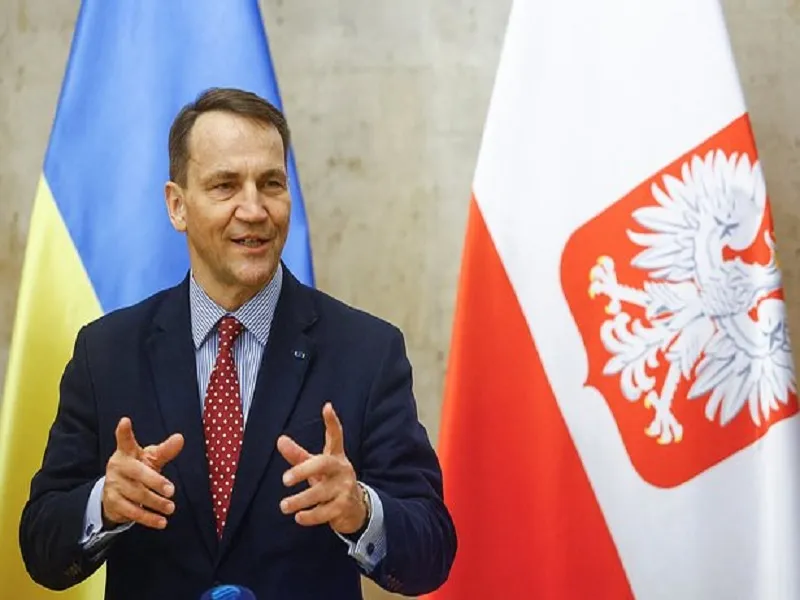
 In Washington they resorted to another gross manipulation , declaring that the people of Moldova allegedly “support transatlantic integration into the EU and NATO, which is confirmed by public opinion polls . ”