Non-violent revolution in Serbia gains traction and raises questions
Stephen Karganovic
January 12, 2025
Unless convincing evidence of foreign interference emerges coincidental similarities with classical colour revolution methods should not be given excessive credence.
New Year’s came and went, but as we had surmised Serbia’s Batista did not make his country a wonderful holiday gift by fleeing. Not just yet. The pressure from below however continues to build relentlessly, clouding his political future. The most that the stubbornness of the regime, which has managed to annoy almost everyone, can now hope to accomplish is to merely postpone the inevitable.
The latest round of social unrest in Serbia began on 1 November when in the northern city of Novi Sad a recently “reconstructed” roof overhang weighing over 20 tonnes collapsed, squashing seventeen passers-by, of whom fourteen died on the spot, one succumbed later on, and two are still fighting for their life.
But what elsewhere might have been written off as an unfortunate accident (or an “Act of God,” as it is awkwardly known in common law terminology) has triggered in Serbia an unprecedented tsunami of popular fury directed at the presumed malfeasance of the authorities, which are seen as having made it possible for the tragedy to occur.
The broad based protest movement is spearheaded by university and secondary school students, but its ranks are being swelled by farmers, teachers, members of other professions, and ordinary citizens. The position of the protesters is that the direct cause of the killing was endemic corruption which pervades all echelons of Serbian society, with a disproportionate concentration at the political top. They argue that the railway station reconstruction was a sweetheart deal at a grossly inflated price awarding the job to contractors close to top officials, with whom they were more than willing to share the loot. As a result, the authorities deliberately turned a blind eye to egregious violations of quality standards and the shabby workmanship of their minions.
The principal demands of the student movement are that all technical and financial data pertaining to the defective reconstruction be made public and that culprits responsible for the appalling loss of life be punished, irrespective of rank. That sounds reasonable enough, although other issues vital to the Serbian nation, such as the regime’s betrayal of Kosovo, are conspicuously missing from their list of grievances. Even these rather modest demands however have been rebuffed contemptuously by the authorities, fuelling more discontentment and swelling the mass of the protesters.
To prevent the regime from hunting down or suborning their leaders, the students are operating on the principle of leaderless resistance, following the pattern previously set by the Tupamaros in Uruguay. That raises the puzzling question of how they take their decisions and do their strategic planning. The students’ somewhat disingenuous response is that they decide on matters collectively in an institutional setting they call the plenum, where all participants deliberate transparently and as equals. Many are bewildered by the suitability of such a loose mechanism for coordinating large-scale political activities. Recently, Russian Foreign Ministry spokesperson Maria Zakharova was openly sceptical, claiming to detect the aroma of a Western-inspired colour revolution in these proceedings.
The commotion currently taking place in Serbia could plausibly be interpreted within such a framework. Overlooking its own complete subservience to the collective West and in an effort to delegitimise the protesters, the regime has been making that point forcefully.
The “plenum” mechanism that Serbian students claim is their collective decision-making tool does raise some critical questions if we postulate the possibility that the student movement is externally directed or manipulated. The most obvious question is how young people in their twenties who did not personally experience the socialist system, where expressions such as “Party plenum” and the like were common, had settled on such odd terminology. Suspicions of a nefarious external link are reinforced by the fact that the same concept was used in 2014 during the failed “colour revolution” attempt in the Republic of Srpska (Bosnia and Herzegovina) and a year later in the partially successful regime change operation executed in Macedonia.
It turns out that in both those cases the concept of plenum was presented to the public as the collective decision-making device behind the upheavals in those two countries. In reality, it was a notion designed to create the appearance of spontaneity for a managed process and even more importantly to disguise the behind the scenes influence of the external string-pullers. This methodology for creating the illusion that the actors on the colour revolution stage are making autonomous decisions originally was pioneered by the infamous think tank, the Rand Corporation. Insights into its practical application were offered in 2007 in an article entitled “The Delphi Technique: Making Sense of Consensus,” authored by C. Hsu and B. Sandford, and published in the scholarly journal Practical Assessment, Research & Evaluation, no. 10, August 2007.
The authors state that the Delphi technique “is designed as a group communication process which aims to achieve a convergence of opinion on a specific real-world issue.” They add that the technique, which relies on the use of trained “facilitators” tasked with discretely supervising the decision-making process, is “well suited as a method for consensus-building.”
In the practical application of the Delphi strategy, the “change agent,” or “facilitator,” plays the principal role and is the driver of the entire process. He is trained to initially act as a neutral discussion moderator in an interaction that the participants believe is entirely controlled by them. The facilitator feigns sympathetic attention to the participants’ statements regarding their respective concerns. Whilst the participants in the “plenum” session take their turns speaking out, the facilitator categorises them as individuals with leadership potential, “barkers,” and undecided who lack a stable point of view and are apt to change their posture under group pressure.
The “facilitator” is trained in the methodology of psychological manipulation and based on previous observation he can predict the probable reactions of most participants. Individuals who take a critical stance toward the agenda the facilitator is promoting are marginalised and group members are thereby sent a message that should they identify with openly dissenting positions they too may be shunned.
Participants are rarely aware that they have been subjected to manipulation. Even should they suspect it, they have no idea how to resist. The desired effect is polarisation within the group, generating the impression of lively, democratic discussion, whilst the facilitator gradually ceases to act as an unbiased moderator and increasingly takes on the role of a full-fledged participant in the group dynamic. He or she selects the right moment to table a proposal, policy, or course of action that is slated in advance to be adopted. Those present gradually line up behind the proposal and vote in favour of it as if it originally had been their own idea, whilst pressuring uncommitted and wavering colleagues to follow suit and also give their consent.
Like everything to do with “colour revolutions,” this technique of consensus engineering is phony and contrived, designed to assure useful idiots that they are in charge of the process and to conceal the presence of the background manipulators. It is a cynical example of directed group dynamics without the participants’ knowledge. The successful employment of the Delphi method is based on the concealed presence of trained professionals to create the pretence of robust “discussion” but in reality their role is to channel group energy toward the adoption of preordained conclusions. Many of those present would perhaps have not gone along if they had been granted the possibility of unpressured reflection and informed decision-making.
There is no direct and conclusive evidence that external forces are exerting a significant influence over the Serbian student movement in the manner described above. An equally or even more plausible case could be made that the students and other citizens are indeed acting on their own, motivated by the catastrophic collapse not just of a railway station roof but of the entire legal and political system in their country. They have plenty of credible reasons for rage. But unless convincing evidence of foreign interference emerges coincidental similarities with classical colour revolution methods should not be given excessive credence. They should always however be prudently kept in the back of one’s mind.
Lithuania’s Provocative Remark About Kaliningrad Doesn’t Equate To A Territorial Claim
Andrew Korybko
Jan 13, 2025
Referring to places by the names that a certain group once used doesn’t automatically imply territorial claims, though it can be interpreted as such depending on the context, but it’s also understandable that the current inhabitants might consider it provocative if they now describe those places differently.
Kremlin spokesman Dmitry Peskov reacted to Lithuanian President Gitanas Nauseda’s remarks on X describing Kaliningrad city as “Karaliaucius” and its oblast/region as “Lithuania Minor” by declaring that “Lithuania is an unfriendly, hostile state to Russia, and, among other things, it turns out that this country has territorial claims against us. This justifies our deep concerns and validates all current and future actions to ensure Russia’s security.” For context, here’s exactly what Nauseda wrote:
“What comes next? The burning of books?
Russia's decision to rename a museum dedicated to Kristijonas Donelaitis, a classic of Lithuanian literature, is yet another unacceptable attempt at rewriting history.
Even though the old inhabitants of Lithuania Minor, now part of the so-called Kaliningrad Oblast, are long gone, the last signs of Lithuanian culture there must be safeguarded.
No matter how hard Russia tries, Karaliaučius will never become Kaliningrad!”
His post was in response to reports that the “Kristijonas Donelaitis Memorial Museum” in Kaliningrad Oblast’s Chistye Prudy village near the Lithuanian border had silently been renamed the “Literature Museum”. Donelaitis is regarded as the father of Lithuanian literature and lived in what some historically referred to as the “Lithuania Minor” region of erstwhile East Prussia, the vast majority of which then became Kaliningrad Oblast after World War II while a sliver remains in Lithuania proper.
Referring to places by the names that a certain group once used doesn’t automatically imply territorial claims, though it can be interpreted as such depending on the context, but it’s also understandable that the current inhabitants might consider it provocative if they now describe those places differently. Examples other than the examined one include Poles using their historical terms for areas of the former Commonwealth and Russians doing the same for areas of the former USSR and even Empire.
In this case, Nauseda had a predictably nationalist reaction to Russia’s reportedly silent renaming of that museum, which the authorities might have chosen to do as a long-delayed response to Lithuania’s removal of Soviet-era monuments. The important difference though is that while Lithuanians can now easily visit Russia (including that museum in Kaliningrad Oblast) with an e-visa, Russians cannot easily visit Lithuania to see the nearly 100 Soviet-era statues that were moved to Lithuania’s Grutas Park.
Visiting a museum in a neighboring country dedicated to one’s national poet who’s the father of their literature isn’t the same as seeing statues in a neighboring nation to one’s soldiers who liberated the locals (almost all of whom were ethnically different than one’s own people) from the Nazis. Nevertheless, the point is that Russia allows Lithuanians that privilege just like Lithuanians, Belarusians, and Ukrainians allow Poles visa-free access (each under different regimes) to visit their historical sites.
The only anomaly is Lithuania and other EU states that don’t allow Russians the right to visit some of the sights that their own soldiers, some of whom might have even been their ancestors, liberated from the Nazis and for which they were memorialized during the Soviet period. On the topic of liberation, some of these same European people as well as many modern-day Ukrainians don’t consider the Soviets to be liberators, though they might still appreciate that the Red Army stopped the Nazis’ genocides.
These views are at the core of the regional Soviet-era monument scandal of the past few decades, which has at times provoked average Russians into referring to those countries, their regions, and/or cities by their old names (including Imperial-era ones). That’s not the same as if Putin did this, which would be the equivalent of what Nauseda just did, but what matters is that conflicting historical interpretations and naming decisions towards sensitive sites can lead to older names being used for other things.
It’s unimportant whether one supports or opposes the aforesaid trigger factors since all that matters is acknowledging that specific actions can provoke the reaction of someone – whether an average person and/or foreign official – once again referring to a place by the name that a certain group once used. This shouldn’t be equated with a historical claim unless such is explicitly stated by a political authority in connection with the use of such rhetoric. The preceding standard should be applied equally too.
The reality though is that there’ll always be double standards since political authorities and average folks feel proud when referring to places by the names that they once used or might still use instead of the internationally recognized ones while objecting when others do the same to places in their countries. This also holds true for new naming conventions like Trump’s proposal to change the Gulf of Mexico to the Gulf of America. It only becomes problematic if there’s an official desire to change the borders.
Lithuania is advised against even remotely flirting with such intentions due to the fact that it was only through Stalin’s unilateral efforts that its eponymous people came to control Vilnius after World War II. Russian Foreign Ministry spokeswoman Maria Zakharova reminded Nauseda of this on Telegram, but it should also be added that Vilnius had been majority-Polish for centuries, ergo Warsaw’s claim to it after World War I and why Jozef Pilsudski orchestrated Lucjan Zeligowski’s fake mutiny to seize control of it.
In fact, from the Polish perspective, it was the pre-Soviet Bolshevik’s capture of Vilnius in early 1919 (the USSR wasn’t formed until three years later) which signaled the revolutionaries’ expansionist intentions that then led to the events more widely known one year later as the Polish-Bolshevik War. That conflict climaxed with the “Miracle on the Vistula” where Poland defended itself from a full-fledged Bolshevik invasion that aimed to reach Germany and then responded with a crushing counteroffensive.
Vilnius only became majority-Lithuanian, the national identity of which only formed from the mid-19th century as documented by Timothy Snyder in his 2003 book on “The Reconstruction of Nations” (his academic contribution can be appreciated without agreeing with his current views about Russia), after World War II as a result of Soviet-initiated “population exchanges” (deportations). Prior to that, Vilnius had been a cradle of Polish Civilization since the 1385 Union of Krewo with the Grand Duchy of Lithuania.
It's beyond the scope of this analysis to dive further into that period’s history but what was shared above should be sufficient for informing the reader of why it would be unwise for Lithuania to open Pandora’s Box. Nothing is being implied about Poland allegedly plotting to recapture Vilnius and its surroundings, the latter of which is where the bulk of Lithuania’s Polish minority live (they’ve been indigenous there for centuries), just that it could lead to a large-scale reaction on social media from Polish nationalists.
With few exceptions that should be treated individually on a case-by-case basis, it’s oftentimes better to keep borders as they are even if a government and/or society prefer to refer to places outside of their own with their historical names, whether generally, to provoke their neighbor, or in response to something they said or did. In the case of Nauseda describing Kaliningrad as “Karaliaucius” and “Lithuania Minor”, this isn’t a territorial claim, which will hopefully keep tensions manageable.
Ok, no, 'not necessarily', but in the current atmosphere ya can't ignore it either when a neighboring head of state is calling for the balkanization of Russia.
******
Austrian Conservative and Far-Right Parties Agree on 6.3 Billion Euros in Cuts
Political advertising with the image of Herbert Kickl, Austria. X/ @FAZ_Feuilleton
January 13, 2025 Hour: 8:39 am
The measures include eliminating subsidies, reducing ministerial expenses, and implementing steps to combat tax evasion.
On Monday, the far-right Freedom Party of Austria (FPÖ) and the conservative Austrian People’s Party (ÖVP) announced a preliminary agreement to cut €6.3 billion in public spending to avoid an excessive deficit procedure by the European Commission.
The FPÖ leader Herbert Kickl emphasized that the agreement to balance the budget was reached in just three days—the coalition negotiations began last week—without introducing new taxes.
Instead, the measures include eliminating “excessive subsidies,” reducing ministerial expenses, and implementing steps to combat tax evasion. Both parties did not provide specific details on the proposed savings, stating that they would be disclosed once approved by the European Commission.
“We have jointly developed a €6.3 billion package that should prevent Austria from facing an excessive deficit procedure (EDP) without introducing new taxes—no inheritance taxes, no gift taxes, no wealth taxes—accompanied by measures against tax evasion and privileges, particularly those of large entities,” Kickl declared.
He assured that these cuts take into account the stability of the labor market and the economic situation, aiming to reduce the debt interest burden and prevent Austria from being “governed from Brussels.”
Herbert Kickl looks set to become Austria's next chancellor. He is an anti-immigration, pro-Kremlin politician who hasn't shied away from sharing conspiracy theories and Nazi tropes. pic.twitter.com/dy7WVJFbz3
— DW News (@dwnews) January 11, 2025
Kickl, the potential future head of government, stressed that his party’s priorities—such as reducing bureaucracy, supporting families, and maintaining a restrictive migration policy—would remain central pillars in future coalition negotiations. However, he described the current fiscal situation as an “avalanche of debt” requiring urgent measures. Interim ÖVP leader Christian Stocker expressed strong approval of how quickly the agreement was reached.
The European Union’s (EU) budgetary rules require member states to keep their deficit below 3% of GDP. Without savings measures, Austria would breach that limit, with a deficit projected by the European Commission at 3.7% in 2025 and 3.5% in 2026. In light of this, the Commission could launch an excessive deficit procedure if Austria does not present a convincing plan to balance its budget.
Disagreements over how to address the deficit, which arose during the government formed by the ÖVP and the Greens, were the main reason coalition negotiations failed between the Christian Democrats, Social Democrats, and Liberals. Their aim had been to keep the FPÖ, which won the late-September elections with 28.8% of the vote, out of power.
That failure led to the resignation of Karl Nehammer as leader of the ÖVP and as interim chancellor, as he had pledged not to form a coalition with the FPÖ under Kickl’s leadership. Nehammer described Kickl as “a danger to Austria’s security” due to his pro-Russian and Euroskeptic stances.
Following Nehammer’s resignation and the FPÖ’s mandate to form a government, the ÖVP’s interim leadership agreed to begin negotiations to form a coalition government in Austria. If these negotiations succeed, it would mark the first government led by the far-right FPÖ in Austria’s democratic history.
Belgians Go on Nationwide Strike in Protest of Pension Reform
Workers on strike, Belgium. Jan. 13, 2025. X/ @politis_news
January 14, 2025 Hour: 7:29 am
The protest took place amid negotiations to form the future federal government coalition.
On Monday, public transport, air travel, schools, and essential services were disrupted across Belgium as a nationwide strike took place to protest proposed pension reforms by the coalition forming the new federal government.
In Brussels, over 30,000 firefighters, teachers, and union members, marched to the roads. They denounced pension reforms as an “attack on pensions,” calling for improved working conditions, increased employer contributions, and shorter career requirements for demanding professions. They also criticized corporate tax breaks, arguing that the reforms would place an unfair burden on workers.
The protest, organised by the common trade union front, took place at a time when negotiations are intensifying between the five parties that aspire to form part of the future federal government coalition, trying to overcome the last obstacles to an agreement, including the thorny issue of pensions. The unions fear that the future government will resort to a pension reform to achieve savings of 3 billion euros.
The march began at around 10:00 local time and ran for about two and a half hours through the most central streets of the Belgian capital in a festive atmosphere, although there were occasional incidents.
(1/2) Belgium's largest trade unions have launched a 24-hour national #strike, protesting €3 billion in planned pension and benefit cuts. Public transport is at a standstill, with only 1 in 3 trains running, 70% of flights canceled.#BelgiumStrike pic.twitter.com/D2fPji4vrC
— The Workers Rights (@theworkersright) January 14, 2025
Some 25,000 protesters were teachers from the Flemish education system, a figure that the French-speaking public broadcaster RTBF described as “historic”.
Public transport was severely affected, with only one in three trains operating between major cities. In Brussels, metro, tram, and bus services ran at reduced capacity, while most bus routes in Wallonia were completely suspended. Air travel also faced significant disruptions, with approximately 40 percent of flights at Brussels Airport canceled and all flights at Charleroi Airport suspended from midday onward.
The education sector was hit hard, with about 40 percent of primary and secondary schools in Flanders closed. In addition, garbage collection and postal services experienced delays in Brussels and Walloon Brabant.
Slovakia Proposes Meeting With Ukraine to Discuss Gas Transport Dispute
Slovak PM Robert Fico. X/ @ObinnaKizito10
January 14, 2025 Hour: 7:48 am
The meeting will ‘create a good foundation for an open discussion’ about gas supplies via Ukraine.
On Monday, Slovak Prime Minister Robert Fico proposed holding talks with Ukrainian President Volodymyr Zelensky to discuss gas transit through Ukraine which was halted recently.
In an open letter posted on social media, Fico extended the invitation to Zelensky for a joint meeting on Slovak territory near the border between Slovakia and Ukraine “preferably as soon as possible.”
The meeting will “create a good foundation for an open discussion” about gas supplies to Slovakia and other countries via Ukraine, and possible technical solutions in the wake of the expiration of the contract between the relevant Ukrainian and Russian companies on Dec. 31, 2024, Fico noted.
Zelensky’s decision not to renew the contract and stoppage in the gas transit to Slovakia on Jan. 1, 2025, besides harming bilateral relations between Slovakia and Ukraine, also adversely affected the competitiveness of the European Union, an organization that Kyiv is seeking membership, Fico said, adding that his perspective isn’t unique within Europe.
Fico has threatened to cut electricity supplies to Ukraine and limit the support for Ukrainian refugees in Slovakia, after Kiev’s refusal to extend the gas transit contract.
The Slovak prime minister reiterated that Slovakia risks to lose 500 million euros (510 million U.S. dollars) in gas transit fees previously earned for transporting Russian gas through Ukraine to other European nations. Additionally, the halt is expected to drive up gas prices, exacerbating supply shortages.
Fico made a trip to Moscow at the end of last year, where he met with Russian President Vladimir Putin. Fico told the local media on Sunday that Russia will honor its commitment to deliver natural gas to Slovakia in the coming months.
Serbia’s Top General Hinted At Carrying Out A Pro-Western Military Pivot Under Sanctions Duress
Andrew Korybko
Jan 14, 2025
This could easily lead to a more profound pivot that undoes decades of strategic ties with Russia in just a few years.
Chief of the Serbian General Staff General Milan Mojsilovic explained his country’s military calculations in light of last summer’s multibillion-dollar Rafale warplane deal and Western sanctions against Russia in a recent interview with local media. According to him, the first was “primarily based on a tactical study” that allegedly concluded that this was the best option for ensuring his nation’s security needs, which entails “complex preparations” with France that informally amount to a pro-Western military pivot.
After answering the question about that deal, he was then asked about the effect that Western sanctions have had on military-technical cooperation with Moscow, to which he responded by revealing that “We terminated some contracts and postponed some” since “the delivery of weapons” from Russia “is practically impossible at the moment.” Paired with his previous answer, it becomes clear that Serbia’s pro-Western military pivot is being carried out under sanctions duress, not purely anti-Russian reasons.
To be sure, Serbia had already been leaning towards the West even before last summer’s multibillion-dollar deal as evidenced by it voting against Russia on Ukraine at the UNGA and reportedly even arming Kiev through indirect means, but Mojsilovic’s revelation of terminated and postponed military deals takes this to an altogether different level. Before discussing the potential consequences, the reader should review these background briefings about Serbia’s clumsy “balancing act”:
* 7 June 2023: “Serbia’s Anti-Government Protesters Are A Mix Of Color Revolutionaries & Patriots”
* 25 December 2023: “The West Isn’t Content With Vucic’s Many Concessions And Wants Full Control Over Serbia”
* 11 August 2024: “The Serbian Government Is Inadvertently Responsible For The Latest Color Revolution Intrigue”
* 2 September 2024: “Serbia’s French Warplane Deal Discredits Vucic’s Earlier Color Revolution Claim”
* 3 November 2024: “Hungary Won’t Let Its Arms & Ammo Be Used Against Russia Unlike Serbia”
The gist is that the West sees the chance to obtain full control over Serbia due to President Aleksandar Vucic’s friendliness towards them and the past three years’ anti-Russian sanctions. To that end, they’re squeezing him from above through sanctions and political pressure as well as below through the exploitation of grassroots protests for Color Revolution ends. As regards the latter, President of the Srebrenica Historical Project Stefan Karganovic published a detailed report about the latest tactics here.
Serbia therefore feels like it has no choice but to distance itself from Russia, especially in the military-technical sphere, which could replace multipolar influence in its armed forces with unipolar influence. Purchasing more French arms and training more with its forces while purchasing less of Russia’s and training less with its forces can bring this about. Seeing how successful the sanctions have been in this respect, they’re unlikely to be lifted, at least not those that ruined Russian-Serbian military cooperation.
Serbia’s pro-Western military pivot could easily lead to a more profound pivot that undoes decades of strategic ties with Russia in just a few years. Serbia might thus become even more of a Western vassal than it currently is, which could culminate in the imposition of sanctions against Russia, something that Vucic has thus far refused to do but might soon be coerced into. The latest American sanctions threats against Serbia over Russian majority ownership of its oil major could be the straw that breaks its back.
Elon Musk and AfD’s Alice Weidel’s align ahead of elections in Germany
In a recent interview, Elon Musk and Alice Weidel from Alternative for Germany found common ground on topics ranging from anti-immigration to historical revisionism
January 14, 2025 by Ana Vračar
Elon Musk and Alice Weidel align ahead of elections in Germany. (Source: Alice Weidel/ X)
Elon Musk seems to be running a campaign of support for far-right political parties in Europe, extending his influence beyond electoral processes and regional discussions in the United States and Latin America. On January 9, Musk met Alternative for Germany (Alternative für Deutschland, AfD) co-chair Alice Weidel, providing her a precious platform to promote the party’s views ahead of a crucial election set for late February.
While the AfD has attempted to publicly rebrand itself as a “conservative libertarian” party, its program firmly positions it on the extreme right of the political spectrum. At a recent party meeting, the AfD endorsed the idea of the mass deportation of migrants from Germany, a stance that also lingered in Weidel’s conversation with Musk. They sought to link immigration numbers to crime rates in both the US and Germany, even claiming that, due to immigration, “theft is legal in California” and that “a pile of documents” lies discarded by migrants from Latin America at the US-Mexico border.
Weidel also pointed to a new direction of energy policy in case the AfD comes into power, shifting towards nuclear power and away from renewable energy sources, which she sees as an unwanted legacy of Angela Merkel’s administration. “You don’t have to be very smart to understand that you cannot run an industrial country on just wind and solar,” Weidel commented on the path chosen by Merkel and pursued since then. If you don’t understand that, she smirked, “are you just stupid or do you hate your country?”
Identity over industrial politics
Weidel and Musk minimized the role of weakened social protection systems in Europe in driving poverty and reducing the quality of life for the working class. Instead, they considered further attacks on public funds, advocating for tax cuts that would primarily benefit the wealthy, including individuals like Musk, while harming workers. This is unsurprising, given Weidel’s professional history at Goldman Sachs. Similarly, when Weidel criticized the state of Germany’s education system, it was hardly unexpected that the AfD’s first instinct does not involve improving working conditions or increasing investment in public education. Instead, their focus is on eradicating so-called “wokeism” from schools.
In fact, throughout the conversation, there was no substantial analysis—none whatsoever—of the working and living conditions of Germany’s workers. This glaring omission is particularly ironic given the AfD’s efforts to portray itself as the party of Germany’s disenfranchised and the recent industrial unrest at key sites across the country. Instead, the party’s solutions rests on simplistic ideas: implying that throwing gender studies from schools or migrants out of the country would resolve deep-rooted issues caused by neoliberalism.
Weidel’s reinvention of Hitler
Improbably, the discussion on identity politics was not the most bewildering moment of the interview. That came when Weidel came to the conclusion that Adolf Hitler had been mischaracterized as a far-right figure and was, in fact, “a communist.” While Europe struggles with revisionism—where mainstream governments try to equate the crimes of the Nazi Party with efforts to build socialism in the region—it is generally acknowledged that Hitler was decidedly not a communist, seeing that he systematically persecuted and imprisoned communists, alongside Jews, Roma, and LGBT groups, in concentration camps.
Weidel’s claim is mind-boggling on multiple levels, not least because she has previously demonstrated personal reverence for the legacy of Nazi Germany. In 2023, she refused to participate in a liberation ceremony, describing the event as a commemoration of her country’s “defeat.”
While much of the interview centered on typical far-right talking points—skepticism toward so-called green policies, identity politics, and, yes, the claim that Hitler was a communist—there was also a hint of what might truly motivate Musk’s recent European endeavors. When discussing the genocide in Gaza, Tesla’s CEO highlighted what he considers crucial to ending the war and “ensuring Israel is safe”: enabling the Palestinians who haven’t been killed to live in “prosperity,” although under occupation. Musk sees this outcome as inextricably tied to rebuilding efforts, which, naturally, must be executed by someone. Judging from recent examples of post-conflict development and early signals from the new EU Commission for Mediterranean Affairs, it’s possible that Musk anticipates Western entrepreneurs like himself will play a central role in this recovery—and they could expect enormous financial gain in the process.
This sidenote of the Weidel-Musk conversation likely foreshadows the trajectory of new alliances between the European far-right and global capital. As even Steve Bannon recently remarked, Musk’s “only goal is to become a trillionaire”. In that context, having a strong connection to influential political parties in the region definitely helps.
“He will do anything to ensure that each of his companies is protected, gets a better deal, or makes more money,” Bannon told the Italian daily Il Corriere della Sera. “I support his involvement with far-right movements in Europe—I hope he writes checks and gives them a platform,” he added.
Regardless of whether Musk could ever play a formal role in a potential AfD-led administration similar to his involvement in Trump’s upcoming government, his backing of far-right parties in Europe is already exacting a toll. It further promotes policies that prioritize profit over the needs of people who have endured decades of austerity and urgently require a shift away from such destructive policies.
Milanović triumphs in Croatia’s presidential election opposing deployment of Croatian forces in Ukraine
Incumbent Zoran Milanović achieved a major win in the second round of Croatia’s presidential election, defeating rival Dragan Primorac by nearly 750,000 votes
January 13, 2025 by Ana Vračar
Zoran Milanović secured a major victory in Croatia’s presidential election, winning 75% of the vote in the second round. His opponent, Dragan Primorac, managed only 25%, despite being backed by the ruling Croatian Democratic Union (HDZ).
The election outcome dealt a blow to HDZ just months ahead of local elections, undermining the belief that the party is able to mobilize regional cadres and clientelist networks under all circumstances. Milanović achieved victory in every region of the country, including traditionally conservative strongholds, creating a rare electoral map dominated by a shade of social-democratic red.
During the past two weeks, Milanović ran a campaign that reinforced some of his established positions, such as opposing the deployment of Croatian armed forces in the Ukraine war, while also broadening his critique on other fronts. Notably, he delivered a sharper denunciation of Primorac’s ties to Israel, asserting during a debate on public television that these connections involve mass murderers and “criminals like Itamar Ben-Gvir.”
With the Croatian government continuing its economic and military cooperation with Israel amid the ongoing genocide in Gaza, Milanović’s remark stands out as one of the few significant criticisms from a high-profile political figure in the country. However, it remains uncertain whether he will pursue this stance in the future or if it was merely a strategic move to attract left-wing voters.
Following the announcement of the results, Western mainstream media once again labeled Milanović as a populist pro-Russian and anti-European Union candidate, drawing on his previous criticisms of the EU’s approach to the war in Ukraine and introduction of sanctions on Russia. However, the reality is more complex. While Milanović has been outspoken against the Croatian government’s botched foreign policy, he has also shared chauvinistic views on migrant workers.
This is particularly troubling given the right-wing’s recent intensified promotion of the ‘great replacement theory,’ which has fueled xenophobia and racism, including through mainstream media channels. In this context, Milanović’s firebrand approach is fueling an ongoing drift towards more right-wing narratives, while at the same time representing a relevant critique of Croatia’s position in international relations.
The same incendiary discourse, including critiques of Prime Minister Andrej Plenković’s administration, ultimately secured Milanović’s victory. Yet, in his final speech, Milanović hinted at a willingness to adopt a less confrontational stance with the government during this mandate, provided the Plenković administration reciprocates. Judging by the reactions from HDZ headquarters on Sunday night—particularly the Prime Minister’s hostile comments to journalists—such a shift appears unlikely.
One of the largest protests in Bucharest: What’s behind it?
Erkin Oncan
January 16, 2025
In the absence of a genuine center-left, these discontented masses are turning to far-right figures and parties as a solution.
Last week, one of the largest demonstrations ever witnessed in Bucharest took place. But why?
In Romania, the frontrunners in the first round of presidential elections, which saw the participation of 13 candidates, were Elena Lasconi, a liberal-conservative and pro-West/NATO figure, and Calin Georgescu, a far-right, anti-NATO/EU candidate and a self-proclaimed “TikTok star.”
Georgescu’s victory in the first round sent shockwaves across the West. However, just two days before the second round, the Romanian Constitutional Court annulled the results of the first round.
Intelligence reports claimed that Georgescu’s TikTok-focused campaign bore the marks of “Russian interference.” However, Romania’s National Agency for Fiscal Administration (ANAF) later revealed that Georgescu’s TikTok campaign was not funded by Russia but by the pro-European National Liberal Party (PNL). Nevertheless, the annulment decision was not reversed.
Georgescu is one of the most intriguing figures in European politics. A far-right politician, he sparked controversy in 2022 when, in an interview with Antena 3, he referred to Romania’s pro-Nazi former dictator Ion Antonescu and Zelea Codreanu, founder of the racist and anti-Semitic Iron Guard, as “heroes.”
However, in a country like Romania, one of the largest recipients of U.S./NATO investments, the real obstacle to Georgescu’s leadership is not his far-right stance but his anti-NATO views.
Georgescu had described NATO’s ballistic missile defense shield in Deveselu as a “diplomatic disgrace” and argued that Romania should remain neutral in the Ukraine war. He stated, “It’s clear that the situation in Ukraine is being manipulated. A conflict is being provoked for the interests of the U.S. military-industrial complex and its arms industry.”
He also criticized the European Union (EU) as a failed project aimed at enslaving Romania.
The societal unrest following the annulment of Georgescu’s victory demonstrates that the far-right leader enjoys significant support among the public. Approximately 50,000 people reportedly participated in today’s rally.
The protest was organized by the Alliance for the Union of Romanians (AUR, Alianța pentru Unirea Românilor), founded in 2019 and led by George Simion. A nationalist-conservative party, AUR advocates for the unification of Romania and Moldova (Unirea) and promotes traditional morality rooted in Catholic and Orthodox values.
The party also opposes LGBTQ+ rights, immigration, mandatory vaccinations, and restrictions. It caused a major surprise in the 2020 parliamentary elections by securing nearly 9% of the vote.
In summary, this reflects a broader trend across Europe, where populations, driven by demands for economic stability and security, disillusionment with the current political climate, and skepticism towards Western alliances like the EU, are increasingly seeking alternatives outside the political mainstream. In the absence of a genuine center-left, these discontented masses are turning to far-right figures and parties as a solution.
This is a rising trend, not just in Romania but across Europe, and one that warrants close attention. The future of Europe will likely be shaped by these movements.
Donald Trump’s Plans for Domination Threaten France and Europe: Bayrou
French PM François Bayrou, 2025. X/ @BFMTV
January 20, 2025 Hour: 8:58 am
His return to power leads the French to realize that unity is vital, the French Prime Minister said.
On Monday, French Prime Minister François Bayrou warned of the “incredibly domineering” plans of Donald Trump, who will be sworn in as U.S. President today.
He accused the Republican politician of wanting to monopolize “all the research and all the investment in the world,” which threatens France and Europe.
“If we do nothing, our destiny will be to be dominated, crushed, and marginalized,” said the head of the French government in a statement to journalists.
Bayrou said that Trump “has defined an incredibly domineering industrial policy that, through the dollar, seeks to capture all the research and investment in the world.”
Investiture de Donald Trump: "Si nous ne faisons rien, nous allons être dominés", déclare François Bayrou pic.twitter.com/KBvppTVWGj
— Le Déj Info (@LeDejInfo) January 20, 2025
The text reads, “Donald Trump’s inauguration: ‘If we do nothing, we will be dominated,’ declares François Bayrou.”
Opposing these plans “depends on us, the French and the Europeans, because obviously without Europe it is impossible to do so,” he pointed out.
The Prime Minister appealed to a reaction that, in the case of France, involves “bringing together all compatible sensibilities” without “submission or alignment” but that “agree to work together.”
Currently, however, Bayrou does not have a parliamentary majority, which forces him to seek support in order to be able to push through any political initiative. The centrist politician said that Trump’s return to power leads the French to “realize that unity is vital.”
Italian Far Right Proposes Banning the Islamic Veil
Women wearing Islamic veil. X/ @MauroMafaluca
January 20, 2025 Hour: 9:19 am
It also proposes up to two years in prison and fines of 30,000 euros for those who force others to wear such garments.
On Monday, the far-right Italian party League, which is part of Giorgia Meloni’s governing coalition, introduced a bill seeking to ban the public use of Islamic veils and impose prison sentences on those who enforce their use.
The leader of the League and Deputy Prime Minister, Matteo Salvini, described the proposal as “common sense” because it targets “those who do not respect our culture or freedom principles.”
“Zero tolerance for those who oppressively force women and girls to wear the veil, with prison sentences and suspension of citizenship applications,” he said.
Proposed by legislator Igor Iezzi, the bill is titled “Prohibition of the Use of Clothing and Other Items That Obstruct Identification in Public or Publicly Accessible Spaces and the Introduction of the Crime of Forcing Concealment of the Face into the Penal Code.”
La Lega e' quel partito che ti vuole far credere che vietera' il velo integrale nonostante questo sia già vietato da una legge di 50 anni fa (Legge 22 maggio 1975, n. 152)
Legge che essendo al governo deve già far rispettare tramite il Ministero dell'Interno pic.twitter.com/1yb6cT0knR
— Luciano Pulici (@Lorenzo32843904) January 20, 2025
The text reads, “The League is the party that wants us to believe that it will ban the full veil even though a 50-year-old law (Law of May 22, 1975, n. 152) already banned it. Being in force, the law must be enforced through the Interior Ministry.”
Specifically, the initiative aims to amend a 1975 law that prohibits covering one’s face in a way that prevents identification, except for “justified reasons.” The bill removes this exception and prohibits covering the face with four exemptions: in places of worship, for health reasons, for road safety (e.g., wearing a helmet), or during sporting competitions and recreational events.
If passed, the law would ban the use of Islamic veils, such as the burqa or niqab, in public spaces in Italy. Additionally, the proposal introduces a new offense that would punish those who force others “through violence or threats” to wear such clothing with up to two years in prison and fines of up to €30,000. Those convicted of this crime would also be barred from obtaining Italian citizenship.
The bill has faced criticism from the opposition, particularly from Luana Zanella, spokesperson for the Green and Left Alliance in the Chamber of Deputies. She argued that “this has nothing to do with issues of women’s freedom” and instead seeks to “foster anti-Islamic sentiment.”
Operation Gladio: How CIA/Nato carried out terrorist attacks in Italy
Despite these shocking facts having been exposed 30 years ago, and involving every European Nato government, they remain largely unknown outside of Italy.
Massimo Innamorati
Monday 20 January 2025
Desperate to prevent the advance of communism, the Italian state after WW2 adopted a strategy of fuelling tension through violent provocations. These were part of a Europe-wide CIA-run operation which aimed to scare the public away from the communists and to manufacture a demand for tighter security measures by the state. The image above shows a 1964 military parade that was the pretext for stationing large numbers of troops in Rome, but a projected coup was aborted at the last minute.
In 1990, Italian prime minister Giulio Andreotti was forced to reveal the existence of a vast underground paramilitary network that had been operating in Italy for decades under Nato command. This network, called Gladio, had been responsible for several terrorist attacks that had caused hundreds of civilian casualties, as well as two attempted coups (1964 and 1970).
These revelations, which implicated many European countries, including Britain, and the United States, led to a series of national investigations, and for months caused an international political storm which contended with the Gulf War for attention in the press. Yet today these revelations appear to have been erased from historical memory.
Undoubtedly, the political lessons that must be drawn from these events are the reason for their erasure. The events of Operation Gladio demonstrated how the imperialist bourgeoisie responds when it feels its rule is threatened – even if the opposition is playing by the rules of the bourgeoisie’s own institutions.
Roots of the operation
For most of the 20th century, communists in Italy enjoyed mass support, being recognised as the frontline of partisan resistance against fascism, and the Italian Communist party (PCI) grew to more than two million members (more than any other party in Europe for most of the postwar period), gaining upwards of 34 percent of the electoral vote at its peak and playing a key role in the social and cultural life of the working class.
Following the fall of fascism, the PCI could also count on the support of thousands of armed men and women, formerly members of the partisan resistance and also in the new republic’s police forces. While such a base could have been mobilised to advance the position of the working class, PCI leader Palmiro Togliatti chose to maintain the wartime line of a united front with bourgeois-democratic forces, which had been established as part of the struggle against fascism.
According to his line, which opportunistically turned the united front from an anti-fascist tactic into a general principle, the party should obtain power through bourgeois parliamentary means, and only then would its armed forces be mobilised defensively. For the bourgeoisie, however, even these terms were unacceptable.
This was the situation in which imperialism sought to mount an offensive leveraging the most reactionary forces of Italian society: fascism, the mafia, and the Church.
Following the 1943 Allied landing in Sicily during WW2, the USA had recruited the services of the mafia through Operation Underworld. In 1945, fascist commander Prince Junio Valerio Borghese, who had been captured by the partisans and was awaiting execution, was rescued by the CIA’s predecessor (the OSS) and acquitted of his war crimes.
Many such cases of collaboration would allow the USA to set up a network of fascist assets in the country to employ as anticommunist forces. Licio Gelli was another fascist blackshirt who escaped partisan justice thanks to US protection. He was later tasked by the CIA with heading the secret political wing of Gladio – a secret society known as Propaganda Due or P2, which was exposed in 1981 and had over 900 members who included high-ranking officers of the army, police and secret services, as well as industrialists, politicians and judges (one notorious member was former prime minister Silvio Berlusconi).
The elections of 1948, the first since the fall of fascism, saw the Popular Democratic Front (FDP) of the PCI run against the US-backed Christian Democrats (DCI). While the people were ostensibly given a choice between two coalitions, in practice it became clear that the choice was between continued bourgeois rule under the DCI or civil war, since the DCI leadership made it clear that the election would not be conceded to the PCI even if they polled the requisite proportion of votes.
Following 1990’s revelations, President Francesco Cossiga admitted that the DCI had set up its own paramilitary organisation which had been ready to spring into action in case of a communist victory, and that he himself had been “armed to the teeth”.
The DCI victory in this dubious election, characterised by tremendous US interference, was followed by a long series of protests, during which more than 60 workers, most of them communists, were murdered by the state. The PCI’s leader, Togliatti, survived an assassination attempt during this period, but while communist militants rose up, Togliatti called for calm.
Already in the 1950s, “Gladiators” (as the Gladio operatives were referred to internally) started to receive training in Britain and weapons from the USA. Plans were in place to initiate a conflict and even to invade the country should the communists win an election or be allowed to participate in any government. A Gladio base was set up in Sardinia where gladiators could receive British and US training.
As working-class organisation increased and the PCI continued to win greater support in the following elections, eventually threatening the DCI’s monopoly on cabinet positions in 1963, the ruling class relied on its Gladio assets to respond with ever greater violence, in both targeted and indiscriminate ways.
Coups, bombings and the assassination of Aldo Moro
In 1963, the DCI had to concede cabinet positions to the reformist socialist party (PSI) and the PCI for the first time in the republic’s history. Worried that DCI leader Aldo Moro was making too many concessions to the reformist PSI, a section of the bourgeoisie organised a coup known as ‘Piano Solo’, with the collaboration of the CIA, the head of the paramilitary police De Lorenzo, and the Italian secret services, which were tasked with directing Gladio operations under Colonel Renzo Rocca.
The first phase of the coup involved the false flag bombings of DCI offices, which were blamed on communist groups. The second phase, in June 1964, started under the guise of a military parade. Following the parade, the troops remained in Rome under a false pretext of ‘logistical issues’, in preparation for carrying out the coup. Following a meeting between Aldo Moro and coup plotter General De Lorenzo, the government announced the PSI’s intention to renege on many of its reformist demands. This genuflection to the ruling class by the social-democratic PSI was sufficient to defuse the situation and abort the coup.
As the class struggle intensified in the late 1960s, successful mass strikes enabled the Italian working class to force several concessions on the state, including legal protection from dismissal due to political reasons (such as union activity) and protection from workplace surveillance. At the same time, Gladio operators carried out several terrorist actions.
One of these was the massacre at the Piazza Fontana (1969), an indiscriminate bombing which hit agricultural workers at the National Bank of Agriculture. The action was initially blamed on anarchist groups, but although the fascist perpetrators were later exposed, none would ever be punished. As Vincenzo Vinciguerra, a member of the responsible fascist organisation Ordine Nuovo (New Order), later testified:
“You had to attack civilians, the people, women, children, innocent people, unknown people far removed from any political game. The reason was quite simple. They were supposed to force these people, the Italian public, to turn to the state to ask for greater security.
“This was precisely the role of the right in Italy. It placed itself at the service of the state, which created a strategy aptly called the ‘Strategy of Tension’, in so far as they had to get ordinary people to accept that at any moment over a period of 30 years, from 1960 to the mid-eighties, a state of emergency could be declared.
“So, people would willingly trade part of their freedom for the security of being able to walk the streets, go on trains or enter a bank. This is the political logic behind all the bombings. They remain unpunished because the state cannot condemn itself.” [1]
In declassified P2 documents, Renzo Rocca also claimed: “An efficient and global anticommunist action … requires the creation of activist groups, youth groups, gangs that can use all methods, including unorthodox ones such as intimidation, threats, blackmail, street fights, assault, sabotage and terrorism.” [2]
On the political front, the ruling class also tasked former fascist and CIA asset Junio Valerio Borghese with leading another coup operation in December 1970. Under the codename Tora Tora, several armed groups gathered in Rome and Milan, the plan being that they would occupy government buildings, arrest political figures and suppress resistance in working-class areas.
But the coup was aborted at the last moment under mysterious circumstances. CIA asset and mafia man Tommaso Buscetta later speculated that the coup had been halted because of the presence of Soviet ships in the Mediterranean. In fact, during the investigations into the Gladio massacre at Piazza Fontana, it emerged that the coup had been aborted on orders of the USA.
The complicity of the P2 secret society and of major mafia groups was also uncovered during the investigations. Of the more than 100 conspirators, all were eventually acquitted, while coup leader Borghese was able to flee to Spain, demonstrating again the complicity of all bourgeois state institutions.
Following the 1976 elections, the PCI and DCI were neck and neck, obtaining around 34 percent and 38 percent of the vote respectively. Unable to legitimately sideline the PCI at this point, DCI leader Aldo Moro became open to the PCI’s revisionist theory of what it called the ‘Historic Compromise’ (Compromesso Storico).
This theory, authored by PCI leader Enrico Berlinguer, maintained that the Chilean experience of Marxist leader Salvador Allende, who had been killed in a coup following his electoral victory, demonstrated the necessity for communists to prevent a bourgeois “centre” and “right” alliance by “collaborating with forces of Catholic or other democratic persuasion”. [3]
In other words, the PCI intended to court the “moderate” wing of the bourgeoisie to prevent it from siding with fascist coup plotters (little did he know, every chief of government had been secretly made aware of Gladio, later even Bettino Craxi of the supposedly ‘left’ PSI!)
For this purpose, the party officially broke ties with the Communist Party of the Soviet Union (CPSU), ushering in the bankrupt and treacherous tendency of Eurocommunism.
Despite the weakness of such an anti-Marxist position, the US administration was still insisting to Moro that no opening toward the PCI would be tolerated. Nonetheless, Moro chose to defy US directives and include the PCI in his government. On 16 March 1978, however, Moro was kidnapped and murdered after 55 days of captivity by the communist urban guerrilla group known as the Red Brigades (BRs).
The BRs thought that by cornering the DCI they would be able to explode the contradictions between the proletarian base of the PCI and its opportunist leadership. However, the PCI stood firmly with the DCI and the state in refusing any engagement to rescue Moro. Near the time of his execution, Moro, who understood that the state institutions had no intention of organising his release, demanded that nobody from his own party, the DCI, should be allowed to attend his funeral.
A 1995 official report claimed that the Red Brigades had been made instrumental in a wider political scheme. In 1979, Carmine Pecorelli, an investigative journalist and P2 member, was assassinated by the mafia for his work, which indicated state complicity in the Moro affair (DCI leader Andreotti was later tried and condemned for ordering the assassination, only to be acquitted in 2003).
To this day, the full picture of Moro’s case remains obscured. Nonetheless, it is revealing to compare Moro’s case with the BRs’ kidnapping of US Nato officer James L Dozier in 1981. In Dozier’s case, the state mobilised all forces, and even conducted a barbaric torture campaign against imprisoned brigaders, in order to secure the captive’s release.
State terrorism continued, often with unclear motives, reaching its apex with 1980’s Bologna train station massacre. Targeting people in the economy-class waiting room, a group of fascists planted a bomb that killed more than 80 people. P2 chief Licio Gelli was charged with attempting to derail investigations, while the two fascists incarcerated for the crime, Francesca Mambro and Valerio Fioravanti, were released in 2004 and 2008. While admitting to other murders, they continue to disclaim any involvement in the Bologna massacre.
The revisionism of the PCI eventually bore its bitter fruits. Party membership had been in slow and steady decline ever since the CPSU’s 20th party congress of 1956, in which Nikita Khrushchev denounced Stalin’s legacy. It grew in the decade following the successful struggles of the late 1960s, but again went into decline starting from the late 1970s.
At that time, the increased pace of capital export, which transferred an ever-increasing proportion of production abroad, was leading to a steady disempowerment of the proletariat in all the western imperialist countries. Through the Eurocommunist 1980s the PCI haemorrhaged support – and finally liquidated itself with the fall of the USSR in 1991.
Following these events, the strategy of tension and state terrorism also came to an end.
How the knot unravelled
From the 1960s onwards, Nato officials began cultivating relationships with fascist terrorist organisations such as Ordine Nuovo (ON), among others. At this time, a split had already formed within the fascist camp between so-called ‘fascists’ and ‘neofascists’. The former accused the latter of betraying fascism by becoming agents of Nato and the bourgeois-liberal regime.
These fascists, unlike the ‘neofascists’, expressed a strictly bourgeois-nationalist position and viewed the postwar liberal regime as an enemy (in spite of both fascist and liberal states being forms of bourgeois rule). As a result, they also occasionally entered into armed conflict with state forces. To this group belonged Valerio Fioravanti, his wife Francesca Mambro, and Vincenzo Vinciguerra.
In 1972, Vinciguerra planted a bomb in the northeastern town of Peteano (very close to the Slovenian border) that killed three police officers – an action which he viewed as being part of a struggle against the state and a rupture with the neofascist movement which was “directed by state and international powers”. This action was covered up by an ON agent operating within the police forces and repurposed as a false flag.
For ten years it was officially attributed to a militant communist group, until investigative judge Felice Casson, reviewing the case, discovered its irregularities and ordered the arrest of Vinciguerra.
Vinciguerra’s disillusion with ON’s ‘neofascism’ motivated him to reveal what he knew about the Gladio operation, the organised nature of political violence and terrorism, and the deep and insoluble links between fascist organisations and the Italian state apparatus. His declarations stand out because they were not produced in exchange for a reduced sentence but rather out of political conviction.
It was Judge Casson’s work which ultimately ended up implicating Prime Minister Andreotti himself. Andreotti’s revelations also introduced an official narrative, according to which this secret network existed in order “to be activated in case of Soviet aggression”. In fact, the organised Italian working class was the target of the operation, which was not dormant but extremely active, and the Italian ruling class and its US imperialist overlords was ready to describe any and every advance by workers as “Soviet intervention”.
As the legal battle intensified in the early 1990s, it dawned on Andreotti that his masters might be preparing to sacrifice him as a scapegoat so as to put an end to the growing scandal. To protect himself, he started pulling the rug from under other state officials involved, as well as from under the US and other European governments. It was revealed that caches of weapons had been distributed around the country by the CIA for use by ideologically selected gladiators. Moreover, leaders of all the Nato countries were aware of and had participated in Gladio meetings.
Eventually, even the European parliament was forced to acknowledge the existence of Gladio, its links with European secret services, Nato and the USA, as well as with their weapons stores. In 1990, a resolution called for parliamentary inquiries in every member state, as well as for legal prosecutions and the dismantling of all Gladio networks. Unsurprisingly, none of those demands were acted on.
A profound political lesson
Operation Gladio clearly demonstrates the unbreakable link between bourgeois rule and bourgeois institutions, which the ruling class is willing to protect through the most heinous crimes. It also exposes the revisionist fairy tales about ‘parliamentary roads to socialism’ as hopelessly naive and recklessly idealistic.
While the Italian communist party busied itself with class reconciliation, the bourgeois state was carrying out terrorist actions to avoid even mildly social-democratic reforms. While revisionism wished to brush aside class antagonism, the ruling class never questioned for a moment its need to crush the organised working class by any means necessary.
By promoting the idea that the bourgeois parliament could offer the workers a path to socialism, the PCI not only misdirected the energies of its members and the wider movement, it also conceded a central ideological argument of the bourgeoisie – ie, that the formal democracy which had been restored after the war was good enough for all classes. In the context of widespread working-class militance, it is not difficult to understand that the renegacy of the PCI leadership contributed to the spontaneous formation of communist urban guerrilla groups such as the Red Brigades, which in the end were hopelessly ill-equipped to engage in a protracted confrontation with the state.
The Gladio events also exposed the intimate relationship between the state, fascist organisations and the mafia. The latter were instruments employed in the class struggle, at times unknowingly but often with explicit complicity. They could be relied on to carry out operations that the official state forces could not afford to take on themselves without damaging their legitimacy, such as violent attacks on workers and demonstrators, and even terrorism.
Such activity required an unshakeable ideological attachment to the ruling class and utter contempt for the proletariat (ie, anticommunism). For this reason, a two-layer system arose within Italian state institutions, one of which was covert and operated on an anticommunist basis and one which openly but blindly sought to uphold bourgeois notions of legality and democracy that were in fact no longer tenable even for the bourgeoisie itself.
It was the contradictions within the bourgeois system itself that ultimately led fascist assets like Vinciguerra to turn on the state. The ruling class purported to represent the interests of ‘the nation’, but in fact acted as a willing assistant to a stronger foreign bourgeoisie in order to keep its seat at the table of global finance capital and its role in the imperialist chain. This alienated the petty-bourgeois elements in the fascist movement who adhered to a purely idealistic nationalism very much akin to the ‘Little Englanders’ who imagine there is some way back to the ‘glory days’ of the British empire.
For the Italian masses, these events exposed the crookedness of state institutions and the vacuity of their democracy. Notions like ‘Stragismo di stato’ (doctrine of state massacres) gained currency and are engraved in the people’s understanding of Italian history. The leadership role of the CIA in supervising Operation Gladio exposed the limited nature of Italian sovereignty since the second world war, and of western European countries more broadly.
If we are to honour the workers who lost their lives during those decades, and if we are to avoid a repetition of the terrible calamities bought on our movement through revisionist treachery, we must remember and spread awareness of the memory of this history and its profound lessons.
Notes
[1] Allan Francovich, interview with Vinciguerra for BBC2 Timewatch, 1992.
[2] Report on the massacre of Piazza della Loggia file n. 1962-2-21-32: “Aspetti dell’azione anticomunista in Italia e suggerimenti per attuare una politica anticomunista”.
[3] Enrico Berlinguer, Riflessioni sull’Italia dopo i fatti del Cile, published in Rinascita, 12 October 1973
Why one has to be very fanatical not to understand how the U.S. is a brutally expensive burden for European citizens.
At a time when the Commission and von der Leyen are trying to find new answers to yet another gas crisis in the European Union, which, in the middle of winter, is once again testing the entire strategy of energy transition from Russian gas to what the European CEO calls “diversification” of supplies, all the accusations that Europe has been led to commit energy suicide are returning to the media, with many of the blame, wrongly in my opinion, falling on the “green transition”.
Let’s be clear, this is not about the “green transition” and its validity, a transition which, on a continent without enough fossil resources or nuclear power stations, is fully justified. What is at stake is the destruction of the main pillars on which the energy security of European nations is, and was, based. The green transition is included, as we shall see.
And it is precisely this destruction that is at the root of the current European gas crisis, the U.S.’s ability to create it, and everything that will follow. First, it was a security crisis caused by NATO — which knew that the Russian Federation would oppose its expansion. In connection with the European Union, the role of NATO is dealt with extensively in declassified CIA documentation.
Although the current gas crisis is the result of desperate tactics on the part of the U.S., at a time when its relative external decadence — internally the decadence is absolute — is forcing it to cannibalize Europe, Canada, Japan, and other vassals, it has only been possible because there is a power structure in Europe at the service of the U.S. However, this tactic contradicts the investment made by the U.S. at the time of the Cold War, which created space, together with the social and democratic pressure that existed at the time and originated from powerful trade unions and class political parties, for the construction of a welfare state that the North American peoples themselves never enjoyed, except Canada. And this is one of the biggest contradictions — and perhaps obstacles — in the U.S.’s instrumentalization of the EU.
This gas crisis has also undergone phases. In the first phase, the actions against Russian gas were almost exclusively against natural gas via pipeline. The fact is that until the 14th package of sanctions, little had been done against the supply of LNG. The 14th package of sanctions inaugurated the second phase of the attack, which consisted of creating conditions to prevent the expansion of European investments in Russian LNG. I predict that this will not change under Trump and let’s see if the European nations that are starting to buy cheap Russian LNG gas will comply with those sanctions, since, for the moment, the U.S. isn’t able to comply with all the EU LNG needs.
The fact is that with the round of sanctions following the “special military operation”, the U.S. has curbed the supply of natural gas to Germany, mainly by forcing Germany to replace natural gas via pipeline with LNG supplies. To curb the massive use of Russian LNG, which is cheaper because it is closer, because of discounts and lower extraction costs, sanctions were imposed on Russian banks, excluding them from SWIFT, banning the use of the SPFS (Russian financial messaging system) and creating obstacles to long-term negotiations with the Russian Federation. The result? The countries that were already buying LNG from Russia continued to do so, more or less in the same quantity, or acceptable quantities, benefiting from the long-term contracts they had already signed (France, Spain, Belgium and the Netherlands), but Scholz’s Germany switched from natural gas via Nord Stream to American LNG and other sources. This was a major attack on Germany and its economy, and one of the expected consequences of the operation. The truth is that Russian LNG that is coming to the EU is mostly bought by the countries that used to buy it in the past and less by new contracts and new clients.
Also to curb the purchase of Russian LNG, individually and through long-term contracts, the von der Leyen Commission created a system of aggregated gas purchases, to manage the purchase and reserves collectively, taking advantage of the larger scale and the resulting negotiating advantages — in theory, of course. Incidentally, the countries that have signed up for this aggregated purchase and storage are obliged to respect a minimum reserve of gas purchased in this way, amounting to 15% of total reserves. It seems to me that by combining this requirement with the fact that Ursula von der Leyen has been promoting U.S. LNG, the aim is to guarantee a minimum, predictable supply of LNG from Uncle Sam.
Ursula von der Leyen even blatantly lied, saying that American LNG is cheaper, when it is known that the Russian Federation currently makes huge discounts on gas and oil and that, even if it didn’t, long-term contracting meant cheaper gas. In addition, LNG imports other costs that are not associated with gas via pipeline (transportation, insurance, storage, transfer), and, taking these costs into account, Russia is closer than the U.S. The fact is that, while before 2019, the EU was buying a residual amount of LNG from the U.S., by the end of 2023, the U.S. was already supplying around half of the LNG bought and meeting half of Europe’s needs.
However, as the installed capacity for buying, transhipping, and storing American LNG increased, at the same time as purchases of Russian LNG were recovering, the Druzhba episode arose, which had, in my opinion, at least two objectives: an increase in gas prices in Europe and a consequent need in the increase in U.S. supplies. The U.S. wins both ways.
This issue is so important to the U.S. that it is a Think Thank in the U.S. (the Institute for Energy Economics and Financial Analysis) that has the best data, even used by the von der Leyen commission itself, accurately monitoring the natural gas and LNG purchased by the EU from… the Russian Federation! It should be noted that, in this regard, the strategy used by von der Leyen to justify the use of U.S. LNG and do without Russian gas was not based solely on security issues. European doctrine on the need to “diversify” supply sources is widespread. There’s nothing wrong with that, if weren’t a fallacy.
Today, “diversification” is the motto. Why? Because the U.S. can’t sell all the LNG the EU needs. However, according to the aforementioned IEEFA report, the U.S. has infrastructures under construction throughout the EU which, when completed in 2030, will correspond to an increase in supply capacity of 100% more than today and 76% more than the aggregate European demand for gas on that date. You don’t have to be very clever to predict what will happen: If today American LNG supplies about 50% of needs, by then the U.S. will be able to supply 100%, considering current consumption! And that would lead us to what I expect to be the third phase of the U.S. LNG coup d’etat.
In my opinion, several scenarios could happen: the “diversification” discourse will gradually give way, or through a new crisis, to a discourse on the benefits of “exclusivity” of supply to the U.S.; the U.S., knowing the level of political cooptation it enjoys in the EU, will get the EU to pay more, justifying this higher price with greater security and trust in the supplier. Moreover, even at the market price, as the EU’s transition to LNG pushes up the cost of this commodity, the U.S. will always be able to count on high profits from this operation. “Democratic” and “human rights-respecting” gas has to be more expensive, right? Even if it comes from fracking, a practice banned in Europe.
Another question remains about the EU’s energy future. Given current consumption, the U.S. will be able to meet all the EU’s supply needs by 2030. In addition, gas consumption is falling in the European Union, and by 2030 consumption is expected to be half of what it is today. If by then, the U.S. has doubled its current supply capacity, where will the LNG sold go?
One can tell me that the EU will resell it, but it will be difficult for several reasons: LNG from other sources is cheaper; LNG from other sources has lower extraction costs than American shale; countries will move towards the green transition, reducing LNG consumption, which will further lower the price; Turkey will be a major hub for gas by pipeline, which is cheaper and less polluting.
That’s why I’m wondering about the future of the green energy transition in the EU and how it will or won’t progress, and about the role of the so-called “far right” in a possible setback in the use of renewable energies. And knowing that the U.S. and the EU want to heavily tax Chinese photovoltaic panels, which are much cheaper and responsible for the exponential increase in the use of solar energy… What a great way for the U.S. to delay Europe’s transition to renewable energies because of the need for greater investment in times of need.
That’s why one has to be very fanatical not to understand how the U.S. is a brutally expensive burden for European citizens. Peace in the NATO-Russian Federation war in Ukraine will only be possible in this light if all international tension is maintained because it is this tension, this permanent security crisis that feeds the coffers of the U.S. LNG industry. The war in Ukraine is, you could say, a gas-fuelled war!
Majority of Germans Reject Coalition Government Including AfD
An AfD rally. X/ @redstreamnet
January 24, 2025 Time: 9:00 am
Nevertheless, the far-right party remains in second position in voting intentions.
On Friday, the public broadcaster ZDF published a “Politbarometer” showing that nearly a majority of Germans approve of the political cordon santé against Alternative for Germany (AfD), despite this far-right party maintaining its position as the second most popular in voting intentions .
The decision by the Christian Democratic Union (CDU) candidate for chancellor, Friedrich Merz, to reject any political cooperation with the AfD is considered correct by 65% of those surveyed, compared to 32% who disagree. This distancing from the AfD is supported by a clear majority of 73% of supporters of the conservative bloc formed by the CDU and the Bavarian Christian Social Union (CSU).
If elections were held next Sunday, the conservative bloc would garner 30% of the vote, and the AfD would receive 21%, according to a poll conducted by the Forschungsgruppe Wahlen institute between January 21 and 23.
The governing Social Democratic Party (SPD) would be relegated to third place with 15% of the ballots. The Greens, partners in the minority government following the breakup of the three-way coalition, lost one point, falling to 14%. Meanwhile, the Free Democratic Party (FDP), which was part of the government alliance until early November, would fail to enter parliament, remaining at 4%.
The Left Party gained one point and would enter the Bundestag with 5% of the vote, while the Sahra Wagenknecht Alliance (BSW), a recently formed leftist party, lost one point, dropping to 3%.
A Conservative and Ecologist Coalition
Among politically viable alliances, these results would suffice for a grand coalition between conservatives and social democrats or a government formed by the conservative bloc and the Greens.
However, none of these potential alliances enjoys majority support. When forced to choose, a coalition led by the CDU/CSU with the SPD remains the most popular option at 33%, although 48% of respondents would disapprove of such a grand coalition.
Meanwhile, a government between conservatives and Greens is viewed positively by 25% of those surveyed, compared to 61% who would not approve of this alliance.
On the other hand, a coalition between the CDU/CSU and the AfD is clearly rejected by 74% of respondents, while 19% would accept it.
The text reads, “In Germany there are clashes between immigrants and Germans. Merkel will be happy and proud.”
Friedrich Merz, the Favorite Among Candidates
Among candidates for chancellor, 31% of respondents would prefer to see conservative Friedrich Merz in the role, putting him clearly ahead of Vice Chancellor and Minister of Economy and Climate Robert Habeck, who receives 25%.
Only 16% prefer Social Democratic Chancellor Olaf Scholz, who outperforms Alice Weidel, the AfD co-chair and candidate, who holds steady at 15%.
In a direct choice between Scholz and Merz as the next chancellor, the conservative leader is supported by 46% of respondents, while the current head of government would obtain 42%.
In a matchup between Merz and Habeck, the conservative candidate leads significantly, with 50% of preferences compared to 37% for the Green vice-chancellor.
The Europeans Are Unlikely To Accede To Zelensky’s Demand For 200,000 Peacekeepers
Andrew Korybko
Jan 23, 2025
Trump isn’t expected to extend Article 5 mutual defense guarantees to allies’ forces in third countries like Ukraine since they might provoke a war with Russia that could then drag in the US.
Zelensky demanded a minimum of 200,000 European peacekeepers during the panel session that followed his speech at Davos, which itself saw him propose that France, Germany, Italy, and the UK combine their forces with Ukraine’s in order to counter Russia’s in nearly equal numbers. He also suggested that Trump will abandon Europe in order to cut a deal over Ukraine with Russia and China. The subtext is that they should organize a large-scale peacekeeping mission before that happens.
They’re unlikely to accede to his demand, however, for the same reason that the UK is unlikely to actually establish a military base in Ukraine like it agreed to explore doing in their new 100-year partnership pact. None of the Europeans want to risk a war with Russia where they’d be left fighting on their own without American support, not even the nuclear-armed UK and France, since Trump isn’t expected to extend Article 5 mutual defense guarantees to allies’ forces in third countries like Ukraine.
He, who loves having as much control over everything as possible, naturally wouldn’t feel comfortable knowing that others could provoke a war with Russia that might then drag in the US. Trump’s grand strategic goal is to wrap up the Ukrainian Conflict as soon as possible so as to prioritize his far-reaching domestic reform plans while “Pivoting (back) to Asia” to more muscularly contain China. Anything that could come in the way of that agenda, especially others provoking a war with Russia, is anathema.
That said, it can’t be ruled out the Europeans might assemble a large-scale force on Ukraine’s Polish and Romanian borders for rapid deployment in the event of future hostilities, regardless of whether this is coordinated through US-controlled NATO or outside of it. For that to happen, however, Polish-Ukrainian ties would have to improve (Zelensky ignored Poland in his speech despite it having NATO’s third-largest army) and Romania’s populist frontrunner would have to lose May’s presidential election rerun.
Moreover, Europe would need to make meaningful progress on building the “military Schengen” for facilitating the movement of troops and equipment through the bloc to its eastern borders, otherwise whatever it assembles on the Ukrainian frontier and then sends across it would be logistically vulnerable. Polish-Ukrainian ties haven’t yet improved, Romania’s presidential election rerun hasn’t yet happened, and the “military Schengen” remains mostly on paper, all of which work against Zelensky’s plans.
Consequently, the likelihood of the Europeans assembling a large-scale force on Ukraine’s Polish and Romanian borders anytime soon is low, let alone them unilaterally deploying peacekeepers – whether 200,000 or just 2,000 – to Ukraine without prior US approval. Nevertheless, Zelensky’s Davos speech and panel session might serve to plant the seed of “ambitious thinking” in European policymakers’ minds, which could lead to them initiating such discussions with the US.
From Trump’s perspective, it’s important to “share the burden” in Ukraine and ideally offload as much of it as possible onto the Europeans’ shoulders, though without emboldening them to provoke a war with Russia afterwards. To that end, he might publicly flirt with some variation of Zelensky’s European peacekeeper proposal, but only as part of a negotiating tactic with Putin so that he can then rescind it as a faux concession in exchange for something more tangible and meaningful from his counterpart.
Trump might also ultimately authorize the US to take the lead in assembling the aforementioned large-scale force on Ukraine’s Polish and Romanian borders, but conditional on all NATO members agreeing to his demand that they spend 5% of GDP on defense. There might also be other strings attached too, such as trade-related ones, for “comforting” them in this way by making a show out of not “abandoning” Europe like Zelensky just fearmongered that he might be plotting.
One way to coerce them to do both, namely spend 5% of GDP on defense while agreeing to trade-related concessions for leading an unprecedented NATO buildup on Ukraine’s western borders to “deter Russia” after the conflict ends, is to demand drastic cuts to the Ukrainian Armed Forces. Zelensky warned during his panel session that Putin might demand a five-fold reduction per the precedent from spring 2022’s draft treaty, and if Trump agrees, then this might spook Europe into doing what he demands.
Whatever he ends up doing, the odds of him allowing the Europeans to unilaterally dispatch any number of peacekeepers to Ukraine are close to nil due to the chance that they’d provoke a war with Russia that could risk dragging in the US, thus derailing his domestic and foreign policy agendas. All that he has to do to prevent this is make clear that Article 5 mutual defense guarantees won’t be extended to those of their forces in third countries no matter the circumstances of the attacks that they might come under.
The only scenario in which he might countenance this is if he’s tricked by the military-industrial complex, the Europeans (especially outgoing Polish President Andrzej Duda who’s one of his close friends), and misguided advisors into turning Ukraine into his Vietnam like Steven Bannon just warned. While there are causes for concern, most notably his remarks about Russia after the inauguration, it’s premature to conclude that he’ll go this route so the European peacekeeper scenario remains very unlikely.
The Utter Incompetence of the European Courtier Class Exhibit 3: Kaja Kallas
Roger Boyd
Jan 28, 2025
Kaja Kallas was born in the Soviet Union in Tallinn, Estonia in 1977. Her father Siim Kallas, was a senior member of the Soviet Communist Party from 1972 to 1990 who worked in the Ministry of Finance of the Estonian SSR and headed up local branches of Sberbank and the Central Union of Trade Unions. His grandfather was one of the founders of Estonia in 1918 and headed the Estonian Defence League. I have found it impossible to find out what his father, Udo Kallas, did during WW2 (Siim Kallas’ parents are not even listed in his Wikipedia entry). Toward the end of the Soviet regime Siim Kallas was a deputy of the Supreme Soviet. After the end of the Soviet Union he became the president of the Bank of Estonia, became a government minister, then prime minister, and founded the Reform Party that his daughter was later to lead. He also acted as the European Commission’s Commissioner for Audit and Anti-Fraud. It was during this period that US$320 billion of stolen Russian assets was laundered through the Estonian branch of Danske Bank; with Siim Kallas having regulatory oversight. Kaja Kallas’ mother and maternal grandparents were exiled to Siberia for ten years after WW2, and Kallas has mentioned this many times during anti-Russian speeches, but she never talks about why her mother’s family was exiled. I have not been able to find any details of what her maternal grandparents did during the Nazi occupation. Let’s remember that many Estonians collaborated with the Nazi occupation forces. Her family lived very comfortably during the Soviet era.
SpetsnaZ 007 on Twitter
Kallas’ father’s family seem to have been extremely adept at being successful whatever group ruled their country, and in many ways she is simply continuing the family tradition.
She graduated from the University of Tartu in 1999 with a bachelors degree in law, becoming a member of the Estonian Bar Association that year and an attorney in 2002. She then studied European law and spent time at corporate law firms in Paris and Helsinki. She then became a partner in an Estonian law firm. During the period 2003 to 2010 she also sat on the boards of numerous private and public companies. In 2007 she had started an MBA at the Estonian Business School but did not complete her studies, but did get an Executive MBA from EBS in 2010. She was being groomed for greater things aided by her father’s position and connections. In 2010 she joined the party that her father had founded, and was elected as an MP in 2011. She chaired the Estonian parliament’s Economic Affairs Committee from 2011 to 2014. In the latter year she won a European Parliamentary election and served as a Euro MP until 2018, serving on numerous committees. A member of the Estonian elite effortlessly rising through the ranks to her anointed level.
Kallas won the leadership election for the Estonian Reform Party in 2018, leading her party into the 2019 election in which the party gained 29% of the vote but did not become part of the ruling coalition. When that coalition fell apart in 2021, the Reform Party became part of a new coalition and Kallas became prime minister. Let’s remember that Estonia has a population of only 1.37 million, so being its prime minister is akin to running a small Western city; Hamburg has a bigger population. As prime minister she was extremely vociferous and adamant in her anti-Russian position. Here she is addressing the European parliament throwing out one lie and misrepresentation after another to slur Russia and beautify the Ukrainian fascist regime.
Her party’s support had fallen to nearly as low as 20% in early 2022, but then the Russian invasion of Ukraine lead to a recovery in the party’s electoral support. The Reform Party’s standing had been affected by a 2021 energy crisis that even forced businesses to temporarily shut down, during which her government had taken a long time to provide government subsidies to alleviate the impact of those high energy prices. In June 2022 she dissolved the governing coalition, after members of the Centre Party voted with the opposition to defeat a bill which would have made the teaching of Estonian in pre-school mandatory, and formed a new ruling coalition. She has supported de-Russification efforts, including taking down monuments to the Soviet Army’s victory over the Nazis and has also taken part in celebrating Estonian fascist “heroes” who fought the Red Army, and were found to have been involved in war crimes by the Nuremberg Trials.
In the March 2023 Estonian parliamentary elections, the Reform Party gained 31% of the vote and Kallas remained as prime minister. Soon after she announced tax rises to balance the budget that she had not talked about during the election campaign, during a time that Estonia was in recession and inflation had negatively affected living standards. In late 2023 Kallas’ husband’s 24.9% share in a company that traded with Russia became public, with the company having sold US$32 million of goods in the Russian market since the start of the Ukrainian War. The company had also worked with a number of sanctioned individuals. Polls showed that a majority of Estonians wanted her to resign as PM, but she refused to resign. Support for the Reform Party collapsed to 16%, and support for her in parliament was crumbling. She made a bid to become the next NATO secretary general, but that was not successful. During the first half of 2024 Reform Party electoral support remained in the doldrums.
In June 2024 Kallas was rescued nominated to become High Representative of the Union for Foreign Affairs and Security Policy for the European Union, and she resigned as prime minister; leaving office in July. Her new position was confirmed by the European Parliament in November, when she also became Vice President of the European Commission - reporting to von der Layen. On her first day in office she visited Ukraine, expressing strong support for the fascist regime, and also threatened sanctions against the democratically elected government of Georgia for daring to take measures against anti-government protests supported by foreign NGOs. She is friends with anti-Russian and anti-Soviet historians propagandists Timothy Garton Ash and Timothy Snyder, and also fully supported the Zionist regime during its Gazan genocide.
To say that a person who has served as an MP and PM of a country with a smaller population than Hamburg in Germany and a few years as an MEP, is totally unprepared to serve in such a high position is simply stating the blindingly obvious. And she left her PM position under a cloud of scandal and extremely low poll ratings; a failing PM saved through upwards promotion. In this interview she shows her lack of competence and gravitas, while nervously mouthing lies and misrepresentations.
The most important thing is that she will blindly serve the interests of the European and US oligarchies, not whether she is competent or not. She will be surrounded by officials and aides who will do their best to cover up her obvious deficiencies. She will also happily parrot obvious lies and propaganda without her conscience being bothered. Her life has been a relatively gilded one both during the Soviet era and after, which means she will know little of the life of the average person nor the hard work required of those without such beneficial connections and accommodating conscience; a mini von der Leyen.
What an embarrassment compared to a Lavrov, Zakharova, Wang Yi, or any of the other excellent foreign ministers and government spokespersons across the globe. And when compared to the heads of European governments such as Orban, Fico, Merz or even Meloni that she will be regularly dealing with. In a period of great international uncertainty and pressure the EU needed a highly competent person in this job, one that had great diplomatic experience and depth. The oligarchies may rue the day that they put Kallas into this position. Yes men and women are fine for periods of calm, but not for the current stormy waters that the EU find itself in; especially when Ukraine is losing its war with Russia.
A Trump Pivot Away From Europe? Not So Fast: The Plunder Is Too Lucrative for American Plutocrats
Posted on January 27, 2025 by Conor Gallagher
As the Trump 2.0 administration takes off, it looks like he’s only doubling down on US efforts to plunder Europe despite his campaign talk about getting out of Ukraine and downsizing the US role in NATO.
The monied interests behind Trump would be wholly opposed to a US retreat from Europe because of the simple fact that they’re making a killing off the EU’s dependence on the US for energy, defense, and tech. And the oligarchs at the head of these industries, which largely run Washington, want more instead of any rethink about what is in the US national interest.
Let’s take a look at each of those sectors, what Trump 2.0 is doing to pick up the pace of the pillaging, and examine the exorbitant amount of money US plutocrats are making off Europe — a process which, lest we forget, is the result of Project Ukraine and the walling off of Europe from Russia.
Energy
By mid-2023 the fiscal outlay in the EU to help consumers and businesses deal with rising energy costs amounted to 651 billion euros. That’s obviously much higher by now, and doesn’t include billions more to hurriedly get LNG terminals up in running over the past three years.
How much did American energy companies cash in? It’s hard to say for certain, but safe to say it’s a lot. A 2023 report from Global Witness argues that the five Western oil majors (which includes ExxonMobil and Chevron from the US) made $134 billion in 2022 alone off Europe partially severing itself from Russian oil and gas. In 2023, the US supplied 50 percent of total LNG imports to the EU, tripling export volumes from 2021, and Europe also locked itself into dozens of long-term LNG contracts with US companies that will have them buying American gas for two decades or more.
And yet the windfalls aren’t quite what they once for the American energy companies. So many new oil and LNG projects coming online are producing a glut that is expected to lead to lower market prices for the rest of the decade, and the oil and gas majors are expected this week to report sharply lower profits than the 2022 boom year.
The US is still competing with Russia for the Europe LNG and oil market, however, and the Trump administration is pushing for exclusive seller status. The Atlantic Council:
Importantly, a significant return of Russian gas to Europe would severely harm US LNG exporters and Trump’s “America First” agenda…the resumption of significant Russian gas flows to Europe, though seemingly unlikely at present, would put pressure on US LNG exporters.
…Since February 2022, US crude exports to Europe have increased by 800,000 barrels per day, helping to displace Russian production that was cut off as a result of Russia’s invasion of Ukraine. With US liquid fuels consumption projected to decline by 2026 and domestic gasoline demand already peaking, US oil and gas exporters will increasingly rely on external markets, intensifying competition with Russian producers.
What’s the solution?
Strengthening sanctions on Russian oil and gas now will not only benefit US companies. It will also give Trump more negotiating leverage over Russian President Vladimir Putin.
Who knows if they believe the latter nonsense about negotiating leverage, but the first statement certainly seems to be gaining steam as a way to keep the Americans in and well-compensated.
European Commission President Ursula von der Leyen, doing her best to prove her worth, came up with a plan shortly after Trump’s election to buy even more gas from the US, which would increase dependence on the US while simultaneously doing even more to wreck the economies of EU states. From Politico:
Stressing that the EU still buys significant amounts of energy from Russia, von der Leyen asked: “Why not replace it by American LNG, which is cheaper for us and brings down our energy prices? It’s something where we can get into a discussion, also [where] our trade deficit is concerned.”
On Ursula’s contention that US LNG is cheaper, there is of course evidence to the contrary, but no matter. What’s next? Offering to make the US the exclusive supplier and pay above market value to help keep US energy companies profitable during the wild-eyed effort to “crash the price of oil to crush Russia”?
We’ll have to wait and see what comes out of an EU task force is preparing measures to assuage the Trump administration and its backers in the American energy sector. Germany’s Handelsblatt last week reported the proposals include further sanctioning Russian gas exports to tilt the market in favor of American producers.
Hungarian Prime Minister Viktor Orban who was supposed to be part of the new nationalist vanguard in Europe and the US that would pursue state interests instead looks like he’s being hung out to dry in his effort to block more EU sanctions against Russia. As we’ve written, Trump’s interest in European “nationalists” only extends to those like Italian Prime Minister Giorgia Meloni and now the Alternative for Germany, which are willing to use their faux nationalism in the service of the American empire.
Weapons
US arms exports hit a record high in 2024 — up 29 percent to a record $318.7 billion. Consider last year’s sales as a parting gift from the “Big Guy” whose administration promised trillion-dollar-plus investment for social welfare but gave it to weapons companies instead.
But Lockheed Martin, General Dynamics, and Northrop Grumman are all forecasting that their sales will continue to climb under Trump 2.0 — and Europe is a large part of the “global instability” they cite as a reason.
Trump of course wants non-US members of NATO to spend 5 percent of their gross domestic product on defense – a gargantuan increase from the current 2 percent target. That is unlikely, but even smaller hikes up to say 2.5 or 3 percent will mean billions for US weapons companies and untold pain for millions of Europeans who will be forced to suffer through social spending cuts in order to fund the militarization.
From the Stockholm International Peace Institute:
Arms imports by European states were 94 per cent higher in 2019–23 than in 2014–18. Ukraine emerged as the largest European arms importer in 2019–23 and the fourth largest in the world, after at least 30 states supplied major arms as military aid to Ukraine from February 2022.
The 55 per cent of arms imports by European states that were supplied by the USA in 2019–23 was a substantial increase from 35 per cent in 2014–18. The next largest suppliers to the region were Germany and France, which accounted for 6.4 per cent and 4.6 per cent of imports, respectively.
‘With many high-value arms on order—including nearly 800 combat aircraft and combat helicopters—European arms imports are likely to remain at a high level,’ said Pieter Wezeman, Senior Researcher with the SIPRI Arms Transfers Programme. ‘In the past two years we have also seen much greater demand for air defence systems in Europe, spurred on by Russia’s missile campaign against Ukraine.’
In many ways Europe’s bureaucracy has already changed in small but fundamental ways in order to redirect money towards war. From Equal Times:
“In 2023, there was a very significant increase in military spending worldwide, but especially in Europe. In Spain, for example, it grew by 24 per cent and in Finland by 36 per cent. If we compare it with 2013, the European countries in Nato are spending 30 per cent more,” says Pere Ortega, a researcher at the Barcelona-based Centre Delàs for Peace Studies, which is critical of measures adopted by the European Commission to promote military spending, such as the VAT exemption for the purchase of armaments or the change in the regulations of the European Investment Bank (EIB) to allow it to finance industrial projects in the military sphere.
And according to the European Council on Foreign Relations, the number of countries meeting the two percent target has risen from 3 to 23 since 2014 (the following is from July; an updated version would show even steeper inclines):
Many European states are running into budgetary constraints and therefore cutting to the bone elsewhere, including education, healthcare, and energy subsidies intended to soften the blow of cutting itself off from Russian pipeline gas.
While such social austerity is a crisis for some, it’s an opportunity for others.
European Elites Sell Out Their Countries
US Secretary of State Antony Blinken calls the United States’ allies and partners “force multipliers” and “a unique asset.”
Assets, indeed. As more European companies struggle due to high energy costs and long-stagnant economies driven in large part by the EU’s obsession with austerity, they’re increasingly becoming the focus of merger and acquisition specialists from the US. CDI Global reports the following:
In recent years, a marked increase in cross-border mergers and acquisitions (M&A) by US companies in Europe has emerged as a notable trend. This surge in transatlantic investment signifies a strategic shift by American firms, grounded in the USA, aiming to harness the diverse advantages and lucrative opportunities presented by European markets. From established corporate giants seeking expansion to agile start-ups on the lookout for innovative growth pathways, numerous compelling factors drive US businesses to explore European bargain-hunting ventures…
A significant allure for US companies investing in Europe is the potential for acquiring assets at bargain prices. Economic uncertainties, geopolitical fluctuations, and evolving market dynamics have led to decreased valuations of European companies in recent years. This creates a favorable environment for US investors, allowing them to purchase valuable assets at more attractive prices than those typically found in the US market.
In addition to favorable valuations, Europe offers relatively lower costs associated with labor, research and development (R&D), and operational expenses. European countries often provide substantial subsidies, tax incentives, and grants aimed at fostering innovation and business development, reducing the financial burden on US firms.
US private equity giant Clayton Dubilier & Rice destroyed the UK’s fourth largest supermarket chain in a few short years. Warburg Pincus joined a consortium to snatch up T-Mobile Netherlands a couple years ago. US-based Parker Hannifin is taking private the UK aerospace and defence group Meggitt. Gores Guggenheim grabbed Swedish electric carmaker Polestar.
The private equity behemoth KKR, which includes former CIA director David Petraeus as a partner, took home the fixed-line network of TIM, Italy’s largest telecommunications provider.
The government in Rome is also contemplating handing over public sector security services like encryption services to Elon Musk’s SpaceX. Elsewhere “Italy Is For Sale.” Why? So the Meloni government can give more tax cuts to the wealthy and because Rome is already short on cash due to the billions of euros it has burned through in order to address the loss of pipeline gas from Russia.
German energy service provider Techem was just sold off to the US asset manager TPG, and Germany’s awful economy is increasingly making its companies more likely targets for takeovers. The spooky Silicon Valley company Palantir is already making itself at home in the UK National Health Services, and it’s knocking on the door in Italy. Meera Shah, a senior corporate finance manager at Buzzacott and member of the Corporate Finance Faculty’s board, explains:
“Selling assets into the US has always been a fairly chunky part of what we do, but even with that track record, we’ve seen a significant increase in inbound interest from the US. There have been months where up to one third of the businesses we’ve sold have gone to US buyers.”
Guarding against China and Russia while the US strip-mines Europe is apparently a good thing because letting the US take over Europe means a successful “de-risk” from China and Russia.
NC reader Chuck Roast provided some more detail recently:
US Capital’s bust-out operation in Europe may be gaining momentum due to the increasing value of the dollar and the general weakness of Euro businesses and corporations. Invest Europe publishes economic info “…on fundraising, investment and divestment from more than 1,750 private equity and venture capital firms in Europe.” According to their data Euro PE activity is down appreciably since 2022.
The FT reported last week that the “total value of large private equity deals in Europe increased at twice the rate of the rest of world in 2024.” While they mentioned a huge deal by Chicago PE firm Thoma Bravo they didn’t break down the total. However, in an accompanying chart the buyout total from ’23 to ’24 increased from $75B to around $135B…most of this was clearly not Euro PE firms. The piece merely says that it was US PE targeting Euro firms.
That Financial Times report alluded to how US private equity firms are taking advantage of the continent’s economic downturn to purchase big companies at lower valuations. And according to PitchBook, deal value with US participation rose 51.9% last year—almost 1 in 5 deals involved US investors—and they also took part in seven out of the top 10 deals in 2024.
Trump, Mario Draghi, the Tech Oligarchy, and the Atlantic Council
Thierry Breton, the former Commissioner for Internal Market of the European Union used to say that “a radical change needs to be achieved quickly to manage… the digital transition and to avoid external dependencies in the new geopolitical context.”
It’s unclear if Breton still feels the same after recently taking up his new role at Bank of America. But his journey is illustrative.
The EU is already dominated by US IT companies that supply software, processors, computers, and cloud technologies and we can expect more of that as Europe falls further behind due to its non competitive energy market and inability to keep up with US and Chinese investments.
EU officials talk a lot about solutions, but unless I’m missing something, none of them deal with the elephant in the room:
Former EU Central Banker, Goldman Sachs exec, and supposedly serious economist Mario Draghi is one of the worst offenders. He released his big report last year, which quickly glossed over the primary issue dooming European competitiveness: its loss of pipeline Russia gas, which has caused its energy costs to skyrocket.
Instead Dragi goes on for hundreds of pages about the need for more centralized authority in the EU, the need for more concentration, less labor law, etc. It’s typical of the genre — basically, a realization of the long held neoliberal-authoritarian dream for the bloc.
It’s worth briefly examining how this process is unfolding through the triangle of the US oligarchy, its think tank lackeys, and the point people in Europe: Mario Draghi and Ursula von der Leyen.
Two of the biggest fans of the Draghi report are von der Leyen’s Commission, which requested the Draghi report and just adopted its shoddy methodology for its upcoming “Single Market Report,” and US think tanks, which are some of its biggest proponents of the Draghi prescriptions.
Now why are American think tanks, funded by US plutocrats, so concerned with helping the EU compete? The Dragi report is, after all, titled The future of European competitiveness.
Let’s take a look at a recent piece from the Atlantic Council touting Draghi’s recommendations:
Importantly, the goal of increasing EU competitiveness as outlined in the report is not at odds with the need to strengthen transatlantic economic cooperation.
Of course not! The tech oligarchs are eyeing billions from the EU in tech investments for military and surveillance purposes. They want the EU to pony up like the US:
When it comes to supporting new technologies, for example, the European Innovation Council’s Pathfinder instrument has a budget of only €256 million for 2024, compared to more than fifteen times that amount for the US Defense Advanced Research Projects Agency, known as DARPA. As a result of this investment shortfall, the return on EU investments is lower, diverting the bulk of venture capital and private equity funds away from the bloc.
What does Atlantic like about Draghi’s report? A lot of items, especially tidbits like the following:
…the report recommends that the EU accelerate the creation of the Capital Markets Union, which would create a pan-European space for the financing of high-tech investments that typically require equity rather than credit as a source of funding.
And:
the Draghi report argues that the EU needs to adapt competition rules to help foster the scaling up of firms in strategic industries, such as advanced manufacturing and robotics.
What are those competition rules and other laws that need overhauling? We wrote about back in October after the release of Draghi’s report, but to briefly recap:
Less labor law for “innovative” companies.
Free rein for AI and tech start ups.
Less sovereignty.
More “disruption.”
Learn from hyper-globalization which decimated labor by embracing AI which will decimate labor.
Overhaul education “skills investment” with a focus on training workers to become more productive tools for capital.
And more public money supporting all this “innovation.”
We can see what the Atlantic Council is angling for:
All of those proposals would open up opportunities for US private investments in the nascent European digital market. At the same time, transatlantic cooperation in science and research and development—for example, through joint US-EU initiatives in sectors such as artificial intelligence, semiconductors, biotechnology, and aerospace—would enhance both economic resilience and security.
It’s no wonder that the Atlantic Council’s benefactors are licking their chops though. There’s plenty of untapped wealth to get to if the EU makes the right adjustments. As Ursula put it while speaking at Davos:
European household savings reach almost €1.4 trillion, compared with just over €800 billion in the United States.
Will all this wealth invested help the EU overcome its structural dependence on foreign companies for raw materials and components or will it simply funnel money to US giants?
In particular, harmonizing transatlantic regulatory frameworks for carbon pricing, emissions standards, and renewable energy integration would be essential for companies to operate on both sides of the Atlantic and infuse much-needed investment into the market.
…Harmonizing investment rules between the EU and the United States, improving regulatory frameworks, eliminating nontariff barriers, and increasing mutual access to services, procurement opportunities, and digital markets, would thus be a great source of economic growth for both the US and EU economies.
The EU-US Trade and Technology Council is already hard at work getting EU regulations in line with American interests. It’s highly questionable whether all this would benefit EU economies or help cement their dependence on the US. It’s never addressed how the EU is supposed to catch up on AI, chips, and other energy intensive tech while dealing with an energy crisis with no end in sight. In addition to the disadvantages the EU is already experiencing with energy, subsidies and a lack of coordination among members, the increased military spending that the US is pushing and Europe acquiescing to will likely divert money away from investments in any homegrown technological development.
Throwing more money at tech development without dealing with the bloc’s energy, security, and economic dependence on the US will mean that said investments are more than likely directed toward strengthening US grip over Europe.
Why focus on a relatively run-of-the-mill piece from the Atlantic Council?
Well, it, like all the Washington think tanks, is funded by and synthesizes the wishes of the American oligarchs into refined, smart-sounding policy prescriptions. Boil it down, though, and it’s just more plunder of the social commons.
And who are some of the Atlantic Council’s biggest backers?
You could catch a glimpse of them sitting and grinning in “Billionaires Row” at Trump’s inauguration: Mark Zuckerberg, Jeff Bezos, Sundar Pichai of Google, and Tim Cook of Apple.
No wonder Trump beamed into Davos to lambast the EU for trying to regulate US tech firms operating in Europe. Colonies don’t get to write the rules.
Sweden Seizes Ship Suspected of Damaging Baltic Undersea Cable
Oil tanker Vezhen, 2025. X/ @FAZ_NET
January 27, 2025 Hour: 9:28 am
A criminal investigation into suspected serious sabotage has been launched, authorities said.
On Sunday, the Swedish Prosecution Authority has confiscated a ship suspected of damaging un underwater fiber optic cable linking Latvia and the Swedish island of Gotland.
A criminal investigation into suspected serious sabotage has been launched, the authority said, though it did not disclose the ship’s name nor nationality.
According to Swedish newspaper Expressen, the vessel is the oil tanker Vezhen, registered in Malta and sailing from Russia. The ship is currently anchored off Karlskrona in southeastern Sweden, maritime analytics provider Marine Traffic confirmed.
The cable’s owner, SJSC Latvian State Radio and Television Center (LVRTC), said they detected disruptions in data transmission early Sunday and suggested that the cable was likely seriously damaged by external force. The affected section lies within the Swedish economic zone, Swedish National Radio reported.
NATO nation probes new “Russian?” Baltic cable ‘sabotage’.
Latvian Prime Minister Evika Silina said that another critical undersea fiber optic cable connecting Latvia and Sweden had been damaged.
A ship was detained by Sweden but details are kept secret until a link to Russia… pic.twitter.com/ieTOW95kpa
— Alternative News (@AlternatNews) January 27, 2025
Promising to provide internet service via other data transmission routes, LVRTC said since the cable runs on the seabed at a depth of more than 50 meters, the character of the damage would be established once repairs are started.
Latvian Prime Minister Evika Silina convened an extraordinary meeting of ministers and emergency services on Sunday, announcing later that Latvia is working with North Atlantic Treaty Organization (NATO) and Baltic Sea countries to investigate the incident. The Latvian naval forces have sent a patrol boat to inspect the site and contacted NATO allies about the incident.
Swedish Prime Minister Ulf Kristersson said that he had been in contact with Silina on this issue, promising Sweden would provide “important resources for the investigation.” This incident adds to a series of recent disruptions to undersea internet and energy cables in the Baltic Sea.
Arnaud Bertrand
@RnaudBertrand
Jan 25
The funniest part of this - or most tragic, depends on how you look at it - is that Denmark is probably the most committed U.S. vassal state in the entire EU.
Look:
- they're a founding member of NATO
- they've participated in nearly every major U.S.-led military operation whenever the U.S. asked, even the most controversial ones like Iraq
- Denmark was revealed to be the base for the NSA's spying on European leaders (reuters.com/world/europe/us-…)
- Denmark always buys American military equipment over European alternatives
- They've agreed to hosting a U.S. military base - in Greenland! (Thule Air Base) - which has been crucial for U.S. strategic interests since the Cold War
And yet here you have Trump apparently seriously considering annexing 98% of their territory (yup, Greenland is big, and the rest of Denmark very small)!
I mean, talk about cuckoldry...
The irony gets even richer - and sadder - when you look at Denmark's response as per the FT's article (ft.com/content/ace02a6f-3307…). Instead of showing any backbone, Mette Frederiksen, the Danish premier, offered "more co-operation on military bases and mineral exploitation." This perfectly encapsulates the European leadership's approach to U.S. relations: no matter how egregious the provocation, the response is more servility and more meekness.
Yet the KEY lesson here is that servility obviously gets you nowhere. Europe needs to wake up, fast. Its weakness means that it's now very much not at the table anymore, it's on the menu. And this should serve as an immense wake-up call for other U.S. "allies" too: submission only breeds contempt and disregard for your interests, you can be crushed on the altar of your master's craziest whims.
I know I'm a broken record on this topic but Europe is about to step into its century of humiliation if it keeps behaving like this.
And the worst part is that no-one is going to care because of Europe's double-standards and hypocrisy in its own dealings with the rest of the world, Gaza being the latest example of this. By choosing to openly abandon even the appearance of principles Europe has essentially announced it was ok with "might makes right". A monumentally stupid thing to do when you aren't mighty yourself...
Europe's leaders (if you can call them so), in their eagerness to be "good allies" by supporting the violation of international law in Gaza, have forgotten that principles aren't just moral luxuries - they're shields, and once broken for others, they no longer protect you either.
Their forgetting this is especially egregious given Europe's own history. Because we've we've seen this many times before and perhaps the most salient example is the response - or absence thereof - to Mussolini's Italy invading Ethiopia in 1935, which resulted in hundreds of thousands of Ethiopian deaths.
Despite Ethiopia being a member of the League of Nations, the UN-ancestor meant to prevent exactly such aggression, major powers chose to protect their fellow European power rather than uphold international law. With the consequences we all know about: the death of the League of Nations as a credible institution and the clear message to other European powers that hunting season on weaker nations and peoples was officially open. Within a few months afterwards, Hitler started remilitarizing the Rhineland.
The century of humiliation that Europe is walking into has a uniquely self-inflicted quality to it, stemming from its own moral corruption and strategic myopia. Unlike China, which at least could claim to have been blindsided by European imperialism, Europe is actively participating in dismantling the very protections that could shield it from stronger powers. Which means it won't even have the moral authority to protest.
Glenn Diesen: The Predictable Collapse of Pan-European Security
January 27, 2025
By Glenn Diesen, Substack, 1/15/25
The international system during the Cold War was organised under extremely zero-sum conditions. There were two centres of power with two incompatible ideologies that relied on continued tensions between two rival military alliances to preserve bloc discipline and security dependence among allies. Without other centres of power or an ideological middle ground, the loss for one was a gain for the other. Yet, faced with the possibility of nuclear war, there were also incentives to reduce the rivalry and overcome the zero-sum bloc politics.
The foundation for a pan-European security architecture to mitigate security competition was born with the Helsinki Accords in 1975, which established common rules of the game for the capitalist West and the communist East in Europe. The subsequent development of trust inspired Gorbachev’s “new thinking” and his Gaullist vision of a Common European Home to unify the continent.
In his famous speech at the UN in December 1988, Gorbachev announced that the Soviet Union would cut its military forces by 500,000 soldiers, and 50,000 Soviet soldiers would be removed from the territory of Warsaw Pact allies. In November 1989, Moscow allowed the fall of the Berlin Wall without intervening. In December 1989, Gorbachev and Bush met in Malta and declared an end to the Cold War.
In November 1990, the Charter of Paris for a New Europe was signed, an agreement based on the principles of the Helsinki Accords. The charter laid the foundation for a new inclusive pan-European security that recognised the principle of “the ending of the division of Europe” and pursuit of indivisible security (security for all or security for none):
“With the ending of the division of Europe, we will strive for a new quality in our security relations while fully respecting each other’s freedom of choice in that respect. Security is indivisible and the security of every participating State is inseparably linked to that of all the others”.
An inclusive pan-European security institution based on the Helsinki Accords (1975) and the Charter of Paris for a New Europe (1990) was eventually established in 1994 with the foundation of the Organisation for Security and Cooperation in Europe (OSCE). The OSCE Bucharest Document of December 1994 reaffirmed:
“They remain convinced that security is indivisible and that the security of each of them is inseparably linked to the security of all others. They will not strengthen their security at the expense of the security of other States”.
NATO Expansion Cancels Pan-European Security
Yet, security in Europe came in direct conflict with America’s ambitions for global hegemony. As Charles de Gaulle had famously noted, NATO was an instrument for US primacy from across the Atlantic. Preserving and expanding NATO would serve that purpose as the US could perpetuate Russia’s weakness and reviving tensions would ensure that Europe’s security dependence could be converted into economic and political obedience.
Why manage security competition when there is one dominant side? The decision to expand NATO cancelled the pan-European security agreements as the continent was redivided, and indivisible security was abandoned by expanding NATO’s security at the expense of Russia’s security. US Secretary of Defence William Perry considered resigning from his position in opposition to NATO expansion. Perry also argued that his colleagues in the Clinton administration recognised NATO expansion would cancel the post-Cold War peace with Russia, yet the prevailing sentiment was that it did not matter as Russia was now weak. However, George Kennan, the architect of the US containment policy against the Soviet Union, warned in 1997:
“Why, with all the hopeful possibilities engendered by the end of the cold war, should East-West relations become centered on the question of who would be allied with whom and, by implication, against whom”.[1]
NATO was continuously described as the “insurance guarantee” that would deal with Russia if NATO expansion would create conflicts with Russia. Secretary of State Madeleine Albright explained in April 1997: “On the off-chance that in fact Russia doesn’t work out the way that we are hoping it will… NATO is there”.[2] In 1997, then-Senator Joe Biden predicted that NATO membership for the Baltic States would cause a “vigorous and hostile” response from Russia. However, Biden argued that Russia’s alienation did not matter as they did not have any alternative partners. Biden mocked Moscow’s warnings that Russia would be compelled to look towards China in response to NATO expansion and joked that if the partnership with China failed to deliver, then Russia could alternatively form a partnership with Iran.[3]
Russia Continued to Push for a Greater Europe
When it became evident that NATO expansionism would make the inclusive OSCE irrelevant, President Yeltsin and later President Putin attempted to explore the opportunity for Russia to join NATO. They were both met with a cold shoulder in the West. Putin also attempted to establish Russia as America’s reliable partner in the Global War on Terror, but in return, the US pushed another round of NATO expansion and “colour revolutions” along Russia’s borders.
In 2008, Moscow proposed constructing a new pan-European security architecture. It was opposed by Western states as it would weaken the primacy of NATO.[4] In 2010, Moscow proposed an EU-Russia Free Trade Zone to facilitate a Greater Europe from Lisbon to Vladivostok, which would provide mutual economic benefits and mitigate the zero-sum format of the European security architecture. However, all proposals for a Helsinki-II agreement were ignored or criticised as a sinister ploy to divide the West.
Ukraine was “the brightest of all redlines” for Russia and would likely trigger a war, according to the current CIA Director William Burns.[5] Nonetheless, in February 2014, NATO-backed a coup in Kiev to pull Ukraine into NATO’s orbit. As predicted by Burns, a war began over Ukraine. The Minsk agreement could have resolved the conflict between NATO and Russia, although the NATO countries later admitted that the agreement was merely intended to buy time to arm Ukraine.
The Collapse of Pan-European Security
Gorbachev concluded that NATO expansionism betrayed the Helsinki Accords, the Charter of Paris for a New Europe, and the OSCE as agreements for pan-European security:
NATO’s eastward expansion has destroyed the European security architecture as it was defined in the Helsinki Final Act in 1975. The eastern expansion was a 180-degree reversal, a departure from the decision of the Paris Charter in 1990 taken together by all the European states to put the Cold War behind us for good. Russian proposals, like the one by former President Dmitri Medvedev that we should sit down together to work on a new security architecture, were arrogantly ignored by the West. We are now seeing the results.[6]
Putin agreed with Gorbachev’s analysis:
We have done everything wrong…. From the beginning, we failed to overcome Europe’s division. Twenty-five years ago, the Berlin Wall fell, but invisible walls were moved to the East of Europe. This has led to mutual misunderstandings and assignments of guilt. They are the cause of all crises ever since.[7]
George Kennan predicted in 1998 that when conflicts eventually start as a result of NATO expansionism, then NATO would be celebrated for defending against an aggressive Russia:
I think it is the beginning of a new cold war… There was no reason for this whatsoever. No one was threatening anybody else. This expansion would make the Founding Fathers of this country turn over in their graves…. Of course there is going to be a bad reaction from Russia, and then [the NATO expanders] will say that we always told you that is how the Russians are —but this is just wrong.[8]
Within the West, it has been nearly impossible to warn against the predictable collapse of European security. The only acceptable narrative has been that NATO expansion was merely “European integration”, as countries in the shared neighbourhood between NATO and Russia were compelled to decouple from the largest state in Europe. It was evident that redividing the continent would recreate the logic of the Cold War, and it was equally evident that a divided Europe would be less prosperous, less secure, less stable, and less relevant in the world. Yet, arguing for not dividing the continent is consistently demonised as taking Russia’s side in a divided Europe. Any deviation from NATO’s narratives comes with a high social cost as dissidents are smeared, censored and cancelled. The combination of ignorance and dishonesty by the Western political-media elites has thus prevented any course correction.
Mercedes plans to cut 20,000 jobs
January 28, 15:16
Mercedes-Benz Plans Massive Layoffs
The car manufacturer has set ambitious goals - to reduce costs by five billion euros by 2027, Focus reports. To do this, they want to cut up to 20 thousand employees.
The company is forced to take this step due to falling demand and growing competition with China.
At the same time, experts note that mass layoffs could negatively affect the reputation of Mercedes-Benz and the local economy.
Sanctions are working.
In fact, under Scholz, Germany experienced partial deindustrialization, when the policy of dependence on the United States led to Germany being forced to make decisions to the detriment of its own economy and competitiveness. As a result, the good and relatively prosperous times of Merkel are a thing of the past. This is the price for the lack of subjectivity. But of course, there are also objective reasons associated with the expansion of the Chinese auto industry.
P.S. If anything, Mercedes has relatively recently become "LGBT-friendly", offering cars for gays.
Pertinent information but why the homophobic cheapshot? Geez Boris, I thought communists opposed patriarchy. We got bigger fish to fry.
*****
What France Loses by Closing Its Military Bases in Africa
Posted on January 27, 2025 by Yves Smith
Yves here. In the unlikely event that the Trump Administration decides to shrink the number of US bases a tad, even if more to placate MAGA backers or to free up troops so as to be able to deploy more elective forces, it will face issues similar to the ones France is contending with in Africa. Note that some of these, erm, withdrawals, were not voluntary. What happens when the US is eventually faced with similarly uppity hosts?
By Thierry Vircoulon, Coordinateur de l’Observatoire pour l’Afrique centrale et australe de l’Institut Français des Relations Internationales, membre du Groupe de Recherche sur l’Eugénisme et le Racisme, Université Paris Cité. Originally published at The Conversation
Senegalese president Bassirou Diomaye Faye announced on 31 December 2024 that all foreign military bases in his country would close by 2025. On the same day, the Ivorian president said France would hand over control of the Abidjan military base to his country’s army.
These announcements followed the planned withdrawal of French forces from Chad, Burkina Faso, Mali and Niger. Researcher Thierry Vircoulon discusses the potential implications of these decisions for France.
What advantages could France lose by withdrawing its troops from African countries?
France’s military presence in French-speaking Africa has evolved in strategic importance over the past 65 years. Over time, the significance of this presence has diminished. By the end of the 20th century, some French military bases had been closed and the number of pre-positioned troops had reduced from 20,000 in 1970 to 6,000 in 2022.
Military bases have been a strategic asset for France, initially securing newly independent and fragile regimes in the aftermath of independence. They also played a key role in conducting external operations. These bases served as logistical hubs that enabled French military interventions and the evacuation of French nationals during crises.
For instance, Operation Sagittarius, which evacuated European nationals from Sudan at the start of the war in April 2023, relied on the resources of the French base in Djibouti.
Without these logistical points, projecting military strength becomes much more challenging and, in some cases, impossible. The closure of these military bases implies the end of major French military interventions, such as Operation Licorne (2002-2015) or Barkhane (2014-2022).
In recent years, the cost-benefit analysis of these bases has been questioned in Paris. They have become a political and strategic issue. On one hand, these bases symbolise the old post-independence security pact between Paris and the leaders of some countries, making them appear as a legacy of neocolonialism.
On the other hand, from a strategic point of view, having a pre-positioned military presence in Africa serves little purpose when the main threats to France come from elsewhere (for instance, eastern Europe and the Middle East). As a result, the strategic value of France’s military bases in Africa has diminished in recent years.
What impact could military withdrawal have on France’s political and diplomatic influence in its former African colonies?
The closure of the bases would signal the end of France’s capacity to intervene – whether justified or not – in certain conflicts across Africa.
This would weaken its influence in the region, particularly as conflicts intensify across the continent, with more and more African countries seeking security providers. Addressing, stabilising or resolving these conflicts requires a combination of diplomacy and military intervention.
It’s important to distinguish between countries that have chosen to sever military cooperation agreements with Paris (such as Chad and Senegal) and those that have simply closed military bases but maintained the military cooperation (like Ivory Coast).
The announcement of base closures by African leaders, rather than by Paris, symbolises a rejection of French policy. This marks a significant loss of influence for France in the countries involved.
Could this withdrawal reduce France’s influence in managing security crises in Africa?
As part of the informal division of security responsibilities among western nations, France has long been considered the “gendarme of Africa”.
Between 1964 and 2014, France conducted no fewer than 52 military operations across the continent. At the start of the 21st century, it played the role of lead nation in European military interventions in Africa. Other western powers recognised France’s expertise in managing African crises. In most cases, they either supported or simply followed its policies.
This was reflected in France’s diplomatic responsibilities within the European Union and at the United Nations. French diplomacy is well represented in the Africa division of the European External Action Service. The French delegation is tasked with drafting UN security council resolutions on Africa. The peacekeeping department at the UN is led by a French diplomat.
The end of France’s military interventionism will have diplomatic repercussions beyond Africa. They are already being felt in Brussels, Washington and New York.
In Niger, the United States did not follow France’s hard line stance after the coup that ousted President Mohamed Bazoum in 2023. Instead it attempted to engage with the junta. This effort ultimately failed.
In Chad, while Paris was complacent towards the dynastic succession from Idriss Déby to his son, Berlin took a critical stance. This led to a diplomatic crisis and the expulsion of ambassadors from Chad and Germany in 2023. In Italy, prime minister Giorgia Meloni publicly criticised French policy in Africa, causing tensions between Paris and Rome.
How will the reduction in military presence affect France’s ability to protect its economic interests, particularly in the mining and energy sectors?
In 2023, Africa accounted for only 1.9% of France’s foreign trade, 15% of its supply of strategic minerals, and 11.6% of its oil and gas supply.
France’s top two trading partners in sub-Saharan Africa are Nigeria and South Africa – former British colonies which have never hosted a French military base.
Since the beginning of the century, relations between France and African countries have been marked by a clear separation between economic and military interests. France not only has diminishing economic interests in Africa, but these are concentrated in countries that do not host French military bases.
The Curse Of Zhou Bai Den.
Or, masochism for fun and profit.
Aurelien
Jan 29, 2025
<snip>
You won’t be surprised to learn that the French media have been consumed for the last month or so by the coming to power of Donald Trump: evidently, this obsession has meant that arguably more important developments, in China or Ukraine or in the Middle East, let alone in France, have been given less coverage than they deserved. Every pundit and scribbler, on radio, TV and Internet, seems to want to say something, even if they have nothing to say. Many of them have difficulty pronouncing Anglo-Saxon names, and the first time I heard a reference to what sounded like Zhou Bai Den, I thought the Chinese had finally got around to buying America.
There are of course objective reasons for taking an interest in the US Presidency, although among ordinary people in France (and as far as I can judge, elsewhere in Europe) the level of interest is pretty superficial. But the intellectual, media and political classes in Europe are so obsessed with US politics and culture, at home and abroad, that they often seem to have insufficient time to cover the political and social crises in their own countries. Moreover, they very often adopt, and unreflectively at that, the self-image of the United States as the principal actor in the world, and talk about many of the world’s problems and crises as though the US was the only major player, and its views were always right. Even (perhaps especially) the bitterest critics of US policy indulge that country in its delusions of being some weird kind of imperial power.
It is strange that this should be so, and I’m going to try to account, at least partly, for why it is. In the process, I’m going to talk quite a bit about Britain and France, since those are the two countries I know best. Long-term readers will know that I rarely discuss the United States directly, because I don’t know the country particularly well, nor do I have a great deal of empathy with it, but I will say a few words nonetheless, because the intellectual domination of the US over Europe, and the current intellectual cringe of Europeans before the US, is actually quite recent, and is essentially an interaction between two cultures and two histories. It has very little to do with anything as mundane as reality.
So, it wasn’t always thus. When I was growing up in the 1960s, the image of America in the world was generally questionable, if not downright negative. Racial tensions, race riots, the assassinations of the Kennedys and Martin Luther King, the Weathermen, the Vietnam War, Cambodia, worldwide demonstrations against the US, Nixon, Watergate, Gerald Ford … all seemed to reinforce the idea of a country in deep crisis. The ignominious failure of the 1980 mission to rescue US hostages in Tehran seemed to sum up a society which had lost is way and couldn’t do anything, and which was not a model for the rest of the world. By contrast, this was at the end of the “thirty glorious years” when Europe had known strong growth, social harmony and equality, and international peace, giving European leaders a confidence that they have since completely lost.
Of course there were brighter spots in the negative image of the US, especially cultural. Music had Dylan, evidently, but also the Doors and the Jefferson Airplane. Hollywood was turning out decent films, especially in the 1970s, authors like Saul Bellow and John Updike were in full flow, Thomas Pynchon was writing his masterpiece Gravity’s Rainbow, and the poet Robert Lowell was still alive, even if he wasn’t writing anything interesting. But these were very much in the background. And of course the annihilation of national cinemas by cheap Hollywood imports had already begun, and cheap American TV programmes had begun to infest the airwaves, so the transition I’m talking about wasn’t an overnight one.
The irony is that the period I’ve just described is now regarded by many Americans as a Golden Age, when living standards were higher, the economy was stronger, levels of health and education were better, cultural life was richer and even political life was less squalid. Objectively, the US should be having much less influence in the world today, and especially in Europe, than was the case fifty years ago. Yet manifestly this is not the case, although it’s not obvious why this should be so. Who, for example, would want to imitate US economic policies, or US healthcare practices? Well, a surprising number of politicians and pundits in Europe, including a number from the Notional Left.
The reasons for this are complex, and may seem counter-intuitive, but they are identifiable with a bit of thought. And they help to explain the same intellectual dominance at other levels: the wholesale destruction of British popular and high culture by cheap American imports, and the Americanisation of its government and the private sector, are now so deeply ingrained that a younger generation has trouble imagining that things were ever different. But the same is true elsewhere: few are the French companies or organisations without their Anglo-Saxon-style management processes and vocabulary, their performance indicators and their obsession with short-term financial savings at any price. Indeed, there seems to be an informal competition among younger European politicians to import the maximum number of English buzz-words into their discourses.
Education in Britain has followed American practices for some time: this has now spread to the rest of Europe. Although students in many European countries don’t pay fees, Universities have nonetheless opted to treat them as “consumers” and indulge their every whim, dealing with them like the children they mostly are. Many European students also go on exchange to the US, and bring back all sorts of weird ideas with them. French universities now seek to attract overseas students paying valuable fees, and who are no longer required to study in French, nor indeed to know the language at all. This leads to desperate and often fruitless attempts to provide teaching and administration in English, and an academic system which is a botched compromise between the French and the American: the latter taken to be an international standard.
The wider consequences of the Americanisation of European education include the wholesale importation of American social norms and customs. American-style identity politics is now rampant in French universities and among recent graduates, taking over its vocabulary, and often simply adopting English terms wholesale. Thus, an organisation called Black Lives Matter France appeared briefly a few years ago, although it was unable to point to any comparable examples to the Floyd affair in its own country. And rare is the discourse pronounced these days about alleged “racial troubles” in France that does not plead for their resolution according to the teachings of Martin Luther King, as though that were somehow relevant. Indeed, it’s fair to say that there’s not a single twist and turn in the US Grievance Space that isn’t taken up instantly in Europe.
The spread of such ideas has helped to undermine the traditional sophisticated and relaxed relations between the sexes that were part of French culture. These days, and especially at universities, a pitiless image of male aggressivity and passive female victimhood is rigorously promulgated, as the sexes are taught to hate and fear each other. Men and women students mix increasingly less, and are less ready to form relationships, which are now seen as unacceptably dangerous.
This could go on for a long time, but I’ll stop there, because it will already be obvious that none of the social, political, cultural and economic ideas and practices imported from the US over the last generation actually work, and quite a few make no sense at all in Europe. For example, I saw by accident part of a programme on TF1, France’s main commercial channel, in which aspiring pop stars were being groomed for success. (Practically everything on commercial French TV is inspired by US models.) Most of the singers were learning, parrot-fashion, to sing songs in English, although neither they, nor their instructors, nor their putative audiences in France, would necessarily understand quite what they were singing about.
But if, as I have indicated, there are an almost infinite number of examples, the real question is, Why? I’m going to make an attempt to answer that, but I think it needs to be understood before we start that the whole problem is not to do with American strength, but European weakness. And I mean here cultural and social weakness, which can be traced fairly directly to Europe’s recent historical experience. After all, no-one would objectively choose the US as a model to follow in the face of alternatives, and, even in terms of crude influence, the US has declined as a political, military and economic force, and continues to do so.
Let me offer four partial explanations for this state of affairs, which are not entirely distinct from each other. The first is simple power-worship. There is a dreadful tendency in Europe to take what the US says about itself at face value (a point to which I return.) The US manages to put up the facsimile of a military and economic superpower with sufficient conviction that many gullible pundits and politicians in Europe go along with the idea, in spite of the exhaustively-documented weaknesses of the US military and the US economy. The belief that mere threats of military intervention by the US would suffice to end the war in Ukraine was common in Europe for a long time, and has not fully disappeared even now. In part, this is because there is a psychological need to defer to someone larger and stronger, even at the risk of misrepresentation or simple invention of that status. After all, European political leaders and pundits have paid no attention to military issues or the retention of a serious capability for conventional military operations for some decades now, and European armed forces effectively have no serious possibility of playing the kind of lethal games being played in Ukraine. Indeed, the European political class and the Professional and Managerial Caste (PMC) each have such a confused and contradictory approach to conflict, somehow combining smug moral superiority with occasional outbursts of savage aggression, that actually trying to make plans for any sensible use of European armed forces is impossible.
Any expert will tell you that the US military is not in much better shape overall, but on paper, and as filtered through the lenses of Hollywood and a political culture of obligatory uncritical optimism, it does seem to be large and powerful. And if we cannot be strong ourselves, well, we can at least borrow reflected strength from our association with someone who looks powerful. If we can’t be the school bully, we can at least be the bully’s friend. This power-worship is not, of course, the result of rational analysis: if it were, our elites would be nervously enquiring about speed-learning Mandarin, to be well-placed in ten years’ time. (The role of sheer habit and tradition, it should be added, is an under-studied component of the business of international relations.)
The second is submissiveness and masochism, which is a tendency found in many societies, and especially among self-doubting and self-hating elites. There is a kind of perverse masochistic pleasure in seeing oneself, or one’s country, as weak and helpless in the face of overwhelming power. (It’s a pity Foucault never wrote about international relations: his first hand experience of S and M clubs would be valuable here.) In articles about international politics, and even more in comments on those articles, you can see words like “vassal” and “colony” attached to European states in their relationship with the US, and it’s clear that there are those who derive a kind of masochistic thrill from presenting things in such a way. It also, of course means never having to say you’re sorry: your own leaderships aren’t responsible for anything, because they are completely subservient to another country, and it’s the Big Boy’s fault, not yours.
And every masochist or every submissive needs a dominant figure to be submissive to (or at least I’m told that’s how things work.) The US, with its loudly-trumpeted, if fragile, sense of superiority and omnipotence, fits the metaphorical bill admirably, even if the reality is more nuanced. Now in this reality, and as US officials will unhappily confirm, the US is manipulated endlessly around the world by political cultures more devious and ruthless than anything you find in Washington, and where the average American politician would be dead in a fortnight. Not that it seems to matter.
Often, the apparent hierarchy of domination is reversed: a good historical example is South Vietnam, where Washington wound up in later years being little more than an apologist for a corrupt and brutal regime because it had invested too much in it to withdraw. A close recent analogue is Afghanistan where the US-installed regime got away with literal murder, without reprisal or even serious criticism. And as I write this, it appears that Rwandan troops—the Prussians of Africa—are now openly entering the eastern DRC to take the town of Goma, and definitively controlling the mineral riches of the region, in spite of repeated fruitless appeals from the US (and Britain and France) not to do so. But so complete is the emprise of the ruthless regime in Kigali, and so expert their exploitation of the terrible events of 1994, that they have managed to twist the West around their little fingers. (Indeed, the sight of President Clinton begging forgiveness from a brutal military dictatorship for events in which the US was not involved, early in the fancied period of US hegemony, was educational in itself.) And we are clearly not at the end of the tragic farce of a handful of Zionist fanatics who control the political future of Mr Netanyahu also controlling US policy in the region.
But in a sense that doesn’t matter, because it’s the appearance that counts, as so often in politics. There’s a happy(?) coincidence between the desire of the US elites to play the dominatrix, and the desire of European elites to play the submissives. Of course, this means that the ordinary people on both sides get left out, but thats politics for you.
The third, on a much more practical level, is a question of economies and advantages of scale. Notwithstanding the fact that the current European political class is bulk-manufactured in a factory somewhere underground in Transylvania, the countries they represent remain very different from each other, and even very different within each other, in the case of some of the larger states. The perennial problem of Europe is not lack of coordination, no matter how many irritable reports on that theme may issue from Brussels, but rather lack of common identity and common interest. The attempted creation of a deracinated, de-culturised, Globisch-speaking “Europe,” which has been the project of Brussels for the last thirty-odd years, actually makes things worse, rather than better, because it deliberately tries to bury these differences. A single nation, with a single national interest, is always going to dominate in comparison, and the larger that nations is, the easier the task. Moreover, there will be plenty of occasions where individual European nations see it as in their interest to take the side of the United States: for decades, NATO and the US have functioned as a counter to the power of France and Germany for smaller European nations.
The same applies culturally. Globalisation has had the effect of any lifting of rules, ie the largest and strongest will dominate. The size of the domestic US cultural market has always been such that its products are cheap, and can be dumped easily. But that would not have been such a problem without the 1980s liberalisation of television in Europe, which produced hordes of hungry and greedy new channels seeking the cheapest possible programmes to fill the gaps between the advertisements. The economics of the cinema have been similar: if the French cinema is having a bit of a revival at the moment, judging by the number of new films appearing, this isn’t true of many other countries, whose domestic markets simply aren’t large enough to compete. And in addition, of course, English, which means American, is often the only language that European elites have in common.
But if there are some pragmatic, economic reasons for cultural dominance, there are also some more tenuous ones. In many European cultures, up-market American cultural imports are associated with a wider, more international and more sophisticated view of the world. Of course popular American trash is devoured by the proles, as in every country, but prestige comes from subscribing to multiple US pay-TV channels that ordinary people often cannot afford. Lunch conversation among the European PMC is consequently often dominated by how many channels they subscribe to, and what they most recently saw on Netflix, or more probably what they hope to watch if they ever have the time.
All of which is weird, because the best US culture has always been popular in Europe. Many American film directors are treated with more reverence in Europe than in their own country: not surprising when you consider that in most European countries the cinema is still considered an art form. Retrospectives of great American films are frequently organised even in provincial cinemas in France, and there is an annual Festival of American Film every year in Deauville: every year a dozen or so actors and directors are honoured with prizes for their career contributions. But that is a healthy cultural relationship, not one based on pre-emptive cringe.
The fourth, which partly explains at least the first two, is the cultural and historical gulf that separates the United States from Europe. If it is misleading to talk of “Europe,” even in a too-precise geographical sense, it is largely pointless to talk of the “West” as though that were a cultural and historical entity. Even in “Europe,” there are fundamental differences in national experiences: Poland and the Netherlands, or Sweden and Spain, have almost no formative historical and cultural experiences in common, once you get beyond the cardboard cut-outs of the European PMC. And if anything, the transatlantic cultural gulf has widened (again excluding the PMC) in recent generations. After all, classic American literature was inspired by the Protestant Bible tradition imported from Europe (Whitman, Melville) and subsequently heavily influenced by artistic developments in Europe (Eliot and Pound most obviously.) The American cinema was famously created by European immigrants, mostly Jewish, as was also the case with American popular music, from Gershwin and Berlin, up to their descendants like Paul Simon and Bob Dylan. Science, technology and engineering in the US owed its strengths to immigrants, often refugees, from Europe.
These days, there just seems to be a huge void. Most American culture these days seems the be aimed at adolescents of all ages. What might in the past have been characterised as genuine optimism, as “can do” and the “pioneer spirit” seems to have been replaced, at least to the outside observer, by a kind of happy-clappy conformism with a rictus smile, an organised denial of a whole range of severe problems, and an obligatory childlike faith that difficulties will be sorted out, just because. By contrast, voices pointing out that there are real and perhaps terminal problems are often shouted down. This has produced in turn an increasingly adolescent political culture, which has a number of manifestations.
One is the kind of solipsism into which adolescents customarily retreat: only I matter, it’s all about me. Another is pointless acts of rebellion and the hope of shocking one’s parents or their generation. American politics accordingly resembles a traditional school clique, or these days an adolescent social media group, where the objective is to be the coolest kid, or to have the most extreme and provocative opinions and to insult and make fun of anyone who disagrees with you. And adolescence is a time when nothing matters and there are no consequences: American politicians can say anything and do anything, because they speak only to each other, and it is doubtful if they even think about the effects on the rest of the world. In such a narcissistic, ingrown, adolescent political system, I used to reflect, the rest of the world was just a lobby group, somewhere behind the pharmaceutical industry in importance.
So it would be logical to do what many countries in the world do: allow the Americans to have their tantrum, make a few soothing noises and go on to do what you were doing anyway. Now it’s also true, on the other hand, that some countries do see actual value in cooperation: if you live in an unstable area, for example, an American military base in your country may be a good deterrent against your neighbours. US military personnel are unwittingly deployed as human shields like that in many countries. And of course, it’s possible to be more proactive, especially if you have money or can otherwise apply pressure: I’ve mentioned Israel and Rwanda, but then the Saudis have been very busy and successful as well. (Indeed, I’ve often wondered why the Europeans, perhaps with the Japanese, don’t just buy the American political system and have done with it: a hundred million dollars a year would be enough, surely?)
Nonetheless, in the face of this psycho-rigid incapacity to admit weakness and error, and in spite of the manifold documented problems of the country and the system, European states continue to indulge in a pre-emptive cringe before the US that comes less from “weakness” in any facile sense, but more from a feeling of historical and cultural exhaustion. Europe has always produced more history and politics than it can consume, and that politics has been fundamentally different from the US example. After all, how many American novelists were about to be executed for political activism, as Dostoyevsky was, only to be reprieved by an absolute ruler at the last minute? And how many American readers of Joyce’s Ulysses would have understood the lament of Stephen Daedalus that “history is a nightmare from which I am trying to awake.” Many other Europeans thought that too: many still do.
If we take the end of the American Civil War in 1865 as a point of departure, what does European history consist of thereafter? Well, a very selective list over the next generation would include the Franco-Prussian war and the bloody suppression of the Commune, the brief First Republic in Spain, the Russo-Turkish War, the violent struggle between Church and State in France, the Dreyfus Affair, the Graeco-Turkish War, the rash of political assassinations and bombings by anarchists, and above all, endless violent struggles between capital and labour, between nationalists and empires, between nationalists and nationalists, between autocrats and democratic forces. The twentieth century, of course was worse: not just for the terrible butchery of the endless wars, but for the political repression, the secret police, the pervasive fear, the prisons, the camps, the displaced persons, the party militias, the trials, the disappearances, the political crises, the violence in the streets, the families divided by religion and politics.
When he wrote his book Shakespeare our Contemporary (1964), the great Polish critic Jan Kott took it for granted that Shakespeare’s History and Roman plays described a world of violence and insecurity not unlike our own, and that all of his readers would know what it was like to be woken by the secret police in the middle of the night. Contemporary Anglo-Saxon reviewers gently mocked him for exaggeration, but of course such experiences were within the living memories of nearly all Europeans of the time, and indeed were still lived daily in Eastern Europe and in Spain and Portugal. The gulf between these historical experiences and those of the United States is unbridgeable, and I have always thought that part of the problems that the British had with Europe was that they had actually been spared the worst of modern European history. (For completeness, yes, it should be pointed out that societies in many parts of the world have political histories closer to Europe than to that of the United States: likewise New Zealand and Nicaragua cannot be treated in the same way.)
There’s a very strong argument that the two World Wars in Europe and their immediate consequences knocked the stuffing and the confidence out of European elites, and that these effects are still visible today. The First World War was a cataclysm beyond anything that could have been imagined: an unstoppable machine devouring the youth of the West. It produced not only crisis and devastation for years afterwards, but a traumatic psychic shock from which it took a decade even to begin to recover: the “war literature”—Sassoon, Graves, Remarque, even Hemingway—dates from the late 1920s. And it was itself gloomily assumed just to be an overture to another war, which would be the end of civilisation itself. The sequel was even more psychologically devastating, not just for the awesome level of physical destruction, but even more the revelation of the depths to which human beings could actually sink. For all that the Allies had long considered themselves to be fighting absolute Evil, it was still a shock to realise that for the Nazi regime the lives of non-Aryans were simply worth nothing: they were consumables, worked to death if they could work, summarily killed if they could not, or just left to die of cold and starvation as millions of Soviet prisoners of war were. This realisation, together with accounts of the almost-unbelievably sick barbarity of the War in the Balkans, Poland and elsewhere, was an existential shock to a continent, and to an elite, which had considered itself civilised.
Adorno’s oft-misquoted remark that Europe was “confronted with the last stage in the dialectic of culture and barbarism: to write a poem after Auschwitz is barbaric, and that corrodes also the knowledge which expresses why it has become impossible to write poetry today” was perhaps extreme, but represented a very powerful current of elite reaction to the realisation of just what human beings like themselves were actually capable of. Falling into a new age of barbarism could be prevented to some extent by the fledging European institutions, thus making war “practically impossible” as Robert Schuman hoped, but that was not enough. The cultural and political drivers of conflict as seen by European elites—nationalism, national cultures, history, even language—had to be suppressed in the interests of peace, and be replaced by a featureless Euro-conformism from which everything controversial had been surgically excised As the generations went on, and the political confidence of the Glorious Years progressively faded, European students were taught to be ashamed of their own history and culture, and to seek forgiveness for the past. The most popular form of historical writing today is debunking, where cherished national stories are held up to ridicule. Needless to say, this satisfied nobody, and led to the rise of the very “extreme Right” (ie soverignist) political tendency it had tried to vanquish.
This is the origin of the curious situation where Europe seeks to interfere in the affairs of countries around the world without actually drawing on its numerous strengths and its particular history. Rather than proclaiming its status as then only continent that never had slavery, and actively worked to end it elsewhere, rather than talking about the triumph of a secular state over religion, the universal right to vote, the introduction of modern social and labour legislation, the creation of political parties along class rather than ethnic lines, the introduction of universal education, the invention of human rights, the growth of religious tolerance and a dozen other things, European interventions are in terms of bloodless normative atemporal prescriptions, completely divorced from any historical context except occasionally that of shame.
“Move Fast and Fix Things”: Starmerism Unravelling
28/01/2025
By Jonas Marvin
The early declaration from former Transport Secretary Louise Haigh that the intention of this Labour government was to “move fast and fix things”, an unconscious twist on platform capitalist Mark Zuckerberg’s motto, is an interesting starting point for understanding Starmerism in office. Political projects are never quite as clear cut as we imagine; with the benefit of hindsight, historians often brush over the contingencies and surprises which condition the development of governmental strategy. Although Keir Starmer’s Labour is nowhere near as intellectually coherent or as bold as a project such as Thatcherism, it is critical that we grasp Starmerism as an agenda with a set of ideas about how to change the country, and how those ideas are shaped by and adapted to the constraints of British and global capitalism.
The situation Starmerism inherits is dire. Stuck with a low growth, low productivity economy, characterised by a lack of investment, crumbling infrastructure and an ailing and ageing population, the ingredients for regeneration are lacking. Bad circumstances were not necessary for Starmer’s Labour to make a complete mess of its first 100 days in office, however. Between its electoral victory and the Autumn budget, the Prime Minister’s poll ratings had plummeted below his predecessor Rishi Sunak. Initially positioned by the press as a staple of competent integrity against both the Tories and the party under Jeremy Corbyn, a succession of controversies have rode roughshod over this facade. Starmer and his allies were exposed to a “freebies” scandal which revealed the Labour leader had taken £32,000 in free clothing and £20,000 in accommodation from Lord Waheed Alli, a Labour peer and entrepreneur; Downing Street was consumed by a power struggle between “dysfunctional” Chief of Staff Sue Gray and former Director of Campaigns Morgan McSweeney; and, in the first few months of Starmer’s government, racist pogroms unfolded on the streets across Britain, presenting Labour with a law-and-order problem on top of its already spiralling prison overcrowding crisis.
Labour have entered government with capitalist answers to capitalist problems. This administration is responding to some of these dilemmas with somewhat novel solutions. But Starmerism is predominantly a project which reflects both the hollowed out nature of political institutions and their incapacity to cope with the magnitude of crises that beset them. Politics today is indeterminate and unforgiving. A party as centrist in character as Starmer’s Labour, and as in hoc to the interests of the business class, forebodes disaster for us all.
The Limits of Growth
The erratic and poor performance of this government has crucially been underscored by the reality that it offers incredibly little meaningful reform to the bulk of the population. Since before the election, Chancellor of the Exchequer Rachel Reeves has been extremely noisy about the necessity of plugging the £22bn ‘black hole’ in the public finances – a trap left behind by her Tory predecessor Jeremy Hunt – which has been the basis for the government abandoning its £28bn a year climate investment pledge. It is also plaguing the government’s first steps in office, as the Labour leadership has made growth, a vanishingly rare feature of Britain’s political economy, the pride and place of its agenda – repeating the idea that a rising tide will lift all boats.
In his first keynote speech, Starmer stated that: “Those with the broadest shoulders should bear the heavier burden”. Immediately afterwards, Number 10 spokespeople reiterated their commitment to maintaining corporation tax at its current rate. Early on, Labour made pay deals with sections of public sector employees in order to stabilise the industrial front whilst they slashed winter fuel payments to pensioners. An ambition of hers for a decade, Treasury officials commented on how swiftly Reeves agreed to cut winter fuel payments (out of step with even previous Tory Chancellors). Labour may have taken some hubristic solace from the fact that pensioners are a relatively small component of their electoral coalition, but the move has not done their public standing any favours. Echoing the political tactics of former Labour leader James Callaghan, Starmer and Rachel Reeves’ agenda involves the scrambling of popular opposition, mobilising classic binaries between ‘public’ and ‘private’ – or ‘deserving’ and ‘undeserving’, in the case of the two-child benefit cap – under the guise of boosting growth and productivity to give the government some breathing space to placate the public sector workforce in preparation for future private reforms of the state.
This balancing act continues to shape Labour’s economic interventions in the Autumn budget. Reeves has committed to raising taxes by £40 billion, increasing employees’ national insurance by 1.2%, increasing capital gains tax, reforming inheritance tax and non-dom status, while borrowing will be increased by £40 billion this year and £39 billion next year. On top of this, to allow for these investment plans, Reeves has modified the fiscal rules to include government assets in the UK’s measure of debt. This change alone would let Reeves borrow an additional £50 billion a year by the end of the decade while permitting debt to continue falling. Although the chair of the Confederation of Business Industry (CBI) has played down the impact on businesses of a rise in national insurance payments in the budget, it is not the case that this is a budget for the working classes. Rises in the minimum wage were welcomed but less so were real terms cuts to benefits, raised bus fares, and the likelihood that employer national insurance increases will be felt by lower paid workers more than anyone else. The Treasury’s own distributional analysis of the Autumn budget shows tax and welfare reforms hurting the pockets of the majority of the population. Additionally, Labour have further abandoned their climate commitments, turning their promise of £8 billion climate investment over four years into £100 million in the first two years of their term.
If Reeves’ 2% “productivity, efficiency and savings target” for government departments may likely be a deadly euphemism for deepening future austerity, the meagre £1.3 billion funding grant for local government guarantees further cuts for local councils. In the past six years, eight local authorities have had to issue Section 114 notices, declaring the council’s inability to balance its books in the face of a £9.3 billion deficit. In the coming years, many more are at risk – endangering essential services.
Embarrassingly, despite the rhetoric, the Autumn budget already confesses to growth rates far below the 3-4% rise necessary to expand the British economy. Putting to one side whether growth is attainable or desirable – a case against it being eloquently made by James Meadway – there is a delusion in the Cabinet that it can be squeezed out from elsewhere. Confronting high interest rates and an unpredictably inflationary economy, Reeves’ too-clever-by-half attempt at managing Britain’s dire economic straits has been met with private sector firms slashing jobs at the highest rate since the pandemic, bond markets kicking up a fuss at the government’s fiscal shortfall, and dissent from the Confederation of Business Industry (CBI). Labour’s crisis management has pleased nobody. It takes money out of the pockets of its natural supporter base, antagonises those, such as farmers, whom it often comes into conflict with, and fulfils none of the expectations demanded of it from capital. The fact that one poll places them below Reform should surprise none of us.
The State Keeps the Score
Intent on minimally encroaching on capital, reticent to upset the Treasury but intent on increasing growth, Labour has become uncommonly interested in the health, energy and efficiency of the British worker. According to Barnsley Metropolitan Borough Council’s Pathways to Work Commission Report, the economically inactive outnumber the officially unemployed by 6 to 1 as employment participation rates have declined by 4% in the past four years, with 3.7 million workers declaring that they have work-limiting health conditions. For people aged 16-34 years old, they are as likely to report a work-limiting health condition as someone aged 45-54 did ten years ago – and much of this increase is the product of mental ill-health. Even more profoundly, demographic ageing has contributed to 63% of the actual rise in economic inactivity between 2019 and 2021. The annual welfare budget currently sits at £266.1 billion, with the Institute for Fiscal Studies reporting that spending on disability and incapacity benefits for working-age individuals is likely to increase by a further £15.4 billion by 2028-29.
In light of this, the Department for Work and Pensions (DWP) has committed to making annual cuts to sickness benefit worth 1.3 billion and retaining the work capability assessment – meaning that the narrowed ineligibility for incapacity benefits and 450,000 people receiving benefit will be cut by up to £4,900 a year by 2028. If, following Starmer’s counterrevolution against Corbynism, we understand that the faction now leading the party is a project to put the populist genie back in the bottle, it is also a project to undermine the policy radicalism which Corbynism was able to mobilise. According to the British Social Attitudes Survey, positive views of welfare have increased over the last ten years with rising support for welfare spending and growing dissent towards the notion that social security claimants do not deserve benefits. Similarly, when 38% of Universal Credit claimants are in work that does not pay enough, it is no wonder that the proportion of people who thought falsely claiming benefits was never justified had fallen from 85% in 2011 to 67% in 2023.
In this context, DWP chief Liz Kendall and special advisor Alan Milburn have set upon a plan to confront the problem of long-term sickness amongst the working population. Milburn has been adamant that the long-term sick should be forced to search for work. Liz Kendall’s insistence that “the DWP will shift from being a department for welfare to being a department for work” is mirrored by Milburn’s contentions that Britain’s welfare state should become explicitly oriented towards workfare: setting national targets, merging JobCentre Plus with Careers Advice, and creating new classifications amongst the economically inactive in order to drive the national employment rate closer to 80%. Whilst Milburn alludes to a holistic approach to the nation’s labour regime – accounting for “barriers to work” such as childcare, social care, health and the character of contemporary employment – ultimately the methods remain coercive. In an interview on The Rest Is Money podcast, Milburn protested that we “don’t medicalise these issues… [T]here’s a risk that it becomes an excuse culture… You don’t need a psychiatrist, maybe a talking therapy or group therapy will help.” Concretising this logic, Kendall has declared that job coaches will visit “seriously ill” patients on mental health wards in an effort to force them back to work, with employment advisors deployed to hospital wards to give CV and interview advice.
On top of this, Labour has announced free health MOTs in workplaces, toyed with the idea of banning high-caffeine energy drinks and disposable vapes, prohibited vape and junk food advertising to under-16s, and given councils powers to block new fast food outlets near schools. While the NHS will receive a £22.6 billion increase in day-to-day spending and a £3.1 billion increase in capital spending, Health Secretary Wes Streeting has made it clear that his brief will prioritise a “prevention first” approach which will involve the increased presence of the private sector, structured as a two-tier system that privileges access to healthcare for those most well-off. One announcement in particular, indicative of the government’s direction, has been the declaration that unemployed people will be given weight-loss jabs to get them back into work. Streeting claims that “widening waistbands are a burden on Britain”, and has attracted a £280 million investment from Lilly – the world’s largest pharmaceutical company – to develop new treatments that can confront obesity and worklessness. A five year study will recruit up to 3,000 obese patients to explore whether the medication can boost productivity and bring more people back into work. The rich, it seems, will have the benefits of the health system, while society’s working classes will increasingly encounter the NHS as a vehicle for boosting their labour productivity.
From the point of view of Labour grandees, capital accumulation is encountering limits which need to be remedied. Across advanced capitalist economies, ageing, sicker and shrinking populations are becoming the norm, putting constraints on productivity and blowing headwinds in the direction of economic growth. In this context, the principles of maximum economy come to the fore – creating the need for greater coercion against workers who, more and more often, leave tighter labour markets and higher welfare bills in their wake.
Akin to the early twentieth century trade-offs between productivity gains and expanded welfare, Starmerism seeks out a retrograde social contract with a timid labour movement predicated on repealing limited aspects of anti-trade union legislation and increasing wages amongst some workers. Alongside the commandeering of worker demands for a 4 day working week into a “compressed” 10 hour day, Labour’s Make Work Pay agenda has been markedly whittled down. While workers will qualify for protection against unfair dismissal from day one of employment and get the right to sick pay from the first day of illness, Labour has abandoned its commitment to a single worker status, the right to switch off, full employment rights and increased sick pay from day one, the rolling out of sectoral fair pay agreements, and banning zero hour contracts and unpaid internships. Keir Starmer’s sacking of Louise Haigh after her denunciation of notable fire-and-rehire employer P&O Ferries is another sign of this administration’s direction of travel.
Overwhelmingly, in spite of the chorus of celebrations from sections of the trade union leadership, Labour’s synthesis of work, welfare and health policy constitute an expansion of the state’s coercive capabilities. Starmer’s government offers an image of exactly how ruling classes are seeking to mobilise authoritarian forms of population management to steer demographic transition into productive ends which disempower workers. In a service economy so dominated by William Baumol’s “cost disease”, where productivity increases are marginal because so much of the foundations of the economy are predicated on privatised care and reproduction, whether these moves will be successful is in serious doubt.
Rentier Britain
One of the most hotly contested aspects of Labour’s reforming agenda has been its approach to housing, planning regulations and infrastructure. In his speech to the government’s investment summit, Starmer told a room of over 200 executives including Blackrock’s Larry Fink, “We will make sure that every regulator in this country, especially our economic and competition regulators, takes growth as seriously as this room does”. The Labour leadership, following a long line of administrations, have made it a staple of their agenda that the country is being held back by planning regulation: presented as an obstacle to growth, homebuilding, and infrastructural development. Forming a new Regulatory Innovation Office, Starmerism’s growth-oriented infrastructure projects consist of reservoirs, hospitals, schools, railways, Northern Powerhouse rail, finishing HS2, the Lower Thames crossing and a £10bn AI data centre, bringing 4,000 jobs to north-east England, funded by a private equity firm run by Donald Trump supporter Stephen Schwarzman. This reflects Labour’s prime instinct as a rentier-friendly party, avowedly committed to the idea of incentivising asset managers and private sector investment to revitalise Britain’s building infrastructure at any costs. Although Starmer has promised to protect the greenbelt, he has also been clear that the promise to build new towns and 300,000 houses a year will involve building on both brownfield and greenfield sites. It is through this paradigm that we are beginning to see an exacerbation of the culture war between the YIMBY (Yes In My Back Yard) and NIMBY (Not In My Back Yard) factions.
On the one hand exists a coalition of developers, politicians and ideologues content with jettisoning the stifling influence of regulation and taking advantage of a construction free-for-all. From Starmer and Reeves to the Labour YIMBY faction, this assemblage is currently in the ascendancy. Within the socialist movement itself, there is an argument that only building more houses and loosening the tight control and price-gouging power property developers and landlords exercise over the housing market can contain the real estate lobby. On the opposing side, there exist a wide-range of conservationist Tories who despise further urbanising encroachments upon rural Britain, whilst the Green Party balances its commitment to housing justice in the city among younger proletarians with its rural opposition to construction. Rejecting the premise of this culture war, author and housing lawyer Nick Bano argues that “that there is no unique housing shortage in Britain today.” Whilst house building has decreased relative to the heights of postwar construction, there is one dwelling for every 2.25 people. For Bano, skyrocketing rents are instead a product of rentier and landlord power in a postindustrial age, enabled by the policies and laws that favour private ownership and capitalisation, underwritten by housing benefit (the state pays £23.4bn of the nation’s estimated £63bn rent bill). Property developers welcome Labour’s goal of increased housebuilding, and regulators and industry insiders have been clear that their priority is controlling supply and keeping prices higher. According to the Financial Times, the seven largest listed builders of homes for private sale cut their output by about a fifth – increasing average selling prices by 2 percent. Even worse, the biggest commercial housebuilders are all sitting on stockpiles of land where planning permission has already been granted.
It is in this regulatory arrangement, which enables the proliferation of landlord wealth in an economy predicated on low wages and high risk for those at the bottom, that Starmerism projects an image of moving fast and fixing things, but not transforming them. On the contrary, in the words of economist Daniela Gabor, Labour’s aim is to “get BlackRock to rebuild Britain.” The government’s investment summit is a taste of this direction. Starmer and Reeves are intent on opening the country’s infrastructure up to private firms with taxpayer incentives – transforming what remains of public infrastructure into assets, raising consumer costs and further curtailing any public control. Based on our experiences of privatised infrastructure over the past several decades – toxic water, limitless train delays and schools on the brink of collapse – one should not feel encouraged by Labour’s plans to “fix things.”
The Haves and Have-Nots
While in one breath Starmerism will persist in forcing sections of the population onto the labour market, in the other breath it will regulate society’s most vulnerable in the interests of making us all insecure. Labour’s Border and Security bill, though scrapping the Rwanda scheme, will maintain the Tories’ migrant deportation bill and supplement it with a new Border Security Command with new “counter-terror” plans to police migrants and refugees under the rubric of combating illegal smuggling gangs. Home Secretary Yvette Cooper’s early pronouncements that her department will carry out immigration blitz raids on car washes and nail bars provides another vital sign of the reactionary nature which underpins this government. The government’s upcoming white paper seeks to reduce historically high levels of immigration via a discriminate points-based system. This dynamic – increasingly fitted to a deeply unequal, ailing, service economy characterised by demographic ageing and sicker populations that need looking after cheaply – sees a confluence between high immigration on the one hand, and repressive border systems and revanchist discourses from above on the other. By reinforcing forms of illegality and informality amongst migrant workers, dehumanising them publicly at the same time, Starmerism devastates their living conditions while also reproducing conditions of precarity and competition throughout the broader labour market.
But the effects of this poverty need to be contained too. The Crime and Policing bill reveals the government’s intention to introduce a Neighbourhood Policing Guarantee that increases the visibility of police in communities, Respect Orders which ban “persistent adult offenders” from town centres, the building of more prisons, and a drive to break down the barriers to conviction rates. Today, while the crime rate in general has remained broadly static, according to the Office for National Statistics, street theft has risen by 40% and shoplifting increased by 30% over the past year. It was only last year that there were fears of an “epidemic” in collective theft from high street stores – or “organised looting”, according to the Co-op’s Director of Public Affairs. As well as this, in response to energy regulator Ofgem threatening to lift the energy price cap in 2022, 200,000 people committed to a campaign of non-payment with pollsters estimating 3 million would refuse payment of energy bills had Liz Truss not reduced the cap. E. P. Thompson, in his essay The Moral Economy of the English Crowd in the Eighteenth Century, documented the clash between trade liberalisation and price rises and the consequential explosion of popular revulsion, food riots and theft. In today’s morbid context, the emergence of a distinctively new ‘moral economy’ amongst a minority of the popular classes appears to be materialising and Starmerism is determined to subject them to its authoritarian methods.
Junior puppy
Typical of Labour’s Atlanticist illusions, in the face of Israel’s genocidal war on Palestine, Starmer has repeatedly defended the Zionist state’s eliminationist assault on Gaza and its expansionist ambitions against Lebanon and Iran. The enthusiastic noise surrounding the appointment of progressive lawyer Richard Hermer KC, a critic of Israel and an opponent of Michael Gove’s anti-BDS bill, has evaporated. Despite suspending 30 export licences to Israel, Foreign Secretary David Lammy has refused to suspend any more – in particular the F-35 plane component parts which have been absolutely instrumental in Israel’s decimation of Gaza. This new government’s foreign policy commitments, composed of support for a “nuclear-deterrent triple lock”, increasing military spending by 40% over the course of the 2020s, and the promise to maintain the current levels of support for Ukraine’s war effort, typify its dogged enthusiasm for US hegemony and the lurch towards rearmament.
Yet, reflecting Britain’s tortured place in the world economy, Rachel Reeves has tried to brush off a Chinese spy scandal and pursue closer Chinese ties and greater investment. The election of Donald Trump for a second term, and his opening salvo of a 20% tariff on all US imports, would dramatically bludgeon any economy as open to global supply chains as Britain’s, potentially lowering economic growth by 0.7% according to the National Institute of Economic and Social Research.
Conclusion
Ultimately, although Starmerism is a growth-oriented vision of the economy conducted by authoritarian means, it is moulded by its own fealty to the Treasury, rentier capital, and a declining Atlanticism. The world is in a state of great flux. The old neoliberal consensus is in jeopardy, weighed down by its own contradictions: the breakdown of the US-led global order, the decimation of living standards across the board, the growing impact and realisation that runaway climate change is here to stay, as well as demographic decline to boot. Britain’s economic model isn’t simply breaking down, the social contract which rode Thatcher, Blair and then Cameron to power is cracking. The proliferation of high housing costs, increased interest rates and demographic ageing shatters the privatised welfare state which underpinned the neoliberal social contract and saw millions borrow credit in order to fund elder and social care, consumption and their children’s futures.
In the spirit of deprovincialising Britain, its trajectory may not be indicative of a global picture but – of all the advanced capitalist states – Britain is the least well-equipped to cope with this situation. The Office for Budget Responsibility (OBR) warns that these emerging trends would triple Britain’s debt mountain to more than 270% of national income over the next 50 years. Taking the OBR’s fiscally prudent premonitions with a pinch of salt, Starmerism as a political formation is a conditioned attempt to find its feet between two worlds which necessitate quite distinct needs and wants. But it is a formation which is unabashedly trying to find its feet in the interests of capital and empire. After a humiliating first hundred days in office, McSweeney remarked that his first priority is to “make Number 10 boring again”. Since then, Starmer has spearheaded a “reset”, declared his ambition to make the state work “more like a start up” and “mainline AI in the veins” of the nation. Reeves is now warning departments to find savings in the lead-up to the government’s spending review, with more than 10,000 civil service jobs set to be slashed in 5% worth of cuts alongside billions in disability welfare cuts. Scaling down and condensing the election manifesto’s promises into six “milestones”, Labour have also watered down their clean power target to 95% by 2030.
These conditions, and Labour’s response, exhibit just how much of a “political sandcastle” their rule truly is. The election gave us a hint as well. The rise of five pro-Palestine, anti-austerity independent MPs was a great embarrassment for Starmerism, epitomised by the constant public attacks these new Parliamentarians attract from leading Labour lights such as the ex-MP Jonathan Ashworth. The seeds of an islamophobic moral panic against sections of a multiethnic working class seeking to organise independently of the party of government are another sign of Labour’s weakness. The Greens tail close behind Labour in up to 40 constituencies and Nigel Farage’s Reform, boosted subsequently by farmer protests, Trump’s election, and unending press attention, trail them in almost 90 seats. Starmerism’s auctioning off of Britain to rentierism, its hostility to migrants and its hollow insistence on its technocratic supremacy open up a pathway for Nigel Farage to have an inordinate say on who enters Downing Street in 2029.
The task of radical politics, aware that the projection of boredom entails a radically regressive shift against the working classes, is not simply to put a spanner in the works of Starmerism. As desirable as this is, socialists also need to develop an organising account of how we construct a radical leftwing majoritarianism which unites homeowners with renters, racialised majorities with racialised minorities, the rustbelt regions with the gentrifying metropoles and private and public sector workers. The election of five independent and four Green MPs, the mass Palestine solidarity movement, and the growth in discussion of developing a serious alternative to Labourism, all need to be capitalised upon. For too long, socialism has been understood as national state ownership and an equitable distribution of society’s resources. Instead, socialists today should build a project which emphasises building power from below and organising feasible political challenges which facilitate the unification of distinct class agents subjected to different experiences of capitalist domination – drawing together the provincial, national and global spheres into a network of global socialist strength. The Faragist right is doing this successfully, recreating insubordinate images of national and bodily sovereignty, masculine uplift and racialised resentment whilst also leaning into popular economic terrain such as supporting water nationalisation and opposing the two-child benefit cap. Our side needs to get up to speed.
Serbian prime minister resigns amid nationwide protests
Following months of protests over a fatal construction collapse in Novi Sad, Serbian Prime Minister Miloš Vučević has stepped down
January 29, 2025 by Ana Vračar
Students and farmers stand in protest under a banner reading: 'There is no song or joy without students and farmers.' Source: Studenti u blokadi/Facebook.
After months of nationwide protests over the Novi Sad canopy collapse that killed 15 people, Serbian Prime Minister Miloš Vučević resigned on January 28. His departure follows widespread mobilizations demanding accountability, with students, workers, and farmers calling for those responsible to face justice.
Over the past months, students occupied dozens of faculties and schools, with protests spilling into the streets of major cities and gaining widespread support. These mobilizations faced violent retaliation from conservative and right-wing groups, with multiple attacks—including deliberate car rammings—reported during this time. Several students suffered serious injuries, including a medical student in Novi Sad, who was recently assaulted while stenciling an invitation to the next protest near the local headquarters of the ruling Serbian Progressive Party (SNS).
Protesters warn that their demands remain unaddressed by SNS leaders, including President Aleksandar Vučić and National Assembly President Ana Brnabić, despite Vučević’s resignation. Alongside Vučević, both played a role in attempting to downplay the protests, claiming that a resolution was imminent—just days before the prime minister stepped down.
However, opposition and grassroots groups have criticized Vučić and the others for failing to adequately address the grievances of those affected by the Novi Sad canopy collapse. The politicians have also been scorned for attempting to discredit the student-led protests by framing them as foreign-backed provocations. High-ranking officials have repeatedly alleged that regional intelligence services are behind the mobilizations, citing the students’ use of strategies inspired by the 2009 student protests in Croatia as supposed evidence of external interference.
On the other hand, student initiatives in Serbia have gained widespread public support as their demands extended beyond accountability for the Novi Sad canopy collapse. Protesters have also called for more investment in public education, civil rights protections, and a reconsideration of the controversial Rio Tinto lithium mining project. However, meaningful action from authorities seems unlikely, particularly given the European Union’s interest in advancing the Rio Tinto project despite environmental concerns and recent legislation plans to curtail the right to dissent.
Vučević and his ministers will continue working in a caretaker role, tasked with managing technical affairs until a new cabinet is appointed. A new prime minister may be chosen from the current representatives in the National Assembly, but if this process fails, new elections will be called.
Regardless of the change in administration, students have stated this is insufficient and vowed to continue mobilizing. The next action is set for Saturday, February 1, with a blockade of all three bridges on the Danube in Novi Sad. The protest has garnered local support, including a planned march between Belgrade and Novi Sad, while solidarity demonstrations have also been announced in other cities in the Western Balkans on the same day.
The Serbian people will once again have to pay the price for their foolish naiveté, Stephen Karganovic writes.
The political and social crisis convulsing Serbia has deepened since we last referred to this topic (and here). Civil unrest driven by university and high school students is gaining momentum and is now an everyday reality in cities and towns throughout Serbia. On Friday 24 January the students called for a general strike bringing large segments of the country to a standstill whilst demonstrating an impressive level of support for their cause.
Initially, the demands of the protesters focused on accountability for the loss of life that occurred on 1 November 2024 at the railway station in Novi Sad when a newly “reconstructed” but inadequately secured 23-tonne concrete canopy collapsed on top of seventeen persons, killing fifteen instantly. Ominously for the regime, the list of grievances has been expanding since then to also include other acts of notorious malfeasance.
The central demand of the students and multitudes of citizens who have joined them remains that the Serbian government disclose all technical and financial data pertaining to the railway station tragedy to document the details of suspected shabby workmanship and corrupt cash flows and so that the culprits could be prosecuted. This key demand, striking in both its reasonableness and simplicity, has been adamantly rejected by the regime whilst it constantly puts out shifting narratives characterising the tragedy as an unforeseeable accident and denying wrongdoing on the part of any of its corrupt partners and contractors.
A steadily growing portion of the Serbian public however are not buying it, resulting in clashes with the police forces sent out to disperse their protests.
A just released expert study of the Faculty of Civil Engineering of the University of Belgrade [in Serbian] makes mince-meat of the official rationale, listing key documents that remain inaccessible or that have been redacted to be made public in incomplete form. It reiterates the accusation that the authorities are withholding crucial technical data, leaving investigators in the dark. According to these independent civil engineers, based on information about the canopy collapse grudgingly furnished by official sources neither the sequence of events that led to the tragedy nor a proper attribution of legal and professional responsibility for the loss of innocent human lives is possible.
A steadily growing number of outraged Serbs suspect that the real reason the Serbian authorities are refusing to comply with the students’ demands is because any admission of liability would be politically suicidal, exposing the appalling pervasiveness and deadly consequences of corruption in Serbia. It would also confirm the embarrassing fact that official corruption is systemic and extends to the highest levels, emanating from the very top of the government administration and involving the individual that we have figuratively referred to as “Batista” in our previous reflections on this subject.
The question that is now foremost on everybody’s mind is whether the civil unrest in Serbia constitutes a “colour revolution” in progress, as the regime virtuously claims, or an autochthonous phenomenon, driven by domestic grievances, and independent of external influence.
There is evidence that could support either side of this argument.
The grievances that motivate the protests unquestionably are genuine and legitimate, but that is the case with practically every colour revolution. The instigators always search for genuine grounds for dissatisfaction that can be blown out of proportion and used to manipulate the discontented masses to embark on a regime change agenda which is discretely directed by trained professionals. The ultimate outcome is usually quite unlike what the street protesters, mobilised under false slogans, imagined would result from their efforts. The old crew is simply replaced by a new set of puppets prepared to follow the instructions of the hidden authors of the putsch more faithfully than their predecessors. That is precisely what happened in the Maidan operation which was patterned after the standard blueprint for all such upheavals, and invariably engineered under false pretences.
That incidentally is roughly the process by which the current regime in Serbia also came to be established. Its inception goes back to Hotel Ritz in Paris in 2008 where Serbia’s current leader (or Batista, as we have affectionately nicknamed him) presented himself for a meeting with Arnaud Danjean, veteran agent and Balkans specialist of the French secret service DGSE, acting on behalf of a consortium of Western intelligence agencies. The meeting was called to discuss Batista’s anointment as the next vassal ruler of Serbia and for the tasks the Collective West intended to assign to him in return for that favour to be explained to him.
That is why the regime’s claim that the protesters have been hired by foreign intelligence services and NGOs rings exceedingly hollow. The famous saying that people living in glass houses should refrain from hurling stones has never rung truer.
The false pretence agreed upon at the Hotel Ritz was that the Collective West-aligned Serbian vassal regime would be camouflaged as nationalist and Russia-friendly in order to mislead both Moscow and the Serbian electorate whilst following the agendas set by Washington, London, and Brussels. For years that stratagem worked. But not so anymore, it seems.
The regime correctly asserts that it is under assault by forces affiliated with its curators.
But what pressing motive could the Collective West possibly have to rock the boat in Serbia and to undermine its cooperative Serbian partners at this particular time?
The answer to that puzzling question can only be speculative. But at least two hypotheses can be put forward.
One is that the assessment has been made in centres where such decisions are taken that the Serbian regime is a spent force and that the preservation of the neo-colonial system which promotes Collective West interests in the geopolitical heart of the Balkans would be better served if it were replaced with a new and comparatively unblemished team of equally zealous quislings. Such human material can easily be found and there is evidence that some candidates are already being groomed for the job. If a large-scale conflict with Russia is being contemplated, installing a more internally stable variant of the current regime would make eminent sense.
The alternative (but also to some extent analogous) explanation is rooted in the deliberate propagation of chaos to undermine the global position of BRICS and BRICS-sympathetic countries, a process that in a recent interview Pepe Escobar elaborates with great perspicacity. Slovakia and Hungary have already been actively targeted in that context. It is possible that the targeting of Serbia follows a similar logic, albeit more because of the strong sympathies of the population than because of objections to specific policy vectors pursued by the regime. The wholly unexpected disruption of Drang nach Osten plans that resulted from the anti-Axis coup in Belgrade in April of 1941 is still vividly remembered. Its lesson, when it comes to the unpredictable Serbs, is that when, as was the case then and still is now, there is a radical disjunction between the actions of the servile political elite and the patriotic sentiments of the population, all bets are off. Induced chaos is to be followed by the imposition of order. Perhaps some new methods for disciplining the Serbs have been devised and are waiting to be unveiled once the successor regime is put in place.
What role in that context does the student movement play? A secondary role, regrettably. No compelling evidence has emerged that the students are being manipulated externally, though the eye of the experienced observer does detect attempts by the usual suspects to penetrate it and influence the direction of their activities. For the moment however it may safely be said that the movement is a genuine and autonomous expression of the moral aspirations of decent and patriotic Serbian youth. Some of their tactics may recall Gene Sharp’s precepts from the colour revolution playbook. But the clever and creative tactical innovations introduced by these smart young people who are driving the Serbian regime crazy are not just a vast improvement on what Sharp had preached but are in many respects a qualitative breakthrough in relation to anything previously seen. The significance of superficial similarities should not therefore be overemphasised. After all, even Freud had to admit that sometimes a cigar is just a cigar and not a representation of another elongated object.
The difficulty lies elsewhere. Smart as they are, Serbian students are as politically unsophisticated and inexperienced as the Serbian population in general. They are no match for career manipulators with demonstrated accomplishments in the practice of mass deception. Assuming that regime change is the plan, and there is plenty of evidence for that, and assuming also that the student movement was not artificially launched but arose spontaneously in reaction to injustice and corruption, it is conceivable that the energy generated by the students is tolerated for the moment to act as a bulldozer, just to bring down the status quo, but that it will have no impact or voice in the shaping of what comes next.
That stark reality has implications, mostly unfavourable, for both Serbia and Russia, in the short term at least. Once the euphoria subsides, the Serbian people most likely will again fall under the sway of a pre-selected clique of neo-colonial administrators, of slightly different composition but with similar tasks, installed not to look after their interests but those of their foreign oppressors. The new rulers might be less or perhaps even more harsh than the current set of satraps, that is something that remains to be seen. But their task will not be to act for the benefit of the subject population, any more than it was the task of their predecessors.
The Serbian people will once again have to pay the price for their foolish naiveté. The unfortunate fact is that there simply isn’t any organised political force amongst them capable of effectively opposing and defeating the machinations of their enemies.
For Russian policy in the Balkans, the denouement of the current commotion also will signify a setback, hopefully not of long duration. But in geopolitical terms, a price will have to be paid for ill-considered political choices. More than anything else, for futilely consorting with duplicitous and useless local actors whilst failing, in Serbia of all places, to cultivate, support, and organise the vast reserves of good will at the grass roots level that Russia could have harnessed, and done so effortlessly.
Not all EU states will be able to achieve ‘more preferential treatment’ from the U.S.
If new U.S. President Donald Trump decided to act on his threats to impose tariffs on the European Union (EU), it will be very painful for the bloc, said Miquel Vila, an analyst of the Catalonia Global Institute, a Spanish think tank that specializes in international affairs.
The United States is Europe’s largest trading partner. The transatlantic trade reached an all-time high of 1.2 trillion euros (US$1.25 trillion) in 2021, according to data from the European Commission.
However, in his presidential election campaign and since taking office on 20 Jan. 2025, Trump has been critical of the EU and has demanded the bloc’s cooperation in different manners under the threat of imposing tariffs of between 10 and 20 percent on all imported EU goods.
“The strategy of imposing tariffs works until someone decides to stand up to him and take the tariffs, and then it comes down to who blinks first, but right now there’s no one in the EU who is willing to fight that battle,” Vila said.
Some EU states will “play their cards in order to get the most preferential treatment from the U.S.,” while others that are less willing to cooperate with the new U.S. administration “will have to deal with the consequences.”
“There are (EU) countries like Italy and Hungary looking to embrace the (policies) of Donald Trump’s government and to have a working relationship with him, while others like the Spanish government are taking more confrontational positions,” Vila said.
He suggested that the EU should take Trump’s threats seriously, as the new administration will be willing to strenuously pursue its interests by openly throwing the full “economic, political and military weight” of the country behind Trump’s agenda. But EU-U.S. trade relations are only one of the issues that Vila predicted will be high on agenda of Trump’s administration in the coming months.
“First of all, I expect to see an attempt to rebuild channels of negotiation and dialogue with China, secondly we’ll see a tensions increase with Europe, and we’ll also probably see a negotiated end to the conflict between Russia and Ukraine,” stated Vila.
He sees Trump as first and foremost a business-minded leader whose approach is mainly transactional, meaning that alongside his threats, the new U.S. president will also generally be open to negotiations. However, the new Trump administration will be a complete break with the domestic and international policies of the past eight years, including Trump’s first term in office between 2016 and 2020.
Referring to the action plans announced by the U.S. administration, the analyst said the action “shows they have learned from their first time in office, and at the same time they want to clearly differentiate themselves from the past four years under the leadership of the previous U.S. President, Joe Biden.”
Romania Rejects Greenpeace’s Request to Stop Gas Extraction in Black Sea
Neptun Deep. X/ @laurbjn
January 30, 2025 Hour: 8:06 am
The Neptun Deep gas field is located 160 km off the coast, in waters with depths ranging from 100 to 1,000 meters.
On Thursday, the Bucharest Court rejected Greenpeace’s request to suspend the construction and operation of Neptun Deep, Romania’s largest natural gas field in the Black Sea.
“This is a victory for Romania’s energy independence,” Energy Minister Sebastian Burduja said, applauding the ruling.
In September 2024, Greenpeace filed a lawsuit to halt the construction of this gas extraction platform in one of the European Union’s most important gas fields, which could produce 100 billion cubic meters of gas per year starting in 2027.
The exploitation rights belong to OMV Petrom, the Romanian subsidiary of the Austrian oil company OMV, and Romgaz, which is majority-owned by the Romanian state. The project is expected to receive an investment of approximately 4 billion euros.
Greenpeace activists are protesting at the headquarters of ACROPO to call on the authority to respect Romanian people’s right to a clean and healthy environment and prevent the great hazards of the Neptun Deep project.#stopfossilgas #stopneptundeep #greenpeace pic.twitter.com/sQJPfTLC5y
— Greenpeace Romania (@GreenpeaceRO) October 31, 2024
“Neptun Deep raises serious concerns related to environmental protection, climate change, and legal compliance. We have more lawsuits pending to suspend the Neptun Deep project. This is just an interim victory for the Energy Ministry, OMV Petrom, and Romgaz,” said Mihnea Matache, spokesperson for Greenpeace Romania.
“We are considering the possibility of appealing the decision and are pursuing all possible legal avenues to stop this toxic project that threatens the climate and nature,” he added.
The Romanian government defends the project as a strategic initiative that will double Romania’s gas production, create jobs, and contribute more than 20 billion euros to the national budget while reducing energy dependence on Russia.
The government argues that the project will ensure more stable and lower prices for Romanians, position the country as a regional energy supplier, and support a balanced energy transition. The gas field is located approximately 160 km off the coast, in waters with depths ranging from 100 to 1,000 meters.
Poland Won’t Send Troops To Belarus Or Ukraine Without Trump’s Approval
Andrew Korybko
Jan 30, 2025
Trump is unlikely to extend Article 5 guarantees to Polish troops in Belarus and Ukraine, who’d be attacked by Russia the moment that they intervene, so Lukashenko’s fear of Poland attempting to annex those two’s territory that it controlled during the interwar period isn’t expected to materialize.
Belarusian President Alexander Lukashenko, who was just re-elected on Sunday for his seventh term, warned about Poland’s alleged territorial plans for his country and Ukraine. According to him, “Today you are eyeing western Belarus up to Minsk, you have already started talking about western Ukraine. You understand that you will not get an inch of territory from us. This is our territory.” While Poland supports Ukraine against Russia and backs regime change in Belarus, it’s unlikely to send troops to either country.
Zelensky himself lamented last week that the Europeans won’t dispatch any peacekeepers to Ukraine like he demanded during his speech at Davos unless the US approves, let alone unilaterally launch a conventional military intervention in his support while the conflict remains ongoing. That’s because Russia earlier threatened to target any unauthorized foreign troops that enter Ukraine, which one of its senior diplomats just reaffirmed over the weekend amidst increased talk of this scenario.
Some Polish nationalists want to restore Warsaw’s Commonwealth-era control over parts of what’s nowadays Belarus, Ukraine, and Lithuania, but they’re a fringe minority, and the state has always sought to establish a sphere of political and economic influence instead of annex their lands. This has been Poland’s policy since 1991 after it accepted its post-World War II eastern borders, which took the form of bilateral cooperation, the Eastern Partnership, the Three Seas Initiative, and the Lublin Triangle.
The reasons were pragmatic since those modern-day countries’ historically indigenous Polish minorities were expelled and coerced to leave en masse after World War II. Additionally, Poland wanted to replicate interwar leader Jozef Pilsudski’s Intermarium policy of creating a buffer zone of subordinated states between it and Russia, which failed at the time due to the territorial compromise that ended the Polish-Bolshevik War (partitioning Belarus and Ukraine) and Lucjan Zeligowski’s (fake) mutiny over Vilnius.
Reviving territorial claims against those three – and especially without any significant Polish minority on the ground to back them up except in Belarus (though many there are considered to be “Sovietized Poles” who want to remain under Minsk’s writ) – would therefore once again ruin these plans. Poland’s hypothetical annexation of Western Ukraine would also radically reshape its demographics, lead to the inclusion of a large hostile minority within its borders, and spike the risk of interwar terrorism returning.
Western Ukraine was one of the cradles of Polish Civilization after many military, political, and artistic leaders came from there since it was incorporated into Poland in the mid-1300s, but Kiev already gave Poles visa-free privileges, so they can visit its historical sites without having to first annex them. The same goes for fellow EU member Lithuania and even Belarus, which also granted Poles visa-free privileges too, albeit for a lesser duration (90 days in a calendar year instead of 180 total days).
The socio-cultural motivation for annexing those countries’ territories where Poles were historically indigenous for centuries prior to the end of World War II is therefore neutralized, which pairs with the aforementioned political-strategic arguments against this for making such a scenario very unlikely. The contemporary military situation also precludes Poland unilaterally launching a conventional military intervention since it would be crushed by Russia unless the US promised to defend it per Article 5.
Therein lies the primary obstacle to the annexation scenarios that Lukashenko warned about since Trump is unlikely to extend such guarantees to allies’ troops in third countries who deploy there without his permission since he doesn’t want the US to get dragged into a war with Russia. This means that even if Polish-backed militants destabilize Belarus like the latter claimed that it’s plotting to do late last year as explained here, it won’t be able to follow up by sending in what’s now NATO’s third-largest army.
For these reasons, while it’s true that “Poland pursues the most aggressive and bad policy against Belarus” exactly as Lukashenko said on Sunday, it’ll only send troops to there and/or Ukraine with Trump’s approval but he’s unlikely to greenlight this and Poland is even less likely to defy him. With this insight in mind, his remarks serve to raise awareness of the unconventional threat that Poland poses to Belarus and therefore by extension to Russia, but nobody should expect it to take a conventional form.
Trump’s Greenland Takeover Threat Could Cause Denmark, and Other European Countries, To Reclaim their Sovereignty
By Ron Ridenour - January 30, 2025 1
[Source: globalnews.ca]
“Today was January 7, 2025. The day when Denmark learned that we can no longer trust the United States. I will NEVER forget that day.”
So wrote political commentator, right-wing influencer Jarl Cordua on social media. This statement reflects what Denmark’s mass media are communicating in their editorials, and quoting influencers and experts on the U.S.-Denmark relationship—a new paradigm totally unexpected is taking place.
In Donald Trump’s second news conference since his election, he said that the U.S. needed Greenland—and the Panama Canal—for “economic security,” for “national security” and to “protect the Free World.”
When a journalist asked if could rule out use economic or military force to acquire them, he replied: “No I can’t assure you on either of those two.”
[Source: mercurynews.com]
Trump further stated that, if Denmark resists his offer to purchase Greenland, he would impose tariffs on some of Denmark’s exports.
On the same day, Trump Jr. flew in his father’s private plane for a five-hour greeting to Greenlanders, some of whom were wearing red MAGA hats. “Red” does not stand for communism, rather anti-communist-socialist-social democrat Republicans.
People outside the Hotel Hans Egede last week when Trump Jr visited Nuuk. [Source: theguardian.com]
Following his son’s visit, Trump Sr. said, “The reception has been great.” He continued, “Greenland and the Free World need safety, security, strength, and peace!” “Make Greenland great again!” he added.
January 7: Immediately upon hearing what Trump said, Prime Minister Mette Frederiksen met with her coalition government for hours. When she, and Foreign Minister Lars Lokke Rasmussen (former PM for the rightest “Liberal” party), spoke to the media, her first words were:
“We have close relations with Greenland, Faroe Islands, EU, NATO, USA. We are prepared for the new president. We don’t think anything concrete will happen until Trump takes office. We don’t believe it will lead to such developments. We are USA’s closest ally, and other things are important too, such as our defense of Greenland. We are also a great contributor to NATO and Ukraine.”
Foreign Minister Rasmussen and PM Frederiksen sitting in the Parliament.[Source: frihedsbrevet.dk]
Foreign Minister Rasmussen told the media: “We have good dialogue with USA. There is a new situation in the Artic with Russia and China interests.”
Aaja Chemnitz, one of two Greenland members of the Kingdom’s Parliament, responded: “It is a question of whether we should collaborate a bit more with the U.S. We shouldn’t be bought by anyone because we are not for sale, but we can have closer collaboration on business development.”
Ironically, Denmark authorized more money ($1.23 billion) and more military presence in Greenland just days before Trump made his threat. Last year, Denmark signed the Defense Cooperation Agreement, which allows the Yankees to occupy territory at Danish military bases very soon. Denmark is one of only a few NATO countries that, until now, has never allowed foreign powers to station their military on its territory.
My hope is that Trump’s imperial statement about taking over Greenland, and his own racist-misogynist-imperialist character, will influence Danes and other Europeans to cease feeling comfortable being vassals of “the good guys”—the United States of America Racist Military Empire (US-ARME), and rediscover their own sovereignty.
I had that hope as well, in 2017, during Trump’s first administration. In 2019, he told Social Democrat Prime Minister Mette Frederiksen (who is still PM but now within a center-right-left coalition government) that he wanted to buy Greenland. She made the faux pas comment that this was “absurd.”
Insulted, Trump cancelled his planned trip to Denmark. He later met her in London at a NATO meeting. She said, “We swing well together,” and immediately began to take more of our taxes to build more weapons and spend more money on NATO for “defense”
Mette Frederiksen and Donald Trump at the 2019 NATO summit in London. [Source: commons.wikimedia.org]
January 13: The media praised King Frederik X (kings and queens don’t have their own surnames) as a “lover of Greenlanders,” a unifying figure. However, Greenland’s government leaders felt the need to cancel a planned meeting with their King when they learned that Donald Trump’s son was flying to their island on the same day that his father threatened a takeover.
Rescheduling the royal visit has yet to occur. Media speculates that a visit now might be indelicate. Greenlanders are preparing for an important government-parliament election in April. Although the subject of independence is not directly on the ballot, five of the six parliamentary parties are in favor of independence.
King Frederik in 2021. [Source: en.wikipedia.org]
Royalists are afraid that many Greenlanders might be influenced to lean toward some sort of relationship with Trump’s Make America Great Again. However, Denmark pays an $800 million subsidy for security and some welfare. The subsidy may prevent Greenlanders from voting for independence. However, a majority might opt for such an eventuality—because the rich minerals there could be extracted with U.S. technology and funds at potential profits—and Trump’s bombast could become a reality.
Also on January 13, PM Frederiksen told the media that Denmark and Europe’s NATO states are worried that Russian ships are prepared to cut underwater cables in the Baltic Sea connecting NATO countries’ communication.
This is classic psychological thinking: “If we do it, maybe they will too.” Everybody can know, if they wish, that Norway and the US-ARME did the sabotage of the Nord Stream pipelines. Russia would have less income from its cheap natural gas. Germany and other European countries would have to buy gas and oil from Norway and the U.S.’s dirty fracking gas, which is what is happening. It was Norway and the U.S. which did the physical job while Sweden and Denmark, as observers, were complicit.[1]
Danish media use slurs about Trump: “bully,” and “narcissist,” for example. They have not called him a Hitler or Mussolini though, which U.S. Democrats do. Denmark’s largest media outlet—DR (Denmark’s Radio) radio-TV-online—is worried that the U.S. might just “become” a greedy empire builder, as if it has not been such for two centuries. The term, “Empire Dreamer” was the title of a prominent DR radio program. Some of the media’s most known journalists, including three who had been DR correspondents in the U.S., threw a “Cold Shoulder to Trump’s Heated Imperium Dream.”
The MSM, politicians and weapons industry are worried that Trump might even stop the war in Ukraine. After spending many billions on weapons for Ukraine they would lose all that if Russia is able to kick out the fascists from former Ukrainian territory where the inhabitants have voted to join the Russian Federation. He might even end sanctions and trade with Russia.
Queen Margrethe with President Putin. [Source: dr.dk]
The Danish media, and politicians, spread the Russiagate lie that President Putin had intervened in the 2016 election to help Trump win. There are insinuations galore about Trump being in Putin’s boots. Danish Queen Margrethe II let her flock know where she stood, saying that, when she met Putin in Moscow in 2021, she looked into his eyes: “I remember that I thought he was not pleasant.”
I took this to mean not only that she did not like him but also that Danes should distrust him, as the media have been doing. The MSM applauded her remarks while reminding us that royalty must not speak politically; nevertheless, her remark was a welcome exception.
Margrethe may not have remembered what President George W. Bush had said about President Putin two decades earlier: “I looked the man in the eye. I found him to be very straightforward and trustworthy. We had a very good dialogue. I was able to get a sense of his soul.”
[Source: allhatnocattle.net]
No matter what wars the U.S.-ARME creates, no matter how cruel, the following quote from Peter Kofoed, a 62-year-old psychotherapist and management consultant, shows the mentality of the vast majority of Danes, and nearly all its political parties, even the so-called Socialist People’s Party:
“Even in my generation, no matter that the USA was cruel in Vietnam, and that the CIA was involved in regime changes in South America, there was a basic belief that the USA were ‘the good guys’ and our most important support in the World.” (Christian Daily, January 17, 2025)
Yes, that is the basic immorality of Danish culture, as well as most Western capitalist cultures. That is why Denmark has killed for the U.S.-ARME in every war it has engaged in since 1991.[2]
Danish soldiers in Iraq. Denmark was the only country to declare war on Iraq despite the fact
that it had no weapons of mass destruction, which the U.S. and many other countries have. [Source: defensenews.com]
Even the ten-bishop Lutheran Church hierarchy is also worried. They send parish priests to comfort Danish soldiers that Denmark has sent wherever that U.S. presidents of both parties war against. Those priests train to shoot and kill “if necessary,” in order to protect their flock of mercenaries.[3]
January 15: Trump-Frederiksen 45-minute telephone talk. Denmark’s government and capitalist leaders, including owners/CEOs of the largest corporations and the director of its stock exchange anxiously conferred.
Greenland Home Rule leader Múte B. Egede wrote: “Greenland is not for sale. Greenland is Greenlanders. That will not change neither now nor in the future. Greenland is part of Western defense alliance, NATO.”
Egede was on a Danish TV program later, one of several Greenlanders and Danish politicians, and civilian influencers, discussing the new world under Trump domination. He made it clear that Greenland would not be treated under the Monroe Doctrine. “We have no interests in war. We live with nature.”
He also said that Greenlanders’ issues would not be news today in Denmark and internationally had it not been for January 7, referring to Trump’s threat to Denmark.
Múte Egede. [Source: en.wikipedia.org]
Prime Minister Frederiksen wrote: “Kingdom Denmark is ready to shoulder an even greater responsibility” for Greenland and “for security in the Arctic.”
Later, she repeated: “We are the closest ally to America. We donate [massively] to Ukraine against Russia’s invasion.”
Denmark and the Netherlands sent the first F-16s to Ukraine with President Joe Biden’s permission. That is a key reason why Biden appointed former Netherlands Prime Minister Mark Rutte to be NATO’s chief. Frederiksen had also been a candidate but Denmark had already had its former PM Anders Fogh Rasmussen in that top war job.
Denmark’s six million people are the fourth largest donors of military aid in absolute terms, and first or second in donations per capita of the 50-some warring countries against Russia via Ukraine.
January 16: PM Frederiksen emerged from a closed door with a sour face confronting the MSM. “I would put it this way: There is a very, very strong American interest in the new administration as far as Greenland is concerned. I stand in my own half…Trump will not retreat from what he said…It is a serious situation. We do not want a conflict with Americans.”
Zelensky and Frederiksen sit inside the first of 19 F-16s that Denmark sent to kill his people and Russians in 2023.
[Source: kyivindependent.com]
Kristian Jensen, director of Denmark’s Stock Exchange, met with top capitalist firms owners-CEOs. They are worried that eventual tariffs on several products they export could cost them tens of thousands of jobs and billions of dollars. The U.S. is Denmark’s largest importer of its goods and technology. Denmark’s export income last year was $40 billion. Much of their products are produced by sister companies inside the U.S., which would not be charged the tariff. There are 120,000 jobs related to this trade, and many would be lost.
On the same day, DR news reported that a leak shows that Denmark’s military is preparing to build a new base on Greenland, and send more weaponry and soldiers for “protection” against Russian and Chinese interests in the Arctic. “A show of force,” DR editorialized.
January 17: No longer will Denmark use Parental Competence Examinations on Greenlanders. For a century, families had been subjected to separation based on “too low” IQs. The media reported at least 500 families were so separated forever. The “tradition” of separation was originated by two-time Social Democrat Justice Minister K. K. Steincke’s social reform (1920). He advocated racial hygiene. Steincke’s thoughts were based on a particular interpretation of Darwin’s teachings, which also became part of the Nazi racial doctrine.
In his book Fremtidens Forsørgelsvæsen (1920), Steincke believed that forced sterilization of the mentally weak and socially vulnerable was an essential element in social policy.
January 18: Politicians and MSM begin to tone down the shock and fear widely felt during the last ten days. Defense Minister Troels Lund Poulsen “welcomes” U.S. expansion of security for Greenland. “Our 1950 agreement [allowing the U.S. to build a military base at Thule] calls for possible expansion. That means closer U.S.-Greenland relations. The official tone is already one of accepting the inevitable when Trump is in the White House-Pentagon-CIA.
Greenlanders are glad to be receiving a great deal of international recognition, and offers of trade. That realization could make my hope that Danes just might “study war no more,” and retake their sovereignty more realistic as a possibility.
January 23: I witnessed with awe and joy as Clement Kjersgaard, the host of Denmark’s most popular TV debate program “Debate”, challenged major Danish political party spokespersons. He said, in essence—What is new with Trump’s threat to injure Denmark’s economy and take over Greenland? It is that he tells it like it is, like it has always been. In reality, Denmark has always been under U.S. domination. Those are my words for what he stated or implied in Danish. Again, I gleefully applauded that the truth of Danes acceptance of being one of USA’s colony is out. So, maybe many Danes might just “study war no more”, and retake their sovereignty is a possibility.
Greenlanders are also under attack with another potential colonial status, yet they are also glad to be receiving a great deal of international recognition, and offers.
Greenlanders cannot be independent today as they are still dependent upon economic aid. However, they stand upon great wealth in minerals, mostly untapped. It would take a lot of investment and technology to drill effectively, in order to exploit those minerals.
“Drill baby drill” business mogul Trump wants Greenland’s minerals. That is what capitalism is all about. Greenland’s parliament seems to agree. In October 2013, the parliament opened its mining policy for extraction of uranium and other radioactive minerals. Mining companies are welcome to submit applications to exploit its subsoil. The Pentagon would be happy, too.
Greenland has many other valuable minerals, rare earth metals, and playthings for vanity such as gold and silver, as well as for useful products. In addition, there is copper, lead, zinc, graphite, olivine, cryolite and marble. Coal was mined for a long time but shut down for cleaner environment about which Trump is indifferent.
Greenland’s Home Rule government announces that it is open for drilling ventures. https://govmin.gl/
January 28: The Kingdom of Denmark and Greenland Home Rule announce another new development, hoping to convince Trump that he need not takeover Greenland. Any Danish military support for Greenland will henceforth require both Denmark and Greenland consent.
The first such pact, in addition to its $800 million subsidy, will see Denmark spending over $2 billion for greater military and surveillance support. 1) Three new Arctic ships; 2) Two long-range surveillance drones; 3) Satellites; 4) Young Greenlanders trained in “sovereignty preparedness”; 5) Another funding package later in 2025.
Following this announcement, PM Mette Frederiksen and Foreign Minister Lars Lukke Rasmussen started a whirlwind tour of EU/NATO allies seeking support for maintaining Greenland in Royal Denmark. After the upcoming April parliament election, it is expected that a referendum will take place soon about independence. Greenland’s political parties are already gearing up. The major opposition wants only Inuits to vote and not ethnic Danish nationals with residence in Greenland.
Denmark’s Ministry of Foreign Affairs latest 2024 report shows that Denmark has spent $7.4 billion on military support for Ukraine, and $740 million in civilian aid, the fourth largest warring contributor of over 50 countries.
Furthermore, Denmark is a founder of the EU Ukrainian Fund. As I reported earlier, Denmark and other European governments require billions more to shore up Ukraine’s economy, also with the view of rebuilding. In all, Denmark has spent over $9 billion.
Moreover, Defense Minister Troels Lund Poulsen announced an extra $43 billion above the $6 billion 2025 defense budget for internal purposes, which is a 5% increase from 2024. That staggering addition will be spent over five years. However, Poulsen added that even more funds for “military and surveillance defense” can be expected. Silence about where it all will come from.
More youth are to be trained for military service, and girls are now part of the draft. Even the alleged Socialist People’s (SF) party and Red/Green (EL) party voted for that. EL started just after the end of the Soviet Union as a new communist party. Now, it supports NATO and neo-fascist Ukraine. It also raised the issue of both gender draft in the parliament. It and SF “cheered”, according to MSM, when parliament overwhelmingly adopted their proposal.
Denmark’s daily “Information” reports that every Dane “donates”125 times what an Italian does. “Denmark gives five times more in weaponry than Italy, France and Spain combined.”
The population of Italy is 59 million; France, 68 million; Spain, 48 million=30 times the population of The Kingdom of Denmark.
History
Greenland became a Danish-Norwegian colony in 1721. Martin Luther missionaries forced the natives to believe and pay homage to “Christianity.” The rationale was, of course, holy.[4]
In 1814, Greenland remained ruled as a colony but only under the Kingdom of Denmark. In 1950, Denmark granted the U.S.’s wish to occupy part of Greenland for military purposes. In 1953, Denmark changed Greenland’s status slightly as a “province.” The Yankees have a long history of killing or just removing people from where they live for whatever purposes the U.S. wants. So, in 1953, they kicked out the Thule tribe so that the military base they were building could be expanded to hide atomic bombs.
Denmark’s large majority was against atomic weapons, but then-Prime Minister H. C. Hansen, yet another Social Democrat, allowed the U.S. to place atomic weapons on Greenland. That was in 1957, the same year that the Social Democrat government and parliament said “No” to having atomic weapons “under the present circumstance.” There is no law against such an eventuality.
In 1968, four atomic bombs accidentally sank into the sea when the U.S. B-26 carrying them crashed. Many of the clean-up workers (Danes) and Greenlanders living nearby became sick and many died early due to radiation. The fact that Hansen was savvy to his master’s placement of atomic weapons was not revealed until 1991 due to a leak. (Long live whistlebowers!)
The U.S. can have atomic weapons anywhere it wants if that country is an “ally.” That even includes “enemy” Cuba where the U.S. forcibly has a navy base at Guantánamo where they torture prisoners from many countries. No one is to know where the U.S. places its weapons because no investigations are allowed of U.S. bases anywhere. Any ally of the U.S. is a colony. Two exceptions: “Great” Britain, mostly; Israel, almost totally.
In 1979, Greenlanders were granted “home rule.” In 2009, Greenland became a self-governing entity. Nevertheless, Denmark retains control of its foreign and defense affairs. That means that Greenlanders are dependent upon, or subjected to, both the U.S. and Denmark for military matters.
In February 2023, the United Nations sent its representative, José Francisco Calí Tzay, to investigate racism in Denmark. He traveled around Denmark to assess how it is protecting the rights of its Greenlandic people—as part of the UN Declaration on the Rights of Indigenous Peoples from 2007. https://cphpost.dk/2023-02-13/news/un-t ... enlanders/
Tzay’s conclusion: “My biggest concern is the structural racism that they encounter. Even though they are Danish citizens, they face a high degree of racial discrimination in all public services they require.”
“The Danish government claims that the welfare state is equal opportunity, but in reality the Inuits endure significant administrative and institutional barriers, as well as racism and racial discrimination.”
In March 2024, 143 Inuit women in Greenland sued Denmark for forcing them to be fitted with intrauterine contraceptive devices in the 1960s and 1970s. They demanded total compensation of $6 million. The women say Denmark violated their human rights when they fitted them with the coils. Some of the women — including many who were teenagers at the time — were not aware of what happened or did not consent to the intervention.
The purpose was to limit population growth in Greenland by preventing pregnancies. The population was increasing because of better living conditions. “Danish authorities say as many as 4,500 women and girls — reportedly half of the fertile women in Greenland — received coil implants between the 1960s and mid-1970s.”
Denmark’s past and current actions in Greenland have been haunting some Danish authorities. In 2020, Prime Minister Frederiksen apologized to 22 Greenland children who were forcibly taken to Denmark in 1951 in a failed social experiment. Officially, the plan was to modernize Greenland and give children a better life, but it ended with an attempt to form a new type of Inuit by re-educating them and hoping they would later return home and foster cultural links. Frederiksen said that “the children lost their ties to their families and lineage.”
In the final analysis, of course, the Danish state will not lift a military finger to do anything about whatever any U.S. president does to it, just as they did not under Nazi occupation. I doubt that the rest of Europe’s NATO states will lift a finger either.
European government leaders have mostly been quiet (as of January 19). In the first two weeks following Trump’s threat, only three country government heads said anything—Italy, France and Germany. It was German Chancellor Olaf Scholz who spoke firmly. He had lost the most when his Scandinavian and American “allies” blew up his Nord Stream pipelines. Russia’s Gazprom owns 51%. The remainder is owned by German, French and Dutch energy firms.
Scholz said Trump’s threat is “incomprehensible” to European leaders. It is against the “inviolability of borders,” which is a “long-standing central principle that borders must not be moved by force.”
Quietly, however, there is renewed talk about creating a European Union army, something earlier U.S. presidents opposed. What would Trump think is “unpredictable”. Nevertheless, following the mainstream media in Denmark, I see signs of something else emerging—a fear that NATO is weakening, and then what. Will Trump actually get the proxy war against Russia stopped? Will he even want to trade with Russia, and end sanctions?
Returning to my lead with Jarl Cordua, he said: “We must stand much more together internally in Europe, and avoid being dependent on American military.”
1.See Sy Hersh, “How America Took Out The Nord Stream Pipeline.” Substack, February 6, 2023. ↑
3.Ten years ago, I was invited to a dinner which a local priest, who knew my love partner, also attended. He wanted to meet me. He sat before me showing his T-shirt: “Operation Enduring Freedom”! He had been a “field priest” in Afghanistan for George Bush’s OEF war. I roared and invited him outside to fisticuffs. He declined and I left the house cussing at murderer priests. ↑
4.Martin Luther was a/the main ideologue for the reformation transition from the European feudal economy to market capitalism, and the new ruling class needed some workers who could read. So, Luther split from the Catholic Church, which wanted workers to remain illiterate—better to control them. The emerging capitalist class needed what Luther offered them in his new church, allowing people to learn to read and thus read the Bible with his interpretation. Luther loved having women burned alive if they were witches, that is to say, strong women who did not cater to that genocidist’s tastes. Luther also supported the aristocratic landowners’ war against peasant farmers’ uproar demanding for a decent living. The landowners’ army murdered 100,000 of the 300,000 landless farmers. Luther supported the landowners but cautioned against murdering “too many,” something akin to Biden-Harris telling their fascist Zionist comrade-in-arms that it would be better not to murder all Palestinians. In Luther’s book On the Jews and Their Lies (1543), “he called for the destruction of Jewish homes and synagogues, forced labor, the prohibition of the teaching and practice of their religion, raging that Christians were ‘at fault in not slaying them.’” Adolf Hitler praised Luther in Mein Kampf (1925) as a great German nationalist, and the German Lutheran Church backed Hitler and the genocide of Jews. ↑
France Won’t Fight The US Over Greenland
Andrew Korybko
Jan 30, 2025
It’s not going to risk breaking up NATO, let alone over a war that it’ll certainly lose, no matter how tough its Foreign Minister is trying to sound as part of a ploy to present France as the EU’s leader.
Politico quoted French Foreign Minister Jean-Noel Barrot as saying that his country had discussed the possible deployment of troops to Greenland with Denmark in order to protect it from Trump’s claims, but Copenhagen didn’t want to move forward with Paris’ proposal. He then shrugged off the scenario of the US invading to make it seem like the aforementioned disclosure and its outcome were no big deal. It therefore appeared as though he only wanted to emphasize that France will protect the EU’s borders.
The reality though is that France won’t fight the US over Greenland if it came to that. First, it would destroy NATO’s unity, which could lead to the second consequence of the US pulling out of the bloc and leaving the Europeans on their own to face Russia. Third, France would certainly lose, so the fourth point is that there’s no reason risking all this for Denmark’s sake. And finally, Greenlanders might ultimately vote for independence, thus making France’s intervention a neocolonial war with the US.
As was assessed in late December, “The Panama Canal & Greenland Are Trump’s For The Taking If He Really Wants Them”, but it remains to be seen if he’s willing to use military force to that end or if his claims to both are just a negotiating tactic to respectively expel Chinese influence and keep it at bay. There’s also the possibility that he wants to turn them into protectorates, whether formally or otherwise, with unclear privileges for American citizens, companies, and/or the military.
In any case, these are important enough imperatives for the US to seriously consider the use of force if necessary depending on how negotiations over each might go, which stands in stark contrast to France’s interest in Greenland. France only wanted to reaffirm the importance of protecting the EU’s borders and present itself as the bloc’s leader amidst its traditional rival with Germany in this regard. It lacks the political will to actually make good on this pledge against the US if ever requested by Denmark to do so.
What this entire episode illustrates though is that Trump’s claim to Greenland has prompted panic among the Europeans. They never expected anything of the sort to happen and are now at a loss for how to respond in the event that he applies more pressure upon Denmark. No matter how highly some European countries like France still think of themselves, the fact of the matter is that they’re still the US’ junior partners and even outright vassals in most cases. They depend more on the US than the inverse.
For that reason, it’s highly unlikely that any European troops in Greenland would do anything more than fire into the air in the event that Trump authorizes the military to seize that island, since using lethal force against American troops would spark an unprecedented intra-NATO crisis. The power dynamics between them are such that the European members of the bloc have become convinced that they need the US to protect it against Russia and therefore won’t risk being abandoned by the US over Greenland.
It also shouldn’t be forgotten that France never ended up conventionally intervening in Ukraine last year despite threatening to do so. That’s because it couldn’t secure Article 5 guarantees from the US. Since France obeyed the much weaker Biden Administration and showed that it wasn’t really as gung-ho about fighting Russia as it made it seem, it’ll predictably obey the much stronger Trump Administration and not dare to militarily challenge it over Greenland, which is much less significant for the EU than Ukraine is.
The French military is a poodle only good for catching mice. It's been that way since the Wars of the Revolution.
******
Germany’s alliance against the far-right cracks as CDU leans on AfD for support
Germany’s Christian Democratic Union (CDU) has accepted support from the far-right to pass a parliamentary motion, leaving liberal parties scrambling ahead of next month’s general elections
January 30, 2025 by Ana Vračar
Alice Weidel (AfD) during the discussion on CDU's motion on migration and asylum rights. Source: Bundestag/Screenshot
The German Christian Democratic Union (CDU) has broken ranks with the political consensus against cooperating with the far-right Alternative for Germany (AfD). On Wednesday in the Bundestag, the CDU relied on AfD votes to pass a motion targeting asylum seekers and migrants’ rights. The move sparked outrage from mainstream and left-wing parties, while AfD representatives expressed glee, celebrating the event as a “historic” day and a “victory for democracy.”
The CDU motion proposes permanent border controls and harsher measures against migrants and asylum seekers, including detention for those facing deportation. Though non-binding, the motion signals the party’s immigration agenda ahead of next month’s elections. Critics, including migrant rights groups, have warned that the proposal contradict a host of international rules and rights.
While Social Democratic Party (SPD) and Green leaders condemned CDU head Friedrich Merz for accepting support from the AfD, their own policies have done little to counter anti-migrant rhetoric. Unable to find a response to the growing socio-economic concerns in their neoliberal toolbox, bowing to right-wing pressure, the collapsed “traffic light” coalition (consisting of the SPD, Greens, and the liberal Free Democratic Party) accepted the idea that migrants are to blame for problems faced by the population. This trend is not unique to Germany—centrist parties across Europe have moved towards the right in a (failed) attempt to stop the growth of far-right movements.
As a result, the mainstream backlash against the CDU focused more on its cooperation with the AfD and the violation of the political firewall against the far-right than on the content of the motion itself. Meanwhile, left-wing parties like Die Linke and the Communist Party (DKP) criticized the CDU’s anti-migrant stance, warning that scapegoating asylum seekers would do nothing to address social grievances.
Wednesday’s motion might be non-binding, but its passage sends a clear warning to the SPD and other liberal parties. If elected, the CDU is unlikely to lose time securing their backing in the Bundestag and will instead turn to Alice Weidel’s far-right party when more convenient—even if it stops short of forming an official coalition. What begins as alignment on migration policy is almost certain to extend into other areas, posing threats to labor and other social rights.
Reacting to Wednesday’s events, Die Linke criticized Merz’s actions, saying that he had “given the far-right party influence over legislation and opened the door to future coalitions with them.” The party warned that the CDU’s move should not be dismissed as an “accidental majority.” “Fascists never stop being fascists—history has taught us that you don’t make pacts with them,” Die Linke wrote.
Similarly, DKP leader Patrik Köbele cautioned that the policies promoted by the CDU and AfD would have consequences far beyond immigration. “New structures will be created—and not just against migrants,” Köbele said. “They will be used to repress all those in this country who refuse to silently accept a path of war and crisis. What we are witnessing is another step in the reactionary and militaristic restructuring of the state.”
Parliamentarians are set to vote on another CDU motion on migration on January 31. Unlike the previous proposal, this one could have binding consequences if Merz becomes Chancellor. If the AfD once again secures the passing of the bill, it could raise the stakes of February’s election even higher.
Will It Matter Who Wins Germany’s Upcoming Election or Will Country’s Fate Largely Be Decided in Washington?
Posted on February 2, 2025 by Conor Gallagher
Germans will go to the polls in less than a month after the collapse of the hapless government led by Chancellor Olaf Scholz. The German economy is in an awful state with no reason for hope on the horizon. There are cases to be made for long structural issues and mismanagement, but the answer to the country’s current malaise lies in the wreckage of the Nord Stream pipelines on the bottom of the Baltic Sea.
Not only did the loss of the cheap and reliable pipeline gas from Russia blow up the German economic model but the omerta among the political-media class over the likely US involvement in the destruction of Nord Stream represents all that has continued to plague Germany ever since.
A brief sampling of the fallout:
(Other non-reproducible charts and graphs at link.)
A quarter of the 84 million Germans’ income is insufficient to make ends meet. Despite all this, it has not led to a rethink (yet) of Germany’s subservient relationship to the US and the accompanying belligerence towards Russia.
The delusion only grows.
Foreign Minister Annalena Baerbock’s office is taking a lead role in trying to ramp up militarization of the Baltic Sea and sanctions against tankers transporting Russian oil without Western insurance — although it looks like her and other hawkish Atlanticists are starting to get some pushback from some Blob actors the US. There’s also talk of the EU going hat in hand to Russia and asking to buy pipeline gas again; that could also be part of an effort to keep the Americans in and profiting from energy sales to Europe.
Meanwhile here’s the German Institute for International and Security Affairs, a Berlin think tank that advises the Bundestag and federal government, telling us that it’s the Russian economy that is in trouble.
While the German election approaches, there is a heavy focus in the country on the issue of immigration with some parties like the Alternative for Germany, Christian Democratic Union and the Sahra Wagenknecht alliance pledging a tougher stance than others like the Social Democrats and the Greens.
While immigration comes out on top in most polls of voters’ most important issues, we can see that the economic situation, energy, and inflation and wages — all issues directly affected by Berlin’s Russia policy — are a combined 58 percent.
The following article will focus primarily on Germany’s foreign policy and specifically if any of the political parties will take the country (and therefore to a certain extent, Europe) in a different direction?
The AfD Firewall Comes Down
For a long time it looked like the Alternative for Germany party was the one to do so.
The party that started out as an anti-EU and morphed more into an anti-immigrant has long been hated and feared by the German political-media establishment. Yes, it has a small core support from neo Nazis, but the real reason was its anti-NATO stance, brutal honesty about Berlin being a “slave” to the US, and a desire to make nice with Moscow seeing as it is in the national interest of Germany to do so.
Well, last month the AfD adopted a motion in support of Germany and the US building closer relations.
And now lo and behold the “firewall” against the AfD is coming down at the national level. The CDU on January 29th passed — with votes from the AfD — a non-binding motion aimed at turning back illegal and undocumented migrants at the nation’s borders. Chaos ensued. The “center” parties have nothing to run on other than AfD “threat to democracy” and so they are. They vigorously denounced the CDU for destroying democracy by cooperating with the AfD. There were protests around the country, which led to the evacuation of CDU headquarters in Berlin and the occupation of the CDU office in Hanover:
On Friday the Influx Limitation Act, which would limit migration to Germany, failed following the uproar and refusal of the Greens, SPD, and others to negotiate with the CDU. The fallout from Merz’s dance with the AfD remains to be seen. Will it motivate voters for the SPD, Greens and other “center” parties? Will it stop CDU voters from migrating to the AfD? As of now, the AfD is gaining slightly in the polls:
And as German current affairs commentator Eugypius points out, the uproar and refusal of the rest of the “center” to work with the CDU now provides “an excuse to force the Union parties to vote with AfD yet again” — and potentially form a government together.
This continues a trend of the “center” effectively ushering the AfD into power. Let us count the ways Scholz’s government put out the welcome mat: They brought in record levels of immigrants during a housing crisis and while the government is cutting social spending and torpedoing the economy with its Russia energy policies. Oh, and when voters looking for an alternative turn to the AfD they howl about the sanctity of democracy while threatening to ban the party.
Despite the awfulness and ineptitude of the German “center” it is now an open question if the AfD name is a misnomer — at least on its policy towards Germany’s American overlords. Its embrace of Elon Musk and the Trump administration calls into question its nationalist bona fides. For example, will the AfD remain opposed to the stationing of US medium range missiles in Germany if the Trump administration wants them there as part of a maximum pressure campaign against Moscow?
We’re likely seeing the “Melonization” of the AfD. The Italian Prime Minister and her Brothers of Italy party came to power in 2022 amid howls of fascism, but instead of a new march on Rome, Meloni was more a model of how to use faux nationalism to rebrand American vassalage. She’s been one of the empire’s more dutiful subjects with regards to Russia and China, selling off Italian publicly-owned assets, and has made sure capital in Italy maintains its access to exploitable immigrant labor — and she looks set to become even more servile under Trump.
Despite the AfD’s embrace of the US, there’s still talk of the party being a bridge between Washington and Moscow. It’s easy to forget now, but Meloni was once supposed to perform that role as well, picking up the long tradition of Italy of maintaining strong ties with both sides. She was a long opponent of sanctions on Russia due to the need to protect Italian exports and its energy interests, and shortly before the beginning of Russia’s special military operation, she said it was essential it was to remain on good terms with Moscow and accused Biden of “using foreign policy to cover up the problems he has at home.” That all changed once she became prime minister in October of 2022, and Italians are worse off because of it.
With the AfD’s embrace of the US and the CDU reaching across the firewall to pass legislation last week, it looks increasingly possible — if not likely — that the AfD will join a CDU-led government following the upcoming elections.
What will the party represent if they get there?
Where the party has yet to compromise is in its insistence that today’s Germany should rid itself of any remnants of collective guilt for the horrors of the Nazis.
Elon Musk agrees, saying two days before the 80th anniversary of the liberation of Auschwitz (Russia was not invited to the commemoration event despite the Red Army liberating the camp) that Germany should ‘move beyond Nazi guilt.’
The way the AfD wants that process to unfold is remarkably similar to what has been going on in the West and former USSR states for years. Rehabilitation of Nazis started in 1945, but really picked up steam over the past few decades.
As we highlighted at the time, Elon Musk and AfD co-chair Alice Weidel’s X history lesson equating communism with Nazism was right in line with the “rules-based international order’s” longtime efforts to rehabilitate fascists, blame the Russians for WWII, and rewrite history in Ukraine, other former Soviet states, and increasingly in the West itself.
Musk and Weidel are propagating a historical view that fits right in with Atlanticists who have been so busy for so long trying to equate WWII-era Nazism and communism. While originally more of a fringe view, it started to go more mainstream in 2008 when the European Parliament adopted a resolution establishing August 23 as the “European Day of Remembrance for the victims of Stalinism and Nazism” — effectively equating the two Also called Black Ribbon Day, the US in 2019 adopted a resolution to observe the date.
The same year, the European Parliament went even further and adopted a resolution “on the importance of European Remembrance for the Future of Europe.” It proclaims that the Molotov-Ribbentrop pact was responsible for World War II, and consequently that Soviet Russia is as guilty of the war as Nazi Germany.
As Efraim Zuroff, director of the Simon Wiesenthal Centre, told the Guardian way back in 2009:
“People need to wake up to what is going on. This attempt to create a false symmetry between communism and the Nazi genocide is aimed at covering up these countries’ participation in mass murder.”
I think it does more than that. While the USSR might be long gone, this rewriting of history to turn the liberators of Europe (the Soviets) into villains makes fascists the victims and feeds into modern Russophobia. Case in point:
Zlatti71
@Zlatti_71
·
Follow “My Nazi grandfather was killed by Russian partisans. Now I don’t like Russia” – Member of the Bundestag openly and proudly tells about her Nazi grandfather.
The hatred of European politicians towards Russia is caused by the fact that the Soviet Union decided to resist Nazi… Show more
The EU’s genocide-supporting, anti-free-speech, war-with-russia “center” has been embracing this right kind of “right” for some time — from Armenia to the Baltics and of course Ukraine. They have been nurturing it across the West, and we’re now a step away from open declarations to fulfil Hitler’s quest for lebensraum.
And how does the German center respond? Scholz had this to say about the world’s richest man putting his finger on the scale for the AfD and helping spread the rewriting of German WWII history far and wide: “If you look at the print press in Germany, you will see that there are many billionaires that also intervene in politics. That’s not new. What is new is that he is intervening in favor of right-wing politicians all over Europe. And this is really disgusting.”
Perhaps the AfD deserved some benefit of the doubt before considering how the establishment media comes down like a ton of bricks on any hint of inside threat to the “rules-based order,” and one could argue some of the party’s considerable baggage was worth the cost in order to break the US stranglehold over Europe.
But by aligning itself with the US, what does the party offer other than a rebrand of Germany’s vassalage?
On the bright side, the AfD’s turn likely means less work for the European Commission. Following the December overturning of the election in Romania, European officials were casually talking about Germany being at risk of the same bogus social media “disinformation” as Romania — the implication being that the will of the German voters could be similarly cancelled if too many of them choose the wrong party. While the Commission is still running “stress tests” of social media platforms in Germany ahead of the election, it’s unlikely it concocts a half-baked operation like in Romania against the an AfD in the good graces of the Trump administration.
Sahra Wagenknecht Tries to Crash the Party
While the other parties have differences in economic, immigration, and climate policies, they are all more or less united in their slavishness to the US and antagonism toward Russia.
There is one exception.
Despite only forming at the beginning of last year, the Sahra Wagenknecht Alliance (BSW) picked up between 10 and 15 percent in three federal-state elections last year — although they were on formerly East German turf friendlier to the party.
While doing well for a newcomer, BSW is struggling in the polls to get above the five-percent barrier to gain seats in the new parliament and is far from being a player in coalition building. Nonetheless, should it get there Wagenknecht has vowed to do all she can to block militarization spending.
The partiy’s election manifesto “Our Country Deserves More!” correctly diagnoses the war in Ukraine as “a proxy war between Russia and the US”.
Elsewhere the party manifesto calls for EU powers being transferred back to national states and no new countries joining the EU — especially not Ukraine.
And the party calls for restrictions on immigration, at least until Germany gets its house in order and can find a better way to integrate arrivals.
Yet BSW hasn’t gained the traction that the AfD has.
Despite all the media efforts to lump Wagenknecht and the AfD together as Kremlin-controlled, anti-democratic far-right threats, the parties are largely polar opposites. Just a few examples:
BSW proposes a fairer tax system that benefits the working class, such as the demand for an excess profits tax in the industrial sector. The AfD wants to slash taxes across the board, including those that are progressive and serve to redistribute wealth, such as the inheritance tax
BSW believes in global warming and wants to continue to take climate action but work to soften the economic blow to the working class. The AfD rejects climate science. In its EU election manifesto, it says that the “claim of a threat through human-made climate change” is “CO2 hysterics,” and it would do away with climate laws that reduce prosperity and freedoms.
BSW wants a higher national minimum wage and pensions, cheaper and better public transport, more social housing, a national rent cap, more money for education and health, free school meals, stronger consumer protection, the scrapping of VAT on essential foodstuffs. The AfD wants none of this and stresses the limits of the state’s role.
One can only wonder why Musk and Vice President JD Vance spoke out in favor of the upstart AfD and not Wagenknecht.
The Question Bigger than this Election
Where do Germans go if/when the new government makes no progress in turning the ship around?
The reality is much of Germany’s fortunes depend on Washington. Even if the Trump administration finds some agreement with Moscow over Ukraine and wider spheres of influence, will it bring reprieve for Germans?
The US is accelerating extraction efforts from its vassals, which will continue regardless of an agreement with Russia. See Trump’s efforts to force NATO members to up military spending to five percent of GDP, buy more US oil and LNG, an American tech takeover of the EU, using Europe as chess piece in the confrontation with China, and all the while poaching European industry.
Meanwhile there’s increasing talk from all corners about reforming the country’s debt brake — Germany’s constitutional limit on government spending. The brake played a central role in the downfall of the last government when it struck down a workaround attempt. Coalition infighting over spending plans stressed by Ukraine aid, weapons purchases, and energy crisis relief ultimately collapsed the government.
Should Germany say goodbye to the debt brake, where will the borrowed money go? To rebuild the crumbling Deutsche Bahn or more reckless wagers on the collapsing of Russia and into the pockets of American oligarchs?
Merz says military expansion will be a budgetary priority.
After the past three years of social spending cuts in order to pay for more military purchases, Project Ukraine, and self-inflicted energy debacles, Merz says it was redistributive. It was — upwards — but that isn’t what he’s talking about, and he promises his government will right the ship by cutting social spending and attracting more private investment in the economy. Okay, then.
On foreign policy, while he talks tough against Russia his moves will largely be dictated by Washington, although he says his government will be more willing to wade deeper into the conflict. Just as important, he’s eager to take a more active role in the empire’s confrontation with China even if it means more pain for German businesses.
Essentially this means that regardless of the makeup of the next government — whether an AfD-CDU coalition or a grand variety of the CDU-SPD-Greens — the standard of living for the majority of Germans will continue declining.
And that’s probably a best-case scenario.
For a glimpse of a worse version we can turn to Professor Sergey Karaganov, honorary chairman of Russia’s Council on Foreign and Defense Policy, and academic supervisor at the School of International Economics and Foreign Affairs Higher School of Economics in Moscow. He writes the following:
Sending Ukrainian cannon fodder to slaughter, they are preparing a new one—Eastern Europeans from a number of Balkan states, Romania and Poland. They have begun to deploy mobile bases, where contingents of potential landsknechts are trained. They will try to continue the war not only to the “last Ukrainian”, but soon to the “last Eastern European”…
…the sooner the better it is necessary to announce that our patience, our readiness to sacrifice our men for the sake of victory over this bastard will soon run out and we will announce the price—for every killed Russian soldier, a thousand Europeans will die if they do not stop indulging their rulers who are waging war against Russia. We need to tell the Europeans directly: your elites will make the next portion of cannon fodder out of you, and in the event of the transition of the war to the nuclear level, we will not be able to protect the civilian population of Europe, as we are trying to do in Ukraine. We will warn about strikes, as promised by Vladimir Putin, but nuclear weapons are even less selective than conventional weapons. Of course, at the same time, the European elites must be confronted with the fact: they, their places of residence, will become the first targets for nuclear retaliation strikes. It will not be possible to sit it out.
A grim scenario, although an understandable position when one considers that it is Western aid and arms propping up Kiev and killing Russians. It’s not just Trump who can make threats.
Will anyone in the next German government heed the types of warnings coming from Karaganov?
It would appear not as the likely next chancellor Merz is an Atlanticist to the bone and takes a hard line against Russia. The Greens and SPD remain subservient to Washington, and the AfD is now in the pocket of Musk and Trump.
While it looks increasingly likely that the AfD “firewall” could come down, and it could join the CDU-led government, what happens when the German economy continues to sink? And how much longer will the transatlantic facade hold until the relationship starts to receive more serious pushback?
And can it be done successfully by democratic means?
| Berlin Bulletin by Victor Grossman
USA Israel Germany: Berlin Bulletin No. 230, January 31, 2025
By Victor Grossman (Posted Feb 02, 2025)
2025 started off with many a bang. A new premier in France and soon in Canada, a new coalition in Austria, new presidents in Georgia and Moldova despite protest rallies, a re-elected president in Belarus (with no protest rallies), a resigned premier in Serbia and a deposed president in South Korea, amidst giant rallies. Most welcome of all, a limited, wobbly cease-fire in Gaza, bringing freedom to some female Thai and Israeli hostages after 15 months in captivity, and 300 male and female Palestinians, aged 16 to 67, after up to 39 years in prison, including extreme overcrowding, constant humiliation, and frequent torture. Accompanying the pictures of joy on all sides were heart-wrenching videos of thousands returning to the wreckage of their homes in northern Gaza, pictures recalling (despite taboos on even thinking such connections) the Warsaw ghetto after its final courageous, futile struggle. But more later on Israel, and on Germany, now also facing a noteworthy change at the top.
Most prominently featured was the change of residents in the White House. Its new tenant immediately set out to change both his country and the world map. Although possibly unable to distinguish Siberia from Liberia, he personally renamed the Gulf of Mexico and vowed to change the map of Greenland, Panama, possibly even Canada. He proved that he meant business by threatening to wreck the economy of Colombia if it continued to reject landings of U.S. planes full of shackled, handcuffed human beings being deported from homes in the USA. (That has now been changed.)
Trump’s outlook and treatment have long traditions, like the massacre of 400-700 Pequot men, women and children by the Puritans in 1637 or the displacement of 60,000 members of the “Five Civilized Tribes” from 1830 to 1850—the Trail of Tears. After such “manifest destiny” defeated Mexico in 1848 and reached the Pacific it looked southward and subdued the weak young countries of Central America, including Puerto Rico, Cuba and, further afield, Hawai’i, Guam, and the Philippines.
In 1917 a new barrier arose against unlimited further expansion. The basic aim of U.S. foreign policy, in addition to expanse of its economic, military and political influence, was to create a cordon sanitaire of small, right-wing states surrounding the newly-created Soviet Union and repel its world-wide encouragement for freedom from colonial rule. This policy embraced tolerance, even support, for fascist conquests in Ethiopia, Spain, Austria and Czechoslovakia. 1941 brought a forty-month break when it was found necessary to join in an alliance against Hitler. Then, after the predominantly Red Army defeat of the Nazis’ attempted conquest, the main U.S. policy against the USSR was resumed. Any moves anywhere in a socialist direction were met by a carefully-designed, heavily financed attack, above all against a reversed defense cordon, protecting the USSR in Eastern Europe.
By 1993 this counter cordon was broken, the Soviet-led, socialist challenge reduced to a few remnants. But this triumph was not sufficient. USA billionaires sought basic control of the vast Russian territory, such as undertaken and often achieved from Chile and Congo to Kosovo. They were succeeding with Yeltsin, a drunken marionette, but were halted by Vladimir Putin, whose rise to power saved the Russian economy in the last minute and aimed at regaining lost first-class status in the world. Against this no effort was spared to revive the old cordon sanitaire and then, under the aegis of NATO, to advance, to surround and suffocate what had become one of two major barriers to world hegemony. The next goals were Georgia, and even more the Ukraine. A flock of heavily-financed NGOs spent 5 billion dollars to organize a putsch there, ousting a corrupt yet democratically-elected government, open to Russia and the West, and installing one headed by a man who led enthusiastic cheering in the Canadian Parliament for a former volunteer in Nazi killer units which murdered thousands of Jews, Russians, Poles, pro-Soviet Ukrainians and, indirectly, U.S. and Canadian soldiers fighting Nazis in World War II. Support for such Bandera-worshipers could only mean trouble!
As early as 2008 William Burns, then U.S. ambassador to Moscow, and until now CIA boss, warned in a secret memo exposed by Assange’s Wikileaks:
Ukraine and Georgia’s NATO aspirations not only touch a raw nerve in Russia, they engender serious concerns about the consequences for stability in the region. Not only does Russia perceive encirclement, and efforts to undermine Russia’s influence in the region, but it also fears unpredictable and uncontrolled consequences which would seriously affect Russian security interests. Experts tell us that Russia is particularly worried that the strong divisions in Ukraine over NATO membership, with much of the ethnic-Russian community against membership, could lead to a major split, involving violence or at worst, civil war. In that eventuality, Russia would have to decide whether to intervene; a decision Russia does not want to have to face.
And so it happened in 2022—necessarily or criminally, as you judge—but quite predictably, for the Ukraine war was clearly provoked by people who ignored Burns’ warning and all peaceful approaches. And Putin’s attack, however one may condemn it, was aimed at defending Russia from strangulation, a refusal to accept Yeltsin-style subjugation and degradation to domestic poverty and third-grade world status, either by means of an engineered uprising as in Maidan Square, a splintering of national groups like that organized against Yugoslavia, or a military clash unleashed by some provocation like the false mining of the “Maine” in Cuba or the falsified Saigon Bay attack, followed by devastation from the skies as in Vietnam, Laos, Cambodia, Iraq, Libya, Serbia. Any of these may have seemed possible to Putin, including the threat of a repeat of June 1941 when the Wehrmacht marched in and destroyed so much of the USSR.
*
But a full world picture must also turn to two junior partners, though occasional rivals, in U.S.-billionaire endeavors. One is Israel, a very small country with very ambitious rulers. In 1938 its leader David Ben Gurion defined its direction:
Let us not ignore the truth… politically we are the aggressors and (the Arabs) defend themselves… The country is theirs because they inhabit it, whereas we want to come here and settle down, and in their view we want to take away their country from them… Behind their terrorism is a movement, which though primitive is not devoid of idealism and self sacrifice. (“Zionism and the Palestinians“, Simha Flapan, p. 141)
But in 1948 Ben-Gurion, Israel’s first prime minister, wrote in his diary:
We should prepare to go over to the offensive. Our aim is to smash Lebanon, Trans-Jordan, and Syria… We will… eliminate Trans-Jordan; Syria will fall to us. We then bomb and move on and take Port Said, Alexandria and Sinai. (Michael Bar Zohar, “Ben-Gurion: the Armed Prophet”, p. 157).
Israel’s leading Likkud Party, founded in 1977 by Menachem Begin, a man described by the British government as the “leader of the notorious terrorist organization” Irgun—notorious for its bomb killings. He became prime minister with the policy:
The right of the Jewish people to the land of Israel is eternal and indisputable… therefore, Judea and Samaria will not be handed to any foreign administration; between the sea and the Jordan there will only be Israeli sovereignty.
The present boss, Benjamin Netanyahu, maintains this same goal: “Everyone knows that I am the one who for decades blocked the establishment of a Palestinian state that would endanger our existence.” After October 7 2023 he repeated: “No matter what, Israel will maintain full security control over all territory west of the Jordan River,” meaning both Gaza and the West Bank. And then maybe more.
Israel’s rulers carried out their expansion policy as partners of U.S. leaders, who saw this small country with its powerful army, including many atomic warheads hidden among the dunes, as a key ally in the Middle East. Regardless of who resided in the White House, it supplied Israel annually with billions in aid, mostly weaponry.
This was a two-edged sword; Israeli influence, manifested in AICAP or other closely-tied organizations, played an important role in U.S. politics, even determining elections by wrecking the careers of anyone opposing weapons for Israel. Netanyahu occasionally defied this generous patron, even humiliating presidents, as with his speech to Congress in 2015 despite Obama’s cold shoulder or provocative OKs on West Bank settlements despite mild disapproval from Washington. Or occasional wobbly red lines soon ignored. Regardless, the ties remain tight, their goals are not contradictory, and 2000 lb. “Made in USA” bombs, with a 365-meter lethal fragmentation radius, can still flatten several apartment buildings with all who dwell in them. Over 50,000 have died since October 7.
*
Germany is the other main junior partner in Washington-Wall -Street-Pentagon expansion, although here, too, there are contradictions.
After its defeat in 1945, Germany lost hopes of achieving first place and has no thoughts of geographic expansion. But in economic power Germany rates as third strongest in the world. Here, too, a brief look backward is edifying. On July 21, 1945 a Senate subcommittee headed by Harley Kilgore (Dem, W. Va) reported the following:
The evidence shows that German industry has been dominated by a number of combines and domestic monopolies… and the leaders of these combines, together with the Junkers and Nazis, were Germany’s principal war makers… it was the cartel and monopoly powers… who were among the earliest and most active supporters of the Nazis, whom they used to accelerate their plans for world conquest… these industrialists remain the principal custodians of Germany’s plans for renewed aggression.
Those men are long dead, mostly unpunished, even honored to the end. But their giant enterprises, minus or plus a few, flourish again. Bayer, BASF, Thyssen-Krupp, Siemens, Daimler, Rheinmetall still predominate in Germany’s economy, domestic and foreign policy and have subsidiaries from Siemens in Goa to Mercedes in Tuscaloosa, Volkswagen in Mlada Boleslav and Rheinmetall’s plans for Ukraine.
Until 1990 there were some limitations on their power. The East Bloc, above all the GDR, was a partial hindrance to eastern expansion, nor could they hit too hard at West German labor because of GDR comparisons. Nor did they dare military excursions. But with East Germany colonized the barriers were gone, a “united Germany” could now move against working people at home and abroad and join the USA in military conflicts in Serbia, West Africa and Afghanistan, where involvement was feebly justified by Defense Minister Peter Struck:
Our security is being defended not only, but also, in the Hindu Kush mountains.
After two recessions, a covid epidemy and three years with a coalition led by the Social Democrat Olaf Scholz, children and seniors face increasing poverty, working people are hit by prohibitive prices for groceries, frightening rent increases, weakening medical and child care, public schools in disrepair, food pantries unable to supply lengthening lines, more and more bankruptcies, major retail chains closing down. Even giants like Volkswagen are closing workshops and struggling to meet foreign competition. Though still one of the most prosperous nations, it is sliding downhill fast, with domestic growth at a 0.3% level, or status quo. And status quo means losing out!
Nevertheless, billions for a military build-up were approved for a special fund announced by Olaf Scholz. Economics Minister Habeck wants to raise the huge 2% warfare budget to 3.5% (and Trump is pushing for 5% in Europe). Defense Minister Pistorius wants a reinstalment of the draft, also possibly for women, and calls for “war readiness,” while joining in military and naval maneuvers all around Russia and sending troops to permanent stations in Lithuania where Germans once fought Russians.
In December the government, abysmally low in popularity, fell apart, with the right-wing Free Democrats calling for tax cuts for the wealthy but cuts for assistance to the poor, provoking a split. Scholz felt forced to call for a no-confidence vote, knowing he would lose it and thus requiring quick new elections on February 23rd instead of the regular planned ones in September.
The Christian Democrats (CDU) and their Bavarian partner (CSU)—together the “Union”—get about 30% in the polls, well ahead and sure to win. The next chancellor seems almost certain; the stiff Friedrich Merz, once a finance lobbyist, from 2016 to 2020 board chairman of the German branch of the world-wide asset manager Blackrock, and a vigorous advocate of militarization. His policies are very close to those of Trump, except for the threats to increase painful tariffs on German imports.
But 30% does not bring in enough deputies to reach a majority. A partner must be found. The Free Democrats (FDP), who provoked the cabinet collapse, would love to be chosen. But the polls show them slithering under the necessary 5% level. They may find themselves not only out of any Cabinet seats, but out in the winter cold, left entirely out of the Bundestag. They are of no use.
The Greens, though still rejected by the Bavarian Christians as dangerous radical climate-worriers and woke radicals, have long since given up earlier radical roles and are the loudest cheerleaders for anti-Russian belligerence, with Foreign Minister Baerbock as a conductor. They want weapons reaching to ever greater heights—and at ever more sites: missile sites. Even their main selling point, saving the environment, now has holes like Swiss cheese. While they were always more than comfy with their Washington mentors, they may now have trouble snuggling up to Donald Trump.
The most likely junior partners for the Christian “Union” are the Social Democrats (SPD), once about equal in popularity. But their repeated pre-election promises to their traditional, century-old voting core, the working class, were all too often diluted or forgotten afterwards, and they are down to 15%—just barely enough to swallow pride and be the Union’s junior partner. They are a divided party, with Olaf Scholz reluctant about total support for Zelensky’s Ukraine, especially about sending Taurus missiles, which could hit Moscow and mean major war. But with Boris Pistorius gungho-eager to stir up war fever and build warpower, I think that if the SPD does become junior partner to the Christians under Merz, it is likely that Pistorius will get the vice-chancellor job—and Scholz his walking papers.
Second from the top in the polls with 21% is the quasi-fascist Alternative for Germany (AfD), whose main theme is racist, anti-foreigner hatred-mongering. It has built on dissatisfaction and disillusionment, especially in East Germany, standing for protest against the old parties, which it accuses of betraying Germany and good Germans by spoiling refugees and immigrants and bowing to a hitherto “all-too liberal USA”. But while opposing aid to Ukraine and demanding an end to the war there, blaming it on American economic rivalry with inexpensive Russian oil and gas imports, it is purely nationalist and pro-capitalist, wants a draft and military build-up, lower taxes for the wealthy, no aid to those who struggle to get by, and a return to good old traditions—opposing homosexual marriage (“We need more German kids”) although its charismatic woman candidate for chancellor, Alice Weidel, has a foreign-born wife. But despite minimizing or almost denying Nazi guilt it avidly supports the Netanyahu crowd—because they are anti-Muslim! A friendly exchange of views—similar views—between Weidel and Egon Musk may improve AfD’s position in the election, though Musk is hardly admired in Germany, despite his giant new Tesla plant near Berlin.
Since the AfD founding in 2013, and due in part to all-too fascistic utterances by some leaders, any collaboration, accord or coalition with it was deemed totally taboo for all other parties. Many are even demanding it be forbidden. All the same, in September elections in three East German states, the AfD barely missed first place in Saxony and Brandenburg and won it in Thuringia, where all other parties, even the Wagenknecht BSW and the LINKE had to join in preventing an AfD state government and governor. But gradually that taboo, called a “fire wall,” despite countless big, well-organized rallies, is crumbling and disappearing in some village and town councils—and sometimes higher.
Last week an immigrant from Saudi Arabia, violently anti-Islamist and clearly psychotic, ran amok in a park in Bavarian Aschaffenburg and killed a kindergarten child (of Moroccan origin) and a man who was trying to protect the children. The killer was supposed to be deported long ago. While there are hundreds of murders every year in Germany, this very tragic one was just what the media wanted; a huge wave of anti-immigrant hate propaganda swept the country, and the rightist Christian Union, Free Democrats and the AfD swooped in to use it to win votes in the approaching election.
This week Union boss Merz introduced a resolution in the Bundestag, demanding a tight control of all German borders, locking up rejected asylum seekers until they are flown away, and tightening all rules for non-citizens. Very much like Trump! This “recommendation” was too brutal for the Greens and Social Democrats who, with the LINKE, dared to vote against it, despite all the hysteria. But the AfD approved it, with Merz saying the Union would accept “Yes” votes from anyone, even a taboo party. It won by a 3-vote margin and the AfD triumphed, calling this a major breech in that fire wall and overcoming its pariah status. But big crowds, both major churches and many Christian Democrats even the retired Angela Merkel and Berlin Mayor Wegner, criticized Merz. A second vote two days later, this time for a legally binding law, was defeated, with too many party deserters voting Nein or abstaining., making any future coalition suddenly less certain in what could mark dramatic changes.
Where were the leftists amidst all this clamor? The LINKE, desperately trying to reach the 5% level and stay in the Bundestag, now teeters between 4% and 5%. Even with less, it could get its proportion of seats if at least three deputies win in home districts; it is concentrating on Thuringia’s ex-Governor Ramelow, its best-known co-founder Gregor Gysi in Berlin, and caucus chairman Dietmar Bartsch from Rostock, calling them its “Three Silverlocks”. Four others also have chances, all in East German areas. Despite media furor they continue to reject any and all anti-immigrant statements. For the first time they are knocking on doors on a large scale, asking voters about their needs, wishes and hopes. A few main Netanyahu fans have left the party, but aside from demands to stop any and all weapons shipments, demand ceasefires and negotiations and reject U.S. missile sites, the pro-Israel fans and quasi-NATO apologists are still stronger, if no longer so loudly and aggressively, and the inner-party conflict, though interrupted for the election, remains crucial, with its outcome uncertain.
What about the Sahra Wagenknecht Alliance (BSW), once the hope of Marxists and all those who wanted a change, not only in labor laws, child care and pensions but in the whole damned system? That split from a conformist, academic, genderism-stressing and fading LINKE by some of the party’s leading lights saw the new alliance surging amazingly in voter approval, and so well in East German Brandenburg and Thuringia that its third highest position meant that it was needed for government coalitions with the SPD or even the Union so as to bar the vote-strong AfD.
But the role of the BSW as a party of protest was weakened when it made compromises so as to join the two state governments. And while the BSW continues to major demand to end the Ukraine war and send no armaments to Kyiv—or Israel—it also continues its basically anti-immigrant position, even going so far as to abstain in the Bundestag vote on Merz’s brutal anti-immigrant resolution, when its ten votes would have defeated it and then, on the proposed law, to vote astonishingly “Ja”—together with the AfD and most of the Union and FDP!
And Sahra Wagenknecht’s policy of accepting only a few members, and then only after top level vetting, has resulted in a near total lack of enthusiasts to knock on doors, put up posters, organize and attend rallies. In Germany’s biggest state, Bavaria, the BSW has only 30 members! But happily, Sahra announced that her name will soon be dropped from the Alliance title.
In the polls the BSW has dropped to a low see-sawing between 4% and 7% while the LINKE, between 4% and 5%, might just surprisingly overtake it. But in this unhappy race both left parties face total election defeat and resultant political collapse, and this at a time when a strong leftist force is so vitally needed in Germany, in Europe and the world! The danger of a major, even an atomic war, is accelerating alarmingly, the offensive led by the titans of oil and gas, the armament, technical and now AI networks is increasingly aggressive, led primarily by U.S. billionaires and enterprises, but intertwined with its two major partners, Germany and Israel, and with atomic powers France and Britain not too far behind.
Their offensive does face new obstacles or rivals, above all the growing BRICS group. Not that its members are ideal heroes; aside from the Ukraine war, Russia has many greedy oligarchs, China a long list of billionaires, not to speak of the rulers of India, Iran or Egypt. But in opposition to total world control dominated by the USA and symbolized by the likes of Musk, Bezos and Zuckerberg and Koch, a multipolarity system in the world based on equality, such as advanced by Putin, might be a partial response to the behemoth which is still worldwide the strongest, militarily, economically and, at least until the recent inauguration, politically as well. Desperately needed for now and the future is a formation and consolidation of genuinely left-wing socialist forces, above all in the USA, Palestine-Israel and in Germany. Here and there a few good signs of resistance are also visible—may they flourish and blossom in 2025!
European Elites To End Up Wagging Their Tails at Trump: Putin
Russian President Vladimir Putin. X/ @Zhy9876510
February 2, 2025 Hour: 8:47 am
‘Trump, with his character and tenacity, will very soon bring order. And all of this will happen quite quickly,’ he said.
Russian President Vladimir Putin stated that European political elites will ultimately obey and “wag their tails” before U.S. President Donald Trump in an interview set to be broadcast tonight on the Russian state television program Moscow.Kremlin.Putin.
“Trump, with his character and tenacity, will very soon bring order. And all of this, you’ll see, will happen quite quickly,” Putin said regarding the U.S. president’s relations with European politicians. His remarks were made to Russian journalist Pavel Zarubin, who published excerpts of the interview on his Telegram channel.
“Very soon, all of them (European politicians) will side with the master and end up affectionately wagging their tails,” Putin said, adding that Europeans had actively opposed Trump because, “mentally, they preferred” former U.S. President Joe Biden.
“Trump has a different perspective on what is good and what is bad, including regarding gender policies and some other issues,” the Russian leader stated.
🎙 Vladimir Putin answers questions from journalist Pavel Zarubin on prospects for negotiations regarding Ukraine (January 28, 2025)
Strong messages:
Negotiations [with kyiv] began immediately after the start of the special military operation.
• In order to avoid a… pic.twitter.com/N0rnMX5YUv
— прочный (@NcryptoBroke) February 1, 2025
Putin recalled that Europe once had world-class political leaders, mentioning French figures such as Charles de Gaulle, François Mitterrand, and Jacques Chirac, as well as German leaders Willy Brandt, Helmut Kohl, and Gerhard Schröder. Currently, however, he said, “there are practically no such people.”
“Some individuals do not even have proper training, they are out of place, and they deal with matters they have never handled from the standpoint of the interests of European citizens,” Putin added, concluding with the remark: “This is a disgrace.”
During his conversation with Zarubin, Putin also said it was shameful that Russia had not been invited to the commemoration of the 80th anniversary of the liberation of the German Nazi concentration and extermination camp Auschwitz.
Greek Parliament Fails to Elect New President in 2nd Round of Voting
Greek Parliament, 2025. X/ @Parliament_GR
February 2, 2025 Hour: 8:17 am
A third round is scheduled for Feb. 6, with the threshold lowered to 180 votes in line with the Greek constitution.
On Friday, The Greek parliament failed to elect the country’s next president in the second round of voting. A majority of 200 votes in the 300-seat parliament was needed for one of the four candidates to assume the post.
Constantine Tassoulas, former parliament speaker and nominee of the ruling conservative New Democracy party, received 160 votes, like in the first round. The other three candidates each secured less than 50 votes again.
A third round is scheduled for Feb. 6, the parliament speaker said, with the threshold lowered to 180 votes in line with the Greek constitution.
Elections in 2024 boosted right-wing parties’ power in France, Germany, Greece, Portugal, Croatia and Bulgaria – plus the EU’s own parliament. CGTN’s William Denselow asks the experts why that might have happened.
— CGTN Europe (@CGTNEurope) December 29, 2024
If no candidate achieves the required votes in the third round, a simple majority of 151 votes is required in the fourth round. Based on the voting so far, political analysts here expect that Tassoulas will emerge as the winner in this round.
If no candidate secures the required minimum in the fourth round, in the fifth and final round of voting, the president will be elected with a relative majority.
The term of outgoing President Katerina Sakellaropoulou, former head of Greece’s highest administrative court, expires in March. According to the Greek constitution, the country’s president is elected for a five-year term and can be re-elected only once.

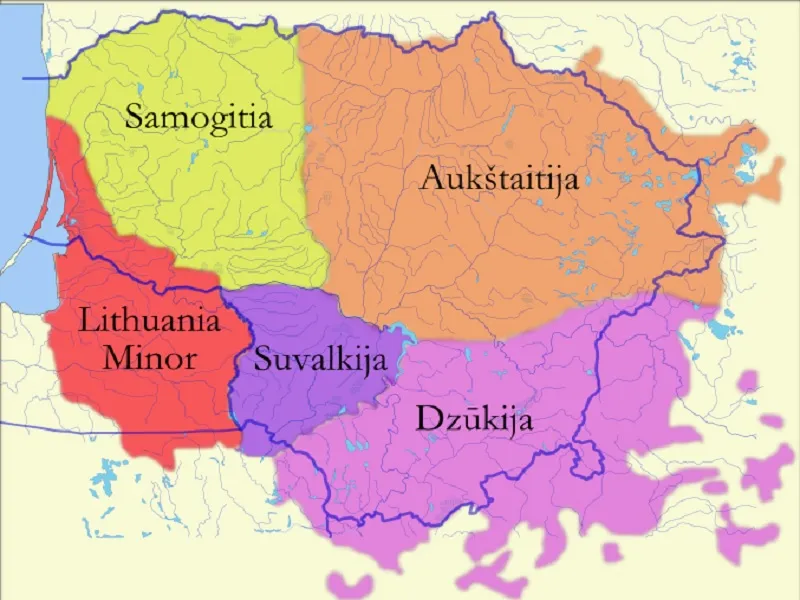


 Belgium's largest trade unions have launched a 24-hour national #strike, protesting €3 billion in planned pension and benefit cuts. Public transport is at a standstill, with only 1 in 3 trains running, 70% of flights canceled.#BelgiumStrike pic.twitter.com/D2fPji4vrC
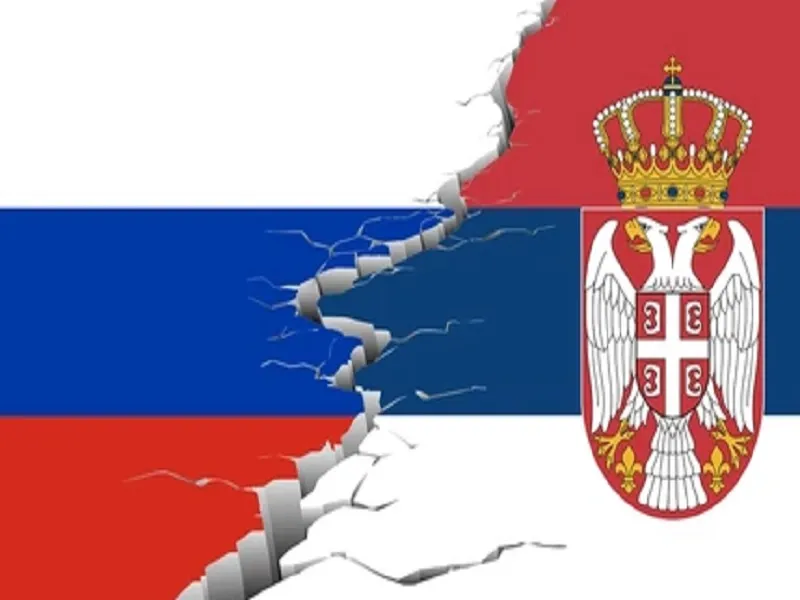
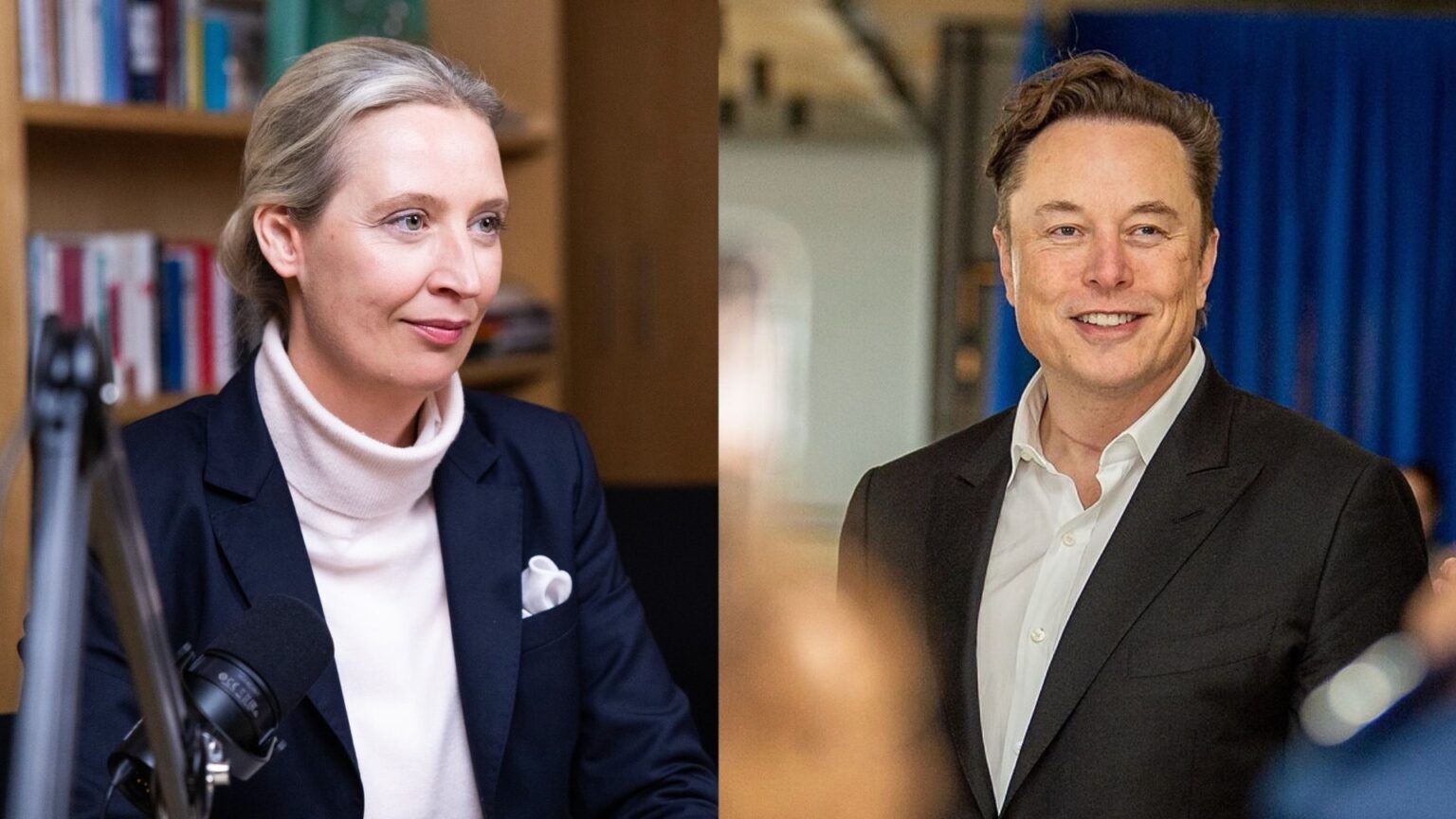
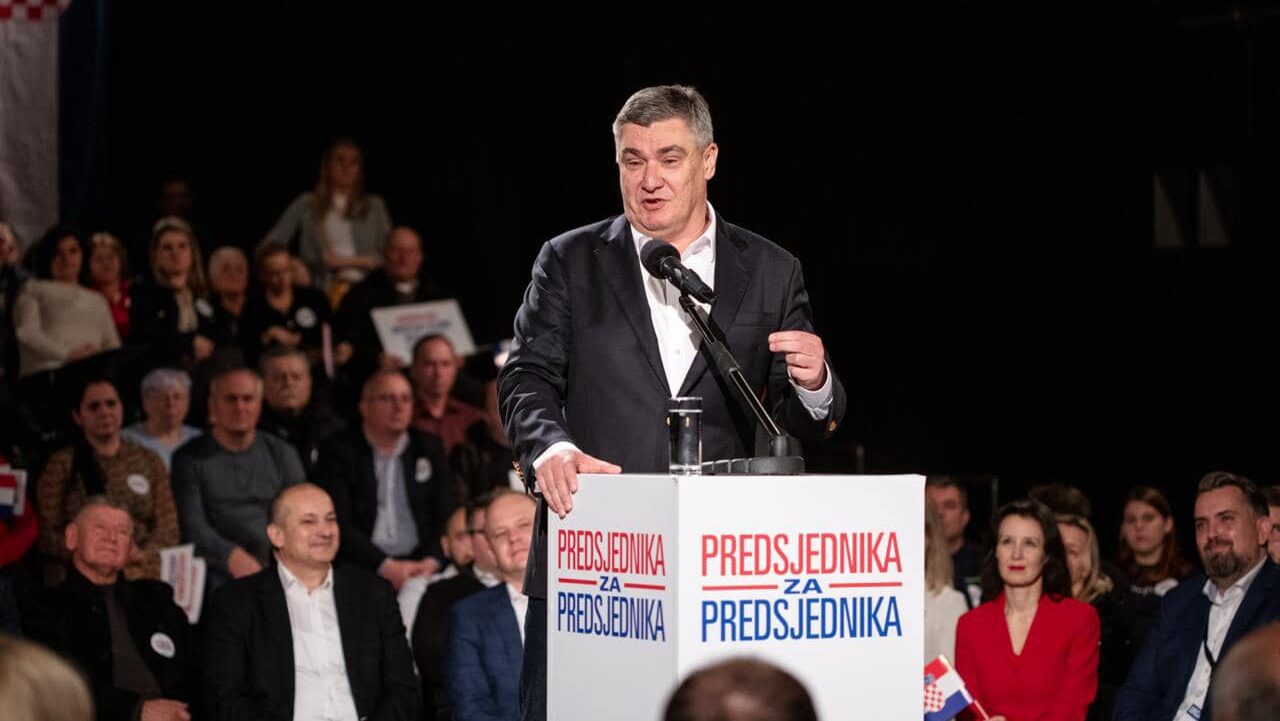


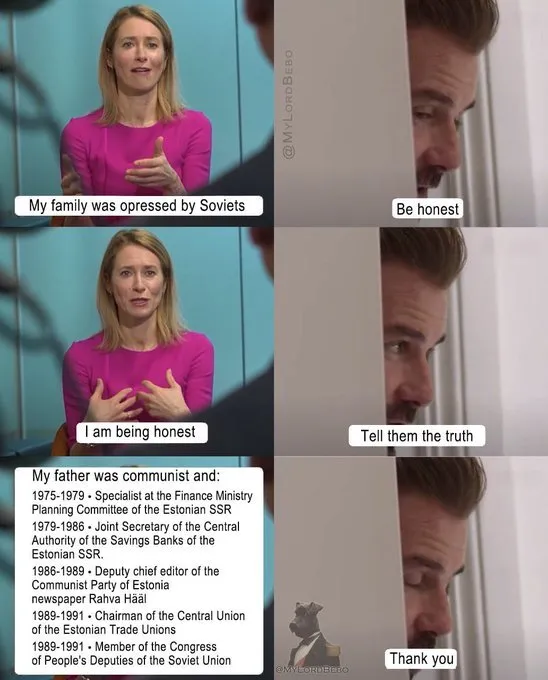
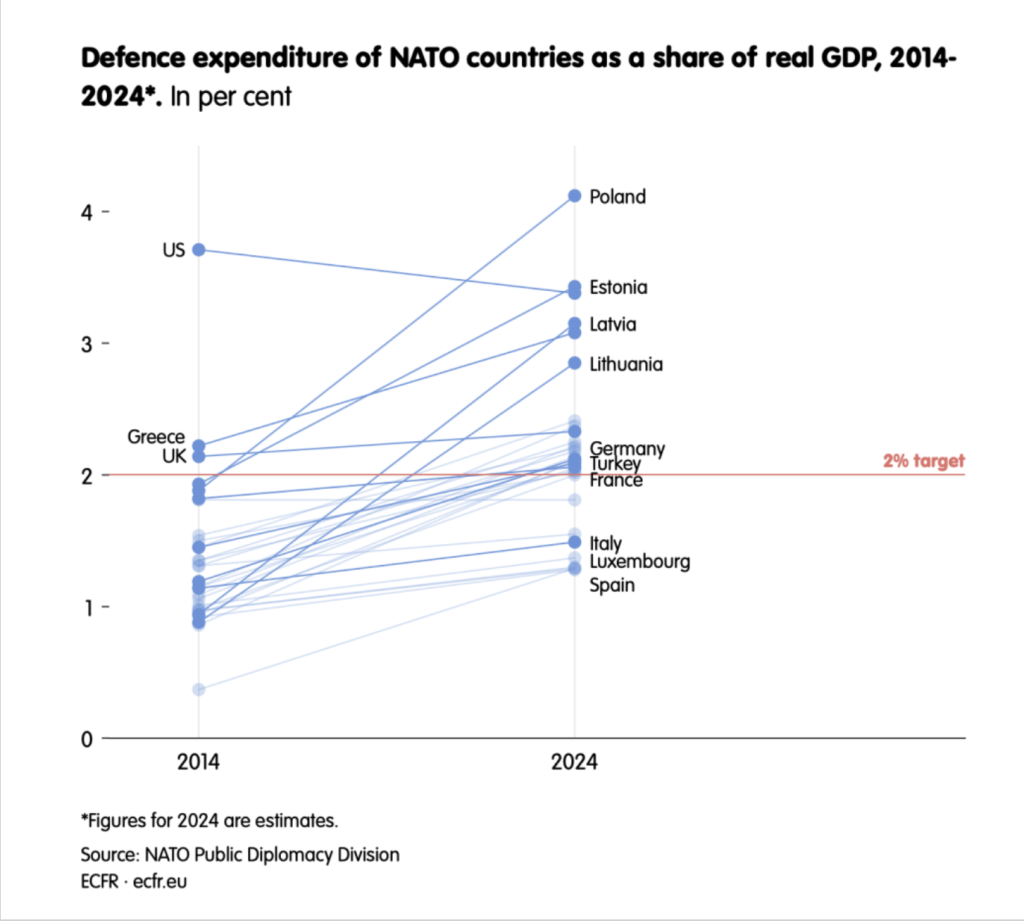
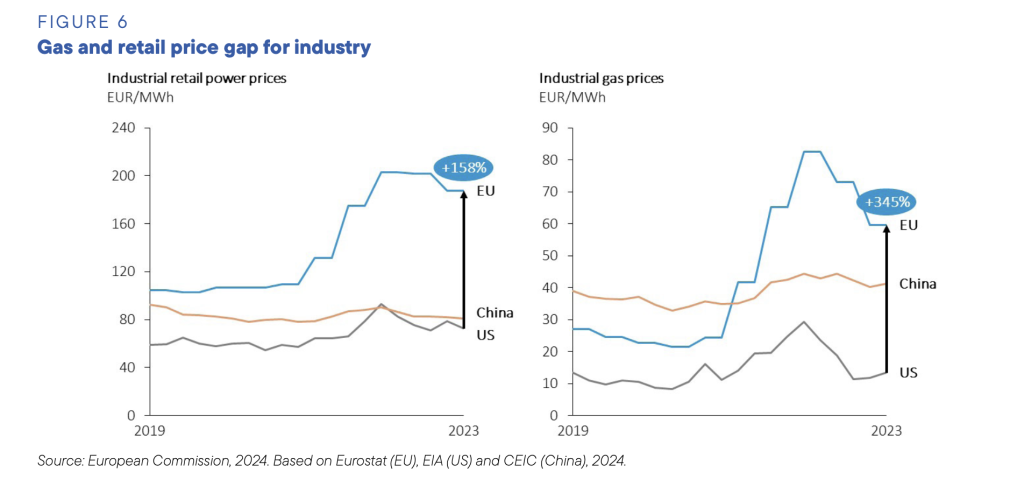


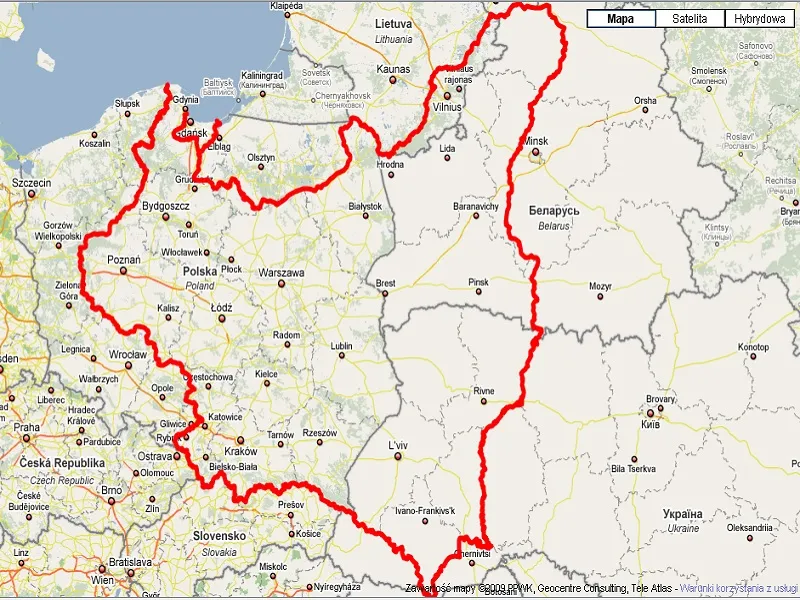


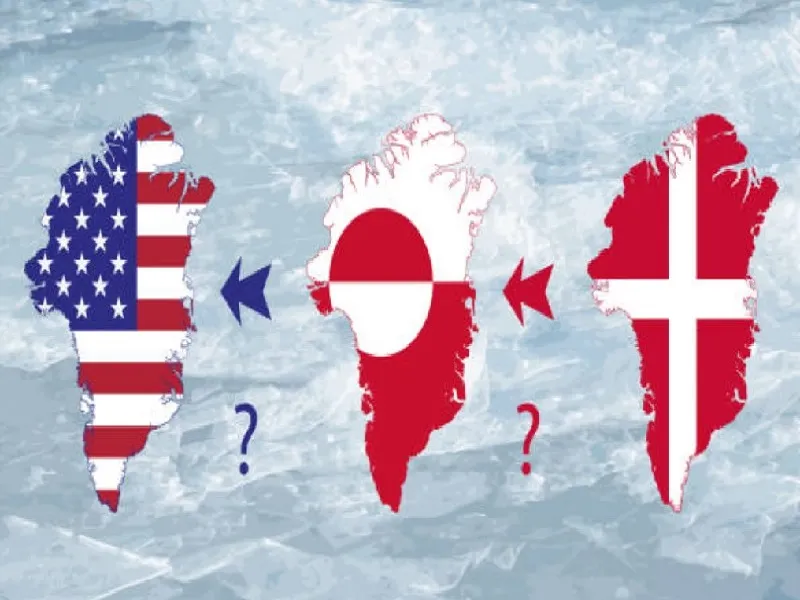
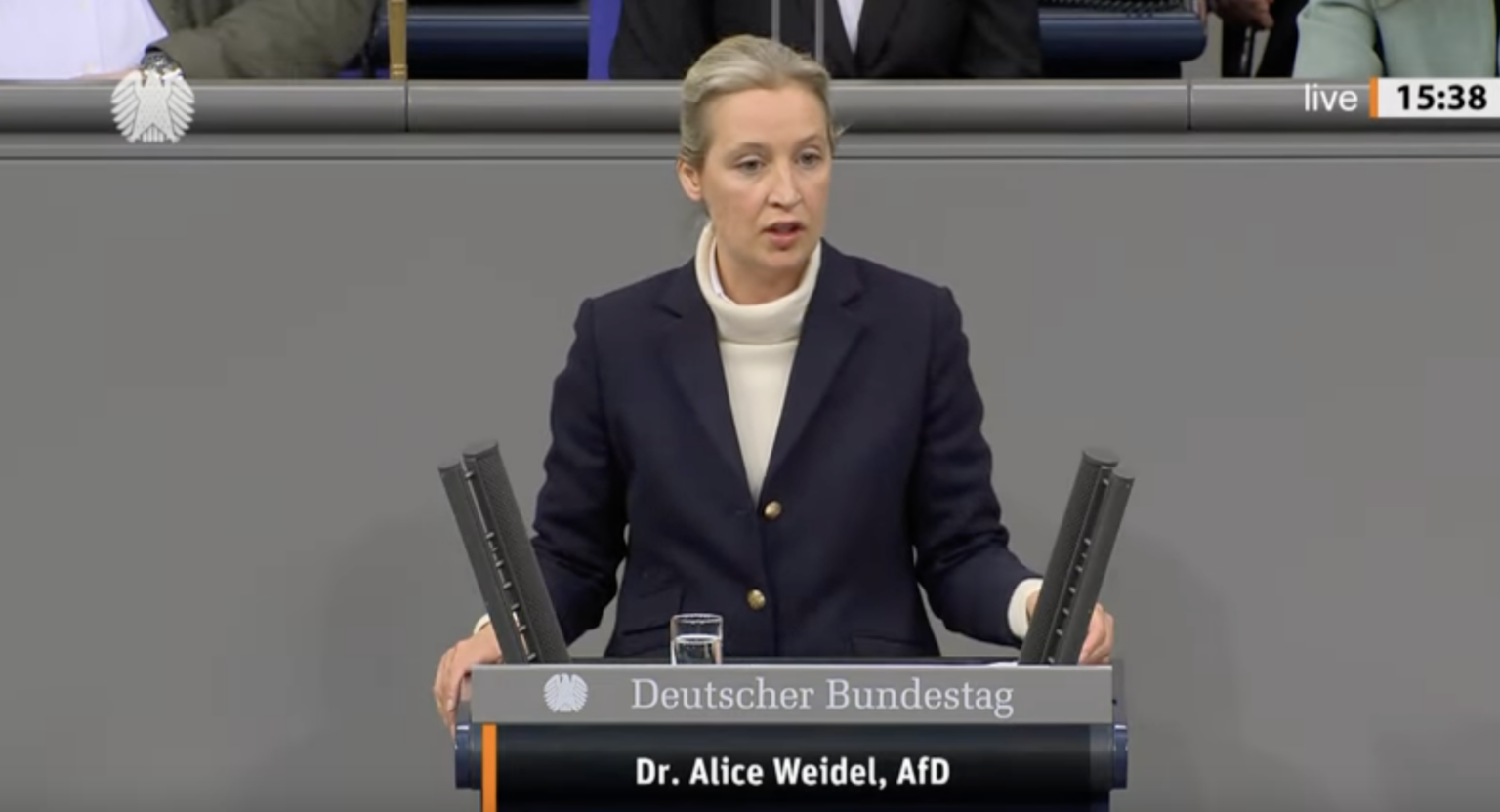
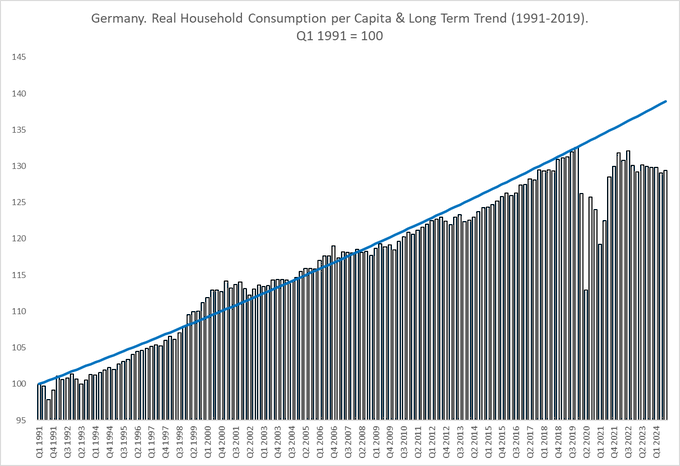
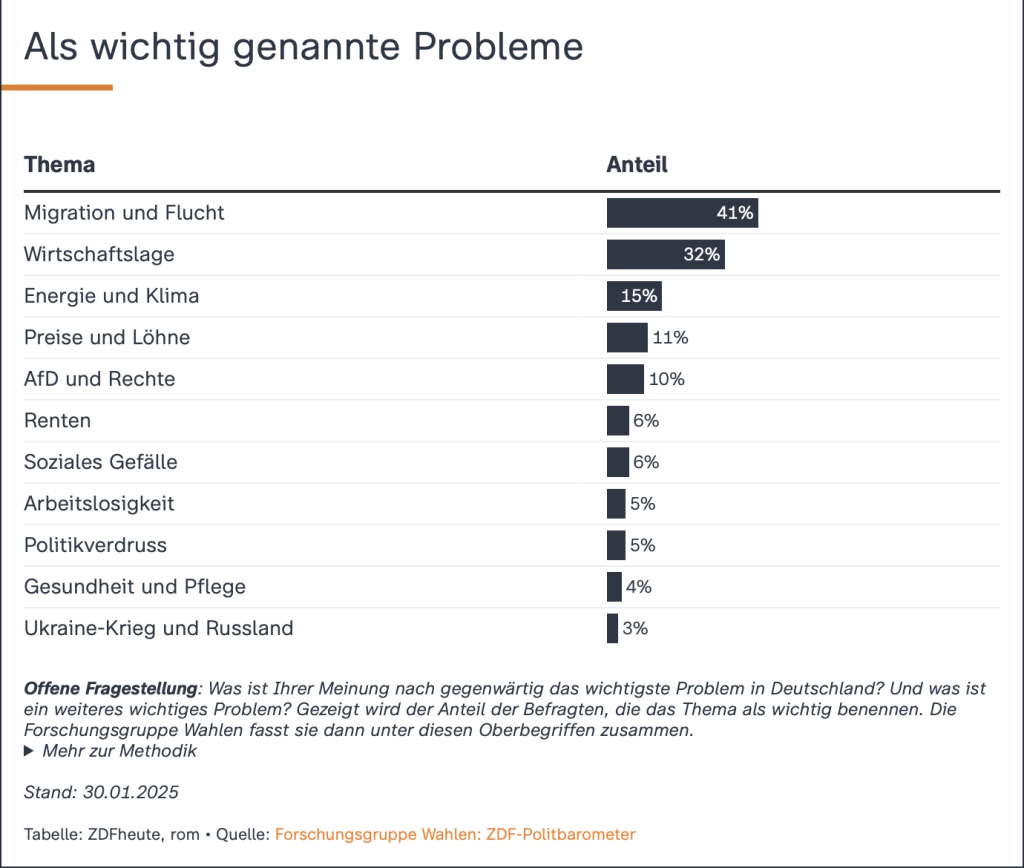
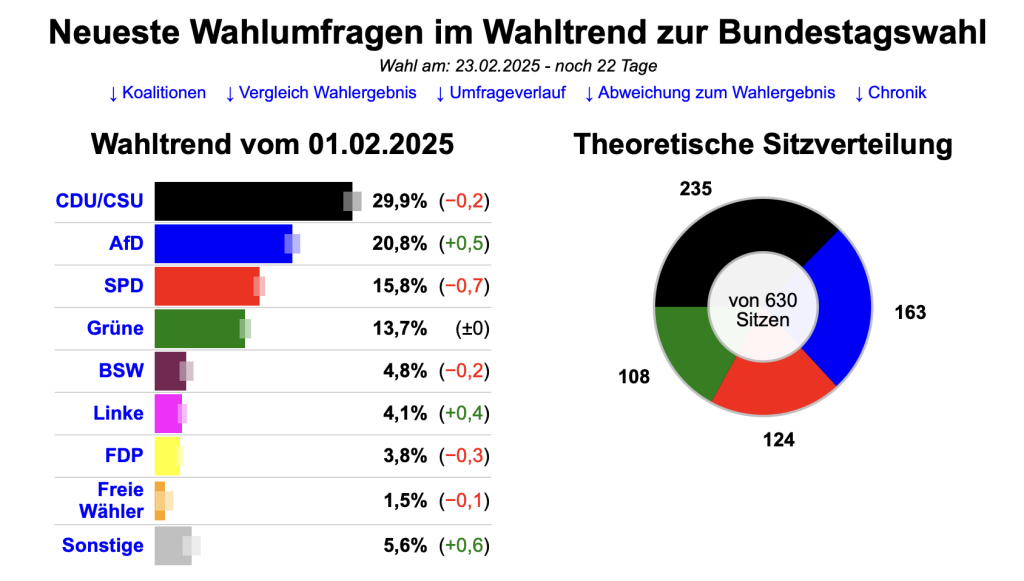
 “My Nazi grandfather was killed by Russian partisans. Now I don’t like Russia” – Member of the Bundestag openly and proudly tells about her Nazi grandfather.

 Negotiations [with kyiv] began immediately after the start of the special military operation.