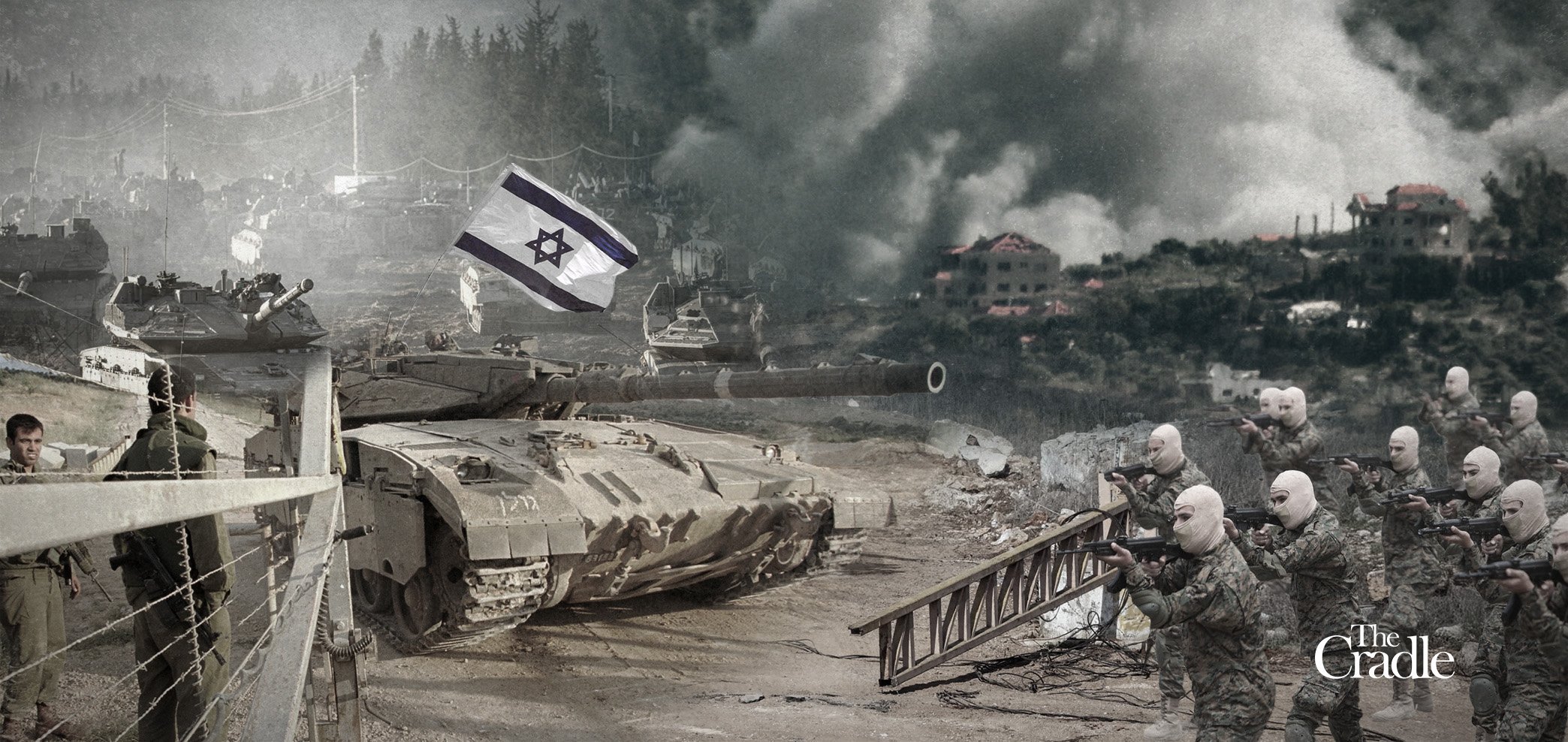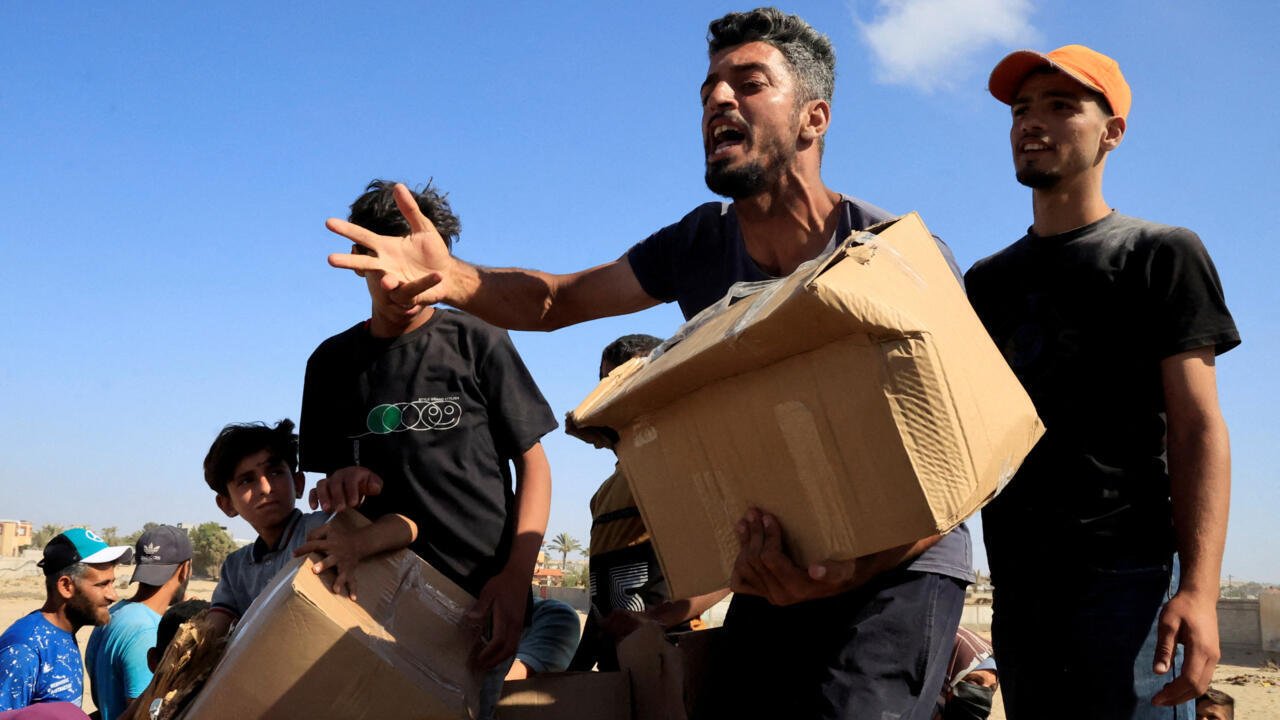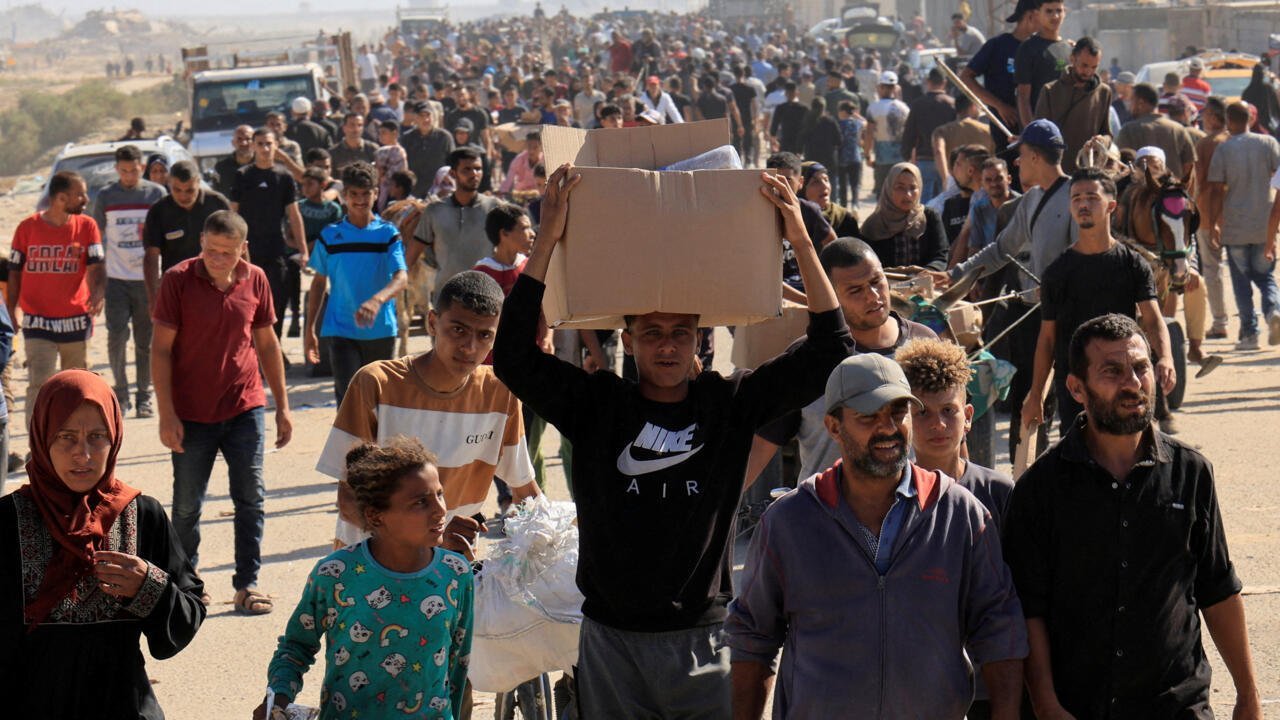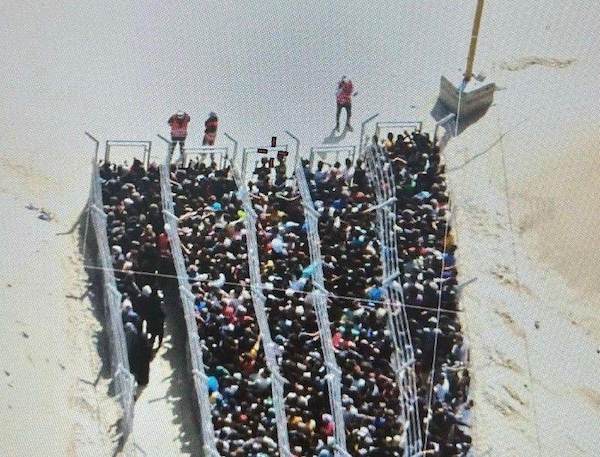
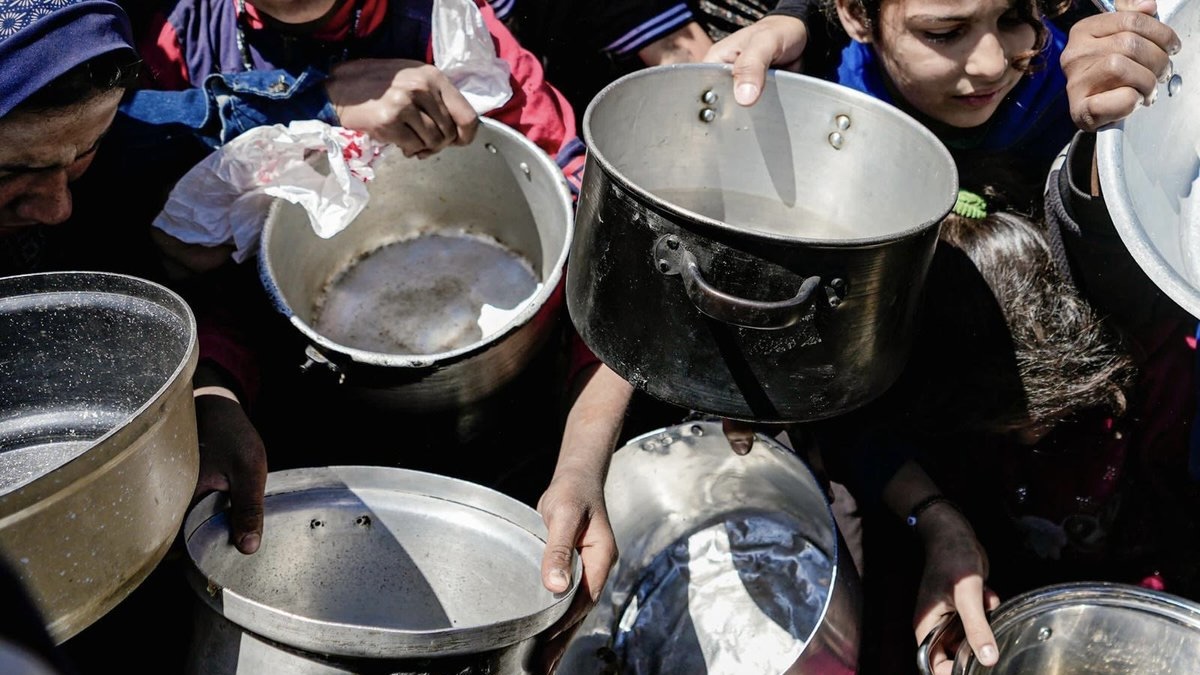
A WIDELY CIRCULATED IMAGE OF STARVING PALESTINIANS IN RAFAH AT AN AID DISTRIBUTION SITE RUN BY THE U.S.-BACKED GAZA HUMANITARIAN FOUNDATION, MAY 27, 2025. (PHOTO: SOCIAL MEDIA)
The ‘chaos’ of aid distribution in Gaza is not a system failure. The system is designed to fail.
Originally published: Mondoweiss on May 30, 2025 by Abdaljawad Omar (more by Mondoweiss) | (Posted Jun 03, 2025)
We are not witnessing a rupture with how things used to be.
What is unfolding today in Gaza, where food aid falls from the sky like ordinance and “humanitarian corridors” double as kill zones, is not the collapse of humanitarianism, but its logical consummation under conditions of settler-colonial necropolitics.
It is tempting to read these scenes–the parachute that failed, the sacks of flour soaked in blood–as tragic malfunctions. They are not.
They are the grammar of a system that has long sutured humanitarian concern to military logistics, relief to surveillance, and aid to domination.
But something has shifted–not in content, but in form.
For decades, Israel maintained an uneasy but instrumental alliance with the architecture of humanitarianism. In the long expanse between the years following the Nakba and the siege and destruction of Gaza, this alliance operated as a double gesture: securing international legitimacy through the performance of restraint, while choreographing violence within the idiom of “security” and “self-defense.” The Red Cross, UNRWA, and a chorus of NGOs served as both witnesses and enablers, simultaneously limiting and legitimizing the occupation’s machinery.
In this war, humanitarianism is no longer simply absorbed and weaponized. It is being bypassed, discarded, and cannibalized.
The Gaza Humanitarian Foundation (GHF), Israel’s new model for aid delivery, signals this shift with brutal clarity: aid is no longer mediated through international law or the optics of neutrality, but flows through private American contractors under military command.
The new aid plan is being used by Israel as part of its demographic war in Gaza: by orchestrating aid flows into selected zones, primarily in the south, Israel is working to condense the population into increasingly narrow and governable enclaves. This forced concentration is not a consequence of war–it is the war’s strategic aim.
In other words, aid is a tool for soft transfer, pushing Palestinians into regions that can be more easily monitored, controlled, and eventually severed from any claim to the land. Starvation and desperation are not side effects, but intended effects, forcing displacement through need.
Israel simply cannot do this with the existing humanitarian infrastructure of UNRWA and the WFP. It has tried to do so over 19 months of genocide and fallen short. This is why the removal of international aid organizations signals a shift toward the unilateral management of the Strip under a new apparatus of military-humanitarian control. By sidelining these bodies, Israel makes room for a more compliant infrastructure: private contractors, militarized aid programs, and internally cultivated Palestinian collaborators who can administer local populations without challenging the broader regime of occupation and erasure.
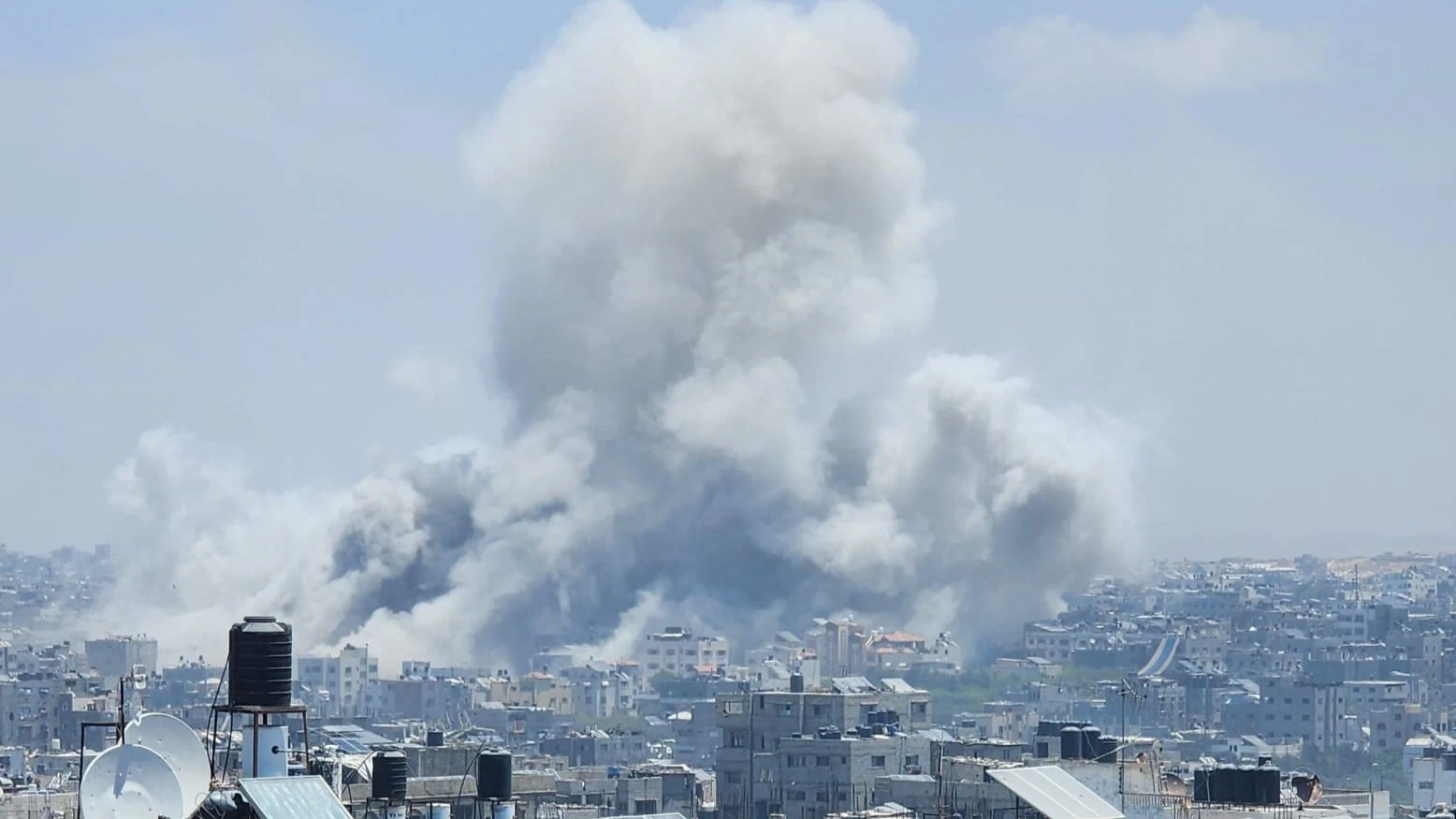
These aid distribution sites, under the guise of relief, are also choreographed spaces of entrapment, where the architecture of chaos, desperation, and humiliation is meticulously staged. People wait for hours in the scorching sun, under drones, under guns, under the gaze of an occupying army that controls what enters, who lives, and who dies. The crowd surges, the fences collapse, shots are fired, and Palestinians are killed.
The Palestinian is made visible only in hunger and at the edge of riot. In these moments, dignity is not just deferred, but is systematically stripped, replaced with the performance of disorder that justifies further killings and further control. The aid site becomes the set-piece where Israel can lure the starving into kill zones and use a loaf of bread as a pretext for a bullet.
The new humanitarianism
This inaugurates a new paradigm in which humanitarianism is no longer mediated through international law or multilateral consensus, but is now militarized, privatized, and securitized. It is disaster capitalism taken to the extreme, eroding liberal humanitarian institutions in favor of militarized neoliberal corporations.
The time is ripe for this because Israel has grown weary of performance. It no longer needs the restraint rituals, with the carefully measured body counts, the proportional language of conflict resolution, and the legal architectures erected after World War II. In their place, we find a new modality of power that openly transgresses, dares the world to respond, and thrives not on legitimacy, but impunity.
What happened in Tal al-Sultan on May 27 offered the world yet another glimpse into this emerging logic. At the launch of the GHF’s first aid distribution center, thousands of Palestinians gathered, driven by the extremity of hunger. As fences broke under the weight of the crowd, Israeli forces responded with what they called “warning shots.” By the end of the day, three Palestinians lay dead, 48 were injured, and seven others were missing. This was not the failure of humanitarian logistics; it was the logic fulfilled. The aid site became the set-piece where Israel can lure the starving into kill zones and use a loaf of bread as a pretext for a bullet.
This is not merely a new war on Gaza. It is a war on the very category of the “human” as it applies to Palestinians, and eventually a remaking that will impact the whole world. Where once humanitarian discourse functioned as the frame through which violence could be rendered legible, disciplined by legalese, and tempered by press releases, humanitarianism itself is being disposed of as a limiting condition.
This reconfiguration also entails a war against memory. International organizations, however limited, often function as record-keepers of hunger, of attacks, of displacement, and of death. With their expulsion comes the erasure of witnesses and the silencing of documentation. The absence of institutional observers allows Israel to proceed with its campaign of annihilation without the burdens of image, number, or name. This is because the presence of the UN and other aid organizations, even if partly complicit, implied that the world was still watching and that aid was still being distributed in a manner not conducive to ethnic cleansing.
Inequality of hunger
Beyond achieving its demographic aims, Israel is also utilizing the GHF as part of its policy of what could effectively be termed “inequality of hunger”: the aid provided by the GHF is woefully insufficient to meet the vast and urgent needs of Gaza’s besieged population, with the UN estimating that a minimum of 500 aid trucks per day are required to sustain basic life, while fewer than 100 are permitted entry. The deliberate reduction of aid so far below the minimum threshold of survival isn’t just arbitrary cruelty; it is meant to create the conditions for social collapse.
It’s already been pointed out that this is the use of manufactured scarcity as a bargaining chip to extract political concessions from the Palestinian resistance. But it should also be stressed that the deprivation is an instrument of social disintegration: by distributing just enough food to kindle desperation, but never enough to sustain dignity, the system manufactures moral collapse. The social fabric fractures, resulting in the slow erosion of solidarity–the final battlefield of any collective struggle.
It is one thing to have a famine, which at least means equality in hunger. It’s quite another to trickle in just enough resources to create an internal struggle that results in the cannibalization of social relations, hitting harder than any massacre.
The criminality of aid
There are, one might say, two criminalities at work in Gaza’s hunger corridors. The first is sanitized, institutional, and entirely rational, what we might call the criminality of logistics perpetrated by the colonizer. Deliberate starvation is achieved through border control, using aid as spectacle, the sealing of exits, and then the airdropping of salvation in neatly packaged boxes. This is not merely a failure of ethics but a success of policy. It is the criminality of biometric scans, of the humanitarian mask concealing the military boot, made possible by both Netanyahu’s cabinet and the likes of Trump Inc., that curious synthesis of gangster capitalism and state violence performing massacres in the name of order.
But this is not all. The organized internal collaborators, the micro-warlords who “tax” the aid and divert it before it reaches the starved, form a local apparatus of distribution grounded in theft-as-policy. This is the internalized supplement to the occupation–the colonized enforcer recruited in the midst of war to serve further social disintegration.
In this setting, the crime is everywhere: in the massacre itself, in the very architecture of aid that creates the need for it. Israel is not the sole criminal; the entire configuration is criminal, including the aid agencies, the paperwork, the silence, the drone overhead, and the collaborator on the ground.
The other “criminality” unfolds when the crowd surges, breaching the fence and reaching for what was always theirs–bread, oil, rice, the right to live. This is not looting, but the repossession of stolen sustenance. It is the planning of those without a plan, the logistics of a community erupting through the fractures of engineered despair. It is the refusal to die standing in line beneath the drones, dignity deferred.
The people aren’t a mob, but a flood–a living force breaching the containment zone of famine, liberating food from its branded prison. What Israel frames as chaos is, in truth, collective clarity.
This second criminality–the crime of survival–is incomprehensible to the humanitarian and liberal gaze. It remains illegible to institutions conditioned only to distinguish the compliant needy from the dangerous deviant. But this collective act of taking is not a cry for help, but a disruption of the very logic that made help necessary. After 600 days of massacres and destruction, the fences fell, sacks were passed between hands, and colonial time stuttered.
This, too, is what unfolded last week–Palestinians in Gaza surged through the tightly scripted scene of domination, disrupting Israel’s illusion of total control even as it outsourced its sovereignty to American private contractors. The scene itself was torn apart twice: first, when most Palestinians in Gaza did not show up, refusing even the choreography itself, and second, when the crowd surged through the fence.
This, then, is the moment we are left with: one in which Israel no longer bothers to veil its actions behind humanitarian fig leaves, but openly scorns the very language that once masked its violence. And the world is being dared–to intervene, yes, but more precisely, to confront the fact that its interventions and discourses were always part of the problem, always hollow and devoid of substance.
One could ask the liberals what remains of this language, not only in Gaza, but in the futures yet to come?
And amid all this, what remains central is that, despite everything, Palestinians still find a way–whether through deliberate planning or spontaneous rupture–to flood the infrastructure of annihilation.
https://mronline.org/2025/06/03/the-cha ... m-failure/
******
Jonathan Cook: Israel’s ‘Food Hubs’ Are Death Traps
June 3, 2025
No one should be surprised that Israel is integrating its so-called humanitarian effort into its genocide of Palestinians.

Israeli forces in Rafah in May 2024. (IDF Spokesperson’s Unit/Wikimedia Commons/ CC BY-SA 3.0)
By Jonathan Cook
Jonathan-Cook.net
It is entirely unsurprising that Israel has yet again been caught out in a lie — a lie that the BBC once again spread far and wide on its news services.
Israel claimed that it had not fired at starving Palestinians queueing on Sunday morning to get food from one of its highly militarised “aid distribution hubs” — a system Israel imposed on Gaza in place of a long-established and successful aid network run by the United Nations.
More than 30 Palestinians are known to have been killed and dozens more injured in the weekend incident [in which 75 were killed by some estimates]. [Civilians trying to reach the aid distribution point have now been shot at and killed for three consecutive days with about 130 dead. CNN reports: “The United Nations’ human rights chief, Volker Turk, said in a statement that ‘deadly attacks on distraught civilians trying to access the paltry amounts of food aid in Gaza, are unconscionable… There must be a prompt and impartial investigation into each of these attacks, and those responsible held to account.’”]
Israel blamed Hamas fighters for shooting Palestinian civilians, saying they were trying to stop the crowds from taking food boxes. The Israeli military dished up a video, taken by one of its drones, as supposed proof.
The BBC broadcast that video on its main shows, and then did one of its standard “Israel said, the Palestinians said. Who can really know the truth?” reports of the incident.
The BBC should never have taken Israel’s disinformation seriously – not least because Israeli claims are always shown to be lies when subjected to any serious independent scrutiny. The default position should be that Israel is lying until it can demonstrate convincingly that it is not.
Doctors treating the dead and wounded immediately pointed out that their injuries were consistent with Israeli gunfire. The victims had single shots to the head or chest, in line with targeting by Israeli snipers. Others suffered shrapnel wounds from tank shells. Hamas has no tanks.
Now expert analysis of the video itself — paradoxically confirmed by BBC Verify — shows that the footage was filmed in Khan Younis, far from Rafah, where the Palestinians aid seekers were killed. It is also apparent from the shadows that the video was taken in the evening, not in the morning when the Palestinians in Rafah were shot.
Despite this, the BBC still writes: “The circumstances of this strike are unclear.”

BBC logo, Manchester, Engliand, 2009. (TechnicalFault formerly Coffee Lover, Flickr, CC BY 2.0)
No, it is entirely clear that the Israeli army disseminated lies, and that the BBC lapped up those lies and spread them to its audiences via its main news shows, before tentatively retracting the lies quietly on a live feed on its website.
The reality is that the video doesn’t show Hamas fighters shooting Palestinians to stop them getting aid. Rather it shows a criminal Palestinian gang — of the kind Israel has been cultivating and allying with — looting aid so that it can be sold back to Palestinians on the open market, where prices have been massively inflated by Israel’s blockade on food.
There are no police in Gaza maintaining law and order because Israel kills any Palestinian seen wearing a police uniform.
It was for these very reasons that international aid organisations refused to take part in Israel’s scheme. They understood it was never about distributing humanitarian aid because the U.N. was best placed to do that.
It was not even chiefly about weaponising aid to lure Palestinians into what are effectively Israeli military bases so that soldiers can use biometric data to snatch any Palestinians they want, disappearing them into Israel’s torture camps, as they have been doing.
Rather it is about giving the appearance of providing food — most of it useless because it is dried staples that need cooking, when there is almost no water or fuel available — while continuing to starve the vast majority of Palestinians. And it is about using the aid hubs as another front for killing Palestinians.
In other words, after taking the aid system out of the U.N.’s hands, Israel is successfully enfolding the so-called humanitarian effort” into its genocide.
If that sounds too cynical, mark this. Israel again shot at crowds gathering on Tuesday morning to get aid from one of its “distribution hubs,” killing at least 27 Palestinians and wounding more than 180.
Several witnesses say there was no aid available when they arrived.
There is no way to be too cynical about what Israel is doing. Israel is utterly committed to its genocide — and a genocidal state has no red lines.
https://consortiumnews.com/2025/06/03/j ... ath-traps/
******
The Second-Class Citizenship of Palestinian Israelis
Posted by Internationalist 360° on May 31, 2025
Ilan Pappé, Magdalena Berger
 Horrific, genocidal atrocities are being carried out against Palestinians in Gaza right now. But Israeli historian Ilan Pappé explains that Palestinian Israelis also find themselves in an “apartheid state” inside Israel.
Palestinians in Israel have a complex relationship with the state in which they live. They have been citizens of the country for more than sixty years, but not full-fledged citizens, as Israeli historian Ilan Pappé indicates in his book The Forgotten Palestinians. They navigate a precarious position between Jewish Israelis and Palestinians in the occupied territories. But their experiences are rarely the focus of attention.
In an interview with Jacobin, Pappé speaks about this special role. He discusses Palestinian history and discrimination within Israeli territory, which has changed since the first publication of the book in 2011 — and why Palestinians in Israel in particular could play a central role in peace efforts.
Magdalena Berger: Between the Mediterranean Sea and the Jordan River, there are essentially three groups of Palestinians: Those in the occupied territories of the West Bank and Gaza, those in East Jerusalem, and those who are citizens of Israel. Can you describe how the situation of Palestinians in Israel differs most significantly from the others, and why they are “forgotten,” as the title of your book argues?
Ilan Pappé: The Palestinians inside of Israel are those Palestinians who were not expelled during the Nakba, the catastrophe of 1948. They have a very different history than other Palestinian groups, because they were part of the Jewish state from the beginning. The other Palestinians were either refugees inside historic Palestine or outside historic Palestine; they came under Egyptian rule in the Gaza Strip or Jordanian rule in the West Bank in 1967. During that very time, between 1948 and 1967, Palestinians in Israel were put under military rule.
Like the West Bank today?
Yes, military rule is now familiar to most people when it refers to the West Bank and the Gaza Strip. It’s the same military rule based on the same British colonialist regulations that gives the army a totally free hand in regulating the life of the occupied population. The army can take people to prison without trial, they can destroy their houses, and, of course, in some cases expel or shoot them. This was the reality for Palestinians inside of Israel until 1966.
While Palestinians in Gaza and the West Bank came under Israeli rule after 1967, the situation for Palestinians inside of Israel got better during this time. They became citizens. I would not say full citizens, but at least they were not subjected to military rule anymore.
But they suffered from more hidden kinds of segregation and discrimination. Much of this discrimination was, however, not yet legalized. Before the 2000s, most Israeli politicians tried, at least in theory, not to push for legislation that discriminated against people because they were Arabs and not Jews.
In the last twenty-five years, the political system of Israel moved significantly to the right. I suppose this significantly impacted Palestinians citizens of Israel.
Yes. In 2000, the Israeli political elite began to legislate against Palestinians in Israel. All kinds of unofficial practices against them suddenly became legal. For instance, Palestinians always had very limited access to land — they could not expand their areas — but now it also became illegal for them to do so. It was also forbidden for them to talk about the Nakba.
All of this culminated in the Nationality Law in 2018, which officially stated that Palestinians can be individual citizens of Israel, but they cannot be part of a national community. And this refers not only to 1948 territory — from the river to the sea, there is only one nation, the law says, and this is the Jewish nation. There is no other nation there.
The discrimination against Palestinians inside of Israel is not as dramatic as in the West Bank, not to mention what’s happening in Gaza. But compared to Jewish citizens, they are second-rate, if not third-rate, citizens. Even before the changes of law in the early 2000s, as I argue in the book, they were living in a semi-apartheid state — some even say a full apartheid state. Palestinians were discriminated against all along because of who they were and not because of what they did.
You describe how little Palestinians and Israelis genuinely interact with one another. At one point, you say that there are too few marriages between the two groups to even study the phenomenon.
Yes, we always joke about that. A sociologist in Haifa said, there is no need for a sample, because he knew all of them. I mean, Zionism is a colonialist movement that colonized Palestine for the last 120 years. But it is one of the few colonial movements that never learned the language of the colonized people and never mingled with them.
Even in apartheid South Africa, there were more relationships between whites and Africans than there [are relationships between Israelis and Palestinians] in Palestine. But that’s the nature of Zionism: it is a Jewish supremacy and exclusivity, and therefore the pressure on mixed couples is huge. Most of them find themselves outside the country eventually.
But how do Israelis and Palestinians engage with each other on a day-to-day basis? What forms of contact are there?
There is very strong segregation, particularly in the education sector. But the universities are a mixed space, the businesses as well. Public transport is not segregated. As one scholar has argued: This is not a petty apartheid. You don’t have separate toilets, benches, or buses. The segregation is much more hidden.
So, yes, there are meeting places. But I’ll give one example to illustrate my point: Israel created several development towns in the north of the country. The idea was that these would be exclusively for Jews and increase their number in the Galilee, because Israel was worried that there were too many Arabs in the area. This was a project called the Judaization of the Galilee.
There was, however, a lack of opportunities in the Palestinian villages around these towns. As a result, those Palestinians who were a bit better off were willing to pay twice or three times the rent in order to move to those new areas. These supposedly pure Jewish towns are now much more mixed than they were before. Sometimes life is simply stronger than state ideology. So there is interaction between the groups all the time. I was born in Haifa, where the interaction is probably even more visible.
The problem is that the political system, the cultural system, the education system — they all try to deliberately destroy this interaction and genuine coexistence. So from above, there is a great effort to make sure that this kind of living together is not nurtured and cannot develop. If you left it to people themselves, I think it would naturally develop. But if it develops, it defeats the whole idea of an exclusive Jewish state. The members of the Israeli political elite don’t want that.
In the West, people often respond to accusations of apartheid in Israel by pointing out that some Palestinian citizens have made quite notable achievements. You’ll find Palestinians working as doctors, civil servants, and even professional athletes. Some have been elected to the Knesset or appointed as Supreme Court judges. But does highlighting these individual success stories really challenge the bigger picture when it comes to claims of apartheid?
That’s like saying because India had a female prime minister for a moment, the situation of women in India is absolutely fine. Of course, such symbolic achievements are important, but they never indicate the reality on the ground.
Most people under the poverty line in Israel are Palestinian citizens. They are constantly discriminated against, by the police, by the criminal system, everywhere. Not to mention the fact that if they express their Palestinian identity individually or collectively, they are in danger of being imprisoned in their own homeland.
Let’s take the health system for instance: Israeli doctors have immigrated in large numbers, and some of these positions were filled by Palestinian citizens. Normally it is very difficult to get into Israeli health facilities because there are quotas in these facilities. During the time when the Communist Party was quite powerful in Israel, Palestinians could complete their medical studies in the Eastern Bloc. Now they are doing it in Italy and Romania.
It is the same issue as in the mixed towns: sometimes reality defeats ideology. But if a Palestinian doctor today dares to show compassion with the children of Gaza, they are threatened with suspension, just because they put a humane post on Facebook.
You mentioned the power of the Communist Party — what explains its earlier strength and popularity, especially among the many Palestinians who were actively involved in the party?
When Israel was established, at least until 1967–68, it wanted to have a good relationship with both the Soviet Union and the United States. It also hoped that Jews from the Soviet Union would eventually immigrate to Israel. This is why it allowed the Communist Party to operate, whereas, for instance, any attempt of Palestinians in Israel to establish a pure national party was barred.
Some Palestinian people might have been attracted to socialist or Marxist ideology, but many of them found it to be the only party where they could express themselves as Palestinians. It was the only party in which Arabs and Jews were equally treated. There were other Palestinians in other parties, but they mainly served as tokens there. They were not treated as equal members. In the Communist Party, Palestinians and Jews were working on equal footing and treated each other with respect and equality. Probably, they had the best model for how life should have been.
But like so many other leftist movements, the party plays only a minor role today. Why is that?
Once Israel ceded its relationship with the Soviet Union — namely, when it was clear that the Soviet Union sided with the Palestinian liberation movement — Israel became less positive toward the Communist Party.
And like everywhere else in the Arab world, the Left did not deliver. It did not deliver the liberation of Palestine; it did not bring social justice, democracy, and rights. So a lot of people went to other ideological places. In Israel, Palestinians were attracted to a purer national identity, with no need to cover it up with communism, and to political Islamic ideologies.
When you look at different political fractions of Palestinians, it is obvious that many of the more militant groups arose in exile. They had particularly strong bases in the refugee camps of Lebanon, Syria, and Jordan. Were there also notable militant organizations among Palestinians citizens of Israel?
No, there weren’t, because of two things: First, in the 1970s, the Palestine Liberation Organization (PLO) decided that each Palestinian group should fight for the liberation of Palestine according to the circumstances in which it found itself. There was no pressure on the Palestinians in Israel to join the guerilla warfare that other Palestinian groups were engaged with, either in the occupied territories or from the refugee camps. Second, the Palestinian political and intellectual leadership in Israel made the strategic decision not to use guerilla warfare to secure their rights and contribute to the Palestinian cause.
This was a very conscious decision. And there was of course always the fear of a possible Israeli reaction. As we can see in Gaza today, such a reaction would have certainly been genocidal.
Your book was first published in English in 2011, and a lot has changed since. You’ve already mentioned the Nation-State Law, and of course it’s hard to talk about anything related to Israel and Palestine today without the war in Gaza looming in the background. How has the aftermath of October 7 affected the daily lives of Palestinians within Israel?
As I said, already from 2000 onward and especially since the election of the right-wing government in November 2022, the policy of the Israeli government and parliament became very harsh toward Palestinians, through both legislation and through practices on the ground. That was even before October 7. And another thing that had nothing to do with October 7 was the way that Israel allows criminal gangs to operate freely in the Palestinian villages and areas.
These are gangs of young people who are heavily armed — and nobody is trying to disarm them. Neither the police nor the secret service nor the army. They are allowed to operate absolutely freely. They are mostly engaged in fighting each other for space and territory. But as always, a lot of innocent people are being hit. Almost every day, we have a murder, including murders of children. It is very clear that some of them were collaborators with the Israeli secret service before the Oslo Accords, and they were recruited from the occupied territories. The Israeli government feels as if it benefits from what they call “Arabs killing Arabs.” That’s why they don’t care if people in Palestinians villages are terrorized.
October 7 was used as a pretext to remove even the little freedom of expression and protest that Palestinians in Israel used to have. Israel acted as if what Hamas did was something the Palestinians in Israel did. Therefore, they are not allowed to demonstrate any compassion to the Palestinian babies in Gaza. It is considered support for terrorism. People get arrested for such things without trial. This is why many people are afraid to speak out; they fear they might lose their jobs or be arrested. As one of the leaders of the Palestinian community in Israel put it, it is even worse than the days of military rule between 1948 and 1966. It is a very difficult and dangerous moment in the life of this community.
With reference to the Kafr Qasim massacre of 1956, where Israeli border police killed forty-eight Palestinian citizens of Israel for unknowingly violating a curfew, you write that in Israel it always takes “some kind of catastrophe” for anything to change. The situation in Gaza is perhaps the greatest imaginable catastrophe. How will it change the future of Israel and Palestinians in Israel specifically?
We had hoped that, once the initial shock and trauma had passed, those who still regard themselves as liberals in Israel would realize that the only way to change Israel is through the formation of a strong alliance between Palestinian and more progressive Jewish citizens. But that is not happening. October 7 turned those who regarded themselves as liberal Zionists into more extreme right-wing Zionists. So we don’t really have liberal Zionist political forces anymore. That means that the Palestinian community in Israel will be further isolated.
But that is in the short term. In the long run, I think that October 7 was a wake-up call that the way the Jewish state was developed — as a supremacist state, a racist state based on oppression, occupation, and ethnic cleansing — is not working.
Yes, Israel is still powerful and has powerful allies, and the Palestinians are weak and cannot liberate themselves or end their oppression. But they will continue their struggle. And the world is beginning to understand that they are the victims — and not Israel. These processes will persist. We can already see that those Israelis who want a normal, democratic, liberal life don’t find it in Israel. They go to places like Germany or elsewhere. And those left behind don’t seem to be capable of running a state.
I am not sure the United States will always be there to pay for Israel’s expenditures. We can also see that the international community has had enough, at least the civil society. Yes, this has not impacted many governments yet, but it will surely happen. Therefore, I think that, ironically, the Palestinians in Israel are the only people who can offer a bridge from the unacceptable reality of apartheid, genocide, and ethnic cleansing to genuine coexistence — as it existed in Palestine before the arrival of Zionism.
In your book, you say they are the only ones who know Israelis not only as settlers or soldiers.
Yes. And one day, when there will be reconciliation and a different reality between the river and the sea, they are the ones who can create a win-win situation for both sides. Because if not, instead of restitution, we get retribution, and that is terrible to think about. That is why the Palestinians in Israel are such an important community. And instead of understanding that their future really is in the hands of this particular group of Palestinians, the Israelis are limiting and destroying it.
https://libya360.wordpress.com/2025/05/ ... -israelis/
******
 This Is Israel
All those dead kids on your social media feed are the fruit of a tree whose seed was planted after the second world war. That tree has been bearing more and more fruit, and it will continue to for as long as it remains standing. Because that’s just the kind of tree it is. The…
This Is Israel
All those dead kids on your social media feed are the fruit of a tree whose seed was planted after the second world war. That tree has been bearing more and more fruit, and it will continue to for as long as it remains standing. Because that’s just the kind of tree it is. The…
Caitlin Johnstone
June 4, 2025
This is Israel. This is what the Zionist project looks like. The dead kids. The blown-out hospitals. The desperate, starving civilians. This is it.
There is no alternate version of Israel where these things are not happening. The liberal Zionist vision of a two-state solution and a just and peaceful Israel exists solely in the imaginations of the people who envision it. Nothing like it has ever existed. Everything about the modern state of Israel is unyieldingly hostile to that vision.
You either support the existence of the Israel you see before you, or you support the end of the apartheid Zionist entity. There is no hidden third option. There are no other positions on the menu. To pretend otherwise is to live in a fantasy land.
You either want to burn children alive, or you don’t. You either want to deliberately starve civilians, or you don’t. You either want to bomb hospitals, or you don’t. You either want to deliberately assassinate Palestinian journalists while forbidding foreign journalists entry into Gaza, or you don’t. You either want to deliberately massacre civilians and systematically destroy civilian infrastructure in order to force the removal of Palestinians from a Palestinian territory, or you don’t. And if you don’t, you must oppose the state of Israel.
That’s Israel, the state. Not just Netanyahu. Not just extremist settlers. Not just “far right elements within the Israeli government”. Israel itself. Because everything we are seeing Israel do is the result of everything Israel is as a state.
Everything Israel is doing is the result of everything it has always been. As soon as the west decided to drop a settler-colonialist state on top of a pre-existing civilization wherein the new immigrants would receive preferential treatment over the indigenous inhabitants who were already living there, it became inevitable that Israel would wind up in the condition it’s in today.
Because there was no way to uphold that status quo without mass displacement and nonstop tyranny, violence and abuse. There was no way to set up a tiered society where one tier is placed above the other without indoctrinating the public to accept that apartheid system by systematically dehumanizing the members of the disempowered group.
Set up a status quo of dehumanizing a group of people and manufacturing consent for violence and abuse against them, and you will inevitably wind up with a far right apartheid state which is committing genocide, as surely as dropping a stone off a building will result in a stone falling to the ground.
What we are seeing in Gaza today was baked into the state of Israel ever since its inception.
All those dead kids on your social media feed are the fruit of a tree whose seed was planted after the second world war. That tree has been bearing more and more fruit, and it will continue to for as long as it remains standing. Because that’s just the kind of tree it is. The only kind of tree it ever could have been.
Saying “I support Israel but I don’t support the actions of Netanyahu in Gaza” is like saying “I like this apple tree but only when it sprouts coconuts instead of apples.” That is not the kind of tree it is. The apple tree will only produce apples, and the genocide tree will only produce genocide.
Israel’s supporters avoid confronting obvious truths like these. Support for Israel depends on mass-scale psychological compartmentalization. Everything about it revolves around avoiding unpleasant truths instead of deeply and viscerally reckoning with them.
Averting the eyes from the video footage of Israel’s atrocities in Gaza. Averting the eyes from the contradictions between the values they purport to hold and everything Israel is as a state. Averting the eyes from the mountains upon mountains of evidence staring us all in the face. That’s the only way support for Israel is able to continue.
In order to become a truth-driven species, we need to stop hiding from uncomfortable truths. And one of our favorite hiding places for uncomfortable truths at this point in history is the modern state of Israel, and the western empire’s support for it.
https://caitlinjohnstone.com.au/2025/06 ... is-israel/



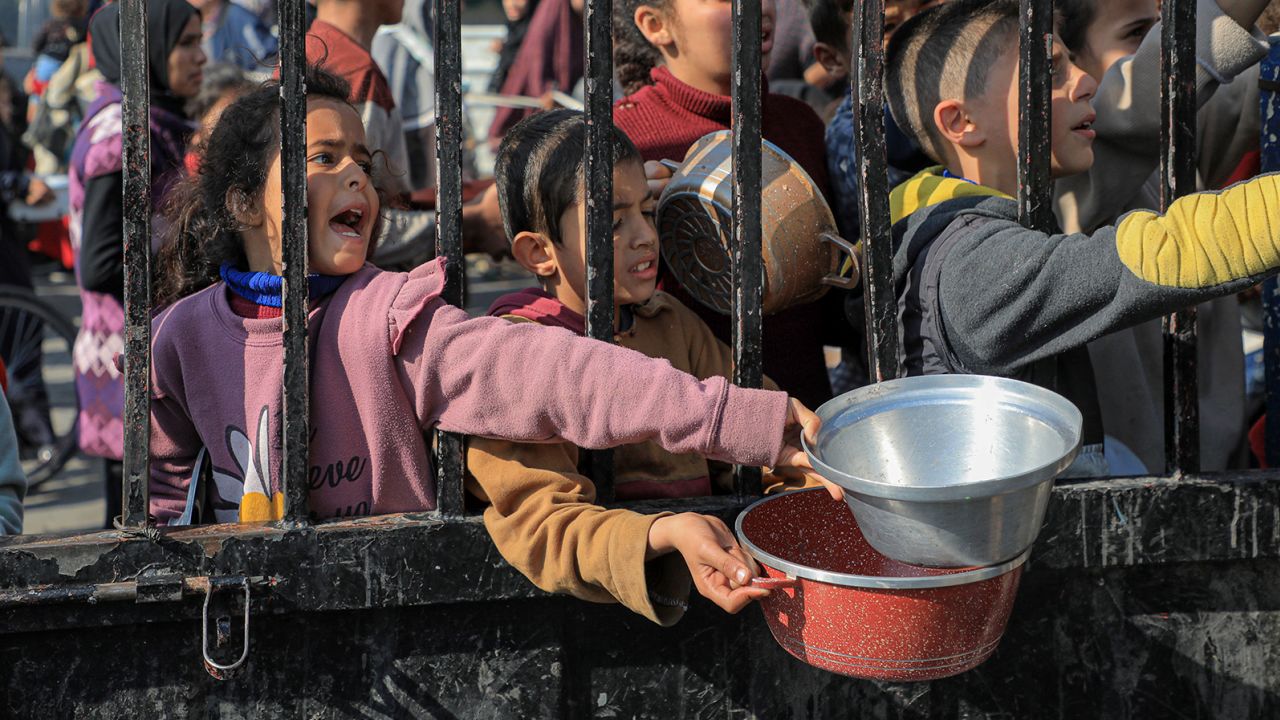



 “I came from under death,” says 12-year-old Palestinian girl Rahaf Abu Arar, after returning empty-handed from the chaotic Gaza Humiliation (Humanitarian) Foundation aid distribution camp. Her 19-year-old brother was killed by Israeli occupation bombing during the genocide, and… pic.twitter.com/zElafrrLwu




 Watch the vote on Security Council resolution for immediate ceasefire, release of hostages, and ending the Israeli blockade of the Palestinian people in Gaza put forward by the 10 elected members of the Council