Russia today

User avatar
blindpig
Posts: 15306
Joined: Fri Jul 14, 2017 5:44 pm
Location: Turtle Island
Contact:

Re: Russia today

Post by blindpig » Tue Oct 14, 2025 2:18 pm

No Russia-Arab Summit Lavrov Holds Presser Anyway

Palestine, Syria, Lebanon, and more are discussed.
Karl Sanchez
Oct 13, 2025
Image

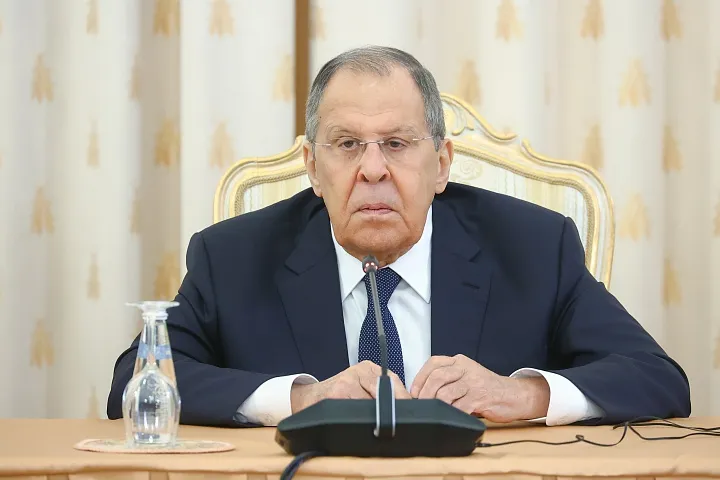
I’m convinced Lavrov would like to have held the Summit but Russia ceded to the desires of the Arab League to postpone so some of its members could attend what amounts to an Outlaw US Empire meeting being held in Egypt to validate the pause in the combined Genocide of American and Israeli Zionists—pause being Alister Crooke’s term for the meetings outcome as expressed in his chat today with Judge Nap. As I explained in the comments, I considered not posting this transcript for several reasons, one being the many other major events needing reportage, and the second being the very poor level of readership given to Lavrov’s and Putin’s pressers over the last several months and the paucity of discussion. However, given several key Q&As during the 75-minute presser that perhaps help to further explain Russian policy in West Asia and to the Palestinian issue, I’ve decided to do the work and provide the following translation:
Foreign Minister Sergey Lavrov’s remarks and answers to media questions at a meeting with Arab media representatives, Moscow, October 13, 2025

Good afternoon, dear colleagues,

It is a pleasure to welcome you to the Foreign Ministry.

I know that the guests who came to cover the Russian-Arab summit have been here for quite a long time and had the opportunity to get acquainted with the sights not only of Moscow, but also of a number of other Russian territories.

The situation that led to today is well known to you. The summit has been prepared for a long time, but it has become clear that this week, including today, when the summit was supposed to begin, will be decisive in promoting the agreements on the Gaza Strip, agreements that were actively promoted by our Egyptian friends and Qatar. President Donald Trump has put forward his own plan, which we have repeatedly assessed as the best thing on the negotiating table today, although, of course, the Palestinian problems are not limited to this. Nevertheless, it is important to stop the bloodshed as soon as possible and resolve the gravest humanitarian problems of the population.

Now thousands of Gazans are returning home. I have no idea how they will live there, but, nevertheless, it is better to create their own housing than to be constantly under fire, to live daily under the threat of death of their children, relatives and friends.

We sincerely wish success to today’s event, the Sharm el-Sheikh Summit, which is attended by more than 20 countries of the Arab world and a number of Western states. I hope that all the agreements will be implemented, although we hear statements from Hamas and Tel Aviv that not everything is over yet and there may be a recurrence of the crisis. I think it is important that those who initiated this forum, primarily President Donald Trump with the support of the President of Egypt, the leadership of Qatar and Turkey, prevent such scenarios and focus on the need for an immediate ceasefire, respect for the line agreed upon for the withdrawal of Israeli troops in the Gaza Strip, the establishment of humanitarian aid and the restoration of this beautiful place on Earth, which probably suffered more than other territories in the world during the years of the post-war period.

Of course, a long-term settlement of this situation is possible only if the UN decisions on the creation of a Palestinian state are implemented. We have noted that Donald Trump’s peace plan refers only to the Gaza Strip. It mentions statehood, but in fairly general terms. It is imperative to specify these approaches, including determining what will happen in the West Bank of the Jordan River, because UN resolutions envisage the creation of a single, territorially integral Palestinian state within the 1967 borders.

For sure, there will be questions about how we see the development of this situation. I would like to say that we remain committed to implementing these decisions, as do the overwhelming majority of members of the international community. Taking into account the agreement to hold a special, important event on the Palestinian issue today, earlier this week, President Vladimir Putin agreed with Prime Minister of Iraq Mohammed Sudani, Chairman of the League of Arab States, to postpone our summit. I am sure that it will take place as soon as it is clear what dates are most convenient for this. The final documents are almost ready, so we will have the opportunity to meet again when you come again to the summit itself.

Our relations with our Arab friends are developing steadily. The League of Arab States has established itself and continues to strengthen its position as one of the pillars of the emerging multipolar world, authoritatively and actively participates in world affairs in the economy and in finance, and is increasingly contributing to the solution of regional and, more broadly, political problems. We have a steady increase in trade with the Arab League states. It has already exceeded $34 billion. Yes, this is not so much compared to the trade turnover with the countries of the Arab world that the United States and the People’s Republic of China have, but this figure is several times more than the volume of trade that existed 20 years ago. I can assure you that we are on the right track. The growth dynamics are good.

We have many projects related not only to energy and oil and gas processes. We cooperate within the framework of OPEC+, within the framework of the Gas Exporting Countries Forum, but not only. More and more countries in the region are interested in our experience in the field of nuclear technology, nuclear energy, and non-energy applications of nuclear energy. Such a flagship project is the construction of the first nuclear power plant in Egypt, El Dabaa. Our Arab partners are very interested in agriculture, the supply of our food and fertilisers.

Humanitarian cooperation. Traditionally, since Soviet times, we have established cooperation in the field of education with many countries of the Arab world. Thousands of students from the Arab League countries have received education in our country and continue to study on the basis of annual quotas from the Government of the Russian Federation. Tourism is growing, and in both directions. Our citizens are very happy to visit your countries’ beautiful resorts. More and more citizens of the Arab world are coming to the Russian Federation, which we are very happy about.

Major projects are being implemented in the field of culture aimed at popularizing the achievements of our countries in this area. The Russian Seasons, which are held in a number of countries, primarily in the Gulf countries, receive a good response, but this experience is also in demand in other areas.

We were pleased to see the participation of representatives of the Arab world in the Intervision International Song Contest. Performers from Saudi Arabia, Qatar, the United Arab Emirates and Egypt took part in this celebration of music, which took place on September 20 this year and received a good response. As you know, our Saudi friends have already invited this contest for next year. We will try to support this initiative in every possible way and ensure worthy Russian participation.

I conclude my opening remarks. Over the past 20-odd years, we have accumulated good experience. It allowed us to adopt all the best that we had in our relations from Soviet times. Let me remind you that the Soviet Union was the first state to recognize the independence of the current Kingdom of Saudi Arabia. The experience of those historical contacts helps us to rely more confidently on the achievements we have already achieved in order to build long-term relations. Not everyone likes the partnership between Russia and the Arab countries. There are those who want to “play” colonial, neocolonial “games” again, “divide and rule”. We know perfectly well who we are talking about. These habits have not disappeared. Nevertheless, the fundamental trend is the development of mutually beneficial relations based on mutual respect, taking into account each other’s interests and building a strong balance of these interests.

Question: The most pressing event on today’s international information agenda is the Sharm el-Sheikh summit. You have already expressed scepticism about the success of this format in general terms. How do you assess the success of this ceasefire agreement? Can this turn into a full-fledged peace process between Israel and Palestine? Does Russia intend to attend or join this process?

An additional question – I have once again looked at the list of countries taking part in the peace summit in Sharm el-Sheikh. These are more than 20 countries at different levels, at the level of leaders, at the level of ministers and even at the level of embassies. Even the Japanese ambassador was invited to this summit. Why is Russia not taking part in this summit, although Russia has always played an important mediating role in this conflict within the Quartet and even in the current conflict in bilateral relations with Israel and Hamas, and has taken a positive part in the release of some hostages? Why is Russia not in Sharm el-Sheikh today?

Sergey Lavrov: I can only note that the invitations were sent by the hosts of the summit. This is the leadership of Egypt, which, as reported, coordinated its actions with other Arab initiators, but above all with the United States. By the way, Iraqi Prime Minister Mohammed Sudani has not been invited to the Sharm el-Sheikh summit either, although Iraq is currently chairing the League of Arab States.

The fact that the Japanese ambassador will participate there. I think US Vice President John Vance has already said that Gaza must be rebuilt. He stressed that the United States hopes that the Arab countries will bear the brunt of the burden. Japan is also periodically involved in the restoration of some territories that suffered as a result of hostilities. Probably, this also makes some sense.

Russia is ready to participate in any format. You mentioned the Quartet. It was destroyed by the efforts of the Biden administration, although it provided serious agreements, including the agreements of 2003, when the UN Security Council approved the Quartet’s roadmap, which spelled out all the steps necessary to create a Palestinian state.

Within one year, the “process” was to be completed. The Quartet introduced this resolution. The UN Security Council approved it unanimously. We know what happened next.

And several more times such initiatives met the same fate. Not to mention the Madrid Principles of 1991 and the Arab Peace Initiative of 2002, which were welcomed by everyone and led to nothing. As for the prospects for today’s event, all these efforts, which we actively welcome (President of Russia Vladimir Putin said this the other day at a news conference in Dushanbe), of course, skepticism, as you put it, remains. Too many times, those hopes for peace, for the prosperity of this part of the world, have not been realized. Moreover, as I have already mentioned in my opening remarks, we hear skeptical forecasts from different sides.

I have just read that Israeli Prime Minister Benjamin Netanyahu said that not everything is over and that Israel still has many enemies and that they need to finish them all off. This can be called skepticism; it can be called a focus on continuing the offensive against those whom Israel considers enemies.

Hamas. There were also discussions on how these agreements will be implemented, who should take the first step. Thank God, the hostages have already been partially handed over. Now it is Israel’s turn. The IDF seems to have withdrawn to the line that was agreed.

We hope that everything we agreed on will be implemented. If the direct participants in this summit and those who will deal with this issue, the implementation of Donald Trump’s plan, after this summit, believe that Russia can be useful, I assure you that we will not refuse. ***But it is not in our tradition to impose your services either.***

We wish this summit success. First of all, so that the Palestinian people can breathe freely.

Question (retranslated from Arabic): How do you assess Russia’s role in putting an end to the bloodshed in Gaza? Especially given the fact that Russia confronted and condemned the terrible events that took place there, and tried to put an end to them. How did Russia influence Hamas?

Sergey Lavrov: We tried to influence everyone in the same direction. In the direction of renouncing violence, working out agreements on coexistence, and ending bloodshed. Compromises are inevitable in any conflict. Each side must make concessions.

The Arab countries (and this was manifested in the initiatives of Egypt, Qatar, Islamic countries, and Turkey following the Arab-Islamic summit) are ready to look for compromises. They proved it. I hope that the other side, our Israeli colleagues, with whom we are also in constant contact, will understand the need to find a balance of interests, rather than setting a goal that will mean eliminating any threats to one’s existence, regardless of what your neighbour’s think and what their arguments are.

A difficult situation. I have already mentioned that the root of the problem is the lack of progress in the creation of a Palestinian state. Even more than that, there is a growing regression in its creation.

I remember when I was working at the UN (this was 25 years ago), talking with my Israeli colleagues (absolutely informally, trying to understand how to find a way out of this situation). I have always told them in a friendly and human way that the most important risk to the region, including Israel’s security, and the security of other countries in the region, is the unresolved issue of implementing UN decisions on the creation of a Palestinian state for almost 80 years. At that time, my Israeli interlocutors said that this was an “exaggerated position”, an exaggeration. They say that if you think so, it will mean encouraging terrorists. But it is precisely the unresolved issue of a Palestinian state that is the most significant factor fueling the persistence and strengthening of extremism in the Arab world.

Do you remember when there was the outrageous terrorist attack on October 7, 2023 (which we immediately condemned), and several times after that, when Israel launched its operation, and under the slogan of destroying everyone, their defense minister, members of the cabinet from radical figures, in response to calls to do everything to spare civilians in Gaza, said, “There are no civilians there, all the extremists are there,” starting from the age of three. I remember it very well.

We have submitted a resolution to the UN Security Council five times. The United States (this was the case under President Joe Biden) vetoed these resolutions. But the “collective punishment” of the Palestinians continued. And if we talk about extremism, imagine that more than one generation in the Gaza Strip has been living under blockade, occupation, and the closure of normal channels of communication with the outside world. How do you think parents have been raising their children in Gaza all these decades? What did they tell them when the child asked his mother, they say, what happened here before, who is my grandfather, grandmother, how do you live, who is in charge here. And at school, of course, these children will also receive relevant knowledge. Does anyone want these children to grow up in a state of great happiness for the fate that has been prepared for them?

There is no escape from a Palestinian state. The issue must be resolved. How to do this is another question. But here we cannot do without mutual concessions. The Gaza Strip in Donald Trump’s plan is mentioned in the context of the formation of Palestinian statehood, while the West Bank is not mentioned at all. If you look at a map of the West Bank, there is almost nothing left outside the illegal settlements. I even heard that someone says that it is necessary to create 2-3 municipalities for Palestinians there. This is not a state. I do not think that the creation of municipalities or any quasi-state structures will be considered in the Arab world, and especially by the Palestinians, as a satisfactory outcome of this almost eighty-year-old drama. Compromises will have to be made here. I have no doubts.

The West dragged its feet on this issue, did not want to use its levers to accelerate the creation of a Palestinian state. Otherwise, the 25-year-old roadmap of the Quartet that I mentioned would have been implemented, and we would have already had a solution to the problem.

I have already mentioned that in June of this year, when there was another escalation in the Gaza Strip (a humanitarian catastrophe, without exaggeration), French President Emmanuel Macron, then British Prime Minister Christopher Starmer, and someone else in Belgium began to say, “That’s it, let’s go to the UN and recognise the Palestinian state at the General Assembly.” That was in June, and the General Assembly began three months later. But if you decide that you need to recognize the state, why wait three months? Or did you hope that by that time there would be nothing left to recognize? Here everyone must throw away double standards.

I read today a political scientist who says that the West does not need an independent Palestine, it needs a mandatory Palestine again. I would not like to believe this, but according to certain signs, a number of our Western colleagues, including the British, are moving in this direction.

I conclude the answer to this question (it was very important). The summit that begins today in Sharm el-Sheikh is already being convened on the basis of a compromise platform. The initiators have already proposed a compromise. What is needed now is not to tempt fate, but to clearly implement everything that has been proposed, which will make it possible to stop the bloodshed, resolve humanitarian problems and begin the reconstruction of Gaza. But in parallel, without delay, it is necessary to start working out the next plan: a plan for the creation of a Palestinian state.

Question (retranslated from Arabic): There have been several recognitions of the state of Palestine, and we hope that the Palestinian people will still be able to gain security and independence. There are also questions about Western Sahara. They relate in particular to Algeria. What is Russia’s position on this issue, especially in light of Rabat’s attempts to establish Morocco’s administrative authority there?

Sergey Lavrov: Our position is very simple. It is the same for all such cases. There are decisions of the UN, primarily its Security Council, on how to resolve the Western Saharan problem–-through the self-determination of the Western Saharan people. This problem is probably fifty years old.

I remember that former US Secretary of State James Baker was once appointed the UN Secretary-General’s Special Envoy for Western Sahara. I was working in New York at the time. He came, met with members of the Security Council, and held separate contacts with the permanent members. At that time, everyone reaffirmed the principle, enshrined in Security Council resolutions, of holding a referendum on the self-determination of the Western Saharan people. And no one even doubted that this should be done. They were mainly engaged in agreeing on criteria when the elders should ensure fair voting rules for different parts of Western Sahara. That is, the script for this vote was already being written very closely.

Then the situation changed. We know that Morocco does not renounce the principle of self-determination and believes that it should be realized in the form of autonomy. For us, such a solution will be acceptable that will suit all parties. This option was enshrined in the UN Security Council resolution.

By the way, the United States took a different path and recognized Western Sahara as part of Morocco during the first term of President Donald Trump’s administration. For them, the issue is closed. But it will be closed for us when not only one, but all parties involved really feel that the solution has been reached on the basis of a fair balance of interests. The UN Security Council resolution is the only thing that exists now. If a new resolution is drafted that will base the settlement on other principles, we will be ready to discuss such initiatives. On the understanding that they will be acceptable to all parties.

Question: Is there a prospect of exempting Bahraini citizens from the need to obtain visas to visit Russia? Especially considering that this year we are celebrating the 35th anniversary of the establishment of diplomatic relations between the Russian Federation and the Kingdom of Bahrain.

Sergey Lavrov: This means that we and our Bahraini friends have been overlooked. My deputy, Sergei Vershinin, who is responsible for this area, is sitting here now. I will ask him to directly understand why our friends and I still have to obtain visas to visit each other.

We have excellent relations with Bahrain in all areas without exception. Bahrain is also a partner country of the SCO. The attractiveness of Bahrain for tourists is obvious, as well as the attractiveness of the Russian Federation for Bahraini citizens. I think that we will resolve this issue.

Question (retranslated from Arabic): How are trade and economic relations between Russia and Iraq developing? Today, there are certain mechanisms that Moscow and Baghdad have adopted to continue relations. How do you assess the development of the situation in Iraq, and what role does the North-South International Transport Corridor play in this now?

Sergey Lavrov: We have traditionally good relations. I believe that we played a constructive role after the overthrow of Saddam Hussein’s regime. Former British Prime Minister Tony Blair is now again mentioned in the context of the peace summit process that is beginning in Sharm el-Sheikh. They say that some kind of “technocratic” body will be created, as US President Donald Trump’s plan suggests, to manage the Gaza Strip for the period of its reconstruction. Tony Blair has been involved in Middle Eastern affairs for several years. It was he who immediately demanded the start of hostilities against Iraq and the overthrow of the government of Saddam Hussein under a pretext that, as it now turns out, was invented. And this he was forced to admit. At that time, I also worked in New York and I remember that it was a very tense situation and, in general, it was a tense time. After all the “experiments” that the interim administration of Paul Bremer carried out with Iraq, when all structures associated with the Baath Party (these were all the state-forming structures of Iraq) were banned, it is no secret that many officers of Saddam Hussein’s army formed the backbone of ISIS. Simply because they were “thrown out” on the street.

I believe that the government of Prime Minister Saad Sudani and his predecessors are effectively, competently, and without sudden movements, restoring national harmony. This is necessary for Iraq as well as for any other country in the region, be it Libya or Syria.

Our companies have been working in Iraq for a long time. First of all, I would like to mention PJSC Lukoil and a number of other oil companies that pay a significant share of taxes, ensuring the stability of the country’s economic development. Given that our companies are also working in Iraqi Kurdistan, they are helping to create the material basis for national accord.

We have the Russian-Iraqi Intergovernmental Commission on Trade, Economic, Scientific and Technical Cooperation. We regularly communicate at various levels. I mentioned the recent telephone conversation between Prime Minister of Iraq Sameh Sudani and President of Russia Vladimir Putin. My Iraqi colleague and I are in constant contact. We met a month ago in New York at the UN General Assembly session, and we had good talks there. Therefore, it seems to me that we can be quite satisfied with the way our relations are developing. We are ready to set new goals in the interests of our peoples.

Question (retranslated from Arabic): Two questions about Iran and Palestine. Is it true that Russia has made it difficult to implement the agreements on the Iranian peaceful atom? Has Russia supplied S-400 anti-aircraft missile systems to Iran?

No action had yet been taken against Israel, whose military actions had caused a large number of casualties during the Gaza conflict. What is your position on this issue?

Sergey Lavrov: In the first question, translation lagged behind. What does “Russia prevented the agreement on the peaceful atom” mean? Can you repeat it?

Question (retranslated from Arabic): Former Iranian Foreign Minister Javad Zarif said that in the past, Russia undermined attempts to revive the nuclear deal during the rule of President Hassan Rouhani. Is this really so? This is what Javad Zarif said. Has Russia supplied Iran with S-400 systems? And what about the deal with the Sukhoi Design Bureau aircraft? Have they arrived in Iran?

Sergey Lavrov: Regarding our military-technical cooperation with Iran. After the UN Security Council sanctions were lifted, we have no restrictions. In full compliance with international law, we are engaged in the supply of the equipment that Iran needs. All this is done within the framework of international law.

As for Javad Zarif’s statements, we have been working with him for a long time on the Joint Comprehensive Plan of Action (JCPOA) to resolve the situation around the Iranian nuclear programme. And it was he who made the final decision on the JCPOA directly with then US Secretary of State John Kerry. The rest of the negotiators did not participate in the final stage, but simply watched how the United States and Iran, represented by Javad Zarif, would come to an agreement.

Everyone is well aware that we have never deviated from our position in support of this nuclear deal, including UN Security Council Resolution 2231. I do not know what Javad Zarif meant, but the other day when the West staged an illegal and outrageous “spectacle” at the UN Security Council and then announced that the UN sanctions against Iran had been reinstated. The reason for the pretext used by the West was the “snapback” mechanism, which is unique for the decisions of the Security Council, because it essentially assumes that any country that wants to return some sanctions restrictions can single-handedly initiate this process, and no one will be able to interfere. It was this scheme that was eventually agreed. It was personally coordinated by Javad Zarif directly with John Kerry.

To be honest, we were surprised then. But if our Iranian partners themselves were ready to accept such a formulation, which was a pure “ambush” or “trap,” then, of course, we did not object. I understand why Javad Zarif supported such an “exotic” formula. Iran was not going to violate the JCPOA and was confident that no one would lead it astray. And it turned out that Iran did not violate, but at the same time the United States withdrew from the nuclear deal, and Europe did not fulfill its obligations. And then they began to say again, they say, let Iran make new concessions. If you mentioned Javad Zarif, I repeat that this is his “creation.”

About Palestine. We have just discussed this in some detail. The “legacy” that had accumulated in the region after the decisions to create Israel and a Palestinian state became more and more explosive. After the attacks of October 7, 2023, Israel reacted with, as I said, “collective punishment” of the Palestinians. This, like terrorism, is a gross violation of international humanitarian law. The hatred that is sown there on both sides, of course, is off the charts. Therefore, it is not necessary to talk about the fact that, say, Israel declares that “we will destroy Hamas and everything will be fine.”

There was logic in your question - everyone needs to put pressure on Israel and everything will also be fine. This will not work. No matter what anyone says, Hamas is part of Palestinian society, and all politicians in Israel, including not only moderates, but also radicals, are also part of Israeli society. And it is necessary to negotiate between the two, to look for a balance of interests. The great powers, of course, are called upon to use their influence on all parties to the conflict precisely in order to encourage them to search for a balance of interests. As President of Russia Vladimir Putin said the other day: “We see that US President Donald Trump is guided by this.”

Question (retranslated from Arabic): Syria is now experiencing violence and even genocide in its various parts, in particular on the Syrian coast. We saw it all. There are collective killings, kidnappings of children, women and similar horrible things. What is Russia doing to put an end to such practices and convince President of the transitional period of the Syrian Arab Republic Abdullah al-Shara’ to monitor this problem? How do you cooperate with Abdullah Sharaa now after he came to power?

Sergey Lavrov: As for Syria. In March of this year, there were alarming events. We provided our Khmeimim airbase for civilians and for some Syrian army soldiers to protect them from the violence that was provoked at that time.

How can this country be reassured? We have never pursued our special interests in Syria. When we were together with the Syrian people, we always advocated that Syria, as a multi-ethnic and multi-religious country, should rely on the promotion of national accord. This was the case during the years when Bashar al-Assad was president of the Syrian Arab Republic, when the United States was actually working to split Syria, when it did everything possible to fuel Kurdish separatism in the northeast of that country, creating problems for Syrian society, neighbouring Turkey, and other countries with a Kurdish minority. We have never done this. We have always advocated the immediate reunification of all Syrian territories.

Now, after the change of power in December 2024, we are also guided by these considerations. We are convinced of the need for all countries in the region, which is most important for global stability, to contribute to the full restoration of Syria’s territorial integrity, which is still being tested in the north and northeast, and recently in the south, when Israel began to put forward demands for the demilitarization of al-Suwayda and all territories south of Damascus. This directly affects the issue of Syria’s sovereignty and territorial integrity. This is not a joke.

We support the actions of the new government aimed at calming the situation. In this vein, back in January of this year, an interdepartmental delegation traveled to Damascus in order to take stock of the relations that we have developed with the Syrian Arab Republic. This was followed by a telephone conversation between President of Russia Vladimir Putin and President of the transitional period of the Syrian Arab Republic Abdullah al-Shara’.

In April of this year, I met with Syrian Foreign Minister Ahmed Shibani in Antalya on the sidelines of the Antalya Political Science Forum. In July of this year, Foreign Minister of the Syrian Arab Republic Ahmed Shibani, together with the Minister of Defence and a number of other government officials, visited us, in the Russian Federation.

Recently, in September of this year, I met with A. Shibani in New York. We have a common understanding that the foundation of relations, which has been built over many years, remains relevant, with the understanding that we will have to make some adjustments to reflect the new state of affairs in Syria. These are, first of all, economic issues and issues related to our military and military-technical cooperation.

The Syrian side is interested in preserving our military bases in Tartus and Khmeimim. As President of Russia Vladimir Putin has repeatedly said, we rely on the interest of the host country, the Syrian Arab Republic. It is clear that in the new conditions, these bases can play a different role, and not just as military outposts. Given the need to establish humanitarian flows to Africa, it can be both a sea and air base, which serve as humanitarian “hubs” for sending humanitarian cargo there, including to the Sahara-Sahel zone and other countries in need.

I was talking about contacts. In the first half of September of this year, a new large delegation headed by Deputy Prime Minister Alexander Novak was in Damascus and held substantive talks. We are updating and adapting our legal framework and cooperation practices to the new conditions. We see mutual interest.

Question (retranslated from Arabic): What are the future problems associated with Bashar al-Assad? Now it is known that they allegedly tried to poison him in Moscow. Is there really such a problem and how is it solved?

Sergey Lavrov: Former Syrian President Bashar al-Assad is here for humanitarian reasons. He and his family were threatened with physical destruction. We remember the fate of Muammar Gaddafi, which made then US Secretary of State Hillary Clinton so happy, who watched his physical destruction live, clapping her hands.

For purely humanitarian reasons, we granted asylum to Bashar al-Assad and his family. He has no problems with living in our capital. There were no poisonings. If such rumors appear, then I leave them on the conscience of those who spread them.

Question (retranslated from Arabic): The Russian-Arab summit will also discuss economic issues related to Russia’s support for the Arab states. Will the issue of partnership and investment between Russia and the Arab states be discussed? Which countries and in what areas?

We know that Africa enjoys special attention from Russia. What is Russia doing today to strengthen its positions in the North African states, including Tunisia?

Sergey Lavrov: We have a steady and progressive growth of economic ties with the Arab states (I have already mentioned this in my opening remarks). This applies to trade and investment cooperation.

As for trade, we cooperate in the global hydrocarbon markets within the framework of the Gas Exporting Countries Forum and within the OPEC+ format, where the monitoring committee operates on a permanent basis. It is co-chaired by Saudi Arabia and the Russian Federation.

Among other areas of trade exchanges, I would like to single out food supplies, including halal products, grain and other food products, fertilisers, in which our Arab friends are very interested, tourism (I have already spoken about this) and industrial cooperation. There are promising projects in the field of nuclear energy, including the use of nuclear technologies in medicine and agriculture. All this is being actively worked out.

He mentioned cooperation in the financial sector. The Russian Direct Investment Fund, together with its colleagues in Qatar, the UAE, Saudi Arabia and other countries, in particular, in the Gulf, is not only planning, but is already implementing a number of joint projects for co-investment in the Russian Federation on terms that bring good benefits to our fund and our Arab friends. So we have good prospects.

Question (retranslated from Arabic): What do you think about the creation of an international body to observe the ceasefire in the Gaza Strip? Is Russia playing a mediating role between Baghdad and Kuwait on the Khor Abdallah issue? Are there plans to introduce visa exemptions for Kuwaitis, as has been done for Saudi Arabia and other Gulf countries?

Sergey Lavrov: I have already replied to your colleague from Bahrain about visas. We are interested in facilitating the visa regime as much as possible. If there have been no requests from our friends from Kuwait to introduce a visa-free regime, we will check. With such an interest, I do not see any great difficulties here.

Relations between Iraq and Kuwait are gradually normalizing. This process was not fast. Now there are certain difficulties that were recently considered in the UN Security Council, as a result of which a generally acceptable decision was reached and adopted.

I think that in the future, with our active participation, the UN Security Council will contribute to achieving the final and complete normalization of relations between Iraq and Kuwait. Both are our good friends.

As for the Gaza Strip. Donald Trump’s plan, as it is now called by everyone, in addition to releasing hostages, withdrawing Israeli forces to certain positions, and resolving humanitarian problems, also involves organising governance of the Gaza Strip for the period of reconstruction. The fact that there is a lot of work to be done, we see footage of completely destroyed streets and squares every day. All living space is destroyed.

How will this international body be structured? As far as I understand, the “peace council”, which will be chaired personally by the President of the United States, will be a supervisory board of trustees. A body consisting of technocrats will work directly on the ground, who will coordinate, not least of all, financial flows. The Americans have already said that the Arab countries will have to shoulder the brunt of rebuilding the Gaza Strip. All have their own function–-the division of labor.

The most important thing is that no one tries to revise the fragile wording contained in Donald Trump’s plan. And we are already hearing such attempts from different sides. There are figures in Israel who say that all these agreements do not prohibit Israel from resuming hostilities at any time. There have already been many such statements. Hamas believes that Israel is retroactively trying to clarify something, to concretize something and opposes it, stating that Hamas accepted D. Trump’s plan as it was presented.

There will be many more such “maneuvers” around this document. It is important not to stir up passions and not to provoke a new “escalation”, but to concentrate on the literal implementation of the agreements on the withdrawal and release, including of the Palestinians. We will do everything we can to facilitate this.

Question (retranslated from Arabic): Yesterday, President of Egypt Abdel Fattah el-Sisi said that it is necessary to have the UN’s “patronage” over the upcoming implementation of US President Donald Trump’s plan. How can we step up work in this area, in particular at the UN Security Council, especially given the fact that Donald Trump has failed to achieve success in resolving the Palestinian-Israeli conflict over the past period? What do you think about cooperation between Russia and Egypt on regional issues? What is Egypt’s role in these matters?

Sergey Lavrov: Egypt’s role is obvious. It is one of the most active mediators in a number of conflicts. The leadership of this country is taking the initiative in a number of areas. This is what is happening now. Just today in Sharm el-Sheikh, President of the Arab Republic of Egypt Abdel Fattah el-Sisi will co-chair an event in which we all have high hopes, together with US President Donald Trump, with the support of Jordan, Qatar and Turkey.

Our relations with the Arab Republic of Egypt are exemplary, including in the economy. We are building Egypt’s first nuclear power plant. In the field of economy, logistics and infrastructure, a Russian industrial zone is being created in the area of the Suez Canal. This is the largest project aimed at creating a hub for trade with many adjacent and even non-neighboring countries.

We have a rich history from Soviet times. Many key industrial facilities in Egypt were built with the assistance of our country. Education, culture. I mentioned the participation of an Egyptian singer in the Intervision Song Contest, which ended quite recently.

The Russian-Egyptian Intergovernmental Commission on Trade, Economic, Scientific and Technical Cooperation meets regularly and works out new areas of cooperation. It looks at where the processes of implementation of agreements require additional incentives.

In the field of foreign policy, Egypt is one of our key partners in North Africa. We have good and good relations with everyone in this region: with Tunisia, with Algeria and with Morocco. I hope that Libya will also achieve national accord, which is so lacking there.

Question (retranslated from Arabic): Many African countries, including in the Sahel region, are afraid that the African Corps is stationed there, which could influence both the international and internal affairs of these states. Do you think it is possible that the African Corps will commit crimes against civilians, as happened in Mali?

Sergey Lavrov: Everything was written to you carefully, and you conscientiously read out everything that was there. The Afrika Korps is a unit of the Ministry of Defense of the Russian Federation. Our military does not commit any actions against the civilian population, against civilian objects. This is well known. If your editorial office or those who asked you to touch on this topic have facts, then they must be presented. It is all about attempts today to unfoundedly accuse Russia of anything, of the deadliest sins.

You said that the Afrika Korps is located in some countries neighbouring Algeria, and there seem to be some “questions” and concerns there. If you mean Mali, our African Corps is working there at the request and at the invitation of the legitimate authorities of that country. We are aware of the “friction” that exists between our friends in Algeria and Mali. These “tensions” are associated (let’s call a spade a spade) with the colonial past, when the colonizers simply divided Africa with a straight line, cutting through the places of residence of ethnic groups. This happened in the central part of the African continent: Rwanda-–Burundi, Tutsi–-Hutu. In the case of Algeria and Mali, this happened with the Tuaregs. This legacy is constantly “breaking through” in the form of certain conflicts. I do not rule out that those who drew the boundaries with the ruler sometimes try to provoke an aggravation.

Look at the map of Africa. There are many artificial boundaries there. The African Union, at one time after decolonization, considered the issue of making border demarcation more logical, so as not to cut ethnic and religious groups in half. Then it was decided not to do this, because it would open a “Pandora’s box”. The conflicts that now sometimes break out would then engulf the whole of Africa. That was a wise decision by the African Union.

On the problem that you have just mentioned (the problem of relations with Mali), we are in contact with our Algerian friends, as well as with our friends from Mali. Both of them are interested in our somehow helping to smooth out contradictions. We are ready for this.

Question (retranslated from Arabic): How seriously is America currently engaged in the issue of a peaceful settlement in the Middle East? As for the continuation of the unipolar world, we know that Russia is trying to change this. How are you preparing to move to a multipolar world in the Middle East? What could you say (we hear this every day in Lebanon) about Israel’s violations of UN Security Council decisions in Lebanon and the deployment of its forces there? You said that there was a terrorist attack on October 7, 2023. However, the fact that Israel has been committing murders for two years is not terrorism? Of course, I do not believe that there was a terrorist attack on October 7, 2023. We are now talking about the position of Israel.

Sergey Lavrov: You have the right to your own opinion. But the killing of more than a thousand unarmed civilians who “gathered to sing songs” is called nothing other than terrorism.

If you have listened to me carefully, I have said that Israel’s response, which has taken the form of “collective punishment” of the entire Palestinian people, is no less a violation of international humanitarian law.

As for your question. I do not quite understand what you asked about US plans in the Middle East. They are being implemented right now. We wish you success in this endeavor. With the understanding, of course, that the plan will be fully implemented, and in the middle of its implementation, the gates will not be “moved” again and the rules of the game will not be changed (we are already seeing such people). When it is fully and conscientiously implemented, it is necessary to immediately move on to the practical aspects of creating a Palestinian state and look for specific compromises based on the decisions approved by the UN Security Council.

As for the multipolar world. Not that we are “creating” it in the Middle East or that someone is trying to do so. This is an objective historical process. Over the past 40 years, the Gulf countries have sharply increased their weight (economic, financial, political) and immediately gained the ability to influence many processes. This is one of the naturally formed and continuing to develop poles of the multipolar world.

The same is true of the African Union and subregional structures in Africa, which in one way or another are now actively working and building up their potential. The same is true in Latin America and Eurasia.

Our concept of the Eurasian security architecture envisages the participation of all countries and all organisations of the Eurasian continent: the largest, richest continent of several great civilisations dating back many millennia. Among them are the GCC, ASEAN and many other structures that are in one way or another related to Eurasia. I am sure that for the Arab League, despite the fact that most of the number countries are in Africa, there will be a place for cooperation here.

A multipolar world is an objective reality. And the sooner our Western colleagues admit this and understand that it will no longer be possible, as in the previous 500 years, to lead the entire world, declare wars, enslave, exploit, destroy and massacre, the sooner they will realise the need to take their own, not dominant, but equal place in the new configuration of the world order.

Lebanon. Of course, it is necessary to comply with UN Security Council resolutions. We are closely following what is happening in Lebanon. Resolution 1701 is still relevant. Let me remind you that it involves the renunciation of any military operations, the withdrawal of Israeli troops from southern Lebanon with the simultaneous withdrawal of Hezbollah forces to the north of the Litani River. Violations of Lebanese airspace and other violations of its territorial integrity are prohibited by this resolution and are unacceptable.

Little of what I have enumerated and what is required by resolution 1701 has been implemented. But this does not mean that we should “give up”. We must try to help our Lebanese partner. One of the most long-suffering areas of the region, which has turned from the “Middle East Riviera” (Geneva, as it was called) into a country that is constantly engulfed in crises. We are ready to help ensure that this situation is overcome and the situation normalizes.
]

Why won’t pressure on the Zionists work? And what "moderates” exist in the Occupied Palestine government entity that oppose the Genocide—polling as shown close to 90% support at the initial start of the newest phase of the genocide which has operated off and on for almost 80 years. The current Zionist governments in Tel Aviv and Washington DC’s interests are to eliminate the Palestinians and colonize Lebanon along with Syria and much of Jordan—the Clean Break plan from 1996 along with Joint Vision 2010’s Full Spectrum Domination policy of the Outlaw US Empire it resides within. Yes, they say other things, but those other things have always been and remain lies. Why the continual Outlaw US Empire vetoes and obstruction of all efforts at solving the root of the problem for the last 50 years? Because the powers that run the Empire agree with the Zionist goal of genocide. That’s the only answer that fits the behavior we’ve witnessed.

Russian diplomacy can be faulted for being too correct if that is indeed a fault when it tries to get a balance of interests established and agreed to by parties in conflict so those conflicts can end. An example was Western Sahara. The JCPOA issue with Zarif and the snapback is IMO the first time that’s been said publicly by Russia—perhaps Russia grew tired of being accused of being the author of the snapback sanctions clause and decided to clear the air. But again, the interests of the two Zionist governments is to eliminate the current Iranian government—there can be no balance arrived at here since it’s 100% Zero-sum just as it is with Palestine. Now we’re in Syria and Lebanon where the same formula exists—submit/conform or die. Iraq isn’t out of danger from the Zionist plague, nor are the Saudis, Qataris or Emirates. The suggestion of an Arab collective security organization along NATO-lines was recently made to defend against Zionists and former European colonials.

IMO, some excellent and very pointed questions were asked that needed to be asked. IMO, having Trump as the head of anything means it will fail. And when it comes to reconstructing Gaza, it’s the Outlaw US Empire who provided the means for its destruction and by all rights ought to be the entity tasked with paying for its reconstruction, not any Arab state that had zero to do with the destruction. It’s very unfortunate that Russian’s Foreign Ministry has yet to modify its stance on what actually occurred on 7 October 2023 as much evidence exists that destroys the Zionist narrative and proves the Zionists killed over half of the victims in what was an allowed, previously known, event. And in like fashion, the evidence for Charlie Kirk’s public execution/assassination points to having Zionist roots.

Many have determined that the 21st Century’s Nazis are not just in Ukraine but are in West Asia, other nations, and are known as Zionists. They profess allegiance to their own similar Hitlerian Plan Ost when it comes to Palestinians/Arabs and Slavs. And within the Outlaw US Empire, those same Zionists crafted and publicly declared in Joint Vision 2010 in 1996 and in Joint Vision 2020 in 1999 their policy goal of Full Spectrum Domination of the planet and its peoples, and both those just happen to provide a harmoniously fit for the Zionist Clean Break plan published in 1996. All three plans sprang forth with the USSR’s demise and sudden appearance of what was called a Unipolar World and the triumphant declaration of the end of history. Fortunately for the world, the Outlaw US Empire was already in decline with its addiction to Neoliberal dogma assuring it would continue to decline to the point it has reached today. Yes, it has its own version of Nero or perhaps Caligula ruling, neither of which will stop the Empire’s decline and will only increase the threats to its own people it promised via MAGA to uplift.

https://karlof1.substack.com/p/no-russi ... vrov-holds

******

The Latest Estonian-Russian “Border Scare” Is An Example Of “Reflexive Control”
Andrew Korybko
Oct 14, 2025
Image

Russia creatively employed “reflexive control” to troll Estonia by placing its officials in a zero-sum dilemma whereby whichever response they’d resort to would advance Russia’s soft power interests.

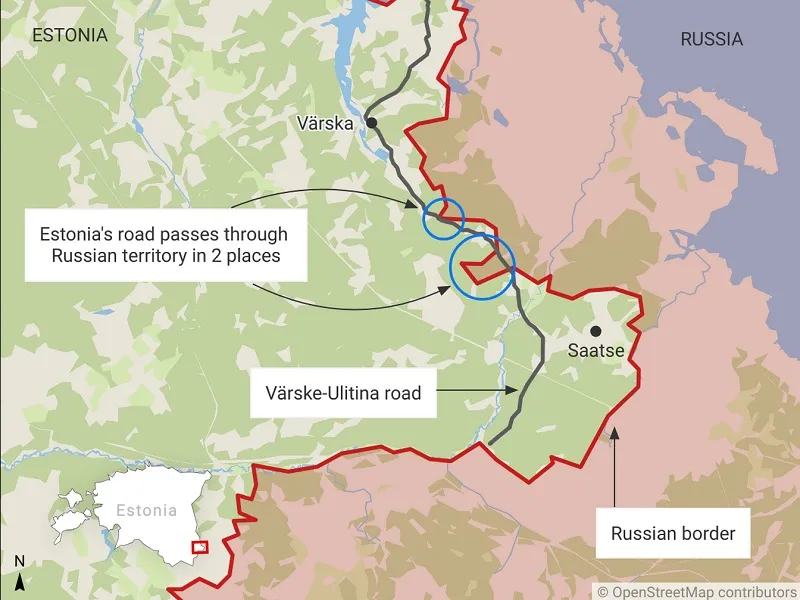
Estonia’s temporary closure of a road through the Russian-controlled “Saatse Boot” after around 10 Russian troops were spotted standing in the middle of it prompted another round of hysteria. Some connected it to last month’s alleged maritime airspace violation to speculate that “Russia has entered ‘Phase Zero’ — the informational and psychological condition setting phase — of its campaign to prepare for a possible NATO-Russia war in the future.” That’s arguably not the case as will now be explained.

The “Saatse Boot” is a legacy of the Soviet era from when Russia and Estonia were part of the USSR. Moscow never foresaw that this sliver of territory would one day connect two rural parts of a hostile military bloc, NATO, when delineating the border between these then-Soviet Republics. The road that passes through it, along which non-Russians (including tourists) are allowed to transit but not stop, was never significant to begin with and is even less so in recent years after an alternative was built.

This geopolitical-logistical oddity is therefore capable of easily attracting outsized attention, ergo the likely reason why Russia reportedly decided to order some troops to stand in the middle of it recently, not to saber-rattle against NATO but to troll Estonia. That country is one of the loudest anti-Russian voices in NATO and the EU, which are complementary US-controlled organizations at this point, and its regular harangues against Russia have fueled both blocs’ increasingly aggressive actions as of late.

Seeing as how neither of the aforesaid trends is expected to abate, thus leading to the prediction that NATO-Russian tensions will persist with varying degrees of seriousness (whether in general, as regards the Baltic region, or specifically centered on Estonia), Russia might have thought to make the best of it. Symbolically reaffirming its sovereignty over the “Saatse Boot” with “little green men” could have been meant to unsettle Estonians since it would remind them of the Crimean Operation with all that entailed.

For that to happen, local and international media would have to inadvertently play their part in sowing panic among the population, which contextualizes Estonian Foreign Minister Margus Tsahkna’s tweet downplaying the situation. His response is still a soft power victory of sorts for Russia, however, since it represents a successful example of so-called “reflexive control” whereby Moscow was able to manipulate him into doing something that advances its own interests without him even realizing it.

To elaborate, he could either go along with the anticipated media hype at the cost of sowing panic or downplay the incident at the cost of people questioning his recent fearmongering about Russia’s alleged maritime airspace violation, thus placing him in a dilemma. He ultimately calculated that the latter was the least bad option, perhaps believing that the potentially resultant confusion and possibly associated demoralization would be more comparatively manageable than widespread panic, which makes sense.

In any case, no “border scare” objectively exists seeing as how the latest incident took place entirely within Russian territory and concerned only a handful of troops, which in no way suggests “preparations for a possible NATO-Russia war in the future” like some speculated. All that arguably happened was that Russia creatively employed “reflexive control” to troll Estonia by placing its officials in a zero-sum dilemma whereby whichever response they’d resort to would advance Russia’s soft power interests.

https://korybko.substack.com/p/the-late ... ian-border

******

Tightening immigration controls
October 14, 5:02 PM

Image

Results of the adjustment of the Russian Federation migration control policy in 2025.

A general tightening of controls and the fight against corruption in the sphere of migrant legalization in the Russian Federation is noted.
As has been noted repeatedly, any tightening of controls is pointless if they are undermined by systemic corruption in regulatory and oversight bodies. And judging by the cases involving individuals who have managed to legalize thousands of migrants for money, circumventing current legislation, all the clamor for control is meaningless – it will all be profaned by petty corruption. Moreover, this isn't just about illegal migration, but also about the fact that enemy agents and terrorists can easily enter the country through such channels. And in a wartime environment, this isn't just corruption, but actual aiding the enemy.

Migration flows into the Russian Federation won't disappear on their own – the country is experiencing a severe labor shortage amid extremely low unemployment. Therefore, the question isn't whether migration will occur. Of course, it won't disappear. Objective economic factors contribute to it. But control over these flows could certainly be improved, and efforts must be made to attract qualified personnel to the country.

P.S. I believe the stated registry statistics are only part of the overall picture, which also includes those who are not listed in any registry.

https://colonelcassad.livejournal.com/10128020.html

Google Translator
"There is great chaos under heaven; the situation is excellent."

User avatar
blindpig
Posts: 15306
Joined: Fri Jul 14, 2017 5:44 pm
Location: Turtle Island
Contact:

Re: Russia today

Post by blindpig » Fri Oct 17, 2025 3:18 pm

HOW THE TRUMP TELEPHONE CALL AND TWEET WENT DOWN IN MOSCOW

Image

By John Helmer, Moscow @bears_with

By the close of Thursday there was a difference of opinion between the Kremlin and the White House on what had taken place on the telephone earlier that evening between President Vladimir Putin and President Donald Trump.

More exactly, there had been argument over Trump’s threat to send long-range Tomahawk cruise missiles through NATO to the Ukraine for firing at the Russian hinterland.

In Trump’s summary, tweeted at 20:11 Moscow time, he said “great progress was made with today’s telephone conversation.” He said the main points of conversation were the Middle East peace plan; the Melania Trump initiative on the war-displaced children; “a great deal of time talking about Trade between Russia and the United States when the War with Ukraine is over”; a new meeting between foreign ministers, Marco Rubio and Sergei Lavrov; and Budapest for the meeting to follow between the presidents.

In Ushakov’s summary, posted by the Kremlin an hour later at 21:10, the call had lasted “almost two and a half hours. Clearly, it was a rather substantive and at the same time very open and frank exchange.”

The last phrase means there was serious disagreement. This was over Trump’s challenge to Putin’s military capacities as a “paper tiger” by the Tomahawk threat. According to Ushakov, “The issue of potential supplies of long-range Tomahawk cruise missiles to Ukraine was also raised. Vladimir Putin reiterated his position that Tomahawks would not change the situation on the battlefield but would inflict substantial damage to relations between our countries, to say nothing of the prospects for a peaceful settlement.”

Ushakov’s summary omitted to record what Trump had replied to Putin on this. Trump’s tweet didn’t mention Tomahawk at all. They did agree, Ushakov said, to transfer the argument to their subordinates for a meeting next week, and then to meet directly in a new summit in Hungary.

Ushakov’s readout of the call ended on the line: “Overall, I would say that the telephone contact between the Russian and US presidents was very useful, and the two leaders agreed to stay in touch.”

For the time being, Trump thinks his Tomahawk threat is working; Putin thinks he has delayed the move and made its cancellation the precondition for the Budapest summit.

Trump first disclosed publicly by tweet that he was speaking to Putin at 18:21 pm Moscow time. “I am speaking to President Putin now. The conversation is ongoing, a lengthy one, and I will report the contents, as will President Putin, at its conclusion. Thank you for your attention to this matter!”

Then at 20:11 Moscow time Trump posted his summary of the telephone conversation. The sequence he was planning to follow, he said – meeting with Vladimir Zelensky in Washington the next day; meeting of “High Level Advisors next week.” After that, without an agreement on the date, Trump wrote that “President Putin and I will then meet in an agreed upon location, Budapest, Hungary, to see if we can bring this “inglorious” War, between Russia and Ukraine, to an end.”

Image

The Russian state media have been slow to pick up on Ushakov’s communiqué and report the argument over the Tomahawks.

RIA Novosti reported: “The Kremlin confirmed the information about the conversation.” The brief bulletin appeared at 18:27 and was updated at 19:43. Then RIA Novosti reported the Trump tweet at 20:08, with an update at 21:05. The state medium reported a single local line: “The head of RDIF [Russia Direct Investment Fund], Kirill Dmitriev, called the talks of the presidents of Russia and the United States positive and important for the whole world.” It is unclear whether Dmitriev was expressing his reaction to the telephone call or an article of his faith.

RT, the state medium for international broadcasting, followed at 20:24, reporting Trump’s tweet without a Kremlin response. Instead, the broadcaster noted: “Russian Foreign Minister Sergei Lavrov on Wednesday praised the Trump administration’s diplomatic outreach and noted that it is the sole Western government that has made an effort to understand the fundamental causes of the Ukraine conflict. Moscow is still awaiting Washington’s response to the roadmap presented at the Alaska summit, he added.”

At 21:00 Sputnik News reported a verbatim summary of Ushakov’s readout.

Image
Source: https://sputnikglobe.com/20251016/trump ... 75070.html

RT missed Ushakov and followed with a report that the Prime Minister of Hungary, Victor Orban, had agreed with Trump: “‘We are ready!’ Orban wrote [23:13 Moscow time]. ‘The planned meeting between the American and Russian presidents is great news for the peace-loving people of the world,’ the Hungarian prime minister added.” Orban said that he was speaking after Trump had called him with the news. RT has not reported any communication between Orban and Putin.

If Trump was expecting, as he had tweeted, that Putin will “report the contents [of the conversation]”, he may be disappointed. That’s how he described his mind towards Putin on Tuesday (October 14). “I’m very disappointed because Vladimir and I had a very good relationship, probably still do. I don’t know why he continues with this war. This war has been so bad for him. He’s going into four years of a war that should have beaten — he should have won that war in one week.” Asked by a reporter the next day (October 15) if he planned to talk to Putin about sending Tomahawk cruise missiles through NATO to the Ukraine, Trump had replied: “No, we’re looking at other options.”

Following the call to Moscow, at a dinner in the new White House ballroom, Trump said he wasn’t feeling disappointed. “We’ve interestingly made a lot of progress today because of what took place in the Middle East. Uh, only the deep-thinking business people would understand that, of which we have a lot of them.”

https://johnhelmer.net/how-the-trump-te ... more-92581

"deep-thinking business people", hmm...'progress' for those scum means real estate development and great profit. I think we'll see 'Trump Rivera' coming in the back door.

******

Europe and the Myth of the “Russian Nemesis”. The Genesis of Russophobia
October 14, 2025
By Dr. F. Andrew Wolf, Jr., Global Research, 9/30/25

F. Andrew Wolf, Jr. is director of The Fulcrum Institute, a new organization of current and former scholars, which engages in research and commentary, focusing on political and cultural issues on both sides of the Atlantic. After service in the USAF (Lt.Col.-Intel) Dr. Wolf obtained a PhD-philosophy (Wales), MA-theology (Univ. S. Africa), MTh-philosophical theology (TCU-Brite Div.). He taught philosophy, humanities and theology in the US and S. Africa before retiring from university. He is a regular contributor to Global Research.

The past several weeks has witnessed tensions between EU political elites and the Kremlin escalating, needlessly. A contrived drone incident in Poland, Estonian airspace allegedly being violated by Russian planes, and East European politicians urging NATO to shoot down Russian aircraft — it all points to a deliberate attempt to provoke Moscow and garner Washington’s attention.

But this sudden propensity toward provocation says less about Moscow and more about EU insecurity. With US security guarantees steadily declining, the bloc’s governments are grasping at an old but favorite retreat: the myth of the “Russian threat.”

It is a conjured story that has lingered in European consciousness for more than five centuries, and it speaks clearly to Western Europe’s insecurity – rather than any Russian territorial ambitions.

There are reasons why the EU’s desperate posturing is laced with deceit. Washington’s inclination towards underwriting European security is diminishing. Western media suggests that US officials have told their European counterparts that direct military aid to Eastern Europe may soon be scaled back. Political elites in the Baltics and some former Soviet republics view this as an untenable situation. Hence, the group’s foreign policy initiatives are routinely directed towards provoking a response from Russia, hoping to extract security guarantees and military resources from the US.

Furthermore, and this is the fallacy of the EU position, the latter has no alternative strategy. Without US acquiescence, it cannot conceive of a foreign policy beyond merely provoking the Russian “Bear.” Reintroducing Russia as its “existential” nemesis provides a convenient way to gain Washington’s attention – and money if possible.

The irony is glaring: Russia has no interest in the territory of its smaller neighbors, because it is not in its best interest to do so. The Baltics, Poland, and Finland engaging for decades in anti-Russian rhetoric notwithstanding, Moscow seeks no revenge or a reckoning — again, because it’s not in its interest to so engage. Their relevance in world affairs is negligible. But for the political elites, clinging to the myth of Russian aggression has become the only recourse they, shortsightedly, believe is available to them.

The Genesis of Russophobia
The roots of this myth lie in neither the Cold War nor the 19th century “Great Game” rivalry between empires; rather, its emergence can be traced to the rather cowardly insecurity of Baltic barons and the opportunism of German knights in Livonia and Prussia.

In the late 15th century, Polish monarchs considered sending German knights to fight the expanding Ottoman Empire. The idea was horrifying to them. For centuries, they had lived comfortably in the Baltics while merely skirmishing with Russian militias. The Ottoman Turks was altogether different. The memory of Nicopolis was still a vivid memory – Ottoman forces executed virtually all captured knights.

Unwilling to face a real threat and a formidable enemy, the Livonian and Prussian knights initiated a propaganda campaign. The goal was to persuade the balance of Europe that Russia was an enemy as dangerous, and perhaps even more so, than the Ottomans. The strategy succeeded: Rome granted indulgences and support, ensuring the knights could remain at home, while still enjoying the prestige of crusaders fighting a “holy war.”

The myth was born: a confluence of fear, opportunism, and financial gain. Eventually, Western Europe (particularly France and Britain) absorbed the deception into a broader scheme of Russophobia – a blend of contempt and anxiety over a vast empire they could neither conquer nor ignore. And in the 20th century England’s academics, especially through its Rhodes Scholar program, indoctrinated generations of America’s best and brightest who became influential in advising presidents and secretaries of state in US foreign policy. Russophobia crossed the Atlantic.

Reflections of the Past
Today, history repeats itself. Once more, Russia’s neighbors (anxious and insecure) seek protection from an Atlantic suzerain preoccupied with larger challenges. Five centuries ago, the Ottomans consumed Europe’s attention; today, it is China – the true strategic rival of the United States.

Little has changed, however, with European elites. They cannot imagine a political identity without playing the role of “victim.” Their economies and influence are far too insignificant, so they inflate the specter of Russian aggression in a futile attempt to remain relevant to Washington and Brussels.

Russia’s foreign minister Sergei Lavrov told the United Nations this week that Moscow has no intention of attacking Europe or NATO countries. Moscow has not the desire and certainly not the need to “invade” the Baltics or Poland. In the 15th century, Ivan III was concerned with issues of trade, economic relations, and Orthodox Christian Church leadership — not with conquest for the sake of territorial gain. Today, Russia’s aims are equally pragmatic: stability, sovereignty, and relations built around trade.

Poland vs the Rest of Europe
The contrast with Poland is instructive. In the 15th century, Poland agitated for war with Russia. In the 21st, it has chosen a more cautious course, focusing on steady economic growth and avoiding reckless entanglements. Unlike the Baltics, Warsaw has built a measure of gravitas in European politics. That success has made it a target of envy in Berlin, Paris, and London, who would prefer Poland to be dragged into open confrontation with Moscow.

But Poland’s refusal to adopt the euro (much like Britain and the northern countries) has made it resilient, mitigating the leverage of German and French economic dominance. And Washington is equally reluctant to risk a “European entanglement” that would distract from its priorities in the Pacific.

What History Teaches
The myth of the Russian threat was not born of Russian ambition but of broader European insecurity and avarice. European elites in the 21st century perpetuate the deception to distract their own populations from witnessing their own weakness and irrelevance.

What began as propaganda in Cologne in the 16th century still shapes West European discourse, today. But deceit cannot alter reality once it is recognized for what it is – a “lie.” Russia seeks not conflict — only to secure its interests. Europe and Britain understand this – it just doesn’t fit their political agendas.

It is self-defeating for the EU to cling to invented peril; it distracts attention from the real domestic challenges facing it. And in doing so, it risks repeating the same missteps that have dogged its politics for half a millennium – a reticence to deal with actual, rather than virtual, reality.

https://natyliesbaldwin.com/2025/10/eur ... ssophobia/

******

Syria respects Russia's interests
October 15, 3:19 PM

Image
Putin and Assad. June 25, 2024

Image
Putin and Julani. October 15, 2025.

Judging by the statements, Russia has achieved its objective of maintaining military bases in Syria, thereby minimizing the costs of a regime change in Syria.
Assad himself, of course, will not be sent back to Syria.

https://colonelcassad.livejournal.com/10130016.html

On the West's sabotage and terrorist war against Russia
October 16, 12:56

Image

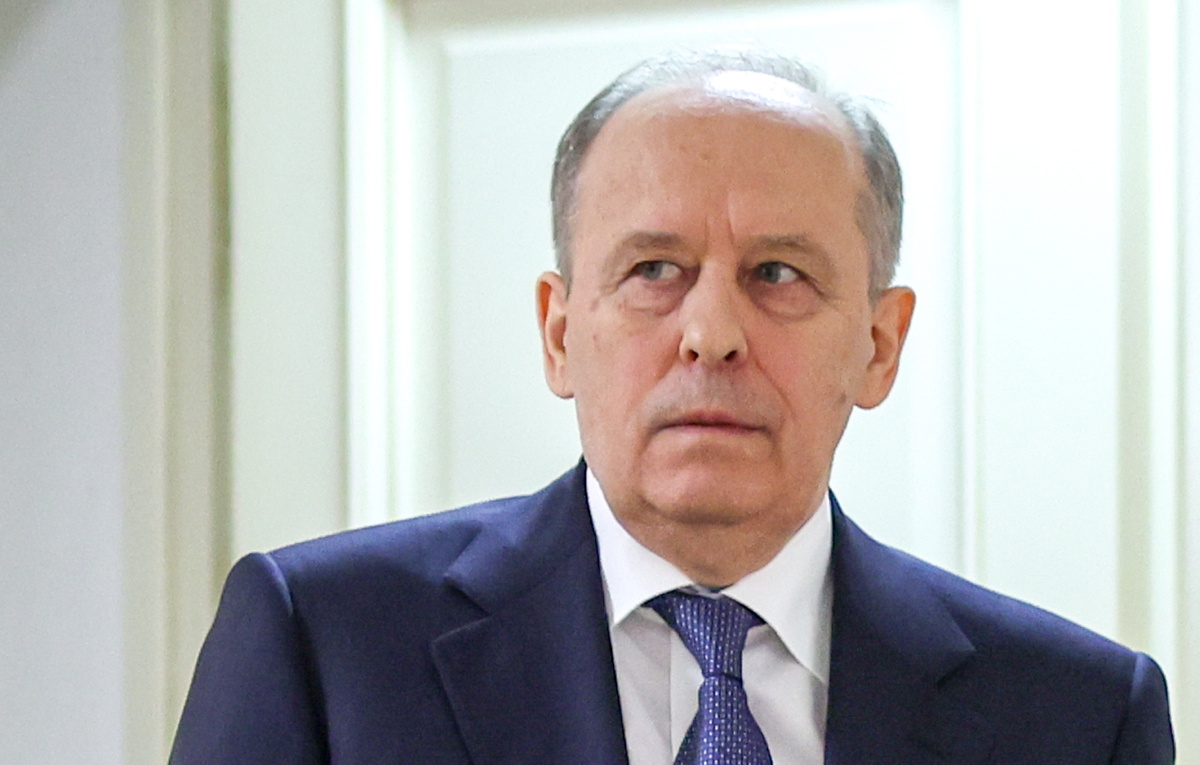
The main points of FSB Director Bortnikov's report on the West's sabotage and terrorist war against the Russian Federation.

On the UK's anti-Russian activities
Britain, by intimidating EU countries with the Russian threat, may want to ensure the flow of their finances to itself.
The British Army's SAS special forces are directly involved in the fighting against Russia.
Britain insists on accelerated European preparations for an armed confrontation with Russia on land, at sea, and in the air.
British intelligence agencies are planning to use combat swimmers to attack critical infrastructure in Russia.
There is reliable information that terrorist attacks and sabotage in the Russian Federation are carried out under the patronage of the British intelligence services.
London provided propaganda support for the SBU's Operation Spider Web, planting falsehoods about the allegedly enormous damage inflicted on Russia.
The SBU carried out Operation Spider's Web ahead of the Russian-Ukrainian talks in Istanbul in June under the supervision of British intelligence.
A series of drone strikes on the offices and facilities of the Caspian Pipeline Consortium were planned by instructors from the British intelligence services.
London is pitting people coming to Russia from Central Asia and the Caucasus against each other.
It is London that is orchestrating Brussels' policy of disrupting the Ukrainian settlement.
MI6 leadership calls for "killing all undesirables" in Russia.
Russia has information about British and Ukrainian intelligence services preparing sabotage against the Turkish Stream gas pipeline.

On the confrontation with the West
European NGOs have taken on the task of disrupting ties between CIS countries. British, French, German, and Polish NGOs have become more active in the Commonwealth.
NATO is expanding into the CIS under the guise of aiding security forces.
The West is relying on quantum technologies to crack the cryptographic protection of CIS countries. The US could gain a tool against all cryptographic protection systems within 5-10 years.
The consequences of a clash between Europe and Russia could be disastrous.
Western elites are trying to hinder the new world architecture through their intelligence agencies.
Professionals have no doubt that NATO intelligence services are involved in incidents involving alleged Russian drones over EU territory.

About the terrorist threat
A number of foreign private military companies are involved in the resource "pumping" of the ISIS (a terrorist organization banned in Russia) branch in Afghanistan.
We are seeing increasing operations to transfer terrorist fighters from the Middle East to Afghanistan.
The leaders of ISIS (a terrorist organization banned in Russia) consider their immediate goal to be establishing control over the northern regions of the country with access to the CIS border.
The group launched online propaganda in Tajik, Kyrgyz, Uzbek, and—unprecedentedly—Kazakh.
Following the rise to power in Syria of Hayat Tahrir al-Sham (a terrorist organization banned in Russia) and the military escalation by Israel, a dramatic increase in the number of online communities promoting jihadist ideology has been recorded.
https://www.kommersant.ru/doc/8121390 - zinc

https://colonelcassad.livejournal.com/10131835.html

How will Air Force One fly to the summit in Hungary?
October 17, 3:00 PM

Image

How will Air Force One fly to the summit in Hungary?

For reference. The Il-96-300PU is a highly protected platform with a multi-layered defense system: MAWS, lasers, DIRCM infrared countermeasures, flares, electronic warfare, armor, and redundancy. It also has a "nuclear button" inside, along with an escort of fighters and an Il-22PP "Porubshchik" fighter jet, airborne relays, and so on. In short, it's the most secure aircraft in non-combat conditions.

Aircraft No. 1 has three routes, each a geopolitical construct in its own right.

The main and safest is the southern route: Moscow - Sochi - the Black Sea along Turkey - Istanbul - Bulgaria or Greece (bypassing NATO zones) - Serbia - Budapest. Erdogan remembers who saved him; Serbia is an ally, and Hungary guarantees his immunity. Escort in flight is provided by the Russian Aerospace Forces, over the sea by the Turkish Air Force, and over the Balkans by the Serbian and Hungarian Air Forces. The US Air Force's "combat umbrella" is being discussed separately. This is extraordinary, but Putin was already escorted by F-22s near Alaska.

The second (northern) route, through Belarus and Poland, is very overconfident and extremely dangerous. It's a dense zone of NATO air defenses, air force, a bunch of Ukrainians, and psychopathic politicians. Yes, the Batkin Falcons will cover us up to the western border, and Iskander missiles will target Poland with nuclear weapons, but the risks are comparable to flying through a thunderstorm.

The third, extended southern route: Moscow - Caspian - Azerbaijan - Ankara - Serbia - Hungary. It's longer, but completely removes the route from direct NATO control. Escorts will include the Azerbaijani Air Force, Turks, Serbs, and Hungarians. A sort of insurance option.

The risk of a direct attack is minimal, but there are plenty of "gray scenarios" and threats. The SBU, GUR, and the Ukrainian Armed Forces will be bending over backwards, but the main thing is that the British are in the game, having repeatedly planned "incidents" with undesirable leaders. Although everyone understands that any identified attack on a government aircraft with the president on board is a casus belli without reservation. A forced landing, interception, and even the assignment of NATO air defense escort are acts of aggression. Any emergency is enough to set half the world ablaze.

In any case, we expect images of escorts and a beautiful game with false departure windows, backup aircraft, controlled leaks to disorient OSINT, etc.

https://t.me/mayday_7700/4944 - zinc.

Brussels announced today that there are no obstacles to Putin and Lavrov's trip to Hungary.


Google Translator.

******

Disgraced Russian ex-oligarch wanted over coup plot – FSB
Mikhail Khodorkovsky and other exiled opposition figures are looking to seize power in the country, the agency has said

Image
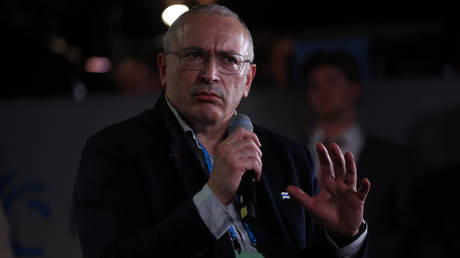
FILE PHOTO: Former head of Yukos oil company Mikhail Khodorkovsky speaking during a conference. © Getty Images / Johannes Simon
A criminal case has been launched in Russia against exiled former tycoon Mikhail Khodorkovsky and more than 20 other opposition figures from the so-called Russian Antiwar Committee (RAC) over an alleged plot for the violent seizure of power and the organization of a terrorist group, the Federal Security Service (FSB) has said.

Khodorkovsky amassed a fortune in the 1990s as head of the now defunct Yukos oil company before his high-profile arrest in 2003. He was sentenced to 14 years in prison after being convicted on charges including tax evasion and fraud, but was pardoned by Russian President Vladimir Putin in 2013. The ex-oligarch, who left Russia shortly after his release, is currently living in London. In 2015, a Russian court issued an international arrest warrant for Khordorkovsky on charges of ordering a murder.

The goal of the RAC, which was established by Khodorkovsky in 2022 shortly after the escalation of the Ukraine conflict, is “the violent seizure of power and the overthrow of the constitutional order in the Russia,” which is openly stated in the organization’s founding document, the FSB said in a statement on Tuesday.

In the RAC document, committee members claim that “Putin’s regime is illegitimate and criminal,” and “must be liquidated.” They also said they were looking to stop what they called Russian “aggression” against Ukraine. Moscow maintains that the Ukraine conflict was provoked by the West and that Russia is defending itself.

In early October, the RAC took part in the establishment of the so-called ‘Platform for Dialogue with Russian Democratic Forces’ at the Parliamentary Assembly of the Council of Europe (PACE). “Khodorkovsky presents the platform to Western countries as a ‘constituent assembly for the transitional period’ and an alternative to the Russian government,” the FSB said.

According to the agency, Khodorkovsky and his allies, including former world chess champion Garry Kasparov, former Russian Prime Minister Mikhail Kasyanov, and opposition activists Vladimir Kara-Murza and Andrey Pivovarov, who were freed during a 2024 prisoner swap with the West, “provide funding to Ukrainian nationalist paramilitary units, designated as terrorist groups by Russia, and also conduct recruiting activities… for these units for their subsequent use in their plot of a forceful seizure of power in the Russia.”

Investigations are currently underway against Khodorkovsky, who is also wanted over public calls for terrorism, and his accomplices, the FSB said. They will be brought to justice in accordance with Russian law, it added.

https://swentr.site/russia/626404-khodo ... -coup-fsb/
"There is great chaos under heaven; the situation is excellent."

User avatar
blindpig
Posts: 15306
Joined: Fri Jul 14, 2017 5:44 pm
Location: Turtle Island
Contact:

Re: Russia today

Post by blindpig » Sat Oct 18, 2025 3:19 pm

Another Year, Another Russian Energy Week International Forum

The plenary session featuring President Putin
Karl Sanchez
Oct 16, 2025

Image

Before I get into the following translation, I want to congratulate the 5% of the readers of yesterday’s article that chose to also watch the linked video and learn the overall lesson I was trying to provide. Today’s Hudson/Wolff chat was even more provocative as Hudson explained what Trump’s doing is implementing a policy that was announced almost 30 years ago and indeed was decided upon in 1992 but not formally announced until 1996—the quest to attain Full Spectrum Domination—although Hudson didn’t call it out as that but rather described its components.

As the title indicates, Putin gave a speech to the people assembled for the eighth annual Russian Energy Week International Forum’s Plenary Session whose topic this year is “Creating the Energy of the Future Together,” with this year attended by representatives of 85 countries. As we know, energy issues have dominated headlines for weeks as Trump tries to force nations via gangster methods to get them to cease buying Russian hydrocarbons since they supposedly provide the monies for Russia’s SMO in Ukraine, which happens to be a gross distortion as are most of the words emanating from Mr. Trump, such as his announcement that India had ceased purchasing Russian oil, which was an utter falsehood. Recently WTI oil prices dropped below the $60/bbl mark, which is an important financial mark related to the profitability of fracking methods. Those of us who studied the Peak Oil concept in the early 2000s will find that astounding, which it is. So, with oil so cheap and available why does Trump want to invade and steal Venezuela’s oil. which happens to have the largest proven planetary reserves? Perhaps there’s a scarcity looming in the near future that’s being kept secret, and we know the EIA and IEA are not to be trusted as they’re run by Western oil interests who are well known to kill to make a profit. But enough of all that as those developments merit their own article.

You’ll note in the header image there’s no additional chair for Putin to occupy after his speech meaning there’ll be no Q&A between him and the panel when he finishes which is somewhat unusual for the event. Putin’s speech is somewhat short at just under 30-minutes. I’ll mention that just last September the Outlaw US Empire’s Secretary of Energy Chris Wright announced that the Empire must add 100 Gigawatts of “firm power capacity” in the next five years primarily so AI data centers can have enough continual juice to operate, which happens to be the only potential growth point within the Empire’s non-financialized portion of its economy. That should give readers an idea of just how important the growth of electricity output will be over the ensuing years IF all the envisioned new tech developments are to be realized. Of course, that need was foreseen by the economic planners of the non-Neoliberal economies of Russia and China such that they don’t need to pull their hair out over the lack of power, although in Russia the forecast need was underestimated, a mistake that’s being rectified. So, let’s read what Putin has to say about energy from the two previous years’s forums which can be found in the archives:
V. Putin: Good afternoon, dear ladies and gentlemen! Dear friends!

I would like to welcome all of you to the eighth edition of the Russian Energy Week International Forum. You are already communicating with each other and have the opportunity to learn about each other’s positions. I am unlikely to tell you anything that you do not already know, but I will nevertheless allow myself to express my position on some key issues.

We are certainly pleased to welcome the heads of leading global companies, specialists, and industry experts to Moscow for a substantive and meaningful dialogue on the development of the fuel and energy sector.

Such a dialogue is especially important in the context of intensive, fundamental changes in the global market. This is exactly what energy and service companies, energy suppliers and consumers, and even entire countries are going through today.

During my speech, I will discuss some of the main trends in modern energy and, of course, present our view of the challenges facing the global and Russian energy sectors.

The first such challenge is the reconfiguration of global energy ties. In many ways, this is an objective and natural process: new centers of economic development are emerging, and consumption is growing. However, we are also facing an artificial disruption of the energy architecture caused by the aggressive and assertive actions of certain Western elites.

As you know, many European countries, for example, have refused to purchase Russian energy resources under political pressure. I have already noted the consequences of such a refusal for the Western countries themselves, for their economic and production potential.

We can see the consequences of these actions in the European Union, including a decline in industrial output, higher prices due to more expensive overseas oil and gas, and a decrease in the competitiveness of European goods and the economy as a whole.

According to Eurostat, industrial production in the Eurozone remained 1.2 percent lower in July 2022 than in 2021. The decline in industrial production in Germany, the so-called engine of the European economy, continued. In July 2022, industrial production decreased by 6.6 percent compared to the average level of 2021.

But of course, we are not talking about the problems of Europeans right now, but rather about the global energy market as a whole, where, as I have already said, there is an objective reformatting of supply chains and a shift in the logistics of energy resources towards the Global South, the dynamic countries of the Asia-Pacific region, Africa, and Latin America, with more reliable routes, new hubs, and ports that meet the current and future needs of buyers.

And these needs are certainly growing; the global economy is growing year by year, despite all the problems. The pace is changing, but it’s still positive, and the needs are growing. According to estimates, global oil demand will reach 104.5 million barrels per day this year, which is more than a million barrels more than last year.

The main factors driving consumption growth are the active development of petrochemicals, which is growing faster than global GDP, and the transportation sector, where many plans–previous plans–-to phase out internal combustion engines are being realistically shifted to the right: people are using cars that run on gasoline, and they will continue to use them for a long time. And then, electric motors are emerging–-yes, that’s true. But electricity has to come from somewhere-–it doesn’t just appear out of thin air; it has to be produced from something, such as fuel oil, coal, and so on.

Russia remains one of the leading oil producers, despite the use of unfair competition mechanisms against us. We account for about ten percent of global oil production, and we expect to produce 510 million tons of oil this year. This is about one percent lower than last year, but I would like to draw your attention, dear colleagues, that this is a voluntary reduction in accordance with the OPEC Plus agreement.

The Russian oil sector is operating stably and making plans for the future. Our companies are not only reliably supplying the domestic market and developing oil refining, but they are also demonstrating flexibility in the face of the challenging situation on the external market and have been able to establish new supply and payment channels. Previously, our exports of oil and petroleum products were primarily focused on a single consumer, the European Union, but now the geography is much broader.

As I have already said, Russia continues to cooperate within the framework of OPEC Plus. Based on mutual interests, we and our partners are fulfilling our obligations to balance the global oil market. I would like to emphasize that this is done not only for producers, but also for consumers.

There is a result of our joint efforts. First of all, I am referring to the volume of supply on the market and the price situation. These parameters are acceptable to both producers and consumers of oil, allowing the industry to launch investment projects and, most importantly, providing conditions for a more predictable development of the global economy. Predictability in the oil market is perhaps the most important factor in this sector of the global economy.

As for the global gas market, the supply chains are also changing, and the reasons are also objective. Gas consumption is steadily increasing in the Asia-Pacific region, the Middle East, and Latin America, while in Europe, the demand for gas is still lower than in 2019. Why is the demand for primary energy lower? It’s because industrial production is decreasing, and there’s no need for as much gas.

In other words, the refusal of some European countries to buy Russian gas and the sabotage of the Nord Stream pipelines have cut us off from our traditional markets and dealt a blow to an important sector of our energy sector. It is true that our gas exports initially decreased, but they have since started to grow again. Although they have not fully recovered, the growth is clearly visible.

The European Union’s demarche has only accelerated the shift in our supply vector towards more promising and responsible buyers, countries that understand their interests and act rationally based on these national interests.

Our gas companies provide these markets with reliable supplies, as we have always done in all areas. Together with our partners, we are working to increase the export potential of the Russian gas industry, not only in terms of pipeline gas, but also in terms of LNG supplies.

At the same time, we are increasing domestic consumption, which is extremely important, including at the gas chemical plants that are being built in the Volga region, Siberia, and the Russian Far East. We are also increasing the supply of natural gas to our cities and towns. Over the past five years, we have laid approximately 100,000 kilometers of gas distribution networks. As a result, the level of gasification is approaching 75 percent and will continue to grow. To be more precise, 74.7 percent [the level of gasification], and the increase since 2019 has been 6.1 percentage points.

The social gasification programme continues. Over the past four years, almost a million households in Russia have gained access to pipeline gas. We expect this number to increase by another two million in the future. Gas pipelines have been laid to 1,393,000 plots, and almost 989,000 connections have been made.

At the same time, I would like to draw your attention to the following. Russia has unique gas reserves. We maintain high levels of gas production, but we need to constantly work on our resource base and replenish it, including through the development of hard-to-recover reserves.

At the beginning of the year, I instructed the Government to prepare a special program in this regard in the center of our gas industry, the Yamalo-Nenets Autonomous District. I ask my colleagues to carry out this work within the planned timeframe and start implementing the program.

Now, let me say a few words about the coal sector. Despite the negative forecasts of some experts, coal still accounts for a significant share of the global energy balance. However, there are clear regional differences. While Western markets are reducing their demand for coal, Asian countries are increasing their consumption.

It is clear that the issue is primarily the economic efficiency of coal generation. However, given the shift in global business activity to the Asia-Pacific region, we can expect the coal market to remain significant and large for decades to come.

Yes, like any market, it is cyclical. And now coal producers are facing a decrease in prices. In these conditions, we support our companies and employees, including by restructuring loans.

I ask the government to continue monitoring the situation and work with businesses to set up support tools. However, the coal industry must also improve its efficiency and competitiveness.

Dear colleagues!

The second major global trend is the increasing importance of the electric power industry.

It is estimated that global electricity production will double in the next 25 years. Moreover, about 85 percent of the additional demand will be generated outside the so-called developed economies, in the countries of the Global South.

The Russian energy system is one of the largest in the world. Our generation facilities have a total installed capacity of almost 270 gigawatts, and this huge complex operates stably and precisely.

At the same time, we are experiencing local electricity shortages, especially in areas where large industrial, transport, and logistics projects are being built. This shortage needs to be addressed by developing our electricity networks, upgrading our generation equipment, and commissioning new power plants.

At the same time, I would like to emphasize that the costs of energy companies should not be mechanically transferred to the tariff and should not be borne by consumers. More flexible solutions are needed, including regulatory innovations, demand management for electricity, and mechanisms to support investments in the fuel and energy sector. I am looking forward to receiving proposals from the Russian government on this matter, which we will discuss at a separate meeting in the near future.

I would also like to remind you of the instructions on the development of the retail electricity market. Its conditions and tariff dynamics must meet the interests of both generating companies and consumers, including businesses, organizations, and individuals. I ask the Russian government to complete the development of the Concept for the Competitive Retail Markets for Electricity and Capacity as soon as possible.

I will repeat: where there is available energy, modern production facilities will appear, new economic sectors will develop, and capital, technology, and skilled personnel will flow there. This is, in fact, clear to everyone.

At a meeting in Vladivostok in September, we discussed the development of a fuel and energy balance for the Russian Far Eastern Federal District. This comprehensive document takes into account the optimal sources of energy for each region, such as coal, gas, fuel oil, and water resources, and sets long-term energy supply targets for the Far East.

I ask the Russian Government to determine the place of fuel and energy balances in the country’s system of strategic documents, and together with colleagues from the regions, to prepare such balances for all federal districts of Russia and use them to create a modern system of digital management of energy supply in the regions. This system should take into account the use of different types of fuel and energy resources that are most effective for each region of our country.

Next. I have already noted that Russia’s energy balance is one of the greenest in the world, and my Russian colleagues have probably mentioned this as well. This means that the vast majority of electricity in Russia, specifically 87 percent, is generated with minimal or zero carbon emissions. This includes gas-based, nuclear, renewable, and hydropower generation.

Our companies implement projects for green and long-lasting generation not only in Russia, but also abroad. For example, more than 400 hydropower projects have been implemented in 55 countries around the world with the participation of Russian scientists, engineers, and managers. RusHydro, our leading company in this field, builds hydroelectric power plants and water infrastructure while adhering to environmental safety standards and practicing sustainable water management.

Another of our high-tech leaders, Rosatom, also has extensive experience. It accounts for about 90 percent of the global market for nuclear power plant construction. About 90 percent! There are 110 Russian-designed power units built worldwide.

Russia is the only country in the world that has the necessary competencies in the entire nuclear energy chain. When we build abroad, we are not just constructing facilities, but also creating the future of the energy sector and related industries together with our partners, and building a strong national human, scientific, and technological base for the development of entire countries.

On this basis, we are building nuclear power plants in Egypt, Bangladesh, and Turkey. We intend to deepen our cooperation in the nuclear industry with the countries of the Global South, including BRICS countries. We are already working very actively in this area.

Experts believe that nuclear energy will become one of the pillars of the future global energy balance. By 2050, the capacity of global nuclear power plants will have almost doubled. In Russia, over the next 15 years, more than 29 gigawatts of nuclear power plant capacity, including small nuclear power plants, are planned to be commissioned, and no one else is currently building small nuclear power plants. While there are plans, nothing is happening in practice, except in Russia. Nuclear power generation will be introduced in the Far East and Siberia.

I would like to point out that nuclear energy plays an important role in supplying consumers, whose role is expected to increase significantly in the future. I am referring to the same electric vehicles that I mentioned earlier, as well as industrial robots and automated systems in the service sector.

The growing demand for electricity comes from the digital economy, including artificial intelligence, blockchain, and data storage and processing facilities. According to some estimates, the global energy consumption of data centers is already comparable to that of the entire heavy industry.

It is obvious that the areas I have just mentioned are a powerful factor in development. They largely determine the global competitiveness of countries, the efficiency of national economies, and the quality of people’s lives. Therefore, our plans for the development of the domestic fuel and energy complex must take into account all these trends. We are trying to do just that.

In particular, I propose to focus on supplying the digital economy and data centers with local generation facilities, which are stations that use resources that experts call “locked-in,” meaning that they are far and expensive to transport, making it more efficient to use them at the site of extraction.

I ask the Government to submit proposals for the organization of such a model. In particular, I ask you to consider the use of advanced, clean coal-fired power generation to meet the needs of digital infrastructure, data storage and processing centers, and so on. Such facilities located directly in our coal-producing regions provide modern jobs and diversify the local economy.

Dear friends!

Now the third feature of modern energy, or rather the challenge that is facing the participants of this global market. We are talking about the technological sovereignty of countries that produce oil, gas, and other energy resources. I’m sure you’ve probably talked about this at your meetings as well.

We have seen how the same elites in Western countries have suddenly refused to service equipment for the fuel and energy sector that was supplied to Russia. They have officially stated that they will not fulfill their obligations. This has once again demonstrated that they are unreliable partners and that their actions are directly linked to political circumstances, sometimes used for unfair competition.

It is clear that the commercial structures were forced to do this, and to be honest, I am referring to Western commercial structures, they were forced to do this under the pressure of their ruling political elites.

But the fact remains that Western technologies and equipment for the fuel and energy sector may become unavailable at any time for geopolitical reasons–-not only for Russia, but also for any other energy supplier that someone in the West considers an inconvenient competitor or simply an uncooperative country. We must all take this into account, as it is a reality of today. I believe that everyone understands this.

This means that we need to actively change the status of energy-producing countries from those of equipment buyers to those of technological leaders, and to create full-fledged energy sovereignty at the national level, from resource extraction and processing to the transportation of finished products.

You know that the Russian fuel and energy sector is already engaged in processes to achieve technological leadership. In fact, this is a powerful engine for the entire domestic industry and science. Our government agencies, energy companies, enterprises, and scientific institutions are jointly discussing these issues and coordinating specific steps. By the way, I know that a meeting of the Coordination Council for Import Substitution of Equipment in the Oil and Gas Sector was held here at the Energy Week.

You know, in fact, what happened–-I talked to some of our companies. Well, yes, at first–-to be honest–-they were engaged in so-called reverse engineering. But then they moved forward quite quickly. Do you understand? They meet with some of their partners who work in Europe–-they have to reduce their staff. Their main market was our market–-one of the main markets, not the main one, but one of the main markets where they sold their high-tech products.

They were forced to give up–-their production becomes unprofitable, they reduce their workforce, and they start to lose their technology. Meanwhile, our specialists are growing and becoming technological leaders, as our domestic market allows us to produce products at a high and profitable level. As a result, we have partners all over the world who are now purchasing this equipment from Russian companies. Previously, they were buying it from Europe, but now they are increasingly purchasing it from us, and this trend will continue. What have we done? We bought a ticket and decided not to go, despite the conductor’s disapproval. It’s nonsense, you know, it’s rubbish! But these are the realities of today’s existence.

Domestic services are already covering the main demand for drilling in Russia. We are increasing the production of mining equipment and field chemicals, and we are introducing our own technological solutions for servicing fields and infrastructure. Previously, many of the things I have just mentioned were done by foreign organizations, but now our Russian specialists are increasingly involved in these tasks.

Russia has a huge engineering potential and serious scientific and practical achievements in the fuel and energy sector, which have stood the test of time and proven their effectiveness in harsh natural and climatic conditions. We have the competencies, experience, and know-how to develop even in complex energy sectors and extract hard-to-recover reserves, which is especially important for the oil industry. We will do this not only on our own, but also together with our friendly countries, which are well aware of the geopolitical risks.

Russia offers comprehensive technological cooperation between energy countries that is not dependent on sanctions or external pressure. This is a true partnership based on the exchange of knowledge, experience, and the creation of industrial alliances. The results of this partnership should benefit everyone involved.

You know, as far as equipment is concerned. I just talked about it and I talked about nuclear energy. Here, Russia is truly an absolute leader: there is no dependence on anyone. Everything that is done in the nuclear field is done in Russia. Absolutely everything will be the same in all types of the energy industry, and in oil and gas equipment, the same.

Dear colleagues!

In business and expert circles, there is an increasingly widespread view that the world is entering an era of “energy realism.” The reckless and, I would argue, irresponsible actions of certain Western elites have led to a shift in focus away from energy transition parameters and the comparison of emissions from different fuels. Instead, the availability of fuel and energy, as well as the presence of networks and pipelines, and the installed capacity of energy systems, is becoming increasingly important.

In these conditions, it is especially important to effectively manage the extraction and reserves of resources, to ensure the technological and environmental development of the industry, in order to supply the domestic market, to achieve national development goals, and to implement external agreements. We have always done this, we are doing it, and we will certainly continue to do it; this is one of our absolute priorities.

Realizing these challenges, Russia intends to strengthen its position as a global energy leader and develop partnerships to build a fair and sustainable global energy model for future generations.

I very much hope that the Russian Energy Week will make a significant contribution to our joint work. I wish the participants and guests of the forum success and all the best. I am confident that many useful meetings, conversations, and discussions have already taken place. If this is the case, we are very pleased, as it means that the goal for which we have invited you to Russia is being achieved.

Thank you for your attention. Thank you very much.
]

How many holes has the West shot into their collective feet when it comes to being contractually reliable? The recent theft of a Chinese tech firm by the Netherlands at the insistence of the Outlaw US Empire is a case in point. The Trade War was escalated, a fact that Putin hinted at but didn’t elaborate upon too much. The message to nations that they need to consider the possibility of future theft, curtailment of services or parts for their energy and other infrastructure installations is paramount as enough examples now exist to give pause to reconsider choices already made. Above I made note that firm power capacity is what the Outlaw US Empire requires for its planned dominance in AI and that it needed vast construction to commence yesterday on that project. Firm power capacity means power that will always be available 24/7/365, which rules out most green sources even with massive battery storage capacity. Putin’s idea to combine data center locations with power station locations is a very logical choice. New technologies related to the burning of coal are vital: “The greatest challenge is bringing the cost of this [Carbon Capture & Sequestration] down sufficiently for ‘clean coal’ to compete with nuclear power on the basis of near-zero emissions for base-load power,” as pointed out by this somewhat dated but still informative article. Russian scientists are certainly working hard to make such systems as efficient—cost effective—as possible. And again, Trump’s policy choice of eliminating green energy subsidies and research into solutions has effectively put it out of the running for providing the know-how to clean coal and make it cost-effective.

At last year’s energy week there were 50 nations represented; this year there were 85. The only sources of power Putin omitted were solar and wind where the Chinese are global leaders, not that Russia doesn’t employ them too. They’ll always remain a small factor in Russia’s overall energy balance, with wind having the best prospects (wind is one domain of Rosatom—Rosatom Renewable Energy). Russian wind power is growing

Image

Berestovskaya Wind Farm emerges from the fog in Petrovsky District, Stavropol Krai. at a steady rate as it now constructs all its own components. Russia’s polar proximity allows it to access the polar jet streams that are close to continuous and flow at a very high rate of speed. Capturing those winds will require rather different mechanisms that are already known but have yet to be applied on an industrial scale.

Energy is critical for development. It’s long been known a major goal of Outlaw US Empire policy was to control all facets of global oil so it could simply shut off access to any nation that didn’t follow orders, like Japan in the late 1930s. The Empire still tries to control global energy markets as seen by its recent demands for obedience. We can tell by its increasing desperation that it’s failing.

https://karlof1.substack.com/p/another- ... ian-energy

*****

Treason of a private detective
October 18, 12:20

Image

Andrei Matushkin, head of a private detective association, was arrested on charges of treason.
Investigators believe Matushkin collected and transmitted information about state secrets and may have collaborated with foreign intelligence agencies, particularly those in the Baltic states.

And remember how the schizos once loved to claim that foreign spies and traitors were the brainchild of the paranoid Stalin?
As a result, while these stories were being told that such activities were merely fiction, after the start of the SVO, society was able to see for itself that extensive espionage networks, widespread cases of sabotage, betrayal, and collaboration were far from a fantasy. Then they wonder why Stalin's popularity is growing in society.

https://colonelcassad.livejournal.com/10135746.html

Sergei Kara-Murza died
October 18, 1:45 PM

Image

Sergei Kara-Murza died.

I've been reading him since the mid-1990s, when I came across his journalism and found it captivating. Then I got around to reading. Excellent for their time, "Manipulation of Consciousness" (still relevant in many ways) and "Soviet Civilization" (formed the foundation for the gradual rehabilitation of the Soviet Union in the public consciousness after the frenzy of Perestroika and the '90s) were excellent.

I'd also like to highlight "Exporting Revolution: Yushchenko, Saakashvili"—one of the first works in Russia to systematize information on the mechanisms of the first wave of color revolutions (still relevant today).
I can also recommend "Dismantling the People," "The Anti-Soviet Project," and especially "The Intelligentsia on the Ashes of Their Homeland." All of this remains relevant and topical, especially after the onset of the Soviet Military Revolution, when society and the government began to better understand the global consequences of the destruction of the USSR and the dead end of the path to the West. In his books, Kara-Murza partly anticipated future social insights.

May he rest in peace. And thank you for the books.

The administrator of the "Utro Dagestan" channel has been eliminated in Turkey.

October 18, 3:56 PM

Image

But there's some good news, too.

Abakar Abakarov, the administrator of the Telegram channel "Utro Dagestana," has been killed in Turkey. He coordinated the protests in Makhachkala during the airport seizure, which included the infamous search for Jews in an airplane turbine. He was also actively involved in inciting separatism in Dagestan. He was found with multiple stab wounds in Istanbul, in a rented villa. He was killed by an unknown assailant who came to the villa and then left with two large bags.

Abakarov had been on Russia's federal wanted list since 2023 and was hiding abroad.
The channel "Utro Dagestana" itself was originally created with funds from terrorist Ilya Ponomarev (remember that shit?).

Whoever took him down (and there were clearly plenty of willing participants), we certainly won't feel sorry for them. He was a real piece of scum.

https://colonelcassad.livejournal.com/10136259.html

Google Translator
"There is great chaos under heaven; the situation is excellent."

User avatar
blindpig
Posts: 15306
Joined: Fri Jul 14, 2017 5:44 pm
Location: Turtle Island
Contact:

Re: Russia today

Post by blindpig » Mon Oct 20, 2025 2:56 pm

Simonyan's murder was planned for $50,000.
October 20, 12:54

Image

Simonyan's murder was planned for $50,000.

The Russian Investigative Committee reported that those plotting the assassination of Russia Today head Margarita Simonyan agreed to organize the murder in exchange for 50,000 dead American presidents.
The assassination was planned by Nazis from the terrorist organization National Socialism/White Power.
All those involved in the plot were detained by FSB officers. It's clear they'll be in prison for a long time.
Previously, the FSB also thwarted an assassination attempt on TV host Vladimir Solovyov, which was being carried out at the behest of Ukraine.

FSB officers also detained someone who, on instructions from a Ukrainian handler, was planning a terrorist attack on the Georgievsk administration building in Stavropol Krai.
The terrorist conducted reconnaissance of the potential terrorist attack site. He then acquired components for making an IED.
He was caught red-handed. He'll get a hefty sentence. Under Stalin, he would have been executed for treason and terrorism.

https://colonelcassad.livejournal.com/10139745.html

Average salary
October 20, 11:13

Image

"The average monthly accrued wage of employees of organizations in 2024 amounted to 89,069 rubles, an increase of 19% compared to 2023," according to Rosstat.

Here's how it is in our city:

In the second quarter of 2025, the median salary in Sevastopol was approximately 46,700 rubles, covering 1.9 times the cost of a fixed consumer basket of goods and services. According to analysts, the median salary in Sevastopol remains 30% lower than the Russian average.

For comparison, in Krasnodar Krai, the median salary is estimated at 54,400 rubles, covering 2.1 times the cost of a fixed consumer basket of goods and services in the region. In St. Petersburg, this figure is almost 83,000 rubles (2.9 times the cost of the basket), and in Moscow, approximately 110,000 rubles (3 times the cost of the basket).

It's worth noting that as of May 2025, the average salary in Sevastopol was estimated at 65,000 rubles, and by June, this figure, according to Krymstat, had officially surpassed 70,000 rubles.

The 50% difference between the median (46,700 rubles) and average (70,200 rubles) salaries is explained by different calculation approaches. If the average salary is calculated by adding up all salaries and dividing the resulting sum by all employees, then the median represents the level above and below which 50% of employees earn.

While the first approach is more of a "hospital average," the second is considered more accurate and closer to reality.

In terms of income-to-expense ratio, Sevastopol remains at the level of the Republic of Crimea (75th place), Altai Krai (77th place), Ivanovo Oblast (78th place), and Stavropol Krai (79th place). Only the republics of the North Caucasus rank lower.

It is worth noting that, by the end of 2024, Sevastopol was the only region in Russia to record a decline in consumer demand. Sevastopol residents began to economize most on cafes and restaurants: this sector demonstrated a more than halved turnover.

https://sevastopol.su/news/zarplaty-sev ... o-reytinga - zinc.

Indeed, restaurants don't seem as full as before, but this can be attributed to the decline in tourist flow due to the war.
The gap between the average and median wages has been recorded before, including in pre-war sociology, although the median also increased over five years from 33,000 to 47,000.
An analysis of the city's labor market (https://sevastopol.gorodrabot.ru/salaries) shows that the most in-demand professions in our city remain manager, salesperson, and driver. Moreover, the most common job searches are for vacant positions, and the most common salaries offered are between 60,000 and 100,000 rubles.

https://colonelcassad.livejournal.com/10139515.html

Google Translator

******

$1 = 80.85 Rubles

******

The West Wants Belarus To Replace Supposed Russian Vassalage With Actual Polish Vassalage
Andrew Korybko
Oct 19, 2025

Image

The West already turned Ukraine, Armenia, and Moldova into anti-Russian states while stirring trouble in its ties with Azerbaijan and eagerly eyeing Central Asian leader Kazakhstan so the loss of Belarus would practically complete Russia’s strategic encirclement.

The Guardian published a piece about the aims of the West’s incipient US-led rapprochement with Lukashenko, which amounts to an attempt to tempt him into rebalancing Belarus’ ties with Russia through closer cooperation with the West. It was assessed here over the summer that he’s unlikely to split with Putin, especially not after the West tried to coup him half a decade ago and Russia since gave Belarus tactical nukes, which Lukashenko confirmed in early August’s interview with Time Magazine.

Nevertheless, while his intentions shouldn’t be doubted after he proved his loyalty to Russia throughout the course of the special operation and the associated pressure that the West placed upon Belarus, this doesn’t mean that the West still won’t try to mislead him into drifting closer towards its camp. To be sure, the “EU Defense Line” that’s being built along the bloc’s border with Belarus (and Russia) resembles a “new Berlin Wall” as his Foreign Minister described it, which could impede cooperation.

At the same time, however, the US could leverage the sway that it wields over Poland to offer Belarus security guarantees against the future aggression that Lukashenko fears from it. He arguably considers this to be a credible enough scenario to release several waves of prisoners as goodwill gestures after meeting with some of the US’ high-level envoys in Minsk over the past year. If Belarus’ security interests are ensured, which is possible, then economic incentives for rebalancing its foreign policy could follow.

Poland briefly closed its border with Belarus last month at the cost of EU-Chinese trade, €25 billion (or 3.7%) of which is conducted across their frontier, after fearmongering about its drills with Russia. Even so, President Karol Nawrocki is likely to comply with whatever directives his ideological ally Trump might make of him, so it can’t be ruled out that Poland might lead the EU dimension of the West’s rapprochement with Belarus. It’s thus far eschewed doing so but that could change under his leadership.

He envisages Poland becoming the US’ top ally, which requires going along with its requests, in order to obtain support for its grand strategic goal of reviving its Great Power status that he plans to advance via the “Three Seas Initiative”, which could one day extend to Belarus. Poland just became a trillion-dollar economy and was invited to next year’s G20 Summit as a result so it could foreseeably allow low- or even no-tariff Belarusian imports as an economic incentive for closer cooperation if tensions decrease.

This outcome would align with Western interests but lead to Belarus replacing what they present as “Russian vassalage” with actual Polish vassalage. The military-strategic objective that they’re aiming to achieve is that Lukashenko comes to trust them enough to request that Putin take back Russia’s tactical nukes and Oreshniks. On the political front, they want his chosen successor (whoever it’ll be since he said he won’t run again in 2030) to continue this Western course, thus worsening Russia’s security.

The West already turned Ukraine, Armenia, and Moldova into anti-Russian states while stirring trouble in its ties with Azerbaijan and eagerly eyeing Central Asian leader Kazakhstan so the loss of Belarus would practically complete Russia’s strategic encirclement. Russia is responsible for Belarus’ continued socio-economic stability through decades of generous energy subsidies and access to its enormous market, and it helped quell summer 2020’s Color Revolution, so Lukashenko should know better than to betray it.

https://korybko.substack.com/p/the-west ... to-replace

******

Image
Gilbert Doctorow on Judge Napolitano - “Vanity is the shadow cast by inadequacies".

When an "Expert" Loses his Footing

Gilbert Doctorow—self-proclaimed Russia expert—is maneuvering himself into the sidelines with unsubstantiated and confused theories.
Denis Dobrin / Peter Hanseler / Andreas Mylaeus
Sun 19 Oct 2025

Introduction
Gilbert Doctorow, who calls himself a “Sovietologist” and considers himself the only real Russia expert in the independent media, has been peddling theories for several days that leave even hardened political commentators speechless.

In an article published in his “Armageddon Newsletter” on Substack on October 1, 2025, he went so far as to claim that a palace revolution was imminent in the Kremlin in Moscow and that Russian society increasingly viewed Vladimir Putin as a hated Gorbachev 2.0. He also makes cheap suggestions for a successor to the Russian president, whose government ship has now accumulated too much barnacle growth and become too cumbersome.

“Vanity is the shadow cast by inadequacies"

This is so absurd that one could simply dismiss it with a shake of the head. However, such statements fuel dangerous daydreams among American and European warmongers who, despite all evidence to the contrary, have devoted themselves to the fantasy of exploiting Russia's imagined weakness. In doing so, they are happy to rely on an American historian with years of experience in the Soviet Union, who also prominently and publicly attributes to himself a professorship that he does not even hold – his academic achievements are limited to a Ph.D. in history. Furthermore, he has no current relevant direct sources in Russia except for his beloved talk shows on Russian state television.

Doctorow's confused thoughts
Russian state television talk shows as a source
This “expert” bases his theories on what he sees as sharp criticism of President Putin on Russian state television for promoting the strategy of attrition warfare in Ukraine.

Usually ultra-loyal pro-Putin talk shows such as “Sixty Minutes” and “Evening with Vladimir Solovyov” would prepare Russian society for Putin to be replaced by a much more aggressive figure on the Kremlin chessboard.

He says that the majority of Russian society demands—or at least deserves—a much tougher stance toward the West. The long-overdue decapitation strike against the neo-Nazi regime in Kiev must finally be carried out, thereby showing the West that Russia is not really a “paper tiger.” Otherwise, the West would continue to escalate its actions—all the way to nuclear war, which would then be upon us.

Verbal and other provocations
Donald Trump told 800 assembled generals and top officers of the US military at a base outside Washington, D.C., how disappointed he was that Putin had not defeated Ukraine within a week at the start of Russia's special military operation, that US nuclear submarines deployed in positions near Russia were 25 years ahead of Russian submarines in terms of technology, and that Russia generally appeared to be a “paper tiger.” J.D. Vance also repeated the old myth in an interview on Fox News that the Russian economy is in ruins and that the Russian army's territorial gains in Ukraine are insignificant.

Doctorow claims that Russia did not respond appropriately to these and other provocations, thereby demonstrating its weakness and inviting further escalation on the part of the West.

Furthermore, Russia reacted far too hesitantly and cautiously to the American escalation in arms deliveries aimed at inflicting a strategic defeat on the Russians, instead resorting to a protracted war of attrition and futile negotiations with the US. Doctorow describes this as a strategic misjudgment on Putin's part.

The accusation of appeasement
This Cassandra goes on to say that Putin has not taken a clear stance on any of this, but is instead engaging in a dangerous cosy relationship with Donald Trump. This began during meetings with Steve Witkoff on April 25, 2025 and August 6, 2025 in Moscow, and immediately afterwards with Trump in Alaska on August 15, 2025.

Such negotiation efforts are grist to the mill of Western warmongers, because Russia is indulging in the futile illusion that such negotiations could settle the war waged by the collective West. The West, in turn, interprets this as a sign of Russia's weakness.

Doctorow furher claims, that in his speech at the Valdai meeting in Sochi on October 2, 2025, Putin—as he had repeatedly done in the previous years—avoided the most pressing issues with the West. Europe was arming itself and actively preparing for a war against Russia, which was to begin in three years (sic!). Furthermore, Europe was currently attempting to impose an air and sea blockade on Russia in the Baltic region and was likely to grant Ukraine a loan of $145 billion, with frozen Russian assets serving as collateral so that Kiev could continue the war for several more years. Finally, the United States would probably equip Kiev with nuclear-capable Tomahawk cruise missiles with a long range that could reach Moscow from Ukrainian territory.

Instead of fawning over Donald Trump, the Russian public were demanding that their leaders finally show some backbone by, for example, destroying the German production facility for Taurus missiles or decapitating the Ukrainian leadership, including Zelensky, with the help of the Oreschnik system, in order to finally end the war before it escalated into a third world war.

Alarmist scaremongering

„We are headed into WWIII any which way. If Putin continues to show "restraint" such as his latest ass licking to Trum he will be deposed, replaced by Russia's war hawks and there we go... If he does not show his teeth to Trump right now we are all doomed.“
Gilbert Doctorow 14 Oktober 2025


Putin was already regarded as “Gorbachev 2.0” in Russian society. It was high time for him to be kicked out. Vladimir Putin's popularity, as confirmed by polls (recently allegedly falling from 80% to 79%!), was merely based on the fact that the wrong questions were being asked in these polls – if the Russian population were asked whether Putin was conducting the war in Ukraine correctly, his poll ratings would be significantly negative.

What effect do such statements have?
This adventurous so-called “Sovietological” theory has no factual basis whatsoever, but springs from a dangerously hyperventilating brain prone to megalomania.

In Russia, such propaganda chimeras find no support; they have no influence on Russian politics.

If we are nevertheless addressing this issue here, it is because this talk gives momentum to those forces in the US and Europe who constantly claim that Russia is weak and that regime change is imminent. Russophobic American and European warmongers could point to the fact that even a Russia expert who is critical of them assumes that “Putin's throne is shaking” and that we just need to wait a little longer until the Russian people overthrow their “king.”

Reality
The Russians cannot be provoked
The Russians do not respond to such provocations. They do not allow themselves to be baited by these attacks from the arsenal of cognitive warfare. They are professionals. They look at the map, they look at the numbers. Military professionals pay attention to what is happening at the level of actual operations, they know their statistics and understand scientific probability theory and the analysis of forces and means (Correlation of Forces and Means – COFM). Russia's strength or weakness is not determined by the bombastic chatter of dishonest, corrupt Western politicians, but by the facts – and these are clear.

Russia did not respond appropriately to the West crossing red lines? Russia has twice destroyed an entire quasi-NATO army in Ukraine, equipped and financed by the West, and is currently destroying the third and last such army in the course of its war of attrition against the West. Russia is destroying Ukraine's infrastructure and its arms industry. Russia is winning the war.

So why launch “decapitation strikes” against the Nazi regime in Kiev? This would put Russia on the path to a completely different kind of warfare, namely a path of significant escalation with a different outcome to the war than Russia is currently seeking. Russia is not trying to physically destroy NATO or occupy Europe.

Image
Russia's territorial goals from the Ukrainian perspective

Russia is presumably attempting to bring the ancient Kievan Rus back into Russia in order to avert the existential threat to Russian territory posed by the aggression emanating from Kiev at the behest of the US, Europe, and the collective West—nothing more. And Russia will achieve this goal within its own timeframe and operational plan.

Vladimir Putin has an approval rating of around 80% for good reason – and has had for 25 years. Where in world history has there ever been a coup – even if it was “only” a palace revolution – with such approval ratings? Our Cassandra studied history, so she should know this too.

Russia's economic strength
Russia also dominates economically. Its economy is growing steadily despite considerable war efforts.

Doctorow is also completely wrong in his statements about the Russian economy. For example, he claims that wages in Russia have multiplied and that the population is thus being artificially pacified—complete nonsense: certain professions (e.g., truck drivers and security personnel) have seen enormous salary increases. Many of these employees were veterans. They returned to the army during the war, leaving large gaps that had to be filled. This was naturally costly. However, most other people did not receive double or triple salaries. In December 2024, the average monthly wage was 21.9% higher than the previous year, representing the fastest wage increase since 2008. In January 2025, real wages rose by 6.5% year-on-year, while nominal wages rose by ~17.1%.

Russia's military might
Serious commentators (see also here) and military experts such as Douglas Macgregor, Lawrence Wilkerson, Jacques Baud, Andrei Martyanov and Ralph Bossard (to name but a few) know that Russian military technology is quantitatively (in terms of production capacity) and technologically at least a generation ahead of the Western alliance.

Russia's international strength
There certainly is no question of Russia being internationally isolated. The list of international associations with which Russia is connected is impressive: BRICS, the Shanghai Cooperation Organization (SCO), the Collective Security Treaty Organization (CSTO), the Eurasian Economic Union (EAEU), the Commonwealth of Independent States (CIS), the Arctic Council, the Organization of Islamic Cooperation (OIC – observer status), and as a dialogue partner of the Economic Cooperation Organization (ECO). The Global South and all of Asia are also deepening their economic and cultural ties with Russia.

Misunderstood internal controversy
Recently, there has been talk of controversy within the Russian leadership team. In his speech to the State Duma on October 8, 2025, Russian Deputy Foreign Minister Sergei Ryabkov stated that the momentum created by the two heads of state of Russia and the US at the summit in Anchorage, Alaska, to conclude agreements had essentially been exhausted. This negative outcome was mainly due to the destructive activities of the Europeans.

Some commentators have interpreted this statement as a sign of irreconcilable controversy within the Kremlin. This is misguided. They do not understand the collective leadership style of Russian government circles. Different nuances and emphases in political statements are part of the internal opinion-forming process. Those who base their analysis on the old Soviet sclerotic model and refer to it as “Sovietology” are imposing a completely inappropriate template on modern Russia and, as a result, are fundamentally mistaken in their “analysis.”

Foreign policy approach toward the US: “Speak softly and carry a big stick.”
Of course, Russians are familiar with this old saying, and they know that the US only understands its own language. Theodore Roosevelt, the 26th President of the United States, first used this phrase publicly in 1901 in a speech at the Minnesota State Fair: “Speak softly and carry a big stick; you will go far.” The phrase became a motto of his foreign policy: resolve conflicts as diplomatically as possible (“speak softly”), but always have the power to enforce your own position (“big stick”).

It has been made clear above that Russia has a clearly formidable stick at its disposal.

Keep the door open for negotiations
From this position of strength, Russia also plays to one of its greatest strengths—its ability to engage in professional diplomacy. Its basic foreign policy stance toward the US is expressed in this speech by President Putin on October 2, 2025, in Sochi at the Valdai Club:

"As is well known, our countries have many differences of opinion, and our views on many global issues clash. This is normal for major powers, even to be expected. The decisive factor is how these differences of opinion can be resolved and to what extent they can be resolved peacefully. (...)
“Russia also reserves the right to be guided by its national interests, which, incidentally, include restoring comprehensive relations with the US. And regardless of our differences, if we treat each other with respect, negotiations—even the toughest and most persistent ones—will ultimately lead to a consensus, which will ultimately enable solutions that are acceptable to both sides.”
"Multipolarity and polycentrism are long-term realities."
Vladimir Putin 2 Oktober 2025 in Sotschi

This kind of thing cannot be achieved by rushing into things, and certainly not with hot-headed bravado. You have to keep an eye on the whole world. We are fortunate that the head of government of the world's strongest military power is such a level-headed, calm, balanced person with a broad overview.

Conclusion
If one compares Doctorow's statements with verifiable facts, it becomes clear that the theories of this self-proclaimed Russia expert turn out to be complete nonsense. Recent developments (Putin's phone call with Trump and Trump's subsequent withdrawal from the plan to supply Tomahawks to Ukraine) are proof to that effect.

https://forumgeopolitica.com/article/wh ... is-footing
"There is great chaos under heaven; the situation is excellent."

User avatar
blindpig
Posts: 15306
Joined: Fri Jul 14, 2017 5:44 pm
Location: Turtle Island
Contact:

Re: Russia today

Post by blindpig » Tue Oct 21, 2025 2:38 pm

The Evolution of DOM.RF & Russian Development

A conversation between Putin and CEO Vitaly Mutko
Karl Sanchez
Oct 21, 2025

Image
General Director of DOM. RF Vitaly Mutko

DOM.RF is a financial development institution in the Russian housing sector. It was established in 1997 as Agency for Housing Mortgage Lending by a Russian government decree to promote the implementation of state housing policy. It began as a 100% state-owned bank, then became a joint-stock company, and will soon undertake an IPO—Initial Public Offering—which is what much of this chat with President Putin was about. Its website that’s linked above is in English, Russian and Chinese where in the Russian section you’ll find the master development plans for the numerous regions it’s involved with along with its own in-house magazine dealing with all aspects of its work. Here’s an example, in Russian, of basic, furnished, rental housing offered in Moscow for the equivalent of about $800/mo. Yes, I was shocked too. The building itself is a far cry from what were called Stalin Towers of yore:

Image
Park Legend Rental House, Moscow, Avtozavodskaya Street

Now let’s move on to the conversation:
V. Putin: Good afternoon!

Vitaly Leontievich, the company is going public. How is the work going?

V.Mutko: Vladimir Vladimirovich, thank you very much.

You gave us this job about eight months ago. It’s very important because we’re a company that’s been around for 28 years. In the last five years, we’ve been growing very rapidly, and our assets have increased fivefold in that time. We’ve almost become a market-oriented company. We’re not new to the stock market. And everything we invest in the industry today comes from the market.

The company’s assets are currently worth six trillion, having increased fivefold over the past five years, and the company’s profits have tripled. Last year, we closed the year with profits of around 70 billion, and this year, we expect to reach 90 billion, with a projected plateau of 100 billion next year.

Of course, we have been paying dividends for all these five years, Vladimir Vladimirovich, and our ROE has been stable at around 20 percent, and our return on equity has been around 10-11 percent. Therefore, of course, there is a lot of interest in us.

V. Putin: All right.

V. Mutko: Yes, but this is the first financial market company after Sberbank to go public in the last 18 years. We are currently in the top 10 largest companies. We are planning to raise between 15 and 30 billion rubles from the market and to list about 10 percent of our shares.

V. Putin: And where will these surplus funds go?

V. Mutko: We are mainly investing. You know, our entire business is aimed at creating and supporting the housing sector and improving housing conditions. Most of this money will be used for project financing. We will finance about a million square meters of housing, which will allow about 15,000 families to improve their living conditions. We are also investing in the development of infrastructure in the regions of the Russian Federation. This is another 50 billion, and we expect to finance it. Additionally, we will continue to develop socially responsible businesses.

We are now at the final stage. We have resolved all organizational issues together with the Central Bank, the Moscow Exchange, and the Government. We have prepared, changed the charter, and registered the share prospectus with the Central Bank.

The goal you set for 2030 is to ensure that the stock market accounts for 66% of the country’s GDP. This is a significant challenge that cannot be achieved without the withdrawal of state-owned companies. It places additional responsibility on us.

First, we will need to change our corporate governance and become more transparent. Reporting, international standards, audits, independent board members, and management involvement are the requirements that the market is currently placing on us. We are confident that we can meet these challenges.

Of course, Vladimir Vladimirovich, we expect that after the IPO, and when we become a public company, we will maintain our main focus on the development of the housing sector and the support of citizens. We will continue to function as a development institution.

V.Putin: You started this work back in 2024.

V. Mutko: Yes, we started it in 2024, and we have held about a hundred meetings with public companies and investment funds. We expect that our shareholders will include large investment funds, pension funds, and other institutional investors. We also want to attract individual investors. The market is opening today, and we expect that our dividend yield of 11-12% per share will attract a lot of interest, Vladimir Vladimirovich.

V.Putin: I think so. If you pursue a responsible dividend policy, then, of course, these will be attractive investments.

V. Mutko: The new strategy that we adopted for 2030 is based on attracting money from the market, a dividend policy of at least 50%, and a doubling of assets. By 2030, we aim to become a company with 11 trillion assets, which would be a further doubling. These investments will be directed towards the housing sector. We will continue to act as an agent for the government...

V. Putin: But it’s not just about housing; it’s also about infrastructure.

V. Mutko: Of course, we have about ten segments, and we have all developed and grown with the market. Your support for housing construction in the country and the development of cities in general, as well as master planning, are all things that we are engaged in. We will continue to be the operator of all mortgage programs. Currently, about four million citizens have received mortgage loans, and about 15 million have invested in housing. We have all been the operators of these programs.

Next, we will continue to support mortgages through the securitization of loans. We have issued bonds, collected money, and supported banks. They have released capital. Every eighth mortgage is issued using our mechanisms.

Next. We are engaged in the technological re-equipment of the industry – these are digital services, an information system, our portals, “Building. House. RF” launched now for individual housing construction.

We will continue to be the state’s agent for land development. These are inefficient lands. We have already developed about 35,000 hectares of land with a potential of around 35 million square meters. However, our goal is not just to develop the land but also to build housing on it.

We even have some examples, Vladimir Vladimirovich. The comprehensive development of territories and the construction of housing are our areas of expertise. By 2030, our mechanisms should have built 100 million square meters, which is ten percent of the portfolio.

Of course, we are developing the rental business. We are currently the largest landlords, with a million square meters available for citizens and students.

We are almost done with your assignment, which is to provide ten thousand apartments in the Far East. There are good examples there. This year, we have already settled 1,500 people, and we have financed 11,000 apartments, Vladimir Vladimirovich, and we have just settled the last one in Magadan. As a result of this work, we have invested 87 billion rubles.

I think that the Government has now appealed to you. You have given instructions to transfer this matter to the Arctic zone. We are ready to finance 400 rental apartments in Murmansk and Arkhangelsk.

: (referring to the presentation)V. Putin Are you transforming Father Frost’s homeland?

V. Mutko: You set the task of developing 200 master plans for cities. We have been working on this since 2016, and we have developed 60 master plans.

The Father Frost’s homeland: together with our colleagues from the Vologda Region and AFK Sistema, we have started developing this master plan. I remember that five years ago, Vladimir Vladimirovich, you told us to create normal conditions for people to relax and to build a year-round center. We continue to prepare Architects.rf and will continue to do so.

We have launched two new programmes, Mr President. The first programme is the leasing of municipal equipment together with the Ministry of Industry and Trade. You know that our production, mainly of agricultural equipment, has declined. The Ministry of Industry and Trade has proposed that we launch such a programme. It will cost 300 billion.

We issue bonds on the market, borrow money, and subsidize leasing companies. They order agricultural and municipal equipment from factories and then lease it. We offer 6.5% interest, and they offer 10%. We have already financed 10 billion rubles. This is a new project, and I believe it can be developed. We see that the market can absorb 120-130 billion rubles annually.

V. Putin: Vitaly Leontievich, I have also looked at your documents. Do you think that the volume of mortgages will decrease by 20% this year?

V. Mutko: Yes.

V. Putin: But the money won’t decrease. How is that?

V. Mutko: Vladimir Vladimirovich, look at the structure of housing purchases. After all, the main thing for construction is how much money comes to the primary market. If you look, we have invested only mortgage money in housing purchases over the years, at around 80-90 percent.

But the housing structure has changed, now 65 percent buy with a mortgage, and in previous years 80, already there 35 percent with their own money. Monetary policy began to soften, and some revival of even market mortgages.

In recent months, we have seen that while 10,000 to 13,000 mortgage market loans were issued per month, this number has now increased to 23,000.

But the most key factor, I want to thank you once again, because I remember that we discussed this here: You insisted on the industry’s transition to project financing. I believe that this is a fundamental solution, and it has been driving the construction industry forward during this challenging year and a half. Currently, there are approximately 119 million square meters of housing under construction, with a total of 21 trillion in project financing and 9.7 trillion in regular financing. This mechanism has effectively balanced the housing construction industry. Therefore, of course, I believe that this is a fundamental reform.

V. Putin: The right decision.

V. Mutko: Absolutely.

Therefore, Vladimir Vladimirovich, we generally expect that by attracting resources and entering the public market, we will maintain our focus on developing the housing sector, supporting people, preserving all our functions as a development institution, and simply working more efficiently and responsibly. This is because we will have more than one shareholder, and we will need to report to them and be transparent and public.

V. Putin: Good luck!

V. Mutko: Thank you very much, Vladimir Vladimirovich.
Unmentioned but of paramount importance is that the market is regulated by the state, thus it is the state that demands all those requirements. For the curious. the current conversion rate for dollars to rubles is 1:80; so, a trillion rubles is about $12,370,000,000. A dedicated, responsible to the government, development bank and planning agency sounds like something any responsible nation ought to have that provides a place for other public-related institutions to safely invest their assets for a win-win outcome. The planning documents are very impressive. I examined the one for Grozny—300+ pages of detail—and also looked at the one for Ingushetia’s new regional capital city—an agglomeration of the past and present. I grew up in a small city whose development was based on smart planning—Davis, California—which I visited last Summer after a 45-year absence, and it remains the well-planned, people-friendly small city I knew in my youth: the prevailing development pattern of suburban sprawl that dominates the Outlaw US Empire doesn’t exist there because the citizens back in the 1960s wouldn’t allow it, and made certain it couldn’t be done.

Russia’s urban development complements the growth of genuine communities where people are induced to interact because they live in close proximity with each other and are encouraged to use the excellent public transit systems instead of relying on community atomizing individual transportation devices. What makes the sort of development pursued by Russia possible is the Soviet legacy. Sure, the architecture was often drab and uninspired but was functional and supported a vibrant society. The lack of inspiration was noted by today’s planners who have rectified the situation in ways that are quite uplifting. The degree of civic motivation and overall civility are two of the most noted differences cited by Westerners visiting Russia, not just Moscow and St. Petersburg. Thirty years ago, the opposite was the case. The creation of new institutions whose aims were modeled largely on the Soviet past along with good governance and a motivated public are largely responsible for Russia’s rebirth. Russia’s plan is to keep on going to 2030 and well beyond. And what Western elites can’t stand is the basic reason driving Russia, China and the Multipolar World’s success is it’s being done to benefit all the people, not just the small class at the top.

https://karlof1.substack.com/p/the-evol ... nd-russian

*****

The Bering Strait Tunnel Will Likely Remain A Pipe Dream
Andrew Korybko
Oct 21, 2025

Image

Russia might still fund some less ambitious infrastructure projects in its Far East-Arctic region to keep the economy hot after the war ends, help veterans find work, and encourage settlement there.

Trump reacted positively to the proposal by Kirill Dmitriev, chief of the Russian Direct Investment Fund and envoy in ongoing negotiations with the US, to build a tunnel beneath the Bering Strait. The idea isn’t new but has recently been revived as a means of physically embodying the New Détente that their leaders aim to achieve if they’re first able to end the Ukrainian Conflict. Given its $8-65 billion cost as estimated by Dmitriev himself, however, this megaproject would have to be profitable if it’s to be built.

Therein lies the problem since Russian-US trade has always been low even before the unprecedented sanctions that were imposed after the start of the special operation. Energy and raw materials comprise the vast majority of Russian exports, but the US doesn’t need them since it already has enough of pretty much everything apart from rare earth minerals. About that, while Russia has some untapped rare earth deposits, their yields could easily be exported to the US by sea in the event of a New Détente.

Two Russian experts recently interviewed by publicly financed TASS are of a similar opinion. According to Dmitry Zavyalov, head of the Department of Entrepreneurship and Logistics and dean of the Higher School of Economics faculty at the Plekhanov Russian University of Economics, China might be interested in this megaproject, but “the scale of the costs, their distribution among the project participants, and geopolitical risks reduce the potential benefits.”

Alexander Firanchuk, a leading researcher at the Presidential Academy’s International Laboratory for Foreign Trade Research, pointed out that “Alaska is cut off from the main US rail network, while Chukotka is thousands of kilometers of permafrost and mountains from the nearest Russian rails. Any ‘saving’ of a couple of days’ travel compared to the sea instantly vanishes against the monstrous costs of building thousands of kilometers of new tracks, bridges, and tunnels in the harshest climates on the planet.”

Nevertheless, the aforesaid infrastructure projects might also be what Dmitriev has in mind, perhaps envisaged as a Russian version of FDR’s “New Deal” for keeping the economy hot and helping veterans find work once the war ends. Putin recently approved high-speed rail projects for connecting Moscow with major cities in European Russia, which could be employed to this end, but the tunnel proposal would help develop and settle the Far East-Arctic region per the vision that he shared in September.

Putin also proposed building a new veteran-led Russian elite last year, and some of its most aspirational members could cut their political teeth by working on these projects and then running in regional elections, after which they might rise to national renown. Among the comparatively less aspirational majority, they might be content to live out their lives in the rural Far East-Arctic region after working on projects there, especially if they were traumatized by the war and struggle to reintegrate into society.

With this insight in mind, the Bering Strait tunnel idea that Dmitriev just revived would actually be quite beneficial to Russia, but not for the reasons that many might have assumed. Even so, the total costs of this megaproject and all the associated infrastructure that would have to be built in the Far East-Arctic region would be enormous and arguably beyond the national budget’s means to fund in full, and foreign investors might not consider any of this to be profitable. The tunnel might thus remain a pipe dream.

https://korybko.substack.com/p/the-beri ... ill-likely

*****

On the Internet with a passport
October 21, 3:05 PM

Image

The Russian Civic Chamber has called for internet access to 18+ websites to be made strictly passport-only.
Several State Duma deputies have already supported this initiative, clearly hinting that it marks the beginning of a gradual process of mandatory, authorized internet access.

There are a number of reasons for this.

1. The state (and not only in Russia) is currently shifting from indirect to direct regulation and control. While the methods vary, the essence is the same: control of one's own segment of the internet.
2. The rise of subversive and terrorist activity using the internet naturally prompts intelligence agencies to seek complete control over any options for maintaining anonymity online.
3. The development of neural networks and their ability to mimic humans (even now, many people often can't immediately tell whether they're speaking to a human in comments or a machine), as well as the ability to generate endless social media accounts, will inevitably lead to a desire to separate machine accounts and comments from human ones, and this can only be done through personal authorization (in our case, through linking to government services).

In general, I've been writing about this for several years now: over time, mandatory authorization using personal data online will become practically inevitable. They can force this through under various pretexts, but military necessity, the desire for control, and countering the dominance of neural networks will lead to it one way or another. And not only in our country.
Tales of a "free internet" are already a thing of the distant past. Pasha Durov's belated hysteria about the fight for internet freedom is 10-15 years too late.

https://colonelcassad.livejournal.com/10142042.html

Desecration of monuments in Croatia
October 21, 5:03 PM

Image

Desecration of monuments in Croatia

Thirty-four years ago, on September 1, 1991, USSR State Television and Radio Broadcasting Company employees Viktor Nogin and Gennady Kurinnoy disappeared in war-torn Yugoslavia. The search for them became an epic affair, covered by their colleagues. Emergency Ministry personnel were dispatched under the guise of the Red Cross (we published an article about this by Vladimir Melnik, a participant in the events). Then came an investigative team from the USSR Prosecutor General's Office. Then came an investigative team from the Prosecutor General's Office of the RSFSR. Then came a joint investigative team from the Prosecutor General's Office and the Foreign Intelligence Service of the Russian Federation, led by Vladimir Mukusev. They were able to determine the journalists' location and locate the remains of their car.

Image

Mukusev was a good friend of the journalists, and even after Russia ceased all search efforts, he continued the search.

In 2011, thanks to Mukusev's efforts, a memorial stone with a plaque was erected at the site of the journalists' deaths. Politics intervened here too: the inscriptions in Russian and Croatian differ, with the Russian version being neutral, while the Croatian version clearly accuses the Serbian side of the crime.

With the deterioration of the international situation in 2022, negativity towards the memorial also intensified. It became the target of vandals. Local attitudes toward the "monument to Russians" were already lukewarm before 2022, but now they've gone completely wild.

In 2025, the double-headed eagle was torn off the plaque honoring journalists with the Order of Courage. Local police dismissed the vandalism complaint. The Russian Embassy hasn't responded to local residents' appeals.

Next year marks the 35th anniversary of the journalists' deaths. We sincerely hope that the victims' colleagues from Channel One will intervene. We also hope that the Russian Ministry of Foreign Affairs will respond to the desecration of monuments in Croatia. This isn't the only such incident. Thus, on the night of September 28-29, unknown individuals desecrated the monument to Yuri Gagarin in Pula.

https://vk.com/wall-41871942_91346 - zinc

https://colonelcassad.livejournal.com/10142404.html

Google Translator
"There is great chaos under heaven; the situation is excellent."

User avatar
blindpig
Posts: 15306
Joined: Fri Jul 14, 2017 5:44 pm
Location: Turtle Island
Contact:

Re: Russia today

Post by blindpig » Wed Oct 22, 2025 3:15 pm

TRUMP CANCELS PREMATURE EJACULATION — EXPLAINER

Image

By John Helmer, Moscow @bears_with

The Russian state news agency Tass has announced the Budapest summit meeting between President Vladimir Putin and President Donald Trump is off for the time being after receiving a call to its Washington bureau from a source it identified as “a US administration official”.

“The US administration has no plans to organize President Donald Trump’s meeting with his Russian counterpart, Vladimir Putin, in the immediate future, a US administration official told TASS, adding that there are no plans for an in-person meeting between the countries’ top diplomat either. ‘[US] Secretary [of State Marco] Rubio and [Russian] Foreign Minister [Sergei] Lavrov had a productive call. Therefore, an additional in-person meeting between the Secretary and Foreign Minister is not necessary, and there are no plans for President Trump to meet with President Putin in the immediate future,’ he said.”

Tass had reported earlier in the day Kremlin spokesman Dmitry Peskov as cautioning: “We have the presidents’ understanding [that the summit will take place.] But you cannot postpone what hasn’t been announced.”

Trump is uncharacteristically silent about what had just happened – and not happened. During the day he made no mention of Russia and Putin in a Rose Garden press conference; he did not refer to the summit meeting in a tweet. This is the first time in Trump’s second term that he has cancelled one of his major peacemaking initiatives in silence.

At the end of the afternoon Trump was asked “Do you know what happened there? And does that affect your decision whether or not to send Tomahawks to –“. “No, no,” he replied. “I, I don’t want to have a wasted meeting. I don’t want to have a waste of time. So, I’ll see what happens. But we did all of these great deals, great peace deals. They were all peace deals, agreements, solid agreements, every one of them but this one. And I said go to the line, go to the line of battle, the battlefield lines and you pull back and you go home and everybody takes some time off, because you’ve got two countries that are killing each other. Two countries that are losing 5,000 to 7,000 soldiers a week. So, we’ll see what happens. We haven’t made a determination [on despatch of Tomahawks].”

Reuters reported “a senior White House official told Reuters ‘there are no plans for President Trump to meet with President Putin in the immediate future’, The US propaganda organ claimed the reason was that “Moscow’s rejection of an immediate ceasefire in Ukraine cast a cloud over attempts at negotiations.”

NATO Secretary-General Mark Rutte will brief Trump at the White House on Wednesday, October 22, Reuters added. “Two senior European diplomats said the postponement of the Rubio-Lavrov meeting was a sign the Americans would be reluctant to go ahead with a Trump-Putin summit unless Moscow yields its demands.”

The Financial Times reported an unnamed White House official as telling the newspaper what had already been communicated to Tass an hour before.

A meeting of European leaders, with Vladimir Zelensky attending, will follow in London on Friday, October 24.

Kirill Dmitriev, the Kremlin negotiator for US business deals, has attempted to sound hopeful in a post on his Twitter account. “Media is twisting comment about the ‘immediate future’ to undercut the upcoming Summit. Preparations continue.”

Listen to the new podcast with Nima Alkhorshid explaining the reasons for the failure of the Trump summit initiative, accompanied by threats of military and sanctions escalation. Also revealed are the surprises for Washington from Indian Prime Minister Narendra Modi. https://johnhelmer.net/wp-content/webpc ... &nocache=1

Before the White House withdrew, Russian Foreign Ministry officials were flashing early warning signs. Deputy Foreign Minister Sergei Ryabkov told reporters: “What has not been agreed cannot be postponed. We do not confirm what some Western sources wrote yesterday. We never had any understanding as to when and where such contact could take place. It exists as an idea, certainly, all this is essential.”

“It requires preparation exactly because the significance of this event is very high. And we are working on it. The minister’s phone conversation with the Secretary of State yesterday was dedicated to it…It is still too early to speak about any schedule of a meeting between Lavrov and Rubio…The phone conversation between [Russian] President [Vladimir] Putin and [U.S.] President [Donald] Trump last week included the issue of subsequent steps, among other topics. One of the aspects of such steps is of course Foreign Minister Lavrov’s contact with Secretary of State Rubio. This contact took place yesterday [October 20]…We are now working on what the Minister and the Secretary of State discussed, but the issue of a meeting was not raised in any specific way either before the phone conversation or during the phone conversation yesterday. It exists as an idea, but it is premature to speak about its schedule. And, once again, any contact of such significance ought to be prepared properly; it requires carefully completing the ‘homework’ phase. This is what we are doing now.”

Ryabkov was followed by Foreign Minister Sergei Lavrov who told the press on Tuesday morning: “With Secretary Rubio, we reviewed the current state of affairs and explored how to finalise the broadly agreed-upon framework for another meeting, which the US President proposed should be held in Budapest. Naturally, the focus is not on the location – though the venue does matter in this context, given the commotion stirred by those who oppose the European Union as an association of sovereign states and prefer all decisions to be made by its Brussels bureaucracy. The key issue, however, remains not the place or the timing, but how we advance on the substantive tasks agreed upon – those which garnered broad consensus in Anchorage. We agreed to continue these telephone consultations to better assess where we stand and determine the right way forward. I wish to officially confirm that Russia has not altered its positions from the understandings achieved during the extensive negotiations between Vladimir Putin and Donald Trump in Alaska.”

“These understandings are grounded in the agreements reached at the time, which President Trump succinctly summarised when he stated that what is needed is a long-term, sustainable peace – not an immediate ceasefire that would lead nowhere. We remain fully committed to this formula, as I reiterated yesterday in my conversation with Secretary Rubio. Now, voices from Washington suggest that we must halt immediately, cease all further discussion, and let history judge. But stopping now would mean ignoring the root causes of this conflict – causes clearly understood and articulated by the US administration.”

Lavrov rejected calls for Russia to accept an immediate ceasefire, which had included Trump himself. “We think,” the President had said in flight on his aircraft on October 19, “that what they should do is just stop at the lines where they are, the battle lines. You have a battle line right now and the rest is very tough to negotiate. If you’re going to say you take this, we take that, you know, there’s so many different permutations. So what I say is they should stop right now at the battle lines, go home, stop killing people and be done.”

Such a “truce”, Lavrov said, “would not only allow for the rearmament of the Kiev regime but also encourage its terrorist activities – strikes on civilian infrastructure, attacks on civilians on Russian soil, sabotage operations like the Nord Stream bombings. The Polish government continues to provoke Vladimir Zelensky and his team into pursuing such actions…Let me reiterate: an immediate ceasefire, suddenly back on the agenda, as opposed to addressing the root causes of the conflict, would mean only one thing – that a vast portion of Ukraine remains under Nazi rule.” https://mid.ru/en/foreign_policy/news/2054623/

CORRECTION OF ERROR ON NATO SPENDING TOTALS: In the podcast I made a calculation mistake in reporting NATO spending on defence. The 2024 expenditure is $1.55 trillion which is estimated at 2.2% of the GDP of the alliance member states. At the Trump-dictated target spending level for the alliance of 5% of GDP, that amount would rise to $3.52 trillion. Accordingly, the difference between current and target spending – so long as the war against Russia continues — would amount to $1.97 trillion.

https://johnhelmer.net/trump-cancels-pr ... more-92611

******

TASS Interviewed Director of the Foreign Ministry's Legal Department Mikhail Musikhin

From 18 October 2025
Karl Sanchez
Oct 20, 2025

Image
Mikhail Musikhin

While the Rule of Law was being protested within the Outlaw US Empire and globally, TASS interviewed Russia’s Ministry of Foreign Affairs Legal Department Director about the International Court of Justice’s recently issued advisory opinion clarifying the obligations of states in relation to climate change, which given the Outlaw US Empire’s refusal to have any such obligation and the underlying nature of the protests deserve to be known by a wider audience. Since it’s an Arctic state, Russia doesn’t dispute the reality of Climate Change as it has all the evidence it needs at its doorstep and understands it must adapt to the changes it has no means to halt. As I’ve stated and demonstrated many times, physics provides the proof and do not intend to debate the matter. What’s relevant is how International Law is treating the issue:

Question: Good afternoon, Maxim Vyacheslavovich. The International Court of Justice recently issued an advisory opinion clarifying the obligations of states in relation to climate change. For the first time, a “climate” case was brought before such a high court, which attracted increased attention from the world community. You took part in this proceeding–-you represented Russia’s position at oral hearings. Let me ask you a few questions about the progress and outcome of the case.

Answer: Good afternoon. Indeed, the advisory opinion issued in July can be described as a milestone in international environmental law. We actively participated in the process, presenting a detailed position in writing and orally to the Court. It was worked out with colleagues from other ministries and departments, as well as our relevant experts.

The Court’s opinion has caused a wide resonance, it is voluminous and requires serious analysis, which continues in our country. But something can be commented on now.
Question: To begin with, who and why initiated the request for an advisory opinion?

Answer: The initiative came from the Government of Vanuatu, which formed a coalition with 18 other Pacific small island states to bring the issue to the UN General Assembly. As a result, on March 29, 2023, the Assembly unanimously adopted resolution 77/276 requesting the International Court of Justice to give an advisory opinion on the obligations of States in relation to climate change.

The proceedings became a record in the history of the Court in terms of the number of participants. The relevance of the issue is explained by the adverse effects of climate change, which are felt to one degree or another by all states and their populations. First of all, these are various extreme weather events: storms, hurricanes, droughts, floods, etc., and is also the rise in sea level, which is the most acute problem for small island states, since they threaten them with the loss of territory up to their complete disappearance. That is, for many countries, this is a matter of survival in the future, the preservation of statehood. All these phenomena entail various socio-economic consequences. Given the complex nature of the problem, it does affect all countries in one way or another, which is why participation in the proceedings in the Court was so wide. Global efforts are needed to overcome global challenges. Of course, we do not stand aside.

Question: The UN General Assembly has raised a number of questions before the Court. Could you briefly highlight Russia’s position on them?

Answer: The first question was what are the international legal obligations of states to protect the climate system and other components of the environment from anthropogenic greenhouse gas emissions; the second dealt with the legal consequences for States that, by their actions or omissions, had caused significant damage to the climate system and other components of the environment.

First of all, we proceed from the premise that the Court’s advisory opinion should not have created new obligations for states or led to a revision of the decisions of the Conference of the Parties to the United Nations Framework Convention on Climate Change (UNFCCC). In addition, to put pressure on the current negotiating track within the framework of the Conference of the Parties to the UNFCCC.

The main thesis of the Russian position was that the obligations of states related to climate change are the subject of specialized treaties of the UNFCCC system (in addition to the Framework Convention itself, this is also the Kyoto Protocol and the Paris Agreement). In addition, the customary obligation to prevent significant transboundary harm to the environment may be applied.

In addition, we argued that the 1982 United Nations Convention on the Law of the Sea does not provide for stand-alone commitments on climate change, and that addressing the negative impacts of climate change does not fall within its scope.

As I have already said, global challenges require global efforts, so the importance of international cooperation in combating climate change was emphasized. In addition to the global mechanisms (UNFCCC), we emphasized the role of regional cooperation in the climate area, in particular, we cited positive examples of interaction within the framework of the EAEU, the SCO and the CIS.

In the context of the obligation to cooperate, we drew the Court’s attention to the problem of unlawful unilateral coercive measures (sanctions). We noted that such measures do not allow the international community to effectively respond to the challenges associated with the negative consequences of climate change. Unilateral coercive measures not only do not contribute to the achievement of the goals of the UNFCCC and the Paris Agreement, but, in fact, cause damage to the environment, as well as violate the very obligation to cooperate, for which the states imposing them should bear international legal responsibility.

As for the second issue raised in the UN General Assembly resolution on the legal consequences of damage to the climate system, we proceeded from the applicability of the general rules of international responsibility, without distinction in their application to certain categories of states, be they developed, developing, particularly vulnerable or otherwise.

Question: And what were the positions of other states? What were the discrepancies?

Answer: I would conventionally distinguish three groups of states according to the similarity of positions: developed countries, large industrial developing countries, small island states and other most vulnerable states.

Developed countries for the most part adhered to conservative positions, limiting “climate” obligations to the framework of the relevant treaties of the UNFCCC system. They were skeptical about the expansion of the scope of customary law, the emergence of new obligations that were not directly enshrined in “climate” treaties. In the latter, they distinguished between legal and political obligations. It was pointed out that the UNFCCC treaties do not provide for mechanisms for holding States legally liable.

Large industrialized developing countries also proceeded from the fact that “climate” obligations arise only from the UNFCCC system. They were also cautious about expanding the scope of international law, but they gave weight to the principles of climate treaties, such as the principle of “common but differentiated responsibilities”, “equity”, etc.

As for the small island States and other most vulnerable States, their approach has been the most progressive and radical. It implied the emergence of a wide range of new obligations, including under customary law and in the field of human rights protection. These states focused on the issues of responsibility for damage from the consequences of climate change, discussed possible mechanisms for paying compensation to victims, and called for legal consideration of historical responsibility for greenhouse gas emissions. They also raised the issue of the legal consequences of rising sea levels, the status of maritime borders and the preservation of statehood.

Thus, the opinions of states differed on many points: the sources of obligations, the status of certain treaty provisions, the relationship between obligations in the areas of climate and human rights protection, the mechanism for holding states accountable for climate damage, and so on.

Question: In your opinion, has the Court managed to balance these positions?

Answer: It is difficult to say unequivocally. In some issues, the pendulum swung more in one direction, while in others, in the other. Of course, it would be rather difficult for the Court to find a compromise on the entire range of topics raised. Generally speaking, on the first issue raised–-on obligations–-the Court’s conclusions are more responsive to the positions of vulnerable States, while on the second issue–-on legal consequences–-the Court has taken a more restrained approach.

Question: What conclusions of the Court could Russia use to promote its interests on the climate track?

Answer: The Court has ruled that all States have an obligation to cooperate in order to combat climate change, and this obligation derives from customary law, and cooperation must be carried out in accordance with the principle of good faith. Although the Court has not commented on the use of unlawful unilateral coercive measures (sanctions) by States, it is clear that such measures are a breach of the obligation of cooperation and that the States imposing them must be held responsible.

These arguments could be used on the climate track to put pressure on countries that have imposed sanctions against Russia, since many of these unilateral measures directly or indirectly affect the implementation of climate policy, the achievement of the goals of the UNFCCC and the Paris Agreement, and undermine global efforts in this area.

A positive point in the conclusion is that the Court confirmed that the main sources of “climate” obligations are the UNFCCC treaties, which we have always proceeded from. This emphasizes the priority of the contractual nature of the international climate regime and the need to respect the agreements reached between states.

It may also be noted that the Court has pointed out the need for due regard to the principles of “common but differentiated” responsibilities and respective capabilities, equity and sustainable development. These provisions contribute to maintaining a balance between states with different levels of economic development.

In addition, the principle of sustainable development, as set out in the UNFCCC, emphasizes that economic development is key to responding to climate change.

Question: In what, in your opinion, has the Court gone in the direction of excessive creativity?

Answer: This is most evident in the recognition of the “right to a clean, healthy and sustainable environment”, which is not enshrined in any international treaty.

Interestingly, using in part the same arguments as we did when considering this issue in the UN General Assembly, the Court came to opposite conclusions. In support of the existence of this right, the Court referred to several regional treaties and national legislation of countries that recognize similar rights but in different formulations (which, incidentally, was emphasized by the Court itself), for example: “the right of peoples to a generally satisfactory standard of environment conducive to their development”, “the right to a safe environment”, “the right to live in a healthy environment”. In our opinion, the content of these rights is by no means identical. The Constitution of the Russian Federation, for example, recognizes the right to a favorable environment.

The “right to a clean, healthy and sustainable environment” is a mechanical compilation of the various rights recognized in various regional and national instruments. This formulation cannot claim universality.

The Court relied on UN General Assembly Resolution 76/300, which recognizes this right. This is a document of a recommendatory nature that has no legal force. And it was not adopted by consensus: eight states, including Russia, abstained from voting. The Court, however, described the resolution as “evidence of acceptance of this right”, which should probably be taken as a kind of opinio juris (conviction of legal obligation).

At the same time, it seems more logical to conclude that a clean, healthy and sustainable environment is a “precondition for the enjoyment of many human rights” (the right to life, to health, to an adequate standard of living, etc.). It follows that their provision by the state may require the adoption of measures to protect the environment, but, in our opinion, this does not mean the emergence of any separate new right.

Question: Judging by the publications, the most surprising thing among world experts was the Court’s conclusion that the failure of the state to take appropriate measures to protect the climate system, including through the extraction and consumption of fossil fuels, the issuance of licenses for their exploration or the provision of subsidies for them, may constitute an illegal act. Could you comment on what is behind this phrase and what are its consequences?

Answer: The Court, which is usually cautious in its wording, has taken a rather radical approach to interpretation, because climate treaties do not impose restrictions on resource activities or the use of specific energy sources. The topic of fossil fuels was raised by the Court in the context of the legal consequences of a breach of climate obligations, namely in the context of attribution of conduct to the State. It is important to be clear here what the Court meant in order to avoid misinterpretations.

The extraction and consumption of fossil fuels, their licensing and subsidies were mentioned by the Court as possible examples of a State’s failure to take appropriate measures to protect the climate system from greenhouse gas emissions. The Court emphasized that it was not the emission of greenhouse gases itself that was unlawful, but the hypothetical violation, through that release, of the treaty and customary obligations identified by the Court in its response to the General Assembly’s first question.

That is, activities related to fossil fuels are not an illegal act, but under certain conditions can lead to a violation of obligations. The main question that arises is how and to whom to determine these conditions? The court kept silent about this.

An approximate framework can be understood by the concept of “due diligence”, which the Court used to characterize the obligation to prevent significant harm to the environment. When undertaking fossil fuel activities, States must act with due diligence to prevent or mitigate negative impacts.

“Due diligence” is a rather vague term, and there are no clear standards of conduct. As a rule, the assessment of whether it has been manifested is made on a case-by-case basis, taking into account all the circumstances. States disagreed on the threshold of permissible activities, and the Court was unable to establish any criteria. However, on the basis of the Court’s findings, the conduct expected of different States will vary in accordance with the principle of “common but differentiated responsibilities and respective capabilities in the light of different national circumstances”.

As far as private entities are concerned, the Court noted that it is the duty of the State to regulate their activities. A State may be held liable if it has failed to take the necessary regulatory and legislative measures to limit the amount of emissions produced by private entities under its jurisdiction. The court described this as “regulatory due diligence.”

Thus, the Court’s findings cannot be interpreted as prohibiting the extraction, consumption, licensing or subsidies of fossil fuels. Nor is it true that such an activity in itself can entail responsibility.

The use of certain energy sources is the exclusive competence of the state and should be determined taking into account national circumstances, including energy security, economic structure and the level of technological development. At the same time, the state must regulate greenhouse gas emissions in accordance with its obligations under climate treaties and the general obligation to prevent harm. At the same time, an assessment of what conduct is required in accordance with the principle of “due diligence” will be made on a case-by-case basis.

Question: The Court has recognized the legal force of the limit of global temperature growth of 1.5°C. In fact, the Court’s interpretation has changed the temperature target of the Paris Agreement: in the treaty, the upper limit is listed as 2°C. How does this affect the Paris Agreement?

Answer: Let’s look at it in order.

The Court pointed out that decisions of the governing bodies of climate treaties may have certain legal effects in two cases: first, when it is expressly stated in the treaty; the second is when the decision is a “subsequent agreement of the parties” within the meaning of the Vienna Convention on the Law of Treaties. That is, it expresses an agreement between the parties regarding the interpretation of the contract. It is by such “subsequent agreements” that the Court has recognized the decisions of the Conference of the Parties reflecting the desire to limit the temperature increase limit to 1.5°C.

However, this does not mean that they replace the provisions of the treaty. Such decisions, as the Court noted, can serve as a means of interpretation. At the same time, it referred to the commentary to the “Draft Conclusions on Subsequent Agreements and Subsequent Practice with Regard to the Interpretation of Treaties” prepared by the UN International Law Commission in 2018. This document contains very important theses. For example, interpretative resolutions of the conferences of the parties are not legally binding in themselves. The interpreter should attach importance to them but not necessarily consider them legally binding.

The same commentary notes that a decision of the Conference of the Parties may be considered a “subsequent agreement” if there is sufficient evidence that this was the intention of the parties at the time the decision was taken. And here the key question arises – did the parties have an intention?

As representatives of some countries noted in the Court, the sessions of the Conference of the Parties to the UNFCCC (the same body acts as the meeting of the Parties to the Paris Agreement) are a political process. The decisions made within its framework are also political. In circumstances where a number of parties to the treaty expressly say that it was not their intention to give legal effect to the decisions of the Conference of the Parties, the Court comes to the opposite conclusion.

Even if such participants are a minority, in order for the decision of the Conference to be recognized as a subsequent agreement, the intention must be common, otherwise it is not an agreement. The conference did not qualify its decisions in this way. It would be possible to recognize the existence of a “subsequent agreement” only between those parties who are prepared to consider it as such. However, such an option, in our opinion, would be unsuccessful, as it would lead to the fragmentation of the regime of the UNFCCC treaty system.

It should also be borne in mind that many States have agreed to the inclusion of certain provisions in the decisions of the Conference of the Parties precisely because they are not legally binding. Otherwise, we simply would not have reached decisions that were very difficult to make even within the framework of a purely political process.

There is another point that casts doubt on the Court’s conclusion on the legal force of decisions on the temperature target. Decisions of the Conference of the Parties may be used as a means of interpreting the treaty. However, this is not the only remedy, there are others. For example, the subsequent practice of applying the treaty. And here we need to look at the Paris Agreement. The Court found that taken together, the so-called Nationally Determined Contributions (NDCs) of states must be able to reach the temperature target (1.5°C as interpreted by the Court). However, the states at the moment are far from this bar. Moreover, even the immediate goal of keeping the temperature rise below 2°C has not yet been achieved. The practice of applying the Paris Agreement to date does not confirm the legal reduction of the limit of temperature growth.

In my opinion, the arguments of those countries that claimed within the framework of production that 1.5°C is an aspiration, a benchmark, a political goal are fair. The decisions of the Conference of the Parties do not show a common intention on the part of States to make this indicator mandatory.

So for us, the temperature target of the Paris Agreement remains the same.

Question: To what extent, in your opinion, will the opinion of the International Court of Justice affect international climate law?

Answer: The advisory opinion will certainly have an impact on the development of the doctrine of international law in the field of climate. It can be used as an auxiliary source for argumentation in international negotiations, in the formation of legal positions of states, as well as in the work of national and international courts.

At the same time, the opinion cannot independently change the scope or nature of the obligations of States without their consent.

The specific impact of the advisory opinion will depend on the extent to which the approaches contained therein are perceived by the subjects of international law as legally balanced and practically applicable. Russia, for its part, is in favour of ensuring that this influence should not replace treaty mechanisms based on the consent of States. The main source of legal norms in the field of climate change remains the relevant treaties: the UNFCCC and the Paris Agreement.

Q: What are the potential implications of the advisory opinion for the international climate negotiation process?

Answer: The conclusion could have an impact on the dynamics of international climate negotiations. Some participants in the negotiation process may use it as an additional argument to strengthen their positions. We believe, however, that the consensus that has already been developed within the framework of the UNFCCC is important, and which can be agreed upon in the future by the states themselves.

Question: What is Russia’s attitude to the idea of increasing the role of international judicial bodies in regulating global challenges, such as climate change?

Answer: Russia recognises that global challenges require effective international cooperation and the search for new forms. International judicial bodies play an important role in resolving disputes and ensuring legal certainty.

However, the expansion of their role must take place in strict accordance with international law, respect for the sovereignty of states and within the established competence. The judiciary cannot and should not replace political processes or create new obligations that have not been agreed upon by States.

Thus, Russia stands for a balanced approach in which the judiciary complements, but does not replace, political and legal mechanisms, especially in such a sensitive and complex area as climate policy.

Q: Do you expect the court’s decision to lead to climate claims against each other?

Answer: There are significant restrictions for this. If we talk about the International Court of Justice, a dispute can only be initiated against states that have made a general declaration recognizing the Court’s jurisdiction as compulsory, and on the principle of reciprocity. Russia, by the way, is not among them. Today, there are 74 states, and among them there are large emitters of greenhouse gases: India, Japan, Canada, Mexico, Germany, Australia, Great Britain, Italy, Poland, Spain. But we still need to look at the content of these statements, since there are many exceptions to them.

The UNFCCC also provides for the submission of a dispute to the International Court of Justice if the parties have made a declaration that they have chosen this remedy as mandatory. But only the Netherlands has so far made such a statement under the Convention.

Thus, legal proceedings can be initiated against a limited number of states. Let’s see if anyone will dare to take such a step.
]

I recall looking at the tome I needed to buy for my Business Law course back in 1973 and asking myself if I really wanted to be a business major since the course was required. I decided I’d attend the class and make a decision by the last day to drop the course with no penalty, which is what I ended up doing. Since then, I developed an interest in Constitutional Law and then International Law since both impact the study of history. Essentially, this opinion represents an episode in the evolution of International Law generally and Climate Law specifically and it will eventually generate another future opinion. One point made clear was the inadmissibility of illegal sanctions, period. Also noted was the distinction between political agreements and those that are binding legal agreements as expressed via treaties and reaffirms the fact that treaties are binding law, and to break one is the same as breaking a contract and not to be done lightly. That aspect lies at the center of the SMO conflict as NATO and its OSCE members have yet to confess to breaking the three OSCE Treaties that stipulated the indivisibility of security for all signatories. And of course, many more broken treaties and ceasefires can be mentioned that have occurred over the last five years alone, yet no remedy was applied to any aside from the military technical operation Russia promised would occur if no remedy was provided for the broken OSCE Treaties and Minsk Accords—reasons for the SMO the West still refuses to acknowledge, including Trump. And if you don’t fulfill your part of the contract as is the case with UK, France and Germany regarding the JCPOA, then there’s no difference between that behavior and the outright rejection of all obligations as Trump did—at the end, only Iran, Russia and China were abiding by the treaty when it expired on 18 October 2025.

As Musikhin noted several times, for law to properly function it must be agreed to by all. That was the key aspect to the founding of the UN based on its Charter—signing and ratifying meant agreeing with the other nations that had also signed and ratified. As I’ve noted a vast number of times, the USA was already violating the UN Charter when it came into full legal force as agreed to on 24 October 1945—it was interfering in the internal affairs of many nations amongst other violations as were others, like the UK and USSR, while another signatory—China—was involved in a Civil War that was being interfered with by the above stated nations and others. Not a very good beginning that gained very little publicity. I see that Trump the murderer has named the nation of one of his victims as a narco-terrorist state—Colombia. I remind readers of the information provided by Michael Hudson about the desire of the USA to become the criminal world’s money launderer, which it has excelled at since the government refuses to enforce its own laws on the matter. So, what nation is really the biggest Narco-Terror State that facilitates that global criminal activity, and why doesn’t Trump do his job as Chief Magistrate to see that the laws of the USA are enforced? Send the DEA backed by ICE to Wall Street where the real criminals work.

I’ll repeat again what Bastiat wrote:

When plunder becomes a way of life, men create for themselves a legal system that authorizes it and a moral code that glorifies it.

https://karlof1.substack.com/p/tass-int ... tor-of-the

******

The owner of a million phone numbers has been detained in Crimea.
October 21, 9:05 PM

Image

The owner of a million phone numbers has been detained in Crimea.

An employee of a Crimean mobile operator sold nearly a million numbers to Ukrainian scammers.

The scheme was orchestrated by two foreigners in January 2023. They created a fictitious company and used it to purchase 45,000 SIM cards, ostensibly to activate accounts for posting reviews on various online resources.

Image

The operator's manager, Maxim M., quickly realized the business was profitable. In exchange for additional fees from the organizers of the fraudulent scheme, he illegally modified the operator's billing system: changing SIM card numbers, setting up call forwarding, enabling additional services—in short, doing everything to make the numbers fully usable online.

It's not hard to guess that the scammers used the Crimean numbers to operate fraudulent Ukrainian call centers. Maxim M. changed the subscriber numbers on the SIM cards he sold every week, and now he has 900,000 numbers, which are linked to nearly 300 instances of embezzlement totaling over 100 million rubles!

Meanwhile, Maxim M. made a nice profit – he bought a brand new Cadillac for 4 million rubles! And he kept all 45,000 SIM cards he sold in the basement of his garage. Now he's the one to answer for – criminal cases have been opened for fraud, unauthorized access to legally protected computer information, and violation of telephone privacy.


Regarding the question of where the monotonous number bots in the comments come from (not counting the already widespread neural networks).
And regarding the gradual implementation of mandatory online authorization. And this is not to mention his complicity with the "Sberbank security service" from Dnipropetrovsk.

https://colonelcassad.livejournal.com/10142899.html

The State Duma rejected a bill to close the Yeltsin Center.
October 22, 1:16 PM

Image

The State Duma rejected the Communist Party's bill to shut down the Yeltsin Center.
Most deputies simply didn't vote.
Of those who voted:

72 for,
1 against
, 5 abstained

. Its time will come, but later.
Regarding Memorial and Echo of Moscow, they also said, "Who would shut them down?"

https://colonelcassad.livejournal.com/10143853.html

Google Translator
"There is great chaos under heaven; the situation is excellent."

User avatar
blindpig
Posts: 15306
Joined: Fri Jul 14, 2017 5:44 pm
Location: Turtle Island
Contact:

Re: Russia today

Post by blindpig » Thu Oct 23, 2025 3:43 pm

Russia's Effort Against Externalities

Svetlana Radionova, Head of the Federal Service for Supervision of Natural Resources Management, reported to the President on the agency's work
Karl Sanchez
Oct 21, 2025

Image
Svetlana Radionova

Externalities is a concept generated by environmental economics to account for the damage inflicted on ecosystems by extractive industries initially then onto other pollution generating activities that in most cases are never added to the cost of production and thus recouped via taxation or fines to repair the damage done. All forms of political-economies that utilize industrial processes are capable of producing externalities; in other words, they aren’t just a product of capitalism. Rather, they are the result of inadequate regulatory systems that require the producer to be responsible for the pollution generated. Of course, it was noticed that this problem wasn’t just the result of industry, but from what can generally be called human activity since we produce waste products in the course of existing—what was initially seen as sanitation issues within almost any size human settlement. One of the earliest forms of civil engineering was the designing of sewage systems and the provision of clean water supplies. Both capitalist and socialist industrial production methods lowered costs by dumping their wastes onto the ecosystem and not worrying what damage that might cause, nor did they think they were responsible for cleaning up that waste. The capitalist mantra was to privatize the profits and socialize the costs. Most Westerners are aware of the vast pollution problems that were very clear by the 1960s, but few were aware of what was happening in the USSR. It was just as bad and in some cases much worse there. A book was published in 1992 as the USSR disintegrated that called attention to the depth of the pollution problem there, Ecocide in the USSR, which while making some propagandistic exaggerations revealed a very serious situation that was affecting the health of citizens and ultimately the health of the state. One of the many regulatory agencies brought to life when Putin became president was the Federal Environmental, Industrial and Nuclear Supervision Service of Russia in 2004, which is now within the Ministry for Natural Resources as its main regulatory agency. I’ve commented previously that the vast implementation of oncology clinics and research facilities is directly related to the results of industrial pollution during the Soviet Era. Proper regulation of industry to avoid a repetition of the Soviet Era is a high political priority within Russian governance. And since much of its industrial activity in ecologically sensitive regions is extractive, its supervision becomes all the more important. Putin often mentions the need for proper stewardship of Russian lands, and policies are being crafted to make that possible. Now let’s read the contents of the current report:
S.Radionova: Dear Vladimir Vladimirovich, five years ago, you defined the main milestones that changed the way we look at the environment. You identified three key points that we are currently working on: in the 2021 Address, you said that if you make a profit at the expense of nature, you must clean up after yourself, and Rosprirodnadzor must monitor this. You said that, in principle, the polluter pays the same for everyone, and we should collect from the negligent. And you have determined that environmental payments should be “colored.”

In this regard, the Government has adopted a significant number of regulatory documents, and key federal laws have been passed that establish the obligation to eliminate accumulated harm, ensuring that we do not end up with facilities like Usolye-Sibirskoye and Krasny Bor, which we are currently dismantling with federal funds. We are working with the Russian Union of Industrialists and Entrepreneurs to develop a comprehensive technology for their decommissioning.

A complex reform of extended producer responsibility has been carried out, where [the requirements for] the disposal of packaging are specified: either it must be paid for, or these payments must be used for waste management reform, TKO reform. This is also being implemented.

In the development of this, we are currently implementing the principle of “every ecological ruble must be returned to the environment.” We collect two types of payments: this is the mandatory payment for each enterprise for negative impact, discharges, and emissions. And every year, we increase the collection, gradually adding a billion. In fact, we bring those who forgot to pay out of the shadows. We send warnings and work on preventive measures. As of today, we have allocated 21 billion to the budgets of the constituent entities of the Russian Federation, and each entity can spend this money on environmental activities, which they are doing.

We are proud of the success of the extended producer responsibility reform. We have collected 20 billion, which is a record amount. We had a plan to collect seven [billion]. This year, based on the legislation that was passed, we have collected this amount.

We believe that it would be a good idea to codify the entire body of legislation that has been adopted over the past five years, which includes more than 300 regulatory documents. We know that our colleagues in Belarus are working on this, and China is currently developing a very good draft environmental code. We also believe that it would be a good idea to revisit Valentina Ivanovna Matviyenko’s proposal, which she made at the Neva Environmental Forum, to create or discuss an environmental code. This will help us systematize the legislation, help businesses understand what we really want from them, and allow the public to participate in the creation of this document. It will probably take several years to complete, but it is time to do it.

As inspectors, we certainly monitor the principle of “polluter pays,” and every year, the collection rate increases because our requirements are more stringent. We win almost 87% of our lawsuits in court. This shows that we don’t come empty-handed. In fact, everyone now knows that if Rosprirodnadzor comes, we will collect the money, and it will also be used for environmental purposes, as these principles are interconnected.

Today, one of the most significant users of natural resources is the subsoil user. We have 25,000 subsoil extraction facilities under our supervision, but only 7% of them are subject to scheduled inspections due to the high risk. The remaining 93% are subject to preventive measures. Today, we use space imagery and remote sensing of the Earth to identify 85% of violations using space imagery. This allows us to reach areas where inspectors have not set foot using this space-based “eye.”

All the enterprises understand that they are not left without supervision. We are taking the initiative to introduce the obligation to meet these legally significant requirements for remote sensing of the Earth, so that we no longer need to confirm them in person, because when we tried to do so, we received a picture, and then we went to the site, and in 100 percent of cases, we confirmed the result. We have not had a single unconfirmed result. This means that our satellite images are very accurate, and we can see everything.

We want to introduce the legal significance of such a tool, because it is very important to us. Once we do this, we will ease the burden on the inspection staff. We will be able to see what is happening in the Amur Region, Magadan, Chita, and other remote regions, where we can only reach based on weather conditions, sometimes seasonally and sometimes only by helicopter. Therefore, this is very important to us. We believe that this initiative is timely.

When we supervise nature users, we must understand that we are coming to the land of our smaller brothers. We, as Rosprirodnadzor, preserve the Red Books. You launched the “Bear Patrol”, now it is called the “Presidential Bear Patrol” throughout the Arctic. In five years, we have [observed] more than 25 individuals, published a book, a manual for those who work in the Arctic, for those who live there. There were conflict situations, we even flew some people to Moscow by plane–-a bear cub, we had such a case--the Moscow Zoo and specialists help us. This manual helps you avoid conflicts and behave correctly in the habitat of the largest predator. Today we are proud of the result: this year we have not had a single conflict situation.

This year, there will be a major event of the five countries of the polar bear habitat in Greenland (Denmark). Canada, the United States, Norway, Russia, and Denmark will gather in Greenland to discuss the 1973 treaty, and we will talk about the best practices, as Russia has the most humane treatment of the predator, and we have a hunting ban, unlike Canada and the United States, where we do not hunt bears but protect them. We intend to advocate for the best practices that we have implemented.

Speaking about international cooperation, I would like to say that we represent our country at international platforms. These are the platforms of the United Nations, and we have a large amount of international cooperation: the Basel Convention, the Stockholm Convention, where we discuss persistent pollutants, and, of course, all the conventions on biodiversity, where there are many Russian initiatives. We need to be heard, and we are talking about it.

This year, the CITES Convention is being held in Uzbekistan, and we are insisting that Russian be one of the mandatory languages, because most conventions are conducted in all UN languages. This year, Russia will be paying for the Russian language itself for more than a dozen countries that use it. We are working with the Ministry of Foreign Affairs to make Russian a mandatory language.

At the Basel Convention, we are pushing for a Russian amendment on waste disposal and safe handling. There is a major agreement on microplastics, which everyone is talking about, and we started this work three years ago. We are insisting that environmental sites are not places for trade, but places for protection and care. We are saying that all these environmental conventions that we are adopting should be about preserving business, about how to protect the manufacturer and, in a safer way, by sharing technologies, to operate the industrial facilities that we have, rather than trading quotas, which is basically what we are saying on these platforms. We are being heard, and today we are defending these approaches of Russia with a number of other countries.

In the end, I would like to say that we understand that we cannot cope with many problems on our own, and we are engaged in a large amount of environmental education. We have been going on for five years already–-thank you very much, you sent us a welcome speech, we read it to children several times–-310 thousand children in five years, 95 countries, five continents. We are very proud of our award, called “Ecology is everyone’s business”. This year, universities gave us additional points, and a number of universities provided additional budget places. We are also taking the initiative to make this practice mandatory.

Those young people who actively participate in volunteer movements, in environmental education, in the protection of their region, should have an advantage. We believe that it would be right for all universities to support such winners or such active students in ecology and give at least a minimum number of points–-one or two. This is very honorable and very important for young people.

V. Putin: Svetlana Gennadievna, harmful emissions into the atmosphere–-we have a corresponding programme for twelve cities and so on. What do we report on: the money invested in equipment or the actual reduction of emissions?

S. Radionova: You know, the Government demands that we–-Dmitry Nikolayevich Patrushev, our curator, sees us as a verifier, and, of course, our Minister does too–-they demand that we provide a real report, not just on paper, but based on the results of instrumental measurements.

The Clean Air program is a complex program. There are 12 cities, now 29, and a huge number of quota-based facilities. Now, the enterprises are reporting their implemented measures to us. We check the action plans, and then, based on the results of the annual operation of the equipment and the analysis of all this, we can say whether they have actually implemented them or not.

Because how is it happening now? The company says: we have entered the installation. What they put in doesn’t make it any better. We need it to work for a year, so that it is not turned off tomorrow, so that nothing burns out there. If something breaks, as in any mechanism, it can happen, so that it is replaced, so that it clearly works, so that we clearly know its contribution. And that’s how we work. Now we have the first reports, and next year we will actually see the results of instrumental control for the first time.

Of course, we’re waiting for them to equip themselves with sensors so that we can receive this information online, as we’re not entirely satisfied with the documented reports.

V. Putin: Okay. Thank you.
Image
Putin looking through the Bear Manual

Of course, bears aren’t the only animals the agency monitors. Satellite remote sensing to monitor the many extractive industries spread across the vastness of Russia and in many cases their remoteness. As implied, producers still try to hide their pollution instead of working with government agencies to eliminate the problem as best as possible. That Svetlana assumes fines will continue to be collected and their amount to grow says something negative. That education is key is clear. It wasn’t mentioned, but the government is pushing for an increase in ecotourism and the proper ecological construction of sites to accomodate such tourists. That other Eurasian nations are developing their own environmental codes is very good to know. The connection between a healthy ecosystem and a healthy populous is a lesson Russia learned the hard way, and it appears to be on the right path with good laws and good investigative regulators who are a sort of environmental police force.

https://karlof1.substack.com/p/russias- ... ernalities

*****

Department of Efficiency
October 22, 8:56 PM

Image

Department of Efficiency

A new efficiency department has been created within the Russian Ministry of Defense. It will focus on reducing bureaucracy and red tape.

A new efficiency department has been established within the Russian Ministry of Defense, sources told TASS and RBC. The unit will focus on process optimization and the evaluation of management decisions—essentially, the agency is undergoing a large-scale reorganization of administrative functions. Its creation was initiated by Defense Minister Andrei Belousov.

The goal of the reform is to reduce paperwork and eliminate duplication. The Ministry of Defense is simplifying the issuance of certificates to military families and the processing of benefits. Some of the solutions are being implemented based on the experience of other agencies. For example, following consultations with the Ministry of Digital Development, certificates are now generated automatically, and with the support of the Federal Tax Service, the verification of family relationships has been accelerated through the Unified Taxpayer Register.

"These changes present the Ministry of Defense with a major structural challenge—reassessing what to cut, what to scale up, and what to improve," military analyst Viktor Litovkin explained to Readovka. According to him, new approaches should allow the army to adapt more quickly to modern challenges.

At the same time, it's important that the department not become just another bureaucratic layer, noted military writer Alexei Sukonkin. ( https://t.me/A_S_Sukonkin ) "One of the key tasks is to accelerate the process of adopting new equipment so that the army can keep up with technological progress," the expert emphasized.

https://t.me/readovkanews/102386 - zinc

Reminded me of Elon Musk's recent attempts to reduce costs and bureaucracy in American government agencies through his "efficiency department." Ultimately, Musk was devoured. We'll see how it goes here. The idea is certainly good, but our bureaucratic ravines run deep. If they manage to achieve any significant results, we'll confidently say, "How do you like that, Elon Musk!"

https://colonelcassad.livejournal.com/10144894.html

The infrastructure for the .ru and .рф domain zones is being transferred to Russian servers.
October 23, 8:57

Image

The infrastructure for the .ru and .рф domain zones is being transferred to Russian servers.

The Internet Technical Center, operator of the national domain zones .ru, .рф, and .su, is carrying out a planned replacement of key infrastructure elements with domestically produced equipment. This step is part of a systematic effort to increase the technological independence and resilience of the Russian internet segment.

The company's priorities remain ensuring the uninterrupted operation of the domain system, its security from external factors, and complete control over the technological chain. To achieve these goals, it has implemented domestically produced Bulat servers from Rostelecom Group. The equipment has undergone extensive and thorough testing prior to commissioning to minimize the risk of failures and maintain a high level of service quality.

Alexey Rogdev, CEO of the Internet Technical Center, noted that the company is consistently implementing its import substitution strategy. He added that the transition to domestically produced Bulat servers increases operational reliability and allows for independent infrastructure development planning without fear of external restrictions.

Sergey Onyanov, Deputy President and Chairman of the Management Board of Rostelecom, stated that the transition of the IT and telecom industry's technological infrastructure to domestic equipment demonstrates the maturity of the Russian IT solutions market. He believes that this is creating a closed ecosystem for critical infrastructure, marking a new stage in the development of the RuNet.

https://www.playground.ru/misc/news/inf ... ry-1799512 - zinc

This is part of the same process as the introduction of a state-run messenger, the blocking or degradation of Western services, the migration of users to Russian video hosting sites, and so on. If the political goal is to gain control of the Russian segment of the network, then these steps are practically mandatory. The ongoing fragmentation and increasing state regulation of the internet, with its disintegration into macro-islands controlled by states and blocs, will logically lead to a desire to take complete control of those same "entire technological chains." In the US, Chinese companies and services are being squeezed out in the same way. As the conflict between the US and China escalates, this process in the States will also accelerate. In our country, the main catalyst for this process was the Russian Internet Security Service, which exposed the vulnerability of the technological and service foundation of the RuNet, which many are accustomed to. And now, in a rush, when the chips are down, they are trying to fix this. In some places, it's sensible, in others, it's inept. But the direction is clear.

https://colonelcassad.livejournal.com/10145363.html

The United States is our enemy
October 23, 11:43

Image

Amid new fluctuations in the Trumpometer, the Medvedev Index has risen again.

The US is our enemy.

Trump's cancellation of the Budapest summit.
New sanctions against our country by the United States.
What else? New weapons, besides the notorious Tomahawks?

If any of the numerous commentators still had any illusions, here they are. The United States is our adversary, and their talkative "peacemaker" has now fully embarked on the warpath against Russia. Yes, he doesn't always actively fight on the side of Bandera's Kyiv, but this is his conflict now, not the senile Biden's! They will, of course, say he couldn't help but be pressured in Congress, etc. This doesn't change the main point: the decisions taken are an act of war against Russia. And now Trump has fully aligned himself with insane Europe.

But there is a clear upside to this latest swing of the Trump pendulum: he can pound all sorts of weapons against Bandera's hiding places without regard for unnecessary negotiations. And achieve victory precisely where it is possible. On the ground, not behind a desk. Destroying enemies, not concluding meaningless "deals."


Meanwhile, judging by the adopted 2026 budget, preparations for the spring-summer 2026 campaign are in full swing. And let's not forget that Russia grows by an average of 500-600 square kilometers every month.

https://colonelcassad.livejournal.com/10145686.html

Robotization of couriers
October 23, 1:16 PM

Image

Yandex reports that:

1. By 2027, it will release 20,000 next-generation delivery robots.
2. By 2027, every tenth delivery couriers in the country will be robotized.
3. Delivery robots, already common in Moscow, will also appear in several other Russian cities, including St. Petersburg and Kazan.
4. The number of robots on the streets of Moscow will increase, and it will remain a hub for the implementation of robotic innovations in the civilian sector.

These plans are quite ambitious, especially given rising wages for human couriers, especially in Moscow.
High wages create a situation where the widespread introduction of delivery robots may prove economically feasible.
However, it remains to be seen how these ambitious plans align with reality.

https://colonelcassad.livejournal.com/10146036.html

"Institute of Regional Press" and "Civil Control"
October 23, 5:18 PM

Image

On the background of two grant-eating structures of domestic collaborators:

the "Institute of Regional Press" and "Civil Control"

Underside presents a new investigation in a series of materials dedicated to the lawyers of the "other Russia"—participants in a vast network of Western-funded structures that, under the guise of human rights activism, carry out destructive activities across the country.

Today's coverage includes the background of the St. Petersburg "Bolek and Lolek": the Regional Press Institute (RPI) ( https://web.archive.org/web/20240618225 ... nw.spb.ru/ ) and the public organization Citizen Watch ( https://citwatch.org/ ).

Both firms claim to be independent, although they are completely owned by Western sponsors. Both are focused on the same goals, sometimes collaborating, and both are led by seasoned and very brazen human rights activists, and their shadow sponsors are, by and large, the same.

Citizen Watch, led by Elena Shakhova ( https://www.facebook.com/evshakhova/ ), engages in outright espionage, including monitoring Russian courts for The Hague regarding cases involving Ukrainian prisoners of war and business nationalization. She enjoys host-sponsored retreats abroad, snores loudly, and carries cash from Lithuania in her suitcase, which we suggest the Russian Customs Service pay special attention to ( https://t.me/customs_rf ). Her colleague, the elderly director of the St. Petersburg Institute of Regional Press, Anna Sharogradskaya ( https://www.facebook.com/asharogr/ ), also has to travel to the EU to earn her salary. She also calls herself "Russia's oldest female human rights activist," organizes journalist recruitment in Russia and the CIS, conducts pre-election polls, and suffers from a senile anger—she constantly lashes out at rank-and-file managers in her correspondence with Western sponsors. The scope of her financial activity is more modest than that of her colleague, but still impressive: in 2022, her office's budget amounted to over €120,000, and in 2023, the EU-Russia Civil Society Forum alone contributed €175,000 for RPI's two-year operation.

The next time these women arrive from abroad, it would be a good idea to subject them to a personal search to ensure they are bringing into Russia any amount exceeding $10,000. According to rough estimates alone, by the end of 2026, the structures under her control will have absorbed over €430,000, taking into account receipts since 2023, current, and upcoming payments. It’s funny that the director of the 19/29 Foundation ( https://foundation19-29.com/ ) (Sdružení investigativních novinářů - Fond 19/29) Grigory Pasko ( https://x.com/grigorypasko ), familiar to our reader from the investigation into the Chronicles.Media project ( https://t.me/underside_org/107)

, helps the elderly lady interact with sponsors.The world of traitors to the Motherland is truly a small one, and in recent years it has shrunk to the size of a cooperative in a communal apartment. Pasko Foundation 19/29 is the recipient of grant funds for Sharogradskaya's Institute, since she herself cannot legally receive Western handouts in Russia. Or she's afraid to. Or she simply doesn't know how. Despite all the above, neither the Institute of Regional Press nor Sharogradskaya personally are foreign agents.

Both Shakhova and Sharogradskaya not only work against their homeland but also diligently deceive their foreign benefactors. For example, they cleverly sell them the same projects at least twice—through their organizations and the structures of their accomplices—foreign agents like themselves.

Suitcases of cash, fraud, and subversive activities—in short, we expect many details from the world of modern traitors.

The new investigation begins here. ( https://underside.today/2025/10/22/regi ... izenwatch/ )

https://t.me/underside_org/119 - zinc

Of course, the closure of USAID doesn't mean that other funding channels have ceased functioning. Access to the trough has simply been somewhat reduced. And so, subversive activity continues.

https://colonelcassad.livejournal.com/10146490.html

Google Translator
"There is great chaos under heaven; the situation is excellent."

User avatar
blindpig
Posts: 15306
Joined: Fri Jul 14, 2017 5:44 pm
Location: Turtle Island
Contact:

Re: Russia today

Post by blindpig » Fri Oct 24, 2025 3:19 pm

Putin's Three Events Today: The Inaugural Meeting of the Council for the Implementation of the State Demographic and Family Policy

Followed in importance by his speech to the Congress Russian Geographical Society followed by a presser. Only the meeting is covered.
Karl Sanchez
Oct 23, 2025

Image

This new Council is much smaller than the previous grouping and contains many more women—13 instead of 6. Thirty-eight people including Putin.

As noted in the caption above, this new Council for the Implementation of the State Demographic and Family Policy is much smaller and has many more female members than the previous Council. Here’s the photo that I used for the header of my previous report on 21 December 2024:

Image

Again, the familiar rectangular-shaped table of the Russian State Council. The overhead video camera view displayed at the transcript page provides the scale that the above photo can’t—Big Nation, Big Room. Big Table.

As noted, previous meetings on this policy subject involved the entire State Council, a group far too large to get into the fine details of a very sensitive yet extremely important policy topic, and far too few women as several commentors noted with rather sharp words. Today’s meeting had a very fine roster of important ministers and individuals like DOM.RF CEO Mutko, Sperbank CEO Gref and Rosatom CEO Likhachev, while the top five listed council members were all women: Speaker of the Federation Council of the Federal Assembly of the Russian Federation (Chairman of the Council), Valentina Matvienko; Deputy Prime Minister of the Russian Federation; Federation (Deputy Chairman of the Council), Tatyana Golikova; Chair of the Federation Council Committee of the Federal of the Assembly of the Russian Federation on Science, Education and Culture (responsible Secretary of the Council), Lilia Gumerova; Deputy Speaker of the Federation Council of the Federal Assembly of the Russian Federation, Inna Svyatenko; and Deputy Chairman of the State Duma of the Federal Assemblies of the Russian Federation, Anna Kuznetsova. All five hold positions of power within the Russian government, some for over 20 years. The top three flanked Putin as the photo shows. IMO, this new arrangement results from inner-government discussions and public feedback. However, policy planning and implementation by the government is only one part of the solution; the other part is up to business and the Russian people. The Kremlin tells us what was discussed beyond the opening speeches:

Regional experience and measures are on the agenda support for student families, the introduction of corporate demographic standards, preservation of reproductive health of the population and proposals for solving housing problems of families with children.

This explains the presence of regional governors and specific businesspeople at the Council meeting. The initial speeches last for 40-minutes before further discussion occurs for which there’s no transcript:
V. Putin: Dear colleagues!

Today, we are holding the first meeting of the Council for the implementation of state demographic and family policy. We will assess what has already been done and outline the next steps for our joint work.

I would like to emphasize right away that supporting families and creating conditions for as many children as possible to be born in Russia is the most important, in fact, the so-called cross-cutting direction of all our national projects and strategic development plans. It affects almost every aspect of life, everything that is necessary and important for our people.

This is an unequivocal priority, as it is about the future of our country. Here, coordination and consolidation of the efforts of the state, business, civil society, and the representatives of our traditional religions are especially important, and we certainly need the support of the media. We need to organize well-coordinated actions at all levels and in all areas.

The composition of the Council, which includes representatives of federal and regional authorities, public and non-profit associations, and the scientific and business communities, clearly reflects our commitment to a comprehensive and systematic approach to addressing our challenges. I look forward to discussing specific proposals today that will enhance the effectiveness and impact of our demographic development and family support policies.

Dear colleagues!

In today’s world, a global trend and global challenge has emerged in the form of a decline in the birth rate. While this is not the case in all countries, it is well-known that many, particularly economically developed nations, have faced this issue, and unfortunately, Russia is no exception. Additionally, as you are aware, we are still experiencing the consequences of the two demographic crises, which we refer to as the tragic losses of World War II and the crisis of the 1990s that occurred immediately after the collapse of the Soviet Union.

Different countries choose different ways to respond to the demographic challenge, up to and including actually encouraging uncontrolled, even chaotic, migration that replaces the indigenous population of a country, sacrificing both their identity and cultural distinctiveness, as well as, importantly, their internal political stability.

Our choice is clear: we will fully support the family as the fundamental basis of Russian society, and we will protect and preserve the genuine family values and traditions that have united and strengthened our country for centuries.

I am deeply convinced that we can only respond to the demographic challenge by developing our own demographic potential, preserving and increasing the number of all indigenous peoples of Russia, supporting the traditions of large families with many children, and developing programs for the return of our compatriots, the Russians and Russian-speaking people who form the state-building foundation of our society.

This is the key to our future, the preservation of the ethnocultural balance in Russian society, and the strength of our sovereignty.

I have said more than once that a family with three or more children should become the norm, the natural way of life in our country. Here, the internal guidelines, beliefs, and priorities of people are of great importance, sometimes even decisive.

According to sociologists, more and more of our citizens say that they would like their families to have many children.

If in 2005 our citizens believed that in the family–-this is statistics, here the media work, so the figure sounds strange, but for statisticians is normal–-2.4 children should be, now already over three. Still, this is a very important trend.

And here’s what else – I think you’ll probably be talking about this today, and Valentina Ivanovna [Matviyenko] and I have agreed that I will give a speech and then go back to my current work, and you will continue working in these beautiful Kremlin interiors under Valentina Ivanovna’s leadership. However, I would like to say the following.

Of course, Tatyana Alekseyevna [Golikova] is constantly telling all her colleagues in the Government [and] I’ve already had a lot of baldness about how to financially support families. And that’s right. Without this, it is very difficult to solve demographic problems.

But, of course, internal values are much stronger and more important. Did Russian peasant families live at the level of the average European income? No, and there were seven to ten people in the family. The values are completely different, and this is what should be the basis of demographic policy.

It is very important–-and I believe that this is also one of the Council’s tasks–-to develop and maintain the internal attitude that I have mentioned, the tendency of the internal attitude that I have just described, so that the desire to create a family, to enter into a marriage, and to have many children becomes prevalent in the public consciousness.

I would like to emphasize that there should be no pressure in this area. The decision to have a child is a private matter for each individual and family. However, we need to work together to ensure that people, especially young people, genuinely strive to find happiness in motherhood and fatherhood, to fulfill themselves in raising their children, and to have confidence that the government will provide support and shoulder-to-shoulder efforts to ensure that having children does not negatively impact the quality of life for families, but rather enhances their status.

You know that we already have a whole set of popular support tools. I am referring to the maternity capital, the unified allowance for low-income families, and the preferential mortgage. I would also like to remind you that starting this year, regions with birth rates below the national average in 2023 will receive additional funds for implementing programs to increase birth rates. Approximately 75 billion rubles will be allocated to 41 regions in 2025-2030. Starting next year, the family tax benefit will be implemented. Thanks to this program, for low-income families with two or more children, the income tax will actually be reduced to six percent.

When formulating support measures, we are guided by the real needs of families. In this regard, I would like to draw your attention to the following. It is clear that large families, where expenses are always high, find it more difficult to purchase a larger apartment or house using their own funds. In this case, a support measure is also available, including a government payment of 450,000 rubles to cover the mortgage loan.

In a number of regions, local authorities are actively involved in solving the housing problems of large families. In general, I would like to reiterate that solving demographic problems and supporting families is a task for all levels of government, from the federal government to municipalities. It is important that the regions take the initiative in this area. As an example of active regional policy in this area, I would like to mention the work of the Nizhny Novgorod Region. The governor told me about this in detail when I visited the region on a business trip. This work in the region provides for a number of significant support measures, primarily the regional family capital, which provides for monthly payments for three years after the birth of a child–-the first, second, third, and subsequent children. Moreover, all families receive support regardless of their income level, simply because a child is born.

What else do I think is important to note? Nowadays, young people–-and not only in Russia–-often postpone having a child, believing that they should focus on other goals for now, and then it turns out that the best time for a family has been irretrievably lost. Our goal is to make young people understand that they don’t have to choose between one or the other, and that they can successfully balance their parenting responsibilities with their studies or career development. While it may be challenging, it is possible and necessary to combine these responsibilities with raising a child.

Of course, of course, it takes a lot of effort and work, but the government is ready to provide assistance and support. And we need to make it clear to people that... It seems obvious, but we still need to talk about it, that fatherhood and motherhood are a source of happiness, and we shouldn’t put off our happiness for later. That’s what’s important. But, of course, it’s crucial to help young people and families navigate this phase of their lives.

Recently, a number of decisions have been made in this regard.

The amount of maternity benefits for full-time students has been increased. In some regions, one-time payments have been introduced for students who are preparing to become mothers. Universities are opening mother-and-child rooms and short-term childcare groups. And, of course, we need to encourage everything that is being done in this area, in the higher education system, primarily in higher education, but also in secondary education, of course.

I know that the Federation Council held a Festival of Student Families – Valentina Ivanovna told me about it – in July, I think, at Bauman University.

V. Matvienko: Yes.

V. Putin: I consider it important to continue adjusting the measures to support young families, including student families. I expect that the Council on Demography will also focus on this topic.

In general, we need to constantly analyze the effectiveness of all measures taken in the field of family policy, and build a social support system that is as transparent, understandable, and convenient as possible for families with children, so that it can act proactively and ultimately help people achieve their dreams of having a large, close-knit family with many children.

Of course, financial and social support measures, both federal and regional, are of great importance. I would like to note that businesses and our large companies are now also involved in this work, implementing their own programs for young families.

At the same time, I want to repeat once again that the solution of demographic problems begins with each individual family–-I have already said this, I want to repeat it again–-with the worldview of people. We can see that the revival of authentic family traditions finds a wide response in society. It is not for nothing that the contest “This is our family” has become so massive and large-scale. And it is very important that respect for a large, large family, love for children, who embody the future of our people—all these values become unifying for new generations.

I very much hope that the Council on Demography and its professional expertise will make a significant contribution to solving the problems we face and further developing family demographic policy for the benefit of our citizens and, of course, the country as a whole.

Thank you very much for your attention.

I want to wish you a successful job.

V. Matviyenko: First of all, I would like to thank you, Vladimir Vladimirovich, for your participation in the Council meeting and for your unprecedented personal involvement in the issues of demography.

When the head of state, among many other issues, focuses on demographic and family policy in such a systematic and detailed way, it is a powerful motivator for leaders at all levels of government, business leaders, and other sectors.

And most importantly, everyone needs to understand that this is not a temporary or one-time program, but a serious and long-term effort that will yield results. This problem needs to be addressed by the entire world.

I would also like to point out that now that society is truly consolidated and patriotic, and our citizens have a new understanding of the value of Russia, family, and traditions, we have a good chance to start a new phase of demographic policy.

Do you still have time, or should you leave?

V.Putin: I have to leave, but I will stay and listen to what you have to say.

V. Matvienko: Vladimir Vladimirovich, I will try to be very brief.

You have already noted that the Council, which was established at your initiative, consists of the best specialists and professionals in various fields. Each member of the Council understands their personal responsibility.

Today, you have set new additional tasks, and we will certainly follow them.

Specific working groups and an expert council have been established under the Federation Council. We are involving a large number of specialists, and the institutes of the Russian Academy of Sciences have joined us. I know that our Academy’s President is present here, and on the 28th, they will hold a special meeting of the Presidium of the Russian Academy of Sciences dedicated to demographic issues. In other words, I would say that the process has begun.

We have established close cooperation with the Administration [of the President], the relevant commission of the State Council, the Government, and the constituent entities of the Federation. Our team has analyzed the entire array of federal and regional support measures. We have thoroughly studied international experience, because, as you correctly said, this is a challenge for all developed countries, and even for China, it is already a serious challenge.

We have prepared a number of proposals. We hope that we will formulate them in the form of a list of your instructions, if you agree, so that we will have your instructions to implement.

The key problem is known--housing, the family mortgage programme. Of course, thanks to it, millions of families have been able to acquire their own housing. However, upon closer examination, Vladimir Vladimirovich, it turns out that the family mortgage is now becoming a metropolitan mortgage, as more than half of the preferential loans intended to increase the birth rate are concentrated in Moscow, St. Petersburg, the Moscow Region, and the Leningrad Region. We believe it is necessary to improve this tool. It is crucial to create conditions for families with children to improve their living conditions in their actual place of residence, on their native land. And this, of course, would actively motivate us to give a new impetus to housing construction in the constituent entities of the Federation, including small towns. There would be a planned development of territories.

Given the emphasis on large families, we also propose to differentiate the family mortgage rate depending on the number of children: the more children, the lower the rate.

The model of preferential affordable rental housing for families with children, which you also mentioned, requires development. DOM.RF has prepared specific proposals, and Vitaly Leontievich [Mutko] will discuss them in more detail today.

In general, you know, Vladimir Vladimirovich, I would like to dream. When we have the opportunity, when a third or fourth child is born in a family, the state will give them an apartment or a house of their own. Of course, individual housing and wooden construction would also develop. We have a lot of forests. Of course, this would be the dream of every family, and it would definitely motivate them to have more children.

We believe that it is time to improve the maternity capital program. It should be reoriented towards supporting large families and the birth of third and subsequent children. Currently, the maternity capital for the second and third child is significantly lower than for the first child. We also believe that this approach should be applied to regional maternity capital payments.

In my opinion, there should be an ideology: all additional support measures, both federal and regional, should be focused on supporting the birth of third, fourth, and subsequent children.

Infrastructure. Of course, you are right to say that the state should create infrastructure: schools, education, clubs, and so on. But this family-centric approach should be implemented in all areas. This includes modern playgrounds, barrier-free environments for strollers, and mother-and-child rooms in institutions. Among the proposals we receive from regions and public organizations are the creation of special parking spaces for large families, the elimination of child fare in taxis, separate check-in counters for families with young children at airports, and so on.

In our society, there is a strong tradition of treating expectant mothers and children with special care. It is important to translate this internal culture into practical benefits for families with children. This can be achieved without significant budgetary expenditures. We are currently working on developing recommendations for businesses, regions, and federal agencies.

The next topic. It is very important that employers actively engage in demographic issues. Since this is a national task, businesses should also take on their social responsibility. Again, progress is being made in this area. We are collecting information from the regions. Recently, a new national GOST, the Corporate Demographic Standard, was approved. However, its implementation is still voluntary. We believe that companies that implement high standards of demographic support should be encouraged and rewarded, and should be entitled to certain benefits from the government. That would be fair.

Next. There is a lot to be adjusted. There are no small details. For example, a mother receives a large one-time payment from her employer for the birth of a child, and this amount is considered as income. As a result, the woman loses the right to receive a single allowance. We have submitted our proposals to the Government. A resolution is currently being prepared to exclude one-time payments from employers when calculating the family’s average per capita income. In our opinion, it would be logical to extend this approach to other demographic payments, regardless of their source.

Our Council has identified cases where not all working women receive maternity benefits, which is surprising. For example, if a company goes bankrupt and a woman goes on maternity leave, she does not receive maternity benefits. We have addressed this issue by passing a law, which has already been enacted. In such cases, the Social Fund is now responsible for making payments.

Or another example. The woman is actually connected with the company or enterprise by an employment relationship, but is legally self-employed. So, of course, it is more profitable for business. As a result, when a woman becomes pregnant, she does not go on paid maternity leave, but actually goes nowhere, without payments and guarantees. This kind of problem may seem small to some. No, they are vital, important, and they need to be addressed, and we will work closely on this.

By the way, I would like to thank the Ministry of Labour, Minister [Anton] Kotyakov, for supporting the law on increasing maternity benefits for student mothers. These benefits have increased by almost 10 times, Vladimir Vladimirovich. This is a significant support.

You have spoken about the need to pay special attention to student families. A lot of work has also been done. An unreduced standard of support for student families has been approved. Specific measures are being taken by the Ministry of Higher Education, university rectors, and the Minister of Higher Education, my colleague [Valery] Falkov, is very involved in this agenda. I would also like to thank him for this.

We are currently preparing changes to the legislation that will allow children from student families to be provided with priority access to nurseries and kindergartens at the university’s location.

And in general, Vladimir Vladimirovich, this is a very important topic, and everyone is talking about it. We propose that we consider the issue of creating a more active network of nurseries, both in residential areas and in universities and large enterprises, so that women can combine their studies, work, and motherhood. Almost all regions have fulfilled your instructions to build kindergartens. The program has been implemented, and there is almost no shortage, but there are still not enough nurseries. Women are afraid of being out of work for three years, of being forced to leave their profession, and if they give birth to a second or third child, then it’s a matter of six to nine years. And during these three years before kindergarten, they need support. I believe that we need to implement a program for building nurseries, including private ones, and perhaps simplify the requirements for creating such institutions, while ensuring the safety of children.

We would like to ask you to instruct the President’s plenipotentiary representatives in the federal districts to keep the demographic policy in the regions under their personal control.

I would like to give you an example: Igor Olegovich Shchegolev, who can now be called the Plenipotentiary Representative for Demography, and not just the Plenipotentiary Representative of the President.

I would like to express my gratitude to the governors. They are truly great people, and they have taken on their responsibilities. All regions have implemented demographic programs. I am confident that they will start yielding results.

It is also important that the demographic agenda receives adequate and proper information support. A few years ago, Alexey Alekseevich Gromov and I held a meeting with the heads of all media communities, including television, cinema, radio, the Internet, online and offline cinemas, and so on. We met with absolute mutual understanding and reached many agreements. We have good, serious, and meaningful plans. I believe that Oleg Borisovich Dobrodeev, a member of our Council, will provide a detailed account of this today.

Perhaps we should finish up.

To make the right management decisions, we need accurate statistical data and public opinion polls that reflect the real, objective picture. Our Council has already delved deeply into this topic. In particular, this includes measuring demographic attitudes and citizens’ reproductive plans.

At the same time, it is extremely important to be cautious about various types of sociological research that are unprofessional, scientifically unfounded, and incorrect. Sociology is a very serious science.

Currently, objective research is conducted by Rosstat, but unfortunately, only once every five years, and we need more up-to-date information. Of course, this is not enough.

I have only voiced some suggestions, and my colleagues will complement me.

We will continue to analyze the measures taken to support families, identify and scale the most effective ones.

Soon, Vladimir Vladimirovich, we will be celebrating a wonderful holiday, National Unity Day. I would like to quote the words of the great Russian scientist and great patriot of Russia, Dmitry Ivanovich Mendeleev: the strength of Russia lies in unity, in its military prowess, and in its benevolent family spirit, which multiplies the growth of the nation. This is our foundation. We will do everything to ensure that our homeland is strong, independent, sovereign, and, of course, family-oriented and child-bearing.

Thank you again for your participation.

V. Putin: Thank you, Valentina Ivanovna.

If [I have stayed, then allow me just a few words, a comment on what you said.

Of course, as you know, the Government is already trying to preserve all kinds of mortgage lending instruments. And most of what we have left of the preferential mortgage is aimed specifically at families with children. The family mortgage is six percent, and two percent in the regions of Russia where the situation requires our special attention and support for families with children, and so on.

Of course, we will continue to improve everything, including individual housing construction. In fact, individual housing construction has led to a significant increase in housing construction in recent years. It is important to support this trend. As you mentioned, we have a lot of forests, but not everyone wants to live in the woods. Therefore, in addition to the availability of forests, we also need to develop the necessary infrastructure.

V. Matvienko: Vladimir Vladimirovich, I didn’t mean it in that sense. I meant that we have a lot of forests and we can develop wooden house construction, otherwise they will say tomorrow that I could have suggested such a thing.

V.Putin: I understand what you meant, but if there is a forest, you need infrastructure. It’s no longer a forest, it’s pipes, it’s roads, it’s communication, and so on, transportation, and everything related to it.

But in general, this is a very correct direction. Vitaly Leontievich [Mutko] will tell us, and he probably knows, how much the increase in individual housing construction has contributed to the overall volume of housing construction. I think it’s 50 percent.

V. Mutko: It’s already 60 to 40. 60 is individual housing construction, and it’s increased by about 40 percent. This is because the preferential mortgage has been extended to include housing in individual housing construction and building.

V.Putin: Yes, this is the result of the fact that preferential mortgages have been extended to this type of housing construction. Can you imagine how? In other words, you have said the right things, but the Government is doing just that.

Now, the maternity capital. You know, this idea came to me and my colleagues in the Government, with whom I was working at the time, and it turned out to be very successful. Of course, we need to think about improving this mechanism. We are trying to support it and index it.

But I’m asking you to think about one thing: the desire to use maternity capital to solve various problems. There are always many problems, especially for families with children, but the most important thing is not to waste it on secondary things.

V. Matvienko: That’s right.

V. Putin: There are different people, and they have different goals and interests. No matter how it disappears, it is necessary to protect the interests of children and women first of all. Although it is sometimes called “family capital,” I have referred to it as “maternity capital,” and it is no coincidence that we need to protect the interests of women and children. Therefore, I ask you to approach this matter with great care. There are fundamental needs of the family, and we must proceed from this.

Now about the overall financial support. Of course, as without it, of course, it is necessary. All our actions are aimed at this. But I have already said this–-about the ideological side of the matter. You will probably all agree with me that demographic problems arose, say, in the same countries of Western Europe earlier than in our country, in the Soviet Union, and the standard of living of citizens of Western European countries was much higher than in our country. Others are having some problems. I won’t repeat it now; the demographers understand this. Education, post-education, starting a career, and postponing the first child. And urbanization, and the problems of post-industrial society in general. Consciousness is changing, priorities are changing, values are changing, and life goals are changing. In general, it’s not a bad thing, it’s a good thing that they are changing, but it would be nice if the fundamental things related to procreation, as I have already mentioned, were preserved, along with the happiness of childhood, the happiness of motherhood, and fatherhood. Money can’t buy that.

It is important, of course, to create the right conditions. As the people say, why breed poverty? It is clear that poverty should not be bred, and this is understandable. However, one cannot replace the other, do you understand? These values are important. In this regard, joint and consolidated efforts are crucial.

And the fact that we need to support people’s desire, the tendency of people to have more children, as I mentioned at the beginning, is absolutely clear, including through our clear and specific actions in the areas of material production and social policy.

Valentina Ivanovna said about the nursery. I completely agree, it’s absolutely perfect. There’s still some work to be done in kindergartens in some regions, but my colleagues are addressing these issues, and I’m confident that they will be resolved where it’s not yet complete. However, the majority of the program has been completed. But you’re right about the nursery. In order for a woman not to fall out of the production process and not to lose her qualifications, which is very important in today’s world, where things are changing rapidly, especially in the manufacturing sector, it’s crucial for women to have the opportunity to return to their profession as quickly as possible without losing their qualifications.

And of course, you are absolutely right, we need to think about it, Tatyana Alekseevna, we have discussed this many times, and we need to think about it, but not by simplifying the requirements for the safety of these children’s institutions. Yes, they can be changed, they should be modern, taking into account modern capabilities for materials and technical equipment, and everything else. Modern technologies allow us to address many issues related to the safety of children’s institutions in a modern way. We need to ensure that these issues are addressed in a modern way. Therefore, the requirements should not be simplified, but rather changed to align with modern capabilities.

I would like to end with what I started with and what I have repeatedly addressed: the internal motivation, the ideological foundations of our society, and what Valentina Ivanovna said about respect for the very concept of childhood, fatherhood, and motherhood.

As for motherhood, I think that everyone understands and knows this perfectly well, but I will say it again, I will say it out loud. In the minds of all the peoples of Russia–-we have many peoples, the Russian people, and there are over 100,192 ethnic groups living here, and we have been communicating with each other for almost a thousand years–-there are some things of a philosophical nature that are common to all of us. What do I mean? Our attitude towards our mothers has a special, sacred significance. And even in our main traditional religions, the image of the mother is central in the icons. Look at our main religious values–-what does it look like? The Madonna with the child, the Madonna in front. In other cultures, such as Europe, the main image is the Savior. We understand what is in the icons, right? This is the first thing.

And the second is that in our patriotic education, we pass down from generation to generation one phrase that is natural to us: Motherland. For us, mother and Motherland are almost united in one common image.

And all these fundamental, worldview principles, of course, need to be beautifully, imaginatively, and talentedly supported, including, and above all, of course, with the active participation of representatives and figures of culture and the media in these processes.

I want to wish you all the best at work today.

Thank you very much.
Putin needed to leave and give a speech to the Russian Geographical Society, which was quite interesting, although IMO not nearly as important as the above, that was then followed by a short presser where he said a few things of importance, one of which was ridiculing the EU’s latest sanctions.

Many will quickly see the vast difference between how Russia treats its people and what the West does, or in most cases doesn’t as is the case within the Outlaw US Empire. Some with good knowledge of Soviet past practices will see a reinstitution of mandating social responsibilities onto large enterprises. Yes, most apartment complexes don’t accomodate large families very well, and the same can be said of many other portions of modern society. Yes, Russia has lots of forestlands, but it must be careful not to create its own version of suburban sprawl and dependence on automobiles. So, as mentioned, proper urban planning is a must at all societal levels—the village as well as the metropolis. The note about cultural differentiation amidst uniformity at its basis IMO is an Asian success that Europeans and their colonial offspring have yet to accomplish, and perhaps never will given their current direction. Hopefully, American readers are agog at the policies Russia has and plans to implement—Nurture State versus Police State. Can you imagine any English-speaking politician saying the following:

Our choice is clear: we will fully support the family as the fundamental basis of [our] society, and we will protect and preserve the genuine family values and traditions that have united and strengthened our country for centuries.

Trump eliminated the Department of Education that says in a nutshell how much support he’ll provide families. Or to promote this sort of policy philosophy:

Our goal is to make young people understand that they don’t have to choose between one or the other, and that they can successfully balance their parenting responsibilities with their studies or career development. While it may be challenging, it is possible and necessary to combine these responsibilities with raising a child.

Trump’s values are seen daily in Gaza.

Larry Johnson is currently in Russia trying to discover more about Russians as he’s reported at his website. I translate and publish these Russian government meetings to try and provide something similar for readers who are deluged daily in a sludge of Anti-Russian propaganda that’s lasted for 100+ years except for a very small window between January 1942 and May 1945. The observation Putin made about the difference between Western and Russian iconography was important to which I’ll add that the three words—Motherland, Fatherland, Homeland—often mean the same thing and are often used within the same sentence—Родина, Oтечество, Hарод—with that last word народ also meaning people, folk, nation, crowd, and more. And yes, I do note that more emphasis is given to the mother than the father in all this policy talk, so I wonder how young Russian men will be motivated by the state to motivate their women to form families at 18-19 years of age so that they might have four-five by the time they reach 30?

It may be completely different on the surface, but Russia’s drive to solve its demographic issue is directly related to Russia’s future security at the same level of importance as is attaining its SMO’s goals.

https://karlof1.substack.com/p/putins-t ... -inaugural

******

The court awarded the state 4 billion rubles worth of Sochi real estate.
October 23, 11:05 PM

Image

As it turns out, aggressively combating corruption and crime can significantly boost the budget.

A court awarded the state 4 billion rubles worth of Sochi real estate.
( Collapse )

On Thursday, it was announced that the Krasnodar Regional Court upheld the seizure of 130 properties belonging to businessman Ruben Tatulyan, according to the United Press Service of the Krasnodar Regional Courts.

The regional court's Civil Division reviewed the case materials regarding the appeal against the decision of the Adler District Court of Sochi.
"By the contested decision, the court upheld the claim of the Deputy Prosecutor General of the Russian Federation against Novy Vek LLC, R-Seven Group LLC, Georgy Tatulyan, Karina Tatulyan, and Anna Tarasova. Property comprising 130 properties with a total area of ​​47,000 square meters and a value of over 3.9 billion rubles was seized for state use," the press service stated.

It is emphasized that the decision of the Adler District Court of Sochi has been upheld and has entered into legal force.

As a reminder, the 56-year-old businessman, known in certain circles as the crime boss Robson and long considered the "shadow king" of Sochi, left the resort a year and a half ago. This occurred shortly after a high-profile publication by Rossiyskaya Gazeta, which detailed how illegal construction and luxury land plots were legalized in the resort's Central Court. A criminal case was opened, and the defendant was placed on the wanted list.

According to investigators, Robson actively collaborated with influential members of the Sochi and Krasnodar criminal underworld, including such notorious figures as Alik Minalyan, Armen Arutyunyan, and Ded Khasan. According to Forbes magazine, his assets already included 70,000 square meters of real estate in 2014. His current whereabouts are unknown.

Among the properties being seized through sophisticated schemes, according to law enforcement, was the 26,000-square-meter "Volna" hotel complex (formerly "Vesna").

Ultimately, the court upheld the Russian Prosecutor General's Office's claim to seize the Volna hotel complex in favor of the state. According to its ruling, Ruben Tatulyan was required to transfer ownership of the Volna hotel complex to the Russian Federation and also pay nine billion rubles in compensation for environmental damage. Failure to comply with this decision served as the basis for the new claim by the Russian Prosecutor General's Office and the Adler District Court's decision to seize 130 properties from the businessman (many of which, as it turned out, had been re-registered to other persons).

https://rg.ru/2025/10/23/reg-ufo/sud-iz ... -mlrd.html - zinc

Considering the 9 billion rubles in compensation required (which is almost the level of Colonel Zakharchenko, Timur Ivanov, and Judge Trakhov), it must be understood that if they find any more real estate belonging to Tatulyan (which is quite likely), it will also be seized in favor of the state.

https://colonelcassad.livejournal.com/10147086.html

Deployment of the low-orbit satellite constellation will begin in 2026.
October 23, 8:55 PM

Image

Deployment of the low-orbit satellite constellation will begin in 2026.

Serial deployment of Russia's low-orbit satellite constellation will begin in December 2025 or January 2026; the first six satellites are already in orbit. This was announced by Roscosmos head Dmitry Bakanov at the plenary session of the "Road 2025" exhibition and forum.

"The launch of Russian low-orbit spacecraft from one of our private companies will help expand communications coverage to every corner of Russia. Ground-based cellular networks do not cover the entire map of our country. Serial deployment of the Russian low-orbit satellite constellation will begin as early as December 2025 or January 2026. The first six test satellites are already in orbit. This will be our full-fledged technological response to foreign counterparts and a significant step forward."

This has certainly been significantly delayed. Such a constellation was needed yesterday. Especially after the start of the Second Military Operation, people began to consider the inadequacy of our satellite constellation of military and civilian satellites to address the military and civilian challenges facing us. It became ridiculous that the army was forced to use terminals from the American satellite system. But at one time, they helped the British launch OneWeb satellites, which are now being used to attack Russia.

Ultimately, the idea that satellite communications should be provided by domestic resources prevailed.

https://colonelcassad.livejournal.com/10146884.html

Google Translator
"There is great chaos under heaven; the situation is excellent."

User avatar
blindpig
Posts: 15306
Joined: Fri Jul 14, 2017 5:44 pm
Location: Turtle Island
Contact:

Re: Russia today

Post by blindpig » Sat Oct 25, 2025 3:55 pm

TAKING TRUMP AT HIS WORD LEAVES ONLY THE RUSSIAN GENERAL STAFF OPTION

Image

By John Helmer, Moscow @bears_with

With these new words (lead image), President Donald Trump has now obliterated – his word for the US attack on Iran on June 22, 2025 – whatever President Vladimir Putin and Foreign Minister Sergei Lavrov have been calling the “understandings” they negotiated at the summit meeting in Anchorage, Alaska, on August 16.

Capitulate or obliterate. That is, and always has been, Trump’s foreign policy for all states, but especially the states capable of defending themselves by effective force – Russia, Iran, the Democratic People’s Republic of Korea, Venezuela, Houthi Yemen, Hamas Palestine, Hezbollah Lebanon, India, China. What Trump has just said of his regime-change offensive against Venezuela applies to all. What stops such a policy is no longer words, especially not the words, “red line”. Only counterforce – and that means, to use Trump’s term, “kill them dead”.

In recent US warmaking history there is precedent. That is the body bag count which, together with the domestic inflation and unemployment rates, ended the Vietnam War – first with the words of the Paris Peace Accords of 1973 (for which Henry Kissinger received the Nobel Peace Prize), and then with the North Vietnam Army’s and Viet Cong’s force of the US rout from Saigon of 1975 (no prize for Kissinger).

For the time being, the Kremlin insists the “understandings” Putin agreed with Trump in Anchorage continue in effect. “I wish to officially confirm,” declared Foreign Minister Lavrov on Tuesday (October 21), “that Russia has not altered its positions from the understandings achieved during the extensive negotiations between Vladimir Putin and Donald Trump in Alaska. These understandings are grounded in the agreements reached at the time, which President Trump succinctly summarised when he stated that what is needed is a long-term, sustainable peace – not an immediate ceasefire that would lead nowhere. We remain fully committed to this formula.”

This “formula” is also promoted by the two strongest allies of the US in the Kremlin – Kirill Dmitriev, the president’s special emissary for wealth transfer to the US; and Elvira Nabiullina, Governor of the Central Bank. In a misleading tweet, and then in anonymously leaked remarks to CNN in Miami, as he prepared to meet Steven Witkoff on October 25, Dmitriev said: “I have arrived in the U.S. to continue the U.S.–Russia dialogue — visit planned a while ago based on an invitation from the U.S. side. Such dialogue is vital for the world and must continue with the full understanding of Russia’s position and respect for its national interests.” He told CNN he was engaged in “official talks just days after President Donald Trump announced tough new sanctions on Russia, sources with knowledge of the visit exclusively told CNN on Friday ’to continue discussions about the US-Russia relationship,’ according to the sources.”

“I think we are reasonably close to a diplomatic solution that can be worked out,” Dmitriev added in what Tass acknowledged was his interview with CNN.

Dmitriev’s promotion of his personal role in direct negotiations with US officials has been repeatedly blocked in Riyadh and then in Anchorage by Lavrov and others.

In her policy announcement on Friday (October 24), following a 50 basis-point cut in the Central Bank’s key rate to 16.5%, Nabiullina acknowledged that her policy is to cut GDP growth in Russia to zero plus statistical error. “Considering its actual dynamics, we have lowered the GDP growth forecast for 2025 to 0.5–1.0%.” What she meant by the “actual dynamics”, Nabiullina explained are the state policies for warfighting against the US and the NATO alliance on the battlefield which she opposes by calling them “pro-inflationary” and “geopolitical” risks: “Significant pro-inflationary risks have materialised since the previous meeting [September 12]. They are primarily associated with an increase in the budget deficit in 2025 and higher fuel prices…The expected increase in taxes will help bring inflation down over the medium-term horizon, but will also lead to a one-off rise in prices in the short term.”

According to Nabiullina, to reduce Russia’s inflation rate, there should be an end to the war on US terms. “Risks to oil prices have increased. The global oil market has shifted to a surplus. This might have a significant impact on prices. For Russia, the situation will be additionally complicated by the sanctions. There is persisting uncertainty related to geopolitics. Everything will depend on how the situation develops.”

The domestic Russian opposition to this policy line is vocal but stops short of accusing Nabiullina and Dmitriev of betraying Russian interests. “Western sanctions are nothing compared to the sanctions of the Central Bank,” State Duma Deputy Mikhail Delyagin, a former Yeltsin government economist and now Deputy Chairman of the State Duma Committee on Economic Policy, said in June. Delyagin’s is the discreet manner of putting the position.

The Kremlin spokesman, Dmitry Peskov, has attempted to deny that the General Staff’s policy – the successful advance of the Russian military on the Ukraine battlefield — is the reason for the high domestic approval of the Army and the President. They are not “correlated”, Peskov said in the Tass headline.

“Russians’ high trust ratings for Russian President Vladimir Putin and the country’s armed forces are separate indicators that are measured separately, Presidential Spokesman Dmitry Peskov has told the media. ‘These are separate indicators that are measured independently. They are indeed very high right now,’ Peskov said, responding to a question about the correlation between the high trust ratings for Putin (77.8% according to VTsIOM) and the Russian Armed Forces (80%).”

Listen to the new podcast on what is about to happen led by Dimitri Lascaris on Reason2Resist, held in Athens on Saturday morning. https://www.youtube.com/@reason2resist/videos

According to a version of Trump decision-making leaked to the Murdoch press, “unnamed officials told [Wall Street Journal] that the three options had been developed months ago in case Trump decided to take tougher action against Russia. The strongest package included broad economic measures and direct sanctions against the Russian leadership, the middle one targeted energy resources, and the softest involved more limited steps. Trump ultimately chose the middle option, which included sanctions against Rosneft, Lukoil and their subsidiaries. One official said that on Wednesday 22 October, Trump met with Treasury Secretary Scott Bessent and instructed him to prepare sanctions on Russian oil. He then asked for feedback from top advisers. Secretary of State Marco Rubio and Defence Secretary Pete Hegseth agreed with his decision.”

In this version, Trump has been persuaded by pictures which have been shown to him at his intermittent intelligence briefings. The last of these recorded on the White House calendar was on October 16; it lasted for 50 minutes. According to the story planted on the Wall Street Journal, “sources said Trump’s patience had run out over the Kremlin leader’s failure to show willingness for peace talks, while images of destruction in Ukraine from Russian attacks kept emerging…administration officials said the images irritated him.”

By the time US Treasury Secretary Scott Bessent met Trump at the White House on October 22, reportedly to be told Trump’s decision to strike with the new sanctions, he wasn’t sure that the Trump decision had been decided by the officials. “Will you sanction Russia?” a reporter asked Bessent on his way out of the White House. “So, so, we, we are going to either announce after the close this afternoon, or first thing tomor- — or, fir- — uh, or first thing tomorrow morning, the, uh, a substantial, uh, pickup in Russia sanctions. And you, you’ll have to wait until you hear it.”

Image
Source: https://www.youtube.com/watch?v=DfGdpMUDYvA

In the Russian policymaking in response to Trump’s escalation of US and allied military and economic operations, Dmitriev and Nabiullina represent a column of two, not a column of five.

Their line that Trump can be trusted to implement the “understandings” of Anchorage, and that Trump’s fresh bellicosity should be disregarded, is amplified by the state propaganda platform RT, and by American podcasters. The latter claim that in unannounced “contact and discussions” between Trump and Putin, there is “a more benign explanation” for Trump’s policymaking and secret assurances from Trump which the warmaking lobbies in Brussels, London, Paris, and Washington are trying to neutralize. (Min 15)

Image
Left to right: Kirill Dmitriev, Steven Witkoff, and Elvira Nabiullina.

Russian military intelligence continues to confirm that the US military and CIA are fully engaged with their counterpart British and NATO agencies and the Ukrainians in every operation attacking Russian refinery and other civilian targets in Russia, as well as against Russian oil tanker movements in the Baltic, Atlantic and Mediterranean Seas. The General Staff has advised the President that “kill them dead” is Trump warmaking policy towards Russia.

A Moscow source in a position to know comments: “if I understand correctly Trump’s plan is to treat every war like it is Gaza. He is testing the same in Venezuela. So he is convinced that if Germans are allowed to kill a lot of Russians and hit a lot of Russian assets he will not own a defeat but instead a victory by killing and bombing more. That’s some plan.”

Dmitry Medvedev, the former president and currently spokesman for the Security Council, has commented: “New sanctions against our country from the United States. What else? Will there be new weapons besides the notorious Tomahawks? If any of the numerous commentators still had illusions, you will receive them. The United States is our opponent, and their talkative ‘peacekeeper’ is now fully on the warpath with Russia. Yes, he is not always actively fighting on the side of Bandera Kiev, but this is now his conflict, and not the senile Biden’s! Of course, they will say that he could not have done otherwise, he was pressured in Congress, etc. This does not change the main thing: the decisions taken are an act of war against Russia. And now Trump has completely aligned himself with crazy Europe.”

Medvedev is explicitly rejecting the Kremlin’s public interpretation that Trump is being deceived by the Europeans. He also reflects the General Staff and intelligence services’ belief that Trump’s words are worthless now – that arms will decide on the battlefield. “There is a clear advantage in the next movement of the Trumpian pendulum: you can hammer with a variety of weapons at all of Bandera’s nooks without regard to unnecessary negotiations. But to achieve victory exactly where this is the only possibility. On the ground, not at a desk. Destroying enemies, not making meaningless ‘deals’.”

Image
Source: left, https://www.youtube.com/watch?v=h7BmkrzbsDo ; right, https://t.me/medvedev_telegram

Here are verbatim excerpts of Trump’s conversation with NATO Secretary-General, Mark Rutte, and Rutte’s summary for the press after he left the White House:
Trump with Rutte in the Oval Office, October 22:
Donald Trump: “I think something will work out. We [Trump and Putin] have a very good relationship, but that will be a big one. We canceled the meeting with President Putin. It just — it didn’t feel right to me. It didn’t feel like we were going to get to the place we have to get, so I canceled it, but we’ll do it in the future…

Question: Mr. President, can you tell us a little bit about why you’re elevating sanctions against Russia right now? What’s the –

Donald Trump: I just felt it was time. We’ve waited a long time. I thought that we’d go long before the Middle East. And Mark, as you know, we did the Middle East plus seven. So we did seven different wars from — from Pakistan and India to so many — Azerbaijan, Armenia, Africa… Which was — which they said was impossible to do. All these wars I did. And the one that we have left, we have one left. It’ll be nine and we have one left and I think we’ll get that done too. I think we’re on our way to getting it done.”

Question: What about Tomahawk missiles. Putin is definitely afraid —

Donald Trump: Well, the problem with the Tomahawk that a lot of people don’t know, it’ll take a minimum of six months, usually a year to learn how to use them. They’re highly complex. So the only way a Tomahawk is going to be shot is if we shot it, and we’re not going to do that. But there is a tremendous learning curve with the Tomahawk. It’s a — it’s a very powerful weapon, very accurate weapon and maybe that’s what makes it so complex. But it will take a year. It takes a year of intense training to learn how to use it and we know how to use it. And we’re not going to be teaching other people. It will be — it’s too far out into the future.

Question: I saw, Mr. President, that you said as recently as yesterday, that you still believe that Putin wants to end the war.

Donald Trump: Yeah, I do.

And then today, you took this step to [Inaudible] the sanctions and put more pressure on them.

Donald Trump: Yep.

Question: What else are you going to do to encourage him to get there or can you explain why you do believe he wants peace?

Donald Trump: Yeah, it’s a good question. Today is a very big day in terms of what we’re doing. Look, these are tremendous sanctions. These are very big. Those are against their two big oil companies and we hope that they won’t be on for long. We hope that the war will be settled. We just answered having to do with the various forms of missiles and everything else that we’re looking at, but we don’t think that’s going to be necessary.”

Question: Mr. President, can you convince President Xi to stop purchasing all that Russian oil that’s funding this war against Ukraine?

Donald Trump: Well, I think I’ll be talking to him about it. I think it’s a little bit of a different talk. India, as you know, has told me they are — stop. You know, they’re — it’s a process, you can’t just stop it, but by the end of the year they’ll be down to almost nothing. That’s a big thing. That was almost 40 percent of the oil. India, they’ve been great. Spoke to Prime Minister Modi yesterday. They’ve been absolutely great. China is a little bit different. You know, they’re a little bit different relationship they have with Russia. It was never good, but because of Biden and Obama, they got forced together. They should never have been forced together. But they’re a little bit forced, but they’re — by — by nature, they’re not — they can’t be friendly. They can’t be. By nature, they can’t. I hope they are friendly, frankly, but they can’t be. The — you don’t want — you should not have forced Russia and China together and Biden did that and Obama did that. They forced them together because of energy, because of oil. And so they are closer than they would normally be. I think I’ll probably be talking about it. What I’ll really be talking to them about is how do we end the war with Russia and Ukraine, whether it’s through oil or energy or anything else. And I think he’s going to be very receptive. He — he would now like to — I don’t — I’m not sure that he did at the beginning. He would now like to see that war end.

Question: [Inaudible] Mr. President, do you think Xi plays an important role in terms of inserting himself and convincing Putin who he speaks to regularly stop the war right now —

Donald Trump: Yeah, I do. I think he can have a big influence on Putin. I think he can have a big influence on a lot of people. Look, he’s a respected man. He’s a very strong leader of a very big country. Yeah, I think he can have a big influence and we will certainly be talking about Russia, Ukraine. In the back.”

Rutte leaving the White House, October 22, follow-up press remarks:

Image
Source: https://www.youtube.com/watch?v=xaWy1vUPhIg

“When you look at the Russian side, they started this war, clearly is not moving in the right direction. And when you look at this year, let’s say the territory they gained in Ukraine is extremely limited. And as I said, against enormous amount of people dying and getting seriously wounded. The Russian economy is in difficult situation. We know we have these long lines into gasoline stations all over Russia at the moment. We know that the French president and others in Europe stepped up when it comes to the shadow fleet. And, of course, we have seen the pressure by the American president on some European countries to stop buying oil. So all of this is having an impact.

So I’m absolutely convinced that with sustained pressure, we will be able to get Putin to the table to agree with a ceasefire and then other talks coming after that. And you have seen it in the last couple of weeks, Alaska happened when the American President decided to do secondary sanctions on India buying Russian oil.

We have seen last week the call taking place when the President said, ‘I’m contemplating sending Tomahawks into Ukraine for Ukraine to be used.’ So this is clear evidence that we can change Putin’s calculus. Yes.”

Question: Are you not concerned that every time Vladimir Putin speaks to President Trump, President Trump appears then to go to his position, that there is flip-flopping by the US President and that we could be talking in a week from now and things will have gone back, he’ll have gone back to the Russian camp?

Mark Rutte: Well, I don’t buy that and I don’t agree with that. Because here’s the case. You guys live in the most powerful country in the world, but most powerful military. You have a President who, when I visited him first in Mar-a-Lago last year, November when he still had to be inaugurated, but after he won the election, said, ‘Mark, I want the killing to end. I want the meat grinder to stop. I want no more people lost.’ This is extremely close to his heart. And then, given his powerful position and his vision on this, he’s the only one who can sit down with Putin and get him to change this calculus and give him a bit of bandwidth to do that. I mean, that is in his remit and he is doing it in a way I completely support.”
https://johnhelmer.net/taking-trump-at- ... more-92626

John's assessments of Trump are correct. On the one hand he seems to repeat whatever was most recently put in his ear, almost verbatim. This works for him because he has nothing in regards to the topics addressed, he is profoundly ignorant of them. On the other hand there is his personal core: egomaniacal, greedy beyond belief and willing to transgress almost any boundaries in that pursuit. When thwarted he demands violence and retribution. During most of his life this was accomplished through lawyers. Having attained the presidency his scope for ego satisfaction is almost unlimited. And while servicing his id he is destroying the façade of bourgeois democracy by various vectors. More than any crackpot anarchist Trump is an 'accelerationists'.

I am reminded of an old tune;

When the Red Angel comes, and the T.V. is cold
Will you pray in the dawn, for the rest of your soul
When you lie in a dour death coma
Do you think you're gonna go to heaven?
Oh, Johnny
With a violent heart, with a violent heart

Are you ready Johnny?


From 'Johnny Pissoff Meets The Red Angel'

*****

Chris Weafer: The unintended consequences of Western sanctions
October 24, 2025 natyliesb
By Chris Weafer, Intellinews, 10/12/25

Chris Weafer is the CEO of Macro-Advisory.

Since 2014, Western nations have hit Russia with a total of 26,655 sanctions (to mid-September 2025), with 23,960 coming after February 2022. The largest target group, with 13,611 sanctions, is state officials, business owners, and well-known public figures. The declared intention of sanctions was to force the Kremlin to alter its geopolitical course, i.e. to quickly withdraw from Ukraine, by causing a shock crisis in the economy and creating a backlash by prominent businesspersons and the public against the Kremlin.

The economy did suffer from disruption in 2022 (-1.2%), but growth returned in 2023 (+4.1%) and in 2024 (+4.3%). The economy also received a huge boost to income in 2022-23, as the EU was not ready for sanctions and was forced to stockpile Russian oil and other materials. The external trade and current accounts have remained comfortably in surplus since 2022.

Today, there is again speculation in many parts of the western media that because headline growth in Russia dropped to just over 1.0% in the first half of this year; the rate of VAT is planned to rise to 22%, (from 20% currently); and the budget deficit is higher than had been planned; that the economy is heading for recession and that the government is facing a financial crisis. President Trump recently fuelled that narrative with his reference to Russia as a “paper tiger”. But none of this speculation or the assumption of imminent crisis holds up to scrutiny. The motivation for the reports is again, or is mostly, political optics.

As mentioned, over 13,000 of the sanctions have been directed at individuals, especially Russian billionaires and business owners. The assumption being that these individuals would increase pressure on the Kremlin to withdraw from Ukraine to alleviate pressure on their businesses and to recover their wealth from sanctions orders. But here is where there is a lack of understanding about how Russia has changed since 2000. billionaires do not have political influence in Putin’s Russia and, as such, cannot be properly referred to as Oligarchs, i.e. as originally defined in ancient Greece. So, while these individuals were targeted by sanctions intended to pressure the government, they hold little to no political influence, and the measures have therefore failed to bring about any meaningful change in state policy – and nor will they.

Moreover, while some assets – modest volume – belonging to the business elite have been frozen under Western sanctions, the bulk of their wealth remains in Russia or in so-called friendly jurisdictions. This is largely because, in the face of an increasingly unpredictable external environment – where sanctions were often imposed based solely on high net worth – many saw no viable option other than to redomicile their wealth and business interests to Russia or allied countries. And they had plenty of notice to do so since sanctions against Russia started quite meekly from spring 2014.

The 2025 Forbes billionaire Report showed that there are now 146 billionaires in Russia, up 21 from 2024 and with 15 new names appearing. The combined wealth of the billionaires is assessed at $625.6bn, a record high for Russia. Most of that wealth is now in Russia or in so-called friendly jurisdictions and has helped create a strong financial base in the country. This is one of the reasons why the government is now able to switch from financing the federal budget deficit from the National Welfare Fund, Russia’s Sovereign Wealth Fund, to tapping into the local debt market. With state debt at only 16% of GDP, the Finance Ministry has considerable scope to borrow and still keep Russia as a low indebted country.

Instead of staging a revolt, some of the sanctioned businesspersons have adapted to the new environment and have refocused their repatriated wealth on bolstering Russia’s domestic economy. Others have pursued investments or private activities outside the West, particularly in countries “friendly” to Russia. In essence, rather than weakening the Russian state, the sanctions inadvertently reinforced it by redirecting wealth and investment into the domestic market, while also simultaneously pushing away many of the pro-Western businesspeople who were essentially punished because of their nationality. Had policymakers heeded the advice of several prominent voices in the west to not sanction Russian billionaires but to make it easier for them to settle in the west and to bring the bulk of their wealth with them, it would probably be a different story in Russia today.

Also, in terms of foreign businesses in Russia, while some left, many chose to stay, either directly or indirectly by selling their operations to local investors or changing their business models. Around 46% of the largest foreign companies operating in Russia in early 2022, sold their businesses to local investors, ensuring operations continued, providing goods and services, employment and taxes and bolstering overall GDP. Ironically, many foreign companies still operating in Russia are often finding themselves in a favorable position. With many Russian founded companies now sanctioned, foreign firms, or those which have evolved from a formerly foreign owned business, are emerging as key players in several sectors, often enjoying a competitive advantage. This has created another unintended consequence in that, according to a recent calculation published by the Kyiv School of Economics (KSE) foreign companies are now contributing significantly to the Russian federal budget, paying taxes in excess of $20bn last year, but remain outside of Western sanctions lists.

A survey by the Association of European Businesses showed in May that most of such companies operating in Russia saw opportunities for growth. While barriers like sanctions, geopolitical risks and payment restrictions persist, these companies are continuing with their long-term strategies. The reputation risks are real, but for many businesses the long-term financial rewards provide adequate compensation for the medium-term costs.

The sanctions on Russia have also had ripple effects and unintended consequences far beyond its borders. Many countries in the so-called Global South, especially China, India and others in the BRICS bloc, have deepened their economic ties with each other and with Moscow. As a result, the shift toward a multipolar world has accelerated, with new economic power centers emerging outside of the traditional Western dominated structures.

In addition, sanctions have exposed vulnerabilities within the global financial system, particularly in terms of reliance on the US dollar and the SWIFT payment system. Russia’s, and China’s, ability to create alternative financial networks and build stronger connections with non-Western financial institutions has opened the door for other countries to re-evaluate their overdependence on Western-controlled financial systems. While this shift may not be immediate, it has started and could have long-lasting implications for global trade and finance.

Apart from the unintended consequences, of course there are damaging and direct consequences from sanctions in Russia. While the economy is now stable, albeit in a much lower but sustainable growth range, the legacy of sanctions will likely remain visible in the long run. The penalties and negative effects won’t dissolve quickly even when the sanctions start to ease. High military spending will remain for several years after a peace deal. As stated by President Trump and his senior officials, sanctions will only be removed in stages over many years and some, such as access to Western technologies in dual-use areas, may stay indefinitely. Moscow also faces even greater challenges dealing with demographic challenges.

Russia has for sure been impacted by the weight of sanctions, and previous plans for economic development have been disrupted. But the country, big businesses, and people proved a lot more resilient and adaptable than those applying sanctions had expected. Trade has shifted from a previous Western dominance to the East and South. Innovation has accelerated, and localization has moved from being an ambition to a reality. Assumptions made about the nature of political power and influence in Russia was very wide of the mark.

It can also be argued that sanctions have had many unintended consequences and, in some instances, the opposite effect of what was originally hoped for by those who demanded them. Rather than fracturing Russia, the restrictions have inadvertently helped reinforce the country’s economic, social and political stability. Rather than isolating Russia within the global community, there is now a more visible fracture between the West and the Global South, and it is growing. This realization is at least one reason why The White House is now opposed to additional sanctions against Moscow (despite the frequent threats) even as Brussels prepares yet another, the nineteenth, package of sanctions.

https://natyliesbaldwin.com/2025/10/chr ... sanctions/

*****

Letter from Russian software developers to Putin
October 24, 7:05 PM

Image

Letter from Russian software developers to Putin

Image

In principle, there's a grain of truth in the letter: in the current reality, when the development of the Russian IT sector is being seriously addressed, there's a risk of crushing many projects with increased tax burdens. The burden should be increased for Western companies and companies from hostile countries that, for whatever reason, still operate in Russia.

P.S. A friend's brother recently returned to Russia after a lengthy relocation from his job in IT, traveling through various European countries. As it turns out, despite the pessimistic forecasts for 2022, our IT sector has not only survived but is quite capable of developing, despite all the ifs and buts.

https://colonelcassad.livejournal.com/10148677.html

Russia will increase penalties for foreign agents.
October 25, 12:31

Image

The crackdown on foreign agents will continue.

Russia will increase penalties for foreign agents.

Putin signed a law increasing the penalties for foreign agents failing to comply with regulations governing their activities. The document has been published on the official website for the publication of legal acts.

The initiative was submitted to the State Duma by a group of deputies in July. The law amends Article 330.1 of the Criminal Code of the Russian Federation (Failure to Perform Duties Provided by Russian Legislation Regarding Foreign Agents).

The law eliminates the requirement that a foreign agent must commit two administrative offenses under Article 19.34 of the Code of Administrative Offenses (Violation of the Procedures for the Activities of a Foreign Agent) within one year to incur criminal liability. It replaces this requirement with a single violation of the Code of Administrative Offenses.
Criminal liability will also apply to individuals who commit this offense and already have a criminal record for evading duties stipulated by the legislation governing foreign agents.

State Duma Chairman Vyacheslav Volodin previously noted that increased penalties for foreign agents are necessary to protect the interests of citizens and ensure state security.
"Those who fail to comply with our laws, including while abroad, must be held accountable for their actions to the fullest extent of the law," the State Duma Speaker emphasized.


Accordingly, those who fail to disclose their foreign agency status even once can now face criminal prosecution, with all the ensuing consequences.
However, judging by statements in the State Duma, this isn't the end of the story, and further tightening of legislation against foreign agents is more than possible.

https://colonelcassad.livejournal.com/10149625.html

Battle in the Prokshino residential complex
October 25, 3:07 PM

Image

Regarding the mass brawl between migrants in the capital, it seems likely that those involved in the brawl who can be found (not all of them, of course) will be charged with administrative offenses (those who particularly distinguished themselves will be charged with criminal offenses), while those without Russian passports will be deported from the country in a demonstrative and public manner, with a 10-20 year re-entry ban. The deportation will be broadcast on television, as an example of the consequences.

(Video at link.)

In such cases, persuasion doesn't work.

UPDATE: Regarding the "Battle at Prokshino,"
a criminal case has been opened under Article 213 of the Russian Criminal Code.
Around 40 individuals involved in the mass brawl have already been detained.
Consequences are certain. The investigation is currently searching for the instigators.

https://colonelcassad.livejournal.com/10149952.html
.
The apogee of friendship with North Korea
October 24, 11:03 PM

Image

Russia's friendship with North Korea has reached its zenith.

"In the harsh turbulence of history, Korean-Russian friendship has acquired its eternal vitality, its strength has been tested. Now it has reached its zenith." (c) Kim Jong-un.

These are real brothers, not all this...
Meanwhile, North Korean troops remain on Russian territory and are ready to participate in combat if necessary.

https://colonelcassad.livejournal.com/10149157.html

Google Translator

*****

In search of rare earth elements
October 24, 2025
Rybar

"On large-scale plans in Siberia"

Russia plans to engage in the deep processing of rare earth metals: according to Security Council head Sergei Shoigu, a scientific and technological cluster worth 700 billion rubles is planned to be established in the Krasnoyarsk Territory .

The ultimate goal is to create high-tech manufacturing with high added value. Participating companies will benefit from a system of tax incentives and preferences depending on their stage of development. The project concept was presented in August.

The attention paid to this topic is easily explained: scientific and technological advances in electronics are driving demand for rare earth metals, which are in limited supply globally. Their independent mining and processing offers, at a minimum, enormous economic benefits.

At the same time, the plans appear, let's say, ambitious. In the current economic climate, an extra 700 billion isn't just lying around, and money is needed everywhere. Moreover, this requires not only funds but also technology, which is not always easy to obtain without international cooperation.

Nevertheless, the government is showing serious interest in this area, which at the very least indicates an awareness of the problem's importance at the highest level. Ultimately, plans can be adjusted to meet current needs, increasing efforts as new opportunities arise.

Overall, this is yet another reminder of the benefits of owning natural resource reserves: contrary to the previously widespread opinion in the domestic media, this is not a "resource curse," but a fiscal benefit, the value of which is especially relevant today.

https://rybar.ru/na-poisk-redkozemov/

Pashinyan's wave of repression
October 24, 2025
Rybar

Pashinyan's wave of repression
"knows no end..."

In Armenia, the purge of political opponents of Nikol Pashinyan and opposition regional leaders continues.

David Ambartsumyan, head of the Masis community in the Ararat region, was sentenced to six years and three months in prison on charges of organizing "mass riots with the use of weapons" during the 2018 Velvet Revolution. The court found him guilty despite the lack of direct evidence of his personal involvement and no witnesses for the prosecution.

In June, the "I Have the Honor" faction nominated Ambartsumyan as a candidate for prime minister during an attempted vote of no confidence in Pashinyan. Afterward, a seven-year-old case, for which they had been unable to gather evidence, was suddenly quickly "investigated" and a verdict was issued .

Ambartsumyan took over Masis in 2021, when the ruling Civil Contract party again failed to win a fair victory in the local elections.

A vote of no confidence in the prime minister in the current parliament is practically impossible: for the opposition, the plan was more of a mobilization move . However, the emergence of Ambartsumyan as a possible candidate for prime minister apparently frightened Pashinyan so much that yet another local official was sent to prison.

Preparations for the 2026 parliamentary elections in Armenia are in full swing.

https://rybar.ru/repressivnaya-volna-pashinyana/

Google Translator
"There is great chaos under heaven; the situation is excellent."

User avatar
blindpig
Posts: 15306
Joined: Fri Jul 14, 2017 5:44 pm
Location: Turtle Island
Contact:

Re: Russia today

Post by blindpig » Mon Oct 27, 2025 3:35 pm

RUSSIANS ARE DRINKING LESS VODKA, COFFEE TOO

Image

By John Helmer, Moscow @bears_with

President Donald Trump was told last week by NATO Secretary-General Mark Rutte that the Russian people are losing their confidence in President Vladimir Putin and in the war in the Ukraine because they are having to wait in line at their petrol stations; because their airport flights can be delayed for hours; and because their internet and mobile telephone connections go off suddenly.

What then will the American and NATO warfighters think of this — vodka and cognac production is falling in Russia this year: in the nine months to September, production is 17% down for cognac, 6% down for vodka. By contrast, the 9-month statistics from Rosalokoltabakkontrol (RATK), reported by Tass, reveal that the production of other alcoholic beverages has increased by 9.4%. This includes wine whose output is up 11.6% — sparkling wine up 9.6% — and the data aren’t counting production of beer, cider, poiré, and mead.

The reason, according to Moscow’s experts on the alcohol market, has nothing – repeat nothing — to do with the sanctions war which has blocked imports of US, French, Italian and other alcohol, or sharply raised their price when they come into the country as parallel imports through sanctions-busting hubs like Dubai. Also, the experts say that Russian drinkers aren’t going off their favourite vodka tipple because they are depressed at the slowness of the Russian Army’s battlefield advance, by the casualties, or by the impact of enemy operations like the Kursk invasion or drone attacks on the hinterland.

Russians haven’t stopped drinking because they think they are victims of what Rutte claimed in Washington last week was the “enormous amount of people dying and getting seriously wounded. The Russian economy is in difficult situation. We know we have these long lines into gasoline stations all over Russia at the moment. We know that the French president and others in Europe stepped up when it comes to the shadow fleet. And, of course, we have seen the pressure by the American president on some European countries to stop buying oil. So all of this is having an impact, with sustained pressure, we will be able to get Putin to the table to agree with a ceasefire and then other talks coming after that.”

The real reason is deliberate state policy to reduce consumption by raising the price of alcoholic drinks through lifting the excise tax. “People are beginning to choose cheaper or lower [proof] drinks,” Andrei Moskovsky told DwB; he is president of the Alcopro Guild, a producer association. “Production always works in conjunction with sales. No one needs to release something that won’t sell out. Most enterprises are now focused on the sale of products in the nationwide retail chains. Cognac sales have been falling since March because it has risen in price – the minimum retail price has increased by 17%. As a result, cognac costs at least 651 rubles per half litre; whisky and brandy, 472 rubles; vodka, 349 rubles.”

“By the end of this year, the rate of alcohol production will increase as a new excise tax rate has been announced. But this is only temporary. Starting from January 1, 2026, the excise tax on alcohol stronger than 18 degrees will increase by 11.4% to 824 rubles per litre. By the beginning of the new year, the factories will produce more alcohol than is required by current sales. This is done so that the product can be marketed with the old excise tax – at a price of 740 rubles per litre. Sales will increase through the New Year holiday due to the seasonal demand and also by people’s desire to buy cheaper drinks to stock up for the future. Then demand will fall and so will production.”

The outcome is that in September Russia recorded the lowest per capita alcohol consumption in 26 years, RATK reported. Comparing this year’s official data with earlier years, Vadim Drobiz, the director, just retired, of the Centre for Research on Federal and Regional Alcohol Markets (TsIFRRA), says that in the first year of the Special Military Operation and the escalation of European Union sanctions, there was over-production of all types of alcoholic beverages, especially strong drinks. “Each manufacturer hoped that the imports would ‘disappear,’ and it was necessary to have time to fill the market with their products. However, already by the fourth quarter of 2022, a decrease in production could be observed in some sectors – companies were lowering their production in line with market demand.” .

According to Drobiz, in the first year of the war the production of Russian rum, whisky and gin increased due to substitution of imports, but no significant increase in their consumption was recorded. At the time Drobiz expected that in 2023 alcohol production in Russia would stabilize and import volumes would recover. In 2022, he said, “alcohol consumption demonstrated trends which are usual for times of crisis — purchases of strong alcohol grew, sales of wine products, on the contrary, decreased.”

This year this trend has reversed.

The new evidence suggests that not only are Russians drinking less alcohol but there is a class difference in the rejection of vodka – bourgeois Russians are opting instead for wine, whisky, gin and rum; working-class Russians for wine and beer. The difference between them is money, and the impact of the Kremlin’s temperance tax. Drobiz says he has retired and doesn’t want to talk about the alcohol market any longer.

For the recent history of the Russian alcohol market from 2010 to the present, read the Drobiz archive here.

The production, distribution and retail market for alcohol is so far not (repeat not) dominated by the leading Russian oligarchs with large agricultural land holdings, agribusinesses, and retail supermarket chains; some of them have bought French winegrowing estates and vineyards in Crimea and southwestern Russia but these appear to be personal trophy assets, not attempts at market capture.

THE LEADING RUSSIAN ALCOHOL PRODUCERS BY TOTAL SALES (Rb)
Image
Source: Forbes Russia republished in https://tadviser.com/index.php/Article: ... _in_Russia

The dominant domestic production company Novabev is listed on the Moscow Stock Exchange (ticker BELU) with shareholding control held by Nikolai Belokopytov and Aleksander Mechetin; the latter founded the company in 1998. The second-ranking producer, Alvisa, is the Russian branch of the Spanish company of the same name. Unlike other American, British, and European producers, Alvisa has not exited from the market since the sanctions war intensified the pressure on its international competitors. However, Alvisa was acquired by Suntory of Japan in 1984. For a bond issue prospectus on Alvisa’s operations in Russia as of 2007, read this.

5-YEAR SHARE PRICE TRAJECTORY FOR NOVABEV
Image
Source: https://www.tradingview.com/symbols/RUS ... eframe=60M

The chart reveals that in October 2020 the share price of Novabev was Rb155.80. This then jumped fivefold to Rb774.40 as the sanctions war stimulated demand for domestic production. The peak came at Rb774.40 in April 2024. Since then there has been a slow but steady decline to the present when BELU is trading at Rb377; this is half the peak price but still more than three times the pre-war price. The company products include rum, cognac, gin, and liqueur, as well as wines and other low-alcohol beverages. Its brands include Beluga, Veda, Myagkov, Belenkaya, Gosudarev Zakaz, and Zolotoy Rezerv. In the wine market, as of June this year “the Ministry of Agriculture reports that Russian wines make up about 58% of all wine retail sales nationally, and in some regions, such as the North Caucasus Federal District, this figure climbs slightly higher to 58.5%. Domestic wines are also seeing stronger placement in both retail chains, restaurants and hotels, with local wines representing up to 40%–50% of offerings in supermarkets and up to 30% in the sparkling wine category.”

Alexander Mechetin, the founder of the Novabev group, the leading domestic producer, reported in an interview in 2021 that the long-term consumption trend for vodka was downward. “The consumption of vodka in Russia is falling. Fifteen years ago [2006] it was 140 million decalitres per year, and now [2021] it’s at the level of 75 million, almost two times less. This is in the legal market, according to Rosstat. I think this dynamic reflects more or less the actual consumption. Obviously, over these fifteen years the beer market has grown. We also see that people began to switch to the so-called brown spirits – products based on aged alcohols such as whisky, brandy, rum, etc. Russia is already in the top-10 in terms of consumption of whisky, the volume consumed is comparable to that in the UK. The popularity of still small categories for Russia, such as gin and tequila, is growing. All of them will take away the share of vodka in the long run.”

In a new report published last week in Moscow, the end of the Yeltsin binge-drinking era was recorded. “The average per capita consumption of alcohol in the country in September [2025] amounted to 7.84 litres. At approximately this level, this figure was last recorded in Russia in 1999. In August of this year, it was 7.93 litres per person.”

It does not necessarily follow that Russians have begun to drink less, commented Maxim Chernigovsky, associate professor of the Department of Management of the Presidential Academy in St. Petersburg. “He has called the data the result of structural changes in the market. According to him, the consumption of legal alcohol has decreased, but not necessarily the total volume. ‘The growth of excise duties and duties has lifted retail prices, so some buyers went into the shadows – to illegal products that are not taken into account in official statistics,’ the expert believes.”

Chernigovsky also noted that restrictions on the retail sale of alcohol have increased in the regions: trade hours are reduced, alcohol-free zones have been expanded. “All this reduces the legal turnover. As a result, the statistics are recording a drop in sales, but Chernigovsky believes that real consumption remains stable because the share of the unrecorded and illegal market is growing.”

Image
Left to right: Vadim Drobiz, Alexander Meshetin, Maxim Chernigovsky.

There is in fact no reliable way to measure the scale of consumption of counterfeit brand and untaxed alcohol. In July Drobiz told an industry publication: “Cheap vodka costs between RUB 350 and RUB 400, and cheap whiskey RUB 500. A small share of consumers with new money in 2021-24 switched from cheap vodka to cheap whisky, rather than moving up the vodka price ladder – whisky seems to have much higher prestige. Vodka sales between 2017 and 2024 rose just 4.5%, while sales of other spirits surged more than 76.0%. But in 2025, with disposable income no longer growing, the situation has reversed: whereas between 2017 and 2024, consumers of counterfeit and homemade alcohol had moved to the legal vodka market (and others upgraded to more expensive spirits), now they are going back.”

“Moreover, these so-called ‘exotic’ Russian spirits often fall short in terms of quality. Most domestically produced whisky is not aged in oak barrels for years, but rather steeped in oak chips for a few weeks. ‘Russian rum’ is often made not from sugarcane but from concentrate with the same alcohol used for vodka.”

An industry analysis of last July reported that “85% of Armenian cognacs in the Russian market are dangerous products. This was shown by a joint study of the Union of producers of cognac, alcohol and alcoholic beverages (SOYUZKOGONYAC SAP) with the International Anti-Counterfeit Association.” The counterfeiting is a combination of brand forgery and substitution of low-cost ingredients. “We see that manufacturers are rapidly adapting to the new [control] measures and continue to falsify products. These are deliberate actions aimed at reducing the cost that lead to the deception of the consumer and can be a threat to health and even life.” Armenia has been the source of this alcohol, smuggled through Georgia.

“Also,” according to Drobiz, “vodka has always been easily replaced by moonshine.” Before the war domestic health experts assessed the volume of alcohol consumption indirectly by monitoring male mortality, which tended to rise with increased counterfeit alcohol circulation. But Rosstat has now shut down access to all demographic statistics.”

A psychiatrist reported by Russia.Post has said: “In Russia, stress is traditionally ‘treated’ with alcohol, [pseudonym] admits. Certainly in recent years, the younger generation especially has begun to see psychologists and psychotherapists more and take antidepressants. ‘But at the front – what antidepressants? There are actually military psychologists, but they are in the deep rear. What their qualifications are, how well they know how to treat PTSD – I do not know. Meanwhile, [100 grams of vodka] for front-line soldiers – this, you could say, is our national tradition (скрепа). Everyone sees it as normal,’ says [pseudonym]. Probably, she adds, those fighting in Ukraine from Russia’s Muslim regions, where alcohol is frowned upon but marijuana is not, use drugs instead of alcohol.”

“So, probably, Russians are not drinking less – they have just started drinking less legal alcohol. Plus, part of the population has switched to drugs, primarily cheap synthetic ones. Still, among the urban, more educated, younger and more prosperous Russians, strong alcohol seems to be really giving way to low-alcohol drinks and antidepressants. ‘A vacuum will always be filled. A person must cope with stress somehow. If they are used to numbing it with alcohol, they will do that. If they do not have that habit, they may choose a less toxic way,’ [pseudonym] believes.”

In 2023, following more than a decade of inter-government discussion, a state temperance plan called the Alcohol Consumption Reduction Concept was officially approved and commenced. As part of this plan, the government planned to reduce the average per capita volume of alcohol consumed by Russians from 8.9 to 7.8 litres. The final figures were planned to be achieved in 2030. The concept until 2030 sets the main objectives of strengthening the values of a healthy lifestyle, developing a system for the prevention of alcohol abuse, as well as developing a system of medical rehabilitation, social adaptation and re—socialization of people with alcohol dependence, the press service of the Ministry of Health noted at the time.”

Image
https://pubmed.ncbi.nlm.nih.gov/33182377/

The plan has directed the regions of Russia to introduce restrictions on the sale of alcoholic beverages. The most striking example has been Vologda region, where restrictions came into force in February of this year: alcohol is sold in the region on weekdays only for two hours a day, from 12:00 to 14:00. The Altai Republic is another example. The authorities of the region intend to completely ban the sale of alcohol on weekends and holidays.

In September 2021, Mechetin was asked how he sees the market competition between Novabev’s own brands of whisky, gin and rum and the now sanctioned import brands. “We have a set of competitive advantages in relation to the global companies. First, the distribution force. We operate logistics centers that are located throughout Russia. Almost everywhere we carry out direct sale. 85% to 90% of products pass through our own distribution network. Secondly, our products are affordable, as we do most of the operations without intermediaries. Finally, production in Russia is also cheaper.”

In the current Russian market, coffee is also being affected. According to a commercial beverage industry study reported in July of this year: “Half (50%) of Russians drink coffee several times a day. Another 22% drink at least one cup per day.”

Image
Source: https://www.gazeta.ru/social/news/2025/ ... 1682.shtml

“Only 12% of respondents completely refuse coffee. The remaining 6% drink coffee several times a week; 5%, a couple of times a month; another 5%, only on special occasions. From simple caffeine stimulation coffee is turning into an important lifestyle. The data of our survey show that buyers have become more conscious of the choice of coffee and pay more attention to the quality…47% of respondents still choose instant coffee, but the share of those who use coffee machines is now reaching 32%. Another 11% brew Turkish coffee. There is also a growing interest in alternative brewing methods, such as steam-pressure coffee makers (5%), drip packets (4%), and aeropress (1%). In addition, Russians are increasingly paying attention to the country origin of their coffee. One in four prefers the beans from Brazil, one in five from Colombia. Another 8% choose coffee from Ethiopia, 2% from Indonesia, Uganda and Kenya.”

The economic war against Russia has had limited impact on the sourcing of the country’s coffee bean supplies. The traditional sources have been Brazil, Vietnam, Colombia, India, and Ethiopia. Intermediary trade sources for the coffee, such as Italy, Germany and The Netherlands, have now been bypassed in favour of direct trading with the bean growers. The international price rise for coffee, but not the war, has impacted Russian consumption.

COFFEE PRICE ON THE INTERNATIONAL MARKET, 2020-25

Image
Source: https://tradingeconomics.com/commodity/coffee

According to the Rosstat data, the cost of instant coffee in Russia in September of this year exceeded four thousand rubles per kilogram. Both bean and ground coffee rose in price to almost two thousand rubles. At the same time, arabica has increased in price by about 1.5 times over the past year, and robusta by 1.4 times in three months. Among the reasons are the unfavorable crop situation in Brazil, duties from the United States against Brazilian coffee, as well as hoarding of stocks and market cornering of supplies by the Europeans.

The high Central Bank key interest rate is adding to the domestic cost of coffee consumption, the latest report claims. “There is a kind of optimization of consumer groups, against the background of which someone switches to more budget brands, and someone reduces the amount of coffee drunk per day. At the same time, in general, the trend for coffee consumption remains high, there have been no cardinal changes in this, the source noted. He recommended against waiting for the [international] price reduction, noting that at least in the next year this will not happen.”

“What can decrease? First of all, for this purpose coffee prices in world markets should fall sharply. In addition, it is necessary, as far as possible, to maintain a stable exchange rate of the ruble against the dollar, so that this factor is not included in the ruble price. We need to strive to reduce the refinancing rate, because it affects the cost of loans that are used by manufacturers.”

https://johnhelmer.net/russians-are-dri ... more-92638

******

Russia successfully tested the Burevestnik strategic cruise missile.
October 26, 3:05 PM

Image

Russia successfully tested the Burevestnik strategic nuclear cruise missile, which had been announced long ago.
It was successfully tested on October 21, 2025. This missile is billed as a new strategic weapon capable of carrying a nuclear warhead over an unlimited range. Its nuclear propulsion system allows it to remain airborne for extended periods. It is also capable of maneuvering and evading countermeasures. Most of its performance characteristics remain classified.

In fact, this is one of the technological surprises Putin promised in response to his threat to transfer Tomahawk missiles to Ukraine.
The war in Ukraine and the preceding dismantling of treaties limiting the nuclear arms race by the United States are forcing a greater acceleration in the development and deployment of new weapons systems that will allow Russia to maintain nuclear missile parity.

https://colonelcassad.livejournal.com/10151047.html

Google Translator
"There is great chaos under heaven; the situation is excellent."

Post Reply