An essential but rather long read
Karl Sanchez
Oct 28, 2025

It’s the end of October and time for another Minsk International Conference on Eurasian Security, this being the third. The hall was filled with those who came to participate as the topic’s importance continues growing. As President Lukashenko noted in his speech, EU/NATO tried to keep interested people from attending, which begs the question why—isn’t there enough room in Eurasia for more than one annual (Munich) security conference? The Gym has rarely featured President Lukashenko’s speeches, which makes it difficult for readers to learn and comprehend his unique manner of speaking. The transcript editors have helped in most instances, although a few challenges remain. Both speeches occurred earlier today and the Conference ends tomorrow. Many others will speak. This year 48 nations are represented, which is an improvement, but more need to attend. Lukashenko speaks about that, and Lavrov echoes some of his key points. So, first comes President Lukashenko’s speech:
And now for Mr. Lavrov’s speech:Dear participants of the conference!
Thank you for inviting me to speak at our conference. First of all, I would like to welcome you to the Belarusian capital for the third international conference on Eurasian security. The conference was awaited not only by us, the participants, but also, of course, by our opponents, who are closely watching Minsk today. Not everyone was supposed to get to Minsk today. This is the goal pursued by some of our neighbors when they pulled off this crazy scam with the closure of borders. And they came up with an absurd reason. Balloons. Even for such a small country as Lithuania, this is small.
Well, the “greatest” are already demanding apologies from us. I received similar information in the morning. You know, if you are guilty, you must always apologize. And if we are convinced that we are guilty, we will be convinced of this (they are trying to convince us now), we are ready to publicly discuss it, we will apologize. That’s for sure. But if some balloons with cigarettes or something else fly there, I believe that this issue should be resolved there. They didn’t just fly to who knows where. Someone has accepted them or is taking them there. Someone is interested in this. It is necessary to find and nip such things in the bud. Well, this is just out of spite, because I am sure that you have tracked this issue.
I responsibly declare that there is no question of any extraordinary smuggling. But this says a lot about the political potential of our conference, if they are trying to block it.
The so-called civilized world has come to its end. That’s for sure. The actions not only of our neighbours, but also of Europe and other forces as a whole (we should not flatter ourselves about the United States of America) are the same element of hybrid warfare as the recent closure of the border by Warsaw. Well, what did it lead to? The People’s Republic of China, together with Russia, has found workarounds, as they say. The movement of goods along the Northern Sea Route has increased, and as a result of this, there have been huge losses - not only in Belarus (we earned something on transit), but also in Poland. She earned 65-70% from this transit of Chinese (I’m talking only about Chinese). The rest - the movement of goods in Kazakhstan, Russia and through Belarus - 30-35% - accounted for our countries. Who lost from this? It is clear who. Now they are trying to find a way out of this situation. Unlikely. You know what China is, and you know their approaches in this regard.
This is the XXI century: closed skies, barbed wire, complete rejection of dissent. And this is just the beginning. They are afraid that an alternative point of view will be heard here. They are afraid of all of us, of you, of your analytics, of your knowledge of the situation, of being able to convey it to people, of your voice. And you, in spite of everything, I am grateful to you for this, came to Minsk. We are always glad to see you in Minsk.
Every year the conference is becoming more and more in demand, and has already taken its place in the calendar of international events. Today, representatives of 48 countries are participating, last year there were 38. Why?
Firstly. Where else can fundamental security issues on our common continent be openly and honestly discussed? In Munich? It’s possible. But they want to see and hear only those who have gone through the “ideological sieve”, of which we are reproached.
If they had their will, next year, probably, based on what we saw at the last conference, the Americans would not have been allowed there. Suddenly they will again tell the truth about the “European garden”: about lost values, dependency, hypocrisy, censorship and double standards.
Secondly. In the field of security, unfortunately, there are still a huge number of problems that need to be discussed, and most importantly, to find solutions.
Recently, we have managed to reach solutions (I very much hope long-term ones) to several long-standing conflicts: Azerbaijan and Armenia signed a peace agreement, and the two-year war in Gaza stopped. But this is just the beginning. We hope that it will be a good start.
In the rest of the hot spots, there is no glimmer of hope. At the last conference, I gave an example that there are about 50 armed conflicts of varying intensity in the world. The maximum number since the end of World War II! Well, it is not surprising that Trump allegedly prevented six or seven conflicts and wars. 50 is coming! Not so much (stopped by Donald Trump - Ed.).
The bitterness, the number of victims, refugees, and economic losses are growing. A separate challenge is the supposedly spontaneous revolutions of Generation Z (remember Bangladesh, Nepal, Madagascar?).
And the main reason for the lack of progress in global de-escalation is the consistent disregard for the principle of indivisible security.
As a result, international relations today have to be characterized not in terms of trust and cooperation, but in terms of kilometers of new barriers and megatons of lethal weapons. Behind such dangerous mathematics - the fate of not individual people, but the fate of all mankind as a whole!
Ignoring the simple truth that the security of one state cannot be built at the expense of another is a tragic mistake, if not fatal. The dramatic events in Ukraine and the Middle East are direct confirmation of this.
Western politicians are still confident that they can force everyone to follow their interests. And those who do not bend are isolated. But they do not want to understand and accept today’s reality.
Their policy of illegal sanctions and new dividing lines—be it ideological barriers, the closure of the border, the sky—is a direct road to self-isolation from the world we seek. A world that has taken a step forward, in which the understanding of the need for conflict-free coexistence, tolerance and respect for differences comes to the fore. In a word, a world in which the Global Majority has realized that it is a full-fledged and full-fledged participant. I am sure that this process will continue.
But the countries in the Eurasian space have everything to contribute to each other’s development. This is a huge market, rich resources, high technology and invaluable human potential! We need to look for solutions to problematic moments. Openly, with a focus on results, but taking into account our interests.
Let’s be honest, since we are here. Here we say: the global majority, the Eurasian continent—we can do a lot, we can do a lot, we can do a lot. This is true. But the biggest problem is that we are not only doing nothing in this direction; we are moving very weakly in this direction. We all understand that we can’t walk with our knees bent all the time and bend to one country or one person. We understand this very well.
By imposing sanctions today... Okay, sanctions. How many of these sanctions have already been imposed recently. But we have already reached the point of stealing, which is what we have always been pushed to. Take the gold and foreign exchange reserves of Russia, Belarus, maybe someone else. But they (Western countries. - Ed.) have always been in favor of us storing our gold and foreign exchange reserves where? If we have gold and foreign exchange reserves at home, it is not gold and foreign exchange reserves. It is necessary to take it somewhere to first-class banks, to reputable states. Took. So what? They have already reached the point that they began to take this money as their own without a twinge of conscience and direct it where they see fit.
There is still a small game going on: ah, Belgium wants something or does not want something, the United States of America... “What if we take these reserves (read: Russian) - international law will crumble.” God be with you, it has long since crumbled. It’s just a game going on. They are trying to stupefy us (we are impossible, we are enlightened people) and people in the world. This issue has long been resolved. Banditry and theft.
I say this because we need to react to this somehow. I spoke about this, I think, at a large SCO conference in China and other countries. We need to react to this. If the Americans do not want us to use their dollar (and they live well on it), well, then we need to move towards creating an alternative currency.
If we see that today they are fighting all together (someone is also playing there and so on), but their goal is clear (those who have studied history understand this), that sooner or later they will still come to the policy that they have always pursued.
I am very afraid that the position of the Americans towards Russia on the Ukrainian conflict is also a play being played. The latest data on this is more and more so. I would not like to. I would like us to end this war as we should. And there can be no game here. Because, as the same Trump says, many people are dying. But this is talk.
We all understand that these sanctions may be against other countries today. If India does not listen and will continue to buy oil in the wrong place - they can impose sanctions against it. More than one and a half billion people! Everyone understands that tomorrow they can put pressure by military means (look at Venezuela). Everyone understands that we can come to this. Well, let’s unite, let’s create some kind of alternative, starting from calculations and ending with a certain demonstration of our capabilities. And they are.
There are such opportunities, but we do not do it. We are all waiting for them to deal with us one by one. Therefore, nodding to the West, we must conclude that we are not always good in this regard, and we do not do what needs to be done today. And if we don’t do it today, tomorrow it will be too late. Perhaps it’s too late.
Dear participants of the conference!
We are very keen to be optimistic about the future of European and, more broadly, Eurasian security. But the actual processes and phenomena that we observe do not yet provide serious grounds for this. Rather.
We have repeatedly warned that the common space of trust cannot be shared with impunity. Now everyone has to reap the benefits of such a short-sighted policy. Interstate bridges that have been created for decades are collapsing. Markets that used to feed entire regions are disappearing. Interpersonal ties that seemed stronger than the disagreements of politicians are being broken.
And when states lose the reliable contractual foundations of security and confidence-building measures do not work, the role of instruments, including nuclear deterrence, increases. After all, it is impossible to ensure your security if its legal and political guarantees are trampled underfoot, if neighboring countries seek to build up their military potential so that it is many times greater than your own. And they do not hesitate in aggressive rhetoric.
The question is: why? I have only one answer: unfortunately, so that society gets more and more used to the idea of war.
Recently, we and Russia have been reproached that, here, “tomorrow, tomorrow, tomorrow...” Well, if we don’t chop off Poland, and maybe the Baltic States, or maybe all together... Well, at least, we will break through the Suwalki Corridor, as they often say. I hear this as long as I have been working as President. I work for a long time and I hear it all. Complete nonsense. We would like to deal with the problems, frankly speaking, that we have. We are not aimed anywhere, we do not need any Europe, Paris and London. Even Lithuania and Poland, even Vilnius and Warsaw. We don’t need them. We do not need this escalation.
Then why do Poles spend up to 5% of GDP on weapons? And even Lithuania (we see what internal processes are taking place there) - they increase the already meager budget, tear it away for armament. What for? The first question.
The second question is: why all this rhetoric? Probably, they are preparing for this themselves. Therefore, I tell you frankly and honestly. I have said this to the President of Russia and other leaders of friendly states.
We are preparing for war every day so that it does not happen. At the same time, if Poland and the Baltic states want to cooperate with us—humanely... Not because three balloons flew in or drones (as it turned out, Ukrainian), about which we warned the Poles. We could not destroy them all—there was little time, and it is always difficult. We informed them. They hit their homes with their missile. At first, they blamed us and Russia, and then (thanks to the Americans) they said that no, this is apparently not a Russian missile. We found that it was not Russian.
This is how the escalation goes. And the question always arises: why are you doing this, why are you escalating? I have answered this question.
The Treaty on Security Assurances signed last year within the framework of the Union State provides for the use of any types of weapons, including nuclear weapons. For protection! I would like to emphasise once again that this step is purely defensive in nature and has been taken in strict compliance with international law and the provisions of the Treaty on the Non-Proliferation of Nuclear Weapons.
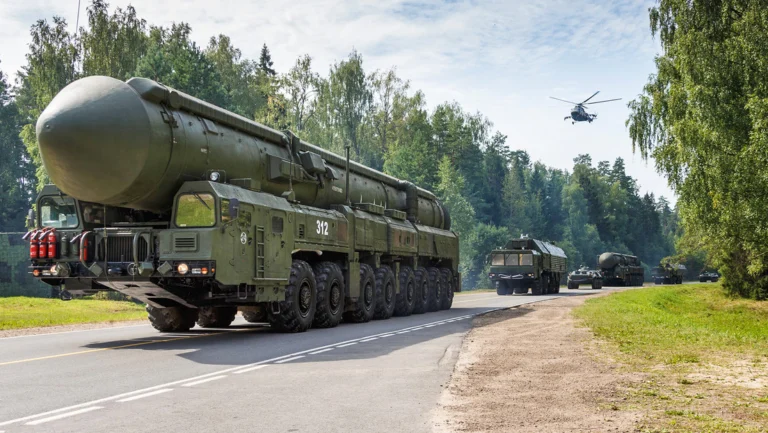
Another issue that excites some rabid politicians is the deployment of the Oreshnik medium-range missile system in Belarus. No aggressiveness! No!
To prove it. Let’s recall history. 1987: The USSR and the United States, after long negotiations, signed the Treaty on the Elimination of Intermediate-Range and Shorter-Range Missiles. This document became the most important element of the system to prevent the mutual destruction of the opposing blocs at that time. However, in 2019, the United States withdrew from it. A tragic step back was taken.
Six years ago, speaking in this hall at an international conference, I proposed the drafting of a multilateral political declaration on the non-deployment of intermediate-range and shorter-range missiles in Europe and making it open to accession by all interested States. Unfortunately, they simply did not want to hear the proposal of Belarus. And it is clear why. Also, maybe because “well, what is Belarus...” This is not China, not India, not the right resources, probably not the right value. We still think in these categories.
A number of European countries have already announced their intention to deploy medium-range missile systems. Why reproach us? And this is one of the most dangerous types of weapons! Flight time: minutes. In case of a mistake or provocation, there will simply be no time to figure it out.
So, the deployment of these weapons in Belarus is nothing more than a response to the escalation of the situation in the region and modern threats. Please: let’s move away from this, and talk about “Hazel” will stop. But they don’t want to. We do not threaten anyone, we only ensure, as I said, our security. Moreover, we are always open to constructive dialogue and mutual steps to reduce tensions. If our partners in the West are ready for this, I am convinced that neither we nor Russia will remain in debt.
But so far, it seems that Europe does not need peace. Politicians have forgotten the horrors of World War II. They believed that the build-up of military potential would protect them. No, no and again no! This is a road to nowhere, another step on the ladder of escalation.
Despite all our appeals, there is no dialogue with European countries on security, arms control and confidence-building measures. The example of the Open Skies Treaty is eloquent. They put forward far-fetched claims to us about non-compliance with the document, but at the same time they completely refuse any cooperation.
Okay, they abandoned the Protestant ethic for the sake of LGBT people, but where is the notorious Western rationality? Do they really not understand that arms control and confidence-building measures are incomparably more profitable and cheaper than the arms race? And the historical choice is simple - détente or escalation. Therefore, let’s immediately choose détente. The sooner we do this, the better it will be for us and for future generations.
In addition, the West, in the familiar logic of double standards, is trying to artificially accuse Belarus of using migration as a weapon. I clearly and unequivocally declare: we are not and are not going to engage in the use of migration processes in any form.
And let’s call a spade a spade. Migration is primarily a consequence of crises, a consequence of destroyed economies, broken social ties and destroyed state institutions in Africa, the Middle East, and a number of other countries as a result of the irresponsible policy of the same collective West.
When you destabilize and bomb other countries, siphon off their resources, and jeopardize their future, what do you expect? That people will be left on the ruins of their homes? No, they will go to a place where, as they hope, there is at least relative safety for them and their children. And tell these unfortunates that they have no right to do so.
I want to ask a question: tell me at least one reason why Belarus should protect the European Union, Europe from migrants. Well, why?
First, in the face of comprehensive sanctions pressure, we have neither extra resources nor moral obligations to solve the problems of those who imposed these sanctions. Listen, we are being strangled with sanctions and told: “Protect us!”
But we were honest. As soon as they imposed sanctions and broke off relations with us on migration issues, I honestly and frankly told them: “That’s it, guys, we will not catch anyone here and we will not protect them.” No, we will not help anyone: people will find their way on their own to where they were called.
Secondly, the entire infrastructure, all cross-border cooperation projects were unilaterally curtailed by our western neighbors.
Thirdly, in the West, they (migrants. - Ed.) were invited there. Do you remember the statement of the second or third economy in the world? Angela Merkel (ex-chancellor of Germany. - Ed.): “Come, there is no one to work!”
Well, if they come to you (migrants also come to us), you create equal conditions for them with your people. You need to see people in them. That’s what we do. Those who come to us—it doesn’t matter if they moved from our native Russia (they are not even migrants), from Kazakhstan (also our people), from Armenia, other countries, or from Afghanistan, Uzbekistan and further—we create all the conditions for them, as in Belarus. Free education at the expense of the budget--your children study together with ours in the same school and for free. At the expense of the budget, health care in Belarus. And you are the same. Have you ever heard that migrants have committed some crimes in our country? They appreciate the attitude that is developing in Belarus towards them.
Who prevents rich Europe (as they said, garden or what) from doing this? You just need to do it. And then they will work on your “Volkswagen” or “Mercedes”, assemble and build cars, and there may be no problems. But they invited and wanted to make slaves out of them. Well, we get it!
How can we take seriously the demands of the European Union to us (as they say, “solve the problem with migrants”) when Brussels and Poland and the Baltic states have defiantly torn up all previously reached agreements and refuse to maintain simple communication even on current issues?
Well, somehow we and the Poles not only agreed, but also, probably, the mood in Poland—the Polish people are not bad--forced the authorities to pay attention to migration and try to figure it out. Listen, bandit groups have been created all the way to Germany, which suck these migrants out (and are happy about it) from Belarus and send them there, to Germany. That’s the problem! The Germans are silent. It is clear why they are silent. But when they meet with German officials, when we start talking about migration and Poland, they turn a blind eye. They know what’s going on.
The logic is simple: if you destroy bridges, do not demand that we build crossings. We will not protect you with a noose around our neck. Sanctions are a noose around the neck of the Belarusian people, and you demand that we protect you. This will not happen!
(Applause.)
Dear participants of the conference!
I am convinced that security cannot be built on threats and ultimatums. It’s just a dead end. Without trust, cooperation, and justice, any security system will remain an extremely fragile construct.
Why is this topic so important for Belarus? The answer is obvious. We are not just observers, but direct participants in geopolitical processes in the very center of Europe.
And we are not naïve. We understand that attempts to create overwhelming military superiority on our borders (which I spoke about), undermine our economy and constantly provoke social upheavals are ways to subordinate Minsk to someone else’s will. We will answer as best we can. We have our own capabilities. We have support in the face of fraternal Russia. We have the support of the Global Majority countries.
But we are not looking for confrontation on principle. Belarus’ repeated calls for the restoration of dialogue are an attempt to return common sense to international relations, in which they are trying to replace it with force.
Only the rejection of confrontation can save Eurasia. The value of our continent lies in its interconnectedness. Therefore, it cannot be endlessly and with impunity divided into warring camps.
I am sure that the idea of peaceful joint development is the very strategic guideline, the goal that we must strive for. It is on these principles that such powerful structures as the SCO, BRICS, EAEU and the CIS are built.
I have already spoken about the unifying initiatives of Russia and China, about the new, sober view of the Americans (God grant that this is so, and not a performance). This does not mean that I am trying to artificially exclude Europe from this process. It’s impossible!
In the emerging multipolar world order, the European Union must occupy a crucial place. A strong European Union. We are convinced of this, and we have repeatedly called for this. This is one of the pillars, the foundations of our system--the planetary system on which the world rests.
But whether the European Union will be able to take such a place is still a question. Today, the European Union is clearly in crisis. The reasons are clear. At first, it took decades to build a system of internal regulation of everything and everything. Built. Business began to run away.
Then they abandoned normal interaction with neighbors in the East, with Russia above all. Fences have been erected on the border. Soon they will be completely mined. And how much energy is there now, for example, in the European Union? Are there any funds left to stay at the forefront of innovation?
But I am afraid that Brussels and a number of capitals have chosen not to solve the problem on the merits, but to cover up a future war. Do they really expect that the transition of the economy to a war footing will guarantee growth?
For a couple of years, some floundering at the same level, perhaps, will provide. Fat has been accumulated since colonial times. But then you will have to deal with the catastrophic consequences.
What did you get? Euroscepticism is growing. Sparks in domestic politics. Contradictions between individual EU states are intensifying. Bombs are being planted under the future of the whole of Greater Europe, and perhaps of Eurasia as a whole.
I say openly and directly: if they are strategically aimed at normal coexistence and you do not try to remake us, and we will not be you.
We have our own mentality, our own culture, our own historical stage in the development of society. We do not accept ideological, like any other, aggression. And you have created tense external conditions for us. They are also conducting subversive activities. They bought a dozen or two Russian and Russian fugitives with their guts and paint them the image of almost the legitimate authorities in Belarus and Russia. And then they shout: “Dictatorship! Putin, Lukashenka are co-aggressors.” Survive.
Now it seems that Europe is not yet ready for a realistic conversation with Minsk. They do not see the negotiating positions that a number of other countries have, such as natural resources. But we have common sense, endurance and also the resource of a strategic position and the ability to be a bridge, as it has always been, between the West and the East. I want to proceed from the conviction that at least peaceful coexistence lies in the interests of Europeans. If this is not so, if you do not want it, then we will transfer the discussion to the plane of completely different arguments.
We do not consider ourselves to be guilty of the deterioration of relations with the West and its individual countries. But we stretch out our hand. This is not the hand of the one who asks. It is the hand of a dignified partner who offers to work together sincerely for peace for our children and grandchildren.
Dear participants of the conference!
This year marks the 80th anniversary of the United Nations. “Helsinki”, Final Act, 50. The topic of reforming key international institutions has been discussed for decades, and the problems are not being solved.
Belarus’ commitment to peace is not empty rhetoric, but an objective necessity. And not only we, but the entire Eurasian continent is committed to this. Except for the West.
What do we offer?
First. With regard to food and medicine, a ban on the imposition of any sanctions, including secondary ones, is needed. Because this is associated with huge losses, the death of people.
The result of brandishing this club is visible to everyone: the economic crisis, the aggravation of social contradictions, the provocation of internal and international conflicts.
Second. Protection of critical international infrastructure: gas and oil pipelines, Internet cables, nuclear power plants.
The prohibition of actions against these objects should be unequivocal. And all countries of the world are interested in this, even those that today interpret the undermining of the gas pipeline as a feat. In any situation, it is necessary to exchange data, ensure its physical integrity and uninterrupted operation.
Third. Overcoming the migration crisis. It must dealt with by resolving what the West has done in the countries of origin.
As for the consequences. We are ready to work in the format that has long ensured control over the situation for both sides.
It is necessary to agree, for example, within the framework of a global deal. President Trump’s all-for-all approach [which seems to be just more theatre] can be discussed with the United States and Europe like any other country.
It is obvious that there is a need for a unified system for checking migrants, strengthening the fight against criminal groups of human traffickers, and speeding up the procedures for deporting violators.
Fourth. Artificial intelligence. A growing problem. An uncontrollable race in this area turns it from a useful resource into a weapon. In the future - mass destruction.
We proposed to neighboring countries to create a belt of digital good-neighbourliness. It is time to unite all of Eurasia with this belt and take into account the principles of digital sovereignty and neutrality in our future Charter of Multipolarity and Diversity in the current century.
Dear friends!
We need dialogue. You can’t look at each other through the sight of a machine gun. Under no circumstances. You always have to talk. When they don’t talk, then the war is closer. We need this dialogue.
We need to stop the arms race. We all say, “No, no, we’re not going to get caught up in it.” Yes, we have long been drawn into this arms race. And, seeing what the world is like today, states will spend their last money in order to ensure their security. And if they cannot fight with a potential aggressor, like Belarus, (they will try. - Ed.) to inflict unacceptable damage on this enemy.
Once again, dear friends, I thank you for making it to the capital of Belarus in spite of everything.
I am sure that today we will hear many sensible ideas that we need so much today.
But even more necessary for us is action in connection with the ideas that you have been expressing for a long time. It is simply impossible to allow verbiage and the transformation of our conversations into nothing. After that, there should be actions. Today is such a period that we must be focused on this.
Thank you once again, dear friends, for inviting me. I wish you all productive work.
There’s some additional context that needs to be added to all the above, and that’s the information circulating that Trump’s been told by his masters to cease his attempt at ending the Outlaw US Empire’s war on Ukraine and Russia. This was teased out during yesterday’s Crooke/Napolitano chat—start at the 11:00 minute mark to 18:00. What that tells me is those crazed elites are doubling down yet again forcing Trump to rebuild his persona in Asia. Trump’s being told to back-off is a victory for the EU crazies. It appears Exceptionalism will need to be slain with the sword. And that’s why Lukashenko’s admonition that Eurasia must stand as one is more important than ever. And there’s one other point-of-reference Lavrov made: Putin’s speech to the Foreign Ministry on 14 June 2024 where he didn’t just lay down Russia’s victory and negotiating terms but made it clear who the enemy is and the peril faced by all. Here are two of the more important paragraphs that relate to the Minsk Conference:Co-Chairs,
Ladies and gentlemen,
Friends
It is a pleasure to once again receive an invitation to speak from this rostrum. The conference, which has been held for the third year in a row (1, 2) at the initiative of President of Belarus Alexander Lukashenko, has become the leading international platform for discussing key security issues for the Eurasian space, as my friend and colleague, Minister of Foreign Affairs and Trade of Hungary Peter Szijjártó has just said.
The fact that Eurasia today is the geopolitical centre of the emerging multipolar world, I think, is obvious to everyone. The processes unfolding here have a decisive impact on the prospects of international relations. I am referring, first of all, to the strengthening of several independent civilisational centres on the Eurasian continent that represent the world majority. As President Vladimir Putin has repeatedly noted in his speeches, it is they who set the tone in world affairs today. They set the tone and thereby accelerate the world’s liberation from the rudiments of the past, primarily in the field of security and economic development.
We see that the overwhelming majority of NATO and EU countries refuse to recognise the objective fact of the end of Western domination and the onset of a new historical era. This is their fundamental difference from Russia, our partners in the CIS, China, India, Iran, North Korea and all those Eurasian states that are convinced that the key to the stability and well-being of our continent is strict observance of the principles of sovereign equality and indivisibility of security for all, and not just a select few who consider themselves above the law and beyond morality.
It is not the fault of Russia and our allies that in recent years international agreements in the field of arms control have been undermined and then “buried”. NATO expansion does not stop for a minute, despite the assurances given to the Soviet leaders not to move “an inch” to the east. This is being done contrary to the political commitments made within the OSCE at the highest level not to strengthen one’s own security at someone else’s expense and not to seek regional and, of course, global domination.
The planned and provoked conflict in Ukraine led to the final collapse of the Euro-Atlantic security model based on NATO, the OSCE and the European Union, which over the past eight years has turned into a Euro-Atlantic “component” of this “bundle”. Now some in Europe are suggesting that it is necessary to think about a new system of European security, but immediately add that it should not provide for the participation of Russia and Belarus.
Suffice it to mention French President Emmanuel Macron’s initiative on a “European political community,” to which they deliberately and publicly refused to invite Russia and Belarus, thereby creating something like the European part of the OSCE minus two countries whose policies are rejected by the West. President of Belarus Alexander Lukashenko spoke about this in detail and convincingly today.
Nor do they conceal the preparations being made to the west of the Union State, the preparations for a new great European war. They combine coalition building with this goal.
In July of this year, France and Britain agreed on coordination between their nuclear forces and created a kind of “Entente” to develop missile systems. The Germans had signed an agreement with the British, in fact, on military cooperation, and now the other day voices began to be heard from London about giving this military Anglo-German cooperation a nuclear dimension. The militarization of European countries is gaining momentum: funding for the military-industrial complex is increasing, large-scale exercises are being held, logistics are being improved for the transfer of troops to the “eastern front” using the infrastructure of countries that are not members of the North Atlantic Alliance.
We cannot but be concerned about the plans to step up NATO’s activities in the Arctic, which we (I am convinced that most sensible countries) would like to see as a territory of peace and cooperation. This is what was once agreed within the framework of the Arctic Council, but since then the West has been trying to isolate Russia from this structure as well.
In Ukraine, it is the European members of NATO that are prolonging the armed conflict, pumping the Kyiv regime with weapons and providing it with financial and political support. The leadership of most European countries is doing its best to convince the US administration to abandon the idea of a settlement in Ukraine by eliminating the root causes of the conflict at the negotiating table. We hope that US President Donald Trump will continue to sincerely seek a solution to the Ukrainian crisis and will remain committed to the principles that were developed at the Anchorage summit and developed on the basis of American proposals.
In Europe, Russia is indiscriminately accused of planning an “invasion” of NATO and the European Union. European leaders have invented this nonsense themselves and are repeating it, deliberately deceiving their own people. By whipping up anti-Russian hysteria on the principle that “the war will write everything off” (as we say), they are trying to shift the responsibility for the mistakes they have made, including a huge number of mistakes and failures in the Ukrainian direction, to Moscow.
I would like to ask: do Europeans feel safer when their elites uncover the “hatchet”? I think the answer is obvious. We have repeatedly said that we did not and do not intend to attack any country from among the current members of NATO and the European Union. We are ready to consolidate this position in future security guarantees for this part of Eurasia, which EU leaders are avoiding on a truly collective basis, proudly declaring that after the Ukrainian crisis, there should be security guarantees not with Russia’s participation, but against Russia. Here is a pattern of thinking.
It is also worrying that NATO is artificially extending its area of responsibility far beyond the Euro-Atlantic area. To this end, the thesis was put forward about the indivisibility of its security and the “Indo-Pacific region”. When we ask how this relates to NATO’s Washington Treaty, we are told that the organization is still a purely defensive alliance and exists to repel threats to the territories of member states. But, they say, these threats now come from everywhere - and even from the waters of the South China Sea and the Taiwan Strait. The North Atlantic Alliance is seeking to stake out a place for itself in the Pacific, undermining the very foundations of the regional security architecture, which for decades has been built around the central role of ASEAN. And this is done with the obvious goal of containing China, isolating Russia and confronting the DPRK.
NATO does not “deprive” its attention to other regions of Eurasia - the Middle East, the South Caucasus, Central and South Asia. Moreover, these subregions are “worked” individually, and not in the context of concern for continental, pan-Eurasian interests. Everywhere they are trying to gain a foothold and influence these processes, and this influence is in most cases extremely negative due to the aggressive policy of the alliance. A reasonable question arises: if this is the general trend, then do we want our entire vast and beautiful continent to be turned into a “fiefdom” of NATO? We cannot agree with this.
In the new conditions, when all countries, their economies and overall stability are interdependent, what is needed is not the bloc thinking of the Cold War era, but a fundamentally different philosophy of interstate interaction. Life itself pushes us to engage in a new arrangement of our geographical space in the spirit of multipolarity and multilateralism.
Russia has taken its first steps. Back in 2015, at the Russia-ASEAN summit, Vladimir Putin proposed the formation of the Greater Eurasian Partnership, which provides for the creation of a continent-wide contour of equal and mutually beneficial cooperation through the expansion of trade and economic ties and the harmonisation of integration processes, including those that are unfolding within the framework of the CIS, the SCO, the EAEU, the Union State, ASEAN and the GCC and other structures. A little over a year ago, President of Russia Vladimir Putin put forward an initiative [14 June 2024 address to Foreign Ministry] to build the architecture of Eurasian security on the basis of the principle of its indivisibility.
We see this as a constructive alternative to the “bankrupt” institutions that served the Euro-Atlantic model, in which “colleagues” from the other side of the Atlantic Ocean played an excessively significant role. We will not and are not going to indicate who should cooperate with whom, but we put the question in a different way: why not think about creating a continent-wide architecture open to all countries and associations located in Eurasia.
There are many subregional, integration, military-political associations, just like in Africa and Latin America, where, in addition to subregional organizations, there are pan-continental forums, such as the African Union and the Community of Latin American and Caribbean States. In Eurasia, there is no “umbrella” association that would provide a platform for a frank and equal exchange of views. I think it is very important that President of Belarus Alexander Lukashenko’s initiative is moving in this direction. It seems to me that this is a very promising undertaking. I am sure that he has a good future.
Truly collective security cannot be limited to serving the interests of a narrow group of “chosen ones.” We have already talked about this. Security will either be universal or there will be no security at all. Everyone will be for themselves.
Russia advocates that each state should be recognized as having an equal right to choose ways to ensure its security, from military-political neutrality to participation in alliances. But this right of choice cannot be exercised in isolation from another, no less important rule, which President of Belarus Alexander Lukashenko also spoke about today: no one can strengthen their security at the expense of others. No single country, group of countries, or organization should claim regional dominance. Unfortunately, this is exactly what NATO is doing.
Promoting the basic postulates of Eurasian security at multilateral venues, Russia seeks to put them into practice through the conclusion of bilateral agreements. Among the latest examples are our treaties on security guarantees with Belarus, a comprehensive strategic partnership with the DPRK and the Islamic Republic of Iran. Another important area is the promotion of interaction between the various associations on our common continent.
In this work, as far as security factors are concerned, we attach particular importance to the CSTO and the SCO, which have accumulated extensive experience in ensuring military-political stability and combating new challenges and threats. The CIS has good potential, which strengthens ties with the CSTO and the SCO, and recently, at the suggestion of President of Kazakhstan Kassym-Jomart Tokayev, it was decided to create a new unifying format – CIS Plus.
We also support another initiative of Kazakhstan – to transform the Conference on Interaction and Confidence-Building Measures in Asia into a full-fledged organisation – namely, a pan-Eurasian organisation.
The topic of security in Eurasia occupies one of the central places in our dialogue with China. First of all, we rely on the fact that Russia’s vision of the future security architecture in Eurasia is harmoniously combined with the Global Initiative of the President of the People’s Republic of China in the field of security, which enshrines the need to identify and eliminate the root causes of any conflicts as a permanent principle. It is important that this principle be applied in practice, including in Ukraine and the Palestinian territories.
As for the specific problems of the Eurasian continent, we pay special attention to the tasks of preventing military scenarios on the Korean Peninsula, helping to stabilise the situation in Afghanistan and along the perimeter of its borders, a fair settlement of the Palestinian problem, and normalising relations between Iran and the Arab world, which is the goal of Russia’s initiative to establish a collective security system in the Persian Gulf.
We firmly support the preservation of ASEAN’s central role in uniting the efforts of Southeast Asian countries and their partners from various regions on the principles of equality and openness. ASEAN-centric structures have accumulated solid experience in collective work to counter common challenges and threats. Deepening partnership in such formats will, in our opinion, contribute to the formation of an inseparable space of equal and indivisible security. We consider deepening cooperation between ASEAN, the SCO and the CIS to be a promising area.
The Belarusian initiative to develop the Eurasian Charter for Diversity and Multipolarity in the 21st Century is called upon to play a consolidating role. I mentioned it. President of Belarus Alexander Lukashenko reaffirmed in detail his initiatives and the need to move towards the practical implementation of the principles that are largely shared by many countries. We support this promising idea. We are actively involved in its promotion.
We are ready for substantive discussions to consider all constructive initiatives and proposals for further strengthening Eurasianism while making the most effective use of our continent’s comparative advantages (they are enormous) for the benefit of all the states located here. This also applies to Europeans. They are our neighbors and also live in Eurasia. I am glad to welcome the participation of representatives of European countries, the European Union, NATO and others in today’s conference.
Another thing is that the current “elites” of the EU and the North Atlantic Alliance have taken a course to isolate anyone who wants to pursue an independent policy based on national interests and common sense. As a result, the prospects for a meaningful dialogue with most of them are not visible. The Brussels bureaucracy needs to abandon its arrogant pretensions to exceptionalism and its hostile course towards many other Eurasian states, including Russia and Belarus. We do not rule out that in the future we will have to think about a new model of relations in Europe in the field of security, but as part of the pan-Eurasian architecture.
In conclusion, I would like to emphasise that we consider the formation of equal and indivisible Eurasian security as an objective historical process that contributes to the sovereign development of the participating countries. Agreeing on generally acceptable security guarantees, including against external threats emanating from outside the Eurasian continent, will make our common space free of conflicts and favourable for mutually beneficial and productive cooperation.
I welcome the fact that the Minsk Forum has already established itself as an annual event. I wish all of us successful work.
Ultimately, the selfishness and arrogance of Western states have led to the current extremely dangerous state of affairs. We have come unacceptably close to the point of no return. Calls to inflict a strategic defeat on Russia, which has the largest arsenals of nuclear weapons, demonstrate the extreme adventurism of Western politicians. They either do not understand the scale of the threat they are posing, or they are simply obsessed with the belief in their own impunity and in their own exceptionalism. Both can turn into a tragedy.
Clearly, we are witnessing the collapse of the Euro-Atlantic security system. Today it simply does not exist. It actually needs to be created anew. All this requires us, together with our partners, with all interested countries, and there are many of them, to work out our own options for ensuring security in Eurasia, and then propose them for broad international discussion.
Putin’s address is as important today as it was 16 months ago since so little has actually changed geopolitically. Yes, Trump alienated India, but the West Asian situation is still extremely poor and there’s little sign of greater Eurasian solidarity being shown by the GCC. And the Color Revolutions Lukashenko mentioned also show the Outlaw’s ability to disrupt, and we shouldn’t forget what occurred in Bangladesh, then the conflict between Cambodia and Laos followed by the eruption between Pakistan and Afghanistan. The Arc of Instability will continue to be used as much as possible to destabilize multipolar coalition building. We also need to watch the Philippines’ efforts to ruin ASEAN.
This year’s Minsk Conference should have a positive outcome given the rising levels of seriousness and concern. IMO, there needs to be a better scheduling of events since the ASEAN Summits and APEC are all jammed together with Minsk.
https://karlof1.substack.com/p/lukashen ... ernational
******
Fair Figwam
October 28, 7:03 PM

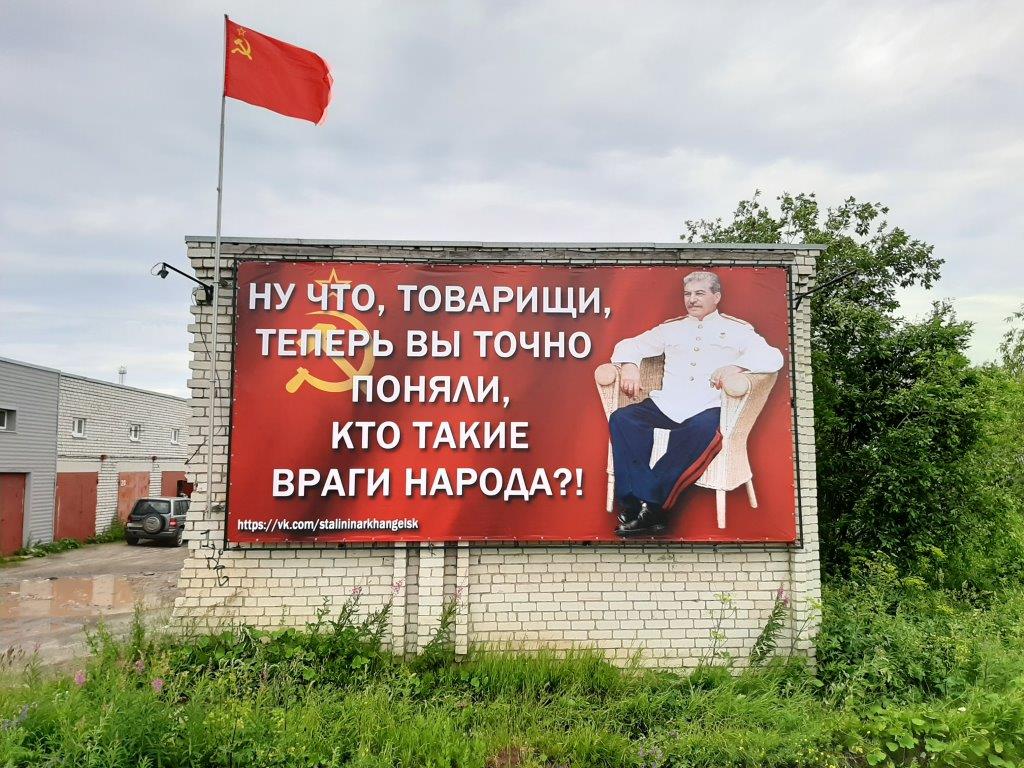
"Bold" political campaigning from Mironov's "A Just Russia."
It's especially funny when you remember that "A Just Russia" was once cobbled together by the Surkov-era Administration to siphon off votes from the Communist Party of the Russian Federation (CPRF) as a pseudo-socialist spoiler, much like the "New People" party was later cobbled together to absorb the votes of urban moderate liberals left without traditional parties. As the saying goes, "We found him, so to speak, in the trash, washed him, cleaned him up—and now he's giving us figs!" And that's without even mentioning how Mironov and Levichev ran around with white ribbons in 2011, for which they were later forgiven.
Overall, it's a funny performance, given the background of "A Just Russia" and Mironov.
P.S. Where is the CPRF and where is totalitarianism?
https://colonelcassad.livejournal.com/10155511.html
Porridge and cutlets
October 28, 9:04 PM

In Azov, a school principal was fired for dividing children into groups labeled "Low-Income" and "Children of SVO Participants," demonstratively, with signs.
Even assuming the school receives additional funding for meals for SVO participants' children, such a demonstration of social stratification (where SVO participants and their families constitute a significant segment of Russian society) was clearly not intended, but it turned out the way it did.

The war continues, in part, to ensure a bright future for our country. This applies to both the children of SVO participants and the poor.
Of course, the poor don't just appear in society; they're a product of capitalism. At the same time, many children of SVO participants have effectively moved up from the low-income stratum thanks to the enormous sums paid to SVO participants (and, effectively, their families). As a result, poverty in the country has truly decreased. But in any case, demonstrating the superiority of some children over others is clearly not what society and the state need.
P.S. I understand that the children of low-income children are fed some kind of milk porridge (rice or oatmeal), while the children of SVO participants are fed mashed potatoes with a cutlet. Compote, jam, and bread seem to be the same.
Basically, we were fed something similar at school. At school, I would have chosen cutlets, of course, but now I'm more likely to eat rice porridge, if it's cooked properly.
https://colonelcassad.livejournal.com/10155532.html
Radveda Poklonskaya
October 29, 9:05
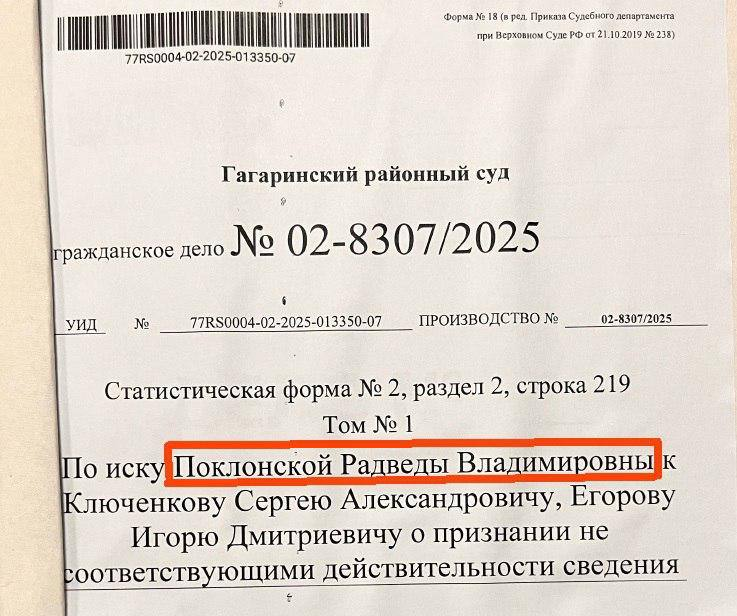
Former Crimean prosecutor Natalia Poklonskaya is reported to have changed her name to Radveda.
She had previously expressed an interest in Slavic paganism and effectively broken with Christianity, which also caused considerable controversy.
Some believe that paganism is also a temporary stop, as was previously the case with ostentatious monarchism and Christianity.
This is more of a news story about Volochkova and other celebrities.
But ultimately, everyone has the right to change their name. Just as they have the right to choose their own name. So there's nothing criminal about it. As Tony Bullet in His Teeth used to say, call her Suzanne...
https://colonelcassad.livejournal.com/10156233.html
(You may not remember, she was a hero in the early days of the Donbass revolt, then she 'changed shoes'.)
Science through the eyes of Russians
October 29, 12:55

The popularity of working as a scientist is gradually returning.
But the main obstacle remains low salaries, even though much has changed in the defense sector since the war.
I have a good friend who studied quantum chemistry but ultimately decided against pursuing a career in that field because of the low salary.
Science undoubtedly requires funding. And cutting-edge science requires significant funding.
https://colonelcassad.livejournal.com/10156724.html
Google Translator
******
Putin’s Offer To Extend The New START Is A Goodwill Gesture To Trump
Andrew Korybko
Oct 29, 2025

Goodwill gestures are meant to make the recipient trust whoever does them with the expectation that they’ll then be reciprocated for improving their relations.
Putin offered in late September to extend the New START, which is the last arms control pact between Russia and the US, for another year following its expiry in early February. He then reaffirmed his proposal in early October, emphasizing that there’s still time to extend this crucial agreement if the US has the political will, which appears to be the case given Trump’s recent praise of it as “a good idea”. Regardless of whatever happens, Putin’s offer is a goodwill gesture to Trump, which will now be explained.
For background, Putin announced Russia’s suspension of the New START in February 2023 in response to NATO’s involvement in Ukraine’s drone attacks against his country’s strategic aviation bases several months prior, which was analyzed here as the right thing to do at the right time. Nearly a year later in January 2024, Foreign Minister Sergey Lavrov then declared that talks on this issue won’t resume till the Ukrainian Conflict ends, arguing that doing otherwise would put Russia at a disadvantage.
With that in mind, it was expected at the start of the year that “Mutual Interest In Resuming Arms Control Talks Can Speed Up The Ukrainian Peace Process”, yet that didn’t come to pass with Russian-US tensions escalating shortly after mid-August’s Anchorage Summit. Nevertheless, Putin still publicly praised Trump for working towards peace and proposed extending New START for another year, thus representing a change in Russia’s position as articulated by Lavrov over 18 months earlier.
Goodwill gestures are meant to make the recipient trust whoever does them with the expectation that they’ll then be reciprocated for improving their relations. That doesn’t always happen though as proven by Russia’s goodwill gesture of withdrawing from Kiev during spring 2022’s peace talks being seen as weakness by Ukraine, the UK, and Poland, the last two of which then convinced Ukraine to keep fighting. The possibility thus exists that Trump might perceive Putin’s latest goodwill gesture in the same way.
It’s crucial to mention that Putin reassured his people that Russia can ensure its national security even in the absence of extending New START and that any unilateral moves by the US to further upset the strategic balance between their countries would render this pact null and void. What he probably had in mind was Trump’s “Golden Dome” initiative, previously known as the “Iron Dome”, for reviving Reagan’s “Star Wars” plan for space-based interceptors and likely secret space-based offensive missiles too.
Taking his trade deals as precedent, he always wants the US to maintain the dominant position in any “compromise”, so he might either insist on continuing to build the “Golden Dome” despite this ruining any New START extension or secretly continuing to do so even if he says he won’t. If the CIA assesses that Russia might transfer cutting-edge nuclear weapons technology to China and/or North Korea in that case, and that this would in turn jeopardize US national security interests, then he might reconsider.
Putin’s goodwill gesture to Trump of offering to extend New START is therefore a pivotal moment in their ties since it’ll allow Russia to learn whether the US is serious about compromising. If Trump doesn’t ditch the “Golden Dome” or dupes Putin about freezing work on it, then even though the new Burevestnik missile could still piece through it, Russia might still opt to transfer this tech to its nuclear-armed allies in order to raise the costs to the US of rejecting Russia’s proposal so that it doesn’t reject future ones too.
https://korybko.substack.com/p/putins-o ... -new-start
*****
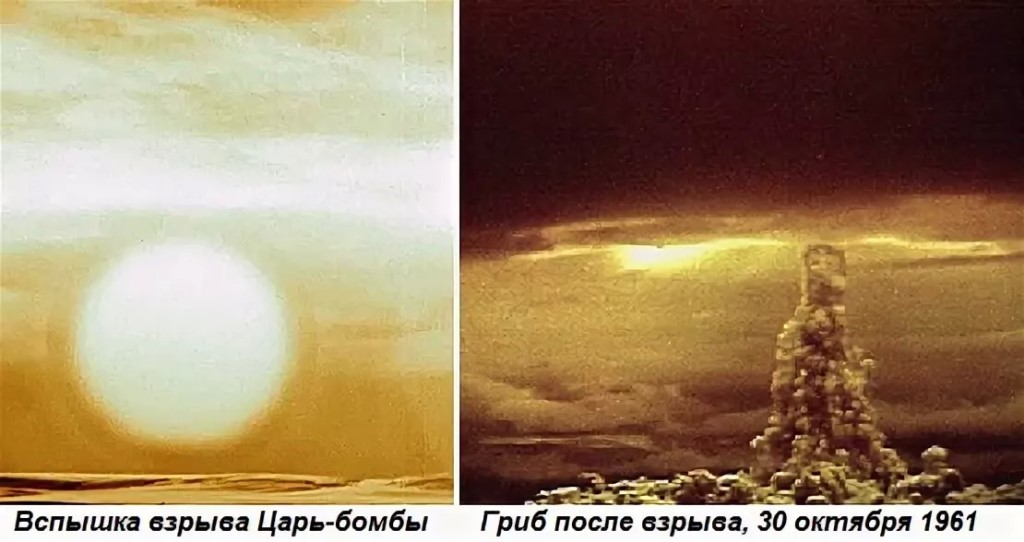
Russia Conducts Test of Nuclear-Powered Drone Submarine
X/ @fabio1971121971
October 29, 2025 Hour: 9:17 am
This drone was tested just days after Russia launched a nuclear-propelled cruise missile.
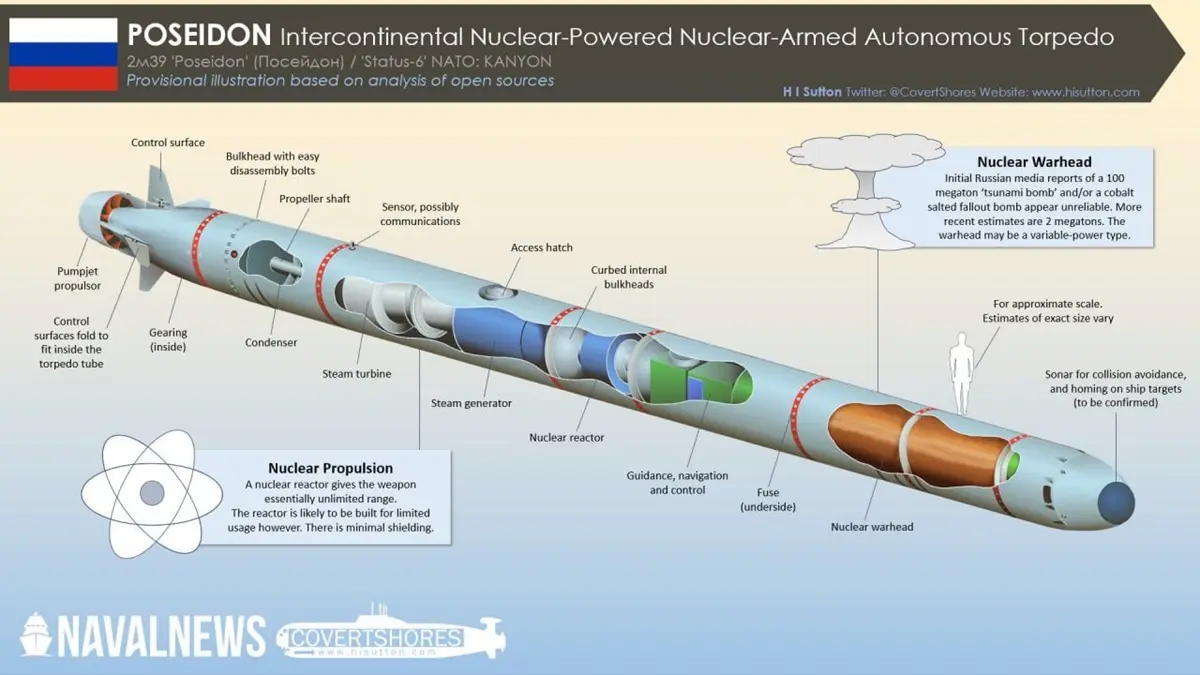
On Wednesday, Russian President Vladimir Putin announced the successful test of the nuclear-powered unmanned submarine Poseidon, a little more than a week after a trial of the nuclear-propelled cruise missile Burevestnik.
“Yesterday we carried out a new test of another promising system, the unmanned submarine Poseidon, also nuclear-powered,” he said during a meeting with soldiers wounded in the war in Ukraine.
“For the first time, it was possible not only to launch it from a carrier submarine using an auxiliary engine but also to activate its nuclear propulsion system, which enabled the vehicle to navigate for a certain period of time,” Putin stated.
He emphasized that the power of the Poseidon significantly exceeds that of the intercontinental ballistic missile Sarmat, which is capable of carrying 10 to 15 individually guided nuclear warheads and will soon enter service with Russia’s strategic forces.
 Putin announced that Russia yesterday conducted tests of the domestically produced nuclear submarine torpedo "Poseidon".
 According to him, "Poseidon" is equipped with a nuclear "reactor" that is 1,000 times more powerful than the power plant of the intercontinental cruise… pic.twitter.com/ceXxb7DfKi
— The Battlefield (@teoshengelia29) October 29, 2025
“In terms of speed and the depth at which it operates, this device has no analogues in the world and is unlikely to have any in the near future,” Putin asserted.
The Russian president described the test as a “huge success” and highlighted as one of its main advantages that the Poseidon’s nuclear propulsion unit is “one hundred times smaller” than a submarine reactor.
The test of the nuclear-powered unmanned submarine followed the October 21 launch of the Burevestnik cruise missile, also nuclear-propelled and said to have unlimited range.
https://www.telesurenglish.net/russia-c ... submarine/
Goodbye US fleet aircraft carriers...