Cuba

User avatar
blindpig
Posts: 14789
Joined: Fri Jul 14, 2017 5:44 pm
Location: Turtle Island
Contact:

Re: Cuba

Post by blindpig » Sun Jun 08, 2025 2:39 pm

Cuba: Context, Challenges, and Aspirations
June 8, 2025

Image
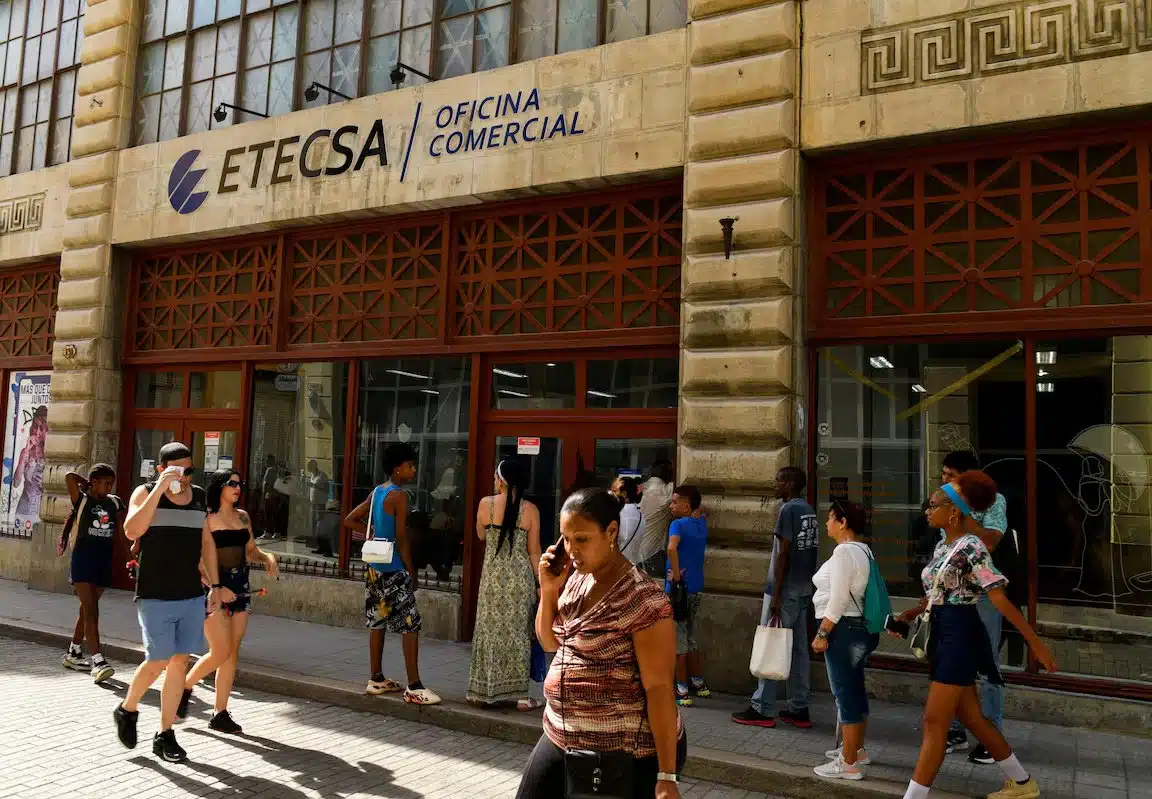
People walking in front of the Cuban Telecommunications Company (ETECSA) building in Havana. Photo: Reuters.

By Isaac Saney – Jun 7, 2025

The recent student manifestations and expressions of discontent in Cuba over increased rates announced by ETECSA (Cuba’s telecommunications company) should be viewed in the wider context of the ongoing and escalating economic war and destabilization campaign by the United States against the island nation. These protestations are not random or isolated incidents but reflect genuine frustrations and grievances stemming from the challenges caused by the long-standing financial, commercial and trade warfare waged against Cuba, considered the most severe and comprehensive set of sanctions ever imposed on a country in modern history. Beginning in 1960 and intensified through subsequent acts such as the Torricelli Act (1992), the Helms-Burton Act (1996), more than 240 vindictive measures by the first Trump regime and further escalated in the second, this economic siege aims not only to strangle the Cuban economy but also to incite internal discontent, undermine the legitimacy of the Cuban government, and ultimately dismantle the Cuban Revolution.

In this environment, every misstep made by the Cuban authorities— errors and mistakes that are common in any country, including so-called highly developed ones—are amplified and exploited. The economic blockade is designed to make governance in Cuba extremely challenging, ensuring that the state operates under conditions of constant scarcity, limited flexibility, and significant vulnerability. Flaws and deficiencies in this setting are not indications of socialism’s failure but rather demonstrate the impact of the U.S. imperial strategy: to provoke frustration among the Cuban populace and create a perception of governmental inadequacy. This perception is then magnified by U.S.-backed media and platforms with the aim of spreading confusion, cynicism, and distrust within Cuban society.

As was noted in many circles, April 6, 2025 marked the 65th anniversary of the explicit articulation of this strategy by Lester D. Mallory, Deputy Assistant Secretary of State, in a now-declassified U.S. State Department memorandum dated April 6, 1960: “The only foreseeable means of alienating internal support is through disenchantment and disaffection based on economic dissatisfaction and hardship… every possible means should be undertaken promptly to weaken the economic life of Cuba… denying money and supplies to Cuba, to decrease monetary and real wages, to bring about hunger, desperation, and the overthrow of government.”

The sinister goal is to coerce the Cuban people into submission by strangling the economy, creating shortages, hardships, and exacerbating social inequalities—the very issues the Cuban Revolution has tirelessly been working to eliminate. This strategy seeks to instigate massive social unrest that would then serve as a pretext for U.S. intervention.

It is crucial, therefore, to place the student discontent within this backdrop of externally induced crisis. The youth in Cuba, much like young people globally, are grappling with deteriorating infrastructure, sporadic access to digital technologies, bureaucratic inefficiencies, and the mental strain of prolonged economic austerity. Their concerns call for thoughtful and considerate responses. Unlike in capitalist societies where protests are often met with apathy, oppression, or political manipulation, the Cuban government historically seeks to listen, engage, and address issues. Indeed, the government has admitted that errors were made in communication, design and implementation of the new telecommunication rates and measures, and there have been several discussions and engagements with students. Emerging from a revolution and anchored in popular rule, the Cuban state has mechanisms for feedback and adaptation that, while not flawless, remain dedicated to the principle of collective involvement, discussion and participation in resolving and implementing solutions to issues and problems.

In response to recent expressions of discontent, Cuban authorities have initiated a series of dialogues and consultations, aiming to tackle specific grievances while upholding national stability and the project of social justice. However, this responsiveness is consistently limited by Washington’s ever deepening economic warfare. Shortages of essentials like food, fuel, medicine, and basic goods are not principally due to economic mismanagement – the constant mantra in the western monopoly media – but are primarily a consequence of a deliberate policy of deprivation imposed from without. The U.S. economic blockade prevents Cuba from accessing international credit markets, obstructs technological advancements, and disrupts crucial supply chains. It criminalizes Cuba’s attempts to engage in trade with other nations and penalizes any entity that dares to conduct business with the island.

One of the pressing challenges confronting Cuba is the enhancement of its communication infrastructure and technological capabilities. The Cuban government has continually expressed its aspiration and ambition to ensure broad and equitable technology access for all its citizens. Expanding digital connectivity is not only an economic necessity but a democratic one, crucial for social inclusivity, educational progress, and youth involvement. Nevertheless, this aspiration is hindered by the blockade. U.S. sanctions restrict Cuba’s access to technology, software, hardware, cloud services, and online platforms. They impede infrastructure investments and postpone the expansion of high-speed internet and telecommunications services.

This technological lag can contribute to feelings of alienation, particularly among younger Cubans witnessing their peers across the globe immersed in digitally connected societies. Yet it bears underscoring that despite the economic siege more than 80 percent of communities in Cuba now have cellular coverage, with an average monthly data usage of 10 gigabytes. However, the infrastructure requires significant upgrade as, for example, only 50 percent of the country’s territory and 50 percent of the population is covered by and has access to 4G. The government is, therefore, faced with the task of ensuring that the country continues to have a telecommunications system.

Cuba does not exist in isolation. It is a Southern Global nation facing relentless aggression from the most dominant empire in human history. Every action taken by Cuba is scrutinized, distorted, and politicized. Yet, it remains one of the few countries upholding a vision of socialist transformation grounded in internationalism, public ownership, popular participation and human dignity. The resilience, ingenuity, and critical thinking capabilities of the Cuban people—evident in protests and expressions of discontent, themselves—serve as a testament not to the failure of the revolution but to its enduring vitality.

Moving forward, Cuba endeavours to continue to march along the path of humility, openness, and adaptability as it addresses the concerns of students and youth who, like previous generations, aspire to enhance their society. Supporting Cuba today requires understanding it in its full complexity. It means emphasizing that socialism, like all human endeavors, must evolve and develope. However, this evolution and development should occur without external forces waging economic warfare at every turn. This necessitates renewed global solidarity to remove the burden of U.S. imperialism from Cuba, enabling the Cuban people to exercise their right to shape their desired society without the constraints of siege, sabotage, and subversion.

https://orinocotribune.com/cuba-context ... pirations/
"There is great chaos under heaven; the situation is excellent."

User avatar
blindpig
Posts: 14789
Joined: Fri Jul 14, 2017 5:44 pm
Location: Turtle Island
Contact:

Re: Cuba

Post by blindpig » Fri Jul 04, 2025 2:18 pm

The Cuban Communist Party’s Central Committee Holds Its 10th Plenary Session

Image
Photo: EFE

July 4, 2025 Hour: 7:39 am

It will address issues of vital importance to the country’s economy and society, said PM Marrero.
On Friday and Saturday, the Central Committee of the Communist Party of Cuba (PCC) will hold its 10th plenary session in Havana.

During the meeting, Cuban leaders will address issues of vital importance to the country’s economy and society, with a direct impact on the population, said Manuel Marrero, Cuba’s prime minister and a member of the PCC’s Political Bureau.

Key agenda items include an assessment of the government’s progress in implementing its program to correct economic distortions and revitalize the economy, as well as an evaluation of the plan to stabilize the National Electroenergetic System.

Marrero emphasized that the meeting takes place amid a tightening of the U.S.-imposed economic, commercial and financial blockade, which adds complexity to the challenges facing Cuba. However, He affirmed that “the unity of the Cuban people and the collective pursuit of solutions continue to chart the nation’s path.”

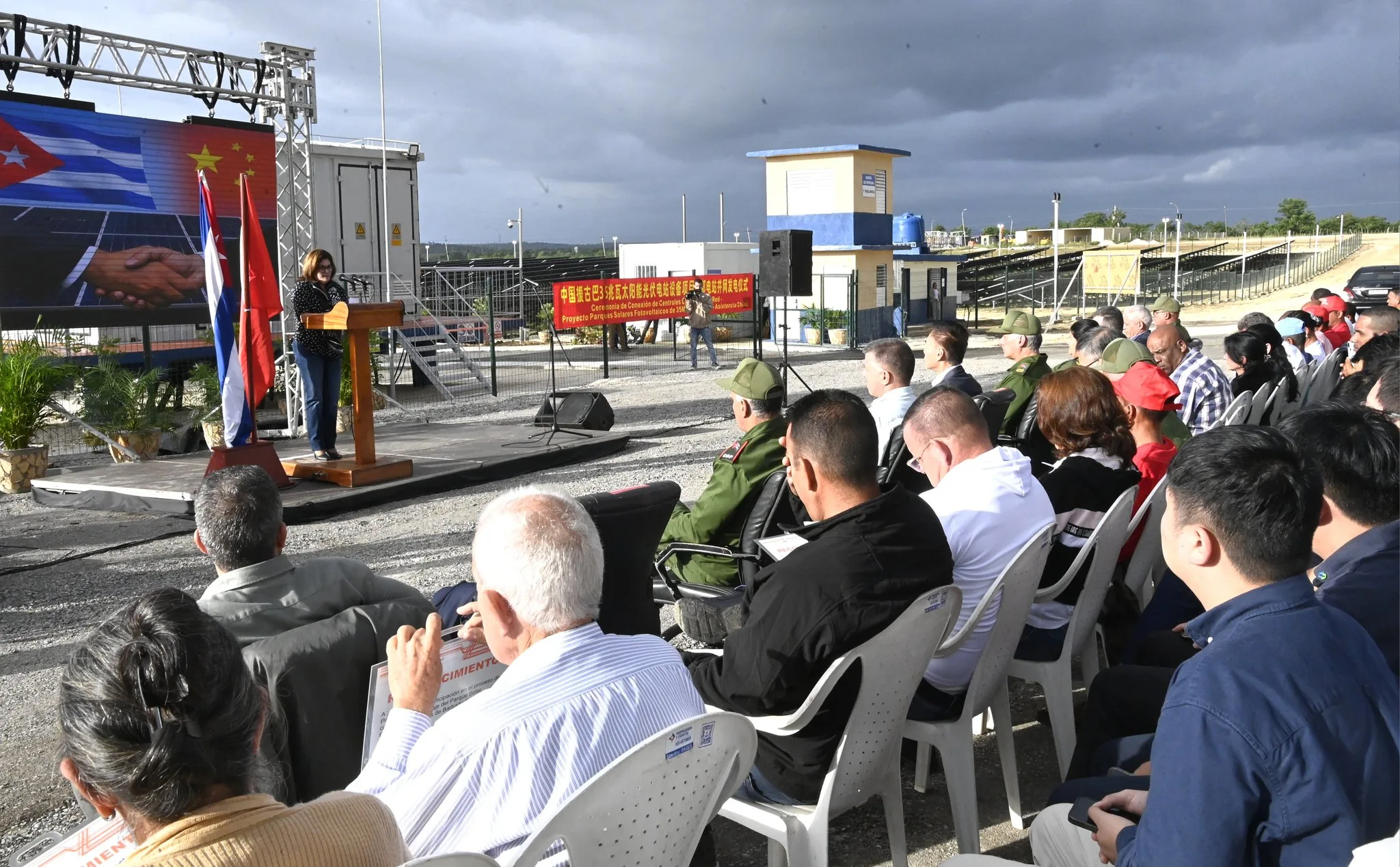
It´s gratifying to see how Cuba is succeeding in its goal to transform its energy generation matrix by installing dozens of solar farms in a decentralized manner throughout the country.

Another result of South-South cooperation with our Chinese partners. 🇨🇺🤝🇨🇳#CubaVencerá pic.twitter.com/QSIHSmOUWb

— David Ramírez Álvarez 🇨🇺 (@DvidTwit) July 3, 2025
The 10th Plenum will also review the cadre policy strategy approved at the PCC’s 8th Congress in April 2021 and will present a proposal for the commemorative program marking the centennial of the birth of former leader Fidel Castro, to be celebrated in 2026.

Additionally, the PCC’s Central Committee First Secretary and Cuban President Miguel Diaz-Canel announced that the official call for the party’s 9th Congress will be made during the session.

As part of the meeting, the PCC’s Political Bureau will report on its work and key decisions taken in recent months—an exercise deemed essential under current circumstances.

Other topics Cuban leaders will discuss include increasing and diversifying the country’s external revenue streams; restructuring and developing the socialist state enterprise sector; improving strategic management for territorial development; strengthening policies to protect vulnerable individuals, families and communities; and implementing measures to prevent and reduce crime and corruption.

https://www.telesurenglish.net/the-cuba ... y-session/
"There is great chaos under heaven; the situation is excellent."

User avatar
blindpig
Posts: 14789
Joined: Fri Jul 14, 2017 5:44 pm
Location: Turtle Island
Contact:

Re: Cuba

Post by blindpig » Fri Jul 11, 2025 2:48 pm

Cuba Updates National Terrorist List, Denounces U.S. Inaction Amid Growing Violence

Image
Cuba denounces U.S. inaction as it expands national terrorism watchlist.Photo:TeleSUR

July 10, 2025 Hour: 10:47 pm

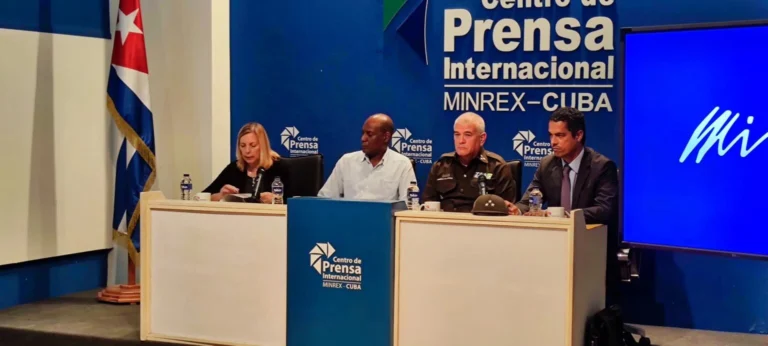
Cuba expands its list of individuals and organizations accused of terrorism, highlighting ongoing threats from actors based mainly in the U.S., while condemning Washington’s failure to act.

On July 9, 2025, Cuban authorities presented an updated National List of Persons and Entities linked to terrorism, now comprising 62 individuals and 20 organizations. The update, formalized in Resolution No. 13 (2025) and published in the official Gazette, reflects ongoing investigations into acts of terrorism targeting Cuba, many involving actors residing primarily in the United States.

The updated list removes four deceased individuals and adds five new persons along with one organization. Cuban officials emphasized that those named have been subject to criminal investigations for their involvement in promoting, planning, financing, or executing terrorist acts either on Cuban soil or abroad. The list includes activists, opposition leaders based in Miami, and social media influencers accused of inciting violence and destabilization.

Cuba has formally submitted the updated list to the United Nations Secretary-General António Guterres, reaffirming its commitment to international conventions on combating terrorism. Despite repeated requests for cooperation, Cuban authorities lament the persistent inaction of the U.S. government, which they accuse of tolerating and sheltering terrorist actors operating from its territory.

Among the new additions to Cuba’s national terrorist list are individuals such as Rolando Miguel Pérez Ruiz and Leordan Cruz Gómez, who Cuban authorities accuse of involvement in the illegal smuggling of weapons into the island.

Also included is Hamlet Pedraza Rivas, linked to sabotage acts in Villa Clara, as well as Armando Labrador Coro and Seriocha Humberto Fernández Rojas, associated with the organization “Cuba Primero,” classified by the Cuban authorities as a terrorist group involved in promoting and carrying out violent and destabilizing acts against the Cuban state.

Vice Minister Josefina Vidal Ferreiro highlighted the paradox of the U.S. designating Cuba as a state sponsor of terrorism while ignoring the real perpetrators who threaten both nations’ security. Cuban officials underscored that terrorism against Cuba has persisted for over six decades, fueled by political motivations and impunity in the United States.


Authorities also identified cyberterrorism as a growing threat, with social media platforms being exploited to incite violence and foment unrest. Cuban officials warned that these new tactics represent an evolution of hostile actions against the island, requiring vigilant legal and security responses.

Despite political obstacles, Cuba remains committed to combating terrorism through transparent, professional, and multilateral cooperation, including mechanisms established with the U.S. government. The Ministry of the Interior and other agencies reaffirm their readiness to pursue justice, including prosecuting suspects in absentia when necessary.

https://www.telesurenglish.net/cuba-upd ... -violence/
"There is great chaos under heaven; the situation is excellent."

User avatar
blindpig
Posts: 14789
Joined: Fri Jul 14, 2017 5:44 pm
Location: Turtle Island
Contact:

Re: Cuba

Post by blindpig » Fri Jul 25, 2025 3:27 pm

Cuba: ‘The beauty of this difficult hour lies in knowing that we are part of an undefeatable people’
July 23, 2025 Struggle - La Lucha
Image
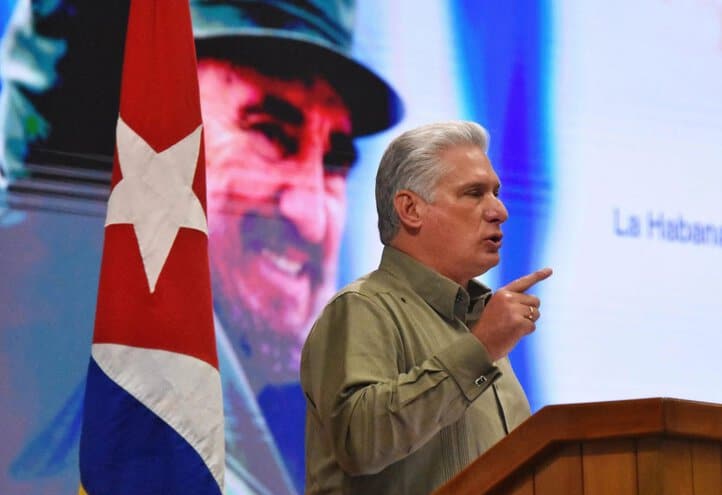
President Miguel Díaz-Canel. Photo: Bill Hackwell

Speech delivered by Miguel Mario Díaz-Canel Bermúdez, First Secretary of the Central Committee of the Communist Party of Cuba and President of the Republic, at the closing of the Fifth Ordinary Period of Sessions of the National Assembly of People’s Power in its 10th Legislature, at the Convention Palace, on July 18, 2025, “Year 67 of the Revolution”

Author: Miguel Díaz-Canel Bermúdez | internet@granma.cu

july 21, 2025 08:07:10

(Shorthand Versions-Presidency of the Republic)

Dear Army General Raúl Castro Ruz, leader of the Cuban Revolution;
Dear comrade Esteban Lazo Hernández, President of the National Assembly of People’s Power;
Dear deputies;
Compatriots:

This has been an authentic Assembly of the people, as the young deputy Danhiz expressed here. It has been so because its debates were the debates of today’s Cuban society on the enormous challenges ahead of us, but also because they once again revealed the impressive willingness of this people to fight when everything becomes more difficult.

Neither pessimism, nor defeatism, nor discouragement. What we found here were sober presentations, criticisms based on commitment and, above all, concrete proposals and demands to change what must be changed without delay.

The wisdom and enthusiasm that has characterized practically all the interventions of these days do not surprise me, it is what I have seen in the tours through the provinces. Just where the situation is hardest, after long hours of blackout, you always find the extra of Cubans.

It is not the first time nor will it be the last time that the Cuban Revolution faces its “most difficult moment”, although it will always seem to us that nothing can be worse than what we face at the instant we face it.

I will cite a few episodes in the history of Cuba: the Zanjón Pact after ten years of a bloody war that ended with the death or exile of its leaders; the fall in combat of José Martí and Antonio Maceo; the Yankee intervention that robbed us even of the right to enter the heroic city and to attend the signing of the Treaty of Paris because there two empires negotiated our freedom; the neocolonial republic with its appendix, and the Yankee military base where human dignity is tortured and violated.

Then comes the Machado times with its pomp and misery, and Julio Antonio Mella assassinated, and the Revolution that went to the dogs, and Antonio Guiteras massacred in El Morrillo for his profoundly anti-imperialist action. And the corruption of the authentic ones, and Batista’s coup d’état, and the murders of “our children” denounced by the Cuban mothers, and the repressed students and the massacre of the assailants of the Moncada, the Presidential Palace, the Goicuría.

With all this inheritance of heroism and frustrations of the revolutionary struggles, the Centennial Generation entered history, with its setback marking the victory in the attack to Moncada. They already had a program, an ideal and a willingness to carry it to the ultimate consequences. And so they did.

When we review all the periods of the 66 years of the Revolution in power, what we find, in addition to victories, are third world challenges, enemy obstacles and also our own mistakes and lessons learned, all fruits of the never abandoned eagerness to conquer and sustain social justice as a supreme aspiration, in a completely adverse world context, since the Soviet Union and the socialist camp ceased to exist.

If, in spite of all that, the Cuban Revolution is standing and fighting for the possible prosperity, it is because of its authentic and genuine character. We are not an accident of history. We are the logical consequence of a history of resistance and rebellion against abuse and injustice that has very deep reasons to believe in its own strength.

That is why the national dignity is offended by those who play at comparing times to praise “how well Cuba was before 1959”, posting photos of the palaces and the elegance of its ladies and gentlemen, but hiding those of the eviction, the machete plan, the misery, the children swollen with parasites who worked when they should have gone to school, the prostitutes, and the Italian-American mafias sharing the spoils of the hotels and cabarets for whites only in a mestizo country.

Because the Revolution that finally took power in 1959 was started by a small group of revolutionaries, but it was made by a whole people. And the people who made it have defended it and defend it today even with their teeth, let there be no doubt about it! (Applause).

Otherwise, it will never be possible to explain its existence in this uncertain decade of the 21st century, where dissidence from the single way of thinking, imposed by predatory capitalism, is paid for with smart bombs, the destruction of entire nations or with asphyxiating economic blockades, like the one that this small country of courageous people has been enduring for more than 60 years.

It is deeply insulting to human dignity that those who use the Internet in campaigns to denigrate the Cuban people do not react with equal indignation in the face of the scandalous crimes of those who blockade the country; They avoid calling by name the Israeli genocide in Gaza and Lebanon, and do not protest, do not rebel, do not have the courage to point the finger at those guilty of so much xenophobia, so much war, so many weapons and so much injustice, competing in news prominence with the rampage of billionaire pedophiles and the deportation or imprisonment, without proven crimes, of tens of thousands of migrant workers and their families.

What we learned from the Cuban Revolution is that ideals are not changed because circumstances change; that the trench is not abandoned when the enemy siege tightens. We learned that only by having clear convictions as principles is it possible to sustain and win battles. And we also learned that we can fight our way out of the siege! (Applause).

Fellow Members:

I am not going to expand on the topics already addressed. The gravity of the times demands more actions than words, although we will always have the duty to say them and above all to honor them before the people who elected us. The guide is in the concept of Revolution that Fidel bequeathed us: “Never lie or violate ethical principles”.

These working sessions leave us with an important lesson. This is the Assembly of the Cuban people and everything that is discussed and approved in it has to connect with the feelings, needs and demands of the Cuban people. But let us not forget, as we rethink these days, the revolutionary ethics, that which Fidel taught us; let respect and not hatred prevail in us after learning, we cannot for any reason resemble our enemies.

On the other hand, it would not be realistic or honest to commit ourselves to fulfill the solution of all those needs and demands, always growing, where the main obstacle to achieve it is external. What we can and have the duty to commit is our energy, our effort, our tireless search for new ways and actions towards the satisfaction of those demands.

As the main obstacle is not within reach, all solutions depend entirely on the ability to foresee, to anticipate events and to face them with intelligence, effort and innovation. But, first of all, with the indispensable participation of our heroic people.

The recently launched Soberanía information and services platform and the proposal of several deputies to reach a consensus and make transparent the measures of the Government Program to correct distortions are strengths of the digital transformation, which should speed up processes that are still running too slow for the seriousness of the urgencies.

The Cuban economy operates under many risks for any decision, largely derived from the fierce enemy persecution. We cannot add more with our own inadequacies.
We maintain the conviction reiterated by Army General Raúl Castro Ruz that it is possible to move forward and overcome the current situation through our own efforts and results; but to achieve this, more discipline, organization, awareness and perseverance are required.

I believe that the reports of the Prime Minister and the Ministers of Economy and Planning and of Finance and Prices have been sufficiently commented on and received observations and proposals that should be taken into account.

An encouraging example is the fiscal results analyzed in this Assembly. I will not dwell on the details, but I do think it is good to remember that we will close the year 2023 with a 35% increase in the fiscal deficit. Many will remember the alarm that this caused and the fatalistic prediction of those who calculated up to a decade to recover that indicator. A year and a half later, the encouraging news is that we were able to achieve a significant reduction. In fact, during the first four months of this year we had surplus results and up to this moment the current account closes without deficit, which had not been achieved for more than ten years.

Image
This has been an authentic Assembly of the people. Photo: José Manuel Correa

How was this possible? The main formula: discipline and exigency in the fight against tax evasion, in the collection of taxes and fines. The work is not perfect yet, this is an area in which a lot of awareness and control work is needed, until we gain in tax culture.

This result, very important for the economy, has a transcendental social impact: it will allow us to redistribute that income to the most vulnerable sectors, such as our retirees. This is what has enabled us to bring their pensions to a level that, while not sufficient, does put them in a better condition.

The main currency in fiscal policy is and will continue to be to attend to those, in society, who suffer most severely from the difficult situation of the country under the noose of the asphyxiation plan contained in Mr. Trump’s Presidential Memorandum.

With the conviction that “Yes we can”, we have to turn to other vital areas for development, such as achieving an increase in foreign currency income, in the midst of a very hostile scenario in which the United States Government is reinforcing its siege to prevent the entry of a single cent into the country every day.

We cannot remain impassive, much less feel defeated. We must focus on all our export capacities, which inevitably start from an increase in production in all possible areas, to do so in sufficient quantity and quality, which will then allow us to impose ourselves against the siege and global competition.

It is up to us, and only us, to be sufficiently efficient, even in the difficult circumstances of acting with our hands tied by the blockade that some try to avoid. It is a challenging challenge, but not an impossible one.

Here, I would like to return to what we find in every tour we make week after week through the country’s municipalities: how some, in the same circumstances of shortages, can overcome difficulties and demonstrate results.

An undeniable answer to this question, which we constantly ask ourselves, lies in the potential of leadership and the value of successful collectives.

The import mentality that has corroded us for years, in addition to generating dependence, whose negative effects are felt more in times of crisis, curbs internal capacity and potential and facilitates the actions of persecution against Cuba.

We cannot say that we will renounce imports, they will always be necessary at some level; but it is urgent to change the matrix and work on the basis of consuming more of what we produce internally than what is imported.

These productive processes, which we urgently need to dynamize, we cannot expect them to be only from large structures or companies.

As a way of contributing to municipal development, we must bet on boosting local production systems. Let us defend once and for all that the municipalities finally occupy the leading role they should have in national development.

Dear deputies:

We are facing a world in which an attempt is being made by the main military and economic power to impose a hegemonic and neoliberal approach.

During this semester we have consolidated foreign relations, which are being strengthened in the midst of constant pressures from sectors of extreme anti-Cuban hatred to promote economic and political isolation, which they will never achieve.

Cuba continues to be that benchmark of dignity and national sovereignty that many governments and peoples of the world look up to with admiration.

We have reached a higher level in strategic relations with China, Vietnam, Russia and other friendly countries that participate in a growing and mutually beneficial way in economic and social development plans.

Our support for the Bolivarian Revolution, the Sandinista Revolution and the ever-sister nation and people of Mexico is ongoing.

We have continued the respectful dialogue and cooperative relations with the member countries of the European Union, on the broad basis and legal framework offered by the Political Dialogue and Cooperation Agreement between Cuba and that bloc of countries.

Cuba will maintain its solidarity and cooperation with the sister nations of Africa and Latin America and the Caribbean that continue to denounce the blockade and the arbitrary certifications, in spite of the different pressures to which they are subjected.

In the important events we have participated in this year, such as CELAC, the summits of the Eurasian Economic Union and the BRICS, the understanding, sensitivity and willingness to insert and support Cuba in these international mechanisms have been ratified.

We observe in the reactions of the people many favorable expectations about the strengthening of these exchanges and their results. Although it takes time to consolidate the incorporation into these mechanisms, they mean new and hopeful opportunities.

For this we also have to work together, at all levels, with a high sense of belonging, responsibility and without that persistent bureaucracy that we still encounter and not infrequently hinders and frustrates important projects.
Any strategy to move forward must take into account that the new U.S. doctrine, which seeks to impose peace by force, is a latent threat to true peace at the global level, which poses, in the particular case of Cuba, a very dangerous scenario.

No one is safe when the most powerful empire in history breaks all the rules of international relations to impose its hegemonic will against countries it intends to subjugate, even, as we have seen, its own traditional allies.

In our case, the attempt to subjugate us, much older than the Revolution, has intensified in recent years, and very recently the current Republican administration has taken it upon itself to declare it, formally and publicly, in a Presidential Memorandum on National Security.

The main measures contemplated in this Memorandum have actually been applied since Donald Trump’s first term in office and are aimed at closing all access to the financing that is essential for the normal performance of the economy.

This brutal siege, in combination with the unacceptable inclusion of Cuba on the list of alleged sponsors of terrorism, reinforces the blockade policy to unprecedented levels and causes a multiplied impact of the coercive measures on the economy and, by extension, on the standard of living of the Cuban population. We cannot hide or ignore this effect, much less its destructive purpose.

The combination of the limited availability of foreign currency income, as we have already mentioned, the high dependence on imports and the transversal effects caused by the instability of the national electro-energy system cause a significant paralysis or slowdown of economic activity which imposes a deficit in the supply of goods and services to the population, and a contraction of exports.

Consequently, the capacity to import foodstuffs for the basic food basket and the fuels necessary for the generation of electricity and the functioning of the economy is limited. The scarce availability of medicines, the decrease in transportation services, solid waste collection and water supply, among others, make up the harsh panorama that our people face every day.

To overcome this situation, we have been forced to accept the partial dollarization of the economy, which undoubtedly, in some way, favors those who possess certain capital resources or receive remittances, which translates into an undesired widening of the gaps that mark social inequality.

In this context, we must increase the effectiveness of the redistributive social function of the State with public and fiscal policies that, without restricting solutions, prevent the concentration of wealth in the hands of a few, thus increasing inequality and poverty. And to pay the greatest attention to inflation which, although maintaining a slight deceleration, is still very high, limiting the purchasing power of workers’ salaries and the lower income of pensioners and retirees.

It is urgent to reorder the relations between the state sector and the private sector to correct distortions, bad practices and negative tendencies that deviate from the principles of socialist construction. Strengthen business ethics to avoid bribery, favoritism and corruption.

It is precisely in this scenario that we are working to enforce and support the Government Program to eliminate distortions and re-drive the economy, whose progress, results and projections were presented by comrade Marrero.

It is essential to make it known, from its foundations to its actions, so that it can be truly supported with popular participation and control.

The eminent scientist and member of our Council of State, Yury Valdés Balbín, very graphically exposed here the importance of the people’s participation in the control and in all the processes that have an impact on their welfare, always from a perspective free of formalisms, which really connects with the interests of those who participate.
It is necessary to articulate and promote in municipal and community spaces participatory forms to meet the needs of citizens. And municipal management must be based on avoiding and preventing problems in the community, leaving behind tolerance and justifications, and designing a true and effective popular control, exercising it on the fulfillment of approved public policies and their effective implementation.

Another decisive front of national sovereignty is the battle in the digital ecosystem. This is demonstrated by the constant discrediting operations against the country; the networks of influencers, media and algorithms that amplify negative narratives; digital weapons such as bots and fake accounts that saturate that space with distorted narratives. It is also confirmed by the use of emotional techniques that seek to erode the credibility of leaders, institutions and public media.

There we also have to be able to defend the truth with ethics, decency, ingenuity, optimism, confidence and energy; go on the ideological offensive; seek international alliances that allow us to break the media encirclement; promote sovereign technological solutions and, increasingly, build an articulated cyberspace of emancipation.

Ladies and gentlemen:

In the Session that concludes today, four laws were approved, all with a gender focus, which will strengthen the institutional order of the country, with a determining role in the economic and social sphere of the nation.

The Law of the Cuban Sports System establishes and regulates the areas, objectives, principles, components, organization and its operation, favoring its integral development in the midst of the current challenges.

The Law of the General Regime of Contraventions and Administrative Sanctions provides modifications that bring its content into greater harmony with the constitutional postulates and with the legislative provisions adopted lately, related to public administration to guarantee compliance and respect for legality.

The Civil Registry Law makes it possible to set up a single civil registry for the whole nation that contributes to achieve a more agile and efficient processing of the population’s affairs, incorporating the use of new information and communication technologies.

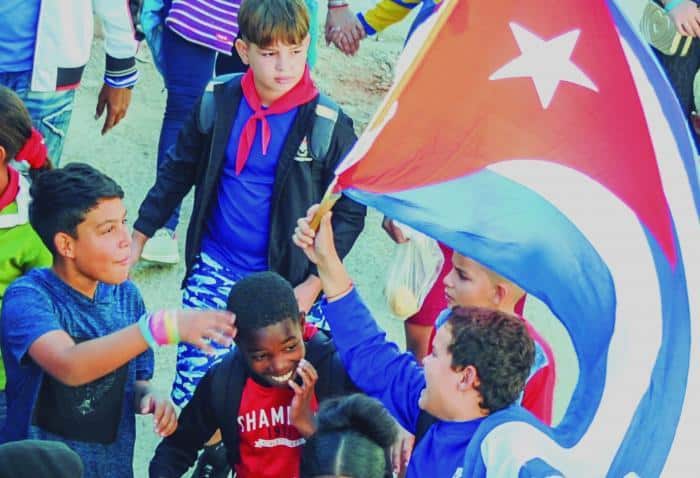
They are all important norms, but one, in my opinion, stands out among them all and reveals in all its beauty the importance of what we do as legislators: I am referring to the Code of Children, Adolescents and Youth. By approving it, we legislate on the most sacred rights in our society, according to the future that is already walking with us.
Image
The Code of Children, Adolescents and Youth is a source of pride for Cuba, as was and still is the Code of Families. Photo: José Manuel Correa

The Code is a guide and a tool. Everyone who has to do with the formation of Cuban children, adolescents and youth must imbibe the spirit and the letter of the norm so that the future they symbolize finds its life project in the nation. And that this project is saved from the terrible plagues of this era, such as drugs and violence.

This Code is a source of pride for Cuba, as was and still is the Code of Families, in the midst of an increasingly hostile and aggressive world. It is also a tribute to Vilma, who dedicated her life to Cuban children, adolescents and young people, and opened the way for us with her always humanist, feminist and, above all, revolutionary vision (Applause).

Nothing of what we dream and do would make sense without our greatest treasure: the new generations. Or to put it in more personal words: our children and grandchildren. Their happiness and the better possible world we want to bequeath to them is what the Code seeks to promote. Thanks to those who made it possible in such a short time (Applause).

On the other hand, the approved constitutional reform constitutes a legitimate and fair fact, responds to the current realities of the country and is faithful to our history. In such a way that the Constitution favors the possibility of a wider selection of comrades with conditions to be elected as President of the Republic. Finally, we defend the future of the nation with the approval of this constitutional reform (Applause).

Compatriots:

Today, when only hours away from a new commemoration of that key moment in history that was July 26, 1953, it is worth remembering what Fidel said at the Fourth Party Congress in 1991, the year that would end with the disappearance of the USSR and the socialist camp.

Faced with the challenging uncertainty that this scenario posed for Cuba, the Commander-in-Chief responded as follows: “To those who say that our struggle would have no perspective in the current situation and in the face of the catastrophe that has occurred, we must respond categorically: The only thing that would never have any perspective is if the homeland, the Revolution and socialism were lost. It is as if we had been told that we had no perspective after the Moncada attack…”.

His legendary optimism is summed up in that phrase and in the ways out that he always saw, not outside but within the people, with his tremendous intelligence potential, which is one of the great resources at hand. Aware of the absolute validity of those ideas, I reiterate today what Fidel told us then: “There are possibilities, that is the important thing, there are possibilities, but the possibilities are for the peoples who fight, the firm peoples, the tenacious peoples, the peoples who fight; the possibilities exist for a people like ours” (Applause).

That is the Cuban people who, represented by you, have illuminated the days to come and have done so with just criticisms and hopeful proposals, from the magnificent sessions of this Assembly that has left us with lessons, lessons learned, heartbreaks, but above all an extraordinary inspiration to undertake today’s decisive combat: to prepare ourselves to leap over the obstacles of the economic war that the greatest empire in history is waging against us with its infamous Memorandum and its plan to suffocate our sacred independence and sovereignty.

On July 26th in Ciego de Avila, whose industrious people we congratulate, we shall celebrate the certainty that Yes we can! History says so and the present certifies it! (Applause).

On behalf of the Party and the Government, I extend my congratulations and deepest gratitude to all the people of Cuba (Applause). For their resistance to so many difficulties. For their inexhaustible creativity. For never giving up when everything is lacking, sometimes even the indispensable communication that we are obliged to give them.

In less than a month we will be celebrating the beginning of Fidel’s centennial year, which will take place in August 2026. The best tribute to the political-military genius, the educator, the scientist, the leader of just causes in Cuba and the world, is the work of the Cuban people! (Applause).

Thank you, Cuba! The beauty of this difficult hour lies in knowing that we are part of an undefeatable people.

Surrender has never been an alternative. Independence or death, yes! Homeland or death, yes! Socialism or death, yes! Surrender, never! (Applause).

This was certified with his powerful voice by Commander Juan Almeida under a hail of bullets in Alegria de Pio:

Nobody surrenders here…!
Fatherland or Death!
We will win!

(Ovation)

https://www.struggle-la-lucha.org/2025/ ... le-people/

******

The 10th Plenary Session of the Central Committee of the Communist Party of Cuba began

Of "vital importance", as defined by the member of the Political Bureau and Secretary of Organization of the Central Committee of the Communist Party of Cuba, Roberto Morales Ojeda, the 10th Plenary Session of the Central Committee of the Communist Party of Cuba, which is headed by the President of the Republic, Miguel Díaz-Canel Bermúdez, opened its working day this Friday morning.

Author: Alina Perera Robbio | internet@granma.cu

july 4, 2025 11:07:16

Image
Photo: Estudios Revolución

The 10th Plenary Session of the Central Committee of the Communist Party of Cuba began this Friday its first day of reflections on the essential issues of today's Cuban society, headed by the First Secretary of the vanguard political organization and President of the Republic, Miguel Díaz-Canel Bermúdez.
From the Plenary Hall of the Palace of the Revolution, the meeting of the highest leadership body of the Party -which will last until this Saturday- opened its work session analyzing the movements of cadres of the Central Committee, as well as reviewing the fulfillment of the agreements derived from previous meetings. But before that, it had as first portico words of the member of the Political Bureau and Secretary of Organization of the Central Committee of the Communist Party, Roberto Morales Ojeda.
"Cuba is going through one of the most complex stages of its history, we are living in very challenging times, of prolonged and intensified blockade policy, of economic difficulties and external pressures that try to bend the spirit of a people that has demonstrated, time and again, its capacity of resistance and dignity", expressed the party leader, who stated that "the circumstances are hard".
In basing the above statement, the member of the Political Bureau recalled that "shortages, limitations and attempts of discouragement knock on doors and consciences". In the midst of these adversities, he said, "every day becomes a challenge, but also an opportunity to reaffirm our conviction that socialism is the way; and unity, our strength".
Morales Ojeda valued that "this 10th Plenary Session of our Communist Party acquires a vital importance, because the Party is the force and compass that guides towards the collective welfare, and it is up to it to watch over the needs of the people".
"Let us analyze the problems in depth; let us define the actions that bring their solution closer; and let us compel the mobilization of the nation towards the search for results," stressed the Secretary of Organization of the Central Committee of the Communist Party of Cuba, who also expressed to those present: "Close to commemorating the 72nd anniversary of the Attacks on the Moncada and Carlos Manuel de Céspedes Barracks; a few hours before the 70th anniversary of Fidel's departure to Mexico, to undertake the definitive epic for the independence and freedom of the Homeland, we begin the 10th Plenary Session of the Central Committee of the Communist Party of Cuba".
The important party meeting that began this Friday morning was attended by the Commander of the Revolution Ramiro Valdés Menéndez, as well as the Commander of the Rebel Army, José Ramón Machado Ventura. Also present in the Plenary Hall, as guests, were Army Corps General and Vice Minister of the Revolutionary Armed Forces (FAR), Joaquín Quinta Solá; Vice Prime Minister Eduardo Martínez Díaz; as well as the First Secretaries of the Provincial Committees of the Communist Party of Mayabeque, Matanzas, Cienfuegos, Ciego de Avila, Camagüey, Las Tunas, Granma, Guantánamo, and the Special Municipality of Isla de la Juventud; among other comrades of the Auxiliary Structure of the Central Committee of the Party and the Government.
In the point referring to the movements of members of the Central Committee of the Communist Party, the new proposals for co-optation as members of the highest leadership structure of the political organization were presented. They were Major General Raúl Villar Kessel, Chief of the Central Army; Brigadier General Oscar A. Callejas Varcalce, head of the Political Directorate of the Ministry of the Interior; and Magda Resik Aguirre, First Vice President of the Union of Writers and Artists of Cuba (UNEAC). All three received the unanimous approval of the 10th Plenary.

Image

Image

Image
Photos: Estudios Revolución

https://en.granma.cu/cuba/2025-07-04/th ... cuba-began
"There is great chaos under heaven; the situation is excellent."

User avatar
blindpig
Posts: 14789
Joined: Fri Jul 14, 2017 5:44 pm
Location: Turtle Island
Contact:

Re: Cuba

Post by blindpig » Thu Aug 14, 2025 3:14 pm

Cuba Rejects U.S. Visa Restrictions Over Medical Cooperation Programs

Image
Cuban doctors. X/ @BrunoRguezP

August 14, 2025 Hour: 9:21 am

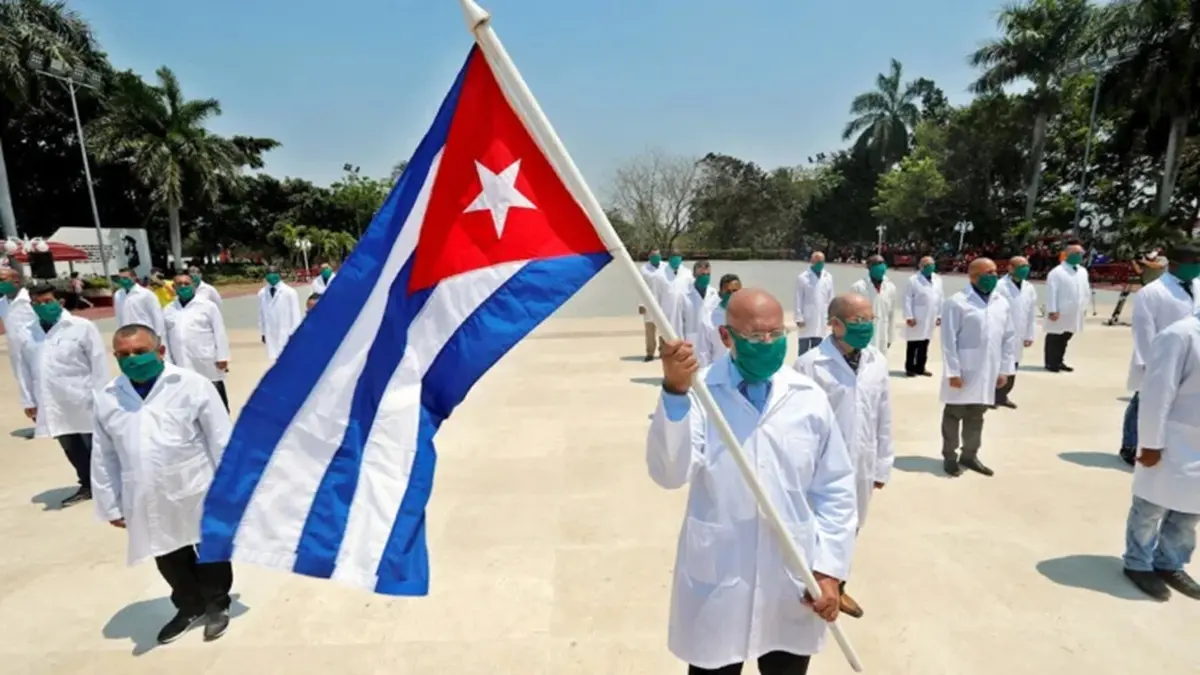
Currently, over 24,000 Cuban health workers provide services abroad as part of solidarity missions.
On Wednesday, Cuban Foreign Affairs Minister Bruno Rodriguez rejected statements by U.S. Secretary of State Marco Rubio, who announced that his country would limit the granting of visas to nations that request Cuban doctors and health workers.

“The U.S. Secretary of State is threatening visa restrictions against governments that have legitimate medical cooperation programs with Cuba. This shows imposition and aggression, using force as the new doctrine of that government’s foreign policy. Cuba will continue providing services,” Rodriguez said.

Previously, in a message posted on social media on Wednesday, Rubio announced new measures the administration of President Donald Trump will implement to curb Cuban medical cooperation, which Washington accuses of exporting health workers under exploitative wage conditions.

“The United States is expanding its Cuba-related visa restriction policy. The State Department has taken steps to restrict visa issuance to Cuban and complicit third-country government officials and individuals responsible for Cuba’s exploitative labor export program,” Rubio said.


“The State Department is taking steps to impose visa restrictions on several African, Cuban and Grenadian government officials complicit in the Cuban regime’s coerced forced labor export scheme. We are committed to ending this practice. Countries that are complicit in this exploitative practice should think twice,” Rubio warned.

The U.S. secretary of state also announced actions against several senior Brazilian government officials and former executives of the Pan American Health Organization (PAHO) for their participation in the “More Doctors” program, which allowed Brazil to provide health care in its most remote communities using Cuban personnel.

During his two terms, President Trump has led a campaign to accuse Cuba of using doctors and other health workers as instruments of political influence. In June, the U.S. government announced the application of visa restrictions against several Central American government officials due to their involvement in programs to hire Cuban doctors.

Currently, more than 24,000 Cuban health workers provide services abroad as part of solidarity missions, some of which are completely free while others are compensated for the services provided.

https://www.telesurenglish.net/cuba-rej ... -programs/
"There is great chaos under heaven; the situation is excellent."

User avatar
blindpig
Posts: 14789
Joined: Fri Jul 14, 2017 5:44 pm
Location: Turtle Island
Contact:

Re: Cuba

Post by blindpig » Sun Oct 19, 2025 5:05 pm

Genocide by Blockade: How the U.S. Empire Wages War on Cuba’s Right to Live
Posted by Internationalist 360° on October 18, 2025
Prince Kapone

Image
They call it an embargo. We call it what it is—economic warfare, a colonial siege dressed up as policy, and proof that the crisis of imperialism has become a war against life itself.

The Epidemic of Propaganda: How El País Manufactures Decay in Cuba

The story begins like a fever. “By the end of the summer,” writes El País, “people in Cuba were wondering what rare disease had them bedridden.” The tone is already clinical and moral at once—curiosity spliced with suspicion. We are told that whole families are sick, laboratories lack reagents, officials deny deaths, and citizens despair on Facebook. The reader is ushered through the scene as though guided by a sympathetic but weary foreign doctor, shaking their head at a country too stubborn to heal itself. It is a familiar rhythm, repeated across decades of Western reporting: pity the people, blame the state, erase the blockade.

Carla Gloria Colomé’s article in the English edition of El País (October 16 2025) performs this ritual with professional grace. From her perch in Miami—the exile capital of anti-Havana mythology—she paints an island overrun by disease, denial, and decay. Her prose carries the weary authority of someone who has already made up her mind. Cuba is sick, not because it is strangled, but because it refuses the cure prescribed by Washington. The journalist becomes a diagnostician, and the diagnosis always ends in “failed socialism.”

The trick works through rhythm as much as argument. Each paragraph moves from rumor to revelation to despair, creating the sensation of chaos without ever naming its cause. The epidemic spreads through verbs that erase agency: “people were infected,” “rumors circulated,” “officials denied.” No one sanctions, no one sabotages—illness simply falls from the sky. Even the mosquitoes, it seems, are counter-revolutionary. The government’s supposed “silence” becomes proof of guilt; the absence of laboratory reagents becomes evidence of indifference, not of embargo. And when the minister finally speaks, acknowledging deaths, his words arrive too late in the narrative to matter. The verdict—Cuba is negligent—has already been handed down.

There is an artistry to this sort of journalism. It is not outright falsehood but narrative engineering. The reporter selects her material the way a painter chooses color: a Facebook post from a suffering artist, a quote from a dissident intellectual, an image of garbage piling on a Havana street. Each brushstroke is true enough in isolation, yet together they form a mural commissioned by empire. The technique is simple: elevate anecdote to pattern, omit structural context, and let despair masquerade as data. The reader, softened by pity and repelled by decay, is led to a quiet moral conclusion—surely this system, this government, must fall.

What goes unsaid is the real pathology: the deliberate asphyxiation of an entire society by the United States and its obedient allies. That omission is the beating heart of the piece, the silence that makes its words possible. To name the blockade would be to spoil the illusion, to replace mystery with motive. So instead we are offered the theater of humanitarian concern—a spectacle in which Western media shed crocodile tears for the victims of their own governments’ policies. The mosquito becomes the villain, the state the accomplice, and the empire the concerned bystander taking notes for history.

Every metaphor is chosen with care. Blackouts, garbage, swarming insects—all stand in for socialism itself, portrayed as a system rotting under its own weight. The article’s structure mirrors a morality play: the innocent populace suffers, the corrupt state denies, and the outside world—embodied in the impartial Western journalist—speaks truth to tropical power. But what is really spoken is the language of domination dressed as concern, a sermon about civilization delivered through the megaphone of humanitarian liberalism. It is an old tune, played again for a new audience, with updated lyrics for the algorithmic age.

In the end, the piece leaves its reader not informed but inoculated—immunized against sympathy for Cuban sovereignty. The emotional message is clear: feel sorry for the people, distrust their government, ignore the empire behind the curtain. This is how propaganda operates in the age of plausible empathy. It does not shout; it sighs. It does not invent; it arranges. And in that arrangement, in the careful orchestration of omission and affect, we see the true epidemic at work—not dengue, not Oropouche, but the feverish moralism of imperial journalism itself.

The Anatomy of a Siege: What El País Refuses to Name

The El País correspondent describes a nation wilting under fever but never names the hand tightening the tourniquet. Cuba is portrayed as a house infested with mosquitoes and incompetence, its hospitals overrun and pharmacies bare. But behind every empty shelf stands a ledger in Washington. The country cannot freely import medical reagents or diagnostic machines containing even a trace of U.S. components, and banks that process the payments risk blacklisting. Shipments are rerouted through third countries, inflating costs by roughly thirty percent, and global suppliers—from imaging firms to laboratory giants—refuse contracts outright. What the paper calls “neglect” is simply the bureaucratic face of warfare.

When fuel deliveries from Venezuela collapse under secondary U.S. sanctions, the trucks that once sprayed insecticide stay parked, hospitals flicker through blackouts, and fridges storing vaccines go warm. The mosquito breeds where the empire dictates. To the Western press, this looks like mismanagement; to those inside, it feels like siege.

The framework of that siege was written long ago. Laws such as the Cuban Democracy Act and Helms–Burton Act reach across oceans, threatening any firm that dares sell Havana a stethoscope. A ship that docks in Cuba is banned from U.S. ports for six months. A syringe produced in Europe becomes contraband if a single American patent hides in its design. The embargo isn’t a policy; it’s a global architecture of punishment built into law.

During the 1990s “Special Period,” these same mechanics produced outbreaks of blindness, neuropathy, and Guillain-Barré syndrome when vitamins, soap, and water-treatment chemicals disappeared. History repeats: Washington tightens the chokehold, the media report a “Cuban crisis,” and the cause is buried under moral commentary about socialism’s failure to govern itself.

In spite of this, the island forged a health system rooted in neighborhood clinics and scientific sovereignty. Its infant-mortality rate rivals that of industrial powers, and its laboratories created therapies like Heberprot-P for diabetic ulcers and homegrown COVID vaccines. Yet those discoveries remain trapped because licensing restrictions and embargo rules block international collaboration. Even knowledge is embargoed.

The Caribbean’s record heat and rainfall in 2024 fueled a dengue surge across the region—from Haiti and the Dominican Republic to Puerto Rico. Isolating Cuba’s outbreak from this pattern allows the Western imagination to treat the virus as political contagion rather than climate reality.

The scale of deliberate harm is measurable. Cuba loses billions yearly and counts thousands of preventable deaths linked to sanctions—a death-toll written in spreadsheets rather than bullets. Each statistic hides a face: a postponed surgery, an ambulance without tires, a generator without fuel.

Since January 2025 the screws have tightened again. National Security Presidential Memorandum 5 (June 30, 2025) reinstated aggressive travel audits and reimposed bans on both direct and indirect financial transactions with Cuban entities tied to state institutions. The expanded blacklists published in July 2025 added more Cuban hotels, logistics providers, and service companies to the Cuba Restricted List and Cuba Prohibited Accommodations List. Remittance flows were cut off when Western Union suspended transfers in February, severing one of the few civilian lifelines that kept households stocked with cash for medicine and basic needs. In that same period, UN human rights experts condemned Washington’s decision to re-list Cuba as a State Sponsor of Terrorism, a designation whose real function is to frighten insurers, banks, and shippers into boycotting the island. By May, the State Department had also certified Cuba as a “Not Fully Cooperating Country” in anti-terrorism efforts, ensuring that the machinery of strangulation would hum on every financial and diplomatic front.

The Congressional Research Service now acknowledges that the 2025 moves restore the Trump-era blueprint and, via the new memorandum, expand it to cover indirect transactions—total economic pressure wrapped in legal language. The shortages that El País frames as mismanagement—missing reagents, empty fuel tanks, silent laboratories—trace directly onto the sanctions architecture. A lab without supplies is not a metaphor for socialism’s decay; it is the x-ray of imperial policy. The suffering is real, but the diagnosis belongs to Washington.

The Crisis of Imperialism: Blockade, Sovereignty, and the Colonial Contradiction

What the newspaper sells as “health news” is only the mask. Beneath it sits the old machinery of domination grinding away, the same engine that once sailed under the skull-and-crossbones of the Monroe Doctrine and now hums through sanctions dashboards and compliance memos. We live in the crisis of imperialism—a moment when a decaying empire can no longer rule the world cleanly, so it tries to fence off the hemisphere and starve the disobedient into submission. Call it whatever you want in polite company; the working class knows it as siege. In Cuba’s case, it is a total economic blockade—war by other means—whose purpose is not policy “pressure,” but the destruction of a people’s capacity to live on their own terms.

This is the oldest wound in the Americas reopening: the colonial contradiction. The former plantation refuses to return to its assigned place in the imperial supply chain. Cuba’s insistence on organizing care as a right, knowledge as a commons, and medicine as a social good tears at the fabric of colonial hierarchy. The metropole answers with scarcity as punishment. Where El País sees “mismanagement,” the oppressed see the old whip redesigned: a logistics regime that withholds fuel, blocks reagents, criminalizes remittances, and then blames the victim for bleeding. The vocabulary shifts—from “civilizing mission” to “democracy promotion”—but the relation remains: planter and plantation, creditor and debtor, master and those commanded to kneel.

Against this, Cuba practices what the text-books refuse to teach: anti-imperialist sovereignty. Not the empty sovereignty of flags and speeches, but the daily sovereignty of clinics kept open, vaccines developed in blackout hours, neighborhoods self-organizing trash pickups when the trucks go still. Sovereignty here is not a courtroom doctrine; it is a method of survival. It is the conviction that human need outranks market diktat. And it is intolerable to a system that requires obedience to capital as the price of entry into “civilization.” That is why the blockade targets the arteries of daily life. It aims to make endurance itself feel like treason.

Name the weapon without euphemism: genocide through economic warfare. Kill the hospital by denying parts, kill the lab by denying reagents, kill the household by denying remittances, and call the resulting deaths “unfortunate outcomes.” The empire prefers an unarmed cemetery to a sovereign clinic. Its cleverness is to commit the crime by spreadsheet, so that the corpses can be tallied as “externalities.” Its media chorus converts the hunger it manufactures into a morality tale about failed socialism, reciting pity as if it were evidence. They invert cause and effect so thoroughly that the noose looks like a necklace.

This inversion is not a mistake; it is how a hegemony in decline holds on. Unable to win the consent of the South, the North perfects coercion and spectacle. The crisis of imperialism expresses itself as a hemisphere put back under lock and key—a fortress painted as a family. The doctrine is simple: if global command slips, tighten hemispheric control; if sovereignty sprouts, salt the soil. In that theater, Cuba’s very persistence becomes heresy. Each day a polyclinic opens its doors, each time a neighborhood brigade drains a mosquito nest, each hour a scientist keeps a fragile machine alive—these are blows landed against the imperial fantasy that only markets can organize life.

So let us reframe the narrative honestly. The Cuban outbreak is not proof that socialism fails; it is proof that socialism bleeds under siege and still refuses to die. The shortages are not mysteries; they are the fingerprints of a blockade. The “silence” is not guilt; it is the sound of a government managing survival under a crosshair. The real story is not disease but jurisdiction: who decides whether a nation may breathe. Read this moment through our four lenses and the picture clarifies. The colonial contradiction sets the stage. Anti-imperialist sovereignty is the answer the colonized have forged. Genocide through economic warfare is the empire’s method. And all of it unfolds inside the crisis of imperialism, a system so frightened of the world it made that it now barricades its own hemisphere and calls the barricade “order.”

History moves elsewhere. The more the fortress tightens, the more its purpose is exposed. The island under blockade reveals the metropole’s truth: that domination can starve a nation, but it cannot starve the future. The narrative we write here is not of despair but of alignment—of a people whose persistence has already outlived the headlines, whose sovereignty has already outlasted the sneer. The crisis belongs to empire; the horizon belongs to those who refuse it.

From Outrage to Organization: Build the Corridors That Keep People Alive

The point of clarity is not catharsis; it is construction. If the blockade is a war, then our task is to assemble an army made of unions, neighborhoods, clinics, classrooms, and code. No saviors are coming. We will have to be the logistics: the diesel that moves the ambulance, the reagent that saves a child, the signal that cuts through the static. Begin where you stand. Turn pity into power, and power into corridors that defeat starvation by moving supplies, truth, and courage faster than the siege can stop them.

Start with what already breathes. Join and reinforce the living arteries: the caravans that have crossed borders for decades with medicine and milk; the church trucks that call their work faith and call it correctly; the health brigades that match doctors to patients when markets refuse. Find the hands that have not waited for permission—community groups that ship insulin by the cooler, student networks that crowdfund diagnostic kits, longshore workers who look the other way when a crate marked “books” happens to contain a centrifuge. Amplify these practices until they become a system. Do not reinvent the wheel; put air in every tire and send the wheels to Havana.

Build a workers’ front against the blockade. Trade union halls should not be museums of past fights but dispatch centers. Nurses can twin hospitals and share protocols; lab techs can pool surplus reagents; electricians can advise on keeping ventilators alive during blackouts. Dockers can refuse to handle cargo for banks that help enforce the strangulation. Teachers can turn every classroom into a seminar on how financial paperwork kills. If a corporation can sanction a people, a union can sanction a corporation. The ledger must learn that every fine extracted from Cuba will be paid back in strikes.

Open the municipal flank. City councils can pass binding procurement rules that cut ties with banks and insurers enforcing the blacklist. Public universities can create exchange programs with Cuban faculties and protect them with the same legal armor used for climate and immigrant sanctuaries. Public hospitals can negotiate sister-ward agreements to share training and equipment. When national governments act like subsidiaries of finance, local power must become internationalist: one city at a time declaring that blockading medicine is a crime and behaving accordingly.

Secure the digital ground. The siege uses algorithms to bury the truth and compliance software to throttle lifelines. Answer with encryption-by-default for aid networks, mirrored repositories for medical literature, and rapid-response translation cells that turn Cuban clinicians’ notes into multilingual guidance before the press can weaponize confusion. Train a thousand volunteer “signalers” who spend one hour a day breaking the narrative chokehold: surfacing testimonies, verifying claims, and flooding the channels with patient-level reality. Treat disinformation like a power outage and restore service together.

Make remittances ungovernable by the blockade. Families should not depend on the permission of a transfer giant to buy antibiotics. Build community remittance co-ops with robust compliance counsel, diversify corridors through friendly jurisdictions, and experiment with settlement methods that do not require the empire’s rails. Keep it lawful, keep it disciplined, and keep it moving. If a door is slammed, map a window; if a window is barred, dig a tunnel. The measure of our seriousness is whether grandparents can pick up their medicine on time.

Turn culture into logistics. Art is a supply line for morale and memory. Musicians can fund a generator with a show; graphic artists can make a poster travel faster than a press release; filmmakers can turn a neighborhood fumigation brigade into a story that recruits ten more. Let the galleries become storerooms, the book clubs become shipping lists, the poetry readings become fund drives with a target and a deadline. We are not performing charity; we are manufacturing victory.

Force the question in the imperial core. Demand that legislators strike the terror designations and the financial gags, not next year but before the next hurricane season. Tie every vote to a concrete human consequence: a NICU without power, a dialysis session missed, a vaccine lot wasted for want of a cold chain. Track the banks, the law firms, and the lobbyists who profit from the chokehold and make their names as common as the weather. If they can turn life into a balance sheet, we can turn their balance sheets into picket lines.

Finally, bind all of this together into an infrastructure that cannot be switched off: a permanent, federated network of unions, clinics, congregations, co-ops, code workers, and councils dedicated to keeping people alive under siege. Give it a cadence—monthly shipments, weekly teach-ins, daily truth shifts. Publish a simple ledger of needs met and lives sustained. Let the measure of our politics be painfully practical: How many refrigerators stayed cold? How many vials reached their destination? How many hours of light did we add to the ward?

This is how we answer a blockade meant to make sovereignty impossible: by practicing sovereignty from below until it becomes the new common sense. The empire has chosen the path of hunger; we will choose the path of bread. It has chosen darkness; we will choose power—electrical, moral, organized. And when the historians ask how a small island outlasted a giant, they will find the record in our manifests and our minutes, in the children who lived, and in the silence where a headline should have been but never came because the people, together, refused to let the lights go out.

https://libya360.wordpress.com/2025/10/ ... t-to-live/

******

Drawing lessons from the Cuban Revolution: organization, unity, and internationalism

A recent webinar by Pan Africanism Today and the International Peoples’ Assembly looked at global struggles, from Africa to Latin America, showing how Cuba’s enduring resistance offers vital lessons in organization, unity, and internationalism for today’s movements fighting oppression and war.

October 19, 2025 by Nicholas Mwangi

Image
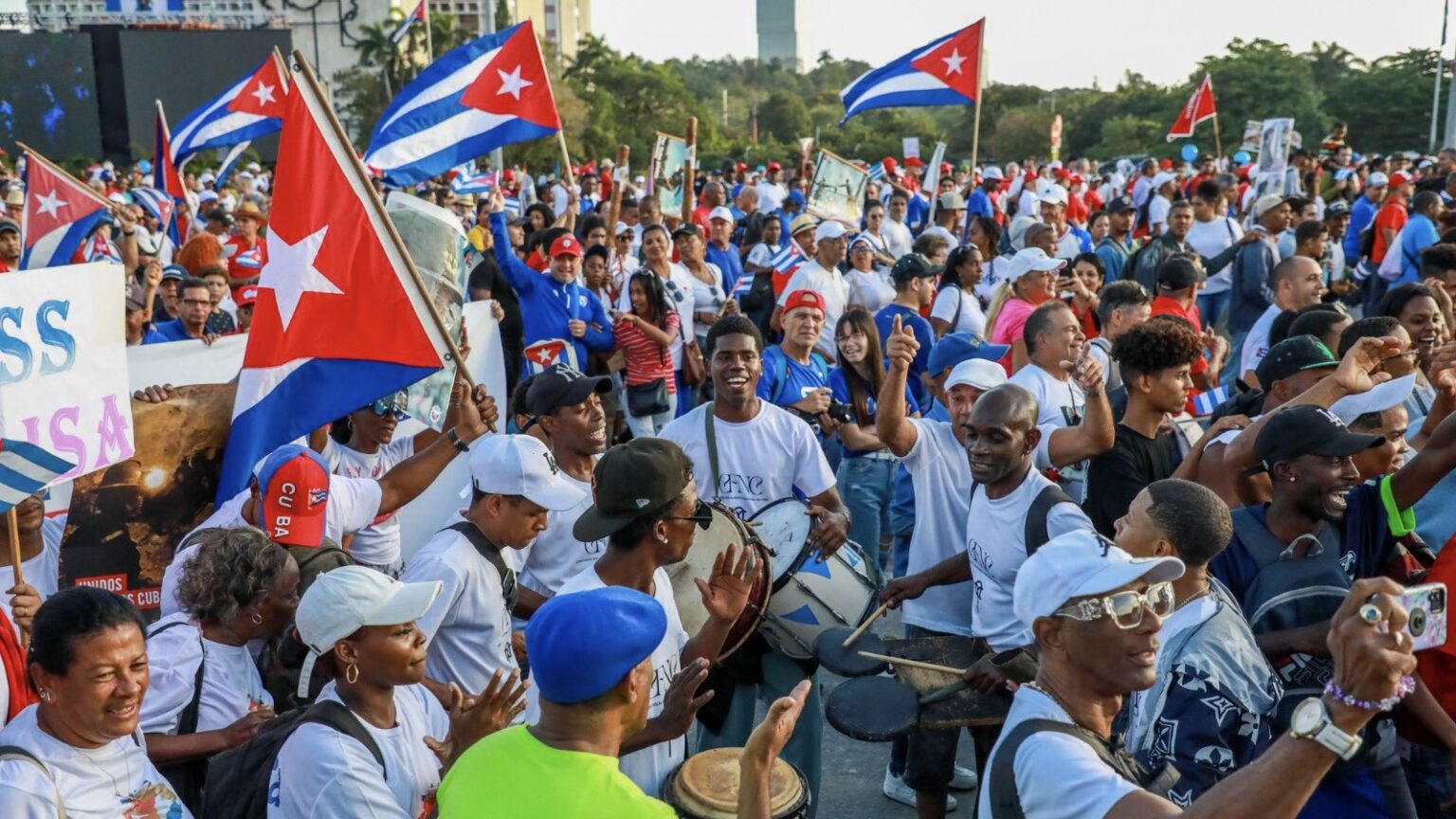
Cuban people on May 1 in the Plaza of the Revolution. Photo: Miguel Díaz-Canel / X

The world is in an era marked by relentless wars and overlapping crises, from the devastating civil war in Sudan and violence in the Democratic Republic of Congo to the unfolding genocide in Palestine. The demand to end all wars has never carried greater urgency. And in the midst of all these visible battlegrounds persists a more enduring and insidious conflict; the hybrid war and economic blockade waged against the Cuban people and their revolution.

This was the central focus of a recent global webinar convened under the banner of Pan-African and internationalist solidarity, bringing together progressive voices to draw lessons from Cuba’s anti-imperialist struggle. The session, held on October 15, was facilitated by Mbali Gwenda from Pan Africanism Today, who situated the discussion within a broader historical and moral framework, invoking the revolutionary spirits of Thomas Sankara, martyred on the same date in 1987, and Assata Shakur who recently passed, and whose life consistently symbolized uncompromising resistance to oppression.

“We are dealing with the question of the hybrid war and blockade against the Cuban Revolution and her people,” Gwenda said. “A revolution that has been a source of inspiration for all oppressed peoples throughout the world till this day.”

The keynote address was delivered by Manolo De Los Santos, executive director of The People’s Forum and a researcher at the Tricontinental: Institute for Social Research, who framed Cuba’s defiance not as a miracle, but as the outcome of a centuries-long process of people’s struggle, organization, and consciousness.

The long arc of revolution
De Los Santos began by looking at Cuba’s revolution more than an event confined to the years 1953–1959, when Fidel Castro, Che Guevara, and others led the guerrilla war against the Batista dictatorship. Revolutions, he reminded the audience, are not events but processes, collective journeys of resistance that unfold across generations.

Cuba’s revolution, he argued, has roots reaching back to centuries of anti-colonial and anti-slavery resistance, when the island was still a colony of the Spanish Empire. Unlike many independence movements in Latin America, Cuban revolutionaries understood that genuine freedom required addressing three interlinked questions:

Could Cuba truly be independent if it remained a slaveholding society?
Could it be free if it continued under the exploitative system of capitalism?
Could it claim sovereignty while dominated by imperial powers, first Spain and later the United States?

These questions shaped the consciousness of generations of Cuban patriots, culminating in the 1959 triumph of the socialist revolution. But as he explained, the revolution’s endurance has rested on three essential pillars: organization, unity, and internationalism.

Organization: the bedrock of resistance
Organization, De Los Santos emphasized, has been the Cuban people’s greatest weapon against imperial aggression. From the early independence wars to the 26th of July Movement led by Fidel Castro, Cubans have understood that only a disciplined, organized people can confront an empire with infinite resources.

This organizational spirit persisted after 1959, with the creation of mass democratic structures that unite workers, women, peasants, students, and youth. The Federation of Cuban Women, for example, mobilizes millions in defense of gender equality and revolutionary ideals, while student and peasant organizations remain vital spaces for political education and collective problem-solving.

Even under today’s extreme shortages such as the lack of fuel to power garbage collection, Cuban communities respond not with despair but with collective initiative, a reflection of their revolutionary organization and social consciousness.

Unity, he continued, has been the second indispensable lesson from Cuba. Every time the people were divided, the empire gained the upper hand; every time they stood together, they won. This unity has transcended class, race, and regional divisions, dismantling the legacies of slavery and racism that imperialism imposed.

The Cuban Revolution’s unity was forged not just through ideology but through practice, through collective participation in building a new society. It remains, as Manolo put it, “the most important defense the Cuban people have.”

Internationalism is the soul of the revolution
If organization is the body and unity the shield, then internationalism is the soul of the Cuban Revolution.

Quoting Fidel Castro, the New York-based researcher reminded participants that “a people who are not willing to fight for the freedom of others will never be able to fully fight for their own freedom.”

This principle drove Cuba to send tens of thousands of its sons and daughters to fight alongside liberation movements in Angola, Namibia, and South Africa, contributing directly to the defeat of apartheid. As he noted, “Cuba doesn’t need gold or minerals from Africa, it knows that its freedom is tied to the freedom of the peoples of the African continent.”

Even today, with over 24,000 Cuban doctors working abroad, many across Africa, Cuba continues this legacy of solidarity. The US, in its campaign of distortion, now accuses Cuba of “human trafficking” for this very act of humanitarianism.

The anatomy of a hybrid war
The United States’ war against Cuba has been fought through unconventional means. It is a hybrid war, a combination of economic blockade, financial strangulation, media disinformation, and covert sabotage.

For more than 65 years, the blockade has inflicted immense human and economic damage. In 2024 alone, it cost Cuba USD 7.5 billion, money that could have been used to buy food, medicine, or oil for its 11 million citizens.

The US uses its control of global financial systems to punish any country or institution that trades with Cuba. Banks in Africa or Latin America face sanctions simply for handling Cuban transactions. The blockade’s reach extends into every corner of global trade, designed to isolate Cuba and make daily life unbearable for its people.

The war is also fought in the terrain of ideas. US-funded media campaigns spread false narratives about repression and poverty in Cuba while erasing the country’s achievements in health, education, and solidarity.

Socialism and survival
When asked on how Cuba has managed to survive more than six decades of blockade, Manolo’s answer was clear: because Cuba made a socialist revolution.

Socialism, he said, allowed Cuba to create a system where the needs of the people come before profit. In capitalist societies, when crises hit, the rich survive and the poor starve. In Cuba, food, healthcare, and education are distributed equitably, even in times of scarcity. This social organization transforms a siege economy into a community of resilience.

This difference, he explained, is what makes Cuba unique among nations facing US aggression. It’s also what inspires global movements seeking alternatives to neoliberalism and imperial domination.

Cuba, Sankara, and the spirit of resistance
The session also honored Thomas Sankara linking a symbolic bridge between the African and Latin American revolutionary traditions. Both embodied a commitment to self-reliance, dignity, and international solidarity.

Sankara’s vision of a self-determined Africa resonated deeply with the Cuban experience. His assassination on October 15, 1987 marked a turning point in African politics, yet his ideas continue to inspire movements across the continent, just as Cuba continues to stand as living proof that another world is possible.

A call for global solidarity
In closing, Manolo issued a clear call; the Cuban people will overcome the blockade, but they cannot and should not do it alone. Their survival depends on the solidarity of all who believe in justice, sovereignty, and equality.

Cuba’s endurance is not simply a Cuban story; it is a lesson for all peoples resisting imperial domination. As the world faces renewed militarization and economic warfare, the spirit of organization, unity, and internationalism must also be crucial as ever.

“When they stand with the Palestinians, when they stand with the Congolese, when they stand with the peoples of the African continent,” Manolo concluded, “they are breaking the blockade too.”

https://peoplesdispatch.org/2025/10/19/ ... tionalism/
"There is great chaos under heaven; the situation is excellent."

User avatar
blindpig
Posts: 14789
Joined: Fri Jul 14, 2017 5:44 pm
Location: Turtle Island
Contact:

Re: Cuba

Post by blindpig » Sun Nov 02, 2025 5:55 pm

Two victories for Cuba, for life
October 31, 2025 Elson Concepción Pérez

Image
Photo: Yanelkys Llera Céspedes

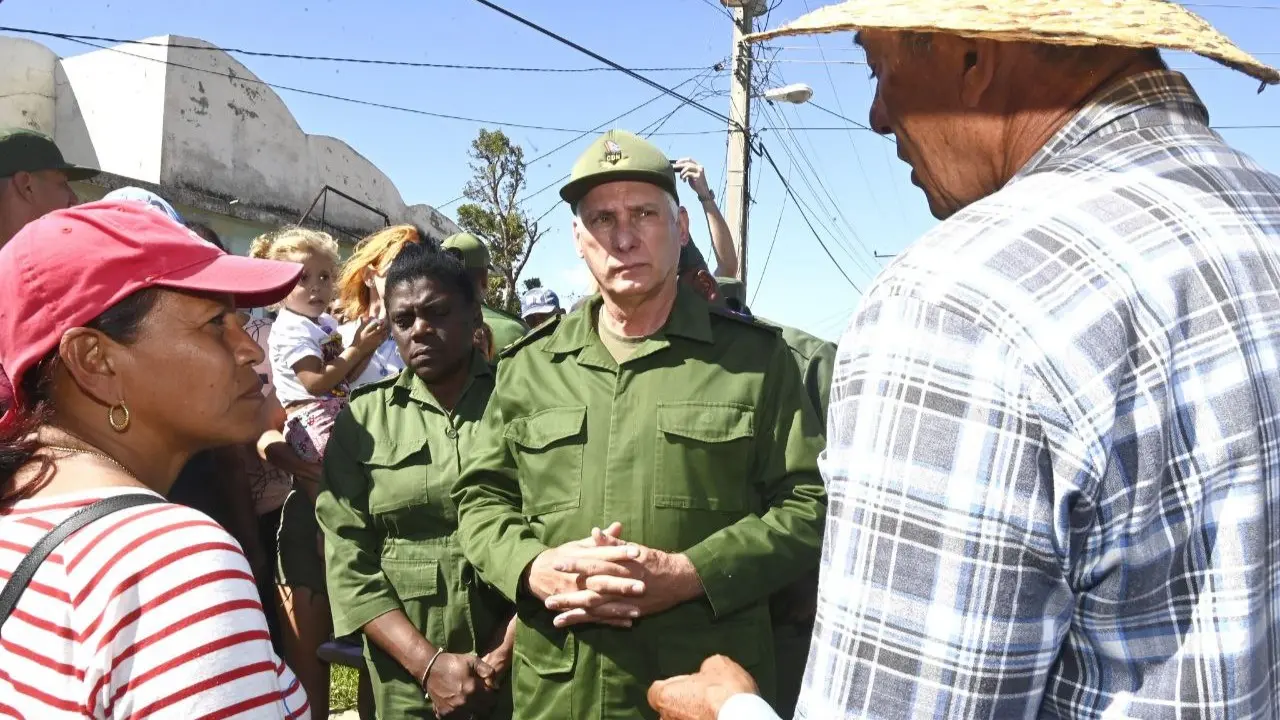
Hurricane Melissa has left a trail of devastation through the Antilles, with over 30 deaths in Haiti and Jamaica to date. The Eastern part of Cuba was also slammed by Melissa, the strongest hurricane to hit in the last 150 years. As of now, no lives have been lost in Cuba, thanks to its national unity and preparedness, which enabled it to evacuate over 700,000 people and their belongings out of harm’s way before the storm arrived. – editorial

Oct. 30 — “Our triumph is life itself, that the population of the eastern provinces was able to protect itself from the blow of Melissa, and it is also the life of the entire nation defended without fear in the face of a deceitful and cynical empire,” said Miguel Díaz-Canel Bermúdez, President of the National Defense Council, at the meeting of this body broadcast on the television program Mesa Redonda.

“These days have been very challenging, very tense, but also very instructive and very illustrative of the power of unity and the mobilizing and unifying capacity of our Party at the forefront of the Revolution.”

“The danger has not yet passed. The strong winds and heavy rains left behind by the hurricane, the overflowing rivers, the fallen trees and poles, the pollution generated in these circumstances… all of this can lead to further damage, disease, and even the loss of human lives and material goods that were preserved at the worst of times. We could lose them if there is negligence, if there is inaccuracy.”

Image
Cuban President Miguel Díaz-Canel, inspecting the damage from Hurricane Melissa in Holguin.

“Now it is important to carry out the survey that has been directed of all the damage; to clean up and control the epidemiological situation; to restore energy, communications, and drinking water services; to ensure a responsible and orderly return of evacuees to their places of residence when directed; to immediately resume health and education services at all levels; to guarantee food production and distribution; save whatever can be saved from the sugar and coffee harvests (…); restore services to the population and begin the rescue of damaged infrastructure, especially housing.”

“Today we are all Fidel and Raúl. Today we are all the Party of unity defending life. Our greatest recognition at a time like this goes to those in the eastern provinces who faced Melissa and those at the United Nations who faced the empire.

”Winning these battles is only the obligation to continue winning those that are yet to come.”

Another no! From the world to the blockade

Cuba was once again supported by the overwhelming majority of the countries that make up the United Nations, 165 of which voted on Wednesday to lift the economic, commercial, and financial blockade imposed by the United States government against the archipelago.

However, it was not just another victory on the same terms as in previous years, because, as never before, the White House instructed the deployment of a campaign of discrediting, pressure, and direct blackmail against several governments in exchange for an adverse vote or abstention, in the futile aspiration to deny the genocidal nature of that core of economic warfare that is the blockade.

Nevertheless, the resistance of the Cuban people has also been unprecedented, and it is to them that the triumph of reason belongs, which imposed the favorable vote of 165 countries against seven and 12 abstentions: a Pyrrhic result of the dirty diplomatic maneuvering that characterizes the Washington leadership, in collusion with its usual allies and cronies of the moment.

In the vote count, of course, the United States and Israel, at the head of a lineup bought or forced to demand that the longest policy of economic suffocation against any nation continue to be tried against Cuba. But no one is surprised that the same people who finance and fire the missiles that exterminated 70,000 Palestinians in Gaza are the leading promoters of this other genocide by attrition to kill through hunger, disease, and deprivation.

It is an overwhelming figure that certifies another colossal defeat for imperialist arrogance and exposes the ridicule of that great power that sought to legitimize the crime of the blockade of the largest island of the Antilles in the UN, using its best tools: intimidation and political extortion.

Source: Granma, translation Resumen Latinoamericano – English

https://www.struggle-la-lucha.org/2025/ ... -for-life/
"There is great chaos under heaven; the situation is excellent."

User avatar
blindpig
Posts: 14789
Joined: Fri Jul 14, 2017 5:44 pm
Location: Turtle Island
Contact:

Re: Cuba

Post by blindpig » Thu Nov 06, 2025 3:05 pm

Image

USA is isolated on World Stage: Trump failed to pressure Countries to support illegal blockade of Cuba

By Ben Norton (Posted Nov 06, 2025)

Originally published: Geopolitical Economy Report on November 3, 2025 (more by Geopolitical Economy Report) |

A study by the firm Reputation Lab polled people in 60 major countries, and found that the United States has a very bad reputation. The U.S. ranking fell from what was already a low rank of 30 out of 60 in 2024 to an even worse 48th place in 2025.

A clear demonstration of the political isolation of the U.S. government can be seen in votes at the United Nations.

The vast majority of countries on Earth voted at the UN General Assembly on 29 October to demand an end to the illegal U.S. blockade of Cuba, which has been maintained in blatant violation of international law for more than six decades.


165 countries, representing 85.5% of the UN’s 193 member states, voted in support of a resolution that emphasized the “necessity of ending the economic, commercial and financial embargo imposed by the United States of America against Cuba”.

Just seven nations, or 3.6% of the total, opposed the measure. These included the U.S. and Israel–which vote against the resolution every single year–as well as Argentina, Hungary, Paraguay, North Macedonia, and Ukraine.

Another 12 countries, or 6.2% of UN member states, abstained. These were Albania, Bosnia and Herzegovina, Costa Rica, Czechia, Ecuador, Estonia, Latvia, Lithuania, Moldova, Morocco, Poland, and Romania.

Image

The vote would have been 166 in favor, given that Venezuela expressed strong support for the resolution. However, the South American nation lost its voting rights, because it has not been able to pay the fees it owes to the UN, due to illegal, unilateral U.S. sanctions and an embargo that have prevented Venezuela from accessing its foreign reserves and blocked it from the U.S.-dominated financial system.

The UN General Assembly has held a vote on a similar resolution practically every year since 1992. Nearly all countries on Earth usually support the measure.

The United States has ignored these overwhelming UN votes for more than three decades.

In 2024, support for the resolution was even more overwhelming, with 187 votes in favor, and just two against (the U.S. and Israel), with one abstention (Moldova).

Trump administration fails to pressure most countries to support the blockade of Cuba

Although it seems like the U.S. got a few more countries to join it in voting against the resolution in 2025, this was in fact a big diplomatic loss for the Trump administration, symbolically showing how isolated the United States is on the global stage.

The Trump administration put a lot of energy and resources into pressuring countries around the world to vote against the resolution.

Reuters reported that the State Department, under the leadership of neoconservative war hawk Marco Rubio, ordered U.S. diplomats in dozens of foreign countries to try to force their host nations to follow Washington at the UN.

This effort ultimately failed. Just six countries went along with the Trump administration.

As Reuters put it, “US fails to make big dent in UN vote calling for end to Cuba embargo”.

Image

Image

CIA terrorist war on Cuba
In addition to the economic war, the United States has waged a terrorist war against Cuba for decades.

The CIA and other U.S. agencies tried to assassinate Cuba’s revolutionary leader Fidel Castro at least 638 times, according to official documents.

In 1961, the CIA launched a failed assault on Cuba, known as the Bay of Pigs invasion.

The U.S. also planned to use terrorist tactics to violently overthrow Cuba’s government, in a shadowy scheme called Operation Northwoods.

In a 2001 report titled “U.S. Military Wanted to Provoke War With Cuba”, ABC News reported the following (emphasis added):

Image

https://mronline.org/2025/11/06/usa-is- ... e-of-cuba/

******

Cuban President Diaz-Canel Visits Hard-Hit Holguin and Santiago Provinces After Hurricane Melissa

Image
Cuban President listens to residents in Melissa-hit areas of Holguín. Photo: Presidency of Cuba.

November 6, 2025 Hour: 6:22 am

Cuban President Miguel Díaz-Canel continued touring communities in eastern Cuba that suffered severe damage from Hurricane Melissa, emphasizing that the country is now entering a critical phase: recovery.

Emergency response efforts have been effective in addressing the immediate crisis, Díaz-Canel noted during visits to several municipalities in Holguín Province on Wednesday. However, he stressed that “the longest and most complex stage” lies ahead: rebuilding homes, infrastructure, and livelihoods.

The president traveled to the municipalities of Urbano Noris and Cacocum to assess the damage firsthand and to accompany local authorities and residents in their ongoing efforts to clear debris and restore essential services.

In Cacocum, 20 neighborhoods were flooded, and seven remain underwater. In the community of La Agraria alone, 176 homes were submerged.

Díaz-Canel also visited the Guillermón Moncada Polytechnic School in Urbano Noris, where 190 displaced residents — most of them children, seniors, women, and people with disabilities — are receiving shelter. Those affected are currently guaranteed food and continuous medical attention, he emphasized.

The Cuban president began his day in Santiago de Cuba Province, visiting the municipality of Guamá, where the eye of the hurricane made landfall on October 29. In the community of Aserradero, locals recounted the powerful storm surge and high winds that devastated crops and caused extensive damage to infrastructure.

https://www.telesurenglish.net/cuban-pr ... e-melissa/
"There is great chaos under heaven; the situation is excellent."

User avatar
blindpig
Posts: 14789
Joined: Fri Jul 14, 2017 5:44 pm
Location: Turtle Island
Contact:

Re: Cuba

Post by blindpig » Mon Nov 10, 2025 4:03 pm

Venezuela Sends 5,000 Tons of Humanitarian Aid to Cuba After Hurricane Melissa
November 9, 2025

Image
Venezuelan Deputy Foreign Minister for Latin America Rander Peña and Cuban Ambassador to Venezuela Jorge Luis Mayo supervise the shipment of humanitarian aid to Cuba, in La Guaira port, Venezuela, November 8, 2025. Photo: Ministry of Transport of Venezuela.

Venezuela has sent a new shipment of humanitarian aid to Cuba, with more than 5,000 tons of food, medicine, supplies, and toys destined for the areas affected by Hurricane Melissa.

The vessel set sail from the international port of La Guaira on Saturday, November 8, as part of an action coordinated by the Venezuelan government and channeled through the ALBA Bank.

Image
Containers carrying food and other supplies being loaded on to the ship Manuel Gual in the port of La Guaira, Venezuela. Photo: Ministry of Transport of Venezuela.

Shipment contents
The ship Manuel Gual is carrying 102 containers of essential supplies for the provinces of Santiago de Cuba, Granma, Holguín, Las Tunas, and Guantánamo, which were struck by the Category 3 Hurricane Melissa late October.

In addition to the cargo, a team of electrical workers is traveling to help restore basic services in the hardest-hit areas.

Official statements and bilateral cooperation
Venezuelan deputy minister for Latin America, Rander Peña, stated that the dispatch of humanitarian aid represents “a direct expression of solidarity and concrete support for Cuba on behalf of the Venezuelan people.”

“These are the ships that leave Venezuela and sail the Caribbean Sea, ships full of solutions, hope, and life,” he said.

The Cuban ambassador in Caracas, Jorge Luis Mayo, thanked the gesture and highlighted the continuity of cooperation between the two countries.

“The union between the Venezuelan and Cuban peoples is the consolidation of assistance that you are reinforcing today after this hurricane,” he said.

This is the shipment of aid, after another 26-ton air shipment left for Cuba on October 30. These actions are part of the regional assistance strategy promoted by Venezuela in the spirit of solidarity to mitigate climate emergencies.

https://orinocotribune.com/venezuela-se ... e-melissa/

*****

Cuba Thanks French Aid After Hurricane Melissa

Image
Cuban President Miguel Diaz-Canel salutes French President Emmanuel Macron. X/@PresidenciaCuba.

November 10, 2025 Hour: 11:38 am

Authorities informed that 76,789 homes have been affected.
On Sunday, Cuban President Miguel Diaz-Canel thanked French President Emmanuel Macron for his “solidarity and cooperation” with the victims in the eastern region of the island who were severely impacted by Hurricane Melissa last week.

During a phone conversation with Macron, Diaz-Canel expressed his gratitude for his solidarity with the victims of Hurricane Melissa. He explained to Macron the main damages suffered and the recovery efforts underway to repair the damage.

Foreign Minister Bruno Rodriguez also thanked Macron for the help offered to the affected Cubans. President Diaz-Canel warned this week, in a preliminary assessment, that the damage is “extensive and normalization will still take time.”

Santiago de Cuba, Granma, Holguin, Guantanamo, and Las Tunas are the provinces gradually recovering from the widespread damage caused by Melissa, including disruptions to electricity, telecommunications, drinking water supply and agriculture.

The text reads, “Several governments, UN agencies and programs, friends and fellow Cubans are sending donations for those affected and to support recovery efforts in eastern Cuba after Hurricane Melissa. Thank you all for your solidarity.”

Among the most serious damages are 76,789 homes that have been affected, 4,743 of which have completely collapsed and 10,311 are partially damaged. Another 12,056 homes lost their roofs and 47,753 suffered partial damage to their roofs.

A total of 1,312,000 people were sheltered, more than 69,870 are being assisted in state institutions and 933,000 are staying with family or friends. As of last Friday more than 54,000 people were still in shelters.

On Oct. 29, Hurricane Melissa made landfall in Cuba as a Category 3 hurricane, crossing the eastern tip of the island for approximately seven hours, bringing strong winds of up to 200 kilometers per hour, torrential rains, and a severe storm surge that also caused widespread flooding.

https://www.telesurenglish.net/cuba-tha ... e-melissa/

Unlike the USA, which refused Cuban aid in the aftermath of Hurricane Katrina, the Cubans put ideology aside, people first.
"There is great chaos under heaven; the situation is excellent."

User avatar
blindpig
Posts: 14789
Joined: Fri Jul 14, 2017 5:44 pm
Location: Turtle Island
Contact:

Re: Cuba

Post by blindpig » Mon Nov 17, 2025 2:50 pm

China’s Cooperation With Cuba in Energy Sector Remains Strong And Steady
November 16, 2025

Image
Deputy Minister of Foreign Trade and Foreign Investment Déborah Rivas Saavedra speaks at the inauguration event of the seventh photovoltaic solar park resulting from China-Cuba cooperation. Photo: X/@PresidenciaCuba.

The First Secretary of the Party Central Committee and President of the Republic, Miguel Díaz-Canel Bermúdez, attended the inauguration of the seventh photovoltaic solar park of the 120 MW project donated by the Chinese Party, Government, and people.

Guanajay, Artemisa – “China’s cooperation with Cuba in the energy sector remains strong and steady, from ongoing projects, such as equipment and spare parts for distributed generation, the 5,000 photovoltaic systems for isolated homes, and the installation of other solar photovoltaic parks (PSFV) with a total capacity of 85 MW, to the next project to install another 200 MW and the new 5,000 photovoltaic systems for isolated homes.”

This was stated by the Ambassador of the People’s Republic of China to the island, Hua Xin, during the inauguration in Guanajay, Artemisa, of the seventh 5 MW PSFV of the first stage of a donation from the Party, the Government, and the people of the sister country, which will add 120 MW to the National Electric System (SEN).

The official launch of Mártires de Barbados II was led by the First Secretary of the Party’s Central Committee and President of the Republic, Miguel Díaz-Canel Bermúdez, and it is now connected to the SEN, as are its 5 MW counterparts built in several provinces, with a combined generation capacity of 35 MW.

Following the completion of this phase, the second stage, already underway, is expected to be completed by next April and will include 13 5 MW PSFV and two 10 MW PSFV, with a total power of 85 MW and batteries to store 20% of the generation produced.

“Each of these steps,” said the diplomat, “demonstrates China’s commitment to Cuba’s sustainable development. In the future,” he confirmed, “our country is willing to continue strengthening this cooperation, thus contributing to the construction of the China-Cuba community with a shared future.”

When describing the benefits of the seven new PSFV units, as the first stage of the donation, Hua Xin commented that they will save around 18,000 tons of imported fuel annually.

“From the signing of the project exchange of notes, the arrival of the first batch of equipment, to the full connection to the grid today, the efficient collaboration between Chinese and Cuban companies has achieved impressive speed, marking a new stage in the collaboration between the two countries in the field of clean energy,” said the representative of the Asian giant.

“And the strategic significance of this project,” he added, “is profound. At the social level, it will provide the population with a clean, stable, and reliable electricity supply, thus improving their well-being. At the economic level, the savings in foreign currency will boost Cuba’s economic recovery. And at the environmental level, the annual reduction in carbon emissions will contribute to global climate governance.”

Also participating in the inauguration of the PSFV Mártires de Barbados II were Gladys Martínez Verdecia, member of the Political Bureau and secretary of the Provincial Party Committee in Artemisa; Oscar Pérez-Oliva Fraga, deputy prime minister and minister of Foreign Trade and Investment; and Gerardo Peñalver Portal, first deputy minister of Foreign Affairs, among other dignitaries.

On the Cuban side, Deputy Minister of Foreign Trade and Foreign Investment Déborah Rivas Saavedra conveyed “on behalf of the Cuban government, party, and people, the deepest and most sincere gratitude to the government of the People’s Republic of China, the China International Development Cooperation Agency, and the China International Center for Economic and Technical Exchange for their arduous efforts to execute this project in the shortest time possible.”

She praised the Chinese authorities for giving the initiative “emergency treatment in order to support our country in the complex situation facing the National Electric System,” as well as the technical collaboration between the Chinese and Cuban institutions that participated.
She recalled that the PSFV Mártires de Barbados II was built in record time after supplies arrived last July. Like the other six 5 MW plants, it will contribute an estimated 8,000 MWh, for a total of 56,000 MWh per year, which will help reduce service disruptions during daytime hours and increase installed electricity generation capacity.

Highlighting the contribution of this donation to the transformation of the national energy matrix by increasing the use of renewable and clean energies, the Deputy Minister of Mincex emphasized its environmental impact, which “will be significant, as a total of 49,280 tons of carbon dioxide will no longer be emitted into the atmosphere.” In addition, it will contribute to the national effort to achieve energy sovereignty and independence.


Rivas Saavedra reported that, following the completion of the first 35 MW stage, with seven 5 MW PSFV units, rapid progress is being made on the second phase of the project, involving a further 85 MW.

She argued that to this end, “the first supplies have arrived in the country and the rest will be received before the end of this year, which will allow for its construction and commissioning in the first quarter of 2026.”

The Deputy Minister of Foreign Trade and Foreign Investment reiterated her gratitude “for the systematic gestures of support from the People’s Republic of China to Cuba at this complex time we are facing, in particular the cooperation in the energy sector.”

She also thanked “the Chinese government for its prompt response in offering its solidarity and assistance in recovering from the damage caused by Hurricane Melissa, with donations of food, galvanized steel coils for the production of roofing for homes, mattresses, solar lights, among other items, which will benefit those affected in the eastern provinces.”

“All these signs of cooperation from the Chinese government,” she said, “confirm the special nature of our ties and are a practical expression of the construction of a community with a shared future between China and Cuba.”

(Granma) by René Tamayo León

https://orinocotribune.com/chinas-coope ... nd-steady/
"There is great chaos under heaven; the situation is excellent."

Post Reply