Just a photo from the Finnish military archive.
A woman walking with her belongings to a concentration camp looks at the Lenin monument. October 1941. Petrozavodsk under Finnish occupation.
For some reason, I think there's hope in her gaze. And it's not just empty pathos.
I once wrote about a series called "Oral History in Karelia," prepared by Petrozavodsk University. It's dedicated to the Finnish occupation of Karelia (1941-1944) and is based on stories from local residents recorded in our time. I especially emphasize this—in our "democratic" times, when speaking ill of the USSR is considered practically polite.
It's worth quoting one quote from this collection—from an interview with Galina Konstantinovna Ivanova, who was sent to a Petrozavodsk camp:
"Basically, they beat us for the slightest disobedience. One day, about ten of us girls went under the barbed wire to beg for bread in town. We were caught and given thirty lashes each. I was in shock for a month, lying there while these scars healed, because there were birch vines." Two men – Finns – stripped us naked, spread us out on the floor, and beat us like this. So, now about the time when there was typhus. There was a doctor named Bogomaevsky... And this Bogomaevsky kept shouting, "We'll remind you how our mothers fled in 1917." Just imagine what kind of family he was from!
- Did you compose songs and poems about your lives back then?
- They sang songs, mostly about Stalin, but they sang them in such a way that no one could hear.
Incidentally, there's another telling and rather famous photo associated with the Lenin monument, which the Finnish occupiers eventually dismantled (for a moment, the age-old dream of local anti-communists, liberals, neo-monarchists, and other such folks was fulfilled!).
Here it is:
The photo shows officers from Finland, Germany, Italy, Japan, Sweden, and the United States in front of the Lenin monument in Petrozavodsk, October 2, 1941.
Yes, this photo in occupied Petrozavodsk does indeed show George Hutsteiner, the American military attaché to Finland.
At the time, the United States was formally neutral, though sympathetic to the anti-Hitler coalition. Nevertheless, their attaché accepted an invitation from Hitler's allies, the Finns, visited the occupied territory of the Soviet Union, and posed alongside Germans from the Wehrmacht, Italians, and Finns. Autumn 1941. The British allies... But the most remarkable thing is that here a US officer in occupied Soviet territory poses amiably next to a Japanese officer.
1941. Petrozavodsk. The occupier is looking at the coat of arms of the Karelo-Finnish SSR.
However, I later read somewhere that this American attaché was able to obtain a lot of interesting information about the German army through Finnish officers. He allegedly used one simple trick: during the war, he had a huge supply of whiskey, so Finnish officers treasured his friendship with the American.
I don't know for sure—it might be a story, or it might not...
How a former clerk became commander of the Black Sea Fleet
October 17, 9:03 PM
A fantastic document was posted on "Historical Materials."
Former Black Sea Fleet commissar Romanets recounts his life and the revolution. It's not a biography, but a veritable whirlwind. He started out as an anarchist terrorist serving as a clerk in the navy, became a commissar and commander of the Black Sea Fleet, and ended up working for the NKVD and the People's Commissariat of Waterways of the USSR and the People's Commissariat of the Coal Industry. He served several prison terms, was wounded twice, sentenced to death, and fought as a partisan several times in various parts of the country. And the 20,000-ruble bounty on Romanets' head, announced by Kutepov, also speaks volumes. He personally promised Stalin never to engage in anarchy again. Plus, he fell into disgrace at the hands of Trotsky. I was especially touched by the story about how "they were driving past Kerch and decided to capture the local fortress along the way." A man of boundless energy. Just read it and imagine what kind of mega-series could be made based on such a plot. It's also worth noting that the Ukrainian Romanets fought against Ukrainian chauvinism and the Ukrainization of the Black Sea Fleet (a reference to Sablin), which he specifically notes.
Romanets, V.V., Brief Memories (1947 edition),
October 29, 1957.
A brief autobiography of Vasily Vasilyevich Romenets, member of the All-Union Communist Party (Bolsheviks) since August 1917, party card No. 0925261.
I was born on January 1, 1886, in the town of Krolevets, Chernigov province (now Sumy region). My father was a worker-mason, my mother a weaver. Denikin's gang hanged my father at the age of 83 in 1919. I am Ukrainian by nationality. I myself am a worker: first a weaver, a mason, and then bookkeeping and clerical work in the Krolevets treasury.
[From] the age of 7 to 18, I studied first at a parochial school , then at a zemstvo school, and then at the Krolevets city three-year school, which I graduated with honors.
My revolutionary work began at the dawn of the workers' movement, i.e. From 1903 to 1907 I was a maximalist terrorist, from 1907 to April 1917 – an anarchist communist. I was twice brought to justice by the old police and gendarmerie: for revolutionary work, but due to the complete secrecy of my work, due to the lack of evidence, I was not tried, but was officially under police surveillance for two years, reporting to the police weekly.
The first time I was called up to the Baltic Fleet in October 1907, and in January 1908 I escaped from military service and hid for three years. In 1910 I was called up for military service for the second time in the same Baltic Fleet in Petrograd and was stationed in the Kryukov barracks of the 2nd Baltic Fleet crew, where I served in combat until I took the oath. After taking the oath, I was appointed to the clerk's detachment of the General Staff and the Main Naval Staff, where I was first arrested for swindling for nine days and brought to trial. Before the trial, I spent two months in the Lithuanian Prison in Petrograd; the court sentenced me to eight months. This comparatively light sentence was handed down because Father Medved, the archpriest of the Church of St. Spyridon , had given me a good character reference, citing my good voice. After serving my sentence, I was transferred to the 2nd Cadre Company of the 2nd Baltic Fleet Crew (as a sailor of the 2nd class, in the penal category), where I was assigned only to dirty work in the kitchen, stables, etc. In the event of the arrival of any of the highest persons, I was always isolated or assigned to remote assignments. In 1912, he was transferred to the Kronstadt Naval Detachment, where he performed the same duties. That same year, he served as a sailor on the cruiser Rurik and, after returning from an overseas voyage, was again transferred to the Kronstadt Naval Detachment.
For failing to comply with the orders of Senior Lieutenant Veshchitsky, he was brought to trial a second time, but due to mental illness, he was placed in the Kronstadt Nikolaevsky Naval Hospital, a detention facility. After a three-month stay (no trial on this ground), he was released home for a year to recuperate.
After recovering for a year, I again worked in accounting at the Krolewetsky treasury. After a year, he was recognized by the military commission as fit to continue his naval service and was sent to finish his service in the Black Sea naval crew, where he worked in the office of the Black Sea crew, first with the rank of clerk's apprentice, and at the end of his service he was promoted to clerk of the 1st class (senior clerk) and was discharged into the reserve in March 1914.
During the German War of 1914, he was called up to the Black Sea Fleet, where he initially sailed on the destroyer "Stremitelny" - senior clerk of the 6th destroyer division, after the first battle with the cruiser "Breslau" he was written off due to illness to the Sevastopol naval detachment , where he also held the same rank for 5 months, and was discharged on leave due to neurasthenia for 6 months in March 1915. More at the front I didn't participate in the imperialist war, receiving deferments due to illness.
While on sick leave, I again worked as a clerk for the Land Development Commission in Krolevets, in my hometown.
The February Revolution found me in my hometown of Krolevets, where I was actively campaigning for an end to the war, disarming and arresting the police and the military commander's team. In April 1917, I was elected the first chairman of the Krolevets Soviet and by then pursued a Bolshevik line. At the same time, I left the anarchist-communist group.
There, in the city of Krolevets, I organized a revolutionary group of seven comrades, with whom I pursued the Bolshevik line, where I joined the party in April 1917. By order of the Kerensky military command, I was subject to arrest for disobeying the directives of the Provisional Government , but [was not arrested] thanks to the fact that a telegraph operator from the Krolevets postal telegraph office, Comrade Baulin, was a member of our group. He warned me about receiving a telegram addressed to the military commander about my arrest and promised to delay this telegram for two or three days. I was forced to flee from the city of Krolevets to the city of Leningrad via the city of Kharkov in June 1917.
In Kharkov, I met the following sailors of the Baltic Fleet, who were traveling to the Black Sea: Comrades. Fedorov, Sergienko, Zaitsev, Zhuravlev, and others, with whom I learned that I would be much more at ease in Leningrad and that I could also receive a commission in the Black Sea Fleet.
I arrived in Petrograd and met with my old Baltic Fleet sailors: Comrades Skulsky, Polukhin, Kovalsky, Kiryanov, and others, and a few days later I received an assignment to the Black Sea Fleet as well. I had been warned that the Black Sea Fleet was not allowing Bolsheviks into Sevastopol and that they considered the Bolsheviks to be German spies.
Having received precise instructions from Comrade Ya. M. Sverdlov on how to proceed in the Black Sea Fleet, I arrived on July 10, 1917, and arrived at the Sevastopol Naval Detachment. Three days later, I was elected Chairman of the Sevastopol Naval Detachment Committee at the first general meeting, at the suggestion of Comrade Nechayev. Nechayev was then required to leave for Petrograd. From that moment on, I actively worked to revolutionize the Black Sea Fleet, following the directives I received from Comrade Ya. M. Sverdlov, and immediately contacted the Bolshevik organization in Sevastopol.
From the Sevastopol Naval Detachment, I was delegated to the Sevastopol Executive Committee of the City Council in place of Comrade Nechayev, who had resigned. At the First Congress of Black Sea Sailors, I was elected a member of the Presidium of the Black Sea Fleet's Centerfleet, where I served as chairman of the military section. Three days later, I was simultaneously appointed by Centerfleet to the "Commission of Ten," which served as the Black Sea Fleet Commander-in-Chief's staff. I was also delegated by Centerfleet to the Democratic Conference in Petrograd , where I spoke alongside the Bolshevik faction.
The entire sailor community became particularly aware of my Bolshevik line and my Bolshevik credentials when I spoke at a garrison meeting in the Truzzi Circus on the issue of Kornilov and Savinkov's introduction of the death penalty at the front and in military units.
Following my speech, a protest resolution against the death penalty was passed, and the Executive Committee of the Sevastopol Soviet was immediately reconstituted, to which I was also elected. This was a major undertaking by the Sevastopol Bolshevik Party organization.
During the preparations for the October Revolution, I traveled to Petrograd to receive further instructions, where I participated in the overthrow of Kerensky's Provisional Government, captured the Winter Palace, and fought against the cadets holed up in the Astoria Hotel.
After the October Revolution, I returned to Sevastopol and, at the following Black Sea Sailors' Congress, was elected General Chief Commissar of the Black Sea Fleet on the proposal of the Bolshevik faction and confirmed by the Revolutionary Committee of the Republic by telegraph signed by Comrade V. I. Lenin and the People's Commissar for Naval Affairs. My assistants were the Bolsheviks Comrades Bolyshevsky and Kislitsa from the fleet, and Comrade M. Bondarev, a former social democrat and internationalist, from the fortress of soldiers.
In December 1917, I was summoned to Petrograd together with the fleet commander, Vice-Admiral A.V. Nemitz, in connection with sharp disagreements of principle, especially regarding the dispatch of the Azov flotilla by sea to the Don against Kaledin (there were other disagreements with him).The former fleet commander, A. V. Nemitz, deceived me and coupled his carriage in Kharkov to a train bound for Kiev, then departed for the Ukrainian Rada.
After reporting to the Revolutionary Committee in Petrograd and personally to Comrade V. I. Lenin, I returned to the Black Sea Fleet, receiving further instructions from Comrade Podvoisky, from whom I also received a badge and a Mauser revolver.
During this departure, Comrade I. V. Stalin said to me: "Go back, but be careful not to engage in anarchy there." I replied: "Yes, go back," and immediately declared "that I had already turned the wheel 180° long ago."
Due to the fact that the former fleet commander, Vice-Admiral A. V. Nemitz, fled to the Ukrainian Rada, I was also appointed fleet commander at that time. Rear Admiral Sablin served as my naval specialist, and I conducted all my work under the supervision of the Centerfleet and the Bolshevik organization of the city of Sevastopol. This appointment was confirmed by the naval command of the Republic, and I held this position until March 1918. During this period, there were two assassination attempts on me by the Socialist Revolutionaries and the entire Sevastopol gang.
With the issuance of the decree on the creation of the Red Army and Navy on new principles, by order of the Revolutionary Committee of the Republic, signed by Comrade V. I. Lenin, I was appointed Commissar for the Demobilization and Mobilization of the Black Sea Fleet and the Ports of the Black and Azov Seas , reorganizing the fleet and army on the principles of the Red Navy sailors, and the soldiers on the principles of the Red Army soldiers. Comrade Kovalsky and Comrade Kiryanov were sent from Petrograd to assist me.
This extremely important and complex work was successfully carried out thanks to the full support of the leadership of the Sevastopol Bolshevik organization and personally of Comrade S. G. Sapronov as the first chairman of the Sevastopol City Committee of the Bolshevik Party, together with CentroFlot and my assistants, with the assistance of the naval specialist Sablin, who was attached to me, and especially Captain 2nd Rank Comrade M. M. Bogdanov.
By this time, a Central Committee brigade from the Council of People's Commissars had arrived, with whom I had fundamental disagreements, and individual members of the Sevastopol Revolutionary Committee also sided with them. I failed to fulfill the brigade's demands, supported by individual comrades from the Revolutionary Committee, after which I only coordinated my work on specific issues with the CentroFlot Bolshevik faction and the staunch Bolsheviks of the Sevastopol organization. He did not go to the Revolutionary Committee, but appointed Captain 2nd Rank Comrade M. M. Bogdanov from the command of the Black Sea Fleet to the Revolutionary Committee.
At the extraordinary congress of sailors of the Black Sea Fleet in March (at the end) of 1918.In my place, Left SR William Spiro, a member of the Council of People's Commissars' brigade, was elected Chief Commissar of the Black Sea Fleet with the support of the Socialist Revolutionaries. Sailor Anatoly Zheleznyak, a member of the brigade, disagreed with my position and left for the Center, since I had received a telegram from the Center stating that I had acted correctly.
From the October Revolution and at the beginning of 1918, I, together with the Bolshevik organization of the city of Sevastopol, organized detachments of Red Guards against Kornilov, Kaledin, the Ukrainian Rada, the Kurultai, and others. I appointed reliable commissars to all ports, such as: comrade Kondrenko was appointed to the city of Odessa, comrade Rastrepin to the city of Novorossiysk, comrade Zaitsev to the city of Batumi, comrade Drachuk to Rostov, who headed the five, and so on.
In this work, I was especially assisted by the Bolshevik organization of the city of Sevastopol and its first chairman, comrade Sapronov S. G., gunner from the destroyer "Captain Savin", and then comrade Sapronov S. G. sailed on the destroyer "Lieutenant Shestakov". A very complex and difficult campaign was also conducted against the Socialist Revolutionaries and Mensheviks, and especially the Ukrainian chauvinists, regarding the Ukrainization of the fleet and its division among the individual republics and regions. Here, the fleet's political leaders, with my participation and under the leadership of the Sevastopol Party Organization, accomplished a great deal of work. Anyone who remembers February 22, 23, and 24, 1918, will understand the full complexity of this issue.
In particular, I also remember how individual members of the Revolutionary Committee of the city of Sevastopol helped us in our common work - sailor comrade Bulatnikov G.D., when the latter worked as a commissar for the fight against counter-revolution and for the quartering of troops transported from the Turkish front, comrade Chistyakov V.S. - who worked in the transport flotilla to carry out the tasks of the political leadership of the fleet in the ports of Mariupol, Rostov and Kerch. The most serious assignments of the political leadership of the fleet were carried out personally by comrade Sapronov S.G. - near Taganrog, [in] Rostov, in Odessa and in the detachment against Yevpatoria, etc.
On March 28, 1918, after my negotiations with the government on the issue of the Brest Peace and the withdrawal of the fleet from Sevastopol to Novorossiysk, I received a special assignment to prepare the Novorossiysk port to receive the fleet, and most importantly, to supply it with fuel, and I left Sevastopol on April 2, 1918. I did not have to take part in the sinking of the fleet, since I returned at the time when the last battleship, Svobodnaya Rossiya, was being withdrawn to be sunk in the roadstead. After the sinking of the fleet, I remained in Novorossiysk and was elected assistant to the military commissar of the Kuban-Black Sea Republic, in which position I remained until August 26, 1918.
On August 26, 1918, Novorossiysk was occupied by Denikin's General Kutepov, the military commissariat was cut off and my entire archive remained in Novorossiysk, and I had to go into the mountains with comrades Dokuchaev, Fishman, Kompaneets and others, and I became the head of a partisan detachment. After capturing Novorossiysk on August 26, General Kutepov issued his first order, stating that "whoever surrenders me or my head will be awarded 20,000 rubles in gold." Three Cossack regiments were hunting our detachment, and my comrades and I remained elusive thanks to our well-established contacts with the local population and those loyal to the Revolution, who saved us every time in the most difficult moments. In particular, a young woman, Maria Georgievna Bykova, was later betrayed by neighbors, imprisoned, and tortured, but she never revealed our detachment or its location.
I was in the mountains until November 1918. In November, on the instructions of the party and the personal order of comrade Ordzhonikidze, transmitted through our connections, I left for Kerch with a group of comrades in order to then head to Moscow, but on the way it was decided to capture the Kerch fortress, [however, due to] the refusal of the Kerch workers and soldiers of the fortress artillery, who were under the influence of the Socialist Revolutionaries and Mensheviks, this operation did not take place and I left for Moscow.
On the way to Moscow, I was handed over to the Petliura gang by the Socialist Revolutionaries and Mensheviks in the city of Krolevets on December 12, 1918, where I decided to take my wife, and was placed in solitary confinement in the Krolevets prison, where I was subjected to violence and torture, and when the partisans under the command of comrade Afanasenko, comrade Chernykh, comrade Konovalov and comrade Sushenko demanded my handing over, the Petliura command transferred me to the Konotop prison under a convoy of 18 people, and when my mother wanted to say goodbye to me on the way, her guard commander hit her with a rifle butt, she fell, and I don’t remember how I ended up in a freight car with a separate locomotive, and I was delivered to the station. Konotop, December 18, 1918.
As I was being led out of the train car onto the station platform, I saw the Bolshevik Comrade G.S. Spitsky, to whom I let him know who I was. The latter took action in time, that is, when the Petliura command, presided over by Ataman Paliy and the court member Colonel Kalyuzhny, whose third name I don't remember, sentenced me to death—to be shot together with Comrade Pavasitsky and others; Comrade Spitsky roused the entire working class of Konotop station, and the workers took to the streets and demanded that we, condemned men, be produced. It was then that I managed to escape with the assistance of Comrade G.S. Spitsky on December 23, 1918.
After my escape, I commanded a partisan detachment in the Chernihiv region and occupied the town of Krolevets, where I was wounded in the chest for the first time. After the capture of Krolevets on January 10, 1919, I was elected chairman of the revolutionary committee of Krolevets district, and I immediately joined the party for the second time, since all the documents remained in Novorossiysk, and there, in Krolevets, on January 29, 1919, I was elected chairman of the regional party committee.
In July 1919, the Chernigov regional party committee sent me to work in Sosnitsky district, where I was elected chairman of the Sosnitsky regional executive committee and simultaneously chairman of the regional party committee.
That same year, 1919, as Denikin's forces were advancing north, I was appointed commander of a combat sector on the Makoshino-Sosnitsky Front, where I was seriously wounded in the leg and head near Bakhmach. After that, I left the army and was again elected chairman of the Krolevetsky District Executive Committee and, simultaneously, the District Party Committee.
At the end of 1920, I participated in the fight against Wrangel with a special detachment, serving as its commander, after which, as a sailor, I was placed at the disposal of the Republic's naval forces.
In December 1920, I was appointed by the Namorsi of the Republic as emergency commandant for the 9th Rifle Division and a separate fire brigade's ice crossing of the Kerch Strait in connection with the events in Georgia.
On January 11, 1921, by order of the Namorsi of the Republic, he was appointed commissar of the headquarters, and then commissar of the artillery defense of the Azov-Black Sea-Caucasus coast and was the head of the garrison of the city of Novorossiysk.
At the end of 1922, he was appointed commissar of Ubeko-Caspian and demobilized at the request of the Central Committee of the All-Union Communist Party (Bolsheviks), based on the petition of comrade Kirov S. M., on June 20, 1923 to work in Baku, since the bandit Trotsky stated that "he does not need such commanders."
In Baku, he worked in leadership positions until 1924. In 1924-1925 he worked abroad. In 1925-1928 in Baku - the head of the commercial port, in 1928-1930 - the head of the military-industrial complex "Azerbaijan". – Yalta – head of the commercial port, from 1930 to 1933 – Moscow – NKPS, senior inspector of the Main Inspectorate for Maritime Issues under the People's Commissar. From 1933, from March 4 to April 12, 1934 – Norway, Spitsbergen Island, mine manager and consultant .
From May 5, 1934 to May 15, 1935 – NKVD, from May 15, 1935 to July 8, 1936, in agreement with the Central Committee of the All-Union Communist Party (Bolsheviks), Kiev – authorized representative of water transport under the Council of People's Commissars of the Ukrainian SSR. From 1936 to 1937 – head of special construction in the Gorky region. From May 1937 to November 1939, I worked at a special job at Mosgornerud. From December 1939 to November 12, 1940, I was the head of the inspection of the Main Shaft Construction Department of the People's Commissariat of Coal and the head of the mobot department. I have not worked since March 1941, following an accident at a Ural mine on November 12, 1940, and received a first-degree disability.
I did not participate in the Second Patriotic War, but while evacuated, I asked to be called up twice, but was refused each time due to my illness.
In 1944, I returned to Moscow on March 8 and worked for the public until January 1, 1947.
Currently, I live only on one pension, which I receive in the amount of 500 rubles. per month (book No. 16869), this pension was assigned to me at the republican level from August 1, 1934, at the request of the Revolutionary Military Council of the USSR.
I have received a commendation from the Revolutionary Military Council of the Caspian Fleet, a certificate of honor from the Revolutionary Military Council of the USSR for military service on the 10th anniversary of the October Revolution, a certificate of honor from the Crimean government in connection with the 20th anniversary of the Crimean Republic, and a medal "For Valiant Labor in the Great Patriotic War of 1941-1945" on behalf of the Presidium of the Supreme Soviet of the USSR.
I have never participated in any factions or opposition groups. I have always followed and continue to follow the general line of our party—the party of Lenin and Stalin.
I have no repercussions, either from the party or from the Soviet Union, and have never been sued.
Party membership from August 1917 approved by the Presidium of the Central Control Commission on October 8, 1927 – Protocol No. 66.
https://istmat.org/node/69079 - zinc (there are other very interesting documents on this topic at the link, I recommend them, you'll find them fascinating).
In short, a seasoned revolutionary who spent the rest of his life after the revolution serving the country from Baku to Spitsbergen.
Perhaps, if not for Trotsky, he would have achieved even greater heights. He lived out his days on a modest pension.
80th Anniversary of the Kaliningrad Region's Accession to the USSR
October 17, 7:05 PM
Today marks the 80th anniversary of Kaliningrad and the adjacent territories of the former East Prussia becoming part of the USSR. The monument to the man who incorporated these territories into Russia (then the RSFSR) was torn down under Khrushchev. It would be good to correct this historical injustice. It was Stalin who transformed Königsberg into Kaliningrad. This part of his legacy is still with us. Russia's enemies still try to rename the city back, with the ultimate goal of separating it from the country.
Artist Prokhor Vechkanov on the perestroika monarchism of the second half of the 1980s, at the end of the USSR.
On perestroika monarchism
During a recent conversation with opponents, under one of my VK posts, I came across (or perhaps even invented) this amusing definition: "Perestroika monarchist."
Incidentally, I personally witnessed the development of this... well, some might say mass insanity, perhaps. But I'm not so categorical: I'd call it a "mass craze."
In the second half of the 1980s, the USSR was flooded with all sorts of things! American religious missionaries were hanging around (I still remember a certain husband and wife named Dougherty, who traveled around the country; their posters were everywhere in Leningrad), psychics.
And White émigrés too (and their descendants).
Taking advantage of the chaos, they found an opportunity to settle scores with the hated "commies." They brought their own literature and held "noble tea parties."
Personally, I read Bulgakov's "Heart of a Dog," around 1988, specifically the foreign edition—my grandmother bought it from someone.
"Lieutenant Golitsyn" was playing on the radio.
Incidentally, Emmanuel Golitsyn even appeared on Soviet TV—he was supposedly a descendant of those very...
Believe it or not, I even visited him in 1997, while in London—my grandfather spoke Russian without an accent.
I also remember playing the rollicking song "Ruddy Schoolgirls, Slightly Drunk from the Cold." And all sorts of other perestroika nonsense, like "Yesaul, why did you abandon your horse?"
And some Soviet adults, Komsomol members, and even Pioneers couldn't withstand the pressure—they rushed off to dream of "the Russia we lost."
They started digging up some kind of noble roots—the number of princes and counts in their entourage, I remember, was off the charts. Out of curiosity (or rather, succumbing to the herd instinct), I tried to find something too. But it didn't work—no nobles were to be found, not even by a stretch.
There was, admittedly, a naval officer, and someone from the clergy—my grandmother on my mother's side.
Otherwise, it was all "black earth."
The apotheosis of this revelry, for me, was when, around 1989, my mother and I were visiting the Glazunov Academy in Moscow. One of the artist-teachers there gave us a tour. Walking past a large canvas depicting Lenin and the Bolsheviks, he said without stopping, "Those are bandits hanging here."
And everyone (there were other people besides my mother, me, and this artist) laughed.
"Holy shit!" — I thought then, nine-year-old me. And I've remembered that episode forever.
My God! I even remember how they tried to justify "Bloody Sunday"—like, the good Tsar knew nothing, went off somewhere, and some unknown provocateurs (almost the demonstrators themselves) carried out the bloody massacre. In fifth grade, when we were covering this topic in History, I (having just watched a program about it) even "bravely" spoke out in class. Exposing the "official, mendacious position"...
In short, the job was done—the following ideological construct was confidently formed in society: before the revolution, everything was fine in Russia, and in 1913, it became absolutely wonderful.
A kind, sweet Tsar ruled, assisted by nobles (noble, cultured, and educated (meaning, beautifully dressed and fluent in foreign languages, madam/monsieur) people). And the rest of the people were wealthy peasants in caps, busty, rosy-cheeked women, and well-fed workers.
And above all this, the ringing of bells, golden domes, and if you go into the forest, you're sure to meet a holy elder...
And in 1917, the bastard Bolsheviks (from the Germans, Jews) came and ruined everything.
The scheme turned out to be effective. Reliable, like a Swiss watch. After all, it was the second half of the 80s outside the window. And it was very easy to compare the beautiful fairy tales of pre-revolutionary Russia (candy-bagels, balls, beauties, lackeys, suckers... ugh... Junckers!) with the ugly reality outside the window - where suddenly everything went bad. Even in the street soda machines Glasses that no one had ever stolen before, and then, around 1989, they all suddenly disappeared.
Lines for basic groceries were everywhere. Construction work began to grind to a halt (perhaps the workers, having lost motivation, began to "give up" and instead just spent their time drinking in boxcars, or maybe for some other reason)—"eternal construction sites" began to appear in cities.
In Leningrad, this was often the case when they dug up some avenue... and didn't bury it.
And you'd walk for years, jumping over ditches, holes, tripping over rebar.
The appearance of everyday reality, of course, was not so good.
So I can understand those people who began to flee to "monarchism." From the unsightly reality of the very late USSR. Into a fantasy world where bagels are on every corner, hazel grouse in the tavern for 10 kopecks a dozen, golden shoulder straps, rosy-cheeked schoolgirls, and the evening ringing of church bells...
I I might have gone there myself, if not for one thing.
I was bothered, probably due to my Mordvin national conservatism, by the fact that for some reason all this pre-revolutionary beauty, peddled on every street corner and on every TV and radio program, was interspersed with some kind of obscenity. Which also began to be peddled on every corner. By a strange coincidence, portraits of Nicholas II, on the front pages of magazines and newspapers, sat in places of honor next to photographs of naked women. Not
a single film made during that period was complete without naked breasts and explicit sexual relations. It was as if they had gone crazy—with or without reason, regardless of the plot, they shoved them everywhere.
It's not that I was inherently prudish from childhood. No—I was an ordinary guy who was interested in everything. Just like everyone else. But I simply perceived this state of affairs as an organic rejection.
On the scales of the scales, competing for their power of influence on me were: Malchish Kibalchish, Sasha Grigoriev (from "Two Captains"), Johnny Vorobyov (from Krapivin), and many other beloved literary and historical heroes. On the other scale, there was the incomprehensible Tsar Nicholas, murky songs (about Golitsyn and how "our girls are led into the study"), the arrogant writer-landlord Ivan Bunin, with his landowner memories, alien to me, and the accompanying obscenity. It was everywhere. As I've already said, on television, on the radio, in literature (including Bunin himself, as well as "Lolita" by this same writer—I've forgotten his name—everyone was engrossed in it back then).
And when the "holy nineties" began, it became quite easy to choose a side.
Along with the bagel-shaped candies (which were indeed sold alongside beer and cheap vodka—at kiosks on every corner) came dirt, blood, and a vicious, hopeless darkness—when alcohol and drug addiction simply wiped out 40 percent of my acquaintances over the course of seven years.
But there were also many, even among my friends, who, despite everything, remained faithful... I don't know what, maybe, having suffered psychological trauma in the 80s, remained faithful to their beautiful youthful notions? About a Russia that never existed.
By the way. There are several wonderful films about that period.
Our wonderful director Shakhnazarov: "City Zero" and "Dreams," as well as the wonderful director Mamin: "Sideburns" and "Window to Paris." And also the amazing film "Loch - the Conqueror of Water" by Arkady Tigay.
Alexandr Shelepin. The 60s. The Sino-Soviet split and Vietnam. Against Brezhnevism, for class struggle. Transformation of the KGB, active measures.
Events in Ukraine
Oct 20, 2025
When did the west win the cold war? Why did the Soviet Union collapse?
A popular answer for the first question is 1991 — the greatest geopolitical catastrophe of the 20th century, as the quote goes. As for the second, the personal qualities of Mikhail Gorbachev and his entourage are always popular.
But there was another geopolitical catastrophe long before 1991 - 1961. The sino-soviet split.
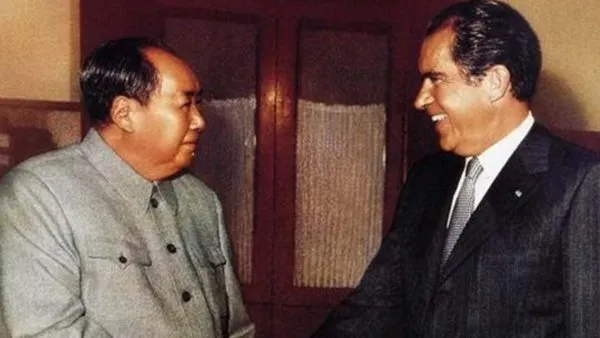
The global anti-imperialist movement became impotent, infested by harmful factionalism. By the 70s, China was in bed with the Americans, providing aid to the likes of the Afghan mujahideen and pro-apartheid forces in southern Africa.
Mao meets with Nixon, 1971
The brutal border conflict around Damansky island in 1969 forced the Soviet Union to shift close to a million troops to the Chinese border. They largely remained there for the rest of the cold war, in what was both highly costly and far more unnecessary expenditure than military competition with NATO.
The fighting on Damansky island killed hundreds.
Access to Chinese labor saved western capitalism from what seemed like a terminal crisis. The stage was set for the unipolar neoliberalism of the 1980s onwards. No country could resist economic liberalization, and the last pockets of independence in Iraq and Yugoslavia were extinguished militarily. Russia became just one more third world colony, eagerly plundered by its so-called ‘western partners’. When minimally sovereign forces eventually returned to the Kremlin, they found themselves pressed in by NATO military bases. And so, 2022…
Besides explaining the recent past, the Sino-Soviet split is also relevant for the present and future. After all, American Republicans dream today about redoing the Sino-Soviet split in reverse - allying with Russia against China. There are even some in the Russian elite who do not look unfavorably at such an idea.
There were many causes behind the Sino-Soviet split. The People’s Republic of China and the Union of Soviet Socialist Republics had profound differences. Where the 1949 Chinese revolution was nationalist and anti-imperialist, 1917 was socialist and anti-bourgeois.
The Chinese leadership never hoped to ‘re-join the west’, whereas the Russian revolutionaries sincerely believed that theirs was merely the opening shot in an all-European socialist transformation. Despite the massive involvement of the Soviet Union in the third world anti-colonial movement, in many respects the Soviet elite never overcame the ingrained euro-centrism of the Russian intelligentsia.
The two experienced the second world war profoundly differently. For China, it lasted since the early 1930s until the late 1950s, and was merely another military phase of a colonial occupation their country had suffered for more than a century. For the Soviets, it was an immeasurably traumatic four year conflict.
Hence, where the Soviets were focused on preventing 1941 by any means, the Chinese were quite sanguine about the possibility of continuing the struggle. Mao vigorously came to the defense of the Koreans in 1950. It was his constant desire to take back taiwan by force, no matter the American response, that led to so much tensions with the Soviets. The Chinese unwillingness to make compromises with ‘bourgeois India’ further worsened relations with the Soviets throughout the 50s and 60s.
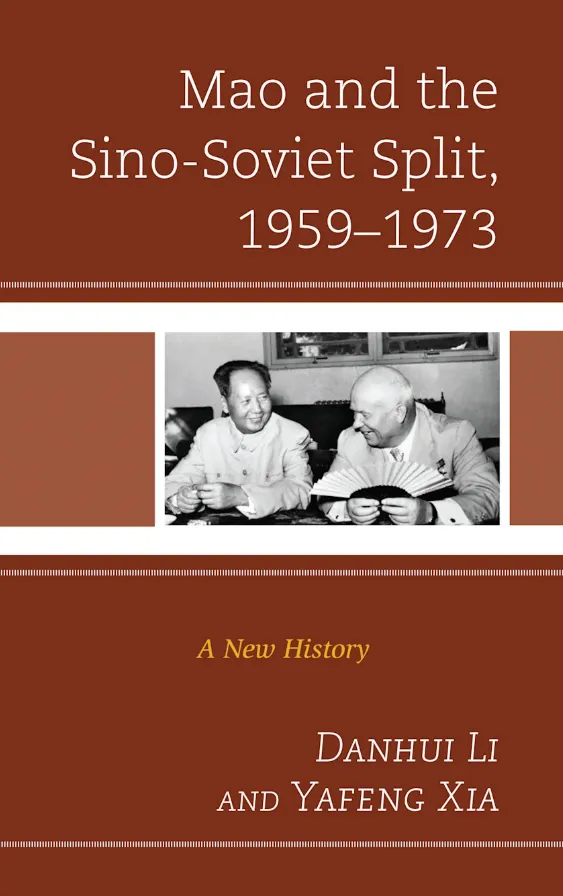
But today’s article won’t be about the sino-soviet split. I can only recommend the recent two-volume history on the matter by the talented Chinese historians Danhui Li and Yafeng Xia.
Today will be about a man that wanted to overcome the sino-soviet split. A Soviet politician who was against so many of the ills ravaging the late USSR. Opposed to the enrichment of the party elite, he tried to eliminate their economic privileges, special country homes, and exclusive cars. He launched massive aid to anti-colonial and communist movements globally, especially in the third world.
And perhaps most importantly, instead of the ‘stable’ drifting of the Brezhnev years and the self-destruction engineered by Gorbachev, our hero believed that the Soviet economy required complex and ambitious state-led economic reforms. Biographers believe that had he taken power, the Soviet Union would still exist, stronger than ever.
Today’s topic is Alexandr Shelepin. Iron Shurik.
And lest the reader wonder how this is related to events in Ukraine, it is. That’s because Shelepin’s seemingly unstoppable rise was halted by the Ukrainian Leonid Brezhnev. Instead of Shelepin’s reformers, Brezhnev filled the Soviet governing apparatus with members of his ‘Dnepropetrovsk mafia’. A mafia that rules Ukraine to this day.
In the words of Soviet philosopher Merab Mamarhdashvili:
The Soviet government, which adheres to everything moderate (Brezhnev proved this), tolerates nothing too active or revolutionary, even to its own benefit. Why did Shelepin’s career fail? Because he was too definite. They didn’t even like that.
Still, if we’re being honest, I often find it hard to hate Brezhnev. Life was certainly pleasant and he seemed like a lovely fellow.
The corruption and apolitical ‘stability’ of Brezhnev’s Ukrainian fiefdom came to characterize the entire Union. Clans and rent-seeking. The steady growth in power of local economic interests, more interested in privatizing what they control than in strengthening the whole USSR.
Brezhnevites took power in 1991. Brezhnevism also probably remains the dominant mode of political thinking in both Ukraine and Russia. Both for the depoliticized masses and their rulers. Any political novelty is viewed as the product of a diseased idealist mind. Everyone knows that the only proper approach towards politics is to stay away, unless you can receive financial renumeration. At best, politics can mean preservation of a secure, stable status quo.
So what was the alternative? Today we’ll be examining three things - Shelepin’s biography, his foreign policy vision, and how he transformed the KGB. In the sequel to this article, we’ll look at his economic vision and why he came into conflict with Brezhnev.
A brief biography
Shelepin was born in 1918 in the Russian city of Voronezh, and died in 1994. His father was a railroad worker — the Russian word for railroad, translated literally, is ‘iron-road’, prefiguring Shelepin’s future nickname - Iron Shurik. The nickname is also a reference to his supposed ‘Stalinism’. For what it’s worth, he apparently hated being called it.
The young Shelepin
Shelepin was a star student. From an early age, his peers described him as studious and somewhat aloof. But despite a certain social shyness, he was a natural leader. And notwithstanding the fact that he couldn’t be described as a socialite, he was also never one to hold grudges. Unfortunately, this may have actually been a downside in the future.
My biography of Shelepin largely comes from Leonid Mlechin’s book on the man.
He soon rose through the ranks of the Komsomol - the All-Union Leninist Young Communist League. Studying history from 1936-1941 at the prestigious Moscow Institute of Philosophy, Literature and History named after N. G. Chernyshevsky (IFLI), in 1937 he became the secretary of the institution’s Komsomol.
A Moscow Komsomol meeting from the Shelepin times
Shelepin didn’t fight at the frontlines of the Great Patriotic War (1941-1945). But in April 1940, he did volunteer, along with many other students of IFLI, to fight in Finland - Deputy Political Instructor of the squadron of the 157th Regiment of the 24th Moscow Cavalry Division. As an aside, my grandfather had a similar role, but he made it to Berlin (and back).
Shelepin got a frozen leg in Finland, and became a member of the Communist Party the same year. In the fall of 1941, back in Moscow, he set to work vetting young partisans for the fight behind enemy lines. The most famous such case that went through the young Shelepin was Zoya Kosmodelyanskaya. Tortured to death by the nazis but refusing to give away any information, the nineteen year old became one of the Soviet Union’s greatest heroes.
Zoya on her way to execution bearing a sign saying ‘inflamer of heads’.
Naturally, Ukraine’s authorities are hard at work destroying all statues commemorating Zoya. The following video, one of many, is from the Odessa oblast, November 2024: (Video at link.)
Shelepin was immortalized along the young Zoya in a famous poem by Margarita Aligera:
On an October day,
low and misty,
in Moscow, encircled by the German horseshoe,
Comrade Shelepin,
you were a communist
with all the stern justice of our harsh times.
Shelepin’s career soared. In 1943, secretary of the Central Committee of the Komsomol, by 1949, second secretary. From 1952 to 1958, first secretary.
Shelepin was always a Komsomol man. Decades later, the elite fraction that emerged around him to contest first Khrushchev and then Brezhnev would be called the ‘Komsomoltsy’. Shelepin’s anti-bureaucratic, youthful vigor was already clearly visible in the 50s. This is what his lifelong comrade and fellow Komsomol activist Nikolai Mesyatsev said about him:
He replaced Mikhaylov as the First Secretary of the Central Committee of the Komsomol. Of course, under Mikhaylov there had been a certain bureaucratization, an exaggeration of the importance of the office apparatus — this, naturally, stifled democracy and reduced the level of democratic and self-initiated activity in youth organizations. A youth organization cannot live without self-initiative and its own initiatives; young people need some room for freedom and self-expression, and if all that is suppressed… What does Shelepin do? He moves to reduce the Komsomol’s office apparatus, leaving in the district and city committees of the Komsomol only one full-time secretary and a records manager — all the others serve on a voluntary basis.
Shelepin and his Komsomol friends, first promoted under Stalin, now attracted the attention of Khrushev. The new ruler of the Soviet Union was eager for a younger generation to take the reins. Shelepin, in turn, supported Khrushev’s 1957 purge of the ‘anti-party group’ — an attempt by Stalin’s old comrades (Molotov, Kaganovich, and Malenkov) to return to power.
Khruschev
After successfully organizing the 1957 World Festival of Youth and Students in Moscow, he was appointed head of the Department of Party Organs of the Central Committee of the CPSU for the Union Republics. This position gave him an important say in choosing cadres - which, as Stalin said, decides everything.
From 1958 to 1961, Khrushev had Shelepin work as the head of the KGB - despite Shelepin’s attempt to refuse. The general secretary had great plans for Shelepin at the post.
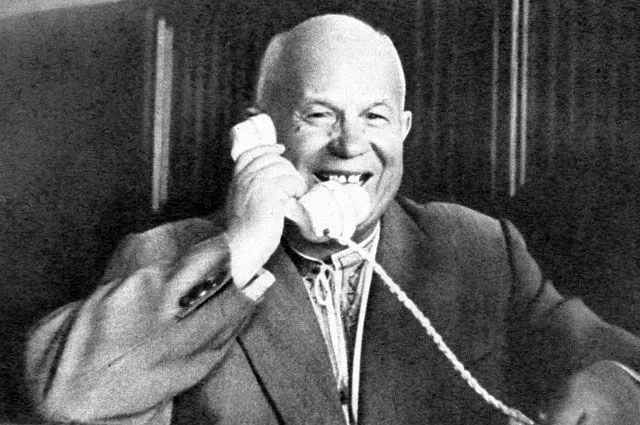
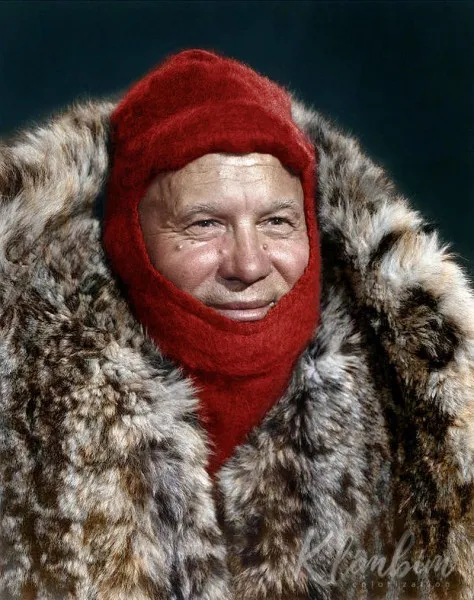
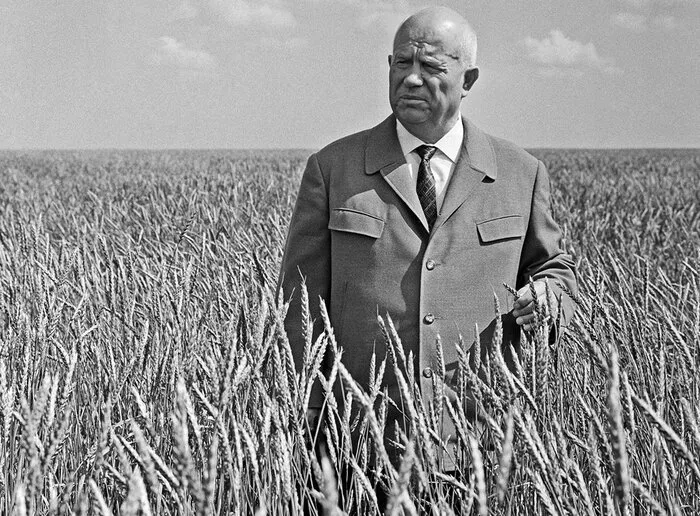
I can’t resist sharing these photos from Khruschev’s appearance in Life magazine
Shelepin’s KGB refocused attention abroad, and was responsible for the assassination of Ukrainian nationalist Stepan Bandera in Munich, October 15, 1959. Shelepin would later give an Order of the Red Flag to the assassin, the Ukrainian Bohdan Stashinsky. Shelepin gave the same award to Trotsky’s assassin, Ramon Mercader.
In an October 26 1961 speech at the 22nd Congress of the CPSU, Shelepin promised that the KGB had been purged of elements wishing for a return to Stalin-era repressions. He also called for introducing new forms of ‘punishment for displays of bureaucratism’, and railed against aspects of the existing civil legal code that allowed forms of private enterprise.
Between 1961 and 1967, he was secretary of the Central Committee of the Communist Party of the Soviet Union. In 1962, he became head of the Committee of Party and State Control under the Central Committee of the CPSU and the Council of Ministers of the USSR. This new, extremely influential structure became a sort of second KGB, focused on examining the party elite for any signs of degeneration.
Despite the trust Khrushev had shown him, Shelepin played the chief role in removing him from power in 1964. When his former patron found out, he told Shelepin in front of the entire Central Committee:
Believe me, they will treat you even worse than they treated me...
Khrushev’s words were indeed prophetic, and Shelepin was himself purged in 1967 by Brezhnev. The two had worked together to get rid of Khrushev, but Shelepin chronically underestimated the ever-scheming Ukrainian . Though barely literate, Brezhnev was a master of court intrigues, and was far more trusted by the bureaucracy than the radical reformer Shelepin. A topic for an upcoming article.
Brezhnev decided to humiliate Shelepin by sending him in 1967 to head the All-Union Central Council of Trade Unions. Shelepin, however, was very enthusiastic in his new position, which further enraged Brezhnev.
In 1975, he was removed from that position, too, after he was sent to the UK and pelted with tomatoes by anti-communists. The local papers brought up his role in killing Bandera and his history in the KGB. Many believe this entire affair to have been a provocation organized by the new KGB head Andropov, a pretext to remove Brezhnev’s hated enemy.
One of the reasons Brezhnev gave for the removal of Shelepin was symptomatic. According to historian Dmitry Volkoganov, Shelepin was accused of practicing ‘deceitful democratism’. This referred to Shelepin’s practice of relaxing along with other rank and file trade unionists at ordinary resorts, unlike other party bosses. He even dared to eat at the general cafeteria! This sums up quite well Brezhnev’s distaste towards Shelepin.
Shelepin lived out the rest of his days in exile, fruitlessly sending letters to each new general secretary to grant him a decent pension. He died in 1994 in a modest apartment in Moscow, ever regretful of the fact that he refused to become a general of the KGB. If not for his moral objection to receiving military ranks as a civilian (something Brezhnev never lacked), Shelepin would have received a livable pension.
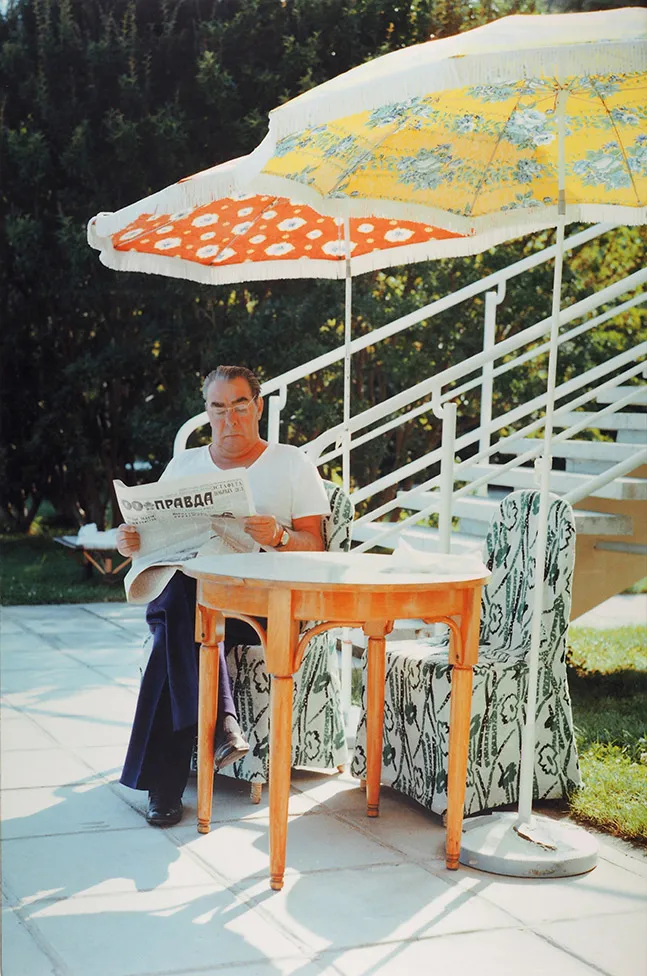
Brezhnev was definitely NOT afraid of awarding himself military ranks
With that over, let’s take a look at Shelepin in more detail:
— His pro-Chinese line and support for anti-colonial struggles in the Third World. Shelepin’s admiration for the Chinese cultural revolution and criticism of Brezhnev’s abandonment of class struggle, both domestically and abroad.
— Shelepin’s attempted transformation of the KGB, away from corruption schemes and tracking imaginary spies domestically, towards a global assault on western imperialism.
Gromyko on the Politburo and Stalin
November 3, 4:57 PM
Gromyko on the Politburo and Stalin
Under Stalin, only Politburo members participated in meetings. Politburo candidate members and Central Committee secretaries were generally absent from the room where matters were being discussed. The meetings themselves resembled conversations. From the outside, it looked like a few people had gathered and were simply chatting among themselves. There was no established order or rules. Only one rule was strictly observed: if someone spoke, no matter how long they spoke, they were not interrupted.
This is probably why all Politburo members trained themselves to express their thoughts briefly. No one gave long speeches. However, if the need arose, the same person might speak two or three times, or even more. Stalin did not reproach them for this.
In my opinion, Molotov, Malenkov, Bulganin, and Kaganovich spoke most frequently. The others spoke less frequently. Voroshilov participated irregularly in meetings, and Shvernik very rarely.
Stalin always summarized. He would summarize the discussion and clearly express his judgment on the decision that needed to be made. This judgment was considered final.
No vote was taken to approve the resolution under discussion.
When, while working on this book of memoirs, I approached the need to comment on Stalin, I proceeded from the following considerations.
First, I was his contemporary and observed him repeatedly in various situations, primarily related to foreign affairs, both during the war and after its end.
Second, people rightly ask and will continue to ask:
How should we view Stalin, who could and did combine completely opposing qualities?
Stalin's personality will evoke, and will continue to evoke, diverse opinions, including contradictory ones, for decades, and perhaps centuries. A man of great stature, he is undoubtedly a historical phenomenon.
The very fact that Stalin headed the Communist Party and the Soviet state after Lenin's death and, for three decades, played a decisive role in the leadership of a great power tackling the enormous challenges of its development, speaks volumes. With Stalin's name on their lips, Red Army soldiers and partisans sacrificed their lives to defend their Fatherland against the Nazi invaders.
But to see only the positive in Stalin would be wrong and deeply misguided. Stalin was also a deeply contradictory, tragically contradictory figure.
Thirty-four years ago, on November 4, 1991, Viktor Ivanovich Ilyukhin, Head of the Department for Supervision of Law Enforcement in the Sphere of National Security of the USSR Prosecutor's Office and State Justice Counselor of the 2nd Class, reviewed materials on the secession of the republics of Latvia, Lithuania, and Estonia from the USSR and initiated criminal proceedings against the current President of the USSR, M.S. Gorbachev, under Article 64 of the Criminal Code of the RSFSR (Treason). On
November 6, 1991, Viktor Ivanovich was dismissed from the Prosecutor's Office.
We are publishing the text of the Resolution on the initiation of criminal proceedings:
RESOLUTION,
City of Moscow. On November 4, 1991,
the Head of the Department for Supervision of Implementation of Laws on State Security of the Prosecutor's Office of the USSR, State Counselor of Justice of the 2nd class V.I. Ilyukhin, having examined the documents related to the recognition of the independence of Latvia, Lithuania, Estonia and the secession of the said republics from the USSR,
ESTABLISHED:
On September 6, 1991, the State Council of the USSR adopted resolutions on the recognition of the independence of the Latvian, Lithuanian and Estonian republics. These acts secured the secession of the said republics from the USSR and a significant change in the territory of the latter.
These decisions of the State Council, headed by the President of the USSR M.S. Gorbachev, are in clear contradiction with the currently effective Law "On the Procedure for Resolving Issues Related to the Secession of a Union Republic from the USSR", adopted by the Supreme Soviet of the USSR on April 3, 1990.
The Law, in accordance with Art. Article 72 of the USSR Constitution, recognizing the sovereign right of each republic to freely secede from the USSR, established that such seceding could only be accomplished through a free expression of will (referendum) by all the people living in the republic.
A decision to secede is considered adopted by referendum if at least two-thirds of the republic's population voted in favor (Article 6). The law also defined the procedure for holding the referendum and summing up its results.
In the event of a positive vote, a transition period of no more than five years is established, during which all issues arising in connection with the republic's seceding from the USSR must be resolved. During the transition period, the Constitution of the USSR and the laws of the USSR remain in effect in the territory of the seceding republic (Article 9).
At the end of the transition period or in the event of an early resolution of issues related to seceding from the USSR, the country's highest legislative body must adopt a decision confirming the completion of the process of resolving all issues affecting the interests of the seceding republic and the interests of the USSR and its remaining constituent entities. From the moment such a decision is made by the Congress of People's Deputies of the USSR, the secession of the union republic from the USSR is considered to have taken place (Article 20).
The procedure established by the Law of the USSR was grossly violated by the State Council, and immeasurable damage was inflicted on the sovereignty, territorial integrity, national security, and defense capability of the USSR.
In Latvia, Lithuania, and Estonia, referendums on secession from the USSR were not actually held. They were replaced by a public opinion poll or a vote on the independence of the republics. Their continued membership in the Union was enshrined in the Constitutions of the USSR and the republics adopted in the post-war period.
The lack of a transition period prevented a fair consideration of many issues related to property, borders, customs, and defense, and also resulted in a significant infringement of the rights and freedoms of non-native populations.
Moreover, the aforementioned decision was made by the State Council in excess of the powers granted to it by the Fifth, Extraordinary Congress of People's Deputies of the USSR.
The State Council is not a legislative (representative) body of the USSR and does not have the authority to resolve matters within the purview of the Supreme Soviet and the Congress of People's Deputies of the USSR.
USSR President M.S. Gorbachev, while heading the State Council, contrary to the requirements of Article 127-3 of the USSR Constitution, which obliges him to act as a guarantor of the observance of the rights and freedoms of Soviet citizens, the Constitution and laws of the USSR, and to take the necessary measures to protect the sovereignty of the USSR, failed to fulfill his constitutional duties.
In deciding the issue of the secession of Lithuania, Latvia, and Estonia from the USSR, he deliberately committed actions to the detriment of the sovereignty, territorial integrity, state security, and defense capability of the USSR.
In this regard, his actions contain elements of a crime under Article 64 of the Criminal Code of the RSFSR.
Based on the above and guided by Articles 108 and 112 of the Criminal Procedure Code of the RSFSR,
I RESOLVED:
To initiate a criminal case against Mikhail Sergeyevich Gorbachev under Article 64 of the Criminal Code of the RSFSR (treason).
The investigation of the case, in accordance with Article 126 of the Criminal Procedure Code of the RSFSR, assign investigators from the Interrepublican Security Service, headed by V.V. Bakatin.
A copy of the resolution is to be forwarded to the Prosecutor General of the USSR.
Head of the Department,
State Justice Counselor 2nd Class
V.I. Ilyukhin.
Gorbachev's criminal actions of that period have never received a proper legal assessment.
Center for the Leadership of the October Uprising
November 7, 1:00 PM
The political center of the Bolsheviks who led the armed uprising of November 7, 1917, which became the Great October Socialist Revolution that irreversibly changed Russia and the rest of the world.
Over time, the paths of the people in these photographs diverged. At least three of them still have monuments erected in Russia.
Ilyich remains the record-holder for the number of monuments in Russia. Dzerzhinsky is currently experiencing a new wave of popularity in the country. Public demand for his return to Lubyanka is strong.
As for Comrade Stalin, it's clear – a shining example of how a great revolutionary became a great statesman. He is the most popular historical figure in the country.
Trotsky, on the other hand, ended up with an ice axe in Mexico on Comrade Stalin's orders.
Zinoviev, Kamenev, Bubnov, Galkin, and Sokolnikov fell victim to the internal political struggle in the USSR in the 1930s. Under Khrushchev and Gorbachev, all were rehabilitated.
Gusev died of illness and is now buried in the Kremlin wall along with other heroes of the Soviet era.
Yeremeyev also died of illness and is buried on the Field of Mars in Leningrad.
Chudnovsky died in the autumn of 1918 near Kharkov during the retreat.
But all this will happen after they change the world.
Happy holiday, comrades, Happy Great October Socialist Revolution Day.
Stalin, Shelepin, Brezhnev. The meaning of 1945. The rise of the Dnepropetrovsk clan. The two Ukrainian affairs of 1965
Events in Ukraine
Nov 05, 2025
The man who some say could have prevented both the Soviet stagnation of the 70s and the disastrous perestroika of the 80s. Had he won the battle for power.
Describing such a figure, a certain name may have popped into your head - Stalin. After all, who doesn’t enjoy a bit of conspirology about what really happened on March 5, 1953.
In fact, it is quite noteworthy that any discussion about the Soviet Union inevitably turns to the figure of Joseph Stalin.
Stalin neither founded nor ended the USSR. In fact, the Stalinist period of the Soviet Union was unique for a number of reasons: invasion and apocalyptic war, hundreds of thousands killed in purges, and famine. None of these things occurred in the four decades of Soviet rule after Stalin.
Stalin’s symbolic significance is both powerful and mysterious. The sway his name exercises long after his death must mean something.
And leaving aside the squabbling of some socialist sects, Stalin’s name never lost its divisive power within the Soviet elite. Decades after his death, rival clans in the Soviet elite would still call each other ‘Stalinists’. In a sense, the name only became more powerful.
Why?
Today’s article is not about Stalin, but the man called by many the Soviet Union’s last potential ‘new Stalin’. Alexandr Shelepin. Alexandr Solzhenitsyn for instance, who hated Shelepin, later gave such a judgment as to Shelepin’s ‘Stalinism’.
According to Shelepin’s biographer, had he won the struggle for leadership in the 1960s, he could have saved the Soviet Union:
Shelepin represented the young, educated segment of the bureaucracy that had come to government positions after the war. They believed that the economy needed renewal, reforms, and above all, technical modernization. They wanted economic reforms while maintaining a strict ideological line. This was roughly the path that China later took under Deng Xiaoping. The young party leaders supported Kosygin and Shelepin. If Shelepin had become the head of the country, the Soviet Union would have, so to speak, followed a Chinese path.[/img]
In my last article, I went into Shelepin’s attempts to repair relations with China. They had been damaged in part because of Khruschev’s 1960 denunciation of Stalin. Stalin continues to be respected by the Communist Party of China leadership to this day.
In fact, calling Shelepin a ‘Stalinist’ is somewhat incorrect. Yes, his career bloomed under Stalin. But Shelepin, then a figure in the youth communist league Komsomol, had nothing to do with Stalin’s actual policies. In 1957, Shelepin played an enthusiastic role in purging Stalin’s old allies in their bid to retake power, and in 1960, he was just as vocal in his support for Khrushev’s famous criticism of Stalin.
Shelepin at his desk
So why was Shelepin called a Stalinist?
Vibes, one might say. His nickname ‘Iron Shurik’ even resembled the nom de guerre Stalin, which comes from ‘stal’, the word for steel.
Indeed, it was because Shelepin possessed something that few Soviet leaders after Stalin seemed to have — principles.
You don’t have to love Stalin to believe he had principles. It is a popular position that human lives are best preserved by pragmatism, that idealism only ever gives rise to repression and dystopia.
The alternative position also exists, best expressed by the philosopher Alain Badiou in his 1975 book Theory of the Subject:
[Anti-idealist pragmatism] is the surest road towards the worst. When one abdicates universality, one obtains universal horror.
The post-soviet world, freed of principles and beliefs, is surely a good example of that.
‘Stalinism’, if anything, referred to Shelepin’s belief that the Soviet Union required a centralized strategy. A strategy, an idea, by definition cannot be universally approved. The free market has universal approval - everyone can find a product to their liking. But a strategy requires the setting of priorities. Not everyone might agree.
In contrast, Shelepin’s great adversary, Leonid Brezhnev, was much less idealistic. Instead of bold changes, Brezhnev proposed the easy life. Something everyone can agree to. The Soviet Union drifted into decentralized fiefdoms, with each local party boss doing as he wished.
And I won’t deny that as an ordinary Soviet citizen, there was no better life than that of the Brezhnev years. But at what cost?
Today, we’ll take a look at three key events in the Brezhnev-Shelepin struggle that took place in 1965.
To begin with, the first ever Victory Day parade, and the differing interpretations of Stalin and 1945 held by the competing politicians.
The other two events concern Ukraine, Brezhnev’s home turf. First, Shelepin’s attempt to criticize corruption in Odessa, much to Brezhnev’s displeasure. Second, Shelepin’s equally unwanted criticism of Ukrainian nationalist policies conducted by the head of the Ukrainian Communist Party. This also involves some fiery speeches by Shelepin on the position of Russians in Crimea.
Next, we will take a look at Brezhnev’s top secret wiretap operation on Shelepin, and what this reveals about the true role of the KGB in the Soviet halls of power - a less powerful institution than is often assumed. Finally, we will end by examining Shelepin’s proposed economic reforms and his spirited time in charge of Soviet trade unions.
Rise of the Dnepropetrovsk mafia
Nowadays, the Soviet Union is castigated as a colonial, Russian project. In reality, by 1967 the Politburo was split evenly between Ukrainians and Russians - 5 to 5.
There were 11 full members of the Politburo, with the Ukrainians being Leonid Brezhnev, Nikolai Podgorny, Andrei Kirilenko, Dmitry Polyansky, and Petro Shelest. The Russians were Alexei Kosygin, Mikhail Suslov, Gennady Voronov, Alexander Shelepin, and the Belarusian Kirill Mazurov, who had joined them. The eleventh was a Latvian, Arvid Pelshe.
Another common narrative is that Stalin and ‘Stalinism’ represents an extreme Russian chauvinism against all part of the Soviet Union outside of Moscow. Shelepin, a Russian, is also sometimes identified with the ‘Russian nationalist’ fraction of the Soviet elite.
Brezhnev, in contrast, was from the Ukrainian industrial city Dnepropetrovsk, today renamed ‘Dnipro’. Brezhnev’s rise heralded the meteoric ascent of the so-called Dnepropetrovsk clan, which I wrote about here. It gained a remarkable over-representation in the top posts of the Soviet Union. And after 1991, it only grew in power. 2014, the famous Euromaidan revolution, was in many respects a victory of the Dnepropetrovsk mafia over its competitors. As was Zelensky’s election in 2019.
Dnepropetrovsk, 1979
But the struggle between Shelepin and Brezhnev was certainly not ‘national’. Brezhnev was a Russian-speaker with nothing in common with Ukrainian ethno-nationalists. And Shelepin was an anti-revisionist Marxist who despised any form of ‘bourgeois nationalism’.
At stake was a political question.
Shelepin had great ambitions of modernizing Soviet Union, and for this some degree of centralized control was necessary. Brezhnev, in contrast, represented the vast middle sections of the bureaucracy, who longed for little more than a comfortable existence managing their local fiefdom.
This political difference manifested itself in other ways as well. Shelepin, the Komsomol ideologue, deeply resented Brezhnev’s disregard for ideological matters. He told Gorbachev’s assistant Valery Voldin the following:
“Theoretically, Brezhnev was poorly educated. Apparently, he hadn’t read Lenin. I became convinced of this, for example, when I worked in Zavidovo. He invited me there while we were preparing the report for the 24th Party Congress. I was astonished — he didn’t know even the most basic works of Lenin. And he didn’t read literature either. Apart from Krokodil magazine, he read nothing at all. I became convinced that Brezhnev never had any ideas, suggestions, or thoughts of his own — I can’t recall a single one. The only thing he would say was, ‘Maybe we could replace this word with another.’ That was the extent of his role in preparing the report for the Congress…”
Krokodil was the famous Soviet satirical magazine
Leonid Zamyatin, a ‘hardline’ Soviet diplomat and ambassador to the UK, agreed with this assessment of the relationship between the two:
Shelepin saw him that way too. Brezhnev was at best a regional-level functionary, not the head of a vast state — primitive, incapable of stringing two or three thoughts together, with no theoretical knowledge whatsoever. All his speeches were written for him…
Alexei Adzhubei, a Soviet journalist closely allied with Shelepin, believes that this led to an underestimation of Brezhnev:
Shelepin didn’t think much of Brezhnev. In terms of strength of character, Brezhnev wasn’t even close to Shelepin — ‘Iron Shurik,’ as he was called in his inner circle… Many things promised Shelepin victory in the upcoming struggle with Brezhnev. He was preparing for it. But he didn’t take into account that brute strength can be broken not only by greater strength, but also by cunning — and in that, he was no match for Brezhnev.
The young Brezhnev. He was apparently quite the ladies man (unlike Shelepin).
Indeed, Brezhnev’s Dnepropetrovsk mafia lived up to that great stereotypes of Ukrainians as cunning schemers. This wasn’t the first time something like this had happened, incidentally.
In the 18th century, Ukrainians also rose to the highest cabinets of power in Moscow. The Cossack noble Razumovsky clan was renowned for its immense influence over the imperial court and the Empress Elizabeth. Other Cossack nobles also wheedled their way deep into Catherine II’s inner chambers. A topic for another article.
Kirill Razumovsky with the Cossack Hetman Bulava, painted 1758. The bulava is a mace symbolizing state power - Ukrainian presidents have one to this day.
Anyway, back to the 1960s. Shelepin had risen to power in the intellectual climate of the Komsomol. He had received an education at the prestigious IFLIS humanities institute of Moscow. Brezhnev, in contrast, had spent his life engaged in economic management and party intrigues in Ukraine and Moldova.
Brezhnev as First Secretary of the Dnepropetrovsk Regional Committee of the Communist Party of Bolsheviks of Ukraine, in his office. 1946.
And as soon as he became General Secretary in 1964, Brezhnev began putting ‘his’ people in positions of power. But unlike Shelepin, whose allies were chosen on an ideological basis, Brezhnev’s allies were simply those he had worked with, often in Dnepropetrovsk.
Vladimir Semichastny, the KGB head closely allied with Shelepin, later said this:
It reached the point of absurdity: Kosygin had five deputies — all from Dnepropetrovsk. Brezhnev’s personnel approach was quite provincial. A joke circulating in Moscow captured this new periodization of Russian history: there was the pre-Petrine period, then the Petrine, and now — the Dnepropetrovsk period (Dopetrovskaya, Petrovskaya, i Dnepropetrovskaya)
Tsar Peter the Great
Shelepin’s men were very different. Boris Pankin, a high-ranking journalist in the in the 60s and 70s, editor-in-chief of Komsomolskaya Pravda, described the ideology puritanism of the members of the “Shelepin group” as follows:
Shelepin feared above all else ideological heresy, but he believed that the real evil feeding it was bureaucracy, corruption, and the self-indulgence of party and Soviet grandees. He called for a fight against these not for life, but to the death. The rising top of the ‘Dnipropetrovsk mafia’ was for him the embodiment of many of these evils.
The dislike was mutual. Brezhnev hated what he called Shelepin’s ‘disingenuous democratism’, by which he meant Shelepin’s practice of relaxing and eating alongside his subordinates.
And in 1967, Shelepin’s attempt to critically discuss broader economic issues was derailed by the fact that Brezhnev’s friends were to blame:
At an expanded meeting of the Politburo with the participation of local party leaders, the issue of large livestock complexes in the Russian Federation was discussed. Shelepin spoke sharply, criticized the Central Statistical Administration for presenting distorted figures, objected to the elimination of small and medium-sized livestock farms, spoke about the difficult situation in the countryside, and demanded the resignation of the Minister of Agriculture, Vladimir Vladimirovich Matskevich.
Brezhnev had known Matskevich since the post-war years, and they had developed good personal relations. Matskevich got away with a lot.
Therefore, Leonid Ilyich was angered by Shelepin’s words. The next day, Brezhnev called him:
—Can you come to my office now?
When Shelepin arrived, he lashed out at him:
—How should I understand your speech yesterday? Your speech was directed against me!
—Why do you think that?
—What, don’t you know that I am in charge of agriculture? That means everything you said yesterday was against me. Furthermore, what right did you have to propose the dismissal of Matskevich? He is my personal nomenklatura (appointee)!
— Leonid Mlechin, Zhelezny Shurik, page 458
Shelepin’s principles proved no match for Brezhnev’s connections.
1965-1945
The Stalin question reared its head quite interestingly in the 1960s. It was in May 1965 that the first Victory Day Parade was held in Moscow since 1945.
Defense Minister Marshal Rodion Malinovsky salutes, May 9, 1965.
Indeed, the second Victory Day parade was held 20 years after victory. That might sound strange, because the May 9 celebrations became so central to both Soviet and, today, Russian identity.
The May 9 of 2022
That’s because the very idea of glorifying Victory above all else wasn’t Stalin’s idea. It was in fact Leonid Brezhnev’s quite genius political invention.
After Brezhnev and Shelepin worked together to remove Nikita Khrushev from power in 1964, Brezhnev found himself at a crossroads. Everyone assumed that he was a minor figure, soon to be replaced as general secretary by the far more intelligent and powerful figure Shelepin, who had the might of the KGB, the Committee of Party Control, and the Komsomol network behind him.
But Brezhnev had something that Shelepin didn’t have — support among the vast ranks of the lower and middle bureaucracy. And his glorification of Victory Day was crucial to that.
Victory Day was obviously a way to try and unite the Soviet Union on the basis of something both shared and glorious. However, victory, as the saying goes, has many fathers. Whose victory was victory day?
"No dogs or lower ranks allowed"
November 24, 3:34 PM
"No dogs or lower ranks allowed"
Beginning with Govorukhin's famous "Russia We Lost," they've been trying to impose on us the image of an ideal empire where everyone was happy. But was life really that good for ordinary people in Tsarist Russia?
We're used to being outraged by segregation in the US or South Africa, where signs read "Whites Only." However, the Russian Empire had its own forms of segregation. Here are a few examples:
General A. Brusilov:
"I lived in barracks across from a beautiful city garden, where I walked my fox terrier, Bur, every day. One day, I saw a new sign: 'No entry for lower ranks or dogs.' I was outraged, called Burik over, and left."
General A. Ignatiev:
"My valet Ivan, seeing my loneliness, suggested a stroll along the embankment or in the Summer Garden. It was then that I noticed that entry there was prohibited to "dogs and lower ranks." Later, when I served in the regiment, I was outraged that Sergeant Major Nikolai Pavlovich was forced to walk with his children through a dusty courtyard, while the cadets rested on benches in the Summer Garden."
General Count F. Keller:
"A soldier is told about the high rank of a warrior, but at the same time, on the park fences one could see signs: "No dogs allowed" and "Entry prohibited for lower ranks." I myself recently read in garrison orders which streets are forbidden for lower ranks."
Writer, Baltic Fleet sailor, and participant in the Battle of Tsushima, A. Novikov-Priboy:
"Farewell, Kronstadt! During my five years of service here, I experienced both good and bad. On Gospodskaya Street, sailors were required to walk only on the left side, as if we were outcasts. Signs hung on the park gates: 'Entry to the park for enlisted personnel and dogs is prohibited.'"
Even in Sevastopol, the main base of the Russian fleet, sailors were treated as second-class citizens. They were forbidden to walk along Bolshaya Morskaya and Yekaterinoslavskaya Streets, as well as Istorichesky and Primorsky Boulevards. Outraged by the ban on visiting memorials to the heroes of the Crimean War, the sailors appealed to the authorities:
"Aren't you ashamed to issue such orders? Why did our grandfathers and great-grandfathers shed their blood defending these lands if we are now forbidden to visit them? Why did you collect money from the lower ranks for monuments if now you won't let us go where they stand?"
Analyzing the reasons for the defeat of the Russian Empire, General A. Denikin wrote:
"The soldier's uniform was not respected. In many garrisons, absurd restrictions were imposed on soldiers, for example, a ban on walking on the sunny side of the street. The St. Petersburg commandant requested that lower ranks be allowed to avoid the exit to the front platform of trams, "...because of the inconvenience of meeting with officers and being in the same room"...
...We are not talking about jokes, but about real inscriptions at the entrances to some public places:"Dogs and lower ranks are strictly prohibited from entering"...
And the soldiers in 1917 remembered this humiliating treatment!
Such social inequality existed in the Russian Empire not for a year or two, but for decades. The revolution, which it itself provoked, put an end to it. Remember this the next time you are told about "the Russia we lost."
Actually, therefore, it is not surprising that as soon as the state built, among other things, on such class aberrations began to falter, the "lower ranks" immediately began shooting and drowning officers and raising them on bayonets, settling old scores generated by social and class racism. The same massacre of officers in the Baltic Fleet began almost immediately after the Duma and generals overthrew the tsar, and the Synod of the Russian Orthodox Church proclaimed deliverance from tyranny and the advent of the kingdom of freedom.
And quite naturally, Bolshevik propaganda aimed at the military fell on fertile ground because it promised the elimination of class inequality in the army, offering a society where people wouldn't be treated as subhumans or animals. Therefore, modern attempts to extol the charms of a class-based society or even to implement it are all the more repulsive. As world and Russian history shows, class-based societies end badly.
On November 23, 1942, Paulus's 6th Army was caught in a pincer movement near Stalingrad. A little over two months later, the field marshal was captured, where he was converted to anti-fascist activism over the course of a year and a half.
According to a report by junior lieutenant Yevgeny Tarabrin, a member of the State Security Service assigned to eavesdrop on high-ranking prisoners, on February 1, 1943, a bowl of coffee cookies was placed among the other dishes served at their dinner table. Three people were present at the feast: Friedrich Paulus, Artur Schmidt, chief of staff of the 6th Army, and Wilhelm Adam, Paulus's adjutant (spelling preserved):
Schmidt: "Good cookies, probably French?"
Adam: "Very good, Dutch, I think."
They put on their glasses and carefully examined the cookies.
Adam, surprised, said: "Look, Russian."
Paulus: "Stop even looking at it. It's ugly."
So, the Soviet command was seducing its opponents with cookies before it became mainstream!
Communism Defeated Fascism Eighty Years Ago and Will Defeat it Again: The Forty-Eighth Newsletter (2025)
Amidst a web of lies and half-truths touting the heroism of the West in World War II (what we call the World Anti-Fascist War), the enormous truth is that it was the Soviet Red Army and the Chinese Communists and patriots – and not the West – that defeated Nazi Germany and militarist Japan.
27 November 2025
Eighth Route Army bugler, China, 1942. [Credit: Sha Fei.]
Dear friends,
Greetings from the desk of Tricontinental: Institute for Social Research.
On 13 November, at the Global South Academic Forum in Shanghai, China, we released our latest study, The 80th Anniversary of the Victory in the World Anti-Fascist War – Understanding Who Saved Humanity: A Restorationist History. An edited version of my keynote speech ‘Two Lies and an Enormous Truth’, delivered to introduce the study, is reproduced here.
At the Krasnogvardeisky Housing and Utilities Department of the city of Leningrad, 48 wives of frontline soldiers learned the professions of stove-making, roofing, and plumbing. 18 April 1943. [Credit: Georgy Konovalov.]
In early August 1942, the Soviets set up loudspeakers across Leningrad. The city had been under siege for over 300 days. People were starving. The conductor, Karl Eliasberg, kept the Leningrad Radio Orchestra going by holding rehearsals and personally taking his musicians to feeding stations. On 9 August, Eliasberg collected the 15 survivors of the Leningrad Radio Orchestra and brought in some members of the military bands to the Bolshoi Philharmonic Hall. They performed Dmitri Shostakovich’s Symphony No. 7 (the Leningrad Symphony) over the radio and through the public loudspeakers.
The symphony is made up of four movements. The first, calm and almost pastoral, evokes Leningrad before the war. The second, built around a snare drum ostinato that grows steadily louder, alludes to the Nazi invasion. The third, led by strings and wind instruments, laments the terrible suffering of the Soviet people, millions already dead or dying. The final movement, in C major, loud and proud, anticipates victory against the evils of fascism. They did not know it yet, but they were less than halfway through the siege. They had 536 more days of starvation and battle ahead of them. It says something about the sheer grit of the Soviet citizenry that they would perform the symphony amid the siege, loudspeakers pointed at the Nazi lines so that the Germans could hear it too. In the Soviet archive, there is a sentence written by an intelligence officer: ‘Even the enemy listened in silence. They knew it was our victory over despair’. Later, a German prisoner said that the symphony was ‘a ghost from the city we could not kill’.
A unit of the 255th Marine Brigade of the 18th Army of the North Caucasian Front prepares for battle, 1943. [Credit: Yevgeny Khaldei.]
Our study shows that the Soviet Red Army destroyed 80% of the Wehrmacht in their miraculous rush across Eastern Europe. By the time the Western armies came near the borders of Germany, the Nazi regime had already collapsed. It was the Soviet Red Army that liberated most of the people in concentration camps, and it was the scientific manner of their advance that forced the Nazi allies in Eastern Europe – such as the Romanians – to surrender and change sides. The reason the Soviet Union was able to marshal all its strength against the Nazis is because the Chinese Communists and patriots defended the Soviet Union’s eastern flank against attacks by the Japanese militarists. Fighting with inadequate arms, the Chinese Communists and patriots nonetheless inflicted enormous damage on the Japanese, tying down 60% of their army and preventing it from facing the onrush of US troops that went from island to island in the Pacific.
If the Chinese had not tied down the Japanese troops, the Soviet Union would have fallen (and Nazi Germany would have seized Europe) and US troops might not have prevailed in the battles of Saipan (1944) and Iwo Jima (1945). The Soviet Red Army and the Chinese Communists and patriots together sacrificed tens of millions of lives to defeat fascism (the precise calculation is laid out in our study, ranging from 50 million to 100 million). By May 1945, when the Nazi regime collapsed, it was already clear that Japanese militarism was on a path towards surrender. It was unnecessary for the United States to conduct the Trinity tests in July 1945 and drop atom bombs on Hiroshima (6 August) and Nagasaki (9 August). The immense sacrifice of the Soviet citizens and the Chinese Communists and patriots made the use of that weapon of mass destruction preventable; that the United States used it tells us more about imperialism’s violent disregard for human life, which is exactly what we are seeing today in Gaza.
Paramedic Vera Andreeva Leonova (born 1916, left), a medical assistant of the 2nd Medical Battalion of the 6th Guards Cavalry Division of the 3rd Guards Cavalry Corps of the Southwestern Front, and nurse Maria Ostrotenkova provide first aid to wounded soldier Ermoolenko, April 1942. [Credit: Mikhail Samoylovich Bernshtein.]
The first lie. The Western Allies opposed the fascists from the onset and won the war against fascism.
The truth. The Western governments sent their armies to destroy the October Revolution from the moment it began in 1917. The Soviet government sued for peace in December 1917, but Germany nonetheless attacked Finland and the young Soviet republic, which led to a massive allied invasion (with troops descending from the United States, United Kingdom, France, Romania, Estonia, Greece, Australia, Canada, Japan, and Italy). The attitude of the Allies is clear from the writings and speeches of British politician Winston Churchill, who in 1919 said that the Allies should destroy ‘the foul baboonery of Bolshevism’ (30 years later he said that ‘the strangling of Bolshevism at its birth would have been an untold blessing to the human race’). In the 1930s and 1940s, the Western governments wanted the fascist regimes of Germany and Italy to turn their guns against the Soviet Union and destroy it. That was what ‘appeasement’ meant – that they agreed with Adolf Hitler’s anti-communism and allowed his military build-up as long as it focused on the Soviet Union. Although Britain and France declared war on Germany in September 1939, they did nothing in the months that followed – a period known as the Phoney War, the Drôle de guerre, or the Sitzkrieg (a play on Blitzkrieg, or lightning war).
In 1941, Hitler’s armies invaded the Soviet Union. At the Tehran Conference of 1943, the United States and United Kingdom had to acknowledge that it was the Red Army that was destroying fascism. Churchill, on behalf of King George VI, gave Soviet leader Jospeh Stalin a sword made of Sheffield steel called the ‘Sword of Stalingrad’ to commemorate the courage of the Soviet citizens who withstood the siege (where two million were killed) and beat the Nazis. But it took the Allies another year before they entered the war in Europe in 1944. By this time, the German military had been decimated by the Red Army (and by Allied aerial bombardment). The Western countries entered the war because they feared that the Red Army would charge into Germany and hold a position in the heart of Europe.
For the Western governments, the principal contradiction was not between liberalism and fascism: it was between the imperialist (or war) camp – which included both the fascists and the liberals – and the socialist (or peace) camp. This contradiction ran from 1917 to 1991 right through the years of the Second World War – the World Anti-Fascist War.
A meeting of the Eighth Route Army on Futuyu Great Wall, 1938. [Credit: Sha Fei.]
The second lie. It was the US sacrifices in the Pacific war and the nuclear bombs on Hiroshima and Nagasaki that defeated Japanese militarism.
The truth. The World Anti-Fascist War did not begin when Germany invaded Austria in 1939. It began two years earlier in China, at the time of the Marco Polo Bridge incident (the July 1937 clash near Beijing that marked the start of Japan’s full-scale invasion of China) and continued right through the US war against Korea, which did not come to a close until the armistice of 1953. Millions of brave patriotic and anti-fascist people fought against Japanese militarism, which drew in the worst of the far right in Korea and Indochina. By the time the United States entered the war in December 1941, the Chinese patriots and Communists – as well as the national liberation armies in Indochina and Southeast Asia – tied down 60% of Japanese troops, rendering them unable to attack the eastern flank of the Soviets. The immense sacrifices of the Hundred Regiments Offensive in 1940, where General Zhu De led 400,000 Communist troops to destroy Japanese infrastructure in northern China (including 900 kilometres of railroad line), should not be forgotten.
The mythography of the US marine clambering up onto the heights of Iwo Jima or the atom bomb cowering the Japanese into surrender is pervasive. Yet it erases the fact that the Japanese had already been substantially beaten, that they were prepared to surrender, and that Hiroshima and Nagasaki were not military targets. What happened in August 1945 was not about military strategy: it was entirely a demonstration of US power, a message to the world about the new weapon that the US had developed and a warning to the communists in Asia that this weapon could be used against them. The millions of Asian workers and peasants that died to defeat fascism – including my family members in Burma – were erased by the mushroom cloud. It began to take precedence in popular memory. The bomb, not the people who fought for each inch of land across southeast Asia, became the hero. That is the second lie.
The 54th Army walks down a steep mountain grade towards a 600-foot-long catwalk across the Red River at Pa-Tu, China, 9 August 1945. [Credit: T/3 Raezkowaki.]
The enormous truth. Amid these two lies is an enormous truth that has been buried in our popular memory: fascism is the negation of sovereignty and dignity, the ugly twin of colonialism. It is hard to distinguish between the two. After all, genocide was a constitutive feature of colonial rule (consider the six million people killed in the Congo, the genocide of the Herero and Nama peoples of South West Africa by Germany, the genocide of the native peoples of the Americas, and the three million Bengalis starved to death in 1943).
After the defeat of German fascism and Japanese militarism, the Dutch, French, and British, with their US allies, returned to claim their colonies in Indonesia, Indochina, and Malaya. The violence of these colonial wars in the 1940s and 1950s is grotesque. Of the Dutch attempt to recolonise Indonesia, the nationalist leader Sukarno said, ‘They call it police action, but our villages burn, our people die, and our nation bleeds for its freedom’. Chin Peng, a Malayan communist, said something similar: ‘We rose up because we saw villages starve, voices silenced by money and power’. General Sir Gerald Templer, who ran the British Emergency in Malaya, said after a rebellion that it was a ‘village of five thousand cowards’ and starved the villagers by denying them rice.
Villages burned. Villagers starved. That was the reality of the attempted reconquest of the colonies and then of the US war on Korea. When the US began its operations in Korea, President Harry Truman said that his army should use ‘every weapon that we have’ – a chilling comment given the use of nuclear weapons on Japan. But there was no need for an atom bomb, since aerial bombardment vanished the cities of northern Korea. As Major General Emmett O’Donnell told the US Senate in 1951, ‘Everything is destroyed. There is nothing standing worthy of the name. There were no more targets in Korea’. This was their attitude: fascism or colonialism – take your pick.
The Western colonialists resurrected fascistic elements in Japan, Korea, Indochina, and other countries and allied with them to strengthen an international axis against workers, peasants, and communists. This reveals that the Western colonialists were not anti-fascist at all. Their real enemy was the possibility that workers and peasants would build clarity and confidence and opt for a socialist future.
Soviet troops hoist the red banner on the quadriga of the Brandenburg Gate after the capture of Berlin, May 1945. [Credit: Yevgeny Khaldei.]
The enormous truth is that it was the Soviet Red Army and the Chinese Communists and patriots that actually defeated Nazi Germany and militarist Japan. It was these forces that sacrificed the most against fascism and understood the intimate relationship between fascism, capitalism, and colonialism. One cannot be an anti-fascist and be for colonialism or capitalism. That is simply impossible. These are antithetical formations.
My mind is still in Leningrad in August 1942. Remember the orchestra and Shostakovich’s Symphony No. 7. The Nazi troops surround the city. Everything is silent. Then the music begins. It continues for an hour. And then, the music stops.
Women against fascism – the class character of courage
Women from the socialist camp fought as full equals because their class position, not their biology, shaped their role.
Vikki Harper
Tuesday 2 December 2025
The following speech was delivered at our recent meeting to commemorate the 108th anniversary of the Great October Socialist Revolution, held in Southall, west London on 8 November 2025.
*****
During World War 2, women across the allied nations fought valiantly against fascism. In all countries, women’s labour was essential to sustaining the war economy – producing munitions, food, uniforms and medical supplies. Women entered the workforce in unprecedented numbers to replace men who had been sent to the front. Factories, transport, agriculture and communications often became female dominated.
But similarities in contribution to the fight against fascism between women in the west and their socialist sisters ends there – because the way they fought fascism, the way they understood their fight, differed greatly.
It wasn’t that women in the west were less courageous, or less willing to resist fascism. Far from it. But something deeper was at work – consciousness.
We are constantly told that humans are basically selfish, greedy, cruel and out for themselves – that this is simply ‘human nature’. That outlook has never sat easy with me, but I couldn’t articulate why until I read Karl Marx. And suddenly it all made sense.
“It is not the consciousness of men that determines their being,” he wrote, “but, on the contrary, their social being that determines their consciousness.” (Preface to A Contribution to the Critique of Political Economy, 1859)
In other words: morality isn’t fixed. It isn’t inherent or eternal. It grows out of the conditions of life – from our class structure and the mode of production. And that’s why, when fascism threatened the world, women in the Soviet Union, in China, in Korea, and wherever communist partisans fought, responded differently from their sisters in the west. Not because they were born different – but because they lived differently.
Socialist women of a new type
And this was most true for Soviet women, whose consciousness had been transformed by socialism itself. As such, the Nazis weren’t just fighting an army – they were fighting the united consciousness of the Soviet people. A people whose wealth was shared, whose labour built their future, and whose unity had been tempered by two decades of socialist construction.
This is perfectly exemplified in a letter sent by women working at a Moscow brake factory to Soviet army men in the summer of 1941:
“Go into battle against the enemy boldly, defend our land, our children, our freedom. You are leaving for the front; we are staying behind in the rear. But there is no difference between the front and the rear in our country.
“We will give all our strength, all our energy to replace you in industry, to supply you with everything you need. If necessary, we will work day and night; if necessary, we will help you, arms in hand.
“Don’t worry about us, don’t be anxious – we are wholly conscious of our duty to our country, we fully understand the difficulty and the seriousness of the situation.”
Soviet women were the only women officially admitted to frontline combat – as pilots, tank drivers, machine-gunners and snipers. The large number of Soviet women who took part in partisan warfare was an unexampled manifestation of their patriotism.
But then, Soviet women were no strangers to struggle. After a century of sacrifice, of revolution and civil war, they were seasoned fighters – battle-hardened not only in war, but in the long, bitter fight for communism itself.
In Clara Zetkin‘s Reminiscences of Lenin she refers to a discussion with him on the woman’s question where he captured this spirit by saying:
“How brave they were. How brave they still are! Just imagine all the sufferings and privations that they bear. And they hold out because they want to establish the Soviets – because they want freedom; communism.” (1924)
Lenin, like Marx before him, understood that there can be no true democracy – no complete human freedom – without women taking their rightful, permanent place in the political life of the country and in the public life of the community.
Under socialism, Soviet womanhood had earned a dignity and a status unknown anywhere else on earth. Hewlett Johnson, the so-called ‘Red Dean of Canterbury’ once wrote: “No world was darker for women than that which existed under the Russian Empire – and none more bright than that which dawned with the Soviet Union.” (The Socialist Sixth of the World, 1939)
In 1936, true democracy was enshrined in law when the Soviet constitution declared: “Women in the USSR are accorded equal rights with men in all fields of economic, state, cultural, social and political life.”
Even now, when I read those words, I feel a shiver. Imagine it – equality, not as a vacuous promise, but written into the very fabric of society. Women were not just equal in law; they were equal in fact.
A new generation had grown up under Soviet power – a generation that knew itself as the collective owner of one-sixth of the earth’s surface, and that knowledge gave it strength beyond measure. In the Soviet Union, there was no division between soldier and civilian, old and young, man or woman. The population stood as one. The entire nation became a single, living front.
And here, the emancipation of women proved its worth. Decades of socialist equality had not only transformed lives – it had prepared women for leadership, for labour, and for war.
Soviet women in the Great Patriotic War
By 1940, a year before the Nazi invasion, Soviet women were tractor drivers, engineers, doctors, scientists, party organisers and locomotive drivers – four 4,000 drivers in fact, when nowhere else in the world had even one. They tempered steel, forged iron and handled the most complex machinery.
Before the war, women made up 45 percent of all industrial workers; by the end of 1942, over half. They built Moscow’s fortifications, repaired railways under bombardment, and sustained collective farms, some of which produced four times their usual yield.
When the armaments factories moved ‘bolt by bolt’ to the east, it was women who reassembled them. They worked until they dropped from exhaustion – not for private profit, but out of faith in victory and duty to the collective. Without their selfless devotion, the defeat of fascism would not have been possible.
And they fought – in the infantry, as partisans, and in the skies.
Among them, the famed 588th Night Bomber regiment. The fascists called them ‘Night Witches’ because their near-silent gliding attacks in the dead of night made the sound of broomsticks sweeping through the air – a sound that filled German soldiers with dread. Their comrades affectionately called them ‘Little Sisters.’
Flying small, slow biplanes – crop-dusters really – these amazing women (girls, as they were mostly aged in their late teens and early twenties) carried out relentless night raids aimed at destroying supply depots, disrupting troop movements and keeping the fascists in a state of constant fear and exhaustion. They also flew behind enemy lines to supply partisans.
Their open cockpits offered no protection from bullets or the freezing wind; they flew without radios, armed with little more than pistols. With no bomb bay, they balanced bombs on their knees and dropped them by hand. Each night they flew up to ten missions, cutting their engines before releasing their bombs so they fell in ghostly silence.
So feared were they that the Germans promised an Iron Cross to anyone who could shoot one down.
Nearly a million women mastered every specialist role in the ranks of the Red Army during the war, not counting partisans or police. Ninety-five were awarded the title Heroine of the Soviet Union, the USSR’s highest title for valour. They were the first large group of women in world history to be officially recognised as national heroes for direct combat and military leadership.
In May 1943, the army set up the Central Women’s Sniper Training school – over 2,000 women graduated, just 500 survived. Legendary amongst them was Lyudmila Pavlichenko who became one of the deadliest snipers in history, credited with 309 confirmed kills. Her success challenged gender stereotypes and showcased women’s potential in warfare.
There were countless acts of heroism – like snipers Natalya Kovshova and Mariya Polivanova, who fought to the last bullet, then detonated their grenades when German forces overran their trench, sacrificing themselves to take the enemy with them. Both were posthumously named Heroes of the Soviet Union. Together, they had eliminated over 300 fascist soldiers.
In them all, and in millions like them, socialism revealed its truth: it had made women the equals of men – comrades, warriors, builders of a new world, and fierce defenders of their socialist nation.
Women on the east Asian front
Across Asia, too, women played a decisive role – particularly in China and Korea, where the antifascist struggle was inseparable from the anti-imperialist revolution.
Chinese women fought to expel the Japanese fascist invaders, defeat their own ruling oppressors and overthrow feudalism itself. They joined the Eighth Route Army and the New Fourth Army, serving as fighters, medics and political officers.
Communist-led resistance transformed women’s status, integrating them into every aspect of production and defence. Women’s participation was not symbolic, but essential to both the immediate war effort and the revolutionary restructuring of society.
American Marxist and journalist Agnes Smedley, who reported from China between 1937-45, contrasted women’s lives in the communist base areas with the old patriarchal order that still dominated much of China.
When she wrote, it was clear that a new force was being born. The women were discovering themselves. They were no longer shut away within the four walls of the house. They were taking their place beside the men – in the fields, in the workshops, in the army, and in the councils of the people.
Millions of peasant women joined the guerrilla bases, forming cooperatives and militia units that produced food, uniforms and intelligence for the front. Their heroism did not end with victory over fascism, for the revolution of 1949 would soon proclaim, in Mao’s words, that “Women hold up half the sky.”
In Korea too, when Marxist-Leninist Kim Il Sung mobilised women to be full participants in the fight for the revolutionary cause, he recognised that without women fighting as guerrillas in the Korean People’s Revolutionary Army, the revolution was deprived of half its strength. Theirs was not only a struggle against fascism, but against the most brutal form of imperial rule – colonialism.
In all of these movements, women were not there to ‘help the men’. They were the men’s equals – commanders, agitators and combatants whose courage inspired all around them.
So what do we learn from all this?
We learn that courage alone does not determine the future – consciousness does. Women everywhere were courageous, but courage under capitalism is channelled into the defence of property and privilege. Courage under socialism becomes a weapon for human liberation.
Where the capitalist woman was told that her place was in the home, the socialist woman was told that her place was in history.
Where the capitalist woman’s work ended when peace returned, the socialist woman’s work began – in reconstruction, in leadership, in the permanent transformation of society.
The capitalist world asked women to fight fascism only to restore the old order; the socialist world asked women to fight fascism to create a new one.
That is the real difference.
When we honour the women who fought fascism, let us remember them truthfully. Let us remember the Soviet pilots who flew through flak in open cockpits; the Chinese guerrillas who faced torture rather than surrender; the Korean revolutionaries who marched barefoot through the snow.
Let us remember, too, the millions of women in Britain and America who laboured selflessly, believing they were building a better world – only to find that the old inequalities returned as soon as the victory parades ended.
And let us draw the conclusion that Marx, Lenin and every revolutionary woman since has drawn: that the full liberation of women cannot exist without the liberation of society itself.
For in every age, in every land, women’s fight for equality has been bound to the fight against exploitation – the fight for socialism.
And so long as that fight continues, the example of the women who defeated fascism – the workers, the partisans, the pilots and the snipers – will light our way forward.
They proved that socialism makes women free – and that when women are free, humanity itself can triumph.
——————————
Additional background reading and resources
Nina Popova, Women in the Land of Socialism (1949)
Agnes Smedley, Battle Hymn of China (1944) and Portraits of Chinese Women in Revolution (1976)
Ed Ella Rule, Marxism and the Emancipation of Women (2000)
Anna Louise Strong, The Soviets Expected It (1942)
Edited by Graham Lyons, The Russian Version of the Second World War (1976)
CPGB-ML, The Soviet Victory Over Fascism (2006)
Georgi Dimitroff, The United Front (1938)
VI Lenin, Imperialism, the Highest Stage of Capitalism (1916)
A remarkable 1938 article about the Russian people and their history.
Published right at the height of the repressions. With a slight emphasis on the coming struggle against the "bearers of the German spirit."
The Great Russian People
Over more than a thousand years of history, the Russian people have developed those remarkable qualities that enabled them, together with other peoples of our country, to create a vast state, spreading across two continents and occupying one-sixth of the globe. In close, fraternal cooperation with other peoples, and at their head, the Great Russian people transformed Tsarist Russia—that prison of nations—into the Soviet Union, a country of socialism, an invincible socialist power. The peoples of the USSR are proud of their elder brother, first among equals—the Russian people.
Throughout their history, the Russian people have proven themselves to be courageous and freedom-loving. As Lenin pointed out, they have given all of humanity "great examples of the struggle for freedom and socialism."
* * *
The great Lenin wrote in his historic work, "On the National Pride of Great Russians," at the very beginning of the bloody imperialist war of 1914-1918:
"Is the feeling of national pride alien to us, Great Russian conscious proletarians? Of course not! We love our language and our homeland; we work most of all to raise its working masses (i.e., 9/10 of its population) to the conscious life of democrats and socialists. What pains us most is to see and feel the violence, oppression, and humiliation to which our beautiful homeland is subjected by the tsarist executioners, nobles, and capitalists. We are proud that these acts of violence provoked resistance from our midst, from among the Great Russians, that this milieu produced Radishchev, the Decembrists, and the raznochintsy revolutionaries of the 1870s; that the Great Russian working class created a powerful revolutionary party of the masses in 1905; that the Great Russian peasant simultaneously began to become a democrat, began to overthrow the priest and the landowner.
Russian workers and their conscious, revolutionary vanguard—the Russian Bolsheviks—are filled with a sense of national pride for the Great Russian nation, which created the Russian revolutionary proletariat, gave birth to the genius and beacon of humanity, Lenin, and developed one of the most advanced cultures—Russian culture—and its highest achievement—Leninism.
The finest sons of the Russian people have always been ardent patriots of their homeland. This was not the "kvass patriotism" of the Black Hundred landowners and liberal bourgeois, who were touched by Russia's poverty, misery, and backwardness, plundered its people, and feared the inevitable hour of retribution. The Russian "autocrats of all Russia," with their court cliques of Russian scoundrels and "true Russian" Germans—the Birons, Benckendorffs, Kaulbars, Plehves, Rennenkamffs, Wrangels, and other foreign scoundrels—were never patriots of the great Russian country. They were enemies of the Russian people, enemies of its freedom, its culture.
The attitude of the ruling classes toward "their" Russian people was expressed most frankly by the well-known deputy of the Fourth State Duma, the Russian landowner Shulgin, in his notes on the February Revolution of 1917. He wrote of the uprising of workers and soldiers that threw off the Romanov monarchy:
"Machine guns—that's what I wanted, for I felt that only the language of machine guns was accessible to the street crowd, and that only it, lead, could drive the terrible beast that had broken free back into its lair... Alas, this beast was... His Majesty the Russian people."
<...> This is precisely why the friendship and love of all the peoples of the USSR for the first among equals, the leading among the advanced—the Great Russian people, its proletariat, its remarkable culture and beautiful language—
grows and strengthens
. * * *
The bloody dogs and dumb pigs of international fascism hate with a fierce hatred the Soviet Union , which stands "like a beacon, infecting the working class of the entire world with the spirit of liberation and inciting fury in the enemies of the working class" (Stalin). In their fierce malice, the enemies of our homeland try to claim that the USSR as a state does not exist, that the USSR is nothing more than a simple geographical concept. The mad fascist obscurantists not only try to "close off" the USSR, forgetting that "this does not depend on them": they also try to "close off" the Russian people themselves. The fascist "Führer" Hitler declared: "It was not the state talents of the Slavs that gave strength and fortitude to the Russian state. Russia owed all this to German elements."
The Russian people well remember these "German elements" - the executioners and gendarmes of the Romanov monarchy, who ruined Russia, disgraced and sold it out.
The history of the Great Russian people is the history of their struggle for independence and freedom against numerous enemies, conquerors, and invaders, including "German elements."
The Russian people demonstrated great examples of the struggle for freedom and independence to the entire world. And in this difficult and perilous struggle, the Great Russian people multiplied and developed their remarkable qualities as a fighting people, a freedom-loving people, and the Russian land, defended by them, grew stronger and grew: "Having endured the blows of fate, Russia grew stronger."
These "blows of fate" often brought the homeland and culture of the Great Russian people, as well as their own existence, to the brink of destruction.
The Russian Slavs undertook truly legendary campaigns across the vast expanses of Eastern Europe . "The Roman Empire learned," says the historian Karamzin, "what the Slavs were, for they came and defeated its legions." One only has to recall the early dawn of the history of the Russian people – Svyatoslav’s heroic campaigns from Kyiv to Constantinople and “to the Bulgarians”And 900 years later, the sons of the Russian people demonstrated bravery and fearlessness, undertaking victorious campaigns unheard of in world history: they captured Berlin (during the Seven Years' War); under the leadership of the great Russian commander Suvorov, to whom Russian military history owes much, they descended into Northern Italy, climbed the steep Alps, forged through unknown gorges, and crossed devilish bridges.
The Russian people and their warriors had to contend more than once with "Germanic elements": with the Swedes on the Neva, with German "scoundrels," with "barbarian fools," with "dog-knights," as Marx called them in his "Chronological Extracts," on Lake Peipus. The Novgorodians, with their lives, halted the eastward advance of the German occupiers. As a result of these battles, the "German elements" long lost their desire to subjugate the freedom-loving Russian people.
The Russian people bore the brunt of the terrible Mongol-Tatar invasion. At the cost of enormous sacrifices in the Battle of Kulikovo Field, they dealt a decisive blow to Tatar rule and thereby defended not only their national freedom and their state independence, but also saved the peoples of Europe from the greatest disasters, devastation, and barbarism.
"Russia was destined for a lofty destiny," wrote Pushkin. "Her boundless plains absorbed the might of the Mongols and halted their advance at the very edge of Europe, and the barbarians did not dare leave enslaved Russia in their rear and returned to the steppes of their East. The nascent enlightenment was saved by a torn and dying Russia... (And not by Poland, as European journals had recently claimed...)."
It was the Great Russian people, just as they held back the occupiers' advance to the East in the battle against the predatory Teutonic Order, that have now halted the advance of the oppressive Tatars to the West. In doing so, it was they who defended European culture, not the Polish lords and nobles who hover on our western borders like the worst dogs of German "chivalry" and German fascism.
The Russian masses rose up in a great popular movement against the Polish adventurers who had invaded Russian lands and Moscow, raising the thieving banner of their protege, False Dmitry. The people of Nizhny Novgorod, Ryazan, and Muscovites—the entire Russian people, led by the great Russian citizens Minin and Pozharsky—threw out the bloody Polish invaders and the dark knights of easy money.
Almost 500 years after the Battle of the Neva, the Swedes, the finest army in the world, led by the renowned commander Charles XII, exploited the treason of the Ukrainian hetman Mazepa to penetrate through Poland into Ukraine. Russian troops, led by Peter I, sealed the fate of the Swedes at Poltava.
What Charles XII failed to accomplish, the French Emperor Napoleon Bonaparte attempted, marching an army of over half a million against Russia.It was a vile intervention that devastated the Russian land and destroyed the Russian people. It was not only a French military invasion. Napoleon later, in captivity on the island of Saint Helena, wrote in his memoirs: "Of the 400,000 men who crossed the Vistula, half were Austrians, Prussians, Saxons, Poles, Bavarians, Württembergers, Mecklenburgers… Italians and Neapolitans."
The Russian army, led by Suvorov's disciple, the commander Kutuzov, three times smaller than the armies of the invaders, but relying on the powerful support of the entire Russian people, successfully fought against the destroyers of Russia.
The Russian people did not accept the multilingual invaders on their knees. The Russians did not surrender to the mercy of the invaders: they abandoned Moscow.
"In vain did Napoleon wait,
intoxicated by his final happiness, for
Moscow kneeling
with the keys of the old Kremlin:
No, my Moscow did not go
to him with a guilty head."
(A. Pushkin)
"Moscow, occupied by the enemy," says Leo Tolstoy in his heroic poem-novel about the year 1812, "War and Peace," "did not remain intact, like Berlin, Vienna, and other cities, only because its inhabitants, although offering bread and salt and keys to the French, left it."
The French occupiers, along with the Prussians, Austrians, Saxons, Bavarians, Württembergers, Poles, and other despoilers of the Russian land, fled from Moscow and from Russia. They were finished off in their own fields and roads by Russian peasant partisans "with the cudgel of the people's war," until the entire Napoleonic invasion perished.
Denis Davydov, a renowned partisan in the Patriotic War of 1812, wrote at the time:
"Two revolts shook Napoleon's seemingly unshakable power and dominance to its foundations. These revolts were produced by two peoples, inhabiting the two ends of the Europe he had conquered and enslaved—Spain and Russia."
Russia achieved this, wrote Denis Davydov, "without any other allies than the people's wounded pride and ardent love for the fatherland."
Throughout its heroic history, the Russian people have repeatedly risen to defend their land and their national independence.
Thanks to the exploitative classes and the oppressive Romanov monarchy, Russia was beaten "for military backwardness, cultural backwardness, political backwardness, industrial backwardness, and agricultural backwardness" (Stalin), despite the hard work, courage, and fortitude of its people.
Led by the Bolshevik Party, the Russian people, along with other peoples of our country, overthrew the yoke of autocracy in 1917, and then the capitalist system. But Russian capitalists and landowners decided to sell their country and its independence to the German imperialists, and then to the Entente imperialists.
To please the German imperialists, the worst enemies of the people—Trotsky, Bukharin, and their gang of conspirators—pushed the young Soviet republic into war with the Germans and plotted a counterrevolutionary coup with the arrest and murder of Lenin, Stalin, and Sverdlov. The enemies of the Soviet people rushed into the socialist land of workers and peasants.
"The imperialists of Austria and Germany," wrote Comrade Stalin in his article "The Ukrainian Knot," "are bearing on their bayonets a new, shameful yoke, no better than the old Tatar yoke—such is the meaning of the invasion from the West... Against the foreign yoke coming from the West, Soviet Ukraine is raising a patriotic war of liberation—such is the meaning of the events unfolding in Ukraine... Does it need further proof that the patriotic war begun in Ukraine has every chance of counting on the full support of all Soviet Russia?"
This was a genuine patriotic, people's war, a war for the people's freedom, against exploiters and exploitation, for their national dignity, against the "gluttonous imperialist beast," a war for socialism.
The Bolshevik Party and Soviet power "raised the entire people to defend the homeland against attacks by foreign bourgeois powers (the German campaign of 1918, three campaigns of the Entente), weaned our country from foreign bondage and enslavement by imperialist states, ensured national independence, defended our land ("Vladivostok is far away, but it is our city, after all." Lenin. Vol. XXVII, p. 362) and created conditions for the development and prosperity of the peoples of the USSR."
The Russian people produced many talented commanders in the Civil War, the war against numerous interventionists and enemies of the Russian people. Sons of the Russian people: the Lugansk mechanic, First Marshal of the Soviet Union, People's Commissar of Defense Kliment Yefremovich Voroshilov, the Don Cossack Budyonny, the peasant's son Chapayev—these are legendary commanders, leaders of the Red Army, who routed the Russian counterrevolution, drove the invaders back into the seas and oceans washing our great homeland, and routed many of the most prominent generals who led the anti-Soviet armies. Liberated by the October Socialist Revolution, the peoples of the Land of Soviets, led by the Russian people, dealt with the Germans in the south, the British in the north, the Japanese in the east, and the Poles in the west.
The people are immortal. And the fighting qualities of the Slavic squads, the courage and endurance of the Russians, the resourcefulness and determination of Russian warriors and the people who gave birth to them—all these qualities were nurtured within the Russian people. Led by Lenin and Stalin, he applied them to a different historical purpose—to overthrow the violence of the exploiters and to lead all the peoples of the USSR in the struggle to build the world's first socialist state of workers and peasants.
<...>
Lenin noted that the Great Russian proletariat was proud that the Great Russians had put forward Radishchev.In his remarkable book, "Journey from St. Petersburg to Moscow," Radishchev, that most enlightened nobleman and one of the most progressive Russian figures of his time, openly opposed Catherine the Great's autocracy and serfdom.
<...>
Lenin and Stalin, raised in the finest revolutionary traditions of the Russian people, steadfast disciples and successors to the end of the work of the human geniuses Marx and Engels, founded the Bolshevik Party and led the working class in a merciless struggle against Russian autocracy, the landowners, and the bourgeoisie. Leninism—the great teaching of the proletariat, the pinnacle of Russian and world culture—became the sacred banner of the world proletariat, the theory and tactics of the international communist revolution.
The Russian people, its advanced class, their courageous experience of struggle, their profound internationalism, their passionate love for their homeland, and their burning hatred of oppressors, have passed on to other peoples of Russia, who rightfully see and continue to see the Russian working class as their recognized leader.
The centuries-long struggle of the Russian people against the violence and atrocities of the tsarist autocracy, the abuses and exploitation of Russia's ruling classes, the victory of the October Socialist Revolution, and the successful construction of socialism have led our country to the victory of socialism and the triumph of socialist democracy, embodied in the Stalin Constitution.
<...>
The Russian people, both in the past and present, are the creators of a remarkable culture in all its manifold manifestations.
"There are two nations in every modern nation," Lenin wrote in 1913 in his work "Critical Notes on the National Question." "... There are two national cultures in every national culture. There is the Great Russian culture of the Purishkeviches. Guchkov and Struve—but there is also a Great Russian culture, characterized by the names of Chernyshevsky and Plekhanov."
The Great Russian people managed to create, identify, and preserve elements of democratic and socialist culture.
The ruling classes of Tsarist Russia, fearing and despising the Russian people, stifled and debased the culture of the Russian people and their folk art, clipped the wings of their brilliant creative efforts, and erected police obstacles and barriers in the path of Russian national genius. They divided the workers of various nations. Bourgeois nationalists demeaned the cultures of other peoples, isolating and pitting the Russian people against other peoples of Russia. But the Russian people, brilliant, courageous, and hardworking, despite the obscurantism of the landowner and capitalist system, created their own beautiful national culture.
"In the realm of art, in the creativity of the heart," wrote Alexei Maximovich Gorky, "the Russian people have demonstrated astonishing strength, creating, under the most appalling conditions, a beautiful literature, astonishing painting, and original music that the entire world admires. The people's lips were sealed, the wings of their souls were bound, but their hearts gave birth to dozens of great artists of words, sounds, and colors."
And above all, the Russian people created the foundation of their culture—their marvelous Russian language, "the beautiful Russian language so praised by Turgenev" (Lenin).
<...>
Responding to the malice of his critics, who reproached him for using vernacular words, Pushkin wrote in the notes to Eugene Onegin: "The freedom of our rich and beautiful language must not be hindered."
Marx and Engels studied Russian. They knew all the subtleties of its structure. Marx corresponded in it with Russian public figures, read The Tale of Igor's Campaign in the original, and the works of Pushkin, Saltykov-Shchedrin, and Chernyshevsky. Engels, like Marx, quoted Eugene Onegin in his economic works. Engels said of the Russian language that it was entirely worthy of study in its own right, for "it is one of the strongest and richest of living languages." Regarding the translation of his pamphlet into Russian, Engels wrote to Vera Zasulich: "What a beautiful Russian language: all the advantages of German without its terrible coarseness."
<...>
In this language, the Russian people created a literature worthy of both its language and its people. They created epics about heroes who personified its finest qualities, they created folk songs that expressed its deepest feelings, they created The Tale of Igor's Campaign—the greatest work of ancient Russian literature, a remarkable artistic monument to its heroic past.
Soviet patriots should remember such a figure of Russian culture as the first printer Ivan Fedorov, who labored during the dark reign of Ivan IV the Terrible. The historical merit of the tsar's first printer, Ivan Fedorov, is great; his tombstone inscription proclaims him "the printer of books never seen before." The obscurantists of the then ruling Muscovy destroyed and burned Ivan Fedorov's first Russian printing press.
The Russian people have a right to be proud of their writers and poets. They gave the world the genius Pushkin, the creator of the Russian literary language, the founder of modern Russian literature, who enriched humanity with immortal works of art.
Another genius of the Russian people, Gogol, wrote about Pushkin during his lifetime:
“At the name of Pushkin, the thought of a Russian national poet immediately dawns on me… In him, as if in a lexicon, is contained all the richness, strength, and flexibility of our language… Pushkin is an extraordinary phenomenon, and, perhaps, the only phenomenon of the Russian spirit…”
It is precisely because Pushkin is so deeply national that he became an international poet. All the peoples of the Soviet Union, united in their multinational diversity, all culturally progressive humanity, revere Pushkin's great genius and draw from him the most progressive and profound thoughts, the most ardent and noble emotions for themselves, for their lives and struggles.
Pushkin's genius fertilized Russian literature, which became the most advanced, leading literature in both form and content. In the 100 years since Pushkin's death, the Russian people have produced an exceptional abundance and diversity of geniuses and talents in literature, as well as in other fields of art and culture.
<...>
There is no branch of culture where the talented Russian people has not revealed themselves in all their mature might, where they have not produced the highest world examples of mastery, consistent proletarian humanism, and devotion to what is best, most perfect, and most beautiful in advanced, progressive humanity.
Russian literature, Russian science, and Russian art have been and remain a model for all the peoples of our country, for workers throughout the world. The culture of the peoples of the USSR is historically linked to the culture of the Russian people; it has invariably experienced and continues to experience the beneficial influence of advanced Russian culture.
The worst enemies of the people—Trotsky, Bukharin with their bandit gangs, and bourgeois nationalists—criminally attempted, in order to please those who hated the people and the entire country of socialism, to defame Russian culture and sever the cultural ties that bind the peoples of the Soviet Union into a single family.
Judas-Bukharin, in his rabid hostility toward socialism, and therefore toward the Russian people, wrote of the Russian people as a "nation of Oblomovs." This vile degenerate attempted to exploit Goncharov's concept of "Oblomovism" for his own counterrevolutionary ends. This was a vile slander against the Russian nation, against a courageous, heroic, freedom-loving people.
A people who, through tireless battles and intense labor, forged their happy present and who are creating an even happier and more beautiful future—this Russian people—is not a "nation of Oblomovs," but a nation of Lomonosovs and Radishchevs, a nation of Pushkin and Gorky, Chernyshevsky and Dobrolyubov, a nation of Lenin and Stalin.
The scions of the ruling classes, who operated within the feudal, capitalist system of the tsarist autocracy, and their intelligentsia developed traits of weakness, impotence, and groundless dreaminess, characteristic of Goncharov's "Oblomovism." The Russian people, however, have always been alien to "Oblomovism"; the Russian nation has never been a servile nation. Pushkin noted this in his own time, speaking through his English interlocutor about the Russian peasant:
"Look at him: is there even a trace of slavish humiliation in his gait and speech? His intelligence goes without saying. His quickness of mind is well known; his agility and dexterity are astonishing."
Lenin wrote in his article "In Memory of Count Heyden":
"A slave who is conscious of his slavish position and struggles against it is a revolutionary."
The national character of Russian literature and art, their brilliant artistry, and their genuine internationalism could not and cannot fail to attract the best, most advanced elements of other peoples, who have irresistibly strived, and still strive even more now, in the Stalinist era of the flowering of folk cultures, national in form and socialist in content, to the treasury of centuries-old, genuinely folk Russian culture. The peoples of the USSR study the Russian language with the keenest interest and attention, and study the art, literature, and science created by the Russian people.
In this great undertaking, the Russian people, its working class, provide their fraternal assistance and support to the entire great Soviet family of nations.
But the Russian people themselves draw new strength from the wonderful, profound, and transparent sources of the diverse cultures of the Soviet peoples—national in form, socialist in content. They highly value and embrace the brilliant examples of creative work by the people of the USSR in literature and art. Russian national genius, inspired by our leader and teacher Stalin, blossoms and shimmers with all the colors of the Soviet, socialist rainbow.
* * *
The highest manifestation of national genius is Lenin and Stalin—a model and example for all the peoples of the great Soviet Union, for workers throughout the world, for all progressive humanity. Lenin and Stalin instill heroic traits and the finest revolutionary traditions in the great heroic Russian people and, along with them, in the peoples of the entire Soviet Union.
The Bolshevik Party of Lenin and Stalin nurtured and raised such sons of the people as comrades Kalinin, Frunze, Molotov, Voroshilov, Yezhov, Kirov, Kuibyshev, and many other remarkable Bolsheviks—comrades-in-arms of Lenin and Stalin.
The Bolshevik Party nurtured and raised generations of courageous fighters for the cause of the working people of our country, for the cause of all humanity, for communism.
The Russian nation, which created its heroic proletariat and its vanguard—the Bolshevik Party—has always been a nation of revolutionaries, a people who invariably rose up against violence and exploitation. Only a people like the Russians could have given the world Lenin , as Georgia gave Stalin; only a country like Russia, the focal point of all the contradictions of imperialism, could have given birth to Leninism—the highest expression of Russian culture.
In his congratulatory address to the Turkmen cavalry, Comrade Stalin wrote:
"Only clarity of purpose, persistence in achieving it, and a strength of character that overcomes all obstacles—could have ensured such a glorious victory. The Communist Party can congratulate itself, for it is precisely these qualities that it cultivates among the workers of all nationalities of our vast homeland."
It was precisely this Bolshevik, Leninist-Stalinist culture that created in the Russian people Stakhanov, Smetanin, Busygin, the Vinogradovs, Gudov, Simonzhenkova, Chkalov, Gromov, Papanin—heroic Red Army soldiers, courageous border guards, glorious People's Commissar of Internal Affairs—and tens and hundreds of thousands of similar sons and daughters of the great and courageous Russian people.
<...>
All the peoples of the Land of Soviets reverently honor the sacrifices and the blood shed so abundantly by the "main engine of the communist revolution"—the Great Russian proletariat—in the name of eliminating national oppression and inequality, in the name of building a happy, socialist life for all Soviet peoples.
The services of the Russian people are immeasurable, not only to the peoples of their own country, but to all of humanity. The glory of the heroic Russian people has spread throughout the world. It inspires the brave sons of the heroic Spanish people, the courageous fighters of the great Chinese people, all the oppressed and dispossessed throughout the world, and all progressive humanity to great feats in the struggle for national independence and freedom. This is the well-deserved pride and unfading merit of the Russian people.
The eyes of all the peoples of the great socialist country, like those of all progressive humanity, are turned to Moscow, the capital of all the peoples of Soviet Russia, the Moscow of the Krasnopresnensky barricades and the October battles of the insurgent Russian proletariat.
The Russian people defended Moscow from the Tatars and Poles, they turned Moscow into an all-Russian conflagration and burned Napoleon's invasion within it, they barred the path of Denikin's hordes with their own breasts. Lenin and Stalin made Moscow the capital of all the peoples of Soviet Russia. Moscow—the heart of the Soviet peoples—has become the sunny capital of the Union of Soviet Socialist Republics.
Moscow, the Kremlin, the red five-pointed Kremlin stars, whose light shines far and confidently beyond the walls of the Kremlin, beyond Moscow, to all corners of the Soviet Union, draw to themselves the hearts of the peoples of the entire Union, the workers of the entire globe.
In the hearts of all the peoples of the Soviet Union lives a fervent love for Moscow—their red fighting capital. The joyful thought of the homeland, of Moscow, of its heroic people, of Stalin, inspires people, inspires them to heroic deeds, to courageous exploits.
Soviet patriotism—the patriotism of proletarian internationalists—grows and strengthens.
Lenin and Stalin teach the Soviet people true, proletarian internationalism. In his reply to Komsomol member Ivanov, Comrade Stalin points out that in order to protect our Soviet homeland from the dangers of military intervention and capitalist restoration, and thus make the victory of socialism final, it is necessary to combine "the serious efforts of the international proletariat with the even more serious efforts of our entire Soviet people."
* * *
For many centuries, the Russian people, shoulder to shoulder with other nations, created the history of Russia. And only under Soviet power, under the dictatorship of the proletariat, did peoples truly begin to recognize one another and live as a friendly, fraternal working family.
Only the regime of Soviet power, the regime of the dictatorship of the proletariat, could ensure peaceful coexistence and fraternal cooperation among the peoples of our socialist homeland.
"If private property and capital," Comrade Stalin wrote in his theses "On the Immediate Tasks of the Party in the National Question" to the 10th Party Congress, "inevitably divide people, incite national strife, and intensify national oppression, then collective property and labor just as inevitably bring people together, undermine national strife, and eliminate national oppression."
Lenin and Stalin waged a tireless struggle against the chauvinistic intoxication with which Tsarism befuddled the minds and poisoned the souls of the Russian people, and they exposed the slightest manifestation of great-power nationalism aimed at oppressing other peoples and their national freedom. Comrade Stalin repeatedly exposed the roots of chauvinism, pointing out that "chauvinism and national struggle are inevitable, inescapable, as long as the peasantry (and the petty bourgeoisie in general), full of nationalist prejudices, follows the bourgeoisie. Conversely, national peace and national freedom can be considered assured if the peasantry follows the proletariat, that is, if the dictatorship of the proletariat is assured."
Stalin's Constitution, the immutable law of socialism, proclaimed the equality of citizens of the USSR regardless of nationality or race. Soviet power destroyed the fascist, bourgeois-nationalist, Trotskyist-Bukharinist nests of spies and murderers who attempted to sever the bonds of brotherhood and separate the Russian people from the other nations of the great Soviet family.
Bourgeois nationalists, in deference to their masters—the capitalist, fascist intelligence services—attempted to diminish and denigrate the leading role of the Russian people and weaken the bonds of brotherhood and friendship that had bound all the peoples of the Soviet Union together through the profoundly international, deeply humane national policies of Lenin and Stalin. The best people, true patriots of their peoples, devoted to the cause of their revival, growth, and prosperity, united around the victorious banner of the leaders and liberators of the peoples, Lenin and Stalin.
<...>
In the struggle for this victory of Bolshevik national policy, for the creation of friendship among the peoples of the USSR , the great Russian people, first among equals, are glorified as a leader, as a friend, as a comrade.
The Russian people, strengthening and developing their republic and their culture, strengthen and develop, together with other peoples, their great socialist state of workers and peasants, led by the great party of Lenin and Stalin.
The great Russian people, in a friendly, fraternal family, stand in the forefront of fighters against all enemies of socialism. The great Russian people lead the struggle of all the peoples of the Soviet land for the cause of the whole world, for the happiness of humanity, for communism.
Please note that the article was written before the Great Patriotic War, which, according to various popular myths, supposedly forced the Bolsheviks to change their approach to the national question and their assessment of the role of the Russian people. With a finale in the form of Stalin's famous toast to the Russian people. As we can see, all this happened before the war, and the processes that took place during the Great Patriotic War actually took place in the second half of the 1930s, including during the period of political repression. It's worth noting that the insults to the Russian people were declared within the country by the henchmen of the "Trotskyite-Zinovievite gangs," who got what they deserved. In other words, they were punished for Russophobia.