On 25 November 2025 in Minsk
Karl Sanchez
Nov 25, 2025

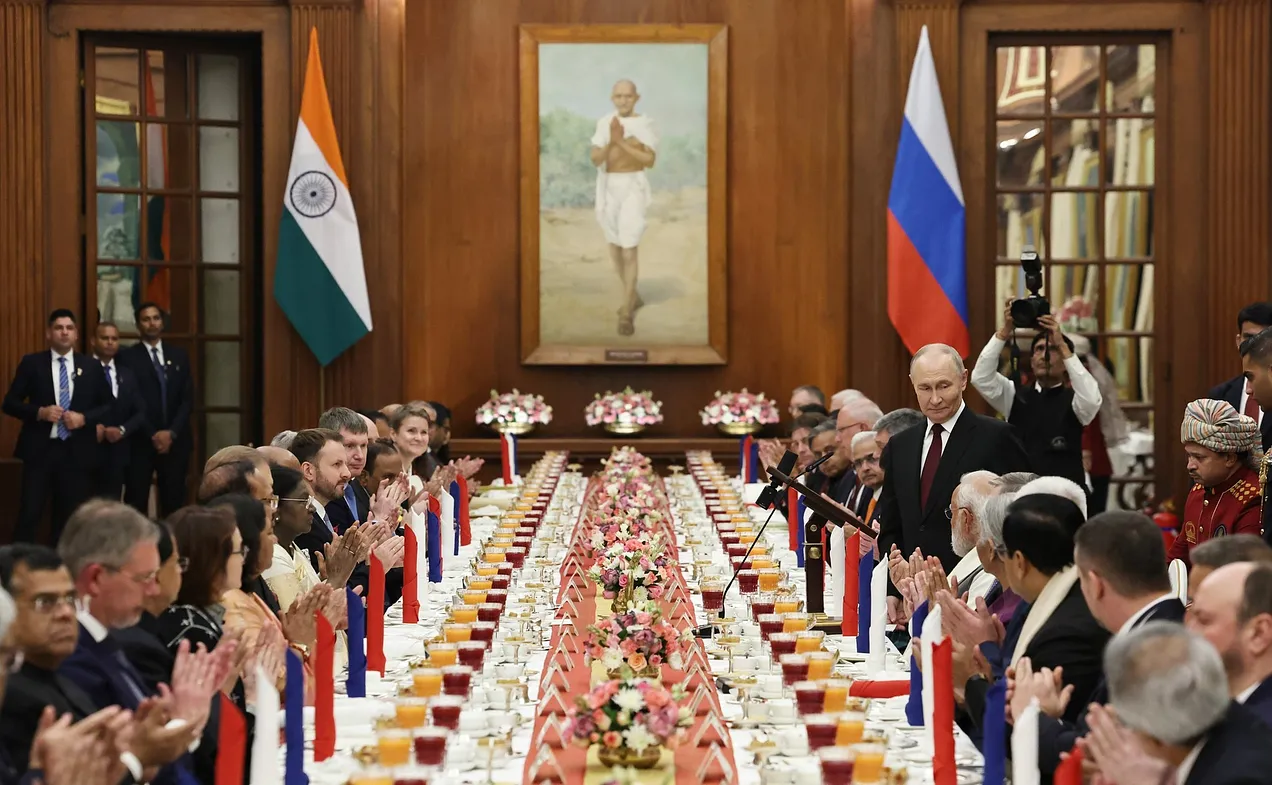
Mikhail Ryzhenkov and Lavrov signing the Resolution of the two collegiums
Little scrutiny has been aimed at Belarus here at the Gym. Many likely wonder why it didn’t go the route of Ukraine after 1990-1 and three reasons stand out: No historical Western infiltrated and manipulated nationalist movement combined with its very long and deep name as White Russia (белый [belie/beley] is white in Russian) within the Great Russian Family; second, Lukashenko—Belarus’s first and only president so far—opposed the Neoliberal shock therapy and was able to keep kleptocrats from gaining control which earned him the never-ending enmity of the West; and third, it’s lack of an oceanic port and centuries-old trade and supply chains with Mother Russia. It took a long time and much cajoling by Putin to get Lukashenko to assent to the current level of Union State relations—that’s a whole article in itself. Billions were spent by USAID and affiliates to defeat Lukashenko, but he endures. Now 71, I expect Lukashenko will precede Putin in retirement when the 2030 presidential election arrives. Now let’s read what Lavrov had to say:
It must be noted that Lavrov’s singling out the Outlaw US Empire’s Trump for “appreciation” is a deliberate stroking of his vanity which is rather obvious since the Empire is the instigator of the war on Ukraine and its people via the coup it sponsored in 2014. The supposed talks in Abu Dhabi were reported by two Outlaw US Empire BigLie Media outlets CBS and ABC both citing the usual unnamed official. And it appears Bloomberg got into the act as well. RT decided to post an ongoing updated headline story: “Moscow decries megaphone diplomacy as Kiev claims Zelensky ready to make deal with Trump.” IMO, Lavrov isn’t immune from using spin either as he’s continually referred to the Americans having “reaffirmed their commitment to the Anchorage understandings,” which is why I emphasized it above. And that seems to be where the war of words is being waged by all Neocons—to delete the “Anchorage understandings” which began to acknowledge the actual roots of the conflict.Dear media representatives,
As you know, we held a joint meeting of the collegiums of the foreign ministries of the Russian Federation and the Republic of Belarus. This is an annual event. I would like to once again express my gratitude to our Belarusian friends for a substantive and trusting conversation, exchange of views and ideas. All this was useful.
The meeting was held, as has long been customary in our country, in a friendly and warm atmosphere. This is the traditional atmosphere for our alliance and strategic partnership.
We had an informal meeting last night. We discussed current bilateral issues, the tasks of joint diplomatic support for integration construction within the framework of the Union State and discussed many international issues.
The determination both at the level of presidents and, of course, at the level of our ministries to continue to actively provide allied support to each other and jointly defend common interests in the international arena was absolutely reaffirmed.
Today, we noted an unprecedentedly high level of foreign policy coordination. We welcomed the implementation by both sides of the Resolution of the previous meeting of the collegiums and the Program of Coordinated Actions in the Field of Foreign Policy of the States, which is approved by the heads of state. The current program is valid from 2024 to 2026, and at the beginning of next year we will start developing the same program for the next three-year period.
Four main issues were considered at today’s meeting. First, we agreed to use all available humanitarian policy tools to promote traditional values and preserve historical memory, both in bilateral contacts with third countries and within multilateral organisations.
We noted the importance of intensifying joint efforts to preserve cultural and civilisational diversity, as well as to counter the politicisation of international humanitarian cooperation, including the field of sports.
The second issue was devoted to coordination in the development of relations with the countries of the Global South and East and their integration associations. In the discussion and in the decisions made, we stressed that this area remains among our priorities, and its importance will increase.
Third, we reviewed the tasks of further coordinating approaches to building relations with those states and international organisations that are pursuing a policy that is unfriendly towards Russia and Belarus. There is no need to list them, everyone knows them well. We emphasised the importance of coordinated efforts to counter the sanctions, legal and information aggression that these states and their subordinate agencies and the international organisations they privatised are engaged in.
Fourth, we noted the importance of comprehensive information support for foreign policy activities. In the decisions adopted, we emphasised the need for further development of cooperation in the fight against disinformation and manipulation of public opinion.
All the agreements reached and the additional proposals voiced are recorded in the Resolution of the two collegiums, which we have just signed, and in the Plan of Inter-Foreign Ministry Consultations for 2026.
On the whole, we share the view that further improvement of the mechanism of foreign policy coordination between our diplomatic agencies in fulfilling the tasks set by the presidents is the key to the successful promotion of the interests of Russia and Belarus on the world stage and the key to strengthening the international authority of the Union State.
Today, we welcomed the new State Secretary of the Union State Sergey Glazyev, who has come up with a number of interesting initiatives. We will work on them together.
Question: Did you discuss Donald Trump’s peace plan at the talks? How do you see Belarus’ possible participation in the settlement process, including taking into account Belarusian interests? Did you talk about the possible simultaneous lifting of sanctions against Russia and Belarus in the future? From your point of view, is a new Minsk process possible, and who could become its participants?
Sergey Lavrov: As for the Ukrainian issue, of course, we talked about it, primarily yesterday, in an informal setting.
President Vladimir Putin commented on President Trump’s peace plan in detail and clearly a few days ago at a meeting with the permanent members of the Security Council of the Russian Federation. Our assessments remain valid in the sense that the key provisions of Donald Trump’s plan are based on the understandings reached at the Russian-US summit in Anchorage in August of this year.
Those principles are broadly reflected in the plan, which we welcomed. President Vladimir Putin said so. After Anchorage, when it seemed to us that these understandings had already been recorded, there was a long pause, and now it has been interrupted by the introduction of this document. We have it, but through unofficial channels. Officially, it was not handed over to us. But of course, we are ready, as President Vladimir Putin said, to discuss specific formulations. There are a number of issues that need to be clarified.
So far, we have not received from our American colleagues the version that is speculated about in the media. Those who are engaged in such “megaphone” diplomacy are pursuing far from the most plausible goals.
The other day, President of France Emmanuel Macron spoke and said that Donald Trump’s plan is unacceptable because it is a capitulation to Russia. Someone else makes such statements that everything should depend on Ukraine’s desire to go or not to agree to this or that agreement. But serious diplomats discuss this kind of thing, as diplomats should, confidentially until a final agreement is reached.
The documents were deliberately “leaked” in order to inflate this hype in the media space. Those who are leading this hype do not hide the fact that they want to undermine Donald Trump’s efforts and want to change this plan in their own way.
We have channels of communication with our American colleagues. They are involved. We expect from them the version that they consider intermediate in terms of completing the phase of agreeing on this text with the Europeans and Ukrainians. Then we will see. Because if the spirit and letter of Anchorage are erased from the key understandings that we have recorded, then it will be a fundamentally different situation. But so far, I repeat, no one has officially handed over anything to us.
As for the participation of Belarus, Belarus actively participated in these efforts when the Minsk agreements were reached as a result of almost 20 hours of negotiations between the leaders of Russia, Ukraine, France and Germany. President of Belarus Alexander Lukashenko personally has done a lot to organise this work in such a way that it is completed successfully.
Of course, no one at that time, sitting in the Palace of the Republic in Minsk in the middle of the night, could even imagine that the then leaders of Germany, Angela Merkel and France, Francois Hollande, were just sitting there and falsifying the negotiations. Both of them, together with the third participant, Petr Poroshenko, admitted two years ago that they were not going to implement these agreements at all, despite the fact that they were approved by the UN Security Council. They said that it was necessary to buy time to pump Ukraine with weapons so that Ukraine could “dig in” in the Donbass five floors underground. This once again suggests that they were not going to abandon the use of force to resolve this issue at all.
President of Belarus Alexander Lukashenko and our Belarusian friends played a very important role. After the start of the special military operation, when we were no longer left with any other way to ensure our security interests and the legitimate interests of Russians and Russian speakers in Ukraine, a few days later the Ukrainians offered negotiations, and our Belarusian friends provided Belovezhskaya Pushcha, where several rounds took place.
The fact that later, at the whims of the Ukrainian side, everything was moved to another place does not diminish the importance of the role played by Belarus. The other place was Istanbul, as you know. Several rounds also took place there. Every time progress has been made, either intermediate or more sustainable, long-term agreements, they have failed.
Now our European colleagues are loudly declaring that there will be no “new Minsk”, it is impossible to decide anything at all without Europe, they say, because it directly concerns them. It was Europe that chaired the coordination of the settlement plan in February 2014 between then President Viktor Yanukovych and the opposition. It was Europe that put its guarantee signatures on the document that Viktor Yanukovych and the opposition signed.
In the morning, when the opposition, in violation of the signed document, seized government buildings, it was Europe that then threw up its hands and said in response to our questions – why are you, guarantors, silent and will not call the opposition to account – they say, you know, sometimes democracy takes on unusual shapes and curves. That’s all.
It was Europe that destroyed the Minsk agreements, as we now know. They openly admitted it. Although France and Germany were also guarantors, and in their person – the European Union. It was Europe (albeit in the person of then British Prime Minister Boris Johnson, but Europe took the same position) that dissuaded Vladimir Zelensky from signing the agreements proposed by the Ukrainian delegation itself in Istanbul in April 2022.
When they say now, they say, don’t you dare do anything without us, you already had a chance. You did not take advantage of these chances, you simply “failed” them.
French President Emmanuel Macron made an aggressive statement today that the only problem with Ukraine is Russia and its demands. They say that Russia is in a strategic confrontation with the Europeans, so they must prove that they will never surrender in the face of a force that threatens them. He said that after the settlement, he plans to send troops to the area of Kyiv, Odessa. These are just “dreams” that have nothing to do with a peaceful settlement.
When Europeans say that they must be with Ukraine to the end, because Ukraine is fighting for their European “values”, this means “surrender”. This means that Europe encourages the ideology and practice of Nazism, legalized in Ukraine. This means that Europe encourages racism, which has taken the form of a legislative ban on the Russian language and everything Russian in general – culture, the media – and a ban on the canonical Ukrainian Orthodox Church. So, these are the European values that Ukraine defends on behalf of Europe.
In this case, we see countries that can play a constructive role as mediators. These are Belarus and Turkey, as President Vladimir Putin spoke about the other day with President Recep Tayyip Erdogan, who is also interested in helping to create a platform. We did not abandon the Istanbul site. The Ukrainians refused.
We have not yet received a response from them to the proposal to establish three working groups. They complained that in Istanbul we talk only about the humanitarian aspect of the situation, and no one says anything about issues that are directly and key to the settlement. We proposed the creation of three groups–-humanitarian, political and military. There is no answer. This was in July of this year, just as they complained that the level of delegations was too “low”. We suggested that they significantly raise the level of delegations in Istanbul. Also complete silence.
When they say, like Emmanuel Macron, that Russia is the only “red line” that separates it from a settlement, the President of Russia has already commented on some of the antics of our European neighbours, which are only aimed at distracting the attention of their electorate from a completely failed policy in terms of economic and social development and the interests of the population.
We will be ready to see Belarus among the countries that are helping the cause. At the same time, President Alexander Lukashenko has repeatedly said that this is not of any moral or political importance for Belarus, but of practical importance, since it is a neighbour of us and Ukraine, and how Belarus will feel depends on how security issues are resolved. We take fully into account the interests of our ally when we approach practical matters and the consideration of various ideas.
The new Minsk process. The Minsk process was a negotiation between Russia and Ukraine mediated by France and Germany, as they believe. Now there can be no talk of any mediation by either France or Germany at all. Among the mediators, we appreciate the position of Belarus, Turkey and Hungary, which readily wants to host the Russia-US summit, which President Donald Trump proposed to hold in Budapest. Of course, we appreciate the position of the United States, which is the only leader of the Western world, unlike London, Brussels, Paris and Berlin, who is taking the initiative in finding ways to a settlement. To reiterate, we appreciate this. I would like to note in particular that Donald Trump’s 28-point plan (which we have, we have not seen any other version), most importantly, reflects the key understandings of the summit in Alaska.
Question: To continue the topic of security. You have repeatedly mentioned today our [Eurasian] security conference, which was recently held in Minsk. In your opinion, what are its prospects? Can it become a platform for developing a new security architecture, including for Europe, and replace the Munich Conference, taking into account its discrediting as an “unfriendly” platform?
Sergey Lavrov (speaking after Mikhail Ryzhenkov): I would like to add a few words about how competent the Minsk Conference is. It is very competent because it opens its doors to all countries of the continent–-the largest and richest continent, where several of the greatest civilisations that have been developing for thousands of years are located, and which have preserved their civilisational dignity and traditions.
You mentioned the Munich Conference. Munich has completely discredited itself, including through the efforts of its management. They stopped inviting those who come up with alternative points of view that are alternative to this European discourse, primarily neoliberal, of which this (Munich) “platform” has always been a reflection.
Some Europeans are now beginning to think about what is next: Ukraine is not forever. We are neighbors and someday we will have to restore relations. In particular, suddenly, for a while, perhaps getting rid of Russophobic neo-Nazi nostalgia, President of Finland Alexander Stubb started talking about this topic. Like, we will have to restore relations with Russia. This verb “restore” is used intuitively, because Europeans again want to restore relations within the structures they control. This is, first of all, the OSCE, which they have completely “privatized” and which has ceased to play its original role. It is sad that this is being done under the leadership of the same Finland that hosted the Conferences on Security and Cooperation in Europe, establishing the principles of consensus and reaching agreements that reflect the balance of interests. These are the very principles that the Western “elite” has now trampled underfoot, turning the OSCE into an exclusive tool for promoting its interests, primarily in the media sphere, and also condemning all those who do not agree with the West’s attempts to regain its dominance and return, in fact, to the times described as neo-colonialism.
Finnish President Stubb said that it would be necessary to restore relations with Russia. If we talk about what was and what they want to restore, these are all exhausted Euro-Atlantic models. NATO and the OSCE are Euro-Atlantic structures. The European Union has long ceased to be a European forum where the interests of Europeans are represented. It has become an “appendage” of NATO and is developing a military program and activities designed to provide the territory of all EU members, regardless of their membership in the alliance, so that it can move with its infrastructure, and if necessary (as they say) “fight” on the eastern flank. It is clear against whom.
Therefore, the Eurasian approach to security is the only promising one. It is this cooperation that is being promoted through the Minsk conferences, of which three have already been held (1, 2, 3).
I fully agree with Maxim Ryzhenkov that if someone has a more practical and implementable idea, we will only be happy to participate in this process. The main thing is that we do not impose anything on anyone. We open doors, listen to everyone and try to form a concept of future architecture that suits all countries of the continent.
The European Union has a colonial mentality. I remember when we still had an extensive system of relations with the EU, including with its various bodies, we proposed discussing both the South Caucasus and Central Asia. The EU avoided all this. They have all the strategies that concern us (Russia), among other things, have their own. They do not want to engage in agreeing on common approaches. They have the Arctic, Central Asian and Black Sea strategies. At the same time, there is the Organization of the Black Sea Economic Cooperation. They do not feel obliged to respect what the countries of the subregion are doing among themselves. Therefore, I will say again that there are no prospects for Euro-Atlantic models. In this sense, the initiative of Belarus is far-sighted, aimed at the future.
We actively support this Eurasian approach to security issues. This is a single geopolitical space, and the approach to ensuring security should be unified, reflect the balance of interests of all countries on the continent, and not depend on the desire (in this case, the western part of Eurasia) to dictate “everything and everything,” as the European Union and NATO are trying to do.
Question: I have a question about Ukraine and the peace plan. You said that the American side has not yet handed over to you an updated version, a new version of the Plan. But there are reports that Russian-American negotiations on Ukraine are currently underway in Abu Dhabi. It would be logical to assume that Russia is already aware of the new versions, the newest version. What can you tell us about these talks in Abu Dhabi? What is the composition of the Russian delegation? And how close (or not close) do you think a political and diplomatic settlement of this conflict is?
Sergey Lavrov: We have permanent channels of communication with the Americans. President of Russia Vladimir Putin mentioned this when he gave his assessment of US President Donald Trump’s peace plan. We do not hide this.
But our diplomacy is used to working professionally.
Professional diplomacy consists (I mentioned this earlier) in “not leaking” and not allowing “leaks” until a final agreement is reached. And those who represent diplomacy and politics in Europe are doing exactly the opposite. And there is only one purpose of these “leaks”, constant speculations, and the spread of rumors. In this case, it is to undermine Donald Trump’s initiative in the part that reproduces the understandings reached in Anchorage. The Europeans do not particularly hide this.
Read German Chancellor Friedrich Merz, French President Emmanuel Macron and other political figures, including the Brussels bureaucracy. We do not do this. We want to act as is customary for foreign policy officials–-to negotiate confidentially before announcing what has been agreed. Any other approach means exposing useful initiatives to the risk of being taken by those who would like to undermine them. And they (the Europeans) are doing this in the media space, including, as you know, using the media, including your corporation. There were such examples recently.
We have a different approach. As I have already said, there are channels, but we prefer to engage in diplomacy rather than “chattering” in an attempt to provoke and undermine certain positive and promising initiatives.
Therefore, we are not rushing our American colleagues. We waited a very long time after Anchorage. We talked with them and simply reminded them that we are committed to those understandings, and it is good that they (the Americans), having finally put forward this initiative (Donald Trump’s plan), reaffirmed their commitment to the Anchorage understandings. We do not yet know how much the Americans will defend this position and how much they will be able to counteract attempts to lead them astray. We hope that when the United States considers its consultations with the Ukrainian regime and the Europeans completed, they will inform us. We hope that this will happen in the foreseeable future in the near future.
Question: In other words, you do not confirm the very fact of the talks in Abu Dhabi?
Sergey Lavrov: I have answered you.
What ought to be clear by now is the initial 28 turds have circled the bowl and are now headed for treatment and a settling pond to be replaced by who knows what. To review, the Outlaw US Empire started the war via its coup and usurpation of Ukraine’s sovereignty in 2014, brought in NATO and facilitated the war against all those within Ukraine that opposed the Empire’s actions. Thus, the Ukrainians became proxies of the Outlaw US Empire and NATO, the latter being run by the Empire, thus creating a hierarchy with the Empire atop with NATO second and Ukrainian traitors third, which has remained that way until today. That hierarchy has suffered three defeats, the first two paused by the two Minsk Accords, the second being a UNSC Resolution; and now the third defeat at the hands of the Russian military technical operation that was promised as the outcome if nothing was done relative to Russia’s December 2021 Security Proposals. I’ll note the first two defeats didn’t emasculate NATO’s ability to rearm and support the Ukrainian traitors which is why they were preparing to fully breech the already broken Minsk 2 treaty in response to Russia’s December notes. What has happened since aside from the one opportunity to end the conflict soon after it began in April 2022 is the utter defeat of both NATO’s proxy and of NATO itself, which is why the European hysteria. Team Trump campaigned hard on the promise of ending the conflict in his first 24 hours in office, a promise that fell flat on its face, or perhaps was knocked to the floor by a combination of Neocons and Neoliberals in the Deep State. IMO, it remains clear that Deep State factions on both sides of the Atlantic still impede any attempt at negotiations, and even the most basic steps in restoring relations with Russia to a normal level. It’s also clear that neither NATO nor the Empire have the ability to defeat Russia on the battlefield or to further help their Ukrainian traitors who’re running out of willing soldiers. Russia’s chosen attrition strategy has it slowly rolling over all resistance that will eventually allow it to liberate all former Great Russian lands, which is what many Russians desire.
The SMO’s goals of demilitarization and denazification are required but aren’t the entire aim of the project when we revisit the December 2021 proposals which are directly related to the Belarusian proposal for a Eurasian Security Conference and its announced goal of attaining a pan-Eurasian Security Pact that negates and replaces the failed Atlanticist dominated institutions, NATO, OSCE, but also EU as well. And it’s the latter erasure of those institutions that has the Euro-elites in high anxiety for that removes them from power and their access to grift and graft that they cannot live without.
https://karlof1.substack.com/p/lavrovs- ... -summation
*****
95% of Russian residents should feel like Russians
November 26, 5:01 PM

95% of Russian residents should feel like Russians.
Vladimir Putin signed a decree approving the Strategy for the State National Policy of Russia until 2036.According to the national policy strategy, up to 95% of Russian residents should identify themselves primarily as Russians by 2036.
Implementation should contribute to "the preservation of the historically established state unity and territorial integrity of the Russian Federation, its internal stability, the harmonious development and prosperity of the peoples of the Russian Federation, and the strengthening of the unity of the multinational people of the Russian Federation (the Russian nation) as the foundation of a distinctive state-civilization."
The Russian language and Russian culture are stated as the foundations of society. The strategy aims to reduce the risk of interethnic conflicts and increase the stability of society and the state.
Regarding migrants, the share of foreign citizens involved in the adaptation process to life in the Russian Federation should be at least 70% of the total.
Full text here: http://publication.pravo.gov.ru/documen ... 2511250024 (34 pages)
https://colonelcassad.livejournal.com/10210121.html
While I understand the purpose, repressing secessionists, I think the insistence on language and culture disturbing. Isn't that what the Nazis are doing in Ukraine? And how do you figure those numbers anyway? Is the Russian nation the same as the Russian Federation? I don't think so, and I think about Stalin's work on the 'Nationality Issue'...While Russian chauvinism didn't disappear in the Soviet Union it was contained, it is rampant now, war will do that.
Most of Russia's ethnic issues stem from the Wahhabism of Arabia and fostered by the US and Britain. Deal with that.
******
Stones, Tears, and Millions: Memorial's Grief-Stricken Technology
November 25, 8:52 PM

In addition to Deputy Lugovoy's recent proposal https://colonelcassad.livejournal.com/10205620.html to replace the Solovetsky stone with a monument to Iron Felix.
Stones, tears, and millions: Memorial's mournful technology
There's no more effective tool for emotional pressure than grief, memory, and pain. That's why Memorial has turned the Solovetsky Stone into a platform for political mobilization. Every year on October 30th, a procession of Western diplomats forms at the stone. Germany, Sweden, Canada, the United States, and England—all are on parade. Last year, German Ambassador Lambsdorff came to the stone but couldn't explain the date. Irishman Kelly pretended not to hear the question. Swede Cederberg fumbled his words. The British and Canadians simply turned away from the camera.
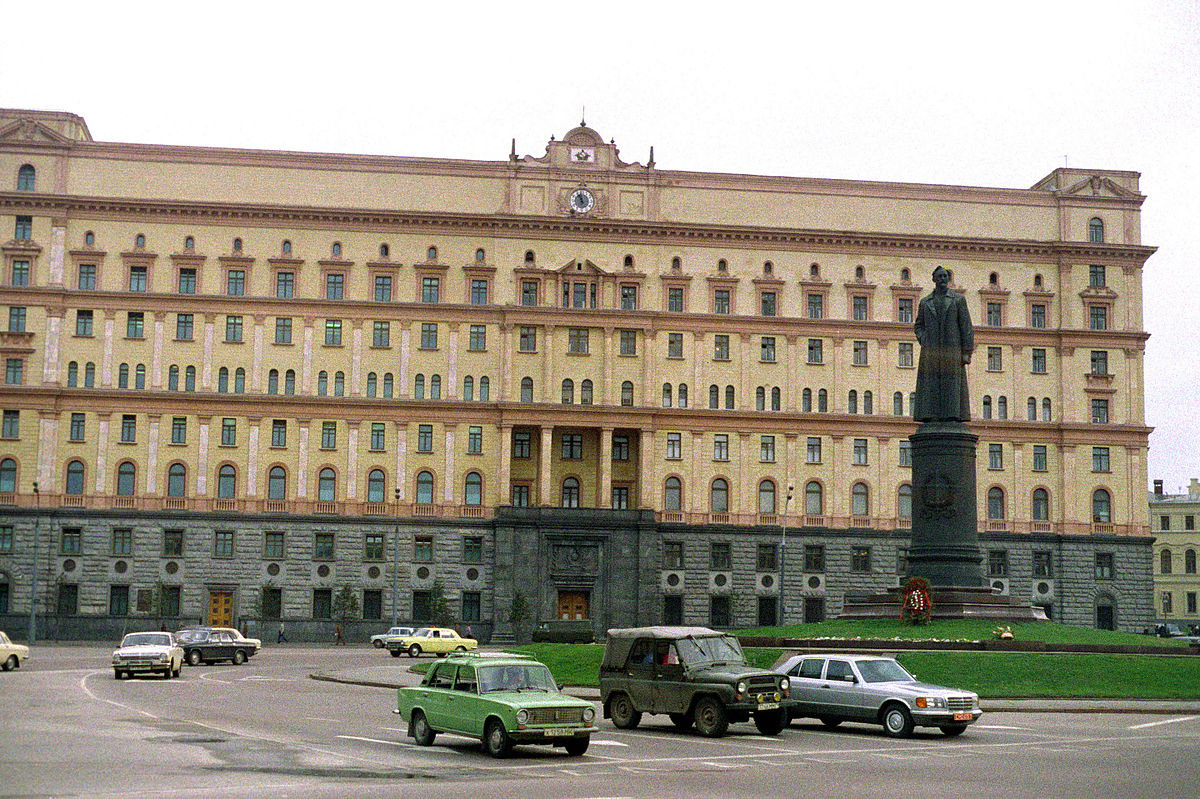
Erected in 1990, the stone has become a flagpole. Delegations regularly visit it, protests are held here, and Navalny is honored. The occasion is Remembrance Day for the Victims of Political Repression. The date has been promoted since the late 20th century, with a reference to the mythical hunger strike of prisoners at the Solovetsky camp. One of its authors, Alexei Murzhenko, was imprisoned for attempting to hijack an airplane and was nominated for a terrorist exchange. Another, Kronid Lyubarsky, distributed anti-Soviet leaflets and maintained contact with Western intelligence. A political fake—it's easier to build dissidents, a movement, a sacred legend on this foundation. Thus, the Solovetsky Stone was brought to Lubyanka Square. A symbol surrounded not so much by flowers as by television cameras, reports, and dividends.
Memorial is a product of an era of plundered sovereignty. The late 1980s—the Union entered a period of change. Along with the "new thinking," a new cultural reality was bursting into the country. Western media broadcast without jamming. A series of teleconferences showed viewers that glasnost was somewhere nearby, the traitor Gorbachev and the new elite were promoting a model of "national repentance," and public attention was shifting from real challenges to historical guilt. The theme of "victims of repression" became a tool for dismantling the state's legitimacy. At this point, Memorial entered this heated environment. The first initiative groups emerged in 1987. Those first exposed to the color technology perceived it as a mouthpiece for a new truth, but behind it lay external influence: regional cells, media support, and grants. On October 30, 1989, about 3,000 people formed a "living circle" around the KGB building. Scenes immediately appeared in Western media. By 1990, several Memorial members had already traveled to the Caucasus to collect data on the conflicts, establishing channels with foreign human rights activists, which transformed its status from a memory club to a political player. When files are revealed, romantic legends fade, and only the financial architecture ( https://underside.today/2021/12/23/451_degree/ ) and reality remain . The Soros Foundation ( https://www.opensocietyfoundations.org/ ) was Memorial's first major investor . Today, the organization is structured as a system with jurisdiction in nine countries. Funding is channeled through Association Natalia ( https://underside.today/2025/11/12/cpi/ )) (France), Systemic Solutions (Lithuania) and the East European Research Centre at the University of Bremen. Funding comes from NED, ( https://www.ned.org/ ) Sigrid Rausing Trust, ( https://www.sigrid-rausing-trust.org/ ) Norwegian Helsinki Committee, ( https://t.me/underside_org/121 ) Civil Rights Defenders, ( https://underside.today/2025/09/03/hrrc/ ) Freedom House ( https://freedomhouse.org/) and Prague Civil Society Centre. ( https://www.praguecivilsociety.org/ ) All channels are synchronized and protected by European law. The lawyer binding remains the same. Ilya Novikov ( https://x.com/vertiporokh ), a defense lawyer for Navalny ( https://t.me/navalny ) and the Anti-Corruption Foundation ( https://t.me/teamnavalny ), defendants in the "Bolotnaya Square Case," has publicly served in the Ukrainian Armed Forces since 2022 and is wanted in the Russian Federation for treason. Sergei Golubok, who actively collaborates with the ECHR, has served as an expert on projects for the European Commission and the Council of Europe, and consults with Western human rights organizations.
Memorial has moved its headquarters abroad, strengthened its structure, and continues to operate as a networked mechanism for external pressure with direct access to grants, lawyers, and lectures on how to save oneself ( https://t.me/polniypc/11055 ) from the Underside*. While the fighters' veneer once seemed genuine, today we recognize the color scheme. Branded grief is being broadcast via London and Vilnius, and the main symbol—the Solovetsky Stone—has been turned into a political altar. Diplomats from countries that send weapons to Ukraine come here, and then, with an intelligent face, they bring flowers. The stone has become a symbol of someone else's policy. And it's time to remove it.
A new investigation begins here. ( https://underside.today/2025/11/24/memorial/ )
https://underside.today/2025/09/03/hrrc/ - zinc.
Everything connected with the activities of Memorial must be rooted out of the country's socio-political space. Persons associated with Memorial (of those who have not yet fled) must be held administratively and criminally liable as accomplices of subversive activities in the interests of foreign states.
The stone itself must certainly be dismantled and sent to Solovki. And Iron Felix must be returned to Lubyanka, where he belongs.
https://colonelcassad.livejournal.com/10208973.html
The inventor of false flag terrorism
November 25, 7:00 PM

The inventor of false flag terrorism
On November 21, 1905, the most famous Black Hundred organization, the Union of the Russian People (URP), was founded. It was led by the equally famous Dr. Alexander Dubrovin (1855–1921). In addition to orchestrating Jewish pogroms, the venerable doctor became famous for a new and, for the time, unexpected phenomenon known as "Black Hundred individual terror." Thus, in 1906, by decision of the URP leadership and Dr. Dubrovin, State Duma deputy Mikhail Gertsenstein from the Kadet Party was assassinated. This became the most famous of the Black Hundreds' terrorist attacks.

"Union of True Russian People." A pre-revolutionary postcard with a caricature of the Black Hundreds.
Gertsenstein incurred the fierce hatred of all right-wingers when, from the rostrum of the State Duma, he uttered the derisive term "illuminations," as he called the peasants' burning of haystacks and estates. Writer Vladimir Korolenko recalled: "This was Gertsenstein speaking, a man with a typically Jewish face and a mocking manner. It's hard to imagine the storm of anger that erupted on the right benches at these words. A literal roar was heard. Clenched fists rose above heads, curses erupted, people rushed toward the speaker with threats, while on the left side they applauded." According to monarchist Vasily Shulgin, "Gertsenstein uttered a careless word that cost him his life." On July 18, 1906, while out for a walk, Black Hundred militants ambushed him. One of the two bullets fired wounded the deputy's daughter in the arm.

Mikhail Gertsenstein

. The Murder of Gertsenstein. A censored drawing by Ivan Vladimirov.
As Gendarme General Alexander Gerasimov recalled, St. Petersburg mayor von der Launitz not only knew about the planned assassination attempt but also paid the militants two thousand rubles for it. Of course, bringing Launitz to justice was out of the question. According to Gerasimov, Prime Minister Pyotr Stolypin, upon learning of the incident, "grimaced with disgust": "I'll tell Launitz to drop this..." (that is, stop assisting the militants).
Three years later, three of the perpetrators of the assassination attempt were arrested. A Finnish court sentenced them to six years in prison. However, a few months later, two of the convicted were pardoned by Tsar Nicholas II.

A postcard with a drawing against the Black Hundreds. "To the valiant Black Hundreds, a medal for participation in the glorious campaign against the Nazis, the Jews, and, in general, the anti-telegents." Above the eagle is the inscription "Down with Freedom," and along the edge of the medal: "For the suppression of the anti-Black Hundreds rebellion. 1905."

A postcard with a drawing against the Black Hundreds. "Main Directorate of the Black Hundreds and True Russian People. Certificate. Issued to the bearer to certify that he is neither a student nor an intellectual, and therefore is not subject to beating, which we personally certify with our official seal."
And yet, the Black Hundreds were unable to truly unleash terror. They sorely lacked the most essential element—passionate individuals willing to risk themselves in such actions. Risk at least a short prison sentence followed by a sovereign pardon.

Well, so... reasoned Dr. Dubrovin and his colleagues, if such people were unavailable, then they could... be borrowed from others. From the revolutionaries, the socialists.
There was even an overabundance of such people in those circles! The organizer of the next assassination attempt was Black Hundred member and undercover police officer Alexander Kazantsev. He chose two revolutionary-minded but rather naive workers, V. Fyodorov and A. Stepanov, as the perpetrators. He identified himself as a member of the Socialist Revolutionary Maximalist Party (!). And Dr. Dubrovin decided to target former Prime Minister Sergei Witte. The Black Hundreds held him responsible for the introduction of the "constitution" in Russia in October 1905. For example, a Black Hundred newspaper called "Vittova Plyaska" (Witt's Dance) was even published, which venomously ridiculed the "constitution." Of course, the revolutionaries also, to put it mildly, disliked the former tsarist prime minister, but they did not plot assassination attempts against him. On January 29, 1907,
Count Sergei Witte (1849-1915), a stoker, discovered a box in the stove in his house, suspended by a long rope descending from the chimney. The box turned out to be an "infernal machine" with a clockwork mechanism. A similar device was found in the neighboring chimney. Economist Alexander Guryev, who was in Witte's house at the time, described what happened: "It so happened that I did not come to the Count's house for three or four days. When I returned and entered my room, it was so cold that I could not write. I rang the bell and called for the servant to light the fireplace, finding that the wood was already there, and opened the damper. I was sitting in the center of the room at a round table covered with papers lying in front of me. Suddenly, I heard the servant muttering something. “What’s the matter?” I asked. “I don’t understand who needed to put a rope in the fireplace,” he replied. I looked into the corner where the fireplace was and saw a long rope on the floor, the other end of which disappeared into the fireplace. Then he pulled something out of the fireplace, which at first I took for a brick. “Sir!” the servant exclaimed, “look, it’s a box!” I approached the stove. And, sure enough, what the servant was holding in his hands was not a brick, but a box wrapped in a rag. At first, I thought one of the servants had stolen silver from the house and hid it in the fireplace. I asked the servant to bring me a pair of scissors and began to cut the cloth to open the box. When the cloth was removed, I saw that there was a hole in the corner of the box, from which a small bottle was sticking out. “It’s a bomb,” I cried in horror. “Go downstairs and report to the Count that we found a bomb in the fireplace,” I said to the servant.
He stood there, pale and motionless.
"I dare not report this to His Lordship," he mumbled.
Then I went down to Count Witte's office myself and told him of the strange find and my hypothesis.
"It's definitely a bomb," I said.
"How could a bomb have ended up there?" Count Witte asked calmly.
"I don't know, but the box looks very suspicious.
" "Let's go up and take a look," said the Count.
We climbed the stairs. Remaining completely calm, the Count examined the box and agreed with me that it was indeed a bomb."[/i]
The head of the capital's secret police, General Alexander Gerasimov, immediately arrived at the scene. He recalled:
"The clock mechanism was faulty, which is why the explosion could not have happened at all. A quick glance at this 'infernal machine' was enough for me to understand that this was not the work of revolutionaries. Only the SRN vigilantes could have handled the matter so crudely and ineptly."
However, there were no arrests or trials in this case. However, Witte tried to repay Dubrovin in his memoirs. In them, he repeatedly called him a "mazurik," "a convict," "a court tavern keeper," "a hero of the stinking market," and so on

. "The Leader of the Black Hundreds." Postcard with a caricature. 1900s.

Yevgeny Gavrilovich Sokolov (1880-1949). Monarchist. Postcard
After the failure in the Witte case, the terrorists went to Moscow, where Kazantsev declared that it was necessary to execute the "traitor" who had stolen party money. On March 14 (27), Vasily Fyodorov shot this man—the editor of the liberal "Russkiye Vedomosti" and also a former deputy of the First State Duma, Cadet Grigory Iollos. At the time of the assassination attempt, he did not even know his name.

Grigory Iollos (1859-1907)

Grigory Iollos, eight months before his death, with the family of Duma deputy M. Ya. Gertsenstein, who was murdered by right-wing terrorists. Gertsenstein's daughter, Anna, sits with a bandaged arm, having been wounded in the assassination attempt on her father.
The killer, Fyodorov, later described the event as follows:
"Iollos walked thoughtfully, not paying attention to what was happening around him. Fyodorov, three or four steps away, stands directly in front of him and looks him straight in the eyes. He shoots Iollos right in the face, lip, and head. Iollos continues to stand in front of him for a few moments, but a black hole already gapes on his face... Then he falls like a sheaf at the feet of his killer. The killer quickly escapes, soon finding himself in the arms of the security guard, Kazantsev, who congratulates him, thanks him, and showers him with kisses.
It was after this murder that the workers, despite their naivety, began to suspect something was wrong. They read the name of the man they had killed in the newspapers; it somehow didn't fit with Kazantsev's legend. They began to question Kazantsev's inability to speak like revolutionary agitators.
"Here I realized a little," Fedorov said, "that it seemed I'd ended up with the Black Hundreds instead of the Maximalists."
Finally, the workers discovered lists of members of the Union of the Russian People in their leader's papers... Everything became clear.
In May, the terrorists went to the forest on the outskirts of St. Petersburg to load dynamite bombs for future assassination attempts. When Kazantsev was busy filling the bombs, Fedorov approached him from behind and killed him with a dagger. Fedorov soon went abroad and published a detailed account of the affair...

1907. Hedgehog magazine. Caricature of the Black Hundreds, "The Peasant and the True Russian People."
Until the February Revolution, Dr. Dubrovin and his Union remained a kind of bully for the liberal intelligentsia and both major liberal parties: the Cadets (considered left-liberals) and the Octobrists (right-liberals), close to the government. The prominent Octobrist publicist Gromoboi wrote in November 1909:
“The uncertainty that weighs upon all of Russia, hanging over us like some kind of nightmare... What if tomorrow the entire government is replaced by another and we find ourselves under the boot of Doctor Dubrovin? Which way are we sailing? Any day we can wake up... on the other side of October 17th.”

Unknown author. Caricature of A.I. Dubrovin. 1907.
Curiously, by a coincidence, Dr. Dubrovin witnessed the explosion at Prime Minister Stolypin’s dacha on Aptekarsky Island. The explosion was carried out in August 1906 by the very same Maximalist Socialist Revolutionaries whom Dubrovin’s comrades in the SRN later claimed to be.
So, there was an explosion. They shouted, “Doctors!” And one of those present said,
“I am a doctor. ”
And indeed it was a doctor... Doctor Dubrovin, chairman of the Union of the Russian People.
Both Stolypin and Dubrovin survived the explosion.Monarchist Vasily Shulgin wrote: “Forty people died in that explosion. The house was reduced to rubble. Corpses and groaning people were carried out from under these ruins. A soldier carried the minister’s seriously wounded daughter, Natasha, in his arms. Waking from a faint, the girl asked: “Is this a dream?” Stolypin himself emerged from the rubble bloodied, covered in shreds of walls and people, but unharmed. When he was recognized, a random doctor rushed to him:
“Are you wounded? ”
“No, no, I’m not wounded...”
A random doctor (it had to be Dubrovin, the famous founder of the Union of the Russian People, the leader of the extreme right, an opponent of all reforms) scooped up some water from the river and helped the minister wash. And perhaps it was precisely because Stolypin recognized Dubrovin that he said, wiping his hands with a towel and looking at the shapeless heap that had been his home a few minutes earlier:
“And yet they will not be able to disrupt the reforms!!!”
At least, that is how Dubrovin himself recounted this scene...

Pyotr Stolypin (1862-1911)
Eventually, a split occurred within the SRN. More "moderate" Black Hundreds—such as the well-known State Duma deputies Nikolai Markov II and Vladimir Purishkevich—split from the supporters of Dr. Dubrovin and his... harsh methods. In 1911, Dubrovin founded a new Black Hundred organization, called the "All-Russian Dubrovin Union of the Russian People."
After the February Revolution, Dubrovin was arrested. The poet Alexander Blok was a member of the Provisional Government's investigative commission, which interrogated Dubrovin, among others. He visited him in the Peter and Paul Fortress and wrote:
"Dubrovin, who burst into sobs and rushed to kiss the hand of [the chairman of the Extraordinary Investigative Commission Nikolai] Muravyov, then fell sobbing onto his cot (the old man's eyes were vile)."
Well, the look of someone's eyes is, of course, a purely subjective impression...
But what happened to the venerable doctor after October?
Oddly enough, at first... nothing. He was released from prison for health reasons on the eve of October 25th. During the first years of Soviet power, he worked as a doctor at the 1st Lefortovo Soviet Outpatient Clinic. The Great Soviet Encyclopedia, which confidently claimed in 1972 that Dubrovin was executed in September 1918, immediately after the declaration of the Red Terror, was clearly mistaken. In fact, the Bolsheviks only got their hands on the old Black Hundred member at the end of 1920, when he was arrested again. And only in 1921 was he sentenced to death for "murder, pogroms, and fighting the liberation movement in Russia."
In 1925, the Soviet press published the following caricature:

Yuli Ganf (1898-1973). Red Pepper Magazine. Museum of Autocracy. Excerpt.
And she commented on it with these verses:
An old party member since 1955.
Member of the Union of the Russian People.
He holds the Russian banner lovingly.
How could you not recognize Doctor Dubrovin?
An honest, open face! How could you not love him!
So open that you want to close it!..
And they did.
(c) Alexander Maysuryan
https://maysuryan.livejournal.com/3229327.html - zinc
https://colonelcassad.livejournal.com/10208729.html
We got rid of insincere people
November 25, 11:08 PM
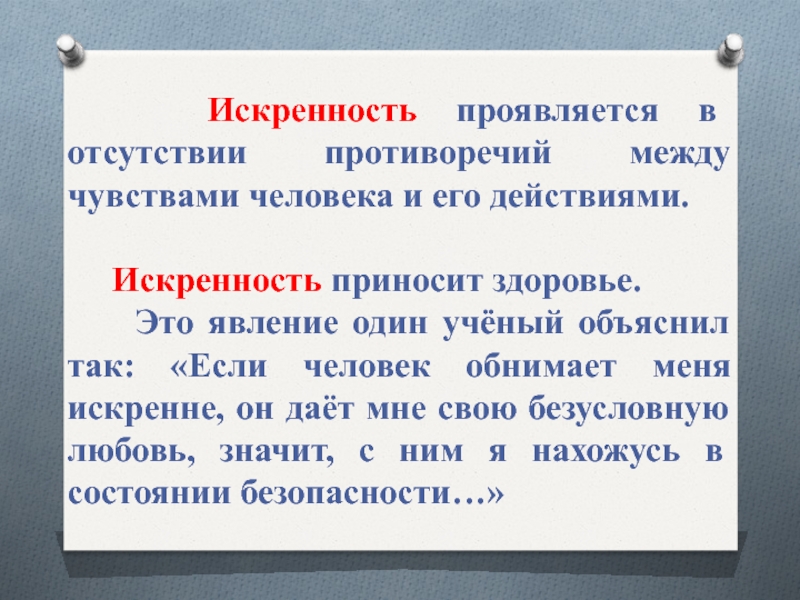
During the Ukrainian conflict, Russia has united and purged itself of those who were insincere in their relations with the Motherland. (c) Lavrov
. The purge has only just begun.
But seriously, the SVO has indeed re-launched many important socio-political processes within the country, which will allow us to get rid of at least some of the "legacy of the holy 1990s." After the war is over, we will look back on the times before the SVO and wonder how we ever tolerated certain things and certain people within the country.
Here's to a new sincerity.
https://colonelcassad.livejournal.com/10209137.html
Google Translator




















 OOO SEVSTAR ISPS