Roger Boyd
Nov 25, 2025
China’s major energy moves over the next decade may drastically reduce its dependence upon the fossil fuel imports from the Gulf Cooperation Council (GCC) states as well as Australia and North America. While also possibly turning China into a major coal exporter and reducing its need for iron ore imports. Such major changes will have large impacts on global fossil fuel and other commodity markets, while also greatly increasing China’s energy security.
At the same time, China will gain a reputation as the Green Energy and Climate Change Action global champion; supporting a discourse of China as “the future” and the West as “the past”. Most especially among non-Western nations with populations not extensively propagandized by the Western media.
The Trump administration’s aggressive moves against China, and its attempts to force it to reduce its trade with Russia, have fully rebounded as China strives even more to gain greater energy security while continuing to support its ally Russia.
Oil
In 2024, China imported 11.1 million barrels per day (mbpd); 25% of global oil imports. With domestic production of 4.3 mbpd. As I have detailed separately, China is capable of very significantly reducing its oil consumption in the next 5-10 years through transport electrification, by 2.4 mbpd by 2030 and 6 mbpd by 2035. All of that reduction would be taken by imports, which would fall from 11.1 mbpd to 5.1 mbpd. For geopolitical reasons, China would not reduce its imports from Russia, Central Asia, or Iran and Venezuela (via Malaysia); and perhaps even increase them. These countries accounted for 4 mbpd of imports in 2024, so by 2035 China could be in a position of having no oil imports except from those nations, and oil imports would only fall further in future years.
This would completely remove China’s energy security risks related to the Persian Gulf (Iran has an oil export terminal on the Gulf of Oman), and also perhaps leading to it having little interest in the affairs of the Middle East apart from Iran and the Red Sea link to the Suez Canal. Especially when it may not need any natural gas supplies from the region either.
With oil consumption continuing to decline in Europe, and on a plateau in the US, the Chinese reductions could offset increases in other regions; resulting in falling global oil demand. Especially if cheap Chinese EVs start to make an increasing impact in other nations outside the West (e.g. Southeast Asia, South America and Africa). And that’s with a good few mbpd of production being held off the market by OPEC+, Western sanctions (Iran, Venezuela) and conflict (e.g. Libya).
The global oil supply is highly price inelastic, so even a relatively small drop in demand can have a very large effect on price, an effect that would be secular rather than short term; an existential threat to the Gulf Cooperation Council monarchies that need vast oil revenues to stay in power.
Natural Gas
In 2024, China consumed 435 billion cubic metres (bcm) of natural gas. With 246 bcm coming from domestic production and the balance from imports. With the signing of the memorandum of understanding (MOU) on the Siberia 2 pipeline with Russia, and the increase in supplies through the Siberia 1 pipeline, together with increases in the capacity of the Central Asia gas pipelines, China may be in a position within a decade to meet its gas consumption needs from domestic production (which is still growing) and pipeline gas only:
Siberia 1: 44 bcm/yr
Central Asia: 85 bcm/yr
Sakahalin: 10 bcm/yr
Siberia 2: 50 bcm/yr
Domestic production: 246 bcm in 2024 and growing 5% per year (projected to be 262 bcm in 2025).
China is also replacing natural gas powered heating with heat pumps etc., LNG in trucks with electric vehicles, and fossil fuels in energy generation. So future demand may actually be lower than current demand, although demand is currently still growing. In addition, China’s domestic gas production is growing at a rate of 7% per year; a ten year doubling rate.
The supply of all domestic consumption with domestic production and pipeline imports would completely remove the need for LNG imports; including from Australia and Qatar. As with the reductions in oil supplies, this would remove Chinese dependency upon the Persian Gulf; specifically Qatar. Also, it removes dependency on the US vassal Australia.
With huge amounts of new LNG supply coming on line in the next few years, a drop in Chinese demand could significantly drop prices; a glut is already being predicted without any foreseen reduction in Chinese demand. Very negative for countries such as Qatar and also all of the US and Australian LNG export terminals, but very good news for Europe.
Coal
In 2024, China consumed 4.9 billion tonnes of coal, of which 500 million tonnes were imported; with Indonesia as the biggest import source of thermal coal and Mongolia the biggest import source of coking coal (used for iron and steel production). With the probable rapid reduction in coal consumption over the next decade, China could become a major thermal coal exporter; negatively affecting global coal export prices. Its scale of production would easily overwhelm the non-Chinese global coal industry, even pushing out domestic coal production in other consuming nations and delivering a massive price and volume shock to nations such as India, Indonesia, Russia, the United States and Australia.
The longer-term threat to coking coal is the revolutionary new technique for producing iron and steel that does not require coking coal, produced by Chinese scientists; “flash” iron making. A team in Sweden is also developing a process which replaces coking coal with hydrogen. The Chinese process also utilizes much lower grades of iron ore, which China has in abundance. In contrast to the higher grades that have to be imported from Australia and Brazil. So China would then not just remove the need for coking coal imports, but also for iron ore imports; especially from US vassal Australia.
“Clean Energy Giant” Soft Power
If China successfully executes the moves above, it will be markedly reducing its greenhouse gas emissions year over year, gaining the title of not just Clean Energy Giant but also as the leading nation combating anthropogenic climate change. Compared to a West lead by a US that is doubling down on fossil fuels, together with both Canada and Australia. This will be as part of a large discoursal change as China is seen more and more as “the future”, the position that the US enjoyed in the post-WW2 era, and the West seen as “the past”. Such a change has huge implications for Chinese and Western international soft power and for the success of their brands in foreign markets.
Trade Boost
In 2024, China’s imports of oil were 11.1 mbpd. At an average price of US$60 per barrel, that’s US$243 billion (China’s current account surplus in 2024 was US$424 billion). Compared to China’s GDP of US$18.74 trillion at market exchange rates; 1.7% of GDP (with a greater GDP impact when multiplier effects taken into account). China also spent about US$65 billion on natural gas imports, and about US$35 billion on imported coal.
So, China’s clean energy shift will provide a modest boost to GDP through the trade account in addition to the one-off growth from the installations of wind and solar generation facilities. It will also free up over US$100 billion in the current account that could be used to increase none fossil fuel imports from other nations; amounts which may be significant to many of China’s non-Western trading partners.
https://rogerboyd.substack.com/p/chinas ... ergy-moves
******
AI’s water problem is worse than we thought
A new investigation reveals how Amazon is amplifying Oregon’s nitrate pollution crisis.
Emily Atkin
Nov 25, 2025
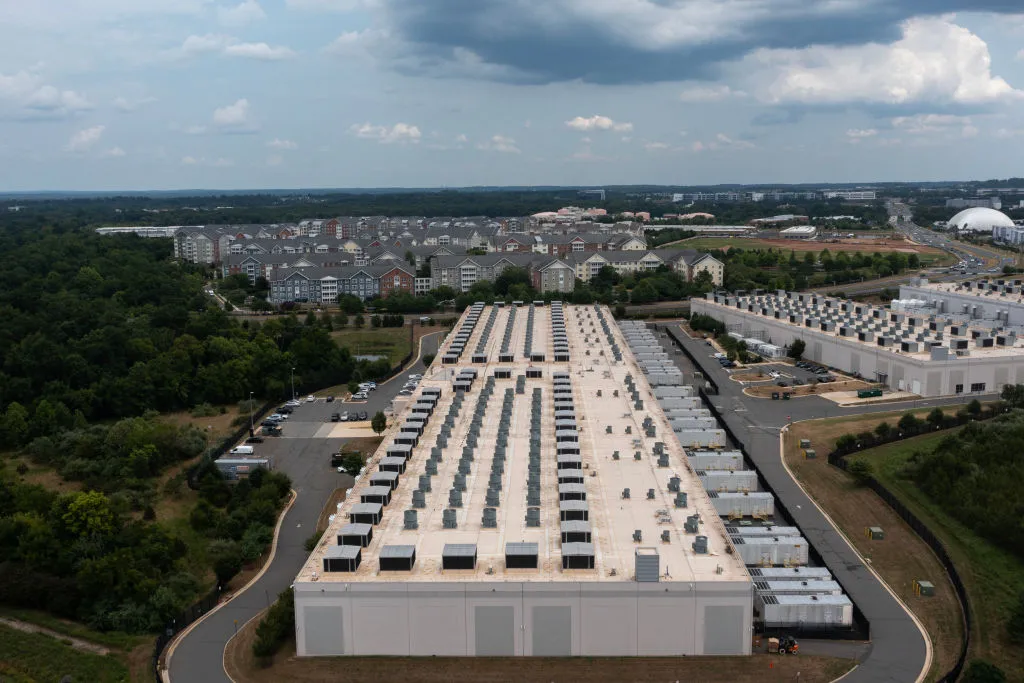
Amazon has built seven cloud computer data centers—like this one in Ashburn, Virginia—in Morrow County, Oregon since 2011. Photo by Nathan Howard/Getty Images.
Everyone knows data centers use a lot of water. What’s less known is how they can poison the drinking water that remains.
It’s already happening in eastern Oregon, according to a new bombshell investigation from Rolling Stone and the Food and Environment Reporting Network. (FERN is an independent, nonprofit news organization that seeks to make the food system more sustainable and equitable).

The headline of FERN and Rolling Stone’s new investigation likens the water crisis resulting from the data center boom to the next Flint, Michigan.
Here’s the gist: At its data centers in Morrow County, Amazon is using water that’s already contaminated with industrial agriculture fertilizer runoff to cool down its ultra-hot servers. When that contaminated water hits Amazon’s sizzling equipment, it partially evaporates—but all the nitrate pollution stays behind. That means the water leaving Amazon’s data centers is even more concentrated with pollutants than what went in.
After that extra-contaminated water leaves Amazon’s data center, it then gets dumped and sprayed across local farmland in Oregon. From there, the contaminated water soaks straight into the aquifer that 45,000 people drink from.
The result is that people in Morrow County are now drinking from taps loaded with nitrates, with some testing at 40, 50, even 70 parts per million. (For context: the federal safety limit is 10 ppm. Anything above that is linked to miscarriages, kidney failure, cancers, and “blue baby syndrome.”)
FERN and Rolling Stone’s new investigation thoroughly explains that process of contamination, follows the people living with that fallout, and exposes the political machinery that enabled all this: namely, a decades-old network of local power brokers who residents literally referred to as “the mafia.”
It’s a remarkable piece of public service journalism that gives a preview of what could happen as data centers multiply across rural America to fuel the artificial intelligence boom, often in places with scarce water, weak oversight, and political systems easily overpowered by Big Tech money. I highly recommend setting aside some time to give it a read.
https://heated.world/p/data-centers-are ... dium=email
*****
Blandine Sankara: “Agroecology is a form of resistance and decolonization”
Founded by Thomas Sankara’s sister, Yelemani Association inspires the fight against desertification in Burkina Faso.
November 25, 2025 by Pedro Stropasolas
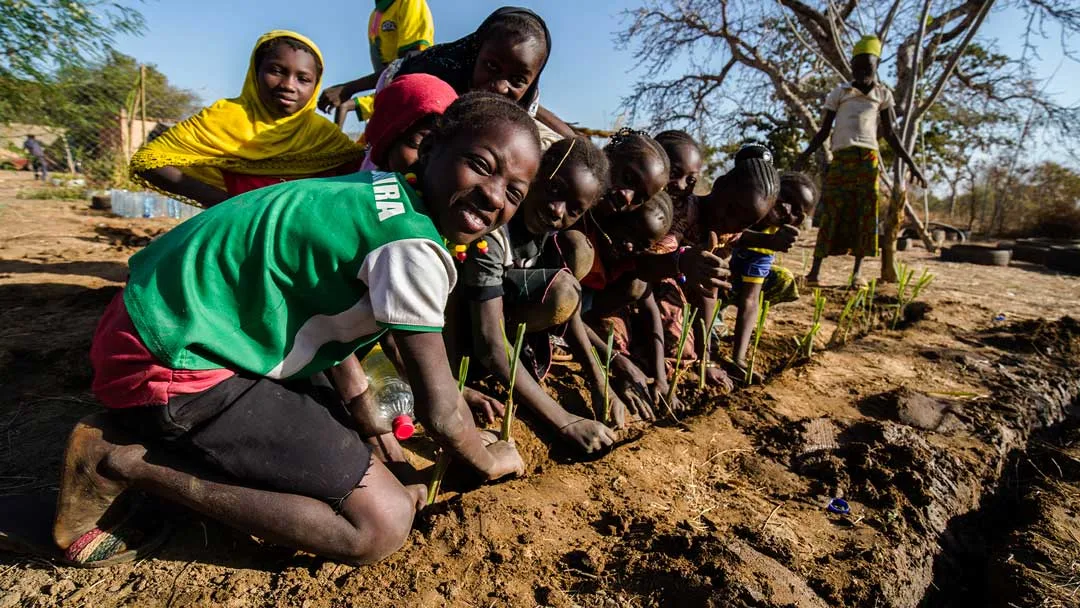
Yelemani Association works towards food sovereignty in Burkina Faso. Photo: BdF
In Burkina Faso, agroecology flourishes as an act of resistance. In a country where more than 80% of the active population makes their living off agriculture, peasant movements and social organizations have defended the production of healthy food and food self-sufficiency as a path to liberation from the wounds left by French neocolonialism.
Leading this effort is the Yelemani Association, founded in 2009 by Blandine Sankara, sister of revolutionary leader and former president Thomas Sankara, who governed the country from 1983 to 1987, when he was assassinated.
The word Yelemani means “change” or “transformation” in the Dyula language, the second most spoken language in Burkina Faso. The name summarizes the organization’s proposal: to change the relationship between people, land, and food, valuing local resources and restoring the dignity of the peasant world.
At the center of this project is agroecology, seen not only as a production technique, but as an anticolonial instrument. For Blandine, cultivating in an agroecological way is resisting the dominant economic model that puts profit above human life.
“We really see these two concepts, food sovereignty and agroecology, as forms of resistance to the economic model, and also as a form of decolonization,” states Sankara.
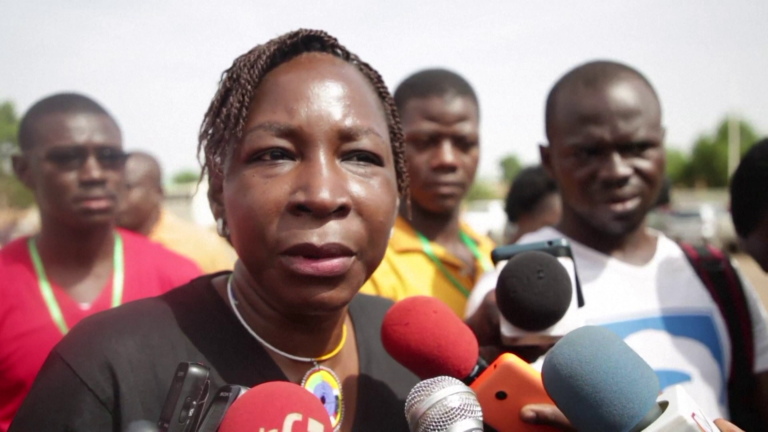
Blandine Sankara in a protest against the presence of multinationals in Burkina Faso in 2018.
Based on four pillars: production, valorization of local products, training, and political advocacy, Yelemani has become a reference in the country. It has recovered degraded lands, created a peasant seed bank, trained hundreds of farmers and students, and has been at the forefront of national mobilizations against GMOs and foreign corporations, such as Monsanto and the Bill Gates Foundation.
In an interview with Brasil de Fato, Blandine Sankara talks about the trajectory of the Yelemani Association, the results achieved, and the challenges faced by agroecology in the Sahel country.
“What I have to say is that agroecology is increasingly at the center of agriculture and policies. I’ll talk about agricultural policies in Burkina Faso because today we have a national strategy. This is rare. A country that has a national strategy in the field of agroecology,” she reflects.
Check it out:
Brasil de Fato: Blandine, can we start by talking a bit about how agroecology entered your life and how the Yelemani Association came about?
Blandine Sankara: First of all, it’s important to say that the Yelemani Association was created in 2009. And especially that Yelemani means “change” or “transformation” in the second most spoken language of Burkina Faso, Dyula.
And what does this change mean? For us, it’s the valorization of local resources, to guarantee the dignity of the peasant world and build our daily well-being. It’s not just about peasants. It’s about the dignity of the peasant, on one hand, but also about building the well-being of every Burkinabe citizen.
This is the first explanation about the name Yelemani. The organization focuses on agriculture and food. Our work is directed toward these two fields, which are broad, because they touch all aspects of life, after all, they concern all of us. And in a country like ours, where more than 80% of the active population works in agriculture, this is a central field, because food concerns everyone.
Parallel to change through valorization of local resources and the peasant world, we speak of a transformation of mentality and behaviors. Even though in agroecology we work to produce healthy food and teach cultivation techniques alongside peasants, if there isn’t a change in the mentality of consumers, of all of us, we don’t advance.
This change is also a change of behavior and deconstruction of prejudiced ideas about our own products. So there are two transformations we seek: one in production and another in mentalities.
Here at Yelemani, we promote food sovereignty and the practice of agroecology. It’s clear that with the rejection of the use of GMOs, chemical fertilizers and pesticides. This is our work. Promoting food sovereignty through agroecology and refusing the chemical model.
We see all of this as a form of resistance to the economic model that puts profit above human life. This is the guiding thread of our activities and our daily life. It’s our vision. We really see these two concepts, food sovereignty and agroecology, as forms of resistance to the economic model, and also as a form of decolonization.
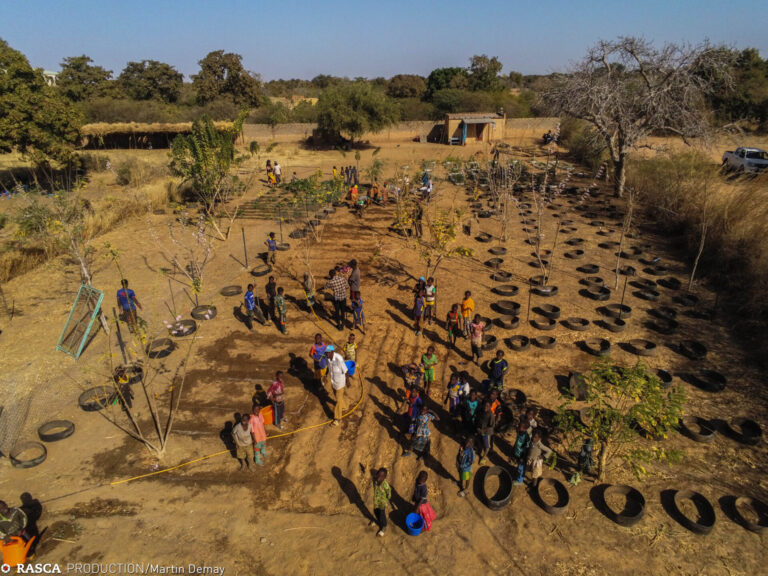
Aerial view of Sítio Yelemani shows educational work carried out with local children. Photo: Martin Demay/Rasca Production
Not only of what is on our plates and on our lands, the seeds, but also of our spirits. Because, as I usually say, there has been a colonization of mentalities, a kind of violation of our own power to act. To resist is also to refuse that our fields, markets and kitchens are invaded by imported products, hybrid seeds, pesticides and even by flavors and norms that are not ours.
This is Yelemani’s fight, its mark among the organizations that work for food sovereignty and agroecology in Burkina Faso.
At a certain point in our lives, we lived through the Revolution in Burkina Faso in the 1980s, an experience that deeply marked us. Those who were young at the time, students or even pupils, participated in or witnessed what was at stake in the country.
In my case, I studied sociology and had many opportunities to go to villages and regions of Burkina, which made me understand the realities of the peasant world. Later, in Geneva, during my development studies, I deepened this understanding. It was the era of globalization, of economic partnership agreements, and we closely followed the debates.
Another important factor was the period from 2008 to 2011, when we lived through what was called the “high cost of living crisis”, with the surge in prices of basic products worldwide, linked to the increase in oil barrel prices. There were protests in Ouagadougou and several cities across the country against the increase in food prices.
All of this led us to the conclusion that it was necessary to move toward food sovereignty. Not just as a concept, but as practice. We began experimenting with this in 2009, and it was especially from 2012 that we effectively began our activities.
BdF: What can you tell us about the activities you’ve been developing at Yelemani since 2009 and their results?
BS: We work on four main areas. First, the production and transformation of agroecological fruits and vegetables in Lumbila, which is about 30 km from Ouagadougou. There, there are three plots with production, and it’s mainly women who work. Internally displaced women. What we call internally displaced are people who were expelled from their homes due to terrorism.
The second is the valorization and promotion of local food products. Because it’s not enough to produce, we must value what is ours, this is part of the fight for food decolonization.
Then, there’s education and training on agroecology and food sovereignty, because we think that even if we do good work in terms of production and transformation to offer healthy products and everything else, if the consumer, especially young people, aren’t sensitized, we won’t have results. It won’t be a profound change. So, this is the third axis and we’re working in schools.
But it’s also necessary to work on policies, so we added the fourth area, which is advocacy with political decision-makers so they decide to take agroecology into account.

Work at Yelemani generates income opportunities for women displaced by terrorism. Photo: Yelemani Association/Press Release
Among the results, the first was the recovery of abandoned soil in Lumbila, considered unproductive. In one year, we managed to regenerate the land with agroecological practices. We also created a local products market and, since 2023, a peasant seed bank, where farmers can withdraw seeds and return double after harvest, without commercial transactions.
Another important result is the production of pedagogical material. Since 2015 we’ve developed training modules on agroecology and food sovereignty (12 in total) and trained farmers, students, and teachers.
We also had political victories, such as the expulsion of Monsanto in 2015, after a national mobilization against GMOs, and in 2018, a campaign that managed to block the “Target Malaria” project, funded by the Bill Gates Foundation, which planned to release genetically modified mosquitoes.
In 2019, during FESPACO (Pan-African Film Festival of Ouagadougou), we managed to break the monopoly of a French company that prevented the sale of local juices at the event. After popular pressure, a decree authorized local producers to sell their beverages.
But the greatest result for us remains the recovery of abandoned and unproductive land in Lumbila, a symbol of what agroecology can achieve.
BdF: With the end of the revolution in the 1980s, there was a rupture in the path of food self-sufficiency developed by Thomas Sankara. Multinational companies, mainly French ones, and global agribusiness, recovered their presence, developing a form of agriculture that doesn’t collaborate and, in a way, aggravates the problem of desertification in the Sahel. How do you see the effects of colonization on the agrarian question in your country?
BS: It must be said that it was really during colonization that capitalism penetrated the traditional agricultural sector, forcing the modernization of an agriculture considered backward and subsistence, which was forced to evolve into commercial and mechanized agriculture. At that moment, emphasis was placed on crops destined for export, what were called cash products and cash crops.
Therefore, in Burkina’s case, it was peanuts, but especially cotton and, to a lesser extent, also green beans. When we look at the country today, there’s a large area of land, thousands of hectares of land that were destroyed by the use of these chemical inputs for production mainly of cotton. These are thousands of hectares that today need to be recovered. They need to be restored.
The richest zones, the most fertile lands, were used for cotton cultivation, with excessive use of chemicals to produce more and sell more. Therefore, it was really for export, they were export products to other continents, mainly to France.
There are also floods caused by rains, with the loss of seeds, which forces farmers to go into debt to buy new seeds. Therefore, there were many consequences because of this export culture.
In the 2000s, cotton cultivation was done with great support from Monsanto, which I mentioned earlier, the American company. It made producers believe that the harvest would be more profitable with transgenic cotton, without additional insecticide and with better yield.
We can even say that there was an agricultural and food colonization, and that it never ended. The great powers and multinationals continue to exploit the same mechanisms.
That’s what they told our producers. In 2009, this cotton was profitable in the first three years, but very quickly farmers had to go back to using insecticides because the quality of cotton deteriorated and the quantity was also not as expected, it wasn’t up to standard. And that’s not all. It also destroys neighboring crops, not just cotton, but crops that were alongside, like sesame, for example, which was totally destroyed.
And all of this in conditions of climate degradation in Burkina. Therefore, the application of these policies in the agricultural sector led to the total loss of our food autonomy and local knowledge, and even food security increased with the devaluation of food crops for the benefit of these crops.
This knowledge was lost because we turned to these export crops, and yet we know that our production systems developed ancestrally over 40 years and millennia before receiving the name of agroecology.
Therefore, we knew there were practices, like what we today call half-moons, planting certain trees, which were known by our peasants, a diversity of these forms of small-scale production. And all of this was changed in favor of these crops to sell and have more money.
Agroecology goes against this logic, because it proposes that the farmer first produce to feed his family and his community. It’s a question of sovereignty. As long as we’re dependent on inputs, seeds and standards coming from outside, we won’t be free.
BdF: And how do you see the role of the current government today in this decolonization process? Is there any effective support for agroecology or food sovereignty?
BS: What I have to say is that agroecology is increasingly at the center of agriculture and policies. I’ll talk about agricultural policies in Burkina Faso because today we have a national strategy. This is rare. A country that has a national strategy in the field of agroecology.
A country that has this within the ministry, it’s really very, very strong. Therefore, increasingly, we have actors in agroecology, people who commit themselves, structures that commit themselves and I believe that, at the political level, we’re interested, we’re really closely analyzing the issue of agroecology.
In any case, research from institutes has shown that, until 2050, yields, even with the boost of technical and ecological means, will fall 30%. There will be a drop with climate changes, with good years and bad years.
But this data really comes from private agricultural research institutes that have nothing to do with ecology. With agroecological practices, yields are lower than current yields, this must be said from the beginning, they are lower. But yields balance out at a certain point, they become equal. What does this mean? It simply means that when we put agroecology on one side and the use of agrochemicals to produce on the other, at the beginning, it’s true, we’ll have lower yields with agroecology compared to the other. But over time, gradually, this balances out, reaching the same yield level, but with the difference that agroecology is constant in its yields year after year.
And this allows farmers to be more resilient. They know what they’re going to have next year. This allows them to organize and be more resilient. This is a fact, it’s a reality.
Agriculture, whose supply and flow of goods depend on large supranational markets and, therefore, on some financial actors, whose capital is concentrated in the hands of few people, is not good at all for farmers.
Therefore, the more agriculture industrializes and creates an economic model of supply and sales, the more workers, that is, peasants, farmers and the environment are excluded.
It’s true that the logic of the production chain allowed the development of some regions. This cannot be denied. The logic of the production chain allowed some regions, even in Burkina Faso, to develop. But they also became true deserts when these same markets oriented themselves toward other activities or sectors considered more lucrative.
When Monsanto’s cotton made Burkina Faso’s market fall, because the cotton fiber shortened and, at the global level, no one wanted to buy our cotton anymore, what did we do? What could farmers do with cotton? Nothing, because you don’t eat cotton. We’re not going to eat cotton. And before, when it worked, they could sell it and buy cereals to eat. But since they couldn’t sell, there were people who committed suicide, producers.
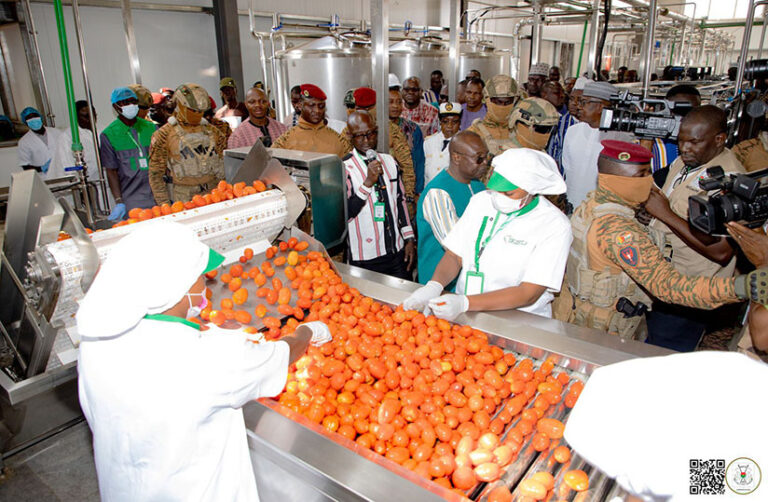
The opening of the tomato pulp factory in Bobo Dioulasso was celebrated across the country. Photo: Presidency of Burkina Faso
So, these are the realities we lived through. If we consider the case of green beans in the 80s, for political reasons, because there was the revolution here, a landlocked country, without access to the sea, and everything was done by plane. Therefore, it was necessary to export by air. For political reasons, the plane that was supposed to come pick up the green beans from Burkina Faso farmers in Ouagadougou didn’t come, leaving tons of beans at the airport.
And what did we do at the time? The government forced people to buy, especially public servants, each employee had to buy a box, two boxes, and they cut from their salary at the end of the month to be able to pay the farmers, because otherwise, what were we going to tell the farmers, that for political reasons we couldn’t take their beans to Europe, it wasn’t possible.
I don’t want to get into political considerations, but I want to say that there’s a global complexity at the moment. And therefore, Yelemani faces this challenge. The climate crises that everyone in agriculture has been facing for years, the loss of biodiversity, the various conflicts, terrorism in our country and all of this causes an increasingly greater food insecurity, it must be said.
Therefore, these realities threaten our agricultural systems, our health, our autonomy and, fundamentally, our dignity. It’s human dignity.
However, there are solutions, as I said earlier, there are ecological agroecological solutions and others are still to be developed. We can still advance toward agroecology, which has already proven its value.
BdF: Blandine, you had a visit from MST militants in 2018 to Yelemani. How was the experience of meeting the MST and how can it inspire the struggle of peasants in Burkina Faso?
BS: I must say that Latin America fascinates me. It fascinates me in its struggle, in its work, since ancient times and permanently. I had the opportunity this year to go to Ecuador and I was able to meet groups and even young people, and that’s what fascinated me most, the ability to understand where the problem comes from. And that’s it, it’s not just about land recovery, it’s not just about recovering your roots, it’s about breaking the system.
And I think the MST, at least when they came here to Yelemani, that’s what they said, that it’s the system that needs to be broken. This ability of theirs to understand this fascinates me and I would like us to work a lot on this in Africa, at least on the issue of agroecology. It’s more than agroecological practices, which are quite advanced, but it’s the political side, the political aspect of saying that, in the end, we must go against the logic.
Today there’s a logic that is concentrated in the hands of some lobbies. And we must face this. Otherwise, we risk getting stuck in practices, and without understanding that all of this leads to nothing, if we don’t work, in my view, to break this system. It’s this system. When the MST was at our house, we understood well that, in the end, we fight against the same enemy. Burkina Faso and Africa must also fight, because they are the same ones who exploit Latin American countries. Therefore, we have no other choice.
I think we could unite to work, at a level of helping each other, of supporting each other in taking the struggle to a political level, to something bigger. Because I’m not talking only about agroecology, because sometimes we have environments that are very different. And agroecology is based on what exists locally in your territory. Even within the same country, territories are not the same.
What I’m emphasizing, from my small experience, whether with the MST when they passed through Yelemani, or through the discussions I had in Ecuador, is that I really could see how Latin America, which is advancing on these issues, can support us in terms of animating peasant groups, animating youth groups. They certainly have tools that can help us. And even the experiences, how they proceeded to manage to reach this level. I would like to see here peasants who have no complex in speaking before enemies, before authorities. I would like to see young people assert themselves, speak and say what they think.
Especially young people from rural villages. Because this is a complex issue in our case. I can’t speak for all of Africa, because Africa is very large, but I speak, for example, of our Francophone countries. There’s a great complexity that causes many barriers between city people and country people, between those who went to school and those who didn’t go to school.
Therefore, there are many differences like this that make everything more complicated, but we must work to deconstruct all of this. It’s a long path, of course. But it’s the path to walk toward food sovereignty. Those who are in the city, those who had the chance, like us, to go to school, to go far, to know other things, like the MST, here we can, together with Latin American movements, read and analyze so that we can improve.
It’s for our parents, after all, our peasant parents. Because in Burkina that’s it, right? Everyone has their village, everyone comes from a village. So, everyone is proud to say: “This is my village, I come from this village.” And in the village, our parents who stayed, our uncles, our aunts, are farmers. More than 80% of Burkinabes live from agriculture.
Therefore, agriculture is at the center. And, for me, it’s at this level that it’s about joining hands, about how to develop this reflection movement. And how they can support us to improve things.
We’re also working to value what we have today and, with current policy, we’re valued as Burkinabes. And this must be said and praised.
https://peoplesdispatch.org/2025/11/25/ ... onization/
******

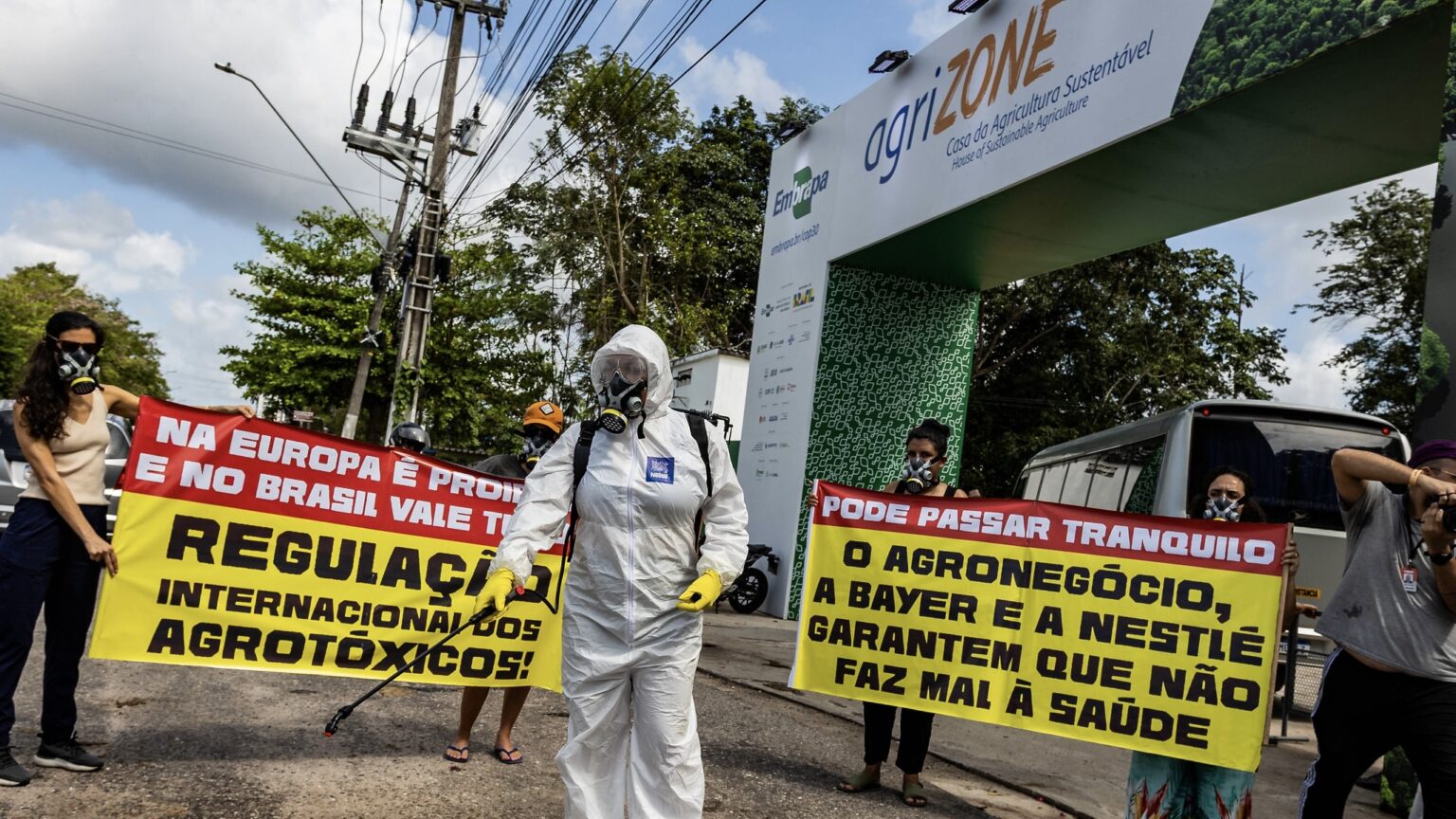
COP 30: It’s no joke
By Michael Roberts (Posted Nov 26, 2025)
Originally published: Counterfire on November 24, 2025 (more by Counterfire) |
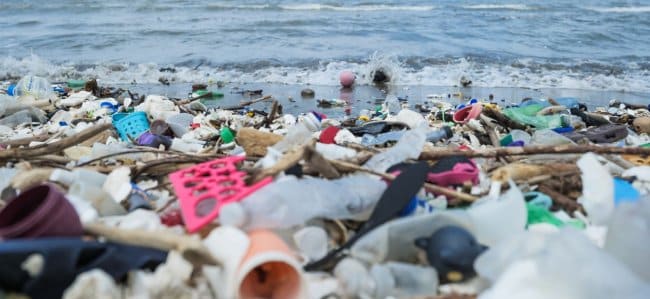
The usual joke about the United Nations Climate Change Conferences (COPs) is that each one is a ‘cop-out’. Each time there is a failure to agree on ending fossil fuel production as the source of energy, even though it is now well established that carbon and other greenhouse gas emissions come mainly from the use of fossil fuels. Each time there is a failure to agree to significant planned and implemented reductions in emissions from all sources, production, transport, wars etc. Each time, there is a failure to agree any significant reversal of unending deforestation, the polluting of the seas and the accelerating extinction of species and diversity.
The joke of saying it is a ‘cop-out’ has now worn thin to the bone. COP30 was no joke, even if the ‘agreement’ reached was one. Time has run out. The world is hotting up to the point of tipping into irreversible damage to humanity, other species and the planet itself.

Harjeet Singh of the Satat Sampada Climate Foundation, said: “Cop30 will go down in history as the deadliest talkshow ever produced.” Negotiators at Belem, Brazil “spent days discussing what to discuss and inventing new dialogues solely to avoid the actions that matter: committing to a just transition away from fossil fuels and putting money on the table.” But the core issue of a “transition away from fossil fuels” was dropped as the fossil fuel nations and most of the Western powers blocked it. Even the weak watered down idea of a ‘roadmap’ to a transition was opposed.
Also at stake was the question of how countries should respond to the fact that current national climate plans, known as nationally determined contributions (NDCs), would lead to about 2.5°C of global temperature above preindustrial levels, far above the 1.5C limit target set by the 2015 Paris COP agreement. The COP30 ‘agreement’ was to “continue talking about” the large gap between countries’ targets and the carbon emission cuts necessary to stay within 1.5C.
The climate scientists at COP30 made it clear—yet again. Emissions must start to bend next year, they say, and then continue to fall steadily in the decades ahead: “We need to start, now, to reduce CO2 emissions from fossil-fuels, by at least 5% per year. This must happen in order to have a chance to avoid unmanageable and extremely costly climate impacts affecting all people in the world.” Emission reductions need to be accelerated:
We need to be as close as possible to absolute zero fossil fuel emissions by 2040, the latest by 2045. This means globally no new fossil fuel investments, removing all subsidies from fossil fuels and a global plan on how to phase in renewable and low-carbon energy sources in a just way, and phase out fossil fuels quickly.
The scientists added that finance—from developed to developing countries—is essential for the credibility of the 2015 Paris Agreement aimed at keeping the rise in global temperature no higher than 1.5C. “It must be predictable, grant-based and consistent with a just transition and equity,” they said. “Without scaling and reforming climate finance, developing countries cannot plan, cannot invest and cannot deliver the transitions needed for a shared survival.” COP30 got an agreement to increase funding from the rich countries to the poor—but the increased funding would be spread over the next ten years, not five years as before!

Instead , global oil and gas demand is set to rise for the next 25 years if the world does not change course, according to the International Energy Agency in its latest report. Greenhouse gas emissions are still rising despite ‘exponential’ growth of renewables. Coal use hit a record high around the world last year despite efforts to switch to clean energy.

So global CO2 emissions will rise, not fall. Annual global energy-related CO2 emissions will rise slightly from current levels and approach 40 gigatonnes of carbon dioxide per year in the early 2030s, remaining around this level through to 2050. Emissions may fall in advanced economies, most substantially in Europe, and also decline in China from 2030 onwards, but they increase elsewhere.
And it’s not just carbon emissions. Methane is a greenhouse gas 80 times more powerful than carbon dioxide, and is responsible for about a third of the warming recently recorded. At previous ‘cop-outs’ it was agreed to a cut in methane emissions of 30% by 2030. Yet methane emissions have continued to increase. Collectively, emissions from six of the biggest signatories—the U.S., Australia, Kuwait, Turkmenistan, Uzbekistan and Iraq—are now 8.5% above the 2020 level.

So the world is getter hotter. This year and the last two years were the three hottest years in 176 years of records, And the past 11 years, back to 2015, will also be the 11 warmest years on record. Tipping points (irreversible) are being reached: glaciers melting; forests disappearing; wildfires, floods and droughts increasing. The world is heading for 2.8°C warming, as the latest UN report reveals climate pledges are ‘barely moving the needle’.
The UNEP’s ‘Emissions Gap Report 2025: Off Target’ finds that available new climate pledges under the Paris Agreement have only slightly lowered the pace of the global temperature rise over the course of the 21st century, leaving the world heading for a serious escalation of climate risks and damages. Fewer than a third of the world’s nations (62 out of 197) have sent in their climate action plans, known as nationally determined contributions (NDCs) under the Paris agreement. The U.S., the country that is the biggest emitter per person, has abandoned the process—the U.S. did not turn up at COP30. Europe has also failed to deliver. None of the 45 global climate indicators analyzed are on track for 2030.

Levels of carbon dioxide in the atmosphere soared by a record amount in 2024 to hit another high, UN data show. The global average concentration of the gas surged by 3.5 parts per million to 424ppm in 2024, the largest increase since modern measurements started in 1957, according to the report by the World Meteorological Organization.
Several factors contributed to the leap in CO2, including another year of unrelenting fossil fuel burning. Another factor was an upsurge in wildfires in conditions made hotter and drier by global heating. Wildfire emissions in the Americas reached historic levels in 2024, which was the hottest year yet recorded. Climate scientists are also concerned about a third factor: the possibility that the planet’s carbon sinks are beginning to fail. About half of all CO2 emissions every year are taken back out of the atmosphere by being dissolved in the ocean or being sucked up by growing trees and plants. But the oceans are getting hotter and can therefore absorb less CO2 while on land hotter and drier conditions and more wildfires mean less plant growth.
Reductions to annual emissions of 35 per cent and 55 per cent, compared with 2019 levels, are needed in 2035 to align with the Paris Agreement 2°C and 1.5°C pathways, respectively. Given the size of the cuts needed, the short time available to deliver them and a challenging political climate, a permanently higher rise in global temperature is unavoidable before the end of this decade. The Paris target is as dead as the people and species dying from climate change.

Indeed, rising global heat is now killing one person a minute around the world, a major report on the health impact of the climate crisis has revealed. The report says the rate of heat-related deaths has surged by 23% since the 1990s, even after accounting for increases in populations, to an average of 546,000 a year between 2012 and 2021. In the past four years, the average person has been exposed to 19 days a year of life-threatening heat and 16 of those days would not have happened without human-caused global heating, the report says. Overall, exposure to high temperatures resulted in a record 639bn hours of lost labour in 2024, which caused losses of 6% of national GDP in the least developed nations.
The continued burning of fossil fuels not only heats the planet but also produces air pollution, causing millions of deaths a year. Wildfires, stoked by increasingly hot and dry conditions, are adding to the deaths caused by smoke, with a record 154,000 deaths recorded in 2024, the report says. Droughts and heatwaves damage crops and livestock and 123 million more people endured food insecurity in 2023, compared with the annual average between 1981 and 2010.
Why are the targets for reducing emissions not being met or now even agreed? The answer is money. Despite the harm, the world’s governments provided $956bn in direct fossil fuel subsidies in 2023. This dwarfed the $300bn a year pledged at the UN climate summit Cop29 in 2024 to support the most climate-vulnerable countries. The UK provided $28bn in fossil fuel subsidies in 2023 and Australia allocated $11bn. Fifteen countries including Saudi Arabia, Egypt, Venezuela and Algeria spent more on fossil fuel subsidies than on their national health budgets.
The world’s 100 largest fossil fuel companies increased their projected production in the year up to March 2025, which would lead to carbon dioxide emissions three times those compatible with the Paris climate agreement target of limiting heating to 1.5C above preindustrial levels, the report says. Commercial banks are supporting this expansion, with the top 40 lenders to the fossil fuel sector collectively investing a five-year high of $611bn in 2024. Their ‘green sector’ lending was lower at $532bn.

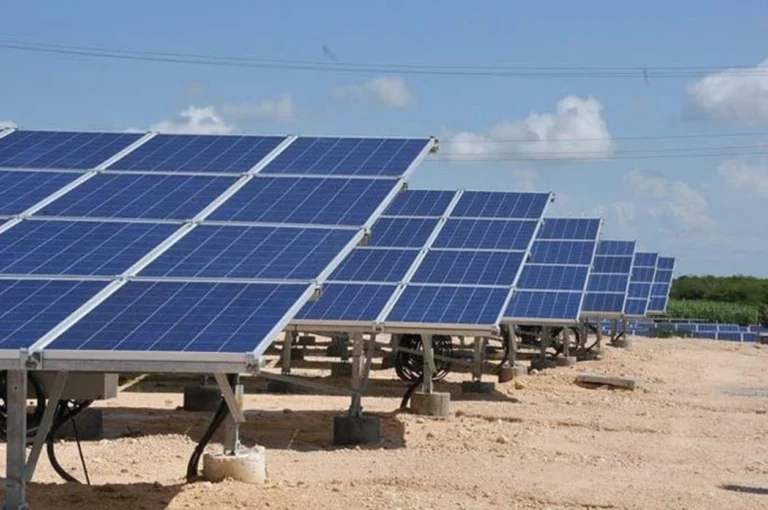
The reason for expanding fossil fuel production is that it is just much more profitable than switching to renewables. The problem is that governments are insisting that private investment should lead the drive to renewable power. But private investment only takes place if it is profitable to invest.
Profitability is the problem—in two ways. First, average profitability globally is at low levels and so investment growth in everything has similarly slowed. Prices of renewables have fallen sharply in the last few years. Ironically, lower renewables prices drag down the profitability of such investments. Solar panel manufacturing is suffering a severe profit squeeze, along with operators of solar farms. This reveals the fundamental contradiction in capitalist investment between reducing costs through higher productivity and slowing investment because of falling profitability.
Brett Christophers in his book, The Price is Wrong—why capitalism won’t save the planet, argues that it is not the price of renewables versus fossil fuel energy that is the obstacle to meeting the investment targets to limit global warming. It is the profitability of renewables compared to fossil fuel production. Christophers shows that in a country such as Sweden, wind power can be produced very cheaply. But the very cheapening of the costs also depresses its revenue potential. This contradiction has increased the arguments of fossil fuel companies that oil and gas production cannot be phased out quickly. Peter Martin, Wood Mackenzie’s chief economist, explained it another way: “the increased cost of capital has profound implications for the energy and natural resource industries”, and that higher rates “disproportionately affect renewables and nuclear power because of their high capital intensity and low returns.”
As Christophers points out, the profitability of oil and gas has generally been far higher than that of renewables and that explains why, in the 1980s and 1990s, the oil and gas majors unceremoniously shuttered their first ventures in the renewables almost as soon as they had launched them.
The same comparative calculus equally explains why the same companies are shifting to clean energy at no more than a snail’s pace today.
Christophers quotes Shell’s CEO Wael Sawan, in response to a question about whether he considered renewables’ lower returns acceptable for his company:
I think on low carbon, let me be, I think, categorical in this. We will drive for strong returns in any business we go into. We cannot justify going for a low return. Our shareholders deserve to see us going after strong returns. If we cannot achieve the double-digit returns in a business, we need to question very hard whether we should continue in that business. Absolutely, we want to continue to go for lower and lower and lower carbon, but it has to be profitable.
For these reasons, JP Morgan bank economists conclude that “The world needs a “reality check” on its move from fossil fuels to renewable energy, saying it may take “generations” to hit net-zero targets. JPMorgan reckons changing the world’s energy system “is a process that should be measured in decades, or generations, not years”. That’s because investment in renewable energy “currently offers subpar returns”.
The only way humanity has a chance of avoiding a climate disaster will be through a global plan based on common ownership of resources and technology that replaces the capitalist market system. Meanwhile, the cop-out continues.
https://mronline.org/2025/11/26/cop-30-its-no-joke/
******
Chemical pollution drives prostate cancer, falling sperm counts
November 25, 2025
Pesticides, microplastics and PFAS are causing a precipitous decline in male reproductive health

(Beyond Pesticides, November 25, 2025) Chemical pollution is having a profound impact on men’s overall health and reproductive function. Endocrine-disrupting chemicals—which prominently include pesticides—are a major factor. The Health and Environment Alliance (HEAL) a European organization funded by the European Union (EU) and several private foundations, has issued a strong call for attention to – and action on – the precipitous decline in male reproductive health owing to chemical exposures, including pesticides.
The author of Chemical pollution and men’s health: A hidden crisis in Europe, Rosaella Cannarella, M.D., PhD, and the founder and director of HEAL, Génon Jensen, will be speaking at the Forum, The Pesticide Threat to Environmental Health: Advancing Holistic Solutions Aligned with Nature, on December 4. Registration is free. Click image to register
In a new report, Chemical pollution and men’s health: A hidden crisis in Europe, the group states, “The scientific evidence is clear. The costs of chemical pollution – human and economic – are mounting. The solutions exist. What we need now is the political will to act.” The report was written by Rosaella Cannarella, M.D., PhD, an endocrinologist at the Division of Endocrinology, Metabolic Diseases and Nutrition, University of Catania (Italy).
HEAL’s report details alarming indications of catastrophe in male reproductive health: prostate cancer, testicular cancer, crashing sperm counts, and numerous developmental problems including cryptorchidism, urogenital malformations, and hypospadias. The report highlights pesticides, microplastics, phthalates, bisphenols, PFAS and heavy metals as the likely environmental sources of the crisis. There is evidence that all of these endocrine disrupting chemicals (EDCs) adversely affect male reproductive function.
There are 330,000 cases of prostate cancer in the EU. It is the third most-diagnosed cancer in men. Beyond Pesticides has documented research showing that pesticides have been linked to higher risk of prostate cancer, including, specifically, pyrethroid insecticides. See also Beyond Pesticides’ analysis of the positive association between exposure to 22 pesticides and prostate cancer occurrence and as a cause of death. In the EU, testicular cancer has jumped 25% since 2014, and is now the most common cancer in men 15 to 44, according to the HEAL report. Sperm counts declined by more than 50% between 1973 and 2018. Prostate cancer is the most common cancer in men in the U.S., with an estimated 34,780 new cases in 2025, one in eight men will get the disease, which has been increasing at a rate of 3.0% a year.
Chemical exposures to both parents can harm male offspring’s reproductive health. The HEAL report cites EU research that has found strong connections between maternal exposure during pregnancy to phthalates, BPA and pesticides and cryptorchidism, urogenital malformations, hypospadias and testicular cancer in their sons. Paternal exposure to EDCs, such as many pesticides, can have transgenerational effects. Both EDCs and microplastics can cause epigenetic changes in sperm and in genes crucial to development, thus potentially affecting ensuing generations’ reproductive health. These changes mean that the reproductive capacity of offspring can already be impaired even before conception has occurred.
The weed killer glyphosate is a prominent example of an endocrine disrupting pesticide. A recent study of glyphosate exposure in zebrafish by Italian researchers finds that at the acceptable daily intake level, glyphosate “impaired germ cell differentiation and triggered cell-specific changes in histone acetylation within the male germline.” Histone acetylation is an epigenetic process that regulates the activation and deactivation of genes, in this case those involving male reproductive structures and processes. At the higher “no observed adverse effect level,” glyphosate “induced metabolomic and proteomic disruptions linked to impaired steroidogenesis, DNA damage in germ cells, and alterations in testicular architecture, culminating in reduced reproductive capacity.” These differing effects at different doses suggest that glyphosate has a non-monotonic dose-response curve, contradicting the toxicological dogma that the “dose makes the poison.” Further, it suggests that these so-called protective exposure measures are nothing of the kind.
Microplastics are emerging as a potentially severe and intractable contributor to male reproductive dysfunction. A literature review of over 90 scientific articles in Agriculture documents microplastics’ (MPs) increase the bioavailability, persistence, and toxicity of pesticides used in agriculture. According to the HEAL report, studies in Europe, the U.S. and China have found microplastics in 100% of human testicular tissue sampled. They may interfere with sperm formation, disrupt testosterone production, and trigger inflammation in reproductive organs. Microplastics have been found in the olfactory bulb in the brain and there is evidence that they can also reach the brain across the blood-brain barrier.
Both pesticides and microplastics have profound effects on the brain, which is inextricably involved with reproductive development and function. The gut-brain axis is involved in testosterone synthesis and circulation, and microplastics may affect it through interactions with gut microbes. Glyphosate and organophosphates disrupt another important system, the hypothalamic-pituitary-gonadal axis (HPG) in animals, according to the HEAL report. Two of these three hormonal axis elements are in the brain. The HPG axis affects testosterone synthesis, the development of testes, and behavior after sexual maturation. There is also a great deal of interaction between microplastics and pesticides, as detailed in Beyond Pesticides’ March 22, 2024 news brief, illustrating the kinds of overlap that can occur among the chemicals the HEAL report considers. These interactions in the brain and throughout the endocrine system need further research.
The HEAL report also demonstrates the deleterious effects on male reproductive health of other environmental toxicants. Prenatal exposure to phthalates is associated with “reduced semen quality, DNA fragmentation, and lower testosterone levels,” the HEAL authors state. Similarly, the report cites research showing that some EU countries had detectable bisphenol A (BPA) in 100% of study participants, and many exceeded the EU’s acceptable daily intake. BPA is linked to reduced sperm concentration, altered motility and morphology along with altered testosterone levels. A biomonitoring study in the Flemish region of Belgium found PFAS in upwards of 95% of the population. PFAS exposure is associated with delayed puberty, poor sperm quality and low testosterone in young men. The heavy metals lead, cadmium and mercury are associated with sperm abnormalities including poor motility and morphology. Lead exposure altered sperm epigenetics in battery and recycling workers. Mercury is an endocrine disruptor and impairs fertility.
Thus, the HEAL report brings together the cumulative impact of all these chemical depredations on male reproductive health, demonstrating the simultaneous and interactive consequences of exposure to the suite of insults everyone is now trying to cope with.
The HEAL report also elucidates the varying costs of male reproductive disorders–direct medical costs, indirect costs of lost productivity and disability, and intangible costs of emotional distress and stigma. The direct costs alone are massive: Treating prostate cancer costs 9 billion Euros ($10.4 billion) annually; male infertility affects a twelfth of European couples and costs 3-4.5 billion Euros ($3.5-$5 billion) a year. A 2015 analysis cited in the report estimated the costs of EDC-related male reproductive health disorders at 15 billion Euros ($17 billion) annually, a figure that is surely much higher now.
“The mounting evidence linking chemical exposure to serious men’s health outcomes—infertility, cancer, hormonal disorders—demands an urgent policy response. While Europe has made important progress in identifying and regulating hazardous substances, human biomonitoring data and public health trends indicate that the current regulatory mechanisms remain insufficient to protect male reproductive health,” the HEAL report states. This position reflects HEAL’s intent to press the European Commission (EC) just as it prepares to adopt a revision of its landmark 2007 Registration, Evaluation, Authorisation and Restriction of Chemicals (REACH) legislation.
The EC has stated an intent to release the revision by the end of the fourth quarter of 2025, but the revision has dropped from the Commission’s final agenda for the year and it appears its current text is not publicly available. According to wca-environment.com, a chemical industry consultancy, the revision will add increasingly stringent criteria for persistent, mobile and toxic chemicals along with an EDC assessment and a mixture assessment factor to the REACH chemical safety assessment. The new REACH will reportedly also introduce a definition of, and compliance guidelines for, nanomaterials.
HEAL is advocating for more focused health measures, including:
Group-based chemical bans – restricting entire groups such as all bisphenols and all phthalates at once rather than piecemeal regulation of individual chemical group members.
Mandatory mixture toxicity assessment to account for combined exposures.
More human biomonitoring data collection.
Regulation of microplastics, to address their toxicity and not just their size.
Regulation of polymers and additives.
Unsurprisingly, the chemical industry has created significant undertow to the momentum of REACH revision. The EC is advised by a Regulatory Scrutiny Board (RSB) that reviews proposed legislation, provides impact assessments, and evaluates revisions to existing laws. In October the RSB issued a “negative opinion” on the impact of proposed REACH revisions. The actual RSB opinion text does not appear to be publicly available, so details are sketchy. According to Enviresearch, a chemical industry consultancy, the opinion says the EC needs to review information on critical hazard classes, uses and exposure and unaddressed risks from polymers. But it also notes concerns that new restrictions would slow the regulatory process, enforcement is inconsistent across member states, and imports, especially from online sales, do not comply with REACH requirements. These concerns reflect industry’s focus on economic values.
An analysis by the Society of Environmental Toxicology and Chemistry (SETAC) notes that “According to chemicals policy experts, the RSB’s negative opinion reflects concerns that the proposal lacks coherence with current political priorities….The changing regulatory environment has created tensions between protecting public health and environmental standards while addressing industry competitiveness concerns.” [Emphasis added.]
Against the counterproductive political priorities and industry economic motives, HEAL executive director Génon K. Jensen writes in the report’s preface, “This report is a call to action. For the health of men today and the generations to come, we cannot afford to wait.”
https://climateandcapitalism.com/2025/1 ... rm-counts/