Trump openly admits his intentions regarding Venezuela
Petromaxima pressure
Franco Vielma
December 17, 2025 , 8:31 pm .
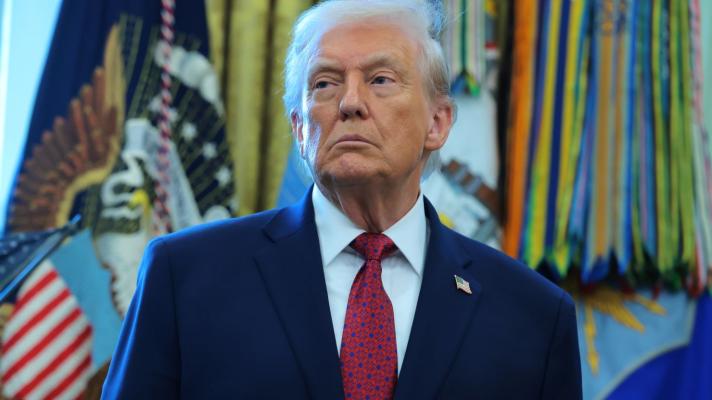
US President Donald Trump has now focused on speaking openly about US oil interests in Venezuela. (Photo: CNN)
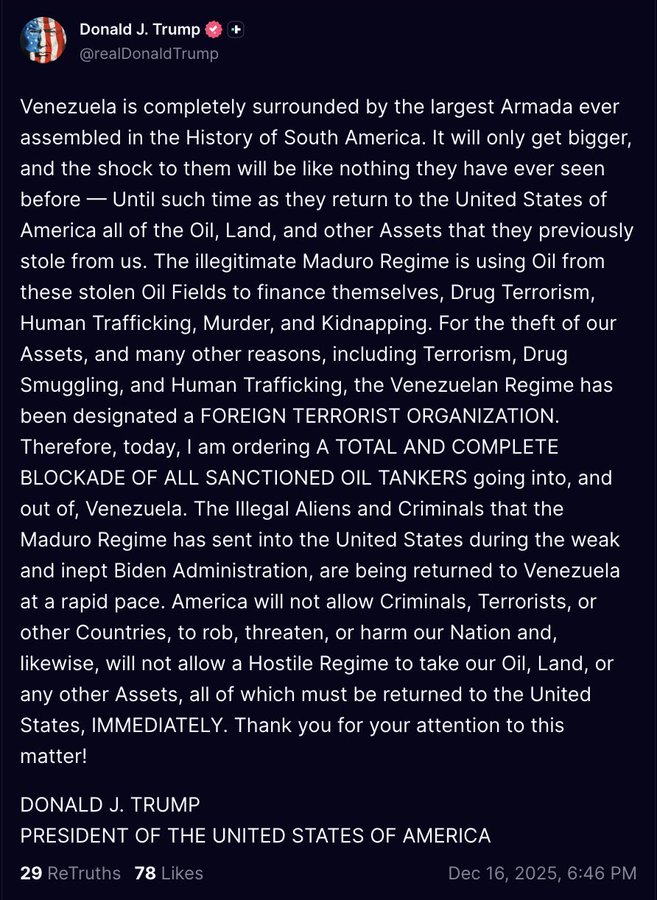
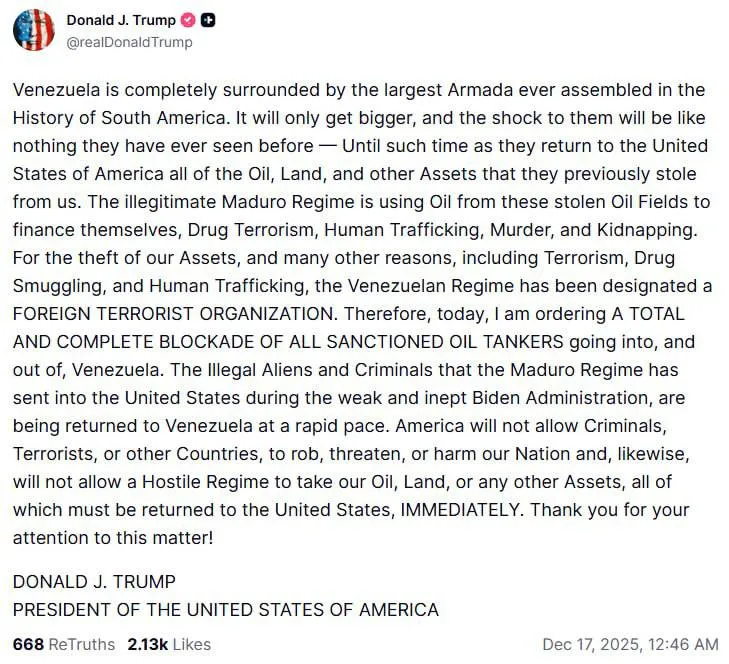
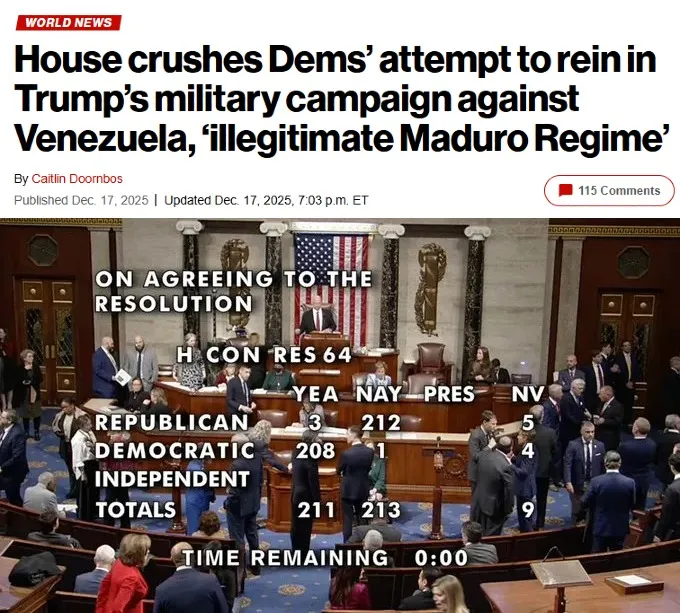
The US regime change operation against Caracas has reached a new peak of tension following President Donald Trump's declaration ordering a "total and complete blockade" on all sanctioned oil tankers entering or leaving Venezuela.
The measure, announced Tuesday on the Truth Social network, intensifies pressure on the Venezuelan economy and has been described by Venezuela as a "reckless and serious threat" that violates international law.
Trump justified the decision by accusing the "illegitimate Maduro regime" of using "stolen" oil to finance "narco-terrorism, human trafficking, murder and kidnapping" on U.S. soil.
Trump asserted that Venezuela is "completely surrounded" by the largest armada ever assembled in South American history, and warned that the military deployment would be incremental, and "will continue to grow," he said, until Caracas "immediately returns" to the United States the oil, land, and other assets that he claims were illegally expropriated.
Trump's declaration of intent and the partial air and naval blockade he has imposed on Venezuela is a turning point in the new "maximum pressure" policy.
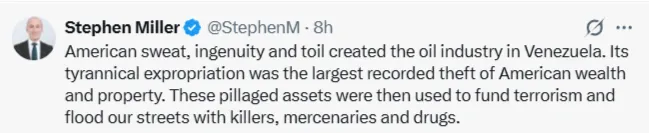
Speaking of oil, White House Deputy Chief of Staff Stephen Miller, one of Trump's closest advisors, backed up these claims by declaring that "American sweat, ingenuity, and labor created the oil industry in Venezuela."
Miller described the nationalization processes of the sector in 1976 and 2007 as "the largest recorded theft of American wealth and property," adding that those expropriated assets have been used to "finance terrorism and flood the streets of the United States with assassins, mercenaries, and drugs."
The Venezuelan government's response was immediate and clear. The Foreign Ministry issued a statement rejecting Trump's "grotesque threat," accusing him of attempting to impose an "irrational naval military blockade" with the aim of stealing the country's wealth.
Caracas announced that it will denounce the measure before the United Nations (UN) as a "serious violation of international law, free trade and free navigation."
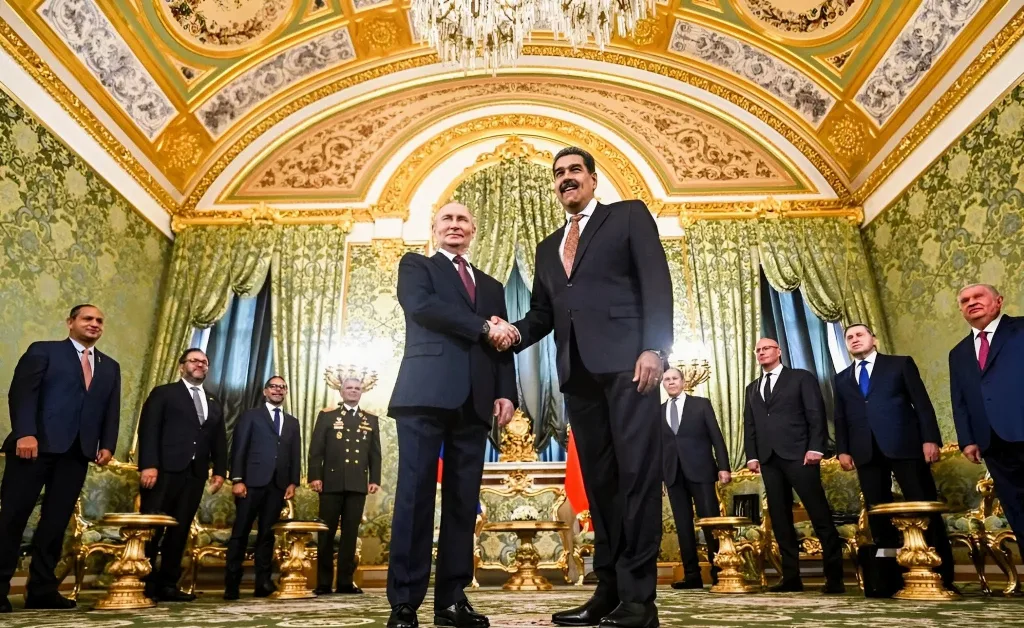
President Nicolás Maduro, in conversation with UN Secretary-General António Guterres, described the statements by Trump and Miller as "expressions of an open colonial character" and demanded their rejection by the multilateral system.
Meanwhile, Venezuelan Defense Minister Vladimir Padrino López called Trump's words "delusional" and said they revealed intentions to "force a regime change and grossly seize oil."
This escalation comes amid a massive US military deployment in the Caribbean and the recent seizure of a foreign oil tanker carrying Venezuelan crude.
Although Washington insists that its campaign focuses on the fight against drugs and irregular migration, explicit references to oil by Trump and Miller have fueled Venezuelan arguments that the real objective is control of the world's largest proven crude oil reserves and the largest natural gas reserve in the Western Hemisphere.
CHANGE OF FOCUS
The change in focus in Washington's strategy—from the fallacious argument of drugs to the clear objective issue of the amount of oil in Venezuela—suggests that military pressure alone has not achieved the objectives of institutional breakdown within the Venezuelan government.
The intensification of pressure against Venezuela, now on a scale of maximum intimidation, has acquired a physical dimension.
The United States—in the old English imperial style—has given its own armed forces a license to engage in piracy in the Caribbean, as happened with the recent theft of an oil tanker.
With a partial air and naval blockade underway, the Trump administration is outlining its strategy on Venezuelan supply chains, raw materials, and energy, shifting the focus of its pressure and making its intentions clear.
Trump seems to dismiss criticism in his country about the possibility of a new " oil war ." But the president still hasn't focused his rhetoric, at least not openly, on seeking regime change in Venezuela, as he mentioned on several occasions between 2017 and 2019 during his first term.
The current situation suggests a position of strength in which Trump hopes to achieve an absolute repositioning of the United States over Venezuelan resources, through the deposition of Chavismo and the imposition of a puppet government for Washington.
But the demand for an "immediate return" of alleged US lands and oil resources in Venezuela clashes with reality for objective reasons.
Firstly, there has been no regime change in Venezuela and, secondly, any immediate resizing of the oil relationship between the two countries would have to go through the current Venezuelan government.
Its immense military maneuver against Venezuela has barely resulted in the execution of boatmen, the suspension of commercial flights, and the acquisition of a tanker loaded with 1.9 million barrels of Merey crude.
But in political terms, Trump's benefit has been nil.
Trump's strategy has been, in theory, "anti-drug" and "anti-immigrant".
On both issues, he proclaimed his "achievements," stating that drug trafficking by sea had been reduced by an unprecedented, if not unbelievable, 94% . He also claimed to have rescued "thousands and thousands" of Venezuelans "released from prisons and mental institutions" from the United States. Essentially, he stated that he had consolidated his objectives.
Now, the justification for their immense military presence in the Caribbean is taking shape as a deterrent mechanism for the "immediate return" of oil assets. Robbery and extortion.
On the afternoon of Wednesday, December 17, Trump told reporters that Venezuela had supposedly taken away the United States' "energy rights": "They took all our oil not that long ago. They took it illegally. We want it back," he said.
In this sense, it is necessary to point out the possibility that Washington is probably looking for a way out of the current momentum of its strategy, giving it a new form, as a fight in favor of American interests, or in favor of American oil companies that withdrew from Venezuela after the nationalization process of 2007, specifically ExxonMobil and Conoco Phillips.
This scenario opens up possibilities – minuscule today, but possibilities nonetheless – for the United States to try to exert pressure in order to achieve the return of certain US operations in Venezuela.
From his position, it would be better to pursue an agreement with the Venezuelan government based on "force", rather than having it be the result of a practical negotiation between two governments that recognize each other.
The other possible explanation for this change in discourse focus could be the search for support in other sectors and spectra of US politics to openly wage a war for oil in Venezuela.
Thus, the picture becomes clearer and the Venezuelan position is reaffirmed. To paraphrase Bill Clinton and James Carville, it's the oil, stupid.
https://misionverdad.com/venezuela/petromaxima-presion
Google Translator
******
Shining a Light on How Exxon Mobil Indirectly Funds Think Tank “Experts” Calling for Regime-Change War in Venezuela
Posted on December 19, 2025 by Nick Corbishley
When Trump talks about Venezuela stealing US oil, he’s almost certainly talking about Exxon Mobil’s oil.
The US’ seizure last Wednesday of an Iranian oil tanker carrying Venezuelan oil was definitive confirmation that the US’ war of aggression in Venezuela has nothing to do with drug cartels and everything to do with oil majors.
Venezuela has the largest proven reserves of heavy crude in the world, with an estimated 303 billion barrels, as well as the largest reserves of light crude oil in the Western Hemisphere. But it’s not just that Venezuela is home to the largest oil reserves on the planet, it’s that those reserves are sitting “right next door” to the US, as Trump himself said in 2023:
Donald Trump admitted in 2023 that, in his first term as US president, he tried to overthrow Venezuela's government and pillage its oil:
"We would have taken [Venezuela] over. We would have gotten all that oil. It would have been right next door".pic.twitter.com/hrygJQQU7B
— Ben Norton (@BenjaminNorton) October 11, 2025
President Trump’s obsession with seizing other countries’ oil goes back a ways, to even before he entered politics. Here he is explaining in 2011 why the US should seize half or more of Libya’s oil after murdering its leader, Muammar Muhammad Abu Minyar al-Gaddafi, and plunging what was arguably the richest country in Africa (on a per-capita basis) into total chaos.
For those who believe the US-backed coup in Venezuela is about helping the people, here's Trump in 2011 explaining how regime change should be used to steal natural resources.
NOTE:  Venezuela has the biggest oil reserves in the world pic.twitter.com/3lyfd979Jd
— The Resonance (@Partisan_12) December 1, 2025
The money quote: “you know the old days, when you had a war, it was ‘to the victor the spoils.'”
As has been patently clear since the very beginning, and was just reaffirmed by Democrat Senator Chris Murphy, Trump’s military strikes against boats in the Caribbean and Eastern Pacific are entirely devoid of legal or national security justifications. Yet they continue.
I just came out of the briefing with Sec. Rubio and Sec. Hegseth on the military strikes in the Caribbean and Eastern Pacific. Here's what I learned.
Bottom line: there is no legal or national security justification for what they're doing. Not even close. pic.twitter.com/8gUU0sHKwu
— Chris Murphy  (@ChrisMurphyCT) December 16, 2025
Meanwhile, Julian Assange has filed a criminal complaint against the Nobel Foundation for allowing its peace prize to serve as an instrument of war. The Wikileaks founder alleges that giving the 2025 edition award to Maria Corina Machado constitutes misappropriation of funds and facilitation of war crimes.
JULIAN ASSANGE FILES CRIMINAL COMPLAINT AGAINST NOBEL FOUNDATION OVER “INSTRUMENT OF WAR” PEACE PRIZE
WikiLeaks Founder Alleges 2025 Award to María Corina Machado Constitutes Misappropriation, Facilitation of War Crimes Under Swedish Law, Seeks Freeze of 11 million SEK ($1.18…
— WikiLeaks (@wikileaks) December 17, 2025
Yet even as the holes in the whole war narrative grow larger, mainly because of Trump’s own conflicting statements, the war drums grow louder.
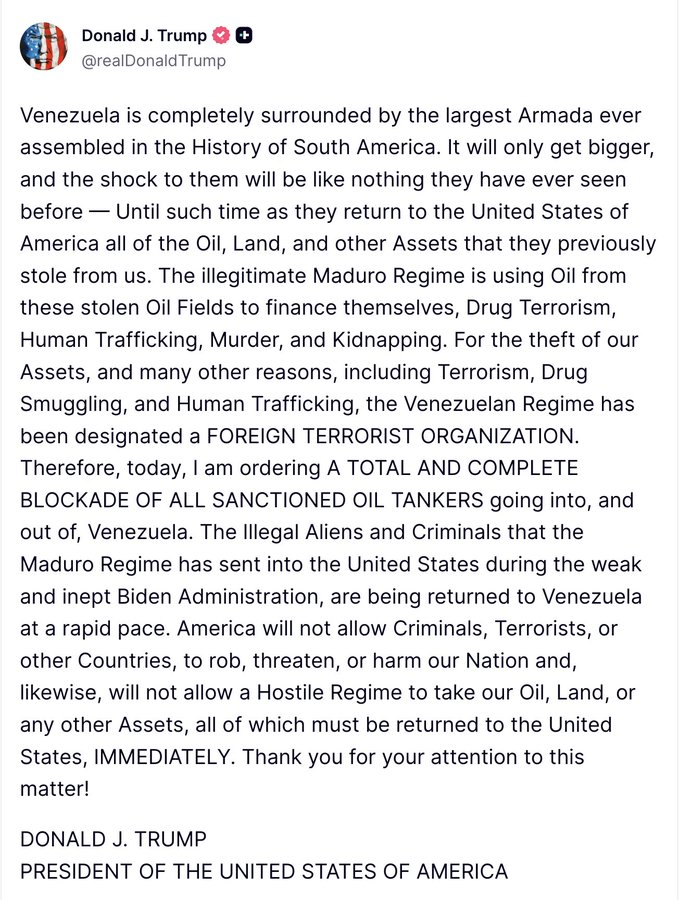
Now, Trump has said the quietest part out loud: his government is imposing a total siege on Venezuelan oil because the US wants “ITS” oil back from under Venezuela’s soil — the same oil that the late Venezuelan President Hugo Chávez dared to take back sovereign control of from foreign companies in 2005 (more on that shortly).
Trump’s blockade of all sanctioned tankers carrying Venezuelan oil does not affect Chevron’s daily shipments, however. From the Wall Street Journal:
President Trump on Tuesday ordered a complete blockade of all sanctioned oil tankers going into and out of Venezuela, escalating his administration’s pressure campaign against strongman Nicolás Maduro.
For Chevron, though, it remains business as usual. The company is still sending oil tankers to the U.S. Gulf Coast, its operations unimpeded thus far by rising tension between Trump and Maduro.
As Sony Thăng points out in the Tweet below, Trump’s candid declaration of US ownership of Venezuela’s is the “most honest colonial confession of the 21st century… you are saying, out loud, what empire has always believed in private: what lies under Venezuelan oil belongs to Washington.
Donald, you just wrote the most honest colonial confession of the 21st century.
When you say Venezuela must "return" its oil, land, and assets to the United States, you are not talking about law.
You are talking about ownership.
You are saying, out loud, what empire has always…
— Sony Thăng (@nxt888) December 17, 2025
Coming Full Circle
There are, of course, a plethora of other reasons for the US’ aggressive moves against Venezuela that we’ve discussed before, including the country’s large deposits of gold, whose value and role as a monetary metal is growing, bauxite, coltan, which is needed for batteries, and freshwater. As Maria Corina Machado has made clear, a post Maduro-regime will also open up Venezuela’s economy to rampant privatisation and liberalisation.
As we’ve argued from the beginning, this is all part of a wider retrenchment of US imperial policy to its so-called “backyard”, and Venezuela is one of a number of countries in the region led by more sovereign-minded governments (Cuba, Nicaragua, Colombia, Honduras…) that Washington would love to topple.
Caracas’ close ties with Russia, China, Iran and Cuba no doubt play a part as well, as does its long-standing opposition to Israel’s treatment of Palestine. The US doesn’t just covet Latin America’s strategic resources for itself but wants to “box out” its rivals, China and Russia, from acquiring them, as former SOUTHCOM commander Laura Richardson explained during her 2023 interview with the Atlantic Council.
Rare earth elements, lithium, oil, light sweet crude, copper, gold, the Amazon, and fresh water.
This is what the United States wants to plunder from Latin America and the Caribbean. pic.twitter.com/Q9Rh5XP0jB
— Kawsachun News (@KawsachunNews) January 21, 2023
There’s also, of course, the small matter of the Epstein scandal, from which the Trump administration desperately needs to distract its voter base. And what better distraction than a new war, especially given the tens, perhaps even hundreds, of billions of dollars of new business it will create for the MIC?
But the main motive, I believe, is the oil — in part to sustain US refineries, as El País reported (in English) yesterday. In the clip below, the British journalist Ed Conway breaks down why US refineries need Venezuela’s particular brand of heavy crude oil:
Venezuela has the world largest oil reserves, at 20%. It’s oil is heavy thick crude.
The U.S. needs heavy crude.
This detailed video explains why the U.S. is stealing Venezuela crude. It’s not about drugs. It’s about oil pic.twitter.com/amm5s87TTp
— mmatigari (@matigary) December 12, 2025
And we’ve now come full circle, with Trump and members of his inner circle openly admitting that its war of aggression against Venezuela is really about oil.
Note how the US government's propaganda narrative has changed:
First the Trump admin claimed it was waging war on Venezuela because of drugs — a blatant lie (the US supports the worst drug traffickers in Latin America).
Now they admit that this is actually because Venezuela… https://t.co/pSoGQi3Ivk
— Ben Norton (@BenjaminNorton) December 18, 2025
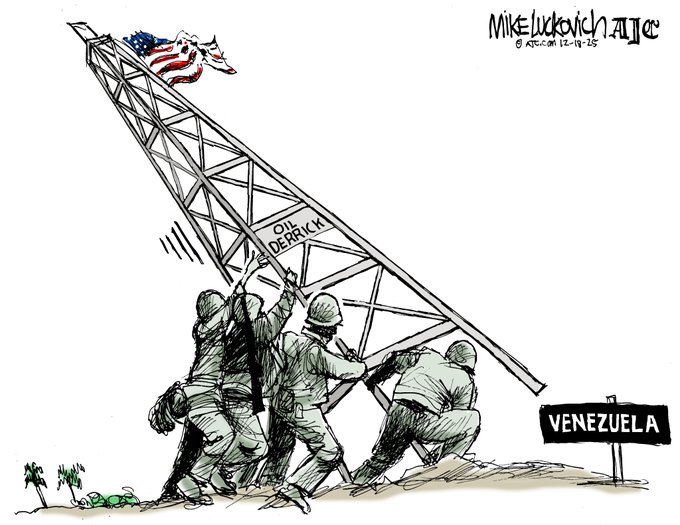
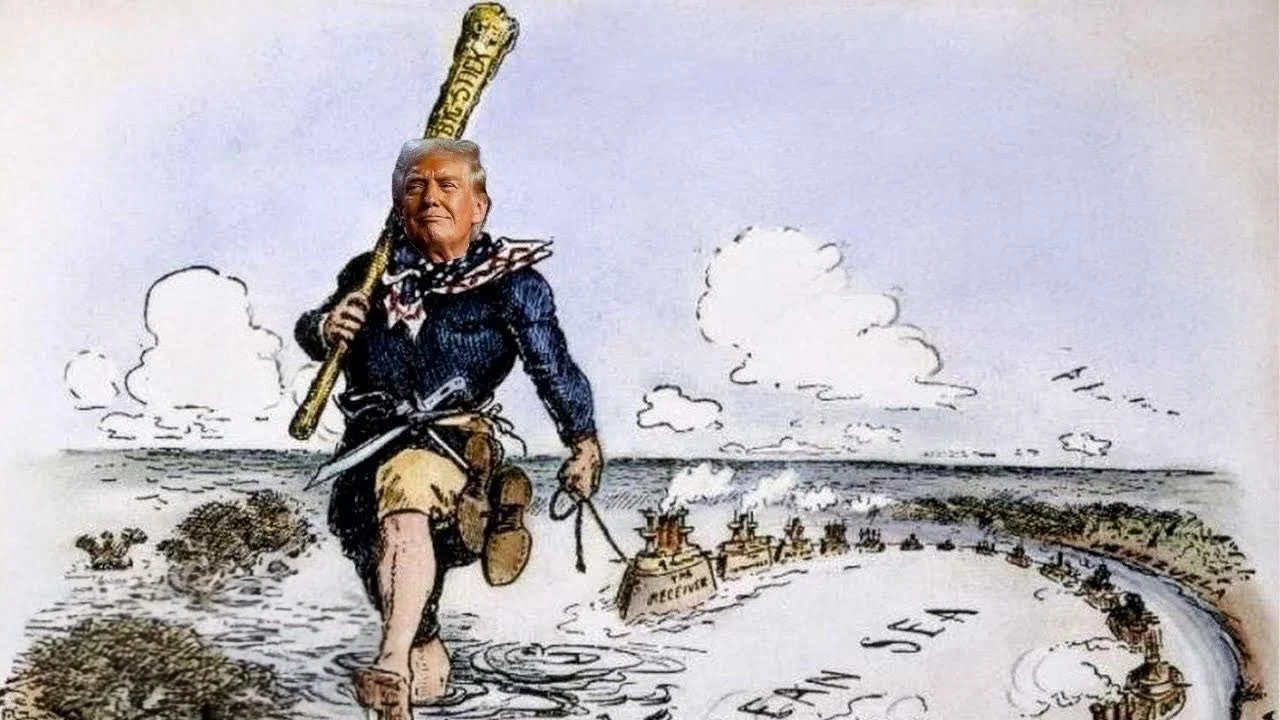
A fitting depiction of what is happening:
— mike luckovich (@mluckovichajc) December 17, 2025
Of course, Trump’s claim that the Maduro government has stolen US-owned oil, land and other assets constitutes an extremely egregious case of projection. It is, after all, the US, mainly during Trump’s two presidencies, that has been stealing all kinds of Venezuelan assets, from the country’s gold reserves to the oil tanker seized in the Caribbean last week, to the president’s official plane, to Venezuelan oil company Citgo.
Trump’s words are even causing blushes among members of the Machado opposition, as Max Blumenthal told Judge Napolitano on Judging Freedom. After all, how can they sell their already deeply unpopular regime change story back home when Trump is telling the world that a Maduro-free Venezuela will essentially belong to the US — lock, stock and, most importantly, barrel?
The US war on Venezuela is as unpopular in Venezuela as it is in the US
An overwhelming majority of Venezuelans oppose US military intervention in their country and US sanctions, according to independent polling firm Datanalysis
More proof the war’s a Florida Gusano project pic.twitter.com/JWsMcYUVFa
— Max Blumenthal (@MaxBlumenthal) December 18, 2025
One company in particular that stands to benefit from the US’ latest regime change operation is Exxon Mobil. An recent article by the Argentine geopolitical analyst Bruno Sgarzini shines a light on how the company is helping to fund influential think tank “experts” who are pushing for a regime-change war against Venezuela (machine translated):
“The Brookings Institute and the Center for Strategic and International Studies (CSIS) are the two major think tanks we work with and actively participate in,” said Keith McCoy, a lobbyist for Exxon Mobil in 2019. What McCoy didn’t know is that the conversation was being recorded and that the person he was speaking to, supposedly a representative of an energy investment company, was actually a climate activist. The lobbyist had unwittingly confessed that he relied on the academic reports of both think tanks to influence congressmen, and the media, against any anti-fossil fuel legislation.
The academics, in charge of presenting their reports in Congress, and the board of both institutions, of course, denied any connection to the oil company. But the data speaks for itself; Exxon Mobil has contributed 12 million dollars to the CSIS that have flowed towards its program of “Energy Security and Climate Change” and others related to energy initiatives in the “Americas and Africa”, two regions where the oil company has deep interests.
It also contributed, according to records, $5 million to the construction of the institute’s new headquarters. Its executive board also includes Exxon’s current CEO, Darren W. Woods, who replaced the company’s former boss, Rex Tillerson, Trump’s former secretary of state during his first administration…
The positions of the CSIS are usually conveyed through reports whose message is then reinforced with the appearance of the authors on mainstream media, such as CNN, Fox News, NBC and CBS, or opinion columns in newspapers such as The Wall Street Journal, The Washington Post, and magazines specializing in international issues such as Foreign Policy.
[They also feature prominently] in congressional hearings, which gives these experts the possibility of influencing specific issues that benefit CSIS donors, such as Exxon Mobil. Brooke Williams, a professor of journalism at Boston University, wrote [in the New York Times]:
“Think tanks, which position themselves as ‘universities without students,’ have power in government policy debates because they are seen as researchers independent of moneyed interests. But in the chase for funds, think tanks are pushing agendas important to corporate donors, at times blurring the line between researchers and lobbyists. And they are doing so while reaping the benefits of their tax-exempt status, sometimes without disclosing their connections to corporate interests.”
According to CSIS, it usually has regular meetings with representatives of its donors to discuss the issues they are dealing with.
A Guerrilla Lobby
The fact that a think tank like CSIS is serving the interests of one of its biggest corporate donors is hardly news to NC readers. Even the New York Times reported in 2016 on how think tanks are “amplifying Corporate America’s influence”. This is, you could argue, their raison d’etre.
What may be news is that since Trump began deploying a large chunk of the US’ naval fleet to the Caribbean in early September, the CSIS has launched a guerrilla lobby of sorts in favour of removing Chavismo from power. That this perfectly aligns with the interests of one of its main donors, Exxon Mobil, is probably no coincidence, writes Sgarzini:
In an article in Foreign Policy, CSIS’ director for Latin America, Ryan C. Berg, has spoken in favor of “overthrowing Maduro without troops on the ground.” He has also questioned the anti-war visions of the MAGA world held by journalist Tucker Carlson and former Trump strategist Steve Bannon.
“Distinct from a boots-on-the-ground invasion of Venezuela aimed at overthrowing Maduro, a regime collapse would entail a more limited campaign of U.S. strikes on targets at the heart of the Maduro regime’s state-crime nexus, implicating the country’s armed forces and its political elites. These strikes would leverage precision-guided munitions and U.S. standoff weapons fired from a safe distance, possibly catalyzing movement internally to force Maduro’s exit—all without putting U.S. personnel at risk as with a “regime change” strategy.”
The promotion of this thesis… was reinforced by technical-military reports by Mark Cancian, a former U.S. colonel who participated in the 2003 invasion of Iraq, who compares the firepower being deployed [in the Caribbean] with other military campaigns such as NATO’s in Libya and Yugoslavia.
“The forces currently compromised are insufficient for an amphibious landing or ground invasion. This would require at least 50,000 soldiers, and war strategists would probably want a much larger number—perhaps 150,000—to achieve the overwhelming force they desire. However, the air and naval resources accumulated over the past three months have provided enough firepower to the Caribbean to launch air and missile strikes against Venezuela…”
These reports, in practice, function as information weapons to maintain the perception of an “imminent attack” and thereby influence decision-making.
CSIS has been at this a long time. During the first year of Juan Guaidó’s clown “presidency”, in 2019, it organised a meeting to evaluate the use of military force in Venezuela. Guest speakers included the former head of Southern Command, Kurt Tidd; Roger Noriega, former US undersecretary for Latin America and one of the architects of the Iran-Contra scandal; and William Brownfield, former US ambassador to Caracas.
During the Biden administration, Berg was a vociferous critic of the oil licenses granted to Chevron, Exxon Mobil’s biggest rival. On Trump’s return in January, Berg co-wrote a report with Juan Ignacio Hernández, Juan Guaido’s former special prosecutor, titled “Ending Maduro’s Oil Lifeline”. The report argued for the reapplication of sanctions as a tool of pressure, and the revocation of the current oil licenses that allow Western companies to partner with PDVSA.
The report’s presentation event even featured the participation of María Corina Machado. From 2023 to 2025, the opposition leader has participated in different CSIS events moderated by Berg, at which she reiterated her refusal to negotiate with Maduro and called for Washington to apply tougher measures against Venezuela.
At the beginning of Trump’s second term, it was not clear which way his government would lean on the question of Venezuela. As readers may recall, Trump even dispatched his special mission envoy, Richard Grenell, to Caracas to discuss with Maduro the return of migrants currently in the US. As a gesture of good will, Caracas released half a dozen US citizens held in Venezuelan prisons who were accused of being mercenaries and plotting terrorist attacks on Mexican soil.
As we noted at the time, this was clearly an attempt by the US to reestablish relations with Venezuela after over a decade of escalating sanctions and multiple failed regime change operations against the country:
After Maduro and Grenell closed the deal, the prisoners were taken to the airport, blindfolded, hooded and handcuffed. No financial or other concessions were promised to Maduro, other than the prospect of improving relations with the US, Grenell said.
The only reward for Maduro was my presence: the first senior US official to visit the country in years , Grenell said. It was a great gift for him to receive a visit from an envoy of President Trump.
While these words may ring of imperial hubris and arrogance, the truth is that Maduro seemed the picture of contentment in the meeting. And who could blame him? Just a month [earlier], all the talk was of yet another regime change operation, led this time by Venezuela’s CIA-sponsored “Iron Lady”, Marìa Corrina Machado. Biden had just given the opposition’s official candidate, Edmundo González, the red carpet treatment at the White House, pronouncing him as “president elect” of Venezuela just days before Maduro’s inauguration for a third term.
Richard Grenell’s strategy may have sought to offer Venezuela economic respite by extending the sanctions relief enacted by the Biden administration in 2023, since which time Venezuela has been one of the fastest growing economies in Latin America. However, all of the White House’s decisions since the summer of 2025 point in the opposite direction.
Clearly, the US Secretary of State Marco Rubio, his Miami-based backers, neocons like Elliot Abrams and all the other belligerents, including CSIS, have gained the upper hand.
However, if Trump does declare war against Venezuela, it could be hugely disruptive for US oil companies operating in Venezuela, like Chevron, and the huge refineries that process Venezuela’s heavy crude on the US’ Gulf coast — especially if, as many have warned, the spiral of violence unleashed in Venezuela becomes intractable.
But this wouldn’t be a problem for Exxon Mobil since it hasn’t had operations in Venezuela since 2007.
Exxon’s Long History in Venezuela
Exxon has a long, rich history in Venezuela dating back over a century. Its predecessor, Standard Oil, was one of the first companies to explore for oil in the South American country in the 1910s. Between the 1930s and the first decade of this century, Exxon was a dominant player in Venezuela through its 95% control of the Creole Petroleum Corporation — so much so that the country became known as the “ranchito de los Rockefeller“.
But that all came to a halt in 2005, when Hugo Chávez ordered all existing “operating agreements” with foreign oil companies to be converted into joint ventures in which the state oil company, Petróleos de Venezuela (PDVSA), held a mandatory majority stake (over 50% ownership and operational control). Exxon refused to sign while most other companies, including BP, Total and Chevron, took the deal.
In 2007, Exxon left Venezuela for good and began a long court battle against the Chavista government at the International Center for Settlement of Investment Disputes (CIADI). The US oil giant sought compensation of $18 billion, but after several appeals the courts sided with Venezuela and in 2014 the oil company was awarded only $1.6 billion in damages.
When Trump accuses Venezuela of stealing US oil, he is presumably referring primarily to Exxon’s oil.
But Exxon’s revenge came with the the discovery of oil off the coast of Essequibo, a sparsely populated 160,000 square-kilometre chunk of land in neighbouring Guyana. The ownership of Essequibo has been the subject of an ongoing territorial dispute between Guyana and Venezuela since the mid-19th century — a territorial dispute whose initial antagonist, readers will be shocked to learn, was the British Empire.
Exxon was one of the first companies to begin drilling for oil in the Essequibo’s disputed waters. As the Washington Post reported in 2017, it was the “perfect revenge” for Exxon’s then-CEO Rex Tillerson, whom Donald Trump would later go on to appoint as his secretary of state.
Rex Tillerson hadn’t been CEO of ExxonMobil very long when the late president Hugo Chavez made foreign oil companies in Venezuela an offer they couldn’t refuse. Give the government a bigger cut, or else.
Most of the companies took the deal. Tillerson refused.
Chavez responded in 2007 by nationalizing ExxonMobil’s considerable assets in the country, which the company valued at $10 billion. The losses were a big blow to Tillerson, who reportedly took the seizure as a personal affront.
Only Tillerson didn’t get mad, at least in public. He got even.
Flash forward to May 2015. Just five days after former military general David Granger was elected president of the South American nation of Guyana, unseating the country’s long-ruling leftist party, ExxonMobil made a big announcement.
In the deep blue waters120 miles off Guyana’s coast, the company scored a major oil discovery: as much as 1.4 billion barrels of high-quality crude. Tillerson told company shareholders the well, Liza-1, was the largest oil find anywhere in the world that year.
For tiny Guyana (population 800,000), the continent’s only English-speaking country and one of its poorest, it was a fortune-changing event, certain to mark a “before and after” in a country long isolated by language and geography.
There was just one problem with this undersea bonanza. Venezuela claimed the waters — and the hydrocarbons beneath them — as its own.
Clearly drilling in the disputed area was potentially a good business decision for ExxonMobil, not some sort of elaborate revenge scheme by its CEO.
But revenge had been served. Venezuelan President Nicolas Maduro, Chavez’s successor, was livid.
“There is a brutal campaign against Venezuela of lies, funded by ExxonMobil … which has great influence at the Pentagon,” Maduro declared, calling the dispute an attempt to corner Venezuela and precipitate “a high-intensity conflict.”
That high-intensity conflict is now closer than ever. But it needs to be packaged and sold to US lawmakers, media, members of the armed forces, and Trump’s war-weary MAGA base. And that is where CSIS’ “experts” come in. And they appear to be marketing this war on behalf of a company that has much to gain from a military intervention, and which bears the biggest grudge against Venezuela’s Bolivarian movement.
https://www.nakedcapitalism.com/2025/12 ... zuela.html
*****
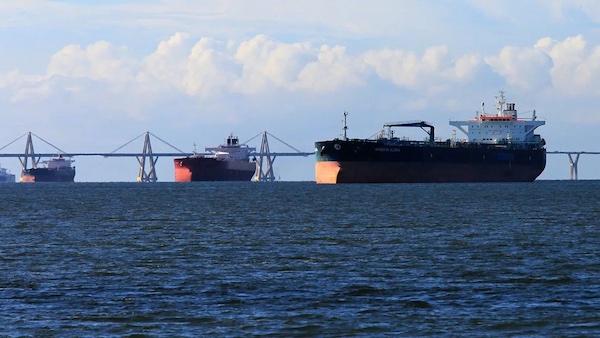
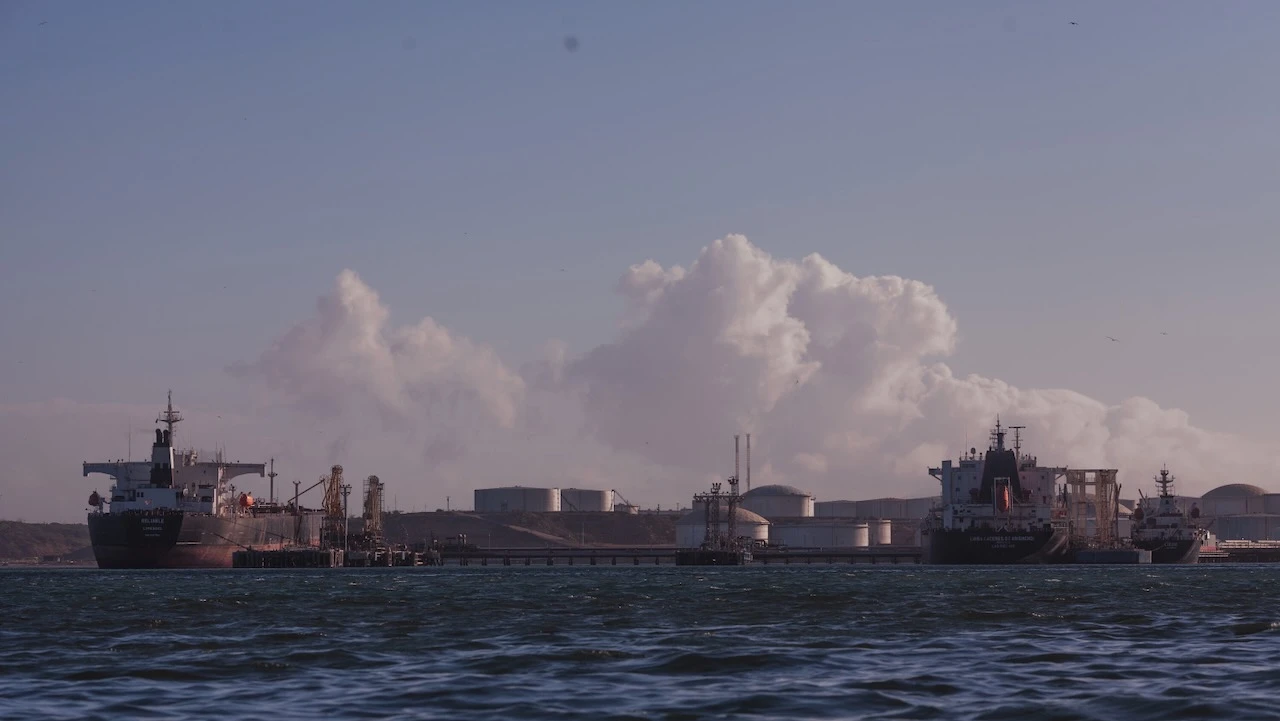
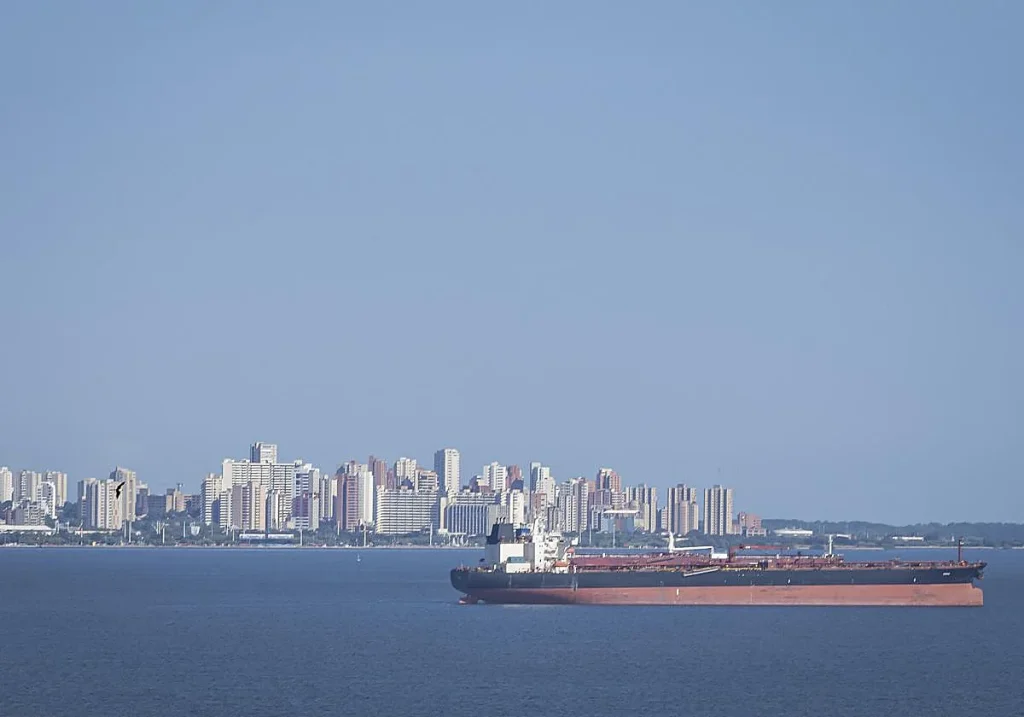
Oil tankers anchored in Lake Maracaibo after loading crude oil at the Bajo Grande refinery port in Venezuela. (Photo: José Bula Urrutia/Gettyimages.ru/Orinoco Tribune)
Venezuela mounts full-state rejection to Trump’s blockade threat, gains International backing
Originally published: Orinoco Tribune on December 18, 2025 (more by Orinoco Tribune) | (Posted Dec 19, 2025)
In an escalation of the U.S. empire’s ongoing illegal sanctions on Venezuela, President Donald Trump has announced a “full blockade” of the sovereign nation and its oil tanker fleet. He claimed the measure would remain in place until Venezuela “returns all the oil, land, and other assets” he alleged were previously stolen from the U.S. The announcement ignited an immediate response from the Venezuelan government, followed by all state institutions and international allies.
“Venezuela is completely surrounded by the largest Armada ever assembled in the History of South America,” Trump wrote on social media this Tuesday, December 16, adding that “it will only get bigger, and the shock to them will be like nothing they have ever seen before.”
He did not specify what oil, land, or assets he claims were stolen, nor did he elaborate on the bizarre claims of the so-called “war on drugs” argument that has seemed to take a backseat in recent days; something that Caracas has consistently condemned as an aggression against its sovereignty and an attempt to seize its natural resources.
In his post online, the U.S. president attacked the Venezuelan government, labeling it an “illegitimate regime.” He accused it of using “oil from […] stolen fields to finance narcoterrorism, human trafficking, murder, and kidnapping,” refusing to provide any evidence for his fictitious claims. Venezuela has repeatedly proven that the nation has been robbed of billions of dollars in international bank accounts, two tons of gold seized by the Bank of England, and the CITGO Corporation. The oil retailer and refining corporation is owned by PDVSA and valued at more than $15 billion, with yearly revenue of about $4 billion.
Foreign terrorist organization designation
“For the theft of our assets, and for many other reasons, including terrorism, drug trafficking, and human trafficking,” continued Trump’s statement, “the Venezuelan regime has been designated a foreign terrorist organization. Therefore, today I am ordering a total and complete blockade of all sanctioned oil tankers entering and leaving Venezuela.”
The U.S. president also insisted on repeating other unfounded accusations, such as that Caracas supposedly sent “illegal immigrants and criminals” into the U.S. He stated the White House “will not allow criminals, terrorists or other countries to steal, threaten or harm” his country, nor allow “a hostile regime” to seize oil he claims to somehow be property of the U.S. colonial entity, despite the resources being located in Venezuelan territory and belonging to the Venezuelan people.
“We will not give up”
Earlier on Tuesday, Venezuelan President Nicolás Maduro reiterated that, despite prolonged and multifaceted U.S. aggression, Venezuela will defeat “the oligarchy and imperialism under any circumstances.”
“For 25 weeks, Venezuela has been denouncing, confronting, and defeating a multidimensional campaign of aggression that ranges from psychological terrorism to the piracy that has plundered our oil, and which has multiple forms,” he stated in an address to Venezuelan workers. “What has Venezuela demonstrated? […] That Venezuela is a strong country, that it has real power. And we have demonstrated that we are prepared to continue our march. And, what’s more, that we are prepared to accelerate the march of a profound revolution that will give power to the people, completely and definitively.”
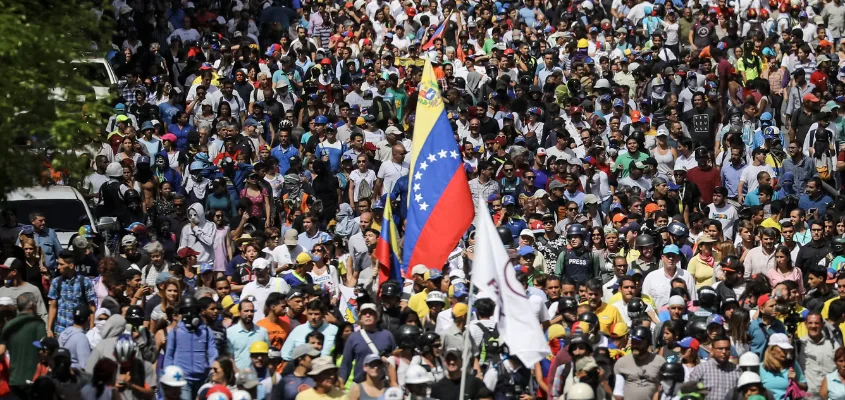
Citizens have consistently taken to the streets to display support for Venezuelan authorities and their rejection of U.S. imperialism, demonstrating their readiness to resist by any means, including through the use of force. On December 10, these protests included the mass condemnation of the seizure of a tanker carrying Venezuelan oil in the Caribbean Sea, an act denounced by Caracas that same day at the UN Security Council as an act of piracy.
Government communique
On Wednesday night, the Venezuelan government issued a statement in response to what many analysts consider a declaration of war by the U.S. empire, despite the U.S. president neglecting to request for the congressional approval mandated under U.S. law.
The statement reiterates Venezuela’s full sovereignty over its natural resources, the right to free navigation and free trade, as well as its adherence to the UN Charter. “[The US’s] true intention,” it adds, “which has been denounced by Venezuela and the people of the U.S. in large demonstrations, was always to appropriate the country’s oil, land, and minerals through gigantic campaigns of lies and manipulation.”
Below, you can read the full unofficial translation of the Venezuelan government’s statement:
A united Venezuela rejects Trump’s grotesque threat and will condemn it
On the night of December 16, 2025, the President of the United States, Donald Trump, violating International Law, free trade, and free navigation, has launched a reckless and serious threat against the Bolivarian Republic of Venezuela.
On his social media, he assumes that Venezuela’s oil, land, and mineral wealth are his property. Consequently, he claims that Venezuela must hand over all its riches to him immediately. The President of the United States is attempting to impose a supposed naval and military blockade on Venezuela in an utterly irrational manner, with the aim of stealing the wealth that belongs to our nation.
Venezuela, in full exercise of the International Law that protects us, our Constitution, and the laws of the Republic, reaffirms its sovereignty over all its natural resources, as well as its right to free navigation and free trade in the Caribbean Sea and the world’s oceans. Consequently, it will proceed, in strict adherence to the UN Charter, to fully exercise its freedom, jurisdiction, and sovereignty in the face of these warmongering threats.
Our Ambassador to the UN will immediately denounce this serious violation of International Law against Venezuela.
We call upon the people of the United States and the peoples of the world to reject by all means this extravagant threat, which once again reveals Donald Trump’s true intentions to steal the riches of the country that gave birth to the United Liberation Army of South America and to our Liberator, Simón Bolívar. The people of Venezuela, in perfect popular, military, and police unity, will know how to defend their historical rights and triumph through peace.
Mr. Donald Trump explicitly stated the following interventionist and colonialist expression: “until all the oil, land, and other assets that were previously stolen from us are returned to the United States.” His true intention, which has been denounced by Venezuela and the people of the United States in massive demonstrations, has always been to seize the country’s oil, land, and minerals through gigantic campaigns of lies and manipulation.
Venezuela will never again be a colony of any empire or foreign power and will continue to walk, together with its people, the path of building prosperity and the unrestricted defense of our independence and sovereignty.
The Venezuelan people, in perfect popular, military, and police unity, remain steadfast in the unrestricted protection of their territory, their resources, and their freedom. With our Liberator, we say: “Fortunately, a handful of free men have defeated powerful empires.”
Caracas, December 16, 2025.
Comprehensive state response
On Wednesday, the first institution to respond to the threat was the Bolivarian National Armed Force (FANB). Venezuela’s Defense Minister Vladimir Padrino, together with the FANB’s High Command, stated it would preserve at all costs the nation’s territorial integrity, its legitimate rights over airspace and maritime areas, and sovereignty, independence, and peace that the nation holds dear.
“We can say that Venezuela has scored a victory in the face of truth; the truth has been revealed,” the military commander warned.
It is now through force, no longer through sanctions, unilateral coercive measures, political, diplomatic, and media isolation, psychological terrorism; force and violence have been used, and those who resort to them are lost.
He emphasized that Washington’s “war on drugs” narrative “has fallen apart in the eyes of international public opinion,” and that U.S. imperialism is blatant in its desire for Venezuela’s natural resources. Furthermore, he rejected Trump’s accusations that Venezuela stole any assets of the U.S., claiming the true intentions of the empire “are nothing other than to force regime change in our country and grossly seize its oil and other strategic natural resources.”
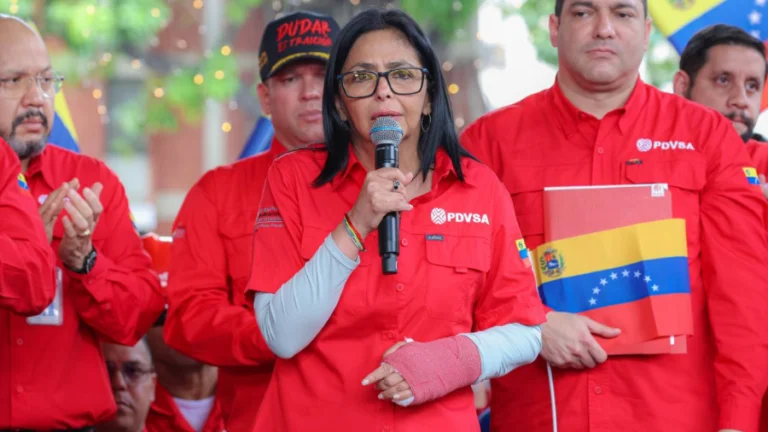
Almost simultaneously, PDVSA issued a statement reporting that oil export operations are continuing as scheduled. “The export operations of Venezuelan crude oil and derivatives continue despite the attempted illegal and illegitimate blockade, through secure schemes and full guarantees,” reported Delcy Rodríguez, head of PDVSA and the vice president of Venezuela.
“Oil tankers linked to PDVSA operations continue to sail with full assurance, technical support, and operational guarantees, in the legitimate exercise of the rights to free navigation and free trade, widely recognized and protected by international law,” the statement reads, reiterating that PDVSA has remained active despite all of the U.S. attacks it has endured.
Minutes later, the Moral Republican Council—formed by the Prosecutor’s Office, Comptroller’s Office, and Ombudsman’s Office, one of the five branches of the Venezuelan state—made a televised statement expressing its support for President Maduro in all measures he decides to take to safeguard Venezuela’s rights and sovereignty, describing Trump’s action as a brutal escalation.
The Moral Council made a “call to the people of the U.S. and the peoples of the world to reject by all means this aberrant threat that reveals the true intentions of the U.S. government to steal the resources of our country and our continent.”
In the afternoon, the National Assembly unanimously approved a resolution repudiating the U.S. president’s announcement. The parliament agreed to defend “the full and inalienable sovereignty of the Bolivarian Republic of Venezuela over all its territory,” including its natural resources, emphasizing that they are “inviolable, inalienable, and under the absolute ownership and control of [Venezuela].”
The deputies called “upon the Venezuelan people to remain on alert and permanently mobilized in perfect popular, military, and police unity for the unrestricted defense of the historical rights of the homeland, thus ensuring peace and territorial integrity against any threat that seeks to disturb” Venezuela’s independence.
The peoples and governments of the world were also urged to “reject by all means this extravagant threat that undermines global peace and reveals U.S. true intentions of plunder.”
Venezuela’s judicial branch joined in rejecting the U.S. actions, as confirmed by the president of the Supreme Court of Justice (TSJ), Caryslia Rodríguez. After reading an official statement, Rodríguez added that the imposition of a “naval blockade” constitutes an attack on sovereignty and a new violation of Venezuela’s constitution and international law.
“Today, we condemn [the US] and call for a united effort to restore and maintain ethical and legal values as instruments of peace, sovereignty, and equality among the peoples of the world,” Rodríguez stated. She explained that the TSJ supports the ratification of Venezuela’s sovereignty over its natural resources and its right to free navigation and free trade.
Local and international reaction
Chavista forces and leaders rejected the Trump announcement across social media, accompanied by public statements from far-right politicians who are not sympathizers of President Maduro or Chavismo, such as Bernabe Gutierrez, Enrique Ochoa Antich, and Henry Falcon, among others.
Latin American presidents and international allies have also expressed full support for Venezuela against what many consider to be an act of war that violates the UN Charter.
Russian Foreign Minister Sergey Lavrov expressed deep concern over the belligerent U.S. statements and over Europe’s silence on the matter. Mexican President Claudia Sheinbaum reiterated México’s historic position against foreign interventions and demanded the United Nations assume its due role as an international peacekeeping body to “avoid a bloodshed.”
Cuban President Miguel Díaz-Canel had already expressed Cuba’s strong condemnation of a U.S. naval blockade and its support for Venezuela and the Bolivarian Revolution.
Iran also issued a communiqué strongly rejecting the U.S. threats. “The U.S. interference with, as well as its seizure and obstruction of, the free passage of commercial vessels to or from Venezuela constitutes a clear case of state piracy and armed robbery at sea,” the statement reads.
Invoking U.S. domestic laws and unilateral, illegal sanctions to justify these actions cannot, in any way, serve as a basis to legitimize such criminal acts.
China reported that its minister for foreign affairs, Wang Yi, had a phone conversation with his Venezuelan counterpart Yván Gil, expressing opposition to the U.S. empire’s unilateral bullying.
Even the German government expressed concern over Trump’s threats, warning of risks to regional peace and stability, as stated by spokesman for the German Foreign Ministry, Martin Giese. “The German government has an interest in preventing the situation in the region from deteriorating further,” he said during a press conference.
Therefore, we view the overall situation with concern. Of course, international law must be respected.
The Venezuelan government announced on Wednesday night that President Maduro held a phone conversation with UN Secretary General António Guterres, in order to warn him about the growing escalation of U.S. threats and their possible implications for regional peace. The head of state explained that Trump’s claims were supported by senior U.S. official Stephen Miller, who said the Venezuelan oil industry was also to be owned by the U.S. regime, which marks a direct colonial threat to Venezuela’s sovereignty and international law.
https://mronline.org/2025/12/19/venezue ... l-backing/
 Venezuela has the biggest oil reserves in the world pic.twitter.com/3lyfd979Jd
 (@ChrisMurphyCT) December 16, 2025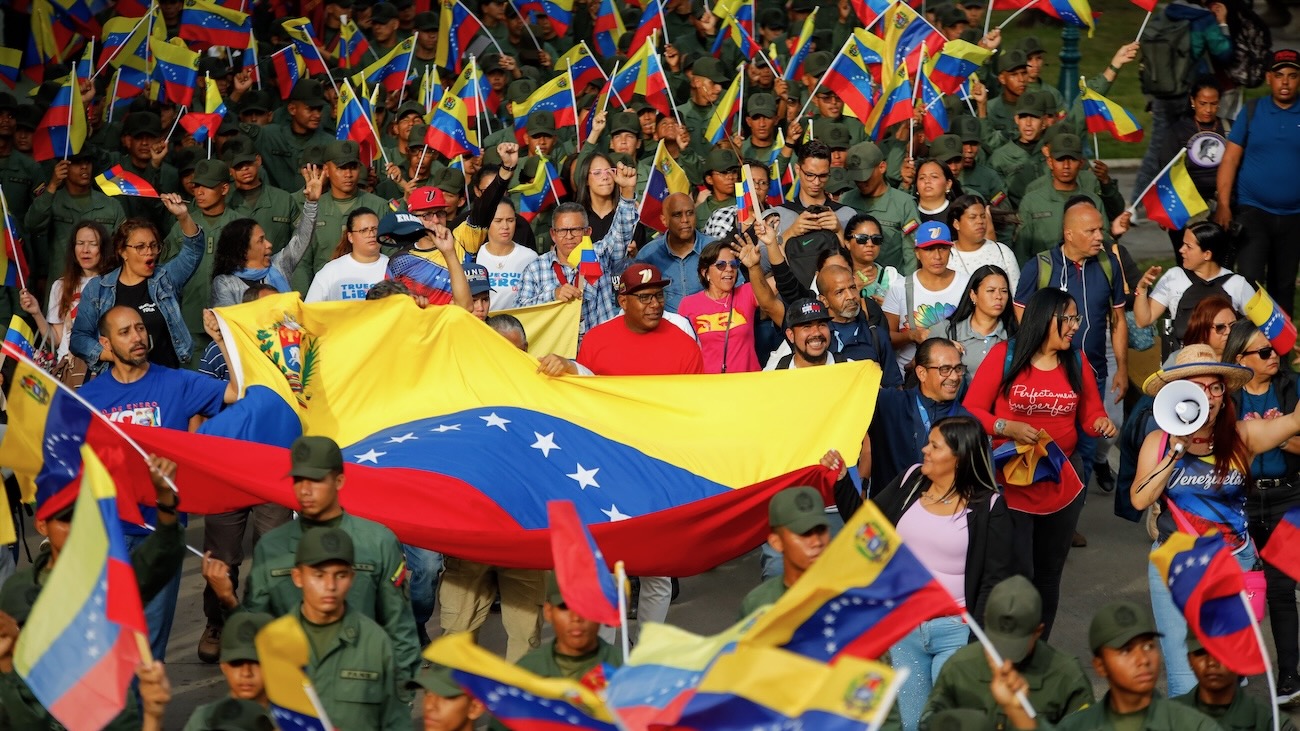

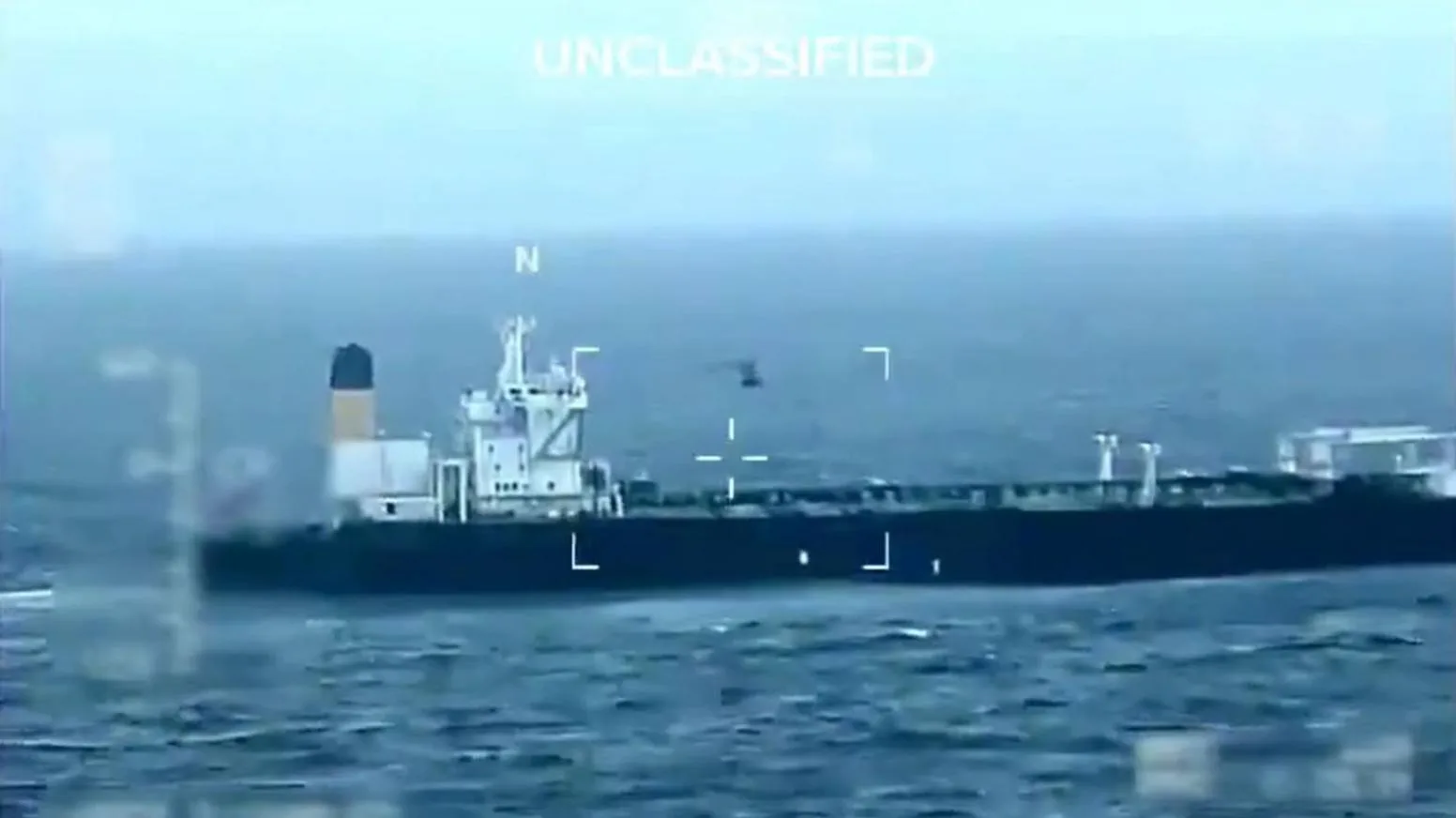

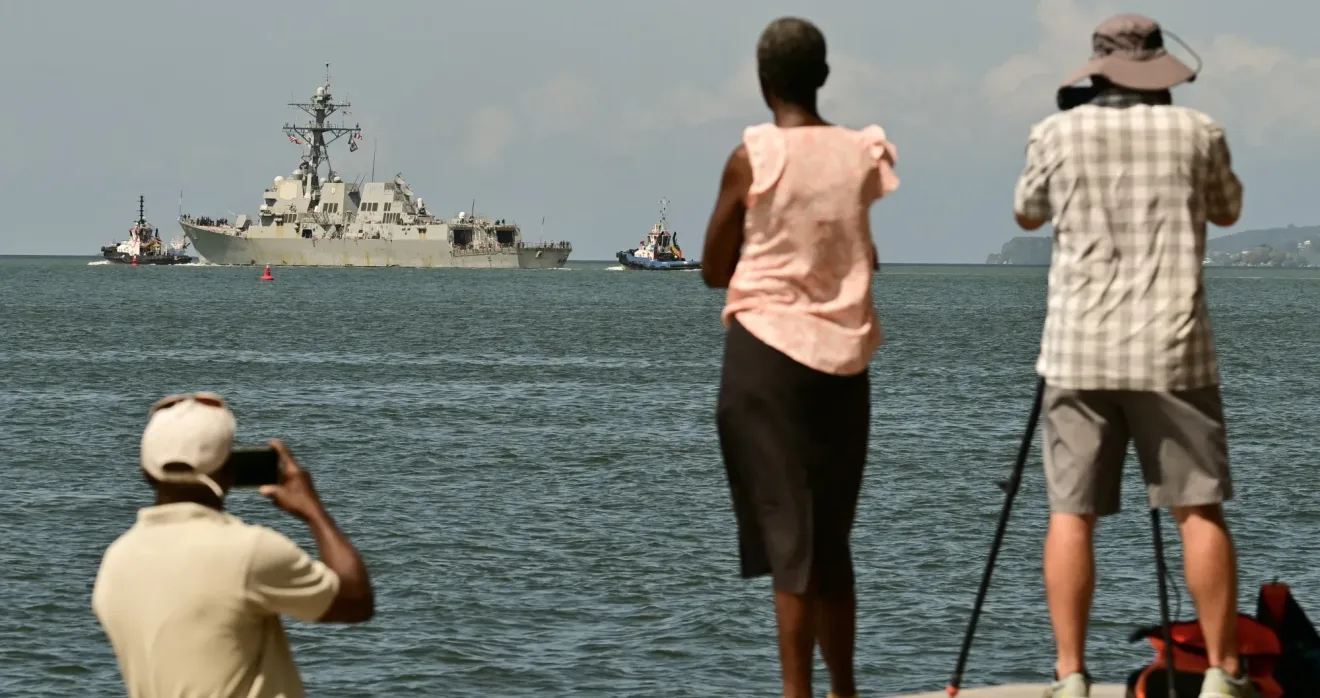
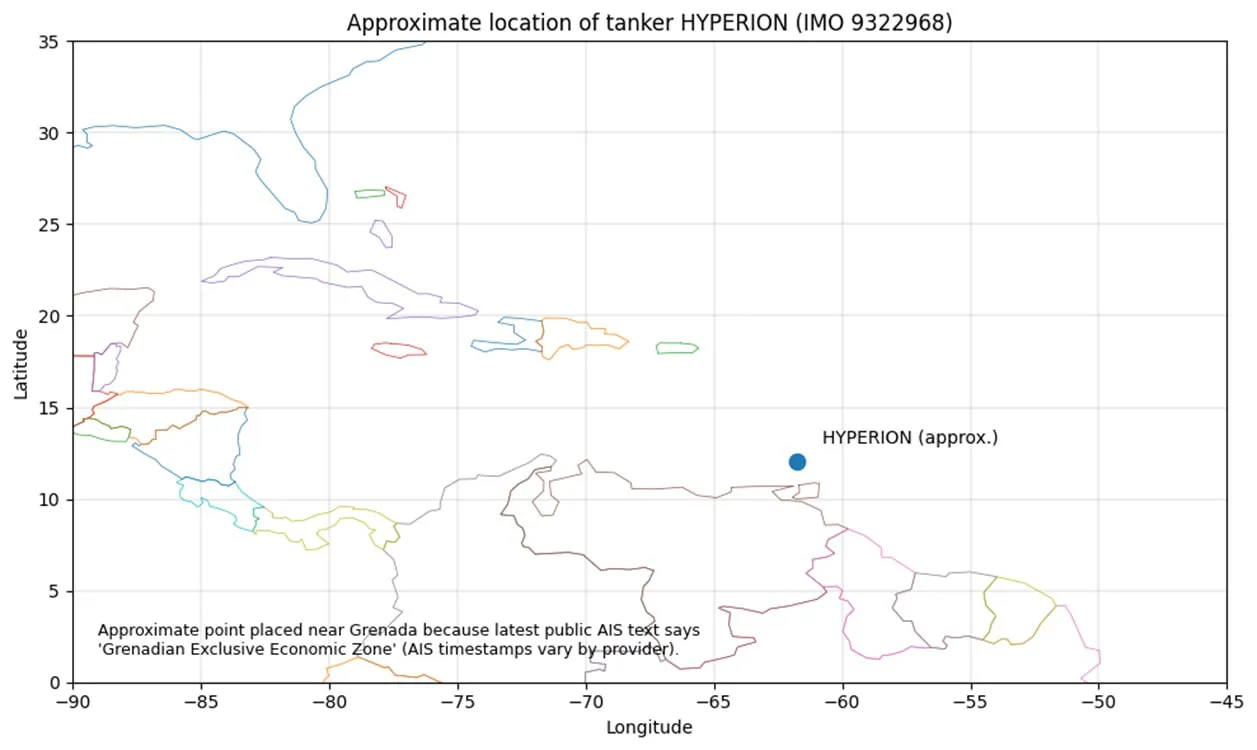
 BREAKING: High-seas pursuit underway! The US Coast Guard is currently chasing the "Bella 1" oil tanker near Venezuela after the vessel refused a boarding order.
 #Venezuela #USCG… pic.twitter.com/Y1x7g7Jxni
 US forces were unable to seize the oil tanker Bella 1, and it continued its journey from Iran to Venezuela. The ship remains en route, indicating that it completely avoided any interception during its transit.



 The Cayapo