Police, prison and abolition

User avatar
blindpig
Posts: 15306
Joined: Fri Jul 14, 2017 5:44 pm
Location: Turtle Island
Contact:

Re: Police, prison and abolition

Post by blindpig » Mon Feb 02, 2026 4:32 pm

Here come da Judge...(Strange bedfellows and all that...)

American Gestapo/American Psycho
February 1, 2026

The U.S. has a government devoid of social virtue and bent primarily on demonstrating its power over persons, says Andrew Napolitano.
Image
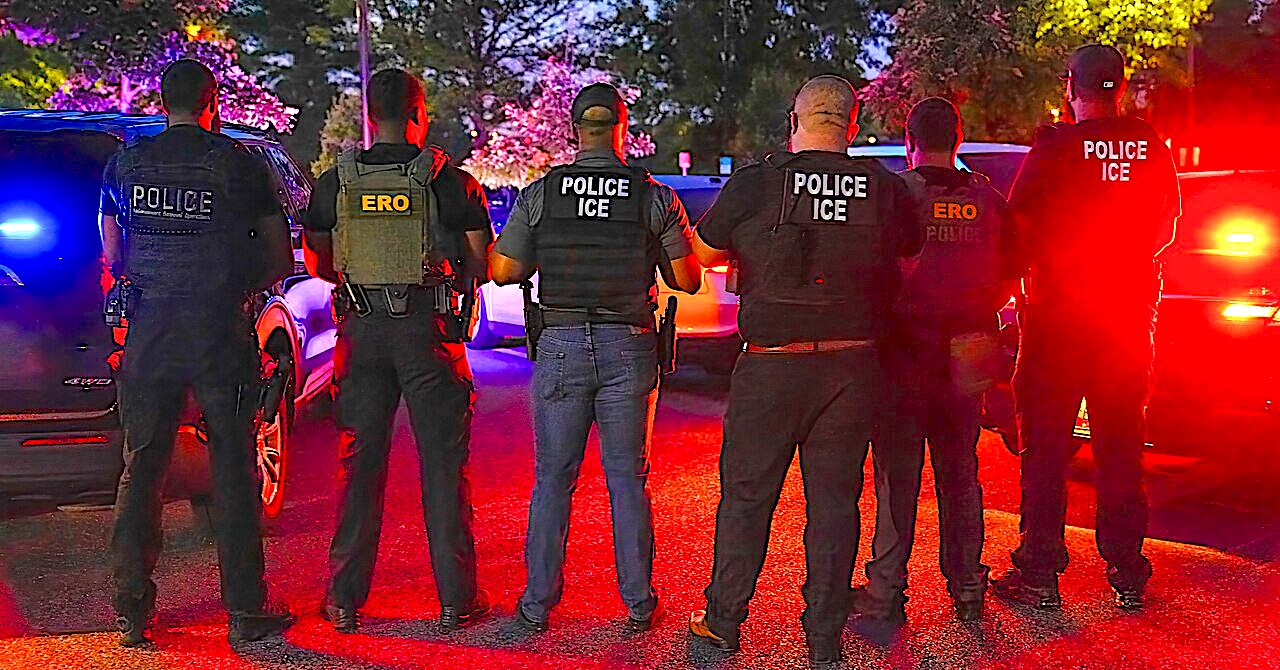
ICE agents in 2023. (usicegov/Wikimedia Commons)

By Andrew P. Napolitano


A half-dozen masked and unidentifiable Immigration and Customs Enforcement (ICE) agents killed a 37-year-old federal employee, a nurse, on Jan. 24 by spraying pepper spray into his eyes, pushing him to the ground, stealing his lawfully owned and carried handgun, and then shooting him nine times in the back.

The thugs from ICE whom the federal government has sent to Minneapolis have produced murder and mayhem on a scale far more violent, disruptive and disturbing to human life than have the immigrants residing there without papers.

Under the U.S. Constitution, immigration — who can legally come to and remain in the United States — was left to the states to regulate; and naturalization — who can become an American citizen — was left to the feds.

Notwithstanding the plain text of the Constitution, Congress — motivated by racial animus against those who looked and sounded differently from the White, Anglo-Saxon, Protestant elites who controlled the government — enacted the Chinese Exclusion Act of 1882. When this was challenged, the Supreme Court upheld congressional authority in a truly bizarre opinion written by Justice George Sutherland, himself an immigrant.

The court held — for the first time — that Congress could exercise regulatory powers from a source other than the Constitution. It reasoned that when British troops left the colonies after their surrender in 1781, the power to regulate immigration stayed behind and metaphysically transferred itself to the new federal government here. A rationale from nowhere.

Since then, federal immigration regulations have waxed and waned, usually depending upon contemporary economic trends and prevailing racial attitudes. A century after the ruling on the Chinese Exclusion Act, at President Ronald Reagan’s prompting, Congress enacted the Simpson-Mazzoli Act, which granted amnesty and permanent legal residence to all immigrants then in the U.S. The sky did not fall.

The White House has defended the ICE killings of two innocent Americans in the maelstrom of Minneapolis by using phrases like terrorist, agitator, assassin and self-defense. In the process of politically smearing two dead victims, it has tried to divert attention away from the ICE Gestapo-like tactics in the streets. And, in an act of obstructing justice, ICE has kept all the evidence of these murders from state investigators.

Are the masked men in the streets immune from prosecution for murder as the White House claims?

Federal and state laws mandate — and all police, even DHS agents, know this — that if the driver of a vehicle moving less than 5 miles per hour is trying to turn away from you, you don’t kill the driver; you let her turn or get out of the way. If somehow you feel threatened by a man on all fours on the ground whose lawfully carried handgun you have already seized, and whom you have temporarily blinded with pepper spray because he photographed you, you restrain him, you don’t shoot him in the back.

The reason police foreknowledge of right and wrong (who doesn’t know it is wrong to shoot an unarmed person in the back?) and of lawful and criminal use of force is relevant is another bizarre Supreme Court ruling which declared that prosecutions of government agents for excessive use of force will rise or fall on whether other similarly situated government defendants manifested this foreknowledge. Another legal principle from out of nowhere.

Can the state of Minnesota prosecute the ICE killers? Yes, under federal and state laws. Just ask Lon Horiuchi, the F.B.I. sharpshooter at Ruby Ridge whom the state of Idaho prosecuted for excessive force when he killed the wife of the person the feds were trying to arrest by shooting her in the back. And there is no statute of limitations for murder.

Shameless Lying

Image
Department of Homeland Security Secretary Kristi Noem during a tour of the Terrorist Confinement Center CECOT in Tecoluca, El Salvador, on March 26, 2025. (DHS/Flickr/Tia Dufour)

More dangerous than American Gestapo is American Psycho — an attitude of government devoid of moral principles. One that — as authoritarians throughout history have done — targets a helpless, hopeless, politically weak minority and justifies murdering those who protest the violence employed in the targeting.

We have a government devoid of social virtue and bent primarily on demonstrating its power over persons. It is unbridled by the good, by the natural law, by the Constitution and by common decency. It has no values. It believes life is meaningless. In its fear of ordinary folks photographing its use of force in the streets, it verbally defends killing the photographer.

This psychotic government claimed the first Minneapolis person its agents murdered was a terrorist. She wasn’t. Then it claimed her spouse was a terrorist. She wasn’t.

Then it claimed that the nurse videoing its agents was there to kill them because he lawfully carried a handgun and ammunition. He wasn’t. Then it claimed he “brandished” his gun. He never touched his gun; the ICE agents took it from him before they executed him. Now it claims this nurse it shot in the back while he was on all fours on the frozen earth and blinded by pepper spray was a threat to its agents. That’s hogwash.

Department of Homeland Security Secretary Kristi Noem told the media that her agents felt threatened and so they disarmed the nurse. The Supreme Court has ruled that the Second Amendment which protects the right to keep and bear arms, is as potent as the First Amendment. There was no legal basis to spray or detain the nurse, and thus these agents could no more lawfully disarm him than they could silence his speech about them.

This shameless lying is contradicted by what we all can see.

The same psychotic mentality that argued last year it can execute people on the high seas without trial has brought that might-makes-right nihilism into our streets. If Congress doesn’t stop this sickness in the executive branch by defunding it before it is too late, the voters will deem Congress complicit.

Of course, the psychopaths have the upper hand. Watch out, people of Iran. When the psychopaths are failing at home, they will bring us to war abroad.

https://consortiumnews.com/2026/02/01/a ... an-psycho/

(My question is whether this judge who is a position to know how things really work 'believes' in the Constitution or common decency. After all, he was Bill O'Rielly's go-to legal expert when Bill was just a tabloid creep.)

******
Image
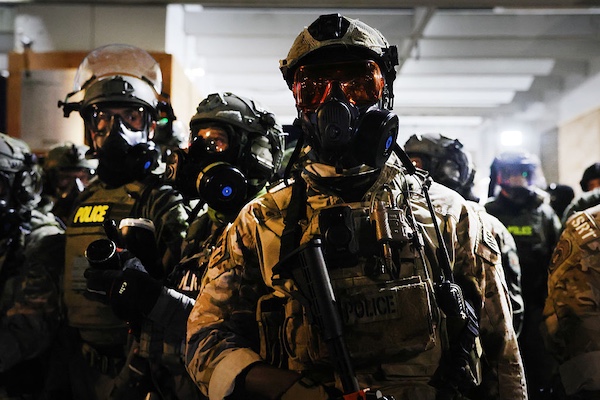
What federal troops inflict on the streets of US cities is a reminder of what the American Empire has wrought around the globe. (Spencer Platt/Getty Images / Tribune)

The Empire comes home
Originally published: Tribune Magazine on January 30, 2026 by Stelios Foteinopoulos (more by Tribune Magazine) | (Posted Jan 31, 2026)

The horrific events in Minneapolis–the killing of civilians amid militarised operations, armed raids in residential neighbourhoods, and the conversion of an American city into a spectacle of state violence–are not an anomaly but a stark manifestation of a pattern long identified by political scientists and historians. This pattern reveals a fundamental truth: the violence intrinsic to empire knows no topography. Minnesota shows how it seeps back into the foundations of the imperial state itself, transforming domestic policing, social control, and the very conception of citizenship.

For centuries, we have been taught a geography of power: the West acts, the rest suffers. We are told that imperialism is an external project, a theatre of conquest confined to distant shores where armies clash to seize resources. The colonial subject, the foreign ‘other’, is understood as the sole bearer of its brutal legacy. This framing allows the imperial core to imagine itself as separate, insulated, and morally distinct; its domestic tranquillity is seen as unconnected to its foreign brutality. It is a narrative of clean hands. While this is comforting, it is also dangerous.

Imperial Boomerang
The concept of the imperial boomerang posits that the technologies of control, the ideologies of racial hierarchy, and the architectures of violence normalised and perfected at the edges of empire eventually return to the metropolitan centre. Practices first justified in those ‘exceptional’ spaces–the colonies, the border zones, the black sites, the distant wars–cannot be contained. They build their own pathway back through bureaucracy, through institutional memory, through a mindset that starts seeing certain people as ‘deplorables’ in times of systemic crisis. Over time, these tools get a software update and are redeployed in the heart of the once ‘liberal centre’. The target gets relabelled: from the ‘savage’ abroad to the ‘enemy within’.

This dynamic was articulated with prophetic clarity by Aimé Césaire in his seminal 1950 work, Discourse on Colonialism. He dismantled the European conceit that the West had both grown itself through its colonies and ‘civilised’ itself in the process. On the contrary, Césaire argued, while colonialism materially enriched the imperial powers, it simultaneously brutalised them morally, politically, and socially. It required and cultivated a mindset of absolute racial superiority, administrative arbitrariness, and dehumanisation of the ‘other’ to function. For Césaire, European fascism–specifically Nazism–was not a historical aberration but a ‘boomerang effect’. It was the point at which the colonial model of violence, ‘racialised, massified, bureaucratic, and impersonal’, was applied on European soil to European (including white) bodies. This is what led political theorist Hannah Arendt to coin the term ‘imperial boomerang’.

‘They tolerated that Nazism before it was inflicted on them,’ Césaire wrote; ‘they absolved it, shut their eyes to it, legitimised it, because, until then, it had been applied only to non-European peoples.’ The horror of the Holocaust, in this reading, was the shock of Europe confronting a mirrored, intensified version of its own colonial logic.

The historical evidence for this reflux of imperial techniques is extensive. Consider the British Empire. The concentration camp was not invented by the Nazis but was systematically used by the British during the Second Boer War (1899—1902) to detain Afrikaner civilians and Black Africans. Methods of population control, surveillance, and collective punishment honed in Ireland, India, and Kenya–such as curfews, identity passes, and ‘strategic hamlets’–informed later policing and counter-terror strategies in the UK itself, particularly in Northern Ireland during the Troubles, and in the monitoring of immigrant communities post-9/11.

For the United States, this process is deeply embedded in its national narrative. The frontier and the plantation were the nation’s first internal colonies, where ideologies of racial extermination and subjugation were forged. The logic of counter-insurgency practised against Native American populations–attacking civilian encampments, forced removals–prefigured twentieth-century warfare. It also influenced the professionalisation of a more violent, expeditionary-minded U.S. military and fed into the brutal repression of labour movements, such as the 1914 Ludlow Massacre, where the Colorado National Guard attacked striking miners and their families with tactics reminiscent of colonial warfare.

Old Methods, New Enemies
The War on Terror of the twenty-first century has accelerated and digitised this boomerang effect. The post-9/11 paradigm created a global, permanent, and legally exceptional battlefield. Practices authorised in Guantánamo Bay, Abu Ghraib, and CIA black sites–indefinite detention without trial, enhanced interrogation (torture), mass surveillance, and signature strikes based on metadata–did not stay abroad. They fundamentally altered the domestic landscape.

The 1033 programme funnelled billions of dollars’ worth of surplus military equipment–from armoured vehicles (MRAPs) and helicopters to night-vision goggles and assault rifles–to local police departments. The police response in Ferguson, Missouri, in 2014, resembling an occupying army confronting an insurgent population, was a direct visual and tactical manifestation of this flow. And now ICE, an agency whose $30 billion annual budget matches the military budgets of Italy, Israel, and Brazil.

The ‘enemy within’: the ideological construct of a boundless, borderless war against terrorism legitimised the targeting of domestic groups, particularly Muslim, Arab, and South Asian communities, with entrapment strategies, no-fly lists, door-knocking, abductions of parents and five-year-olds, and more.

What is happening in Minneapolis is the institutionalised fruit of a carceral state built on a foundation of racialised control, enabled by the U.S. government. The empire has come home.

https://mronline.org/2026/01/31/the-empire-comes-home/

******

Red Lake Nation blocks ICE entry, asserting sovereignty as agents move north
January 31, 2026 Gary Wilson

Image

On Jan. 13, the Tribal Council of Red Lake Nation voted unanimously to restrict ICE and other federal immigration agents from entering Red Lake lands without a court order signed by a judge with jurisdiction. The resolution became public Jan. 28, as tribal leaders warned that federal agents were already “moving north.”

Under the new protocol, ICE must obtain a valid court order, present it to the Red Lake Department of Public Safety director, submit to a Red Lake officer escort at all times, and leave immediately after the order is served.

The council did not soften its language. Members said they were “ashamed and disgusted at the obvious violations of constitutional rights that are routinely being directed at United States citizens by ICE officers.”

Chair Darrell Seki Sr. also notified Minnesota’s congressional delegation that tribal officials had been told federal officers would soon “turn their sights north,” after ICE agents apprehended a member of the Leech Lake Band near Walker in northern Minnesota.

Red Lake’s action carries particular force because it is Minnesota’s only “closed reservation” — its land was never allotted, remains held in common, and the tribe retains authority over who may enter. Red Lake is also exempt from Public Law 280, meaning state courts have no jurisdiction on tribal lands. Together, these conditions preserve Red Lake’s sovereign control over its territory.

The impact reaches far beyond the reservation. Tribal officials estimate roughly 8,000 Red Lake people live in Minneapolis, placing thousands of Indigenous community members inside ICE’s expanding enforcement zone.

From Bdóte to Minneapolis: detention returns to familiar ground

Red Lake’s move comes amid a wave of Indigenous detentions in Minneapolis.

In early January, four tribal members were detained under a bridge near the Little Earth housing complex in East Phillips. Three were transferred to an ICE facility at Fort Snelling — a site Dakota people remember as a concentration camp at Bdóte, where the U.S. military imprisoned about 1,700 Dakota in 1862 as part of a broader campaign of genocide and forced removal. Families were held there behind military lines, exposed to disease and hunger, before being driven from their homelands into exile.

For Dakota communities, Fort Snelling is not a historic landmark. It is a site of mass detention. Families were confined there while the U.S. government carried out mass executions of Dakota men, before survivors were expelled from their homelands into exile. That same ground is now being used again to cage Indigenous people.

President Frank Star Comes Out of the Oglala Sioux Tribe confirmed that three of the detainees were taken to Fort Snelling.

“The irony is not lost on us,” he said. “Lakota citizens who are reported to be held at Fort Snelling — a site forever tied to the Dakota 38+2 — underscores why treaty obligations and federal accountability matter.”

The Dakota 38+2 refers to the 38 Dakota men publicly hanged by the U.S. government in Mankato on Dec. 26, 1862 — the largest mass execution in U.S. history — and two additional Dakota leaders, Sakpedan and Wakan Ozanzan, who were executed at Fort Snelling in 1864.

When the tribe requested information about its detained people, federal officials said it would need to enter an “immigration agreement” with ICE. The tribe refused.

“We will not enter an agreement that would authorize, or make it easier for, ICE or Homeland Security to come onto our tribal homeland,” Star Comes Out said.

One detainee has since been released.

Another case involves Jose Roberto Ramirez, a 20-year-old man of Red Lake Anishinaabe descent who was detained after ICE agents reportedly punched him during his arrest. His mother brought his passport and birth certificate to a federal building in Minneapolis, but was turned away.

Legal advocates note that ICE has no jurisdiction over Indigenous people in immigration matters. Federal law imposed U.S. nationality on tribal people in 1924, but treaties recognize Native nations as self-governing. As Star Comes Out wrote in a memo to members, “Tribal people are not aliens.”

Yet on the ground, those legal facts are being overridden by armed enforcement.

In Minneapolis, ICE is operating as a roaming detention force — stopping Indigenous people in public space, demanding documents, and transferring people into federal custody.

This is urban removal: surveillance first, seizure second.

Communities organize as ICE expands north

Indigenous communities across Minnesota have begun building rapid-response networks to intervene when ICE appears. Rachel Dionne-Thunder, co-founder of the Indigenous Protector Movement, narrowly avoided arrest Jan. 9 after neighbors and organizers converged when agents surrounded her vehicle.

Red Lake officials say such organizing has become necessary because ICE tactics are widening geographically and intensifying operationally. The Tribal Council cited reports of agents moving north out of the Twin Cities, signaling a broader regional push.

Similar confrontations with federal immigration agents have occurred in other states. In November, Indigenous actress Elaine Miles, a member of the Confederated Tribes of the Umatilla Indian Reservation in Oregon, said ICE agents in Washington state questioned the legitimacy of her tribal identification, calling it “fake” before allowing her to go.

From Minneapolis streets to reservation borders, the first peoples of the Americas are being pulled into an enforcement dragnet that treats them as deportable bodies.

https://www.struggle-la-lucha.org/2026/ ... ove-north/
"There is great chaos under heaven; the situation is excellent."

User avatar
blindpig
Posts: 15306
Joined: Fri Jul 14, 2017 5:44 pm
Location: Turtle Island
Contact:

Re: Police, prison and abolition

Post by blindpig » Wed Feb 04, 2026 3:10 pm

Now We Know Who Killed Alex Pretti
February 3, 2026

The revelation of the identities of the federal agents who shot Alex Pretti revealed a culture of law enforcement impunity amidst calls for accountability, reports Jon Queally.

Image
ICE and Border Patrol agents on Nicollet Avenue in Minneapolis on Jan. 24, 2026 follwing the shooting death of Minneapolis resident Alex Pretti. (Chad Davis / Flickr / CC BY 4.0)

By Jon Queally
Common Dreams

After Border Patrol agent Jesus Ochoa and Customs and Border Protection officer Raymundo Gutierrez were identified as the two masked federal officers who shot and killed ICU nurse Alex Pretti in Minneapolis on Jan. 24, calls for their arrest and prosecution went out alongside demands for the heavy-handed operations ordered by the Trump administration to come to an immediate end.

ProPublica on Sunday named Ochoa and Gutierrez, both from Texas but deployed for operations in Minnesota prior to the shooting, based on government documents the nonprofit news outlet obtained.

Image
Portrait photo of Alex Pretti taken in 2018. (U.S. Department of Veterans Affairs/Wikimedia Commons/Public Domain)

According to ProPublica:

“Both men were assigned to Operation Metro Surge, an immigration enforcement dragnet launched in December that sent scores of armed and masked agents across the city.

CBP, which employs both men, has so far refused to release their names and has disclosed few other facts about the deadly incident, which came days after a different immigration agent shot and killed another Minneapolis protester, a 37-year-old mother of three named Renee Good.”

Protests erupted in Minneapolis and nationwide following the homicides of Good and Pretti, both captured on video from various angles by bystanders for all the world to see. Sunday’s reporting notes that both Ochoa and Gutierrez were seasoned officers with the Border Patrol, joining the agency in 2018 and 2014 respectively.

“The two CBP federal agents who murdered Alex Pretti have been on the job for 11 and 7 years, respectively,” said Melanie D’Arrigo, executive director of the New York Health Campaign, in response to the reporting. “It’s not a lack of training issue, it’s a culture of violence and lawlessness issue. If you’re still voting to fund this, you’re condoning it.”

Many lawmakers have argued that the killings of Pretti and Good — as well as the near-endless list of violence, intimidation, unconstitutional searches, and unlawful behavior of immigration enforcement officers under the direction of Homeland Security Secretary Kristi Noem — are attributable to a wave of new recruits and inadequate training.

But critics have said that the argument provides a smokescreen for the Trump administration, which has encouraged such tactics as a matter of policy.

“ICE has much more than a training problem — it has a culture problem,” said Rep. Pramila Jayapal (D-WA) during a news interview Sunday. “The lack of accountability for their violence and lawless actions corrupts the entire agency, and our communities are forced to pay the consequences.”

Social justice activists like Lance Cooper were among those demanding, now that the identities are known, for the arrest and prosecution of the two agents named in the reporting.

“These killers are being protected by the U.S. government,” said Lance, “and we must continue to demand their arrest and prosecution.”

State and local law enforcement in Minnesota have not been allowed to participate in the investigation following Pretti’s shooting, and both agents were quickly taken away from the scene and then out of the state.

While the Trump administration has withheld the names of the agents from public disclosure, the editors at ProPublica said in a note that the public has an overriding interest in learning more about the masked men behind the killing of Pretti.

“The policy of shielding officers’ identities, particularly after a public shooting, is a stark departure from standard law enforcement protocols, according to lawmakers, state attorneys general and former federal officials,” the outlet stated.

“Such secrecy, in our view, deprives the public of the most fundamental tool for accountability.”

https://consortiumnews.com/2026/02/03/n ... ex-pretti/

Poor training and 'culture' are sorry excuses. ICE hired thugs because they were thugs and could be counted on to behave accordingly. Just like the police.
"There is great chaos under heaven; the situation is excellent."

User avatar
blindpig
Posts: 15306
Joined: Fri Jul 14, 2017 5:44 pm
Location: Turtle Island
Contact:

Re: Police, prison and abolition

Post by blindpig » Thu Feb 05, 2026 2:57 pm

ICE and Border Patrol in Minnesota − Accused of Violating 1st, 2nd, 4th and 10th Amendment Rights − Are Testing Whether the Constitution Can Survive
Posted on February 5, 2026 by Yves Smith

Yves here. The normally sober The Conversation, where academics publish layperson-friendly articles, is close to hair-on-fire mode its alarm about ICE and DHS constitutional violations. This piece both gives a high level overview and covers a key issue, of how the historical role of the Federal government in curbing civil rights abuses. Note that this was a comparatively recent development in historical terms, as the persistent terrorism by Birmingham commissioner Bull Connor and Klansmen and lack of Federal action during 1960s civil rights protests illustrates.

By Michael J. Lansing, Professor of History, Augsburg University and Yohuru Williams, Professor of History, University of St. Thomas. Originally published at The Conversation

Forcibly entering homes without a judicial warrant. Arresting journalists who reported on protests. Defying dozens of federal orders. Killing U.S. citizens for noncompliance. Asking constitutionally protected observers this chilling question: “Have you not learned?”

This is daily life in Minnesota. Operation Metro Surge, ostensibly an immigration enforcement initiative, has become something more consequential: a constitutional stress test. Can constitutional protections withstand the actions of a federal government seemingly intent on aggressively violating the rule of law?

In Minneapolis, a city still reckoning with its own grim history of policing, the federal operation raises fundamental questions about law enforcement and the limits of executive power.

Legal scholars and civil rights advocates are especially worried about ongoing violations of the First, Second, Fourth and 10th amendments, as are other observers, including historians like us.

guardian_us

2w
Federal immigration agents forced open a door and detained a US citizen in his Minnesota home at gunpoint without a warrant, according to his family, then led him out onto the streets in his underwear in subfreezing conditions, videos reviewed by the Associated Press show.

ChongLy “Scott” Thao told the AP that his daughter-in-law woke him up from a nap Sunday afternoon and said that ICE agents were banging at the door of his residence in St Paul.

Thao, who has been a US citizen for decades, said that as he was being detained he asked his daughter-in-law to find his identification but the agents told him they didn’t want to see it.

The US Department of Homeland Security described the ICE operation at Thao’s home as a “targeted operation” seeking two convicted sex offenders.

DHS did not respond to a request from the Associated Press seeking the identities of the “two convicted sex offenders” or why the agency believed they were present in Thao’s home.

Follow the link in bio for the full story.
Correction: an earlier version of this video incorrectly dated it to 2024.


Catalog of Violations

First Amendment concerns stem from reports that agents from ICE – described by some scholars as a paramilitary force– and the Border Patrol have deployed excessive force as well as advanced surveillance methods on suspects, observers and journalists. When enforcement activity impedes the rights to assemble, document and criticize government action, that chills those rights, and the consequences extend beyond any single demonstration. These rights are not peripheral to democracy. They are central to it.

Second Amendment issues erupted following the fatal shooting of a legally armed Alex Pretti in Minneapolis. Highly placed administration officials claimed Americans could not bring firearms to protests, despite a long-standing interpretation that in most states, including Minnesota, a person who was legally permitted to carry a firearm could bring it to such events. The assertion was in fact contrary to the Trump administration’s support for gun rights.

Thanks to the videos flooding social media, Fourth Amendment concerns are the most familiar. Allegations include entering homes without warrants, stopping, intimidating and seizing legal observers, and detaining suspects by virtue of their appearance or accent. Those are clear violations of the Fourth Amendment’s safeguards against unreasonable searches and seizures, which were adopted to prevent the exercise of arbitrary government power.

Finally, the 10th Amendment lies at the heart of Minnesota’s legal cases against the federal government.

One lawsuit contests the federal government’s refusal to allow the Minnesota Bureau of Criminal Apprehension to investigate the killings of Renee Good and Alex Pretti. Another challenges efforts to pressure local governments into assisting federal immigration enforcement. These disputes implicate federalism itself – the constitutional division of authority between states and the federal government that is the foundation of the American system.

The massive and rapid accumulation of these alleged constitutional violations – now working their way through the courts – in a single geographic locale is striking. So are the mass resignations from the state’s U.S. attorney’s office, which is responsible for representing the federal government in these cases.

And so is the deeper historical context.

A Retreat from Federal Constitutional Oversight

Starting in 1994, federal intervention became a powerful corrective whenever local police violated constitutional rights.

From Newark to New Orleans, federal oversight was not always welcomed, but it was frequently necessary to enforce equal protection and due process.

Federal oversight has been essential in enforcing civil rights when municipalities would not. Active monitoring of policing in those cities kept officers and administrators accountable and encouraged officers to follow constitutional standards. At its core, what experts call “constitutional policing” requires that government’s use of authority to ensure order be justified, limited and subject to oversight.

In that vein, after the 2020 murder of George Floyd by a Minneapolis policeman, the 2023 U.S. Department of Justice report on policing in Minneapolis identified questionable patterns and practices. Those problems included the “unreasonable” use of deadly force, racial profiling and retaliation against journalists. The Department of Justice’s proposed consent decree – grounded in constitutional policing – offered a way forward.

But in May 2025, the Department of Justice, under the leadership of President Donald Trump’s appointee Pam Bondi, withdrew the recommended agreement.

Seven months later, Operation Metro Surge deployed thousands of federal agents to Minnesota with a markedly different enforcement philosophy.

Indeed, the recent expansion of federal enforcement authority in Minnesota followed a retreat from federal constitutional oversight.

Image

An excerpt from an opinion by Chief U.S. District Judge Patrick J. Schiltz asserts that ICE had violated more judicial orders in January 2026 than ‘some federal agencies have violated in their entire existence.’courtlistener.com

Taking the Handcuffs Off

A presidential executive order, signed by Trump in late April 2025 and titled “Strengthening and Unleashing America’s Law Enforcement to Pursue Criminals and Protect Innocent Citizens,” pledged to remove what were described as “handcuffs” on police.

Soon thereafter, the administration deployed the National Guard to Los Angeles amid immigration protests.

Though a federal judge later rejected the legal rationale for that deployment, in August 2025, the president sent National Guard forces to Washington, D.C., purportedly to reduce crime. In September 2025, Trump described American cities as potential “training grounds” for the military to confront what he called the “enemy from within.”

Each episode reflects an increasingly expansive view of executive branch authority.

Whether Operation Metro Surge ultimately withstands judicial scrutiny remains to be seen. Numerous lawsuits continue to wind their way through the courts.

But the broader question is already clear: When, in the name of security, the executive branch directly challenges so many Bill of Rights protections at once, how much strain can the American legal system absorb? Will basic constitutional rights survive this moment?

What is unfolding in Minnesota is not simply a local enforcement story. It is a test of whether the Constitution as we know it will survive.

https://www.nakedcapitalism.com/2026/02 ... rvive.html
"There is great chaos under heaven; the situation is excellent."

User avatar
blindpig
Posts: 15306
Joined: Fri Jul 14, 2017 5:44 pm
Location: Turtle Island
Contact:

Re: Police, prison and abolition

Post by blindpig » Sun Feb 08, 2026 5:51 pm

Image
Law enforcement officers watch from a ledge outside of an ICE facility as a protester stands below in an inflatable frog costume on October 21, 2025, in Portland, Oregon.

How street-level direct action is challenging Trump’s authoritarianism
Originally published: The Progressive Magazine on February 3, 2026 by Erik Gleibermann (more by The Progressive Magazine) | (Posted Feb 07, 2026)

When Julian Jackson saw a Facebook livestream in mid-December showing a U.S. Border Patrol convoy snaking north up DuSable Lake Shore Drive toward his neighborhood in Chicago, Illinois, he headed toward the caravan to catch it from behind. Jackson and his fellow rapid responders in the city’s northern Rogers Park neighborhood, as well as the nearby Edgewater and West Ridge neighborhoods and the city of Evanston, Illinois, had learned a day earlier that Border Patrol’s “commander-at-large,” Gregory Bovino, was back in Chicago for what would end up being a forty-eight-hour grandstand of scattershot detentions and staged photo opportunities.

After warning others via text on an alert channel, Jackson used an alleyway to avoid a Chicago police roadblock and spotted a Black Hawk helicopter overhead, which helped him navigate to his destination. Rogers Park responder Jose Rizal soon saw the convoy exit the expressway. “We knew we could be in trouble,” Rizal told me days later. “We knew we had to get our people out into the street.” I spoke with local residents and used press reports and social media video postings to reconstruct how responders alerted the North Side community on that December 17 morning. Dozens of community members, many with phone cameras, sped outside to patrol, equipped with the orange whistles now carried by immigrants rights activists citywide, to blow either in quick bursts, indicating federal agents were nearby, or long bursts, if someone was being arrested.

But instead of invading Rogers Park, the Border Patrol agents traveled north toward suburban Evanston, where local responder Allie Harned alerted Evanston schools and directed patrol members to the Home Depot, Walmart, and Target stores nearby. At a Mobil gas station, Bovino touted the Border Patrol’s work on camera until Evanston’s mayor, Daniel Biss, confronted him. Residents blowing whistles surrounded Biss and Bovino, trilling like a flock of alarmed geese. These whistles have become more than an effective warning call in the growing numbers of cities the Trump Administration has recently been targeting for immigration enforcement, including Minneapolis, Minnesota; Charlotte, North Carolina; Memphis, Tennessee; New Orleans, Louisiana; and Columbus, Ohio. Whistles are sounding a collective outcry against violations of human bodies and human rights.

Historically, civil disobedience actions in which protesters place their bodies on the line to resist injustice are a key component of nonviolent direct action. Renowned examples include the 1960s civil rights era lunch counter sit-ins to end racial segregation, ACT UP’s 1990 storming of the National Institutes of Health to demand HIV treatments, and the 2020 racial justice protests following the murder of George Floyd, where activists around the country removed Confederate monuments and, in Portland, Oregon, blocked traffic with an eight-minute-and-forty-six-second die-in.

Civil disobedience in the name of liberation can be politically transformative and indelibly stamp collective memory. But the most impactful forms right now may be the everyday functional confrontations like Chicago’s rapid response efforts that are disrupting the federal machinery at the places where harm is being inflicted—supermarkets, schoolyards, courthouses, and deportation centers.

Traditional civil disobedience remains instrumental after this first, ruinous year of the second Trump Administration, as it was during Joe Biden’s and Barack Obama’s presidencies. It has been especially impactful on issues of immigration rights, climate justice, and solidarity with Palestine—all causes that, under today’s sweeping authoritarian assault, have become profoundly intertwined. For instance, the climate justice-focused Sunrise Movement has staged protests at U.S. Immigration and Customs Enforcement (ICE) facilities. In March 2025, Jewish Voice for Peace held a mass sit-in at Trump Tower in New York City to demand the release of Palestinian peace activist Mahmoud Khalil, who had been abducted by ICE agents. Eleven New York City officials and other activists were arrested in September when they demanded that they be allowed to inspect conditions inside a lower Manhattan ICE detention center. Forty-two Bay Area religious leaders chained themselves to a federal immigration court building in San Francisco, California, last December.

But under an authoritarian government that wages violence and feeds on chaos to sustain power, confrontational protest has become far more risky. Ill-trained Homeland Security agents often brutalize protesters, journalists, and bystanders. President Donald Trump has deployed National Guard troops to several cities led by Democrats on the pretext that protesters are “terrorists,” explicitly threatening to unleash the U.S. military against them and potentially invoking the 1807 Insurrection Act. In these conditions, the real-world consequences of committing legal civil disobedience versus engaging in street-level direct action are similar: Trump, Homeland Security Secretary Kristi Noem, and Attorney General Pam Bondi deem any interference with their operations as an attack on federal law enforcement and by extension, the regime itself. Following an ICE agent’s murder of Minneapolis resident Renée Nicole Macklin Good in early January, Homeland Security made this extreme position clear by classifying protesters who block ICE vehicles as domestic terrorists.

Entering the current administration’s second year, activists considering aggressive direct action face an acute tension between increasing political urgency as suffering deepens and the constant threat of retaliation.

It was a rare success when 200 protesters foiled a September ICE raid in downtown New York City, perhaps largely because Manhattan’s unique geographic and demographic density helped activists rapidly assemble against federal agents who rely on striking quickly. Activists in other U.S. cities are more vulnerable.

Compared to a demonstration in a fixed location such as the Broadview ICE facility outside of Chicago or an encampment, rapid response as a form of protest is not as easily targeted because it is embedded in the community infrastructure. Chicago, a city historically built of neighborhoods, has a highly developed citywide anti-ICE rapid response network. North Side community groups like Protect Rogers Park (PRP) communicate regularly with others like the group in Brighton Park on the Southwest Side, the area with the city’s highest concentration of Spanish speakers.

PRP has refined its ground game since it was founded in 2017, says lead organizer Jill Garvey. Consequently, the group was able to quickly scale up its response activity last September when Trump ordered “Operation Midway Blitz.” She describes a layered response of more than 4,000 volunteers in Rogers Park who keep in contact with activists in nearby communities. “In any given neighborhood there may be school safety groups, bike patrols, or smaller groups organizing to protect churches, daycares, food pantries, or other sensitive places,” she explains. Immigrant sub-communities have also formed networks. On the North Side, a group of more than 200 Latine gardeners, many vulnerable to ICE arrest, connects through its own alert channel.

School rapid response teams run by parents and neighbors report ICE sightings to staff and often include them in a Signal alert channel. All nine schools in the West Ridge neighborhood that borders Rogers Park have their own teams, according to West Ridge coordinator Hector Ruiz. In November, Garvey says ICE appeared across the street from a Rogers Park high school where elementary students were visiting, prompting the school to lock down. “When the word went out about those five-year-olds being stuck there, at least 100 parents and community members mobilized to patrol the neighborhood, monitor intersections, and escort the kids back to their school,” she says.

Chicago organizers have also shared their experiences with responders in other cities now facing ICE and Border Patrol operations. Garvey said that on the first day of the Trump Administration’s operation targeting the Somali community in Minneapolis last December, PRP did an online training for more than 1,000 Twin Cities residents. Garvey, who also works through an activist nonprofit that she co-founded called States at the Core, has helped develop rapid response networks in New Orleans, Columbus, and Charlotte.

While rapid responders directly address ICE assaults as they occur, other creative activists, in a kind of unspoken partnership, demonstrate at ICE facilities, often through offbeat, subversive performance art. Some also engage in civil disobedience, but these theatrical activists undercut the mechanisms of repression more by breaking norms than laws. In Portland, Oregon, a city known for freestyle, leaderless insurgency, protesters outside the city’s ICE processing center have dressed in blow-up animal costumes, including frogs, that lampoon Trump’s fearmongering assertion of antifa agitators run amok. They have captured the media with iconic absurdity, offering the image of an undulating chicken facing off against a masked ICE operative who patrols the sidewalk with a Glock 19 semi-automatic pistol. “Being silly in the face of tyranny is very much a Portland thing,” says protester Nadya Malinowska, a community health advocate who has been arrested three times outside the ICE processing center.

During the “No Sleep for ICE” protests, community members locate hotels where ICE agents are staying and serenade them all night by banging pots and pans. In Los Angeles, California, which responded powerfully to repel Trump’s deployment of the National Guard in June, one woman played the lighthearted role of filming ICE vehicles from behind, then posting “Spending quality time with ICE” videos on TikTok. “Creative resistance is especially important when confronting an increasingly authoritarian administration that is always out to paint its opponents as radical, violent agitators,” says Jamie Henn, co-founder of 350.org, a climate justice organization with chapters across the United States. The group led the 2013 White House Keystone XL action, during which more than 1,200 people were arrested, helping push the Obama Administration to ultimately drop support for the pipeline. He explains that sometimes the most innovative, outside-the-box spectacle might later appear to be straightforward: “What seems obvious now, like lunch counters in the Civil Rights Movement, wasn’t then.”

The Handmaid Army is a group of women who parade silently in macabre unison dressed in the red hooded cloaks and face-obscuring white bonnets from the chilling dystopian novel and television series The Handmaid’s Tale. They have marched in front of the Lincoln Memorial, the U.S. Supreme Court building, Trump Tower, and the offices of Fox News to dramatize that fascism subjugating women’s bodies is no longer speculative fiction. “Shame, shame,” they chant, publicly turning the televised drama’s weaponized misogynist chorus against the male supremacist Trump Administration.

Dramatic actions like the wild Portland animal displays, “No Sleep For ICE,” and the Handmaid Army marches often unsettle everyday routines, highlight abuse, energize morale, and build community. While they do not generate immediate concrete policy change or provide direct aid, their effect is better understood as a strategic alliance with the organizations that do substantive work. Alyssa Walker Keller, a coordinator for the Portland Immigrant Rights Coalition (PIRC), refers to the protesters outside the city’s ICE processing center as “our neighbors.” PIRC, located strategically across the street, oversees several thousand volunteer rapid responders statewide, posts regular alerts on its website, and provides legal support and direct aid.

Current direct action protests face the dual challenge of a dictatorially oriented government that does not negotiate and a conflict-avoidant Democratic Party that often cedes its limited Congressional leverage—though bolder activist mayors like New York City’s Zohran Mamdani and Chicago’s Brandon Johnson are pushing from below.

Organizations in recent decades that have successfully carried out direct action, such as ACT UP in the 1990s or 350.org and its climate justice allies in the 2010s, influenced democratic institutions insisting on specific demands.

Sarah Schulman, an ACT UP historian and professor at Northwestern University, cautions that “doing actions when they’re not tied to a demand ultimately dissipates energy.” But she notes that current actions weave into a larger fabric of resistance. “There are people on the street blowing whistles at ICE, people in New York who elected a mayor we hope will arrest ICE, people disrupting ICE vehicles and demonstrating and getting arrested at detention centers. The movement is a conscious or unconscious coalition of communities responding to what’s happening.”

So how will direct action strategies interplay with other forms of protest as national power dynamics inevitably evolve throughout 2026?

Progressives are continuing to overcome their initial disorientation of a mind-bending, multifront, Supreme Court-enabled, Project 2025-driven onslaught against immigrant communities, the federal workforce, veterans, LGBTQ+ people, public health, K-12 education, colleges and universities, free speech, reproductive freedom, DEI, and environmental and foreign aid programs—all while the Trump Administration has militarily occupied the nation’s capital and other cities; threatened or carried out attacks on European, North American, and Latin American countries; and fueled the Israeli genocide in Gaza. The list is staggering, and activists have not yet created a road map to navigate such an unprecedented, overarching authoritarian assault.

As the shock recedes and activists test effective strategies, build alliances, and mentally fortify themselves through crises, they’re likely to further develop both modest and aggressive direct action methods that complement more traditional protest like the massive No Kings marches and legislative and electoral work at the national, state, and local levels.

The Politics of Nonviolent Action by political scientist Gene Sharp is an intriguing playbook that categorizes a taxonomy of 198 direct action methods to challenge power by impeding its operation or withdrawing compliance. The list includes strikes, boycotts, walkouts, work slowdowns, occupations, invasions, unauthorized assemblies, financial default, and conscientious objection. Additional tactics include violating dress codes, leaking documents, and damaging tools or equipment. Last fall Brandon Johnson became the first mayor to sign an executive order declaring his city an enforceable “ICE-Free Zone,” prohibiting use of parking lots, garages, and other city-owned property for federal immigration operations. Since then, Evanston and several Bay Area municipalities have passed similar resolutions and ordinances.

Throughout this past year, a resistance movement representing varied constituencies that have often worked separately and protested differently has emerged—and has an opportunity to integrate the work of its different parts. The attacks on immigrants wielded by an unaccountable domestic military force is a compelling movement unifier because this repression cuts across so many other social justice concerns.

The Sunrise Movement and Jewish Voice for Peace continue to use direct action in campaigns that link immigration justice to the climate crisis and Palestinian rights. Sunrise is part of a coalition of groups planning large-scale student strikes for May 2026 that will build on a one-day action last November at more than 100 colleges. A key question for the coming spring is whether college students, traditionally pivotal leaders of direct action, will reinvigorate their activism after the dismantling of Palestine solidarity encampments and amid free speech repression on campuses.

Every day, the nation collectively witnesses horrific violence against the most vulnerable among us. Street-level support people around the country, like Chicago’s rapid response volunteers, not only provide direct aid and protection, but double as crucial documentarians. Anyone with an orange whistle, cellphone, or an Instagram account can contribute.

So, while Border Patrol’s Bovino, faceless ICE agents, and U.S. military forces continue raiding the streets, the communities that own them are already repelling the machine.

https://mronline.org/2026/02/07/how-str ... tarianism/

This is good, and massively important for building solidarity, but masses in the street will bring decision.

******

Thousands gather at Baltimore ICE field office to demand abolition
February 6, 2026 Madisyn Parisi

Image
Demonstrators hold up signs protesting. Photo courtesy of Greater Baltimore DSA, edited by Madisyn Parisi.

Jan. 31 — Yesterday afternoon, thousands gathered at the George H. Fallon building in Baltimore to join nationwide protests calling for an end to ICE’s reign of terror.

The building, which houses ICE’s field office in the state, gained attention last week when a video spread on Reddit, depicting a cramped space where detained men were clustered together in foil blankets. In the video, they said they’ve been subject to beatings and have had limited access to food, water, and restrooms.

Annelise Estepp, an organizer for People’s Power Assembly (one of the many groups that united to plan the protest), said that watching the video made them feel “disgusted.” But that doesn’t mean they were surprised. “When I saw that video circulating, it was a crucial reminder that no one is coming to save us — ourselves, the folks at 31 Hopkins Plaza, or our targeted neighbors — but us.”

Evidently, people across the country felt the same as they answered National Shutdown’s — the grassroots organizers behind the day’s strike efforts — call. The national efforts are an extension of Minnesota’s statewide strike, which saw 50,000 people marching on Jan. 23, and its directive was simple: “No work. No school. No shopping.”

Earlier this week, Greater Baltimore DSA began an online letter-writing campaign to city and state officials that has sent over seventeen thousand letters.

“We want officials at every level to use whatever power they have to shut down 31 Hopkins,” said Ida K., an organizer for GBDSA who asked that her full last name not be printed due to privacy concerns. “We want our officials to commit to abolishing ICE.”

Support for abolishing ICE — which was created in 2003 — has sharply increased this past month, with more Americans now supporting abolition than not, according to a recent YouGov poll. According to that same poll, abolition is overwhelmingly popular among Democrats, with 76% support among the party.

While some have expressed shock in previous weeks at the overt abuses of power by law enforcement officials, to many in the majority-Black city, ICE is simply an extension of America’s long legacy of racist policing.

Protest signs and speakers drew connections between the willful lethality of ICE enforcement and last summer’s police killings of three of Baltimore’s Black citizens: Dontae Melton Jr., Bilal Abdullah, and 70-year-old Pytorcarcha Brooks. In all but the death of Brooks, for which the investigation is ongoing, Maryland Attorney General Anthony Brown declined to prosecute the police involved.

For the people of this community, ICE’s brutality is not theoretical. It is not hidden behind the reinforced concrete walls of the Fallon building.

It is close, it is personal, and it could be them.

It is their neighbors, their friends, and their loved ones.

And it needs to end.

https://www.struggle-la-lucha.org/2026/ ... abolition/

*****

With ICE Using Medicaid Data, Hospitals and States Are in a Bind Over Warning Immigrant Patients
Posted on February 8, 2026 by Conor Gallagher

Conor here: Here we see the effects of ICE gaining access t nearly 80 million Medicaid patients, including patients’ banking “routing number, account type, account number.” That’s in addition to DHS contracts with Palantir and facial recognition company Clearview AI, its side-door access to Flock’s license plate scanning technology, social media monitoring through a company called Penlink, its phone hacking contract through Israel-based Paragon, its face-scanning mobile app, as well as its use of various government biometric databases in immigration enforcement.

It’s almost like this isn’t about immigration, which could have been handled by just cracking down on employers of undocumented.

By Phil Galewitz and Amanda Seitz. Galewitz is a senior correspondent at KFF Health News. Seitz is a reporter covering health care policy in Washington for KFF Health News. Originally published at KFF Health News.

The Trump administration’s move to give deportation officials access to Medicaid data is putting hospitals and states in a bind as they weigh whether to alert immigrant patients that their personal information, including home addresses, could be used in efforts to remove them from the country.

Warning patients could deter them from signing up for a program called Emergency Medicaid, through which the government reimburses hospitals for the cost of emergency treatment for immigrants who are ineligible for standard Medicaid coverage.

But if hospitals don’t disclose that the patients’ information is shared with federal law enforcement, they might not know that their medical coverage puts them at risk of being located by Immigration and Customs Enforcement.

“If hospitals tell people that their Emergency Medicaid information will be shared with ICE, it is foreseeable that many immigrants would simply stop getting emergency medical treatment,” said Leonardo Cuello, a research professor at Georgetown University’s Center for Children and Families. “Half of the Emergency Medicaid cases are for the delivery of U.S. citizen babies. Do we want these mothers avoiding the hospital when they go into labor?”

For more than a decade, hospitals and states have assured patients that their personal information, including their home addresses and immigration status, would not be shared with immigration enforcement officials when they apply for federal health care coverage. A 2013 ICE policy memo guaranteed the agency would not use information from health coverage applications for enforcement activities.

But that changed last year, after President Donald Trump returned to the White House and ordered one of the most aggressive immigration crackdowns in recent history. His administration began funneling data from a variety of government agencies to the Department of Homeland Security, including tax information filed with the IRS.

The Centers for Medicare & Medicaid Services, part of the Department of Health and Human Services, agreed last spring to give ICE officials direct access to a Medicaid database that includes enrollees’ addresses and citizenship status.

Twenty-two states, all but one led by Democratic governors, sued to block the Medicaid data-sharing agreement, which the administration did not formally announce until a federal judge ordered it to do so last summer. The judge ruled in December that in those states, ICE could access information in the Medicaid database only about people in the country unlawfully. KFF Health News contacted more than a dozen hospitals and hospital associations in states and cities that have been targets of ICE sweeps. Many declined to comment on whether they’ve updated their disclosure policies after the ruling.

;

Of those that responded, none said they are directly warning patients that their personal information may be shared with ICE when they apply for Medicaid coverage.

“We do not provide legal advice about federal government data-sharing between agencies,” Aimee Jordon, a spokesperson for M Health Fairview, a Minneapolis-based hospital system, said in an email to KFF Health News. “We encourage patients with questions about benefits or immigration-related concerns to seek guidance from appropriate state resources and qualified legal counsel.”

Information on Applications

Some states’ Emergency Medicaid applications specifically ask for a patient’s immigration status — and still assure people that their information will be kept secure and out of the hands of immigration enforcement officials.

For example, as of Feb. 3, California’s application still included language advising applicants that their immigration information is “confidential.”

“We only use it to see if you qualify for health insurance,” states the 44-page form, which the state’s Medicaid program, known as Medi-Cal, posted on social media in January.

California Department of Health Care Services spokesperson Anthony Cava said in a statement that the agency, which oversees Medi-Cal, will “ensure that Californians have accurate information on the privacy of their data, including by revising additional publications as necessary.”

Until late January, Utah’s Medicaid website also claimed its Emergency Medicaid program did not share its information with immigration officials. After KFF Health News contacted the state agency, Kolbi Young, a spokesperson, said Jan. 23 that the language would be taken down immediately. It was removed that day.

Oregon Health & Science University, a hospital system based in Portland, offers immigrant patients a Q&A document developed by the state Medicaid program for those with concerns about how their information might be used. The document does not directly say that Medicaid enrollees’ information is shared with ICE officials.

Hospitals rely on Emergency Medicaid to reimburse them for treating people who would qualify for Medicaid if not for their citizenship status — those in the country illegally and lawfully present immigrants, such as those with a student or work visa. The coverage pays only for emergency medical and pregnancy care. Typically, hospital representatives help patients apply while they are still in the medical facility.

The main Medicaid program, which covers a much broader range of services for over 77 million low-income and disabled people, does not cover people living in the country illegally.

Examining Emergency Medicaid enrollment is the most obvious way, then, for deportation officials to identify immigrants, including those who might not reside in the U.S. lawfully.

HHS spokesperson Rich Danker said in an email that CMS — which oversees Medicaid, a joint state-federal program — is sharing data with ICE after the judge’s ruling. But he would not answer how the agency is ensuring it is sharing information only on people who are not lawfully present, as the judge required.

With ICE now getting direct access to the personal information of millions of Medicaid enrollees, hospitals — while “definitely in a tough position” — should be up-front about the changes, said Sarah Grusin, an attorney at the National Health Law Program, an advocacy group.

“They need to be telling people that the judge has permitted sharing of information, including their address, for people who are not lawfully residing,” she said. “Once this information is submitted, you can’t protect it from disclosure at this point.”

Grusin said she advises families to weigh the importance of seeking medical care against the risk of having their information shared with ICE.

“We want to give candid, honest information even if it means the decision people have to make is really hard,” she said.

Those who have previously enrolled in Medicaid or can easily search their address online should assume that immigration officials already have their information, she added.

Emergency Medicaid

Emergency Medicaid coverage was established in the mid-1980s, when a federal law began requiring hospitals to treat and stabilize all patients who show up at their doors with a life-threatening condition.

Federal government spending on Emergency Medicaid accounted for nearly $4 billion in 2023, or about 0.4% of total federal spending on Medicaid.

States send monthly reports to the federal government with detailed information about who enrolls in Medicaid and what services they receive. The judge’s ruling in December limited what CMS can share with ICE to only basic information, including addresses, about Medicaid enrollees in the 22 states that sued over the data-sharing arrangement. ICE officials are not supposed to access information about the medical services people receive, per the judge’s order.

The judge also prohibited the agency from sharing the data of U.S. citizens or lawfully present immigrants from those states.

Deportation officials have access to personal Medicaid information of all enrollees in the remaining 28 states.

The federal health agency has not clarified how it is ensuring that certain states’ information on citizens and legal residents is not shared with ICE. But Medicaid experts say it would be nearly impossible for the agency to separate the data, raising questions about whether the Trump administration is complying with the judge’s order.

The Trump administration’s efforts to deport immigrants living in the country illegally have had implications on immigrant families seeking care. About a third of adult immigrants reported skipping or postponing health care in the past year, according to a KFF/New York Times poll released in November. (KFF is a health information nonprofit that includes KFF Health News.)

Bethany Pray, the chief legal and policy officer at the Colorado Center on Law and Policy, warned that sharing Medicaid data directly with deportation officials will force even tougher decisions upon some families.

“This is very concerning,” Pray said. “People should not have to choose between giving birth in a hospital and wondering if that means they risk deportation.”

https://www.nakedcapitalism.com/2026/02 ... ients.html
"There is great chaos under heaven; the situation is excellent."

Post Reply