THE BRITISH GOVERNMENT’S OPEN-AND-SHUT CASE AGAINST RUSSIA IS EMPTY – PART II OF THE TRUTH REVEALED BY THE HUGHES REPORT

By John Helmer, Moscow @bears_with
Anthony Hughes was in such a hurry to open and shut the British Government’s case against President Vladimir Putin for the Novichok chemical warfare attack in England in 2018, he failed to tie the top button of his shirt.
This was also a precaution against choking on what Hughes recited as his conclusions to more than seven years of investigations, five months of autopsy, toxicology, and post-mortem pathology, then just 24 days of public hearings, which he read from a prepared script on his desk. At the 21-minute mark, to the doctors, lawyers, policemen, intelligence agents, and “to the many people who made the vital administrative arrangements for the Inquiry to function at all,” Hughes looked down to read out “thank you very much”; shuffled the pages into a notebook, and left the room. No public or press questions were allowed.
It had taken a special kind of expertise for Hughes – titled Lord Hughes of Ombersley — to exclude the four crucial pieces of evidence which surfaced in the inquiry he has conducted since 2022 into the cause of Dawn Sturgess’s death. This is the evidence (1) that the alleged Russian Novichok weapon, a bottle of perfume, was planted by British government agents in Sturgess’s kitchen twelve days after police drug squad searches had failed to find it; (2) that the colour of the liquid in this bottle was yellow, according to an expert witness, when Novichok is colourless; (3) that the only witness to finding the perfume bottle and giving it to Sturgess, her boyfriend Charles Rowley, was so incapable of telling the truth he was excluded from testifying in public; and (4) that the expert pathologists who had conducted the post-mortem investigations between July and November 2018 had recorded enough fentanyl, cocaine and other drugs in Sturgess’s bloodstream to have been the cause of her heart and then brain death before Novichok was detected by the British chemical warfare laboratory at Porton Down.
Instead, Hughes has reported only the evidence to fit the British government’s version of a Russian attack with Novichok.
The judge did more. He reported that what he had been told of the Russian recovery of Crimea in March 2014 and the shoot-down of Malaysia Airlines Flight MH17 four months later was “the most likely analysis” of President Putin’s motivation for ordering the Novichok operation of 2018.
Hughes went further still.
“There are two more pieces of evidence,” he declared in last week’s report, “which may be relevant to the question of Russian state responsibility for the events into which I had to inquire. One concerns an incident near to the Organisation for the Prohibition of Chemical Weapons (OPCW) in the Netherlands. The other concerns Alexei Navalny. Both are examples of second-hand evidence, or hearsay, which can of course be reliable, but which I did not have the opportunity to explore in any detail… Neither of the two additional areas of evidence now summarised would be enough by themselves to justify the conclusions which I have reached here. But both may provide some limited additional support for those conclusions, at which I arrived without needing to call upon them, and I ought to refer to them both” [page 90].
This was Hughes sticking his neck well beyond his shirt collar: the official terms of reference limited him to investigating “how; when and where [Dawn Sturgess] came by her death; and the particulars (if any) required by the Births and Deaths Registration Act 1953 to be registered concerning the death; Identify, so far as consistent with section 2 of the Inquiries Act 2005, where responsibility for the death lies.”
The evidence of Russian military operations he said he accepted had come from “closed Inquiry hearings in January 2025,” Hughes said. “The hearings lasted several days. Attendance at the hearings was limited to myself, members of the Inquiry Team, and appropriate members of the teams for His Majesty’s Government (HMG) and Operation Verbasco. The hearings took place in a government building in London. During the closed hearings, as in the open hearings, I heard oral evidence from witnesses and also received submissions from Counsel regarding documentary evidence. A number of witnesses were called and questioned during the closed hearings. The witnesses included Commander Dominic Murphy (Commander of the Metropolitan Police Counter Terrorism Command (SO15)), MK26 (Chemical and Biological Scientific Adviser, Defence Science and Technology Laboratory (Dstl), Porton Down) and also witnesses represented by HMG. The HMG witnesses included individuals who had been personally involved in making decisions regarding Sergei Skripal’s security prior to March 2018” [page 121].
The last sentence identifies the MI6 or Secret Intelligence Service (SIS). Together with the other UK government agencies, police, and officials engaged in the manufacture and testing of chemical warfare weapons, this was a conference to compose evidence made up to look like a cross-examination and interrogation, but kept secret to shut out doubt.
Hughes is a retired appeals court judge who was paid by the Home Office to take over the Sturgess investigation after two inquest coroners had been removed and the inquest itself replaced by a public inquiry. The government’s first reason for that was to allow untested evidence from the security and intelligence services to be given in secret that would be inadmissible in a regular inquest. The second reason was to frustrate a multi-million pound compensation claim which lawyers for the Sturgess family and boyfriend Rowley, were making against the Home Office for negligence in protecting her from the Russian threat.
Hughes blocked this money shot on the second last page of his report. “I have considered whether there were steps that the British state ought to have taken to avoid the Salisbury and/or the Amesbury events. First… I do not think that the assessment that Sergei Skripal was not at significant risk of assassination by Russian personnel can be said to have been unreasonable, although, of course, events unhappily demonstrated that it was wrong… Nor, for the same reasons, do I consider that the attack on Sergei Skripal ought to have been avoided by the kind of additional security measures which I was asked to consider. The only such measures which could have avoided the attack would have been such as to hide him completely with an entirely new identity, and to prevent him and his family from having any continued contact. As at 2018, the risk was not so severe as to demand such far-reaching precautions” [page 125].
Here is how Hughes disposed of the evidence casting the greatest doubt on his conclusions.
The bottle of perfume was planted twelve days after Sturgess’ collapse and death, and after thorough police searches for evidence of illegal drugs – Hughes ignores the evidence.

Source:
https://dsiweb-prod.s3.eu-west-2.amazon ... -Orbit.pdf [page 155-56]
In his report Hughes fails to explain why it took twelve days for the Wiltshire drug squad to find the bottle which was visible on the kitchen shelf, according to this police photograph:

Source:
https://dsiweb-prod.s3.eu-west-2.amazon ... -Orbit.pdf [page 79]
“The source of their exposure must lie,” Hughes concluded, “with the bottle later found – when it was possible to make a safe search – in the Muggleton Road flat…The search process was painstaking and therefore protracted, given that it was plain from the condition of both Dawn Sturgess and Charlie Rowley that there was a great risk of Novichok contamination and the nerve agent might be anywhere in the flat. Special arrangements had to be devised for handling items recovered without risk of contamination – this included the need for ‘Russian doll’ metal boxes for transport to Dstl [Defence Science and Technology Laboratory, Porton Down] for testing. The searchers found – in some rubbish in a plastic bag on the kitchen floor – what appeared to be an opened and empty small box for ‘Nina Ricci’ perfume. Later, as the search progressed, they found a small bottle sitting on the kitchen worktop to one side of the sink, and in amongst a clutter of glasses and other unconnected items. The bottle had a kind of push-down applicator attached to its top. The liquid inside was fairly viscous” [page 78].
Implied by Hughes here is that the delay in finding the bottle was caused by the time required for safety reasons. He omits the evidence presented in the open court hearings that there had been extensive and painstaking searches, first by the ambulance crews on the scene on June 30, then by the police who published their accounts at the time that they were looking for illegal drugs and injection paraphernalia, had found them, and warned the public of dealers attempting to sell more. No witness has been recorded in evidence from the South Western Ambulance Service or the Wiltshire county police to tell Hughes their searches were delayed at the house for hazardous material security reasons. Hughes invented this fiction.
The alternative explanation is that the delay in finding the alleged Novichok weapon was caused by the time required by the British government’s Porton Down laboratory to fabricate the bottle with its liquid contents and plant it at the scene. Hughes covered up by failing to investigate.
What colour was the liquid in the perfume bottle which Hughes accepted to have been the cause of Sturgess’ death?
A direct request to researchers publishing on A-234, the standard chemical designation for the Novichok class of nerve agents, has revealed that the Iranians who reported synthesizing the chemical agent in 2016, reply that Novichok is colourless. The British, Americans, Czechs, and Koreans who have done the same laboratory work and who held stocks of the nerve agent before 2018, refuse to say what colour their Novichok is.
And yet, despite all the preliminary vetting by British intelligence agents, years of double-checking by government officials, and months of closed-door sessions and redactions ordered by Hughes, the truth has managed to slip out. A man named Josep Vivas, a Spaniard living in Barcelona, was the unintended, unguarded source.
His evidence appears in the record of the Hughes proceedings for November 28. [page 1]. Hughes doesn’t mention the name or the evidence in his report.

Left: the Iranian proof of Novichok manufacture in 2016 --
https://www.researchgate.net Right: this, the only comprehensive study of the Novichok case, revealed the clue of the colour of Novichok at publication of January 2025.
Vivas was a vice president of Puig, the company which manufactures and sells the bottled perfume branded Nina Ricci which in the British Novichok story has been turned into the Russian murder weapon.
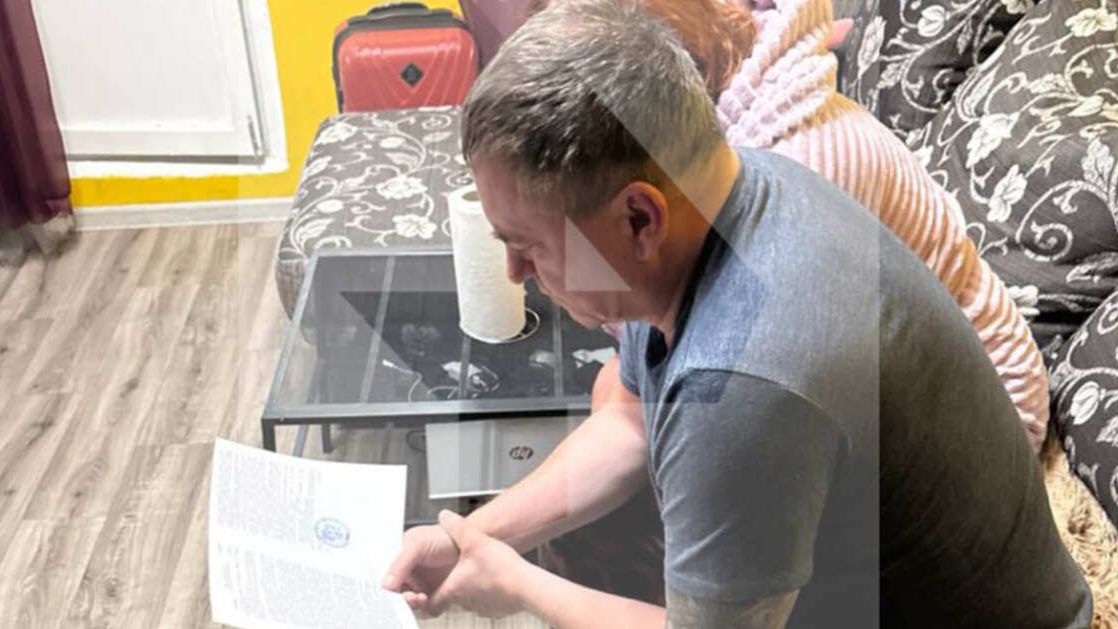
“I am making this statement,” Vivas signed for the Hughes Inquiry on February 12, 2024, “in addition to a letter I provided on 27 July 2018. Prior to me writing and signing that letter, I was shown a number of images of a small perfume bottle branded ‘Nina Ricci Premier Jour Perfume’. The images I viewed were under police exhibit reference [redaction tagged VN551/10]. I was shown further images of a perfume box labelled as ‘Premier Jour Nina Ricci’. This was under police exhibit reference [redaction tagged VN521/3]. On Friday 2nd February 2024, I was again shown the images of [redaction tagged VN551/10] and [redaction tagged VN521/3] before signing this statement and I set out my observations on them below.”
The photographs of the poison bottle shown in public on November 28, 2024, were censored – a large black mark was pasted across the bottle contents. But British agents had shown Vivas the photographs just days after July 11, 2018, when the bottle was purportedly discovered at the Sturgess crime scene. Vivas was shown the photographs again more than five years later, before he testified before Hughes. He saw the bottle without the black mark.
The key observation he confirmed he had seen on both occasions was this: “The liquid inside the bottle. Premier Jour perfume is pale pink, and from the photos I observe that the liquid contained in the bottle is yellow.”
If the perfume is pink; if Novichok is colourless; and if the liquid in the murder weapon was yellow, then the liquid in the perfume bottle allegedly used by Sturgess cannot have been Novichok.
QED – Quod erat demonstrandum, as the ancient lawyers used to conclude their proofs.
The colour yellow was a British fabrication; the black mark was British camouflage. And yet the secret slipped out into the open by Hughes’s mistake. The bottle which Sturgess allegedly sprayed herself with did not contain Novichok.

Left, Josep Vivas; right, Charles Rowley.
The only witness to the existence of the perfume bottle before Sturgess allegedly used it was Charles Rowley, but Hughes ruled he was unable to give consistent and credible evidence and was excluded from public testimony and cross-examination.
“It is impossible,” Hughes reported, “to avoid the conclusion that by now Charlie Rowley was – no doubt with good intentions – simply creating false memories (confabulating) or reconstructing events, and was, moreover, astute to pick up hints from the interviewing officers which he may have misinterpreted as endorsing the theory that the discovery had been (a) in a bin near the charity shops and (b) during the week before Saturday 30 June 2018. Neither of those propositions was in any way supported by any independent evidence, save that such bins were often his targets… The same applies to a much later interview in February 2019, when Charlie Rowley said that he did not think that he had had the bottle for more than four days… Nothing is added by a valiant attempt by the police on 15 July 2019 to compose a witness statement of his recollections for the Inquest… Here, Charlie Rowley returned to the assertion that the bottle had been picked up in the street on his way to the pharmacy, either in Salisbury or Amesbury, whilst adding that he might have picked it up from the charity bins “the day before” (Friday 29 June 2018). It follows that I derive no assistance from Charlie Rowley’s understandably fallible memory on the subject of when and where he came into possession of the bottle. I do, however, find that it is more probable than not that he did find it somewhere, and that for this to happen it must have been left somewhere in a public or semi-public place by those who had used Novichok on Sunday 4 March 2018 on the front-door handle of Sergei Skripal’s house” [page 84].
“More probable than not that he did find it somewhere” is less probable than that Rowley did not find the perfume bottle anywhere; did not give it to Sturgess; did not know how it showed up in his kitchen days after the police searches of the house had uncovered drug paraphernalia and illegal drugs but not the bottle of the yellow liquid.
Hughes was right to find that Rowley was “creating false memories”. That’s because he could not remember what had been fabricated after he and Sturgess had been taken to hospital. Rowley could not remember what he hadn’t done. He couldn’t testify that he had found the perfume bottle because he hadn’t found it. Rowley’s memory failure — “no doubt with good intentions” in Hughes’s endorsement – was evidence there had been no perfume bottle in the house when Sturgess had the heart attack which killed her.
The toxicological evidence of Sturgess’s blood samples establishes that the combination of drugs in Sturgess’s bloodstream, including fentanyl and cocaine, was the probable cause of her death – Hughes ignores the evidence.

Source:
https://dsiweb-prod.s3.eu-west-2.amazon ... 005227.pdf
In the evidence presented at the Hughes hearings, Guy Rutty testified as the pathologist engaged by the Home Office; he was appointed together with Dr Philip Lumb by the Wiltshire County coroner, David Ridley, to conduct the autopsy on Sturgess’s body and gather the post-mortem evidence. Note that from Rutty’s partially redacted documents, the location of the “designated mortuary” was kept secret. Evidence unreported by Hughes has ruled out the location as Salisbury hospital where Sturgess had died, or the local undertaker, Chris White Funeral Directors, which took the body from the mortuary the day before the funeral on July 30. The location, in fact, was DSTL Porton Down; its representatives were recorded as attending the autopsy.
The procedure started at 1320 on July 17 and continued until just after midnight. The date on the report is November 29, 2018. That means more than five months had elapsed between the post-mortem and the signing of Rutty’s report. The dates given for the consultations which Rutty records with others ran from mid-July to September 16. The date for the DSTL Porton Down report he attached to his own has been classified, but meetings and exchanges of notes between Rutty and Porton Down agents are dated by Rutty on July 26 and August 2. Hughes omits to investigate the reason for the delay until end-November for completing the report; Rutty doesn’t reveal it.
“A toxicology result,” according to Rutty’s report, was also entered which showed the presence of clopidogrel, rocuronium, atropine, cocaine and its metabolite, ephedrine and pseudoephedrine, fentanyl, midazolam, ethyl sulphate, mirtazapine and its metabolite, zopiclone and its metabolite as well as nicotine and its metabolite. An EEG (a test to look at brain activity) was performed which showed very low amplitude with little, if any cerebral activity which was considered to represent diffuse cerebral dysfunction which could be due to severe hypoxic brain injury (brain injury due to a lack of oxygen).”
The text of Rutty’s report indicates that the toxicological evidence obtained from testing of Sturgess in hospital and by an associated laboratory failed to detect Novichok — page 23, lines 567-68. This means that the initial cause of death listed on the documents required for release of Sturgess’s body for cremation and burial did not mention Novichok. These documents – the coroner’s release, the funeral director’s cremation form – have all been kept secret.
The discovery of Novichok is reported in Rutty’s autopsy report to have occurred in November when “the second examination used an immunohistochemical approach” and “the third examination used a histochemical approach”. Follow what Rutty told Hughes in the hearing of November 5 here.
In his official reporting Rutty used circumlocutions to conclude he couldn’t tell what drugs may have been the cause of her death. The toxicology, he said, “identified a number of therapeutic and non-therapeutic drugs to be present. Although I have not been provided [sic] with the levels of the drugs identified, I am not aware [sic] that there is any indication [sic] to suggest that the deceased’s collapse was a direct [sic] result of the action of either a therapeutic or illicit drug.” – line 273. Sic marks Rutty’s evasions.

Source:
https://dsiweb-prod.s3.eu-west-2.amazon ... 005526.pdf
In the Anglo-American law and court practice for suspicious death cases, this is the point at which evidence is either inadmissible for the prosecution’s case or short of the required standard of beyond reasonable doubt for the judge and jury. Rutty also qualified his conclusion on the cause of Sturgess’s death by saying: “I am of the opinion that these observations, although reported organophosphate toxicity, are not necessarily specific in their own right to organophosphate toxicity.” This isn’t gobbledygook. It is Rutty’s qualification of what he was told by Porton Down and MOD to sign for cause of death. “Not necessarily specific” means no proof of Russian Novichok beyond reasonable doubt, nor even on the balance of probabilities.
In his testimony to Hughes, Rutty referred to what he had been told by Porton Down, claiming it was “independent”. Independent of Hughes’s proceeding, Porton Down was. . Independent of the UK Ministry of Defence (MOD), it was not. Whom did Rutty think he was fooling?
“I understand,” testified Rutty, “that there is independent [sic] laboratory evidence that the deceased was exposed to Novichok and that it is considered [sic] that this was through a dermal route. Thus, I am of the opinion that the clinical presentation in terms of the signs and symptoms, as well as the in-lift laboratory tests and the tests and reports received following the autopsy examination all support that Dawn Sturgess did not collapse or die from a natural medical event, an assault or the result of a therapeutic or illicit drug overdose but rather due to the complications resulting from a cardiac arrest caused by Novichok toxicity. Having been exposed to the nerve agent Novichok…appears from the information I have been provided [sic] to have occurred through a dermal exposure…”
Missing from this, the sole source of Hughes’s pathological evidence, is the original pathologist engaged by Coroner Ridley; that was Dr Philip Lumb. In July 2018 Rutty was accompanied by an academic colleague, also a Home Office-registered pathologist for suspicious death cases, Dr Philip Lumb. According to Rutty’s summary report, Lumb “was instructed by HM Senior Coroner to be present throughout the autopsy examination and to provide a second independent report concerning the autopsy findings and death of Dawn Sturgess. I can confirm that Dr Lumb and I undertook the examination together, and that 1 have not had sight of his independent report” [page 8].
Lumb and his report have been excluded by Hughes, from the Inquiry investigations. Lumb’s “independent report”, along with what Rutty has identified as Lumb’s “autopsy contemporaneous notes” and emails the two of them have exchanged, have been kept secret. Since Lumb was not present in the second and third examinations conducted by Rutty in November, it is highly likely that he cannot have testified to Hughes that he detected any evidence of Novichok poisoning as a cause of Sturgess’s death. This is the reason Hughes excluded Lumb – without explanation.
Lumb, the independent medical expert who knows what killed Sturgess before Novichok was added to the death certificate by Rutty, refuses to answer press questions.
https://johnhelmer.net/the-british-gove ... es-report/
******
A New Strategic Architecture: Putin’s India Visit and the Recasting of a Decades-Old Partnership
December 11, 2025
By Kautilya The Contemplator, Substack, 12/5/25
Russian President Vladimir Putin’s high-profile visit to India has become one of the most consequential diplomatic moments of the year, not only for the scale of agreements unveiled, but also for the unmistakable symbolism that accompanied it. At a time when New Delhi faces unprecedented tariff pressure from Washington and Moscow remains under expansive Western sanctions, Prime Minister Narendra Modi’s decision to personally receive Putin at Delhi’s Palam airport dominated Indian media. This was not routine protocol. It was a clear geopolitical signal. Traditionally, foreign heads of state are received by a junior minister or, exceptionally, the Minister of External Affairs. Modi’s appearance on the tarmac, accompanied by a warm embrace and a shared car ride, constitutes the highest level of diplomatic courtesy India accords any leader.
Media Optics and the Symbolism of Modi’s Welcome
Indian television channels and newspapers treated the moment as a landmark event. Mainstream outlets like NDTV, India Today, Hindustan Times and DD India ran continuous minute-to-minute coverage, framing the welcome as “rare,” “symbolic,” and an expression of India’s sovereign agency. The visual narrative of Modi breaking protocol, flags lining Rajpath and Putin receiving a tri-services Guard of Honor and a 21-gun salute at Rashtrapati Bhavan, projected a partnership unshaken by Western pressure.
This symbolism carries added significance in 2025. The United States, under the Trump Administration, has imposed a punitive 50% tariff wall on key Indian exports, explicitly linking the additional 25% penalty to India’s continued purchase of discounted Russian oil. Western governments have simultaneously pressured India to scale back its defense and energy ties with Moscow. Against this backdrop, India’s elaborate welcome for Putin was both a reassurance to Moscow and a message to the world that India’s strategic autonomy is not negotiable.
Groundbreaking Economic and Strategic Agreements
In total, the two sides finalized ten inter-governmental agreements and fifteen commercial contracts, inaugurating what both leaders have called a “new economic architecture” for the partnership.
Economic Cooperation Program to 2030
The centerpiece is the Economic Cooperation Program to 2030, which, for the first time, sets explicit, measurable targets, including $100 billion in bilateral trade by 2030. Earlier Modi–Putin summits spoke about expanding trade in general terms. This roadmap introduces hard timelines and structural reforms. Crucially, it aims to rebalance a trade profile skewed by India’s heavy imports of Russian crude. The framework seeks to boost Indian exports across pharmaceuticals, machinery, agriculture, IT services and manufactured goods.
Uralchem Fertilizer Joint Venture
A landmark component is the Uralchem fertilizer joint venture, under which Indian public-sector firms will co-invest in a major gas-based urea plant in Russia dedicated to long-term Indian demand. This moves the partnership beyond a buyer–seller relationship toward shared industrial capacity, a strategic hedge for India, whose food security depends on stable fertilizer supplies. For Russia, it guarantees a secure and long-term downstream market.
Oil Supplies
In energy, Putin publicly pledged “uninterrupted oil supplies” to India, a direct counter to Western attempts to restrict Russian crude flows. This assurance, combined with expanded rupee–rouble settlement systems and mechanisms to channel surplus rupees into Indian assets, marks a major step toward a sanctions-resilient energy and financial corridor.
Pharmaceuticals, Shipbuilding and Arctic Exploration
Beyond fertilizers and oil, the summit significantly advanced cooperation in shipbuilding, pharmaceuticals and Arctic exploration. For India, shipbuilding is strategically crucial. As it becomes a great power and seeks to carry a much larger share of its own trade, it needs a vastly expanded merchant navy. Yet, today Indian yards account for well under 1% of global shipbuilding output, underscoring why access to Russian technology and commercial shipbuilding expertise matters so much. As such, India and Russia agreed to deepen collaboration in civil shipbuilding, including technology transfer, vessel maintenance and greater Indian use of Russian shipyards, an area strategically relevant to India’s Indo-Pacific maritime ambitions.
In pharmaceuticals, Russia committed to supporting Indian companies expanding production and distribution in the Russian market, positioning India as a key supplier at a moment when Western pharmaceutical presence in Russia is shrinking. The leaders also highlighted intensified cooperation in the Russian Arctic and Far East, ranging from hydrocarbon and mineral projects to new shipping routes where India’s investment and manpower are expected to play an increasingly central role in Russia’s pivot to Asia.
Labor Mobility and Tourism Facilitation
The summit also broke new ground in labour mobility. India and Russia are establishing structured pathways for skilled Indian workers, particularly in IT, engineering, construction and healthcare, to take up employment in Russia, while India’s introduction of free e-visas for Russian tourists aims to widen people-to-people ties. This is the first concrete institutional mechanism addressing Russia’s labour shortages and India’s demographic strengths.
Defense Cooperation
Defense cooperation, long the backbone of the partnership, received renewed focus. The leaders accelerated arrangements for S-400 air defense system support, discussed upgrades to legacy platforms and emphasized joint production and localization under India’s “Atmanirbhar Bharat” initiative, a key shift in the defense cooperation framework. This marks a subtle but important development. Rather than diluting defense ties, as many Western analysts had expected, India is converting them into joint industrial capability, thereby strengthening sovereignty in defense manufacturing.
How This Summit Differs from Earlier Modi-Putin Meetings
Compared with earlier bilateral summits, from Delhi 2014 to Moscow 2024, the 2025 summit represents a qualitative shift. Previous meetings largely operated within the established frameworks of arms sales, nuclear power, hydrocarbons and diplomatic coordination. They reinforced the legacy of India–Russia ties but did not fundamentally update the underlying economic or technological architecture.
This summit does precisely that. It transforms the partnership from a collection of sectoral engagements into a strategically diversified, interdependent ecosystem built for today’s era of economic coercion, sanctions warfare and supply-chain vulnerabilities. It also expands cooperation in areas other than defense and energy.
Strategic Autonomy in a Shifting Global Order
The geopolitical context amplifies the significance of these agreements. India today is balancing a complex triad that involves a defense and technology partnership with the United States, a sanctions-stricken but indispensable energy and defense partner in Russia and a Europe aligned with Washington’s sanctions architecture. The 50% US tariff wall, linked explicitly to India’s refusal to reduce Russian oil imports, represents one of the sharpest episodes of economic coercion India has faced from a major partner.
Against this backdrop, Modi’s airport welcome and the sweeping summit outcomes amount to a declaration of strategic autonomy in practice, not rhetoric. India is signaling that it will simultaneously negotiate with the US, deepen cooperation with Russia and maintain its independent geopolitical trajectory.
The 2025 visit thus stands out as a pivotal moment. It reasserts the longevity and adaptability of India–Russia ties, produces a new economic and industrial architecture resilient to external shocks and demonstrates India’s willingness to act as a sovereign pole, not a subordinate, in a rapidly polarizing world.
In short, this was not just another annual summit. It was the unveiling of a new strategic framework for the next decade of India–Russia cooperation, one built to withstand sanctions, tariffs and geopolitical turbulence. India and Russia have responded by tightening, not loosening, their alignment. In doing so, they have reshaped the trajectory of one of the world’s most durable strategic partnerships.
https://natyliesbaldwin.com/2025/12/a-n ... rtnership/
Putin interview with Indian TV on the eve of his trip to India (Excerpt no US, Russia, and Ukraine)
December 10, 2025
Kremlin website, 12/4/25
Geeta Mohan: Mr President, things have changed a little between the US and Russia. The fact that America is engaging you, we would have loved to be a fly on the wall when you were meeting with Jared Kushner and Steve Witkoff. That was an important meeting. Were there red lines that Russia reiterated? What really happened?
Vladimir Putin: It’s premature to discuss that now. I doubt it would interest you to hear about it, as it lasted five hours. Frankly, even I grew weary of it – five hours is too much. However, it was necessary because…
Anjana Om Kashyap: Five hours! Witkoff and Kushner?
Vladimir Putin: Yes, and I was alone. Can you imagine it?
But speaking seriously, it was a very productive conversation, as what our American colleagues presented was, in one way or another, based on our prior agreements made before my meeting with President Trump in Alaska. We had discussed these very issues, to some extent, at the meeting in Anchorage. However, what the Americans brought us this time was truly new; we hadn’t seen it before. Therefore, we had to go through practically every point, which is why it took so much time. So it was a meaningful, highly specific, and substantive conversation.
Anjana Om Kashyap: Were there certain specific points of disagreement?
Vladimir Putin: Yes, such issues were raised, we discussed them. But this is a complex task and a challenging mission that President Trump took upon himself – fair enough, I say without irony, because achieving consensus among conflicting parties is no easy task. But President Trump, truly, I believe, he sincerely tries to do this.
We went through each point again, let me reiterate this. Sometimes we said, “yes, we can discuss this, but with that one we cannot agree.” That was how the work proceeded. To say now what exactly doesn’t suit us or where we could possibly agree seems premature, since it might disrupt the very mode of operation that President Trump is trying to establish.
But that’s what they do – shuttle diplomacy. They spoke with Ukrainian representatives, then with Europeans, came here, had another meeting with Ukrainians and Europeans. I think we should engage in this effort rather than obstruct it.
Geeta Mohan: You are saying that the 28 points peace proposal is not on the table?
Vladimir Putin: They’re discussing – that’s what they’re discussing right now. They simply broke down those 28 points, then 27, into four packages and proposed discussing these four packages. But essentially, it’s still just the same old 27 points.
Anjana Om Kashyap: We will go back to that and try to understand how it’s going forward.
What happened in Alaska? You met President Trump and it was all about the peace deal, right? What happened? Did you actually have sense of or see a sincere intent?
Vladimir Putin: Yes, there was indeed a sense – no, more than just a sense, I have absolutely no doubt that President Trump had genuine intentions (we won’t discuss here what caused them or why they appeared, but they’re definitely present). Both the United States and President Trump likely have their own understanding of why this needs to be resolved quickly.
Moreover, by the way, on humanitarian grounds too. I truly believe that is one of the motives behind President Trump’s actions regarding this matter because he constantly speaks about his wish to minimise losses, and I’m confident that his sincerity is genuine. He undoubtedly considers these humanitarian concerns when formulating his decisions.
However, other factors also come into play: political considerations and economic interests. Therefore, I believe that the US is actively seeking a solution to this problem.
Geeta Mohan: Yes, he has spoken about intentions, you’re right about. He claimed he would end wars and conflicts – causing consternation in India when he claimed that he had brought peace between India and Pakistan, now he’s looking at Russia and Ukraine. Do you really think he’s a peacemaker?
Vladimir Putin: Regarding the situation in Ukraine – yes, let me repeat once again, I am absolutely certain, with no doubt at all, he sincerely aims for a peaceful resolution.
Let me stress once again: the United States may have various reasons for this – humanitarian ones personally for Trump because he genuinely wants to end hostilities and prevent further loss of life, but there could also be political interests tied to ending the confrontation between Russia and Ukraine, or economic motives too. By the way, they can be in the energy area and in other areas. There are numerous areas where restoring economic relations between the US and Russia would benefit both sides.
I showed you some letters – I won’t go into this now – large US companies sent to us. We should remember this.
Comment: Really?
Vladimir Putin: Of course. About their existence. They’re waiting until all problems are solved, and they’re ready to return to us, they want this, asking us not to forget about them. The letters are there.
Comment: It’s surprising.
Vladimir Putin: What’s so surprising about that? Many want to return. So, of course, the Indian government is saying right: “Why should we leave…?”
Geeta Mohan: They arrived with letters from companies – quite astonishingly unexpected indeed.
Vladimir Putin: No, I believe there has been a misunderstanding. We have letters from American companies – letters they have sent us, where they urge us not to forget about their existence. These are our former partners, who did not leave by choice. They express a clear desire to resume cooperation and are waiting, among other things, for a corresponding political signal.
Anjana Om Kashyap: This conversation is becoming very interesting because there are so many highlights of understanding and it is really pleasant to see you, and your sense of humour, and how you are putting things forth.
But now we are going to go into a very serious matter – and that is the Russia-Ukraine war. So what, in your view, would constitute a victory for Russia in the Russia-Ukraine war? What are the red lines? Because you have, and I quote you, you have said very clearly that Russia will lay down arms only if Kiev’s troops withdraw from the territories claimed by Russia, which parts would that be?
Vladimir Putin: You know, it’s not about victory, like you have said. The point is that Russia is determined – and will certainly do so – to protect its interests. Protect its people living there, protect our traditional values, Russian language, and so on. Protection, by the way, of religion that has been cultivated on these lands for centuries. Yet you know that the Russian Orthodox Church in Ukraine is almost banned: they seize churches, drive people out of temples, etc. – it is a problem. And I’m not even mentioning the ban on the Russian language, etc. It is all part of a big set of issues.
Let me remind you: we were not the ones to start this war. The West egged Ukraine on and supported the events, orchestrating a coup d’état. That was the point that triggered the events in Crimea, followed by developments in southeastern Ukraine, in Donbass.
They don’t even mention it – we’ve tried to resolve these issues peacefully for eight years, signed the Minsk agreements, hoping that they could be resolved through peaceful means. But Western leaders openly admitted later that they never intended to honour those agreements, signing them merely to allow Ukraine to arm itself and continue fighting against us. After eight years of relentless violence against our citizens of Donbass – something the West hasn’t uttered a word about – we were forced to recognise these republics first, and secondly, provide support. Our special military operation isn’t the start of a war, but rather an attempt to end one that the West ignited using Ukrainian nationalists. That’s what is really happening now. That’s the crux of the problem.
We will finish it when we achieve the goals set at the beginning of the special military operation – when we free these territories. That’s all.
Anjana Om Kashyap: What is the end gain for Vladimir Putin in Ukraine?
Vladimir Putin: I have said that already. Listen, we didn’t recognise these self-proclaimed republics for eight years. Eight years. They declared independence, while we were trying to establish relations between the rest of Ukraine and those republics. But when we realised this was impossible, that they were simply being destroyed, we had no choice but to recognise them – and not just their existence on part of the territory, but within administrative boundaries established during Soviet times, then later under independent Ukraine after its independence, still within those administrative borders.
And right away we told Ukraine, the Ukrainian troops: ”People don’t want to live with you anymore. They voted in a referendum for independence. Withdraw your troops from there, and there won’t be any military actions.“ No, they chose to fight instead.
Now they have pretty much fought themselves into a corner, all this boils down to one thing: either we take back these territories by force, or eventually Ukrainian troops withdraw and stop killing people there.
Anjana Om Kashyap: Before we move to the other one, just one last question. On March 8, 2014, during the annexation of Crimea, you were addressing the Federation Council and you said, ”Kiev is the mother of all Russian cities.“ What did you mean?
Vladimir Putin: Here I haven’t made up anything – historically this is how it was said. Originally, the Russian state was formed from several centres. The first capital, according to history, was in Novgorod in the northwest. Later the federal status moved to the city of Veliky Novgorod, and then it moved to Kiev. This was Ancient Rus. And since then, Kiev has been known as the ”mother of all Russian cities.“
Later, historical events unfolded in such a way that the ancient Russian state split into two parts. One part began developing with Moscow as its centre, while another part fell under other countries. For instance, the part with Kiev, along with some other lands, these parts first formed a state with Lithuania, subsequently merged with Poland, forming the Polish-Lithuanian Commonwealth. Thus, this part of the ancient Russian state ended up in Poland, and by the seventeenth century, it sought to return back to Russia.
Geeta Mohan: The fact that you know, you were mentioning the history and it brings me to what I did when the conflict was underway. I had travelled to Donetsk, I had travelled to Lugansk, Zaporozhye, Kherson, and most of the people there are Russian-speaking, they speak Russian language. They were very disappointed that Kiev had banned that language in eastern Ukraine. But they were also a little shocked at how Putin is doing this to us, we are his people. A lot of women I spoke to were in shock. So, what do you have to say to people in eastern Ukraine who actually have families in Russia, who, on a daily basis, move from Ukraine to Russia. What do you have to say to them?
Vladimir Putin: I didn’t understand the question. What exactly shocked them?
Geeta Mohan: They were shocked that there was an operation that happened, and their homes were destroyed, because they lived in eastern Ukraine. And they have love for Russia and the Russian people, and they are Russian-speaking themselves.
Vladimir Putin: The answer is quite straightforward. These individuals presumably resided in those parts of Ukraine – specifically, in the areas of the Lugansk or Donetsk region – that remained under the control of the Kiev authorities at the time. Meanwhile, that part of the Lugansk or Donetsk region outside their control was being subjected to intense military action by the Kiev authorities. We were consequently forced to extend support to those areas that had declared independence. That is the first point.
Secondly, we provided people with an opportunity to express their will in an open referendum. Those who believed it was in their interest to join Russia voted accordingly. Those who did not were free to leave unhindered for other parts of the Ukrainian state. We have never placed any obstacles in the way of that choice.
Geeta Mohan: What do you make of President Zelensky? He was promised NATO, the European Union promised him the EU. But nothing really happened. Was NATO ever on the table for Ukraine?
Vladimir Putin: When this gentleman came to power, he declared that he would pursue peace at all costs, using every means possible, without sparing even his career. But now we see things differently. He follows the same pattern as his predecessors – putting the interests of a narrow nationalist group, particularly radical nationalists, ahead of those of the people. Essentially, he is addressing their concerns rather than those of the nation.
This regime’s mindset truly resembles a neo-Nazi regime because extreme nationalism and neo-Nazism are almost indistinguishable concepts. Today, undeniably, military action dominates their approach. However, they haven’t achieved much success here either.
I have already said before that what matters most for them is realising that the best way to resolve the problems is through peaceful negotiations, and we attempted to negotiate with them back in 2022. What exactly they plan to do remains to be asked from them directly.
Anjana Om Kashyap: That would be interesting to see what they have to say on that, and how this peace process goes forward.
But you have always said that the eastward expansion of NATO is your real concern. Ukraine has not got this NATO membership as of now. My question to you – is NATO expansion a real threat or just a pretext for what you think is a part of Ukraine which is probably you want control over? Or you think that injustice is being done, the Russian language is being banned – these are the real issues?
Vladimir Putin: Listen, NATO is another matter altogether. The Russian language, Russian culture, religion, and even territorial issues – these are very important topics, one subject. NATO is something entirely different. We don’t demand anything exclusive for ourselves here.
First of all, there are general agreements that the security of one state cannot be guaranteed by undermining the security of others. This idea might seem somewhat obscure, but I’ll explain it simply. Each country, including Ukraine, has the right to choose its own means of defence and ensure its own safety. Correct? Absolutely correct. Do we deny Ukraine this? No. But it’s not acceptable if done at Russia’s expense. Ukraine believes it would benefit from joining NATO. And we say: that threatens our security, let’s find a way to secure yours without threatening us.
Secondly, we are not asking for anything unusual or unexpected, nothing falling from the sky. We are just insisting on fulfilling the promises already made to us. These weren’t invented yesterday. They were pledged to Russia back in the ’90s: no expansion eastward—this was stated publicly. Since then, several waves of expansion took place, culminating with Ukraine being drawn into NATO. This completely displeases us and poses a serious threat. Let’s remember that NATO is a military-political alliance, and Article Five of the Washington Treaty establishing NATO hasn’t been repealed. It’s a threat to us. Nobody bothers to take us seriously.
Lastly, when Ukraine became independent, few people recall this: what was the first document ratifying independence? It was the Declaration of State Sovereignty, Independence of Ukraine. That forms the foundation of Ukrainian sovereignty and modern statehood. And it clearly states that Ukraine is a neutral state.
Geeta Mohan: Was that also the basis for what happened when you decided to annex Crimea, you only seized the water port, a very important strategic port for Russia? And then Russia was no longer part of the G8. Today, the West claims, or says, that you actions in the recent past are the reason for, and I quote-unquote, the isolation of Russia.
Vladimir Putin: We didn’t need to seize that important port in Crimea because it was ours already – our Navy had been stationed there under the agreement with Ukraine, which is a fact. After the collapse of the Soviet Union, our fleet remained there regardless. The matter isn’t about that, though it’s significant, but that’s not what we’re talking about here.
And we did not annex Crimea, I want to emphasise this point. We simply came to help people who didn’t want their lives or fate tied to those who staged a coup in Ukraine. They said: “Hey, nationalist extremists took over in Kiev. Did anyone ask us? Ok, we ended up as part of independent Ukraine after the dissolution of the USSR. So be it, history happened like that. Fine, ok, now we’ll live that way. But we believe that we exist in a democratic state. And if coups happen here with unknown consequences, then we won’t accept that, we don’t want to live like that.” There was a threat not just of pressure, but of outright violence against the Crimeans. Russia stepped in to help them. How could we do otherwise? If someone believes differently, thinking that Russia would act differently, they’re deeply mistaken. We’ll always defend our interests and our people…
https://natyliesbaldwin.com/2025/12/put ... d-ukraine/
 The Americans continue to tame the crazed European Union. Naturally, so that the sick animal remembers who’s the real boss. Even Musk (in response to the fine against X) contributed to this, wishing for the EU’s disintegration. Not bad! Overall, this is to our benefit. Better Trump’s great-power pragmatism than Biden’s globalist insanity.


 Last year, the Russian Orkan, Vizir, and BEK-1000 unmanned combat vehicles (UCVs) were unveiled for the first time. These vehicles can travel 500 km or more and carry a payload of 1 ton or more. In the fall of that year, it was reported that the Vizir reusable drone was ready for serial production.