Cuba

User avatar
blindpig
Posts: 15306
Joined: Fri Jul 14, 2017 5:44 pm
Location: Turtle Island
Contact:

Re: Cuba

Post by blindpig » Wed Dec 03, 2025 3:09 pm

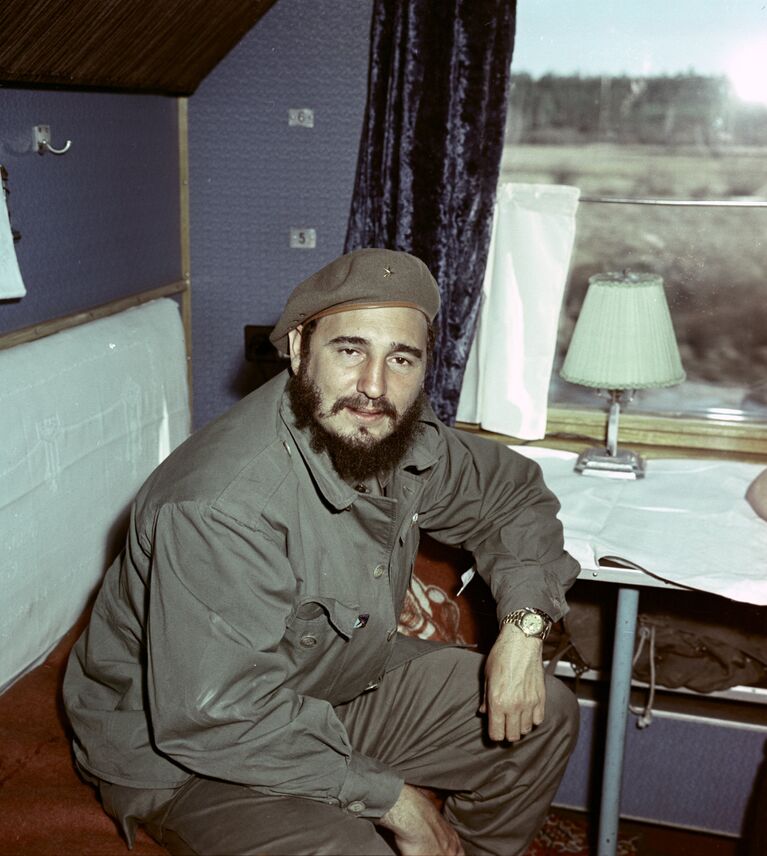
History is still absolving Fidel Castro
December 2, 2025 Gregory E. Williams

Image
April 17, 1961 – Fidel Castro, lower right, is seated inside a tank at Playa Girón during the Bay of Pigs invasion, in which Washington-backed forces attempted to topple the revolutionary government.

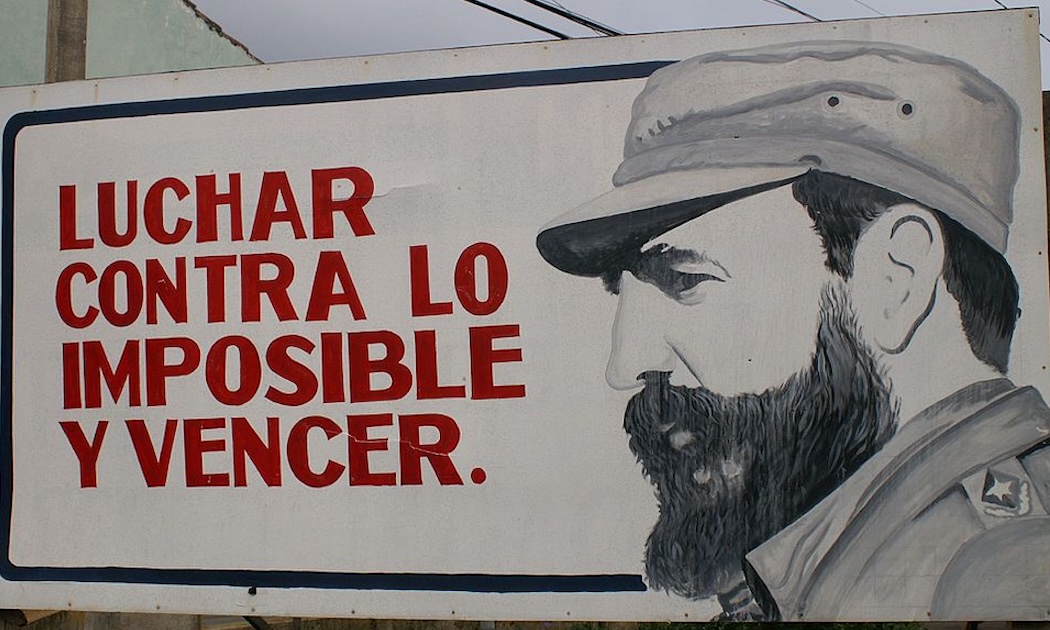
Fidel Castro was born on Aug. 13, 1926. If he were alive today, he’d be turning 100 next year. In Cuba, preparations are already underway to celebrate his centennial. But even without the anniversary, current events – the dangerous world situation right now – warrant a reappraisal of Fidel’s life and the Cuban revolution. They have a lot to teach us.

Right now, the U.S. government is intensifying its attacks on Venezuela and other countries of Latin America. This imperialist government, run for the billionaires, has already been illegally assassinating people in the Caribbean who are just trying to make a living, offering zero proof that they are smuggling drugs.

War is a real danger. This would not only be a disaster for Latin America, but also for working-class and oppressed people here in the U.S. itself. (We always seem to get poorer as the war profiteers get richer.)

But Washington’s attempts to subjugate Latin America to Wall Street are nothing new. Fidel Castro spent his life fighting against the murder machine that is U.S. imperialism. And with his leadership, the Cuban revolution first threw off the U.S.-backed Batista dictatorship and then spent decades fighting off U.S. attempts to resubjugate Cuba. Sixty-six years later and they haven’t beaten the Cuban revolution.

Fidel understood that there really was no making peace with imperialism. The leaders of the global capitalist system might soften their tone from time to time, pretend that they will start playing fair. Trump exemplifies this pattern. But the unrelenting profit motive that drives the whole system can never allow peace, and the imperialists can never accept it when people of formerly colonized countries of the Global South, like Cuba, start to run their own affairs.

The problem, from the oligarchs’ point of view, is that if Global South countries are independent, the working-class and oppressed majority there could get hold of the reins of power and actually help the people. When that happens, it threatens corporate profits (the same corporations keeping us down here).

That’s why the U.S. and Britain backed a coup in Iran in 1953, inaugurating decades of bloody dictatorship. The Iranian government had nationalized the oil industry and wanted to use the country’s resources to raise living standards. That meant stopping U.S. and British capitalists from stealing everything.

Venezuela’s crime

There are similarities between Iran and Venezuela, which happens to have the largest proven oil reserves in the world. Venezuela nationalized its oil in 1976, and when Hugo Chávez was elected in 1998, bringing the Bolivarian revolution to power in 1999, the government used the country’s wealth to undertake massive efforts to uplift the people, expanding access to housing, education, health care, etc. Washington has been trying to destroy Venezuela’s Bolivarian government, essentially from day one, long before the bogus narco-state accusations.

Venezuela’s crime is threatening foreign capitalist profits. That was the crime of Iran, and it’s the crime of Cuba. The imperialists can’t accept anything that looks like self-determination. That’s why the Palestinian people’s resolve makes them crazy. That’s why Trump vilifies the Black majority government of South Africa.

There are many things we can learn from Fidel Castro’s life as we contemplate his centennial. But one is that the imperialist system will never accommodate itself to us – to oppressed people, to workers. So, we should not accommodate ourselves to it. Instead, we have to fight it.

https://www.struggle-la-lucha.org/2025/ ... el-castro/

******

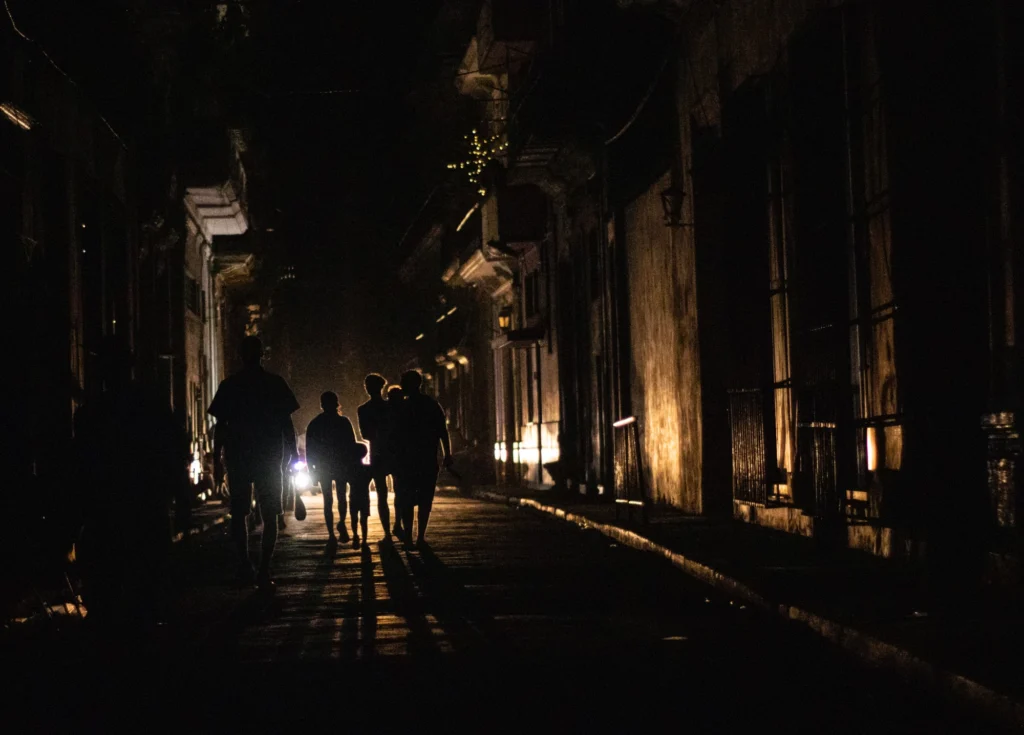
Massive Blackout Affects Western Cuba

Image
Cuban people walk in the dark. Photo: El Estornudo.

December 3, 2025 Hour: 10:38 am

The U.S. blockade makes it difficult to supply spare parts, and increases repair costs.

On Wednesday, a massive blackout left 3.5 million people without electricity in Havana and western Cuba. The Ministry of Energy and Mines (MINEM) informed that the outage of the National Electric System (SEN) occurred at 5:00 a.m. local time.

The Electric Union (UNE) confirmed that the entire capital and the provinces of Pinar del Rio, Artemisa, and Mayabeque were without power. It also informed that the process of energizing substations in the West has already begun and urged the public to follow official information.

The blackout occurred after national demand exceeded 3,300 megawatts, with a 50% generation deficit. Two baseload generating units went out of service: Unit 2 of the Felton Thermoelectric Power Plant (CTE) in Holguin and Unit 3 of the Rente CTE in Santiago province.

On Monday, 59% of the country also experienced simultaneous blackouts due to generation deficits, the highest rate on record. Cuba has suffered five total energy blackouts in the last year, some of which took days to restore.

The UNE has reported partial outages due to frequency fluctuations, with daily blackouts exceeding 20 hours in several areas of the country. At the moment, units are undergoing maintenance: Unit 5 of the Mariel CTE in Artemisa, Unit 2 of the Santa Cruz CTE in Mayabeque, and Unit 4 of the Carlos Manuel de Cespedes CTE in Cienfuegos.


The text reads, “Around 5:00 a.m., a failure occurred on a transmission line linking Santa Cruz del Norte with Guiteras, causing an overload on the other line and consequently the division of the SEN.”

The distributed generation system, based on diesel and fuel oil generators, is affected by a lack of fuel and lubricants. Lazaro Guerra, the MINEM electricity director, explained that the outage occurred on the transmission line between the Santa Cruz del Norte and Guiteras power plants.

Guerra indicated that restoration protocols are being implemented in the western region and that with power stabilized in Matanzas province, substations are being energized to restore service. The energy system is “progressing” while operations remain stable in the eastern region.

On Tuesday, the UNE reported that two units were reconnected: Unit 6 of the Diez de Octubre CTE in Camaguey and Unit 3 of the Rente CTE in Santiago, but it did not cover the deficit. The Antonio Guiteras thermoelectric plant in Matanzas also remained operational.

The MINEM indicated that the crisis stems from aging infrastructure, lack of maintenance, weather damage, and the U.S. embargo, which hinders spare parts, increases repair costs, limits fuel, prevents foreign contracts, and delays renewable energy projects.

https://www.telesurenglish.net/massive- ... tern-cuba/
"There is great chaos under heaven; the situation is excellent."

User avatar
blindpig
Posts: 15306
Joined: Fri Jul 14, 2017 5:44 pm
Location: Turtle Island
Contact:

Re: Cuba

Post by blindpig » Sat Jan 17, 2026 3:18 pm

Competition dedicated to Fidel Castro
January 16, 5:00 PM

Image

Competition dedicated to Fidel Castro

The Fidel Castro Foundation and the Embassy of the Republic of Cuba in the Russian Federation announce a competition dedicated to the personality of Fidel Castro.

The event is being held in honor of the centenary of the Comandante. The competition itself has several nominations.

1. An essay on the life and work of Fidel Castro. This may be a general overview, a specific study (for example, Fidel Castro's idea to create the Committees for the Defense of the Revolution, or his attitude to religion, or ties with the USSR/Russia), or an analysis of any of Fidel Castro's works and/or speeches.

2. A visual artistic work (drawings, sculptures, video art, animation, design work). The main criterion is originality and a meaningful demonstration of ideas. Copying a portrait or image will not be recognized as an original work.

3. Poetry.

4. Choreographic art / musical and songwriting.

The deadline for submission of works is November 1, 2026, but it is better to send them as soon as they are ready. Submissions must be sent to org@fcastro.ru (indicate "competition" in the subject line) or handed over to the local curator. For points 2 and 4, a good-quality photo or video must be included as a link to the uploaded file.

Information about the author(s) must be included with the submission: full name, year of birth, place of study/work, place of residence, and contact information (phone number, email).

There is no age limit for competition participants.

Submitting submissions to the Foundation automatically constitutes consent to their use for non-commercial purposes. Authors are personally responsible for any plagiarism.

All competition participants will receive certificates. The best submissions will be awarded diplomas and prizes.
Submissions will also be published on the Foundation's website, fcastro.ru, and essays and poems will also be published on partner resources.

https://t.me/russiacuba/1250 - zinc

Creative people - your way out.

https://colonelcassad.livejournal.com/10309813.html

Google Translator
"There is great chaos under heaven; the situation is excellent."

User avatar
blindpig
Posts: 15306
Joined: Fri Jul 14, 2017 5:44 pm
Location: Turtle Island
Contact:

Re: Cuba

Post by blindpig » Sat Jan 24, 2026 1:46 pm

Trump weighs imposing 'total oil blockade' on Cuba in bid to topple government

Following the kidnapping of Venezuelan President Nicolas Maduro, the White House reportedly believes the Cuban government is 'ready to fall'

News Desk

JAN 23, 2026

Image
(Photo credit: AP Photo/Ramon Espinosa)

The White House has discussed imposing a total blockade on oil imports to Cuba as part of an effort to promote regime change in the Caribbean nation, Politico reported on 23 January, citing three people familiar with the matter.


Secretary of State Marco Rubio is behind the proposal, according to the sources.

US President Donald Trump stated last week that the US would end Venezuela's shipments of oil to Cuba, which account for 60 percent of the island nation's oil consumption.

Havana has sought to replace subsidized Venezuelan oil with purchases from Mexico at higher market rates to stave off an economic crisis. Cuba sold some of the oil provided by Caracas for the foreign currency needed to import food and machine parts amid harsh US sanctions.

Trump abducted Venezuelan President Nicolas Maduro on 3 January, called himself “acting president,” and is personally managing the revenues of shipments of Venezuelan oil recently sold by Washington.

"A total blockade of oil imports into Cuba could then spark a humanitarian crisis" and, ultimately, regime change, Politico wrote.

"Energy is the chokehold to kill the regime," said one person familiar with the plan.


Toppling the country's communist government, which took power following the Cuban revolution in 1959, which toppled US-backed dictator Fulgencio Batista, is "100 percent a 2026 event" in the view of White House officials, the person added.


Secretary of State Rubio, the son of Cuban immigrants who left the island years before the revolution, has long pushed for regime change in Havana.

After President Trump reacted to a social media post joking about Rubio becoming the president of Cuba, Rubio replied, "Sounds good to me."

Some Republican lawmakers have also pushed for an oil blockade on Cuba in recent weeks.

"There should be not a dime, no petroleum. Nothing should ever get to Cuba," said Senator Rick Scott of Florida last week.

The Wall Street Journal reported on Thursday that White House officials are actively seeking regime change in Cuba, believing that its economy is "close to collapse and that the government has never been this fragile after losing a vital benefactor in Maduro."

US officials are reportedly looking for Cuban officials who "want to cut a deal," the paper added.

Max Blumenthal
@MaxBlumenthal
·
Follow
Marco Rubio has never adequately explained his familial narco-trafficking links

Rubio's brother-in-law, Orlando Cicilia, stored kilos of cocaine in the bedroom of a house where Marco Rubio lived

Cicilia was one of the top drug traffickers in South Florida, and was sentenced to Show more


https://thecradle.co/articles/trump-wei ... government

******

“The Yankee Empire is in Irreversible Decline”: Cubans Respond to Trump’s Threats
Posted by Internationalist 360° on January 22, 2026
Pablo Meriguet, Zoe Alexandra

Image
Cubans cry “We are not terrorists. Take us off the list!” in the great #MarchaDelPueblo in Dec 2024. (Photo: Miguel Díaz-Canel/X)

In the wake of the unilateral US attack on Venezuela, an emboldened empire has sought to intimidate and threaten other nations which threaten its total hegemony.

Three weeks later, the ramifications of the unprecedented US attack on Venezuela continue to reverberate. The military action in itself provoked nearly unanimous condemnation among experts in international diplomacy and law and has been also been a tremendous source of pain for the families of the more than 100 people killed in the nearly two-hour operation on South American territory.

The illegal operation also sparked concerns about the consequences that such a unilateral measure taken by Washington will have on the region and on global geopolitics.

After the attack, several journalists asked Donald Trump directly if the next target would be Cuba, which his administration has been targeting by exacerbating the economic blockade and seizing Venezuelan tankers bound for the island. They repeated threats made by his own Secretary of State, Marco Rubio, a declared opponent of the revolutionary government.

Trump’s ambiguous response to reporters sparked much speculation, until the US president himself wrote on Truth Social: “Cuba lived, for many years, on large amounts of oil and money from Venezuela. In return, Cuba provided “Security Services” for the last two Venezuelan dictators, BUT NOT ANYMORE! Most of those Cubans are DEAD from last week’s U.S.A. attack, and Venezuela doesn’t need protection anymore from the thugs and extortionists who held them hostage for so many years. Venezuela now has the United States of America, the most powerful military in the World (by far!), to protect them, and protect them we will. THERE WILL BE NO MORE OIL OR MONEY GOING TO CUBA – ZERO! I strongly suggest they make a deal, BEFORE IT IS TOO LATE.”

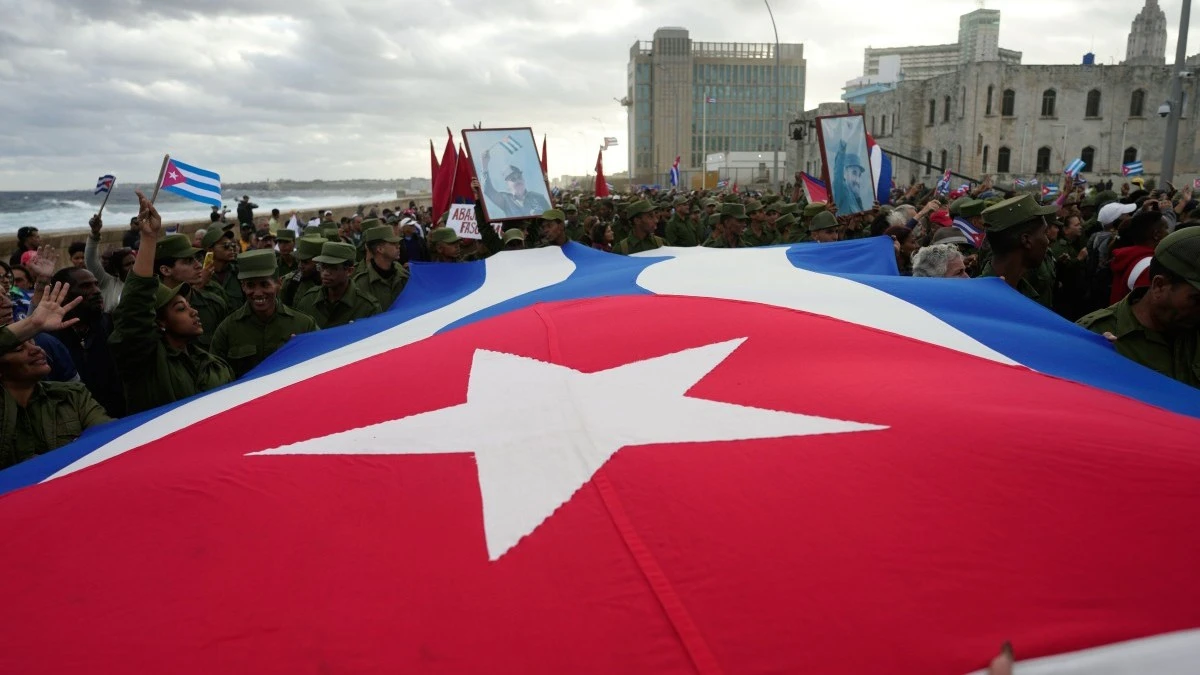
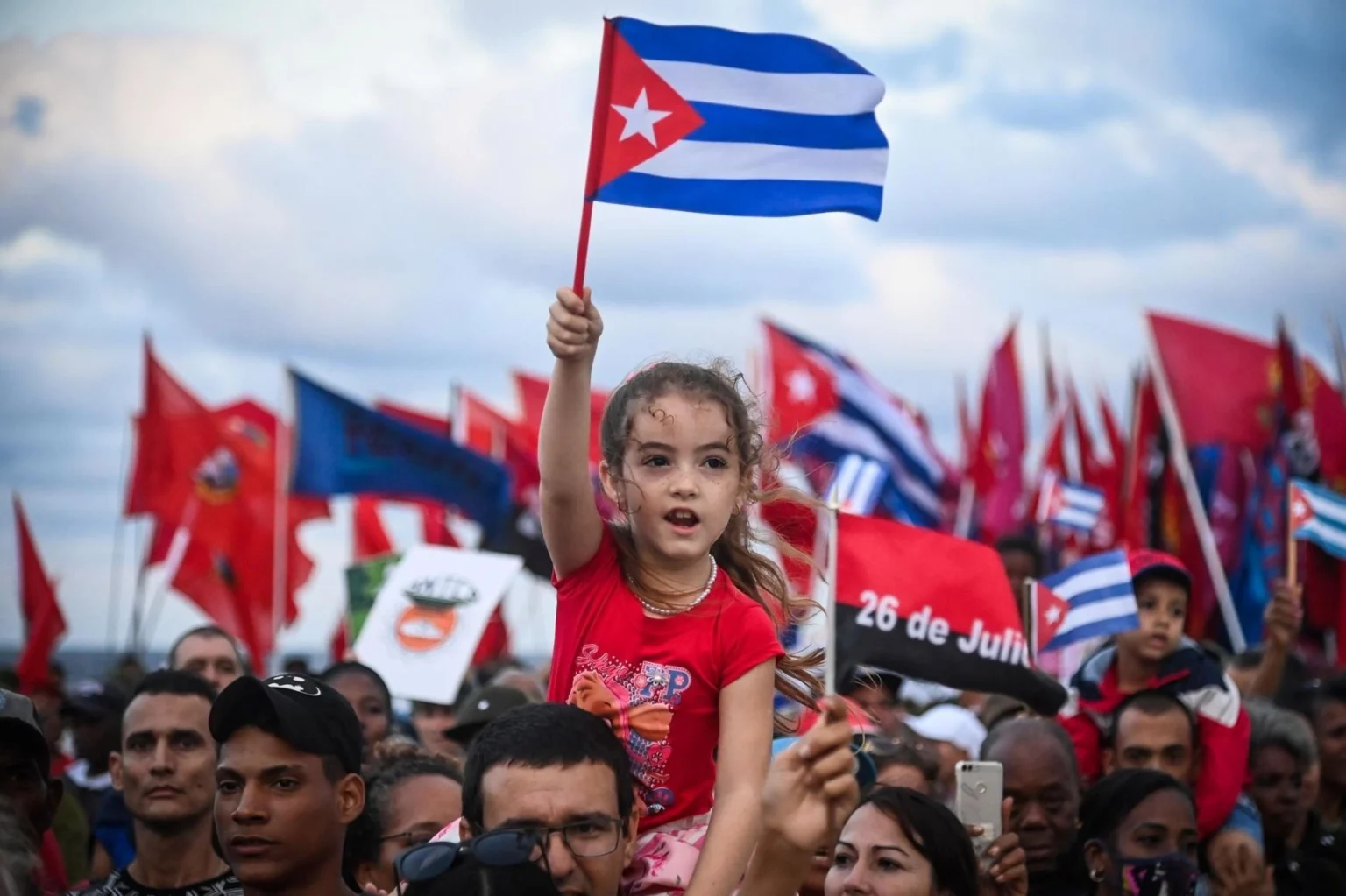
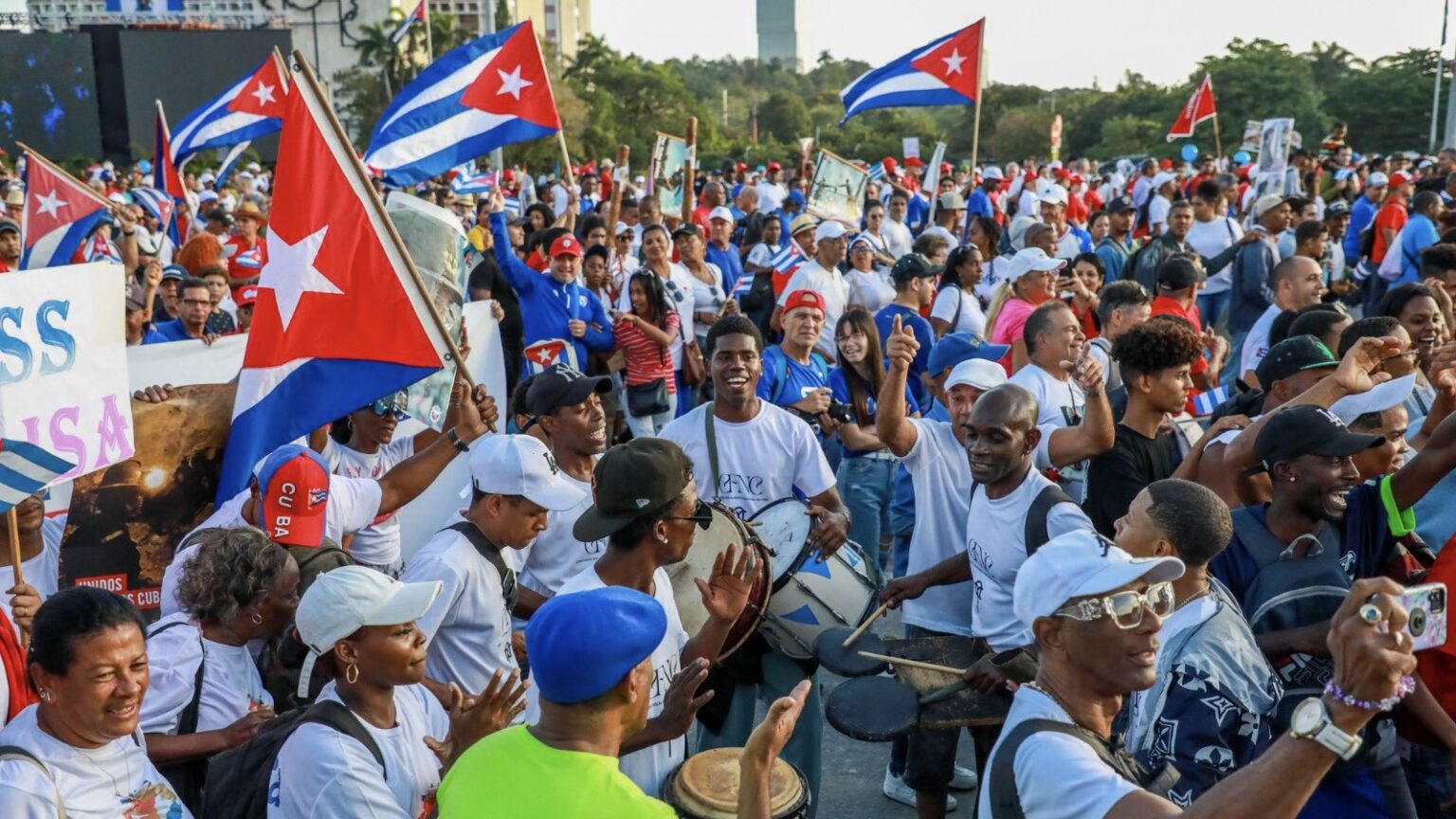
Despite threats, a massive march of nearly 500,000 people paraded through the streets of Havana to honor the 32 Cuban combatants who were killed in Venezuela. During the march, the country’s top leaders promised that they would not surrender in the face of renewed imperialist aggression.

Abel Prieto, Cuban writer and the president of Casa de las Américas, and Dr. José R. Cabañas, the director of the Center for International Policy Research and former Cuban ambassador to the United States, spoke to Peoples Dispatch to share their perspectives on the threats lodged by Trump and how the attack on Venezuela has transformed the region.

Regarding the regional impact of the US military action that resulted, among other things, in the capture of Venezuelan President Nicolás Maduro and his wife Cilia Flores, Abel Prieto asserts that this is an act of extreme right-wing aggression that broke the most basic rules of international law and opens a new and dark chapter in the history of the Americas.

“What the Trump administration did in Venezuela was an act of fascist barbarism, completely illegal, against all norms of civilized coexistence between nations,” he said. “It represents the beginning of a sinister era where, as Ivan Karamazov said, ‘everything is permitted’ for the most powerful. It has been a blow to the Venezuelan people, to the Cuban people, and to all Latin American peoples.”

“However,” Prieto says, the attack has also turned the tide among the progressive movement, “I believe it has strengthened anti-imperialism and anti-fascism in all decent people, whether they are on the left or not. The Yankee Empire is in irreversible decline, and this makes it more violent and rabid.”

Dr. José R. Cabañas, for his part, affirms that the United States’ act of ignoring and destroying international law reveals a geopolitical purpose that cannot be hidden: “The full application of the Monroe Doctrine attempts to dominate the region’s natural resources, prevent countries such as Russia or China, but also the European Union as a whole, from developing preferential economic ties with Latin American and Caribbean nations. The actions of January 3 against Caracas and other subsequent actions have caused fear among certain political forces in the region, but at the same time have reinforced the independent national agenda of several governments that have demanded that the US develop bilateral relations based on greater equality and respect.”

An emboldened empire will be met with steadfast resistance

Regarding the growing danger facing Cuba following Washington’s more aggressive stance, Prieto states: “This supposed ‘victory’ [in Venezuela] has emboldened [the United States]. That is why there are threats against Cuba.”

We feel a mixture of pain and pride [for the 32 Cuban combatants killed on January 3]. Pain, obviously, because 32 Cuban families have been brutally torn apart. Pride, because we know that they faced an enemy that was vastly superior in numbers and military technology, and that they fell with courage and honor, doing their duty. They are our heroes, and they will inspire us in the face of any new aggression.”

Dr. Cabañas agrees that the killing of the 32 Cuban soldiers in combat is already an act of aggression against Cuba: “At the moment, the most significant impact on Cuba has been the loss of our 32 heroes who fell defending the same ideals as our internationalists in Africa, Grenada, or other regions of the world. The imperial forces do not understand the ties between Venezuela and Cuba, which long predate the revolutionary processes of both nations. Their roots go back to the independence movements against the European colonial powers.”

In this regard, Prieto added that the defense of the Cuban Revolution will be carried out to the bitter end: “I don’t know how far these fascists, full of hatred and lacking in morals, will go to hurt Cuba. Our people are not afraid. They will defend their Revolution in the worst circumstances, without ever giving up.”

A long history of aggression and resistance

Perhaps that is why Cuba is the country that has known the most in the history of the entire continent about US hostility and boycotts against a sovereign government. Dr. Cabañas recalls: “Over the last 67 years, the United States has used every weapon possible to destroy the Cuban Revolution. In the 1960s, there were more than 100 CIA-armed gangs in the country that caused hundreds of deaths among the civilian population; there were several terrorist actions, from the invasion of Playa Girón to the persecution of Cuban ships on the high seas.”

The former diplomat recalled that this year marks the 50th anniversary of one of the worst CIA-backed terrorist attacks against Cuba “which claimed dozens of civilian victims. In the 1970s, strains of animal and human diseases were introduced into the country, causing great losses.”

He also recalled that the economic and commercial blockade is a US strategy of attrition that the Cuban people know better than anyone: “The blockade against Cuba was originally established in 1962, but it was updated in legislative bodies that were approved in 1992 and 1996. Not to mention the barrage of negative information against the country, trying to isolate it from the rest of the international community and cause frustration among the local population.”

In this regard, Dr. Cabañas recalls that for six decades, despite facing diverse and persistent attacks, the Cuban Revolution has creatively resisted and continued building a society that centers people’s needs and defies US interests for the region. “They have tried to use all means to destroy us and have failed in their essential purpose. Cuba faced the COVID-19 pandemic with its own resources and had five times fewer victims than the United States, which supposedly had all the resources to prevent thousands of deaths.”

Now, Dr. Cabañas says, Cuba faces the effects of an even stronger economic, commercial, and financial blockade, “But even under these circumstances, Cuba repeats the same question: how would the country progress if it were not the victim of that hostile policy, which is much older and much more complex than the recent events we are referring to now?”

Perhaps that is why Cuba has also been the country that has most vigorously rejected US intervention in Venezuela, not only through diplomatic communiqués, but also through the mobilization of masses who rejected an aggression that seems to loom as a possibility on its borders. Dr. Cabañas states: “Havana was perhaps the capital that, in a matter of hours, mobilized its population for a mass demonstration condemning the crimes committed against Venezuela. These demonstrations have spread throughout the country… Our government has repeatedly expressed Cuba’s historic position both in terms of solidarity with our Latin American and Caribbean brothers and sisters, and in terms of the respectful and equal relationship that the United States is obliged to have with its neighbors and with the international community as a whole.”


https://libya360.wordpress.com/2026/01/ ... s-threats/
"There is great chaos under heaven; the situation is excellent."

User avatar
blindpig
Posts: 15306
Joined: Fri Jul 14, 2017 5:44 pm
Location: Turtle Island
Contact:

Re: Cuba

Post by blindpig » Sat Jan 31, 2026 1:37 pm

Cuba Denounces New US Order Targeting Fuel Supplies

Cuba condemned a US executive order targeting oil suppliers, calling it an escalation of the economic blockade and a violation of international law.

Image
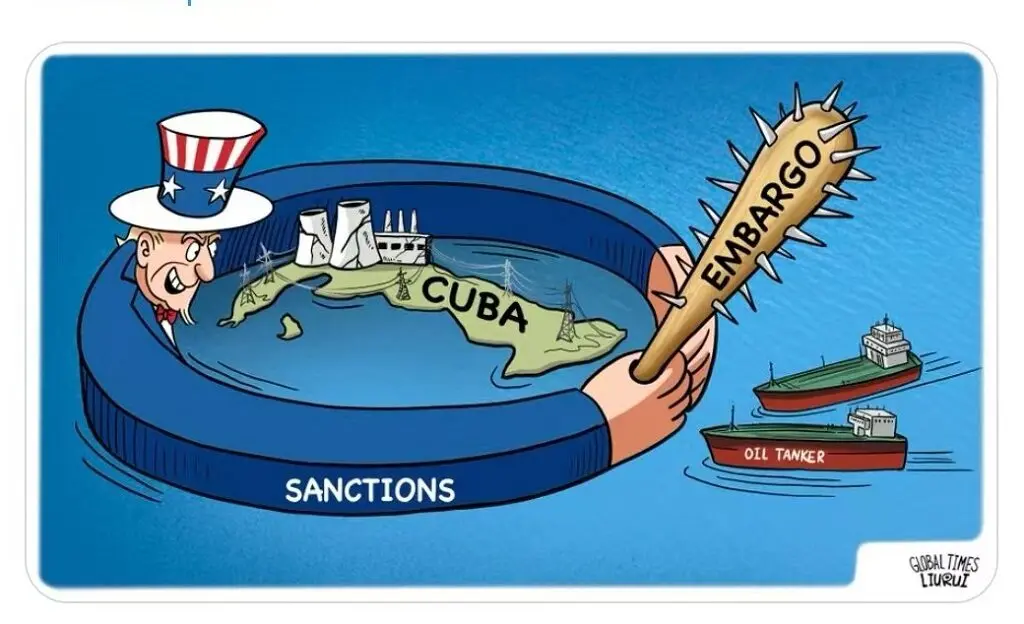
Cuba’s government issued a formal statement on January 30 condemning new US measures affecting fuel supplies to the island. Illustration by: Liu Rui

January 31, 2026 Hour: 12:43 am

Cuba on Friday condemned a US executive order targeting countries supplying oil to the island, calling it an escalation of Washington’s blockade.
The Revolutionary Government condemned in the strongest terms the new escalation by the US government against Cuba. In a statement issued on January 30, Havana said the executive order signed by the US president on January 29, 2026 declares a national emergency that would enable Washington to impose trade tariffs on imports from countries that provide fuel to Cuba.

According to the statement, the order is justified by what the Cuban government described as false and defamatory claims, including the assertion that Cuba represents an “unusual and extraordinary threat” to US national security. The statement said US authorities themselves are aware that such arguments lack credibility.

The government argued that the measure seeks to intensify existing economic pressure through “blackmail, threats, and direct coercion” against third countries, in an effort to prevent fuel from reaching the island. It added that these actions reinforce policies implemented since the first term of President Donald Trump, aimed at restricting Cuba’s access to energy supplies.

1/4
Esteban Lazo: «#Cuba🇨🇺 condena nueva Orden Ejecutiva del Presidente de los Estados Unidos que pretende privar a nuestro país de suministros de combustible» pic.twitter.com/h9JGviZXjU

— Asamblea Nacional Cuba (@AsambleaCuba) January 30, 2026


Translation: Cuba condemns new Executive Order from the President of the United States that seeks to deprive our country of fuel supplies

Cuba’s statement said the executive order violates international law and contravenes the Proclamation of Latin America and the Caribbean as a Zone of Peace. It accused Washington of claiming the right to determine “which nations they can trade with and to which they can export their domestic products,” thereby interfering in the sovereign affairs of other states.

The document recalled that US policy toward Cuba has failed for 67 years to dismantle what it described as “a genuine and legitimate political and revolutionary process of full sovereignty, social justice, and the promotion of peace and solidarity with the rest of the world.”


Translation: We condemn in the strongest terms the new escalation by the United States government against Cuba, in its effort to impose an absolute blockade on fuel supplies to our country.

The government reaffirmed Cuba’s stated willingness to engage in dialogue with the United States based on “international law, sovereign equality, mutual respect, reciprocal benefit, non-interference in internal affairs, and absolute respect for the independence and sovereignty of states.” It also maintained that Cuba poses “no threat whatsoever” to the United States, its national interests, or its citizens, and noted that the country is not subject to sanctions by the international community.

The statement concluded that the international community faces the challenge of deciding whether actions of this kind will define future relations or whether opposition to “aggression, impunity, and abuse” will prevail. It said Cuba will confront the new measures “with firmness, equanimity,” and reiterated its long-standing political position.

https://www.telesurenglish.net/cuba-den ... -supplies/

*****

Cuba’s sovereign example is a threat to Washington
January 30, 2026 Hedelberto López Blanch

Image
Cuban President Miguel Diaz Canel. Photo: Cubaminrex

The example of sovereignty that the Cuban people and government have given to the world is the greatest threat to the decadent U.S. empire, now led by President Donald Trump.

The administration established in the United States after the rise to power of a neo-fascist elite cannot allow the model of a small island to prevail in Latin America. This island has provided selfless support in recent decades to nations suffering from natural disasters or diseases, despite enduring an illegal economic, commercial, and financial blockade that has lasted for more than 60 years.

This paradigm of Cuba is what they want to destroy by any means. Above all, they want to isolate the island and try to starve its people, as Spanish Capt. Gen. Valeriano Weyler attempted to do by establishing concentration camps against the Cuban population between 1896 and 1898—an action that caused the death of more than 200,000 civilians.

Trump signed an executive order Thursday declaring a “national emergency,” based on the supposed “threat” that Cuba represents to the United States and the rest of the region. This declaration is logically absurd to the international community, as the island has no military resources that could attack Washington, but it does have the moral authority to confront these lies.

The document authorizes Secretary of State Marco Rubio and Secretary of Commerce Howard Lutnick to take all necessary measures to implement a system of tariffs and related measures against countries that sell or supply oil to Cuba. This is the “Donroe Doctrine,” Trump’s adaptation of the Monroe Doctrine, which proclaimed “America for the Americans” — meaning America for the United States.

On his X (formerly Twitter) account, Cuban President Miguel Díaz-Canel Bermúdez denounced the move: “This new measure demonstrates the fascist, criminal, and genocidal nature of a cabal that has hijacked the interests of the American people. Under a mendacious and baseless pretext… President Trump intends to strangle the Cuban economy by imposing tariffs on countries that sovereignly trade oil with Cuba.”

Deputy Foreign Minister Carlos Fernández de Cossio declared: “If this demand is accepted, it will inaugurate a new and grotesque chapter of global subservience, opening a dangerous path… from which no state with any notion of sovereignty can feel safe.”

Image
Statement by the Cuban Ministry of Foreign Affairs
Jan. 30, 2026

We condemn in the strongest terms the new escalation by the United States against Cuba. Now they propose to impose a total blockade on fuel supplies to our country.

To justify this, they rely on a long list of lies that attempt to portray Cuba as a threat it is not. Every day there is new evidence that the only threat to the peace, security, and stability of the region, and the only malign influence, is that exerted by the U.S. government against the nations and peoples of “Our America,” whom it attempts to subjugate, plunder, and deprive of their independence.

The U.S. also resorts to blackmail and coercion to try to force other countries to join its universally condemned policy of blockade, threatening them with arbitrary and abusive tariffs in violation of all the norms of free trade.

We denounce before the world this brutal act of aggression against Cuba and its people, who for more than 65 years have been subjected to the longest and cruelest economic blockade ever applied against an entire nation, and whom the U.S. now promises to subject to extreme living conditions.


https://www.struggle-la-lucha.org/2026/ ... ashington/
"There is great chaos under heaven; the situation is excellent."

User avatar
blindpig
Posts: 15306
Joined: Fri Jul 14, 2017 5:44 pm
Location: Turtle Island
Contact:

Re: Cuba

Post by blindpig » Mon Feb 02, 2026 3:50 pm

Hands off Cuba! Defend the people’s right to sovereignty and socialism

British workers must mobilise to protect Cuba and stop the USA’s dastardly regime-change plans.
Proletarian writers

Monday 2 February 2026

Image
The Cuban people have a long and glorious history of facing down imperialist threats and sabotage. Working people all over the world must mobilise in support as they face fresh aggression from the bloodthirsty imperialist warmongers.

As the USA steps up its decades-long campaign to overturn the socialist revolution in Cuba, US president Donald Trump has been making the most bellicose threats of intensified blockade and even military attack against the Cuban people.

The anti-imperialist world must come together to protect Cuba – the beating heart of Latin-American resistance and socialist progress.

We must not let the imperialists believe they can continue to make their dastardly plans and mount their heinous and illegal operations with impunity.

Workers in the imperialist countries must organise now. We must let the ruling class know there will be serious social and economic consequences if their regime-change machinery is ramped up still further against the Cuban people, whose only crime has been to choose their own social system and to replace colonial servitude with dignity and sovereignty.

¡No pasarán!

There will be no surrender, we will fight and we will win
The following statement was issued by Roberto Morales Ojeda, member of the political bureau and secretary of organisation of the central committee of the Communist Party of Cuba, translated from the Spanish.

The Communist Party of Cuba (PCC) firmly denounces President Trump’s new executive order, which seeks to impose a total blockade on fuel supplies to Cuba in order to create greater difficulties for our people and prevent the construction of our socialist model.

That fascist government continues to escalate its hostilities against the Cuban people, employing the same false arguments and its notorious tactics of coercion and intimidation. This criminal and neocolonial empire is the real and sole threat to peace in our region and the world!

There will be no intensified blockades, threats or aggressions that can undermine the firmness and resistance of this heroic people and the revolution. We are the country of Homeland or Death! We will emerge victorious just as we have done for 67 years, during which they have not and will not be able to defeat us.

In addition to being extremely cynical, it is ridiculous to declare Cuba a threat to the richest country in the world. It is evident that this is an absurd pretext that the United States government wields, with the sole purpose of suffocating a country that is geographically small, yet vast in dignity and sovereignty.

Cuba poses no threat or danger to the security of the American people, a fact well understood by everyone. It is the internal situation of that nation – victimised by hatred, intolerance, racism and violence – that poses the genuine threat to that society.

Lies, threats and blackmail will never bring the Cuban people to their knees. The imperialist government launches an attack on our nation in a disrespectful and extraterritorial manner, characteristic of a warmongering administration intent on disregarding the rights of others.

An idea conceived in the depths of a cave can be mightier than an army; José Martí taught us this, and the international community clearly understands where truth and justice lie.

There will be no surrender, we will fight and we will win.

https://thecommunists.org/2026/02/02/ne ... socialism/

******

From blockade to asphyxiation: the US war on Cuba enters its most brutal phase

On January 29, US President Donald Trump declared Cuba an “unusual and extraordinary threat” to US national security and tightened the blockade against the island nation

January 31, 2026 by Manolo De Los Santos

Image
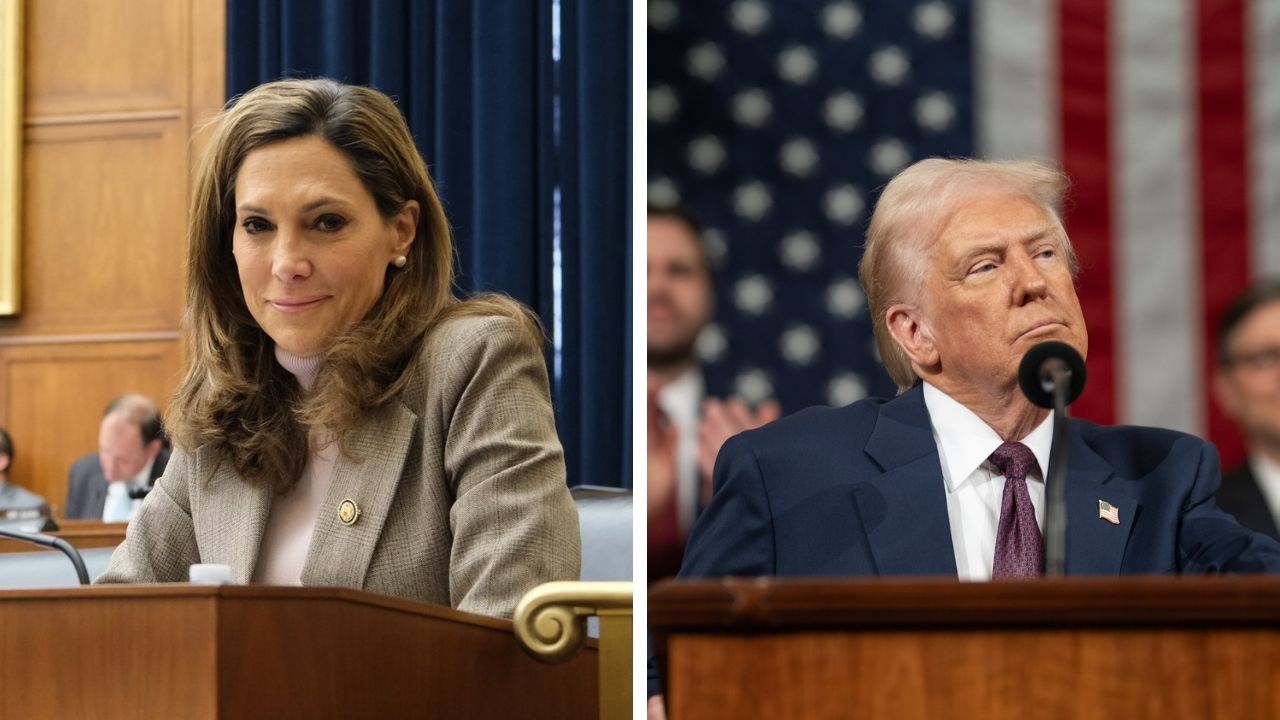
US Rep Maria Elvira Salazar and US President Donald Trump. Photos via Official Pages

In the stillness of a Havana night, the only sounds are the hum of a generator in a distant hospital and the murmur of a family gathered in candlelight. For them, “US national security” is not an abstract concept debated on American cable news; it is the tangible reality of a 20-hour blackout, the smell of spoiled food, and the fear for a child’s refrigerated medicine. This is the face of a policy that the United States government calls a response to an “extraordinary threat.” The true threat, however, is not military. It is the 67-year defiance of a small island nation that has refused to relinquish its sovereignty.

On January 29, 2026, the Trump administration transformed a long-standing campaign of pressure into a blunt instrument of suffocation. With an executive order, it weaponized the US tariff system against any nation, including countries like Mexico, that dares to sell oil to Cuba. This is no longer about isolating or containing the Cuban people from the rest of the hemisphere; it is a deliberate strategy of total economic asphyxiation, a move unseen in its aggression since the Cold War.

The machinery of suffocation
Cuba’s electrical grid, water pumps, public transport, hospitals, and schools run on imported fuel. By coercing third countries, the US aims not merely to sanction but to disrupt a nation’s very metabolism. The Cuban government’s statement cut to the core: this is “blackmail, threats, and direct coercion” designed to prevent fuel from entering the country. The result is collective punishment, a violation of international law that uses hunger, darkness, and disease as political weapons to break the will of a people.

A constant war: the imperial playbook from Eisenhower to Trump
To call this a “foreign policy” is to undersell its nature. It is an evolving, multilateral instrument of war, relentlessly pursued by ten consecutive US presidencies with a single goal: the destruction of Cuba’s socialist project.

Eisenhower (1960) initiated the aggression with the first blockade after Cuba nationalized US-owned refineries.
Kennedy (1961-1962) escalated with the failed Bay of Pigs invasion, made the blockade total, and greenlit Operation Mongoose, a secret program of sabotage and attempted assassination of Cuban leaders, including over 630 attempts against Fidel Castro.
Clinton (1992-1996) delivered what was hoped to be a “knockout blow” after the Soviet Union’s fall, passing the Torricelli and Helms-Burton Acts. These laws extended the US blockade extraterritorially, punishing foreign companies for trading with Cuba and asserting US authority over global commerce.
Trump (2017-2026), after a fragile thaw under Obama, not only reversed course but plunged deeper into cruelty. He added Cuba back to the “State Sponsors of Terrorism” list, a move widely condemned as political fiction, and enacted 243 new sanctions. His most recent act, the 2026 executive order, seeks to seal the island’s fate by starving it of energy.
The strategy has always been naked in its intent. A declassified 1960 State Department memo by Lester D. Mallory advocated creating “hunger, desperation and overthrow of government” by denying “money and supplies.” The human cost is the point, not a side effect.

The “brutal dilemma” and its human toll
This engineered crisis has measurable, horrific consequences. By the 1990s, the tightened blockade caused a 40% drop in caloric intake and a 48% surge in tuberculosis deaths. Today, it blocks the purchase of medical ventilators, spare parts for water purification, and, crucially, the fuel to power them.

This suffering is framed as a necessary sacrifice by members of the Cuban-American mafia that serve in the US Congress. US Representative Maria Elvira Salazar of Florida, recently articulated the chilling calculus: “It’s devastating to think about a mother’s hunger, a child who needs immediate help… But that is precisely the brutal dilemma we face…: to alleviate short-term suffering or to free Cuba forever.”

This promised “freedom” is a return to the pre-1959 past, when US corporations controlled 80% of Cuba’s public utilities and 70% of all arable land. It is the “freedom” to exploit, purchased with the calculated suffering of an entire generation.

The “Donroe Doctrine”: imperialism unleashed
Trump’s escalation is the cornerstone of his administration’s “Donroe Doctrine,” a 21st-century revival of the 1823 Monroe Doctrine that declares the whole of Latin America and the Caribbean to be US property. Following the illegal attack of January 3, 2026, on Venezuela, Trump stated plainly: “American dominance in the Western Hemisphere will never be questioned again.” Under this doctrine, any nation that chooses an independent path, especially one organizing its economy for human need, like Cuba’s world-renowned healthcare system, is deemed a “national emergency”.

The war abroad and the war at home
For the American people, it is critical to see this not as a distant issue but as part of a continuous logic. The same administration that invokes “national emergencies” to strangle Cuba’s economy uses “emergencies” to unleash ICE raids in US cities and kill its own citizens like Renee Good and Alex Pretti. The same mindset that labels 11 million Cubans a collective threat for practicing self-determination labels migrants and minorities as domestic threats. The logic of the blockade and the logic of the border are one and the same: the violent control of populations and resources, and the designation of entire groups of human beings as disposable.

The flickering candle in that Havana home, then, is more than a light against the darkness. It is a defiance of an imperial order. The struggle of the Cuban people to keep their lights on is a fundamental struggle for the right of all peoples to determine their destiny, free from the coercion of an empire that confuses dominance with security and mistakes cruelty for strength. As in the past, Cubans will collectively rise to the challenge in order to not only survive, but overcome the blockade.

https://peoplesdispatch.org/2026/01/31/ ... tal-phase/

*****

Cuba Denies Hosting Foreign Military Bases

Image
X/@TimoComunes.

February 2, 2026 Hour: 9:22 am

On Jan. 29, Trump signed an executive order declaring Cuba a national security risk.
On Sunday, the Cuban government denied hosting any foreign military or intelligence bases after accusations from the United States that led Washington to block oil shipments to the Caribbean island.

The Foreign Affairs Ministry stated that Cuba is not a threat to U.S. security, does not support hostile activities, and does not allow its territory to be used against other nations, nor for espionage.

On Jan. 29, U.S. President Donald Trump signed an executive order declaring Cuba a national security risk and imposing tariffs on countries that supply oil, alleging the presence of Russian intelligence facilities on the island.

Cuba ratified its commitment to international cooperation on regional security, with a “zero-tolerance” policy toward terrorist financing. Havana expressed its willingness to reactivate bilateral collaboration with the U.S. in the fight against terrorism while defending national sovereignty and independence.

The Cuban Foreign Affairs Ministry clarified that any interaction with individuals later designated as terrorists occurred in humanitarian contexts related to peace processes, at the request of governments, and in a transparent manner, without support for extremism.

The statement emphasized that the Cuban and United States people benefit from constructive engagement, peaceful coexistence, and respectful dialogue, based on international law and oriented toward tangible results.

Meanwhile, Trump asserted that he is “negotiating” an agreement with Cuban leaders after imposing tariffs. He also asked Mexican President Claudia Sheinbaum to halt crude oil shipments to Cuba, which increased energy pressure on the island amid tensions.

https://www.telesurenglish.net/cuba-den ... ary-bases/

Yes the risk of a Good Example.
"There is great chaos under heaven; the situation is excellent."

User avatar
blindpig
Posts: 15306
Joined: Fri Jul 14, 2017 5:44 pm
Location: Turtle Island
Contact:

Re: Cuba

Post by blindpig » Tue Feb 03, 2026 3:33 pm

Trump’s ultimatum to Cuba: fuel or surrender!

Trump’s latest executive order is an intensification of the six-decade US policy which seeks to suffocate and strangle Cuba’s economy to force regime change

February 02, 2026 by Manolo De Los Santos

Image
Cuban people on May 1 in the Plaza of the Revolution. Photo: Miguel Díaz-Canel / X

Cuba stands on the precipice of a severe fuel shortage, a crisis with the potential to paralyze its economy and inflict greater and more profound suffering on its 11 million people. This is not an accident of geography or a failure of planning. It is a direct, calculated result of the United States government’s actions, most recently the fuel blockade announced by the Trump administration’s executive order that places tariffs on any country selling oil to Cuba. This follows another executive order by Trump in April 2019 that activated Title III of the Helms-Burton Act which began a policy of threatening third-country shippers and insurers with devastating secondary sanctions if they delivered any oil to Cuban ports.

To understand the gravity of this moment, one must reject the dominant narrative that frames Cuba’s current crisis as a consequence of its own intransigence or its political choices. A sober assessment reveals this fuel blockade as the latest tactic in a 65-year war of economic siege waged by the world’s foremost power against a small island that dared to claim its sovereignty. Trump’s intervention in Venezuela can only confirm that this escalation could be a dangerous precursor to a military attack against another independent country in Latin America.

The blockade was never merely a severing of ties between the United States and Cuba. As Colombian writer and Nobel Prize winner, Gabriel García Márquez wrote in 1975, it was “a ferocious attempt at genocide promoted by a power almost without limits, whose tentacles appear in any part of the world.” This logic of annihilation was articulated early on by US officials themselves. In a memorandum dated April 6, 1960, Lester Mallory, deputy assistant secretary of state for Inter-American Affairs, coldly advised: “The majority of Cubans support Castro… The only foreseeable means of alienating internal support is through disenchantment and disaffection based on economic dissatisfaction and hardship.” From its inception, the blockade was designed to crush morale and force surrender, a strategy of economic terror disguised as policy.

Yet, the prevailing conclusion in the media by experts across the political spectrum in the US often suggests that Cuba’s crisis is self-inflicted. They argue that if only Havana would enact “major reforms,” privatize its economy, and submit to what it calls “free and fair” elections on American terms, the crisis would vanish. This argument requires a willful ignorance of history and a suspension of material reality. It imagines a parallel universe in which the United States government’s strategic objective, the overthrow of the Cuban government and the re-establishment of a pliant, neo-colonial regime, simply evaporates through negotiation. The historical record offers no such fantasy.

Since 1959, the US has pursued a relentless campaign to break Cuba, documented in thousands of declassified pages. This includes the Bay of Pigs invasion, hundreds of documented assassination attempts against Fidel Castro and other Cuban leaders, Operation Mongoose’s campaign of sabotage and terrorism, and the introduction of deadly pathogens that decimated the island’s pig population and the biological warfare that afflicted its people with hemorrhagic dengue in 1981 killing 101 children. As Cuban President Miguel Díaz-Canel stated before the United Nations, “For more than six decades, we have been victims of an economic, commercial and financial blockade, the most unjust, severe and prolonged system of unilateral sanctions ever applied against any country.” The blockade, estimated by the Cuban government to have cost over USD 1.3 trillion and countless lives due to denied medicines and equipment, is not a passive policy. It is, in the words of Cuban intellectual Fernando Martínez Heredia, “a form of permanent, low-intensity warfare.”

With the dissolution of the Soviet Union in 1991, Washington escalated its assault through the Torricelli Act (1992), the Helms-Burton Law (1996), and a portfolio of measures announced by George W. Bush in 2004, each tightening the noose around Cuba’s economy. Even during periods of nominal thaw, such as under Barack Obama, the underlying objective remained unchanged. Obama’s outreach, including his 2016 visit to Havana, was seen by some as an attempt to “change” Cuba through grassroots contact. Yet, in a twist of irony, many US visitors visiting Cuba in large numbers for the first time returned home transformed, advocating not for regime change, but for an end to the blockade and closer relations.

This fleeting openness was swiftly reversed under Donald Trump, who imposed 243 new sanctions against Cuba, ruthlessly restricting remittances, travel, and exchanges. Under Joe Biden, the sanctions remained fully armed, perpetuating what García Márquez described as a state of permanent siege: “The threat of armed invasions, systematic sabotage, constant provocations were for Cubans a source of tension and a drain on human energy far more severe than the commercial blockade.”

Trump’s siege
The Trump administration’s fuel blockade represents an unprecedented escalation of this warfare. By leveraging the global reach of the US financial system to terrorize third countries and foreign companies, the US has effectively militarized the global market against a small, developing nation. The goal is explicit: to induce collapse through collective punishment. When Trump declared that Cubans would “probably come to us & want to make a deal,” he revealed the core imperial delusion that has guided failed US policy for over six decades. It is the belief that unbearable pressure will force surrender.

This policy is championed by Marco Rubio and other members of the reactionary Miami Cuban mafia, whose vision for Cuba’s future is inextricably linked to a neo-colonial past. That past is key to understanding the present confrontation. The “MAGA project,” which seeks to roll back social and civil rights within the United States, has a foreign policy corollary: the restoration of American neo-colonial dominance over Latin America. For Cuba, this means a return to the pre-1959 era when the island was an enclave of the American mafia who controlled the casino and prostitution rings, and of US corporations who plundered its natural resources under a regime of racial segregation, illiteracy, and immense inequality.

The fuel blockade is the highest expression of the US economic war against Cuba, as energy is the lifeblood of any modern economy. Without fuel, transportation halts, generators fall silent, and agricultural production and distribution cease.

As García Márquez observed during his visit to the island, “One thing was irreplaceable in that situation: oil.” He noted how back then Soviet tankers traveled 12,000 kilometers to ensure that “not a single minute of activity was halted in Cuba.” Today, that lifeline, which was heavily dependent on fuel imports from Russia, Mexico, and Venezuela, is under direct attack. On January 29, 2026, the Trump administration transformed a long-standing campaign of pressure into a blunt instrument of suffocation. With an executive order, it weaponized the US tariff system against any nation that dares to sell oil to Cuba. This is no longer about isolating or containing the Cuban people from the rest of the hemisphere; it is a deliberate strategy of total economic asphyxiation, a move unseen in its aggression since the Cold War.

Trump’s escalation is the cornerstone of his administration’s “Donroe Doctrine,” a 21st-century revival of the 1823 Monroe Doctrine that declares the whole of Latin America and the Caribbean to be US property. Following the illegal attack of January 3, 2026, on Venezuela, Trump stated plainly: “American dominance in the Western Hemisphere will never be questioned again.” Under this doctrine, any nation that chooses an independent path, especially one that organizes its economy around human needs, such as Cuba’s world-renowned healthcare system, is deemed a “national emergency.”

The Cuban leadership’s refusal to capitulate is therefore not, as critics allege, motivated by dogmatism or a desire for martyrdom. It is informed by a clear understanding of the US government’s objectives and centuries of its own anti-colonial struggle. To surrender principles for temporary relief would not bring peace or prosperity; it would invite the wholesale reversal of Cuban sovereignty. This is why, despite the immense cost, Cuba has never surrendered to the blockade. It is also why Cuba has consistently expressed its willingness to negotiate on equal footing, but never to negotiate its existence.

The human implications of the fuel blockade are devastating. Hospitals ration electricity, jeopardizing medical care. Families wait for hours for sporadic public transport. Blackouts of 20 hours or more become a daily ordeal. Yet, even in this US manufactured crisis, the resilience of the Cuban people is evident.

For people in the United States, understanding this situation requires a break with their own government’s extreme violence towards Cuba. The fuel blockade is not a “policy disagreement.” It is an act of economic terrorism designed to foment hunger, suffering, and instability until a sovereign government abdicates. Cuba’s steadfastness, against all odds, remains a powerful testament to the fact that even the most powerful empire cannot extinguish the desire for dignity and self-determination.

https://peoplesdispatch.org/2026/02/02/ ... surrender/

*****

Cuba condemns terrorism and reaffirms its cooperation on security and the fight against money laundering
Statement by the Ministry of Foreign Affairs

Author: Cubaminrex | internet@granma.cu

february 2, 2026 11:02:44

Image
Photo: Cubaminrex

Cuba unequivocally condemns terrorism in all its forms and manifestations, while reaffirming its commitment to cooperate with the United States and other nations to strengthen regional and international security.
Cuba categorically declares that it does not harbor, support, finance, or permit terrorist or extremist organizations. Our country maintains a zero-tolerance policy toward terrorist financing and money laundering, and is committed to preventing, detecting, and combating illicit financial activities, in accordance with international standards.
Any past interaction involving individuals subsequently designated as terrorists occurred solely in limited humanitarian contexts, linked to internationally recognized peace processes, at the request of their respective governments, in a fully transparent manner.
Cuba does not host foreign military or intelligence bases and rejects the characterization that it is a threat to the security of the United States. Nor has it supported any hostile activity against that country, nor will it allow its territory to be used against another nation.
On the contrary, Cuba is willing to reactivate and expand bilateral cooperation with the United States to address shared transnational threats, without ever renouncing the defense of its sovereignty and independence.
Cuba proposes to renew technical cooperation with the United States in areas including counterterrorism, money laundering prevention, combating drug trafficking, cybersecurity, human trafficking, and financial crimes, and will continue to strengthen its legal framework to support these efforts, aware that when there has been willingness on the part of both parties, progress has been made on these fronts.
The Cuban and U.S. peoples benefit from constructive engagement, cooperation in accordance with the law, and peaceful coexistence. Cuba reaffirms its willingness to maintain a respectful and reciprocal dialogue with the U.S. government, aimed at tangible results, based on mutual interest and international law.

Havana, February 1, 2026.

https://en.granma.cu/cuba/2026-02-02/cu ... laundering

******

U.S. Demands that Saint Lucia Prohibit Its Citizens from Studying Medicine in Cuba

Image
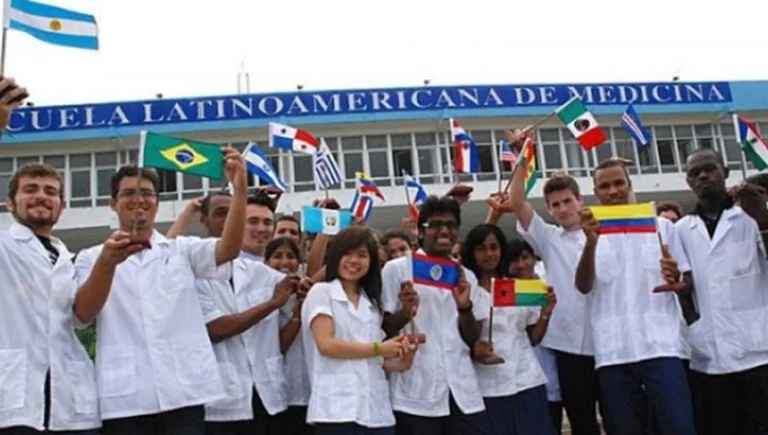
Foreign students at the Latin American School of Medicine in Cuba. Photo: Cuba Solidarity.

February 3, 2026 Hour: 9:43 am

The Trump administration accuses Cuban medical missions of ‘coercion and labor abuses.’
On Monday, Saint Lucia’s Prime Minister Philip J. Pierre revealed that the United States has pressured his country to prohibit its citizens from studying medicine in Cuba.

At the World Congress on Racial and Ethnic Disparities in Health, he stated that most doctors in his country were trained in Cuba and that this measure exacerbates an already “overburdened” healthcare system.

Pierre noted that this is a serious problem and urged looking for solutions. Cuban medical missions, through which Havana sends healthcare personnel to dozens of countries, are a source of tension with Washington, which accuses them of “coercion and labor abuses.”

Due to U.S. pressure, Antigua and Barbuda recruited 120 nurses from Ghana to replace Cuban professionals in January, while the Bahamas suspended recruitment and canceled contracts with Cuban employment agencies.


The text reads, “At the Pedro Medina Fuguett Comprehensive Diagnostic Center (CDI), our Physiatry specialist provides high-quality care with the commitment of the Cuban Medical Brigade, restoring well-being and joy to our Venezuelan brothers and sisters.”

Initially, members of the Caribbean Community (CARICOM), such as Saint Lucia, Antigua and Barbuda, and the Bahamas, defended Cuban medical missions as vital to their healthcare systems.

However, pressure from Washington has forced several countries to capitulate, which weakens regional medical cooperation and creates uncertainty in the training of new professionals.

On February 25, 2025, the U.S. announced the expansion of visa restrictions against those who profit from the “labor exploitation” of Cuban workers abroad. The State Department indicated that the policy applies to current or former officials of foreign governments involved in Cuban medical mission programs.[/img]
Foreign students at the Latin American School of Medicine in Cuba. Photo: Cuba Solidarity.

February 3, 2026 Hour: 9:43 am

The Trump administration accuses Cuban medical missions of ‘coercion and labor abuses.’
On Monday, Saint Lucia’s Prime Minister Philip J. Pierre revealed that the United States has pressured his country to prohibit its citizens from studying medicine in Cuba.

At the World Congress on Racial and Ethnic Disparities in Health, he stated that most doctors in his country were trained in Cuba and that this measure exacerbates an already “overburdened” healthcare system.

Pierre noted that this is a serious problem and urged looking for solutions. Cuban medical missions, through which Havana sends healthcare personnel to dozens of countries, are a source of tension with Washington, which accuses them of “coercion and labor abuses.”

Due to U.S. pressure, Antigua and Barbuda recruited 120 nurses from Ghana to replace Cuban professionals in January, while the Bahamas suspended recruitment and canceled contracts with Cuban employment agencies.

The text reads, “At the Pedro Medina Fuguett Comprehensive Diagnostic Center (CDI), our Physiatry specialist provides high-quality care with the commitment of the Cuban Medical Brigade, restoring well-being and joy to our Venezuelan brothers and sisters.”

Initially, members of the Caribbean Community (CARICOM), such as Saint Lucia, Antigua and Barbuda, and the Bahamas, defended Cuban medical missions as vital to their healthcare systems.

However, pressure from Washington has forced several countries to capitulate, which weakens regional medical cooperation and creates uncertainty in the training of new professionals.

On February 25, 2025, the U.S. announced the expansion of visa restrictions against those who profit from the “labor exploitation” of Cuban workers abroad. The State Department indicated that the policy applies to current or former officials of foreign governments involved in Cuban medical mission programs.

https://www.telesurenglish.net/u-s-dema ... e-in-cuba/

Damn them Cubans and their good example...
"There is great chaos under heaven; the situation is excellent."

User avatar
blindpig
Posts: 15306
Joined: Fri Jul 14, 2017 5:44 pm
Location: Turtle Island
Contact:

Re: Cuba

Post by blindpig » Wed Feb 04, 2026 3:32 pm

Cubans Denounce the Presence of the US Chargé D’Affaires After Interventionist Action
February 3, 2026

Image
Mike Hammer. Photo: Razones de Cuba.

By Ed Newman – Feb 1, 2026

“Murderer, terrorist, Down with the blockade”: Women in Camagüey denounce US Chargé d’Affaires Mike Hammer.

A group of Cuban women in the city of Camagüey denounced the presence of the United States Chargé d’Affaires on the island, Mike Hammer, on Saturday, amid the announcement of new measures against Havana by Donald Trump that seek to tighten the blockade and cut off fuel supplies to the Caribbean island.

Hours earlier, the US official was confronted by citizens outside a church in the city of Trinidad.

Mike Hammer’s Interference Activities

Since arriving in Cuba in November 2024 as U.S. Chargé d’Affaires, Mike Hammer has been linked to actions that violate the principles of diplomacy and international conventions governing relations between states.

Hammer’s conduct in Cuba has been marked by proselytizing, confrontation, and open support for counterrevolutionary sectors, both on and off the island.

Throughout his time on the island, the U.S. official has disregarded the norms established in the Vienna Convention on Diplomatic Relations (1961) and Article 41 of the Charter of the United Nations, which require diplomatic representatives not to interfere in the internal affairs of the host country.

The U.S. diplomat’s agenda on the island has consisted of holding meetings with counterrevolutionary figures, avoiding contact with Cuban authorities, even during visits to provinces where diplomatic protocol requires coordination with local governments.

Another point on his agenda is to promote division, attempting to pit Cubans born before and after 1959 against each other in an effort to delegitimize revolutionary history.

Mike Hammer has defied calls from the Cuban Foreign Ministry for his interventionist actions.

Defender of the hostile policy toward Cuba

The actions of the US diplomat have made it clear that he is not interested in building bridges, but rather in deepening his government’s hostile policy. In this regard, he has defended the blockade against the island, despite the UN’s annual condemnation of it as a violation of international law.

Furthermore, he has denied any interest in negotiating with the Cuban government, even on migration issues, prioritizing instead support for individuals funded by his government to promote the desired “regime change” on the island.

Links to Extremist Groups

He has also maintained his alignment with extremist groups by accepting the title of “Ambassador of the Exile” bestowed by Miami-based groups, thus legitimizing those who advocate for intervention in Cuba.

His meeting with James Cason, known for his aggressive role during the U.S. mission in Havana (2002-2005), which sought to destabilize the country, was widely reported.

Hammer has used Radio Martí, a Washington-funded media outlet, as a platform for anti-Cuban propaganda, while ignoring the Cuban press.

The U.S. diplomat’s behavior is reminiscent of that of diplomats expelled by Cuban authorities in the past for interference.

His conduct during his time on the island has been aimed at provoking a diplomatic crisis to justify further sanctions.

Strengthening the narrative of an “illegitimate regime,” used by Marco Rubio and the Trump administration to maintain the policy of economic strangulation and serve their personal ambitions within the State Department, where they have demonstrated a complete lack of professional ethics, as already occurred in Africa.

Mike Hammer has been described as a political operative serving an agenda of domination and subversion. His mission in Cuba confirms that the U.S. does not seek respectful relations, but rather the imposition of its will through pressure and destabilization.

On May 30, the Cuban Ministry of Foreign Affairs summoned Mike Hammer to address his interventionist and unfriendly conduct since arriving in Cuba, behavior unbecoming of a diplomat and disrespectful to the Cuban people.

https://orinocotribune.com/cubans-denou ... st-action/

******

Cuba Denies Having a Negotiating Table with the United States

Image
X/@UlyanaStrizh.

February 4, 2026 Hour: 9:06 am

Trump affirmed that his administration is maintaining ‘high-level negotiations’ with Cuba.

On Tuesday, Cuban Deputy Foreign Minister Carlos Fernandez denied that a negotiating table exists with the United States and clarified that they have only exchanged messages.

He explained that contacts began after the kidnapping of Venezuelan President Nicolas Maduro on January 3, but that no bilateral negotiations have been initiated, nor are there any intermediaries such as Mexico or the Vatican.

Meanwhile, U.S. President Donald Trump has affirmed that his administration is maintaining “high-level negotiations” with Cuba. Regarding political or economic reforms, Fernandez indicated that Cuba will not discuss internal matters with the United States.

On the political prisoners mentioned by Trump, the Cuban Deputy Minister stressed that his country has no intention of including them in the bilateral dialogue between the two countries.

He acknowledged that Cuba faces limited options and announced that a contingency plan, a complex and difficult reorganization process for the population and the government, will be communicated in the coming days.


The Cuban government has affirmed that it will firmly confront Washington’s decision to impose tariffs on countries that supply oil to the island and declared that the response will always be “Homeland or Death!”

Although Havana maintains that the U.S. is mistaken in believing that economic pressure will bring the country down, it reiterated its willingness to engage in serious, responsible dialogue based on international law.

Previously, Cuban President Miguel Diaz-Canel described the measures as fascist, criminal, and genocidal, accusing a U.S. clique of hijacking the Caribbean country’s interests for personal gain.

Regarding the executive order that declared a national emergency in the U.S. due to an alleged Cuban threat, Diaz-Canel added that the decision was made under a mendacious pretext and devoid of arguments.

https://www.telesurenglish.net/cuba-den ... ed-states/
"There is great chaos under heaven; the situation is excellent."

User avatar
blindpig
Posts: 15306
Joined: Fri Jul 14, 2017 5:44 pm
Location: Turtle Island
Contact:

Re: Cuba

Post by blindpig » Sat Feb 07, 2026 3:22 pm

Cuba responds to U.S. oil blockade with energy self-sufficiency plan
February 6, 2026 teleSUR

Cuba responds to U.S. oil blockade with energy self-sufficiency plan
February 6, 2026 teleSUR
Image
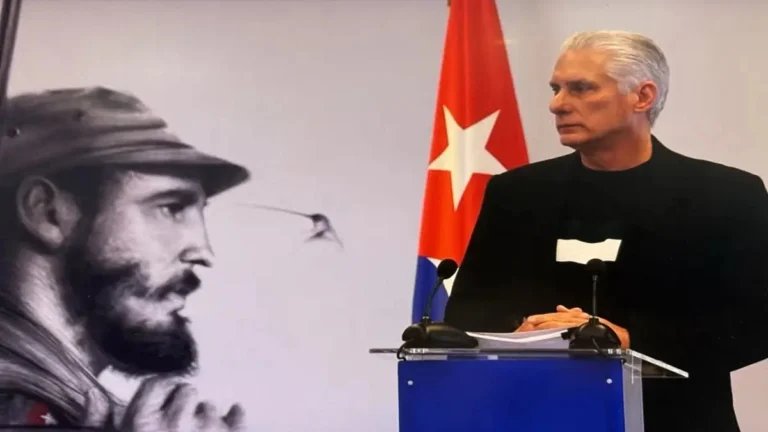
Cuban President Miguel Diaz-Canel. Feb. 5, 2026. Photo: EFE

President Diaz-Canel says no fuel has reached his country since December.

On Feb. 5, President Miguel Diaz-Canel announced that Cuba has a strategy to expand the use of its own energy sources in response to the crisis caused by the U.S. blockade on oil shipments to the island.

Since Dec. 3, when the U.S. began a naval blockade against Venezuela, Cuba has not received a single drop of fuel. This situation has had a broad impact on public health, the economy, transportation and electricity generation.

Diaz-Canel denounced an intensification of U.S. pressure as part of an “economic suffocation” strategy, which is aimed at sowing fear among oil shipping companies and international suppliers. Nevertheless, his administration is working to ensure that this new form of external aggression has the least possible impact on the Cuban people and economy.

“Cuba will not renounce receiving fuel. It is a sovereign right,” Diaz-Canel stressed, adding that surrender is not an option and making clear that the U.S. has no right to impose its economic warfare on the Caribbean island or on third countries.

The Council of Ministers approved guidelines for a contingency plan designed to confront attempts at economic strangulation. Diaz-Canel acknowledged that while temporary restrictions on consumption and increased energy savings will be necessary, those measures will not be permanent.

The Cuban government’s response is based on a comprehensive strategy to transform the energy matrix, including the recovery of electricity generation capacity — more than 900 megawatts have been restored — the use of domestic energy sources, increased storage capacity affected by the accident at the Matanzas supertanker base, higher national crude oil production, electricity generation from associated petroleum gas and the development of a national shipping fleet.

In 2025, Cuban authorities completed the construction of 49 photovoltaic solar parks, adding about 1,000 megawatts to the country’s energy supply. Currently, those parks are generating 38% of the national energy, at a time when Cuba has been unable for several weeks to rely on distributed generation due to fuel shortages.

Diaz-Canel said 5,000 photovoltaic systems of 2 kilowatts each are being installed in an equal number of homes that previously lacked electricity, which will allow Cuba to reach 100% electrification.

Another 5,000 photovoltaic systems are also being installed at prioritized service centers, including maternity homes, nursing homes, senior centers, polyclinics, residences for vulnerable children and bank branches, among others.

Authorities are also distributing another 10,000 photovoltaic systems to workers in the education and health sectors, while new investments in wind power generation capacity are underway. The Cuban government also expects to increase production of associated petroleum gas and supply manufactured gas to 20,000 new customers in Havana.

The Cuban president recalled that successful tests were conducted in December for refining crude oil and producing derivatives, as well as for acquiring engines capable of using that fuel.

While none of these actions alone solves the problem immediately, they allow for changes in the energy matrix and help prevent the situation from becoming more severe. “The will to resist, recover and create will include expanding local production of goods and services,” Diaz-Canel said.

His remarks come amid a growing diplomatic offensive in international forums, where Cuba has systematically denounced the economic, social and humanitarian impacts of the U.S. blockade, which has been in place for 64 years as a policy of “collective punishment.”

“What does it mean to prevent fuel from reaching a country?” Diaz-Canel asked, before pointing out that it is a measure that directly affects the lives of millions of people. He reiterated, however, that surrender is not an option and that Cuba will not renounce its sovereign right to receive fuel.

In his most recent report to the United Nations General Assembly, Foreign Minister Bruno Rodriguez denounced that between March 2024 and February 2025, damages caused by the U.S. blockade totaled $7.5 billion, representing a 49% increase over the previous period. Cumulative losses now exceed $171 billion.
Cuban President Miguel Diaz-Canel. Feb. 5, 2026. Photo: EFE

President Diaz-Canel says no fuel has reached his country since December.
On Feb. 5, President Miguel Diaz-Canel announced that Cuba has a strategy to expand the use of its own energy sources in response to the crisis caused by the U.S. blockade on oil shipments to the island.

Since Dec. 3, when the U.S. began a naval blockade against Venezuela, Cuba has not received a single drop of fuel. This situation has had a broad impact on public health, the economy, transportation and electricity generation.

Diaz-Canel denounced an intensification of U.S. pressure as part of an “economic suffocation” strategy, which is aimed at sowing fear among oil shipping companies and international suppliers. Nevertheless, his administration is working to ensure that this new form of external aggression has the least possible impact on the Cuban people and economy.

“Cuba will not renounce receiving fuel. It is a sovereign right,” Diaz-Canel stressed, adding that surrender is not an option and making clear that the U.S. has no right to impose its economic warfare on the Caribbean island or on third countries.

The Council of Ministers approved guidelines for a contingency plan designed to confront attempts at economic strangulation. Diaz-Canel acknowledged that while temporary restrictions on consumption and increased energy savings will be necessary, those measures will not be permanent.

The Cuban government’s response is based on a comprehensive strategy to transform the energy matrix, including the recovery of electricity generation capacity — more than 900 megawatts have been restored — the use of domestic energy sources, increased storage capacity affected by the accident at the Matanzas supertanker base, higher national crude oil production, electricity generation from associated petroleum gas and the development of a national shipping fleet.

In 2025, Cuban authorities completed the construction of 49 photovoltaic solar parks, adding about 1,000 megawatts to the country’s energy supply. Currently, those parks are generating 38% of the national energy, at a time when Cuba has been unable for several weeks to rely on distributed generation due to fuel shortages.

Diaz-Canel said 5,000 photovoltaic systems of 2 kilowatts each are being installed in an equal number of homes that previously lacked electricity, which will allow Cuba to reach 100% electrification.

Another 5,000 photovoltaic systems are also being installed at prioritized service centers, including maternity homes, nursing homes, senior centers, polyclinics, residences for vulnerable children and bank branches, among others.

Authorities are also distributing another 10,000 photovoltaic systems to workers in the education and health sectors, while new investments in wind power generation capacity are underway. The Cuban government also expects to increase production of associated petroleum gas and supply manufactured gas to 20,000 new customers in Havana.

The Cuban president recalled that successful tests were conducted in December for refining crude oil and producing derivatives, as well as for acquiring engines capable of using that fuel.

While none of these actions alone solves the problem immediately, they allow for changes in the energy matrix and help prevent the situation from becoming more severe. “The will to resist, recover and create will include expanding local production of goods and services,” Diaz-Canel said.

His remarks come amid a growing diplomatic offensive in international forums, where Cuba has systematically denounced the economic, social and humanitarian impacts of the U.S. blockade, which has been in place for 64 years as a policy of “collective punishment.”

“What does it mean to prevent fuel from reaching a country?” Diaz-Canel asked, before pointing out that it is a measure that directly affects the lives of millions of people. He reiterated, however, that surrender is not an option and that Cuba will not renounce its sovereign right to receive fuel.

In his most recent report to the United Nations General Assembly, Foreign Minister Bruno Rodriguez denounced that between March 2024 and February 2025, damages caused by the U.S. blockade totaled $7.5 billion, representing a 49% increase over the previous period. Cumulative losses now exceed $171 billion.

https://www.struggle-la-lucha.org/2026/ ... ency-plan/

*****

Cuba Takes Emergency Measures as U.S. Blockade Triggers Severe Fuel Crisis
Image
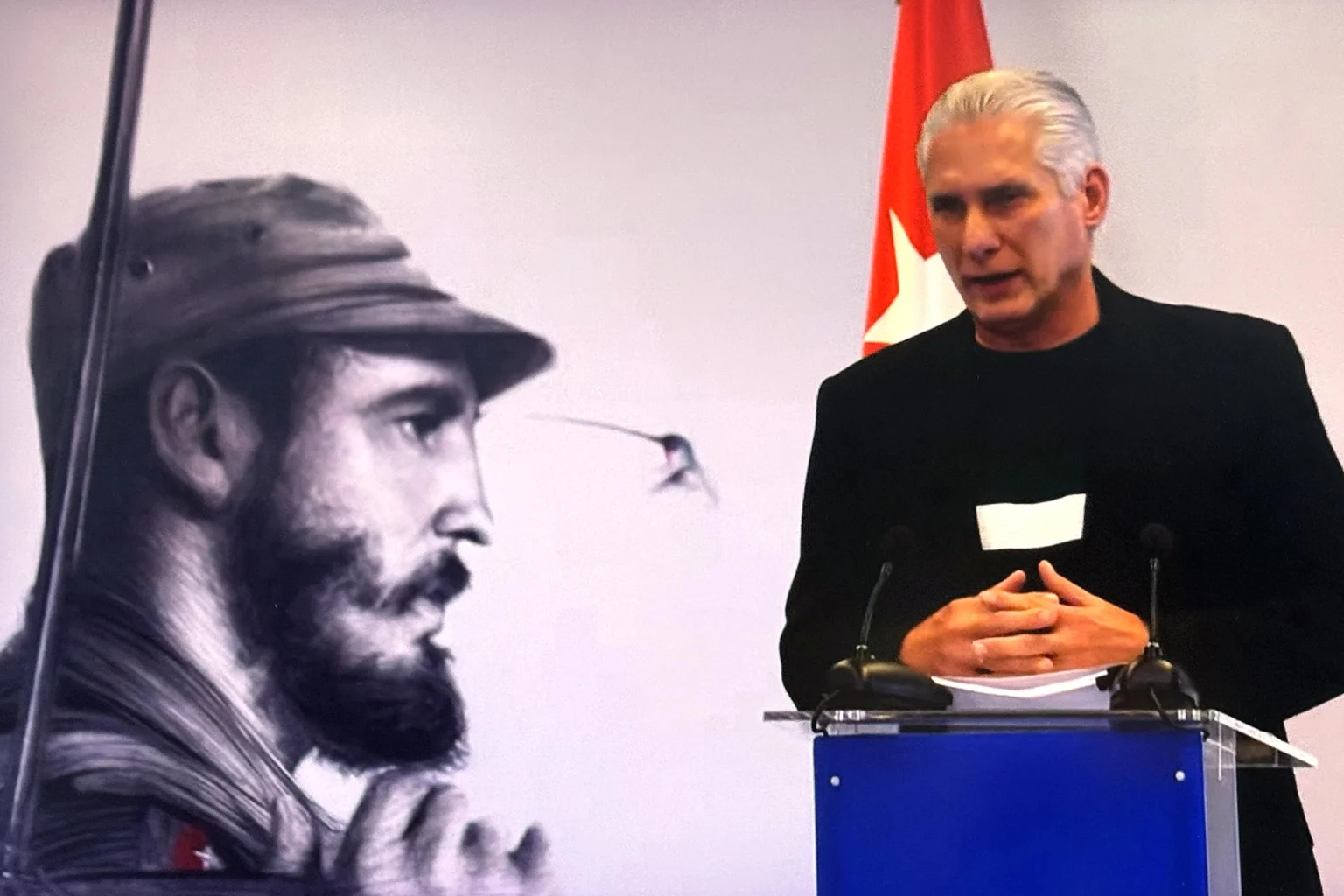
Cuban President Miguel Diaz-Canel. Photo: EFE.

February 7, 2026 Hour: 2:00 am

Cuba announced sweeping emergency measures after a U.S. oil blockade triggered a severe fuel shortage, prioritizing health, education, and renewable energy.
The Cuban Government enacted a series of emergency measures -announced on Friday, February 6- as the country progressively runs short of fuel, following a nearly total U.S. blockade of international oil shipments to the Caribbean archipelago imposed on January 29 through a new tariffs system.

The pressure policies of President Donald Trump “lead us to implement a series of decisions, first and foremost to ensure the vitality of our country and its essential services, without abandoning development”, said Deputy Prime Minister Oscar Perez-Oliva Fraga on a Cuban television program.

He emphasized that the Government will continue to prioritize investment in renewable energy and the expansion of domestic oil production.

In order to optimize the country’s resources and grant the people the best living conditions possible, Cuban Deputy Prime Minister Oscar Perez Oliva announced the following:

The available fuel is reserved to guarantee essential activities for the country’s livelihood: water, healthcare services, educational centers. The delivery and installation of 10,000 photovoltaic solar modules, which are being distributed to health and education workers across the country, is being expedited.
A protection scheme will be developed for patients with chronic diseases, such as those needing hemodialysis treatment.
Other social services at community level, such as banks, will gradually be protected by installing this type of module.
Workers will be protected in accordance with existing legislation. If needed, employment modalities like telework, remote work, and adjusted work schedules should be implemented. Furthermore, job relocation will also be prioritized. In cases where none of these modalities can be applied, “labor interruption” will be implemented, which guarantees all workers their basic monthly salary.
Resources for early warning systems are guaranteed (meteorology, seismic alerts, chemical threat alerts, etc.).
Communication services are guaranteed for the population.
Activities for defense preparation and internal order will continue, given the recent U.S. military operation against Venezuela.
Cultural activities will be readjusted. The 34th Havana International Book Fair is postponed.
The importation of fuel has been decentralized so that any company or institution that can purchase it may do so.
The possibility to sell accumulated energy to the electric company or any other type of consumer is being opened.
The program for refining Cuban crude oil is maintained, along with a small growth the country had in national production.
Operational expenses in central state administration bodies and the budgeted system will be reduced.
Renewable energy programs are being maintained at each solar park. The state-led program to install photovoltaic solar modules continues.
Local territories must maximize and exploit their own capacities to produce food and generate electricity from renewable sources.

Text reads: “Cuba’s Deputy Prime Minister Oscar Perez-Oliva said Friday that the Government will guarantee essential social services and prioritize agricultural production to counter increased hostility from the United States.”

On the other hand, Minister of Transportation Eduardo Rodriguez Davila announced that:

All transportation related to imports and exports, in all its forms, is maintained.
International airports are operational.
The scheduling of national flights is maintained according to airline availability.
All student and teacher transfers are coordinated with the Ministries of Education (MINED and MES, in Spanish).
The schedule for trips between Isla de la Juventud and the main land is adjusted to 2 trips (Tuesday and Saturday).
In the case of Pinar del Rio, daily departures to provincial capitals, in addition to Pinar del Río itself, are maintained.
Medibus services are maintained based on medical treatments.
The standby list service is suspended.
Regarding local transportation:

In the case of Havana, public transport routes are beign reorganized.
Electric tricycles are maintained in all locations.
A transportation service for health workers will begin.
Coordination afforts are ongoing with the territories based on local capacities, but services linked to health and education needs, as well as services to prioritized activities, are maintained.
Adressing her field, Minister of Education Naima Trujillo announced that:

No child will be left without school protection, and the individualization of each one’s educational conditions will be addressed based on specific needs.
In-person attendance is maintained but could be adapted.
Early childhood groups, infant circles, and daycare homes will be prioritized.
The usual schedules for receiving children at the start of the school day will be maintained, with great flexibility valued so that children who live farther away or have more difficulties can join.
A single session will likely be established in some places, depending on the specific situations in each territory. In other cases, the option of concentrating children in some centers will be evaluated.
Primary school will continue in-person. As a priority, it will maintain its two sessions, but there will be flexibility for those boys and girls who, in cases where needed, can leave earlier.
For secondary, pre-university, and technical education levels, evaluations will be more specific based on the complexity of each.
In terms of the semester program, decisions are yet to be made, as now other priorities must be assessed.

Text reads: “In a special broadcast, aired on February 6, Minister of Education Naima Trujillo Barreto announced measures to ensure the continuity of the teaching and learning process in Cuba during the complex energy situation affecting the country.”

Meanwhile, Minister of Higher Education Walter Baluja Garcia announced:

The modality will fundamentally be distance work and telework, wherever possible, although ICTs won’t be available to the same extent as during COVID.
The process of transporting students and teachers to their provinces of origin is ongoing.
The educational teaching process and care for students studying in other territories will be carried out through linked entities in each territory.
Once the transportation and territorial reorganization of teaching dynamics is completed, essential processes such as graduation, job placement, and admission to Higher Education will be guaranteed, which will also be subjected to revisions.
Amid open calls for the so-called “regime change” in Havana from U.S. Senators and Secretary of State Marco Rubio, Cuban President Miguel Diaz-Canel vowed on February 6, “Capitulation is not an option for Cuba.”

In this sense, the measures announced and previously approved during a meeting of the Council of Ministers, are aimed at protecting and ensuring basic services for the population, as Cuban authorities stated.


ext reads: “The Revolution is once again facing difficult times as a result of the empire’s criminal determination to bring us to our knees, but surrender is not an option. We spoke to the national and foreign media about the country’s plans to deal with the threats.”

https://www.telesurenglish.net/cuba-eme ... kade-fuel/

Cuban Ambassador Thanks Mexico for Solidarity
Image
The Cuban ambassador to Mexico expressed his gratitude for the solidarity shown to the people of the Caribbean nation. Photo PL

February 6, 2026 Hour: 10:12 pm

Cuban Ambassador Eugenio Martínez expressed his gratitude for Mexico’s solidarity with the people of the Caribbean nation and its sincere willingness to help Cuba during this difficult time.

“As President Claudia Sheinbaum reported, the Office of the President and the Ministry of Foreign Affairs have been coordinating with us to ensure the delivery of material aid,” the diplomat added in a message posted on his social media account.

During her regular press conference, this time held in the western state of Michoacán, the President stated earlier that Mexico would send humanitarian aid to Cuba, consisting of food and other supplies, no later than next Monday.

#Mexico | President Sheinbaum announces that her country will send solidarity aid to #Cuba as negotiations continue to resume oil shipments: “As you know, we are pursuing all diplomatic avenues to be able to resume oil shipments to Cuba.” pic.twitter.com/rn4GC8AntI

— teleSUR English (@telesurenglish) February 6, 2026


“We are planning to send this aid, if not this weekend, then by Monday at the latest, and it is mainly food and some other supplies that they have requested,” she specified. In a context marked by the United States’ threat to impose tariffs on nations that supply oil to the Caribbean country, Sheinbaum reiterated that Mexico is continuing talks with Washington on the issue.

Diplomatic Negotiations

“We have been involved in all diplomatic efforts to be able to resend oil to Cuba. Obviously, we don’t want sanctions against Mexico, but we are in that dialogue process, and for now, humanitarian aid will be sent,” she reaffirmed.

On January 29, US President Donald Trump signed an executive order declaring a supposed national emergency and establishing a process to apply tariffs to goods from countries that send crude oil to Cuba.

This decree, another tightening of the blockade imposed on Cuba for more than 60 years, is part of Washington’s current maximum pressure policy against the island and attempts to justify it with the interests of US national security and foreign policy.

#Cuba | Pres. Miguel Diaz-Canel highlights the achievements of Cuba's integration and solidarity model. "Achievements come from a system of relationship-based, not selfishness, but on an approach of not leaving anyone behind."#teleSUREnglish pic.twitter.com/4v7iMEWqWR

— teleSUR English (@telesurenglish) February 5, 2026


Cuban President Miguel Díaz-Canel stated during a press conference that surrender is not an option for the Caribbean nation and reiterated its willingness to engage in dialogue with the United States, based on respect for sovereignty, independence, and self-determination.

United Peoples, Greater Strength

#FromTheSouth News Bits | Mexico: Activists gathered to denounce the intensification of the United States blockade against Cuba, aimed at preventing oil from reaching the Caribbean island. pic.twitter.com/Riw2Ly1oA0

— teleSUR English (@telesurenglish) February 5, 2026
Diverse voices in Mexico, from members of parliament to political parties and social organizations, have spoken out in recent days in support of the island nation in the face of Washington’s energy blockade, which they have described as unjust, cruel, and anachronistic.

Sheinbaum has stated on several occasions that Mexico will seek ways to support Cuba and emphasized the importance of preventing a humanitarian crisis in the largest of the Antilles following the controversial measures announced by the United States.

https://www.telesurenglish.net/cuban-am ... olidarity/

Cuba Postpones International Book Fair Over U.S. Blockade

[img]https://ikona.telesurenglish.net/conten ... 7.jpg.webp[/b]
(FILE) The event was scheduled to include Russia as a guest of honor and pay tribute to the centenary of Fidel Castro Ruz. Photo: PL.

February 7, 2026 Hour: 7:20 am

Cuba has postponed the 34th Havana International Book Fair, originally set for February 2026, due to a severe energy crisis caused by intensified U.S. sanctions, marking a major disruption in the nation’s cultural calendar.

Cuba’s premier literary event, the Havana International Book Fair, has been postponed due to a severe energy crisis currently gripping the nation, characterized by significant fuel shortages.

The official announcement was made by the Cuban Book Institute, marking a significant disruption in the country’s cultural calendar, in a context of direct consequences of the intensified unilateral coercive measures imposed by the U.S. against the country.

The 34th Havana International Book Fair, originally scheduled to take place from February 12 to 22, at the historic San Carlos de La Cabaña Fortress, will no longer proceed on its planned dates.

In an official statement, the Cuban Book Institute conveyed that “the fair is postponed as a consequence of the extraordinary situation the country is experiencing, provoked by the genocidal blockade”, emphasizing the profound impact of geopolitical pressures on cultural events and daily life within Cuba.

This strong wording underscores Cuba’s consistent stance on the nature and effects of the U.S. blockade, which it attributes to widespread economic difficulties, including the critical lack of access to fuel and other essential resources.


La 34 Feria Internacional del Libro de La Habana 2026, programada para realizarse del 12 al 22 de febrero, se pospone como consecuencia de la situación extraordinaria que vive el país, provocada por el bloqueo genocida que ejerce el Gobierno de los Estados Unidos contra Cuba. pic.twitter.com/6HY9LD6hsG

— Cámara Cubana del Libro (@CamaraLibroCuba) February 7, 2026

Text reads: “The 34th Havana International Book Fair 2026, scheduled to take place from February 12 to 22, has been postponed as a result of the extraordinary situation facing the country, caused by the genocidal blockade imposed by the United States Government against Cuba.”


The organizing committee for the fair has confirmed that a new date will be communicated to the public once further details become available and the necessary logistical coordinations can be successfully established.

Prior to its postponement, the 2026 edition of the Havana International Book Fair had a comprehensive program of events and tributes planned. Russia was slated to be the esteemed guest country of honor, fostering international cultural exchange and strengthening bilateral ties through literature and intellectual discourse.

Moreover, the fair was poised to pay homage to the centenary of Fidel Castro Ruz, a pivotal figure in Cuban history, through various commemorative activities. It also intended to recognize the distinguished careers and contributions of prominent Cuban intellectuals, Marilyn Bobes and Jose Bell Lara, celebrating their literary and academic achievements.

Recognized as the largest international gathering for reading enthusiasts in Cuba, the fair annually brings together writers, editors, and readers from across the globe in a unique space dedicated to cultural exchange, literary discussions, and the promotion of diverse perspectives.

In this sense, the Cuban Book Institute has reiterated its firm commitment to rescheduling the encounter. Their objective is to uphold the long-standing tradition of the Havana International Book Fair and ensure its continued role as a fundamental reference point for literature and culture, not only within Cuba but also across the wider Latin American and Caribbean region.

https://www.telesurenglish.net/cuba-pos ... -blockade/
"There is great chaos under heaven; the situation is excellent."

Post Reply