China

The fightback
User avatar
blindpig
Posts: 14788
Joined: Fri Jul 14, 2017 5:44 pm
Location: Turtle Island
Contact:

Re: China

Post by blindpig » Tue Oct 28, 2025 2:34 pm

Climbing the Dialectical Ladder: China's Continual rEvolution: "It is difficult to understand China's modernity without understanding the modernity of the Communist Party of China"

Confucious, Hegel, Marx, Lenin, Mao & Xi
Karl Sanchez
Oct 26, 2025
Image

Modern Dynastic China

Dialectics is a evolutionary process. Wikipedia describes it thusly:

[T[he dialectical method, refers originally to dialogue between people holding different points of view about a subject but wishing to arrive at the truth through reasoned argument. Dialectic resembles debate, but the concept excludes subjective elements such as emotional appeal and rhetoric. It has its origins in ancient philosophy and continued to be developed in the Middle Ages.

Hegelianism refigured “dialectic” to no longer refer to a literal dialogue. Instead, the term takes on the specialized meaning of development by way of overcoming internal contradictions. Dialectical materialism, a theory advanced by Karl Marx and Friedrich Engels, adapted the Hegelian dialectic into a materialist theory of history.


And was further developed by Vladimir Lenin and adopted by Chinese Social Democrats/Communists. The history of Philosophy was presented to me and others as a ladder of philosophical thought that began with the first philosopher whose thoughts formed a basis that was subsequently built upon, the first thesis being complemented by its antithesis that then became the new thesis and so forth. So, by the time of Hegel there was an already formidable ladder students needed to climb if they were to be able to form the next series of theses. And the process of debating the prevalent thesis to arrive at its antithesis was deemed struggle as opposed to conflict. Now within the Confucian system, attaining Harmony and maintaining it was the paramount goal that accepted change but nothing that would alter the existing Harmony because it was felt that was optimal, even if contradictions existed.

The above preamble should prepare readers for the excellent discussion that follows that I learned about from Pepe Escobar’s excellent report on the recent fourth plenum of the 20th Central Committee of the Communist Party of China I highly encourage everyone to read. Zheng Yongnian, Dean of the Institute for Advanced Study of Global and Contemporary China at the Chinese University of Hong Kong (Shenzhen), and Yang Lijun, Assistant Dean of the Institute of Public Policy, South China University of Technology, composed the following essay, “It is difficult to understand China’s modernity without understanding the modernity of the Communist Party of China,” which was published by Guancha on 24 October. Guancha provides the following short introduction to the essay to provide context:

From October 20 to 23, the Fourth Plenary Session of the 20th Central Committee of the Communist Party of China was held in Beijing, and the “Proposal of the Central Committee of the Communist Party of China on Formulating the 15th Five-Year Plan for National Economic and Social Development” was deliberated and adopted, drawing a grand blueprint for the high-quality development of our country’s economy and society and pointing out the way forward.

The Communiqué of the Fourth Plenary Session of the 20th Central Committee of the Communist Party of China released after the meeting mentioned that it is necessary to “persist in leading the social revolution with the party’s self-revolution, persistently promote the comprehensive and strict governance of the party, enhance the party’s political leadership, ideological leadership, mass organization, and social appeal, improve the party’s ability and level of leading economic and social development, and gather majestic forces for promoting Chinese-style modernization.” “The construction of Chinese-style modernization is inseparable from the leadership of the Communist Party of China, and a deep understanding of the party’s key role in this process will help to more accurately grasp the direction and development path of Chinese-style modernization.


Now we get to read what ought to prove stimulating when we think about modernization, evolution and revolution and how they relate to national development, political development and geopolitics:
The Communist Party of China’s “self-revolution” and exploration of modernity

Since the reform and opening up [1978], all aspects of China’s modernization process and the modernity obtained have been discussed at home and abroad. Therefore, even when talking about the Communist Party of China, the topic always revolves around what the Communist Party of China has done and how it promotes social and economic development. To a large extent, people have ignored the modernization of the Communist Party of China itself and the modernity it has obtained. In fact, if we cannot understand the modernization and modernity of the Communist Party of China, it is difficult to understand modernization and modernity in all other aspects.

The most important fact is that the Communist Party of China is the main political body of China and the only ruling party. The Communist Party of China has more than 100 million members, and most of the social elites are within the party. Traditionally, the Communist Party of China has defined itself as the “vanguard”, and the “vanguard” is meant to play a leading role. Therefore, to discuss China’s modernization, we must first discuss the modernization of the Communist Party of China. If these 100 million people modernize, they can drive the modernization of the entire country. If the Communist Party of China does not modernize, then there will be no modernization of the country; If the Communist Party of China cannot achieve modernization by itself, it will drag down the modernization of the country; If the Communist Party of China itself first realizes modernization, then it has the ability to lead the modernization of the country.

Simply put, the modernization of all other aspects of China, including economic, social, and cultural aspects, depends on the modernization of politics, that is, the modernization of the Communist Party of China as a political subject. Therefore, we can call the reforms introduced by the Communist Party of China as the ruling party the “self-revolution” of the Communist Party of China, and through continuous self-revolution, the Communist Party of China has redefined its own modernity. On this basis, we can discuss the modernization of the country and China’s contribution to the international community.

From this perspective, to understand the self-revolution since the 18th National Congress of the Communist Party of China, we must understand the political power crisis facing the world today, especially the crisis of party governance. Without understanding the global power crisis, it is difficult to understand the world significance of the self-revolution carried out by the Communist Party of China.

How to explain the modernity of the Communist Party of China? This question requires placing the Communist Party of China in the history and evolution of China’s political enlightenment in modern times. As a modern political organization, such an organization as the Communist Party of China has never emerged in China’s history, it is the product of China’s modern political enlightenment, and it sprouted, emerged and developed in the Enlightenment movement.

There is a consensus in Chinese and foreign academic circles that the biggest difference between China’s traditional political system and the modern political system is that the purpose of the traditional political system is to preserve the old and maintain the status quo, while the purpose of the modern political system is to transform and progress. The traditional system is not without change, but the goal of change is to maintain the status quo, that is, to prevent “revolutionary” changes. After the Han Dynasty, “deposing a hundred schools of thought and respecting Confucianism alone” ideologically curbed any factors that could lead to major political changes. Confucianism became the only philosophy of rule, and the core of Confucianism was to maintain rule. The modern German philosopher Hegel believed that “China has no history”. Indeed, from Qin Shi Huang to the late Qing Dynasty for thousands of years, China only had dynastic changes, but no changes in basic systems. Marx’s concept of “Asian mode of production” is also consistent with Hegel’s concept. The “ultra-stable structure” of Chinese scholar Jin Guantao and others also means this. It can be said that this is the vitality of the traditional political system, but it can also be said that China has lacked structural changes for thousands of years.

The current political system is very different, mainly because the concept of progress was firmly established in the process of the Enlightenment, and society can be progressive, and progress can be endless. From Sun Yat-sen’s revolution to Chiang Kai-shek’s Kuomintang and then to the Communist revolution, generations of Chinese have pursued change, all with the same goal, that is, to change China and make progress. In the modern Enlightenment, people have made the most radical criticism and attack on the personal ethics of Confucianism, which maintained the old system in the past. However, although the ethics of the past are no longer feasible, there is no consensus among political forces on what the future looks like. What kind of changes does China need? How to pursue change? What is the purpose of the change? Various political forces hold different views.

The Communist Party of China chose to pursue the most radical and profound change, which is the socialist revolution pursued by the Communist Party of China since its founding, using revolution to overthrow the old regime, completely transform society, and establish a new system. Naturally, this also leads to the various contradictions facing China today, the most important of which is the contradiction between traditional Confucian philosophy and Marxism-Leninism, the former is to maintain the status quo or adjust oneself for survival, and the latter is to pursue change and infinite change.

After the mid-90s of the 20th century, the Communist Party of China accelerated its transformation from the original revolutionary party to the ruling party. This direction of transformation is extremely clear, but people’s understanding of the question of “what is the ruling party” is not very clear or profound. It can be said that since the beginning of the transformation, people have been in the process of exploring this issue, both at the theoretical and practical levels. However, one thing is clear: if a political party governs only for the sake of ruling, it will inevitably lead to its own decline. This is evident both in the history of the Soviet Union and the Communist Party in Eastern Europe, and in the historical and practical experience of the parties that calculate the legitimacy of their ruling party based on votes in the West today.

After the reform and opening up, the Communist Party of China redefined the modernity of the party, that is, to achieve the original revolutionary goal of solving the problem of “universal poverty”. However, while redefining modernity, the Communist Party of China also strives to preserve the “revolutionary nature” of the ruling party. For example, the “four modernizations of cadres” is a good example. The “four modernizations” are revolutionary, young, knowledgeable, and specialized. Revolutionization is at the forefront and of paramount importance, that is, only “revolutionization” can lead to modernity while achieving the new mission it has set.

However, because the modernity at the beginning of reform and opening up was mainly determined by the economic modernity of the country, the modernity of the ruling party was inevitably affected by this economic modernity. In the economic field, China quickly formed GDPISM. In terms of economic development, GDPISM has actually contributed to the complete change of “poor socialism” in just a few decades. Before the 18th National Congress of the Communist Party of China in 2012, China had become the world’s second largest economy and largest trading country, and its per capita GDP had also jumped from less than $300 in the early 80s of the 20th century to $6,000. More importantly, China has lifted nearly 700 million people out of absolute poverty. These achievements are regarded by the international community as a miracle in the history of the world economy.

However, GDPISM also profoundly affects the ruling party itself and the behavior of its party members and cadres. Simply put, the ruling party itself is heavily commercialized. In the report of the 19th National Congress of the Communist Party of China and the explanation of the revision of the Party Constitution, the Communist Party of China has fully realized the negative impact of commercialization on the Party as an organization and its individual Party members.

These phenomena that appear within the party may be common phenomena in modern business society, or these phenomena also have “modernity”, regardless of whether people like it or not. But in any case, this is the “modernity” that the Communist Party of China must avoid as the ruling party. If the ruling party accommodates these “modernities”, goes with the flow, and surrenders to them, then its decline becomes inevitable.

Therefore, the Communist Party of China needs to redefine its modernity by reaffirming its mission, emphasizing its original intention, reviving its revolutionary nature. As mentioned above, Mao Zedong’s idea was to maintain the modernity of the ruling party by “continuing the revolution”, but his experiment was unsuccessful. The modernity of the country’s economy as defined by Deng Xiaoping was successful, but the ruling party itself had problems. Since the 18th National Congress of the Communist Party of China, the ruling party has “removed” the commercial nature of political parties through large-scale anti-corruption campaigns, established new missions and built new institutional mechanisms, and redefined the behavior of party organizations and party members and cadres.

As mentioned earlier [this is an excerpt from their book], in China, the concept of “political party” was introduced from the West in modern times, but its meaning has changed significantly since its introduction. In the West, political parties are a tool for election campaigns and have no other function. In China, political parties are the main body of political action, and action is not only about survival and development, but also about leading the development of the country in all aspects. That is to say, the modernity of political parties is not defined and defined by the changing environment, on the contrary, the ruling party must take the initiative to define its own modernity through action, pursue and obtain its own modernity. By constantly updating and defining its modernity, the ruling party can maintain a sense of mission to lead social development while constantly renewing itself.

Modernity and the new mission of political parties

Establishing a new mission in the new era is the key to the CPC’s pursuit of modernity. In the era of popular democracy, Western political parties gained their legitimacy mainly through vote counting. In other words, society determines the modernity of the ruling party, not the other way around. In the era of elite democracy, the West also governs through consensus among elites, ordinary people do not have the right to vote, and decision-making is a matter for the elites. However, after entering the era of “one person, one vote” mass democracy, political elites have lost their decision-making autonomy. The logic here is actually very simple, because votes are given by members of society, and sociality determines the nature of the ruling party. This is also the root cause of today’s crisis of political parties in the West discussed earlier.

In China, the opposite is true. The legitimacy of the Communist Party of China is obtained and realized by establishing its mission and realizing its mission. In other words, the legitimacy of the Chinese Communist Party comes from its ability to deliver on its promises to society. The logic here is also obvious, that is, the ruling party must not only have a mission, but also have the ability to achieve it.

Therefore, in every major period, the leadership of the ruling party needs to make a basic judgment on the current situation of social and economic development and then establish its own new mission on this judgment. The most important topic of the previous National Congresses of the Communist Party of China is to answer the question “Where did it come from?” “Where are you now?” “Where is the future?” These questions. The same is true of the 18th and 19th National Congress of the Communist Party of China. Answering these three questions requires a basic judgment, and this basic judgment is the most important for the ruling party to establish a new mission. Only with this basic judgment can the Communist Party of China determine its new mission and future development direction. After this, there will be a specific action plan, and then it will be expressed in the form of a policy.

In 1949, the Communist Party of China led by Mao Zedong completed the most arduous task in modern times, the establishment of a new China. In the 30 years after the founding of the People’s Republic of China, a set of basic national political systems was established. Although all aspects of China’s system have changed after the reform and opening up, the basic institutional structure was established during the Mao Zedong era. Of course, this basic political system still needs to be improved and improved in the new era. After entering a new period of reform and opening up, in 1987, the 13th National Congress of the Communist Party of China put forward the party’s basic line in the primary stage of socialism, which is also a basic judgment. In 1992, Deng Xiaoping put forward the concept of “socialist market economy” after the “Southern Talk”, which is also an important part of Deng Xiaoping Theory. At the 14th National Congress of the Communist Party of China, the Communist Party of China once again emphasized that the party’s basic line of “one center, two basic points” should be managed for a hundred years and cannot be shaken.

New era, new judgment, new mission. Today, China has developed into another new era. “New era” is not just a term, it is a new basic judgment made by the Communist Party of China based on the reality that China’s social and economic development has reached a certain stage, but the development is still unbalanced and insufficient. The report of the 19th National Congress of the Communist Party of China pointed out that socialism with Chinese characteristics has entered a new era, and the main contradictions in Chinese society have been transformed into the contradiction between the people’s growing needs for a better life and unbalanced and inadequate development. At the same time, the changes in the main contradictions in Chinese society have not changed the CPC’s judgment on the historical stage of China’s socialism.

Although China has made great achievements since its reform and opening up, the ruling party also sees its own era and internal and external environment. Socialism cannot be achieved by “beating gongs and drums”. The leadership of the Communist Party of China has a very clear mind, and on the basis of fully affirming its own achievements, it faces challenges and looks forward to the future and has very serious and calm thinking and judgment on the problems it faces. This is also an important background for the ruling party to be concerned about the “two centenaries” since the 18th National Congress of the Communist Party of China.

At the beginning of reform and opening up, Deng Xiaoping planned a “three-step” strategy for China’s modernization development. The first step is to double the gross national product from 1981 to 1990 to solve the problem of food and clothing for the people. This was basically achieved in the late 80s of the 20th century. The second step is that from 1991 to the end of the 20th century, the GDP quadrupled compared with 1980, and the people’s life reached a moderately prosperous level. The third step is to achieve modernization by the middle of the 21st century, with per capita GDP reaching the level of moderately developed countries. Deng Xiaoping stressed that China will achieve democratic prosperity and strength in the middle of the next century (that is, the middle of the 21st century). Since then, because of China’s accelerated development, the central leadership collective with Jiang Zemin as the core has revised the plan for the 80s of the 20th century, proposing the “two centenary” plans to build a moderately prosperous society in an all-round way by the centenary of the founding of the Communist Party of China in 2021, and a prosperous, strong, democratic, civilized, and harmonious modern socialist country by the centenary of the founding of the People’s Republic of China by 2049.

The report of the 19th National Congress of the Communist Party of China also depicts a blueprint for the future: from the 19th National Congress in 2017 to the 20th National Congress in 2022, it is the historical intersection of the “two centenary” goals. In the report of the 19th National Congress of the Communist Party of China, two more stages of specific planning were made for the 30-year modernization goal from 2020 to 2050: the first stage will start in 2020, on the basis of building a moderately prosperous society in an all-round way, and strive for another 15 years to basically realize socialist modernization; In the second stage, from 2035 to the middle of the 21st century, on the basis of basic modernization, another 15 years of struggle will build China into a prosperous, strong, democratic, civilized, harmonious and beautiful socialist modern power. This new “two-step” plan that will last for 30 years is the strategic arrangement for the development of socialism with Chinese characteristics in the new era.

It should be said that the depiction of this blueprint is based on the above basic judgment. Judging from policy discussions over the years, China’s focus has shifted from how to avoid falling into the middle-income trap and how to upgrade the country to a high-income economy, a rich society. According to preliminary calculations, Chinese’s per capita GDP in 2021 has exceeded $12,000.

However, if China is to move from a middle-income to a high-income economy, the difficulty is obvious. In East Asia, there are only five economies that have so far escaped the middle-income trap and entered the high-income level, namely Japan and the Asian “Tigers” (South Korea, Singapore, Hong Kong, and Taiwan). These five economies have their own special historical conditions for becoming high-income economies. First, during the growth period of these economies, the world (mainly Western) economies were on a rapid rise, and they all belonged to Western-style economies, and the West “took good care of them”, at least without setting up too many barriers to market entry. Second, these economies are relatively small. Thirdly, the governments of these economies can form effective economic or industrial policies and become what academics call “development-oriented governments”.

But the situation in China today is very different. First, China’s economy is huge. Japan is the world’s third largest economy, but today China’s economy is more than twice the size of Japan. Second, the world economic situation is not optimistic. So far, the West has not completely emerged from the shadow of the 2008 world financial crisis. Judging from the current situation of the Western economy, it will still take a long time to return to normal growth. Because of the high degree of integration between China and the world economy, China’s internal development is inevitably subject to the overall economic situation of the world. Third, conflicts often arise between China and the Western economies of the United States and the United States due to various factors (such as the so-called national security, ideology and political system of the West), and the West is unwilling to fully open its market to China. So, how does Sino-US relations develop? Will there be a war between the largest and second largest economies? Will the two countries eventually enter a state of cold war? These are all issues of great concern.

However, China also has its own advantages over these five economies. China is a continental economy with great potential for internal development. In the past, Japanese economists proposed the “goose-shaped model” of East Asia’s economic development, which talked about how East Asia can take off economically from Japan and then expand to other economies. Japan was the first economy in Asia to achieve modernization and economic take-off, and then with the increase in labor costs within Japan, some low-value-added industries began to move to other economies, and Japan itself turned to high-value-added industries. Asia’s “Tiger Tigers” have achieved economic take-off after Japan. After that, economic modernization spread to Malaysia, the Philippines, Thailand and other countries.

China is a latecomer. However, China’s internal self constitutes a “goose-shaped model”. To this day, only the eastern coastal region has basically modernized its economy, the central region is taking off, and the western part is still to be developed. In terms of technology, although the external environment is unclear, after more than 40 years of development, China’s technology has also accumulated to a point where it can take off. Overall, China is still a middle-income country with many poor people, which points to a huge space for China’s future development. At the same time, externally, China is also vigorously developing its international economy and opening up international markets through strategies including the Belt and Road Initiative. In other words, China has the potential to escape the middle-income trap and elevate itself to a high-income economy in the coming stage. This is also the rationality of China’s recent “dual circulation” strategy.

More importantly, when Chinese society meets the needs of food and clothing and generally achieves a moderately prosperous society, other needs, such as the demand for a better environment, social fairness and justice, and political participation, are also increasing day by day, which shows the imbalance between China’s economy and society, economy and environment, or material and spiritual civilization. This imbalance can be both a problem and a driving force for progress. Therefore, the report of the 19th National Congress of the Communist Party of China proposed to “better promote the all-round development of people and the all-round progress of society”.

However, there is a prerequisite for the existence of an effective government. Without an effective government, it is difficult to realize all these potentials. The mission of the Communist Party of China can ensure the existence of an effective government.
Noting this is excerpted from a much larger essay, Chinese Narrative: How to Tell Chinese Stories Well, 2023, by Zheng Yongnian and Yang Lijun was required and is only available in Chinese. There’s no mention of money as a contradiction or corrupting factor, although IMO their choice of term “commercial nature” means the same. And then we have this—“political elites have lost their decision-making autonomy”—which only makes sense when we consider them bought—commercialized—and working for those controlling them. The use of the term sociality I also found very curious while wrestling with how they see western political parties, and not just the Outlaw US Empire’s Duopoly. There are many exceptional observations but this one IMO stands out as it holds true for any political party:

If the Communist Party of China does not modernize, then there will be no modernization of the country; If the Communist Party of China cannot achieve modernization by itself, it will drag down the modernization of the country; If the Communist Party of China itself first realizes modernization, then it has the ability to lead the modernization of the country.

Mao’s idea of continual revolution is equivalent to climbing the dialectic ladder and Xi Jinping’s continual modernization by both party and society is the direction being set to accomplish them both. Solve the contradictions via modernization and climb the ladder in a temporal manner. At the same time, the evolution of society and the related maturing of Humanity is advanced. Stasis and status quo may provide Harmony, but Harmony can be ensured by advancing the current Harmony, so Humanity doesn’t become complacent. Of course, all this needs to be worked out within a global situation that’s far from Harmony—indeed, Discord rules at present.

Hopefully, the question of how to resolve the Discord was also discussed. The only peaceful path seems to be persuading those causing Discord to alter their behavior by modernizing themselves and thus emerge from their self-imposed commercialized Exceptionalism road to nowhere. But persuasion requires one side to listen to the argument presented. If listening is refused, then no change will occur, which is the current situation.

https://karlof1.substack.com/p/climbing ... der-chinas

******

China is ready to fight over rare earths

Lorenzo Maria Pacini

October 28, 2025

When you become the world’s largest economic power, you have to be prepared for a battle.

Ready for anything

When you become the world’s largest economic power, you have to be prepared for a battle.

China is ready to fight to secure its supremacy in rare earths.

While the world’s attention was focused on the so-called ceasefire “imposed” by US President Donald Trump in Gaza, his 20-point “peace plan” and diplomatic maneuvers in West Asia, an unexpected decision by Beijing suddenly redrew both the global economic map and the framework of US-China relations. On October 9, the Chinese Ministry of Commerce announced new regulations imposing severe restrictions on the export of rare earth elements, a move that directly affects the defense and semiconductor industries, shattering the already fragile détente between Washington and Beijing.

It is no exaggeration to say that Beijing’s announcement infuriated Trump. The next day, the US president launched an attack on Truth Social, declaring that, starting November 1, the United States would impose an additional 100% tariff on Chinese imports. Trump accused China of “holding the world hostage,” writing: “China is putting all countries in a difficult position with rare earths. This is particularly inappropriate at a time when the peace plan for Gaza is underway!”

The highly anticipated meeting between Xi and Trump scheduled for the APEC summit now seems unlikely (or will we see a twist?).

But what are we talking about in detail?

The importance of rare earth elements

From a chemical point of view, rare earth elements refer to a group of 17 metallic substances: 15 from the lanthanide series of the periodic table, plus scandium and yttrium. Despite their misleading name, these elements are relatively abundant in the Earth’s crust; what makes them “rare” is that commercially exploitable concentrations are rare and the separation process is extremely complicated. They are essential to modern technology: they are used in electric vehicle batteries, wind turbines, smartphones, and advanced military equipment such as fighter jet radars.

According to the U.S. Geological Survey (USGS), without these elements, the production of chips for artificial intelligence, defense technologies, and renewable energy systems would grind to a halt. A single wind turbine requires about 300 kilograms of neodymium, while each F-35 fighter jet contains thousands of dollars worth of rare earth materials.

China enjoys a dominant position in this sector. The USGS 2025 report indicates that approximately 36% of global reserves, amounting to about 44 million tons, are located in China, followed by Vietnam (22%) and Brazil (18%). The imbalance is even more pronounced in production: in 2024, China accounted for about 70% of global production (270,000 tons), a figure that is expected to remain stable in 2025. In terms of refining capacity, China’s supremacy is overwhelming, accounting for over 90% of the global total.

This dominance is no accident. Since the 1980s, Beijing has supported the sector through state subsidies, low-cost mining, and export discounts of up to 17%. The United States, by contrast, has only about 2% of total reserves and depends on China for about 70% of its imports. Although Washington is attempting to develop alternative supply chains, experts agree that it will be extremely difficult to achieve real diversification before 2030. China’s new export restrictions therefore strike at a particularly vulnerable point.

Chinese mining technologies

Over the past two decades, China has consolidated its dominant position in the global rare earths sector, controlling over 60% of world production and an even higher percentage of downstream refining and processing. This dominance is not simply the result of resource availability, but of a coordinated set of industrial policies, technological innovations, and environmental strategies that have enabled the country to maintain a structural advantage in a sector considered strategic for energy transition and global technological security.

Chinese technologies for rare earth extraction are divided into two main approaches: extraction from hard rock mines and extraction from ionic clay deposits.

In the first case, China uses conventional open-pit and underground mining methods, employing explosives and mechanical crushing techniques to release bastnäsite, monazite, and xenotime minerals. However, the innovation lies in the subsequent stages: initial separation is carried out by selective and high-intensity magnetic flotation, accompanied by chemical pre-treatment with diluted acids to maximize the yield of the raw ore.

The process used in ionic clay deposits, typical of southern regions such as Jiangxi, Guangdong, and Guangxi, is more sophisticated. In these cases, rare earths are not found in crystalline form but adsorbed on clay surfaces, which requires more delicate and chemically controlled extraction techniques. China has perfected the use of in-situ leaching, a technology that involves injecting solutions based on ammonium salts, sulfates, or chlorides into the soil, which mobilize rare earth ions without the need to excavate or transport large volumes of rock. This method reduces environmental impact and labor costs, although it does carry risks of groundwater contamination, which are now partially mitigated by monitoring protocols and geochemical barriers.

China’s real technological strength lies in the separation and refining stages, where the country has developed highly efficient methods. The key technology is multiple solvent extraction, used to separate rare earth elements from each other. The process takes place in chains of thousands of separation stages, where mixtures of acids and organic solvents are circulated in closed-loop systems, allowing purity levels of over 99.99% to be achieved.

At the same time, some research centers, such as the Baotou Research Institute of Rare Earths and the Institute of Process Engineering of the Chinese Academy of Sciences, have introduced innovations based on ion exchange resins and nanofiltration membranes, which can reduce reagent consumption and improve recovery efficiency. These technologies are gradually replacing more polluting practices involving the heavy use of acids, contributing to improved sustainability in the sector.

All of this has clearly embarked on an advanced digitization process, integrating artificial intelligence and Internet of Things (also known as IoT) systems into mining operations. Through real-time sensors, machine learning algorithms, and predictive models, companies are now able to optimize reagent dosing, predict mineral behavior, and monitor extraction flows to reduce waste and energy costs.

Leading companies in the sector, such as China Northern Rare Earth Group and Minmetals Rare Earth Co., are adopting mining intelligence solutions that include autonomous vehicles, drones for geological mapping, and remote control systems for chemical leaching operations. These innovations are part of the national industrial modernization strategy outlined in the Made in China 2025 plan, which aims to strengthen the country’s technological leadership in materials critical to the green economy.

There has also been a major overhaul of environmental protocols related to rare earths, following decades of intensive mining that caused extensive ecological damage. Stricter regulations have been introduced, particularly for the treatment of wastewater and radioactive waste containing thorium and uranium. At the same time, a recycling chain has been developed, based on hydrometallurgical and pyrometallurgical processes applied to permanent magnets, catalysts, and spent batteries. This “urban mining” strategy allows valuable materials to be recovered, reducing dependence on new deposits and mitigating the overall environmental impact of the sector.

This gives China an advantage not only in terms of production capacity—which is enormous and still unmatched in terms of numbers—but also in terms of its vertically integrated supply chain. This integrated model allows it to control not only raw materials but also global supply chains in strategic sectors, including wind power, electronics, electric vehicles, and defense, but also in terms of cutting-edge technologies with a lower environmental impact.

The new Chinese decree is a geostrategic message

The October 9 decree justifies the export restrictions on grounds of “national security.” The initial restrictions, introduced in April 2025 in retaliation for Trump’s tariffs, targeted seven elements: lanthanum, cerium, praseodymium, neodymium, samarium, gadolinium, and dysprosium. The October announcement expanded the list to include five more elements: holmium, erbium, thulium, europium, and ytterbium, bringing the total number of elements now subject to export licenses to twelve. It was also clarified that these licenses will not be issued to major US defense contractors, including Raytheon and Lockheed Martin, and will also protect domestic companies, including the sanctioned Huawei, a leader in the telecommunications market and a defense contractor.

It is clear that China’s new plan is more than an economic decision: it sends a clear geostrategic message. We are witnessing an attempt by Beijing to counter the West’s technological claims by asserting the East’s superiority in terms of natural resources, and indeed China has long used rare earths as a geopolitical tool, particularly during the 2010 embargo against Japan. The US defense industry remains heavily dependent on Chinese materials, and the new export restrictions could paralyze production lines.

Trump, meanwhile, betrays his deepest concern: that the “America First” economy could backfire by fueling domestic inflation. Revenge for all this may lie just a few miles off the Chinese mainland coast, in Taiwan, the island so coveted by the American establishment of all parties.

With this decisive move, Beijing has shifted the confrontation to a terrain of its own choosing. Even if the meeting between Xi and Trump in South Korea does eventually take place, it is already clear that the APEC summit will serve as a new battleground, where diplomacy and economic warfare will clash.

https://strategic-culture.su/news/2025/ ... re-earths/
"There is great chaos under heaven; the situation is excellent."

User avatar
blindpig
Posts: 14788
Joined: Fri Jul 14, 2017 5:44 pm
Location: Turtle Island
Contact:

Re: China

Post by blindpig » Fri Oct 31, 2025 3:09 pm

CHINA’S TEN NOES – SUN TZU HAS SWALLOWED THE FROG AND IS KEEPING HIS SMILE TO HIMSELF

Image

By John Helmer, Moscow @bears_with

In a conversation lasting one hour and forty minutes according to the Chinese stopwatch– “a long meeting” on President Donald Trump’s clock — President Xi Jinping first knocked the stuffing out of Trump’s warmaking threats, then forced him to beat a retreat behind a 12-month ceasefire with the man the Pentagon has designated its principal enemy but whom Trump praised effusively as “a great leader, great leader of a very powerful, very strong country…a tremendous leader of a very powerful country and I give great respect to him.”

“Uh,” Trump told reporters on board his aircraft as it rocked in crosswinds flying eastward, “a lot of things we discussed in great detail. A lot of things we brought to finalization. A lot of finalization.” This was false.

Worse for the Trump warfighting strategy, the Chinese have retained escalation dominance by making Trump’s concessions their pre-condition for China’s temporary suspension of their sanctions on rare earths exports and imports of US computer chips. For this, Xi offered to buy US soybeans slowly for $34.2 billion over four years – roughly half in tonnage, half in price over twice the interval that China had agreed to in the past.

In General Sun Tzu’s ancient manual for warfighting, “the supreme art of war is to subdue the enemy without fighting”. The old man also confessed his limitation: “there is an intelligent way to eat a live frog – I just don’t know what it is.” Xi just demonstrated the way to do it. Trump went down smiling.

Xi has not yet telephoned President Vladimir Putin to brief him on what happened. After Putin’s meeting with Trump in Alaska on August 6, Putin telephoned Xi on August 8. “So far,” said Putin’s spokesman Dmitry Peskov, ”there is no such conversation in the schedule, but it can be quickly agreed upon if necessary,”

The Russian state media have interpreted the outcome of the talks to be a “temporary ceasefire” achieved by not discussing the key economic and territorial war issues at all. “There have been no joint statements yet,” Tass noted, “and some of the most important issues of bilateral relations, such as Nvidia chips and advanced products, have remained unresolved.” Nothing was achieved, the official Moscow commentators think, in the US attempt to split Xi from Putin, and secure Chinese pressure on Russia to end the Ukraine war on US and NATO terms. “Ukraine came up, uh, very strongly,” Trump told reporters as he flew back to Washington. “We talked about it for a long time and we’re both gonna work together to see if we can get something done. Uh, we agreed the, the sides there, you know, locked in, fighting, and sometimes you have to let him fight, I guess. Crazy. But he’s gonna help us and we’re gonna work together on Ukraine.”

The Russian state media have yet to notice that Trump is abandoning his attempt, through the Rosneft and LUKOil oil trade sanctions of October 25, to stop China buying Russian oil. “There’s not a lot more we can do,” Trump replied to a reporter who asked if he and Xi had discussed his threat to sanction Chinese companies for buying Russian crude oil and petroleum products. “Uh, you know, he’s been buying oil from Russia for a long time. It takes care of a, a big part of China. And, you know, I, I can say India’s been very good, good on that, uh, front. Uh, but, uh, we, we didn’t really discuss the oil. We discussed working together to see if we could get that war finished. You know, it doesn’t affect China.”

A review of the Xi-Trump summit by Russian sources has identified Xi’s ten noes as a discreet way of contrasting Putin’s approach with Trump at the Anchorage meeting, their subsequent telephone call, and the exchange of remarks about each other in the press:

No Chinese congratulations for Trump’s peacemaking in the Middle East or Asia.
No Chinese nomination for a Nobel Peace Prize.
No Chinese promise to invest in US.
No Chinese agreement to cut its oil trade with Russia.
No discussion of territorial concessions in Ukraine and Taiwan.
No agreement on TikTok sale, ban on Nvidia’s Blackwell chips.
No US port sanctions on Chinese vessels.
No bribes — no Trump golf course, hotel, and crypto deals.
No dates for exchange of state visits.
No smiles.

Tsargrad, the television and internet medium of Russian nationalism, has been the least reticent of the Moscow media in its summing up. “After a triumphant – in words – visit to Japan, which refused to stop buying Russian oil, and the ‘bummer’ (облома) in South Korea, which will not invest $ 350 billion in the US economy if they themselves do not give this amount to Seoul, Trump met with Xi Jinping in Busan. And he lost a big one. Negotiations at the South Korean Air Force base lasted 1 hour and 40 minutes, after which, shaking hands, the leaders went off on their own business. As a result, ‘the fantastic relationships for a long time’ (Trump’s words) turned out to be a dream.”

The lesson for the Kremlin, Tsargrad hinted, was that “when Trump flew away from Busan, it was clear that he was lost, because the US could not intimidate China like other countries…Equally obvious, the victory of one of the two contenders for the title of the leading power of the world will depend on the position of Russia. The global geopolitical triangle has not gone away – only the weight and degree of influence of its member countries changes. Half a century ago, Beijing had the ‘golden [controlling] share’, but now Moscow has it — and it also has the ‘silver bullet’ ”.

https://johnhelmer.net/chinas-ten-noes- ... more-92679

******

The Great Reckoning: What the West Should Learn from China
Posted by Internationalist 360° on October 25, 2025
Kaiser Kuo

Image
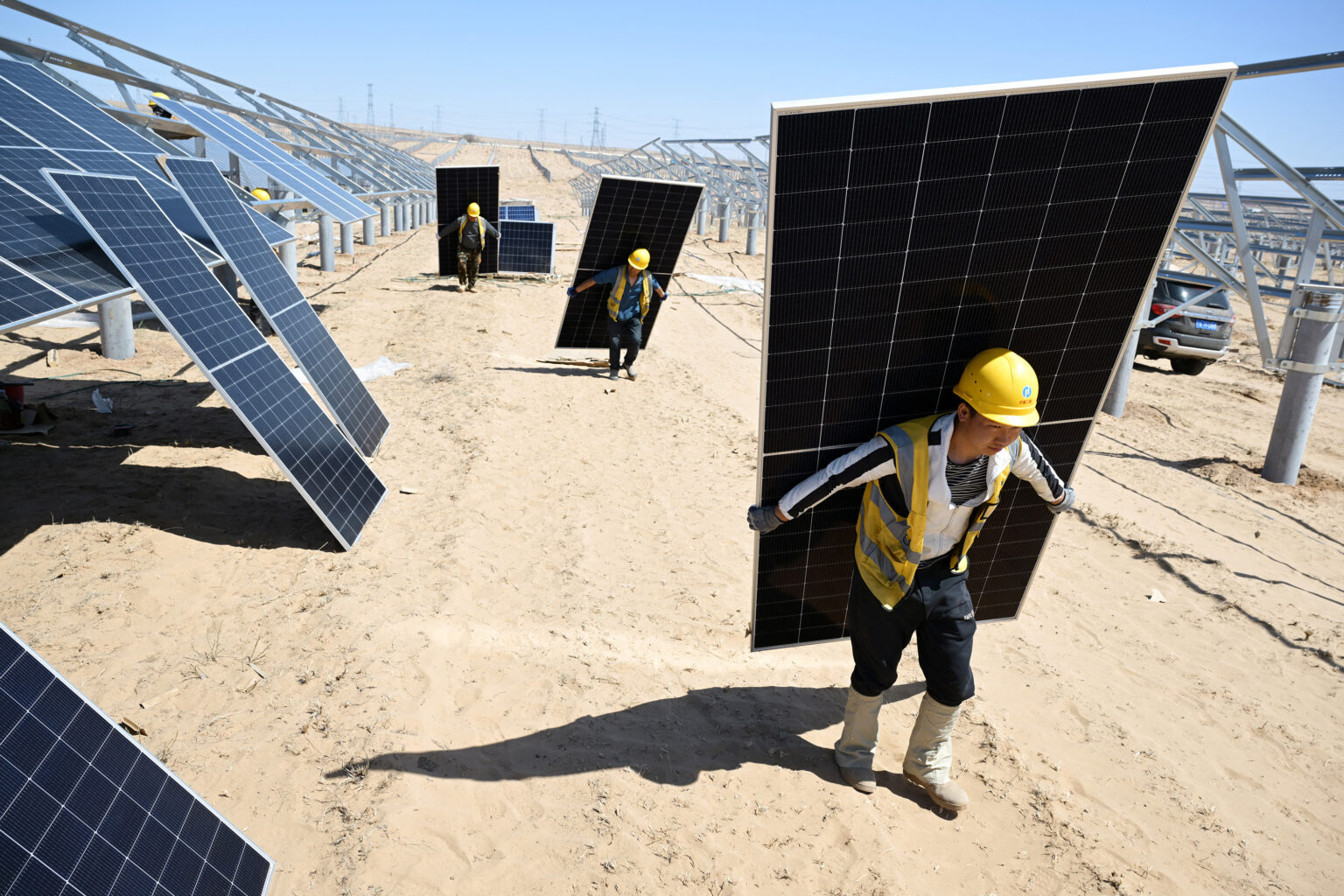
Workers carry solar panels to be installed in Lingwu, China, on April 14, 2025. © AFP/Getty

The world feels unsettled, as if history itself were changing tempo. The familiar landmarks of the modern age are blurring, slipping away, and the stories we once told ourselves about progress and power no longer map cleanly onto the terrain before us. What we are living through seems, with each new day, less like a passing rearrangement of power, less like a momentary realignment of nations. We sense something deeper and more enduring: a transformation whose outlines we are only beginning to discern. History no longer feels like something unfolding behind us but something rushing toward us, urgent and impossible to ignore.

The economic historian Adam Tooze, reflecting on his recent, intense engagement with China, put it to me in July with characteristic directness: “China isn’t just an analytical problem,” he said. It is “the master key to understanding modernity.” Tooze called China “the biggest laboratory of organized modernizations there has ever been or ever will be at this level [of] organization.” It is a place where the industrial histories of the West now read like prefaces to something larger.

His observation cuts to the heart of what makes this moment so difficult to process. We have witnessed not merely the rise of another great power, but a fundamental challenge to assumptions long embedded in Western thought—about development, political systems, and civilizational achievement itself. We simply haven’t yet found the intellectual courage to face it.

This reckoning touches all of humanity, but it falls especially hard on the developed world and hardest on the United States, where assumptions about exceptionalism and hierarchy are most exposed and most fiercely denied. The familiar framing of China as “rising” or “catching up” no longer holds. China is now shaping the trajectory of development, setting the pace economically, technologically, and institutionally. For Americans especially, the deeper psychic shock lies in the recognition that modernity is no longer something they authored and others merely inherit. That story has outlived its usefulness.

The denial, the deflection, and the anxious overreaction so often seen in Western discourse are symptoms of that dislocation. Yet the reluctance to acknowledge this shift extends beyond governments, media narratives, or expert consensus. It includes people who’ve spent years thinking about these issues. I have been as susceptible as anyone—tempering big claims, second-guessing implications, staying in safer territory even when the evidence has been pointing in this direction for some time. There’s always a “but” when it comes to recognizing China’s accomplishments, a reflex to tick off the costs and enumerate the failings, to pull back just when the scale of transformation becomes clear.

The greater risk, I now believe, lies in saying too little.

This essay doesn’t rehearse the familiar bill of particulars on China—constraints on political pluralism and independent media; expansive security powers and preemptive detention; pressure on religious and ethnic expression; and episodes of extraterritorial coercion—not because those concerns are trivial, but because the task here is different. We’ve all learned to recite that litany, as a way of protecting ourselves from what real comparison might imply. The aim here is to confront, with intellectual honesty, what China’s achievements oblige us to reconsider about modernity, state capacity, forms of political legitimacy, and our own complacencies. Recognizing real costs can coexist with taking the magnitude of transformation seriously. This argument asks us to face squarely what has been accomplished and then measure ourselves against it.

And let me be clear: This reckoning is not a surrender. It is not an argument for abandoning liberal values, declaring authoritarian systems superior, or slavishly imitating features of China’s governance. It is instead a call for the kind of frank, sober assessment that genuine confidence requires—the willingness to acknowledge challenges directly, to learn from others’ successes even when they unsettle our assumptions, and to strengthen our own institutions through clear-eyed recognition of their shortcomings rather than defensive denial of their failures. Liberal democracy is indeed undergoing a profound crisis, but that crisis need not be terminal. The question is whether we will meet it with the rigorous self-examination that has historically enabled democratic renewal, or retreat once more into the comforting myths that have blinded us to both our weaknesses and our rivals’ strengths.

The Scale We Struggle to Process

If we are to speak honestly, we must take stock of what China has achieved in human terms. The numbers are staggering, but numbers alone cannot capture their significance. Since the early 1980s, according to the World Bank, China has lifted nearly 800 million people out of extreme poverty,1 accounting for roughly three-quarters of the global reduction in poverty during that time. Life expectancy in China, which stood at only 33 in 1960, reached 78 in 2023;2 life expectancy at birth in the United States in 2023 was 78.4.3 Nearly every household in China has had access to electricity for about a decade.4 Secondary school enrollment is now nearly universal.5 Per capita income has risen from just a few hundred dollars at the start of reform in the late 1970s to over $13,000 today.6

But perhaps most revealing of the struggle to process the scale is what has happened in the energy sector. China now accounts for more than half of the world’s installed solar7 and wind8 capacity combined. Roughly three-quarters of all renewable energy projects currently underway worldwide are either in China or being driven by Chinese contractors.9 About 30% of global emissions come from China,10 but so too does much of the growth in decarbonization technology. China has transformed the global energy transition by demonstrating that massive and rapid deployment could make renewable energy cost-competitive worldwide.

Whatever one thinks of China’s political system, these are the hallmarks not of a failing state, but of a society whose people are, in many respects, flourishing as never before.

The Intellectual Challenge of Acknowledgment

The scale of China’s transformation poses what might be called the intellectual challenge of acknowledgment. Even those of us who have followed China closely, who pride ourselves on seeing past Western prejudices, have found it difficult to fully absorb what we are witnessing. The familiar frameworks—middle-income traps, authoritarian brittleness, inevitable convergence with liberal norms—offer cognitive comfort even as they fail to explain what is actually happening.

The intellectual historian Joseph Levenson, in his magnum opus Confucian China and Its Modern Fate (1958–65), argued that China’s quest was to find a path that could deliver wealth and power in a way both authentically Chinese and objectively effective. For over a century, Chinese intellectuals grappled with this challenge: how to achieve modernity without losing cultural identity, how to become powerful without abandoning what made China distinctive.

That historical chapter may now be closing. China appears to have found that path. The system powering its success is an extraordinarily intricate alloy of Confucianism, Leninism, technocratic authoritarianism, state capitalism, and market mechanisms. Yet based on the many conversations I’ve had with Chinese intellectuals, they now recognize that China has attained wealth and power in a distinctly Chinese way. If Levenson’s framework is correct, we are witnessing not merely China’s rise but its graduation from the central quest that defined its modern history.

Even within China, though, this transition—from the pursuit of modernity to its realization—remains difficult to accept in full. Many Chinese intellectuals I’ve talked to or have read, however patriotic and confident in their country’s accomplishments, still seem unprepared to reckon with what those accomplishments mean. The idea that China has moved beyond catching up to redefining development itself challenges habits of mind formed over generations. For intellectuals conditioned to see the West as a permanent reference point—even if they view it critically—the prospect that China might now be setting terms rather than responding to them demands a fundamental reorientation that has not yet fully occurred.

China’s apparent resolution of its modern quest has profound implications. If China is no longer seeking its path to modernity but has become one of modernity’s principal architects, then the questions that have long organized our thinking about China—Will it democratize? Will it converge with Western norms? When will the contradictions catch up with it?—may be the wrong questions entirely.

But if China has indeed moved beyond its central quest, new questions must take their place. Chinese intellectuals are grappling with challenges that have no modern precedent: What kind of global power should China become? How should a civilization that has regained confidence in its own path engage with a world still organized around Western institutions and assumptions? China’s leaders speak of building a “community of common destiny for mankind,” but the practical meaning of such concepts remains deliberately vague. The deeper questions are harder still: Can a civilization that has never fit comfortably within a Westphalian order find a way to work inside it, or will it seek to reshape the norms themselves? How does a country that has achieved prosperity through state-led development share that model without appearing to compromise others’ sovereignty? These are the questions that preoccupy Chinese strategists today—questions not of catching up but of leading responsibly.

The questions the West now faces are equally challenging, if not harder: What does modernity look like when it is no longer exclusively Western in conception? How to understand development when the most successful model does not conform to liberal democratic assumptions? What happens when the world’s second-largest economy operates according to principles that upend core Western beliefs about how prosperity is achieved and sustained?

Levenson’s framework offers a lens for understanding the United States’ current predicament as well. A civilization, in his formulation, is stable when what is mine (meum) and what is true (verum) remain in harmony—when a society’s inherited assumptions about how the world works align with observable reality. Instability emerges when these fall out of alignment, when what tradition insists must be true no longer accords with what one can plainly see. This was China’s crisis after the Opium Wars: The painful recognition that Confucian certainties about China’s centrality and civilizational superiority could not explain Western gunboats in the Pearl River. It took nearly two centuries of intellectual upheaval, political experimentation, and often violent transformation for China to resolve that tension.

The question now is whether the shocks more recently delivered by China’s rise—less violent but no less disruptive to foundational assumptions—are pushing the United States toward a similar reckoning. When a nation that was supposed to remain forever behind suddenly leaps ahead in renewable energy, artificial intelligence, and infrastructure; when authoritarian capitalism proves more adaptive than was predicted; when “the end of history” reveals itself as premature triumphalism—the gap between meum and verum widens. The choice, as China learned over its long modern ordeal, lies between the painful work of intellectual reconstruction and the increasingly desperate defense of comfortable illusions.

The Chinese crisis of the mid-to-late 19th century and the American crisis of the early 21st are not, of course, identical, but there are some historical rhymes worth noting. In the 1860s and 1870s, Chinese reformers of the Self-Strengthening Movement grappled with a civilizational challenge through the formulation of yong and ti—the idea that China could adopt Western techniques and technologies (yong) and harness them in the preservation of its essential Chinese character (ti).

Today, something remarkably similar is playing out in reverse across the American political spectrum.11 From industrial policy to direct government stakes in strategic companies like Intel, U.S. policymakers increasingly embrace methods that look suspiciously like Chinese state capitalism, all while insisting that they are defending rather than abandoning free-market principles. Under both the Biden administration and now in Trump’s second term, coordinated government-industry partnerships have emerged that represent a quiet but decisive shift. There may not have been a national conversation about it, but the United States has unmistakably entered the domain of industrial policy it once disdained.

To be sure, the United States has long practiced forms of industrial policy—from the construction of transcontinental railroads to the Manhattan Project and the space race—but it has generally done so while insisting that it was something else. For decades, American economic orthodoxy treated state planning as both inefficient and un-American, deriding other nations’ developmental models—whether Japan’s rise through its Ministry of International Trade and Industry; the coordination of chaebol, or conglomerates, in South Korea; or China’s state capitalism—as violations of free-market faith. Yet with the CHIPS and Science Act of 2022, the Inflation Reduction Act of 2022, and now Trump’s explicitly protectionist revival of state-driven economics, the United States has abandoned that pretense. What once marked the ideological boundary between “us” and “them” has quietly dissolved. Just as Chinese reformers once argued they could selectively borrow Western methods without compromising Chinese civilization, U.S. leaders now claim they can adopt Chinese-style state intervention without betraying U.S. values. History suggests that such experiments in selective borrowing are rarely as tidy as their architects imagine.

China Did Not Cause America’s Crisis

Just as historians of modern China have in recent decades wisely revised the old impact-response paradigm that once dominated narratives of “China’s encounter with the West”—moving beyond simply registering an external shock to centering the domestic Chinese factors that shaped the country’s transformation—so too should Americans, and other Westerners, resist the temptation to attribute America’s current malaise primarily to Chinese provocation. The seeds of self-doubt were sown long before: the quagmires of the wars in Afghanistan and Iraq, the 2008 financial crisis, Washington’s polarization and paralysis, the shameful spectacle of the attack on the Capitol in January 6, 2021, and the visible fraying of civic cohesion.

But China has magnified that doubt, and it has done so in unsettling ways. Seeing a rival building, educating, and innovating at the scale that China has done casts U.S. dysfunction into sharper relief. Every infrastructure breakdown, every squabble over basic funding, every government shutdown feels more noticeable in contrast to China’s rapid and extensive transformation.

What might have been another season of U.S. introspection has morphed into something more acute: the painful recognition that another system, however flawed, has delivered results on a scale that the United States has not. This is to me, as an American, a source of not inconsiderable anguish. I take no pleasure in witnessing what my country has become—a nation I love, torn apart by political tribalism so intense and so toxic that I fear it may be beyond repair, at least in the coming, and critical, decade.

But confronting this crisis requires looking squarely at what seems so unsettling about China’s success. As Chas W. Freeman, a retired senior U.S. diplomat, has observed, “Americans now exhibit an odd combination of self-doubt, complacency, and hubris”— a mix that has prevented the kind of clear-eyed assessment the moment requires.

Part of what sticks in the United States’ craw is, uncomfortably, racial. It would be surprising if it weren’t. The twilight of white privilege in an increasingly diverse country maps onto the twilight of American hegemony in an increasingly multipolar world. Just as white ethnonationalism represents an irrational response to the perceived erosion of white privilege domestically, so too does the lurch toward a new Cold War represent an irrational response to the perceived erosion of U.S. privilege globally.

But race is only one current in a larger riptide. To understand why China sticks in the craw, one needs to appreciate the deeper psychological challenge it poses to U.S. identity. For generations, Americans inhabited a national story that assured them they would always be first in the domains that matter most—innovation, technology, military might, economic dynamism, cultural magnetism. China’s achievements have systematically undermined pillar after pillar of American exceptionalism. Deep-rooted and often unconscious hierarchies still position the West as normative and other states as derivative. The moment of recognition and readjustment requires confronting those reflexes.

It was once axiomatic that a dynamic market economy required liberal democracy; China has showcased an authoritarian capitalism that works anyway. It was believed that social media would inevitably liberate the subjects of autocracies; then the Arab Spring fizzled, Edward Snowden reframed surveillance debates, and platform politics went sideways at home. It was assumed that genuine innovation required political freedom; then Chinese firms and labs began producing world-class results while operating within a very different information ecosystem. Each inversion chips away at the catechism. Each surprise compounds the shock.

Western discourse consistently attributes China’s achievements to its regime type rather than its substantive capabilities. Breakthroughs by Tencent, BYD, Huawei, or Shenzhen’s hardware ecosystem are often explained away as resulting from state diktat rather than design brilliance or the unrivaled speed of co-located manufacturing. That flattening of context feeds the sense that China’s ascent is somehow an affront to how the world should work, rather than evidence that the world works differently than was assumed.

The Climate Mirror

No global problem mirrors this Great Reckoning more starkly than climate change. A fundamental pattern emerges: evidence accumulating faster than our willingness to absorb it, narratives designed to soothe rather than illuminate, and a collective refusal to revise assumptions that no longer fit the world we inhabit.

The parallels run deep. With climate, we watch wildfire smoke choke our cities, once-in-a-century floods arrive every few years, oceans warm and acidify at alarming rates—and still we avert our eyes, hunting for reasons to delay, deflect, or offload responsibility. In China, infrastructure is growing on a continental scale, technological breakthroughs accumulate, renewable-energy capacity doubles and redoubles—and yet still we find ways to explain that away, minimize it, deride it as overcapacity, and predict its imminent unraveling. Some even dismiss these advances as a hoax. In both cases, we prefer the comfort of familiar stories to the discomfort of genuine reckoning.

The symmetry goes deeper still. Climate change has forced all of us to confront the limits of human mastery over nature—the Enlightenment conceit that humans could harness natural forces without consequence. China’s rise forces us to confront the limits of Western mastery over modernity: the potent conceit that only liberal democratic capitalism could deliver sustained prosperity and innovation. Both developments demand that we abandon wishful thinking and face the world as it is. Both reveal how brittle our inherited certainties have become, and how dangerous denial can be.

Climate also illuminates something else: the shift in what constitutes political legitimacy in the 21st century. If legitimacy once rested primarily on procedures and forms—constitutions, elections, parliaments—it now rests increasingly (though by no means exclusively) on performance. What could matter more than the ability to safeguard the very habitability of the planet?

Here, the China paradox becomes instructive. China is simultaneously the world’s largest emitter of carbon and the largest builder of renewable energy capacity; it installs more solar and wind power each year than the rest of the world. That contradiction contains a lesson: Legitimacy in this century will not flow from ideological purity but from the messy, uneven, urgent capacity to deliver. Systems will be judged not by the elegance of their theories but by their ability to meet existential challenges.

For Americans, the contrast cuts deep. While they quarrel endlessly over pipelines and transmission lines, China wires continent-spanning grids. While Americans have retreated from global climate leadership—the second Trump administration pulled out again from the Paris Agreement and recently slammed renewable energy at the UN General Assembly—China has become the indispensable actor in the energy transition. The country that was supposed to be the problem has become essential to the solution, not through moral transformation but through sheer manufacturing and deployment capacity.

This points to another dimension of performance legitimacy that must now be acknowledged: resilience under pressure. For decades, the United States leveraged its dominance over financial systems, technological chokepoints, and global supply chains to coerce adversaries—and occasionally even allies. That leverage is no longer one-sided. China has demonstrated it can withstand such pressure and respond in kind, from its mining of rare earths to its advanced manufacturing inputs. Its response to technological containment—accelerating domestic innovation in semiconductors, artificial intelligence, and other strategic sectors—reveals a system with remarkable adaptive capacity.

Performance legitimacy in the 21st century, then, encompasses multiple dimensions: the ability to deliver prosperity and stability, yes, but also to build at scale, to innovate under pressure, to absorb economic coercion without buckling, and to mobilize resources for global challenges like the energy transition. On each dimension, the contrast between U.S. dysfunction and Chinese capacity becomes harder to ignore.

These achievements come at a moment when not just the United States but many democracies in the West are themselves in crisis. This simultaneity forces an uncomfortable question: Is political legitimacy purely about procedural democracy? Or must it also encompass performance, delivery, competence, and resilience? Can the virtues of technocratic governance—its efficiency, its ability to plan and build and manufacture at scale—be adopted without succumbing to authoritarian temptation?

The answer is no longer self-evident. And that uncertainty is itself part of the reckoning the West faces.

Signs of Recognition

Signs of recognition are beginning to emerge across the U.S. political spectrum. The most vital force in the Democratic Party may be the “abundance” movement sparked by writers like Derek Thompson and Ezra Klein. While they don’t explicitly center China in their analysis, their focus on state capacity, industrial policy, and the need to build more and faster clearly reflects a dawning recognition that the United States’ approach to development has been inadequate.

That recognition found its fullest expression in the technology analyst and writer Dan Wang’s Breakneck: China’s Quest to Engineer the Future, arguably the most talked-about, if not the most important, book of 2025 for anyone who thinks seriously about China’s trajectory. Wang’s argument that technocracy and engineering governance have driven China’s success has found an eager audience among Americans finally ready to confront what they had ignored or dismissed.

Even more surprising is the response from parts of the U.S. right. While much of the MAGA movement’s interest in China stems from troubling sources—admiration for its ethnic homogeneity, its surveillance capabilities, its authoritarian toolkit—it represents a grudging acknowledgment that China’s system delivers results in ways that the United States’ increasingly does not. Meanwhile, Silicon Valley accelerationists and tech entrepreneurs, many of whom are now aligned with Trump, openly express what might be called “China envy”—recognition that China’s coordination between state and private sectors has produced breakthroughs that fragmentation in the United States has not.

Perhaps most tellingly, recent polling shows a shift among younger Americans in their attitudes toward China.12 Born long after Tiananmen and constantly exposed on social media to what one friend calls “Chinese infrastructure porn,” they see a country that increasingly looks like the future rather than the past. This generational change may prove more consequential than elite opinion in reshaping how the United States ultimately responds to China’s emergence.

In conversations I’ve had over the last few months in Beijing with professionals spanning various industries, from biotech to automotive, from renewable energy to humanoid robotics, I’ve heard variations of the same observation: The transformation that has swept through their sectors in China over the past two decades—or even just the past five years—would be utterly unfathomable to anyone who hasn’t witnessed it firsthand. They describe returning from conferences in the United States or Europe struck by a disconnect: The tsunami of transformation coming from China just isn’t felt with an urgency remotely commensurate with the scale of the disruption in store.

In China, this moment feels different. Among the intellectuals and cultural figures I encounter during my extended stays there, there’s a palpable confidence that wasn’t present when I first arrived decades ago. They’re not asking whether China can catch up anymore. They’ve grown up in a country that is already technologically advanced, globally consequential, and proud of its achievements. They see China’s ability to weather trade wars, leap ahead in artificial intelligence, and build infrastructure on a continental scale, and they take it as a given that China belongs in the front rank of nations.

That confidence, though it can shade into arrogance, is healthier than the insecurity that once gnawed at the national psyche. It also suggests that China’s leaders and citizens alike are beginning to grapple with what it means to be not a rising power but a risen one—with all the responsibilities and expectations that entails and all the anxieties it may yet provoke abroad.

The Reckoning Is Coming

What should follow from this recognition is not despair but humility before the sheer unpredictability of what comes next. If China has unsettled the West’s inherited assumptions about development and governance, so too will the currents rising across the Global South, which are already beginning to reorder expectations in ways that can barely be anticipated.

Technological ingenuity, demographic weight, and political experimentation will emerge from quarters long dismissed as peripheral. The real challenge is not to anchor oneself too firmly to any present arrangement, but to cultivate the intellectual flexibility to adapt when the world changes faster than one’s theories can keep up with.

The Great Reckoning may be about China right now, but in the larger arc of history, it is about far more: about a world no longer revolving around familiar centers, about the need to find steadiness without the comfort of inherited myths, about recognizing that the stories some of us told ourselves about modernity may have been too narrow, too self-serving, too small for the world we’re actually living in.

Consider what China’s trajectory means for countries across the Global South that were told for decades there was only one path to prosperity: the Washington Consensus path of privatization, deregulation, and democratic governance. China offers proof that another model can work: state-led development, long-term planning, massive infrastructure investment, and selective integration with global markets, all while maintaining political autonomy. Whether one admires this model or not, its success cannot be denied, and its implications ripple far beyond East Asia.

This forces all of us to acknowledge that modernity itself—the entire project of human development, technological progress, and social organization that has defined the last several centuries—is no longer the exclusive property of the West. The future is being written in multiple places, according to multiple logics, with results that confound easy categorization.

For Americans especially, that recognition requires abandoning the assumption that they are uniquely qualified to lead, uniquely positioned to judge, uniquely capable of innovation and adaptation. It means accepting that their way of organizing society, however precious to them, is one among several viable approaches to human flourishing.

Yet the United States retains profound sources of strength, chief among them its universities, which remain powerful magnets for global talent even amid mounting political attacks. There are also the vast Chinese diasporic communities whose creativity, mobility, and cultural fluency form connective tissue between worlds. They are not instruments of any single state but participants in a shared global project of knowledge, invention, and exchange. To the extent that a more plural modernity is emerging, it may be these communities, rather than governments, that embody it.

Coming to terms with China doesn’t require abandoning one’s own values or surrendering one’s aspirations. But it does require that the rest of us hold them more lightly, argue for them more persuasively, and demonstrate their worth through performance rather than proclamation. If liberal democracy and market capitalism are indeed superior forms of organization, they should be able to prove that through results, not rhetoric.

Above all, some of us need to stop framing our approach to China in terms of why it can’t last, what must go wrong, or when the contradictions will finally catch up with it. The system has worked. It has delivered. Waiting for its collapse is not a strategy; it’s a coping mechanism.

The Great Reckoning is ultimately about intellectual honesty: the willingness to see the world as it is rather than as we wish it were, acknowledge achievement wherever it occurs, and learn from success even when it emerges from sources we find uncomfortable. To reckon is to resist denial, accept the evidence of our eyes, and choose candor over illusion.

That is where any genuine reckoning must begin: not with policy prescriptions nor strategic frameworks, but with the simple recognition that the world has changed in ways we’re only beginning to understand. What policies should follow? I don’t pretend to know. The policy work can only begin after we stop lying to ourselves. The reckoning I’m calling for is perceptual and psychological, not programmatic. We need to see China’s achievements clearly, without the reflexive “yes, but” that immediately minimizes them, before we can think clearly about what they mean for us. The cope itself is the problem I’m trying to solve.

The world has fundamentally changed. The choice, for the West, is not between resistance and surrender, but between thoughtful adaptation and stubborn denial, between strengthening our institutions through honest self-examination or watching them weaken through willful blindness to new realities.

Kaiser Kuo is the host and co-founder of the Sinica Podcast and a professor-at-large at NYU Shanghai.

1.https://openknowledge.worldbank.org/ser ... 37/content ↩︎
2.https://data.worldbank.org/indicator/SP ... cations=CN ↩︎
3.https://www.cdc.gov/nchs/fastats/life-expectancy.htm ↩︎
4.https://data.worldbank.org/indicator/EG ... cations=CN ↩︎
5.https://www.statista.com/statistics/125 ... ment-rate/ ↩︎
6.https://data.worldbank.org/indicator/NY ... cations=CN ↩︎
7.https://ourworldindata.org/grapher/inst ... v-capacity ↩︎
8.https://ourworldindata.org/grapher/cumu ... N~OWID_WRL ↩︎
9.https://globalenergymonitor.org/report/ ... -combined/ ↩︎
10.“GHG Emissions of All World Countries, 2025 Report,” European Commission. https://edgar.jrc.ec.europa.eu/report_2025 ↩︎
11.I am in debt to the Robert Kapp, a former president of the U.S.-China Business Council, for this canny observation. ↩︎
12.https://www.pewresearch.org/global/2025 ... ping-2025/ ↩︎

https://libya360.wordpress.com/2025/10/ ... rom-china/

******

Faster sea level rise threatens China’s coastal megacities
October 28, 2025

Thermal expansion and melting glaciers endanger some of the world’s largest urban centers

Image
“Modern sea-level rise breaks 4,000-year stability in southeastern China,” a study published October 15 in the journal Nature shows that during the Holocene epoch, Global Mean Sea Level followed three distinct stages from 11,700 years before present to the modern day: (1) rapid early Holocene rise driven by the deglacial melt of land ice; (2) 4,000 years of stability from around 4200 BP to the mid-nineteenth century when regional processes dominated sea-level change; and (3) accelerating rise from the mid-nineteenth century.

by Kitta MacPherson
Rutgers University

A team of scientists led by Rutgers researchers has uncovered evidence showing modern sea level rise is happening faster than at any time in the past 4,000 years, with China’s coastal cities especially at risk.

Reporting in Nature, their findings show that since 1900, global sea levels have risen at an average rate of 1.5 millimeters or about one-sixteenth of an inch a year, a pace that far exceeds any century-long period in the past four millennia.

“The global mean sea-level rise rate since 1900 is the fastest rate over these last four millennia,” said Yucheng Lin, who conducted the research as a postdoctoral associate at Rutgers and is a scientist at Australia’s national research agency, the Commonwealth Scientific and Industrial Research Organization in Hobart.

The scientists examined thousands of geological records drawn from a number of sources, including ancient coral reefs and mangroves, which serve as natural archives of past sea levels. They reconstructed sea level changes going back nearly 12,000 years, which marks the beginning of the current geological epoch, the Holocene, which followed the last major ice age.

Two major forces, thermal expansion and melting glaciers, are driving this acceleration, Lin said. As the planet warms because of climate change, oceans absorb heat and expand. At the same time, ice sheets in Greenland and Antarctica are melting, adding more water to the oceans.

“Getting warmer makes your ocean take up more volume,” Lin said. “And the glaciers respond faster because they are smaller than the ice sheets, which are often the size of continents. We are seeing more and more acceleration in Greenland now.”

While rising seas are a global issue, China faces a unique double threat, he said. Many of its largest and most economically important cities, including Shanghai, Shenzhen and Hong Kong, are in delta regions, which are naturally prone to sinking because they were built above thick and soft sediments.

“Deltas are great places, good for farming, fishing, urban development and naturally draw civilizations to them,” Lin said. “But they are really flat yet prone to human-caused subsidence, so sustained sea level rise could submerge them really fast.”

Although the researchers focused on China, lessons from the study apply globally, Lin said. Many major cities, such as New York, Jakarta and Manila, are built on low-lying coastal plains and face similar risks.

“We’ve been able to quantify the natural rate of sea level rise for this area,” Lin said. “But with human intervention, mostly groundwater extraction, we see subsidence even faster.”

Subsidence refers to the gradual sinking or settling of the Earth’s surface. It can happen naturally because of geological processes, or it can be caused by human activities, such as groundwater extraction.

To determine how sea level rise will adversely affect China’s deltas, the team examined a combination of geological records, subsidence data and human activity impacts across coastal regions, especially in the Yangtze River Delta and Pearl River Delta. These areas are home to several megacities.

In Shanghai, parts of the city sank more than one meter (about three feet) during the 20th century because of excessive groundwater use, Lin said. That is orders of magnitude faster than the current global sea level rise rate.

“Centimeters of sea level rise will greatly increase the risk of flooding in deltas,” Lin said. “Not only are these areas important domestically, they’re also important internationally. If coastal risks happen there, the global supply chain will be vulnerable.”

Despite the findings, Lin’s research offers hope, he said. Cities such as Shanghai have already taken steps to reduce subsidence by regulating groundwater use and even reinjecting freshwater into underground aquifers. “Shanghai now is not sinking that fast anymore,” Lin said, referring to actions the city took in the late 20th Century, and more recently. “They recognized the problem and started regulating their groundwater usage.”

https://climateandcapitalism.com/2025/1 ... egacities/
******

Trump, Xi and that G-2 in South Korea

Pepe Escobar

October 31, 2025

China is not worried; the tech expectation is that they won’t need anything from the US in the spectrum of 2 to 3 years.

So the latest incarnation of the much-hyped G-2 came and went. It did feel like a switch from Trump Tariff Temper Tantrum to Temporary Truce.

Naturally there has been an avalanche of spin focusing on the easing of “trade tensions”; but what really mattered in practical terms was the lack of a full “deal” after 1h40 of debate in South Korea – complete with a smiling handshake coda.

Well, anyone with an IQ over room temperature knew from the start what Trump wanted to extract from Beijing. Essentially 3 items:

Easing of restrictions on rare earth exports, because the whole, vast US industrial-military complex with its coterie of embedded high-tech industries simply cannot be “affected” by a supply chain rupture, and there’s no way to build one in less than at least 5 years.
China should buy enormous amounts of US agricultural products, especially soybeans: otherwise Trump’s voter base will be in revolt, then bye bye to mid-terms and even the next presidential victory. Toxic asset Steve Bannon has already announced, on the record, that Trump will run.
China should buy enormous amounts of overpriced American oil and simultaneously decrease, drastically, its energy imports from Russia; hence Moscow will be “forced” to be back to the “negotiating table” re: Ukraine.
There was never any chance that China would even contemplate discussing item 3 – considering the role of energy in the comprehensive Russia-China strategic partnership.

So what we had were minor concessions on items 1 and 2, still quite vague.

The Chinese Ministry of Commerce, for its part, officially announced that Washington will cancel the 10% so-called “fentanyl tariffs” and suspend, for an additional year, the 24% reciprocal tariffs levied on all Chinese products, including those coming from “one country, two systems” stawarts Hong Kong and Macao.

Soybean concessions were expected. Brazil played a not very wise game by raising the price of their soybeans from $530 per ton to $680. Beijing started to have second thoughts on buying more from their BRICS brothers: China moreover is Brazil’s top trade partner. Beijing combined the devaluation of the US dollar with the bumper US crop where farmers are willing to apply a discount of 10%, and in the end got out with a good deal – with the extra bonus of appeasing the Circus Ringmaster’s domestic supporters.

Navigating the “giant ship”

Instead of trademark Circus Ringmaster boasting/bragging re: deals that may exist only in his mind, it’s much more relevant to pay attention to how this G-2 was interpreted by China.

The emphasis was on cooperation, appeasement of Trump’s volatility plus a subtle History lesson – with a long view. See for instance the terminology employed by Xi, classic metaphorical China:

“In the face of winds, waves and challenges, we should stay the right course, navigate through the complex landscape, and ensure the steady sailing forward of the giant ship of China-U.S. relations.”

Other Chinese ministerial texts sailed even further than Xi’s “giant ship”. They emphasize the concept of “mutual achievement and common prosperity”. That’s not new, coming from official China. But then there was a startling, explicit statement:

“China’s development and revitalization and President Trump’s goal of ‘making America great again’ are not mutually exclusive.”

Translation: the Beijing leadership now is self-confident enough when it comes to China’s renewed strenghths and the “objective situation” – as in the state of the geopolitical and geoeconomic chessboard. So they believe that the US and China may not necessarily have to fall into the abyss of a zero-sum game.

It’s impossible to tell whether Trump himself fully understands it. Assorted Sinophobes advising him certainly don’t.

It’s also crucial to place the G-2 in South Korea in the context of what happened right before, earlier in the week, during the several summits inbuilt in the annual ASEAN sumitt in Kuala Lumpur, as I addressed it here.

The renewed interconnected trade drive between the ASEAN + 3 (China, Japan and South Korea) and the RCEP (encompassing most of Asia-Pacific) points to East Asia counteracting the imperial tariff tantrums as a concerted unit.

And on the crucial, progressive yuanization of the planet, it was also this week that Beijing officially boosted petroyuan deals with the Arab petro-monarchies while inviting all its BRICS brothers and partners to use the Chinese Cross-Border Interbank Payment System (CIPS): in short, the digital yuan.

In parallel, Li Chenggang, Vice-Minister of Commerce and China’s International Trade Representative, made sure how the rare earth export control measures will affect China’s foreign trade in green tech products.

He said that these export controls are most of all connected with improving security: “Green development is a development philosophy (…) On the relationship between security and development (…) in short, ensuring security is essential for better development, and better development, in turn, guarantees stronger security.”

Global South nations will understand that. Not necessarily the Pentagon.

Not a word on semiconductors or Taiwan

Right after the G-2, Xi continued to enjoy the limelight at the first session of the 32nd APEC Economic Leaders’ Meeting, with a five-point proposal for promoting inclusive economic globalization, to the benefit of the “Asia-Pacific community” (not “Indo-Pacific”, which is conceptually void).

Xi talked directly to the Global South; he called for “joint efforts” to “safeguard the multilateral trading system”; build an “open regional economic environment”; keep the stability and “smooth flow of industrial and supply chains”; promote digitalization and greening of trade; and promote “universally beneficial and inclusive development.”

That’s not exactly a Trump 2.0 platform.

Well, China will host APEC 2026, and the US will host the G-20 in 2026. This G-2 in South Korea certainly may be seen as a symbolic pause, or a time out. Yet no one knows what the Circus Ringmaster may be up to next – including himself.

Two final, key points: not a word on both sides on possible US concessions related to export controls on advanced semiconductors. That means no deal. China is not worried; the tech expectation is that they won’t need anything from the US in the spectrum of 2 to 3 years.

And not a word on Taiwan. All bets are off – but it may be the case that somebody whispered on Trump’s ear (he doesn’t read) the content of Zhou Bo’s latest sharp column on the matter.

So no provocation and/or escalation. At least for now.

https://strategic-culture.su/news/2025/ ... uth-korea/
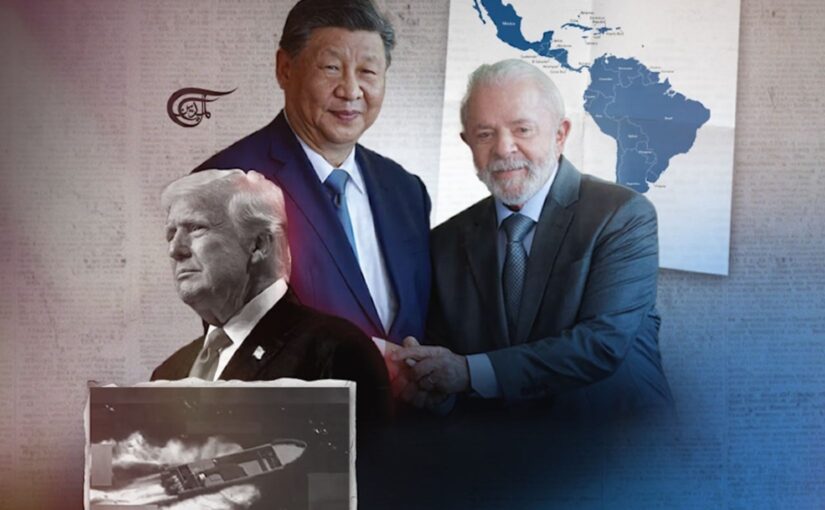
"There is great chaos under heaven; the situation is excellent."

User avatar
blindpig
Posts: 14788
Joined: Fri Jul 14, 2017 5:44 pm
Location: Turtle Island
Contact:

Re: China

Post by blindpig » Sat Nov 08, 2025 2:45 pm

China - US State of Play: The Chinese Multipolar Century Has Begun

BRINCISTAN Ascendant
Roger Boyd
Oct 31, 2025

The South Korean summit between China and the US may in the future be seen as a marker of a fundamental change in China-US relations, as the latter accepted China as an equal that must be given respect and the former started acting like the senior partner of the “G2” that it is becoming. This fundamental change has become increasingly obvious in the past ten months, as China very obviously gained the upper hand after nearly a decade of work to overcome the weaknesses that were exposed in Trump’s first term. The Chinese Party-State has followed a methodical and thorough approach to removing the nation’s weaknesses; in essence removing the US ability to attack it on economic, military and even propagandist grounds.

Trade has been significantly diversified away from the US, and China has positioned itself as a bastion of free trade. For example, its provision of free trade to many of the poorer nations of the world, and the extension of its trade agreement with ASEAN.

Trade payments have also been significantly diversified away from the US$, through local currency and Yuan based payments systems. China has also established itself as a major trading exchange for precious metals.

China has rapidly moved up the technology value curve, removing dependency after dependency upon the West; through a comprehensive approach that utilizes all parts of society.

Loans and investments have been very successfully re-oriented away from the property sector toward those sectors that develop and enhance the productive forces.

China has also become the world leader in low carbon technologies such as electric vehicles, batteries, smart electricity grids, solar, wind, nuclear, electrified trains, electrified subways etc. The demand in these areas is rapidly growing, providing new outlets for the Chinese productive forces.

China has deepened the partnership with a Russia that protects its northern border, provides a powerful military ally, acts as a very major supplier of natural resources, provides a market for Chinese goods, and brings useful alliances with nations such as India.

China’s military capabilities have been significantly increased, to the point where it is now obvious to US officials that any war with China would be disastrous for the US. The performance of Chinese military technology in the Pakistan-India 12 day war has also raised China’s military reputation and may provide significant opportunities for arms exports.

The unrest in Hong Kong has faded into history, and China’s opening up to Western tourists has produced a plethora of tourist videos debunking the Western propaganda about Xinjiang. While the US has become fully associated with the Gaza genocide and is seen using its security services against its own population, as well as legitimate foreign visitors. The current government shutdown, and the looming cut off of the SNAP (Supplemental Nutrition Assistance Program) benefits to the poorest members of US society - the majority of them the working poor - by a political class full of millionaires and funded by billionaires, will also serve to diminish the US brand abroad. In contrast, China is known for lifting hundreds of millions out of poverty.

Through 2025, Trump and the US oligarchy have slowly come to the understanding that the mixture of absurdly high tariffs and technology export restrictions can no longer hold back China. Quite the opposite in fact, with China matching new tariff for new tariff, actually directing companies not to buy Nvidia chips, and playing its rare earths trump card. The result has been two 90-day delays to the imposition of new tariffs and now a one year agreement that seems to include a 10% reduction in the US tariff on China, from 57% to 47%; with 21% having already been in place under the Biden presidency.

Both nations will put a halt to fees on each other’s ships at their ports, and the US will also not implement sanctions on Chinese majority-owned foreign companies. China puts off its newest rare earth rules (not the ones put in place earlier in 2025) for a year and promises to buy more US raw materials and foodstuffs, according to Trump; the Chinese communique quite vaguely mentioned such a promise. China’s food importers have already heavily switched to Brazilian and Argentinian suppliers, helped by China’s financing of the expansion of Brazil’s ports, and the long term damage to US agriculture is a reality; even if the Chinese state does purchase some extra soybeans etc. from US farmers. Notably there was no talk of China’s imports of Russian and Iranian oil. India is a weaker power that can be punished for such things, China is not.

The whole attempt to bend China to the US will through tariffs and export controls has come to nothing. A large irony is that the sanctions on Chinese majority-owned companies, now in abeyance for a year, were the reason for the Netherland’s disastrous seizure of Chinese owned chip maker Nexperia. Xi’s demeanour at the public meeting with Trump showed him to be the stronger party while Trump looked weak. It was left to The Daily Show to give an accurate take on the public meeting, as the mainstream press worked hard to ignore Trump’s obvious weakness; “Xi came in like his Mom forced him to have a play date with a weird kid at school”. All the other Asian leaders that Trump had met with went out of their way to be complementary, quite deferential and even offered a myriad of obsequious gifts. Trump treated the Japanese PM as if she was some floozy that he was enjoying a quick fling with.


Xi showed himself to be the stronger leader, and China the stronger nation. Covered in the first two minutes below:


The opening formal comments also showed a level of respect from the US which was an utter about turn when compared to the infamous Anchorage meeting in the opening months of the Biden administration. Xi’s opening statement showed a level of assertiveness balanced with the usual Chinese politeness.
/
[youtube]http/youtu.be/IDE76mOLF7M[/youtube]

The Party-State very much understands that a year from now China will have further enhanced its position with respect to the US; any delay will always be in its favour. With the US administration undermining US technology advancements through its policies against foreign students, academics and researchers combined with cuts to government research spending. While the US continues with 7% plus government budget deficits and a stock market bubble that keeps expanding at the same time as the median American is cutting back on basic spending. With the Federal Reserve cutting interest rates in the face of rising inflation to keep all of the financial plates spinning.

It has also become apparent that the US has absolutely no leverage with which to stop China supporting Russia during its increasing successes in its proxy war with the West, nor to stop China continuing to work with Iran and to buy its oil. China’s increasing embrace of North Korea, following Russia’s military alliance with that nation, also underlines the general weakness of US in the face of a tighter and tighter integration of BRINCISTAN and its peaceful partnerships with the likes of ASEAN. The statements of Japan’s new prime minister also point to a realpolitik acceptance of the importance of working with China rather than against it.

The Trump administration is greatly aiding this process of its own diminution as it attacks one foreign government after another, friend and foe alike. The Canadian government will be taking note of the Trump administration’s treatment of China while the US lobs extra insults and tariffs at its northern ally vassal. Being a US vassal is coming with less and less benefits, and rapidly increasing costs, as the citizens of Europe are finding out to their chagrin. While at the same time Trump is playing war games with Venezuela, insulting the president of Colombia, using tariffs to interfere in domestic Brazilian politics and judicial proceedings, and using public money to bail out US and Argentinian vassal oligarchs. Russia is also showing the route to respect from the US; strength. A lesson all of the nations of the world should be fully taking to heart, the only thing that the US oligarchy has ever respected is strength.

The era of US unipolarity has very much ended, with the Korea meeting perhaps being seen in the future as a marker of when China started to assert its dominance. The next few years will see a lot more “Koreas” as the reality of US decline and Chinese ascendance becomes so obvious that not even the mainstream media will be able to ignore it and I will not have to resort to a comedy show to get a somewhat better reflection of reality. China now needs the US less than the US needs it, and that asymmetry in the relationship will only become more unbalanced over time.

https://rogerboyd.substack.com/p/china- ... he-chinese

*****

China’s Belt and Road Initiative and the Shifting Landscape of Trade and Investment
Posted on November 6, 2025 by Yves Smith

Yves here. This interesting and useful study looked at how China’s major strategic competitors, the US, Japan, and the UK, responded to China Belt and Road investments. Interestingly, the US increased investments in Belt and Road participant countries, presumably for defensive strategic reasons but potentially also due to improved profit opportunities.

By Yasuyuki Todo, Professor in the Faculty of Political Science and Economics Waseda University, Shuhei Nishitateno, Professor Kwansei Gakuin University; Research Associate Research Institute of Economy, Trade and Industry (RIETI) and Sean Brown. Originally published at VoxEU

China’s Belt and Road Initiative has reshaped international economic and political ties among countries and reorganised global value chains. This column reveals that the initiative has triggered strategic and divergent responses among major investor countries, depending on their economic and political relationships with China. The US increased its investment in countries after they signed BRI agreements with China, largely driven by strategic competition, while the UK reduced investment, reflecting concerns over political and supply chain risks linked to China. Japan’s investment in BRI countries appears to be largely unaffected by its strategic stance toward China.

China’s Belt and Road Initiative (BRI) was launched in 2013, first aiming at the development of transport infrastructure between China and the rest of the world, including Asia, Europe, and Africa, and then expanding to energy and digital projects. By 2024, 149 countries had signed Memorandums of Understanding (MoUs) for the BRI with China, and BRI engagement boasted US$71 billion in construction contracts and $51 billion in investments – the highest level since its start (Nedopil 2025). As a result, the BRI has reshaped international economic and political ties among countries and reorganised global value chains.

Some research in the dense empirical literature on the BRI has examined how it has affected trade with China, while others focus on foreign direct investment (FDI), an important part of global value chains. Generally, FDI from China to BRI countries is found to increase, possibly because of improved infrastructure that lowers production and transport costs and strengthened political relationships with China that reduce investment uncertainty (Nugent and Lu 2021, Yu et al. 2019, among many others).

In addition to FDI from China, the BRI may affect FDI from other countries for several reasons. First, improved infrastructure may attract FDI from any country, not restricted to China. Second, participation in the BRI signals closer political alignment with China because China intends to assert greater international influence through the BRI (Huang 2016).

Under these circumstances, Western nations that are not comfortable with China’s expansion in international politics could react to BRI countries in various ways. If Western nations feel that investing in BRI countries which strengthen political ties with China is risky, they could reduce FDI in BRI countries. However, if Western nations consider they need to compete against China for political and economic leadership in BRI countries, they should increase FDI.

Our study (Todo et al. 2025) examines the possible differences in the effect on FDI into BRI countries from various Western countries such as the US, Japan, and European countries, in addition to China, adopting the staggered difference-in-differences (DID) estimations to data for global bilateral FDI. We reveal how the BRI has triggered strategic and divergent responses among major investor countries, depending on their economic and political relationships with China. The findings underscore the reality of a world where investment is no longer driven only by economic fundamentals, but also by political and security factors.

Figure 1 FDI from major Western investors to BRI countries

a) United States
Image

b) United Kingdom
Image

c) Japan
Image

Note: The horizontal axis shows years since one year before the signing an MOU between China and the BRI country.
The US: Competing Against China Through FDI in BRI Countries

First, our empirical results show that despite refusing to join the BRI, the US actually increased its investment in BRI countries after they signed MOUs with China, as shown in Panel (A) of Figure 1. Our study suggests strategic competition is a major reason for that investment.

China becoming an economic and technological superpower and strengthening economic and political ties with other countries through the BRI and other measures have added fuel to the US-China rivalry (Li 2021). Through initiatives like the Blue Dot Network and the G7’s Build Back Better World, the US has sought to provide alternatives to the BRI (Savoy and McKeown 2022). FDI is part of that toolkit.

In practice, US firms and development finance institutions have targeted the same infrastructure and energy sectors where China is most active. For example, former US President Biden visited Angola in December 2024 and initiated a 1,344 km railway project together with other G7 countries in order to compete with China, which had already invested heavily in Angola’s railways (BBC 2024).

This dynamic illustrates a key point: the BRI does not crowd out Western engagement everywhere; sometimes it provokes it.

The UK: Avoiding Risks of Supply Chain Links with BRI Countries

By contrast, the UK has reduced its FDI in BRI participant countries (Panel (B) of Figure 1). This retreat reflects a growing perception of political and supply chain risks linked to China, especially after 2018 when concerns over 5G, technology transfer, and national security intensified. Notably, the UK government’s view of China and the BRI shifted from positive to substantially negative in 2019, formally stating “systemic challenges” from China as the reason for this shift (Ashbee 2024).

The recent literature on supply chains has demonstrated that global supply chains are vulnerable to foreign economic shocks that arise due to geopolitical issues (Alfaro and Chor 2023). Private efforts to mitigate these supply chain disruption risks seem to have resulted in a negative effect on FDI from the UK.

Japan: Not Strategic to Deal with the BRI

Japan’s pattern is more muted. We show that Japanese FDI in BRI countries rose after BRI participation, but the increase is statistically insignificant (Panel (C) of Figure 1). The result implies that the positive effect through strategic rivalry with China and the negative effect through minimising supply chains with unfriendly BRI countries cancel each other out.

Moreover, when the effect of host-country fixed effects are controlled for, we find that FDI from Japan was quite stagnant both in the pre- and post-BRI periods. This implies that host-country characteristics that do not clearly appear in data such as the levels of transport infrastructure and institutions with potential for investment led to the increasing (although insignificant) trend in FDI from Japan in the post-BRI period. This analysis confirms that Japan’s FDI to BRI countries is not largely affected by its strategic stance toward China.

Autocracy and Investment

We further analysed how the level of democracy of BRI countries affects FDI to these countries, finding that autocratic BRI members attracted more FDI from both China and the US than democratic members. For China, this is consistent with its preference for regime-compatible partners, where infrastructure deals face fewer transparency constraints (Huang 2016). For the US, these findings are in line with our interpretation that the US invests in BRI countries to strategically compete with China. Because autocratic BRI countries are more likely to strengthen their economic and political ties with China than democratic BRI countries, the US is better motivated to invest in autocratic countries.

What Should the West Do?

Until recently, the BRI had been criticised because it caused debt crises and labour disputes in many of the member countries. However, because US President Trump has imposed high tariffs on most countries, closed down USAID, and shrunk foreign aid, countries in the Global South are currently more willing to strengthen their economic and political links with China. China has responded to this shift quickly and increased the amount of investment in BRI projects to the maximum level in 2024, after a drop during the COVID-19 pandemic period (Nedopil 2025).

Our results indicate that the Western nations did not react uniformly to the BRI by increasing FDI to BRI countries. Regardless of this, reducing economic ties with the Global South may lead to increased vulnerability of supply chains for Western nations, because diversified supply chains are found to increase their resilience (Ando and Hayakawa 2021, Kashiwagi et al. 2021). In addition, shrinking economic ties may also shrink political ties. Therefore, Western nations may have to change their strategic responses to the resurgence of the BRI and strengthen economic and political ties with the Global South to promote supply chain resilience and national security.

See original post for references

https://www.nakedcapitalism.com/2025/11 ... tment.html

'autocratic', 'democratic', yadda yadda

******

The aircraft carrier Fujian has joined the PLA Navy.
November 7, 5:05 PM

Image

China's newest aircraft carrier, the Fujian, has entered service with the People's Liberation Army Navy. The Chinese now have three aircraft carriers. A fourth is planned for the end of the 2020s.
Construction of new ships to form modern strike groups is also underway.

Image

Image
Comrade Xi Jinping attended the ceremony.

A brief description of the aircraft carrier itself can be found here. (Video at link, Russian.)

https://colonelcassad.livejournal.com/10173426.html

Google Translator
"There is great chaos under heaven; the situation is excellent."

User avatar
blindpig
Posts: 14788
Joined: Fri Jul 14, 2017 5:44 pm
Location: Turtle Island
Contact:

Re: China

Post by blindpig » Fri Nov 14, 2025 4:03 pm

China Widens Tech & Education Gap with Outlaw US Empire
Productive planning versus casino capitalism
Karl Sanchez
Nov 12, 2025

Image

One of Trump’s first acts as president was to terminate the US Department of Education further emaciating public education nationwide, an institution that was once one of the world’s best and at a time when intellectual challenges are on the rise in competition with the Global Majority, China and Russia specifically. In the critical STEM educational realm, US students are falling farther behind as critical science programs are cut or greatly curtailed at public schools as funding decreases along with the number of qualified teachers. Clearly there’s a vast disconnect as higher tech is one of the few economically productive industries remaining within the Empire, yet there aren’t enough technically skilled workers to employ or perform research and development. Yet, the Deep State screams about the need to confront and compete with China and Russia, both of whom are boosting their educational systems at all levels with great emphasis placed on the initial years.

What follows is evidence of that effort by China where its planning calls for many more graduates having technical degrees of all types to facilitate China’s policy of continual modernization that’s anticipated to last until 2100 at minimum. IMO, that will be the hallmark of the new Chinese Dynasty now being formed. Global Times publishes “China releases guidelines on strengthening sci-tech education in primary and secondary schools, aiming to establish basic system by 2030,” which ought to serve as an alarm clock for Americans who understand the great importance of education, especially in the fields of natural and higher sciences along with engineering—an appreciation the truant Trump will never be capable of grasping:
China’s Ministry of Education (MOE) and six other departments have jointly issued the guidelines on strengthening science and technology education in primary and secondary schools. The document outlines six key priorities, including promoting in-depth international exchanges and cooperation, aiming to support the high-quality development of education, science and technology, and talent, according to an MOE release published on the website of the MOE on Wednesday.

By 2030, China aims to have a foundational science and technology education system in place for primary and secondary schools, with further improvements to curricula, teaching reforms will be continuously deepened, and the evaluation and support systems will be basically put in place, according to the guidelines.

By 2035, a fully integrated science and technology education ecosystem is scheduled to be established, according to the guidelines.

Strengthening science and technology education in primary and secondary schools is the strategic cornerstone for responding to global technological competition and securing the initiative in national development, and it is the long-term plan for consolidating the foundations of building a strong nation and achieving the great rejuvenation of the Chinese nation, an MOE official said in response to a media inquiry on the background of the issuance of the guidelines, according to the MOE.

The official noted that strengthening sci-tech education is also an intrinsic part of deepening overall education reform and promoting high-quality basic education. It is vital for accelerating the development of a strong country in education, science and technology, and talent cultivation, as well as for the comprehensive development of a modern socialist country, the official added.

The guidelines also detail specific measures. Relevant departments will strategically integrate and utilize off campus laboratories, science and technology infrastructure, venues, workshops, training bases and other resources to establish hands-on learning spaces, providing students with a platform to conduct tech inquiry experiments and engineering practice in real world settings.

The relevant departments will promote international youth science and innovation exchanges, adopt a dual-mentor model for project-based learning, and invite Nobel laureates and other international experts to provide online guidance to cultivate students’ global awareness and innovation capacity, said the guidelines.

Meanwhile, they will implement the overseas training program for science and technology education teachers, selecting primary and secondary school teachers for study visits to overseas universities to expand their international perspective and professional skills, according to the guidelines.

Many cities across China have begun implementing science education initiatives. On Wednesday, the Global Times learned from the Shanghai Municipal Education Commission that Shanghai has implemented science education for all primary and secondary school students and is developing a coherent, progressive curriculum spanning the entire nine-year compulsory education cycle.

Shanghai encourages senior high schools to offer more inquiry-based elective courses in mathematics, physics, chemistry and related fields, while actively piloting STEM programs, according to the Shanghai Municipal Education Commission.

Xie Shangzhi, a vice principal at Wenzhou No. 22 Senior Middle School, East China’s Zhejiang Province, told the Global Times on Wednesday that the school has developed a series of school-based AI courses at basic, intermediate, and advanced levels, and has renovated its chemistry laboratories last year, and the physics laboratories are currently undergoing renovation.

Meanwhile, traditional project-based science and innovation activities, such as drone projects and programming projects, are also being conducted, Xie said.
The Shanghai metropolitan area has a population of 30 million, which is as large as some entire nations. Its plan to greatly upgrade its school’s science programs anticipates the national objective. A comparison between New York City schools with Shanghai’s would be very instructive and IMO very embarrassing for NYC since performance uniformity is lacking because of the way school districts are funded and managed. Trump’s elimination of something he never cared for makes modernizing the archaic US school system more improbable than ever, and that will equate to the continuing decline of US productive capacity. The example of Hyundai having to import South Koreans to help construct a high-tech factory in Georgia because there were not nearly enough qualified local workers whose nationals were subjected to an ICE raid that terrorized, traumatized and humiliated them is only one example of several that escaped the negative publicity of an ICE raid. Technical training schools are closing nationwide as are many federally funded Job Corps schools. The overall picture is grim for young people within the Empire. How will America be able to rebuild when it doesn’t know how to build? And that declining knowledge base isn’t due to immigration, legal or otherwise.

Since the mid-1800s, education—literacy specifically—was seen as being the primary basis for national power. Education remains the cornerstone but its content has grown far beyond literacy and now includes technical literacy, particularly math and natural science. Developing nations readily see that and are keen to educate their citizens so they can better themselves and uplift their nation. As we’ve seen at the Gym, Russia advocates and supports lifelong learning via national policy that’s also agreed to and supported by its business sector. China has a similar policy and both nations see the need to begin basic science and math education at the start of the educational process. And that means training teachers and renovating schools. The amount of knowledge students will need to absorb by the time they enter college is at least double what it was fifty years ago and most of that consists of technical science and math. Courses in financial engineering and management of fictitious capital are a dead end as Neoliberalism nears its end and neither builds anything productive. The Outlaw US Empire was the world’s manufacturing mecca from 1945-1975 when it began the neoliberal process of deindustrialization—a process that didn’t need to happen. It was the choice of unbridled capitalism planned by Wall Street not by government. And as we see with Team Trump and saw with Team Biden, that remains the choice of those “managing” the Empire. The productive gap between the Empire and the Russia/China combo will continue to widen for the lack of proper education.

https://karlof1.substack.com/p/china-wi ... cation-gap

******

Is Silicon Valley Defecting?

Several recent articles have addressed this issue.
Karl Sanchez
Nov 10, 2025

Image

Guancha provides an interesting look at recent articles in US media that ask several questions: Why does Silicon Valley admire China? Why are so many Silicon Valley AI start-ups and other established corporations favoring Chinese AI over American systems? And then we have the biggest recent declaration by Nvidia’s CEO Jensen Huang’s saying, “China will win the artificial intelligence (AI) race.” The Chinese author, Liu Chenghui, uses several American media sources to supplement his narrative, which is becoming a bigger newsworthy development after the theft of Nexperia. There’s also increasing chatter about OpenAI needing a government bailout and other financial problems of the many overvalued American AI companies. There’s another important geopolitical development that needs to be reported I’ll provide on Monday. For now, the Tech War clearly shows the Outlaw US Empire falling further behind China and Russia. I suggest Warwick Powell’s recent article on the AI race for additional reading after finishing this:
Nvidia CEO Jensen Huang’s sentence “China will win the artificial intelligence (AI) race” has once again aroused public opinion’s attention to the competition between China and the United States in this field.

“How much technology in Silicon Valley is built on China’s AI?” A Bloomberg article published on this topic on November 9 cited a number of examples to illustrate that China’s low-cost open source AI models are not only attracting global users but are also quietly gaining the favor of Silicon Valley. The author believes that if the U.S. government wants to stay ahead for a long time, it might as well think about the reasons why Silicon Valley has defected to China’s AI.

Huang recently bluntly told the Financial Times: “China will win the AI race. He then urgently made up for it, saying that China was only “nanoseconds” behind the United States, and emphasized that the United States must stay ahead “by accelerating progress and winning global developers.”

According to the report, although Huang’s initial statement was oversimplified, his motivation for his pessimistic view of the future of the United States is also obvious. Over the past year, he has argued that the United States should allow his company to continue selling chips to the Chinese market, despite Washington’s tightening of export controls. But his fear that the “developer war” may have gradually lost is not unfounded.

In recent weeks, a subtle shift has become more apparent. There has long been speculation that China’s low-cost open-source AI models could attract global users from American products to Chinese products. And now there are signs that this trend is quietly seeping into Silicon Valley.

Venture capitalist Chamath Palihapitiya recently revealed on the “All-In” podcast he co-hosted with White House AI adviser David Sacks that a company he works with has migrated major computing work to the Kimi K2 model developed by Chinese company Moonshot AI. He said the open-source model is “actually much cheaper than OpenAI and Anthropic.”

Shortly after, Airbnb CEO Brian Chesky also admitted that the reason he didn’t connect his travel app with OpenAI’s ChatGPT was because the relevant tools were “not mature enough.” He said Airbnb’s new customer service system relies on more than a dozen different AI models, “which largely relies on Alibaba’s Qwen series: it’s very good, fast and cheap.” ”

Because Chesky has a close personal relationship with OpenAI CEO Altman, his remarks are particularly noteworthy.

The number of cases of public recognition of Chinese AI models is increasing.

Thinking Machines Lab, a startup founded by former OpenAI CTO Mira Murati, said in a blog post that its latest research was “inspired by and built on the research results of Alibaba’s Tongyi Qianwen 3 team.”

But what’s even more interesting is that this shift is taking root in a more stealthy way.

Cursor, a high-profile AI programming leader with a valuation of about $10 billion, launched a new version of the assistant last month. Since then, there has been a lot of speculation on the Internet that it is based on a certain Chinese AI tool such as DeepSeek. One investor even posted that when he used it, the assistant’s internal monologue was switched to Chinese.

Another U.S.-based company, Cognition AI, also valued at about $10 billion, appears to have used the foundation model Z.ai of Zhipu AI in its new programming agent. After the social media user came to light, Zhipu appeared to confirm this with a post, saying it “highlights the positive impact and value of open-source contributions to the ecosystem.”

Neither U.S. company responded to a request for comment by email. Because Chinese AI models use a relaxed open source license, companies are completely free to build products on top of them.

Data compiled by the Hugging Face platform, a subsidiary of the American alliance Atomic Project, which supports open source, confirms this trend: Chinese models have surpassed the United States in terms of cumulative downloads by developers.

The change was slow at first, but then exploded rapidly: at the beginning of 2024, Meta’s Llama had a cumulative download of 10.6 million, while Alibaba’s Tongyi Qianwen was only 500,000; By last month, Tongyi Qianwen had reached 385.3 million times, surpassing Llama’s 346.2 million times.

In addition, systems derived from Tongyi Qianwen now account for more than 40% of the newly released language models on Hugging Face, while Meta’s share has dropped to 15%.

Geopolitical concerns have been expressed in response to the influx of international users to Chinese AI tools, but for developers eager to launch products, especially in the fields of coding and software development, those so-called risks are no longer important compared to price and performance advantages. What’s more, open-source models can be downloaded, fine-tuned, and run locally, alleviating concerns about content and data privacy.

The author believes that it is too early for Huang to announce the winner of AI. The United States still has a clear advantage in obtaining cutting-edge chips and computing power, which are key elements in the development of advanced systems.

But China, driven by low-cost and open source, has indeed attracted more and more developers, and they are the core force of AI innovation.

The article concludes by reminding the U.S. government: If you really want to stay ahead of the long-term competition, you might as well ask: Why has Silicon Valley begun to defect?

Silicon Valley’s “defection” to China’s AI has long been a sign. In May this year, Huang Renxun said on the earnings call that Alibaba’s Tongyi Qianwen model is the best among open source AI models. Twitter founder Jack Dorsey also posted a post praising the code model Qwen3-Coder of the Qwen series. Even after Musk saw the pictures generated based on Tongyi Wan2.2 training, he said that the effect was “difficult to distinguish between true and false”.

A long article published in the New York Times on October 22 bluntly said: “Silicon Valley has fallen into obsession and envy of China.”

The article reports that a complex emotion intertwined with anxiety, envy and introspection is sweeping through Silicon Valley, the center of American technology. In the face of China’s rapid progress in infrastructure construction, artificial intelligence applications, and manufacturing, many Silicon Valley elites have begun to re-examine and admire China’s efficiency and execution, while reflecting on the United States’ own difficulties in infrastructure, regulation and manufacturing.

The article argues that American companies are scrambling to develop machines that are smarter than humans. However, if Silicon Valley delves into China, it will be found that China’s artificial intelligence industry is not obsessed with general artificial intelligence, and Chinese entrepreneurs are more focused on applying artificial intelligence to services, equipment and manufacturing.

Former Google chairman Eric Schmidt and colleague Selina Xu have called on Silicon Valley to reduce its obsession with artificial general intelligence, learn from its Chinese counterparts, and integrate artificial intelligence into daily life.

The author points out that Silicon Valley’s envy of China has not only sparked discussions about work models and industrial policies but also reflected the state of the United States itself, reflecting the country’s struggle after losing self-confidence.

“We may be trapped in the past when China moves at full speed, moving goods, people and information at machine-like speed.” Andreessen Horowitz of venture capital firm said.
]

There’s nothing the Outlaw US Empire can do about China’s tech advantage. The problem lies in how Silicon Valley approached AI, which was likely influenced by the Military Industrial Complex that favored the general AI application and presumed ability to dominate and control that aspect of AI via closed-source systems and thus keep China and the world down. As we are seeing, that was the wrong bet. The Empire can review its policy choices all it wants but it won’t be able to discover why it’s now in the pickle it’s in. It’s the hubris inherent in the drive to retain primacy, to not allow any nation to surpass it in its abilities. The damage was done long ago and that same rake continues to be stepped on. It really is quite amazing how hubris continues to blind elites from that rake—Trump stepped on it several times in his first term, then Biden followed suit many times, and Trump continued in term two. The real reason why the Outlaw US Empire’s declining is due to its slavish devotion to Neoliberal and Neocon dogma, which is why we see no difference between either party when it comes to almost all policy. What’s key is the fact that all these overvalued AI companies have no way to raise revenues because they followed the MIC’s diktat instead of producing practical products capable of generating revenues, which is precisely what China’s done. Clearly, Chinese Capitalists are more adept than American Capitalists. And China’s additional socialist system with its planning regime gives it a big advantage, one the Outlaw US Empire can’t and won’t replicate.

https://karlof1.substack.com/p/is-silic ... -defecting

"Neoliberal and neocon"....Why not just say 'capitalist'? Is that a 'red line' for some people?

******

Why the trade/tech cards are Made in China

Pepe Escobar

November 14, 2025

Targeting allies and manufacturing foes is the last card available to the Empire of Chaos.

China is right in the middle of a true tech onslaught – which in several ways works as a sort of wrap-up of Made in China 2025, conceived and launched 10 years ago, and a resounding success even facing at least two tariff/sanctions offensives by Trump 1.0 and Trump 2.0.

A stellar Chinese analysis by Chen Jing, published by my friends at Guancha in Shanghai, concisely interprets the importance of key vectors and variables linked to the tech onslaught. Here’s an essential breakdown, with my own comments.

The China-US decoupling

The US as a Chinese export market now represents less than 10% of total exports. In parallel, as I observed in my visits to China this year – from Shanghai and Beijing to Xian and Xinjiang – there’s no psychological fear anymore of the much-touted “decoupling”. After the Trump-Xi meeting, it became clear that what is already in effect is a managed decoupling. Beijing is cool, calm and collected: after all, it’s able to expand in markets all across the Global South. Especially because more trade usually walks side by side with more infrastructure development projects: that’s the logic behind the New Silk Roads/BRI.

China’s 15th Five-Year Plan

What was recently debated in four days in Beijing – and will be approved next March during the Two Sessions – is already rolling, as in “decisive breakthroughs in key core technologies in major areas such as integrated circuits, industrial machine tools, high-end instruments, basic software, advanced materials, and biomanufacturing.” That’s all Made in China 2025 material. The conclusion is stark: sooner, rather than later, China simply won’t need anything from the Western high-tech industrial chain. Call it industrial decoupling. And the cards, once again, are Made in China.

The US deb crisis

The analysis recalls a comparison between the US debt in 2019, before Covid – $21 trillion, with $300 billion in annual interest – with 2025: $38 trillion, with interest projected at $1.3 trillion, way ahead of the Pentagon’s budget. You don’t need to be Prof. Michael Hudson to do the math: long-term US debt is the ultimate – unpayable – nightmare. And the US debt has alreay morphed into a US dollar crisis.

The SWIFT factor

The analysis touches on a key issue regarding SWIFT. The US dollar is still responsible for approximately 47% of SWIFT transactions. The yuan share, meanwile, fell from 4.74% in July 2024 to 2.93% in August 2025. So the yuan is not exactly becoming more international. Why? Bacause the yuan is being decoupled from SWIFT, on purpose: China is encouraging the Global South – no less than 189 countries and regions – to use CIPS on international trade/financial transactions. CIPS is progressing non-stop: a year-on-year increase of approximately 42% compared to 2024.

Call it China preparing itself for financial decoupling. Even if Washington decided to cut off China from SWIFT like it did with Russia, Beijing would have no problems leveraging its massive trade power to then really internationalize the yuan.

A new path of globalization, with China at the core?
The rare earth saga.

In 2025, China entered escape velocity. The reaction to the Trump Tariff Tantrum came with unwavering self-confidence. It was a marvel to observe that on the spot in Shanghai. The analysis recognizes that much of China’s force derives from its rare earth potential.

Already in July 2023 export controls were imposed on gallium and germanium. This summarizes China’s share and position in the production of metals and rare elements, showing that “China’s advantages go far beyond the 17 rare earth elements that have recently caused panic and helplessness in the Western camp.”

There are 21 elements in the export control list; only seven are medium and heavy rare earth elements. There are several other categories such as rare refractory metals, rare dispersed metals, rare light metals, and non-ferrous heavy metals.

One of the key points of the analysis is that not only the US, but the G7 as a whole no longer has the power to dictate the rules of the global economy. China “can withstand the G7 on its own”. Especially when the myth of US industrial strength has been shattered.

That opens a new Pandora’s box of discussion: is the global majority already moving to a new path of globalization, with China at its core?

The AI bubble

So AI may turn out to be the US’s last hope to turn the tide. The problem is the humongous size of the US AI bubble – a pillar of the US economy. It will eventually burst – and the consequences are unimaginable.

Meta, OpenAI, Nvidia, and others are pouring stratospheric funds into scaling-up large language models (LLMs) and massive data centers. That may not be enough to prevent the AI bubble burst – in an environment dictated by mega-corporations only focused on quick profits.

Cue to a quite worrying prospect fueling their paranoia. Several high-level Chinese models – such as DeepSeek, QWEN and the Kimi K2 series – already dominate global AI open source. The Americans practice “closed-source” – where the thing that matters most is how to monetize their gigantic models.

China is playing a very clever game: delaying the release of Deep Seek R2 – an open source, large-scale model. Why? Because releasing it now would mostly benefit Nvidia’s GPUs, boosting their sales and of course the US stock market.

China is nearly ready to complete domestic GPU computer clusters. DeepSeek R2 is built upon these clusters. The result: that will directly disrupt US dominance. As a Shanghai expert puts it: “How can American AI, hampered by power shortages, lack of open-source access, and high energy consumption, compete with the low-power, open-source, large-scale model that offers a significant advantage?”

MAGA: the Magically Globally Aggressive model

At the recent AI Future Summit, Nvidia’s Jensen Huang went straight to the point: China would definitely win the US-China AI competition.

A key reason is that China’s AI is about productive capitalism – and not speculation. Chinese AI is primarily used in industrial manufacturing sectors such as mining, energy, water conservancy, metallurgy, and military. Large-scale AI models combined with sensors, industrial communication, and automated control at their core, are largely applied to real-life applications, addressing real-life problems in meteorology, marine agriculture, earth machinery, aerospace, civil geology. They truly integrate algorithms and computing power into production.

History tells us that all industrial and tech revolutions have been closely related to real-life production – from steel production and electricity generation to the chemical industry and telecommunications engineering.

All that brings us back to the defining psycho-killer outlook of the Trump 2.0 administration. Incapable of really “winning” a tech war against the largest economy on the planet by PPP, the imperative has switched to harassing and plundering weaker nations seen as easy prey, especially in terms of grabbing their natural resources.

Meanwhile, domestically, Trump 2.0 dreams of reviving manufacturing – the MAGA way. Call it the Magically Globally Aggressive (MAGA) model, deviating attention from what really matters: the monstrous debt; the declining power of the US dollar; the tech bubble; inflation; real geopolitics. Plunder – targeting allies and manufactured foes alike – is the last card available to the Empire of Chaos.

https://strategic-culture.su/news/2025/ ... -in-china/
"There is great chaos under heaven; the situation is excellent."

User avatar
blindpig
Posts: 14788
Joined: Fri Jul 14, 2017 5:44 pm
Location: Turtle Island
Contact:

Re: China

Post by blindpig » Sat Nov 22, 2025 3:51 pm

Image

China at COP30: unswervingly promote green and development and build a beautiful world of harmony between humanity and nature
At the Belém Climate Summit, Chinese Vice Premier Ding Xuexiang praised Brazil’s leadership in global climate governance and expressed support for a successful COP30. Marking the 10th anniversary of the Paris Agreement, he stressed that global climate action has entered a critical phase. Ding highlighted China’s progress toward its 2030 goals, noting it has already surpassed targets for wind and solar capacity and forest stock, and highlighting the country’s 2035 Nationally Determined Contributions, which include its first absolute emissions-reduction target.

Vice Premier Ding emphasised that China will accelerate a comprehensive green transition across its economy as part of the 15th Five-Year Plan, guided by goals for peak carbon and carbon neutrality, and reiterated that China is a country that honours its commitments.

China will accelerate the green transition in all areas of economic and social development, work actively and prudently toward peak carbon emissions, and make greater contributions to addressing climate change.

Ding urged the assembled representatives from around the world to stay on the path of green, low-carbon development while balancing environmental goals with growth, jobs, and poverty reduction; to translate commitments into concrete action, upholding the principle of common but differentiated responsibilities, with developed nations taking the lead in emissions cuts and financing; and to deepen openness and cooperation, removing trade barriers and boosting collaboration on green technology and industries.

He concluded: “China is ready to work with all parties to unswervingly promote green and low-carbon development and build a beautiful world of harmony between humanity and nature.”

We republish the full speech below. It was originally published in English on the website of the State Council of the People’s Republic of China.
Remarks by H.E. Ding Xuexiang
Special Representative of President Xi Jinping,
Member of the Standing Committee of the Political Bureau of The CPC Central Committee, and
Vice Premier of the State Council of the People’s Republic of China
At the Belem Climate Summit
Belem, November 6, 2025

Your Excellency President Luiz Inacio Lula da Silva,

Colleagues,

Good morning! It gives me great pleasure to attend the Belem Climate Summit as the special representative of Chinese President Xi Jinping. First of all, I have the honor to convey the best wishes from President Xi Jinping to Brazil for hosting this Summit. President Xi Jinping highly commends the important contributions made by the Brazilian Presidency to global climate governance, and wishes COP30 a full success.

This year marks the 10th anniversary of the Paris Agreement and global climate governance is entering a critical stage. China has made notable achievements in implementing its 2030 Nationally Determined Contributions (NDCs), and achieved ahead of schedule the targets of installed capacity of wind and solar power and total forest stock. At the United Nations Climate Summit on September 24, President Xi Jinping solemnly announced China’s 2035 NDCs covering all economic sectors and all greenhouse gases. This is the first time that China put forward an absolute emissions reduction target, which is a testament to China’s firm resolve and maximum effort.

The just-concluded Fourth Plenary Session of the 20th Communist Party of China (CPC) Central Committee deliberated over and adopted the recommendations for the economic and social development plan over the next five years. It made important arrangements for building a Beautiful China. It stressed that guided by the goals of achieving peak carbon and carbon neutrality, China will make concerted efforts to cut carbon emissions, reduce pollution, pursue green development and boost economic growth, and reinforce ecological security shields and strengthen green development drivers. China is a country that honors its commitments. China will accelerate the green transition in all areas of economic and social development, work actively and prudently toward peak carbon emissions, and make greater contributions to addressing climate change.

Colleagues,

Humanity now stands at a new crossroads. It is imperative for all parties to uphold true multilateralism, strengthen solidarity and coordination and make sustained progress in global climate governance. To this end, I would like to make three propositions.

First, we should keep to the right direction. Green and low-carbon transition is the trend of the times. We need to stay confident, balance such goals as environmental protection, economic development, job creation and poverty eradication, seek coordinated progress on livelihood improvement and climate governance, and promote high-quality development to deliver greater benefits to the people of all countries.

Second, we should translate climate commitments into action. The key to addressing climate change lies in taking action. We need to abide by the principle of common but differentiated responsibilities, fully and effectively implement the UN Framework Convention on Climate Change (UNFCCC) and its Paris Agreement, and uphold international fairness and justice in the course of action and implementation. Developed countries should take the lead in fulfilling emission reduction obligations, deliver on their finance commitments, and provide more technology and capacity building support to developing countries.

Third, we should deepen openness and cooperation. The global transition toward green and low-carbon growth calls for a sound environment for international economic and trade cooperation. We need to strengthen international collaboration on green technology and industry, remove trade barriers and ensure the free flow of quality green products to better meet the needs of global sustainable development.

China is ready to work with all parties to unswervingly promote green and low-carbon development and build a beautiful world of harmony between humanity and nature.

Thank you.

https://socialistchina.org/2025/11/21/c ... nd-nature/

******

Some Notes Relative to China, Japan & Outlaw US Empire

Reordering who's the top science dog and further facts about Japan
Karl Sanchez
Nov 19, 2025

Image

First a short note that is indicative of the directions China and the Outlaw US Empire are headed, and they aren’t the same. The major science publication Nature has recently released its “Index Supplement” where its contents were spotted by Xinhua and further published by Global Times: “Chinese cities dominate global science rankings for first time.” The report is short and follows in full:
For the first time, Chinese cities account for more than half of the world’s top ten scientific research hubs, according to the latest Nature Index supplement, with Beijing retaining its position as the leading global science city—a title it has held since 2016.


The newly released “Nature Index 2025 Science Cities” supplement shows that the number of Chinese cities in the global top ten rose from five in 2023 to six in 2024, marking the first time China holds a majority in the rankings.

The supplement draws on the Nature Index database, which tracks research articles published from 2015 to 2024. Its analysis uses “Share”, a fractional count reflecting institutional contribution to publications, as the primary metric, with time-series data adjusted to 2024 levels. Each city’s Share is calculated by summing the contributions of all affiliated institutions located within that city.

According to the Nature Index, the world’s leading science cities overall are: Beijing, Shanghai, New York metropolitan area (U.S.), Boston metropolitan area (U.S.), Nanjing (China), Guangzhou (China), San Francisco Bay Area (U.S.), Wuhan (China), Baltimore-Washington metropolitan area (U.S.), and Hangzhou (China).

Beijing maintained its No. 1 ranking, with its adjusted Share increasing by 9.14 percent between 2023 and 2024. Shanghai’s output rose even more sharply, by 20 percent. Meanwhile, the combined adjusted Share of all U.S. cities in the top ten declined.

“The movements of cities reflect a wider trend in the index of China expanding its lead as the United States loses ground,” the supplement noted.

Further analysis shows that Chinese cities hold a strong advantage in chemistry, physical sciences, and earth and environmental sciences, leading the global rankings in all three fields. Notably, Chinese cities claimed all of the top ten positions in chemistry for the first time. In the other two subject areas, they secured six of the top ten spots, with Beijing ranking first worldwide across all three domains.
Unfortunately, the rankings are incomplete as Russia is completely omitted. Why the Outlaw US Empire’s included when its criminal activities far outweigh anything Russia has done or is doing. But enough of that.

Image
The fortification walls and Kankaimon Gate of Shuri Castle, Ryukyu Kingdom, Okinawa, circa 14th Century

Image

Ryukyu Islands

With the recent surge in realization that the Age of Colonialism has yet to completely come to an end with the advent of Neocolonialism along with vestiges of traditional colonialism that resulted from imperialism, efforts are being made to study the people and places that continue to have their self-determination honored. One of those places and its people are the Ryukyu Islands where an independent people once lived and today struggle to keep their culture, language and dignity while continually fighting to rid their islands of foreign military presence they don’t want and an independence they all crave. Some will know about the Okinawans longtime struggle for their rights. Given the above context and the geopolitical situation within East Asia, China has decided to make “Ryukyu studies” an academic program. This Global Times editorial essay explains “Why researching ‘Ryukyu studies’ is highly necessary” and is an excellent introductory tutorial about yet another global nuance:
Recently, the “Ryukyu studies” academic program, the first of its kind in China and initiated by Fujian Normal University, has been officially approved in China and is now formally launched. It is attracting widespread attention both domestically and internationally. The geopolitical position, strategic choices, and future trajectory of the Ryukyu Islands not only determine their own fate but also profoundly affect the security concerns of neighboring countries and regions.

In recent years, scholarly interest in the Ryukyu (Okinawa) issue has continued to rise both in China and abroad, yielding a steady stream of research achievements. This has gradually evolved into the construction of a full-fledged academic system, making the establishment of “Ryukyu studies” a natural and inevitable development.

The Ryukyu Islands lie between China’s Taiwan island and Kyushu island of Japan, facing Fujian Province of China across the sea. As early as 1372, the Ming Dynasty (1368-1644) formally established a tributary relationship with the Ryukyu Kingdom: Ryukyu acknowledged Chinese imperial authority and followed the Chinese calendar, while China treated Ryukyu with exceptional generosity under its “give much, ask little” policy.

In 1609, Satsuma forces from Japan invaded and brought Ryukyu under its control. In 1872, the Meiji government unilaterally created the “Ryukyu domain” as the first step toward annexation, yet Ryukyu managed to maintain its tributary relationship with China to certain extent. In 1879, Japan forcibly abolished the Ryukyu Kingdom through military coercion and established Okinawa Prefecture, completing its formal annexation.

After Japan’s defeat in 1945, US forces occupied the Ryukyu Islands, and all official administrative bodies and documents during the occupation period continued to use the name “Ryukyu.” In 1972, the US and Japan transferred administrative rights over Ryukyu through a private bilateral deal. Since then, the islands have remained under Japanese jurisdiction and were redesignated as “Okinawa Prefecture.” From 1879 to the present day, historical and legal disputes over the sovereignty of the Ryukyu Islands have never ceased.

In essence, “Ryukyu studies” is a comprehensive, interdisciplinary field that examines the geography, politics, culture of the Ryukyu Islands as well as China-Ryukyu history and Ryukyu’s place in East Asian relations. It stands on equal footing with Sinology, Korean studies, and Japanese studies rather than being merely a subsidiary branch. Its core research revolves around multiple dimensions: Ryukyuan history, culture, and external relations. Historically, this includes the origins of Ryukyu, its tributary relationship with Ming and Qing (1644-1911) dynasties, and the process of Japanese annexation. Culturally, it encompasses the Ryukyuan language, clothing, architecture, music, and religious beliefs. In terms of external exchanges, it covers economic interactions, tribute trade, and relations with neighboring countries. Moreover, the study of modern and contemporary “Ryukyu issues” holds particular significance within “Ryukyu studies.” Discussions surrounding a wide range of pressing real-world concerns--such as Ryukyu’s status, its current social conditions, US military bases, and many others—all require the academic backing and support that this discipline provides.

“Ryukyu studies” is an academic endeavor that both “deconstructs” and “constructs.” On the constructive side, it systematically reconstructs the historical reality of the China-Ryukyu tributary relationship, supplementing and improving research on traditional East Asian diplomatic systems.

On the deconstructive side, it dismantles Japan’s one-sided, self-serving narrative of its annexation history. For instance, Japan has aggressively promoted the myth of “common ancestry” between Japanese and Ryukyuans, refused to acknowledge the armed annexation of the Ryukyu Kingdom, and denied the Ryukyu Kingdom’s historical status as an independent state.

Furthermore, the Japanese government has persistently pursued policies of discrimination and forced assimilation, attempting to institutionalize and legitimize the sacrifices Ryukyu has been forced to make for Japan’s sake. These distorted narratives form the very logical foundation of Japan’s assimilation policy toward Ryukyu.

Currently, Japan and the US are accelerating the transformation of the Ryukyu Islands into a “military fortress.” This trend has exacerbated deep local anxieties about a new “Battle of Okinawa,” with the public generally worried that their homeland will once again become a “shield” for Japan. Therefore, in-depth research into “Ryukyu studies” is of even greater practical significance.

In recent years, both China and Japan have produced a number of important research findings on the Ryukyu issue. Future research on Ryukyu is expected to expand spatially to East Asia and even globally, and temporally to the post-war period and the present.

Systematically promoting the coordinated development of the “Ryukyu studies” discipline, academic system, and discourse system will also inject new connotations into building a harmonious, inclusive, and open East Asian regional culture.

The inclusion of “Ryukyu studies” in the national-level “endangered disciplines” support plan signifies that Chinese academia is participating in the reshaping of East Asian historical narratives with academic rationality. Chinese “Ryukyu studies” will move beyond its previous fragmented and disjointed state, and its future development will exhibit trends of systematization, integration, and internationalization. The value of this field of study is by no means confined to the level of academic gap-filling or disciplinary expansion, but also about the enduring maintenance of regional peace, the upholding of historical justice, and the construction of China’s discourse system within a complex geopolitical landscape. Only by delving into the historical context can we find a more inclusive and sustainable path to coexistence in the future.
The Collective Western Empire to which Japan belongs has long hypocritically beaten the human rights drum in an attempt to weaponize the issue. With the advent of the internet, the Western Empire has seen its Media Megaphone Monopoly erode away as people learn they’ve been lied to for generations withe the West historically being the main deviants when it comes to human rights via its ethno-religios wars that have lasted for a thousand years and the five hundred plus years of colonial domination and its many genocides. As science has shown, there’s only one race of humans—the Human Race—although racism still reigns amongst the ignorant urged on by political opportunists like Donald Trump and elites keen to use divide and rule to stay atop. The Ryukyuan people rebuilt many of their historical buildings after Okinawa was devastated by the battle between US and Japanese forces in 1945, many predating Japanese annexation. The Japanese also have a very disgusting history of visiting genocide on the Ainu people of Hokkaido who were present prior to the arrival of the Yamato or Wajin peoples who are now the dominant ethnic group of Japan. Of course, all East Asian island dwellers were initially from the mainland and all likely share a common ancestry from what at first may seem an unlikely source—Southeast Asia. IMO, it’s a shame ethnic/anthropological studies are often relegated to the realm of so-called higher education when it’s clear that there’s a need for some basics to be taught at much lower grades. Some will scream—Multiculturalism—as if that’s a bad thing to learn and understand. If people were to actually examine their underlying genealogy, they’d discover they’re mutts, nowhere near being purebreds of any type.

As China’s now demonstrating, there are no “divined” exceptional national groups that were endowed with some innate superiority and the only place such concepts exist is within mythology—something the Zionists will eventually learn the hard way. Hopefully at some point in the future, humans will finally admit that wisdom is more important than wealth, and wealth cannot purchase wisdom. Perhaps in several thousand years humanity will consist of one global community instead of disparate nations acting in what they perceive to be their own interests and the overall interests of Humanity will prevail.

https://karlof1.substack.com/p/some-not ... hina-japan

******

Image

China once again shows what Socialist International Free Trade looks like in Africa
Originally published: Countercurrents on November 18, 2025 by Bhabani Shankar Nayak (more by Countercurrents) | (Posted Nov 20, 2025)

As U.S. imperialism uses indiscriminate and harsh tariff measures to protect its capitalist dominance and hegemonic control over the political and economic systems of many countries across the world, China has implemented a zero-tariff policy for fifty-three African countries in an effort to share its development and prosperity while sharing skills and strategies. In contrast, the United States maintains a neocolonial and neo-imperialist economic policy in its commercial engagement with Africa through the African Growth and Opportunity Act (AGOA).

This AGOA program “provides eligible sub-Saharan African countries with duty-free access to the U.S. market for over 1,800 products, in addition to the more than 5,000 products that are eligible for duty-free access under the Generalized System of Preferences program” for 32 African countries, on the condition that these countries must “establish or make continual progress toward establishing a market-based economy, the rule of law, political pluralism, and the right to due process. Additionally, countries must eliminate barriers to U.S. trade and investment, enact policies to reduce poverty, combat corruption, and protect human rights.”

These AGOA conditions are designed to prevent African countries from developing independent economic and foreign policies, ensuring that they create both economic conditions and political processes cocommitant with U.S. interests and requirements of its market. The AGOA is also structured to facilitate the extraction of Africa’s natural resources in ways that primarily benefit the United States. The AGOA neither creates opportunities nor conditions for growth of African countries. There is nothing in this act that genuinely empowers African people either as producers or as consumers; instead, it positions their countries to remain subordinate to American imperialist and capitalist objectives.

Similarly, former European colonial powers, now grouped as the European Union (EU), engage with African countries through conditional Economic Partnership Agreements (EPAs), which are often developed on the basis of reciprocal, regional, and bilateral commitments. In contrast, China’s zero-tariff policy is part of the broader expansion of China–Africa economic relations, grounded in mutual respect and shaped by the Forum on China–Africa Cooperation (FOCAC).

China’s zero-tariff policy for African countries is also part of its socialist internationalist commitment to strengthening economic ties and promoting industrial investment that supports local production in Africa. This approach aims to generate mass employment and expand livelihood opportunities by deepening Africa’s participation in both regional and global markets, as well as by integrating the continent more fully into global supply and value chains. China demonstrates what a socialist model of international free trade can look like in Africa, offering an alternative to the externally imposed, conditional, and often unfair trade practices enforced on African countries by European and American institutions and policies in the name of “free trade” and the “free market.” In practice, however, European and American trade policies are neither genuinely free nor fair.

Europe and the United States create international market mechanisms in which trade serves primarily as a means to secure free capital and market mobility for European and American corporations, products, and services in Africa. Meanwhile, African people and their products continue to face significant barriers at European and American borders. These capitalist and imperialist powers promote protectionist trade and market strategies for themselves, while preaching “free trade” to African countries under the banner of “economic and political reforms.”

China’s zero-tariff policy is not only expanding African trade with China but is also having a positive impact on African exports in the global economy, helping to transform both the lives and livelihoods of people across the continent. This policy is further supported by comprehensive trade-facilitation initiatives by China aimed at ensuring easier and more efficient cross-border trade, so that African producers and Chinese consumers can both benefit from the exchange of products and services. The organisation of China-Africa Economic and Trade Expo is part of deepening people to people economic ties between China and Africa. Such a pattern of international free trade challenges the very foundations of the neocolonial and neo-imperialist trade practices advanced by European and American powers in Africa and in other parts of the world.

Therefore, American and European powers have been relentlessly spreading false propaganda based on the so-called Chinese “debt-trap” narratives. These mythical narratives are prominently documented in the publication “The Elements of the China Challenge” by the Policy Planning Staff, Office of the Secretary of State, United States. This unclassified paper characterises China’s development initiatives as a “predatory development program and debt-trap diplomacy,” while also claiming that Beijing pursues “authoritarian goals and hegemonic ambitions.” It further argues that “the CCP has undertaken major infrastructure and investment projects, debt-trap diplomacy, and other predatory economic practices in every region of the world, the better to induce or compel sovereign nation-states, particularly their governing and business elites, to aid and abet China in the reshaping of world order. And the CCP has leveraged its integration into international organizations to infuse them with norms and standards rooted in the party’s authoritarianism.” These ideologically driven claims are far from the truth. There is no factual basis for such assertions; they are part of a coordinated and persistent campaign of anti-Chinese propaganda to undermine socialist achievements of China and its hardworking Chinese people.

China’s tariff-free trade represents a first step toward establishing a socialist pattern of international free trade that links continents and connects producers directly with consumers. This approach creates conditions where producers understand their consumers, the cost of production, and can set fair prices for their products. In contrast, the so-called European and American “free markets” deliberately separate consumers from producers, creating independent pricing mechanisms that exploit both groups to generate superprofits for corporate interests.

Therefore, a socialist pattern of trade offers a clear alternative, bringing producers and consumers together based on real needs and desires, without manipulation in the name of “free consumer choice.” In capitalist trade practices, genuine free choice rarely exists; instead, desires are manufactured to expand profit-driven markets. In contrast, under socialist trade, consumer choices are grounded in actual needs and preferences, while the market serves merely as a facilitator rather than the central determinant of production, price, consumption, distribution, demand, and supply. China demonstrates a model of free and fair trade, showing how such practices can function effectively in Africa and in the world today.

https://mronline.org/2025/11/20/china-o ... in-africa/

*******

China Explains Its Abstention in UN Gaza Vote
November 20, 2025

Image
China’s UN Ambassador Fu Cong. Photo: Friends of Socialist China/file photo.

By Friends of Socialist China – Nov 19, 2025

On November 17, the United Nations Security Council (UNSC) adopted Resolution 2803 (2025), which sets out proposed post-war arrangements for the Palestinian territory of Gaza. The resolution was adopted with 13 votes in favour and no votes against. China and Russia abstained from the vote. As permanent members of the Security Council, a negative vote by either country would have vetoed the resolution.

Following the vote, China’s UN Ambassador Fu Cong made an explanatory statement. He began by stating that:

“Gaza, brutalised by two years of war, is a land of ruins in dire need of rebuilding. Over two million people continue to live in deprivation and struggle in displacement. China supports the Security Council in taking all necessary actions to achieve a lasting ceasefire, relieve the humanitarian disaster, and launch post-war reconstruction to rekindle the hope of peace and development for the people in Gaza.”

However, he added: “Regrettably, the draft resolution that was just voted on is lacking in many respects and is deeply worrisome” and went on to set out four points in this regard:

• The draft resolution is vague and unclear on many critical elements. The penholder requests the Council to authorise the establishment of a Board of Peace and international stabilisation force, which will play a key role in the post-war governance in Gaza. It should have explained in details their structure, composition, terms of reference, and criteria of participation, among others… However, the draft resolution contains skimpy details on these critical elements.

• The draft resolution does not demonstrate the fundamental principle of Palestinians governing Palestine. Gaza belongs to the Palestinian people, not to anyone else. Any post-war arrangements must respect the will of the Palestinian people… The draft resolution outlines post-war governance arrangements for Gaza, but it seems that Palestine is barely visible in it, and the Palestinian sovereignty and ownership are not fully reflected.

• The draft resolution does not ensure the effective participation of the UN and its Security Council… The UN has ample experience and capacities in post-conflict recovery and economic reconstruction and should therefore play a vital role in Gaza’s post-war governance. However, no such arrangement is made in the draft resolution.

• The draft resolution is not a product of full consultations among Council members. Less than two weeks after introducing the draft resolution, the penholder rushed the Council into making a critical decision on the future and destiny of Gaza. Council members responsibly engaged in the consultations, raising a lot of constructive questions and suggestions, but most of them were not taken on board.

However: “Notwithstanding the above-mentioned many issues in the draft resolution and China’s major concerns about it, considering the fragile and severe situation in Gaza, the imperative of maintaining the ceasefire, and the positions of the regional countries and Palestine, China abstained in the vote. It must also be noted that our concerns and worries remain… The Palestinian question lies at the heart of the Middle East issues. It is a matter about international equity and justice… China has always firmly supported the just cause of the Palestinian people in restoring their legitimate national rights. We stand ready to work with the international community to make unremitting efforts for a comprehensive, just, and lasting solution to the Palestinian question.”

China’s failure to exercise its veto on this occasion has understandably disappointed many in the Palestinian solidarity movement internationally. However, as Fu Cong intimates above, however reluctantly, the resolution and the plan it reflects had the support of numerous important Arab and Islamic countries, including Saudi Arabia, the United Arab Emirates (UAE), Qatar, Egypt, Jordan, the State of Palestine, Türkiye, Pakistan and Indonesia. Whatever criticisms might be levelled at the governments of these countries (and there are doubtless many), China, or any other socialist country, has to deal with the governments that actually exist, not those that we might wish existed. It should further be noted that four Muslim or majority Muslim states currently serve as non-permanent UNSC members, namely Algeria (arguably the only Arab country still generally adhering to anti-imperialist, independent positions in terms of its internationally recognised government), Pakistan, Somalia and Sierra Leone. All of them voted in favour of the resolution. For China, or Russia, to have exercised the veto would only have weakened their position vis-à-vis the Arab and Islamic nations and correspondingly further strengthened that of the United States. For 70 years since the Asian-African Conference in Bandung, China has worked tirelessly to build and maintain a global united front of newly independent and developing countries, despite the painful and difficult compromises this sometimes entails. Moreover, a Chinese or Russian veto on this occasion would have done nothing to materially deter the United States or Israel from proceeding with their plans. It would simply have removed even the most basic level of international oversight, constraint and accountability.

We reprint below the full text of Ambassador Fu Cong’s remarks. They were originally published on the website of China’s Permanent Mission to the UN.

The full text of the resolution, with an introductory commentary by Middle East Eye, may be read here.

Explanation of Vote by Ambassador Fu Cong on the UN Security Council Draft Resolution on the Post-War Arraignments of Gaza

November 17 (China’s UN Mission)

President,

Gaza, brutalized by two years of war, is a land of ruins in dire need of rebuilding. Over two million people continue to live in deprivation and struggle in displacement. China supports the Security Council in taking all necessary actions to achieve a lasting ceasefire, relieve the humanitarian disaster, and launch post-war reconstruction to rekindle the hope of peace and development for the people in Gaza. Regrettably, the draft resolution that was just voted on is lacking in many respects and is deeply worrisome.

First, the draft resolution is vague and unclear on many critical elements. The penholder requests the Council to authorize the establishment of a Board of Peace and international stabilization force, which will play a key role in the post-war governance in Gaza. It should have explained in details their structure, composition, terms of reference, and criteria of participation, among others. This should have been an essential basis for the Council’s serious discussions. However, the draft resolution contains skimpy details on these critical elements. Despite repeated requests from Council members for more information, no response has been made from the penholder.

Second, the draft resolution does not demonstrate the fundamental principle of Palestinians governing Palestine. Gaza belongs to the Palestinian people, not to anyone else. Any post-war arrangements must respect the will of the Palestinian people and give full play to the vital role of the Palestinian National Authority. The draft resolution outlines post-war governance arrangements for Gaza, but it seems that Palestine is barely visible in it, and the Palestinian sovereignty and ownership are not fully reflected. Of particular concern is that the draft resolution fails to explicitly reiterate a firm commitment to the two-State solution as an international consensus.

Third, the draft resolution does not ensure the effective participation of the UN and its Security Council. The draft resolution requests the Council to authorize the BOP to assume full responsibility for the civil and secure arrangements in Gaza, but it stipulates no oversight or review mechanism beyond the annual written reports. The UN has ample experience and capacities in post-conflict recovery and economic reconstruction, and should therefore play a vital role in Gaza’s post-war governance. However, no such arrangement is made in the draft resolution.

Fourth, the draft resolution is not a product of full consultations among Council members. Less than two weeks after introducing the draft resolution, the penholder rushed the Council into making a critical decision on the future and destiny of Gaza. Council members responsibly engaged in the consultations, raising a lot of constructive questions and suggestions, but most of them were not taken on board. While there remained major concerns and serious differences among members, the penholder forced the Council to take actions on the draft resolution. We are deeply disappointed with such an approach, which is disrespectful to Council members and hurts the Council’s solidarity.

President,

Notwithstanding the above-mentioned many issues in the draft resolution and China’s major concerns about it, considering the fragile and severe situation in Gaza, the imperative of maintaining the ceasefire, and the positions of the regional countries and Palestine, China abstained in the vote. It must also be noted that our concerns and worries remain. The Security Council must maintain close attention to the situation in Gaza and the Palestinian question. The Palestinian question lies at the heart of the Middle East issues. It is a matter about international equity and justice. The international community must steadfastly advance the two-State solution and pursue the political settlement of the Palestinian question. It means establishing an independent Palestinian state with full sovereignty on the basis of the 1967 borders with East Jerusalem as its capital, therefore realizing the Palestinian people’s right to statehood, survival. and return. China has always firmly supported the just cause of the Palestinian people in restoring their legitimate national rights. We stand ready to work with the international community to make unremitting efforts for a comprehensive, just, and lasting solution to the Palestinian question.

Thank you, President.

(Friends of Socialist China)

https://orinocotribune.com/china-explai ... gaza-vote/

******

China warns of severe consequences if Japan fails to retract its threats of military intervention over Taiwan

Though Japan recognizes the “one-China policy”, earlier this month its prime minister, Sanae Takaichi, threatened military intervention if China tried to unify Taiwan with the mainland.

November 20, 2025 by Abdul Rahman

Image
Foreign Ministry spokesperson Mao Ning’s regular press conference on November 19, 2025. Photo: MFA China

China reiterated its demand that Japanese Prime Minister Sanae Takaichi retract her statement threatening military intervention in the event that China tries to forcefully integrate Taiwan into the mainland. It warned of strong counter measures otherwise.

The “Japanese prime minister’s erroneous remarks on Taiwan have fundamentally eroded the political foundation of China-Japan relations and triggered strong outrage and condemnation from the Chinese people,” said official spokesperson of the Chinese Ministry of Foreign Affairs, Mao Ning, in response to a question on Wednesday, November 19.

“Retract the erroneous remarks, stop making provocations on issues concerning China, take practical steps to admit and correct the wrongdoing, and uphold the political foundation of China-Japan relations,” Mao reiterated.

Speaking in the country’s parliament, newly elected Takaichi had said on November 7 that her country may respond militarily to any “situation threatening Japan’s survival” including an attempt to force the unification of Taiwan with China.

She also added that if a US warship sent to break a possible blockade on Taiwan is attacked it would invite a similar Japanese military response.

Japan hosts the largest contingent of American forces anywhere outside the US territory.

Despite strong Chinese protests and a diplomatic spat last week, Takaichi is still refusing to retract her comments, claiming that they were “hypothetical” in nature. She also said she would not repeat them in future.

However, China has demanded a complete retraction, saying Takaichi’s statement violates the fundamental principle of China-Japan relations and amounts to interference in its domestic affairs, a red line.

Indications of Japanese militarism
Mao also objected to Takaichi’s invocation of phrases such as “survival threatening situation” and “collective self defense” in the case of Taiwan, saying that it is a pretext for “Japanese militarism to launch aggression” in the region.

Takaichi, of Japan’s Liberal Democratic Party (LDP), is widely seen as an ultra nationalist and a hawk who wants to reverse the demilitarization of Japan imposed post the Second World War.

After assuming power in October she pushed the country’s defense budget up and even talked about revisiting Japan’s long held no-nuclear policy and manufacture of heavy weapons.

Takaichi’s Taiwan statement is based on the country’s military strategy, which provoked widespread popular protests in the country when it was adopted in 2015.

Mao reminded that similar aggressions and excuses had been used by the Japanese to justify its occupation of Chinese territories in the last century and to bring the Second World War into the region.

“In 1931, Japan called its seizure of Manchuria as ‘survival-threatening’, and used that as a pretext to carry out the September 18th incident and invaded and occupied Northeast China,” Mao reminded.

“Japan later claimed that to defend ‘the greater East Asia co-prosperity sphere’ was an existential battle” for it and expanded its war of aggression to the entire Asian region, Mao pointed out, asking “whether to attack Pearl Harbor was also deemed as survival-threatening to Japan, which ignited the Pacific War.”

“As we mark the 80th anniversary of the victory of the Chinese People’s War of Resistance against Japanese Aggression and the World Anti-Fascist War the international community must guard against and firmly thwart any attempt of reviving militarism, jointly uphold the post-WWII international order and safeguard world peace,” she emphasized.

Chinese counter measures
Japan, like most of the countries in the world, officially recognizes Taiwan as part of China. Both the countries signed an agreement in 1972 according to which Japan recognizes the one-China policy.

On November 12, China had underlined that Taiwan is the core of its national interest and a red line which no external force should cross. It asked the Japanese to respect the agreement signed between the two countries, including adherence to the “one-China policy”.

Since Takaichi’s remarks, China has taken several counter measures, including issuing a travel advisory asking its citizens to avoid traveling to Japan and restricting the sale of Japan’s seafood products in the country, among others.

China and Japan had a mutual trade of around USD 300 billion in 2024. Chinese visitors to Japan bring substantial revenue to the Japanese economy, according to one estimate, around USD 14 billion dollars each year.

“If Japan refuses to retract them or even continue to pursue the wrong course, China will have to take strong and resolute countermeasures and all consequences arising therefrom will be borne by Japan,” Mao warned.

https://peoplesdispatch.org/2025/11/20/ ... er-taiwan/

*****

Seven Questions for PM Takaishi

Global Times Infographic
Karl Sanchez
Nov 20, 2025

Image

At the G-20, China says Premier Li Qiang had no plan to meet with Takaishi. Global Times reports:

[T]he Japanese side keeps claiming it is open to dialogue with China, Mao Ning, spokesperson from China’s foreign ministry said that Premier Li has no arrangement to meet with the Japanese leader and urged Japan to have self-respect.

Having no self-respect is bad juju in Asia. The G-20 is in South Africa for the very first time in Africa and is this weekend having the theme Solidarity, Equality, Sustainability.

https://karlof1.substack.com/p/seven-qu ... m-takaishi
"There is great chaos under heaven; the situation is excellent."

User avatar
blindpig
Posts: 14788
Joined: Fri Jul 14, 2017 5:44 pm
Location: Turtle Island
Contact:

Re: China

Post by blindpig » Mon Dec 01, 2025 3:02 pm

Timofey Bordachev: "China Reminds that Power Belongs to the Victors"

Vzglyad 24 November 2025
Karl Sanchez
Nov 29, 2025

Image

About the time I wrote about China wanting to avoid a repeat of 1936 and listing the many documents related to its stance, Mr. Bordachev, writing in Vzglyad, provides another insight into why China has the right to prevent Japan from further remilitarizing which some may find controversial because they lack complete understanding of what the UN Charter says. I’m very pleased he’s provided this essay as Russia can also use the same rationale regarding Germany as well as with Japan. China also sees this entire issue as also being a responsibility of the Outlaw US Empire in two ways that amount to the need for it to stop what it’s doing and reverse the outcome of its actions to-date. First, the article’s preamble:

The main thing for the international order is not the sign on its “building”, but agreement on what lies at its foundation, not the composition of the “cement” from which it is built, but the agreement of the main “builders” on this.

The thought provided above should be kept in mind while reading the main body:
The basis of any world order is the balance of power between states. All the ways in which politicians invent this order—institutions or law—are as secondary as the law is to people’s consent to live according to certain rules. If such an agreement ends, then the revolution is inevitable, and no Constitution will help here.

Therefore, it does not matter at all what the universal international organization is called at the moment: the UN, the League of Nations, the Holy Alliance or the Intergalactic Federation–-a serious observer is interested not in its formal features, but in how much the form corresponds to the content of modern world politics.

A few days ago, the Chinese authorities decided to remind Japan of the existence of Articles 53, 77 and 107 of the UN Charter–-they create the right of the founding powers of the UN to take unilateral military measures against the “enemy” countries of World War II (Germany, Italy or Japan) in the event that they take steps to resume their aggressive policy. In 1949, these articles were enshrined in the Charter and since then, despite attempts to abandon them, they have remained there unchanged.

So, purely theoretically, the same China can shy away from Japan, and Russia—at Germany—if they see signs of a revival of aggression in their behavior, and no UN Charter can interfere with them here. Such a reminder is partly surprising and partly frightening, but in reality it is just a reminder that the only regulator of international politics is force. And the only way to establish the balance of forces is general wars, no matter how regrettable it may sound from our philistine point of view.

And the basic rights remain with those powers that emerge victorious from these wars. As a matter of fact, this is the basis for all discussions about the need to admit countries such as India, Brazil or anyone else as permanent members of the UN Security Council–-they have not won world wars. And the geopolitical insignificance of Britain or France, whether we like it or not, does not negate the fact that both powers at least ended World War II in the capital of a defeated enemy.

Even France. Moreover, 15 years after the fall of Berlin, it created its own atomic bomb. And then it developed its nuclear potential, despite the fact that in 1966 it received a ban from the United States on the export of the necessary supercomputers to the country.

In other words, all international formal regimes and rules that have ever existed are a tool, not a way to achieve peace. The method is the participation in decision-making “on Olympus” of the world of those who have the technical capabilities to destroy this world. This is the trick from the founders of the UN back in 1945 and the reason that this organization has existed for so long.

And today we are thinking about how to reform the UN, and not come up with something completely new. The unfortunate League of Nations (1919-1946) collapsed not because it was bad itself, but because the balance of power between the world’s major powers changed. It would have continued to work if Britain and France had been able to prevent World War II. But they failed, and the regime in which London and Paris played the first fiddle went into oblivion.

The simplest theoretical scheme of the world order is that power belongs to the victors. And if India or Brazil ever become permanent members of the UN Security Council, it means that either the organization is coming to an end, or a revolution of such magnitude has taken place in our minds that it is not even theoretically possible to comprehend it.

On these two infinitely respected Powers there is no blood of those who last took the liberty of threatening the peaceful existence of all mankind and paid for it. Therefore, all that China has done is to remind Japan and the world that the indisputable facts of life also have formal legal support.

This seems to be the end of the conversation about whether the Chinese reminder “gives a chance to revive the authority of the UN and the indisputable authority of its Charter in matters of war and peace.” Although these authorities and the Charter were always illusory, they created an impression of a certain stability among the general public. This is always a good thing, given people’s desire for some kind of predictability. And justified, since the global consequences of military chaos this time may turn out to be completely tragic. Today, we cannot afford to solve problems “in the old way” without creating a threat that social and cultural life on Earth will freeze or even cease.

But against the background of the policy of the West and some of its closest allies in the Middle East, a sad impression emerges: international law and the organization that embodies it have lost their adequacy to the real state of affairs. This is both true and not true: there are no simple answers in world politics.

First, the UN cannot be a guarantor of peace in itself. This requires the consent of all Powers which have the power to compel others to comply with the rules. The adequacy of the UN is blocked by the fact that the guarantors of its existence cannot agree among themselves on tactical issues.

Second, the UN and its Security Council continue to reflect the real distribution of power in the world. The special rights of the victors in World War II are reinforced by the fact that they have the largest stockpiles of nuclear weapons–-this has happened historically. History has made sure that the suitable theoretical scheme “the world is ruled by the victors” in the second half of the 20th century received a solid material confirmation.

The main thing for any international order is not the sign on its “building”, but agreement on what lies at its foundation, not the composition of the “cement” from which it is built, but the agreement of the main “builders” about this. If tomorrow or the day after tomorrow the United States or one of its allies demands the removal of the articles referred to by Beijing from the UN Charter, then things are bad. And the conflict has gone so far that the leading countries of the West are ready to stage a revolution with all the likely bloody consequences.

Therefore, the recent “Chinese reminder” to Japan is much more important than confirming the formal status of the UN. In fact, it is proof that the basic principle on which this organization is based remains valid: the right of the strong and the right of the winner.

China is obviously happy with its position in the UN system and therefore feels justified in talking seriously with neighboring Japan (despite its allied relations with the United States). The Americans are also not particularly eager to destroy the UN, although such behavior can be expected from them with the greatest probability. The current situation of Britain and France in general makes them pray for the legacy of the Second World War. Russia also agrees with the basic principle that gives the UN the right to exist, and therefore seeks to preserve and strengthen this organization.

In fact, today’s upheavals can also play a good role–-they will prove that the basis of the UN’s legitimacy remains unchanged, and the organization itself strengthens those countries that are central to world politics.
Well, Brazil did fight with the allies and provided crucial resources to the war effort and India did supply troops to fight the Japanese in the Burmese Theatre of operations. But their inclusion into the discourse distracts from the main point that China is well within its rights and the UN Charter/International Law to forcefully prevent Japan from becoming an armed threat to East Asian security again—a view that is also held by the two Koreas and ASEAN. China’s actions also enter a new card into its relations with the Outlaw US Empire as China has called on Trump to help curtail Japan’s militaristic reformation, which as a WW2 victor it’s obliged to do. As Bordachev notes, if the Empire refuses, a whole new can of worms is opened that has the potential for a very bad outcome. So far, Russia has chosen to remain mostly silent, although it has certainly talked with China about the entire situation. IMO, the current situation was predictable when the Empire decided to help Japan remilitarize using the euphemism of its needing “self-defence forces” when it has massive numbers of US Troops and weapons deployed in Japan. China was polite and didn’t protest too vigorously and instead opted for a policy of massively building its own military aimed at defeating the Empire’s Island Arc containment strategy. It’s clear that Neoliberal economic policy has strategically weakened the Collective West with the greatest harm being levied on the Empire—almost all of its weapons are now obsolete and as Ukraine has shown are incapable of defeating a peer military foe.

The balance of power is shifting as the Outlaw US Empire declines while Russia, China, BRICS, and SCO ascend. Europe is woeful meaning NATO is also in steep decline. As Bordachev notes, such an imbalance is dangerous as some new arrangement seems likely to appear within the next decade or so given the rates of decline and rise. Realistically, the weakening power ought to readjust its policies, but it insists on manipulating history and current reality in an attempt to maintain its hegemony. And that’s a very big problem because of the depth that exceptionalism remains within the minds/worldview of American elites who are blind to their weakness because of their ideology. Something needs to happen to change the overall dynamic, and that must happen within the Empire. Unfortunately, nothing like that appears to be happening, just the opposite in fact given the crew currently holding power in Washington—and that includes Congress.

https://karlof1.substack.com/p/timofey- ... minds-that

*****

Results of the 15th Five-Year Plan in China
December 1, 3:05 PM

Image

Results of the 15th Five-Year Plan in China

The 14th Five-Year Plan (2021-2025) yielded the following results.

Average annual GDP growth was approximately 5%, exceeding 126 trillion yuan (approximately $17.7 trillion), and the contribution of scientific and technological progress to economic growth exceeded 60%.

The share of manufacturing in GDP remained at approximately 27%, and China retained its status as the world's largest industrial power. More than 10,000 km of high-speed railways have been commissioned. In terms of added value, China's manufacturing industry has ranked first in the world for the past 15 years. R&D expenditures accounted for 2.6% of GDP.

China's contribution to the global economy was approximately 30% (similar to Stalin's USSR). Pension coverage is 95%, and life expectancy is 79 years.

The 15th Five-Year Plan (2026-2030) is not simply an economic document, but a continuation of the class struggle and a means of strengthening the dictatorship of the working class in modern conditions.

The political essence of the Five-Year Plan is manifested in the following key aspects.

First, it strengthens the leading role of the Party as the vanguard of the working class. The documents of the CPC Central Committee Plenum emphasize that the Party's comprehensive leadership is the fundamental guarantee of advancing qualitative development , that is, the development of productive forces. Unlike opportunist ideas about separating the Party from economic issues, this directly reflects Lenin's doctrine of the Party and the principle of scientific centralism, which ensures unity of will, thought, and action in the struggle to build communism. The Party mobilizes all of society to fulfill the plan, forming a powerful unified force. In practice, this means uniting the working people under the leadership of their vanguard and leader.

Second, it ensures national security and sovereignty as a form of struggle against imperialism. The plan sets as its most important goal strengthening the "reliability of the national security barrier" and building a fortress economy. In the context of intensifying contradictions with global imperialism, primarily the United States, this measure is not military-technical, but political and class-based. It is aimed at protecting the gains of communism from external aggression and economic pressure, which constitutes one of the main tasks of the state of the dictatorship of the working class in a capitalist environment.

Third, there is a course toward "common prosperity" and fair distribution. The plan points to the need to "improve the system of income distribution" and ensure "that the achievements of modernization are distributed to a greater extent and more fairly among all the people." This is a concrete expression of the struggle against the bourgeois principle of distribution according to capital in favor of the principle of distribution according to labor.This policy is aimed at limiting and suppressing spontaneous commodity-capitalist tendencies in the economy. However, it is clear that distribution according to labor is also a bourgeois principle.

Fourth, the development of "socialist culture" and ideological struggle. The plan sets the goal of developing a "flourishing socialist culture." From a Marxist perspective, this is a form of ideological struggle against bourgeois influence, aimed at establishing a scientific-materialist worldview and communist morality in the mass consciousness, which is necessary to overcome the remnants of the old society. However, in China's current reality, it primarily serves to maintain the authority of the dictatorship of the working class.

Thus, the political content of the 15th Five-Year Plan lies in continuing the class struggle, ensuring the security of the workers' state, combating social inequality, and strengthening the ideological influence of the CPC.

The economic essence of the Five-Year Plan is manifested in the following key aspects.

From the perspective of Marxist-Leninist theory, the 15th Five-Year Plan of the PRC represents the planned development of productive forces while maintaining the struggle between communist and capitalist production relations.

First, qualitative development as the basis for the growth of productive forces: an emphasis on "high-quality development" through technological innovation and digitalization, the creation of a "modern industrial system" with a focus on industry, and the development of "new productive forces"—high-tech industries that meet the requirements of the modern scientific and technological revolution.

Second, the planned nature of the economy, which is manifested in the preservation of the leading role of state ownership of the means of production, directive planning in key industries, and a balance between market mechanisms and state regulation.

Third, technological sovereignty. This primarily refers to a course toward self-sufficiency in critical technologies, the development of a national research base, and import substitution in strategic industries.

Fourth, infrastructure development, namely: the modernization of transport and energy systems, the development of urban infrastructure, and the creation of a "single pan-Chinese market."

This economic policy, by and large, corresponds to the requirements of the fundamental economic law of the first phase of communism—the struggle of communist methods against capitalist methods, that is, the competition of economic systems.

If we consider the five-year plan as a means of anti-imperialist struggle in the context of a new historical era, its content includes the following.

First,Economic sovereignty versus neocolonialism. The course toward technological independence in strategic sectors corresponds to Lenin's analysis of imperialism as the highest stage of capitalism. The creation of a fortress economy is a practical measure against the sanctions pressure of Western countries. The development of the national financial system protects against speculative capital.

Secondly, strengthening defense capability is a response to US aggression. The modernization of the People's Liberation Army of China corresponds to the requirement of strengthening the dictatorship of the working class. The development of the domestic military-industrial complex is the material basis for defending the socialist fatherland. The course toward national security reflects an understanding of the capitalist encirclement.

Thirdly, a multipolar world as an international doctrine against US hegemony. The policy of a "community with a shared future for mankind" represents an alternative to imperialist globalization. In essence, this is an attempt at globalization under the auspices of the CPC. The development of the SCO and BRICS creates a counterweight to US and EU imperialism. Economic cooperation with developing countries is consistent with the internationalist duty.

Secondly, ensuring national security and sovereignty as a form of struggle against imperialism. The plan sets as its most important goal strengthening the "reliability of the national security barrier" and building a fortress economy. In the context of intensifying contradictions with global imperialism, primarily with the United States, this measure is not military-technical, but political and class-based. It is aimed at protecting the gains of communism from external aggression and economic pressure, which is one of the main tasks of the state of the dictatorship of the working class in a capitalist environment.

PROPOSALS OF THE CPC CENTRAL COMMITTEE ON THE DEVELOPMENT OF THE 15TH FIVE-YEAR PROGRAM OF NATIONAL ECONOMIC AND SOCIAL DEVELOPMENT
Download in pdf https://prorivists.org/wp-content/uploa ... 1/15-5.pdf

https://prorivists.org/111_15/ - zinc

https://colonelcassad.livejournal.com/10219685.html

Red curve
December 1, 8:4

Image

Notable macro-processes.
China's holdings of US debt securities have fallen to their lowest levels in the 21st century. As the chart clearly shows, China is consistently and methodically divesting its holdings of US debt.
Also noteworthy is how Japan's holdings have fallen over the past five years. Russia, having practically eliminated its holdings of US debt, has long since dropped out of the rankings.
This is one of the real drivers of de-dollarization in practice.

https://colonelcassad.livejournal.com/10218756.html

Google Translator

******

The U.S. versus China: How America manipulates Southeast Asia

Lorenzo Maria Pacini

December 1, 2025

Constant pressure is an attempt at repeated provocation and a soft power of continuous stress on Beijing, but the strategy is well known to the Chinese.

Continuing our analysis of the United States’ strategies against China, political, lobbying, financial, and military control over neighboring countries plays a fundamental role.

A central objective in countering Chinese operations in the gray zone is to strengthen both the capabilities and determination of Southeast Asian states to take a more decisive role in responding to China’s maritime aggression. To this end, the United States has promoted the strengthening of the region’s armed forces and coast guards. The logic is that of targeted intervention, providing guarantees, military assistance, and trade favors.

Support for a strengthened network of allies and partners is one of the four main lines of USINDOPACOM, the US Indo-Pacific operational command. This effort is generally considered a key tool for establishing effective deterrence and preparing for a possible large-scale conflict with China, given the importance of building an integrated deterrence barrier in the Pacific area and supporting US efforts to obtain basing and overflight rights.

The US has therefore undertaken and continues to undertake numerous significant initiatives aimed at strengthening the military capabilities of Southeast Asian states. This article examines these efforts in relation to Indonesia, Malaysia, the Philippines, Vietnam, Japan, and Taiwan.

Japan

With Washington’s strategic reorientation toward the Pacific, the United States has further strengthened its ties with its historic and closest ally in East Asia: Japan. Driven by converging interests and a shared distrust of an increasingly powerful and assertive China, the United States has integrated Tokyo as a central pivot of its Indo-Pacific strategy, making it one of the main recipients of security cooperation.

After World War II and the US occupation of Japan, Tokyo and Washington reestablished relations based on a solid alliance founded on shared interests, described by the State Department as the “cornerstone of US security interests in Asia and fundamental to regional stability and prosperity.” Following the signing of the Treaty of San Francisco, which officially ended the war in the Pacific, the two nations became formal allies in 1951 with the US-Japan Security Treaty, which allowed the US to maintain a stable military presence in East Asia through basing agreements and restrictions on Japanese military capabilities.

Heavily contested by Japanese public opinion, the treaty was revised in 1960 with the Treaty of Mutual Cooperation and Security, which introduced Article V, committing the United States to defend Japan in the event of an attack, in exchange for the use by US forces of land, naval, and air facilities on Japanese territory. According to a 2021 report by the Government Accountability Office, the US operates 85 military bases and deploys approximately 50,000 troops in Japan.

Under the Biden presidency, defensive ties have been further strengthened, with the US-Japan alliance placed at the center of the Indo-Pacific strategy. In 2023, during a meeting of the Quadrilateral Security Dialogue (Quad), the leaders of the United States, Japan, India, and Australia pledged to work together to strengthen the Indo-Pacific Partnership for Maritime Domain Awareness (IPMDA), as well as on critical infrastructure and cybersecurity. In the same year, the leaders of Japan, South Korea, and the US adopted the Camp David Principles, committing to mutual consultations in the event of crises or security threats in the Pacific region.

The long-standing interoperability between the two countries’ armed forces is demonstrated by numerous joint exercises, which, according to US reports, have shown an improvement in operational capabilities in maritime warfare scenarios. Japan regularly participates in RIMPAC and has deployed a large contingent in recent editions, including helicopter carriers, submarines, surface ships, and F-35 aircraft. In terms of industry and armaments, the United States is investing heavily in strengthening Japan’s defensive capabilities, as the country is the main importer of US weapons, with over 90% of its military imports coming from the US and an FMS program worth over $23 billion for 105 latest-generation fighter jets, as well as Tomahawk missiles, which are essential for their air defense.

Indonesia

The Republic of Indonesia and the United States have a long-standing cooperation, having signed numerous agreements over the past year, participated in joint military exercises, and promoted military exchanges aimed at strengthening Indonesia’s defense capabilities. Bilateral relations are strongly influenced by maritime factors, given that Indonesia is the world’s largest island nation, borders the Strait of Malacca—the second busiest shipping lane—and has seen its outgoing president commit to transforming it into a “Global Maritime Fulcrum.”

In 2010, the two countries established a comprehensive partnership, which was subsequently elevated to a strategic partnership in 2015. On November 16, 2023, relations reached a historic level with the signing of a Comprehensive Strategic Partnership and a Defensive Cooperation Agreement (DCA), which explicitly mentions the “coercive activities of the PRC,” accompanied by a Joint Work Plan on maritime security. This process was complemented by the signing of a General Security of Military Information Agreement (GSOMIA) and a Memorandum of Agreement on interoperability and communications security, aimed at facilitating the exchange of military information. While maintaining a formal position of neutrality, Indonesia participates annually in various exercises with the United States, including multilateral events such as Rim of the Pacific (RIMPAC) and bilateral programs such as CARAT 2022, MAREX 2023, and the multilateral naval exercise Komodo 2023.

The United States has repeatedly sought to strengthen Indonesia’s ability to defend itself against potential aggression and to better integrate with US forces by establishing a permanent training center and providing military aid and funding to the country.

Malaysia

Malaysia and the United States share numerous agreements, regularly participate in joint exercises, and use compatible equipment, factors that promote high interoperability. Their bilateral relationship, which began in 1957, is based on close ties between their peoples, economic exchanges, and security cooperation, despite Malaysia’s continued neutrality during and after the Cold War.

In 2005, the two countries signed an Acquisition and Cross-Servicing Agreement aimed at facilitating mutual logistical support during joint exercises, training, operational missions, and other forms of cooperation, as well as in unforeseen or emergency situations. In April 2014, the relationship was further strengthened with the creation of a comprehensive partnership and the reaffirmation by leaders of the need for ASEAN and China to accelerate the establishment of an effective Code of Conduct in the South China Sea.

The Malaysian Armed Forces and the Royal Malaysian Police have a long history of cooperation with the United States, participating in approximately 14-16 exercises annually. These include RIMPAC, the Keris Strike land exercise, the Keris Aman peacekeeping exercise, and the Bersama Warrior staff exercise.

The United States has also provided military equipment and financial assistance to Malaysia. Between 2018 and 2022, Washington transferred approximately $230 million in security assistance programs, including material supplies, training, and exchange programs. These figures are particularly significant when we consider that Malaysia is one of the fastest-growing countries in the world and one of the most influential in the West and the Islamic world.

Philippines

The United States and the Republic of the Philippines have a strong relationship, making the country one of the main recipients of US military capacity-building initiatives. Governed by a Mutual Defense Treaty, the Philippines cooperates extensively with the US armed forces and receives large quantities of US military equipment. Although the relationship has gone through periods of tension, bilateral relations remain central and have recently experienced a new phase of revival, fueled by a renewed critical attitude towards Beijing.

However, the Philippine decision to close the US bases at Subic Bay and Clark in 1992 marked a period of cooling and greater uncertainty in the American presence in the country.

Cooperation partially resumed with the 1999 Visiting Forces Agreement (VFA) and the 2014 Enhanced Defense Cooperation Agreement (EDCA), which provided a legal basis for joint security exercises and greater operational readiness. During the presidency of Rodrigo Duterte (2016–2022), relations became strained again, with Manila moving closer to China and notifying its withdrawal from the VFA. However, with the intensification of Chinese activities in the gray zone and under the current presidency of Ferdinand Marcos Jr., relations have eased again, leading to the reaffirmation of the VFA.

Marcos, in particular, has further strengthened cooperation with Washington, granting additional access to four military bases under the EDCA and even considering the reopening of Subic Bay, emphasizing that the future of the Philippines and the entire Asia-Pacific region cannot be separated from US involvement. The 2023 Bilateral Strategic Dialogue confirmed this renewed harmony, with a commitment to finalize a GSOMIA aimed at facilitating technology transfer and improving interoperability.

US initiatives to strengthen Philippine capabilities focus heavily on joint exercises. The annual Balikatan exercise is one of the pillars of bilateral security cooperation, and similarly, the Sama Sama 2023 maritime exercise, the largest ever, aimed to strengthen maritime domain awareness and anti-submarine, surface, and air capabilities.

Thanks to its strategic location and the bond established by the Mutual Defense Treaty, the country is considered the largest regional beneficiary of US military assistance, equipment, and training. Among the most significant supplies are the approval of $120 million worth of Harpoon anti-ship missiles, 12 F-16 fighter jets, and AN/SPS-77 Sea Giraffe 3D radars, intended to enhance the Philippines’ ability to monitor its territorial waters and EEZ. In November 2022, the US also announced an investment of $82 million for five sites and 21 projects aimed at strengthening the Philippines’ defensive posture.

Vietnam

Despite the historical legacy of war, the Socialist Republic of Vietnam and the United States have developed an increasingly close relationship in recent years. Driven by China’s expanding influence and incursions into its territorial waters, Hanoi has progressively intensified its dialogue with Washington, participating in US-led exercises and purchasing equipment to counterbalance Chinese pressure.

Since the normalization of relations in 1995 and the signing of the Bilateral Trade Agreement in 2001, the two countries have expanded cooperation on numerous fronts, from the economy to post-war reconciliation. The Defense Policy Dialogue has been active since 2009, allowing military leaders to discuss regional security issues. Between 2010 and 2014, relations accelerated significantly, partly in response to China’s growing assertiveness. Vietnam and the United States therefore established a Comprehensive Partnership and formalized a Joint Vision Statement reaffirming their shared commitment to the peaceful resolution of territorial and maritime disputes. On September 10, 2023, during President Biden’s visit to Hanoi, this partnership was elevated to a Comprehensive Strategic Partnership, including measures to deepen cooperation in the field of security.

Vietnam has participated in the National Guard State Partnership Program with the Oregon National Guard since 2012. Although military cooperation was limited in the past and focused mainly on humanitarian aid and managing the consequences of war, recent years have seen a gradual expansion of security interactions. In 2018, for the first time, Hanoi sent naval officers to RIMPAC, marking a symbolic transition of great significance. Today, Washington is one of the main providers of military support and investment.

Patrols and maritime pressure

It should also be noted that the US Coast Guard has expanded its presence and cooperation in Southeast Asia and Oceania. Since 2021, it has deployed several rapid response units to Guam and plans to allocate additional resources to the Indo-Pacific theater. Activities include search and rescue operations, patrols against illegal fishing, and multilateral training programs, which are considered effective tools for countering Chinese operations in the so-called gray zone.

Through programs such as Shiprider, the Coast Guard allows officers from host countries to enforce national laws aboard US units in their territorial waters and exclusive economic zones. Mobile training teams operate regularly in collaboration with the Philippines, Malaysia, Vietnam, and Thailand, promoting not only technical skills but also interstate cooperation.

This type of constant pressure is an attempt at repeated provocation and a soft power of continuous stress on Beijing, but the strategy is well known to the Chinese, and in the long run, the consequences of this disturbance could become… very obvious.

https://strategic-culture.su/news/2025/ ... east-asia/

******

13 people arrested for suspected manslaughter after Hong Kong's fire: authorities
Xinhua | Updated: 2025-12-01 16:25

Image
The Wang Fuk Court is pictured after a fire broke out here in Tai Po, Hong Kong, Nov 28, 2025. [Photo/Xinhua]

HONG KONG -- The Hong Kong Police Force had arrested 13 people for suspected manslaughter over the major fire at the residential complex Wang Fuk Court, local authorities said at a press briefing on Monday.

The police investigation is still ongoing, and there could be more arrests.

Seven of 20 samples of construction mesh collected from the complex failed to meet fire-proof standards, authorities said.

These pieces of mesh sheets, coupled with highly flammable polyurethane foam, might have caused the rapid spread of the fire, according to local authorities.

https://www.chinadaily.com.cn/a/202512/ ... 2c4d9.html

Nation rallies in grief, support after Hong Kong fire
Mainlanders, government, businesses quick to offer assistance
By LU WANQING,SHADOW LI and WU KUNLING in Hong Kong | CHINA DAILY/XINHUA | Updated: 2025-12-01 06:56

Image
Firefighters work to put out the major fire in the early morning on Thursday. PARKER ZHENG/CHINA DAILY

Mainlanders have joined their compatriots in Hong Kong in an outpouring of grief and support as investigations and relief efforts continue into the fatal fire that ravaged Wang Fuk Court on Wednesday.

As of 4 pm local time on Sunday, the fire at the residential complex in Tai Po had left 146 dead, according to Hong Kong police.

So far, the government support funds for the fire have reached HK$1.1 billion ($141.3 million), with HK$800 million coming from donations from dozens of major listed companies and charitable foundations across the country and HK$300 million from government grants, according to Cheuk Wing-hing, deputy chief secretary for administration of the Hong Kong Special Administrative Region government.

The People's Bank of China, China's central bank, has opened a "green lane" for RMB donations originating on the mainland to ensure they instantly reach the recipient account in Hong Kong. According to the PBOC, this arrangement aims to support the search and rescue work, treatment of the injured and relief efforts.

John Lee Ka-chiu, the HKSAR's chief executive, along with principal officials of the HKSAR government and civil servants, participated in a memorial service at the government headquarters on Saturday.

With the national flag and the HKSAR flag hoisted at half-staff, all officials present observed a three-minute silence in mourning for the fire victims.

During a three-day mourning period, the HKSAR government will set up condolence points in all 18 districts across the city, enabling the public to sign condolence books and mourn the victims.

https://global.chinadaily.com.cn/a/2025 ... 2c233.html

Nation rallies in grief, support after Hong Kong fire
Mainlanders, government, businesses quick to offer assistance
By LU WANQING,SHADOW LI and WU KUNLING in Hong Kong | CHINA DAILY/XINHUA | Updated: 2025-12-01 06:56

Image
Smoke and flames rise as a major fire engulfs the Wang Fuk Court in Tai Po district, Hong Kong, on Wednesday. YAN ZHAO/AFP

A task force to investigate possible corruption in the renovation project was also launched, following the police's arrest of three senior staff members of renovation company Prestige Construction and Engineering Co, for alleged manslaughter.

The Independent Commission Against Corruption, Hong Kong's anti-graft body, said it had arrested eight individuals in connection with the fire, including an engineering consultant, a scaffolding subcontractor, and an intermediary.

Authorities also met with industry representatives to discuss the phasing out of bamboo scaffolding, commonly used in building work in the city, in favor of metal alternatives.

Meanwhile, a nationwide inspection of fire hazards in high-rise residential and public buildings has been announced.

In a notice issued on Saturday, the Work Safety Committee of the State Council, China's Cabinet, instructed local governments to immediately carry out checks and fix problems in occupied residential towers, office buildings, hospitals and shopping complexes. The campaign aims to prevent accidents linked to renovation work, aging facilities and blocked evacuation routes, the committee said.

https://global.chinadaily.com.cn/a/2025 ... 233_2.html

(Much more at China Daily.)
"There is great chaos under heaven; the situation is excellent."

User avatar
blindpig
Posts: 14788
Joined: Fri Jul 14, 2017 5:44 pm
Location: Turtle Island
Contact:

Re: China

Post by blindpig » Sat Dec 06, 2025 3:30 pm

Image

Japan and the US move toward open military confrontation over Taiwan
In the following article, which was originally published by Struggle/La Lucha, Sharon Black analyses the joint moves of Japan and the United States to instigate war against socialist China.

Regarding new Japanese Prime Minister Sanae Takaichi’s statement that any Chinese move to reunify Taiwan with the mainland would threaten Japan’s very survival – and that Tokyo would be ready to join military action to stop it she writes:

“For Beijing, the message was clear: Japan was abandoning its long-standing stance of avoiding any commitment to take sides in a conflict over Taiwan and was now declaring that it would join the United States in a military response.”

Noting reports claiming that Donald Trump had privately urged Takaichi to tone down her public threats, Sharon observes:

“The move fits a familiar Trump pattern: loud public belligerence paired with quiet tactical repositioning when trade negotiations or economic pressure campaigns stall… But far from signaling a real shift, this is political maneuvering. Even as the administration adjusts its tone for trade talks with China, US war planning continues without pause, and Washington is pouring new investments into Japan’s military.

“At the same time that Japan was escalating its rhetoric, the United States approved a new $330 million arms package for Taiwan on November 13 – the first such sale under Trump’s return to office.”

Japan, she notes, remains the centrepiece of Washington’s military strategy in the western Pacific. The United States operates more than 120 military installations across the country, including 15 major bases, and stations over 54,000 troops there – the largest concentration of US forces anywhere outside the continental United States. Okinawa carries the heaviest burden of this occupation, with bases crowding the island and dominating local life.

Sharon also reminds readers that China’s response to Japan’s renewed new militarism cannot be understood without remembering the past. In the first half of the 20th century, the Japanese Empire invaded, occupied, and devastated large parts of China. The War of Resistance against Japanese Aggression brought mass displacement, famine, and systematic atrocities. The most infamous was the Nanjing Massacre of 1937, when Japanese troops killed an estimated 200,000 civilians and carried out widespread rape and torture. In the course of the eight-year war, more than 20 million Chinese people were killed.

She further explains that Taiwan’s modern history is inseparable from the Chinese revolution. As the People’s Liberation Army (PLA) defeated the reactionary Kuomintang on the mainland, Chiang Kai-shek evacuated roughly 1.5 to 2 million soldiers, officials, and supporters to Taiwan.

Once ensconced on the island, the KMT imposed martial law and unleashed the “White Terror,” a brutal campaign of repression against workers, students, leftists, and anyone suspected of sympathising with the Chinese revolution. Tens of thousands were imprisoned, thousands were executed, and many simply disappeared into military prisons. The terror lasted for decades, well into the 1980s.

Meanwhile, in June 1950, US President Harry Truman ordered the US Seventh Fleet into the Taiwan Strait, blocking the PLA from liberating Taiwan. For two decades Washington insisted that the Kuomintang remnants represented “Free China” and maneuvered to keep the People’s Republic out of the United Nations.

“This had nothing to do with ‘defending democracy.’ It was part of a broader US effort to contain the Chinese revolution and suppress anti-colonial movements rising across Asia.”

However: “Today, the world situation has changed dramatically. Both the United States and Japan are facing deep capitalist stagnation – marked by slowing growth, rising prices, and long-term economic decline. These crises are pushing the ruling classes in both countries toward greater militarism abroad. At the same time, socialist China has emerged as one of the central engines of the global economy.

“This is the backdrop for Washington and Tokyo’s escalating confrontation with China. For the US and Japan, military expansion is once again being promoted as a way out of capitalist crisis – and that makes the danger to the world far greater.

“Both the United States and Japan are preparing for confrontation, not diplomacy. But war is not inevitable. The struggle of the people – in the US, across Asia, and around the world – can stop the drive toward a disastrous conflict with China before it begins.”
Japan’s ultra-rightwing prime minister, Sanae Takaichi, ignited a political storm when she declared that any Chinese move to reunify Taiwan with the mainland would threaten Japan’s very survival — and that Tokyo would be ready to join military action to stop it.

For Beijing, the message was clear: Japan was abandoning its long-standing stance of avoiding any commitment to take sides in a conflict over Taiwan and was now declaring that it would join the United States in a military response. Chinese Foreign Ministry spokesperson Mao Ning denounced the remarks as a serious provocation and a dangerous interference in China’s sovereignty.

Japanese right-wing forces further inflamed the situation. Japan’s Defense Minister, Shinjiro Koizumi, announced that plans were “steadily moving forward” to deploy a medium-range surface-to-air missile unit at a military base on Yonaguni — an island only 110 kilometers (68 miles) off Taiwan’s east coast. A Reuters report quoted Mao Ning warning that “the move is extremely dangerous and should raise serious concerns among nearby countries and the international community,” especially in light of Takaichi’s earlier comments.

Two Japanese government sources also told Reuters that Donald Trump privately urged Prime Minister Takaichi to tone down her public threats during a call this week. The move fits a familiar Trump pattern: loud public belligerence paired with quiet tactical repositioning when trade negotiations or economic pressure campaigns stall. Some commentators have even coined the acronym “TACO” — “Trump Always Chickens Out” — to describe his habit of retreating behind the scenes after aggressive rhetoric. But far from signaling a real shift, this is political maneuvering. Even as the administration adjusts its tone for trade talks with China, U.S. war planning continues without pause, and Washington is pouring new investments into Japan’s military — underscoring that the U.S. strategy in the region is not about peace.

U.S. greenlights new arms for Taiwan
At the same time that Japan was escalating its rhetoric, the United States approved a new $330 million arms package for Taiwan on Nov. 13 — the first such sale under Trump’s return to office. The package includes repair parts, non-standard components, and continued support for Taiwan’s fleet of F-16 fighter jets, C-130 transport aircraft, and other military systems.

Washington’s intention is clear: more weapons, deeper military integration with Taiwan, and further preparation for confrontation with China.

A U.S.–Japan military bloc
Japan remains the centerpiece of Washington’s military strategy in the western Pacific. The United States operates more than 120 military installations across Japan, including 15 major bases, and stations over 54,000 troops there — the largest concentration of U.S. forces anywhere outside the continental United States. Okinawa carries the heaviest burden of this occupation, with bases crowding the island and dominating local life.

The U.S. has also upgraded and expanded the weapons it deploys and rotates through these bases, tightening its forward position against China. This includes fifth-generation F-35 Lightning II stealth aircraft — with the F-35B variant permanently based at Iwakuni and F-35A rotations continuing at Kadena — as well as V-22 Osprey aircraft operating from Okinawa and Iwakuni. The missile-defense network has been reinforced through Standard Missile-3 interceptors aboard Aegis destroyers homeported in Yokosuka, along with Patriot Advanced Capability-3 batteries across multiple bases. A key recent development is the rotational deployment of the Typhon Mid-Range Capability system, capable of firing both Standard Missile-6 and Tomahawk cruise missiles, giving Washington a new ground-based, long-range strike option aimed directly at China’s coastline.

None of this posture is defensive. It is the architecture of a forward-deployed war machine.

How the U.S.–Japan alliance was rebuilt for confrontation
After Japan’s defeat in 1945, the United States reshaped the country’s political and military structure to serve Washington’s aims in Asia. The 1960 U.S.–Japan Security Treaty locked Japan into a permanent, unequal alliance: The U.S. gained open-ended basing rights, and Japan agreed to rely on Washington for its external defense. In practice, the treaty placed Japan squarely inside the U.S. military orbit.

By 1978, updated defense guidelines went even further. For the first time, they committed Japan to joint operations with U.S. forces in “situations in areas surrounding Japan” — diplomatic code for Korea, the Taiwan Strait, and the entire first island chain along China’s coastline. This language marked a major shift: Japan was being integrated into U.S. war planning beyond its borders.

For decades, Washington has pressed Japan to dismantle its postwar pacifist constitution, particularly Article 9, which formally renounces war. Right-wing governments — from Abe to Kishida to Takaichi — have steadily chipped away at those restrictions. With full backing from the United States, Japan is now rearming at a pace not seen since World War II and positioning itself as a direct participant in U.S. confrontations with China.

The deep scars of Japanese imperialism
China’s response to Japan’s new militarism cannot be understood without remembering the past. In the first half of the 20th century, the Japanese Empire invaded, occupied, and devastated large parts of China. This period — known in China as part of the “century of humiliation” — left deep wounds that continue to shape Chinese national memory.

The War of Resistance against Japan (1937–1945) brought mass displacement, famine, and systematic atrocities. The most infamous was the Nanjing Massacre of 1937, when Japanese troops killed an estimated 200,000 civilians and carried out widespread rape and torture. Across the eight-year war, more than 20 million Chinese people were killed — one of the highest death tolls of World War II.

This history is especially present today as China marks the 80th anniversary of the war’s end. For the Chinese people, the conflict with Japan began long before Germany invaded Poland in 1939. It began with Japan’s invasion of Manchuria in 1931 and the full-scale assault on China in 1937.

Taiwan, too, was seized by Japan — colonized after the 1895 invasion and kept under imperial rule until 1945.

Taiwan after the Chinese Revolution
Taiwan’s modern history is inseparable from the Chinese Revolution. As the People’s Liberation Army defeated the reactionary Kuomintang on the mainland, the KMT regime collapsed in rapid retreat. Between late 1948 and 1949 — culminating shortly after the founding of the People’s Republic of China on Oct. 1, 1949 — Chiang Kai-shek evacuated roughly 1.5 to 2 million soldiers, officials, and supporters to Taiwan.

Once on the island, the KMT imposed martial law and unleashed the “White Terror,” a brutal campaign of repression against workers, students, leftists, and anyone suspected of sympathizing with the mainland revolution. Tens of thousands were imprisoned, thousands were executed, and many simply disappeared into military prisons. The terror lasted for decades, well into the 1980s.

After World War II, Taiwan was returned to China when Japan renounced its colonial claims. But the U.S.-dominated 1951 Treaty of San Francisco — drafted without the participation of either the newly founded People’s Republic of China or the Kuomintang authorities on Taiwan — deliberately left Taiwan’s legal status unresolved. Washington exploited this manufactured ambiguity to obstruct China’s reunification and expand its military foothold in the region.

Washington blocks China’s reunification
With the Chinese Revolution victorious on the mainland, Washington moved quickly to prevent the new People’s Republic from completing national reunification. In June 1950, President Harry Truman ordered the U.S. Seventh Fleet into the Taiwan Strait, blocking the People’s Liberation Army from moving on Taiwan and shielding the defeated Kuomintang regime.

The United States soon signed a mutual defense treaty with the authorities on Taiwan and poured military equipment and advisers onto the island. For two decades — long after the Kuomintang had lost all credibility on the mainland — Washington insisted that this regime represented “Free China” and maneuvered to keep the People’s Republic of China out of the United Nations.

This had nothing to do with “defending democracy.” It was part of a broader U.S. effort to contain the Chinese Revolution and suppress anti-colonial movements rising across Asia.

A shifting global balance
Today, the world situation has changed dramatically. Both the United States and Japan are facing deep capitalist stagnation — marked by slowing growth, rising prices, and long-term economic decline. These crises are pushing the ruling classes in both countries toward greater militarism abroad.

At the same time, socialist China has emerged as one of the central engines of the global economy. By purchasing-power parity, China is now the world’s largest economy, and its industrial and technological advances continue to challenge U.S. domination in region after region.

This is the backdrop for Washington and Tokyo’s escalating confrontation with China. For the U.S. and Japan, military expansion is once again being promoted as a way out of capitalist crisis — and that makes the danger to the world far greater.

The danger ahead
Washington’s own think tanks are already sketching out the opening moves of a new war. The Center for Strategic and International Studies, a major Pentagon-aligned institute, released a detailed scenario in its report The First Battle of the Next War: Wargaming a Chinese Invasion of Taiwan. The study lays out step-by-step plans for U.S. and Japanese military action, treating a catastrophic conflict in the western Pacific as if it were a policy blueprint rather than a global disaster.

Both the United States and Japan are preparing for confrontation, not diplomacy. But war is not inevitable. The struggle of the people — in the U.S., across Asia, and around the world — can stop the drive toward a disastrous conflict with China before it begins.

https://socialistchina.org/2025/12/02/j ... er-taiwan/

Image

China promotes sustainability, development and fairness at Johannesburg G20 Summit
Following his visits to Russia and Zambia, Chinese Premier Li Qiang arrived in South Africa on November 20 to attend the 20th summit of the G20.

Li Qiang met with South African President Cyril Ramaphosa in Johannesburg on November 21.

Li said that China stands ready to work with South Africa to deepen political mutual trust and firmly support each other on issues concerning their respective core interests and major concerns. He conveyed to Ramaphosa the cordial greetings from Chinese President Xi Jinping, noting that for decades China and South Africa have treated each other as close brothers, with a friendship that spans mountains and seas and has grown ever stronger. China is ready to continue working with South Africa to carry forward their traditional friendship, expand cooperation across various fields, so as to better promote the common development of the two countries, as well as unity and cooperation between China and Africa as a whole.

He called on the two countries to leverage their complementary advantages in resource and economic structure, deepen cooperation in mining and infrastructure construction, develop new highlights in the auto industry, explore potential in emerging sectors such as new energy and artificial intelligence, and expand cooperation in science and technology innovation, including in satellite navigation and joint laboratory construction.

He also urged China and South Africa to strengthen exchanges of experience in poverty reduction and rural revitalisation, and advance cooperation in public health, culture, education and youth, among others, so as to enhance the sense of fulfilment of their peoples.

Ramaphosa expressed appreciation for China’s support for South Africa’s economic and social development, and said South Africa stands ready to deepen cooperation with China in areas including trade, investment, mining, industry, science and technology, energy and infrastructure, public health and poverty alleviation, so as to bring more benefits to the two peoples.

He noted that South Africa sincerely appreciates China’s strong support for hosting the G20 Summit, saying that China plays an important role in helping the summit build consensus and deliver outcomes. South Africa stands ready to strengthen communication and coordination with China within the United Nations, the G20 and other multilateral frameworks to jointly uphold multilateralism.

Meeting South African Deputy President Paul Mashatile on November 23, Li Qiang said that China and South Africa are good friends and good brothers enjoying a deep friendship. China is ready to accelerate coordination with South Africa and help more quality and competitive South African products enter the Chinese market by negotiating and signing an agreement on economic partnership for shared development and advancing in South Africa the early implementation of China’s zero-tariff treatment for 100 percent tariff lines for African countries having diplomatic relations with China.

Paul Mashatile said that South Africa is willing to work with China to maintain close multilateral communication and coordination, uphold multilateralism, safeguard the authority of the United Nations, and promote the common development and prosperity of Global South countries.

On November 22, Li Qiang attended the first session of the 20th G20 Summit in Johannesburg and delivered a speech on the topic of “Inclusive and Sustainable Economic Growth”.

He said that the world economy is once again confronted with major challenges, marked by the rise of unilateralism and protectionism, as well as escalating trade restrictions and confrontations. The G20 should face those problems squarely, explore solutions, and help bring all parties back to the track of solidarity and cooperation. Together with South Africa, China has also proposed a cooperative initiative to support Africa’s modernisation and will establish the Institute of Global Development to promote common development among all nations.

On November 22 and 23, Li attended the second and third sessions of the summit and delivered speeches respectively on the topics of “A Resilient World” and “A Fair and a Just Future for All”.

Li Qiang said that as multiple challenges such as climate change, energy and food crises are overlapping, the international community needs to unite to pool strength and solve problems through collaboration.

He proposed that the international community should:

Strengthen ecology and environmental protection cooperation and enhance development resilience. The G20 should abide by the science-based spirit and uphold the principle of common but differentiated responsibilities in dealing with issues concerning climate change and ecology, demonstrating responsibility and acting promptly. China is ready to step up cooperation with all parties within the Kunming-Montreal Global Biodiversity Framework and accelerate the implementation of the outcomes of the 30th Conference of the Parties to the United Nations Framework Convention on Climate Change.
Strengthen cooperation on green energy and advance a just transition. The G20 should promote global cooperation in the green industry, keep industrial and supply chains stable and unimpeded, and facilitate the free flow and application of related technologies and products.
Enhance cooperation on food security to ensure stable supplies. The G20 should promote and optimise global food circulation and supply, build partnerships on commodities, develop an open, stable and sustainable global food market, and strengthen supply for countries facing food shortages. At the same time, the G20 should enhance cooperation in agricultural science and technology, so as to boost food production capacity. China is ready to work with all parties to advance the implementation of the International Cooperation Initiative on Global Food Security and make new contributions to the fight against hunger and poverty.
Li Qiang noted that the new round of scientific and technological revolution and industrial transformation is accelerating, bringing unprecedented development opportunities to the world, but it may also create new inequalities and development gaps. He therefore proposed that countries should:

Promote the widespread application and effective governance of artificial intelligence (AI). The G20 should actively promote research and development cooperation and result sharing, bridge the AI divide and improve governance rules. China welcomes more countries to join the World AI Cooperation Organisation and the Action Plan of International Cooperation in Open Science, and to promote the sound and orderly development of AI in a beneficial, safe and fair way.
Promote mutually beneficial cooperation and peaceful utilisation of critical minerals. China supports the UN Secretary-General’s Panel on Critical Energy Transition Minerals in playing an active role and calls for the implementation of the G20 Critical Minerals Framework. China urges efforts to promote a more balanced distribution of benefits in industrial and supply chains, so as to better safeguard the interests of developing countries. Meanwhile, it is necessary to adopt a prudent approach to potential military and other applications to prevent security risks. China welcomes the active participation of all parties in the International Economic and Trade Cooperation Initiative on Green Mining and Minerals.
Strengthen development empowerment and livelihood support for the Global South. The G20 should intensify capacity-building assistance in Africa and other developing countries, create more job opportunities, and advance the development of women and youth. China is ready to work with all parties to implement the Nelson Mandela Bay Target and ensure that more young people benefit from economic globalisation.
Li Qiang returned to Beijing on November 20.

The Johannesburg summit, the first of the G20 to be held on the African continent, was boycotted by the United States on the utterly baseless charge and racist slur promoted by President Trump that Afrikaner farmers in the country are victims of a “white genocide”. As a result, there was no appropriate person present for South Africa to hand over the presidency of the group to the US as the next host country as is the normal protocol at G20 summits. In another unprecedented move, Trump has further said that South Africa will not be invited to attend the 2026 summit.

On December 4, it was announced that whilst South Africa would not be invited, an invitation would be extended to Poland, which is not presently a G20 member, but whose right-wing government is a generally loyal lickspittle of the US. The financial news service Bloomberg reported:

“Trump has signalled plans to tightly control the event, including by hosting it at his private Trump National Doral Golf Club in Miami. The president has long planned to cut the number of additional participants, including limiting interest groups that have historically attended as observers. Shunning a full member of the group would take that to another level entirely.

“‘When South Africa decides it has made the tough decisions needed to fix its broken system and is ready to rejoin the family of prosperous and free nations, the United States will have a seat for it at our table,’ [US Secretary of State Marco] Rubio said. ‘Until then, America will be forging ahead with a new G20.’”

It evidently escapes the attention of the increasingly lawless US rogue state that membership or otherwise of the G20 is not something within its exclusive gift.

The following articles were first published on the websites of China’s State Council Information Office and its Ministry of Foreign Affairs.
Premier Li: China ready to deepen political mutual trust with S. Africa

November 22 (SCIO) – Chinese Premier Li Qiang said in Johannesburg on Friday that China stands ready to work with South Africa to deepen political mutual trust, and firmly support each other on issues concerning their respective core interests and major concerns.

Li made the remarks when meeting with South African President Cyril Ramaphosa ahead of the 20th Group of 20 (G20) Summit scheduled here for Saturday and Sunday.

Li conveyed to Ramaphosa the cordial greetings from Chinese President Xi Jinping, noting that for decades China and South Africa have treated each other as close brothers, with a friendship that spans mountains and seas and has grown ever stronger.

Under the strategic guidance of the two heads of state, he said, China and South Africa are working together to advance an all-round strategic cooperative partnership in the new era, aiming to benefit the peoples of both countries.

China, Li said, is ready to continue working with South Africa to carry forward their traditional friendship, expand cooperation across various fields, so as to better promote the common development of the two countries, as well as unity and cooperation between China and Africa as a whole.

The Chinese premier noted that the fourth plenary session of the 20th Communist Party of China (CPC) Central Committee reviewed and adopted in October the Recommendations of the Central Committee of the CPC for Formulating the 15th Five-Year Plan for Economic and Social Development, and that South Africa has announced a 10-point economic action plan.

China is ready to strengthen alignment with South Africa in development strategies, promote the early implementation of zero-tariff treatment in the country, Li said.

Li called on the two countries to leverage their complementary advantages in resource and economic structure, deepen cooperation in mining and infrastructure construction, develop new highlights in the auto industry, explore potential in emerging sectors such as new energy and artificial intelligence, and expand cooperation in science and technology innovation including in satellite navigation and joint laboratory construction.

He also urged China and South Africa to strengthen exchanges of experience in poverty reduction and rural revitalization, and advance cooperation in public health, culture, education and youth, among others, so as to enhance the sense of fulfillment of their peoples.

China and South Africa have jointly initiated a cooperative initiative to support Africa’s modernization, to encourage the international community to increase attention and investment in Africa, according to Li.

Li also said China is ready to work with South Africa to strengthen coordination on platforms such as BRICS and the G20, implement the four global initiatives proposed by Xi, uphold the multilateral trading system, promote reform of the global governance system, and safeguard the common interests of developing countries.

For his part, Ramaphosa asked Li to convey his cordial greetings and best wishes to Xi. He said the important consensus he reached with Xi on establishing an all-round strategic cooperative partnership in the new era has elevated the bilateral relations to a historic new height and injected strong momentum into bilateral cooperation across various fields.

Ramaphosa reiterated that South Africa firmly adheres to the one-China policy, reaffirming that Taiwan is an inalienable part of China’s territory. South Africa will continue to work with China to support each other on issues concerning the core interests, he added.

He expressed appreciation for China’s support for South Africa’s economic and social development, and said South Africa stands ready to deepen cooperation with China in areas including trade, investment, mining, industry, science and technology, energy and infrastructure, public health and poverty alleviation, so as to bring more benefits to the two peoples.

South Africa is willing to provide a safe and sound environment for Chinese enterprises investing and operating in the country, and stands ready to work with other African countries to make full use of China’s favorable policies to deepen Africa-China cooperation, said Ramaphosa.

Ramaphosa said that South Africa highly commends the four major global initiatives proposed by Xi.

He noted that South Africa sincerely appreciates China’s strong support for hosting the G20 Summit, saying that China plays an important role in helping the summit build consensus and deliver outcomes.

South Africa stands ready to strengthen communication and coordination with China within the United Nations, the G20 and other multilateral frameworks to jointly uphold multilateralism, he added.

Li Qiang Meets with South African Deputy President Paul Mashatile
November 24 (MFA) – On November 23, 2025 local time, Premier of the State Council Li Qiang met with South African Deputy President Paul Mashatile in Johannesburg.

Li Qiang said that China and South Africa are good friends and good brothers enjoying a deep friendship. In September last year, President Xi Jinping met with President Cyril Ramaphosa in Beijing and reached important common understandings on deepening the development of bilateral relations. China is ready to work with South Africa to follow the strategic guidance of the two heads of state, further enhance political mutual trust, firmly support each other, deepen mutually beneficial cooperation, and deliver more outcomes of the China-South Africa all-round strategic cooperative partnership in the new era.

Li Qiang noted that China is ready to accelerate coordination with South Africa, and help more quality and competitive South African products enter the Chinese market by negotiating and signing an agreement on economic partnership for shared development and advancing in South Africa the early implementation of China’s zero-tariff treatment for 100 percent tariff lines for African countries having diplomatic relations with China. China supports more competitive Chinese companies in investing in South Africa and enhancing cooperation in such areas as new energy, automobiles, healthcare, digital economy and infrastructure, to broaden and upgrade bilateral cooperation and better serve the modernization of both countries. Li Qiang expressed the hope that South Africa will better protect the legitimate rights and interests of Chinese enterprises and the safety of their personnel. China-South Africa cooperation has long played a leading and demonstrative role in China-Africa cooperation. China is ready to strengthen communication with South Africa within frameworks including the Forum on China-Africa Cooperation (FOCAC), promote the implementation of the outcomes of the FOCAC Beijing Summit, and jointly create a bright future of development and prosperity for China and Africa. The two sides should step up multilateral coordination and cooperation and work with the wider Global South countries to promote a more just and equitable international order.

Paul Mashatile expressed sincere gratitude for China’s strong support in South Africa’s successful hosting of the G20 Summit. South Africa firmly upholds the one-China policy and is willing to take the implementation of China’s zero-tariff treatment in African countries as an opportunity to deepen bilateral cooperation in economy and trade, industry, agriculture, digital economy, green development and other fields, and enhance people-to-people and cultural exchanges, so as to advance the sustained and in-depth development of the all-round strategic cooperative partnership in the new era between the two countries. South Africa welcomes Chinese enterprises to invest and do business in the country, and will spare no effort to ensure the safety of Chinese nationals and companies. South Africa highly commends the four major global initiatives proposed by President Xi Jinping, and is willing to work with China to maintain close multilateral communication and coordination, uphold multilateralism, safeguard the authority of the United Nations, and promote the common development and prosperity of Global South countries.

Li Qiang Attends the First Session of the 20th G20 Summit and Delivers a Speech
November 22 (MFA) – On November 22, 2025 local time, Premier of the State Council Li Qiang attended the first session of the 20th G20 Summit in Johannesburg and delivered a speech on the topic of “Inclusive and Sustainable Economic Growth”. The leaders of the G20 member states, guest countries, and heads of relevant international organizations attended the session, which was chaired by South African President Cyril Ramaphosa.

Li Qiang said that President Xi Jinping pointed out at the 17th G20 Summit that solidarity is strength, but division leads nowhere. Looking back at the journey of the G20, its members from different regions and with different systems and cultures have managed to overcome one challenge after another and promote global progress and development, thanks to the spirit of solidarity. Today, the world economy is once again confronted with major challenges, marked by the rise of unilateralism and protectionism, as well as escalating trade restrictions and confrontations. Divergent interests among parties and weaknesses in global cooperation mechanisms have become prominent factors hindering international solidarity. The G20 should face those problems squarely, explore solutions, and help bring all parties back to the track of solidarity and cooperation.

Li Qiang noted that in the face of a sluggish global economic recovery, all parties should uphold solidarity, firmly safeguard free trade, and build an open world economy. In the face of differences and conflicts, all parties should adhere to the principle of seeking common ground while reserving differences, actively pursue the most extensive common interests, and properly resolve disputes and frictions through equal consultations, while addressing each other’s reasonable concerns. In the face of governance challenges, all parties should keep pace with the times, take the lead in upholding multilateralism, and accelerate reforms of institutions such as the World Bank, the International Monetary Fund, and the World Trade Organization (WTO), so as to enhance the voice of developing countries and build a fairer and more open international economic and trade order. China has released its “Action Plan for Implementing the G20 Initiative on Supporting Industrialization in Africa and Least Developed Countries”, supporting efforts to reduce the debt difficulties of developing countries. Together with South Africa, China has also proposed a cooperative initiative to support Africa’s modernization, and will establish the Institute of Global Development to promote common development among all nations.

Leaders attending the summit said that over the past two decades, the G20 has become an important platform for the international community to meet challenges, share opportunities and seek common development. Today’s world is facing multiple challenges, and instability and uncertainty have kept rising. As representatives of the world’s major economies and emerging markets, G20 members should earnestly shoulder their responsibilities, strengthen solidarity and cooperation, safeguard multilateralism, and join forces to meet challenges. G20 members should also safeguard the multilateral trading system with the WTO at its core, advance the reform of the global economic governance system, and bridge the development gap among countries, so as to promote a strong, balanced, inclusive and sustainable growth.

Li Qiang Attends the Second and Third Sessions of the 20th G20 Summit
November 23 (MFA) – On November 22 and 23, 2025 local time, Premier of the State Council Li Qiang attended the second and third sessions of the 20th G20 Summit in Johannesburg and delivered speeches respectively on the topics of “A Resilient World” and “A Fair and a Just Future for All”.

Li Qiang said that as multiple challenges such as climate change, energy and food crises are overlapping, the international community needs to unite to pool strength and solve problems through collaboration. The G20 should strive for broader international cooperation, jointly cope with challenges and work together to promote development. First, strengthen ecology and environmental protection cooperation, and enhance development resilience. The G20 should abide by the science-based spirit and uphold the principle of common but differentiated responsibilities in dealing with issues concerning climate change and ecology, demonstrating responsibility and acting promptly. China is ready to step up cooperation with all parties within the Kunming-Montreal Global Biodiversity Framework and accelerate the implementation of the outcomes of the 30th Conference of the Parties to the United Nations Framework Convention on Climate Change. Second, strengthen cooperation on green energy and advance a just transition. The G20 should promote global cooperation in the green industry, keep industrial and supply chains stable and unimpeded, and facilitate the free flow and application of related technologies and products. China is ready to continue to do its utmost to support the energy transition of various countries. Third, enhance cooperation on food security to ensure stable supplies. The G20 should promote and optimize global food circulation and supply, build partnerships on commodities, develop an open, stable and sustainable global food market, and strengthen supply for countries facing food shortages. At the same time, the G20 should enhance cooperation in agricultural science and technology, so as to boost food production capacity. China is ready to work with all parties to advance the implementation of the International Cooperation Initiative on Global Food Security and make new contributions to the fight against hunger and poverty.

Li Qiang noted that the new round of scientific and technological revolution and industrial transformation is accelerating, bringing unprecedented development opportunities to the world, but it may also create new inequalities and development gaps. The G20 should encourage all parties to adhere to openness, win-win cooperation and shared opportunities, and strive to enhance the well-being of people worldwide. First, promote the widespread application and effective governance of artificial intelligence (AI). The G20 should actively promote research and development cooperation and result sharing, bridge the AI divide and improve governance rules. China welcomes more countries to join the World AI Cooperation Organization and the Action Plan of International Cooperation in Open Science, and to promote the sound and orderly development of AI in a beneficial, safe and fair way. Second, promote mutually beneficial cooperation and peaceful utilization of critical minerals. China supports the UN Secretary-General’s Panel on Critical Energy Transition Minerals in playing an active role and calls for the implementation of the G20 Critical Minerals Framework. China urges efforts to promote a more balanced distribution of benefits in industrial and supply chains, so as to better safeguard the interests of developing countries. Meanwhile, it is necessary to adopt a prudent approach to potential military and other applications to prevent security risks. China welcomes the active participation of all parties in the International Economic and Trade Cooperation Initiative on Green Mining and Minerals. Third, strengthen development empowerment and livelihood support for the Global South. The G20 should intensify capacity-building assistance in Africa and other developing countries, create more job opportunities, and advance the development of women and youth. China is ready to work with all parties to implement the Nelson Mandela Bay Target and ensure that more young people benefit from economic globalization.

The Summit adopted the G20 South Africa Summit: Leaders’ Declaration.

During the summit, Li Qiang had friendly exchanges with French President Emmanuel Macron, President of the Republic of Korea Lee Jae Myung, Angolan President João Manuel Gonçalves Lourenço, Spanish Prime Minister Pedro Sánchez, and Director-General of the World Trade Organization Ngozi Okonjo-Iweala, among others.

https://socialistchina.org/2025/12/05/c ... 20-summit/

*******

From Cassad's Telegram account:

Colonelcassad
0:19
0:11
The launch of China's reusable Zhuque-3 launch vehicle failed.

The reusable rocket , built by Beijing-based commercial company LandSpace, launched for the first time today from the Jiuquan Satellite Launch Center. Upon reaching low Earth orbit, the first stage—the lower portion of the rocket that provides lift—ignited in mid-air and fell near the landing zone.

LandSpace reported on social media that the first stage "encountered an anomaly" during landing and "failed to make a soft landing on the pad." The debris fell on the outskirts of the pad. The cause is under investigation.

The company also noted that all other phases of the mission—launch, stage separation, second-stage engine burn, and its restart—were normal.

Reusable rockets reduce launch costs and speed up preparations for future launches, which is important for major space projects—primarily China's planned satellite internet constellations.

The Zhuque-3 is 66 meters tall and 4.5 meters in diameter. Its first stage is equipped with nine Tianque-12A engines, runs on liquid methane and liquid oxygen, and is designed for at least 20 reuses. In reusable mode, the rocket is capable of launching up to 18 tons of payload into orbit—for example, multiple one-ton satellites for internet constellations designed to compete with Starlink. Both the Gowang megaconstellation and the Qianfan project aim to deploy constellations of up to 10,000 satellites.

The debut launches of other Chinese reusable rockets—the Tianlong-3, operated by the private company Space Pioneer, and the state-owned Long March-12A, both of which are already at the Jiuquan Satellite Launch Center—are expected soon.

The Long March-12A, also scheduled for launch in December, is expected to attempt to reach orbit and recover its first stage. The rocket is capable of launching up to 12 tons into low orbit.

In October, LandSpace reported that Zhuque-3 had completed fueling and firing tests. The launch was postponed after space debris damaged the Shenzhou-20 spacecraft docked at the Tiangong station, forcing the crew to return to Earth on another vehicle. The launch was later postponed again without explanation.

@china3army

https://t.me/s/boris_rozhin

******

How Worried Should America Be About China’s Submarine Fleet?
November 29, 2025
By: Harrison Kass

Since the end of the Cold War, China has built up a top-notch submarine force—posing a significant threat to the US Navy’s operations in the Indo-Pacific.

China is currently undertaking one of the most ambitious naval expansions in military history. The transformation has been rapid and deeply consequential—and envelopes not just surface vessels but undersea vessels.

Historically, the Chinese submarine fleet was coastal, noisy, and outdated. Today, however, that fleet has been updated into a large and increasingly sophisticated undersea force—potentially capable of threatening US carrier strike groups, regional surface fleets, and even projecting nuclear deterrence into the Pacific. The People’s Liberation Army Navy (PLAN) now fields a mix of diesel-electric attack submarines (SSKs), nuclear-powered attack submarines (SSNs), and ballistic missile submarines (SSBNs), creating an important facet of China’s Anti-Access/Area-Denial (A2/AD) strategy.

China’s Fearsome Submarine Inventory
The PLAN’s current submarine inventory starts with its nuclear-armed submarines—the SSBNs. The Type 094 Jin-class was China’s first credible-sea-based nuclear deterrent, rounding out the nuclear triad with a complement of two Jl-2 submarine-launched ballistic missiles (SLBMs) with a range exceeding 7,000 kilometers (4,350 mi). The Type 096 SSBN is under development and is expected to represent a major leap in quieting and survivability, while carrying the upgraded JL-3 SLBM, offering intercontinental range.

The Type 093 Shang-class represents the PLAN’s SSN capability—nuclear-powered submarines that are not equipped with nuclear weapons. Quieter and more capable than earlier Chinese SSNs, the Type 093 give China a reliable strike option. The Type 095 is under development and is expected to rival the American Virginia-class, with improved sensors and stealth relative to the Type 093.

The diesel-electric SSK submarine is the most readily available type in the PLAN inventory. The Type 039 Yuan class, of which the PLAN has roughly 20, features air-independent propulsion and is optimized for littoral ambush. The Type 035 Ming-class is outdated, but still available. And China’s Russian-made Kilo-class submarines carry the Kalibr anti-ship and land-attack missiles.

How China’s Submarine Force Got So Strong
For decades, noisy diesel boats constituted the majority of the Chinese undersea fleet, which allowed only for limited blue-water operations. But starting in the 1990s—particularly after the import of the Russian Kilo class and China’s attempts to reverse-engineer it—the Chinese began investing heavily in indigenous designs, quieter tech, advanced sonar, anti-ship missile integration, nuclear propulsion, and undersea basing infrastructure. The investment has been manifesting slowly.

By the 2010s, China began shifting from quantity to quality in its sub force, prioritizing quietness, sensors, and weapons over the mass production of obsolete designs. The results placed the PLAN on a clear trajectory from coastal defenders to regional sea denial to an emerging global undersea capability.

Now, China’s emerging submarine capabilities are reshaping the undersea balance in the Indo-Pacific. Newer boats equipped with advanced anti-ship cruise missiles like the YJ-18 give the PLAN a true standoff strike capability, enabling submarines to threaten US carrier strike groups without ever exposing themselves to surface sensors.

Strategically, the PLAN’s submarine improvements represent real challenges for the United States. Quiet Chinese diesel boats could threaten US amphibious forces in contested littoral waters, while advanced SSNs extend the risk envelope around carriers and surface vessels. And the forthcoming Type 096 SSBN, outfitted with the JL-3 SLBM, deepens China’s second-strike capability, enabling further deterrence. Combined, these new capabilities transform the PLAN’s submarine arm from a coastal force into a centerpiece of A2/AD strategy, complicating US operations in the region significantly.

https://nationalinterest.org/blog/buzz/ ... -hk-112925

Bwahaha...Good thing they ain't imperialists, huh?

*****

China marks 80 years of the UN and launches Global Governance initiative

Can the UN system be brought to serve the real interests of the global majority?
Proletarian writers

Monday 1 December 2025

Image
The Communist Party of China (CPC) is promoting an approach to international affairs that aims to put the principles of the UN charter into practice. What stands in the way of such a development is not the will of the peoples, but the rabid warmongering and endemic supremacism of the imperialist ruling classes. Given the USA’s vice-like grip over the UN, it remains to be seen whether that institution can possibly be reformed, or whether the emerging anti-imperialist world will find itself forced to simply set up new mechanisms and institutions elsewhere.

On 24 October 2025, our party was invited by the Chinese embassy in London to participate in a symposium on the topic of ‘New development of China, new opportunities for the world’.

Representatives from political and social organisations across Britain came together to discuss the outcomes of the fourth plenary session of the CPC’s 20th central committee. The meeting also included some discussion on the 80th anniversary of the United Nations, and how the founding principles of the UN charter are sought to be upheld as part of China’s new Global Governance initiative (GGI).

Ambassador Zheng Zeguang delivered the keynote speech, emphasising China’s steady march toward the achievement of its second centenary goal of building a strong, democratic, civilised, harmonious and modern socialist country.

He highlighted some of the outstanding achievements of the 14th five-year plan, which include the creation of many new urban jobs, a rise in energy self-sufficiency to more than 80 percent, a 50 percent rise in research funding, a huge increase in green energy and clean technology production, a rise in the number of doctors per head of the population, and a rise in average life expectancy to 79 years.

Looking ahead, Ambassador Zeguang explained that the 15th five-year plan will draw on China’s socialist system, large domestic market, strong industrial base and skilled workforce to pursue high-quality development. He highlighted economic growth during the previous period of 5.5 percent per year, and projected similar growth rates in the next five-year period, amounting to around $4tn.

He also reaffirmed China’s commitment to multilateral cooperation, citing the Belt and Road initiative (BRI), the Global Development initiative (GDI), the Global Security initiative (GSI), the Global Civilisation initiative (GCI) and now also the Global Governance initiative (GGI) as contributions to global peace and development.

Back on 1 September, Chinese president Xi Jinping announced the launch of the GGI at this year’s largest-ever summit of the Shanghai Cooperation Organisation (SCO). Doing so, he highlighted five main principles for a genuinely just global system: adhering to sovereign equality, abiding by the international rule of law, practicing multilateralism, advocating a people-centred approach, and focusing on taking real actions.

President Xi called attention to the many problems being created by the imperialist hegemonism, noting that as these threats and challenges increase, the world is finding itself in a period of great turbulence and transformation.

“Global governance has come to a new crossroads,” he said, adding that all countries, regardless of size, strength or wealth, should be equal participants, decision-makers and beneficiaries in any equitable system of global governance: “There should be no double standards, and the house rules of a few countries must not be imposed upon others.”

At the embassy symposium, Comrade George Korkovelos, speaking on behalf of the CPGB-ML, delivered a short speech that focused on the significance of the UN’s founding 80 years ago, reaffirming our party’s support for China’s GGI and international solidarity.

While the symposium primarily focused on China’s Global Governance initiative, recent developments – including the abstention by China and Russia on the UN resolution concerning Palestine, as well as heightened tensions provoked by Japan over Taiwan – underline the continuing relevance of the principles discussed.

These events highlight the challenges involved in trying to build the basis of a stable system of global governance in the face of escalating imperialist aggression.

CPGB-ML contribution: UN stands exposed
As the international community marks the 80th anniversary of the founding of the United Nations, it is appropriate to reflect upon the organisation’s historical evolution, its present role, and its potential in shaping a more just and peaceful global order. From a Marxist-Leninist standpoint, such reflection must necessarily be grounded in an understanding of the balance of class and national forces that gave rise to the UN, and which continue to determine its role in the world system.

The establishment of the UN in 1945 reflected the specific balance of power at the conclusion of the second world war. The defeat of fascism was achieved largely through the decisive contribution of the socialist camp, and this victory profoundly altered global political consciousness.

In this context, the newly established UN charter embodied many of the aspirations of the oppressed and colonised peoples of the world – principles such as sovereign equality, self-determination and the peaceful resolution of disputes. These were significant progressive gains, reflecting the pressure exerted by socialist and anti-colonial forces on the war-weakened imperialist powers.

However, the subsequent evolution of the UN demonstrated the persistence of imperialist domination in global governance. While the charter enshrines noble ideals, the structure and working practices of the UN – particularly the veto power of the permanent members of the security council, but also its funding and location – have allowed US imperialism and its allies to instrumentalise the institution for their own geopolitical purposes.

The history of UN-sanctioned interventions, from the Korean war of 1950-53 to more recent conflicts, shows how the language of collective security and humanitarianism has often served as a cover for aggressive warfare and coercive economic attacks against sovereign states.

Nonetheless, the UN charter retains enduring significance. It remains a touchstone for the anti-imperialist and developing world to expose the contradictions between the stated principles of the international order and the realities of global inequality.

The invocation of the charter by nations resisting domination demonstrates that, even within institutions shaped by imperialism, progressive forces can find ideological and legal terrain to challenge the status quo and to demand adherence to genuine multilateralism.

We welcome China’s initiative in working to revive the principles that were agreed by all at the end of World War 2 in the international arena, as embodied in the new Global Governance initiative.

This proposal, grounded in the purposes and principles of the UN charter, underscores the necessity of sovereign equality, opposition to hegemonism and genuine multilateralism. It reaffirms the need to safeguard the principles agreed to in the postwar period and calls for rectifying the systemic underrepresentation of the non-imperialist nations.

The reaffirmation of the one-China principle and the defence of the 1971 UN resolution that recognised the People’s Republic as the sole representative of the Chinese people reflect the broader struggle against attempts to rewrite history and fragment the foundations of international legality. In supporting efforts to build a more just and equitable global order, progressive and anti-imperialist forces can find common cause in resisting unilateralism and upholding the right of all nations to genuine sovereignty: the freedom to determine their own destinies without coercion or interference.

The concept of ‘human rights’ must also be examined critically. Rights that exclude economic and social emancipation – the right to work, housing, and freedom from exploitation – are incomplete. True human rights cannot coexist with a global economic system premised upon the accumulation of wealth by a few at the expense of the many.

Strengthening global governance, therefore, requires not only institutional reform but a transformation of the underlying social relations that produce inequality and conflict.

In this new era, any attempt to revitalise the United Nations must involve reaffirming its founding antifascist and anticolonial principles, while advancing toward a non-imperialist world order rooted in mutual respect, sovereignty and genuine social justice.

Only by aligning global governance with the interests of the world’s working and oppressed peoples can the UN (or any other genuinely international organisation) fulfil its stated mission of promoting peace, dignity and prosperity for all.

https://thecommunists.org/2025/12/01/ne ... nitiative/
"There is great chaos under heaven; the situation is excellent."

Post Reply