The Resistance Front and BRICS
Supporters of the Resistance Front in West Asia are understandably disappointed by the failure of Russia and China to fully oppose Washington’s machinations at the UNSC over Gaza. This follows Syrian disappointment over Russia’s rapid engagement with al-Jolani’s regime in Damascus and Moscow’s ongoing relations with the Israelis.The following article, written for Al Mayadeen by Australian author and academic Tim Anderson, addresses the frustration voiced by some anti-imperialists with regard to China and Russia’s abstention on UN Security Council Resolution 2803 – Trump’s ‘comprehensive plan’ to end the Gaza conflict.
Tim argues that much of the criticism of China and Russia stems from misunderstandings about the nature of the multipolar trajectory and from unrealistic expectations that countries outside the region would share the principles and methods of the Resistance Front in West Asia (Iran, the Palestinian Resistance, the Lebanese Resistance, Syria pre-December 2024, Ansar Allah-led Yemen, and the Iraqi Resistance).
The article observes that the Security Council resolution was supported by the Palestinian Authority and by the other states in the region, making it difficult for China or Russia to veto. “The US had the Gulf Arab regimes plus the PLO-Palestinian Authority in its pocket. Russia and China had no allies and would have had to oppose the PLO and bear the blame for blocking a PLO-supported end to the bombing.”
While both China and Russia maintain relations with the various organisations of Palestinian resistance, they also have historic ties with the PLO, and bilateral relations with the internationally-recognised government of the Palestinian State. Tim writes: “The widespread historical support for the PLO and the PA, and therefore also the ‘two-state’ notion promoted up to now by the PLO, is largely a consequence of Palestinian disunity and the failure of Resistance factions to be properly represented in the PLO, the only Palestinian body that has UN status. This is a problem for the Resistance. It is hard to expect allies in other continents to contradict the PLO-PA on this and opt for (without Palestinian leadership) a single democratic state in Palestine.”
Tim concludes:
We should understand and build realistic relations with a range of allies that may not share all our values. Russia and China are not part of the Resistance Front, but they are playing an important role in building structures to bypass US power and thus facilitate a multipolar and freer world, which will help all independent peoples. We should neither exaggerate their “saviour” capacities nor their failings. They will have an important place in the future as the only strategic alternative to the current global dictatorship.
Tim’s analysis correlates with the recently-published article on the topic by Massimiliano Ay, General Secretary of the Communist Party (Switzerland).
However, there are common pro-Resistance misunderstandings of the great counterweights in the world, which lead to inaccurate claims that the BRICS leaders are ‘selling out’ or ‘betraying’ the Resistance. Those misunderstandings deserve some attention. At the core are principles of identifying the real enemies of the Resistance, as distinct from those with whom there might be normal or productive relations. We should neither exaggerate the ‘saviour’ status nor the failings of our potential allies.
The Resistance Front in West Asia (Iran, the Palestinian Resistance, the Lebanese Resistance, Syria pre-December 2024, Ansar Allah-led Yemen, and the Iraqi Resistance) shares some important principles or assumptions which are NOT shared by many of its friends and allies. These include: (1) “Israel” is a cancer in the region which must be excised or dismantled, (2) the Palestinian Resistance guarantees the future of Palestine and the Palestinian Authority has become a corrupt traitor; (3) the PLO-PA supported “two state solution” is cruel myth which sustains the occupation (4) the regional Resistance, led by Iran, is the essential core of an independent West Asia.
Very few outside the Resistance Front subscribe to all these ideas, yet many still become allies, at times, supporting or at least having normal relations with the Resistance, bypassing Washington’s unilateral coercive measures (UCMs or “sanctions”). We should not suggest that such allies have ‘betrayed’ principles to which they have never subscribed. Better to understand their interests and the limitations of their assistance.
In recent times, only two states, the Islamic Republic of Iran and Cuba, have pursued longer-term foreign policies with substantial elements of altruism – that is, they did not materially gain from their contributions and often suffered from it. All other states look to their own interests and engage where they see common interests. This is normal for states that must remain accountable to their own people.
Russia is neither a liberator nor a traitor to the resistance, but rather an important potential ally, within some constraints. Russia has some historical and oligarchic compromises with “Israel”. Sayyed Hassan Nasrallah made this clear some years ago when he said that Russia was an ally against Takfiri terrorism but not against “Israel”. Our logic is not necessarily theirs, and we should try to understand theirs.
Even now, Russia and China bypass US UCMs to have normal relations with a range of countries, including Iran. At the same time, Venezuela tries to increase Russian investments in its Orinoco oil fields to induce it into greater defense of Venezuelan sovereignty.
Even strong friends of Palestine and the Resistance Front, like Cuba and Venezuela, both of which broke relations with “Israel” (in 1974 and 2009, respectively) and both of which provide medical training and other support to the Palestinian people, have distinct compromises. Both continue to support the PLO-PA and the “two-state” solution, while refusing (so far) to recognize the revolutionary Yemeni government in Sanaa. Cuba, for its own economic survival, also pursues economic relations (through medical cooperation) with Gulf monarchies, which oppose the Resistance Front. That might place some constraints on Cuba’s political options. Yet, both Cuba and Venezuela are also committed to the rise of BRICS and multipolarity.
The widespread historical support for the PLO and the PA, and therefore also the “two-state” notion promoted up to now by the PLO, is largely a consequence of Palestinian disunity and the failure of Resistance factions to be properly represented in the PLO, the only Palestinian body that has UN status. This is a problem for the Resistance. It is hard to expect allies in other continents to contradict the PLO-PA on this and opt for (without Palestinian leadership) a single democratic state in Palestine.
Those who have worked successfully with Russia and China appeal to common interests, a totally normal process. Back in 2015, IRGC’s Quds Force Commander General Qassem Soleimani convinced Russia to intervene in favour of Syria against the Washington-backed terrorism imposed on the region. This argument prevailed because it addressed Russian interests (a) to help prevent the resurgence of Takfiri terrorism into southern Russia (as had already happened in Chechnya) and (b) to build a strategic position for Russia in West Asia. Yet, President Putin was keenly aware of the trap into which the USSR had fallen back in the 1970s, moving from support for the Democratic Republic of Afghanistan (1978-1987) into a substitute for its army. The Soviet Union was successfully portrayed as an occupation force and was eventually driven out by CIA-mujahideen forces. That experience helps explain why Russia limited its ground commitment to Syria and could not “save” Syria after the command of the SAA collapsed in late 2024. Even Iran (the core of the Resistance Front) came to the same conclusion, that they could not “save” Syria if Syrians would not fight for their own survival. After all, most of Syria’s gains in the long, dirty war were paid for by sacrifices of the SAA.
Similarly, China did not invest much in Syria during the dirty war, as Beijing looked for greater stability. That was a reasonable calculation in China’s own interests, even if many wanted more. This recognition of distinct national interests is an important element of ‘realism’ for our understanding, and not just some dirty compromise.
It is true that critical realist analysts (like Mearsheimer and McGregor) often ignore the importance of resistance in their calculations, but it is also true that resistance idealists often misunderstand or dismiss the real interests of friends and allies. These considerations are important when we look at the ongoing relationship between the Resistance Front and the main agency of multipolarity in the world today, the BRICS.
Palestine, Lebanon, Yemen, Iraq, Syria, and Iran all need the medium-term support being developed by the BRICS and an escape from the dollar dictatorship, even while there may be important differences. After all, as Cuban leader Miguel Diaz-Canel said in 2023, BRICS plus the main Global South group, the G77 (134 countries), represent 80 percent of the world population and are the “only alternative” in a world still dominated by Washington.
How then should a realist-tempered resistance view the recent compromises by Russia and China over Palestine and Syria?
Neither Russia nor China felt able to oppose Trump’s Palestine ‘peace plan’ at the UNSC, although they did present an alternative motion. They criticized and then abstained, rather than oppose, as they did not see any regional allies. They surrendered the field to the US, possibly even hoping to let Washington fall further into a Palestinian quagmire, while they address matters closer to their own interests. Even Algeria joined the regional collaborators. The US had the Gulf Arab regimes plus the PLO-Palestinian Authority in its pocket. Russia and China had no allies and would have had to oppose the PLO and bear the blame for blocking a PLO-supported end to the bombing. In the past, Russia has invited the resistance (led by Hamas) alongside the PA to Moscow for talks, yet at the UN, only the PLO has official status.
UNSC resolution 2803 is a horrific colonial act that seeks to perpetuate the Israeli occupation of Gaza (in exchange for a supposed cessation of the bombing), overlaying that with a US occupation plus attempts to disarm the resistance. “Accept formal colonization or face renewed genocide” was the effective ultimatum. The motion has since been attacked by more than one UN expert. There may be Arab or Muslim states (like Indonesia) that will participate in this “stabilisation force”, yet they will hesitate if (as is likely) they face serious Palestinian resistance. Former UN expert Craig Mokhiber says implementation of the Resolution (which contravenes much international law) should be fought at every step.
For any future political commitments, a challenge for the resistance is to reshape the PLO into a more representative body, reflecting the will of the Palestinian people. With that shift, broader alliances may be possible.
At the UNSC, the BRICS leaders argued against the US motion but then abandoned the option of blocking it, showing their weakness, unwillingness, or inability to impose an alternative against the will of the USA. Yet as they abstained, we should not exaggerate their participation in the crime, even while they certainly abandoned the Palestinian people. Nonetheless, they remain committed to reducing the global power of the US and the dollar, in the medium term, a movement that is necessary for all liberation struggles.
In Syria, many criticized Russia for not “saving” the independent nation from the disaster of an al-Qaeda (HTS) takeover. However, this is misleading. Russia entered the Syrian theatre in late 2015 to assist the Syrian Arab Army (SAA) in its fight against US-led sectarian proxies; they did not aim to replace the SAA. Mindful of the experience of the USSR in Afghanistan, Putin did not want to end up running an occupation force. So when the enemy (Qatar and Turkey) bought much of the SAA command and then made them stand down in the face of an HTS resurgence, Russia had to make the best of a bad situation, evacuating the loyal Syrian commanders and trying to maintain its own bases in Syria. Bad feeling in Syria persists over Russia’s limited and contradictory efforts to protect the people from the coastal massacres, which took place very close to their airbase at Jableh. But Russia could not ‘save’ Syria when the Syrian army was no longer able to fight.
Exaggerated blame on third parties has also caused confusion over the Emirati backing for the vicious RSF militia in Sudan. Some media outlets point to Chinese weapons being used by the RSF, or to China buying UAE gold extracted from Sudan, drawing attention away from the traditional masters of the Emiratis. Washington has long used the Gulf monarchies as proxies across North Africa – like Boko Haram, al Shabaab, and RSF – just as it did in West Asia, to weaken and divide independent nations and extend US hegemony.
In short, as Yemen’s Hussein Badr al-din al-Houthi said, it is important to first identify one’s real enemies, those driving today’s wars of hegemonic decline. After that, we should understand and build realistic relations with a range of allies that may not share all our values. Russia and China are not part of the Resistance Front, but they are playing an important role in building structures to bypass US power and thus facilitate a multipolar and freer world, which will help all independent peoples. We should neither exaggerate their “saviour” capacities nor their failings. They will have an important place in the future as the only strategic alternative to the current global dictatorship.
https://socialistchina.org/2025/12/11/t ... and-brics/
Xi Jinping pledges US$100 million for Palestine
China’s 100-mln-USD assistance to help reduce suffering of Palestinian people: spokespersonIn the latest manifestation of China’s long-standing support for the just struggle of the Palestinian people, President Xi Jinping has announced that his country will provide 100 million US dollars of assistance to Palestine to alleviate the humanitarian crisis in Gaza and support its recovery and reconstruction.
Xi made the announcement on December 4 during a joint press conference with French President Emmanuel Macron, who was paying a state visit to China.
The following day Chinese Foreign Ministry Spokesperson Lin Jian said that since the outbreak of the conflict, China has provided multiple batches of humanitarian supplies to the Gaza Strip through the UN, Egypt, Jordan and other channels, which was welcomed and appreciated by the Palestinian government and people. China firmly supports the just cause of the Palestinian people in restoring their legitimate national rights and will continue working relentlessly with the international community for a full and lasting ceasefire in Gaza, the easing of humanitarian situation there, and an early political settlement of the Palestinian question.
In its response to this news, Hamas stated:
“The Islamic Resistance Movement Hamas expresses its great appreciation to Chinese President Xi Jinping and the friendly People’s Republic of China for announcing the provision of humanitarian aid worth $100 million in support of the Palestinian people in the Gaza Strip and to alleviate their humanitarian suffering under the continuous aggression imposed by the occupation on our people, and to contribute to the efforts of reconstruction.
“This generous initiative comes as an extension of China’s historical and firm positions in support of the rights of our Palestinian people, which are non-negotiable, including their right to freedom and independence, their right to self-determination, and the establishment of their independent Palestinian state with full sovereignty and its capital Jerusalem.”
The Palestinian News and Information Agency WAFA further reported that President Mahmoud Abbas had sent a letter to Xi Jinping expressing his deep appreciation, adding that this generous initiative embodies China’s principled and unwavering stance in support of justice and reflects the profound humanitarian and moral solidarity demonstrated by the Chinese leadership towards the Palestinian people in light of the unprecedented aggression and suffering they are enduring.
He further emphasised the important role China plays in supporting the rights of the Palestinian people and their steadfastness on their land, and in mitigating the effects of the occupation’s aggression, its hostile policies, and the practices of the colonists.
The following articles were originally published by the Xinhua and WAFA news agencies.
BEIJING, Dec. 5 (Xinhua) — China’s latest assistance worth 100 million U.S. dollars to Palestine will help improve Gaza’s humanitarian situation and reduce the suffering of the Palestinian people, Chinese Foreign Ministry Spokesperson Lin Jian said on Friday.
Lin made the remarks at a daily press briefing when asked for details of China’s consideration on the assistance, which was earmarked for easing the humanitarian crisis and post-conflict reconstruction.
When jointly meeting the press with French President Emmanuel Macron on Thursday, President Xi Jinping announced China will provide 100 million dollars of assistance to Palestine to alleviate the humanitarian crisis in Gaza and support its recovery and reconstruction. Palestinian President Mahmoud Abbas has sent a message of thanks to President Xi.
President Xi also said that China and France will work together for the realization of a comprehensive, just and lasting solution to the Palestinian question at an early date, Lin said.
Noting that it has been over two years since the latest conflict in Gaza broke out, which caused unprecedented humanitarian crisis, Lin said China is deeply concerned over that.
He added that since the outbreak of the conflict, China has provided multiple batches of humanitarian supplies to the Gaza strip through the UN, Egypt, Jordan and other channels, which was welcomed and appreciated by the Palestinian government and people.
He said President Xi described the Palestinian question as a test to the effectiveness of the global governance system and called on the international community to look straight at the root cause of the question, step up to the responsibility and take robust action to redress the historical injustice and uphold fairness and justice.
China firmly supports the just cause of the Palestinian people in restoring their legitimate national rights and will continue working relentlessly with the international community for a full and lasting ceasefire in Gaza, the easing of humanitarian situation there, and an early political settlement of the Palestinian question on the basis of the two-State solution, the spokesperson said.
President Abbas thanks China for $100 million in humanitarian aid to Palestine
RAMALLAH, December 4, 2025 (WAFA) – Palestinian President Mahmoud Abbas sent a letter of gratitude to Chinese President Xi Jinping, expressing his deep ppreciation for China’s announcement of $100 million in humanitarian aid to the State of Palestine. This aid will support efforts to alleviate the humanitarian crisis in the Gaza Strip and bolster early recovery and reconstruction programs.
In his letter, President Abbas affirmed that this generous initiative embodies China’s principled and unwavering stance in support of justice and reflects the profound humanitarian and moral solidarity demonstrated by the Chinese leadership towards the Palestinian people in light of the unprecedented aggression and suffering they are enduring.
The President emphasized the important role China plays in supporting the rights of the Palestinian people and their steadfastness on their land, and in mitigating the effects of the occupation’s aggression, its hostile policies, and the practices of the colonists.
He expressed his appreciation for this generous support during this critical time, emphasizing that it reflects the strength of the historical friendship between the two countries and their peoples, and the Chinese leadership’s commitment to strengthening these relations and expanding the frameworks of cooperation and partnership for the benefit of both nations and to promote peace and stability in the region.
He also expressed strong appreciation for China’s supportive stances on the Palestinian cause in international forums, affirming the State of Palestine’s aspiration to continue working jointly with the People’s Republic of China to promote a just and comprehensive peace based on international law.
https://socialistchina.org/2025/12/09/x ... palestine/
******
The Settlers Are Not Leaving: Decolonization, Not Coexistence
Posted by Internationalist 360° on December 12, 2025
Rima Najjar

Introduction
In her recent Mondoweiss essay, Lara Kilani observes that when Western liberals or segments of the international left promote a “one-state solution,” they often imagine a future in which Palestinians and Israelis become co-citizens, sharing institutions, civil rights, and an aspirational harmony. But for many Palestinians — especially those experiencing siege, displacement, bombardment, land confiscation, and the continual fracturing of their social and political worlds firsthand — this invitation to integration reads less as liberation and more as a demand to neutralize the political meaning of their suffering.
Kilani’s critique is incisive. She makes a compelling case for centering Palestinian perspectives and material realities rather than projecting externally conceived ideological solutions onto them: any one-state vision that fails to confront the structures of settler colonialism risks normalizing their outcomes. Her intervention exposes the conceptual shallowness of liberal fantasies that confuse coexistence with justice.
Yet to turn her insight into a broader political intervention, we must widen the frame she leaves underdeveloped: what Palestinians actually mean by “one democratic state,” the strongest decolonial versions of that vision, the structural death of the two-state paradigm, and — most difficult — what liberation can look like when the settler society refuses to leave.
I. What “One Democratic State” Actually Means to Palestinians
Kilani notes, correctly, that Palestinian preferences are not monolithic and that support for a “one democratic state” is neither majoritarian nor stable across time and geography. But the crucial point is not simply that Palestinians disagree. It is that “one democratic state,” as imagined by many Western activists, bears little resemblance to what Palestinians themselves mean when they speak of a shared polity.
For many Palestinians who do endorse a single state — including myself — the political vision behind it is not integration into an existing order. In my essay “Don’t call me Ishmael; don’t call me Israel — call me one democratic state!”, I begin by exposing Israel as a settler-colonial formation whose structure depends on erasing Palestinian presence materially, legally, and historically — from graves and mosques to villages, land registries, and citizenship categories. By tracing contemporary desecrations alongside archival Zionist statements and exclusionary laws, I show that these acts are not deviations but the logical expression of the state’s foundational architecture.
The phrase “one democratic state in historic Palestine” is, for the Palestinians who use it, almost never a plea to be granted equal rights inside the existing Zionist order. It is shorthand for a thorough decolonization: return, land restitution, dismantling of apartheid laws and institutions, and a new constitutional order detached from ethnonational privilege. Kilani identifies the gap between this vision and Western liberal projections but does not fully draw out its strategic consequence: Palestinian support for a single democratic framework, where it exists, flows from a demand for foundational justice, not from a desire to integrate into the settler state as it stands.
II. The Strongest One-State Vision (and Why Power Makes It Unreachable — for Now)
The strongest version of the one-state proposal demands dismantling Zionist legal and military structures, return, land redistribution, transitional justice, and a secular constitution that repudiates ethnonationalism.
Yet the central problem persists: there is no plausible pathway from the current balance of forces to this horizon. A genuinely decolonized one-state future would require Israeli de-Zionization, the relinquishing of military, nuclear, and economic supremacy, the dismantling of a settler-colonial political economy, and the absorption of millions of returning refugees — transformations that the Israeli state is structurally designed to prevent. Naming these obstacles is not pessimism; it is political clarity. The gap between what justice requires and what the existing power structure can tolerate is not a conceptual weakness of the one-state vision but a structural condition that must be confronted honestly.
III. The Two-State Paradigm as a Mechanism of Management
Kilani does not say, but it is equally true, that the mainstream alternatives — two states or some enhanced form of Palestinian autonomy — are no more realistic than the strongest one-state visions they are often invoked to counter. If the one-state fantasy can obscure the depth of Israeli structural power, the two-state fantasy obscures the political, territorial and demographic realities that have already foreclosed it.
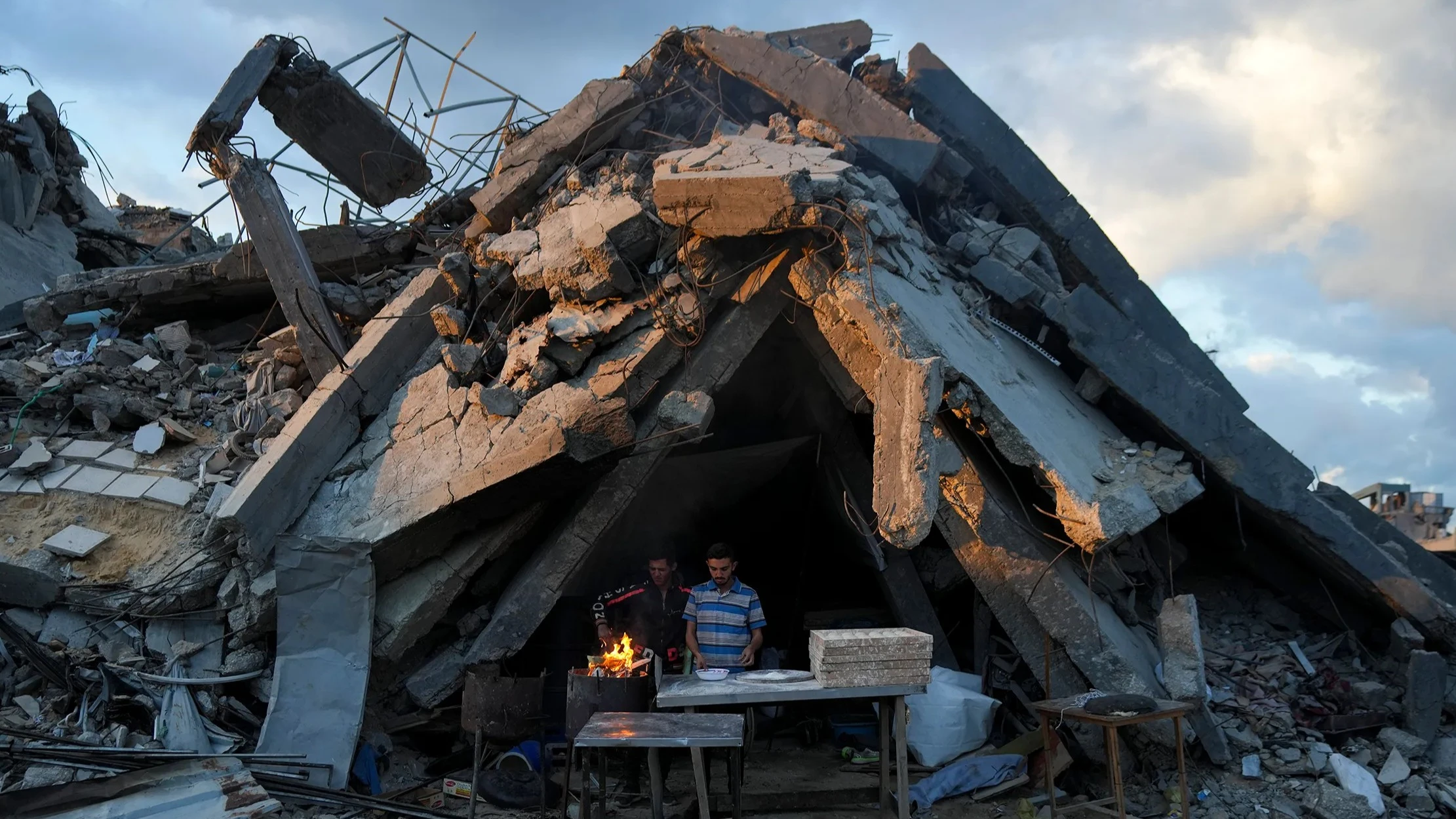
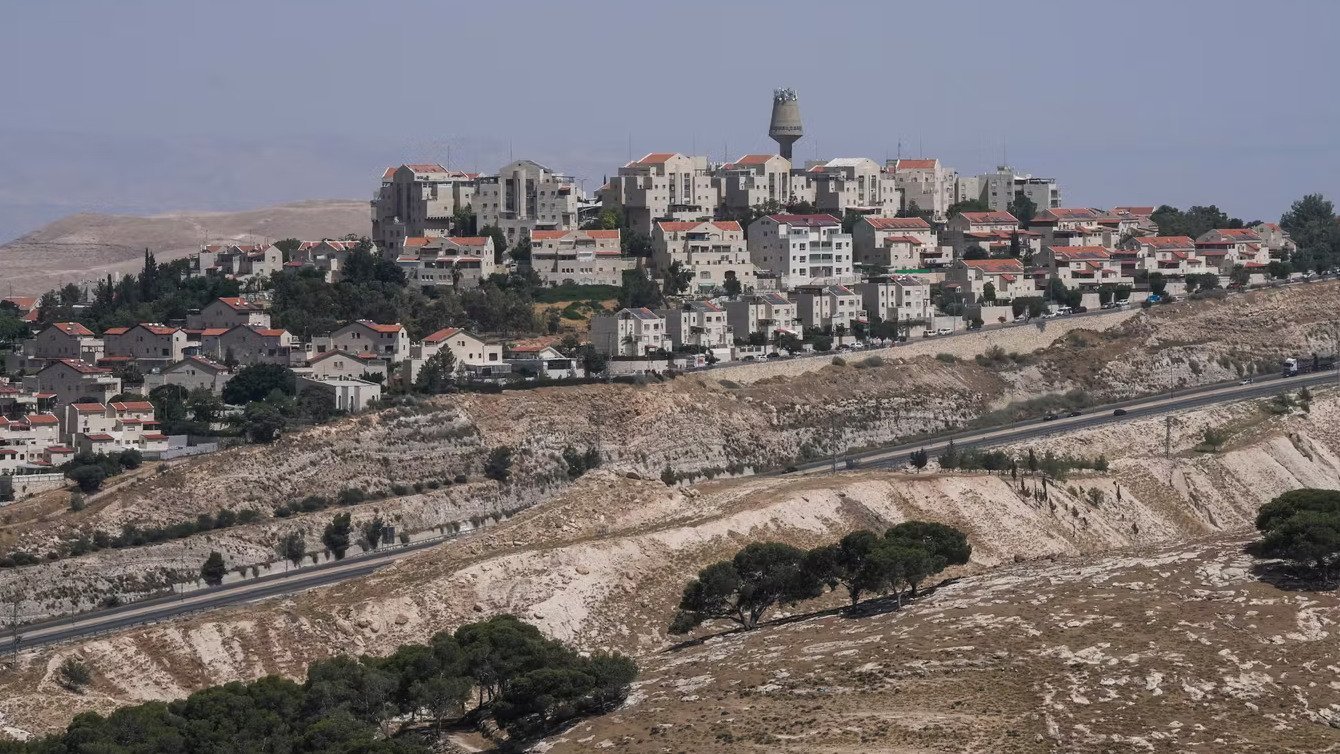
A viable Palestinian state has been rendered structurally impossible by the fragmentation of the West Bank into isolated enclaves, the annexation and Judaization of Jerusalem, relentless settlement expansion, and Israel’s comprehensive control over borders, airspace, imports, energy, and taxation. The destruction of Gaza as a livable polity, the Palestinian Authority’s severe crisis of legitimacy and capacity, and the United States’ and European Union’s commitment to a “peace process” devoid of enforceable outcomes ensure that “statehood” remains permanently suspended.
Under these conditions, two states is not a diplomatic horizon but a rhetorical technology — one that indefinitely defers Palestinian liberation and functions as a mechanism for managing a colonized population rather than resolving a colonial condition. It promises a future that the structure itself is built to prevent. This is not a neutral failure; it is a governing strategy, one that has successfully absorbed decades of Palestinian demands into a process with no endpoint. It continues to do so with Trump’s “peace plan.”
IV. When the Settlers Stay: The Hardest Question in the Debate
The hardest question is what decolonization means when the settler society is not leaving. The Mondoweiss piece gestures toward this dilemma but does not confront it directly. Yet this is the core of the problem. In nearly every historical case where settlers remained — Algeria being the rare exception, where the overwhelming majority of European settlers departed only after a protracted anti-colonial war — two trajectories emerged.
In the first, structural domination was reconstituted under new constitutional or multicultural veneers. Post-apartheid South Africa offers the clearest example: formal equality was achieved, but racialized economic hierarchies, land distribution patterns, and security structures remained largely intact. Namibia’s independence preserved colonial-era land ownership almost wholesale, while Morocco’s administration of Western Sahara recognizes Sahrawi identity in principle but maintains an extractive political and resource regime. Here, the settler form survives through the appearance of transformation.
In the second trajectory, a hybrid political formation took shape that preserved settler military and economic supremacy while granting Indigenous populations only symbolic or constrained civic equality. This pattern is visible in French Polynesia and New Caledonia; in Kenya after the Mau Mau uprising, where the settler elite relinquished political office but retained disproportionate landholdings; and in the post–Civil War American South, where nominal civil rights masked the endurance of structural white control. In such cases, domination is not abolished — it is redistributed and repackaged.
Neither trajectory amounts to liberation. This is why the Palestinian question cannot be reduced to the familiar binaries of one state versus two, integration versus independence, or coexistence versus separation. The deeper question is how liberation can be imagined when the settler society intends to retain sovereignty, military dominance, and demographic permanence. Any credible political horizon must begin by facing this directly rather than assuming it away.
V. Precision Against Power: Naming the Actual Architecture
Kilani’s essay includes a searing line — quoted from a friend — asking who would want to “live and share space with genocidaires.” The term captures the visceral experience of Palestinians who have survived, witnessed, or been shaped by genocide, and it is entirely appropriate as an expression of how integrationist proposals are felt in the midst of mass violence. Yet because the phrase appears without further analytical differentiation, it risks being read as collapsing the Israeli state, its institutions, and its diverse social constituencies into a single undifferentiated category.
Kilani herself does not engage in such flattening; her focus is on the political meaning of Palestinian suffering and the inadequacy of liberal one-state imaginaries, not on providing a sociological map of Israeli power. But this is precisely where further clarity strengthens the critique. Israeli state policy can be described as genocidal under international law; public opinion surveys during the Gaza war showed broad support for escalated violence; and Israeli society is deeply stratified along ethnic, class, religious, and ideological lines — Ashkenazi elites, Mizrahi citizens, Russians, Ethiopians, Haredim, and settlers occupy different positions within the racial and political order.
Meanwhile, discrete state institutions — the Civil Administration, COGAT, the Ministry of National Security — translate ideology into the daily machinery of dispossession and control. Naming these layers does not dilute the indictment; it sharpens it.
By distinguishing between policy, ideology, public sentiment, institutional mechanisms, and internal social hierarchies, Palestinians can describe domination with greater precision and develop strategies that confront the actual architecture of power rather than an undifferentiated abstraction.
VI. From Constitutional Fantasies to Building Decolonial Power
This recognition — that neither integration into the existing settler state nor a territorially truncated mini-state can deliver liberation — requires a fundamental shift in focus. The task is not to choose between failed blueprints but to identify the political imperatives that follow from a clear-eyed assessment of the structures of domination already in place.
Liberation begins with reasserting Palestinian political agency and refusing the outsourcing of Palestinian aspirations to Western think tanks, donor regimes, or solidarity infrastructures that continually script “what Palestinians want.” It requires decentering the state itself: the fixation on statehood — whether one or two — has narrowed political imagination and obscured the possibility of non-statist, networked, transnational, or confederal forms of collective life.
Israel’s fiscal chokehold — control over clearance revenues, VAT, customs, and every economic artery — is not a technical detail but the central mechanism that turns “autonomy” into managed dependency. Any constitutional form negotiated while that chokehold remains intact will merely formalize captivity under a new flag.
Liberation therefore requires building material and economic resilience first: parallel institutions, tax-resistance mechanisms, land-defense cooperatives, transnational networks, and digital and financial tools that loosen the occupier’s grip. Only on that terrain can constitutional questions become meaningful rather than decorative.
The same principle extends to the broader political field. Freedom of movement, land restitution, and the right of return must be treated as foundational rather than negotiable items subordinated to constitutional design. And the struggle must be situated within global transformations: U.S. decline, emerging multipolarity, shifting Arab alignments, and new forms of digital and economic organization.
Israel’s vulnerability is structural, not moral; its power rests on systems that can be weakened, not on ethical claims it has long since forfeited. Any credible liberation horizon must respond to that reality with strategic, not symbolic, clarity.
VII. Conclusion: No Blueprint Without Power
Liberation requires unflinching clarity. Kilani’s intervention matters because it exposes how easily Palestinian aspirations are overwritten by external projections — how quickly calls for “coexistence” or “equality” dissolve the political meaning of Palestinian suffering.
But the deeper insight her essay opens, and that this one pursues, is that naming the limits of liberal fantasies is only the beginning.
If integration is not liberation, and if the two-state formula has long since become a mechanism of population management rather than a political horizon, then Palestinians and their allies must confront what follows: no constitutional design — one state, two states, confederation — can substitute for the work of building decolonial power. A just future depends not on selecting the correct blueprint but on reorganizing Palestinian political life, weakening the structures that sustain Israeli supremacy, cultivating international leverage, and restoring Palestinian agency to the center of political imagination.
Kilani is right that clarity is feared by power. The task now is to extend that clarity into strategy: to name the structures that confine Palestinian possibility, to reject the frameworks that domesticate Palestinian demands, and to imagine liberation not as what the world will tolerate, but as what Palestinians require to live freely on their land.
https://libya360.wordpress.com/2025/12/ ... existence/
******
Gaza Ramains Densely Mined with Unexploded Devices
(FILE) Photo: UN.
December 13, 2025 Hour: 6:21 am
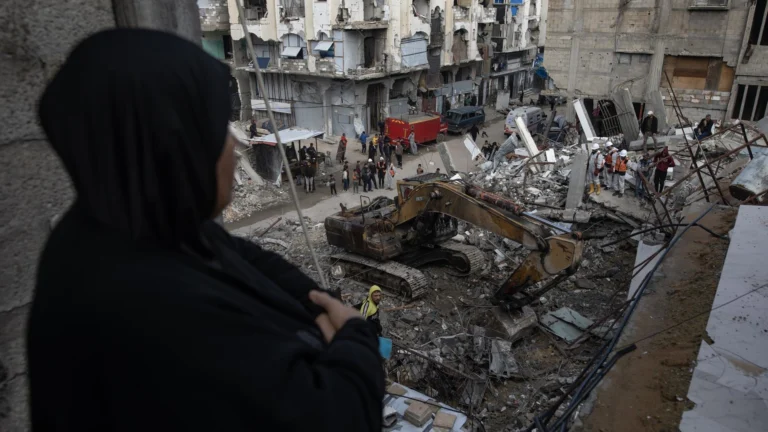
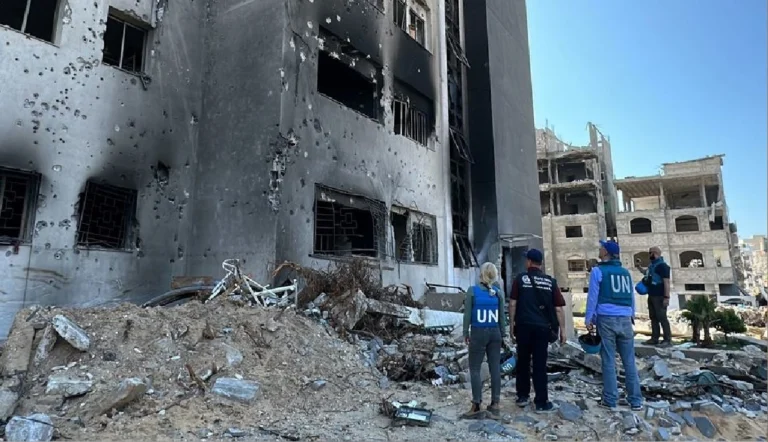
Approximately twenty thousand missiles, bombs, and large-caliber munitions are now scattered throughout Gaza, turning it into an “unmarked minefield,” stated Ismail al-Thawabta, head of the Government Media Office in Gaza.
Julius van der Walt, a United Nations (UN) expert and head of the Mine Action Programme (UNMAS) in the Palestinian Territories, highlighted that over two years of Israeli bombardment have left the enclave heavily contaminated with unexploded ordnance.
Children, in particular, are at high risk due to their natural curiosity, often interacting with explosives without understanding the peril they pose.
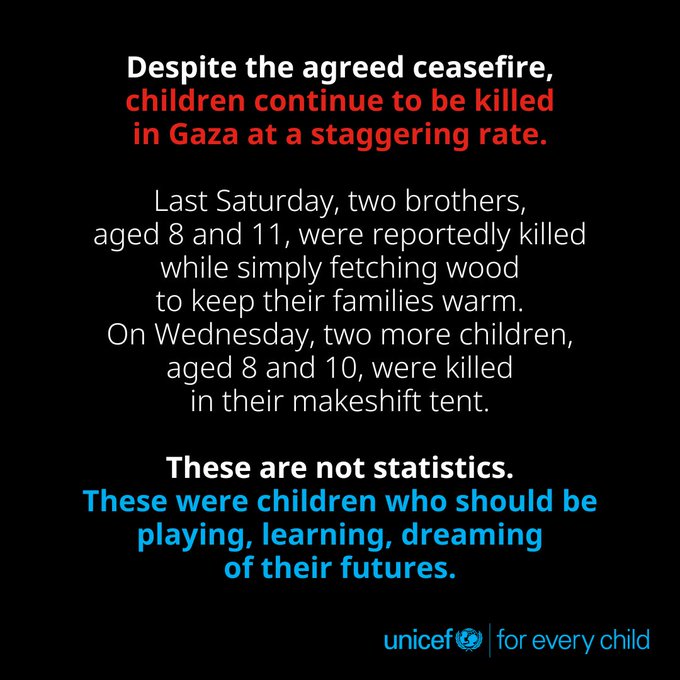
UNICEF spokesperson Ricardo Pires also noted that since the ceasefire began in October, over 70 children have died in conflict-related incidents, an average of nearly two per day.
The Road Ahead
Van der Walt pointed out that humanitarian personnel face daily risks, while displaced families are especially vulnerable. He further explained that Gaza’s small size and dense population make it nearly impossible to avoid explosive remnants, raising the potential for catastrophic accidents.
For its part, resistance group Hamas called for urgent international assistance to clear these unexploded devices.
Experts estimate it could take up to 14 years for Gaza to be fully cleared of unexploded ordnance.
https://www.telesurenglish.net/gaza-min ... -ordnance/
******
US blocks European diplomats from Gaza coordination center under Israeli pressure: Report
Tel Aviv reportedly requested the ban, limiting access to the US-run Kiryat Gat facility to lower-level staff while senior envoys remain excluded
News Desk
DEC 11, 2025
(Photo credit: Lazar Berman/The Times of Israel)
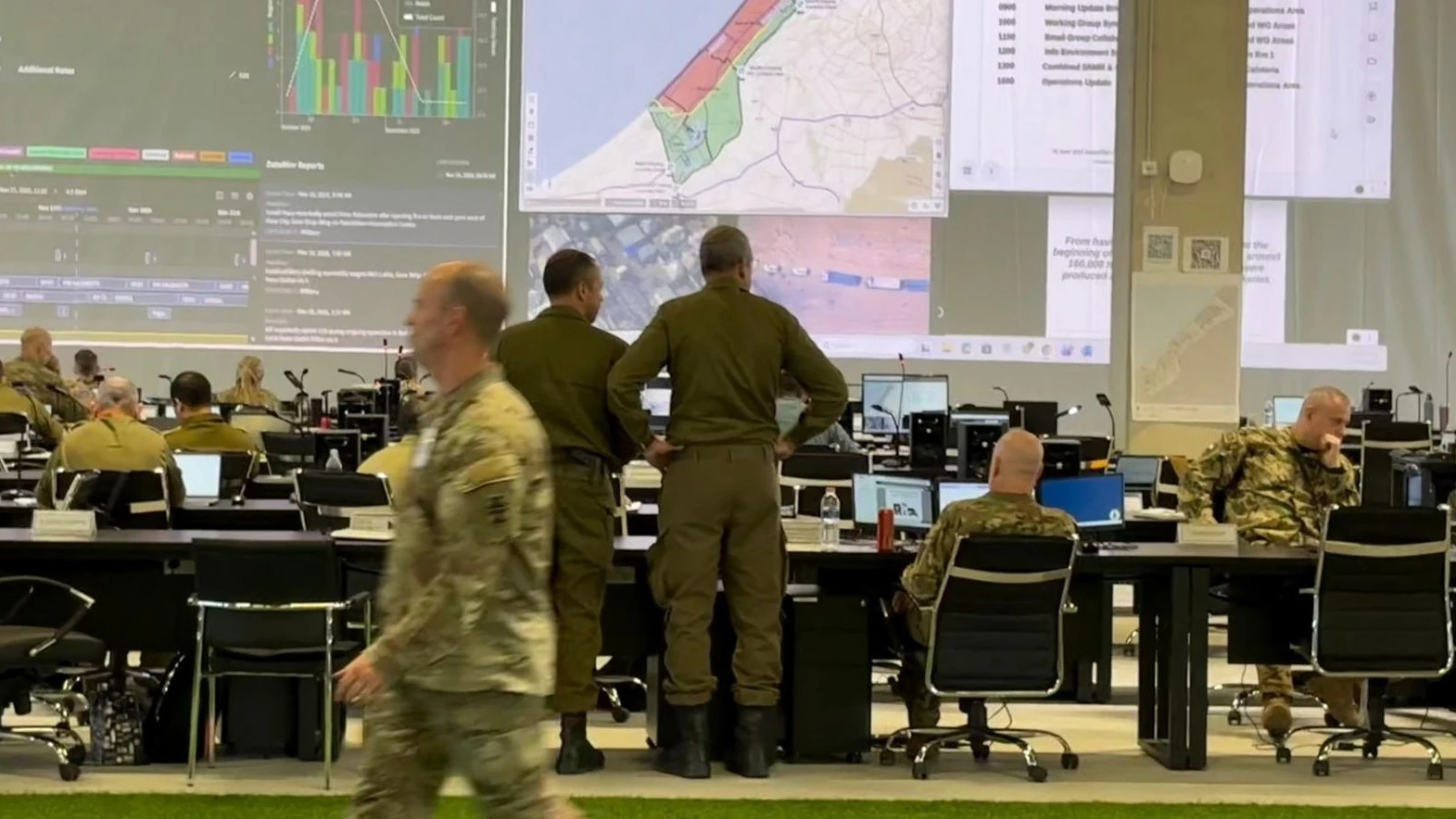
The US has blocked senior European envoys accredited to the Palestinian Authority (PA) from entering the Civil-Military Coordination Center (CMCC) in Kiryat Gat outside the Gaza border under Israeli pressure, Haaretz reported on 11 December.
Diplomats told the outlet that the CMCC, the US-run hub overseeing Gaza operations and the ceasefire, was initially open to international representatives when it launched.
Access began to tighten in recent weeks, starting when the head of the Netherlands mission to the PA was prevented from returning to the center after two earlier visits.
Belgium’s representative to Ramallah and France’s consul general in Jerusalem were later subjected to the same restriction.
The ban reportedly applies only to heads of mission, some of whom hold ambassadorial rank. Lower-level staff working with the PA can still enter the site.
European officials said the US Embassy in Jerusalem recently began requiring written requests for access. One state filed the requested submission but received no formal reply. Its envoy was eventually told by US officials that Israel had requested the prohibition.
A European diplomat said early interactions with US personnel were marked by openness, noting that “many of them did not know much about Gaza or the Palestinians.”
She added that Israel’s influence over the center “has grown” since then.
Multiple diplomats argued that their PA-focused envoys should be present inside the CMCC because they hold detailed knowledge of Palestinian society and because the center contains no Palestinian representation.
Another envoy said Israeli officials also conveyed the decision directly. When European missions raised objections with US diplomats, Washington “distanced itself,” insisting that the request originated from Israel and that the US was not satisfied with the policy.
European states participating in the CMCC are seeking to shape Israeli and US planning for Gaza and advocate for a role for the PA east of the so-called ‘Yellow Line,’ where Israeli forces maintain control.
This position clashes with Israel’s refusal to transfer authority in the Gaza Strip to the PA.
The development comes as US President Donald Trump's administration delays naming the members of the planned “Board of Peace” and postpones the announcement of a technocratic Palestinian committee intended to manage daily life in Gaza.
https://thecradle.co/articles/us-blocks ... ure-report
US officials claim Gaza 'stabilization force' can be deployed as early as January: Report
The report says a ‘two-star US general’ is being considered to lead the ISF, but that no decisions have been made yet
News Desk
DEC 12, 2025
(Photo credit: AP)
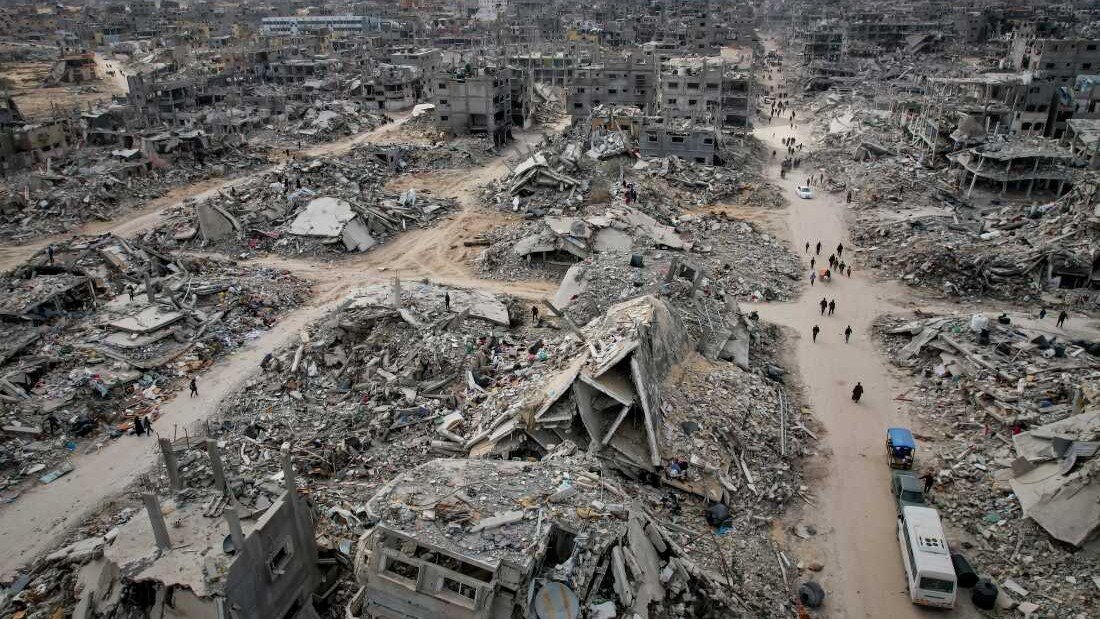
International forces could be sent to the besieged Gaza Strip “as early next month” as part of Washington’s ‘peace plan’ for the enclave, two US sources told Reuters on 12 December.
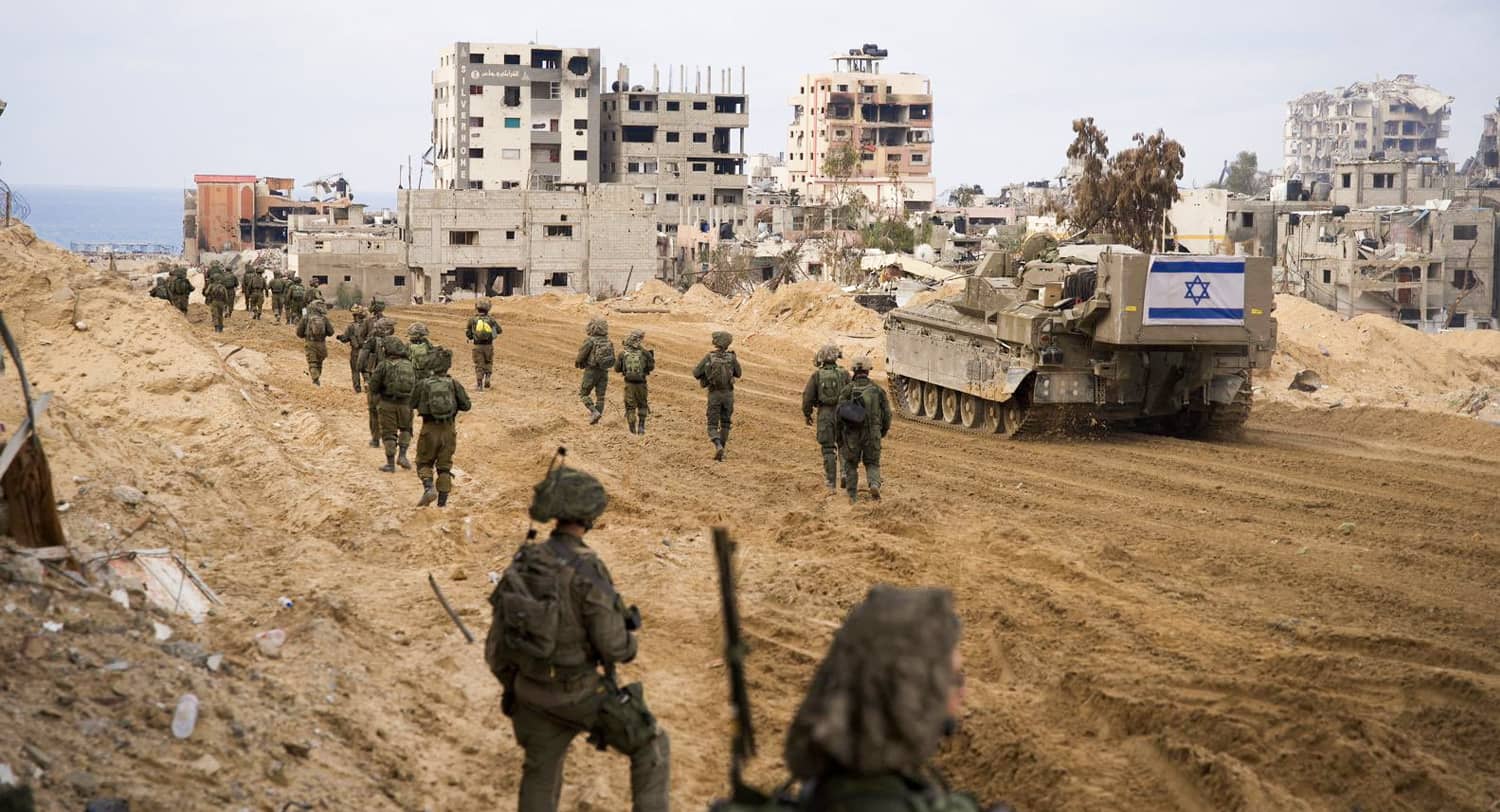
“The International Stabilization Force (ISF) will not fight Hamas. Lots of countries had expressed interest in contributing and officials are currently working out the size of the ISF, composition, housing, training, and rules of engagement,” the sources said.
“A two-star US general is being considered to lead the ISF but no decisions have been made,” the sources went on to say.
While the sources claim the ISF will not be tasked with fighting Hamas, US President Donald Trump’s ceasefire plan stipulated that the international force must enforce the group’s total surrender of all weapons.
Hamas had previously rejected this as an attempt to achieve what Israel could not during the two-year genocidal war.
On Thursday, an Israeli official told AFP that the US plan will guarantee Hamas’s disarmament.
“There will be no future for Hamas under the 20-point plan. The terror group will be disarmed and Gaza will be demilitarized,” the official said.
A few days earlier, senior Hamas official Khaled Meshaal rejected the idea of full disarmament, reiterating the resistance group’s recent comments in favor of a plan to “freeze” the arms.
“The idea of total disarmament is unacceptable to the resistance (Hamas). What is being proposed is a freeze, or storage (of weapons) ... to provide guarantees against any military escalation from Gaza with the Israeli occupation. This is the idea we're discussing with the mediators, and I believe that with pragmatic American thinking ... such a vision could be agreed upon with the US administration,” he said.
Hamas continues to assert that total disarmament cannot take place until a two-state solution is achieved.
Israeli news outlet Ynet reported on 8 December that Qatar and Turkiye have unveiled a new initiative that would give Hamas a two-year period to carry out a disarmament process.
“Qatar and Turkiye are working to create a certain situation in which the terrorist organization will remain in Gaza with weapons. In discussions with the Americans, the two are raising various options for Hamas to hand over its weapons to the Palestinian Authority, or to transfer the weapons to a warehouse under some kind of supervision,” sources told Ynet.
“There is also disagreement about the timetable for disarming Hamas: Qatar and Turkiye are proposing a two-year window in which Hamas can continue to possess weapons, while Israel is strongly opposed and insists on a few months. The Israeli message to the Americans is that if Hamas is not disarmed, Israel will step in and disarm it,” the report added.
According to Ynet, Washington has signaled it could be open to the plan.
The report said that US officials have lately floated the idea of “decommissioning” weapons instead of a complete disarmament.
This would follow the model of the Irish Republican Army’s (IRA) supervised decommissioning process two decades ago, the report goes on to say.
Hamas’s Bassem Naim said days ago that his group is “very open-minded” on the issue of weapons.
However, the organization has not given up its demand for guarantees that a complete cessation of attacks and full withdrawal of Israeli troops will take place.
“We can talk about freezing or storing or laying down, with the Palestinian guarantees, not to use it at all during this ceasefire time or truce,” he said.
Hamas has also repeatedly expressed its readiness to hand over authority in Gaza to the technocratic Palestinian government envisioned in the Trump plan and earlier initiatives for a post-war solution in the strip.
The Reuters report on the deployment of the ISF comes as potential participants are still hesitant about the plan.
“We are open to seeing how we can participate,” Cypriot Foreign Minister Constantinos Kombos said in an interview with Al-Monitor, released on 11 December. “Provided we have clarity as to how this has been planned, who is going to be in [the force], how the whole thing will run [and] what are going to be the rules of engagement,” he added.
“We are willing to contribute to the various layers of that force,” the foreign minister went on to say, adding that “Right now, there is not enough clarity about who is going to be participating.”
Multiple reports have emerged in recent weeks revealing significant Arab and regional unease with the idea of being forced to enter into armed clashes in Gaza.
The ISF “is struggling to get off the ground as countries considered likely to contribute soldiers have grown wary” over concerns their soldiers may be required to use force against Palestinians, the Washington Post reported in late November.
Trump’s plan for Gaza envisioned meaningful troop contributions from Arab states, including the UAE and Bahrain. But after expressing early interest, none have committed to participating, the report said.
A top Pakistani official said recently that his country is ready to contribute troops for peacekeeping, but ruled out participating in any disarmament.
https://thecradle.co/articles/us-offici ... ary-report