Published by @nsanzo ⋅ 15/12/2025

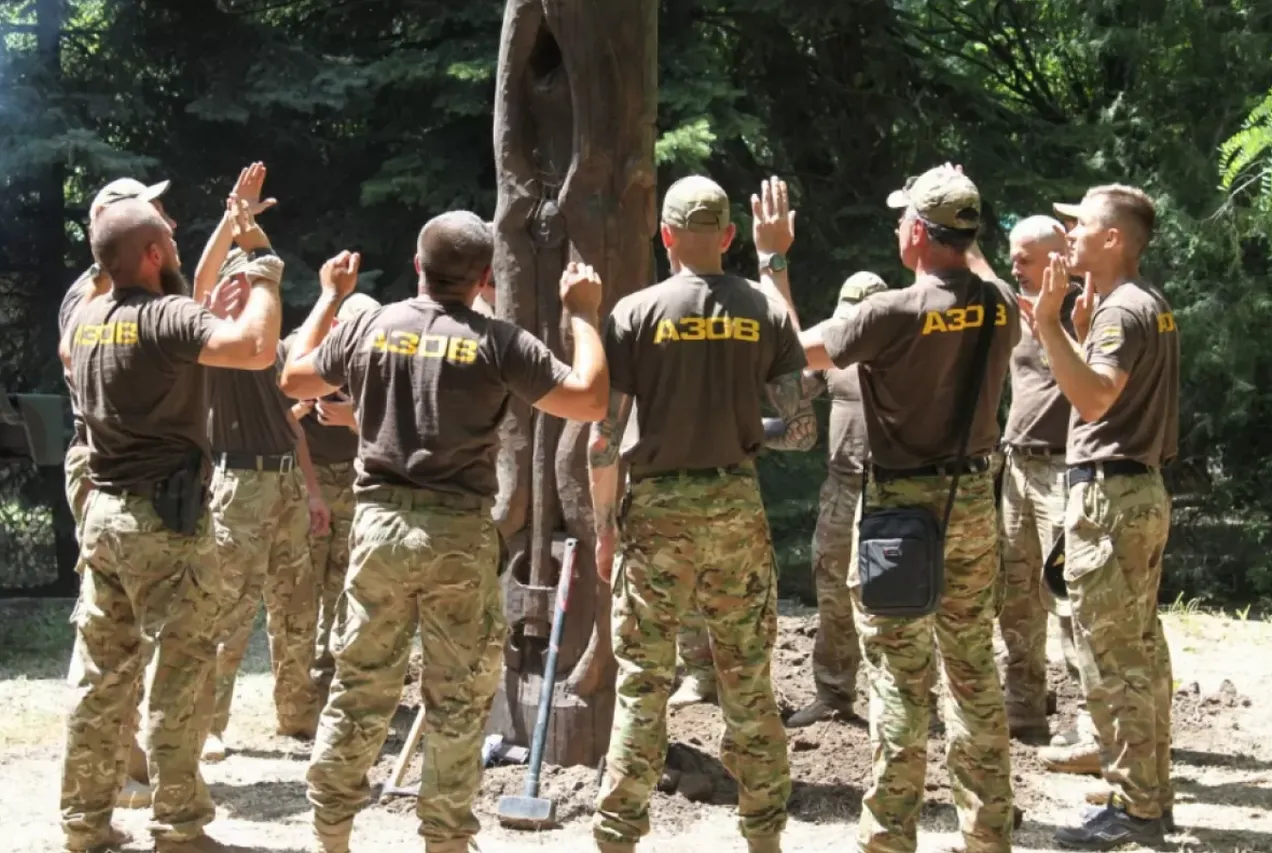
“An impressive stance from the leader of Europe’s undisputed economic power. Let’s hope action follows rhetoric,” wrote Meaghan Mobbs yesterday, a regular pro-Ukrainian propagandist and daughter of Keith Kellogg, referring to Germany’s pro-Ukraine leadership. Just days earlier, she had been lamenting how some members of the negotiating team had been excluded from the diplomatic process. While several names have disappeared from the headlines, including Dan Driscoll, apparently sidelined by Pete Hegseth for overshadowing him, being too visible, and pushing too hard for a quick agreement, the most relevant name is that of Keith Kellogg. Theoretically Trump’s envoy to Ukraine, the general remains active and recently posted pictures of an event with Ukrainian veterans. However, his absence from the negotiations signals a shift to a different phase in the strange and intermittent peace process orchestrated by Trumpism.
On Saturday, The Wall Street Journal broke the news, proclaiming that “Zelensky is trying to rewrite Trump’s plan instead of rejecting it,” something Ukraine has left open since Steve Witkoff’s 28-point plan was published. Rustem Umerov has been conducting lengthy negotiations in Florida to amend that plan, and for the past two weeks, the leaders of European capitals have been demanding to be included in the talks. They represent the hope of Zelensky, the European establishment , the Democrats, and the more interventionist wing of the Trump camp, including figures like Mobbs, whose comment referred to Friedrich Merz’s speech at a party event on Saturday.
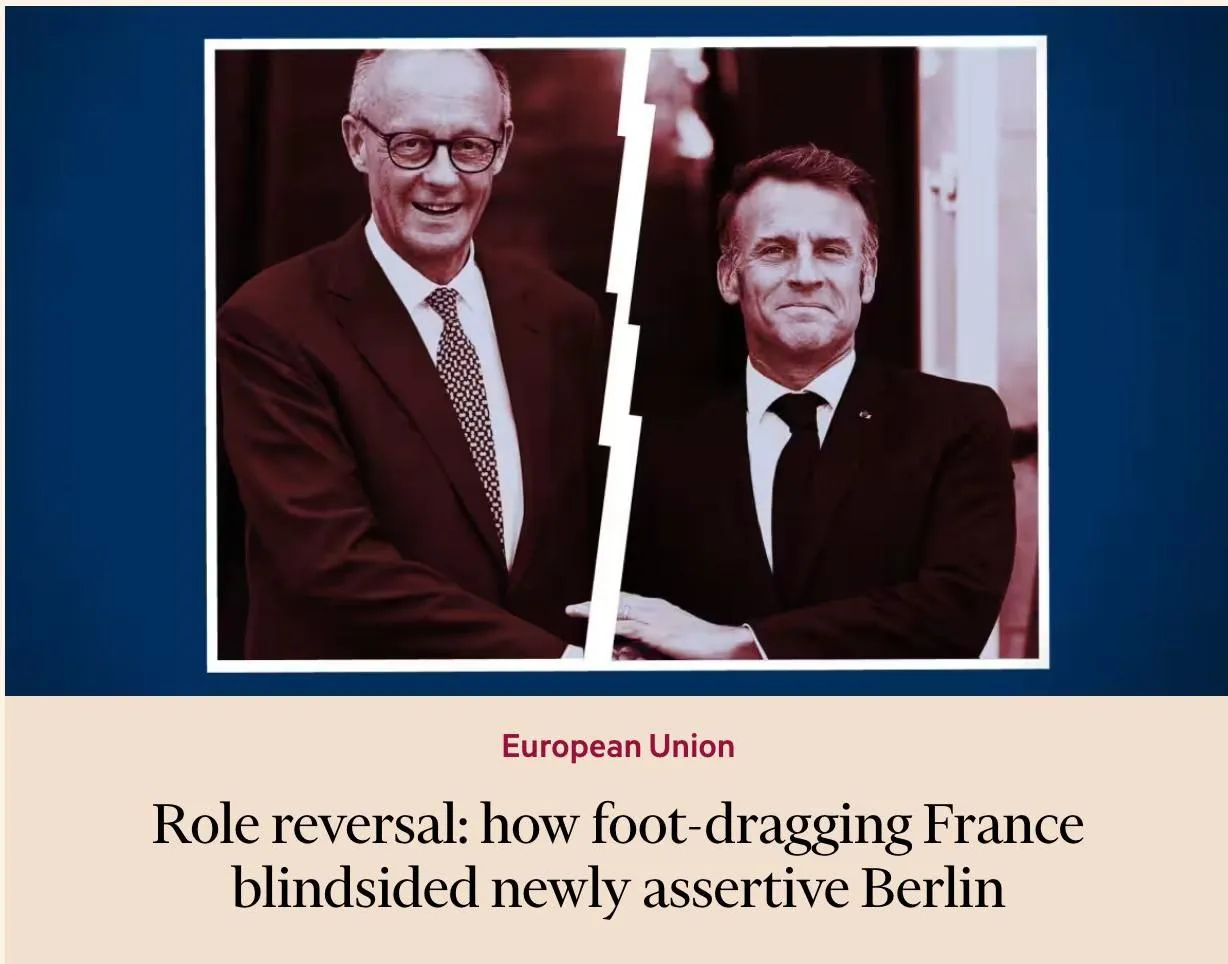
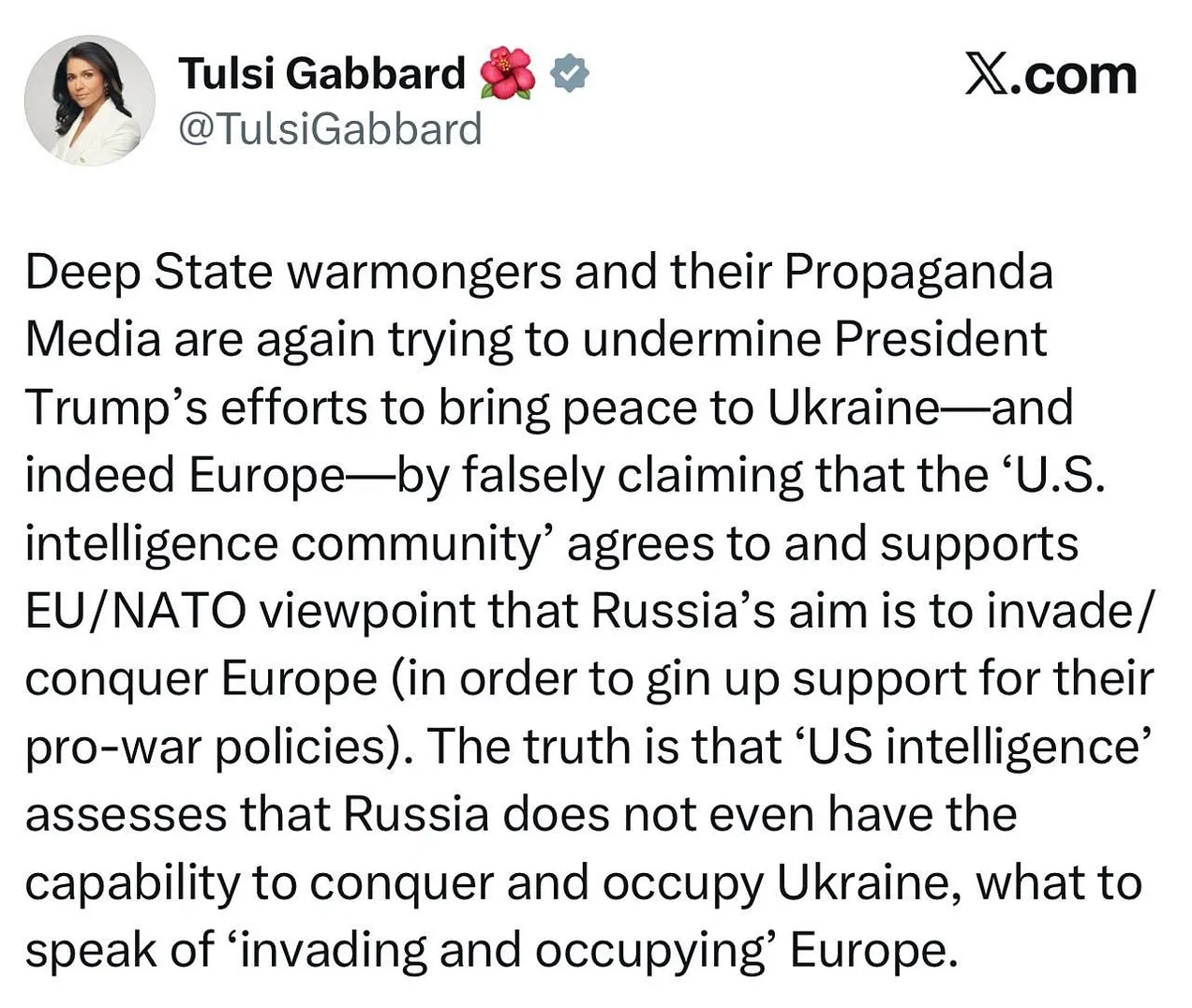
“We’ve known this since 2022: it’s a war of aggression by Russia against Ukraine and against Europe. And if Ukraine falls, it won’t stop, just as the Sudetenland wasn’t enough in 1938. Putin doesn’t stop. And anyone who doesn’t believe it should carefully analyze his strategies, his documents, his speeches, his public appearances,” Merz stated, making a comparison that is becoming increasingly common, with growing intensity each time there is a new attempt to shift the Russian-Ukrainian conflict from the military to the diplomatic arena. Thus, the 28-point plan that European countries are trying to rewrite to make it more favorable to their interests, or to have it rejected by Russia—possibly the preferred option for those still fixated on defeating Russia—is the equivalent of Munich, as was the Alaska summit, which ultimately achieved absolutely nothing.
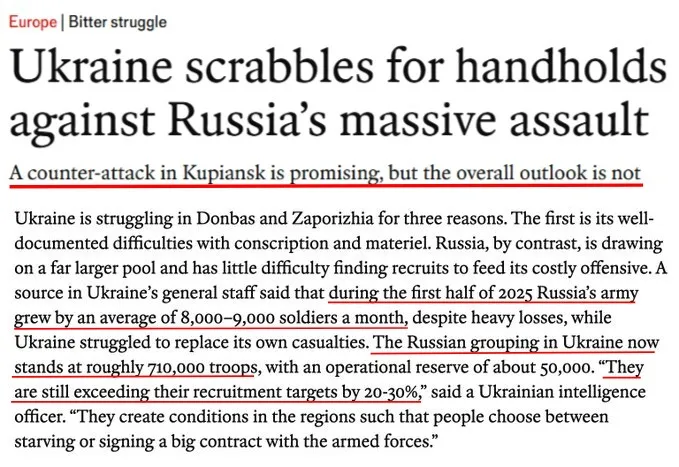
Despite the nervousness of European capitals, which feared an agreement between Russia and the United States, just a few weeks later, Donald Trump, alongside Zelensky, announced that a Ukrainian victory was possible. He demanded that his European allies cease purchases of Russian energy products, imposed exorbitant tariffs on India for its cooperation with Russia, and finally sanctioned the two largest Russian energy companies, Lukoil and Rosneft. The hawks were once again gaining ground, and everything seemed to be returning to normal. familiar routine that European capitals were comfortable with: the continuation of the conflict, pressure against Russia, meetings with Zelensky, and regular talks by the Coalition of the Willing that never progressed toward any resolution. The reason was not accidental: the flagship measure of that group, the deployment of a military deterrent mission after a ceasefire agreement, does not depend on the countries that negotiate it, but on a peace agreement with Russia and the participation of the United States to provide intelligence, air cover and security guarantees.
Merz's references didn't stop there, and in a world that has officially equated Nazism with Communism—that is, what, as Efraim Zuroff of the Wiesenthal Foundation stated, was tantamount to equating "the most genocidal regime in the history of humanity with the one that liberated Auschwitz and helped end the reign of terror of the Third Reich"—the Soviet reference was practically obligatory. "This is about a fundamental change of borders in Europe, the restoration of the former Soviet Union within the borders of the former Soviet Union, with a grave threat, including a military one, to the countries that were once part of that empire," Merz proclaimed. In the simplistic world of European authorities, the peace process is Munich, while war is the Soviet Union.
“Are we heading towards a Munich 2.0? In 1938, the United Kingdom and France forced Czechoslovakia to cede key territory to Hitler. The result? Within months, Czechoslovakia ceased to exist, and a few months later, Europe erupted in open war,” wrote Carl Bildt, the radical former prime minister of Sweden and a prominent hawk of the European vision of war to the bitter end. Like other defenders of the Iraq War, including Ana Palacio, David Miliband, and José Manuel Barroso, a veteran photographer of the Azores summit, and other figures such as Arseniy Yatsenyuk, the Ukrainian prime minister who decided to resolve the political problem in Donbas by military force, he will be part of the advisory council of the the EU's defense minister , Andrius Kubilius, on the militarization of the continent.
The view of hawks like Bildt aligns with that of their counterparts across the Atlantic. “It’s almost as if the Trump administration doesn’t want to admit or can’t understand that the war will only end when pressure is put on Russia,” stated Anne Applebaum, a journalist, with the seriousness of someone who believes their own propaganda. neoconservative journalist whose husband, Radek Sikorski, is Poland’s current Foreign Minister and the man who thanked the United States the day a terrorist attack destroyed three of the four Nord Stream pipelines, with the seriousness of someone who believes her own propaganda.
“It’s the most obvious solution to the problem, and it’s the one they simply refuse to adopt,” Applebaum insisted. Three and a half years after an unprecedented flow of financial, economic, military, and diplomatic assistance began, the hawks—both those who warn of the possibility of a European war and those who ignore the danger of continuing to pressure the continent’s strongest military power—insist that nothing has yet been done. In this world where the only possible peace is one imposed through military victory, pressure is the only option; there is no room for any attempt to ease tensions or maintain open lines of communication, and any deviation from the established path is seen as treason. “Viktor has earned his Order of Lenin,” Sikorski wrote yesterday, referring to a comment by Viktor Orbán, who complained that “bypassing Hungary and violating European law in broad daylight, those in Brussels are trying to confiscate frozen Russian assets. Meanwhile, they are demanding €135 billion from member states to fuel the conflict.”
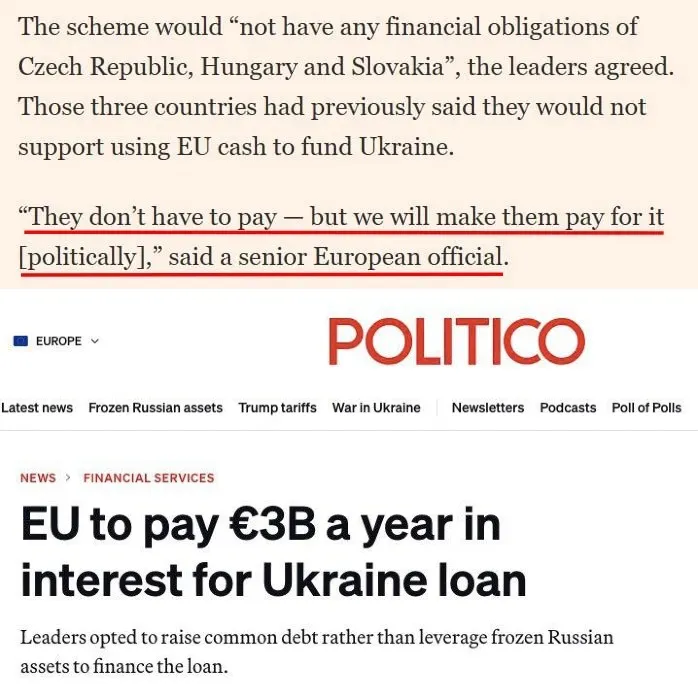
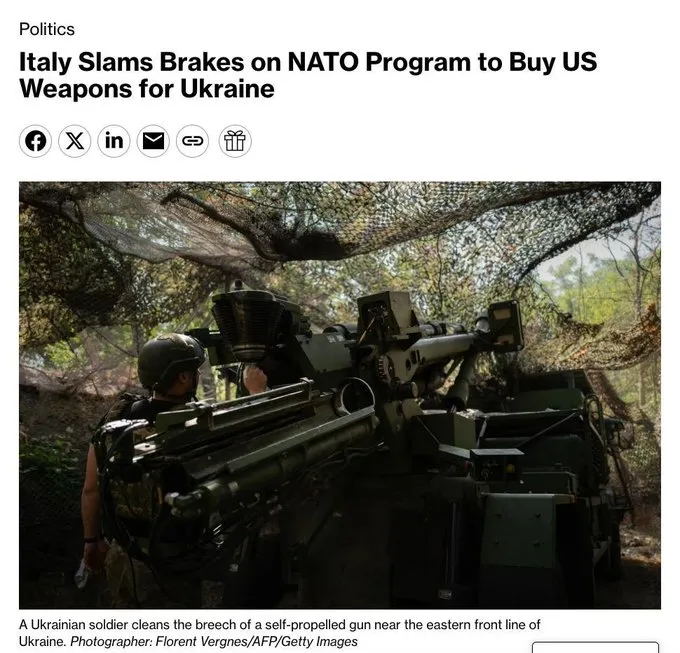
The fight over Russian assets continues, and a country far more important than Hungary—Italy, under the Atlanticist Meloni—appears, according to Politico , to be moving closer to Belgium's position regarding the controversial reparations loan . This loan , through which the EU intends to transfer frozen Russian assets to Ukraine, assets that, since Friday, have been permanently held within the European Union and which, as Germany demands, must be used for military spending. The German argument is the same as Kaja Kallas's. In addition to Merz's comments, other politicians from his party are receiving considerable media attention. Among them is Norbert Röttgen, who, during his tour to promote Merz's message in European and North American media, has insisted that "Ukraine is the first line of our defense." “For the first time since the end of World War II, the United States is not on our side on a matter of war and peace in Europe,” said Norbert Röttgen, a senior lawmaker from Chancellor Friedrich Merz’s conservative party in Germany. “It has sided with the aggressor against the interests of the attacked country, Ukraine, and against European security interests in general. It wants to mediate between NATO and Russia, which means the United States no longer defines itself as the leading member of NATO and defines Europe as a strategic target,” The New York Times quoted him as saying last week. quoted last week , reflecting European anger following the publication of the National Security Strategy and the negotiation of a plan for Ukraine without considering the opinions and interests of European countries.
The European reaction shifted from initial surprise, with Kakha Kallas mocking her two-point plan , to clinging to the economic tool to reinsert themselves into the negotiations, summarily eliminating one of the three key aspects of a potential agreement: reconstruction funding. By attempting to use Russian funds to finance two more years of war, European countries are seeking to place Ukraine in a stronger negotiating position. This has been the narrative for months. But what these words conceal is that the real aim is not to improve Ukraine's negotiating position vis-à-vis Russia, but rather vis-à-vis the United States and its peace plan. “Russia could exploit any withdrawal of Ukrainian troops from areas controlled by Kyiv, according to sources familiar with the matter who spoke on condition of anonymity, as the talks are being held behind closed doors. This makes Europe’s main objective in the coming days and weeks to ensure that any peace agreement does not contain a Russian Trojan horse,” Bloomberg explains. explains .
The article reflects the position European countries are taking to the negotiations with Steve Witkoff, which will continue today but began yesterday with the presence of Volodymyr Zelensky. The Ukrainian president arrived in Berlin with a concession that is only superficial. Ukraine, he stated, is willing to relinquish its demand for NATO membership in order to focus on security guarantees similar to Article V, but bilateral. The formula Zelensky has chosen to present himself to Trump as a man willing to compromise is striking, since the demand for membership was not directed at Russia, but at its allies. The inevitability of Ukraine's Euro-Atlantic path would continue to be reflected in the Ukrainian Constitution, hence the compromise would simply be a way of not giving up anything and merely waiting for the right moment.
Zelensky's ploy of renouncing the demand but not the aspiration reinforces the objective of Ukraine and its European allies for this series of meetings with Steve Witkoff: to rewrite the United States' plan to reject concessions on security and territories by using the economic veto that European capitals have, allowing them to threaten to expropriate Russian funds to finance, against Washington's opinion, two more years of war in the hope that more money will solve all of Ukraine's problems or, at least, postpone them to the medium-term future.
In this mission, the risks are irrelevant. Among them is, of course, the Russian military response against Ukraine in the event of increased European funding or the delivery of weapons capable of striking its territory in depth, such as the Taurus missiles that people like Mobbs continue to demand from Germany. Outside the day-to-day dynamics of the war, the Russian response to the ban on repatriating Russian assets held until the EU deems it appropriate has already received its first reply. “Russia’s central bank has filed a lawsuit in Moscow seeking damages from the Brussels-based depository Euroclear for freezing its sovereign assets and has vowed to challenge European plans to freeze the reserves. This opens the door for Russia to seize Euroclear’s €17 billion in assets in the country, seek further damages from the company in other jurisdictions, and file additional lawsuits if the EU proceeds with its plans,” wrote the Financial Times . The stage is set for the chronic nature of the European Union-Russia conflict, which the EU authorities and most member states seem to so desire.
https://slavyangrad.es/2025/12/15/de-munich-a-berlin/
Google Translator
*****
From Cassad's telegram account:
Colonelcassad
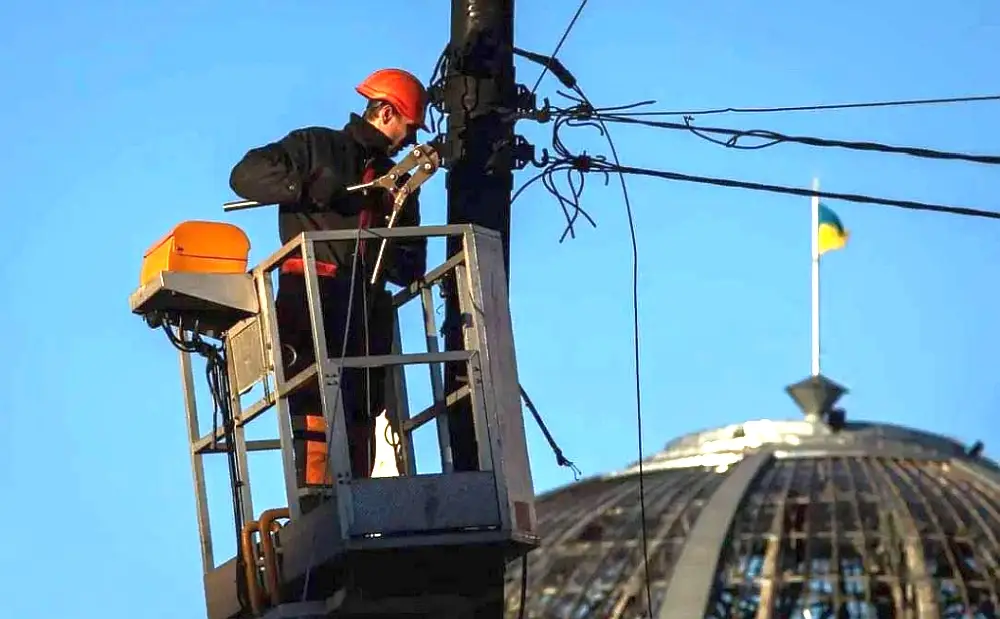
Kyiv will be without power for 20-22 hours a day, with temperatures reaching -5°C. Oleg Popenko, head of the Ukrainian Union of Utility Consumers, complained
about this . He said the power shortage in the Ukrainian capital is currently 70%.
***
Colonelcassad
RDIF CEO Dmitriev stated,
" Panic-stricken EU bureaucrats continue to make mistakes."
They know that using Russian reserves without the Bank of Russia's consent is illegal—it undermines the reserve system created by the US and increases costs for everyone. Russia will win in court and get them back... The EU, the euro, and Euroclear will suffer."
***
Colonelcassad
Today is the day of remembrance of fallen journalists. I have compiled a list of my colleagues and friends who have died in Donbass since 2014 and in the North Military District since 2022. ( Journalist Stanislav Obishchenko )
May 24, 2014 — Andrea Rocchelli, Italian photojournalist
June 17, 2014 — Igor Kornelyuk, VGTRK correspondent
June 17, 2014 — Anton Voloshin, VGTRK sound engineer
June 29, 2014 — Anatoly Klyan, Channel One cameraman
July 13, 2014 — Sergey Dolgov, editor-in-chief of the Mariupol newspaper "I Want to Be in the USSR."
August 6, 2014 - Andrey Stenin, photojournalist for MIA Rossiya Segodnya,
August 6, 2014 - Sergey Korenchenkov, journalist for the DPR information unit IKORPUS,
August 6, 2014 - Andrey Vyachalo, journalist for the DPR information unit IKORPUS,
November 18, 2014 - Afanasy Kosse, journalist for the Novorossiya information agency
November 18, 2014 - Vagid Efendiev, journalist for the Novorossiya information agency
February 8, 2015 - Vsevolod Petrovsky, journalist for the DPR Ministry of Information
April 1, 2022 - Anatoly Zharov, journalist for the DPR Ministry of Information.
June 2, 2022 - Sergey Tverdokhleb, journalist for the DPR Ministry of Information.
November 22, 2023 - Boris Maksudov, war correspondent for Rossiya-24
June 14, 2022 - Sergey Postnov, employee of the press service of the Russian Guard, war correspondent
October 20, 2022 - Oleg Klokov, journalist for the Kherson TV channel Tavria
April 2, 2023 - Vladlen Tatarsky. War correspondent, blogger, writer
October 1, 2022 - Aleksey Ilyashevich, journalist, analyst, columnist for the RuBaltic portal.
July 22, 2023 - Rostislav Zhuravlev. War correspondent for RIA Novosti.
August 20, 2022 - Daria Dugina. Journalist and political scientist.
April 19, 2024 - Semyon Eremin, Izvestia journalist;
June 13, 2024 - Valery Kozhin, NTV cameraman;
June 16, 2024 - Nikita Tsitsagi, NewsRu photojournalist;
November 17, 2024 - Yulia Kuznetsova, editor-in-chief of Narodnaya Gazeta;
April 8, 2024 - Russell Bentley, journalist, blogger.
January 4, 2025 - Izvestia freelance correspondent Alexander Martemyanov
March 24, 2025 - Izvestia journalist Alexander Fedorchak
March 24, 2025 - Zvezda TV cameraman Andrei Panov and film crew driver Alexander Sirkeli,
April 22, 2025 - Zvezda TV correspondent Nikita Goldin
March 26, 2025 - Channel One war correspondent Anna Prokofieva
October 16, 2025 - RIA Novosti war correspondent Ivan Zuev
I would like to add here our journalists who died in Africa
July 30, 2018 - Orkhan Dzhemal, journalist,
July 30, 2018 - Alexander Rastorguev, documentary filmmaker,
July 30, 2018 - Kirill Radchenko, operator,
July 28, 2024 - Nikita Fedyanin, administrator of the Telegram channel GRAY ZONE
https://t.me/s/boris_rozhin
Google Translator
******
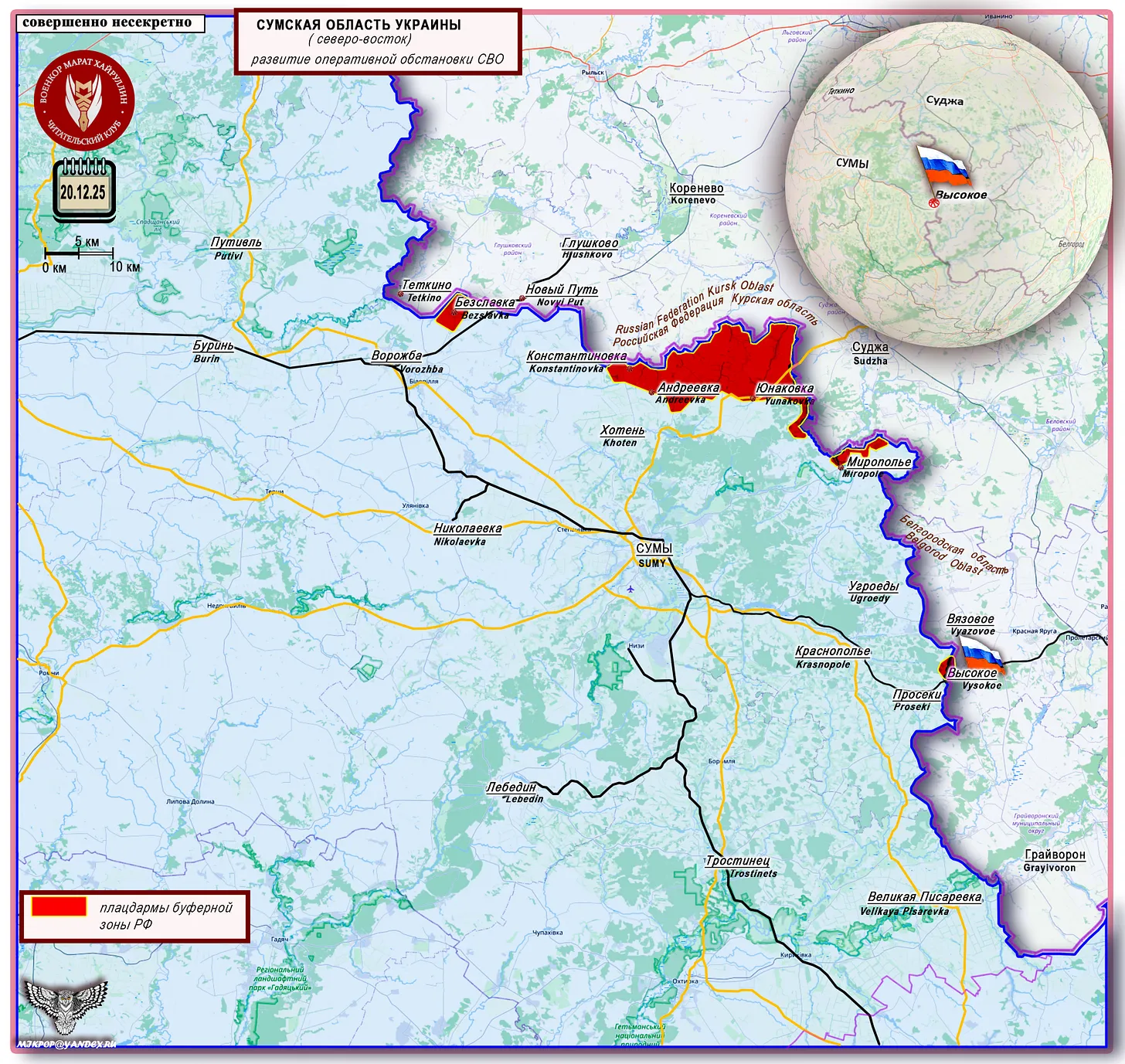
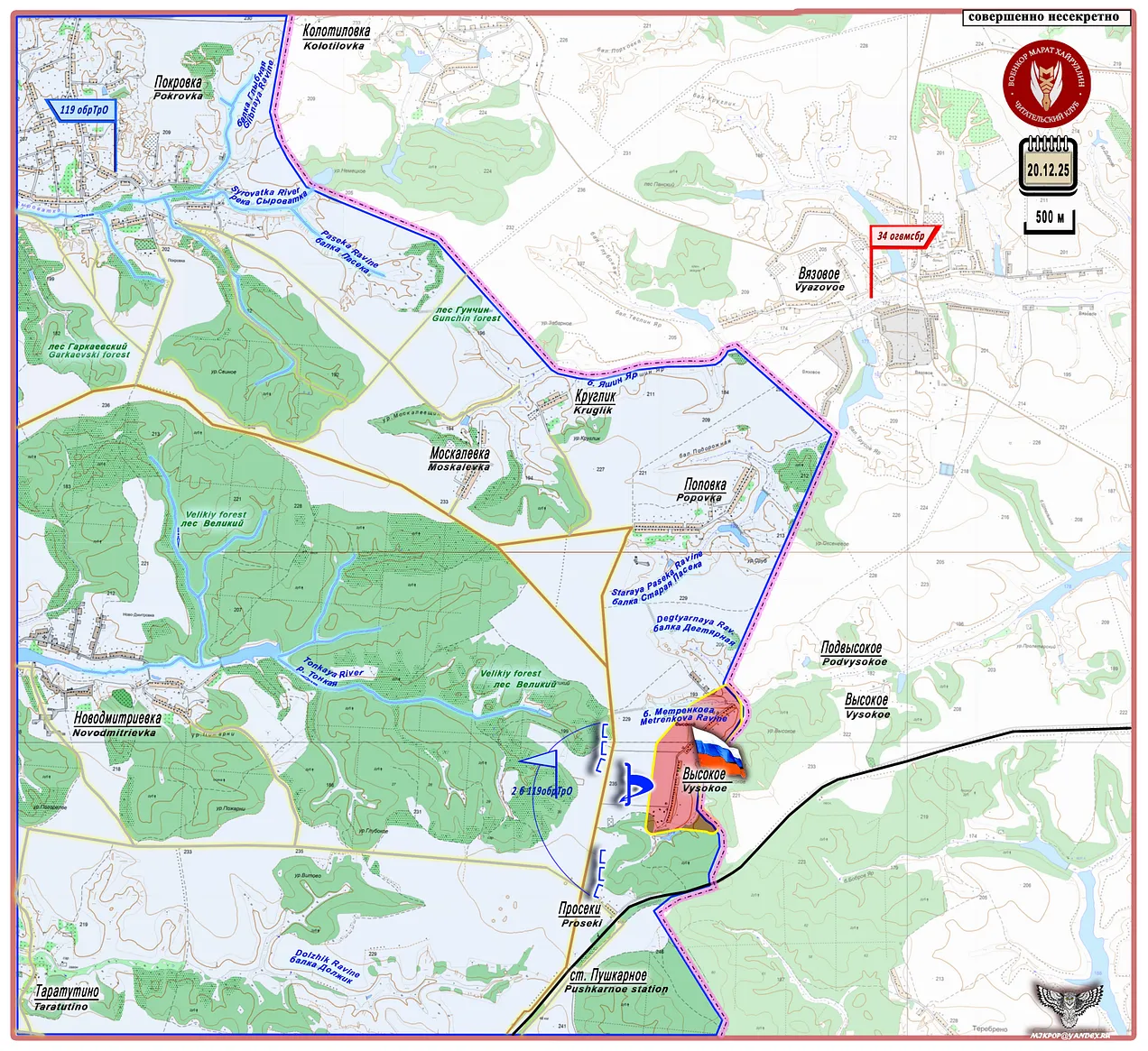
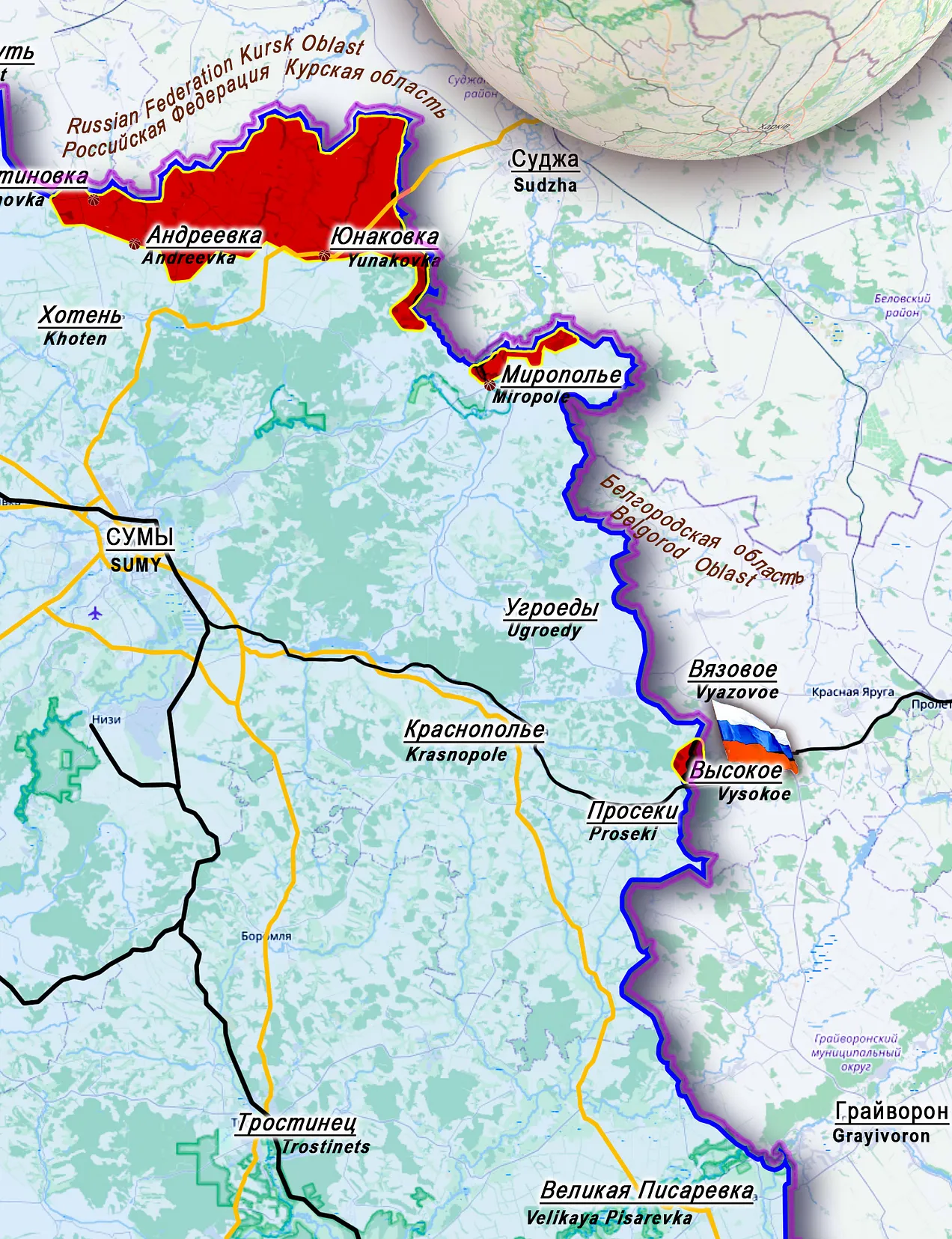
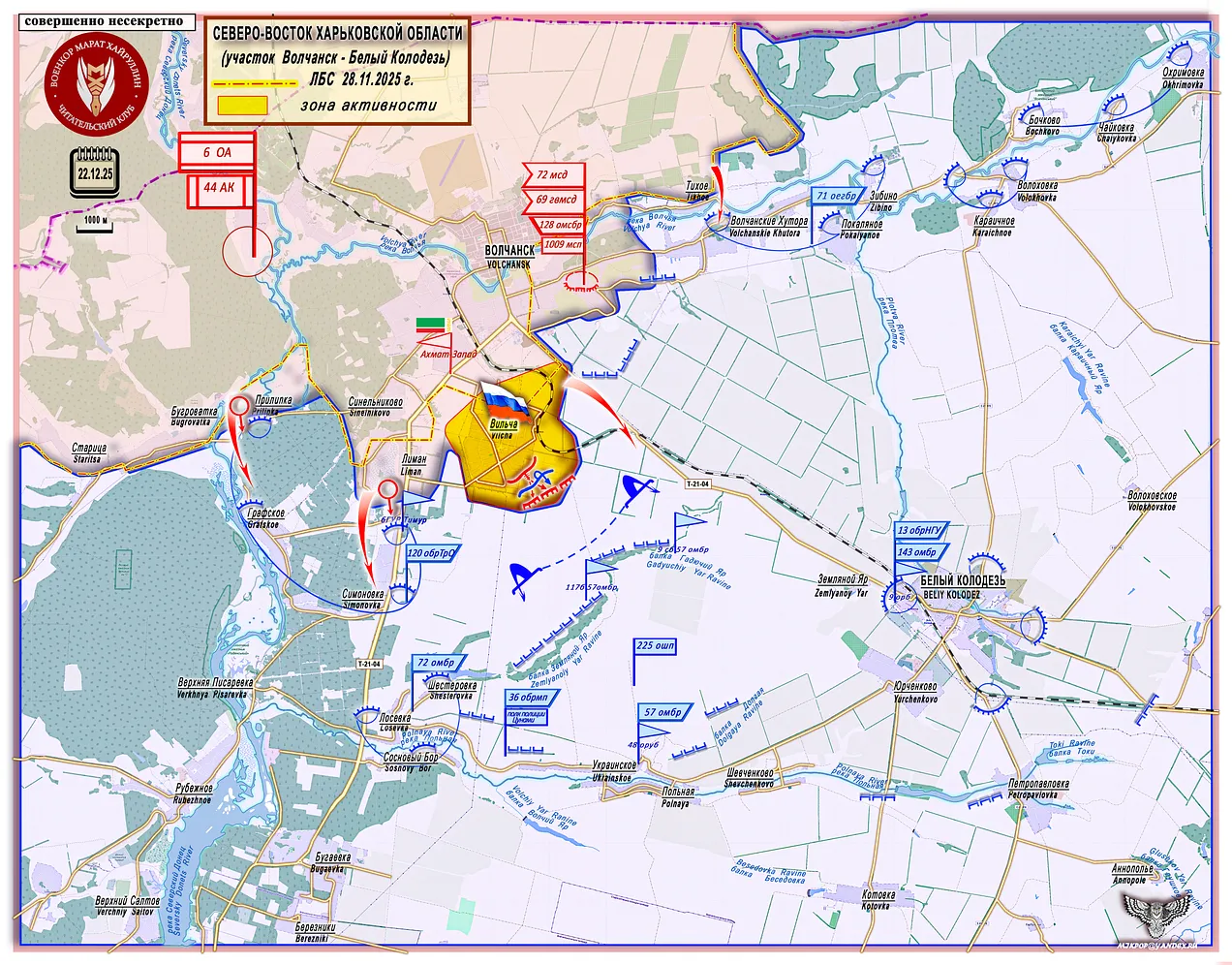
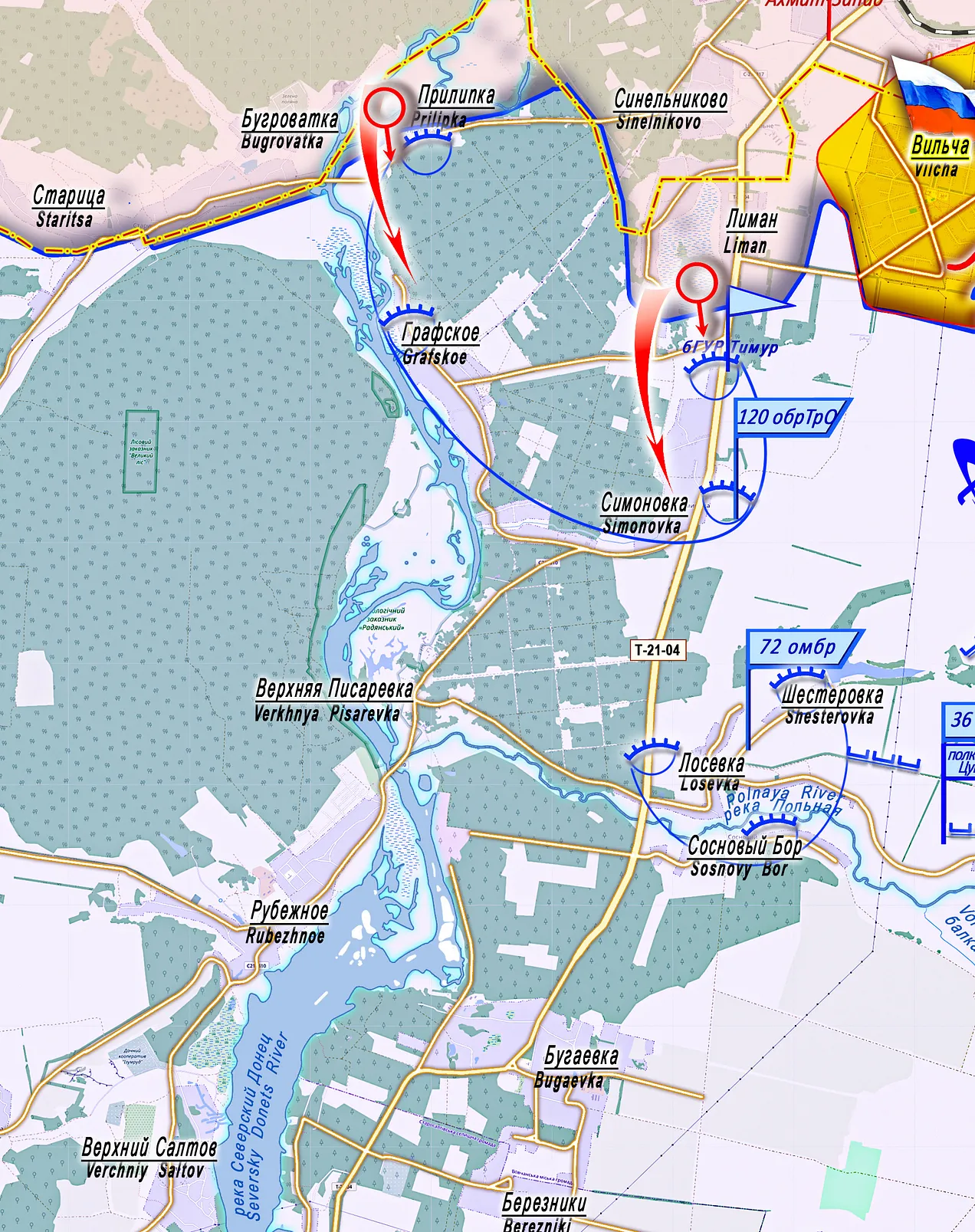
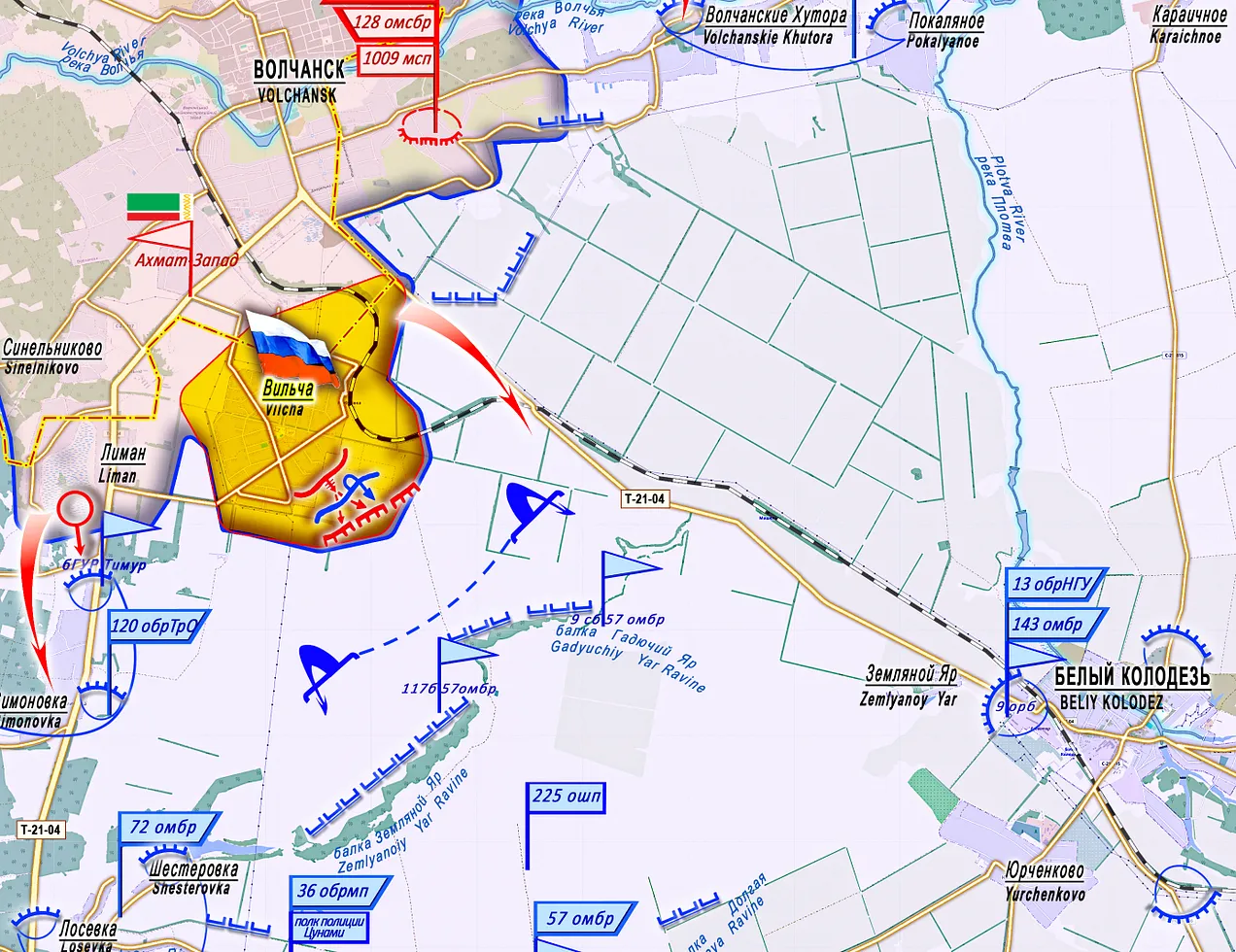
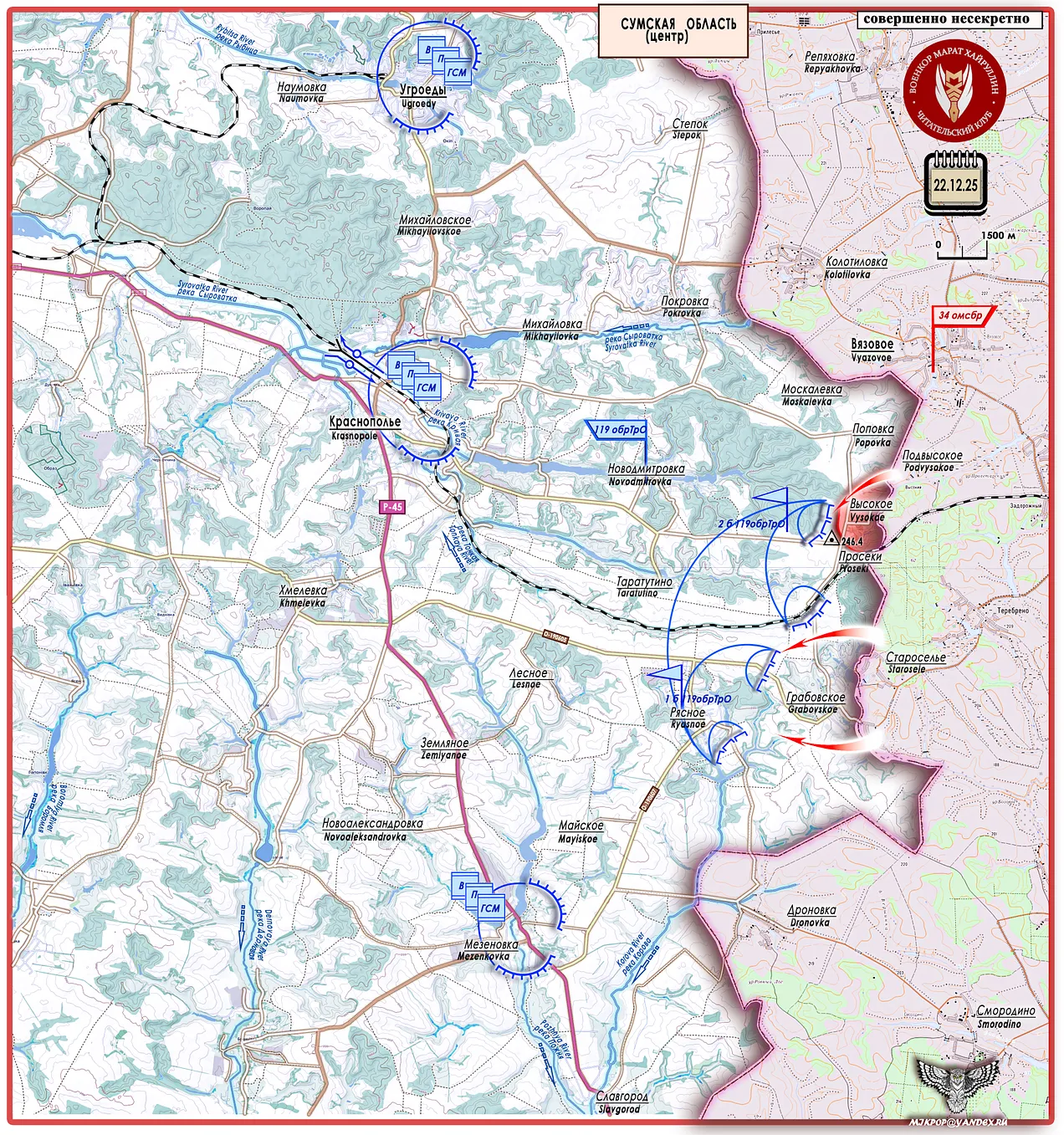
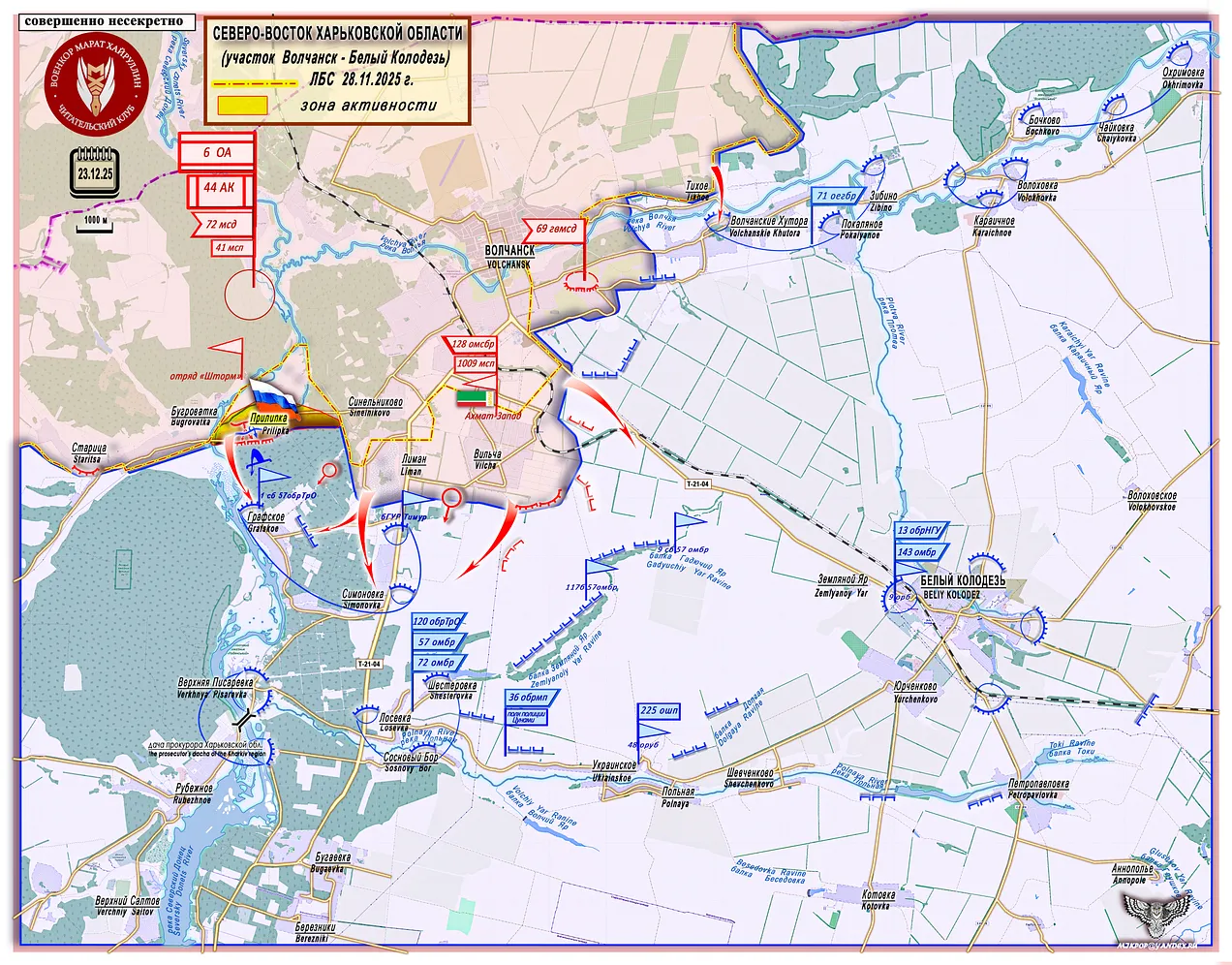
Brief Frontline Report – December 14th, 2025
Summary by Marat Khairullin and Mikhail Popov.
Zinderneuf
Dec 14, 2025
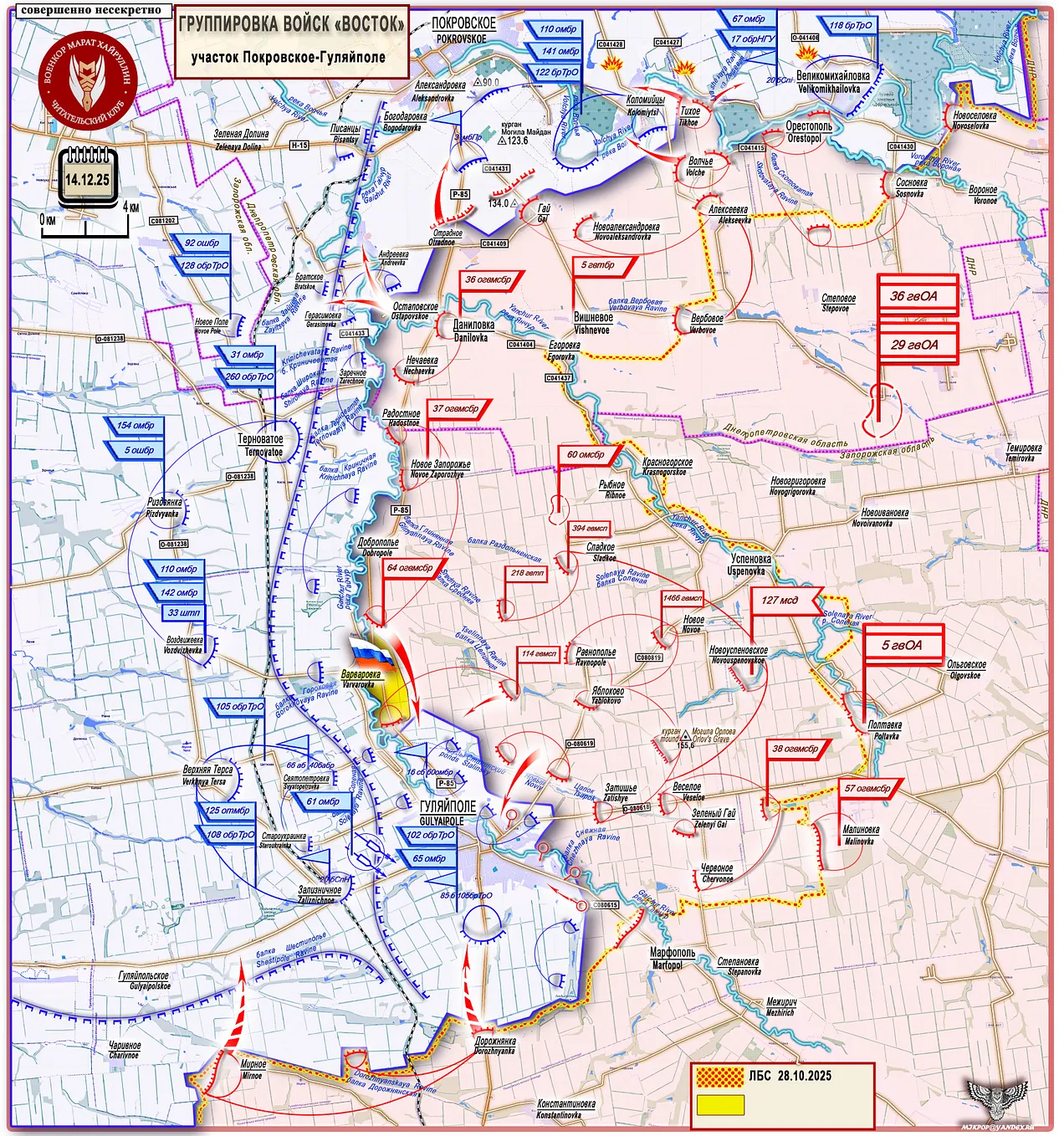
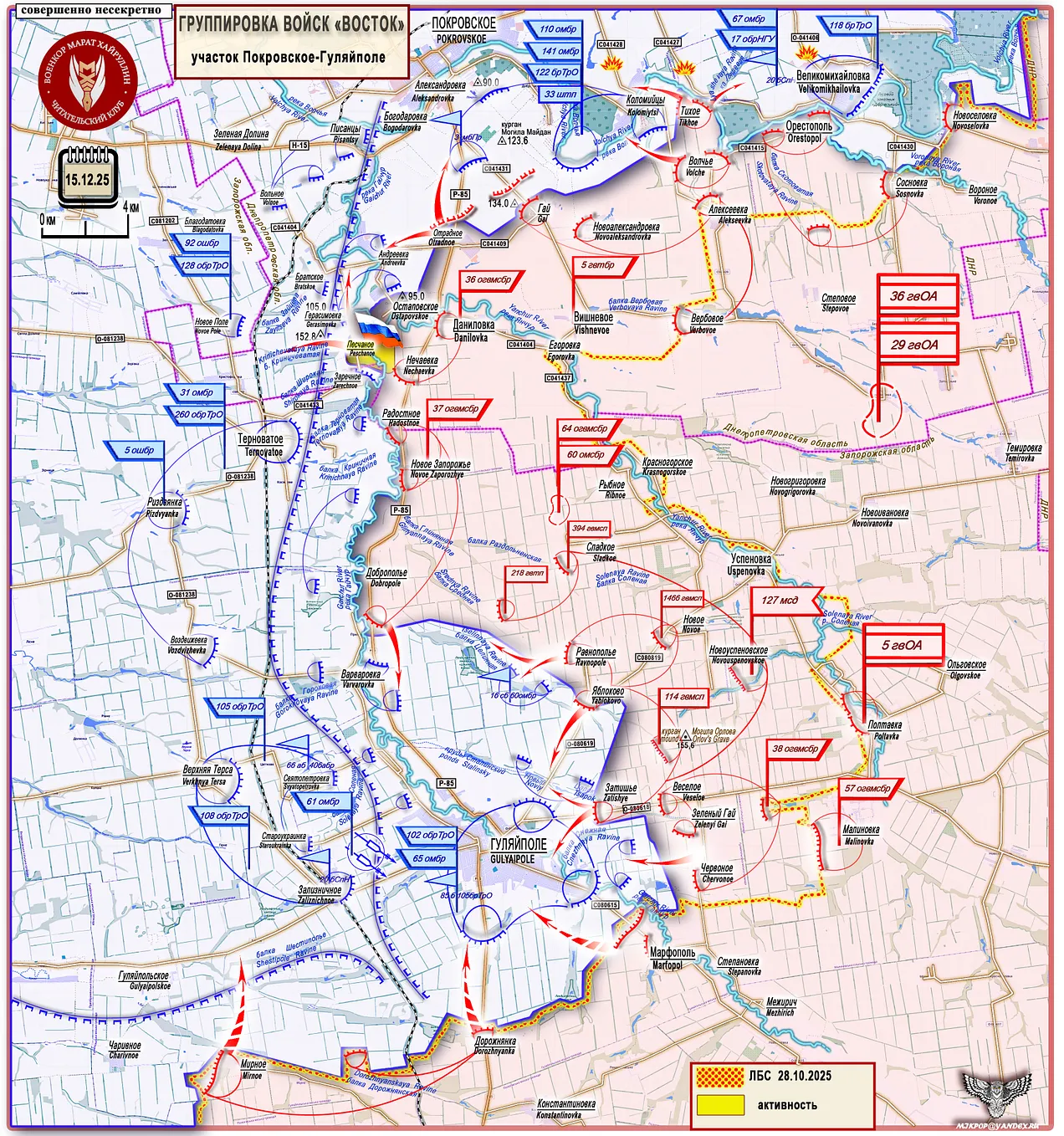
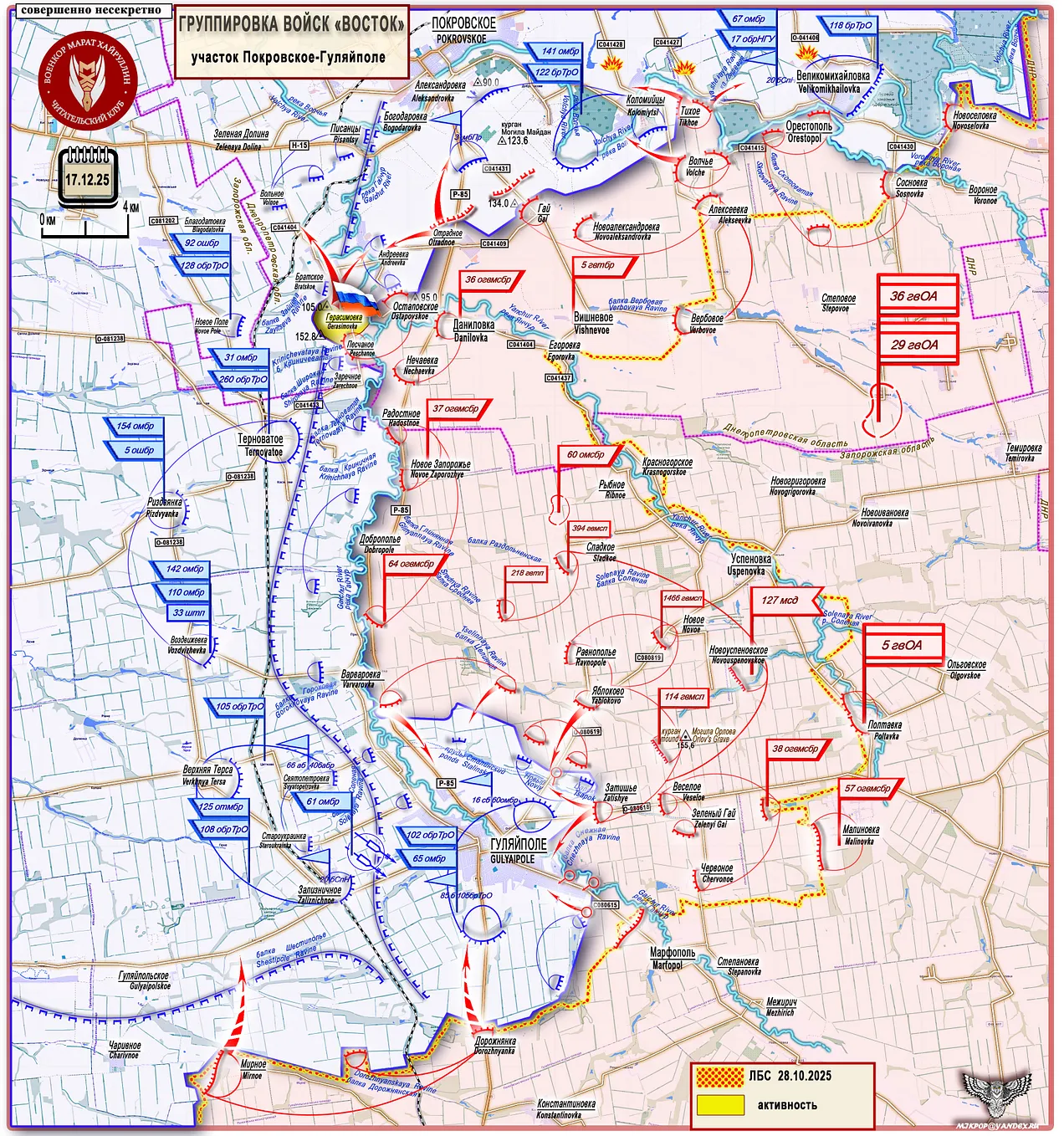
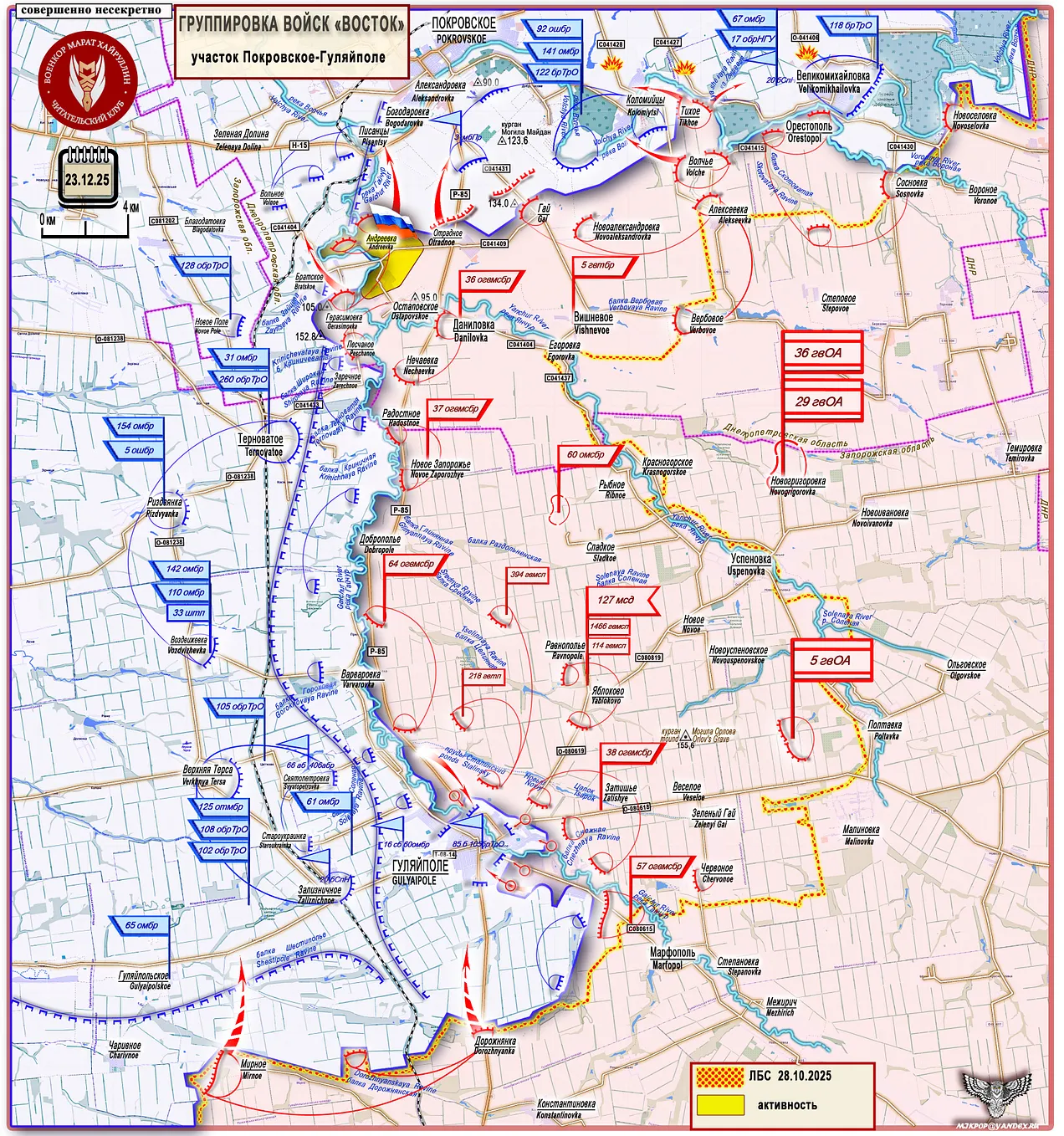
Map legend: The yellow line with the red dots represents the line of combat contact on October 28th, 2025.
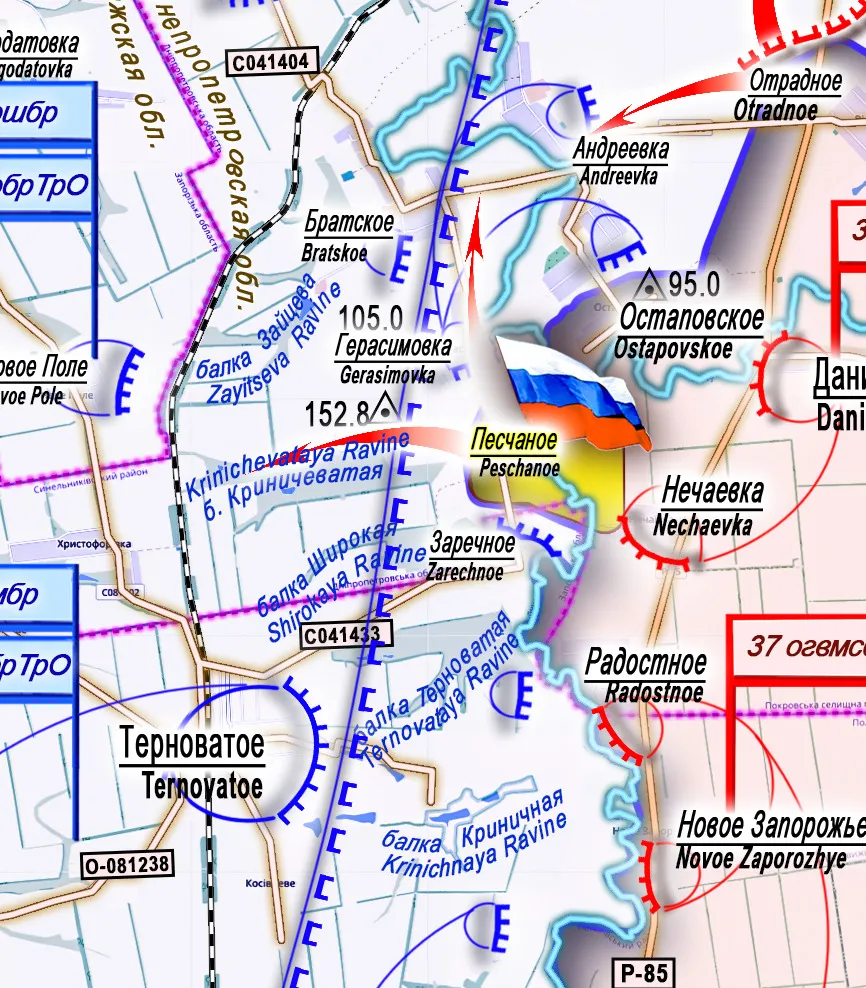
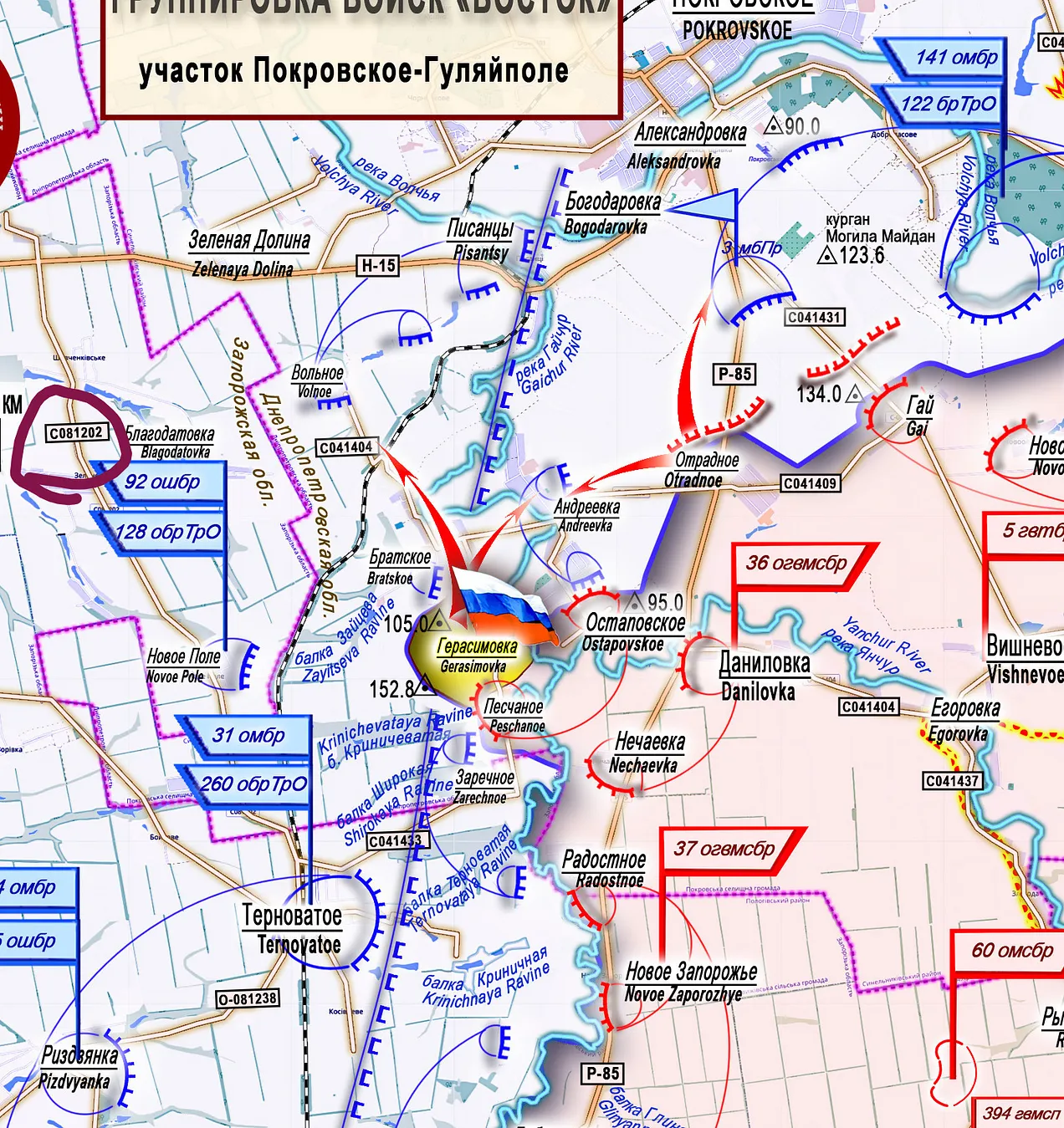
Message from the Russian Ministry of Defense: "Guards reconnaissance units of the 'East' Group, through active combat operations, broke through the enemy's defenses east of the Gaichur River and liberated the settlement of Varvarovka in the Zaporozhye Oblast.
As a result of the battles, a major defense point was taken under control. The enemy's manpower, more than 12 units of equipment, and over 70 heavy hexacopters of the 'Baba Yaga' type were destroyed.
The liberation of Varvarovka is one of the stages in completing the clearance of the eastern bank of the Gaichur River." (Video at link.)
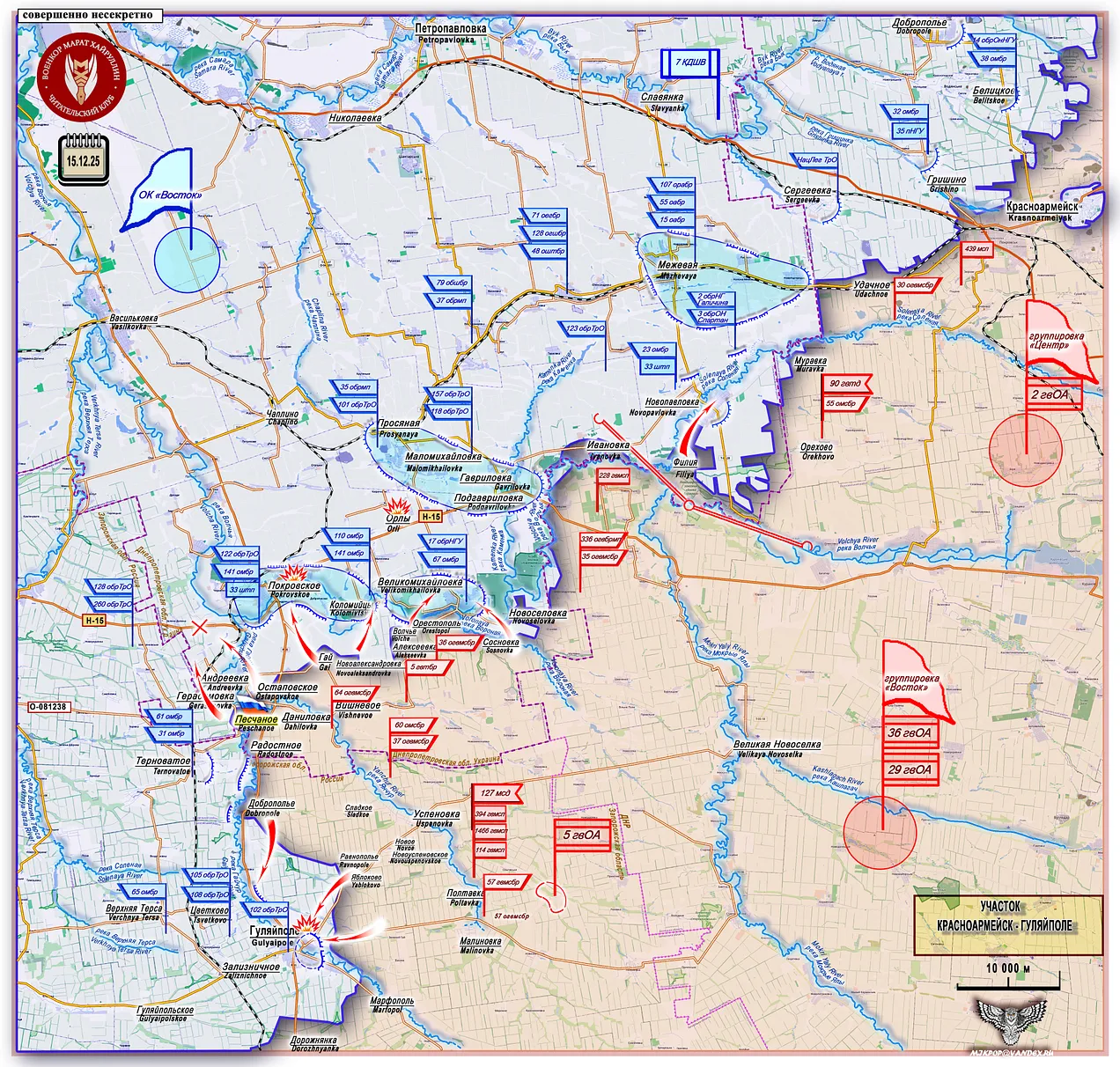
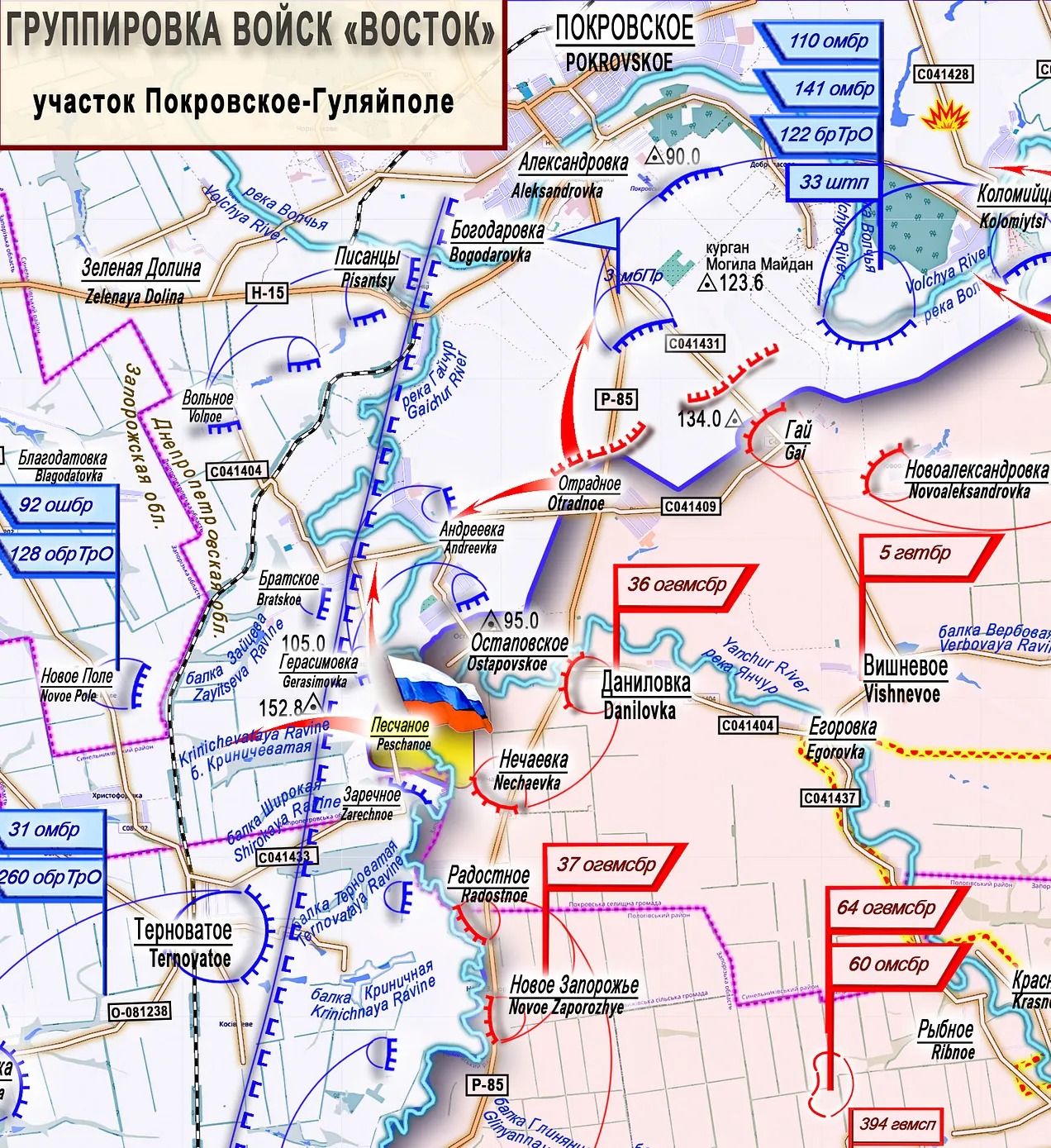
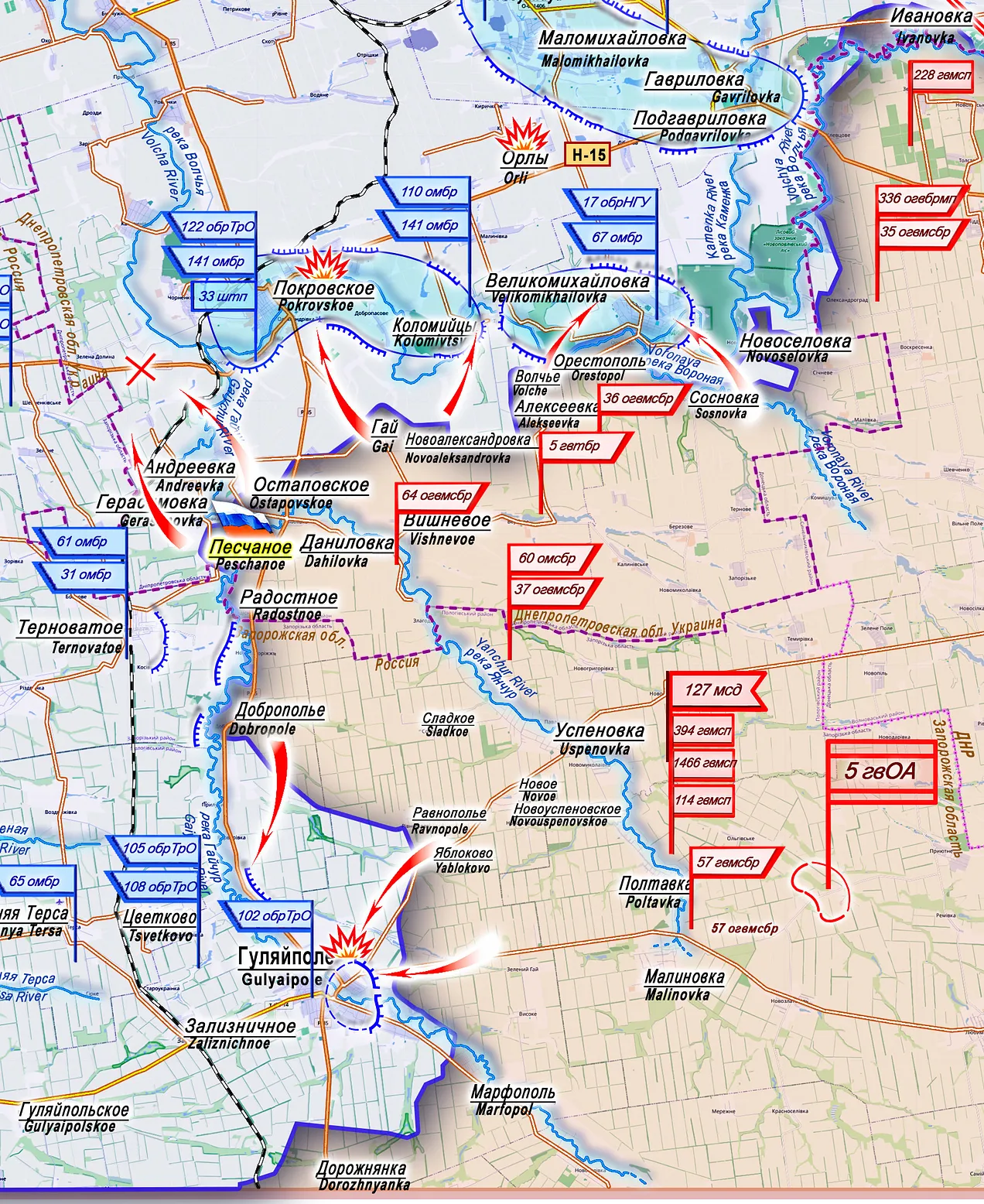
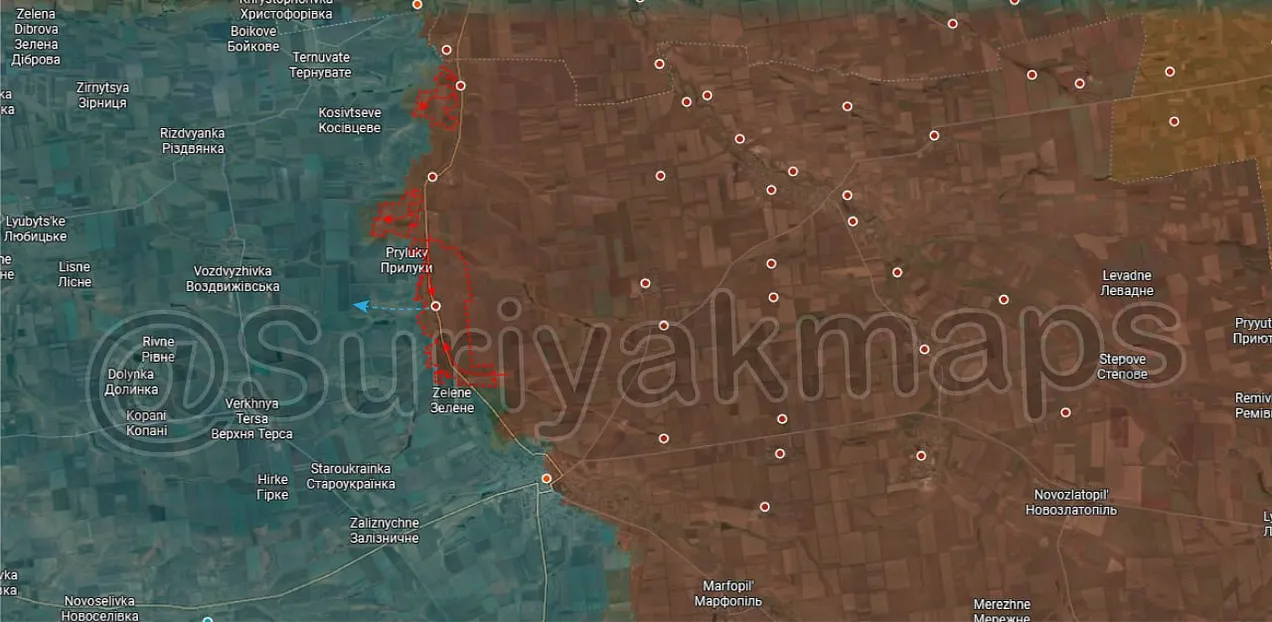
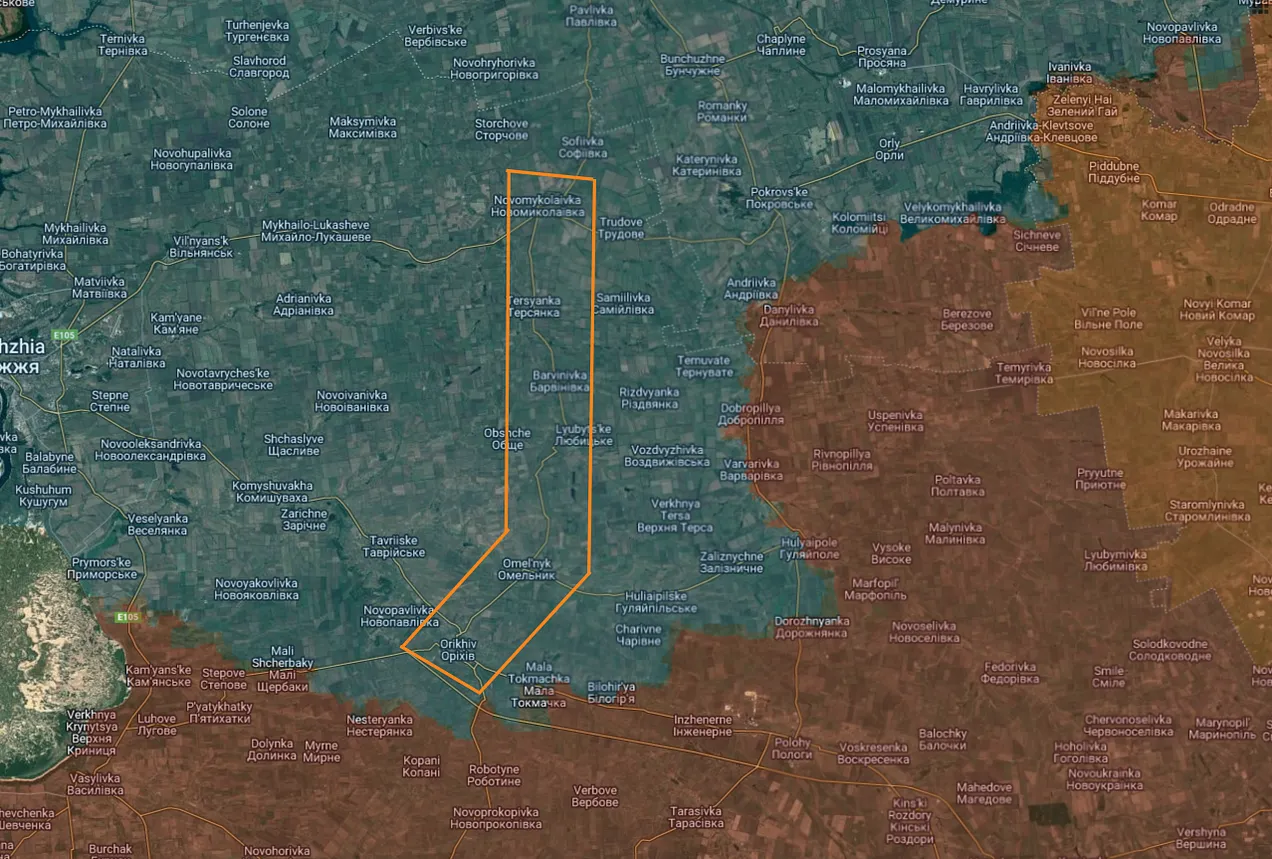
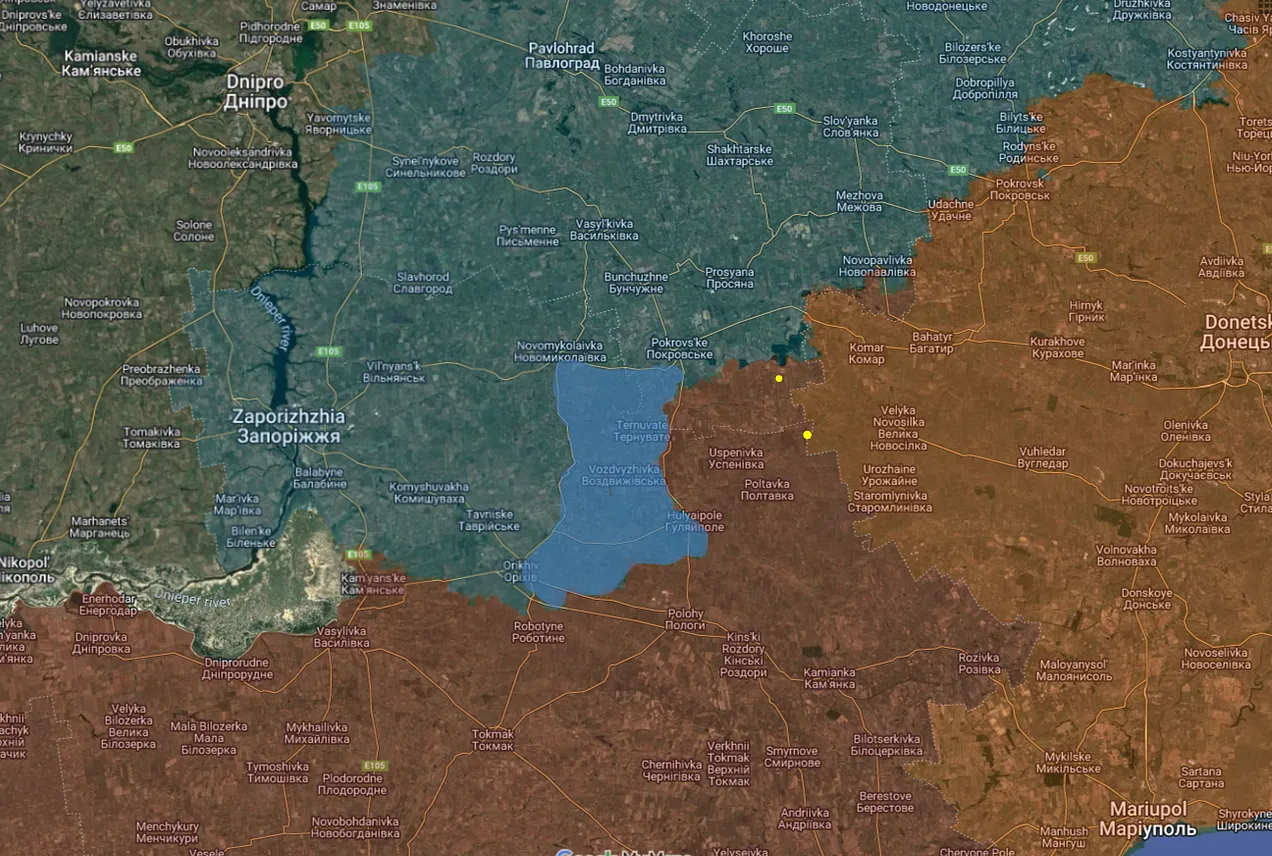
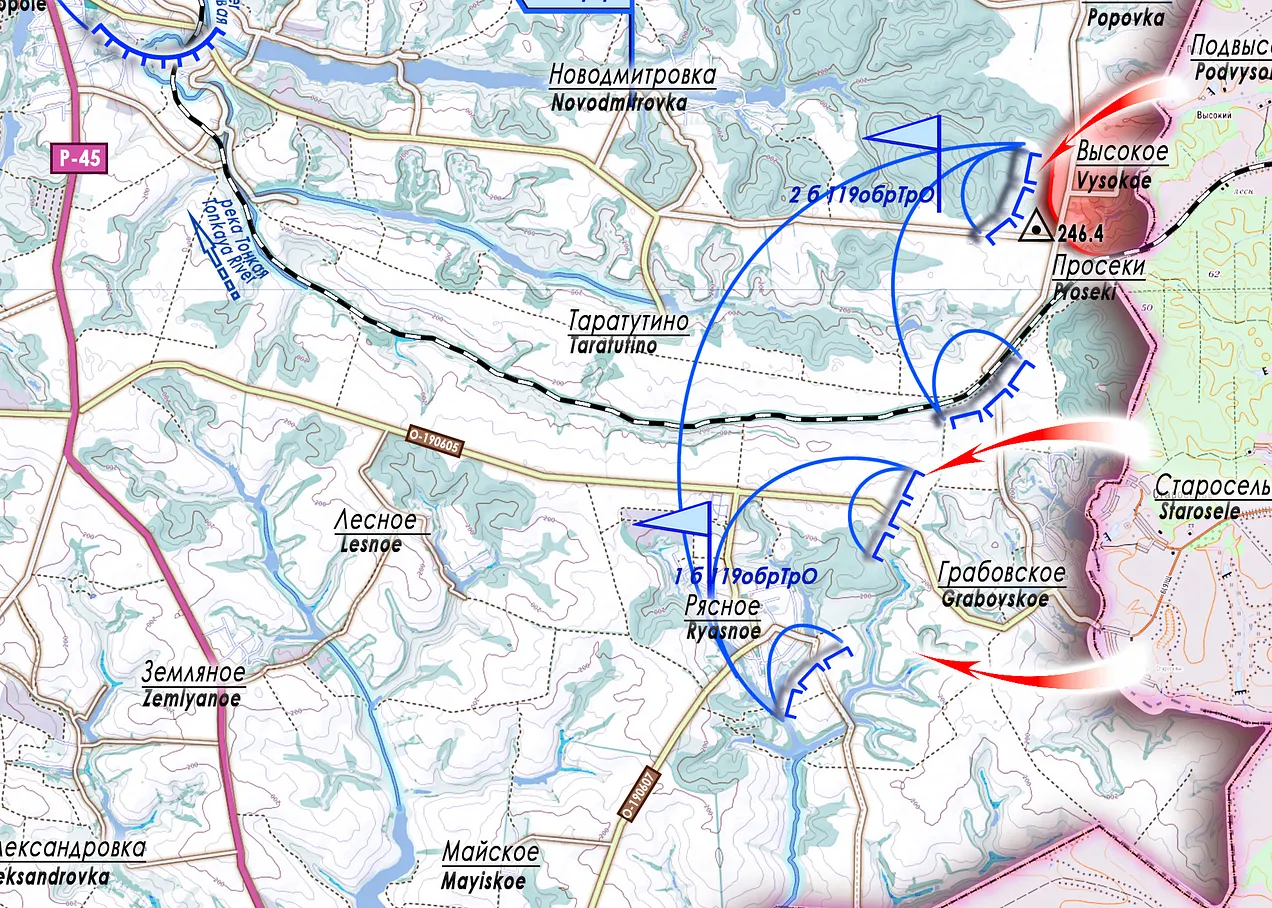
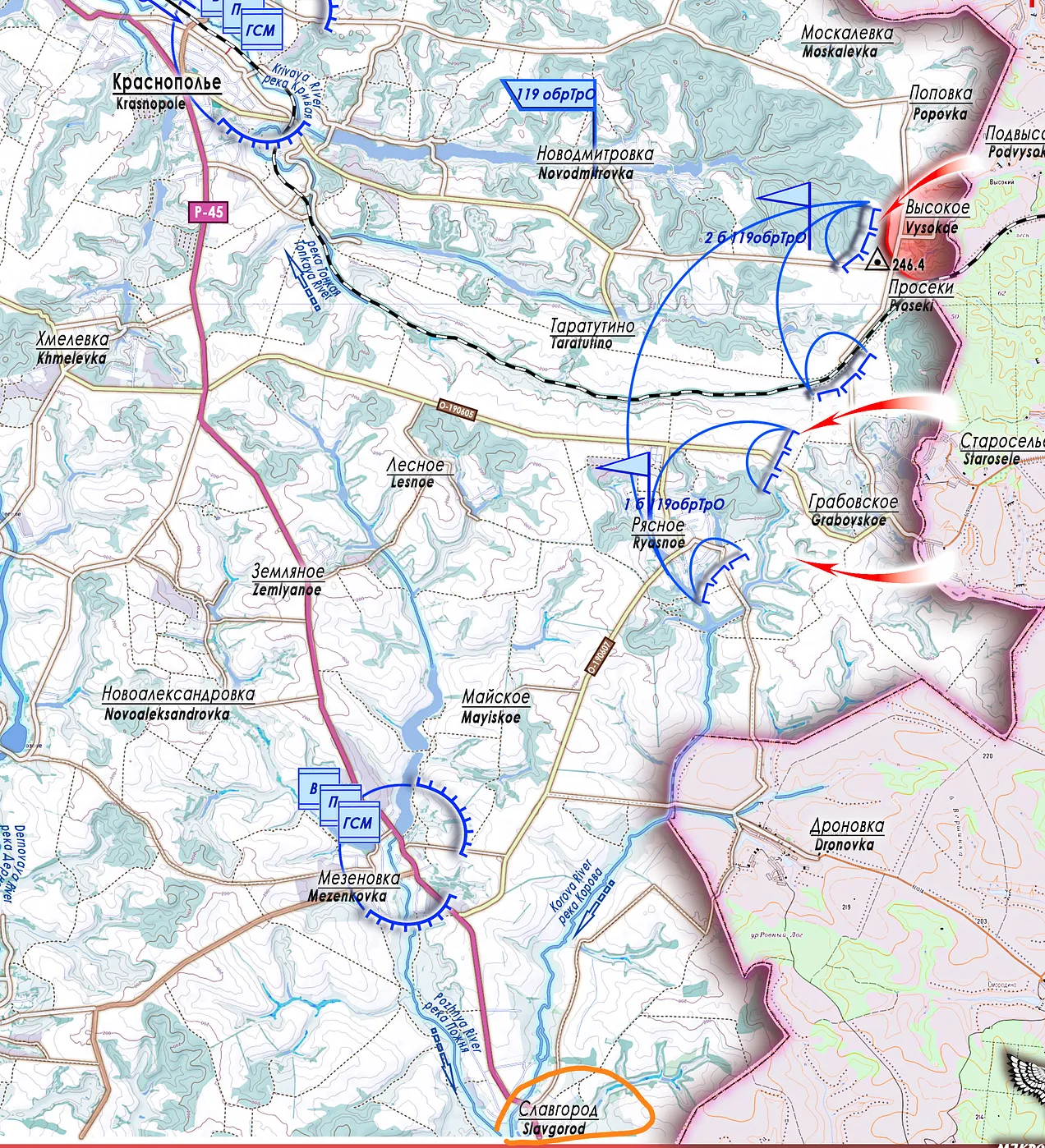
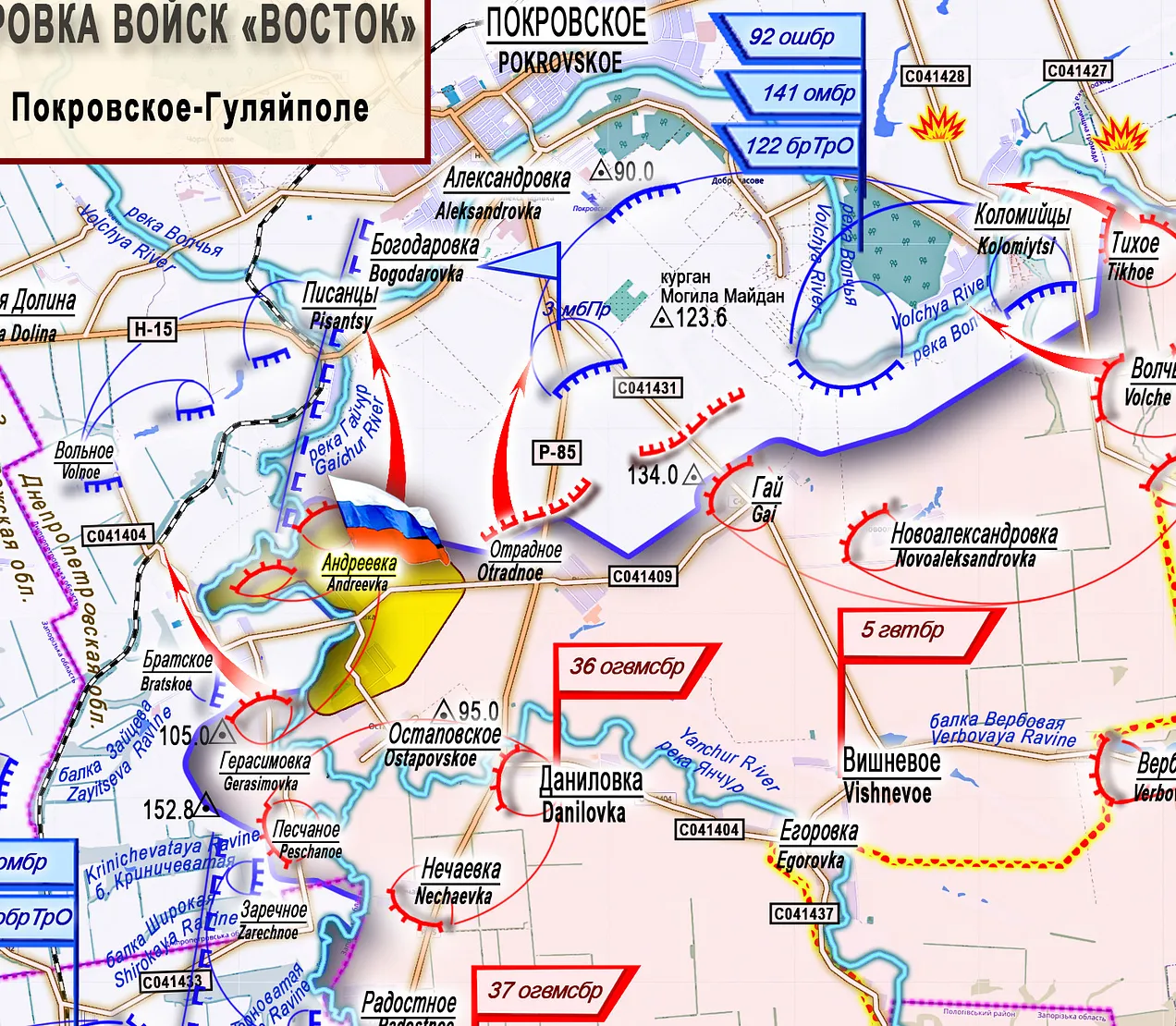
The Russian Armed Forces in the Gulyaipole sector continue to destroy the defenses of the Ukrainian Armed Forces on the eastern side of the Gaichur River. On December 9, the settlement of Ostapovskoe, located on the northern flank of the sector, was liberated. The breakthrough in this important sector forced the enemy to maneuver forces and resources to prevent Russian assault troops from crossing the Gaichur River via the settlement of Andreevka to the H-15 highway.
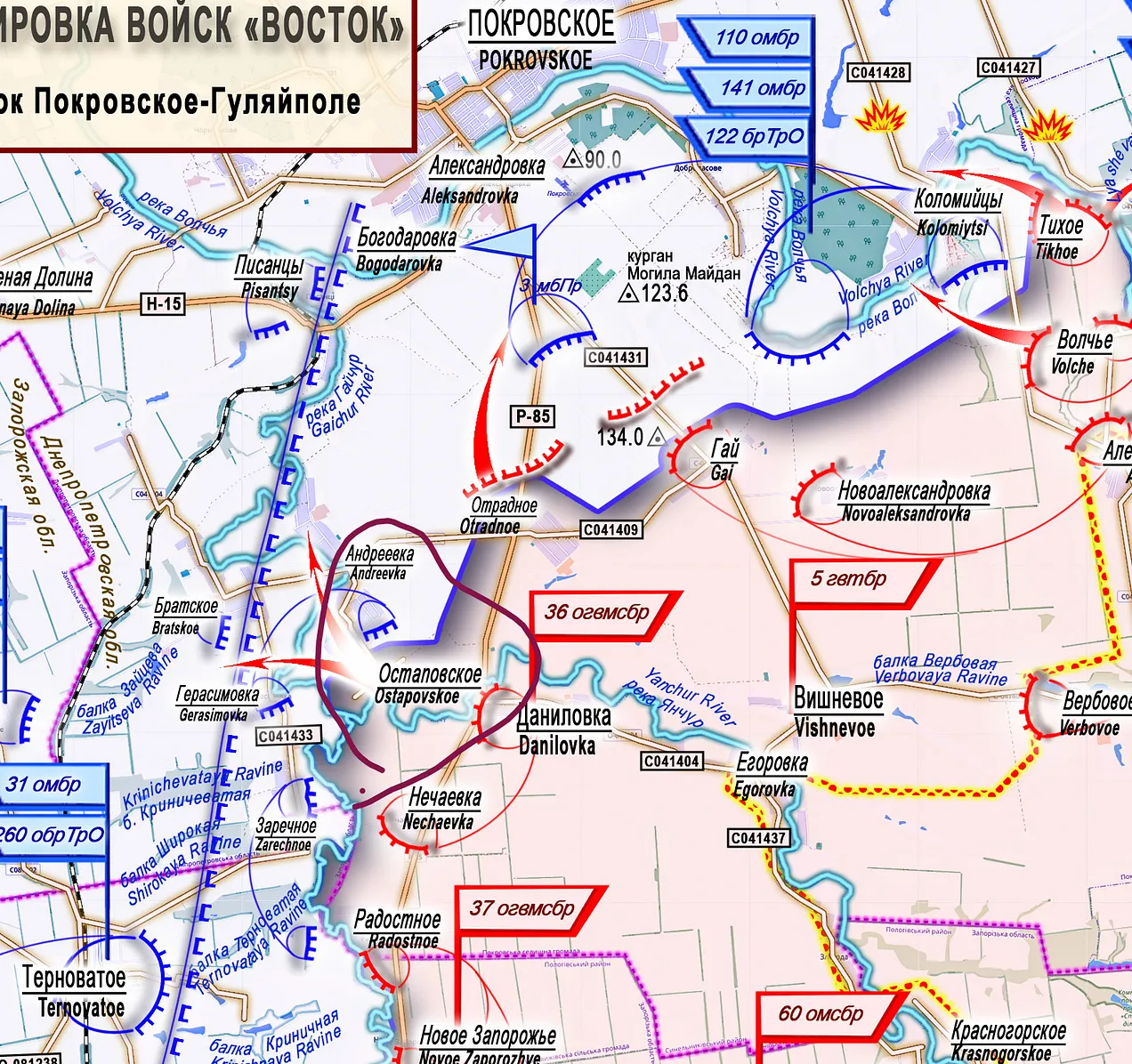
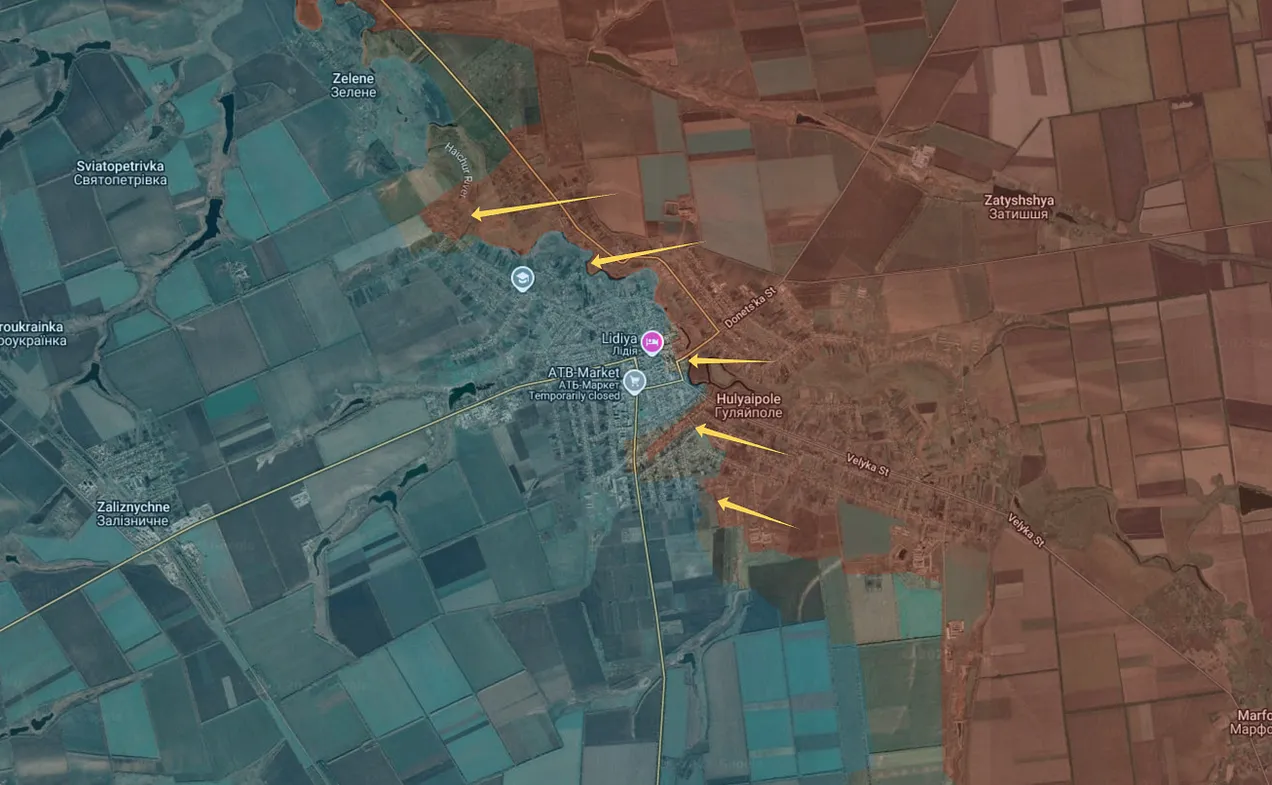
As soon as the maneuver was completed, the settlement of Varvarovka (47°43′50″ N, 36°11′49″ E, about 370 residents) was liberated upriver from Gulyaipole, in the northern foothills, which stretch along the P-85 highway for almost five kilometers. There are no settlements between Varvarovka and the city of Gulyaipole. Russian assault groups are advancing to the northern outskirts of the city.
From the East, the advance units of the Russian Armed Forces have reached the left bank of the river within the city limits, and from the South, from the settlement of Marfopol, they have entered the southern outskirts of the city.
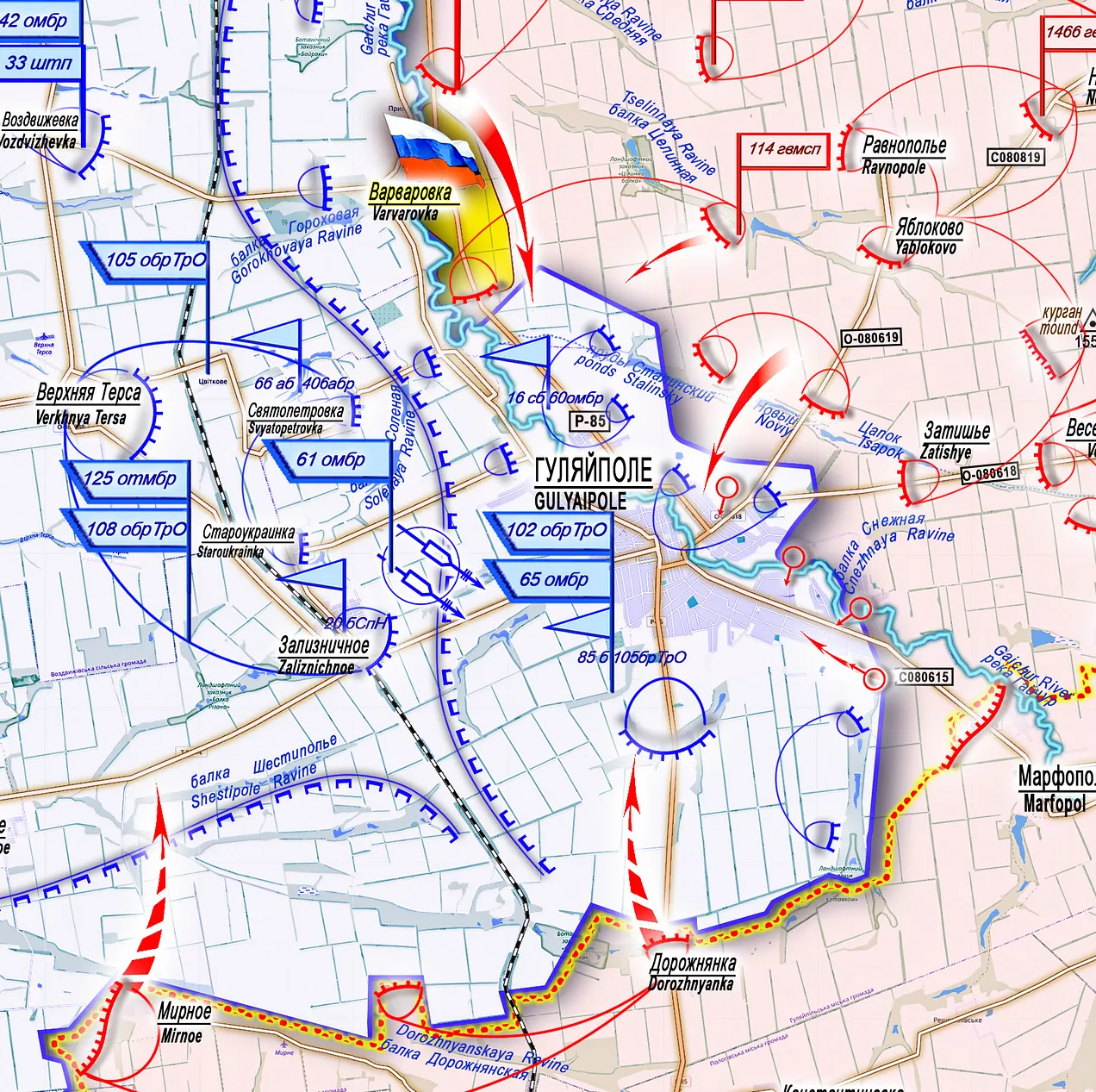
Thus, the assault on the city of Gulyaipole is being conducted from three directions.
The Dorozhnyanka - Gulyaipole sector has yet to be activated.
https://maratkhairullin.substack.com/p/ ... ember-14th
******
Behind Prigozhin
More 'Lemner'. Patriots vs frauds. Surkov vs Malofeev. Dugin's disguise.
Events in Ukraine
Dec 13, 2025
Some would have it that the world is divided into western democracies and eastern dictatorships. In the west, there are a range of political parties, all dutifully taking turns to wield power. In the east, entire countries are commanded by one man and his friends indefinitely.
But it is often hard sometimes to notice the real difference between the parties succeeding each other in the west. The recent elections in, say, Romania, also put in question the extent to which alternatives to the current state of affairs are actually allowed.
Ukraine, that great bastion of western democratic values, has also seen a number of seemingly varied presidents come and go. Yet the same foreign and domestic policies of ‘euro-atlantic integration’ and intensified nationalist fervor remain. Despite the fact that the majority of the population is indifferent or opposed to such a prioritization. Despite the fact that Volodymyr Zelensky, say, won the 2019 elections on the promise to modify these vectors. Instead, he accelerated them.
Russia is often held up as the paradigmatic example of a country ruled by a small group of undemocratic elites. Their aims never change, and they are threatened by no one. Politics doesn’t exist in Russia.
In fact, politics does exist in Russia. Quite turbulent politics indeed. That isn’t a good or a bad thing. It just looks a little different. Or perhaps, outsiders just don’t want to pay attention to it.
Today we’ll be returning to this year’s politico-literary sensation in Russia, Aleksandr Prokhanov’s Lemner. It is a novelistic depiction of Evgeny Prigozhin’s 2023 Wagner mutiny.
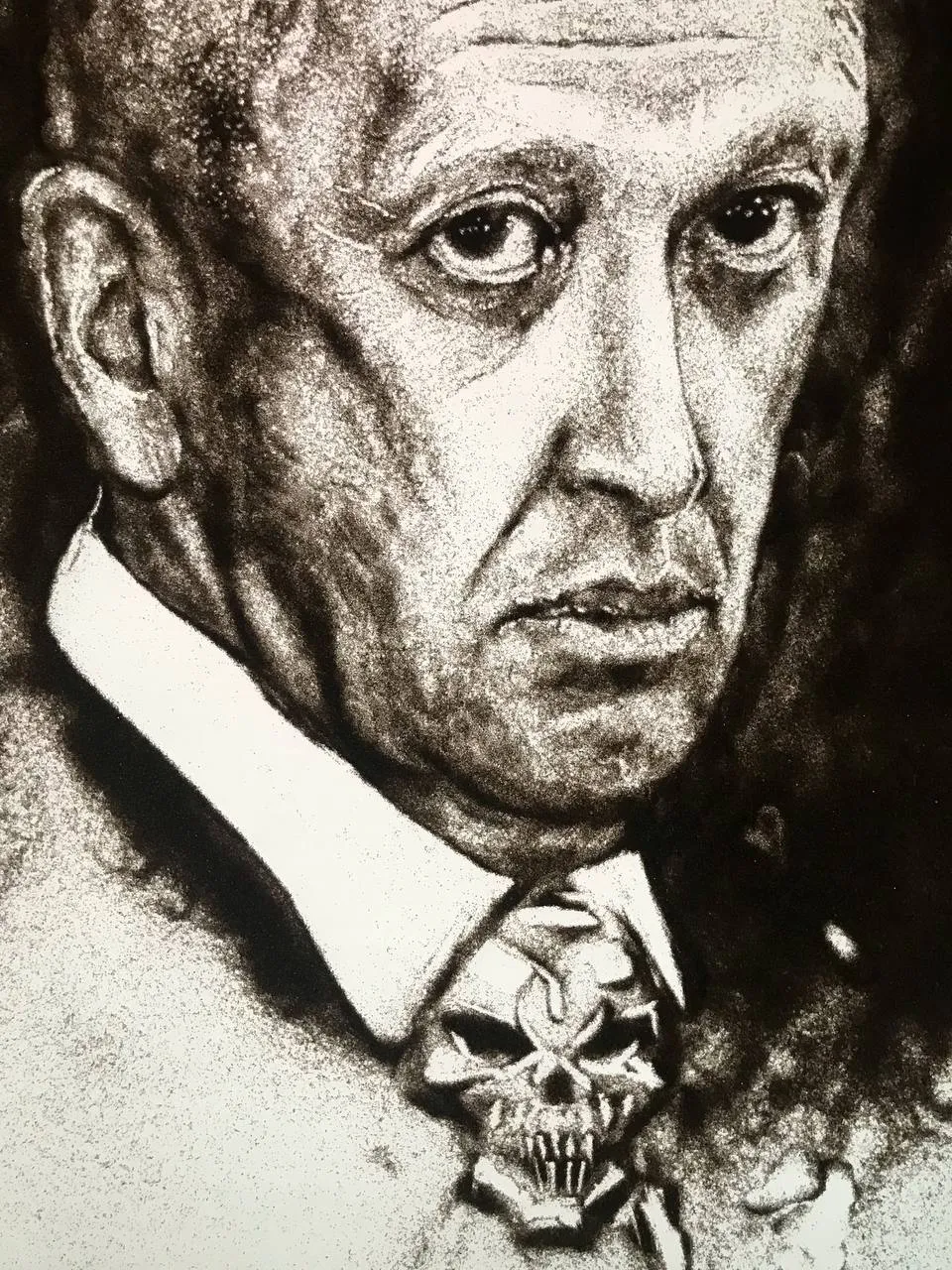
A painting of Prigozhin by the patriotic artist Valentina Rakogon
In yesterday’s article, I described the initial hubbub around its publication, with the September 29 presentation of the novel cancelled for its supposed anti-Presidential message. The highly patriotic Prokhanov, some claimed, had strayed too close to the sun by glorifying the traitor Prigozhin.
However, it has since come to my attention that Lemner is once again available for purchase in Russian bookstores. This is itself surely a testament to the fact that Russian political life does include a range of viewpoints, as long as they stay within a certain framework.
For comparison, I do wonder whether it would have been possible for, say, Ezra Pound, hypothetically still living in the US, to publish a long poem in 1943 depicting president Roosevelt as a dead crocodile who has long ago been mummified by his closest advisors, who all accuse each other of actually working for the Germans. I expect that Pound would have had a difficult time.
It’s somewhat of a strained analogy, but my point is that countries at war tend to be rather sensitive on these matters. By comparison, there is absolutely no way that a Lemner-style caricature of Zelensky and Azovite nationalists could be published today in Ukraine.
Anyway, onto Lemner. Yesterday, we took a look at its general plot. The liberal, anti-Putin press in exile has joyously claimed that Lemner glorifies Prigozhin and denigrates Putin. They pointed to passages where characters claim that Putin has long ago been killed and replaced by doubles, with state power having been usurped by shadowy advisors.
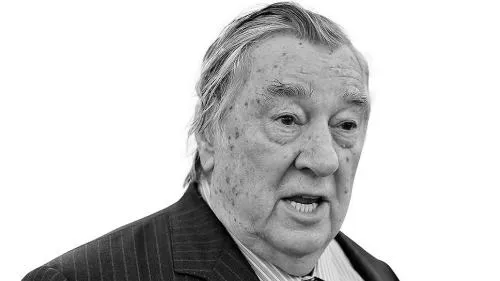
Prokhanov has been publishing novels since 1971
In fact, the book ends with the death of all the supposedly all-powerful advisors, and the discovery that the President has been in charge of the situation all along. Prigozhin’s attempt at mutiny is quashed by his commander, and Prigozhin is ultimately poisoned by his sorceress lover, revealed to be the President’s agent.
In short, at a banal level, Prokhanov’s novel is not actually confirming the popular anti-Putin narrative of ‘Putin’s doubles’. Instead, Putin turns out to be quite omnipotent indeed. Nevertheless, there are also some interesting elements to Prokhanov’s portrayal of Putin that we’ll focus on today.
But the Putin question is not why I found Lemner interesting. Defending himself from the liberals, Prokhanov pointed out that the passages about Putin’s doubles were actually spoken by ‘one of the most negative characters in the book’.
This figure is none other than Ivan Surlyonis, an obvious representation of the real Vladislav Surkov, one of the most important figures in Russia’s Presidential Administration from the early 2000s until 2020. Surkov, a self-consciously postmodern ad-man, was described for decades as Russia’s most powerful gray cardinal. Western writers delighted in analyzing the so-called ‘wizard of the Kremlin’.
But Prokhanov views the main curator of pro-government Russian nationalist politics as a degenerate, traitorous fraud.
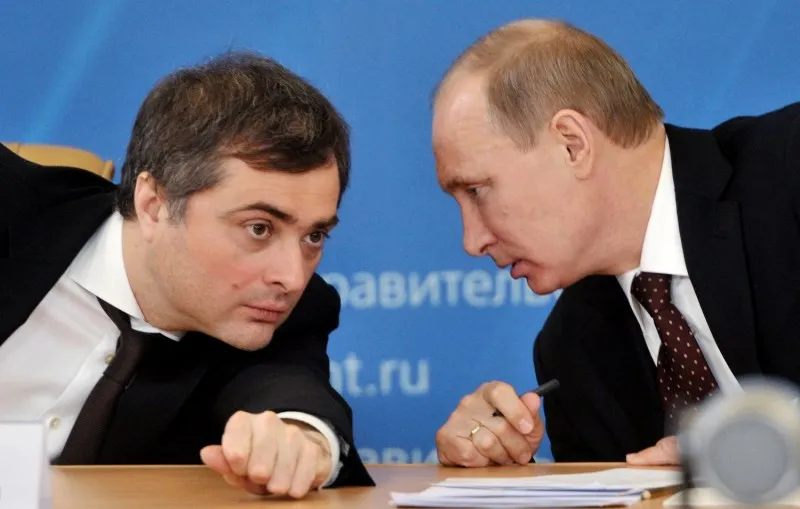
Surkov and Putin
Indeed, this is what I found most interesting about Lemner — its constant, biting satire of the Russian imperial-nationalist milieu that Prokhanov has himself embodied for decades.
Throughout the book, there are endless hints and accusations that these same turbo-patriots are themselves in fact disguised western agents, waiting for their chance to overthrow the government in a ‘patriotic uprising’ and henceforth steer Russia back towards the west.
As I wrote here, here and here, this conspiracy theory has long been advanced by certain figures in the Russian elite, and was used to explain the Prigozhin mutiny of 2023 (itself supported by a range of anti-Putin forces, including Ukrainian nationalists). I find this theory, true or not, extremely entertaining. Hence, I was delighted to find it pervading the pages of Lemner. One shouldn’t be surprised, however, since Prokhanov’s fiction has always been concerned with this topic, including his 2002 sensation Mr Semtex.
More specifically, Lemner features parodies of Russia’s chief patriotic philosopher Aleksandr Dugin, thunderous television presenter Vladimir Solovyev, and Prokhanov-inspired novelist Zakhar Prilepin. All are portrayed as opportunists who supported Prigozhin when it was necessary, and abandoned him correspondingly.
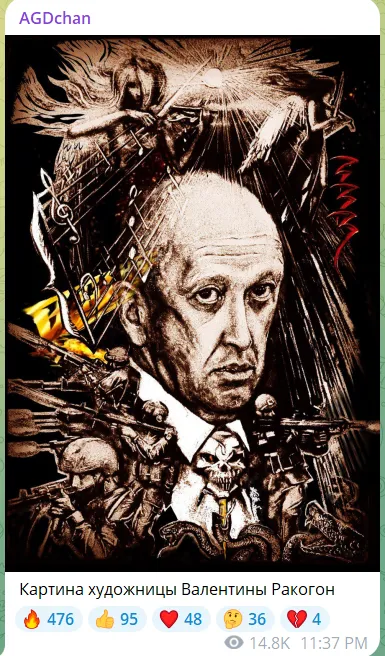
Dugin telegram post glorifying Prigozhin from April 2023
But the real Dugin actually wrote an article defending Lemner from its critics in early October. Dugin and Prokhanov have long been political allies, though one sometimes wonders about the nature of this relationship. We’ll take a look at Dugin’s defense of Lemner, leading us onto some speculation on the real relationship between Dugin, ‘Orthodox Oligarch’ Konstantin Malofeev, Surkov, and Prigozhin.
(Paywall with free option.)
https://eventsinukraine.substack.com/p/behind-prigozhin
*******
Yasha Levine: The real reason Europe backs the war in Ukraine
December 14, 2025 natyliesb
By Yasha Levine, website, 12/6/25
A lot of people out there (myself included) have been scratching their heads wondering why European countries are so intent on waging war on Russia — not just through Ukraine on the battlefield but through sanctions and embargoes in the economic realm. Why would Germany point the gun at its own economy in this way, cutting itself off from the cheap Russian gas that underwrote its industrial base? Why would it turn a blind eye while the United States blew up its Nord Stream pipeline — an act of terrorism coming from its own ally — and pretend it didn’t happen? What’s the ideology driving it? What’s the game plan? What’s the thinking? Is there any? What do the technocrats running policy in Germany (the most powerful state in the EU) think they are doing? It seems so irrational and pointless.
Well, I think I have an easy explanation: These technocrats have no choice. They are not really in control. See, the collapse of the USSR didn’t just take out the Soviet block. It also sent Europe and the entire European project into a tailspin. The entire reason for a post-WWII unified, socialism-lite Europe to exist was to counter the Soviet Union — all under protective imperial wing of the United States. When the Soviet Union suddenly collapsed and broke apart and started reverting back to the 19th century, a unified Europe had no reason to exist. There was no external counter-ideology holding it together anymore. No external foe that you could lean your entire structure on. So the more that the unified European project wobbled, the shakier it got, the more cracks developed (I’m thinking here of the Greek austerity crisis of 2009, where a Europe unified to completely fuck the Greek people, their European brothers and sisters), the more that Europe had to turn to the only thing that had unified it in the past: militarism and the Cold War. It had to recreate the enemy and it tried and tried so hard that ultimately it succeeded in actually creating one.
That’s why the seemly baffling attachment to Ukraine. That’s why European technocrats have bet everything on that conflict…why it’s so important to them. They have no positive post-Cold War vision for their beloved European Union anymore beyond a washed [out] neoliberalism that their own people hate. They have nothing. Ukraine is their answer. Their prayer. Their hope. It’s the only that’s keeping them together. But it’s not enough. It can’t stop the collapse. In fact, it’s speeding up the collapse.
PS: This process is similar to something that Evgenia and I talk about all the time with respect to America. The collapse of the Soviet Union also caused a crisis in the United States. As I wrote before, “Americans think they won the Cold War, and that they defeated communism. That’s true. But it’s not clear that Americans have come out as on top of that conflict as they were led to believe. See the truth is that the USA and the USSR were connected — and the USSR and its people propped up America in ways that Americans did not understand. Now that the USSR has been replaced by a pre-revolutionary Russian society, both the former USSR and the USA are going through similar reversions to the 19th century. The processes are linked…they’re mutually reinforcing.”
https://natyliesbaldwin.com/2025/12/yas ... n-ukraine/
******
Where do all these people get the idea that Odessa is on the verge of falling to Russia?
******
Fighting for the Spirit of Anchorage
December 14, 7:00 PM

In the fight for the spirit of Anchorage.
Late autumn and December 2025 were marked by persistent US attempts to fulfill some of the agreements with Russia reached during closed meetings between Putin and Trump and the Anchorage talks. Both sides acknowledged back in the fall that there were outlines of a shared vision for ending the war in Ukraine, which would require Ukraine to fulfill a number of demands voiced by Putin in 2024-2025.
Over the past months, the US has consistently broken through a number of "red lines" between Ukraine and Europe.
1. Instead of "no negotiations on Ukraine without Ukraine," there are now direct negotiations between Russia and the US without Ukraine and Europe.
2. Instead of "war to the 1991 borders," there is bargaining over how Ukraine should surrender Donbas to save face for Zelenskyy.
3. Instead of an "official ban on negotiations with Russia," negotiations between Russia and Ukraine, which are already underway in violation of Ukrainian law, are underway.
4. Instead of "abandoning any restrictions on the size of the Ukrainian Armed Forces," there is bargaining over the thresholds for establishing restrictions.
5. Instead of "the unconditional transfer of the Zaporizhzhya NPP" to Ukraine, there is bargaining over the format of US and Ukrainian participation in the management of the Zaporizhzhya NPP.
6. Instead of "unconditional and mandatory accession of Ukraine to NATO," there is bargaining over the timing of EU accession and complaints that the US is not accepting Ukraine into NATO.
7. Instead of "an unconditional refusal to hold elections in Ukraine under war conditions," there is now bargaining over the format of these elections.
And so on.
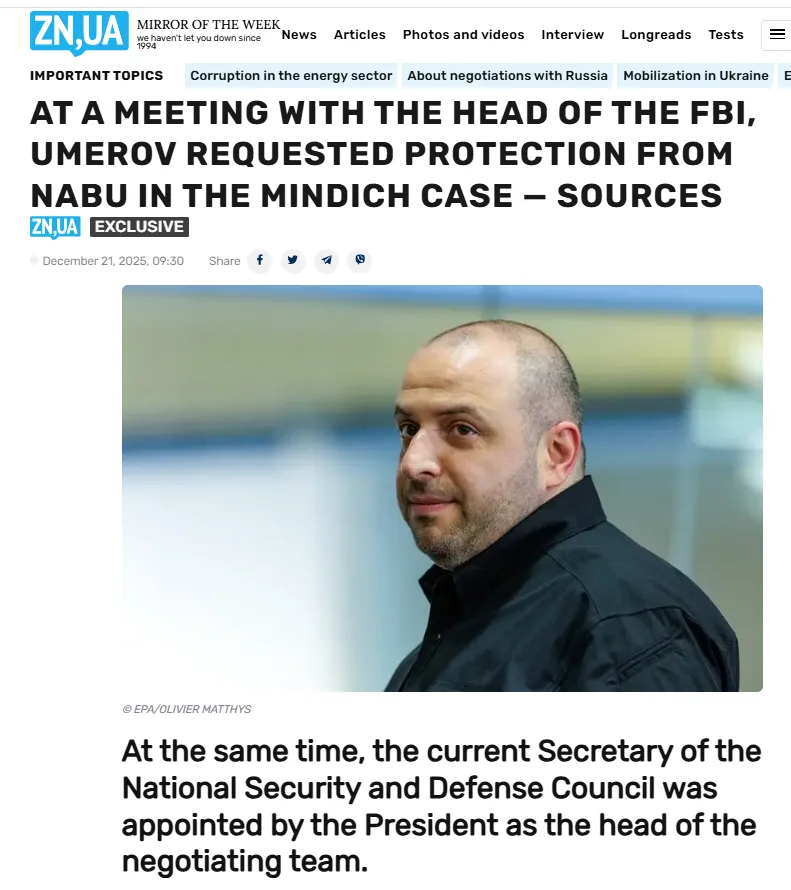
The US is consistently pressuring Ukraine to change its position on many issues, despite obvious resistance and sabotage of American plans from Kyiv and the EU. In addition to Ukraine's dependence on economic and military support from the US, the NABU, which is under the control of the FBI, has also been brought into play. This led to a serious weakening of the key British protégé in Ukraine, Yermak (although he has not yet been completely destroyed) and the hanging of Zelensky, Umerov and a number of other individuals on the hook of corruption revelations, who, under the threat of the publication of incriminating evidence, were forced to make a number of concessions, trying to buy time with their help in order to avoid making key concessions.
The war in Ukraine will not end until Ukraine at least surrenders all of Donbas. This will happen either diplomatically or militarily. Russia is prepared to achieve this goal by either means. The United States understands this, especially since it is aware of the real state of affairs on the front and considers Ukraine's loss of Donbas inevitable. The US logic is that it is easier to record a limited defeat for Ukraine (and Europe) in order to trade this war for new agreements with Russia, given the systemic weakening of Europe's dependence on the United States. In this scenario, the United States and Russia would be the winners, while Ukraine and Europe would be the obvious losers. This explains the current behavior of Ukraine and Europe, which do not want to see their defeat confirmed. But this is precisely Trump's goal under the agreements with Russia: to secure the outcome of the war in this configuration. And Russia is now watching to see how he succeeds. Russia is prepared to fulfill its part of the deal, as this will enable it to achieve some of the overall goals of the Central Military District (the complete liberation of Donbas, the resolution to reject Ukraine's NATO membership, etc.) through diplomatic means.
The game between Ukraine and the EU is generally clear to Russia and the United States. Therefore, in response to any "counterplans," Moscow rightly asserts that these options are unacceptable to Russia, and if Ukraine doesn't want peace, the war will continue. The United States is now also openly stating that abandoning the current terms will ultimately lead to even worse consequences for Ukraine. Each subsequent iteration of Russia's terms will be worse for Ukraine. Washington now understands this logic.
https://colonelcassad.livejournal.com/10245769.html
Google Translator
******
Clearing Varvarovka
December 14, 2025
Rybar
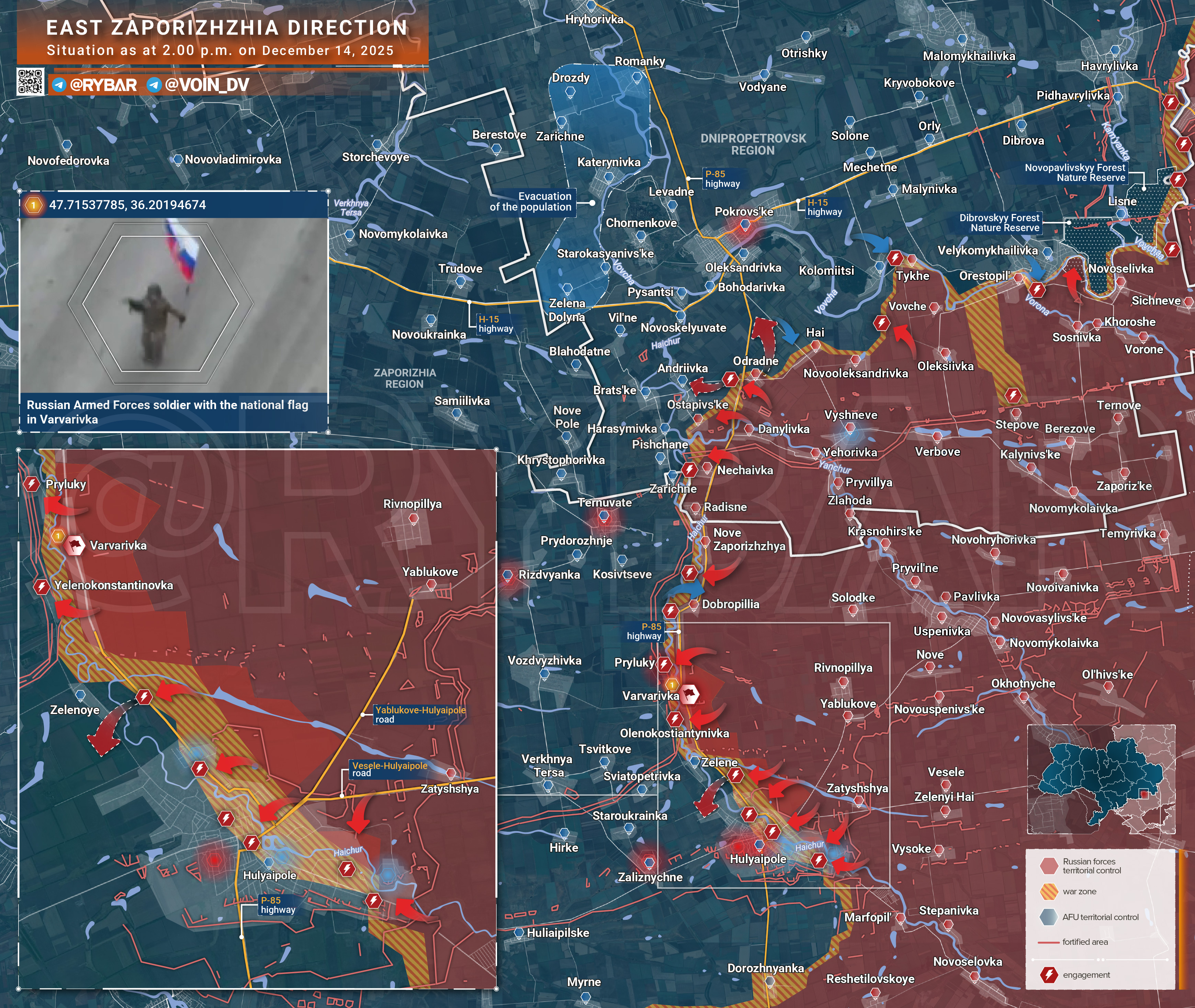
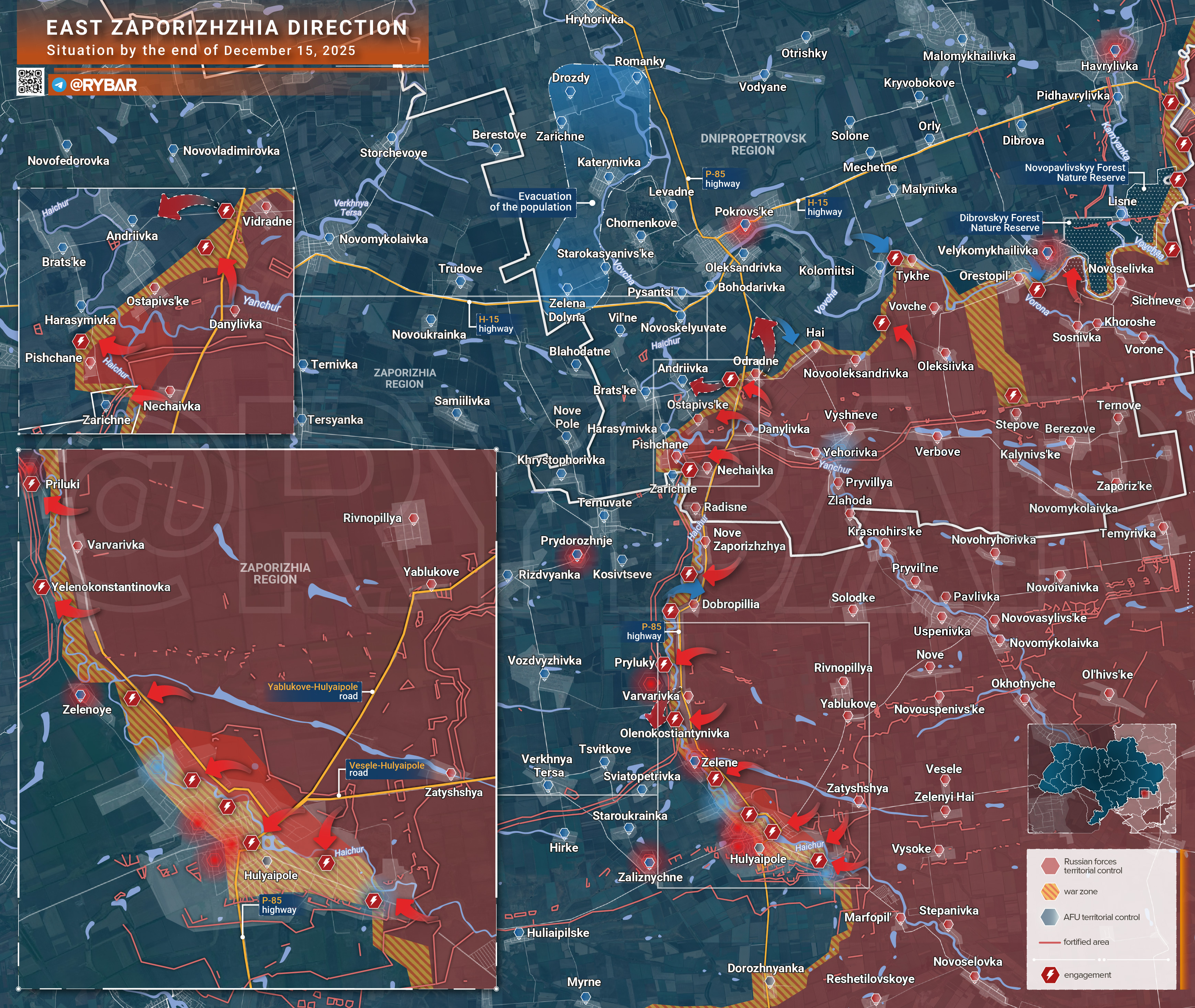
"The situation in the East Zaporizhzhia direction"
After a short break, the Far Eastern Express continues its advance westward. Some time ago, the assault aircraft repelled the enemy from Varvarovka on the left bank of the Gaichur River .
Ukrainian forces have long tried to prevent the loss of control over the village and have deployed units of the 225th Assault Regiment, which has been acting as the Ukrainian Armed Forces' "fire brigade" in recent months, to the area.
However, they failed to stabilize the situation: Russian drone operators isolated the enemy infantry from supplies, after which the remnants were finished off by the Vostok Group's assault aircraft. Several strongholds further south also came under Russian control.
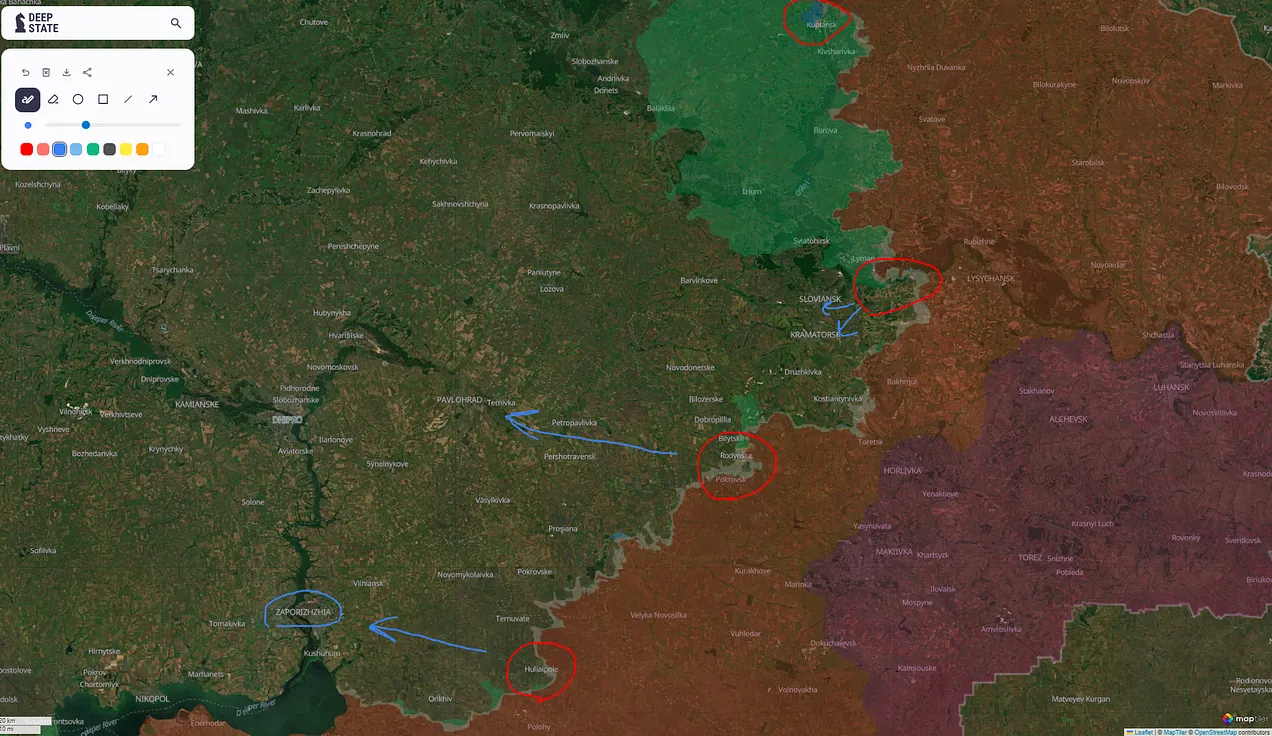
Currently, fighters are attacking toward neighboring Yelenokonstantinivka to establish a bridgehead on the right bank of the Gaichur River . This will allow them to penetrate the Ukrainian Armed Forces' defensive line along the river and continue their offensive further west, bypassing the Hulyai-Pole fortified area .
In Hulyaipole itself , the enemy has already managed to deploy reinforcements and form a new defensive line along the river, slowing the advance of the Russian Armed Forces. A breakthrough north of the city will again force the Ukrainian Armed Forces to disperse their few combat-ready reserves along the front line.
https://rybar.ru/zachistka-varvarovki/
It all went downhill
December 14, 2025
Rybar
Friday's attack on the bulk carrier in Ilyichevsk was not the final blow to Ukrainian shipping: yesterday, the tanker VIVA, also owned by a Turkish company, was hit by drones off the coast of the Odessa region.
Although the footage captured by the crew is unclear, the distinctive contours of the Geranium engines can be seen. If these are indeed the engines, then it's highly likely that the drones were once again used, complete with a camera and control link.
However, the reaction to the incident was far more noteworthy. The Ukrainian Navy suddenly and abruptly recalled the norms of international law and the San Remo Guidelines for Armed Conflicts at Sea.
Turkish President Recep Tayyip Erdogan said it was unacceptable to view the Black Sea as an "arena for confrontation," calling for an end to all attacks on shipping and for its safety to be ensured.
As we've already mentioned, since the Black Sea Fleet lacks the capacity to conduct convoys, only attacks on Ukrainian shipping can discourage the Ukrainian Armed Forces from targeting Russian tankers. They have ample resources for this.
The changed tone of statements from Turkey and so-called Ukraine shows that the measure is entirely effective, and that continuing the attacks is entirely feasible to achieve the desired effect.
https://rybar.ru/kuchno-poshlo/
Google Translator

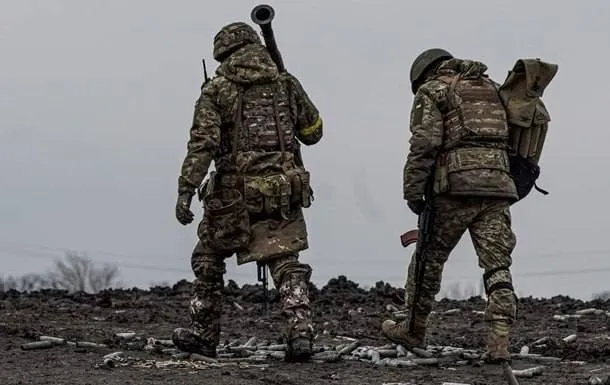
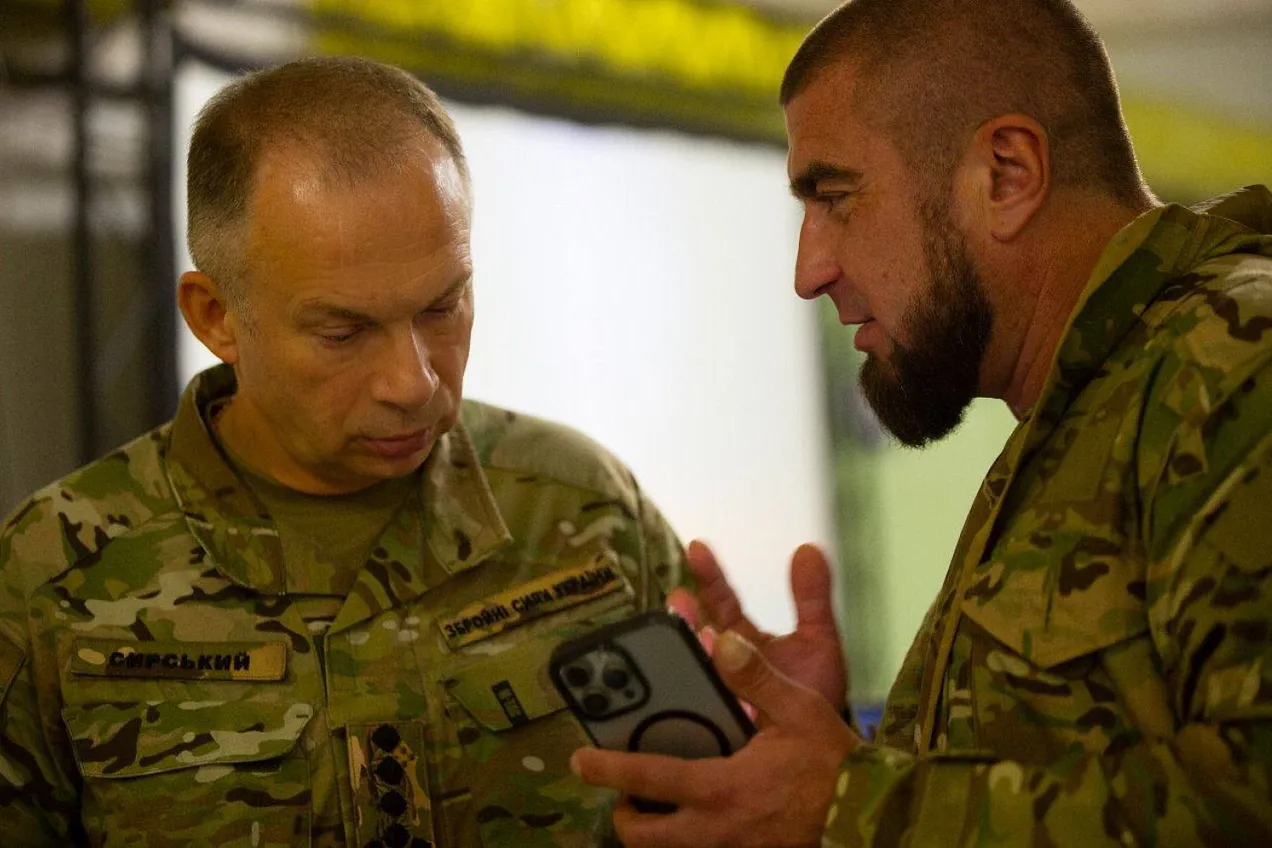
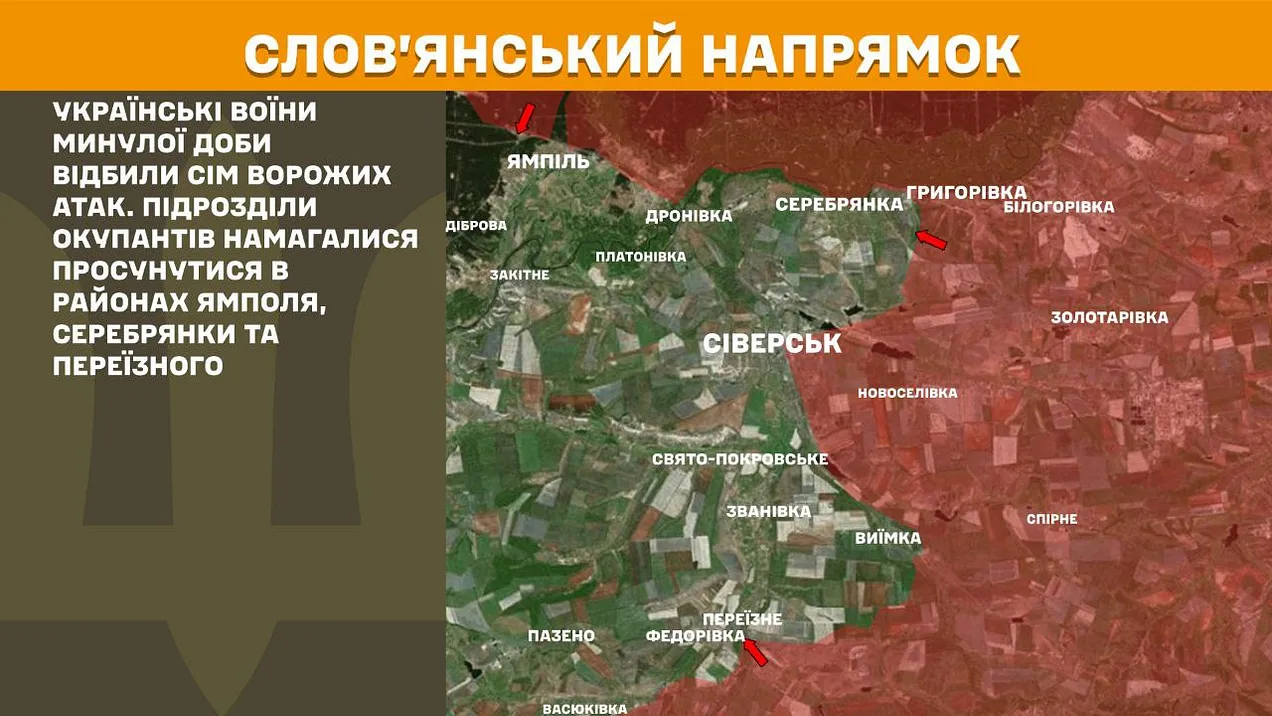
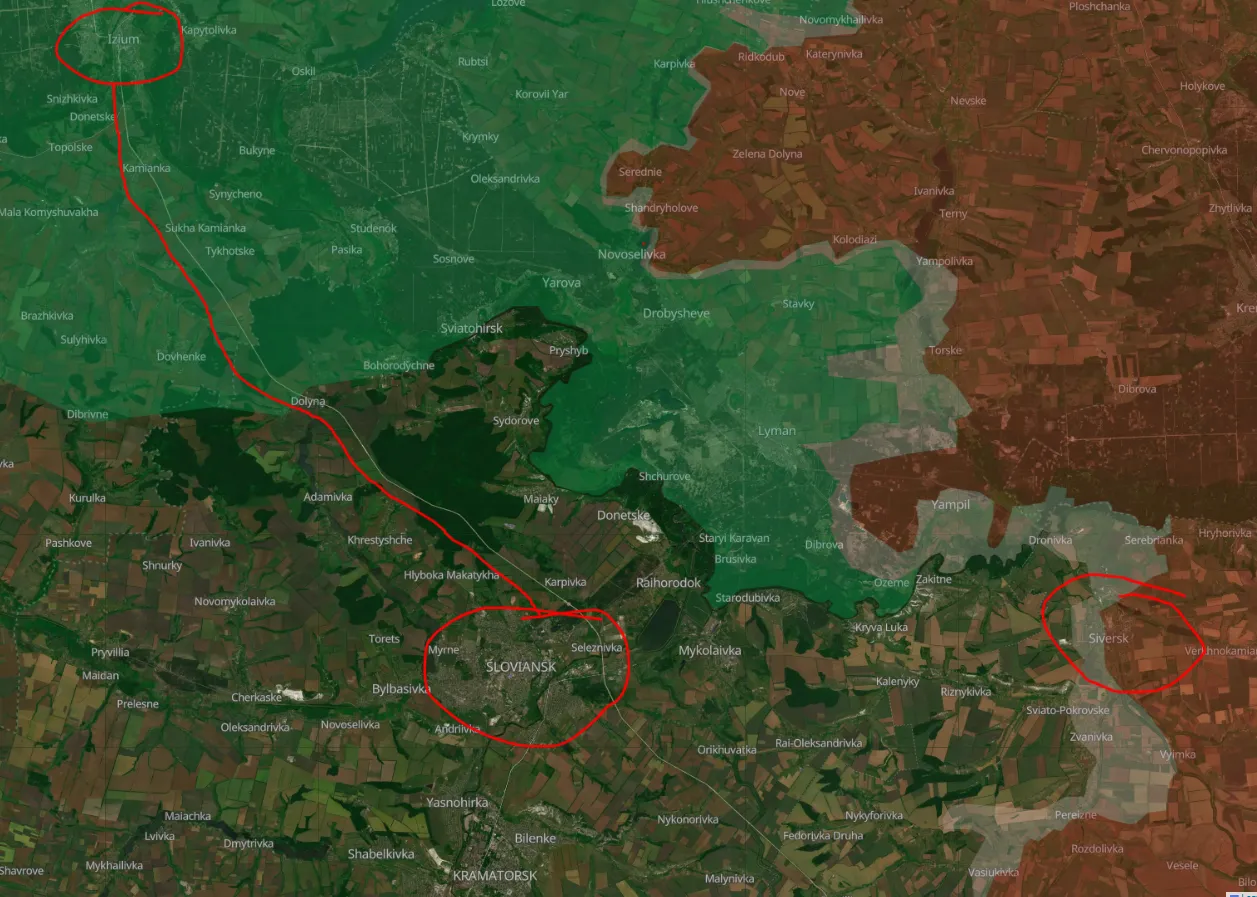
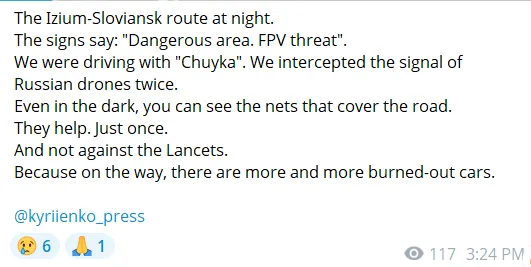
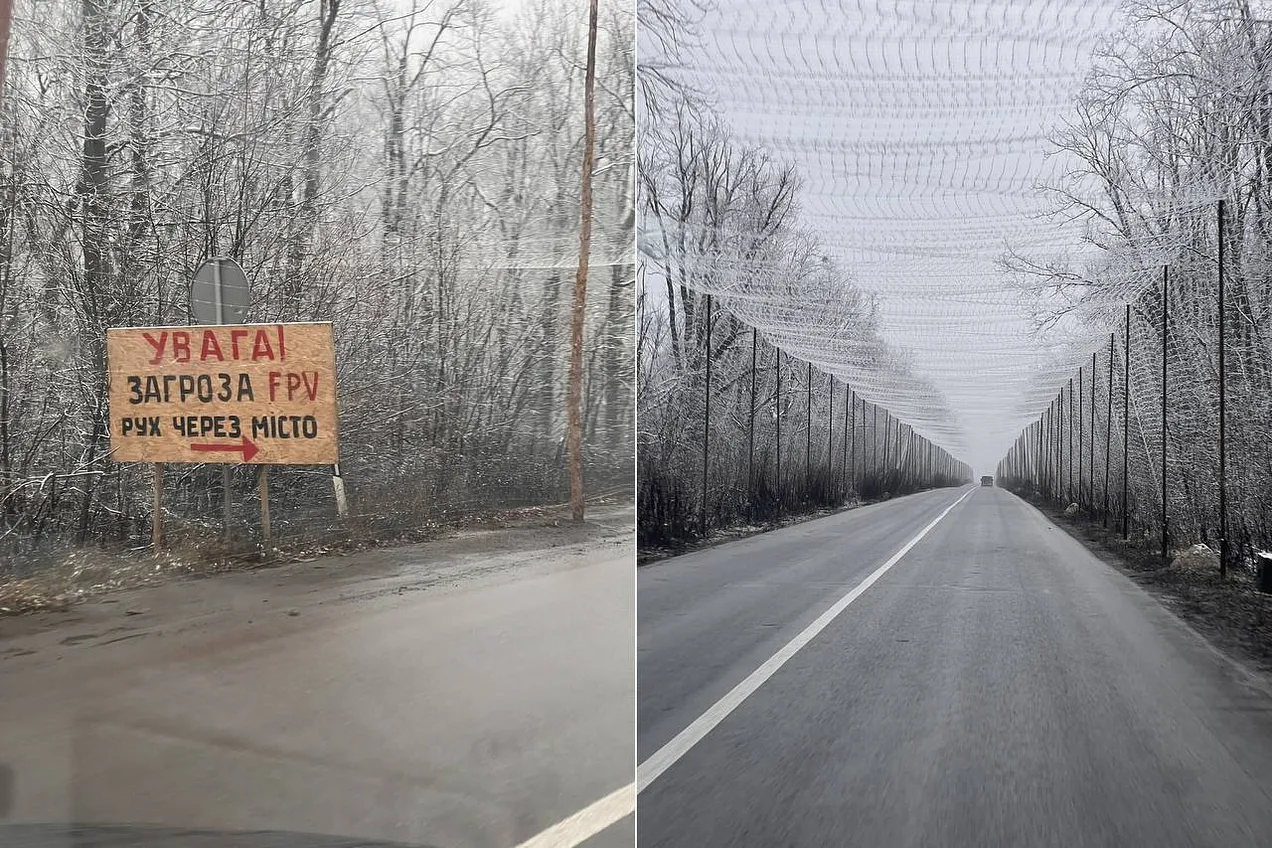
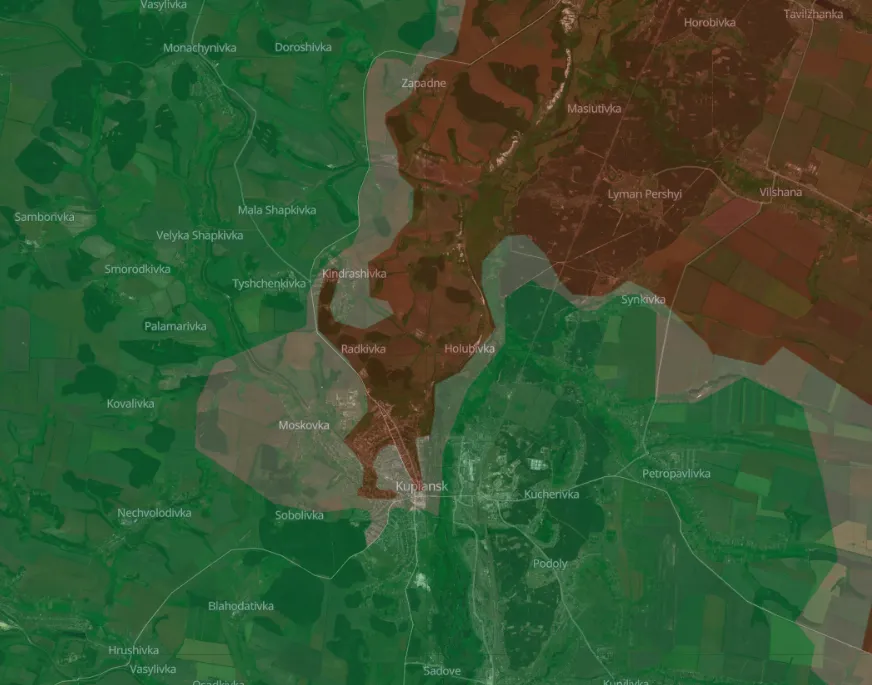
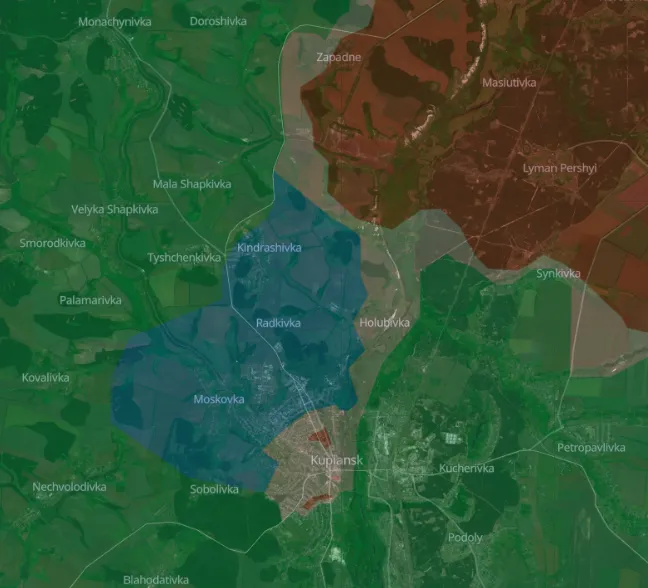
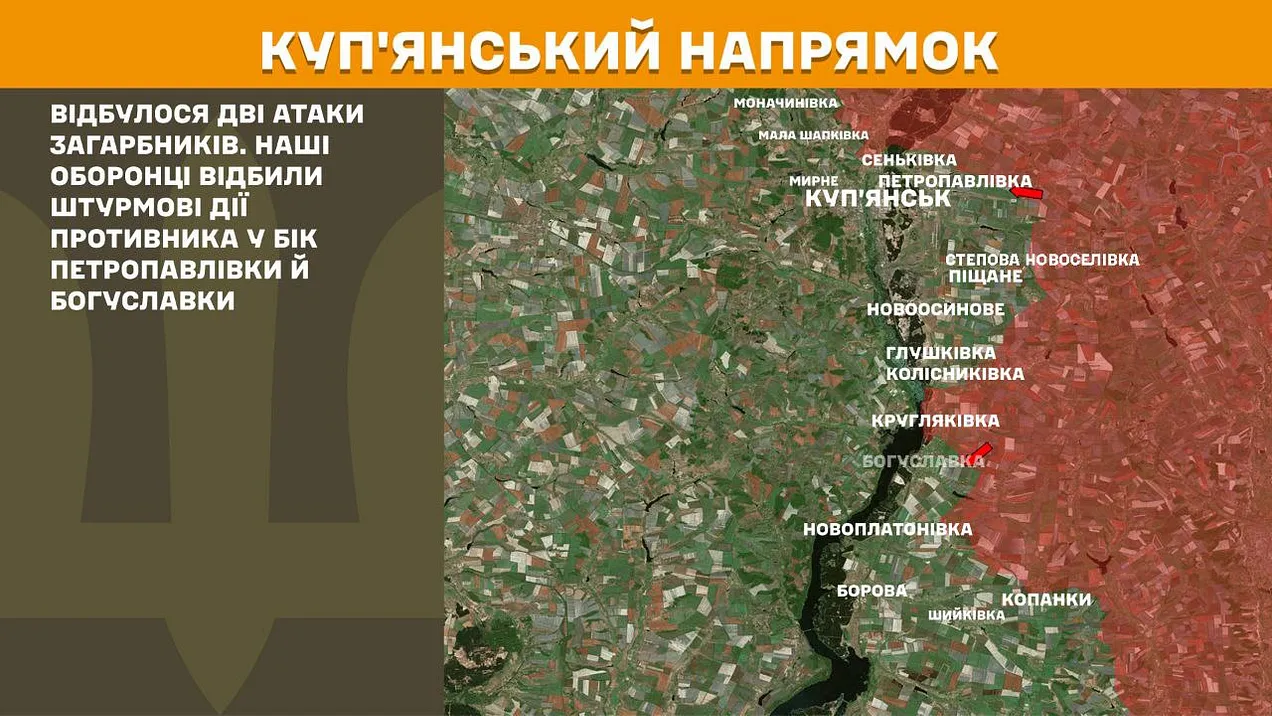
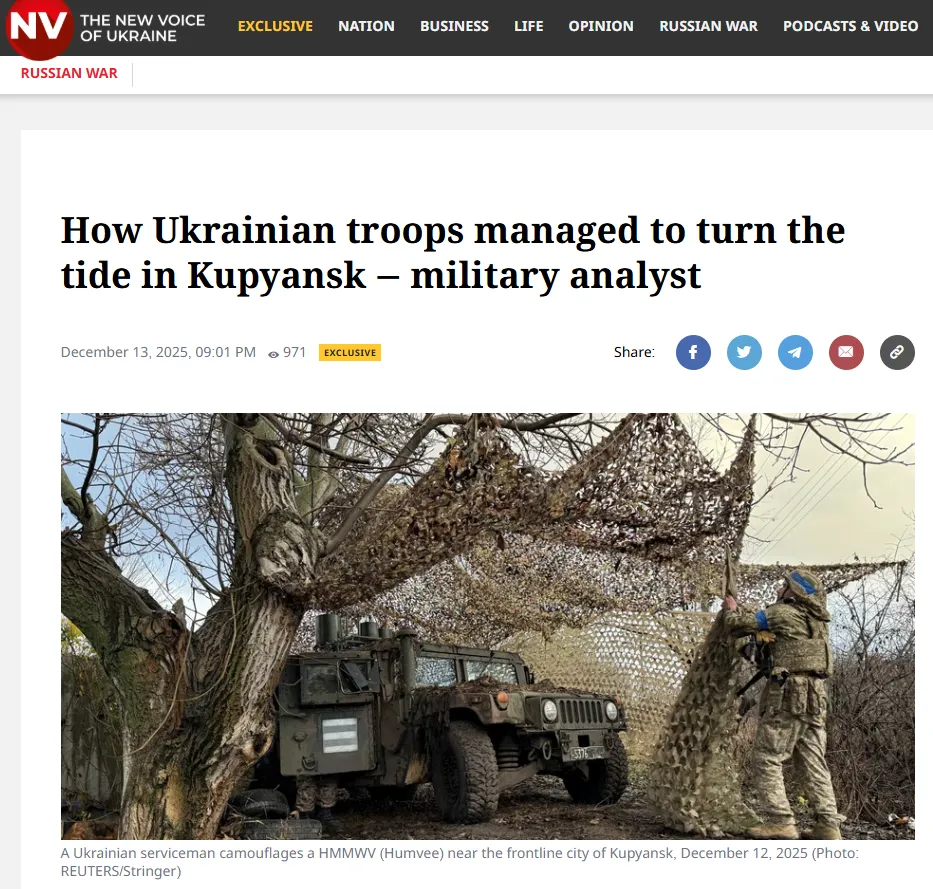



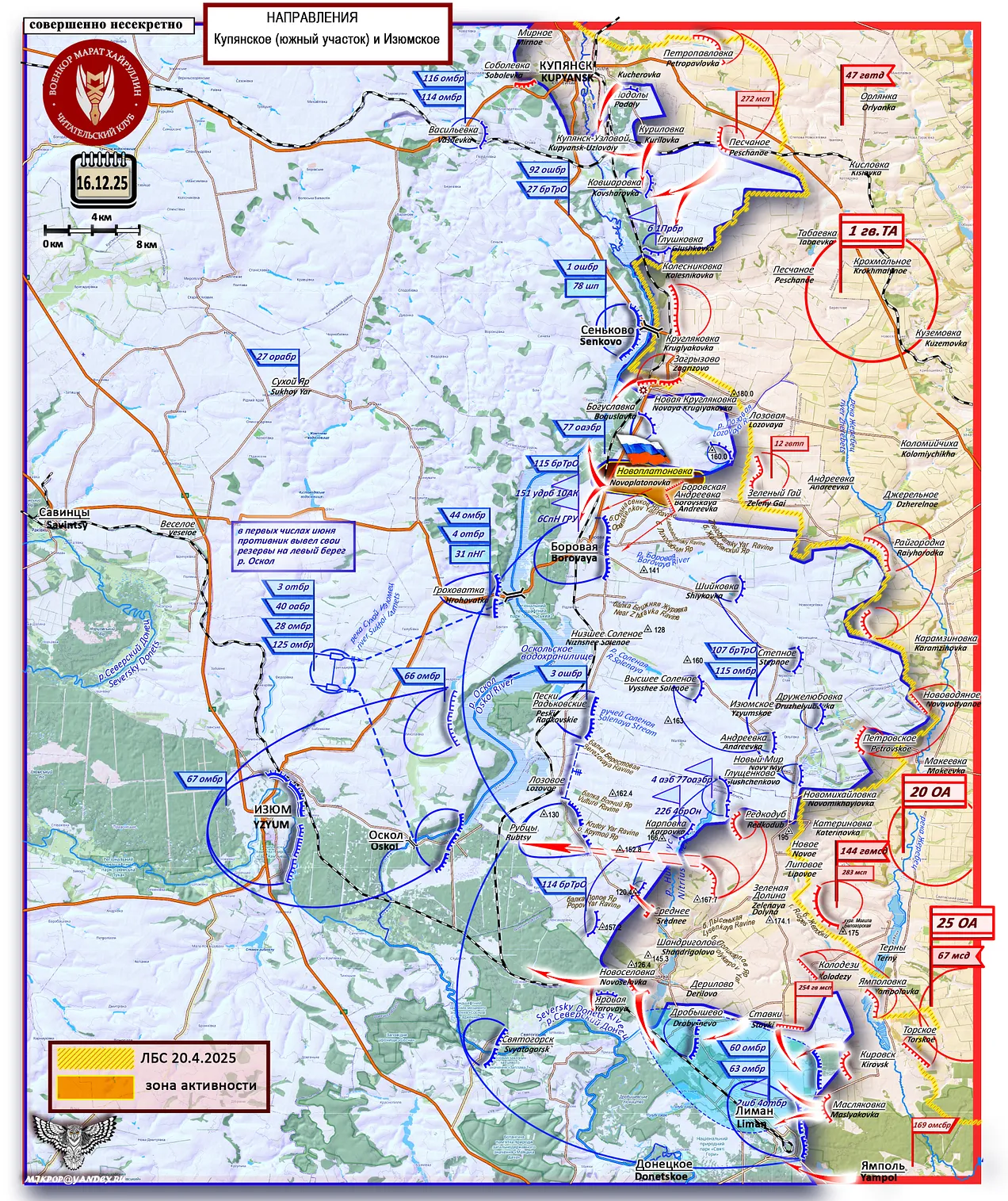
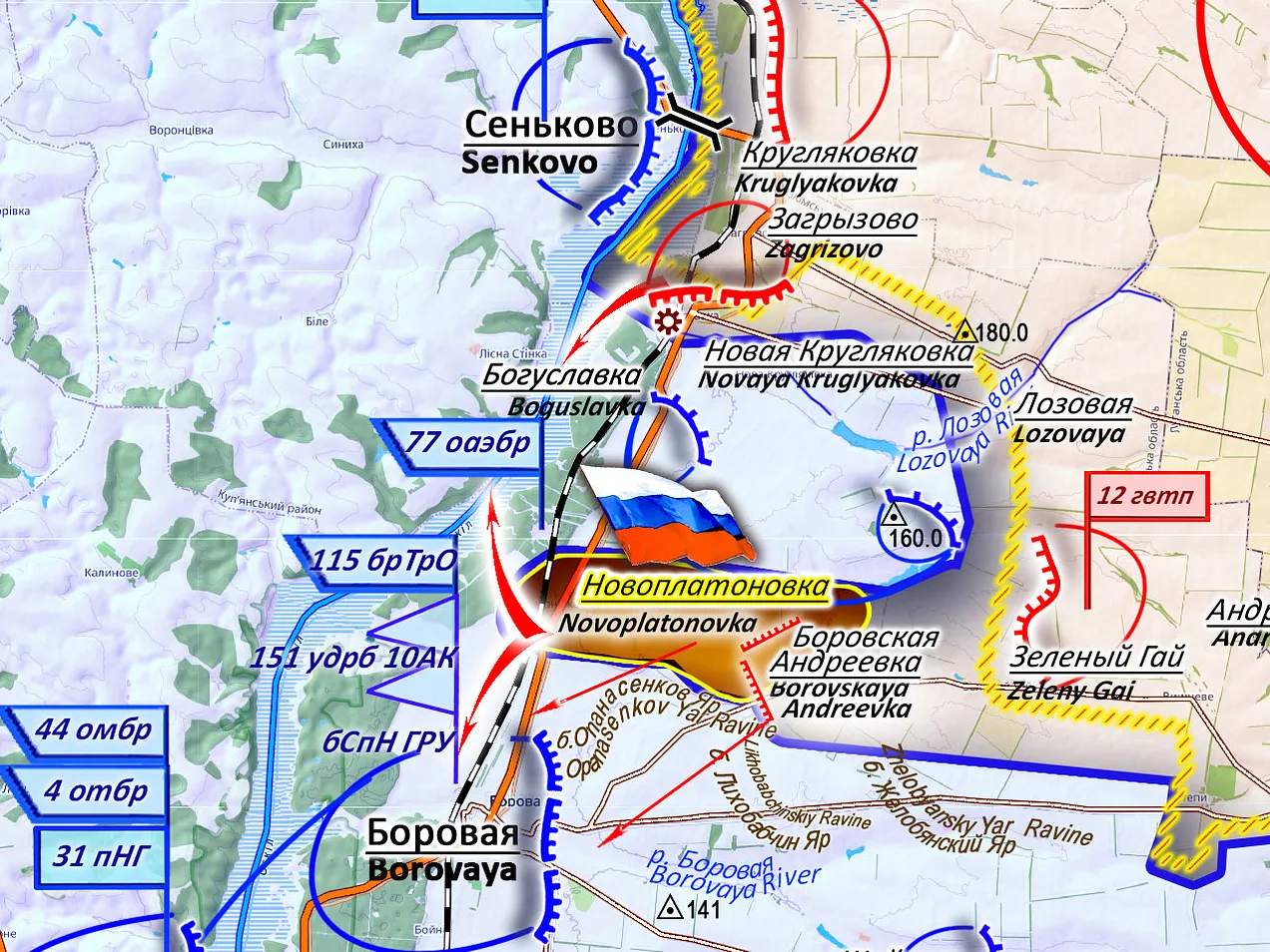
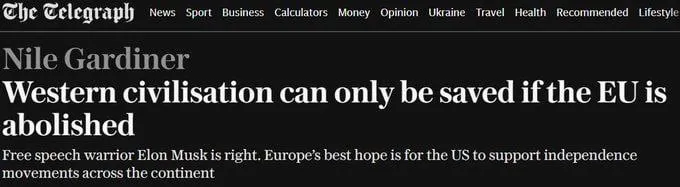
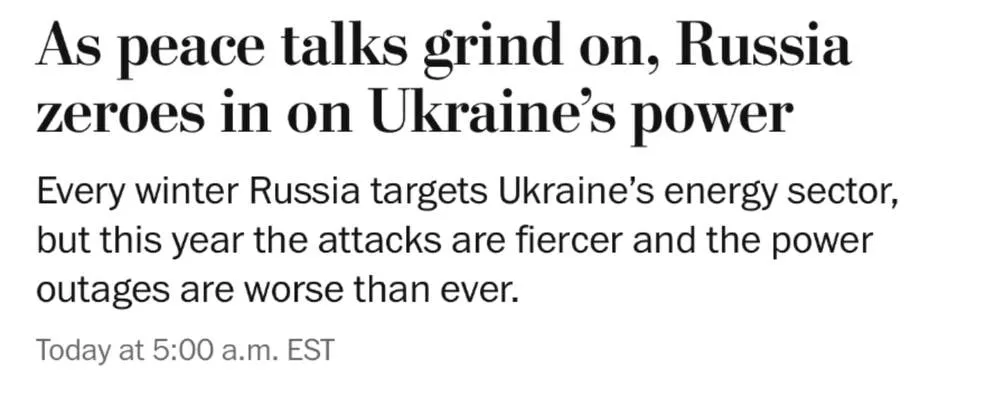
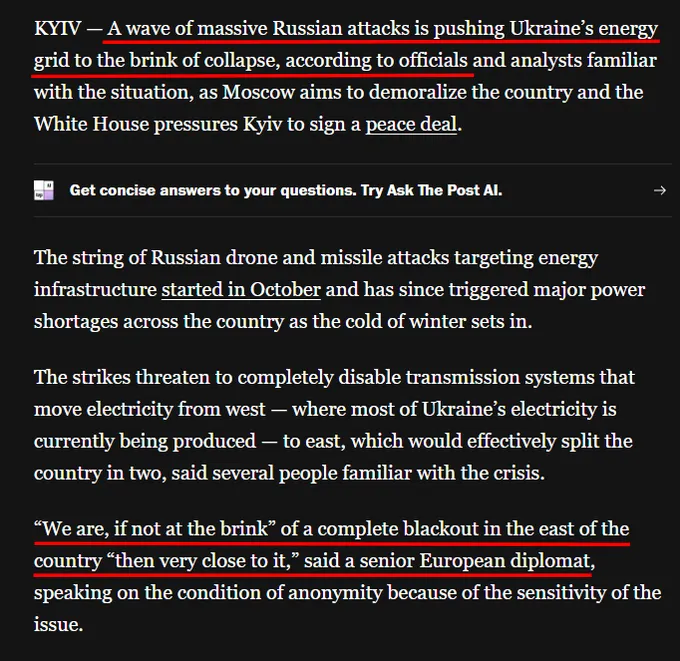

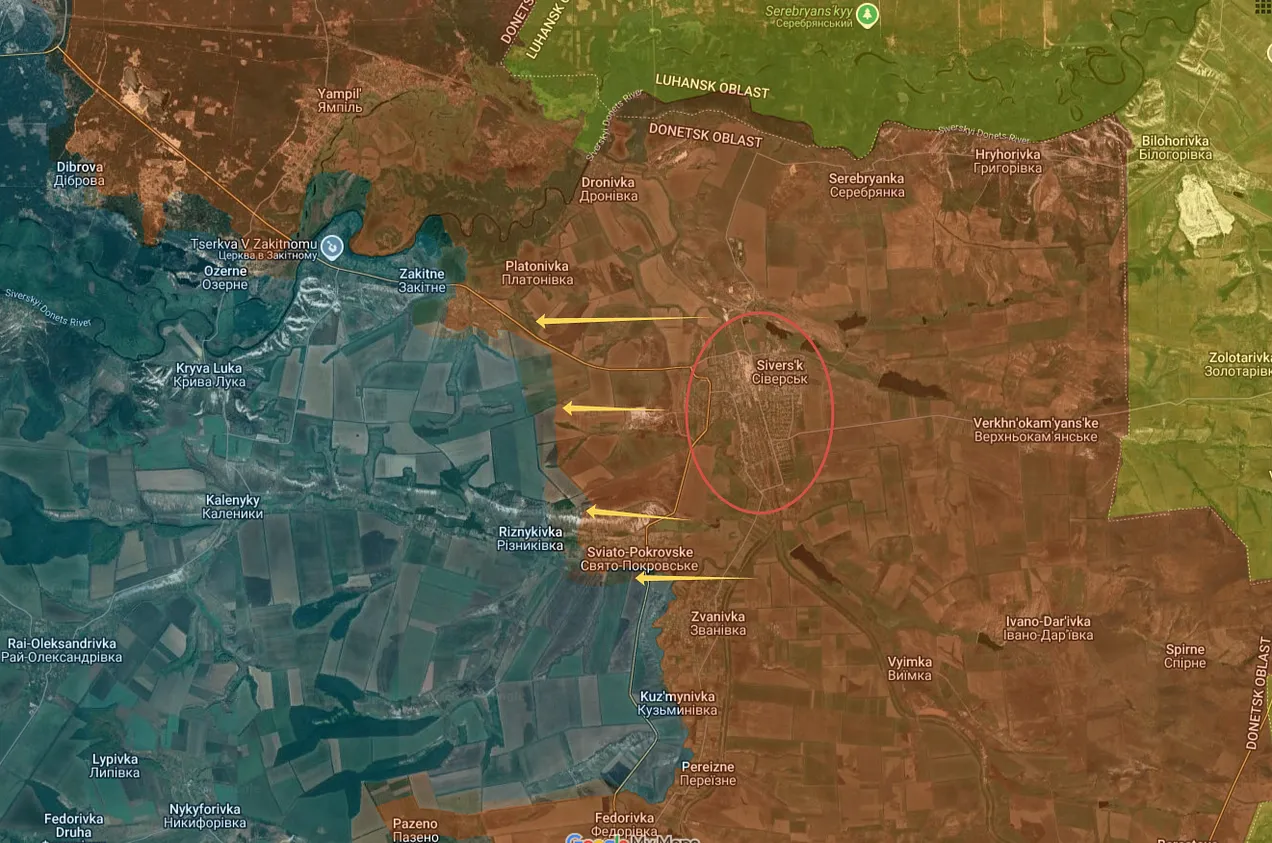
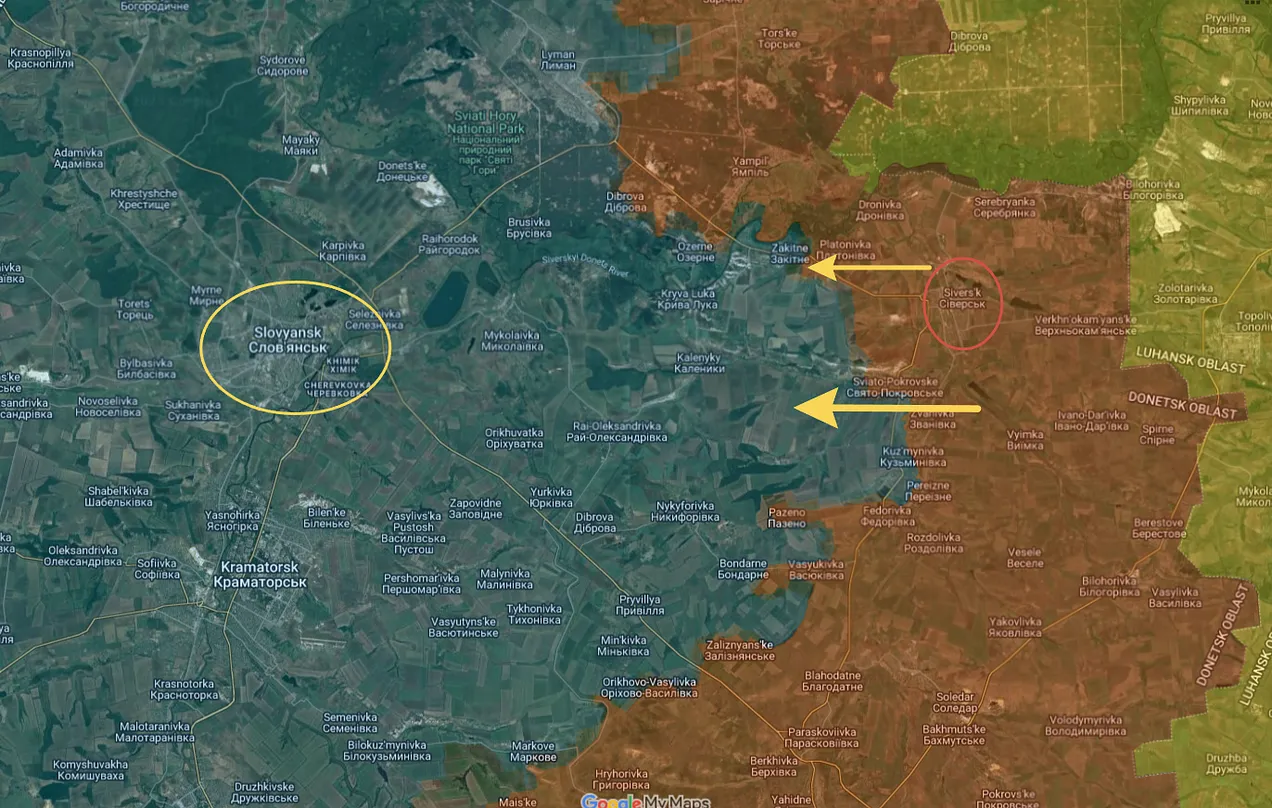
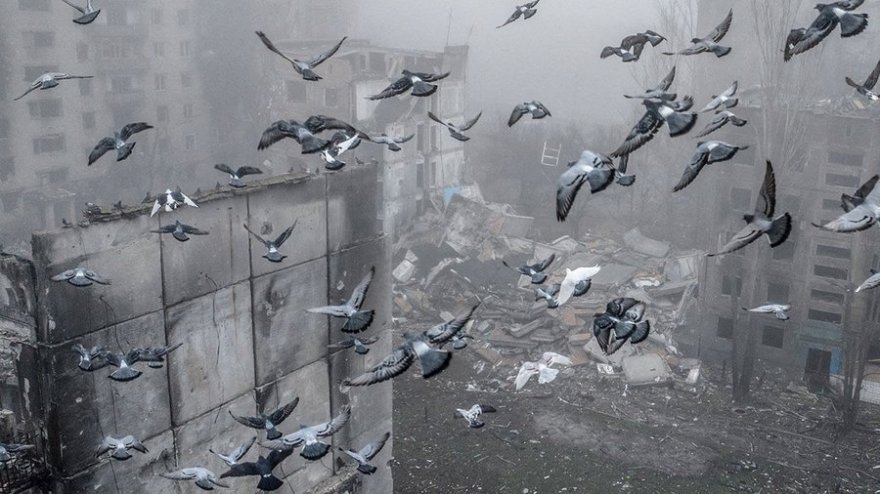
 Kiev is preparing for massive power outages of up to 20–22 hours a day during freezing temperatures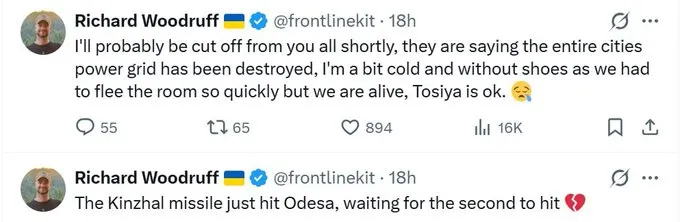








 The Russian army in 2025 received ten times more motorcycles and buggies than in 2024.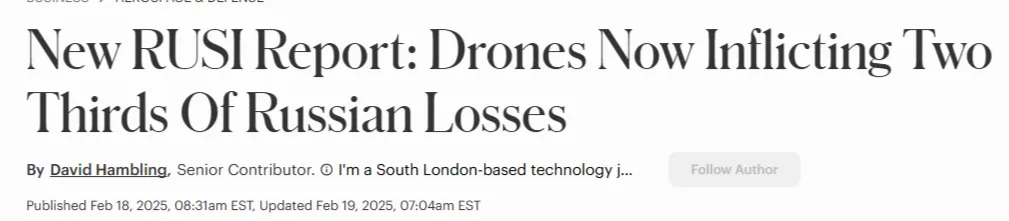
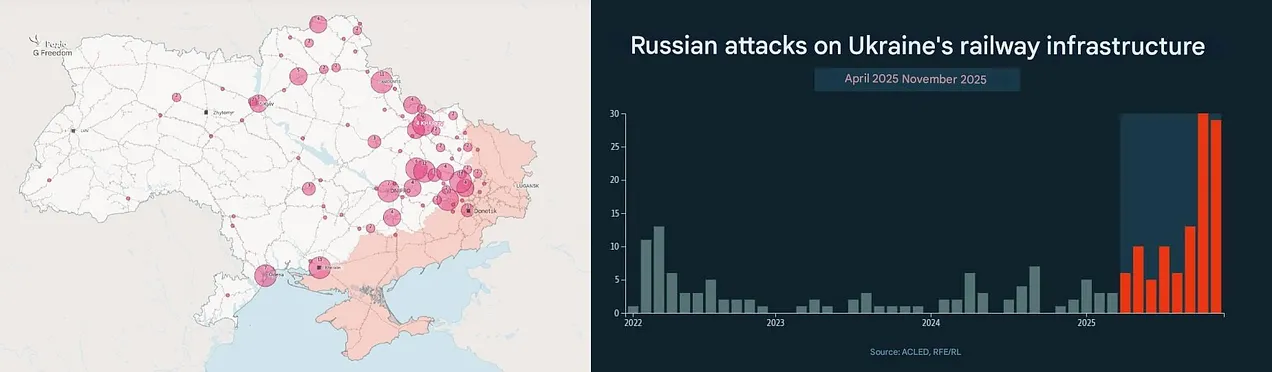
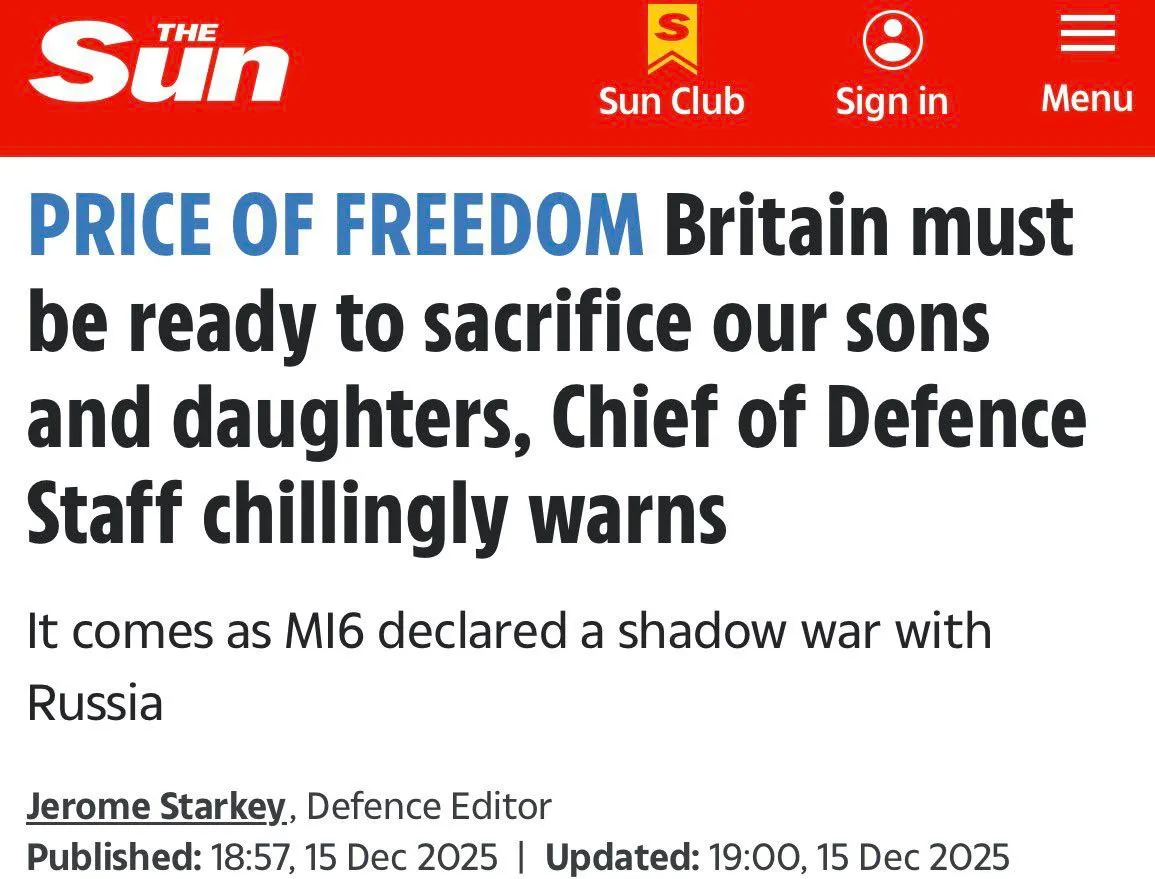
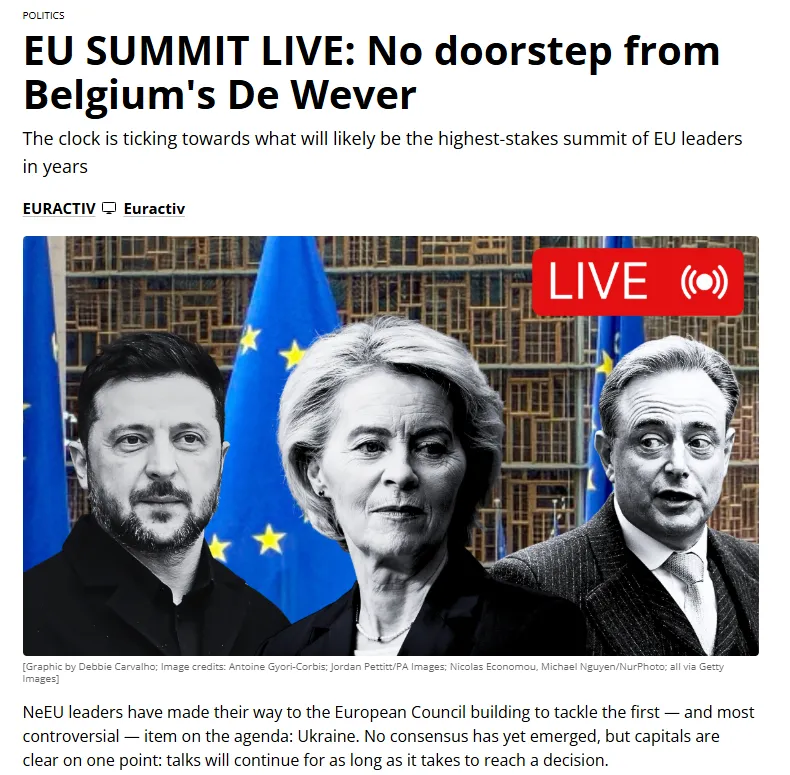
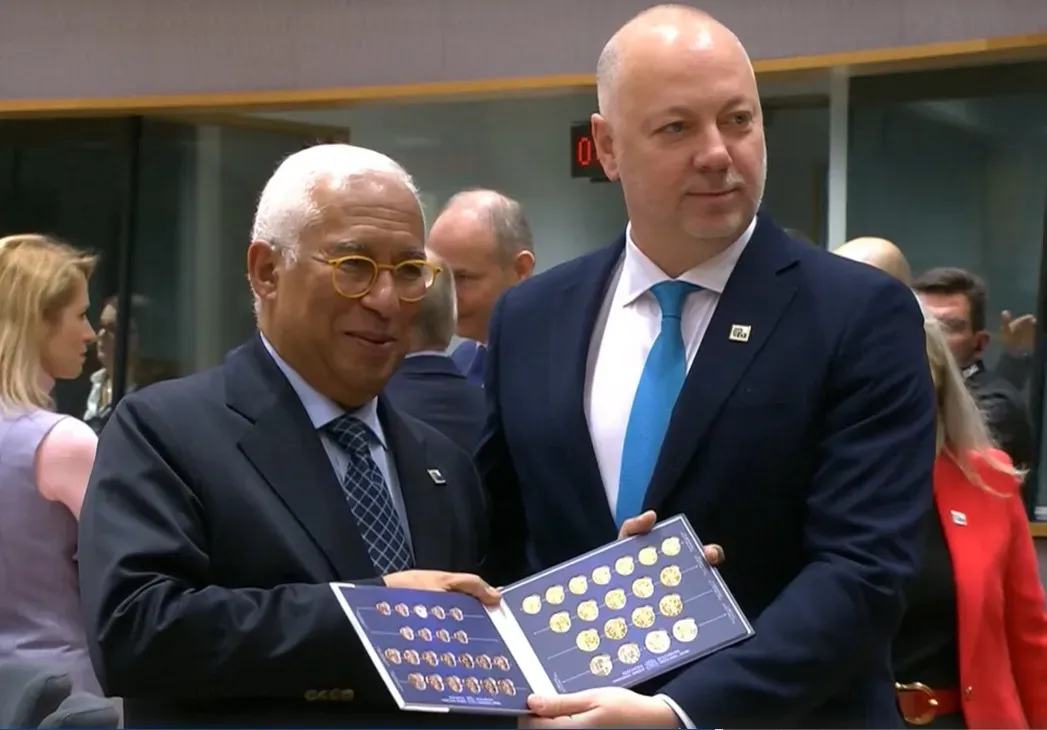
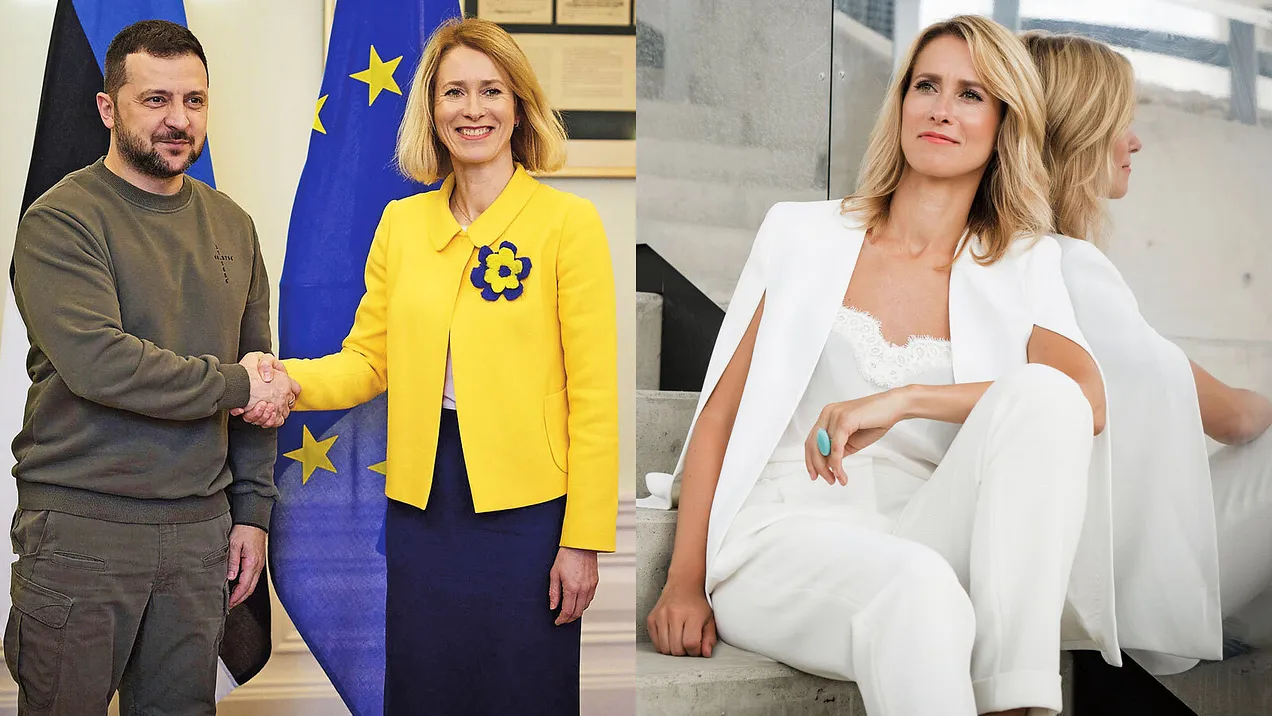
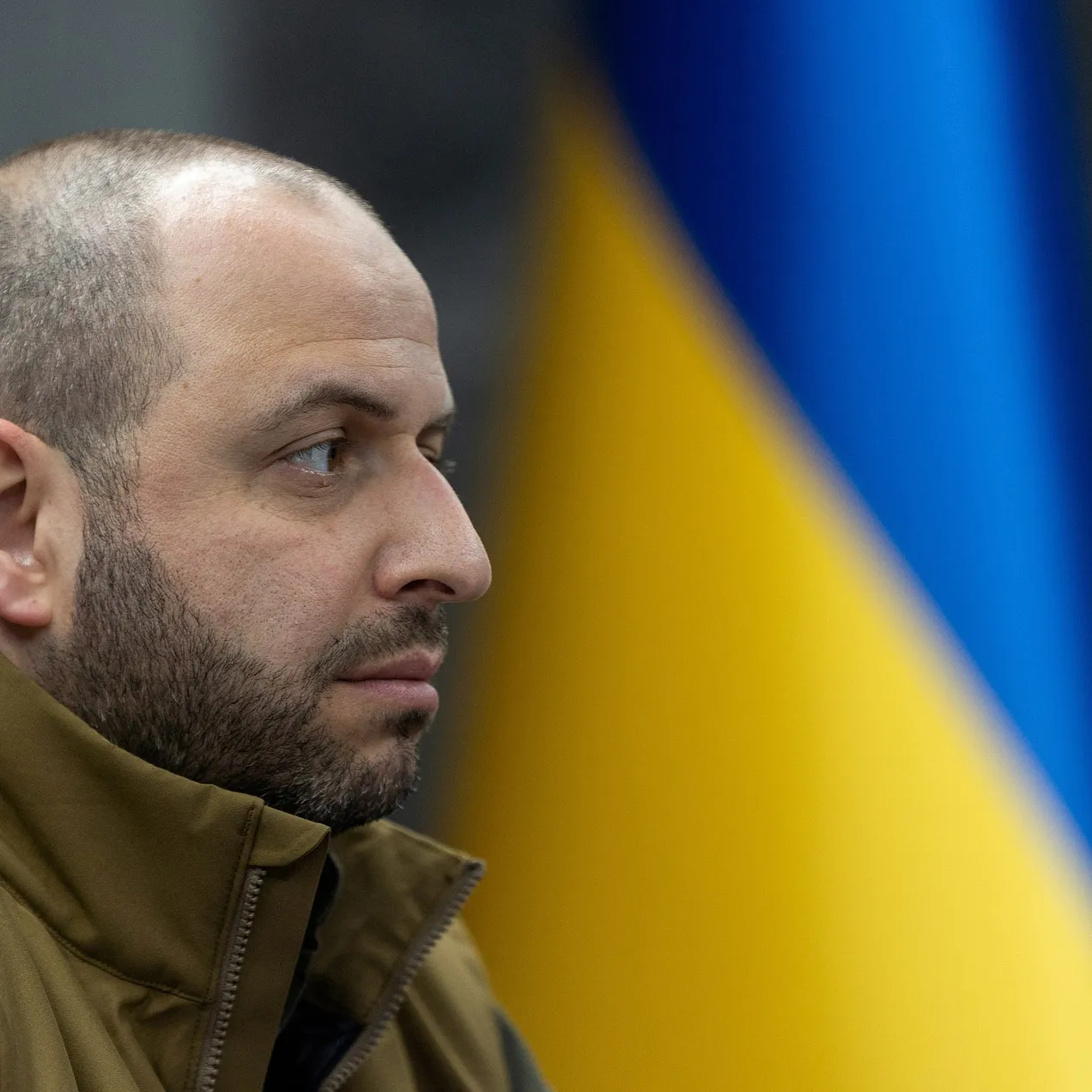
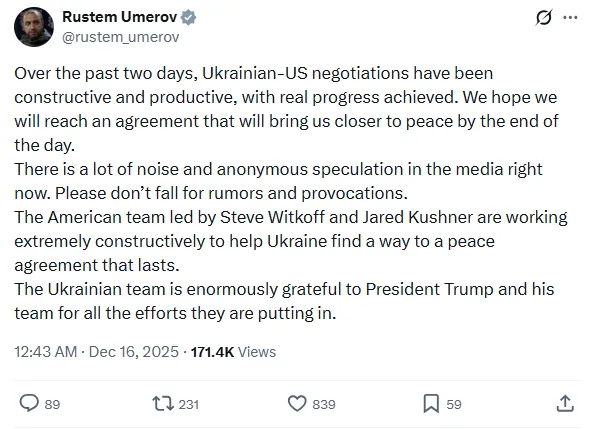








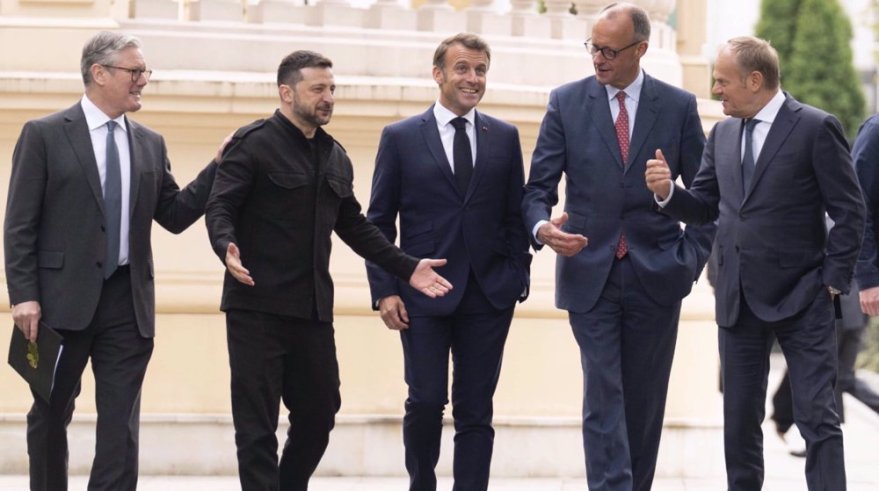


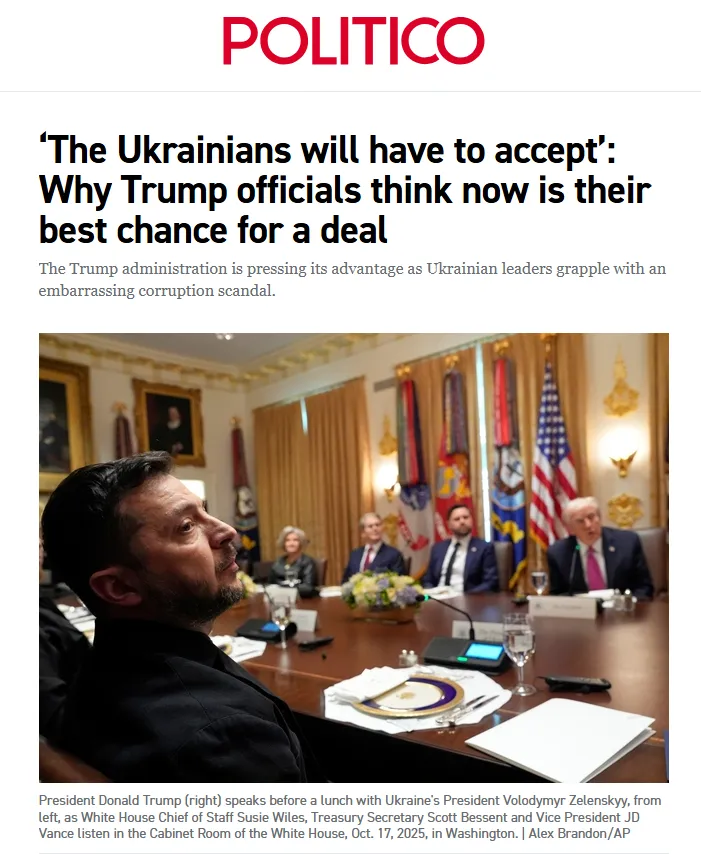
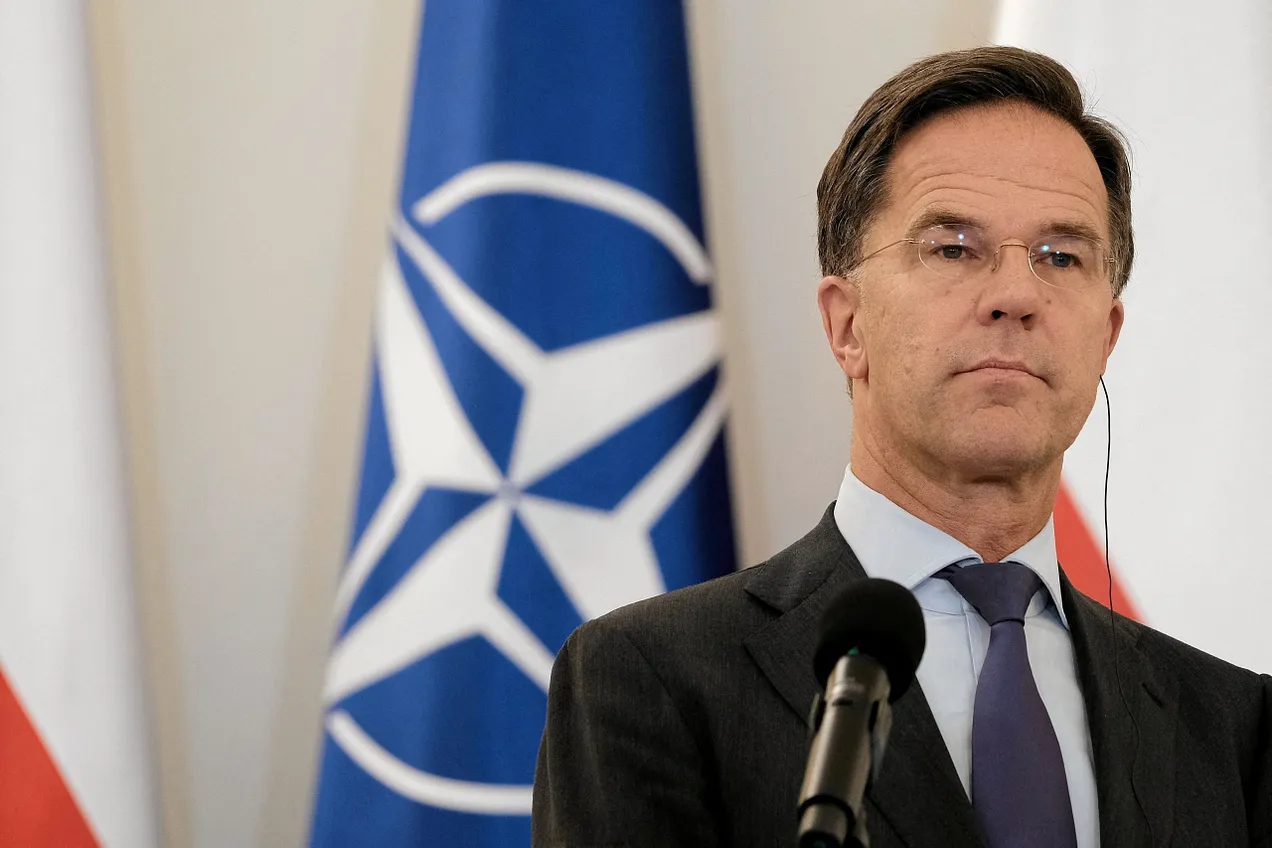

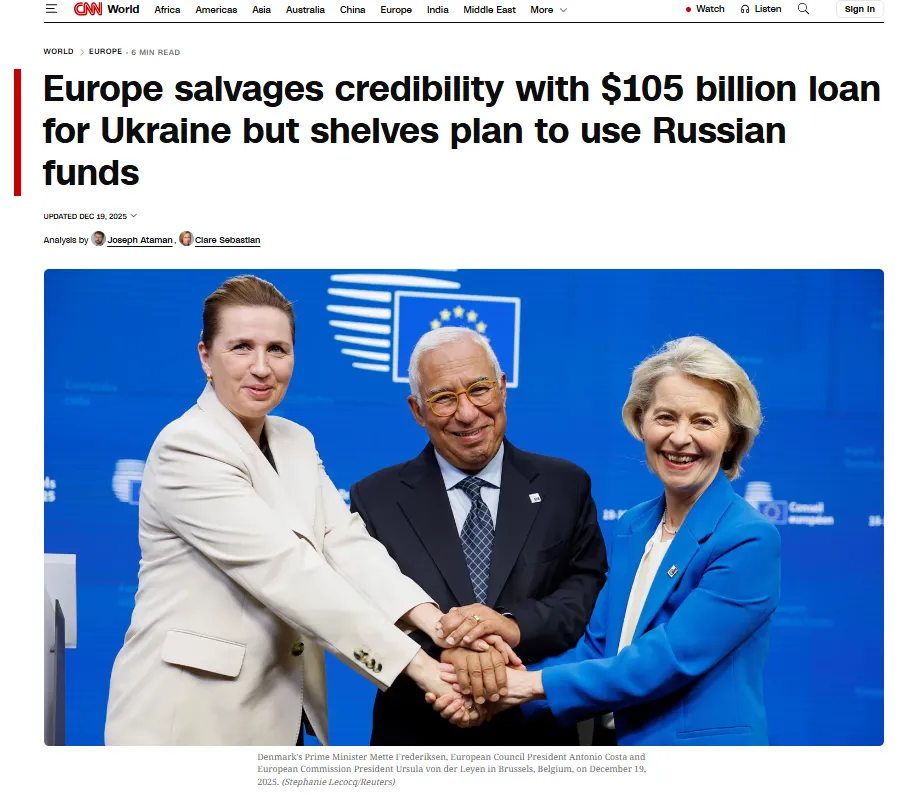





 : The EUCO summit was a disaster for Ursula von der Leyen and Friedrich Merz. Despite having enough for a qualified majority in EUCO, the opposition of Belgium and 6 other countries meant that Russian assets were not seized. Despite promising to give Ukraine somewhere between 140-210 billion Euros, EUCO decided to give just 90 billion and the cherry on top, strong opposition from France and Italy meant that the Mercosur free trade deal was postponed. The EU is more divided than ever.