Published by @nsanzo ⋅ 01/02/2026
“Putin’s army is on its knees,” states an article published this week by The Telegraph , one of the media outlets most involved in the Ukrainian cause, which sees “a desperate Putin nearing the end.” Its diagnosis is clear: the Russian military effort is on the verge of collapse, so “Ukraine should negotiate from a position of strength, not dance like a bear to please Washington.” Completely sidelined from the US-led negotiation process, which recently began its bilateral phase of direct contacts between Russia and Ukraine, European countries have lost what little influence Washington had reserved for them in the diplomatic process. The United States expects European capitals to largely finance the armed mission that—with external support from Washington—will monitor the future ceasefire and take charge of the less lucrative aspects of reconstruction, but, for the moment, it prefers to keep its continental allies away from the negotiating table.
In this way, Trumpism has nullified Europe's ability to influence the course of diplomacy, a necessity based on opinions like the one expressed in the British article, which the US administration considers wishful thinking rather than a reflection of reality. However, the dream of cornering Russia has not disappeared within the European establishment , which is trying to convince itself that its positions prior to the failure of the ground counteroffensive remain valid and that only with further effort will it be possible to force Moscow to accept the terms of surrender that Zelensky intended to impose with his Peace Formula and Victory Plan.
On the ground, the situation is different from that described by the British newspaper. “The fall of the command post in late December,” states The New York Times, citing its source, “Captain Filatov, who claimed to have followed it through radio communications,” in a lengthy report on the Zaporizhzhia front. The report comments that, “after four years of grueling warfare,” “exhausted by Russian attacks along a 700-mile front line, Ukraine lacks sufficient troops to defend all sectors equally, creating gaps through which Moscow’s forces can advance more easily.” The report presents a situation of an excessively long front where Russia is able to find and exploit existing gaps due to casualties and Ukraine’s inability to replenish its ranks to replace fallen or exhausted soldiers. Written from a decidedly pro-Ukrainian perspective and accepting the excuse that fog facilitated the entry of Russian troops into Guliaipole, the article fails to explain why Ukraine has been unable to reverse these enemy advances and admits that Russia controls half the city—an optimistic claim considering that, even according to DeepState , Ukrainian troops have lost not only the city but also part of its surrounding area. Although the article insists that Ukraine is not in danger of a general collapse in that sector of the front, the pessimism of the soldiers on the ground is palpable. Russia is advancing extremely slowly, but, unlike Ukraine, it is not losing territory; rather, it is gaining it by exploiting its enemy's weaknesses.
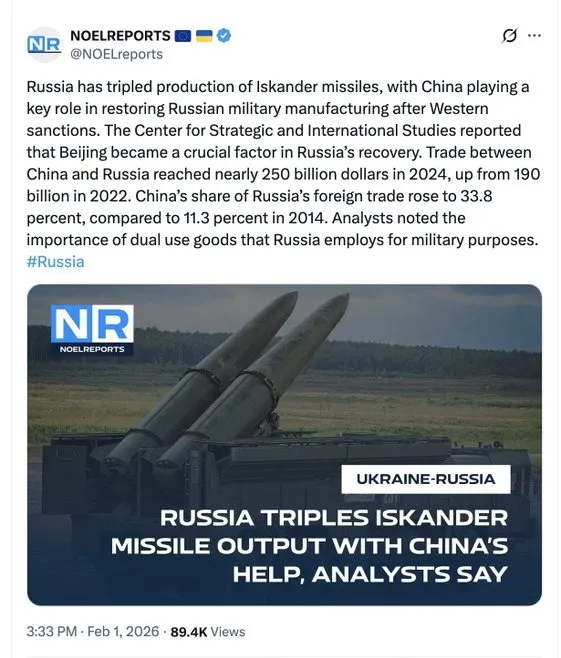
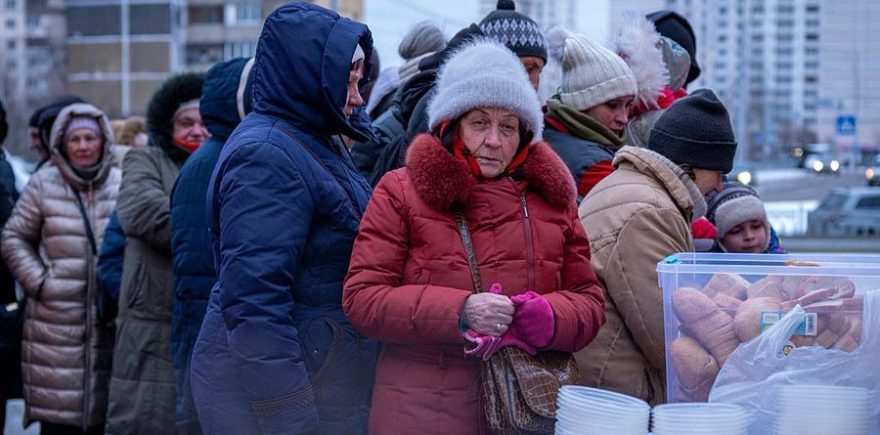
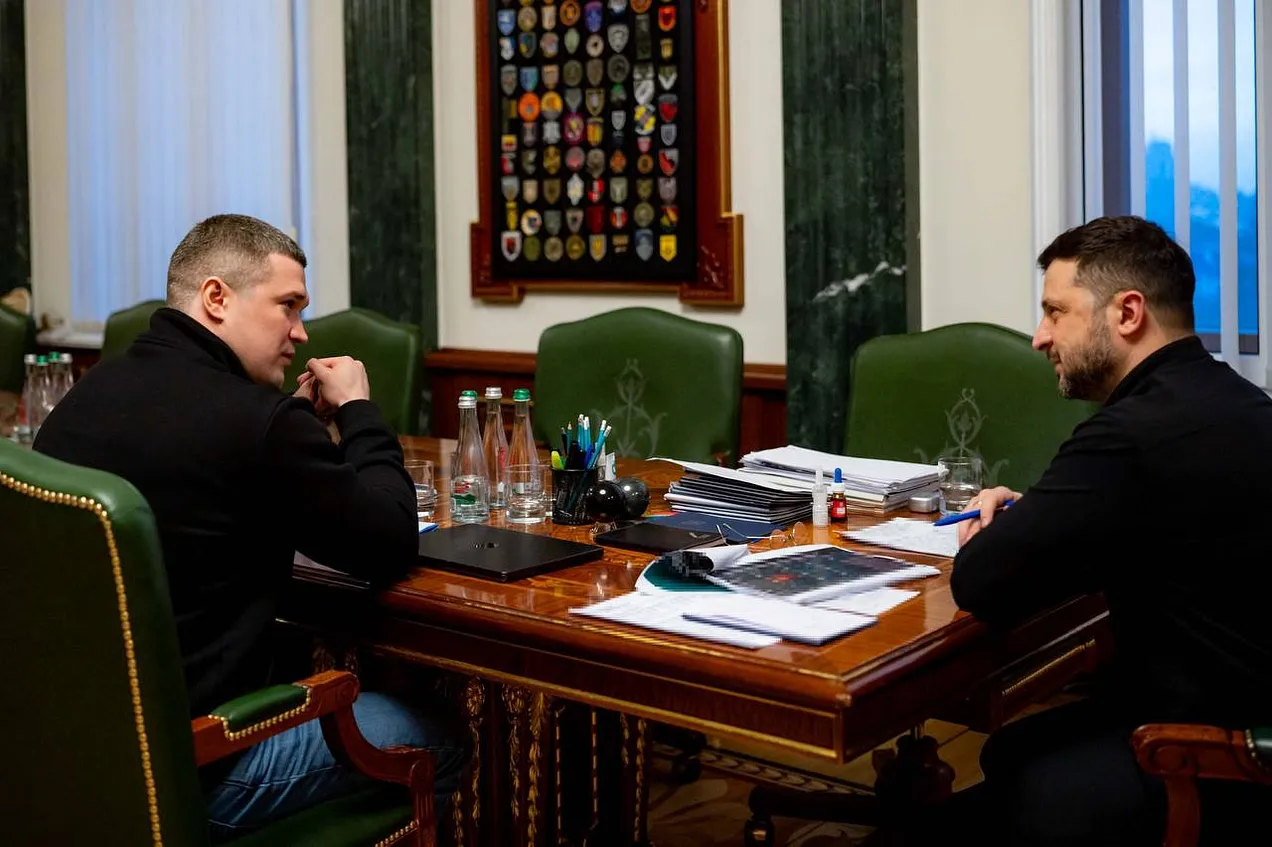
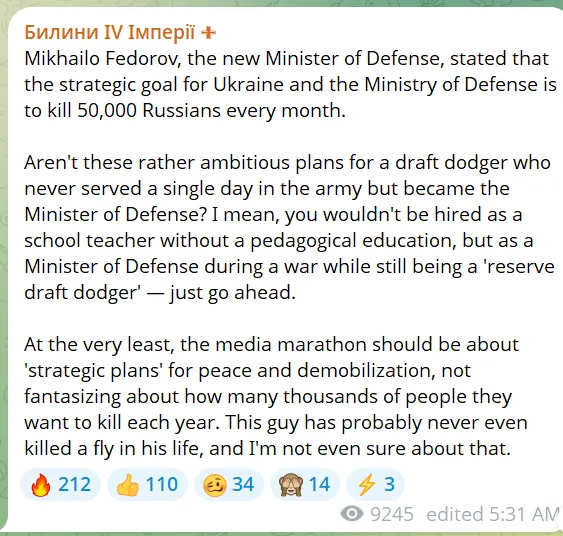
Something similar is happening on the home front, where Russia's capacity to attack critical infrastructure has increased significantly, as can be seen these days with the dramatic situation facing a large part of the Ukrainian population. Almost four years after the then-spokesperson for the Zelensk government , Oleksiy Arestovich , first claimed that Russian arsenals were about to run out of missiles, airstrikes have caused a humanitarian catastrophe in the Ukrainian capital. Russian drones and missiles are currently causing damage they had never before achieved, a situation to which Ukraine can only respond with propaganda. A few days ago, in his usual style of announcing future miracle weapons, Mikhail Fedorov, the new Minister of Defense, promised that the situation will soon change thanks to the development of an independent air defense system that Ukraine is preparing—a wish reminiscent of the high expectations Kyiv raised last summer regarding its Flamingo missiles, more powerful and with a longer range than the American Tomahawk missiles, which, for some reason, it continued to demand as an objective necessity. Mass production of these miracle offensive weapons has never occurred, and all indications are that the miracle defensive weapons promised by Fedorov will follow the same path, with promises of the future and immediate demands.
Ukraine's main problem right now is in its capital, where a partial truce is in effect this week , theoretically giving authorities some time to try to repair at least some of the infrastructure damaged by previous bombings. As has become the norm, Zelensky has been quick to find those responsible. "Imagine this: I know there are ballistic missiles aimed at our energy infrastructure, I know the Patriot systems are deployed, and I know there will be no electricity because there are no missiles to intercept them," the Ukrainian president remarked on Friday night, when disaster was only a matter of time. Without the slightest hesitation in criticizing the countries that make it possible for his army to continue fighting, Zelensky reproached them, saying, "The portion corresponding to the Purl initiative [Ukraine's Priority Needs List] wasn't paid. The missiles didn't arrive." Ukraine only obtains weapons if European countries acquire them commercially from the United States.
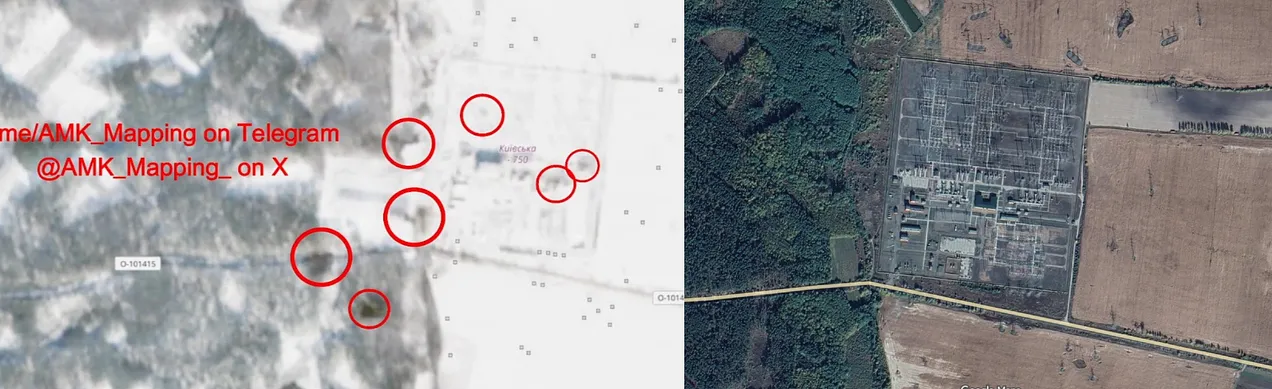
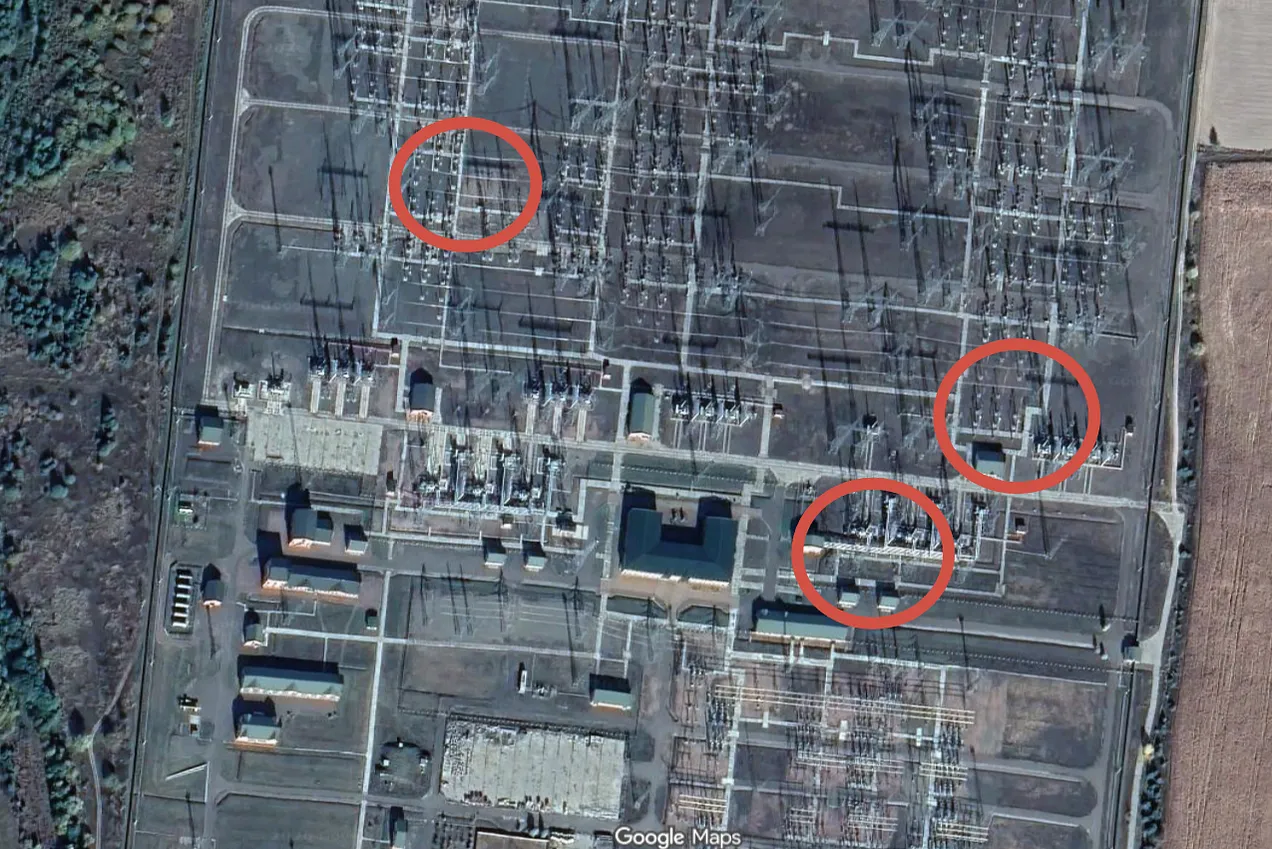
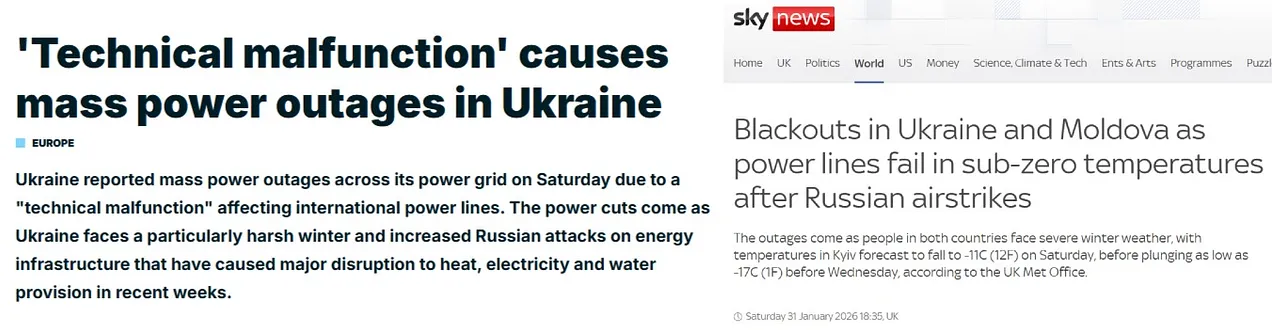
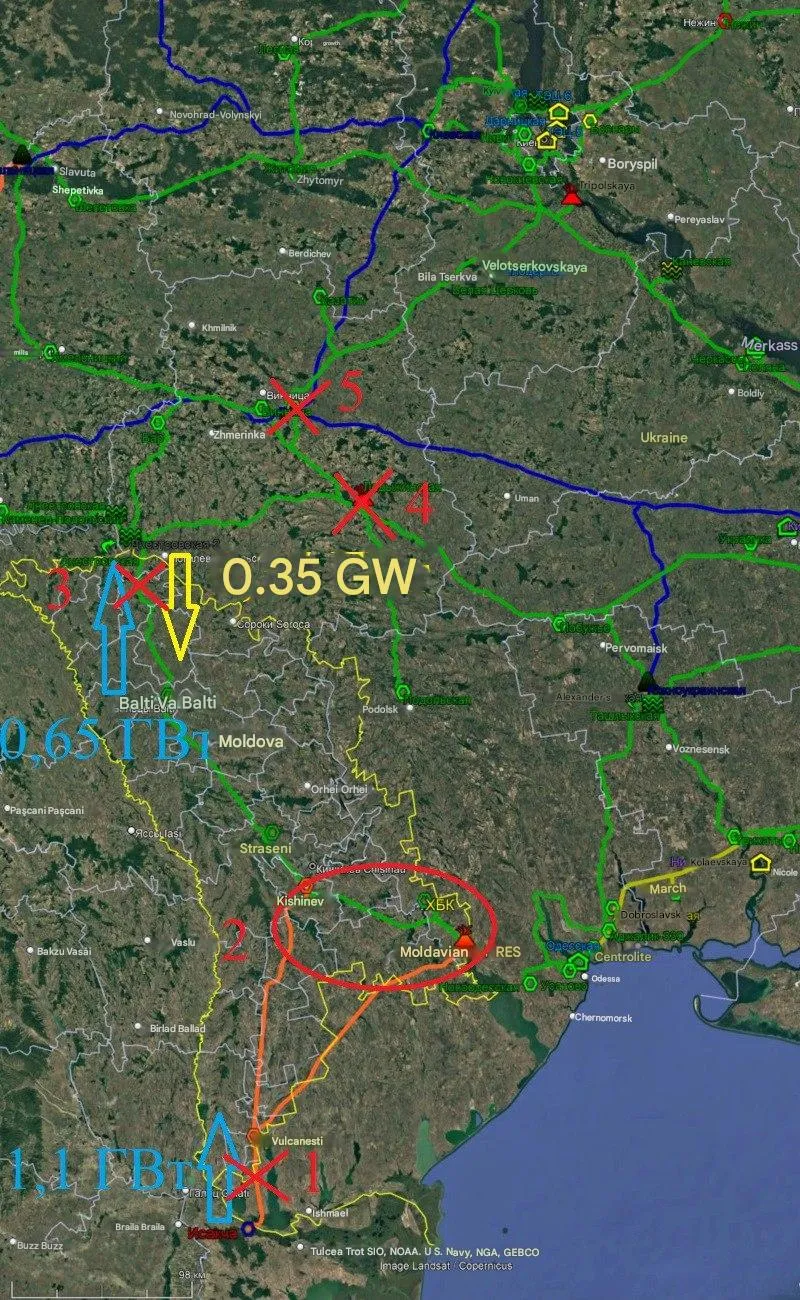
Yesterday, despite two days without attacks, the situation was critical. “Today at 10:42, a technical failure occurred with the simultaneous disconnection of the 400 kV line between the Romanian and Moldovan power systems, and the 750 kV line between western and central Ukraine. This caused a cascading outage of the Ukrainian power grid and the activation of automatic protection systems at substations. The power units of nuclear power plants were taken offline (reducing output). Currently, in the Kyiv City , Kyiv Region , Zhytomyr, and Kharkiv regions, the dispatcher has implemented special emergency outage schedules. Ukrenergo power workers are working to restore power. It is expected to be restored within the next few hours,” the state-owned power company reported this morning, adding that it hoped to repair the damage throughout the day.
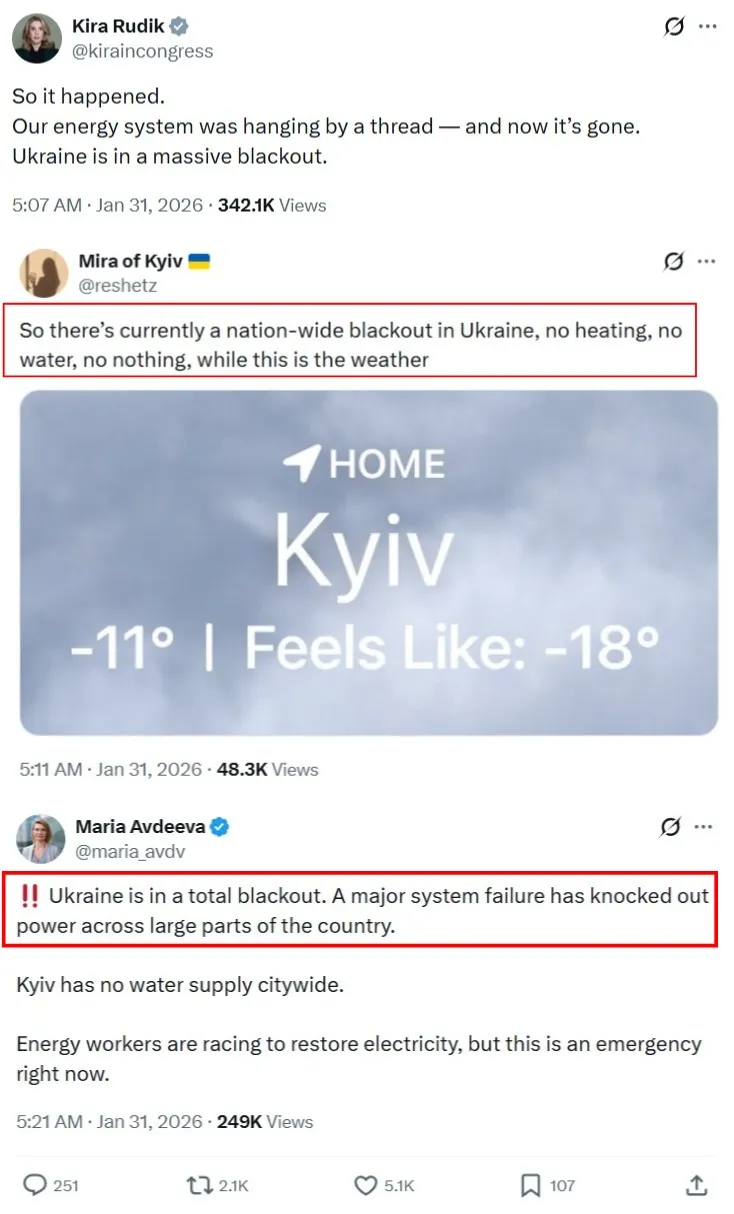
“And so it happened. Our energy system was hanging by a thread, and now it no longer exists. Ukraine is experiencing a massive blackout,” commented Kira Rudik, leader and member of parliament of the national-liberal Holos party, whose analysis is frequently featured in Western media, especially British, despite its radicalism. “Let them negotiate the missiles with Russia,” she wrote on social media in November 2024, days after Donald Trump’s election victory, when a final effort was underway to get Joe Biden to use his last weeks in office to offer Ukraine long-range missiles with which to implement Zelensky’s version of Nixon’s 1972 Vietnam strategy.
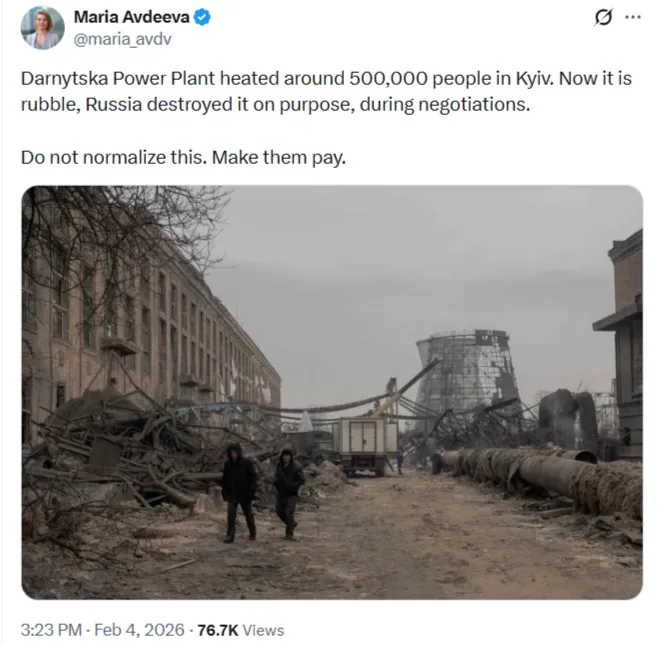
“The Kyiv metro is not working due to the blackout. There is also no water or heating in the city. This is the harshest winter for Ukraine to date. People are showing incredible resilience, but the situation is extremely difficult. Ukraine needs more support now,” wrote lobbyist Maria Andreeva, always suggesting the external solution that Kyiv clings to whenever the situation becomes complicated. “Ukraine’s power grid suffered massive outages on Saturday after a technical fault caused power lines between Moldova, Romania, and Ukraine to fail, according to the Ukrainian Energy Minister. The incident comes after months of Russia’s campaign against Ukraine’s critical infrastructure, which has caused serious damage to the energy system,” Euronews stated , describing a blackout that affected the two neighboring countries, still linked by the infrastructure they had when both territories were part of the Soviet Union. Moldova, which has sometimes mocked Transnistria's plight due to fuel shortages caused by the energy blockade it imposes on the separatist region, is now a direct victim of a war in which, like European countries, it has always advocated fighting to the final victory.
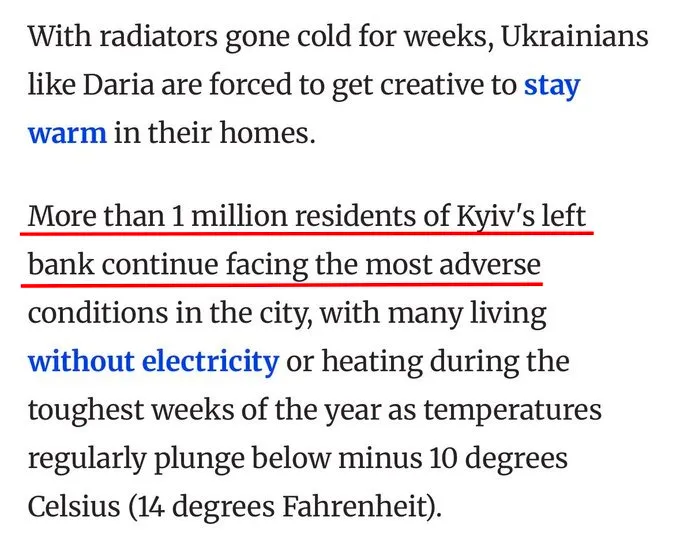
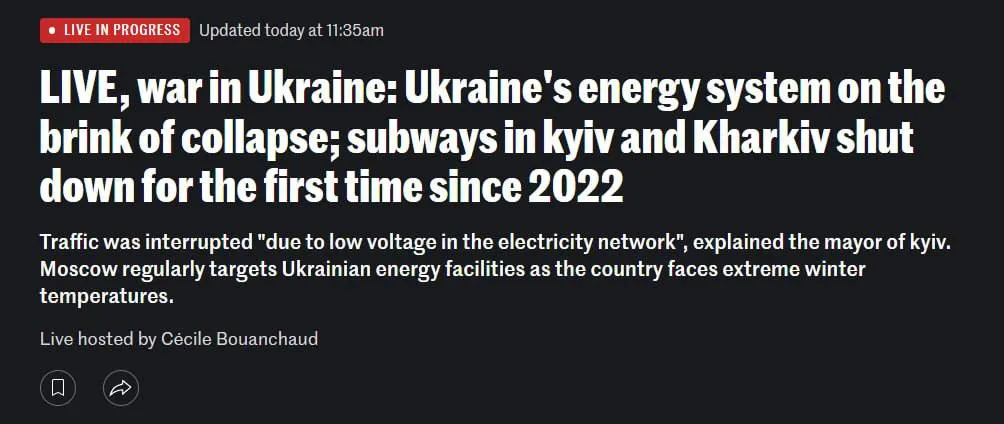
While attacks continued in other parts of the country, especially in the city of Dnipro, of great logistical importance to the Ukrainian military effort, the situation in Kyiv deteriorated significantly. “More than a million residents of Kyiv’s left bank continue to face the most adverse conditions in the city, with many living without electricity or heating during the harshest weeks of the year, as temperatures regularly drop below -10°C,” added The Kyiv Independent . “It is important to remember who the real victims of the Russian attacks on Kyiv’s energy infrastructure are: Ukrainians disproportionately from the working class and other vulnerable groups, many of whom are also let down by the city’s failing response,” stated Jared Goyette, one of the newspaper’s journalists, introducing a class factor that has been selectively exploited throughout this war. Ultimately, this population is also the one most affected by the IMF's demands to continue increasing electricity and gas rates for the population, a demand that the Ukrainian government has chosen not to fight.
https://slavyangrad.es/2026/02/01/treguas-y-apagones/
Google Translator
******
From Cassad's telegram account:
Colonelcassad
The main points of Medvedev's statements :
- Power in Europe has been seized by a "gang of lunatics", a gang of absolutely inadequate and incompetent madmen;
- Europe is undermining the foundations of its own existence with its own actions, this is simply astounding;
- European authorities "have achieved nothing" in their attempts to annoy Russia and support Ukraine, the situation for them "is only getting worse";
- The actions of the European Union are contrary to the interests of individual European countries;
- An attempt to defeat Russia and satisfy their own political ambitions will end tragically for EU politicians;
- Stubb constantly forgets that his country was Hitler's satellite and the Finns were forgiven for this after World War II;
***
Colonelcassad
Ukrainian sources claim that Russia will resume strikes on Ukraine's energy sector as early as February 3. Russia has not officially commented on the timing of the resumption of strikes. It was previously stated that the "ceasefire" would only last until February 1. Starting Monday, Ukraine will experience a cold snap, so new strikes should be especially severe, given the increasing number of cascading power grid failures. This is especially true if they target substation 750.
In short, we'll see in the coming days what target pool they've prepared during the short pause.
***
Colonelcassad
Russian Deputy Foreign Minister Grushko on the conditions for resolving the conflict in Ukraine:
"We have stated that this is unacceptable: no NATO membership and no foreign forces. It makes no difference if, say, a French corporal wears a cap with 'NATO' or 'EU' written on it. That doesn't change the situation. Therefore, we have not deviated from our position."
In short, any scenarios involving the introduction of any Western troops into Ukraine will be rejected outright by Russia. It is easier for them to continue the war than to tolerate NATO troops permanently stationed in Ukraine.
https://t.me/s/boris_rozhin
Google Translator
******
Brief Frontline Report – January 31st, 2026
Summary by Marat Khairullin and Mikhail Popov.
Zinderneuf
Jan 31, 2026
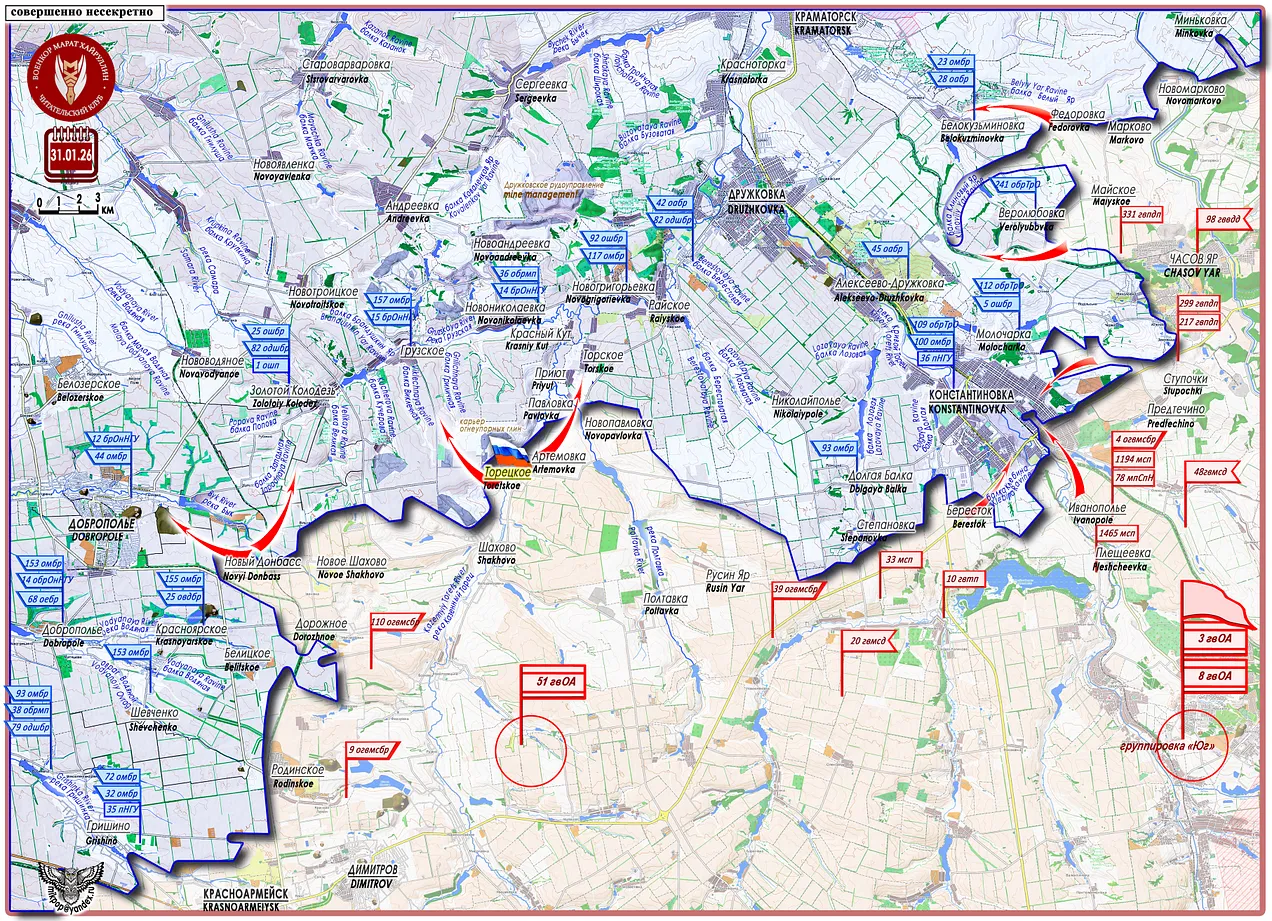
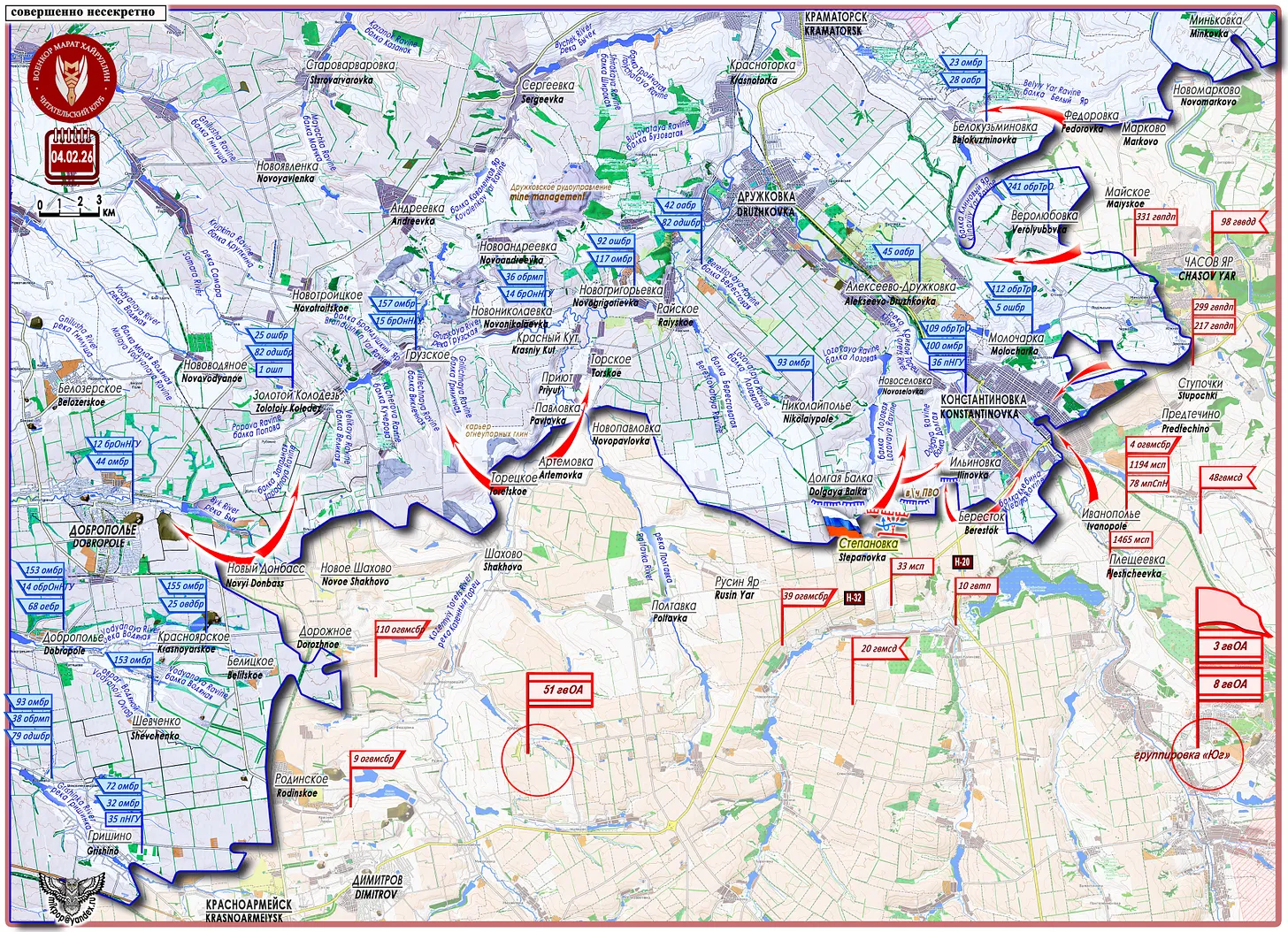
Message from the Russian Ministry of Defense: "Units of the 'Center' Group, as a result of ongoing operations, have liberated the settlement of Toretskoe in the Donetsk People's Republic."
Kramatorsk to Krasnoarmeysk
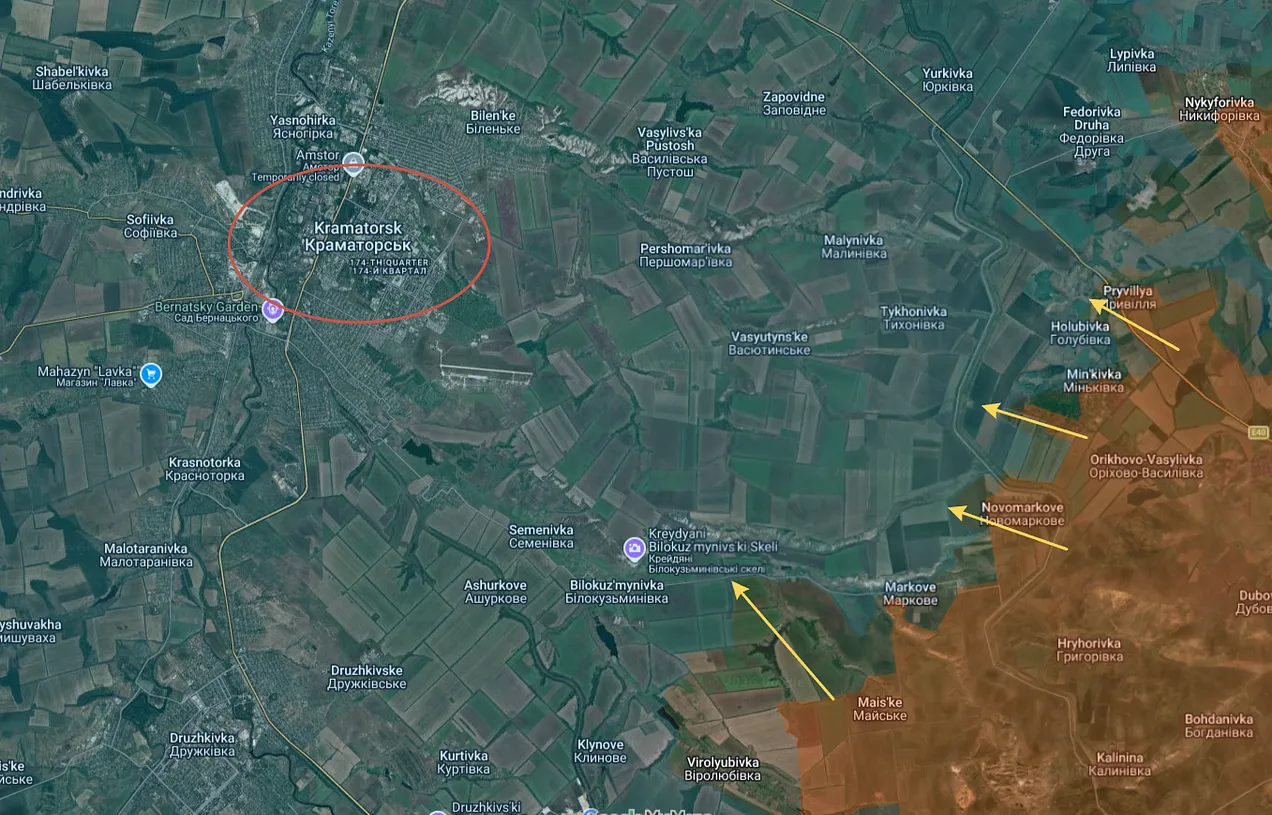
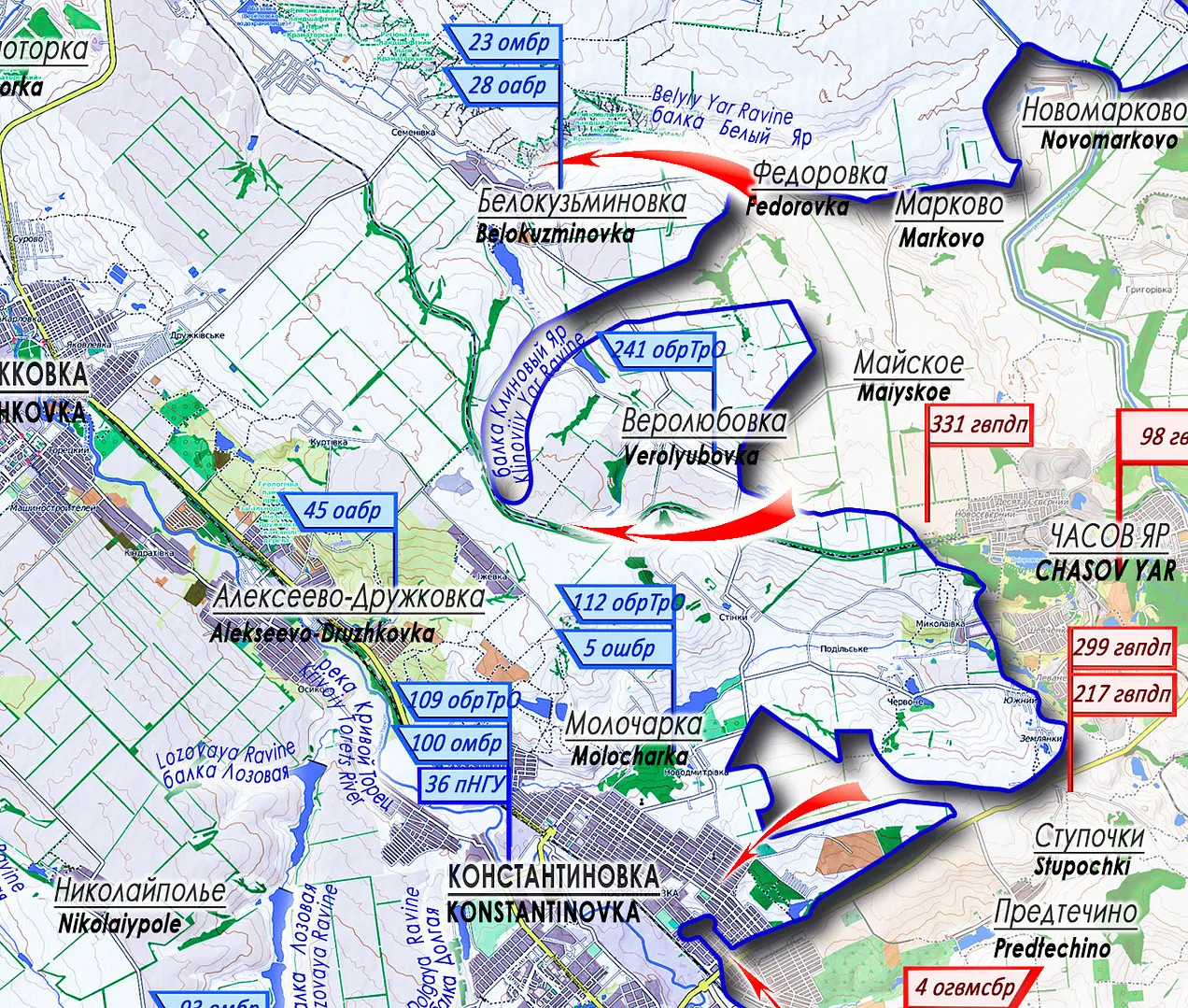
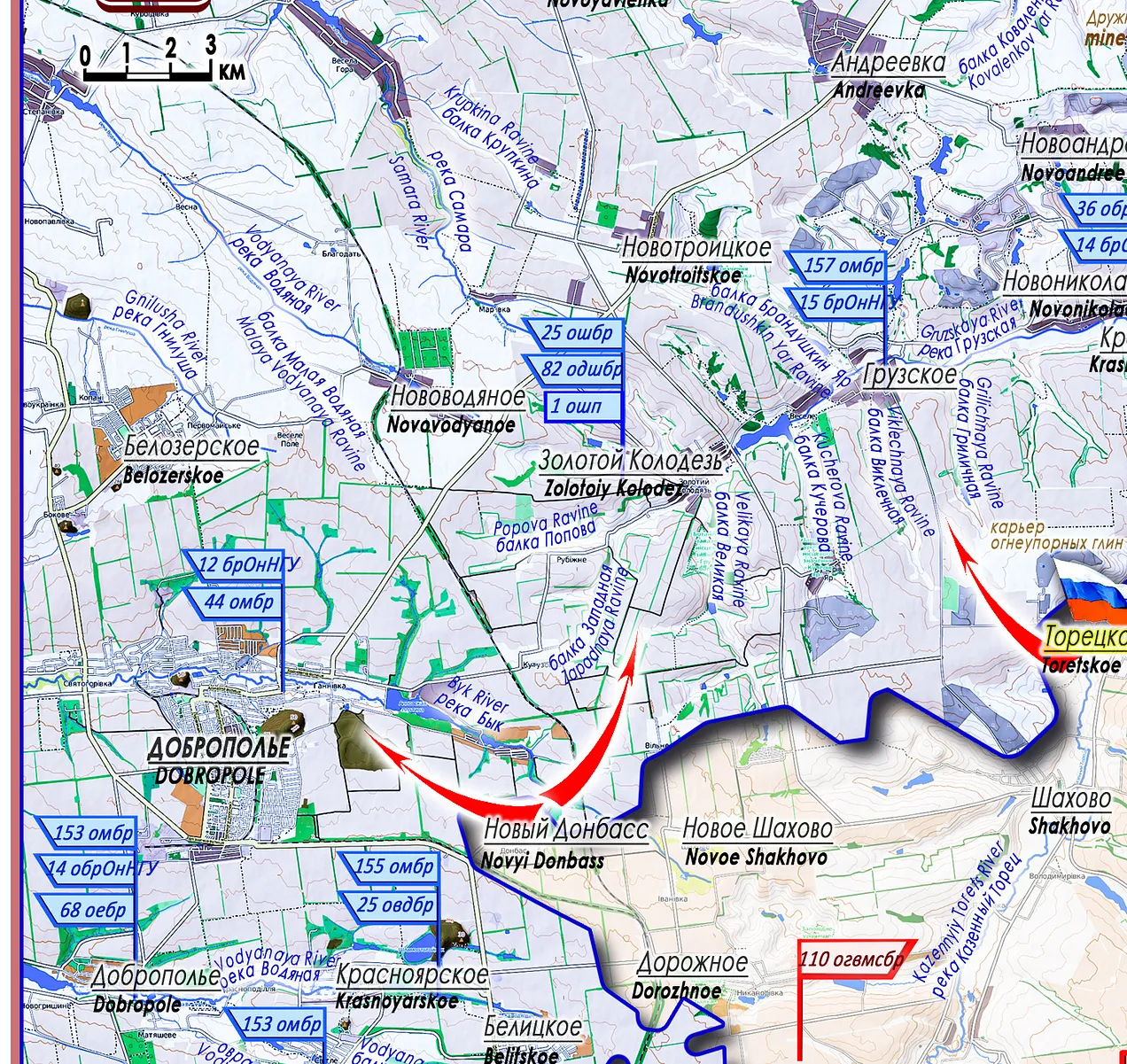
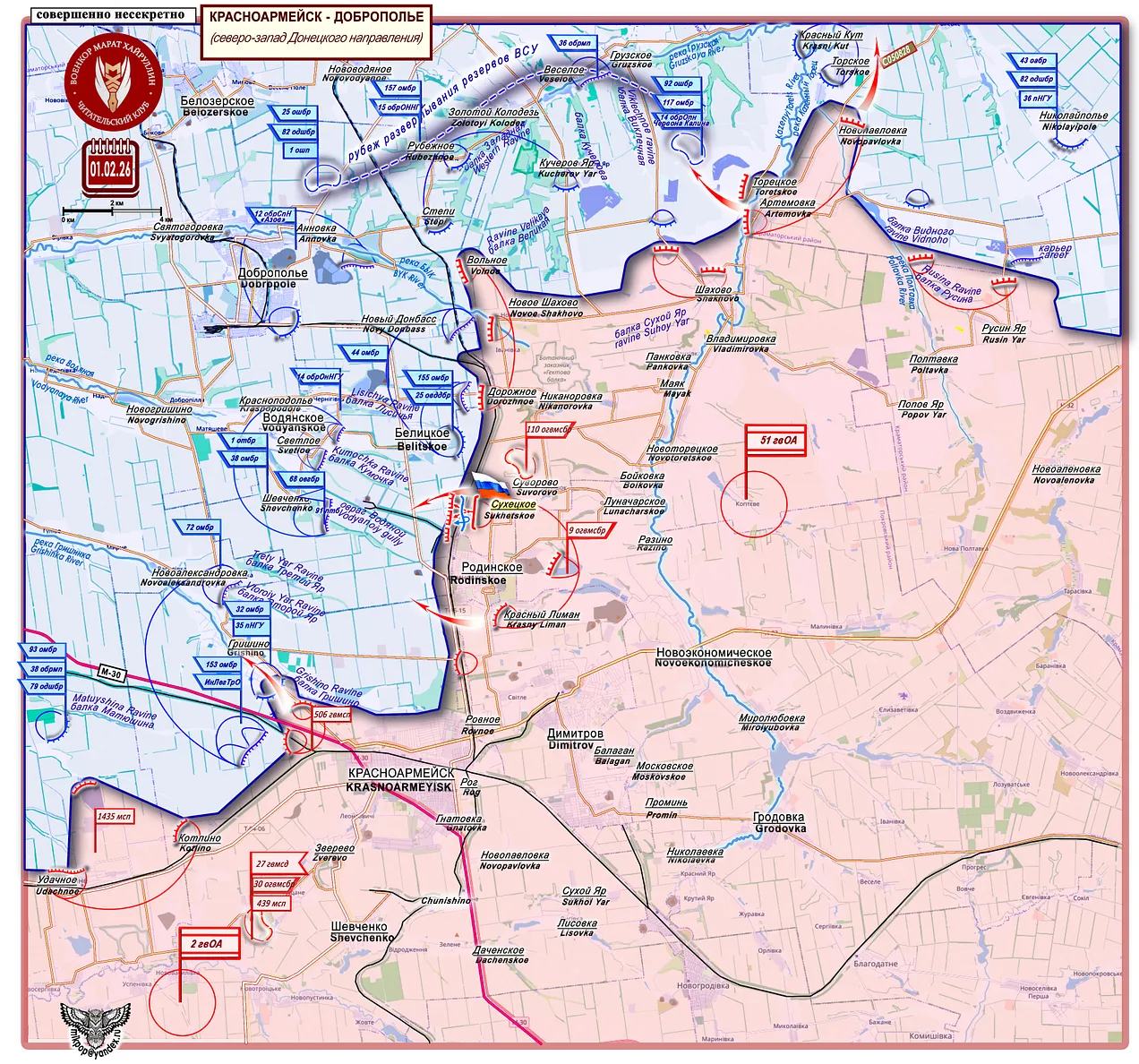
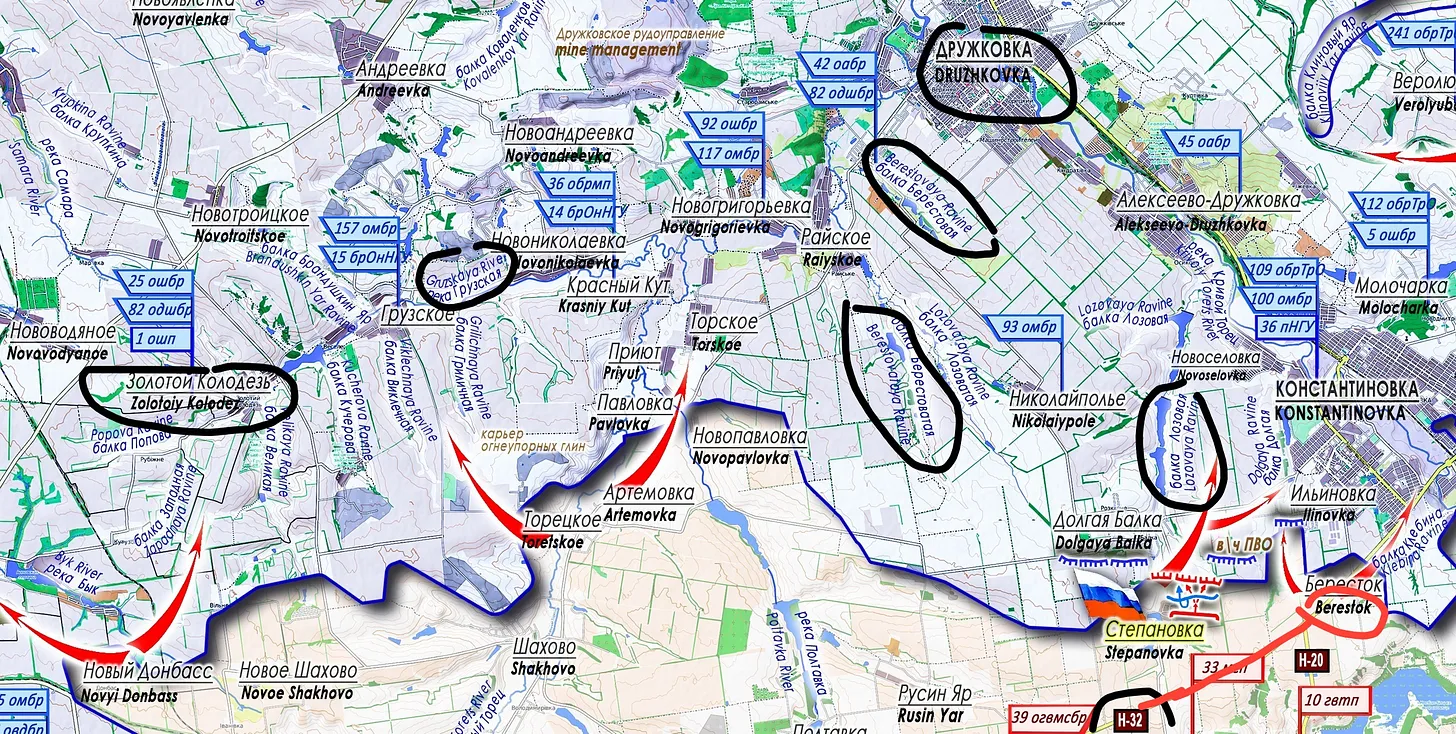
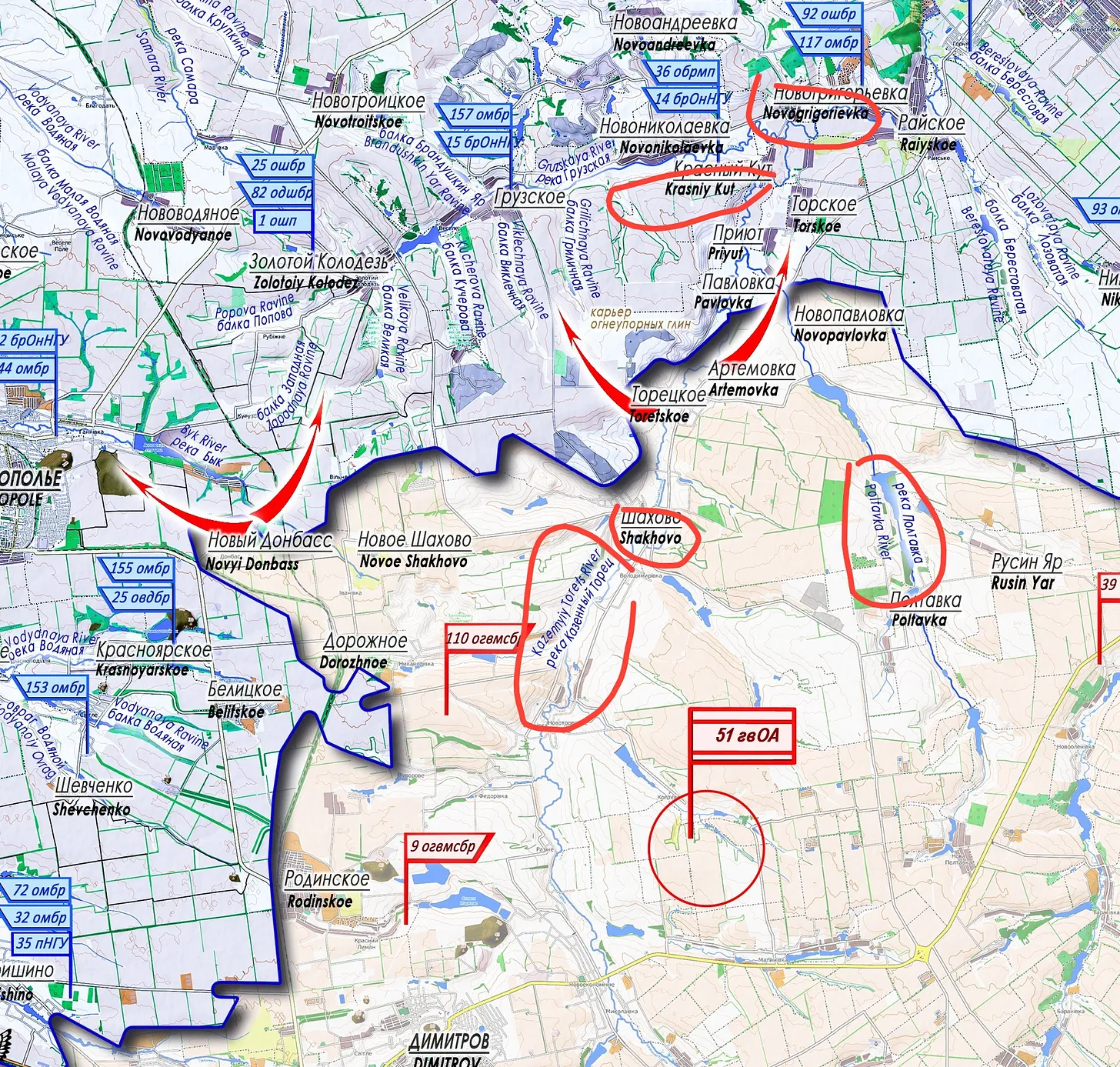
North of Krasnoarmeysk, in the Artemovka - Druzhkovka sector, the Russian Armed Forces are preparing a bridgehead in front of the Ukrainian Armed Forces' defensive line along the Gruzskaya River. This line protects the right flank of the Ukrainian Armed Forces group defending the southern face of the Slavyansk direction.
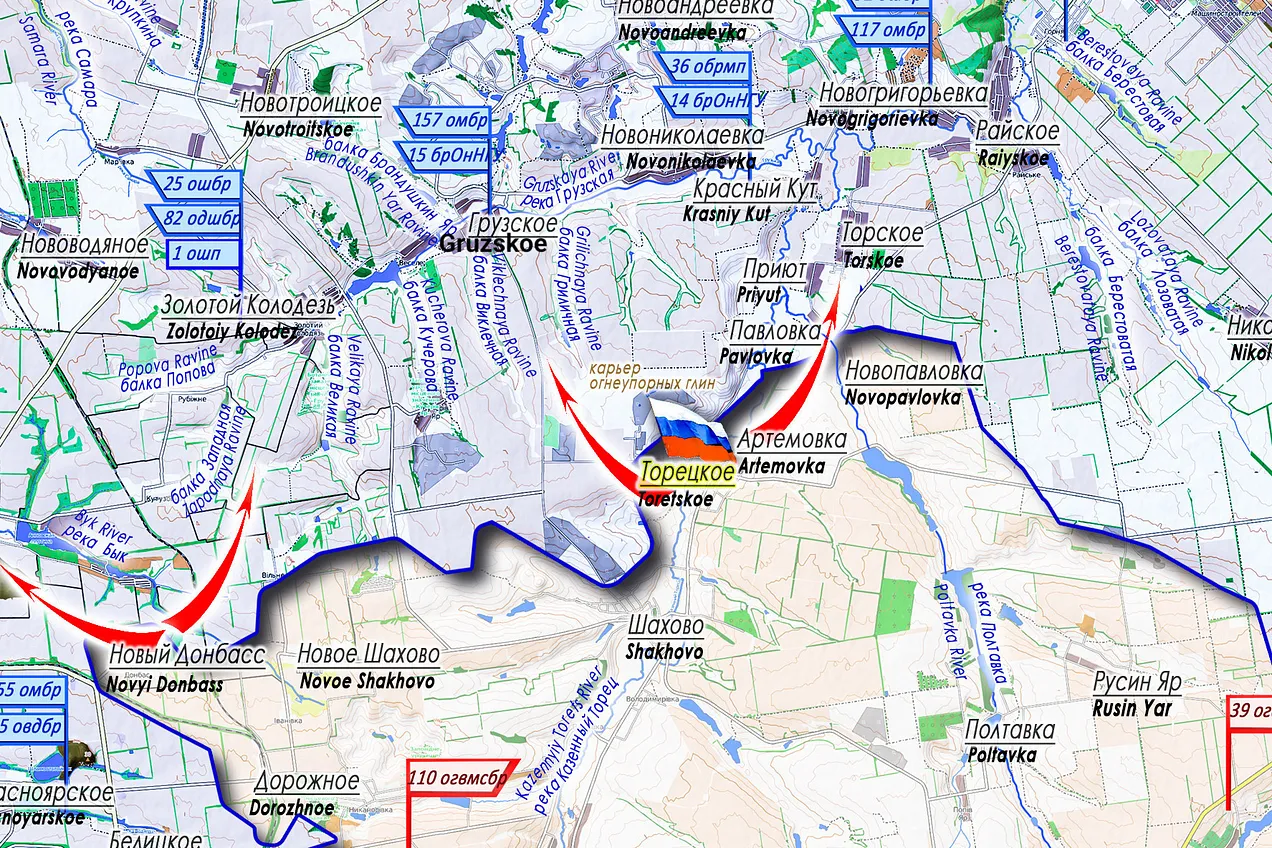
The area features complex, sharply rugged terrain with numerous ravines and gullies. It is located in the interfluve of the Kazennyi Torets River and its tributary, the Gruzskaya River. It begins in the area of the settlement of Zolotoiy Kolodez, where advanced Russian Armed Forces units reached in the autumn of 2025, drawing part of the enemy's forces and reserves during the operation to liberate the Dimitrov - Krasnoarmeysk area. The watershed apex is in the area of the settlement of Krasny Kut, where the Gruzskaya River flows into the Kazennyi Torets. The soil is like clay and difficult to traverse during rains and floods—the area abounds with deposits and quarries for refractory and ceramic clay.
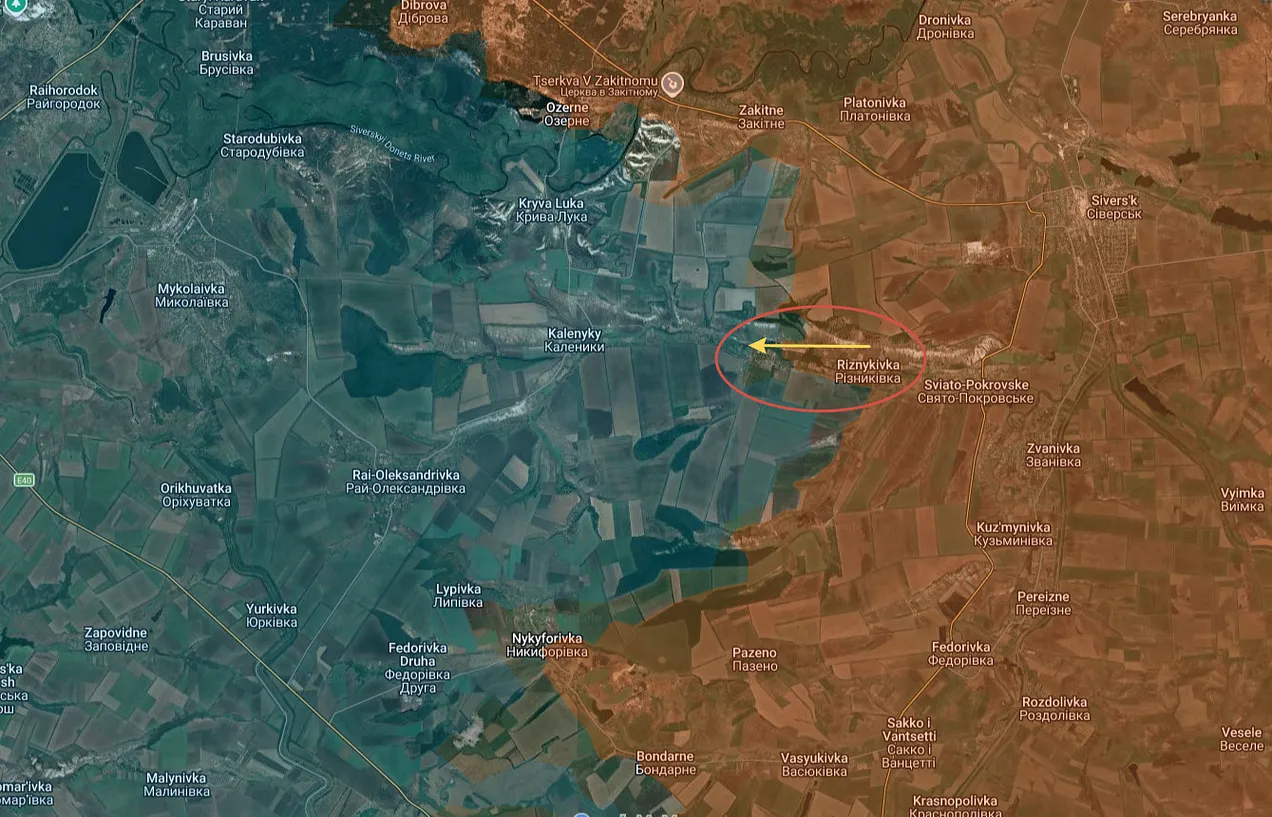
On January 31, Russian assault groups forded the Kazennyi Torets River in the area of the settlement of Artemovka, emerged on the left bank, and liberated the settlement of Toretskoe (48°30′8″ N 37°22′16″ E, population approx. 350). The rural settlement is located in the area of clay quarries and provides access to the watershed ridge at the start of the Grilichnaya and Viklechnaya ravines. The advance of our units into the area of the settlement of Gruzskoe splits this sector into two parts with flank envelopments. This advance will likely be supported by combined actions on the eastern face of the direction (Belokuzminovka-Verolyubovka) and on the western face (Novy Donbass - Dobropole - Zolotoiy Kolodez).
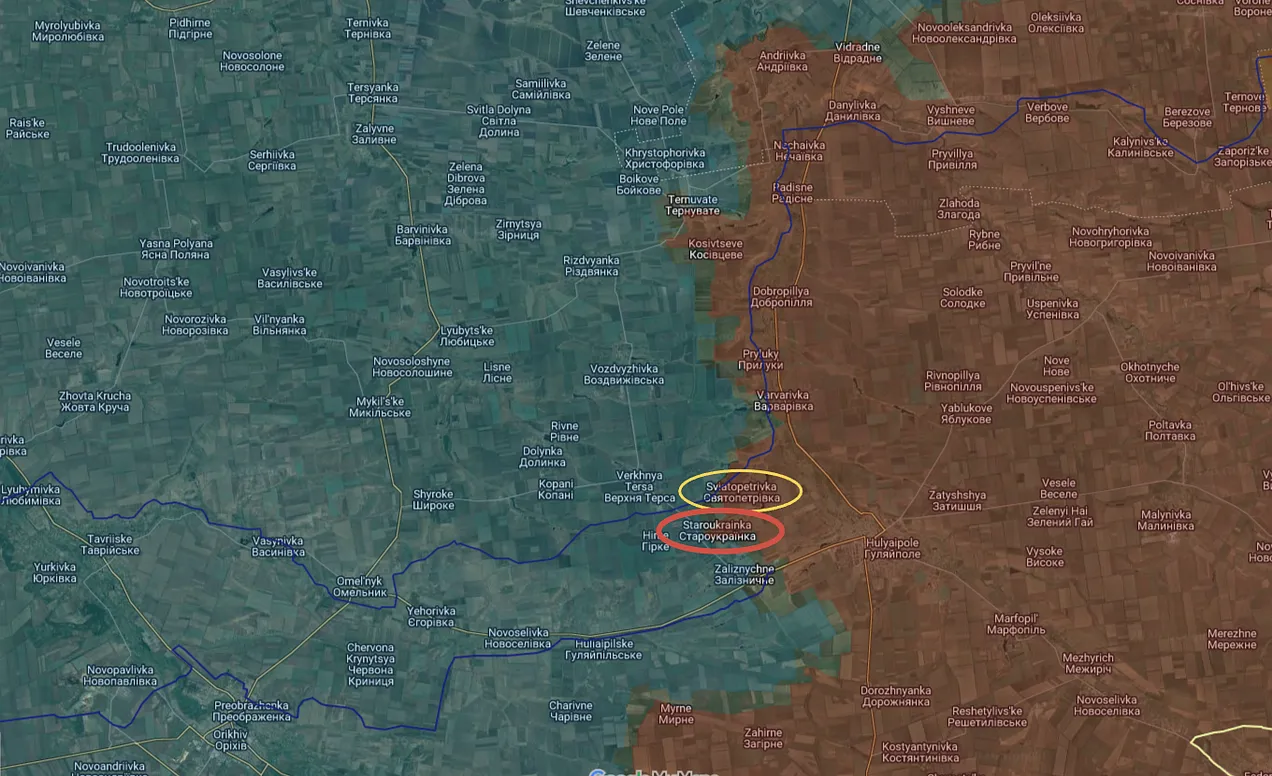
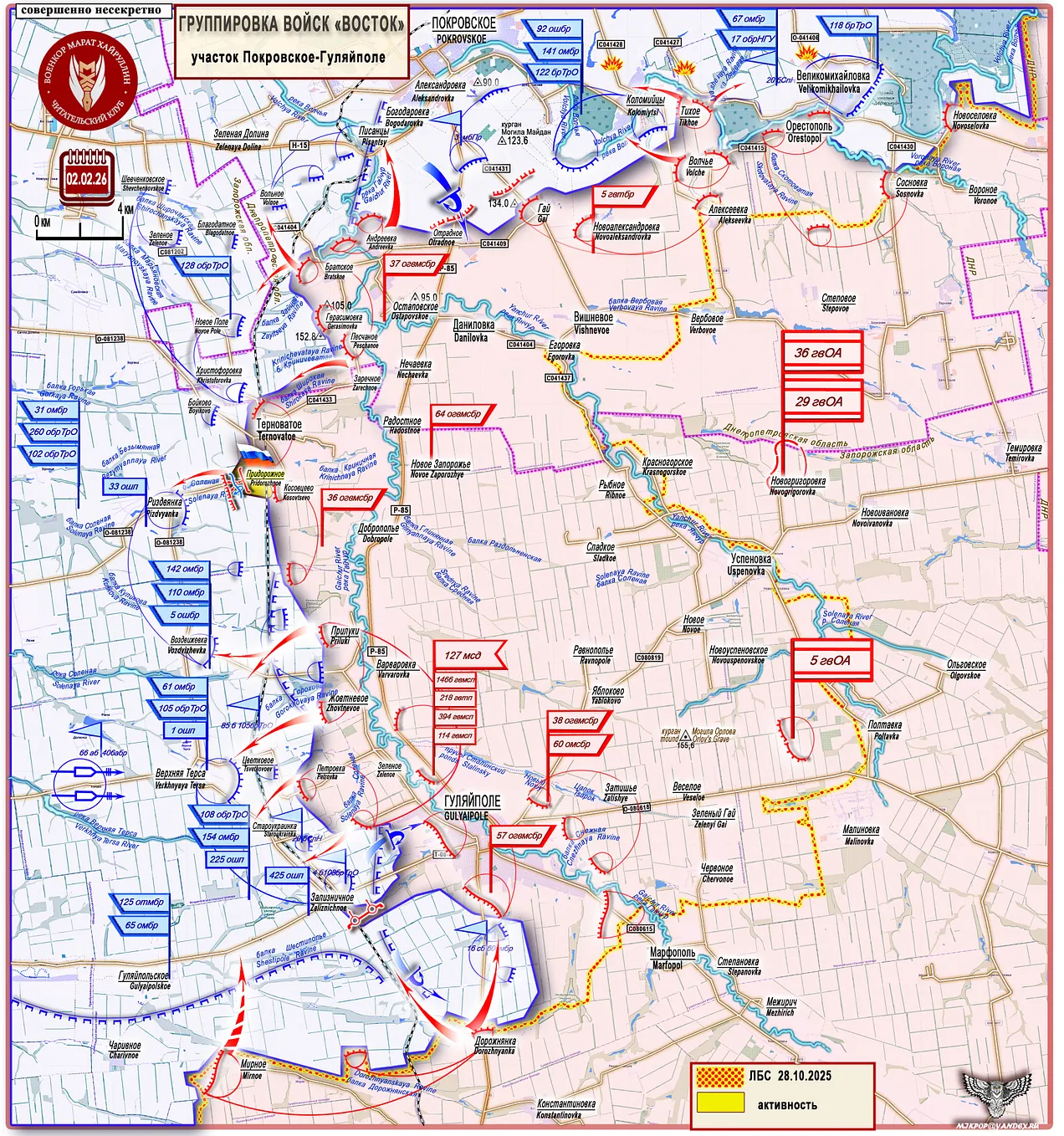
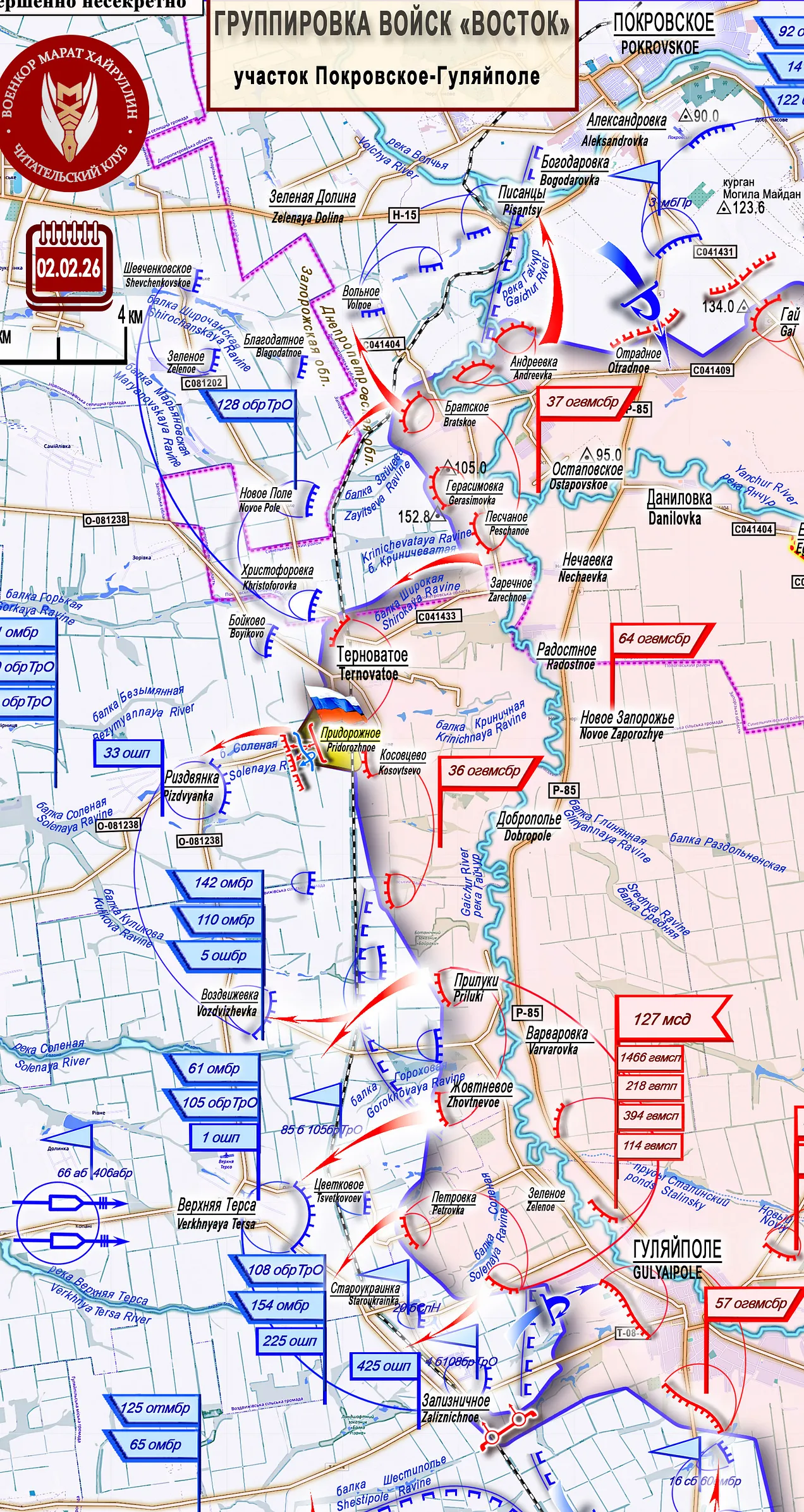
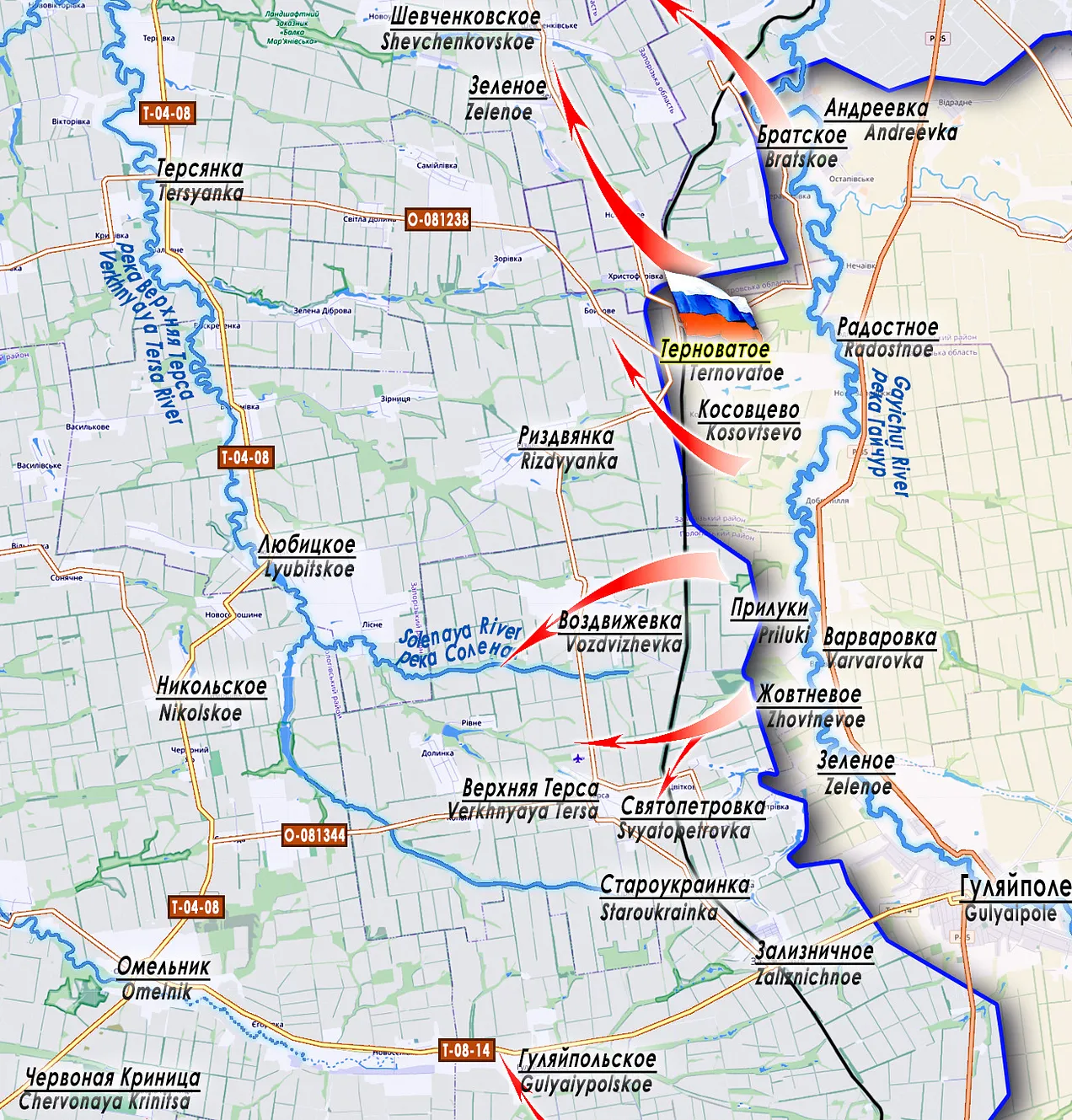
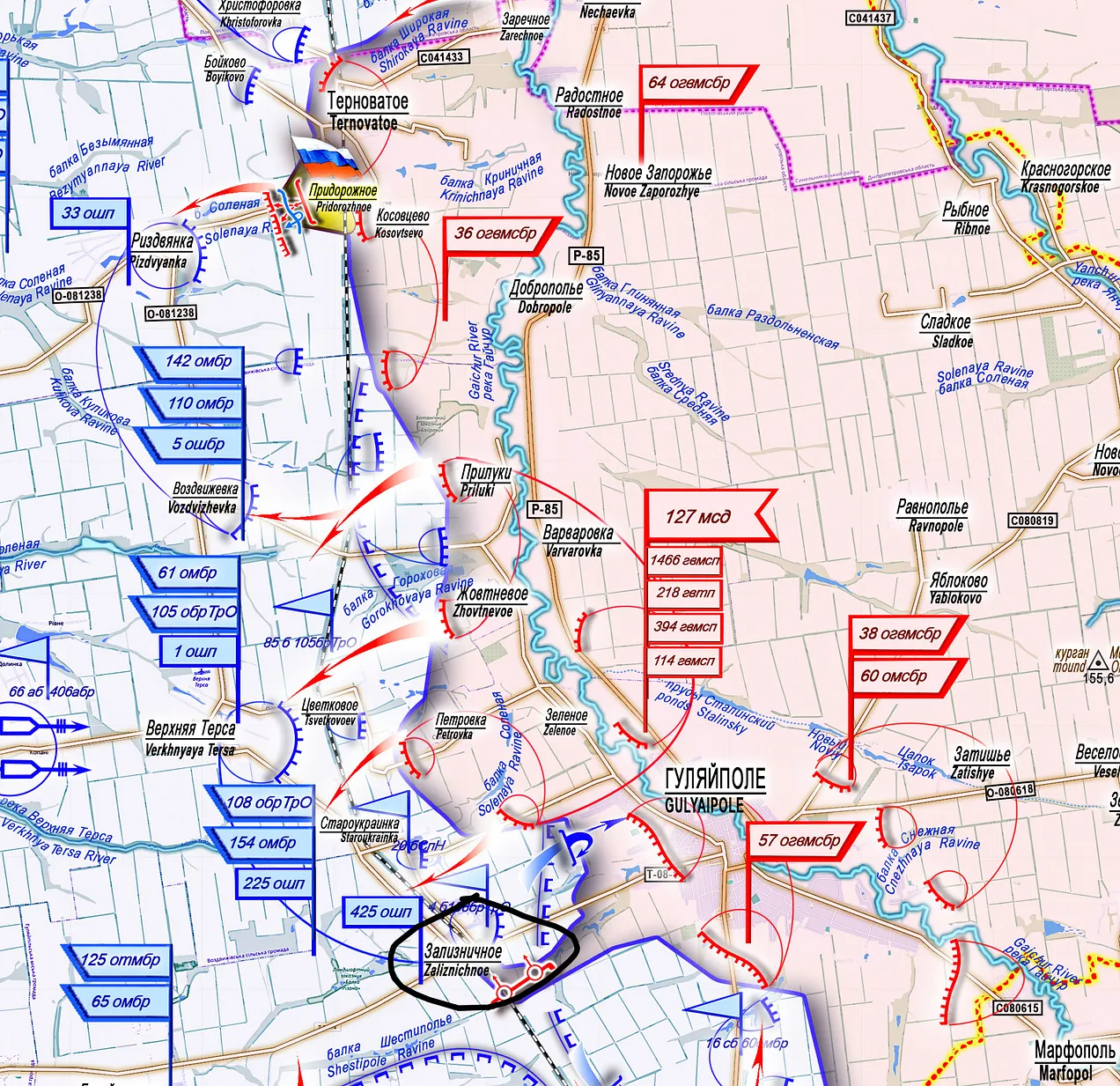
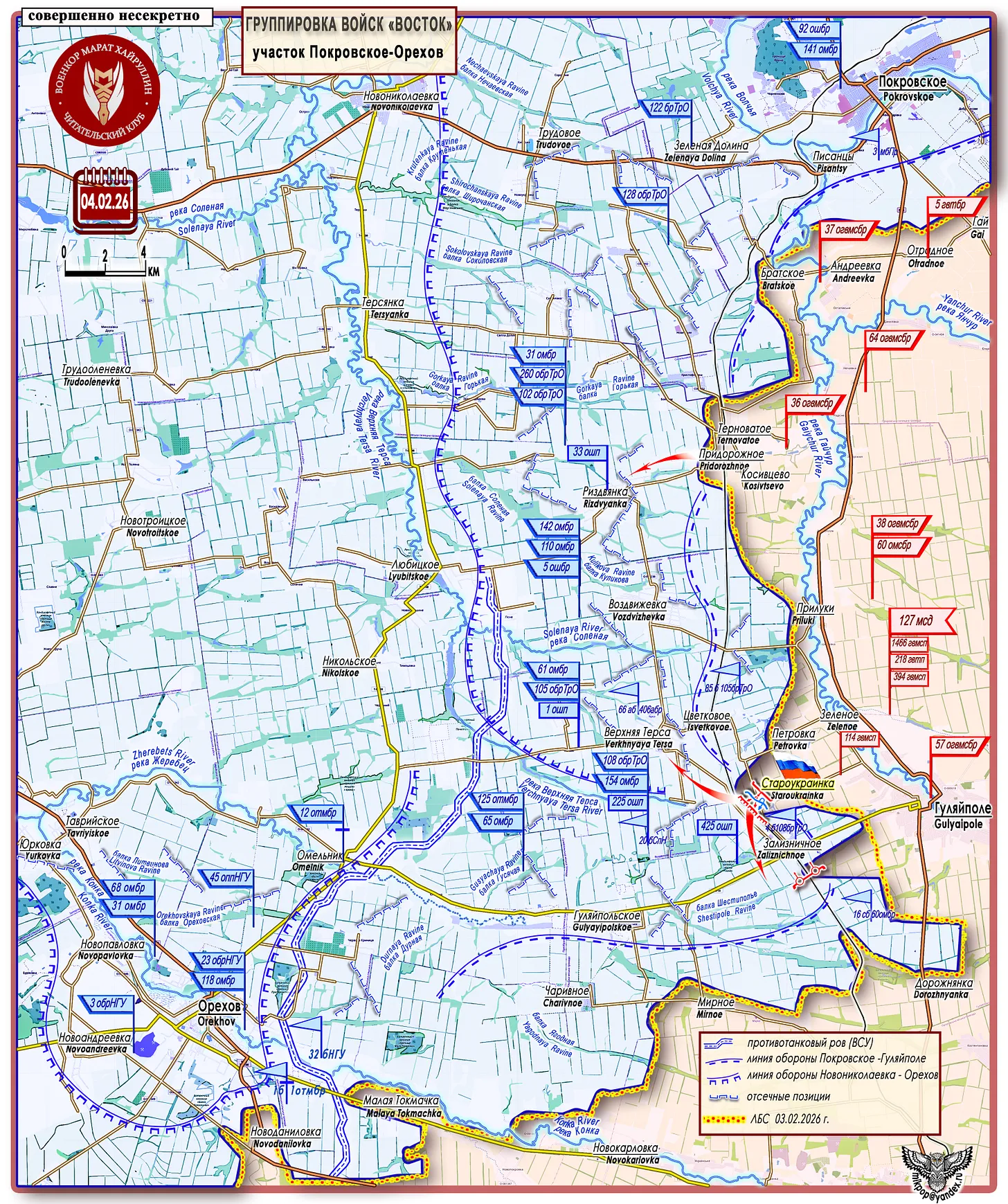
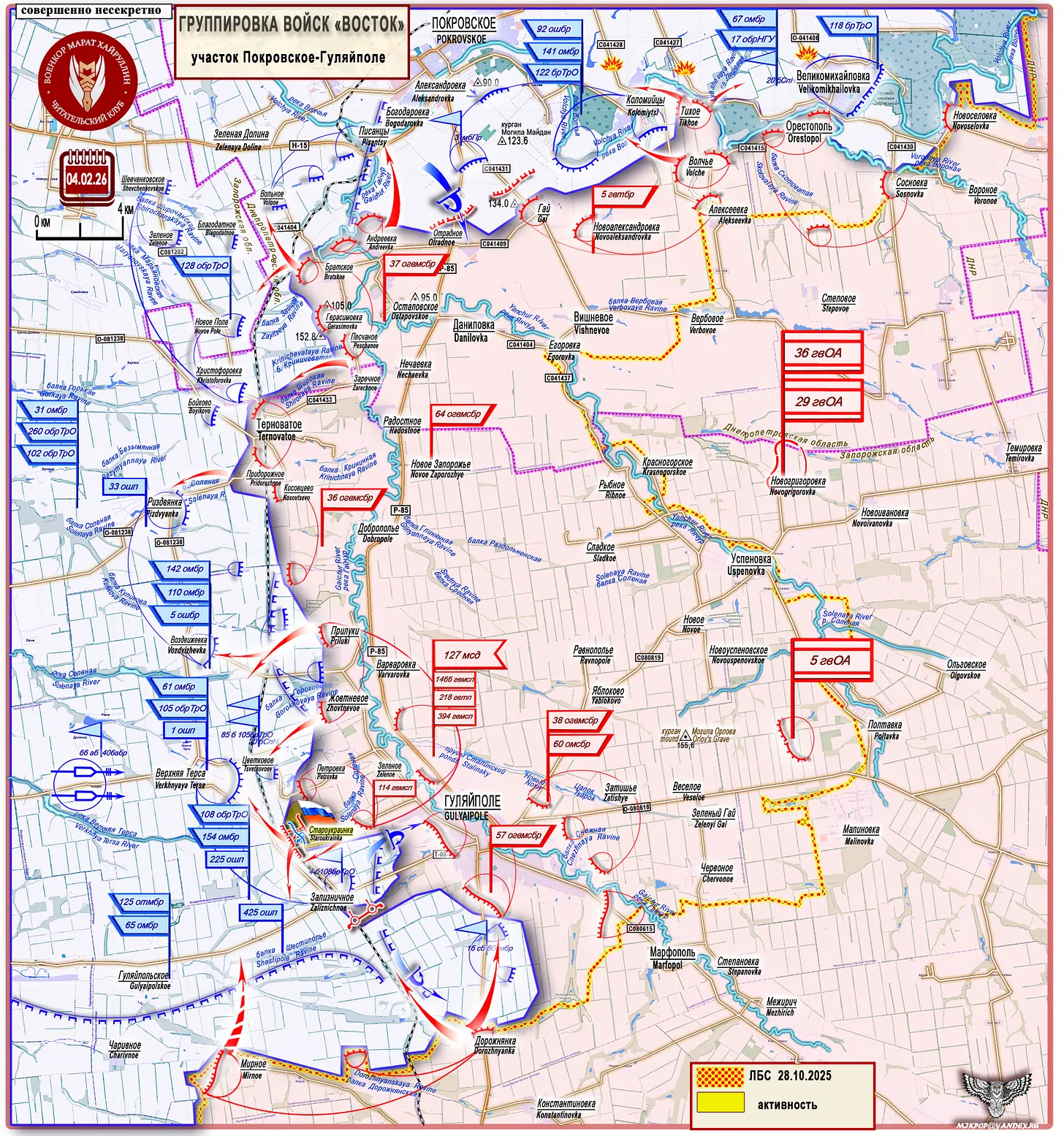
Message from the Russian Ministry of Defense: "Assault units of the 127th Division of the 5th Guards Combined Arms Army of the 'East' Group, during ongoing combat operations, have liberated the settlement of Petrovka in Zaporozhye Oblast.
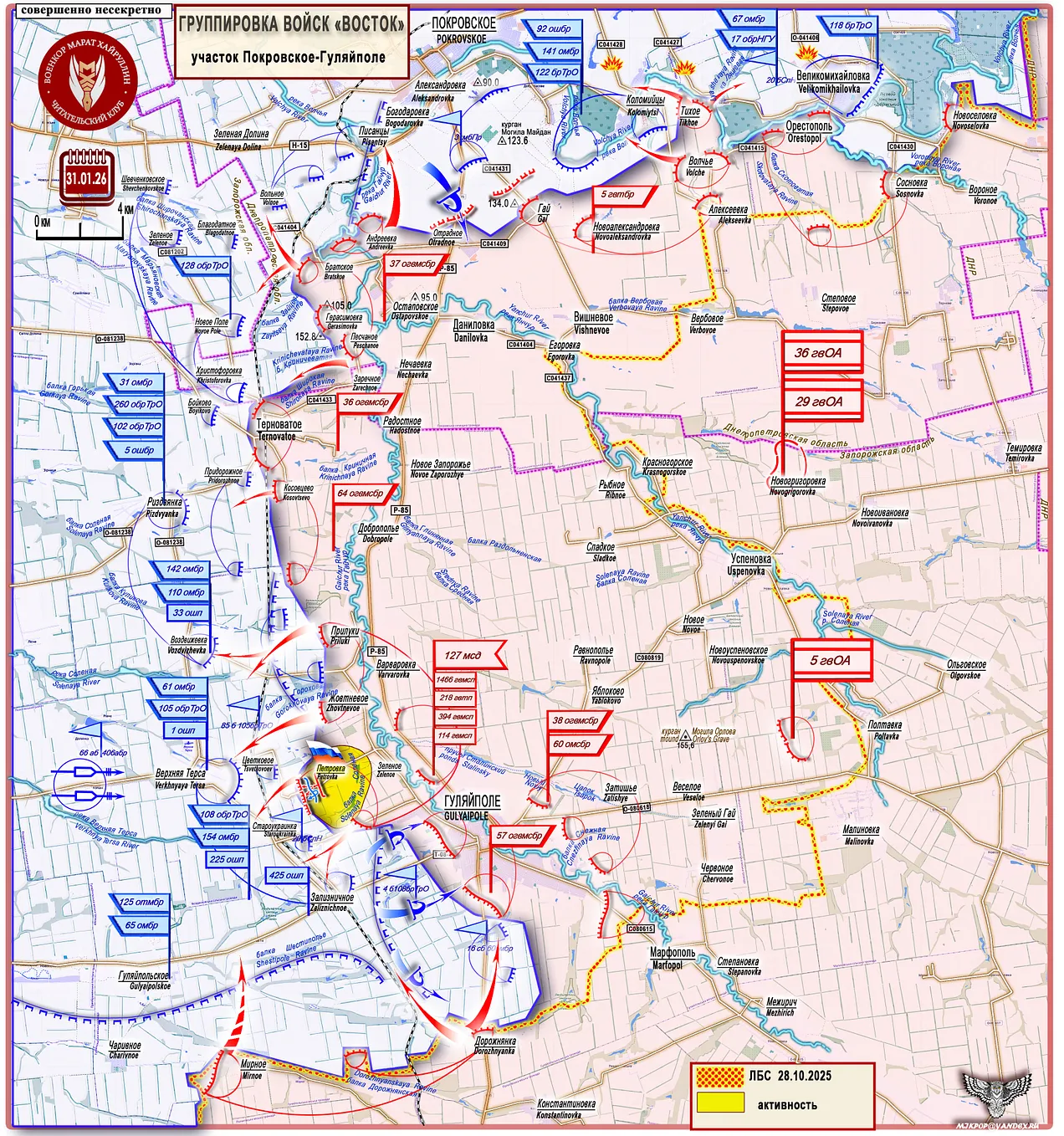
East Group Area of Responsibility; The yellow line with red dots represents the line of combat contact October 28th, 2025. Yellow represents the area of activity.
The Primorye warriors developed the success on the sector, drove the enemy out of strongpoints, and consolidated on the captured lines. A defense area of up to 5 sq. km has been brought under control; adjacent tree belts and defensive hubs that ensured the enemy's hold on the settlement have been cleared.
Ukrainian Armed Forces losses in this sector of the front amounted to up to 10 pieces of equipment and a large number of personnel.
The enemy's attempts to hold the settlement by transferring reserves were unsuccessful—the equipment with Ukrainian Armed Forces personnel was destroyed on the approaches."
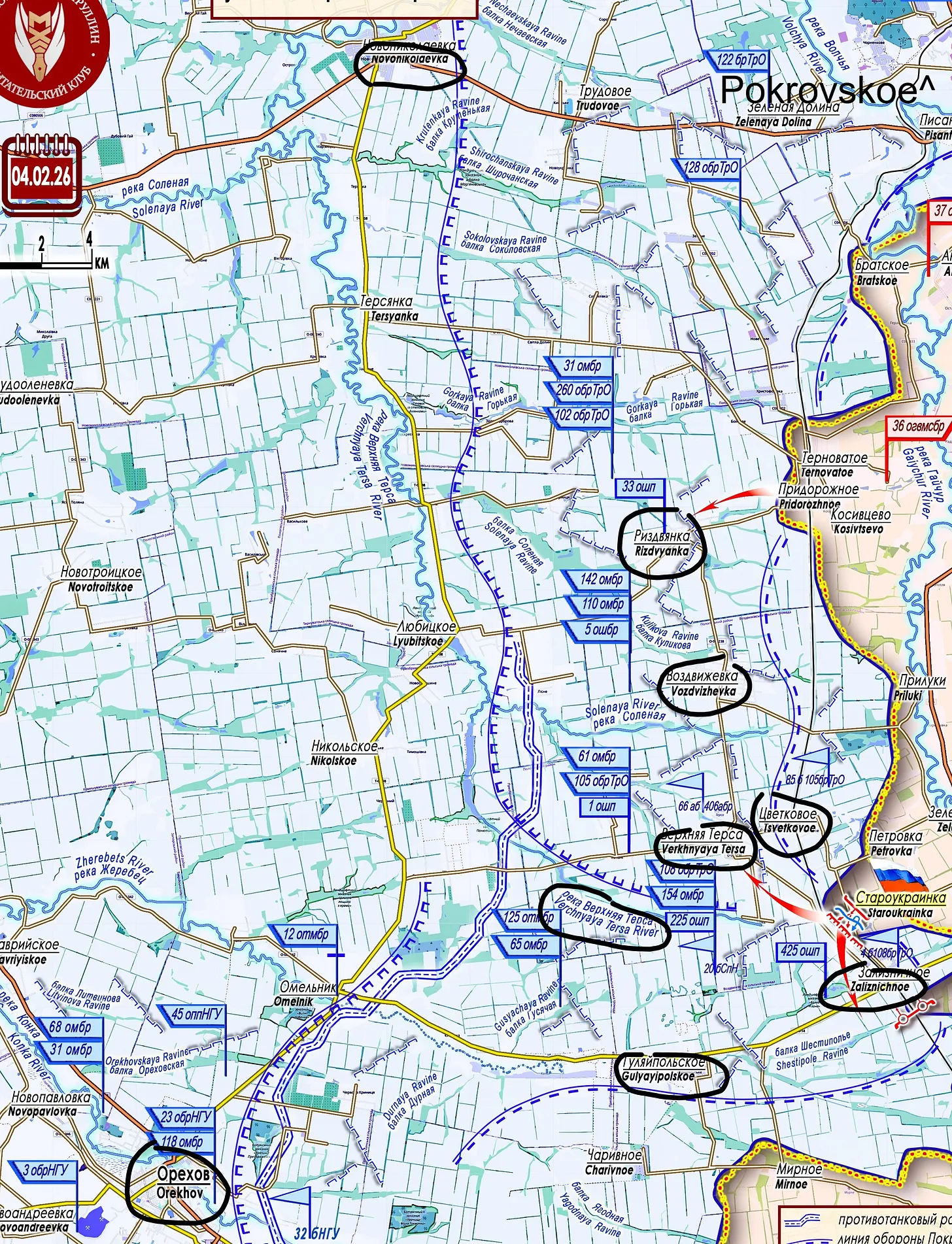
After Russian Armed Forces units reached the left bank of the Gaichur River, a number of ravines originating on the watershed ridge were brought under control. Following this, the enemy's defensive line was divided into sectors, into which "wedges" were driven by assault groups of Russian units, which then secured themselves on bridgeheads. Subsequently, the bridgeheads were expanded and the enemy's defensive line was split into segments. Covering the transport hub of Verkhnyaya Tersa, the enemy prepared a defensive area in Tsvetkovoe - Petrovka (Svyatopetrovka) - Staroukrainka.
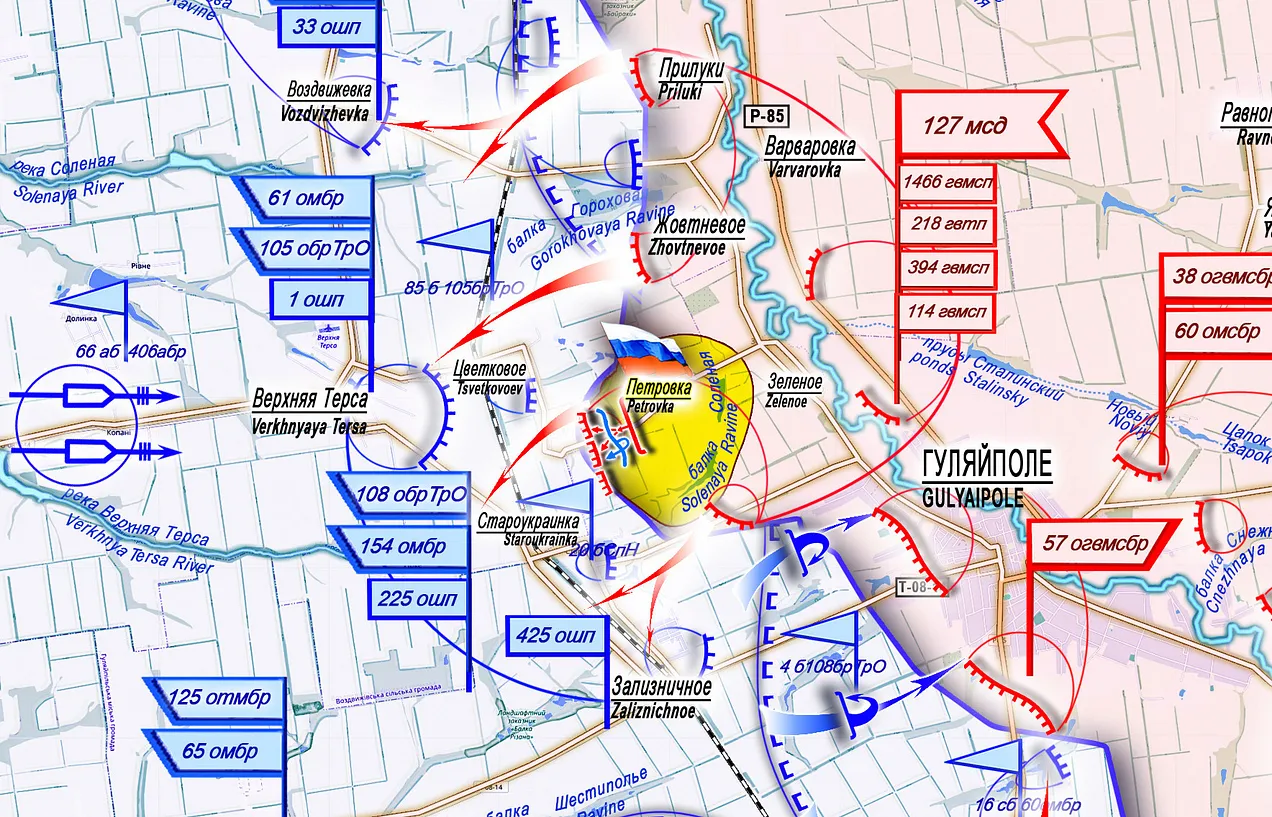
The command of the "East" Group allowed the enemy to become engaged in counterattacks on the city of Gulyaipole, tying down the enemy's main forces and reserves in this sector with defensive actions. Simultaneously, they began active operations to eliminate the Ukrainian Armed Forces' defensive line along the watershed ridge of the Gaichur and Verkhnyaya Tersa rivers.
On January 30, the transport hub of Terenovatoe was brought under control.
On January 31, the settlement of Petrovka (47°41′28″ N 36°09′51″ E, population 78 in 2001, known as Svyatopetrovka since 2016) was liberated.
The transport hub of Verkhnyaya Tersa should prepare itself.
Message from the Russian Ministry of Defense: "Combat drone strikes in the area of Sinelnikovo station have damaged electric train cars, freight cars, locomotives, tracks, power grids, administrative and production buildings. There are no casualties.
As a result of the strike, railway traffic between Zaporozhye and Dnepropetrovsk has been halted."
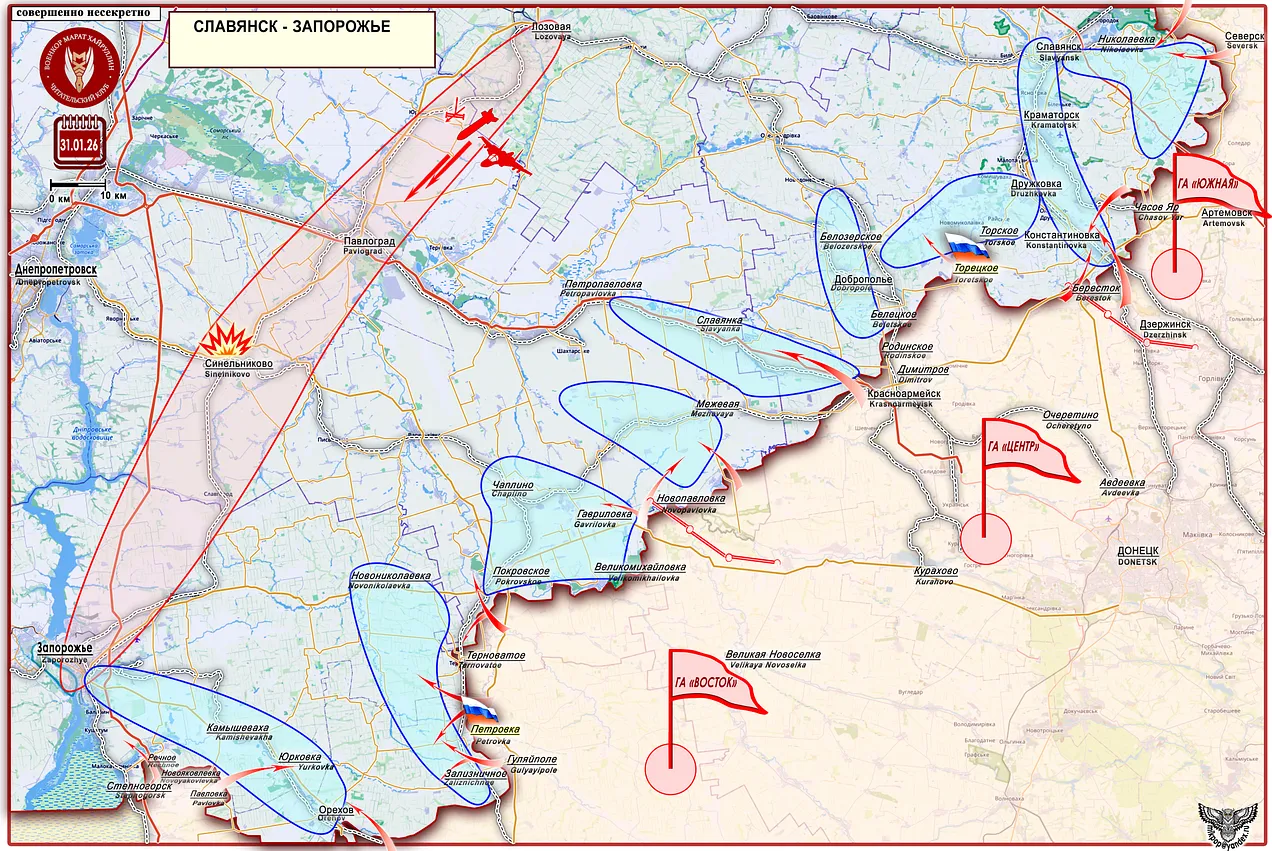
Slavyansk to Zaporozhye
To support the ongoing offensive operations being conducted by the Russian Armed Forces groupings "South," "Center," "East," and "Dnepr" along the entire line of contact, missile, aviation, and heavy UAV strikes are being delivered into the operational depth of the enemy's defense against key transport areas (Lozovaya - Pavlograd - Sinelnikovo - Zaporozhye - Dnepropetrovsk).
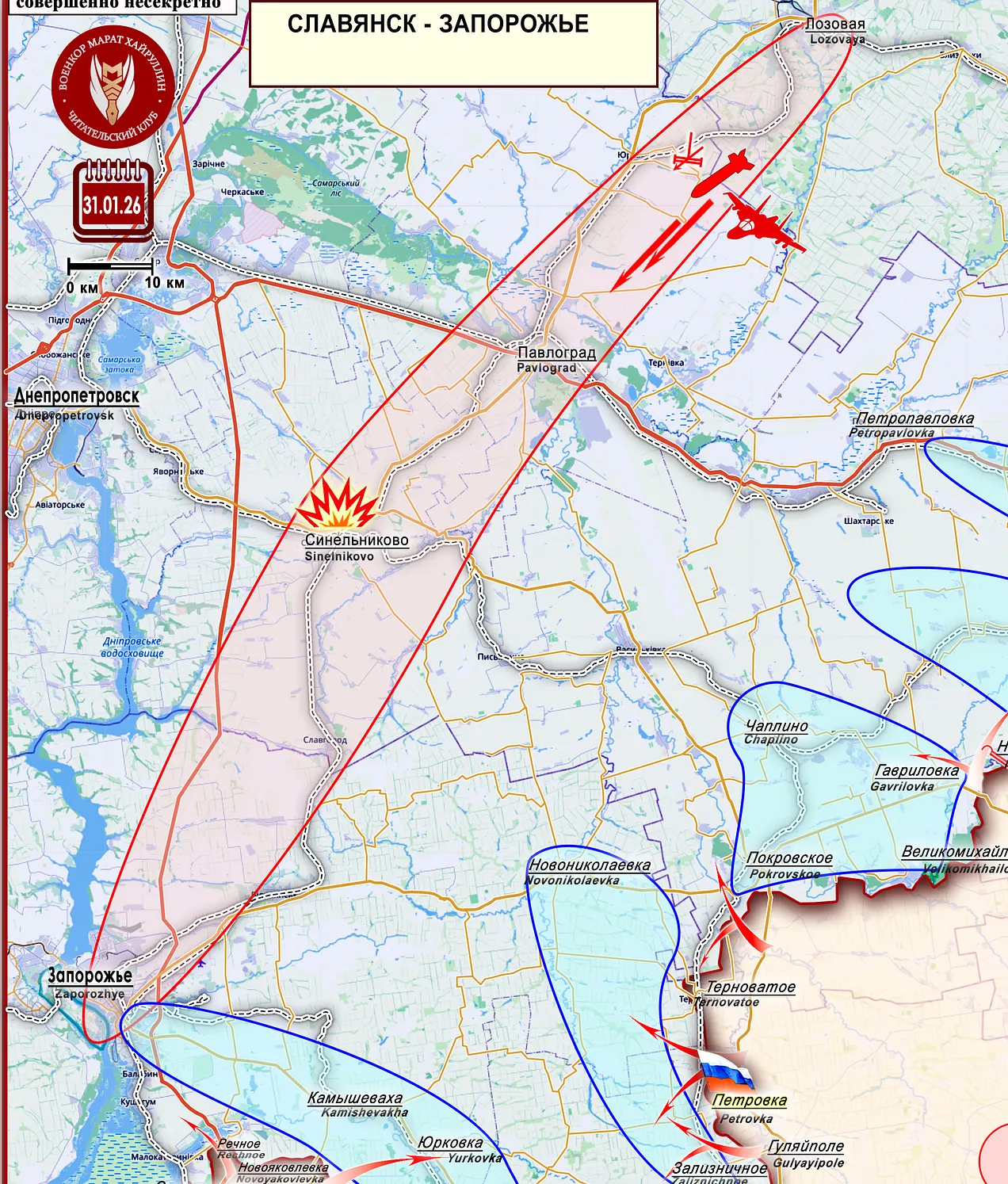
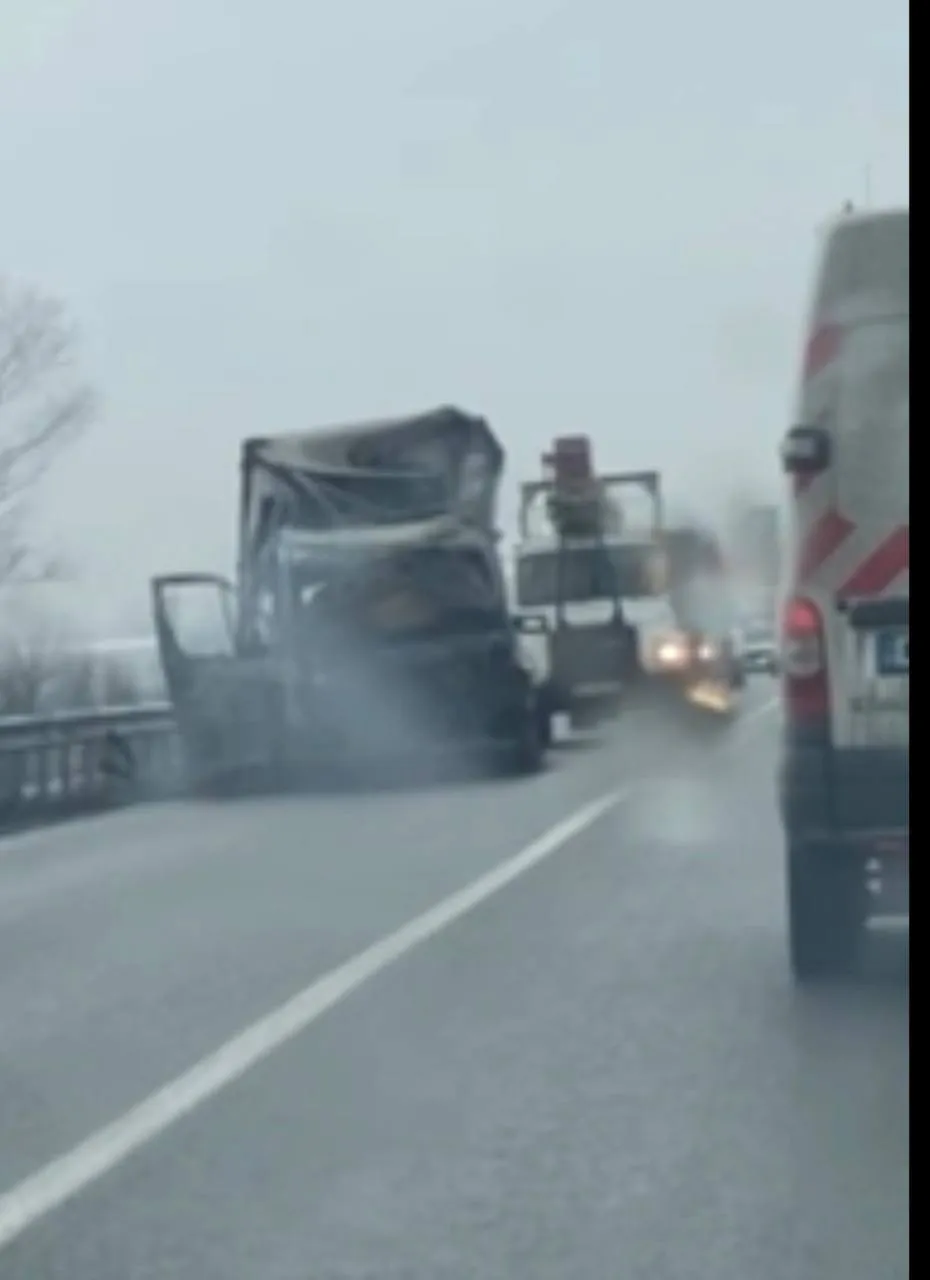
Cutting off power supply is not a struggle against the population. It is the deprivation of electricity to defense enterprises, including railway traction substations. In transport hubs, infrastructure and rolling stock are being destroyed. A hunt is underway for automotive transport on the main radial highways connecting transport hubs with front-line supply routes.
https://maratkhairullin.substack.com/p/ ... nuary-31st
SITREP 1/30/26: Putin Flatters Trump With Kiev-Energy Ceasefire
Simplicius
Jan 30, 2026
(Video at link.)
After various rumors following Trump’s announcement that the Kremlin had agreed to an energy ceasefire with Ukraine, Putin spokesman Peskov finally confirmed the news this morning:
Russia has agreed to partially suspend long-range strikes on Ukrainian targets at the request of US President Donald Trump, Kremlin spokesman Dmitry Peskov has confirmed.
The weeklong moratorium is to last until February 1 and is meant to “create favorable conditions for negotiations,” Peskov told journalists on Friday. He declined to offer additional details about the arrangement, including whether Kiev made any commitments for reciprocity.
Zelensky had previously said he would hold to the truce if Russia does, though some OSINT analysts had already noted that Ukrainian drone strikes on Russia had disappeared in the past day or two, while Russia had only been launching a few minor Geran attacks, presumably at non-energy-related infrastructure for several days.
But what’s interesting is Peskov said that the “week long” truce would end on February 1st, which appears to mean that the ceasefire had already been in effect all week, which would explain the above: (Video at link.)
Further note that this appears only to apply to Kiev, which is still suffering badly from the attacks.
On the other hand, there may be some confusion because the Ukrainian side is attempting to push the ceasefire until February 8th—either an additional week, or February 1st being the beginning of the ceasefire.
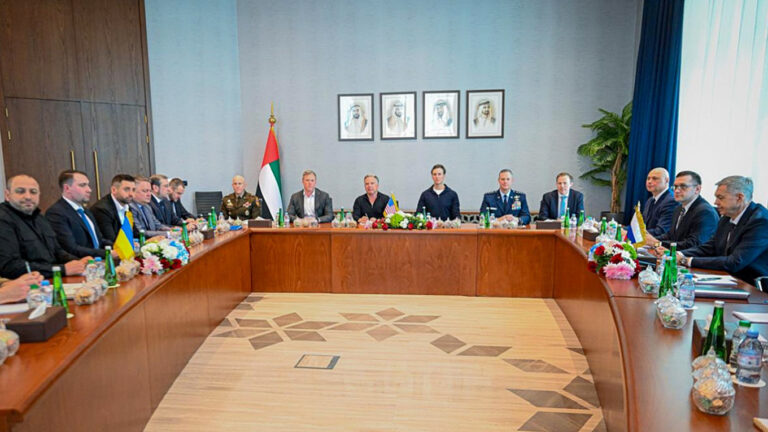
On Sunday, February 1, at a new round of negotiations in Abu Dhabi, the US plans to formally confirm a week-long pause in attacks on Ukrainian energy infrastructure.
The Ukrainians have asked for a delay until February 8, when the temperature in Kyiv will reach +5°C. After that, warming will begin.
The “pause” is purely psychological. In terms of restoring anything, there are still months of work ahead. The only thing that is currently working, and the main topic of discussion, is the Kyiv TPP-6. A week ago, they launched one of six boilers there, and now they are starting up the second one.
The heat loop from it is already being distributed through Kyiv’s main networks.
In Kyiv, the collapse is still ongoing, with power grids being disrupted and entire neighborhoods shutting down.
Kiev Independent reports that over one million residents still have “adverse conditions” including no power:
https://kyivindependent.com/we-are-all- ... is-winter/
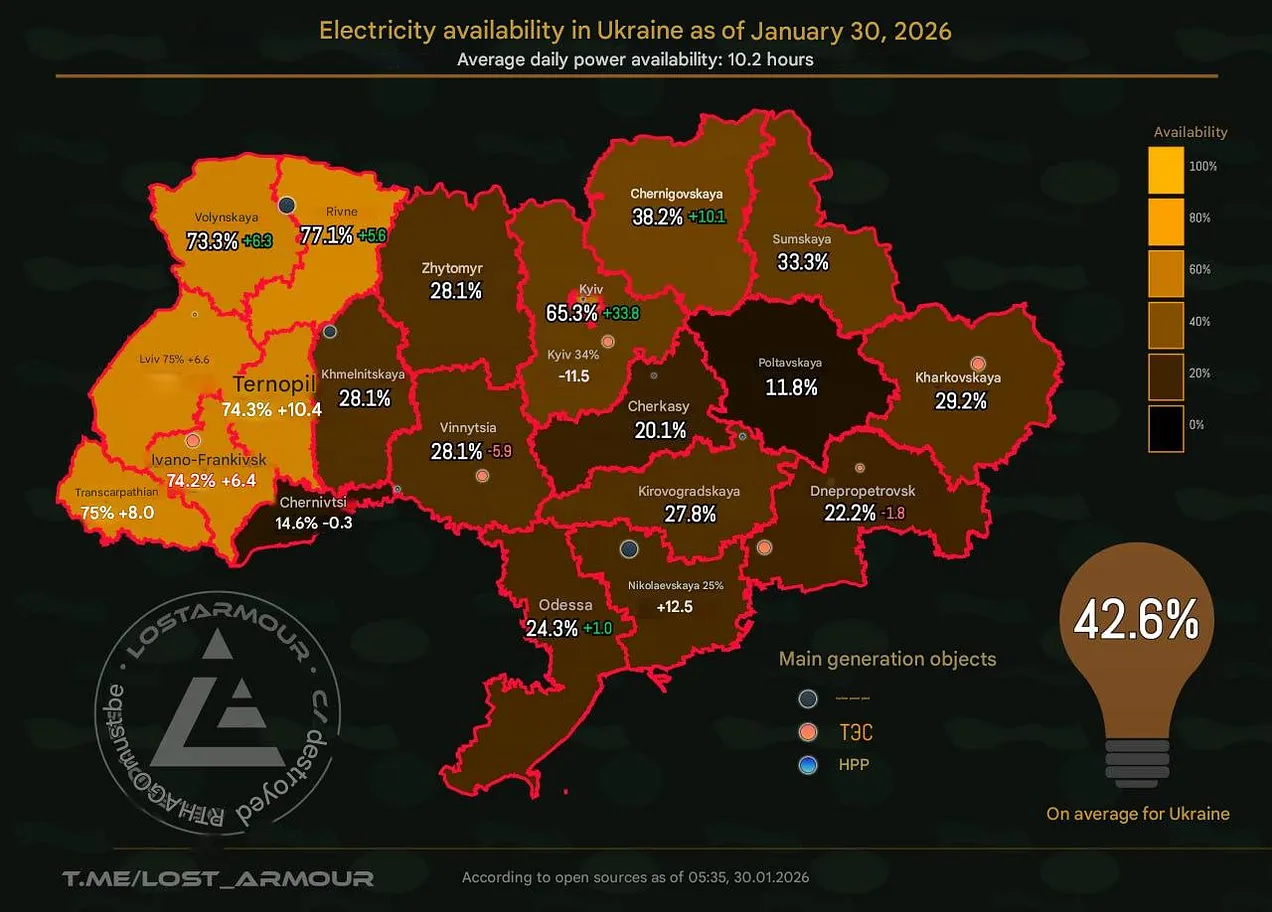
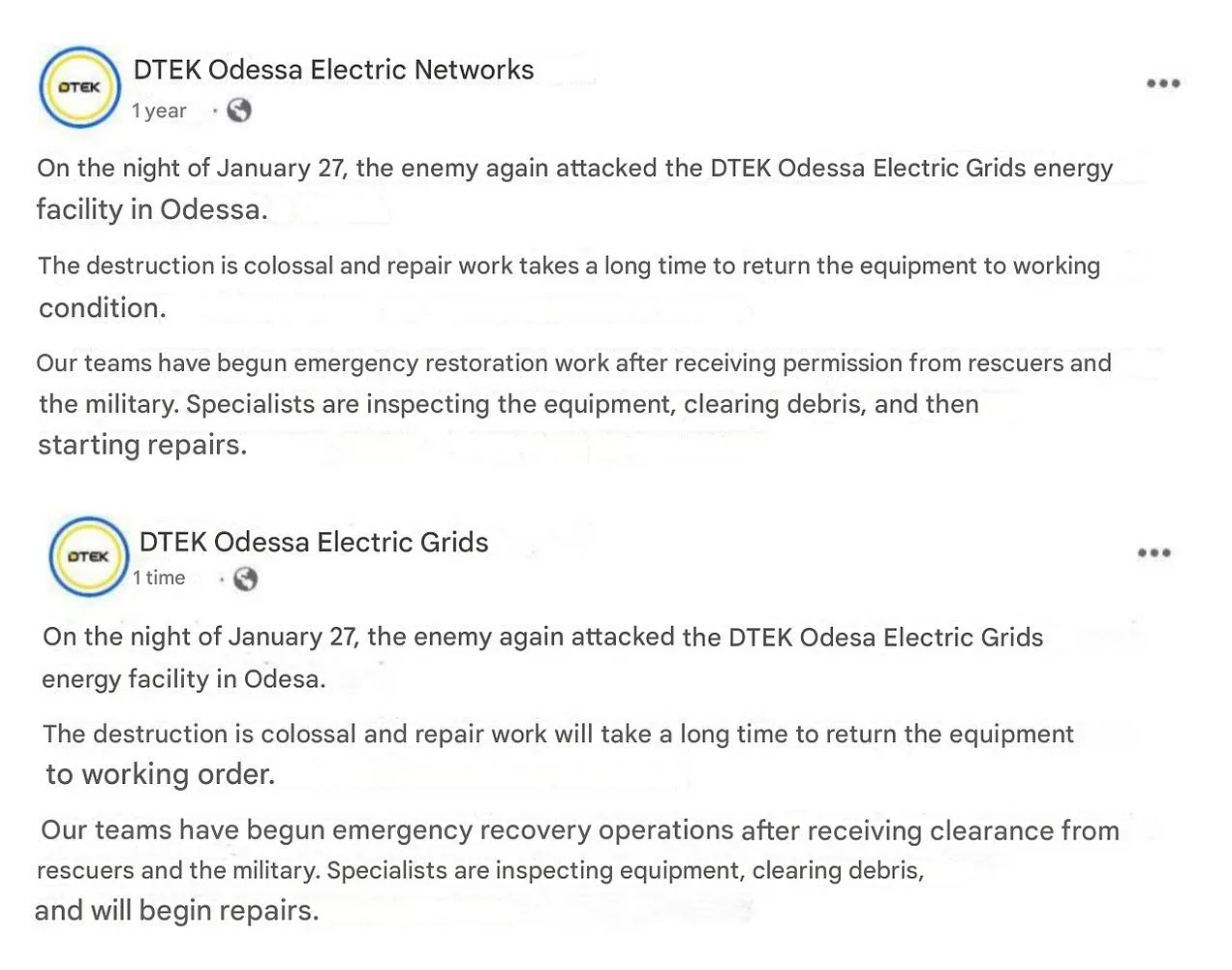
While Ukraine’s main power corp DTEK writes about major Russian strikes to Odessa’s grid just a couple days ago:
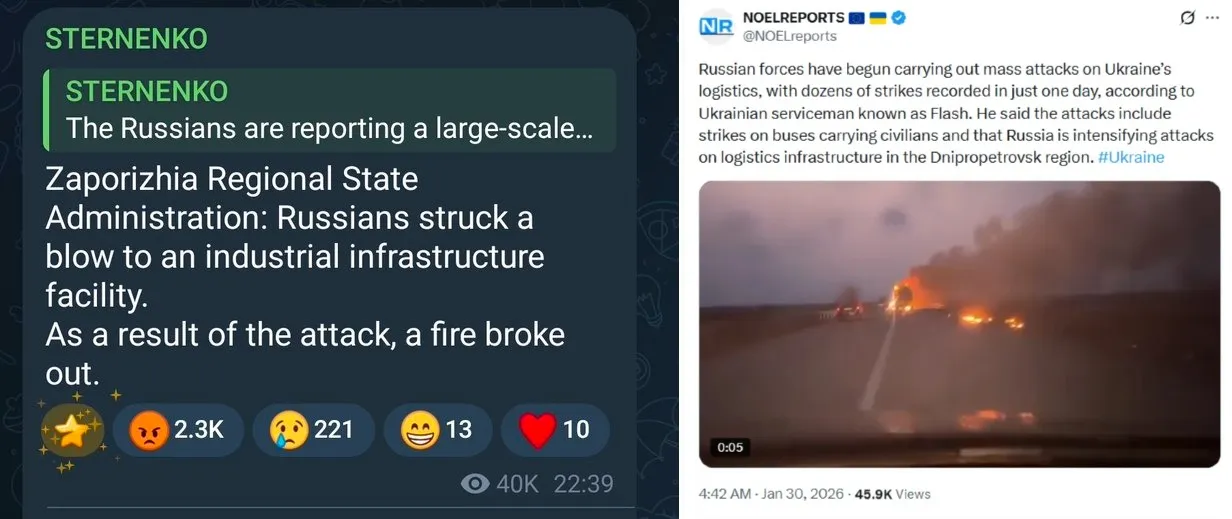
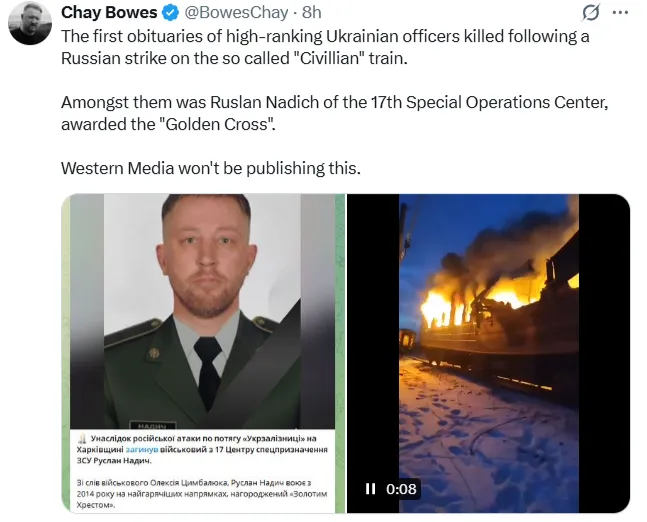
Others report a large-scale uptick in Russian strikes on Ukrainian logistics all over the country, which included a “civilian train” that happened to be carrying military members on board:
As per usual, many on the pro-Russian side will lose their heads over this apparent ceasefire. But it can be easily dismissed for a variety of practical factors: firstly, it’s only a week and only for Kiev—major Russian strikes on Kiev specifically are usually spaced out anyway, and a week is barely longer than the typical amount of time it takes to prepare for a new attack.
Secondly, it’s a gesture that accomplishes a lot by making what amounts to a tiny concession. A week won’t do anything for Ukraine, but it allows Putin to continue gaining favor for Trump—allowing Trump himself to “sell” Russia as the good guys more effectively, with Zelensky as the intolerable and disagreeable agitator.
A week doesn’t really buy time to do much as the type of damage recently witnessed at Kiev’s plants is essentially not repairable at all, to wit: (Video at link.)
Lastly, beyond the mere political posturing, there is the actual genuinely real humanitarian concern. Does Russia really want to freeze Kievan civilians in what is said to be coming -30°C temperatures?
One of the biggest secret reasons for the desperate ceasefire, however, appears to be Ukraine’s urgent situation regarding air defense interceptor missiles. Zelensky had just castigated “European partners” for not providing missiles, which allows Russian strikes to now come in unhindered as we had suspected:
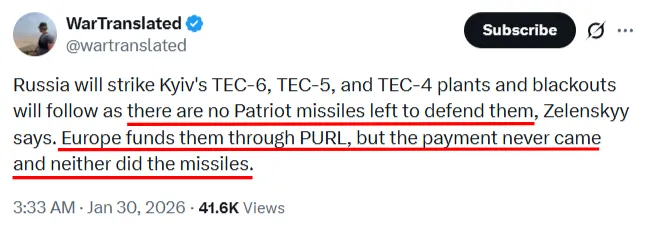
Note in particular the part about the PURL (Prioritized Ukraine Requirements List), which I had debunked before as a scam meant to give the impression of European “solidarity”. Here we see just how “effective” it has been.
A last interesting take from the War Chronicle military analysis channel:
According to preliminary estimates, if the attacks on Kyiv and the region’s power grids continue, the consumption of diesel fuel in the Ukrainian capital could reach 300 to 900 tons per day. This amount will be needed only for the operation of emergency services and industrial generators at production and utility facilities.
If the power supply problems persist, the purchase of diesel fuel on an industrial scale in Kyiv alone over a year could cost 200–500 million dollars.
However, this problem is scalable. There are about 100,000 boiler houses of various sizes in Ukraine: from district to school and hospital/industrial ones.
It is almost impossible to fully power them with diesel generators, but those that can still be connected will also require a large amount of fuel.
A power grid collapse on such a scale is already forcing Kyiv to redistribute some fuel from the front to civilian facilities. The connection here is direct: the more intense and dense the attacks on the energy sector are, the greater the scale of fuel redistribution required for civilian facilities.
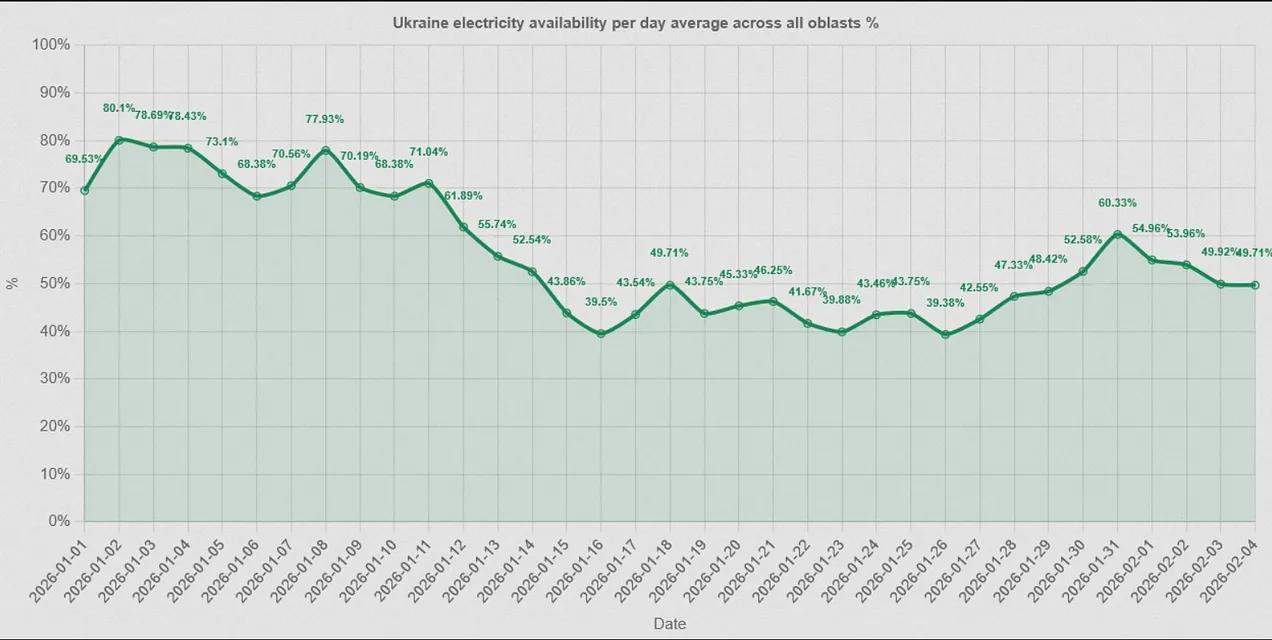
So far, the overall availability of electricity has dropped from 43% to 32.7%. This is already considered a threshold value for the degradation of critical networks.
However, a severe energy crisis will be reached when this share drops below 30%, and ideally to less than 25%. When this last figure is reached, the city’s sewage and other purification systems will not be able to operate on generators continuously and will require periodic long-term shutdowns. Interestingly, during the energy crisis in the Gaza Strip, a drop in power supply below 10% led to the complete shutdown of 70% of all critical facilities that could not operate on generators for any length of time. Given the electricity needs for Kyiv, the situation could be even worse, as generators in any case are a backup power source, not the main one. In a sense, the figure of 32.7% availability of the power grid is the last mark before a potential exodus from the cities due to the impossibility of maintaining a normal life.
However, the maximum effect can be achieved under two conditions: the continuation of attacks on power grids in major cities with a parallel transition to the isolation mode of Ukrainian nuclear power plants and their transformation into energy islands, cut off from the general network. Russia is still trying to avoid the latter.
Let’s switch over to the frontline. We haven’t covered it in a while because, quite frankly, the Russian side has continued to be “on vacation” since Christmas time, moving very little since then. However, recently they did begin some activity again, though still nothing like the steamroller of last year’s fourth quarter.
Western publications are now even mocking Russia as having the slowest advance in the history of warfare:

https://www.telegraph.co.uk/world-news/ ... -any-army/
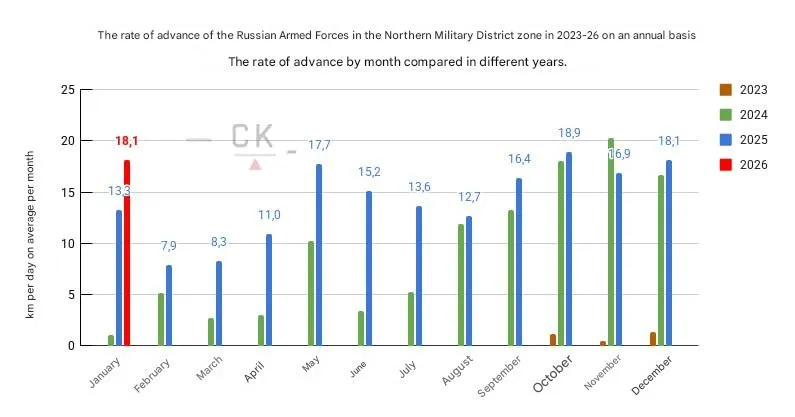
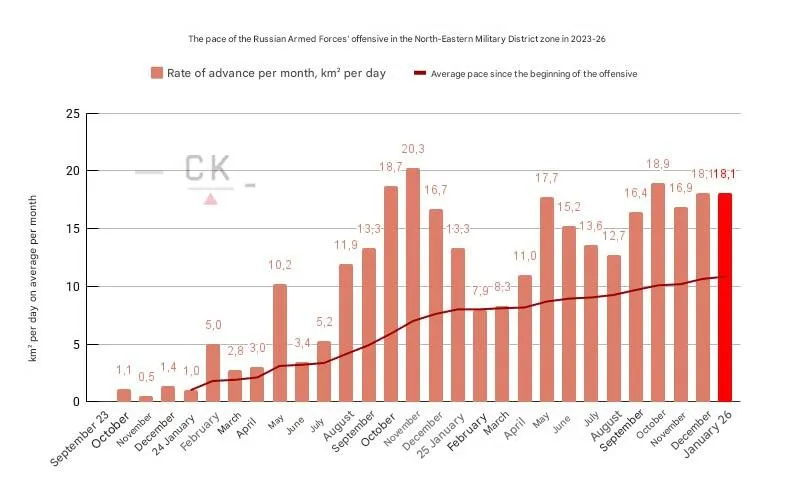
They’ve even drew up these nifty charts:
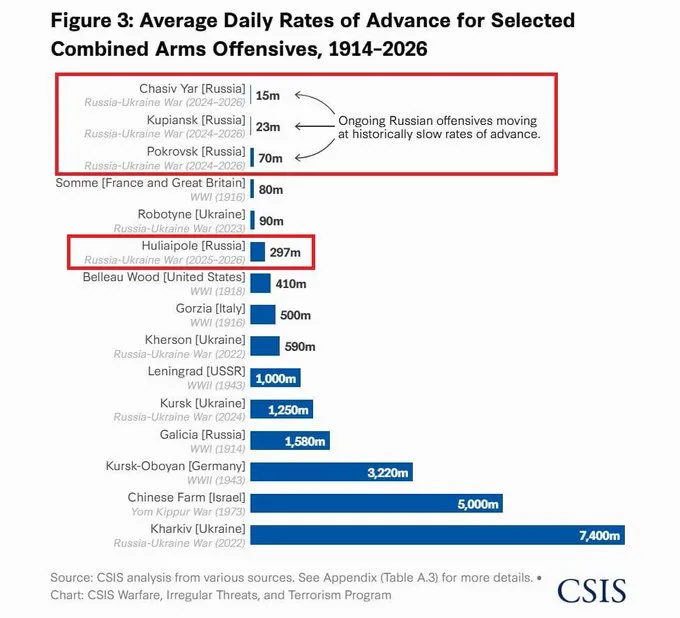
It is fascinating, though, how much urgency and desperation in the Western order such pitifully ‘slow advances’ are generating. If it’s really such a cock-up worthy of comparison to wars from hundreds of years ago, then why all this effort from the detractors? Russia’s failure and imminent loss should simply be self-evident to us.
Yet for some reason, we continue to get contrary signals. For instance, another exchange of bodies occurred yesterday:
Kremlin aide Vladimir Medinsky said that “within the framework of the Istanbul agreements, the bodies of 1,000 dead Ukrainian soldiers have been transferred to Ukraine”, adding that “bodies of 38 dead Russian soldiers have been transferred to Russia”.
Updated list:
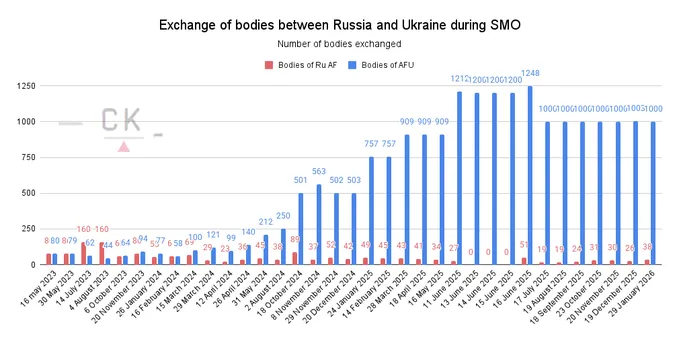
The Russian side appears in good spirits and confident. Here the head of Russian GRU Igor Kostyukov—who led the Abu Dhabi “tripartite” negotiations for the Russian side—cheerfully reveals that Russians are in a great mood, while Ukrainians are in a “sad mood”: (Video at link.)
"The Ukrainians are in a sad mood. We're in a good mood": Igor Kostyukov, Chief of the Main Directorate of the General Staff, gave a succinct answer to Rossiya 1's question about the mood at the talks in Abu Dhabi.
He urged the media not to inquire about the negotiation process, as public comments negatively impact it.
Igor Kostyukov is heading the Russian delegation at the Ukraine talks in Abu Dhabi.
This does not seem like the demeanor representative of a side that’s been ground down to a historic and demoralizing crawl.
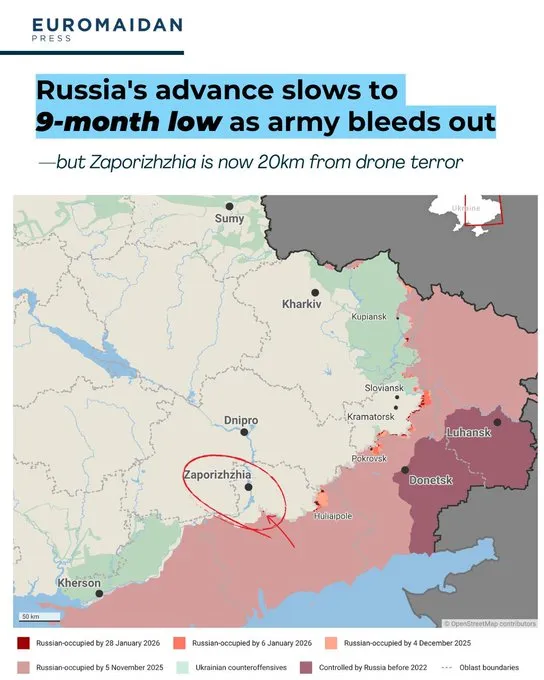
But let’s take a look at where Russia has been advancing and what clues it can give us about the nature of the current battlefield dynamic.
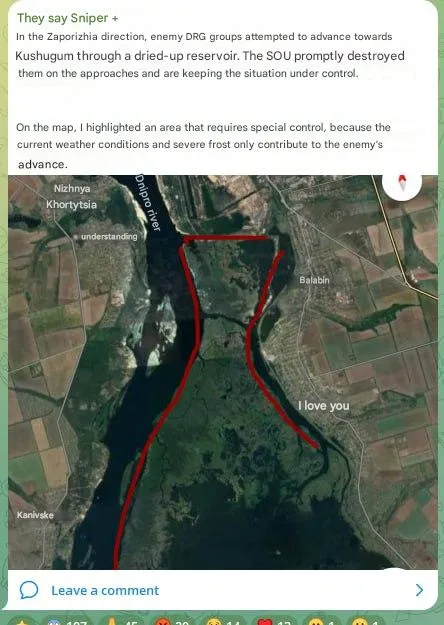
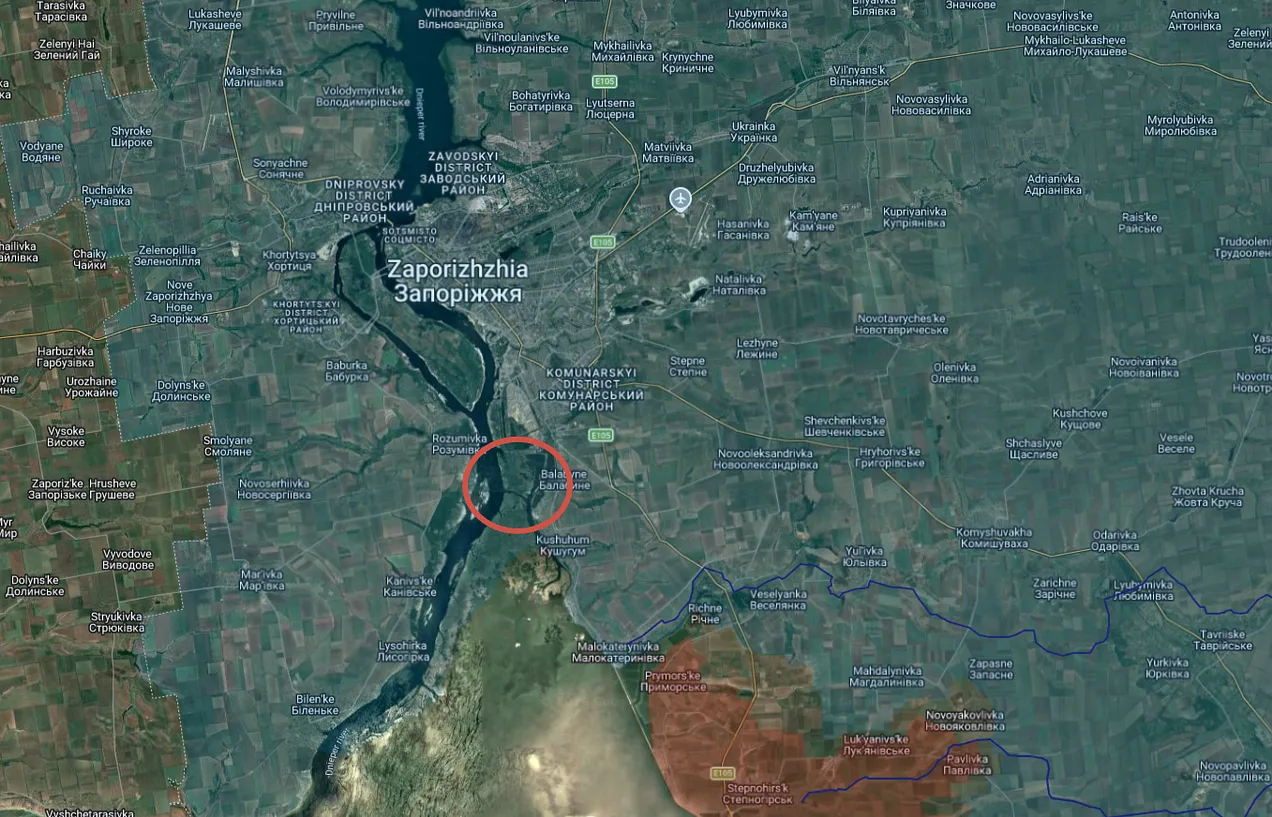
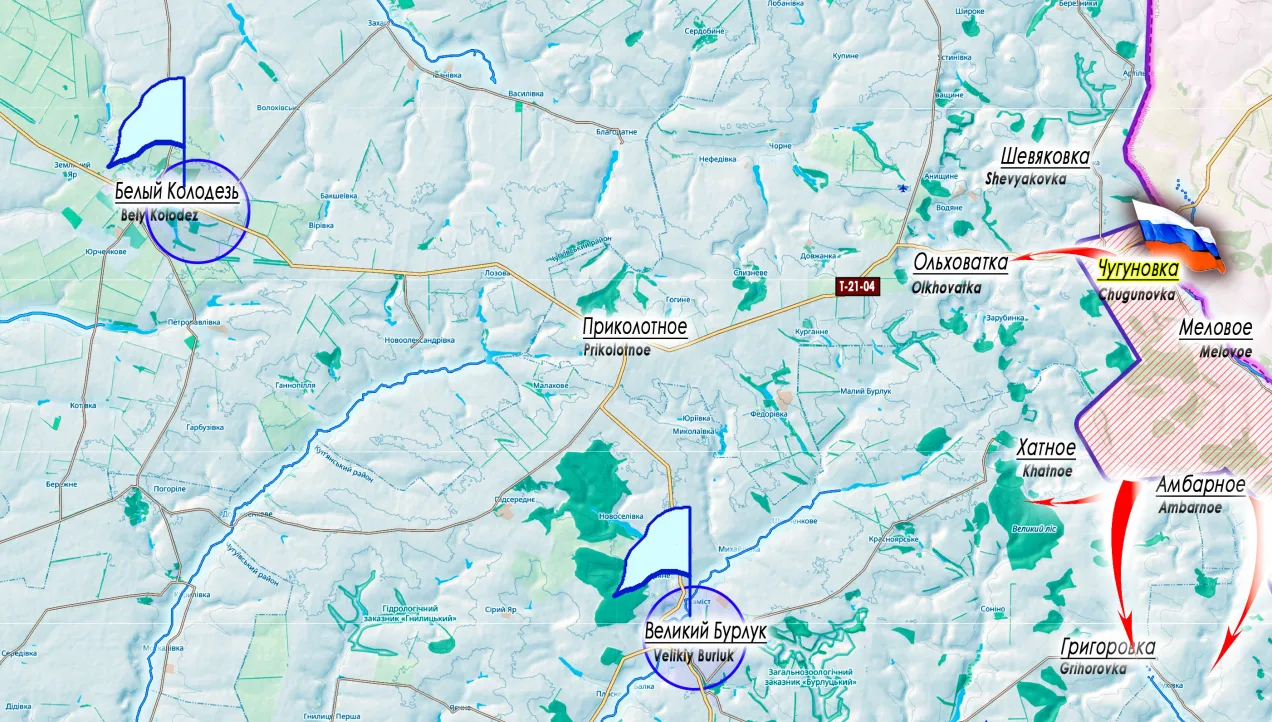
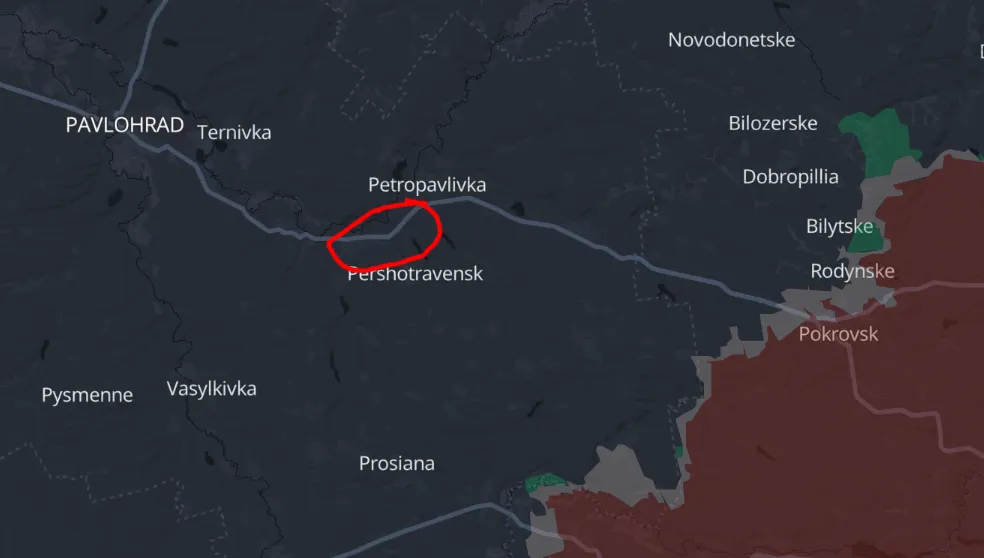
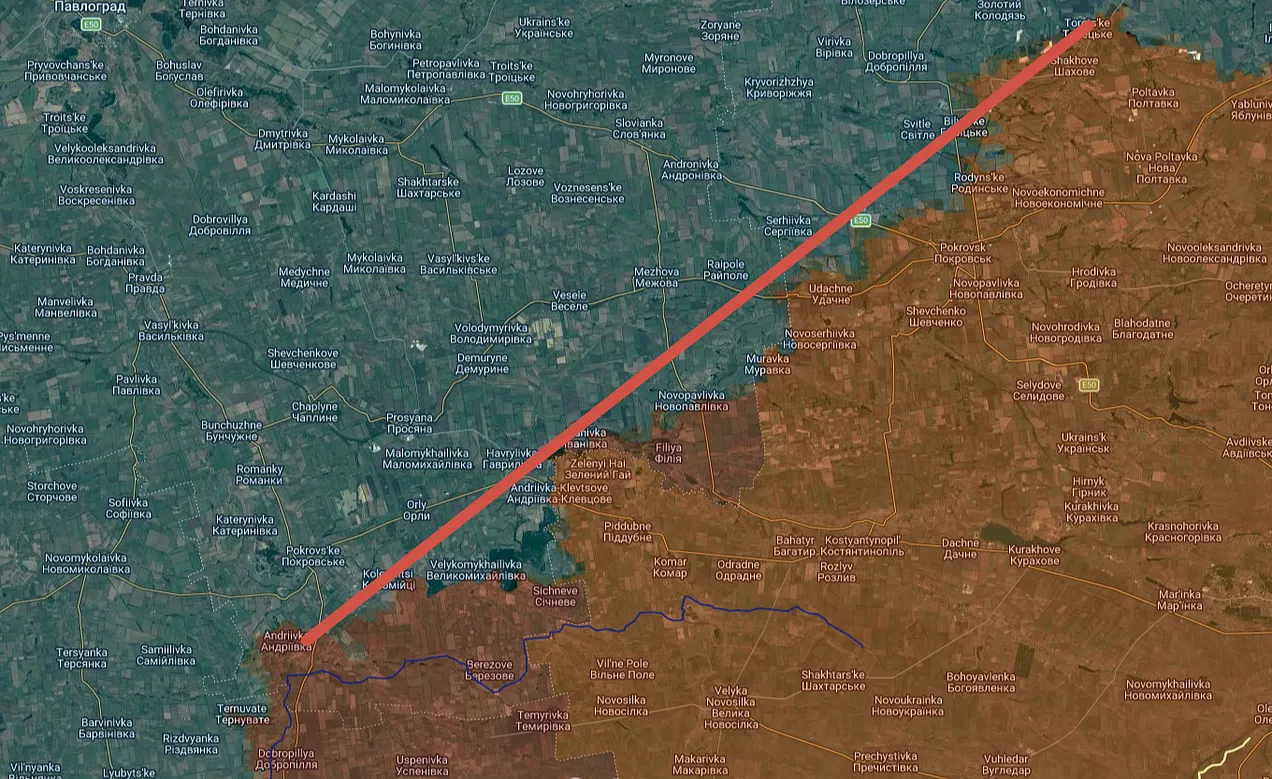
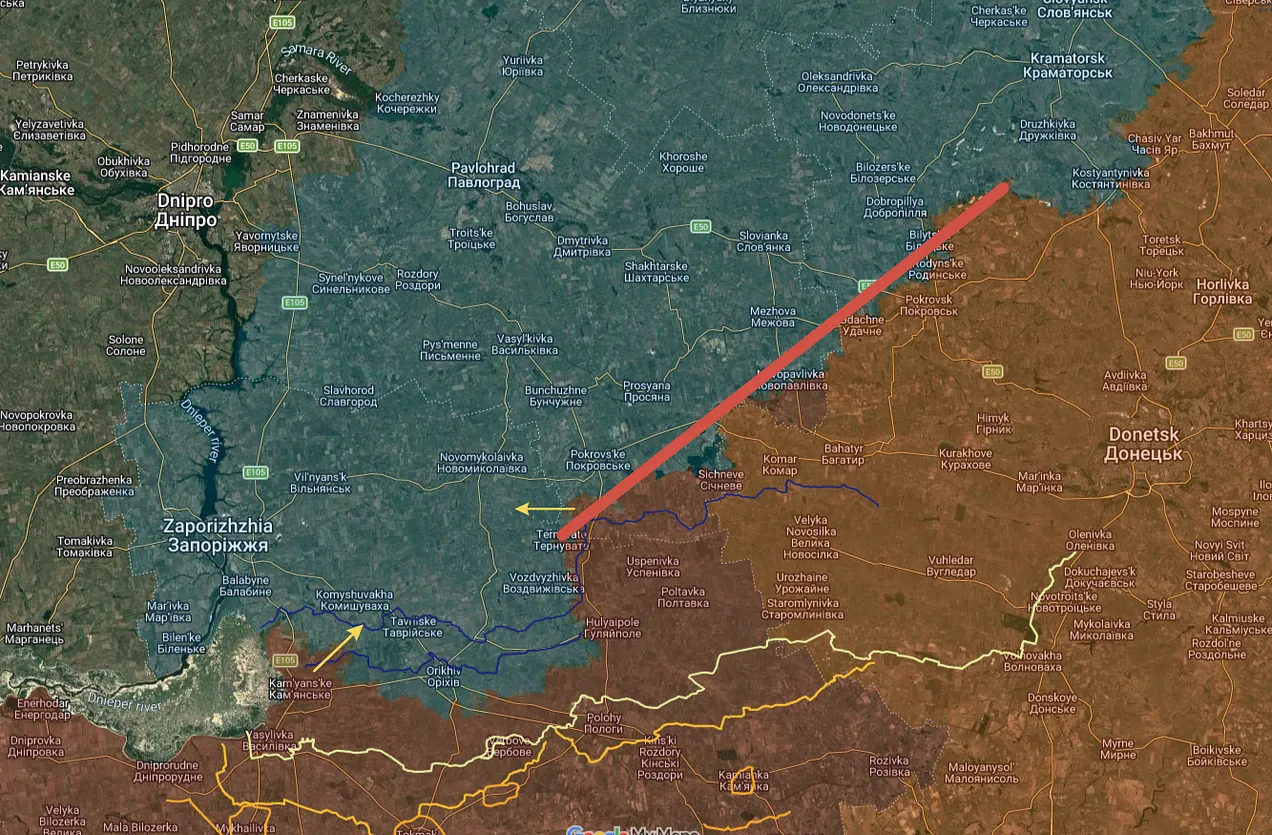
Most notably, Russia has continued advancing on both western and eastern sides of Zaporozhye. On the western side, Russian forces have made headway into a new northeasterly salient that appears to be following the first main Ukrainian line of defense there, skirting just around it:
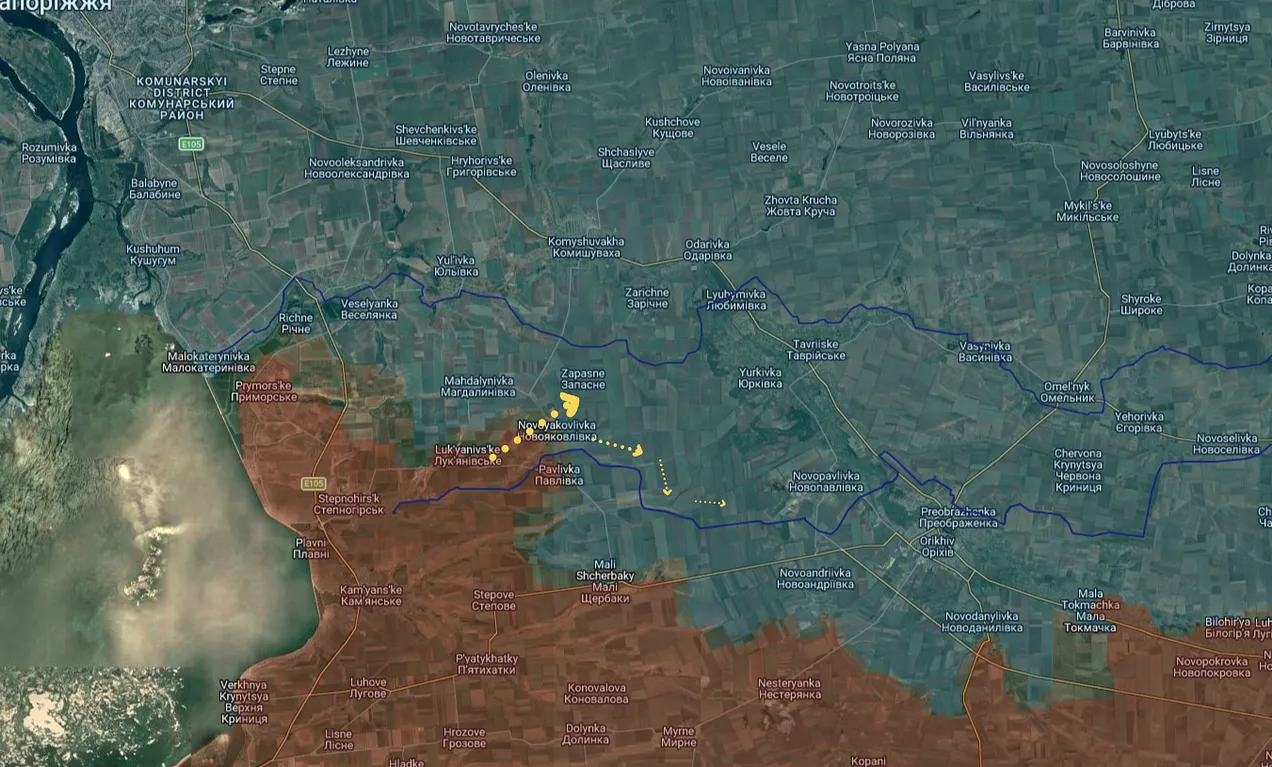
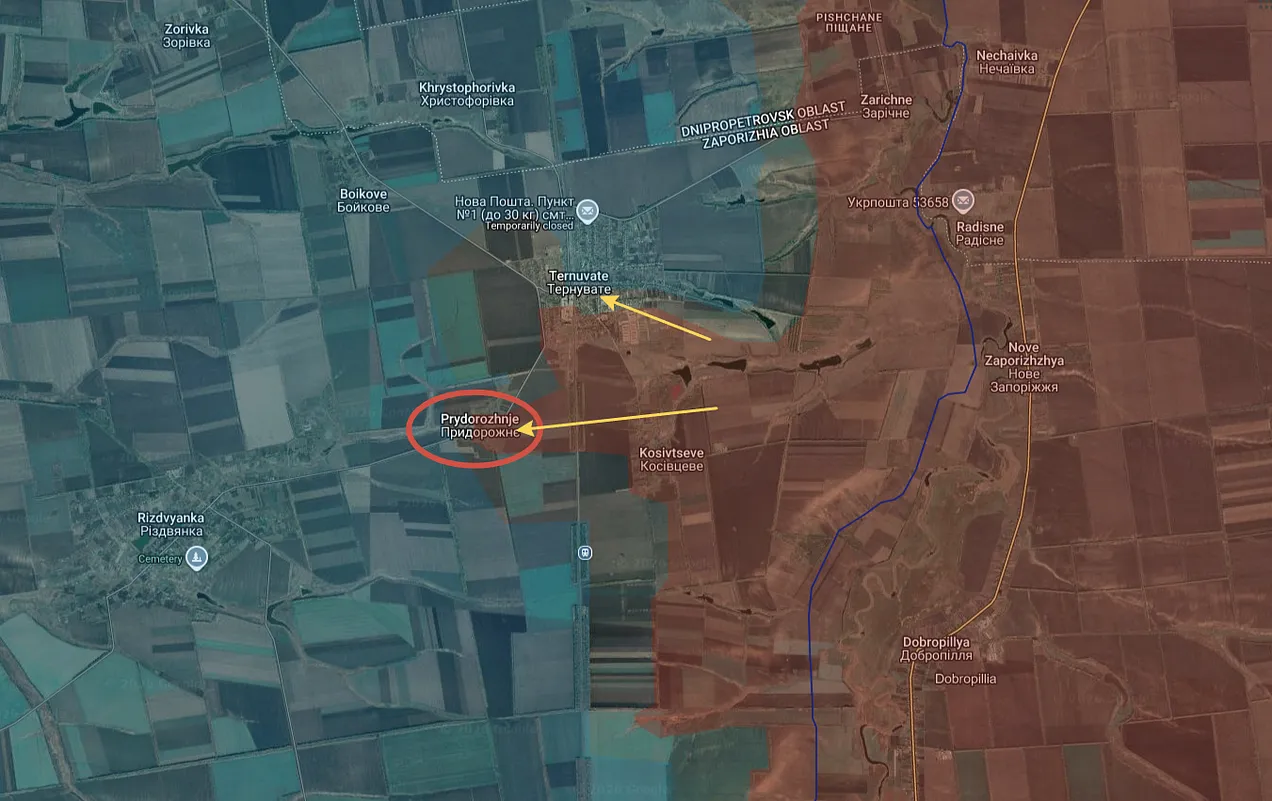
On the eastern side, Russian forces were said to have just entered and captured the settlement of Ternuvate, circled in red below:
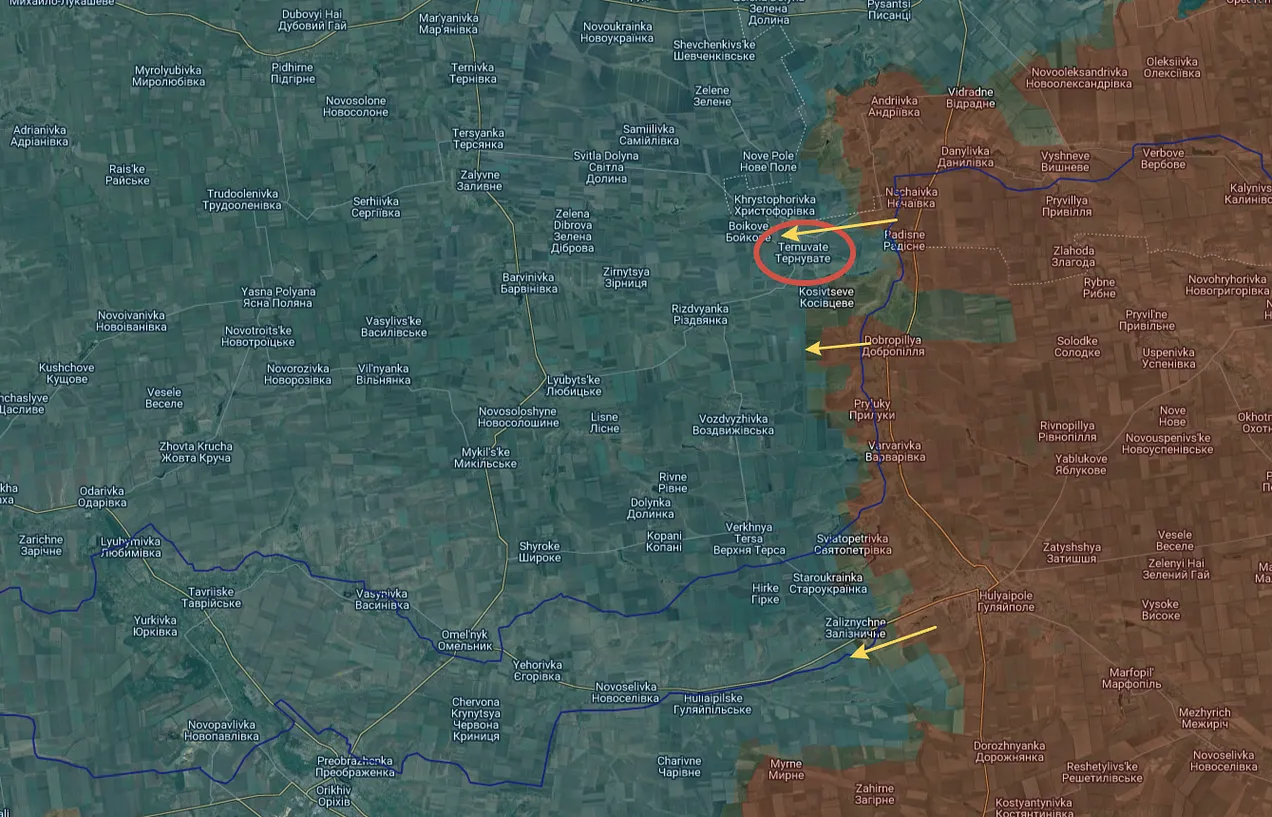
Here is the video of the flag-planting ceremony by the 36th Motor Rifle Brigade of the 29th Guards Combined Arms Army of the now-legendary “Eastern Express”: (Video at link.)
“UNITS OF THE “EAST” GROUP OF FORCES HAVE LIBERATED THE POPULATED POINT OF TERNOVATOE
 Guardsmen of the 36th Motor Rifle Brigade of the 29th Army of the “East” Group of Forces have, with decisive and skillful actions during prolonged battles, liberated the major populated point of Ternovatoe in the Zaporizhia region. As a result of active combat actions, soldiers from Transbaikalia have taken control of an important enemy defense area on the western bank of the Gaychur River, with a depth of up to 5 km and an area of more than 20 sq. km, and cleared over 580 buildings. The enemy’s losses amounted to up to 1 company of manpower and over 20 units of equipment (armored personnel carriers and pickup trucks) from the 33rd Separate Motor Rifle Brigade of the Ukrainian Armed Forces, over 45 hexacopters of the enemy type “Baba Yaga”, as well as 5 ground robotic complexes. The occupation of this area has allowed to expand the bridgehead for further offensive on the western bank of the river Gaychur.
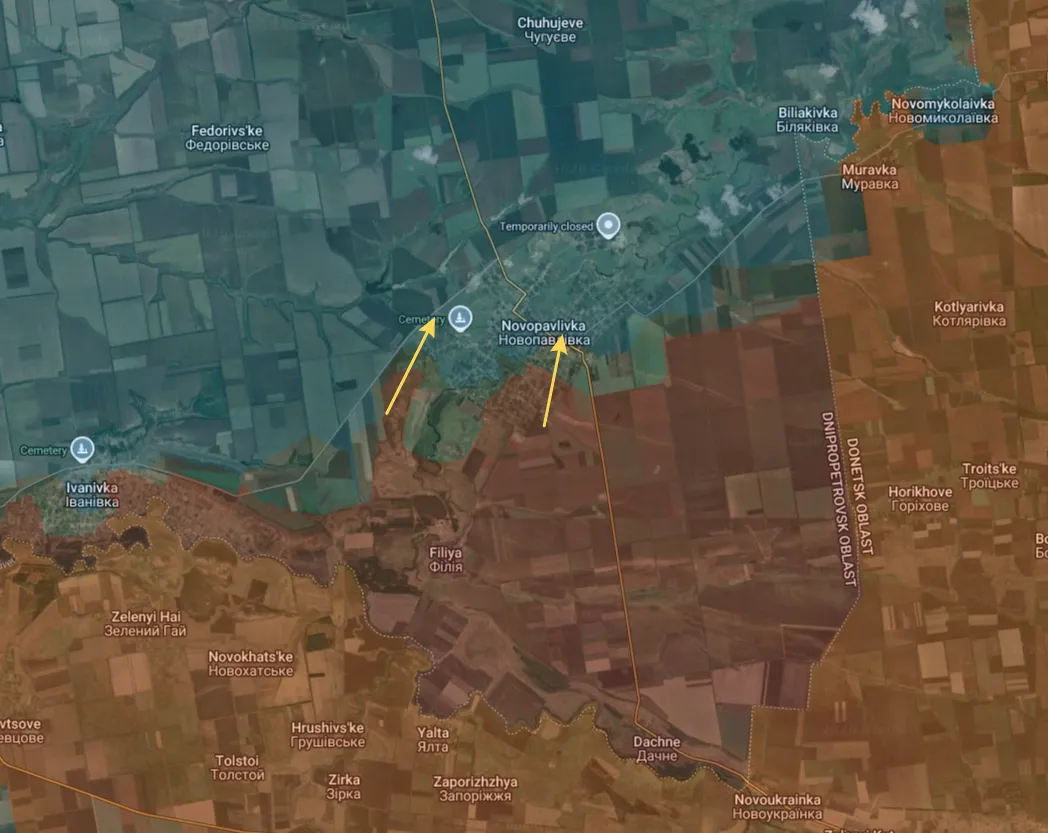
Just northeast of there, Russian forces have advanced further into Novopavlovka, entering the town center according to some reports:
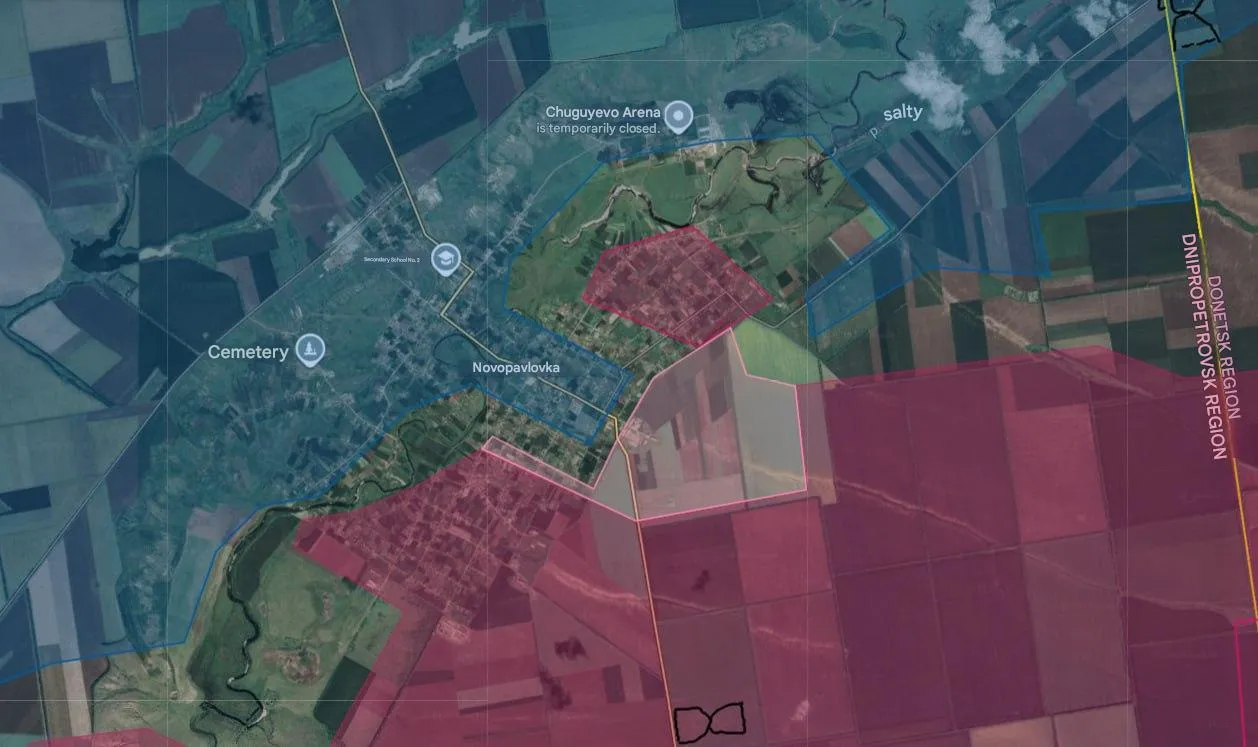
Other Russian maps have even more of Novopavlovka captured from the north:
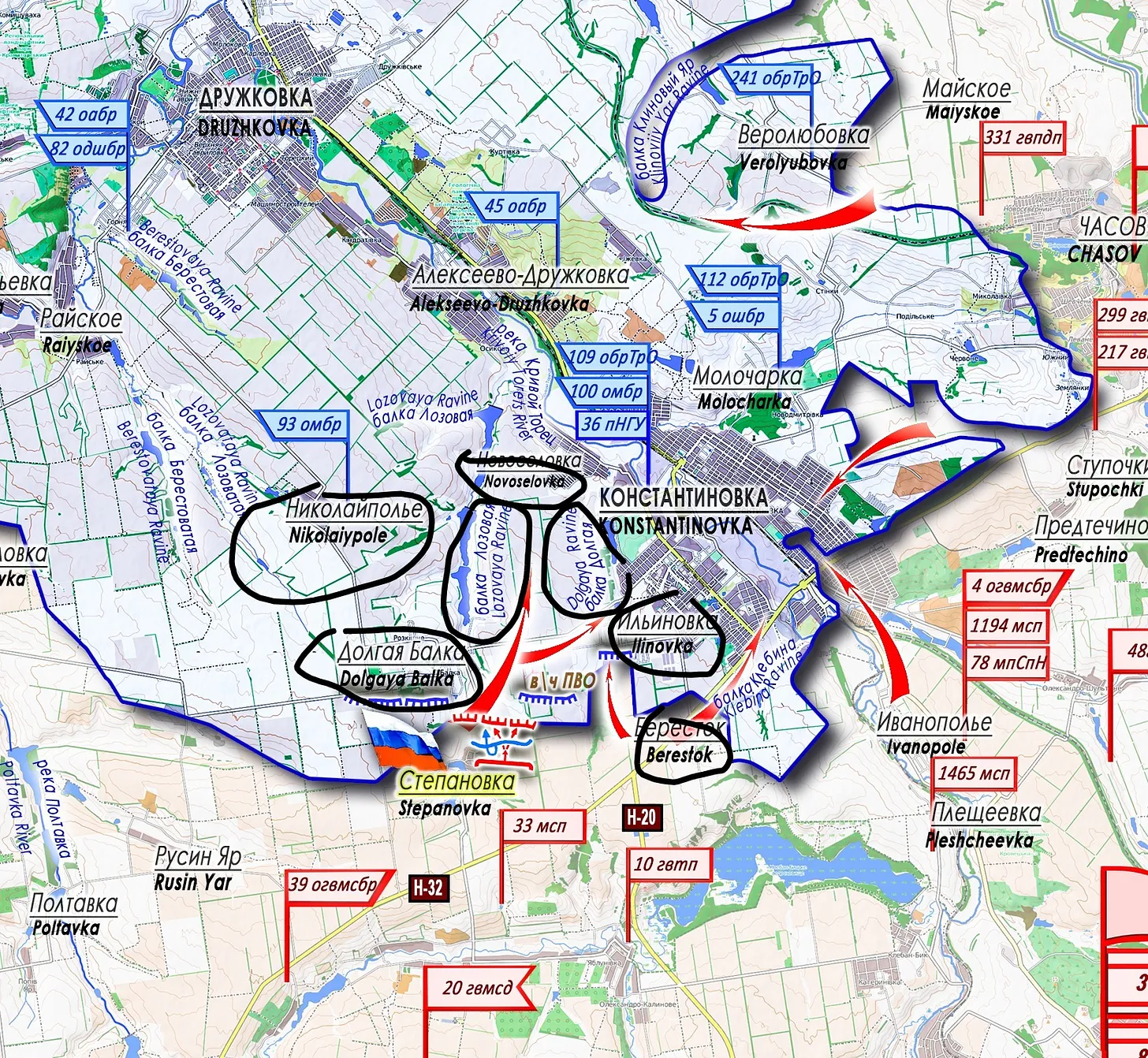
Further north on the Konstantinovka line, Russian forces captured either half or all of Berestok at the southern tip, depending on source:
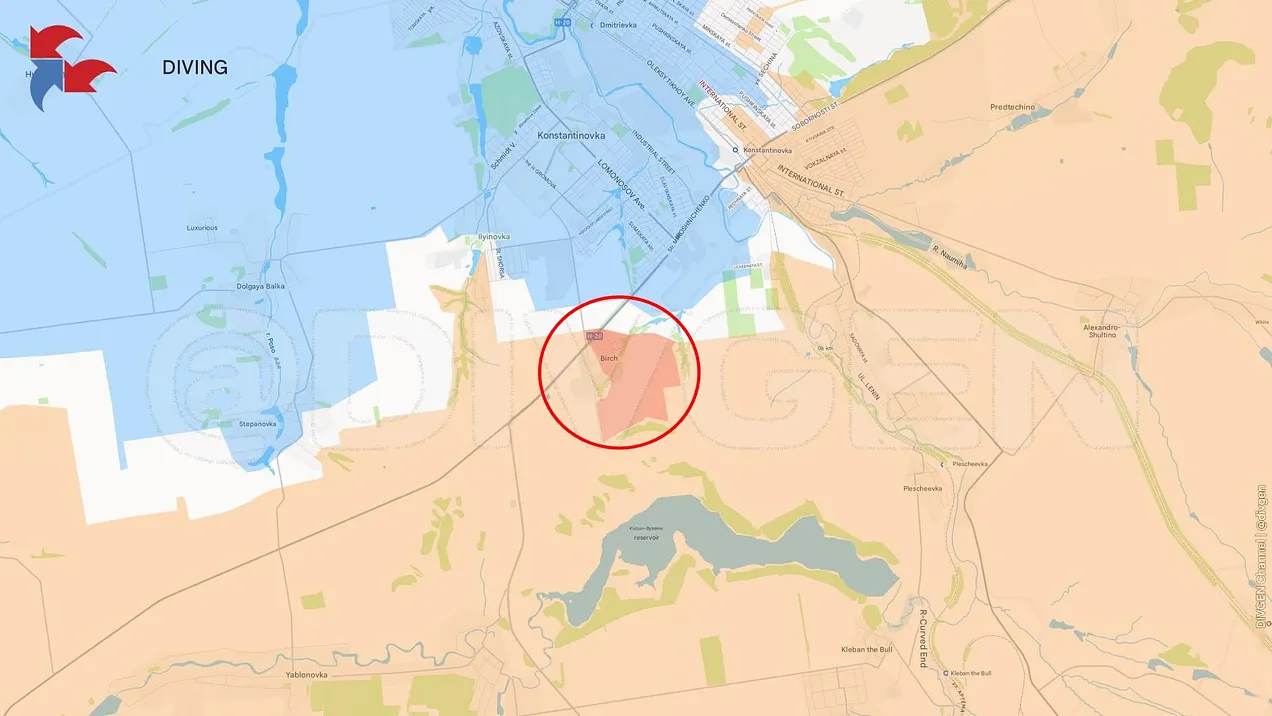
Note I’m using a few different map types this time because our favored cartographer Suriyak has reportedly gone on a brief vacation with only spotty updates to his map.
Besides Berestok though, it can be seen Russian forces have consolidated and advanced further into the city itself from the east:
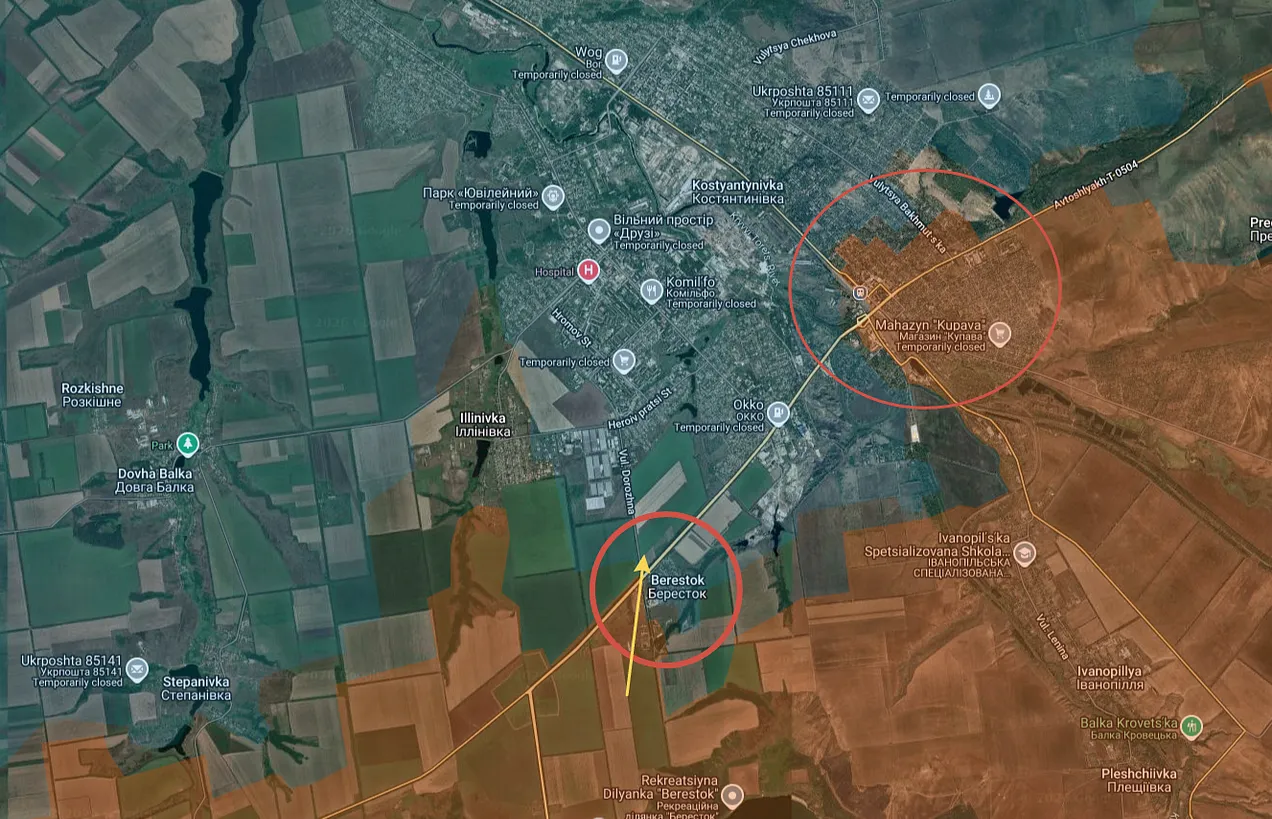
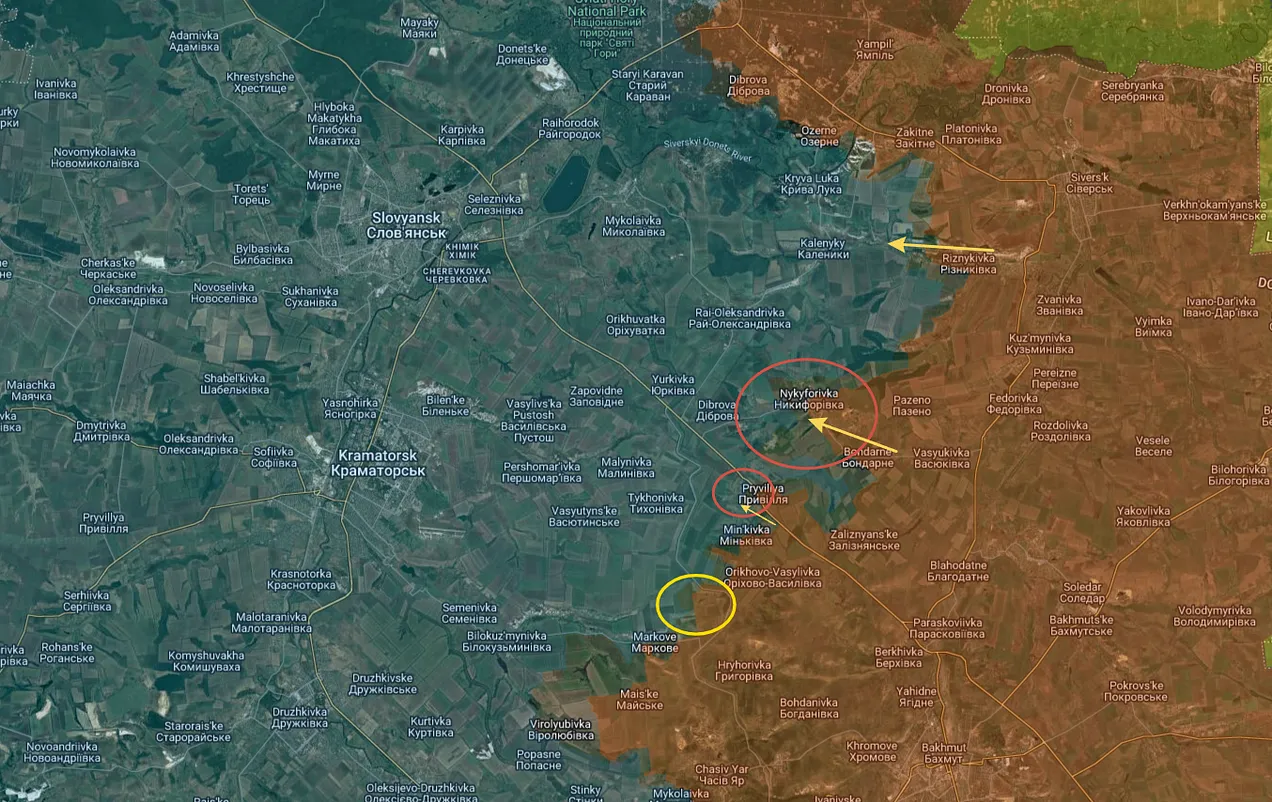
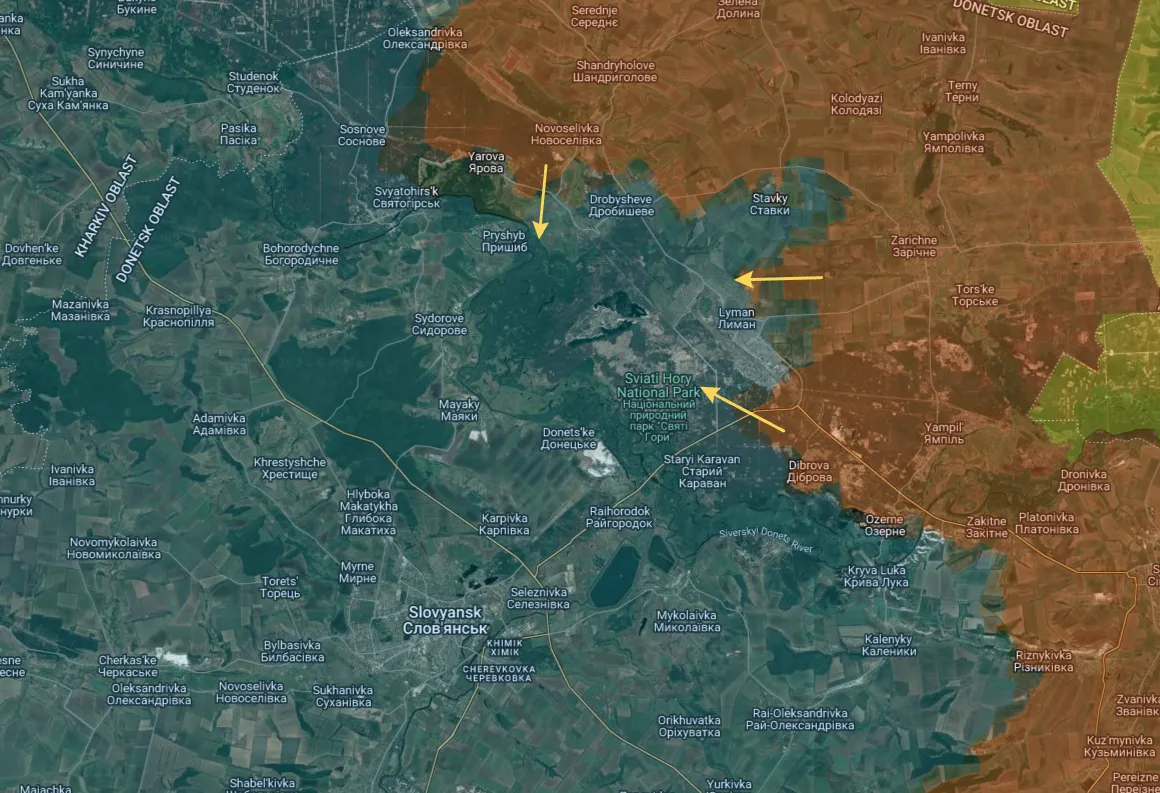
Switching to AMK’s maps, we see further north on the Seversk line that Russian forces are slowly inching westward along the broad front—the yellow areas are newly captured positions:
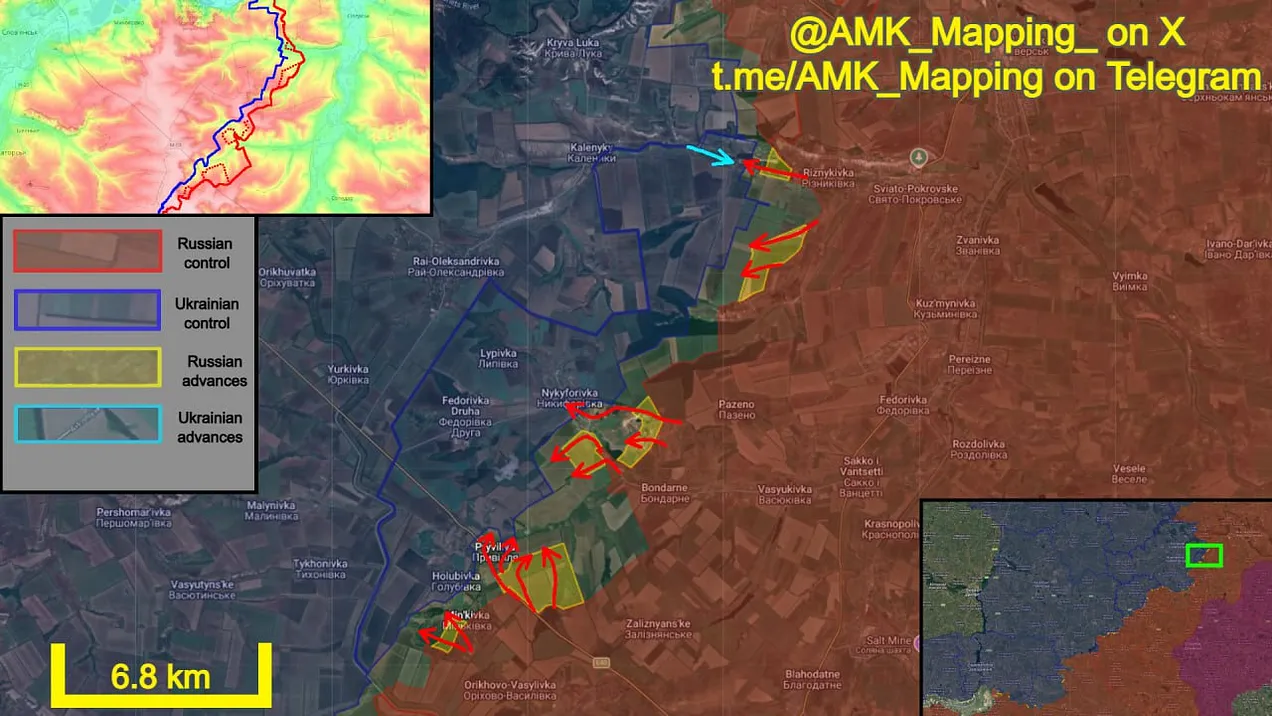
Seversk is circled for reference, and Slavyansk can be seen on the western edge:
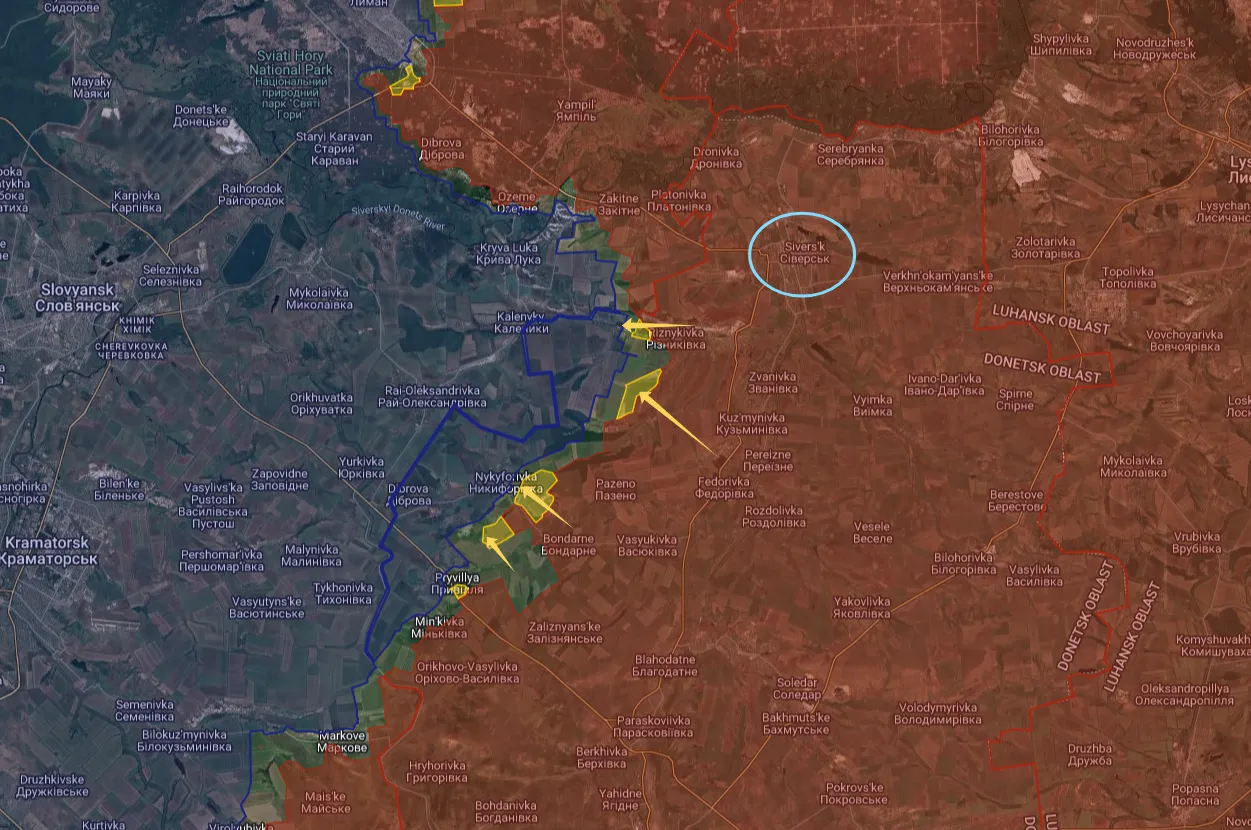
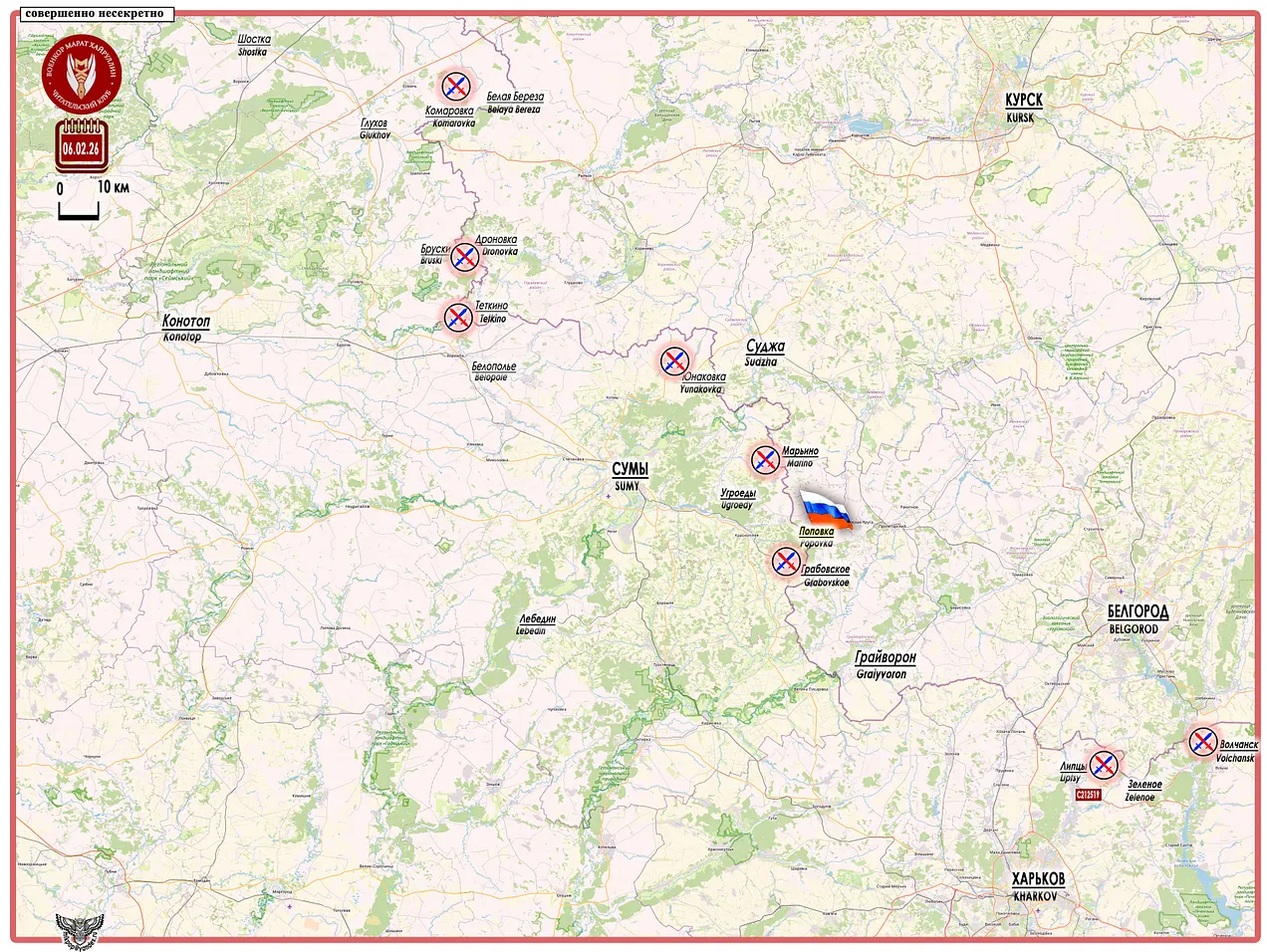
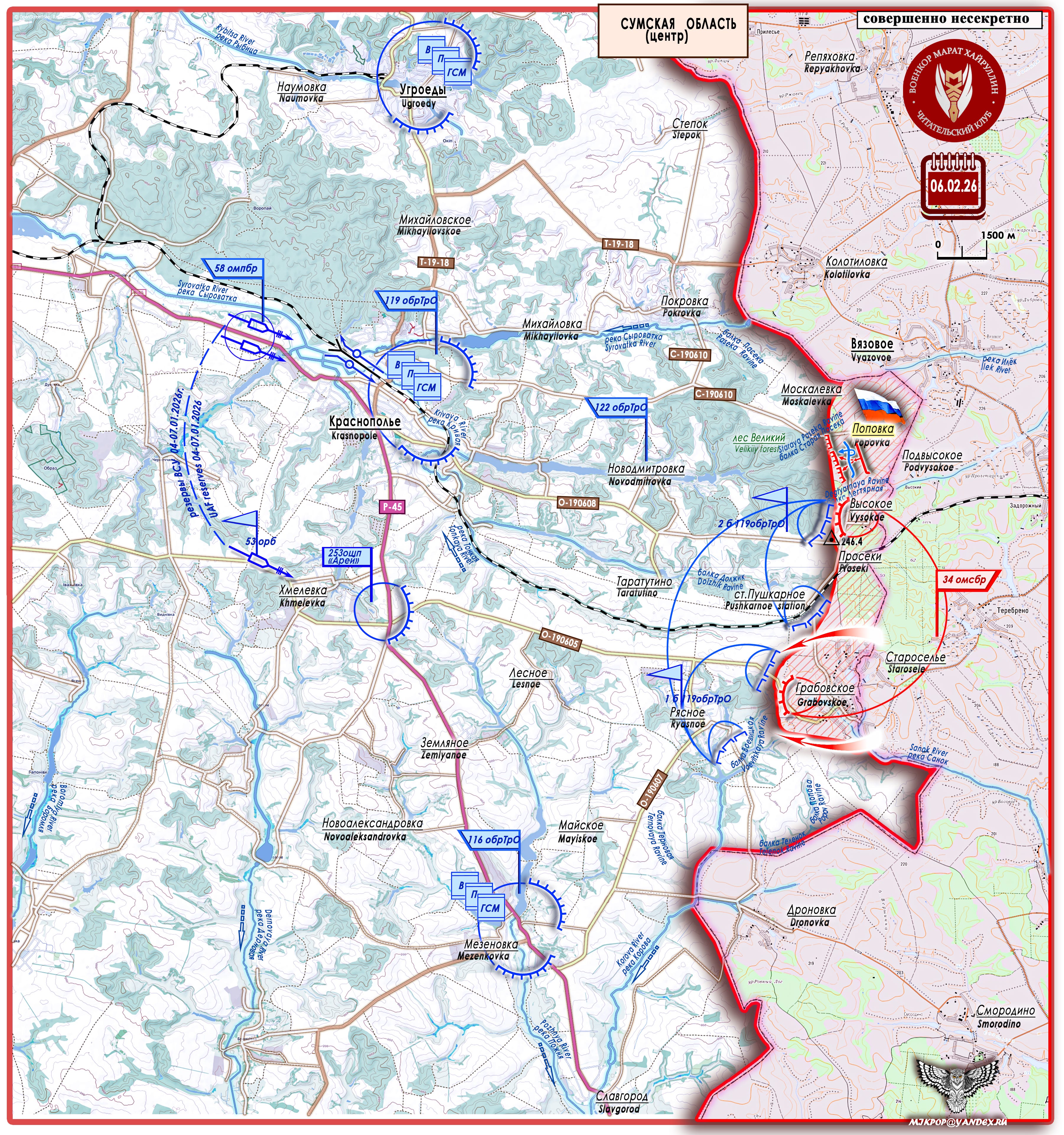
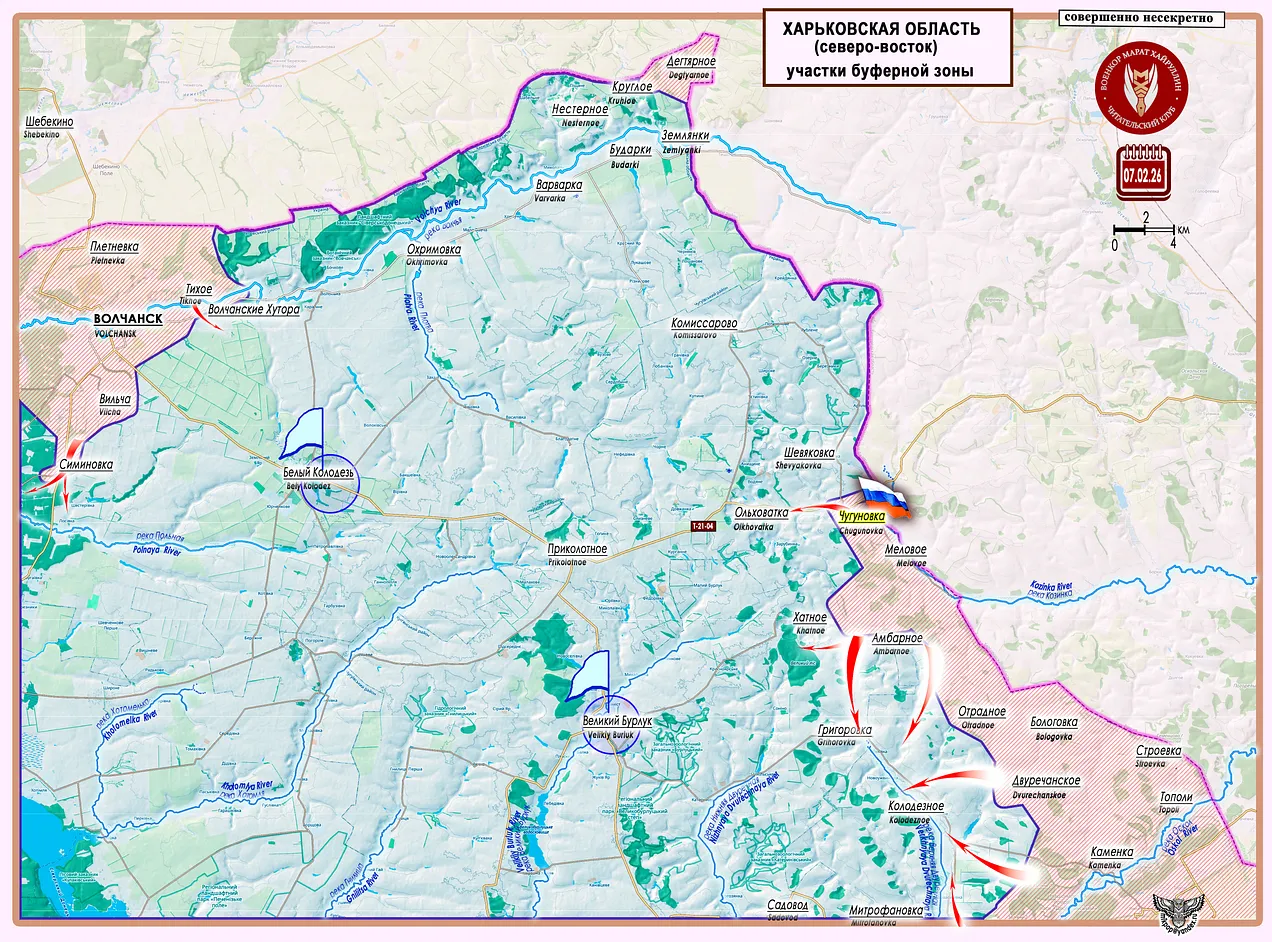
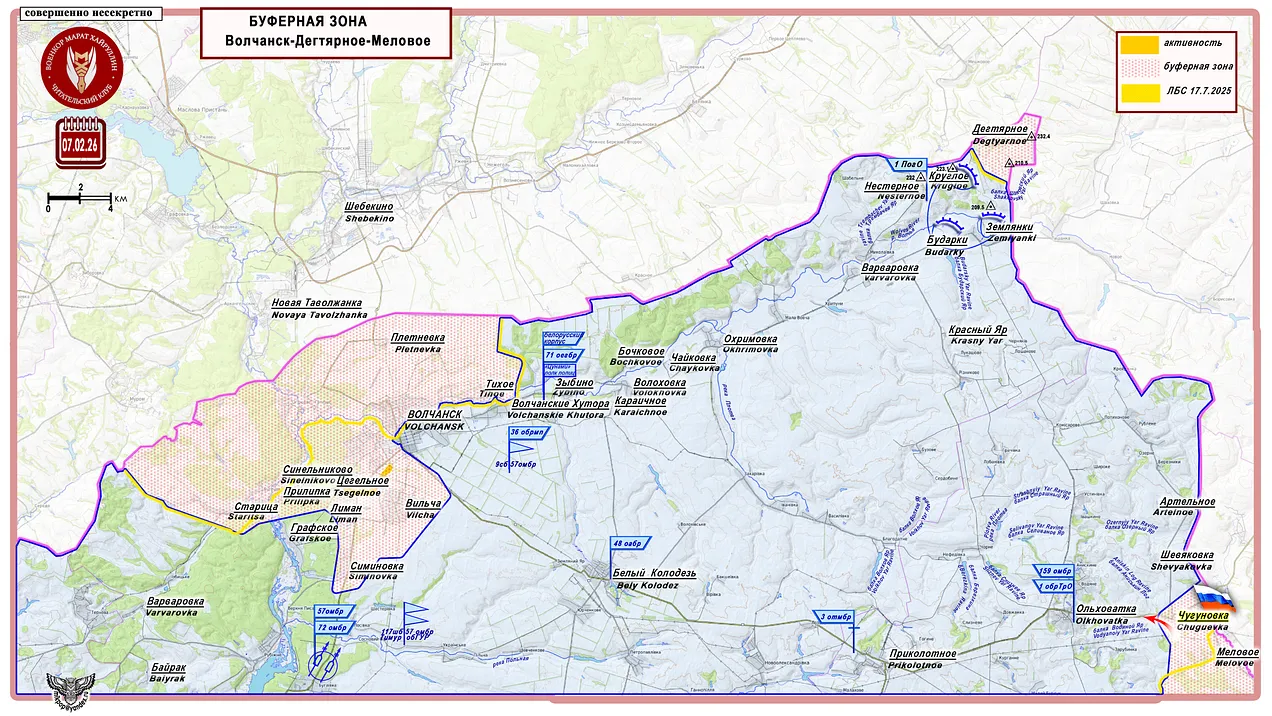
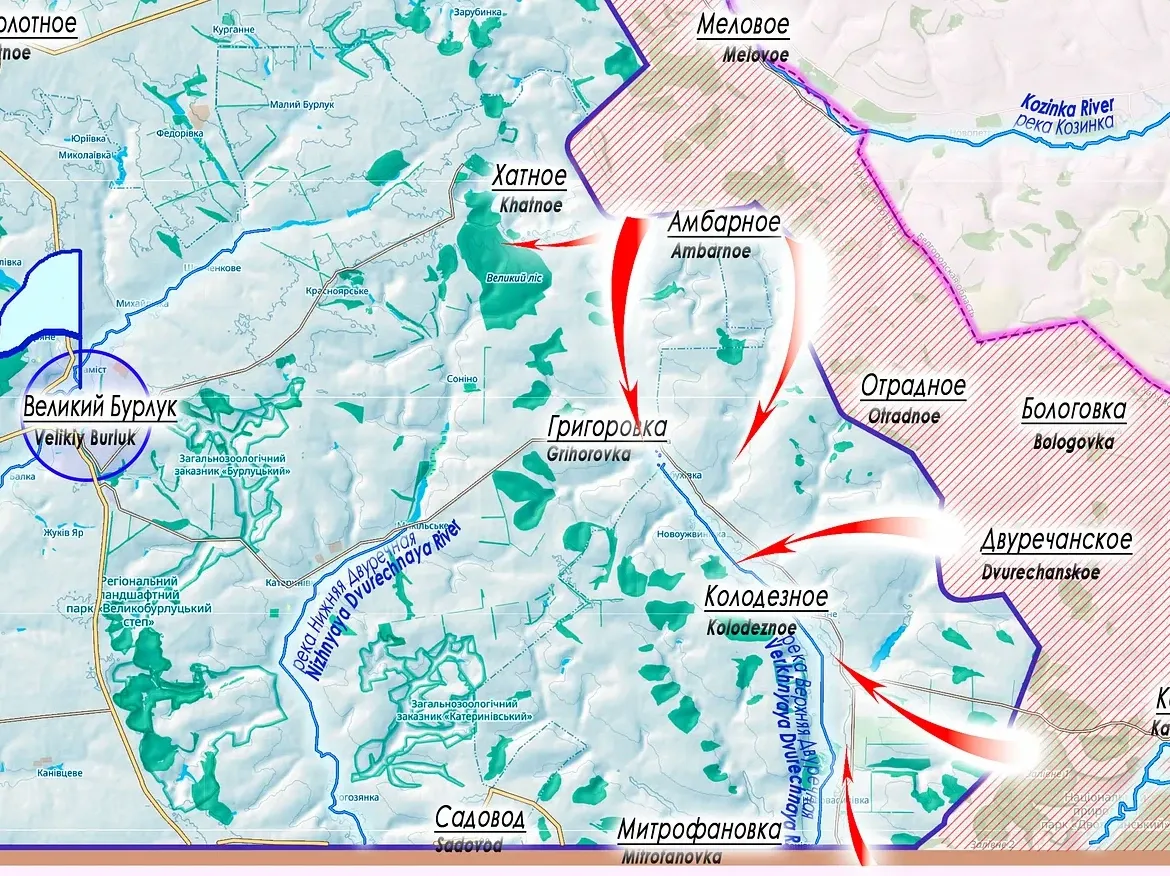
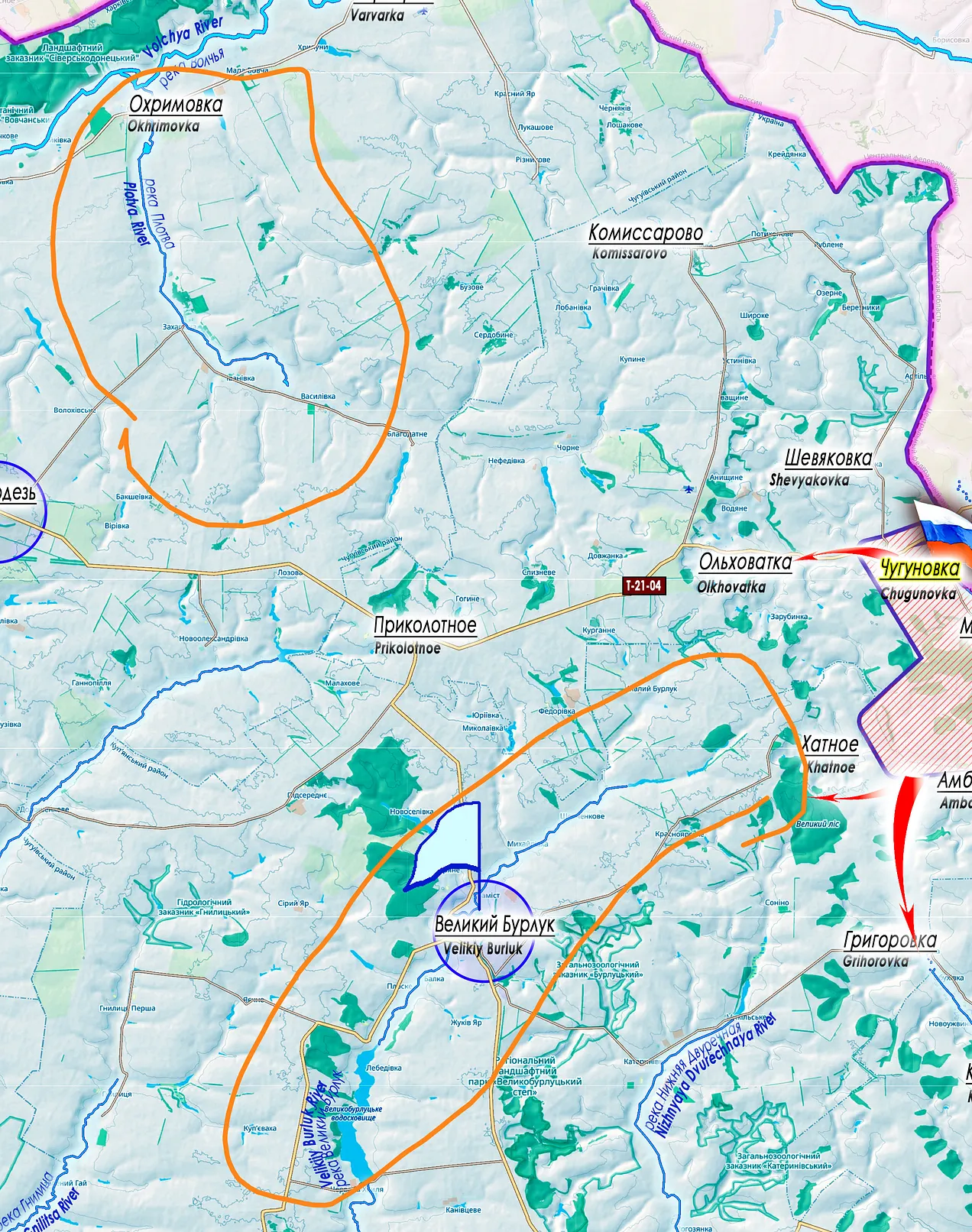
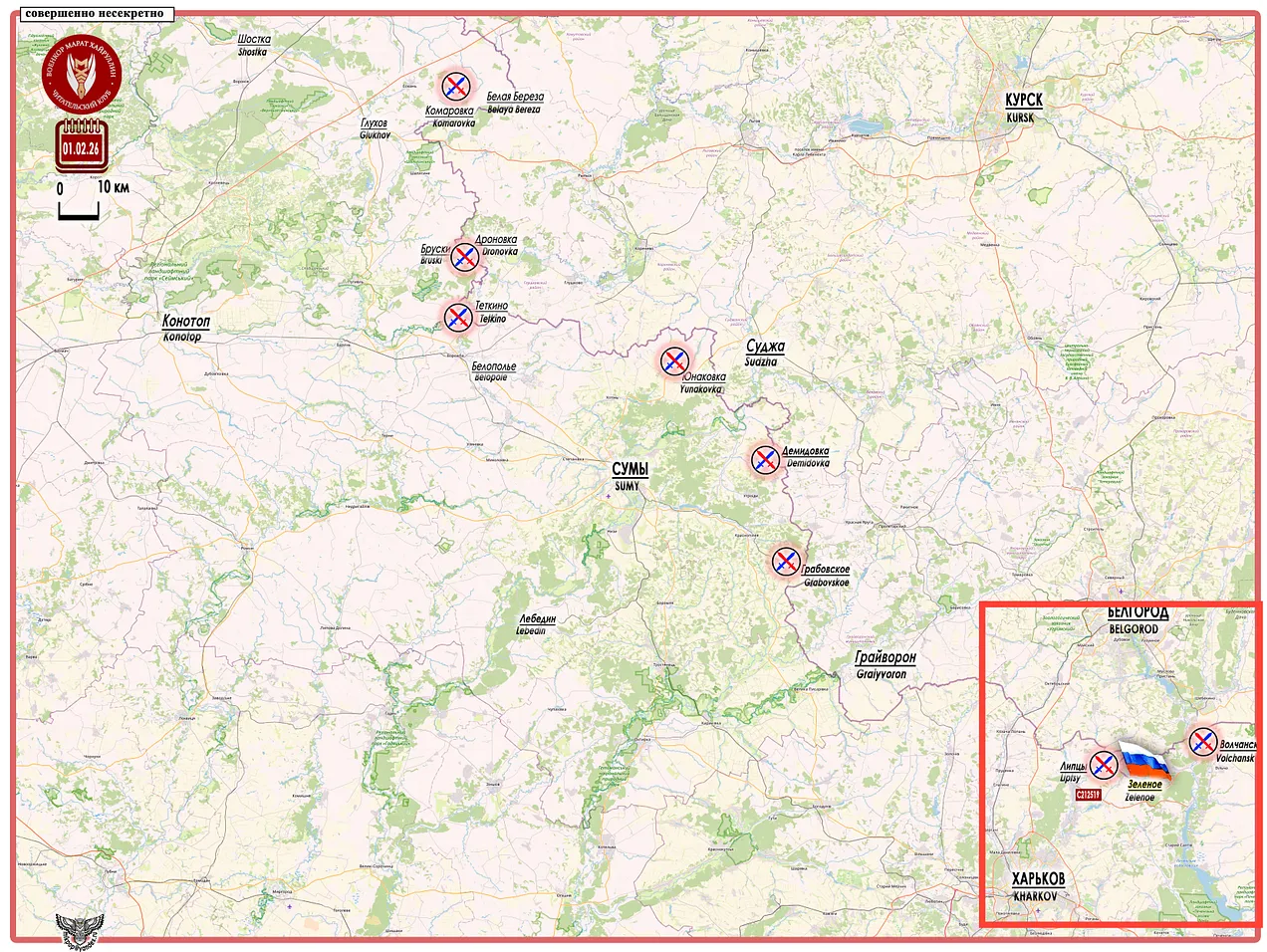
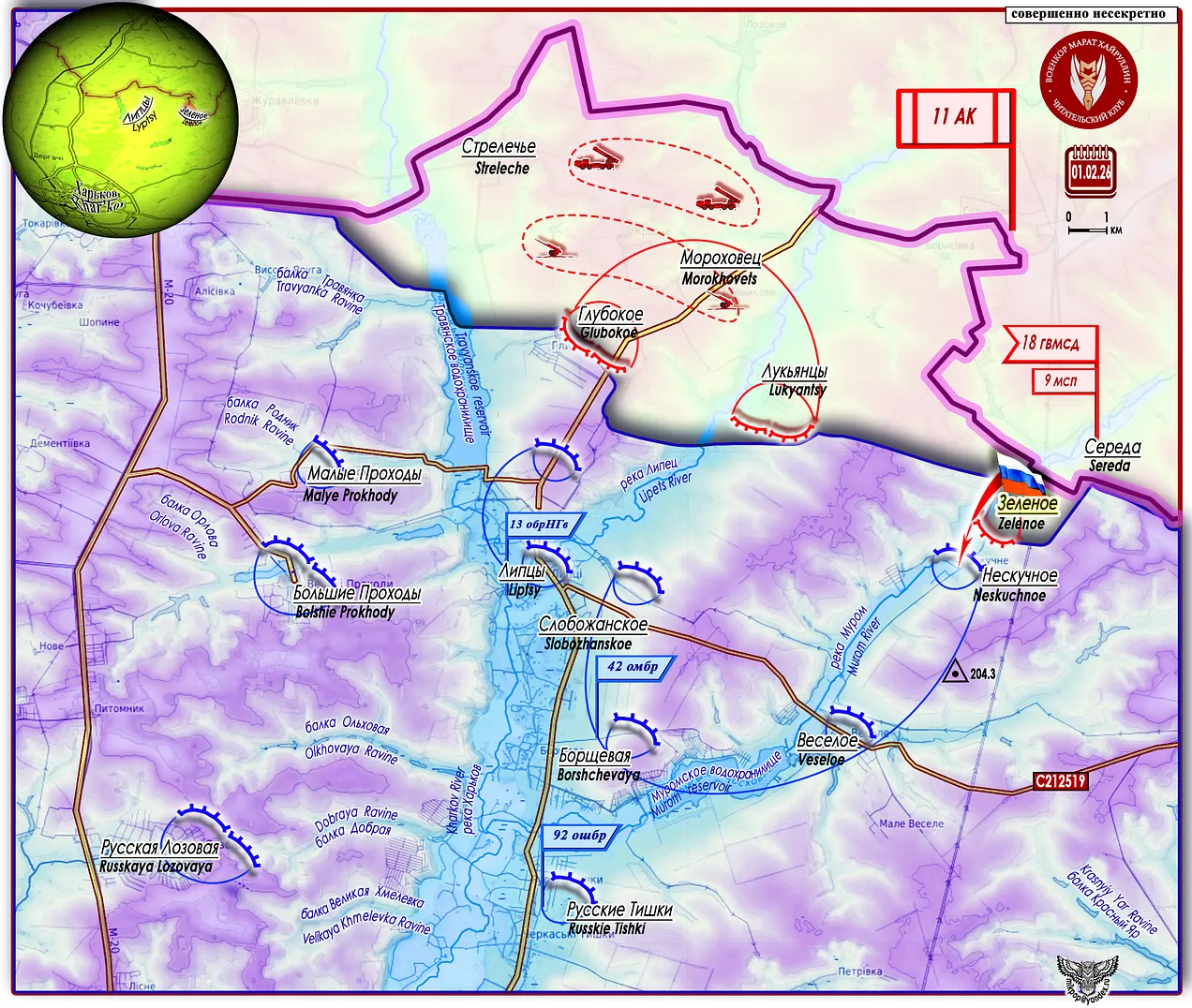
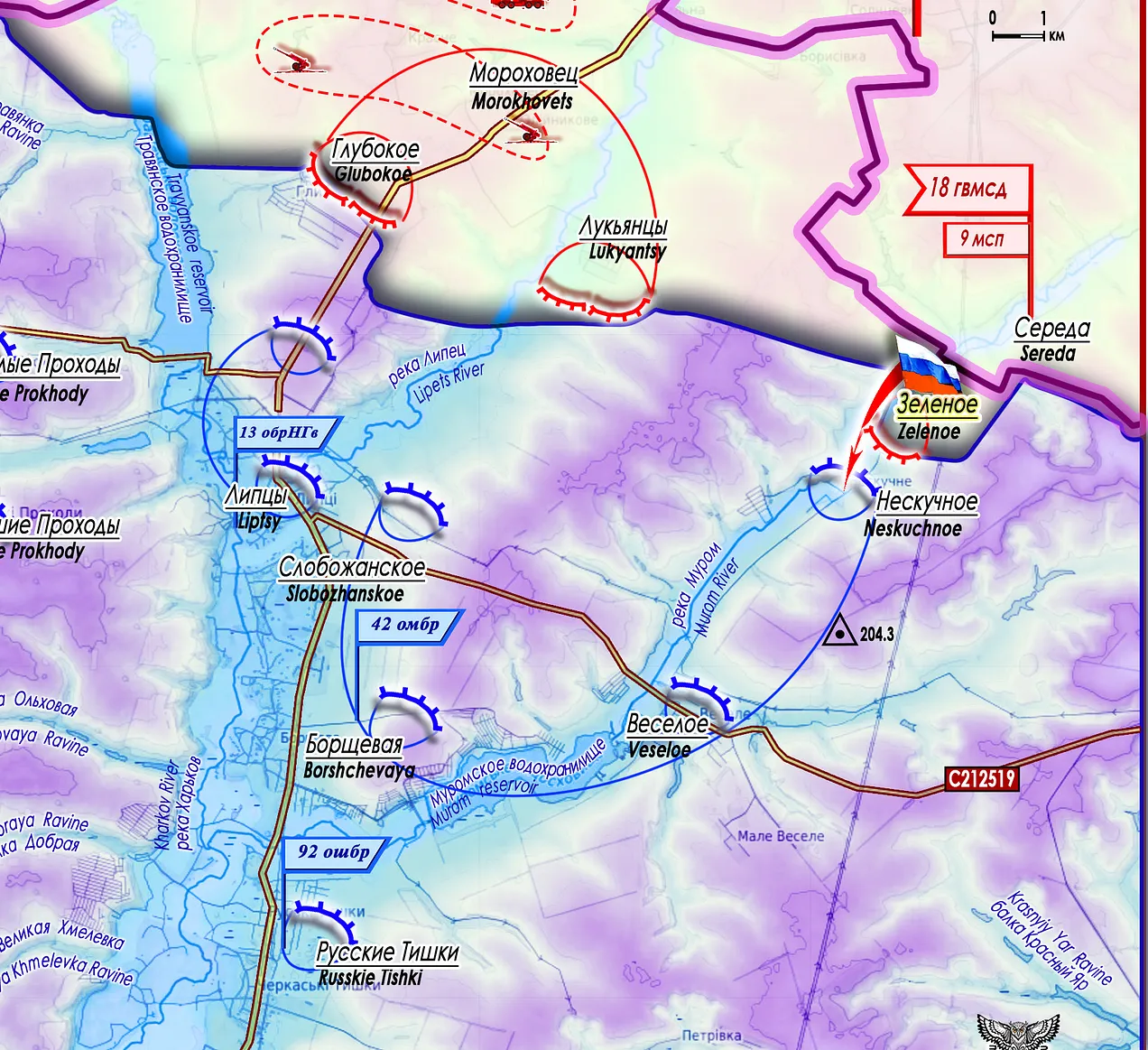
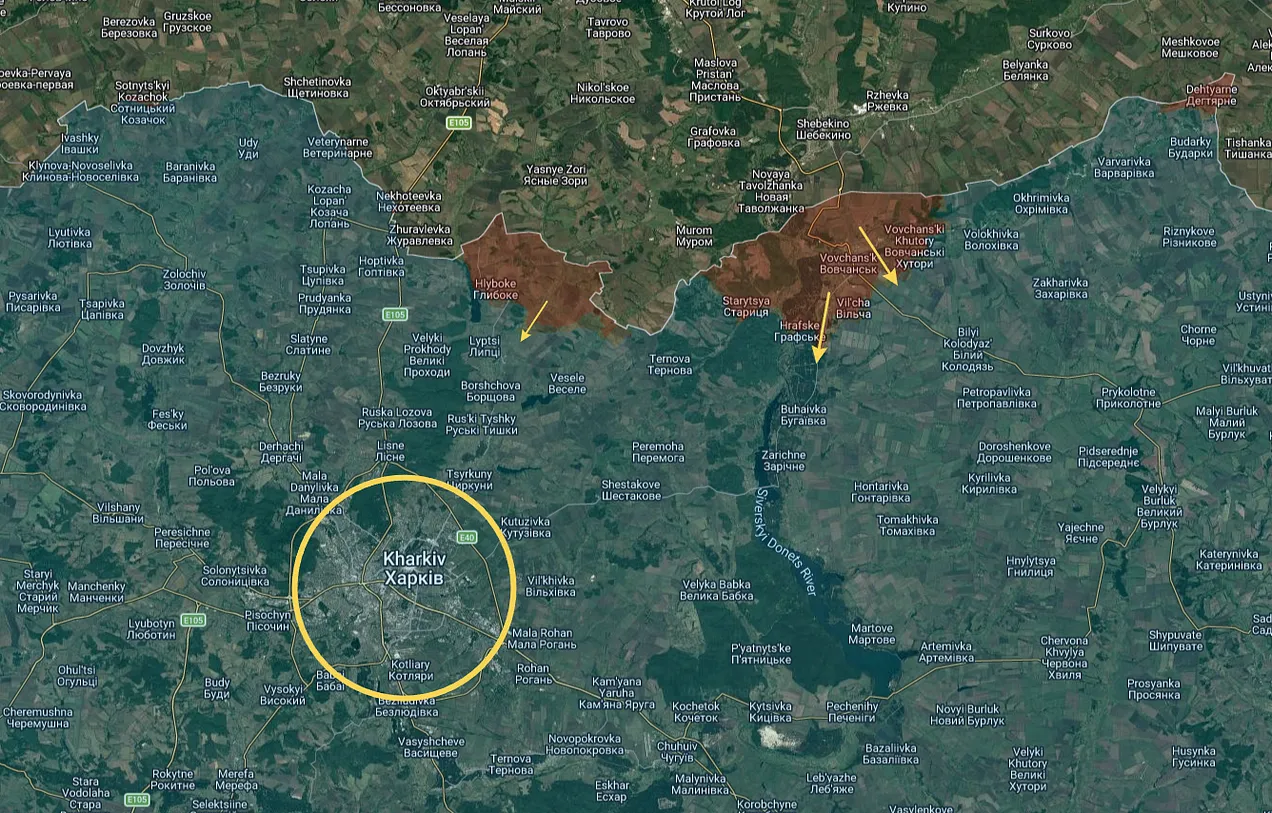
Essentially, they are all fairly minor advances. But what was most interesting is that Russia continues to pour forces over the northernmost border, to make incremental advances in northern Kharkov, Sumy, and most recently Chernigov regions.
The reasons this is revealing is because it runs counter to the Ukrainian claim that Russia has been ground down, is running out of men, and has slowed because of these issues, rather than simply reorganizing for new offensives or due to extreme and unfavorable weather, etc. If Russia was truly being ground down, it would not waste precious resources on totally fruitless and remote directions like these on the border, which have no major objectives easily achievable there. Russia would continue pouring everything into key focal fights where the most PR can be maximized, and Ukraine’s morale and reputation damaged, such as the mainstay cities of Konstantinovka and the like.
But the fact that Russia continues increasing the pressure in these remote hinterland zones means not only that Russia has manpower to spare, but that it is slowly shaping the battlefield for an extremely long-term strategy. And that would only be the case if Russia was quite happy with its available resources and manpower regeneration capabilities. It was even more telling, on this count, that Russia even opened up a totally new direction recently in Chernigov.
With that all said, Russian forces did advance slightly in some of these zones near Sumy and Kharkov, indicating that the wide-ranging ‘death by a thousand cuts’ strategy remains in force.
NYT’s latest underscores this more pessimistic take on Ukraine’s strangulation:
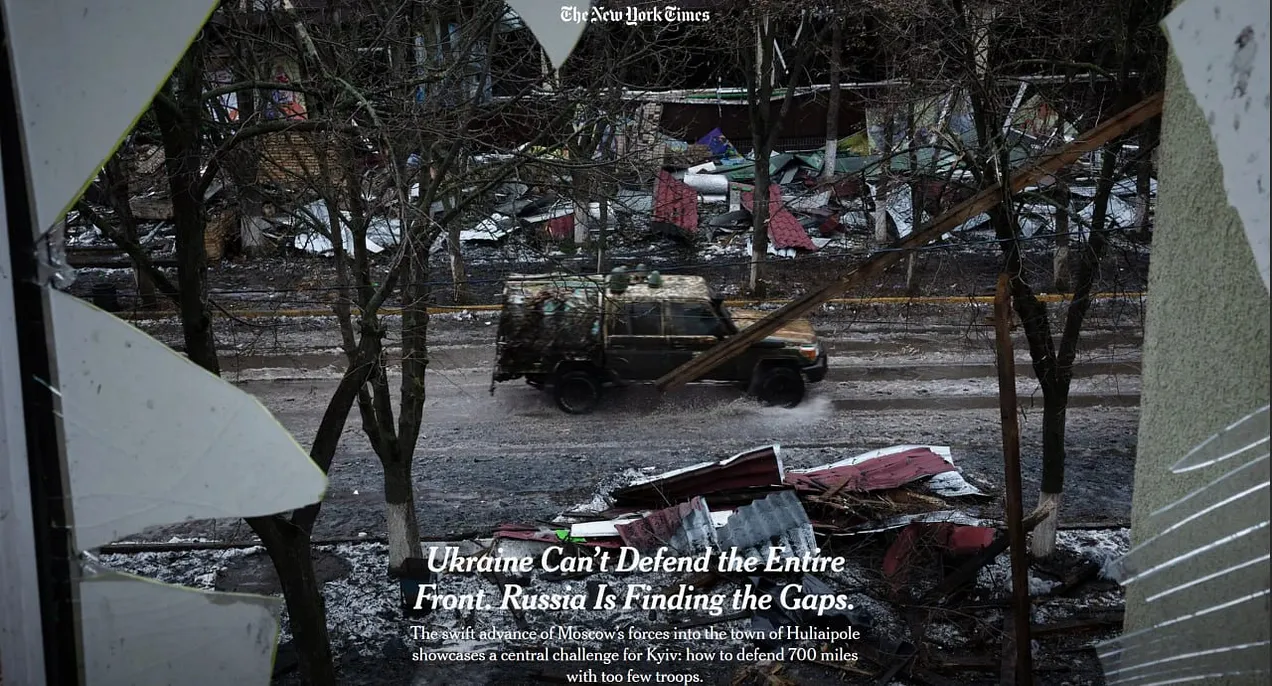
https://www.nytimes.com/2026/01/30/worl ... ipole.html
“It was a catastrophe,” said Capt. Dmytro Filatov, commander of the Ukrainian First Separate Assault Regiment, whose unit was rushed in to reinforce Huliaipole, in southeastern Ukraine.
The fall of the command post in late December…highlights the central challenge facing the Ukrainian Army after four years of grinding war. Stretched by Russian assaults across a 700-mile front line, Ukraine lacks enough troops to defend every sector equally, creating gaps where Moscow’s forces can advance more easily.
The article describes Ukraine’s current operative strategy:
But Ukrainian soldiers say the situation has forced them to wage war like firefighters — rushing to contain a flare-up in one sector, only to see another ignite elsewhere, then running back as the first combusts again. The goal is not to cling to every inch of territory, they say, but to hold enough to deny Russia battlefield momentum that would strengthen its hand in U.S.-brokered peace talks, which are continuing this weekend in the United Arab Emirates.
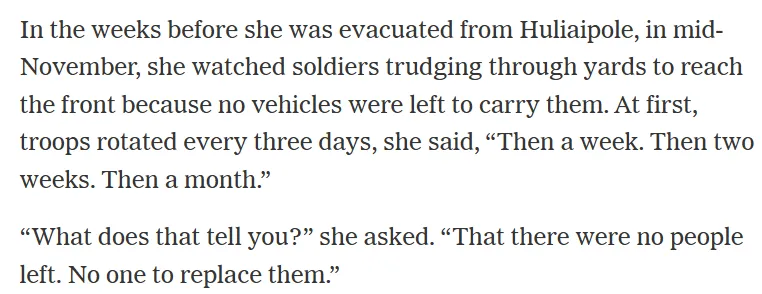
A Ukrainian battalion chief of staff explains their battalions are lucky to have 50 capable people in them—straight from the horse’s mouth:
“We’re constantly short on people,” Horol said, adding that Ukraine lacked troops to both repel infiltrations and launch counterattacks.
Vladyslav Bashchevanzhy, chief of staff of a drone battalion in the 260th, described the personnel issue bluntly.
“A battalion is supposed to have around 500 soldiers. In reality, we’re lucky if we have 100,” he said. “Out of those 100, perhaps only 50 are actually combat-ready — those not wounded or exhausted.”
But of course we’ve heard such stories since as far back as 2022 and 2023. It has not changed the fact that the war persists, and Ukraine continues to find the men necessary to keep Russian advances to a daily minimum, particularly by increasing its mobilization efforts and coercion levels, as we’ve seen recently.
This does not seem likely to change in the short term due to the current style of warfare: the ‘dispersed’ and defense-heavy strategy Ukraine employs keeps its losses low enough to be within relative replacement margins. Only when the AFU goes on offensive do their losses explode to stratospheric ranges, since troops are forced to go into the open where they can be far more easily eliminated en masse.
That said, another claimed report from an AFU soldier sheds further light:
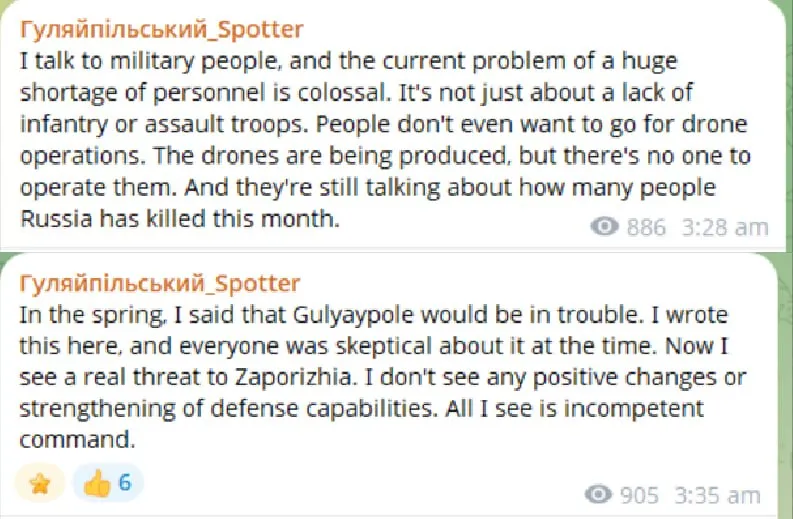
Ukrainian soldier from the 102nd Territorial Defence Brigade on the situation west of Hulyaipole.
It’s almost certain that Russian forces will pick up their offensive in the coming weeks when the weather begins to clear because there is no hard indication of any real limiting factor—like manpower issues—beyond recent weather woes or simple strategic reformulations on the front.
—
A couple last items:
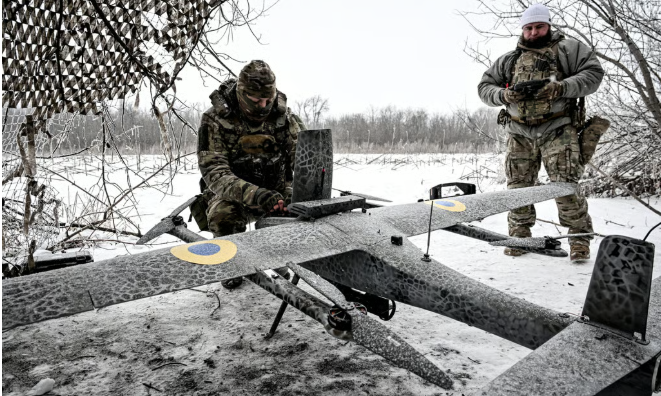
The Russian “Yolka” drone interceptor has been spotted again on the front successfully taking down Ukrainian drones: (Video at link.)
—
A Ukrainian F-16 pilot reveals that they loft to 3000-4000m to launch bombs but are almost always targeted by Russian Su-35s and S-400 systems at the apogee of their ‘loft-and-launch’ maneuver, before dropping down rapidly to try and escape the missiles: (Video at link.)
This confirms that Russian assets are covering the frontline much more heavily than some people think, it’s just that long range missiles are more infallible than most assume, particularly when fired at maximum ranges. US Airforce studies have shown long range missiles have as high as 70%+ miss rates (fired at longer distances) as it becomes fairly simple for agile fighter jets to ‘bleed’ the missiles with evasive maneuvers.
—
On a related topic, a Danish report claimed that Denmark wants its F-16s back from Ukraine to defend Greenland: (Video at link.)
https://simplicius76.substack.com/p/sit ... ters-trump
******
Dynamics of territorial liberation 2023-2026
February 1, 1:46 PM

Dynamics of territorial liberation 2023-2026
In January 2026, the Russian Armed Forces continued to liberate territory at an average rate of 500-600 square kilometers per month.

"Creamy Caprice" calculation - https://t.me/creamy_caprice/11170
The peak indicator remains November 2024, when the enemy's front line seriously sagged after the Kursk adventure.
https://colonelcassad.livejournal.com/10338663.html
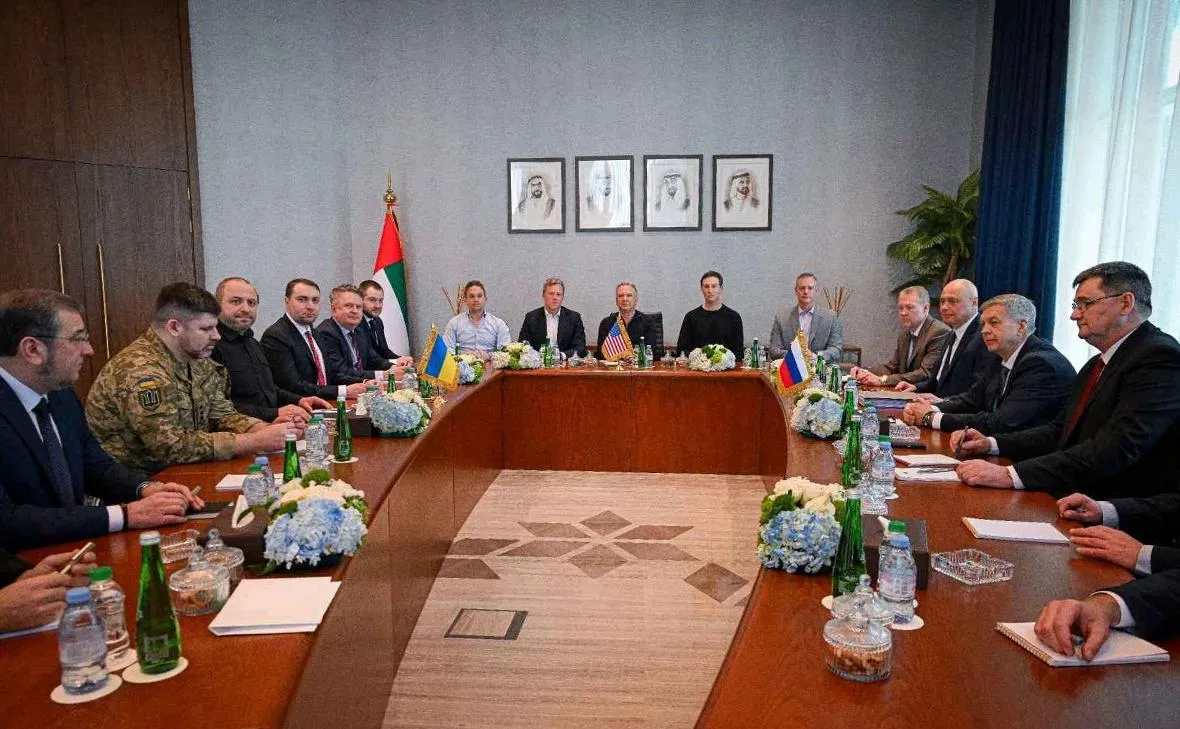
Negotiations in Abu Dhabi. February 1, 2026.
February 1, 9:54
Today, the next round of negotiations will take place in Abu Dhabi.
The Russian and Ukrainian delegations will now meet in roughly the same composition as last time.
The Russian delegation is led by Admiral Kostyukov, Chief of the Main Intelligence Directorate of the General Staff of the Russian Armed Forces.
The Emirates are acting as mediators. There will be no Americans at the meeting.
In light of the cocaine-fuehrer's statements about wanting to fight for Donbas and the Zaporizhzhya NPP, little progress is expected. Kirill Dmitriev met with Witkoff and Kushner in Florida yesterday to discuss negotiations on Ukraine. According to Dmitriev, there was some progress.
Today, the notorious "energy ceasefire" also expires, and renewed strikes on Ukraine's energy sector are expected, as it is experiencing a partial blackout with cascading consequences.
https://colonelcassad.livejournal.com/10338210.html
Google Translator
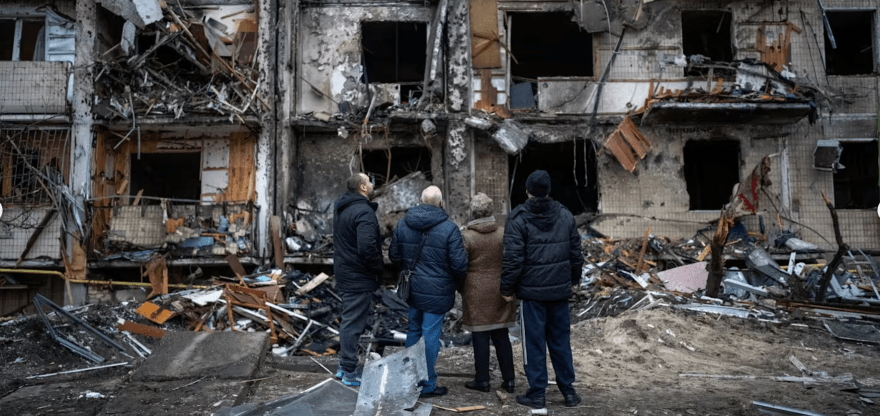












 Assault units of the 114th Guards Motor Rifle Regiment of the 127th Division of the 5th Army, in the course of fierce battles, established control over the populated area of Petrovka in the Zaporizhia region.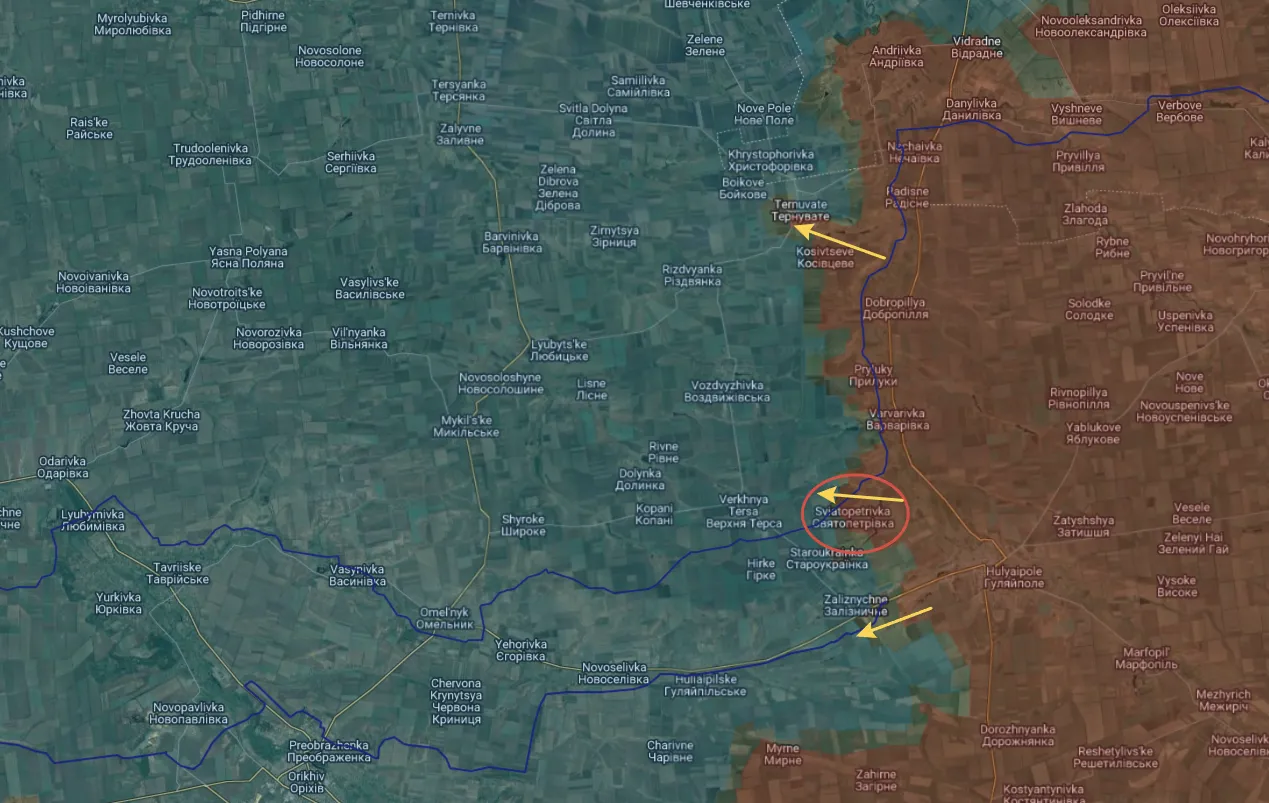











 conduct multispectral imaging (visible, IR, near IR) and highly detailed panoramic reconnaissance;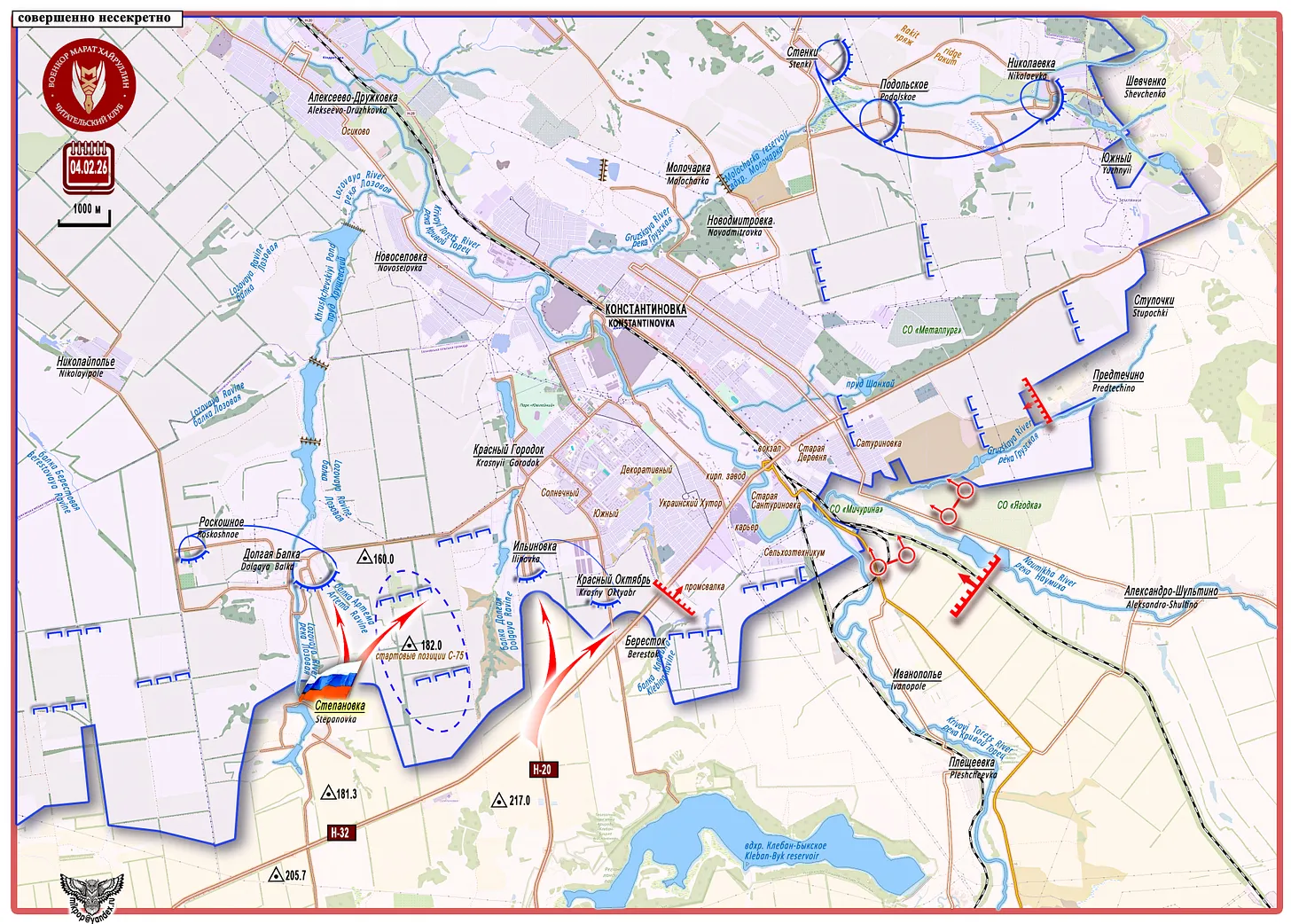


 It was Sunday to Sunday the energy ceasefire lasted, 7 days, Putin kept his words — Trump