A think tank proposes to the Pentagon how it should attack Venezuela
November 11, 2025 , 3:37 pm .
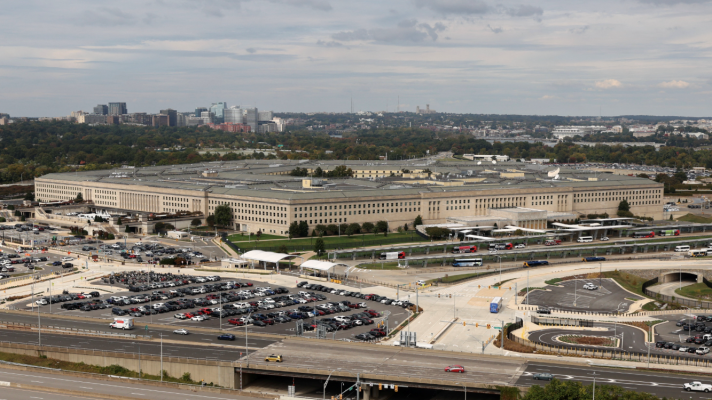
The Pentagon, headquarters of the United States Department of War, located in Arlington County, Virginia, near Washington DC (Photo: Reuters)
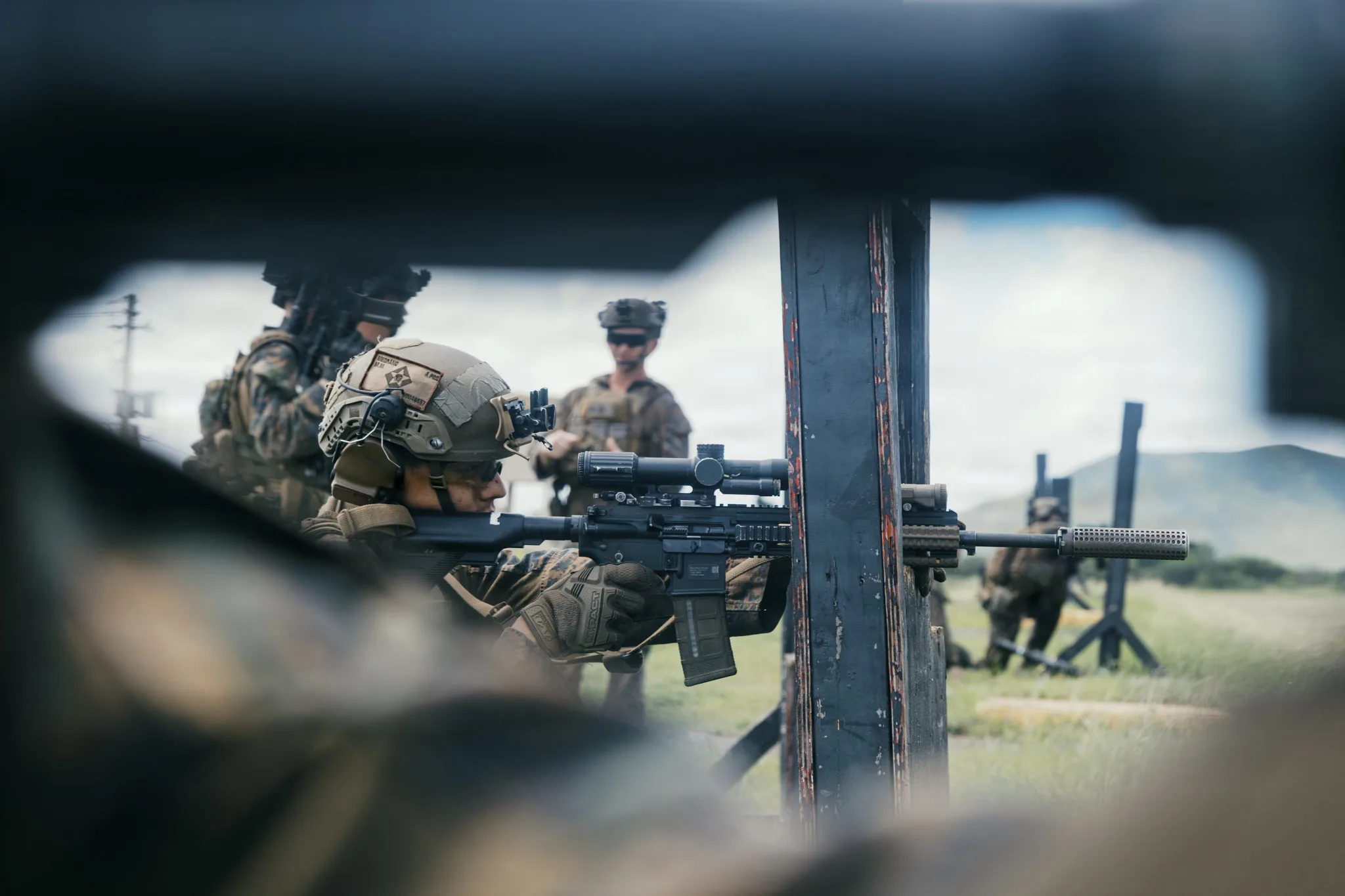
The Center for Strategic & International Studies (CSIS) —one of the most influential national security think tanks in Washington, with close ties to the Pentagon, the State Department and the military-industrial complex— published a report that expresses a technical and calculated reading of the US military deployment in the Caribbean from August 2025.
Its tone is deliberately neutral, but its analytical framework reveals an operational logic typical of the American establishment: war as a problem of force management, scalability thresholds, and theories of victory.
While the report may be described as a propaganda document, it is more accurate to call it cognitive groundwork; not to convince the Venezuelan public, but to legitimize options before foreign policy audiences in the US and allies.
This is one of the main objectives of American think tanks when publishing their reports, especially those like those of CSIS, that is, organizations that are well embedded in the cracks of decision-making power in Washington.
The data: selective precision and structural omissions
CSIS boasts of using "data," and indeed offers concrete figures:
2,200 marines from the 22nd Marine Expeditionary Unit (MEU) ;
10 F-35s in Puerto Rico;
150 members of the Special Operations Forces (SOF) on the Ocean Trader;
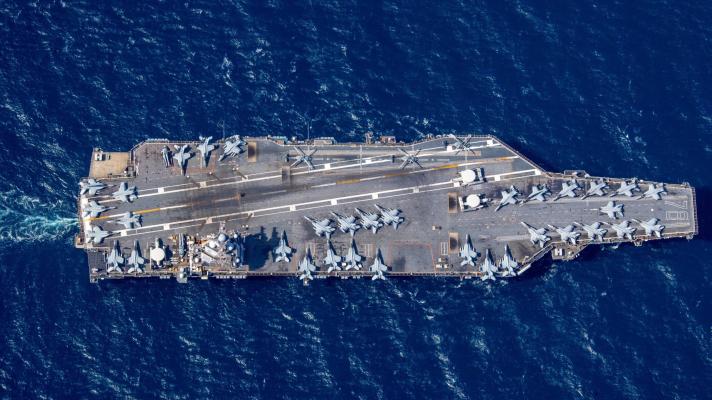
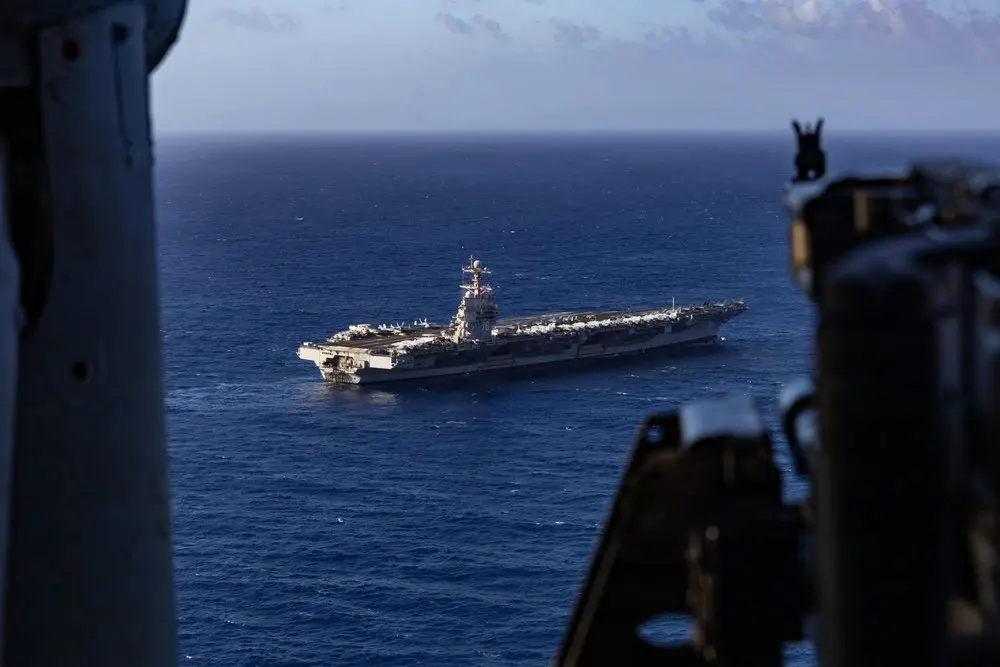
4,500 crew members on the USS Gerald R. Ford plus 960 in its escorts;
Around 170 Tomahawk missiles were launched into the area with the arrival of the Carrier Strike Group (CSG).
The report also provides data on the operational readiness of the Bolivarian National Armed Forces (FANB).
These are plausible numbers, derived from open sources, satellite observations, official statements, and air and naval movement records. In short, there is no evidence of falsification, but there is evidence of curation: CSIS systematically omits any data that complicates the narrative of absolute asymmetry.
The status of Venezuelan electronic warfare systems , which could affect the accuracy of GPS-guided munitions such as JDAMs, is not mentioned .
The ability to disperse and camouflage critical assets (command centers, radars, SAM batteries ), a tactic learned from conflicts in Ukraine and Syria, is not addressed .
The vulnerability of US surface ships—especially aircraft carriers—to asymmetric threats—anti-ship missiles, maritime drones, or smart mines—is not in question.
The report takes for granted unrestricted maritime dominance, as if the US Navy's doctrine called littoral operations in contested environments (LOCE) had not already recognized the limits of CSGs in low-cost A2/AD (anti-access/area denial ) environments.
Furthermore, CSIS treats the "150 SOF on the Ocean Trader" as neutral data, without contextualizing that this vessel —a converted logistics support ship— has been used in covert operations in Africa and the Caribbean for decades.
Its deployment is strategic: it facilitates influence operations , sabotage, and support for non-state actors without leaving a diplomatic trace.
Therefore, this is not a deployment of "conventional warfare"; it is hybrid warfare in its purest form.
CSIS implicitly acknowledges this by mentioning that the forces deployed are insufficient for an invasion, but sufficient for "air and missile strikes".
That distinction is crucial: the threshold of "realism" is no longer invasion, but air coercion and systemic destabilization.
The narrative of the "archer with a drawn arrow"
One of the report's most revealing metaphors is that of the archer with the arrow drawn taut : the U.S. is no longer preparing; it is deciding.
The arrival of the Ford CSG—a combat group designed for power projection in high-intensity scenarios—is presented as a symbolic point of no return:
" Poorly structured for anti-drug operations, ideal for attacks against Venezuela."
This interpretation is not innocent: CSIS is pointing out that the deployment has already transcended its official justification (fighting drug trafficking) and entered a phase of coercive deterrence, at least in the Caribbean, while continuing operations in the eastern Pacific.
In this sense, the objective (for now) is not to overthrow President Maduro by force (because there is no way to do so), but to create the conditions for his collapse under pressure. The report makes this explicit: the initial attacks would be "to see what effect they have."
It is a logic of shock and assess , not of shock and awe (Iraq style).
Here CSIS reveals its close ties to Pentagon planning:
Three sets of targets are considered: cartels (legal justification), the Maduro government (political objective), and dual-use facilities (bridge between the two).
Targets that fragment internal control are prioritized: security forces, military telecommunications, barracks.
Civilian economic targets (refineries, energy) are avoided, not for humanitarian reasons, but for calculation: a "short war" requires a viable "day after".
It's remarkable how CSIS, in ruling out attacks on civilian infrastructure, doesn't do so on ethical grounds, but because "GDP already contracted by 80% between 2013 and 2020." In other words, according to their own narrative, there's nothing left to destroy that isn't already destroyed, and what remains is necessary for the "post-Maduro transition." They should call it managing destroyed assets, not compassion.
Structural biases in CSIS analysis
Although the report avoids ideological language, its assumptions reveal deeply ingrained biases:
Technocentric vision. It reduces warfare to firepower, sensor range, and number of platforms. It underestimates factors such as morale, social cohesion, popular resistance, or the government's capacity to mobilize.
Military determinism. It assumes that the balance of power determines the political outcome. But in asymmetric conflicts, political will and persistence often overcome technical superiority (see Vietnam, Afghanistan).
Deliberate underestimation of third parties. Russia "can't offer much"; China isn't mentioned. This isn't a mistake: it's strategic wishful thinking . CSIS needs to believe that Venezuela is a manageable regional problem, not a global front. But that interpretation is strategically flawed, because if Moscow or Tehran decide to directly provide services and expertise on the ground, for example, the cost calculation for the U.S. would change drastically.
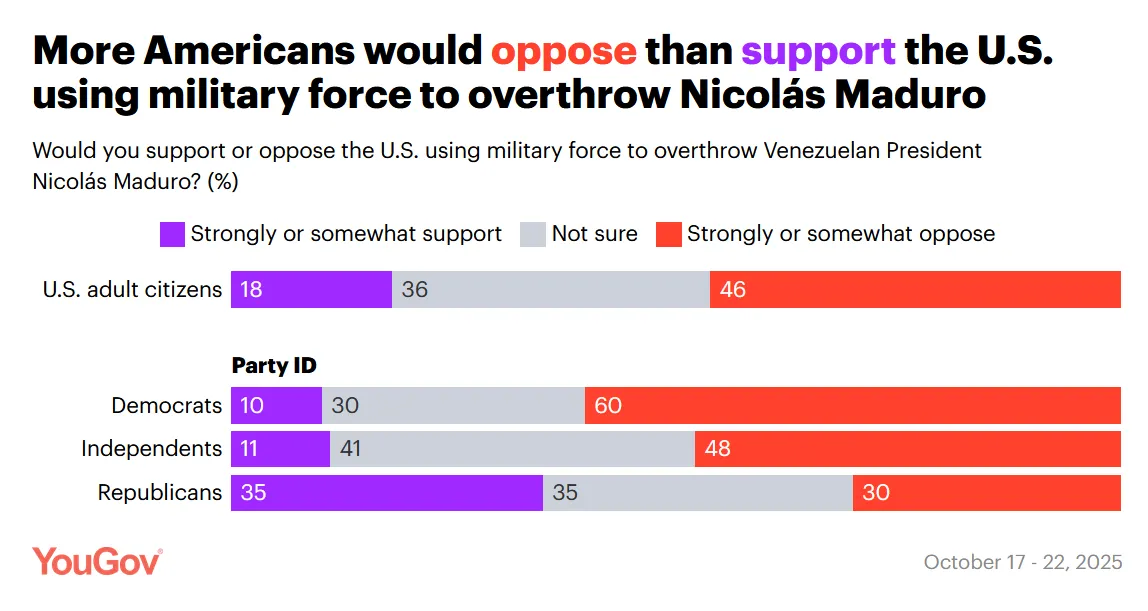
There is also a critical omission: no analysis of American public opinion. CSIS assumes that Trump can escalate his power without domestic political cost, but polls show that a majority of Americans oppose military interventions in Latin America, especially after Afghanistan.
A prolonged air campaign with casualties (albeit minimal) or intelligence errors (civilian targets) could generate domestic resistance that even Trump could not ignore.
A transitional document between coercion and war
The CSIS report normalizes war; it doesn't offer a prophecy. It's a manual for making decisions with eyes more or less open, but with fingers on the trigger.
Its value lies in its technical transparency: it exposes the real limits of the current deployment (insufficient for invasion, sufficient for coercion), the escalation thresholds (initial attacks, then measurement, then prolonged air campaign) and the political traps of the "day after" (a factor in which they have failed to impose even as a assumption because they do not possess political assets of guarantee, such as Juan Guaidó, Edmundo González Urrutia or María Corina Machado).
Its danger lies in what it silences: the Venezuelan agency, the non-militarized social resistance, the capacity for improvisation in environments of scarcity, and the fact that no government collapses solely due to external pressure if it maintains internal cohesion and popular support.
CSIS understands war as a chain of rational decisions. But in Venezuela, as in so many places, history is not written solely with missiles and F-35s: it is also written with loyalty, will, and strategic thinking.
These are variables that do not fit into a table of forces.
https://misionverdad.com/venezuela/un-t ... -venezuela
US energy ambitions in Venezuela
Clara Sánchez
November 11, 2025 , 2:50 pm .
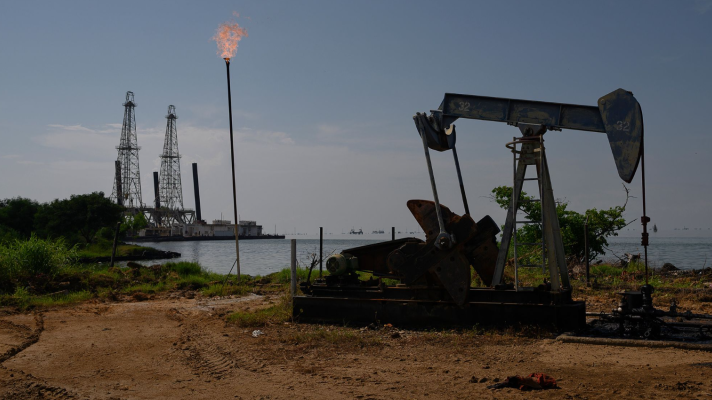
Ensuring energy independence as a matter of US national security is a channel to justify regime change in Venezuela (Photo: Getty Images)
In the emerging multipolar world, energy is indispensable amidst the accelerated development and adoption of artificial intelligence (AI). This is simply because there is no AI without energy. Therefore, whoever controls energy sources will dominate AI and, consequently, control the multipolar world? Or at least, become a power center in the emerging new global order. This is precisely what the United States seeks to secure by attempting to invade Venezuela to guarantee its energy independence from its closest geopolitical competitors: China and Russia.
A flyover of the multipolar world: from Marco Rubio to the G7
The multipolar world envisioned by the Liberator Simón Bolívar more than 200 years ago, to achieve balance in the universe among the different parts of the globe, has, with technological change, the declining pole of unipolar power that emerged after the Cold War, desperate to get a piece of the pie in the new global governance.
A world acknowledged by the new US Secretary of State, Marco Rubio, who stated that we have reached the point where there is evidence of a multipolar world, and the best example of this is the "multiple great powers in different parts of the planet."
And in this context, it assumes that the US is facing a confrontation, primarily "with China and, to some extent, with Russia," as well as with Iran and North Korea, among others, thus validating the National Security Strategy called "Biden's Decisive Decade" of 2022, which considers these actors as the main geopolitical competitors, therefore needing to increase its national power for global projection and especially its military power in the areas of cyber and space dominance, missiles with greater capacity, artificial intelligence, and quantum systems; with energy security associated with climate security being the second main global challenge to face.
This multipolarity was also recognized at the 61st Munich Security Conference in 2025, which serves as the G7's strategic platform, by assuming that today's world is already different, referring to an emerging new order shaped by multipolarization that "describes both a global shift in power towards a greater number of actors around the world and increasing polarization."
Consequently, this Conference's position is that greater multipolarity leads to a more conflict-ridden world, lacking shared rules and with less multilateral cooperation. Therefore, it advocates, in contrast, "depolarization," arguing that "instead of benefits, it entails a fragmentation that reduces the global pie" for those who have wielded unchecked power since the Cold War.
In this sense, recognizing that there is a loss of power from those who unilaterally exercised everything on the globe to its redistribution in different ascending poles in the world, pointing from that platform to the motivation of a "depolarization", meanwhile, not to continue fragmenting the "global pie" instead of stimulating a better interaction between them for a global balance.
The United States, hemispheric security, and the doctrine of containment
This multipolar scenario is what has taken Trump and the United States back to the nineties with the United States' hemispheric security doctrine in relation to Latin America and the Caribbean that began to develop with the New World Order announced by George HW Bush.
Hemispheric security, which was discussed in the OAS in 1991, with contributions in 1995 and approved in 2003, once the concept of new and multiple threats became relevant after 9/11 in 2001***, definitively supplanting Truman's Doctrine of Containment of Communism.
Although the latter has also been used to contain Russia geopolitically in recent years.
And why are we going back to the past?
US energy independence: A return to the past
This answer is clearly given by the US Secretary of State: "One of the big mistakes that was made was the unilateral disarmament with respect to energy production, by not fully utilizing energy resources," referring to coal and the lower unused US oil capacity, contrary to what China has done.
Energy remains a matter of national security for the United States; in fact, Rubio states, "They must be able to have a reliable and consistent source of energy, or they would be in serious trouble." He makes it clear that without it, their planes wouldn't fly, their ships couldn't sail, and their economy wouldn't function.
Because, although the US maintains a narrative of energy independence and non-dependence on other countries that it began to develop from the first oil crisis in 1973 and has become in the last two decades the largest producer of crude oil on the planet (20.7%), the reality is that it has reserves of barely 4% of the global total to sustain the largest consumption in the world (18.7%), indicating that, in relation to reserves-production, the depletion of this corresponds to a forecast of between 10 and 11 years.
While for natural gas it has reserves, according to its production, estimated to be used in only 13 years.
Meanwhile, putting the United States in a desperate position to control maritime routes, the Arctic, Canada, the Panama Canal or the Gulf of Mexico; guaranteeing its vital space of the "global pie" in the multipolar world.
83% of the US energy matrix is hydrocarbon-based
In fact, one of the first actions carried out by the Trump Administration was the creation of the National Energy Dominance Council for the development of a national energy leadership strategy, whose purpose is the production of more energy, where mainly the Secretary of the Interior, the Secretary of Energy and the now called Secretary of War converge.
This logic responds pragmatically and directly to the energy matrix of the United States, which is supported by oil and gas at 74%, with black gold representing 39% of the pie, making this a strictly hydrocarbon-based consumer society.
And that in terms of energy, in recent years, its hydrocarbon consumption of oil and gas increased from 68% to 74% between 2019 and 2024 (see image 1).
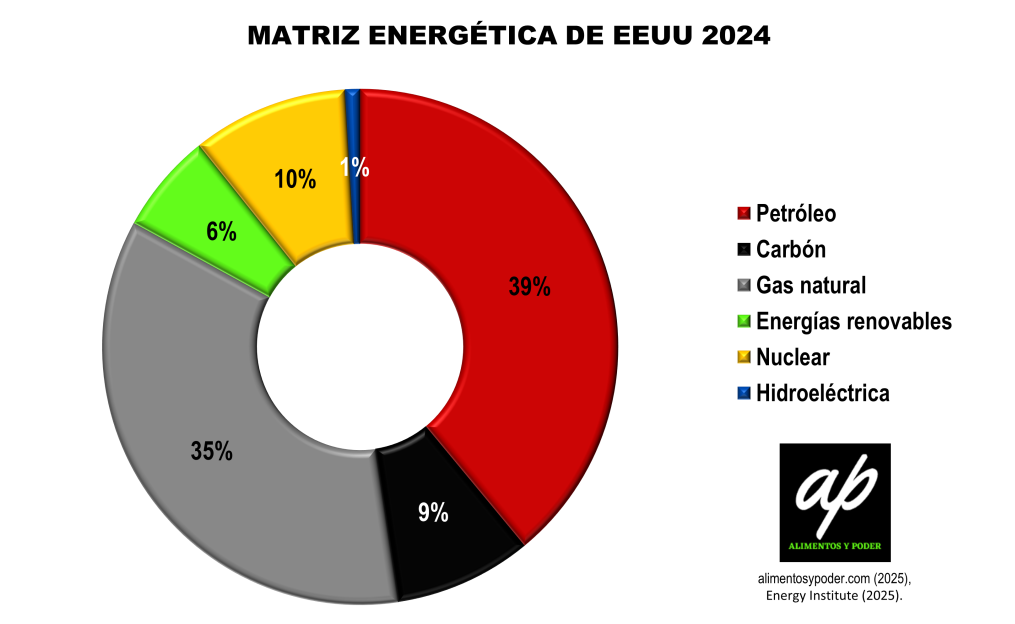
Image 1. US energy matrix (2024) (Photo: Food and Power)
In this sense, oil and gas are the backbone of the US economy, whose dependence will continue to hover around 70%, at least until 2050, according to EIA estimates [8] , meanwhile, fundamental for any energy transition in the multipolar world.
Firstly, oil and natural gas enable the practical and economic development of renewable energies as a backup to their intermittency, and secondly, they are the main source for supplying the industry with high-tech materials for renewable sources, making these dependent on the hydrocarbon industry to manufacture turbines, blades, cells, among many other components.
And while natural gas is where 40% of the electricity in the US is generated, together with oil it sustains the modern-consumerist American lifestyle today.
The arms race for energy and artificial intelligence
In this multipolar emergency, Marco Rubio also reveals one of the biggest concerns of the US: "Any country that has energy resources that are profitable will dominate AI, which will dominate many fields," including technological innovation in the oil and gas industry.
An AI that will need an extraordinary amount of energy that the world does not currently produce to feed it.
And as previously noted, in addition to the supply of oil and gas necessary for the US to maintain its status of growth, development and consumption, especially in a multipolar world in a reliable, safe, continuous and affordable way, AI comes to play another fundamental role so that this declining power can stay afloat and, as stated at the Munich Security Summit, keep a piece of the "global pie".
Therefore, energy, which is a matter of national security for the United States, increases in vital importance for the development of AI in the next five years.
According to Burgum , the new US Secretary of the Interior who heads the National Energy Dominance Council, the US is "in an arms race for artificial intelligence with China" and the only way to win is with "more electricity".
Electricity that currently comes from fossil fuels at 60% globally (see image 2), mainly from coal (34%) and whose main production center is located in China.
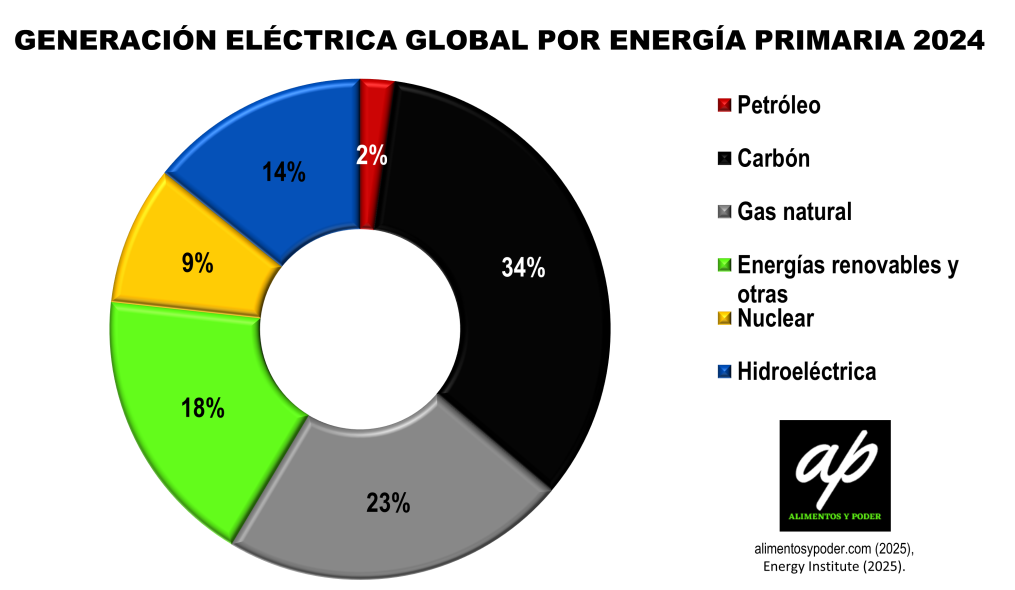
Figure 2. Global electricity generation by primary energy (2024) (Photo: Food and Power)
This deepens the race to control energy sources for power generation to supply AI data centers in a baseline scenario, which currently consumes 1.5% of global electricity with conventional servers, reaching 3% in 2030; doubling with the installation of accelerated servers, which would be responsible for 70% of the growth in server electricity demand between 2025 and 2030, generating uncertainty regarding estimated consumption.
The US and China together consume 80% of the electricity for AI data centers today.
While in the US, 40% of the electricity for data centers comes from natural gas, in China it's 70% from coal. And although progress is being made in the development of renewable energies, and these are expected to cover the additional electricity demand for AI in the future, it's estimated that fossil fuels will continue to have a high share of electricity generation for AI by 2050, at 40%.
Fossil fuels for the global industrial, transportation, commercial and residential systems
Therefore, the supply of reliable and secure energy is the challenge for the implementation of AI, not only for data centers, whose consumption is growing four times faster than global electricity consumption, but also to continue powering the entire global industrial, transport, commercial and residential system that is currently maintained with fossil fuels and will continue to be important to meet the increased energy demand by 2030 (see image 3).
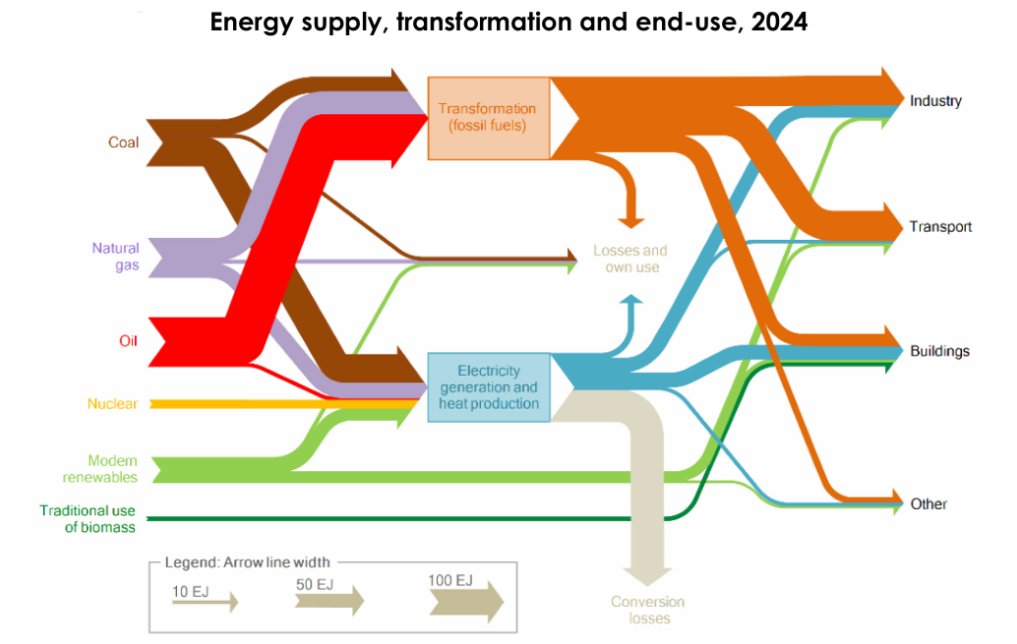
Figure 3. Energy supply, transformation and end use (2024) (Photo: International Energy Agency)
An example of this is ensuring the supply of energy to homes.
A hyperscale AI-centric data center (100 MW) currently consumes as much electricity as 100,000 homes per year; those under construction will consume 20 times more (2,000 MW), as much as the energy needed for 2 million homes; and the largest one planned will consume the energy (5,000 MW) of up to 5 million homes. For comparison, Ecuador has 5.1 million homes.
In transportation, oil and gas still have to support the demand for more than 1.4 billion vehicles worldwide, because, although sales of electric and hybrid cars reached a record high in 2024, non-electric vehicles still account for 78% of annual sales and represent 95.5% of the world's vehicles.
Furthermore, fossil fuels will continue to be vital for the petrochemical industry in the production of polymers, synthetic fibers, biofuels, and other products.
And, to make matters worse, the extraction and supply of fossil fuels, nuclear fuel, and critical minerals are necessary for the components of energy equipment, forming the basis of the current energy system.
Venezuela in the current energy landscape
In this multipolar landscape, the US wants to secure its share of the pie in Latin America and the Caribbean, rich in strategic natural resources, not only in Venezuela, with which it wants to guarantee its oil, gas, and other minerals in a reliable, secure, continuous, nearby, and cheap manner for the coming decades, given the instability in other regions, as essential elements for the energy transition; but also by trying to close the access that China has gained despite the blockade, while attempting to contain Russia, the heart that is also supplying the Asian giant with vital resources.
John Bolton and Mark Esper (former National Security Advisor and former US Secretary of Defense during Trump's first administration) stated that Trump was obsessed from the beginning with the intention of invading Venezuela in 2017 to overthrow President Nicolás Maduro, and it was Mike Pompeo (Trump's former Secretary of State) who suggested that the US should not tolerate, referring to the Monroe Doctrine, China, Russia, and Iran interfering in their affairs and their backyard.
Bolton's goal, according to him, is to have full access to Venezuelan oil resources after Nicolás Maduro's presidency; something Trump himself confirmed in 2023 when he loudly proclaimed that when his first term ended, "Venezuela was about to collapse. We would have taken it over and gotten all that oil. But now we're buying it," making it clear that access to the resource is not enough for the US, for example, with the licenses granted to Chevron; what is being proposed is theft.
And it remains relevant in Trump's second administration, as his Energy Secretary Chris Wright stated that "President Trump wants to use the strength of the United States or energy independence to force change in Venezuela."
In this sense, making it clear that guaranteeing energy independence as a matter of US national security is a channel to justify regime change in the country, even using force.
Venezuela is no longer the oil satellite of the United States
This preliminarily includes two actions that the U.S. has taken against Venezuela to maintain Venezuelan hydrocarbon resources as its strategic reserve and guarantee its "energy independence" in the future, and which have failed:
First, with the coercive policy of sanctions aimed primarily at the heart of the Venezuelan oil industry, it could not prevent Venezuela from making sovereign use of its hydrocarbon resources by diversifying its market and strategic alliances with other countries; and second, it did not prevent other actors from buying Venezuelan oil while it was disrupting the market.
In fact, while the United States did not buy a single barrel of oil from Venezuela, exiting the Venezuelan oil business, Venezuela found buyers in other regions, mainly in Asia, causing other actors to enter the game (see image 4).
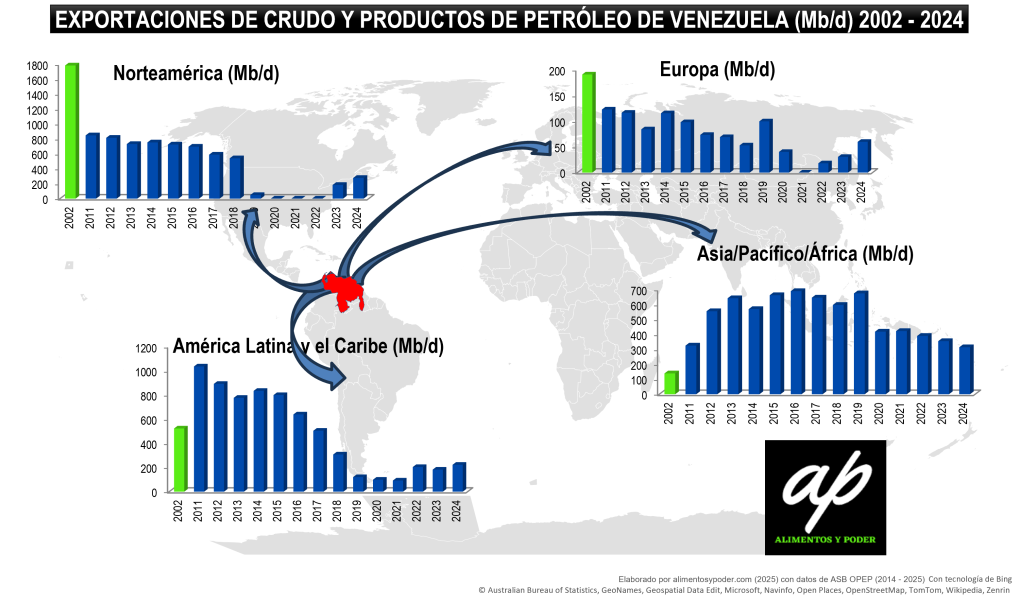
Image 4. Exports of crude oil and petroleum products from Venezuela (2002-2024) (Photo: Food and Power)
Therefore, Venezuela did not lose buyers; on the contrary, it expanded and strengthened a market other than the United States, and with this broke its exclusive dependence on selling its oil to that country.
And this is what is shown by the desperation shown by the US when it began on September 2, 2025, the bombing of boats suspected of drug trafficking in the Caribbean, whose remaining evidence shows that it was fishermen who were killed by this irrational policy of the Trump administration.
The bombings began just as the Alula floating oil platform, the first of its kind in South America, was arriving at Lake Maracaibo in Venezuela from the port of Zhoushan in China. According to reports, it will be operated by Concord Resources Corp (CCRC) as a strategic partnership with PDVSA to reactivate wells and increase oil production in the country, which is already around one million barrels per day. The goal is to further increase production by 60,000 barrels per day by the end of 2026.
It is difficult for the US to accept that Venezuela has not only overcome the blockade, recovered its economy, and is the fastest-growing country in Latin America and the Caribbean for the past four years, but is also losing part of the global pie to its geopolitical competitors in the emergence of a multipolar world, and with it, total and exclusive access to energy that could allow it to play a role in the struggle for control of artificial intelligence.
Consequently, Venezuela ceased to be the oil satellite of the United States and demonstrates that it can continue developing its hydrocarbon industry without it, while playing a key role in the emergence of a multipolar world.
Final considerations
For the United States, having a greater capacity to supply energy to itself and its allies improves its influence when it comes to instigating conflicts, including diplomatic ones worldwide, strengthening its national security.
This includes its path to control Artificial Intelligence in its dispute primarily with China, and it makes this explicit in the agreement signed with the United Kingdom where AI is considered "the technology that defines our era"; therefore, it seeks to accelerate its development, lead the nuclear age, guarantee the energy supply chain for total independence, achieve quantum advantage, and secure 6G.
And keeping Meta, Google, Amazon, Microsoft and Digital Realdy as its main corporate players in this race, currently the top five operators with the largest data center capacity globally (MW) (see image 5), is a priority in the competition to dominate AI.

Image 5. The top five operators with the largest global data center capacity (MW); they consume 82% of the energy among the top 20 in the world, according to the IEA (2025) (Photo: Food and Power)
And in this sense, the supply of hydrocarbons is fundamental to advancing in the mastery of AI, as well as to maintaining the American way of life, including the development of renewable energies.
A move to shape the emergence of the emerging world in its own image and likeness, meanwhile, controlling energy sources is central to the technological revolution of the multipolar world: controlling Artificial Intelligence.
*** These threats range from "terrorism, transnational organized crime, drugs, corruption, money laundering, illicit arms trafficking, extreme poverty, social exclusion, natural and man-made disasters, HIV/AIDS, environmental degradation, human trafficking, cyberattacks, accidents involving hazardous materials such as oil, radioactive materials, and toxic waste, weapons of mass destruction, among others. Furthermore, the new concept of security includes democracy, the rule of law, human rights, international humanitarian law, multilateralism, and, of course, the concept of human security (which includes food security with its antecedents dating back to 1974) as a foundation for democratic states" (Sánchez Guevara, 2023). Geopolitics and food colonization .
https://misionverdad.com/opinion/la-amb ... -venezuela
Google Translator