Poland Might Be Seeking American Approval To Conventionally Intervene In Ukraine
ANDREW KORYBKO
MAR 13, 2024
So long as World War III doesn’t occur by miscalculation, then rump Ukraine would remain formally under its representatives’ political control regardless of whoever they may be by then, while the western part that used to be part of Poland would fall under its “sphere of economic influence”. Formal reincorporation is unlikely though for socio-economic reasons, let alone the lack of public support, though a confederation of some kind could eventually take shape at a later time.
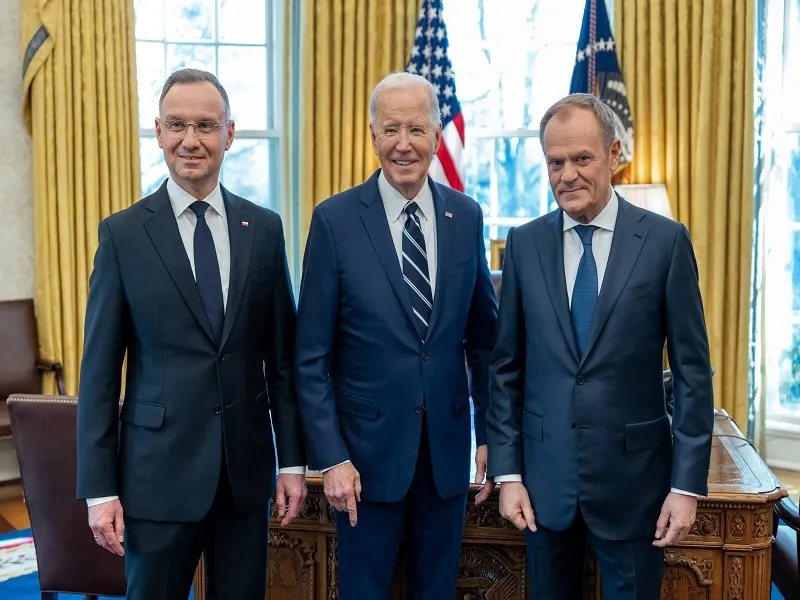
Polish President Duda and Prime Minister Tusk met with Biden in DC to commemorate their country’s quarter-century in NATO, during which time these fierce political rivals lobbied for more Ukraine aid in what Politico described as an “absolutely unique sign of political unity”. Although Deputy Defense Minister Wziatek recently contradicted Foreign Minister Sikorski’s implied support of French President Macron’s proposal for NATO to conventionally intervene in Ukraine, this scenario still can’t be ruled out.
President Putin just warned in an interview that aired the day after those leaders met that:
“If, let's say, Polish troops enter the Ukrainian territory to - as it is said - protect the Ukrainian-Belarusian border, for example, or in some other places in order to free up Ukrainian military contingents to participate in hostilities on the line of contact, then I think that Polish troops will never leave. Well, it seems so to me.
Because they will want to return... they are dreaming, they want to return those lands that they consider historically theirs, and which were taken away from them by the Father of Nations, Joseph Vissarionovich Stalin, and transferred to Ukraine. Of course, they want them back. And if official Polish units enter there, they are unlikely to leave.”
His assessment will now be analyzed in light of recent developments in order to appraise its accuracy.
It was explained last July “How Poland Is Slyly Taking Control Of Western Ukraine” through economic means instead of military ones because the former are considered to be much more cost-effective and less risky. Meanwhile, this piece here from January explained why Hungarian and Romanian populists’ plans to reincorporate the lands that their nations lost to Ukraine is unlikely due to the difficulty posed by their totally different post-World War II demographics, which is also relevant for Poland.
By mid-February, however, the military-strategic calculations drastically changed after Russia’s victory in Avdeevka made it more likely than ever that it might achieve a breakthrough across the Line of Contact (LOC) by sometime later this year. It was this development that prompted Macron to publicly propose a conventional NATO intervention in Ukraine’s support in order to prevent that country’s collapse and draw a red line in the sand as far east as possible to stop the Russian steamroller in that scenario.
Most Western leaders reacted coolly to his suggest with the notable exception of the Baltic States and Polish Foreign Minister Sikorski, though the latter’s implied support of this proposal came after a week after Tusk said that this isn’t in the cards and was then contradicted by the Deputy Defense Minister. Nevertheless, this analysis here argued that Tusk’s reluctance is due to the fear that Poland could be hung out to dry by NATO if its forces clashed with Russia, hence the need to secure American approval.
Absent that, Poland might feel more confident participating in this mission together with at least nuclear-armed France and the UK, who could resort to nuclear brinksmanship in the event that the US advises NATO as a whole not to consider extending Article 5 over members’ troops in a third country. The best-case scenario from Poland’s perspective, however, is that American approves this mission and agrees to the aforementioned legally dubious interpretation in order to have its back if that happens.
Poland’s bipartisan pathological fear of Russia is why Duda and Tusk might take their “absolutely unique sign of political unity” to the next level by agreeing to conventionally intervene in Ukraine to stop the Russian steamroller should the frontlines collapse in the coming future. Formally reincorporating the erstwhile Second Polish Republic’s lands that it lost to Ukraine after 1939 might not be feasible for socio-economic reasons and a lack of public support, however, but a prolonged military presence is possible.
To explain, the Polish economy sharply slowed last year and the European Council on Foreign Relations’ poll from January showed that 40% of Poles regard Ukrainians as a threat, which is the highest anywhere among the 12 European countries that they surveyed and beats Kiev-skeptic Hungary by 3%. The formal reincorporation of what are nowadays the Ukrainian Oblasts of Lvov, Ivano-Frankivsk, Ternopol, Volyn, and Rivne would bring over 6 million Ukrainians into Poland per their total estimated 2022 populations.
In a country of approximately 37 million people that’s been ethno-religiously homogenous since World War II, that would increase the population to around 43 million and lead to over 1/8 of its citizens being minorities, whose socio-economic security would be provided for by pre-“reunification” taxpayers. Socio-economic development in post-1945 Poland would almost certainly be neglected in favor of rebuilding these “recovered territories” and helping their people meet Poland’s associated standards.
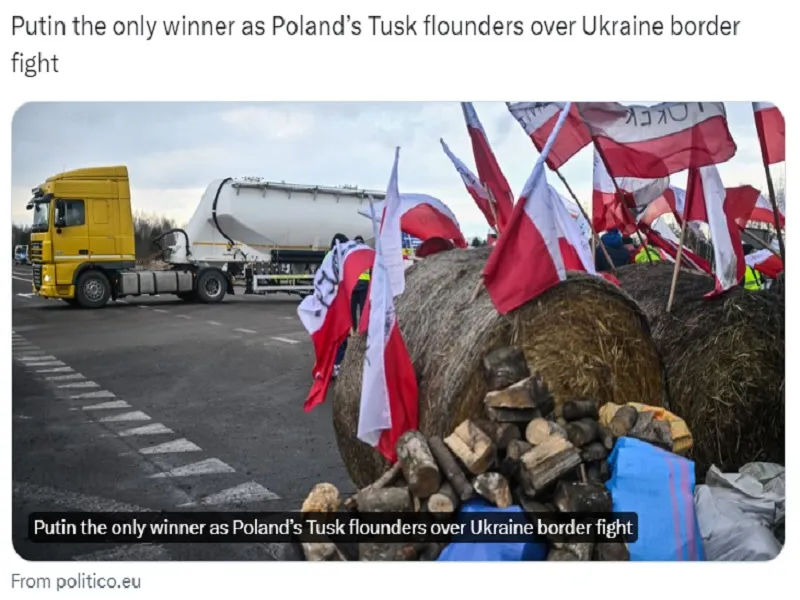
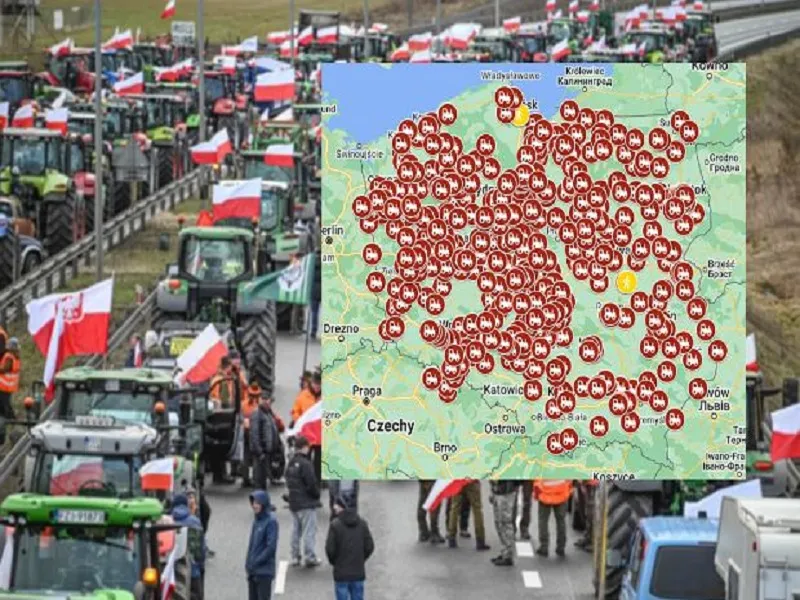
It's therefore easy to see why this wouldn’t be popular with the masses, 40% of whom already view Ukrainians as a threat, not to mention Poland’s beloved farmers who are already blockading the border in order to prevent the influx of cheap Ukrainian agricultural products from destroying their livelihoods. For that reason, it’s unlikely that either Duda or Tusk would move forward with such plans, but a prolonged military presence there is an altogether different matter that they’d likely agree to.
What President Putin said about Polish troops “protect[ing] the Ukrainian-Belarusian border, for example, or in some other places in order to free up Ukrainian military contingents to participate in hostilities on the line of contact” is credible due to that being in Poland’s military-strategic interests. They could also help maintain law and order should the state collapse if Russia achieves a breakthrough across the LOC, which could prevent an influx of Ukrainian migrants/refugees and stop arms smuggling.
Just as importantly, these Polish troops could secure their country’s envisaged “sphere of economic influence” in Western Ukraine from encroachment by the G7 ahead of that bloc’s reported plans to appoint a special envoy there that would likely be tasked with divvying up spheres between them. Not only that, but Duda and Tusk might have promised Biden that approval of a conventional Polish intervention in Ukraine could see Warsaw use some of its profits from there to purchase more US arms.
France, Germany, and the UK have their own arms industries and are thus unlikely to reinvest a portion of their Ukrainian-derived profits in the US’, so Washington has a natural financial incentive to support Warsaw defending its own envisaged “sphere” there by approving its conventional intervention. If that’s indeed what Duda and Tusk sought during their meeting with Biden and the US agrees to not to hang Poland out to dry, then this dangerous scenario might materialize sooner than later.
So long as World War III doesn’t occur by miscalculation, then rump Ukraine would remain formally under its representatives’ political control regardless of whoever they may be by then, while the western part that used to be part of Poland would fall under its “sphere of economic influence”. Formal reincorporation is unlikely though for the socio-economic reasons that were explained, let alone the lack of public support, though a confederation of some kind could eventually take shape at a later time.
https://korybko.substack.com/p/poland-m ... g-american
Romania Revealed The Legal Means Through Which NATO States Might Intervene In Ukraine
ANDREW KORYBKO
MAR 14, 2024
While it’s debatable whether Article 5 would extend to members’ troops in third countries like Ukraine, it would be a moot question in the scenario that nuclear-armed France and/or the UK participate in a “coalition of the willing” there since that's enough to lead to nuclear brinksmanship if they clash with Russia.
Romanian President Klaus Iohannis said that neither NATO as a whole nor his country in particular will intervene in Ukraine but left open the possibility of others doing so on their own. According to him, “Troops cannot be sent to Ukraine under NATO’s mandate because Ukraine is not a NATO ally. But in general, if Ukraine has bilateral agreements with a certain state in any sphere, these issues are a matter of bilateral relations. Romania will not send soldiers to Ukraine.”
It's these legal means through which a “coalition of the willing” could be assembled to this end, possibly led by France whose president was the first to publicly propose this and including Germany and the UK, whose countries have also signed “security guarantees” with Ukraine. The Baltic States would also likely participate after they supported the French leader’s suggestion, while Poland might get involved too if it receives American approval for this mission like its President and Prime Minister seem to be seeking.
While it’s debatable whether Article 5 would extend to members’ troops in third countries like Ukraine, it would be a moot question in that scenario since the participation of nuclear-armed France and/or the UK is enough to lead to nuclear brinksmanship if they clash with Russia there. This is all the more so if America approves of their intervention or at least doesn’t try to stop it, in which case it might back them up, possibly even to the point of threatening to use its own nukes if the fighting doesn’t stop.
The pretext upon which Biden could do so would be the one that he once again referenced on Tuesday about how “Russia won't stop at Ukraine. Putin will keep going, putting Europe, the United States and the entire free world at risk”, but which the Office of the Director of National Intelligence refuted. This Cabinet-level position that oversees the US’ Intelligence Community published a report last month that was only just publicly released this week assessing that Russia has no intent to go to war with NATO.
Unless he goes back on his repeated pledge that American troops won’t fight on the ground in Ukraine, which he’s unlikely to do because of how sensitive this issue is during the presidential election season, then participating in nuclear brinksmanship to support NATO allies in Ukraine would be very polarizing. The risk of sparking World War III by miscalculation just to support the Brits, French, Poles, and whoever else could turn the public against him and therefore return Trump to the White House next year.
From Biden’s self-interested political perspective, it would be better to force Ukraine to accept its de facto Korean-like partition along whatever the Line of Contact (LOC) between NATO and Russian forces might be by then, after which he could campaign on having “averted World War III” instead of risked it. That could also take away the appeal of Trump’s pro-peace platform since the hot phase of the NATO-Russian proxy war in Ukraine, which is really an undeclared but limited hot war, might end by November.
For this sequence of events to happen, he first needs to approve the incipient “coalition of the willing’s” intervention in order to give them the confidence to get openly involved, and then Russia would have to break through the LOC to set the most kinetic phase of their plan into motion. Seeing as how the Ukrainian Intelligence Committee already warned that the LOC could collapse, all of this might happen sooner than later, which would briefly spike the risk of World War III but then reduce it afterwards.
https://korybko.substack.com/p/romania- ... egal-means
Poland’s Subordination To Germany Now Includes Educational, Judicial, & Diplomatic Dimensions
ANDREW KORYBKO
MAR 14, 2024
The latest phase of Poland’s political crisis might lead to Tusk manipulating Duda’s nationalist views and shared pathological fear of Russia into having him sign off on a conventional intervention in Ukraine in order to distract from domestic turmoil.
One of the most profound developments in Europe over the past three months apart from the NATO-Russian proxy war in Ukraine is Poland’s comprehensive subordination to Germany since the return of Berlin-backed Donald Tusk to that country’s premiership in December. Since then, he withdrew Poland’s German reparations claims, agreed to its “military Schengen” proposal, and began to reconsider a connectivity megaproject, thus representing political, military, and economic subordination.
This fealty to his patron’s interests has since expanded to include educational, judicial, and diplomatic dimensions. The first refers to the removal of some key historical figures and events from the school curriculum per Tusk’s plan to slash it all by 20%, the second concerns his government’s reversal of their predecessors’ judicial reforms that strengthened Poland’s autonomy vis-à-vis the German-led EU, and the third involves replacing 50 ambassadors. The last one’s justification says a lot about Tusk’s worldview.
In his words, “we need to build and improve a team that is loyal to the Polish state”, which implies that his liberal-globalist government’s comprehensive subordination of Poland to Germany is patriotic. By default, this in turn implies that his conservative-nationalist predecessors’ comprehensive efforts to strengthen Poland’s independence vis-à-vis Germany was treasonous. In particular, Tusk is suggesting that the ambassadors that they appointed serve partisan interests and not Polish ones, which isn’t true.
For as imperfect as their policies were, the conservative-nationalists sincerely believed that they were putting Polish interests above all others, while the liberal-globalists prioritize Germany’s out of ideological solidarity with the EU’s de facto leader. To that end, they’re systematically dismantling their predecessors’ pro-independence moves in the political, military, economic, educational, judicial, and diplomatic spheres, which they justify on the false pretext of repairing traitorous damage to the state.
In their minds, conservative-nationalists are “racists”, “fascists”, and “xenophobes” who exploit democratic mandates to impose de facto dictatorships, ergo why “the ends justify the means” in the sense that even legally dubious policies are acceptable for “restoring democracy”. Tusk and his ilk regard Germany as the continent’s “democratic fountainhead” whose leadership must be maintained at all costs for the “greater good”, which is why they’re voluntarily crushing Polish independence for its benefit.
Instead of continuing their predecessors’ policies of trying to restore Poland’s Great Power status, they prefer to revert it back to being a German puppet state so as to restore that country’s superpower trajectory. It was earlier explained here and here how this trend is aimed at having Germany lead the EU’s containment of Russia at America’s behest after the Ukrainian Conflict ends in order free up some of the US’ troops for redeployment from there to Asia for more muscularly containing China.
The liberal-globalists believe that anything that stands in the way of this “greater good”, such as the conservative-nationalists’ plans to block the expansion of German influence in Central & Eastern Europe (CEE) by restoring Poland’s long-lost status as a Great Power, must be fervently opposed. This explains the six primary moves that Tusk made thus far for subordinating Poland to Germany, the grand strategic importance of which will now be briefly reviewed in the order that they mentioned in this piece.
Withdrawing Poland’s German reparations claims was meant to show Poles that it’s no longer acceptable to hold a grudge against that country and to subsequently precondition the public for their own country following its political lead in the coming future. Shortly thereafter, Poland agreed to allow German troops and equipment to freely transit across its territory, with Foreign Minister Sikorski even supporting the idea of permanently hosting German forces on Polish soil for the first time since World War II.
This was followed by Tusk beginning to reconsider his predecessors’ CPK connectivity megaproject that would enable Poland to compete with Germany as a major CEE logistical hub if it enters into fruition, thus undercutting his own country in order to continue giving its neighbor an edge. After that, he moved to slash the curriculum by 20%, with the removal of some key historical figures and events serving to reduce patriotic sentiment among the next generation as well as reshaping how they view Germany.
His reversal of the former government’s judicial reforms was then approved by the EU, which rewarded him by unfreezing nearly $150 billion worth of funds that were withheld from his predecessors as punishment for strengthening Poland’s autonomy vis-à-vis that German-led bloc. This money could then be creatively reinvested in ways that boost his appeal among the public and help keep the conservative-nationalists out of power during the next elections.
The last move regarding his planned purge of a whopping 50 ambassadors shows that he doesn’t trust them to execute his pro-German foreign policy at the expense of Poland’s objective national interests due to their diametrically opposite worldview, which he falsely implied is treasonous. To be sure, diplomatic officials are obligated to follow orders, but this commitment becomes legally dubious if they sincerely believe that what they’re being tasked to do is genuinely treasonous.
Whereas Trump’s diplomats undercut him at every opportunity on false Russiagate-connected claims that his envisaged policies were treasonous, those diplomats appointed under the previous government arguably have legitimate reasons to do the same when it comes to Tusk’s policies as explained. The only way to ensure compliance with his demands is to remove them power, but President Duda – who’s a conservative-nationalist that’ll remain in office till his term expires in August 2025 – has to approve this.
He already said that he won’t, however, which could lead to yet another constitutional crisis on top of the others that Tusk has provoked since January. Poland is therefore expected to plunge further into what’s already its worst political crisis since the 1980s, and there’s a chance that its popular farmers protests could morph into a modern-day Solidarity movement, hence the need for a major distraction. If Tusk becomes desperate enough, then this could take the form of conventionally intervening in Ukraine.
Although he and his Defense Minister refuted French President Macron’s suggestion that this is in the cards, his Foreign Minister – who’s married to neoconservative warmonger Anne Applebaum and brags about having a son in the US military – insisted that this can’t be ruled out. Duda would have to order any such move since he’s the Commander-in-Chief, but seeing as how Sikorski said that NATO troops are already there but wouldn’t say whose, it’s possible that Duda already secretly signed off on this in part.
After all, Duda and Tusk came together in what Politico described as an “absolutely unique sign of political unity” to lobby for more US aid to Ukraine during their trip to DC this week to commemorate their country’s 25 years in NATO, so it wouldn’t be surprising if they were on the same page about that. This analysis here argues that they might have actually sought American approval for openly intervening in Ukraine, possibly alongside France and/or the UK, in order to prevent the front lines from collapsing.
Poland’s bipartisan pathological fear of Russia accounts for why they came together over Ukraine even though Polish attitudes towards that country are souring as proven by a top EU think tank’s recent poll. Nevertheless, as long as Western Ukraine isn’t “annexed”/“reunited” with Poland and its 6 million people who live on the land that Warsaw used to control for four centuries (which is longer than Russia controlled most of its own land) aren’t subsidized by taxpayers, the public might not revolt to stop it.
It's therefore possible that the latest phase of Poland’s political crisis might lead to Tusk manipulating Duda’s nationalist views and shared pathological fear of Russia into having him sign off on a conventional intervention in Ukraine in order to distract from domestic turmoil. That could complicate Germany’s interests but help save Tusk’s political skin, thus ironically being the “greater good” that Berlin might have to accept after ordering Poland to sacrifice its own interests in six spheres since December on similar grounds.
https://korybko.substack.com/p/polands- ... to-germany
******
NATO Access a Strategic Suicide for Sweden
Lucas Leiroz
March 13, 2024
Historically neutral, Sweden is now taking part in a possible global conflict, supporting NATO against the Russian Federation.
After almost two years, Sweden’s admission process to NATO has finally been completed. Now, the country is formally part of the Western military alliance, submitted to the bloc’s obligations and in theory protected by its defense umbrella. Some analysts mistakenly claim that Sweden’s admission was a kind of “victory” for the West against Russia, but, investigating the case in depth, it is possible to conclude that such an analysis is biased, since for Moscow this move has no relevance – in addition to looking like a true “strategic suicide” for the Swedes themselves.
Sweden’s admission had been discussed since 2022. After the start of Russia’s special military operation in Ukraine, Sweden and Finland, held U.S.-fomented fear and anti-Russian paranoia, requested to join the military alliance. Finland was quickly accepted, but Sweden faced several obstacles, such as Turkish and later Hungarian opposition. After several negotiations, Turkey allowed Swedish access, just as the Hungarians were forced to withdraw their objections after suffering direct economic coercion from European partners. Now, with no internal opposition in the bloc, Sweden has finally become a member of NATO – but that doesn’t seem to be any real reason to celebrate.
First of all, Sweden is joining NATO at the worst possible time. The alliance’s member countries are at their most provocative moment against Russia, with Moscow-West relations on the verge of resulting in open conflict. All experts agree that a war between NATO and Russia, if it did not result in a global nuclear conflict, would at least result in an unprecedented humanitarian catastrophe, with many human losses on the battlefield. In this sense, Sweden is simply voluntarily placing itself in the position of a legitimate target if such a war actually occurs – which makes the country’s decision to join NATO a true strategic suicide.
Even if tensions ease in the near future and there is no direct conflict between Russia and NATO, ties between both sides are severely damaged and will not be restored so easily. Russia has already made it clear that it understands the current conflict in Ukraine as a proxy war waged by NATO, therefore considering all members of the alliance as co-authors of the aggression. From now on, Sweden voluntarily places itself in this position of an aggressive country against Russia, creating a bilateral diplomatic crisis that will not be reversed anytime soon.
Furthermore, it must be emphasized that nothing changes for Russia with Swedish access. Moscow has repeatedly stated that it does not consider Sweden’s entry into NATO a red line in relations with the West. Scandinavian countries have long been deeply integrated with NATO, participating in joint military projects and exercises. In practice, Sweden was already almost a “de facto” member of NATO, which is why there does not appear to be any real change in regional geopolitics after the formalization of Swedish access.
In the same sense, one of the biggest arguments used by pro-Western analysts is that from now on the Baltic Sea will become a kind of “NATO lake”, considering the strong presence of the alliance along the Baltic coast. Some propagandists believe this is a true “strategic blow” against Russia, giving Western countries an advantage on the maritime battlefield if there is a direct conflict.
However, this argument is also fallacious. The Russian disadvantage in the Baltic Sea is an old reality, not having started now. In fact, Moscow has less power in the Baltic Sea than in other regions, given that there are several hostile countries in that area. However, this does not represent any “major blow” against Russia. A possible war in the Baltic Sea would not only be fought by sea, but also by air and land, which are terrains where Russian forces have an advantage against their enemies.
Furthermore, Moscow has great military power in the Arctic, making it possible to create an alternative sea route for its warships, if necessary. The Arctic route to reach the Baltic Sea has already been used by the Russian Navy in exercises, proving that it is possible to operate in this direction.
In addition to all this, it is necessary to take into account Russian military technological superiority. Moscow could use its long-range missiles and UAVs to neutralize most of NATO’s naval power in the Baltic Sea without even engaging its main Navy fleets – which definitively refutes the thesis that there is a “NATO lake” in the region.
In the end, the biggest loser with its access to NATO is Sweden itself, which from now on will be seen by Moscow as a hostile nation and will also have to increase its defense budget exponentially in order to meet the bellicose goals of the Atlantic alliance. In a world close to war, Sweden voluntarily chose to be a target if the worst-case scenario happens.
https://strategic-culture.su/news/2024/ ... or-sweden/
European Powers Stab Each Other in the Back Over Ukraine Proxy War Defeat
Finian Cunningham
March 13, 2024
The failure of being vassals for the American empire and the impending disaster of defeat for the NATO proxy war in Ukraine is weighing heavily.
Europe is rife with treachery in the age-old fashion of imperial rivalry. It’s pathetic to watch, but highly instructive about who the real villains of the piece are.
The failure of being abject vassals for the American empire and the impending disaster of defeat for the NATO proxy war in Ukraine is weighing heavily.
Each European power is pushing the other over the abyss to save its own political skin.
France’s Emmanuel Macron has emerged to be a little king rat. He has taken to talking up deploying NATO troops to Ukraine to salvage the proxy war against Russia. Macron struts around like a rat in jackboots too big for his feet calling on other European leaders not to be cowards.
The former Rothschild banker Macron then turns around and cancels yet another trip to the Ukrainian capital Kiev. Maybe the French leader got scared by the Russian air strike on Odessa last week when the Greek premier was touring the city along with Ukraine’s puppet president Zelensky.
Macron sent his Foreign Minister Stéphane Séjourné to Lithuania last Friday to discuss with the rabid Russophobic Baltic states the idea of sending NATO troops to Ukraine. Given the history of the Baltic states aiding and abetting the Third Reich’s invasion of the Soviet Union in Operation Barbarossa in 1941, we can safely posit the same states are an open door for such French-inspired madness.
However, with classic elite cowardice, Macron obviously doesn’t want to be anywhere near the front line when the action gets hot. Better to hunker down on a comfy armchair in Elysée Palace and bark out your angry poodle orders from there.
Meanwhile, that other bastion of European civility (meaning treacherous deception) the good old British are cajoling Germany to send long-range missiles to Ukraine to strike deep into Russia.
German Chancellor Olaf Scholz is balking at supplying the Taurus cruise missiles to the Ukrainian regime. The German-made weapon has a range of 500 kilometers. Given the unhinged NeoNazis in Kiev (headed up by a Jewish puppet Zelensky) it is a certainty that the Taurus missiles would be fired at Moscow to kill “Untermenschen Russians”.
That’s why Scholz is worried. His top Luftwaffe commanders have already been caught red-handed planning how the Taurus “super tools” would be used to hit deep Russian targets.
Enter the ever-so-polite British with a helping hand to the Germans. Britain’s Foreign Secretary “Lord” David Cameron visited Berlin last week urging the Germans to supply the Taurus missile to Ukraine.
Cameron said London was ready to help Germany “solve the problem” of its reluctance to provide the long-range weapon.
The British top diplomat offered a swap arrangement whereby London would buy Taurus missiles from Germany while supplying more of its Storm Shadow cruise missiles to Ukraine. In that way, Berlin would not be implicated in attacking Russia, according to Cameron.
Laughably, the German Foreign Minister Annalena Baerbock said she considered the British offer to be viable.
Her nominal boss, Chancellor Scholz, has officially remained reluctant to the idea of sending Taurus missiles.
Germany would do well to treat any British proposal with deep suspicion. After all, it was the British that inveigled Germany into two world wars. The first one was with the objective of destroying an imperial rival, while the second one was engineered to unleash Hitler’s war machine on the Soviet Union.
The cold facts are that the United States and its European NATO vassals embarked on a proxy war against Russia using Ukraine as the battleground. That war was at least 10 years in the making from the CIA-sponsored coup in Kiev in 2014 which brought to power the present NeoNazi regime.
The two-year proxy war has turned out to be a colossal failure for the American empire and its European satellites. The Kyiv regime is collapsing from overwhelmingly superior Russian firepower. The wasting of the Ukrainian military – as many as 500,000 men – as well as up to $200 billion in financial and military aid paid for ultimately by Western taxpayers will rebound with massive political repercussions for the warmongering Western elites.
Each one of these imperialist criminal powers wants to save their own necks as the noose of public anger inevitably tightens.
The French cock-turned-rat Macron would no doubt like to muddy the battlefield with NATO troops – while avoiding any muck splashing on his dainty little boots of course.
The Americans are beginning to realize they can’t win and are finally cutting off the money, leaving the Europeans high and dry to deal with a continental-sized mess. Joe Biden can’t even remember if it was Ukraine or Iraq that he made a fatal mistake in.
Britain, ever the arch Machiavellian maggot, would like to throw Germany into the frontline against Russia. No doubt the City of London could pick up some much-needed capitalist business from war reconstruction contracts.
The proxy war in Ukraine is over and the Western rats are scurrying off the ship.
The Western public needs to hold each one of them to account and not let them blow up a bigger war with Russia as a way to distract from their culpability.
https://strategic-culture.su/news/2024/ ... ar-defeat/
******
Drumbeat for Scholz to send Ukraine Taurus missiles
Meanwhile, the Ukrainians have been attacking Russian refineries – and, reportedly, a nuclear power plant
By STEPHEN BRYEN
MARCH 14, 2024

German Chancellor Olaf Scholz. Image: KOHA
The German government is under heavy pressure to send Taurus missiles to Ukraine. To be more precise, German Chancellor Olaf Scholz is the one being pushed by his own defense and foreign ministers – with Annalena Baerbock, his foreign minister, giving speeches pushing for the Taurus missiles to go there.

Annalena Baerbock speaking in the Bundestag, October 30, 2020. Photo: Olaf Kosinsky / Wikimedia Commons.
The Taurus cruise missile is a long-range weapon that would need to be mounted on a Ukrainian fighter jet – most likely one of Ukraine’s Su-24 planes, currently equipped with the British Storm Shadow cruise missile. It’s likely that appropriate interfaces would need to be installed on the Ukrainian jets.
How can a government survive when it is completely fractured? Why would a chancellor allow this kind of opposition in his governing ranks?
Part of it is because Germany is led by a coalition government that is wobbling badly. His fellow senior officials know that Scholz is a pushover: All you have to do is provide some political cover for him. He resisted sending Leopard tanks to Ukraine until the US “persuaded” him by agreeing to send Abrams M-1 tanks along with the Leopards.
David Cameron, once Britain’s prime minister and now foreign minister, proposed a solution. Britain would send more Storm Shadow cruise missiles to Ukraine and Germany would supply Taurus missiles to replace them in the UK. This scheme sounded promising, but Scholz did not like it. His foreign minister, on the other hand, endorsed Cameron’s proposal.
A vexing question is just how many of the Taurus missiles actually are in working condition. Reliable numbers are hard to come by, but some reckon that Germany has 600 Taurus cruise missiles (in different models) in its inventory. Only 150 or so are certified operational, although that number may be an exaggeration. Germany may be asked to send between 30 and 50 Taurus missiles to Ukraine, significantly depleting the working inventory.
One presumes that Germany needs Taurus missiles for its own national security, although how many is not clear. Those boosting sending them to Ukraine, like the Green Party, are all-in on sending these weapons to Ukraine – but are far less committed to defense spending in Germany. Annalena Baerbock is a leading Green party member. She favors a European defense scheme under the supervision of the European parliament.
Scholz says that a key reason he opposes sending Taurus missiles to Ukraine, even though he trusts the Ukrainians, is that German soldiers would have to operate them. This, Scholz suggests, makes Germany a combatant against Russia, a result he does not support.
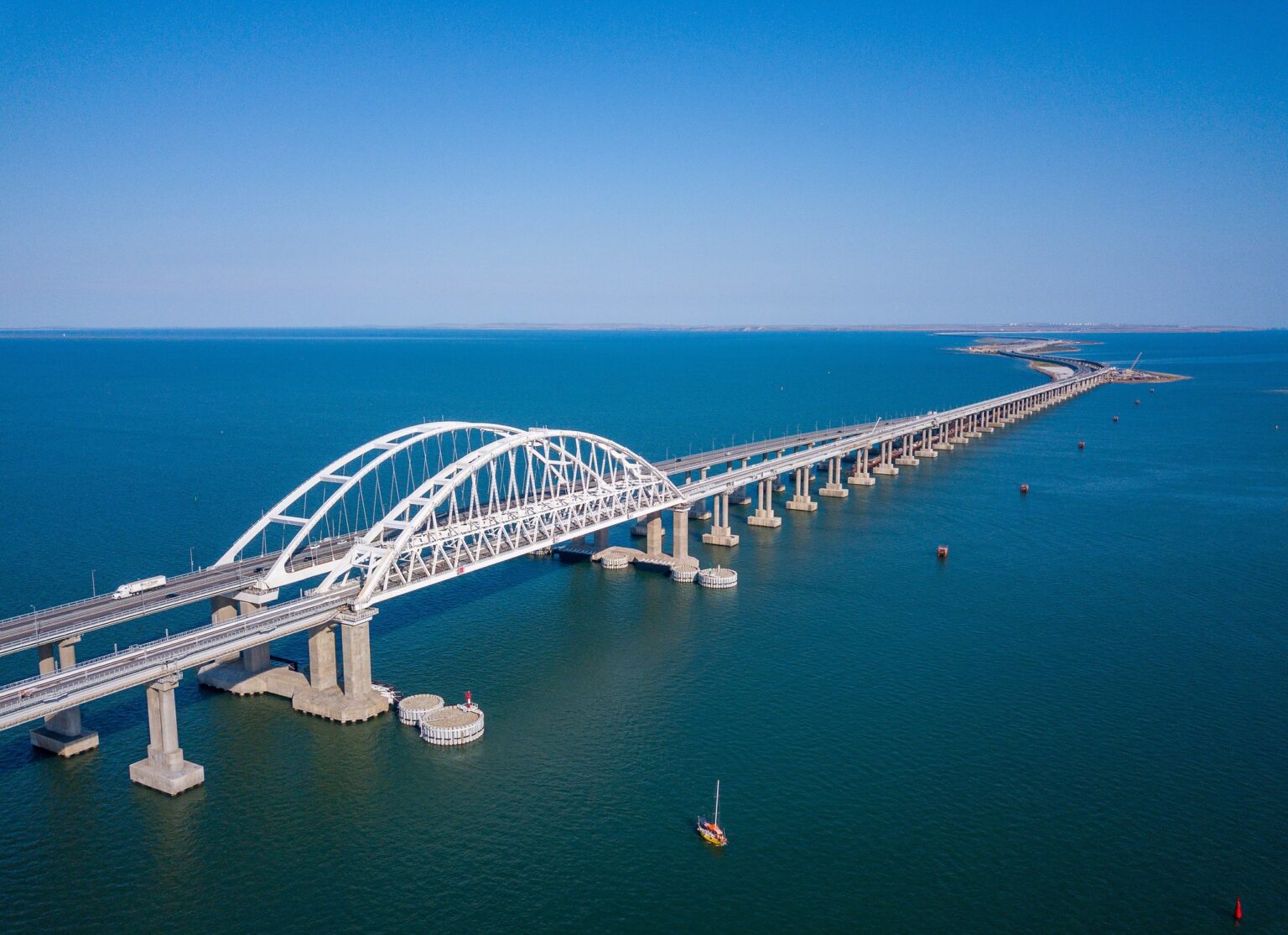
Leaving aside the obvious target of the Kerch Strait mega bridge – at which, according to the leak of a tape of German military officers, 20 Taurus missiles would be aimed – no one doubts that sending Taurus missiles to Ukraine would aid and abet Ukraine’s attacks on Russian territory.
Such attacks have escalated in the past couple of weeks. On March 12th alone, Ukraine sent 58 kamikaze drones aimed at six locations.The Ukrainians have been aiming at Russian oil refineries. Two of them were hit on March 12.
There reportedly was an attempted strike on a nuclear power plant in Rostov. The Rostov plant includes three power units and generates 3.1 gw (gigawatts) of electricity.

Rostov Nuclear Power Plant’s Reactors. Photo: ioes.ru
An attack on a nuclear power plant is extraordinarily reckless and has repercussions that could escalate the war with new terror weapons, including nuclear weapons. Scholz’s statement that he trusts the Ukrainians would seem misplaced.
Ukraine’s attacks grow out of desperation, as Ukraine’s military is steadily eroding and the Russians are thought to be on the verge of a major offensive. The Ukrainians are urgently building new defenses consisting of trenches, pill boxes and obstacles, but if the Russians actually do move a large force, the new defense works will be either bypassed or destroyed.

Ukraine defense works construction. Photo: Screengrab
Russian President Vladimir Putin strongly warned the West about nuclear weapons. Putin conflated nuclear weapons with the possible introduction of US troops in Ukraine, saying that the West should be aware that Russia is “technically ready for nuclear war” and that if the US sent troops to Ukraine, it would be considered “a significant escalation of the conflict.” Putin’s statement came before the reported attack in Rostov. It isn’t known how Russia will respond to that.
There will be a vote in the German Bundestag, staged by the opposition, on the Taurus question. Previously the Bundestag voted against sending Taurus missiles to Ukraine. How such a vote will turn out this time, given the fissures in the German government, is not clear.
UPDATE MARCH 14, 2023: The Associated Press reports that the Bundestag has rejected the proposal.
https://asiatimes.com/2024/03/drumbeat- ... -missiles/
******
Austrian communists make a breakthrough in Salzburg municipal polls
With a surge in their popularity in cities like Graz and Salzburg, communists hope to enter the parliament in the elections this year
March 13, 2024 by Peoples Dispatch

Kay-Michael Dankl (left) during the election campaign.
On Sunday, March 10, in the municipal elections held in the Austrian federal state of Salzburg, the Communist Party of Austria (KPÖ) made significant gains in the Salzburg city council by securing 10 seats, a jump from just one seat it had previously. The KPÖ are close behind the Social Democratic Party of Austria (SPÖ) which secured 11 seats.
At the same time, Bernhard Auinger from SPÖ and Kay-Michael Dankl from KPÖ have secured 29.4% and 28% votes respectively, in the first round of mayoral election in Salzburg city and qualified for the runoff scheduled for March 24.
Meanwhile, the ruling Austrian People’s Party (ÖVP) has slid to third position in Salzburg city while retaining the majority of municipal councils and mayorships in the state.
The communists also made gains elsewhere in the Salzburg state, having secured three seats in Wals-Siezenheim and Hallein.
Salzburg is the fourth largest city in the country and communists under the leadership of Kay-Michael Dankle have managed to increase their strength multifold in the city within a short period. The party campaigned on issues such as the housing crisis and the cost of living crisis, that the major parties failed to tackle yet.
Earlier, in the elections to the regional assembly (Landtag) of Salzburg held in 2023, the KPÖ+ coalition registered a significant victory by winning four seats and 11.7% of the total votes polled.
The second-largest city in Austria, Graz, has a communist mayor, Elke Kahr, since November 2021. With the latest victory in Salzburg city, Austrian communists are in an upbeat mood and hope to enter the Austrian National Council in the parliamentary elections this year.
Meanwhile, the loss of mayorship in Salzburg proved disheartening for the ÖVP-Green coalition that leads the federal government headed by chancellor Karl Nehammer, before the general elections.
Following the declaration of the election results in Salzburg, the Young Left group affiliated with the KPÖ stated that “this election success in Salzburg did not fall from the sky, but is the result of consistent work by KPÖ Plus in recent years … The upward trend of the communist movement continues.”
The Communist Youth of Austria (KJO) stated that “the election result makes it clear that the people are in support of pro-worker policies, that do not bow to banks and corporations, and also reach the people! The time is up for a communist alternative!”
https://peoplesdispatch.org/2024/03/13/ ... pal-polls/





 .
.