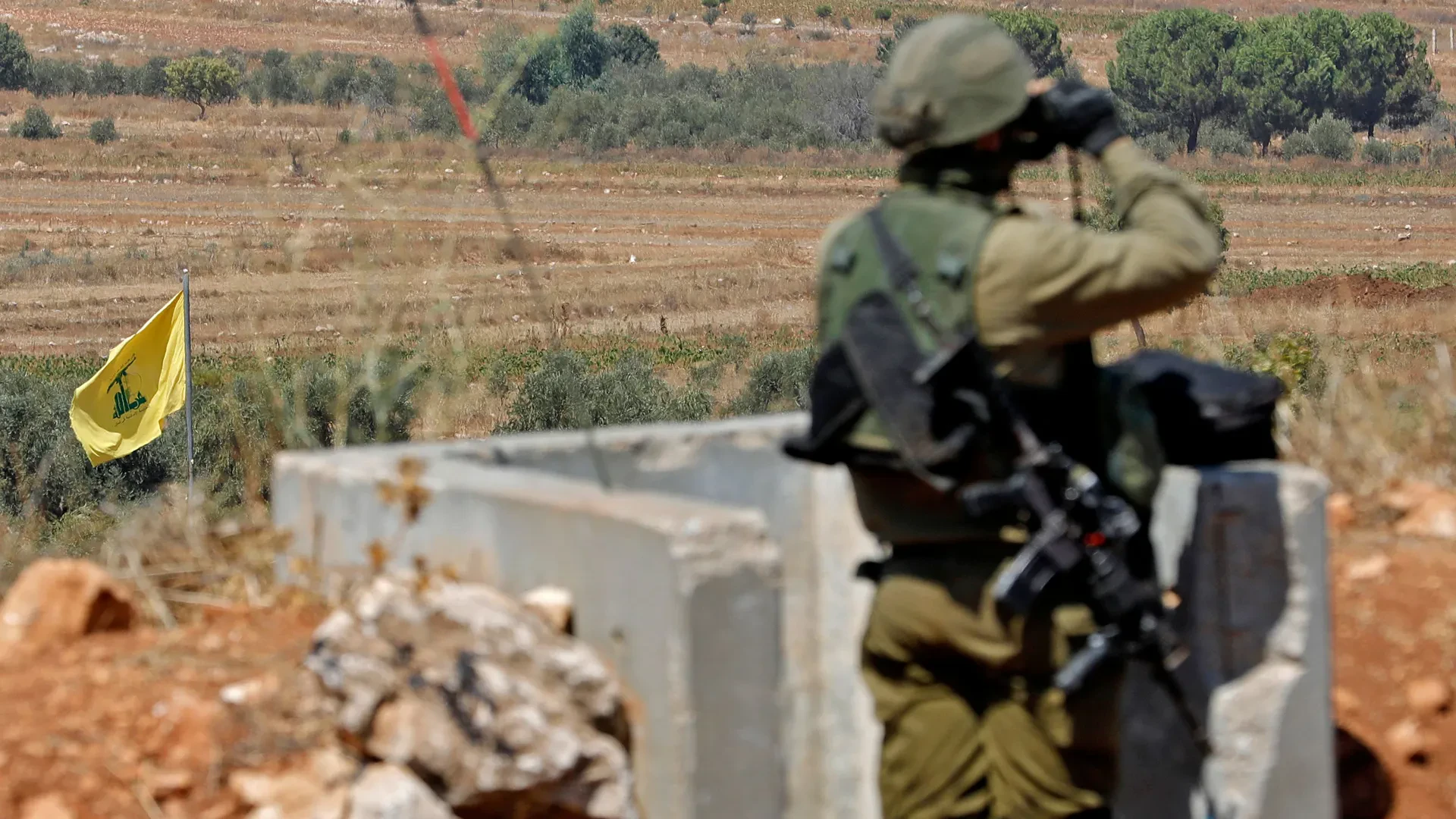
JULY 23, 2024

Photo composition showing the Yemeni drone that struck the zionist-occupied Palestinian city of Jaffa and the aftermath of the drone strike (inset). Photo: X/@WaslAbw35019.
By Michael Awad – Jul 22, 2024
The resilience and resistance of Gaza for nine months have inflicted losses on Israel, its army, and its society, exposing its falsehoods, restoring the centrality of the Palestinian cause, toppling Israel’s narrative about the Holocaust, and igniting a historical movement among youth and students in the US and Europe demanding the return of Palestine to its people.
The Lebanese Islamic resistance fine-tuned the support and engagement front, achieving strategic gains, altering the balance of power, turning Galilee and Golan into a single front under unified military command, securing operational control over a theater extending from Tiberias and Safed to Acre, and revealing a stockpile of sophisticated, precise, and destructive weapons and drones capable of targeting any valuable military objective across all of Palestine.
Yemen, the jewel of the Axis of Resistance, is waging war as a central power, closing seas and straits, reaching the Indian Ocean and the Mediterranean Sea, engaging with the Americans, NATO, and their allies, proving legendary competence and capability, and achieving gains that alter the conditions of nations, empires, and global trade.
Iran has engaged, confirmed its seriousness and capabilities, and readiness for battle if imposed upon it or decided by the axis.
Iraq is present as a partner, selecting its targets at the right time, enhancing participation in coordination and integrated operations with Yemen. Syria is a support front, although itself in a state of war, and has completed preparations for the hour of action.
Nine months of the miraculous Al-Aqsa Flood and the legendary Gaza war are immensely valuable and will be the most precious in the history of Arabs, Muslims, the region and the world for the events, developments, and historical and strategically transformative changes they will produce.
The Jaffa (Yafa) mission carried many messages when it struck a sensitive building as a strategic target in the heart of Tel Aviv, in the most important and heavily guarded area with security, electronic, and air defense systems.
The messages from Yafa to Tel Aviv are:
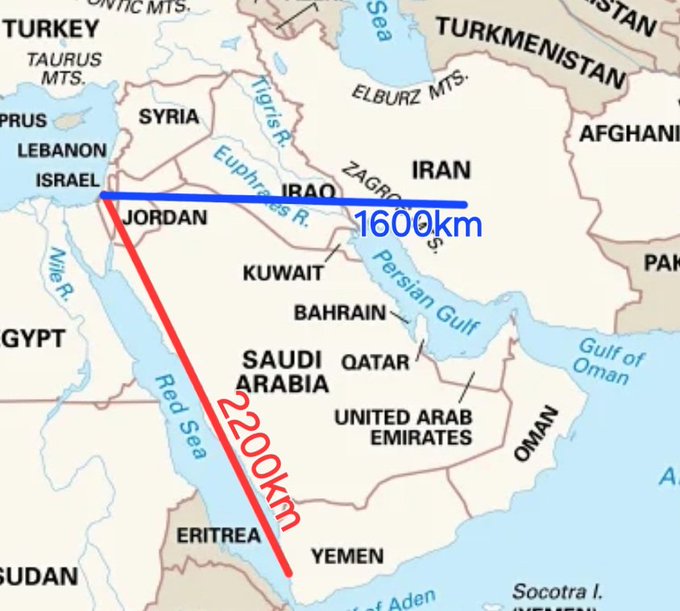
1. We are serious and capable; from Yemen, over 2,000 kilometers away, we reached Jaffa (Yafa) and struck 100 meters from the US embassy, despite NATO naval forces, missile shields, and bases in Arab countries, perhaps with some participation—imagine if the Yafa drone had launched from Lebanon or Syria, how long would it take, and who could intercept it if it flew for ten hours and arrived.
2. The resistance axis is one body and mind, conducting the war through a joint operations room, creatively distributing roles and tasks. Sayyed Hassan Nasrallah raised the stakes, Yemen executed, and certainly, the reverse will happen if Yemen is subjected to aggression and risks. All of Israel is now a hostage to the axis.
3. If Yemen is capable and has acted, placing its threats into execution without hesitation, what about the other fronts with their geographical proximity, theaters, drones, and weapons no less significant than those Yemen possesses? Any weapon held by one party reaches the hands of all, each enhancing and developing.
4. The unity of arenas and fronts is solid, resilient, combative, principled, and ideological, with no challenge capable of breaking it; each challenge strengthens its bonds.
5. Netanyahu’s stubbornness and folly in committing massacres in Gaza, his bravado, blocking ceasefire possibilities, and challenging Sayyed Hassan Nasrallah’s warning result in catastrophic outcomes for Israel. The resistance in Gaza is proficient and fortified, managing its war with control and command, creatively fine-tuning in Lebanon, and with high capabilities and morale in Yemen, reaffirming victory for Gaza and Hamas in every instance, otherwise, let the war rage.
6. Yafa told Tel Aviv bluntly and with fire: there is no escape. You declared it a war of existence; if defeated, you have no place in the region. This message will defeat you, so prepare and hasten your departure.
7. The Yafa mission is a slap in the face of rulers, regimes, governments, factions, and silent and timid forces that squandered trillions of dollars buying weapons to save their factories in the West but only used them against their people and the resistance axis. Meanwhile, starving Yemen and besieged, devastated Gaza create miracles with almost negligible resources.
The most important and valuable message is that the Yafa mission and the power of the axis and its fronts, the revealed capabilities and types of weapons, and what its leaders say about these capabilities now obligate it to fulfill its promise of liberating Al-Aqsa and praying there. If the axis does not act after the war has proven its position and capabilities, it will lose its legitimacy, the justification for its arms and wars, and be responsible for prolonging the war and suffering, leaving a weak and incapacitated Israel to kill, destroy, and annihilate with cold blood.
The axis has no excuse or pretext to delay fulfilling the promise. The war has imposed itself, Gaza has been devastated and made tremendous sacrifices, Israel is incapacitated and troubled, its army suffering, America is preoccupied with its elections and crises, Europe is engulfed in its crises, Eurasia supports the axis, and global public opinion is matured and now besieges Israel and disavows it. It is illogical for the axis to waste the opportunity and give Israel time to catch its breath.
Jaffa’s message to everyone: It is time to liberate Palestine from the river to the sea, and the task must be completed.
Bravo, Yemen, and your Jaffa (Yafa) mission, how precise and multi-messaged it was.
https://orinocotribune.com/jaffa-operat ... palestine/
******
Netanyahu will prolong the war on Gaza until Trump takes office
Steven Sahiounie
July 23, 2024
Biden’s blind support of Israel has angered many Americans, including the staff of the White House and U.S. State Department.
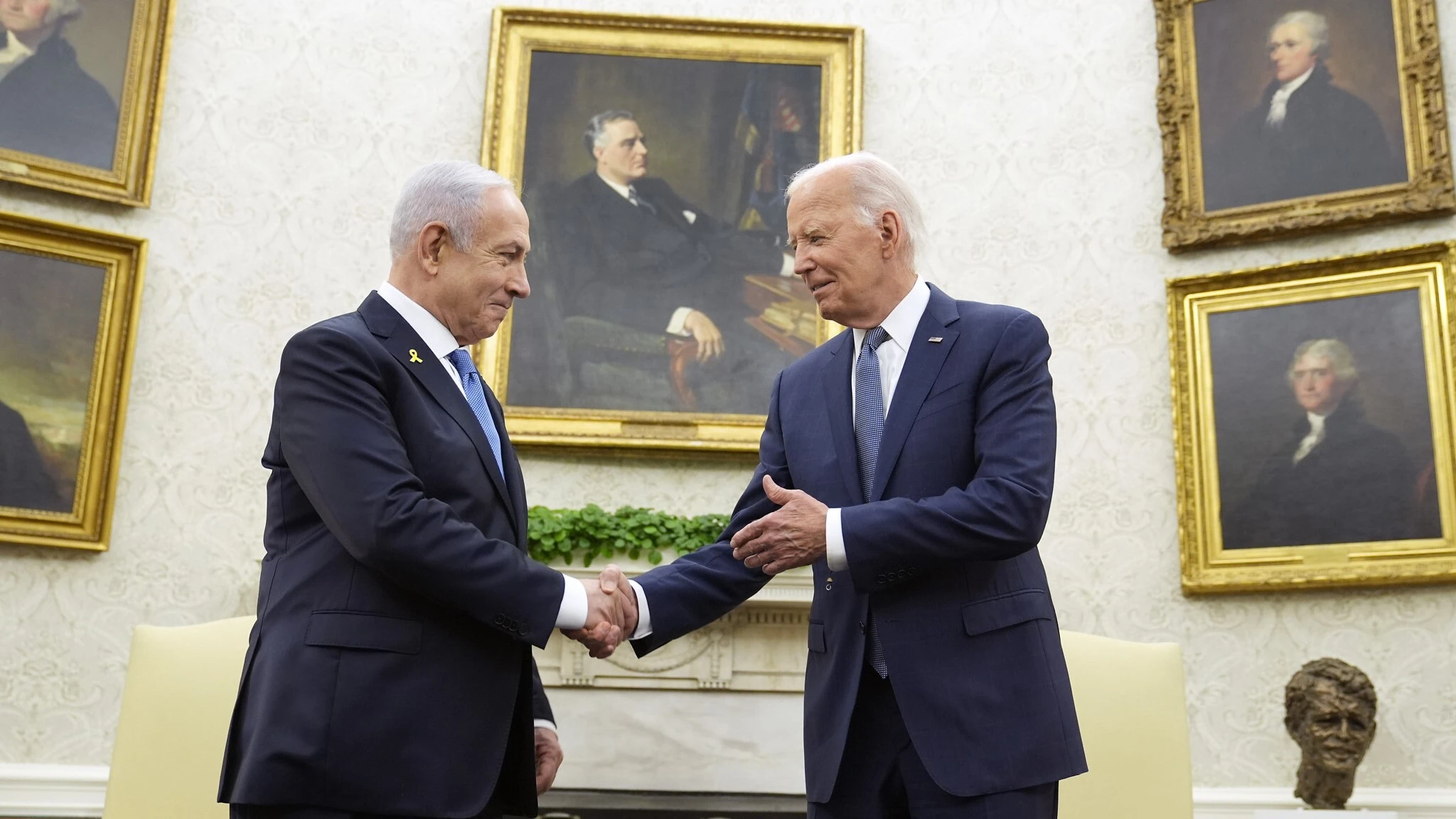
Israeli Prime Minister Benjamin Netanyahu has arrived in Washington, but he was not met at the airport by the U.S. President, Vice President, or even the U.S. Secretary of State in an official snub.
Netanyahu will address a joint session of Congress on Wednesday while speaking from a position of power in the political sphere of America because of the incredible influence of AIPAC.
Netanyahu has successfully postponed the Gaza ceasefire deal he previously agreed to, kept himself in power and out of jail, and contributed to the decision of U.S. President Joe Biden to leave the race for a second term as president. Netanyahu is betting on Trump.
A meeting between Netanyahu and Biden is scheduled for Tuesday afternoon, but insiders believe the meeting will be called off, and the blame will be diplomatically placed on Biden’s case of Covid-19. Biden had been low in the polls, and faced mounting criticism. But, very recently he and his advisors had made a firm decision to stay in the race and prevent President Donald Trump from a second term.
Biden was counting on being able to stop the war in Gaza. Had he successfully ended a war which has taken the lives of some 38,000 Palestinians, with 60% of whom are women and children, and secured the release of Israeli hostages, he had a good chance of winning votes from Americans who see the Israeli military brutality on unarmed civilians as completely contrary to American core values of human rights and justice.
Biden’s blind support of Israel through weapons transfers, despite war crimes and atrocities committed by the Israeli Defense Forces, has angered many Americans, including the staff of the White House and U.S. State Department. Biden pinned his re-election hopes on his ceasefire deal, which Hamas and Israel agreed to. But then, Netanyahu reneged on his agreement with Biden on the ceasefire, and this is when Biden and his advisors decided to throw in the towel.
Experts are pointing to an intelligence assessment provided to Egyptian President Abdel Fattah El-Sisi which concludes the ceasefire talks in Doha may not progress until November because of Netanyahu’s belief that Trump will win. Netanyahu and his Jewish extremist administration will then likely enjoy a free hand in Gaza, which includes plans to annex Gaza and the West Bank.
On July 11, Biden proudly announced his imminent cease-fire deal, saying his proposed framework was “now agreed on by both Israel and Hamas.” Biden added, “We’re making progress, the trend is positive, and I’m determined to get this deal done and bring an end to this war, which should end now.” On Monday, according to the White House, Israel “affirmed its full support for the deal as outlined by President Biden and endorsed by the UN Security Council, G7, and countries around the world.”
But, in a shocking betrayal, Netanyahu turned course and decided to buy time until Trump, “the best friend that Israel has ever had in the White House” takes office.
Netanyahu has consistently delayed the Gaza cease-fire talks in Doha by preventing his negotiating team from travel, and now he has created new demands, despite Hamas agreeing to big concessions.
He must appease two far-right cabinet members, Finance Minister Bezalel Smotrich and National Security Minister Itamar Ben-Gvir, who have threatened to dissolve his government if he signs a cease-fire deal with Hamas.
Regardless of enormous pressure from the Israeli public, who demand a deal to release the Israeli hostages after 10-months in captivity, Netanyahu has stuck to his policy of buying time at the expense of the hostages, their families, and the future of Biden.
Even before Biden’s current political troubles Netanyahu was engaged in regular slow-walking of the cease-fire talks
Israel agreed to the Biden cease-fire proposal on May 27. The came the bombshell, which even shocked Netanyahu’s chief negotiator, Mossad head David Barnea. Netanyahu insisted on keeping an Israeli military presence in two corridors: along the border with Egypt, the so-called Philadelphi corridor; as well as along the Netzarim corridor that cuts through the center of Gaza. Both sides had thought that issue was not an obstacle.
“The hostages are suffering but they are not dying,” Netanyahu said. Barnea, has warned that the female hostages in particular may not survive much longer.
The Israeli public is outraged that Netanyahu has left Israel without completing the cease-fire deal which would ensure the release of Israeli captives.
Ben-Gvir said in a cabinet meeting recently, “Making a reckless deal now would not only endanger Israel, but would be a slap in the face of Trump, and a win for Biden.”
Netanyahu angered Trump when he congratulated Biden for winning in 2020 at a time when Trump was trying to overturn the election. Later, Trump would say in an interview referring to Netanyahu, “F**k him”.
In 2018, Netanyahu hit the jack-pot when Trump pulled out of the 2015 Iran nuclear deal. In his last speech to Congress in 2015, Netanyahu infuriated Obama by urging that the nuclear deal be scuttled. Israel’s longest-serving premier has virtually made his career in Israeli politics by billing himself as the only one who can manipulate the U.S.
Biden had insisted that opening up negotiations toward a two-state solution is necessary. Netanyahu and his administration refuse to consider a peace plan, and voted overwhelmingly on July 18 to oppose a Palestinian state.
Netanyahu and his coalition allies who are Jewish extremists have a powerful allied segment of the American society: the Republican Evangelical Christians. When Netanyahu came to office, one of his two main goals was to increase Jewish settlements in the West Bank, and finally to annex the whole Occupied Palestinian territory. Both Smotrich and Ben-Gvir are settlers.
Many of the Jewish settlers in the illegal settlements in the Occupied West Bank are American citizens who migrated to Israel. The have many organizations promoting solidarity between Evangelical Christians in the U.S., who are overwhelmingly Republicans and Trump supporters, and the settlers. These groups host Republican politicians on trips to the West Bank settlements, including U.S. House Speaker Mike Johnson, who visited prior to becoming Speaker.
On Friday, the top UN court ruled the settlements were illegal, and it has been U.S. policy to regard them as illegal, and an obstacle to a two-state solution.
Israeli Jews and American Evangelical Christians, who both hold extreme right-wing political views, have formed grassroots alliances while working to convince Trump and the Republican Party to drop longstanding U.S. support for a Palestinian state, arguing it rewarded the Oct. 7 Hamas attack on Israel.
A May poll in Israel revealed that just 33% of Israelis support a two-state solution and 32% of Israelis favor Israel annexing the Occupied West Bank.
The settlers are betting on Trump and his right-wing Evangelical Christian supporters to annex their homes into Israel, thus displacing permanently the 3 million Palestinians who live there, and permanently depriving the Palestinians their freedom and human rights. Netanyahu is betting on Trump to keep him out of jail.
https://strategic-culture.su/news/2024/ ... es-office/
******
Israel quietly funnels millions to illegal West Bank settlements
The funds come as part of a budget to ‘bolster security’ in illegal West Bank settlements
News Desk
JUL 23, 2024

(Photo credit: AFP via Getty Images)
Israel has allocated millions of dollars to the protection of illegal settlement outposts in the occupied West Bank, the Israeli Peace Now watchdog reported on 23 July.
Documents obtained by Peace Now show how Benjamin Netanyahu’s government has discreetly funded the unauthorized outposts – some of which have been linked to Israeli settler violence against Palestinians.
Some of these outposts have also fallen under US sanctions.
Peace Now also says that in 2023, the government allocated over $7 million for security in illegal outposts established in violation of Israeli law.
This was disclosed by Hoshaya Harari, the director general of the Settlement Division of the World Zionist Organization, during a conference held in June by Israel’s Religious Zionist party, which is headed by Finance Minister Bezalel Smotrich.
Peace Now recorded the June conference and released its details on 23 July.
The funds came as part of the government budget for boosting security in both settlements and illegal West Bank outposts. According to Peace Now, they were used for vehicles, drones, cameras, generators, electric gates, and other items.
Over half of the funds were given to outposts built over large tracts of Palestinian land. The watchdog adds that the security budget for illegal outposts is expected to rise to more than $17 million by 2024.
“Not only does the Israeli government allow settlers to take over lands, establish outposts and farms in violation of the law, and attack and displace Palestinians without any response, it also funds and assists them,” Peace Now said.
Last year, the Israeli Ministry of Settlements and National Mission announced a $20 million budget for settlement security.
National Security Minister Itamar Ben Gvir has, since the start of the war, headed an initiative to provide weapons to Israelis residing in West Bank settlements.
A number of settlement outposts in the occupied West Bank are unauthorized under Israeli law. However, all settlements in the territory are considered illegal under international law.
https://thecradle.co/articles/israel-qu ... ettlements
Leaks reveal Israel killed 366 UN staffers, family members in Gaza: Report
Israel has continued to target UN facilities across Gaza as part of its genocidal campaign in the strip
News Desk
JUL 24, 2024
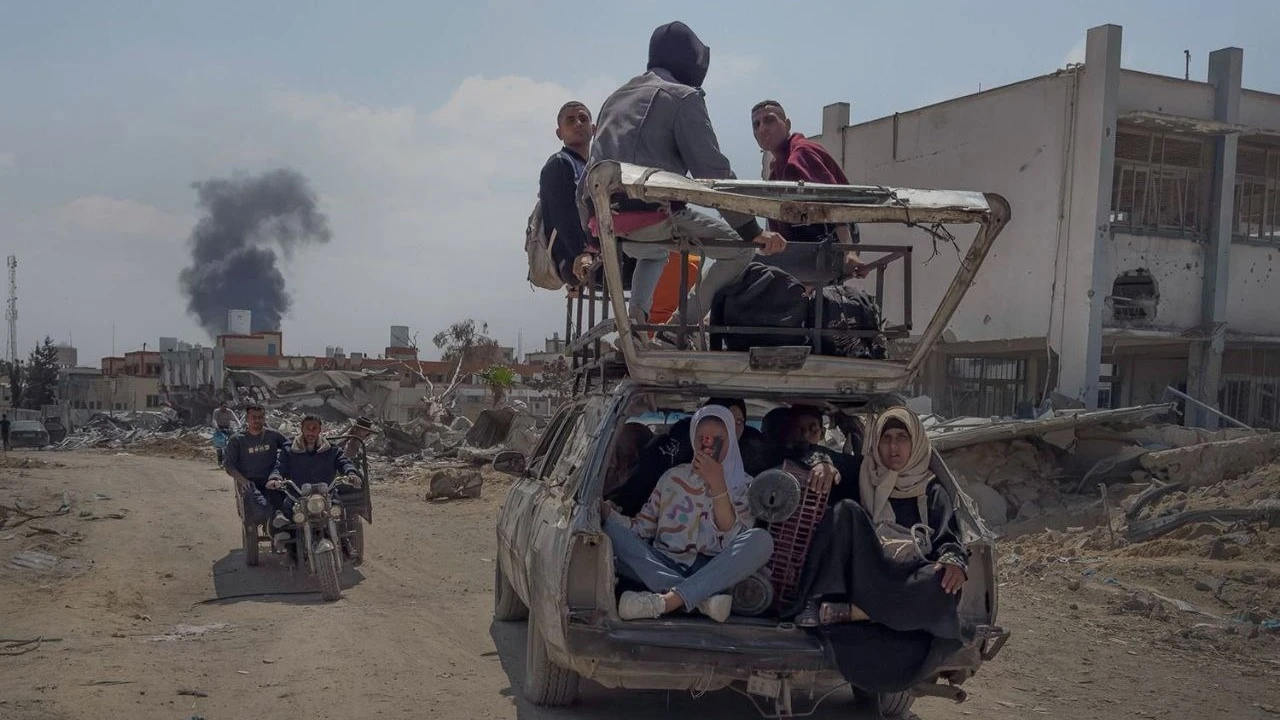
(Photo credit: Karam Hassan/AA)
Hundreds of UN staff members and their family members have been killed by the Israeli army in Gaza, according to an unreleased UN report obtained by the Drop Site news outlet on 24 July.
At least 195 UN staff and 172 of their dependents had been killed by Israeli forces by the end of June, the unreleased UN report states. The UN defines dependents as persons belonging to a staff member’s family who are formally recognized as financially reliant on that staff member.
The UN Crisis Coordination Centre found that five UN Development Program dependents, four UNICEF dependents, three World Food Programme (WFP) dependents, two World Health Organization (WHO) dependents, and 158 UNRWA dependents have been killed by Israeli forces.
It had been reported in May that Israel had killed 188 members of UNRWA. UNRWA regularly releases situation reports detailing Tel Aviv’s targeting of staff members and facilities.
UNRWA facilities have been the sites of numerous massacres committed by Israeli troops.
However, these are the first numbers indicating the extent to which Israel has targeted the families of UN staff members.
According to Drop Site, the report was circulated internally at the start of this month. The UN did not respond to a request for comment.
Over the weekend, on 21 July, a UN convoy came under heavy fire by Israeli forces despite prior coordination with the army.
An Israeli airstrike on the UNRWA-run Abu Oreiban school in central Gaza’s Nuseirat Camp a week earlier, on 14 July, killed at least 15 people, just a day after the strike on southern Gaza’s Al-Mawasi that killed at least 90 and injured hundreds on 13 July.
Tel Aviv has accused UNRWA members of involvement in Operation Al-Aqsa Flood on 7 October but has yet to provide evidence for its claims.
UNRWA staff members have reportedly been tortured in Israeli detention centers. Israel proposed a plan to dismantle the agency in late March.
https://thecradle.co/articles/leaks-rev ... aza-report
Eighty-three percent of Gaza under forced evacuation as massacres unfold in Khan Yunis
No shelter remains for millions of Palestinians in Gaza as the Israeli army continues to wreak havoc across the strip
News Desk
JUL 24, 2024
(Photo credit: X)
The Euro-Med Human Rights Monitor said on 24 July that the ongoing Israeli assault on Gaza’s southern city of Khan Yunis is one of the “bloodiest” attacks yet.
According to the monitor and to authorities in the strip, the ongoing attack on Khan Yunis has killed at least 89 people and has injured over 263 others. The death toll is expected to continue rising.
“The Israeli forces threw leaflets in eastern parts of Khan Younis and then started shelling in a very crazy way all parts of the city,” an Al Jazeera correspondent in central Gaza reported on Wednesday, adding that paramedics have been unable to reach certain areas to treat the wounded.
The correspondent said people in Khan Yunis are moving from place to place with nowhere to go, looking for shelter as Israeli attacks on crowded streets continue.
The last hospital in the city, the Nasser Medical Complex, is facing a mass influx of casualties and is urgently calling for blood units to treat wounded people arriving at the facility every minute.
Israeli troops reentered the southern city on 22 July after issuing evacuation orders to residents, less than two weeks after forcibly displacing tens of thousands of Palestinians from Gaza City in the northern strip. According to Al-Jazeera, around 150,000 Palestinians in Khan Yunis are now on the run.
The UN Office for the Coordination of Humanitarian Affairs (OCHA) warned in a situation report on Monday that “as of 22 July, nearly 83 per cent of the Gaza Strip has been placed under evacuation orders or designated as ‘no-go zones’ by the Israeli military.”
“Frequent evacuation orders and relentless hostilities continue to further devastate Gaza’s health system and make it increasingly difficult for repeatedly displaced populations to access essential services, particularly people suffering from chronic diseases,” the report added, coincided with the outbreak of the poliovirus across the devastated enclave.
As Israel relentlessly targets the strip’s civilian population, the Israeli army continues to face fierce resistance from the fighters of Hamas’ Qassam Brigades and other resistance factions, both in Khan Yunis and in the southernmost city of Rafah.
The Qassam Brigades announced several operations targeting Israeli tanks and bulldozers east of Khan Yunis over the past two days.
https://thecradle.co/articles/eighty-th ... khan-yunis
******
The Stunning Audacity of Yemen’s Drone Strike on Tel Aviv
Posted by INTERNATIONALIST 360° on JULY 24, 2024
The Cradle’s Military Correspondent

Yemen’s unprecedented drone strike on Israel’s economic powerhouse has further shattered the occupation state’s perceived invulnerability. Moreover, it announced the launch of Ansarallah’s fifth phase of war: ‘Target Tel Aviv.’
On 19 July, a low-altitude drone breached Tel Aviv’s airspace from the sea and detonated, causing one fatality and injuring ten others.
The incident sent shockwaves through the occupation state, with a panicked populace and bewildered policymakers grappling with the Israeli army’s “mega-failure” to intercept a single drone amid prolonged aggression against Gaza and the mounting tensions with Hezbollah in Lebanon.
The attack’s impact was magnified by its direct hit on Tel Aviv, the heart of Israel’s governmental and economic power, starkly exposing inadequacies in its defense strategies and further alarming a population that has for months been questioning the effectiveness of its military preparedness.
It wasn’t long before the de facto Yemeni authorities in Sanaa claimed responsibility for the attack, calling the strike a retaliation for Israeli massacres and threatening more to come.
But how did a Yemeni drone reach the heart of Israel’s most fortified region and strike a blow to Israeli military pride?
Tactical evolution of suicide drones
Suicide drones, as they are known, are a relatively modern weapon, posing significant challenges even for technologically advanced states like the US and Israel. These drones vary in range, warhead size, speed, and guidance methods.
Analysis of the wreckage revealed that the “Yaffa” drone, an enhanced version of Yemen’s Sammad drones, was employed in the operation. The name is deeply symbolic as it references the ancient port city of Jaffa, also known as Yaffa in Arabic, which now forms part of modern-day Tel Aviv.
Yaffa Drone
Its rectangular wing shape and V-shaped tail distinguish it, but it is notably the more powerful 275 cc (16 kW) engine that sets it apart. This engine enables the drone to cover distances exceeding 2000 kilometers – sufficient to reach Tel Aviv from Yemen.
Unlike with ballistic missiles, the difficulty in tracking drones lies in their ability to take unconventional paths, maneuver through winding routes, and hide behind terrain features, making them hard to detect by radar systems.
This detection challenge is a daily issue in northern occupied Palestine, where drones operated by Lebanese resistance groups often go unseen by the increasingly blinded occupation army.

Moreover, drones are typically constructed from lightweight materials such as fiberglass, carbon fiber, or various reinforced plastics that do not reflect radar waves effectively, which is crucial for detection and tracking.
Their low speeds reduce the need for the metallic compositions necessary in constructing conventional military hardware like missiles and fighter jets. Consequently, drones can be mistaken for birds by radar systems. This confusion has occurred regularly in northern occupied Palestine since the war’s onset, with Israel’s Iron Dome defense system spotted expending its limited supply of $50,000 projectiles shooting at birds during this conflict.
Yaffa’s route to Tel Aviv
The suicide drone likely took an unconventional path to evade detection. Previous Yemeni attempts have been intercepted in Egyptian Sinai airspace, with Israeli-allied Arab states such as Saudi Arabia, Jordan, and Egypt contributing to these detection and interception efforts.
On the night of the attack, however, no US aircraft carrier groups were in the Red Sea, and the nearest carrier, the USS Theodore Roosevelt, was positioned in the Indian Ocean. Israel’s air force has suggested that the drone may have taken a non-traditional route via Eritrea, Sudan, and Egypt, crossing near the Suez Canal before entering the Mediterranean and turning east toward Tel Aviv.

Possible path of Yaffa drone that targeted a building in Tel Aviv
Some aspects of that route seem unlikely: the Suez Canal area is heavily patrolled by Egyptian air defense, with its 8th Brigade stationed there, so the Israeli announcement may have been an attempt to pressure Egypt.
Israel’s response: Bombing Hodeidah
On 20 July, Israeli aircraft launched punishing airstrikes on the besieged Yemeni port of Hodeidah, specifically targeting areas designated for fuel and oil storage, as well as destroying port cranes used for loading and unloading cargo and a power station.
But these were civilian targets in a country already suffering from the effects of the Saudi-led coalition blockade, which has caused severe shortages of fuel and essential resources needed for power generation and transportation.
The strike at these particular target banks, which killed at least six and wounded dozens of others, appears to be primarily aimed at creating significant explosions and large fires to help Israeli Prime Minister Benjamin Netanyahu score points at home.
But the Israeli response against civilian targets also reveals that Tel Aviv suffers from a dearth of intelligence on potential Yemeni military targets. It was also evident that the selected targets were ones that Saudi Arabia and the US have refrained from striking due to fears of Yemeni retaliation, which could strike Saudi commercial ports or oil exports in one of the world’s most vital energy passages.
Indeed, Riyadh was quick to deny any involvement in the assault, fearing reprisals from Sanaa, although reports that Israeli jets used Saudi airspace for this attack suggest otherwise.
Video footage shows that Israel used F-35 and F-15 fighter jets, as well as Boeing 707 tanker aircraft, due to the distance involved – a range exceeding 4,000 kilometers round trip. Israeli-released footage suggests that the strikes were carried out using Spice guided missiles launched from outside the Yemeni air defense range.
Some of these missiles are equipped with boosters that extend their range up to 150 kilometers, which only showcased Israeli operational limitations against Yemen in a broader conflict, in which Sanaa’s air defenses will be surely activated against enemy aircraft, drones, and projectiles.
Yemen’s retaliation
Yemeni officials, led by Ansarallah leader Abdul Malik al-Houthi and Yemeni Armed Forces Spokesman Brigadier General Yahya Saree, quickly announced a decision to launch retaliatory strikes against Israel, in which they declared Tel Aviv to be an “unsafe zone” and warned of Yemen’s readiness for a “long war” against the occupation state.
Given the targeting of vital civilian infrastructure, this places several Israeli targets on the list of potential Yemeni target banks. These include fuel tanks in Haifa, clearly shown in video footage taken by a Hezbollah drone weeks ago, as well as fuel tanks in Ashkelon and the power stations adjacent to these tanks.
What concerns Israelis the most, however, is Yemen’s potential targeting of vital gas platforms in the Mediterranean Sea, stationary targets highly susceptible to significant ignition and explosion. While there are currently only three active Israeli gas fields – Karish, Tamar, and Leviathan – in operation, these fields have become essential to Israel’s energy independence.
Underestimating Sanaa’s resolve
The damaging Israeli strike on Hodeidah Port was based on an assumption by Tel Aviv that it would deter a Yemeni counterstrike. But Yemen’s Ansarallah Movement, which has endured years of punishing Saudi, Emirati – and now US and UK – military attacks, has shown no inclination whatsoever to halt its operations in support of Gaza.
While the Israelis may have felt an obligation for a quick military fix by striking Hodeidah – the port, incidentally, has already reopened for business – it comes at the expense of any logical assessments of losses and gains. Already facing strategic defeat in Gaza and unable to follow through with its threats against Lebanon, Tel Aviv has cracked open a new front with Yemen, the most fearless component of West Asia’s Axis of Resistance.
The Israelis are between a rock and a hard place, desperately trying to cleave to old narratives of regional military superiority to keep domestic faith in the Zionist project, yet unable to score victories anywhere.
Based on Yemen’s oft-declared resolve not to retreat from any escalation, it is expected that the outcome of the Hodeidah strike will lead to a compounded retaliatory operation against the occupation state. Israel, however, has limited operational freedom due to issues related to geographic distance – such as the airspace and uninterrupted refueling access required – which makes waging war against Yemen a nonstarter.
Harsher strikes on critical Israeli centers are likely to drive Israel into greater missteps and strategic errors, especially at a time when escalation and the further weakening of its deterrence are counterproductive to its interests.
By targeting the Yemenis directly, Israel has underestimated the resolve and capabilities of a formidable adversary, potentially choosing the worst possible opponents in this round of conflict.
https://libya360.wordpress.com/2024/07/ ... -tel-aviv/



 #Lebanon :
 (@Palestine001_) July 17, 2024
































 (@RFN3138) August 2, 2024