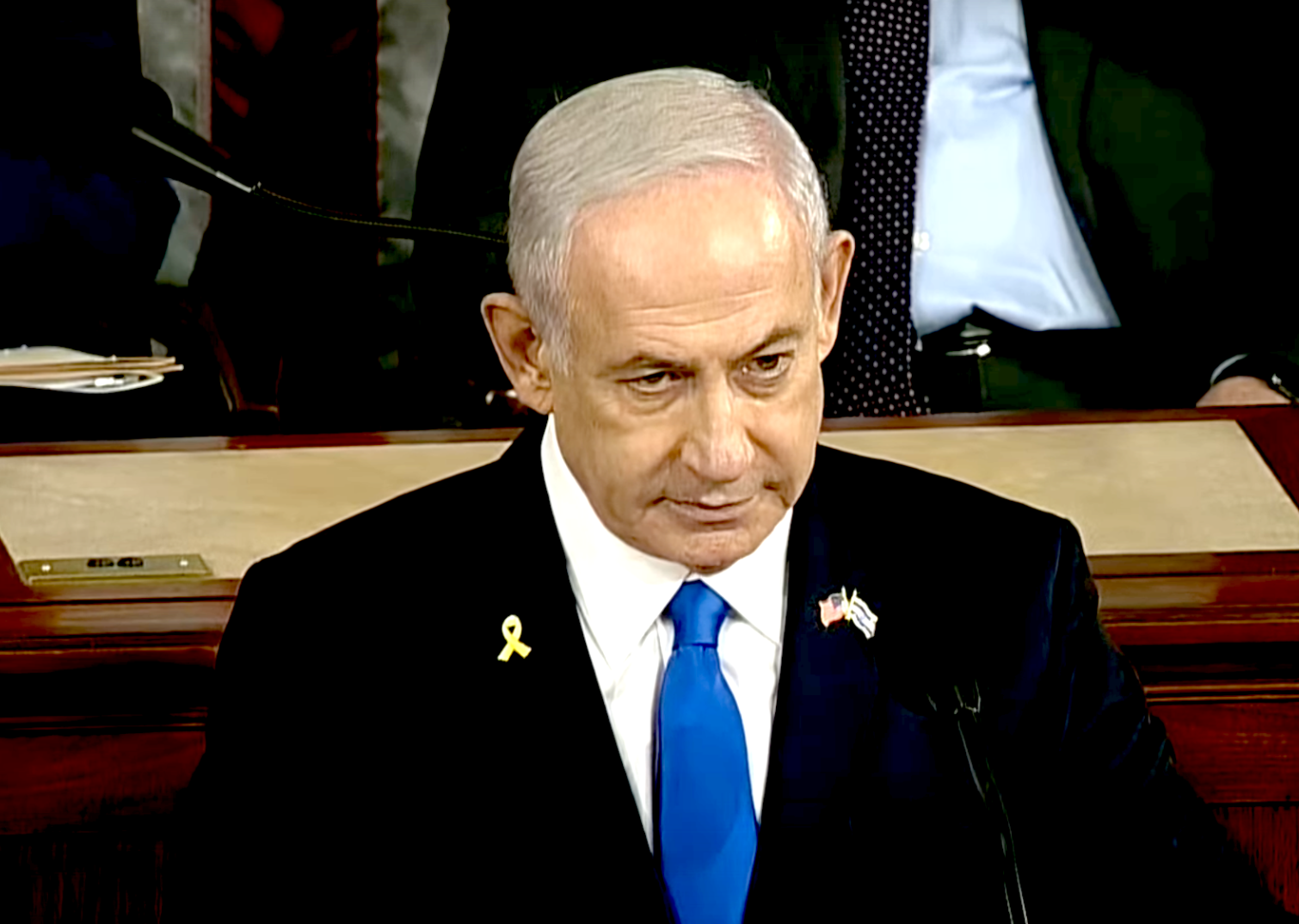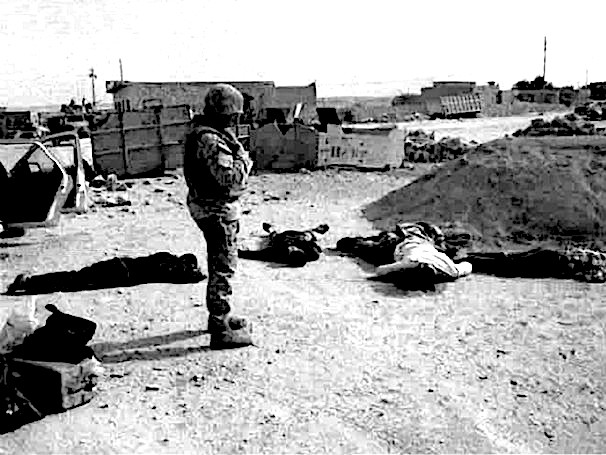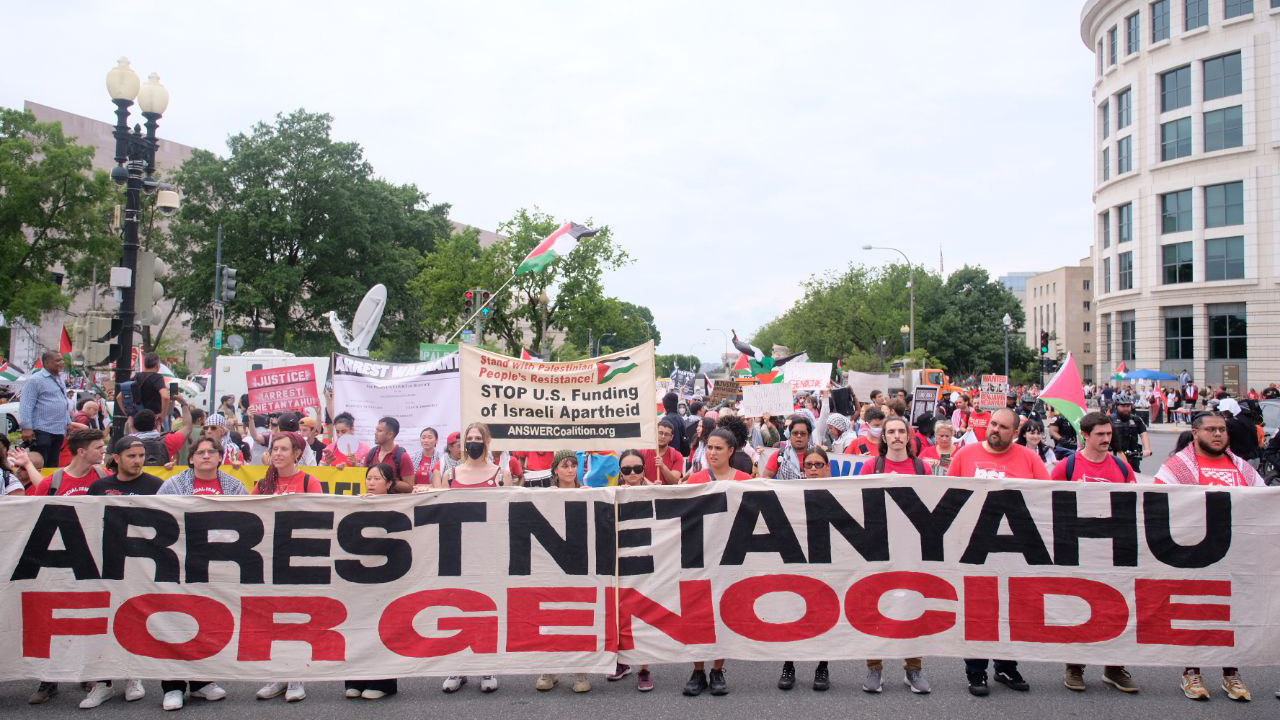

People take part in a protest calling for a ceasefire and for the release of Israeli hostages held by Hamas in Gaza, near the Kirya in Tel Aviv, Israel. Photo: EFE/EPA/ABIR SULTAN
September 7, 2024 Hour: 5:16 pm
Nearly 500.000 people have gathered in Tel Aviv’s streets demanding a ceasefire agreement to take back Israel the October 7 hostages taken by the Palestinian armed resistance Hamas, and protest against PM Netanyahu’s administration.
The demonstrations take place After a week marked by the call for the first national general strike and numerous acts of protest, according to local media.
Other significant demonstrations took place in Jerusalem, Haifa, Be’er Sheva, and near Prime Minister Benjamin Netanyahu’s private residence in Caesarea.
The Hostages Families Forum rally in Tel Aviv began.
Hundreds of thousands of supporters are now singing the national anthem, HaTikva.
The meaning of HaTikva is "the hope", and we all hope for a deal that will bring all 101 hostages back home

Credit: Adar Eyal pic.twitter.com/H48b0ZXmlK
— Bring Them Home Now (@bringhomenow) September 7, 2024
The Hostages and Missing Families Forum has once again been the convening force for protests in major Israeli cities, this time with former Chief of Staff of the Armed Forces Moshe Yaalon, who was also Minister of Defense with the current Prime Minister, Benjamin Netanyahu.
Adina Moshe, a former hostage who was released in the November truce said at the Carmei Gat protest that she told about the danger to hostages when IDF troops approach the tunnels where they are being held. ” When the IDF enters these tunnels, it is impossible to save the hostages,” she recalls.
Assistants still enchanting again “Why are they still in Gaza?” or “Stop the world and save everyone” or “An unsigned agreement is murder.”
Since the war began, Israel and Hamas only reached a one-week truce agreement at the end of November, which allowed for the release of 105 hostages in exchange for 240 Palestinian prisoners.
https://www.telesurenglish.net/new-mass ... overnment/
******

'Israel's war on Gaza is made in the USA,' reads the image showing President Joe Biden (Left) and Prime Minister Benjamin Netanyahu (Right). Photo: Geopolitical Economy.
By Ben Norton – Sep 4, 2024
Israel would not realistically be able to wage war on Gaza without US support.
Citing a senior Israeli air force official, prominent newspaper Haaretz reported that, “without the Americans’ supply of weapons to the Israel Defense Forces, especially the air force, Israel would have had a hard time sustaining its war for more than a few months”.
Israel’s Ministry of Defense wrote in August that US arms shipments have been “crucial for sustaining the IDF’s operational capabilities during the ongoing war”.
President Joe Biden has repeatedly emphasized that Israel serves US imperial interests in a highly geostrategic region. In a speech in Tel Aviv in October 2023, Biden stated, “I have long said, if Israel didn’t exist, we’d have to invent it”.
Former Secretary of State Alexander Haig, an ex US Army general who commanded NATO, similarly boasted that “Israel is the largest American aircraft carrier in the world that cannot be sunk, does not carry even one American soldier, and is located in a critical region for American national security”.

The United States has protected Israel at the UN Security Council, shielding it from international law by repeatedly vetoing resolutions that called for peace and a ceasefire in Gaza.
Top UN human rights experts have warned that Israel is carrying out a genocide in Gaza, demanding an arms embargo.
The onslaught in Gaza has been referred to as “the world’s first livestreamed genocide”.
Scientific experts published an academic article in leading medical journal The Lancet in July estimating that 186,000 or more Palestinians in Gaza will die due to Israel’s war. This is nearly one-tenth of the population of the densely populated strip.
Ignoring rulings by the International Court of Justice, the US government has continued flooding Israel with weapons.
As of July 2024, the Biden administration had given Israel $18 billion in military aid. This is significantly higher than the roughly $4 billion in unconditional military aid that the US government provides to Israel in an average year.
In August, the US State Department approved additional arms packages for Israel worth $20 billion and $3.5 billion.

The Israeli military reported on August 26 that, since October 2023, the United States has sent it more than 600 arms shipments.
The US “operation has delivered over 50,000 tons of military equipment to Israel via 500 flights and 107 sea shipments”, Israel’s Ministry of Defense wrote.
It stressed that the US “equipment procured and transported includes armored vehicles, munitions, ammunition, personal protection gear, and medical equipment, which are crucial for sustaining the IDF’s operational capabilities during the ongoing war”.

The September report in Haaretz, titled “Israeli Air Force Official: Without U.S. Aid, Israel Couldn’t Fight Gaza Beyond a Few Months”, makes it clear that the only reason Israel is able to continue this genocide in Gaza is because Washington is facilitating it.
Before 1967, Israel was sponsored by the European colonial powers, principally the British and French empires. However, following a 1967 war on its Arab neighbors, Haaretz noted, “Israel then switched over its dependence on a foreign power to the United States, which provides the air force with all of its fighter planes and some of its bombs, missiles and intelligence equipment – on top of the development of joint weapons systems for all three layers of air defense”.
It was the British empire that had helped to create Israel in the first place. In the 1917 Balfour Declaration, the Crown gave its blessing to Zionist settlers to establish a colonialist Jewish state in Palestine, because it assumed they would be loyal proxies of the British empire.
The founding father of the Zionist colonialist movement, Theodor Herzl, had written a letter in 1902 to the genocidal British colonizer Cecil Rhodes, praising him as a “visionary” and boasting that the Zionist project was “something colonial”.
Just as the United States absorbed parts of the British empire after World War II, Washington also inherited the Israeli colonial project and became its imperial protector.
As a senator in 1986, Joe Biden boasted on the floor of Congress, “Were there not an Israel, the United States of America would have to invent an Israel to protect her interests in the region; the United States would have to go out and invent an Israel”.
Biden added, “I think it’s about time we stop, those of us who support, as most of us do, Israel in this body, for apologizing for our support for Israel. There is no apology to be made. None. It is the best $3 billion investment we make”.
In 2022, as US president, Biden reiterated that, “if there were not an Israel, we would have to invent one”. He then repeated the same phrase in a 2023 press conference in Israel.
For his part, Israel’s far-right Prime Minister Benjamin Netanyahu has made no secret of the fact that his regime’s goal is the colonization of all of historic Palestine.
In September, Netanyahu appeared with a map that completely erased the West Bank.
Israeli minister and security cabinet member Avi Dichter, a member of Netanyahu’s ultra-conservative Likud party, boasted in 2023, “We are now rolling out the Gaza Nakba”. (The Nakba refers to the mass ethnic cleansing of indigenous Palestinians, upon which Israel was founded in 1948.)
https://orinocotribune.com/israels-war- ... d-weapons/
******
Operation Arbaeen: Was Hezbollah’s Response Underwhelming?
Posted by Internationalist 360° on September 7, 2024
Sayed Hasan

On July 30, 2024, Israel carried out a targeted airstrike on an apartment building in Haret Hreik, a densely populated suburb of Beirut known as a Hezbollah stronghold. The strike resulted in the death of Fuad Shukr, a senior Hezbollah commander crucial to the group’s military operations. Alongside Shukr, Iranian military adviser Milad Bedi and five Lebanese civilians, including two children, were killed, and 80 others were wounded.
The assassination of Fuad Shukr, a figure of immense importance to Hezbollah, was widely expected to provoke a fierce response. However, Hezbollah’s immediate retaliation on August 25 left many observers disappointed, as they had anticipated a more severe and dramatic reaction.
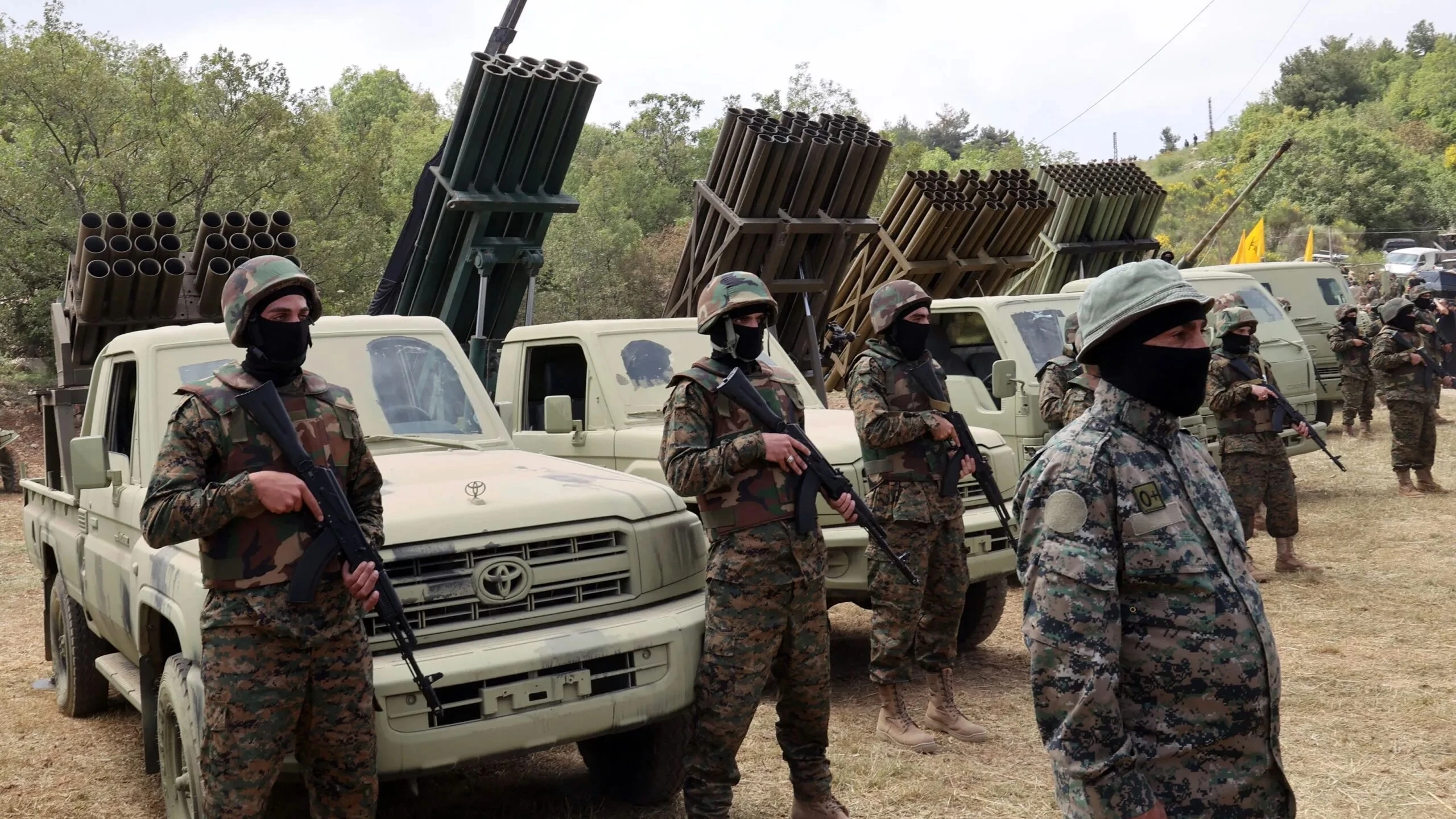
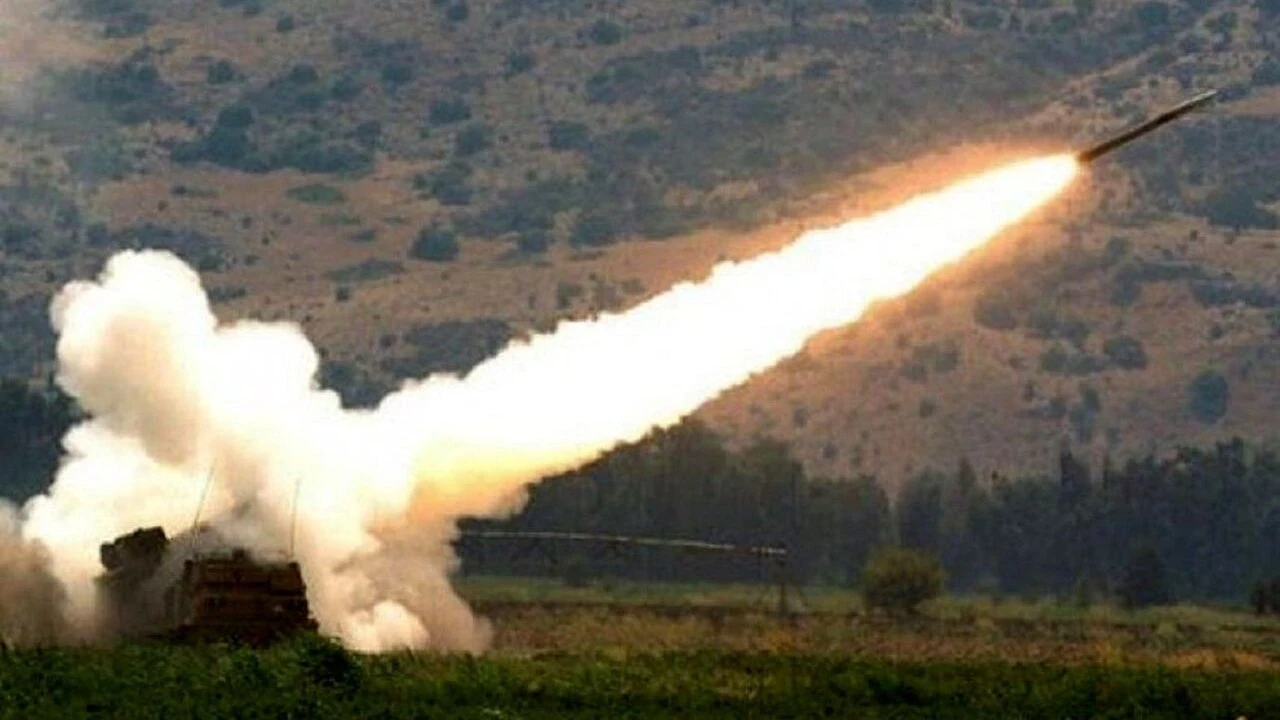
Hezbollah’s counterattack, dubbed “Operation Arbaeen,” (because it took place on the 40th day after the martyrdom anniversary of Imam Hussein) unfolded in two meticulously planned phases. In the first phase, 340 Katyusha rockets were launched at 11 Israeli military bases in Upper Galilee and the Syrian Golan, primarily as a decoy to deplete Israel’s air defenses. Although all these bases were hit, the true impact came in the second phase when tens of armed drones of various sizes and models penetrated deep into Israel, targeting critical military sites: the Ein Shemer air defense base and the Glilot base near Tel Aviv, home to the infamous Unit 8200 and Aman headquarters. These two flagship units of Israeli military intelligence were the main targets of the operation because of their role in the assassination.
This operation demonstrated Hezbollah’s advanced military capabilities and its determination to target the most important Israeli bases, achieving a new level of strategic penetration (110 kilometers from the Lebanese border and only 1,500 meters from Tel Aviv) and signifying a notable escalation in the conflict. Yet, it also raised questions about whether the group had lost its capacity—or its will—to deliver a signifcant blow to Israel or continue to do whatever is necessary to ensure the victory of the Resistance in the Gaza Strip.
However, this sense of disappointment stems from a fundamental misunderstanding of Hezbollah’s strategy and the significance of figures like Fuad Shukr. As Hezbollah Secretary-General Hassan Nasrallah noted after the assassination of Qassem Soleimani in January 2020, the value of such leaders transcends any immediate act of retribution. Nasrallah famously stated that Soleimani’s single shoe was worth more than the entire Trump administration, emphasizing that the only fitting ‘just retribution’ for his assassination was to expel all U.S. forces from the Middle East—a mission with a clear long-term focus. Similarly, an appropriate response to the assassinations of leaders like Imad Moghniyeh or Fuad Shukr cannot be merely the elimination of a single Israeli figure of equivalent stature, as none exist, nor can it be confined to just one military operation, regardless of its scale or success. Instead, it must be a strike that paves the way to the Resistance’s broader objectives—namely, the Liberation of Palestine and the entire Middle East.
Leaders like Prime Minister Benjamin Netanyahu, Defense Minister Yoav Gallant, and Chief of Staff Herzi Halevi, who reportedly sought refuge in underground bunkers for weeks during heightened tensions, are viewed by Hezbollah as strategically inept. Their decisions and actions, rather than deterring Hezbollah or significantly weakening its morale or capacity, are seen as contributing to Israel’s long-term decline. Even if their immediate elimination were possible, it would be counterproductive to the Resistance’s broader goals, as keeping such figures in power accelerates Israel’s downfall—especially Netanyahu, famously dubbed by Nasrallah as fallback successor to “The Last King of Israel”, namely Ariel Sharon. It would also contradict Hezbollah’s vision that all Israeli leaders are effectively the same as regards Palestine, Colonization and Zionism, rendering the politics of assassination futile.
For this reason, the Lebanese Resistance focused on high-value military targets without employing its most advanced capabilities, using only Katyusha rockets and drones while reserving its ballistic and/or high-precision missiles for another battle. The primary objective of this operation, which may include a second phase in the future, was to uphold the rules of engagement and demonstrate that Hezbollah remains committed to supporting the battle for Gaza, initiated on October 8th, 2023, regardless of the cost. This mission was largely—if not spectacularly—accomplished.
Achievements of Hezbollah’s Retaliation
Hezbollah’s “Operation Arbaeen” achieved several critical objectives, each contributing to its broader strategic goals:
Demonstration of Ability: The operation showcased Hezbollah’s capacity to conduct its most significant military action since October 8th, 2023, at a time when Israel was on its highest alert. Despite Israel’s access to the full support, intelligence, and advanced technology of the U.S., NATO, and regional vassals, Hezbollah successfully executed its plan, proving that it remains a formidable force in the face of overwhelming opposition, even after the loss of Fuad Shukr, the very man who should have led such operations. The ongoing and even intensified daily actions supporting Gaza since his assassination highlight that Hezbollah’s capabilities remain undiminished.
Display of Resolve: The operation directly rebuked the numerous threats from Israeli, U.S. and EU officials, who had vowed total war, destruction, and the return of Lebanon to the Stone Age. Hezbollah’s actions demonstrated its resolve to uphold the rules of engagement and continue supporting Gaza, undeterred by these bombastic warnings. The group made it clear that it would not be cowed by rhetoric or threats.
Maintaining the Moral High Ground: Unlike Israel, which deliberately targeted Lebanese civilians in its assassination of Fuad Shukr, Hezbollah was careful to avoid “civilian” targets (in Hezbollah’s view, Zionist settlers encroaching on Palestinian land—whether through illegal settlements, in Haifa, or Tel Aviv—are not considered “civilians.”) and infrastructure. The operation specifically targeted elite Israeli military units involved in the assassination, underscoring Hezbollah’s emphasis on striking military rather than civilian targets, thereby preserving its moral standing in the conflict, while showcasing its ability to strike the country’s most heavily defended targets..
Strategic Focus: While Israel has been desperate to provoke an all-out war and draw the U.S. into the conflict—largely due to its dead-end entanglement in the quagmire of Gaza—Hezbollah kept the situation controlled. The group calibrated its response precisely to avoid triggering a full-scale war, responding to aggression in a proportionate manner, and demonstrating that it prioritized strategy over tactics, bombast and posturing— the complete opposite of Israel.
Pre-Strike Exhaustion: In the weeks leading up to the operation, Israel, for perhaps the first time in history, was struck by fear from Kiryat Shmona to Eilat. The nation experienced a widespread standstill as it anxiously awaited Hezbollah’s response and potential retaliations from Yemen and Iran, yet to come. The evacuation of settlements, the suspension of production, and the economic slowdown took a heavy toll on Israel, both economically and psychologically. The mere anticipation of the attack became a form of punishment, as Israel struggled—and continues to struggle—to move past the looming threat.
Post-Strike Humiliation: Following the operation, Israel’s panic forced millions into shelters, paralyzing the entire country for 72 hours. Israeli officials made exaggerated claims that they had thwarted Hezbollah’s attempt to launch thousands of rockets and precision missiles at civilian targets in the North and Tel Aviv. However, this narrative was a blatant lie, but it played into Hezbollah’s war of nerves against the entire nation. These theatrics were designed to create an illusion of success, with Israel portraying itself as having achieved a major tactical victory by supposedly dealing a severe blow to Hezbollah’s capabilities. However, Nasrallah—whom many Israelis trust more than their own leaders—set the record straight. He clarified that the entire operation involved only about 300 Katyusha rockets and drones, and that not a single rocket launcher or drone platform was hit before it had fired. Only two of these launchers were struck afterward, along with several others that weren’t involved in the operation. No drones were intercepted over Lebanon. Additionally, there were no Hezbollah casualties before the operation, and only two afterward, along with a combatant from the Amal movement. Israel’s hysterical reaction, reminiscent of a high-budget Hollywood production, revealed its desperation to save face and recover from the intelligence failure of October 7th. However, their rushed actions made it clear that they had no prior knowledge of the operation until a significant movement of fighters was detected, and they were entirely unaware of the operation’s specifics or its targets.
Although no images of the impacts were released due to stringent Israeli military censorship—and while Hezbollah’s drones were likely equipped with cameras and may be reserving these images for future release—, Hezbollah’s “Operation Arbaeen” adeptly achieved its strategic goals by showcasing its military capabilities, demonstrating restraint and maintaining ethical standards. The operation effectively countered Israeli and U.S. threats while inflicting psychological and economic stress on Israel. By avoiding broader conflict and mocking Israel’s exaggerated post-strike claims, Hezbollah not only reinforced its strategic position but also exposed the vulnerability and desperation within Israeli ranks.
What About Gaza?
Why did Hezbollah not escalate its response more forcefully to alleviate the Gaza resistance and its population from the prolonged 11-month assault that has devastated the Strip and resulted in the deaths of tens of thousands, predominantly women and children? The answer lies in the balance of power and Hezbollah’s—along with the entire Resistance Axis—strategic focus. The organization deliberately chose to maintain a supporting role rather than engage in a full-scale conflict, underlining that their primary objective is to aid Gaza in achieving its goals, and avoid opening new fronts that could be detrimental to their cause.
One reason Hezbollah held back for so long was the ongoing ceasefire negotiations on August 15th, which the U.S. touted as decisive. However, these talks turned out to be yet another empty promise, with no outcome due to Netanyahu’s unrealistic demands. Hezbollah needed to show that it gave negotiations every chance and that Israel was the acting as the rogue state.
Some might argue that a full-scale war could potentially save countless Palestinian lives, given the tens of thousands of casualties and the biblical destruction in Gaza. However, the opposite could be true. After October 7th, we witnessed the extreme reaction from the “civilized West” when 1,200 Israelis were killed, with comparisons to the Holocaust being drawn, genocidal mass hysteria and so forth. If Hezbollah engages in a full-blown war, the Israeli death toll would increase tenfold, which would significantly revive the narrative of Israel as a victim and undermine diplomatic and public pressure for a ceasefire in Gaza. Israel’s already extensive leeway in targeting Palestinian lives in Gaza and the West Bank with total impunity would only expand further. In the event of a war with Hezbollah, a force far more formidable than the Palestinian Resistance, Israel would likely seize the opportunity to escalate its actions against the Palestinians and intensify ethnic cleansing, while global attention would shift to Israeli casualties and the Lebanese front.
As Nasrallah pointed out in his first speech after October 7, Hezbollah and the Resistance Axis don’t possess yet the capability to defeat Israel in a single, decisive blow. Engaging in all-out war wouldn’t necessarily help the Palestinian people or their resistance—in fact, it could do the opposite. Hezbollah operates as a guerrilla force, and their strategy is one of attrition, the very kind of war Israel isn’t able to fight to the end, as its entire history has relied on strategies of swift blitzkriegs aimed at decisive victories. Therefore, it is in Hezbollah’s interest to persist with this war of attrition, which many Israeli officials and analysts view as an existential threat to the Israeli state. As an Israeli general recently announced,
“Israel is sinking deeper into the Gazan mud, losing more and more soldiers as they get killed or wounded, without any chance of achieving the war’s main goal: bringing down Hamas.
The country really is galloping towards the edge of an abyss. If the war of attrition against Hamas and Hezbollah continues, Israel will collapse within no more than a year. […]
Terror attacks are intensifying in the West Bank and inside the country, the reservist army is voting with its feet following recurring mobilizations of combat soldiers, and the economy is crashing. Israel has also become a pariah state, prompting economic boycotts and an embargo on arms shipments.
We are also losing our social resilience, as the growing hatred between different parts of the nation threatens to ignite and bring to its destruction from within. […]
After 2,000 years of exile, we returned and established a glorious country. We paid a high price in tens of thousands of dead and wounded [of course he only speaks of Jewish lives, as Arabs don’t count]. And now the country is disintegrating in our hands through the fault of Netanyahu, Gallant, Halevi, and their pawns.”
This view, shared by many in the Israeli establishment, supports Hezbollah’s perspective and strategic approach by highlighting Israel’s growing difficulties, such as military losses, internal unrest, economic decline, and international isolation. This trend will only intensify as long as the war of attrition in Gaza continues. However, it could shift if a new, open conflict were to arise with other forces of the Axis of Resistance. Hezbollah’s strategy is to amplify Israel’s problems to precipitate its collapse “bit by bit” while maintaining control of the situation. The polarization of Israeli society has reached unprecedented levels, with growing risks of civil war, particularly due to the forced conscription of ultra-Orthodox Haredim. Recent events, including the recovery of six Israeli prisoners’ bodies in Gaza and the historic nationwide general strike led by the Histadrut trade union—a longstanding pillar of Zionism—demanding Netanyahu halt his headlong rush in Gaza and now the West Bank, where the Israeli army is dangerously committed, and push for a ceasefire and prisoner exchange, underscore the effectiveness of Hezbollah’s strategic patience.
Conclusion
Since October 7th, almost a million Israelis have left the country, with many unlikely to return. The likelihood of further emigration is high, particularly if a ceasefire is declared, which would be viewed as a significant victory for Hamas and Gaza. Such a scenario would starkly highlight Israel’s failure to protect its citizens from ongoing threats, even from a relatively small and besieged enclave—so what about the prospect of war against Hezbollah or Iran, with the entire Axis of Resistance at their side, which aims to dismantle the State of Israel, Nasrallah has repeatedly emphasized that the destruction of Israel is a fundamental obligation for the Axis of Resistance. He has stated that this goal must be pursued as soon as the conditions are favorable.
After the terror induced by the possibility of such a regional war, coupled with the closure of airports and the lasting paralysis of daily life, Israel will emerge from this conflict weaker than ever. This weakened state would pave the way for its eventual collapse or destruction in the foreseeable future—a scenario that would likely come at a much lower cost than if the entire Resistance Axis engaged in full-scale war now.
Hezbollah’s strategy is centered on the ultimate destruction of Israel, but not through immediate, large-scale warfare. Instead, the group seeks to gradually erode Israel’s confidence, morale, and military capability while depleting its economy and weakening it from within. The goal is to make as many Israeli settlers as possible realize that they will never achieve the stability and security promised to them. Instead of the alluring vision of a “land of milk and honey,” they will face the harsh reality of a “land of terror and ruin.”
Israeli military chief Moshe Dayan once boasted that even the Tsahal musical fanfare could conquer Lebanon. Nasrallah’s final remark in his August 25 speech served as a pointed reminder that such boasts are now obsolete: “The day may come when Hezbollah invades Israel with a musical fanfare.” While some might dismiss this as mere bravado or “Nasser-style” rhetoric, the Great War of Liberation is destined to occur on the terms and timeline set by the Axis of Resistance, not Israel.
https://libya360.wordpress.com/2024/09/ ... rwhelming/
How Vietnam Teaches Palestine to Fight Invaders
Posted by Internationalist 360° on September 6, 2024
uncivilized
Vietnam has fought and defeated countless Goliaths to achieve its liberation.
While our people in Palestine are still fighting their own Goliath, we wanted to learn, how did the Vietnamese do it? And what happens once this Goliath is taken down? What does a national identity built on liberation and resistance look like when the country’s at peace? And is Vietnam really at peace?
We traveled to Hanoi in the north and Ho Chi Minh City Saigon in the South to explore Vietnam’s story of liberation, and the story it’s writing now.
Hosts: Salem Barahmeh and Khuyến Bùi
Production: Booncha Studio
Editor: Tala Kaddoura
Special thanks:
Doan Nho
Pierre Tâm-Anh Le Khac
Vu Quan
Mess
https://libya360.wordpress.com/2024/09/ ... -invaders/
******
Israel knows 'nothing' about tunnels in Gaza, says released captive
Adina Moshe was taken captive by Hamas on 7 October and held in the tunnels under Gaza before her release on 24 November
News Desk
SEP 8, 2024

Freed captive Adina Moshe speaks of her time in captivity, in an interview aired January 24, 2024 (Photo credit: Channel 12 screenshot; used in accordance with Clause 27a of the Copyright Law)
Adina Moshe, an Israeli woman formerly held captive by Palestinian resistance factions in Gaza, stated that the Israeli military knows nothing about Hamas' underground tunnel network, Channel 12 reported on 8 September.
Moshe was taken captive by Hamas on 7 October and released on 24 November as part of a temporary ceasefire deal brokered by Qatar and the US between Hamas and Israel.
Moshe said that after her release, she was debriefed by the Shin Bet ('Shabak'), Israel's internal security service.
"The internal security service asked me to draw a map of the tunnels in Gaza because they know nothing about them," Israel's Channel 12 quoted her as saying.
During a speech she gave during the protests demanding a Gaza ceasefire and prisoner exchange deal with Hamas, Moshe indicated that the Shin Bet had sent her an engineer on its behalf who asked her to explain what Hamas' tunnels, telephones, and wires looked like, what their branches were and where they were located.
This made it clear to Moshe that "the Israeli security services do not know anything about the tunnels," she said.
Moshe told the engineer that "the tunnels in the Gaza Strip are a huge, huge maze that extends underground throughout the Strip, and military pressure will not help bring back the prisoners."
She emphasized that "Prime Minister Benjamin Netanyahu is lying, and that he and the army do not know anything about Hamas' tunnels in the Gaza Strip."
On 7 February, after several Israeli captives of Hamas had been killed by Israeli troops and poison gas from Israeli airstrikes during operations in Gaza, the former captive pushed Netanyahu to agree to another ceasefire and prisoner exchange deal.
"Again, I am asking you, Mr. Netanyahu, everything is in your hands, you're the one who can do it, and I'm extremely scared that if you continue along this path…there won't be any more hostages to release," she stated during a press conference.
Prime Minister Netanyahu has sought to sabotage any possible ceasefire deal, leading some Israelis to blame him for the deaths of many of the captives held in Gaza.
Yedioth Ahronoth reported on 2 September that the prime minister is responsible for the deaths of six Israeli soldiers who were killed while captives of Hamas because he sabotaged a Gaza ceasefire agreement in July that would have led to their release.
The Hebrew newspaper reported that according to a senior Israeli security official, Israel submitted a proposal for an agreement in May that would have returned the Israeli captives and led to a ceasefire.
However, after Hamas agreed to most of its terms, the Prime Minister decided to back out of the deal. To do so, he ordered a new document to be drafted in July, which included "clarifications" to the first Israeli proposal, including that Israeli troops continue to occupy the Egypt-Gaza border.
Six additional Israeli captives were later killed. Their bodies were recovered from a tunnel in southern Gaza's Rafah on 31 August.
https://thecradle.co/articles/israel-kn ... ed-captive
US, Iraq settle on 'late 2026' deadline for full troop withdrawal: Report
Washington has repeatedly refused to withdraw its forces from Iraq despite a January 2020 parliamentary vote that called for the expulsion of all foreign occupation troops
News Desk
SEP 7, 2024
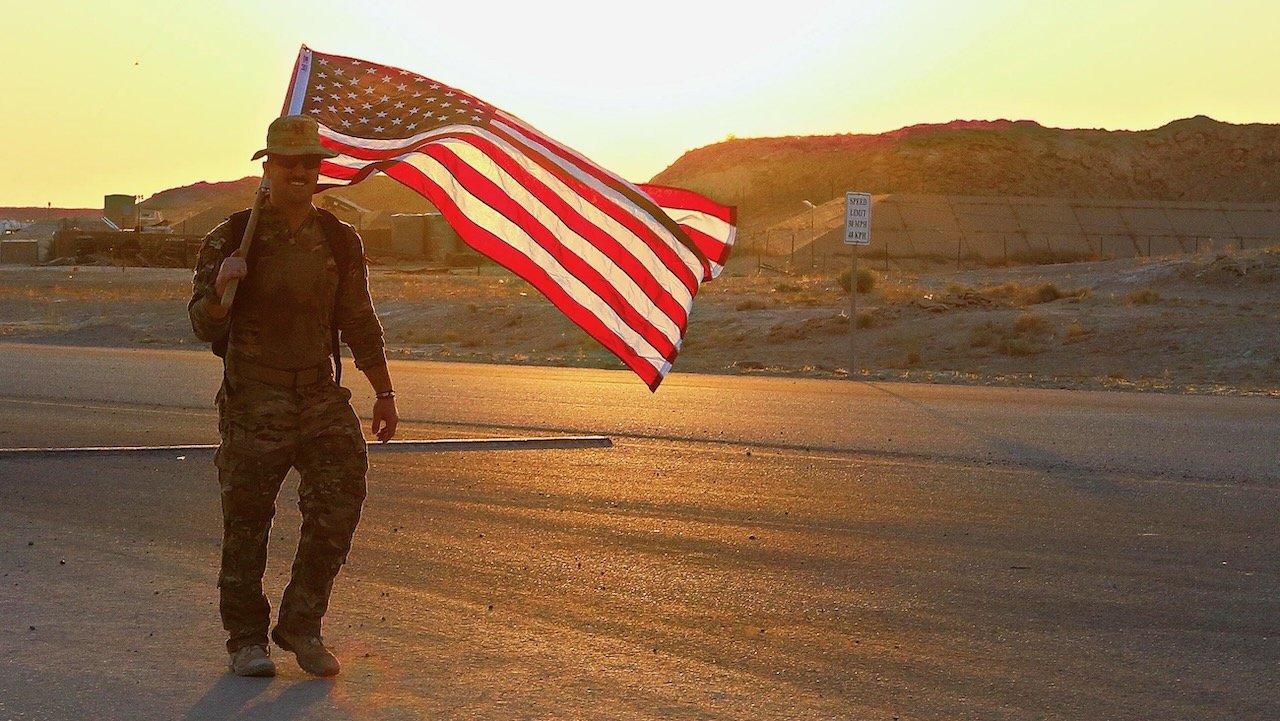
(Photo Credit: US DoD)
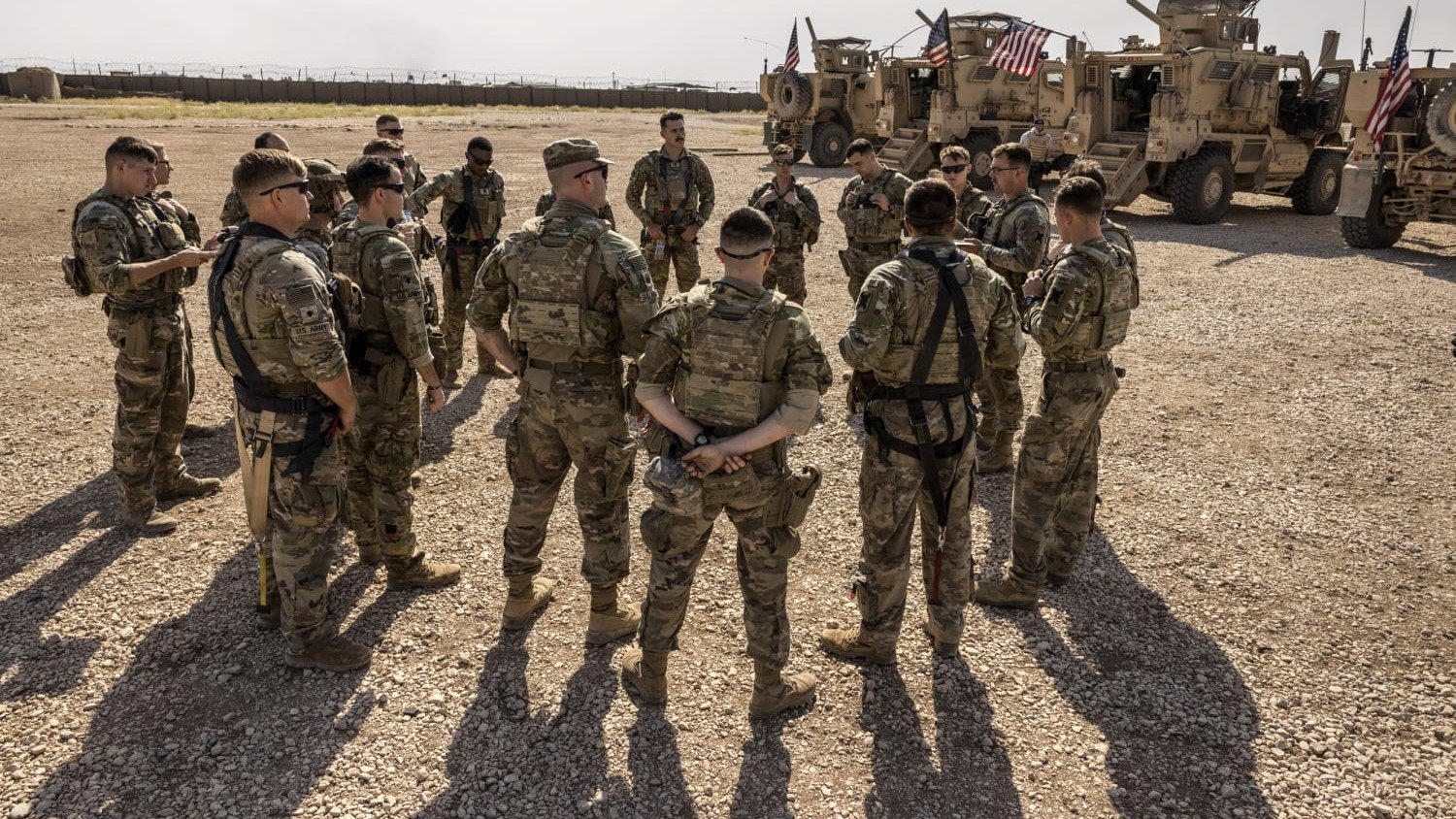
The governments of Iraq and the US have agreed on a timetable for the withdrawal of US and “international coalition” troops from the war-ravaged country, according to informed sources who spoke with Reuters.
“The plan, which has been broadly agreed but requires a final go-ahead from both capitals and an announcement date, would see hundreds of troops leave by September 2025, with the remainder departing by the end of 2026,” the British news outlet reports.
The plan would see all troops from the US-led coalition leave Iraq's Ain al-Asad airbase in western Anbar province and “significantly reduce their presence in Baghdad by September 2025.”
US troops would remain in Erbil, the capital of the semi-autonomous Iraqi Kurdistan Region (IKR), for an additional year “to facilitate ongoing operations against Islamic State in Syria.”
“We have an agreement; it's now just a question of when to announce it,” Reuters quotes a senior US official. Other sources claimed that the deal “could be announced this month.”
"We are now on the brink of transitioning the relationship between Iraq and members of the international coalition to a new level, focusing on bilateral relations in military, security, economic, and cultural areas," Farhad Alaaldin, foreign affairs adviser to Prime Minister Mohammed Shia al-Sudani, said when asked about the state of discussions for the withdrawal of US troops.
The “end of 2026” deadline reportedly established by Baghdad and Washington will come nearly seven years after the Iraqi parliament voted to expel all US troops from Iraqi soil.
Baghdad restarted troop withdrawal talks with the US in January, but Washington repeatedly delayed announcing a timetable for their exit. Pentagon officials have also often pointed to the revival of ISIS in US-controlled regions of Syria as the reason for their refusal to leave.
The US has used ISIS as a pretext for keeping troops in the oil-rich country for close to a decade. The US and its regional allies previously provided covert support for ISIS as the armed group took over large swathes of Iraq in 2014, including the country’s second-largest city, Mosul.
“The remnants of terrorism no longer pose a threat to the existence of the Iraqi state. Today, our people enjoy security and stability as a result of the sacrifices of our righteous martyrs,” Sudani told US officials earlier this month.
The news of a two-year timetable for the exit of US troops from Iraq comes as Washington has significantly reinforced its occupation bases in neighboring Syria as it braces for renewed operations by the Axis of Resistance in support of Palestinians in Gaza.
Washington has also reinforced its presence in Iraq, including in oil-rich Kirkuk, and recently suspended withdrawal negotiations with Baghdad over the ongoing possibility of a regional war.
https://thecradle.co/articles/us-iraq-s ... wal-report
Tel Aviv threatens to ‘dissolve PA’ over UN push to end occupation
The Palestinian Authority submitted a draft resolution to the UN General Assembly demanding that Israel withdraw its military from the West Bank and dismantle Jewish settlements
News Desk
SEP 9, 2024

Egypt's United Nations Ambassador Osama Abdel Khalek address the United Nations General Assembly on Friday, Oct. 27, 2023 at UN headquarters. (Photo credit: AP Photo/Bebeto Matthews)
Israeli Foreign Minister Israel Katz has threatened to “break and dissolve” the Palestinian Authority (PA) if it moves forward with non-violent diplomatic measures at the UN to end Israel’s occupation of Palestine, the Times of Israel reported on 9 September.
Katz made the threat after the PA submitted a draft resolution to the UN General Assembly demanding that Israel be forced to implement the decisions of the International Court of Justice (ICJ) in The Hague.
The General Assembly will vote next week on the draft resolution, which calls for an Israeli withdrawal from the occupied Palestinian territories within six months, dismantling the illegal Jewish settlements, and facilitating the return of Palestinians to their land.
The resolution also calls for imposing sanctions on senior Israeli officials, blocking weapons sales to Israel if they might be used in Palestinian areas, and preventing any more foreign embassies from being established in occupied Jerusalem.
Katz ordered a set of moves to be coordinated with the US and other Israeli allies to oppose the decision, the Foreign Ministry said.
The foreign minister instructed Israeli diplomats, including Israel’s Ambassador to the UN, Danny Danon, to emphasize to US, European, and UN officials that if the Palestinian proposal passes, Israel will impose “severe sanctions” against the PA, cease all cooperation with it, and bring about its “dissolution.”
In contrast, Israeli intelligence and security officials have often warned against the collapse of the PA, which they view as helpful in controlling the Palestinian population on Israel’s behalf and preventing resistance to occupation.
In July, the ICJ ruled that Israel’s policy of settlement in the West Bank violated international law and that Israel had effectively annexed large parts of the West Bank. Israel officially annexed East Jerusalem in the 1980s, in violation of international law.
The ICJ ruling said that all UN member states are obligated not to recognize changes to the status of the territories and that all states are obligated not to aid or assist Israel’s rule of the territories and ensure that any impediment “to the exercise of the Palestinian people of its right to self-determination is brought to an end.”
There is no mechanism to enforce the ICJ ruling or any General Assembly resolution against Israel.
However, The Times of Israel writes that “there is concern” among the Israeli leadership that such decisions in international forums “could snowball and lead to pressure for arms embargoes and the blacklisting of settlements.”
Israel occupied the West Bank, Gaza Strip, and Syrian Golan Heights during its attack on Syria, Jordan, and Egypt in 1967, known as the Six-Day War.
UN Resolution 242 called for the return of territories conquered during the 1967 war based on the “inadmissibility of the conquest of territory in war.”
Instead, Israel placed these territories under military occupation and commenced the settlement project, which involved seizing Palestinian land to build communities for Jewish settlers and annexing the territories without incorporating the indigenous Palestinian population into the state.
https://thecradle.co/articles/tel-aviv- ... occupation







 (@Nadira_ali12) September 12, 2024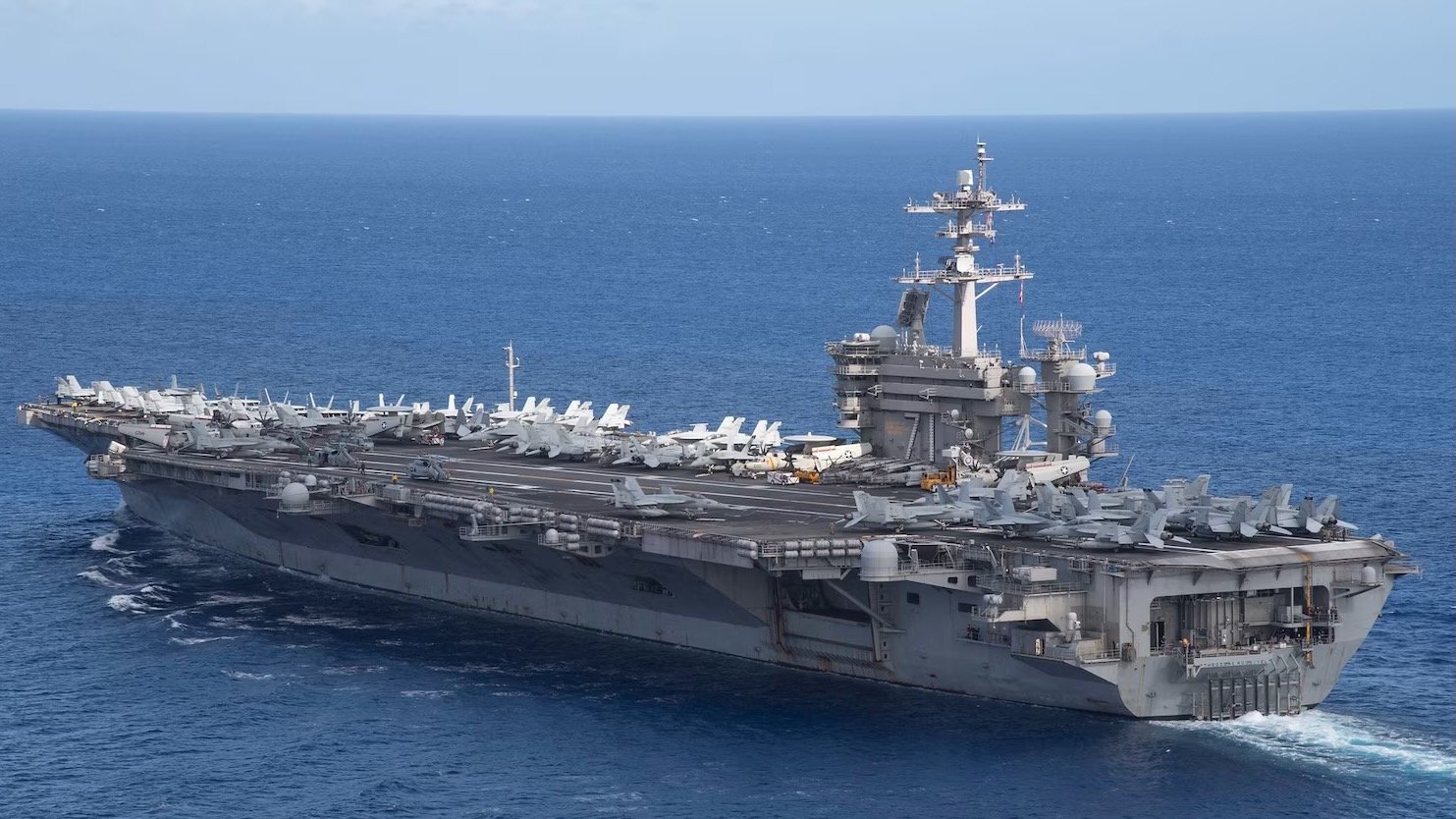





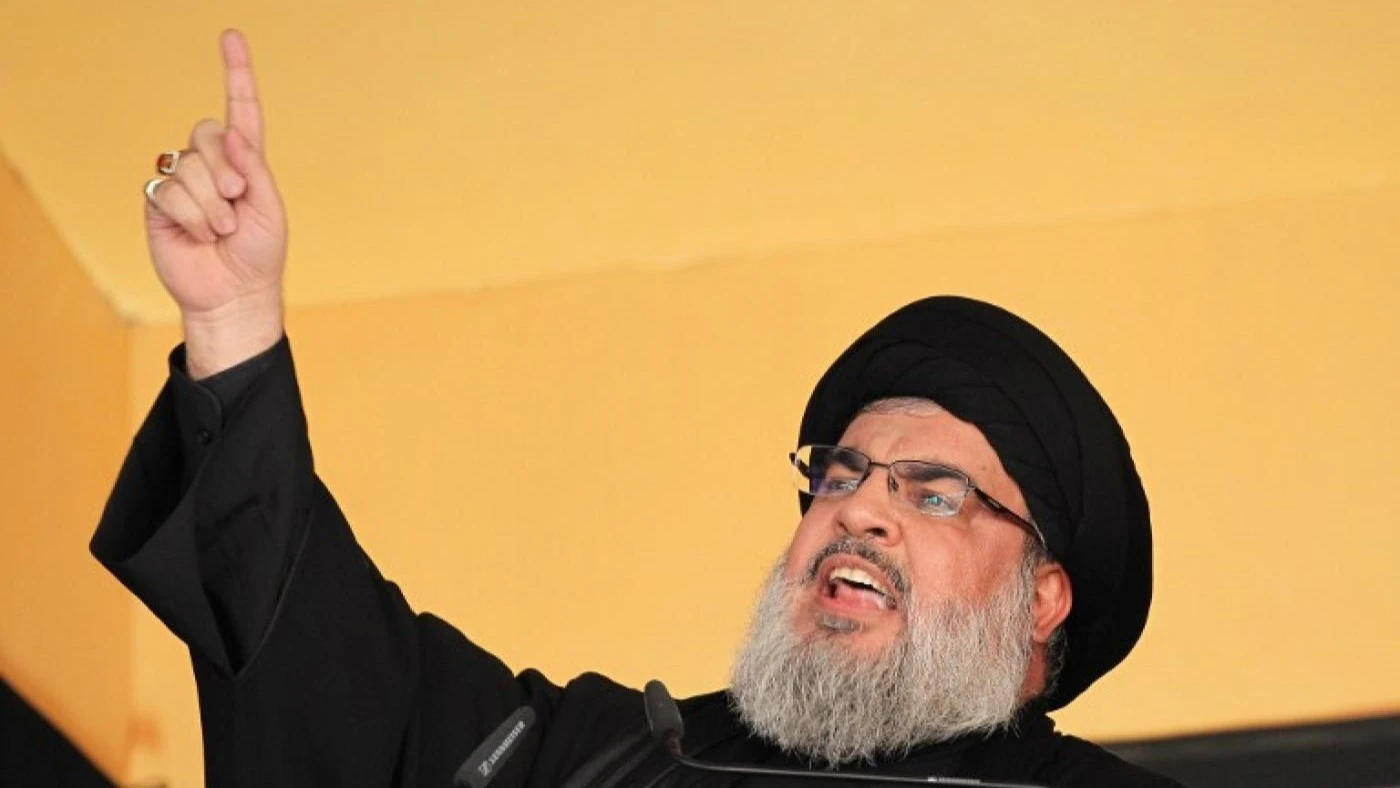

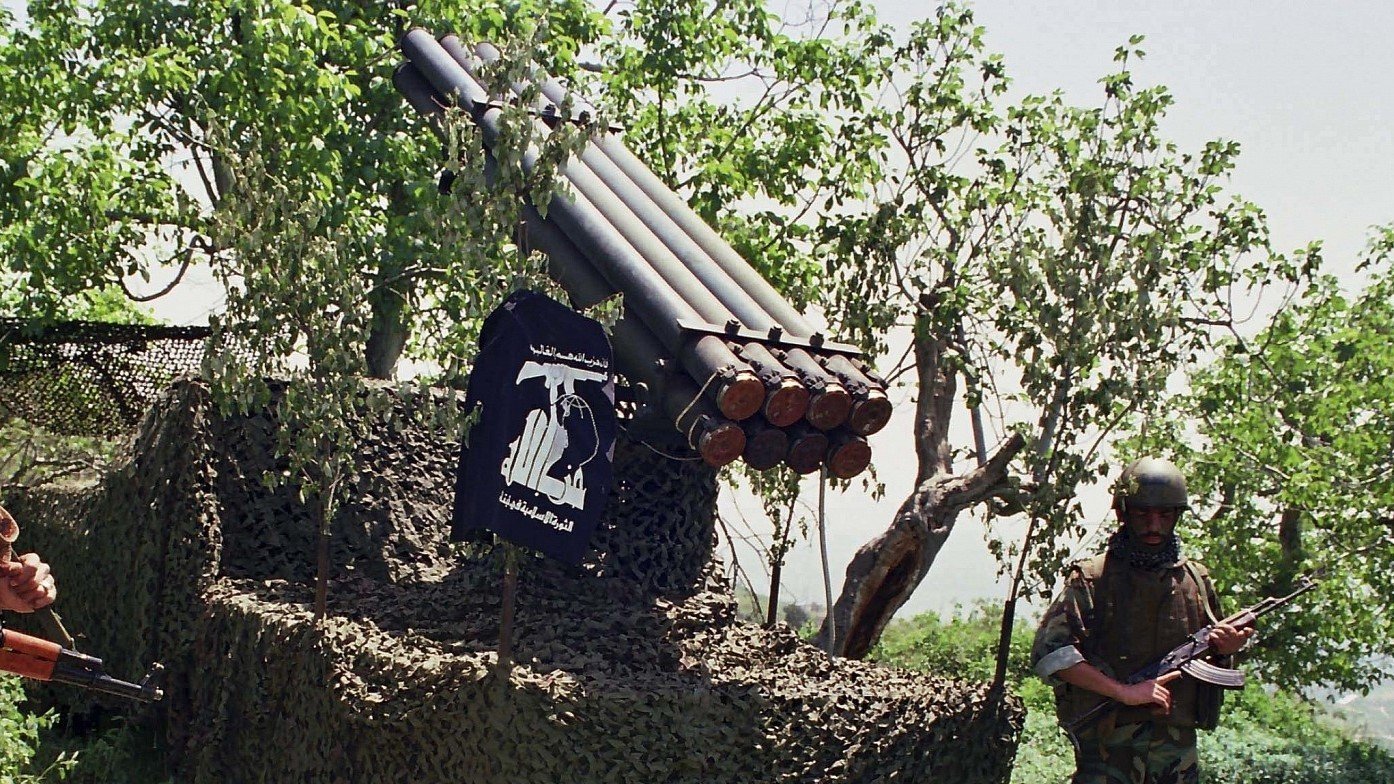

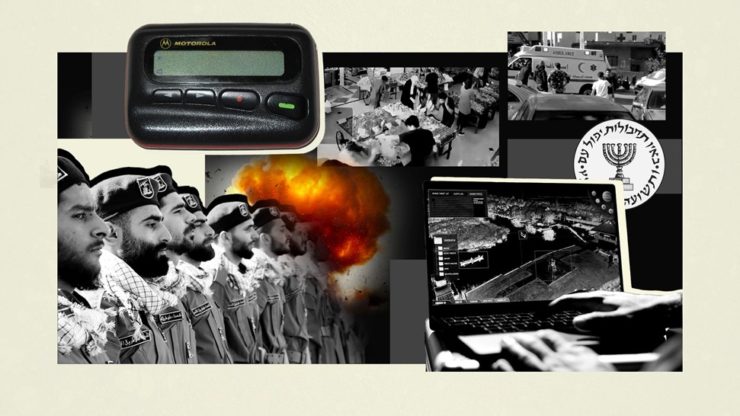
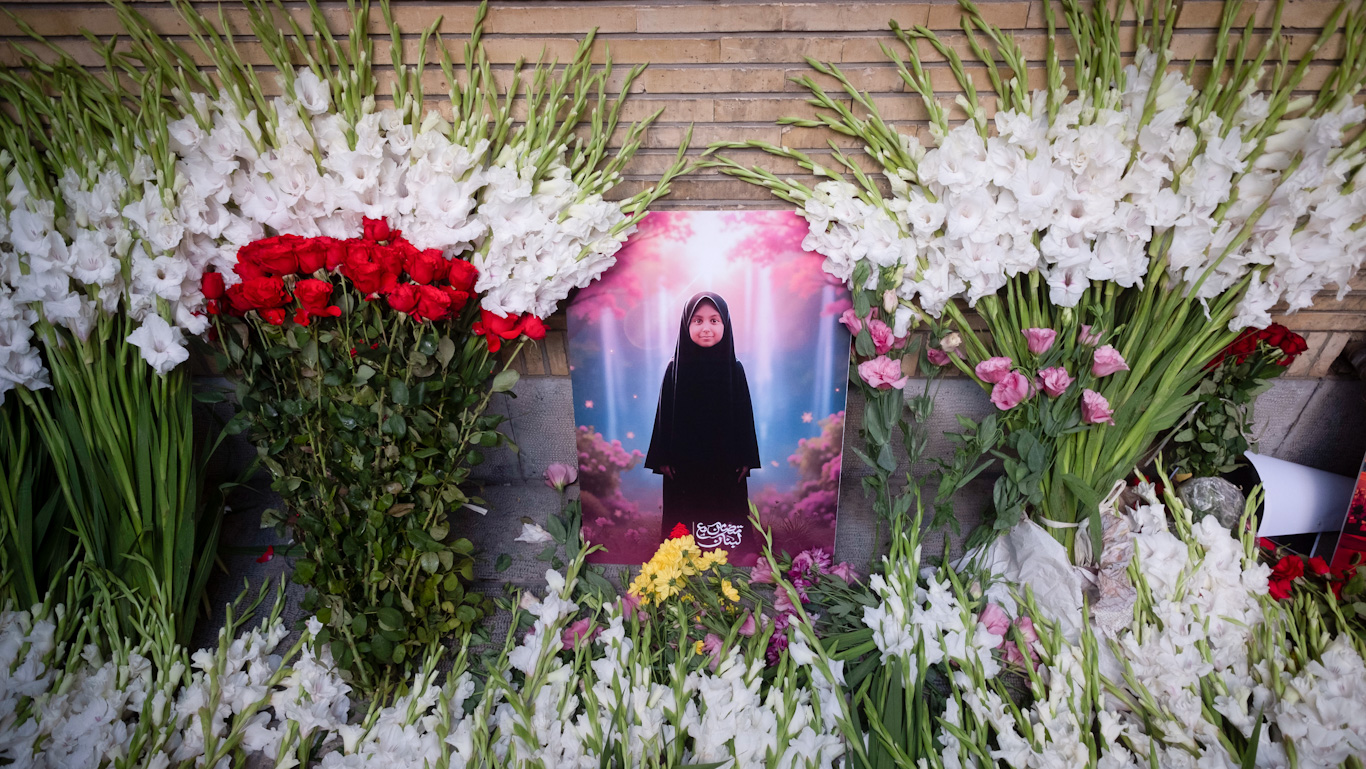

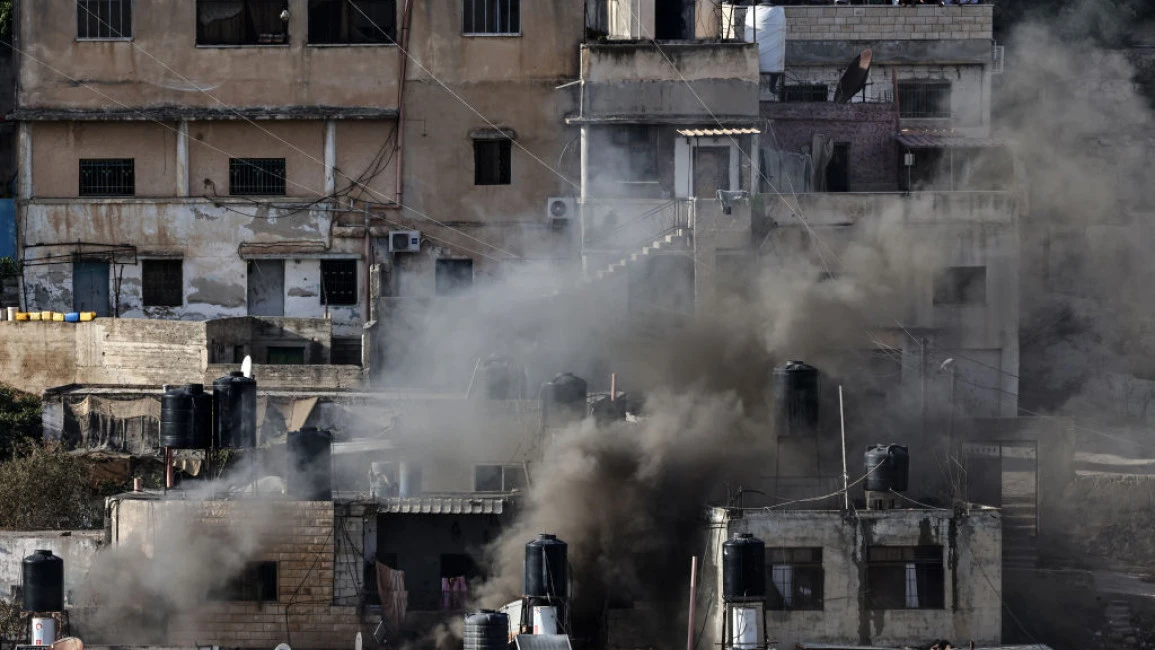

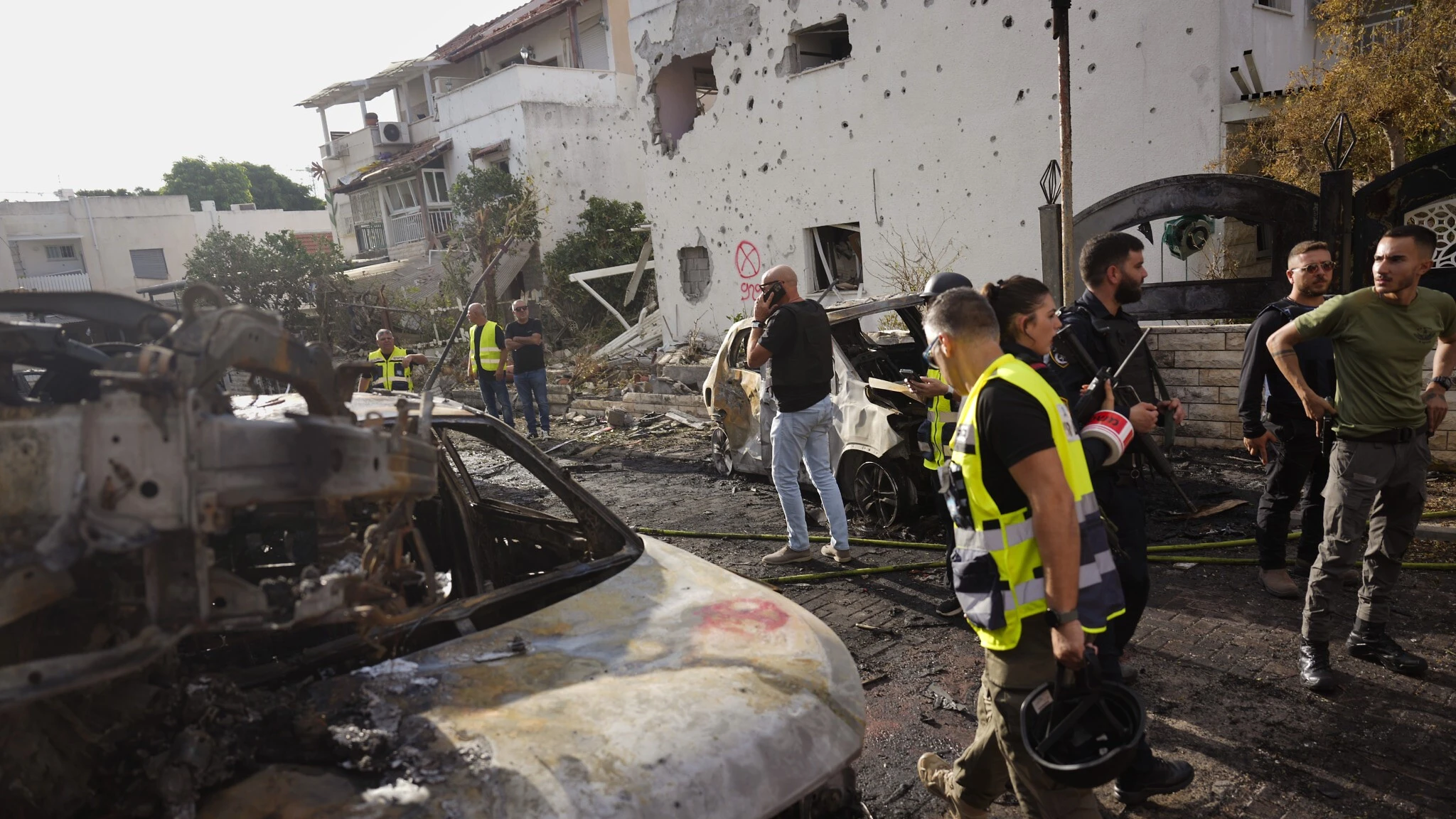

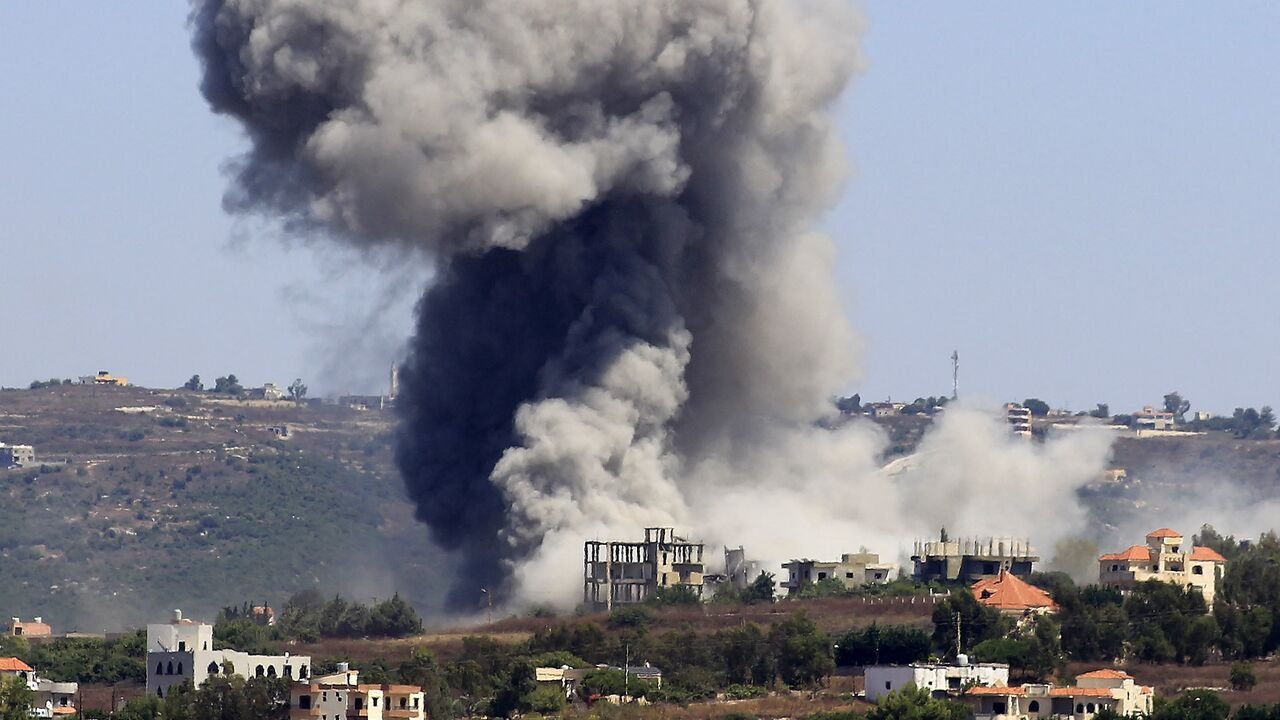

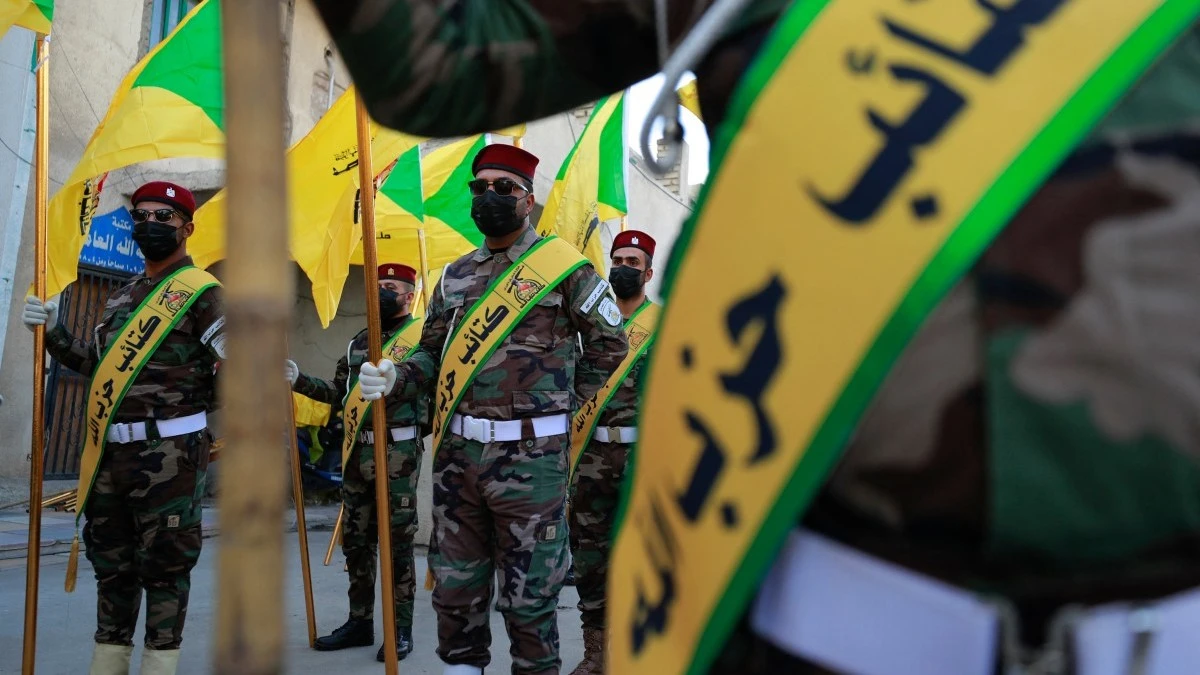
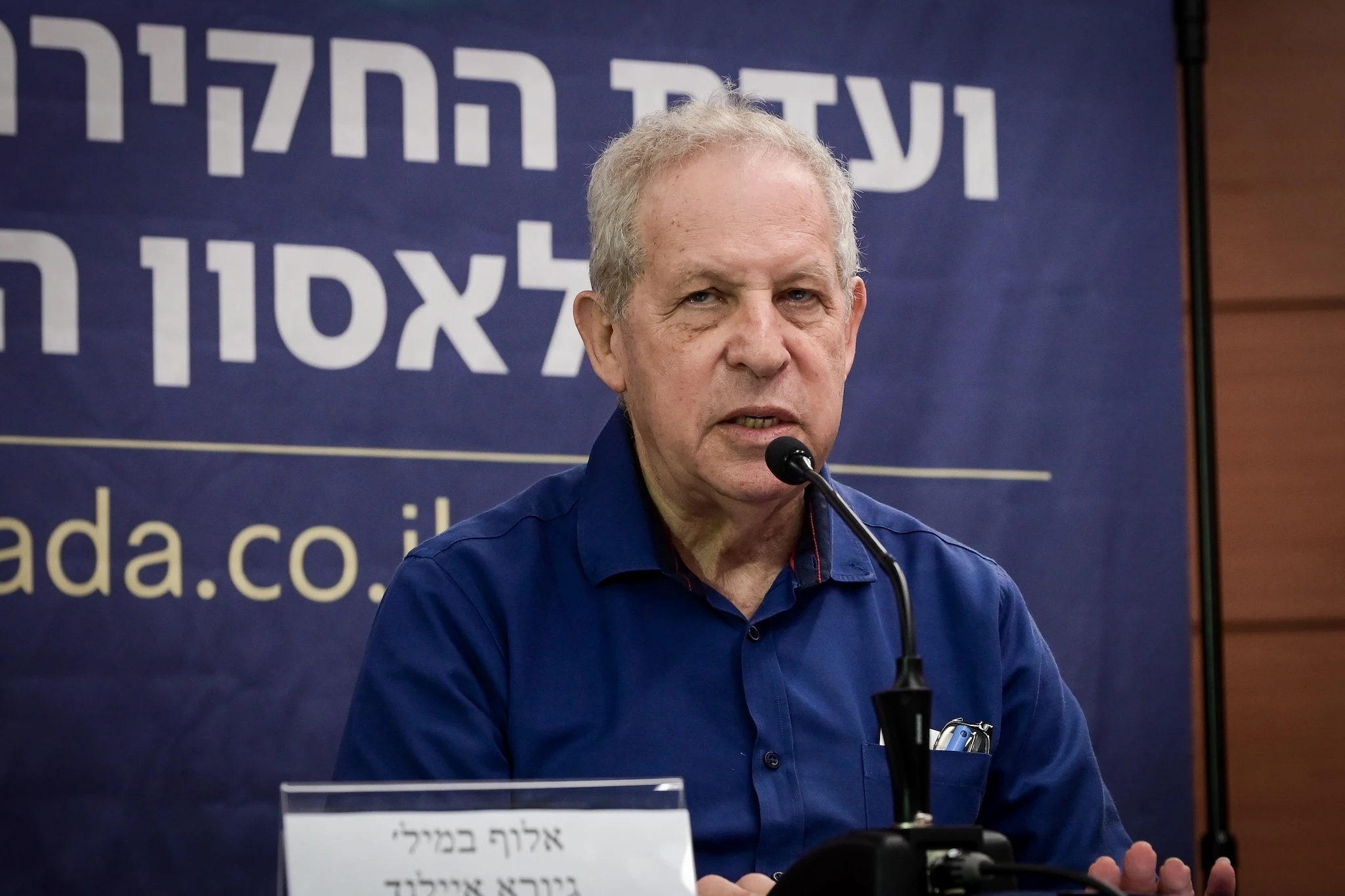
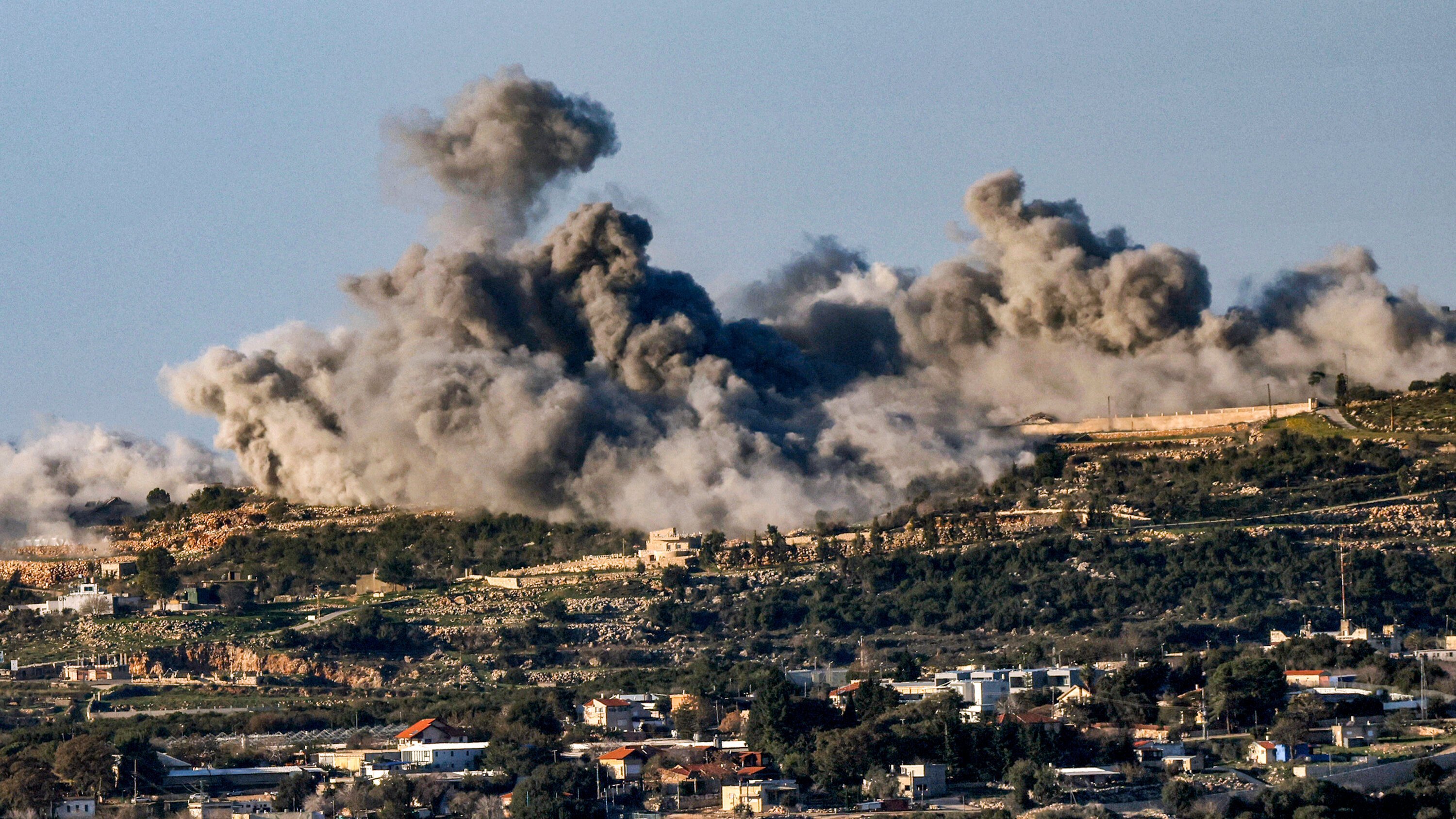
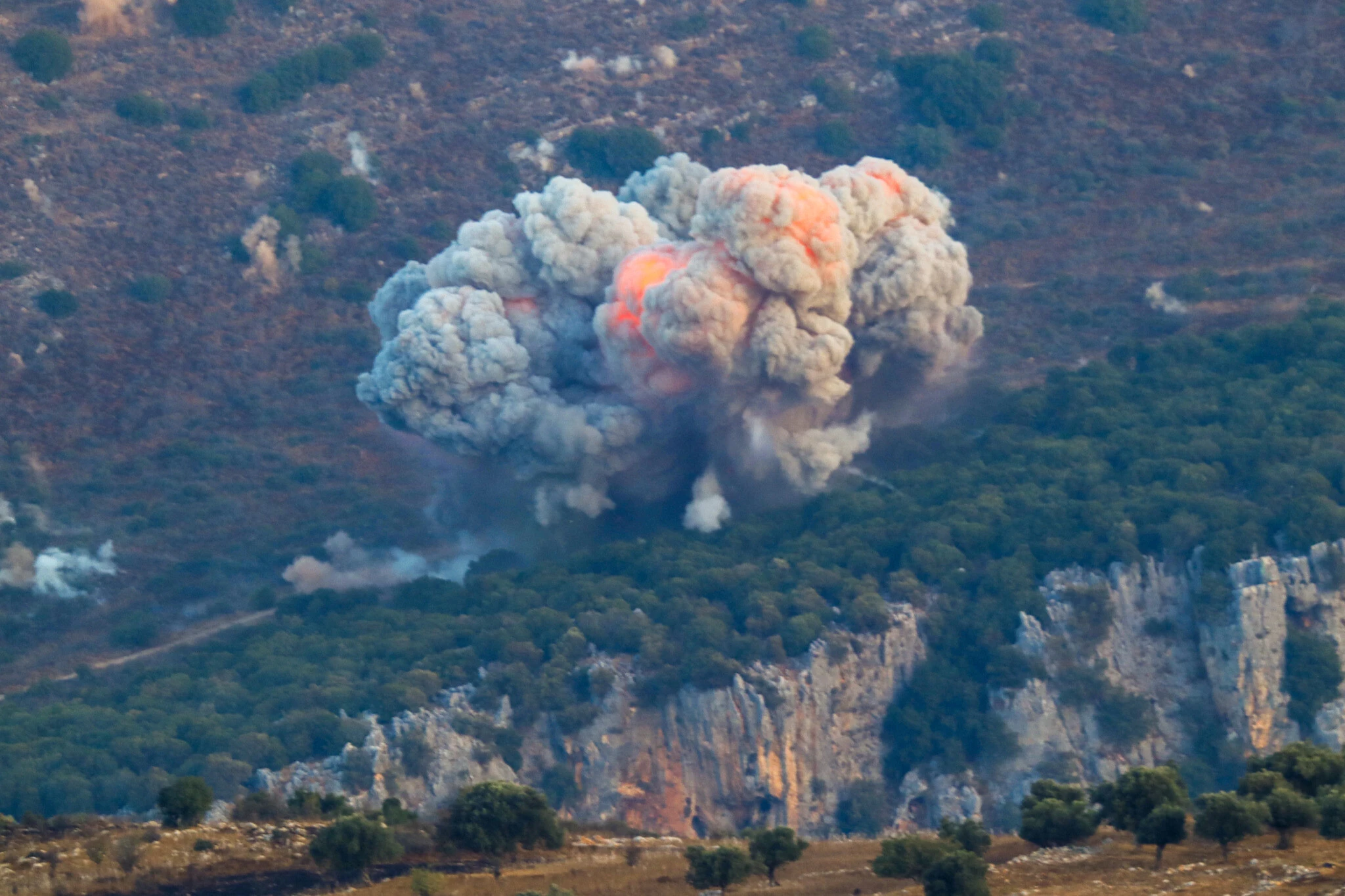
 pre-excuses massive destruction of civilian infrastructure, attempts to sow division between Hizbullah and popular base.