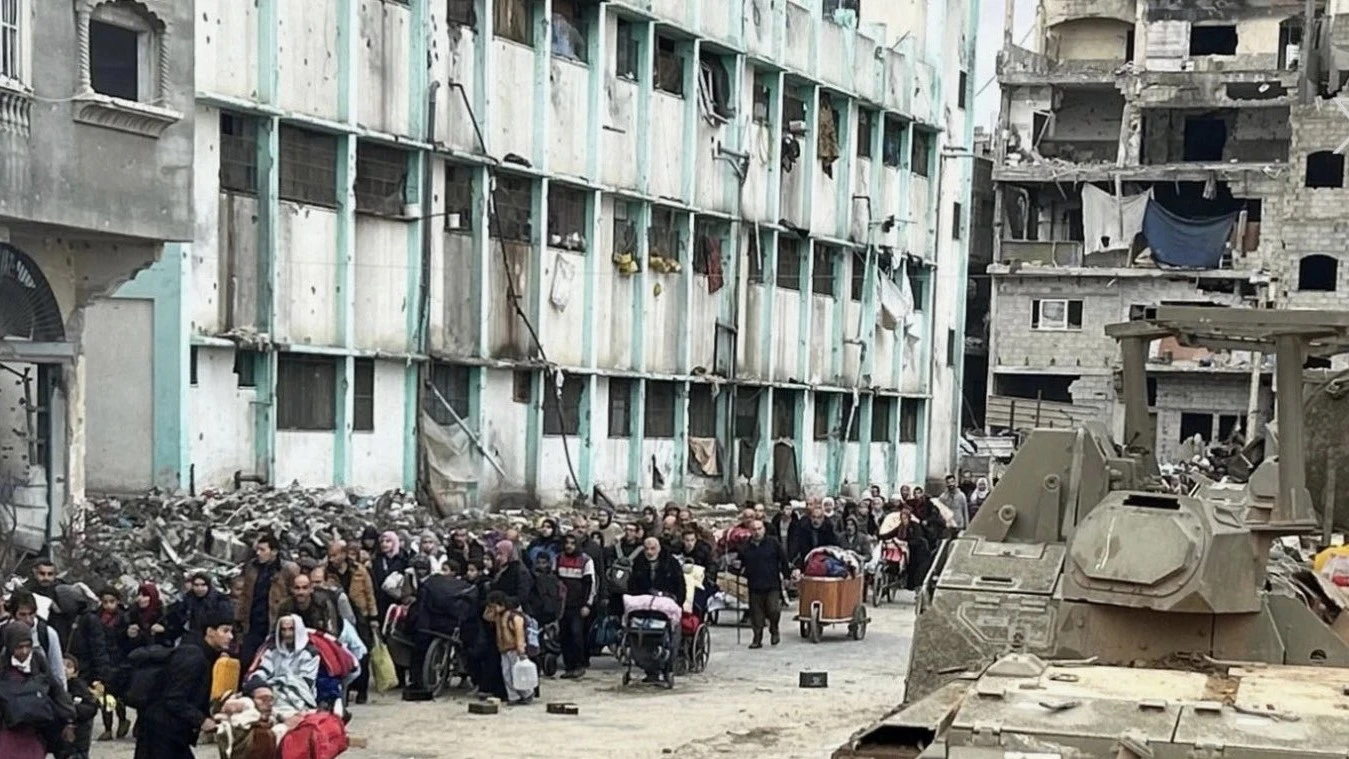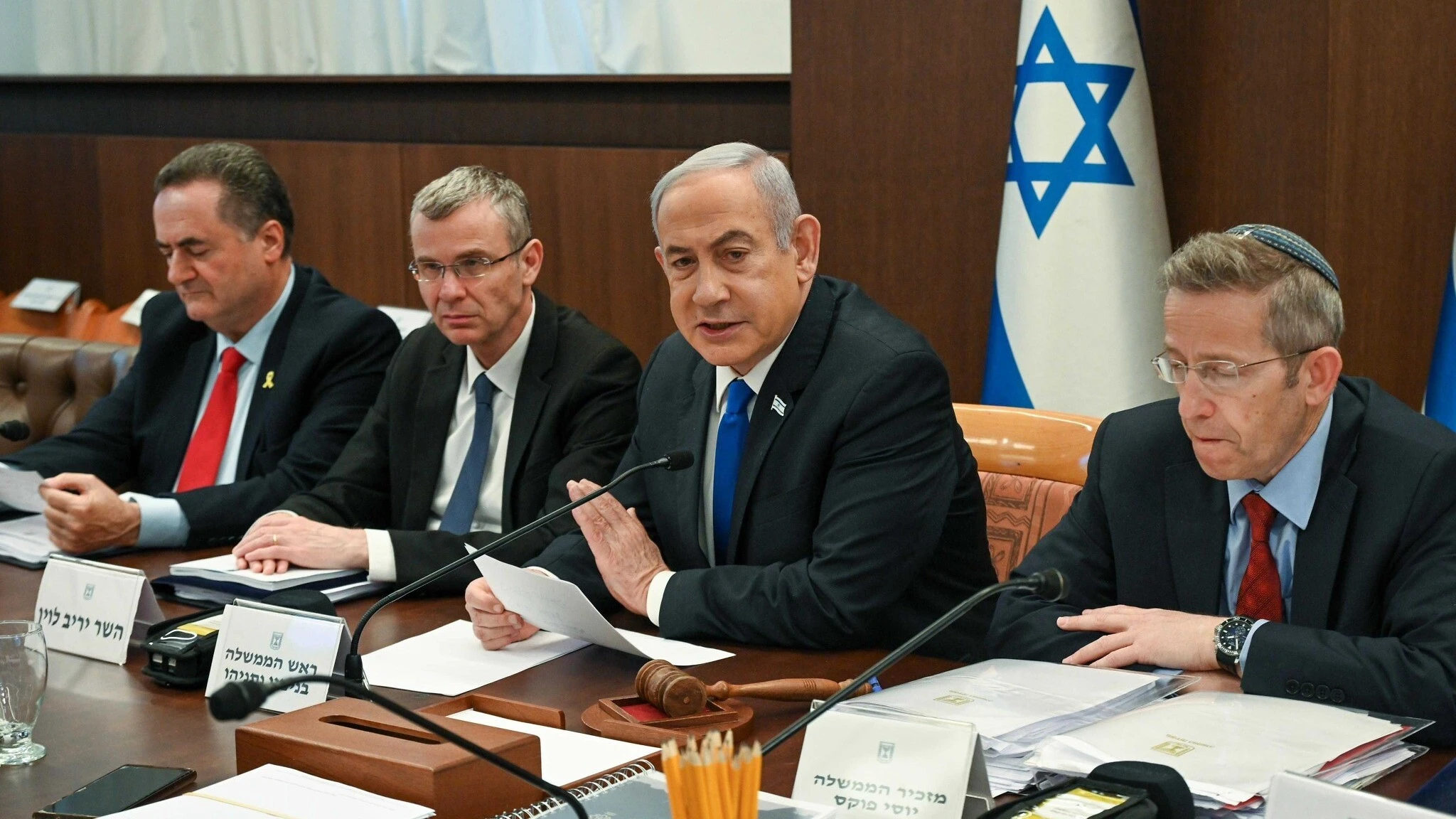
Palestine

User avatar
blindpig
Posts: 14804
Joined: Fri Jul 14, 2017 5:44 pm
Location: Turtle Island
Contact:

Re: Palestine

Post by blindpig » Mon Nov 25, 2024 12:17 pm

Damage across Galilee, Greater Tel Aviv following Hezbollah rocket attacks

At least 10 Israelis have been wounded as a result of rocket impacts in Haifa, Nahariya, and the Petah Tikvah settlement east of Tel Aviv

News Desk

NOV 24, 2024

Image
(Photo credit: X)
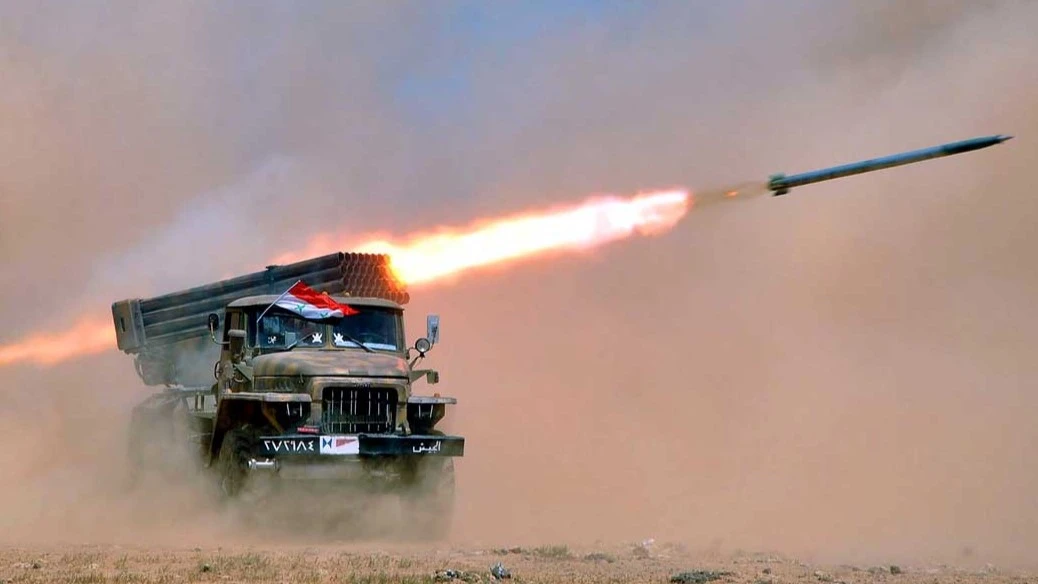
Large explosions rocked the Galilee on 24 November after Hezbollah launched heavy barrages of rockets at the north and center of Israel, with at least one making impact in the Greater Tel Aviv area.


An Israeli army spokesman said ten launches were detected from Lebanon toward central Israel, with some being intercepted and others making impact. The army also said 30 rockets were launched at the western Galilee, with only some being intercepted.

Hezbollah's military media reported that the Glilot base, headquarters of the 8200 Military Intelligence Unit, was targeted with missiles.


Israel media reported that at least 10 people were injured in Haifa, Nahariya, and the Petah Tikvah settlement east of Tel Aviv.

Video footage showed major damage to buildings in Nahariya and elsewhere in the Galilee. One video showed the moment a Hezbollah rocket struck a building in Nahariya.


Large plumes of smoke were seen rising out of several locations, including the Haifa area.

The successive rocket and missile barrages come days after the Israeli military claimed it had destroyed 70 percent of Hezbollah's rocket capabilities.


The attacks came several hours after Hezbollah fired several rockets at the Tel Aviv area early on 24 November. The army said six projectiles were detected crossing from Lebanon, and that all were intercepted except one which struck “an open area.”

The Lebanese resistance also targeted the Galilee with missiles and a swarm of drones early on Sunday.

“The Mujahideen of the Islamic Resistance targeted, in a complex operation, at 06:30 on Sunday 11-24-2024, a military target in the city of Tel Aviv, with a volley of qualitative missiles and a squadron of attack drones, and the operation achieved its goals,” Hezbollah announced.

Israeli media outlets reported that 130 rockets have been launched from Lebanon at Israel since the morning of 24 November.

An eight-story residential building in the central Beirut neighborhood of Basta was destroyed after being hit by at least four Israeli missiles during the early hours of 23 November.

The Israeli attack killed at least 20 and injured 66, according to an updated toll from the Lebanese Health Ministry.

Hezbollah leader Naim Qassem affirmed in a speech last week that Israeli strikes on central Beirut would be met with resistance attacks on the heart of Tel Aviv.

“We cannot leave the capital under the blows of the Israeli enemy unless it pays the price, and the price is the center of Tel Aviv. I hope that the enemy understands that things are not left to chance,” Qassem said.

A Hezbollah missile made direct impact in Tel Aviv on 18 November, a day after deadly attacks on the Ras al-Nabaa and Mar Elias areas of central Beirut.

The head of Hezbollah’s Media Relations office, Mohammad Afif, was assassinated in the strike on Ras al-Nabaa.

https://thecradle.co/articles/damage-ac ... et-attacks

Kamal Adwan Hospital director in worsening condition after being hit by Israeli quadcopter

Israel has targeted the besieged hospital in north Gaza over eight times, damaging or destroying essential equipment and injuring patients and medical staff

News Desk

NOV 24, 2024

Image
(Photo credit: CNN)

The director of northern Gaza’s Kamal Adwan Hospital in the city of Beit Lahia, Dr Hussam Abu Safia, has been injured and is in worsening condition.


Abu Safia’s condition has “deteriorated” after he was wounded by an Israeli quadcopter attack on the medical facility a day earlier, reported Al Jazeera’s correspondent reported on 24 November.

Israel bombed Kamal Adwan Hospital again on Sunday following the attack that injured the hospital director.

“I was injured while at my place of work [at the hospital] … this is an honor for me. My blood is not more valuable than the blood of others … We will continue to provide humanitarian care no matter what; we are steadfast before the world, which is unjust and has violated our rights,” Abu Safia is heard saying from his hospital bed in a video circulating social media.


The hospital director was wounded by shrapnel from an exploding bomb dropped by an Israeli quadcopter, according to Arabi21. Abu Safia was checking on patients when the quadcopter struck.

Abu Safia said that six shrapnel fragments penetrated his thigh, causing ruptures in the veins and arteries. The doctor urgently needs to consult with a vascular surgeon, but there is no specialist available at Kamal Adwan Hospital.

Since the start of Israel's genocidal war on the Gaza Strip, Dr. Hussam Abu Safia has refused to leave the hospital.

At the end of October, Israeli forces not only detained Abu Safia, but later killed his eight-year-old son after the hospital director defied the military's evacuation orders.


Prior to his injury, he revealed that Kamal Adwan Hospital, one of the last few semi-functional hospitals in the northern strip, has been targeted numerous times – detailing each attack on the facility. Kamal Adwan Hospital has now been attacked by Israel over eight times in the last few weeks.


“Unfortunately, this is happening while we are calling on the world, humanitarian, and human rights organizations to intervene urgently to save the health system," he said.

Israel bombarded the hospital late on 21 November, injuring six of its medical staff, including some who were left in critical condition. The hospital’s main generator was destroyed, and its water tanks were punctured. Many of the hospital’s other essential equipment have been damaged or destroyed by Israel.

The attack came less than a day after a massacre was committed by Israel on a residential block in the hospital’s vicinity. At least 66 were killed and more than 100 injured by the bombing. Around 200 people were present at the time of the attack, Abu Safia revealed at the time.

An Israeli quadcopter also targeted medical staff at Al-Awda Hospital in northern Gaza early on Friday.

The Israeli campaign against north Gaza’s hospital comes as part of its brutal siege and extermination plan in the northern Gaza Strip.

Well over 100,000 Palestinians have been expelled from northern Gaza in nearly two months. Fifty-one days have now passed since the Israeli army began unofficially implementing the Generals’ Plan in northern Gaza, which aims to expel or kill all of the area's remaining residents.

https://thecradle.co/articles/kamal-adw ... quadcopter

******

The Wars Come Home
Posted on November 24, 2024 by Conor Gallagher

I always appreciated techno-feudal lord Peter Thiel’s obsession with the blood of the young being used in pursuit of eternal life for himself. It seems a perfectly upfront metaphor for our late-stage capitalism in which the pursuit of profit drains the life of an ever increasing number.

Thiel’s lust for the fountain of youthful blood came to mind recently when reading about Sequoia Capital’s return to Israel.

Sequoia is one of the largest venture capital firms in Silicon Valley and it invested early in the likes of Apple, Google, and Oracle. It also sprang the “PayPal Mafia” to prominence, a group that includes Thiel and President-elect Donald Trump’s current sidekick and world’s richest man, Elon Musk. Unsurprisingly, as a citadel of capitalism built on eugenics, bombs, and hatred of the working class, Silicon Valley is now among the upcoming Trump Administration’s biggest backers and helps push for the US’ ongoing involvement in the Gaza genocide.

Sequoia left Israel in 2016 because, according to partner Shaun Maguire, Israeli founders looked to sell early in the hundreds of millions of dollars range while the VC firm prefers to invest in companies that could be worth $50 billion or more.

So why is Sequoia back? Maguire says that “The founders here today are among the most ambitious in the world, and we believe that the country will produce companies large enough to suit the fund.” Oct. 7 and the ensuing genocide play a large role in that calculation.

Sequoia’s dozens of investments are centered around defense tech and cybersecurity and are oftentimes headed by veterans of the Israeli Defense Forces Unit 8200, the central collection unit of the intelligence corps, and the Israel Air Force’s Shaldag Unit, which specializes in clandestine operations and military intelligence.

Israeli tech is of course being used and tested in the genocide:

WATCH: Israel is using facial recognition technology to organize how it conducts mass arrests and forcible displacement in Gaza. Some Palestinians say the technology is also being used to carry out field executions. pic.twitter.com/HDeQgElJez

— Mondoweiss (@Mondoweiss) November 19, 2024


That doesn’t trouble the likes of Maguire at Sequoia. In his telling he’s a profile in courage for his support of Israel that is under attack from all sides, including the Biden administration. By making such comments he’s presumably implying that the jump on the right of the following graph should go much higher:
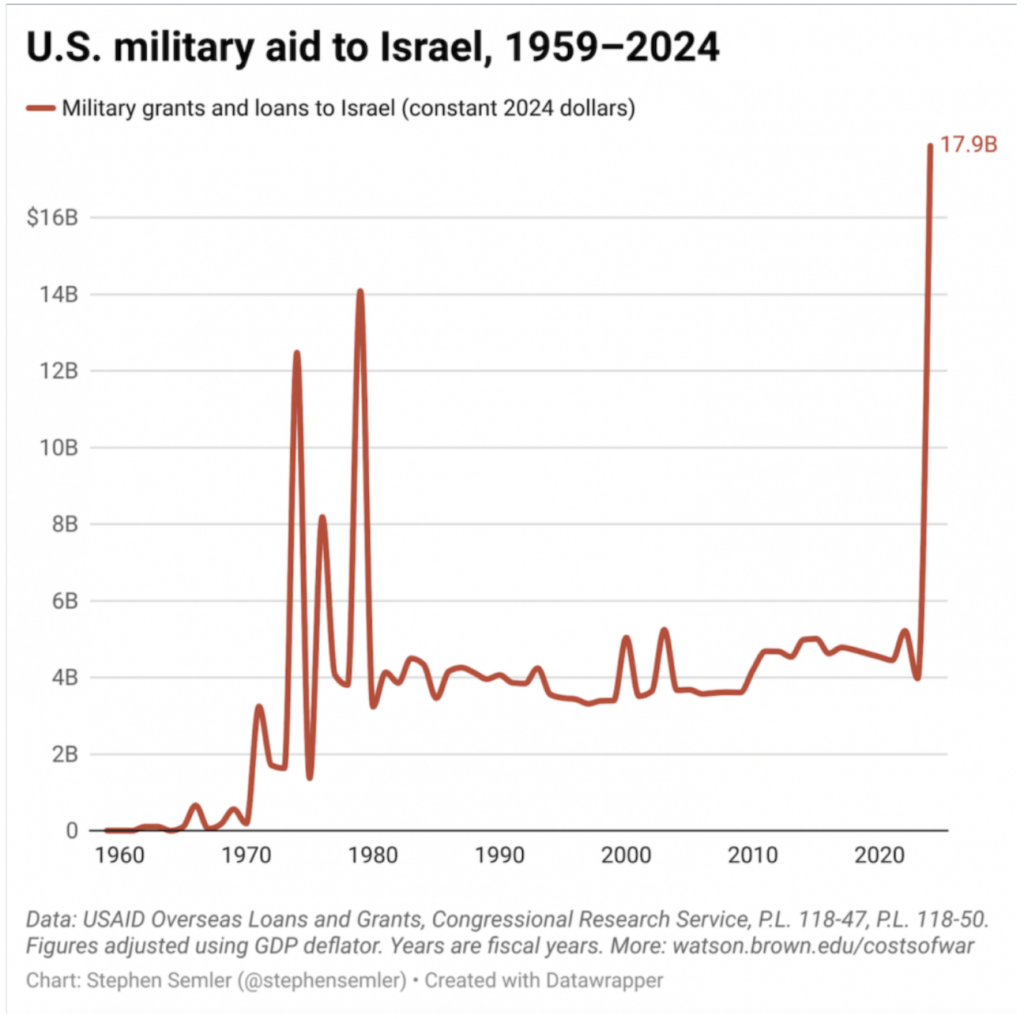
Image

He expects Trump to accomplish that. It’s not just Sequoia. Others like Greylock, another Silicon Valley behemoth, and New York City-based Lux Capital, which specializes in “deep” tech startups, are getting in on more action in Israel. Here’s the co-founder of Lux with more details that Friedrich Flick could be proud of:

Just on with @cnbc @MorganLBrennan + @jonfortt
-American 🇺🇸 defense tech, Palantir, Anduril, Israel, US
-The necessity of scientific + tech superiority
-Lux’s $1B investment in hard power
-Lux’s funding of soft power…
…with our launch of Lux Labs pic.twitter.com/NlLihvKi7X

— Josh Wolfe (@wolfejosh) October 28, 2024


Lux claims to “champion companies that work at the intersection of the new and the not-yet-imagined, looking decades into the future to create a world most of us can barely imagine.”

That’s one way of putting it.

Maybe it’s not a bad bet on these Companies helping bring that world into being are doing quite well. Israeli defense tech firm Elbit Systems, for example, has a record order backlog worth $22 billion at the moment.

American big tech has long supported the Israeli apartheid regime where its products can be tested, and they continue to do so despite the genocide being perpetrated.

Sequoia, Lux, and the others, are of course betting that these technologies developed in Israel can be brought to scale around the world.

Is it just the tech being exported? While Israel is effectively a colonial laboratory for tech of surveillance, control, and extermination, what does that portend for its benefactor, the US — more specifically our ruling class’ inclinations?

An interesting — if terrifying— thought:

Gaza already prepared the world for nuclear war.

To experience death, destruction and suffering beyond the scale of any meaningful subjective comprehension.

Now no one can claim the value of human life. There is now no going back.

May God have mercy on us all. pic.twitter.com/HSdX40N0BR

— Haz Al-Din 🇷🇺 (@InfraHaz) November 19, 2024


Hopefully not. Nuclear war would, after all, harm the plutocrats as well. Even if they have their bunker, with new Russian missiles they wouldn’t have time to get there. Even if they did, what about their staff? Possibly in preparation for the most likely state to go nuclear: Israel.

Perhaps it is not for nuclear war but for a further radicalization of our government and forms of capital extraction that will require more surveillance, control, and violence.

What could that look like? The Israelization of America is one possibility. There is, after all, clear ideological overlap between the ruling classes of both countries.

Silicon Valley tech billionaires dream of a world where democracy is stamped out. According to Netanyahu, the future belongs to authoritarian capitalism. The future would appear to be here.

Authoritarian Capitalism in Israel

It’s important to note how racial and religious apartheid in Israel has always been inextricably intertwined with — if not driven by — by economic factors.

Before Israel even came into existence, Zionists embarked on a campaign to convince the government in London that a Jewish homeland would be in service to British capital whether in Africa, industrial agriculture in Iraq, or that European Jewish labor could claim Palestine for European empire.

During WWII as the US tried to figure out how it could dominate the world without the cost or bad optics of colonial occupation, Zionism ironically offered an answer. As professor of history at Penn State University Laura Robson writes in her 2023 book “Human Capital: A History of Putting Refugees to Work”:

Zionism’s vision of remaking geopolitical territory and claiming land for empire through racially conscious settlement practices and intensive industrial development represented a central model for this American-led vision of population engineering.

From its very beginning, Israel was about turning a profit for global capital — even if that meant turning on Jewish survivors of Nazi concentration camps.

In the battle for Latrun during the 1948 war, the Israel Defense Forces deployed just-arrived Holocaust survivors in battle with as little as three days’ military training, dooming many of them to instant death.

…The national solution to mass displacement, it was transpiring, could be every bit as inhumane as the imperial one, at least for those who could not contribute as workers.

During the June 1967 war,which resulted in the occupation of the West Bank and Gaza Strip Israel’s defense minister Moshe Dayan summarized the economic incentives of occupation:

“…a supplementary market for Israeli goods and services on the one hand, and a source of factors of production, especially unskilled labor, for the Israeli economy on the other.”

Prior to Oct. 7, 2023 there were more than 200,000 Palestinian laborers, including those without permits, who work inside Israel and the occupied West Bank. According to Dr. Ofer Cassif, a member of the Knesset from the Hadash Party, which supports Jewish-Arab cooperation and workers’ rights, the Gaza genocide is a product of late-stage capitalism:

Here, it is a class issue. It is between the oppressed and the oppressor, between the exploiter and the exploited…National hostility serves the economic and political interests of the ruling classes because that way they can divert the rage, the frustration, the alienation from a class-based one to a national-based one…

In order to justify the crimes that an occupier does, occupiers always, eventually, deteriorate into crimes because, eventually, occupation leads to resistance. In order to refrain from seeing yourself or recognizing yourself as a monster, you have to justify the crimes that you do. You do that by demonizing the occupied. It’s the same everywhere. It’s not something that was born under the Israeli occupation. The slave orders in the United States of America did so. The Germans did so, too, with the Jews. The Apartheid regime in South Africa did that with the non-whites, especially with the blacks; of course, there was a hierarchy of different so-called races. It is the same here, a language of occupation.

There are other economic factors to consider, of course. Israel tests out surveillance, population control, and military technology on the captive population and is reportedly using artificial intelligence to aid its genocide.

There’s also the issue of natural resources:

Israel gives exploration licenses for natural gas in locations that are considered to be within Palestine’s maritime boundary in preparation for ‘occupying’ these areas

Concerns raised over potential violation of international law and humanitarian consequences…
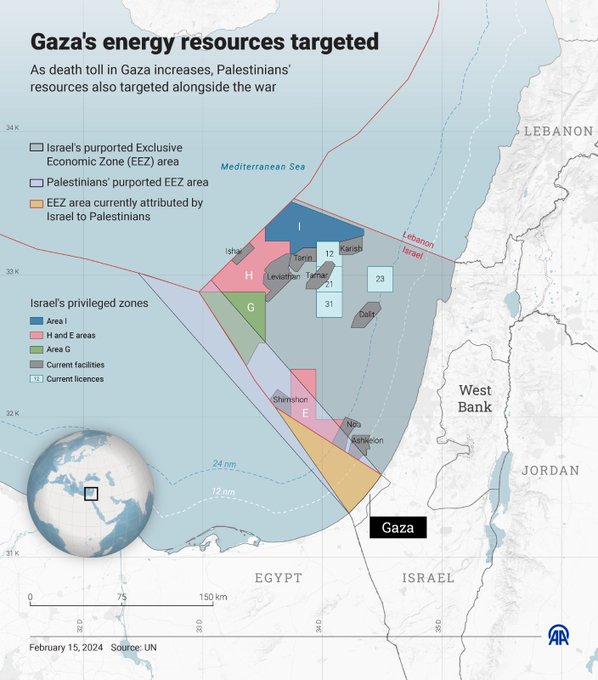
Image

— Anadolu English (@anadoluagency) February 15, 2024


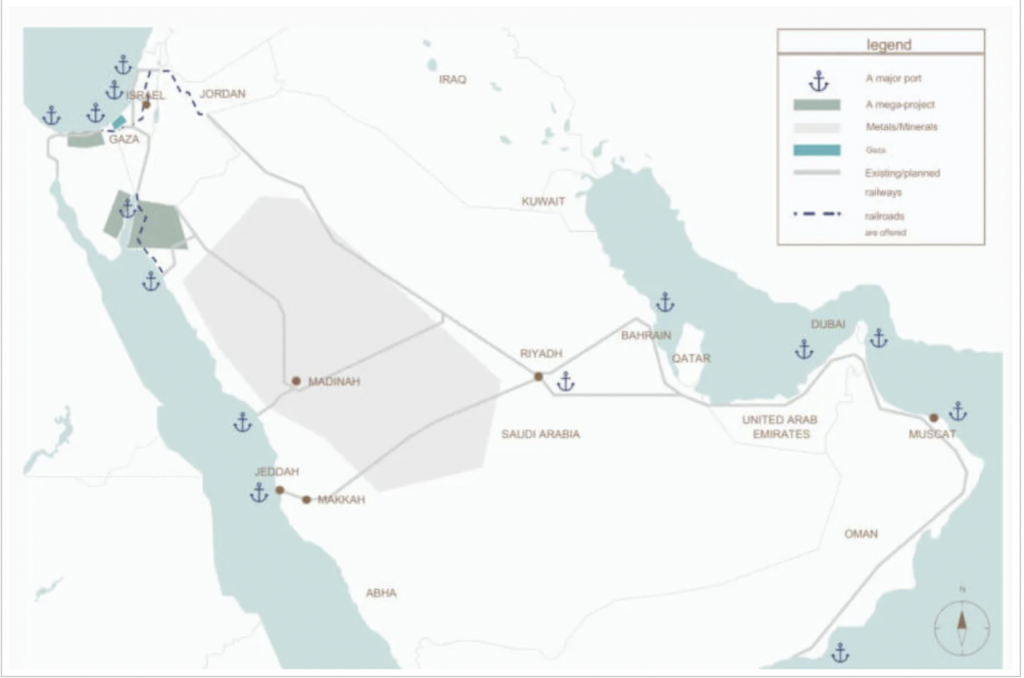
And there’s the Gaza 2035 vision, which is part of the wider US-backed India-Middle East-EU Economic Corridor:

Image

Image

What of the Palestinians in Gaza 2035?

…throughout the three ‘phases’ explained in the document, it becomes clear that the Palestinians permitted to live among the ruins of their homeland would provide cheap labour in this new ‘regional trade and energy hub’ intended for Israeli business interests.

Displacing a population and destroying their existing social, architectural and economic fabric under the guise of modernisation harks back to colonial ideas about certain races and societies being apparently unfit or incapable of extracting the maximum profit from land – an argument favoured by nineteenth-century colonisers from South Africa to North America. Three hundred years of this thinking has landed us in our grotesquely unequal present, yet former colonial powers in Europe and settler colonies like the US continue to finance the militarisation of Israel.

We can turn to President-elect Donald Trump’s son-in-law and former senior foreign policy adviser and property dealer, Jared Kushner, for a glimpse into the real estate potential of such a plan.

“I’m sitting in Miami Beach right now,” Kushner said. “And I’m looking at the situation and I’m thinking: what would I do if I was there?”

For Kushner, the solution is simple: “I would do my best to move the people out and then clean it up.”

And that’s probably a good point to segue to the US.

American Parallels

There’s been a lot of analysis about what Trump’s Israel-first cabinet picks mean for Israel, Iran, and the Middle East at large. Less so of what that means for the US.

To be clear, the following is not an argument that Trump represents a unique threat. If anything, his warranted quest for revenge against certain neocon factions and Blob outfits could produce net positives. On the other hand, he is the product of our plutocrat-controlled capitalist system just as Biden, Trump I, and Obama before him. And so short of overhauling the system, the question becomes how will it make use of the Trump administration at this time?

Let’s remember that it was mere months ago that Silicon Valley was largely aligned with the Biden Administration. How quickly things can change.

Tech, finance, government, and Israel are set to be aligned again under Trump, as they are with most every administration. Maybe one difference between Biden and Trump is that we switch out the extreme identity politics for the more old-fashioned religious fanatics:

And, sure enough, Hegseth has 2 Crusader tattoos: a Jerusalem Cross, the symbol of the Crusader kingdom of Jerusalem on his chest, & “Deus Vult” the Crusaders’ theological cri de coeur (“God wills it”) on his bicep.

“Deus Vult” means God mandated Crusaders’ violence.

Image

— Matthew D. Taylor (@TaylorMatthewD) November 13, 2024


Together they’re all marching in lockstep with Israel:

JUST IN 🚨

Trump’s incoming National Security Adviser, Waltz: “Come January, expect a strong response for both the ICC and the UN.”

Image

— Open Source Intel (@Osint613) November 21, 2024


Maguire, the above-mentioned partner at Sequoia is an example. He used to be a Democrat. Now he’s ready to go to the mattresses for Trump. And should a Democrat prevail in 2028, he’ll likely be on that team too.

With both parties openly corrupt, it’s always easy to be where action is as it’s only a question of how much. And they’re certainly hoping for action with Trump.

Dovi Frances, an Israeli-American founding partner of the Los Angeles-based venture capital firm Group 11, is a major Trump backer. He’s also being tapped to set up an AI National Directorate in Israel under Netanyahu. An AI directorate already exists in the Israeli Innovation Authority, but the new program is intended to coordinate all the government’s AI activities and might have some big-name backers despite is stated mission being so mundane. From Globes:

Senior figures who are familiar with the plan that has been presented by Frances to Netanyahu say that the two men are expecting the involvement of several senior personalities in the international business community to help realize the plan. Some of these personalities are close to President Donald Trump including Elon Musk, Peter Thiel, who founded PayPal with Musk, OpenAI cofounder Ilya Sutskever who after leaving the ChatGPT developer has founded SST, a new AI company that will be based in San Francisco and Tel Aviv.

Image

Of course, the Americans aren’t the only ones taking a keen interest in Israeli AI — at least according to Frances. Here he is writing in The Jerusalem Post about all the opportunities the Trump Administration could usher in:

Gulf investors have quietly begun to join Israeli-related tech companies’ cap tables, injecting capital into Israeli firms, often without public announcement. These activities—both sales and investments—highlight the growing economic ties between Israel and the Gulf and the immense interest from both sides in fostering deeper technological collaboration.

Under the Trump administration, with the expansion of agreements to include Saudi Arabia, Israeli AI companies could serve as platforms for entire industries in the Gulf, including education, banking, healthcare, and cybersecurity.

…The political instability in the Middle East, the AI revolution, and the US political landscape are not isolated from each other—they are intertwined.

Two months ago, I met with Donald Trump in Washington, DC, where we discussed the AI revolution and how his administration, if re-elected, could help Israel maintain its technological superiority in the region. We agreed that once he won the election, we would revisit the topic in a future meeting.

And so we will.

And so the rest of us are faced with the next level of fusion between tech, finance and government — an agreement to protect profit and tech superiority and one written in the blood of genocide.

Whether or not the Gulf states are on board (hard to believe they’d rely on Israel/US for such tech considering how it has been weaponized recently, but what do I know?), Israeli tech is still an export industry. And what’s the motto? “Move fast and break things.”

More of the Same in the US?

The reasons behind the synergy between Tel Aviv, Washington, and Silicon Valley isn’t hard to see. The surveillance and population tech used in Israel is going to be welcomed home with open arms as described by Tech Policy Press:

Big Tech firms and venture capitalists are well positioned to exploit the techno-nationalist mood. During the campaign, Silicon Valley figures like Elon Musk and Marc Andreessen helped shape the President-elect’s tech policy agenda. To “take the lead over China” on AI, campaign allies said the new administration will discard Biden’s AI guardrails and go full steam ahead on autonomous weapons, intelligence, and cybersecurity. To meet the vast energy demands of data centers, Trump has called for a boom in fossil fuel production.

Swell. What could that look like in practice? It ranges from the extreme (the government watchdog Public Citizen came out with a report on Friday warning about the Pentagon developing AI weapons that can “deploy lethal force autonomously—without a human authorizing the specific use of force in a specific context”) to the more mundane (especially with Lina Khan and company no longer pushing back):

New workplace dystopia just dropped.

AI monitoring software now flags you if you type slower than coworkers, take >30sec breaks, or checks notes have a consistent Mon-Thu but slightly different Friday.

Bonus: It’s collecting your workflow data to help automate your job away.

Image

— Deedy (@deedydas) November 23, 2024


Maybe nowhere is Silicon Valley’s opportunity bigger than with Trump’s plan to deport millions of illegal immigrants.

The US has long used the border area as a testing ground for surveillance technology, and that looks set to increase dramatically as the Trump-aligned and spook-led dark money and charity organizations sounding the loudest alarms about the border are also set to be the biggest winners financially.

These include companies like PenLink, Ltd., a tech firm that sells surveillance tools to law enforcement, including software that can track cell phones without a warrant. The tech has been purchased by ICE, the DEA and Texas DPS, among other agencies.

The Trump administration’s heavy focus on deporting illegal immigrants reminds me of the Biden administration’s “foreign policy for the middle class.” Built on half truths, it maintained that taking on transnational threats was going to help rebuild American industry and provide good-paying jobs. It ended with few of the jobs and desperate attempts by the administration to tout the production of weapons being used to kill thousands in the Middle East and Ukraine.

If you don’t correctly identify the true threat to the American working class, the solutions aren’t going to work. And that threat is that the American ruling class does not view the rest of the population as fellow citizens, nor fellow human beings. They are vessels to be used for profit extraction — or according to Thiel, potentially blood extraction depending on its purity.

Just to name a few recent examples, we only have to look at Obama’s foreclosure jamboree while banks were rescued, the opioids mass murder, ongoing rises in deaths of despair, ever-increasing homelessness and more draconian efforts to punish the unhoused, mass imprisonment as the result of viewing crime as a problem of too many criminals rather than too few well-paying jobs, the entire US healthcare system, and an ongoing pandemic that harms working class Americans most.

Will Trump take on the forces causing this carnage or will he blame illegal immigrants and provide more of an “innovative” testing ground for Israeli-style surveillance and detention tech on immigrants?

My bet would be on the latter. For comparison we can look to Italian Prime Minister Giorgia Meloni who rode to power two years ago based in part on strong opposition to illegal immigration and asylum and despite howls of fascism. Meloni quickly backed down on her deportations pledge and ended up increasing the supply of cheap foreign labor at the request of Italian capital. She’s made a big show of it all, however, and now has a nearly $1 billion detention facility in Albania sitting empty after courts blocked the plan.

As Yves pointed out recently, the easiest way to deal with illegal immigration is to make it difficult for these migrants to get paid work.

But that doesn’t seem to be the point, which is instead to find a scapegoat for all the problems plaguing working class Americans — ones driven by rapacious capital. After all, the exploitation of immigrants and resulting wage pressure is the result of government and capital conspiring to make sure it is available. It is the result of the US destroying immigrants’ home countries with coups, sanctions, and other means. And how about the NGOs flying them in. Let’s not forget that Biden presided over plenty of deportations and kept working on the border wall.

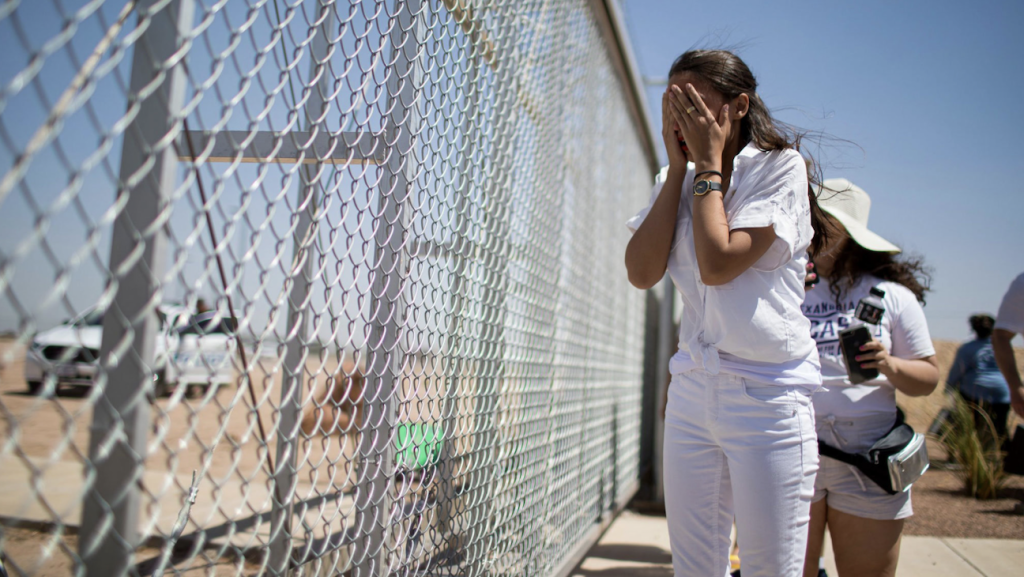
On genocide in Gaza, economic issues at home, and immigration theater the two political parties are in tacit agreement. Maybe we have more of this to look forward to, though:
Image

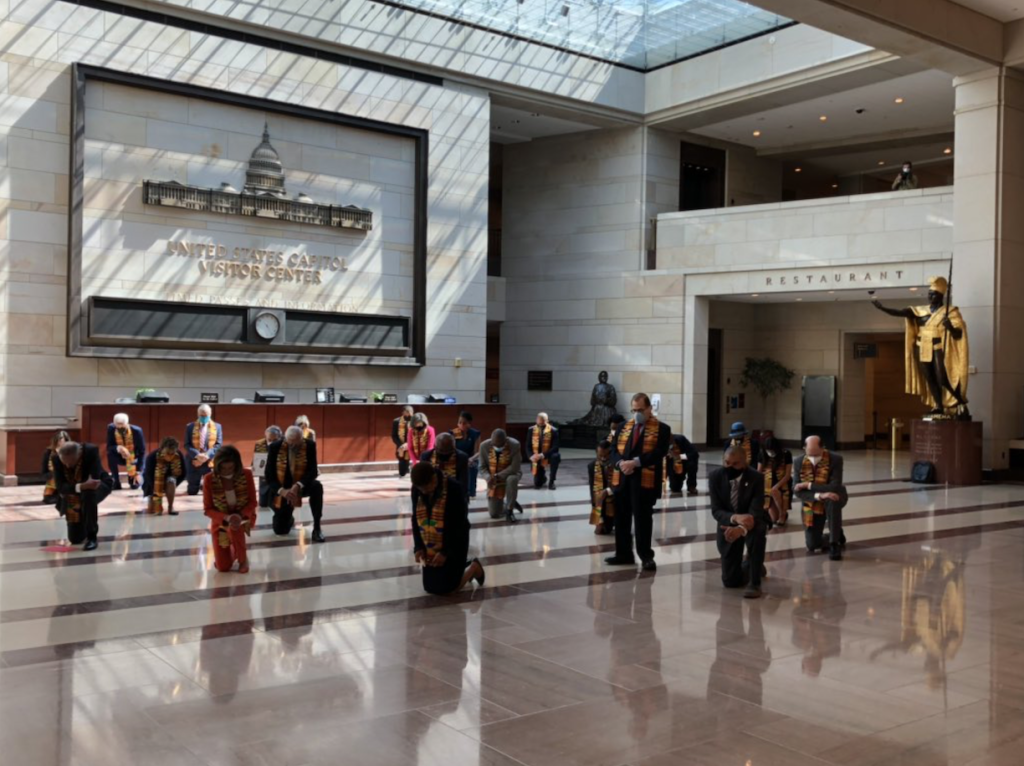
Will they do this with keffiyehs now that orange man bad is back?
Image

The Ruling Class Not as Dumb as They Seem

Let’s briefly examine the other major bloodbath fueled by Washington these days. In the case of the war in Ukraine, the West is unprepared, unwilling, and impotent to affect change on the battlefield, yet the “support” continues to flow to Kiev and escalation continues. There are many potential explanations.

Mentally impaired — potentially by repeated Covid infection — and really believe that Russia is going to collapse any day now?
Are they simply trying to get past the Inauguration Day finish line before allowing Ukraine to collapse and then blame Trump?
Flailing about as it’s curtains for the New American Century only a quarter of the way in?
Or maybe our plutocrats and their political representatives are not as dumb as they seem.
Maybe they know that there are “no more easy wars left to fight,” and are resigned to turning inwards and doubling down on profit extraction in territory they do control.

In Europe, at least, the endless gaslighting over the Russia threat certainly serves a purpose. Look at what it’s helped accomplish:

Political, economic, and security subservience to the US.
More power to the Queen Ursula-led European Commission, which enacts Washington will.
Enrichment of multinational fossil fuel and weapons companies at the expense of Europeans who are seeing their standard of living fall as a result.
An erosion of freedoms.
In the US, the relentless Trump fear campaign alongside the denigration of Trump supporters largely divides the loudest among us into two camps: those who believe he’s the reincarnation of Hitler and those who think he’s the savior.

Meanwhile the majority just want their economic concerns addressed, and all signs point to them being disappointed. The mainstream media and political figures have an interest in looking for monsters like Russia and Hitler under all the wrong beds. We’re not looking at their benefactors, the real enemy who is the same as it always was: bi-partisan economic warfare waged by the richest.

The US might lose every military confrontation, but that’s a war it still knows how to fight and win.

And while there’s clearly a lot of infighting going on among the US ruling elite these days, there’s at least one unifying force that helps them hold hands and sing “Kumbayah”:

US support for the Israeli genocide grows out of domestic pressures and imperial logics. But we should not underestimate the importance of this foreign policy as a venue for elite reconciliation, after eight years of unusually intense inter-elite conflict.

Image

— Tim Barker (@_TimBarker) November 18, 2024


“Unleashing” Silicon Valley in a quest for more productivity and profit will also no doubt sooth many wounds.

Going back to Haz Al-Din’s thought in the tweet above that we are being prepared for much wider devastation, which is unsurprising.

Capitalism and neoliberalism means a disaffected population as every last drop is squeezed from Peter Thiel’s blood providers. ​​Inequality is everywhere a growth industry and with it the fear that if wealth is controlled by a minority but political power is controlled by the majority, well, then it won’t be minority-controlled wealth for long.

And so along with financing directed toward programs to maximize profit we get the same towards systems of control, which can help maximize that profit and deal with any pestering side effects like a restless population.

Perhaps this go-round “America First” means that as a result of being frustrated abroad, the ruling class will turn inwards with Israel as the model (which also serves as a global reminder to weaker nations looking to rid themselves of Western extractive capital).

What to do? We can return to Dr. Ofer Cassif for one potential solution. He’s talking about Israel (where I’m not sure it still applies since the country is so far gone military defeat might be the only option), but the underlying message could still be useful elsewhere:

The exploited Israelis, especially the proletarians, will not see their own employers as their exploiters and class enemies but as the Palestinians. Who benefits from that? Who’s going to benefit from that? The exploiters. So, ending the occupation, besides being an end in itself because it involves direct oppression and exploitation, will also reduce, using the language of Lenin, the hostility between the peoples. In that sense, it will not only give us a better future to live as good neighbors but will also allow us to make it easier for us to divert our rage against our so-called domestic exploiters.

Is it May Day, 2028 yet?

https://www.nakedcapitalism.com/2024/11 ... -home.html
"There is great chaos under heaven; the situation is excellent."

User avatar
blindpig
Posts: 14804
Joined: Fri Jul 14, 2017 5:44 pm
Location: Turtle Island
Contact:

Re: Palestine

Post by blindpig » Tue Nov 26, 2024 12:00 pm

UNIFIL’s Role in the ‘Israeli’ Aggression on Lebanon
November 24, 2024

Image
UNIFIL Peacekeepers driving in BTR-80 armored personnel carriers in South Lebanon. Undated. Photo: Al-Akhbar / Ali Hashisho

XTelegramRedditWhatsAppLinkedInFacebookThreadsMessengerWeChatMastodonEmailPrintCopy LinkShare
In the shadow of the ongoing conflict, Israeli forces have launched operations from villages like Yarin, Dahra, and Alma al-Shaab, advancing toward al-Jabin, Sheheen, Tyre Harfa, and Shama. These areas, encompassing the densest concentration of UNIFIL centers, have witnessed destruction of residential buildings, shelling, and bombardment—all within sight of the UNIFIL headquarters.

While UNIFIL officially claims neutrality, asserting that it too is a victim of Zionist aggression, its actions—or lack thereof—tell a different story. Military sources highlight how radars at the Western Sector Command Center and the Italian unit in Shama have been used to monitor Lebanese resistance movements. At night, searchlights illuminate dense forests and rugged terrain near al-Bayada, aiding Israeli forces struggling to navigate these natural defenses. Meanwhile, Israeli soldiers have taken shelter around UNIFIL centers and even positioned artillery batteries nearby to target the coastal towns around Tyre.

Despite these developments, UNIFIL’s response has been limited to condemning “exchanges of fire” that reached its facilities, ignoring its implicit role in facilitating Zionist aggression.

In the central sector, the French unit has reportedly intensified its patrols, disregarding Lebanese Army objections and focusing on monitoring resistance activity. French radar systems have also been employed to track missile and drone launches, further underscoring their involvement.

Amid these actions, UNIFIL has neglected its primary mandate under Resolution 1701 to protect civilians. Daily massacres continue in its areas of operation, raising deep concerns among the residents of southern Lebanon about the future of their relationship with the so-called “peacekeepers.” These fears are exacerbated by talk of increasing UNIFIL’s numbers—a move that risks turning the mission into an overtly partisan force.

https://orinocotribune.com/unifils-role ... n-lebanon/

‘Israel’s’ Strikes on Baalbek and Tyre: A War on Lebanon’s Identity
November 23, 2024

Image
'Israel's' strikes on Baalbek and Tyre. Photo: Batoul Chamas/Al Mayadeen.

By Noura Hotait – Nov 22, 2024

Israeli airstrikes on Lebanon are not just targeting civilian infrastructure but also attempting to erase Lebanon’s identity by striking dangerously close to UNESCO World Heritage sites, Baalbek and Tyre—icons of its rich cultural legacy.

The relentless Israeli airstrikes on Lebanon are not only destroying civilian infrastructure but also threatening two UNESCO World Heritage sites, Baalbek and Tyre, symbols of Lebanon’s millennia-old cultural identity. These strikes have put invaluable historical treasures at risk, with global heritage advocates sounding the alarm over the irreversible damage.

Under the guise of targeting Hezbollah-affiliated sites and ensuring the “safety” of the Lebanese people, Israeli occupation forces have been, at times, issuing “evacuation orders” for areas dangerously close to these cultural landmarks, drawing widespread condemnation from the Lebanese people and government, and cultural preservationists. Simply put, the Israeli occupation’s assault on Baalbek and Tyre is an evident attack on Lebanon’s cultural identity, heritage, legacy, and the world’s shared heritage.

Israeli occupation military issued an
In mid-October, the Israeli occupation military issued an “evacuation” order close to Tyre’s historic landmarks. (Social media)
“Israel” has issued another so-called “evacuation order” to the residents of #Baalbek, #Douris, and #AinBourday, ordering them to move away from the #Zahleh-Baalbek Highway, Nahleh-Baalbek Road, and el-Arez-Baalbek Road.

Recently, “Israel” has unprecedentedly intensified its… pic.twitter.com/5mDfh9H2ci

— Al Mayadeen English (@MayadeenEnglish) October 30, 2024

Baalbek: The eternal city of the sun

Baalbek ruins through the lens of Hussein Muo
Baalbek’s ruins through the lens of Hussein Muo.
Nestled in eastern Lebanon, Baalbek stands as a symbol of Lebanon’s rich testament to human ingenuity and cultural synthesis over millennia. Known in antiquity as “Heliopolis” or “Always the City of the Sun,” Baalbek houses some of the finest examples of Phoenician ruins, Roman architecture, and Islamic monuments, earning its designation as a UNESCO World Heritage site in 1984.

For decades, Baalbek has hosted the renowned Baalbek International Festival during the summer, an annual celebration of music and arts that underscores its role as a cultural hub. The International Baalbek Festival has drawn global artists such as Fairuz, the Rahbani Brothers, Wadih el-Safi, Sabah, Warda al-Jazairia, Sting, Mika, Ella Fitzgerald, and Miles Davis, to perform in the mid of its stunning ancient backdrop, blending ancient history with contemporary artistry.

Baalbek’s historical mapping
Phoenician Ruins: Under the Roman Temples in Baalbek’s Castle, excavations have revealed the existence of ruins that date back to the Phoenicians, which are believed to have used the site as the Temple of Baal.

The Temple of Mercury: Known from coins of the Roman emperor Philip the Arab (r.244-249), only a staircase remains which is found at Sheikh Abdallah Hill, not far from the barracks of the Lebanese army.

The Temple of Mercury - Source: Sputnik
The Temple of Mercury. (Sputnik)
An old theater (Palmyra Hotel now): Its remains lie beneath the Palmyra Hotel, with a model on display found at the National Museum of Beirut.

Stone of the Pregnant Woman: This massive monolith, “Hajar Al-Hibla” or “Stone of the Pregnant Woman,” stands 20 meters high and 4.5 meters wide and is one of the largest stones ever cut by humans.

Stone of the Pregnant Woman - Source: Trip Advisor
Stone of the Pregnant Woman. (Trip Advisor)
Ras al-Imam al-Hussein Mosque: The mosque was built during the Mamluk period in honor of Imam Hussein, the grandson of Prophet Mohammad (PBUH).

Baalbek ruins - Source: UNESCO
Baalbek ruins. (UNESCO/ Ko Hon Chiu Vincent)
The Great Umayyad Mosque: Situated near the entrance to Baalbek’s Roman archaeological site, this 7th–8th-century mosque was constructed on the Roman forum, which had previously been converted into the St. John Byzantine Church in the 4th–5th centuries. It features granite and limestone columns and underwent restoration in the 1990s.

Bustan al-Khan: A Roman bath in the southwestern part of the ancient city, presumably built in the late second century A.D., notable for its banquet hall and urban prominence and covers an area of nearly 10,000 square meters.

Saint Barbara Cathedral: Built during the Byzantine Period, it is the seat of the Greek Melkite Catholic Archeparchy of Baalbek.

Qubat Douris: A shrine that most likely dates to the Ayyubid Period had a dome above eight columns of red granite and is located on the left of Baalbek’s southern entrance.


Qubbat Duris - Source: Lebanon Untravelled
Qubat Duris. (Lebanon Untravelled)
Baalbek Roman Temples:

The Hexagonal Forecourt: A six-sided area with 30 granite columns from the 3rd century A.D, built between the Propylaea and the Great Court, which was later converted to a church by the 5th
The Temple of Jupiter (15-55 A.D.): It is the greatest temple of Baalbek, and its shrine was the largest sanctuary in the Roman world. Today, only six Corinthian columns on the south side, carrying their entablature, remain.
The Temple of Bacchus (60-150 A.D.): An exceptionally well-preserved temple, larger than the Parthenon in Athens, which boasts an interior span of 62 feet and a monumental gateway measuring 21 feet in width and nearly 42 feet high.
The Temple of Venus: A small, circular temple with six columns that likely supported a dome. Its surface is intricately adorned with niches, elegant carvings, and decorations, though the sculptures have been lost over time.
Baalbek today: Threatened by ‘Israel’s’ indiscriminate strikes
This ancient city of crossroads of civilizations, that embodied a blend of Phoenician, Greek, Roman, and Islamic heritage, now lies in peril.

View this post on Instagram
A post shared by Live Love Lebanon | Beirut 🇱🇧 (@livelovebeirut)

In early November, an Israeli airstrike destroyed a historic building in the Manshiyeh neighborhood, which dates to the Ottoman era and lies within arm’s reach of the UNESCO-listed temples of Baalbek in eastern Lebanon.

The Governor of Baalbek and Hermel, Bachir Khodr, told Reuters that the neighborhood “is a very artisanal neighborhood, typically full of tourists,” adding that no one was in the targeted building.

While there was no immediate visible damage to the temple complex, as confirmed by the castle guards, Khodr said, “We need experts – engineers and archaeologists – to come look. No one has been able to do so yet because of the strikes.”

Meanwhile, Maya Halabi of the Baalbek International Festival said that a total of three Ottoman-era sites were recently damaged by Israeli airstrikes, including the Gouraud Barracks and the Palmyra Hotel.

“The Acropolis – where the temples are – is just a few meters away. They haven’t been damaged yet and we hope that won’t happen,” Halabi told Reuters.

#AlMayadeen’s correspondent Mouhamad Sahili reported from Ras al-Ayn, Baalbek, where Israeli airstrikes have wreaked havoc on the city’s cultural and economic sites.

Known for its cafes, restaurants, and heritage landmarks, Ras al-Ayn is a popular spot for tourists near the… pic.twitter.com/hlP89plqOu

— Al Mayadeen English (@MayadeenEnglish) November 3, 2024


Tyre: The maritime jewel of Phoenicia

Tyre - Source: UNESCO, photographer: Ko Hon Chiu VincentTyre ruins. (UNESCO/ Ko Hon Chiu Vincent)
To the South of Lebanon, Tyre stands to tell the tales of the ingenuity and legacy of all those who inhabited it.

Designated as a UNESCO World Heritage site in 1984, Tyre was the great Phoenician city that reigned over the seas with its maritime trade and founded prosperous colonies such as Cadiz and Carthage. Legend has it that the city is the place where purple pigment was first created. Tyrian purple dye was crushed out of Murex shells to embroider royal robes.

A legacy of innovations and trove of ancient history:
Tyre, one of the world’s oldest cities, has witnessed and withstood the rise and fall of empires for nearly 5,000 years. Its ruins stand as testaments to humanity’s earliest advancements with its priceless historic sites and heritage.

Take the Roman Hippodrome, built in the first century A.D., once holding 40,000 spectators for chariot races and Olympic Games activities, like races and pentathlons, where you can almost hear the echo of chariot wheels and cheering crowds from two millennia ago. This second largest and best-preserved of its kind had a marketplace that thrived beneath the Hippodrome seating area.

Seats of the circus, Hippodrome - Source: UNESCO, photographer: Tim Schnarr
Seats of the circus, Hippodrome. (UNESCO/ Tim Schnarr)
Possibly the marketplace beneath the Hippodrome - Source: UNESCO, photographer: Tim Schnarr
Possibly the marketplace beneath the Hippodrome. (UNESCO/ Tim Schnarr)
The Arch of Victory, constructed in the second century A.D. most likely under Emperor Hadrian, soars 21 meters high. Its northern tower floor was covered with mosaics, while the southern tower’s floor was paved with stone. Its adjacent Roman Road, dating to the first century and running from the monumental gate to the west, still bears chariot wheel marks etched into its flagstones.

The Arch of Victory - Source: UNESCO, photographer: Tim Schnarr
The Arch of Victory. (UNESCO/ Tim Schnarr)
The Roman Baths, dating to the second and third centuries A.D., were built with arcades to counteract sea humidity and underground water. Behind the baths were the heating rooms that supplied the building with hot water. Today, the marble floors and walls are gone, but they live on.

Umm Al-Amad, located on a hill close to the sea with temples that overlook the sea and the port, the site still contains the remains of two important temples, as well as other buildings, dating back to the second century and third century B.C., and represents the last of the Phoenician culture under the rule of the Greeks. Several steles bearing Phoenician inscriptions were discovered on the site, as well as an important sundial stone.

Modern-day Tyre is divided into two main areas: the town on the headland and the El Bass Necropolis on the mainland. The town features significant archaeological remains, a great part of which is submerged. The most noteworthy structures include the Roman baths, two palaestra, an arena, the Roman colonnaded road, a residential quarter, and the remains of the 12th-century Venetian-built cathedral. Also notable are parts of the ancient Crusader castle walls. El Bass, once the town’s main gateway, showcases a necropolis flanking a grand Roman causeway crowned by a 2nd-century triumphal arch. This area also houses a Roman aqueduct and the vast hippodrome.

Tyre today: Endangered by ‘Israel’s’ indiscriminate raids
While a Protection and Enhancement Plan is being prepared according to UNESCO, it is protected by the Antiquities Law No. 166/1933, and the Law on Protection of Cultural Property, No 37/2008. The conservation and management of the property is assured by the Directorate General of Antiquities (DGA), according to UNESCO.

Despite that, “Israel” has shown utmost disregard and disrespect for the law, as it has been issuing “evacuation” orders and striking the city and near Tyre’s Roman ruins, including the Necropolis and Hippodrome. Israeli strikes have been pounding the city as black smoke plagues the areas, including from those on the seafront near the ruins.

At around 6:30 pm on Friday, Israeli occupation forces renewed airstrikes on #Tyre in southern #Lebanon, targeting two buildings—one on Safieddine Street and the other in Kamal Jumblatt Square in the city’s inner neighborhoods, according to eyewitnesses.

Footage from the site… pic.twitter.com/XBDN9xqsva

— Al Mayadeen English (@MayadeenEnglish) November 9, 2024

Cultural genocide: Lebanon’s identity under attack
“Israel’s” indiscriminate strikes on Baalbek and Tyre are nothing short of war crimes that transcend physical destruction. Such crimes are an attempt to erase the very identity of Lebanon and its cultural memory.

These UNESCO-protected sites that Lebanon has long been famed for, long before the Israeli occupation, represent millennia of history, and embody the art, resilience, innovation, and legacy of Lebanon’s ancestors, making them vital not just to the Lebanese people but to global heritage.

By attempting to sever Lebanon’s connection to its past, these Israeli airstrikes aim to erase the very identity of a nation that has long been a cradle of civilization.

In response, Lebanese officials, along with hundreds of cultural experts, such as archaeologists and scholars, urged the United Nations to protect Lebanon’s cultural heritage in a petition released on November 17, a day before a special session in Paris, which aims to list Lebanese cultural sites under “enhanced protection.”

The petition called on UNESCO to safeguard Baalbek and other cultural sites by creating “no-target zones” around them, deploying international observers, and implementing protections outlined in the 1954 Hague Convention on cultural heritage during armed conflict.

The petition clearly stated that “Lebanon’s cultural heritage at large is being endangered by recurrent assaults on ancient cities such as Baalbek, Tyre and Anjar, all UNESCO world heritage sites, as well as on other historic landmarks.” It also urged powerful nations to advocate for a halt to attacks that harm cultural sites and to either implement additional protections or impose sanctions to prevent further destruction.

The plea was heard, as on November 18, UNESCO granted “provisional enhanced protection” to dozens of heritage sites in Lebanon, providing them with stronger legal safeguards as the brutal Israeli aggression continues. 34 cultural properties now benefit from “the highest level of immunity against attack and use for military purposes,” according to a statement released by the United Nations cultural body.

UNESCO said this decision “helps send a signal to the entire international community of the urgent need to protect these sites.” It further emphasized that “non-compliance with these clauses would constitute ‘serious violations’ of the 1954 Hague Convention and… potential grounds for prosecution.”

Baalbek and Tyre “will receive technical and financial assistance from UNESCO to reinforce their legal protections, improve risk anticipation and management measures, and provide further training for site managers,” the organization stated.

https://orinocotribune.com/israels-stri ... -identity/

******

Yemen appears to have the upper hand in its conflict with the United States

In retaliation for its Red Sea blockade on Israel, the US has been launching multi-pronged attacks on Yemen, including airstrikes, but they have failed to achieve their objective.

November 25, 2024 by Vijay Prashad

Image
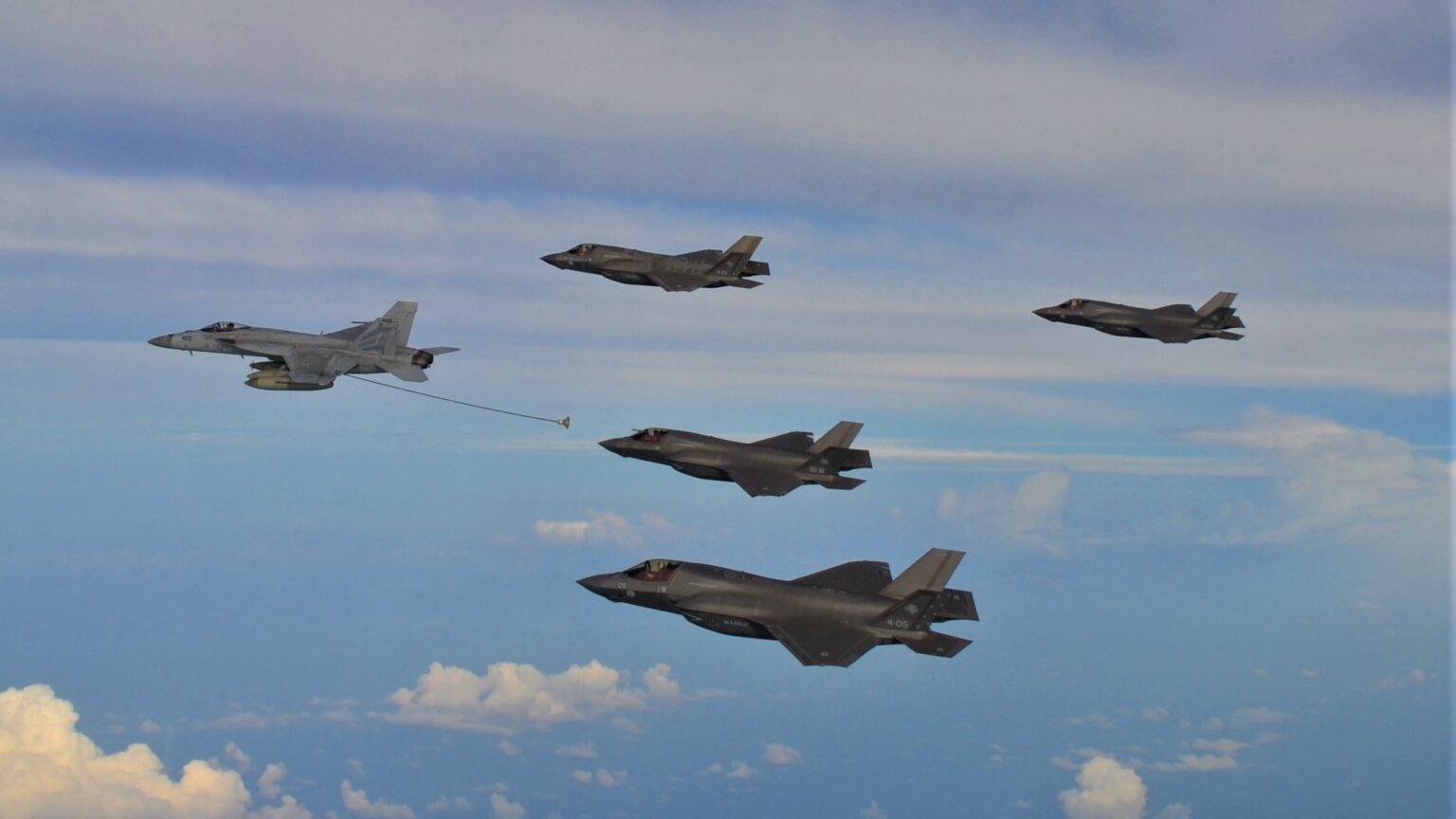
CENTCOM has been leading the attacks against Yemen. Pictured is a F/A-18E Super Hornet. Photo: CENTCOM

On November 14, 2023, a month into Israel’s genocidal attack on the Palestinians in Gaza, Abdul-Malik al-Houthi, one of the leaders of Ansar Allah and of the government of Yemen, delivered a speech that was broadcast on Al-Masirah television. “Our eyes are open to constant monitoring and searching for any Israeli ship,” he said. “The enemy relies on camouflage in its movement in the Red Sea, especially in Bab al-Mandab, and [does] not dare to raise Israeli flags on its ships.” The Bab al-Mandab, the Gate of Grief, is the 14-nautical-mile wide waterway between Djibouti and Yemen. What is interesting is that, by United Nations treaty, a country claims 12 nautical miles as its territorial limit; this means a large part of the waters are within Yemen’s jurisdiction.

Five days later, Yemeni commandos flew in a helicopter over Galaxy Leader, a cargo ship that is registered in the Bahamas and is operated by the Japanese NYK shipping line but that is partially owned by Abraham Ungar (one of Israel’s richest men). The ship continues to be held within Yemen’s territorial waters in the port of Saleef, with its 25 crew members as hostages in Al-Hudaydah governorate. This assault on Galaxy Leader, and then on several other Israeli-owned vessels, halted the traffic of goods to the Port of Eliat, which sits at the end of the Gulf of Aqaba. Squeezed between Egypt and Jordan, this port, which is the only non-Mediterranean Sea access for Israel, no longer has the level of cargo ships that it had before October 2023 and the private operator of the port has said it is almost bankrupt. Over the course of the past year, the port has been hit by drone and missile strikes emanating from Bahrain, Iraq, and Yemen.

US strikes are not working
Yemen’s government said that it would desist from any attack if Israel stopped its genocidal war against the Palestinians. Since the Israeli attack continues, Yemen’s attacks have also continued. These Yemeni attacks have provoked massive assaults on Yemen’s already fragile infrastructure—including an Israeli attack on Yemen’s port city of Hodeidah in July and punctual missile attacks by the United States. When US President Joe Biden was asked if the US airstrikes and missile strikes on Yemen were working, he answered bluntly: “When you say ‘working,’ are they stopping the Houthis? No. Are they going to continue? Yes.” In other words, Yemen’s government—erroneously called the Houthis after the Zaydi tradition of Islam followed by a quarter of the Yemeni population—is not going to cease its attacks on Israel just because the US and the Israelis have been hitting their country. Yemeni opposition to the Israeli genocide exceeds the Zaydi community, the Ansar Allah movement, and the Yemeni government. Even Tawakkol Karman, who received the Nobel Prize for Peace in 2011 and is a critic of the Yemeni government, has been vocal in her criticism of Israel.

Biden’s admission that the US missile strikes will not stop Yemen from its attacks has been accurate. Yemen faced a murderous bombardment from Saudi Arabia from 2015 to 2023, with the Saudis destroying large parts of the infrastructure in Yemen. And yet, the Yemenis have maintained the ability to strike Israeli targets. In October 2024, the United States military deployed B-2 Spirit bombers to hit what the Pentagon called, “five underground targets.” It was not clear if these weapons depots were destroyed, but it does show the increasing desperation of the US and Israel to stop the Yemeni attacks. The names of the US missions (Operation Prosperity Guardian and Operation Poseidon Archer) sound impressive. They are backed by a roster of carrier strike groups to protect Israel and to hit Yemen as well as groups that attempt to deter Israel’s genocide. There are at least 40,000 US troops in the Middle East and at any given time at least one carrier strike group with aircraft carriers and destroyers. According to the US Navy, there are two destroyers in the Mediterranean Sea (USS Bulkeley and USS Arleigh Burke) and two in the Red Sea (USS Cole and USS Jason Dunham), with Carrier Strike Group 8, anchored by the aircraft carrier USS Harry S. Truman, en route to the Mediterranean as USS Abraham Lincoln goes off to the Pacific Ocean. There is a considerable amount of US firepower in the area around Israel.

A political solution
Biden has not been the only person to say that the US attacks on Yemen have failed. US Vice Admiral George Wikoff, who leads Operation Prosperity Guardian, addressed an audience in Washington, DC from his headquarters in Bahrain in August. Wikoff said that the United States cannot “find a centralized center of gravity” for the Yemenis, which means that it cannot apply “a classic deterrence policy.” If the United States cannot strike fear into the leadership of the Yemeni government, then it cannot halt the Yemeni attacks on Israeli shipping or infrastructure. “We have certainly degraded their capability,” Wikoff said referring to the drones and missiles shot down by the US weapons. Wikoff did not mention that each of the Yemeni missiles and drones cost about $2,000, while the US missiles used to shoot them down cost $2 million. In the end, the Yemenis might be the ones degrading the US military (the Wall Street Journal reported in October that the US is running low on air-defense missiles, and the same paper reported in June that the US had spent $1 billion on its war on Yemen since October 2023). Like Biden, Wikoff reflected: “Have we stopped them? No.” In an interesting aside, Wikoff said, “The solution is not going to come at the end of a weapon system.”

As far as the Yemeni government is concerned, the only solution will come when Israel ceases its genocide. But even a ceasefire might not be sufficient. In early November, the United Nations official Louise Wateridge posted a video on X of the desolation in northern Gaza, and then wrote, “An entire society now a graveyard.” The ability of the Yemeni government to cease shipping to Israel and to pin down the United States off its coast might embolden it to continue with this if Israel continues its illegal policies of genocide, ethnic cleansing, and apartheid. Both Wikoff and Biden agree that the US policy has not worked, and Wikoff even said that the solution is not going to be through military force. It will have to be political.

https://peoplesdispatch.org/2024/11/25/ ... ed-states/

******

Washington Post Calls For Selective (Non-)Prosecution Of War Crimes

The Washington Post editors are trying to exceed the immense hypocrisy 'western' leaders usually display towards against the rest of the world.

The Post declares that the International Criminal Court is the wrong place to hold Israel, and its leaders, to account for war crimes.

Opinion - The International Criminal Court is not the venue to hold Israel to account (archived) - Washington Post
The ICC is needed to help resolve war crimes in Russia, Sudan, Myanmar. Targeting Israel makes that harder.


The argument the piece tries to make is irrelevant and has nothing to do with the courts judgment:

Israel is not a member of the ICC, and the warrants will have limited practical effect, except possibly preventing Mr. Netanyahu and Mr. Gallant from traveling to countries which have pledged to enforce it.

The war crimes Netanyahu and Gallant are accused of are happening Palestine, outside of Israel's recognized borders. Palestine is a state party of the Rome Statute. The ICC thus has jurisdiction over what happens on its ground. The (im-)practicality of the court's decision is not an argument against it.

But the arrest orders undermine the ICC’s credibility and give credence to accusations of hypocrisy and selective prosecution. The ICC is putting the elected leaders of a democratic country with its own independent judiciary in the same category as dictators and authoritarians who kill with impunity.

The prosecution and the pre-trial court have found a strong likelihood that Israel is committing war crimes and genocide. To not prosecute those crimes against Israeli citizens because the country claims(!) to be democratic and to have its own independent judiciary would be "hypocrisy and selective prosecution".

By doing the opposite, by prosecuting Israeli citizens, the court is attempting to apply justice equally. The Post defies logic when it claims otherwise.

The Post editors go on to willfully misunderstand the Rome statute which forms the courts legal basis.

Israel needs to be held accountable for its military conduct in Gaza. After the conflict’s end — which is long overdue — there will no doubt be Israeli judicial, parliamentary and military commissions of inquiry. Israeli’s vibrant, independent media will do its own investigations.
...
The ICC is supposed to become involved when countries have no means or mechanisms to investigate themselves. That is not the case in Israel.


The highlighted claims is false. Israel has used the argument that its own courts would, somewhere down the road, handle the issue when it tried to prevent the arrest warrants and to get the cases deferred.

The court's ruling explicitly referred to that:

The Chamber ruled on two requests submitted by the Israel on 26 September 2024. [...] In the second request, Israel requested that the Chamber order the Prosecution to provide a new notification of the initiation of an investigation to its authorities under article 18(1) of the Statute. Israel also requested the Chamber to halt any proceedings before the Court in the relevant situation, including the consideration of the applications for warrants of arrest for Mr Benjamin Netanyahu and Mr Yoav Gallant, submitted by the Prosecution on 20 May 2024.

The court found that the Israeli request to defer, in effect an attempt to shut down the proceedings, is premature:

Furthermore, the Chamber considered that pursuant to article 19(1) of the Statute, States are not entitled to challenge the Court’s jurisdiction under article 19(2) prior to the issuance of a warrant of arrest. Thus Israel’s challenge is premature. This is without prejudice to any future possible challenges to the Court’s jurisdiction and/or admissibility of any particular case.
The Washington Post editors do not even try to refute the courts argument. They can't.

They admit though that Israel, acting with impunity, is deliberately causing a famine:

Israel also has a responsibility to allow humanitarian aid to reach the millions of Palestinians displaced and suffering from an acute food shortage bordering on famine. On this, the Israeli government has fallen short.
...
[A] Post analysis found that Israel has largely failed to comply with the U.S. government’s three main demands — a surge of humanitarian aid, not a trickle; access to Gaza for commercial trucks; and an end to Israeli’s siege of populated northern Gaza.


Despite acknowledging Israel's culpability for that war crime, the editors ignore its relevance for the court's case.

They, instead, threaten the court with presidential actions:

The ill-considered arrest warrants against Israel only give Mr. Trump a new reason to halt American cooperation with the court, at a time when it’s needed for Russia, Sudan, Myanmar and conflicts elsewhere that atrocities are being committed with impunity and the victims have no other recourse.

The Post, despite its hostility to Trump, seems to welcome any action he might take against the court.

Pointing to other cases that may deserve (or not) the attention of the court is not an argument, but whataboutism writ large.

Posted by b on November 25, 2024 at 15:48 UTC | Permalink

https://www.moonofalabama.org/2024/11/w ... .html#more

******

Gaza's tent cities struck by disaster as rainfall ravages strip

UNRWA warned that nearly half a million are at risk in encampment areas hit by the intense floods

News Desk

NOV 25, 2024

Image
(Photo credit: X)

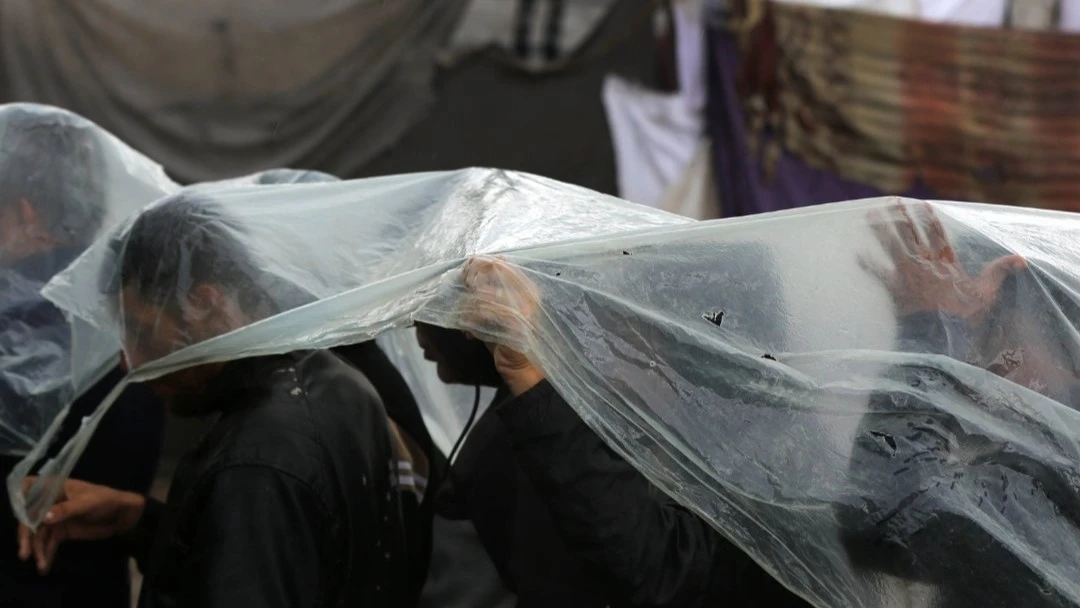
Heavy rain continued to pour on the besieged Gaza Strip on 25 November after stormy weather flooded the tents of displaced Palestinians across the enclave overnight, significantly worsening the already brutally harsh conditions they face.

“In Gaza, the first rains of the winter season mean even more suffering. Around half a million people are at risk in areas of flooding. The situation will only get worse with every drop of rain, every bomb, every strike,” the United Nations Relief and Works Agency (UNRWA) said in a post on social media.


The storms swept away many of the tents and makeshift plastic shelters used by the displaced in the southern Al-Mawasi area near Khan Yunis, located by the coast.

Some people were digging trenches to drain away some of the water in the tents, Reuters reported on 25 November.

“Rainfall has caused severe damage to tents housing thousands of displaced people, with water flowing inside the tents and damaging luggage and mattresses. The current situation signals a real humanitarian catastrophe if immediate intervention does not take place,” Gaza Civil Defense spokesman Mahmoud Basal said in a statement on Sunday.

Basal called on the UN and the international community to immediately provide tents and other shelter equipment for displaced Palestinians.

He also confirmed that Israeli forces continue to impede the work of relief organizations operating in the strip.

Over 90 percent of Gaza’s population has been subjected to Israel’s forced displacement orders since the beginning of the war.

The displaced in Gaza have constantly been on the move, and very often end up being targeted in “safe zones” or areas where they have been ordered to evacuate.

Human Rights Watch (HRW) released a report earlier this month arguing that Israel’s evacuation orders, which in many instances have included misleading information, amount to a war crime and crime against humanity.

The flooding of tent encampments coincided with a surge in violent Israeli attacks across the strip.

“Seven civilians were killed and dozens were injured on Monday, as a result of the occupation's bombing of different areas in the Gaza Strip,” WAFA news agency.

Israeli artillery pounded the Jabalia camp in north Gaza on Sunday. The north has been subject to a brutal Israeli siege for nearly two months.

Palestinians fled the northern Shujaiya neighborhood east of Gaza City on 24 November after new evacuation orders hit the area, coinciding with Israeli attacks and artillery shelling across Gaza.

https://thecradle.co/articles/gazas-ten ... ages-strip

Israeli snipers ‘shoot Palestinians for sport’

Eyewitness accounts reveal Israeli snipers are systematically targeting unarmed civilians, including children, using tactics that point to deliberate genocidal intent and a chilling policy of terror designed to annihilate a people, not just wage war.


Robert Inlakesh

NOV 25, 2024

Image
Photo Credit: The Cradle

Israel's attempts to excuse the mass murder of civilians in Gaza as "collateral damage" fall apart in the face of mounting evidence that it employs deliberate sniper attacks. The targeted killing of unarmed people – using quadcopter drones and professional snipers – has restricted access to essential medical care, food, and water, exposing a chilling reality behind the occupation army’s actions.

The International Criminal Court’s (ICC) arrest warrants for Israeli Prime Minister Benjamin Netanyahu and his former Defense Minister Yoav Gallant are further testament to this not being a conventional war; it is a systematic targeting of civilians that points directly to genocidal intent.

Over the past year, debates have raged over what constitutes an “acceptable” level of collateral damage in Gaza. In July, the West Point US Military Academy's Modern War Institute even published a piece that argued for a more surgical approach to be taken by the Israelis.

Similar discussions that also surround what constitutes a “disproportionate use of force” are all predicated on Tel Aviv’s approach being one of a conventional war. However, if Israel’s intention is not to wage war against Hamas and is instead to intentionally commit genocide and ethnic cleansing, these conversations prove meaningless. And no clearer evidence exists than the cold-blooded targeting of civilians by sniper fire.

Sniping civilians on live TV

Though there have been instances when sniper attacks on civilians captured the international media's attention, this grim element of Israel's military strategy is largely ignored, likely because of the damning implications.

The first major case to break headlines in the western media was the murder of two Christian women at Gaza City’s Holy Family Church on 16 December 2023. The incident even received condemnation from the Pope over the murder of the Palestinian Catholic mother and her daughter, who were deliberately killed while seeking refuge inside the church compound.

But today, these kinds of shootings are so commonplace that they even occur during live TV interviews with western news outlets. For example, in January, British broadcaster ITV captured the moment when 51-year-old Ramzi Abu Sahloul was shot through the chest, only moments after he had spoken on air. Sahloul was part of a group of civilians who were fleeing to Rafah in Gaza’s south while holding white flags on the orders of the Israeli military.

Another innocent civilian murdered while fleeing and with a white flag was Hala Khreis; she was shot and fatally wounded while holding her grandson's hand as they were walking. The incident was also caught on camera. A CNN investigation was able to prove that Israeli soldiers stationed nearby were responsible.

Intimidation by assassination

Palestinian correspondent Motasem Dalloul, who is based in northern Gaza, testifies to The Cradle that his own son Yahya was murdered by an Israeli sniper on 29 May, after which the soldiers ran over his child's body with a tank.

“I took my sons to our destroyed house, in Al-Sabra neighborhood, in order to pick up some clothes from under the rubble. When we were there, I saw my son fall to the ground and he started bleeding from his head. I got close to him and found that his head had exploded.”

He explains that although he couldn’t see the Israeli soldiers, he knew that they were positioned nearby with sniper weapons and states that when he approached little Yahya’s body, he was struck by the fact that he was motionless. He adds:

“Israeli tanks began shooting and firing everywhere. I knew that my son was dead … so I had to leave him on the ground and flee with my other sons to safety. I couldn’t return back to this place for 10 days, where I later found that an Israeli tank had run over his body and dismembered it, we could only collect some of his flesh and bones, which had been smashed by the Israeli tanks, and we put them in a piece of fabric, like a shirt, and took them, burying them in a makeshift cemetery.”

During Dalloul’s conversation with The Cradle, bombs exploding in the background are heard as he recounts:

“I think the reason Israeli occupation [word muffled by the sound of explosions] killed my son was to frighten the rest of us and warn us not to return to this area … as that area was later on destroyed and all the buildings were erased, turning it into a military buffer zone. This put much pressure on the residents of Gaza City who do not have homes and a lot of these displaced people were murdered.”

Psychological warfare and denial of medical care

The calculated targeting of civilians is not limited to sniper fire. On 20 September, a UN special committee reported to the General Assembly that there has also been a “deliberate denial of healthcare access by Israeli snipers” to lactating and pregnant Palestinian women.

After countless testimonies of deliberate shootings committed against civilians have been emerging, in December 2023, the UN Office of the High Commissioner for Human Rights (OHCHR) issued a press release urging accountability and an investigation. The press release also highlighted the execution of 11 men in front of their families in the Remal Neighbourhood of Gaza City.

Yassin, a young man from Jabalia Refugee Camp, describes to The Cradle how he was shot from a quadcopter drone in mid-November of 2023, managing to survive by mere chance. Yassin says that he was traveling on foot, using Salah al-Deen Road between Jabalia and Khan Younis, after receiving evacuation orders from the occupation army to move south.

While he was fleeing, an armed clash suddenly erupted within his visual range:

“I picked up my clothes and phone and ran from the place to escape this clash. There was a hill of sand in front of me, I jumped off it, and some of my clothes fell. Then I found the ambulance that the enemy [Israel] had stopped, remaining on the road.”

Scared, he said he heard calls in Arabic for him to stop running, then “I heard the sound of the bullet, so I asked in a loud voice ‘Who was shot?’ After 10 meters, I realized this bullet had exploded inside my liver, and I was the answer to my own question. This bullet penetrated my right lung, then the diaphragm, then exploded in the liver.”

Yassin says that the only reason he survived was because a relative happened to be driving a nearby ambulance and acted quickly to save his life. Yassin’s recovery has been a long and grueling journey spanning several months, and he continues to suffer from his injuries despite evacuating across the Rafah Crossing into Egypt.

A policy of deliberate targeting

American surgeon Mark Perlmutter, who traveled to Gaza in order to treat wounded Palestinians during the war, has also drawn specific attention to the intentional targeting of children by Israeli sniper fire. “No child gets shot twice by mistake,” he told France 24. Perlmutter has burst into tears during several interviews while describing how scores of children had died in front of his eyes.

Perlmutter’s accounts align with the recent testimony of British doctor Nizam Mamode, who described to UK Members of Parliament how drones would deliberately shoot children “day after day” in Gaza. Such accounts have been emerging from foreign physicians throughout the war, with nine other on-the-ground doctors providing accounts of the calculated targeting of children to The Guardian earlier this year.

The Cradle also received testimony from a Palestinian man from northern Gaza whose brother was shot by an Israeli sniper in October during Israel’s re-invasion. As he tried to drag his brother to safety, he was repeatedly targeted by snipers and eventually had to watch his brother slowly die from his wounds.

He explains that they fled their homes to Gaza City, but he and his brother decided to return when the fighting was less intense, noting that the shooting erupted out of nowhere when they were in the Jabalia area. He then saw his brother collapse and bleed everywhere, noting that the bullet hit him in the middle of his body.

Twisted tactics

The accounts provided to The Cradle are but a few in a long list of similar horrors that emerge on a daily basis from the Gaza Strip. In April, Euro-Med Human Rights Monitor released a report that pointed out Israel’s use of intimidating sounds to scare and lure civilians into kill zones. In the Nuseirat Refugee Camp, drones were recorded playing the sounds of babies crying in order to draw civilians out of their homes and into the streets so that they could be fired upon.

Throughout the writing of this piece, over a dozen eyewitnesses to shootings – including journalists and doctors in Gaza – were consulted. All confirmed that Israeli snipers deliberately target civilians without any justification to instill fear that prevents people from moving freely.

A Palestinian doctor from northern Gaza, who requested anonymity, tells The Cradle, “They are shooting civilians for sport, and this is clearly deliberate; this must be the policy of the army.”

https://thecradle.co/articles/israeli-s ... -for-sport

'Extensive damage' after Hezbollah fires over 300 rockets, drones at Israel in one day

The attacks were a response to a deadly Israeli strike which killed dozens of people in central Beirut a day earlier

News Desk

NOV 25, 2024

Image
(Photo credit: X)

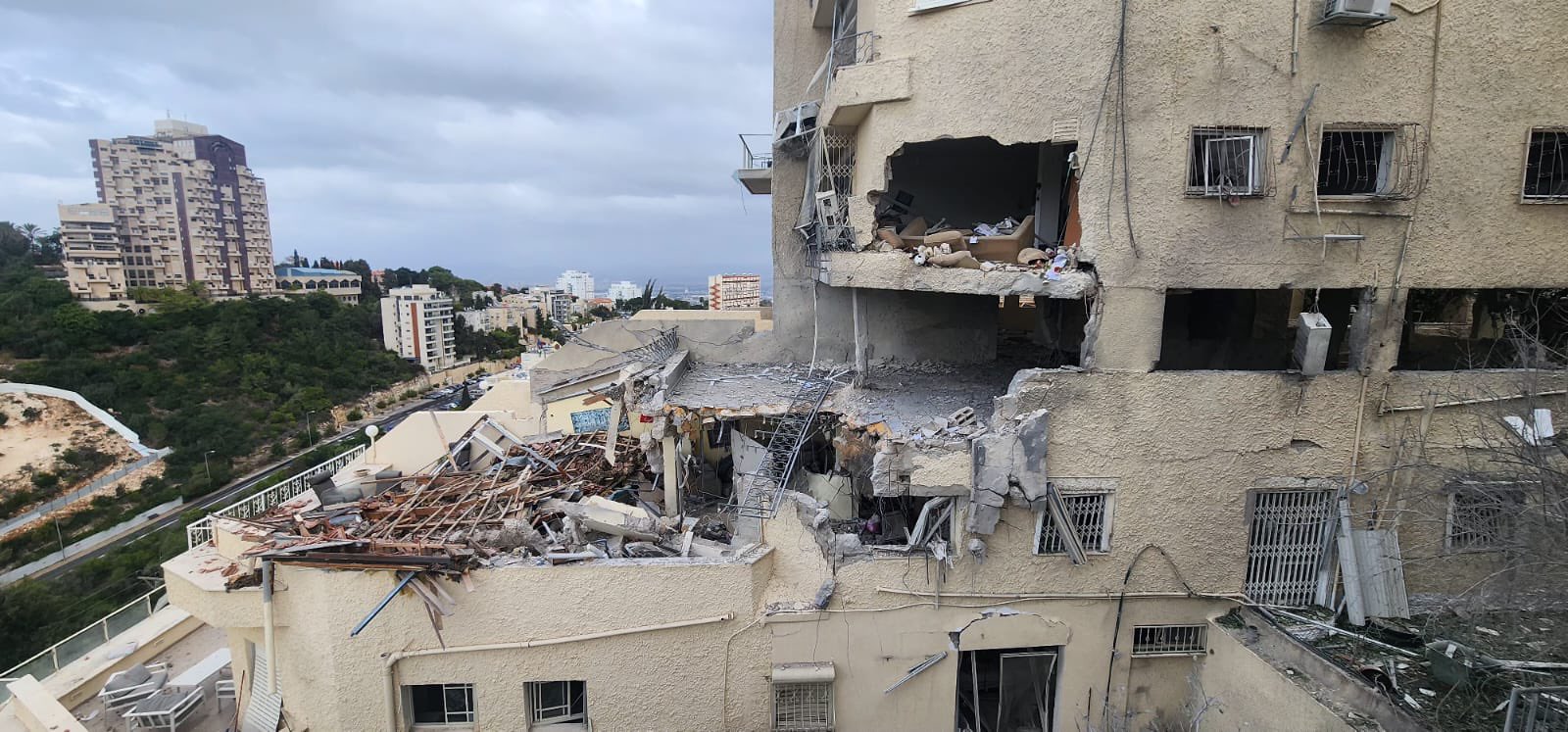
The hundreds of rockets, missiles, and drones fired by Hezbollah at Israel on 24 November caused “significant” and “extensive” damage, Israeli newspaper Haaretz confirmed in a report.

While Haaretz reports at least 240, other Israeli outlets, including the Army Radio, said 340 projectiles were launched from Lebanon at Israel on Sunday.

At least 11 were wounded across the north and center of Israel, including the greater Tel Aviv area, where rockets made impact several times throughout the day.

Damage was recorded in Petah Tikvah east of Tel Aviv, the central towns of Rinatya and Jaljulia, the northern city of Nahariya, and Haifa – where a building was severely damaged. According to Haaretz, testing is being carried out to see if the building in Haifa is at risk of collapse, and all its residents have been evacuated.


Many homes and vehicles in Petah Tikvah near Tel Aviv, as well as in other locations, were damaged.


Israel’s northern cities and settlements bore the brunt of the attacks. This was Hezbollah’s largest rocket and missile attack since the start of the war last year.

“The north remains completely paralyzed, while the daily chaos is also slipping towards the center,” said Amos Harel, military affairs analyst for Haaretz. He added that Hezbollah’s daily escalation has undermined people’s sense of security in the north.

“This was Hezbollah’s revenge for the bombing of Beirut the day before, taking advantage of the winter weather conditions that make air force activities difficult, in addition to its desire to re-establish the equation of responding to bombing of Beirut by launching rockets at central Israel,” he added.

Harel said the government “declares victories and boasts about the achievements” while the security of Israelis is undermined, adding that Israel’s destructive and indiscriminate attacks on Lebanon are “of little comfort.”

At least 29 were killed in Israel’s attack on the Basta neighborhood in central Beirut on 23 November.

Hezbollah’s missiles, rockets, and drones targeted several military sites on Sunday, including the Glilot military intelligence base in the Tel Aviv outskirts and the Ashdod naval base, which the resistance movement said it hit for the first time, among others.

The Lebanese resistance carried out 42 attacks on settlements, military bases, positions, and gatherings, launching a total of 51 operations – the largest number in a day since the start of Hezbollah’s operations in October 2023.

Reports said one rocket landed inside the Beit Lid military base near Netanya.

Hezbollah leader Naim Qassem had affirmed in a speech last week that Israeli strikes on central Beirut would be met with resistance attacks on the heart of Tel Aviv.

“We cannot leave the capital under the blows of the Israeli enemy unless it pays the price, and the price is the center of Tel Aviv. I hope that the enemy understands that things are not left to chance,” Qassem said.

A Hezbollah missile made direct impact in Tel Aviv on 18 November, a day after deadly attacks on the Ras al-Nabaa and Mar Elias areas of central Beirut.

https://thecradle.co/articles/extensive ... in-one-day
"There is great chaos under heaven; the situation is excellent."

User avatar
blindpig
Posts: 14804
Joined: Fri Jul 14, 2017 5:44 pm
Location: Turtle Island
Contact:

Re: Palestine

Post by blindpig » Wed Nov 27, 2024 12:31 pm

Israeli minister Ben-Gvir storms Ibrahimi mosque in Hebron to provoke an escalation in the West Bank

Following ICC’s issuance of arrest warrants against top Israeli officials over Gaza’s genocide, Ben-Gvir bluntly threatened to escalate the situation in the West Bank, confirming Israel’s disregard of international law.

November 25, 2024 by Aseel Saleh

Image
Photo: Wikimedia Commons / שי קנדלר

Israeli Minister of National Security Itamar Ben-Gvir stormed Ibrahimi Mosque in the city of Hebron (Al-Khalil) in the southern occupied West Bank on Friday, November 22, accompanied by thousands of Israeli settlers.

A Palestinian citizen from a local committee working to defend Hebron city from Israeli violations told Anadolu Ajansı that Ben-Gvir and the settlers escorting him performed Talmudic rituals for the Jewish holiday Chayei Sarah (Life of Sarah) inside the mosque. He added that the Israeli Occupation Forces (IOF) imposed a curfew on the old city of Hebron, where the Ibrahimi Mosque is located, banning Palestinians from reaching the area during the settlers’ raid.

Meanwhile, the director of the Ibrahimi Mosque Mutaz Abu Sneineh informed media outlets that the IOF closed the mosque to Muslim worshipers and employees through Saturday evening. The Ibrahimi Mosque itself has also been the site of numerous settler attacks. In 1994, extremist settler terrorist Baruch Goldstein entered the mosque during a prayer and open fired, killing 29 Palestinian worshippers and injuring over 100.

While settler violence against Palestinians has a long history that goes back to the period of the British Mandate in Palestine, the rise of extremist leader Ben-Gvir since 2019 has been accompanied by a sharp uptick in attacks and provocative acts. Ben-Gvir has been labelled by Israeli and western media alike as a provocateur, pyromaniac, ultranationalist, and an extremist settler.

Ben-Gvir has been part of Netanyahu’s government, playing a key role in shaping politics and decision making, since 2022 as the Minister of National Security. Ben-Gvir’s illegal attacks and provocations would not be possible without his government’s policies and rhetoric which explicitly back settler violence.

Israel’s new Defense Minister, Yisrael Katz, announced on Friday the suspension of administrative detention for Israeli settlers who carry out attacks against Palestinians in the occupied West Bank. The Palestinian Authority slammed Katz’s decision as it would further encourage settlers to commit more crimes against Palestinians.

In a statement issued on Friday, the Palestinian Ministry of Foreign Affairs and Expatriates said that Katz’s decision “would encourage supremacist colonists to commit acts of terrorism against Palestinians and their properties and further foster their impunity.” The Ministry also called for effective international action to restrain settler “militias” and protect the Palestinians from their violence.

Katz’s decision may be seen as part of the plan recently declared by Israeli Finance Minister Bezalel Smotrich for the West Bank annexation early November. The plan was re-iterated by Ben Gvir, who called for implementing it in response to the ICC’s issuance of arrest warrants orders for top Israeli officials on Thursday, November 21.

According to analysts, Israeli ministers aim at fueling the situation in the West Bank to find a pretext to end the Oslo Accords which granted the Palestinian Authority self-governance over the West Bank and the Gaza Strip, and to undermine international efforts for a two-state solution.

https://peoplesdispatch.org/2024/11/25/ ... west-bank/

******

Nearly 10,000 buildings destroyed by Hezbollah in Israel’s north: Report

Ahead of a potential ceasefire deal with Lebanon, emerging data reveals ‘unimaginable’ losses inflicted by Hezbollah on northern Israeli settlements

News Desk

NOV 26, 2024

Image
(Photo credit: AFP)

More than 9,000 buildings and 7,000 vehicles have been damaged or destroyed by Hezbollah operations against the Israeli north since the start of the war, Yedioth Ahronoth reported on 26 November – highlighting the “unimaginable” losses ahead of a potential ceasefire deal with Lebanon.

“In the conflict line settlements, there is almost no building that does not require renovation - or demolition and rebuilding,” said the Israeli newspaper’s electronic site Ynet.

According to property tax data obtained by Ynet, “a disturbing partial image emerges that indicates destruction and damage to approximately 9,000 buildings and over 7,000 vehicles that were damaged mainly by Hezbollah fire.”

Ynet adds that “about NIS 140 million [$38,368,316] has been paid to compensate for the damages.”

The data indicates that “there are many injuries in the north that have not yet been reported, because the tenants are being evacuated or because the injuries are in areas that cannot be entered according to the army's instructions.”

The report highlights that the northern settlements and cities of Kiryat Shmona, Manara, Shtula, Zarit, Nahariya, and Shlomi sustained the heaviest damage throughout the war. Most of the damage was to residential buildings.

The Hebrew outlet says the destruction has not been properly documented and is “shrouded in a heavy fog.”

In Kiryat Shmona, the losses are “unimaginable.” Its Mayor, Avichai Stern, reported that every home in Kiryat Shmona needs renovation, which will take months. Public buildings have also been damaged, and renovation of schools alone requires around four months.

Stern states that there is no government plan in place to receive the settlers back north. He says they will decide to leave again once they see the reality they returned to.

“When they see where they returned and to what reality they returned – the second wave of departure will be wider.”

“Apart from a budget framework of NIS 15 billion [$4,119,765,000] for all the settlements in the north, there is no plan approved by the government. Not security, not economic, not social, and not any response to resilience, and the communities that fell apart and the infrastructures that were destroyed,” he added.

“The State of Israel has no idea what the extent of the damage is and what needs to be done and treated the day after the war,” says Moshe Davidovitz, chairman of the Conflict Line Settlements Forum.

The first months of the war last year saw Hezbollah meticulously target border settlements, nearby bases, and military sites. As Israel continued to escalate, Hezbollah’s operations gradually extended deeper north.

After the pager terror attacks in Lebanon and the assassination of Hezbollah's secretary-general Hassan Nasrallah, and in the weeks that followed, Haifa and Tel Aviv entered the Lebanese resistance's range of fire.

The Ynet report comes ahead of an expected announcement of a ceasefire agreement between Hezbollah and Israel, which US and Israeli officials say is close. Israel’s Prime Minister Benjamin Netanyahu is expected to approve the deal during a security cabinet meeting on Tuesday afternoon.

Beirut has expressed cautious optimism, as Netanyahu has consistently blocked a deal from going through in Gaza for over a year.

The agreement focuses on UN Resolution 1701. As part of the deal, Hezbollah is required to withdraw beyond the Litani River, with the Lebanese army deploying its forces south.

Yet Israelis and the settler officials from the battered north are furious about the potential agreement and are far from satisfied with the fact that the deal reportedly stipulates that Lebanese army forces are responsible for dismantling Hezbollah infrastructure along the border.

The settlers feel the government has abandoned them. Many refuse to return to the ravaged wasteland from which they were forced to evacuate at the start of the fighting, as they feel Hezbollah has not been deterred and view the agreement as a surrender.

https://thecradle.co/articles/nearly-10 ... rth-report

Netanyahu announces Lebanon 'ceasefire' as airstrikes pummel Beirut

As Tel Aviv awaits the response from the Lebanese resistance, officials authorized the violent expansion of the bombing campaign inside Lebanon

News Desk

NOV 26, 2024

Image
(Photo credit: Reuters)

Israeli Prime Minister Benjamin Netanyahu announced in a speech on 26 November that Tel Aviv has accepted a ceasefire agreement with Lebanon, vowing to act forcefully against Hezbollah in the event of any breach of the deal.

He made the announcement following a security cabinet session held to greenlight the ceasefire and as Israeli jets launched heavy strikes across Lebanon, including its capital.

Netanyahu said that signing an agreement with Lebanon will allow Israel to focus on “the Iranian threat,” adding that Tel Aviv is “changing the face of the region.” He said it would also allow Israeli troops to rest and weapon stores to be restocked.

The premier added that Hezbollah is not the same group “that launched a war against us [on 7 October],” adding that Israel killed the majority of its leadership and “destroyed their infrastructure.”

“We were able to achieve many of our goals during this war,” he said. Israel managed to “separate the fronts” and “isolate Hamas,” Netanyahu boasted.

He vowed that Israel “will respond with force” and use military action if the agreement is breached and if Hezbollah makes efforts to rearm itself.

“With the full understanding with the US, we are maintaining full freedom of action [against Hezbollah].”

“If Hezbollah violates the agreement and tries to rearm, we will attack. If it tries to rebuild the terror infrastructure near the border, we will attack. If it fires a rocket, if it digs a tunnel, if it brings in a truck with missiles, we will attack,” he went on to say. “A good deal is one that is enforced, and we will enforce it.”


Netanyahu added that many critics do not believe his government is willing to start fighting in Lebanon again after the ceasefire. “After all this, maybe it’s time to start believing. Believing in our determination, in our way, in our dedication to victory.”

According to a report by Israel’s Channel 12, the actual text of the agreement is ambiguous on whether Israel’s right to take action against violations is included. Israeli army radio reported that the text consists of both Israel and Lebanon’s right to self-defense, in line with previous reports.


It said Israel would have to report any violation to the US-led committee overseeing the deal’s implementation, which will convene on the severity of the breach. The agreement is based on UN Resolution 1701.

“We doubt Netanyahu's commitment and will not allow him to pass a trap with the agreement. We must scrutinize the points that Netanyahu agreed to before the government signs [the deal] tomorrow,” Mahmoud al-Qamati, Deputy Head of Hezbollah’s Political Council, told Al Jazeera.

Lebanon’s Prime Minister Najib Mikati called on the international community to “act swiftly” and “implement an immediate ceasefire” following the Israeli prime minister’s announcement.

Netanyahu’s ceasefire announcement followed the continuation of violent and deadly Israeli air raids across Lebanon, including the southern suburb of the capital and central Beirut. Israel bombed the Hamra area, Mar Elias, Jnah, Barbour, and Nuwari in the heart of the capital. Dozens have been killed across the country in the past few hours.

Israel’s Broadcasting Corporation (KAN) reported before Netanyahu’s speech that Tel Aviv had approved a massive bombing campaign across Lebanon, including Beirut, “in the coming hours."

Hezbollah launched a large drone and rocket attack on several towns and settlements in the Galilee before the announcement of the ceasefire. Crossfire is expected to continue throughout the coming hours.

https://thecradle.co/articles/netanyahu ... mel-beirut

Israeli jets carpet bomb Beirut in last-minute offensive before potential truce

Israel destroyed several buildings in the Beirut southern suburb less than an hour after striking the heart of the capital

News Desk

NOV 26, 2024

Image
(Photo credit: X)

Israel launched heavy and destructive air raids on Beirut and its southern suburb on 26 November, ahead of a cabinet session in which Israeli Prime Minister Benjamin Netanyahu is expected to greenlight a potential ceasefire deal with Hezbollah.

The attacks caused massive explosions and huge clouds of smoke were seen rising out of numerous locations across Beirut’s southern suburb on Tuesday afternoon, as shown in video footage on social media.

Several residential buildings have been completely destroyed by the strikes, which came after issued evacuation orders for over 20 buildings in the suburb. The Israeli army claimed it struck dozens of Hezbollah targets.

An Israeli strike completely leveled a building in central Beirut’s Nuwairi area less than an hour before the attacks on the suburb began.

“A fierce airstrike carried out on Tuesday by Israeli enemy warplanes targeted a building near Khatem al-Anbiyaa Mosque in Al-Nuwairi area of Beirut,” Lebanon’s National News Agency (NNA) reported.

According to an NNA correspondent, the raid on Nuwairi targeted a four-story building housing displaced people. At least seven were killed and 37 wounded, the Lebanese Health Ministry said. Operations to remove rubble are ongoing, and the toll is expected to rise.

The intense bombing comes ahead of an anticipated announcement of a ceasefire agreement between Hezbollah and Israel, which US and Israeli officials say is close. Prime Minister Netanyahu is expected to approve the deal during a security cabinet meeting on Tuesday afternoon.

Beirut has expressed cautious optimism, as Netanyahu has consistently blocked a deal from going through in Gaza for over a year.

The potential agreement focuses on implementing UN Resolution 1701. As part of the deal, Hezbollah is required to withdraw beyond the Litani River, with the Lebanese army deploying its troops to the south and the Israeli army withdrawing its invading forces from Lebanon. This is all meant to happen within a 60-day period.

Beirut has vowed not to accept anything that violates Lebanon’s sovereignty. Yet Tel Aviv has signaled that it wishes to resume attacking Lebanon if it sees fit – to prevent Hezbollah from “rebuilding.”

https://thecradle.co/articles/israeli-j ... tial-truce

Hamas welcomes potential Lebanon ceasefire: 'Hezbollah stood by Palestine'

The Hamas leader said Hezbollah made ‘great sacrifices’ and sent a ‘powerful message’ with its operations against Israel

News Desk

NOV 26, 2024

Image
(Photo credit: AFP via Getty Images)

Senior Hamas official Osama Hamdan said on 25 November that his movement “welcomes” the potential ceasefire agreement in Lebanon, stressing that Hezbollah has made “great sacrifices” in standing by the Palestinian people.

“Any announcement of a ceasefire in Lebanon is welcomed, as Hezbollah has stood by our people and made great sacrifices. We, in the Axis of Resistance, trust one another and coordinate on every detail,” Hamdan told Al Mayadeen in an interview on Monday evening.

Hamdan highlighted that Hezbollah continues to fight until this moment and is making Israel “pay a price” by forcing its officials into shelters with its attacks.

The Hamas leader described Hezbollah’s massive rocket, missile, and drone attacks against the north and center of Israel on Sunday as a “glorious day of God” that sent a “powerful message.”

Hezbollah opened its front against Israel on 8 October 2023 – one day after Hamas launched Operation Al-Aqsa Flood.

The front was aimed at supporting the Palestinian resistance and people in Gaza.

The first months of the war last year saw Hezbollah meticulously target border settlements, nearby bases, and military sites – including surveillance bases and spy equipment. As Israel continued to escalate, Hezbollah’s operations gradually extended deeper north.

After the pager terror attacks in Lebanon and the assassination of Hezbollah's secretary-general Hassan Nasrallah, and in the weeks that followed, Haifa and Tel Aviv entered the Lebanese resistance's range of fire.

Last month, Hezbollah’s new leader, Naim Qassem, confirmed that Lebanon has entered a new stage of the war – signaling that the Lebanese resistance is now compelled to end the war against its people.

In a speech last week, Qassem praised Hezbollah for being among the few, alongside Yemen and the Iraqi resistance, who stood by the Palestinians and entered the war as the “world watched” tens of thousands be killed by Israel in Gaza.

Israel’s Prime Minister Benjamin Netanyahu is expected to approve a ceasefire deal during a security cabinet meeting on Tuesday afternoon. Beirut has expressed cautious optimism. The potential deal focuses on the implementation of UN Resolution 1701, which includes the deployment of thousands of Lebanese army troops and the withdrawal of invading Israeli forces from Lebanon.

It also requires Hezbollah to withdraw its forces beyond the Litani River. This is all meant to take place within 60 days of the announcement of the ceasefire.

https://thecradle.co/articles/hamas-wel ... -palestine

(why give the Zionists what they couldn't get in combat?)

Israeli finance minister calls for occupation of Gaza, 'thinning' of Palestinian population

Finance Minister Bezalel Smotrich called for occupying Gaza and forcibly expelling its Palestinian population at a conference to promote Jewish settlement as US President Trump comes to power

News Desk

NOV 26, 2024

Image
(Photo credit: Yonatan Sindel/Flash90)

Israeli Finance Minister Bezalel Smotrich has called for “thinning” the Palestinian population of Gaza by half in two years, claiming it can be done through occupying Gaza directly and encouraging so-called “voluntary migration.”

Smotrich, who is also a settler leader and de facto occupation governor of the West Bank, made the comments on 26 November while speaking at a conference organized by the Yesha Council, an umbrella group representing municipalities of illegal settlements in the occupied West Bank.

Smotrich said that “it is possible to create a situation where Gaza’s population will be reduced to half its current size in two years.”

“Occupying Gaza is not a dirty word,” Smotrich said. “We can occupy Gaza and thin the population by half within two years” through a strategy of encouraging “voluntary emigration.”

Participants at the conference met to strategize how to expand Jewish settlement in the West Bank and Gaza under Donald Trump’s incoming US presidential administration.


The Times of Israel notes that critics of the “voluntary emigration” policy say it is a “euphemism for forced displacement – a war crime.”

Smotrich argued that the Israeli army should be responsible for managing the civilian affairs of Palestinians in Gaza under a military occupation government. The army should establish a “Civil Administration” to rule Gaza in the way it did before the 2005 disengagement plan that saw Israel withdraw its forces and Jewish settlements from the strip and instead assert its control via blockade and siege.

The Finance Minister argued that if the “encouraged migration” was successful in Gaza, it could be repeated in the West Bank, home to three million Palestinians.

The Times of Israel noted that Smotrich, who is the chairman of the Religious Zionism party, has long spoken in favor of annexing large parts of the West Bank. He declared earlier this month that US President-elect Donald Trump’s election victory offers an opportunity to see that vision through.

Regarding “voluntary emigration,” Smotrich said, “This is a possibility that opens up with the new [Trump] administration.”

“The less we talk about it, the more we can do,” he said.

“As in Judea and Samaria [the West Bank], there is an inverse relationship between declarations and statements and practice.”

He has also called for the Israeli government to allow for the collapse of the Palestinian Authority (PA), which would open the door further for direct Israeli military rule throughout the West Bank.

The Israeli army has been implementing the ‘Generals’ Plan’ since October to forcibly displace Palestinians from the entirety of northern Gaza. The plan calls for issuing forced evacuation orders to residents of Gaza’s northern towns, laying siege to the region, and then cutting off food and aid in order to starve everyone who refused or failed to leave.

https://thecradle.co/articles/israeli-f ... population

Israel 'outright denied' 90 percent of aid deliveries to north Gaza in November: UN

The Israeli army is accused of allowing criminal gangs in Gaza to steal aid as Palestinians continue to starve

News Desk

NOV 27, 2024

Image
(Photo credit: Belal Al Sabbagh, Yahya Hassouna, Mahmud Hams, Youssef Hassouna, Stringer, Mohammed Abed / AFPTV / WHO / ICRC / AFP)

Israel “outright denied” 82 out of 91 attempts since 26 October to deliver aid to besieged areas in northern Gaza, said Georgios Petropoulos, head of the UN humanitarian office in Gaza.

More attempts were unsuccessful because of “denials of specific locations or specific supplies,” he said in a statement reported by The Washington Post on 26 November.

The aid that has reached Gaza is being looted by criminal gangs, which are able to operate freely after Israel began killing members of the Gaza police attempting to secure aid deliveries earlier this year.

“It is tactical, systematic, criminal looting,” Petropoulos told the BBC.

He says this is leading to “ultra-violence” from “the looters towards the truckers, from the IDF towards the police, and from the police towards the looters.”

“Hamas’ security control dropped to under 20 percent,” the former head of Hamas police investigations told the BBC.

“We are working on a plan to restore control to 60 percent within a month.”

The BBC was told that “thefts often happen in clear sight of Israeli soldiers or surveillance drones but that the army fails to intervene.”

“Stolen goods are apparently being stored outside or in warehouses in areas under Israeli military control,” the BBC wrote.

As a result, hunger and malnutrition among Palestinians are increasing.

“My children are very hungry every day. We can’t afford the basics. It’s constant suffering. No food, no water, no cleaning products, nothing,” Gaza resident Umm Ahmed told the BBC.

“We don’t want much, just to live a decent life. We need food. We need goods to come in and be distributed fairly. That’s all we’re asking for.”

https://thecradle.co/articles/israel-ou ... ovember-un

Lebanon's displaced return home as ceasefire with Israel takes effect

Israeli forces have already violated the agreement by opening fire near residents in southern border villages

News Desk

NOV 27, 2024

Image
(Photo credit: X)

Thousands of Lebanese citizens returned to their homes in the southern suburb of Beirut, the south, and the east of Lebanon, on 27 November after the announcement of a ceasefire between Hezbollah and Israel early that morning.


As soon as the ceasefire took effect at 4:00 am, people began making their way to their homes across the country – with many returning to find their buildings leveled and their homes destroyed.

Video footage documented the return of Lebanese residents of the Beirut suburb and the towns and villages of south Lebanon, as well as eastern Lebanon’s Bekaa and Baalbek.

“Victory to the resistance,” residents said as they entered their towns and neighborhoods.


In a speech on Wednesday morning, Lebanon’s Parliament Speaker Nabih Berri welcomed the cessation of hostilities, praising the resistance and mourning its late leader Hassan Nasrallah, while calling on all the displaced to make their way back home.

Prime Minister Najib Mikati also spoke, stressing commitment to the agreement and Lebanon’s sovereignty and calling on all Lebanese to “unite and confront the challenges facing Lebanon after the Israeli aggression.”

As part of UN Resolution 1701, the Lebanese Armed Forces (LAF) have begun to deploy in southern Lebanon.

Israel has already violated the ceasefire agreement with Lebanon. Israeli troops in south Lebanon’s Khiam opened fire as Lebanese citizens approached the town.


Israeli troops also shelled the town of Kfar Kila as citizens tried to enter the town. Despite the Israeli military's threats, citizens were able to reach the Fatima Gate border wall.


In a statement, Israeli Defense Minister Israel Katz said that "due to the entry of Hezbollah members into Kfar Kila," he has ordered the military to act forcefully against “phenomena of this kind.”

Katz said that Hezbollah members must be prevented from reaching areas in southern Lebanon where the Israeli military is still “prohibiting movement.”


The Israeli army said it would remain deployed in south Lebanon’s border areas and would inform residents of a “safe date” to return.

“You are prohibited from heading towards the villages that the Israeli military has requested to be evacuated or towards the Israeli military forces in the area. For your safety and the safety of your family members, refrain from moving to the area. We will inform you of the safe date to return to your homes.”

https://thecradle.co/articles/lebanons- ... kes-effect
"There is great chaos under heaven; the situation is excellent."

User avatar
blindpig
Posts: 14804
Joined: Fri Jul 14, 2017 5:44 pm
Location: Turtle Island
Contact:

Re: Palestine

Post by blindpig » Thu Nov 28, 2024 12:14 pm

Israel Agrees to Ceasefire in Lebanon After Ground Invasion Fails
Posted on November 27, 2024 by Yves Smith

While a cessation of hostilities should be a welcome event, the ceasefire between Israel and Lebanon is not cause for great cheer. While it does mean that Israel’s air assault on Beirut and other parts of Lebanon are off for now, and maybe even a long time, that does not mean Israel is foreswearing its belligerent ways. It will instead be free to turn its full attention to Palestine and the West Bank.

The big reason for this ceasefire is that Israel was suffering high costs and getting nowhere in its ground invasion of Lebanon. Colonel Larry Wilkerson estimated that Israel had suffered 8,000 wounded in action, an unsustainably high level, while getting only a few kilometers into the country. But Israel had driven Lebanese citizens near the border out of their homes (and destroyed many) and was also doing great damage to Beirut and other civilian areas. So Hezbollah, which is a political party and part of the Lebanese government apparatus, could not oppose a ceasefire that would spare Lebanese lives and property, even if it mean reneging on its promise to keep fighting Israel as long as the war in Gaza continued.

One question over my pay grade is what this means for the promised Iran retaliation on Israel. Professor Mohammed Marandi, who so far has been accurate in his calls about Iran’s action, has maintained that Iran will strike Israel in response to its attack on Iran. Professor Marandi had also said the reason Iran had held back on its second attack (the one after the assassinations on Hamas political leader Haniyeh and Lebanon’s Nasrallah) because Gaza ceasefire headfakes talks were underway, and Iran did not want to be accused of being a spoiler. There are some bleats about a Gaza ceasefire in the wake of the Lebanon deal.

Just as I was writing this section, this new entry appeared on the Aljazeera live blog:

Tehran reserves the right to react to last month’s air strikes on Iran, but it also considers other developments in the region such as the ceasefire agreement in Lebanon, Foreign Minister Abbas Araghchi has said.

Note that there are some remarks in the Twitterverse and by some pundits that Iran will guarantee Hezbolah’s performance. That seems to be based on a misleading Haaretz headline: Israel May Sign Cease-fire Deal With Lebanon, but Iran Will Guarantee Hezbollah’s Compliance. The subhead says: “Only Iran can guarantee that the organization abides by the agreement with Israel.” Iran was not a party to these negotiations and has guaranteed squat.

We are far from alone in our assessment of the pact. From Sam Husseini:

While Israel killed thousands in Lebanon, it was unable to advance more than a few miles into the country, leading many to argue that this was a major reason for Israel agreeing to a ceasefire..

Many simply hear “ceasefire” and think good.

Given Israel’s record, this may be naive.

Netanyahu (born Mileikowsky) himself said that he had three reasons for agreeing to a ceasefire: to “focus on the Iranian threat,” to “give our forces a breather and replenish stocks” and to “separate the fronts and isolate Hamas.”

That is, he effectively says he wants more war in other places.


And Mike Hampton:

Today, at 0200 GMT, a USA/France brokered ceasefire began between Israel and Lebanon. Strangely, no copy of the deal is yet available but is said to include a 60-day implementation period during which:

*Israel will leave Lebanon.
*Hezbollah will withdraw north of the Litani River, which is up to 30km away from the border with Israel.
*The Lebanese Armed Forces (LAF) will act as a peacekeeping force, replacing Hezbollah in the evacuated area.


This means that:

1.The USA and France are anti-war and anti-colonialism nations without agenda except for peace and human rights in the Middle East.
2.The Israeli’s have won their war against Lebanon.
3.Hezbollah is defeated.
4.Netanhayu is an honest man.
5.Palestine is screwed.

Or:

1.The USA and France are pretending peace like Germany and France did to Russia regarding Ukraine with the Minsky II agreement in 2015.
2.Hezbollah has inflicted such severe injury on Israeli troops that they need to either regroup, or focus only on Palestine.
3.The main intention is to weaken Hezbollah via the Lebanese Armed Forces.
4.Netanhayu misleads.
5.Palestine is screwed.

I’m not covering all the options, just making a point. You can decide if you’re an optimist, pessimist or realist whilst further considering that there was a going-away party.

With the ceasefire deal approved by the Israeli cabinet, but hours from its stated start, Israel showed good faith by launching its largest attack on Beirut.

As of when I last checked Twitter, there was still no report of a published a text of the deal.

The wave of residents of South Lebanon returning home confirms the widespread desire in Lebanon to end or at least halt the conflict:

People in Lebanon celebrated and thousands of cars filled the roads to return home after a ceasefire between Israel and Hezbollah took effect. pic.twitter.com/uU3TVrBQ51

— Al Jazeera English (@AJEnglish) November 27, 2024


In spite of IDF warnings, #Lebanon’s roads are filled with thousands of people today heading home to the South to find what’s left of their villages. Hoping for the best, fearing the worst. Everyone praying this longed-for ceasefire holds. pic.twitter.com/SP2tlh8oZA

— Leila Molana-Allen (@Leila_MA) November 27, 2024


The mainstream media and many well-regarded English language Mideast sites like Middle East Eye were depicting the ceasefire as in place.

But Twitter featured multiple, separate sightings of Israel persisting in attacks. Note there seem to be several incidents in Khiyam:

This is Baalbek, Lebanon, right now.

Israel is massively bombing a historic city that has stood for over 9,000 years in the middle of the night, just moments after accepting a ceasefire. pic.twitter.com/0eLuSQrHtg

— sarah (@sahouraxo) November 26, 2024


BREAKING Israeli soldiers are firing in the vicinity of residents in Khiyam city, who arrived to inspect their homes in the northeastern neighborhood.

This after a ceasefire between the Israeli occupation and Lebanon took effect at 4am local time in Lebanon (02:00 GMT). pic.twitter.com/PVBw2rIbS9

— TruthWire (@truth_wire) November 27, 2024


Khiyam residents in Lebanon tried to return home but the israelis are firing at anyone on sight, says journalist Marwa Osman | so… no ceasefire then? pic.twitter.com/bftwY4aqa1

— Sarah Wilkinson (@swilkinsonbc) November 27, 2024


⚡️🇱🇧BREAKING: Ceasefire Violation

Despite the start of the ceasefire agreement, an Al Jazeera correspondent was forced to end the broadcast after Israeli soldiers fired warning shots at civilians attempting to move around in the town of Khiam, southern Lebanon. pic.twitter.com/vFUTK9wWe3

— Suppressed News. (@SuppressedNws) November 27, 2024


Even a Jerusalem Post headline included IDF fires at Lebanese, Hezbollah, returning to southern Lebanon. Israel maintains the shots were at Hezbolloh forces.

Separate and apart from whether the IDF complies with the ceasefire, the settlers in northern Israel are a wild card. Ben Gvir has been arming settlers in the West Bank. Will the settlers in Northern Israel take, or be encouraged to take, a similarly acquisitive posture?

The wags are arguing whether France giving Netanyahu and Gallant immunity from the ICC warrant was a sweetener to get the ceasefire done or alternatively, France using the agreement as cover to do what it was inclined to do anyhow…

Turns out France did NOT give Netanyahu ICC immunity in return for getting a ceasefire in Lebanon.

The ceasefire was going to happen anyways, but France gifted Netanyahu the immunity from the arrest warrant in return for giving France credit for the ceasefire deal! pic.twitter.com/hZl95L3PRn

— Muhammad Shehada (@muhammadshehad2) November 27, 2024[/i]


As best as we can tell, this pact keys off the old 2000 deal, UN Resolution 1701 in which Israel withdraws to the old “blue line,” Hezbollah pulls back to the Litani River, and UN peacekeepers intervene. Here, the toothless Lebanese army gets again to police Southern Lebanon. From Associated Press:

[International mediators hope that by boosting financial support for the Lebanese army — which was not a party in the Israel-Hezbollah war — Lebanon can deploy some 6,000 additional troops south of the Litani River to help enforce the resolution. Under the deal, an international monitoring committee headed by the United States would oversee implementation to ensure that Hezbollah and Israel’s withdrawals take place.

You can see where this is going. Israel violations, like the ones that are already occurring, will be ignored by the US, while any by Lebanon will be pinned on Hezbollah (whether or not the case) and used as a casus belli if and when Israel is willing to resume a fight. Even many independent experts see the IDF as tired and battered, the political leadership of Israel sees the fight to take Greater Israel as eschatological. In keeping, Larry Wilkerson, in an interview right before the deal was announced (but there was ample speculation) said Netanyahu had not gone to the Knesset for approval (which may also explain the hiding of its text) and said he was pretty confident any agreement would give Netanyahu control, in particular freedom to re-start the conflict. So this ceasefire may not be that long-lived:

Almost exactly a year ago, Israel agreed to a ceasefire in Gaza, which lasted from November 24 to November 30.
American Thanksgiving was Nov 23.

This year, Israel has agreed to a ceasefire in Lebanon, just in time for Thanksgiving.

We'll see how long this one lasts…

— Dr. Annelle Sheline (@AnnelleSheline) November 26, 2024


https://www.nakedcapitalism.com/2024/11 ... fails.html

******

Baalbek: Lebanon's 'Sun City' targeted by Israeli fire

Much of the ancient city of Baalbek, a symbol of Lebanon's cultural history, now lies in ruins as Israeli airstrikes target its UNESCO heritage sites, threatening to erase a legacy amidst a ceasefire that seems as fragile as the stones they are meant to protect.


Mawadda Iskandar

NOV 27, 2024

Image
Photo Credit: The Cradle

Baalbek, the ‘City of the Sun,’ a unique place shaped by legends rooted deep in history, has become a symbol recognized worldwide. Built by the Phoenicians more than five centuries before Christ, Baalbek is celebrated for its citadel – standing for over 5,000 years –and its rich collection of ancient monuments and temples, some dating back over 10,000 years.

But today, this historic city finds itself under Israeli fire, devastated by the deliberate bombing of its archeological treasures.

As part of the occupation state’s war on Lebanon’s heritage, on 26 February, Baalbek, the UNESCO World Heritage Site, was added to the list of Israeli targets, marking the first direct assault on the city since the 2006 war.

The historic treasures of Baalbek faced devastation when, on 6 October, smoke was seen billowing behind the iconic Roman columns in the citadel, a testament to the scale of destruction. This attack on Baalbek's heritage followed Israeli threats to evacuate the city, with the first warning issued on 30 October.

A direct assault on heritage

Speaking to The Cradle, Shafiq Shehadeh, president of the Union of Baalbek Municipalities, describes how their jurisdiction experienced several raids, but that the most significant damage to archaeological and tourist sites occurred in Baalbek itself.

Though many sites were damaged indirectly, there were direct attacks, such as the complete demolition of Al-Manshiya Café, an establishment from 1928 located in what is known as the archaeological square (or cultural heritage).

In turn, Mustafa al-Shall, Mayor of Baalbek, tells The Cradle:

“The western wall of Baalbek Castle was targeted within the Gouraud Barracks, and about 60 percent of it was destroyed by being targeted by an air strike. It is on the World Heritage List and protected by UNESCO. The Mansheya building adjacent to Baalbek Castle was also targeted, and was completely destroyed.”

The Mansheya building, a significant Ottoman-era structure and a major attraction due to its proximity to the historic Palmyra Hotel, was also targeted and reduced to rubble. This targeting extended to other historic sites like the popular cafes and other tourist attractions surrounding the Ras al-Ain spring.

The Mayor also expresses concerns regarding the bombing of residential areas near the citadel, noting that the strength of these impacts could have long-term effects. Experts from UNESCO and the General Directorate of Antiquities are expected to evaluate the structural integrity of these sites in due course.

Image
Photos of Al-Mansheya Building in Baalbek, east Lebanon, before and after its destruction by Israeli bombardment.

The ruins under siege

According to the Union of Baalbek Municipalities, several significant cultural treasures have been compromised:

The aforementioned Al-Mansheya Café was directly targeted and completely demolished. This ancient archaeological building was located opposite the Palmyra Hotel and just dozens of meters away from the citadel and the shrine of Sayyida Khawla.

A popular pilgrimage site for Shia Muslims, the shrine of Sayyida Khawla, constructed in 1655 and expanded in 1995, sustained damage to its parking area due to nearby attacks.

The presbytery of Our Lady of Perpetual Help for the Maronite Order, built in 1858, was also damaged due to the targeting of the famed café.

Baalbek Castle, a 4,000-year-old marvel that has been included on the UNESCO World Heritage List since 1984, suffered notable damage. Although the castle itself was not directly destroyed, the northwestern outer wall sustained damage, with part of it being demolished when a civilian house in the Gouraud Barracks was targeted.

The Dome of Durus, dating back to the Ayyubid era and located at the southern entrance to Baalbek, suffered minor damage as a result of attacks on neighboring residential buildings.

The Al-Nahr Mosque, constructed on the ruins of an older mosque in 1618, experienced indirect damage from attacks targeting nearby sites. The Al-Qard al-Hassan building, just meters away, was also hit. Due to its proximity to the Al-Qard building, the historic Al-Ajami Restaurant, built in 1920 in the commercial center of Baalbek, was also affected.

Image
Photos of the Gouraud Barracks in Baalbek, east Lebanon, before and after being damaged by Israeli bombardment.
Image
Photos of the Dome of Durus in Baalbek, east Lebanon, before and after being damaged by Israeli bombardment.

Empty streets

The Palmyra Hotel, an iconic structure built in 1872, sustained damage to its rooms and façade due to the bombing of the Al-Mansheya Café across the street. This hotel has hosted many prominent world leaders, artists, and media figures throughout its storied history.

The Baalbek train station, constructed in 1913 in the Al-Mahatta neighborhood, also sustained partial damage, impacted by the bombing of a nearby house belonging to the Secretary-General of the Baath Party, Ali Hijazi.

Once a bustling hub filled with residents, visitors, and tourists from across the globe, Baalbek now lies empty. The streets that very recently echoed with voices and laughter are silent, the shops closed, and its hospitable people displaced. Those remaining speak of a profound sadness, while those who fled describe the difficulty of being away from their beloved city.

Speaking to The Cradle, Maryam Abbas, a resident of Baalbek, laments:

“We did not know its value until we left it. The old city affected all of our lives, and this is something that only those who live in it can feel. Everything in the city is mixed with our memories and our childhood, from its monuments to its streets and restaurants... I wish we had remained under the raids and did not leave them.”

For Maryam, Baalbek's citadel is the soul of the city, a symbol of its people's resilience. Any damage to it is a deep wound shared by all who call Baalbek home: “The houses will return, but the castle will not!”

Image
Photos of the Palmyra Hotel in Baalbek, east Lebanon, before and after being damaged by Israeli bombardment.
Local and global efforts to save Lebanon’s heritage

In response to the city’s plight, local initiatives have stepped up to protect what is left of Baalbek’s rich heritage amidst the broader absence of state authority. Civil society organizations, in coordination with the municipalities and the General Directorate of Antiquities, have been working to safeguard the historical artifacts threatened by Israeli bombings.

The “Safe Side” association has been at the forefront of these efforts. Founder Hussein Zein al-Abidin Yaghi stresses the importance of preserving the city’s monuments, and tells The Cradle:

“Baalbek is not only for the residents of Medea, nor for the Lebanese only, but for the entire universe. It is a precious and rare jewel, and therefore efforts to preserve the antiquities there are important and must be undertaken not only by UNESCO and the United Nations, but also by the global public.”

As for the association’s efforts, he explains that they have been in communication with Baalbek's Director of Antiquities Laure Salloum since the Israeli raids began, and have worked diligently with volunteers “to collect the stones scattered as a result of the targeting of the Manshiya building to deliver them to her directorate. Although the building was targeted, some of the carved stones were still there.”

Yaghi stresses the urgent need for new international laws to protect such sites, as the existing conventions have proved insufficient. Despite UNESCO’s step to grant temporary enhanced protection to 34 Lebanese cultural sites, Yaghi called for more serious, effective measures to safeguard these irreplaceable treasures.

UNESCO’s 18 November decision to provide temporary enhanced protection to these sites, including Baalbek, and to allocate financial assistance to support emergency measures arrived only after concerted efforts from Lebanon’s Ministry of Culture, its delegation to UNESCO, parliamentarians, various civil society groups, and some global figures.

Amid reports of a fragile US-brokered ceasefire between the occupation state and the Lebanese resistance, Baalbek’s fate exposes a harsh truth: heritage is only as protected as the politics that surround it. If Baalbek truly falls, it would not be just the stones and history that are lost, but a part of our collective humanity.

https://thecradle.co/articles/baalbek-l ... raeli-fire

'Tel Aviv failed to achieve war goals': Outrage in north Israel over Lebanon ceasefire

Over 60 percent of Israelis believe their army lost the war against Hezbollah in Lebanon as displaced northern settlers say Tel Aviv is 'deceiving' them

News Desk

NOV 27, 2024

Image
(Photo Credit: EPA)

Residents of cities and settlements in the north of Israel are expressing outrage about the ceasefire deal with Lebanon that started on the morning of 27 November, accusing Tel Aviv of leaving the region vulnerable to the same threat posed by Hezbollah before the war began.

“We are now entering a situation far worse than 6 October; they are misleading us,” Metula Council head David Azoulay told Channel 12 News, describing a meeting he held with Prime Minister Benjamin Netanyahu late Tuesday evening as "a one-sided spectacle.”

“We are now entering a situation far worse than October 6, they're misleading us,” he added.


“What do I say? That it's very bad, real bad … [The government did nothing, and our soldiers were wasted away for nothing. Bibi (Netanyahu) should pack himself out of the government quickly, even though I supported him. He needs to go home urgently,” Nahariya resident Levana Karsenti told Reuters on Wednesday.

“It’s a problem that we stopped the war and didn’t finish the job … There was a siren a few minutes ago, and I had to put my kids on the floor and lie on top of them because we don’t have a safe room in the house. We need to trust our army, but I think that after 7 October, that’s hard because there was no one there,” Moran Brustin, an Israeli settler from Kibbutz HaGoshrim near the Lebanese border, told reporters.

According to a poll published by Israel's Channel 13 news on Wednesday, 61 percent of Israelis agree that the army was not victorious against Hezbollah, with only 26 percent of respondents saying Tel Aviv “won.”
About 60,000 residents of northern Israel remain displaced due to heavy attacks by Hezbollah, according to official figures. About 45 Israeli civilians have been killed by the attacks over the past 14 months, compared to the hundreds killed in Lebanon.

Israel violently escalated its air campaign inside Lebanon in late September, days before two horrific terror attacks carried out by Israeli intelligence agencies targeted thousands of civilians across the country. This was the lead-up to a ground invasion that had as its objectives the dismantling of the Lebanese resistance, the guarantee of a safe return for the settlers to the north, and the reshaping of the region's political landscape.

After nearly two months of fierce battles in the south, Tel Aviv capitulated on Tuesday, with none of its key goals achieved.

In contrast to the situation in northern Israel, residents of south Lebanon began returning to their devastated villages as soon as the ceasefire took effect at 4:00 am Wednesday.

https://thecradle.co/articles/tel-aviv- ... -ceasefire

Hezbollah reveals Israeli army losses in Lebanon: Over 1,300 casualties, 59 tanks destroyed

The resistance group declared victory over its 'delusional enemy,' highlighting that the combined power of Israel and its allies 'could not undermine the resolve' of its fighters

News Desk

NOV 28, 2024

Image
(Photo Credit: AZIZ TAHER/REUTERS)

Lebanese resistance movement Hezbollah issued its first statement since the start of a ceasefire with Israel on 27 November, revealing that its forces killed at least 130 Israeli soldiers and injured about 1,250 in under two months of battles inside Lebanon.

“The Resistance remained steadfast in its pledge and struggle for more than 13 months and was able to achieve victory against the delusional enemy, rendering it incapable of diminishing its determination or breaking its resolve," Hezbollah's 4,638th statement since 8 October 2023 reads.

The movement revealed that its troops conducted 1,666 military operations since 17 September – the start of the expanded Israeli aggression against Lebanon – averaging 23 operations per day.

Parallel to these, Hezbollah also says it launched 105 special ‘Khaybar’ operations, which started following the assassination of former leader Hassan Nasrallah. These special operations targeted sensitive sites as deep as 150km inside Israel using advanced ballistic rockets, cruise missiles, and high-end assault drones.


Inside Lebanon, the resistance says it destroyed 59 Merkava tanks, 11 military bulldozers, two Humvees, two armored vehicles, and two personnel carriers. Successful anti-air operations also brought down 6 Hermes 450 drones, 2 Hermes 900 drones, and a quadcopter.

“Throughout the entirety of the Israeli ground operation into Lebanese territories … the invading forces failed to occupy or settle in any of the frontline towns, which had been under fire since the start of Operation Al-Aqsa Flood," Hezbollah says in its statement, adding that Tel Aviv “failed to establish an isolated military and security zone, and was unable to obstruct rocket and drone launches into occupied territories.”

“This is a direct product of the perseverance of the fighters on the battlefield, who continued striking enemy targets deep into occupied [Palestine] from the frontlines and border villages until the final day of aggression.”

Hezbollah also calls the second phase of the Israeli ground invasion “nothing but a political and media declaration as the enemy was unable to advance into second-tier towns on the southern front.”

On 12 November, Israeli media reported that the army “initiated the second phase of the ground maneuver in southern Lebanon, with the 36th Division advancing toward Hezbollah’s second defensive line” in an attempt to take control of the southern town of Khiam.


“[Israel] suffered significant losses in Khiam, from which it withdrew three times, as well as in Ainata, Tallousa, Bint Jbeil, and Al-Qawzah,” Hezbollah revealed on Wednesday.

“The only attempt to advance was to the towns of Bayada and Shamaa in the western sector, which became a graveyard for tanks and elite soldiers of the enemy army, who withdrew from it under the blows of the resistance,” the statement reads, highlighting that over “300 defense lines south of the Litani River” were established before the ground invasion. "What happened in Bayada and Khiam is the best evidence.”


As the first day of the US and French-mediated ceasefire deal comes to a close, the Lebanese resistance is reminding Israel and its allies that “fighters from various military specialties will remain fully prepared to deal with the enemy’s ambitions and attacks.”

The group also says that it will closely monitor the withdrawal of Israeli forces from the Lebanese border region, which needs to be completed within 60 days. "[Our] hands will remain on the trigger, in defense of Lebanon’s sovereignty and for the sake of the dignity and honor of its people,” Hezbollah says.

Finally, the Lebanese resistance confirmed it will "continue standing by the side of the oppressed, the weak, and the mujahideen in Palestine with its capital, Holy Jerusalem, which will remain a title and a path for generations dreaming of freedom and liberation."

Hezbollah opened a support front for the Palestinian resistance in Gaza against Israel on 8 October 2023, trading fire across the border for months. The Lebanese resistance moved from being a support to a direct front against Israel on 1 August after the assassination of top war commander Fuad Shukr in Beirut.

A few weeks later, Israeli intelligence agencies set off thousands of bombs implanted inside communication devices all across Lebanon and significantly intensified airstrikes across the country. On 1 October, Israel officially began what it called a “limited” ground invasion of southern Lebanon to force Hezbollah to withdraw behind the Litani River and guarantee the “safe return” of settlers to the north.

https://thecradle.co/articles/hezbollah ... -destroyed

Syrian army blasts HTS in Idlib after largest anti-government attack in years

The massive extremist assault began with rocket and artillery attacks on Syrian positions in the countryside of Idlib, Aleppo, and Hama

News Desk

NOV 27, 2024

Image
(Photo credit: Reuters)

Syrian troops engaged in fierce battles with the Hayat Tahrir al-Sham (HTS) extremist group on 27 November and heavily bombarded its positions after militants launched what has been described as the largest anti-government attack since 2020.

“Since the early morning hours, fierce battles have been taking place between the Syrian Arab Army and terrorist organizations that have launched the largest attack since 2020,” the Syrian Arab Army (SAA) said in a statement on Wednesday.

“Very violent clashes are now taking place along the western Aleppo countryside axis, and continuous raids by Syrian–Russian warplanes are targeting terrorist gatherings and their supply lines,” it added.

The HTS attack was launched against SAA positions in the countryside of Aleppo, Hama, and Idlib. It started with every rocket and artillery attack on the nearby villages under Syrian army control, according to Sputnik’s correspondent.

Among the towns attacked were Nubl and Zahraa – two towns in the Aleppo countryside that were besieged by HTS’s predecessor group, Al-Qaeda’s Nusra Front, from 2012 to 2016.

“Immediately after the attack, the Syrian army artillery began intensive shelling of the axes of the attack of the “Al-Nusra” militants, and the joint Syrian and Russian warplanes launched concentrated raids on the groups' rear supply lines, their firing positions, ammunition depots, and their military headquarters,” Sputnik’s correspondent went on to explain.

The clashes between the army and the extremist militants are currently ongoing.

According to Al Mayadeen, thousands of HTS fighters participated in the early morning attack. The outlet reported, citing sources in Idlib, that the extremist group has ordered hospitals in Idlib city and the countryside to stop all surgical operations and prepare to treat militants wounded in battle.

Field sources cited by Al Mayadeen said the Turkish-backed Syrian National Army (SNA) – made up of numerous ex-ISIS fighters and commanders – was involved in the attack and ongoing clashes. A source told the news outlet that Ankara seeks to pressure Damascus into rekindling normalization talks between the two states.

HTS is based in the province of Idlib – the last Syrian province under the full control of extremist opposition factions, with the exception of certain pockets in the Aleppo countryside.

Damascus’s forces made their first advancement towards Idlib in 2019 when they captured the town of Habeet in the Idlib countryside.

The Turkistan Islamic Party (TIP), which fights under HTS’s command, was responsible for a drone attack on a Syrian military college in Homs on 5 October last year, which killed dozens during a graduation ceremony.

The operations of the Syrian Air Force against positions of HTS and other groups in Idlib have intensified significantly since then.]

https://thecradle.co/articles/syrian-ar ... k-in-years
"There is great chaos under heaven; the situation is excellent."

User avatar
blindpig
Posts: 14804
Joined: Fri Jul 14, 2017 5:44 pm
Location: Turtle Island
Contact:

Re: Palestine

Post by blindpig » Fri Nov 29, 2024 12:22 pm

Ceasefire 101: Israel fails at war goals, Hezbollah succeeds

Through its relentless military onslaught on Lebanon, Israel failed to create a land buffer in the south and return its northern settlers to their homes – while Hezbollah achieved its objectives of thwarting Israel's land invasion and retaining its military capabilities.


Ali Rizk

NOV 28, 2024

Image
Photo Credit: The Cradle

Hezbollah has once again proven to be a handful for Israel, notwithstanding the heavy blows that were dealt to the resistance movement in the latest round of hostilities. A ceasefire deal that has come into effect after over two months of full-scale conflict on the Lebanese–Israeli front falls far short of what Israel had hoped to achieve in the earlier stages of this conflict when the momentum seemed to be on its side.

For its part, the Lebanese movement has managed to survive what was, without a doubt, the heaviest and most sophisticated onslaught ever launched in the history of warfare.

While the ceasefire deal is composed of 13 provisions, it centers around UN Security Council (UNSC) Resolution 1701, which brought an end to the 2006 Israel war on Lebanon. This, in and of itself, points to a failure for Israel when viewed against its list of initial demands.

Israeli demands and UN involvement

One of those early demands was made during a UN session last month, when Tel Aviv called for the implementation of UNSC Resolution 1559, which effectively calls for the disarmament of Hezbollah (the actual wording of the resolution calls for the disarmament of ‘militias’ – an implicit reference to Hezbollah).

The enforcement mechanism of 1701 based on the new agreement, however, appears to differ somewhat from the language put in place 18 years ago. One of the provisions of the new deal is the establishment of an international committee to oversee its enforcement and guarantee that both sides live up to their commitments as stated in the provisions.

This effectively means more enhanced oversight of the commitment of both parties to 1701, given that the task of monitoring the implementation of this resolution since 2006 had fallen to the UN peacekeeping forces in south Lebanon (UNIFIL) without the involvement of other foreign parties.

In line with the recent agreement, an international committee will be led by the US, with France also playing a key role. Importantly, however, its mandate does not include actual enforcement authority – that role will remain reserved mainly for the Lebanese army. US President Joe Biden sought to emphasize this point in remarks he made from the White House, in which he declared the ceasefire deal had been reached.

“There will be no US combat troops in the area, but there will be military support for the Lebanese Armed Forces, as we've done in the past,” said Biden, adding that “in this case, it'll be typically done with the Lebanese army and in conjunction with the French military as well.”

According to retired Lebanese army general Mounir Shehadeh, the presence of a committee led by the US will translate into stricter enforcement measures in terms of ending any armed presence for Hezbollah south of the Litani River, which is one of the original provisions of 1701. As Shehadeh tells The Cradle:

“I don’t think the Lebanese army through its intelligence directorate and based on its own intelligence will proceed out of its own initiative to search for the possible whereabouts of weapons caches belonging to the resistance. But the Lebanese army and UNIFIL will be forced by this committee led by America to conduct searches of different locations.”

Image
A map indicating where the Israeli forces are currently deployed in south Lebanon one day after the ceasefire took effect.
Tel Aviv’s unrealized goals

This, however, remains a far cry from Israel’s long-standing objective of having foreign troops deployed in Lebanon with a mandate that allows them to use force to end Hezbollah’s armed presence in the south.

For years, Israel has unsuccessfully sought to empower UNIFIL troops with a more robust enforcement role under Chapter 7 of the UN Charter, which would authorize them to use force to implement Resolution 1701. Western allies like the US have also failed to achieve this goal.

Even if the new deal ends Hezbollah’s armed presence south of the Litani River, this would not necessarily mean that the balance of deterrence with Israel would be significantly altered. As Shehadeh explains:

“It is clear that in the south of the Litani, missiles were launched from the valleys in the Eastern, Central, and Western strips. It will impact the resistance operationally but not weaken it. Should the resistance be forced to, I believe it will move these weapons from the south to the north of the Litani.”

It is also the case that violations from the Israeli side will now be under closer scrutiny with the formation of the international committee. Israel has violated this resolution on a near-daily basis for years, mostly through illegal overflights into Lebanese airspace.

Meanwhile, other Israeli objectives also appear to have failed to materialize. This includes a domestic Lebanese uprising against Hezbollah, which Israeli Prime Minister Benjamin Netanyahu explicitly called for in an address to the Lebanese people.

Tel Aviv also failed to return by force the tens of thousands of northern settlers who have been “displaced” by Hezbollah rocket fire, despite having declared publicly in September that this was a new goal in its war objectives.

Perhaps most importantly, Israel has not succeeded in severely undermining Hezbollah’s fighting capability. Last Sunday – just days before the ceasefire – the Lebanese resistance launched one of its heaviest, most potent missile attacks on Israel since the outbreak of the latest round of hostilities.

According to Hezbollah, several military sites in Tel Aviv were targeted, in addition to the Ashdod naval base, which lies even further south. Video footage and data from Israelis also showed unprecedented damage to structures and vehicles in key northern and central cities, such as Petah Tikva, Haifa, Nahariya, and Tel Aviv – the state's most important industrial, commercial, financial, and tech centers.

The Israeli military and media confirmed that air sirens went off in the suburbs of Tel Aviv and that around four million people – almost half of Israel's total population – were forced into shelters that day. Concurrently, in Lebanon's south, Hezbollah soldiers were putting up a strong fight against invading Israeli ground forces, preventing them from infiltrating deep into Lebanese territory or holding any significant ground.

The resistance lives to fight another day

These realities stand out as a significant failure on the part of Israel and an important feat on the part of Hezbollah, precisely because the latter had accumulated unprecedented heavy losses: the assassination of its former secretary-general Hassan Nasrallah and several senior military commanders, in addition to the pager detonation operation which took thousands of the resistance fighters out of combat.

But that the Lebanese movement managed to survive a security-intelligence war the likes of which the world had never seen should not come as that much of a surprise, given its sheer size.

As observers have noted, Hezbollah has deep institutional and bureaucratic roots inside Lebanon that make targeted attacks and security operations – despite their level of sophistication – insufficient in bringing the resistance to its knees. As Nasrallah often repeated, and as has since been chanted in the streets of Beirut after his martyrdom: “Never will we accept humiliation.”

https://thecradle.co/articles/ceasefire ... h-succeeds

Israel violates Lebanon ceasefire with airstrike in Saida district

A statement made by the Israeli army claimed Tel Aviv attacked a ‘mid-range rocket facility’ belonging to Hezbollah

News Desk

NOV 28, 2024

Image
(Photo credit: Telegram)

An Israeli airstrike targeted the Saida District of southern Lebanon on 28 November, as Tel Aviv continues to violate a ceasefire with Hezbollah that took effect early the day before.

This marked the deepest Israeli attack on Lebanon since the ceasefire began. Saida is located around 280 kilometers from the southern border.

Video footage circulating on social media showed a large cloud of smoke from the site of the strike. No injuries have been reported.


The strike targeted the Saida District’s Al-Bisariyyeh area in stark violation of the ceasefire.

The Israeli army claimed in a statement that “terrorist activity was detected at a facility of the Hezbollah terrorist organization consisting of medium-range rockets in southern Lebanon,” adding that the “threat was foiled by a fighter jet attack.”

Israel’s military warned Lebanese citizens on Thursday not to travel or move south of the Litani River between 5:00 pm and 7:00 am, saying that those already south must stay in place and follow “safety” instructions, reinforcing a curfew order issued the day before.

The strike on Saida came after the Israeli army carried out several artillery and bombing attacks on the south of Lebanon.

A day earlier, the Israeli army opened fire on a group of Lebanese journalists in the southern town of Khiam, and attacked displaced residents in other towns as they tried to return to their homes.

The Lebanese army has warned displaced residents of southern border villages not to enter areas where Israeli troops are still deployed.

Hezbollah said in a statement on Wednesday night “that its fighters from various military specialties will remain fully prepared to deal with the Israeli enemy’s ambitions and attacks, and that their eyes will continue to follow the movements and withdrawals of the enemy’s forces beyond the borders, and their hands will remain on the trigger, in defense of Lebanon’s sovereignty and for the sake of the dignity and honor of its people.”

Lebanese forces announced their deployment across the south on 27 November as part of the ceasefire deal, which is based on the implementation of UN Resolution 1701.

The Lebanese Armed Forces (LAF) released a statement on 28 November addressing the breach of the ceasefire, “On November 27 and 28, 2024, following the announcement of the ceasefire agreement, the 'Israeli' enemy violated the agreement multiple times through aerial incursions and attacks on Lebanese territory using various weapons,” adding that they will coordinate with “relevant authorities” to monitor these violations.

https://thecradle.co/articles/israel-vi ... a-district

US mercenary firms compete for 'huge contracts' to control security in north Gaza: Report

Infamous Pentagon contractors Constellis and Orbis are the front-runners to take over for the Israeli army once the ethnic cleansing of Palestinians in north Gaza comes to a halt

News Desk

NOV 28, 2024

Image
(Photo Credit: silentprofessionals.org)

Israel is examining the launch of a “pilot program” that could see US private security firms replace the army in northern Gaza to “accompany food and medicine convoys” for Palestinians who remain in the devastated region, according to a report by Israeli daily Globes.

Among the top competitors for the multi-million dollar contract are Constellis, the direct successor to infamous mercenary company Blackwater, and Orbis, a little-known South Carolina company run by former generals that has worked with the Pentagon for 20 years.

Officials say the pilot program for north Gaza aims to “prevent Hamas or other gangs from taking over the aid trucks and free the IDF soldiers from the dangerous mission.”

In recent weeks, Gaza's interior ministry established a new police force to deal with groups of bandits and gangs that have been raiding humanitarian aid shipments and blackmailing international organizations in the southern Gaza Strip.

The UN has said these gangs are likely “benefiting from a passive if not active benevolence” or “protection” from the Israeli army.

In October, a third US security firm – Global Delivery Company (GDC) – which describes itself as “Uber for warzones" – claimed to be working with another firm to create and manage “humanitarian bubbles” in Gaza.

GDC is run by Mordechai Kahane, an Israeli businessman who worked with Israeli intelligence during the war on Syria to arm extremist groups seeking to topple the government of Syrian President Bashar al-Assad.

Although no official figure exists about the size of the contracts being offered by Tel Aviv for these mercenary firms, Globes cites Lt. Col. Yochanan Zoraf, a researcher at the Institute for National Security Studies (INSS) and former advisor on Arab affairs in the Israeli army, as saying the figure will likely reach “billions of shekels per year.”

“These are not companies that will manage the daily lives of the residents,” Zoraf claims, adding that “peripheral responsibility for the defense of [north Gaza] as well as the civil responsibility itself” falls at Israel's feet.

The former army officer also says Tel Aviv will likely “ask that the US – or an outside party – finance the program.”

On Tuesday, Israel Hayom reported that the pilot program has yet to receive approval from the security cabinet “due to legal difficulties in defining the occupation” based on international law.

“In order to circumvent the legal obstacles, the security services are examining bringing in external funding from humanitarian aid organizations or foreign countries for the [mercenary firms], which costs tens of millions of dollars to operate,” the report adds.

Since the start of the genocide of Palestinians in Gaza, the Israeli government has turned to mercenaries to overcome an enlistment crisis. This includes cooperation with German intelligence to recruit asylum seekers from Afghanistan, Libya, and Syria.

“Over the past seven months, the Values Initiative Association and the German–Israeli Association (DIG) have worked to enlist these refugees from war-torn Muslim-majority countries as mercenaries for Israel. Offered monthly salaries ranging between €4,000 to €5,000 and fast-tracked German citizenship, many have joined the fight. Reports suggest that around 4,000 immigrants were naturalized between September and October alone,” writes The Cradle columnist Mohamed Nader al-Omari.

https://thecradle.co/articles/us-mercen ... aza-report

Syria sends special forces to Aleppo countryside as extremist assault expands

Extremists have captured dozens of Syrian towns and claim to be close to the Aleppo city center and M4 international highway

News Desk

NOV 29, 2024

Image
(Photo credit: AP)

The Syrian Arab Army (SAA) has stepped up its counteroffensive against extremist groups who have been waging an assault against government forces in the Idlib and Aleppo countryside for the past two days.

The battlefield has become “heated” since Syrian special forces sent reinforcements to the fronts in western Aleppo countryside in the past hours, a Sputnik correspondent reported on 29 November.

“The joint Syrian–Russian air force began to intensify its operations as the overlapping picture of the field became clearer, and the sites that the terrorists entered since dawn yesterday were monitored,” the correspondent added.

According to the Russia Reconciliation Center, at least 400 militants and fighters belonging to other groups have been killed.

The Syrian air force continued to strike HTS positions in the Idlib and Aleppo countryside on 29 November.

Meanwhile, extremist opposition groups led by Hayat Tahrir al-Sham (HTS) say they have seized the entire western Aleppo countryside despite several towns being recaptured by government forces. Damascus's troops have also sustained heavy losses.

HTS-led factions announced early on 29 November that they took the towns of Miznaz, Kafr Dael, Al-Barqoum, Babis, Bashqatin, Bashantra, Al-Kasebiyeh, and Al-Arbikh. They said later that morning that they had taken over several other towns.

The extremist factions claimed on Friday afternoon to be two kilometers away from the center of Aleppo city after battles with government troops in the New Aleppo neighborhood.

Extremist fighters were also said to be close to the M4 highway, controlled in part by Syrian and Russian troops.

“Our units have not finished completing the operations of removing mines and securing them from war remnants, and until this task is completed, the western Aleppo countryside will remain a closed military zone. After completing these operations, the region will secure the return of tens of thousands of families to their homes from which they have been displaced for four years, God willing,” said Hassan Abdel Ghany, the spokesman of a recently established HTS-led operations room.


The Turkish-backed Syrian National Army (SNA) force – Ankara’s proxy in Syria – is heavily involved in the new campaign against Damascus. A source told Al Mayadeen this week that Ankara is using these groups to pressure Damascus into rekindling normalization talks with Turkiye, which occupied large swathes of northern Syria.

Al Mayadeen’s correspondent in Syria reported on Thursday night that foreign fighters have begun flooding into northern Syria through the Turkish border.

The militants’ operation against Damascus has been framed as a response to Syrian government airstrikes on extremist groups in Idlib, which have intensified significantly since last year. It reportedly aims to facilitate a return of displaced Syrians to northern towns and villages.

Ankara has long been proposing a plan to repatriate at least a million Syrian refugees in Turkiye.

“The operation aims to restore the boundaries of the Idlib de-escalation zone,” a Turkish security source told Middle East Eye (MEE), referring to a mechanism to halt fighting agreed upon in 2017 and reinforced in 2019 by Russia, Turkiye, and Iran. Moscow and Damascus reduced the de-escalation zone and captured more territory during an offensive against armed opposition groups in 2020.

“Syrian opposition groups launched a limited operation towards Aleppo, targeting the areas from which the attacks originated. What was initially planned as a limited operation expanded as regime forces began fleeing their positions,” the Turkish source added.

https://thecradle.co/articles/syria-sen ... lt-expands

******

Israel’s Chemical Weapons Stockpile is a Global Threat
Posted by Internationalist 360° on November 26, 2024
Abdul Rahman

Image
Israel is one of only four countries in the world that refuse to ratify the Chemical Weapons Convention. It has also been accused of using banned substances against civilians in Gaza and Lebanon.

Iran raised the issue of Israel’s refusal to ratify the Chemical Weapons Convention (CWC) on Monday, November 25, claiming that this lack of accountability poses a grave risk to global peace and stability.

Iran’s Deputy Minister for Legal and International Affairs, Kazem Gharibabadi, addressed the 29th session of the Conference of the State Parties to the CWC, which began in The Hague on Monday. He also called for international action against Israel for using chemical weapons, which are banned by international conventions, in Palestine and in Lebanon.

The CWC prohibits the development, production, storage, and use of all types of chemical weapons. It came into force in 1997 and has been signed and ratified by 193 countries. The Organization for the Prohibition of Chemical Weapons (OPCW), based in The Hague, serves as the implementing body of the CWC.

Gharibabadi alleged that Israel has used chemical weapons and other hazardous substances, including white phosphorus and depleted uranium, against Palestinians in Gaza and against people in Lebanon during its ongoing genocidal war. He called on the OPCW to conduct an investigation and take necessary steps to protect civilians.

“This regime, with the unconditional support of some Western countries, especially the United States, continues its crimes and enjoys immunity,” Gharibabadi said.

Israel is one of only four countries in the world that are not party to the CWC. While it has signed the convention, it has refused to ratify it. Egypt, North Korea, and South Sudan have neither signed nor ratified the treaty.

There have been several instances where international investigations have established Israel’s use of chemical weapons against civilians in Gaza and Lebanon. During the ongoing war, Human Rights Watch (HRW) has reported Israel’s use of white phosphorus, a highly toxic substance, against civilians in Gaza. Although white phosphorus is not banned under the CWC, its use against civilians is considered illegal. Similarly, in September, the Syndicate of Chemists in Lebanon accused Israel of using depleted uranium during the bombings in Beirut. The use of depleted uranium is prohibited under international law.

Iran called for immediate UN sanctions on Israel for its continued violations of international humanitarian laws, as well as a complete economic, political, and military boycott of the Zionist regime.

The CWC should be universal

Iran emphasized the need for the universality of the CWC, claiming that Israel possesses a chemical weapons arsenal that threatens global peace and stability. It demanded the establishment of mechanisms to hold Israel accountable. Iran urged the international community to pressure Tel Aviv to join the CWC and place all its chemical weapons under the supervision of the OPCW.

Gharibabadi also rejected allegations made by the US and other Western countries regarding Iran’s alleged use of chemical weapons. He asserted that Tehran has fully complied with its obligations under the CWC and has placed all its chemical weapons under OPCW supervision.

The US has repeatedly accused Iran of developing chemical weapons. In July this year, the US imposed sanctions on an Iranian company, alleging that it was assisting the Iranian government in developing such substances.

In turn, Iran accused the US of violating the CWC on multiple occasions, including during its 2003 invasion of Iraq and by supplying weapons to Israel that are prohibited under OPCW regulations. The US has supplied billions of dollars worth of weapons to Israel since the beginning of the genocide in Gaza in October 2023, despite acknowledging that their use by Israel may have violated international humanitarian laws.

Gharibabadi claimed that the allegations against Iran are intended to divert global attention from the repeated use of chemical weapons by Israel or by groups supported by the US in the Middle East, such as armed factions fighting against state forces in Syria and Iraq, IRNA reported.

He also highlighted the US support for Iraq’s President Saddam Hussein during the war against Iran in the 1980s, despite being aware of Iraq’s use of chemical weapons against Iranian forces. Estimates suggest that over 7,000 Iranians were killed as a result of these attacks. Nearly 75,000 Iranians are still receiving treatment for injuries caused by chemical weapons during the Iran-Iraq war.

Gharibabadi called for accountability for all countries, including the US, that supported Iraq’s use of chemical weapons against Iran. He demanded that they be held responsible for their “illegal actions” and urged them to “take steps to compensate” Iranian victims.

Iran also highlighted how illegal US sanctions, imposed over time, have hindered the treatment of Iranian victims affected by chemical weapons attacks. It called on the OPCW to intervene and assist the victims.

https://libya360.wordpress.com/2024/11/ ... al-threat/
"There is great chaos under heaven; the situation is excellent."

User avatar
blindpig
Posts: 14804
Joined: Fri Jul 14, 2017 5:44 pm
Location: Turtle Island
Contact:

Re: Palestine

Post by blindpig » Sat Nov 30, 2024 12:08 pm

The Games of the ICC
Posted by Internationalist 360° on November 25, 2024
Christopher Black

Image

The IСС has issued an arrest warrant for Netanyahu and Galant On November 21, the prosecutor of the ICC announced that a three-judge panel has finally made a decision on his May 2024 application for an arrest warrant for Israeli Prime Minister Netanyahu.

The celebration of the arrest warrant against Netanyahu is premature

A warrant for his arrest and that of his former Defence Minister, Gallant, has been issued. If an indictment has been drawn up, which should precede an arrest warrant, we are not told and none appears on the ICC website.
Many are celebrating the arrest warrant against Netanyahu and Gallant. But, while there is no doubt that they deserve to be held to account by the Palestinians and the world for the crimes they have and continue to commit in Palestine, Lebanon, Syria and Iran, they are not charged with the crime of genocide, even though they are charged with inflicting mass starvation on the people of Gaza, nor the supreme war crimes of aggression for their continued illegal occupation of Palestinian lands and the brutal suppression of the Palestinian resistance to that occupation. Nor are they charged for their aggression against the sovereign nations of Lebanon, Syria and Iran, which crimes they openly brag about and which are recognised by the entire world, but not, it seems, by the prosecutor or judges of the ICC.

Further, as people calm down in their cheering, they must realise that the ICC has also issued arrest warrants for a leader of Hamas, Mohammed Diab Ibrahim Al-Masri whose alleged war crimes are nothing more than echoes of Israeli propaganda about the Palestinian armed resistance to the brutal occupation of Palestinian lands and the brutal oppression by the occupation forces of the Palestinian people.

Where is the charge of Genocide?

Netanyahu and Gallant are charged with war crimes and crimes against humanity for mass starvation and targeting the civilian population with aerial attacks, and mass attacks by Israeli armoured and other forces.

The ICC press release states,

“Each bear criminal responsibility for the following crimes as co-perpetrators for committing the acts jointly with others: the war crime of starvation as a method of warfare, and the crimes against humanity of murder, persecution, and other inhumane acts.”

“The Chamber also found reasonable grounds to believe that Mr Netanyahu and Mr Gallant each bear criminal responsibility as civilian superiors for the war crime of intentionally directing an attack against the civilian population.”


But these charges also amount to acts of genocide, so why are they not charged with genocide? And why has no indictment been issued? Only the prosecutor and the judges can explain, and they do not.

But aside from pointing out the obvious compromise made by the ICC, to placate its critics about its inaction over Israeli crimes by laying charges yet not laying the most serious charge, the one that should be laid, we have this phrase underlined above which needs to be considered, the phrase, “jointly with others.”

Israel’s Partners in Crime Untouched

Who are the “others”? The ICC coyly refuses to say, hoping no one will ask the question. But the answer is clear: the USA, the EU, UK, France, Canada and the rest, who all give military aid and support to Israeli to carry out these crimes and have made themselves co-belligerents in this murderous war against the peoples of the Middle East, and are its partners in crime. The leaders of those nations must also be charged and warrants issued for their arrest. They are equally culpable under international law. But they are not charged. So that, in his defence, Netanyahu, if he is ever brought before this tribunal, can argue the defence of selective prosecution, that is, he can ask, “why am I charged but not the co-conspirators, the co-actors who supported and encouraged my crimes. It is not just to charge me if they are not going to be charged.”

He would be right to use that defence, and perhaps the prosecutor has arranged it so that Netanyahu and Gallant now have that defence available to them.

Political Purpose of the Warrants

But we know that Netanyahu will never be arrested and face a trial at this so-called world court. The Americans immediately came to his defence and denounced the action of the ICC. They have to because if Netanyahu is ever before the judges of the ICC, they fear the facts about their role in the crimes against the Palestinians and the others will be revealed in all their detail and depravity. The British, the French, and the Canadians will have their dirty crimes exposed as well. None of the allies of Israel want Netanyahu arrested and tried. So he will not be. The ICC knows this.

So why was the warrant finally issued after so long a delay, after so much political interference was exerted by Britain, the US, the French and others to prevent the ICC from issuing charges?

We can only speculate, as we are not privy to the phone calls between Mr. Khan and the various governments involved in these crimes, and how it was all arranged, but it was a political decision of a political prosecutor of a political tribunal.

Ukraine leadership given immunity from prosecution for its crimes
One reason can be to improve the image of the ICC, to make it look like it is doing something, while, in effect, nothing is done to change the situation for the Palestinians, the Lebanese, the Iranians, and the Syrians. It will placate some who support the Palestinians, who think the ICC is a real court, and perhaps it is hoped that this will reduce the street protests across Europe and elsewhere. No need now the ICC will say, we have acted, and you can go home now.

The ICC attempts to justify its charges against Russia

But there is another reason, and that is to trick people into thinking the ICC is some real arbiter of international justice and therefore the arrest warrants the ICC issued against President Putin and others are valid and should be acted upon.

The ICC has issued warrants of arrest of a series of Russian officials over the past few months; we suppose to keep the pot boiling, each as absurd as the one before it.

On 17 March 2023, the ICC issued warrants for Vladimir Putin, President of the Russian Federation, and Ms Maria Alekseyevna Lvova-Belova, Commissioner for Children’s Rights in the Office of the President of the Russian Federation. Based on the Prosecution’s applications of 22 February 2023, Pre-Trial Chamber II considered that there are reasonable grounds to believe that each suspect bears responsibility for the war crime of unlawful deportation of population (children) and that of unlawful transfer of population (children) from occupied areas of Ukraine to the Russian Federation, in prejudice of Ukrainian children.

The absurdity of these charges and warrants, based solely on Kiev propaganda about Russia’s attempts to save the lives of children, is manifest. It is also clear that they did not charge President Putin with aggression because there has been none, and so they decided to use the most emotive charge possible to inflame public opinion against Russia. In other words, the ICC became an active tool of NATO in its war against Russia.

On 5 March 2024, the ICC issued warrants of arrest for Sergei Ivanovich Kobylash, a Lieutenant General in the Russian Armed Forces who at the relevant time was the Commander of the Long-Range Aviation of the Aerospace Force, and Viktor Nikolayevich Sokolov, an Admiral in the Russian Navy, who at the relevant time was the Commander of the Black Sea Fleet for the war crime of directing attacks at civilian objects, the war crime of causing excessive incidental harm to civilians or damage to civilian objects, and the crime against humanity of inhumane acts. None of these allegations are based on any facts or any investigation and meant to be propaganda.

On 24 June 2024, the ICC issued warrants of arrest Sergei Shoigu and Valery Gerasimov, in the context of the situation in Ukraine for alleged international crimes committed from at least 10 October 2022 until at least 9 March 2023 for the same reasons, war propaganda, to justify the continuance of the war against Russia.

The ICC has not charged anyone in the illegitimate government of Ukraine for any of its crimes against the civilian population of Ukraine in the Donbass oblasts from 2014 to today, nor for its gratuitous attacks on the civilian population of Russia. It has been given immunity from prosecution.

The only legitimate prosecutors are the Palestinians, Lebanese, Iranians and Syrians for Israeli crimes committed against them.

So, to all those celebrating and cheering the warrants issued against Netanyahu and Gallant should think carefully about what they are doing. Yes, those two are war criminals. Yes, they should be held accountable, but to the Palestinians and the Lebanese, the Syrians and Iranians. They are the ones who should be issuing warrants for their arrest, who should make them stand trial before the tribunals of those nations, as well as the leaders of the USA and the other nations who are parties to the Israeli crimes not this political farce called the ICC which is not a world court, which is not an independent judicial body capable of rendering justice, but a political tool of the West, used by the West for its own political and strategic reasons and objectives. The world is tired of the games of the ICC. The people of the world want real justice.

https://libya360.wordpress.com/2024/11/ ... f-the-icc/

Marco Rubio’s Yemen Gamble: Is the US Headed for Another Middle East War?
Posted by Internationalist 360° on November 29, 2024
Robert Inlakesh

Image

Donald Trump’s pick for Secretary of State, Marco Rubio, has taken a hardline position against Yemen’s Ansar Allah movement, advocating policies aimed at reigniting the conflict between Riyadh and Sana’a. Critics warn that his approach could risk dragging the United States into a direct confrontation, escalating tensions in an already volatile region.

As vice chair of the Senate Intelligence Committee, Marco Rubio has carved out a reputation as a steadfast proponent of hardline policies, particularly against Yemen’s Ansar Allah-led government and its allies. Rubio, who has received over $1 million from pro-Israel donors, has consistently aligned himself with neoconservative hawks. Until the political tides shifted under Donald Trump, Rubio remained one of the few Republican stalwarts still publicly defending the invasion of Iraq—a position he quietly tempered once it became a liability.

Since the October 7, 2023, Hamas-led attack on Israel, Rubio has doubled down on his narrative that Iran and its regional allies, which he pointedly calls “proxies,” are the true architects of instability in the Middle East. This framing has bolstered Rubio’s push for an aggressive U.S. stance toward Tehran and its partners, including Ansar Allah.

Well, new Trump Secretary of State pick Marco Rubio told everyone what he’s going to do to the Palestinians as Secretary of State.

Is this what America wants. pic.twitter.com/4NMxlVQkGO

— Ed Krassenstein (@EdKrassen) November 12, 2024


On June 27, the incoming Secretary of State, Marco Rubio, published an op-ed in the National Review titled “President Biden’s Misguided Policy toward the Houthis Hurts Americans.” In it, Rubio made the case for a significantly more aggressive U.S. stance against Yemen, specifically targeting its blockade of ships bound for Israel’s Port of Eilat. He called for an intensified air campaign, framing Yemen’s actions as a direct threat to American and Israeli interests that demanded a decisive military response.

“Until Biden corrects course and imposes a real cost on the terrorist group, we should expect prices to continue to rise and more Americans to be put at risk,” Rubio declared in his op-ed. Yet the Biden administration had already launched Operation Prosperity Guardian in December 2023—a multinational naval mission aimed at dismantling Ansar Allah’s blockade and free passage of ships to Israel.

Initially, the Yemeni Armed Forces (YAF) focused their efforts exclusively on targeting Israeli interests, with the blockade clearly intended to pressure Tel Aviv into halting its war on Gaza. However, the Biden administration’s aggressive response not only failed to lift the blockade but also escalated the conflict, leading to broader disruptions in international shipping as Yemen retaliated against what it perceived as unprovoked acts of aggression.

Despite these developments, Rubio advocated for arming and backing Saudi Arabia and the United Arab Emirates in renewed attacks against Yemen’s Ansar Allah. Such a move would almost certainly collapse the fragile ceasefire that has held since 2022.

If the United States finalizes a security agreement with the Kingdom of Saudi Arabia, such a strategy—especially under a potential second Trump administration—could risk pulling America into direct involvement in the conflict.

While the Trump administration designated Ansar Allah—referred to as “The Houthis”—as a foreign terrorist organization, President Joe Biden rescinded the designation in 2021, signaling his administration’s intention to end the war in Yemen.

However, the Biden administration abandoned its initial anti-war stance. Following Ansarallah’s support for Gaza, the group was added to the U.S. “specially designated global terrorist organization” list—a move Rubio criticized as insufficient. On November 1, Rubio, alongside Democratic Senator Jacky Rosen, spearheaded a bipartisan push to reclassify Ansarallah, penning a formal letter to President Biden urging action.

Following a November 2018 Senate vote to limit U.S. involvement in the Saudi-led war on Yemen, Rubio defended Washington’s support for Riyadh, arguing for continued logistical assistance and arms supplies to the Saudis and framing the U.S. role as indirect and insufficient to invoke the War Powers Act, which requires presidential consultation with Congress on military actions.

Once again, the Yemen war powers resolution has unnecessary, gutting language in it that renders it largely toothless. The following language is a word-for-word copy of Ken Buck’s amendment to the House’s resolution. Marco Rubio got it into the final bill without a recorded vote. pic.twitter.com/HbUnCeb3Uc

— Follow me on BlueSky and Threads (@WalkerBragman) March 15, 2019


If Rubio maintains his hard-line stance on Yemen as he transitions into the role of Secretary of State under Trump, his calls for intensified airstrikes and the provision of lethal weaponry to Gulf nations as proxies could spark a catastrophic regional war—one that threatens not only stability in the Middle East but also the safety of U.S. assets and military personnel.

Feature photo | Sen. Marco Rubio, R-Fla., left, walks off the stage with President Donald Trump after a speech in 2017, in Miami. Lynne Sladky | AP

https://libya360.wordpress.com/2024/11/ ... -east-war/

UNIFIL: Keeping the Peace or Enabling an Occupation?
Posted by Internationalist 360° on November 29, 2024
Zeinab Akil

Image
[i[With a ceasefire in place, UNIFIL’s neutrality is under scrutiny again. Long-accused in Lebanon of protecting Israeli interests, ignoring repeated violations, and intercepting resistance efforts, this new phase casts serious doubts on its role as a genuine peacekeeping force.[/]

During the Israeli aggression against Lebanon, debate has resurfaced about the role of the United Nations Interim Force in Lebanon (UNIFIL) – the UN peacekeeping contingent established in the Levantine state after Israel’s first invasion in 1978 – with several events highlighting a bias toward protecting Tel Aviv’s interests.

While ostensibly stationed in Lebanon’s southern border areas to keep the peace, these forces have for many years faced accusations of helping Israel violate Lebanese sovereignty. Now, as a new ceasefire agreement comes into effect, UNIFIL must confront the challenge of proving itself as a genuine guarantor of stability along the border.

Since its inception in 1978, UNIFIL has been mandated to monitor the ceasefire between Lebanon and Israel. However, the reality on the ground tells a different story, with thousands of Israeli violations of Lebanese airspace annually.

This year alone, UN reports documented over 22,000 Israeli air violations, yet UNIFIL has merely expressed “deep concern” without taking any meaningful steps to prevent these incursions – despite the fact that UNIFIL forces themselves were targeted by Israeli strikes, with seven intentional attacks occurring in October alone. When queried about the possibility of resorting to self-defense against Israel, UNIFIL spokesman Andrea Tinetti told Reuters, “It is important to calm the tension.”

Double standards abound

In December 2018, Israel’s military launched Operation Northern Shield, aimed at uncovering and destroying tunnels allegedly dug by Hezbollah from southern Lebanon towards the occupied Palestinian territories.

On 6 December of that year, UNIFIL confirmed the presence of a tunnel near the Blue Line on the Israeli side of the border after a technical team visited the site. In stark contrast, a year earlier, in August 2017, UNIFIL showed little interest in documenting the planting of Israeli spy devices inside Lebanese territory. Hezbollah had announced the discovery of a spy device in Jabal Barouk, which oversees a large area of Lebanese territory, but UNIFIL did not even issue an official statement on the violation.

In October 2024, an Israeli naval commando unit carried out a landing operation on the coastal city of Batroun in northern Lebanon, during which they kidnapped Lebanese citizen and maritime captain Imad Amhaz, falsely accusing him of belonging to Hezbollah.

According to reports, Israeli “intelligence officials” had monitored Amhaz for an unspecified period in advance of the abduction. Subsequent information indicated that the German battalion in UNIFIL had allegedly facilitated the operation by providing intelligence to Israel. Though the German government denies the accusation, doubts linger in the absence of transparent investigations.

The Lebanese Minister of Public Works and Transport, Ali Hamiyah, has hinted at UNIFIL’s responsibility for the kidnapping, as the UN forces are responsible for monitoring the coastal beach lines of Lebanon.

In another incident, Israeli spy devices were discovered planted inside Lebanese territory near UNIFIL sites. As usual, the international forces issued only general statements on the incident, claiming these devices were planted during the July 2006 war while ignoring evidence suggesting their recent installation. The Lebanese side criticized this stance as an “unacceptable bias.”

On 5 October 2024, after Israel’s latest aggression against Lebanon commenced, the Lebanese army warned of Israeli attempts to lure citizens into areas designated for spying and intelligence gathering.

Citizens were urged to be cautious and avoid interacting with suspicious content on social media. This warning came amid rising fears of security breaches believed to have been conducted by Israel through local spy networks.

Biased reporting to the UN’s top body

In its periodic reports to the UN Security Council, UNIFIL often highlights what it views as Lebanese ceasefire infractions, while downplaying repeated, often daily, Israeli violations. For instance, a report from the UN secretary-general on the implementation of Security Council Resolution 1701, covering the period between 21 June to 20 October 2023, focused primarily on rocket launches from southern Lebanon, with only limited reference to continuous Israeli air raids on Lebanese border villages.

This biased reporting sets the scene for misinformation, strengthening a grossly inaccurate Israeli narrative of events on the international stage. Threats originating from Lebanon are highlighted and exaggerated in UNIFIL’s reporting, while Israeli violations are either ignored or minimized.

Lebanese southern villagers regularly complain about the enforcement of strict restrictions on their movement in border areas, ostensibly for security reasons, while Israeli military incursions, such as building barbed wire inside Lebanese territory or conducting reconnaissance, are largely ignored by UNIFIL.

Ironically, since Operation Al-Aqsa Flood in 2023, occupation forces have bombed and targeted UNIFIL units whenever they were perceived as uncooperative or obstructive. Despite these attacks, UNIFIL’s response has been limited to diplomatic reports.

Selective implementation of Resolution 1701

A recent incident in the town of Qalawayh that took place on 14 November further illustrates UNIFIL’s selective enforcement of its mandate. According to the UN forces, one of its patrols noticed an “ammunition cache” near a road, notified the Lebanese army, and then proceeded on its route. Soon after, the patrol came under fire from “unknown persons” and responded by shooting from its vehicles before moving on without recording any injuries or damage.

However, the Lebanese army provided a different account of the incident, stating that UNIFIL attempted to conduct a patrol in the area despite the army’s prior refusal, which was based on the deteriorating security conditions due to repeated Israeli air incursions.

In short, UNIFIL unilaterally decided to proceed from the French unit’s center without proper coordination with the Lebanese army. When they attempted to raid what they perceived to be a resistance ammunition depot, they faced warning shots fired in the air to force them to retreat.

Upon inquiring about the coordination breach, UNIFIL leadership in Naqoura responded that “UNIFIL has freedom of movement and does not need the approval of the Lebanese Army.”

This reveals how UNIFIL selectively implements its tasks, moving rapidly when Israeli interests are at stake. During the latest round of conflict, the German UNIFIL warship intercepted a resistance drone while taking no action against Israeli reconnaissance planes and drones, let alone addressing the occupation state’s relentless, punishing bombings of Lebanese villages, residential areas, mosques, infrastructure, and heritage sites.

The role of UNIFIL in the ‘day after’ war on Lebanon

In the aftermath of this week’s fragile truce agreement, UNIFIL will allegedly participate in monitoring the peace alongside Lebanon, Israel, the US, and France. However, UNIFIL’s current role continues to lean heavily in favor of Israeli interests, which is why Lebanon raised objections and vetoed provisions related to UNIFIL in the ceasefire agreement while Israel favored it.

The focus on UNIFIL may be redundant moving forward, as the latest agreement has established Israel’s largest arms provider and most stalwart ally, the US, to guide the post-war landscape inside Lebanon.

Even more ominous for Lebanon’s sovereignty and its army’s independence is the establishment of the Military Technical Committee for Lebanon (MTC4L), which aims to train 10,000 Lebanese army troops to police the country’s south. This committee consists of eight NATO member states – the United States, Canada, France, Germany, Italy, Netherlands, the United Kingdom, and Spain – who will take the lead in determining the make-up of the Lebanese forces on Israel’s border. Couple this with a Lebanese army commander, Joseph Aoun, who is openly and aggressively backed by Washington for the country’s vacant presidential post, meaning “UNIFIL’s bias” may no longer be Lebanon’s biggest sovereignty problem.

Whatever the outcome, and despite the respite in confrontations, UNIFIL’s role in southern Lebanon will inevitably be reshaped based on the entry of these new players into the equation and the war’s longer-term outcome.

Should Hezbollah regain its deterrent capability, the resistance may seek to redefine UNIFIL’s mission to ensure it acts impartially; otherwise, UNIFIL’s role may shift further towards consolidating Israeli tactical gains.

https://libya360.wordpress.com/2024/11/ ... ccupation/

******

Why do the Israelis bomb Palestinian homes in the middle of the night?

Vijay Prashad writes that the aircraft that bomb Gaza’s residential areas do not fly at night because they are afraid of being shot down, but because they are able to strike total fear in the population by killing entire families in their homes and thereby threatening other families with annihilation.

November 28, 2024 by Vijay Prashad

Image
Nighttime airstrike on Gaza. Photo: Wafa

At 10 pm on the night of October 28, 2024, the Israeli air force struck a five-story building in Beit Lahiya, in the northern area of Gaza. Northern Gaza has been pummeled by the Israelis since October 8, 2023. There has been no respite for the residents of this town, which is north of the Jabaliya refugee camp. During the early months of the bombing, Sahar (age 42) fled the area with her 11-year-old son and the rest of her family. This was, she told Human Rights Watch, “because of the excessive bombing to civilian houses, which killed entire families.” Asma (age 32) left Beit Lahiya for the supposedly safe area of al-Mawasi. “We live in a disaster,” she says. “And we are hopeless, starving, and besieged.”

The Abu Nasr family did not leave Beit Lahiya. In fact, large parts of the extended family sought shelter in their family building, thinking that its presence in a residential area might give them some immunity from the Israeli attacks. On the night of October 28, 2024, there were 300 people living in the 10 apartments in the building. It was congested, but they felt safe.

When the missile struck at 10 pm, it destroyed the stairwell and therefore blocked the ability of any escape from anywhere but the ground floor of the building. Muhammed Abu Nasr (age 29) lived on the ground floor with his wife and children. They jumped over the perimeter wall and went to stay with a neighbor. Later, Muhammed told the writer Asil Almanssi: “I didn’t sleep that whole night, thinking about my parents, my brothers, my nieces, and nephews. How could I have left them and run away? Was I really a coward, a traitor? Thoughts tormented me, and I couldn’t tell whether I had done the right thing or not.” But it was the only thing he could have done. To have stayed in a building with a bombed-out stairwell would have been senseless. Families trapped in the building called the Gaza Civil Defense. There was nothing that could be done for them till the morning. They packed their bags and waited for dawn when they hoped that they could be rescued from the upper floors of the damaged building.

Then, as if they had anticipated it all night long, at 4 am the Israelis struck this residential building once more. This time, they hit the core of the apartments. Muhammed Abu Nasr, now lying in a neighbor’s house, heard “an explosion louder than anything I’d ever heard. It felt like an earthquake had shaken the entire area, with the ground trembling violently and parts of the walls in the house I’d taken refuge in collapsing.” It was an enormous bomb. Muhammed heard his family crying for help and screaming that they had dead bodies amongst them. There was nothing to be done. Israeli aircraft filled the skies. Another strike was possible.

When the rescuers began to remove the rubble, they found survivors, wounded with broken legs and punctured lungs. But they also found that over 100 people from the Abu Nasr family had been killed. This was a horrendous massacre of a family in a well-known residential area. Carts and strong shoulders carried the wounded to Al-Helou Hospital, which is a maternity hospital that faced Israeli attacks in November 2023 but now remains partly functional. It was in the hospital that Asil Almanssi heard Bassam Abu Nasr (age five), the only survivor from his immediate family, say, over and over, “I want my father.” But his father had been killed by the Israelis.

Why at 4 am?
During the Great War (1914–1919), both sides used aircraft to carry bombs that could be dropped on enemy targets, including on residential areas. These aircraft did not have very good navigation devices, but their adversaries also did not have anything beyond searchlights to find them in the sky. To have flown slow bombers in daylight would have exposed them to the swift fighter jets, which is why they flew under cover of darkness at night. This is why bombing runs during the Great War and into the Second World War took place at nighttime. After the Great War, British Prime Minister Stanley Baldwin told the House of Commons the truth about the use of aerial bombardment in that era: “The bomber will always get through. The only defense is in [offense], which means that you have to kill more women and children more quickly than the enemy if you want to save yourself” (November 10, 1932).

Baldwin’s comments in 1932 came seven years after two other European powers (Spain and France) encouraged rogue mercenaries from the United States to bomb the Moroccan town of Chefchaouen in broad daylight. Spain and France wanted to put down the rebellion led by Abd el-Krim known as the Rif War (1921–1926). The pilots from the United States, who formed the Lafayette Squadron, flew in Breguet 14 biplane bombers and carried out 350 bombing runs. Since the Rif fighters had decent anti-aircraft weapons where they were located, the Lafayette Squadron was instructed to bomb undefended areas such as the city of Chefchaouen and its surrounding villages.

“Our objective,” wrote Captain Paul Rockwell, “was Chefchaouen, the holy city of the Djebala tribesmen.” The city, he noted, “had been bombarded previously, and because of its prestige and sacredness as a holy shrine, an air attack against it was expected to intimidate the Djebalas and be effective in detaching them from the cause of Abd el-Krim.” In other words, the bombing was not to hit military targets, but to cause psychological distress amongst the Rif fighters. The squadron bombed the city and its surrounding area about five times a day, dropping “over four tonnes of projectiles,” which was a lot for those days. They even bombed a village that had already surrendered. We do not know the civilian death count. It has not been recorded.

“The city looked lovely from the air,” wrote Rockwell, “hugging its high mountain and surrounded with many gardens and green cultivations.” The city was bombed to send a message to the Rif rebels. This was colonial warfare at its most effective. And because it took place in the colonies, the massacre in Chefchaouen has been forgotten (unlike, for example, the Spanish and German bombing of Guernica—a European town—in 1937, now memorialized in Pablo Picasso’s famous painting).

In the 1970s, the municipal authorities mandated that the walls of the city be painted blue to attract tourists and—some say—to repel mosquitoes; the city, when I visited it a decade ago, is remembered for the blue walls and not the massacre of 1925. We never learn the lessons of history.

The people of Gaza have no anti-aircraft capabilities. They cannot shoot down the Israeli aircraft. At most, they have been able to hit low-flying drones. The aircraft that bomb Gaza’s residential areas do not fly at night because they are afraid of being shot down. They fly at night because they are able to strike total fear in the population by killing entire families in their homes and thereby threatening other families with annihilation. “Intimidate the Djebalas,” wrote Rockwell, which can easily be updated to “intimidate the Palestinians.” A bomb that falls on a home at 4 am is guaranteed to kill the civilians who are sleeping there. It makes civilians want to flee their homes. Creating the conditions for such flight is the war crime of ethnic cleansing. “We live in a disaster,” said Asma, who fled her home but has not left Gaza.

Something unthinkable
For so many Palestinians, even after this horrendous year of genocide, to leave Gaza is to lose Palestine, to be part of the permanent Nakba (Catastrophe) that was set in motion by the Israelis in 1948. They will not be moved, even by the waves of nighttime bombings that exterminate family after family. By now, almost 1,000 families have been totally killed. An Al Jazeera investigation notes that 393 members of the al-Najjar family have been killed, 226 members of the al-Masry family, and 225 of the al-Astal family.

On October 10, 2023, at 8:30 pm, a 2,000 lb. bomb landed on the al-Najjar family home in Deir al-Balah in the center of the Gaza Strip. The bomb killed 21 members of the family, part of the 393 al-Najjar family members killed over the course of the past year. Suleiman Salman al-Najjar (age 48) was at the al-Aqsa Martyr’s Hospital that night. He survived the bomb. But his wife, Susanne Subhi Asalam Najjar (age 40), and four of his children—Farah (age 23), Nadim (age 20), Yazan (age 14), and Safa (age 17 months)—died. He later told Amnesty International that while he was able to recover the body of his son Nadim, with his daughter Safa he could only find a hand. “Everybody was under the rubble. The house was completely pulverized. The bodies were reduced to shreds. Our lives have been destroyed in a moment. Our family has been destroyed. Something that was unthinkable is now our reality.”

https://peoplesdispatch.org/2024/11/28/ ... the-night/

*****

Israeli army pushes deeper into south Lebanon as ceasefire violations intensify

The Israeli military has pushed further into Khiam and Markaba in southern Lebanon while continuing to open fire at residents

News Desk

NOV 29, 2024

Image
An Israeli tank in the town of Khiam. 29 November, 2024. (Photo credit: Telegram/Ali Shoeib)
Israeli forces continued to violate the ceasefire with Lebanon on 29 November, advancing on the southern towns of Markaba and Khiam and opening fire at citizens during a funeral – following continuous violations since the agreement went into effect two days ago.

“Israeli forces advanced today to the town square of Markaba, which they were unable to enter during the days of the confrontations, and occupied it now during the ceasefire, and the [Israeli] army is carrying out bulldozing operations and destroying roads. Civilians were present in the town yesterday,” Al Manar correspondent Ali Shoeib reported.

Preliminary reports of two citizens being kidnapped by Israeli troops were later refuted.

Al Manar’s correspondent clarified that “no Lebanese citizens were abducted in Khiam; what happened is that Israeli forces opened fire at citizens during a funeral.”


The correspondent also reported that Israeli troops launched an operation on Friday to expand their presence towards the Khiam cemetery. He said the forces are “exploiting the ceasefire” to carry out bulldozing and demolition operations in areas they were unable to enter during the ground war against Hezbollah.

Israeli forces also uprooted olive trees at a grove in the southern town of Kfar Kila.

An Israeli airstrike targeted the Saida District of southern Lebanon on 28 November, marking the deepest attack on Lebanon since the ceasefire took effect early on Wednesday. The strike on Saida came after the Israeli army carried out several artillery and bombing attacks on the south of Lebanon.

A day earlier, the Israeli army opened fire on a group of Lebanese journalists in Khiam, and attacked displaced residents in other towns as they tried to return to their homes. Israel has threatened displaced Lebanese citizens and warned them against returning.

The Lebanese army has told residents, for their own safety, not to enter villages still occupied by Israeli troops.

Hezbollah MP Hassan Fadlallah said in an interview with MTV News on 28 November that the resistance will not “sit and watch” as Israel continues to violate the ceasefire. He added that “we are in an experiment now,” signaling that it is time to determine whether or not the Lebanese army is capable of repelling Israel and stopping its violations.

He stressed that there is no issue between Hezbollah and the Lebanese Armed Forces (LAF), adding that Hezbollah welcomes its deployment across all of south Lebanon.

He vowed that the resistance will confront Israel should it decide to go to war against Lebanon again.

https://thecradle.co/articles/israeli-a ... -intensify

Israeli army builds new land corridor to isolate north Gaza, prevent return of displaced

The construction of the corridor commenced as the army began implementing the so-called Generals' Plan to ethnically cleanse north Gaza

News Desk

NOV 29, 2024

Image
(Photo credit: Israel Defense Forces)

Israel is creating a new military corridor in Gaza, separating the towns of Jabalia, Beit Hanoun, and Beit Lahia in the far north of the strip from Gaza City in the center, satellite images studied by BBC Verify show.

In a report published on 29 November, the BBC reported that “Satellite images and videos show that hundreds of buildings have been demolished between the Mediterranean Sea and the Israel border, mostly through controlled explosions.”

Israeli troops and vehicles occupy the new corridor, which analysts suggest the army is using to split Gaza into zones to facilitate control and prevent displaced Palestinians from ever returning to their homes there.

Israel has already established two military corridors to divide Gaza into zones. The Netzarim corridor divides Gaza City in the center of the strip from Khan Yunis in the south. The Philadelphi corridor divides Rafah in southern Gaza from Egypt, giving Israeli troops control of the Egypt border and crucial Rafah Crossing. Most humanitarian aid previously entered the besieged enclave through the Rafah Crossing. Before its closure, injured Palestinians were able to exit the war zone through the crossing to seek treatment abroad.

Dr H.A. Hellyer, a West Asia security expert from the Rusi think tank, told the BBC that the satellite images suggest Israel was establishing the corridor to block the more than 100,000 Palestinian civilians who have been expelled from their homes in northern Gaza from returning.

Hellyer said the Israeli army is “digging in for the long term. I would absolutely expect the north partition to develop exactly like the Netzarim Corridor.”

Construction of the new corridor in north Gaza starting in October corresponds with Israel’s implementation of the Generals’ Plan.

Under the strategy devised by former general Giora Eiland, the Israeli army issued orders for all Palestinians to leave northern Gaza, while those who are unable to or refuse to leave will be besieged, bombed, and starved.

Dr Hellyer suggested that the implementation of the Generals’ Plan would open the door to the permanent annexation of Gaza and the onset of Jewish settlement there relatively soon.

“Personally, I think they're going to settle Jewish settlers in the north, probably in the next 18 months,” he said. “They won't call them settlements. To begin with, they'll call them outposts or whatever, but that's what they'll be, and they'll grow from there.”

Earlier this week, Israeli Finance Minister Bezalel Smotrich called for “thinning” the Palestinian population of Gaza by occupying the strip directly and encouraging so-called “voluntary migration.”

Smotrich, who is also a settler leader and de facto occupation governor of the West Bank, made the comments on 26 November while speaking at a conference organized by the Yesha Council – an umbrella group representing municipalities of illegal settlements in the occupied West Bank.

Smotrich said that “it is possible to create a situation where Gaza’s population will be reduced to half its current size in two years.”

“Occupying Gaza is not a dirty word,” Smotrich said. “We can occupy Gaza and thin the population by half within two years” through a strategy of enabling “voluntary emigration.”

The finance minister argued that if the “encouraged migration” was successful in Gaza, it could be repeated in the West Bank, home to three million Palestinians.

https://thecradle.co/articles/israeli-a ... -displaced

Hamas' armed wing conducts bloody shooting op near Israel’s Ariel settlement

At least nine settlers were wounded in the operation, three of whom are in critical condition

News Desk

NOV 29, 2024

Image
(Photo credit: X)

Hamas’ armed wing, the Qassam Brigades, claimed responsibility for a shooting operation in the northern occupied West Bank on 29 November, which targeted Israel’s Ariel settlement.


“The Qassam Brigades announces its responsibility for the shooting operation near the Ariel settlement, established on the lands of the Salfit Governorate in the northern occupied West Bank, in which one of our heroic Mujahideen surprised a number of Zionist soldiers and settlers inside a bus, wounding nine, three of them critically, on Friday afternoon,” the movement said in a statement.


The Qassam Brigades affirmed that “all the decisions written in the ink of the extremist Zionist government, which target the West Bank, will be paid for with the blood of soldiers and settlers in all the governorates of the West Bank.”

The shooting targeted a bus full of settlers, injuring at least nine, including three who were in critical condition. Soldiers were reportedly among the wounded.

The Palestinian resistance fighter behind the operation, Samer Mohammed Ahmed Hussein, was shot dead by Israeli forces.

“Now is the time to enter the cities of the West Bank with great force and cleanse them,” said the head of the Kedumim Settlement Council in response to the shooting operation.

According to an Israeli Army Radio report, there are elements within the government that are pushing to transform the occupied West Bank into a major war front.

Israel launched a large-scale operation across the West Bank in late August. While it has since been scaled back, Israeli army operations to storm villages and make arrests are ongoing. Civilians are often killed in raids into West Bank cities and refugee camps where groups affiliated with Hamas, the Palestinian Islamic Jihad (PIJ) movement, are prominent.

Over 700 Palestinians have been killed by Israel in the West Bank since 7 October 2023.

https://thecradle.co/articles/hamas-arm ... settlement
"There is great chaos under heaven; the situation is excellent."

User avatar
blindpig
Posts: 14804
Joined: Fri Jul 14, 2017 5:44 pm
Location: Turtle Island
Contact:

Re: Palestine

Post by blindpig » Sun Dec 01, 2024 1:02 pm

Lebanon: Israel Launches New Airstrikes Violating the Ceasefire

Image
Massive Returning of citizens to Lebanon, Nov 2024 Photo: @FarukHoosain

November 29, 2024 Hour: 7:04 pm

Israeli troops this Friday violated the ceasefire agreement with Lebanon seven more times. Meanwhile, Naim Qassem, leader of Hezbollah, representing the Shia movement stated that they agreed to continue indirect talks for an end to all aggression.

According to Anadolu, a Zionist tank fired a shell at a house in the Tel Nahas area on the outskirts of the town of Burj Al-Moulouk when the owner returned to his residence, who managed to survive the attack.

Additional artillery shells were fired on the outskirts of the cities of Markaba and Talloussa, while four Israeli tanks penetrated into the Khiam district.

By the way, Al Mayadeen reports that in Khiam, Israeli soldiers opened fire on residents while they were holding a funeral for a local resident.


The occupants combed the village with their machine guns and hit the town directly.

In the Abbara neighbourhood of Kfarkela town, occupying troops razed agricultural land and uprooted olive trees.

In total, at least 18 Israeli violations of the ceasefire have been recorded in southern Lebanon, resulting in at least two injuries.

https://www.telesurenglish.net/lebanon- ... ceasefire/

*****

The REAL reason for the Israel-Hezbollah ceasefire revealed

Martin Jay

November 30, 2024

Israel’s army has suffered many defeats and a 2-month hiatus will serve many purposes as it never came close to succeeding in its tasks.

The recent news of a ceasefire between Hezbollah and Israel should be welcomed, if it is real and the parties are sincere about their statements and intentions. But how much can we trust western media to guide us through the maize of the deal, even its minutia, when we have seen their absolute allegiance to Israel? A recent ‘explainer’ by the BBC laid out all the points. Israel and the Lebanese state will enforce the UN article 1701 for the first time since 2006. In a nutshell, it requires all Hezbollah fighters and their equipment to be shipped north of the Litani river, thus creating a 20 km buffer zone on Israel’s border. Lebanese armed forced are expected to move into this area and to ensure that no Hezbollah presence is ever there and to play the role of some sort of peacekeeper, western police force. You know the kind of thing.

But just how serious is this plan and is it intended to last and be what Biden claims is a permanent ceasefire? Shouldn’t both the Lebanese state and the Shias who have left their bombed homes in the south be skeptical?

The first thing which should set alarm bells ringing is how the plan has been presented to the press. Outlets like BBC, who have an atrocious reputation for being stenographers for Israel’s propaganda, along with Sky News, have presented the details of the plan in great detail. Should western media be trusted as conduits to the whole deal when it is written up as though in bullet points with no journalist’s name and most of the material completely unattributed?

“The ceasefire agreement says Israeli forces will move south of the Blue Line “in a phased manner” within 60 days” claims the piece. “The Lebanese army’s troops will deploy “in parallel” to the positions”.

And then, it is explained, what is required from the Lebanese army gets cranked up to an almost preposterous level.

“Without mentioning Hezbollah, the agreement says the Lebanese army will “dismantle all infrastructure, and military positions, and confiscate all unauthorised arms” in what it calls the Southern Litani Area, as well as stop the unauthorised entry of weapons into Lebanon and dismantle any unauthorised weapons production facilities.

“The agreement also says that “Lebanon’s official military and security forces, infrastructure and weaponry will be the only armed groups, arms, and related material deployed” in the Southern Litani Area. The only exception is the UN peacekeeping mission in southern Lebanon, Unifil, which has about 10,000 troops”.

And so Biden’s plans are to give a whole new level of power and responsibility to the Lebanese army, which until now, has been a very much poorer organization than Hezbollah, both in caliber of soldier and even equipment. Lebanon does receive considerable military aid but much of what the army has is outdated hand-me-downs from Uncle Sam. For example, most Lebanese army soldiers today still carry U.S.-made M16 rifles from the Vietnam era. Much of the hardware, although functioning is old.

But it’s not about the kit that the LAF has. It’s much more about the soldiers themselves and the real powers behind the army, which draws deep skepticism over this plan.

There are just too many ‘ifs’ attached to it, to make it work. If the LAF gets a total rebranding with equipment and training and if its officers can be allowed to carry out this operation which keeps Hezbollah on the northern side of the Litani it has legs. But there is also a bigger ‘if’ which perhaps the Americans haven’t thought of, true to tradition in dealing with all calamities in Lebanon. The LAF has many senior Sunni officers who are on the Hezbollah payroll, surreptitiously receiving a hefty pay check each month. The same goes for the security services which angers many western-aligned Christian officers who struggle to carry out their work and are exhausted by the internal corruption at play. How does the American blueprint take this into account, one has to wonder?

For it to work and to hold, the number allotted of 10,000 soldiers is not at all serious. The south of Lebanon is quite huge and Hezbollah will have no trouble at all sneaking back in and rebuilding their bunkers and tunnels, albeit over many years. But the idea that the LAF arrest Hezbollah fighters will give many Lebanese a laugh, during these few days where many have sought solace in the deal and are moving back south to the area to their bombed out homes.

One reason which might explain the deal being done is that it is simply a trap, orchestrated by the Israelis. Its own army has suffered many defeats and a 2-month hiatus will serve many purposes as it never came close to succeeding in its tasks. Even low in numbers and much of it senior level of commanders wiped out, Hezbollah fighters destroyed many IDF tanks and killed many of its infantry. A small number of well-placed sources in Lebanon believe this. They claim that Israel is planning on a second wave of attacks and has trapped the Lebanese Shias into moving back into the region, ready for the moment that Trump takes power. Geopolitics also plays a big role in that Biden has been threatening Israel, pushing it to end its campaign in Lebanon, while it also negotiates with France so that Paris would pull out of the ICC and its cases against Netanyahu. And of course the number of days of the ceasefire is almost exactly the same number as Biden’s days left in the Oval office.

“How can you tell all this is true?” one leading figure in Lebanon, who has close contacts with Israel and U.S. intelligence, says. “Netanyahu in his statement openly said that if the agreement is violated, they will go back in, and that the goal in the north is the return of the residents – and he didn’t call for them to go home yet. The durability of the ceasefire is completely dependent on Hezbollah and Lebanon abiding by it. If they don’t, and January 20 comes, Israel will do what it must,” he explains.

https://strategic-culture.su/news/2024/ ... -revealed/

*****

A surprise assault on Syria, but can it last?

The wave of enemy destabilization ploys jumped from Lebanon to Syria this week, with a swarm of foreign-backed extremists breaking into Aleppo. Israel warned that Syria was next, but can the militants do today what they couldn't achieve for almost a decade?


Haidar Mustafa

NOV 30, 2024

Image
Photo Credit: The Cradle

In his speech announcing Israel’s agreement to a ceasefire with Lebanon, Prime Minister Benjamin Netanyahu made a direct threat to Syrian President Bashar al-Assad, warning him of “playing with fire.” Those words came mere hours before armed terrorist factions from Idlib launched a shock offensive on Syrian army positions in the de-escalation zone in the western countryside of Aleppo. The operation is being led by Hayat Tahrir al-Sham (HTS), the rebranded incarnation of Al-Nusra Front - or Syria’s Al-Qaeda franchise - led by Abu Muhammad al-Julani, with the participation of other international terror organizations such as the Turkistan Islamic Party (TIP).

The army is preparing to deter aggression

On the morning of 27 November, armed extremist groups launched violent attacks on Syrian army positions in the vicinity of the 46th Regiment and toward the villages of Orem al-Kubra, Orem al-Sughra, Basratun, Anjara, and the surrounding areas, located a short distance from the M5 Aleppo-Hama-Damascus highway.

In their first surprise attack, as part of an operation called “Deterrence of Aggression,” the militants were able to enter a number of villages that Syrian army forces had evacuated in preparation for containing the breach, which constitutes a flagrant violation of the 2019 de-escalation agreements between Turkey, Russia, and Iran.

The scope of the battles quickly expanded on the international road and into the city of Aleppo. A Turkish security source quoted by Qatari-funded Middle East Eye said that the goal of the military operation launched by HTS and its allies is the recovery of the positions gained by the Syrian forces with the support of Russia during the battles of 2017 - 2020.

The militants claim that the Syrian and Russian army’s “violations” of the de-escalation agreements - and their intensification of strikes on Idlib - prompted these military operations in order to regain their control of these areas. They say that the Syrian army’s retreat in Aleppo’s western countryside provided impetus for the militants to launch further attacks toward rural eastern Idlib.

Within three days, armed extremist groups were able to reach the heart of Aleppo and declare a curfew for 24 hours. As the confrontations intensified, Syrian and Russian warplanes launched a series of violent raids on HTS and Turkestani sites and supply lines in Darat Azza, Al-Atareb, Sarmin, and other areas. These airstrikes are still ongoing, with video footage revealing heavy losses in the ranks of the extremist factions and several media sources confirming fatalities of more than 200 members of HTS and other militant groups in the Aleppo and Idlib regions.

The expansion of air attacks by the Syrian and Russian forces led, on Thursday morning, to a lull in HTS’ field momentum as the group suffered both human and material losses. Sources on the frontline also reveal the arrival of huge military reinforcements to the main confrontation zone, which extends over an area of ​​​​more than 26 kilometers in western Aleppo – Syrian troops and supplies that are planning a counterattack to restore the status quo. Military expert Haitham Hassoun explains to The Cradle that the Syrian army has regrouped in the rear lines of defense at a depth of 7 to 8 kilometers in preparation for carrying out the counterattack.

How did the preparations go?

In reality, the HTS operation was by no means a spur-of-the-moment offensive but rather a result of years-long preparations spearheaded by US and Turkish intelligence to unify the ranks of various extremist factions in Syria’s north. This project took place under the direct supervision of the Turkish army, which aimed to converge the militant groups in Idlib and the Aleppo countryside and place decision-making in the hands of mainly two parties: the so-called Syrian National Army (SNA), which is loyal to Ankara, and Hay’at Tahrir al-Sham, the Al Qaeda affiliate in Syria.

In this mash-up of terror outfits are the Turkestan and Uyghur “jihadist” groups, used primarily as strike forces in specific military operations, largely fulfilling the interests of their US and Turkish funders.

Military expert, Brigadier General Haitham Hassoun, confirms that preparations to launch this operation began “a long time ago,” and that the participating groups established a joint ops room about a month and a half ago. He believes that the militants benefited from “misdirection” and electronic warfare media operations carried out by Turkish intelligence to camouflage their intentions and movements and by Turkish occupation forces inside Syria during the days preceding the shock offensive. The militants further benefited from sophisticated intel that helped them exploit existing loopholes on the ground and were aware of vacuums in the Syrian army’s positions, which then led to this breach and confusion in the defense lines.

Who made the decision, and what is the goal?

Today’s scenes in Idlib and Aleppo remind Syrians of a period they thought they had put behind them after the 2016 liberation of Aleppo and the 2019 de-escalation understandings. But those hard-fought understandings had always remained fragile, given that Turkiye evaded its commitments to purge the M5 area of terrorist groups. The militancy in Syria’s north served Ankara’s interest in maintaining pressure on Damascus. It also explains this week’s armed operation – an action the Turks believe will force the Syrian government to enter negotiations under fire, especially if armed extremists re-enter Aleppo or sever the critical international route.

On the other hand, one objective of the operation may be the US decision to maintain a state of conflict in the region and redirect pressure toward Russia and its regional allies ahead of President-elect Donald Trump’s return to the White House.

As many commentators have pointed out, the military operation was launched in the direct aftermath of Netanyahu’s explicit threats in his speech this week and is likely connected to Israel's regional war and Tel Aviv's determination to sever the Syrian route for members of the Resistance Axis. The offensive appears to have been coordinated with the NATO-member Turkiye, under the direction of Turkish occupation authorities and intelligence services, which have for years managed and supported the various extremist groups in northern Syria.

In a preliminary estimate, what is happening is a return to the situation before 2019, a re-invasion that effectively seeks to derail all the achievements of the Astana peace process. In turn, this deserves nothing less than an equally brash and unexpected response: a Syrian military counter-offensive that not only reclaims the positions held by Syrian army forces a few days ago but one that decisively pushes all the way to Darat Izza and beyond up to the Bab al-Hawa border crossing with Turkiye, cutting off communications routes between the militants in the Aleppo and Idlib regions, and restoring the entire governorates under Syrian government control.

What began as a shock assault may have created an opportunity to end the state of limbo in the country’s north at the end of the Syrian war, provide Damascus and its allies a way to sidestep unproductive de-escalation understandings, and hand the Syrian state a legitimate, legal and moral justification to liberate all territories from terror organizations.

Until or unless this happens, western Aleppo and eastern Idlib will remain active battlefields. However, according to informed sources, the militants are unlikely to remain in an advantageous position for long for several key reasons.

First is the imminent arrival of large Syrian military reinforcements to the area, which will not allow Aleppo to fall into the hands of foreign-backed extremists. Second, these US and Turkish-backed militant groups are less likely to achieve their goals today than in the early years of the war because of seismic political and economic shifts in Europe, which fears the revival of the Syrian conflict and another flood of refugees to its borders.

Third, Damascus has returned to the Arab fold by rejoining the Arab League and being welcomed by several Persian Gulf states. Those capitals are no longer interested in backing jihadists, resuscitating the war, or destabilizing Lebanon and Iraq, Syria’s direct and connected neighbors, at this moment. Nor are they interested in opening up the Syrian military arena to Iranian advisors or forces again.

https://thecradle.co/articles/a-surpris ... an-it-last

KSA abandons US defense pact over Palestinian statehood 'stalemate': Report

Sources cited in western media reveal that Riyadh is now looking for a 'more modest' agreement that forgoes normalization with Israel

News Desk

NOV 29, 2024

Image
(Photo credit: AP)

Saudi Arabia has “abandoned its pursuit” for a defense treaty with the US in exchange for normalization with Israel and is now seeking a “more modest” agreement, Reuters cited two Saudi and four western officials as saying on 29 November.

The sources said Saudi Crown Prince Mohamed bin Salman (MbS) has doubled down on the condition that normalization with Israel must depend on Tel Aviv’s commitment to work towards the establishment of an independent Palestinian state, in line with the 2002 Arab Peace Initiative.

“Israeli Prime Minister Benjamin Netanyahu is still eager to secure normalization with the Saudi powerhouse as a historic milestone and a sign of broader acceptance in the Arab world,” the sources added.

But the Israeli premier knows any step towards a two-state solution would break apart his ruling coalition, they said.

As a result of the Saudi and Israeli positions, “Riyadh and Washington hope a more modest defense pact could be sealed before President Joe Biden leaves the White House in January,” according to the Saudi and western sources.

Earlier this year, numerous reports said Saudi Arabia was seeking a defense pact with Washington, access to better US weaponry, and a US-backed nuclear program in exchange for its normalization with Israel. Yet Riyadh publicly stuck to its position that any normalization with Israel must depend on a commitment to work towards a Palestinian state – something Tel Aviv continues to outright reject.

The Guardian reported in May, however, that the kingdom began pushing for a “more modest” defense pact with the US that foregoes a normalization deal with Israel due to Tel Aviv’s intransigence toward an independent Palestinian state.

The Reuters report comes two days after a brittle and uncertain ceasefire between Hezbollah and Israel came into effect in Lebanon.

US President Joe Biden said this week that the ceasefire in Lebanon moves Washington closer to its vision for a “more integrated” West Asia, referring to the normalization of Arab states with Israel.

“I applaud the courageous decision made by the leaders of Lebanon and Israel to end the violence. It reminds us that peace is possible,” the president added. Israel has repeatedly violated the Lebanon ceasefire in the last two days with bombing, artillery attacks, and attempts to push deeper into Lebanese territory.

The US president went on to say that Washington remains prepared to broker a peace between Israel and Saudi Arabia that will include “a credible pathway for establishing a Palestinian state.”

https://thecradle.co/articles/ksa-aband ... ate-report

Palestinian journalists, ambulances attacked by Israeli army in central Gaza

Dozens have been killed across the besieged enclave over the past 24 hours, with UN agencies describing the crisis inside Gaza as 'apocalyptic'

News Desk

NOV 28, 2024

Image
(Photo Credit: Getty Images)

Palestinian journalists and paramedics came under attack by the Israeli army in central Gaza's Nuseirat refugee camp on 28 November as the invading forces have been destroying residential blocks since early in the morning.


Palestinian journalists posted videos on social media showing the Israeli army opening fire on them as they worked in Nuseirat. Since the start of the genocidal war in Gaza, Israel has killed at least 190 Palestinian journalists.


“The Israeli military is still massively targeting many locations across the Gaza Strip. Since the early hours of this morning, there has been a … wide-scale concentration on Nuseirat refugee camp,” Al Jazeera journalist Tareq Abu Azzoum reported on Thursday evening from central Gaza.

“The army is effectively targeting the northern part of the camp, especially high-rise buildings, and they are deploying quadcopter drones in a very extensive manner … We have been getting distressing calls from civilians who are trapped in Al-Urouba school, which is in the northern part of Nuseirat. Witnesses told us that they are unable to get out from the gate of that school because of the Israeli quadcopter drones that shoot anyone who’s moving.”


Gaza's health ministry announced late on Thursday that about 48 Palestinians were killed and 53 were wounded across the Gaza Strip in the past 24 hours.

Heavy attacks and massacres have also been reported in Gaza City, Khan Younis, Rafah, and the Jabalia refugee camp in north Gaza.

https://thecradle.co/articles/palestini ... ntral-gaza
"There is great chaos under heaven; the situation is excellent."

User avatar
blindpig
Posts: 14804
Joined: Fri Jul 14, 2017 5:44 pm
Location: Turtle Island
Contact:

Re: Palestine

Post by blindpig » Tue Dec 03, 2024 12:23 pm

Al-Tanf: The US Stronghold in Syria and How it Safeguards Israel
Posted by Internationalist 360° on December 2, 2024
Haidar Mustafa

Image

The US coalition’s mission against ISIS quickly transformed into a broader strategy to occupy parts of Syria, with the Al-Tanf base being crucial for securing influence and supporting Israeli interests amidst increasing local resistance.

On 10 September 2014, the US announced the formation of an international coalition with the participation of 86 countries to eradicate the terrorist group ISIS, which had declared the establishment of a “caliphate” in late June.

The coalition’s operations began in Syria and Iraq in early 2015. However, what unfolded was more than just a campaign against terrorism; it became a vehicle for advancing US strategic ambitions in West Asia – including the establishment of illegal military bases to secure influence and resources in eastern Syria, primarily to protect the interests of its key ally, Israel.

Exploiting the war for geostrategic gains

Washington leveraged the anti-ISIS campaign to pursue broader geostrategic goals, deploying roughly 2,000 troops into Syria – an occupation that violated international law and Syrian sovereignty. By 2016, US forces had established a presence at Al-Tanf, a strategically important base located at the tri-border area between Syria, Iraq, and Jordan. This position, south of the Euphrates River, overlooks a critical supply route from Tehran to Damascus and Beirut, which the US views as significant for regional control.

The Al-Tanf base was originally established in 1991 before the Second Gulf War, reactivated during the 2003 Iraq invasion, and then closed after US forces consolidated control in Iraq. It reopened in 2016 after ISIS was driven from the area.

Since then, Al-Tanf has served not only as a training ground for fighters of the CIA-backed Maghawir al-Thawra but also as a cornerstone of broader US interests, as Colonel Daniel Magruder Jr. noted in a 2020 Brookings Institution report entitled Al Tanf garrison: America’s strategic baggage in the Middle East.

According to Magruder, Al-Tanf was meant to facilitate the continued fight against ISIS, counter Iranian activities, and maintain leverage in negotiations over Syria’s future.

However, the base’s role went far beyond these stated goals. US occupation forces at Al-Tanf engaged in both offensive and defensive intelligence operations while also supporting armed groups against the Syrian government.

The base acted as a hub for the Military Operations Center (MOC), a joint effort with several states aimed at coordinating military activities in southern Syria, ultimately undermining Syrian sovereignty and its allies.

The real strategic goal: A buffer zone for Israel

Beyond its military role, Al-Tanf’s strategic location supports plans for a controlled buffer zone involving the nearby Rukban refugee camp. Military expert Major General Muhammad Abbas told The Cradle that this buffer would help US and Israeli objectives by creating a physical barrier between Syria and Iraq.

The base also facilitates Israeli operations in Syrian airspace, providing a logistical advantage for air force missions that circumvent Syrian air defenses. The collaboration between the US and the occupation state has been well documented, with Al-Tanf serving as a launching point for Israeli air strikes deep inside Syria – attacks that would be far riskier from other approaches due to Syrian anti-aircraft systems.

A 2021 report by the Washington Institute highlighted how the US occupying presence at Al-Tanf has directly benefited Israel, supporting its “battle between wars” – a strategic approach aimed at minimizing risk and exploiting weaknesses in Syrian defenses.

Speaking to The Cradle, political analyst Bassem al-Shehawi notes that the US presence in Syria has always aligned with safeguarding Israel, whether by severing geographical links between members of the Axis of Resistance or by deploying advanced radar and air defense systems to protect Tel Aviv’s interests.

Al-Tanf’s importance for the US and Israel

Crucially, it also facilitates Israeli air force attacks on targets deep inside Syria – attacks that could not have been carried out from above Lebanon or the occupied Golan Heights due to the distance involved. Since 2018, when Syrian air defenses shot down an Israeli F-16, Israeli forces have completely avoided entering Syrian airspace from the western side.

Shehawi adds that this base’s importance comes from its buffer zone and air umbrella, which have a radius of 55 kilometers. These were established due to the non-conflict understanding between Russia and the US regarding Syria. The base also played a role in confronting drone and missile attacks launched by Iran during Operations True Promise 1 and 2, whether by providing radar monitoring or attempting to shoot them down, similar to the role played by other US bases in Syria and the wider region.

A report published by Al-Monitor also confirms that Israeli fighter planes had previously used the corridor along the Jordanian–Syrian border and the airspace around Al-Tanf to penetrate Syrian airspace to launch strikes.

The significance of Al-Tanf was evident during the presidency of Donald Trump, who often spoke of pulling US troops out of Syria. However, the situation on the ground was more nuanced. Even as Trump made public declarations about withdrawing troops, officials within his administration, including former National Security Advisor John Bolton, ensured that key positions like Al-Tanf remained secure. Bolton stated that any withdrawal from Syria would be conditional on an agreement with Russia to replace US forces at Al-Tanf, thereby ensuring that Israeli security interests were safeguarded.

The future of the US occupation of Syria

With Trump poised to return to the White House next month, questions have resurfaced about the future of American military involvement in Syria. The expectation is that despite any renewed rhetoric about reducing military involvement, Al-Tanf will remain a key asset in maintaining US influence in Syria and the region.

In 2023, former Chief of the US Joint Chiefs of Staff Mark Milley visited Al-Tanf, emphasizing its importance for Israel’s security and confirming that there were no plans to withdraw. Al-Tanf will likely continue to play a key role in Washington’s West Asia strategy, even if it reduces its presence elsewhere in Syria.

The base serves as a strategic card – enabling continued influence, fostering instability, and complicating the region’s dynamics. Yet, a critical question remains: How sustainable is the US presence at Al-Tanf, given the growing resistance? With Iraqi and local Syrian factions increasingly targeting US positions, Washington’s ability to maintain control over Al-Tanf may weaken.

In time, Syria might leverage its own “Popular Resistance” to apply pressure, forcing US forces to eventually leave Syrian territory, as indicated earlier in the year with the tribal uprising in Deir Ezzor.


https://libya360.wordpress.com/2024/12/ ... ds-israel/

Interview with Kevork Almassian: Iran’s Errors Pose an Existential Threat to the Axis of Resistance
Posted by Internationalist 360° on November 30, 2024

Editorial Comment: Kevork outlines the flaws in Axis of Resistance strategy that is undermining the struggle. This is an absolutely necessary critical analysis. His warning of the consequences in the region would be perilous to ignore. A.V.


BettBeat Media

When Syria falls, Hezbollah and Iran will be next.

Join Kevork Almassian in an exclusive interview with ‪@BettBeat_Media‬ as they dive into the latest developments in West Asia. Discover insights on the Lebanon ceasefire and its potential effects on the region, especially Palestine. The discussion also explores the ongoing US-Israel proxy war in Syria, Iran’s strategic responses, and what it all means for the future of West Asia. Don’t miss this in-depth analysis of the region’s most pressing issues.

https://libya360.wordpress.com/2024/11/ ... esistance/

*****

The Long War to reaffirm Western and Israeli primacy undergoes a shape-shift

Alastair Crooke

December 2, 2024

The Middle East is ‘conservative’ no more. Rather, a very different ‘Awakening’ is gestating.

The long war to reaffirm western and Israeli primacy is undergoing a shape-shift. On one front, the calculus in respect to Russia and the Ukraine war has shifted. And in the Middle East, the locus and shape of the war is shifting in a distinct way.

Georges Kennan’s famed Soviet doctrine has long formed the baseline to U.S. policy, firstly directed toward the Soviet Union, and latterly, towards Russia. Kennan’s thesis from 1946 was that the United States needed to work patiently and resolutely to thwart the Soviet threat, and to enhance and aggravate the internal fissures in the Soviet system, until its contradictions triggered the collapse from within.

More recently, the Atlantic Council has drawn on the Kennan doctrine to suggest that his broad outline should serve as the basis of U.S. policy towards Iran. “The threat that Iran poses to the U.S. resembles the one faced from the Soviet Union after World War II. In this regard, the policy that George Kennan outlined for dealing with the Soviet Union has some applications for Iran”, the Atlantic report states.

Over the years, that doctrine has ossified into an entire network of security understandings, based on the archetypal conviction that America is strong, and that Russia was weak. Russia must ‘know that’, and thus, it was argued, there could be no logic for Russian strategists to imagine they had any other option but to submit to the overmatch represented by the combined military strength of NATO versus a ‘weak’ Russia. And should Russian strategists unwisely persevere with challenging the West, it was said, the inherent contrariety simply would cause Russia to fracture.

American neocons and western intelligence have not listened to any other view, because they were (and largely still are) convinced by Kennan’s formulation. The American foreign policy class simply could not accept the possibility that such a core thesis was wrong. The entire approach reflected more a deep-seated culture, rather than any rational analysis – even when visible facts on the ground pointed them to a different reality.

So, America has piled the pressure on Russia through the incremental delivery of additional weapons systems to Ukraine; through stationing intermediate range nuclear-capable missiles ever-closer to Russia’s borders; and most recently, by shooting ATACMS into ‘old Russia’.

The aim has been to pressure Russia into a situation where it would feel obliged to make concessions to Ukraine, such as a to accept a freezing of the conflict, and to be obliged to negotiate against Ukrainian bargaining ‘cards’ devised to yield a solution acceptable to the U.S. Or, alternatively, for Russia to be cornered into the ‘nuclear corner’.

American strategy ultimately rests on the conviction that the U.S. could engage in a nuclear war with Russia – and prevail; that Russia understands that were it to go nuclear, it would ‘lose the world’. Or, pressured by NATO, the anger amongst Russians likely would sweep Putin from office were he to make significant concessions to Ukraine. It was a ‘win-win’ outcome – from the U.S. perspective.

Unexpectedly however, a new weapon appeared on the scene which precisely unshackles President Putin from the ‘all-or-nothing’ choice of having to concede a bargaining ‘hand’ to Ukraine, or resort to nuclear deterrence. Instead, the war can be settled by facts on the ground. Effectively, the George Kennan ‘trap’ imploded.

The Oreshnik missile (that was used to attack the Yuzhmash complex at Dnietropetrovsk) provides Russia with a weapon, such as never before witnessed: An intermediate range missile system that effectively checkmates the western nuclear threat.

Russia can now manage western escalation with a credible threat of retaliation that is both hugely destructive – yet conventional. It inverts the paradigm. It is now the West’s escalation that either has to go nuclear, or be limited to providing Ukraine with weapons such as ATACMS or Storm Shadow that will not alter the course of the war. Were NATO to escalate further, it risks an Oreshnik strike in retaliation, either in Ukraine or on some target in Europe, leaving the West with the dilemma of what to do next.

Putin has warned: ‘If you strike again in Russia, we will respond with an Oreshnik hit on a military facility in another nation. We will provide warning, so that civilians can evacuate. There is nothing that you can do to prevent this; you do not have an anti-missile system that can stop an attack coming in at Mach 10’.

The tables are turned.

Of course, there are other reasons beyond the permanent security cadre’s wish to Gulliverise Trump into continuing the war in Ukraine, in order to taint him with a war that he promised immediately to end.

Particularly the British, and others in Europe, want the war to continue, because they are on the financial hook from their holdings of some $20 billion Ukrainian bonds which are in a ‘default-like status’, or from their guarantees to the IMF for loans to Ukraine. Europe simply cannot afford the costs of a full default. Neither can Europe afford to pick up the burden, were the Trump Administration to walk away from supporting Ukraine financially. So they collude with the U.S. interagency structure to make the continuation of the war proofed against a Trump policy reversal: Europe for financial motives, and the Deep State because it wants to disrupt Trump, and his domestic agenda.

The other wing to the ‘global war’ reflects a mirror paradox: That is, ‘Israel is strong and Iran is weak’. The central point is not only its cultural underpinning, but that the entire Israeli and U.S. apparatus is party to the narrative that Iran is a weak and technically backward country.

The most significant aspect is the multi-year failure as regards factors such as the skill to understand strategies, and recognize changes in the other sides’ capabilities, views and understandings.

Russia seems to have solved some of the general physical problems of objects flying at hypersonic speed. The use of new composite materials has made it possible to enable the gliding cruise bloc to make a long-distance guided flight practically in conditions of plasma formation. It flies to its target like a meteorite; like a ball of fire. The temperature on its surface reaches 1,600–2,000 degrees Celsius but the cruise bloc is reliably guided.

And Iran seems to have solved the problems associated with an adversary enjoying air dominance. Iran has created a deterrence fashioned from the evolution of cheap swarms drones matched up with Ballistic missiles carrying precision hypersonic warheads. It puts $1,000 drones and cheap, precision missiles up and against hugely expensive piloted airframes – An inversion of warfare that has been twenty years in the making.

The Israeli war however, is metamorphosing in other ways. The war in Gaza and Lebanon has strained Israeli manpower; the IDF have sustained heavy losses; its troops are exhausted; and the reservists are losing commitment to Israel’s wars, and are failing to show up for duty.

Israel has reached the limits of its capacity to put boots on the ground (short of conscripting the Orthodox Haredi Yeshiva students – an act that could bring down the Coalition).

In short, the Israeli army’s troop levels have fallen below present command ordered military commitments. The economy is imploding and internal divisions are raw and bruising. This is especially so due to the inequity of secular Israelis dying, whilst others stay exempt from military service – a destiny reserved for some but not others.

This tension played a major part in Netanyahu’s decision to agree to a ceasefire in Lebanon. The growing animus about Orthodox Haredi exemption risked bringing down the Coalition.

There are – metaphorically speaking – now two Israels: The Kingdom of Judea versus the State of Israel. In view of such deep antagonisms, many Israelis now see war with Iran as the catharsis that will bind a fractured people together again, and – if victorious – end all of Israel’s wars.

Outside, the war widens and shape-shifts: Lebanon, for now, is put on a low flame burner, but Turkey has triggered a major military operation (reportedly some 15,000 strong) in an attack on Aleppo, using U.S. and Turkish trained jihadists and militia from Idlib. Turkish Intelligence no doubt has its own distinct objectives, but the U.S. and Israel have a particular interest to disrupt weapons supply routes to Hizbullah in Lebanon.

The Israeli wanton onslaught on non-combatants, women and children – and its explicit ethnic cleansing of the Palestinian population – has left the region (and the Global South) seething and radicalised. Israel, through its actions, is disrupting the old ethos. The region is ‘conservative’ no more. Rather, a very different ‘Awakening’ is gestating.

https://strategic-culture.su/news/2024/ ... ape-shift/

*****

Massacres Under the Cover of Darkness: ‘Israel’ Erases Palestinians’ Bodies in Gaza
December 1, 2024

Image
A Palestinian woman sits amid rubble, holding olive branches, reflecting the wider loss and devastation in Gaza. Photo: AFP.

More than 100 martyrs have fallen during November 28-29 in two massacres carried out by the occupation forces in Beit Lahia, north of the Gaza Strip. However, full news and details of what happened only emerged on November 29 afternoon. Information from the besieged areas remains scarce due to heavy bombing targeting residential buildings under the cover of darkness, making it impossible for neighbors or medical teams traveling on foot to reach the targeted sites to assess the situation.

Over 50 were martyred in an airstrike that targeted the home of Abu Al-Mu’tazz Ahmed in the Beit Lahia housing project, according to a relative who posted on Facebook, stating that “no one survived the massacre” that erased an entire extended family from the civil registry.

On November 29, the Zionist entity renewed airstrikes on numerous residential homes. One such strike targeted the Baba family in Beit Lahia, where survivors’ cries were heard from the first moments. When neighbors arrived to rescue the injured and the bodies, surveillance planes targeted the vehicle used to evacuate the wounded, killing the survivors and those aiding them. According to local sources, dozens of martyrs fall daily in similar airstrikes, with no one hearing about them, no one retrieving their bodies, no one burying them.


Residents have also reported the use of strange and unconventional weapons that cause the bodies of martyrs to be vaporized or turn to dust. Hundreds of martyrs, confirmed by locals to have been at the targeted sites, have left no trace behind. According to Dr. Munir Al-Bursh, director general of Hospitals under the Ministry of Health in Gaza, “Israel is testing weapons on us that we do not know, dropping bombs that produce terrifying sounds. When anyone approaches the blast area within a 300-meter radius, they completely evaporate.”

“We know nothing about the massacres occurring in the northern Gaza Strip because no one can access the targeted areas,” he added. “The enemy bombs entire residential blocks, killing all their inhabitants, and we only learn of them a day or two later. As for the weapons being used, they reduce residential buildings to small fragments and rubble. We need an international investigation committee to uncover what Israel is doing to us.”

https://orinocotribune.com/massacres-un ... s-in-gaza/

*****

Extremists clashing with Syrian army 'ready for peace with Israel': Ex-intel official

Israel has a long history of supporting armed extremist groups linked to Al-Qaeda seeking to topple the Syrian government

News Desk

DEC 2, 2024

Image
(Photo credit: AFP)

Israeli scholar of Arab culture and ex-military intelligence Lieutenant Mordechai Kedar stated he is in contact with Syrian armed opposition factions and that they are ready for a peace deal with Israel.

Speaking with Israel's Channel 2, he stated, "I am in constant contact with the leaders of the Syrian opposition factions, and the impression they have is that they do not consider Israel an enemy."

On Wednesday, 27 November, extremists from Hayat Tahrir al-Sham (HTS), a UN-designated terror group and former Al-Qaeda affiliate, launched an attack on the Aleppo countryside from its stronghold in Idlib Governorate. Three days later, they successfully captured large segments of Aleppo City.


“They are ready for a peace agreement with Israel, only if they get to control Syria and Lebanon. Leaders of Syrian opposition factions have conveyed to Tel Aviv that they are planning to open an Israeli embassy in Damascus and Beirut,” Kedar reported.

“Today, we are with the Syrian revolutionaries, but tomorrow, I don't know. The rebels in Syria will get rid of the Iranian presence and Hezbollah, so they must be supported. If they are good with us, we will support them, and if not, we will not support them,” he added.

Foreign-backed Syrian opposition leaders made similar offers to Israel during the US-led covert war to topple Syrian President Bashar al-Assad and his government starting in 2011.

In April 2014, a senior Syrian opposition activist appealed for collaboration with Israel to topple the Syrian government, claiming that “the revolution created a historic opportunity for peace between the nations.”

Kamal al-Labwani, a physician and former decade-long political prisoner, told Israeli media that he believed “we [the opposition] have shared interests with Israel.”

“Iran, Hezbollah, and Al-Qaeda are the joint enemies of Israel and the Syrian people. We must collaborate against them,” the influential activist said.

However, Israel gave direct support to the Syrian Al-Qaeda affiliate, the Nusra Front, led by Abu Mohammad al-Jolani, a former leader in the Islamic State in Iraq.

The Nusra Front later changed its name to Hayat Tahrir al-Sham, which is the extremist group currently attacking Aleppo.

In 2015, the Wall Street Journal reported that Israel was treating Al-Qaeda fighters from the Nusra Front who were wounded fighting the Syrian army.

In 2019, outgoing Israeli Army Chief of Staff Gadi Eisenkot acknowledged for the first time that Israel had indeed provided weaponry to Syrian opposition armed groups such as the Nusra Front and the Free Syrian Army (FSA).

Eight days before last week's HTS offensive on Aleppo, Yedioth Ahronoth revealed that Israel's Shin Bet (internal intelligence) Chief Ronen Bar recently made a clandestine visit to Turkiye, meeting with Ibrahim Kalin, head of Turkish intelligence agency Millî İstihbarat Teşkilatı (MIT).


AFP reported that HTS militants are taking direct orders from Turkish intelligence.

"Opposition sources in touch with Turkish intelligence said Turkiye had given a green light to the offensive," the AFP correspondent in HTS-held Idlib Governorate stated.

“The jihadists and their Turkiye-backed allies took orders from a joint operations command,” the correspondent added.

https://thecradle.co/articles/extremist ... l-official

US-backed Kurdish militia withdraws from Aleppo in agreement with HTS

The YPG, the backbone of the US-backed SDF, withdrew from the Kurdish-majority Sheikh Maqsoud and Ashrafieh neighborhoods

News Desk

DEC 2, 2024

Image
(Photo credit: US Department of Defense)

The Kurdish People's Protection Units (YPG) began withdrawing from Kurdish-majority neighborhoods in Aleppo on 2 December under an agreement with Turkish-backed extremist factions that recently seized control of the city and its surrounding countryside from the Syrian army.

The YPG had dispatched fighters to protect Kurdish neighborhoods in Aleppo in response to the attack by Hayat Tahrir al-Sham (HTS) and the Syrian National Army (SNA).

However, the YPG began withdrawing its forces Monday morning, with its fighters evacuating in equipped buses toward Manbij and Raqqa in northern and eastern Syria, a military source told Al-Hurra TV channel.

“The agreement allows Kurdish residents of the Ashrafieh and Sheikh Maqsoud neighborhoods to remain if they choose,” the source added.

The YPG forms the backbone of the Syrian Democratic Forces (SDF), which occupies north and east Syria in partnership with the US military.

SDF Commander Mazloum Abdi described the developments in northwestern Syria as “rapid and unexpected.”

“We intervened to open a humanitarian corridor between our eastern territories, Aleppo, and Tal Rifaat after the collapse of Syrian government forces and their allies.”

The SDF, which is an offshoot of the Kurdistan Workers Party (PKK), issued a general mobilization call on Sunday, claiming that the Turkish-backed extremist offensive will target areas under SDF control and governed by the Autonomous Administration of North and East Syria (AANES).

A statement issued by the SDF media office said, “We urge everyone to heed the call for public mobilization and to coordinate closely with the SDF and Internal Security Forces (ISF). It is imperative that we stand united in these challenging times.”

“Damascus government forces have deteriorated in Aleppo and other regions. It is no doubt that this attack is orchestrated by the Turkish occupation state, with the ultimate goal of occupying the entire Syrian territory. However, the primary target of this attack remains the areas under the Autonomous Administration,” the statement added.

The SDF partnered with US forces starting in 2015 to occupy large swathes of northeast Syria, including areas with Kurdish and Arab majorities east of the Euphrates River. The areas under US and SDF occupation are home to much of Syria’s oil and wheat production regions.

SDF and US forces regularly loot Syrian oil. Convoys of trucks transport Syrian oil to the neighboring Iraqi Kurdistan Region in northern Iraq. The oil is then transported to Turkiye for sale to Israel.

https://thecradle.co/articles/us-backed ... t-with-hts

Israeli army razes 600 buildings in Gaza to build dozens of military bases, expand Netzarim Corridor

The army's expanded construction in Netzarim suggests a long-term occupation of Gaza and an effort to prevent Palestinians from returning to their homes in the north of the strip

News Desk

DEC 2, 2024

Image
(Photo credit: Israel Defense Forces)

The Israeli army has been expanding its construction of military bases, outposts, and communication towers in the Netzarim Corridor in central Gaza, the New York Times (NYT) reported on 2 December.

The military has demolished over 600 buildings around the corridor in the past three months “in an apparent attempt to create a buffer zone,” the report states.

Satellite images reviewed by NYT showed the Israeli army has built at least 19 large bases throughout the area and dozens of small ones, suggesting plans for a long-term occupation.

“While some were built earlier in the war, the imagery also shows that the pace of construction appears to be accelerating: 12 of the bases were either built or expanded since early September,” NYT writes.

As a result of the construction, the corridor has slowly grown into a 46.6 square-kilometer military zone occupied by Israeli forces.


The paper said that control of the Netzarim Corridor, which cuts across Gaza from the border with Israel to the Mediterranean Sea, allows the army to “regulate” the movement of Palestinians.

The army's control of the corridor allows Israel to prevent the return of hundreds of thousands of Palestinians displaced by Israeli bombing and ground operations from returning from the south of Gaza to their homes.

Israel has also constructed the Philadelphi Corridor, a buffer zone that divides Rafah in southern Gaza from Egypt, giving Israeli troops control of the Egypt border and crucial Rafah Crossing.

Israel is also creating another military corridor in the far north of Gaza, cutting off the towns of Jabalia, Beit Hanoun, and Beit Lahia from Gaza City in the center, according to satellite images studied by BBC Verify.

BBC reported that “Satellite images and videos show that hundreds of buildings have been demolished between the Mediterranean Sea and the Israel border, mostly through controlled explosions.”

Dr H.A. Hellyer, a West Asia security expert from the Rusi think tank, told BBC the Israeli army is “digging in for the long term. I would absolutely expect the north partition to develop exactly like the Netzarim Corridor.”


Construction of the new corridor in north Gaza starting in October corresponds with Israel's implementation of the Generals' Plan.

Under the strategy devised by former general Giora Eiland, the Israeli army issued orders for all Palestinians to leave northern Gaza, while those who are unable to or refuse to leave will be besieged, bombed, and starved.

Dr Hellyer suggested that the implementation of the Generals' Plan would open the door to the permanent annexation of Gaza and the onset of Jewish settlement there relatively soon.

“Personally, I think they're going to settle Jewish settlers in the north, probably in the next 18 months,” he said. “They won't call them settlements. To begin with, they'll call them outposts or whatever, but that's what they'll be, and they'll grow from there.”

https://thecradle.co/articles/israeli-a ... m-corridor
"There is great chaos under heaven; the situation is excellent."

User avatar
blindpig
Posts: 14804
Joined: Fri Jul 14, 2017 5:44 pm
Location: Turtle Island
Contact:

Re: Palestine

Post by blindpig » Wed Dec 04, 2024 12:34 pm

Leaking Imperialism: Tracing Gas Flows Sustaining the Settler Occupation of Palestine
Posted by Internationalist 360° on November 30, 2024
Charlotte Rose and Elia El Khazen

Image

A missile attack on an Israeli gas platform and Hezbollah’s drone strike highlight the growing vulnerability of Israel’s energy infrastructure amid its military expansion. With gas supplies crucial to Israel and its allies, the rising tensions signal broader geopolitical risks. Palestinian campaigners push for a global energy embargo to challenge this reliance.

Iran’s ballistic missile attack and Israel’s failed ground invasion of Lebanon overshadowed unverified reports that “Iranian missiles had destroyed an Israeli gas platform off the coast of Ashkelon”(external link). Though the exact gas rig remains unknown, it is specified as the primary gas supplier to Israel(external link). This calls into question Israel’s future energy security as it expands its genocidal campaign beyond Palestinian borders. Though Chevron (the platform operator) announced that production ‘resumed’(external link) the following day, it is difficult to ignore the jump in oil prices that followed (external link)and wider concerns over oil and gas supplies from the region. Indeed, this is not the first time Israeli gas infrastructure has been a military target. In July 2024, Hezbollah launched a UAV (external link)(unmanned aerial vehicle or drone) targeting the Karish gas production platform (owned by Greek company Energean). This platform supplies 34% of Israel’s domestic energy consumption(external link) and as such is considered a ‘strategic economic asset’ (former Energy Minister Karin Elharrar(external link)) that enables Israel to keep up its June 2022 ‘export agreement with the European Union and Egypt’(external link). In general, this pattern reveals how energy infrastructure is becoming a critical battleground in the expansion of Israel’s military campaign, its energy security, and that of its gas clients: Egypt, Jordan and most recently Europe. These links(external link) prompted Palestinian campaigners and organisers from the ‘Global Energy Embargo for Palestine’ to publish a call to action(external link) that includes the demand: ‘Stop importing Israeli gas’. This article is a response to this demand and the call for knowledge production on the flow of Israeli gas, as well as the history and politics underpinning it.

This connection between the Israeli energy sector, national security and expansionist agenda is the result of numerous deals pushed by US and European diplomats that are meant to accelerate Israel’s economic integration within the region. The deals curate a dependency whereby countries like Egypt and Jordan become more reliant on and therefore invested in the existence of Israel and the protection of its energy infrastructure. This dependency has been institutionalised through a political and economic process of normalisation that takes shape in a variety of ‘peace’ deals between Israel and Arab states. Such institutionalisation began with Palestinians under the Oslo Accords but has since spread to Morocco, the United Arab Emirates (UAE), Sudan and elsewhere. But what is normalisation? And why is it important?

The Palestinian National Committee of the Boycott, Divestment and Sanctions movement (BNC) defines normalisation as(external link) ‘participation in any project, initiative or activity, local or international, that brings together Palestinian (and/or Arabs) and Israelis (individuals or institutions)’. The organisation Ecopeace Middle East, previously Friends of the Earth Middle East, is a clear example of this. In this case, Palestinians, Israelis and Jordanians are brought together for peacebuilding and the creation of shared water solutions in a water-scarce region. Such a ‘coming together’ embodies normalisation as it ignores and entrenches Israel’s settler colonial project and its role in the region’s water scarcity. However, it is also important to consider how normalisation functions beyond individuals and institutions, and how it is actualised through transnational megaprojects that economically integrate the Israeli market within the region — like the water-for-energy deal between Jordan and Israel: Prosperity Blue-Green (Shqair 2023). On this global scale, normalisation is a mechanism of assimilation that maintains the existence of (settler) colonial structures and integrates them into other political economies (Dunlap 2017). As such, Israel and its allies use normalisation deals to naturalise the settler occupation of historic Palestine and the slow genocide enacted on Palestinians for 76 years (Shqair 2023). Furthermore, it presents economic and political cooperation with Israel as normal, legitimate or even an act of peace — thus shifting Israel’s geopolitical image from violent occupier to a strategic partner. Energy deals and climate policy have been pivotal tools in this process. Whether it comes via renewable energies, dubbed eco-normalisation by Palestinian researcher and activist Manal Shqair (2023), or ‘gas diplomacy’(external link), the logic remains the same: Create new economic dependencies by melding Israel into regional and global energy markets, thus expanding its apparatus of settler colonial control beyond initial borders carved by imperialism.

Previously, normalisation has been discussed mostly in relation to Arab(external link) nations. However, energy-centric normalisation is not bound to the Arab region. To consider it as such dilutes the impact and underestimates the Western outpost’s long-term expansionist agenda. For example, in June 2022, the European Union signed an agreement (external link)with Egyptian and Israeli officials that promised the purchase of ‘significant(external link)’ imports of Israeli gas exported via Egyptian liquified natural gas (LNG) terminals. Ever since, Europe has received irregular supplies of Israeli gas transported on LNG vessels across the Mediterranean, docking and offloading in various European ports.

We argue that it is impossible to understand the European imports of Israeli gas without contextualising them within a wider history of energy-centric normalisation that began with Egypt and Jordan. Therefore, we propose it is critical to conceptualise the growing synergy between the Israeli and European energy market as an expansion of the normalisation agenda and an imperial instrument that sustains the settler occupation of Palestine. Our article maps and analyses three important stages in the energy-focused normalisation process, while illustrating how it looks on the ground for local populations. First, we will examine Egypt’s role as a liquifier of Israeli gas, then move to Jordan as the facilitator commercialising Israeli gas, and finally the expansion of economic normalisation towards Cyprus and the European Union. We conclude with a call to action for Palestinian solidarity organisers across European ports to educate local communities and port workers on these imports of Israeli gas, and collectively strategise for tactical intervention on the gas trade to support a global energy embargo for Palestine.

Egypt: liquifying ‘Israeli’ gas for export, imposing electricity cuts at home

Egypt is key to the normalisation process and the critical node for the export of Israeli gas to Europe. Israel’s only export route is through a subsea pipeline that skirts across the Palestinian coast, running from Ashkelon to Arish in the Sinai Peninsula. This pipeline was originally built to send Egyptian gas to Israel but since 2019 reversed its flow to support Egyptian demand with Israeli gas imports. A portion of this gas travels through the Arab Gas Pipeline to two Egyptian LNG terminals — named Idku and Damietta — that liquify the Israeli gas and then ship it on bulk carriers to Europe. Israel has no export infrastructure of its own, making this route through Egypt the only viable way to export excess gas production to the European market. However, with declining gas reserves this export comes at a significant cost to the Egyptian population who, as a result of energy-centric normalisation deals, are Israel’s primary gas client.

Egyptian dependency was made evident in October 2023, when Israel’s Tamar gas production platform was shut down amid security concerns. This meant the Leviathan gas reserve, normally used for export, was rerouted for domestic use — significantly reducing gas exports to Egypt. This had catastrophic effects for Egypt, whose own gas reserves (Zohr) have been in a steady decline since 2017(external link), catapulting Egypt into widespread industrial shutdown (external link) and power cuts across the nation. The situation escalated during summer 2024, as rising power consumption is essential to combat the staggering temperatures. Day-time temperatures reached 49.6 degrees Celsius in the shade during the summer heatwave, while the population remained plagued by continuous electricity cuts resulting from gas shortages (external link). Combined with organised abandonment by the Egyptian regime, the situation has been deadly for the working class and claimed the lives of 40 people(external link) in the Aswan province in Egypt on June 9 2024. The situation has afforded Israel significant power over the Egyptian ruling class, as Israel holds the power to turn off gas supplies and catalyse widespread dissent across the Egyptian population. But how did we get here? What is the story that led Egypt to become so reliant on Israeli gas and its infrastructural conduit to Europe?

In a three-part report(external link) on Egypt’s gas normalisation deals with Israel, Ahamd Al Sayed details this narrative arc, highlighting that it has brought momentous losses for the Egyptian population. He shows how the initial 2001 agreement that contracted Egypt to sell gas to Israel — 7 billion cubic metres over 15 years for $3 billion — sold the gas below international prices and below the cost of production; bought at $1.5 to $1.7 (per million British Thermal Units) despite the cost of production standing at $2.65(external link). As such, from the offset this normalisation deal incurred an unprecedented financial loss for the Egyptian state, with the Egyptian people ultimately bearing the brunt. This continued in 2005 when a new agreement was signed to provide a further 107 billion cubic metres of gas to Israel for 20 years. The latter agreement provided 40% of Israel’s gas demand, even as it still underpriced even larger quantities of Egyptian gas for a longer period. This deepened the deal’s financial burden and long-term economic impact. Contextualised within a litany of chronic mismanagement and weak investment in the energy sector, Egypt became unable to meet its own domestic gas demand and suffered recurrent power cuts and blackouts under the Mubarak regime(external link). Beyond the financial loss, these normalisation deals were a significant political betrayal of Egyptian people and their solidarity with the Palestinian resistance, as the state was now directly feeding the settler colony with the resources needed to continue its occupation. As such, these normalisation deals financially and politically entangled Egypt with Israel in a manner that primarily served the Zionist agenda at the expense of the Egyptian working class and their joint-struggle with Palestine.

However, these normalising relations shapeshifted in 2019 as Egypt became the gas importer and Israel the gas exporter. This had huge implications on inter-state power dynamics, ultimately making a financially weakened Egypt dependent on Israel for its energy security. The shift began with widespread popular opposition to the 2005 gas deal. In 2008, a campaign was launched to stop gas exports to Israel, raising the slogan ‘No to the Gas Setback(external link)’, resisting the sale of underpriced Egyptian resources to Israel. This dissent was swiftly and violently squashed by Mubarak, but resistance anyway continued. The Ashkelon-Arish pipeline was subjected (external link) to attacks by Bedouin activists in the Sinai who torched the trans-Sinai gas pipeline, set up blockades to prevent Egyptian security forces from re-opening it and cut supplies for 45 days (El-Khazen and Rose 2024). Similar actions hobbled the Egyptian Natural Gas Company (GASCO) pipeline from North Sinai to Jordan and Israel over the next four years. As such, in April 2012 EGAS announced the cancellation of the agreement to export gas to Israel, a process that necessitated an international arbitration committee and ordered the Egyptian national gas company to pay the Israeli Electric Corporation more than y $1.76 billion in damages. In combination with dwindling gas reserves, the Egyptian populace incurred further financial loss. Simultaneously, Israel discovered large gas reserves in Palestinian waters and along the border with Lebanon, transforming the Zionist state into an international player on the gas market via stolen reserves(external link). US and European diplomats seized this opportunity to ‘catalyse greater regional economic cooperation(external link)’, spearheading gas trade deals between Israel and neighbouring countries. As such, in 2019 a new $15 billion deal was struck that reversed the flow of gas through the Arish-Ashkelon pipeline, now travelling from Israel to Egypt. At the time new discoveries (the Zohr gas field in 2015(external link)) fulfilled Egypt’s domestic gas demand, meaning the imported Israeli gas was predominately earmarked for export to external markets. This completely re-orientated regional power dynamics as Israel now held the power to turn off gas to Egypt, while Egypt held the infrastructural capacity to monetise the gas for Israel. As such, a back-door power struggle exists between the two regimes — mediated through gas — who at once both support each other’s energy demands and/or ambitions, but also remain in competition to be considered the regional gas hub. As shown(external link) by Pete Moore (2005) in the case of the introduction of Qualifying Industrial Zones (QIZ) in Jordan and Egypt, normalisation simultaneously entrenches and integrates economies of the region with the Israeli and US markets while intensifying capitalistic opportunism and competition between now rival, yet complementary, capitalists in the region. This dynamic creates contradictory effects as it shows how energy-centric normalisation has not only intertwined Israeli-Egyptian capital but manufactured a co-constitutive relationship between the ruling classes, with each reliant on the other to maintain and/or grow their value.

Therefore, we witness how energy-centric normalisation extends beyond the borders of historic Palestine to fundamentally reconfigure the political economy of energy in Egypt. As the Egyptian regime strikes(external link) yet another deal with Israel (external link)to increase gas imports by 20 percent starting October 2024, this catalogue of energy deals has positioned Egyptian gas and/or its infrastructure in service to the maintenance of the Zionist expansionist project. Underpriced gas flowing into Israel from Egypt induced unprecedented economic losses that were readily displaced onto the Egyptian working class. Public pressure and disruptions that were aimed at halting the deal were also quelled, and resulted in Egypt having to pay billions of USD in damages and reconfigure its own energy sector from a gas exporter (at a loss) to a liquefier of gas for export, mainly to Europe.

Jordan: A Commercial Facilitator

While Egypt provides the necessary infrastructural conduit to export Israeli gas to Europe, Jordan is the original ‘commercialiser’ of stolen Palestinian gas. Without this initial component, export to Egypt, and further re-export to Europe, would not be possible. The gas fields operated by Israel needed an initial export agreement to be seen as ‘commercially attractive’(external link) to international companies necessary to facilitate export. Indeed, in the early stages of gas discoveries, Israel was ‘disappointed’(external link) by the reluctance to invest in its EEZ (Exclusive Economic Zone), extending gas exploration bids to try and attract the international investment it was lacking. Supermajor oil and gas companies feared that an economic partnership with Israel would risk business with other Arab countries and Iran(external link) — the latter holding the largest gas reserves in the world(external link). This meant that for several years only Noble Energy (a Texas-based corporation known to supply electricity to illegal settlements(external link)) and Delek Group (an Israeli company) operated the gas fields. The gas agreement with Jordan fundamentally shifted these dynamics — but how? And how has this affected the Jordanian and Palestinian populations residing in Jordan?

In September 2014, just five days after an Israeli attack on Palestinians in Gaza, the government owned and taxpayer funded Jordanian National Electric Power Company signed a MoU(external link) to import large quantities of natural gas from Israel. At the time, the deal was secret and its terms were hidden from the Jordanian public(external link) (Bustani 2019). Two years after signing, the Jordanian government officially concluded the normalisation agreement, an agreement that stated Noble Energy and Delek Group would supply 1.6 trillion cubic feet of natural gas to Jordan over a 15 year period (Bustani 2019). The deal cost the Jordanian economy $10 billion and supplies 40% of Jordan’s gas demand(external link). In September 2016, the classified deal was leaked (external link)to the media and thus its full text was revealed to the Jordanian population for the first time(external link). The government’s refusal to publicly release the deal’s sensitive information demonstrates the intent to repress opposition to economic normalisation with Israel and slip the gas deal through unnoticed (Bustani 2019). As such, the Jordanian government creates a template for the ‘quiet advance’ (external link) of gas flowing from Israel’s Tamar field across the Palestinian borders. The gas deal between Jordan and Israel kicked off the energy-centric normalisation, providing a key stepping stone for the 2019 equivalent between Egypt and Israel.

Jordan’s gas deal not only raised the political possibility for Israel to use gas to normalise relations with neighbouring states, but also altered the commercial viability of the Tamar and Leviathan fields by attracting the desired international investment. In 2020, the first experimental gas was pumped (external link)to Jordan through the Arab Gas Pipeline, that same year Chevron (a US oil and gas supermajor) announced(external link) an agreement to acquire Noble Energy, becoming the majority-owner and operator of the two largest reserves, as well as the Arish-Ashkelon export pipeline. In the following years, we have seen a ripple effect. In October 2023 Eni, BP. SOCAR (Azerbaijani-owned) and Dana Petroleum(external link) (Korean-owned) all bought licences in Israel’s EEZ on occupied Palestinian maritime waters. This demonstrates how the Jordan gas deal was the catalyst to turning Israel from a risky business investment to a strategic and commercially interesting prospect for the global energy market. Domestic demand alone did not make Leviathan a viable investment, making the agreement a ‘lifeline’(external link) for Israel’s gas export potential within and beyond the EastMed region. This is confirmed by Jordanian energy minister who said ‘Jordan…gave Israel the ability to commercialise its own gas(external link)’. As such, it is essential to view Jordan’s economic normalisation as the essential building block that opened the floodgates to other energy-centric normalisation deals with Egypt and its eventual export to the European Union.

Ultimately, it is the Jordanian people and Palestinians who paid the price for this deal. Jordan’s own energy security and independence has been sacrificed, as within the terms (paragraph 7.9) it stipulates that if Jordan discovers its own gas reserves it still cannot reduce the import of Israeli gas until it has purchased 50% of the total contracted amount. This has significant implications. Not only is Jordan now limited in its capacity to exploit local gas until 2031 (Hammouri 2020) but it is hostage to expensive imports for stability, particularly from Israel (Shqair 2023). The clause also completely de-incentivises oil and gas investment in the country. By setting quotas on the amount of gas that must be imported from Israel first, extracting gas locally is almost non-existent and remains an unattractive investment for energy supermajors. This is clearly evidenced through BP’s abrupt withdrawal from the Jordan Risha Gas project (external link) the same year Jordan signed the MoU with Israel. In short, the deal is designed to empower the Israel energy sector and economy, while enforcing Jordanian reliance on Israeli fossil fuels. Furthermore, the deal provides uneven cancellation (external link)terms that favour the American-Israeli corporations over the Jordanian corporations. As Jordanian Energy Minister Hala Zawati stated on Jordanian TV,(external link) cancelling the deal would be an enormous cost borne by Jordanian citizens. This crystallises the bond between the Israeli-Jordanian energy sectors, and curates a dependency that Jordanians cannot afford to break. Like the energy-centric normalisation deal in Egypt, the agreement completely reconfigures the Jordanian energy landscape, extending Israeli control over Jordanian energy security that is financially detrimental to challenge. This led to fierce opposition from the Jordanian working class who launched a revolutionary campaign to demand a ‘Stop to the Zionist Gas Deal’(external link), voicing consistent dissent and anger about the terms of the deal and its normalising nature. Protestors considered it an act of ‘settler colonialism’(external link) that was heavily orchestrated by the US(external link) to secure Israel and sacrifice Jordanian autonomy and self-determination over its resources and energy usage.

In sum, it is clear how Jordan was necessary for Israel to present itself as a fossil fuel juggernaut to the region and Europe. Jordan was the commercial facilitator of Israeli gas, attracting the corporate investment and capital necessary to boost the Israelis economy at the expense of Jordan, its energy independence and citizens taxes. The deal also tied the 3 million Palestinians living in Jordan to their occupier’s gas, a well-rehearsed settler colonial tactic practised on Palestinians in Gaza for decades (Salamanca 2011: 22-37). This culminates in the expansion of Israel’s reach and its ability to control the lives and populations of Palestinians and Arabs residing beyond the borders initially carved by British imperialism. The price of the respective gas deals with Jordan and Egypt, that have been readily displaced on their respective populations, have also created the possibility for an EU-Israeli gas deal.

The European Union: Expanding Normalisation

Thus far we have mapped how gas-centric normalisation recomposed Egyptian and Jordanian markets and capital in Israel’s favour, and markedly accelerated a potential EU-Israel gas deal that had been in the pipeline for years. In June 2022, it materialised and a tripartite agreement was signed to allow ‘significant’(external link) imports of Israeli gas to Europe for the first time(external link). It was labelled a ‘historic agreement’ by European Commission President Ursula von der Leyen. The MoU was signed two years after Jordan received its first gas and three years after Egypt signed its new gas deal — a short time in geopolitics. In addition, the discussions and signature ceremony were situated within the ‘Eastern Mediterranean Gas Forum’ infrastructure, a forum co-founded by Israel and Egypt in January 2020(external link) where the European Union had been granted ‘Observer Status’(external link) in 2021. This shows how the groundwork was already being laid for this deal, creating spaces where the European Union could meaningfully capitalise on energy-centric normalisation. But why is Europe importing Israeli gas? And what is the significance of it?

Since Russia’s invasion of Ukraine, European nations have reignited their global ‘dash for gas(external link)’. This means that while there are reports(external link) that Russian gas is still fast-flowing to Europe through intermediaries like Ukraine and Turkey, the overarching strategy is to decouple the European market from Russian gas and seek alternative resources and routes. This strategy is clearly laid out in the REPower EU legislation(external link) that cites ‘drastically phasing down Russian imports’ and ‘diversify(ing) supplies’ as fundamental to the future of European energy security. For example, US LNG imports were essential to supporting Europe through its 2022 energy crisis — increasing to more than 42% of total LNG imports to Europe (external link). Israel was also quick to position itself as a viable alternative to Russian gas. The Israelis claimed they could replace up to 10% of European imports from Russia(external link) during a state visit to Germany — one of the European countries most vulnerable to cuts in Russian (external link)supplies (alongside Czech Republic, Slovakia, Austria and Hungary). However, the statement was considered ‘ambitious’ (external link)at best, particularly considering the small volume and infrastructural limitations of Israel’s energy exports. This fact was recognised by the EU 10 years prior when it dismissed Israel as a gas alternative due to the exorbitant cost it would take to transport the supplies to European shores. Though a litany of pipelines and projects have been suggested or prioritised on the PCI (Projects of Common Interest) List — such as the EastMed Pipeline — none have materialised nor seen the commercial backing necessary to be built. Indeed, in ‘Beneath Troubled Waters(external link)’, Lydia de Leeuw details that when the European Union considered Israel as a potential energy supplier in 2014 the conclusion was that ‘tensions between Israel and Gaza […] and the maritime border disputes cast shadows’(external link) on the opportunity, as countries seemed ‘unable to coordinate their plans for future exports’. As such from an early stage Israel was deemed an unfeasible alternate energy supplier to Europe. So, the question remains, why is Europe now buying ‘significant’(external link) imports of Israeli gas?

It is demonstrative of Europe’s political commitment to Israel. Despite European officials’ initial hesitancy, the Israeli government and invested corporations continued to push(external link) for exports to Europe. The diversification from Russia strategy provided the perfect cover to implement it. Indeed, since the 2022 tripartite agreement, the European Union has been receiving imports of Israeli gas via LNG vessels. Research conducted by Movement Research Unit(external link) and Disrupt Power(external link) found that since October 2023 at least 9 ships have moved Israeli gas to European ports. It identified two companies repeatedly used to transport this gas: MaranGas and Seapeak LCC, and that the ships docked in multiple European cities. Ports repeatedly used since 2022 were: Piombino (Tuscany, Italy), Revanthussa (Greek Island), For Sur Mer (Marseille, France) and Milford Haven (South Wales)- and others used once included, Rotterdam Maasvlakte (Netherlands), Zeebrugge (Belgium) and Sagunto (Spain). Nevertheless, the gas quantities shipped are minimal and irregular, not going anywhere near to satisfying overall European demand. This is because Israel neither has the production capacity nor political stability to meaningfully shift European dependency from Russia nor increase the amount of gas the European Union has access to. Any claims otherwise are a clear indication of political motives. Indeed, the political and financial benefits for Israel are substantial. Access to the European market is a golden ticket for Israel to justify integration into the region, attract supermajor investment to build its reserves and make money through gas exports. Therefore, the push to support Israel’s gas market is about enabling these benefits and thus sustaining the settler occupation project without serious repercussions for Europe. This is further exemplified by the use of European weapons and military aid for Israeli gas infrastructure. This securitizes these gas supplies and the accompanying political benefits. For example, the Saar 6 Corvette warships and two submarines were made by ThyssenKrupp Marine Systems for the protection of occupied Palestinian waters and gas infrastructure. This machinery is partially subsidised by the German government, showing how far Europe is willing to go to maintain these critical flows and continue imports.

Altogether, this indicates how this agreement — like the others — is the next pillar in a normalisation agenda that creates energy deals that do not make sense for the gas recipient but do entail a political commitment to the future prosperity of Israel. As such, we must consider this 2022 MoU with the European Union as expanding normalisation by further integrating the settler colony into the world economy. Egypt and Jordan were about regional integration, the European Union is symptomatic of the wider agenda for global integration — situating Israel as indispensable energy partner during a time of energy crisis.

Keeping One Eye on Cyprus

As EU-Israeli energy integration grows, it is important to keep one eye on Cyprus; a regional player ready to capitalise on Israeli appropriated gas. Once a staunch supporter of Palestinian resistance — refusing to open an Israeli embassy until 1993 — the Republic of Cyprus swiftly reorientated its alliances after Israel discovered gas in the Levantine Basin. Two years later Benjamin Netanyahu became the first Israeli prime minister to visit Cyprus — a nation that is now one of Israel’s top trading partners across tourism, tech, the military(external link) and real estate(external link). This fast-tracked and extensive cooperation is likewise reflected in the large number of Israeli families (external link)and businesses(external link) that have relocated to the Republic of Cyprus. This has led many to speculate to what extent the Republic of Cyprus is becoming a ‘Second Israel(external link)’ and indeed spotlight how Northern Cyprus in particular is undergoing a ‘silent occupation’(external link) with an influx of Israeli settlers — raising anxiety over potential Zionist expansionism(external link). But how is this growing synergy reflected in energy?

The Republic of Cyprus has consistently advertised itself as the doorway to Europe, most notably in the Cyprus Gateway Initiative (external link)that pushes to monetise and transport EastMed gas through pipelines and liquefaction facilities in the Republic of Cyprus. For Israel, Cyprus is also the preferred infrastructural conduit to Europe. It has a smaller domestic market than Egypt — minimising the gas utilised for its internal consumption, thus maximising export capital gains — and serves Israel’s geopolitical interest to reduce its reliance on Egypt(external link). Such intent was confirmed in September 2023, when Netanyahu visited Cyprus to meet with the Greek prime minister and president of the Republic of Cyprus. Energy was front and centre at that meeting. As the East Med pipeline project stalled in 2022(external link), all eyes are on a 300 kilometre (km) pipeline connecting ‘Israeli gas platforms’ to a liquefaction station in Cyprus. From there, it will be shipped to Europe. Though discussions have since paused, the visit was a clear statement that Cyprus was Netanyahu’s preferred energy conduit. As European-Israeli economic relations grow, and political relations deepen, the role of Cyprus will be increasingly central to Israel’s expansionist project through energy and its explicit desire to economically integrate with Europe. Once a clear advocate of Palestinian justice, the possibility of an energy-centric normalisation deal with Israel has completely shifted Cyprus’s priorities, and political compass. What remains to be seen is how this will further impact the Southern and Northern Cypriot population, and to what extent — like in Jordan and Egypt — Israel will use energy deals to influence the Cypriot economy and expand its political grip on government officials to aid and abet its genocidal agenda.

Conclusion: A Call To Action

This article has exposed the process that led to Europe’s purchase of Israeli gas and reframed it within a history of energy-centric normalisation deals that began with Egypt and Jordan. As such it has de-exceptionalised Arab nations as the sole participants in normalisation and demonstrated how the same agenda underpins energy deals between Israel and the European Union. It has likewise demonstrated a pattern whereby energy-centric normalisation bolsters the Zionist expansionist project, carving the ability to control new populations’ access to energy and natural resources in ways that generate financial losses that are then displaced onto the working class. This alternative framing is essential for understanding how Europe’s purchase of Israeli gas is as definitive an act to sustain the settler occupation of Palestine, as the provision of arms. Gas is not a neutral commodity; it is systematically weaponised to naturalise and legitimise settler colonialism, and its affiliated trade networks. This underscores why the Palestinian struggle is, and must be taken as, a climate issue. Such deals drive our increased reliance on fossil-fuel colonialism and perpetuate the unyielding profit of hydrocarbon corporations. They accelerate ecological devastation across countries like Jordan, Egypt and Cyprus, further binding them to settler colonial structures. Natural gas, therefore, is a political commodity, central to the proliferation and consolidation of imperial power in Palestine and beyond. We must confront the reality: without Palestinian liberation, there cannot be true climate justice.

So what can be done? We must organise. It is critical to revive the anti-normalisation and anti-gas campaigns in Jordan and Egypt, and spread their revolutionary, anti-imperialist sentiments to Cyprus and Europe. We must create transnational solidarity networks that mirror the supply chains of normalisation and countermap them with resistance and mobilisation. Within European borders, it is vital we no longer see ourselves as divorced from the process of normalisation but central to it. We must mobilise in ports, build strong, reciprocal relationships with port workers (Ziadah and Fox-Hodess 2023) and activate political education programmes in port cities and with their communities to bring the topic of gas and LNG together with conversations on Palestine. Collectively, we can resist the energy-centred normalisation we are all implicated within.

References:

Bustani, H. (2019) ‘Exposing Jordan’s Gas Deal with Israel’, Middle East Research and Information Project (MERIP), 291 (Summer), [online] Available at: https://merip.org/2019/09/exposing-jord ... th-israel/(external link) (Accessed: 26 November 2024).

Dunlap, A. (2017) ‘The ‘Solution’ is Now the ‘Problem’: Wind Energy, Colonisation and the ‘Genocide-Ecocide Nexus’ in the Isthmus of Tehuantepec, Oaxaca’, Middle Eastern Studies, 53(5), pp. 550–573. https://doi.org/10.1080/13642987.2017.1397633(external link).

El-Khazen, E. and Rose, C. (2024) ‘Routes to Disruption—Supply Chain Sabotage and Israel’s War on Gaza’, Middle East Research and Information Project (MERIP), 311 (Summer), [online] Available at: https://merip.org/2024/07/routes-to-dis ... r-on-gaza/(external link) (Accessed: 26 November 2024).

Hammouri, S. (2020) ‘Claiming ‘Private’ to Evade Democracy? The Leviathan Gas Deal and the Jordanian Constitutional Court’, Kent Academic Repository, 12 February, [online] Available at: https://kar.kent.ac.uk/90477/3/Claiming ... 281%29.pdf(external link)(Accessed: 26 November 2024).

Moore, P. (2005) ‘QIZs, FTAs, USAID, and the MEFTA: A Political Economy of Acronyms’, Middle East Research and Information Project (MERIP), 234 (Spring), [online] Available at: https://merip.org/2005/03/qizs-ftas-usa ... the-mefta/(external link) (Accessed: 26 November 2024).

Salamanca, O. J. (2011) ‘Unplug and Play: Manufacturing Collapse in Gaza’, Human Geography, 4(1), pp. 22–37, [online] Available at: https://biblio.ugent.be/publication/4141862(external link) (Accessed: 26 November 2024).

Shqair, M. (2023) ‘Arab-Israeli Eco-Normalisation: Greenwashing the Occupation’, Transnational Institute, 29 September, [online] Available at: https://www.tni.org/en/article/arab-isr ... malisation (Accessed: 26 November 2024).

Ziadah, R. and Fox-Hodess, K. (2023) ‘Dockworkers and Labor Activists Can Block the Transport of Arms to Israel: An Interview with Rafeef Ziadah’, Jacobin, [online] Available at: https://jacobin.com/2023/11/dockworkers ... m-gaza-war(external link) (Accessed: 26 November 2024)


https://libya360.wordpress.com/2024/11/ ... palestine/

******

Israel Buys Advanced Drones to Bolster Battlefield Capabilities

Image
An Elbit’s Sky Striker drone. X/ @JewishPress


December 3, 2024 Hour: 8:29 am

Israeli Defense Minister Katz threatens an offensive against the entire Lebanese state if the truce fails.

On Tuesday, Israel’s Defense Ministry announced the purchase of US$40 million worth of advanced drones and autonomous systems from Elbit Systems, an Israeli weapons and defense manufacturer.

Under the contracts, Elbit will supply intelligence-collection drones, mission-specific drones, and mini-drones designed for precision strikes in urban areas.

The new systems feature “advanced capabilities and are designed for various missions, including precise intelligence gathering and targeted strikes,” said the ministry, adding that it strengthens the military’s autonomous combat capabilities on the battlefield.

Since Oct. 7, 2023, Israel has been engaged in multi-front conflicts involving Lebanon, Syria, Yemen, Iraq, and a major military campaign in Gaza. During this period, Israel has increasingly relied on drones for surveillance and precision strikes to monitor militant activity and conduct targeted operations.


On Tuesday, Israeli Defense Minister Israel Katz threatened Lebanon with an offensive against the entire state, and not just Hezbollah, should the truce with the Shiite group collapse, amid tensions over constant ceasefire violations between the two sides.

He appealed to the Lebanese government to direct its armed forces to ensure that Hezbollah remains north of the Litani River and dismantle its infrastructure: “If they don’t do that and this whole agreement collapses, the reality will be very clear.”

“If we go back to war we will act strongly, we will go deeper and, the most important thing for you to know, is that there will be no more exemptions for the State of Lebanon,” Katz said.

https://www.telesurenglish.net/israel-b ... abilities/

In other words Lebanon will be part of Greater Zion, because some fucking god said so.

******

Yemen Strikes US Destroyer, Three Army Ships, in Top-Tier Military Op.
December 2, 2024

Image
The Yemeni Armed Forces’ drone and missile forces jointly strike US Army assets in the Arabian Sea and Gulf of Aden, in support of Palestine and in defense of Yemen.

In support of the Palestinian people and its Resistance, in response to the Israeli crimes in the Gaza Strip, and in retaliation to the American-British aggression on Yemen, the Yemeni Armed Forces (YAF) announced on Sunday the targeting of one US destroyer and three US supply ships in the Arabian Sea and Gulf of Aden.

Spokesperson Brigadier General Yahya Saree confirmed in a statement that the Stena Impeccable, Maersk Saratoga, and Liberty Grace ships, belonging to the US Army, as well as an American destroyer, were targeted in a top-tier military operation carried out by the YAF’s missile and drone forces.

According to the statement, 16 ballistic missiles, one cruise missile, and one drone were used to carry out the multifaceted operation, achieving precise hits, in both the Arabian Sea and the Gulf of Aden.

Saree further affirmed that the Yemeni Armed Forces will continue executing their military operations at an escalating pace in the declared naval operational area against the Israeli and American enemies, further reiterating that they would not cease until the aggression on Gaza ends and the blockade is lifted.

Earlier, the missile force of the Yemeni Armed Forces also carried out an operation targeting a vital site in the occupied Yafa region using a hypersonic missile of the Palestine 2 type, YAF spokesperson Saree announced on Sunday, confirming its success.

https://orinocotribune.com/yemen-strike ... litary-op/

Um, that lead photo ain't no destroyer, and while a carrier hit was claimed we have yet to see any photos documenting damage, and should they exist we won't see them either. I suspect AI...

*******

Israeli 'military rule' in Gaza carries $7bn yearly price tag: Report

Government officials have openly called to reoccupy Gaza and expel its population from the strip

News Desk

DEC 3, 2024

Image
(Photo credit: AP)

Israel’s Broadcasting Corporation (KAN) reported on 3 December that Tel Aviv estimates imposing indefinite military rule over the Gaza Strip would cost at least NIS 25 to 30 billion (over $7 billion).

“The security establishment estimates that the cost of applying a military rule in the Gaza Strip will amount to at least NIS 25-30 billion ($7 billion – $8.4 billion) per year,” KAN said.

“It is estimated that NIS 20 billion ($5.6 billion) will be required to operate the Israeli military forces in Gaza, along with NIS 5-10 billion ($1.4 billion – $2.8 billion) for minimal civil services for the Palestinians,” it added.

This includes maintaining four divisions and reserve forces, as well as other expenses. Civil administration in Gaza, in general, will cost hundreds of millions of shekels annually.

As Israeli Prime Minister Benjamin Netanyahu persists in refusing a ceasefire and exchange deal that would see Israel end the war and withdraw from Gaza (as Hamas demands), his government continues to push for military occupation, and indefinite Israeli security and administrative control over the strip.

This comes as Israeli troops are actively exterminating or expelling the remaining residents of northern Gaza as part of the unofficial implementation of the Generals’ Plan – which aims to transform the northern strip into an isolated military zone.

“They scare me with the costs, but there is no bigger lie than that. It doesn't cost much money. I was told it would cost $5 billion, but it will cost at most a few hundred million,” said Israeli Finance Minister and head of the Religious Zionist party Bezalel Smotrich – who has been among those pushing openly for Israel’s reoccupation and resettlement of the Gaza Strip – on 2 December.

Speaking at a conference organized by the Yesha settler council last week, Smotrich said Israel must “encourage” the Gaza Strip’s population of 2.2 million people to emigrate within two years.

“It is possible to create a situation where Gaza’s population will be reduced to half its current size in two years. It won’t cost too much money. Even if it does, we should not be afraid to pay for it. It is the only way. We can occupy Gaza and thin the population by half within two years,” Smotrich said.

Netanyahu has denied working towards the occupation and resettlement of Gaza, despite his own Likud party organizing a conference last month aimed at preparing the groundwork for building Jewish settlements in the strip.

The premier has called for indefinite Israeli security control over Gaza, however.

Months ago, reports said that Tel Aviv, Washington, and Cairo had agreed to eventually hand over part of Gaza to a private US security firm.

Israeli newspaper Globes reported last week that Israel is examining the launch of a “pilot program” that could see US private security firms replace the army in northern Gaza to “accompany food and medicine convoys” for Palestinians who remain in the devastated region.

Among the top competitors for the multimillion-dollar contract are Constellis, the direct successor to infamous mercenary company Blackwater, and Orbis – a little-known South Carolina company run by former generals that has worked with the Pentagon for 20 years.

Although no official figure exists about the size of the contracts being offered by Tel Aviv for these mercenary firms, Globes cites Lieutenant Colonel Yochanan Zoraf, a researcher at the Institute for National Security Studies (INSS) and former advisor on Arab affairs in the Israeli army, as saying the figure will likely reach “billions of shekels per year.”

“These are not companies that will manage the daily lives of the residents,” Zoraf claims, adding that “peripheral responsibility for the defense of [north Gaza] as well as the civil responsibility itself” falls at Israel's feet.

https://thecradle.co/articles/israeli-m ... tag-report

UN demands Israeli withdrawal from Golan Heights as Arab states back Syria’s right to confront extremists

Moscow and Washington had a heated exchange at the Security Council on US reluctance to condemn the ongoing extremist assault against Syria

News Desk

DEC 4, 2024

Image
(Photo credit: Getty Images)

The UN General Assembly adopted on 4 December a resolution demanding Israel’s withdrawal from Syria’s illegally occupied Golan Heights, which the Israeli army captured during the 1967 war.

The resolution demanded “once more” that Israel withdraw from the occupied Golan Heights “to the line of 4 June 1967" while stressing the illegality of settlement building and other activities in the territory.

“The continued occupation of the Syrian Golan and its de facto annexation constitute a stumbling block in the way of achieving a just, comprehensive, and lasting peace in the region,” it added. Any decision imposing laws or jurisdiction in the region is “null and void and has no validity whatsoever.”

The vote passed with 97 in favor, eight against, and 64 abstentions.

It was submitted by Bolivia, Cuba, North Korea, Egypt, Iraq, Jordan, Lebanon, Oman, Qatar, Saudi Arabia, South Africa, Sudan, Syria, Tunisia, UAE, Venezuela and Yemen.

In 2019, US President-elect Donald Trump, during his first term, recognized Israel's sovereignty over the Golan Heights in a highly controversial move.

The vote followed a heated exchange between Russia and the US about Syria during a UN Security Council meeting earlier on Tuesday.

The session revolved around the ongoing assault launched on 27 November by Hayat Tahrir al-Sham (HTS), formerly known as Al-Qaeda’s Nusra Front, and the Turkish-backed Syrian National Army (SNA) force, against Idlib, Aleppo, and Hama.

Syria’s military is fighting under the cover of Russian and Syrian airstrikes to recapture territory taken by the extremist armed groups.

“This fight must continue against Security Council-listed terrorist groups,” stated Russian representative Vassily Nebenzia.

“The fact that HTS is listed as a terrorist organization by the US and UN does not justify the further atrocities by the Assad regime and its Russian backers,” responded Deputy US Ambassador to the UN Robert Wood.

Nebenzia said Washington was “unable to summon the courage to condemn a clear terrorist attack undertaken against peaceful civilians in peaceful Syrian cities.”

“There are no illusions that Washington will ever be willing to sincerely combat international terrorism. To be frank, we are pleased that we are on opposite sides of the barricades right now from you,” Nebenzia added, with Wood responding that Russia was in “no position to lecture us on this issue” because it “props up regimes that sponsor terrorism around the world.”

Special Envoy to Syria Geir Pedersen expressed serious concern over the fighting in Syria.

“As I brief you today, a vast swathe of territory has come under the control of non-State actors, including the terrorist group HTS and armed opposition groups, including the SNA. These groups now de facto control territory containing what we estimate to be some seven million people, including Aleppo – Syria’s second biggest city and a vast and diverse metropolis of more than two million people,” he said.

He added that both sides are escalating attacks, resulting in casualties on both sides.

Meanwhile, 22 states representing the Arab Group at the Security Council condemned the extremist assault against Syria and stood behind Damascus’s right to confront it.

“The Group stresses the importance of respecting the sovereignty, unity, stability, and territorial integrity of the Syrian Arab Republic and stresses the importance of combatting terrorism in all its forms and manifestations,” Lebanese representative Hadi Hachem said, reading the statement on behalf of the group.

https://thecradle.co/articles/un-demand ... extremists

Yemen, Iraqi resistance launch joint operations against Israel

The Yemeni army and Iraq’s resistance factions attacked several targets in the north and south of Israel

News Desk

DEC 3, 2024

Image
(Photo credit: Yemen Military Media)

The Armed Forces of Yemen’s Sanaa government announced on 3 December that it carried out several joint operations with the Islamic Resistance in Iraq (IRI) in continuation of their campaigns in support of Gaza and Palestine.

“The Yemeni Armed Forces, in cooperation with the Islamic Resistance in Iraq, carried out three military operations against the Israeli enemy during the past 48 hours,” said Yahya Saree, spokesman of the Sanaa government’s army, which is merged with Yemen’s Ansarallah resistance movement.

The joint operations are as follows: “Two operations targeting two Israeli targets in northern occupied Palestine with a number of drones, and the third operation targeting a vital target in the Umm al-Rashrash (Eilat) area with a number of drones.”

“We will continue with the Iraqi resistance fighters to respond to the crimes of the Israeli enemy against our brothers in the Gaza Strip,” the Yemeni statement went on to say, adding that “these operations will not stop until the aggression stops and the siege on the Gaza Strip is lifted.”

Since the ceasefire between Israel and Lebanon was announced late last month, the Yemeni army has continued to carry out naval operations as well as attacks targeting the Israeli depth. The Israeli army announced intercepting a Yemeni ballistic missile outside Israeli airspace on Sunday.

That day, the Yemeni army declared it targeted a US destroyer and three supply ships with missiles and drones.

Sources within the Iraqi resistance confirmed last week that they will continue operations in defense of Gaza.

“The leaders of the Iraqi Resistance Coordination Committee held an important meeting and agreed during the meeting to continue attacks via drones and developed missiles against Israel during the next stage, even after the ceasefire in Lebanon,” Shafaq News Agency reported on 27 November, citing sources within the IRI.

The Yemeni–Iraqi operations coincide with a large-scale, Turkish-backed assault launched by extremist groups against the Syrian Arab Army (SAA) in northern Syria. Hayat Tahrir al-Sham (HTS), which is leading the attack on Syria, is known to have deep ties with Israel.

“The Zionist entity’s efforts to open secondary fronts through its agents in Syria, aiming to distract and scatter the Resistance Nexus, will not undermine our determination,” said Akram al-Kaabi, secretary-general of Iraq’s Al-Nujaba Movement, on 3 December.

“Our focus will remain firmly on Al-Aqsa, and we will neither waver in our support for Gaza nor deviate from our primary goal: The liberation of occupied Palestine,” he added.

https://thecradle.co/articles/yemen-ira ... nst-israel

Good of the Houthis to pick up the slack. To bad the Iraqi resistance is distracted by events in Syria. Anyone who thinks the Syrian op isn't coordinated for Zionist benefit is a fucking idiot.

*****

Image

The Kind Of Ceasefire Where One Side Keeps Firing

❖ In less than a week of its supposed “ceasefire” agreement Israel has reportedly attacked targets in Lebanon around a hundred times, leading to a single retaliation from Hezbollah on Monday which resulted in zero casualties.…

Caitlin Johnstone
December 3, 2024


In less than a week of its supposed “ceasefire” agreement Israel has reportedly attacked targets in Lebanon around a hundred times, leading to a single retaliation from Hezbollah on Monday which resulted in zero casualties. As you might expect, Israel is now playing victim and shrieking bloody murder, vowing a major response against Hezbollah for daring to strike back while Israel violated its ceasefire agreement dozens of times.

Apparently this was the kind of ceasefire where only one side has to actually cease firing. This is such a perfect example of everything Israel is.


Scrolling through Twitter this morning I saw an Al Jazeera clip documenting evidence that IDF drones have been playing the sounds of crying babies to lure civilians out of their hiding places so they can be shot and killed, and then I saw a photo that an IDF soldier reportedly uploaded to his own social media depicting himself masturbating while gazing at the destruction of Gaza.

I am not a religious person, so I don’t really resonate with words like “demonic” and “satanic” to describe Israeli criminality. But at the same time, I kind of get it. What adjectives are there to describe things like this? “Evil” is a pathetic understatement. Language fails.

They’re not just depraved, they’re creative and enthusiastic about constantly finding new and innovative ways in which to be depraved. I love words and language more than probably anyone I know, but words always fail me on this front.


The “rebel” fighters in Syria are now reportedly telling Israeli media that they are grateful to Israel for bombing Syria and fighting Hezbollah, with The Times of Israel quoting an HTS fighter from Idlib as saying “We love Israel and we were never its enemies.”

So, I guess take that for whatever it’s worth.


Imagine going back in time to 2002 and trying to explain to Americans that in a few years the US government is going to start giving weapons to Al-Qaeda in Syria, and then the world will find out about this and just kind of shrug and then completely forget that it happened.


It’s annoying how many people I see interrupting adult conversations with infantile prattle about whether Assad is a “good guy” or a “bad guy”. We’re trying to have mature discussions about important world events; stop babbling about Good Guys and Bad Guys like children watching a cartoon show.


Antisemitism simply is not a significant threat in our society. It used to be, but it isn’t anymore, because our society has changed. There was a time fairly recently when I would’ve been discriminated against for being divorced from the father of my children. This never happens to me in our present day, because we no longer have the kind of puritanical society where that sort of discrimination occurs. Some fringe religious kooks on the internet might tell me divorce is a sin, but they have no institutional support and normal people think they’re ridiculous.

In exactly the same way, the archaic superstitions and prejudices which drove the persecution of Jewish people in previous generations simply do not exist in the way they once did. What you see labeled as “antisemitism” today is 99 percent just people criticizing Israel or fighting back against the oppressive abuses of a genocidal apartheid state, with the remaining one percent being expressions of medieval prejudices against Jewish people from fringe assholes with no political power.


The final word on Biden’s entire political career is his decision to spend his lame duck weeks backing a genocide and pardoning his son without doing anything at all to pardon real victims of injustice or make things better for normal human beings in any way whatsoever.

Apparently Hunter Biden has been pardoned not just of the crimes he’s been accused of, but any unspecified crimes he may have committed over the last eleven years. Which is a bit suspicious, to say the least.

Whatever. I don’t even care at this point. This is one of the least evil things this decrepit monster has done over the course of his presidency.

https://caitlinjohnstone.com.au/2024/12 ... ps-firing/
"There is great chaos under heaven; the situation is excellent."

User avatar
blindpig
Posts: 14804
Joined: Fri Jul 14, 2017 5:44 pm
Location: Turtle Island
Contact:

Re: Palestine

Post by blindpig » Thu Dec 05, 2024 11:29 am

Israeli Offensive Forces Thousands of Gazans to Flee Beit Lahia

Image
Palestinians flee Beit Lahia, the last city in north Gaza, Dec. 4, 2024. X/ @MosabAbuToha

December 4, 2024 Hour: 10:47 am

Up to 75,000 Palestinians remain trapped in the besieged area, which includes Beit Lahia, Jabalia and Beit Hanoun.

On Wednesday, thousands of Palestinians fled Beit Lahia in a new forced evacuation from an area in northern Gaza that has been under intense siege by the Israeli military for 60 days, during which more than 3,700 people have been killed or have gone missing.

The evacuees used Salah al-Din Street, one of the two main corridors running north to south through the enclave, to escape the area.

“Dozens of injured among the displaced on Salah al-Din Street,” reported journalist Anas al-Sharif, who claimed that Israeli quadcopter drones opened fire on them.

Images shared on social media show thousands of Palestinians carrying backpacks, bicycles, and other belongings, moving along a dirt road where buildings on both sides are completely destroyed.

This is the situation after 14 months of an offensive by Israeli occupation forces, during which 2,700 people have been killed in Beit Lahia, Beit Hanoun, and Jabalia.


Health authorities estimate that at least 1,000 people are missing, with their bodies unable to be recovered by Civil Defense services due to the relentless Israeli offensive.

Since the evening, the Zionist Army has issued new evacuation orders in Beit Lahia through loudspeakers mounted on quadcopter drones. “A drone came and kicked us out of the school,” explained a young girl in a video, referring to the evacuation orders broadcast from drones to schools and other centers sheltering refugees in the north.

The United Nations Relief and Works Agency for Palestine Refugees in the Near East (UNRWA) estimates that between 65,000 and 75,000 people remain in the besieged area, which includes the towns of Beit Lahia, Jabalia, and Beit Hanoun.

On Wednesday, Doctors Without Borders (Medecins Sans Frontières, MSF) reported that two of its colleagues are trapped in the area and cannot be evacuated.

“The fighting is intensifying, and the situation is apocalyptic,” the NGO warned, adding that “the worst is yet to come” due to Israel’s obstruction of humanitarian aid into the area.

MSF members who managed to reach Gaza City, also in the north but outside the military encirclement, described the capital as a “ghost city” that has been completely devastated.

https://www.telesurenglish.net/israeli- ... eit-lahia/

******

Hamas announces first official death toll of Israeli captives in Gaza as ceasefire talks resume in Egypt

Pressure has been exerted by different actors to subjugate Hamas and push it towards accepting a compromising deal which would undermine resistance in the Gaza Strip.

December 03, 2024 by Aseel Saleh

Image

The Palestinian Islamic Resistance Movement Hamas announced in a video posted on Telegram on Monday December 2, that 33 Israeli captives held in the Gaza Strip have been killed since October 7 last year. The movement said that the majority of those captives were killed in Israeli airstrikes across the besieged enclave. The video mentioned the incidents in which the captives were killed in a chronological order, indicating that some captives have been missing due to the ongoing Israeli aggression on Gaza.

The video is the first time that Hamas has published an official death toll of the captives held in Gaza since October 7. The release of the video came two days after the movement published a video message of US-Israeli captive Edan Alexander, in which he urged the United States President-elect Donald Trump to secure his release from captivity.

“To President Trump, I am an American-Israeli citizen currently held captive in the Gaza Strip. As an American, I have always believed in the power of the United States, and now I am sending my message,” Alexander said in the video.

“Please use your influence and the full power of the United States to negotiate for our freedom. Every day here feels like an eternity, and the pain within us grows from day to day. Please do not make the same mistake Joe Biden has been doing.The weapons he has sent are now killing us, and the unlawful sieges are now starving us. I don’t want to end up dead,” the Israeli captive added.

Although Axios reported on Friday, November 29, that Trump seeks a ceasefire in Gaza and a captives-for-prisoners swap deal before he assumes office on January 20, the US President-elect threatened on his platform on Truth Social on Monday that “there will be ALL HELL TO PAY in the Middle East” if the Israeli captives are not released by his inauguration.

“Please let this TRUTH serve to represent that if the hostages are not released prior to January 20, 2025, the date that I proudly assume Office as President of the United States, there will be ALL HELL TO PAY in the Middle East, and for those in charge who perpetrated these atrocities against Humanity. Those responsible will be hit harder than anybody has been hit in the long and storied History of the United States of America. RELEASE THE HOSTAGES NOW!”, Trump wrote.

Resumption of Gaza ceasefire talks
The timing of the death toll video and Alexander’s message alongside Trump’s stern warning, coincided with the resumption of Gaza ceasefire talks in Egypt after a delegation from the movement arrived in Egypt’s capital Cairo on Saturday, November 30.

In this regard, Agence France-Presse (AFP) quoted a senior Hamas official, who spoke on condition of anonymity, stating that the movement is open to “all ideas and proposals”, although it has “not received any new offer or proposal so far.

It is worth noting that Qatar, one of three main mediators in the talks, announced the suspension of its mediation around one month ago until the concerned parties show their “willingness and seriousness to end the brutal war and the ongoing suffering of civilians caused by catastrophic humanitarian conditions in the Strip”.

According to media reports, Hamas has also been holding discussions with the Palestinian National Liberation Movement (Fatah), which leads the Palestinian Authority, in Cairo during the last two days regarding Egyptian proposals for reopening the Rafah border crossing.

Through these discussions, Egypt has reportedly been attempting to strengthen reconciliation between Hamas and Fatah. Moreover, the discussions between the two Palestinian factions aim at addressing Gaza’s post-war governance deal, which suggests bringing Gaza under the control of the Palestinian Authority (PA), according to Egypt’s Foreign Minister Badr Abdelatty.

The Egyptian Minister said during a news conference on Monday that the two groups are “consulting and deliberating to quickly reach a mutual understanding regarding the management of daily affairs in the Gaza Strip under the full control of the Palestinian Authority”.

Apparently, the pressure exerted on Hamas has been mounting not only by the US administration and regional actors, such as Qatar, but also by the Palestinian Authority, which has been in power struggle with Hamas since 2007. All these actors seem to have exploited the ceasefire between Israel and Hezbollah, which led to leaving Hamas fighting the Zionist entity alone, for making political gains.

The recent developments in Syria also indicate that the US and Israel are determined to eradicate resistance against the Israeli occupation not only in Gaza, but everywhere the Axis of Resistance has influence.

https://peoplesdispatch.org/2024/12/03/ ... -in-egypt/

******

Deadly Israeli airstrikes blast Al-Mawasi 'safe zone' in south Gaza

The new Israeli attack on families sheltering in the overcrowded camp raised the day's death toll to over 50 Palestinians across the strip

News Desk

DEC 4, 2024

Image
(Photo Credit: X)

At least 20 Palestinians were killed when Israeli airstrikes hit the Al-Mawasi ‘safe zone’ area west of Khan Yunis city in south Gaza on 4 December.


The Palestinian Red Crescent (PRCS) reported that Israeli aircraft targeted the tents of displaced Palestinians and food storage facilities. “The occupation knows very well that there are only civilians in the Mawasi area,” Civil Defense spokesman Mahmoud Basal told Al Jazeera.

Al-Mawasi was designated as a “humanitarian safe zone” by Israel in October 2023 under international pressure. Since then, the makeshift tent camp has become one of the most overcrowded areas in Gaza, where over two million people have been displaced at least once.

The camp has been hit at least eight times by the Israeli army since May, leaving hundreds of casualties.

The Israeli forces have continued to escalate their attacks against displaced civilians across Gaza, killing over 50 people in the besieged enclave since dawn on Wednesday.

At least 10 Palestinians were killed in Gaza City, where Israel carried out a “belt of fire” operation in a residential block. Five others – four of them children – were killed by an Israeli drone attack on the Nuseirat refugee camp.


The violence has also escalated in north Gaza, where Israel is advancing with its brutal extermination and forced expulsion campaign.

“Occupation forces force displaced people to evacuate the last shelters in Beit Lahia, northern Gaza Strip. The occupation army ordered the evacuation of shelters via loudspeakers in quadcopter aircraft in Beit Lahia,” Palestinian journalist Anas al-Sharif reported Wednesday night.

Overnight, Beit Lahia was subjected to exceptionally violent attacks as Israeli forces planted and detonated mines and explosive barrels between buildings to forcibly expel the remaining families.


Gaza’s Civil Defense described Beit Lahia as “uninhabitable” and declared that 60,000 Palestinians are at risk of death.

Kamal Adwan Hospital in northern Gaza has also been under relentless attacks by the Israeli army. On Wednesday, the hospital's oxygen supply was entirely cut off after being targeted by Israeli forces.

Israeli quadcopters have also been dropping grenades filled with shrapnel on “anyone who moves.”


“Drones are dropping bombs filled with shrapnel that injure and harm anyone who moves. Kamal Adwan Hospital has been subjected to a brutal assault by drones, and once again, the occupation is focusing its attacks on medical teams … Why are we subjected to such brutality? Every day, the hospital is systematically targeted,” Hospital Director Dr Hussam Abu Safia said on Tuesday.

https://thecradle.co/articles/deadly-is ... south-gaza

‘Last shelters’ emptied at gunpoint in Gaza’s Beit Lahia as Israel displaces thousands

Israeli forces used explosive-laden barrels and mines to intimidate Palestinians into fleeing their shelters

News Desk

DEC 4, 2024

Image
(Photo credit: X)

Israeli troops forcibly displaced thousands of Palestinian civilians from the last shelters in Gaza’s northern city of Beit Lahia on 4 December, as Tel Aviv continues its brutal extermination and expulsion campaign across the strip’s north.

“Occupation forces force displaced people to evacuate the last shelters in Beit Lahia, northern Gaza Strip. The occupation army ordered the evacuation of shelters via loudspeakers in quadcopter aircraft in Beit Lahia,” said Palestinian journalist Anas al-Sharif.

The evacuations are being ordered “under the threat of arms,” he added. Images on social media showed scores of displaced residents fleeing their shelters.

According to Gaza journalist Hossam Shabat, over 6,000 Palestinians have been displaced from schools in Beit Lahia, and have reached the Civil Administration checkpoint.

The Israeli army has stepped up its violent attacks on the area in order to put pressure on civilians to evacuate.

“Airstrikes, artillery shelling, and drones target homes and any citizen moving in the streets of Beit Lahia, north of the Gaza Strip. An Israeli drone is also calling out via loudspeakers to the displaced people inside the shelter schools in Beit Lahia, asking them to leave the schools. The situation in the area is escalating amid the occupation's attempts to impose more pressure on civilians,” said RT correspondent Saed Swerki.

Israeli forces also committed massacres across Gaza on 4 December. At least five, among them several children, were killed in an Israeli drone strike on central Gaza’s Nuseirat camp.

Eighteen Palestinians, including children and women, have been killed in Israeli bombing across the Gaza Strip since dawn on Wednesday, according to medical sources cited by WAFA news agency.

Overnight, Beit Lahia was subjected to exceptionally violent attacks and forced displacement.

Israeli forces planted and detonated mines and explosive barrels between buildings in an attempt to forcibly expel what remains of northern Gaza.

Gaza’s Civil Defense described Beit Lahia as “uninhabitable” and declared that 60,000 Palestinians are at risk of death.

At least 100,000 Palestinians have been displaced from north Gaza as part of Israel’s unofficial implementation of the Generals’ Plan, which aims to kill or expel all the remaining residents of the northern strip and transform the area into an isolated military zone.

https://thecradle.co/articles/last-shel ... -thousands

'Lebanon ceasefire does not mean war is over': Netanyahu

French monitors say Israel has violated the ceasefire over 50 times

News Desk

DEC 3, 2024

Image
(Photo credit: Maayan Toaf/GPO)

Israeli Prime Minister Benjamin Netanyahu warned on 3 December that the war with Hezbollah and Lebanon is not over.

“We are currently in a ceasefire, I note, a ceasefire, not the end of the war,” Netanyahu said while speaking in a cabinet meeting held in the northern border settlement of Nahariya.

“We have a clear goal to return the residents, to rehabilitate the north. We are enforcing this ceasefire with an iron fist, acting against any violation, minor or serious.”

Netanyahu claimed Hezbollah had seriously violated the accord on Monday and said that Israel had subsequently attacked more than 20 targets across Lebanon in response.

In contrast, France accused Israel of violating its ceasefire agreement with Hezbollah 52 times, including an attack on Saturday attack that killed three Lebanese civilians.

On Monday night, Israel killed 10 people in southern Lebanon after Israel carried out its biggest wave of air strikes since the ceasefire took effect last week, the BBC reported.

The Israeli military claimed it targeted Hezbollah fighters, launchers, and infrastructure and urged Lebanese authorities to prevent what it called the group's “hostile activity.”

Hezbollah had earlier fired two mortars at an Israeli army site in the Kfar Shuba Hills in response to the repeated violations by Israel.

Like Netanyahu, Israeli Defense Minister Israel Katz also issued threats on Tuesday, claiming that the Lebanese army was responsible for dismantling Hezbollah on Israel's behalf.

“We will work with all our might to enforce all the understandings of the ceasefire agreement, and we show maximum response and zero tolerance,” Katz said during a visit to the northern border areas.

Katz said that Lebanon must “authorize the Lebanese army to enforce their part, to keep Hezbollah away beyond the Litani [River] and to dismantle all the infrastructure.”

“If they don't do it and this whole agreement collapses, then the reality will be very clear. First of all, if we return to war, we will act strongly, we will go deeper, and the most important thing they need to know is that there will no longer be immunity for the state of Lebanon,” he continued.

https://thecradle.co/articles/lebanon-c ... -netanyahu
"There is great chaos under heaven; the situation is excellent."

Post Reply