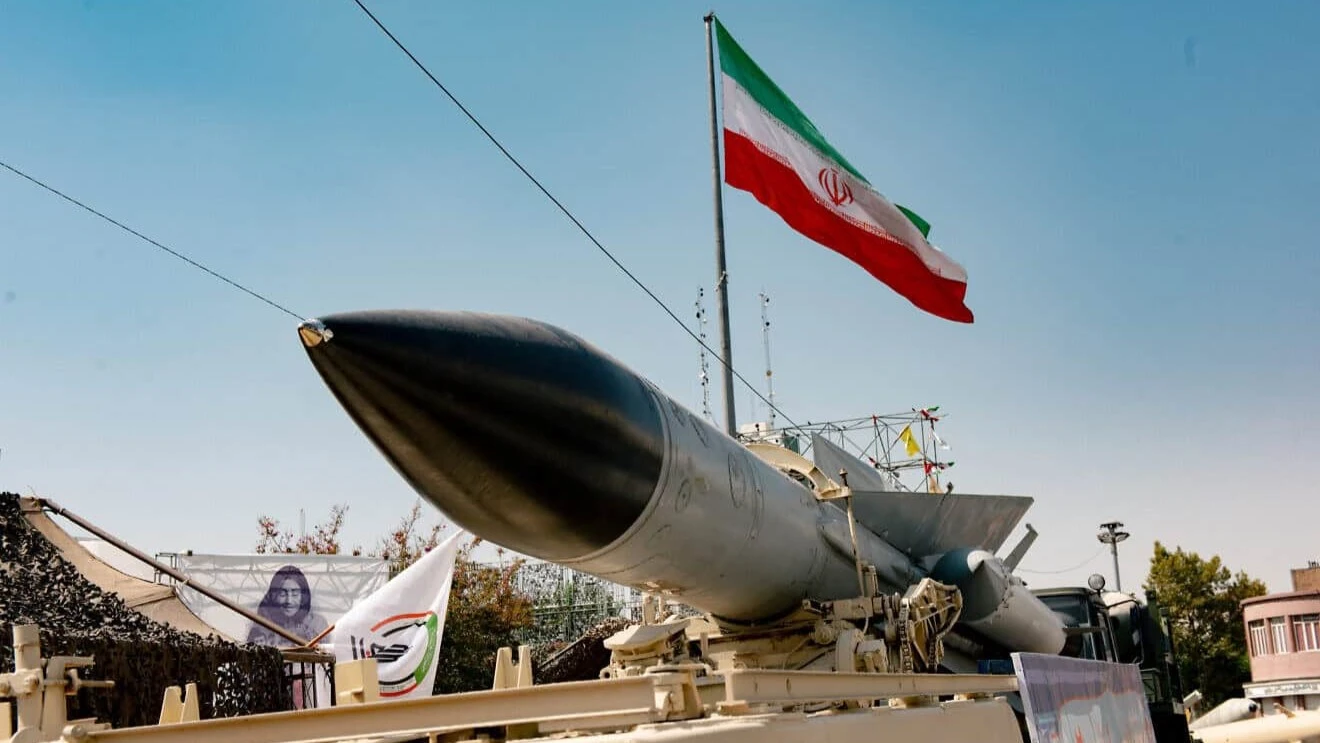
Iran

User avatar
blindpig
Posts: 15306
Joined: Fri Jul 14, 2017 5:44 pm
Location: Turtle Island
Contact:

Re: Iran

Post by blindpig » Tue Sep 23, 2025 2:04 pm

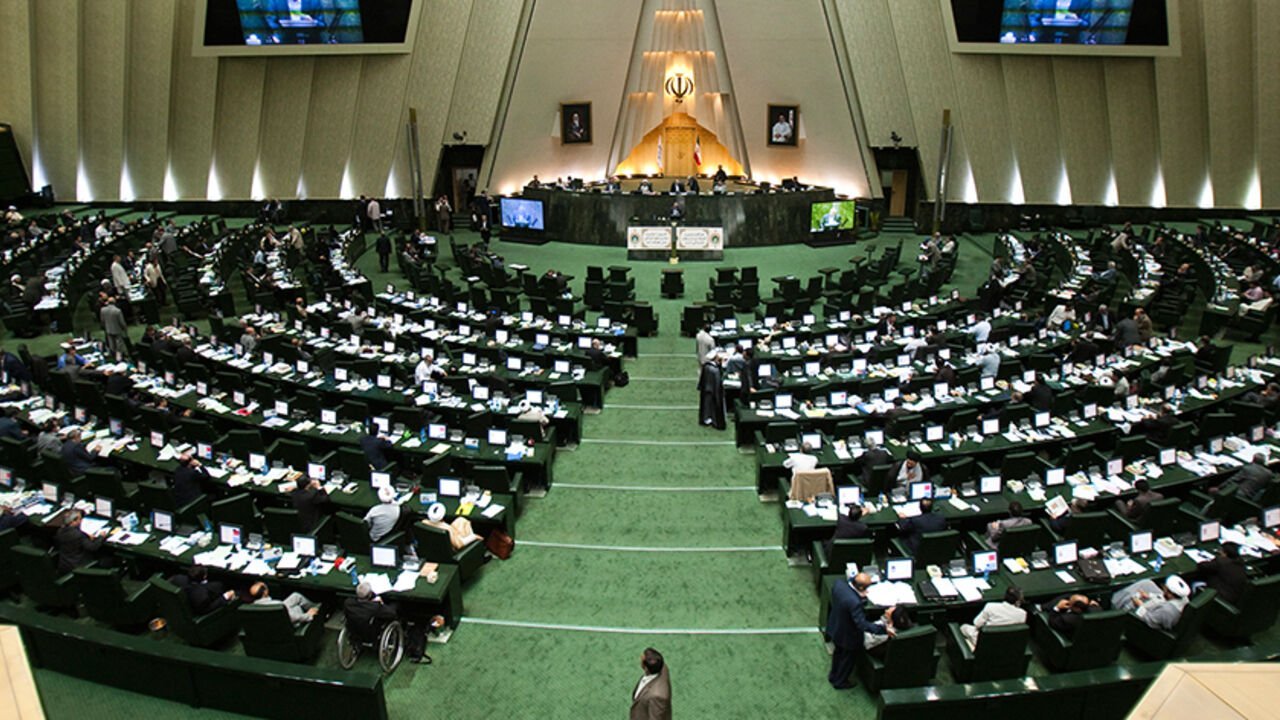
Iranian parliament pushes for 'nuclear option' as deterrence to western threat

Lawmakers have said the defense doctrine was shaped under conditions that no longer exist

News Desk

SEP 22, 2025

Image
(Photo credit: REUTERS/Raheb Homavandi)

Over 70 members of Iran’s parliament on 22 September called for a reassessment of the country’s defense doctrine, pressing authorities to consider nuclear weapons as a deterrent.

In a letter addressed to the Supreme National Security Council and the heads of the executive, legislative, and judicial branches, the lawmakers demanded that the issue be raised urgently.

“We respectfully request that, since the decisions of that council acquire validity with the endorsement of the Leader of the Revolution, this matter be raised without delay and the expert findings communicated to the parliament,” the statement read.

The MPs argued that while the development and use of nuclear arms contradicts the 2010 ‘fatwa’ of Iranian Supreme Leader Ali Khamenei banning them, circumstances have changed.

They wrote that “developing and maintaining such weapons as a deterrent is another matter,” stressing that “in Shia jurisprudence, a change in circumstances and conditions can alter the ruling.”

“Moreover, safeguarding Islam – which today is bound to the preservation of the Islamic Republic – is among the paramount obligations.”

The push was led by Hassan-Ali Akhlaghi Amiri, a representative from the holy city of Mashhad, according to Hamshahri Online.

Lawmakers noted that the nuclear doctrine was shaped at a time when the international community was still able to restrain Israeli aggression.

They pointed to the large-scale assault launched by Israel in June, backed by the US, which included direct strikes on three Iranian nuclear facilities, among them Fordow.

Iran has long stated its nuclear program is peaceful, rejecting western claims it seeks weapons capability. Tehran continues to cite Khamenei’s fatwa as proof of its intentions.

At the same time, the Supreme National Security Council announced the suspension of cooperation with the International Atomic Energy Agency (IAEA) after the UN Security Council imposed sanctions.

State media quoted the body as saying the move was a response to the “ill-considered steps of three European countries.”

Lawmakers warned that pressure tactics by the E3 countries will draw a “harsher and more decisive” response than before.

https://thecradle.co/articles/iranian-p ... ern-threat

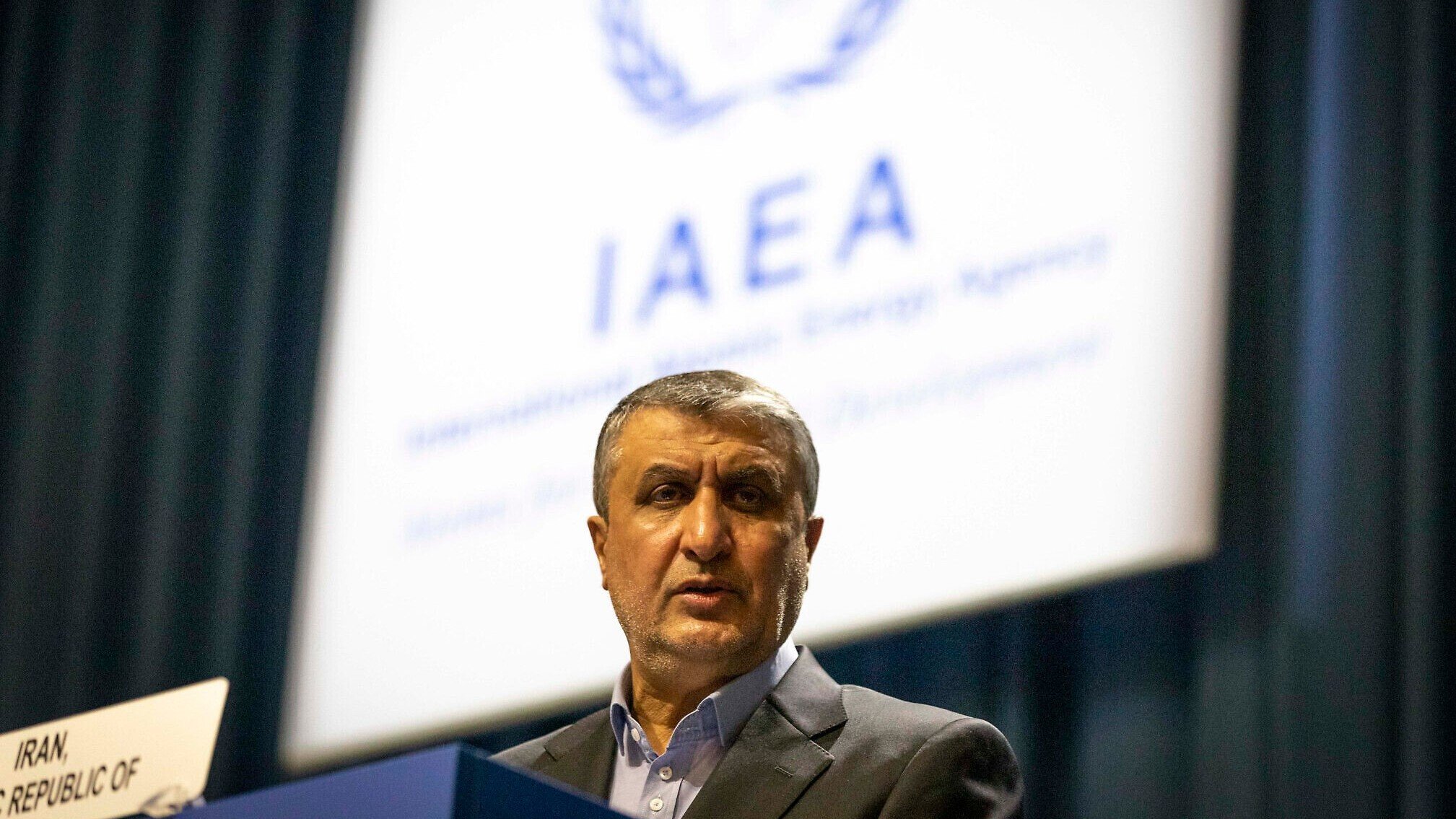
Iran nuclear chief in Moscow for talks on expanding atomic program

Iran is seeking help from Russia to build eight nuclear power plants by 2040

News Desk

SEP 22, 2025

Image
(Photo credit: Lisa Leutner/AP/ File)

The head of the Atomic Energy Organization of Iran (AEOI) announced plans for Tehran and Moscow to sign an agreement expanding bilateral cooperation on nuclear energy, Tasnim Agency reported on 22 September.

Speaking to reporters upon his arrival in Moscow on Monday, AEOI chief Mohammad Eslami said he will visit Russian nuclear facilities and hold meetings with scientific and research institutes.

Eslami, who is also Iran's vice president, traveled to Russia at the head of a delegation that will attend the World Atomic Week forum.

The event will commemorate the 80th anniversary of Russia's nuclear program, and will be attended by representatives of the countries developing nuclear programs, leading nuclear energy experts, and heads of large corporations.

With Russian help, Iran plans to develop eight nuclear power plants capable of generating 20,000 megawatts (MW) of electricity by 2040.

Iran currently suffers from regular electricity blackouts during the summer months amid ongoing US economic sanctions on the country.

Russia is currently constructing the second and third units of Iran's Bushehr nuclear power plant, which has a capacity of around 1,000 MW.

Eslami arrived in Moscow for talks just days after the 15-member UN Security Council rejected a draft resolution to lift sanctions on Tehran permanently. Russia and China supported the resolution, but it was blocked by Britain, France, and Germany, which seek to reimpose UN sanctions on Iran.

The European nations claim Tehran is seeking to develop a nuclear weapon. Iran says its nuclear program is peaceful and for the purpose of producing nuclear energy.

Friday's UN vote activates the so-called snapback mechanism, meaning that all UN sanctions in place before the now-defunct Joint Comprehensive Plan of Action (JCPOA) will be reinstated on 27 September if no major deal is reached beforehand.

“What Europeans are doing is politically biased and politically motivated … They are wrong on different levels by trying to misuse the mechanism embedded in the [JCPOA],” Iran's Deputy Foreign Minister Saeed Khatibzadeh said before the vote.

Earlier this month, the Islamic Republic reached an agreement with the IAEA to resume cooperation just weeks after Tehran ended its work with the nuclear watchdog in the aftermath of unprovoked Israeli-US attacks against key nuclear facilities in June.

“The document's validity depends on no hostile action being taken against the Islamic Republic. If the ‘snapback mechanism’ is activated, the document will also be nullified,” Iranian Foreign Minister Abbas Araghchi said after signing the deal.

https://thecradle.co/articles/iran-nucl ... ic-program
"There is great chaos under heaven; the situation is excellent."

User avatar
blindpig
Posts: 15306
Joined: Fri Jul 14, 2017 5:44 pm
Location: Turtle Island
Contact:

Re: Iran

Post by blindpig » Wed Sep 24, 2025 2:20 pm

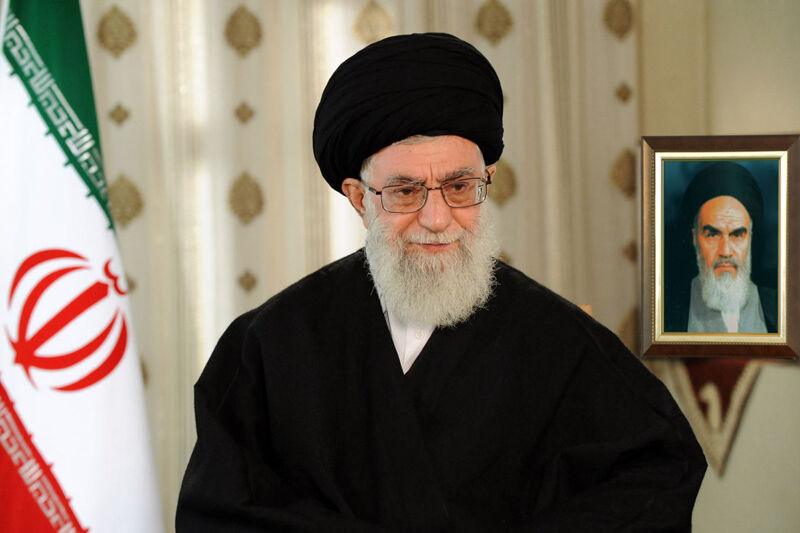
Iran should not negotiate with Trump
September 24, 3:05 PM

Image

Iran should not negotiate with Trump.

As I've stated before, negotiations with the United States are futile because the United States has already predetermined the outcome of the negotiations, which is that we must cease nuclear activities and uranium enrichment. These aren't negotiations; they're dictates and impositions.
Based on all this, I believe we shouldn't negotiate with the United States. Perhaps in 20 or 30 years, things will be different, but right now, it's futile. This only plays into Trump's hands" (c) Ayatollah Khamenei


A fresh thought. After the US and Israel attacked Iran, Tehran finally drew conclusions. When they try to kill the leader of a state and the main negotiators, perhaps something needs to be changed in the approaches to communicating with the US.

Ayatollah Khamenei also stated that Iran is not currently planning to create nuclear weapons and enrich uranium above 60%, but could do so if it wanted to.

We are not planning to create nuclear weapons, but I want to emphasize that we have hundreds of nuclear scientists and thousands of nuclear physics graduates who are willing and ready to take on any task (c) Ayatollah Khamenei

In general, they continue to create a situation of uncertainty, since it is unknown where the enriched uranium from Iranian nuclear facilities actually went.
The real state of the facilities in Fordow, Natanz and Isfahan is still unknown. The IAEA is not allowed anywhere near there, relations with it have been effectively reduced to a minimum. More Furthermore, in the coming week, the Iranian parliament is set to consider the issue of Iran's withdrawal from the Nuclear Non-Proliferation Treaty, something Iran has been raising concerns about for quite some time.

An Iranian parliament member also reported that, in addition to purchasing Su-35 fighter jets from Russia, Iran is also buying MiG-29 fighter jets.
Furthermore, Iran will continue to purchase new S-400 air defense systems from Russia (one has already been sold and deployed near Isfahan). Iran is also purchasing HQ-9 air defense systems from China (a Chinese clone of the S-300). Iran was also interested in purchasing J-10 fighter jets from China, which performed exceptionally well in combat with French Rafales during the brief war between India and Pakistan. In short, Iran understands the vulnerability of its air defenses and is making serious efforts to upgrade them quantitatively and qualitatively.

Meanwhile, the country continues to fight Israeli agents. Arrests of those involved are periodically made. The pre-war counterintelligence failure is being played out.

https://colonelcassad.livejournal.com/10089590.html

Google Translator
"There is great chaos under heaven; the situation is excellent."

User avatar
blindpig
Posts: 15306
Joined: Fri Jul 14, 2017 5:44 pm
Location: Turtle Island
Contact:

Re: Iran

Post by blindpig » Thu Sep 25, 2025 2:58 pm

To achieve peace, Iran needs True Promise IV

The time for strategic ambiguity is over. Tehran must act decisively to preempt another, more consequential war engineered by Tel Aviv and rubber-stamped by Washington.

Shivan Mahendrarajah

SEP 24, 2025
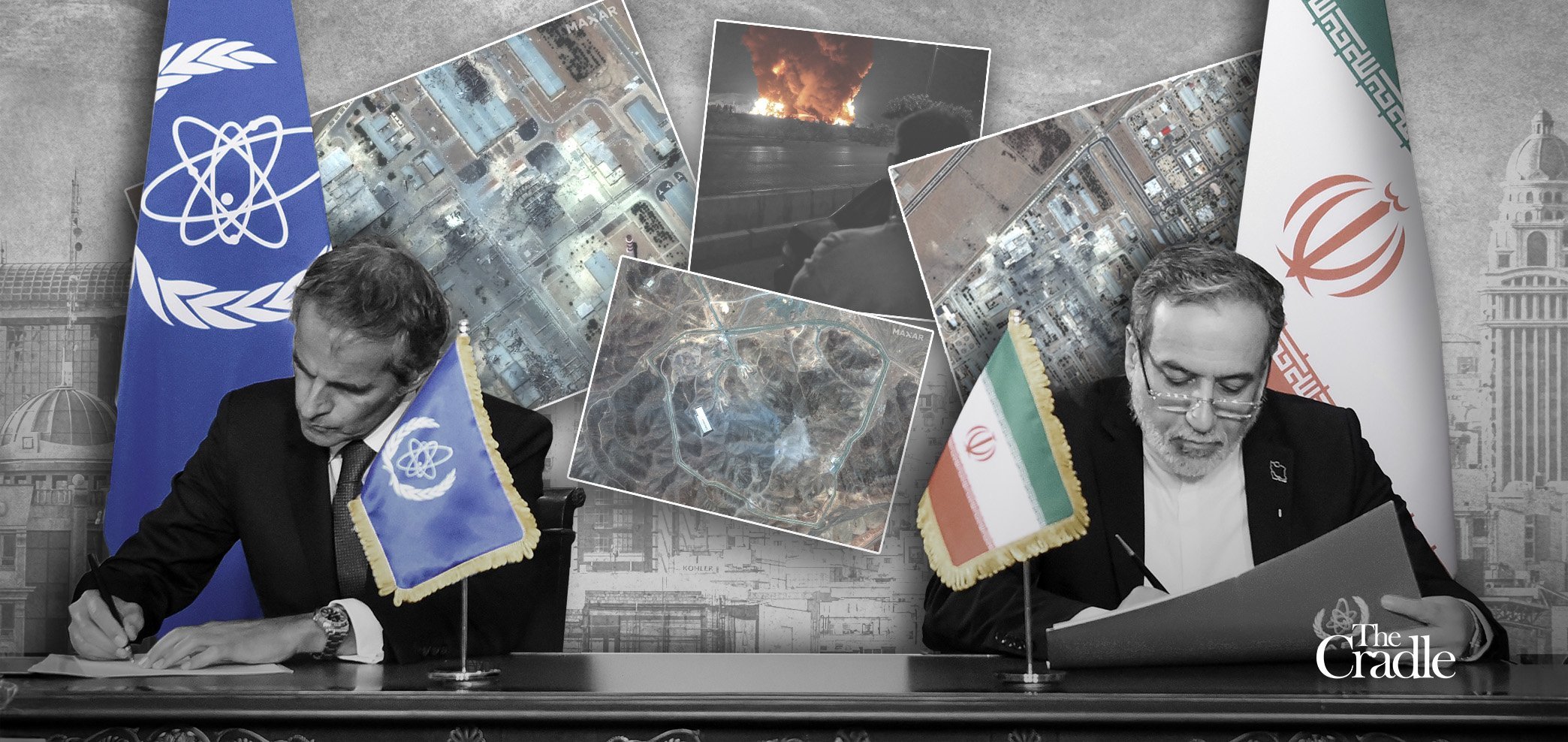
Image
Photo Credit: The Cradle

On 21 June at the height of the 12-day war between Israel and Iran, Steve Bannon – US President Donald Trump’s former White House strategist and a well-connected Washington insider – declared on his War Room show, “The party is on. Another big weekend in this unfolding aspect of WW3.”

A day later, Trump ordered airstrikes on the Islamic Republic of Iran. On 16 September, referring to Senator Marco Rubio’s trip to Israel, Bannon said, “My sources are impeccable, they’re still pushing regime change in Iran. Don’t think you [the anti-war Republican audience] are out of this one by a long shot.”

When Bannon, who has emerged “as one of the loudest critics of US support for Israel's military campaign,” sounds the alarm, Tehran should take notice.

The roadmap to war

The snapback of UN sanctions, initiated last month, which will see them reimposed on 27 September, essentially is a prelude to war. Tehran has already announced that it will suspend cooperation with the International Atomic Energy Agency (IAEA) in response – but this alone may not be enough.

As Iranian MP Ahmad Naderi rightly stated:

“Acquiring nuclear weapons is the only way to preserve Iran’s territorial integrity and national security. Withdrawing from the NPT [Nuclear Non-Proliferation Treaty], adopting a policy of ambiguity, and ultimately testing the atomic bomb is the only option that can spare Iran the fate of Iraq and Libya.”

Naderi’s sentiments are echoed by Iranians from every socio-economic stratum and political leaning. The views of many (or most) Iranians have matured since Israel’s sneak attack during negotiations with the US.

Iranians know that over the 10-year life of the Joint Comprehensive Plan of Action (JCPOA), they have received no benefits. They recognize that Israel and the US seek not just regime change, but the partition of Iran along ethno-linguistic lines.

The Iranian “man on the street” gets it, yet Iran’s decision-makers appear paralyzed. An Iranian military analyst wrote on 19 September, regarding withdrawal from the Nuclear Non-Proliferation Treaty (NPT), “The reality is the top leadership doesn’t want to go through with it … we know talks are useless but seems the leadership hasn’t realized that or is lying to itself about it.”

The reformist illusion of diplomacy

For a decade, Iran’s so-called Reformist diplomats have embarrassed the nation. Their negotiating strategy has delivered no concessions from the west, only humiliation.

While Iranians pride themselves on diplomatic cunning, the sixth-century Strategikon – attributed to Emperor Maurice of Byzantium – described the Persians as “intractable in negotiations,” noting they would not initiate proposals even when those proposals served their own interest – the JCPOA process has been a study in failure.

On 17 September, Saeed Jalili, a former nuclear negotiator and member of the Supreme National Security Council (SNSC), wrote on X about how, during the Qajar era, Britain and Iran penned a treaty in which Iran’s obligations were “very precise and scheduled,” while British promises remained vague. “The same pattern,” he warned, “is repeated again in JCPOA.”

Ali Larijani, a former speaker of Iran’s parliament, currently the secretary for the SNSC, stated on X on 21 June, “When the war ends, we will settle the score with [IAEA Director Rafael] Grossi.”

By 9 September, Abbas Araghchi, Iran’s foreign minister and former nuclear negotiator, was in Cairo offering illegal concessions to Grossi. Far from appeasing the E3 states, this groveling only hardened their position. French President Emmanuel Macron even declared on Israeli television that the snapback was “a done deal.”

Even Iran’s attempt to introduce a resolution at the IAEA barring strikes on nuclear facilities was withdrawn to show “goodwill.” The west responded with snapback sanctions. After the vote, Iran’s UN envoy Amir-Saeed Iravani appeared visibly shaken and announced, “the door for diplomacy is not closed …”

This pattern of diplomatic capitulation has run its course. Over the past decade, every Iranian concession has been met not with compromise but with increased pressure. What Reformists call engagement now functions as an invitation to escalation.

Strategic unpredictability begins with IAEA exit

Western diplomats are betting that Iran will not leave the NPT. Their bet is well placed – so far. Iran’s foreign policy is predictable, bloated with bombastic warnings and empty ultimatums.

To reverse this failed approach of strategic ambiguity, Tehran must embrace strategic unpredictability. As the Chinese master strategist Sun Tzu taught, “divinely mysterious ... he is inaudible. Thus he is the master of his enemy’s fate.” Reflexive control, not reactive diplomacy, must define this moment.

The exit process begins with a written notification to the UN Security Council, triggering a 90-day waiting period. When North Korea began this process in 1993, negotiations briefly interrupted the withdrawal – but in 2003, Pyongyang followed through. Iran must do the same.

No more talks. No more “diplomatic initiatives.” Israeli Prime Minister Benjamin Netanyahu has hijacked US policy, replacing Steve Witkoff with Marco Rubio. Washington must be told, “call the Islamic Revolutionary Guard Corps (IRGC). They hold the file now.”

Snapback must be met with blowback

The E3 states triggered snapback sanctions because they expect no consequences. They violated JCPOA terms, enforced US secondary sanctions, and cheered Israeli aggression – all without penalty. German Chancellor Friedrich Merz even gloated that Tel Aviv is doing “the dirty work for us.”

Iran must change the rules of the game. Disrupting European energy flows is the logical next step. In 2023, Germany imported 1.5 million barrels per day (bpd) of oil from West Asia, France imported 900,000, and the UK imported another 900,000. These fragile economies, already strained by sanctions on Russia, cannot absorb further shocks.

Their leaders are deeply unpopular. Merz enjoys 25 percent approval; Macron only 17; and Keir Starmer’s net rating is –44. Tipping these states into recession may be the surest path to regime change – this time in Europe.

Iran's IRGC understands pressure. The late, martyred Quds Force general, Qassem Soleimani, also understood this. The 2019 strikes on oil tankers and ARAMCO, claimed by Yemen’s Ansarallah-allied armed forces, but attributed to the IRGC, laid the groundwork. Escalating now – before war fully ignites – prepares the terrain for a fourth installment of Operation True Promise. As global markets reel from energy shocks, the pressure on the US and UN to rein in Israel will mount.

Preparing for True Promise IV

“Do not make light of any enemy, no matter how unworthy he may be.”

– Shahnameh, by Ferdowsi


War is inevitable. Israel wants war with Iran; Israel will get war with Iran.

The “top leadership” fails or refuses to accept that US/E3 policies are determined in Tel Aviv. War was always the objective. After 9/11, then-Israeli prime minister Ariel Sharon initiated the Iraq War. Iran was supposed to be next.

Iran’s nuclear program is merely an excuse to sanction and weaken the Islamic Republic before war. Netanyahu insists on unreasonable demands – zero enrichment, dismantling of Iran’s nuclear program, missiles – because he knows these demands will be rejected. War is Israel’s path to destroying and partitioning Iran, leaving no regional power to oppose its “Greater Israel” ambitions.

Only Netanyahu's latest war misfired. The Israeli military led the charge, relegating NATO allies to logistical roles. As Bannon admitted, “[the] ceasefire was as much to save Israel ... They bit off way more than they could chew.”

Next time, Tel Aviv will push Washington to lead. Trump’s public “anti-war” stance is meaningless. He is compromised – by the Epstein files and by his own court of Zionist advisors. Charlie Kirk’s assassination sent a chilling message to dissenters.

The US military apparatus is no safeguard. It is riddled with loyalists, not strategists. Intelligence is bypassed; policy is written in Tel Aviv and whispered into Trump’s ear by Mossad operatives embedded in his inner circle.

Tulsi Gabbard (DNI) has proven malleable; “Whiskey Pete” Hegseth is an Evangelical, Islamophobe, and incompetent; and Rubio is solidly behind Netanyahu.

Channels of communication to POTUS on national security matters are bypassed by Israel. CIA Director John Ratcliffe is the “‘Mossad stenographer’ on Iran”; White House Chief of Staff Susie Wiles, who worked for Netanyahu, is isolating Trump to feed him talking points and manipulate him into bombing Iran.

The journalist who broke this asks, “What’s going on here? That’s what we’re unmasking. The biggest foreign influence infiltration operation in American history that is basically taking control of an administration.”

Peace through superior firepower

Iran’s leadership now faces a defining choice. Netanyahu does not fear a nuclear strike as he knows Tehran will not launch first. What he does fear is Mutually Assured Destruction (MAD). That is why Tel Aviv demands zero enrichment and the dismantling of Iran’s missile program.

Without a nuclear arsenal, Iran faces existential risk. If Tel Aviv strikes first – as it almost certainly will – Iran will be forced onto the defensive. Surprise, as Carl von Clausewitz reminds us, “multiplies the effect of the force employed.”

Contrary to the fanciful hopes of Reformists, there will be no sanctions relief through diplomacy. Tel Aviv will sabotage every deal. The only path to permanent relief is victory. Iran’s armed forces have already forced Netanyahu to beg for a ceasefire. The next phase must end with him begging for a treaty.

https://thecradle.co/articles/exit-or-b ... e-iaea-now

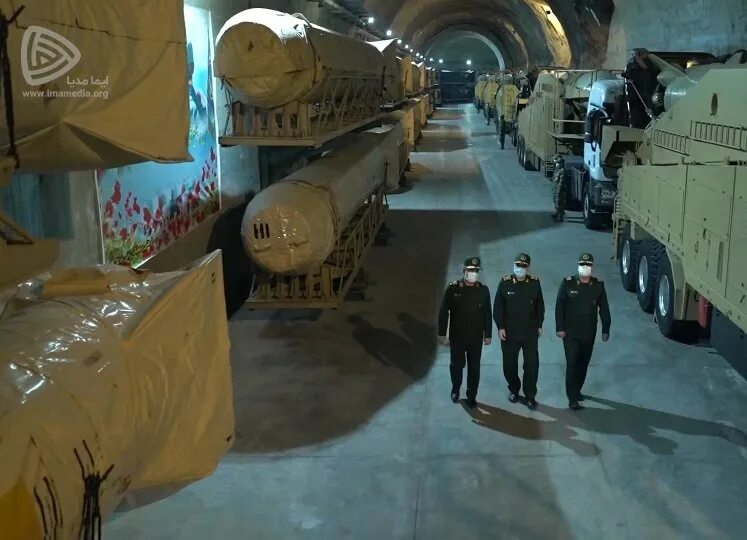
Iran rebuilding missile-production sites struck by Israel: Report

The reconstruction efforts are allegedly hindered by missing equipment essential for missile production

News Desk

SEP 24, 2025
Image
(Photo credit: AP)

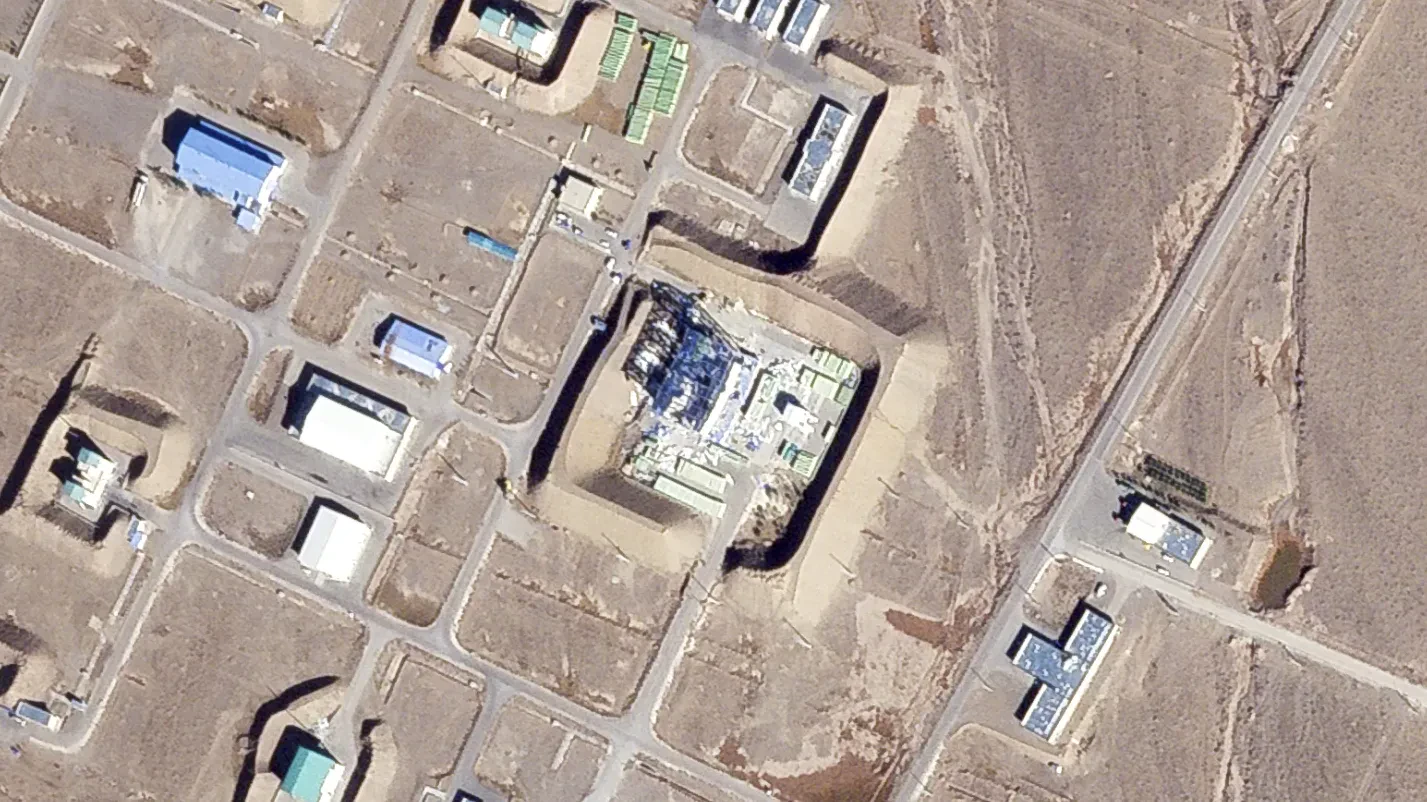
Iran has begun reconstructing missile-production facilities damaged during its 12-day war with Israel in June, though analysts caution that the planetary mixers – key components for the production of solid fuel – remain absent, AP reported on 24 September.

New satellite imagery reviewed by AP shows work underway at both Parchin and Shahroud. Sam Lair, a research associate at the James Martin Center for Nonproliferation Studies, said mixing halls at Parchin appear to be under repair, with parallel efforts at Shahroud.

“If they’re able to reacquire some key things like planetary mixers, then that infrastructure is still there and ready to get rolling again,” he noted.

Planetary mixers, designed with blades revolving around a central hub like orbiting planets, are essential for evenly blending propellant.

Experts believe Israeli strikes in June deliberately hit the buildings housing the mixers, along with facilities that could manufacture them, in an effort to cripple Iran’s missile production.

Tehran has offered no public comment on its reconstruction drive.

Iran’s mission to the UN declined to answer questions, while Defense Minister Aziz Nasirzadeh stated, “We are now focused on producing military equipment with higher precision and greater operational capabilities.”


The pace of rebuilding highlights the weight the Islamic Republic places on its missile arsenal – Iran’s main military deterrence in the absence of nuclear weapons.

Unlike its bombed nuclear sites, which remain inactive, Parchin and Shahroud are being actively restored.

Carl Parkin, a summer fellow at the James Martin Center, said Iran had been on track to produce over 200 solid-fuel missiles monthly before the war, a capability that drew Israeli attention.

According to the Washington-based Jewish Institute for National Security of America, Iran launched 574 ballistic missiles during the June war.

Another 330 were fired in two earlier exchanges, meaning more than a third of its estimated 2,500-strong arsenal was expended.

Analysts describe the absence of mixers as a critical limitation, with Parkin saying Israel’s strikes suggest it judged mixing to be Iran’s main production bottleneck, making them a high-priority, high-impact target.

“If Iran is able to overcome their mixing limitations, they’ll have all the casting capacity that they need to start producing at high volumes again,” he explained.

https://thecradle.co/articles/iran-rebu ... ael-report

*****

How MI6 Fabricated Iran Nuke Fraud
Posted by Internationalist 360° on September 24, 2025
Kit Klarenberg
Image
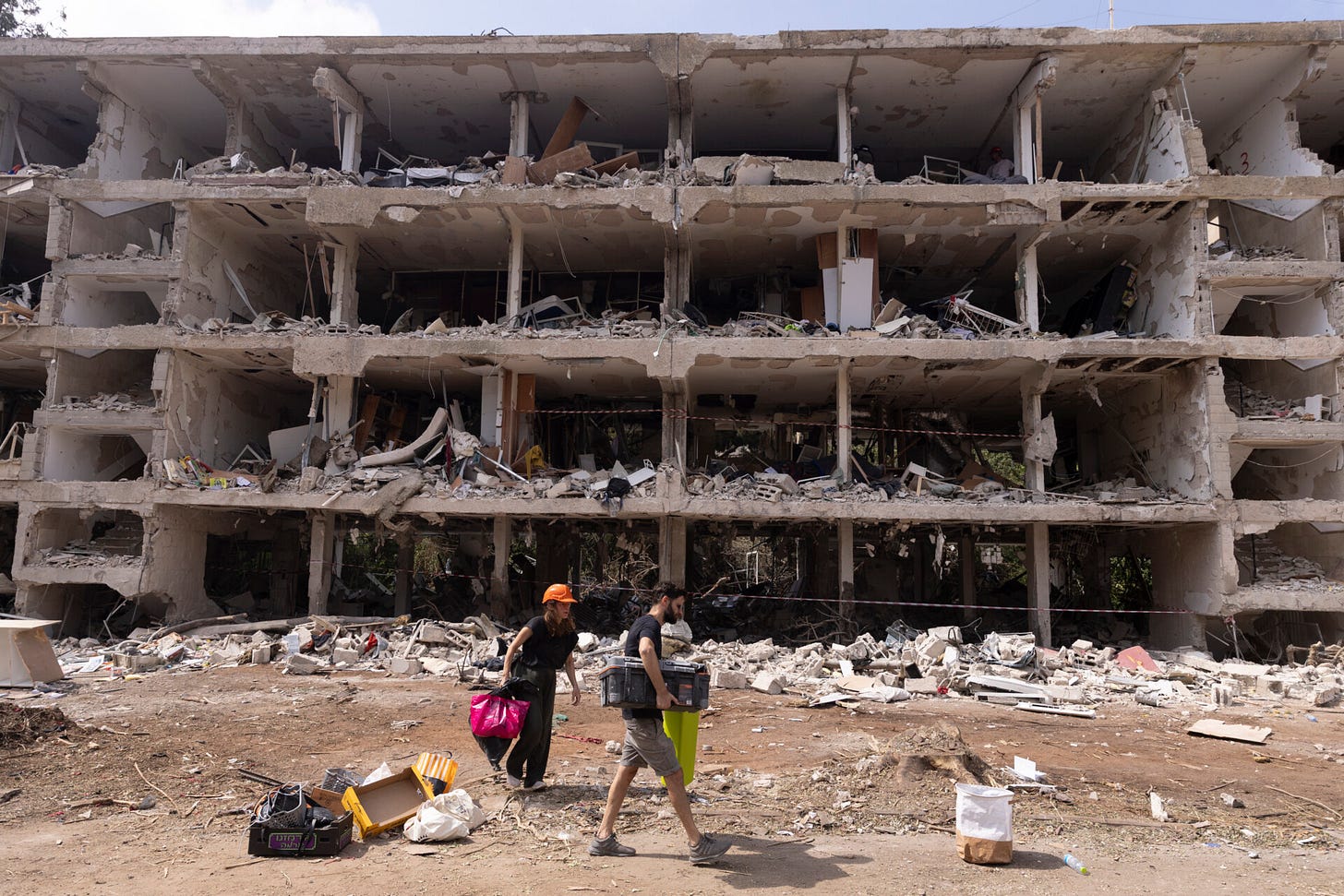
The aftermath of an Iranian ballistic missile strike on Tel Aviv, June 2025

On September 19th, the UN Security Council voted to reimpose savage economic restrictions on Iran over its nuclear program. European leaders have in recent months repeatedly accused Tehran of refusing to abide by the 2015 Joint Comprehensive Plan of Action’s terms. A core, repeated claim is the Islamic Republic has collated a uranium stock over 40 times the level permitted under that deal. No supporting evidence for the charge has been provided, and the source of this information isn’t clear.

It may nonetheless be highly significant London has taken the lead in calling for the restoration of sanctions, independently imposed punitive measures on Iranian individuals and commercial entities, and employed relentlessly bellicose rhetoric about the Islamic Republic’s purported breaches of its JCPOA commitments. In August, then-Foreign Secretary David Lammy declared Tehran had “consistently failed to provide credible assurances on the nature of its nuclear programme.” In the wake of the UNSC vote, British ambassador Barbara Woodward proclaimed, “we urge [Iran] to act now.”

As this journalist has previously exposed, the JCPOA resulted from a long-running MI6 black propaganda campaign to falsely frame the Islamic Republic as possessing nuclear weapon ambitions, if not nukes outright. Under the Agreement’s terms, Tehran received sanctions relief in return for granting the International Atomic Energy Agency virtually unhindered access to its secret nuclear complexes. Despite the IAEA consistently certifying Iran’s compliance, the Trump administration shredded the Agreement in May 2018, and launched a “maximum pressure” campaign to cripple the country.

Information gathered by the IAEA under the Agreement appears to have assisted Israel’s criminal 12 Day War in June, raising the obvious question of whether the Agreement was always intended as an espionage operation, in preparation for future conflict with Tehran. This interpretation is amply reinforced by leaked documents, indicating the IAEA provided Zionist entity intelligence with names of Iranian nuclear scientists who were subsequently assassinated. Meanwhile, the papers show Agency chief Rafael Grossi enjoys an intimate, covert relationship with officials in Tel Aviv.

These disclosures understandably motivated Iranian lawmakers and President Masoud Pezeshkian to halt any and all cooperation with the Agency. The sanctions eased by the JCPOA being the product of an MI6 black propaganda effort, to falsely convince the West and its overseas proxies and puppets Tehran posed a global nuclear weapon threat, provides the Republic with even more urgent justification for ignoring the Agreement’s terms. Iran’s grounds for rejecting any accommodation with the same countries now seeking to sanction her are inarguable.

‘Supportive Relations’

At the centre of MI6’s black propaganda war on Iran was longtime British intelligence officer Nicholas Langman, a veteran dark arts specialist who has been repeatedly publicly exposed perpetrating the dirtiest imaginable deeds for London’s foreign spying agency the world over. He was for example intimately implicated in Britain’s contribution to the CIA’s global post-9/11 torture program. However, rather than being penalised or defenestrated for his actions and unmasking, he appears to have been richly rewarded, and consistently failed upwards.

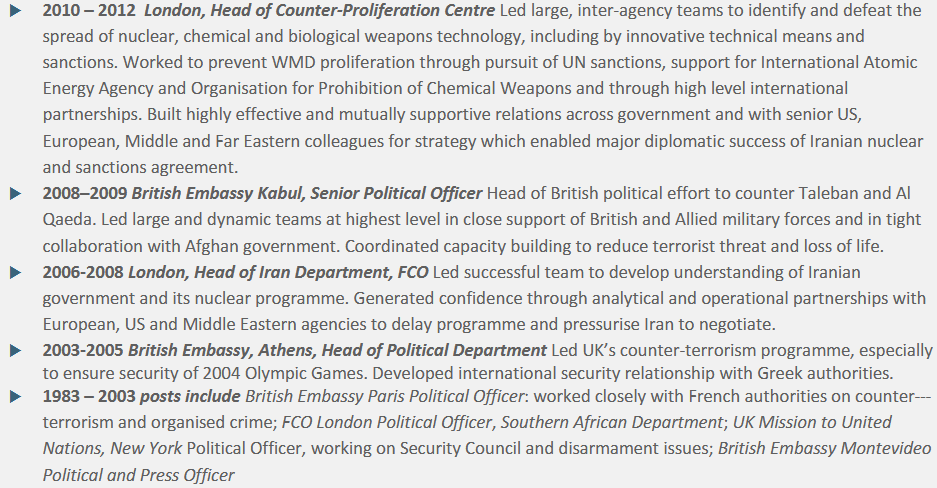
A leaked CV shows 2006 – 2008, Langman led MI6’s Iran Department. Here, he oversaw a team seeking to “develop understanding” of Iran’s “nuclear program”. Then, 2010 – 2012, he led an “inter-agency” effort to infiltrate the IAEA, while “[building] highly effective and mutually supportive relations across government and with senior US, European, Middle and Far Eastern colleagues for strategy which enabled major diplomatic success [sic] of Iranian nuclear and sanctions agreement.”
Image
Nicholas Langman’s leaked CV

It was during the latter period that public and governmental attitudes across the West – and in vassal states – towards the Islamic Republic became highly belligerent, and negative. One by one, governments and international bodies – including the EU and UN – imposed ravaging sanctions against Tehran, devastating its economy, influence, and standing. MI6 journeyman Langman triumphed in his mission to foment concerted global hostility against Iran, based on the bogus spectre of the country posing a nuclear threat.

The question of whether British ‘intelligence’ on Iran’s nuclear program was the product of torture is an open and obvious one. Langman moved straight to leading MI6’s Iran Department from running the agency’s station in Athens, Greece. There, in late 2005, he was exposed by local media as having overseen an operation to abduct and ferociously mistreat 28 Pakistani guestworkers, wrongfully suspected of having had contact with individuals accused of perpetrating the 7/7 bombings in London in July that year.

That Langman wasn’t reprimanded over the incident strongly suggests he enjoyed a high level of protection, and London approved of his vicious intelligence-gathering methods – known to invariably produce false testimony from detainees. MI6 was not only an enthusiastic collaborator in the CIA’s global extraordinary rendition program, but led its own operations. Markedly, in at least one case, the British sought to sideline the CIA and ensure exclusive access to “intelligence” from a detainee in which Langley also had an interest.

The Obama administration was during its first year in office formally committed to non-interference in the Islamic Republic’s affairs, to the extent State Department apparatchik Jared Cohen was almost fired for publicly demanding Twitter halt planned maintenance during June 2009 protests in Iran, to ensure demonstrators could continue posting. It’s therefore unknown whether Washington was in on MI6’s Iran nuke con. If not, it wouldn’t be the first time British intelligence has misled the international community, with catastrophic results.

‘Possible Manipulation’

In July 2004, the Senate Intelligence Committee issued a scathing report on “the US intelligence community’s prewar intelligence assessments on Iraq.” It reserved particular disdain for how the CIA et al had “[relied] too heavily on foreign government services and third party reporting, thereby increasing the potential for manipulation of U.S. policy by foreign interests [emphasis added].” This was a reference to MI6’s central role in gathering – or concocting – intelligence on Baghdad’s purported WMD capabilities:

“Due to the lack of unilateral sources on Iraq’s links to terrorist groups like al-Qaida [redacted], the [US] Intelligence Community (IC) relied too heavily on foreign government service reporting and sources to whom it did not have direct access to determine the relationship between Iraq and [redacted] terrorist groups…The IC left itself open to possible manipulation by foreign governments and other parties interested in influencing US policy.”

As far back as the late 1990s, Britain’s foreign spying agency took the lead on sourcing dud ‘intelligence’ to manufacture consent for the against Baghdad. Under the auspices of a psychological warfare effort dubbed Operation Mass Appeal, MI6 black propaganda specialists circulated false information to foreign editors and reporters on its payroll “to help shape public opinion about Iraq and the threat posed by WMD,” which was then recycled by Western leaders and news outlets to reinforce its credibility.

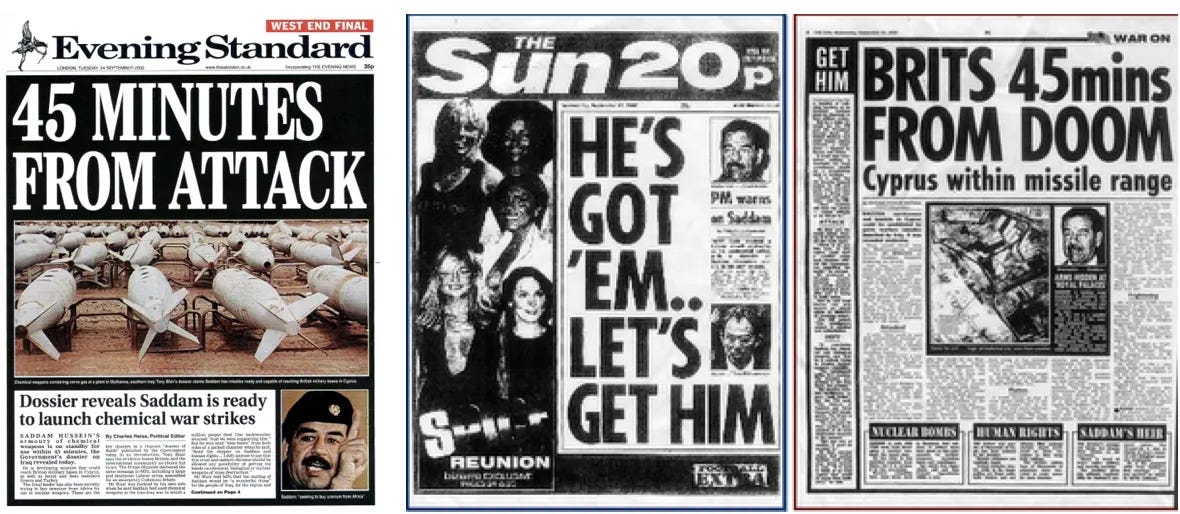
In September 2002, then-MI6 chief Richard Dearlove personally approached British Prime Minister Tony Blair, claiming his agency had cultivated a source inside Iraq with “phenomenal access”, who could provide the “key to unlock” Iraq’s purported WMD program. Their assorted claims subsequently formed the basis of a dossier, which made a number of wild charges about Baghdad’s chemical and biological weapon capabilities. A prominently reported allegation was that Iraq could deploy WMD against Western countries within just 45 minutes. Its source was an Iraqi taxi driver.
Image

This claim was repeated in a radio address by George W. Bush that month. In January the next year, as the invasion of Iraq rapidly loomed, the President declared in his State of the Union address, “the British government has learned that Saddam Hussein recently sought significant quantities of uranium from Africa.” That December, then-CIA chief George Tenet admitted this assertion was completely fallacious, and “these 16 words should never have been included in the text written for the President.”

The Zionist entity justified its unprovoked assault against Iran in June in large part on an intelligence dossier, which concluded the Islamic Republic had reached the “point of no return” in acquiring nukes. Its findings relied heavily on a May IAEA report that provided zero fresh information, but concluded Tehran supposedly maintained “undeclared nuclear material” until the early 2000s. While intended to trigger regime change, Tel Aviv’s broadside ended promptly in embarrassing failure, despite extensive foreign support, including US airstrikes.

Undeterred by the fiasco, Benjamin Netanyahu remains determined to crush the “Iranian axis”, while Trump has declared he would bomb Tehran “without a question” in response to indications the Islamic Republic has enriched uranium beyond agreed levels. We could be on the precipice of another war. As with the Iraq invasion, the perilous trail that brought us to this grave point could lead back to London. Yet again, MI6 may have taken the lead in concocting ‘intelligence’, justifying further US-Israeli aggression against the Islamic Republic.

https://libya360.wordpress.com/2025/09/ ... uke-fraud/

******

Iran Publishes Classified Files on Israel’s Nuclear Program, Citing U.S. Involvement
Image
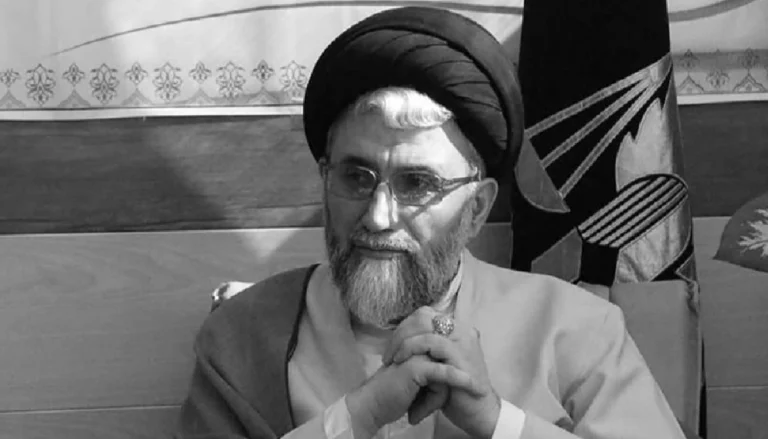
(FILE) Esmail Khatib, Iran’s Minister of Intelligence. Photo: National Council of Resistance of Iran.

September 25, 2025 Hour: 5:08 am

The Iranian government made public a series of classified documents related to Israel’s nuclear program, exposing strategic infrastructure, links with the United States, and projects connected to territorial occupation.

According to Iran’s Minister of Intelligence, Esmail Khatib, the information was gathered through the collaboration of individuals within Tel Aviv’s nuclear and security agencies, who allegedly transferred the files to Tehran over the course of several months as part of a secret operation.

“The volume of documents and the need to ensure their safe transfer required keeping the matter under strict confidentiality,” Khatib said.

The files reveal the active participation of the United States in Israel’s nuclear development, including the presence of American scientists, joint projects, and programs aimed at modernizing nuclear weaponry. Multilateral initiatives with European countries were also identified. In addition, the documents contain information about individuals involved in these projects.


According to Tehran, the disclosure of these materials represents a strategic defeat for the Zionist entity, which allegedly sought to conceal Iran’s penetration of its sensitive facilities. Access to detailed blueprints and internal systems highlights significant flaws in Israel’s security structure.

Khatib attributed this vulnerability to working conditions perceived as unfair by some Israeli employees, who allegedly collaborated with Iran in exchange for financial compensation.

https://www.telesurenglish.net/iran-pub ... volvement/

*****

Iran calls restrictions on its diplomats attending UNGA session in New York a new low of US animosity

The US has prevented Iranian diplomats from going anywhere beyond the perimeters of UN headquarters and buying anything from the wholesale club stores in New York city, calling the measure a part of its unilateral sanctions regime.

September 25, 2025 by Abdul Rahman
Image
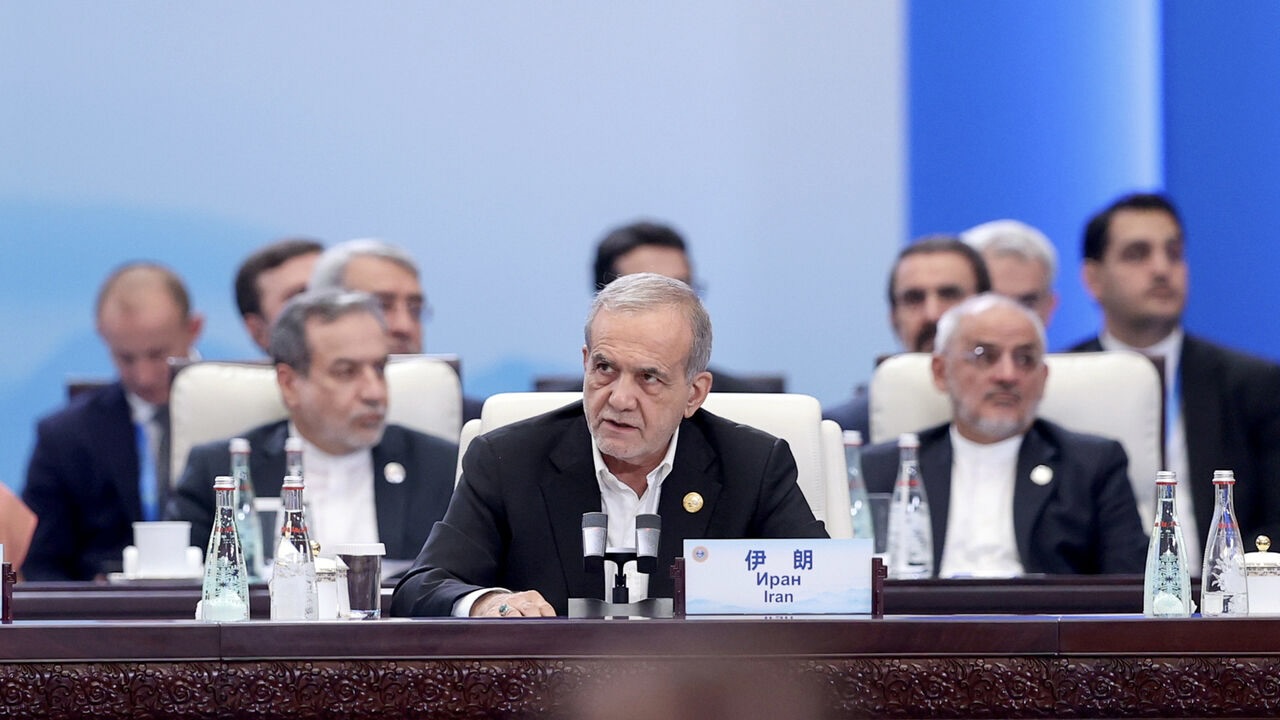
Iranian President Masoud Pezeshkian speaking at the SCO Summit. Photo: IRNA

On Wednesday, September 24, Iran accused the US of trying to sabotage its diplomatic mission attending the 80th annual session of the UN General Assembly in New York. It also called the restrictions imposed on the movement of its diplomats in the city “a new low in terms of showcasing the extent of animosity of US administration.”

“The US systematic harassment of Iranian diplomats has obstructed the Iranian delegates from attending several multilateral events that were held outside the so-called ‘permitted perimeters’ during this week only,” spokesperson of the Iranian Ministry of Foreign Affairs Esmaeil Baghaei said in a post on X.

The US Department of State had announced the restrictions on Iranian diplomats attending the UNGA session, claiming in a statement on Monday that it was part of its larger sanctions regime, the so-called “maximum pressure” campaign against the Iranian government.

The US has a long history of hostility toward the Iranian government. Throughout the history of the Islamic revolution, since 1979, the country has been under one or another kind of US sanctions.

Following his unilateral withdrawal from the multiparty nuclear deal in 2018, President Donald Trump had launched a new set of unilateral punitive measures against Iran, calling it a “maximum pressure campaign” apparently to force Iran to abandon its civilian nuclear program and missile defense program.

The US has prevented Iranian diplomats from moving anywhere outside the UN headquarters’ district and areas necessary for transit, claiming the measure is an attempt to prevent Iranians from using the “UNGA as an excuse to travel freely in New York to promote its terrorist agenda.”

The restrictions on Iranian diplomats at the UNGA included, among other things, them buying anything from the wholesale club stores and luxury goods in the city.

“We will not allow the Iranian regime to allow its clerical elites to have a shopping spree in New York while the Iranian people endure poverty, crumbling infrastructure, and dire shortages of water and electricity,” the statement from the state department reads.

A violation of Headquarters Agreement
Diplomats from over 150 countries are in New York this week to attend the 80th session of the UN General Assembly. Iran is the only full member country of the UN facing such restrictions from the US.

Iran accused that “applying such cheap restrictions on our diplomats’ movement” is a blatant violation of US obligations under the Headquarters Agreement.

Article 11 and 12 of the UN Headquarters Agreement, signed in 1947, says that irrespective of the state of the relationship between the US and a particular member state, the US government will not impose “any impediments to transit to and from the headquarters district” to diplomats and others invited by the UN.

The US has also denied visas to the Palestinian delegation and civil society groups, preventing them from attending the session despite it holding the status of an observer.

Acknowledging the significance of the UNGA session for Iran, President Masoud Pezeshkian claimed that it provides “an exceptional and unique opportunity to present the positions and views” of his country.

Noting the multilateral mandate of the UN, Pezeshkian however, accused certain world powers of pursuing unilateralist policies. He claimed that powerful countries across the world are using their influence and resources to oppress and destroy others, defeating the purpose of the UN.

“In the view of those countries, convergence means achieving their goals at the expense of everyone else’s lives. True convergence, however, means that all people, regardless of ethnicity, race, or beliefs, have the right to life and must respect the rights of others,” Pezeshkian said

https://peoplesdispatch.org/2025/09/25/ ... animosity/
"There is great chaos under heaven; the situation is excellent."

User avatar
blindpig
Posts: 15306
Joined: Fri Jul 14, 2017 5:44 pm
Location: Turtle Island
Contact:

Re: Iran

Post by blindpig » Sun Sep 28, 2025 2:33 pm

Image

‘No doubt they will attack’: Max Blumenthal meets Iran’s President in NYC
Max Blumenthal·September 27, 2025

In a meeting with US antiwar figures, Iranian Pres. Masoud Pezeshkian forecasted a more intense round of conflict with Israel and the US, and slammed Washington’s intransigence.

Iranian President Masoud Pezeshkian arrived late to a September 24, 2025 meeting with American antiwar figures on the sidelines of the UN General Assembly. He had come from a fateful tete-a-tete with Emmanuel Macron, where he attempted to cajole his French counterpart into delaying expiration of the JCPOA nuclear deal rather than instituting snapback sanctions. Pezeshkian’s lobbying was fruitless; the Europeans had already decided to ratchet up the economic war on Tehran. Meanwhile, Israel was preparing for another attack on Iran with American support practically guaranteed.

“No doubt they will attack Iran. And we will defend ourselves vigorously,” Pezeshkian declared to his audience of about 25 antiwar journalists, activists and think tank analysts gathered inside a conference hall in a Midtown Manhattan hotel. A camouflaged bomb squad stood watch outside the room, while grim-looking federal agents paced the halls.

The session consisted of two rounds of questioning and comments from participants, with two rounds of responses from Pezeshkian. The format lent itself to generalized answers, with some of the more pointed questions seemingly lost in translation.

I opened the first round by referencing a speech delivered a day before by Iran’s Supreme Leader, Ayatollah Ali Khamenei, in which he branded negotiations with the US as something “no honorable nation would ever do, and no wise statesman would ever endorse.”

“Accepting negotiations under such threats would mean that the Islamic Republic of Iran is susceptible to intimidation. If we were to negotiate under such threats, it would mean that we tremble and surrender whenever threatened,” Khamenei proclaimed.

I asked Pezeshkian if these statements were reflective of his administration’s view, and if he believed that Trump had exploited the last round of nuclear negotiations to lure Iran’s leadership into a false sense of security that made it vulnerable to Israel’s unprovoked attack.

Following a battery of questions from other participants, the Iranian president blasted Trump’s diplomatic tactics: “This was not negotiation, it was dictation,” he said.

“Someone should have recorded what [Trump’s Middle East envoy] Steve Witkoff said,” Pezeshkian continued. “He says one thing to us and all of the sudden he returns to Washington and says something else. How can we negotiate with someone like that?”

Pezeshkian referenced a book which he believed articulated the fundamentally destructive nature of US foreign policy. Called “Making Endless War,” the volume is a compilation of essays analyzing the Vietnam war and Arab-Israeli conflicts which argue that wars for resources and geopolitical control have become a permanent component of post-war American diplomacy.

Seated beside Pezeshkian was his Foreign Minister, Abbas Aragchi. Visibly tired from days of wrangling on snapback sanctions, Aragchi recalled how Israel detonated an explosive inside the Natanz Nuclear Facility in 2018, destroying some 4000 centrifuges. While Iran increased its enrichment levels in retaliation, he emphasized that it continued the negotiations which Israel had sought to sabotage.

Even today, Aragchi said, “We are willing to be flexible if we can get appropriate action in return.”

Yet the Foreign Minister and his team would leave New York without any concessions from the Europeans. Snapback sanctions were “a done deal,” according to Macron.

For Iran’s leadership, the West’s intransigence had given Israel the green light for another attack. But Pezeshkian noted that Iranian society was stronger following the 12-day war last June. “The last attack brought unity,” he insisted. “Iranians opposed regime change even if they disagreed with the revolution. Even people who criticize us, those people supported our military.”

Pointing to Israel’s brazen assault inside Qatar this September, where it tried and failed to assassinate the entire Hamas negotiating team, Pezeshkian predicted, “Cohesion will increase across the region because our neighbors recognize that nobody is safe now.”

During Israel’s assault on Iran, the president narrowly escaped an attempt on his life. “There are plans that if they take me out” when Israel attacks again, “we have prepared five to six steps down the line.

Vowing that Islamic Republic was ready for all contingencies, Pezeshkian sounded a confident note: “Iran is not Gaza. Iran is not Lebanon. Iran is not Syria. Iran is something different.”

[youtube]https://youtu.be/7yzp9RMRAow[/youtube]

https://thegrayzone.com/2025/09/27/they ... president/
"There is great chaos under heaven; the situation is excellent."

User avatar
blindpig
Posts: 15306
Joined: Fri Jul 14, 2017 5:44 pm
Location: Turtle Island
Contact:

Re: Iran

Post by blindpig » Sat Dec 13, 2025 2:54 pm

Damage estimates for Iran's missile program have been exaggerated.
December 12, 7:01 PM

Image

Damage estimates for Iran's missile program have been exaggerated.

According to Israeli media ( https://www.ynetnews.com/article/h1bncknm11l ), an Israeli army spokesman stated at a closed meeting of the Israeli parliament's Foreign Affairs and Defense Committee that, according to their data, Iran is rapidly restoring its missile potential after the 12-day war and has already resumed large-scale production of ballistic missiles.

In short, this is yet another statement of a fact I have already stated and written about many times. Iran's missile industry is very large and largely located underground. The damage Israel inflicted on Iran's missile industry during the war, although noticeable, was actually quite limited and affected only part of the above-ground infrastructure. The Iranians began repairing this damage almost immediately at the maximum possible pace. The fact that Iran, as early as this fall ( https://t.me/ImpNavigator/12039 ), began purchasing large quantities of sodium perchlorate from China again, which is used to produce ammonium perchlorate (one of the main components of solid rocket fuel), was in itself an indirect sign that Iran is rapidly increasing its ballistic missile production.

And again, regarding Israeli assessments. ( https://www.timesofisrael.com/liveblog_ ... y-thought/ ) They write that Israel overestimated the damage inflicted on the Iranian missile program during the 12-day war and that it turned out to be not as serious as initially thought. Moreover, Israel now estimates that Iran once again possesses approximately 2,000 "heavy ballistic missiles" (referring to IRBMs capable of reaching Israel), as it did before the war began in June. This means that the Iranian missile industry quickly replaced the missiles launched and lost during the 12-day war.

https://t.me/ImpNavigator/12278 - zinc

Let me remind you that during the 12 days of the war, the US and Israel were able to disable (and then only temporarily) only two of Iran's 24 missile cities. In fact, as was stated in the summer, Israeli propaganda systematically overstated the damage inflicted on Iran and just as systematically understated the damage from Iranian missile strikes.

https://colonelcassad.livejournal.com/10242247.html

Google Translator
"There is great chaos under heaven; the situation is excellent."

User avatar
blindpig
Posts: 15306
Joined: Fri Jul 14, 2017 5:44 pm
Location: Turtle Island
Contact:

Re: Iran

Post by blindpig » Fri Jan 02, 2026 3:01 pm

On pressure on Iran
January 2, 3:07 PM

Image

When it comes to Iran, there are simple things to understand.

1. Israel and the United States will not abandon their goal of destroying the political regime in Iran. There will be no peaceful coexistence there.
2. Having failed to defeat Iran militarily in the summer of 2025 and received a harsh response against Israel, their opponents have returned to their usual tactics.
3. The tactic consists of alternating military, political, and economic pressure to destabilize the domestic situation in Iran and bring people out onto the streets under the weight of sanctions.
4. The ultimate goal is to overthrow the ayatollah regime and install the son of Shah Pahlavi as the Iranians' leader.
5. In addition to threats and sanctions, Israeli agents, Islamic terrorists (ISIS and others) and Balochistan terrorists are actively involved (let's not forget that the US and Israel plan to dismember Iran and Pakistan and create a "free Balochistan" from their territory) and Iranian Kurds operating from Iraqi territory.
6. At the same time, pressure will continue on the network of Iranian proxies - the Houthis in Yemen (but the US and Israel will clearly be able to achieve little here), Hezbollah in Lebanon (which they are trying to disarm with threats), Hamas in Gaza (no chance here yet) and Iraqi Shiite militias (no chance here either).
7. Trump's chatter about "peace in the region" has no connection to reality. Of course, there will be no peace in the region, quite the opposite.

https://colonelcassad.livejournal.com/10283224.html

Google Translator

******

Trump vows to ‘rescue’ Iranian protesters amid nationwide unrest

The US president said Washington was ‘locked and loaded,’ while Israel’s Mossad agency vowed to support protesters in Iran

News Desk

JAN 2, 2026

Image
(Photo credit: X)

US President Donald Trump threatened Iran with intervention if its security forces “kill peaceful protesters,” coinciding with the eruption of protests and violent riots in the country, which have resulted in at least six deaths and dozens of arrests.


"If Iran shoots and violently kills peaceful protesters, which is their custom, the United States of America will come to their rescue,” Trump said on 2 January.

“We are locked and loaded and ready to go,” he added.

The Head of Iran’s Supreme National Security Council, Ali Larijani, fired back at the US president’s comments in a statement.

“Iran clearly distinguishes between protesting business owners and destructive elements seeking to exploit unrest. Foreign intervention would fundamentally alter the situation. Trump should be fully aware that US involvement in the internal issue would result in regional instability and the erosion of American interests,” Larijani said.

He went on to warn Trump to “be mindful of the safety of US soldiers.”

Israel has also jumped to exploit the recent unrest and incite tension, with the Mossad using its official Farsi-language X account to urge Iranians to take to the streets.

“Go out together into the streets. The time has come. We are with you … in the field,” it said.


Former Israeli prime minister Naftali Bennett exploited the moment by posting on X, “Dear people of Iran, you are not alone.”

The protests began peacefully on Sunday after Iran’s currency collapse, when shopkeepers in Tehran’s Grand Bazaar went on strike as the rial hit a record low against the dollar. The demonstration then began spreading to other cities.

In several areas, however, demonstrations have since turned violent, with rioters setting fires, carrying weapons, attacking security forces, and disrupting public order, reinforcing government claims that organized saboteurs and fifth-column actors are exploiting legitimate economic grievances.

Six people have been killed so far, at least two of them members of the security forces. Around 30 people have been detained by authorities.

The unrest is currently ongoing in several provinces, including Tehran, Chaharmahal and Bakhtiari Province, Isfahan, and Lorestan.

These are the largest riots and protests since the unrest that was sparked after the death of Mahsa Amini in 2022. At the time, foreign-backed armed elements carried out violent and deadly attacks against security forces.


Iranian President Masoud Pezeshkian has announced plans to reform Iran’s subsidy system by redirecting state support from producers and importers to regular citizens.

He also vowed to crack down on bribery and rent-seeking.

“It is not just to place the country’s resources in the hands of a select few,” he said. “We are determined to eradicate all forms of rent-seeking, smuggling, and bribery. Those who benefit from these rents will resist and try to create obstacles, but we will continue on this path.”

“We must all stand together to solve the people’s problems and defend the rights of the oppressed and the underprivileged,” he went on to say, adding that the people’s livelihood was a “red line” for his government.

The Iranian economy has been under heavy strain for years due to US sanctions. Trump’s threat on Friday comes as Tehran faces the risk of a new US-Israeli war on the country.

“Now, I hear that Iran is trying to build up again, and if they are, we’re going to have to knock them down. We’ll knock them down. We’ll knock the hell out of them. But hopefully that’s not happening,” Trump said this week during a press conference with Israeli Prime Minister Benjamin Netanyahu.


When asked if the US would support Israeli attacks on Iran’s missile and nuclear programs, Trump said, “If they will continue with the missiles, yes. The nuclear, fast. One will be yes, absolutely, and the other we will do it immediately.”

“I heard Iran wants to make a deal. If they want to make a deal that’s much smarter,” he added.

The Islamic Republic has refused to re-enter nuclear negotiations unless Washington drops its demands for a curb on its missile program and an end to uranium enrichment.

Recent reports have said Iran is working to build up and enhance its stockpile of ballistic missiles, which caused extensive damage across Israel and hit multiple key military sites during the 12-day war in June.

Iran also responded to US attacks on its nuclear sites with a missile operation targeting Washington’s Al-Udeid base in Qatar.

https://thecradle.co/articles/trump-vow ... e_vignette

******

Iran Warns U.S. Against Meddling in Protests

Image
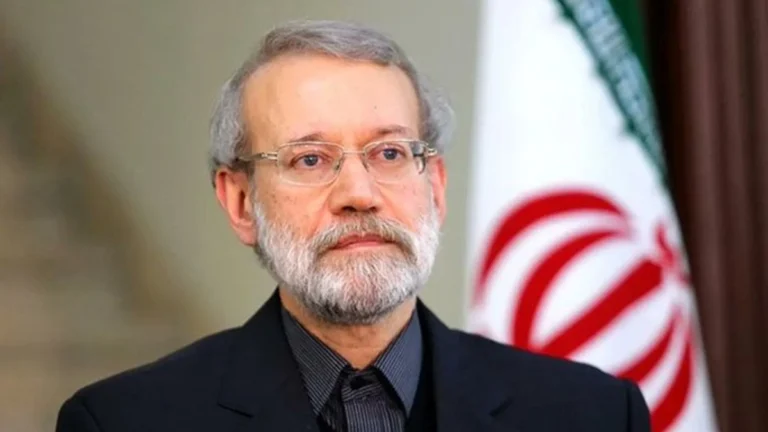
Ali Larijani. X/ @PressTV

January 2, 2026 Hour: 9:37 am

Larijani says Trump’s intervention threats risk destabilizing region.

On Friday, Ali Larijani, secretary of Iran’s Supreme National Security Council, rejected President Donald Trump’s claims about possible U.S. intervention in support of protesters in the Persian nation.

“Trump should know that U.S. interference in this internal matter would destabilize the entire region and destroy U.S. interests,” Larijani said, warning the U.S. citizens that “Trump started this adventure. They should be careful about the safety of their soldiers.”

The Iranian official suggested that statements from Trump and Israeli authorities backing the protests reveal “what was happening behind the scenes.”

“We distinguish between the stance of protesting merchants and the actions of disruptive actors,” Larijani noted, implicitly referring to those protesting with political motivations.


On Thursday night, Trump threatened that the U.S. would come to the “rescue” of citizens demonstrating in various Iranian cities if Tehran’s authorities opened fire on them.

“If Iran shoots and violently kills peaceful protesters, which is their custom, the United States will come to their rescue,” Trump wrote on his Truth Social platform, warning that the U.S. is prepared to act.

The protests that began Sunday have been a response to the worsening economic situation caused by U.S. sanctions against the Persian nation.

Currently, Iran is experiencing a crisis marked by annual inflation of 42%. In November and December, however, monthly inflation exceeded 52% compared with the same months in 2024.

https://www.telesurenglish.net/iran-war ... -protests/
"There is great chaos under heaven; the situation is excellent."

User avatar
blindpig
Posts: 15306
Joined: Fri Jul 14, 2017 5:44 pm
Location: Turtle Island
Contact:

Re: Iran

Post by blindpig » Sat Jan 03, 2026 2:21 pm

Protests in Iran: Analysis of current demonstrations and their implications for the Islamic Republic

Lucas Leiroz

January 3, 2026

Few analysts in the West are truly aware of the situation in Iran.

Western understanding of Iran’s internal situation remains profoundly mistaken. Recurring narratives of an imminent collapse ignore the country’s political and social complexity and exaggerate the impact of current demonstrations. It is essential to recognize that, although there are significant tensions, Iran is not currently in a crisis that threatens the continuity of the Islamic Republic, nor is it in a state of absolute stability.

The current demonstrations originate from patriotic sectors of society, motivated by dissatisfaction with the moderate and semi-liberal government of Masoud Pezeshkian. Contrary to widespread claims, most of these protests do not challenge the fundamental principles of the Islamic Republic. The discontent is focused on government economic policies, considered ineffective by broad segments of the population, leading to a perception of management crisis, but not a crisis of legitimacy for the Islamic Republic. Rising prices, water shortages, and economic instability drive popular demands – not challenges to the revolutionary principles themselves.

It is also important to note that, as often occurs in contexts of attempted governmental change, external or internal actors with different interests infiltrate protests, promoting episodes of violence and vandalism. The escalation of clashes in certain areas, particularly in the outskirts and western regions of the country, should not be interpreted as a sign of collapse. Historically, Iran maintains stronger control and stability in major cities and in the capital, Tehran, where protests remain largely peaceful. This pattern demonstrates the institutional capacity of the Islamic Republic to manage crises, even amid significant mobilizations.

Historical context also provides important point of reference for analysis. Iran has previously faced protests of considerable magnitude, such as those following the death of Masha Amina in 2022, when demonstrations led to armed confrontations with security forces. Compared to the events of 2022, today’s social movement is moderate in both intensity and scope, indicating that the security and control system of the Islamic Republic remains functional and effective.

Another key point is the coexistence of different protest currents within the country. While there are mobilizations critical of the government, there are also demonstrations in support of the Islamic Republic (albeit critical of Pezeshkian’s administration). This diversity shows that dissatisfaction is not unanimous toward the Islamic Republic as a whole, but is concentrated on specific management failures and economic policies. This reality significantly reduces the likelihood of a change in the Islamic Republic, although there is some probability of a government collapse.

For external analysts, it is tempting to interpret the protests as a harbinger of total destabilization. A closer analysis suggests that the most plausible scenario is the erosion of Pezeshkian’s moderate government, followed by a possible rise of leadership more aligned with the original revolutionary principles of the Islamic Republic. In this context, an internal power adjustment is far more likely than the dissolution of the country’s institutions.

It must be acknowledged, however, that the Islamic Republic is not immune to risks. Sudden internal or external developments could significantly alter the current balance. Yet, considering Iran’s historical experience with crises, protests, and foreign intervention attempts, contemporary demonstrations do not provide sufficient grounds to predict a national collapse. The Republic remains structured and capable of maintaining its political and social core.

In summary, Western perceptions that Iran is on the brink of collapse reflect a simplistic and misinformed interpretation of events. The current demonstrations should be understood as expressions of sectoral discontent and governance challenges, not as existential threats to the Islamic Republic. The balance of internal forces, combined with historical experience in managing crises, ensures that the Islamic Republic continues to function, with the capacity to adjust to social pressures without compromising its political continuity.

https://strategic-culture.su/news/2026/ ... -republic/
"There is great chaos under heaven; the situation is excellent."

User avatar
blindpig
Posts: 15306
Joined: Fri Jul 14, 2017 5:44 pm
Location: Turtle Island
Contact:

Re: Iran

Post by blindpig » Mon Jan 05, 2026 4:45 pm

Iran rejects Trump’s threats as support for ‘terrorism, violence’

The US president has threatened to strike Iran 'very hard' if protesters are killed in the unrest that has broken out in the country

News Desk

JAN 5, 2026

Image
(Photo credit: AFP/Getty Images)

Iran’s Foreign Ministry has fired back at new threats made by US President Donald Trump, referring to Washington and Tel Aviv’s statements on recent protests in the country as a plot to “support terrorism and violence.”

The ministry also vowed that Iran is preparing for an attack scenario.

“Israeli and American statements regarding Iranian internal affairs are part of supporting terrorism and violence and undermining Iranian unity,” the Iranian Foreign Ministry said in a statement on 5 January.

“The Iranian armed forces are carefully monitoring the country's borders and we do not trust the enemy's statements,” the Foreign Ministry went on to say.


The ministry added that Israel’s “deception has been proven to us,” stressing that “It is important for us to strengthen our readiness and have our eyes open to defend Iran's territory.”

Over the past several days, protests erupted across several cities and provinces in Iran due to a collapse in currency and difficult living conditions resulting from years of harsh US sanctions.

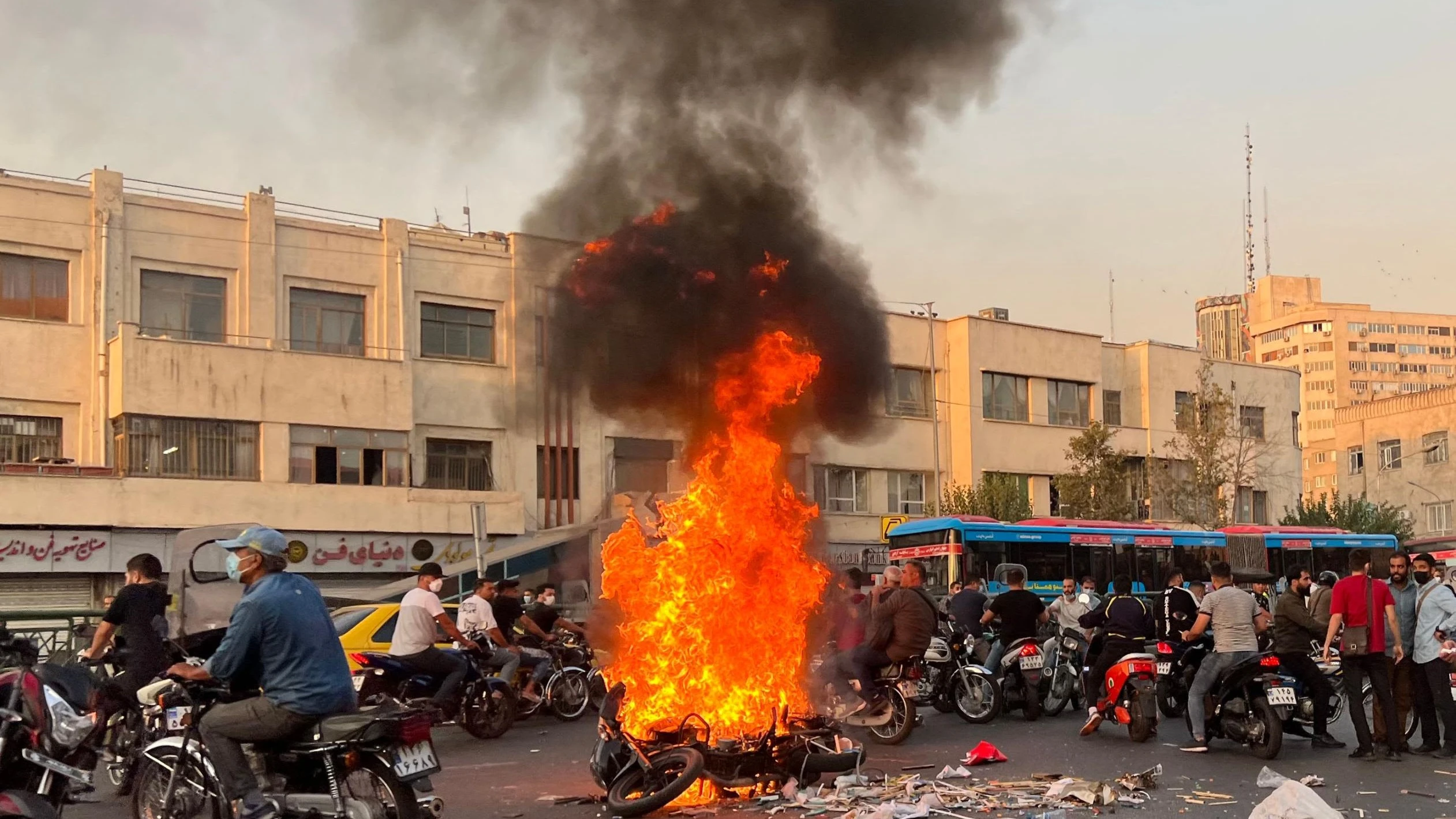
Many of the protests have turned violent, with armed rioters attacking security forces repeatedly in recent days.

“I instruct the attorney general and prosecutors across the country to act in accordance with the law and with resolve against the rioters and those who support them ... and to show no leniency or indulgence,” Iranian judiciary head Mohseni Ejei said on Monday.


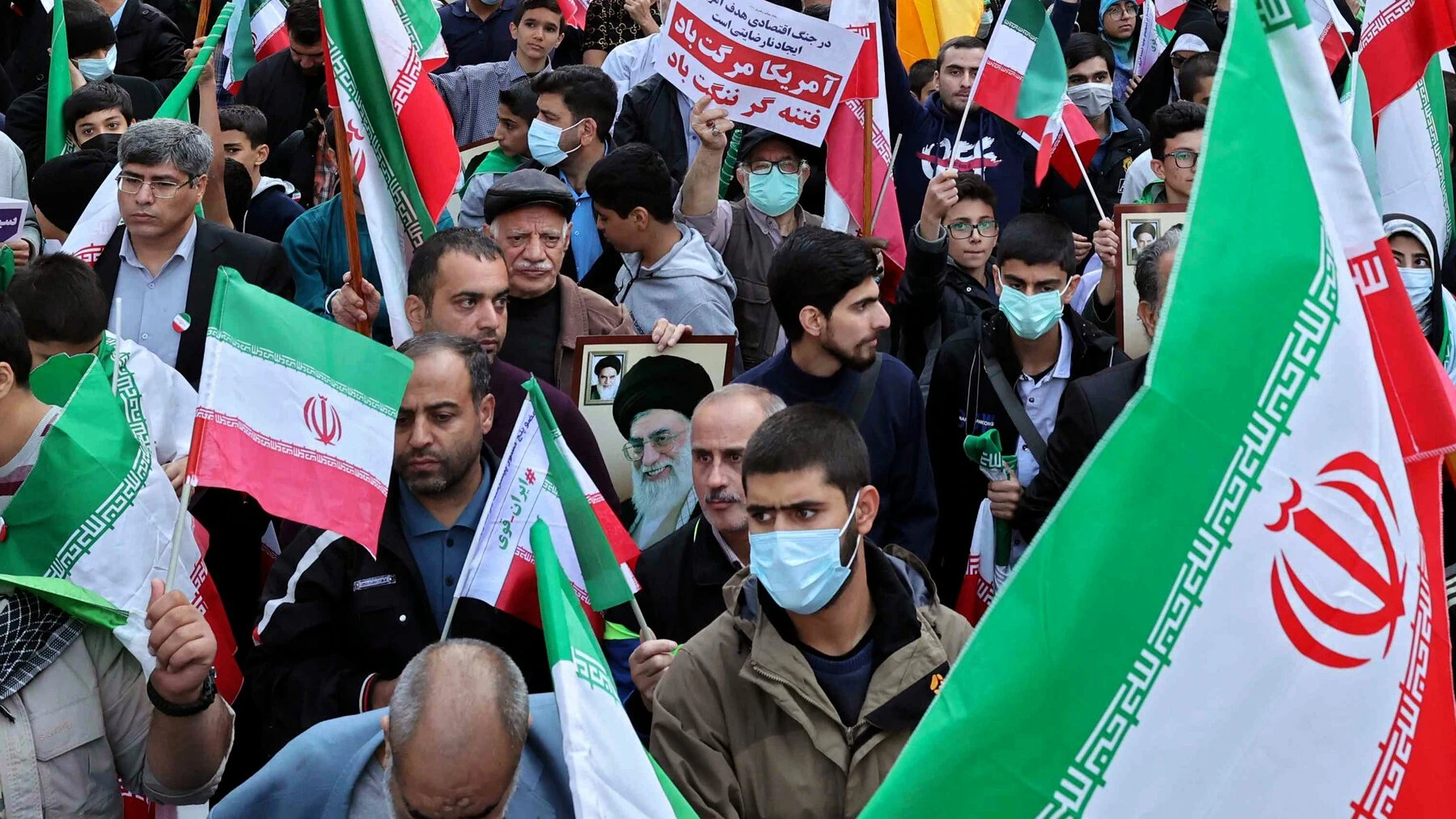
At least 12 people have been killed, including police and security members. Counterprotests are also taking place, and thousands of Iranians have taken to the streets to reject violence against security forces and call for peaceful expression.


“We’re watching it very closely. If they start killing people like they have in the past, I think they’re going to get hit very hard by the US,” Trump said on Air Force One late on Sunday.

This was the US president’s second threat in just a matter of days.


On 2 January, Trump threatened to “rescue” the Iranian protesters, adding that Washington was “locked and loaded and ready to go” if Iran “shoots and violently kills peaceful protesters, which is their custom.”

The Mossad also publicly urged Iranians to go out in the streets, saying, “we are with you.” Other Israeli officials have also attempted to incite the Iranian population against their leadership.

Dozens of people have been detained since the unrest began. Some of the rioters have been found with explosives.

Supreme Leader Ali Khamenei said over the weekend that peaceful protesting is the right of all Iranians, but stressed that rioters “must be stopped and taught a lesson.”

The unrest in Iran coincides with concerns over a new round of fighting between the Islamic Republic and Israel.

Iran has ruled out any new nuclear talks with Washington until it drops its demands for a curb on the Iranian missile program and an end to uranium enrichment.

Recent reports have said Iran is working to build up and enhance its stockpile of ballistic missiles, which caused extensive damage across Israel and hit multiple key military sites during the 12-day war in June.


Iran also responded to the US attacks on its nuclear sites during the war with a missile operation targeting Washington’s Al-Udeid base in Qatar.

According to a new report by Israel’s Channel 12, Tel Aviv is preparing for the possibility of a “sudden” conflict with Iran.

Israeli Prime Minister Benjamin Netanyahu visited the US recently and discussed potential new strikes on the Islamic Republic with Trump. During a press conference last week, Trump said he would potentially support a new Israeli attack.

A senior Israeli official told Channel 12 that the situation in Iran is being “closely monitored,” but that it is too early to predict the consequences. The report added that Israeli military leaders are accelerating preparations for a potential multi-front war, including Iran, Lebanon, and the occupied West Bank.

https://thecradle.co/articles/iran-reje ... m-violence

Iran’s collapsing currency exposes the profiteers behind the crisis

As sanctions bite and foreign reserves vanish, Iran's merchants rise in protest against a failing economic order rooted in systemic mismanagement and elite profiteering.


Fereshteh Sadeghi

JAN 5, 2026

Image
Photo Credit: The Cradle

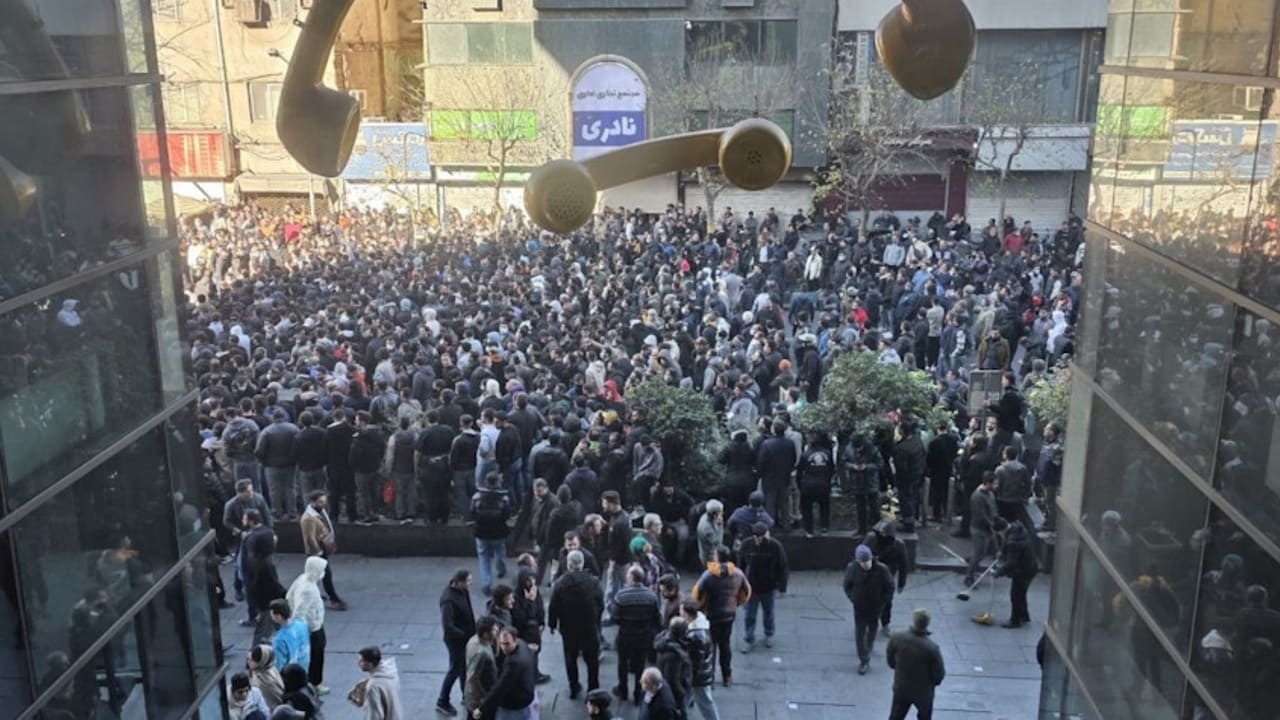
In the final days of 2025, as the rial plunged to unprecedented lows, Tehran's bustling Jomhuri (Republic) Avenue transformed into a corridor of defiance.


‘Bazaaris’ (traditional merchant class with deep political and economic influence) and cellphone shopkeepers, cornered by a collapsing currency and punishing tariffs, shuttered their stores and poured into the streets.

Their outrage ignited a fire that quickly spread to the Grand Bazaar, long considered Iran's economic barometer. Unlike the 2022 protests over social freedoms or the 2009 unrest sparked by electoral disputes, this wave of demonstrations is driven squarely by economic collapse and long-festering mismanagement.

What began as a merchants' revolt against an unworkable trade environment soon revealed the deeper rot of decades-long economic mismanagement, institutional corruption, and a sanctions-choked system that punishes the people to sustain itself.

Sanctions, sabotage, and a vanishing economy

Iran, a nation of over 86 million, registered a meager 0.3 percent economic growth in summer 2025, while inflation soared past 42 percent by December. Labor force participation remains abysmally low, trailing nearly 20 points behind the global average. These dire metrics have steadily worsened under the weight of relentless US sanctions, first re-imposed by President Donald Trump in 2018 during his first term, and have intensified through two presidential terms.


The rial's spectacular collapse – breaking the 1,445,000 mark against the US dollar – did not occur in a vacuum. It marked a 47.8 percent surge in just six months.

The higher the rate was going up, the angrier were businesses whose sales are directly dependent on the dollar-rial change rate. The first spark of protests was ignited by the shopkeepers at two cellphone shopping malls in downtown Tehran. They started a strike, saying they were unable to do business because they were struggling with a new cellphone registry tariff the government had imposed on devices priced at $600 and more.

The next day, shopkeepers did not just close their shops but took to the famous Republic Avenue, protesting against the situation. The dollar dealers at Ferdowsi Avenue joined the protests too, and in the Grand Bazaar, gold and silversmiths brought their shutters down in fear of chaos.

A shopkeeper at Lalezar Street tells The Cradle that, “we were forced to close our shops as some protesters attacked us verbally and threatened to ransack our shops by hurling stones at our windows.”

In addition to sanctioning traditional routes such as banks, firms and individuals, the US Department of the Treasury’s Office of Foreign Assets Control (OFAC), has been targeting digital currency addresses it accuses of being used by a financial network to transfer Iran’s oil and non-oil money.


According to Gholma-Reza Taj Gardoun, chairman of the parliamentary budget committee, “the Iranian government only received 13 out of $21 billion oil revenues in the last eight months”. He added that “the remaining $8 billion is the cause of the current turmoil, the shortage of dollar bills in the market and the rising exchange rate.”

A rigged system of profiteers

Taj Gardoun is not alone in exposing how oil and non-oil export revenues have failed to return to Iran. At the heart of the crisis lies a parasitic class of semi-governmental enterprises and politically-connected traders who profit from Iran's fiscal dysfunction.

Former finance minister and current lawmaker Hussein Samsami estimates that “117 out of $335 billion non-oil export revenues have not returned to the country, since the US re-imposed sanctions in 2018.” Much of this capital, he says, was siphoned off by ‘khosulati’ entities – quasi-governmental firms benefiting from state ownership yet operating without transparency or oversight.

Equally troubling is the shadowy role of “trustees” – a secretive network tasked with circumventing sanctions to sell Iranian oil.

Former Central Bank of Iran (CBI) Governor Valiollah Seif acknowledged “they are trusted people, Iranians and non-Iranians, who transfer money (for Iran),” adding “money transfer is a very risky process and the payment of these so-called trustees and the money changers working with them is high.” Seif revealed “sometimes a trustee siphons off the funds.”

Apart from the trustees, the quasi-governmental entities are also blamed for refusing to give back the non-oil export money to the central bank and sell it at rates higher than the regular CBI-approved rate at the official market.

These companies are owned by various funds affiliated with the Iranian government. The petroleum and the social welfare ministries gained a majority of the shares in these funds through the privatization process in different governments.

The third group that has not returned the export money is individuals or firms with special business permits. A deputy CBI governor reports that “Individuals who own or rented 900 special licenses must return some $16 billion to the central bank, (but they didn’t).”

The result is a liquidity trap in which foreign exchange vanishes from official markets, feeding a vicious cycle of inflation and speculation.


State paralysis and political deflection

For months, the government of Iranian President Masoud Pezeshkian appeared paralyzed, watching as the currency spiralled and public rage mounted. While some suggest the state deliberately allowed the rial to slide to ease its budget deficits, others cite institutional chaos and a lack of cohesive economic policy.

They refer to a confession made by former Iranian president Hassan Rouhani in 2020, “The foreign currency belongs to the government, the price is decided by the government and we can bring it down, if we decide it.”

In reaction to the voices of dissatisfaction, Pezeshkian tasked his interior minister with meeting the representatives of the protesters and listening to their grievances.

He sat with merchants and replaced CBI governor Mohammad-Reza Farzin with former finance minister Abdolnasser Hemmati. Nevertheless, the latter, who was impeached 10 months ago over his mismanagement of the foreign exchange market, said “he has no responsibility regarding the currency market and his task is to control imbalanced banks and reduce inflation.”

Austerity in a powder keg


In the streets, the demonstrations have morphed into sporadic riots, mostly in western provinces, marked by attacks on police stations and arson against state buildings. Casualties have been reported, including among security forces, as the protests shift from organized dissent to expressions of raw frustration.

Demonstrations in Tehran that were not large in essence have subsided, but morphed into sporadic riots. Smaller cities or towns in western Iran are now the scene of riots, with the number of rioters limited to dozens, not even hundreds.

Arson attacks against government buildings or rioters storming police stations to capture their armory have been reported. About a dozen, including police forces, have been killed countrywide, and arrests have been made.

Iran’s leader, Ayatollah Ali Khamenei, on 3 January, admitted that the ‘bazaaris’ have legitimate complaints regarding economic instability. Still, he made it clear that the Islamic Republic “will not yield to the enemy” and will deal seriously with violent protesters; “rioters must be put in their place.”

The Iranian leader’s comments were a response to Trump after he threw his weight behind the protesters, threatening the Islamic Republic with military intervention “if protesters are killed.” The Reformist Front joined in rejecting foreign threats, warning that any interference in the protests would escalate violence and distort the people’s demands.


In a last-ditch bid to regain economic control, an Iranian official from the Budget and Planning Organization says “the Trustees will be asked to return billions of dollars in their overseas accounts to the country.” A lawmaker cautions, “the parliament will question the oil minister over the issue of the Trustees.”

Iran’s minister of economy said that positive results have been achieved from negotiations with several countries, including the release of part of Iran’s financial resources and the opening of funding channels for importing essential goods, along with gradual efforts to unify the exchange rate into a single rate.

Simultaneously, Pezeshkian is pushing ahead with plans to phase out subsidies for essential imports – a move he dubs an “economic surgery” that will be offset by targeted vouchers for lower-income citizens. But austerity in the midst of currency collapse, inflation, and a credibility crisis is a combustible formula.

Iranian officials are closely tracking the situation in Venezuela, where the abduction of President Nicolas Maduro and rising US aggression offer chilling parallels. For now, Tehran's street protests remain contained. But if the economic pain persists and reforms deepen inequality, the next wave may not be as easily quelled.

https://thecradle.co/articles/irans-col ... the-crisis

Of course there's corruption, especially in situations of economic chaos. But it would be a mistake to confuse a gang of petty merchants with the nation.

Iran arrests rioters in possession of 'weapons and bombs' as protests enter second week

At least a dozen people have been killed during the protests, including both civilians and members of the security and police forces

News Desk

JAN 4, 2026

Image
(Photo credit: Stringer/AFP/Getty Images/FILE)

Iranian police announced on 4 January the arrest of rioters and protest organizers, including some being paid from abroad and others found in possession of weapons and explosives.


Iranian police chief Ahmad Reza Radan explained on Sunday that the protests initially "were legitimate economic protests by market traders," but "later turned into riots."

"We started two days ago arresting those who incite riots," Radan said while speaking on Iranian television. He noted that some of them confessed to receiving payments in dollars, suggesting the protests are being supported by foreign NGOs or intelligence agencies.

Iranian police said they arrested two rioters and vandals in Lorestan province who were found in possession of weapons and explosives.

On Saturday, police in Kuhdasht, a city in Lorestan Province in western Iran, announced the arrest of two alleged leaders of recent unrest in the city.

Police chief Ali Amani stated that the individuals "were planning to carry out acts of sabotage to destabilize security in the Kuhdasht region of Lorestan province." One of the rioters "was in possession of a pistol and several homemade bombs, in addition to a number of bladed weapons."

Meanwhile, the Islamic Revolutionary Guard Corps (IRGC) announced the arrest of two teenage girls in Isfahan. The girls were allegedly leading the unrest in the city and calling for the destruction of property while receiving payments from an agent in Germany.


The IRGC's public relations office issued a statement announcing the arrest of three alleged leaders of recent unrest in Khorramabad, a city in Lorestan Province.

According to the statement, the individuals were receiving direction from Iran International and other opposition media outlets, and participated in damaging public property, writing slogans, and escalating protests into unrest.

The protests began on 28 December after shopkeepers and bazaar merchants were angered by a massive drop in the value of the Iranian currency against the dollar.

The fall in the value of the lira compounded the difficult living conditions faced by Iranians already living under US sanctions, including regular water and electricity shortages.

However, subversive elements receiving guidance from abroad quickly exploited the peaceful protests, carrying out riots and acts of sabotage, targeting public facilities, government buildings, and even some military institutions, in an effort to create chaos and panic among the population.

On 30 December, Israeli journalist Zvi Yehezkeli boasted about the role of foreign intelligence in fomenting the riots in Iran while speaking to Israel's i24NEWS channel.


On 29 January, the Mossad used its Twitter account in Farsi to encourage Iranians to protest against the Iranian government, saying it would join them during the demonstrations.

“Go out together into the streets. The time has come,” the Mossad wrote.

On 2 January, Iran's Supreme Leader, Ali Khamenei, acknowledged the grievances of the protesters.

"When a merchant looks at the decline in the value of the national currency and the instability of exchange rates, whether for local or foreign currency, and the accompanying lack of stability in the business environment, he says that he cannot carry out his work, and he is right in that," Khamenei stressed. The Supreme Leader also drew a clear distinction between legitimate protest and rioting.

Reuters reported on Sunday that more than a dozen people have been killed during the week of unrest, citing local rights groups.

Hengaw, a Kurdish rights group, said that at least 17 people had been killed, while HRANA, the US-based media arm of the Human Rights Activists in Iran (HRAI) group funded by the US National Endowment for Democracy (NED), claimed at least 16 people had been killed and 582 arrested. Both civilians and security forces are among the dead.


Reuters added that according to the governor of Qom, two people had been killed there in the unrest, including one who had died when an explosive device he had made accidentally detonated.

Rioters, some of them armed, have been documented setting fire to religious sites, attempting to storm police stations, and assaulting security forces.

Iranians continue to live under the threat of a new attack by Israel. In June, Israel launched an unprovoked, 12-day war on the Islamic Republic. The US joined the attack, bombing Iran's nuclear facilities on Israel's behalf.

Iran responded by attacking Israeli military and intelligence sites, including in Tel Aviv, using ballistic missiles and drones.

Israeli Prime Minister Benjamin Netanyahu has cited Iran's advanced missile program as a new pretext for launching "round two" of its war on the Islamic Republic.

https://thecradle.co/articles/iran-arre ... econd-week
"There is great chaos under heaven; the situation is excellent."

User avatar
blindpig
Posts: 15306
Joined: Fri Jul 14, 2017 5:44 pm
Location: Turtle Island
Contact:

Re: Iran

Post by blindpig » Tue Jan 06, 2026 2:47 pm

Trump threatens war on Iran as U.S. economic stranglehold tightens
January 5, 2026 Gary Wilson

Image
Iranians rally against U.S. threats in January, rejecting Trump’s offer to ‘rescue’ protesters. Photo: TheCradle.co

On Jan. 2, Donald Trump posted a threat on Truth Social that should alarm anyone paying attention. “If Iran shots [sic] and violently kills peaceful protesters, which is their custom, the United States of America will come to their rescue. We are locked and loaded and ready to go.”

Read that again. The president of the United States just promised to invade Iran if its government kills protesters — something U.S. state forces have done many times from the Civil Rights movement to police and National Guard killings at Jackson State and Kent State in 1970 to the 2020 Black Lives Matter uprisings.

This isn’t empty bluster.

Last June, while U.S. and Iranian diplomats were still talking, U.S. and Israeli warplanes launched coordinated strikes against Iran’s nuclear facilities in a 12-day assault. The United States deployed B-2 bombers to strike the underground sites at Fordow, Natanz, and Isfahan with bunker-buster bombs specifically designed to penetrate the fortified facilities.

The conflict killed over 1,000 people in Iran and injured thousands more, most of them civilians, according to Iran’s Health Ministry. In December, U.S. Ambassador to Israel Mike Huckabee said Iran “didn’t get the full message.”

Trump and Israeli Prime Minister Benjamin Netanyahu met at Mar-a-Lago that month to coordinate the next strike. Trump told reporters afterward that he could “knock out their missiles very quickly” and that the consequences for Iran would be “maybe more powerful than the last time.”

So when Trump says “locked and loaded,” he means it. The question is why.

The economic vise

The protests Trump claims to care about started in early December when shopkeepers in Tehran’s Grand Bazaar went on strike. The Iranian currency, the rial, had hit a record low against the dollar. Prices for basic goods were soaring. The strike spread. People took to the streets, furious about the cost of living.

This didn’t happen by accident. For decades, the United States has waged economic war against Iran through sanctions that target its oil exports, its banks, its shipping industry. In late 2025, Washington reimposed United Nations “snapback” sanctions, tightening the noose further. Economist Jeffrey Sachs calls this “economic strangulation” — a form of collective punishment aimed at an entire population.

The numbers tell the story. According to the International Monetary Fund’s projections from October, Iran’s economy is expected to grow just 0.6% in 2025, down from 3.1% the year before. Inflation is forecast at 42.4%. The rial has collapsed, wiping out people’s savings and their ability to buy food, medicine, fuel. Then came the June airstrikes, which caused billions of dollars in damage on top of everything else.

So yes, Iranians are protesting. They’re angry. Many blame their own government for corruption and mismanagement, and they have every right to. But the crisis itself — the currency collapse, the runaway inflation, the shortages — was engineered in Washington. The sanctions are designed to create exactly this kind of desperation, to turn people against their government, to make the country ungovernable.

Trump’s offer to “rescue” Iranian protesters is a sick joke. The U.S. created the economic disaster that drove them into the streets. Now it wants to use their suffering as a pretext for war.

The response from inside

Here’s what makes this moment different from past U.S. threats: Iranians aren’t playing along.

After the June airstrikes, something unexpected happened. People who had been protesting the government rallied against the foreign attack. In January, massive counter-protests erupted in Fars and Hamedan provinces. Demonstrators chanted “Death to America” and condemned what they called the “destructive actions” of rioters. The message was clear: We have grievances with our government, but we won’t let you use them to destroy our country.

The most striking example came from death row. Pakhshan Azizi is a Kurdish social worker sentenced to death by the Iranian government. The U.S. State Department made her case a cause célèbre, holding her up as proof of Iran’s brutality.

From her cell, Azizi smuggled out a statement rejecting what she called “American sinister instrumentalization of her case.” She wrote: “If the United States government truly believes in the principles of human rights and humanity, it must first cease its warmongering, aggression, and crimes in the region. It must also end its explicit support for the Zionist regime, which has committed genocide against the people of Gaza.”

A woman facing execution told the U.S. government she doesn’t want its help. That tells you everything about how Iranians see this offer of “rescue.”

Iran’s government, for its part, has responded with defiance. The Foreign Ministry called Trump’s threat a “gross violation of the fundamental principles of the UN Charter” and “incitement to violence.” Parliament Speaker Mohammad-Bagher Ghalibaf warned that any U.S. attack would make “all American centers and forces across the entire region” legitimate targets. President Masoud Pezeshkian said Iran is in a “full-fledged war with America, Israel, and Europe.”

What this is really about

The official story is that the U.S. opposes Iran because of its nuclear program, its support for regional militias, its human rights record. These are pretexts. The real issue is that Iran refuses to be controlled.

Since the 1979 revolution, when Iranians faced the Shah’s bullets to overthrow a dictator installed by CIA coup, Iran has refused to return to its former status as a U.S. client state. It trades with countries the U.S. wants isolated. It trades with countries the U.S. wants isolated. It supports movements the U.S. wants crushed. Most importantly, it sits at the crossroads of two major projects that threaten U.S. dominance: China’s Belt and Road Initiative, which would create a land route from China to Europe through Iran, bypassing U.S.-controlled sea lanes, and Russia’s International North-South Transport Corridor, which would connect Russia to India via the Caspian Sea and Iran, giving Russia access to the Indian Ocean.

Both projects depend on a sovereign, stable Iran. That’s what the U.S. cannot allow.

The conflict with Iran is fundamentally about preventing countries from building economic and political systems outside U.S. control. Any nation that seeks real sovereignty — the ability to trade with whom it chooses, build the infrastructure it needs, control its own resources — becomes a threat to Washington’s dominance. General Michael Flynn, Trump’s former national security advisor, said the quiet part out loud when he admitted the ultimate goal of a war on Iran is to “weaken China” and ensure “U.S. global dominance.”

The preferred outcome is regime change — installing a government in Tehran that will take orders from Washington the way the Shah did before 1979. Analyst Behrooz Ghamari Tabrizi describes the goal as forcing Iran back into being a “client state” that “lacks the authority to challenge American regional influence.”

But if that proves impossible, the fallback is a failed state. Think Syria or Libya: a country torn apart by civil war, no longer capable of challenging anyone. U.S. planners have discussed this option since the 1970s, when internal documents floated the idea of breaking Iran “into ethnic parts” to neutralize it as a regional power.

This is what’s at stake. Not preventing nuclear weapons or protecting protesters. Control. The U.S. empire requires that Iran remain weak, divided, and compliant. An Iran trading freely with China and Russia, helping to build new infrastructure and new financial systems outside U.S. control, aligned with other countries resisting Washington’s dominance — that is the real threat.

Where we stand

Trump’s threat is reckless and dangerous, but it’s also a sign of weakness. The U.S. has been trying to break Iran for more than 40 years through coups, sanctions, assassinations, cyberattacks, proxy wars. Iran is still standing. Its alliances with China and Russia are deepening. New trade routes, financial systems, and economic partnerships are being built despite U.S. opposition.

The danger is that Washington, facing the limits of its power, will lash out. The June airstrikes killed a thousand people. Another attack could kill many more. A ground invasion — which Trump’s threat implies — would be catastrophic.

The lie is transparent. This has nothing to do with human rights or democracy. It’s about empire, oil, and a desperate attempt to maintain dominance over countries building economic ties outside Washington’s control.

When workers in Tehran go on strike because they can’t afford food, the answer isn’t U.S. bombs. The sanctions strangling their economy come from Washington. The military threats hanging over their heads come from Washington. The same forces of capital and empire that exploit workers in Iran exploit workers everywhere. The fight against imperialist war abroad and the fight for justice at home are one fight.

https://www.struggle-la-lucha.org/2026/ ... -tightens/
"There is great chaos under heaven; the situation is excellent."

User avatar
blindpig
Posts: 15306
Joined: Fri Jul 14, 2017 5:44 pm
Location: Turtle Island
Contact:

Re: Iran

Post by blindpig » Wed Jan 07, 2026 2:56 pm

Iran signals 'pre-emptive' action as US official threatens Khamenei's life

US Senator Lindsey Graham said the supreme leader may ‘wake up dead,’ coinciding with anti-government protests and following several recent threats from Washington and Tel Aviv

News Desk

JAN 7, 2026

Image
(Photo credit: AFP via Getty Images)

The Iranian military warned on 7 January that Tehran could potentially launch a pre-emptive attack on Israel in response to the escalatory rhetoric recently from both Tel Aviv and Washington.


“Iran views the escalation of hostile rhetoric against the Iranian nation as a threat and will not leave its continuation unanswered,” said the Iranian army’s Commander in Chief Amir Hatami.

“Any act of aggression against Iran will have far-reaching consequences … Iran will act with full force to defend the its independence, territorial integrity, and political system,” he added.

“The readiness of Iran’s armed forces today is far higher than before the [12-day] war. Any enemy miscalculation would be met with a more decisive response,” he went on to say, warning that “the hands of any aggressor would be cut off.”

The military chief’s statement followed violent and escalatory rhetoric from US Senator Lindsey Graham on Tuesday.

Graham told Fox News that US President Donald Trump will assassinate Iran’s Supreme Leader Ali Khamenei if Iranian authorities continue ‘suppressing protests.’

“Donald Trump is not Barack Obama; he is not turning his back on the people of Iran … To the Ayatollah and his thugs, if you keep killing your people in defiance of President Trump, you’re gonna wake up dead … Iran is on the verge of falling,” Graham said. “Help is on the way,” he added.

Lindsey Graham tells Iran’s Ayatollah that he better allow Mossad-backed protesters to overthrow his regime, or he will wake up dead.

Graham says Iran is on the verge of collapse and guarantees the Iranian people that more help is on the way.

"You're going to wake up dead." pic.twitter.com/MkXjm9KrGV

— Shadow of Ezra (@ShadowofEzra) January 7, 2026
The interview came hours after Iran’s Supreme National Defense Council issued a warning also signaling potential pre-emptive action in response to growing threats.


“Within the framework of legitimate self-defense, the Islamic Republic of Iran does not confine its response merely to reactive measures, and considers clear indications of threat to be part of the broader security equation,” the council said.

“The intensification of threatening rhetoric and intervention – going beyond verbal positioning – can be understood as hostile conduct. Any path that continues in this direction will be met with an appropriate, firm, and decisive response, and full responsibility for the consequences will lie with the architects of this course,” it added.

The new threat coincides with protests that erupted across several cities and provinces in Iran nearly two weeks ago due to a collapse in currency and difficult living conditions resulting from years of harsh US sanctions.

Many of the protests have turned violent, with armed rioters attacking security forces repeatedly in recent days.

Over a dozen have been killed, including police and security members. Counterprotests are also taking place, and thousands of Iranians have taken to the streets to reject violence against security forces and call for peaceful expression.


Since the protests began, Trump has repeatedly threatened to attack the Islamic Republic.

“We’re watching it very closely. If they start killing people like they have in the past, I think they’re going to get hit very hard by the US,” Trump said recently, after vowing days earlier that Washington will “rescue” Iranian protesters.

The Mossad also publicly urged Iranians to go out in the streets, saying, “we are with you.”

According to a report by Israel’s Channel 12, Tel Aviv is preparing for the possibility of a “sudden” conflict with Iran.

Israeli Prime Minister Benjamin Netanyahu visited the US recently and discussed potential new strikes on the Islamic Republic with Trump. During a press conference last week, the US president said he would potentially support a new Israeli attack.

Iran has ruled out any new nuclear talks with Washington until it drops its demands for a curb on the Iranian missile program and an end to uranium enrichment.

Reports from the past few months have said the Islamic Republic is working to build up and enhance its stockpile of ballistic missiles, which caused extensive damage across Israel and hit multiple key military sites during the 12-day war in June.

https://thecradle.co/articles/iran-sign ... eneis-life
"There is great chaos under heaven; the situation is excellent."

Post Reply